

In the Heart of America: A Conversation about Identity
Writing by Michael Chase, Drawings by Jenny Hershey

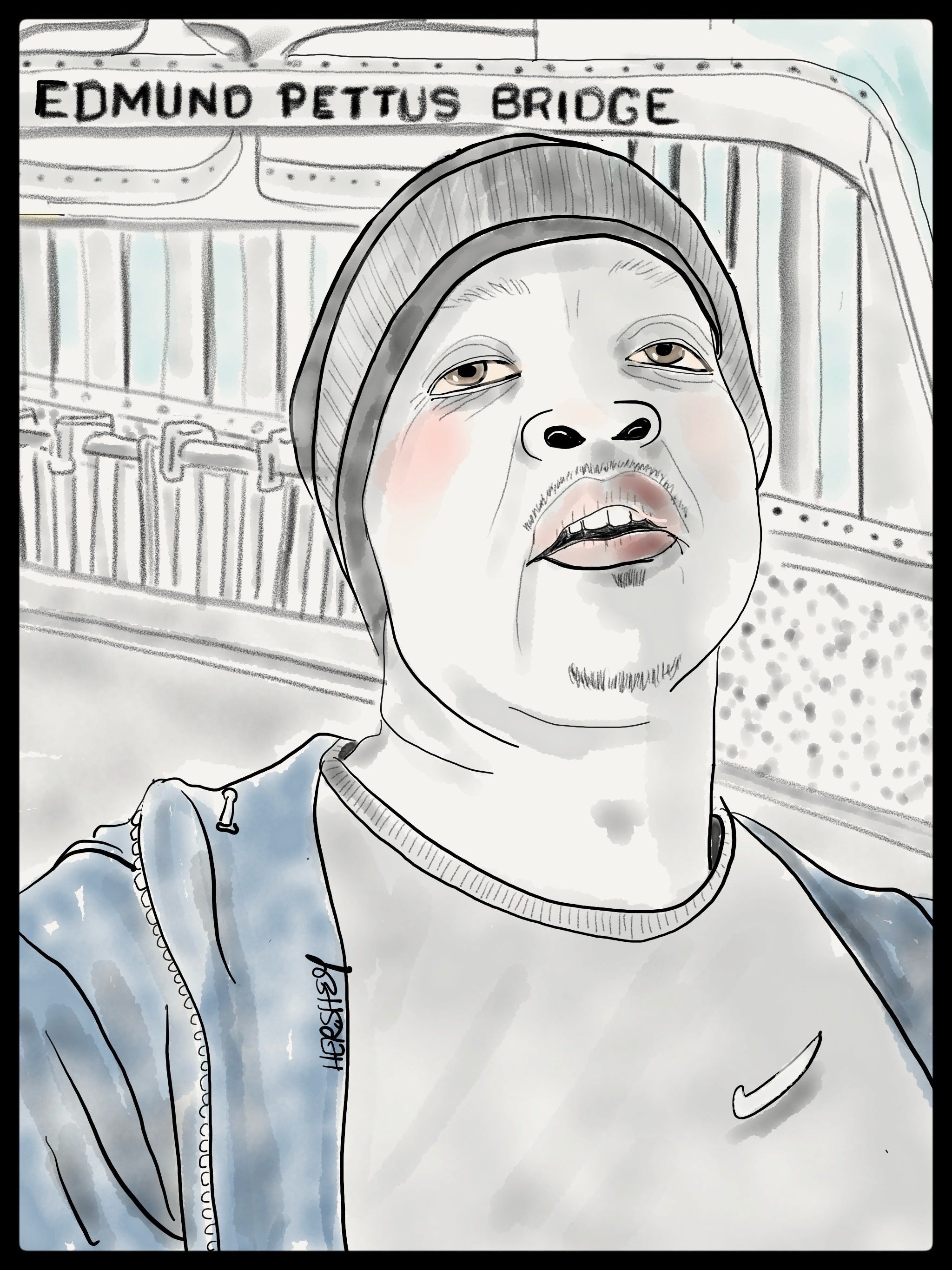
We met Mitchell Thornton on a carbonstories cycling tour in 2024. He was on the Edmund Pettus Bridge in Selma, Alabama, selling souvenir t-shirts commemorating the 1965 freedom march. He donates a portion of his earnings to the local boys club. Mitchell was a small child when his uncle, Willy Thornton, marched across that bridge and was badly beaten. The civil rights struggle runs in his blood. Selma has taken its share of blows since then, from tornadoes to a stubborn economic decline. Selling t-shirts on the bridge is how Mitchell gets by.
Even the best laid plans of mice and men often go awry.
Robert Burns
Winter settled in hard this year in New York City, a kind of atmospheric reckoning that felt less like weather and more like prophecy. Each storm seemed to carry a warning about what the air, the ice, and the rhythm of the planet are trying to tell us. It was not just New York. The whole country appeared tilted, from sharp, out-of-season cold in the Midwest and along the East Coast, broken up by strange warm spells, to relentless, record-setting heat still sitting over the American West. It feels as though the forecasts we have been warned about for years have finally arrived, stepping out of climate models and into the day.
After our January trip biking through Mississippi and Louisiana, exploring the data colonies of the AI gold rush as they swallow forests, farmland, and the long flat curves of the Delta, Jenny and I began the long drive back home. The return took us through muddy, then slushy, then frozen roads, climbing across mountains and long bridges under sheets of rain and ice, until we finally reached the city, just in time to be snowed into stillness. We stayed put, not by plan but by the logistics of friends in need and our own small health issues. The quiet turned reflective.
With travel suspended, I found myself scrolling back through years of email exchanges with an old friend from Arkansas. He is an elderly gentleman, and the only Trump supporter I know I can be honest with, at least some of the time. Our long digital argument has been everything a relationship can be: tender, furious, bewildering. As I reread our many emails, I began to see something larger taking shape. Maybe even the outline of a story. And so I began.
To protect his identity, I will call him Richie. Now ninety-six, Richie lives alone in a two-room apartment in an assisted living facility in Arkansas. Last summer he gave his car to his granddaughter, not out of his own fear but as a kindness to his worried family. Now his travel happens in place. He does thirty minutes a day on an exercise bike in the gym, though he wrote to me plainly that it does not seem to be helping his walk much. He has cancer on his eyelid, something that has worried him for a while, though mostly as an inconvenience. His grandson is in the Navy. By his own account, he is a man of simple values: honesty, hard work, respect, self-reliance. These were lessons learned from parents who lived miles from the nearest doctor, over mud and gravel roads, without Medicare or Medicaid, never expecting the government to take care of them. His family has lived in the South for generations. By all measures, Richie is, in the term now circulating through right-wing media, a Heritage American. Interestingly, so am I, at least in the sense that my ancestors came from western Europe and can be traced back to the Mayflower. Yet I would not describe my identity through my heritage. What makes me American is what I believe in.
I first met Richie about twenty years ago, when he entered my mother’s life. They were both older, both alone, and what they found together was, by any measure, a late-life miracle. My brothers and I were happy for her, and quietly puzzled. Their politics could not have been further apart. My mother was a woman of strong convictions, and so is Richie, and their convictions pointed in almost opposite directions. She passed away in 2019. I have wondered more than once whether their relationship would have survived what came after, years that have split families and friendships once thought unbreakable. I don’t know. What I know is that love found a way to bridge what argument could not, at least for a time, and that Richie has remained in my life because of her. He is a living thread back to someone I miss, carrying politics I contest and offering warmth I still need.
Richie has been reading my newsletters for years, long before Jenny and I pedaled through his part of the country and had dinner with him at a restaurant on the outskirts of Hot Springs Village, Arkansas, the largest private gated community in the United States. He writes after nearly every post, commenting on the weather, my health, or Jenny’s bike accident last fall. In January, he called me “a very talented, gifted writer” and said my words let him see beauty he will never witness himself. Richie is, without qualification, a loyal reader and a good man. He is also, on nearly every question that matters most to me, my political opposite. Our stubborn coexistence of genuine affection and irreconcilable disagreement has been sitting in my email inbox all winter, quietly asking me to make some sense of it. This winter, I finally tried.
The arguments between us did not begin abstractly. They began, as most real arguments do, with a specific outrage: crime statistics, immigrants, Minneapolis. Richie wrote with what I can only describe as certainty. There had been enormous fraud in the Somali community in Minnesota, local politicians had looked the other way, and a large percentage of the indictments being Somalis was, in his view, a problem and not racism. He had not gotten this from Fox News, he was careful to say. He thought as little of the New York Times as I did of Fox.
I wrote back with the numbers. The Department of Justice had indicted 98 defendants in Minnesota fraud-related cases, and 85 of those defendants were of Somali descent. The Somali immigrant community in Minneapolis numbered approximately 83,000 people. Eighty-five out of 83,000 is one tenth of one percent. I noted, too, that a white woman had been the lead in the fraud case, a fact Fox News was unlikely to broadcast. I asked him, “If 85 white people committed fraud in Little Rock, would that make the white community of Little Rock all fraudsters?” He didn’t budge. His reply arrived the next day: “Michael, these are my last comments on this topic. It makes me angry and I don’t like that feeling. I am 96 years old and lived my life with the values taught me by my parents: be honest, truthful, work hard, treat everyone with respect and be a friend.”
I then pressed harder than I should have. I wrote that I sometimes wondered whether Richie and others who shared his narrative would prefer a country dominated by white, Christian, heterosexual men, where women stayed home to raise the children while men did the serious work. It was a provocation. He answered it with more patience than it deserved.
“WOW!! Michael you must have ESP thinking you know my beliefs,” he wrote. “I do not believe that everyone should be white heterosexual Christian men. That’s what makes this country so special. We have freedom to live our lives as we choose.” He went on: immigrants are what made this country great. They came here, worked hard, assimilated into our society, learned to speak our language, and didn’t ask for the government to provide all they needed. His objection was not to immigrants. It was to people who entered the country illegally and expected to be given everything others had worked for.
I reminded Richie that I have an adopted Black son, an Asian daughter, biracial grandchildren, and a Jewish girlfriend (I didn’t mention that my most intimate friend is trans). Federal policy is not abstract to me. Recent events in Minneapolis made clear that government policies may impact my own children or friends directly, and it’s hard to defend Richie’s version of America when mine depends on surviving it. He wrote back with genuine feeling: he stood firm on illegal immigration, on assimilation, on merit over identity. We talked past each other and kept talking anyway. “I will always be your friend,” I wrote. “I wish you and Jenny many more days of happy, safe, and informative bike trips,” he replied. It was not a concession. It was something more complicated. A man of ninety-six drawing a circle around what he could hold, and choosing friendship over argument. At his age, that feels like no small thing.
But here is what I have been thinking about all winter. The exchange between Richie and me is not really about crime statistics or immigration policy, though it wears those clothes. For months I tried to make sense of it as a question of American character, as if there were some national “self” the country keeps failing to live up to. That framing felt right for a while, and then it didn’t. This is not a debate about character. It is a fight over identity, one that has persisted since the founding words were written and the contradictions in that room were deliberately left unresolved. I think that Richie and I - in our own modest way - are stand-ins for that argument.
The phrase “Heritage American” crystallized this for me last month when Jeremy Carl, Trump’s nominee for Assistant Secretary of State for International Organizations and author of a 2024 book called The Unprotected Class: How Anti-White Racism Is Tearing America Apart, appeared before the Senate Foreign Relations Committee and tried to define it. Under questioning from Senator Chris Murphy, Carl described “white identity” as “certain types of Anglo-derived culture that come from our history.” In a separate and tense exchange, Senator Cory Booker pressed him on racial hierarchy and so-called replacement theory, asking whether Carl believed white Americans were being intentionally supplanted in their own country. The nomination collapsed under bipartisan opposition. Carl withdrew.
But the framework he represents did not withdraw with him. It runs deep, deeper than Carl, deeper than Trump, deeper even than the Heritage Foundation, whose very name is a clue. When the Heritage Foundation cites Samuel Huntington’s argument that immigrants must absorb America’s Anglo-Protestant culture to truly belong, it is not offering a neutral policy position. It is making a claim about what America fundamentally is: a civilization with a carrier people, and everyone else treated as a guest who must assimilate or remain on the margins. That tradition has a clear intellectual lineage, from John Jay’s assertion in Federalist No. 2 that Americans were “one united people, descended from the same ancestors,” through the 1924 Immigration Act’s national-origin quotas, through Huntington’s Who Are We? in 2004, to Carl’s recent work and J.D. Vance’s assertion that America is “not just an idea but a people bound by Christian civilization.”
Thomas Jefferson wrote “all men are created equal.” He was referring to men who owned other men. “We the People” was drafted in a room that excluded, by design, women, enslaved people, and anyone without property. The founding was not a resolution. It was an argument handed down unfinished. One strain says membership is defined by conviction, not bloodline, that anyone committed to liberty and law belongs. Thomas Paine arrived from England just two years before writing Common Sense and never once mentioned ancestry, only universal rights and reason. The other insists the creed needs a carrier, that the nation’s survival depends on the dominance of its founding stock: English-speaking, Protestant, Northern European. Both traditions are genuinely American. Both have always been here. But right now, the second one is winning.
Political scientist Rogers Smith calls this the Multiple Traditions problem. American political culture has never been only the liberal democracy of the civics textbook. It has always braided together three strands: the promise of individual rights, the ideal of governing toward a common good, and what Smith calls ascriptive hierarchy, the unwritten assumption that some people belong more than others based on race, gender, or religion. The first two are what America puts on the poster. The third is what has too often decided who gets in the door.
The rhythm of that struggle has a terrible regularity. The Civil War brought the first major attempt to answer who belonged. The Reconstruction Amendments, abolishing slavery and guaranteeing birthright citizenship and equal protection, tried to rewrite the social contract. For a brief, radical decade, Black Americans held office from local school boards to the United States Senate. Sadly, their belonging was short-lived, crushed within a generation by Black Codes, literacy tests, poll taxes, and a Supreme Court willing to uphold separate but equal. The door opens. The door closes.
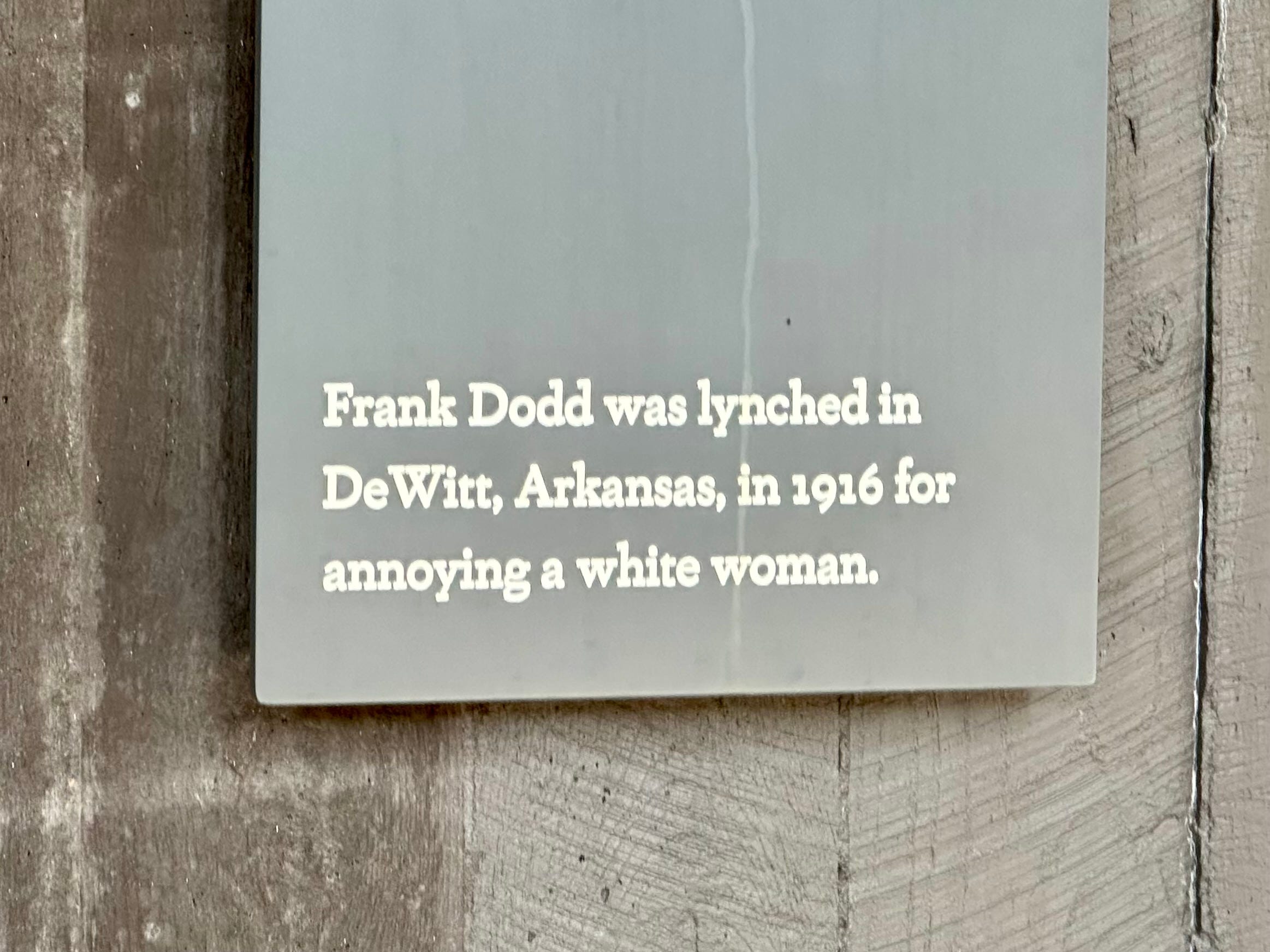
Photo taken at The National Memorial for Peace and Justice in Montgomery, Alabama, during a carbonstories cycling trip in 2024.
The 1960s pushed it open again: the Civil Rights Act, the Voting Rights Act, the Immigration and Nationality Act signed at the foot of the Statue of Liberty. By 2015, the foreign-born population had grown from under ten million to forty-five million, and the dominant story America told about itself had shifted. No longer a nation of a particular people, but a nation of immigrants. Diversity as strength. The creed over the blood. It lasted roughly fifty years.
Since 2015, the heritage vision has been winning, not just rhetorically but structurally. Eighteen states have passed laws dismantling diversity, equity, and inclusion programs. The Supreme Court ended race-conscious admissions in 2023. President Trump’s 2025 executive order sought to reinterpret the 14th Amendment, the exact text Reconstruction-era lawmakers used to guarantee citizenship to freed slaves’ children, to exclude children of undocumented immigrants from birthright citizenship. These are quiet rewrites to the oldest American question: who counts in “We the People”?
When I pressed Richie on these things, he did not speak of heritage or hierarchy. He spoke of common sense: too many people came in too fast; the system cannot handle it, something had to be done. He worries about the deficit, about Medicare, about crime. He is not being cruel. He is, by his own account, being protective. But what he protects is a vision with a particular shape and, historically, a particular color. The immigrants he admires are the immigrants of an earlier era. The ones arriving now, darker and more foreign in his imagination, are a different matter.
Historians Philip Klinkner and Rogers Smith argue that progress on civic inclusion has historically required three conditions simultaneously: a major war demanding the full mobilization of marginalized groups, a hostile foreign rival exposing American hypocrisy about equality, and a domestic movement capable of pressing the advantage. The Cold War delivered enough of all three to produce the revolution of 1964 and 1965. Jim Crow was an international embarrassment, a gift to Moscow and Beijing. When the Cold War ended, so did that pressure. Heritage fills the vacuum. It always does.
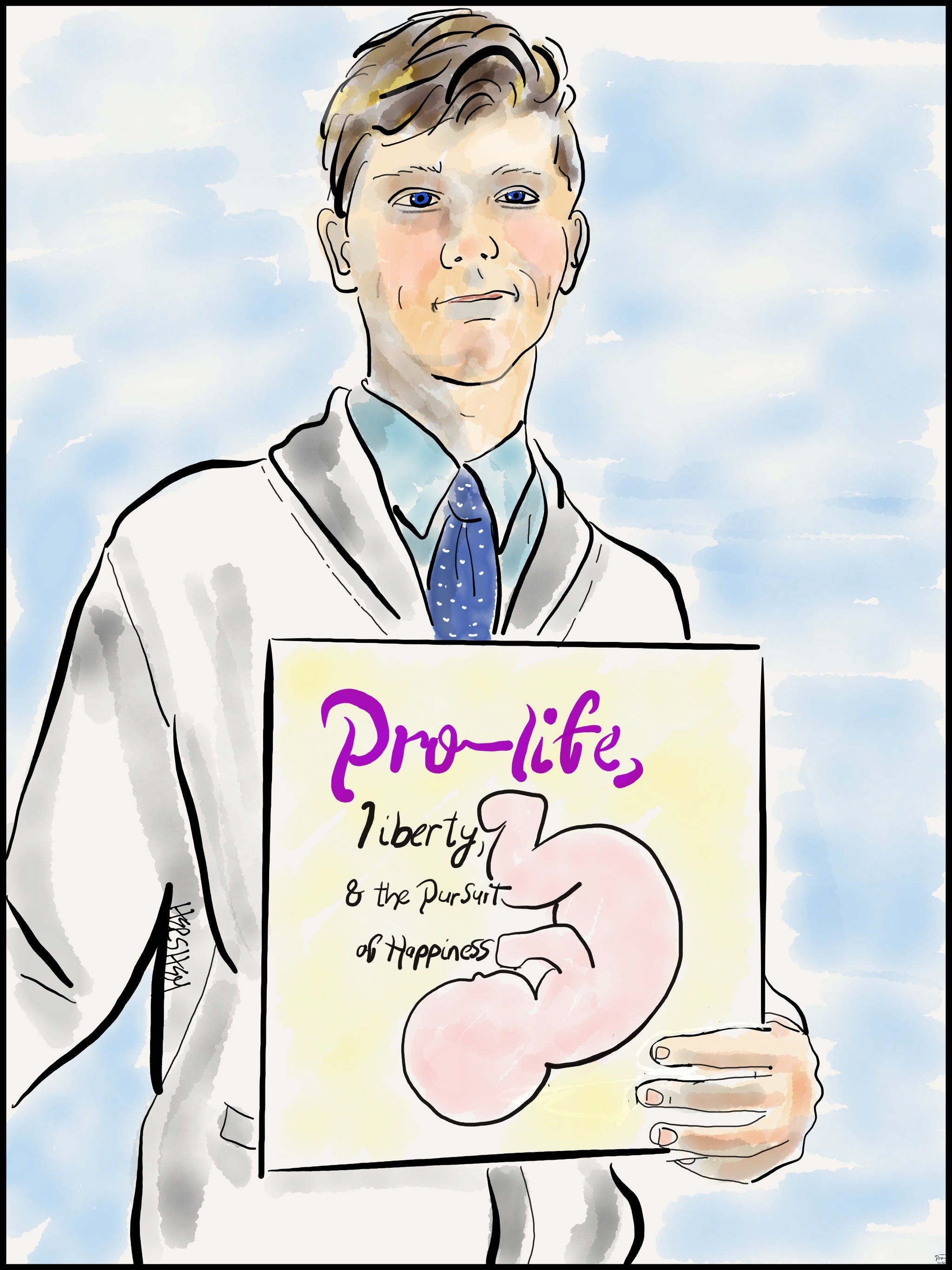
This young March to Life supporter was on the sidelines during the monumental women’s right march where approximately 500,000 women and supporters marched through DC on Jan 21, 2017, the day after Trump’s inauguration. The annual March for life occurred the following week where approximately 10,000 to 50,000 people showed up to a speech by then vice president Pence.
Last January, Richie wrote to me after my post from the Mississippi Delta. He had been thinking about the AI data centers rising along the river, devouring power and water in communities that can barely keep the lights on. “Our world is changing very rapidly,” he wrote. “Personally, at my age it’s frightening.” He mentioned a Neil Sedaka song, “I Miss the Hungry Years,” about a couple who worked their whole lives to accumulate things and then wondered if it was worth it. He sits in his two-room apartment and thinks about all that is gone, the houses, the cars, his wife, and wonders if the hungry years were the happiest.
I read that note several times. There is grief in it that has nothing to do with politics. It is the grief of a ninety-six-year-old man who has outlived his world, who gave away his car, who does thirty minutes on a stationary bike and calls it a victory. I wrote back that I understood that our emphasis on things really does seem like a red herring, that values matter more. He replied: “I wonder if people were just as concerned when the industrial revolution began? That sure changed many lives. Progress is often hard to take.”
He is right about that. And the fact that he is right about some things while being, in my view, deeply wrong about others may be the most honest description I can offer of where the country actually is right now. Genuine wisdom and genuine error coexist comfortably in one person. Affection and argument run in parallel without canceling each other out.
George Packer wrote something I have not been able to shake, that “patriotism is an attachment to what makes your country yours, distinct from the rest, even when you cannot stand it, even when it breaks your heart.” That feels like the exact territory Richie and I are standing in. We are staring at the same country, seeing almost opposite things, and refusing for now to let go.
Here is where the story stops being merely historical and becomes urgent in a different register. The struggle over American identity, who belongs, what the nation owes its people, what story it tells about itself, is inseparable from the struggle over the American response to climate change. They are, at the deepest level, the same argument.
The climate crisis is, at root, a question of belonging. Who gets the levee, and who gets left behind? Flood infrastructure after Sandy reinforced Lower Manhattan while public housing in Red Hook waited years for repairs. Clean-energy subsidies flow unevenly. Permitting fights consistently locate turbines and solar tracts in poorer, browner communities. When “We the People” contracts, when the republic’s story narrows to some of the people, the will to distribute protection fairly contracts with it. The communities most exposed to climate risk are, with painful consistency, the same ones historically excluded from the protected core of American identity: Black Americans in the coastal South, Indigenous communities at the front lines of extraction, Latino farmworkers in California’s heat-stressed Central Valley, immigrant families in flood-prone cities. That exposure is not accidental. It is the legacy of policy choices made under exactly the kind of heritage-first logic that is once again ascendant. You cannot build a just transition for people you do not fully recognize as belonging.
Richie is the Heritage Foundation’s ideal constituent: white, Protestant, rooted for generations in American soil, and yet the man himself is kinder, more open, and more willing to stay in conversation across difference than any think tank’s vision of him would suggest. He is both the thing I am arguing against and the thing that makes the argument feel insufficient. That is not a lesson so much as a reality I have not finished living.
In one of our sharpest exchanges, I wrote to him: “You and I are on opposite sides of a fight over American identity that has been ongoing since 1776, since Jefferson wrote those words and the men in that room decided to defer the contradiction rather than resolve it.” He wrote back: “I wish you and Jenny many more days of happy, safe, and informative bike trips.” That answer carried within it something I have come to recognize as a kind of wisdom, or at least a kind of peace I have not yet earned.
Richie will not live to see how this decade resolves. He said so plainly, without self-pity: “I do not have the ability to forecast and will not live long enough to see how history will record this decade of the Great American Experiment.”
I will probably see more of it than he will. My grandchildren will see most of it. They are the reason I keep riding, and writing, and refusing, even now, even in this moment of contraction, to give up on the creedal republic: the one that says membership is open to all who commit to a common good.
The pendulum has swung before. It can again. But it has never swung on its own.

A view from the top of the Petit Jean Mountain at Petit Jean State Park, Arkansas. Taken during a carbonstories cycling trip in April, 2023.
Stay vigilant! Thanks for reading. If you haven’t done so, please subscribe to this blog to follow our next biking trip.
This newsletter was written by Michael Chase, with drawings by Jenny Hershey. Unless otherwise noted, all material is the copyrighted property of the authors, including all photographs and drawings. Jennifer Hershey’s drawings can be enjoyed on Instagram at deeofo.
Sources
Philip A. Klinkner and Rogers M. Smith, The Unsteady March, University of Chicago Press, 1999
Eric Foner, The Second Founding, W.W. Norton, 2019
Samuel P. Huntington, Who Are We?, Simon & Schuster, 2004
Jeremy Carl, The Unprotected Class, Regnery, 2024
George Packer, Last Best Hope, Farrar, Straus and Giroux, 2021
Senate Foreign Relations Committee nomination hearing, February 2026