
Portland to Seattle on an ultralight folding bike, Post 3
Nero fiddles while Rome burns. What happened in Texas is catastrophic and many people are suffering. It's not hard to predict that Harvey's impact will involve a recovery period that will last years. Let's hope FEMA, Congress and the White House have the staying power and focus to help with the real job of recovery and reconstruction because the most difficult part of recovery is only beginning. Things will probably get much harder before they get easier. A visit by Trump and/or other congressional leaders in several months will mean much more to the citizens on the Gulf Coast than one now. But most likely, if the media has gone elsewhere, so will have the politicians...
In the meantime Irma is bearing down on Florida, and she may be close to landfall when you read this. Two 500 year storms in two weeks? What is happening here? Well, this is no surprise to climate scientists - they've been warning us for quite a few years that extreme weather events are likely to intensify as the atmosphere warms up.
By the way, a 500 year storm literally means a 1 in 500 chance of occurring any year, and not a storm that is so severe it only happens every 500 years; someone needs to explain that to Trump.
In the meantime last week, 1000 people died in Mumbai because of severe flooding from monsoon rains; over 41 families were displaced, and multiple roads and bridges destroyed by flooding in Donegal County, Ireland; and 12 people died and millions of dollars of damage happened as a result of Typhoon Hato in Macaou and on the Chinese mainland.
As for me and my current trip on a folding bike, I enjoyed beautiful weather in Seattle for the past five days straight, although I could not stop thinking that as I was playing "Rome" was burning elsewhere.
But it's not all copacetic in the Northwest. In addition to a summer of large forest fires burning across British Columbia and then Montana, there are now forest fires burning across large sections of western Oregon - a few of which are still uncontained. The smoke, haze and acrid smells made biking today somewhat challenging. By the end of the day, my eyes were stinging and the idea of camping outside had lost all appeal. I needed, and wanted, to be in conditioned air overnight, so I found a Motel 6 in Kelso, about 40 miles north of Portland. That said, I made decent, although relative, time on my increasingly intrepid Brompton.
Check out my road cycling activity on Garmin Connect.
https://connect.garmin.com/modern/activity/1961055920
And here are some pictures of my time in Edmonds, Washington - a small town on Puget Sound north of Seattle.
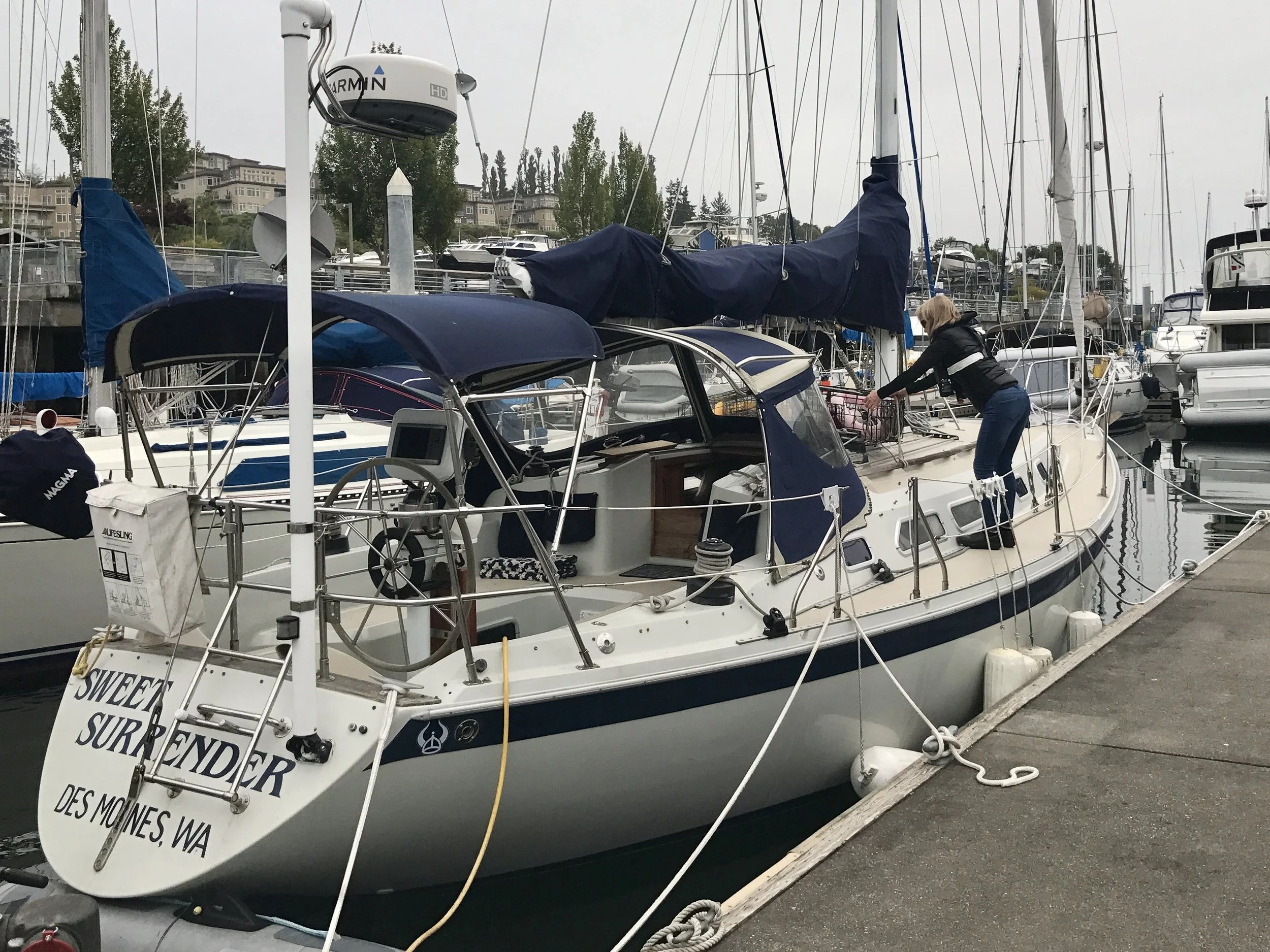
Jeff Hart's boat docked in Edmonds, Washington.
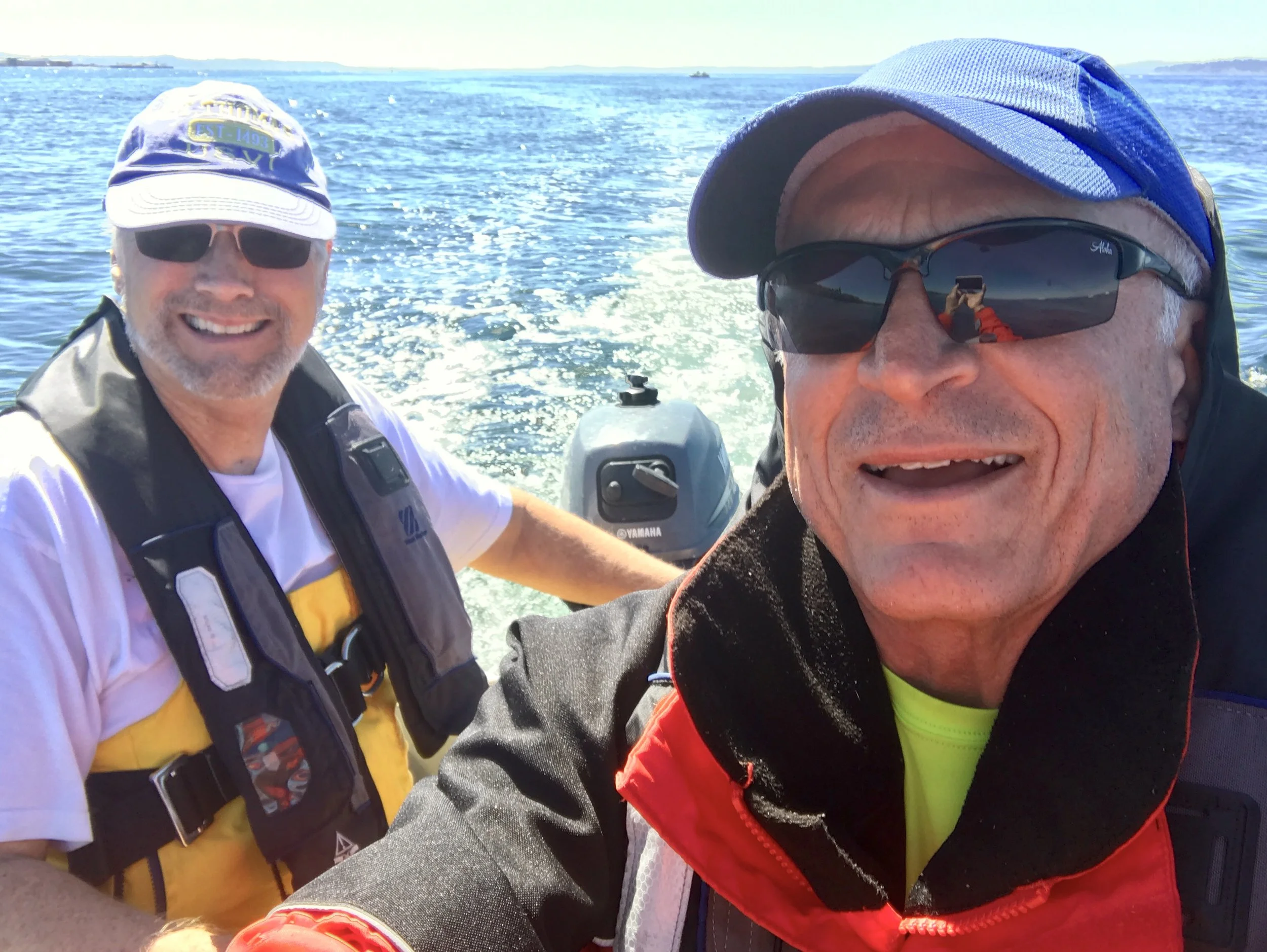
On a dinghy with my friend Jeff after taking nine male dungess crabs out of cages in the Sound.
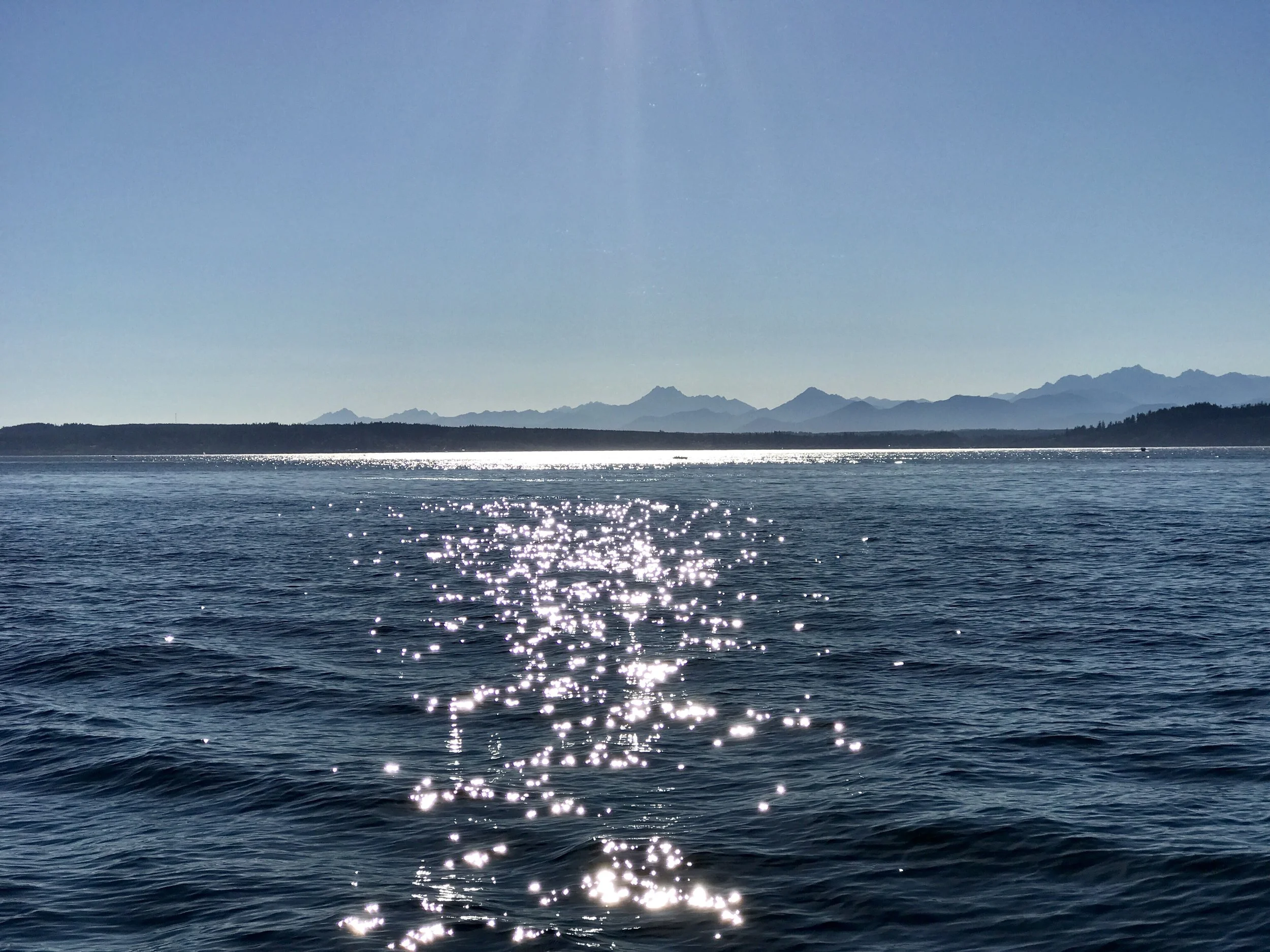
The view of the Olympic Peninsula from Edmonds across the Sound.
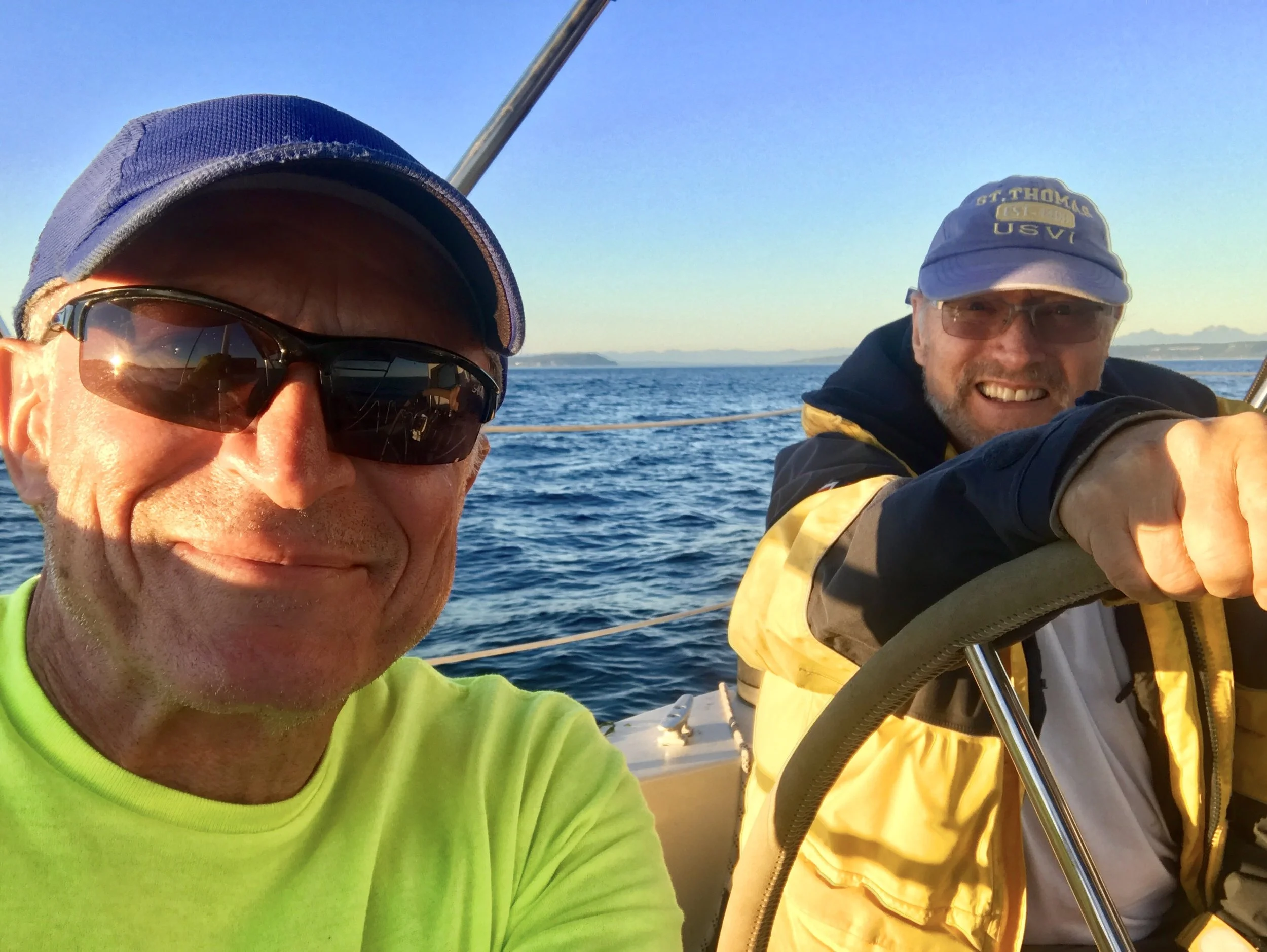
Just starting out on a late afternoon sail.
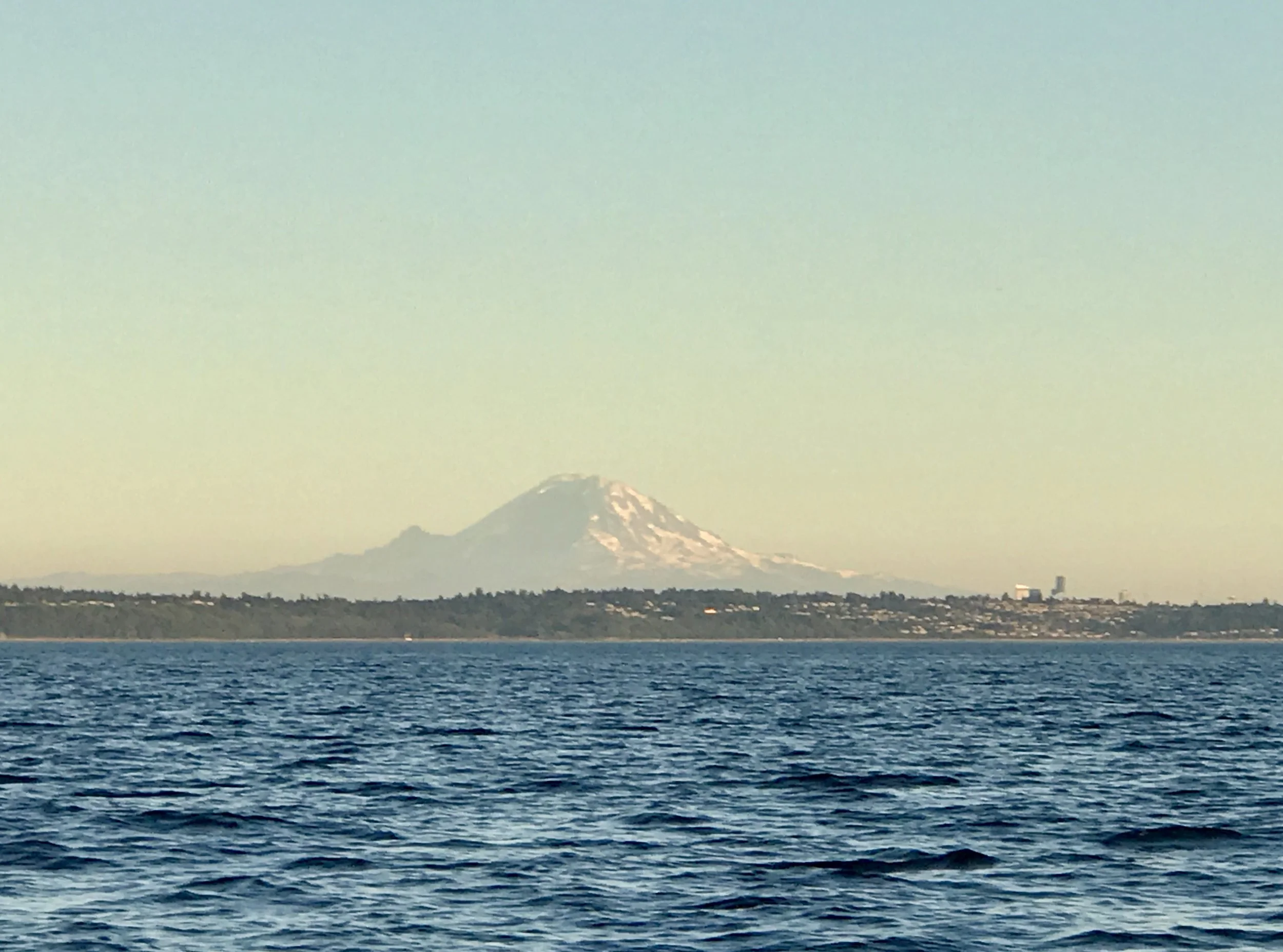
The view of Mt Baker to the northeast of Edmonds.
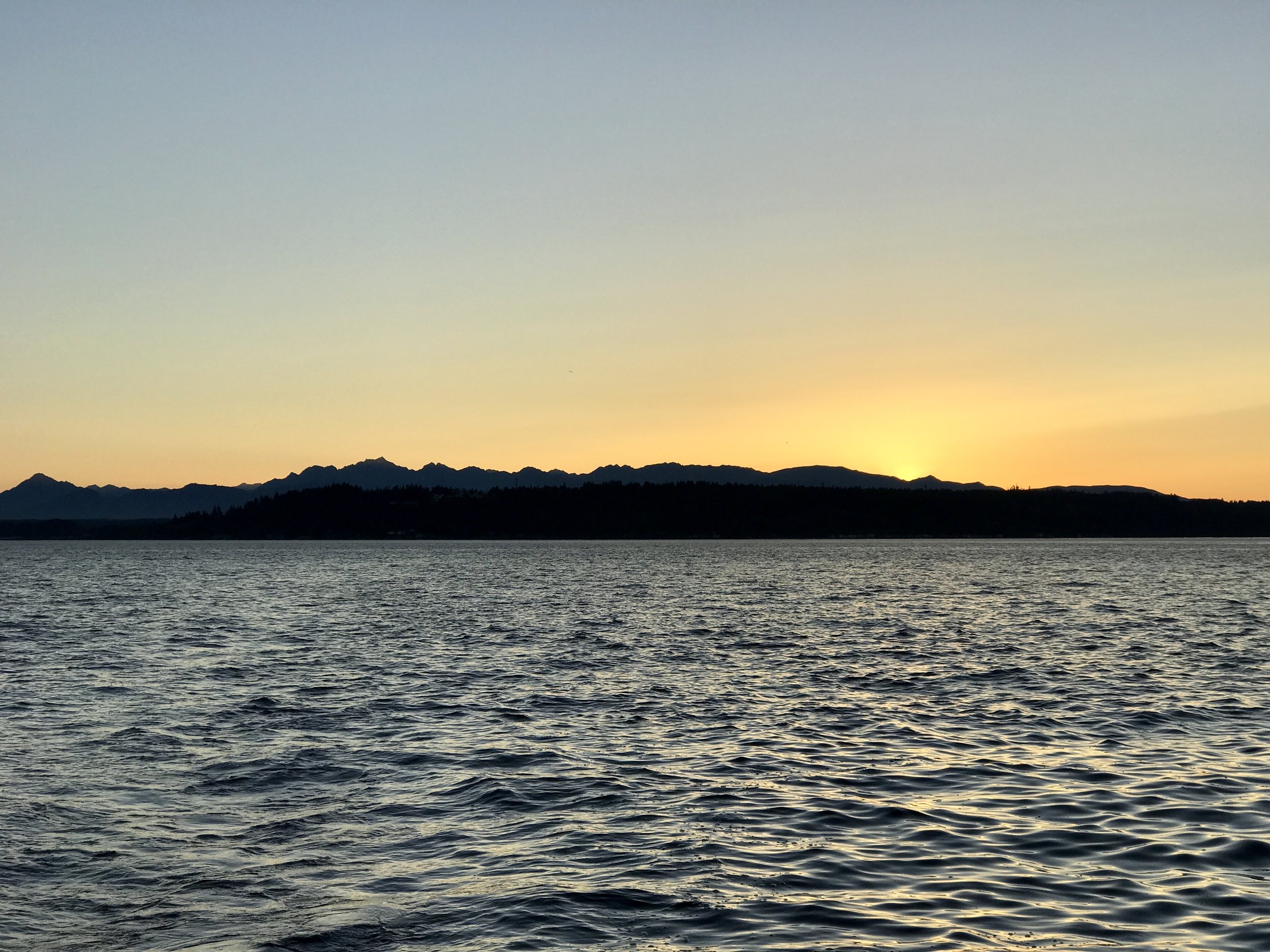
Sunset over the Olympic Peninsula.
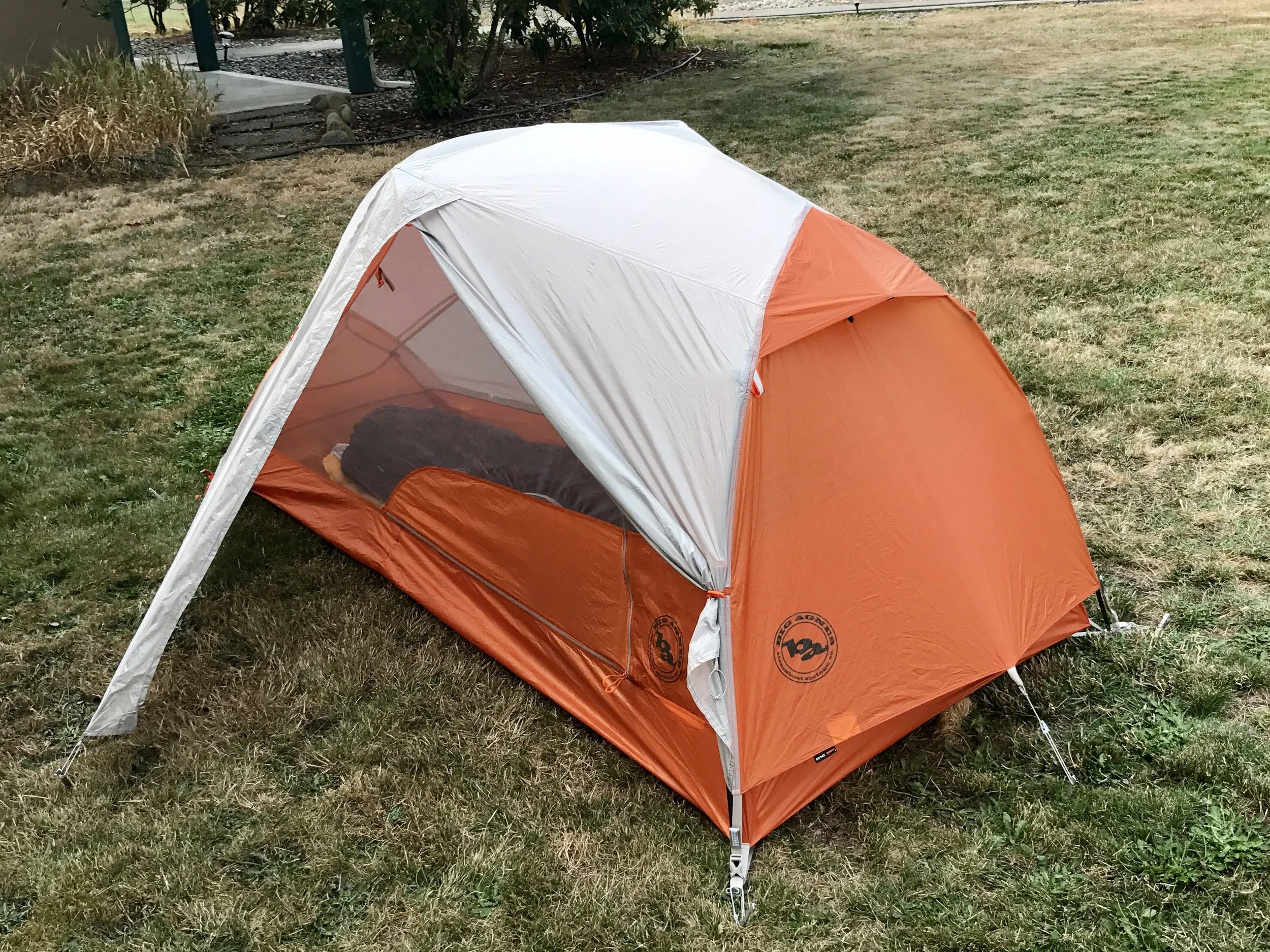
I traded in my bivouac at REI in Seattle for this Big Agnes Copper Spur UL1. Some of you told me my bivouac would make you claustrophobic - that wasn't my problem but I didn't like the condensation at all. I know this tent will work out just fine, although it's several ounces heavier and bulkier to pack...
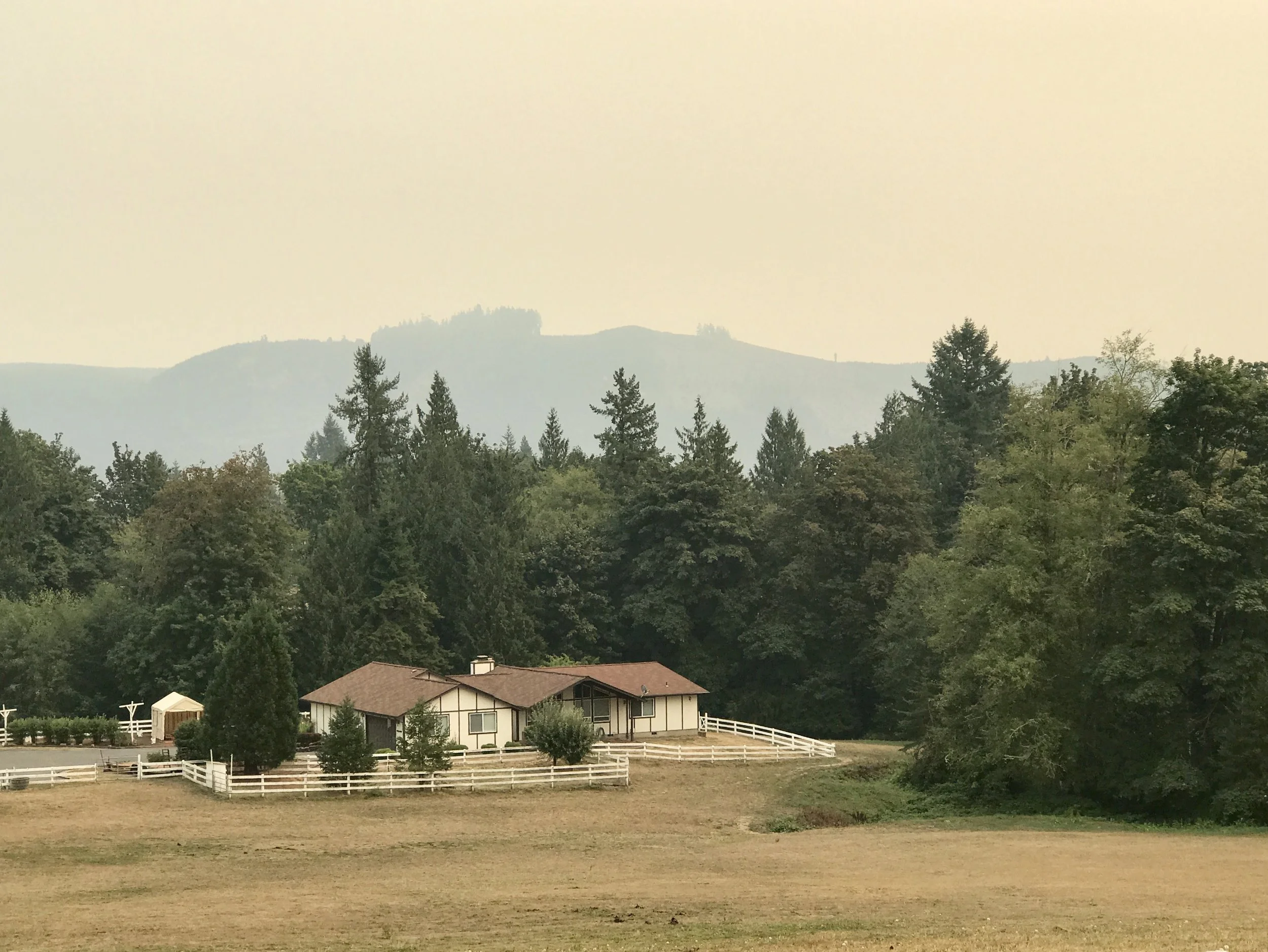
Haze in the distance as I passed into southern Washington today.
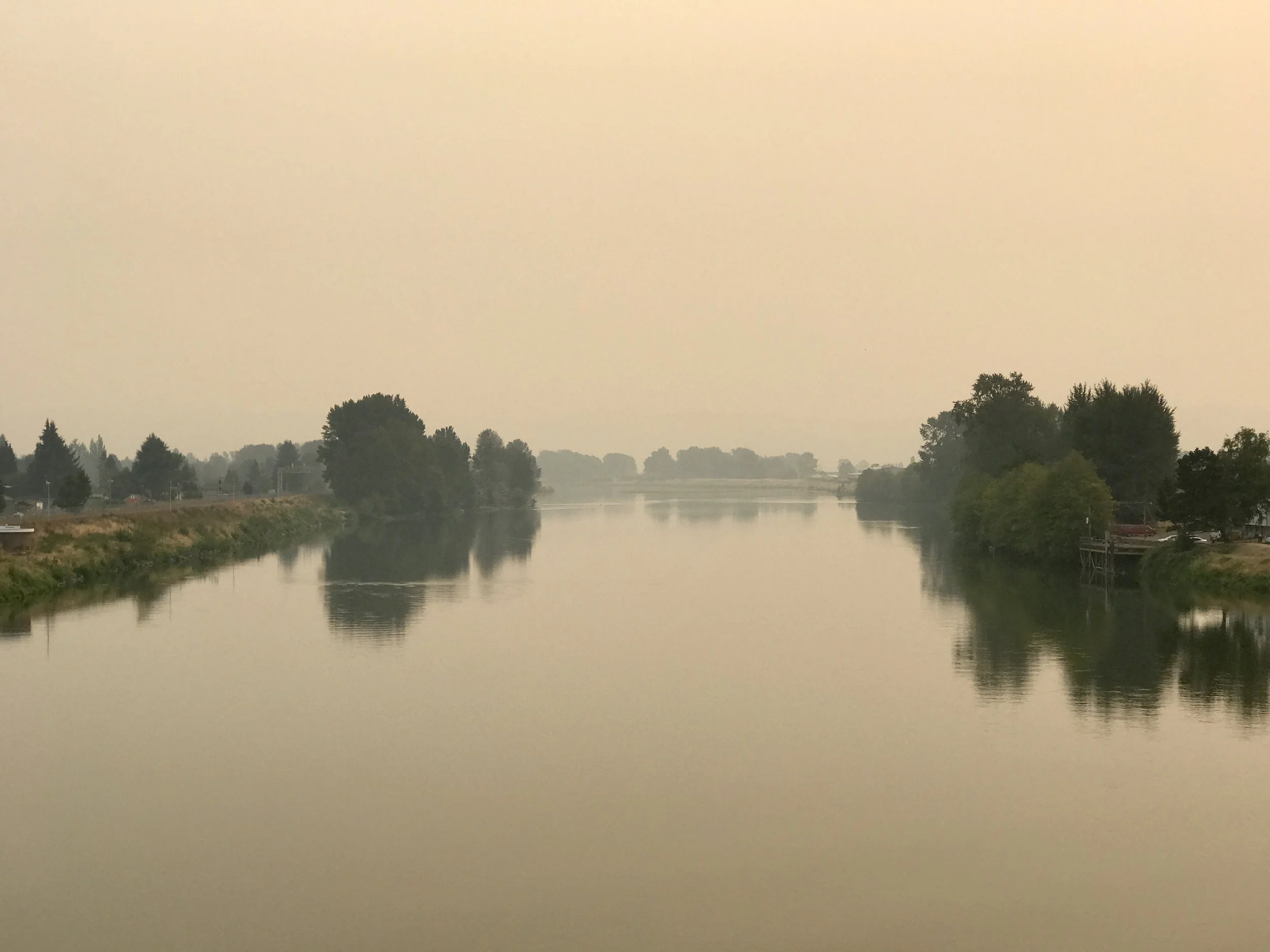
Haze hangs over the Cowlitz River. The smell of smoke and the haze made me think of towns in Asia (most notably Jakarta) where huge numbers of people cook meals over wood, charcoal and cooking fuel outside, making the smell of smoke and haze permanent.
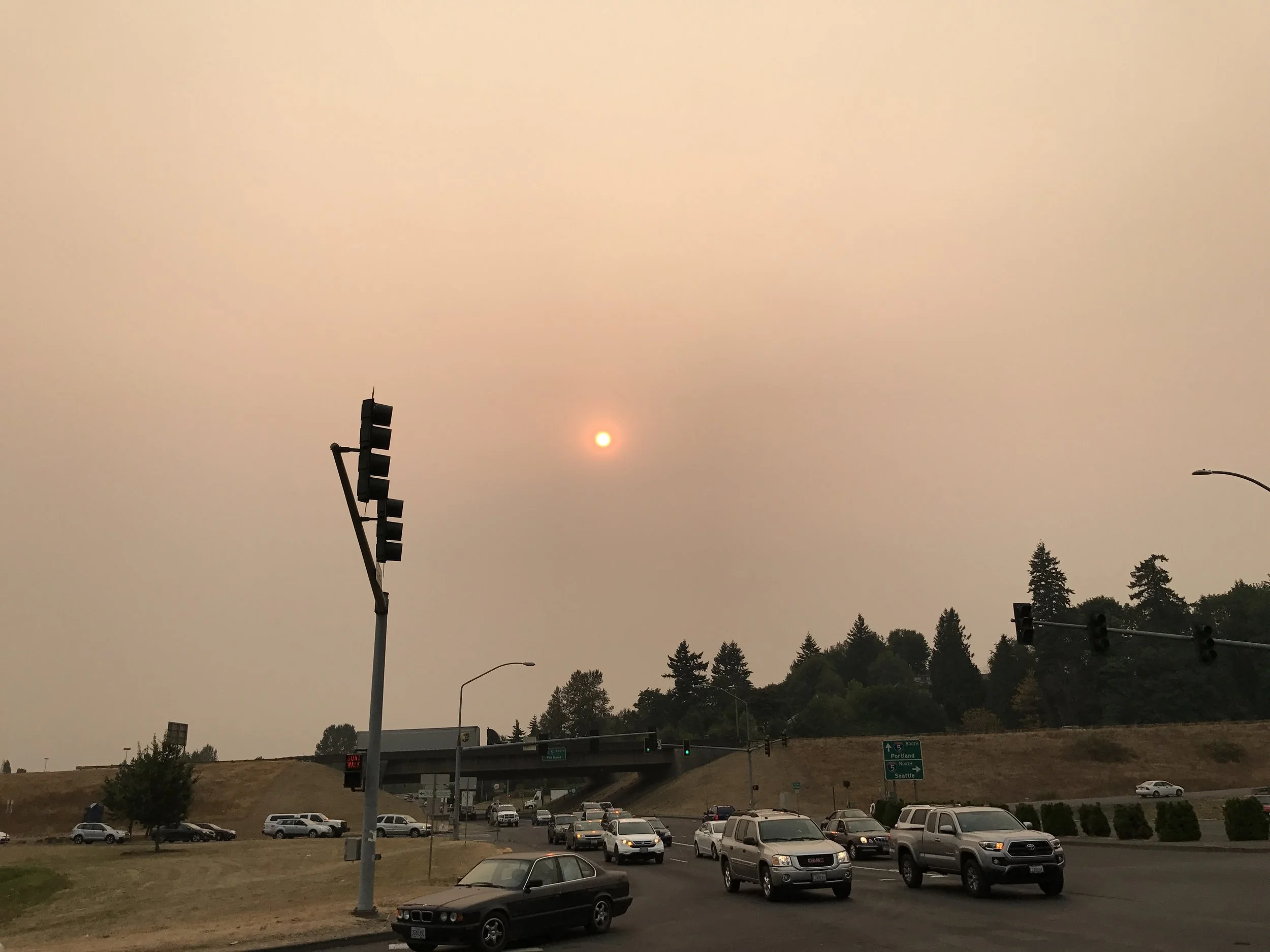
The sun hangs in smokey haze in Kelso, Washington, about 40 miles north of Portland on Tuesday, September 5, 2017 at about 5 pm.
Thanks for reading my blog.
More to come,
Michael
Portland to Seattle on an ultralight folding bike, Post 2

It's odd to be enjoying such extraordinary weather (around 87F and 34% humidity - the locals say it's unusually hot) in the Pacific Northwest while reading about the Gulf Coast and the impact of Hurricane Harvey. Watching the intense rain on the Doppler radar makes me more aware than usual how large our country is. Hundreds of thousands of people are suffering in a catastrophic, record breaking storm, while the Northwest is slightly warmer than usual and pleasantly dry.
I have been reading a fascinating book titled "Economic Risks of Climate Change" led by the academic team of Houser, Hsiang, Koop and Larsen. With expertise in both climate change and economics, this book is the first compendium of research that assesses economic risks by applying climate modeling to economic forecasting. Although the information is specific to the US, the research methods show wider promise for global applications. In its current form, this research gives us some insight as to how climate stresses may impact local economies in the coming decades at a level as granular as regions, states - and in some cases - even counties.
Apparently the Southeast will be the most impacted region in terms of heat increases (measured by wet bulb increase, which includes both temperature and humidity) and sea level rise off the Gulf Coast. This will impact industry as it becomes dangerous to work outside (think about construction, highway infrastructure and farming), and agriculture as some crops - notably corn and soybeans - may experience reduced yields. Correspondingly, the Northeast will see increases in wet bulb temperature and general levels of precipitation, as well as sea level rise. But oddly, the Northwest won't experience as much sea level rise, nor much wet bulb temperature increase, although average heat temperature may increase somewhat. And it is likely to rain less in the Northwest, which for a few decades at least will have the interesting impact of making the region more pleasant.
It seems that many people who live in the Northwest are already aware they live in Nirvana. I wonder, though, as economies are stressed further south, if there will be increasing population pressures on the area that won't be appreciated by those who live here.
I will be attending a Climate Reality training in Pittsburg in mid-October of this year. I hope to meet other activists interested in creative approaches to achieving change in energy systems and values that coming climate crises will necessitate. I respect Al Gore, and appreciate that he seems to recognize we need a social movement for climate that matches the fierce passion the civil rights movement both required and engendered. Yet, he also seems to think we can address our environmental crises through established channels. I no longer think this is the case, although like many law abiding citizens, I have to push myself to be confrontational with authority.
My brother Steve Chase, who works for the International Center for Nonviolent Conflict, recently published a review on their website that I find helpful. You can find it here.
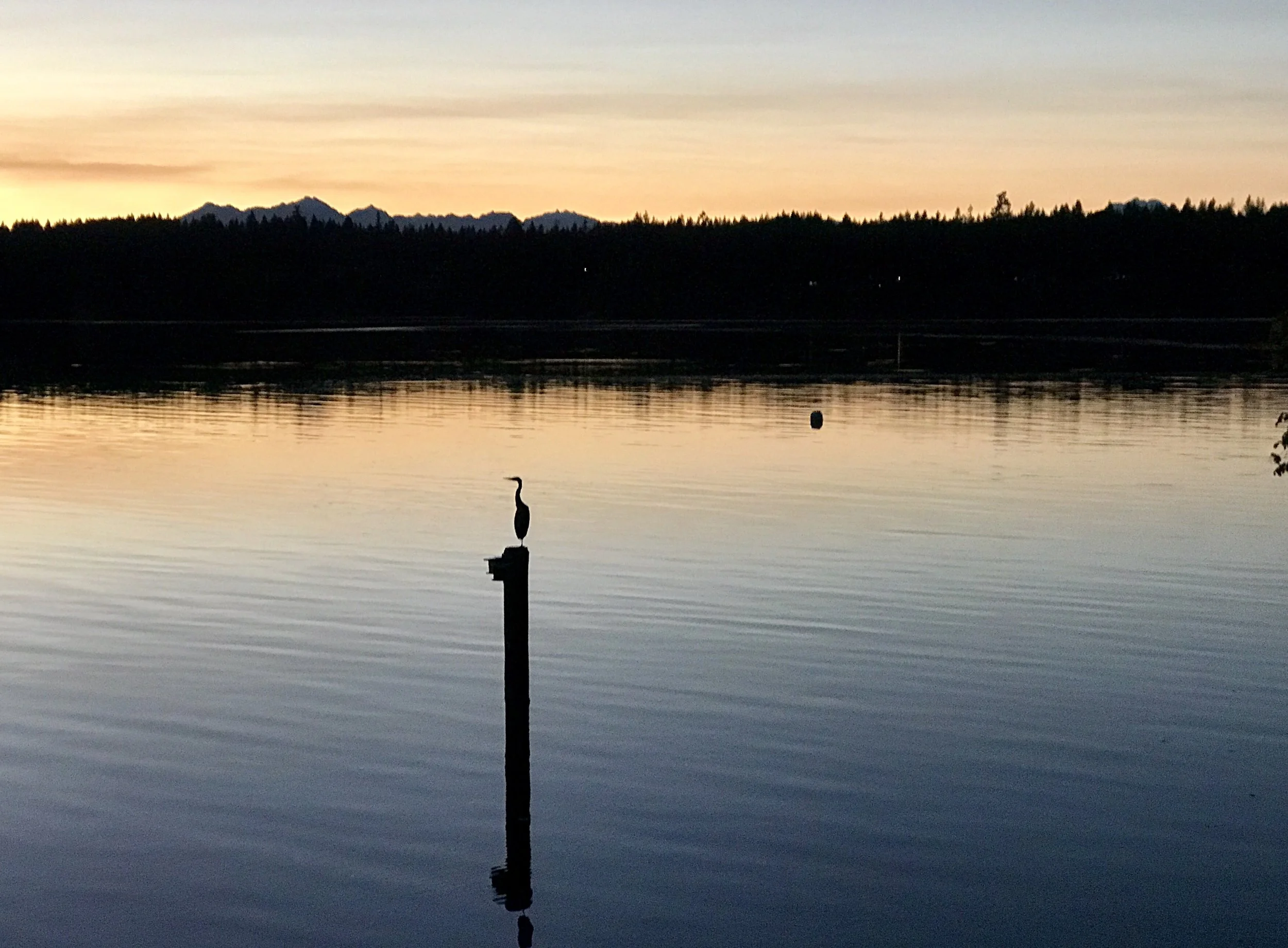
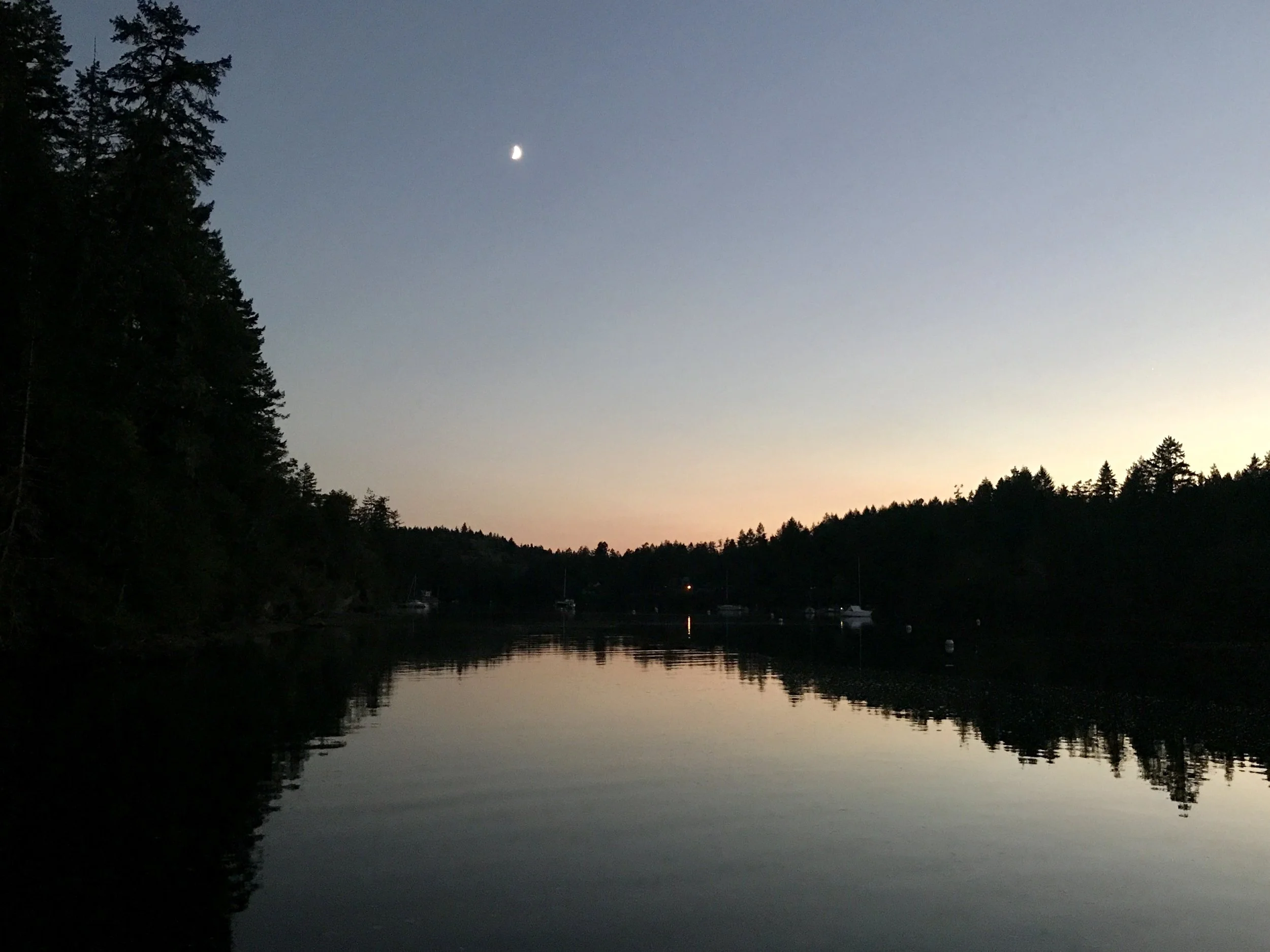
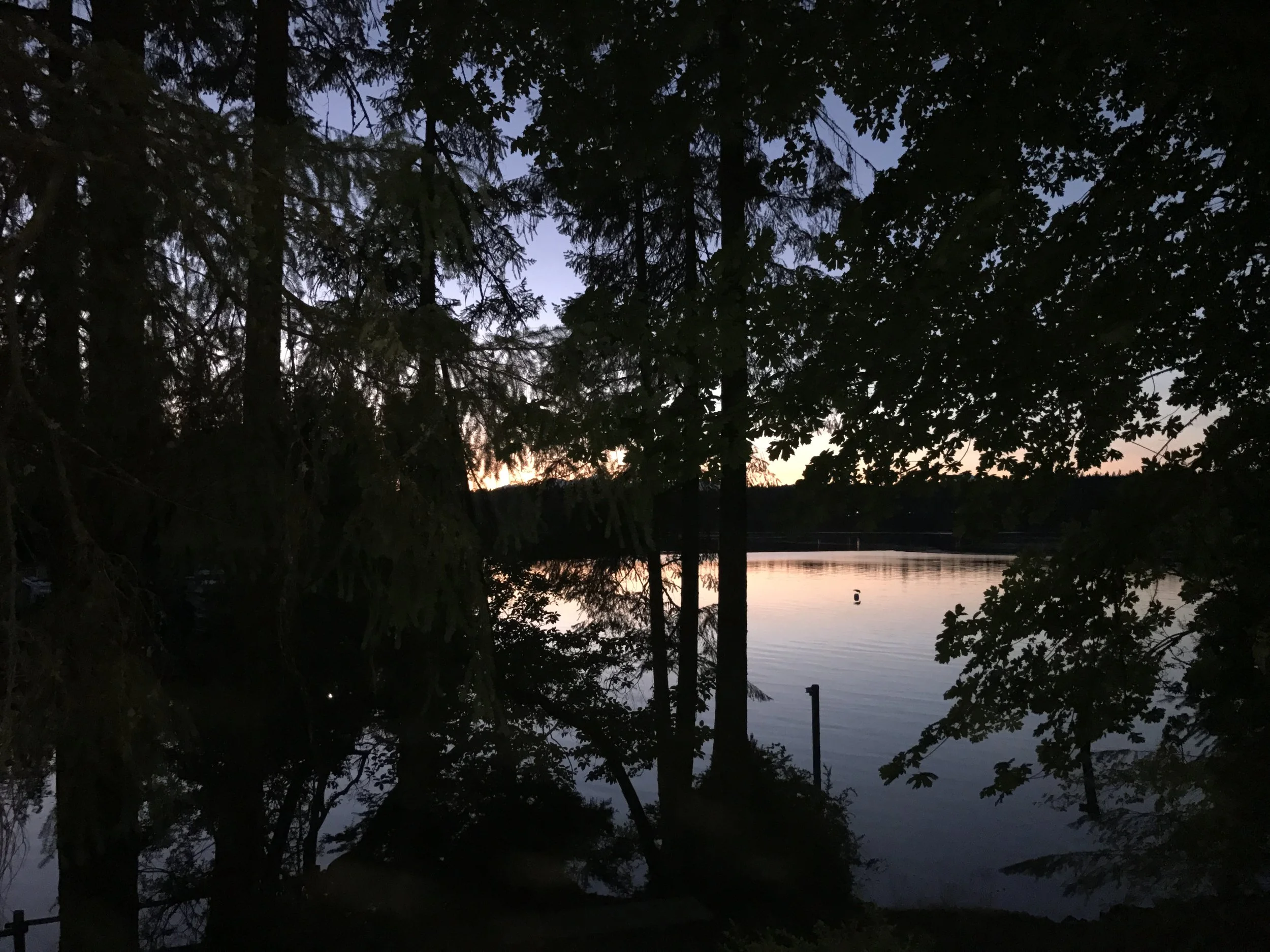
The pictures below were all taken at Jerrel Cove State Park on Harstine Island about 40 miles from Seattle. Because I've been having some problems with my bike computer, I don't have an accurate record of maps to share. Perhaps I can do this on my way back from Seattle to Portland. In any case, I'm having lots of fun.
More anon,
Michael
Portland to Seattle on an ultralight folding bike, Post 1
Some of you may remember I had planned to be cycling across Newfoundland about now. Well, life doesn't always go according to plan. I couldn't quite get myself out of New York City once I returned from my Blue Ridge trip in late June. For one thing, the weather remained quite pleasant there all summer (go figure - the second hottest July globally on record), so it didn't add to my desire to flee. For another, I decided I needed to deepen (once again) my ties to my immediate community. One thing that results from about not being in a place is that it becomes less and less the community through which one experiences identity. As banal as that thought is, I decided (once again) that I love New York City and wanted to give it some attention so that returning to it the next time I left was an even bigger pleasure. And of course NYC is often deeply rewarding to anyone who decides to romance it. It's a glorious example of humankind at its best, worst and most intense. It's a cauldron of life, and if one loves being alive, on some level one cannot help but love New York.
And, sooner or later, one needs to leave it. Some weeks ago, I was gripped by an unrequited fantasy - to outfit my Brompton folding bike so I can tour on it... the advantages are numerous (as are the downsides) and I've been thinking about doing this for several years... However, the only bike shop I know about (and I think I'm right in my analysis) that coverts Brompton to a gearing level that approximates a touring bike is Clever Cycles in Portland. Well, before I thought about Newfoundland I had been thinking about the Pacific Northwest (and cycling through Glacier National Park, another unrequited fantasy), so it wasn't a big step to decide on Portland. Glacier will have to wait, but earlier this week I flew from NYC to Portland (gate checking my folding Brompton), and arrived at Clever Cycles for the gearing upgrade.
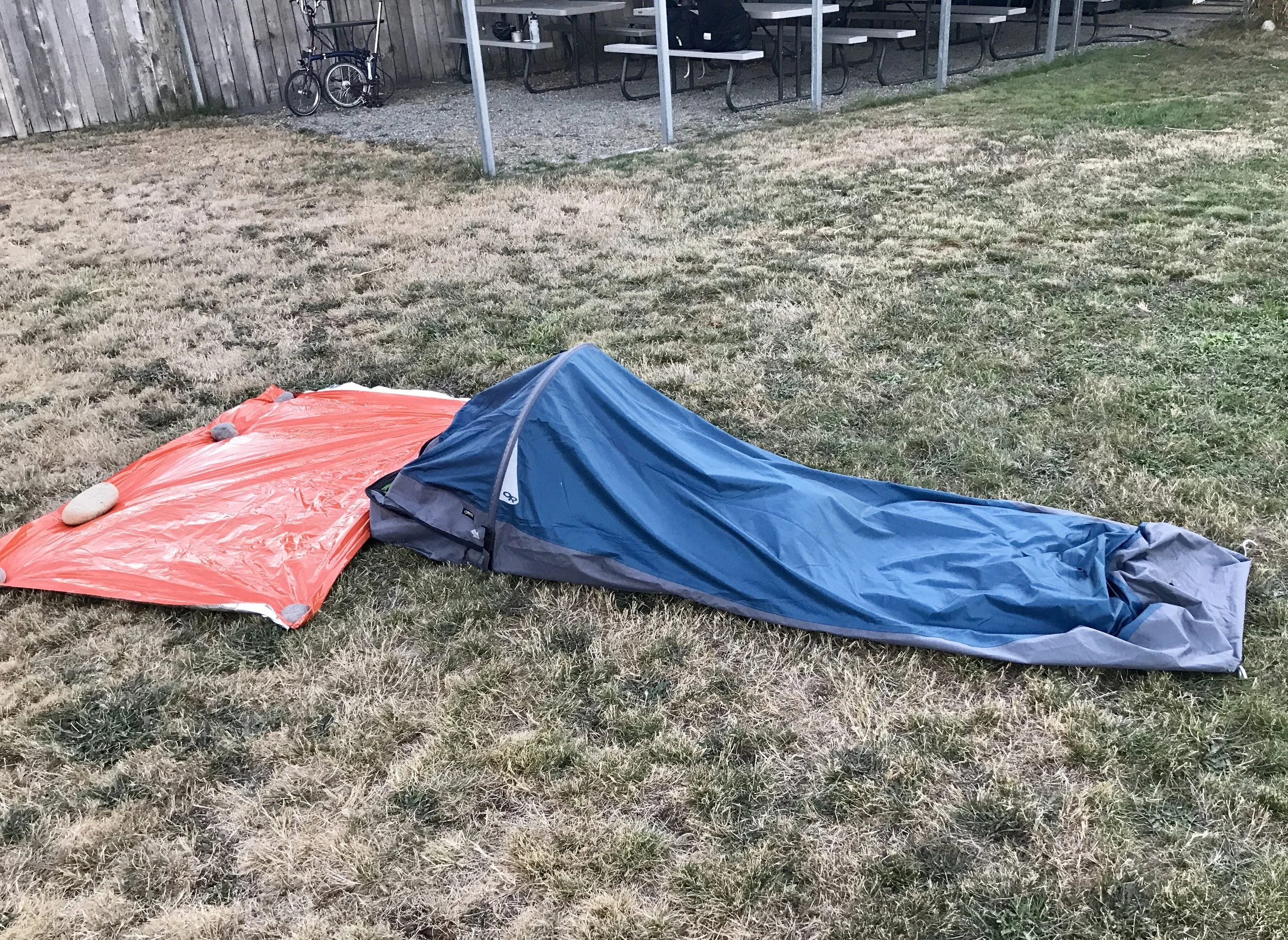
The shop was great, although several days later about 140 miles out of Portland I'm having some gearing issues that I cannot - so far - reconcile on my own. But I know that when I get back to Portland next week the good folks at Clever Cycles will help me... in the meantime, I'm in my way to Seattle (which is about 200 miles from Portland) to visit my dear friend Jeff Hart from my college days. What a pleasure that will be! So, I'm limping along at 6 or 3 or 9 gears depending on the moment with 18 (or is it 16 inch?) wheels and two carry bags. The weather has been lovely and I'm testing out a lighter sleeping pad and bag, and an Alpine bivouac... It's pretty simple and I've had two great nights sleep already in this crazy little Gortex sack.
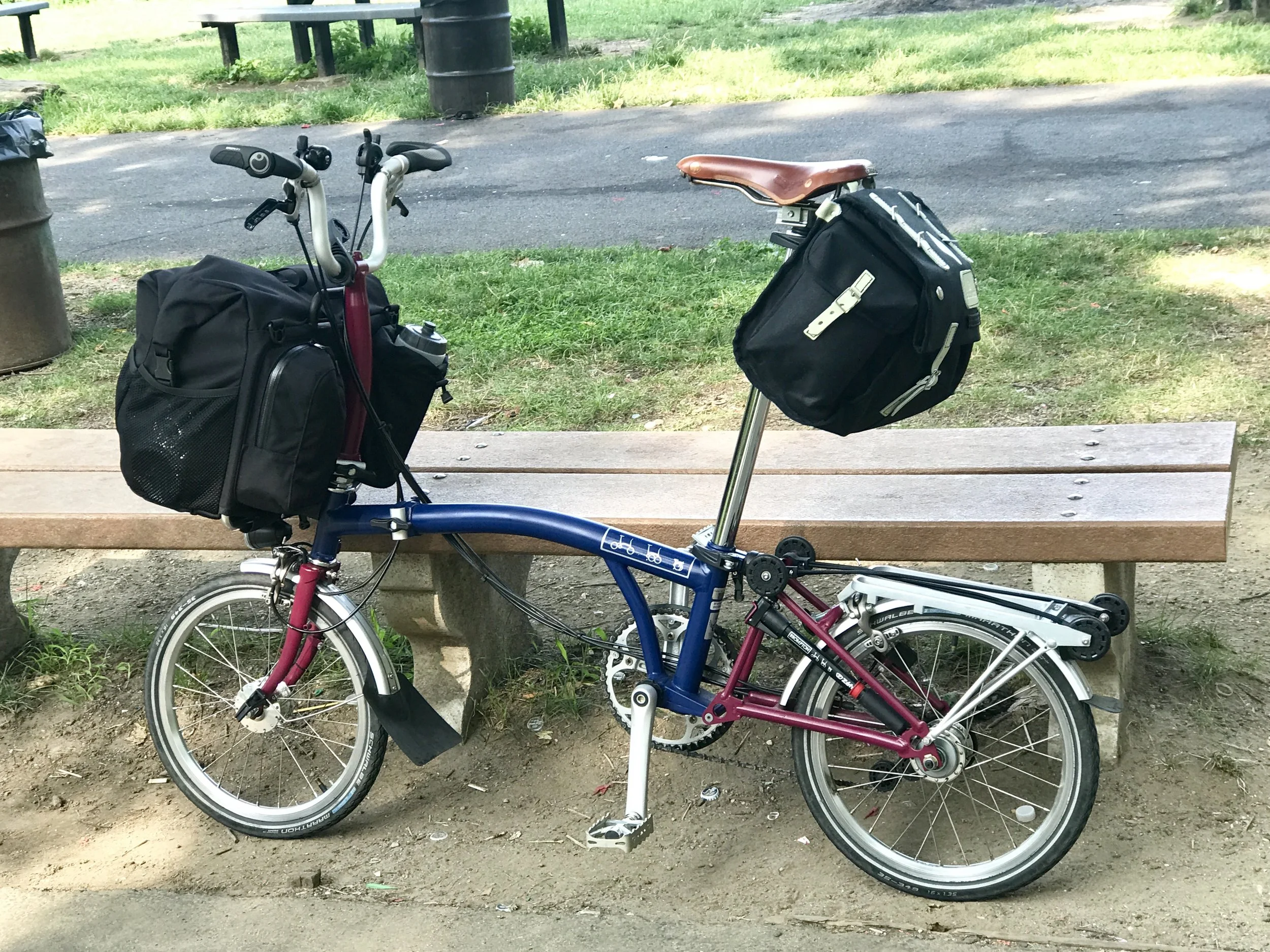
My bike in NYC on the way to the airport. It no longer has the bike rack... I removed it to reduce weight... it now looks like this.
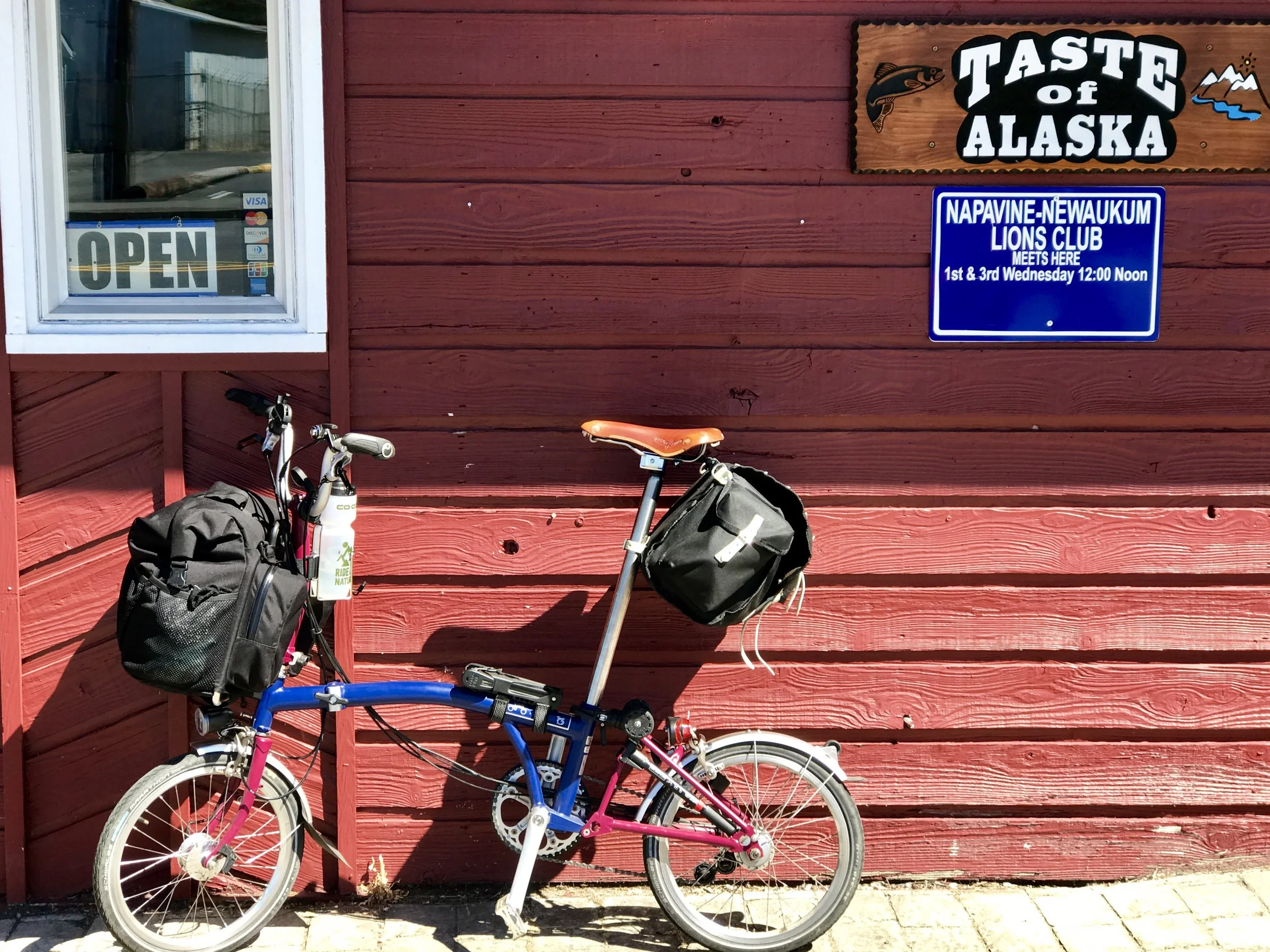
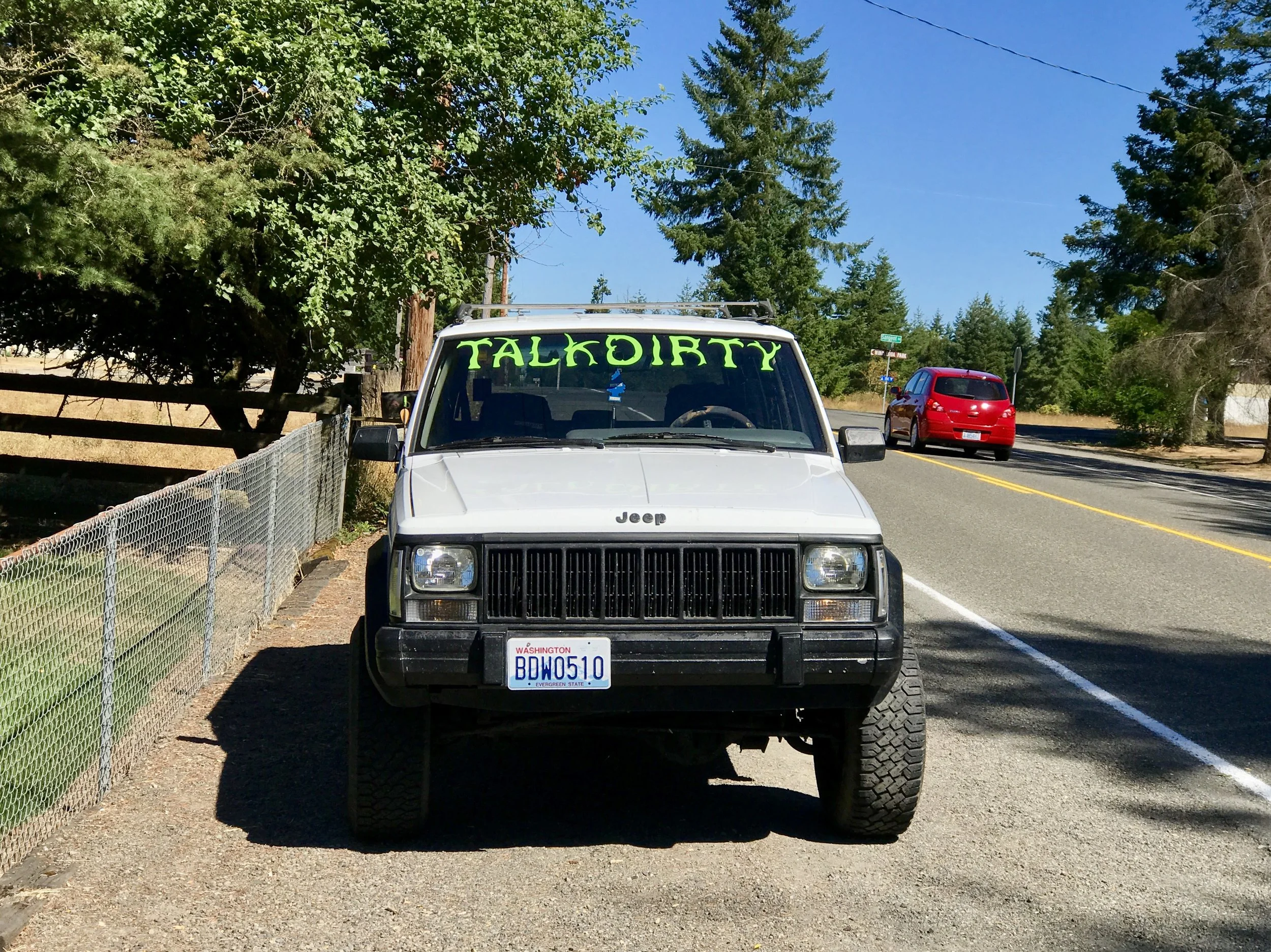
I am not able to send maps of my route because my bike computer broke. I hope to fix that problem tomorrow.
More anon,
Michael
Blue Ridge Finale, Post 10
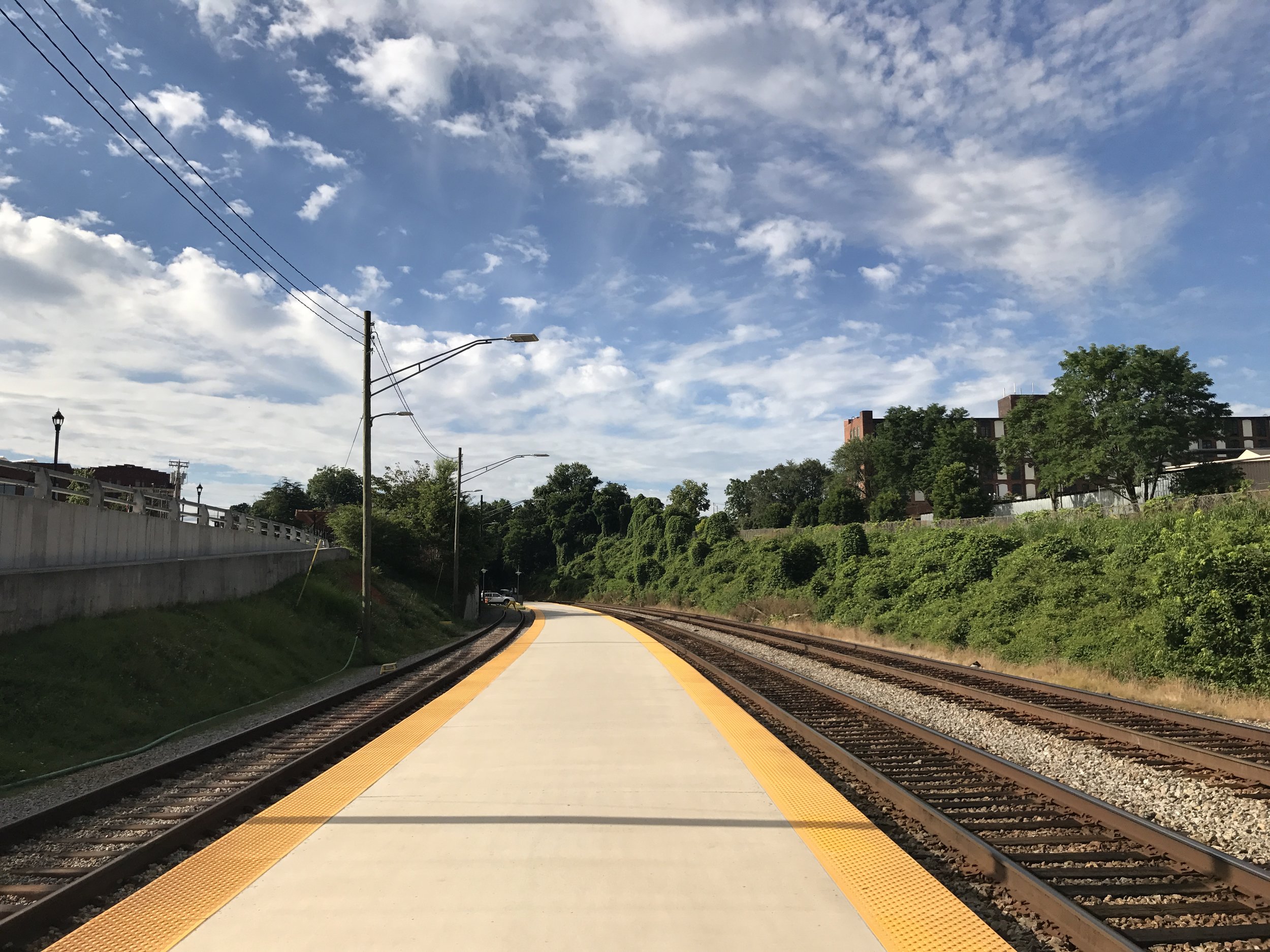
Amtrak platform, Lynchburg, VA
I apologize I didn't write this final blog on the Amtrak train back to NYC from Lynchburg, Virginia, as I promised. But I am writing it now, and although it is not directly about cycling in the Blue Ridge, it owes its origin to the heat I experienced as I biked there, as well as to the recent heat wave in the American Southwest.
There's nothing like discomfort to make one pay attention. I've had heat rash before in small doses, but never as debilitating as I experienced on this recent tour. It got me to thinking about what other kinds of challenges might lie in our futures as warming trends increase. As neither a health professional nor an environmental scientist, my direct knowledge about what may happen is limited, but as someone willing to spend time in natural (i.e., unconditioned) environments, I think I have a personal experience worth sharing.
When cycling, one cannot help being aware of car traffic. And on most days, one cannot help being aware of how - in America at least - drivers are now almost always in hermetic spaces, often with windows up and the AC or heat on, providing them with a comfortable atmosphere free of dust, humidity and a pleasant temperature somewhere between 64 and 72 degrees, depending on preference. I know this because as loudly and obnoxiously as I might yell at drivers that pass by me uncomfortably close and/or fast, no one hears me. Seriously. And I can yell very loudly.
Newer motels mimic the comfort of cars (or is it the other way around?) and many generic (and newer) chain motels are built with windows that don't open and with PTAC units that allow one to set the temperature exactly where one wants (this reality may have something to do with why I prefer older mid-century motels, where windows can be opened).
It's an opinion I cannot verify, but I suspect the growing ubiquity of conditioned spaces in the developed world is part of what makes climate change denial still possible. After all, how can one appreciate a changing climate if one is rarely in it?
But the general science of climate change is nether hard to grasp nor out of the realm of fundamental physics. Greater concentrations of certain gases in the atmosphere causes air to retain more heat. Carbon dioxide is one of those gases, as are methane and other kinds of fluorocarbons. And emissions of these gases remain on the rise. It is true that there is some evidence of certain kinds of emissions leveling off, but to use a health metaphor - slowing down a cancer buys you time, but not a cure. Yet, our earth has a lot of natural healing mechanisms although they are close to being played out.
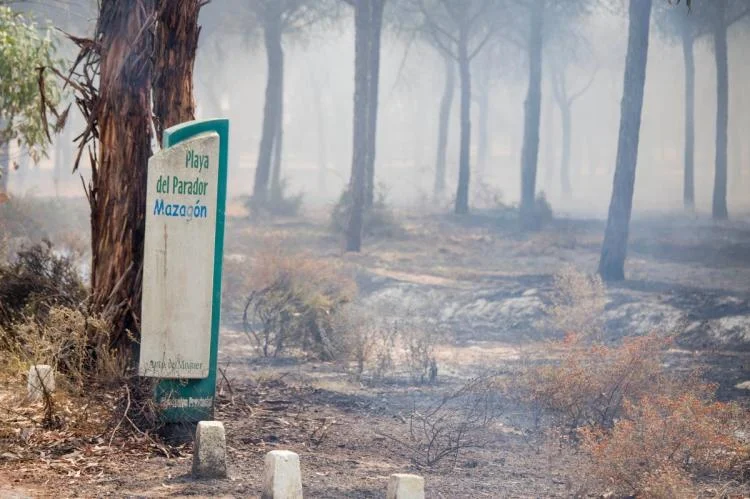
The recent catastrophic forest fire in Portugal.
Of course, no one likes a chicken little, and some of my readers get upset by my continued insistence that we not sugarcoat our situation. Yet, if like me, you are curious about what's likely to happen depending on different emission scenarios, there are some excellent reports to read of the most predictive climate science available. For Americans, there is the American National Climate Assessment. Canadians and those Americans who want to think more about the continent (sans Mexico, where assessment materials aren't as developed), there is the Canadian Climate Assessment. And globally, one can refer to the World Meteorological Organization Climate Assessment.
Here is a list of the links above (in order mentioned) for your convenience.
Recent heat wave in the American Southwest
Worldwide heat waves in our future
Heating trends even if Paris Accord goals are met
American National Climate Assessment
World Meteorological Organization Assessment
More to come as my next trip unfolds. I hope you enjoyed following me on my recent Blue Ridge Cycling Tour.
Best, Michael
Blue Ridge, Post 9
Days 14 and 15, and an unexpected conclusion.
Day 14: Check out my road cycling activity on Garmin Connect.
https://connect.garmin.com/modern/activity/1818918615
Day 15: Check out my road cycling activity on Garmin Connect.
https://connect.garmin.com/modern/activity/1818918801
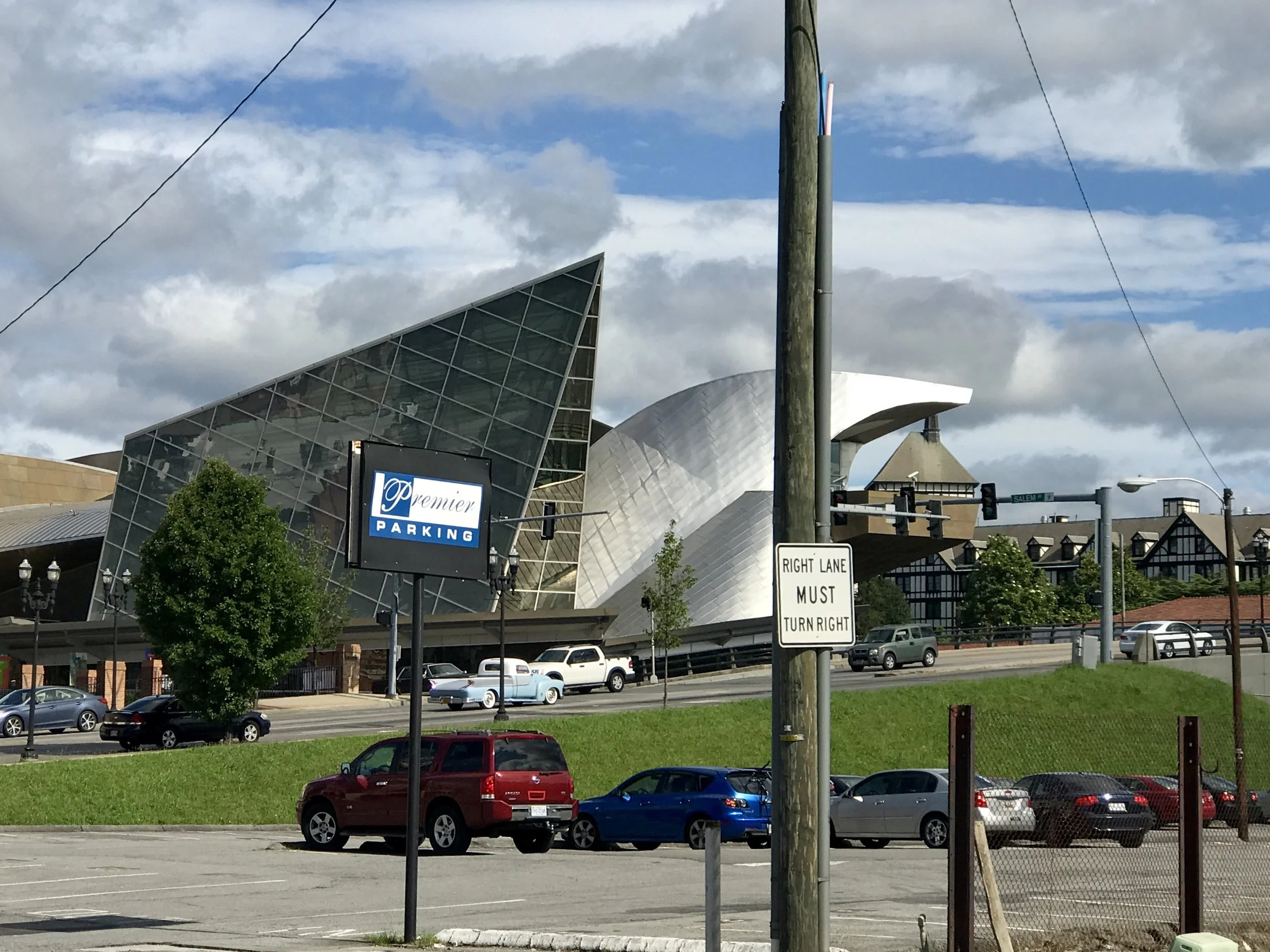
A Geary in Roanoke!
My progress out of Roanoke yesterday was slow at best; I stopped at a bike shop to finesse my front derailleur, get a lesson on repairing cables, and solve a bike shorts heat/sweat issue - which I did, with a great cream, which interestingly enough, is a called Button Hole. I recommend it with great enthusiasm. Greatest thing for cyclists ever invented.
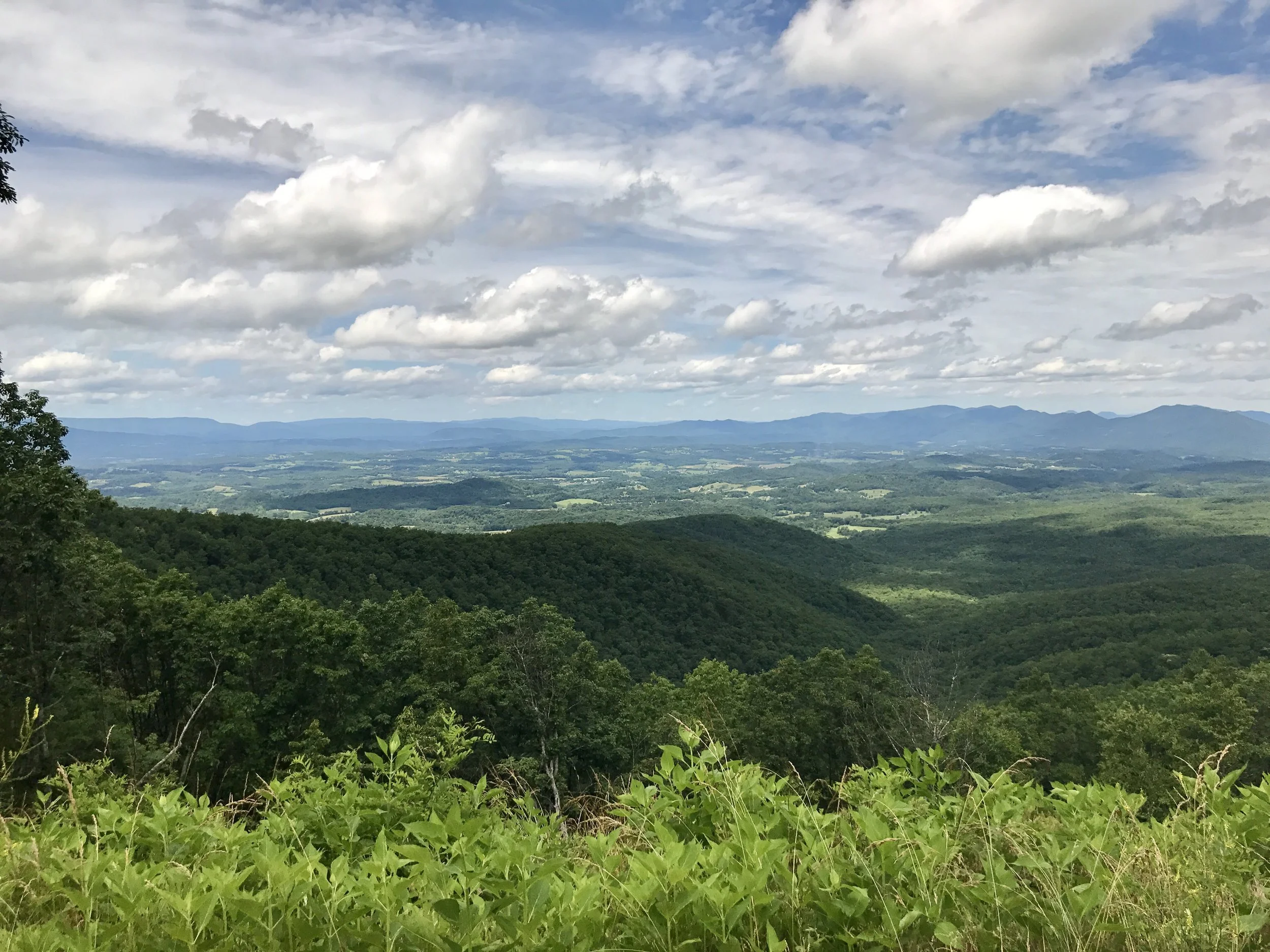
One spot where the Appalachian trail crosses the Blue Ridge Parkway.
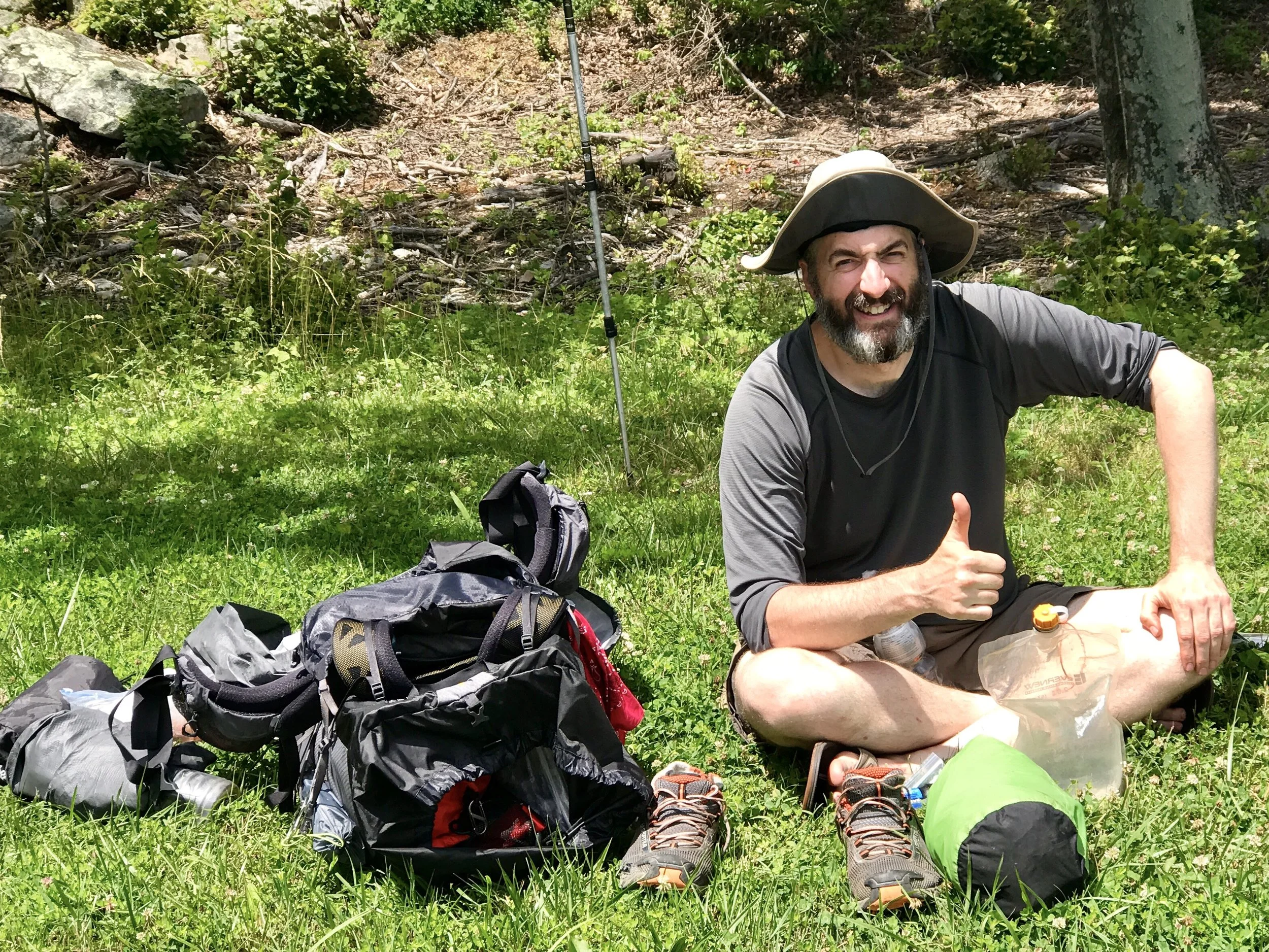
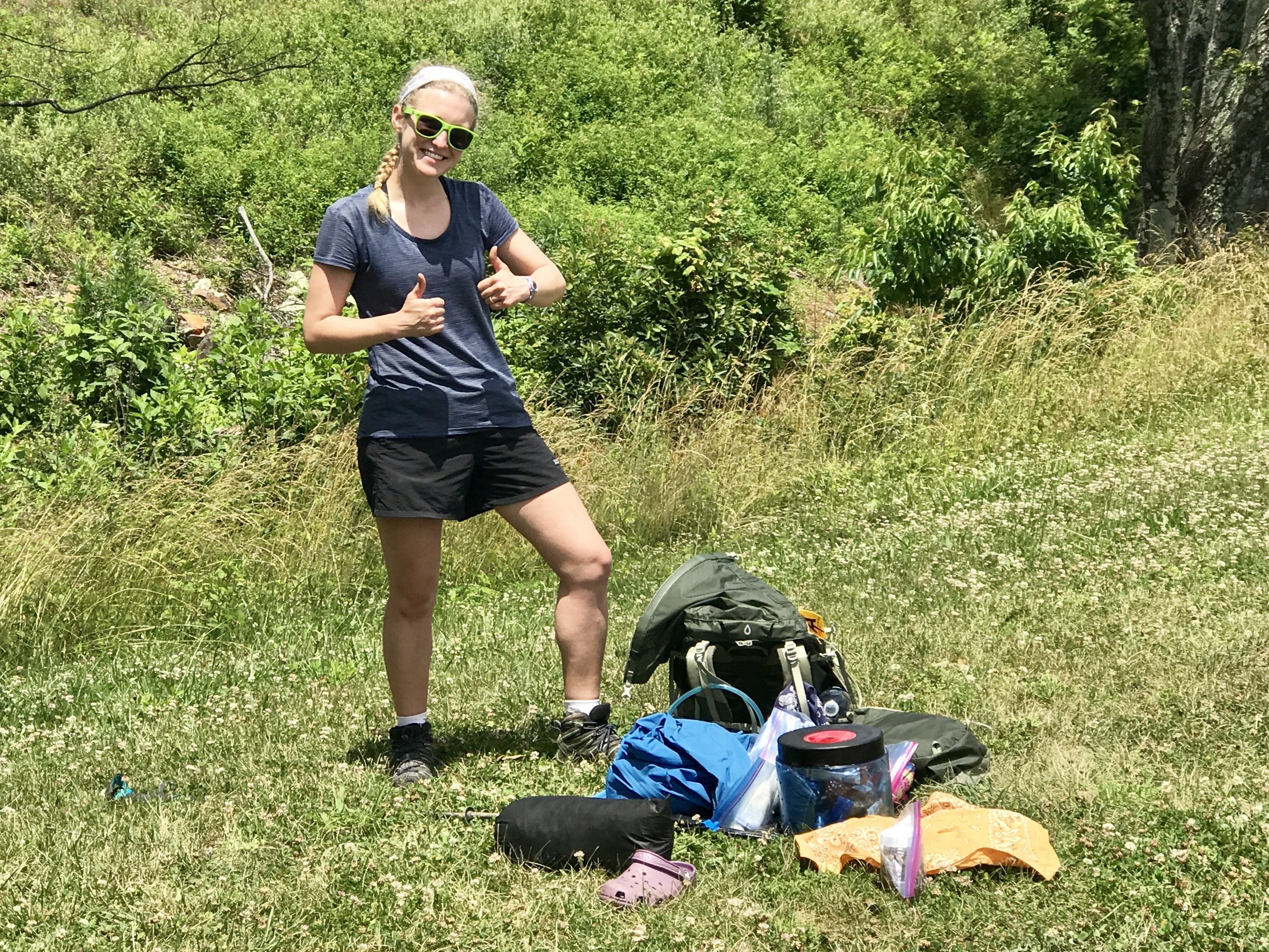
After two hills that absolutely wore me out I still had 25 miles to go, according to a plan I made yesterday morning. I stopped at an overlook and was greeted by two hikers on the Appalachian Trail, which crosses this section of the Parkway in Virginia multiple times. Although I didn't get their names, I did get their pictures. Even they had been hiking for 6 weeks already, they were happy campers, as you can see.
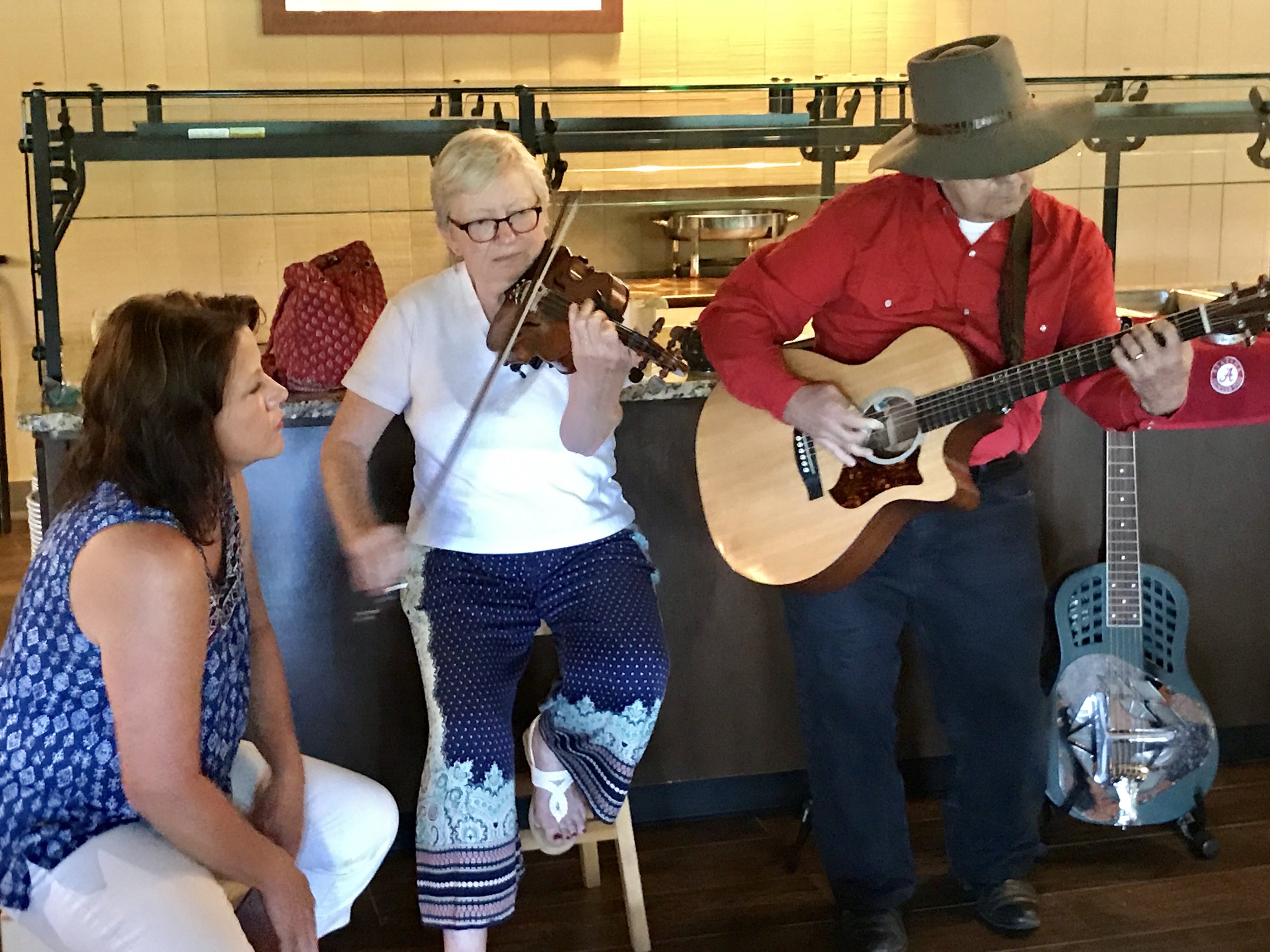
I had one of the toughest hills on the Blue Ridge right ahead of me, when I came upon a National Campground with a great restaurant attached to a lodge featuring a soulful blue grass and folk band. The restaurant is one of three that I've seen in 300 miles on the Parkway. And I was starving. So I stopped for the day. There was no shower at the nearby campground, and I made do with a spot bath, which after a long day of cycling, was not my preference. But the weather, although hot, was pretty pleasant. The humidity from Hurricane Cindy had lifted, so remaining a bit sticky was tolerable.
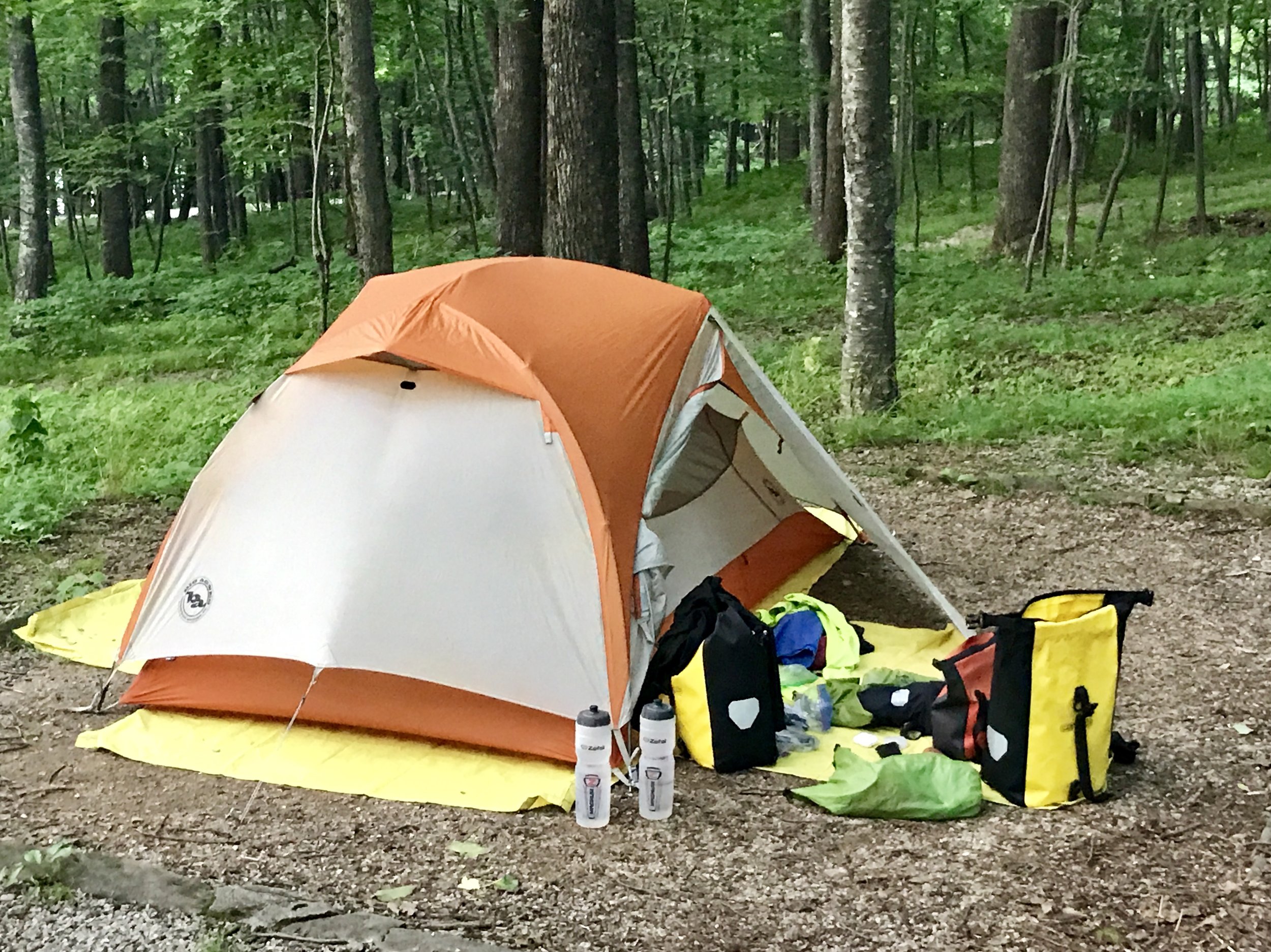
Home, sweet home.
Please understand the lack of amenities on the Blue Ridge Parkway is not an issue if you travel in a car. In fact, the very light touch of humanity other than a simple two-lane road definitely adds to the Parkway's rustic charm. A quick five to fifteen mile ride off the Parkway (when it does intersect with another road) will usually find you food. But on a bike even five miles takes at least a half hour down the Ridge and at least two hours back up. This is not something an already tired cyclist does on a whim.
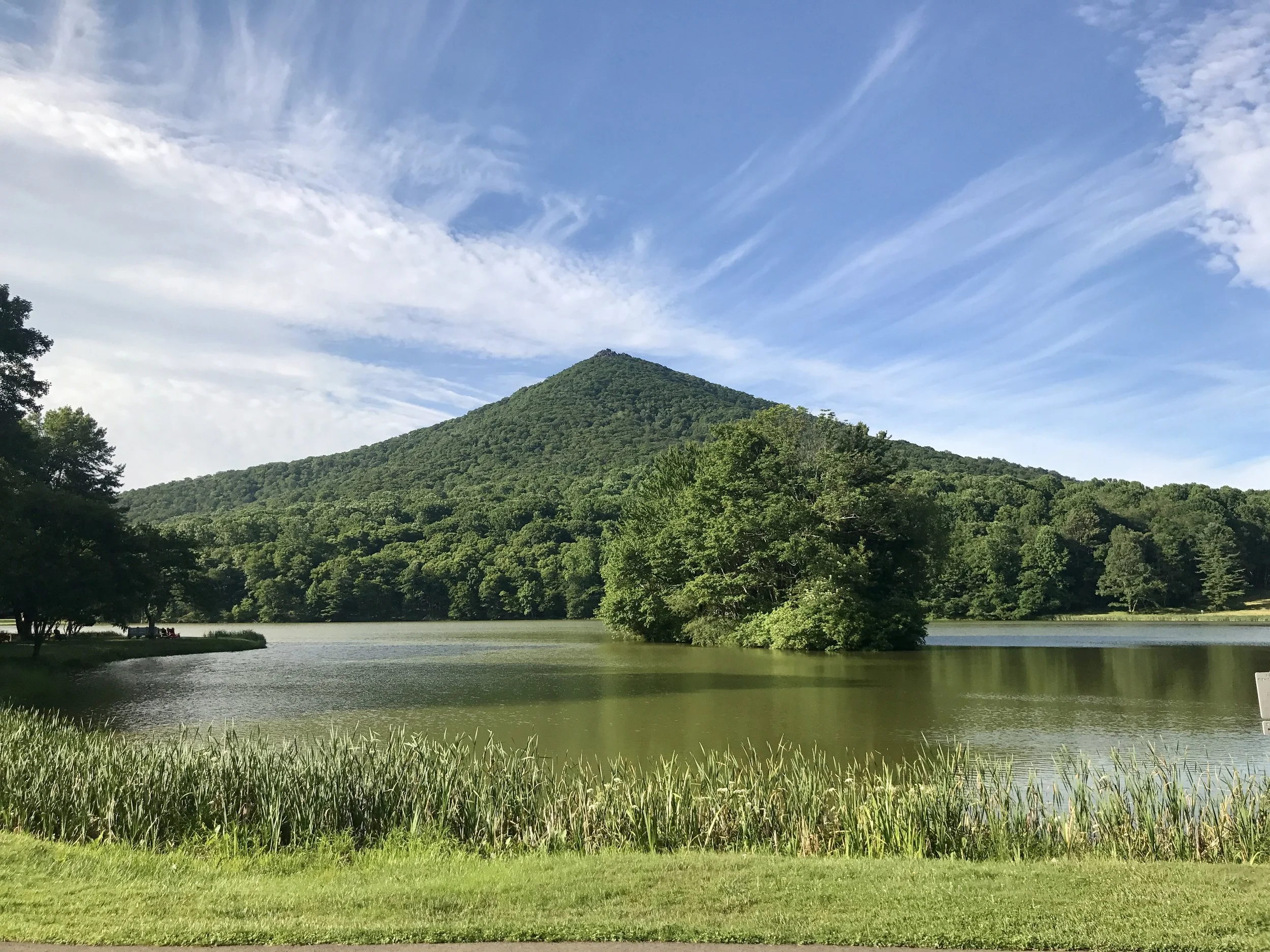
One of the Peaks of Otter.
But back to the lodge. The music was great. The food was fabulous. And the beer was sublime. There was no cell service and very poor wifi, so I reconciled myself to not writing a blog post that night. Contented, I went to sleep early in a tent at Peaks of Otter. Fyi, the word Otter, in this case, comes from the Indian word otai, which means Mountains, so I'm really at the peaks of the mountains. Or so my waitress told me.
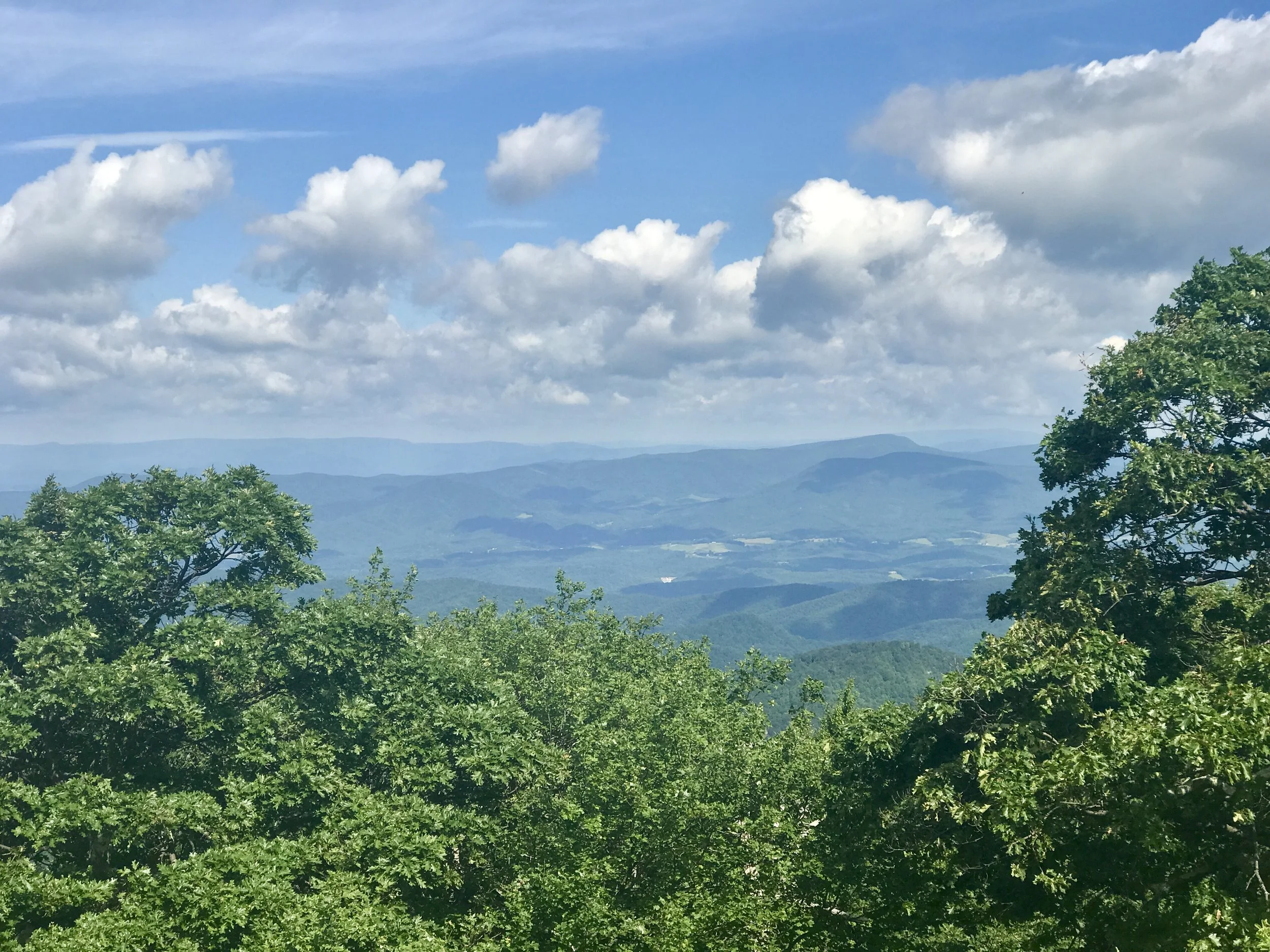
The view from Thunder Ridge.
I woke to an equally beautiful day. The lodge had a great breakfast buffet and I ate heartily in anticipation of a ten mile climb up to Thunder Ridge, the highest point on the Parkway in Virginia, and the toughest climb. The reputation is deserved. It took me several hours to make it to Thunder Ridge at about 4000 feet elevation, where I was rewarded with incredible views and a thirteen mile downhill ride at the most consistently steepest grade I have ever biked.
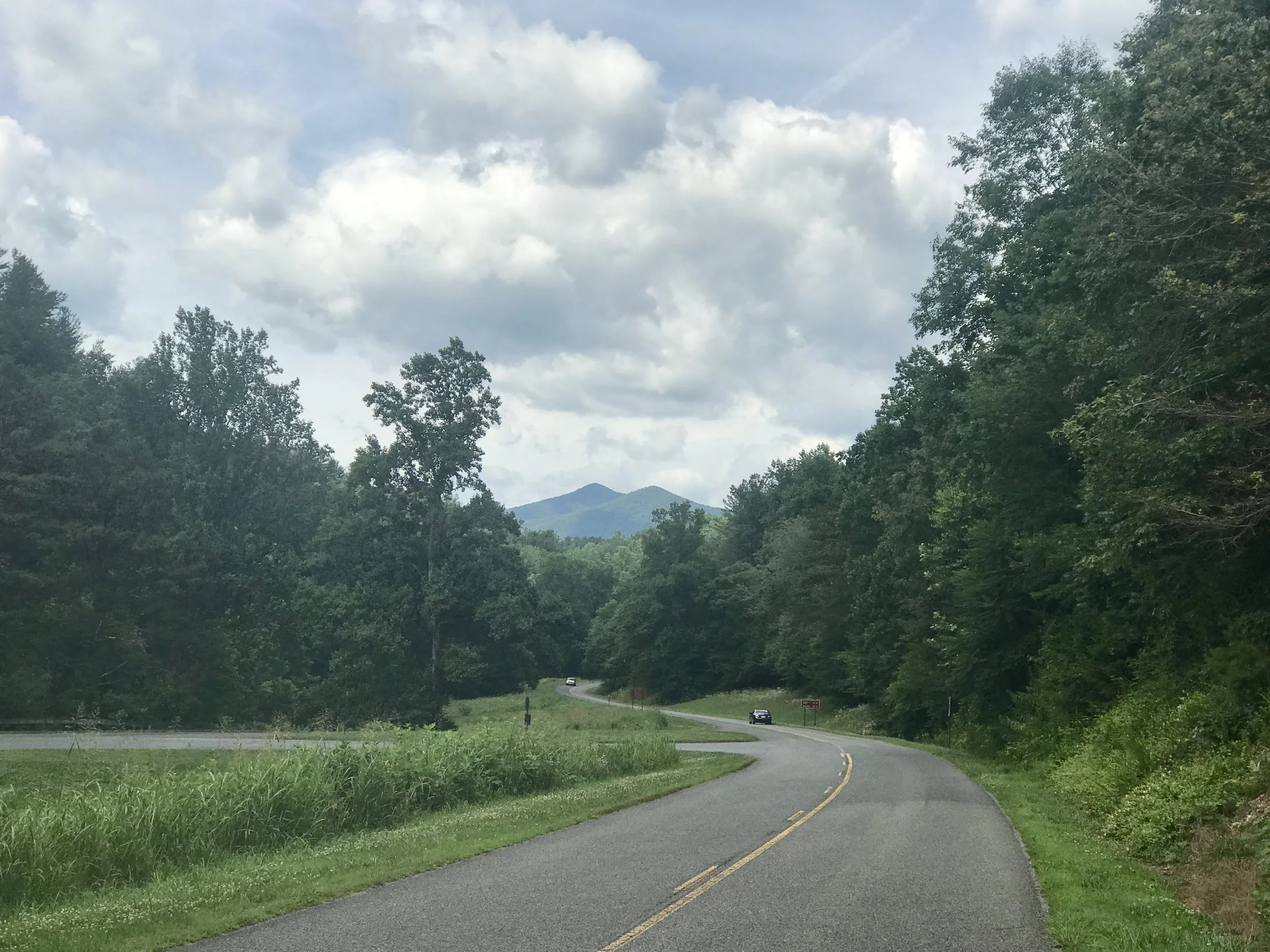
The view of the Peaks of Otter from the James River.
I flew, and tried not to overbreak to preserve my brake pads. By noon I was at the James River, which is the lowest elevation on the Parkway at about 460 feet. In another hour I had arrived at Otter Creek, the last campground on the Parkway before it ends about 60 miles north in Shenandoah National Park.
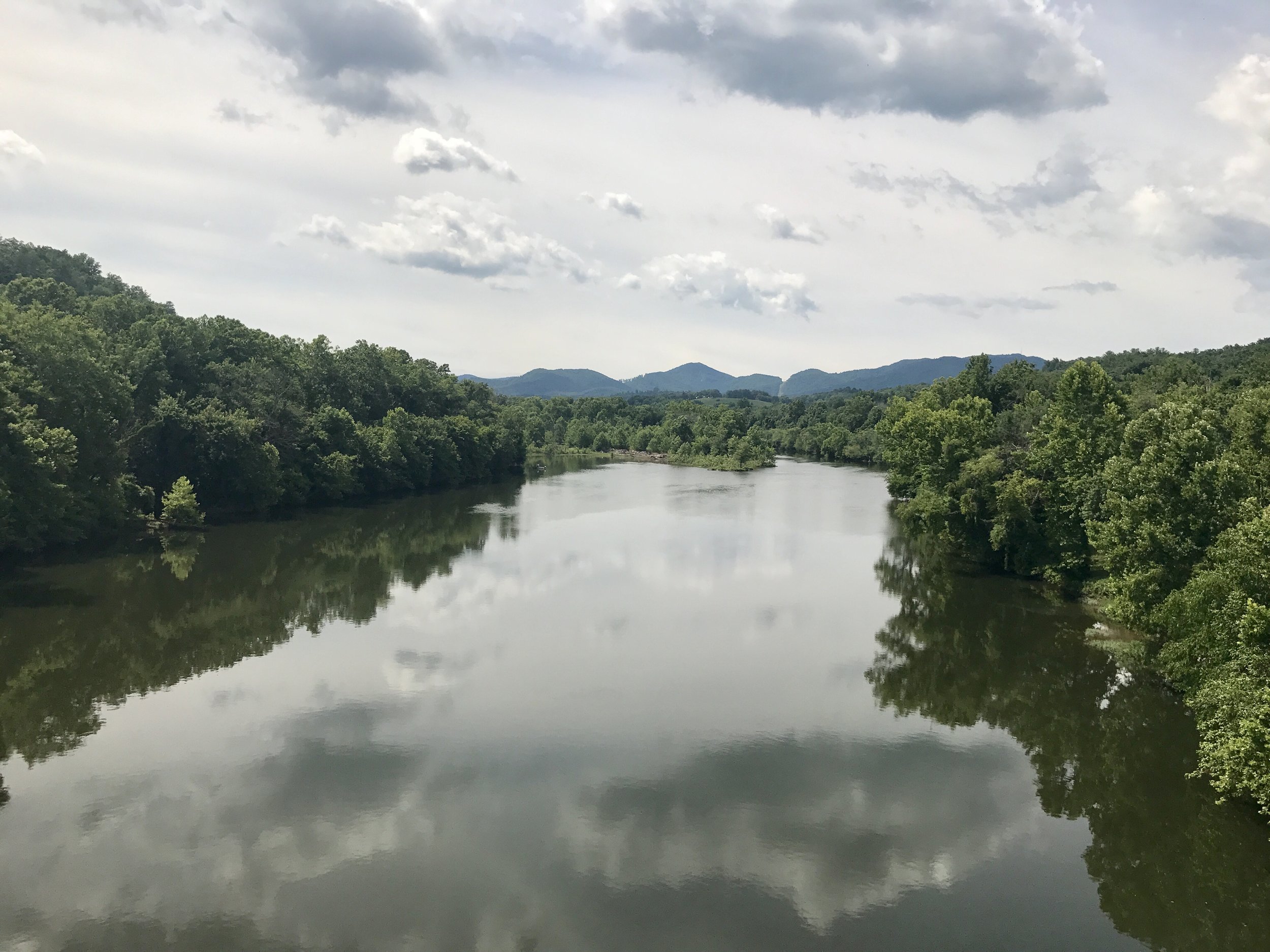
The James River.
I was getting hungry again, and although I had emergency food, I was hankering for another meal. I stopped at the campground to inquire about where I might find food. Turns out I was five miles north of a corner store that is only about a mile off the Parkway. Not so bad. And then I learned there were no more campgrounds and nowhere on the Parkway to get food until Shenandoah. Whoops.... Should I go back five miles, get food, spend the night at Otter Creek and make a run for it tomorrow to Shenandoah? If I did, would I make all 60 miles? There is one water stop on the way. The road is evenly divided between uphill and downhill runs. But I had been killing myself getting 45 miles in a day on the extraordinary hills of the Parkway. Could I do 60 plus miles without a good hot meal in my stomach, since snack food was all I was likely to find and be able to carry.
It meant not doing the last 60 miles of the Parkway, but after a lot of thought I decided to head down the Ridge about 25 miles to Lynchburg. After the Parkway the road would seem dangerous, but I could get food and lodging there, and figure out my next move.
Turns out that Amtrak runs a train called the Crescent between NYC and New Orleans that has the same roll-on biking service for $20 that the Silver Star does between NYC and Miami. So, although I was going to train it back to NYC from Washington, DC, it turns out I can do it from Lynchburg! So my endgame has changed, coming slightly sooner than expected. I'll spend tomorrow here checking out the town, and catch the train at 5:56 am (gulp) on Tuesday.
I hope to send a final post from the train (sadly, the current heat in Phoenix and Las Vegas is a harbinger of things to come - there's some great writing out there on the subject of coming heat waves - and I want to reflect on it a bit).
In any case, I hope you've enjoyed this short excursion into the the Blue Ridge Mountains. Look for more to come, as always.
Michael
Blue Ridge, Post 8
Day 13. Rain, humidity and heat do a heat rash make.
Check out my road cycling activity on Garmin Connect.
https://connect.garmin.com/modern/activity/1814910436
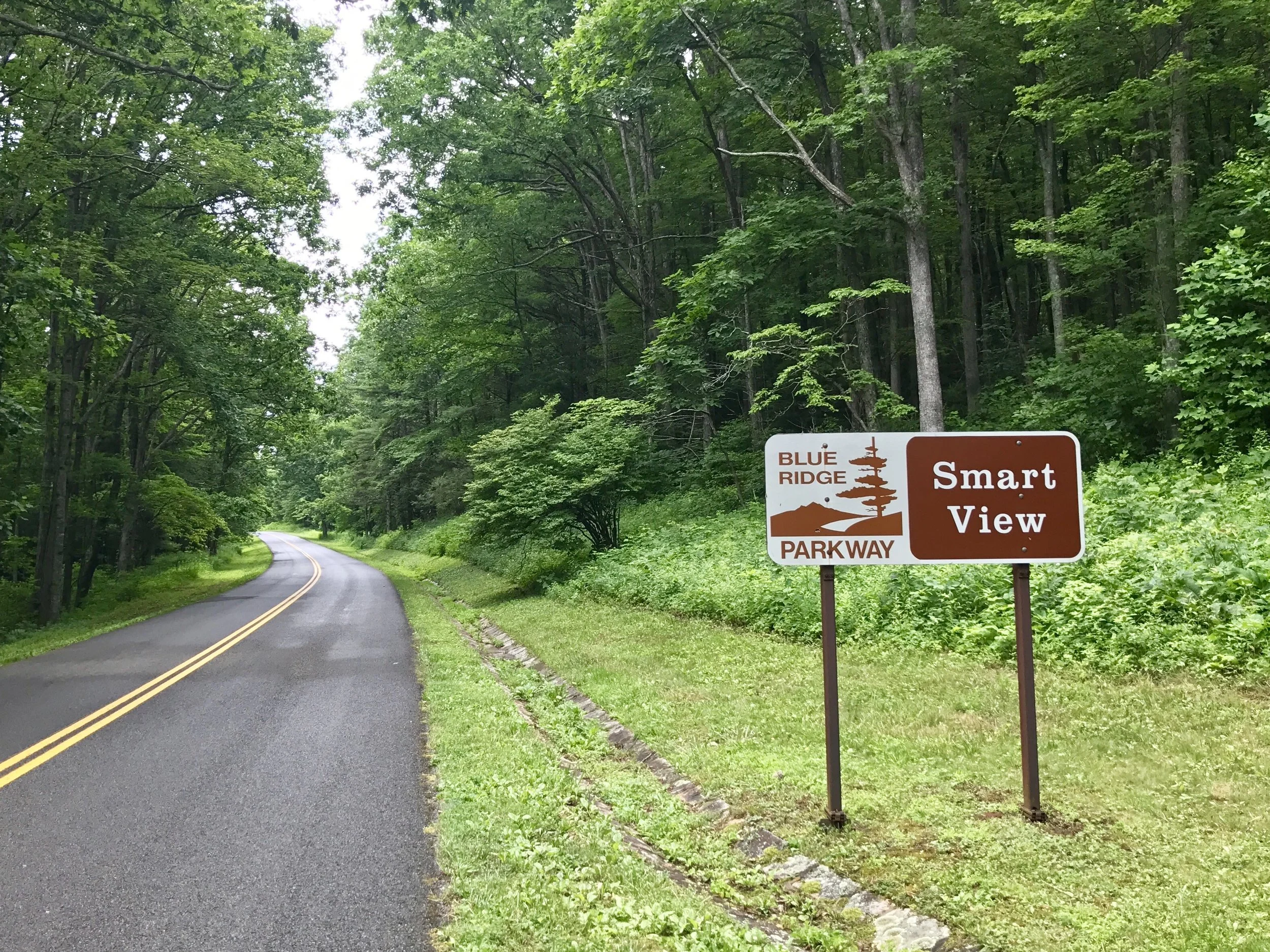
Good taste suggests that we don't disclose small health related problems, especially when we want the world to see us as capable adventurers. But I feel like I need to explain my paltry mileage stats, lest my readers think I'm lazy. Today I only covered 47 miles, the last 18 of them off the Parkway as I looked for a place to stay on a Friday night (knowing that there are so few places to stay outside of campgrounds that looking on the Parkway is likely to be unsuccessful on Friday and Saturday nights). Why not camp, you might be thinking?
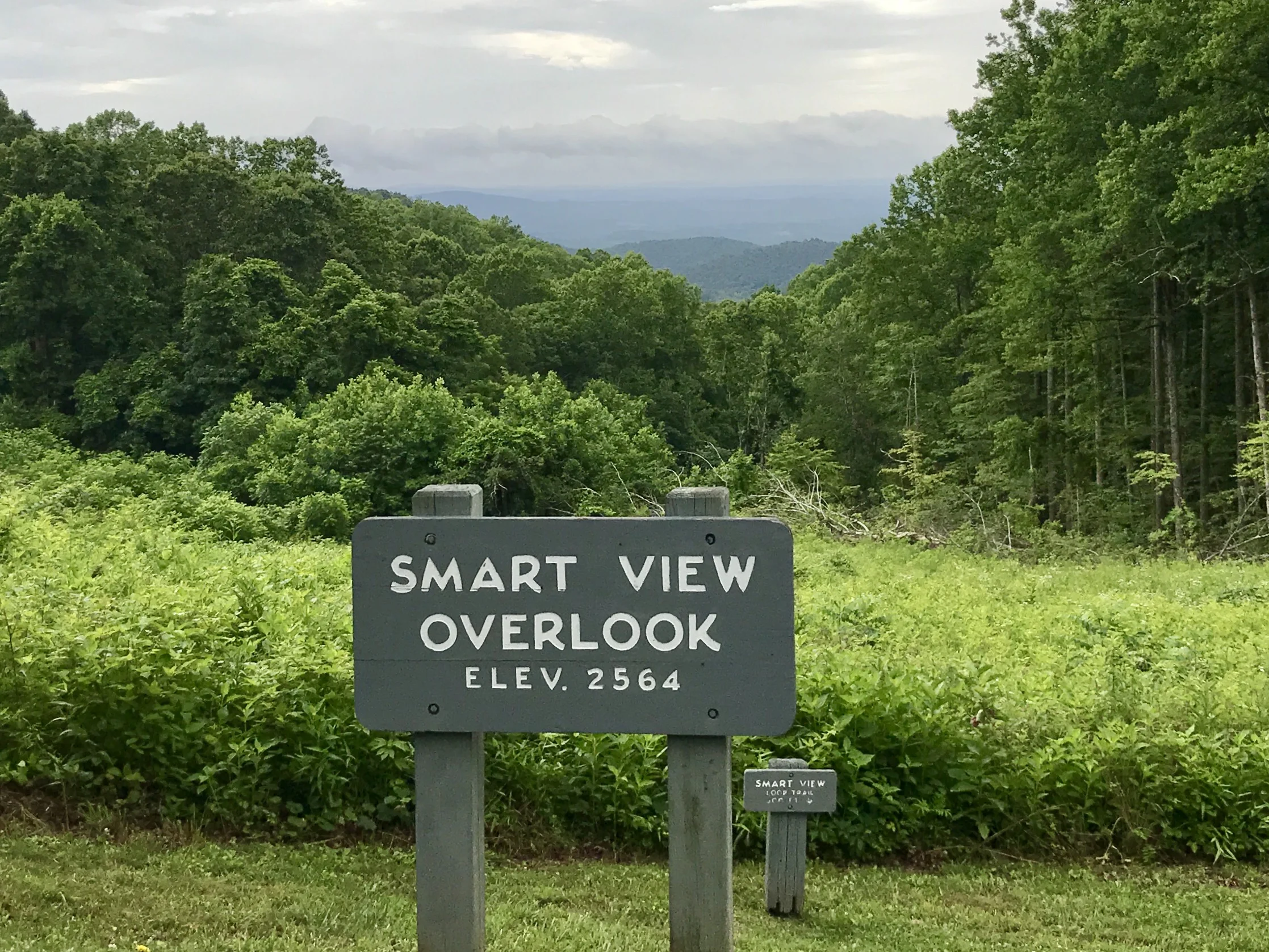
Well, I've been trying to figure out how hurricane Cindy is affecting weather over the Appalachians. It was supposed to rain on and off all day and into the evening, so I decided getting off the Parkway and finding an inexpensive motel in Roanoke was a good idea. Given how the access and egress roads work on the Parkway, I had to commit to that idea mid-day, and there was no going back.
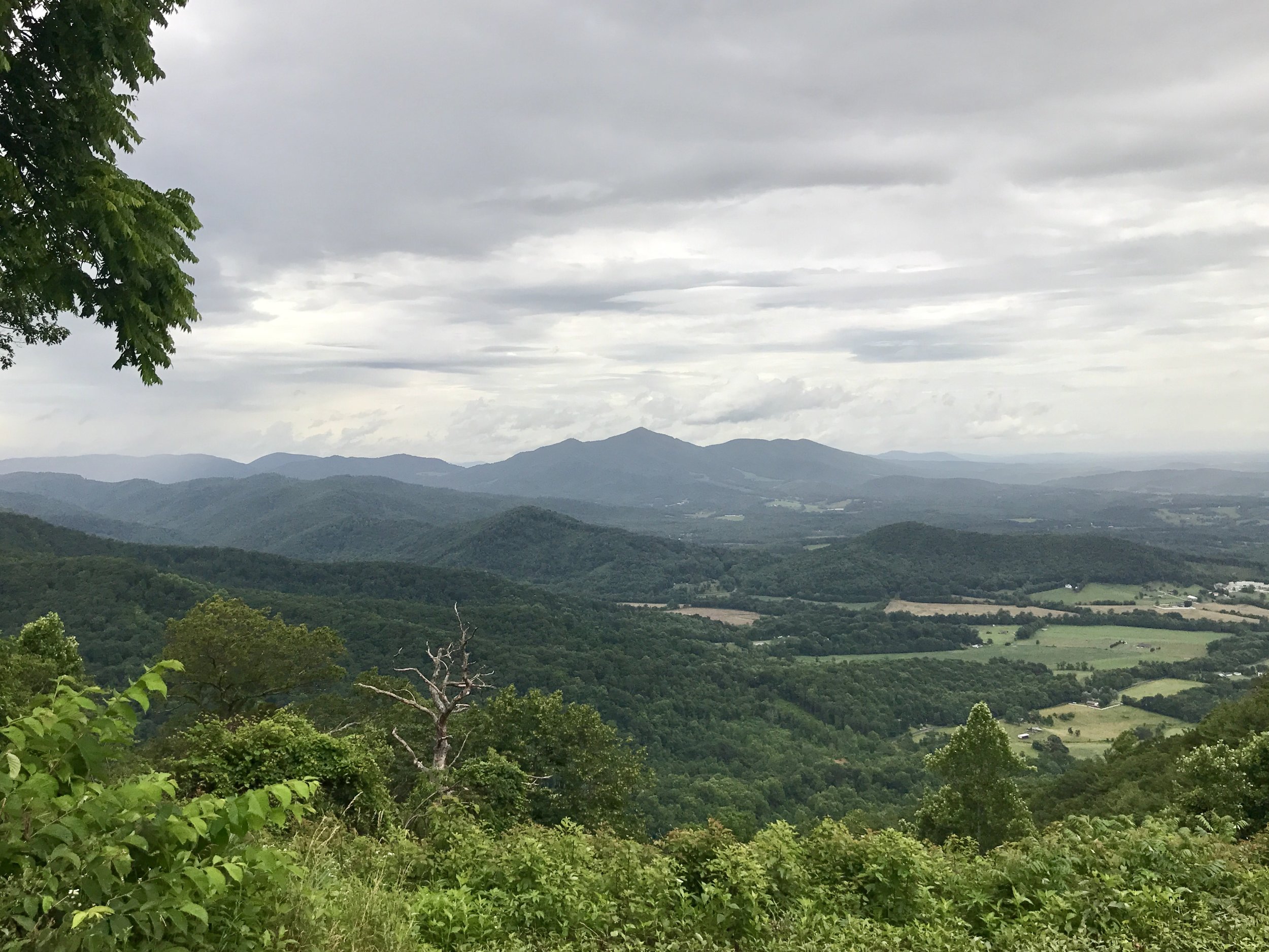
And then the unexpected happened (as it so often does). It became wildly sunny and oppressively hot - only mid 80's, but the humidity was so intense it made biking a bit of a struggle. But what is really getting to me is a new physical challenge - in this extraordinary humidity, I seem to generate random and suddenly occurring (and just as suddenly disappearing) heat rash. Imagine navigating hills and traffic with random bursts of itching, and you can imagine a guy who alternates between pleasure and sudden irritation, all at 5-20 miles an hour. In one way, the irritation gives me energy. But in a deeper level, it wears me out. So I found a run down Ramada in a weird location that has a great PTAC, and I am enjoying AC and far less humidity. And the rash has abated. But I do wonder how we humans will cope as this kind of heat becomes more routine. I had a similar thought last summer as I passed through southern Utah on a bike and my Garmin registered 117 degrees in the sun. Will there be parts of the US where large swaths of the country will be too dangerous to be in anything other than a conditioned space?
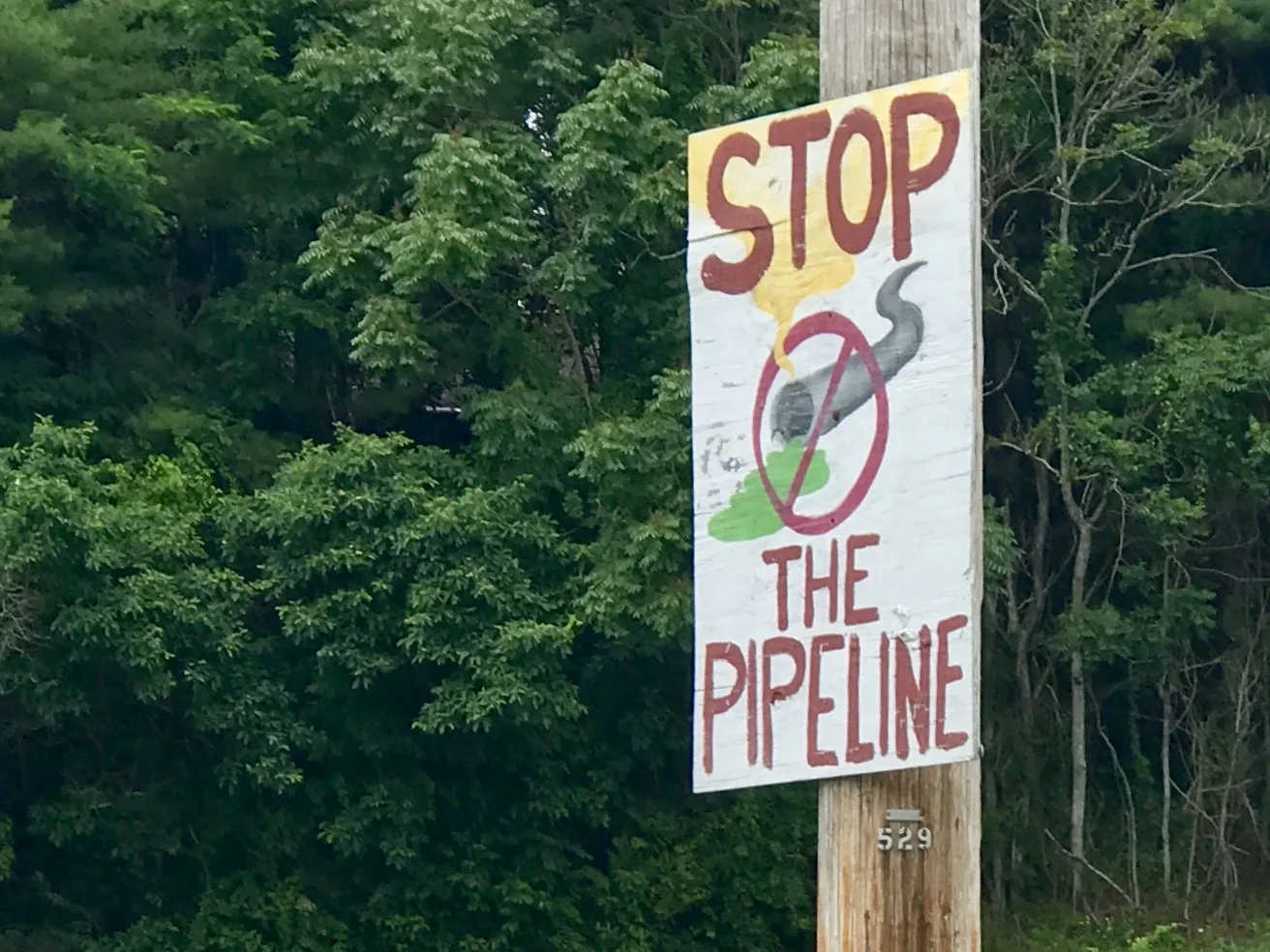
No doubt the readers of this blog understand the basic science of greenhouse gases and climate change, but as I travel around the country, I realize that many people do not. And that's forgivable - our President and the heads of the EPA and Department of Energy don't either. Yet, today I was pondering the reality that in just 250 years we have gone from 280 ppm to over 400 ppm of CO2. The last time carbon levels in the atmosphere were that high was at least 800,000 years ago. CO2 levels have never escalated as quickly as they have in the past few centuries, and especially so since about 1950 (over 25% in the last 60 years). To a thinking person, this is pretty strong evidence that humans are causing the rise. In any case, geological time is slower than human time, so we have no idea how the physics of our current greenhouse gas levels will play out. To be blunt about it - we are in uncharted territory. Adventures are great - but we may not like how the Great Anthropocene Climate Change adventure ends.
But, on a more human scale, I'll get up tomorrow and brace the heat as I pedal back up onto the amazing, pristine, remarkable, pastoral Blue Ridge Parkway. I hope it isn't too hot.
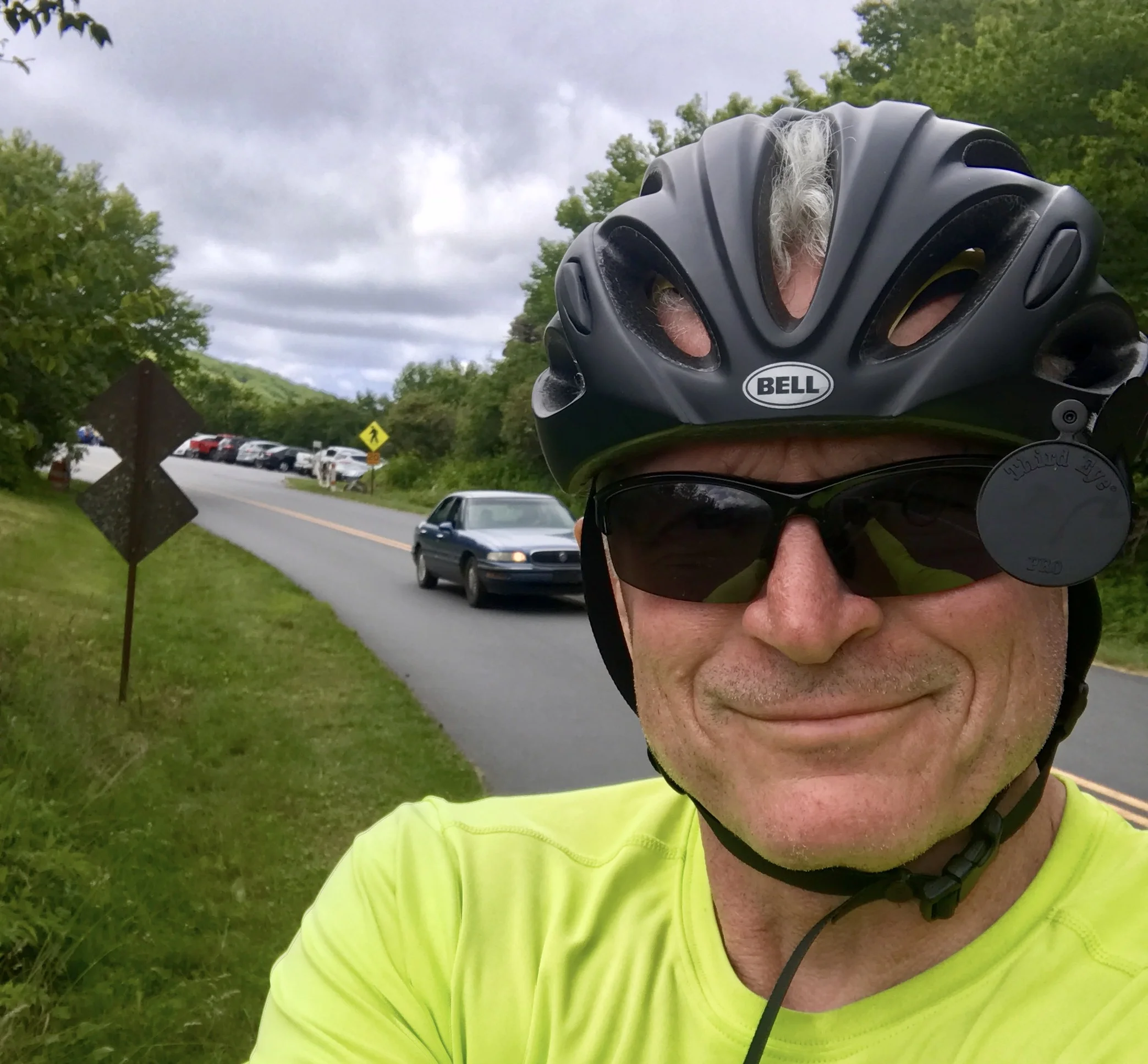
I apologize for not having a picture of sunshine. I guess I was in such a hurry to get out of the heat, I was too rash to get one.
More to come,
Michael
Blue Ridge, Post 7
Days 11 and 12, Riding the Blue Ridge Parkway
Day 11, Check out my road cycling activity on Garmin Connect.
https://connect.garmin.com/modern/activity/1811469359
Day 12, Check out my road cycling activity on Garmin Connect.
https://connect.garmin.com/modern/activity/1813172727
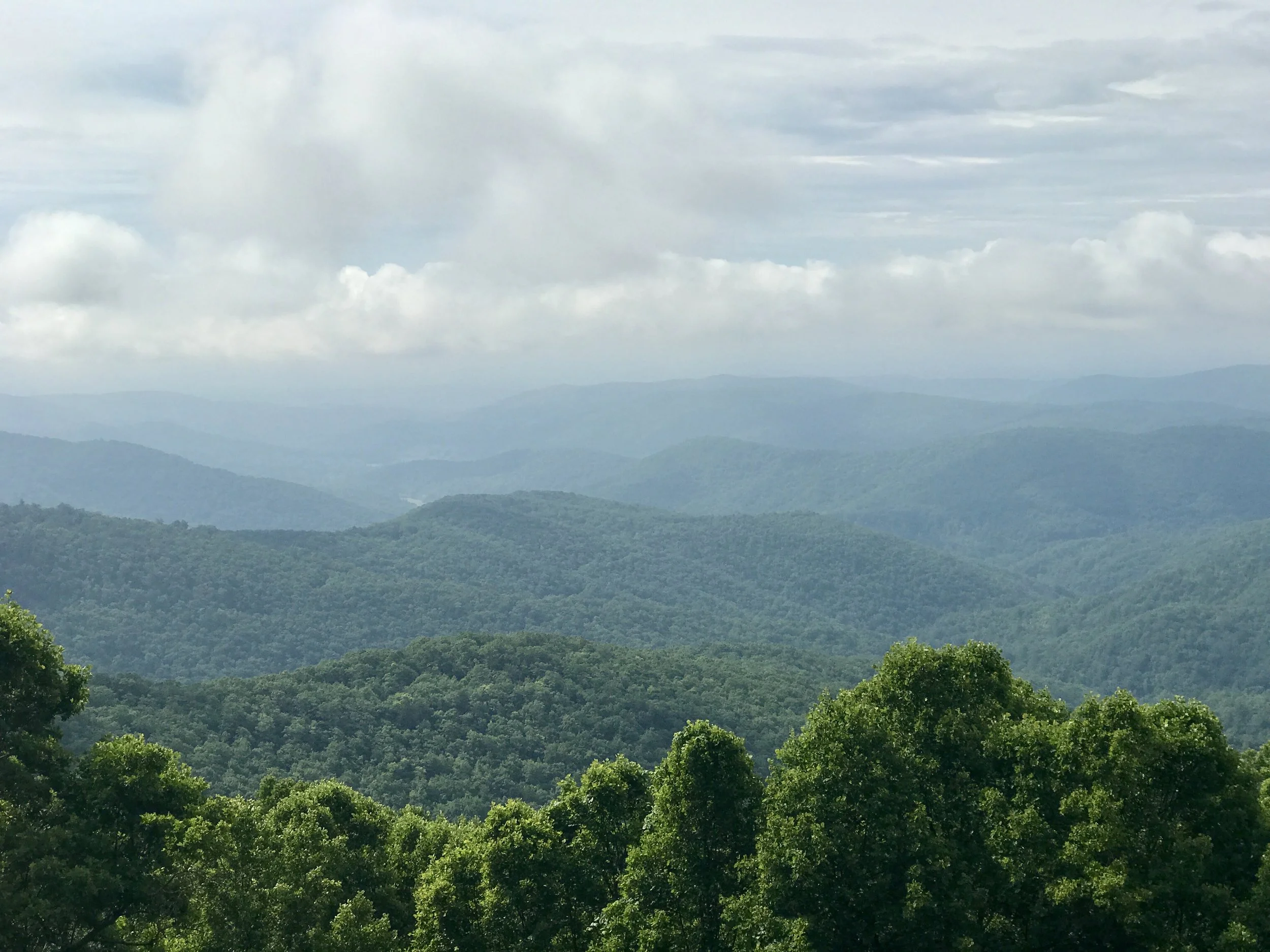
Two great days of riding. If you are thinking of cycling the Blue Ridge Parkway, be forewarned that the constant ascents and descents get a bit rough after a few days. Although not as hard as the rolling hills one finds in Pennsylvania, it gets pretty wearing to climb the constant and unrelenting long hills from a saddle to the next pass on the Ridge. The grades must be between 4-8 % on average (although I never wanted to use the battery power on my bike computer to find out - knowing the elevations only makes me more tired). After two or three days, the longer hills (lasting 2-3 miles) get discouraging. The downhills are fabulous though, and no matter whether one is going up or down a hill, one is always rewarded with yet another superlative view.
Yesterday afternoon I snapped a front shifter cable about 20 miles away from my campsite. It wasn't a disaster, just inconvenient, since I was stuck in my granny gear on my front chain ring. Because I have never replaced a cable, and was unsure of how to deal with a handlebar shifter, I decided to tough it out and continue riding to the campground, where (thankfully) I could replace the cable with a spare I was carrying. Fortunately (or unfortunately?) there were lots of uphill climbs to get there, so I was stuck in the best gear I could be.
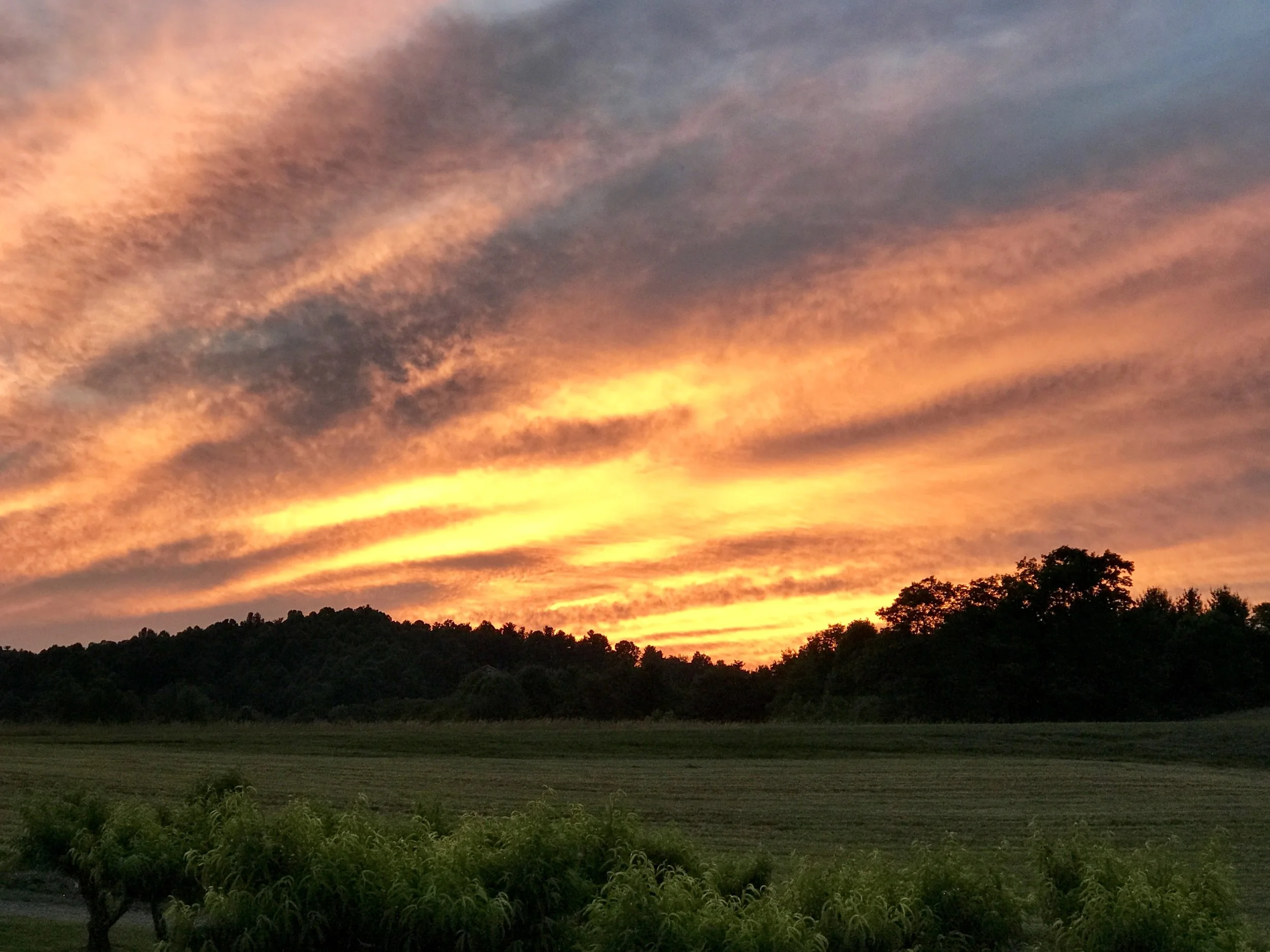
After a shower and a frozen pizza courtesy of the campground owner (food is not easy to come by on the Parkway, and come to think of it - billboards, gas stations, restaurants and power lines are also nonexistent - which adds to the charm and the challenge of cycling it), I replaced the cable. This required remembering watching fellow rider Jon Vara's technique from a snapped cable on the Southern Tier, plus several YouTube videos that helped me think through bar shifters and the vagaries of the front shifter - one of the more complicated parts in a touring bike. I admit I still don't quite understand set screws - clockwise and counter clockwise - the mechanical logic of how exactly they limit the shifter has not dropped into my brain yet. But I fixed the cable anyway after losing, and finding, several nuts in the grass and then losing, and finding again, an allen wrench blended into a picnic table just as the sun was setting. And I didn't forget it was the longest day of the year, so I took a little time to honor the solstice.
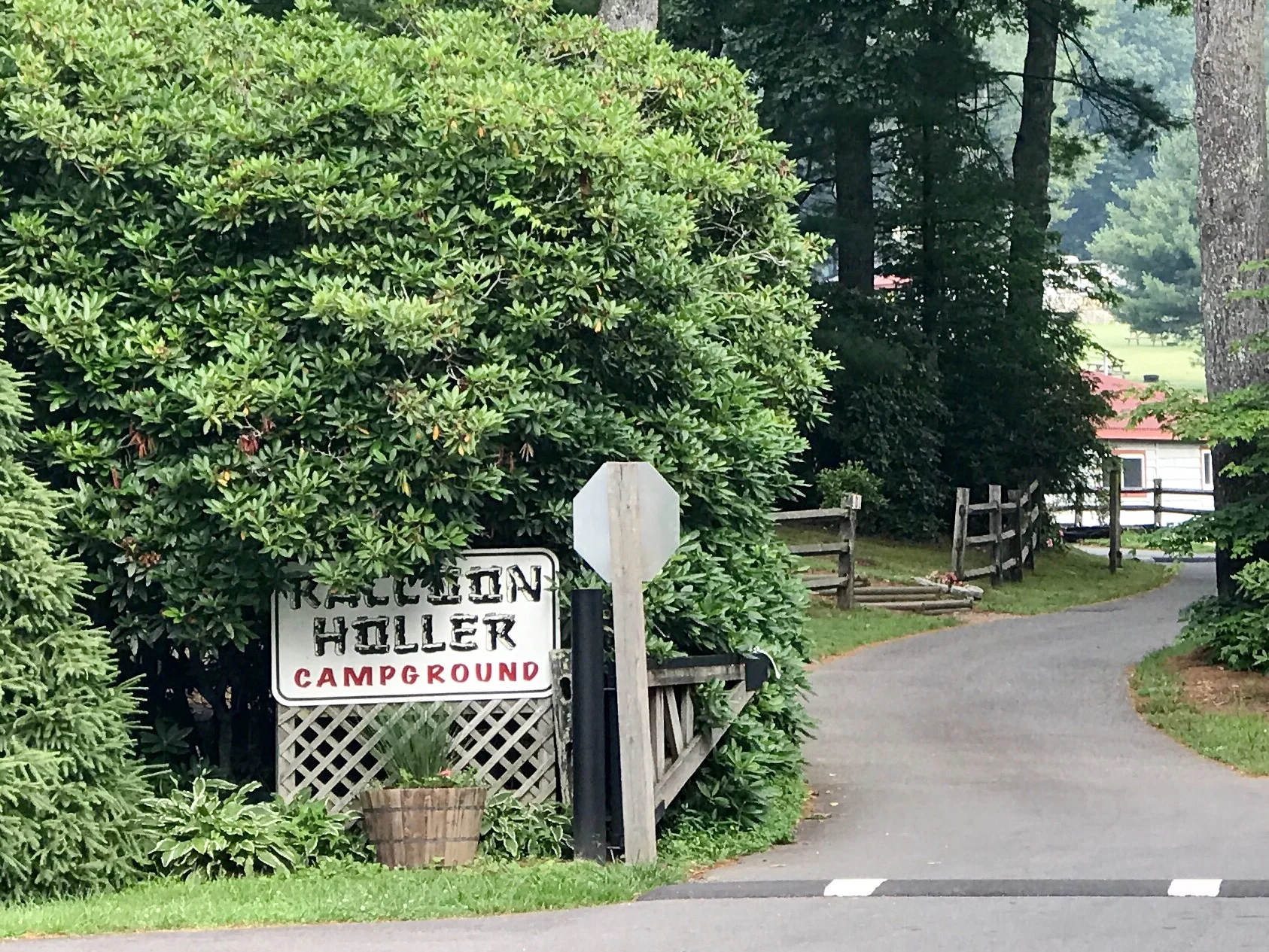
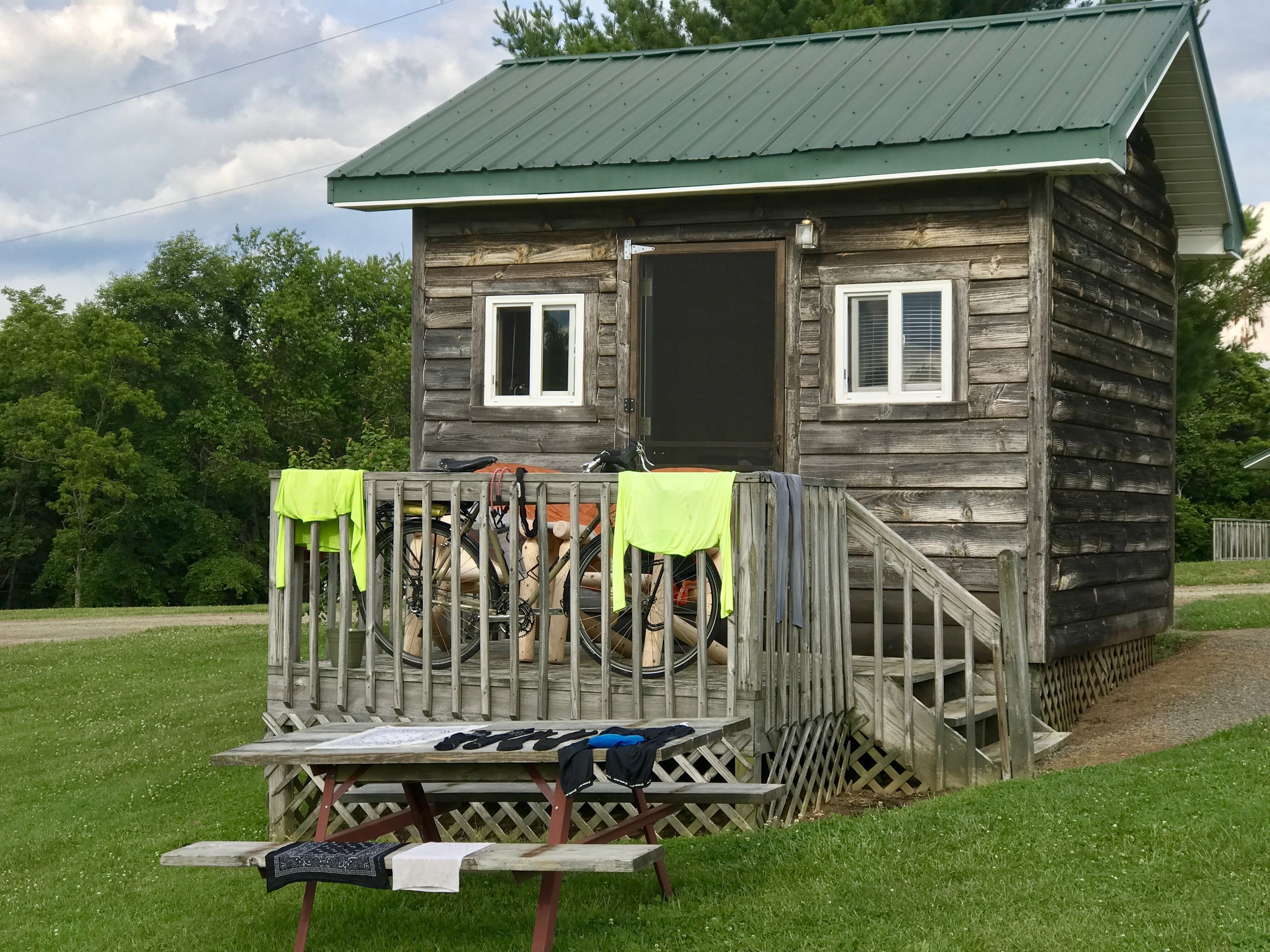
Two days ago I slept in a campground in Racoon Holler near Laurel Springs. While I was setting up camp, three different men stopped by to talk to me. They were each about my age. The first was walking with a cane. He asked me where I came from and was skeptical about my answer. He really couldn't get his mind around the idea that someone would bike anywhere more than a mile or two. While we were talking a second man drove by in a golf cart. If you haven't been to a private campground in the past few years, please know they are full of RVs and golf carts. People drive to the bathrooms to pee. They bring their house, and drive their car around the campground. It's just like being at home. In any case, the second guy started telling the first guy that people biked everywhere these days, and he mentioned some biking festival in his hometown nearby as proof. Then the guy with the cane got into the golf cart, and they drove off together to the bathroom. I continued to set up my tent. At some point I looked up and another man was standing next to my bike staring at it. He asked me what kind of bike it was. I answered, and then he began peppering me with questions - how much weight could I carry? How far could I go in a day? How did I map out where I was going? What did I do when it rained? How did I eat? I could see he was genuinely interested, and I was grateful for his interest.
Some years back, I watched two older guys bike into a campground in the Yukon, and set up camp lickity-split before my ex-wife Chantal and I could finish setting up ours. Later I talked to one of the cyclists. I remember a few salient things from the conversation - biking is as intimate an experience with nature as backpacking, and the bike carries the weight. And you can go a lot further. Although I can remember encountering a few other long distance cyclists along the way, I am certain it was that particular conversation that provoked me.
Who know how stuff gets in our heads? But it happens.
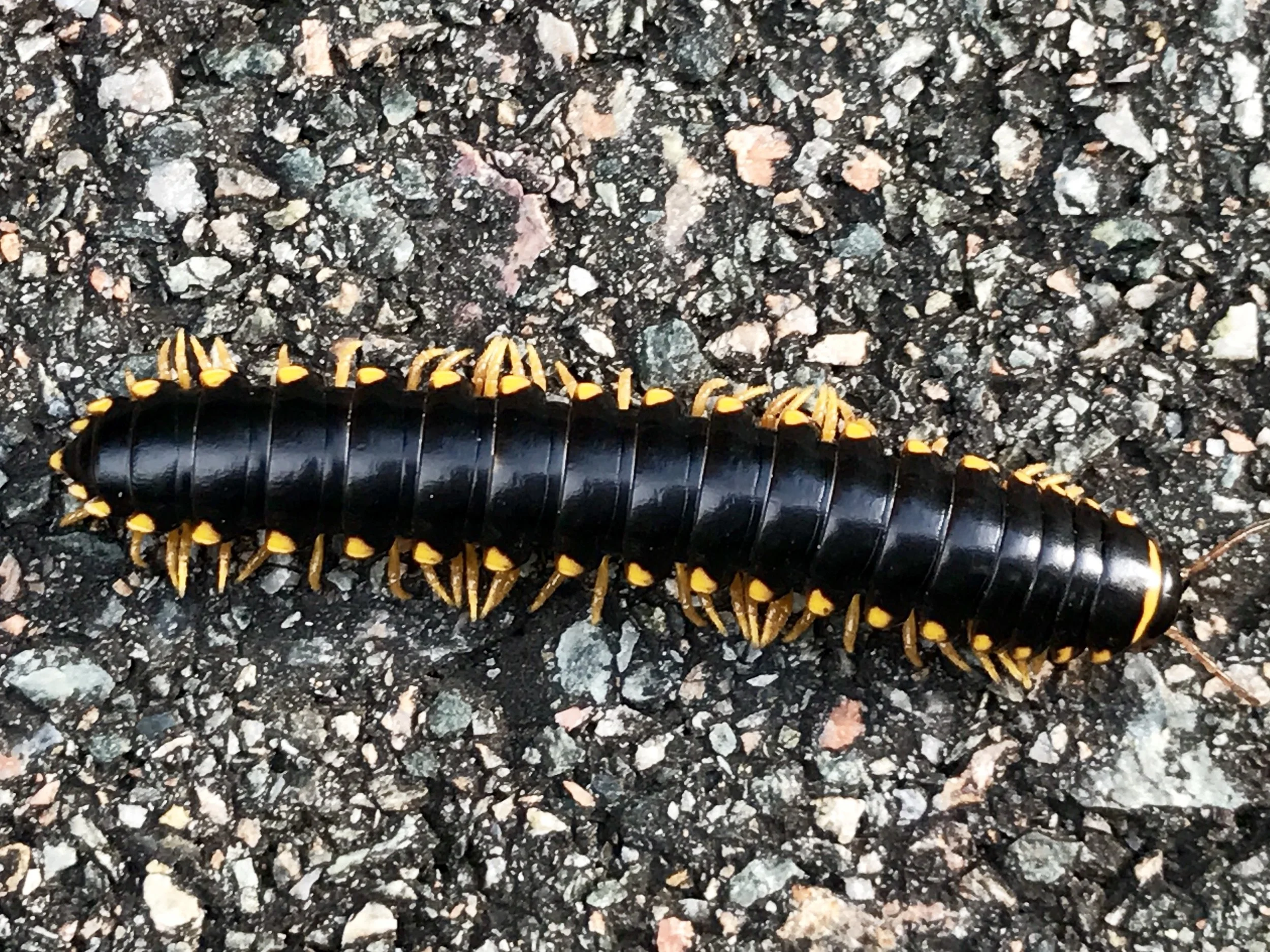
I keep thinking about climate change and patterns of migration - humans and animals. On some level, we are all hobos, either by choice or by happenstance.
More to come,
Michael
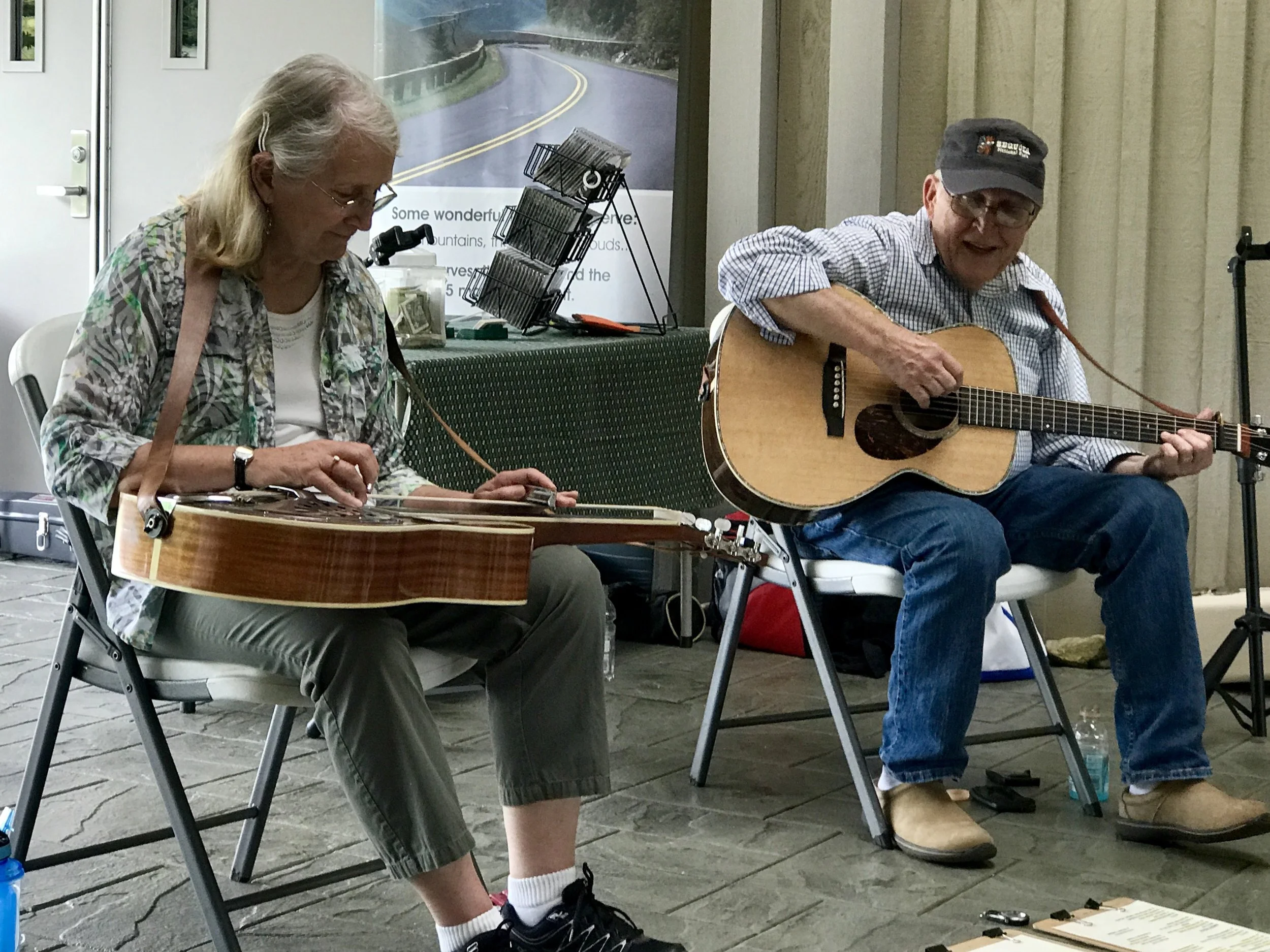
Musicians at the Blue Ridge Music Center on the Parkway.
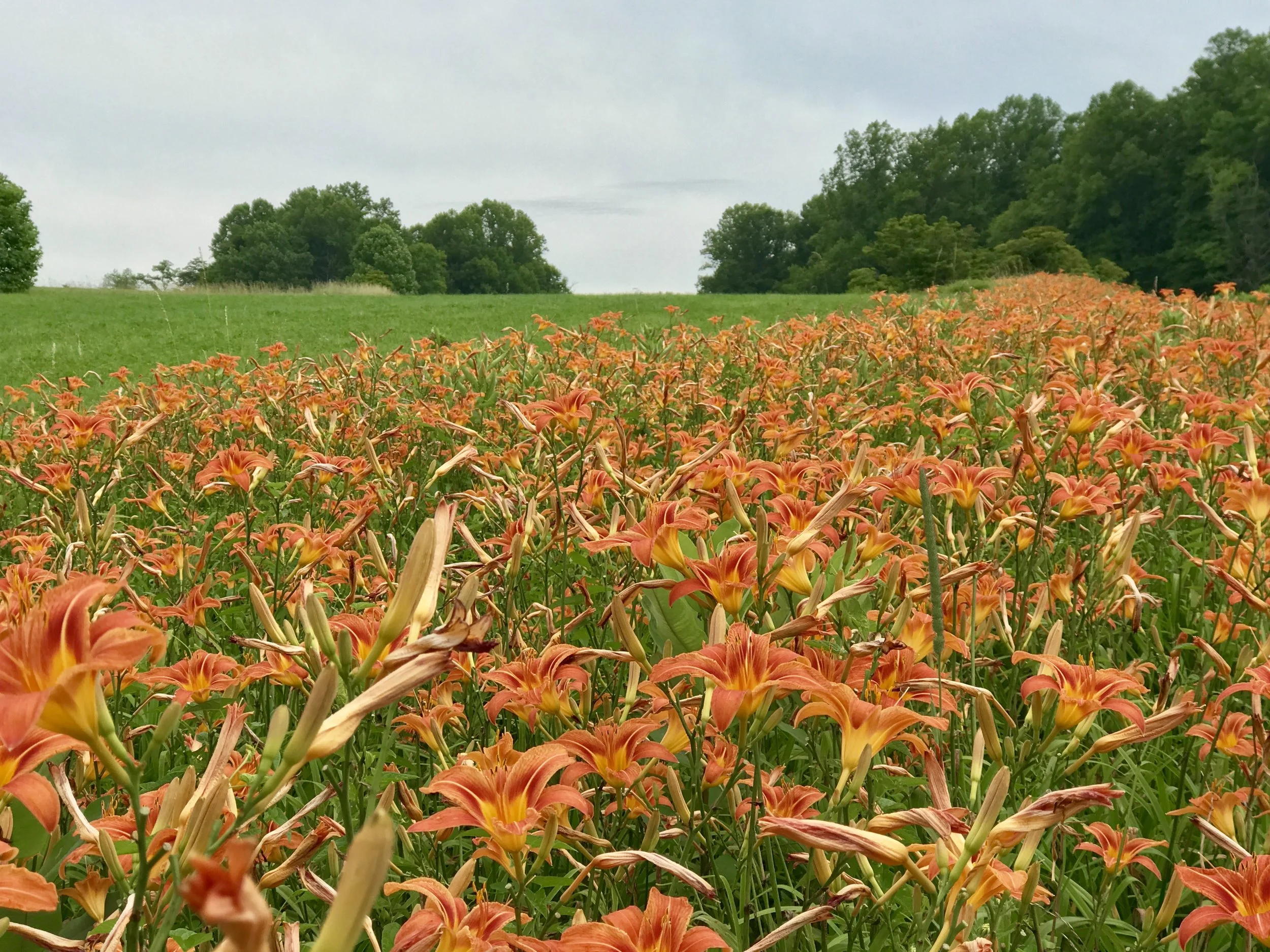
Day lillies on the side of the road.
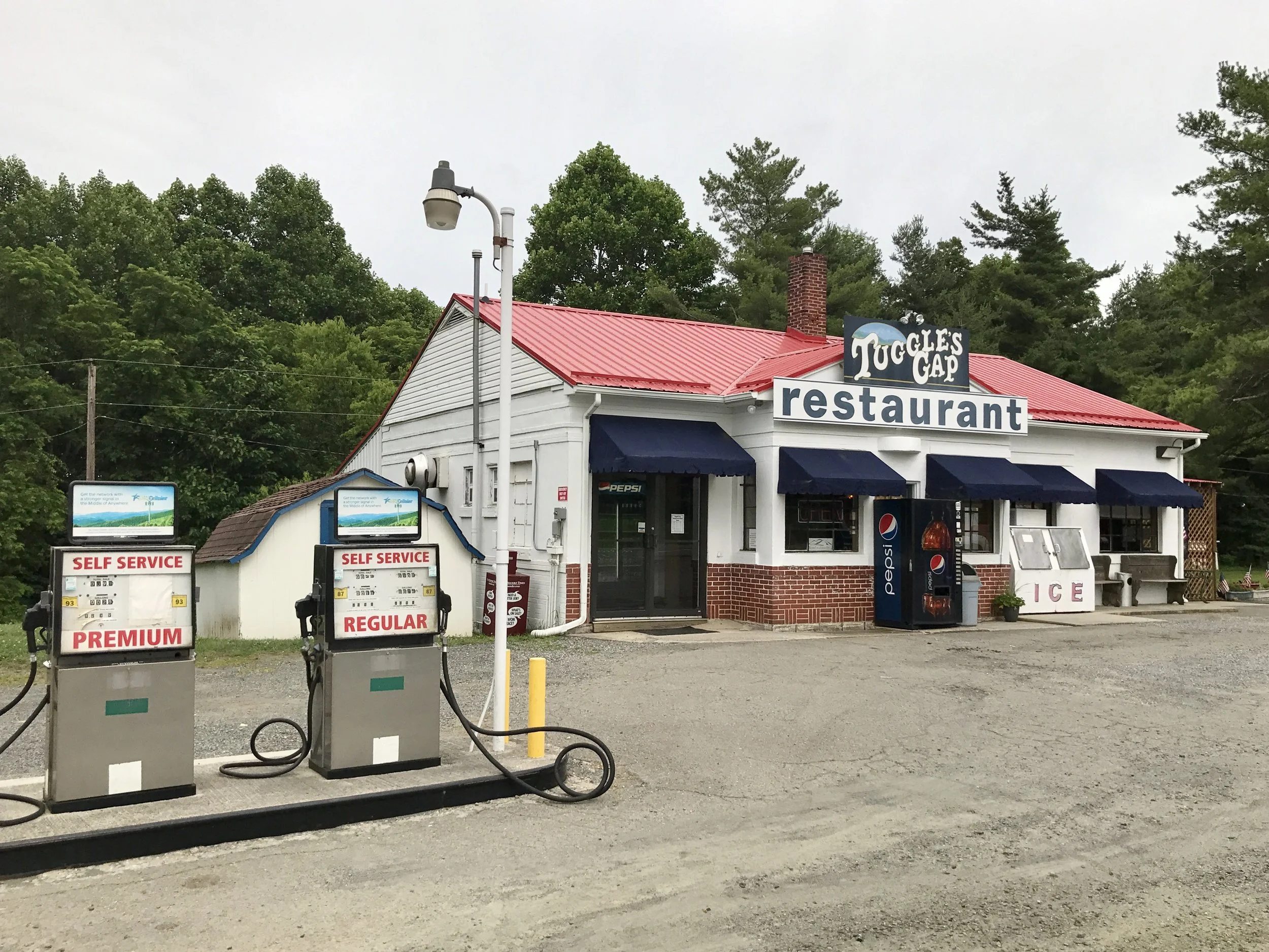
Dinner! Edward Hopper would love this place!
Blue Ridge, Post 6
Day 10, Riding the Blue Ridge Parkway
Check out my road cycling activity on Garmin Connect.
https://connect.garmin.com/modern/activity/1809415387
Forgive me for such a light post this evening, but I am camping and running out of light.
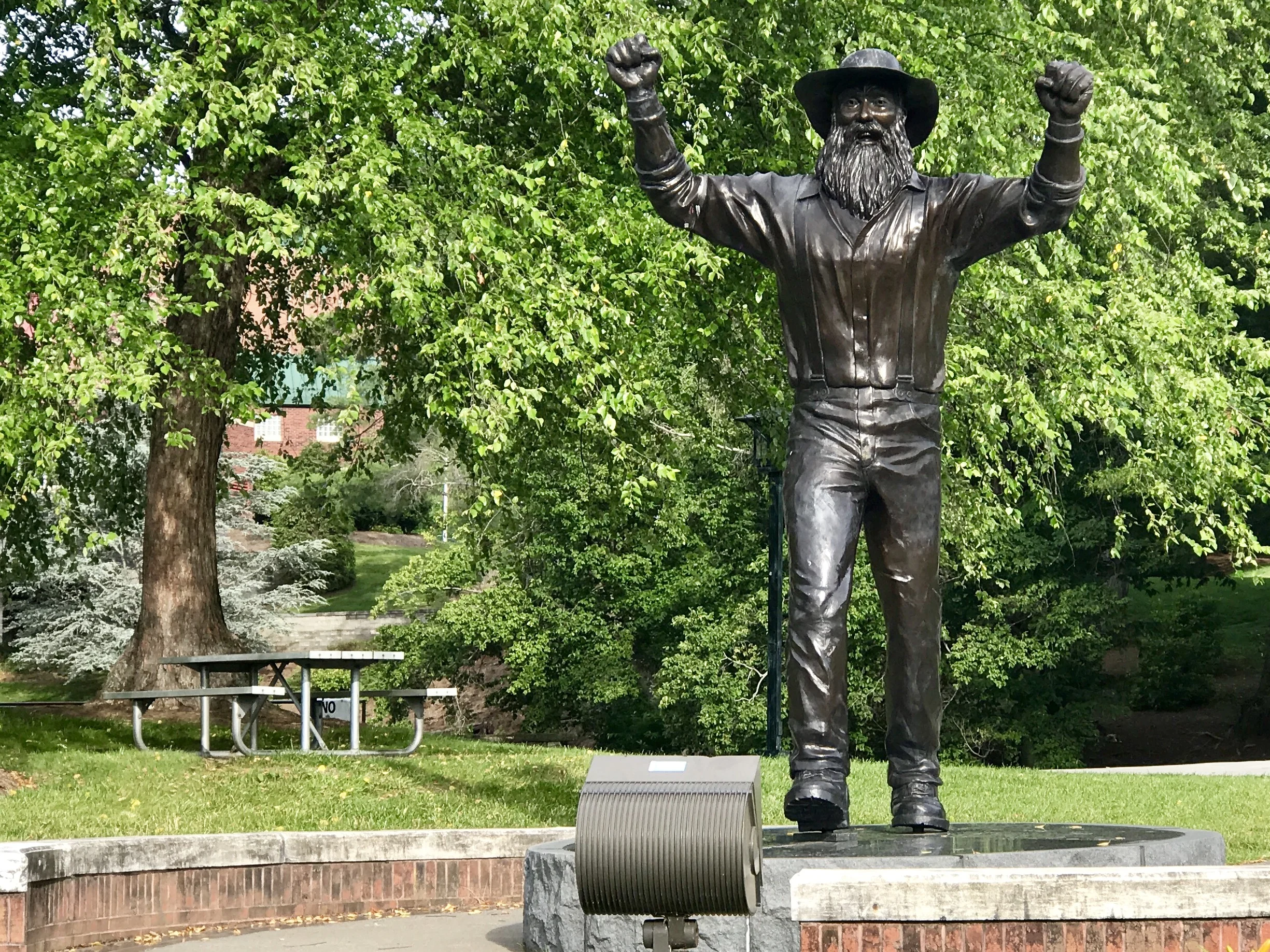
The ride out of Boone was a pleasure. I had to go north away from the Parkway at first to avoid a highway I didn't want to cycle on. Consequently I ended up riding into the campus for the Appalachian State College. What a pretty place! There's even a statue of - you guessed it - Daniel Boone.
I made it back to the Parkway without too much effort - it's amazing how much harder things are at the end of a day of long ride than they are at the beginning. The eggs and waffles I ate on the way up probably helped.
All in all, it was a fairly easy day, although there is work in following a ridge from pass to saddle to pass all day. I did a lot of climbing. But because each run (up or down) lasts a few miles, I was also able to get in some great downhill runs (and the opportunity to rest that comes with it). I can definitely feel my legs become stronger and more responsive each day.
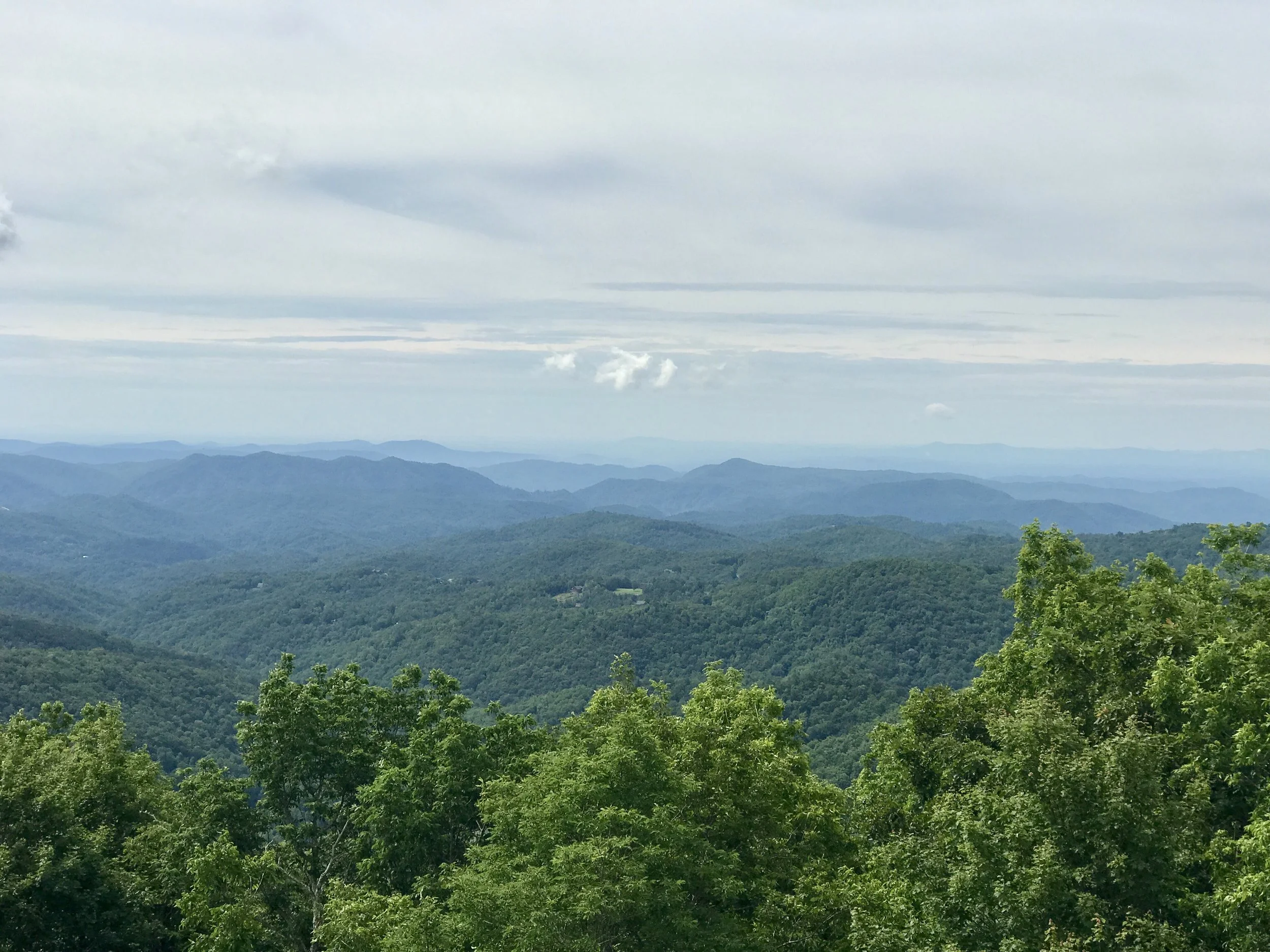
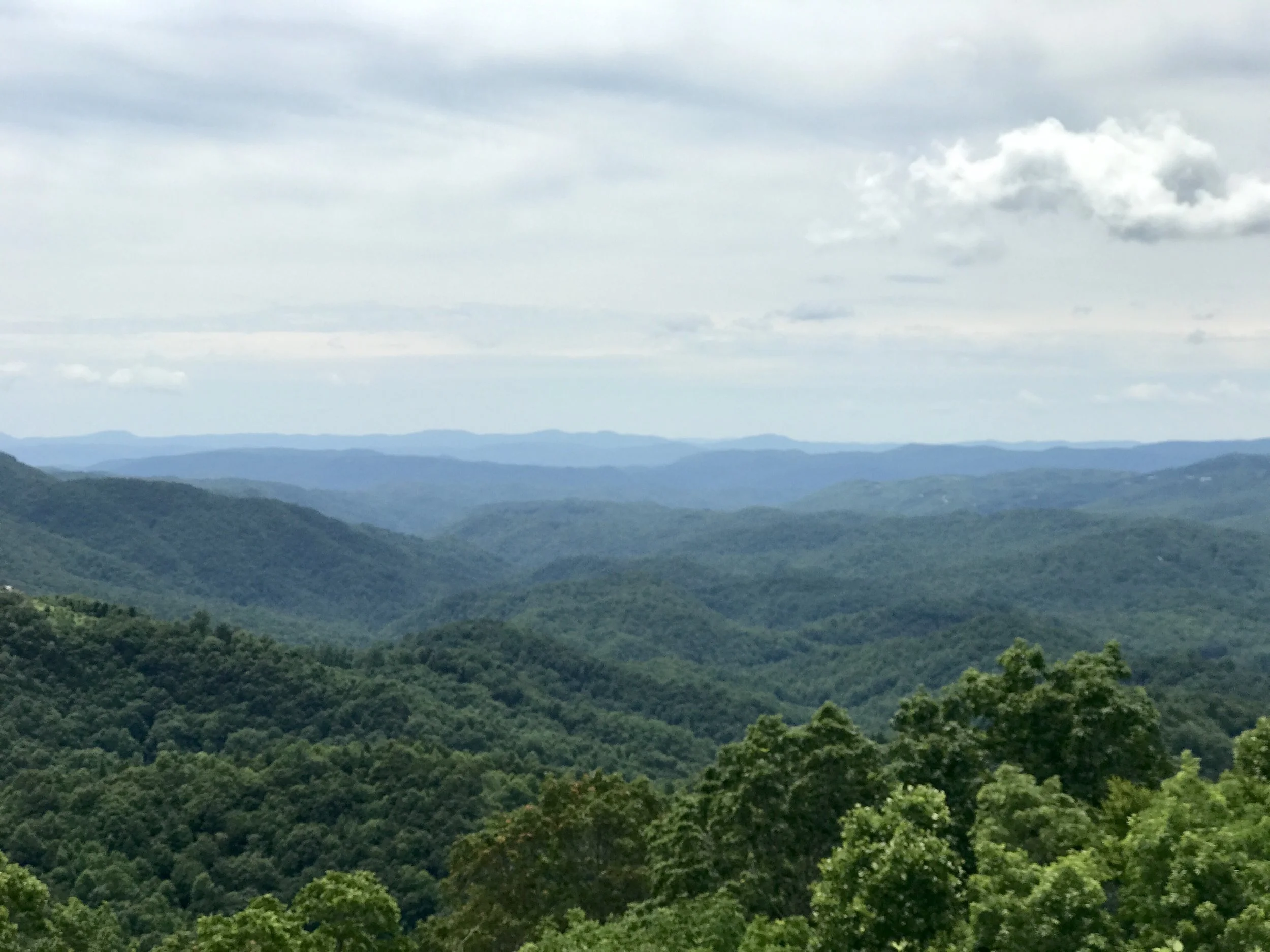
The views were as superlative today as they were yesterday and the day before.
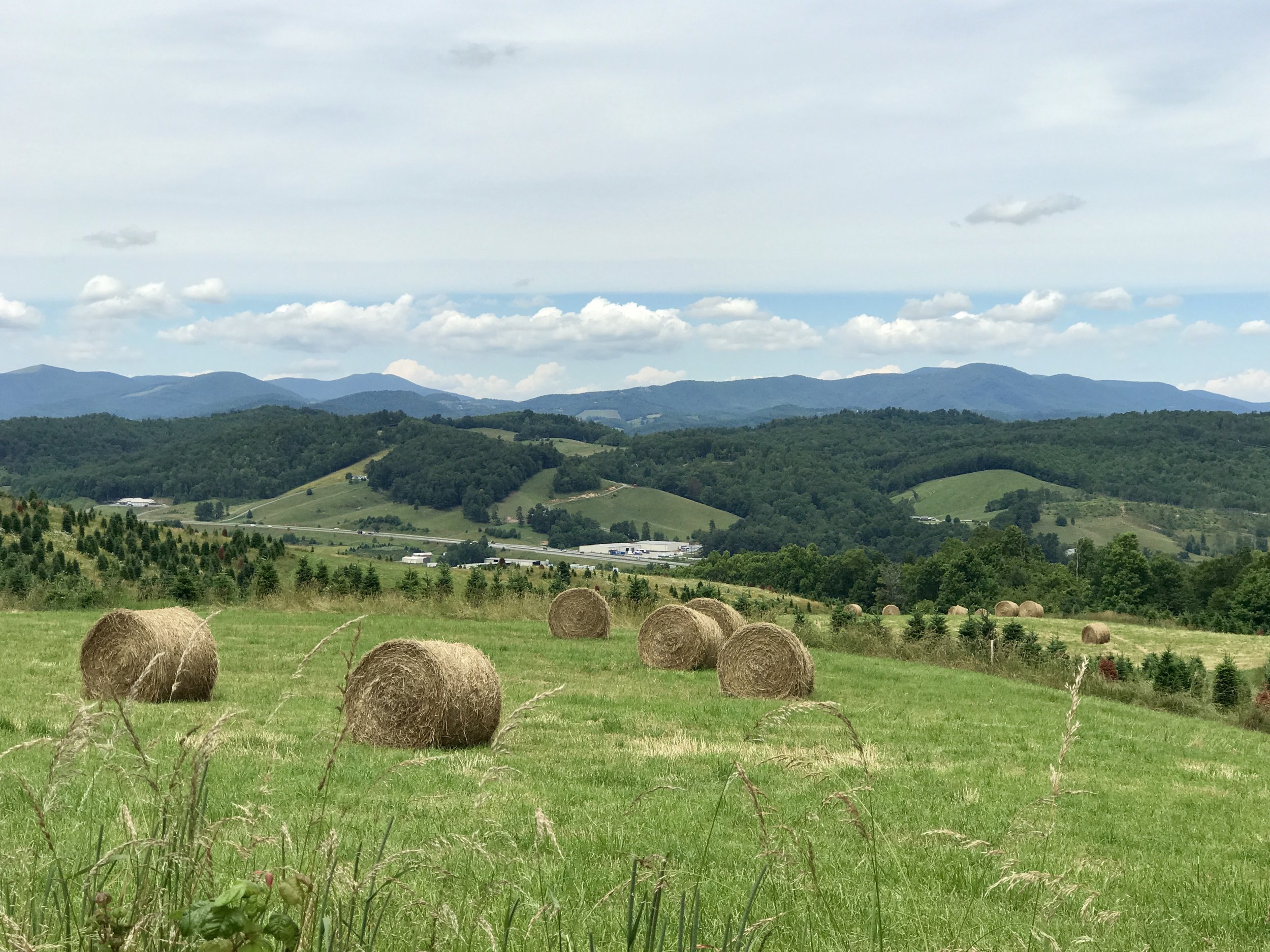
When I am going due north, there's an interesting difference in the way light illuminates the mountains looking east and west. The picture directly above is to the west, the two above it are looking to the east.
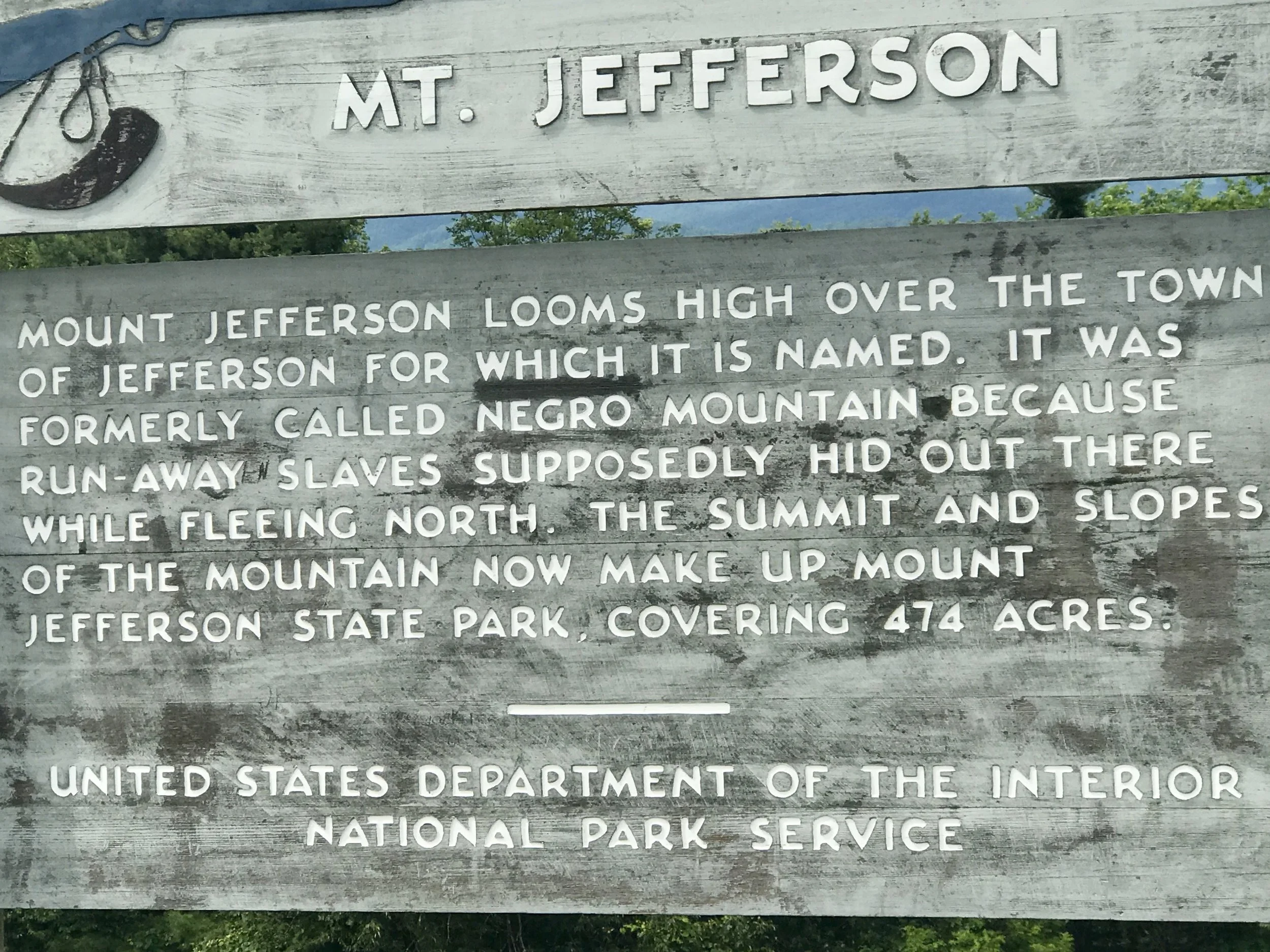
This is is one of the more interesting signs along the route. I wonder when, and why, the name of the mountain was changed?
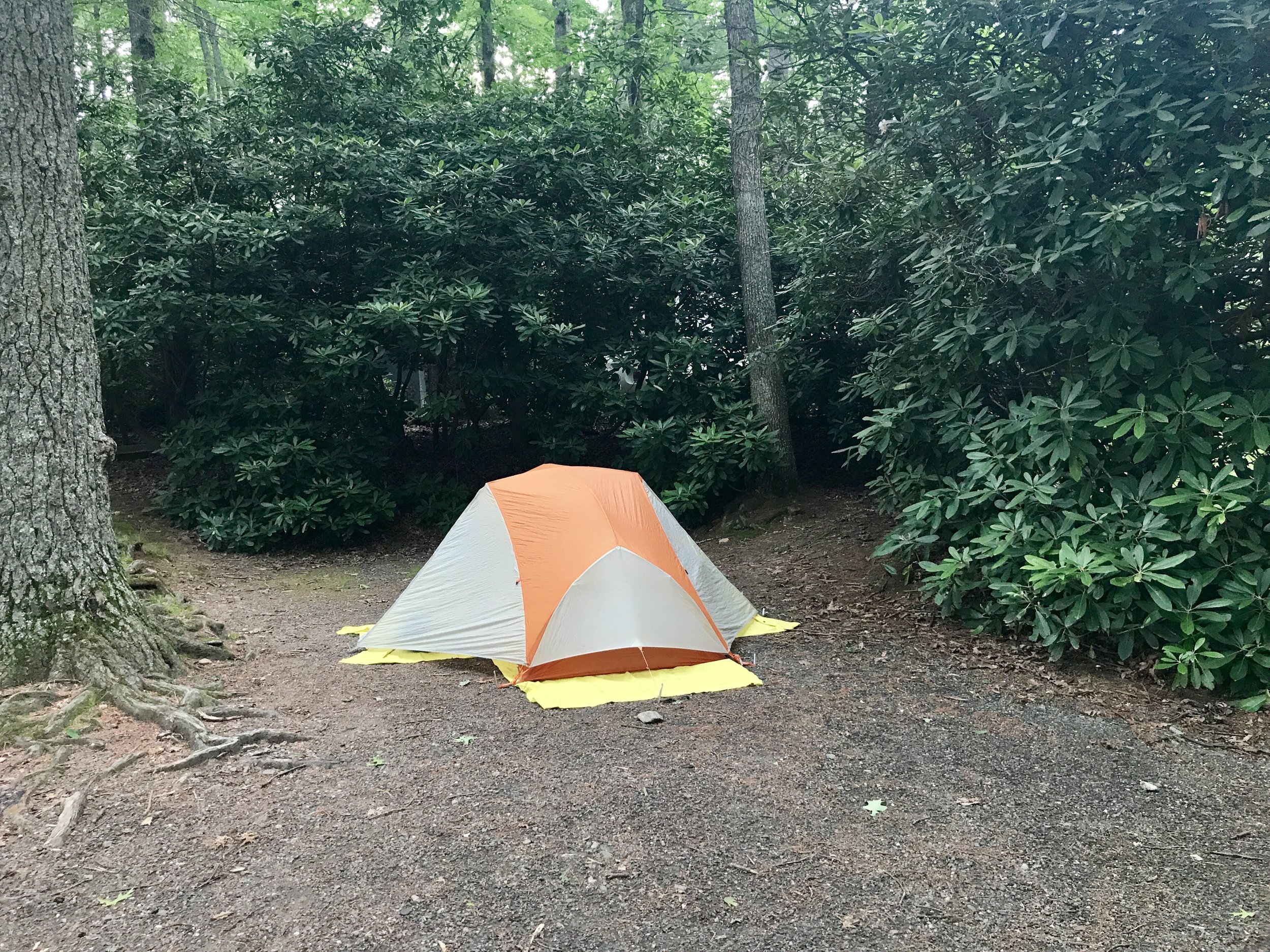
I found a pleasant campground in Racoon Hollar, where I am spending the night.
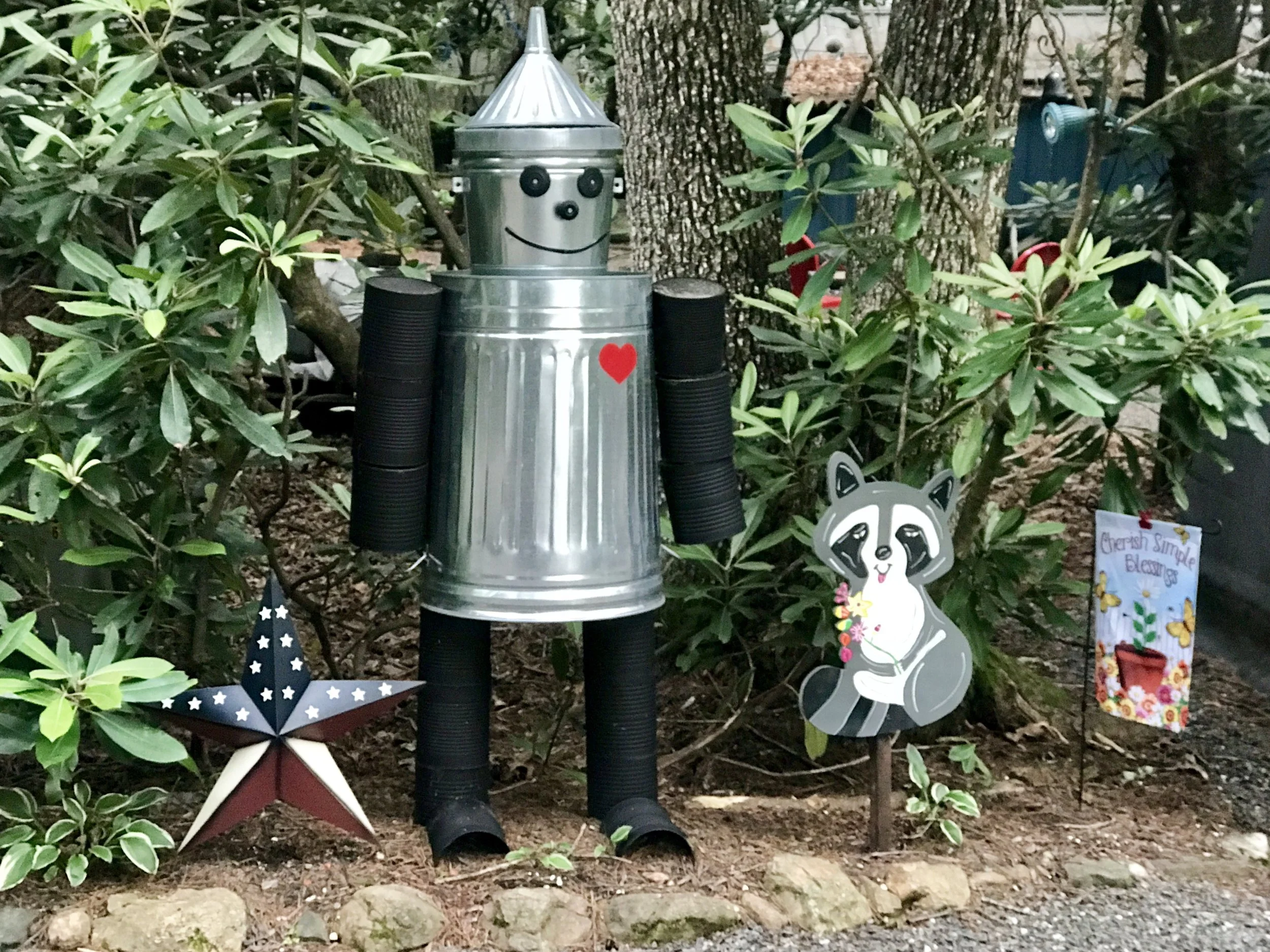
Some campgrounds are enhanced by chazke. And some are not.
More to come,
Michael
Blue Ridge, Post 5
Day 9, Riding the Blue Ridge Parkway.
Check out my road cycling activity on Garmin Connect.
https://connect.garmin.com/modern/activity/1807603259
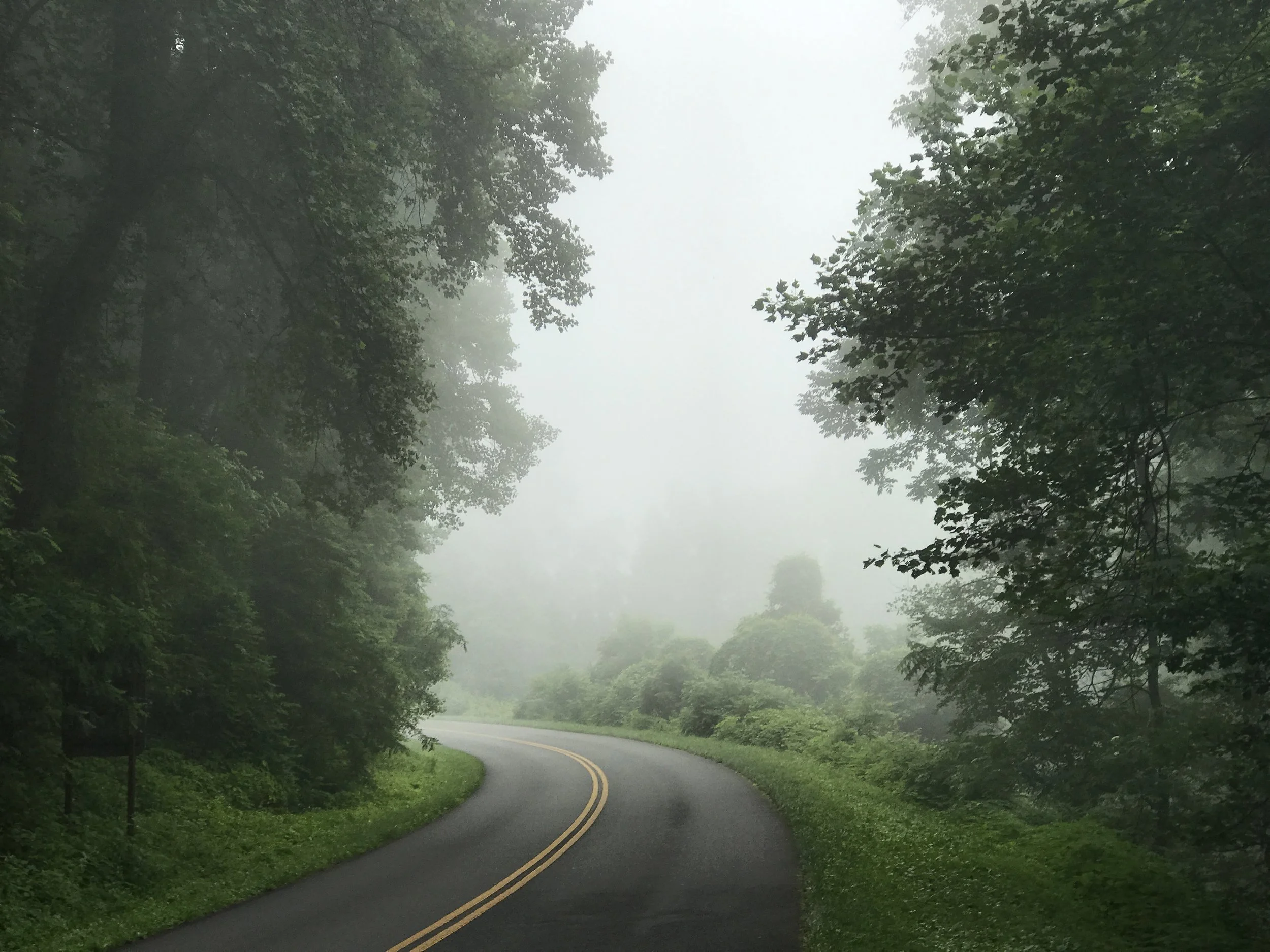
The sun was bright this morning, and then it went to war with the clouds. By the time I was ready to leave it had lost, and was mostly hidden. But visibility was good - for a short while. As I approached the Parkway the earth ascended into the clouds, and I was in the famous Blue Ridge fog I had been warned about.
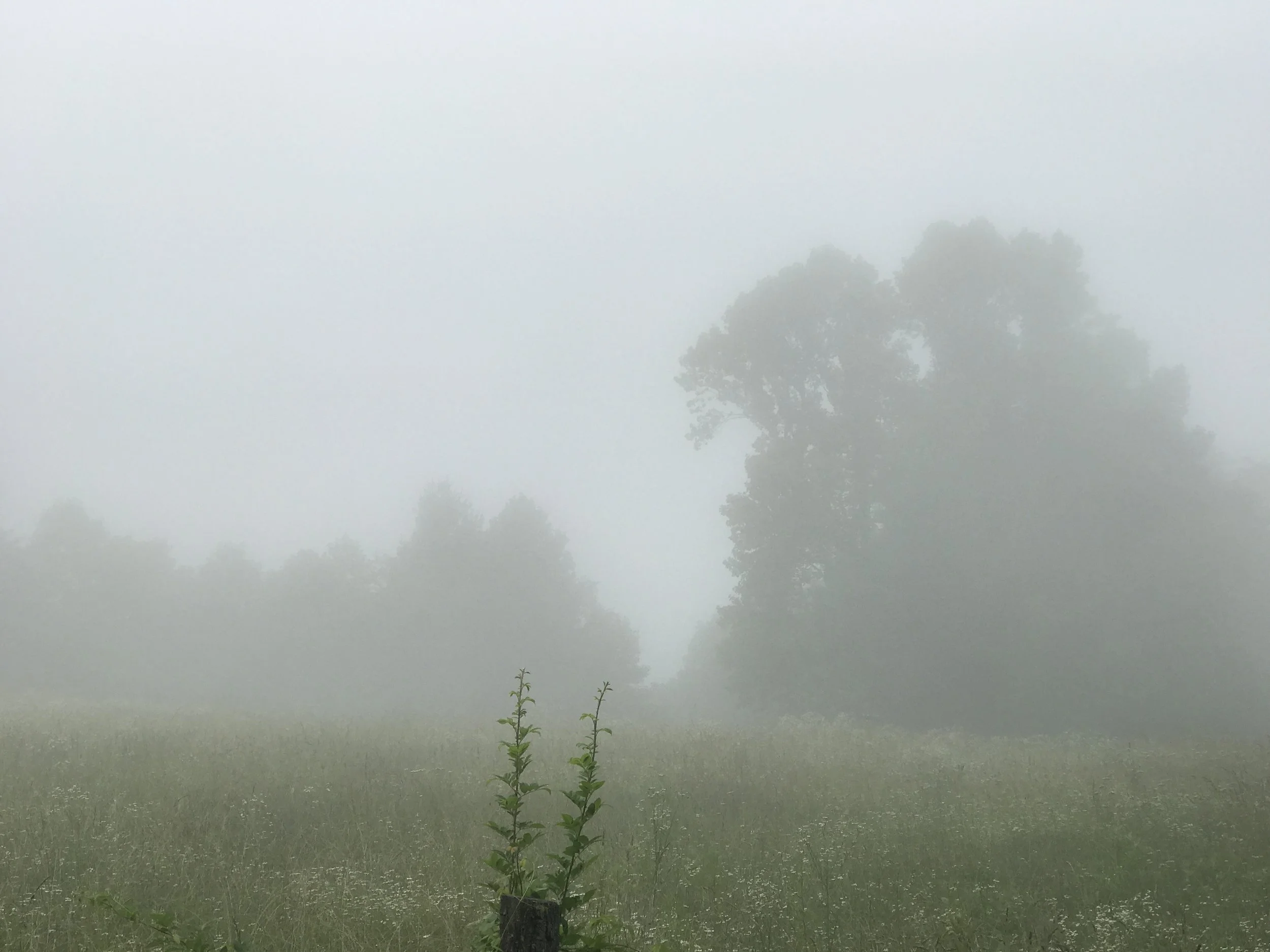
It can be quite beautiful, and of course it can destroy the wonderful views. But there is beauty in all of nature's displays, if one knows what to look for. I thought of JMW Turner. He knew what to look for - he might even have invented fog.
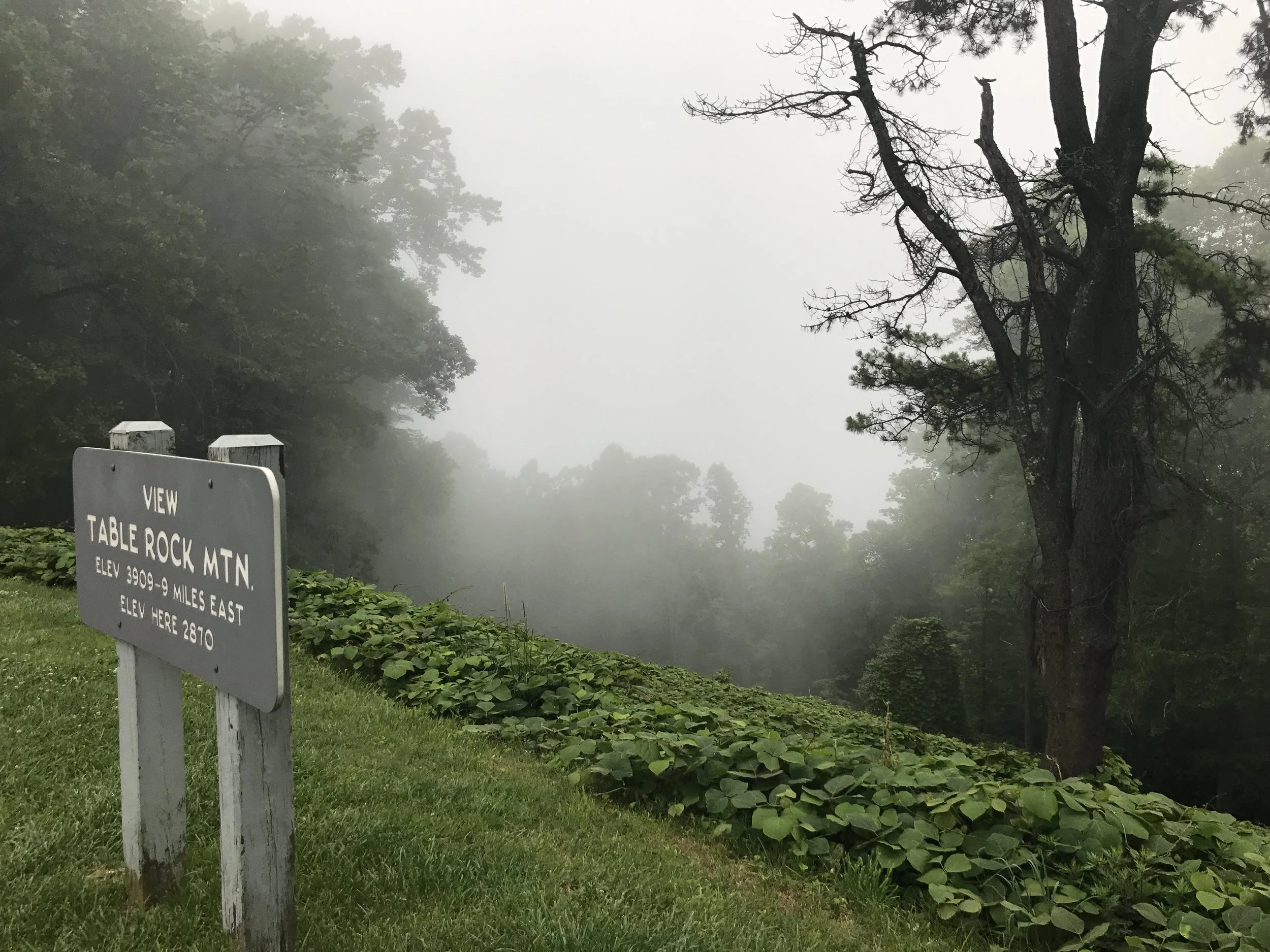
So even though the views were compromised, I found it all breathtaking.
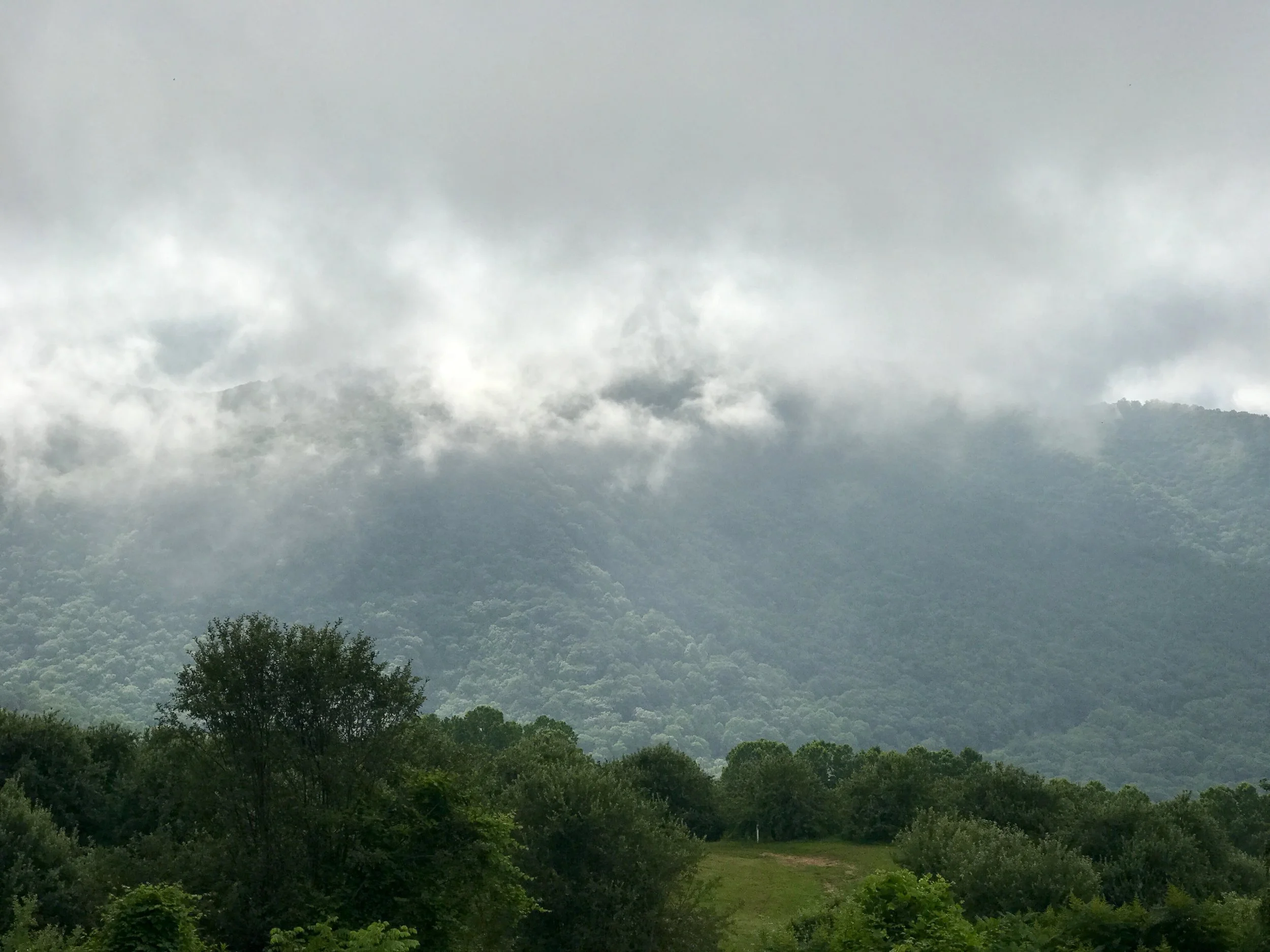
And it cleared. A little.
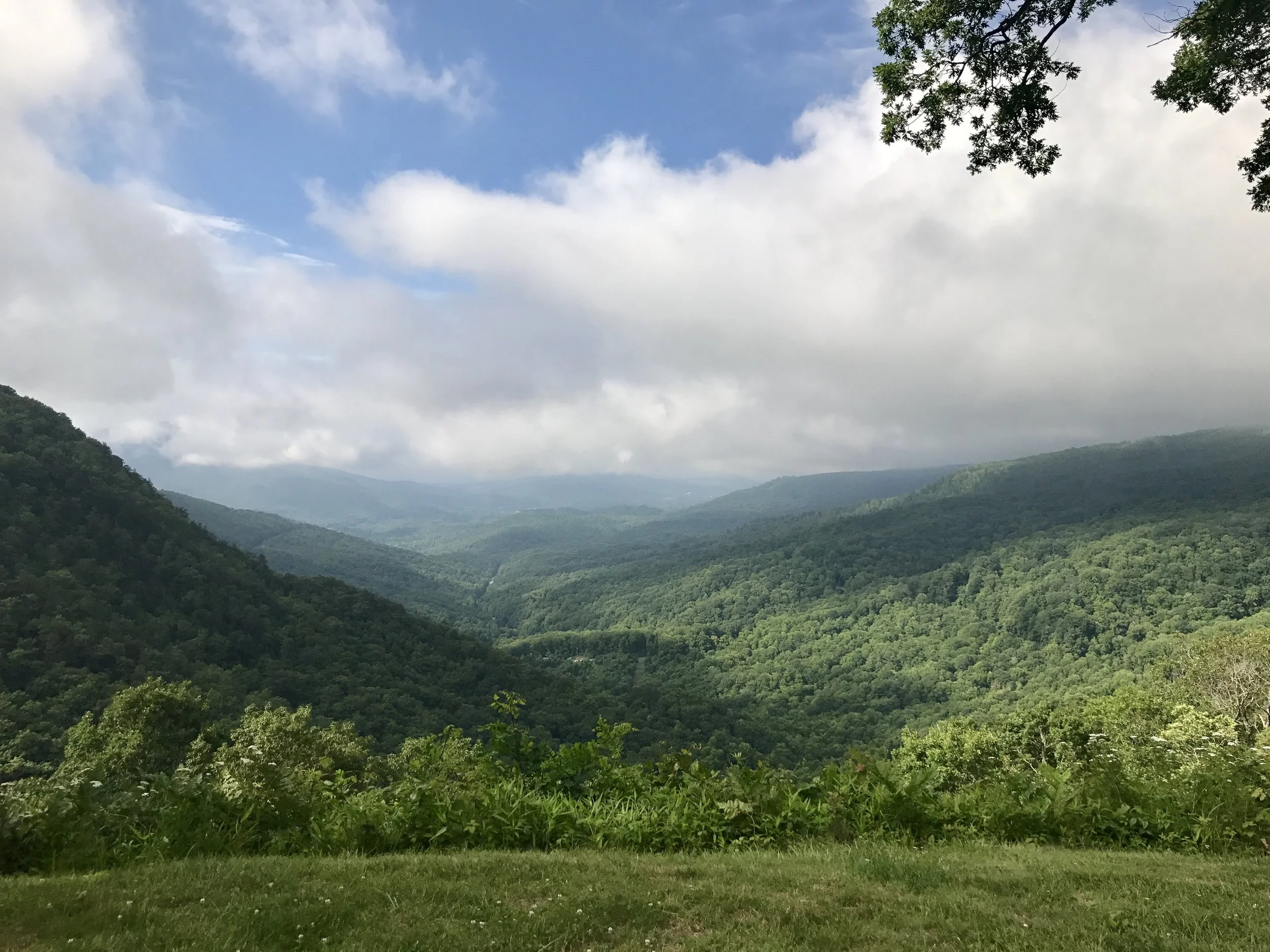
And then a lot, and the views began to emerge again. I can't say enough about how extraordinary this Parkway is. From a visual perspective it's an engineering marvel, and a lot of thought must have gone into finding the exact right turn and the best side of the crest to maximize the vistas. It's very well cared for and wonderfully accessible, all courtesy of the US government. For those of you who think that government is wasteful and inefficient, drive this Parkway. You will be forever thankful for the New Deal and FDR and the National Park Service's amazing vision and commitment to preservation. I don't need to say it, but we desperately need similar wisdom and vision in our current federal government.
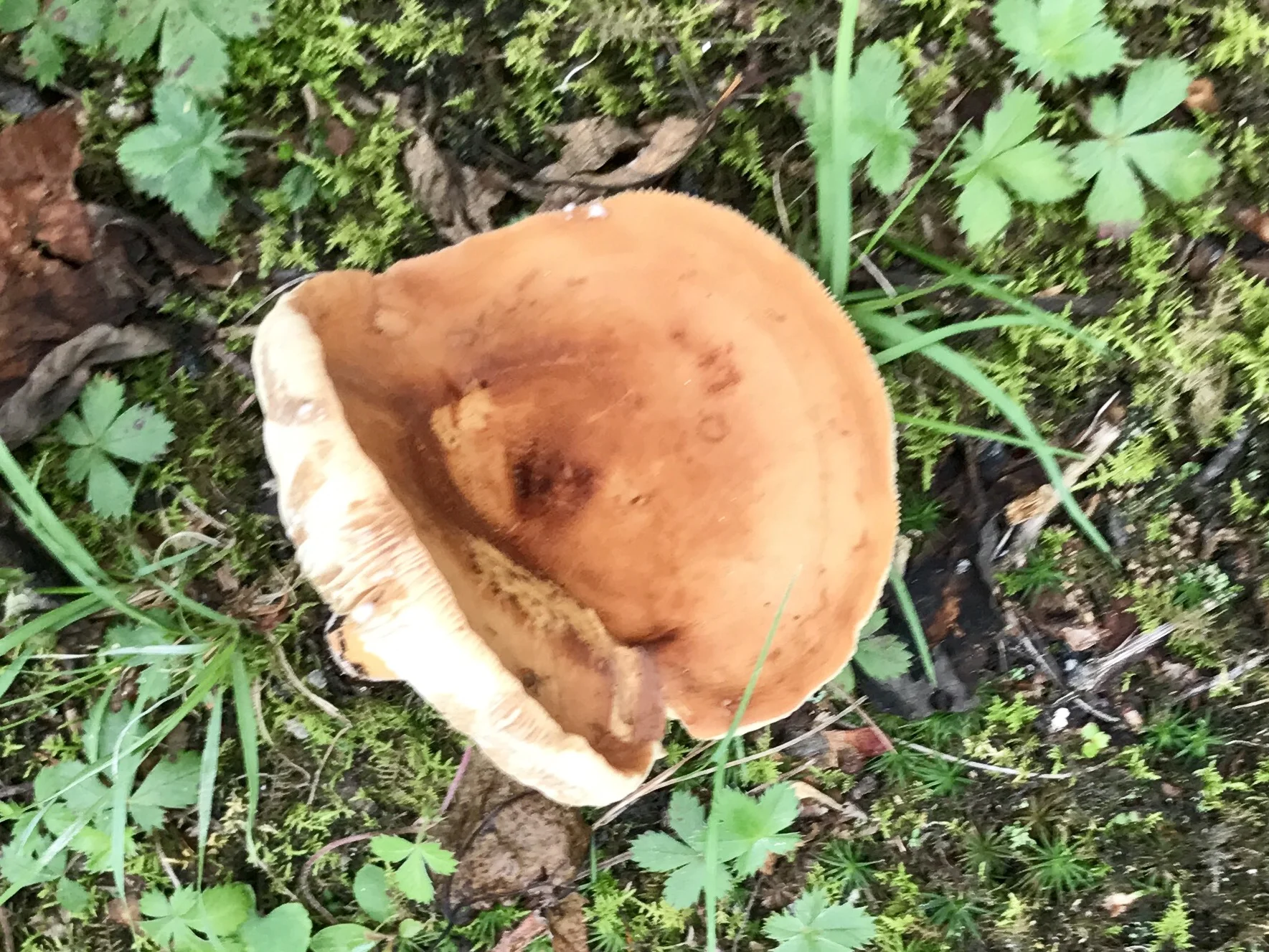
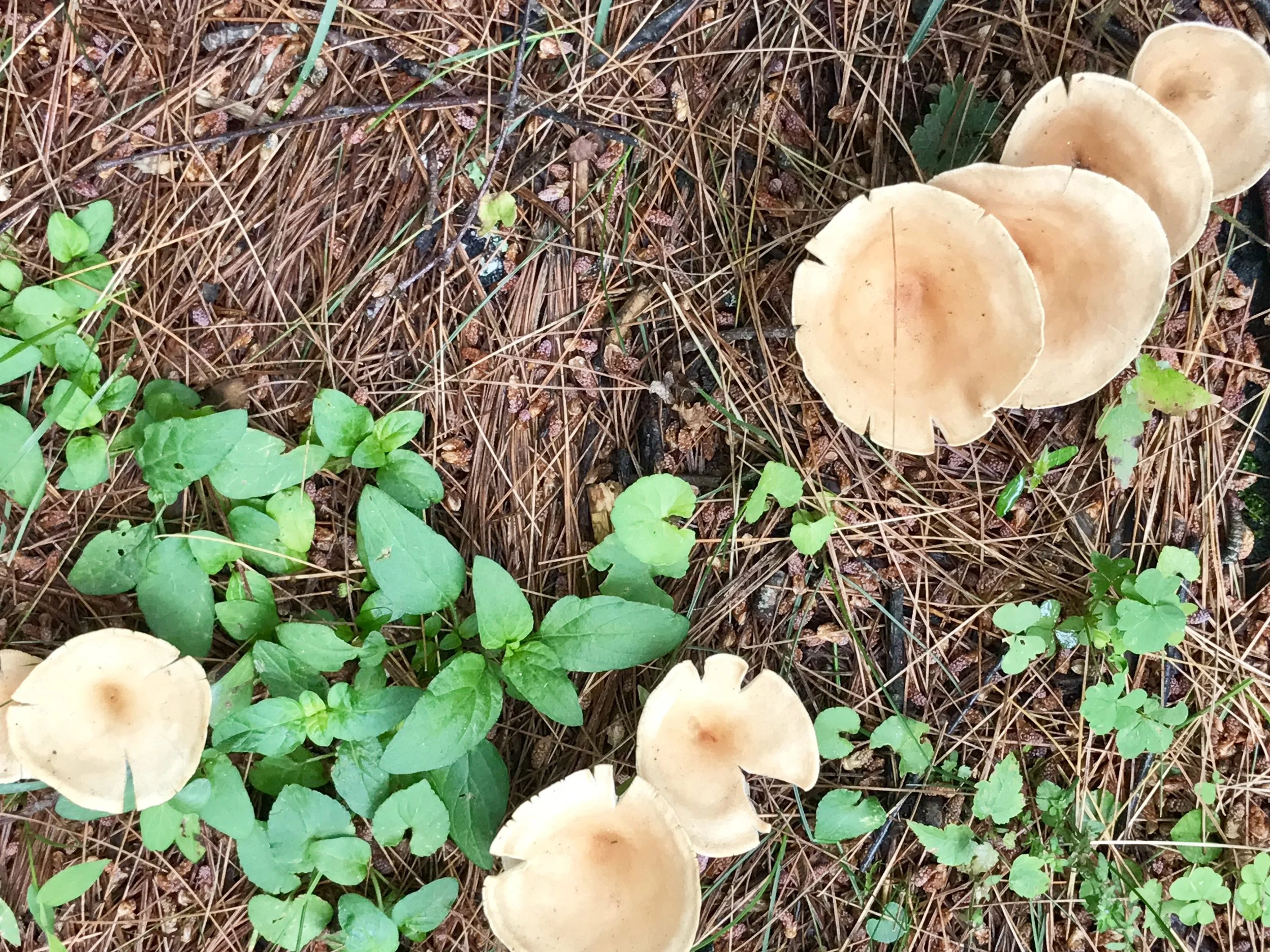
Small things can be beautiful as well. And that's a good thing because on a bike one spends some time looking down - checking gears, the chain and the derailleur. So, it's pleasant when something shows up in that visual field.
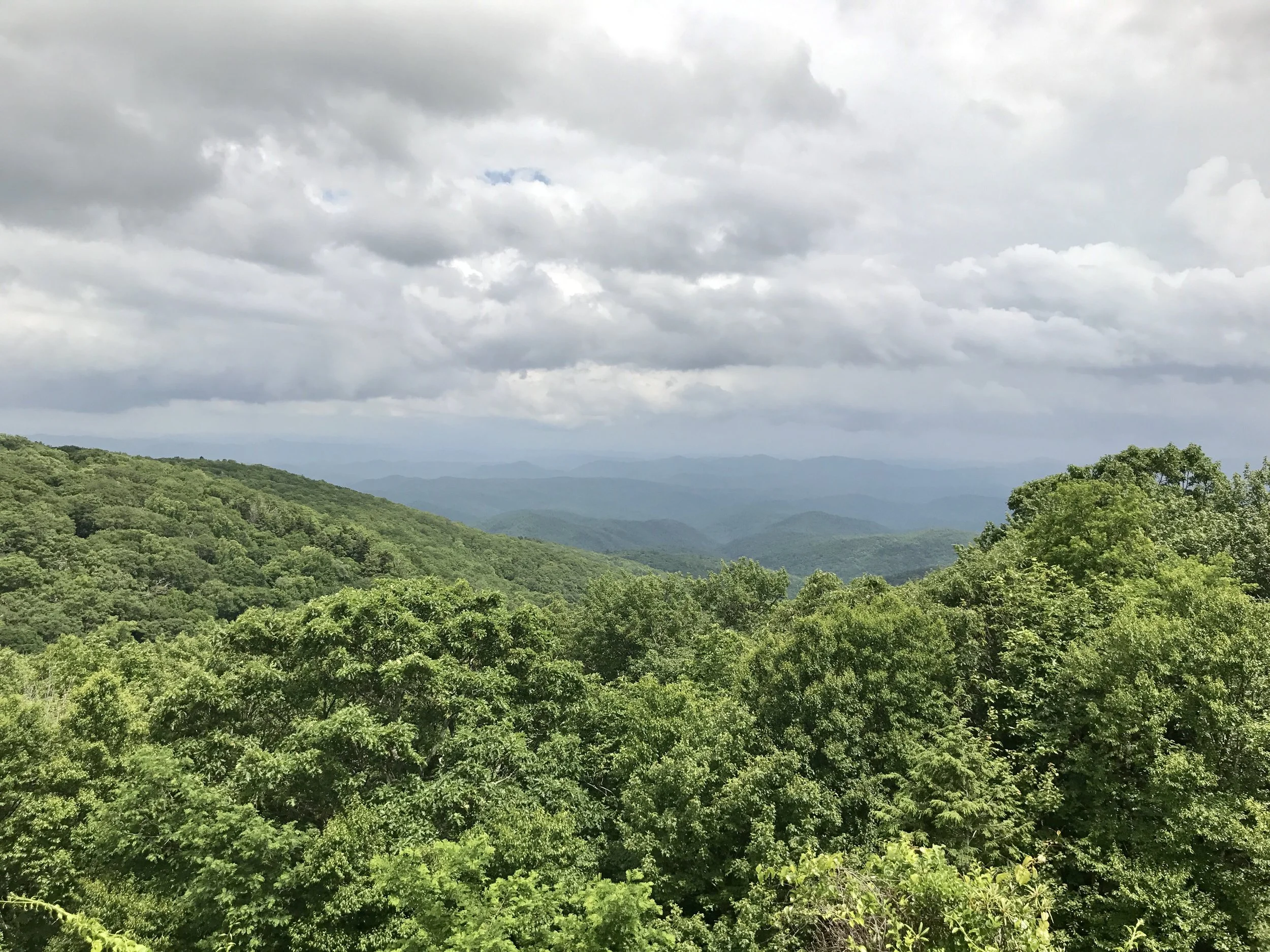
And the views stayed mercurial.
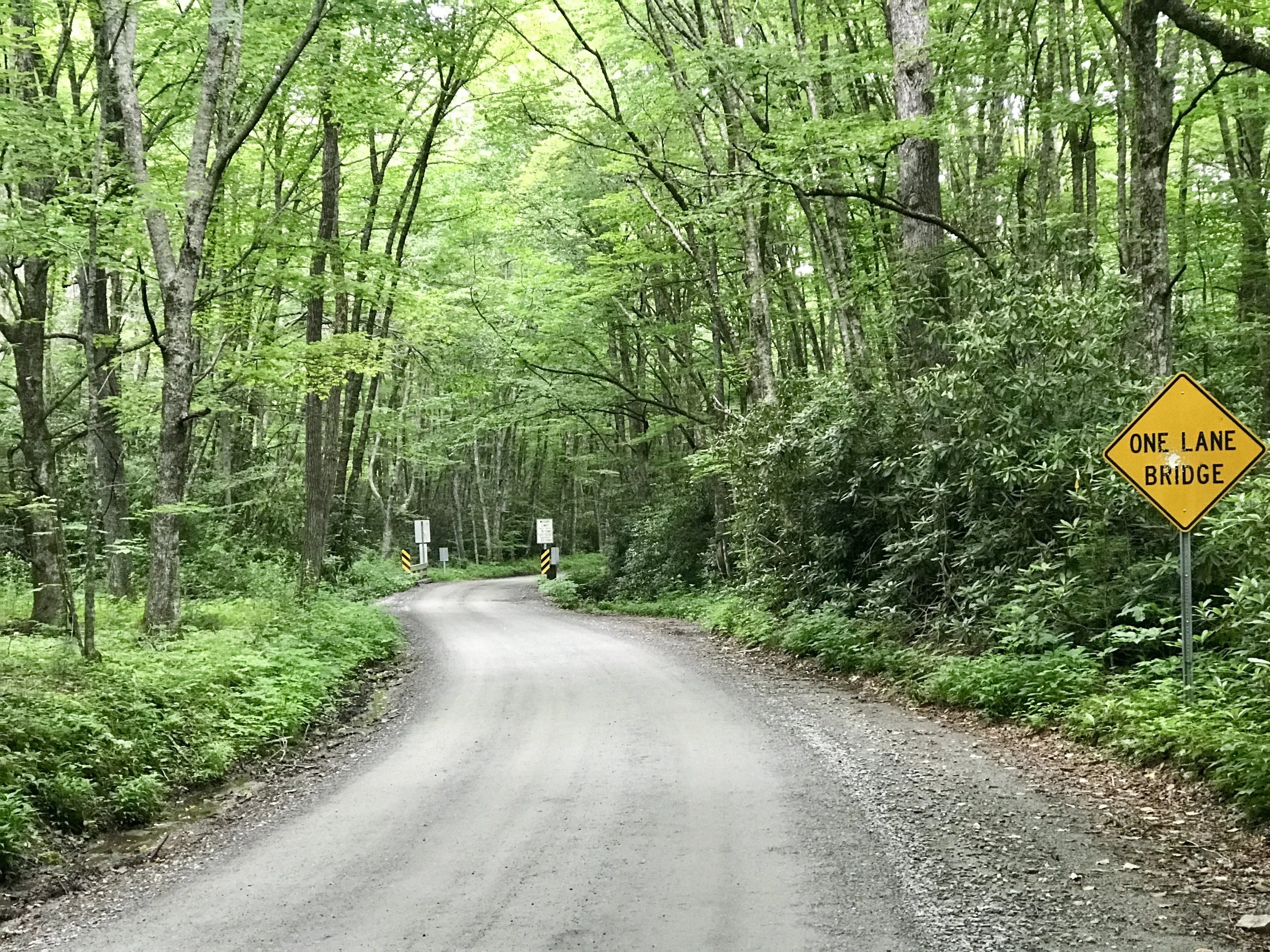
I decided to cycle ten miles or so off the Parkway to find lodging. It's supposed to rain tonight so I located an inexpensive motel in Boone, the home of Appalachian State University- a school I've been hearing a bit about since I've been down here. The ride down was intense, and I'm not really looking forward to the trip back up tomorrow, but I can't say I wasn't warned.
I'll let you know how it went.
More to come,
Michael
Blue Ridge, Post 4
Asheville and the Blue Ridge Parkway, Days 5-8.
Day 5: Getting to Asheville: Check out my road cycling activity on Garmin Connect. https://connect.garmin.com/modern/activity/1802569317
Day 8: Leaving Asheville and riding the Blue Ridge Parkway: Check out my road cycling activity on Garmin Connect. https://connect.garmin.com/modern/activity/1805806759
It was a delightful climb out of Marion past Mt. Mitchell on highway 70 to Ashville, and involved a few surprises.
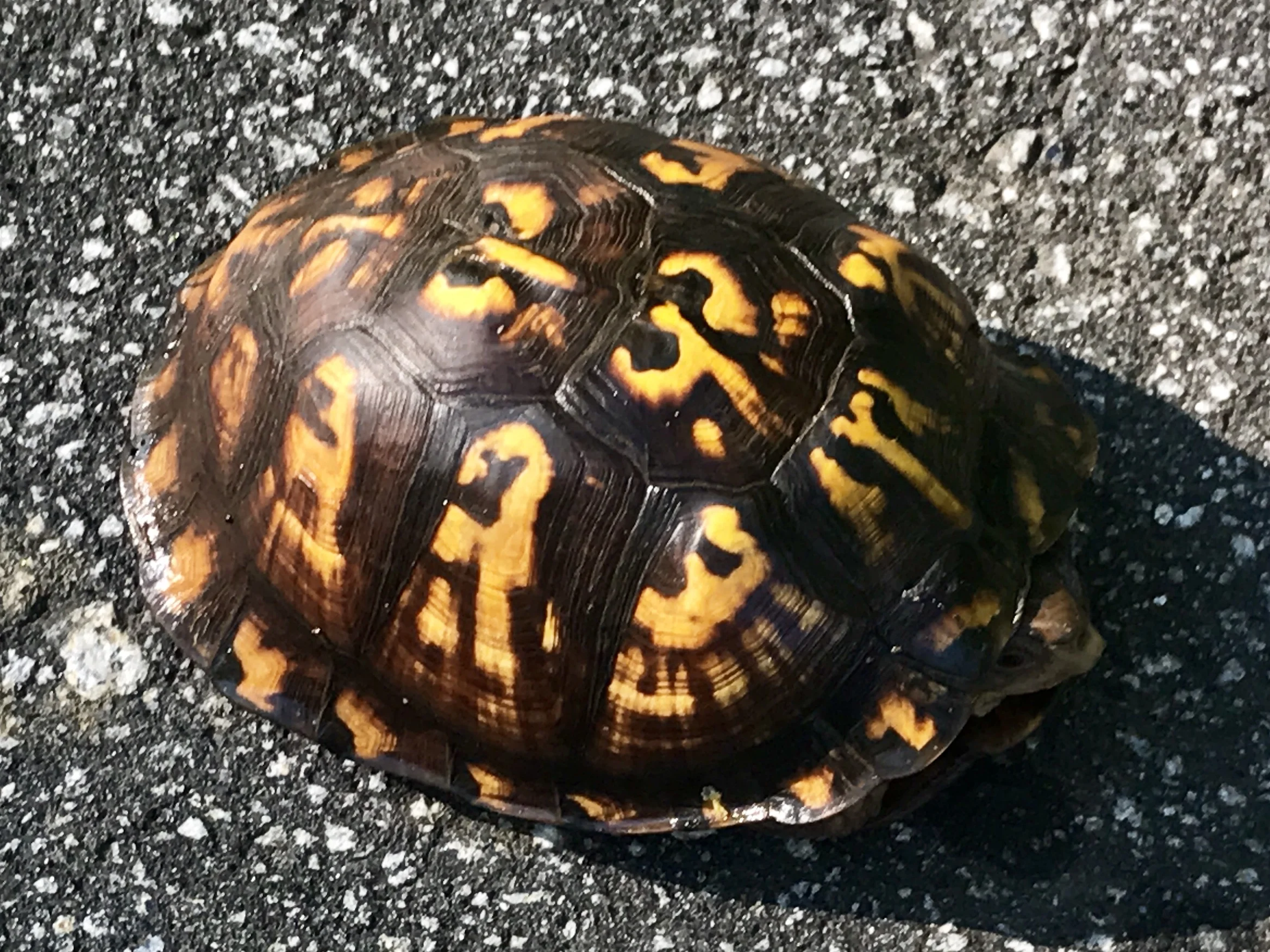
Box turtles have fascinated me since I was a kid. At one point my brothers and I owned five or six of them that we brought back from a canoe trip in the Ozarks. When I cycled through western Louisiana a few months ago I became quite intrigued with how many box turtles cross roads, and how so many of those are unsuccessful. Riding long distances on a bike reveals just how perilous roads are to animals in their necessary migrations, and I cannot help thinking how much harder we have made life for animals as we have made life easier for ourselves. In any case, I gave this lovely little guy a lift to nearby grasses before he was turned into roadkill.
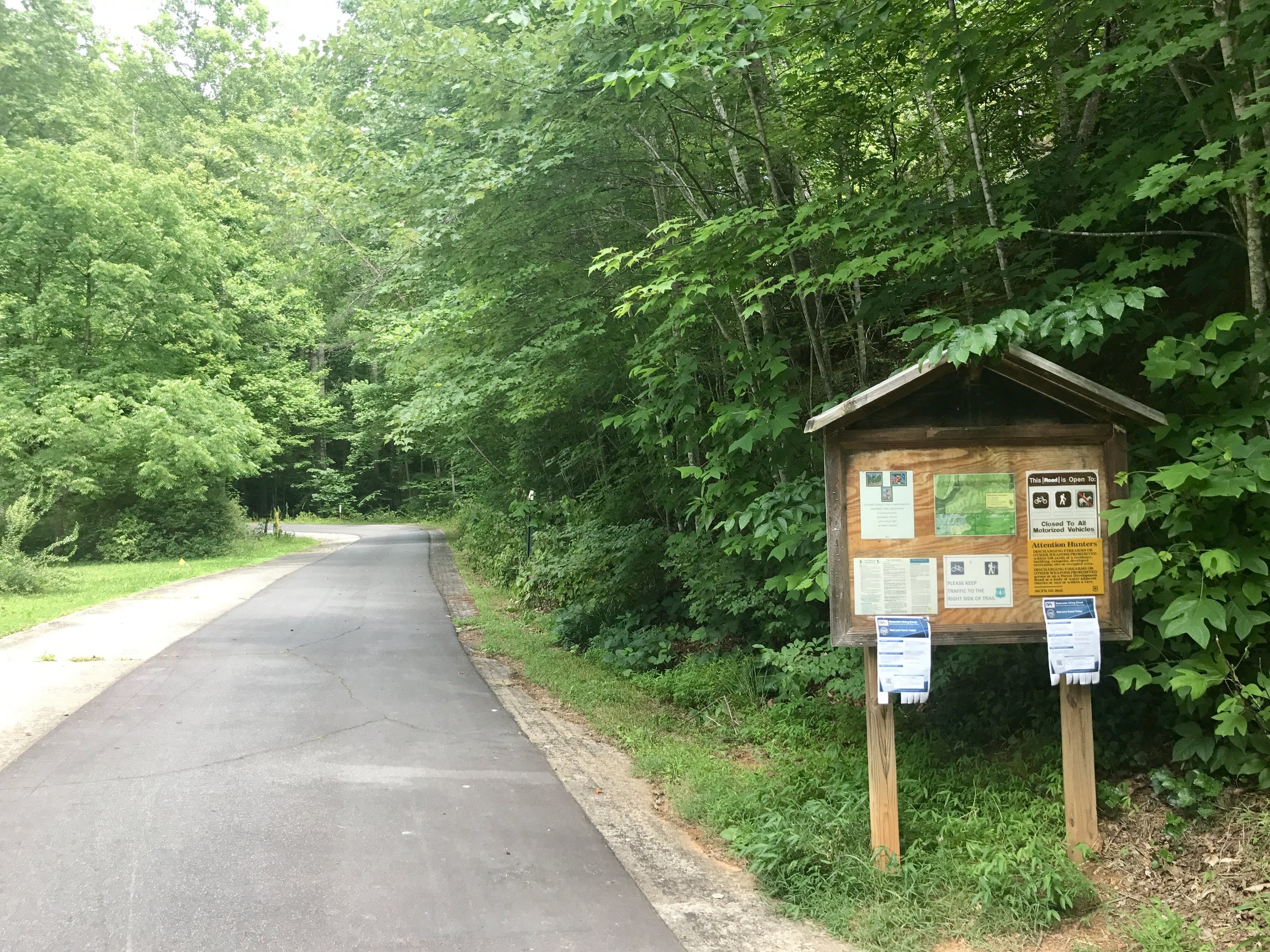
I wasn't aware that a section of highway 70 is now closed to non-motorized vehicles. This happens near Mt. Mitchell and drops into the famous old town of Black Mountain (at 6684 feet, Mt. Mitchell is the tallest peak east of the Mississippi River.) The road is long, windy, shady, and quite lovely. The only other people on this trail were a group of boys who appeared to have ridden up to the top, and were flying down on their bikes while I slowly ascended. Several of them whistled a note of "awesome" in seeing my gear and bags. It took several hours but I finally got the crest of the trail, and made my way into town.
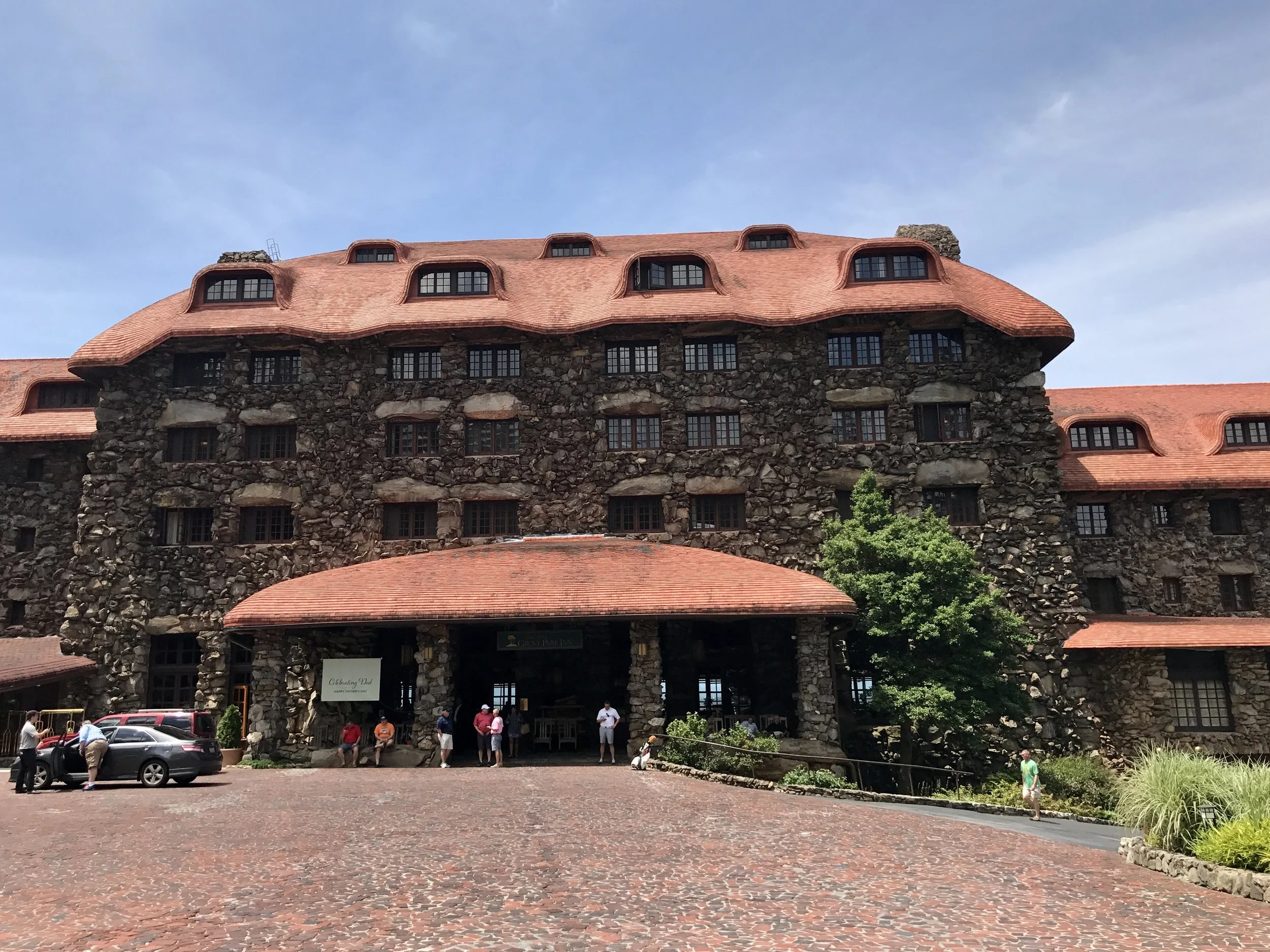
The next morning I went to visit the Grove Park Inn (aka, GPI) in Asheville. This amazing establishment is built entirely of locally sourced rocks put together like a jigsaw pizzle, and no two stones are alike. Notable people have stayed here - Obama, F Scott Fitzgerald, Thomas Edison, Firestone, Henry Ford and others. There are a handful of outer buildings on the property that once were filled with craftspeople, some of which are now museums and open to the public.
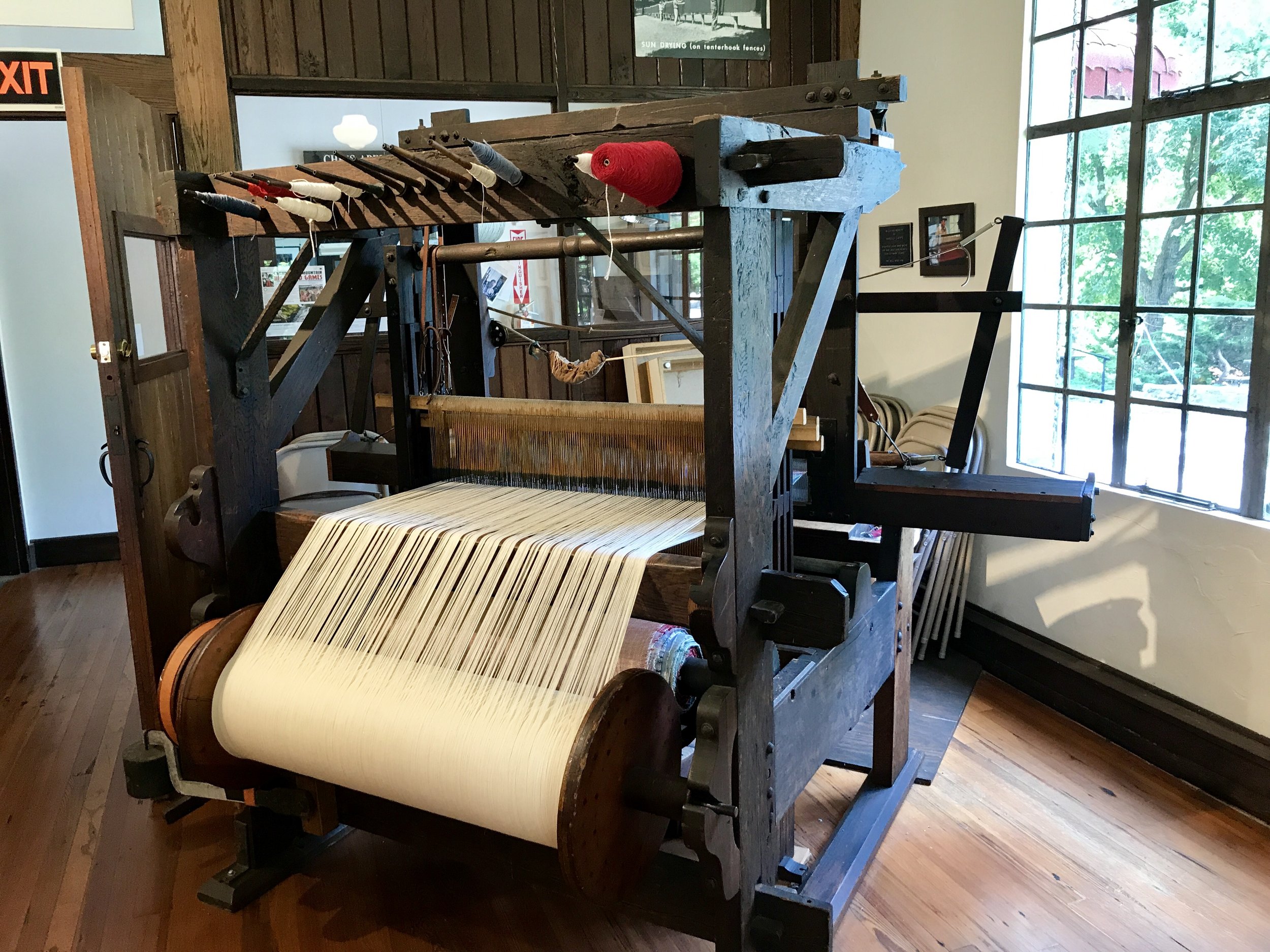
Pottery, furniture making, weaving and textiles have had a presence in Asheville for generations. Like the Biltmore Estate (built and run by the Vanderbuilts) which is also in Asheville, the GPI was a home for these industries and although their economies were replaced long ago through industrial mechanization, GPI still supports local artisans through their stores and museums. At one time the GPS housed a weaving factory.
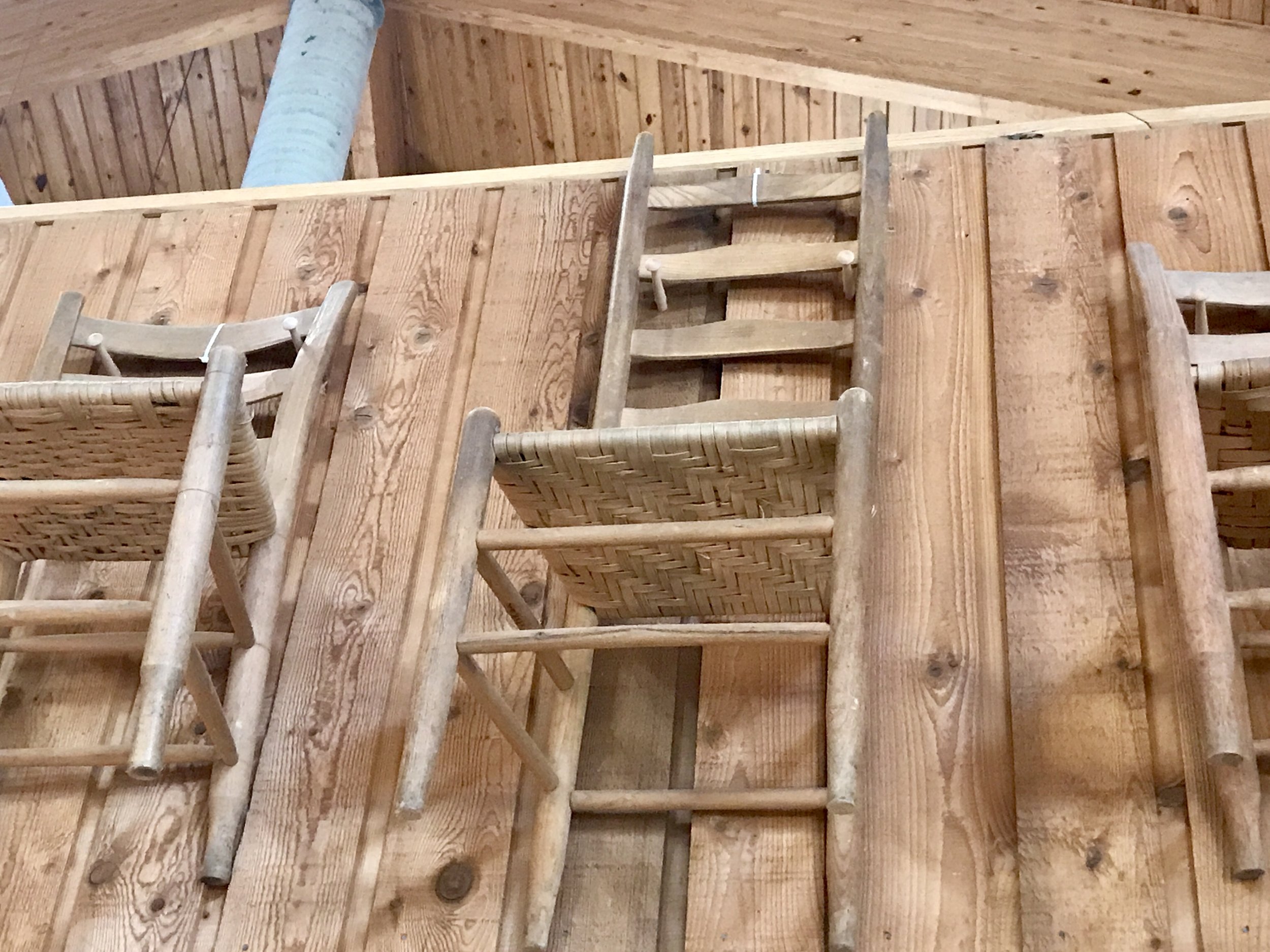
The Folk Art Museum off the Parkway just outside Asheville has a fantastic exhibit of furniture and weaving artifacts. I was enchanted by these chairs because I own some that are similar and I never knew where their design had originated.
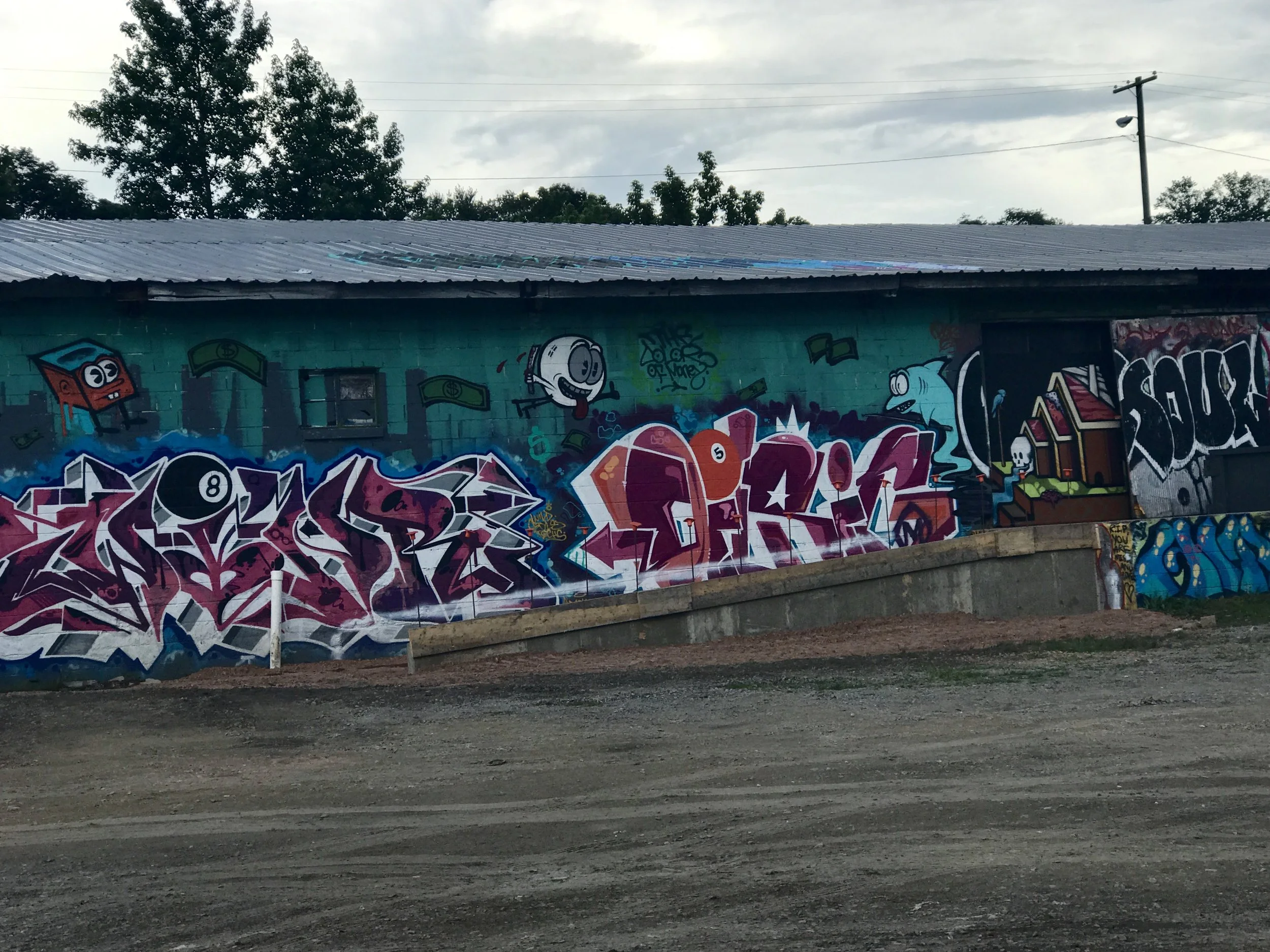
There's a section of Asheville called River Arts that is well known for the graffiti on its warehouses. Asheville has 22 craft beer breweries now and one of them (The Wedge) has two bars and a restaurant in this area in two different locations. The beer is sublime - I sampled several different kinds.
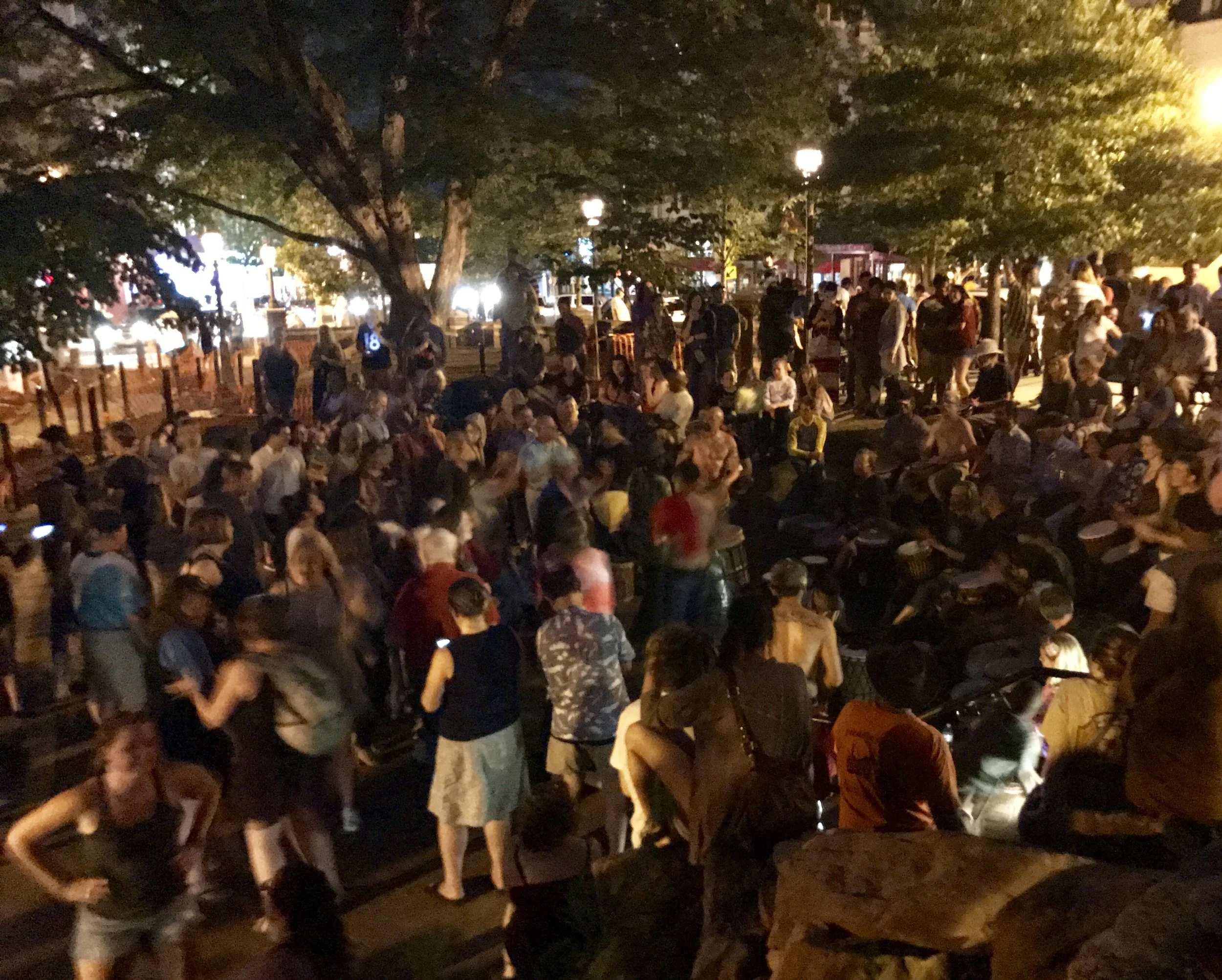
I heard Asheville compared to Boulder and the comparison is apt. In fact, one might say that Asheville is to the Appalachians what Boulder is to the Rockies. The town is small enough to be very livable, and large enough to have a lot going on. It's situated in a beautiful setting and natural beauty is abundant everywhere. But Asheville is also a bit like New Orleans, in that there is a vibrant music scene. I was lucky enough to be downtown on a Friday night and street musicians were on every corner. And in the center of town a community drumming circle was underway, apparently a regular ritual. The picture above is the drumming circle - drummers on the right, revelers to the center and left.
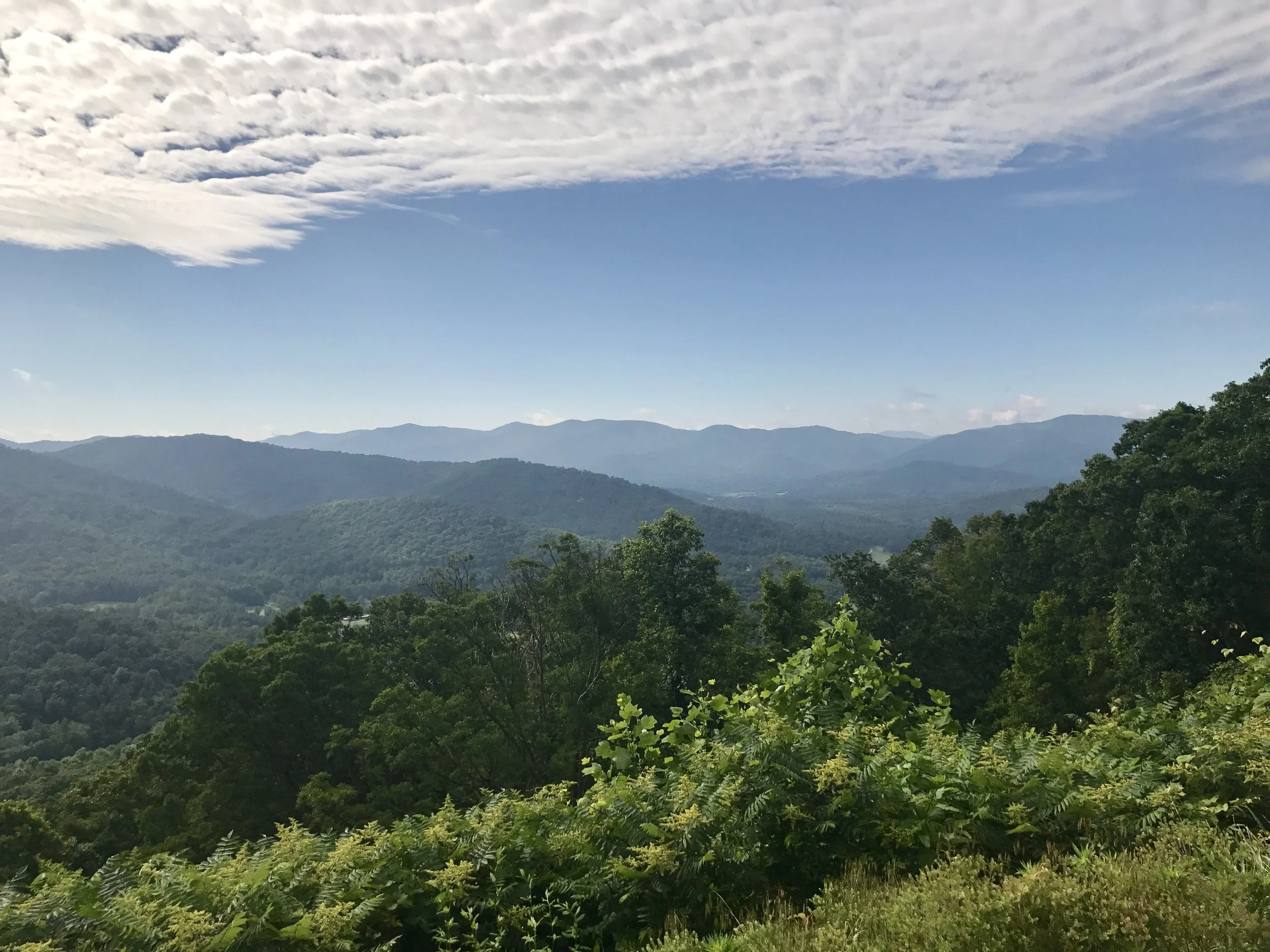
But all good things must come to an end. After two fantastic days in Asheville, I rode out of town to begin my trip up the Blue Ridge Parkway toward Washington, DC. What a delight when one must leave something wonderful for something else quite remarkable! Only 6.5 miles up a very steep hill I was rewarded by my first of countless extraordinary views on the Parkway. The ride north lasted for 50 miles before I could find more amenities than drinking water, so it was a challenging first day. But you will see the rewards were superlative. This Parkway is a gem, and so far, very rideable on a bike. The road surface is excellent, and drivers actually obey the speed limit and are reasonably courteous to cyclists. Later in the day, when I remarked to a local shopkeeper that I was impressed the drivers in the Parkway actually obeyed the speed limit, she replied, "Well that's a government road, and you don't mess with that!" As glad as I am that's true about the Parkway, it would be nice if that was true on all other government roads - which is, of course, every other road out there (except for a few private driveways).
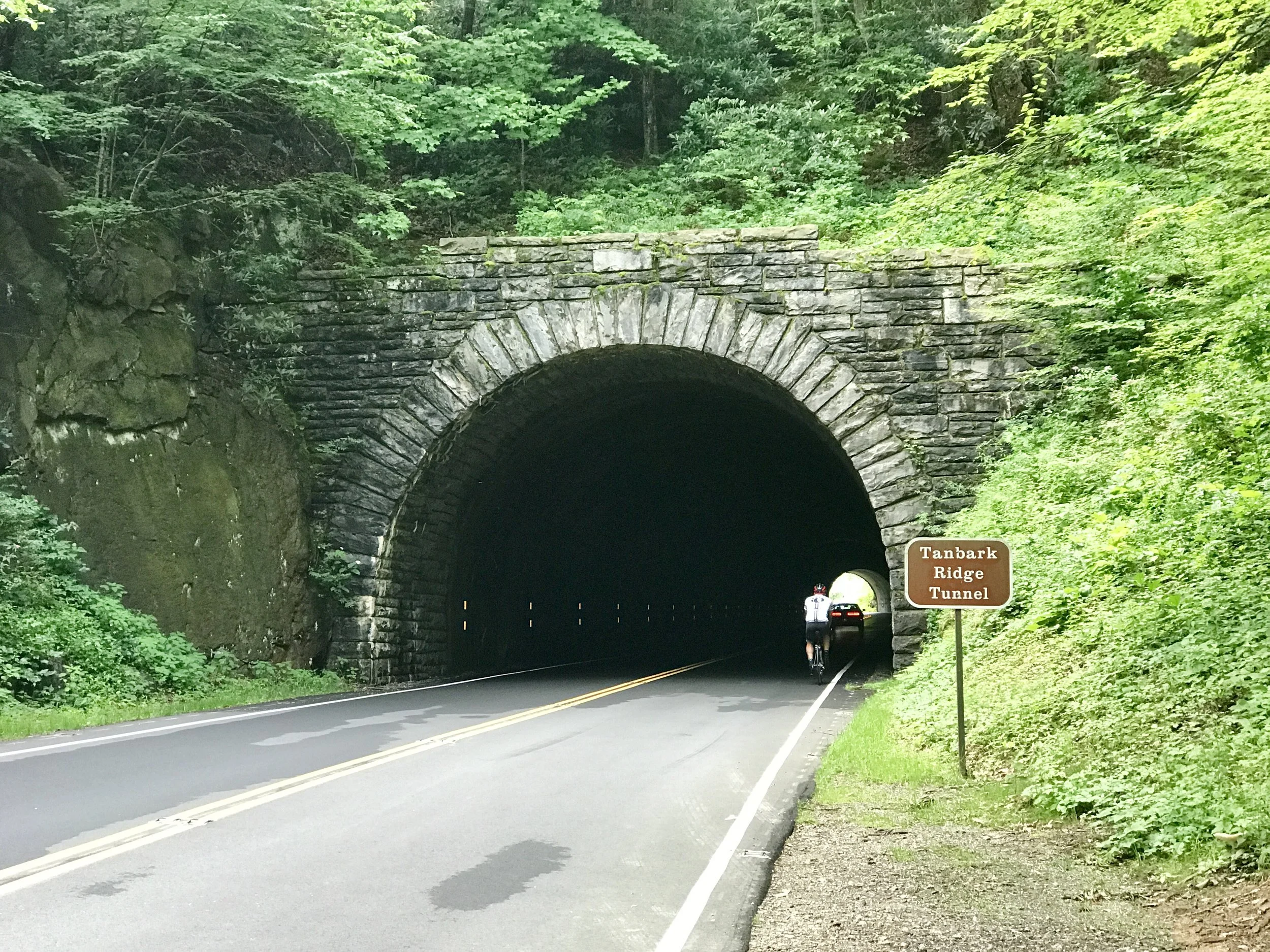
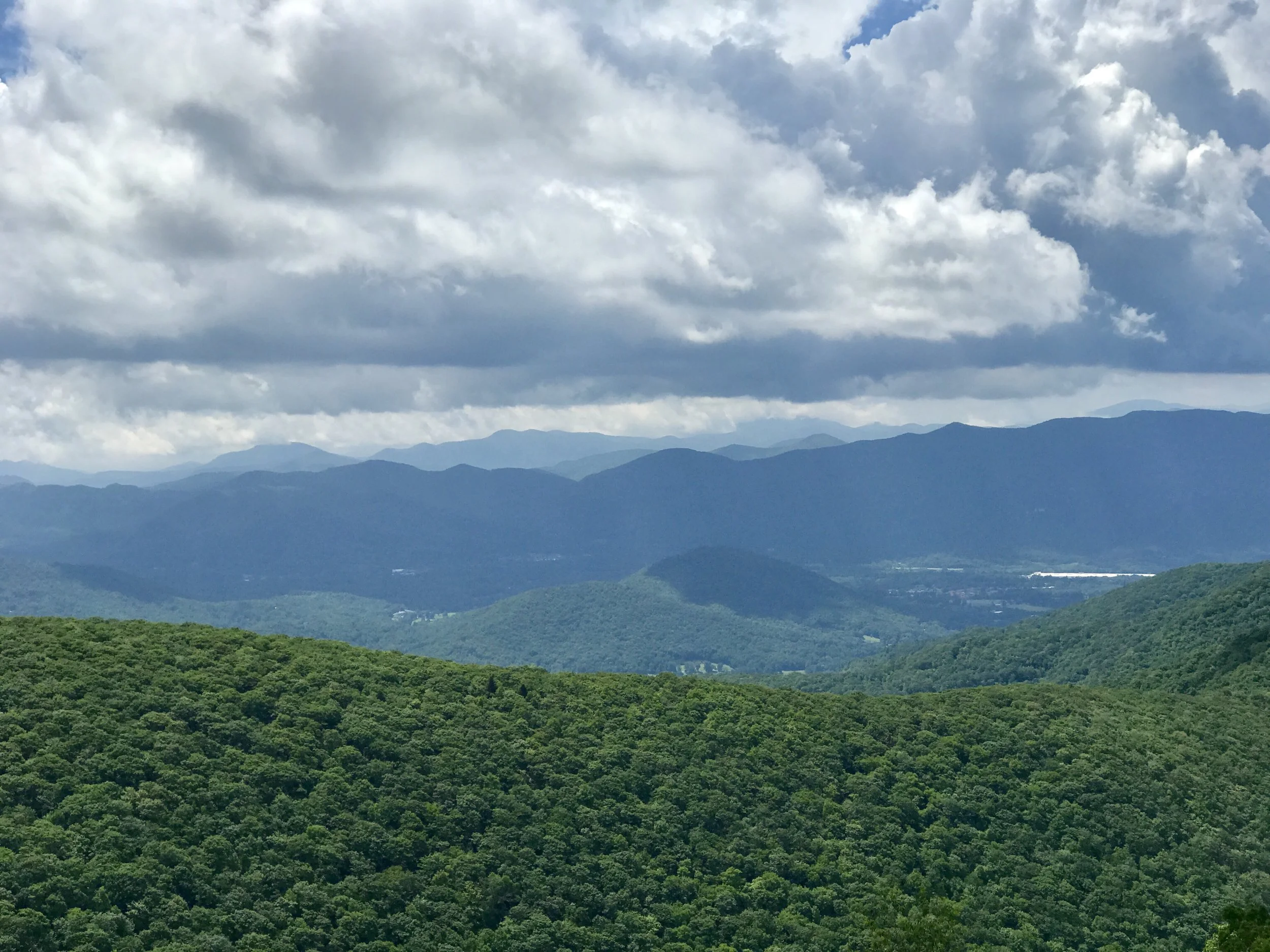
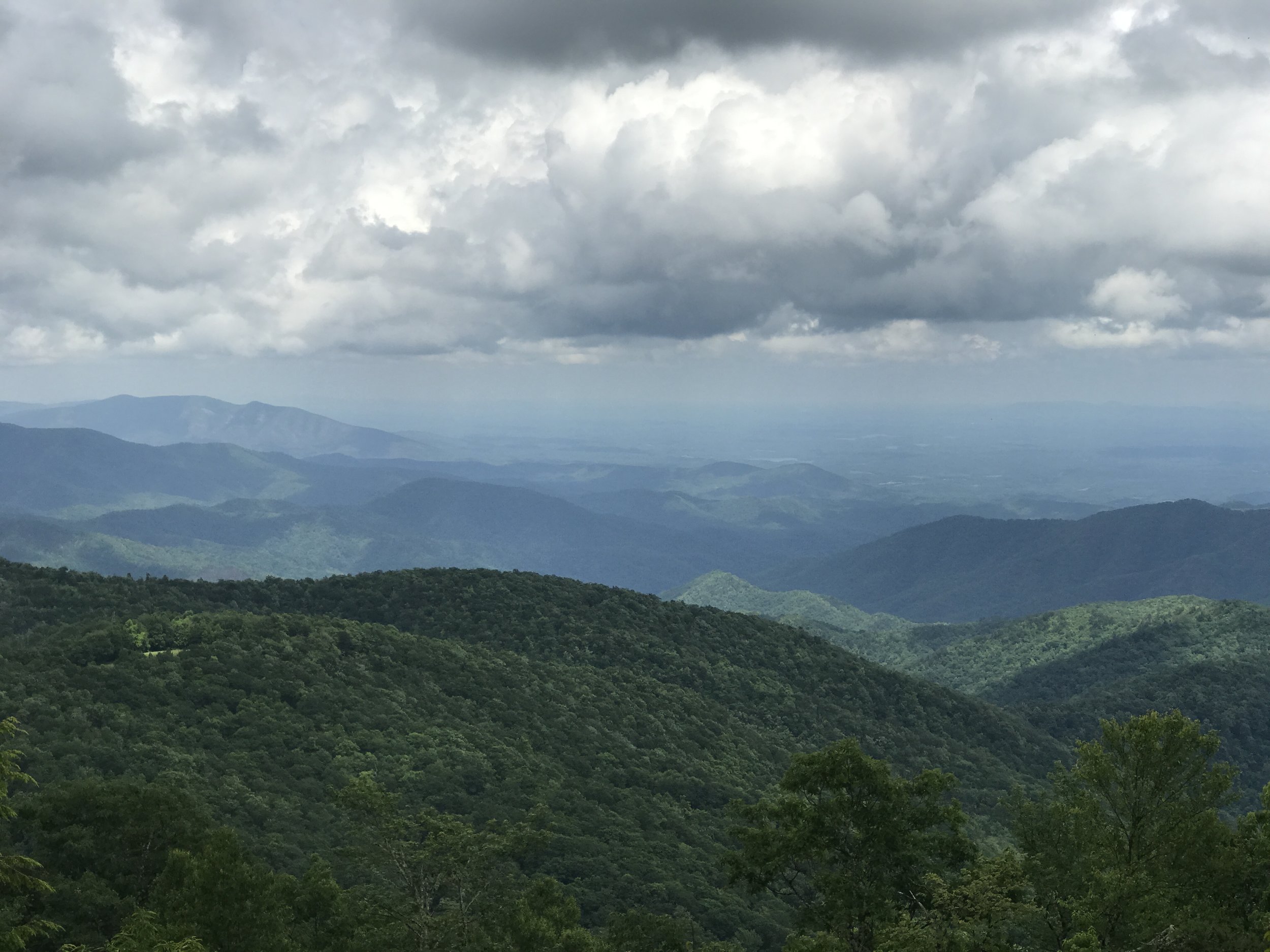
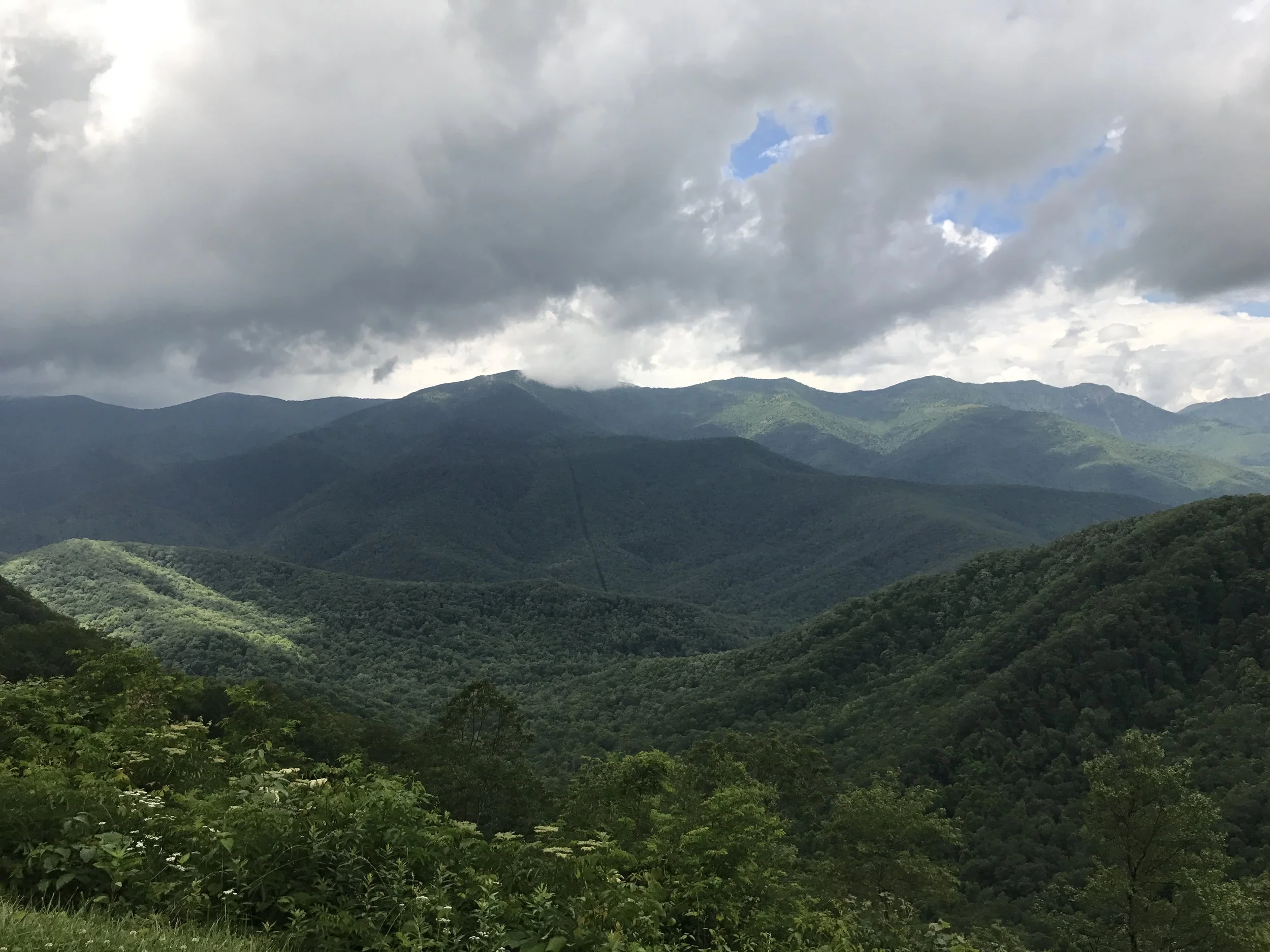
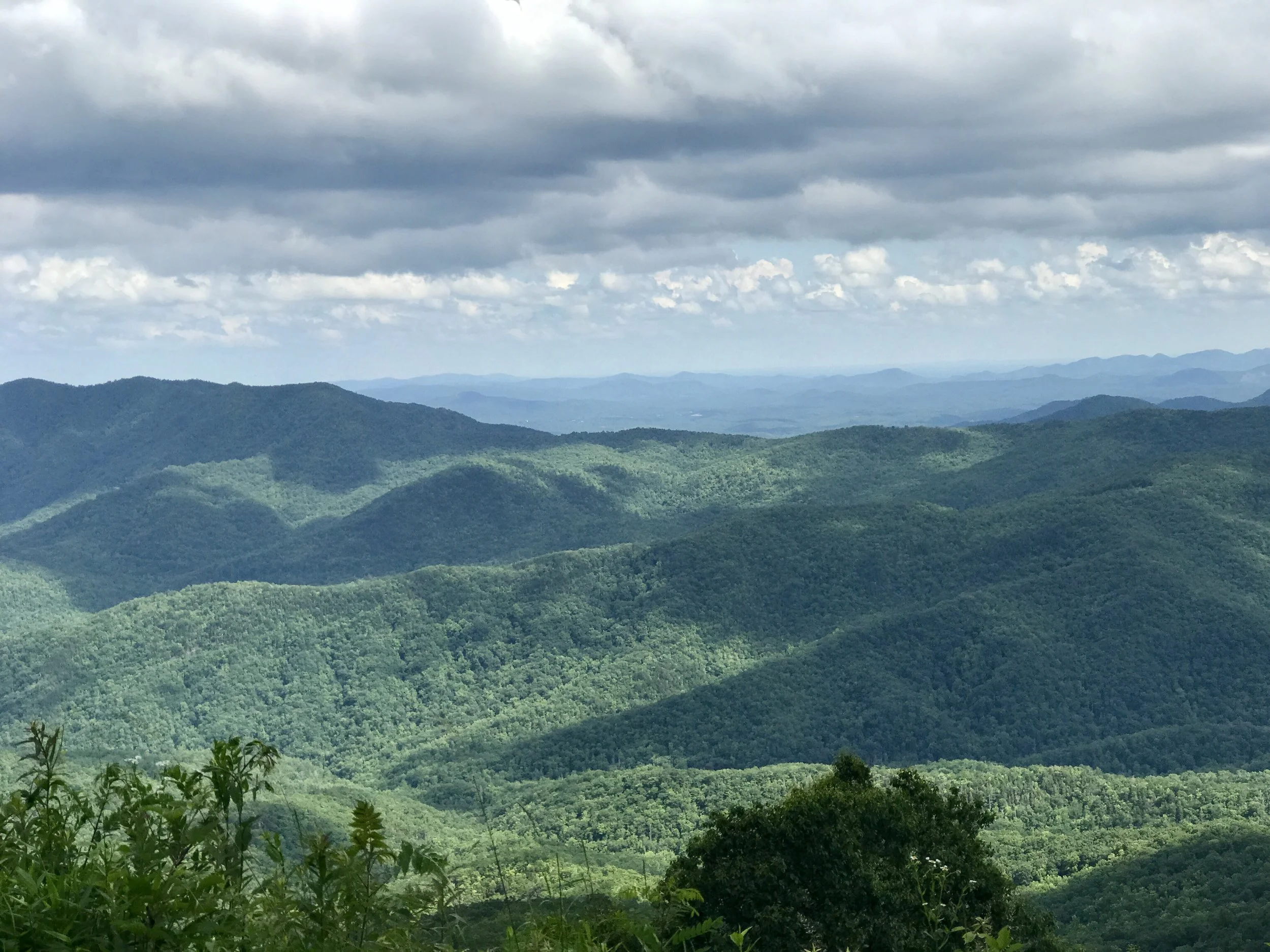
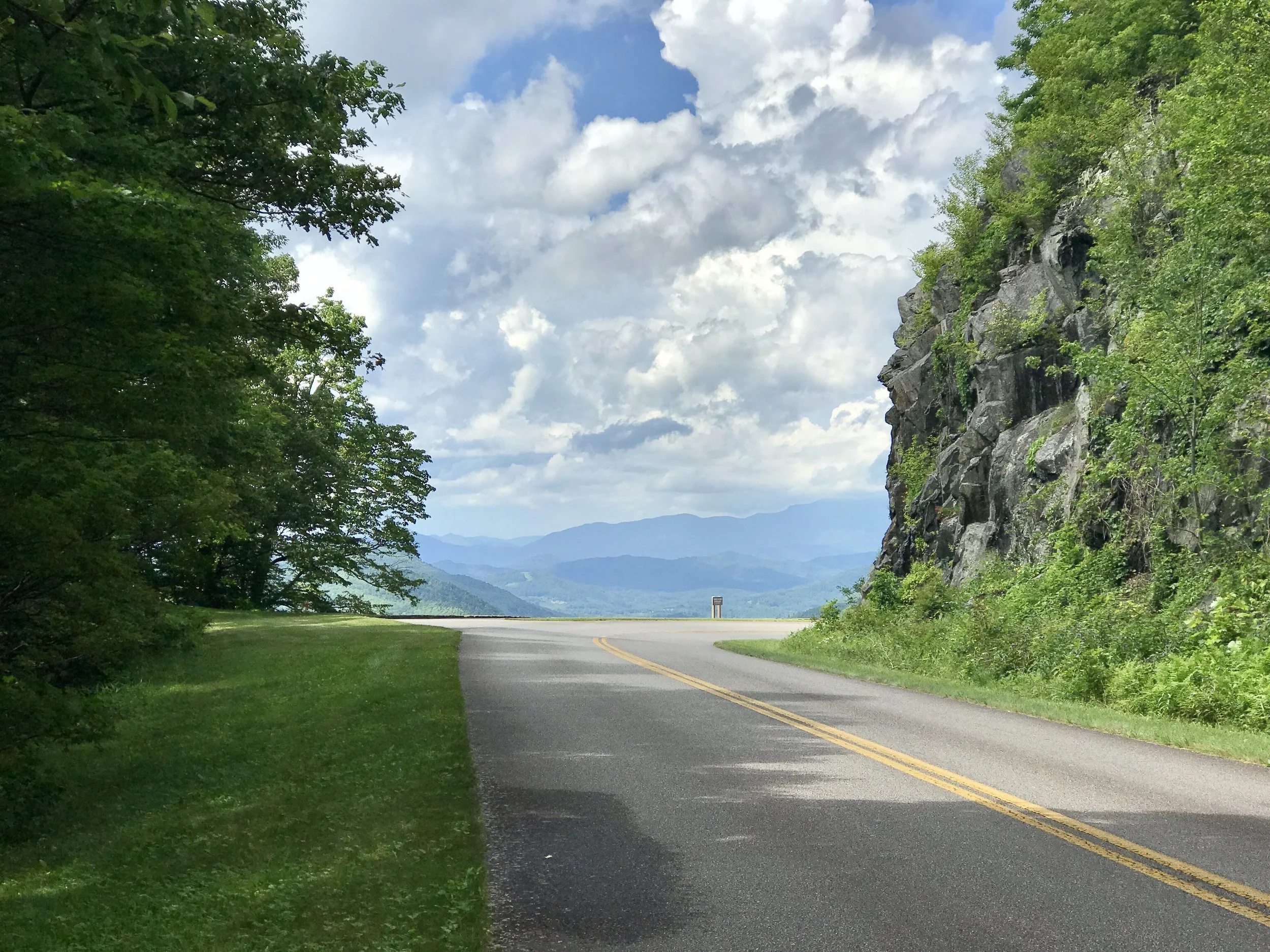
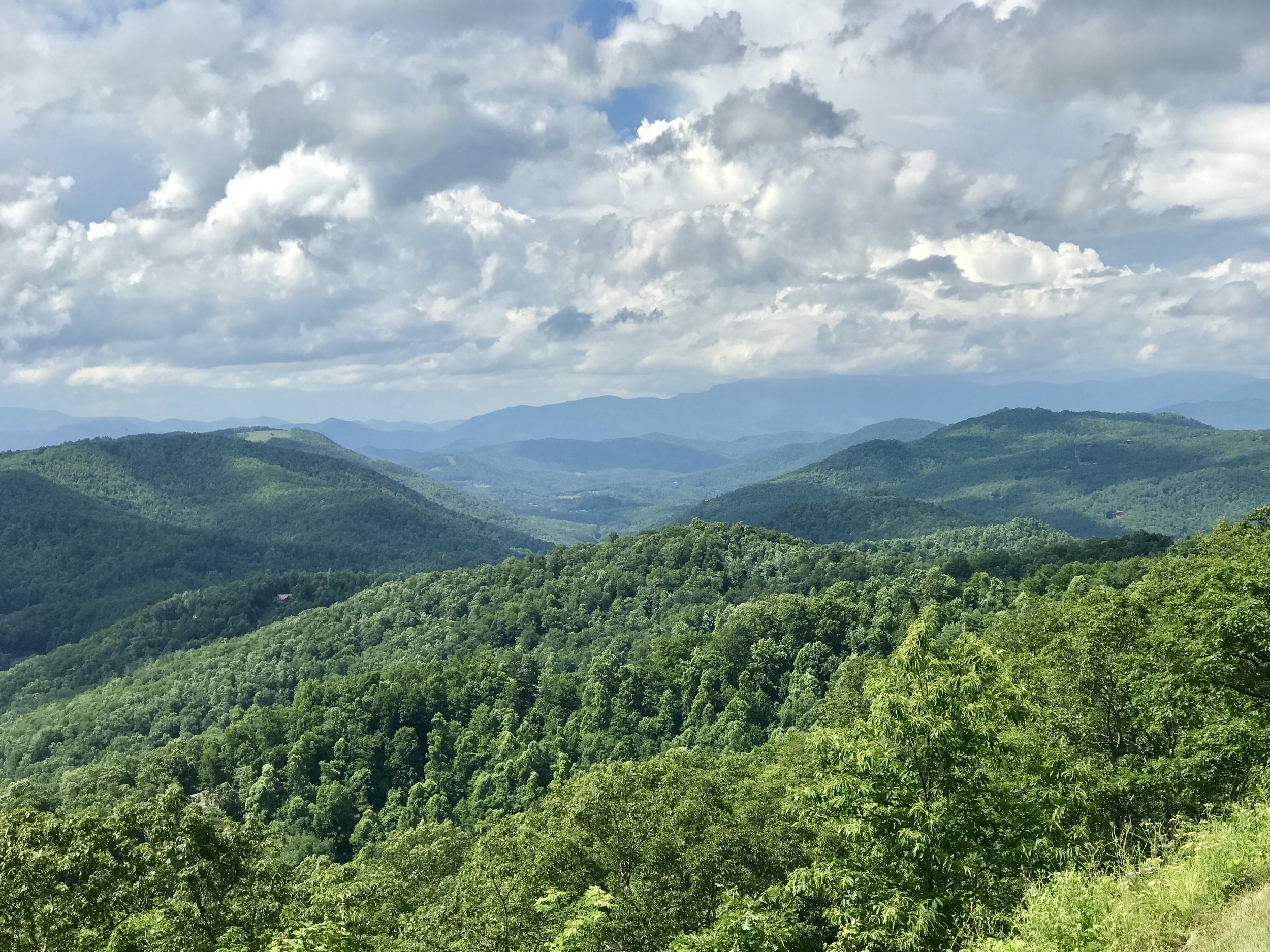
The pictures below were all taken on the Parkway between Asheville and Little Switzerland, 50 miles to the northeast.
More to come,
Michael
Blue Ridge, Post 3
Blue Ridge, Day 4, Post 3, Blue Ridge Cycling Tour, Revisiting Edward Hopper.
Check out my road cycling activity on Garmin Connect. https://connect.garmin.com/modern/activity/1797772745
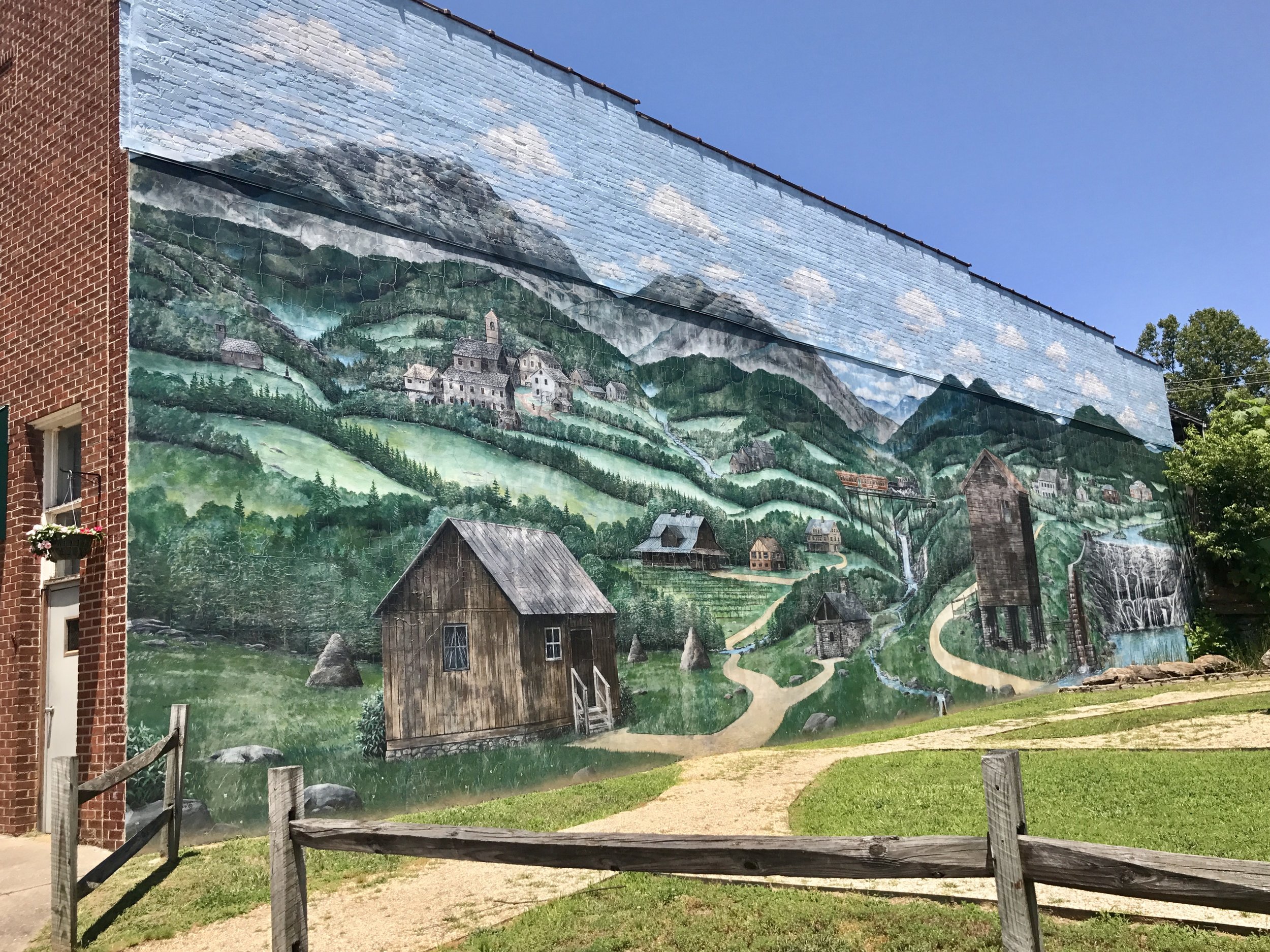
There's a small North Carolina town about 70 miles east of Asheville called Valdese. Arriving there from the east, one is greeted by this mural, suggesting that as one leaves the Piedmont for the Appalachians, one will find quaint mountain villages with endearing architecture nestled among beautiful countryside, and no small share of oddities.
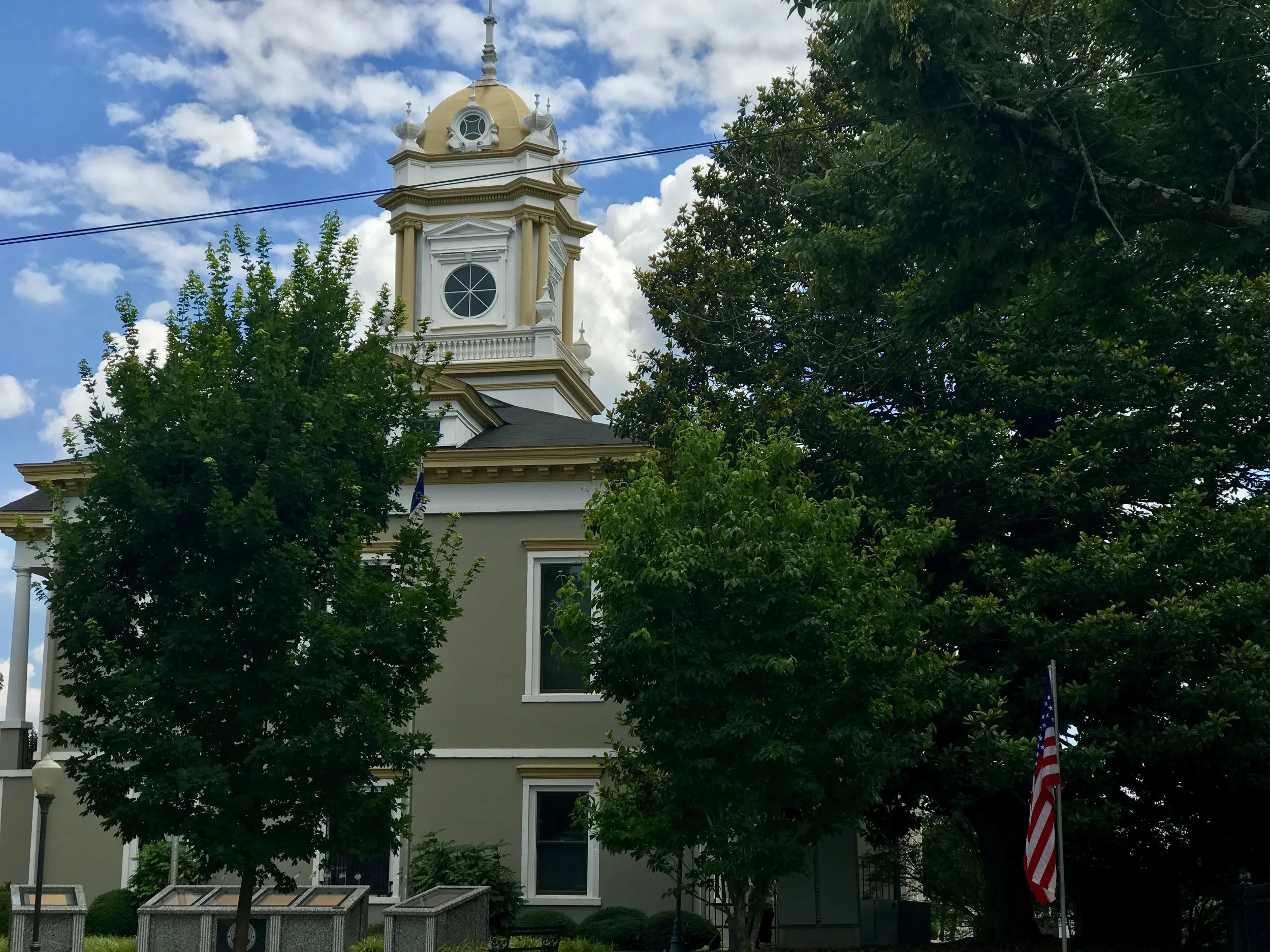
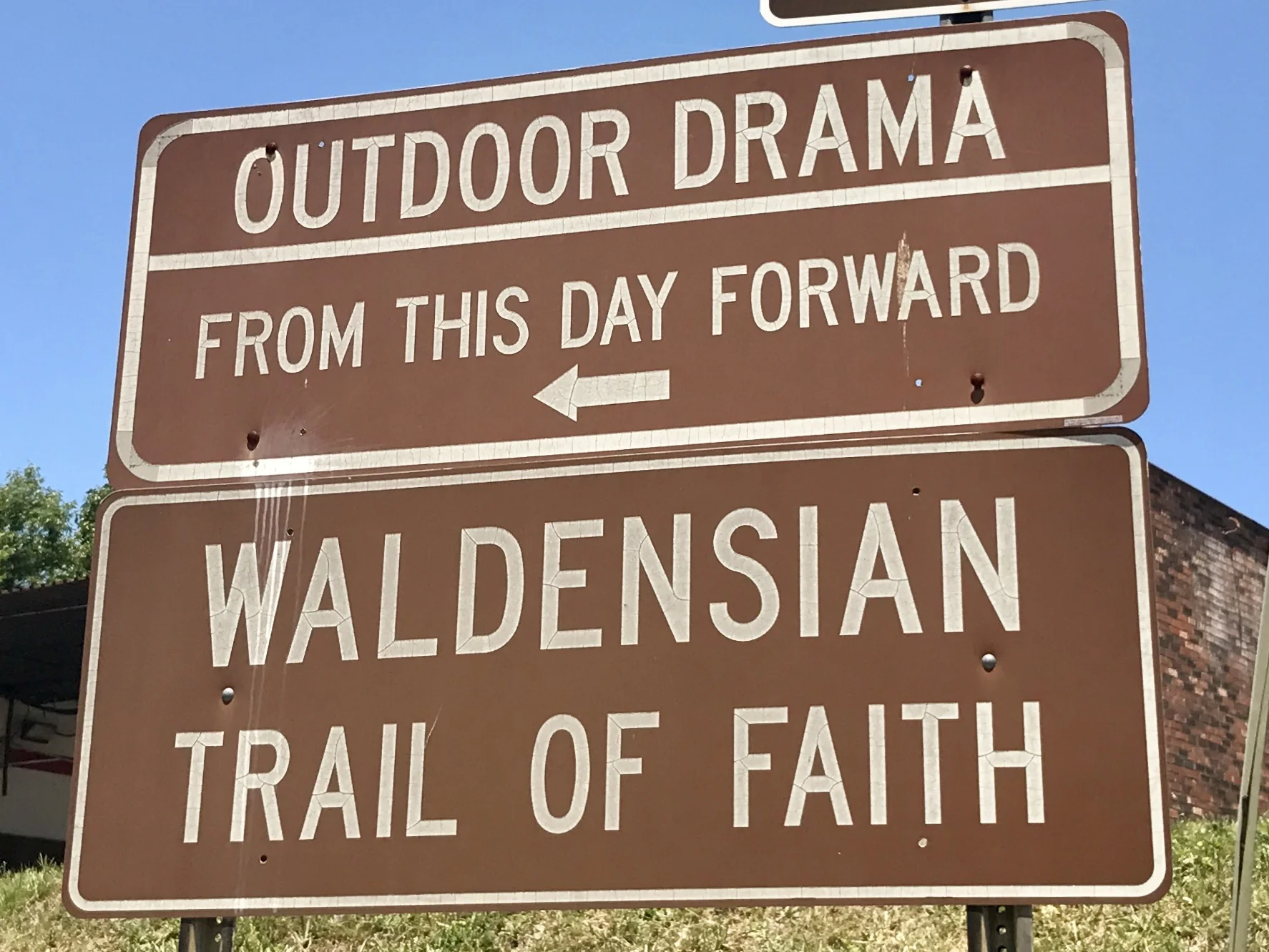
Valdese delivers that promise, as does Marion, about 25 miles to the west. The towns are charming, and signal a welcome to tourists. But like everywhere, things are not always as they seem on the surface.
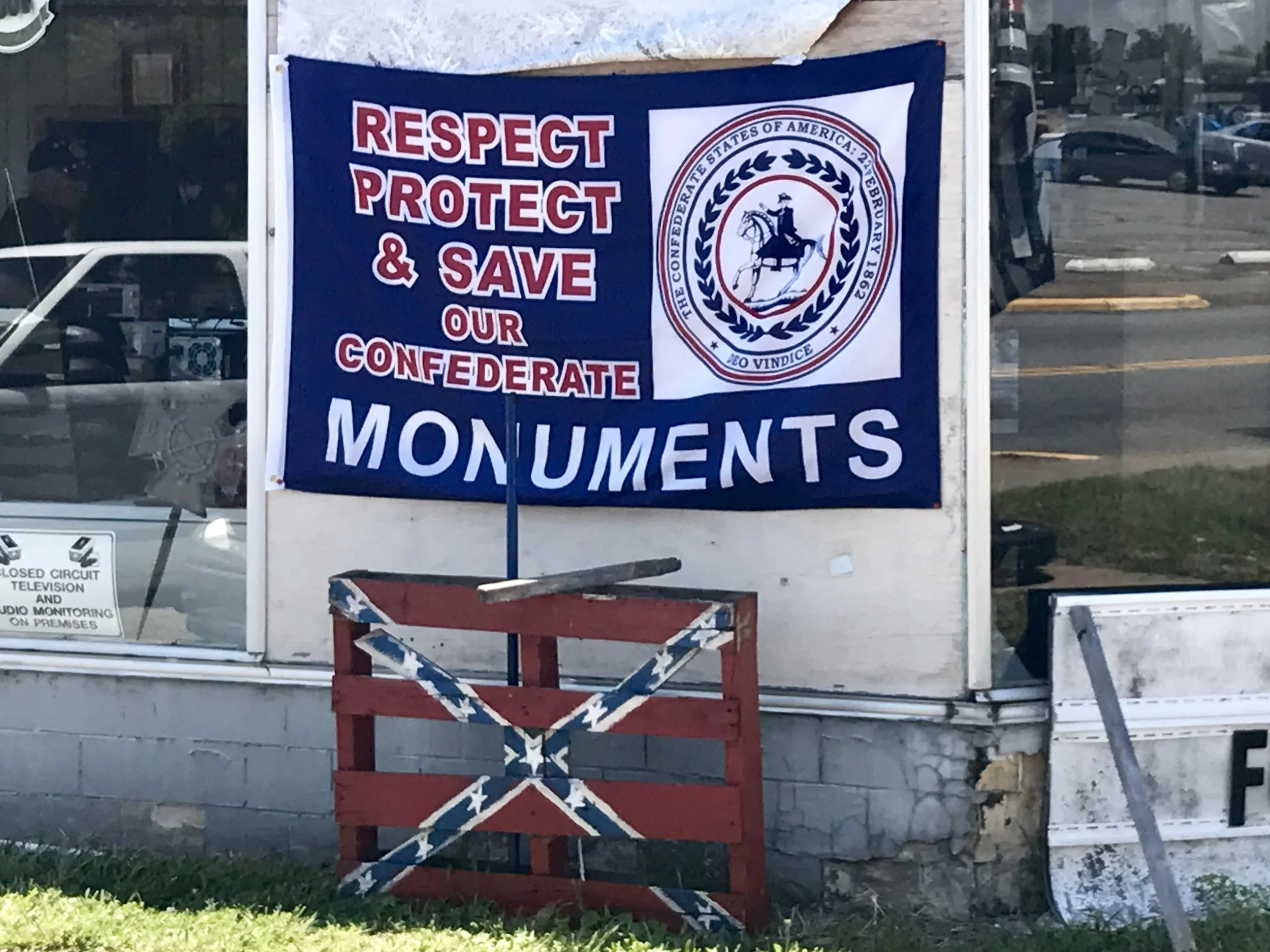
The south is full of contradictions. It is friendly and clannish at the same time, and sometimes fiercely defensive. To a Yankee, some of what some Southerners want to defend is neither appropriate nor worth the trouble.
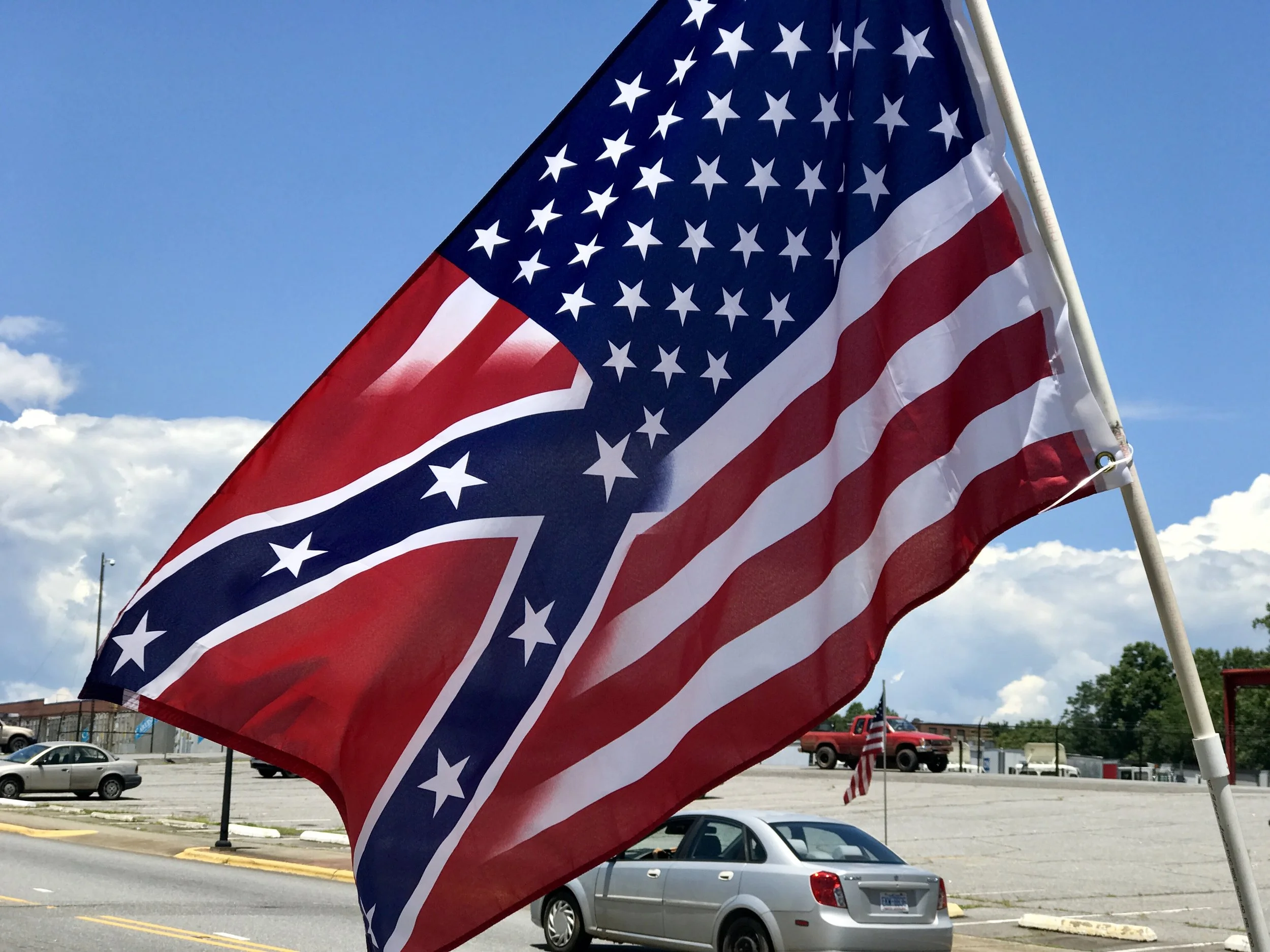
But it is there regardless. I used to think that the average thinking American saw the world much as I do, and although one might even feel nostalgia for a past that will never return, common sense and reasonable thinking will ultimately prevail over more limiting ideas and behaviors. Imagine my surprise when I realized that the beliefs I thought were aberrations aren't aberrations at all in some places. On the contrary, to people in those places it's my liberal, secular reason based, scientific view that's weird and nonsensical. Which makes me think about how beliefs are often "place based". Note to self - subject for another post....
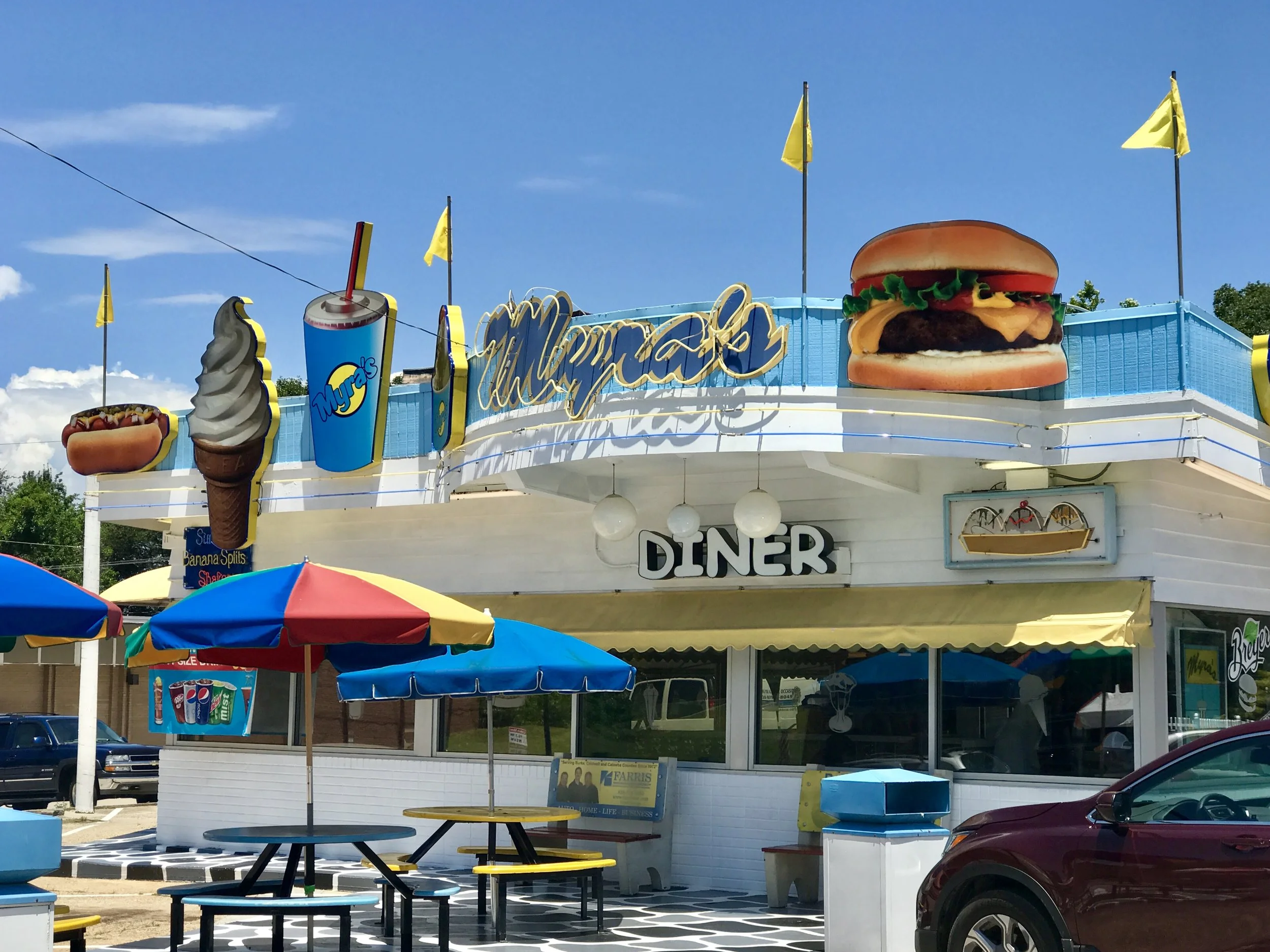
The delightful diner above (found in Valdese) made me remember a post I wrote in my Southern Tier cycling tour and I decided to republish parts of it to finish out this post. A few months ago I read "The Art of Travel" by Alain de Botton. One chapter was on the traveling addiction of Edward Hopper and his love for simple Americana eateries and motels. As I read I had an insight. I didn't need to feel ashamed of my heretofore inexplicable attraction to home-spun restaurants, middle century motels and RV Parks. It's not poor taste that leads me to appreciate this stuff so much. I am touched by nature's beauty and humankind's beautiful, funky and banal attempts to address our endless eternal struggle to make life livable, if not better. So I make no apologies. I like what I see around me, especially when I haven't seen it before. I would like to believe that underneath all the pain of the deteriorating quality of life in rural America (and its probably ineffective current scream for attention in our national political drama) is a quiet and eternal core of kindness, dignity and ingenuity. It's obvious that rural America is in decline, and will have to reinvent itself eventually in a new image. But first her inhabitants will have to realize that a "great" past won't return, that there won't be an "again" if there ever was one in the first place. For that's how life works. No matter how fertile our imaginings about the past might be, genuine reinvention is always about something new. And it rarely is comforting, especially in the beginning. But as a good Buddhist would say, "the only way out is through." And in the meantime, let's love all our all too human fragility.
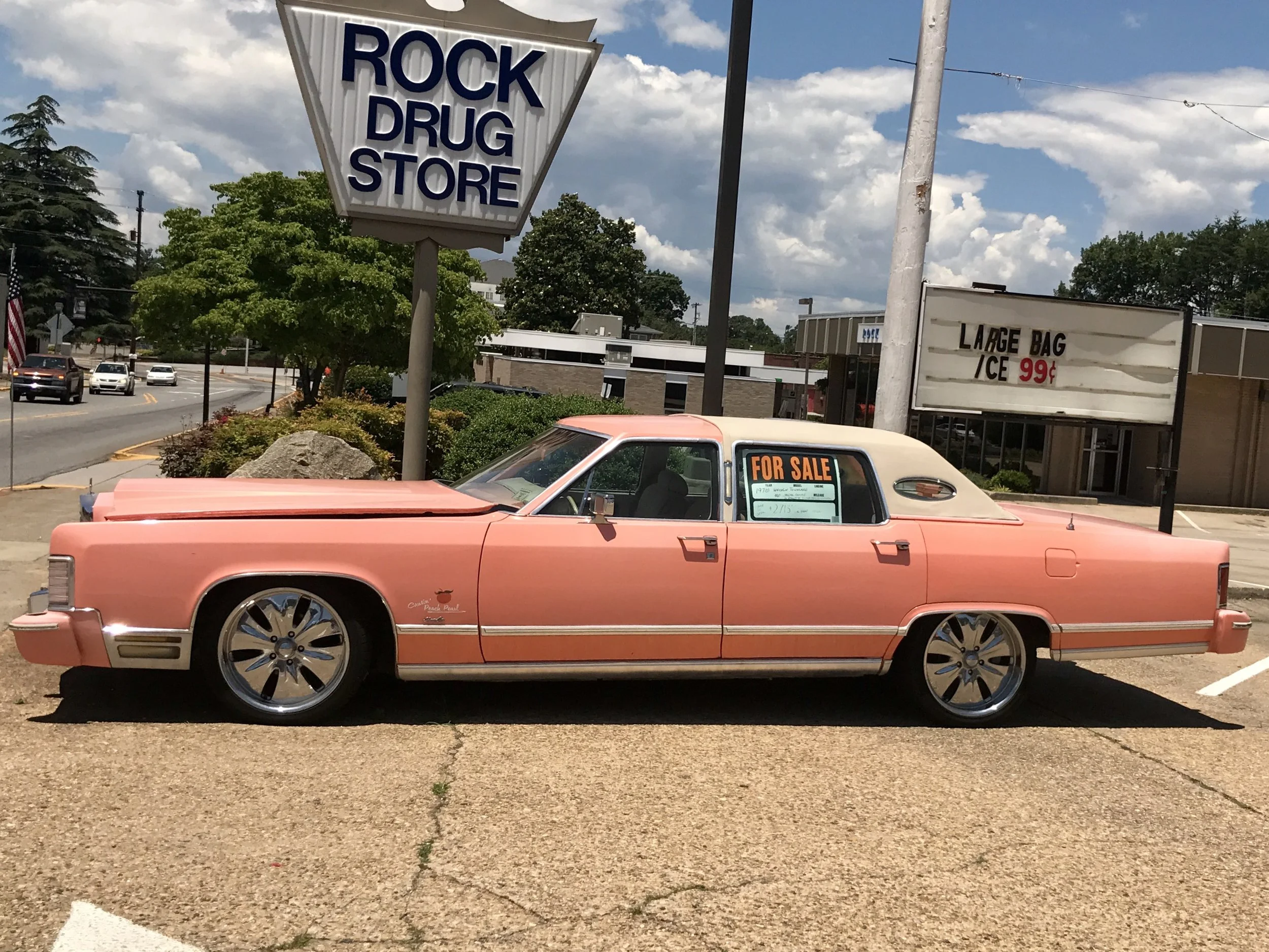
...and our diners and old cars. The era of gasoline has to end, along with America's twin adolescent ideas of manifest destiny and infinite immortality, but that doesn't mean we can't enjoy some down home nostalgia as the trade-winds of change drive us in a different direction.
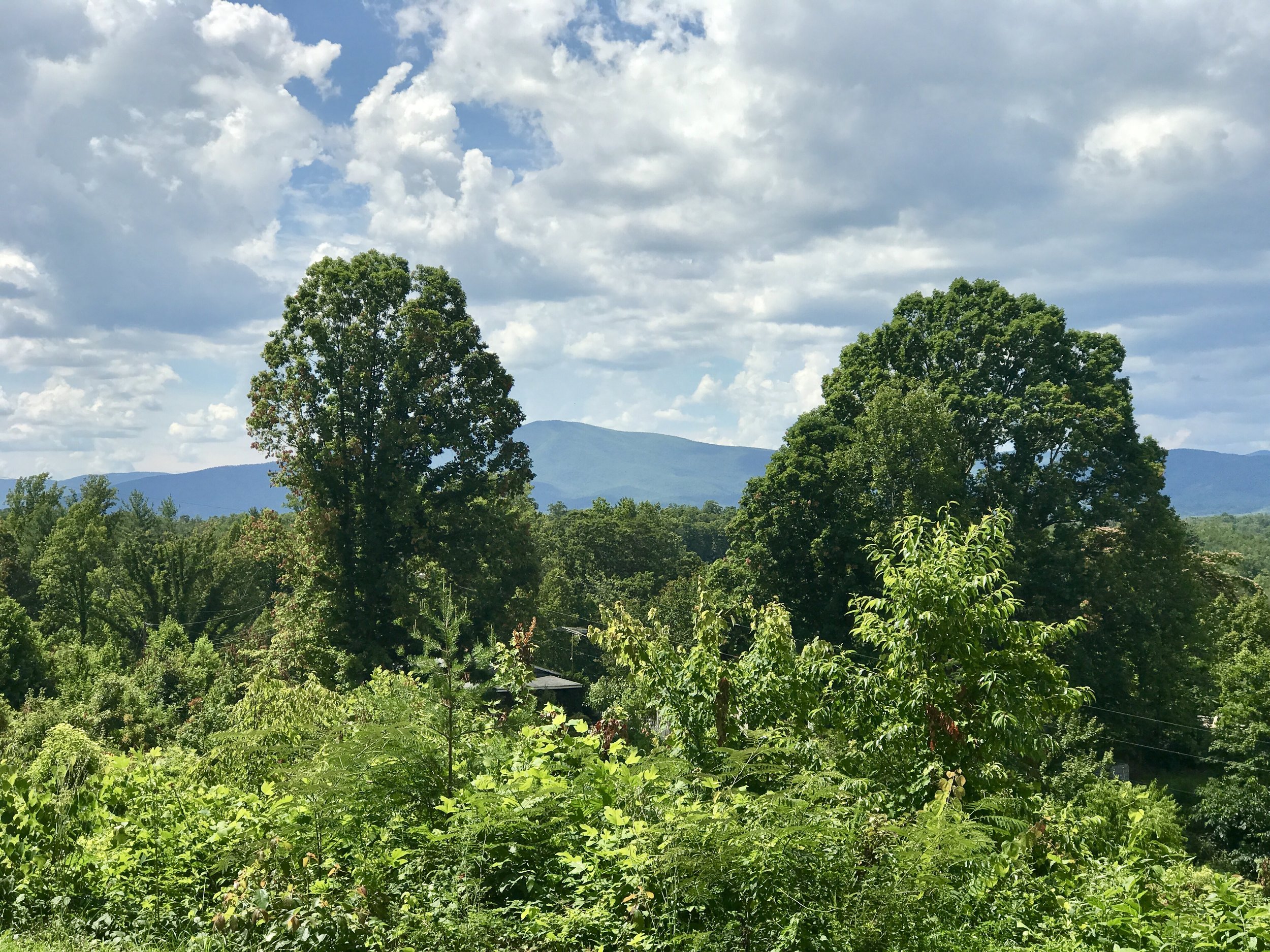
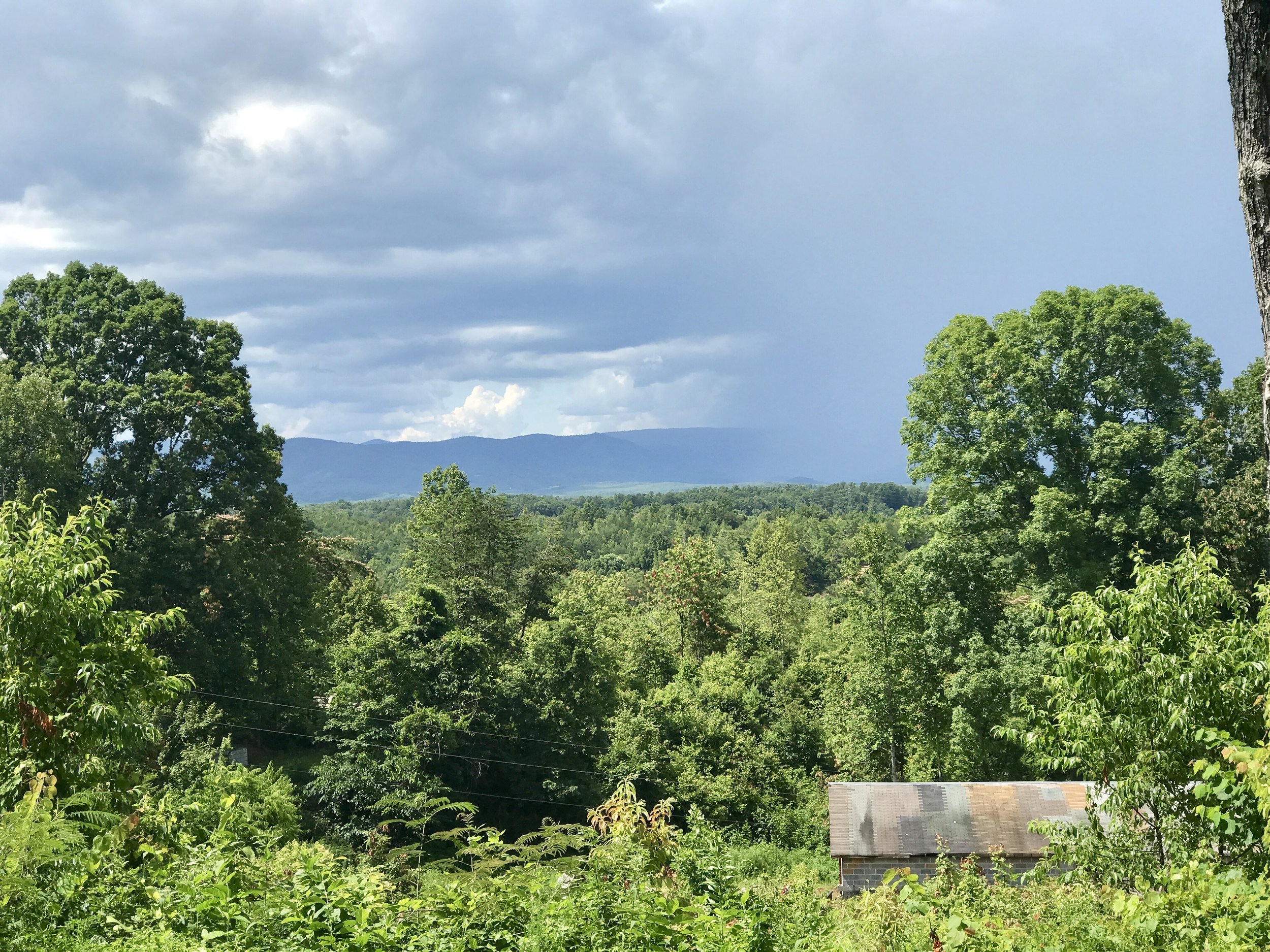
And let's remain vigilant about what we have that's still worth preserving. America is a place of incredible cities and astonishing geographic diversity, and it needs our active participation to preserve what makes it special. The Appalachians are one of America's treasures. I'm in the mountains now, and I look forward to being in them for several more weeks as I travel along the Blue Ridge Mountains to the northeast on my way to Washington, DC.
Tomorrow I will arrive in Asheville. I was there once years ago, and I've always wanted to go back. I plan on spending several days there, and it's unlikely I will write another post before I leave, so don't look for another post for a few days. But there's more to come, so stay tuned.
Michael
Blue Ridge, Post 2
Day 3, Post 2, Blue Ridge Cycling Tour
If you had trouble with the Garmin link yesterday, I think I've solved the problem. Just click on the sentence in red right here: Check out my road cycling activity on Garmin Connect.
https://connect.garmin.com/modern/activity/1795892979
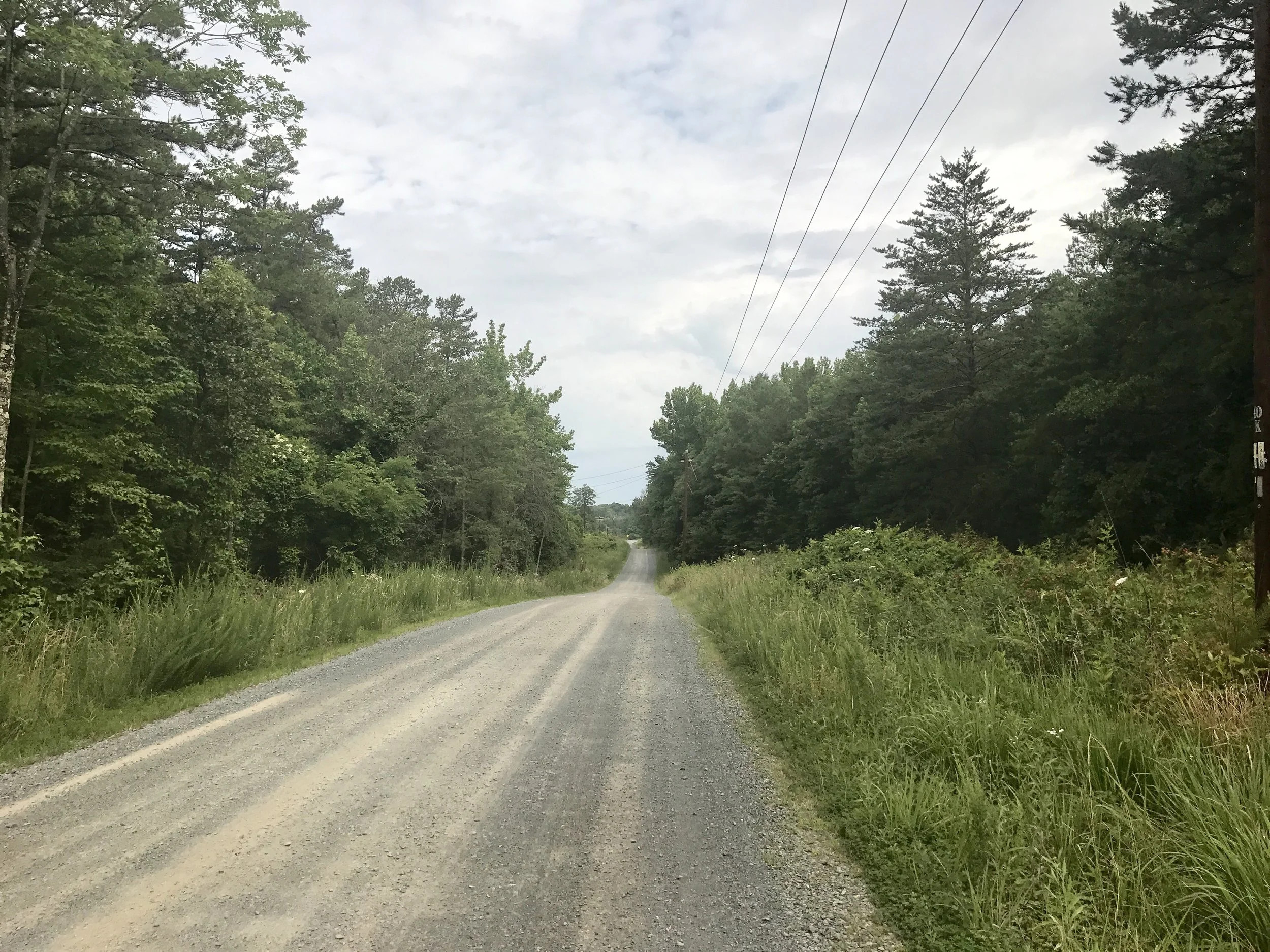
The day began well, although early on I found myself on a gravel road. I don't mind riding on them for short distances, although my touring bike is not built for long hauls on gravel. But the road was pretty and I had it to myself, so it was a treat to be on it so early in the day.
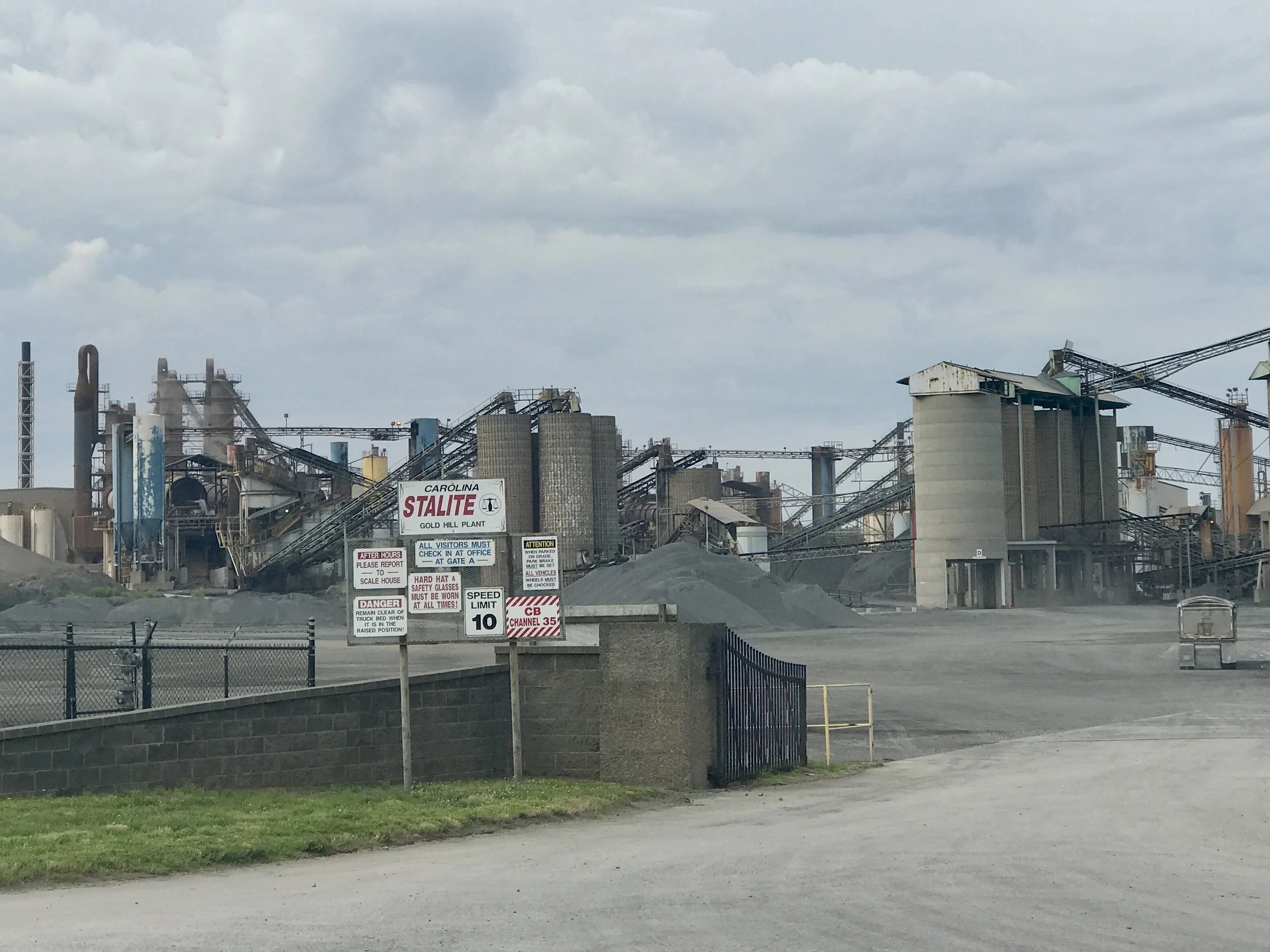
And then I realized why I was on gravel. This road inked to Carolina Stalite, the world's largest producer of lightweight aggregate. Sometimes known as crushed gravel, this stuff creates a great surface for driving and cycling. And if we would back off our misplaced idea that repairing infrastructure means building more roads (which is the last thing we need), Stalite could be used as an inexpensive and environmentally effective way to maintain roads. This stuff is inexpensive, doesn't buckle, and best of all, is permeable, so it will absorb rainwater and minimize erosion and damaging run off. Imagine my delight in finding this plant. Ironically, as I came toward it, I thought it was an out of place coal plant. But, no doubt to North Carolina's relief, they mine and manufacture little coal. In fact, NC has a reasonably healthy solar industry, which you can read about here.
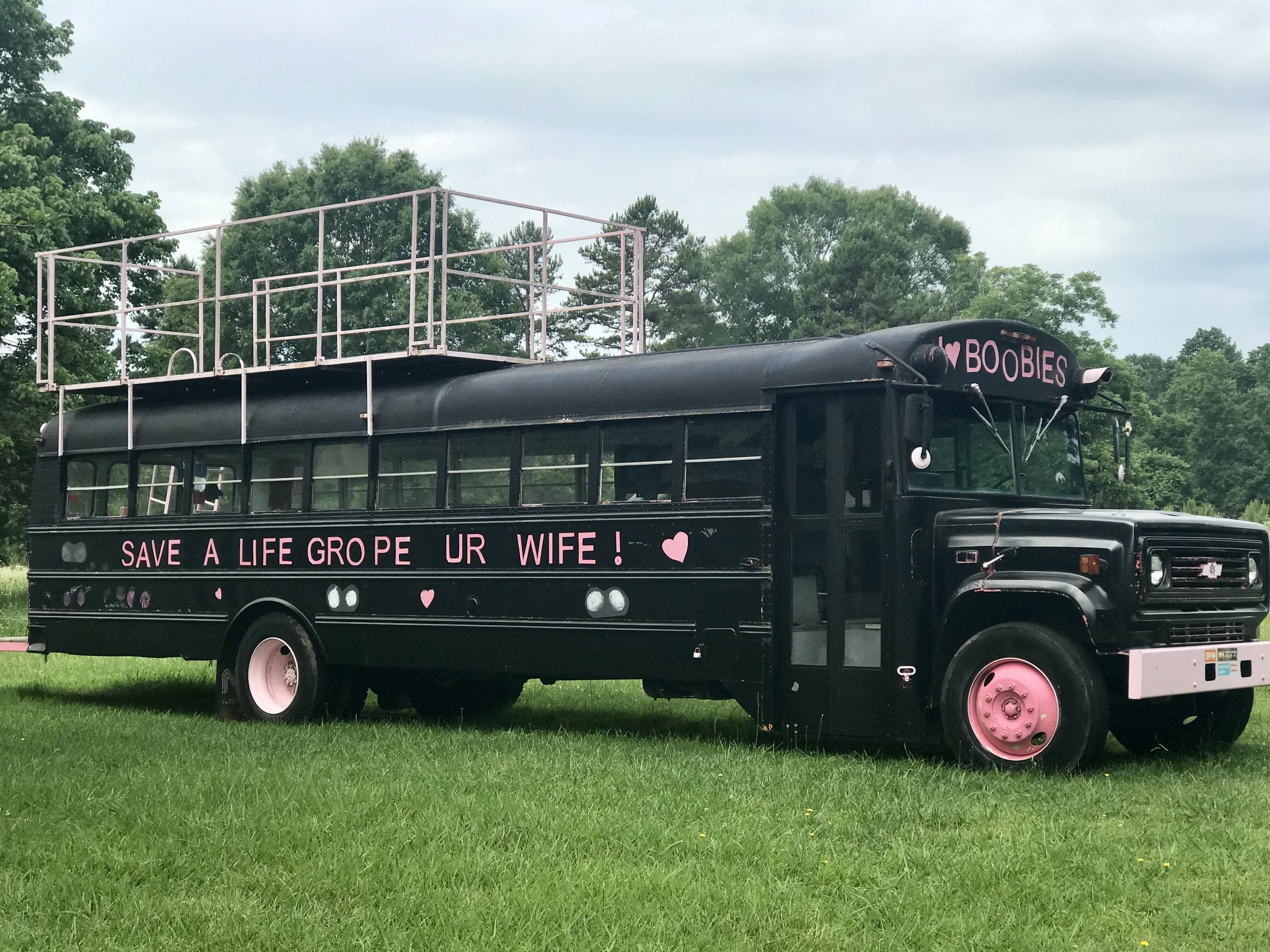
A short while later as I continued my westward journey I came across this bizarre artifact. I remain puzzled about it. Is this a pro-life endorsement? Is it good old fashioned misogyny? Is it a joke? Or art?
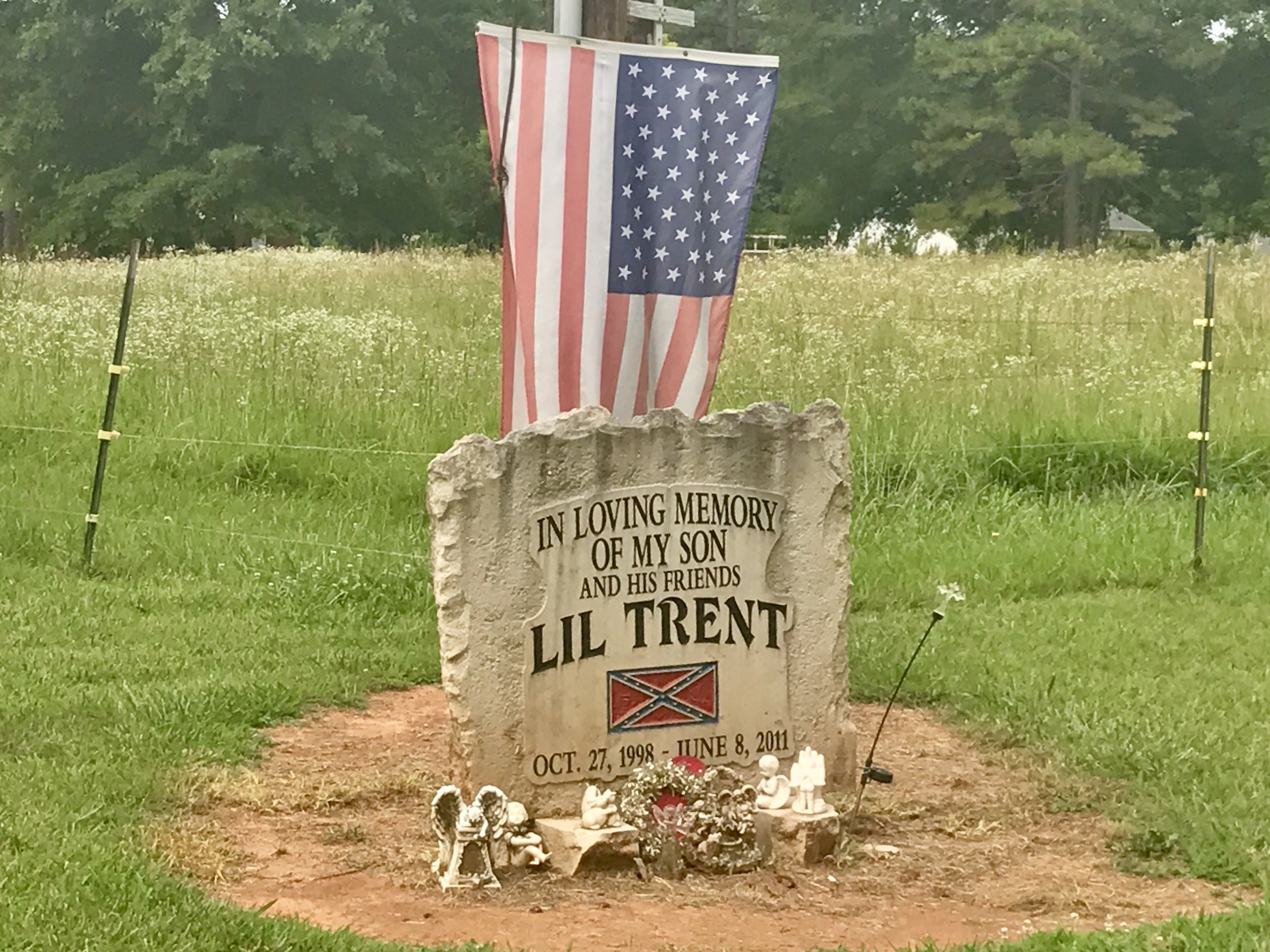
There are some clues. Next to it is one of the oddest effigies I've ever seen, and I've seen enough to think there's an opportunity for an enterprising cyclist to create a coffee table book focused solely on roadside effigies (yes, maybe I will do it). Americans are very good at creating and maintaining them, and I've seen some beautiful and touching ones. But this one? Lil Trent died in 2011. Does he really need to be identified by a Confederate flag?
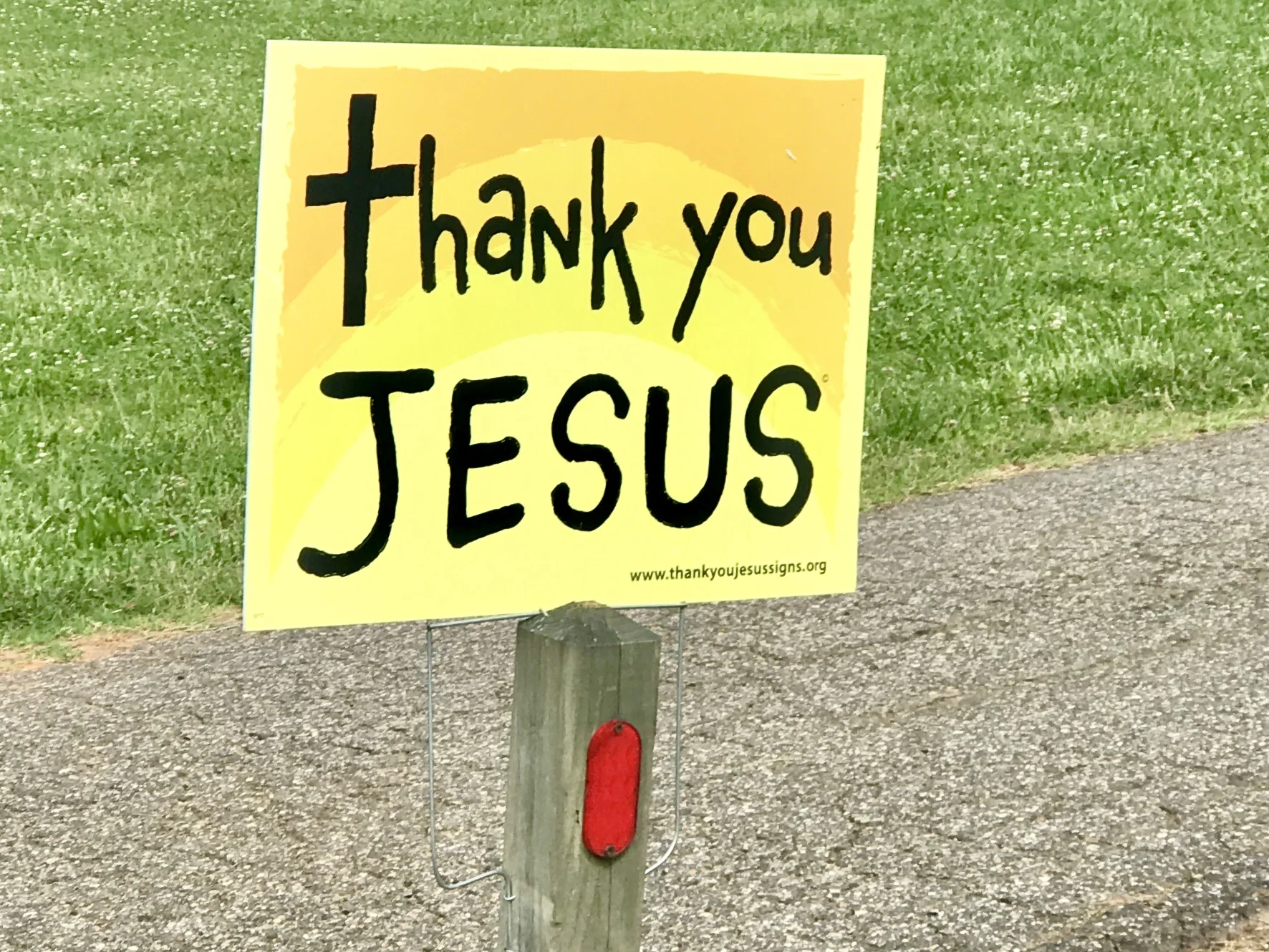
I saw dozens of these signs again today as I rode west. They are in heavy use for at least 100 miles. As commercially produced signs, each one is the same, and if you look closely you will see that in the lower right hand corner there is a website: thankyoujesus.org. If you google it, you will find ...a holding page for a nonexistent website. Yet, someone's making a lot of money selling these signs. The commodification of everything has now extended itself to religion. Jesus as a brand?
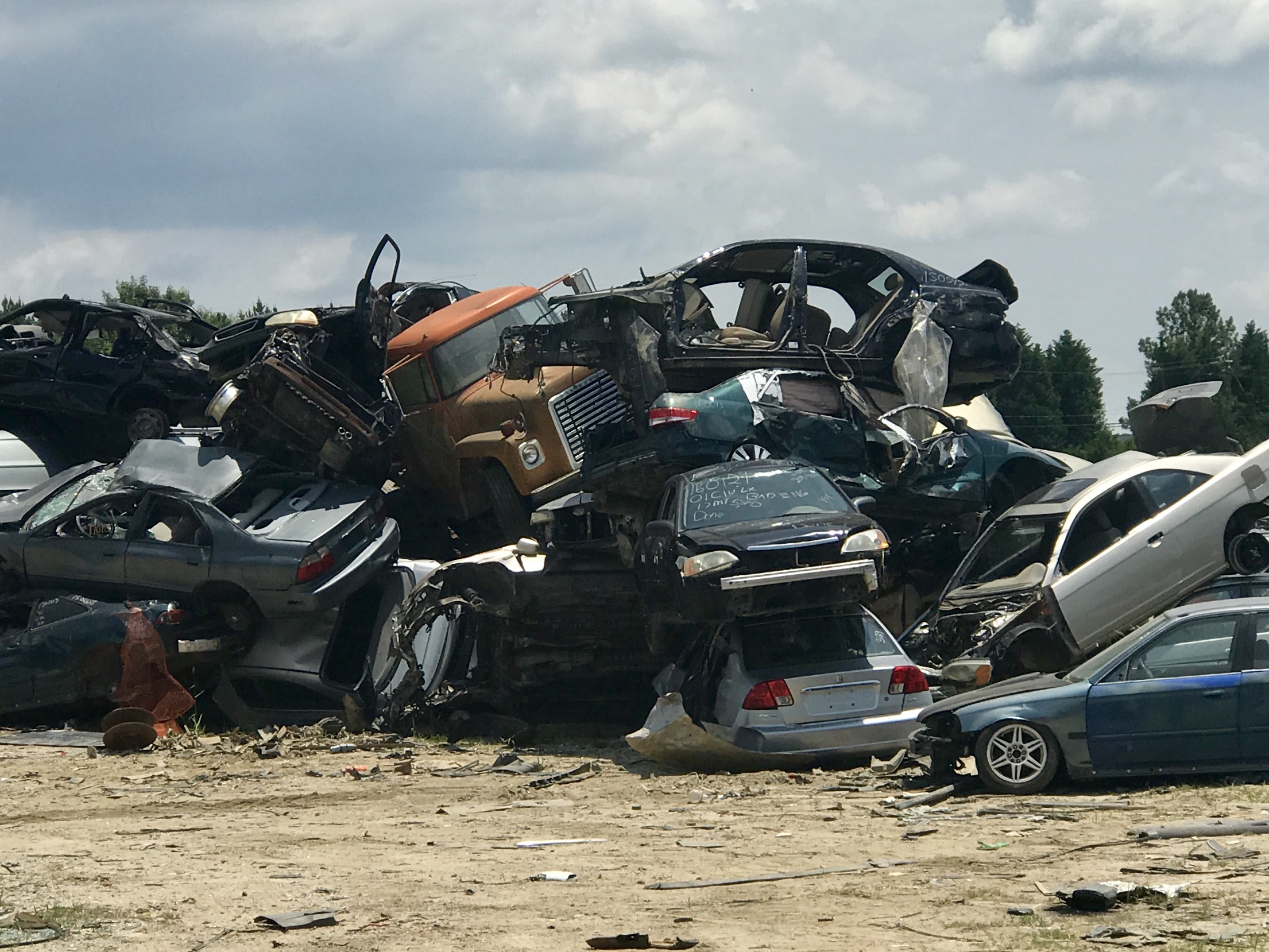
As I was writing my post yesterday, I created an entire thread about applying observational skills to roadkill, and then edited it out. But today when I saw this junkyard, I had the thought that dead cars are a form of roadkill in their own right. The death of our instruments of migration - which is ironic, given that animal roadkill is the result of our killing their migration.
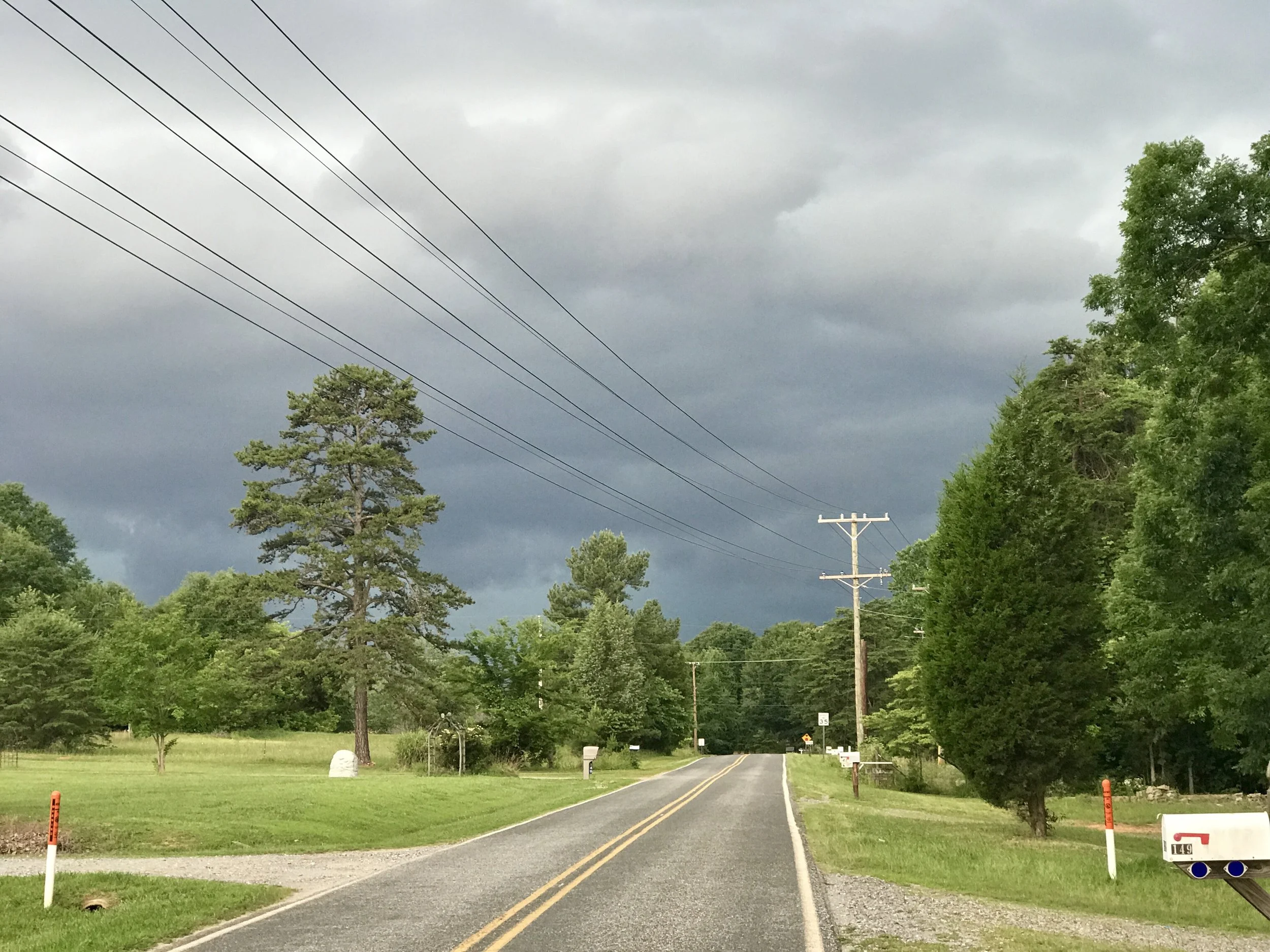
I had about 22 miles left for the day at about 4:30 when storm clouds appeared rather suddenly. The clouds became an intense rainstorm, and when I finally got to a motel (with the help of a local who kindly drove me for the last ten miles because the rain was too intense to bike in safely), I discovered that several tornados had touched down nearby. I have a question for anyone who might know the answer - have you ever heard of someone being hit by lightning while riding a bike? I'm thinking not because of the rubber tires, but I would appreciate hearing otherwise if that's the case...
More to come,
Michael
Blue Ridge, Post 1
Blue Ridge Mountains Cycling Tour, 2017
On June 1, 2017, the President of the United States chose to leave the Paris Climate Accord, a non-binding agreement, signed in December of 2015 by 175 countries around the globe as a pact to self-regulate carbon emissions levels. Leaving the Accord will either de-incentivize other countries to address climate change or create an unprecedented opportunity for them to step up as moral and economic leaders to build a global clean energy economy. Either way, the US stands to gain nothing through this action. So who will be the real winners and losers by the US leaving the Accord? Most likely the citizens of China and Western Europe will be winners, as their citizens gear up their economies to meet energy needs and gradually draw down on carbon emissions. At the same time, America will lose long term by investing more heavily in carbon-based industries with limited lifespans. Fortunately, most economists think that solar, wind and other applications of clean energy are already well enough established in the US to remain resilient regardless. Among the many facts Trump didn't share: at the end of 2016, the US coal industry employed 50,000 miners and the US solar industry employed 260,000 workers.
Nobody doubts that many citizens of Appalachia are in pain. Jobs are increasingly scarce and extraction industries (particularly coal) have been in decline for years. Investments in renewable energy in coal states are spotty. Communities are deeply divided over the environmental risks of fracking. Countless family farms have been lost to agribusiness over the past decades. Tourism is spotty and fails to provide year-round employment.
Yet, the countryside is beautiful, and Appalachian culture remains rich. I have decided to explore the beauty, politics, and climate of this fascinating and beleaguered region. I will board a train in NYC with my bike and gear on June 10, and arrive in Raleigh, NC in the evening of the same day. The next day I will begin cycling several hundred miles west toward Asheville and beyond to the Great Smoky Mountains National Park. After exploring the area, I will follow the Blue Ridge Mountains (and possibly the Blue Ridge Parkway) northeast about five hundred miles to Washington, DC, where after visiting family, I will board a train back to NYC.
I expect this trip to take approximately three weeks, and I invite you to follow this trip as I blog about it along the way. Those blogs can be read below after June 10, 2017.
Thank you for following my Blue Ridge Cycling Tour!
———————-
Blue Ridge, Days 1-2, Post 1, Meditation and a State of paradox: From time to time I get asked if I get bored cycling long distances. I don't. I've often wondered why this is so, and found myself thinking about the topic yesterday as I started this trip and cycled out of Raleigh. I think there are several reasons. One is that by cycling I am teaching myself to more deeply observe what is in my immediate environment. This takes focus. It's a skill to be a good observer, and it doesn't come without practice. Another reason is meditation. I find long distance cycling very meditative. I am with my own mind for long stretches at a time, and although I rarely transcend my mind enough to sit in that part of me that watches it as an adept meditator might, I am still very aware of the flow of thoughts coming and going. Some are quite uncomfortable, and others quite joyous, and I try to observe them. Sometimes I realize something through the flow and a decision gets made, or an insight occurs. Finally, at the end of a day of cycling, I usually feel a remarkable sense of peace. No doubt it's the increase in endorphin activity, but maybe it's also the result of things seen and thought.
Day 1: Check out my road cycling activity on Garmin Connect.
https://connect.garmin.com/modern/activity/1792209543
I left Raleigh in the morning after having taken Amtrak from NYC the day before. It took into the afternoon to get out of the research triangle area of Raleigh, Durham and Chapel Hill. It's a pretty area, but predictably, traffic is intense. I found it challenging to navigate and was pleased when I was finally past most of it by early afternoon. After leaving Chapel Hill (I did ride through the beautiful campus of UNC), I got on the old Greensboro Road. And I was where I wanted to be. I followed this road for a good 25 miles before arriving at my campground for the night in Cane Creek near the town of Snow Camp. The campground is attractive and the weather had cooled off and was sublime. I slept with the fly off my tent under the stars. And it was a good thing, too, for I hadn't slept very well the previous two nights.
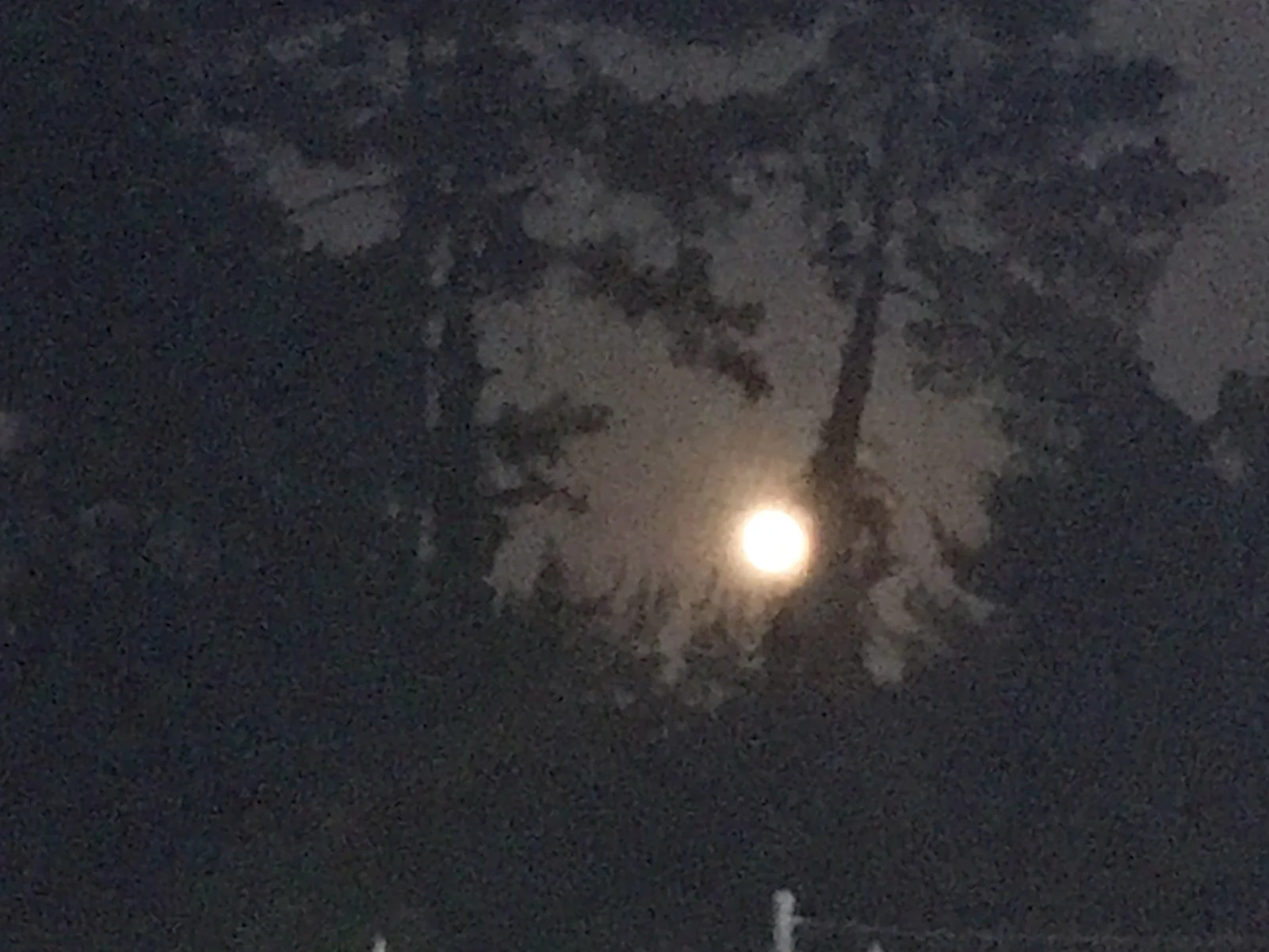
The moon in Raleigh as I got off the train.
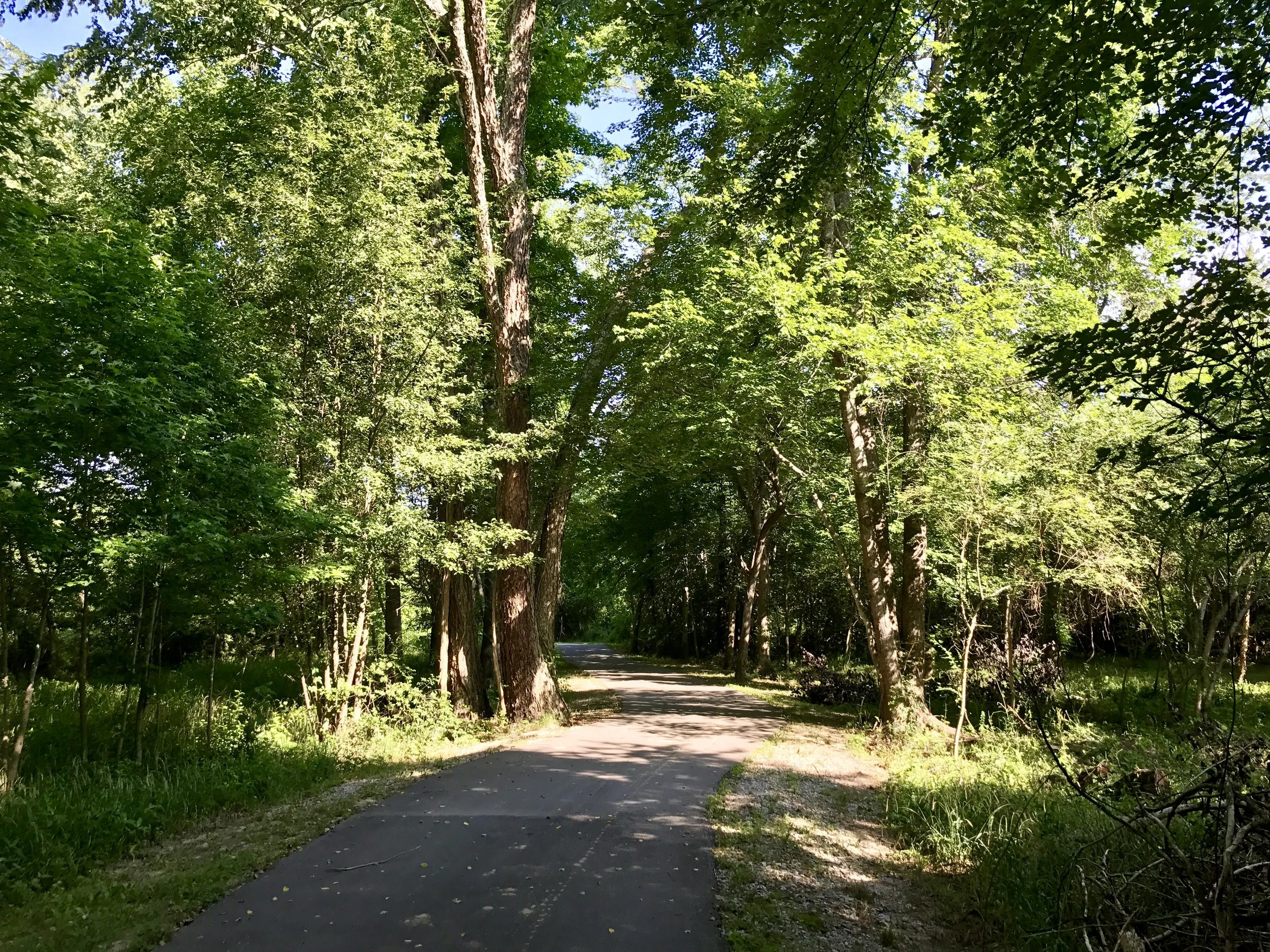
A bike trail in Raleigh. Although not long enough, it sure helped me get out of town.
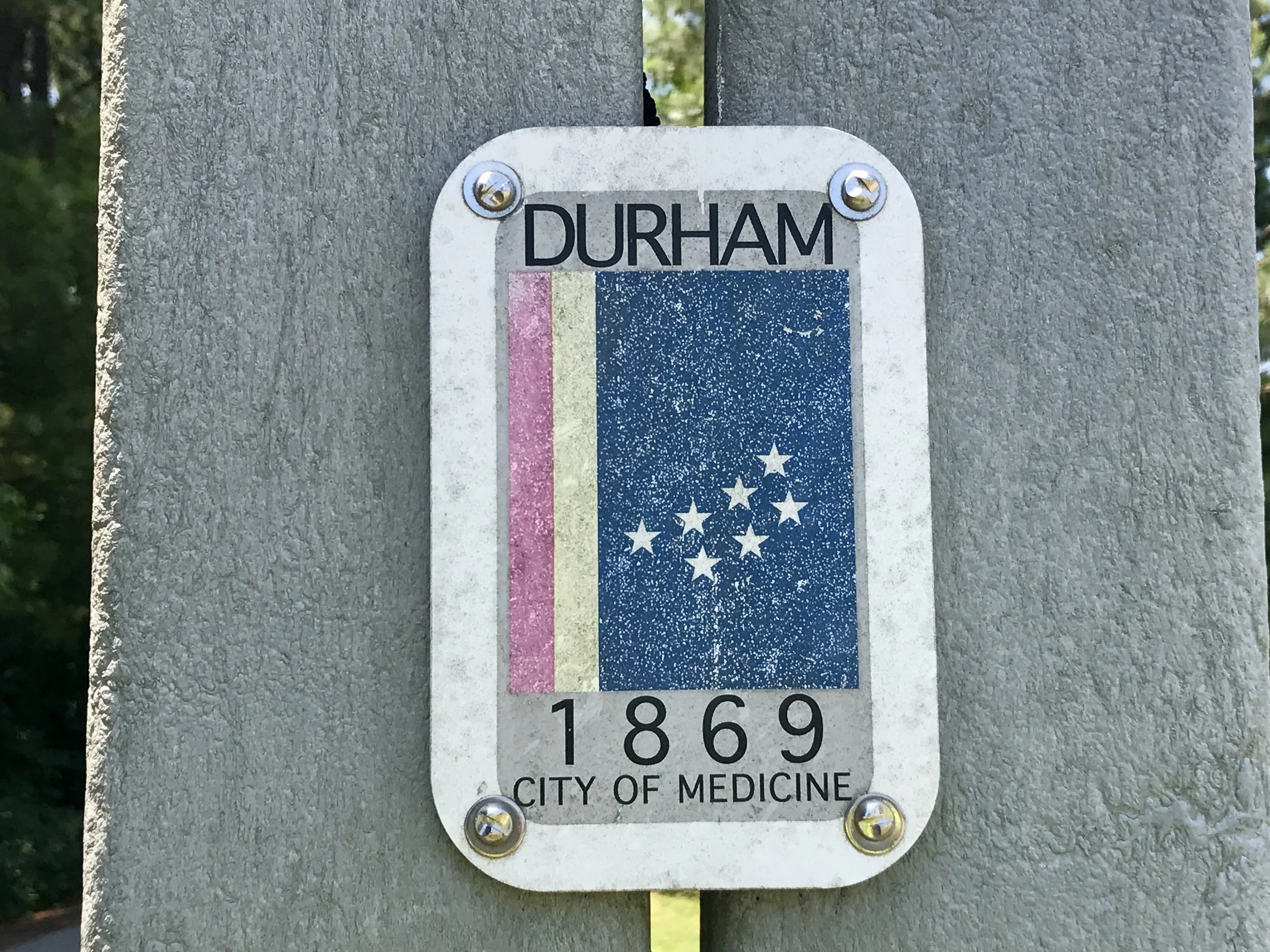
I saw this on a signpost for the American Tobacco Bike Trail.
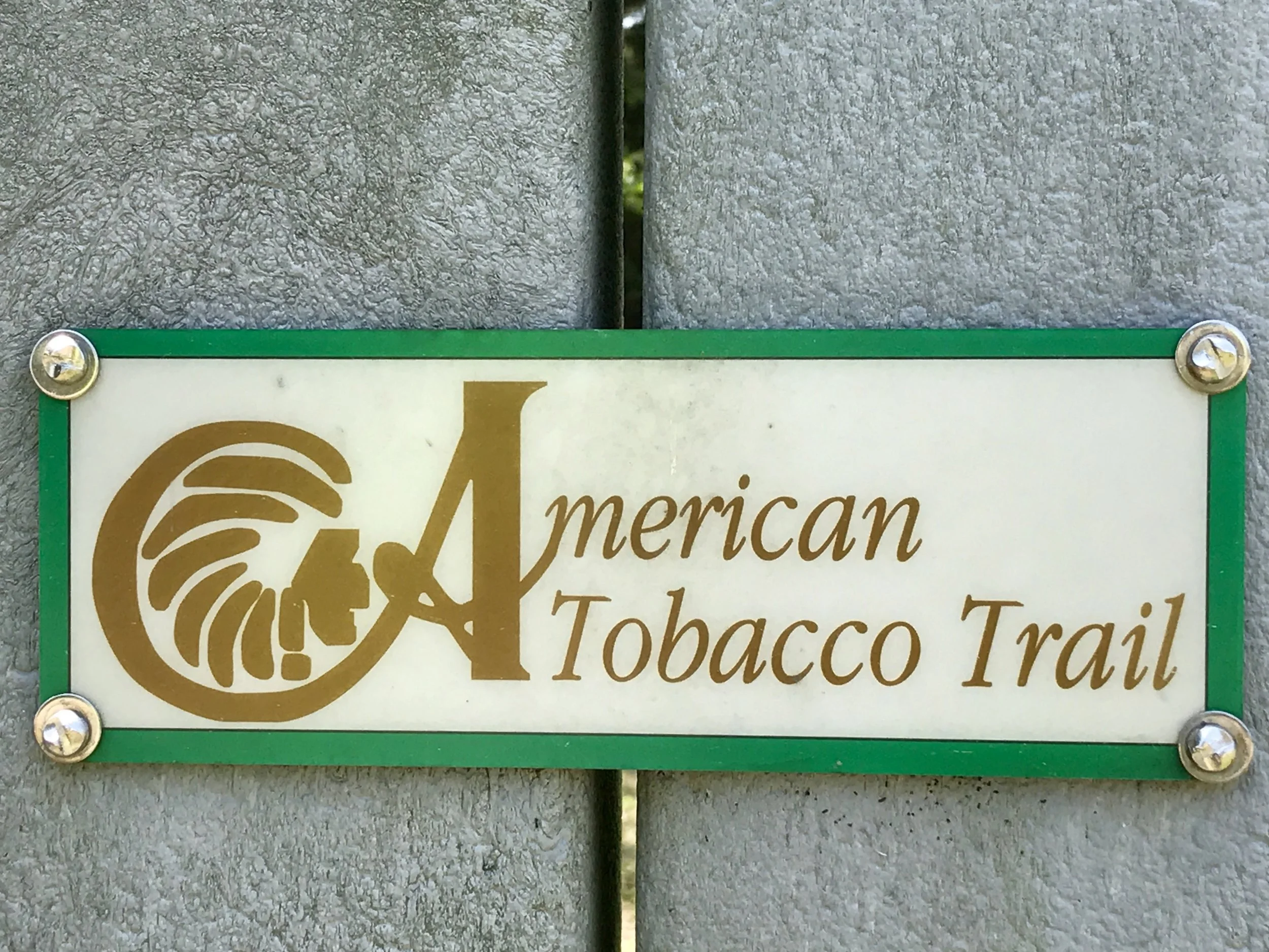
And this right underneath, which is my first reference to the State of paradox, North Carolina.
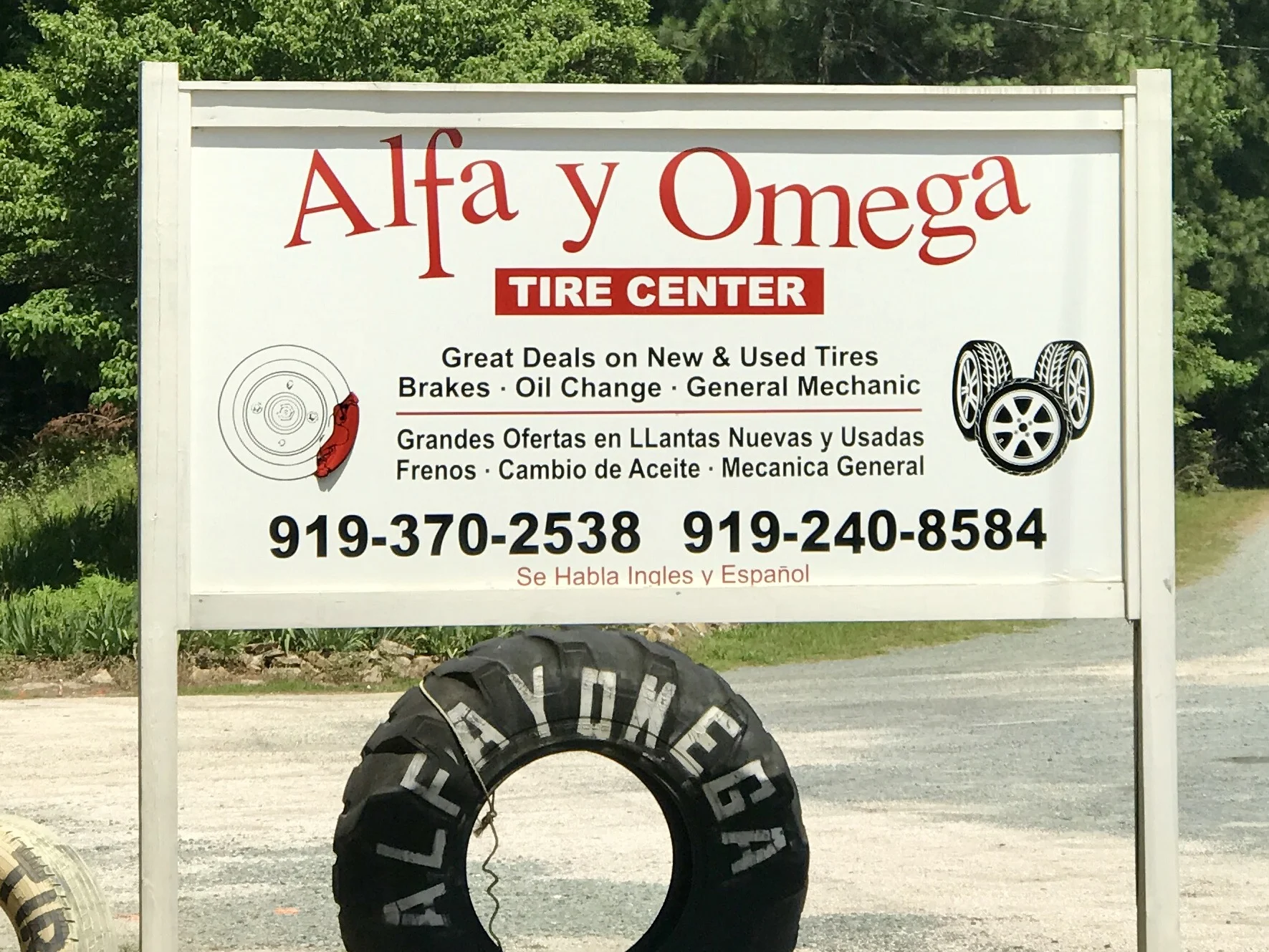
Interesting name for a tire resale shop.
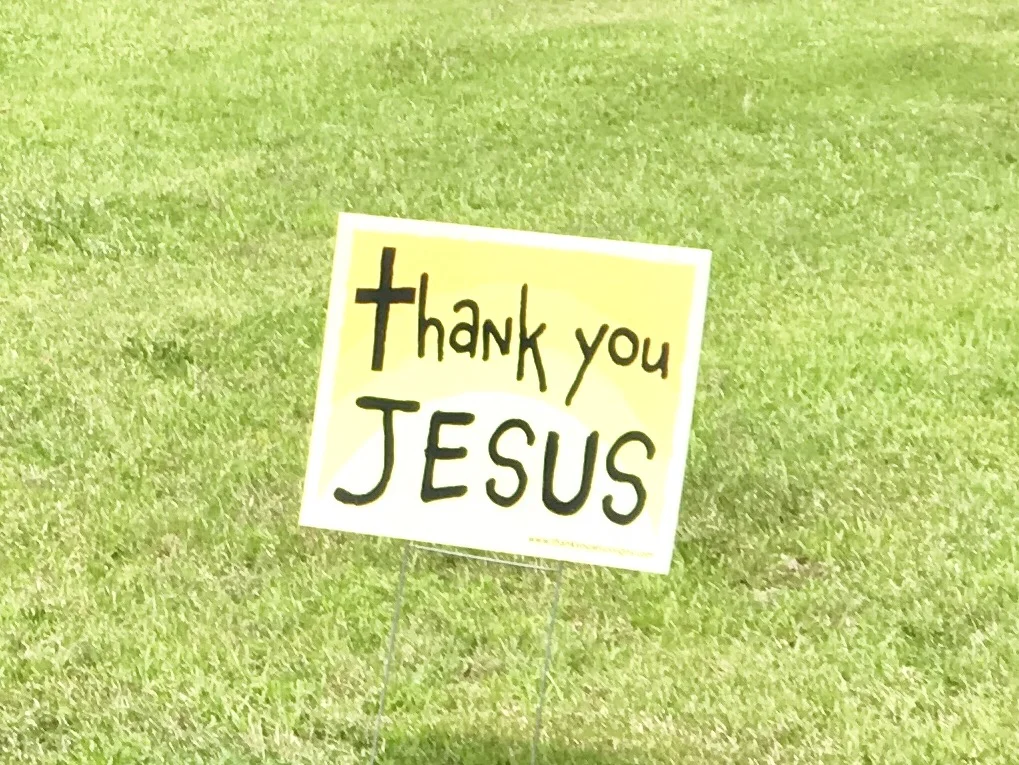
In about 10 miles I saw 17 of these. All from a church, or a local sign shop?
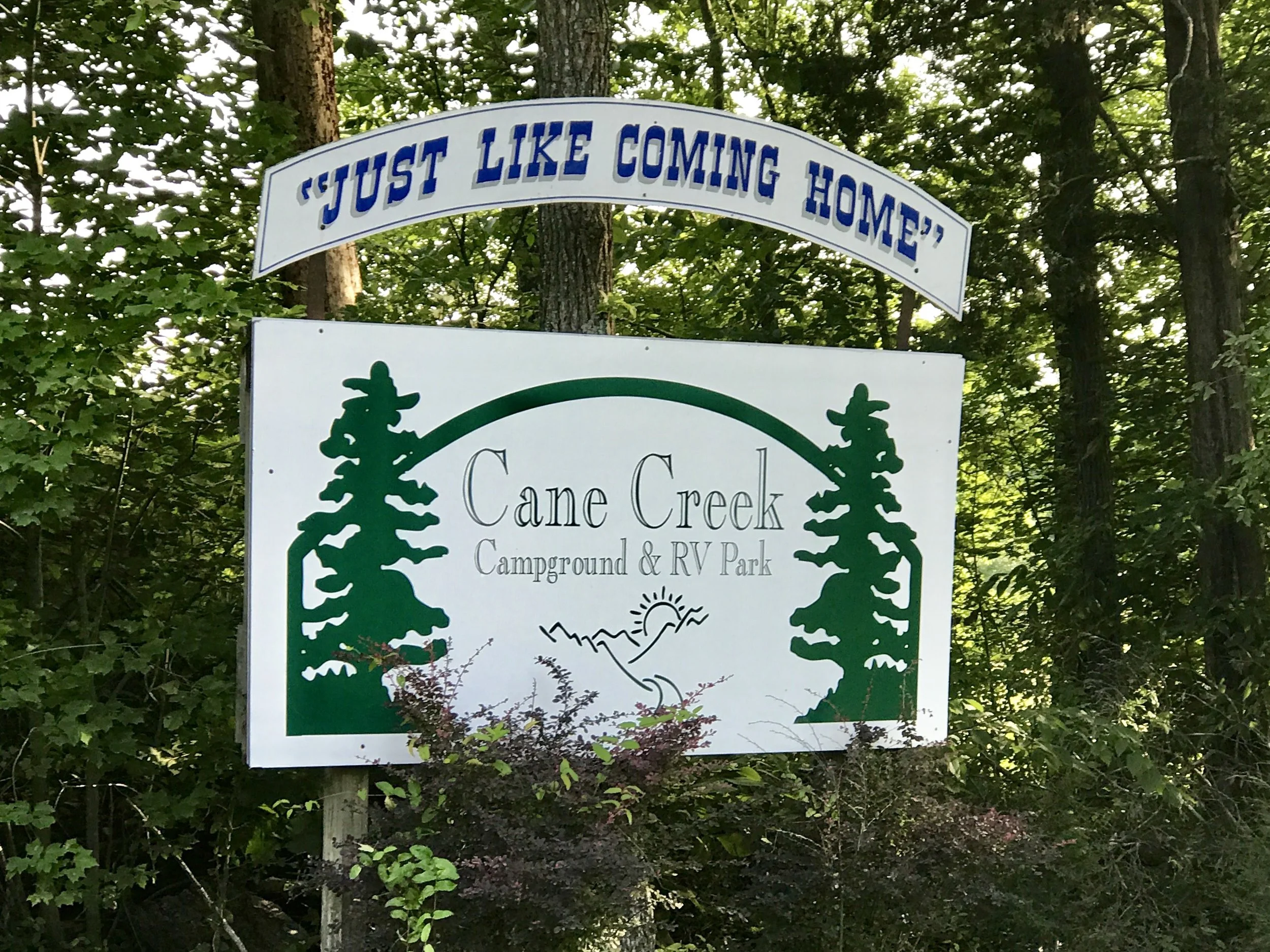
My campground on the first night out.
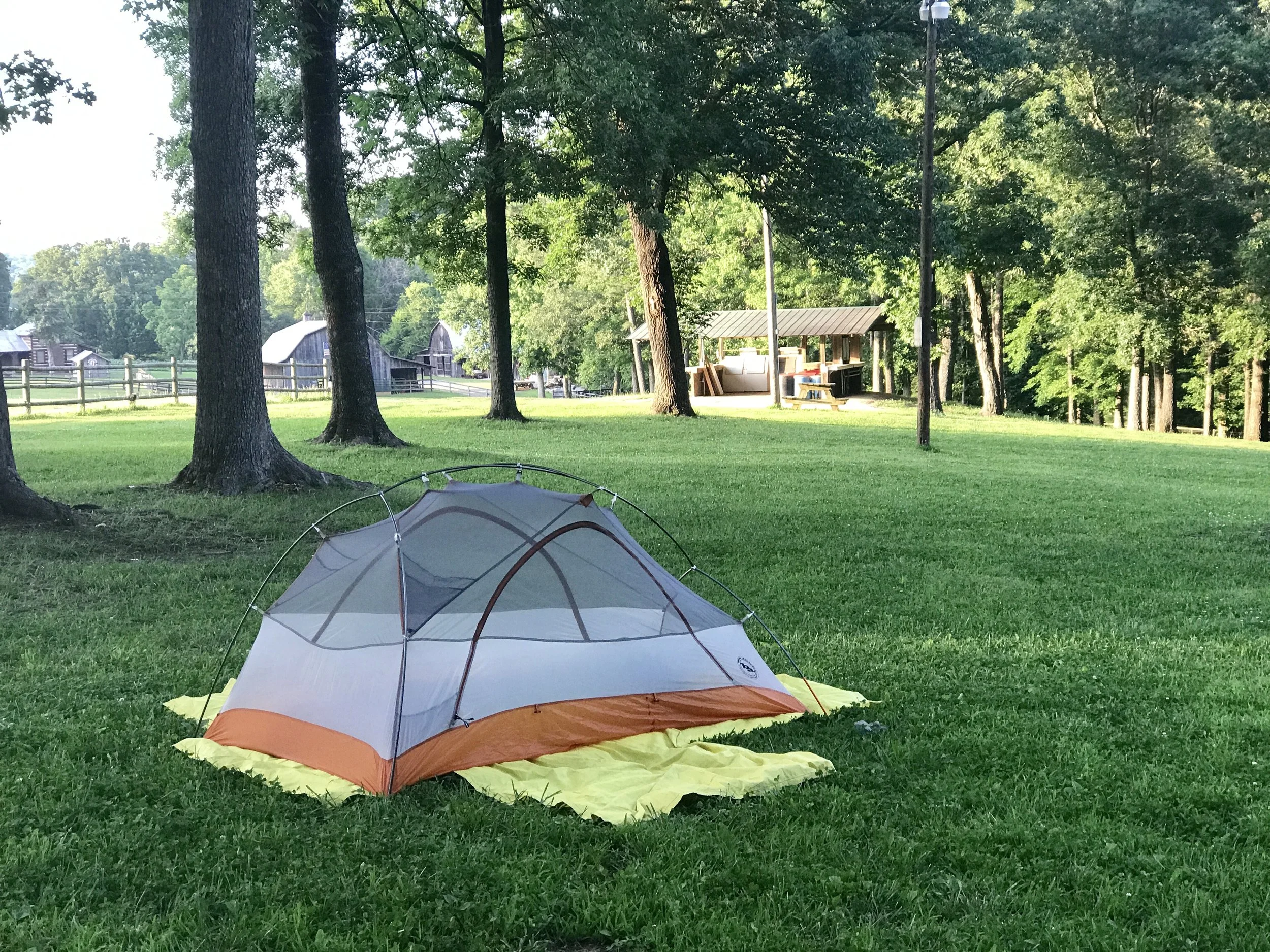
My tent on the first night out.
Day 2: Check out my road cycling activity on Garmin Connect.
https://connect.garmin.com/modern/activity/1793969186
Today I followed more roads with little traffic. Because traffic is sparse in the hill country in central North Carolina, the cycling is very pleasant. It's hilly, pretty and although there is ample evidence of homes tucked away everywhere, there is no glaring poverty (and thankfully, no McMansions). But things always look good in the sunshine. There were no billboards whatsoever, few traffic signs or lights, and hardly any amenities, although every 20 miles or so there was a corner store with a few groceries. But it was hard to find a restaurant. Even so, the biggest surprises of the day were cultural. I stopped for something to drink at a local cornerstore run by a Pakistani man (I think) with a terrific handlebar mustache talking excitedly on the phone in Farsi (I think). Although there were few customers there, they were all African -American. I didn't think about this much, until I had biked a few miles down the road where I saw this:
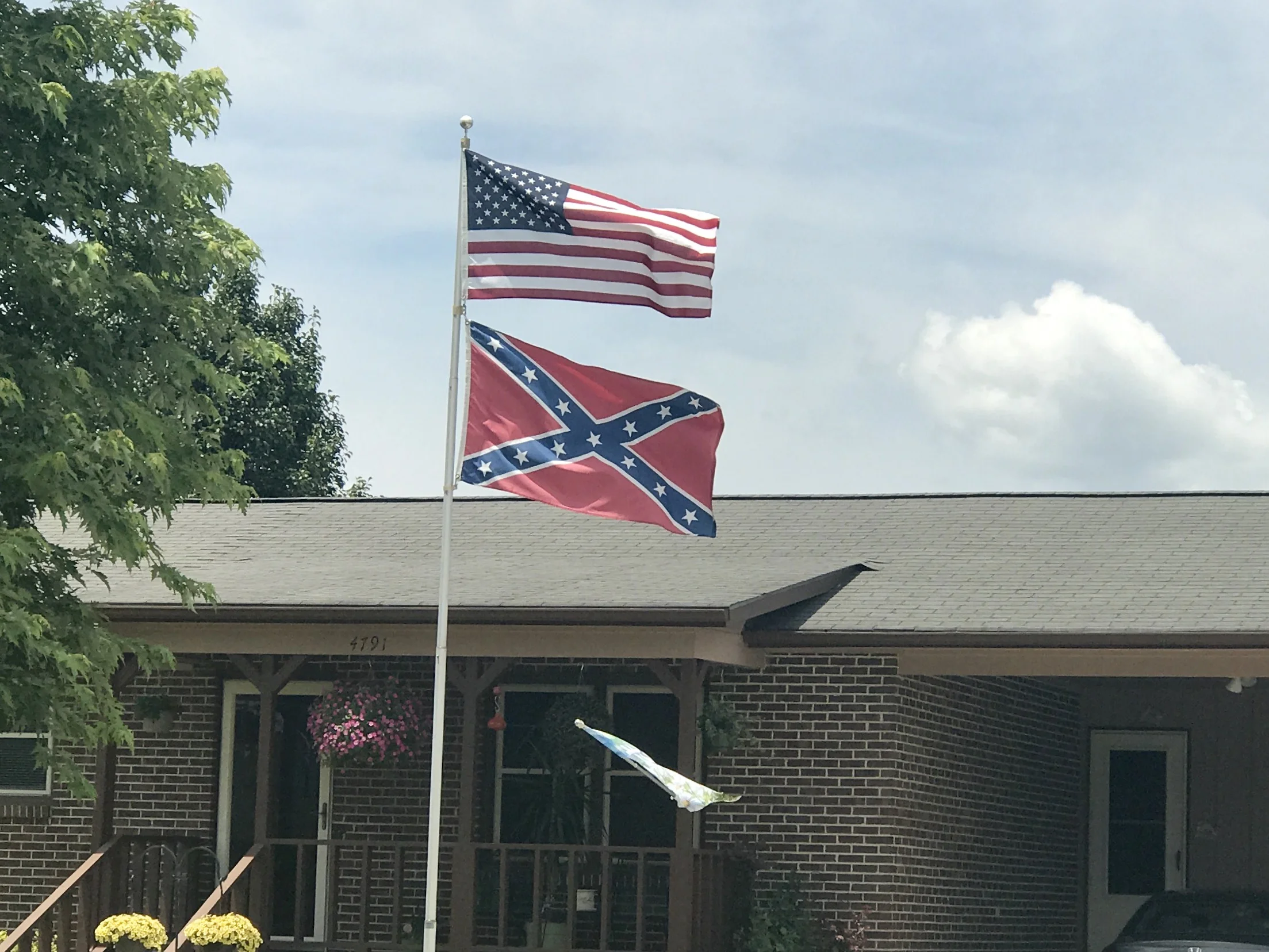
And then, not too far away I saw this:
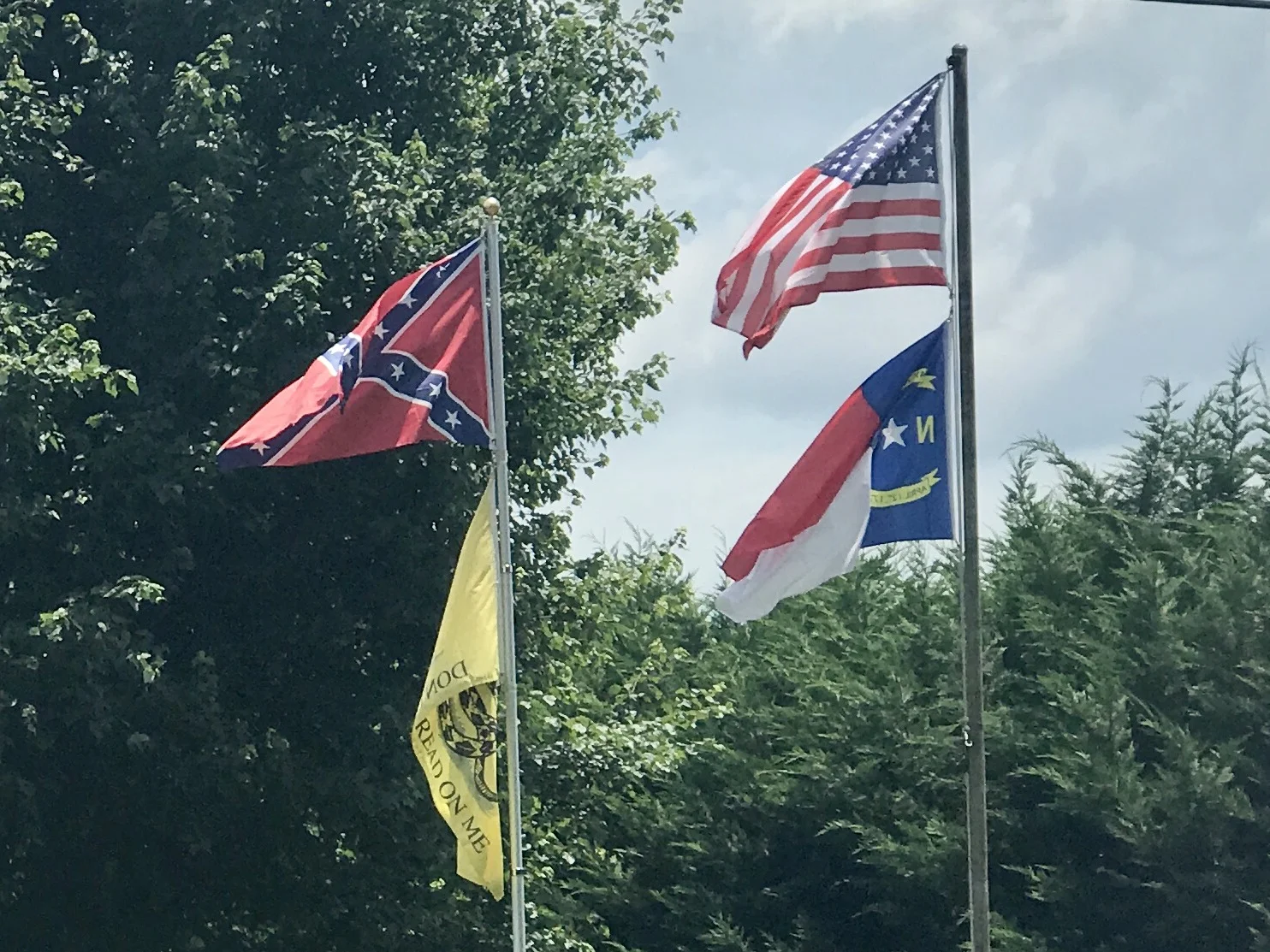
To me, this is another version of the State of paradox. I am always astonished that someone in 2017 will brazenly and publicly display a flag that is associated with the intent to enslave a race of humans for the economic gain of another race. It's even more offensive and deeply disturbing to see it displayed alongside an American flag. Yet, thinking about the area I passed through, how can it be that South Asians (perhaps Muslims), African Americans and white southerners who still fly the Confederate flag can all live so close to each other? How does that work?
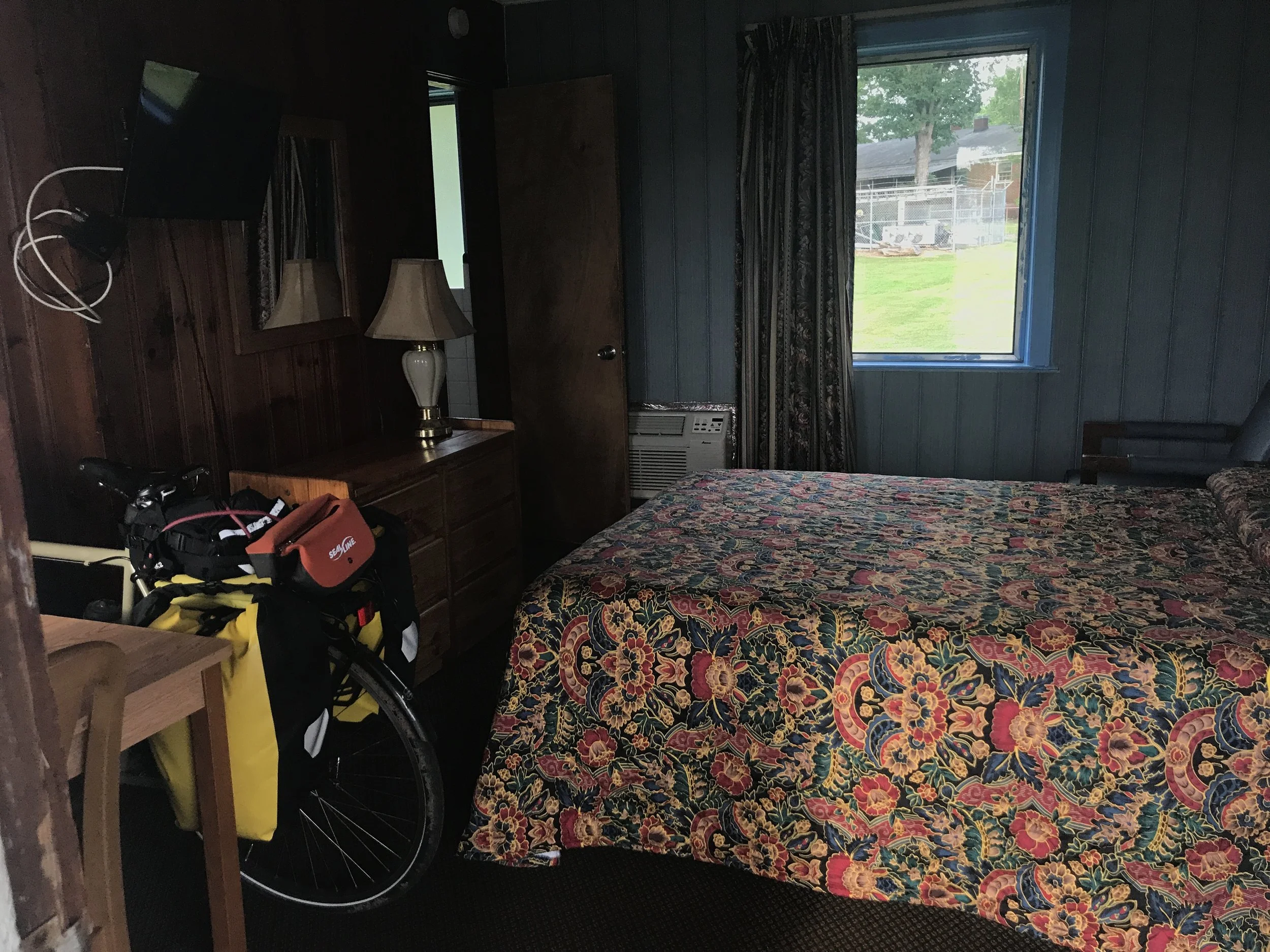
I finally arrived at a humble and comfortable motel in Richfield. Asheville is about 160 miles to the west. Although I'm making it up as I go along, tomorrow I may stop in Lincolnton. If I do, it'll be interesting to find out the origin of that name.
More to come,
Michael
I See Change
ISeeChange
This website (carbonstories.org) is devoted to reflections on politics, culture and our changing climate, as experienced primarily from the seat of a bicycle. Cycling provides a great vantage point for observation, and shares an affinity with many other physical activities that rely soley on human power and do not require the use of motors. Because most forms of non-carbonized locomotion are quiet and reasonably slow-paced they are all excellent platforms from which to observe natural phenomenon. Unfortunately, in our hyper developed world, most of us spend the better parts of our days in conditioned spaces of some sort - traveling in a car, taking public transit, or working and living in our offices and homes. Some of us are lucky enough to be outside intentionally on occasion. Others of us are outside every day because of our occupations - construction workers, landscape staff, farmers, ranchers, fishermen, utility repair workers, and so on. But how many of us pay deep attention to what is really happening around us in our natural environment? Most of us understand intellectually that climate change is well underway. But what are we noticing that tells us this is so? Can we articulate the changes occurring around us? Probably most of us cannot - it's a big step to go from what we are experiencing to having enough information to create meaning. We notice it's hot, but do we know how many days it's been hot, and whether or not that is unusual for this time of year? We notice it's been raining for days and days - or at least it seems like it. Or perhaps it's been dry so long we cannot actually remember the last time it rained. But do we know how the current precipitation, or lack of it, compares to other years? We see an unusual number of dead trees in a forest where we've never noticed that before - but do we know if warming trends are exporting beetle kill or other parasitic insects to new regions? The kids next door are having a bad reaction to pollen this year - but do we know if this is an unusually bad year for pollen because it's warmer and wetter than last year?
I am a big fan of the website and smartphone application ISeeChange as a community based social media tool. It allows users to report observations about the natural environment with ease and rapidity. I am especially excited about the contribution that cyclists and others who engage in outdoor activities can make by using this application - which is why I am writing this post.
The website can be found here. A companion ISeeChange Tracker application is available on both IOS and Android. Founded in 2012, ISeeChange is the nation's first community crowdsourced climate and weather social media journal, which allows users to document ordinary and substantial changes in our natural environment through either the website or the mobile application. Being able to document what one is seeing or feeling personalizes and tracks climate change from the perspective of every day experiences, bringing science home and into the spaces people know best. Best of all, the data that ISeeChange users provide combines with data from other cutting edge satellite community observations and connects the public with NASA's Orbiting Carbon Observatory mission. The website and smartphone application allows community members to follow investigations over time and helps NASA uncover details that satellites observing the earth cannot see from space. The ISeeChange community has already helped to document trends and report major climate news in advance of mainstream media or government reports, including flooding, longer growing seasons, tree mortality, marine ecosystem shifts, record-breaking winter warmth, coral die off, increased insect borne diseases, and more.
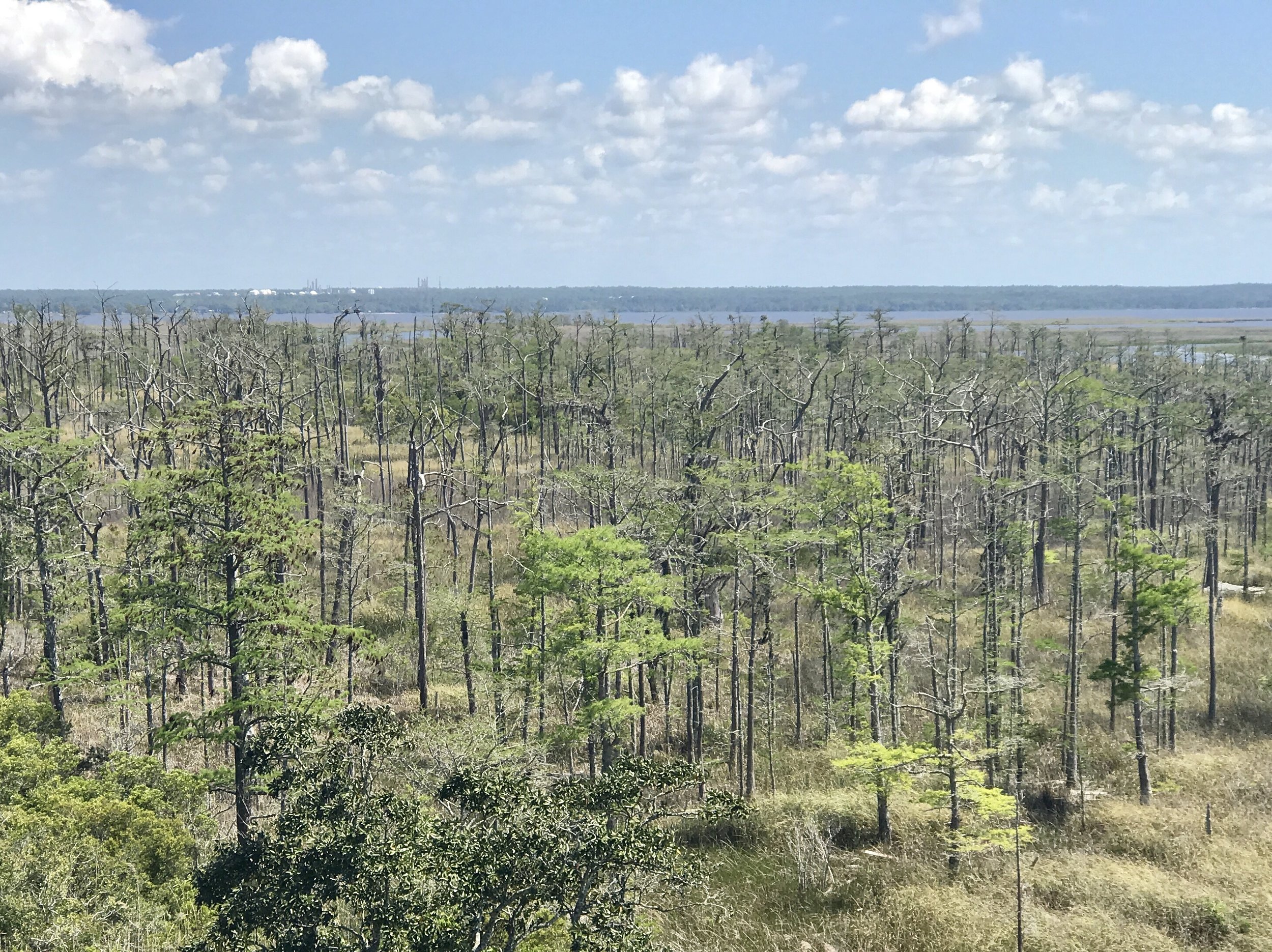
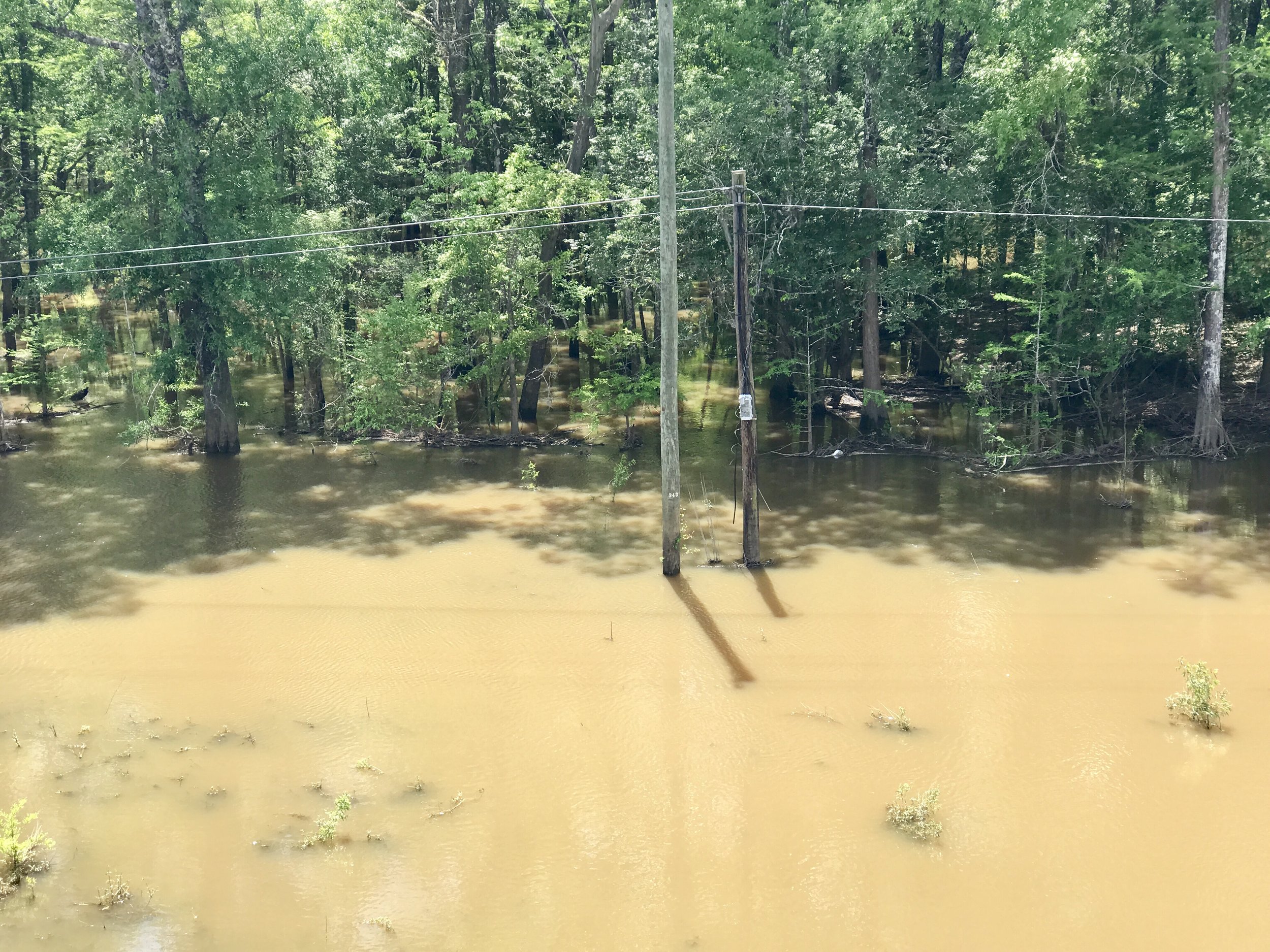
Although I have had the application on my smartphone (where I write these posts) for some time, I began using it more seriously on my last cycling tour along the Southern Tier. After a conversation in New Orleans with ISeeChange founder and CEO Julia Kumari Drapkin, I realized I don't need to make my comments necessarily intelligent - in many cases it's helpful to simply record an observation and ask a question. As an example, I was puzzled by seeing large tracts of dead trees in a swamp from an elevated highway in the Florida Panhandle. I posted a picture of the trees on the app (which automatically records location, weather data and time with each post) and simply asked if anyone knew why they were dead. Several days later I received a follow up text from ISeeChange telling me my post was a useful addition to growing evidence of tree stress in the south that was not yet understood but was beginning to be studied.
It is my hope this post will inspire others- especially fellow cyclists- to look up the ISeeChange website and download the ISeeChange tracker on their smart phones. The more we observe and report about what we are seeing and experiencing in our natural environment, the more we will understand about what is happening around us. And maybe, just maybe, that will help us to make better choices.
More to come,
Michael
Roy Scranton and the End of Civilization
Photo above courtesy of Jackie Wildau.
What we can do is learn to offer each other patience, compassion, courage, and love. We can learn to accept that just as every human life has its natural end, so too does every civilization. Contrary to what Purdy argues, we don’t need more politics. We need more hospice. We need to learn how to die.
Roy Scranton, Author of "Learning to Die in the Anthropocene" reflecting on "The New Nature" issue of the Boston Review.
This blog was originally published in January, 2016.
I first learned about an article to be published in the New York Times called “Learning to Die in the Anthropocene” by Roy Scranton (which is now a book) when my former wife returned from an environmental conference at Rice University. She had gone there to participate on a panel about the role of the arts, particularly theater, in addressing climate change. As a playwright, she returned curious about Roy Scranton's work because it wasn’t centered in climate science or green technology, but was placed squarely in an arena closer to her own heart - non-fictional literature and modern philosophy.
Scranton doesn't write about climate change or its solutions, but instead where it will take us and the challenge it offers up to the human spirit. Scranton, who had survived a tour of duty during the Iraq invasion, had learned how to survive the war by accepting - at the deepest possible spiritual level - that he very well might not survive. To get through each day he practiced dying as a meditational act, and eventually was able to spiritually embrace that it didn't matter if he died that day in his daily deployment. His job was not to stay alive, but instead to look out for his fellow soldiers. After all, to himself, he was dead already.
Upon his return, Scranton became quite knowledgeable about the intensity and peril of climate change. Trust me; this man minces no words. Scranton thinks western civilization as we know it is dead already because it is dying now. He doesn't think that we will be able to turn our civilization around - in fact, any attempts to arouse optimism in him through social movements fall on deaf ears, maybe not unlike what he had to do in Iraq. I am sure when his fellow soldiers got a bit maudlin and said, “we'll make it home, I know we will”, Scranton wouldn’t go there. It wasn’t helpful, and succumbing to that hope would only make dying, should it happen, that much harder, less elegant and disappointing.
Although I am not ready to give up on my optimism and belief in social movements (a former theater professor, I have been a full-time climate activist since 2007), I believe Scranton’s message is critically important and very, very challenging to take in. In fact, I sent his article to a friend via social media once it was published. She had an immediate and viscerally strong reaction and became quite upset with the article and with me. “How could you send me something so depressing?”, She asked. I was shocked. “Depressing? How is it depressing?”, I asked her. “Because it means the end of art, great literature, scientific knowledge, love, even civilization!”, she answered. “Who wants to give up hope that those beautiful things will go away? What's more depressing than that?”
But they will go away eventually. Maybe not from climate change, but from something. That’s the price of life. There are two things that we all experience in common, without fail. We are born, and we die. We are not here - then we are - and then we are not. Such is the way of everything. Coming to terms with that reality is what philosophy and great art are about, perhaps the most central mystery of science and the raison d'etre of religion. So not accepting that reality is a more depressing idea to me that the idea than we will lose it all. Of course, we will lose it all. That’s the price of life, the price of having been here.
I find it strange, even unthinkable, to come to terms with one's death without coming to terms with the fragility of our entire species. To think we are invincible is arrogant at least and ridiculous at best. Sooner or later, our civilization will perish. However, much as one can slow down the inevitability of one’s own death with good health practices or even technological advances, we might be able to extend civilization as we know it - or even a better version - beyond this century if we change some very fundamental things. In spite of well-meaning attempts, there is a very small likelihood we will stop emitting CO2 soon enough to avoid having to grapple with an inescapably warmer planet and the additional chaos it will bring. That is the task in front of us, of course. Yet, an uncompromising look at our deeply entrenched economic dependence on fossil fuels suggests that we are less likely to transform our way of life in the very short time we have left then a platoon will return from a highly dangerous mission. So, Roy Scranton is right to call on us repeatedly to remove our blinders. For unless we accept the genuine risks we face, we won’t successfully address them.
I don't find the idea that our species may not make it a depressing thought. How arrogant not to realize our lives are that fragile? We are nature after all, and there are countless examples of how civilizations, animal species, flora and fauna, go away. And there are few examples, if any, of civilizations that have endured for more than a few thousand years. That’s how nature works. It’s not kind, except in one way. Consciousness (the essential arbiter of life) may have a shot at eternity. Even if life was wiped out on Earth, the universe is a glorious and complex enough place that I am confident it will emerge somewhere else. And that recognition keeps my spirits up. Some things live on forever, no matter what we do.
So keep railing, Roy Scranton. We do indeed need to learn how to die in the Anthropocene if we are going to have any chance at all of living beyond it.
Southern Tier, Post 49
Day 54, Post 49, Final Post for Southern Tier... I'm sitting in the Amtrak strain station in Jacksonville, with my panniers beside me and my bike locked to a bench outside. In 2.5 hours I will board the Miami to NYC "Silver Meteor", which is one of two trains (I think the other is the Silver Bullet) that accepts bikes as luggage for $20. How cool is that? Assuming train service survives Trump's draconian budget (I've read that his budget will force the cancellation of Amtrak service to dozens of smaller cities in red states), Amtrak seems to be slowly realizing that making trains bike friendly will increase their business. Well, they will get more of my business for sure! Shipping a bike plus gear and flying to a destination can be a lot of work. Getting on a train - even for an overnight trip - is much more convenient, and better for the environment (less carbon).
The "Southern Tier" has loomed large on my bucket list for several years, and I am delighted I finally managed to do it. Although I have been in the south before in limited ways, this trip took me to places I had never been before. I had so many new experiences - biking through the deep southwest near the border, spending 21 days crossing Texas in communities I had never before visited, riding across Louisiana bayous and levees, riding along the Gulf coast of Mississippi and Alabama, crossing the Florida Panhandle in its entirety from western to eastern border, and cycling through the Bible Belt.
I could write more about any of these experiences, but the topic that has been on my mind for some time has to do with my thoughts about Christian Evangelical perspectives on Climate Change. I first encountered a viewpoint that puzzled me in East Texas, when I met a friendly town commissioner who was quite adept at describing the history and cultural attributes of his town Navasota. Thinking there might be an opening for a deeper conversation, I asked him if he had noticed changes in the climate over time, to which he replied, "Sure, but God's always been in charge of that so I'm not worried about it. And I sure don't think government should be in charge of the climate". I didn't press him, but I took his comment to mean that humans don't influence the climate, or if they did, God - and not government - should, or would, fix it. I was uneasy by his response, perhaps because in every other way I liked this guy and found him intelligent. The conversation got me to thinking.
I realize that I live among others who are invested in trying to understand the world as it is through the lens of science. I see myself as privileged to live in age where so much of what we enjoy are manifestations of science - the engineering sciences that undergird our infrastructure and modes of transportation, the computer sciences that undergird our entire communications and entertainment lives, the medical sciences that allow us to live longer than humans have ever lived before - these are but a few examples of how science is with us everyday. Obviously I share the perspective described in the New York Times article cited below - "...a worldview that has propelled mainstream Western intellectual life and made modern civilization possible, ....a kind of pragmatism, an empirical outlook that continually — if imperfectly — revises its conclusions based on evidence available to everyone."
Before this trip, and before Trump won the Presidency, I simply assumed this is what all intelligent people thought and wanted. Which, of course, made it very difficult for me to understand why any thoughtful person would reject climate science - a science that grows out of the very same successes and traditions mentioned above. After all, we need to be intellectually consistent, don't we? Well, it ain't necessarily so. Cycling through the Bible Belt taught me something else. People believe all kinds of things that are neither logical nor based on scientific fact.
I came to see that my "...worldview clashes with the conservative evangelical war on facts." The Times article goes on "...An analysis of resolutions and campaigns by evangelicals over the past 40 years shows that anti-environmentalism within conservative Christianity stems from fears that "stewardship" of God’s creation is drifting toward neo-pagan nature worship, and from apocalyptic beliefs about "end times" that make it pointless to worry about global warming."
So what happens as the climate crisis deepens? To a secular, fact based and scientifically oriented individual like me, the worsening of this problem to the point of crisis is inevitable -- and not because I'm an alarmist, but simply because science tells us that unless some very dramatic things happen in the way we use energy, our climate will become less and less hospitable to human life. As for me, I think a difficult future is already unavoidable. But I'm not alarmed, nor am I frightened. I just think we humans missed our evolutionary calling. That's life. We're hardly the first animal to make that mistake. Our numbers, our patterns of consumption, and our energy technologies have evolved faster than our understanding of the living environment in which we apply them. And unless we change more quickly than I think we will, that's how the story ends.
And in that process, religion let us down. It didn't save us, it helped destroy us. I think the traditional Evangelical perspective (that God intends humans to have dominion over nature) is the exact opposite of what a true Christian view should be. My argument is that if God created the universe, then he created the physical laws that make it what it is. And if adding carbon to the atmosphere (air) warms it up (an easily demonstrable law of physics), then God is offering us a genuine opportunity to address those qualities of the true status quo in the most radically Christian way possible. What better way to address greed if not by thinking about - and tempering - our desire to sell, harvest and use energy? And what better way to address faith if not believing that we can actually do that? Faith applied is not about doing what is convenient, it's about doing what is difficult. And no doubt, protecting our environment is, and always will be, difficult. And time is running out.
One inspiration: The Evangelical Roots of Our Post-Truth Society
https://www.nytimes.com/2017/04/13/opinion/sunday/the-evangelical-roots-of-our-post-truth-society.html?smprod=nytcore-iphone&smid=nytcore-iphone-share
Another inspiration: Across the West, Hispanic evangelical pastors are invoking environmental activism in their Sunday sermons. https://nyti.ms/2ogEBnj
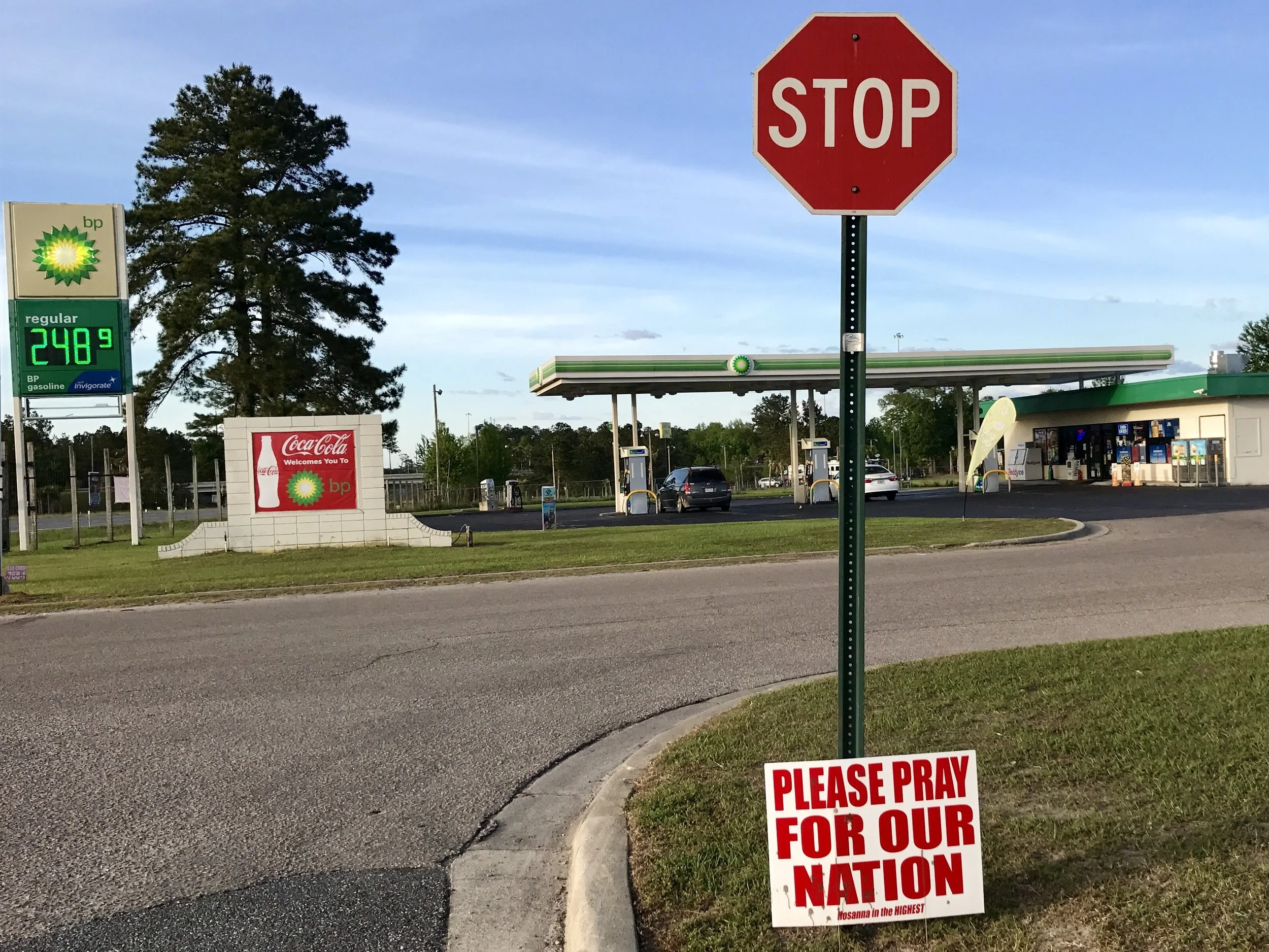
Pic 1, Sent to me from a friend in Texas.
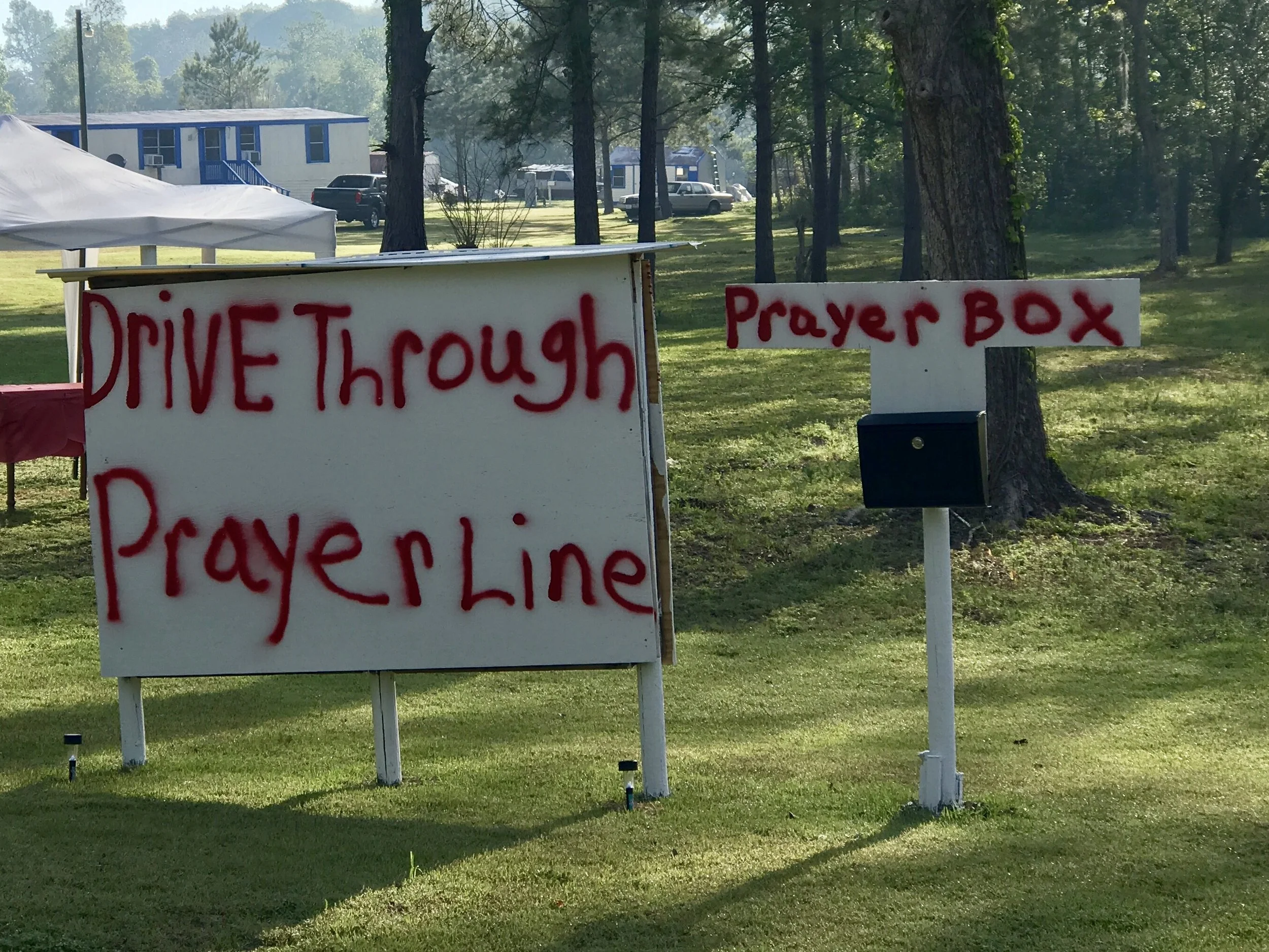
Pic 2, Fast food, fast prayers. What's next?
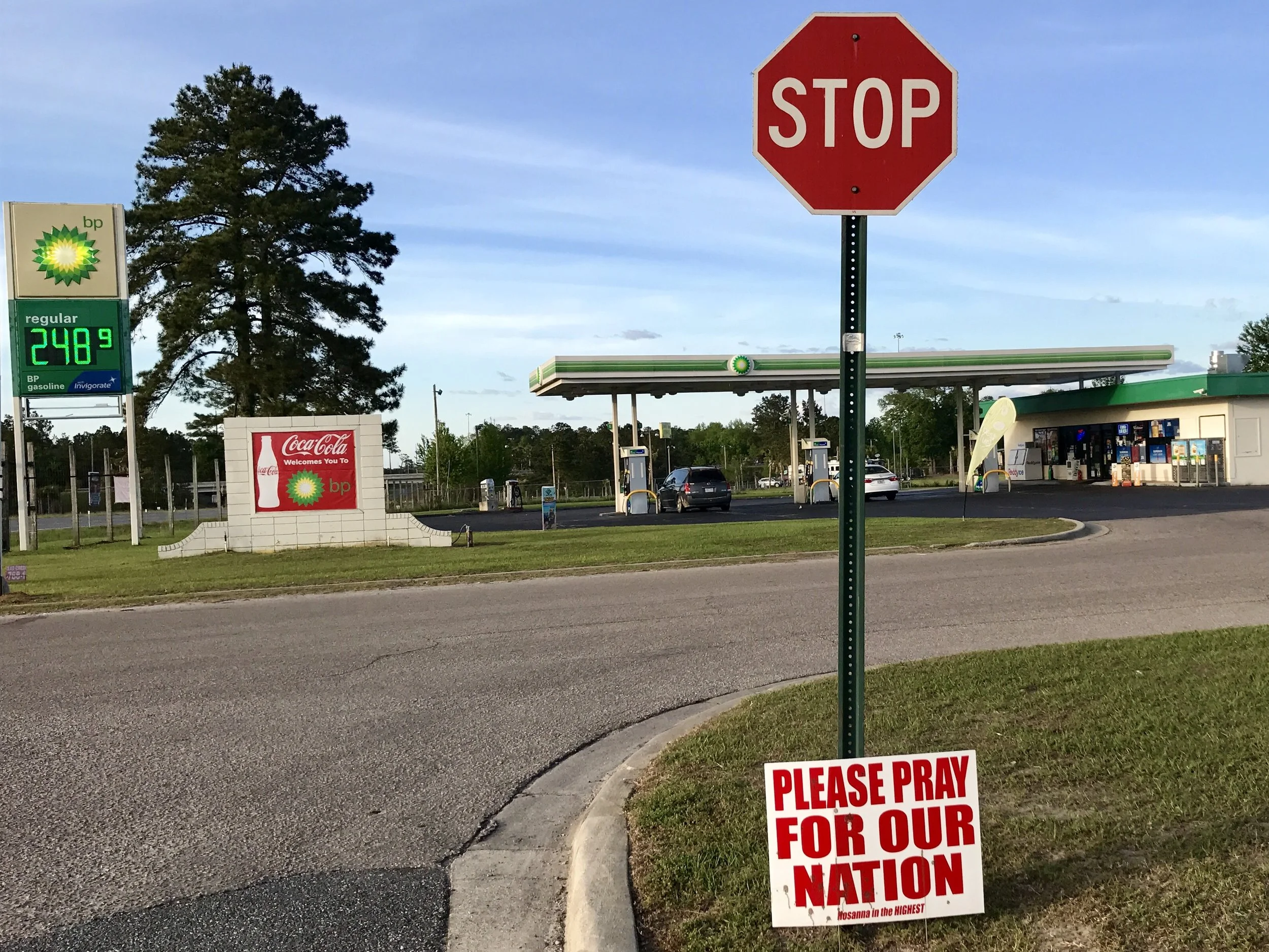
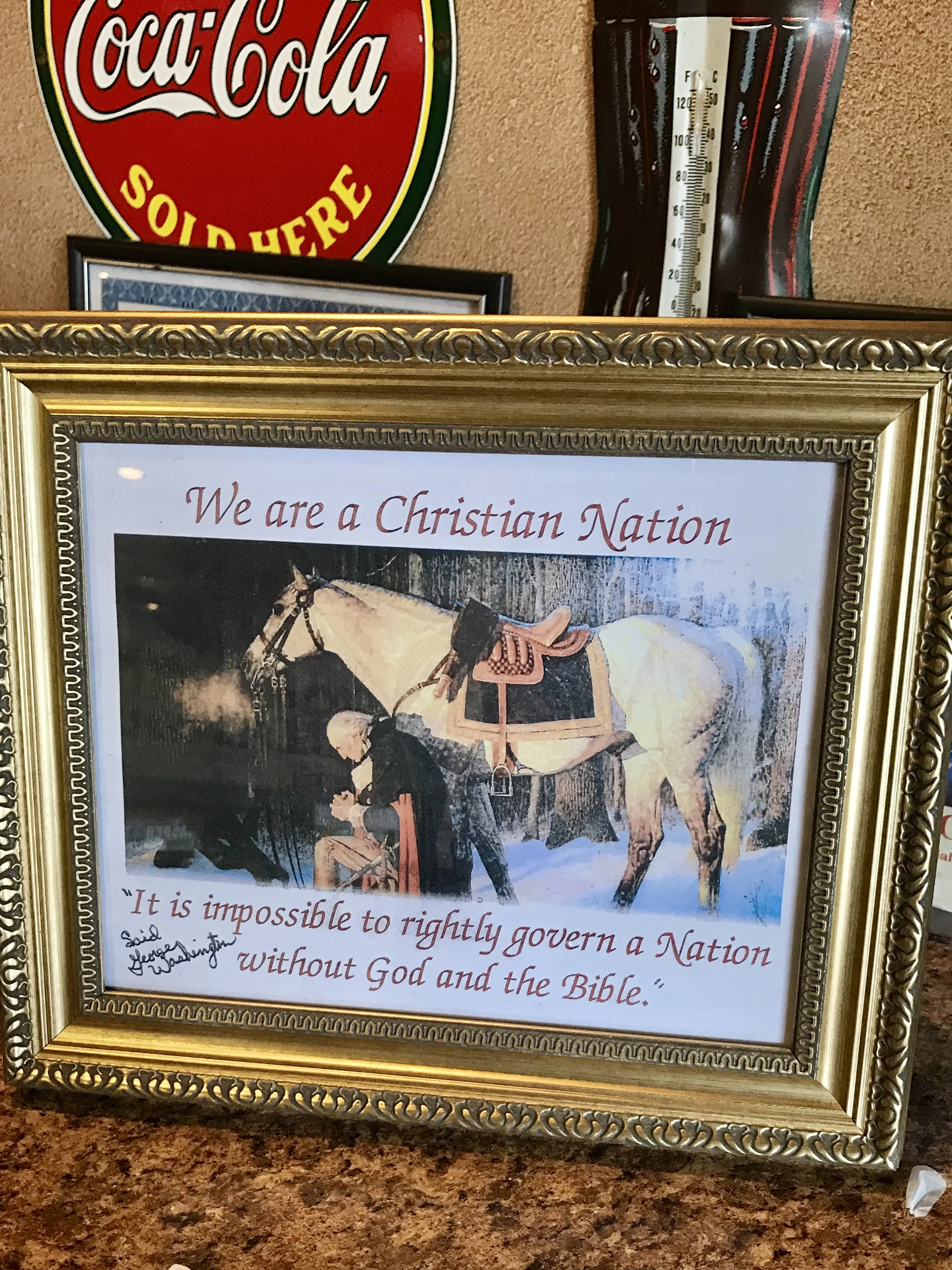
Pic 3, In case you missed this one, too.
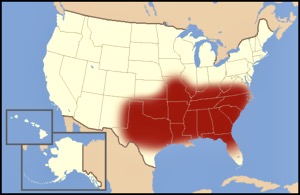
Pic 4, The Bible Belt.
Thanks for following my trip!
Michael
Southern Tier, Post 48
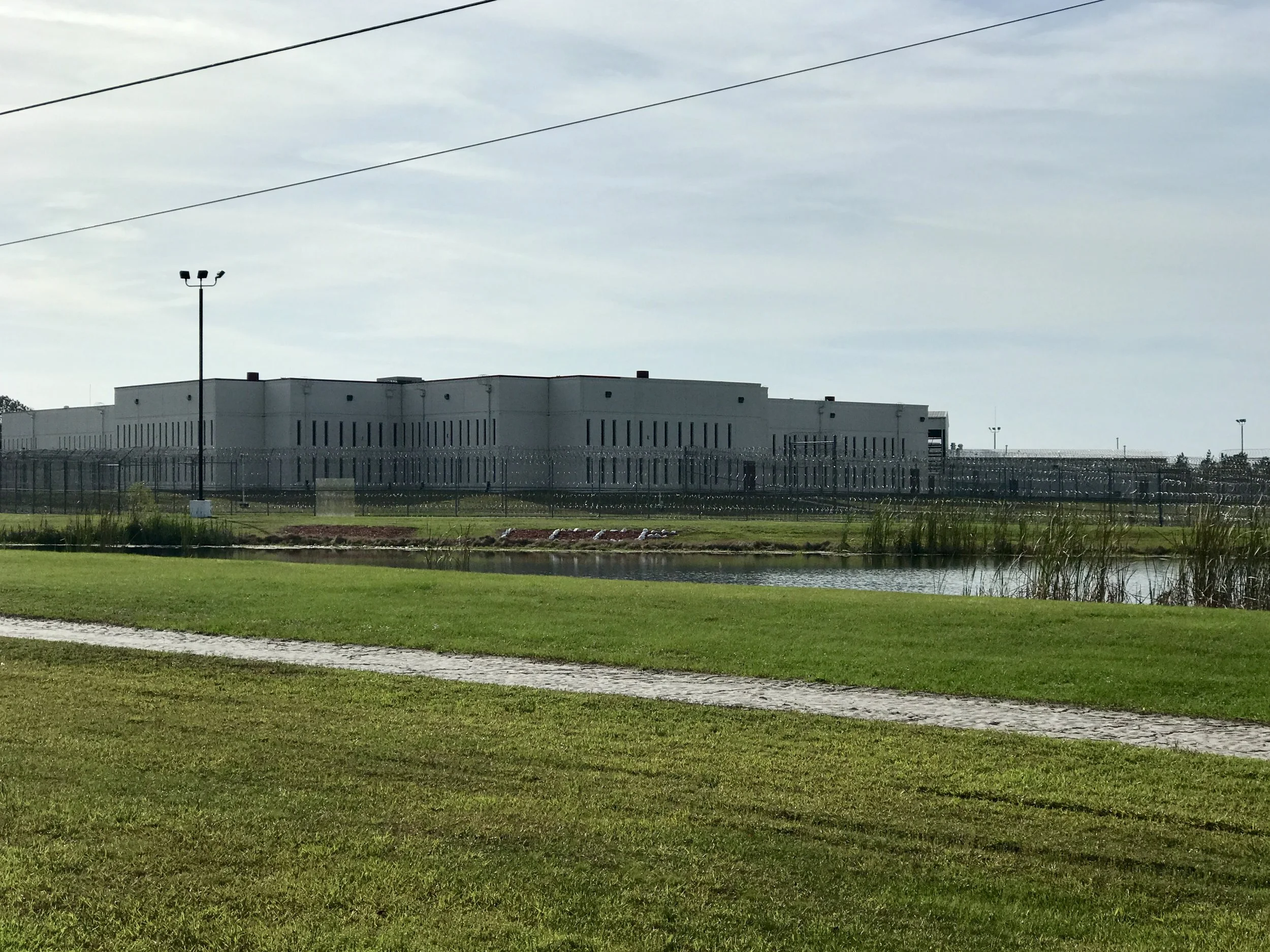
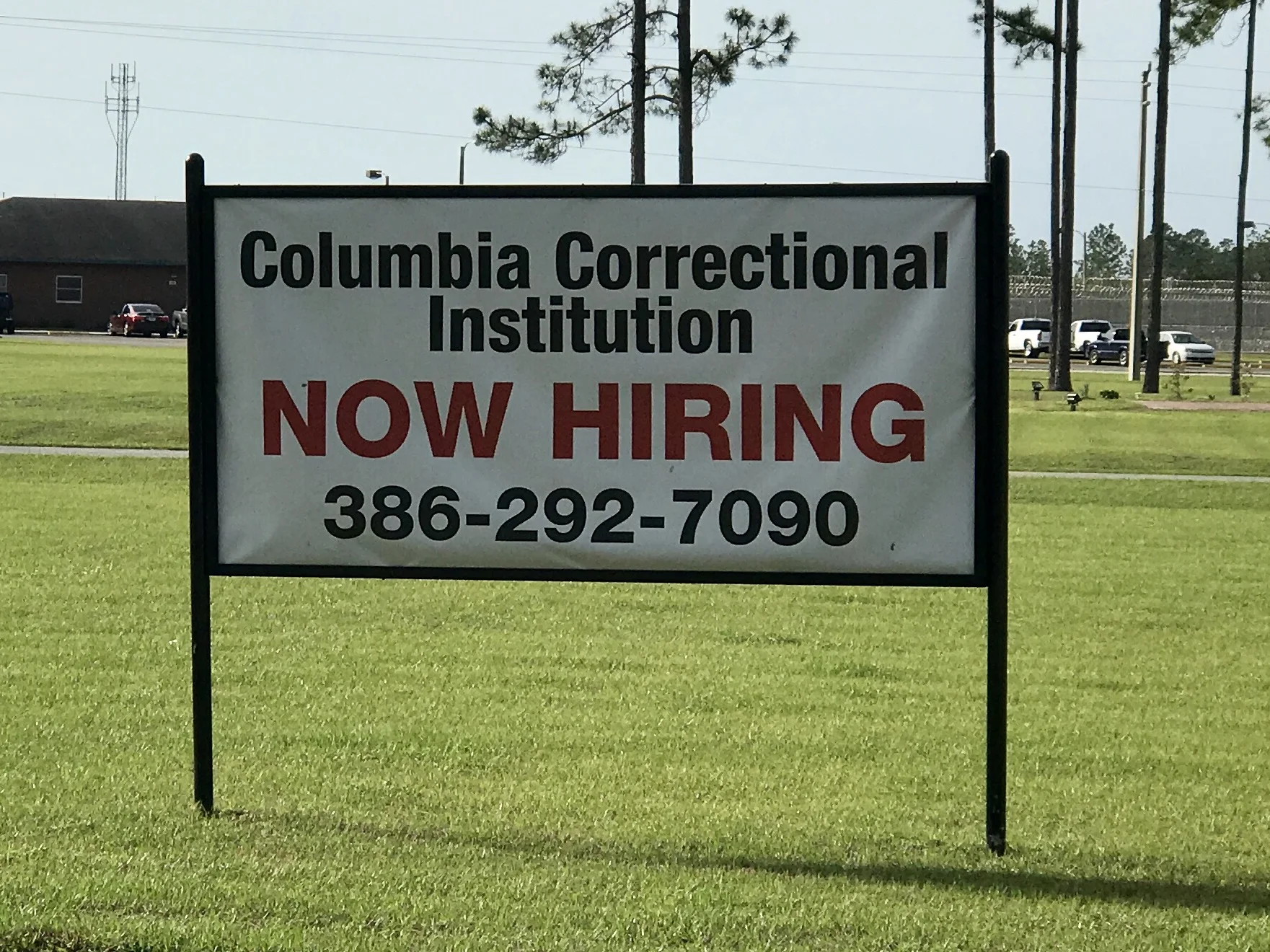
Day 53, post 48: The Prison Industrial Complex -- I have been noticing quite a few "Correctional Institutions" and "Correctional Facilities" along Highway 90 since I left Pensacola. These are prisons. In Florida, those called "Facilities" are run by private corporations. Those called "Institutions" are run by the state. There is only one prison in Florida actually called a prison. It is run by the state and is called Florida State Prison. I passed close by it. But what got me thinking most about this topic was seeing 4 prisons in 20 miles just east of Lake City, where I was biking yesterday morning. Two of those prisons were right beside each other - the Lake City Correctional Facility (private), and the Columbia County Correctional Institution (state). Turns out there are 68 prisons total in just Florida alone, and a significant number - but not all - seem to be in the northern part of the state.
I almost stayed in Live Oak, FL on the day I ended up in Lake City. It was about 3:30 in the afternoon. I had just ridden past two "budget" motels (meaning, in this case, seedy-looking) and I was checking my phone to determine whether to check out either motel, depending on the distance to the next town. A man approached and asked me if he could use my phone to make a call when I was finished using it. I said I'd be happy to dial a number for him (I didn't want to hand my phone to a stranger when his plan might be to bolt with it). He gave me the number, and I dialed. I put the speakerphone on for him - no one on the other end picked up and there was no setup for messages. So I called again a few times, and eventually sent a text to the recipient on the man's behalf. The man explained to the friend receiving the texts that his phone had died, and he was going to walk four miles to Walmart to replace it. Then he and I got to talking. He lived at one of the motels I had passed. He said it was safe, but I should watch my stuff if I stayed there - the majority of people he knew were strung out on meth and petty crime was constant. Then, he told me he had been in prison a couple of times. I said that I had passed quite a few prisons and he said, "Yea, the state likes to send criminals to the woods". I mentioned that I had seen more than one sign advertising job openings at the prisons. "Oh yea", he said. "The locals love that there are jobs - but, goddamn, some of the guards are so dumb they don't know how to tie their shoes". Well, I have no idea if that is true or not, but I decided while I was talking to this guy to push the extra 24 miles to get to Lake City where my choice of motels would be more diverse. So I sent one last text to help him out, and said goodbye. About a mile up the road I stopped again for a more thoughtful accounting of my choices. As I was studying my phone, I heard another voice, "Have you come far"? I looked up. It was a cop, who had pulled up beside me and was getting out of his car. I explained just how far I had come (San Diego). I queried the cop's opinion of the motels I had passed by. He said, "You made the right choice. I'd never stay at either of those motels". I then asked about meth addiction. He answered that there was some in town, but now that OxyContin was harder to get the cops were more worried about heroin. (It is the preferred drug substitute for OxyContin addicts and is cheap and easy to get.) I mentioned I had cycled past a lot of prisons in the Florida Panhandle. He replied, "Drugs are our biggest problem. There's not enough work, and people do crazy stuff to get the drugs".
So, communities want prisons for the jobs. And a lack of jobs fuels drug abuse, which fuels petty crime, which helps to fill the prisons. Seems kind of circular to me. And more evidence of the decline of rural America. I spend a lot of my time worrying about climate change. But when towns just don't work very well in the here and now, worrying about something a few decades away from being life threatening probably doesn't seem like much of a priority.
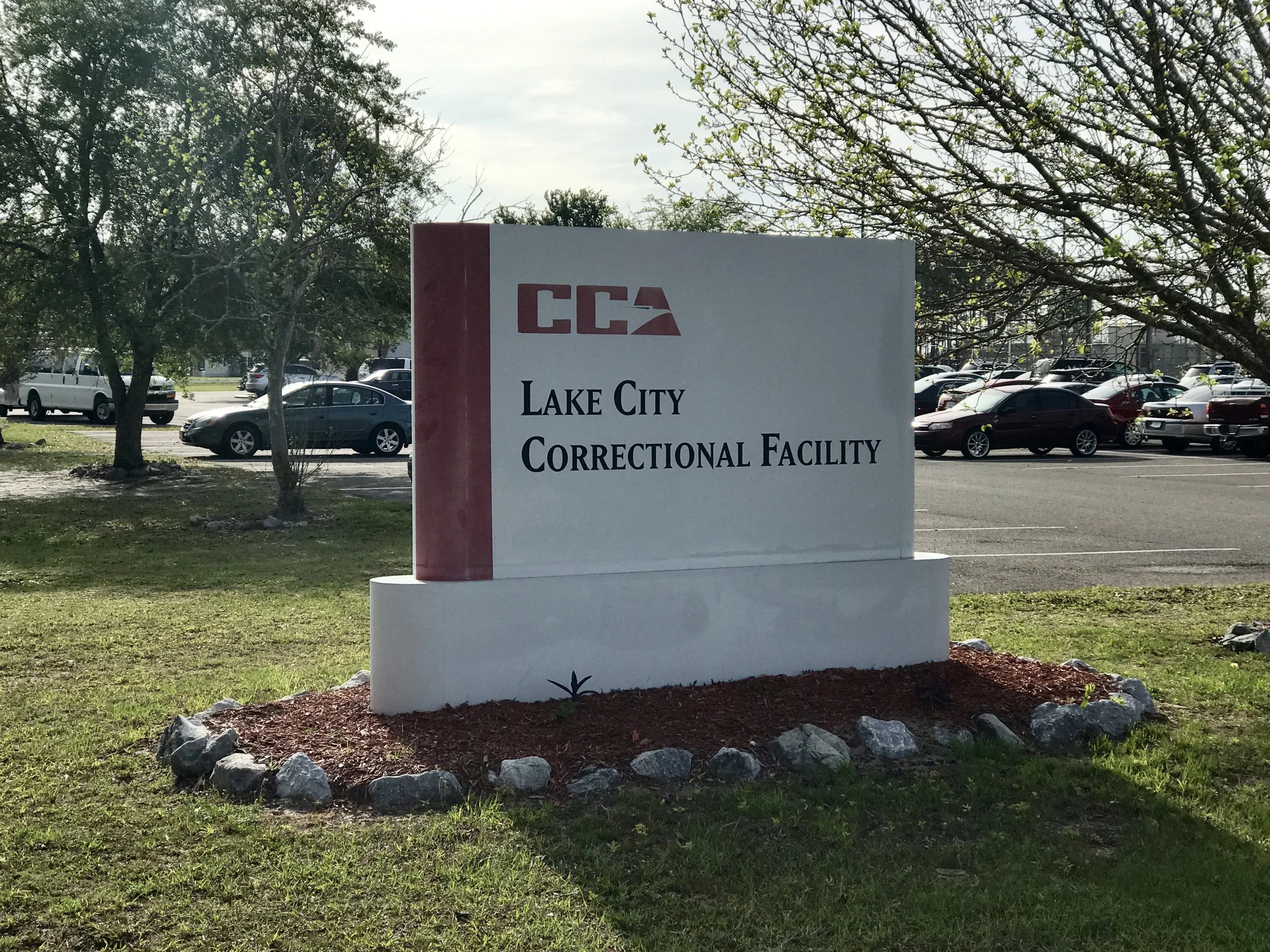
Pic 1, Run by a private corporation. This is Jeff Sessions' preference; Obama tried to phase them out. Should prisons be a profit making business? Most people who advocate on behalf of incarcerated individuals don't think so....
Pic 2, Looking for work? If farming, and then agribusiness have let you down, maybe you can get a job at a local prison? looking for work?
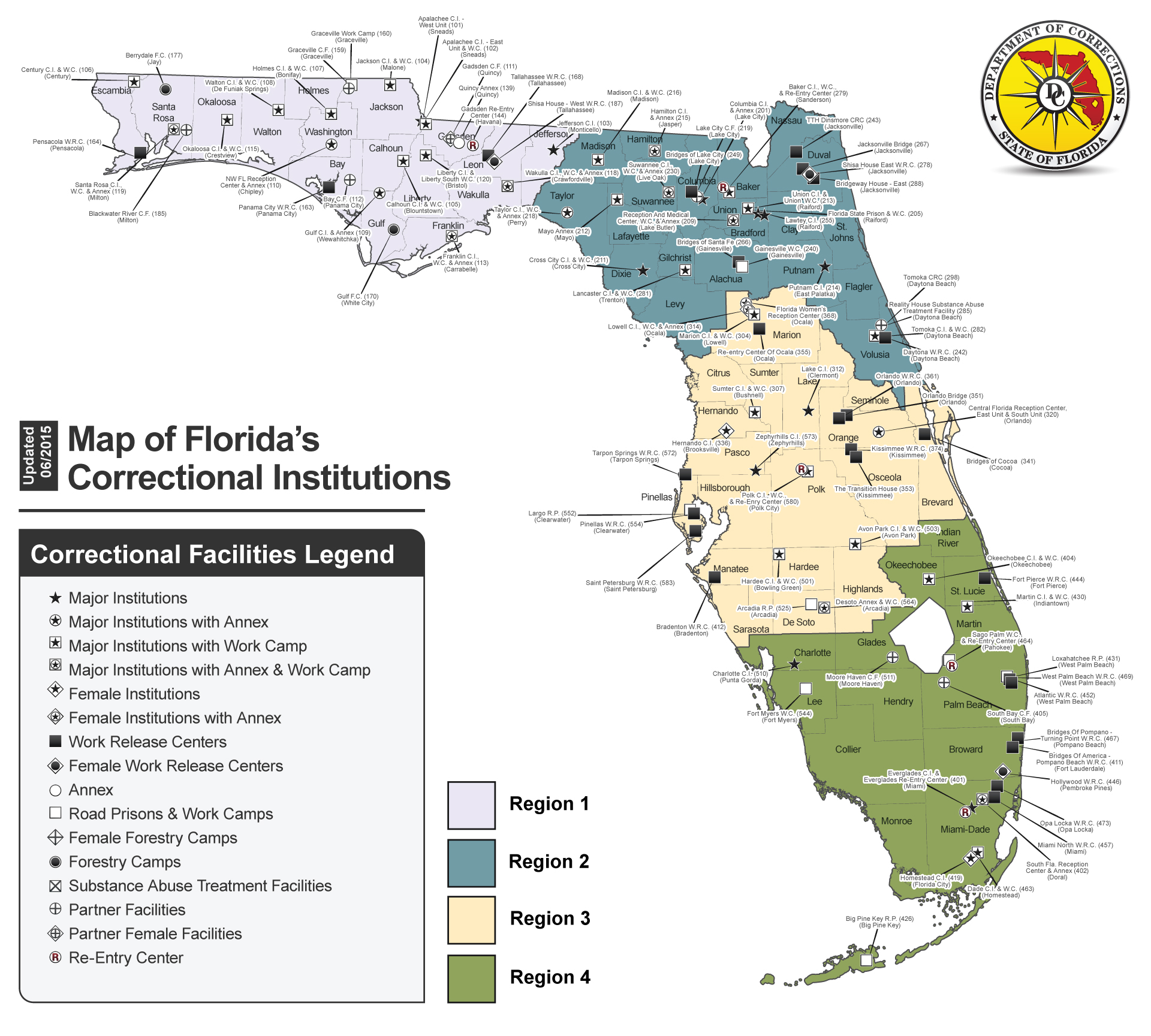
Pic 3, A map of prisons in Florida.
One more blog to come before the Southern Tier tour concludes.
Michael
Southern Tier, Post 47
Day 52, post 47: I made it to Jacksonville, and all is good! Monday I catch the train to NYC. Looking forward to writing one or two closing posts tomorrow or Monday. Thanks to all of you who have followed my journey!
Check out my road cycling activity on Garmin Connect.
https://connect.garmin.com/modern/activity/1679609379
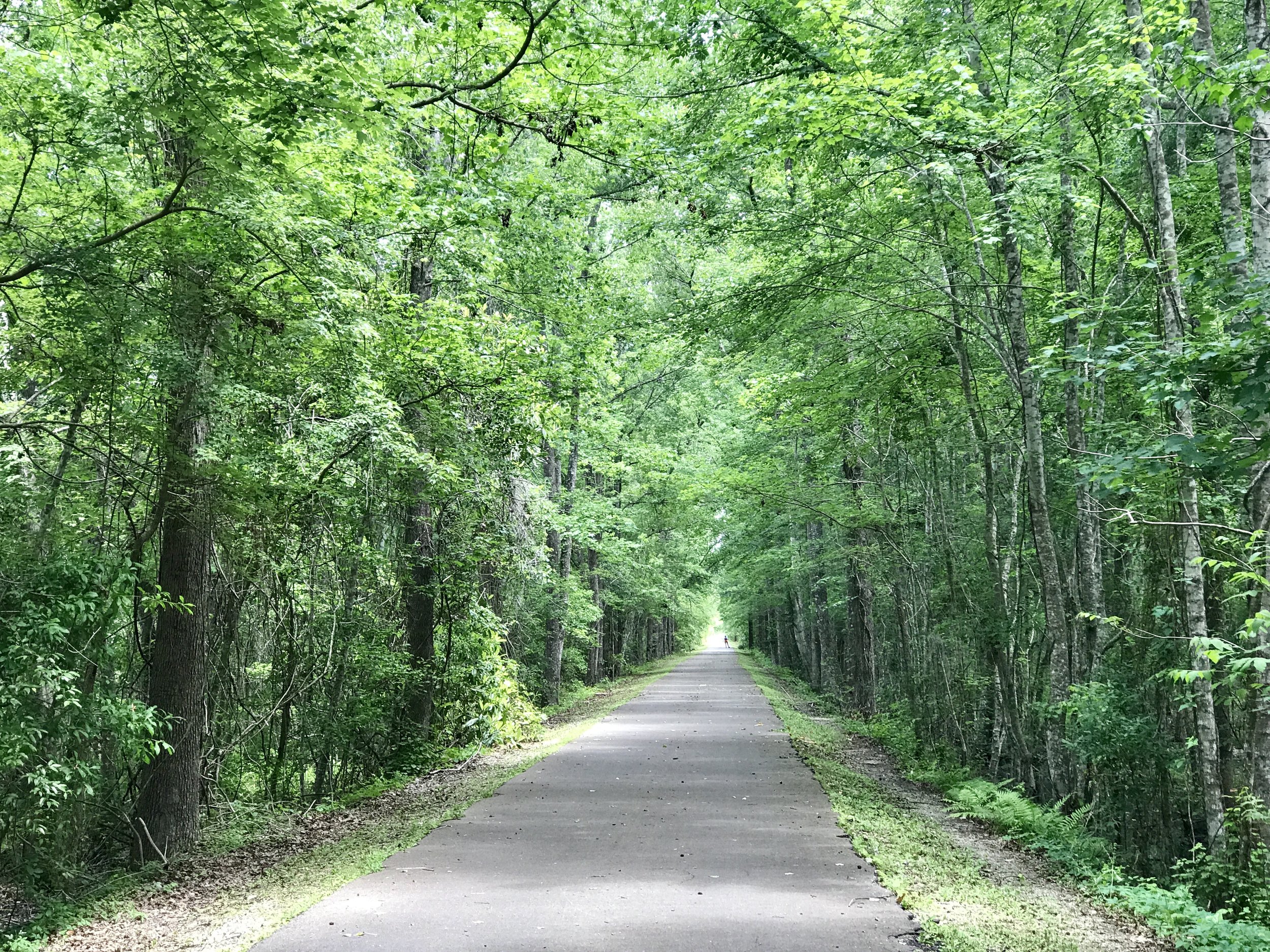
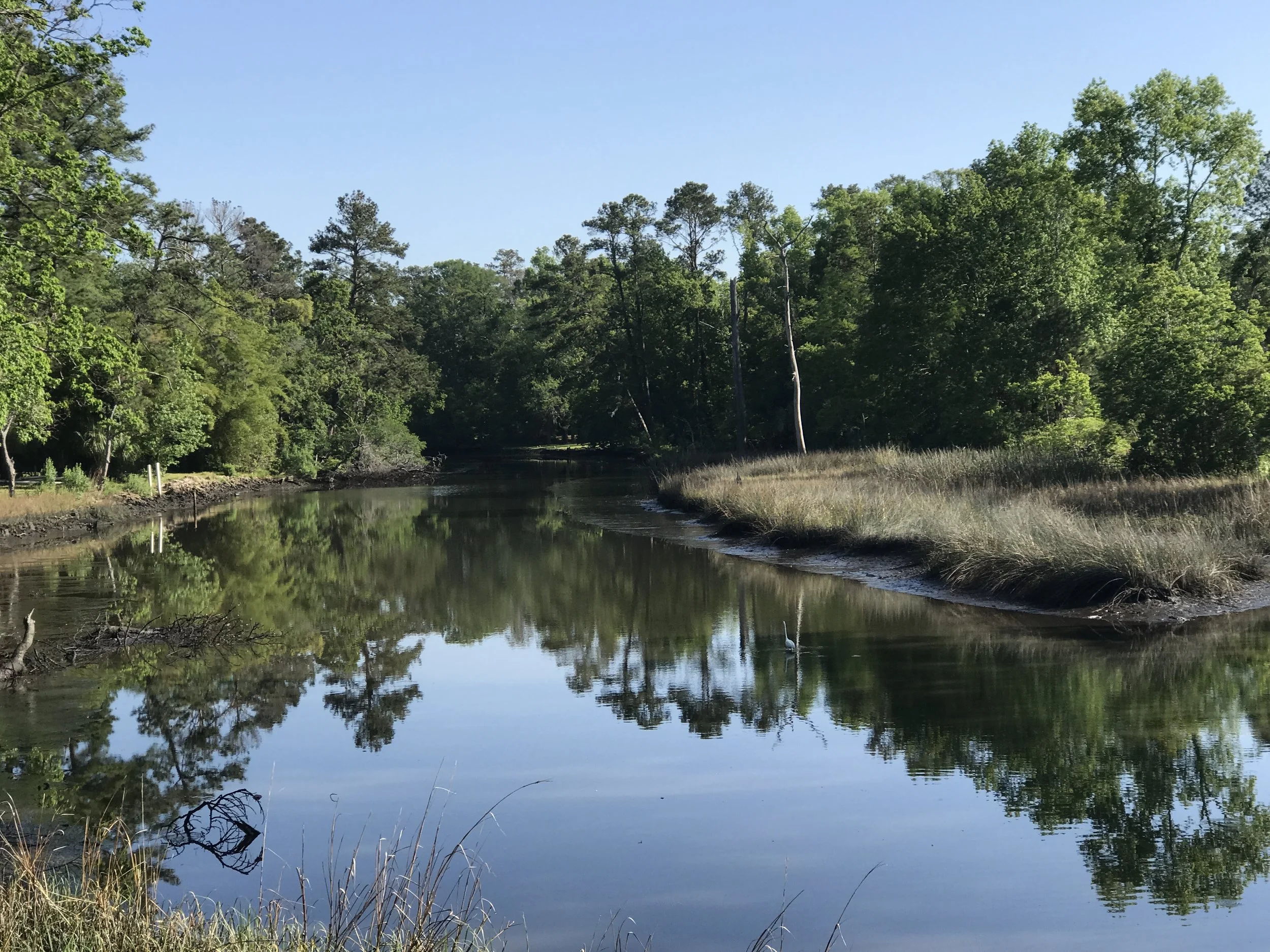
Pic 1, The ride into Jacksonville was highlighted by almost 20 miles on the Jacksonville Baldwin Trail, a rail to trail conversion.
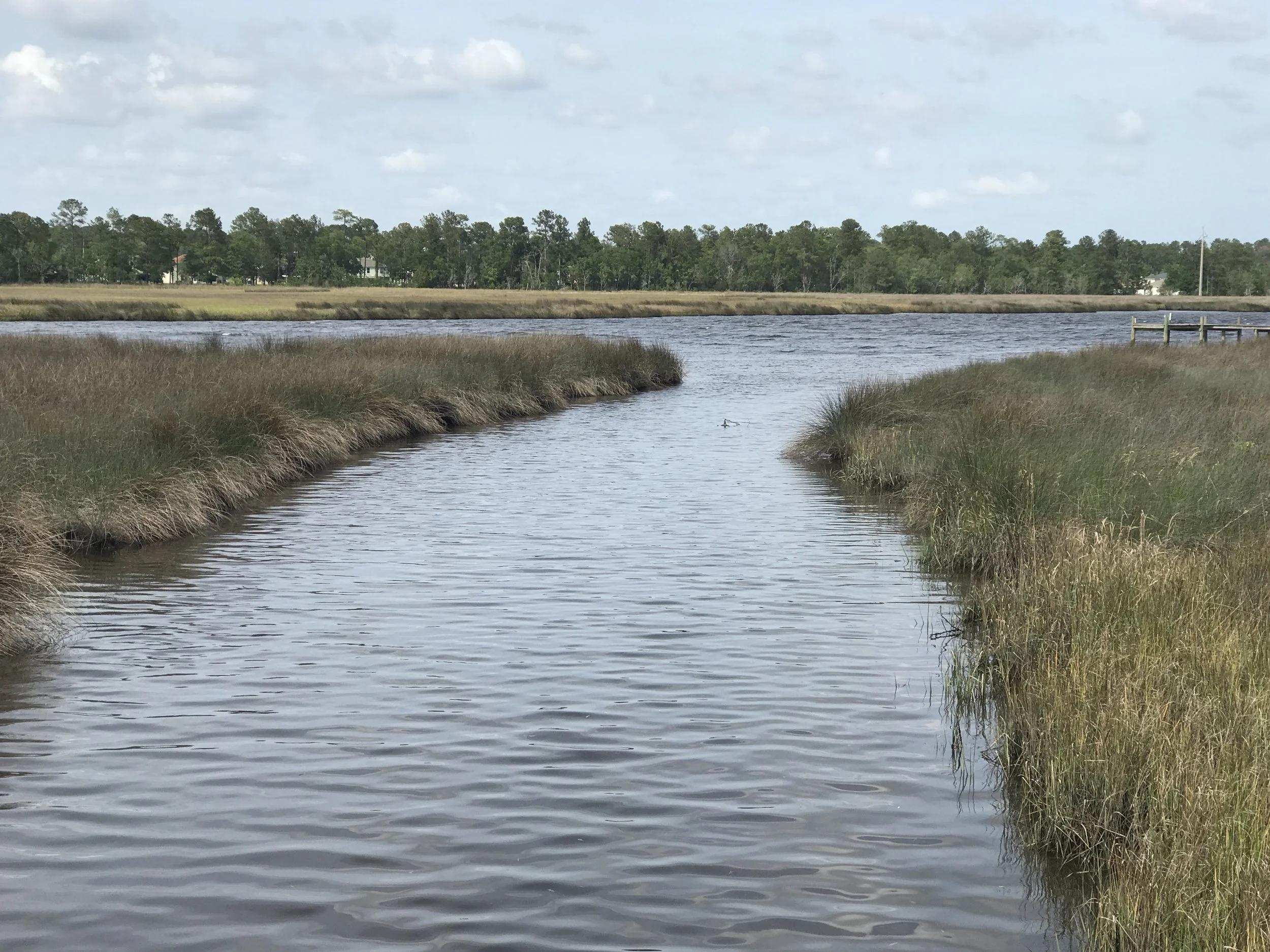
Pic 2, Once off the trail, I followed the Trout River, which is one tributary to the St John's, the largest river in Jacksonville.
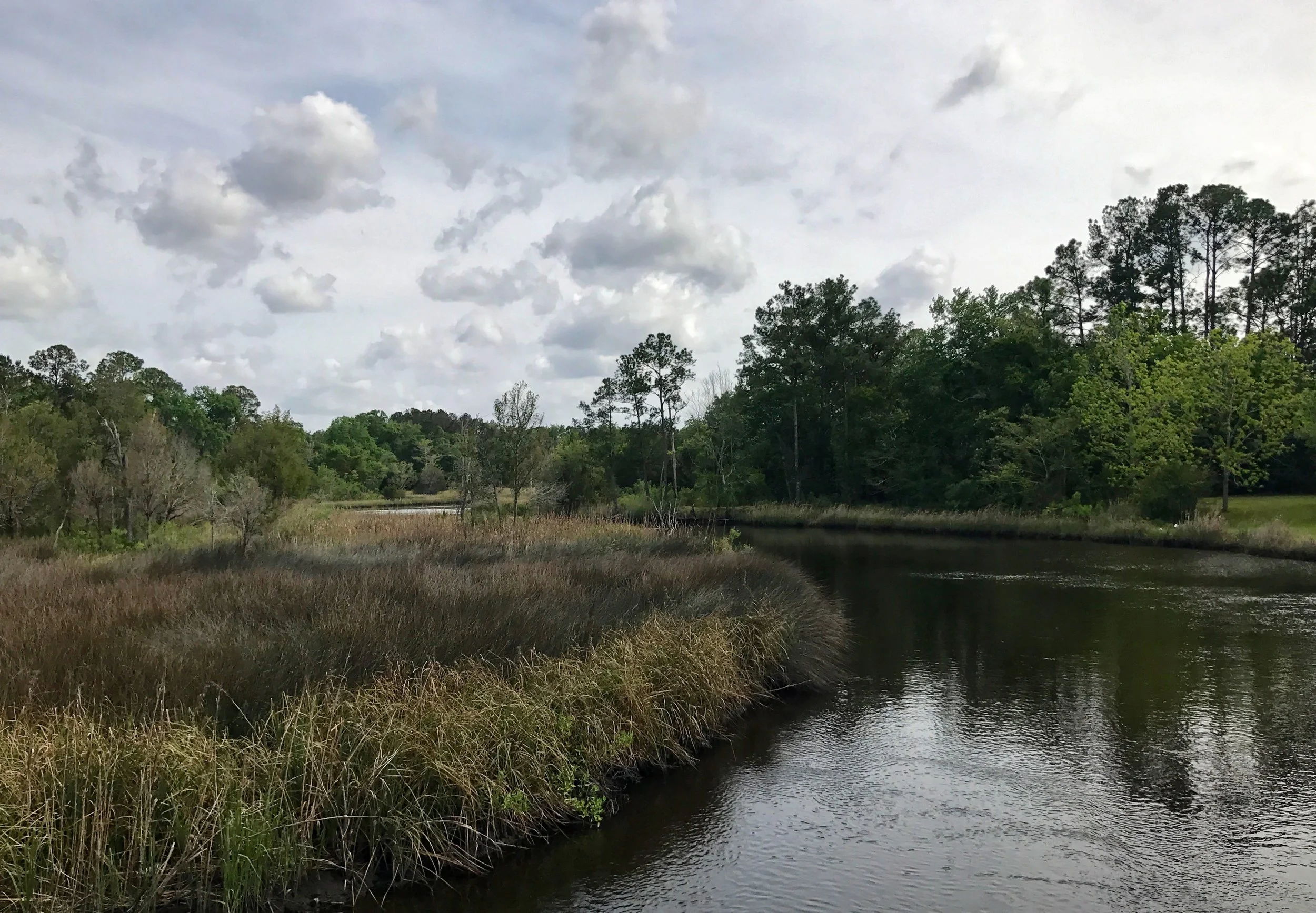
Pic 3, Another shot of the Trout River.
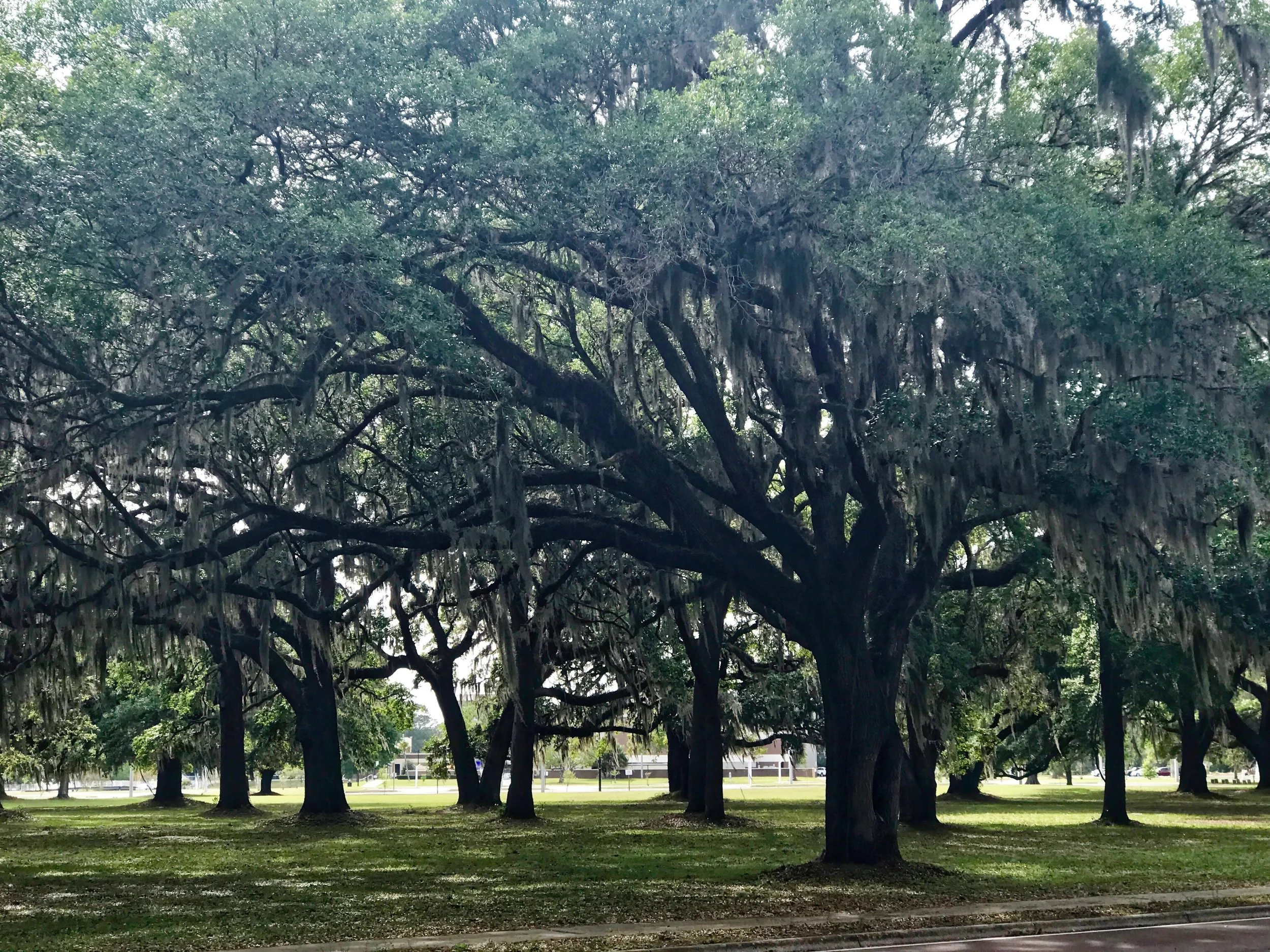
Pic 4, On the campus of Florida State College, Jacksonville - beautiful grounds!
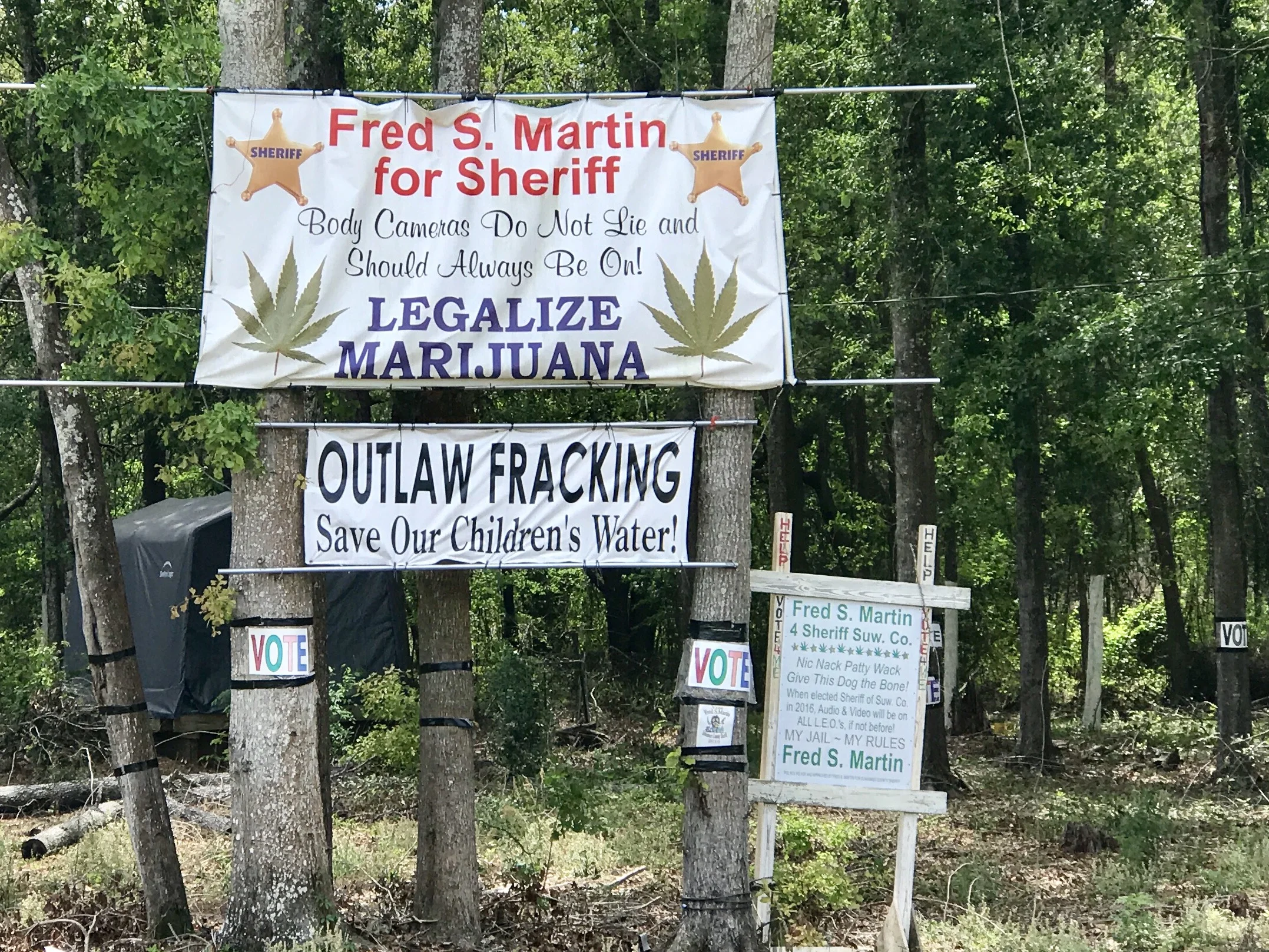
Southern Tier, Post 46
Day 51, post 46. I'm not going to write much tonight but I wanted all my peeps to know I'm safe and doing fine. I expect to get to Jacksonville tomorrow with a layover day before training back to NYC (I'll be home by Tuesday mid-day!) and should have time for at least one or two more posts before wrapping up this extraordinary journey.
Check out my road cycling activity on Garmin Connect.
https://connect.garmin.com/modern/activity/1677638433
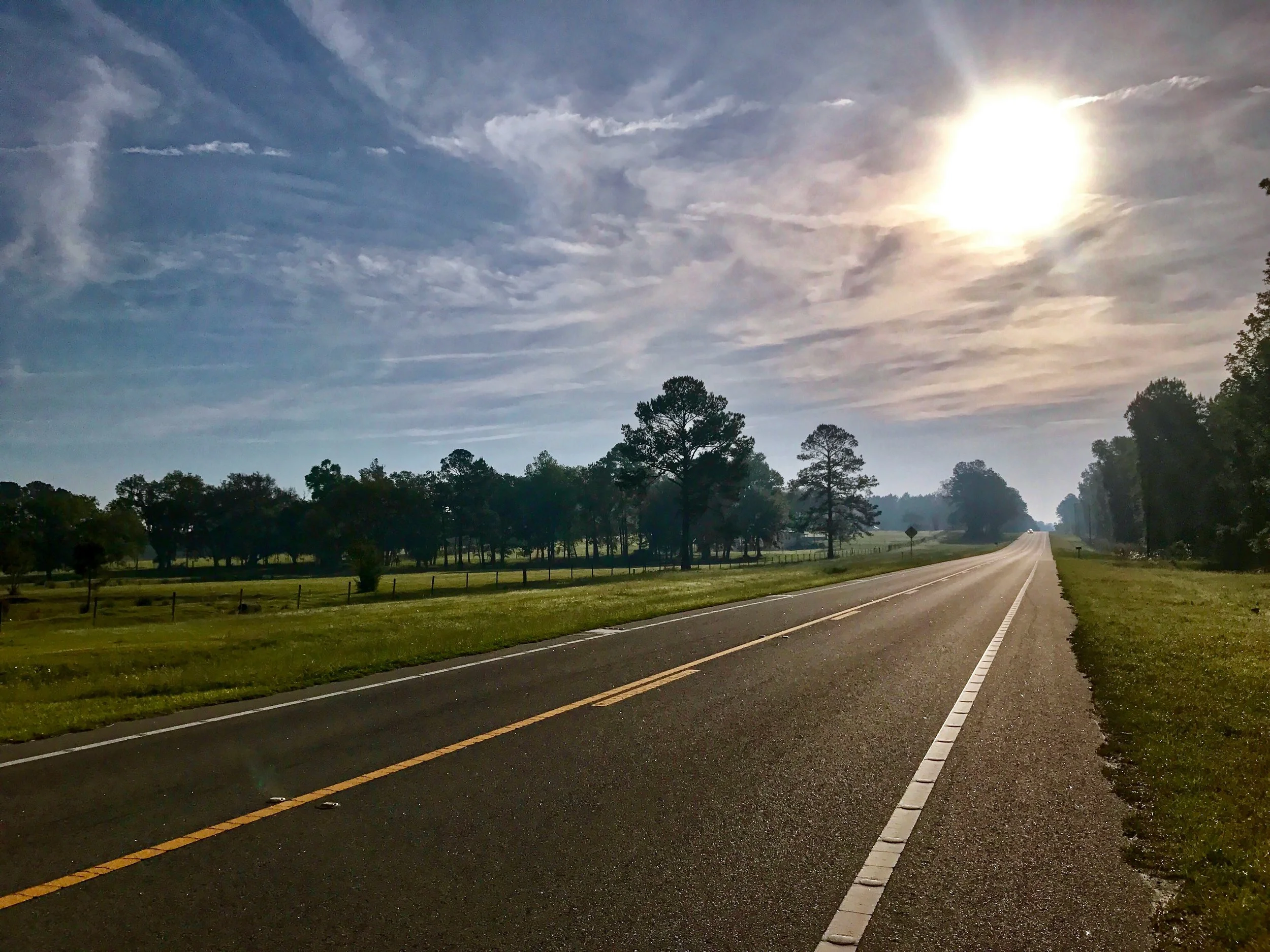
Pic 1, Early morning light just east of Monticello, FL.
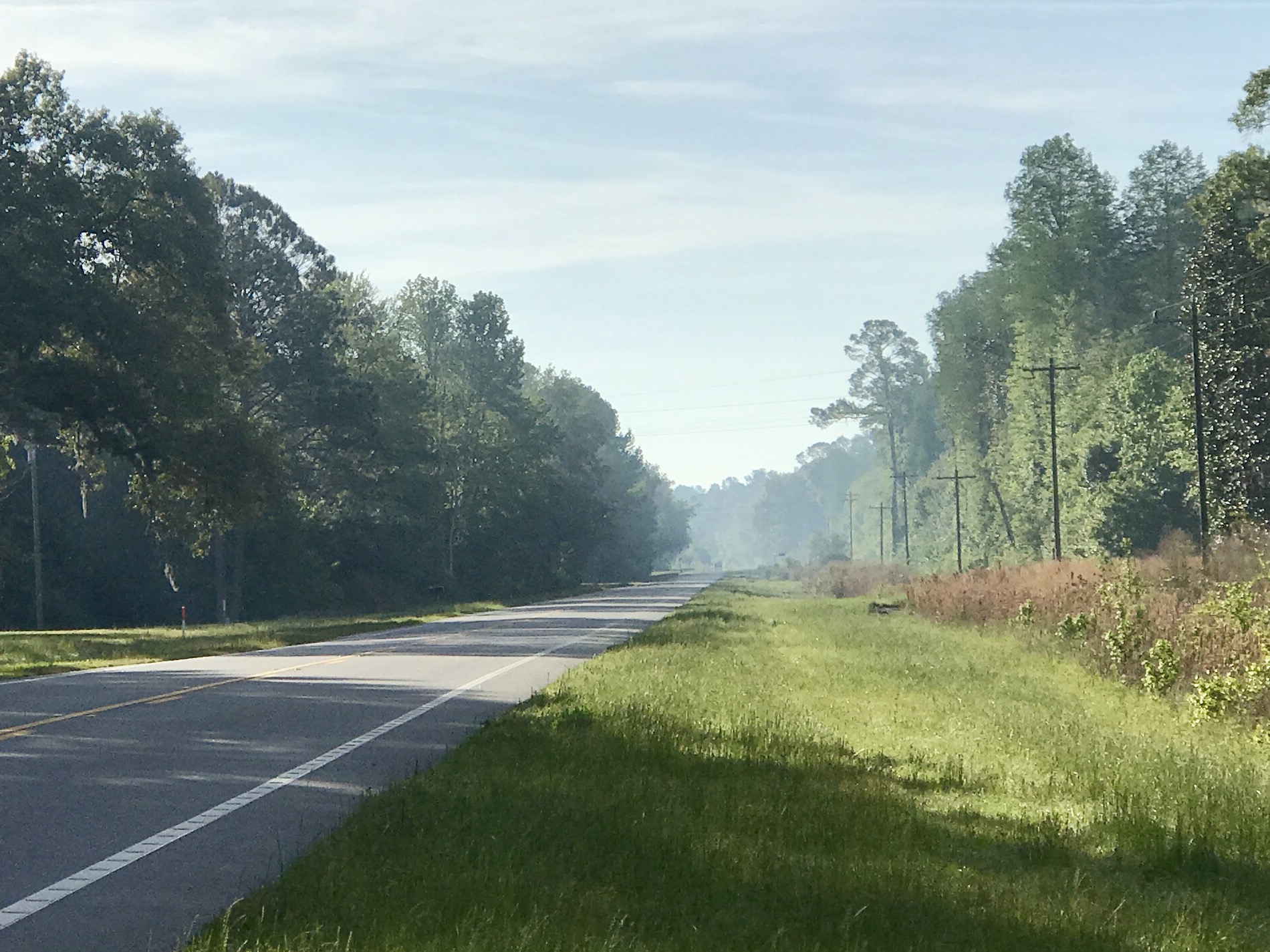
Pic 2, I've learned there are wildfires in the Jacksonville area. I haven't encountered them, but I wondered if this haze this morning was related. The haze cleared up after a few miles of biking, so I doubt it.
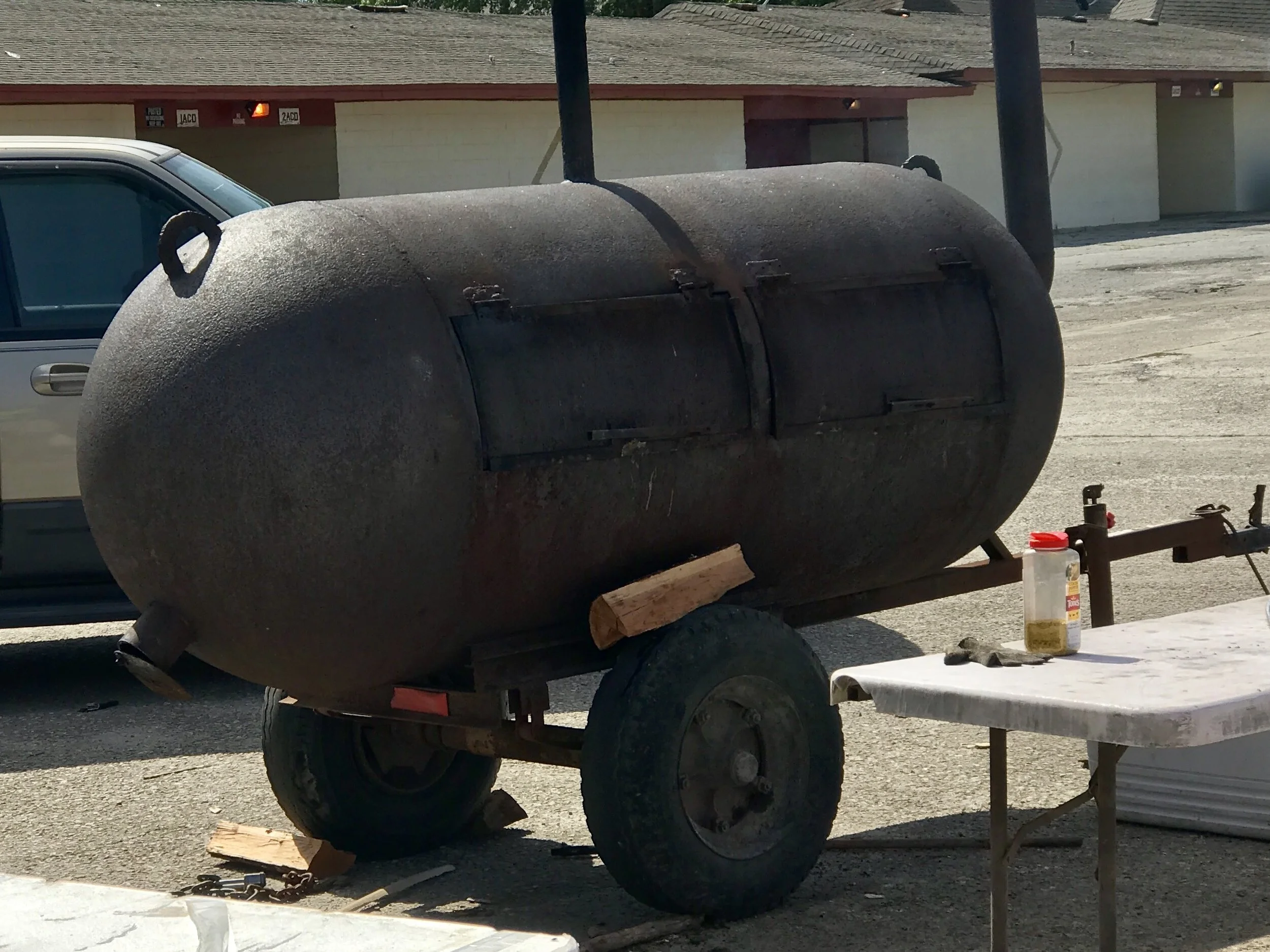
Pic 3, The cooker for the best BBQ chicken I've ever had. I enjoyed it today in Madison, FL.
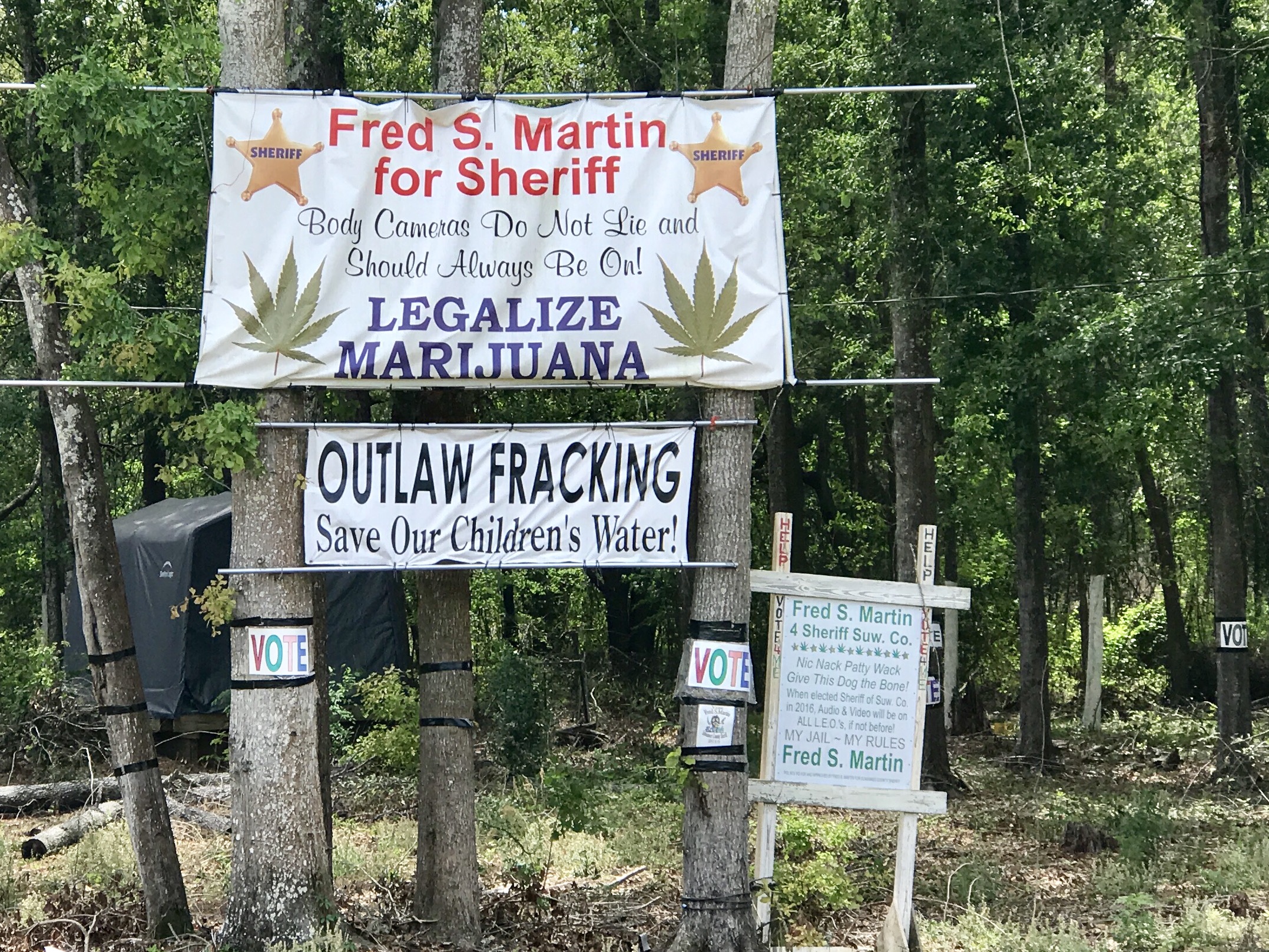
Pic 4, Interesting political signs... They certainly test my assumptions!
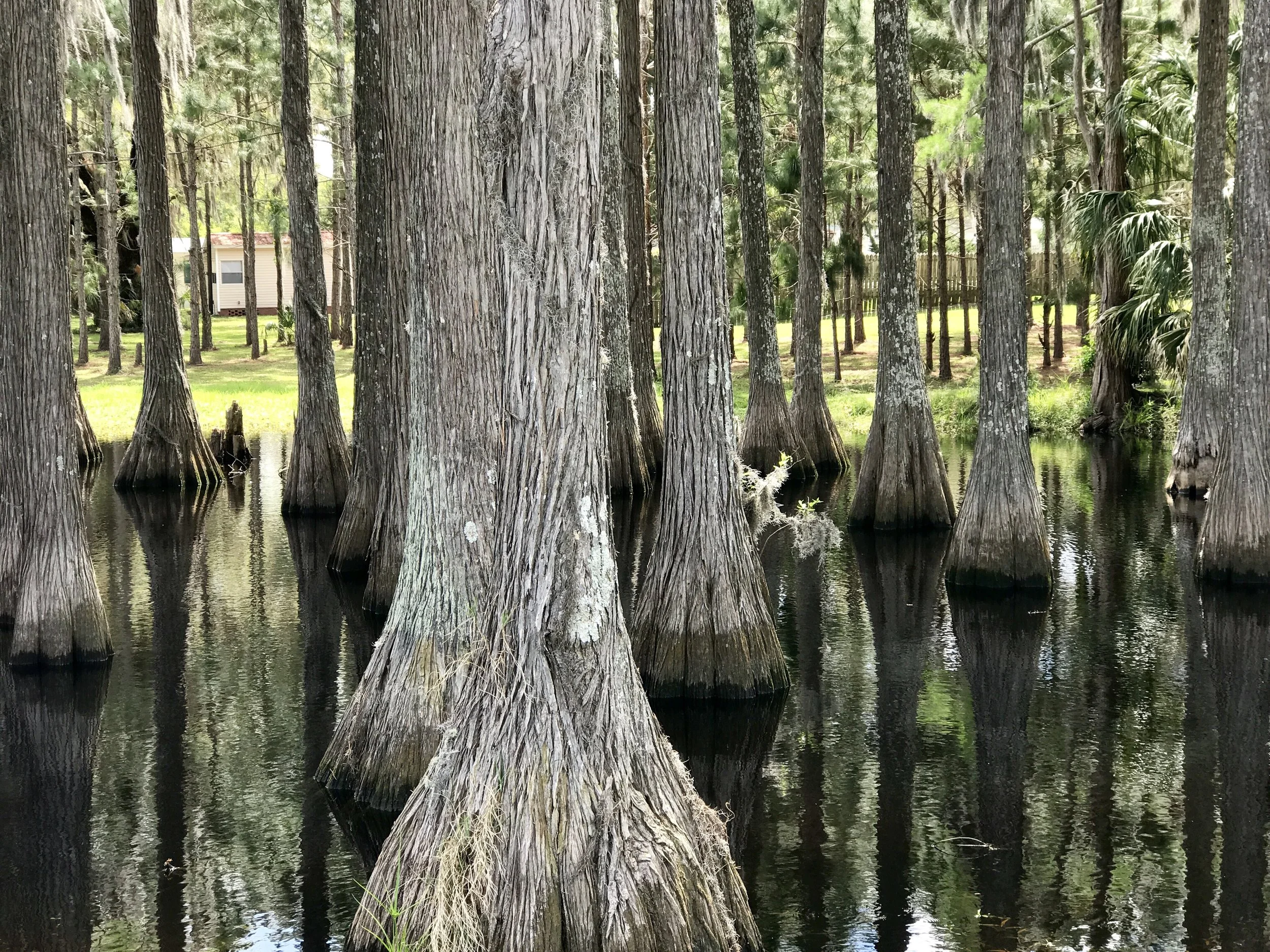
Pic 5, Some swampland I cycled by.
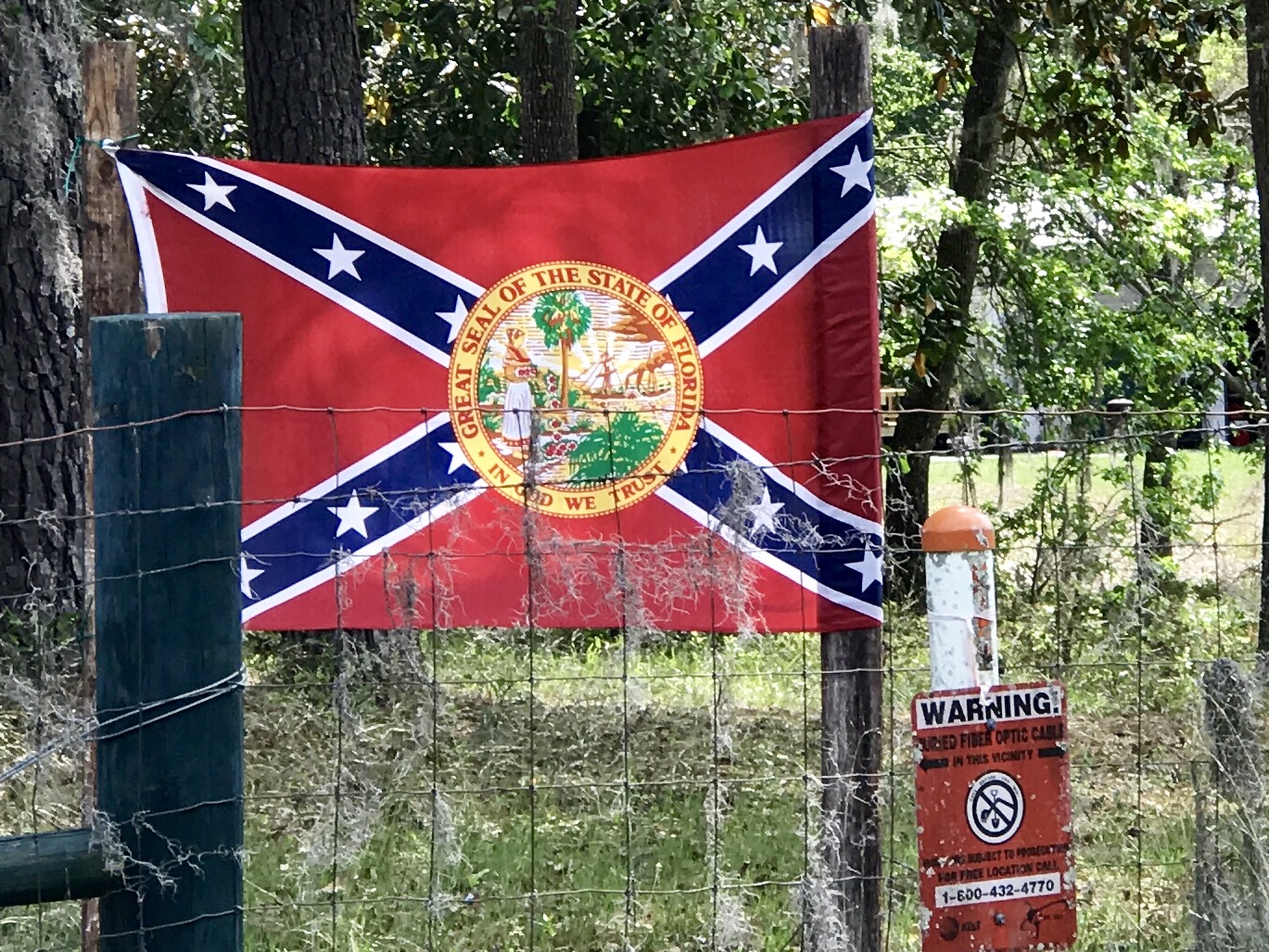
Pic 6, This is a "confederized" version of the Florida State Flag, which is pretty controversial to begin with...
More to come,
Michael
Southern Tier, Post 45
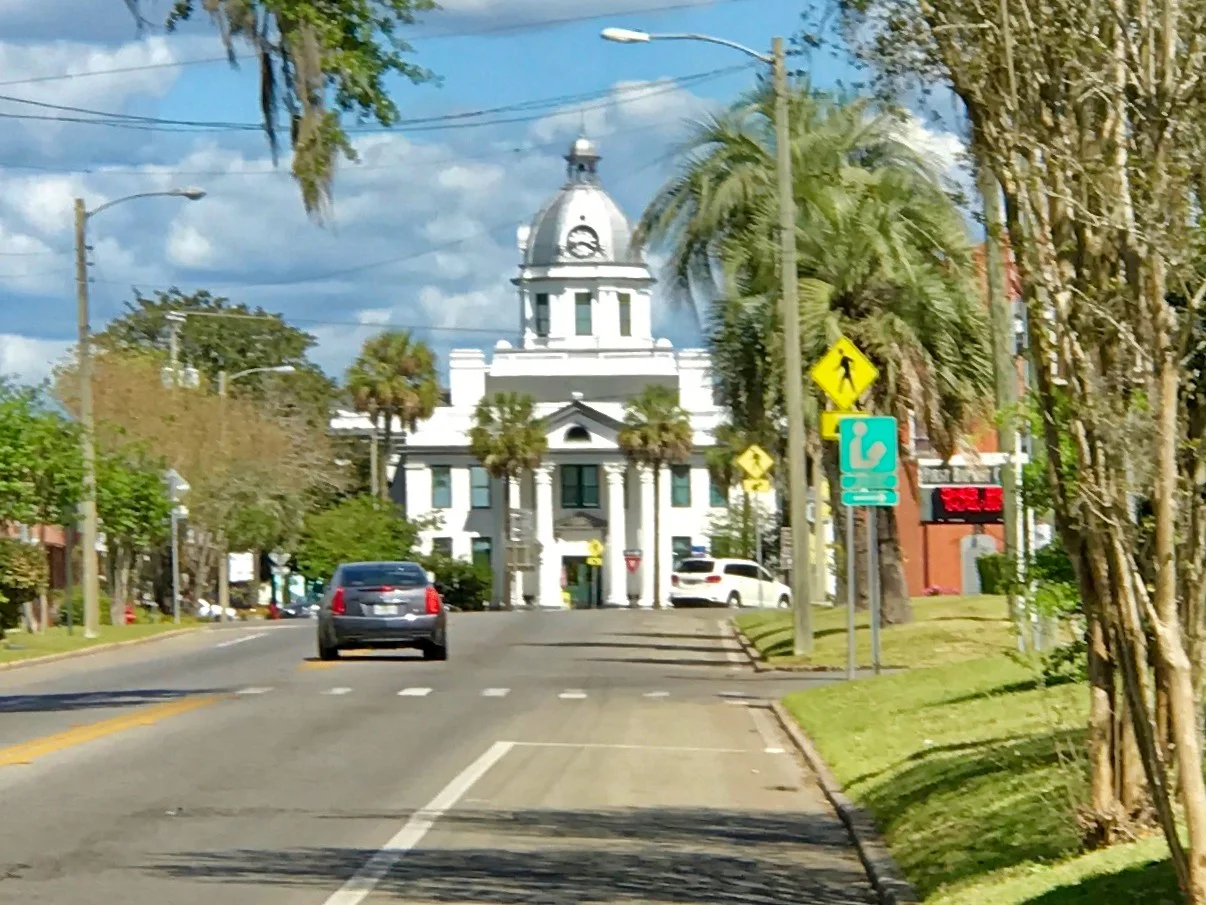
Day 50, Post 45, Quincy, FL to Monticello, FL. This will be a light post. I only cycled about 50 miles today, after not sleeping so well last night. I spent most of the morning getting through Tallahassee, which reminded me a lot of eastern Florida - lots of cars, sporadically bike friendly roads mixed among terrifying traffic, no people walking anywhere, and lots of shopping malls. Outside of urban areas, the Florida panhandle remains pretty and green. I am beginning to notice more horse ranches in addition to farms, which a local tells me are made up primarily of either pecan orchards or cotton farms. Monticello is an attractive town, with rich landmark buildings - an elegant main street of large beautiful homes, and a wonderfully situated county courthouse as a central square - except it's a circle. The town looks like a much better endowed place than Quincy, where I spent last night - and yet the average family income is about $10k less per annum, which tells me that at first glance it is hard to know much of anything about anything.
So, of course, we must all look beyond what seems obvious because real truths lie deeper. Such is the work of true observation. And we must resist jumping to conclusions. Studies show most of us overestimate our intuition, and we are wrong about many things far more often than we actually realize. ...All of which brings us to our strange moment in international affairs. I miss restraint and thoughtfulness, and I fear for the "bold" actions our government has taken recently. I hope the outcomes are positive in the long run, but I wouldn't bet the farm on it.
Check out my road cycling activity on Garmin Connect.
https://connect.garmin.com/modern/activity/1675750336
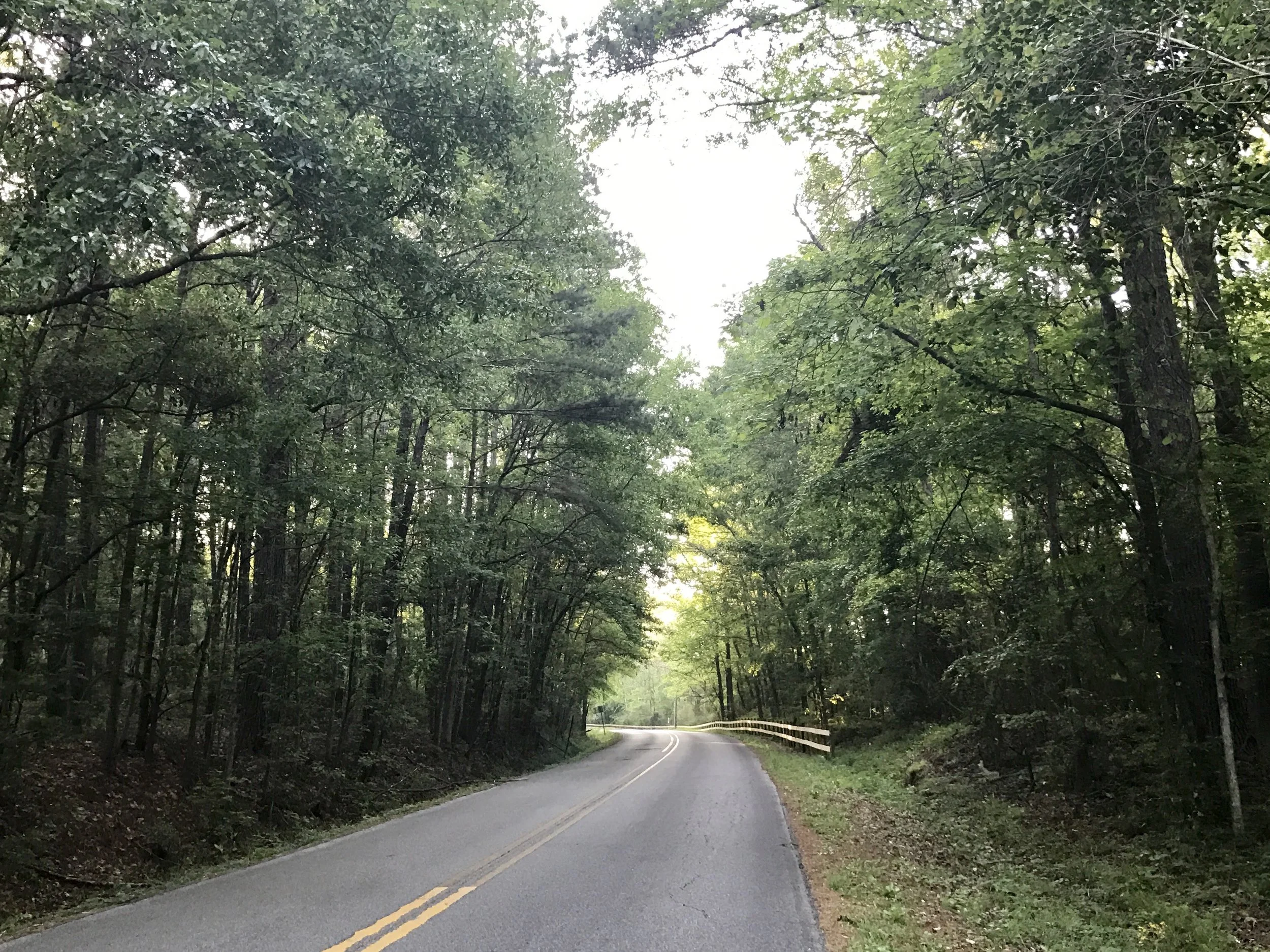
Pic 1, The road out of Quincy this morning.
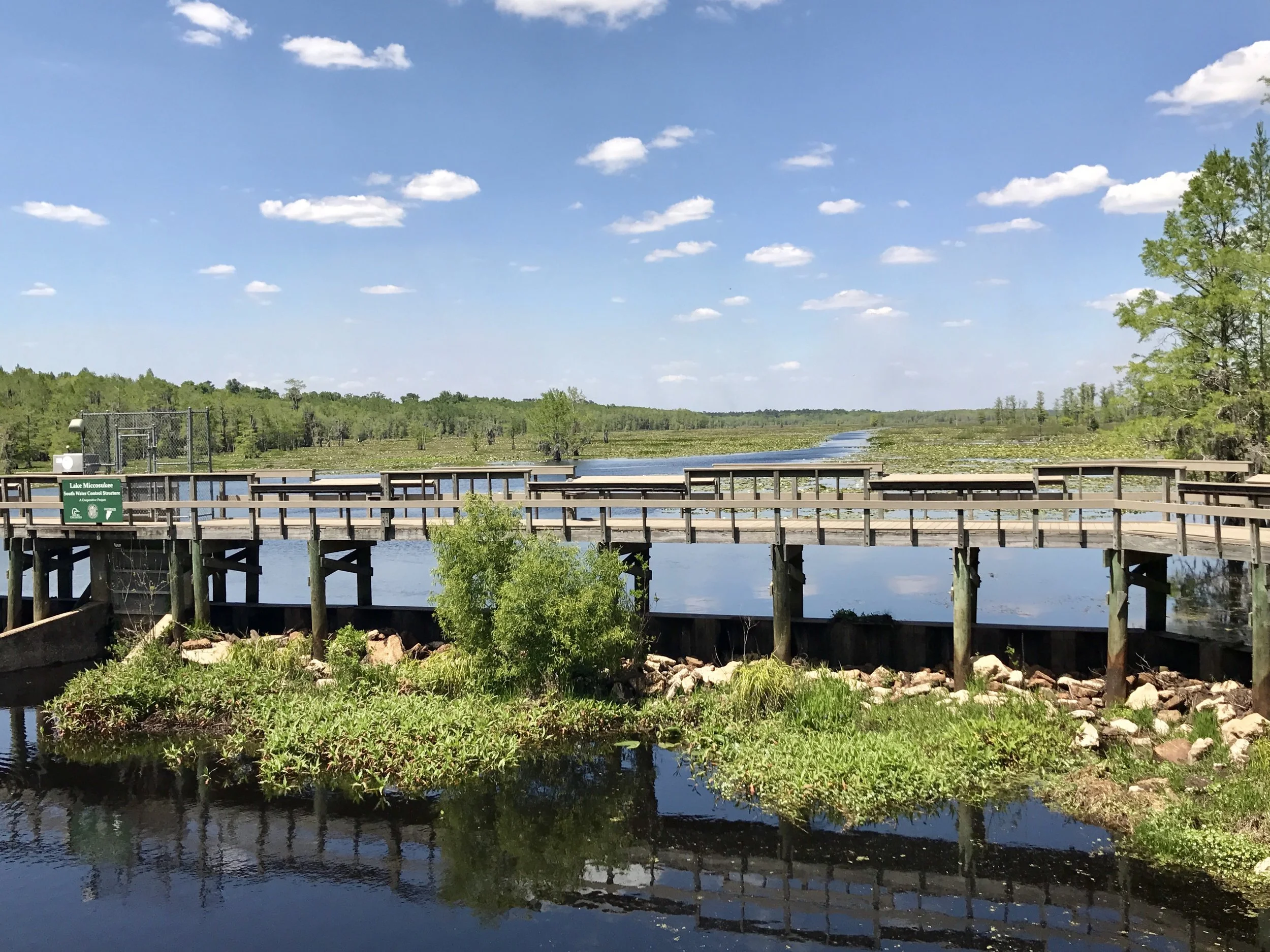
Pic 2, Southern end of Lake Miccosukee.
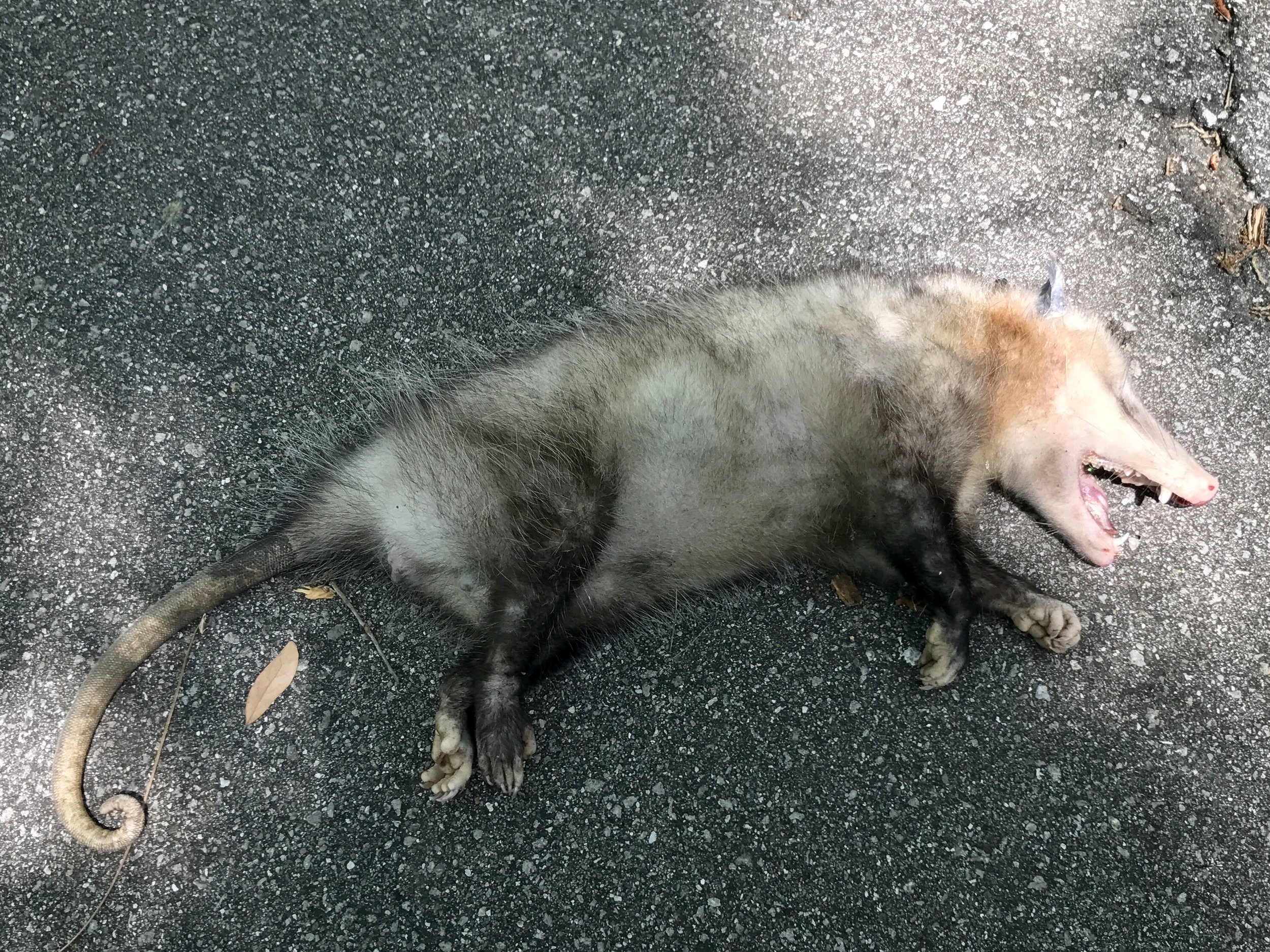
Pic 3, Possum road kill.
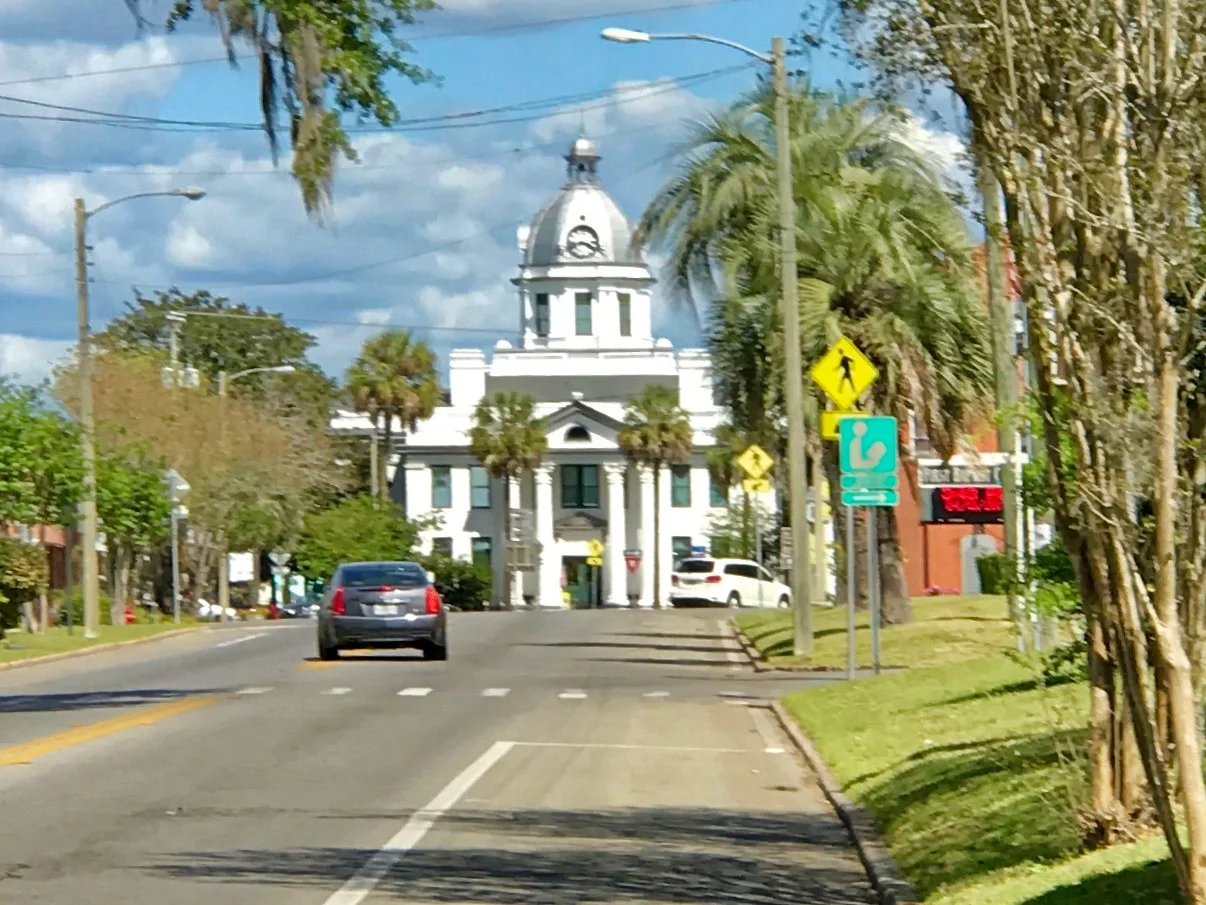
Pic 4, County courthouse in Monticello.
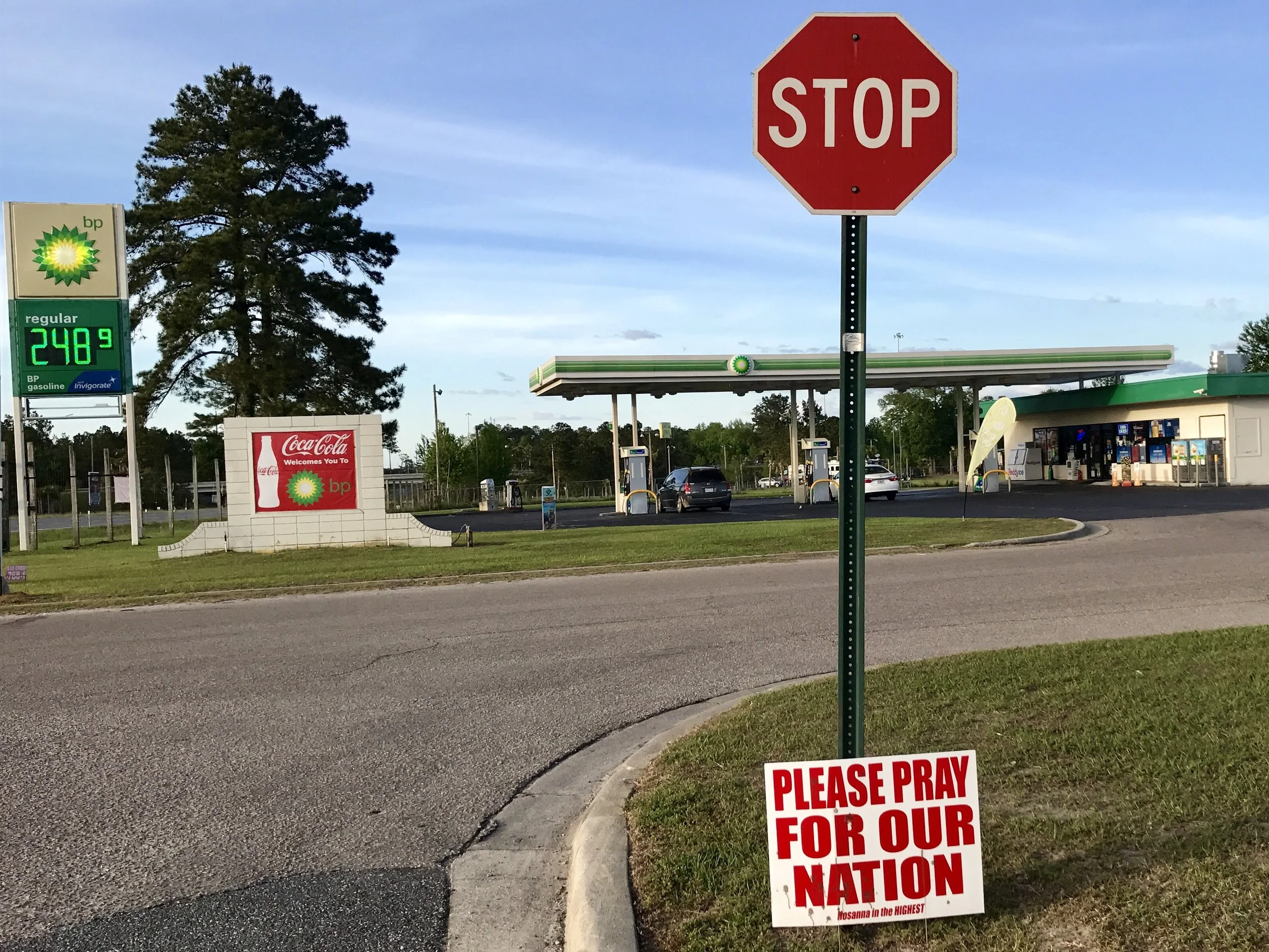
Pic 5, I agree with this sentiment, but probably not for the same reasons. Did you see this? NYTimes: The Evangelical Roots of Our Post-Truth Society
https://www.nytimes.com/2017/04/13/opinion/sunday/the-evangelical-roots-of-our-post-truth-society.html?smprod=nytcore-iphone&smid=nytcore-iphone-share
More to come,
Michael