
Illinois to New York City, Post 3
This short blog post features photos from the Greater Allegheny Passage (GAP) Cycling Trail in the final leg of a cycling trip from Galesburg, IL to New York City.
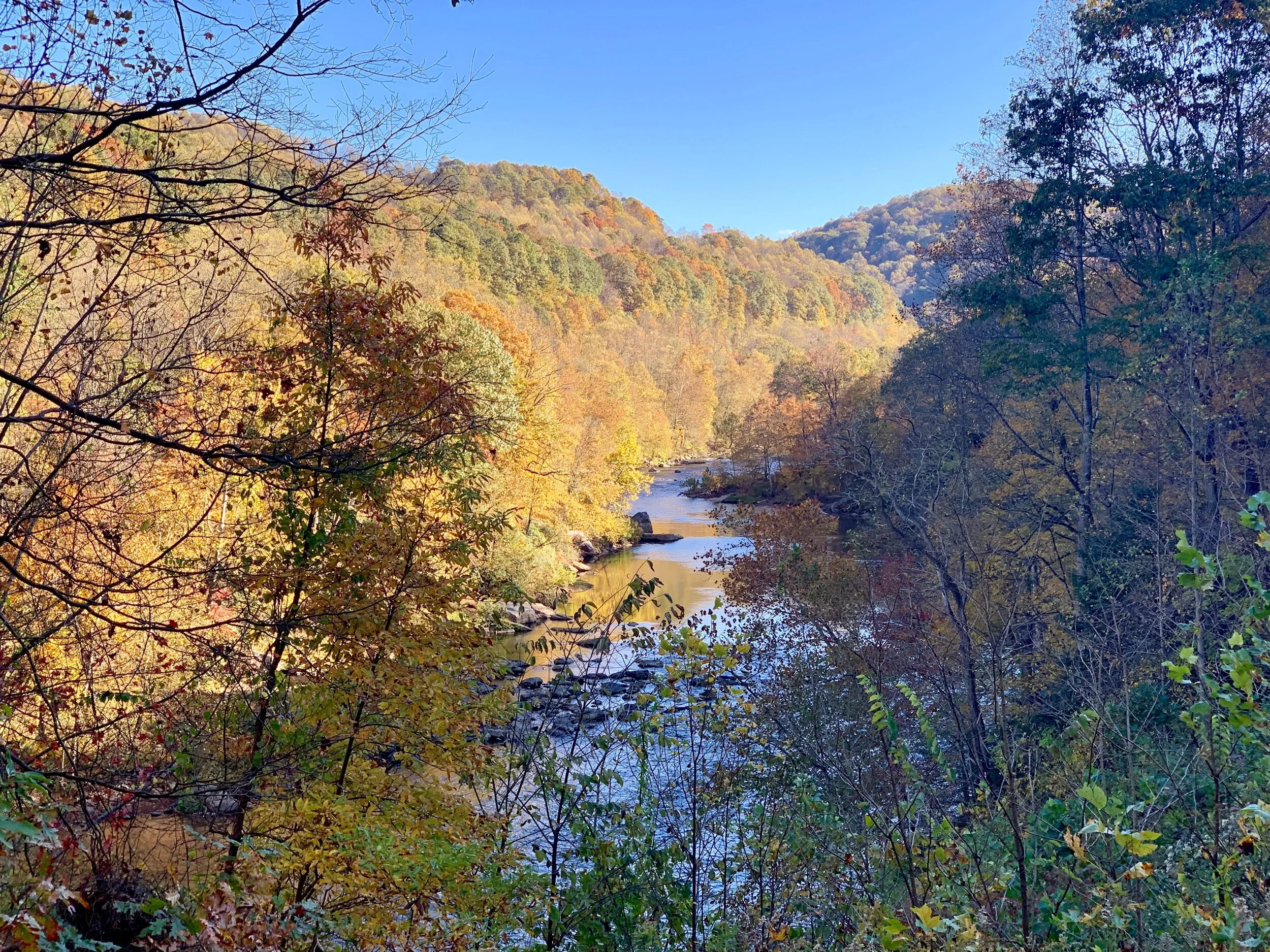
One of many views Youghiogheny River along the GAP Trail. Youghiogheny is a Lenape word meaning "a stream flowing in a contrary direction". The Yough provides the gradual ascent to the eastern Continental Divide known as the Great Allegheny Passage. It drains an area on the west side of the Allegheny Mountains northward into Pennsylvania, providing a small watershed in extreme western Maryland into the tributaries of the Mississippi River. And it's sensationally beautiful, although that wasn’t always the case.
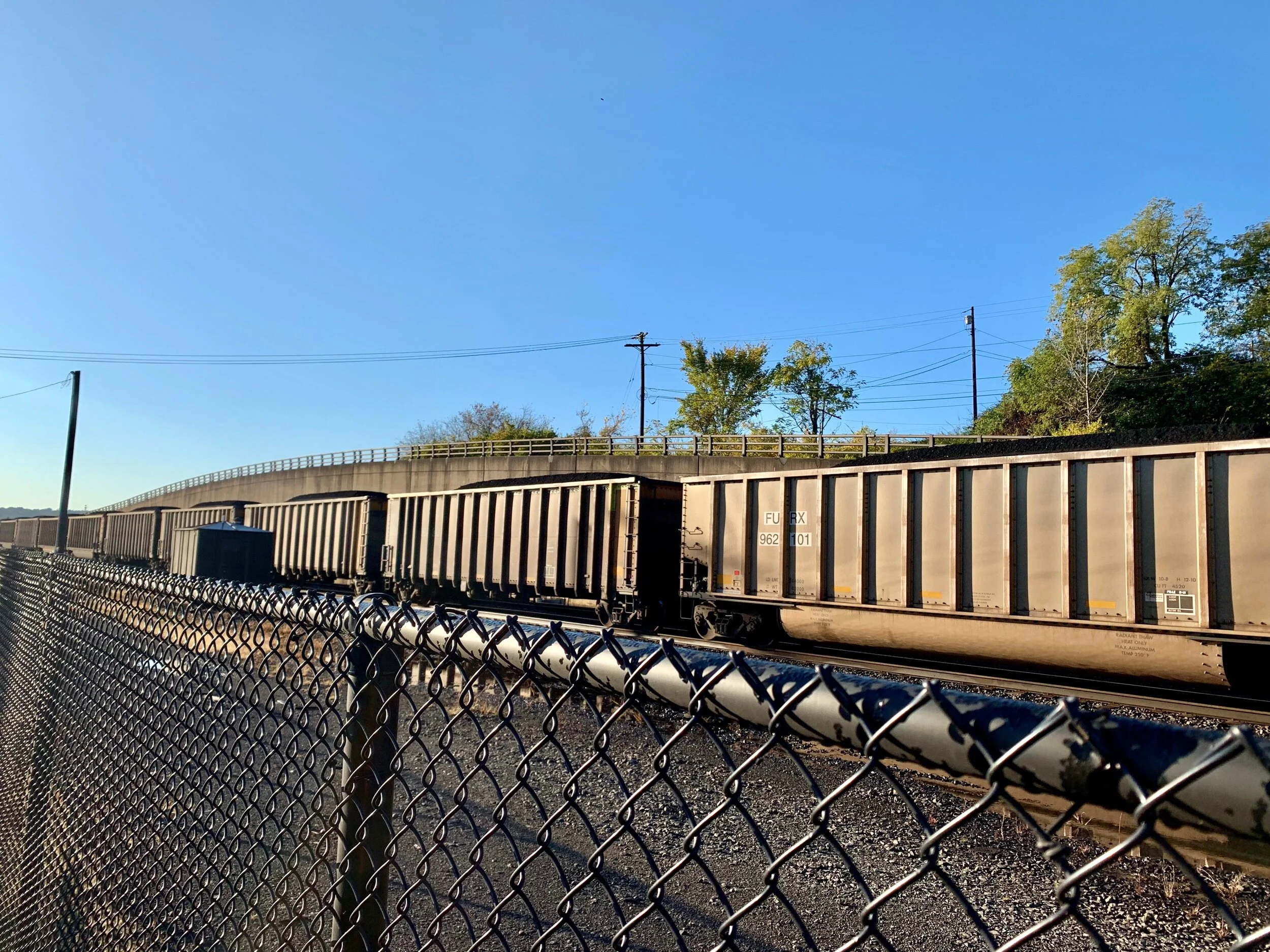
A freight train of coal (we counted 102 cars) passes by on a track that follows the Monongahela to the Ohio River. In 1990, coal-fired power plants accounted for about 52% of total electricity generation nationally. By the end of 2018, coal's share of electricity generating capacity decreased to 27% of total electricity generation.
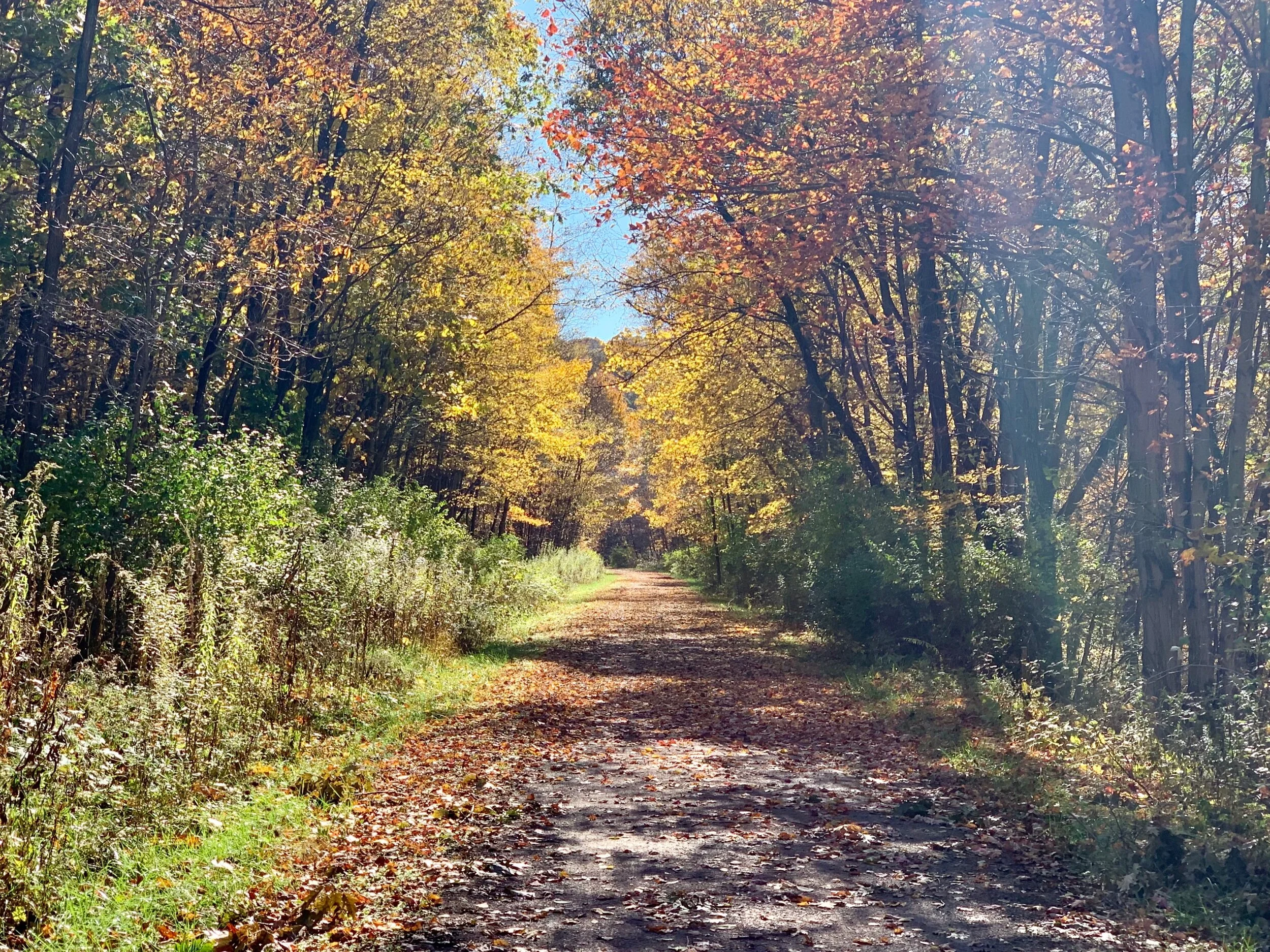
The GAP Trail is always sensational, and fall colors make it superlative.
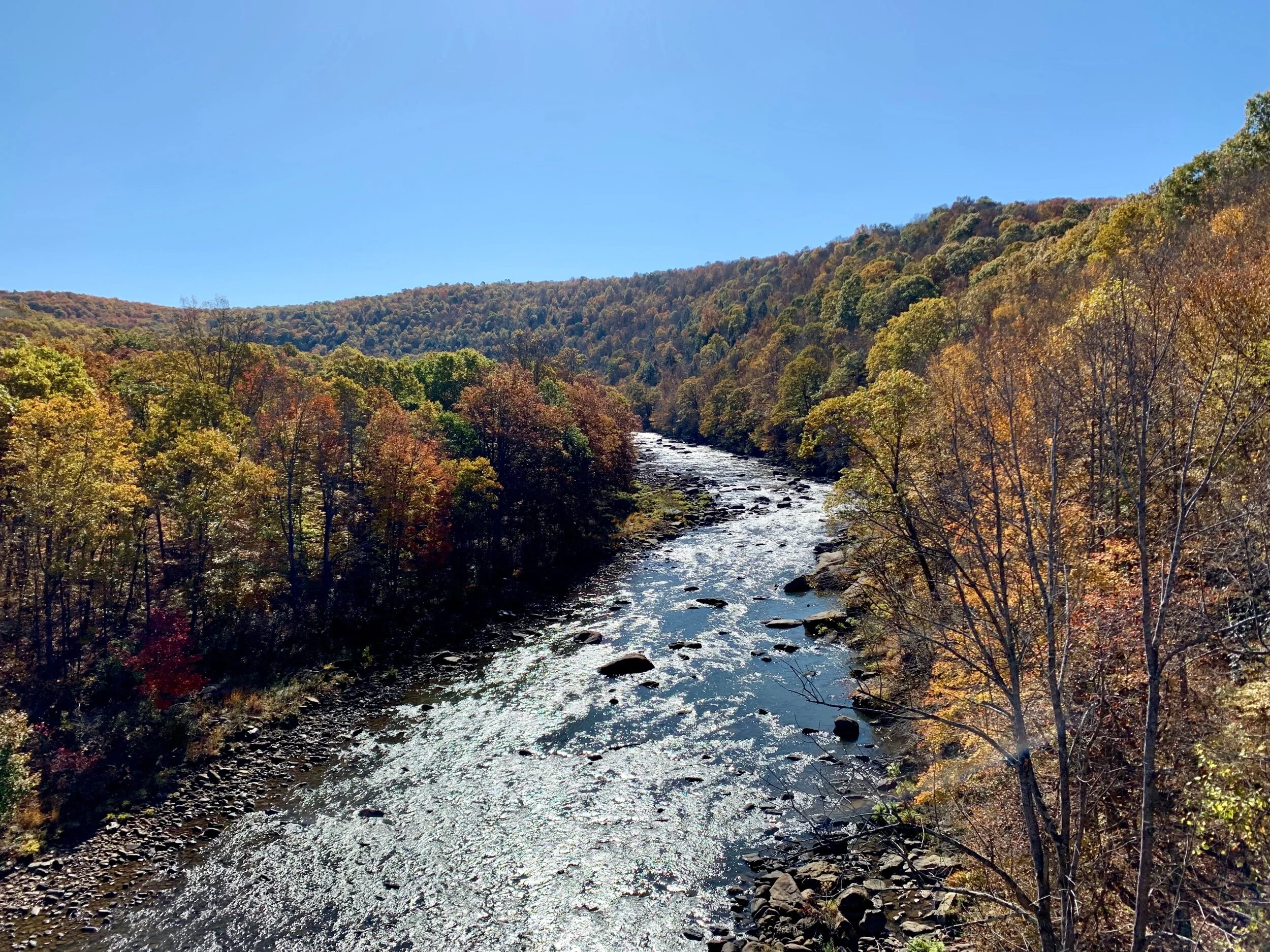
Another of many views Youghiogheny River along the GAP Trail.
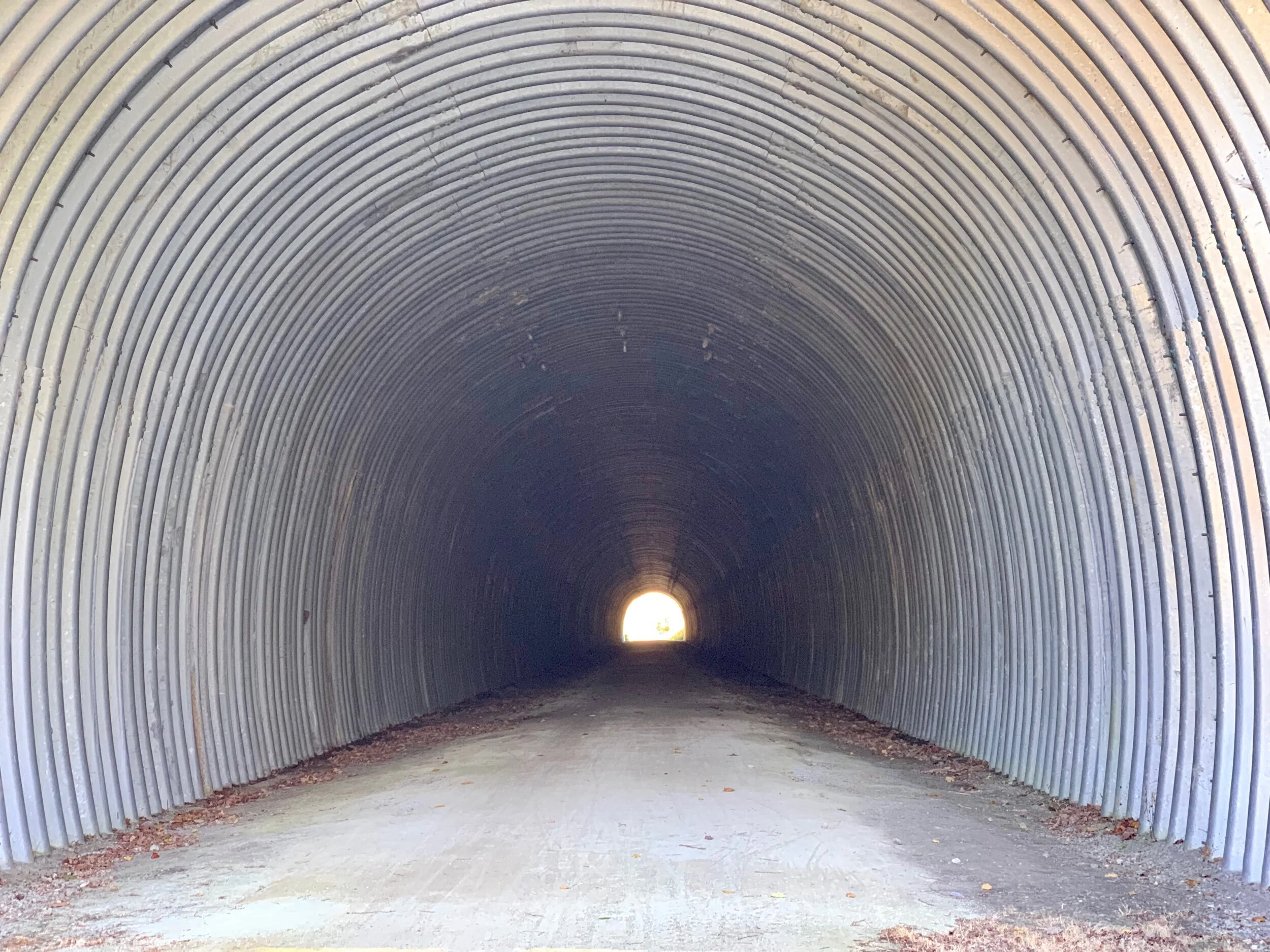
The big savage tunnel is the longest of three on the GAP Trail.
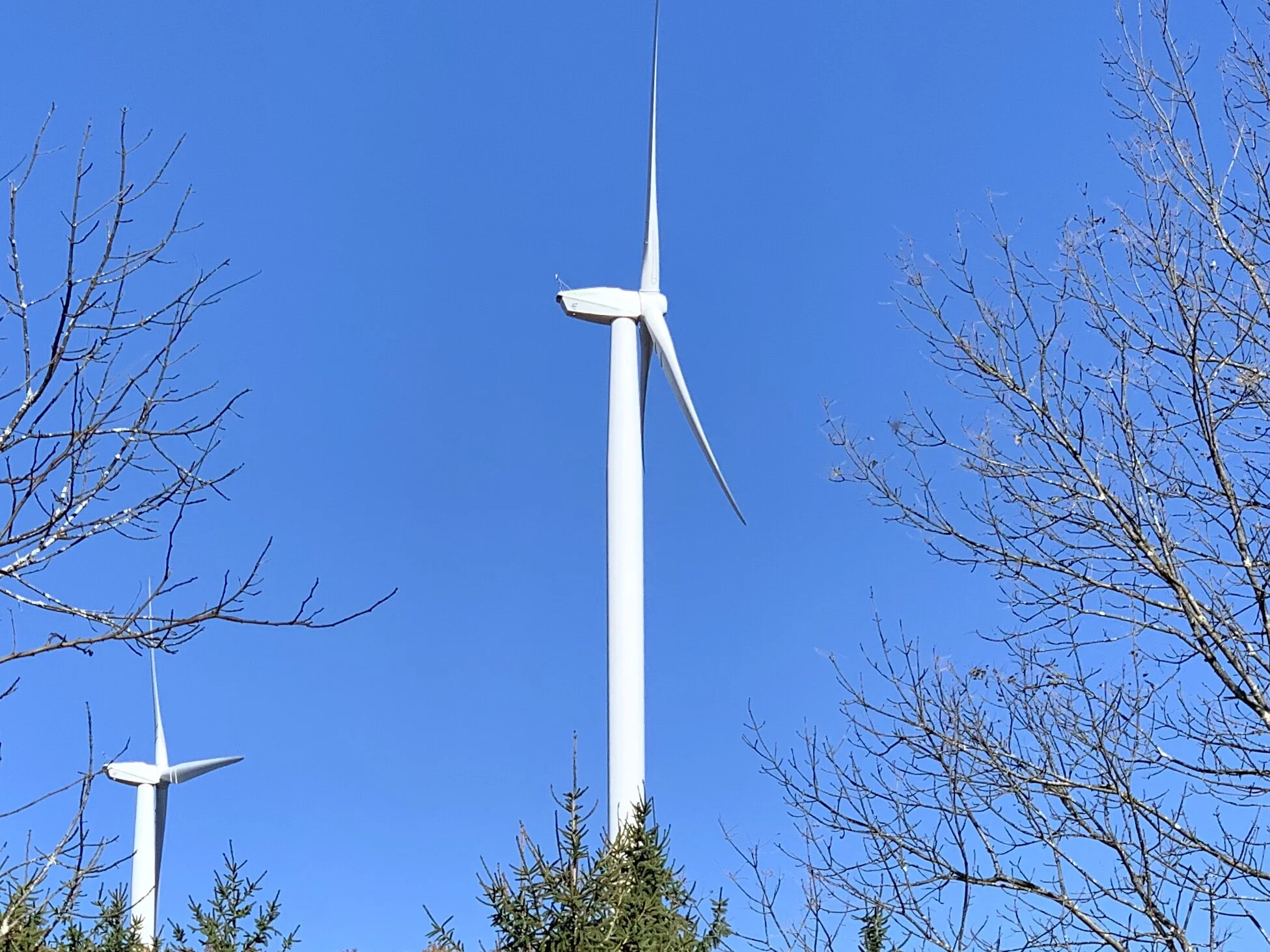
I rode the GAP Trail in 2015, and I don't remember seeing wind turbines before. I assume these have been installed recently. Because they use only a small portion of land and create no pollution and minimal noise, I find them far more attractive than oil wells or fracking pads.
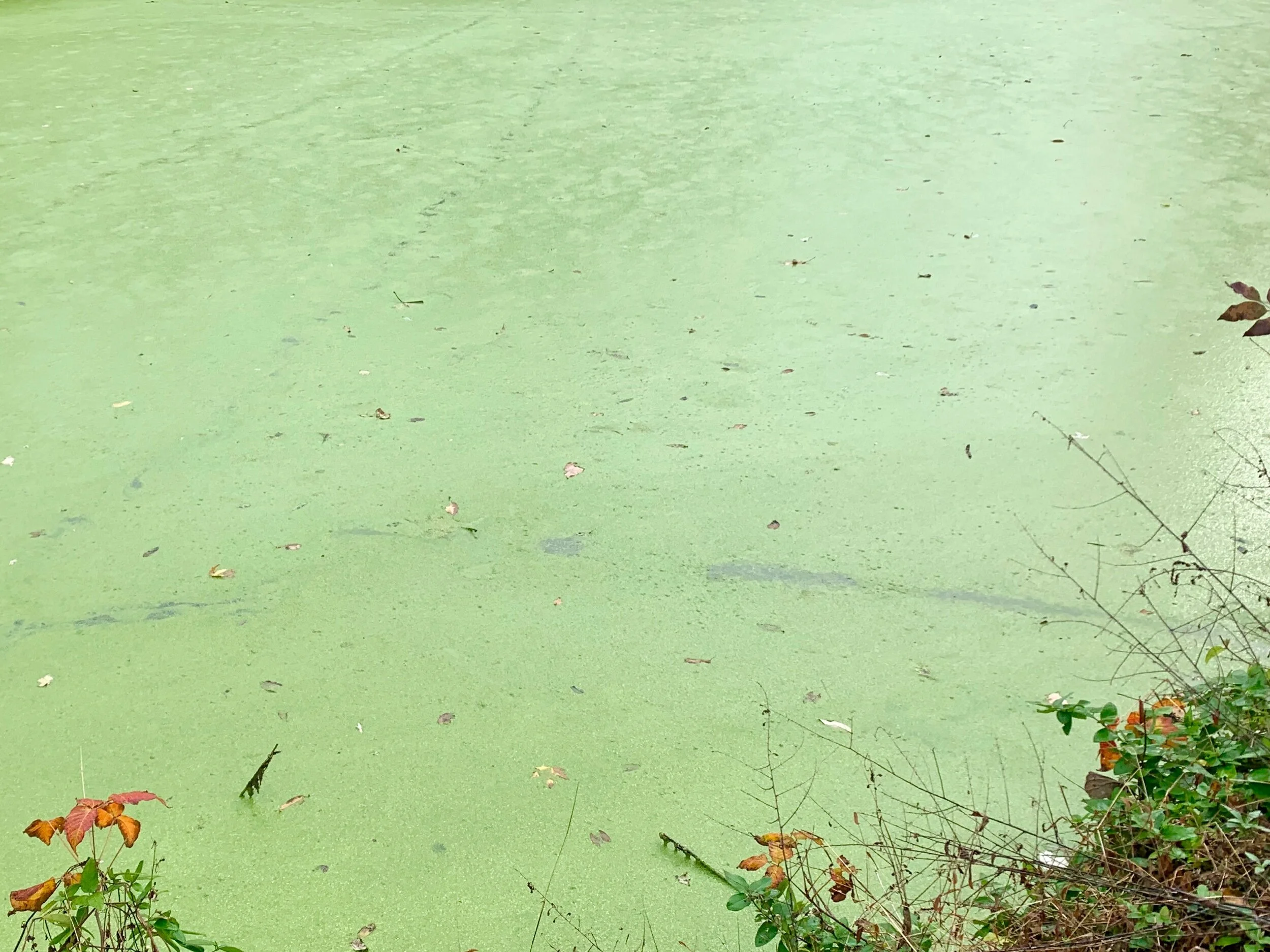
The C&O Canal is full of water with algae that contains organisms that can severely lower oxygen levels in natural waters, killing marine life. Blooms can last from a few days to many months, and some are associated with toxins.
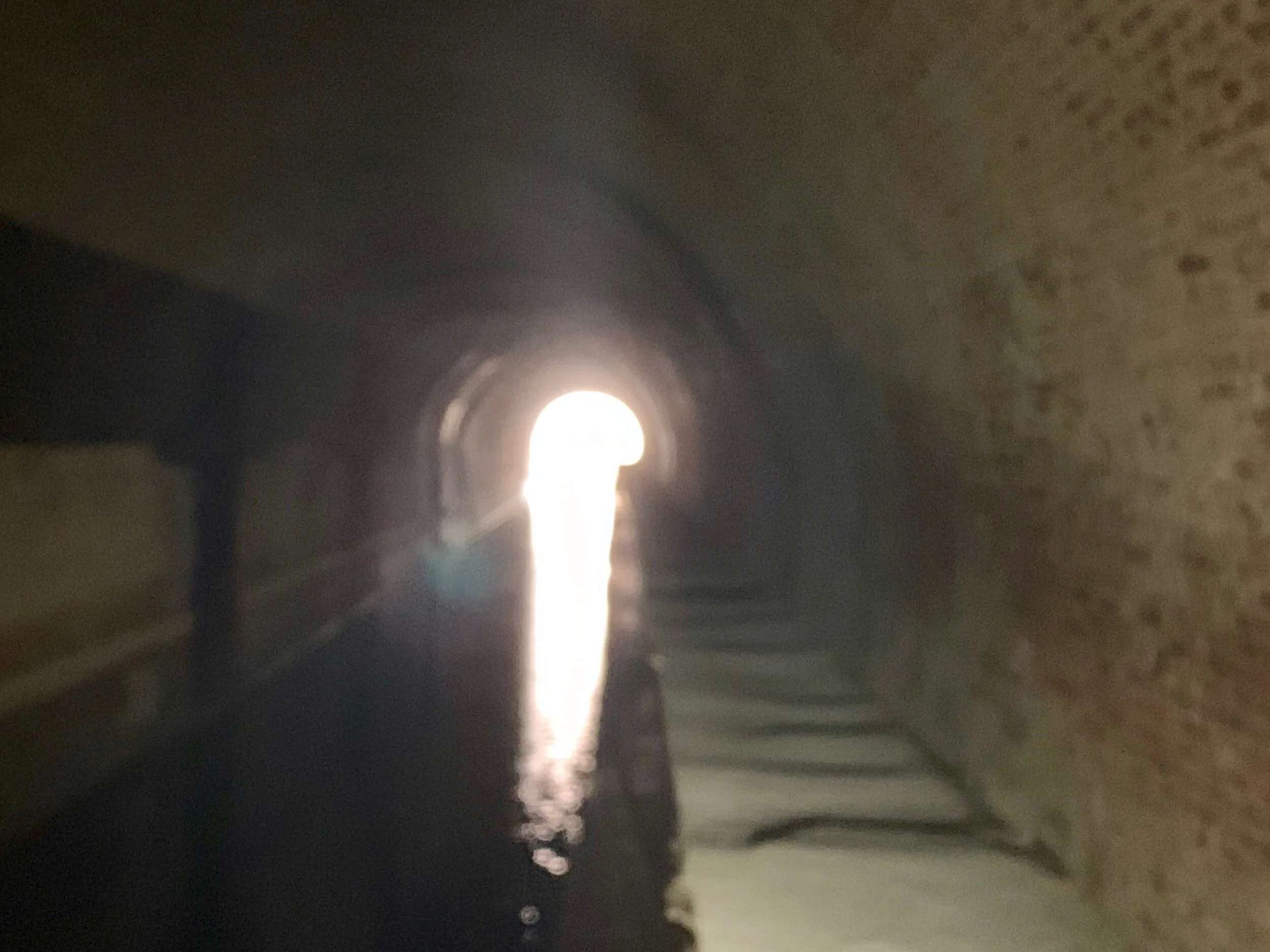
The tunnel at Pawpaw Mountain has a trail on one side and the canal on the other. It’s quite a spooky environment.
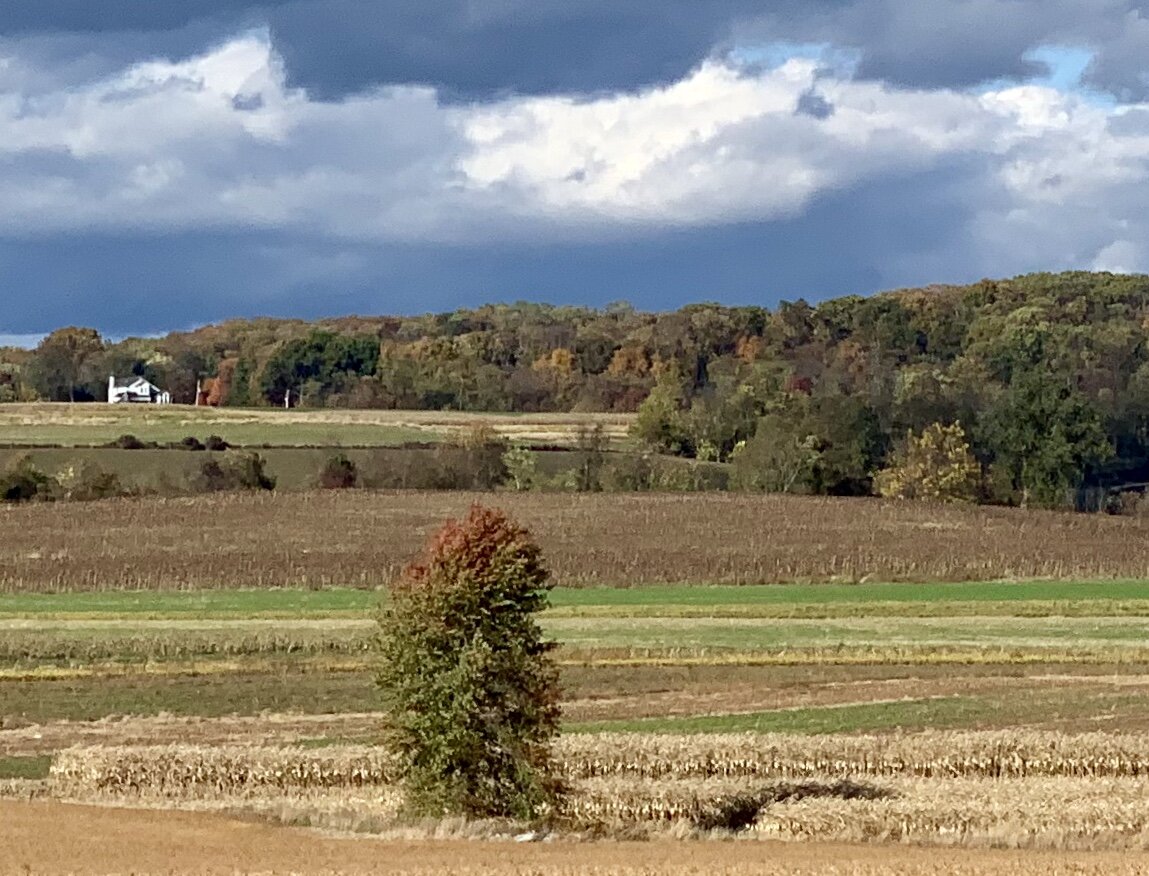
A lonely tree sits in the Conestoga Valley east of Lansing, PA. This valley is populated by Amish farmers, and is a stunning place to cycle.
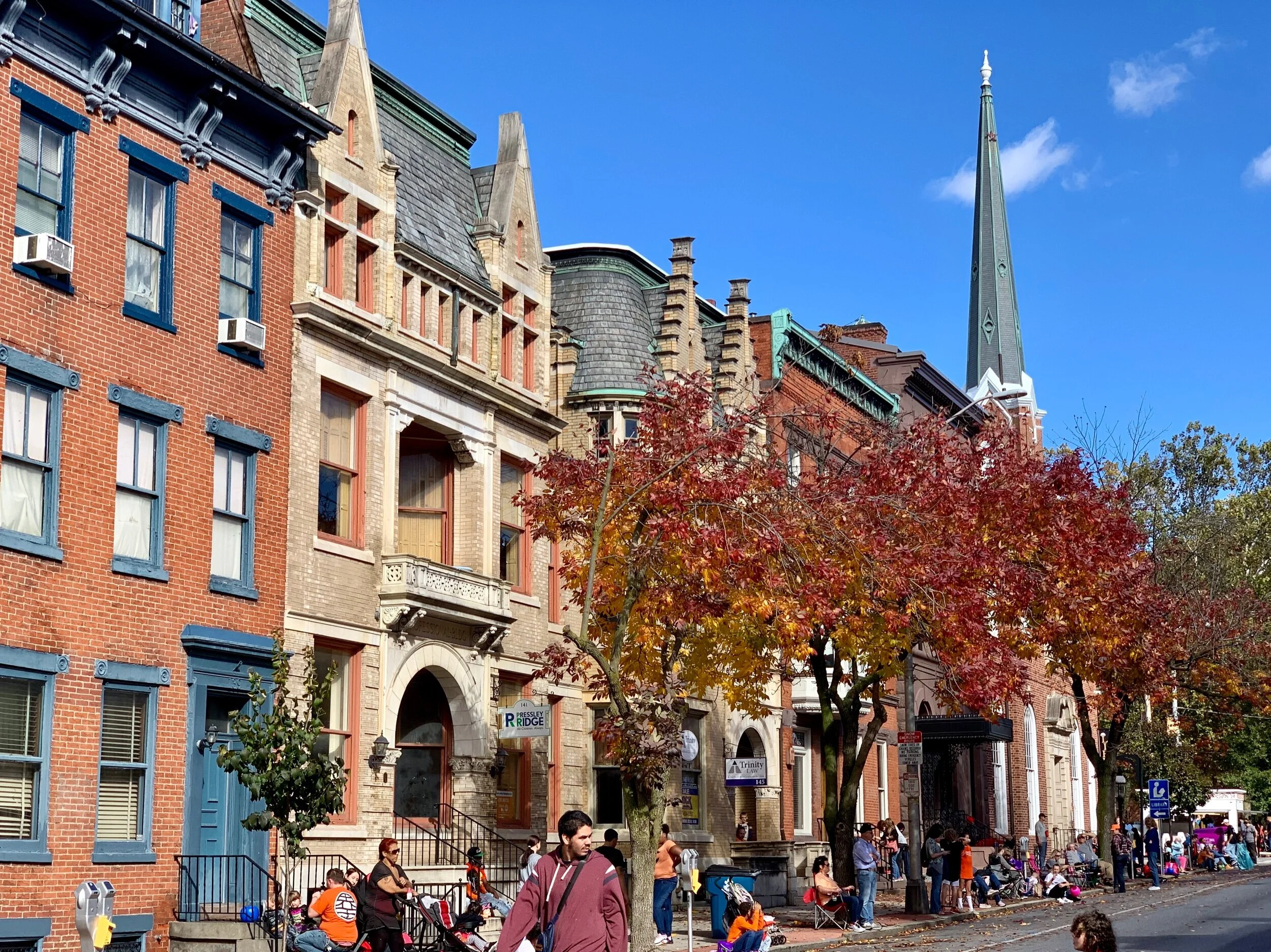
York, PA, has a current population of about 40,000, making it slightly larger than my home town of Galesburg, IL. It was obviously a wealthy and bustling town at one time; the 19th and early 20th century downtown architecture is both sensational and stately.
Illinois to New York City, Post 2
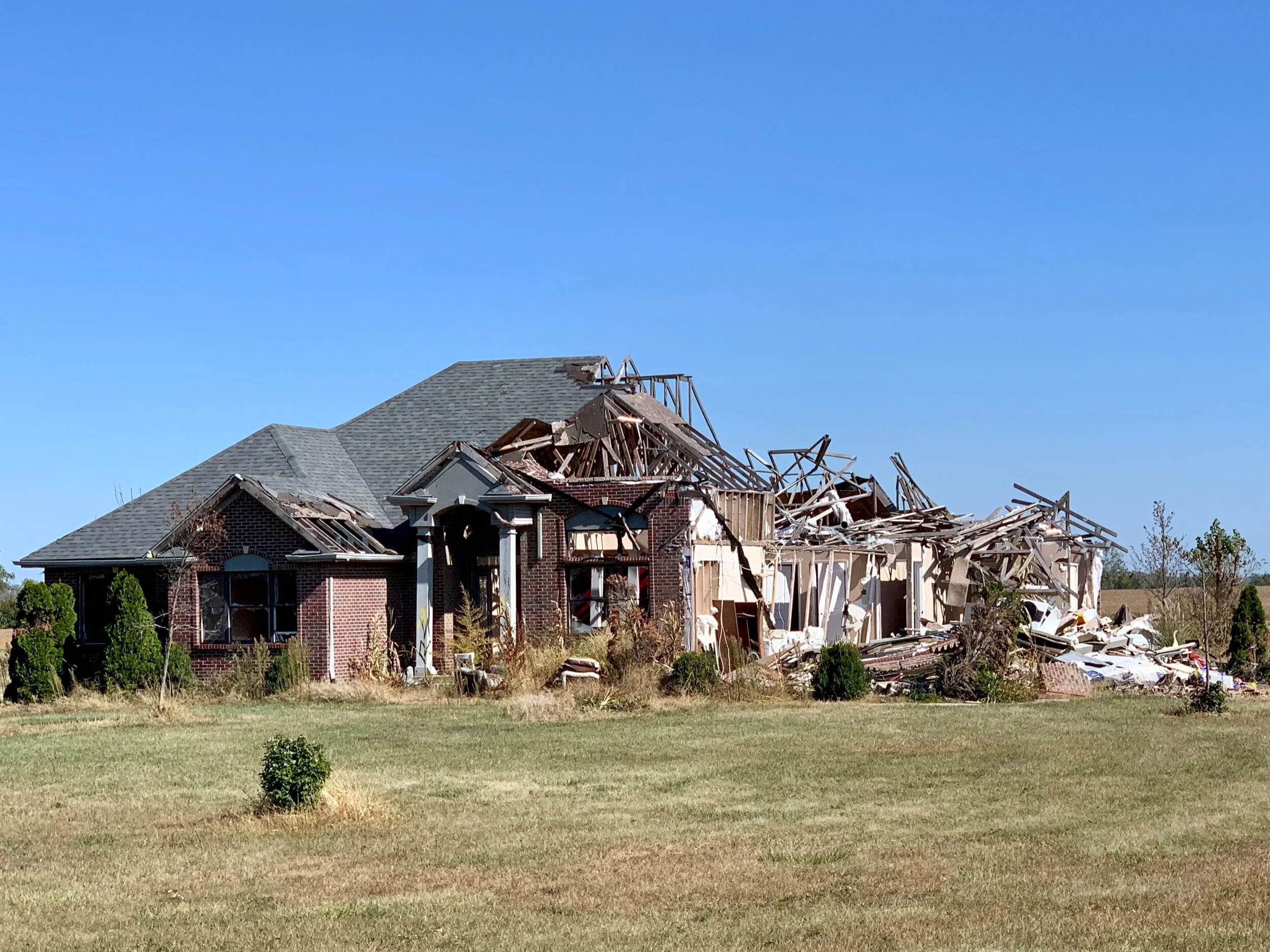
Remains of a home in Brookfield, Ohio, in a populated suburb after a tornado touched down in June of 2019. When we saw it, nearby homes were fine and people were going about their business.
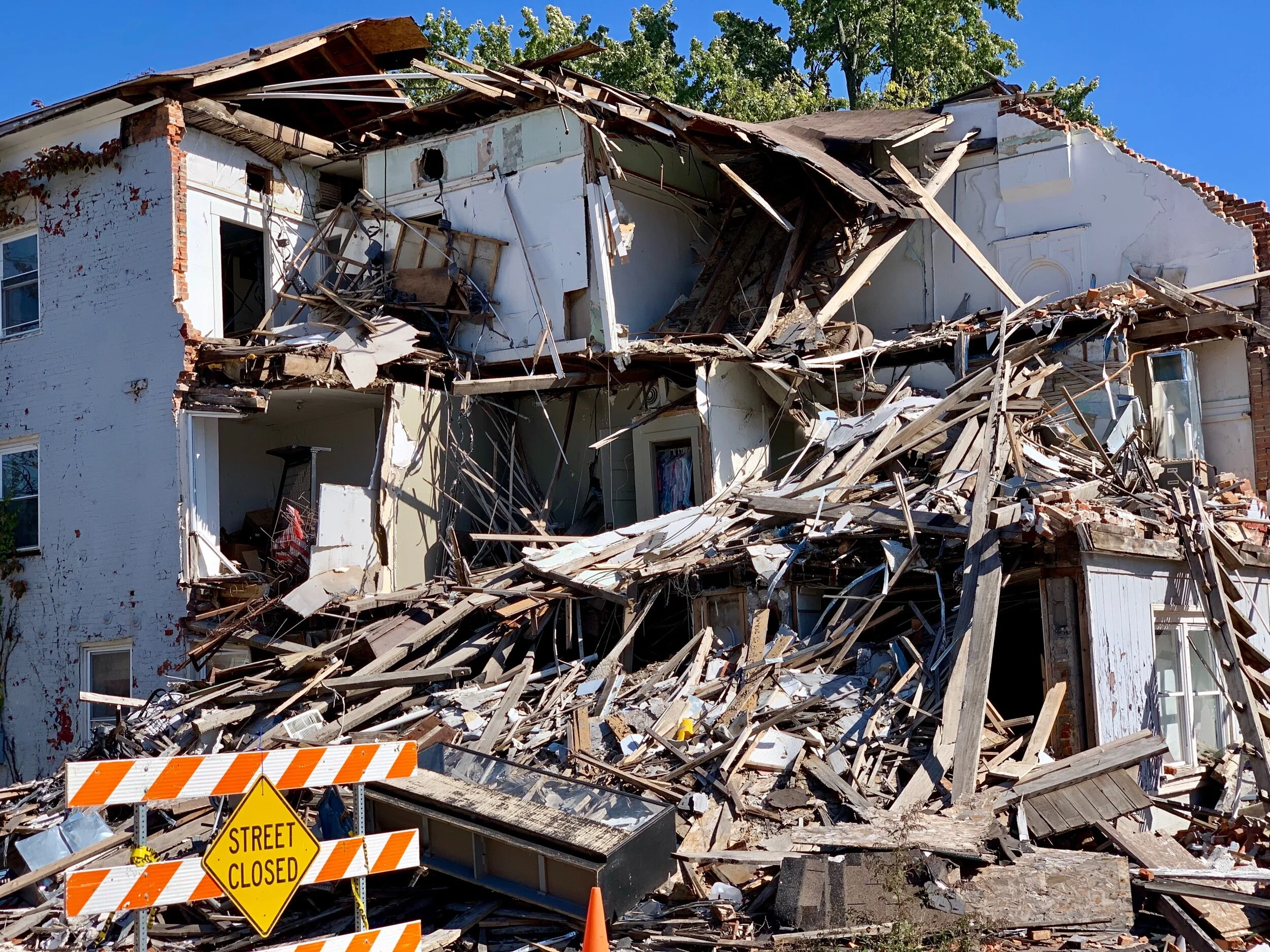
This house is on Main Street in Cambridge City, Indiana. It was intact until July of this year, when it collapsed. A local resident we talked to didn’t know why.
Hello from South Pittsburgh on the historic GAP (Greater Allegheny Passage) Trail. We biked here yesterday from Steubenville, Ohio, an old steel and coal town about 25 miles north of historic Wheeling, West Virginia. The night before we were near Morristown, Ohio, in the rolling western foothills of the Alleghenys.
Both yesterday and today we encountered numerous hills, a few with grades as steep as 15 degrees. But what goes up also comes down, so we enjoyed some great downhill runs. Although it’s grey and rainy today, the past few days have been sunny and warm, and the hill country has been spectacular.
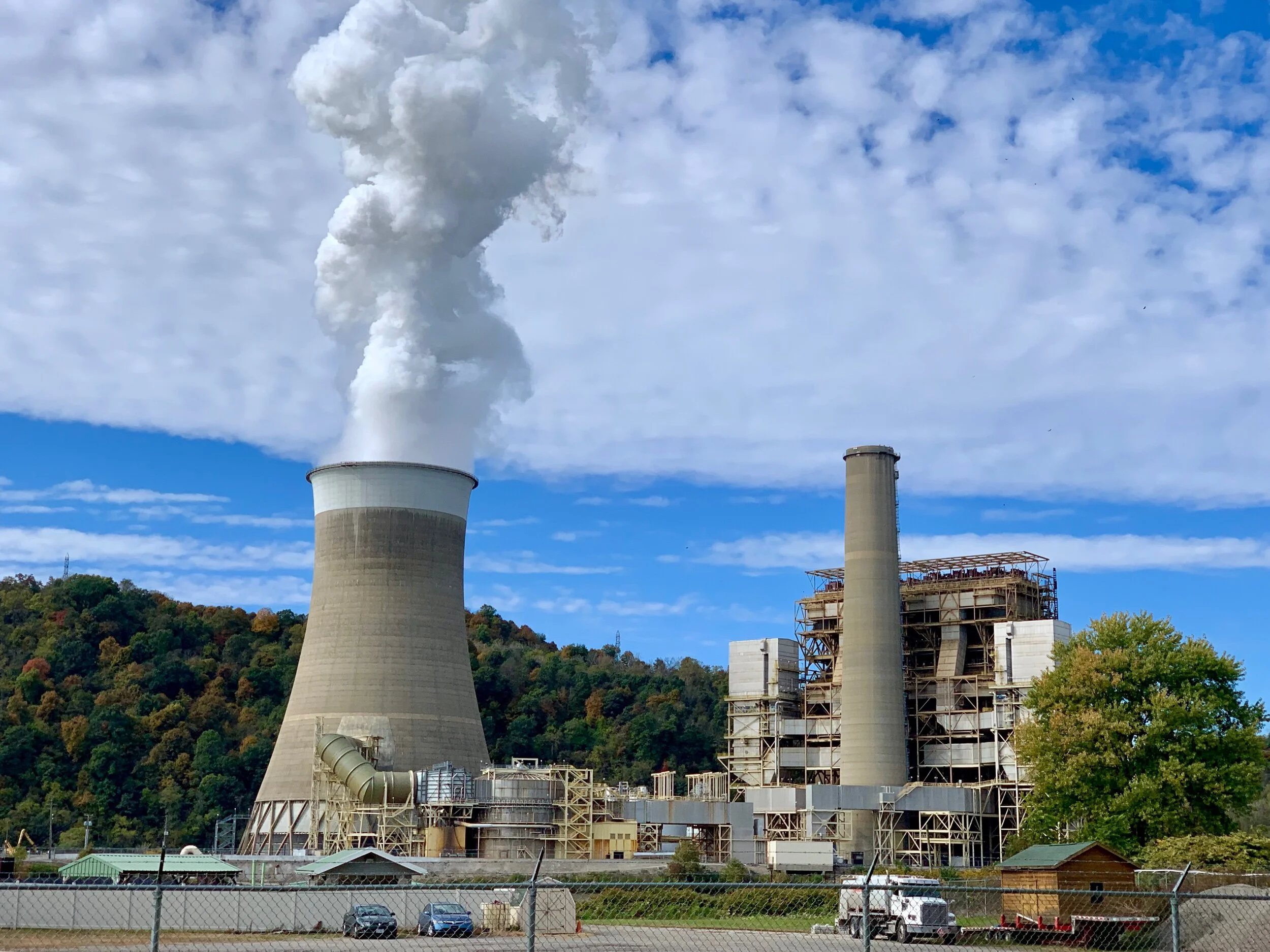
The Cardinal Operating Company, a plant north of Wheeling where coal is made into coke for steel manufacturing. In the 1990’s there were over 100,000 jobs in the steel industry in this valley; now there are about 10,000 jobs.
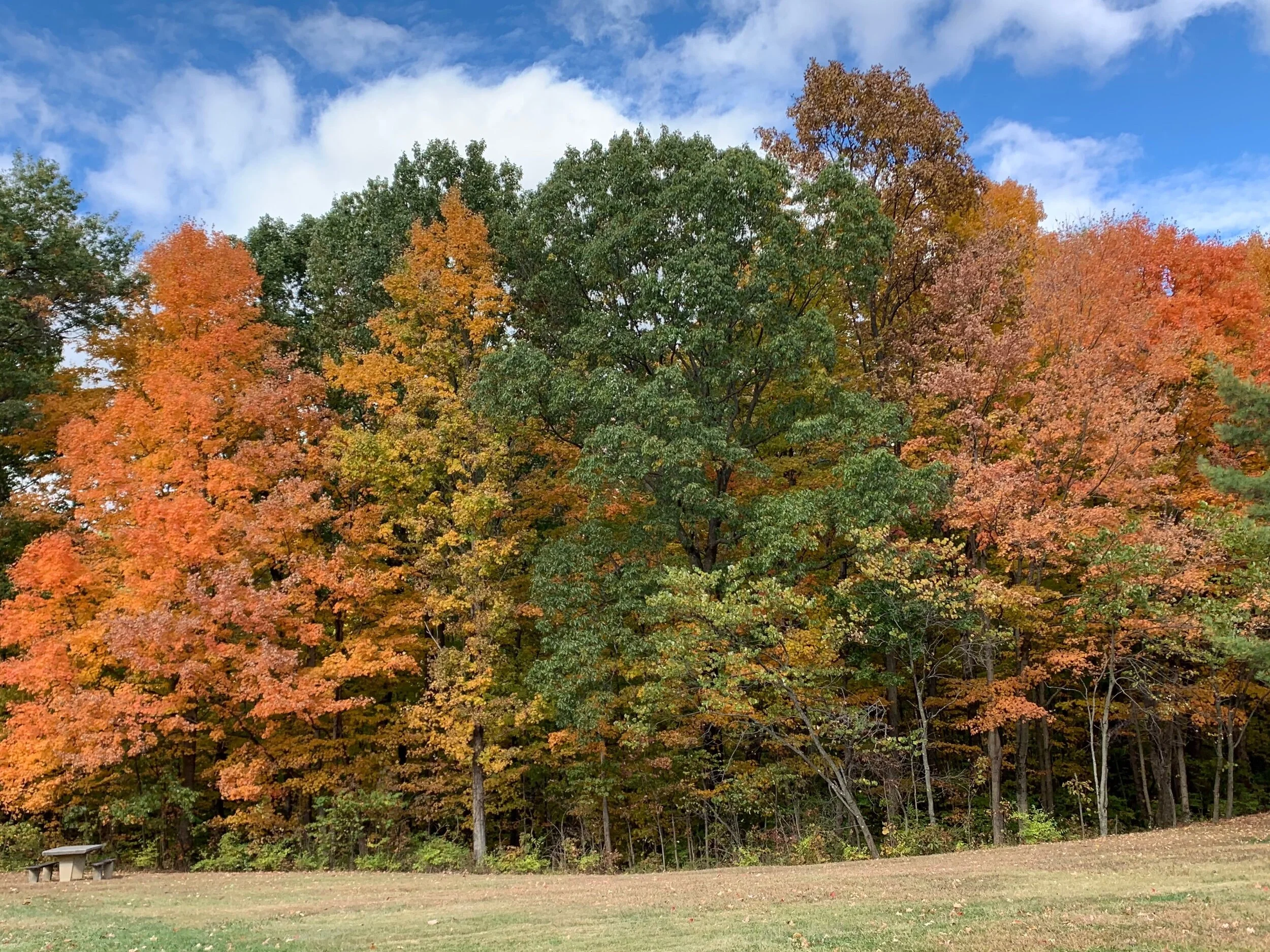
Fall colors on the way.
After some reflection, Jenny and I decided to take the historic GAP bike trail from Pittsburgh, PA to Cumberland, MD, and then a portion of the C&O (Chesapeake and Ohio) Trail before heading up to Lancaster, PA, on our way back to New York City. Today we are resting and waiting out a rainstorm near the western end of the trail. We chose this alternate route instead of the northern ACA Route to NYC because it is less climbing (by about 20,000 cumulative feet)! I’ve done this route before, and remember it very fondly, so I'm looking forward to sharing it with Jenny. We have currently traveled over 800 miles total, and tomorrow we will start the 150 miles that make up the GAP trail.
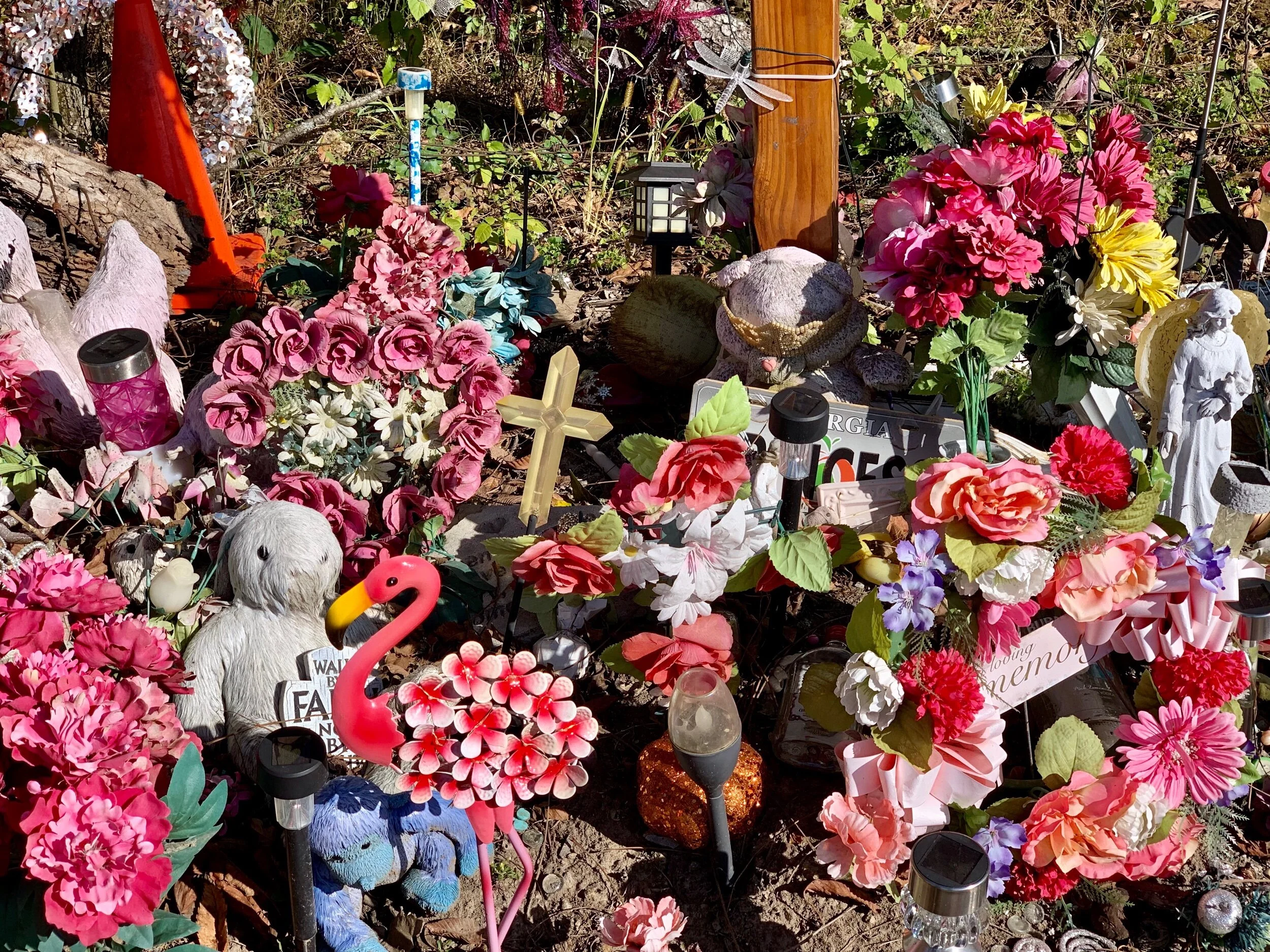
This memorial is for 16-year -old Olivia Starrwallace, who ran off the road and into a tree in eastern Indiana while driving near the National High School (which she attended).
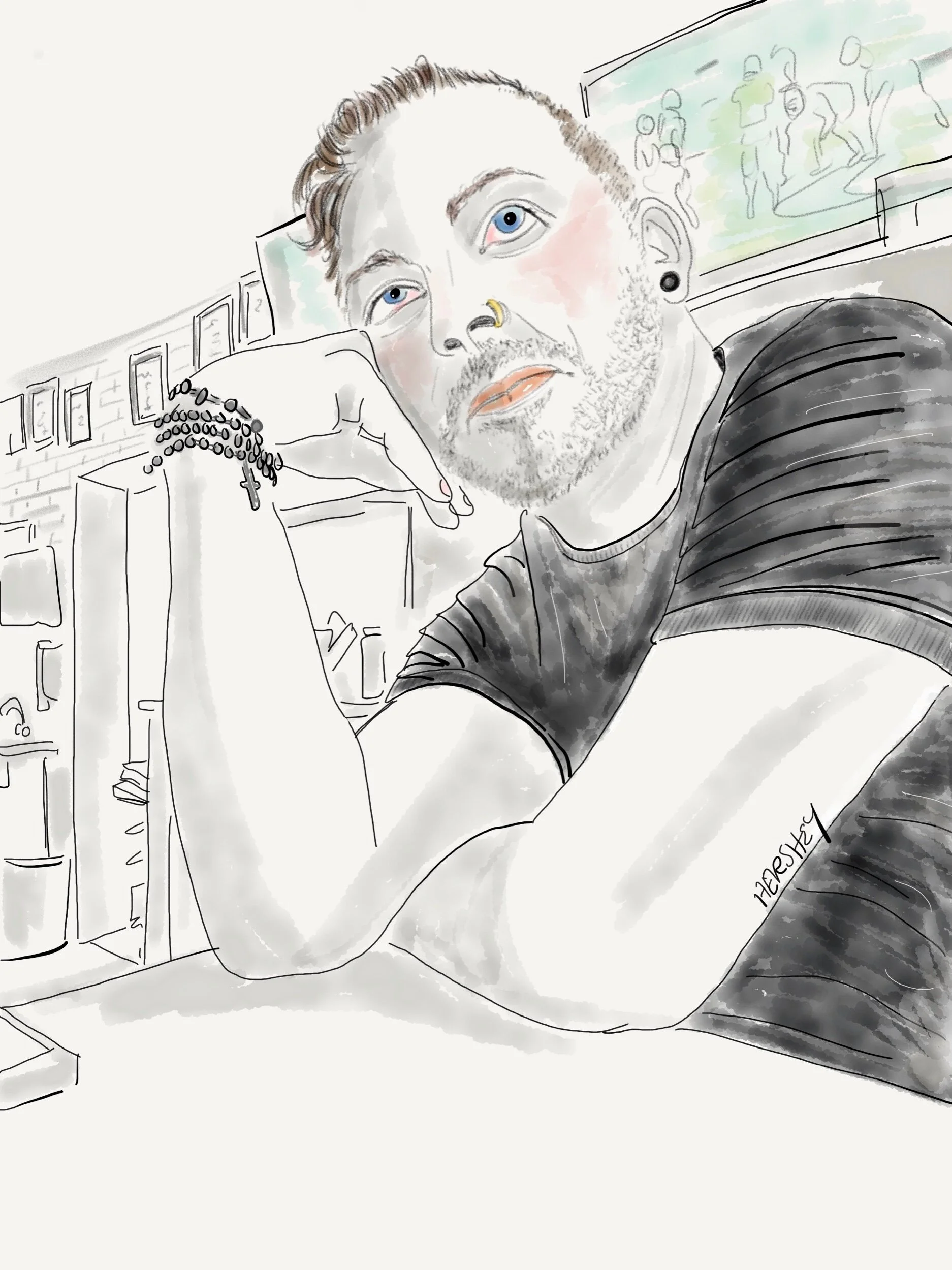
Jenny’s drawing of our bartender Dennis at the Pike 40 Bar and Grill in Morristown , Ohio. You can see more of Jennifer Hershey's work on Instagram at “deeofo”.
While such a distance is not new for me, I must compliment my biking partner Jenny. She’s never biked this far, and she has done so with great joy and resolve. She’s tackled intense hills, aggressive and threatening traffic, poor road surfaces, lousy and non-existent shoulders, cold and rain - all without losing her cool or diminishing her spirit.
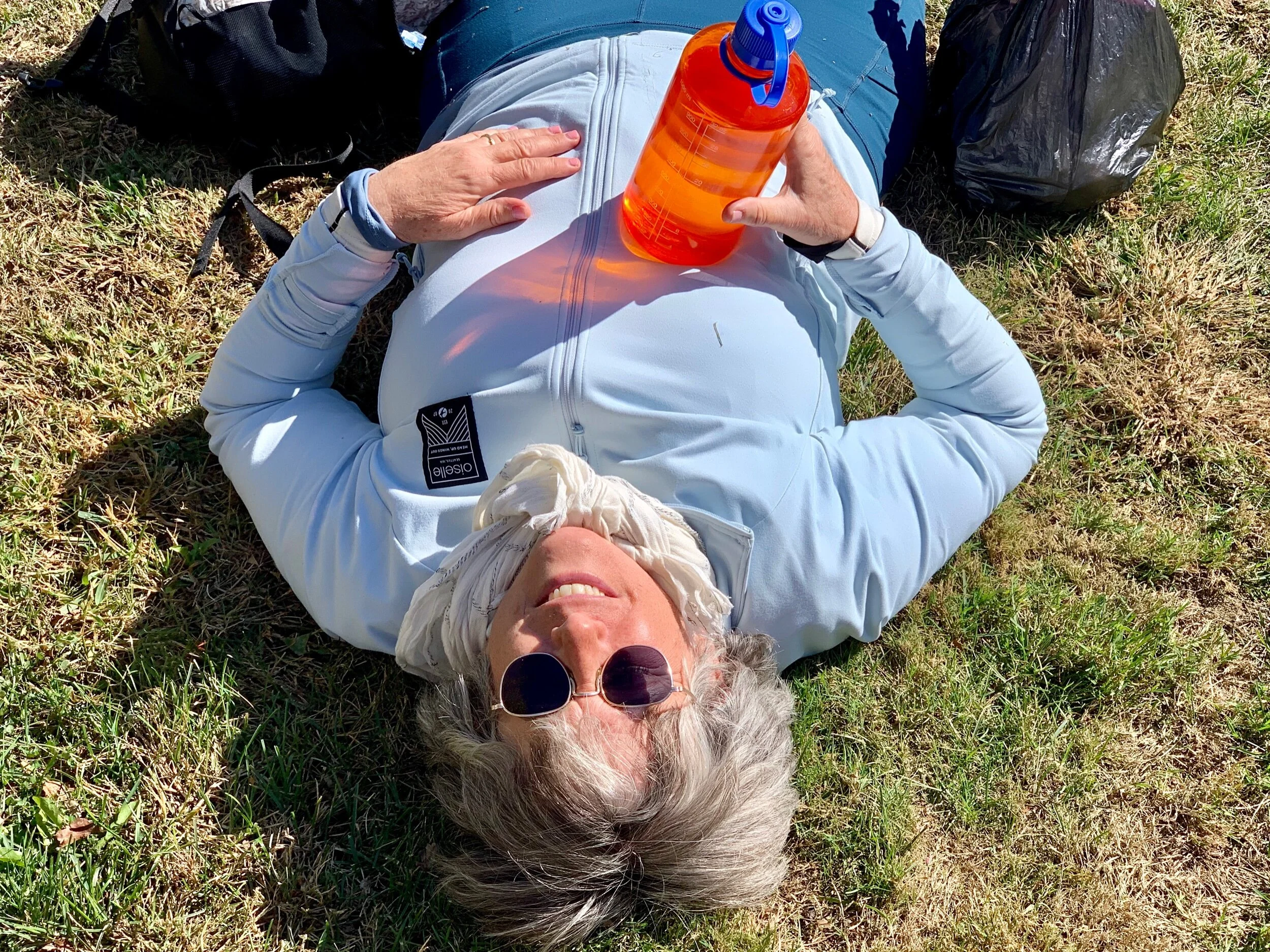
A tired cyclist rests after lunch.
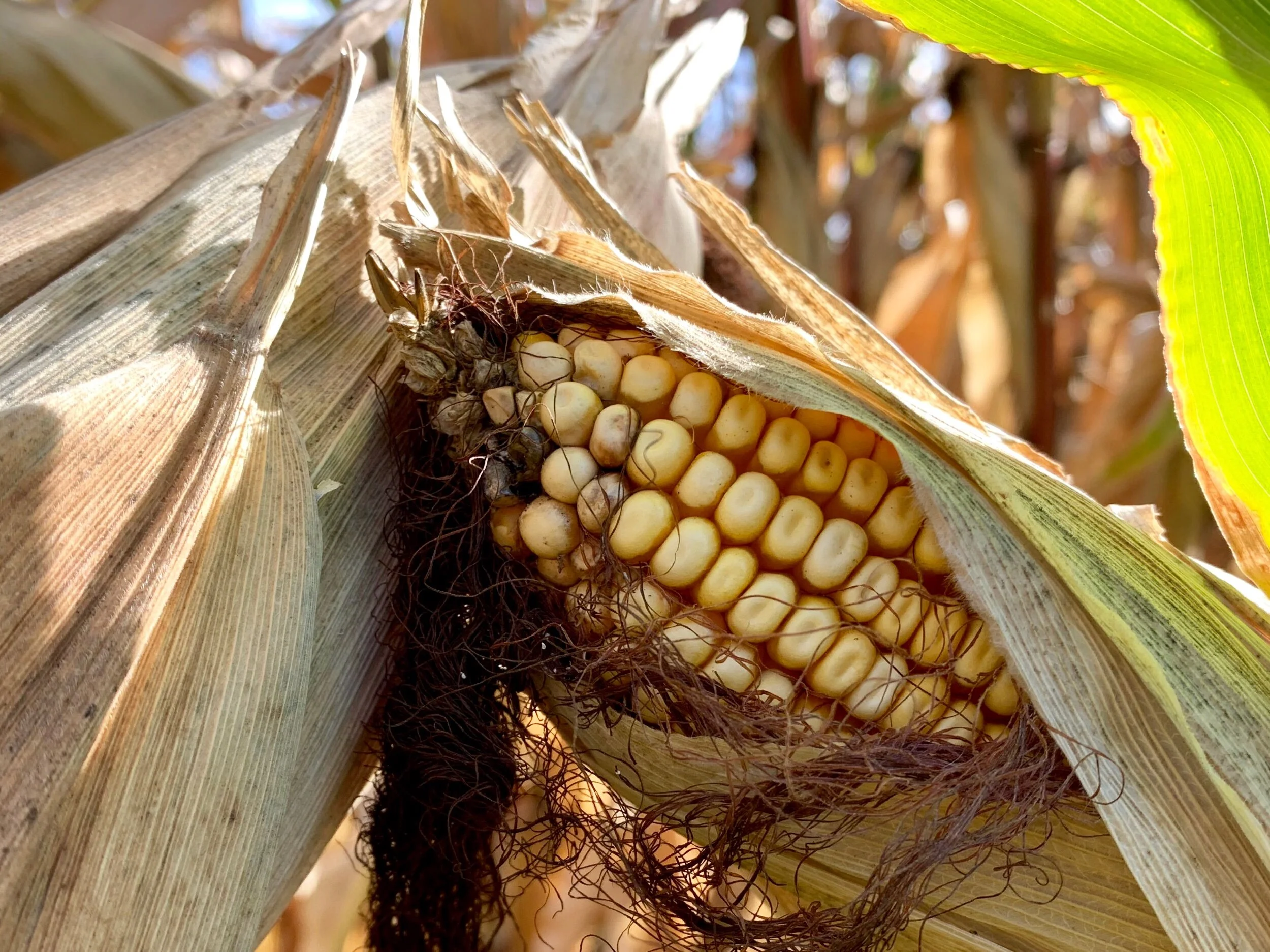
Locals tell us we’re in Trump country, and we’ve definitely seen a few 2020 campaign signs. The TV is on in our motel. It’s hard to imagine the nation isn’t focused entirely on the impeachment investigation and the Turkish invasion of Syria. But frankly, those issues are not the topic of conversation in most of the places we’ve visited. The Americans we are encountering seem more focused on the basic logistics of making their daily lives work.
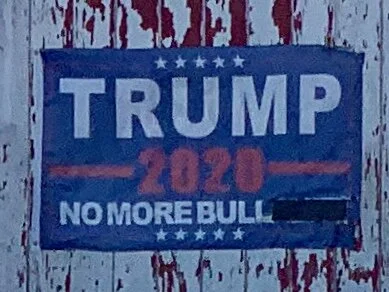
Earlier today I found myself wondering what the connection to the outside world was like in small midwestern communities during WWII? Was our nation so focused on winning the war and supporting our troops that you could feel history being made even in the smallest of towns? Did the overwhelming majority of citizens feel like their daily actions were contributing to the creation of a better world?
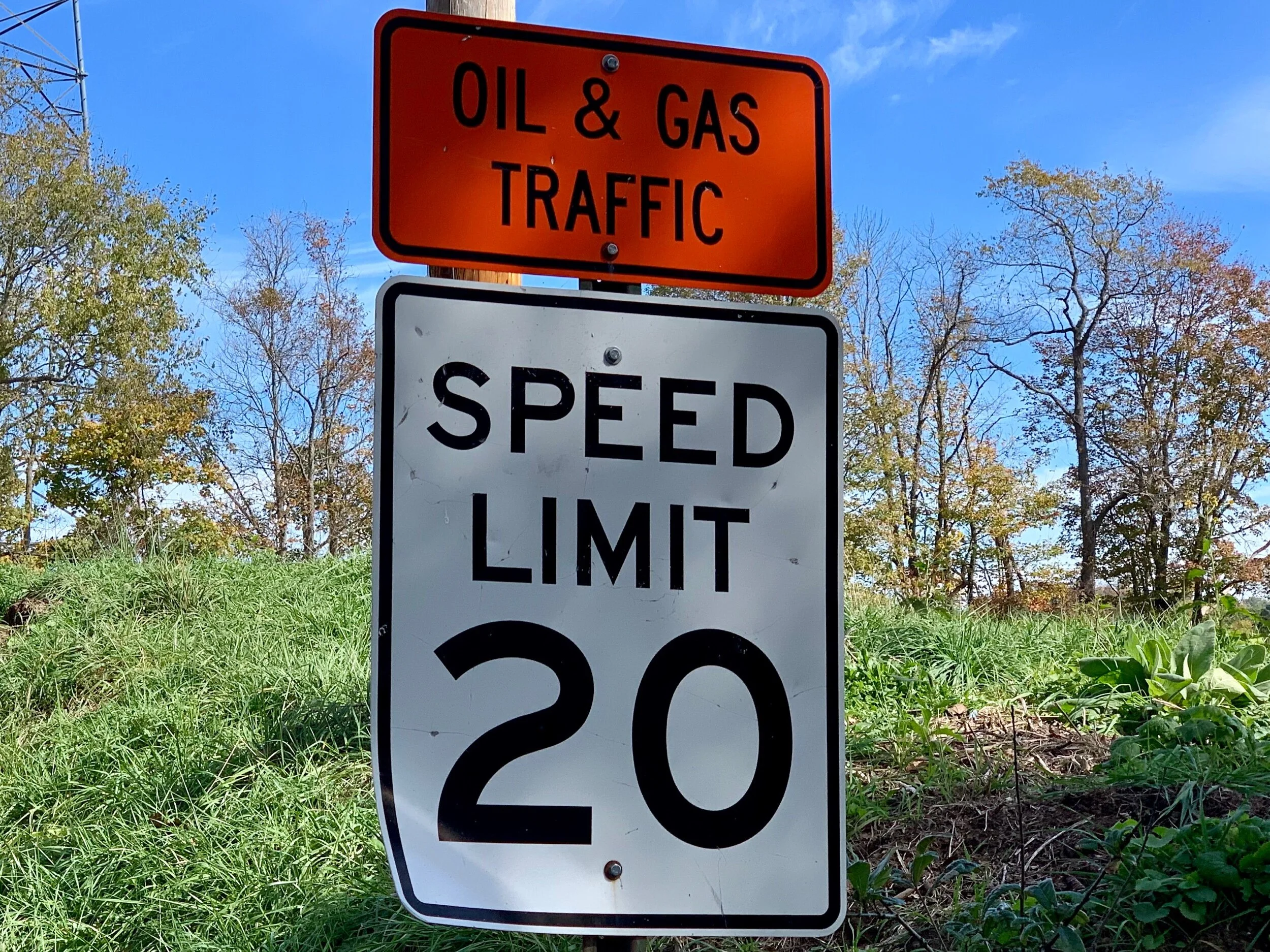
Some new driving jobs have been created in the Ohio River Valley in the last decade as fracking has expanded. That said, isn’t all traffic (except for electric vehicles powered by renewables) essentially “oil and gas traffic”?
Or did life in rural America then seem more like now, when the unrelenting noise of the outside world seems so far away? Perhaps those who had a close relative involved in the war effort felt involved, much like farm families further to the west might feel more concerned about climate change now, after experiencing several very tough years of extreme weather. Yet, I don’t know how to reconcile the sense of urgent hopefulness I felt last month in New York City as I participated in the Youth Climate March, attended numerous panels at the ever busier annual Climate Week, and followed the extraordinary appearances of Greta Thunberg at the United Nations Climate Summit. It all seemed so significant, and a signal of shifting perspectives.
But in the Ohio River Valley, there’s still plenty of pain (and anger) over decades of economic losses. Worrying about climate change almost seems like a luxury… until one thinks soberingly about an even harsher future. So, as always, lets keep our resolve to change our trajectory. The future is waiting to be invented.
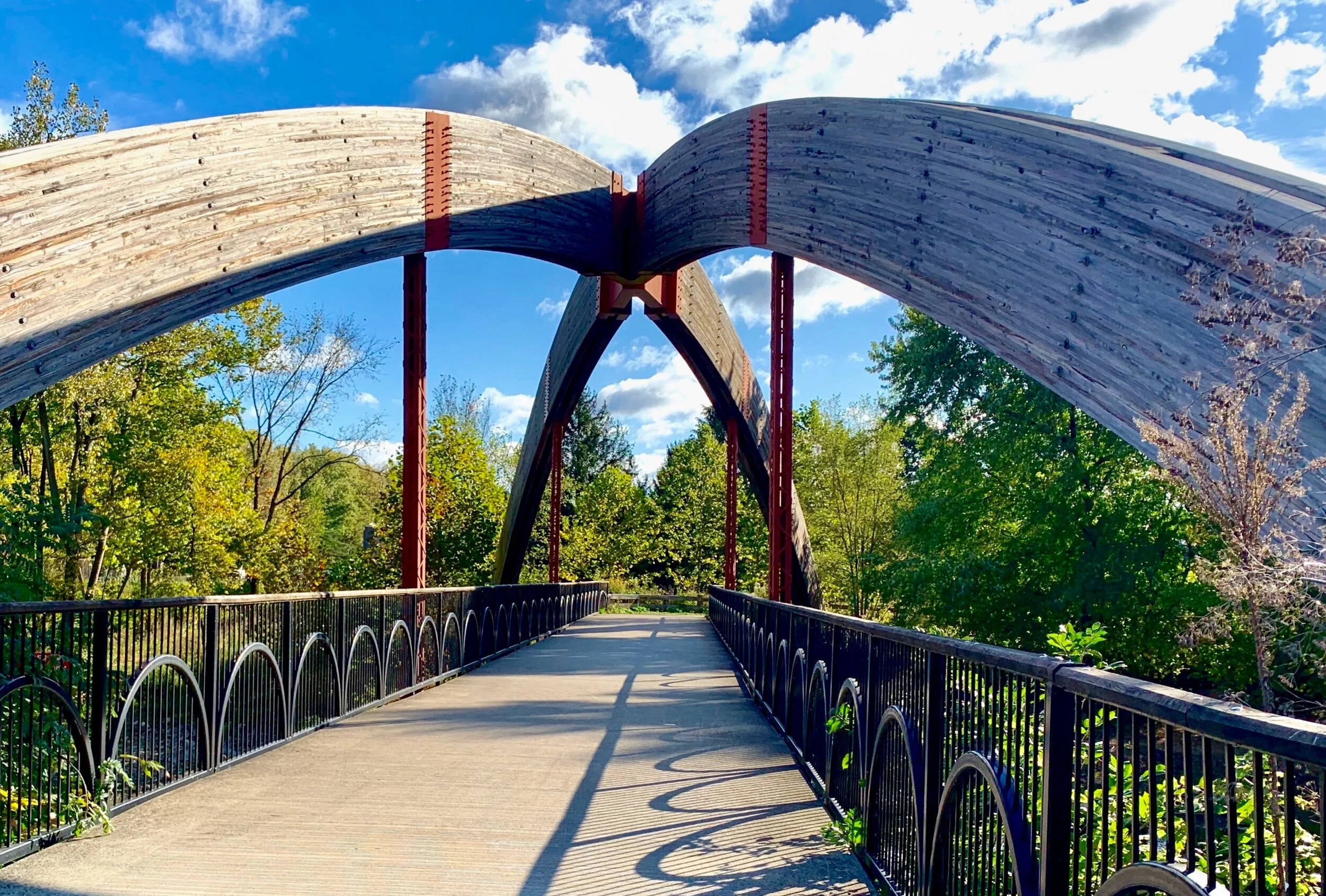
A bridge to another bike path near OSU in Columbus, Ohio.
Speaking of a bright side, we have encountered many long, beautiful and very well maintained cycling trails. About 20 miles west of Dayton, Ohio, we picked up a rural “Rail to Trail” cycling trail, and with a few exceptions of unfinished sections, followed the trail until we left Columbus, about 90 miles later.
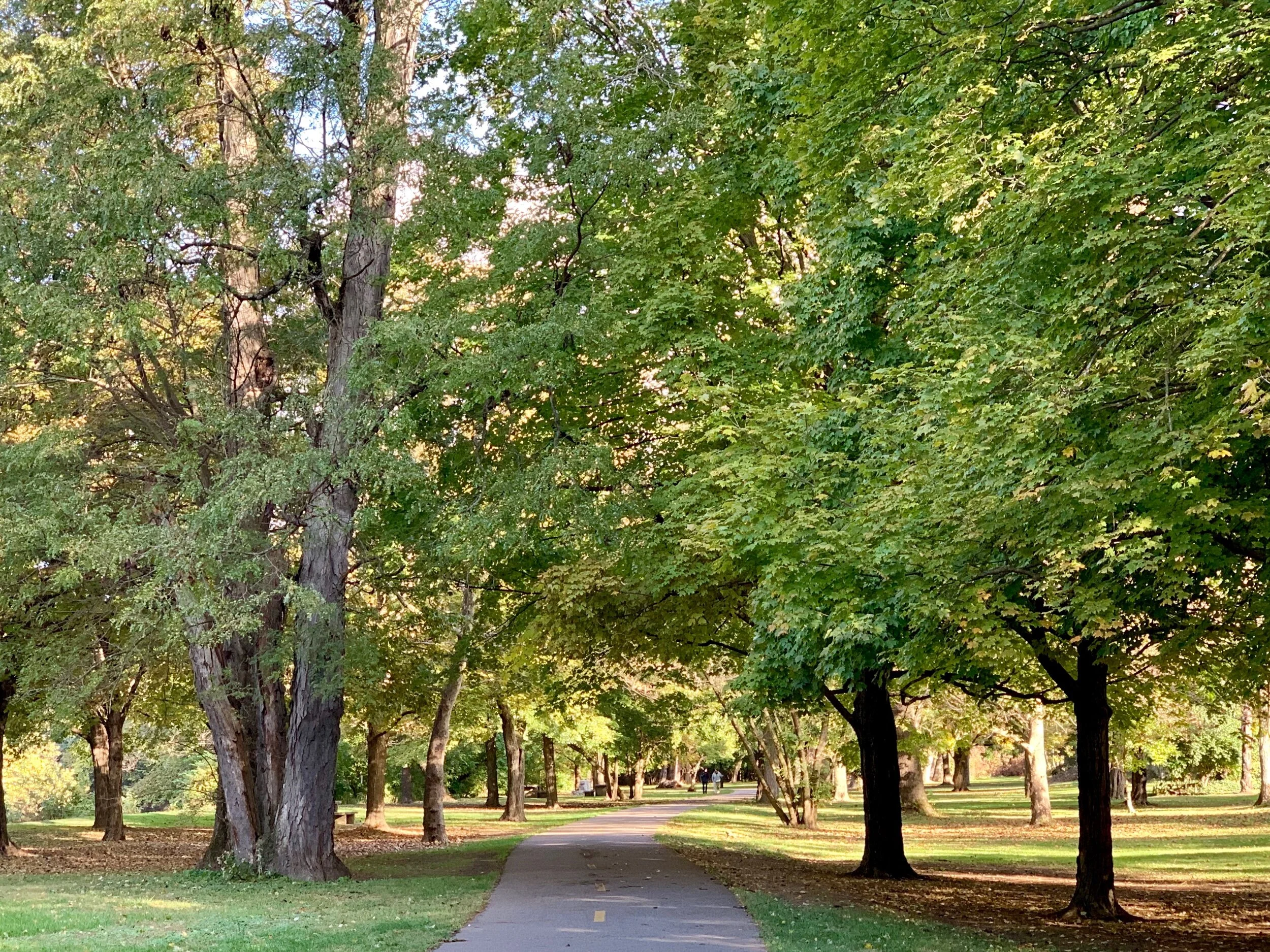
The Olentangy River Trail makes its way through much of Columbus, including this lovely park.
This was a remarkable and incredibly pleasant run. We encountered another long section of cycling trail later the same day from Granville past Newark, Ohio, making our total run on trails well over 120 miles. Then, we enjoyed another 20 miles of trail along the scenic Ohio River out of Wheeling, West Virginia, as we headed north to Steubenville, Ohio.
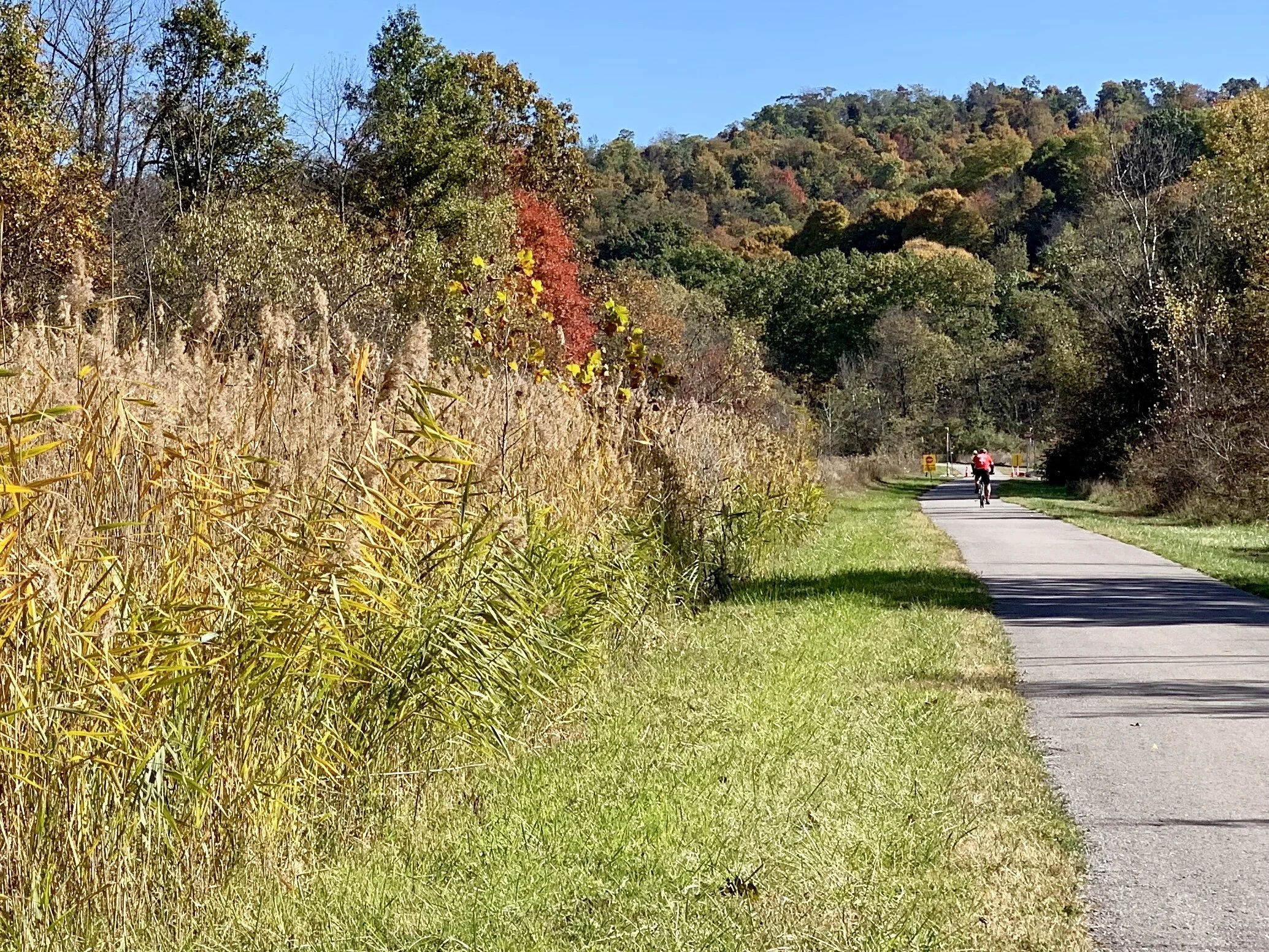
Finally, we rode the Panhandle Trail most of the way into Pittsburgh, capping off a series of great trails through much of central and eastern Ohio.
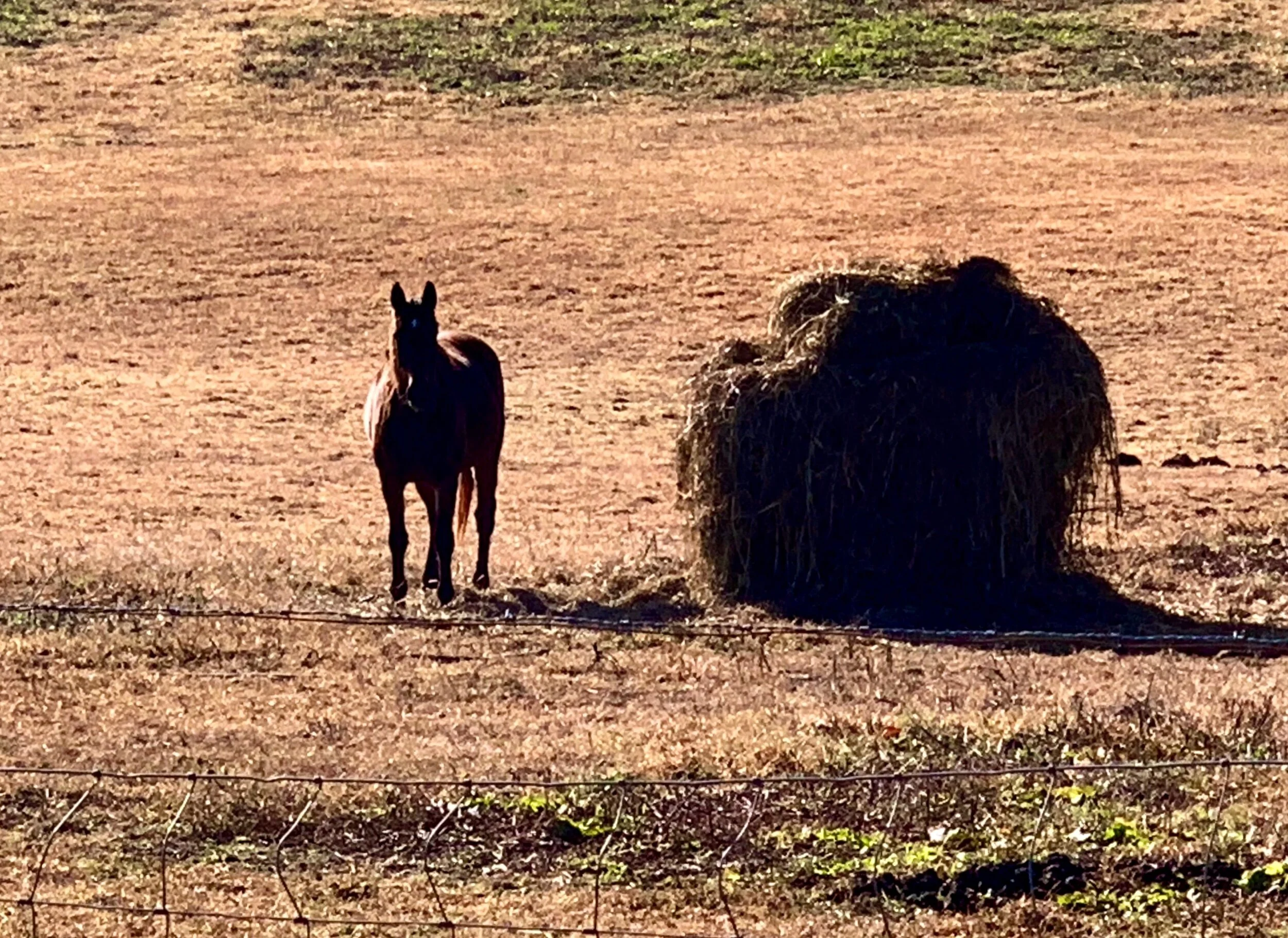
So we are happy and content, and looking forward to another stretch of dry weather once the current storm passes over. The GAP trail awaits!
Thanks for reading! More to come…
All photos, unless credited or otherwise noted, are copyrighted property of the blog post author.
Illinois to New York City, Post 1
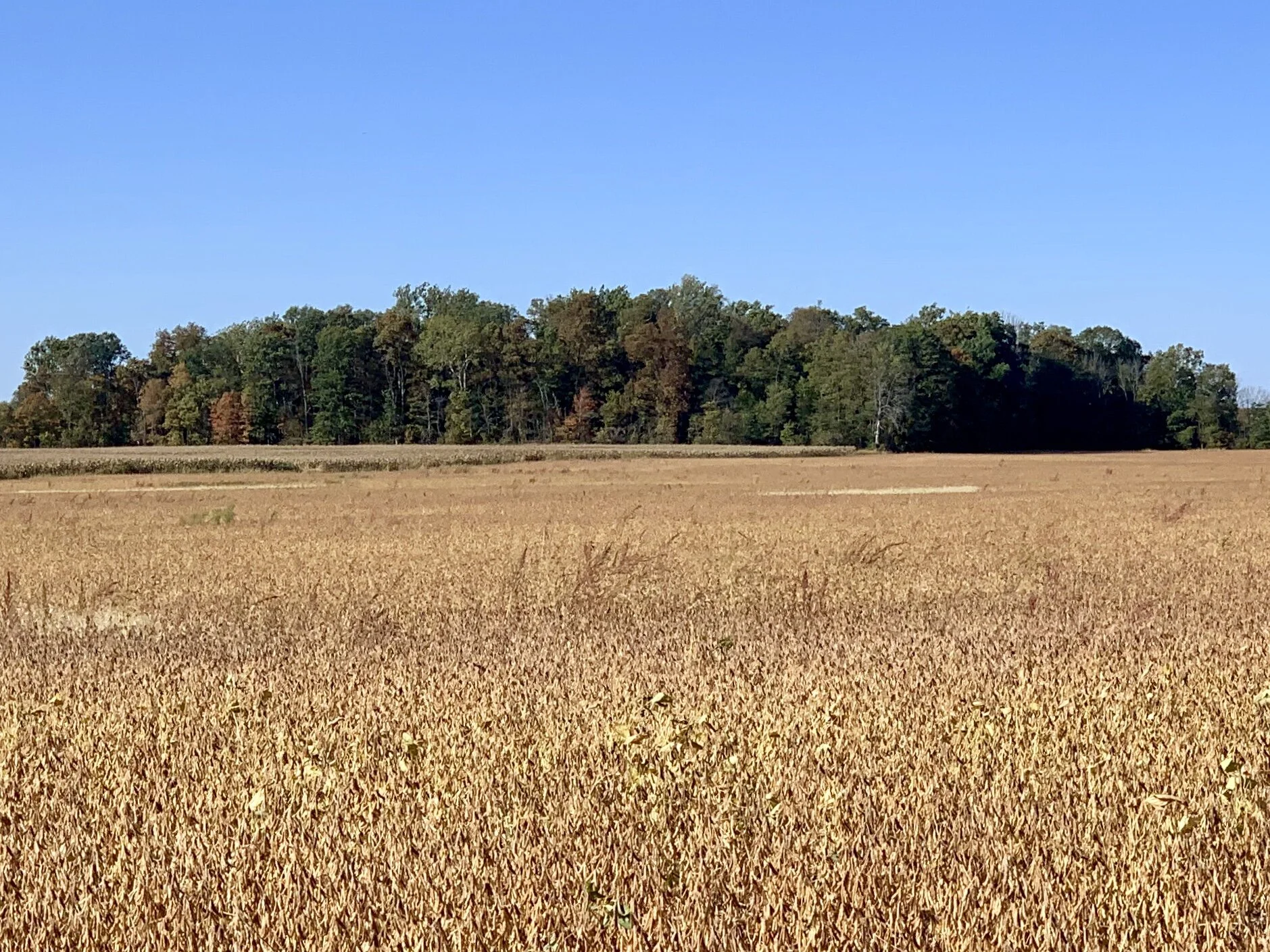
Soybeans wait for harvesting in Greenfield, Indiana.
Back in the Saddle Again
Greetings from my bicycle! My last blog post was in May, and I apologize to readers who may be curious about my disappearance in rough weather somewhere near Westgate, NV, on a cycling trip from Palo Alto to Salt Lake City.
If you’ve been wondering, you might be pleased to know that I did get back home to New York City. In fact, I spent a great summer there. While there, I wrote a blog about how I got home: backtracking to Reno, skipping my plans for Salt Lake, shipping my bike and flying back to New York City. But alas, I got distracted and never posted it. So much for the best laid plans of mice and men (and me).
Even so, I took a few more photographs in Nevada in May that I think are still worth sharing, even if the trip back to New York no longer seems relevant. I include these because I am fascinated by extreme weather events. They are increasingly part of our lives, and I think there is value in bearing witness to what we see around us. You may remember from my last blog that I was fighting my way through a very unusual rain and snow storm in a part of Nevada that is usually hot and dry in May. Along with many other folks I was surprised and challenged by the inclement weather I encountered. Below are a few more shots from that trip that I’m particularly proud of…
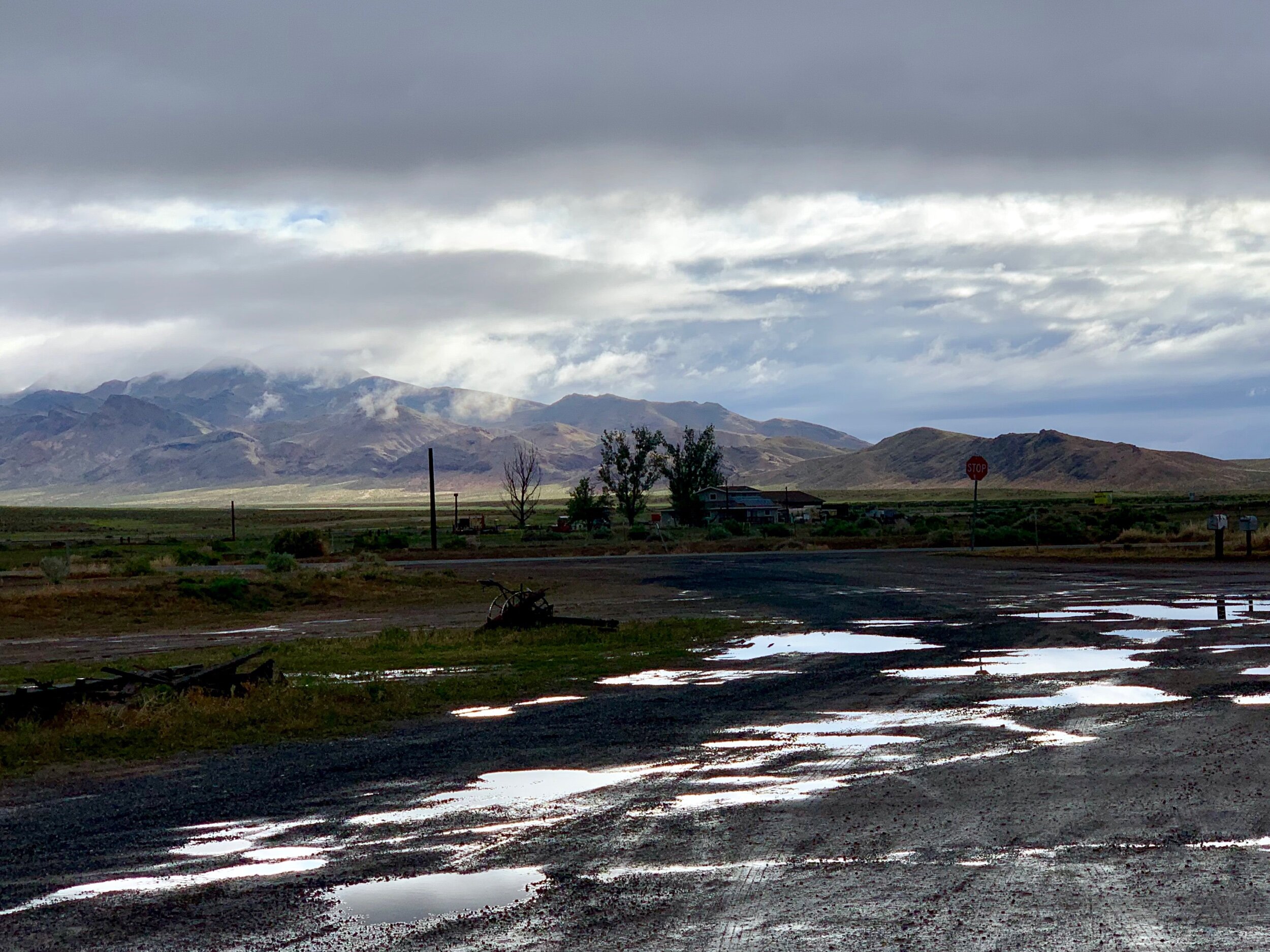
Water in the Westgate Bar parking lot on the day I left in late May, 2019.
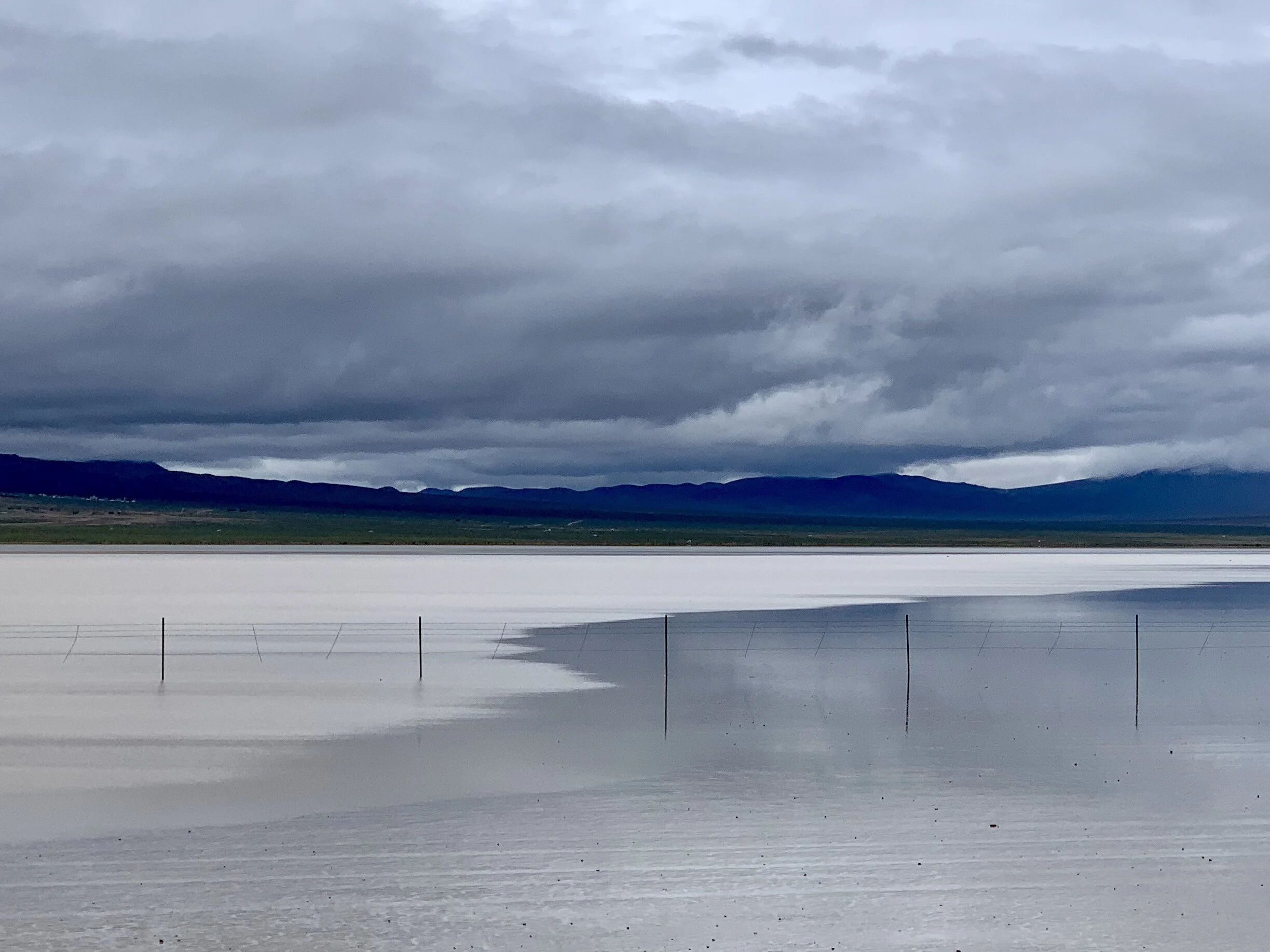
Flooded salt flats east of Reno.
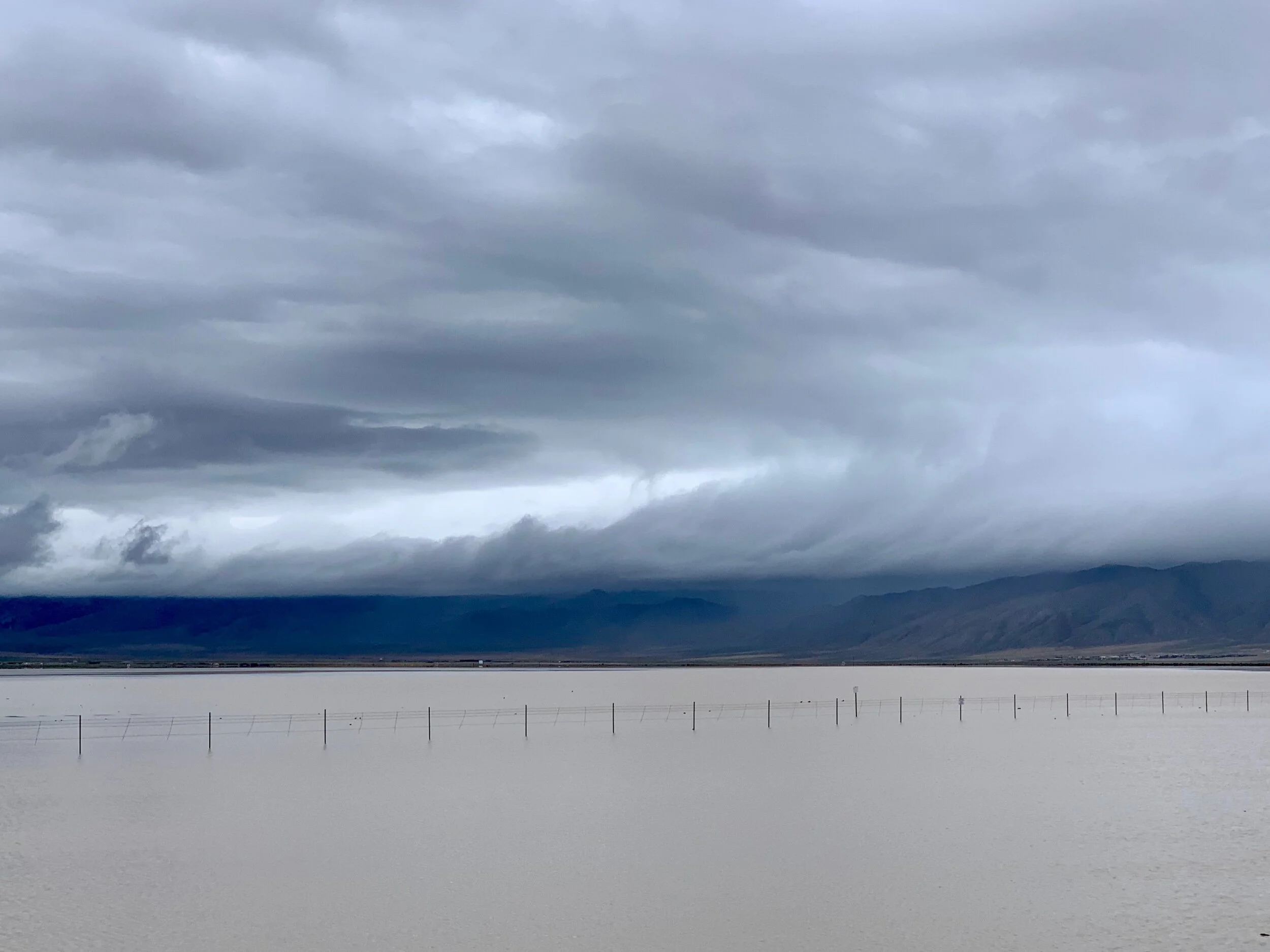
Rain clouds above the salt flats.
As the summer progressed, I made plans for future cycling with my friend Jenny Hershey, who had just retired from a 31-year career running building operations for Jujamcyn Theaters on Broadway. A founder of the Broadway Green Alliance, Jenny is both an environmentalist and an avid cyclist. To get our feet wet, we took a car camping/cycling starter trip to New Brunswick, the fabulous Cabot Trail in Cape Breton in Nova Scotia, Prince Edward Island (PEI), and explored traveling together on bikes for multiple days at a time. If you’ve never been there, I strongly recommend cycling in PEI. There are numerous rail to trail conversions that allow cyclists to get everywhere one could want to go. The shoreline is vast and beaches are beautiful. The islanders take great pride in their environment, and they enjoy rich local culture. Prices are reasonable, and the pace of life is remarkably comfortable. At the same time, internet services and other modern amenities are easy to come by. Don’t miss it!
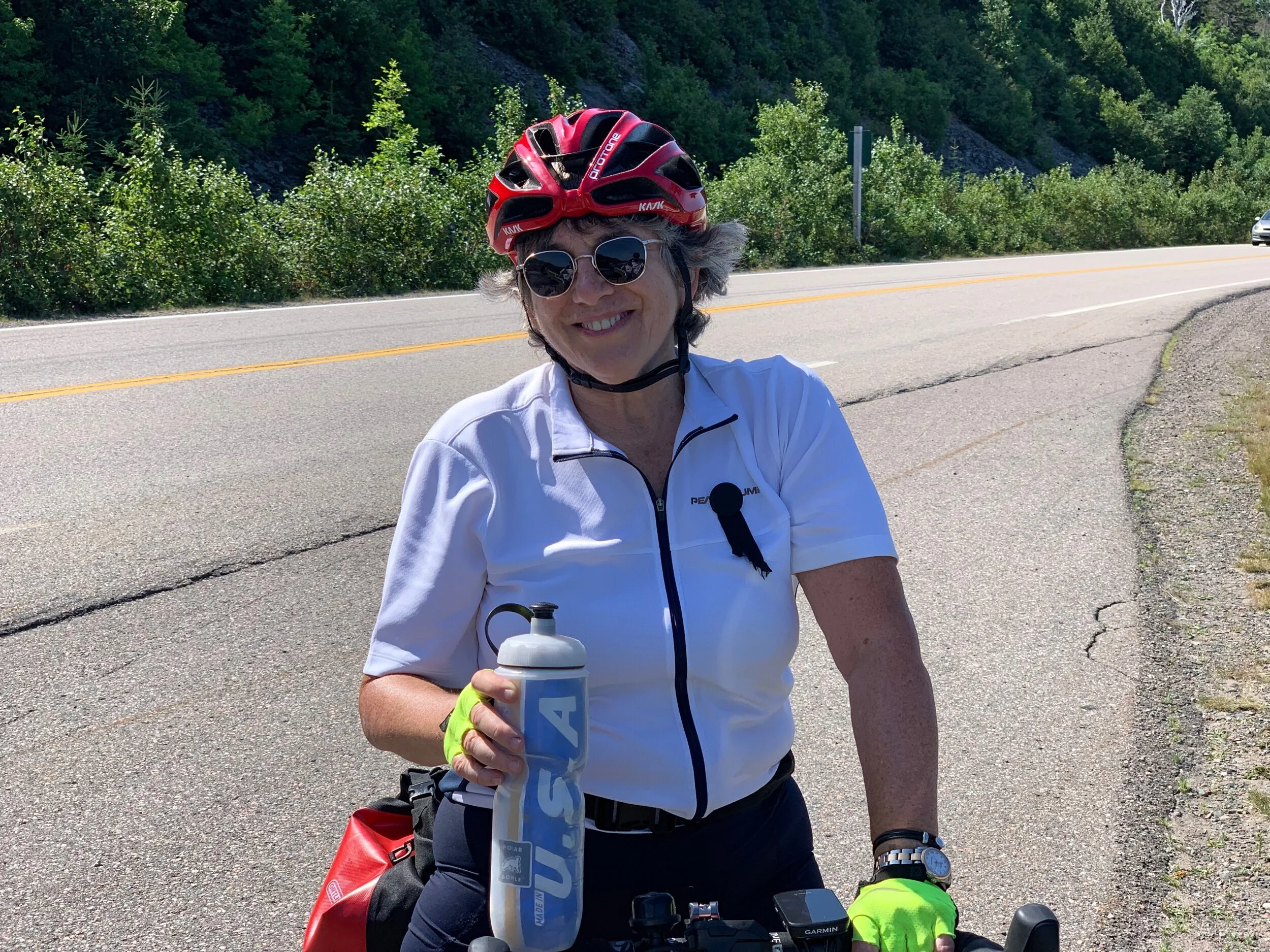
Jenny by the roadside in PEI. She is wearing a mourners ribbon signifying the period of shiva after the death of her mother Merle Weisman.
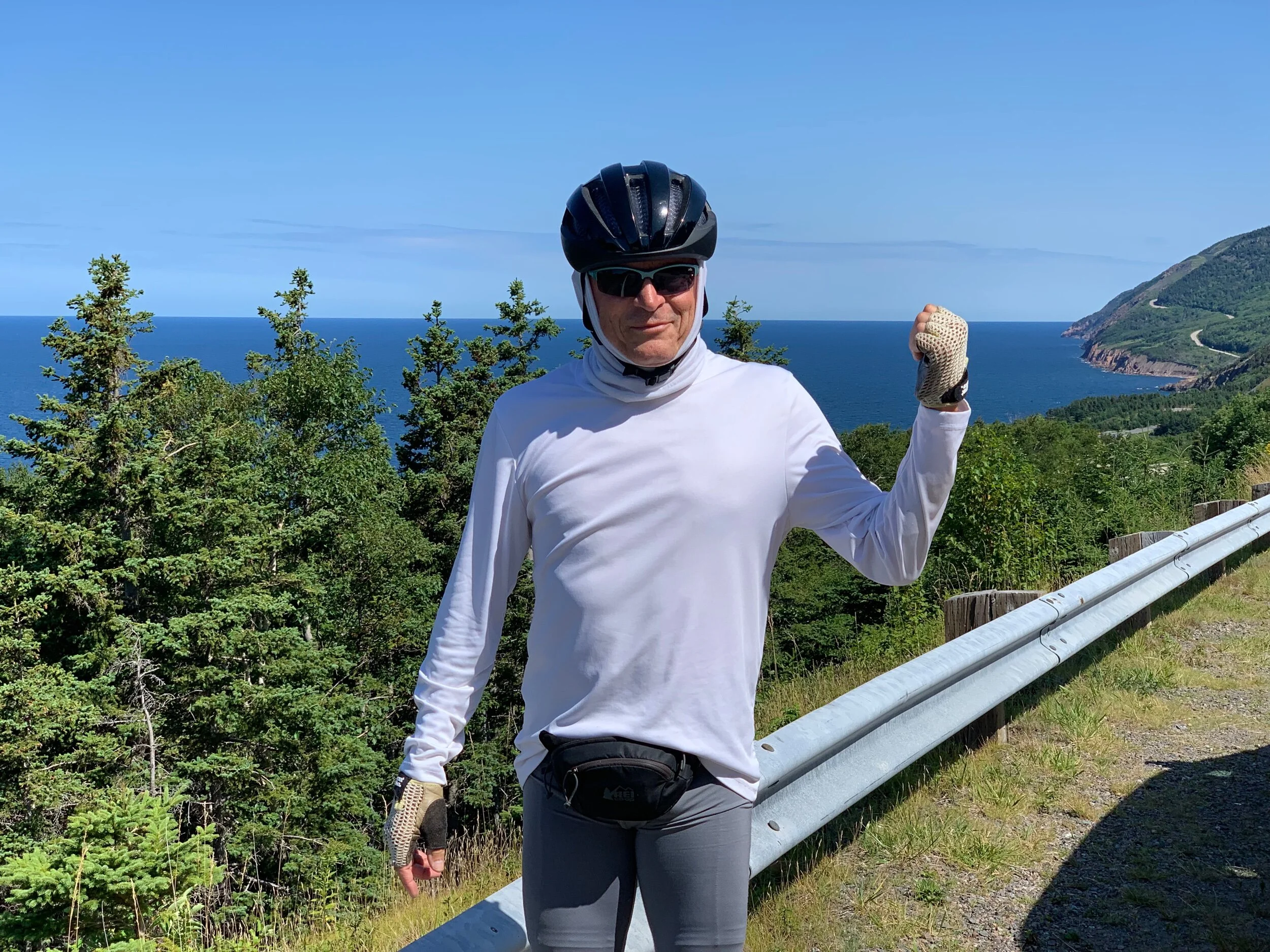
Michael gesturing toward the Northumberland Straight in Cape Breton.
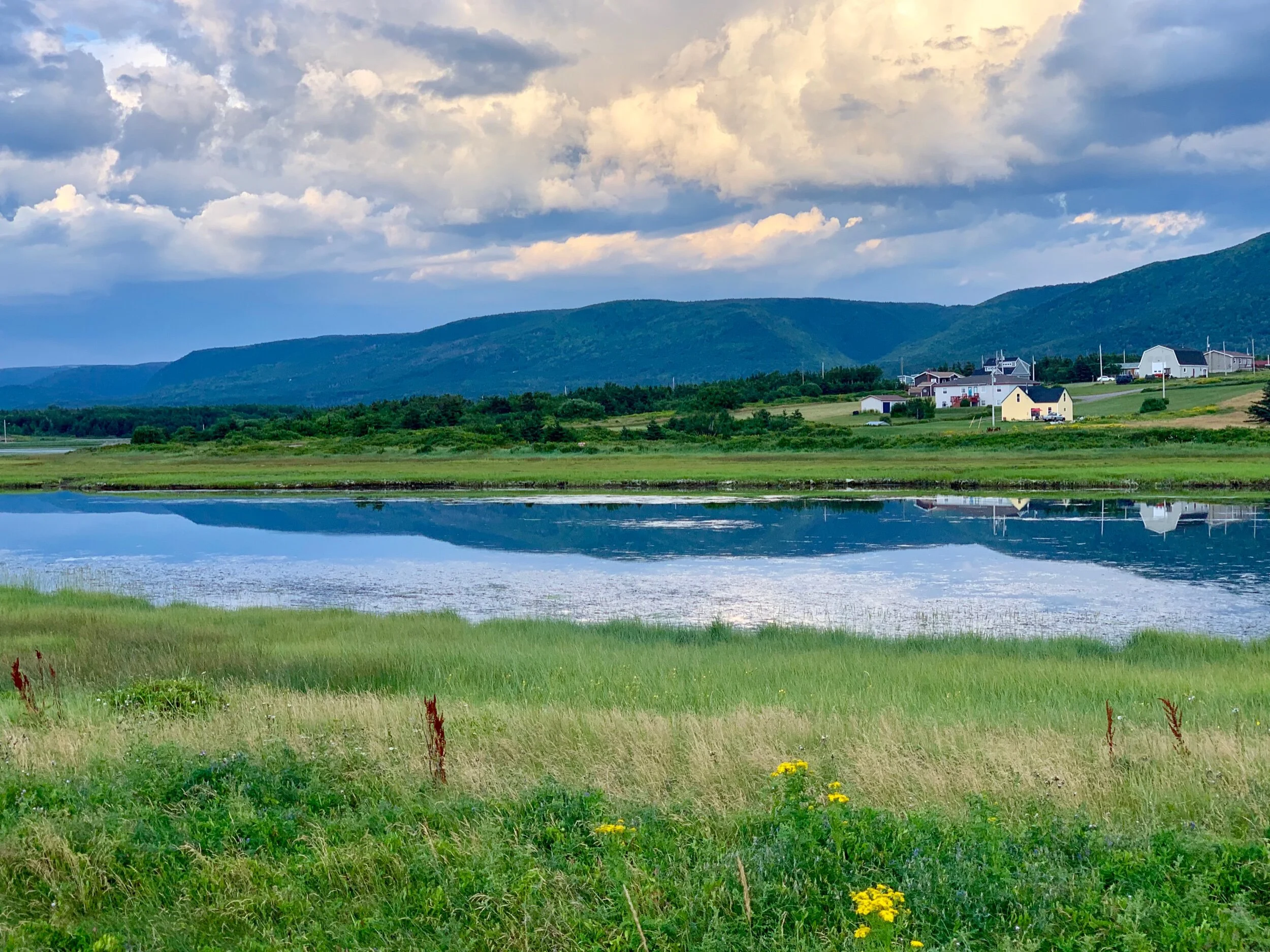
Near our campground in Chetticamp, Nova Scotia.
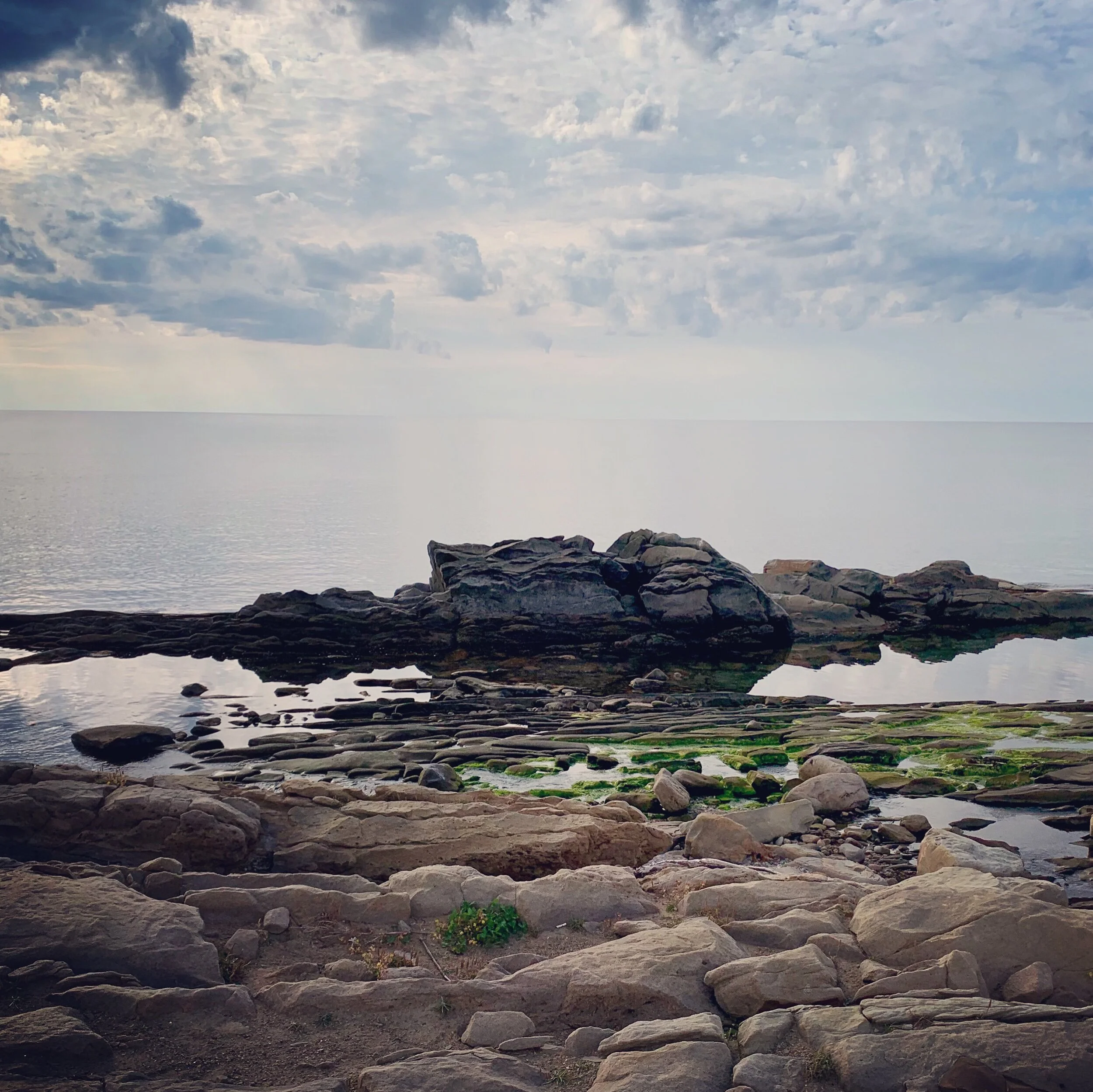
The coast near Chetticamp, Nova Scotia.
Moving On
In addition to being busy, last summer was emotionally eventful. In June and July, as my brothers and I recovered from my Dad’s recent death, we helped our Mom move from an assisted living facility to a nursing home in Galesburg, IL. She didn’t like losing her independence, but is gradually getting used to both the irritation and value of full-time long- term care. Like most older people, my Mom has good days and bad days. A good day occurred recently when Jenny and I arrived via train to meet up with my daughter Saren and her family from Wausau, Wisconsin. My Mom was able to meet her new great grandson Landon.
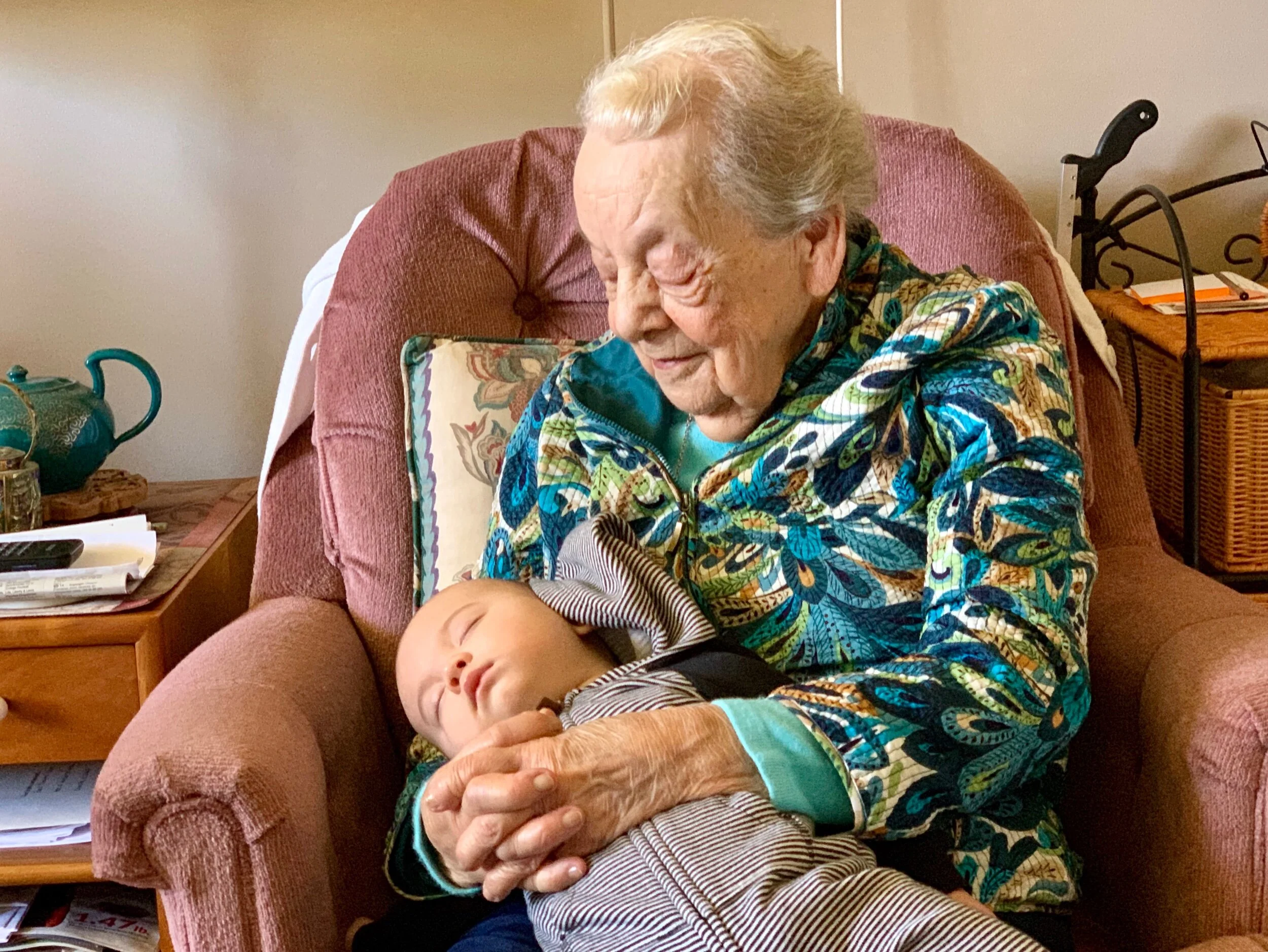
My Mom Sue Chase and her great grandson Landon Spire.
As I joyfully watched my Mom, my daughter and her son, I realized there were four generations of us in the same room sharing our love. And of course, I found myself wondering what life will be like for Landon when he is my Mom’s age (it will be 2106). Will civilization as we presently know it even exist? Will animal species other than humans and their pets and feedstock still exist? Or will our species be gone as well?
There is increasing scientific evidence that we are quickly running out of time, and we must significantly turn the tide on greenhouse gas emissions over the next decade. I am so pleased that all the Democratic candidates for President are acknowledging climate change as an existential threat, and are developing policy proposals for meaningful change. Personally, I cannot think of a more important way to address our climate emergency right now than to back whatever Democratic candidate is nominated, and to work my heart out for his or her election. And if we are lucky enough to have an administration that understands climate science, then we must put our shoulders to the wheel for national policy that supports carbon pricing and returns dividends to citizens to help bear the increased costs of fossil fuels. We will also need policies to help build the next great economic expansion in renewable energy, carbon sequestration through changing agriculture practices, and carbon technologies to include air-based and flu-based greenhouse gas capture and carbon recycling through manufacturing of inert products such as polymers, fuel and even food. These nascent, yet promising technologies are very hopeful. We only need the will to make them happen. For more information check out the Circular Carbon Network.
——————
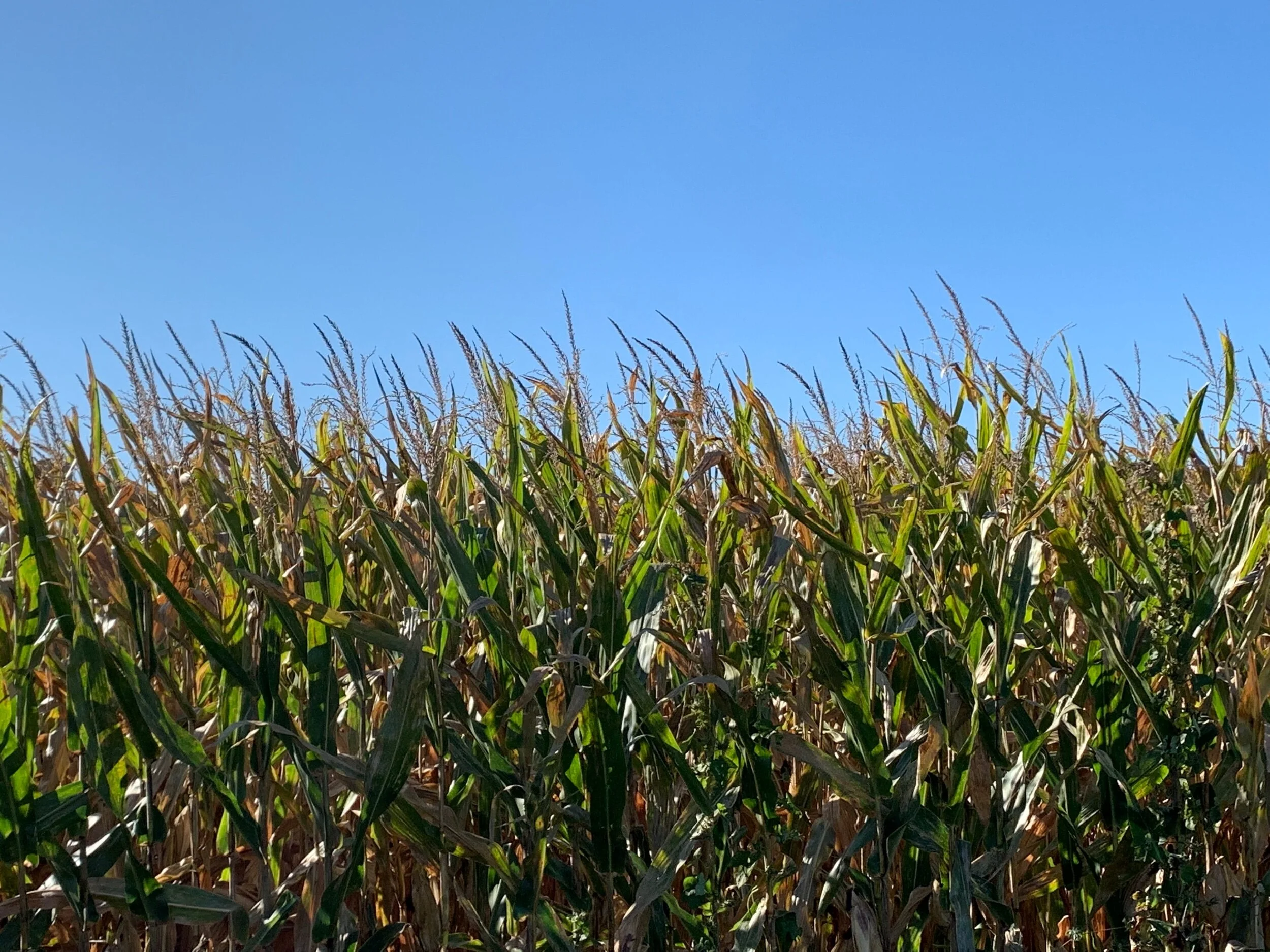
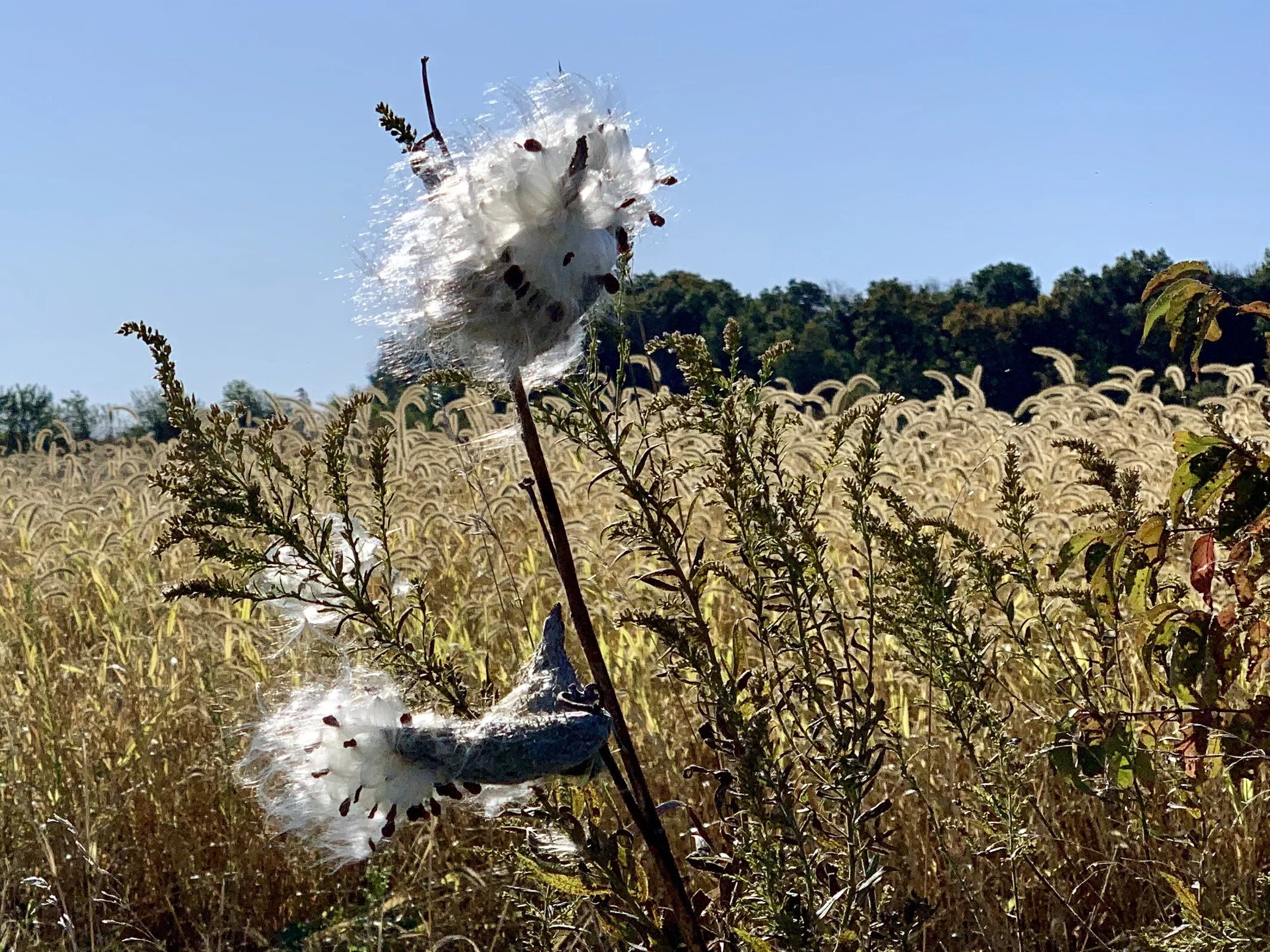
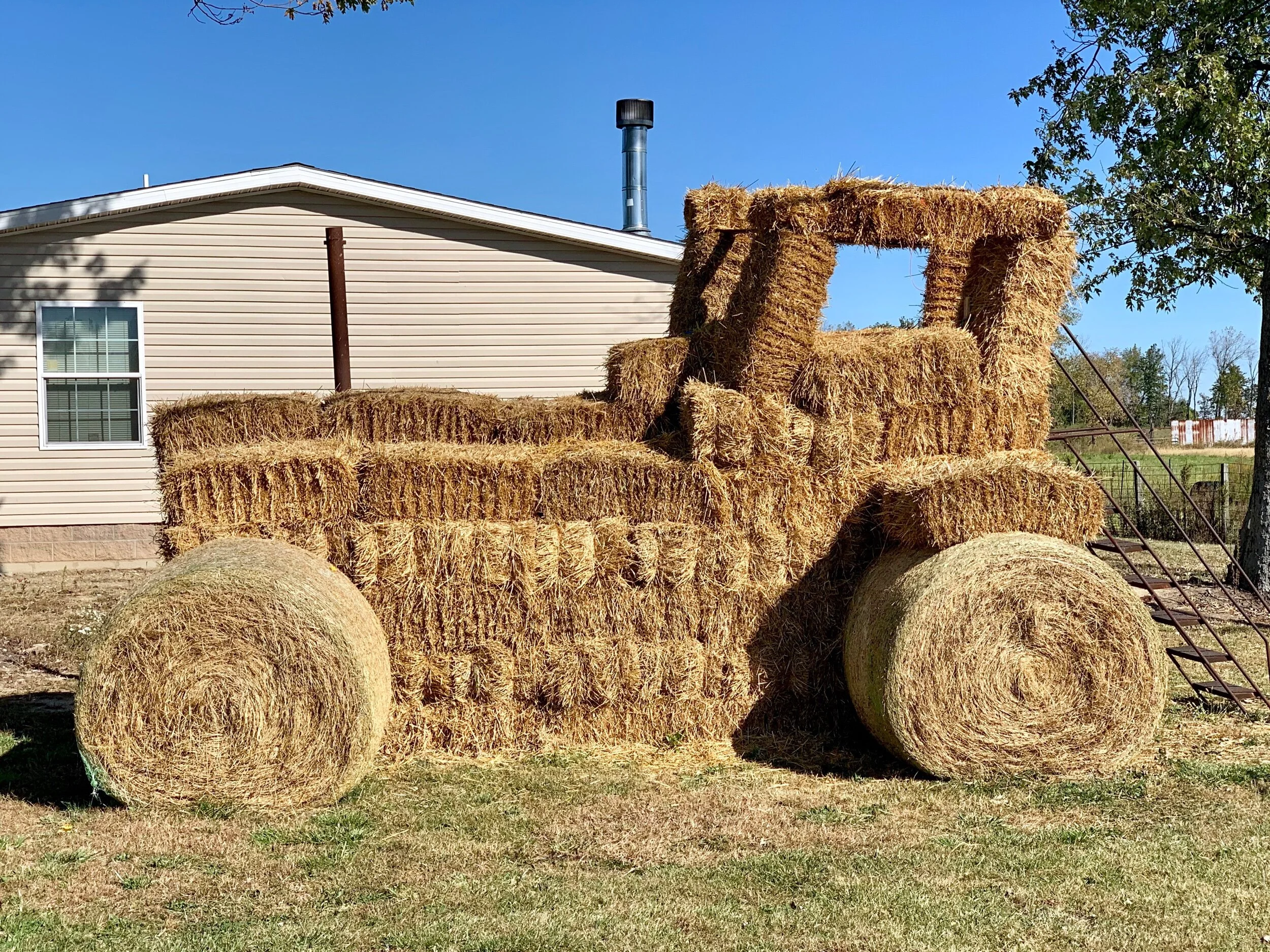
Today I'm writing from a motel in Richmond, Indiana. Jenny and I began this cycling trip about a week ago from Galesburg, Illinois. As I’m sure you are aware, the fall has been unusually hot in the Midwest and the northeast. That changed suddenly last Friday, just as we left Bloomington, Illinois, for Gibson City (with the help of a local Samaritan who drove us 37 miles in his pickup to avoid rain as the temperature plunged to the high 30’s). The next day was even more inclement. By Saturday evening, after Jenny and I had biked 72 miles to Attica, Indiana, we were very cold, wet, miserable and tired.
But the joy of biking is often in the recovery phase. The last two days have been lovely, and today was exceptional. Our trip has become glorious again. Galesburg is about 400 miles west of us at this point. We’re tired and windblown, and enjoying the pleasant and peaceful endorphin rush that comes after several days of hard cycling. It’s nice to feel used up.
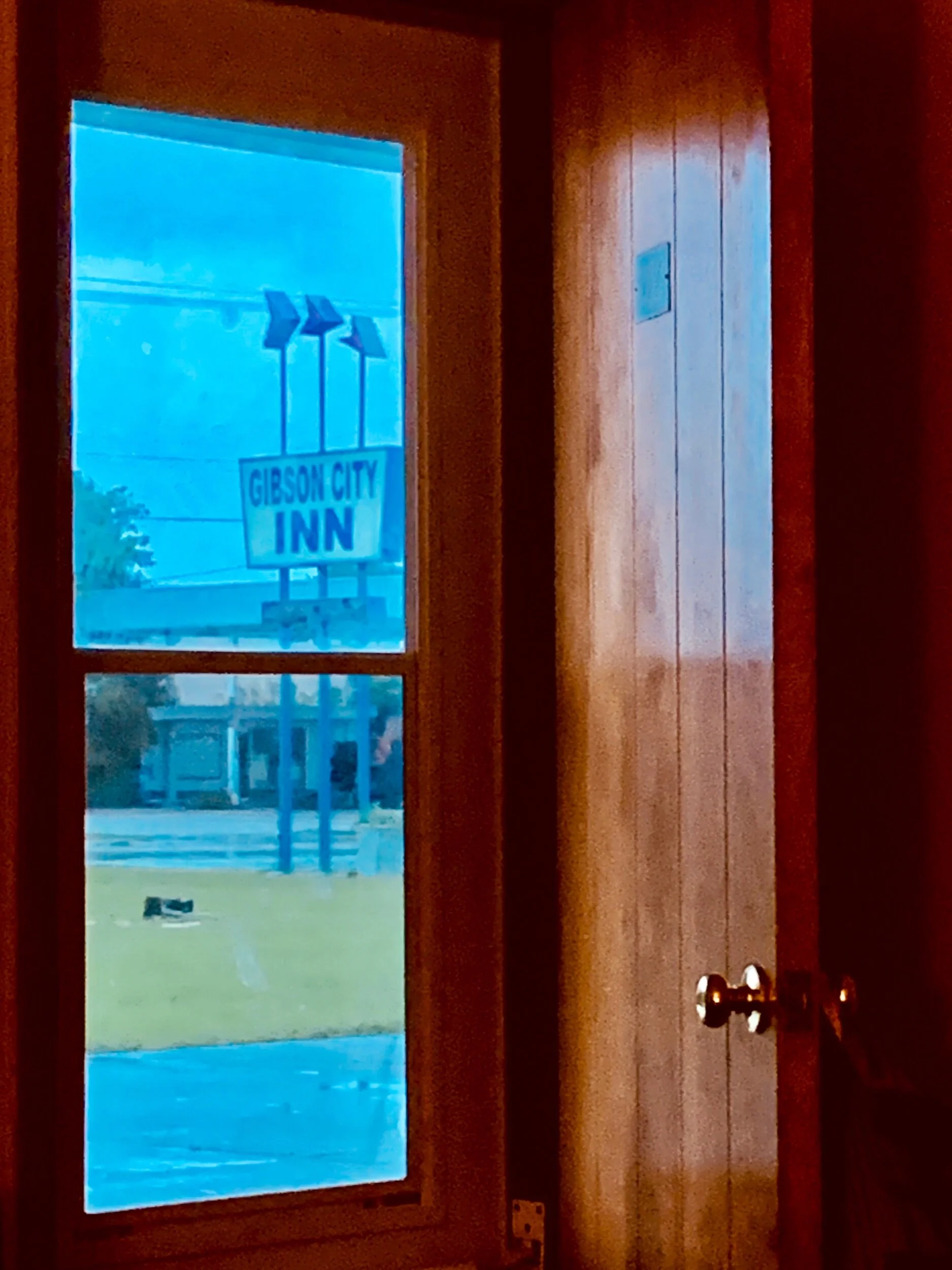
The rainy view outside our motel in Gibson City, IL.
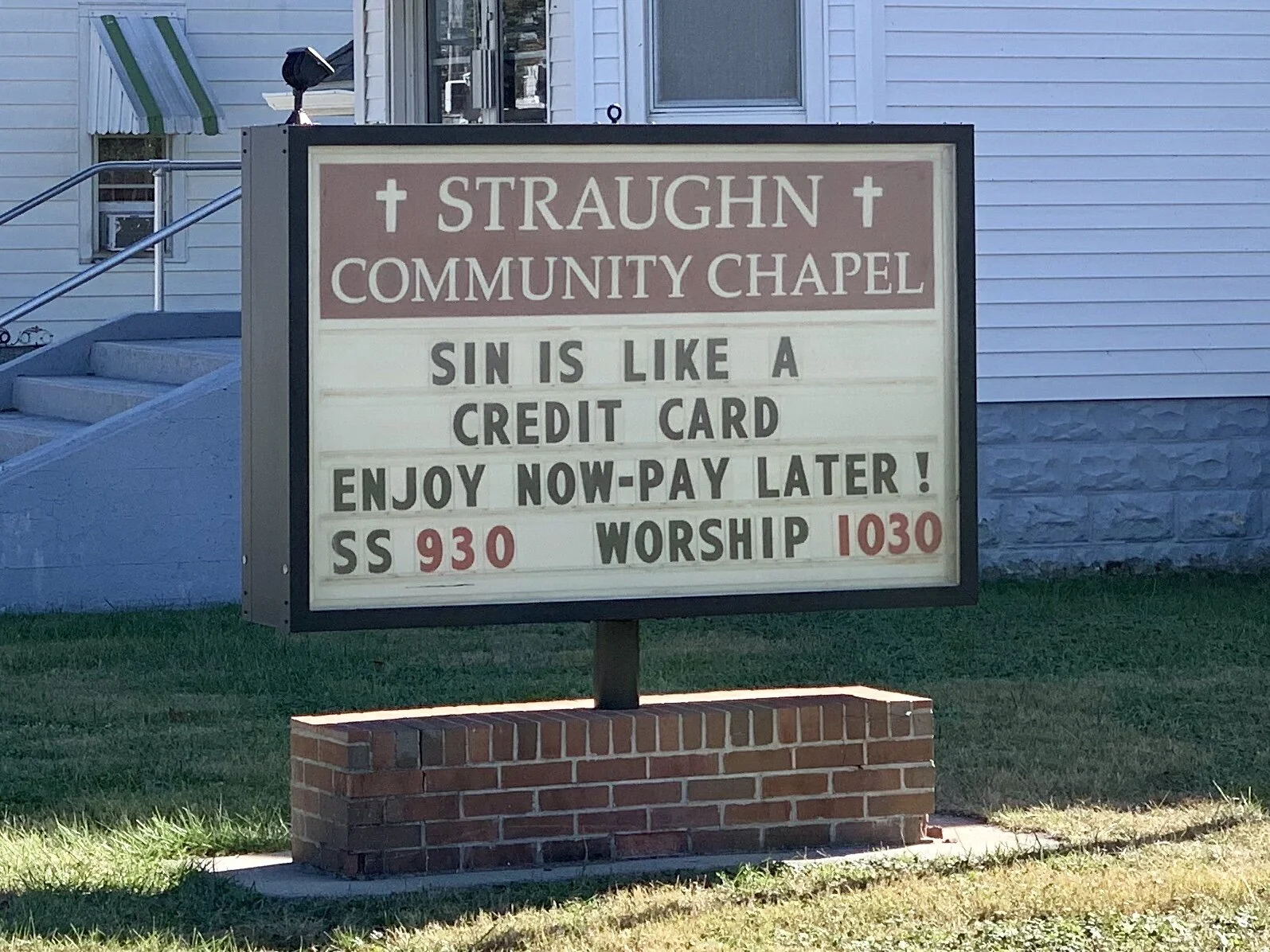
Fossil fuels are like this as well! We enjoy now, our grandchildren pay later….
Thanks for reading! More to come…
All photos, unless credited or otherwise noted, are copyrighted property of the blog post author.
The Highway of Life; A Tribute to Kim Chase
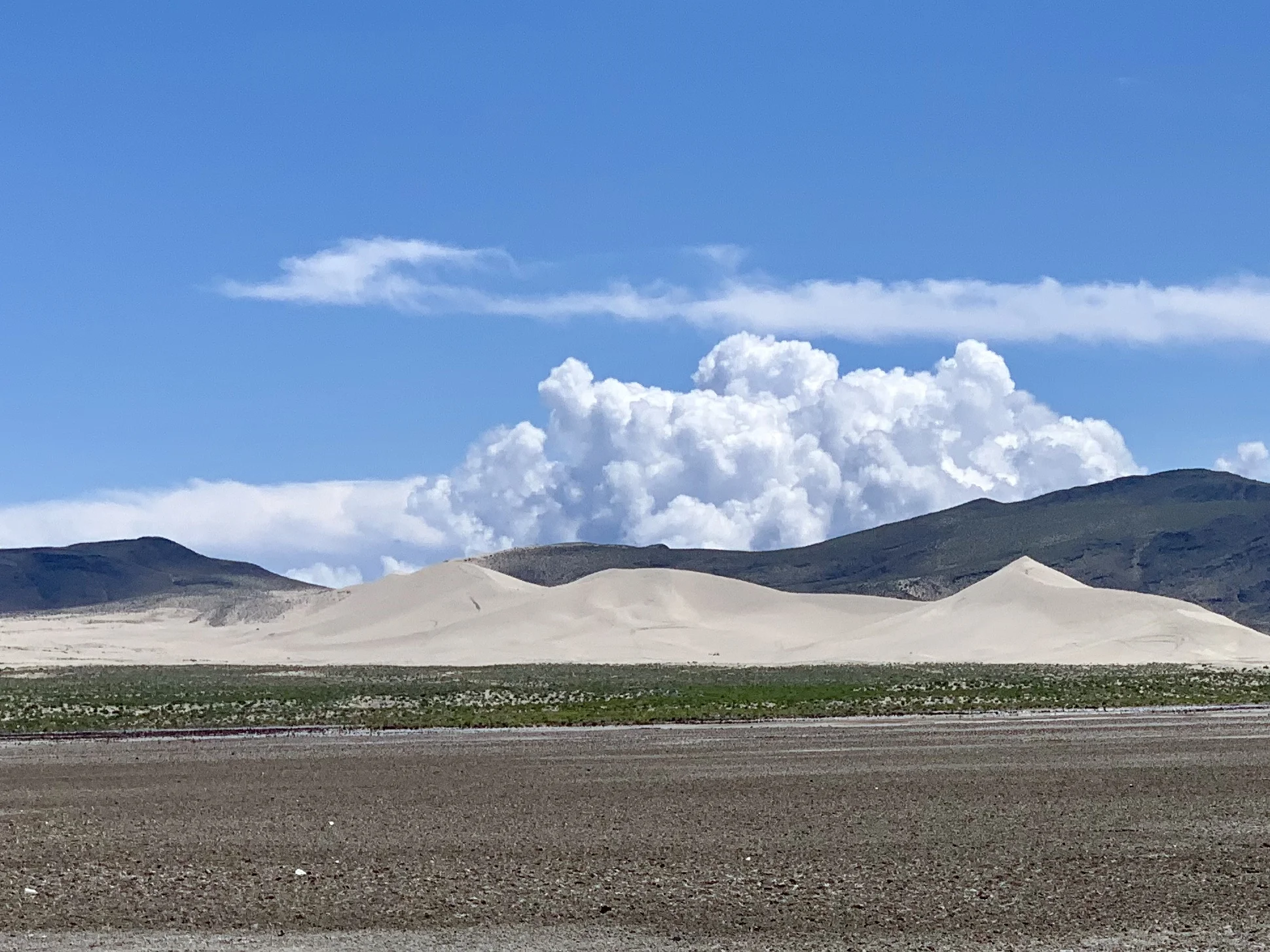
Sand hills east of Fallon, Nevada.
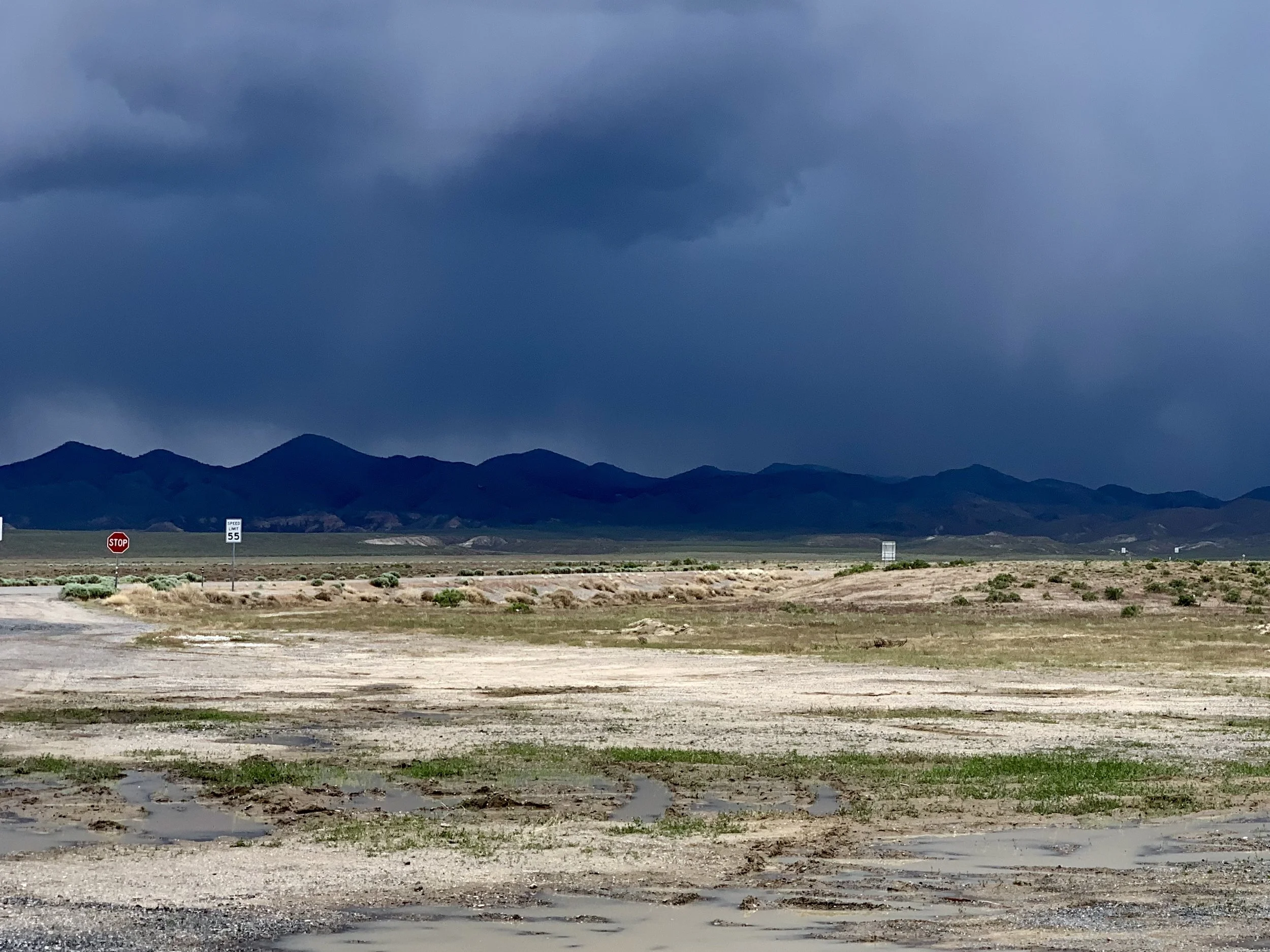
Storm clouds forming to the east of Middlegate, Nevada.
Greetings. I am writing this from Middlegate, Nevada, in a pleasant ramshackle motel that must date back to the 1930's. It doesn't have a name, other than the motel.
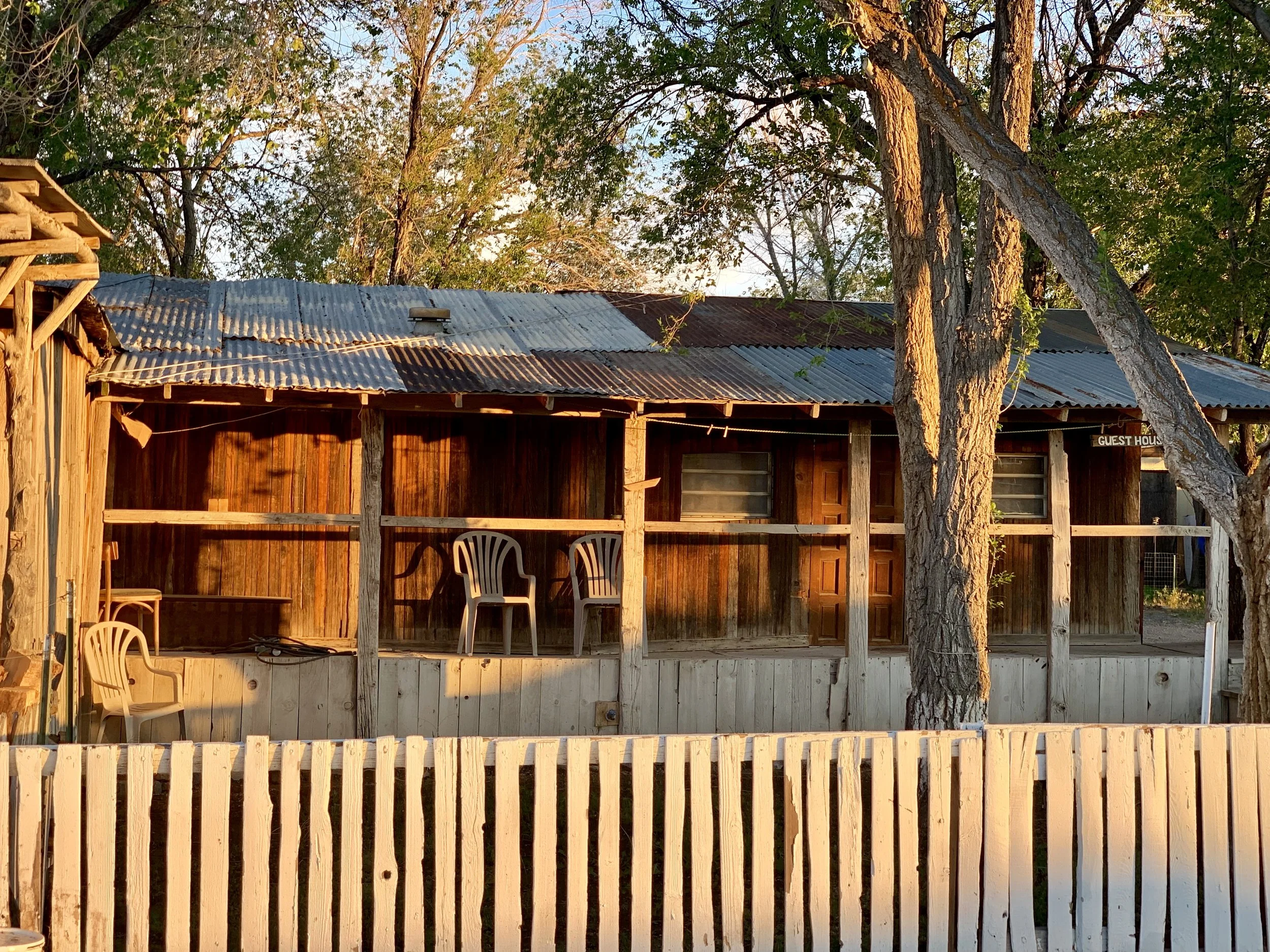
This building across the parking lot does have a name - the guest house.
I am traveling by bike from Palo Alto, California to Salt Lake City, Utah, where I will catch a flight back to New York City. Since Carson City, Nevada, I've been on Highway 50; a road once marketed as "The Loneliest Highway in America.." It's part of the "Adventure Cycling Association's "Great Western Trail." It's raining today. A lot. It rained and hailed on Carson Pass. A lot. All along my entire route, locals have been saying it's unusually wet and cold. I wasn't expecting this - I took this route on my GRID Tour in 2016, and enjoyed pleasant and reasonably warm weather the entire time. But with extreme weather on the rise everywhere, cycling is impacted more and more by increasingly greater unpredictability in weather patterns. The same is true for outdoor industries such as farming and construction. Much of our knowledge - which is based in being able to make reasonably accurate predictions - is becoming less useful.
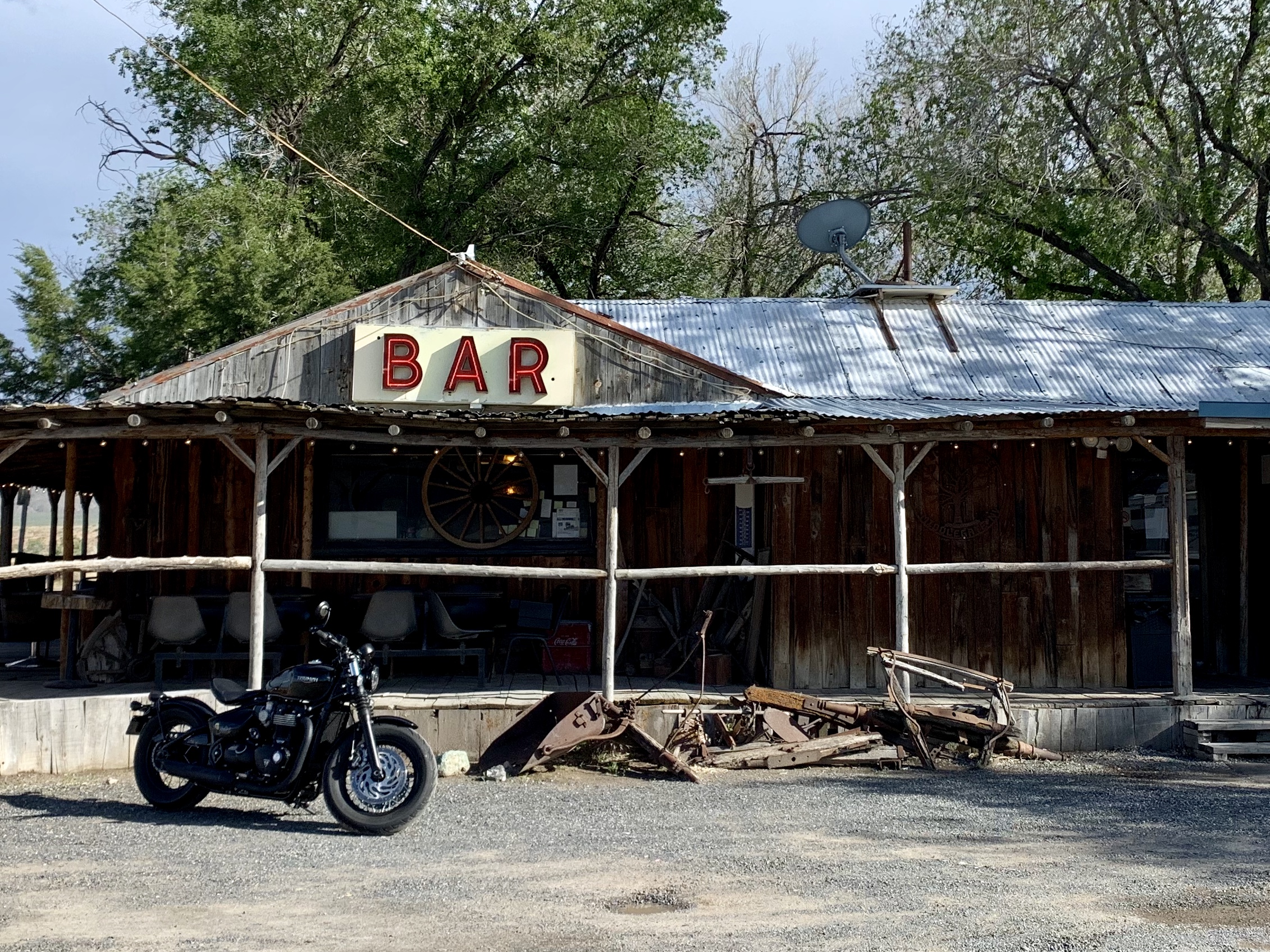
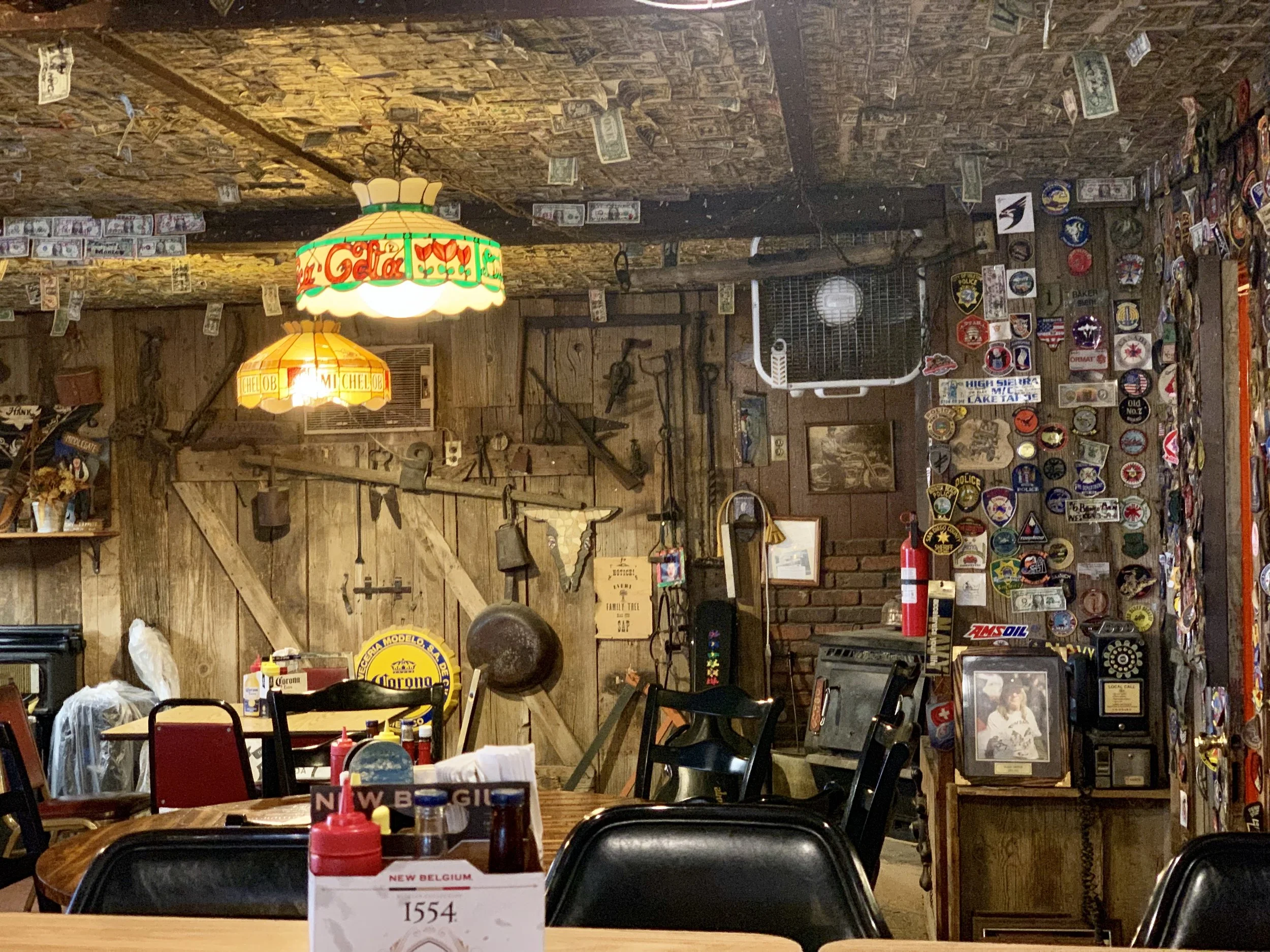
Outside and inside the bar at Middlegate.
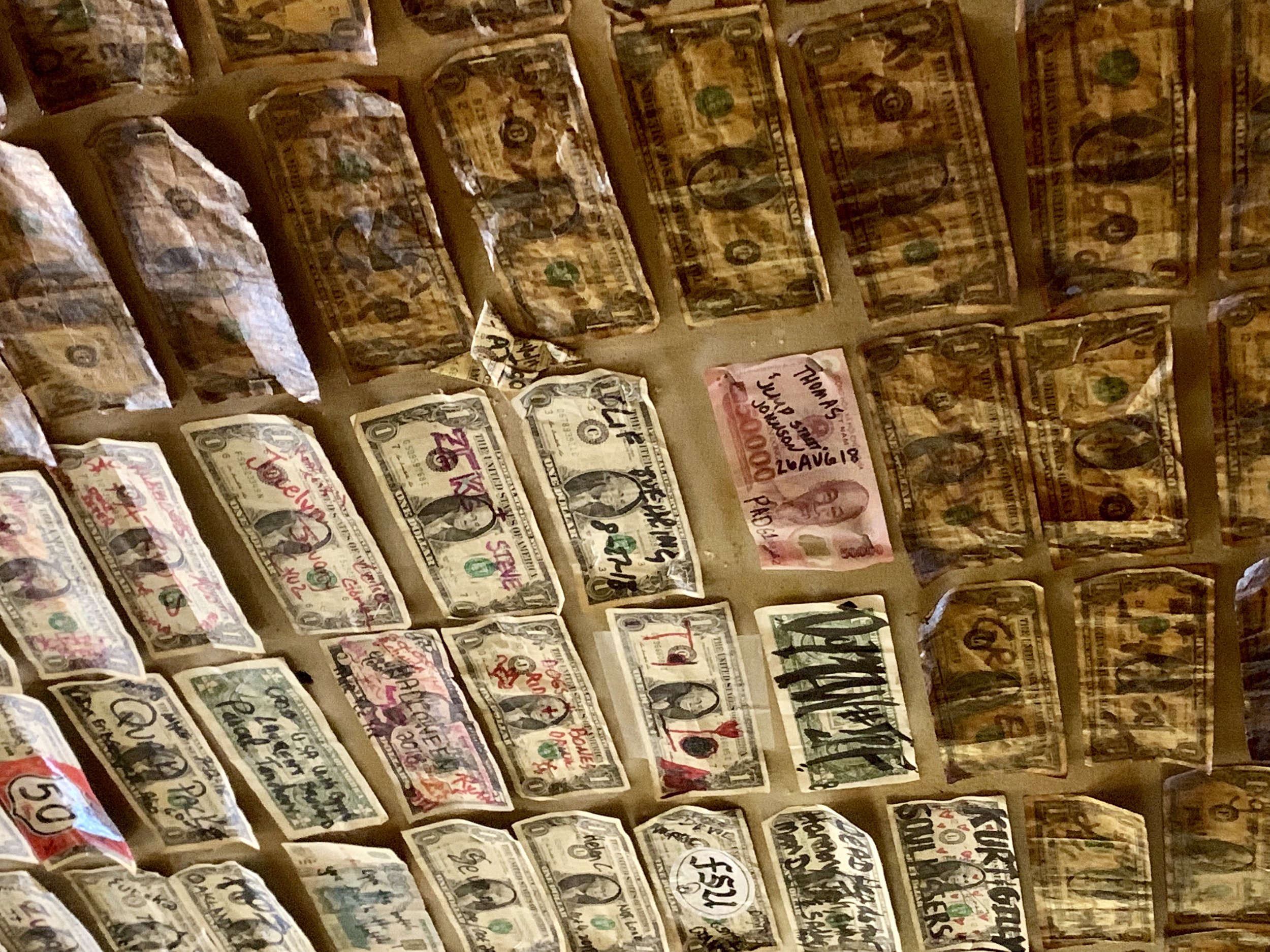
Close up of the ceiling in the bar.
I didn't intend to take this trip a few months ago. I had a different plan in mind. But circumstances changed things. On May 4, a few hours after I had arrived for a visit, my Dad passed away. I was fortunate enough to be with him, along with my stepmother Dawn - my Dad's wife of 53 years. Our entire family and so many friends are devastated, of course, but after an amazing life that lasted over 100 years, there is also so much to be grateful for. My Dad lived a long and active life, much of it on his own terms, and he died a reasonably peaceful death with only a few weeks of a troublesome decline. Few are so lucky.
On May 19, many friends and family came together to celebrate my father. My brother Steve did a masterful job as "Master of Ceremonies", and the stories and eulogies for my Dad were very poignant and touching. I think we said goodbye well, in a manner that would have pleased my Dad. The next day a small group of us took a scouting party to a lovely nearby park in the coastal mountains to identify a place where we will disperse his ashes when the time is right.
On the following day I left Palo Alto to cycle to Salt Lake City. I wanted a challenge, and I wanted solitude. I am getting both. At the same time, this route allows me to stay near the California Zephyr train-line so I can easily get to my home town of Galesburg, Illinois, if need be (where my elderly mother lives) with my bike in tow. I guess I'm feeling a bit fragile, and don't want to be very far away if my Mom takes a turn for the worse.
Below is the eulogy I delivered at my Dad's commemoration. Perhaps it will mean something to others who weren't able to attend his memorial.
May 19, 2019, A Tribute to Kim Chase
Love and Loss
My Dad could be quite funny. One day, while I was stressing out about something, he put his hand on my shoulder and looked me straight in the eye. Then he grinned and said, "Stop worrying Michael. You'll get from one end of your life to the other".
Well, I haven't done that yet. But he has. And boy, I miss him.
We all know there's a shadow that comes with loving someone. That shadow is called loss. To love someone deeply means that, sooner or later, you will lose them, and they will lose you. There's no getting out of that experience.
Some of you may not know that Dad's first wife died during the polio epidemic in the early 1950's. It was a staggering loss for him, as it was for me and my brother Chris. It was 1953, and my Dad was just starting his teaching career. There he was, having lost his wife, with two toddlers to care for. But that was only one of many loves and losses. My Dad married again, and had another son, Steve. And then some years later, he married Dawn, bringing her into our lives. Yet, by the time he died at 100 my Dad had lost every other member of his immediate family except those of us in this room, and all of his friends from his own generation. Still, he lived and died surrounded by people who loved him, most notably Dawn, with whom he was able to share 53 wonderful years.
There's no remedy for losing a loved one. It happens to us all. We love, we lose. But still, we can do what Kim Chase did - we can love full out, completely present, gently, quietly, regardless of the cost. We can just keep showing up. My Dad was good at that.
Acceptance and Support
I should know; I tested him quite a bit as a young man. For a time, I was quite angry at him for ways I thought he had let me down. But my Dad would stand his ground, and gave me something to push against. And even though my harsh words and actions would hurt him, he remained steadfast. And I can say that I never, ever doubted his love and commitment to me, even when I was testing it in every possible way I could. No matter what I did or said, he'd come back for more, he'd keep fighting the battle for us to become whole - as father and son, friend and family, mentor and protege. Our relationship in those days was explosive, but I always encountered a man who believed we have it in us to find our own way in life, and we don't need to be coddled or indulged, we just need steady acceptance and support.
Luck and Opportunity
My Dad would often say he was very lucky. Some of you may know he attributed his luck to having been loved so unconditionally as a child by his mother, Elizabeth. She definitely doted on him, and he grew up knowing that - at least in her eyes - he was special.
I don't want to suggest that fortune and misfortune always distribute themselves equally. Clearly they don't. But fortune smiles more often on those who are ready to see and run with the opportunities that life offers up. My Dad's natural optimism and buoyancy allowed him to make the most out of any moment. He had an amazing life force. He lived through the Great Depression, the rise of fascism in Europe, WWII, the Korean and Vietnam wars, peacetime expansion, the civil rights movement, hippies, LSD, Reagan, the Gulf War, 9/11, Osama Bin Laden, our first black President, the age of Trump and the dawning of the age of climate change. He saw it all, with his eyes wide open.
And all the while, he kept learning and adapting. As many of you know, Dad was a backpacker. When he got old enough that he had to pee every few hours, he figured out how to build and use a pee jar in his tent at night. (God forbid he should drink less booze.) When he could no longer hike, he rode a mule. When he could no longer ride a mule he started going to aquatic exercise classes. When he was no longer steady enough with his cane, he got a walker on wheels. When that didn't get him around quickly enough he got a tricycle. He just kept growing. He even learned how to use Facebook, although he complained that he'd be damned if he'd ever do something that used the word "friend" as a verb.
Nothing stopped this guy. I am so proud he was my Dad. Kim Chase was an amazing man who lived an amazing life. I miss him so much, and I am filled to the brim with gratitude for the life he lived.
Lucky him. Lucky me. Lucky us.
Thank you.
And thanks for reading this blog.
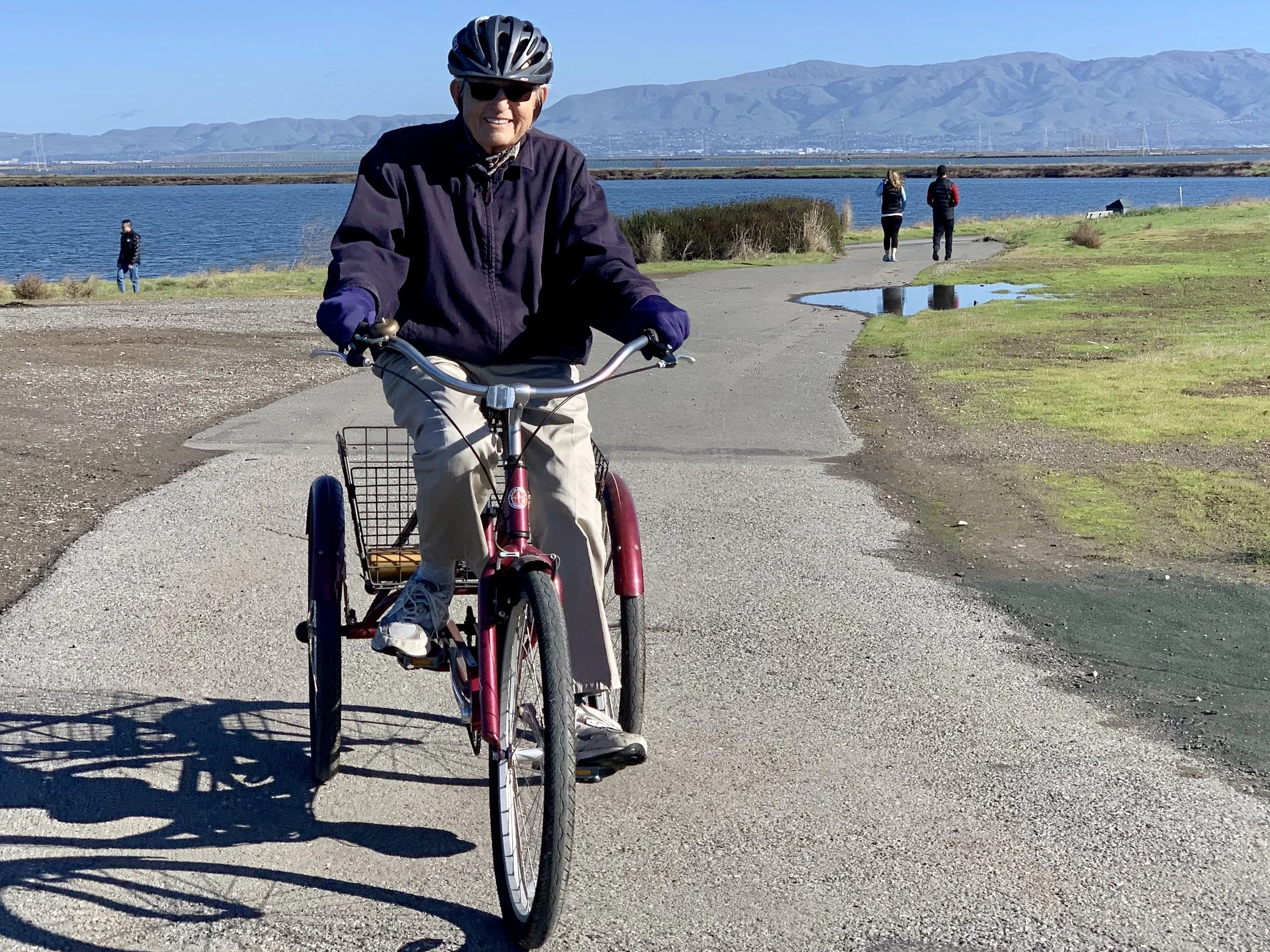
Kim Chase, December, 2018
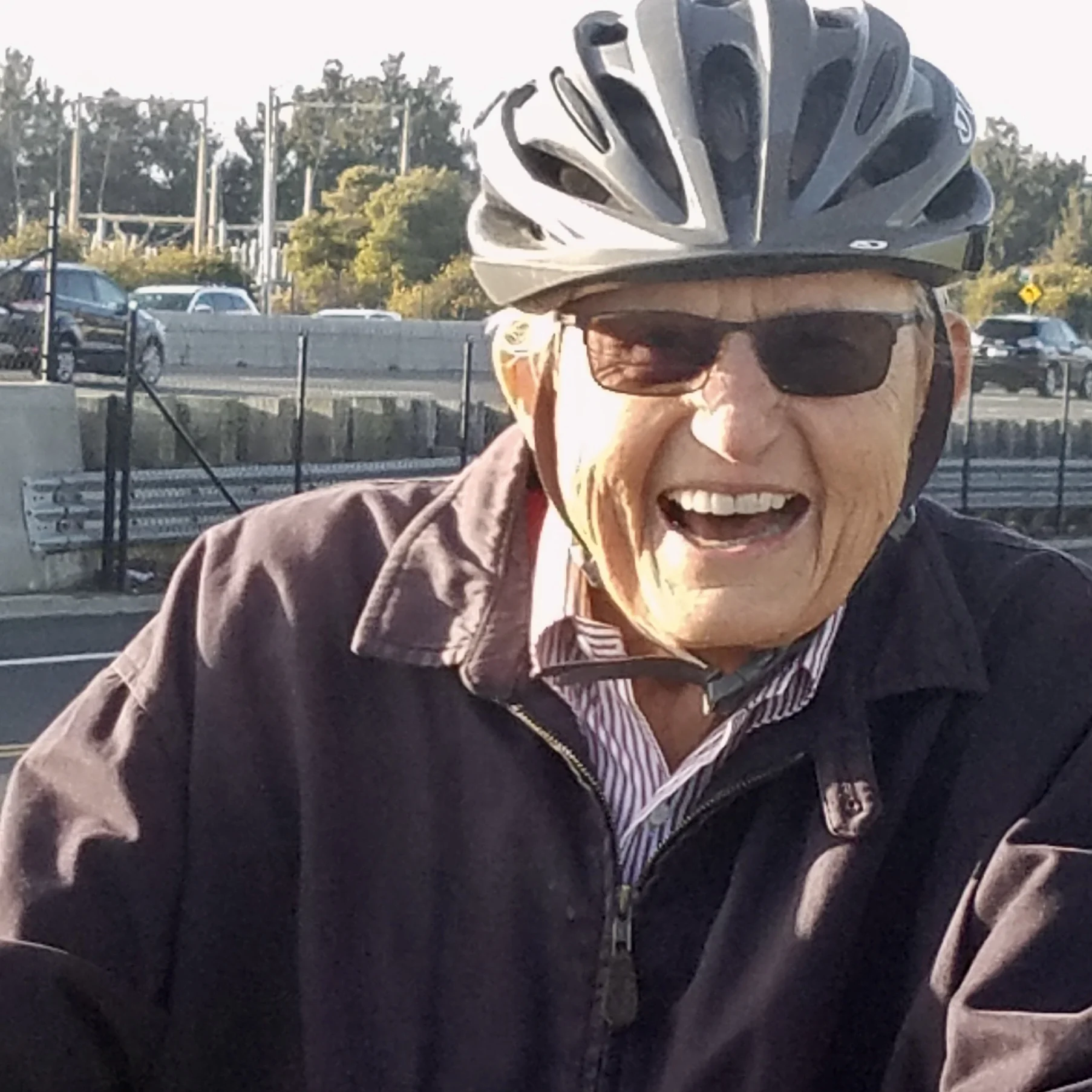
Kim Chase, December, 2018
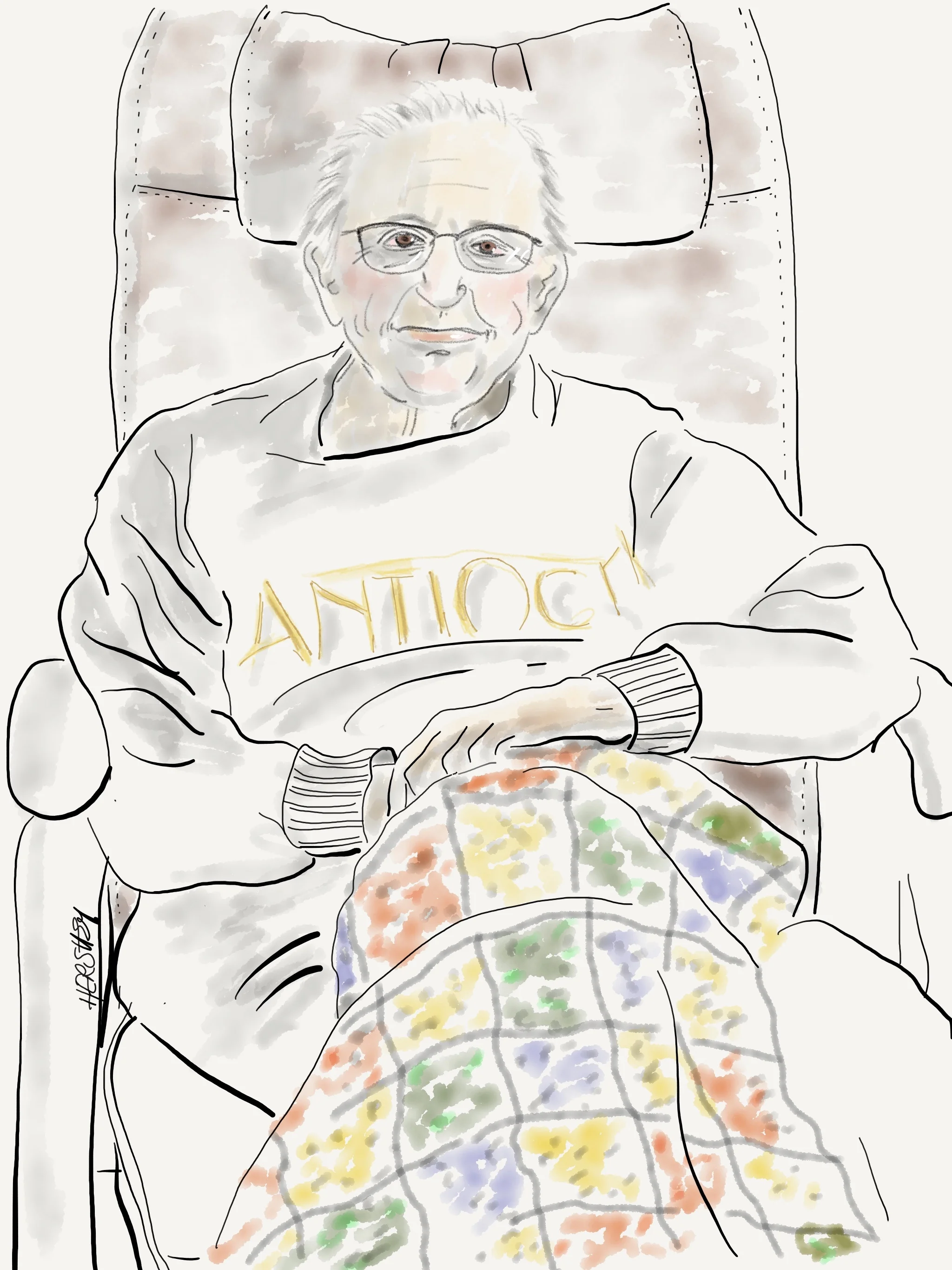
Kim Chase, December, 2018, drawing by Jennifer Hershey
More to come.
All photos, unless credited or otherwise noted, are copyrighted property of the blog post author.
Phoenix to El Paso, ...no, Tucson, Post 3
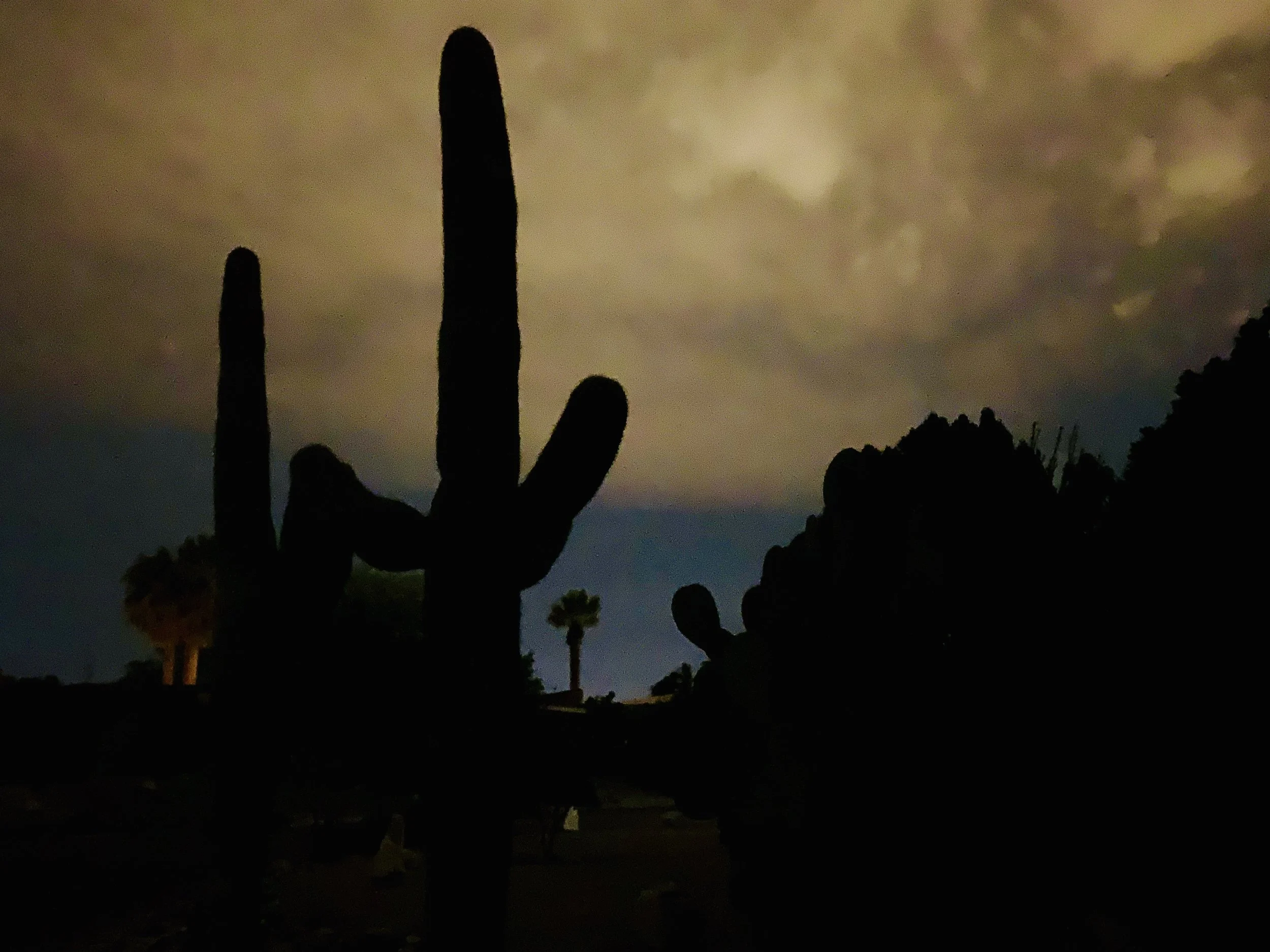
Twilight behind a sugaro cactus in Tucson.
After a one day layover in Portal, AZ, where I hiked near Cave Creek Canyon, I woke to a very cold day. The wind was clocking about 24 miles an hour out of the southeast, so I decided to head northeast to Silver City, NM, thinking that I would then zag southeast the next day to Columbus NM, and then make my way eastward into El Paso.
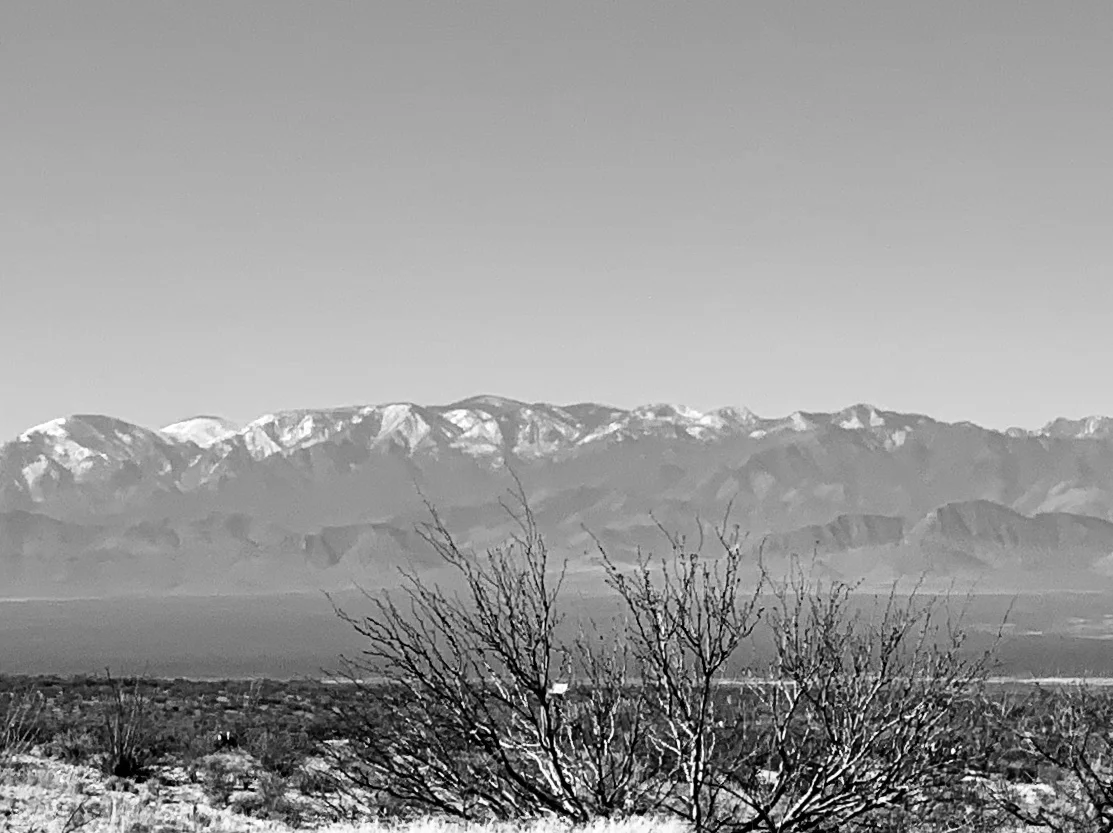
The Chiricahua Mountains on the way to Lordsburg.
Life has a funny way of making us change our plans. The wind shifted to the east. Rain clouds gathered. The temperature dropped. After a very difficult slog of a ride directly into a punishing wind, I arrived in Lordsburg about 45 miles away from Silver City. I wasn't sure what the weather was up to, but I was worried. I found an inexpensive motel and downloaded another wind app for my cell phone, hoping it would give me better capacity to analyze and predict what the next few days were going to be like. I knew there was a raging storm in the Midwest (the Nebraska bomb cyclone) and I assumed its outer edges were the cause of the wind and cold weather coming out of Texas. So I sat in my motel room, finally warm again, thinking about what to do. Near as I could determine the winds were going to remain out of the east/southeast at approximately 15 mph for the next 4-5 days. Additionally, rain and some snow were forecast for the entire region for the next few days. I knew I could make it to El Paso one way or the other as planned, and I also knew the trip was likely to be difficult and miserable.
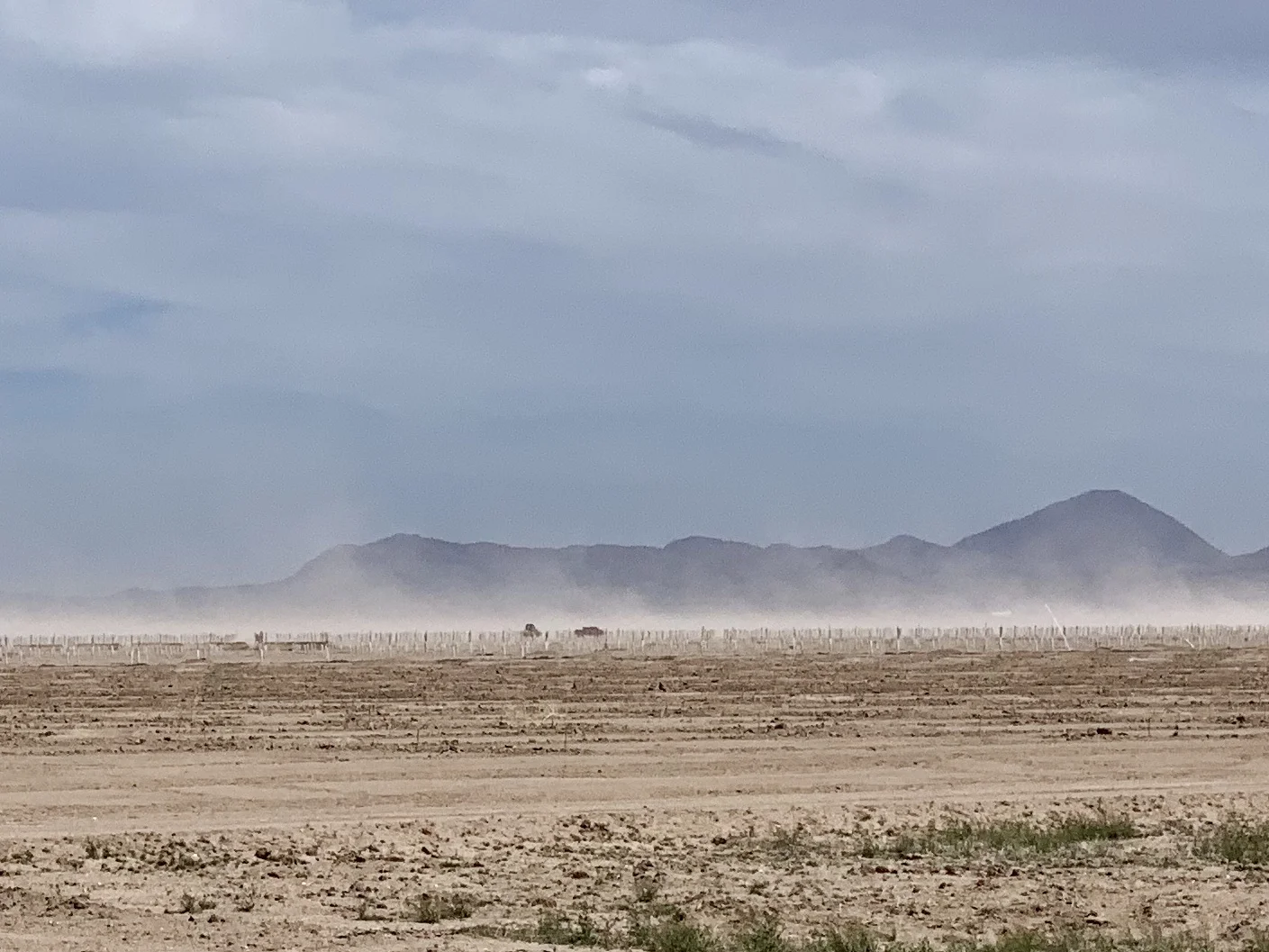
The wind stirs up dust on the way to Lordsburg.
I called my Dad in California, and my Mom in Illinois. I also called my kids. That might seem like a strange comment coming from a grown man in his 60's, But for those of you tracking older parents and grandkids, you'll recognize the behavior. I wanted to be certain my eastward direction under such conditions didn't make it difficult to get to either parent should the need arise. And I wanted to know if changing my itinerary and visiting my kids and grandkids a month or so later than previously planned would be ok.
I was improvising based on weather, just as humans have done for thousands of years. That is, before we insulated ourselves from it through our technology. Yet, our very attempts to tame it have only made it more foreboding. As the recent bomb cyclone in Nebraska - and the even more devastating cyclone in southeastern Africa - remind us, the weather will always humble us. We can't defy physics.
After discussions with various family members, I decided to return to Tucson where the weather was milder, and catch a train up to San Jose to my Dad's place. Right now I'm sitting in a lovely Landmarked train station in Tucson. I travel tonight on the Sunset Limited and will arrive into LA the morning in time to catch the Coast Starlight up to San Jose tomorrow. As usual, I will roll my bike up to the baggage car. For only $20 more a ticket there's no better way to get a bicycle somewhere (other than riding it, of course).
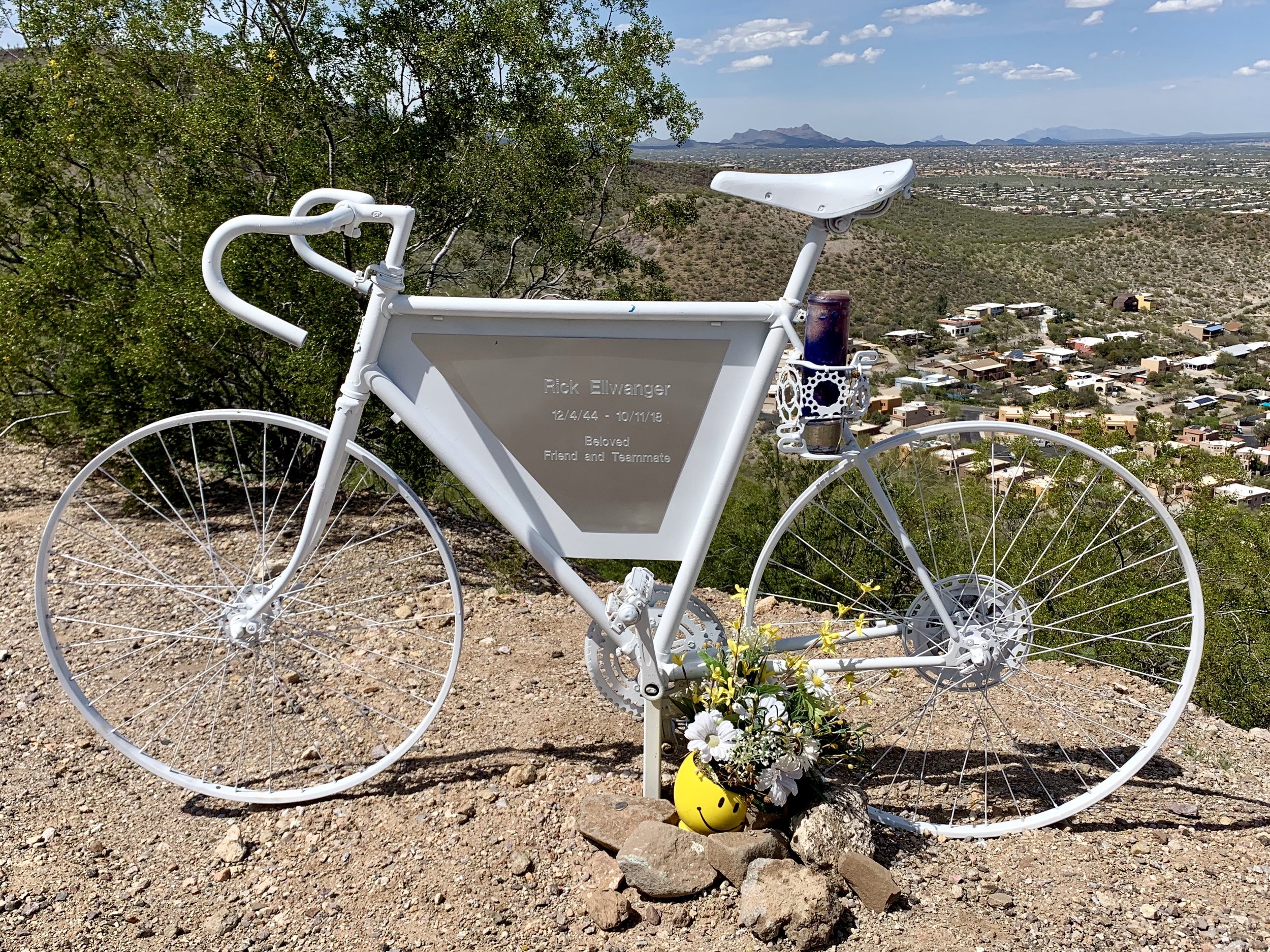
One of my intentions, for now, is to avoid an effigy in my honor. I came across this one on "A" Mountain east of Tucson.
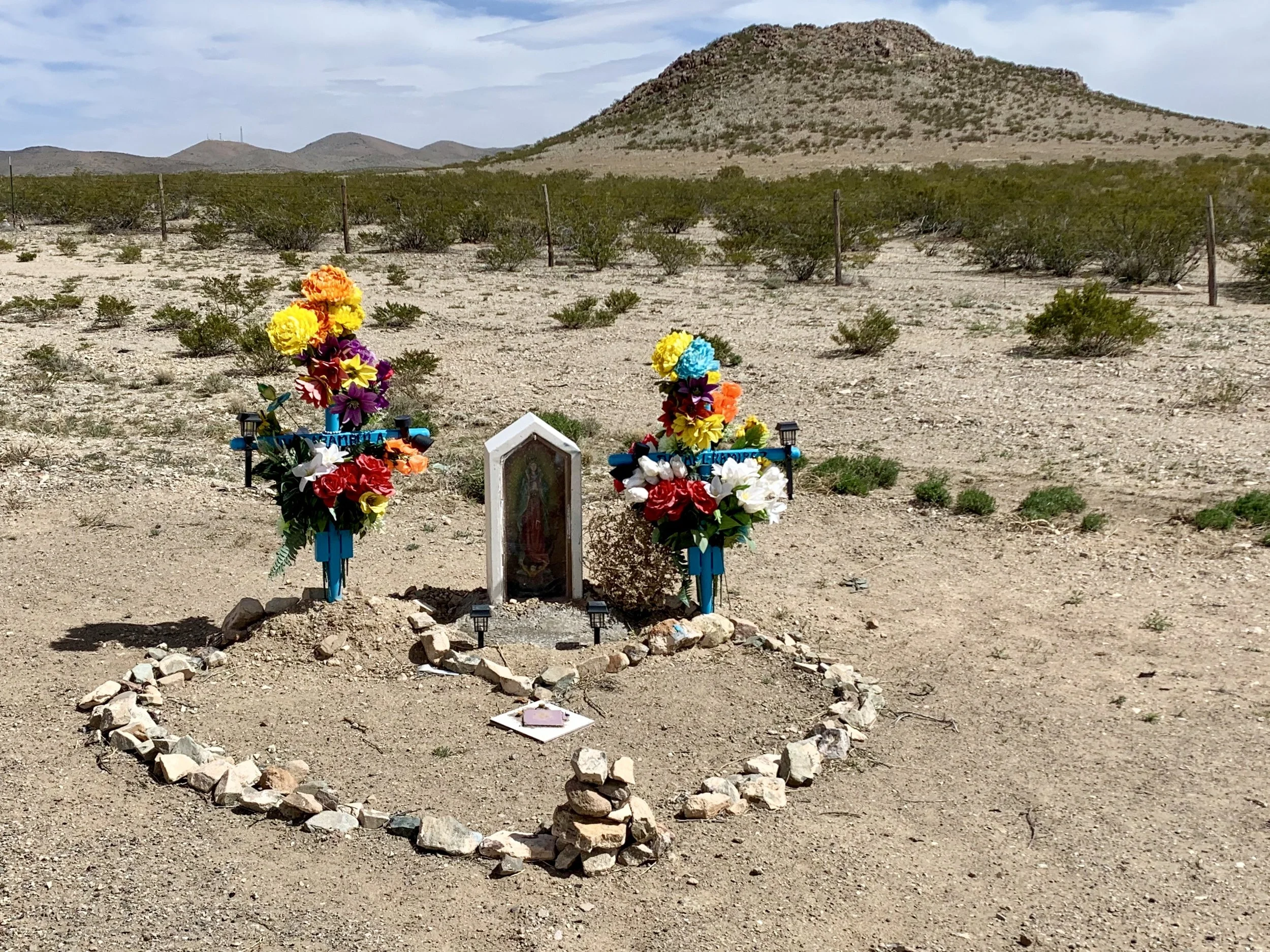
Seen in western NM.
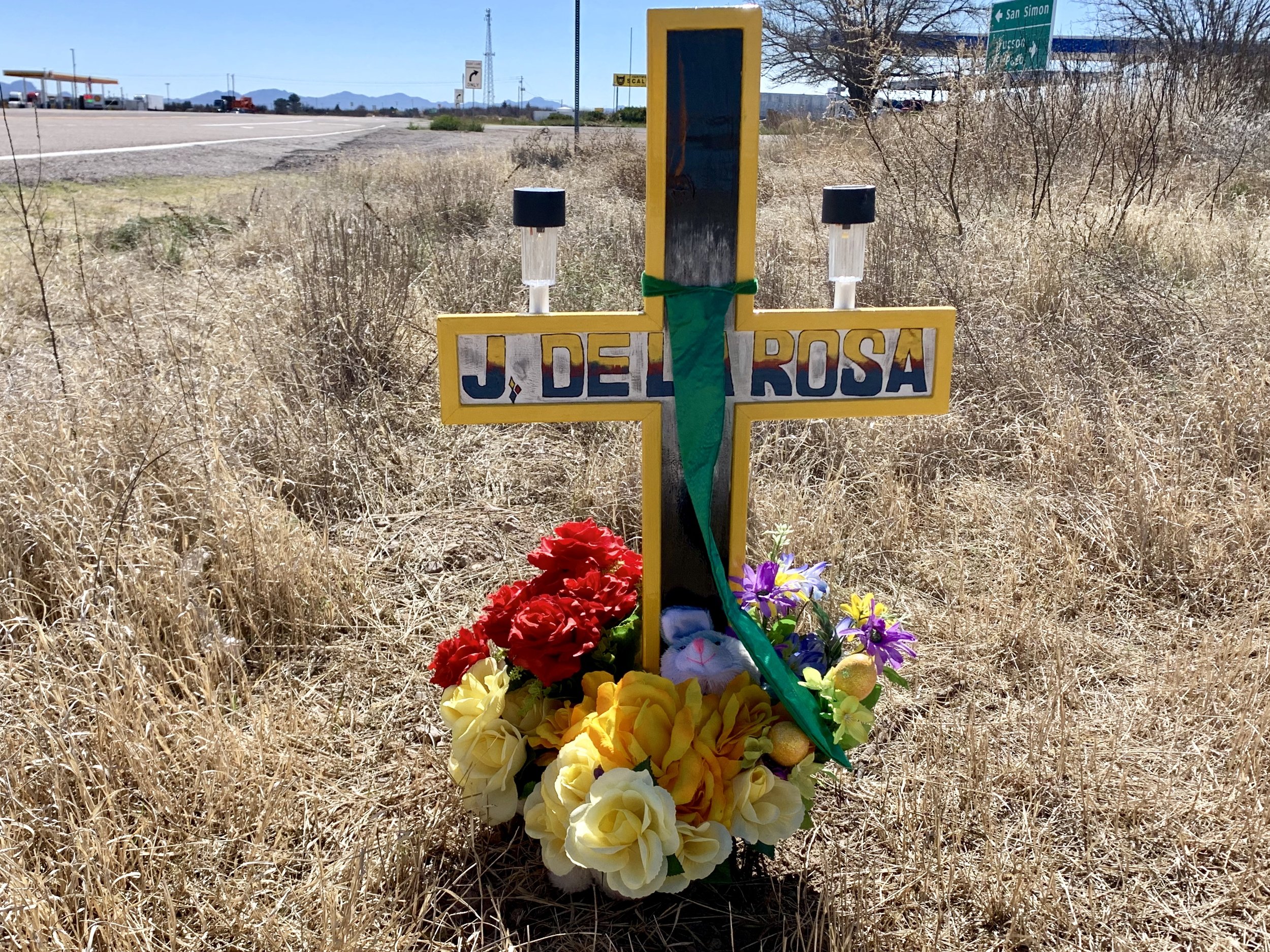
Seen in eastern Arizona.
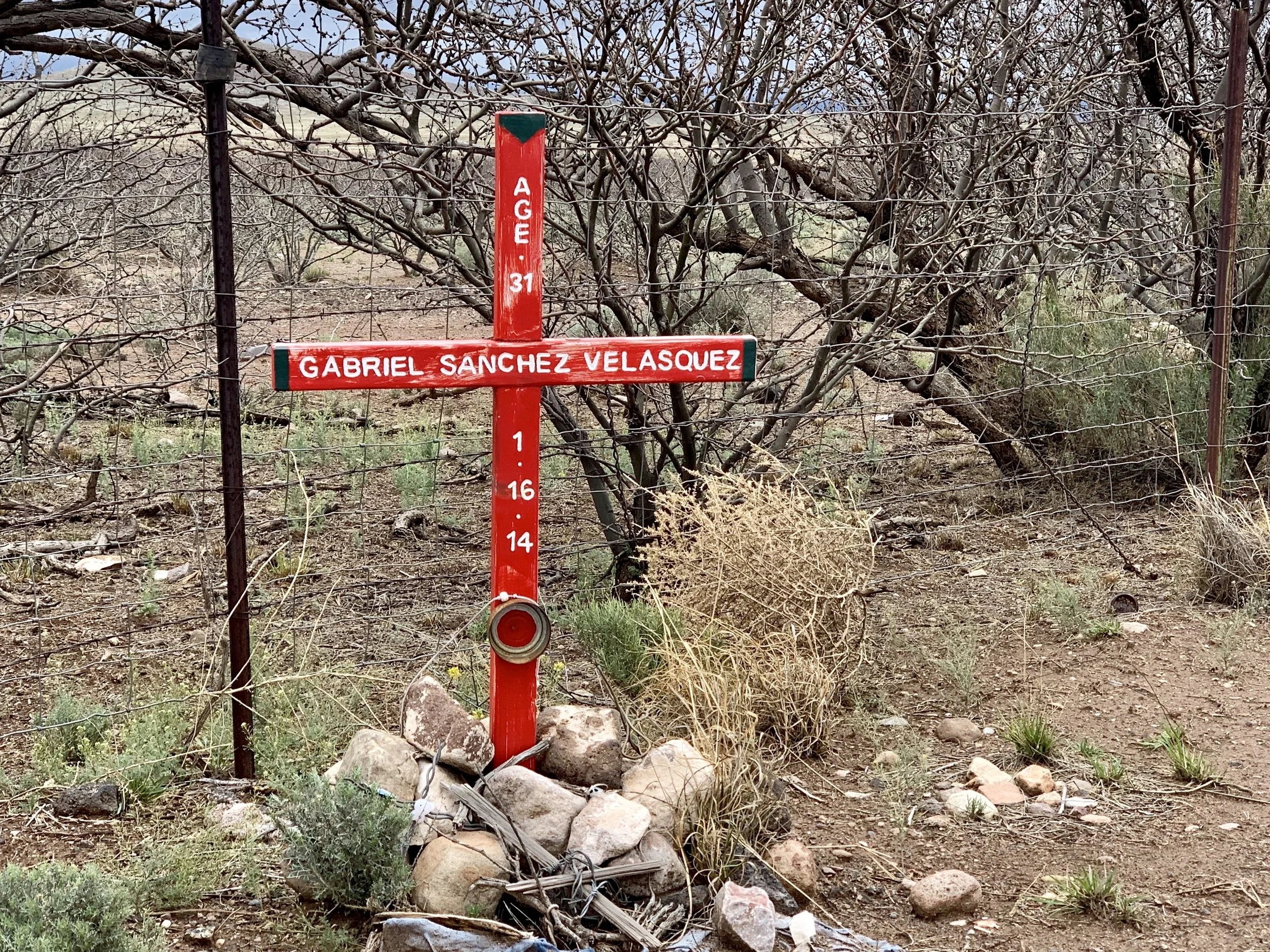
Seen near Douglas, AZ
The new plan made me breathe easier, and sleep a bit more deeply. That said, I'm sorry to have missed exploring route 9 and the towns of Columbus, NM, where Pancho Via "invaded" the US at the battle of Columbus in 1917, and Antelope Wells, NM - which I am told is a hot spot for Border Patrol action. I'll be back.
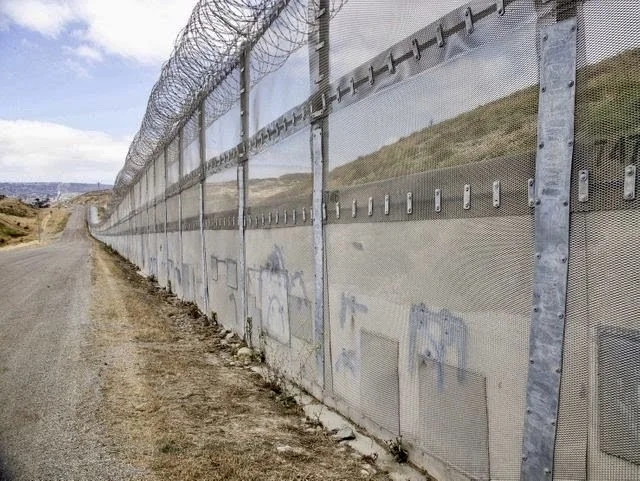
The border near Nogales, AZ. Photo credited to USA Today.
I can't say that I've seen much near the border that suggests we have a crisis of "invasion". Where I've been it seems quiet, "normal" and only subtly militarized. As per the pictures I've already posted, the fences are ugly and the concertina wire is threatening. I've been reading an interesting book titled "Storming the Wall; Climate Change, Migration and Homeland Security" by Todd Martin. If the numbers of illegal immigrants on our southern border are actually increasing (recent reports suggest that is true) they are mostly immigrants from Guatemala, El Salvadore and Honduras. And, according to Todd Martin, these countries are experiencing devastating drought, and are climate refugee "canaries in the mine" for what lies ahead.
Apparently, migrants from these countries turn themselves into Border Patrol at their soonest opportunity with the intention of applying for asylum. Most are farmers who are no longer able to survive on their land. If they flee to nearby cities, they and their families are subject to horrific gang violence. So they come north, hoping they can gain asylum in the United States. If there is a crisis, it's a humanitarian one, and one that a wall might even exacerbate. Here's an article in "Scientific American" that explains the underlying issue more deeply.
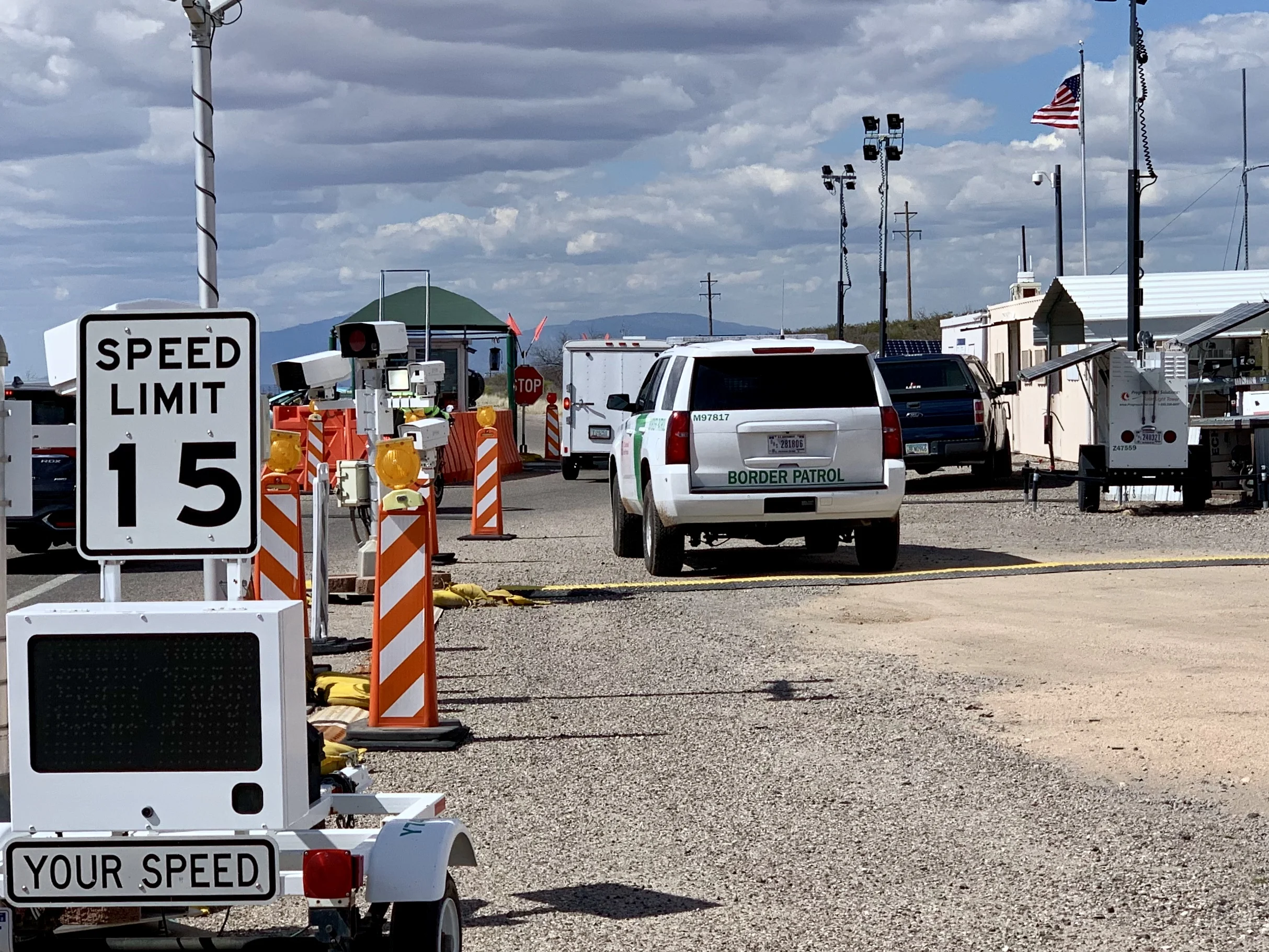
One of hundreds of checkpoints on a north/south road just south of Interstate 10. They are intended to keep migrants from gaining access to our interstate system. I've passed through several. Each time I've asked the agents if it was busy that day, and each time the answer was no.
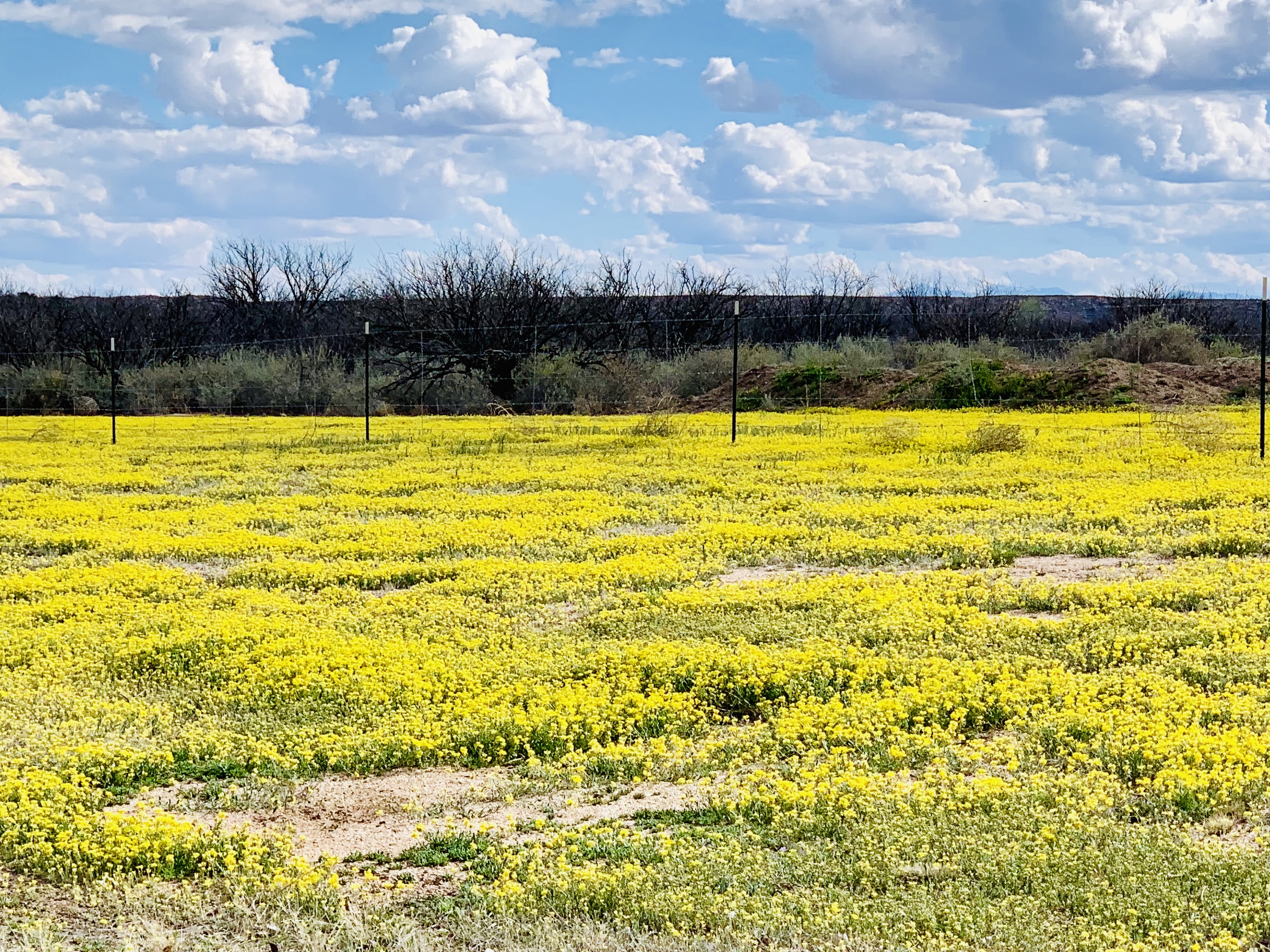
Fields of daisies are common here this time of year.
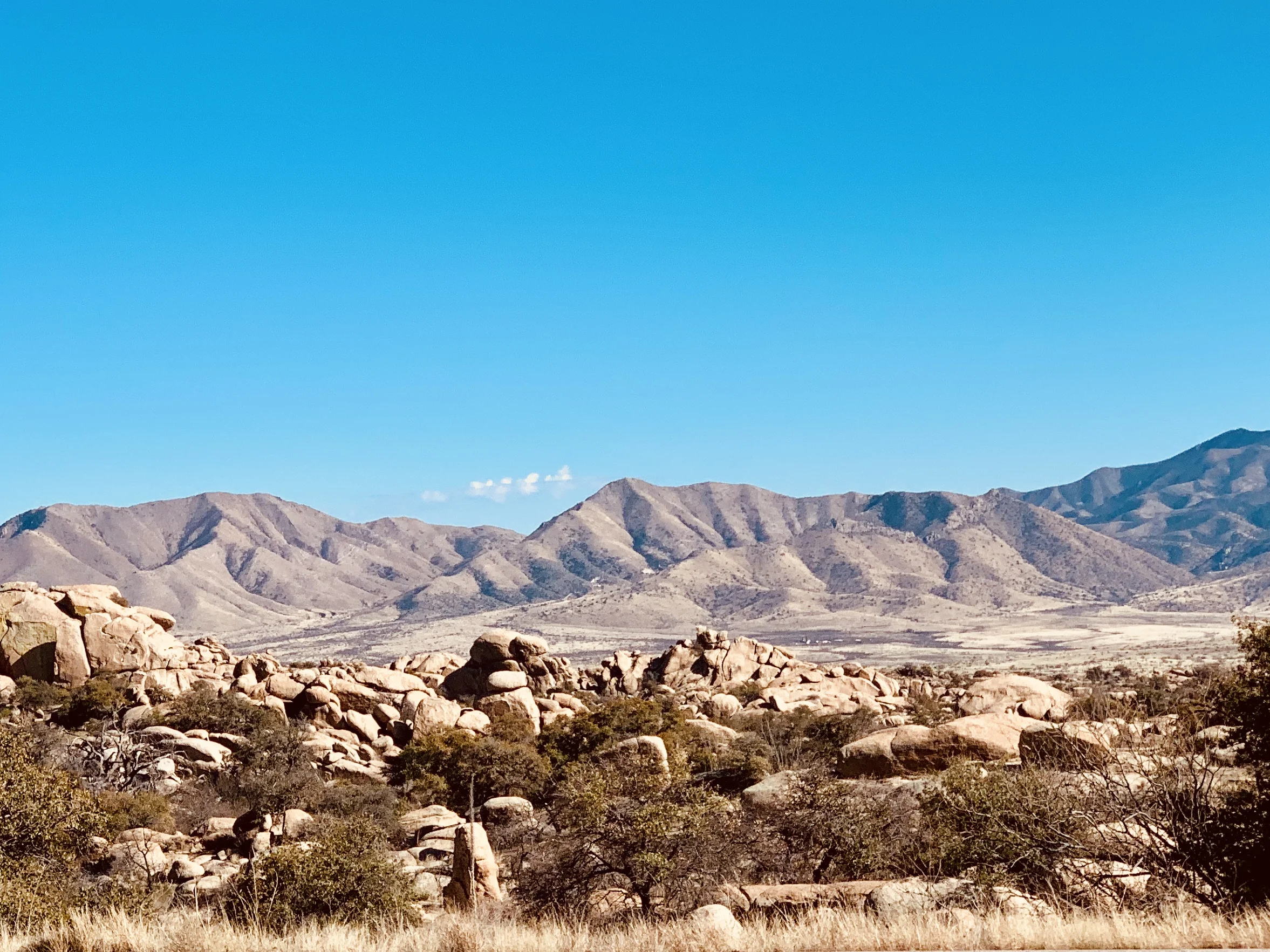
A view to the south about 50 miles east of Tucson.
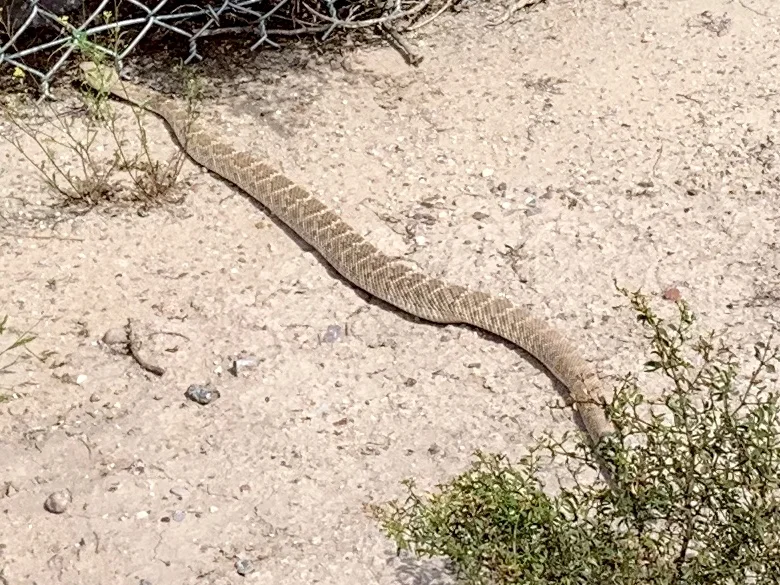
A rattlesnake seen on a bike trail near Tucson. As it gets hotter, they get more active.
Next week I fly back to New York. It will be another month or so before I start my next cycling adventure, so you'll notice a lag in my blog posts. But, as always, there's more to come.
All photos, unless credited or otherwise noted, are copyrighted property of the blog post author.
Phoenix to El Paso, Post 2
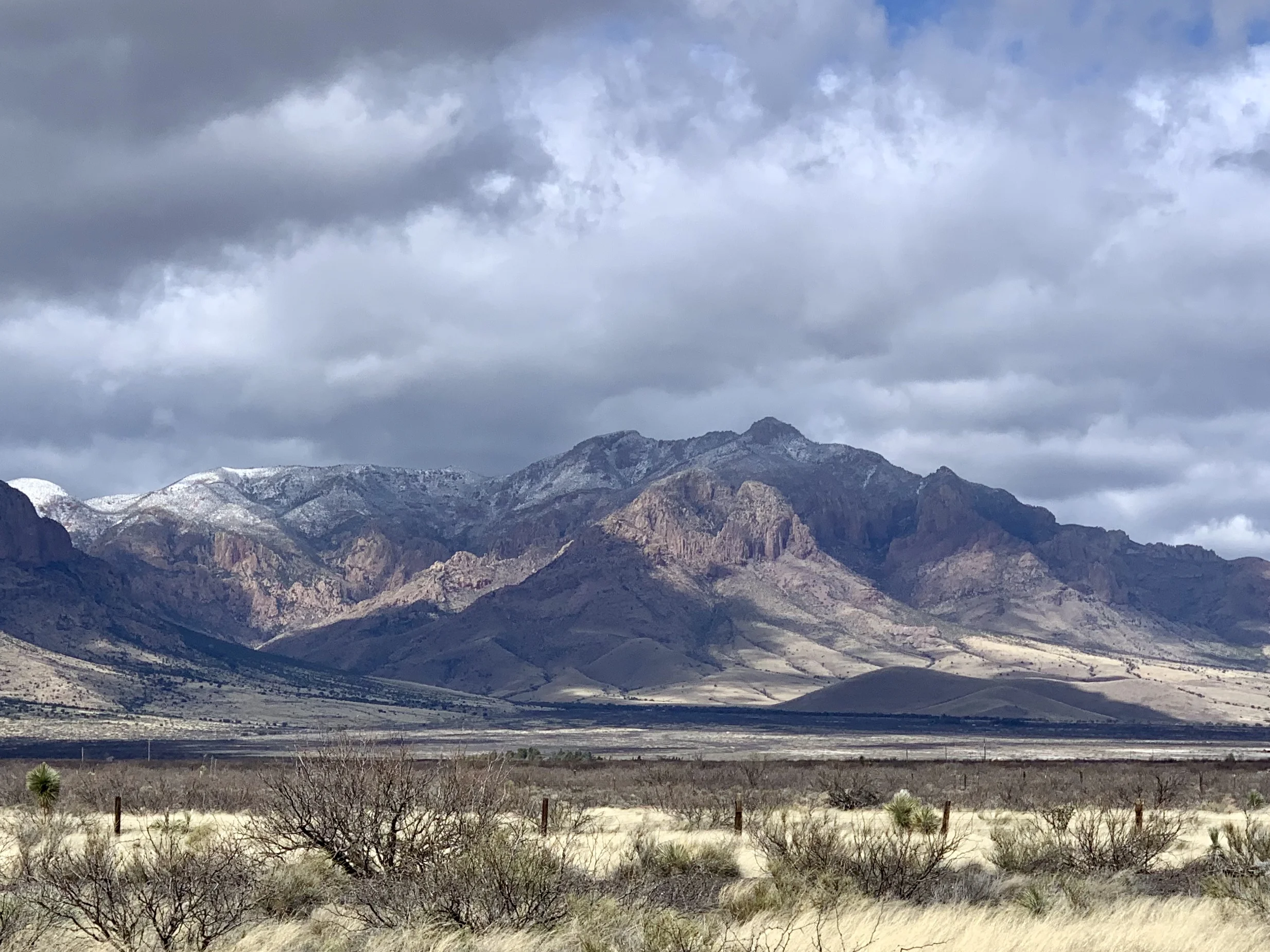
The Chiricahua Mountains near Rodeo, NM.
I spent several days in Douglas, AZ. The first day was sunny, and my friend Dave and I went across the border into Agua Prieta. It was like many other border towns I have visited -- cheerful, dusty and enterprising.
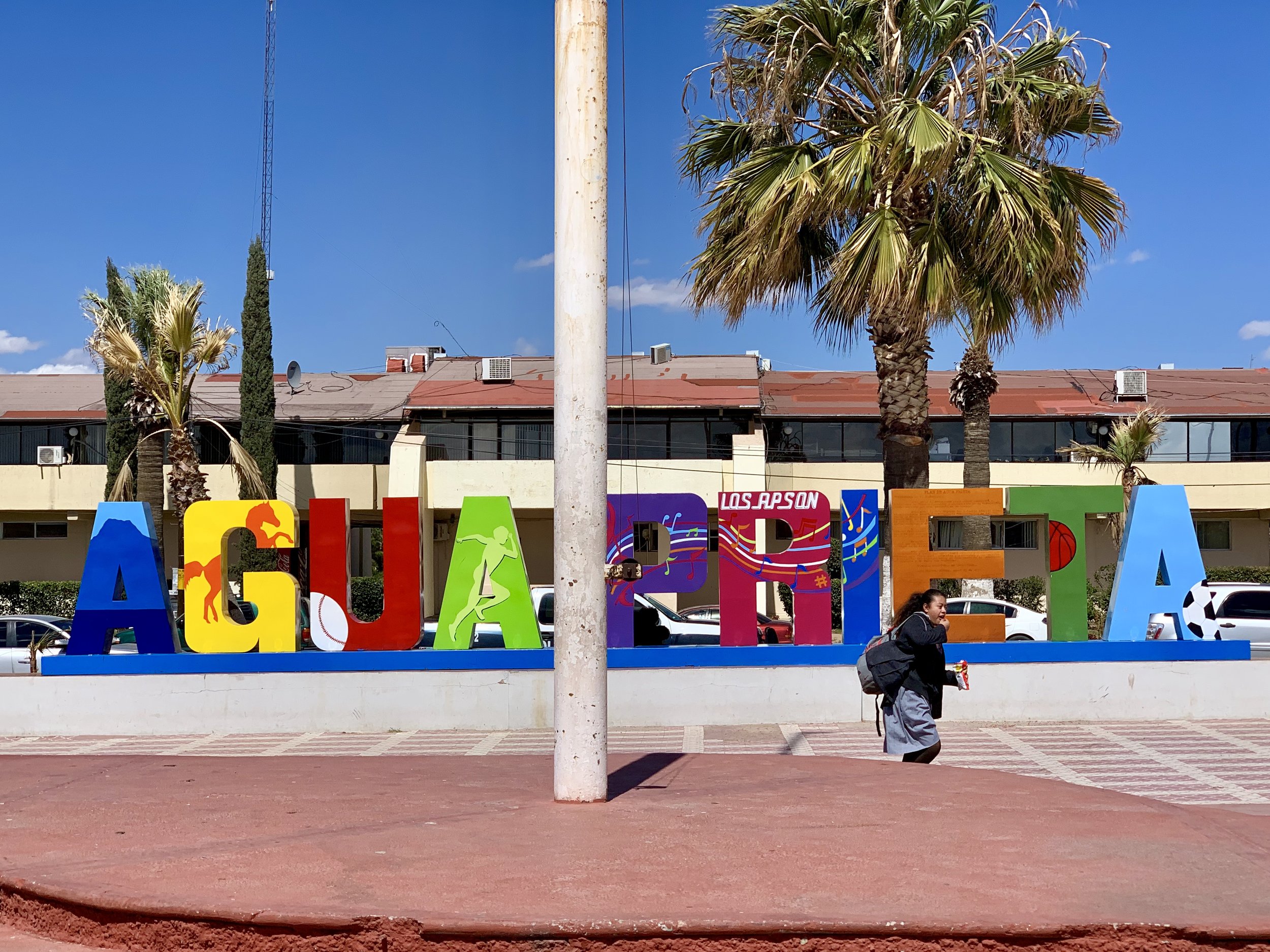
The main square in Agua Prieta.
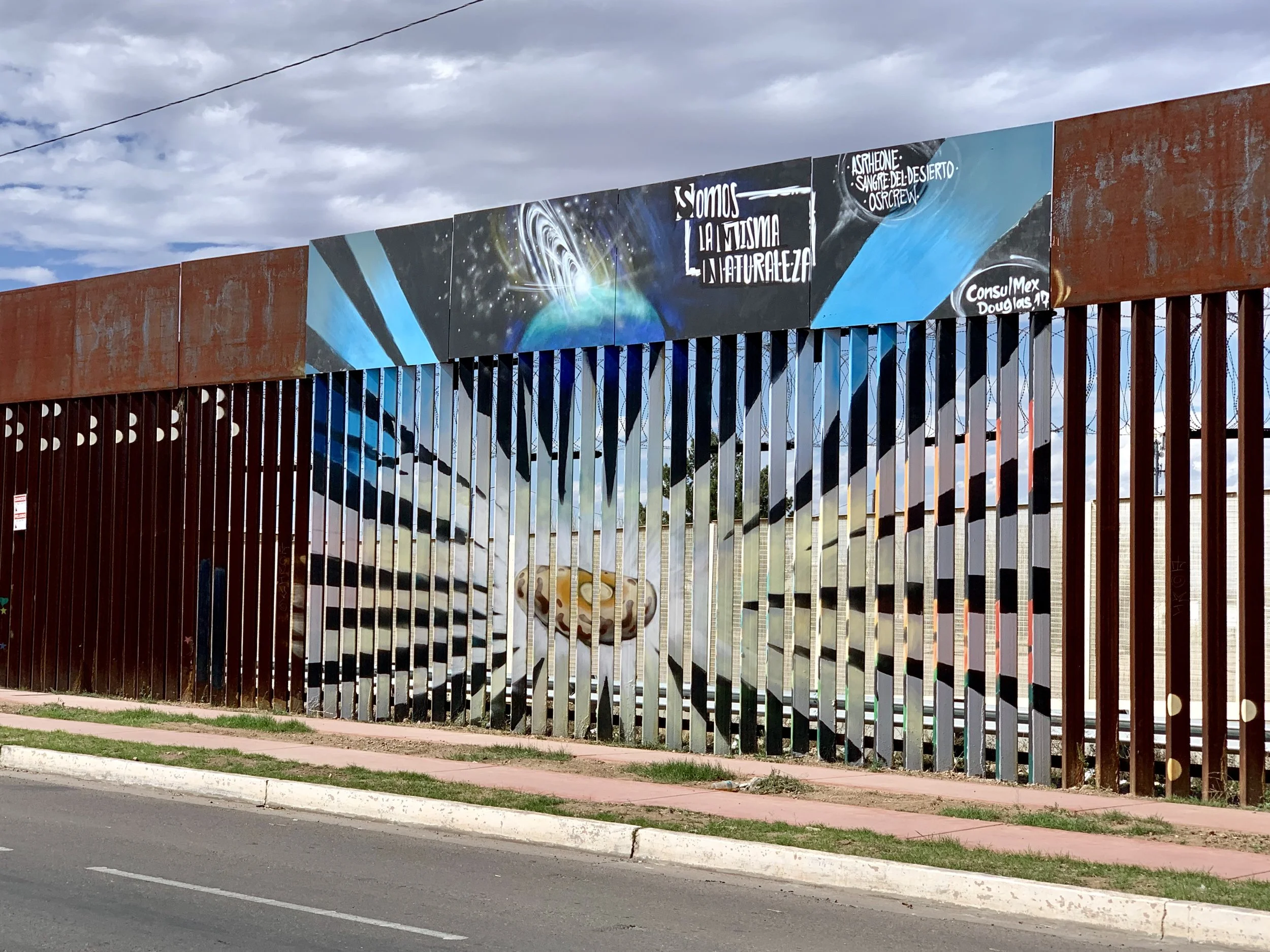
The Mexican side of the border fence.
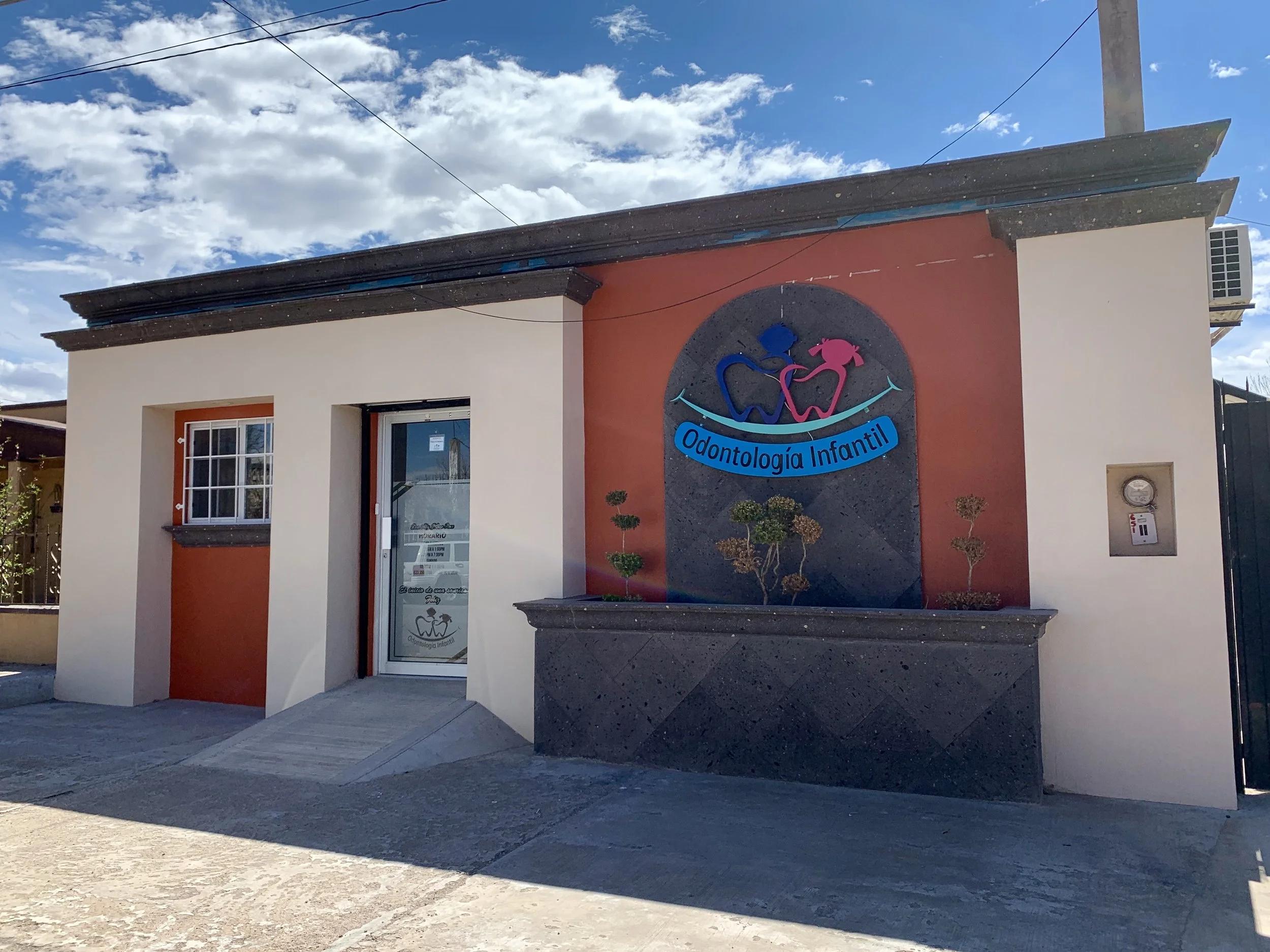
A Periodoncista office in Agua Prieta.
It's no secret that there are many thriving dentistry businessness in the border towns that cater to Americans looking for affordable dentistry. I'm told that lots of Mexicans come to the US to study, get their board certifications in California, Arizona, New Mexico or Texas, and then set up business across the border where they can count on a ready supply of American patients happy to travel across the border to pay lower prices. Cleanings, fillings, crowns, etc, are all hundreds of dollars cheaper than what similar treatments cost in the US.
It rained heavily the next day, and was also cold, windy and occasionally snowy, all very unusual for this far south. During a break in the rain, Dave and I drove the gravel road that follows the American side of the border to Naco.
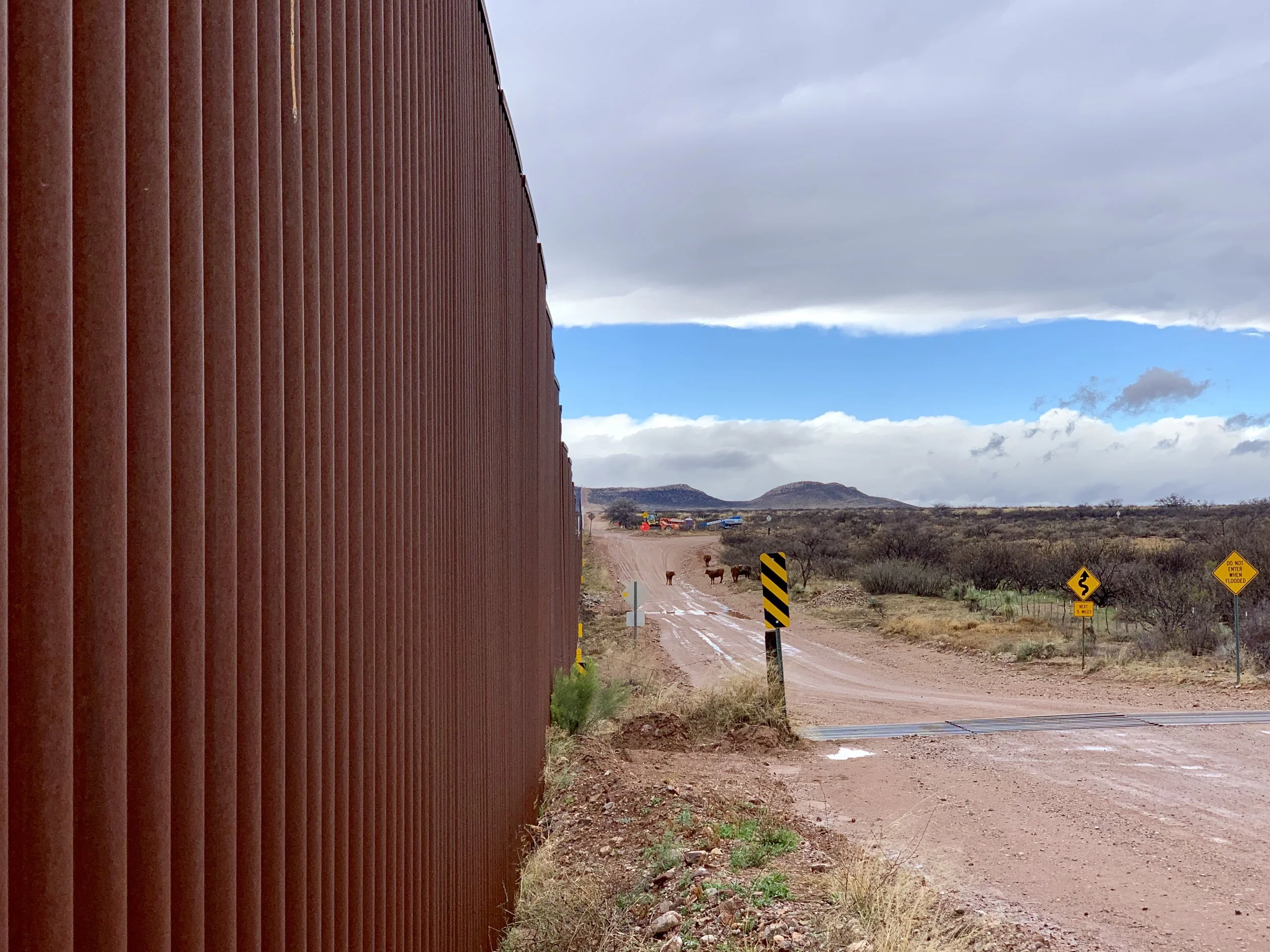
The US side of the wall looking west.
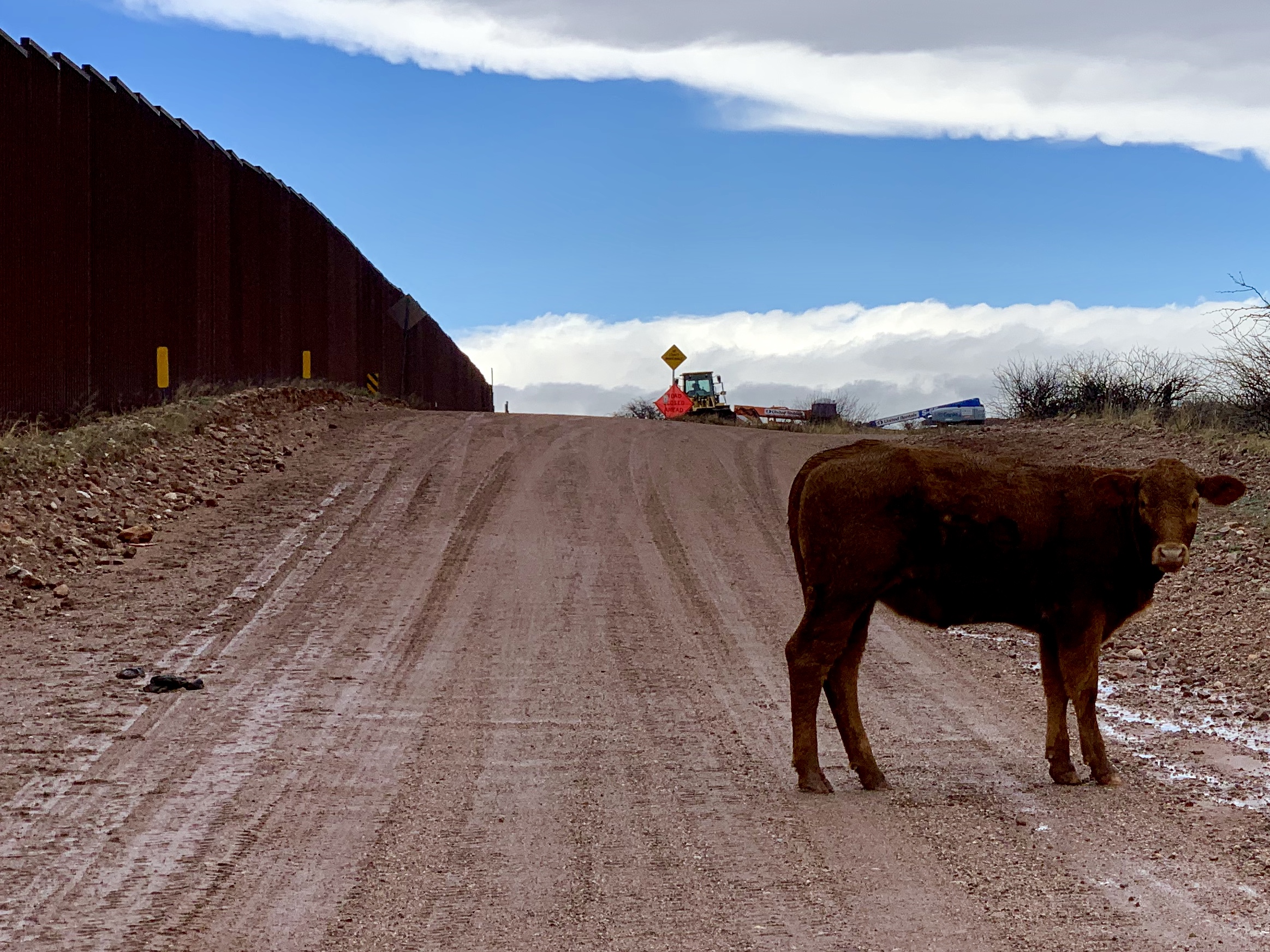
This will make intruders cower!
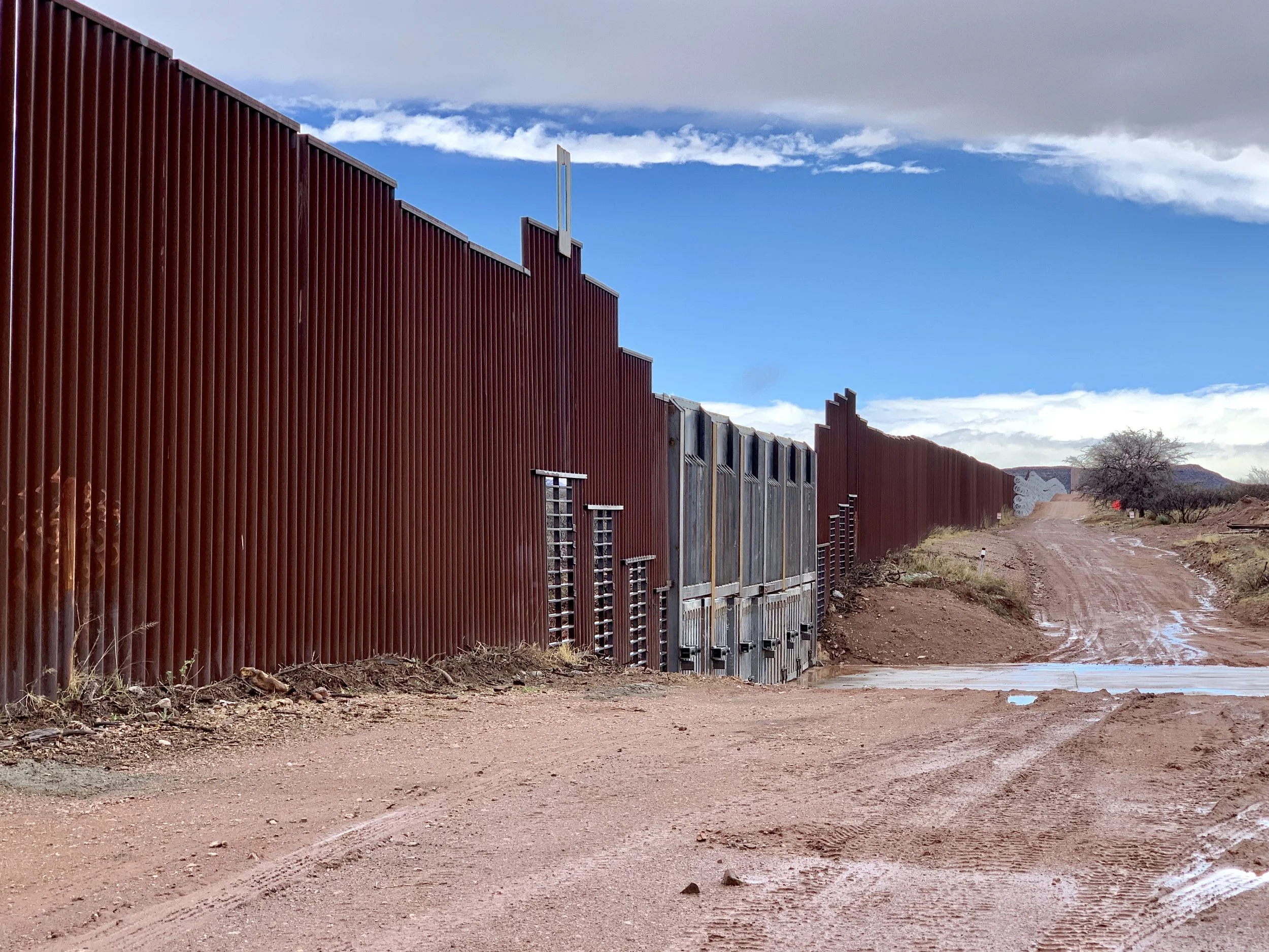
A reengineered wash.
US fencing currently seems to be a hodgepodge of different construction phases over the years, from a simple barbed wire fence that spanned much of the border for decades, to various high slat based versions that were built consecutively by the Bush and Obama administrations. Trump has primarily brought us concertina wire (see Post 1 of this series) that will slice up anyone attempting to rope-climb down the US side of the fence.
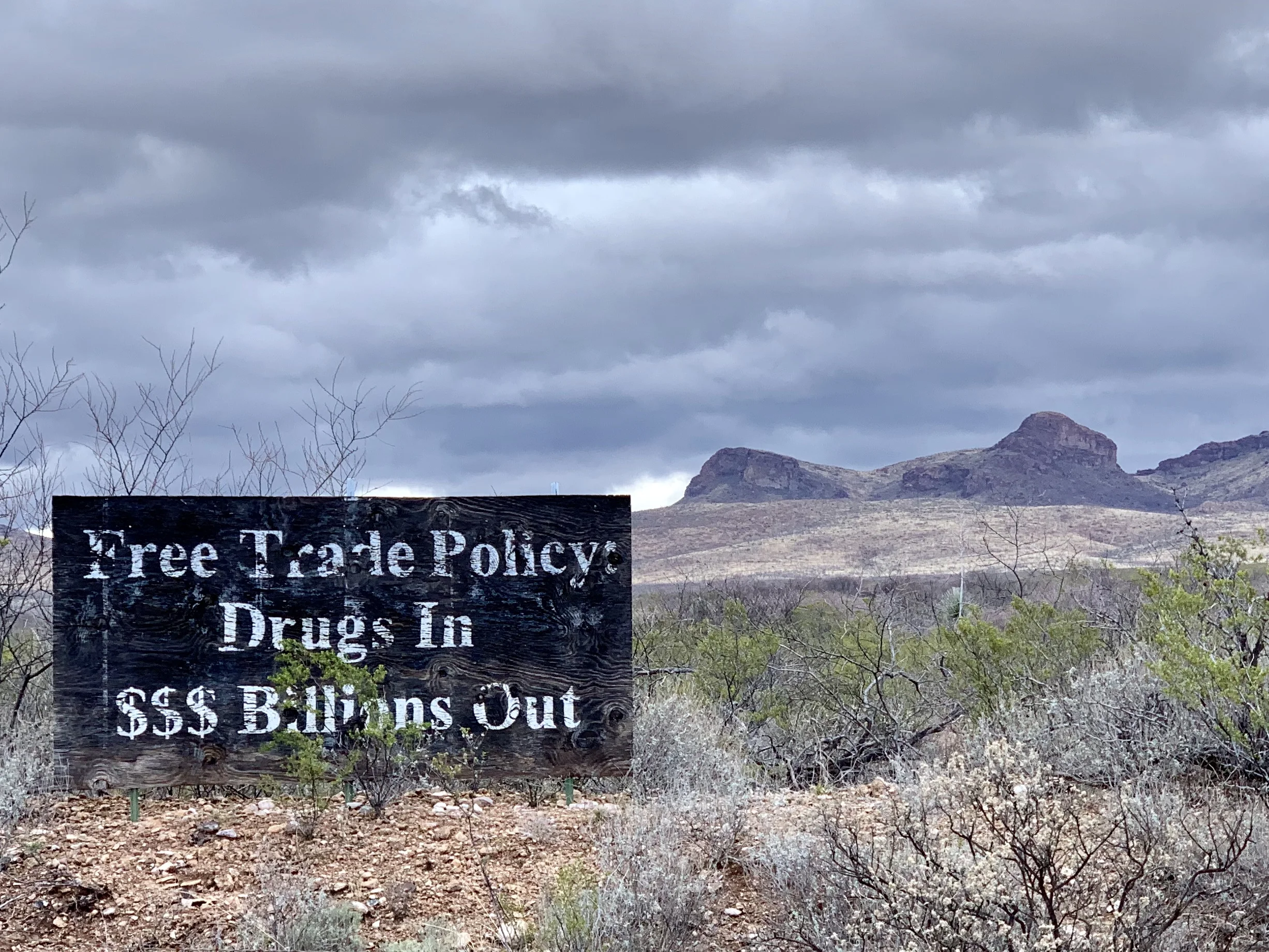
Someone's view of US trade policy.
The next day I left Douglas and biked (with a 27 mile an hour backwind) northeast along the Chiricahua Mountain Range over a mild pass to the east, and then downhill to the north with the Chiricahuas to my left. With the back wind, I could go 10-15 miles an hour simply by sitting on my bike and using my back as a sail. Thank God I didn't have to go the other way.
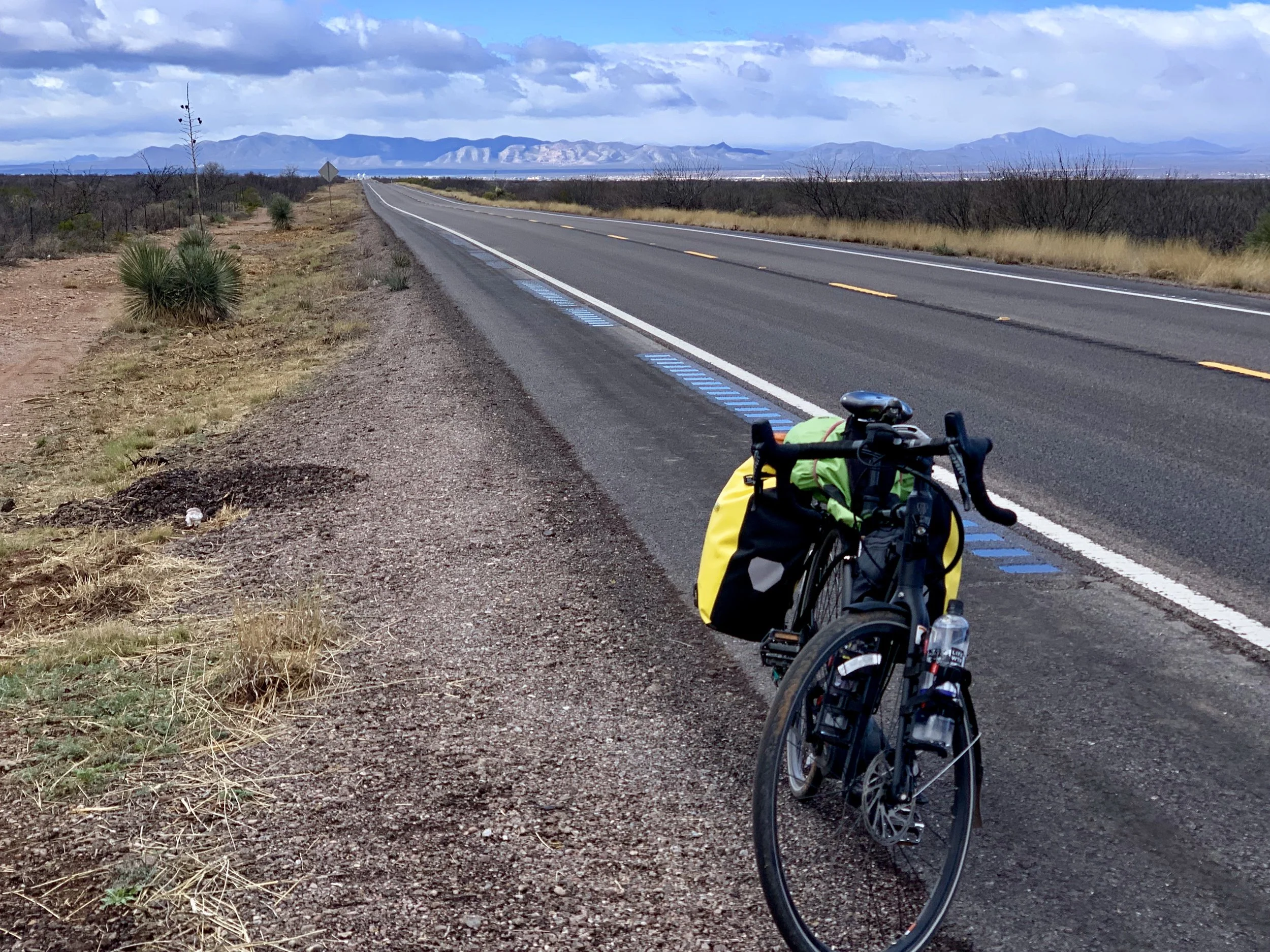
Just north of Douglas on the way out of town.
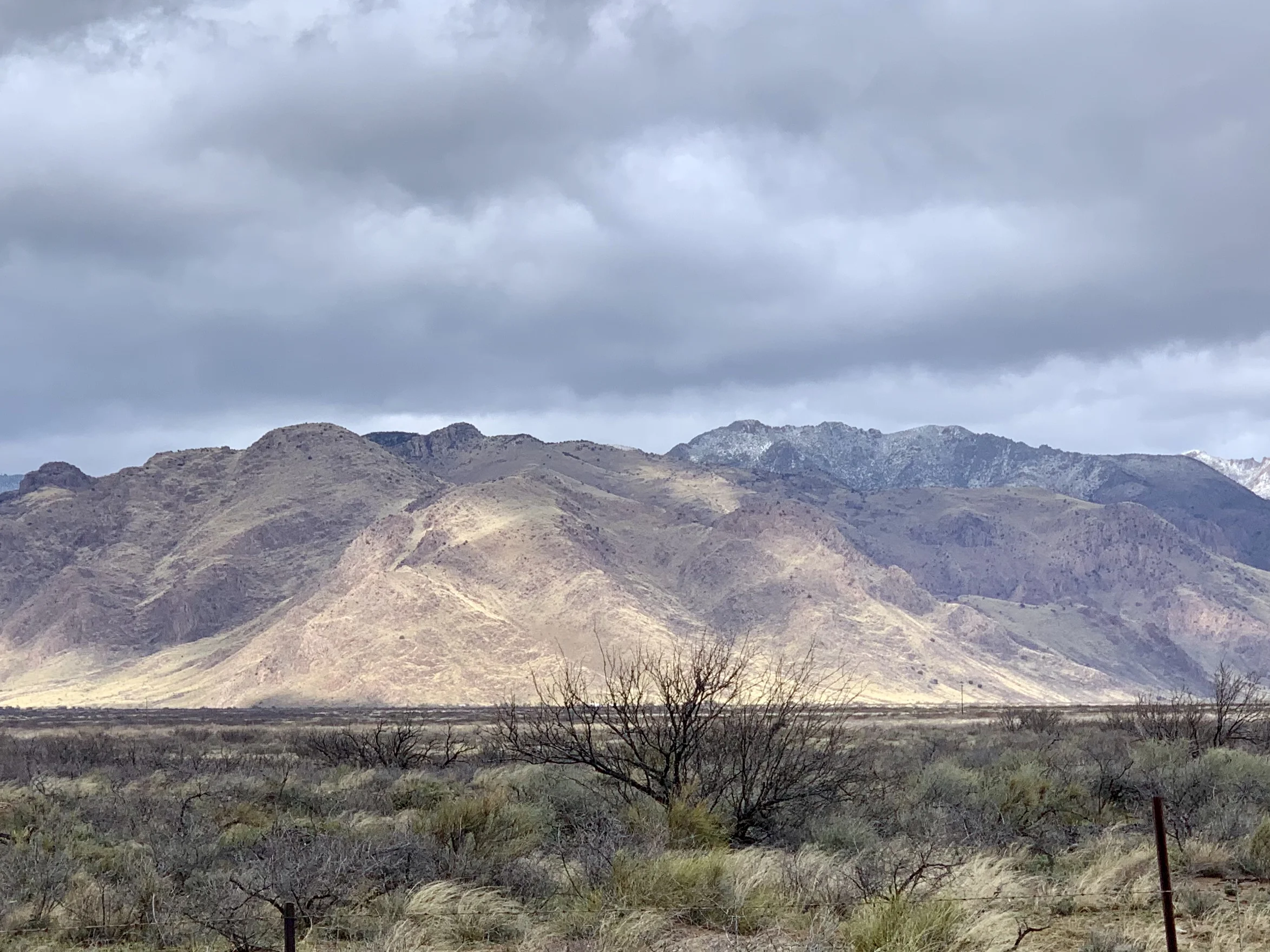
I had this view for about 20 miles as I headed northeast.
The Chiricahuas are stunning, as is the Animus Valley to the east. I really can't express the (almost painful) beauty I find in such uncompromising and imposing environments. I was enthralled every fleeting moment the sun made an appearance.
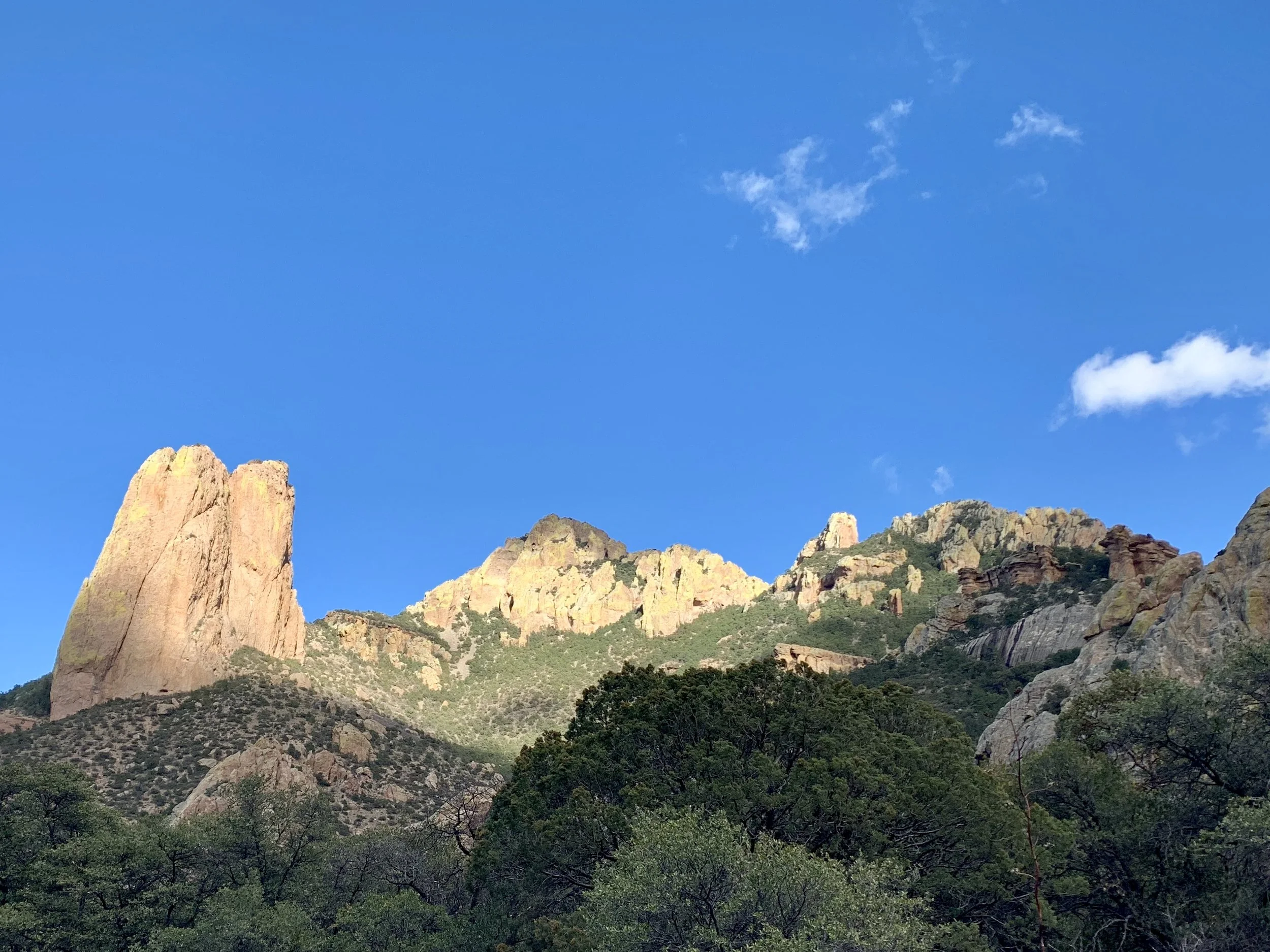
The view from cave Creek Canyon near Portal west of Rodeo.
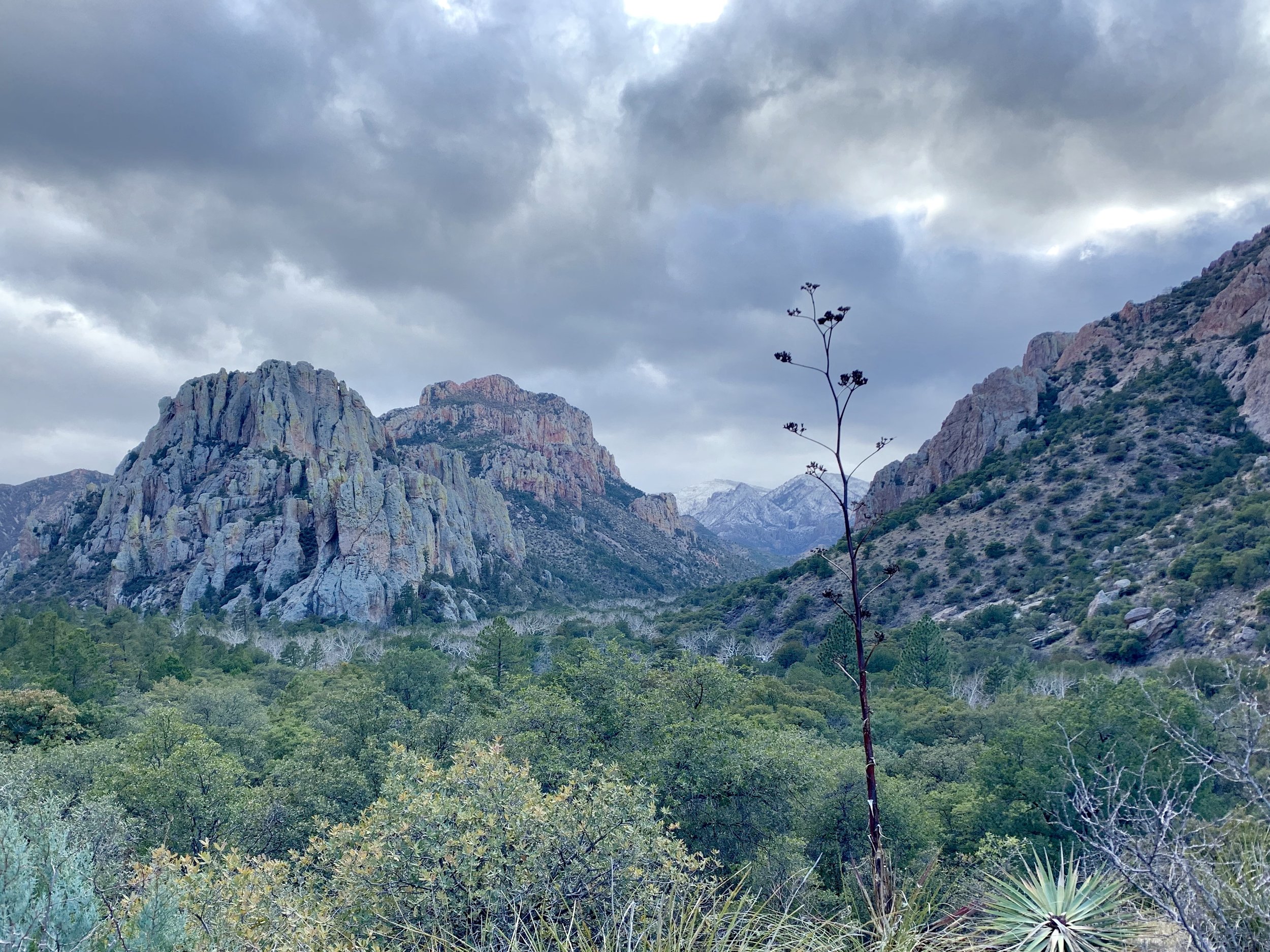
Another view at Cave Creek looking west.
In closing, I'd like to include a link from an article from Inside Climate News that refelects on two different (but potentially complimentary) legislative proposals in Congress right now that address climate change. We may be nearing that seminal moment when the shoe falls on climate science denial, and our normal public narrative becomes that it's soberingly real, and must be addressed thoughtfully and urgently. That outcome is inevitable, but will it happen soon enough?
I, for one, would like it to be characteristically warm in the southwest when I leave the northeast to cycle here. Two days ago I sat in a bar in Bisbee, AZ watching snow fall. It was March 12, and I was about 15 miles north of the Mexican border. I hear it's been a whacky year for our jet stream and polar vortex to the north.
Sure looks like climate change to me.
More to come, of course.
For those of you missing my Garmin posts, here is yesterday's ride.
All photos, unless credited or otherwise noted, are copyrighted property of the blog post author.
Phoenix to El Paso, Post 1
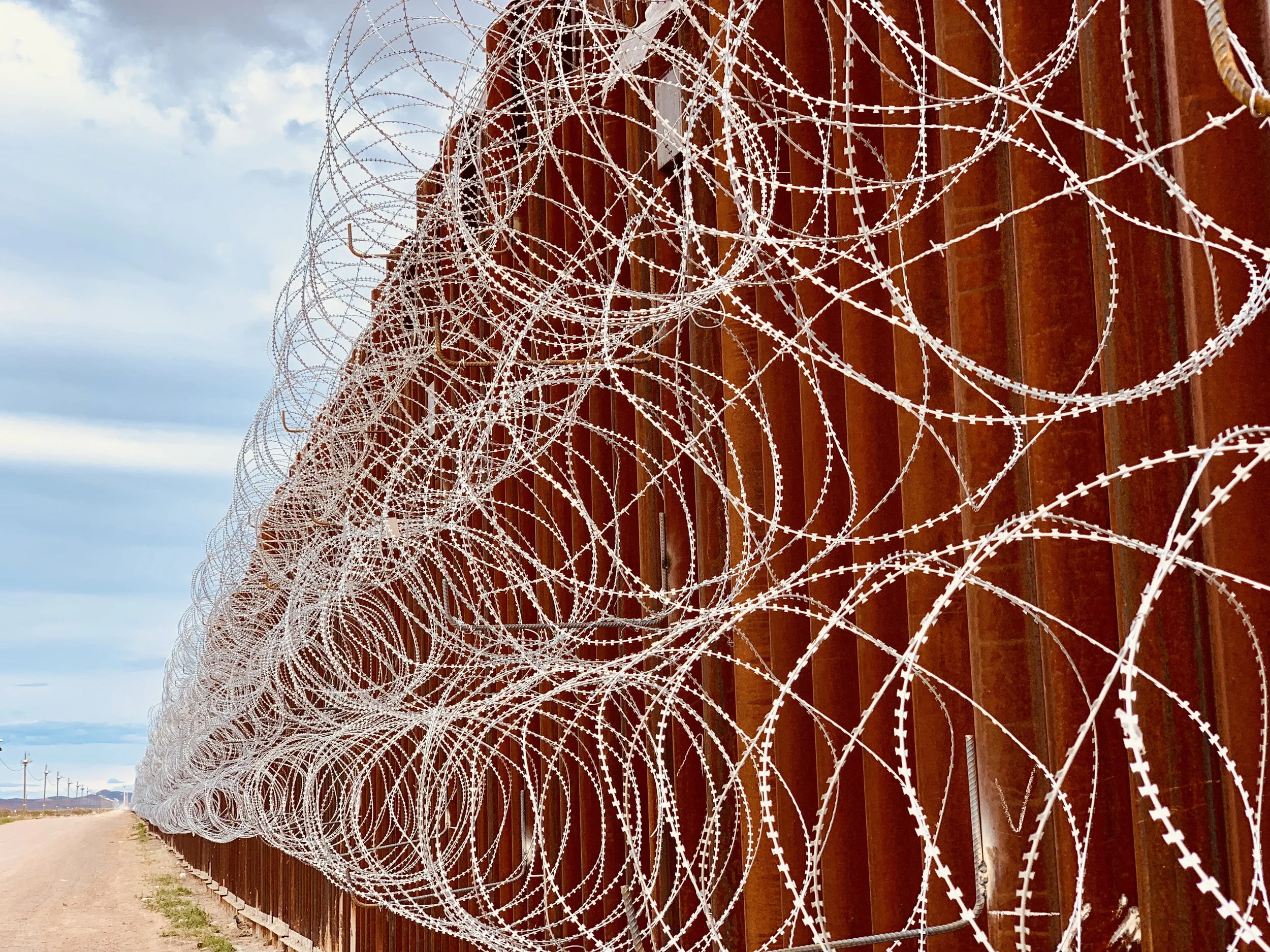
The Border Fence in Doulgas, AZ
My last post was January 19.
I've heard it said that "time flies like an arrow, and fruit flies like bananas." I do not doubt the veracity of either concept.
I did get to Phoenix (after my last post), where I put my bike in storage and returned to NYC to take care of personal business, attend some Citizen Climate Lobby meetings, and reconnect with friends. Then in late February, I returned to Arizona for another cycling adventure.
I'm trying out a new structure for cycling this year: a month or so on my bike, and a month or so with friends in NYC, or visiting my kids and grandkids in Wisconsin (my daughter Saren just gave birth to a boy), or in Illinois (where my Mom lives) or California (where my Dad lives). The upside of this way of life is that I can remain engaged in both love and work. The downside is that although cycling generates no carbon, I must still find ways to travel on something other than a bicycle to get long distances (especially in the winter months). There are few good options, and although I would prefer to use trains on a regular basis, I fly more than I feel good about. Recently, I started purchasing carbon offsets to mitigate the carbon load that flying generates. But it's important to recognize that there's a difference between neutralizing a carbon load and actually reducing one.
We all live in an imperfect world, so almost every way we travel generates carbon (bicycles may be the only exception). Think of how most of us get food or go to work. Think of solar installers or wind technicians who must drive trucks loaded with equipment to create renewable energy projects. Think of the several thousand Climate Citizen Lobbyists who gather in DC twice annually. Think of world leaders who travel internationally to annual COP meetings. Think of annual meetings for the American Geophysical Union (AGU), probably the largest annual conference of climate scientists in the world. The carbon load for every event - productive or unproductive, useful or useless - is part of the extraordinary two and one half million tons of carbon we dump into our atmosphere every second.
Our detractors aren't worried. I deeply wish they were right. Life would be so much easier if physics didn't cause air temperature to rise as CO2 levels rise. But that basic principle of physics has been understood for over 100 years, and it's not going to change. It's we who must change. And one outcome is certain - if we don't change, physics will change us.
I am writing this (12 days after arriving back in Phoenix) from a motor coach in an RV Park in Douglas, AZ, owned by my friend Dave Henderson (a fellow cyclist, I met Dave several years ago near Asheville, NC, when I cycled the Blue Ridge Parkway).
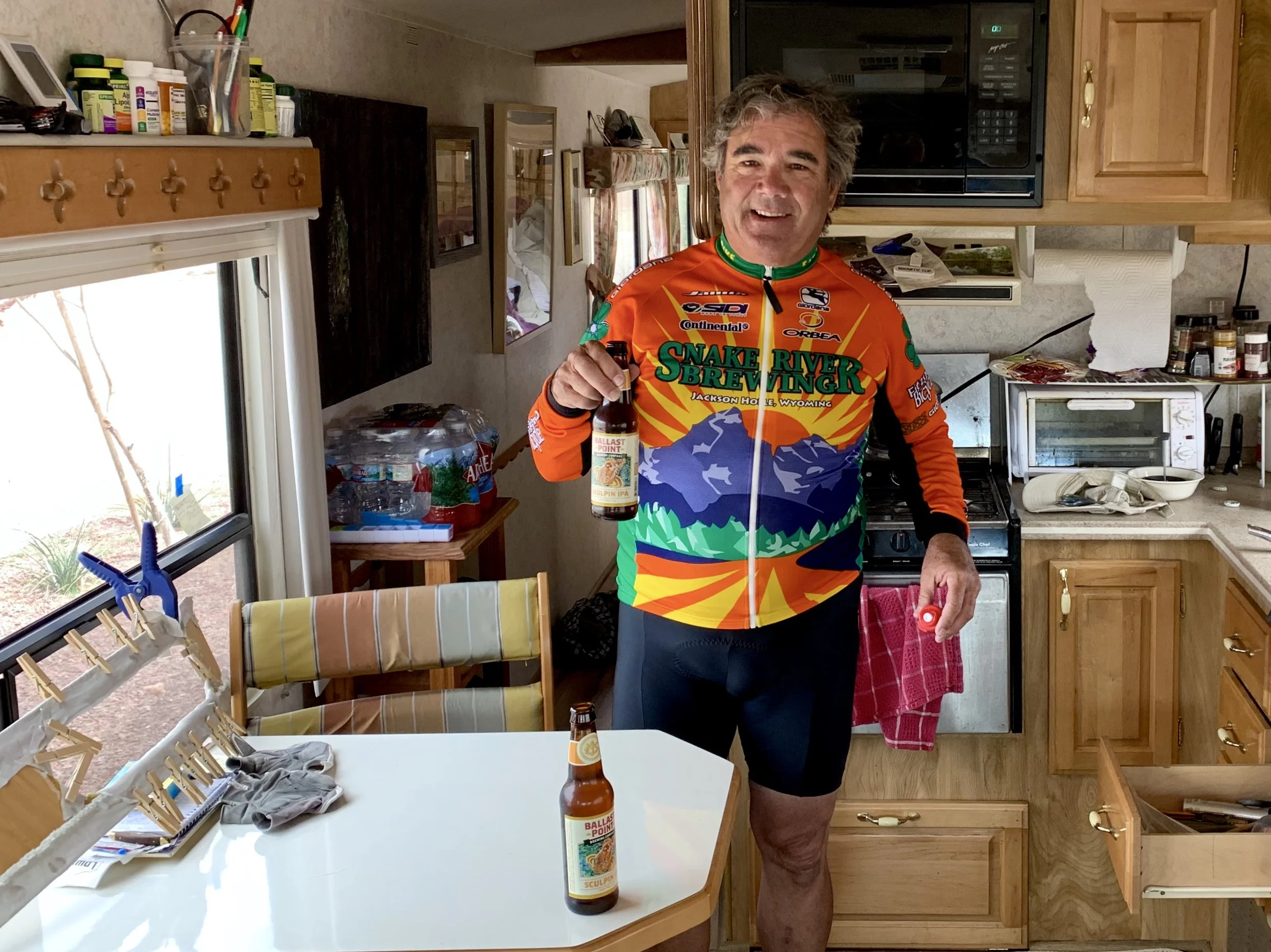
Dave in his RV offering me a beer after a very windy ride.
I have been pretty busy breaking in, outfitting and test riding a new bike. It's a Trek CrossFit, part of a class of athletic electric bikes that uses a Bosch electric motor powered by a 500 watt lithium ion battty to increase speed, climbing and wind endurance capacities in graduated intervals. It is only pedal assist and has no throttle. The mileage capacity is about 60 miles on a charge, but with tweaking and careful use, it's range can be extended to 80-100 miles.
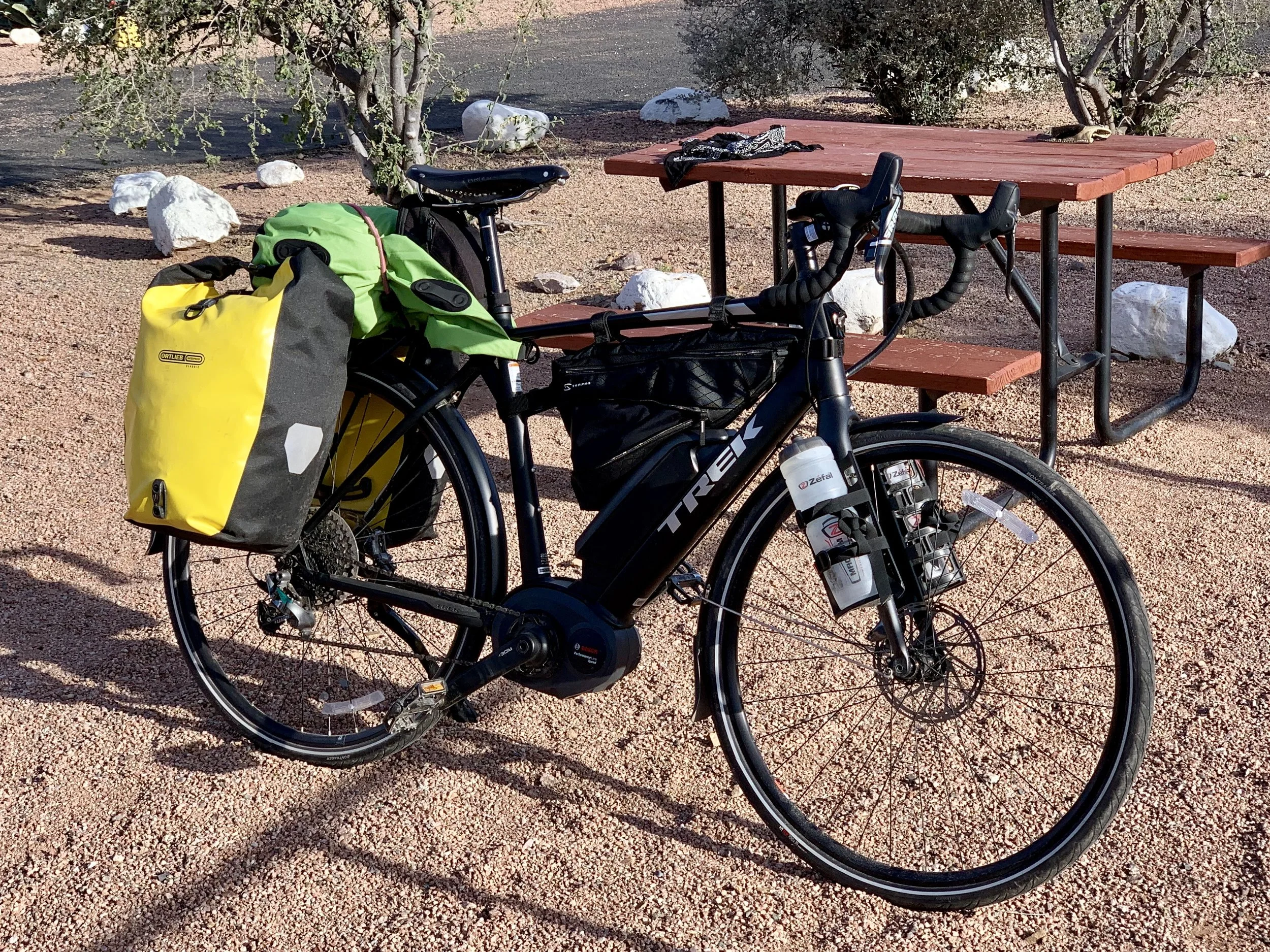
The bike is marketed for long commutes, so I'm pushing its boundaries a bit. So far, so good. And if you're wondering, my beloved Surly Long Haul Trucker is being shipped back to NYC. And yes, that's another way I am adding carbon to the atmosphere. How do we make good decisions in this life?
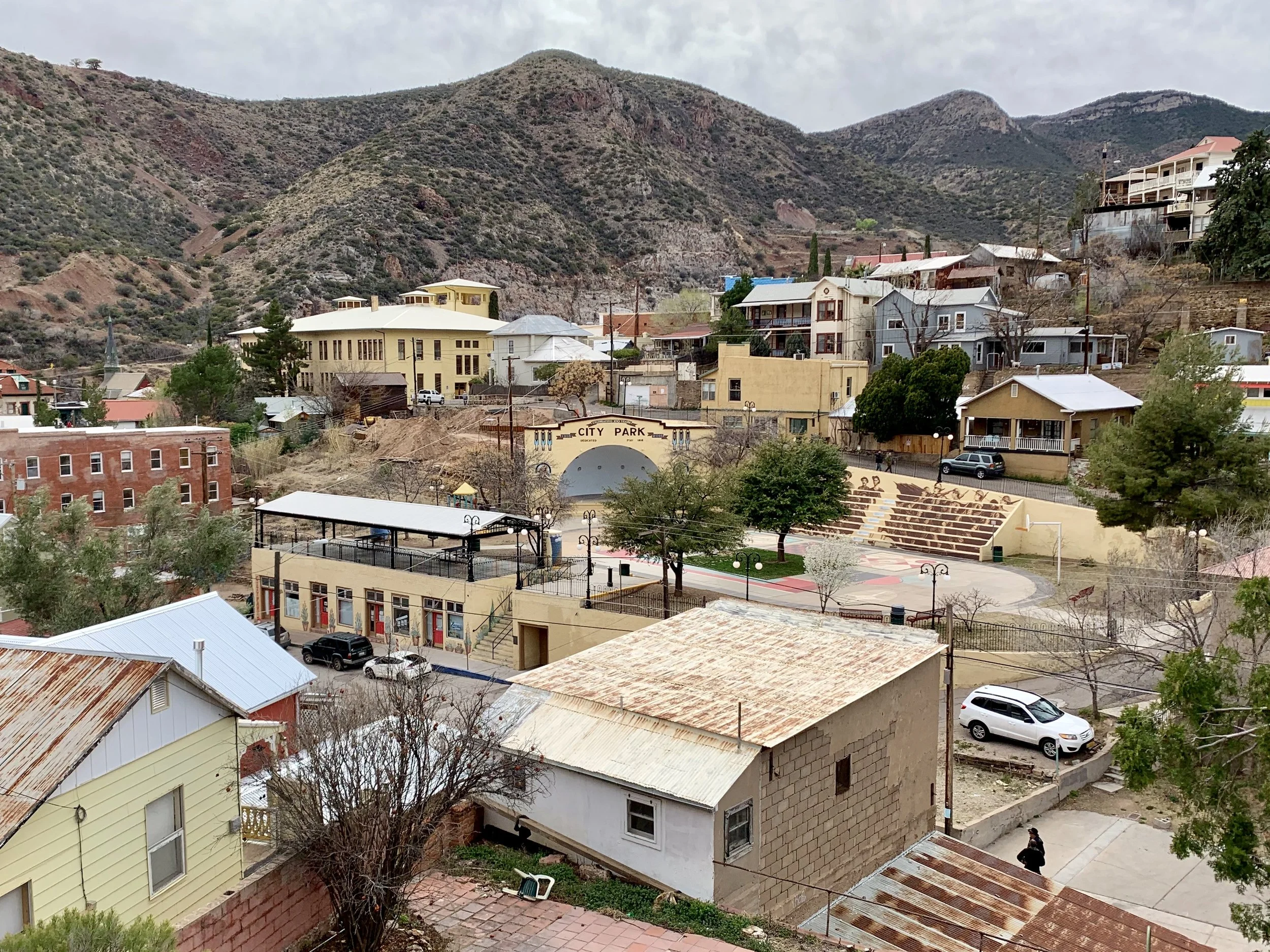
Bisbee, AZ, is an old copper mining town just west of Douglas. At one time it was the largest community in Arizona. No longer a minIng town, it is now a wonderfully funky tourist town, with early twentieth century architecture and featuring lots of festivals to attract tourists.
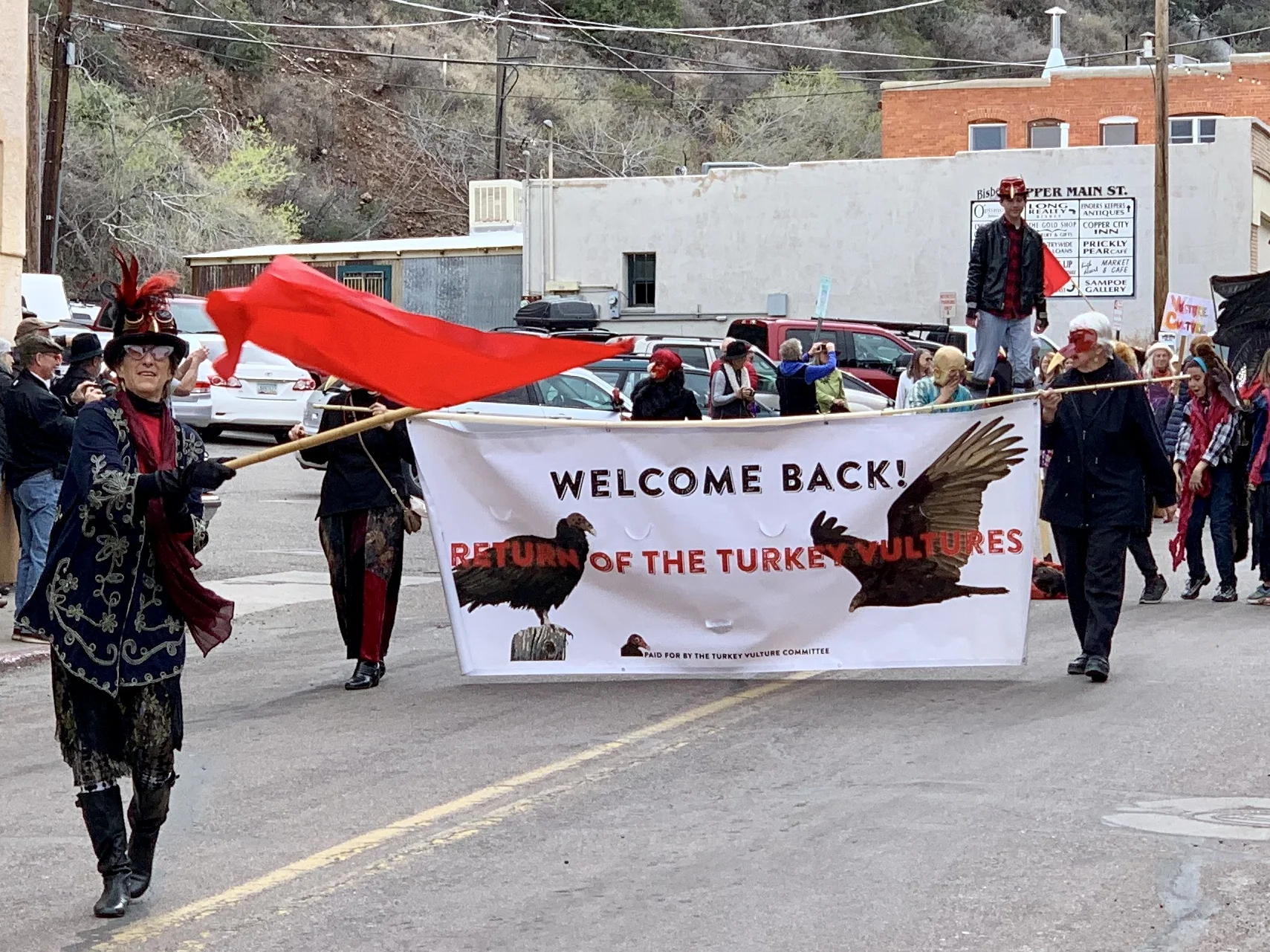
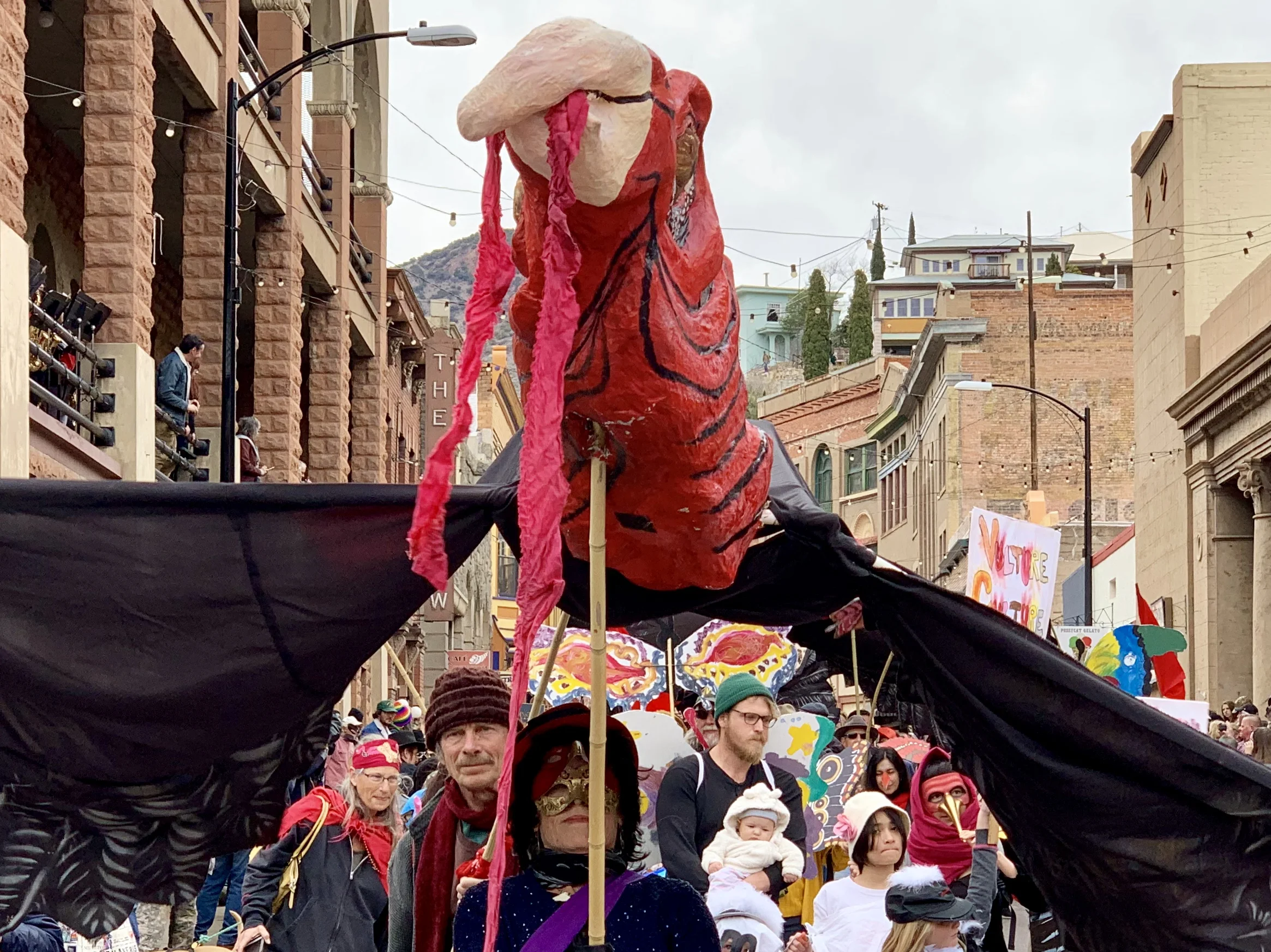
I happened upon a parade celebrating "The Return of the Turkey Vultures." I didn't know turkey vultures migrated, but apparently they do.
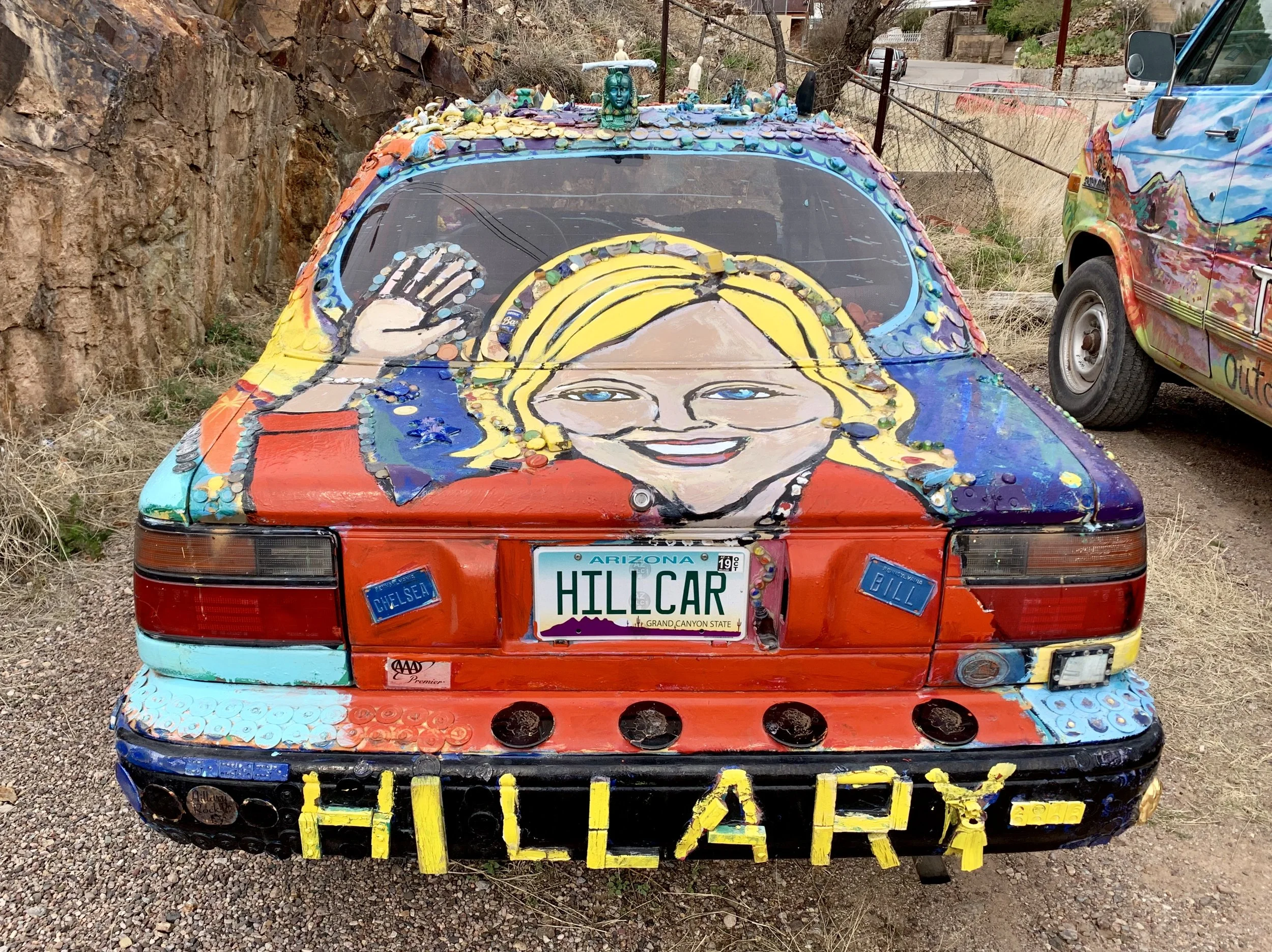
And who says everyone in Arizona is a Republican? Someone still drives this car around.
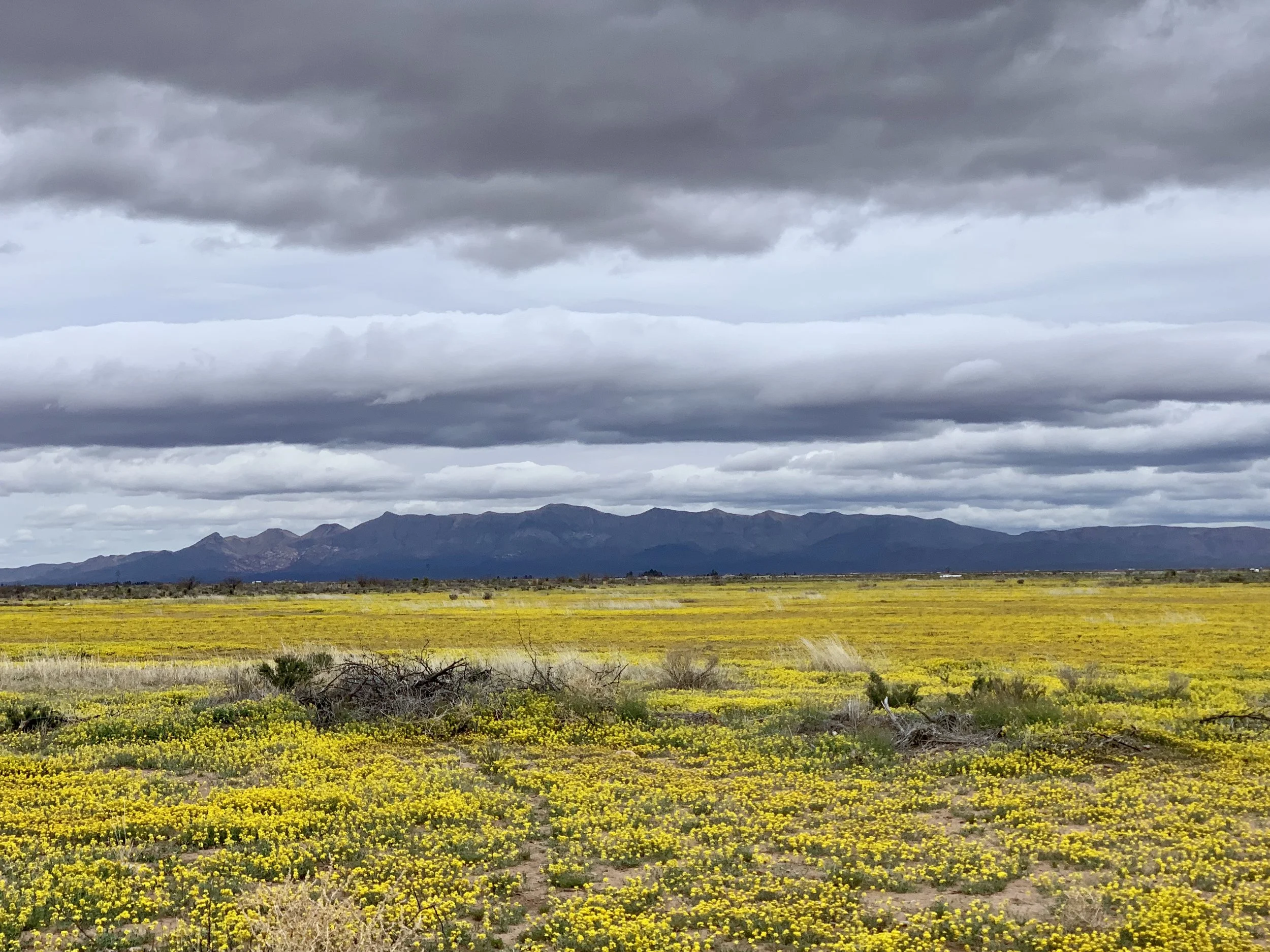
Just outside of Douglas.
Douglas is on the US/Mexico border and is the sister city to Agua Prieta in Sonora. After arriving at Dave's RV home, we headed down to the border, where I took photos of the imposing steel slat fence that cuts through the town.
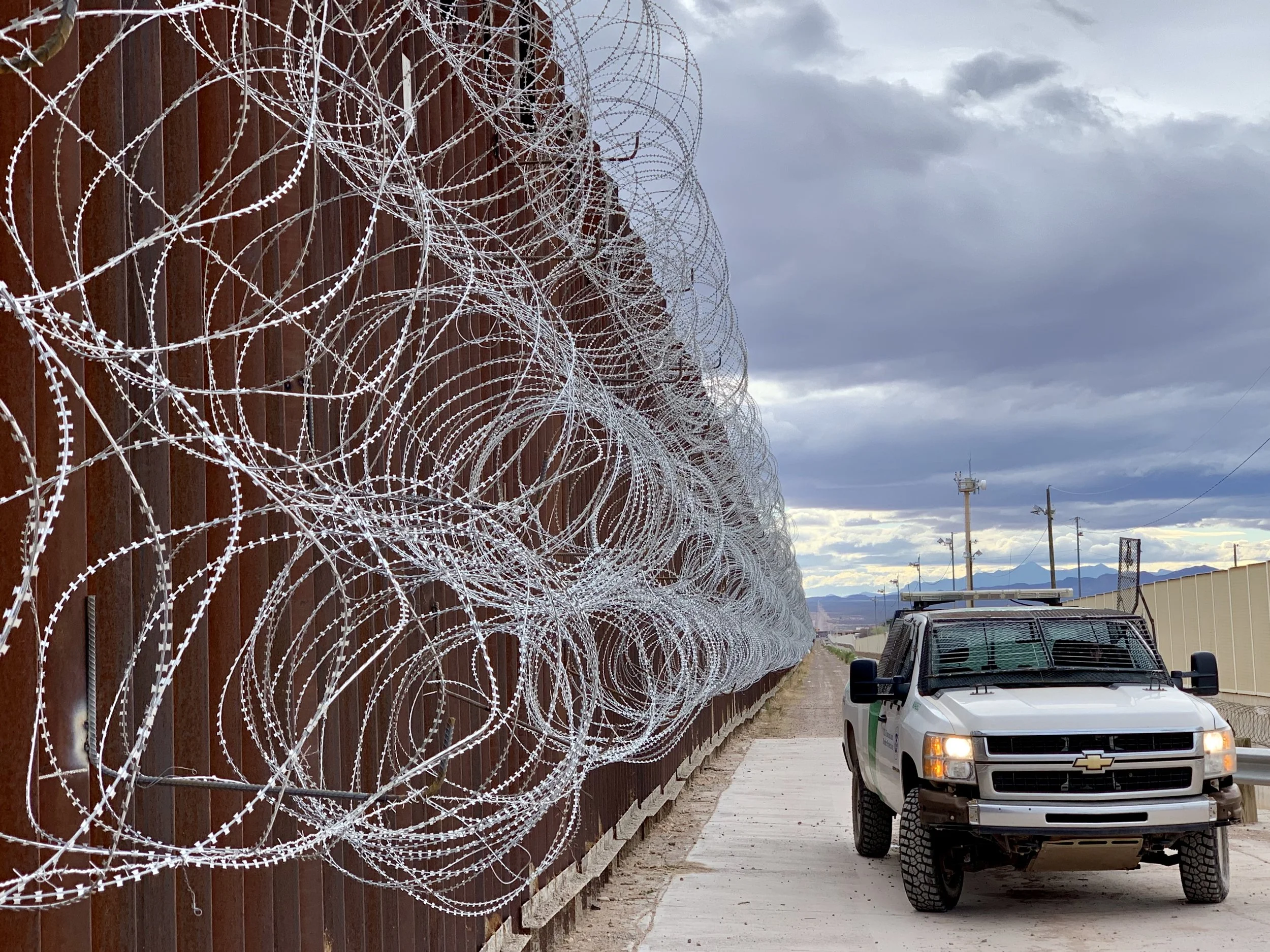
On the US side of the border.
We were able to speak with a border patrol agent. He told us the barbed wire is only several months old. Illegal crossings have never been very common in Douglas and since the wire was put up, things are even quieter. The steel slat fence was built 7 years ago, and replaced a solid wall about six feet high. I asked if the steel fence (it's about 20 feet high) was built under Bush. The agent said no, it was built under Obama. I asked him if there was a border crisis. He said it wasn't his job to say.
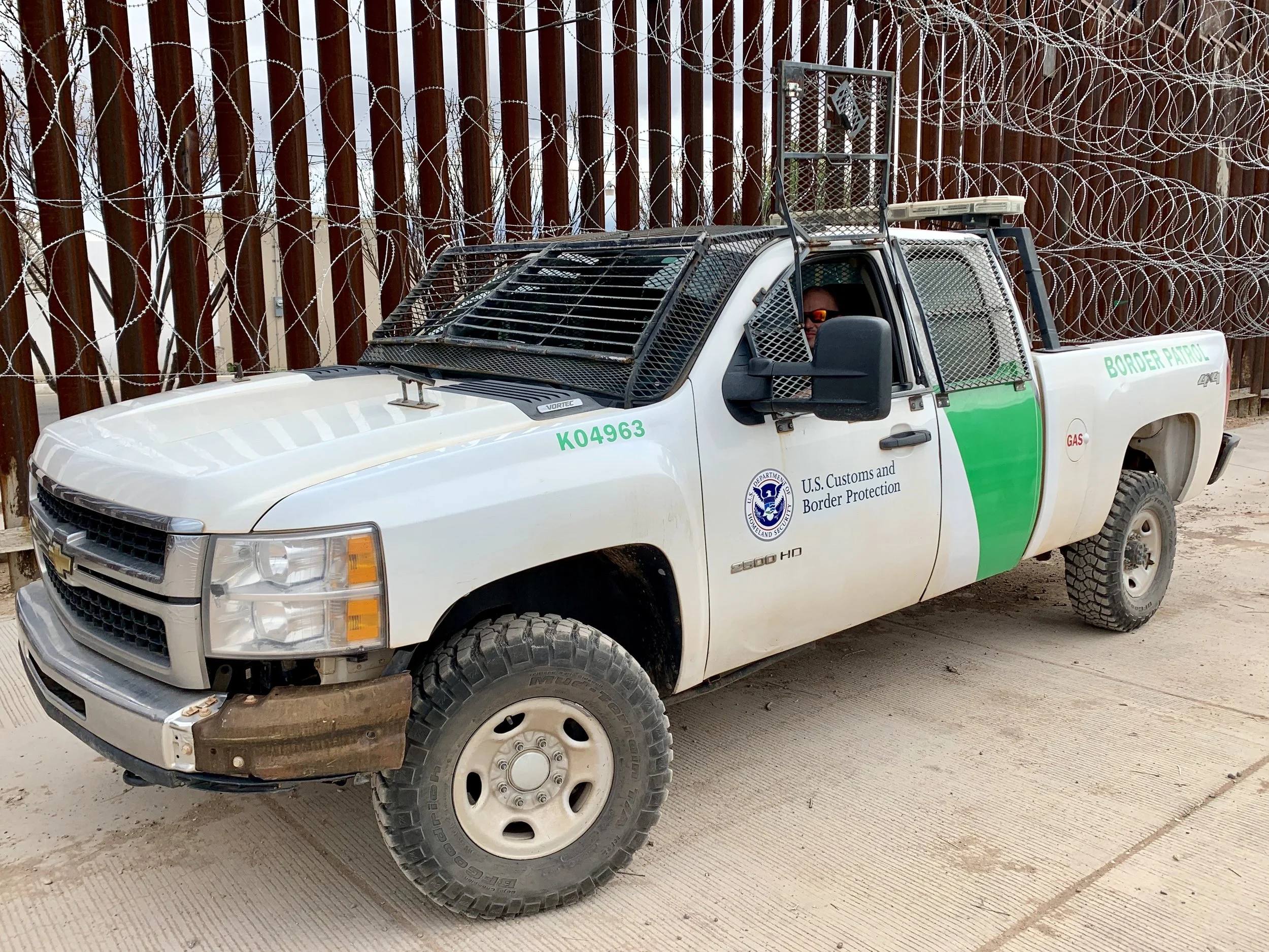
The window guards are intended to protect agents from flying rocks.
More to come.
All photos, unless credited or otherwise noted, are copyrighted property of the blog post author.
Palo Alto to Tucson, ...no, Phoenix, Post 3
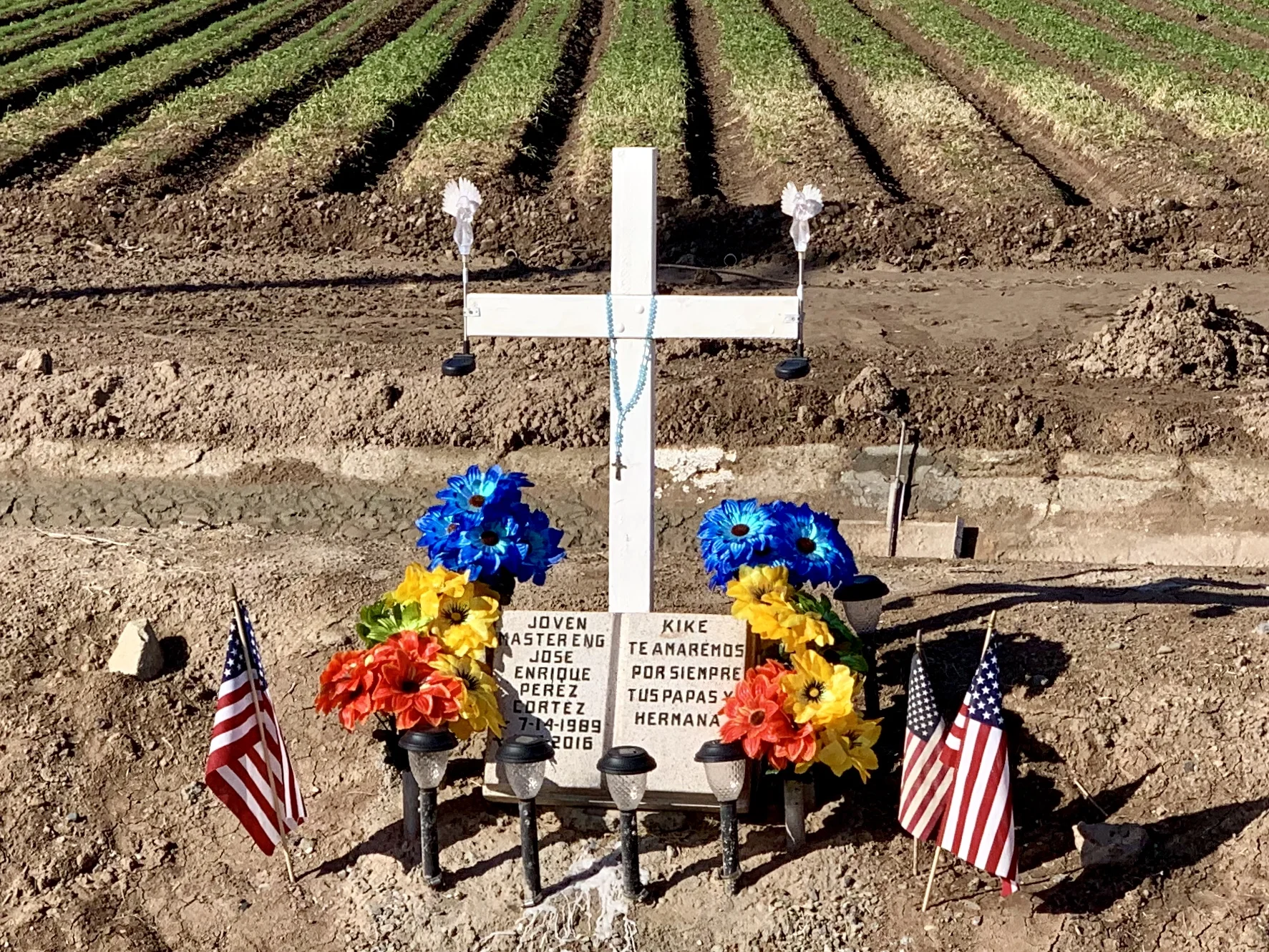
The roads of America are scattered with effigies. My guess is they are missed by most motorists, even though they are most likely responsible for their presence. On a bike, they are hard to miss. They are almost always poignant, and sometimes strikingly beautiful.
From Niland, I headed to Brawley, CA, a reasonably significant town in the Imperial Valley, about 22 miles north of the border town of Calexico.
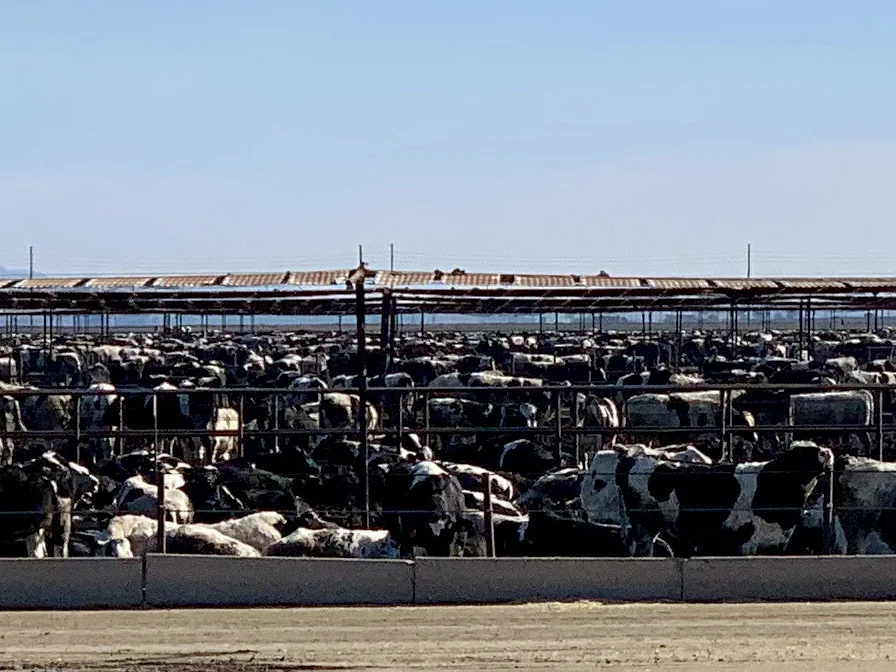
A stockyard north of Brawley. Kind of makes one wonder what our feedstock endures to becomes a hamburger.
I turned left on Main Street, and headed several blocks toward what is identified on Google as the least expensive motel in town. It all seemed familiar, and I knew I had passed through Brawley on my "Southern Tier" trip several years ago. But I wasn't prepared for what happened. I turned right into a parking lot for the Townhouse Inn and was instantly flooded with memories. I had stayed here before. In my five years of long distance cycling adventures, this was the first time I had ever repeated myself. It was a comforting experience. Slowing down time on a bike means ratcheting up experiences. It's impossible to remember everywhere you've been. I've stayed in hundreds of cheap motels, RV Parks and campgrounds, yet until this moment I had never come upon the same place twice.
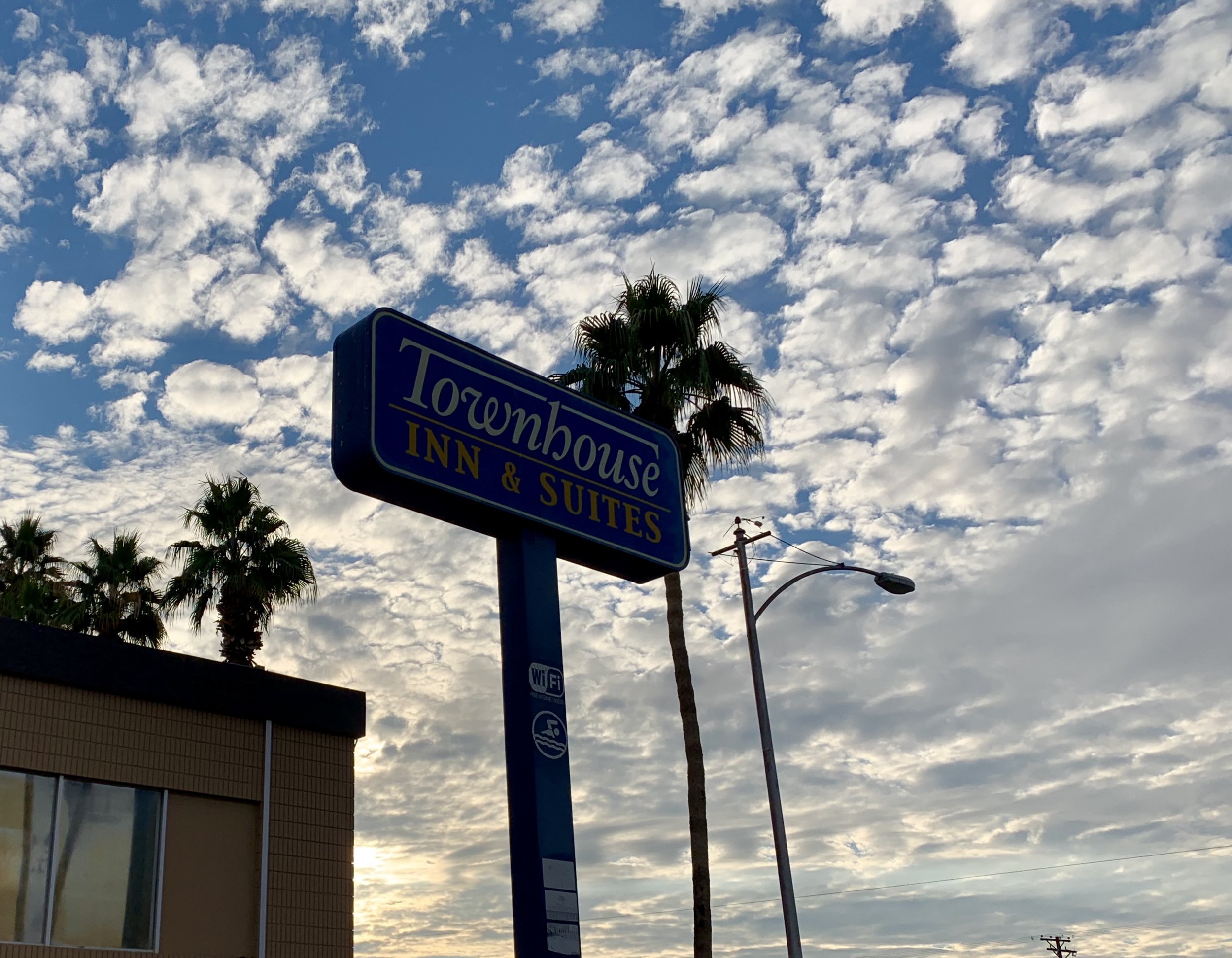
I remembered the proprietor - an industrious South Asian. I instantly felt safe and secure. I love mid-century motels, and they are in abundance in small towns in the southwest the same way that mid-century drug stores can still be found thoughout NYC.
Memories from two years earlier came instantly: almost falling off my bicycle upon arrival, talking to my Dad on the phone while standing next to the washing machine that I knew was still hidden on the upstairs balcony. I remembered the flyboys from the nearby Air Force base I had eaten lunch with earlier in the day, I recalled my initial amazement by the fertility of the highly irrigated Imperial Valley, and the surprisingly good dinner I had at the one "hip" restaurant in Brawley that served draft beer - "The Inferno." I knew I'd have a nice stay.
Apparently the part of the cortex that a memory center is also active in imagination. Brain scientists think that we form memories as an act that occurs in the present moment from isolated and distinct fragments of sounds, smells, sensations, feelings, thoughts and other bits of information that are stored throughout the brain and body, and we reconstruct - in the very moment we have the memory - this pastiche of unconnected information into a coherent narrative. In that way, remembering is an act of imagination.
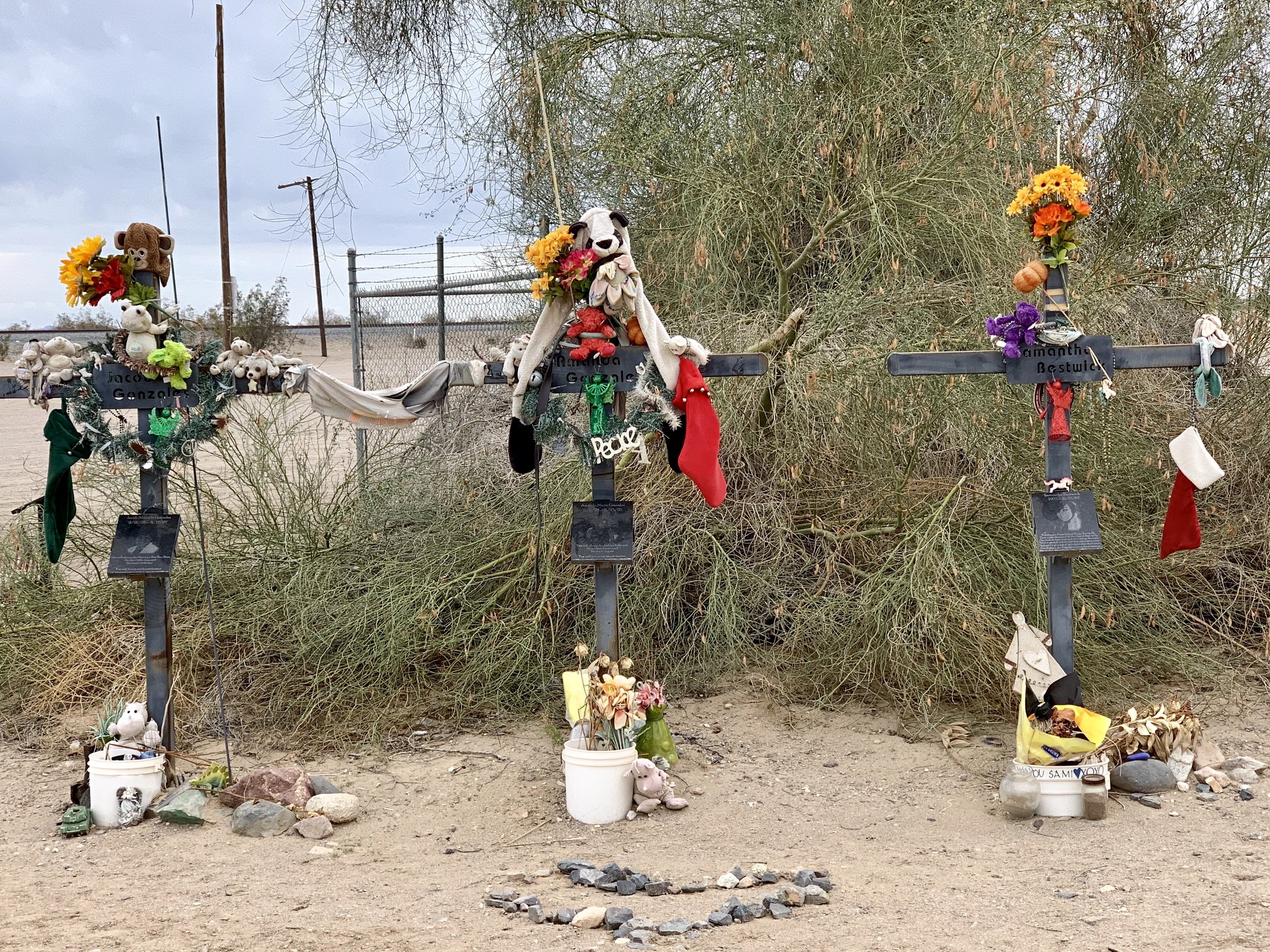
So then, what's the purpose of an effigy? Maybe first and foremost, it's a warning. It tells those passing by that someone died here, and they are also not immune. But for the artists who constructed the effigy, maybe it helps them construct and reconstruct their own memories of the departed. We know the dead speak to us, maybe they do it in our very own imaginations as we remember them?
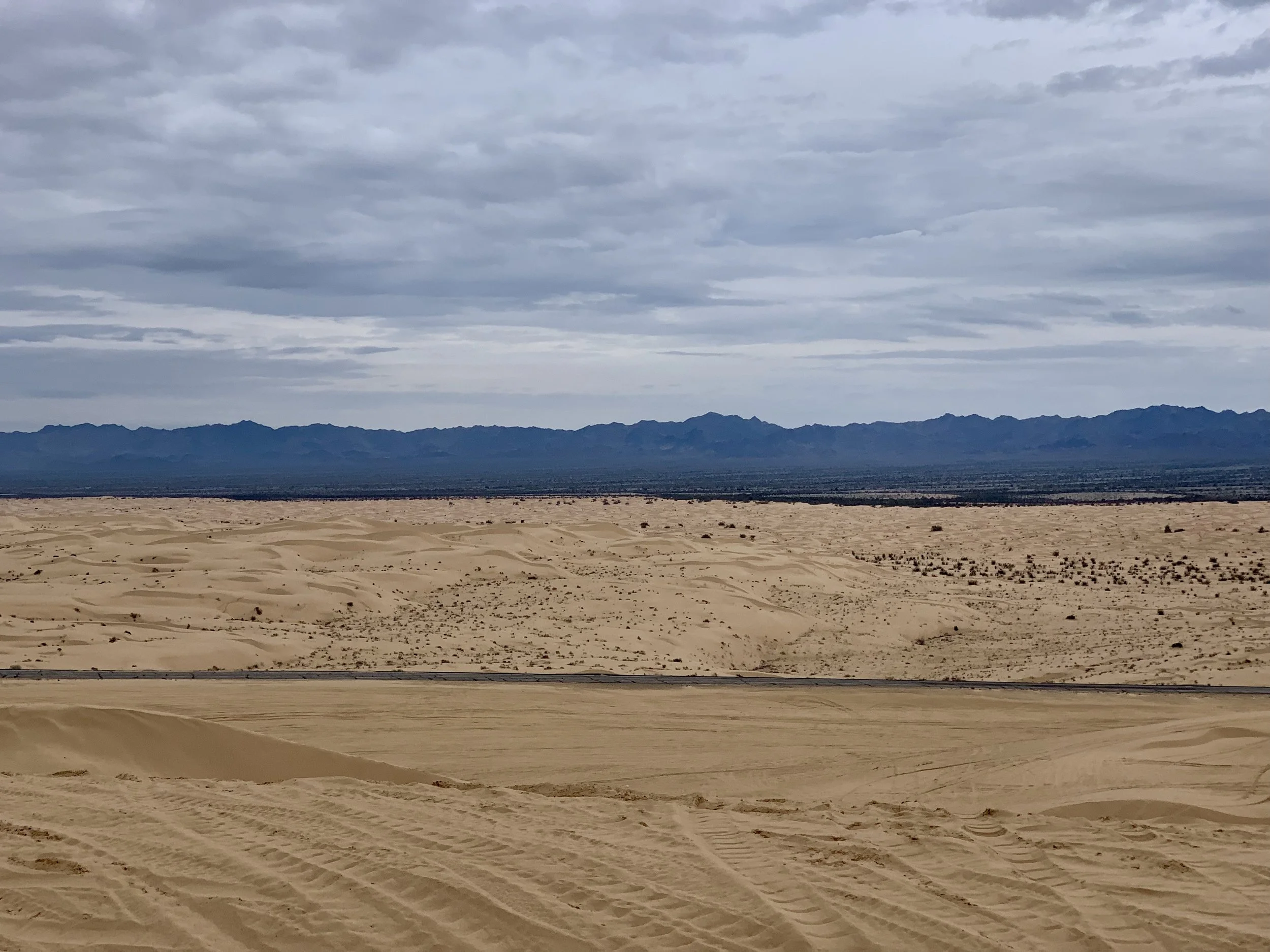
I cycled the section of the Southern Tier route I am doing now between Brawley and Phoenix a few years ago. The sand dunes above loom large in my memory. The little town of Glamis, which sits right in the middle of the dunes, looks like a set in Bladerunner.
I thought an easy day to Brawley and a good rest would help me to easily get to Paso Robles the next day, even though much of the 61 mile trip is uphill and known as brutal for the many rollers on both the ascent and the descent. I got an early start. But at Glamis I was enjoying the scenery of the Algodones Sand Dunes National Wilderness just a bit too much, and after a leisurely conversation with a couple of other long distance cyclists, I abruptly realized I had to climb 30 miles up a pass notorious for its rollers, and I was going to run out of sun in 3 hours. I wasn't scared, but I knew I had to push. Then, after 10 more miles or so, I remembered something I learned during the last trip along this route. There were no accommodations in Paso Robles. In fact, I'd be lucky to find a restaurant. I tightened up a bit. How had I forgotten THAT in my planning, when I had remembered so many trivial things about the motel? How had my memory/imagination failed me? It was 4:30. The winter sun was beginning to set. It began to rain. Now I was scared.
Was I going to become an effigy?
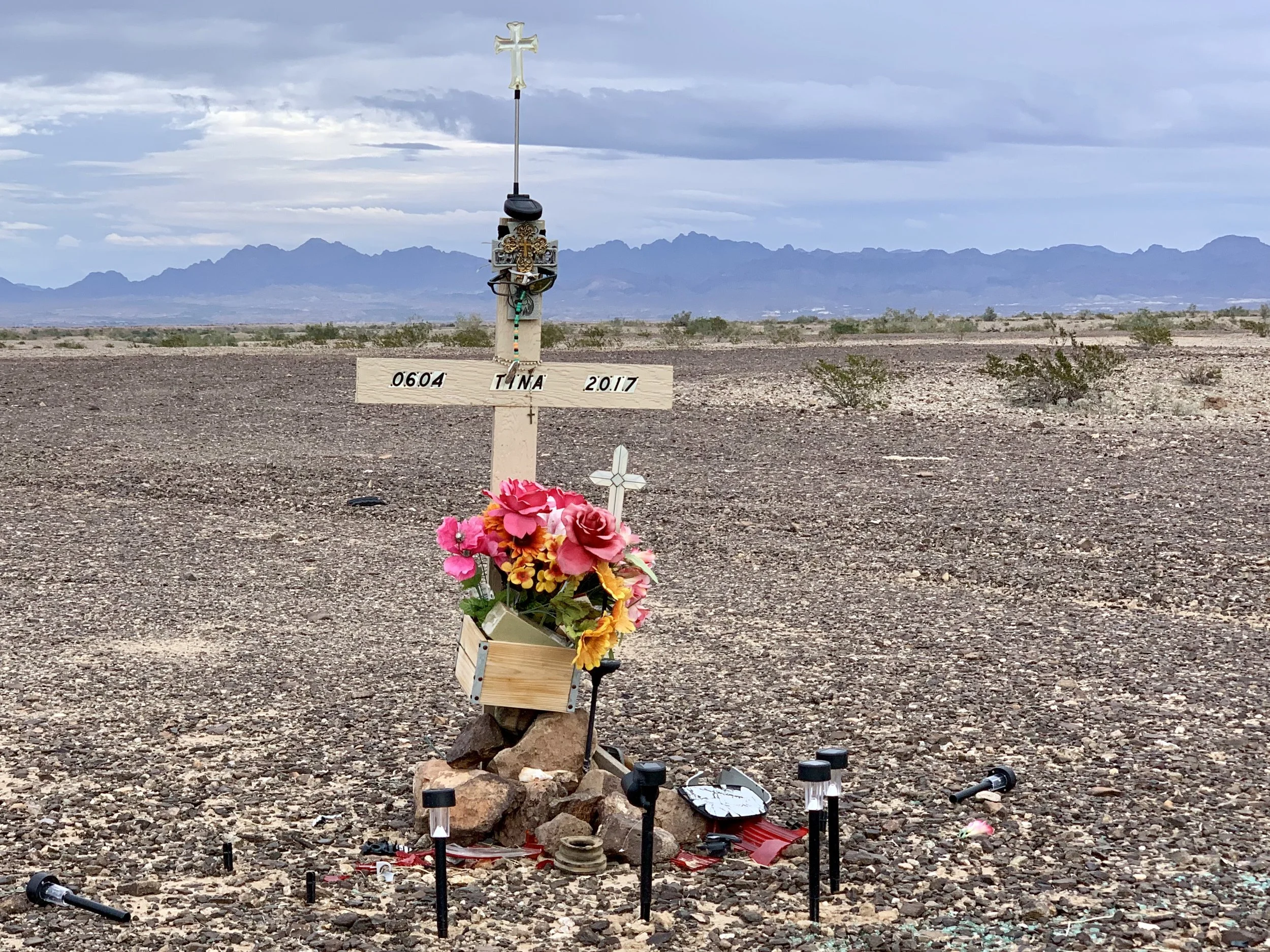
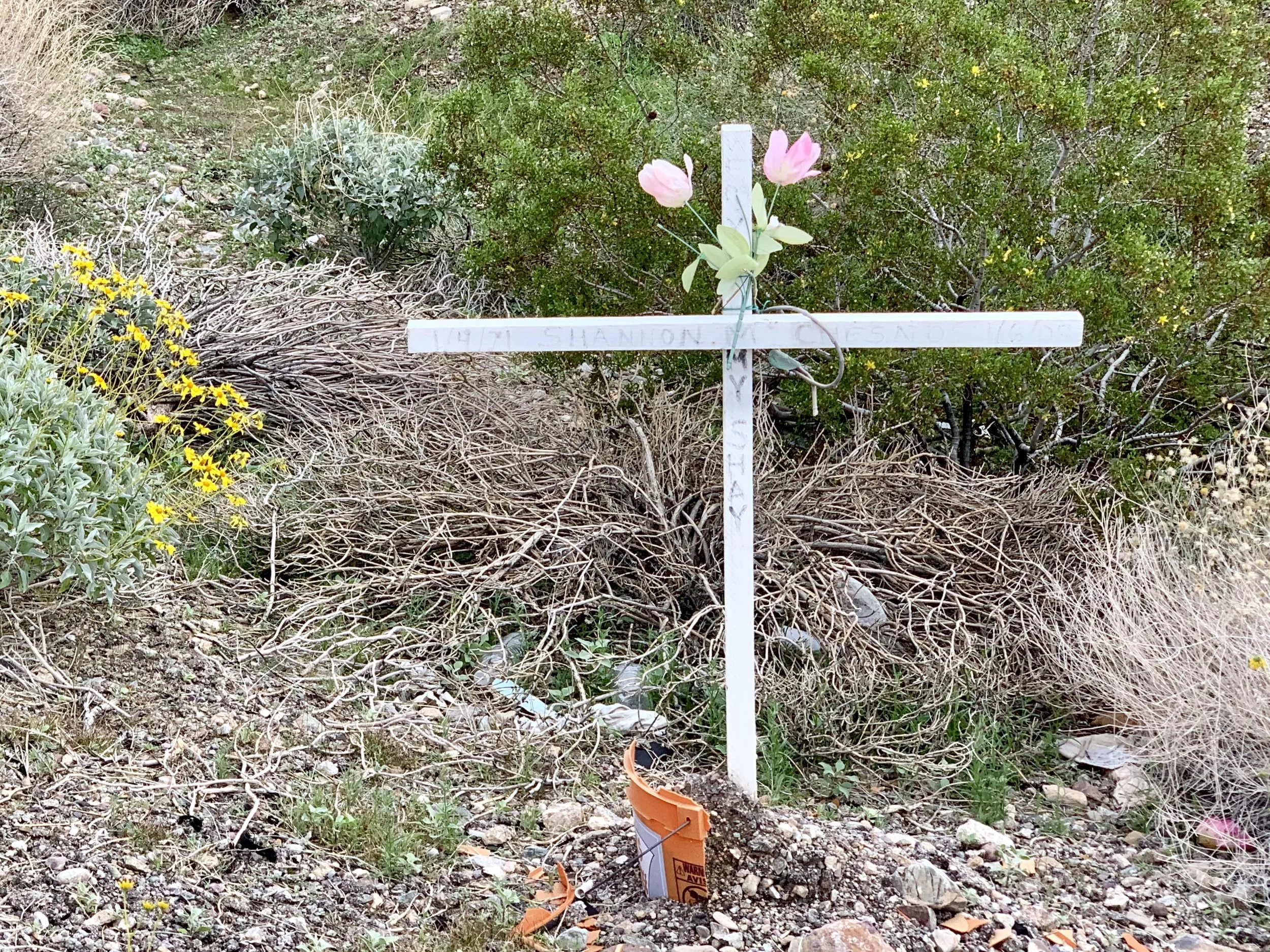
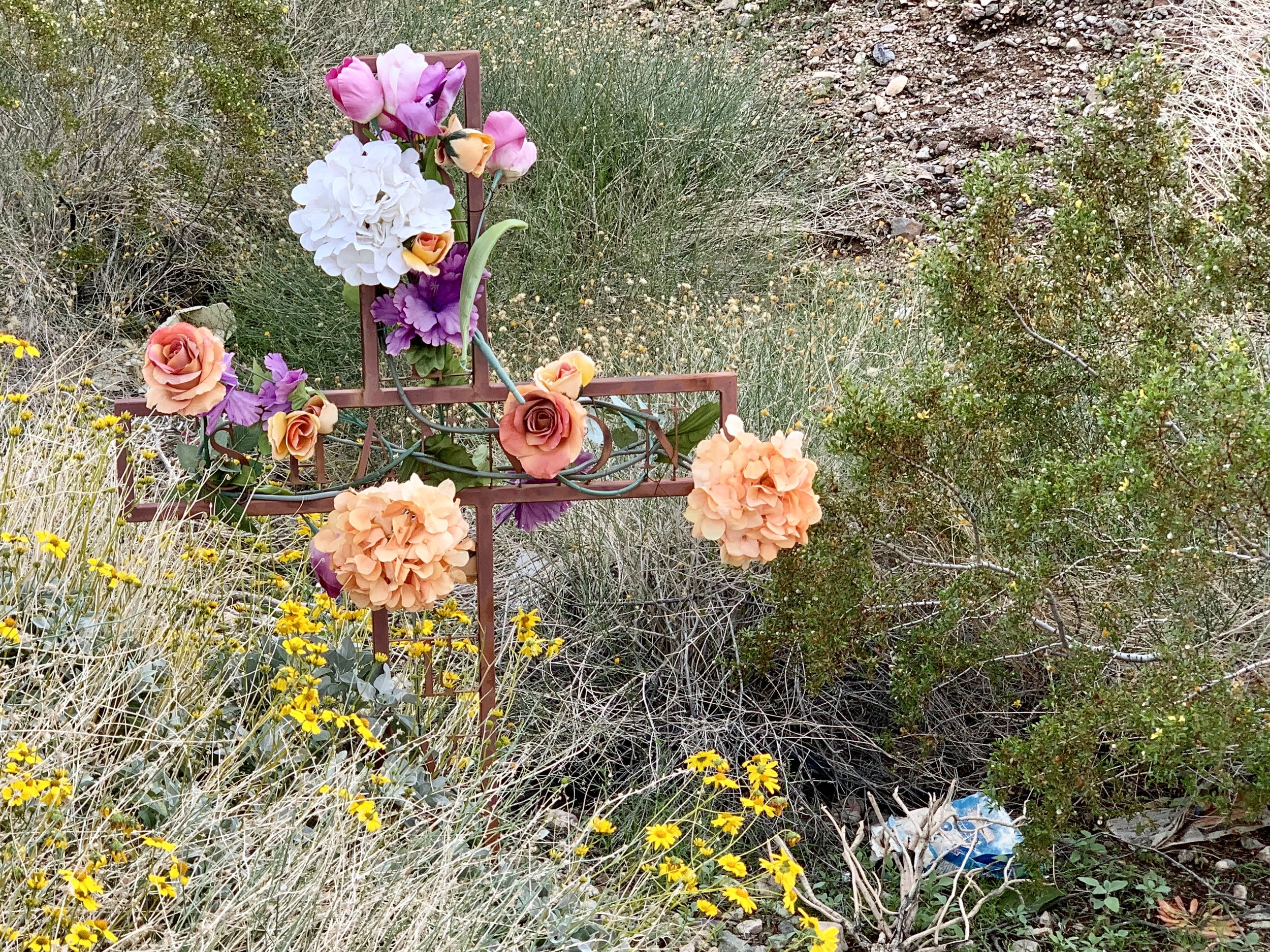
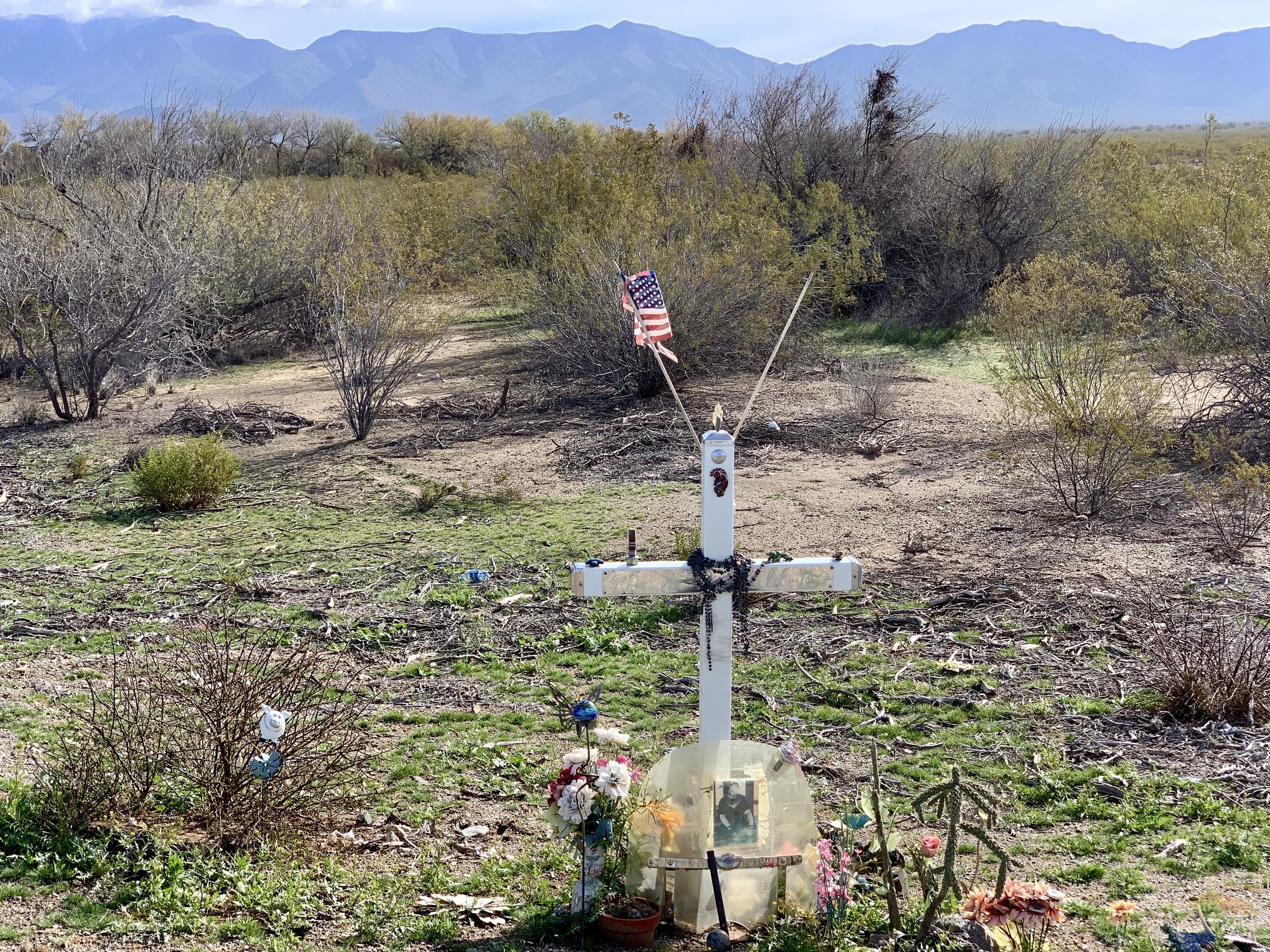
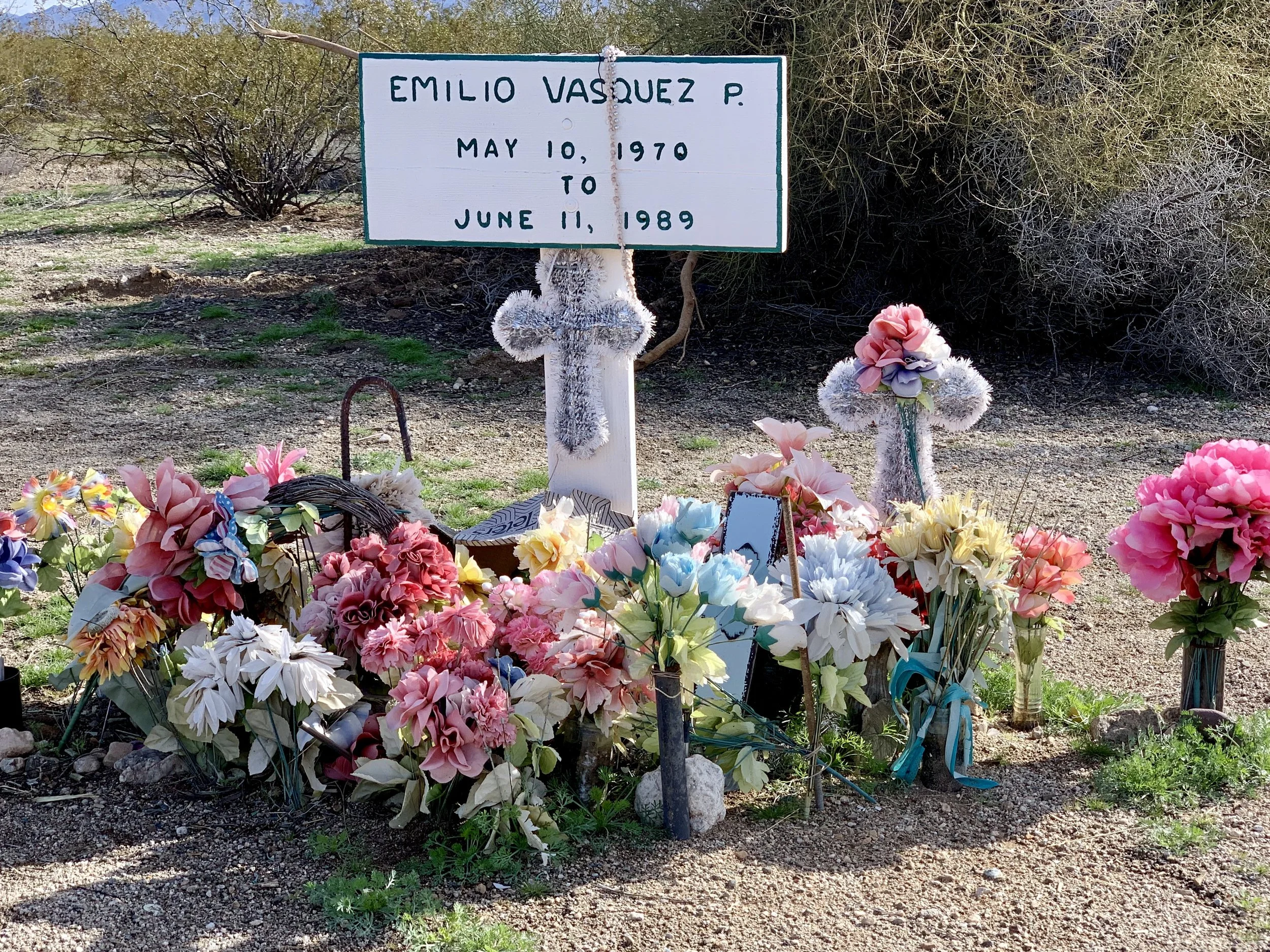
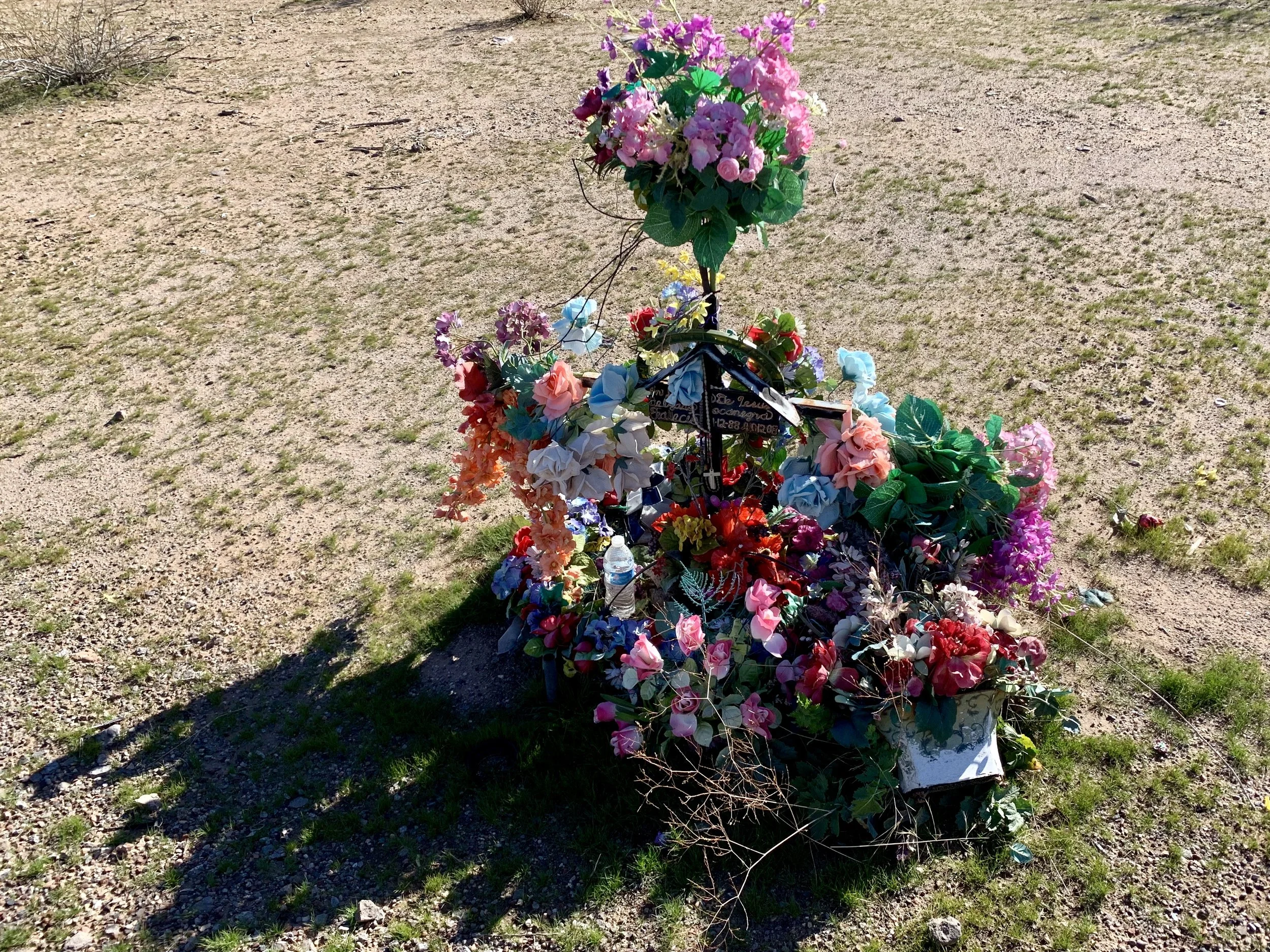
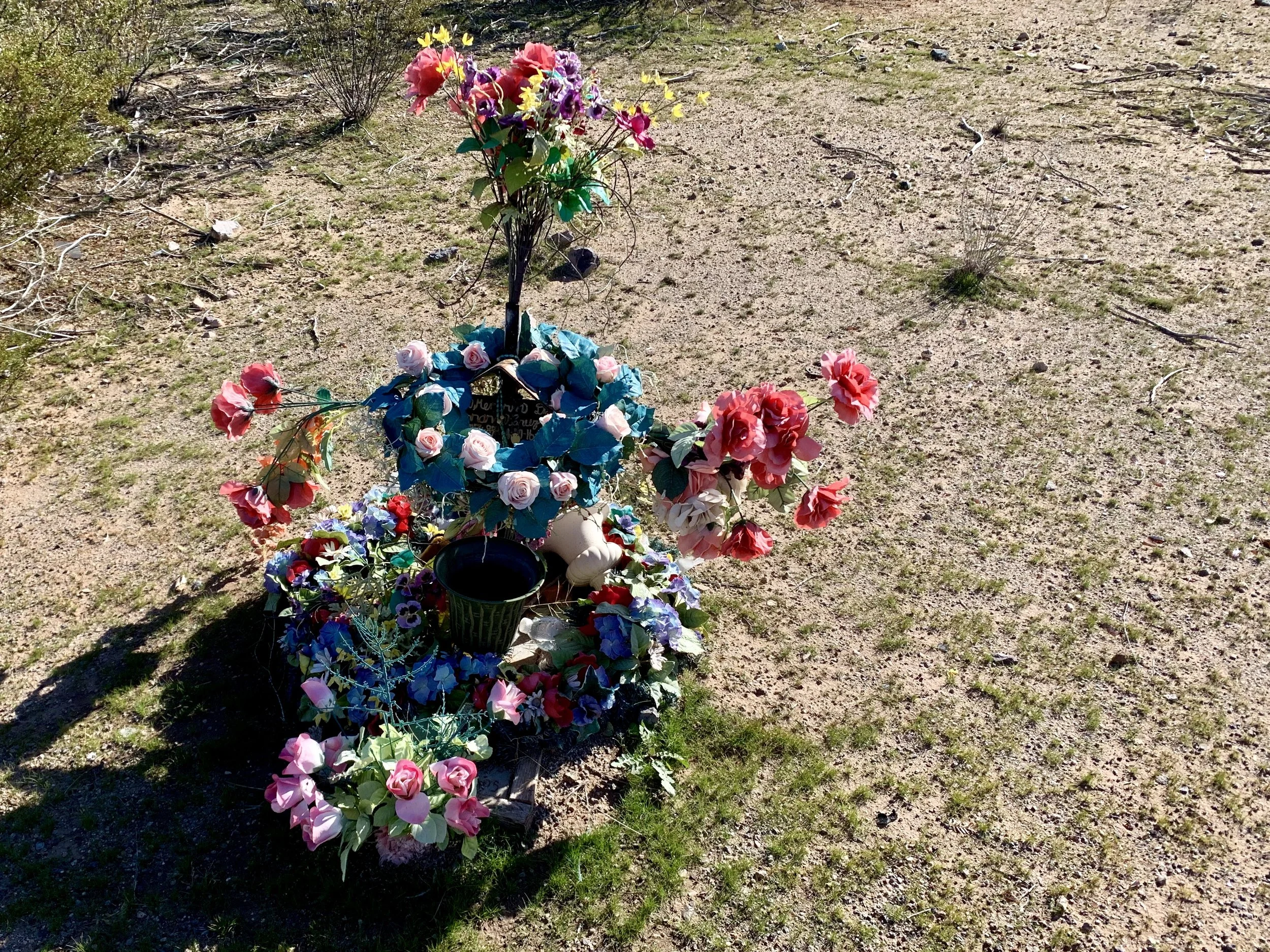
The short answer is not this time. The gods were kind to me, and forgiving of my poor memory. I was saved by some very helpful people in a small trailer park community in Paso Robles. It rained hard that night while I slept comfortably on a couch in the community room.
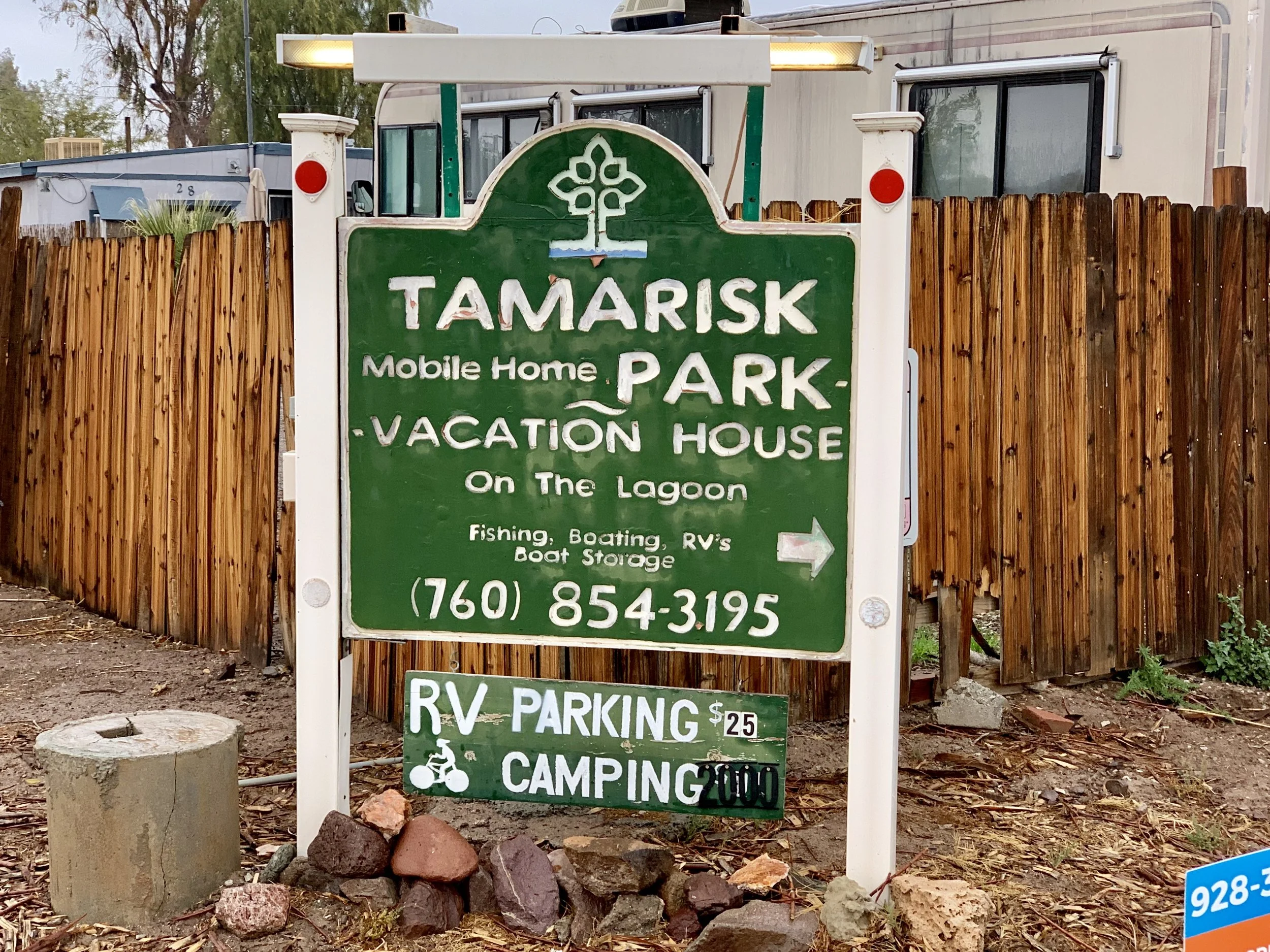
I was kept from a wet and chilly evening by the good people of Tamarisk Park in Paso Robles.
Ironically, as I write this now, the remarkable evening I spent in Paso Robles seems far away. So much can happen in a few days and 100 miles! Today I fixed my fifth flat since Quartzsite, AZ. Now in Wickenburg, I'm about 50 miles west of Phoenix. A few days ago decided to return to New York City from there. I will be leaving my bike in storage there for a month or so until I return for more cycling in the great southwest.
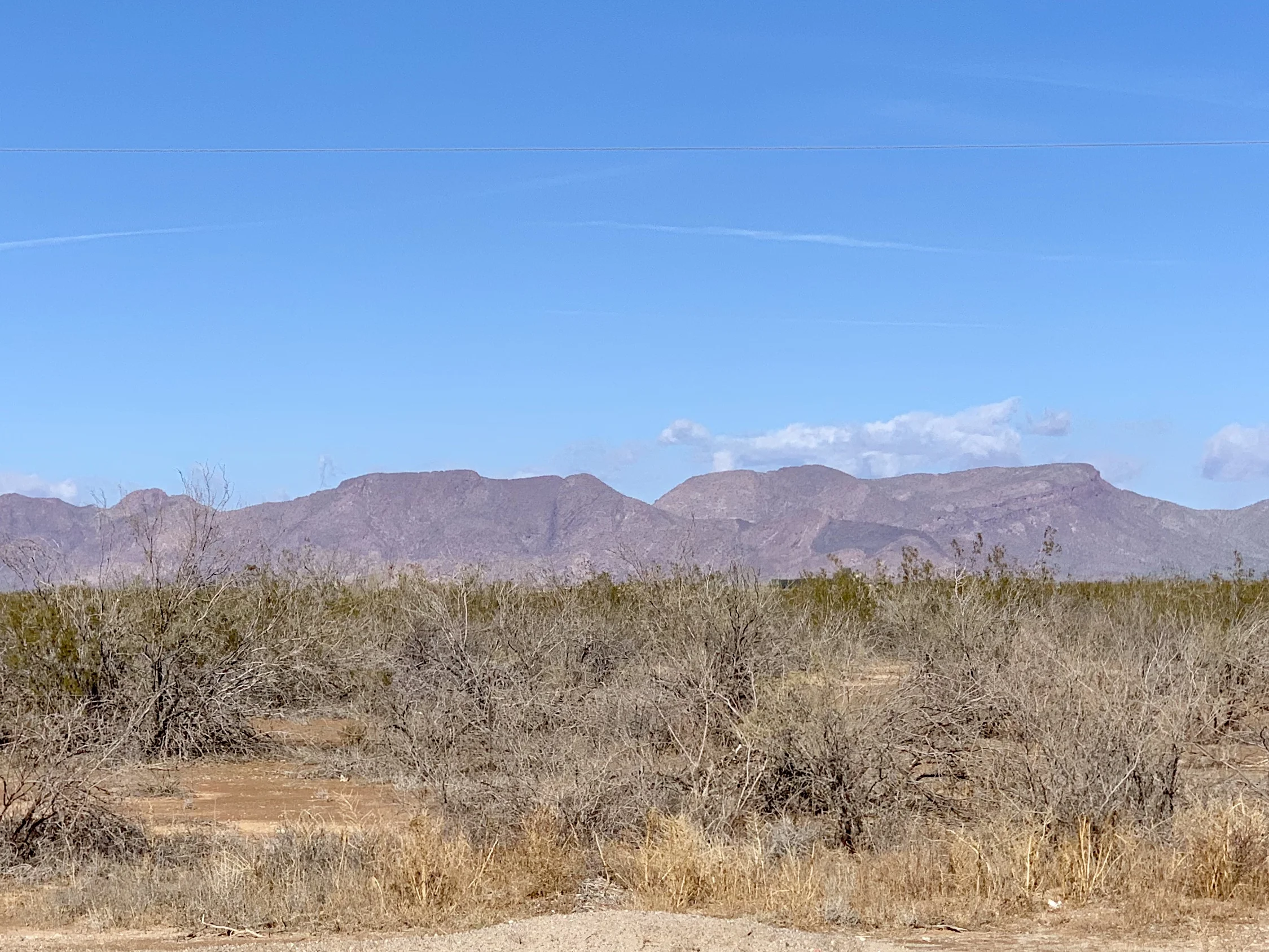
Just west of Wickenburg, AZ.
We have a lot of knowledge about death in our culture. Although children and adolescents (if they are lucky), don't imagine their own deaths, the rest of us do sooner or later before we die. Probably, many of our fears can be traced to an underlying fear of death. That said, I've always found it odd that (beyond certain theological myths about judgement days) we seem to have no contemporary narrative for imagining the death of the human species. Yet, climate change is a genuine threat to our existence. But look around. Doesn't it seem that we are living on our earth as if our species is adolescent? We take extraordinary risks with our earth, and we ignore those around us who are likely to be wiser about what we are doing (ie, climate scientists). And somehow, we persist in the folly that our way of life will remain stable. Yet, as individuals we understand our mortality. Why do we not imagine that as a genuine possibility for our species?
We behave as if our entire species has a smoking habit, while the world's best oncologists are telling us that continuing to smoke will drastically shorten our collective lives. Yet, we make only half hearted and ineffective efforts to change regardless. Are we crazy, or just foolish?
But there are signs of hope. You might enjoy reading an article that was recently published in Bloomberg about the growing conservative support for a carbon dividend plan at the federal level. Of course, there's so much more we can do as well. But large systemic change is critical. Let's move those "Energy Innovation and Carbon Dividend" bills in Congress forward!
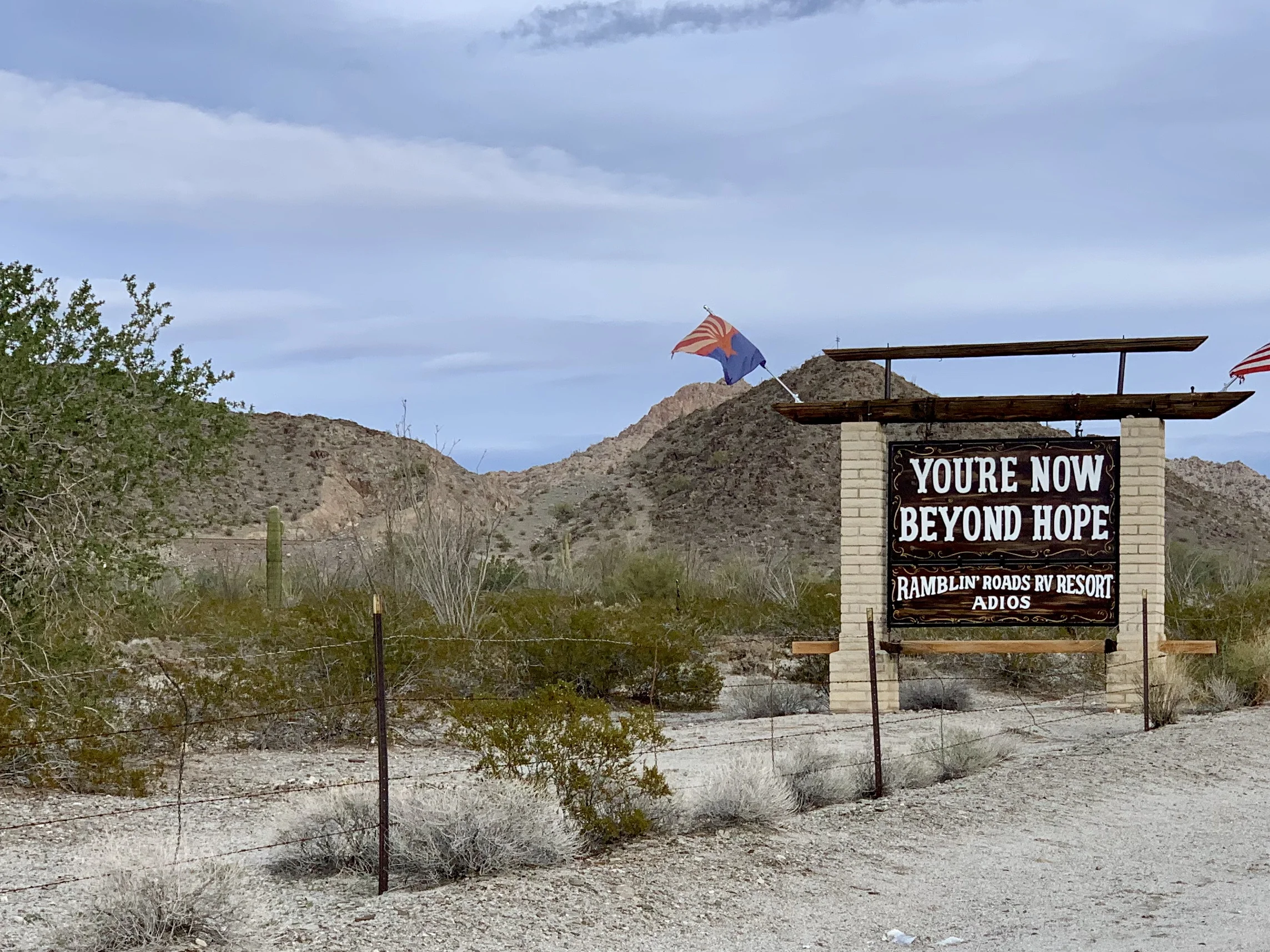
Hope is about 20 miles east of Quartzsite. There's a church there. It's called "The Little Church of Hope".
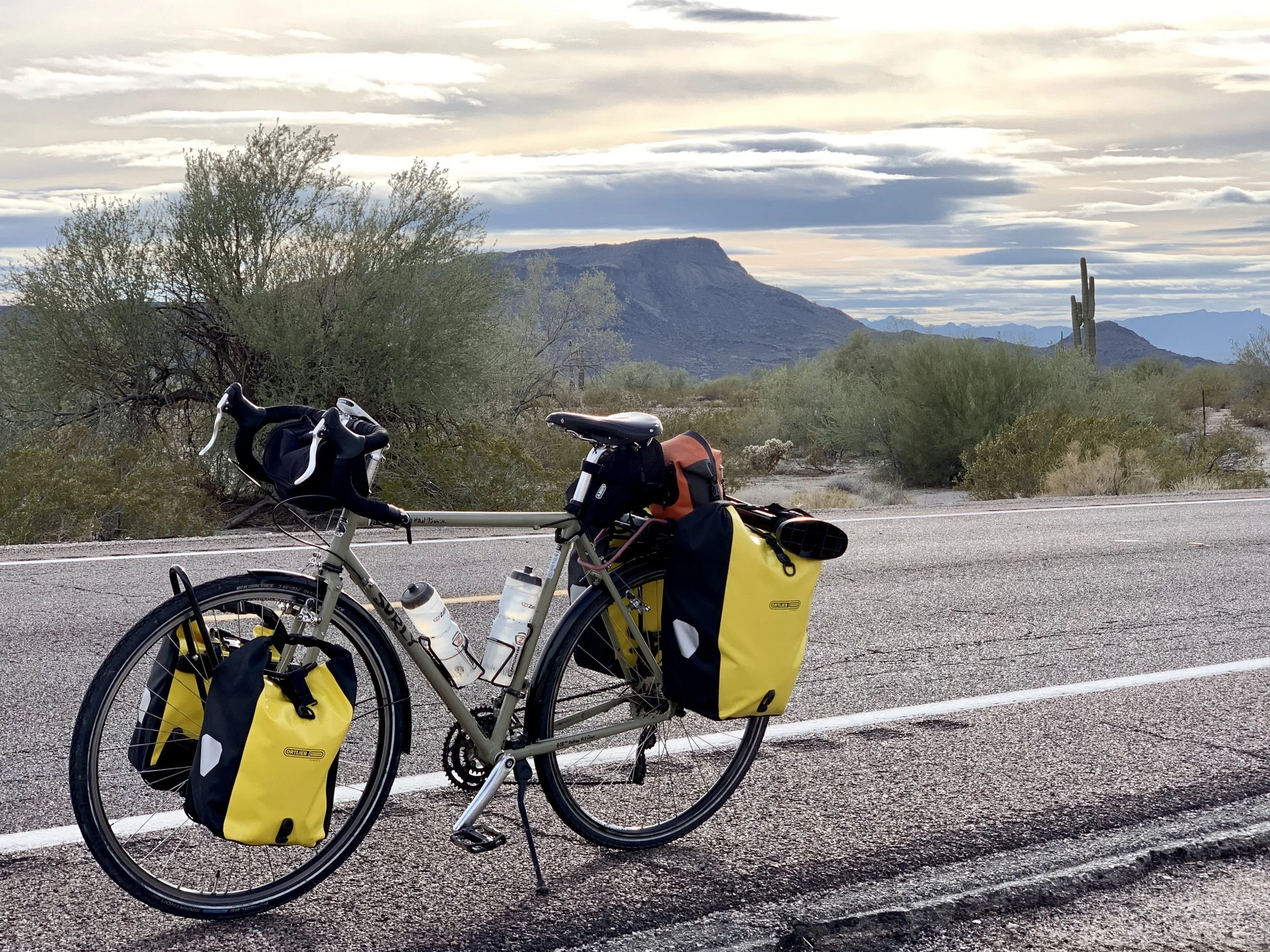
My rig, before my fourth flat.
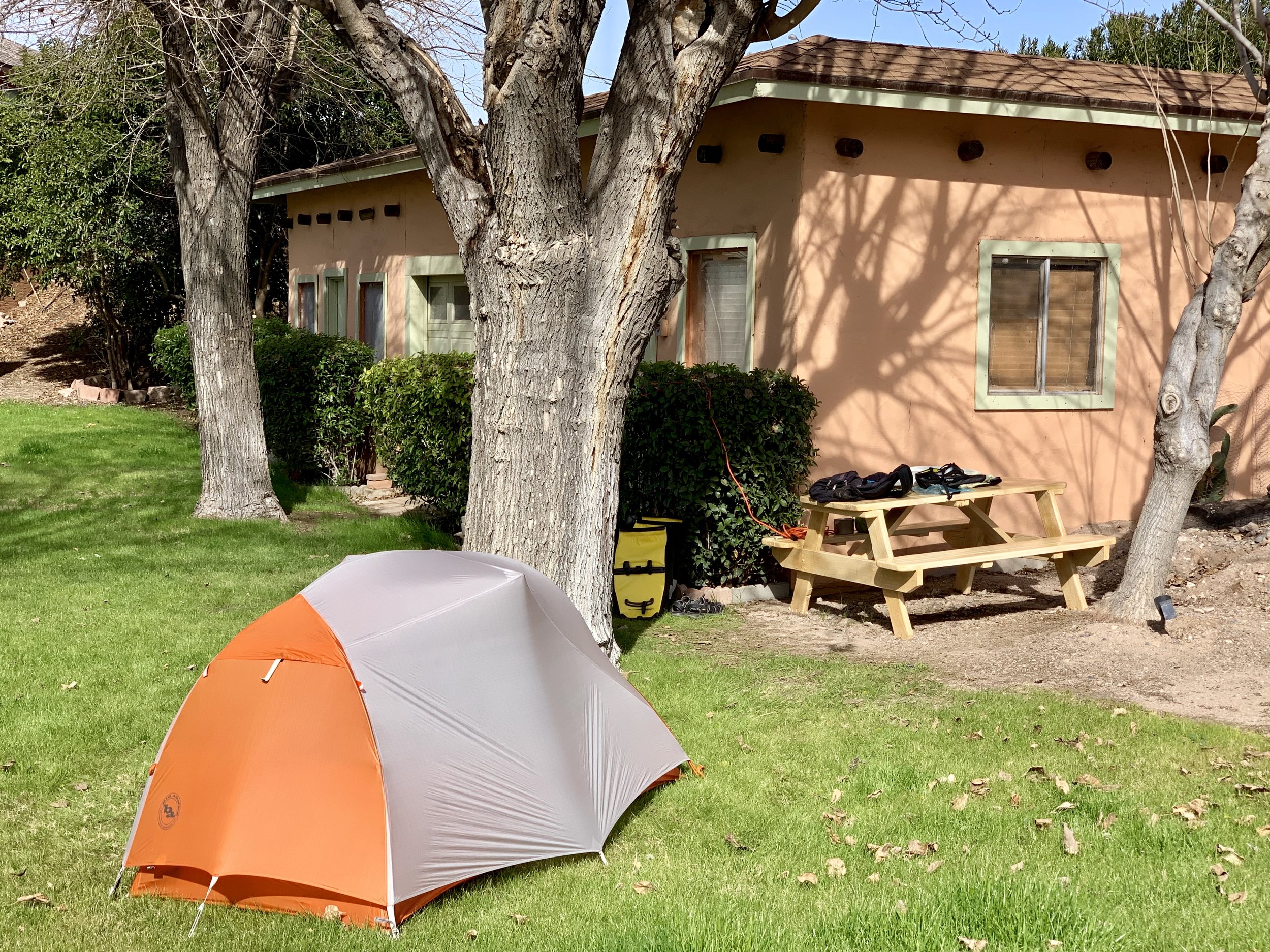
I'm comfortable and happy in Wickenburg, AZ, at the Aztec RV Park as I lay over for a day, and try to sort out why I keep getting flat tires. Interestingly, there are no bike shops on the Southern Tier between Brawley, CA and Phoenix, a distance of about 270 miles. Ingenuity is called for. How like life.
Here are some Garmin Maps:
More to come.
All photos, unless credited or otherwise noted, are copyrighted property of the blog post author.
Palo Alto to Tucson, Post 2
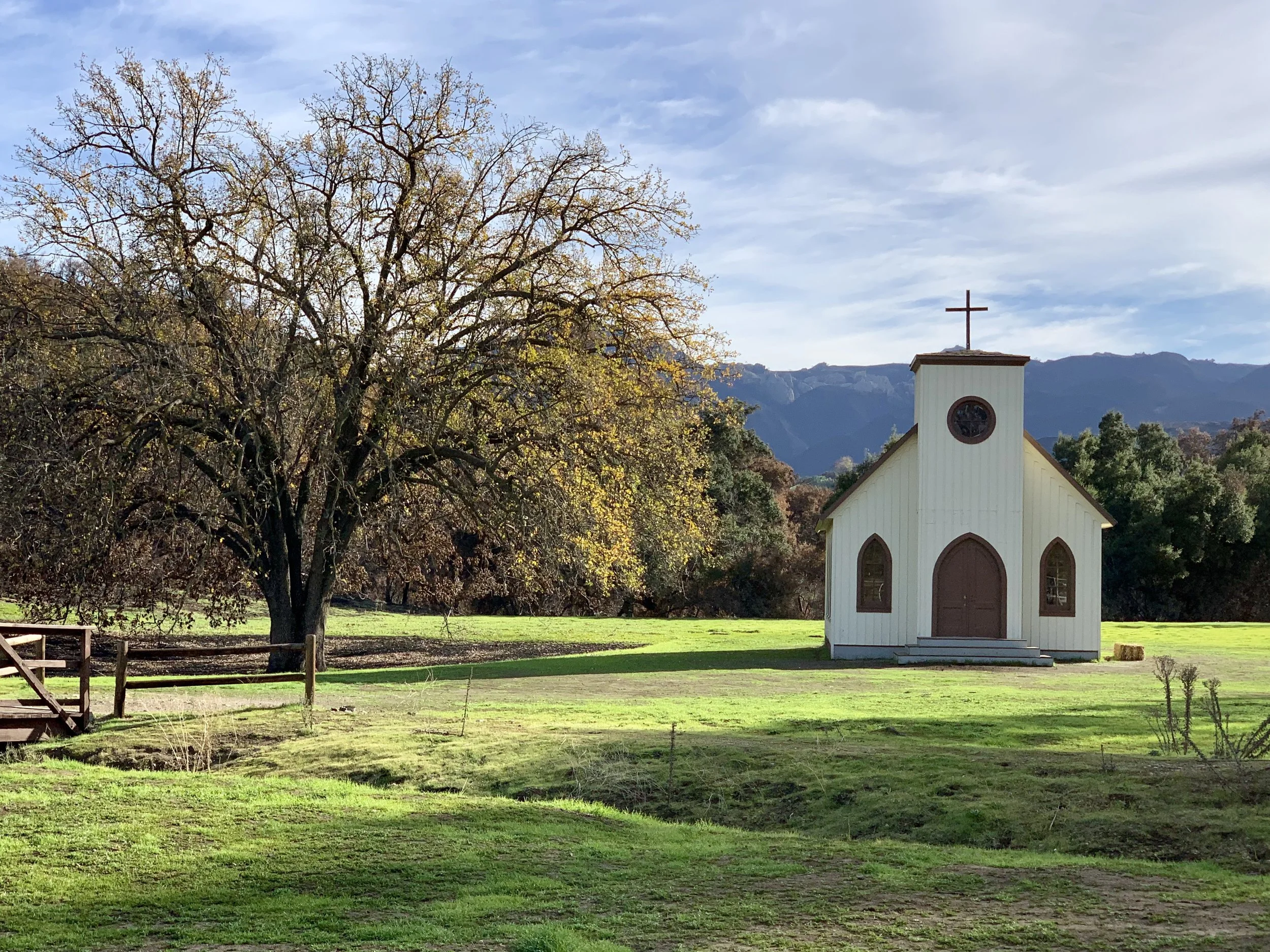
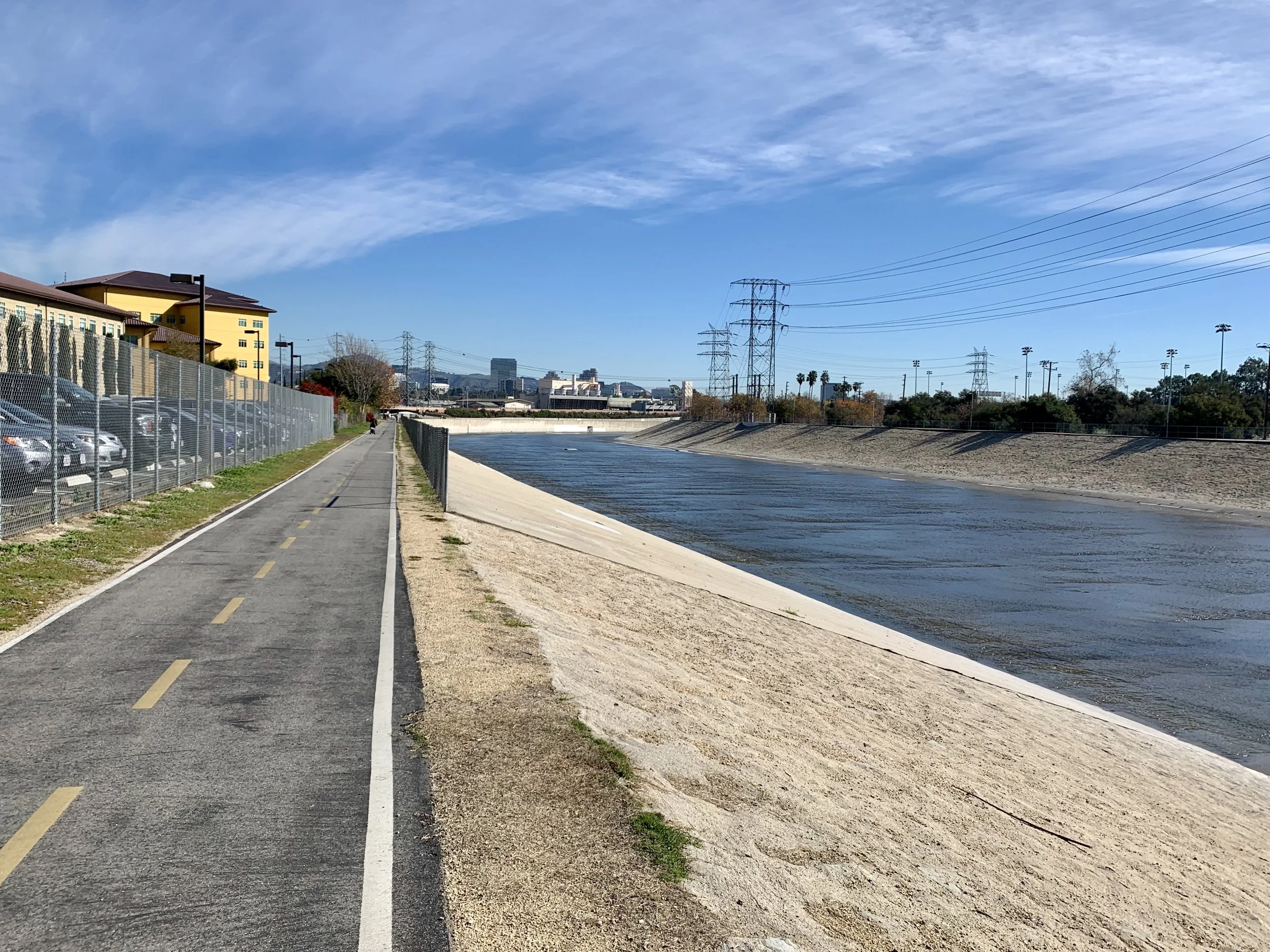
The Los Angeles River Cycleway.
Once I got to Ventura from Santa Barbara, I called my old childhood friend Debra Dralle in Woodland Hills in north LA. I was in luck. I had stayed with Debra on my GRID trip two years back, so she and her husband Richard weren't surprised to see me arrive the next day on a fully loaded bike. Getting to Woodland Hills from Ventura presented a small challenge - such as the Santa Monica Mountains. It was raining, and I was challenged by the climbing, so I didn't notice the clues I was passing through the Woolsey Fire area. Fast moving and capricious, that fire was one of many that has turned life on its head. Much has been written about the intensifying and record breaking fire seasons in the American and Canadians wests. Here's one example. Of course, climate scientists tell us this is only the beginning. Record droughts, warmer temperatures, longer fire seasons, and encroaching development are the new normal, which isn't going to be normal at all. There's no normalizing the future when it comes to climate.
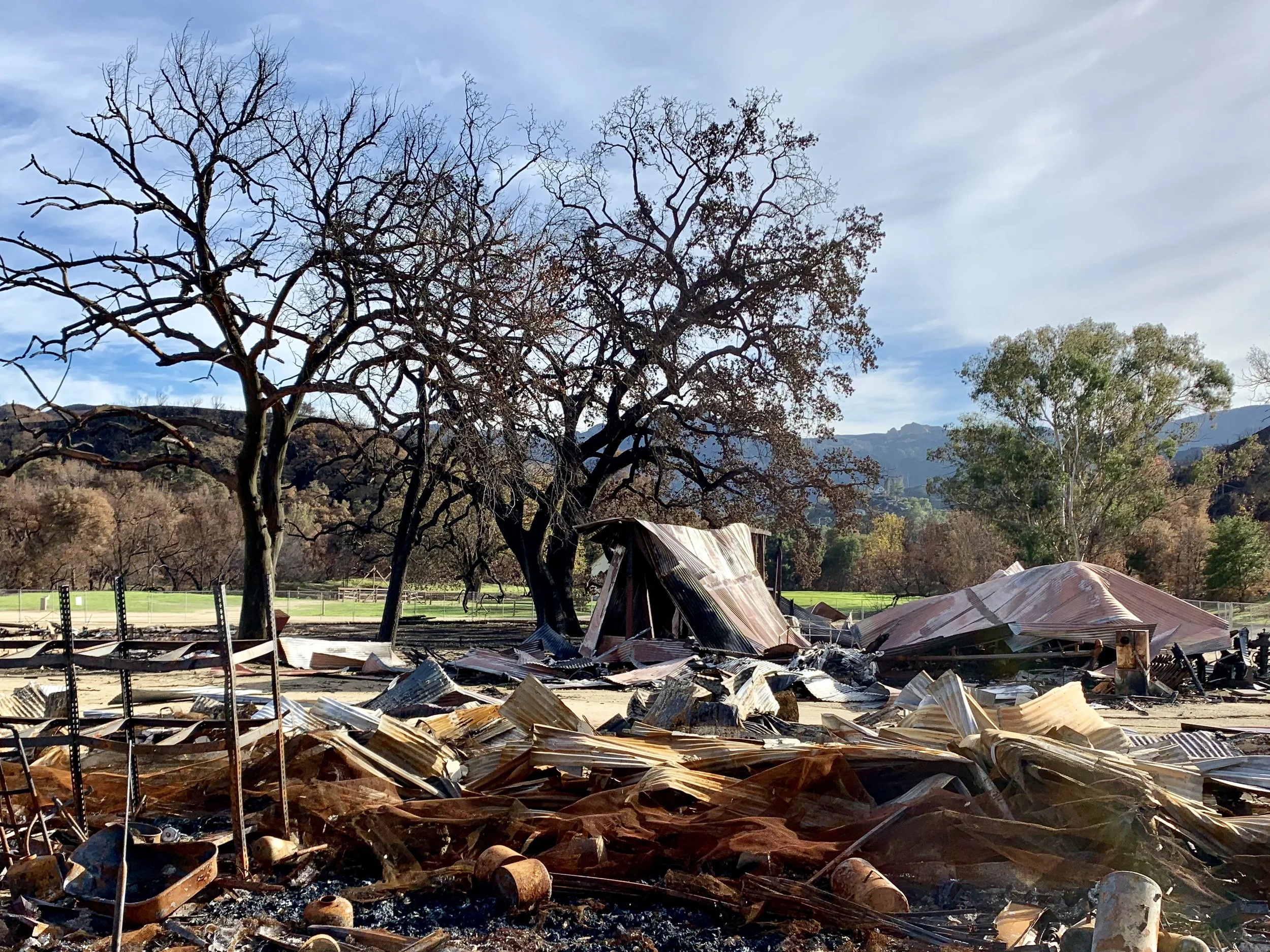
A saloon and hotel?
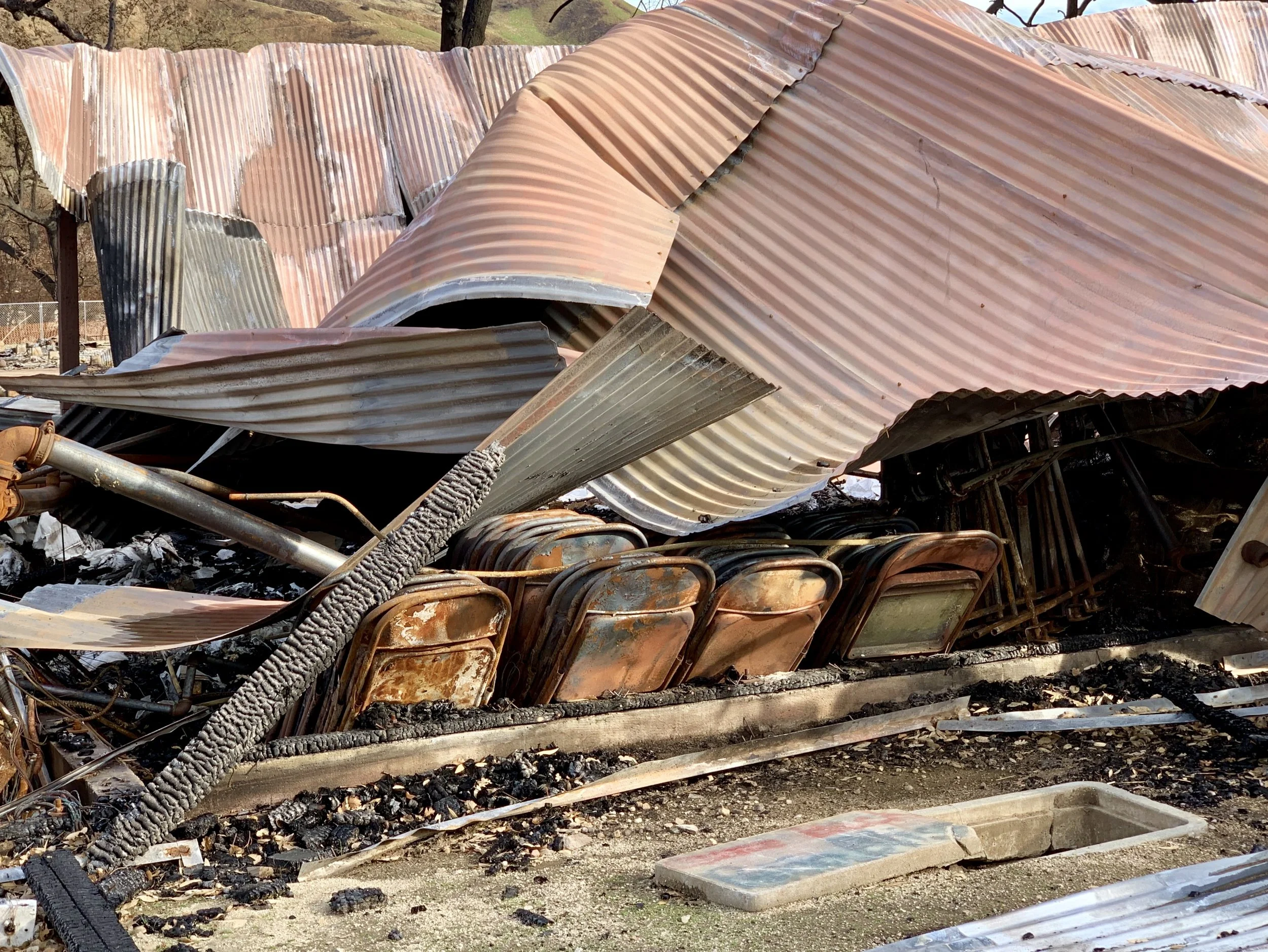
A storage room?
Fortunately, I had a chance to rectify my poor observations the next day when Debra drove me back to the Paramount Ranch, which - sadly - had burned to the ground in November of 2018. As we drove, I asked Debra if she knew of climate deniers living in the area. She said no; in fact, her view is that southern Californians are united around climate change - the fires of the past several years have diminished any doubts.
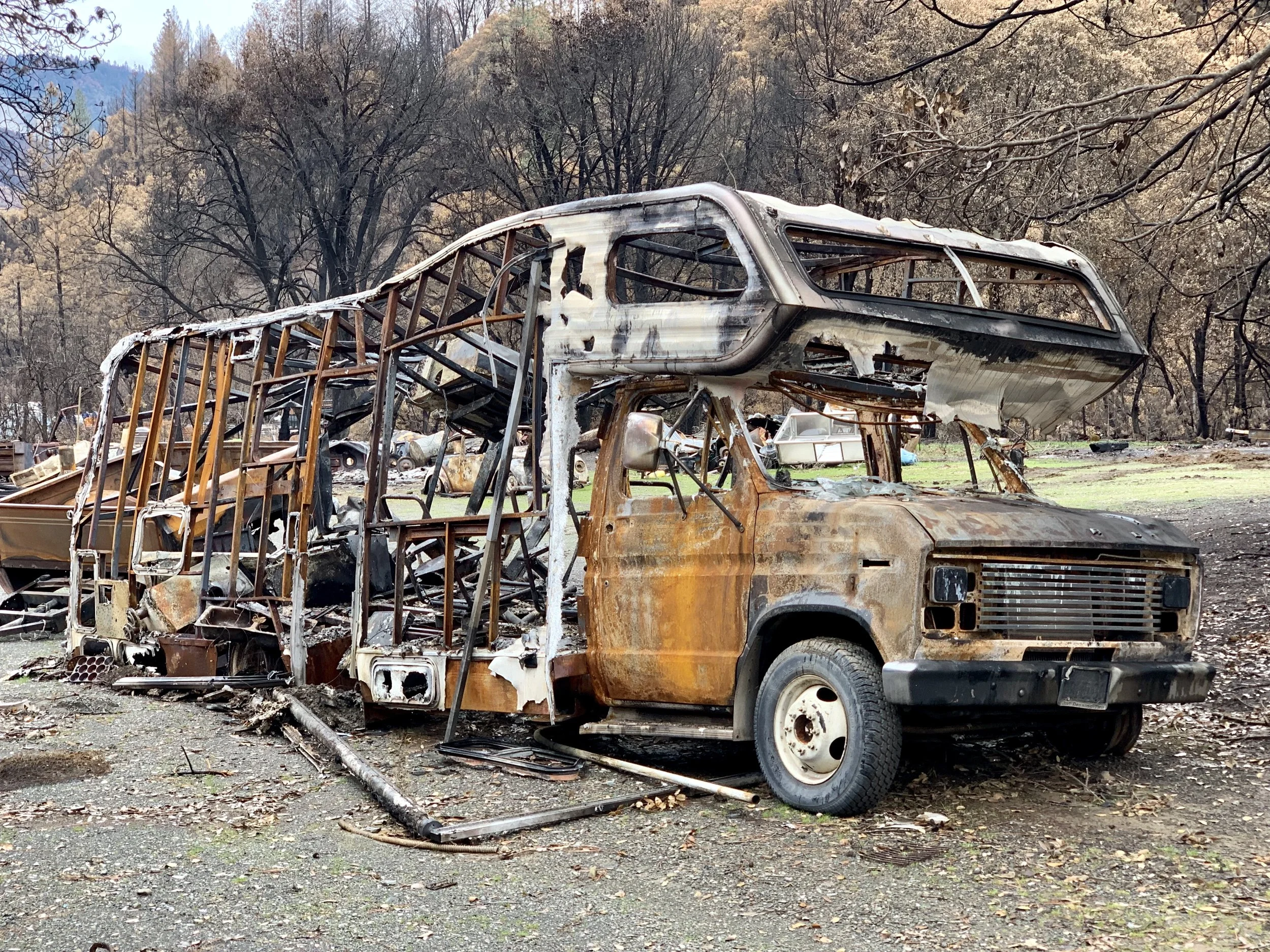
A large burnt out camper van sits by a highway near Delta, Ca. The Woolsey and the Delta fires took place in September and November, 2018, respectively.
Today I read a comment by Tom Di Liberto, a scientist who worked on a well publicized Ocean Warming Report. He was quoted as having said that he thought we wouldn't reduce GHG emissions meaningfully until 2040. His comment made me wonder.
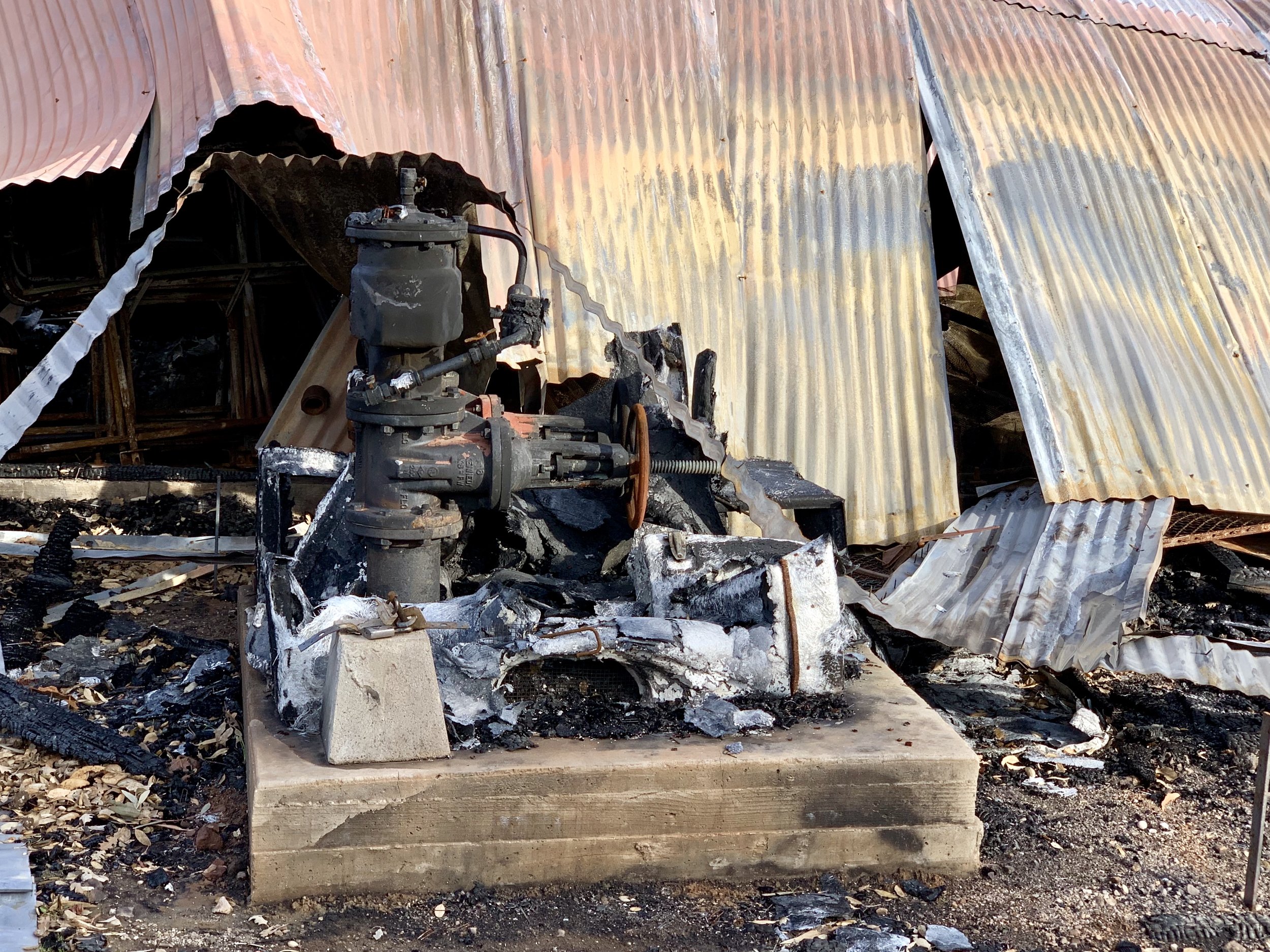
A water pump?
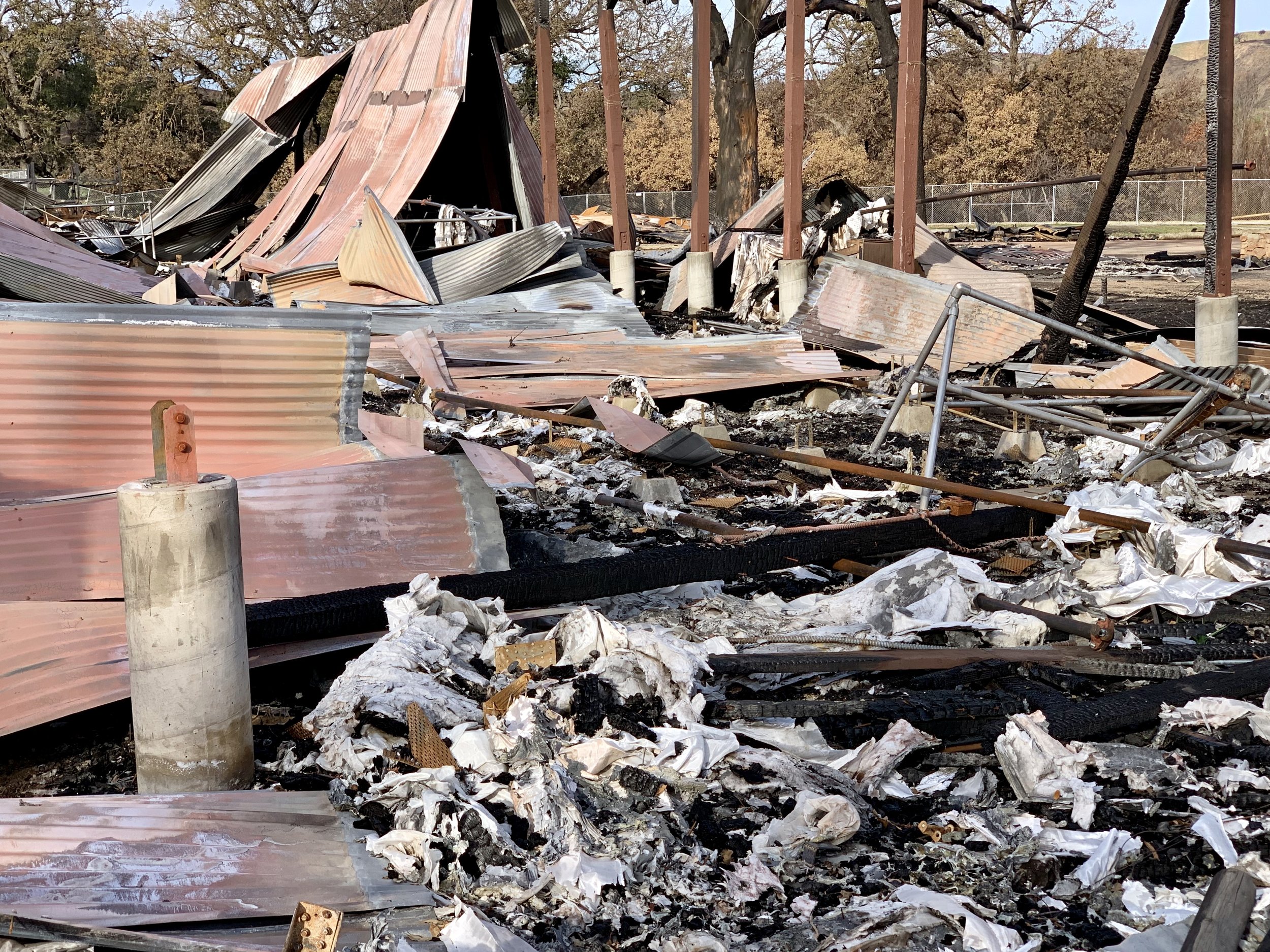
More debris.
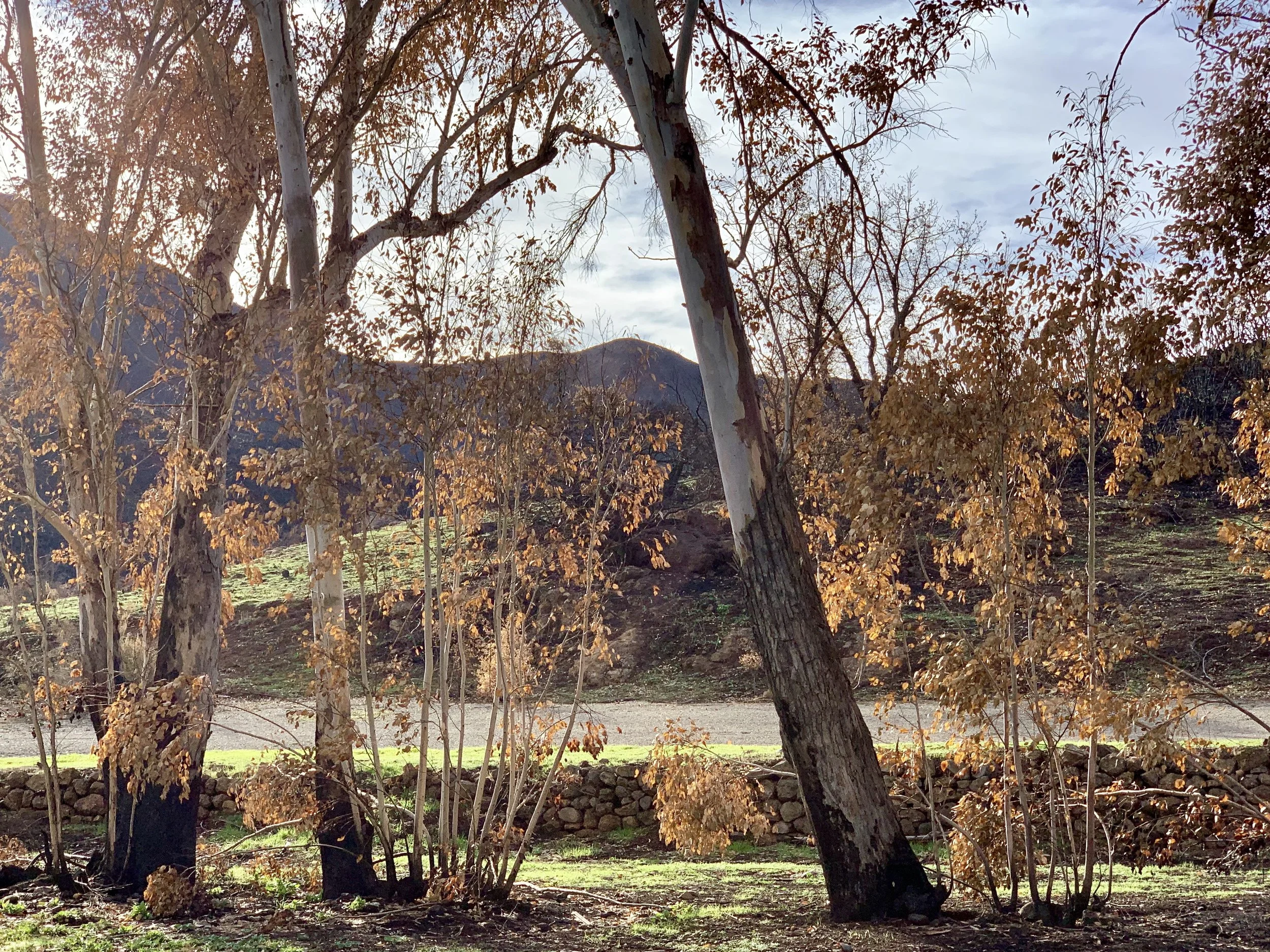
There's something beautiful about a fire area in recovery. Only 3 months after the fire, a hillside in the Santa Monica Mountains near Paramount Ranch makes a comeback.
What will our "pain point" be? Because climate change is as real as the sun, the shoe will drop on climate denial at some point, and we will finally unite in our understanding of what we are up against. But how many people will die first, how much degradation will we endure, how crippled will our economy have to become? Hopefully sooner, rather than later, Americans will say, "enough is enough", and put their shoulders to the wheel of change in a serious way, joining the many other countries attempting to transition their own economies. Some days that seems a long way off - especially as I cycle through the desert near the Salton Sea in January. But there's nowhere to hide. Check this out.
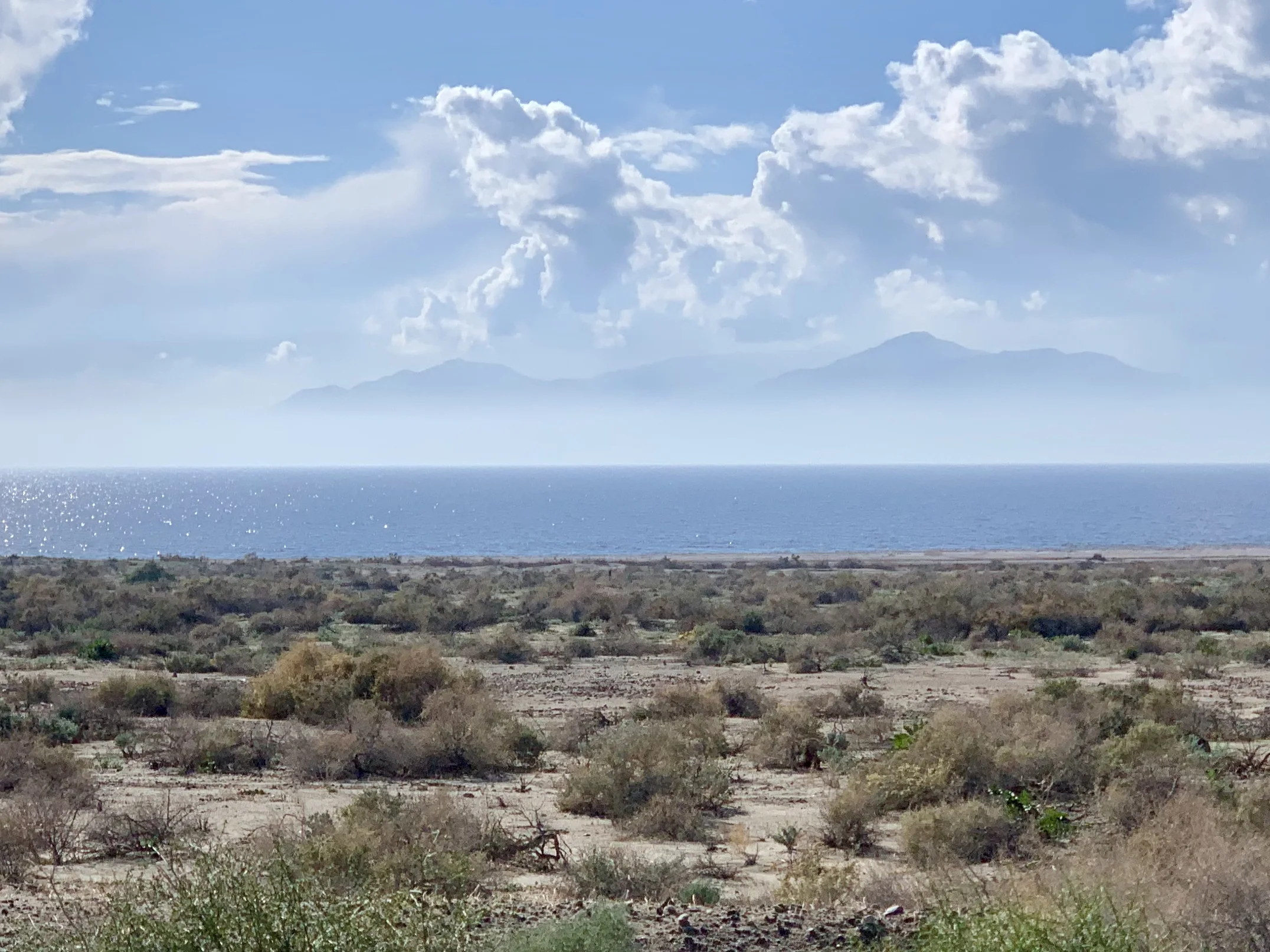
The northern and eastern shore of the Salton Sea is remarkably empty. The first 20 miles of the coast from the north shore are protected by at least three county parks. I was surprised and delighted to see this.
Some days there is progress. I've written in many previous posts about the Citizens Climate Lobby, but I have not yet mentioned that CCL has helped two carbon dividend bills become introduced in Congress. Here is the House Bill, and here is the Senate Bill. Please check them out. If you find these thoughtful bipartisan climate bills hopeful, let your Representative and Senator know you support them. We know that politicians respond to popular will, so we must make it clear to policy makers that we expect them to be effective leaders on climate.
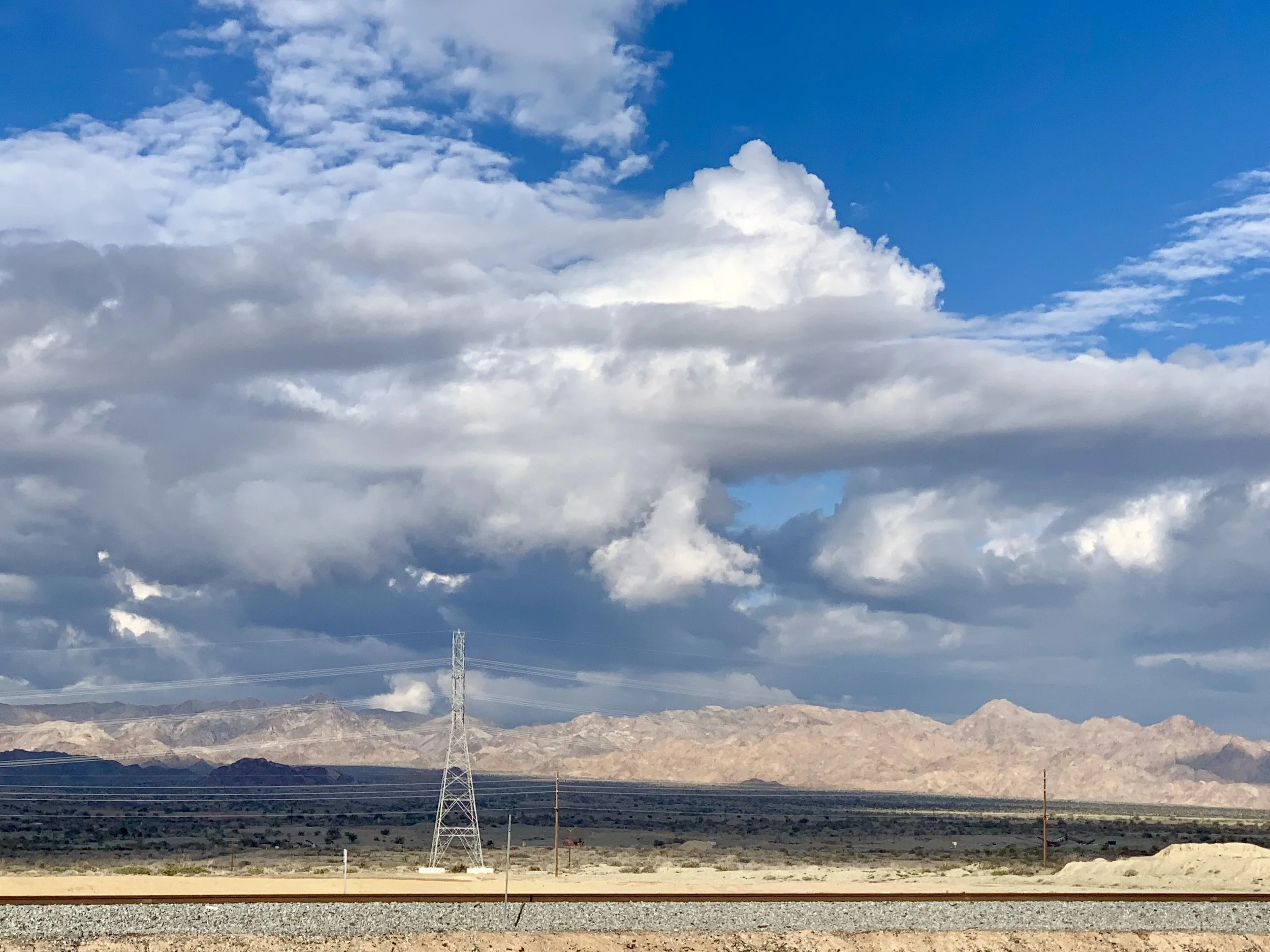
Looking east away from the Salton Sea toward Joshua Tree National Park. Someone told me that Joshua Tree poachers were in the Park because of limited staff during the government shutdown. If that's true, it's heartbreaking.
This is no small task, as we all know. The world's largest economy (ours) is dominated by policies favoring corporate interests and rich corporate-bought climate deniers who are outside mainstream thought, and insulated from extreme climate events. Imagine what this must feel like in smaller countries.
I have some adventurer friends, Ken and Fi Morton, who wrote the following in an email to me:
"Interestingly, we are in Ecuador right now where everyone acknowledges climate change as an obvious event, and not a divisive partisan issue, where private industry and gov't are investing in "clean" infrastructure like solar, and electric/LPG public transport. Also, sadly, is the realization that it, like most developing countries, they are powerless to slow or curb global climate change, as despite all efforts, the world's biggest economies will dictate how climate change plays out... which doesn't give one cause for optimism, currently."
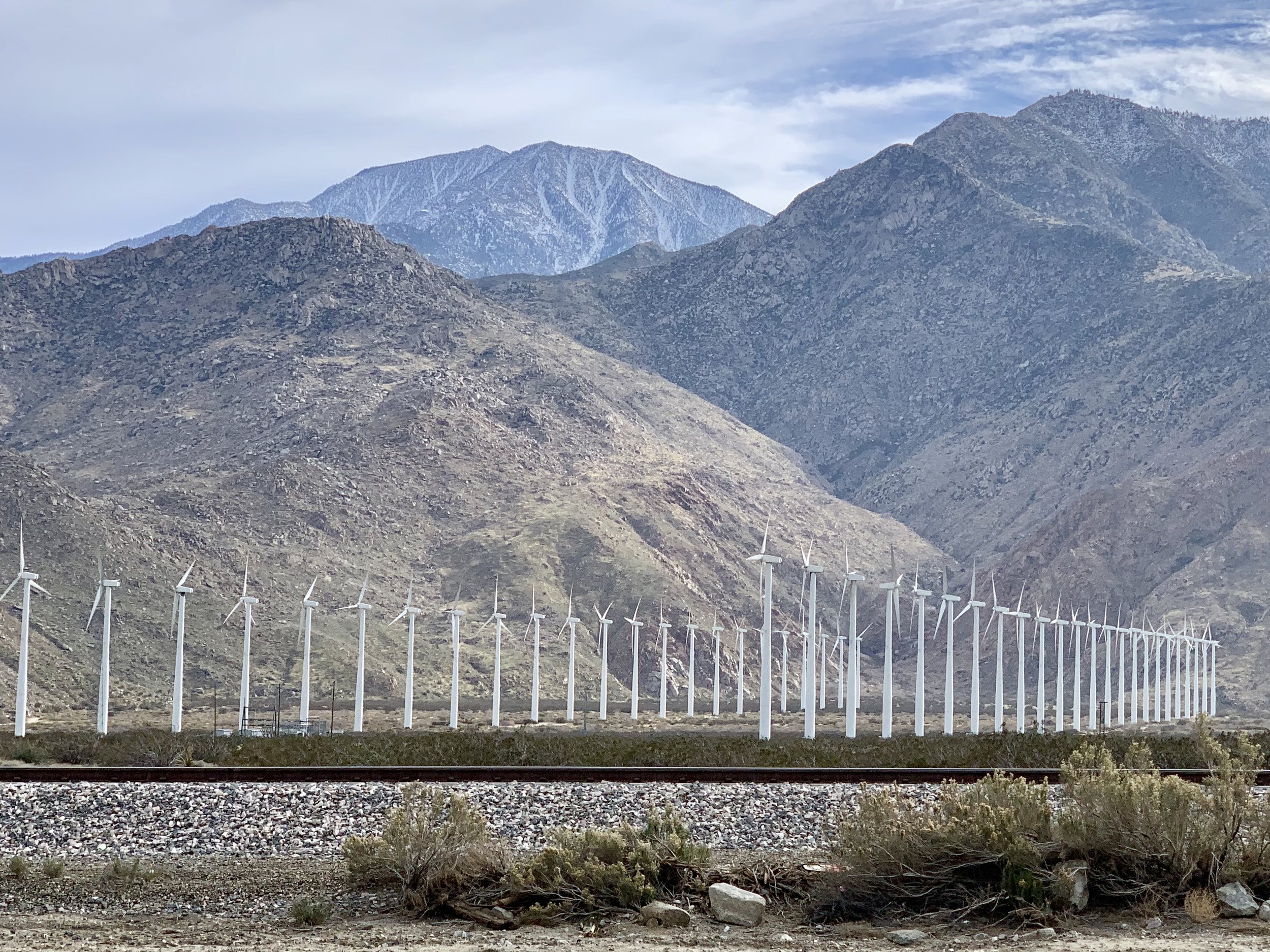
The pass from Banning to Palm Springs is quite windy and there are hundreds of wind turbines along the way. They can be attractive, and far less noisy than traditional oil wells.
There's so much to do. And I think the most important thing of all is not to capitulate to dispair or cynicism, no matter how large the obstacles seem. We've proved the resiliency of our species over and over. Yes, we may be entering the greatest challenge we've ever faced, because none before now has required no less than global economic transformation. Clearly this is no time for "me first, or us first" policies. Let's screw our collective heads back on straight and meet this historical moment with clarity and resolve.
For those of you who like the Garmin maps, here are the past four days of riding:
More to come.
All photos, unless credited or otherwise noted, are copyrighted property of the blog post author.
Palo Alto to Tucson, Post 1
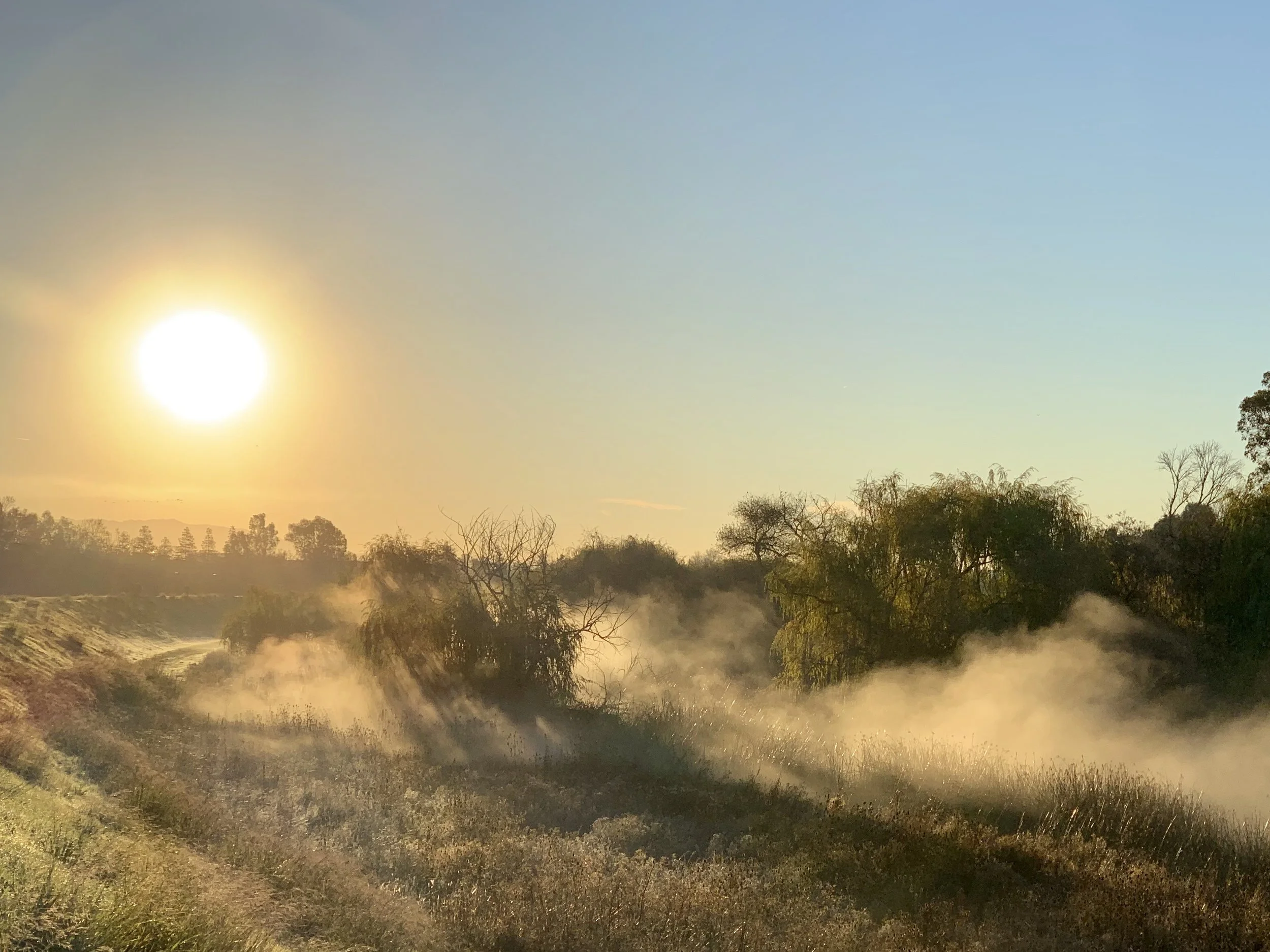
Fog on the Guadalupe River Trail, which extends from San Francisco Bay to downtown San Jose, near the Amtrak Station.
Hi. Greetings from Ventura, CA. I am warm and dry in a Motel 6, after having spent three days cycling here from San Luis Obispo. I got to SLO by train from San Jose, after attending a family celebration in Palo Alto.
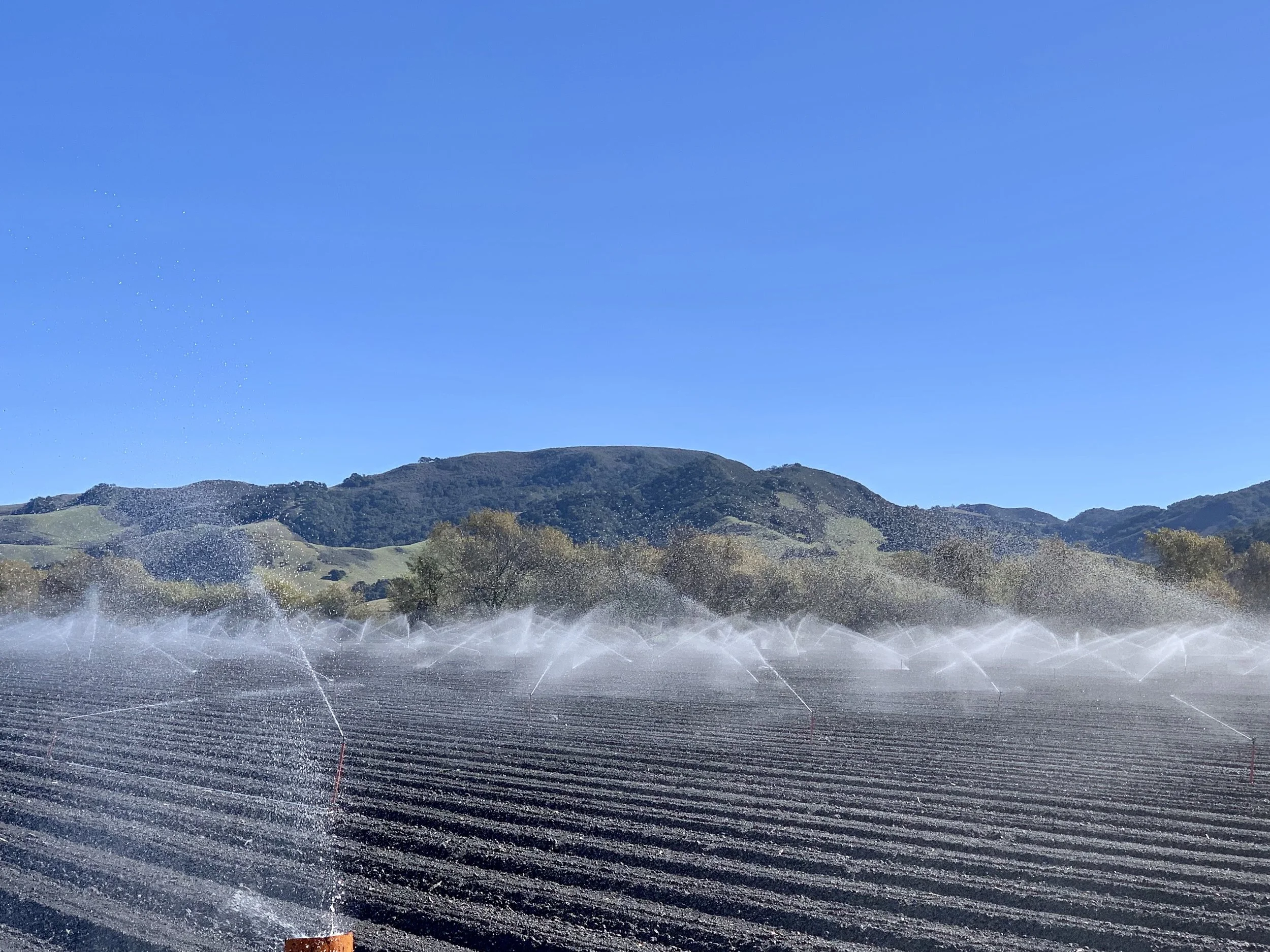
Irrigation on a basil field just north of Lompoc.
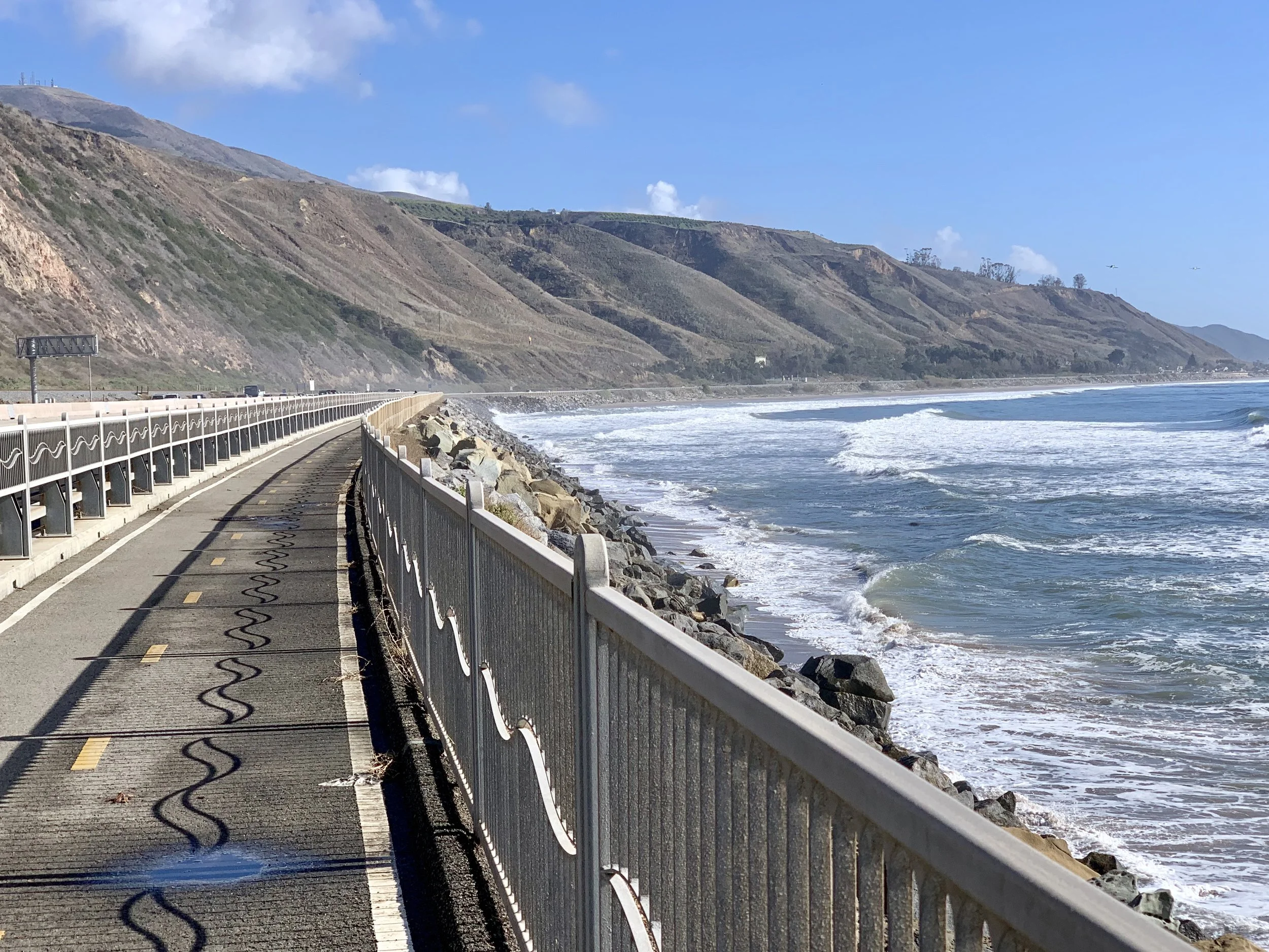
A stretch of cycling path along CA Highway 101.
I am beginning another cycling adventure toward warm and sunny weather, and intend to enjoy the Pacific Coast route as mapped out by the Adventure Cycling Association (ACA) and then the lovely Southern Tier route as far as Tucson (see my archived blog posts on a Southern Tier trip I made a few years back). If time allows, I hope to get as far as Big Bend National Park in Texas, but family matters may intervene. But no matter how far I get, I will be returning to the Pacific Northwest in the spring/summer. This coming summer I am aiming for Alaska.
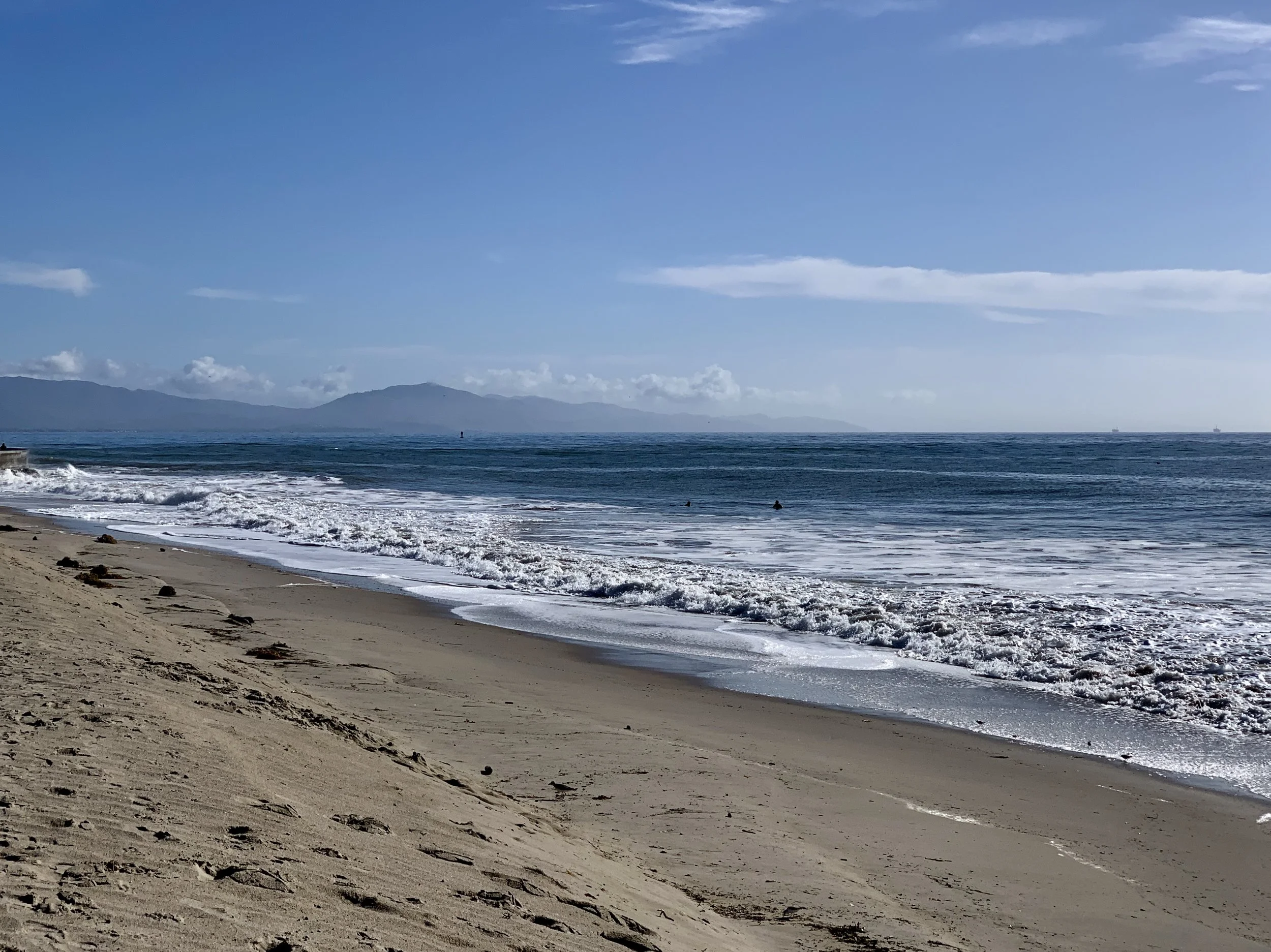
The California coast just south of Santa Barbara.
I enjoy loving connections on both generational sides of my life - my parents are still alive, and I stay close to them (trying to be "a phone call away") and my two grandkids (with a third about to arrive) as I split time between cycling in beautiful (or climate stressed) places - which I adore - and New York - which I also adore. Between those activities and my friends in many places, my parents, my kids and my grandkids, I'm a very lucky man.
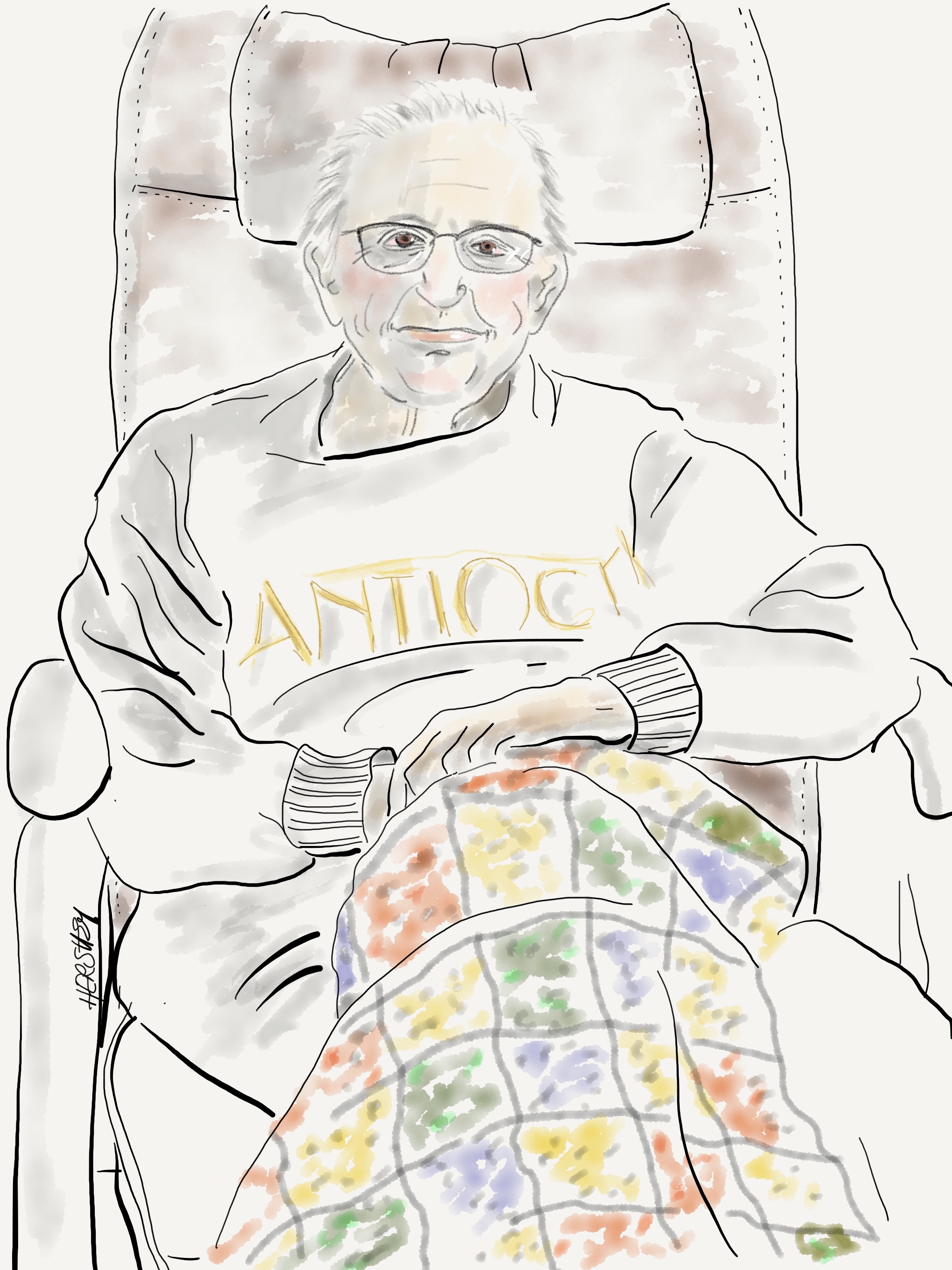
A drawing of my Dad, Kim Chase, by Jennifer Hershey. You can find her work on Instagram under "Deeofo.".
On December 30, 2018, my Dad turned 100. When I asked him how he felt, he said, "the same as yesterday." When a neighbor asked him how he managed to live so long, he replied, "Well, I haven't died yet." At a Christmas dinner a few days before, he told someone else who asked a similar question, "it's an accident."
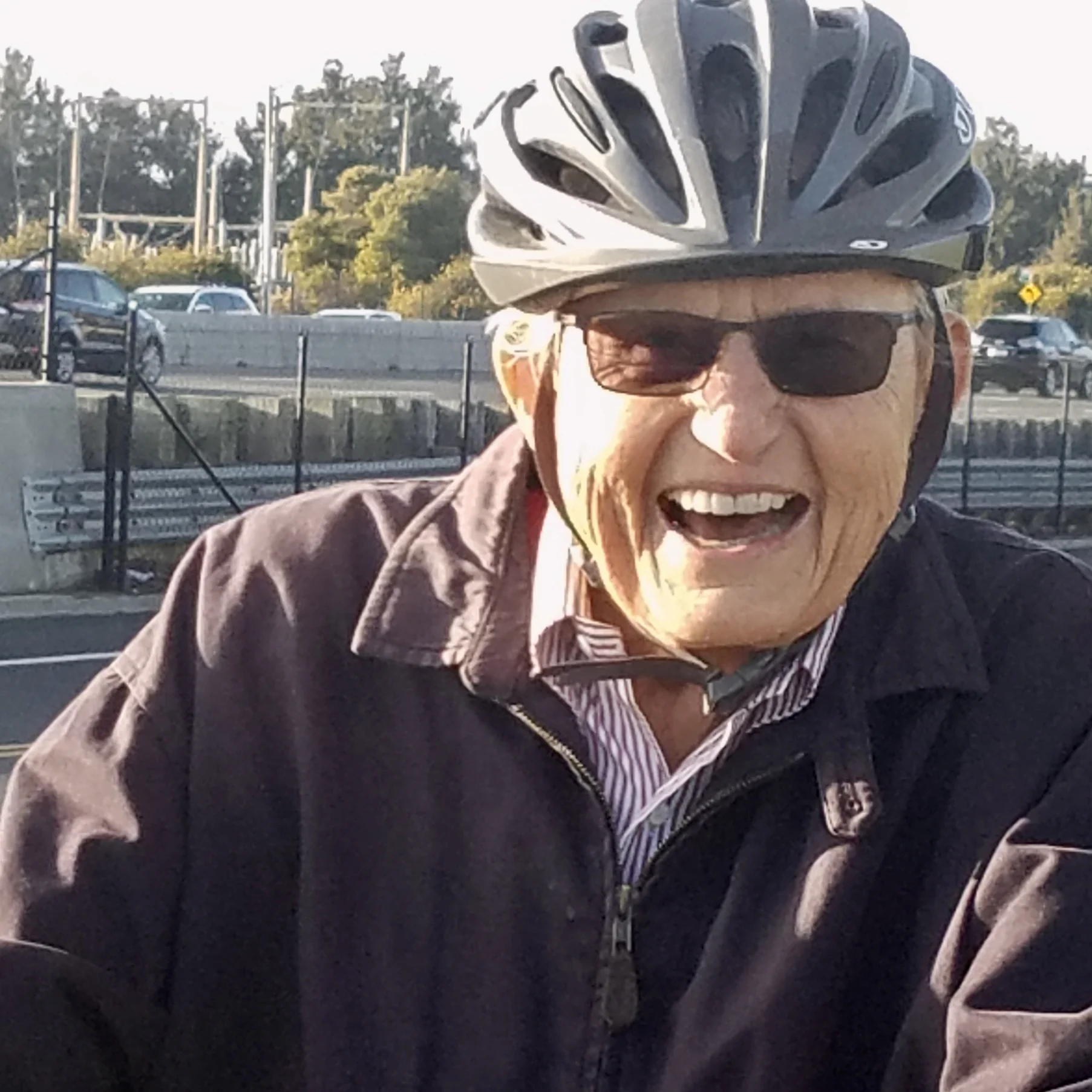
A good moment on the bike on my Dad's 100th birthday.
So much for formulas. That said, my father has been unusually active all his life. He took up backpacking at 60, and didn't stop until he was 87. He owns a three-wheeled bicycle, which he still rides. Last week, I took him over the pedestrian bridge that spans highway 101 to the Bay Lands that border the San Francisco Bay (he needs another person to push his bike up the bridge while he walks up with his cane). It's sensationally beautiful at the Bay; a mixture of grasslands, marshes and tidal mud flats teeming with shorebirds.
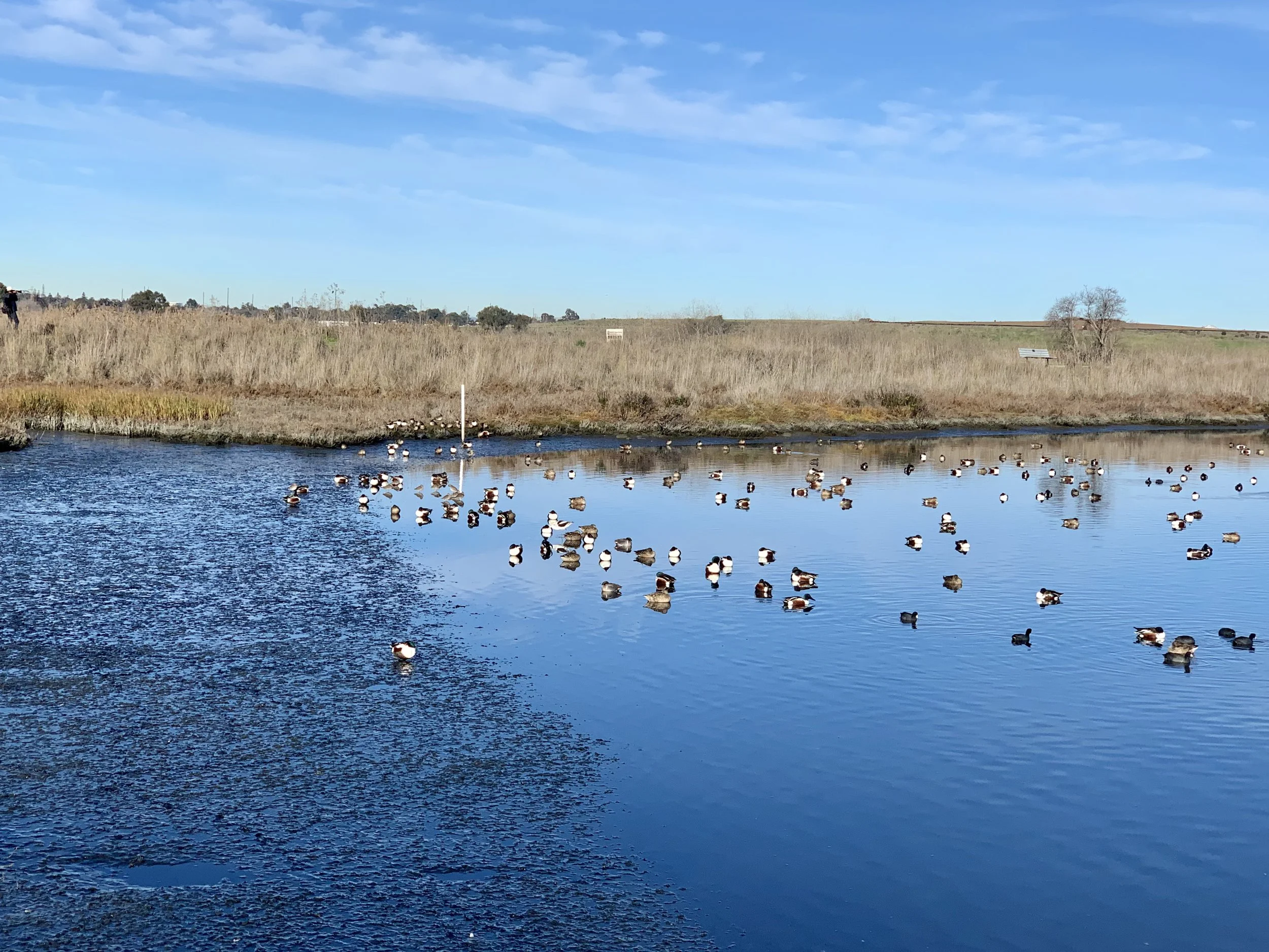
When the tide recedes, the birds dig for food.
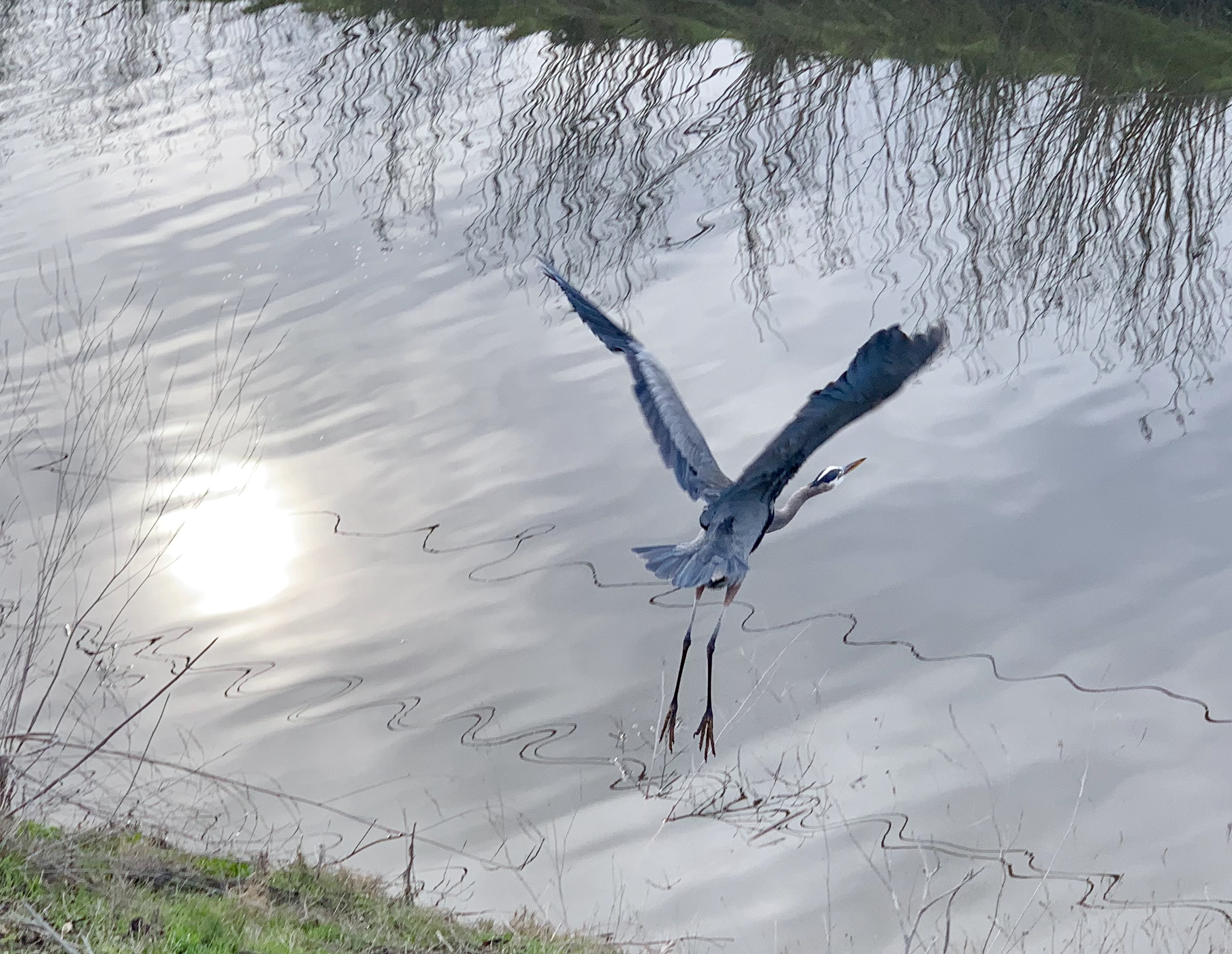
A Great Blue Heron takes flight.
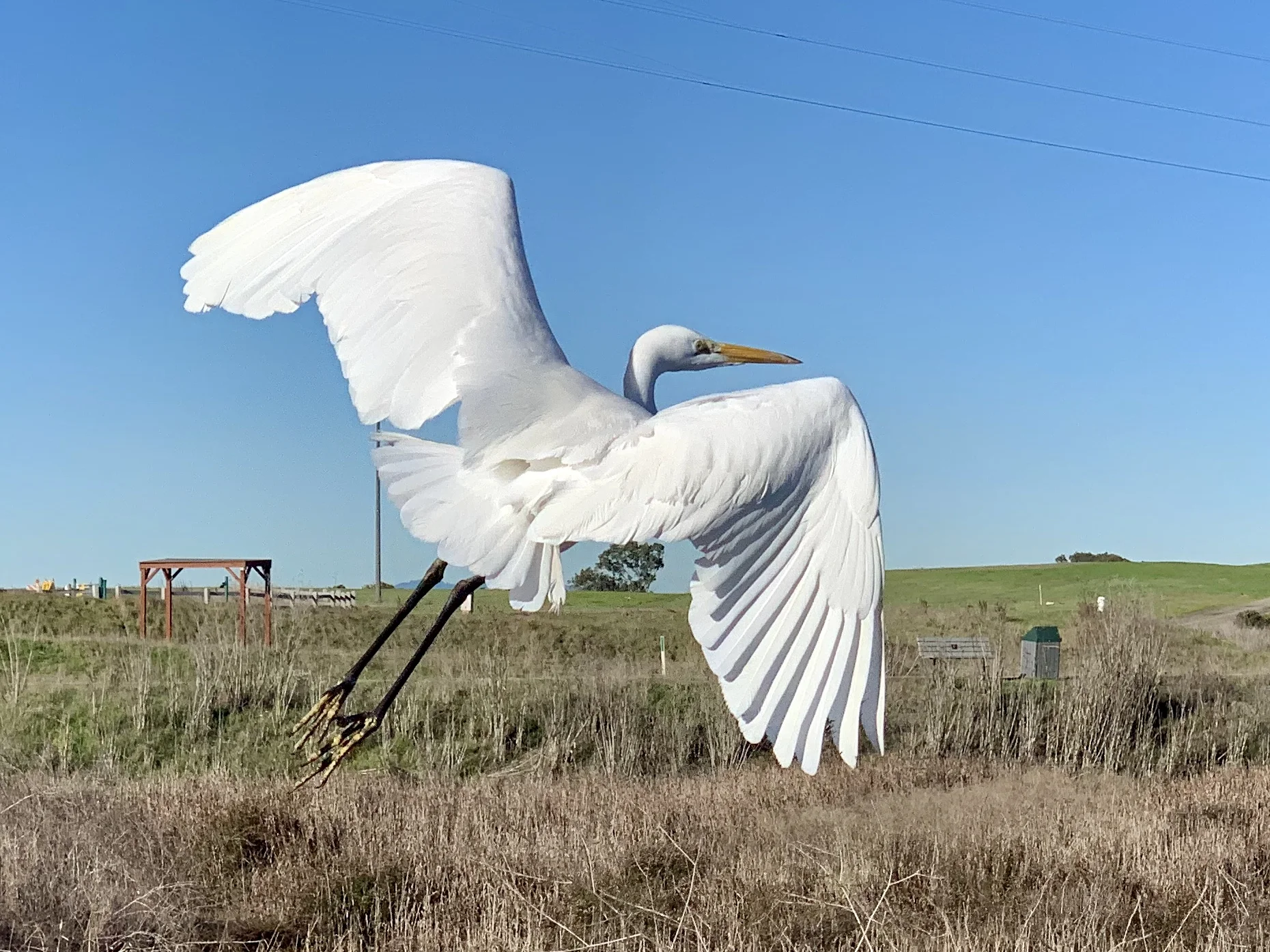
A snowy egret.
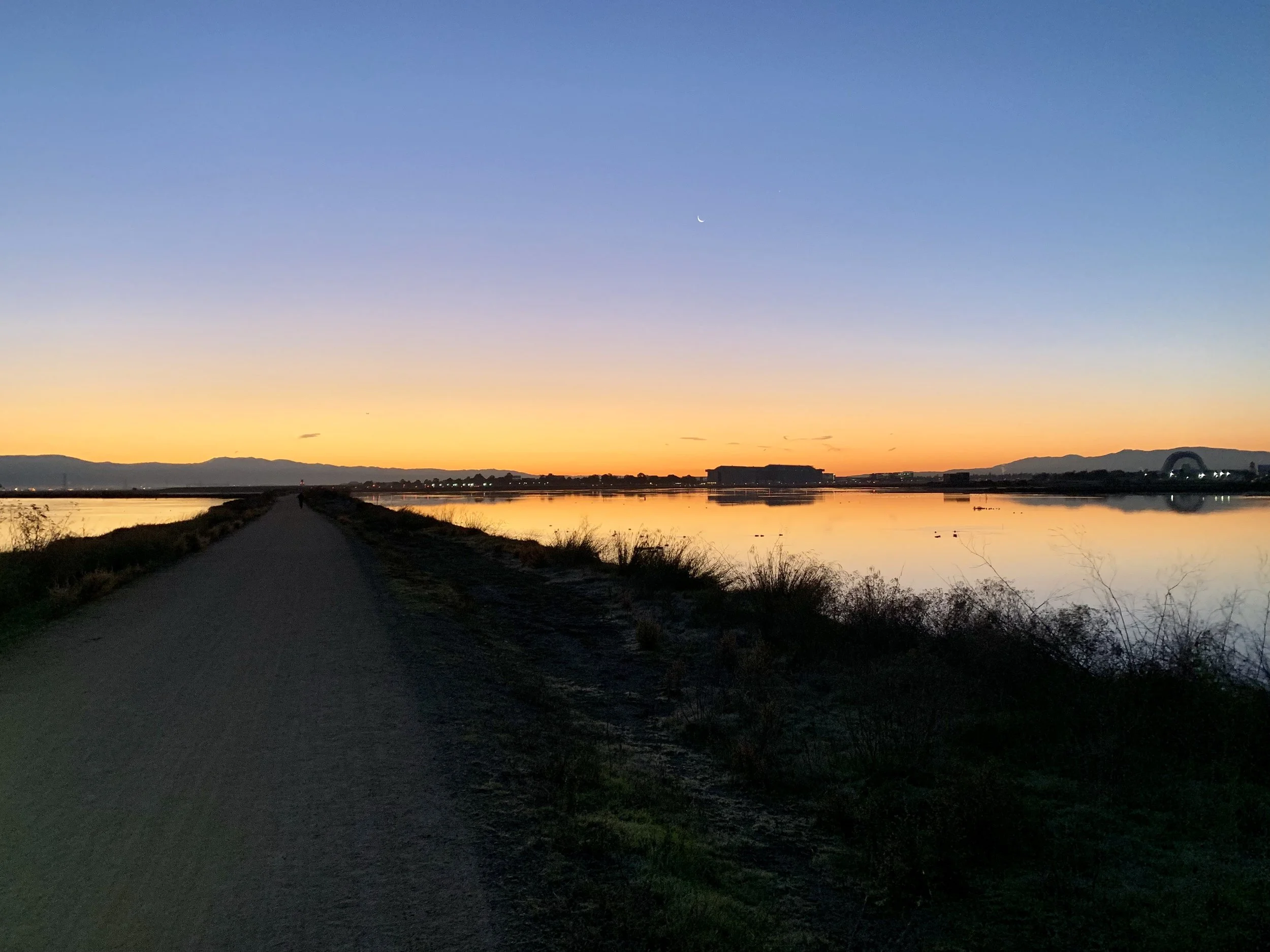
Sunrise on the Bay Area Trail, a bike trail that will eventually follow the perimeter of the entire north and south bays.
Whatever his secret is, my father's longevity has been widely celebrated by friends and family. His life has been a rich one, characterized by adventure, lots of hard work, plenty of love, a healthy dose of common sense and good daily practices. He was born just as the "War to end all Wars" (WWI) started, lived through the Great Depression (the family story is that he had only one pair of shoes and set of clothes all through high school), was a naval officer in the South Pacific during WWII, went to Columbia for a Masters degree on the GI bill after the War, then got his Doctorate, had careers as a professor and college administrator, raised three kids and had three wives. Now, near the end of his life, he is witness to the Trump Presidency (according to him, the mayhem is unparalleled), and even more unsettling, the dawn of the age of climate change.
I don't know how much my Dad thinks about climate change, although he seems to have no problem understanding it. If he was still driving, I'm sure he would own an electric car (he loves Teslas), and would have installed solar panels on his home. But he's a realist (and an existentialist of the Sartre vintage: "Three o'clock is always too late or too early for anything you want to do."), so he's never been particularly optimistic about civilization's prospects.
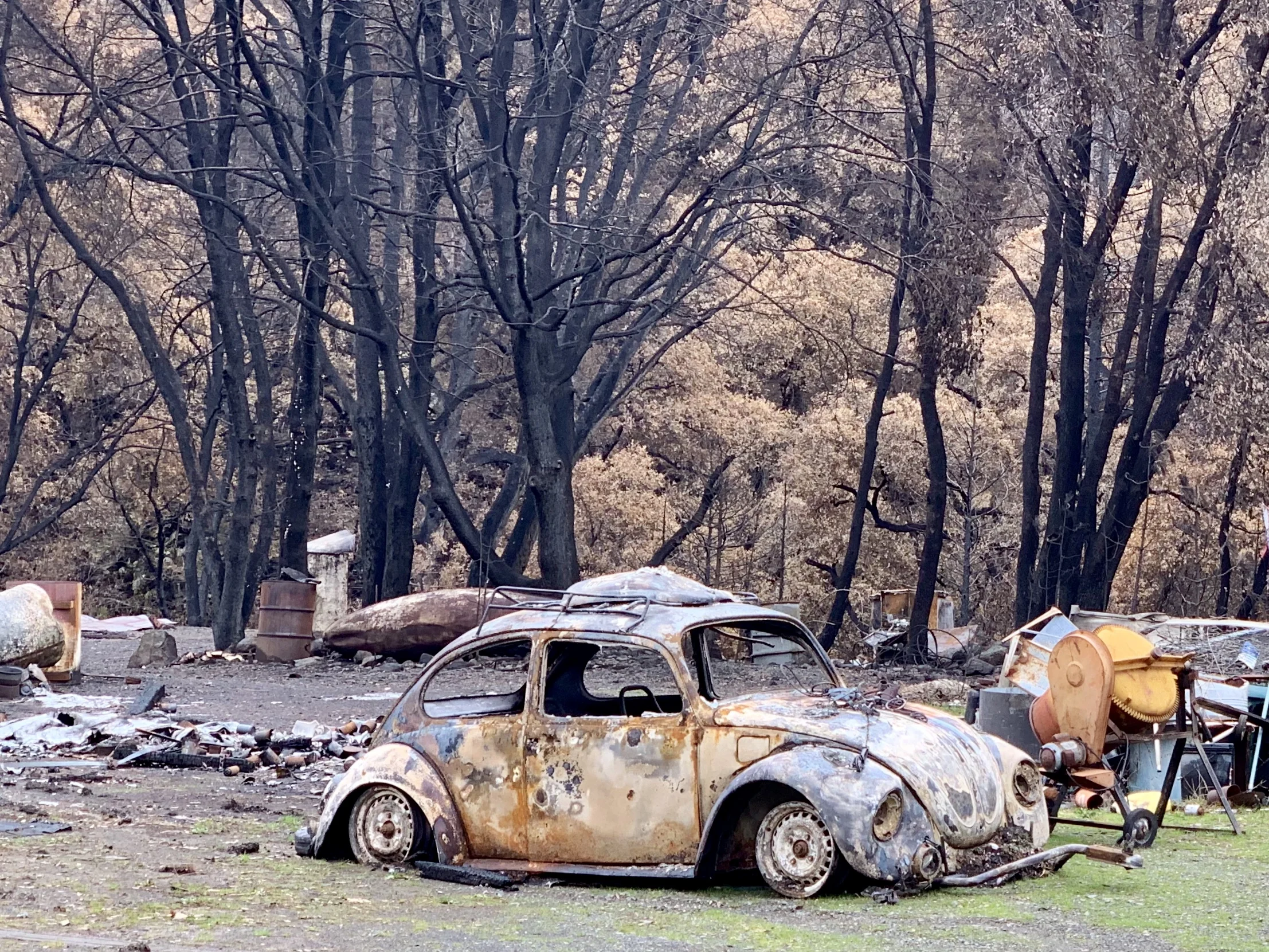
A climate stressed place - I took this shot in last month near Redding, CA. It's from the Delta Fire, which took place several weeks after the CARR Fire was contained. Locals refer to it as "the forgotten fire".
But my Dad is not a gloomy guy. I'm sure he holds out some form of hope for the future, as we all do. Still, every once in a while he jokes that he's lucky he'll check out before the worst is upon us. And he means it.
I think he's right. In some ways, his generation's retirement (with an intact pension, decent healthcare and reasonable wealth) may turn out to have been the pinnacle for the developed world. Subsequent generations may not be able to enjoy the same stability, quality of care and basic prosperity that some in his generation have.
We're likely to face global challenges that are unprecedented. I am reminded of the recent IPCC report on climate, which warns us starkly and unequivocally that the scale of the climate crisis will be beyond anything humans have faced before. Climate Change is unique in that its causes and its impacts are global. Greenhouse gas molecules disperse into the atmosphere, equalizing their distribution everywhere. In one way physics makes climate change extremely democratic, although its impacts are neither geographically nor socially equal. Some geographic areas are more vulnerable than others, such as low lying areas near the sea. And some people are more vulnerable, such as those who live in compromised housing, drought stricken or flood prone areas, or those who depend on livelihoods that cannot tolerate significant climatic shifts, such as fishermen or farmers.
We have to change our way of life. What an extraordinary challenge. Has this ever been done before? Some people bring up the Marshall plan after the Second World War as an example. I find it an apt but incomplete metaphor. In short, over $12B (in 1946 dollars) were put into rebuilding the industrial economies of Western Europe. But the world needs a plan with a global impact. We need a Marshall plan on steroids. Could it be the Paris Accord? Time will tell.
To see my cycling progress over the past days, look here, here, and here.
More to come.
All photos, unless credited or otherwise noted, are copyrighted property of the blog post author.