
Save the Children; Biking the Saint Lawrence in Quebec
Writing by Michael Chase, Drawings by Jenny Hershey
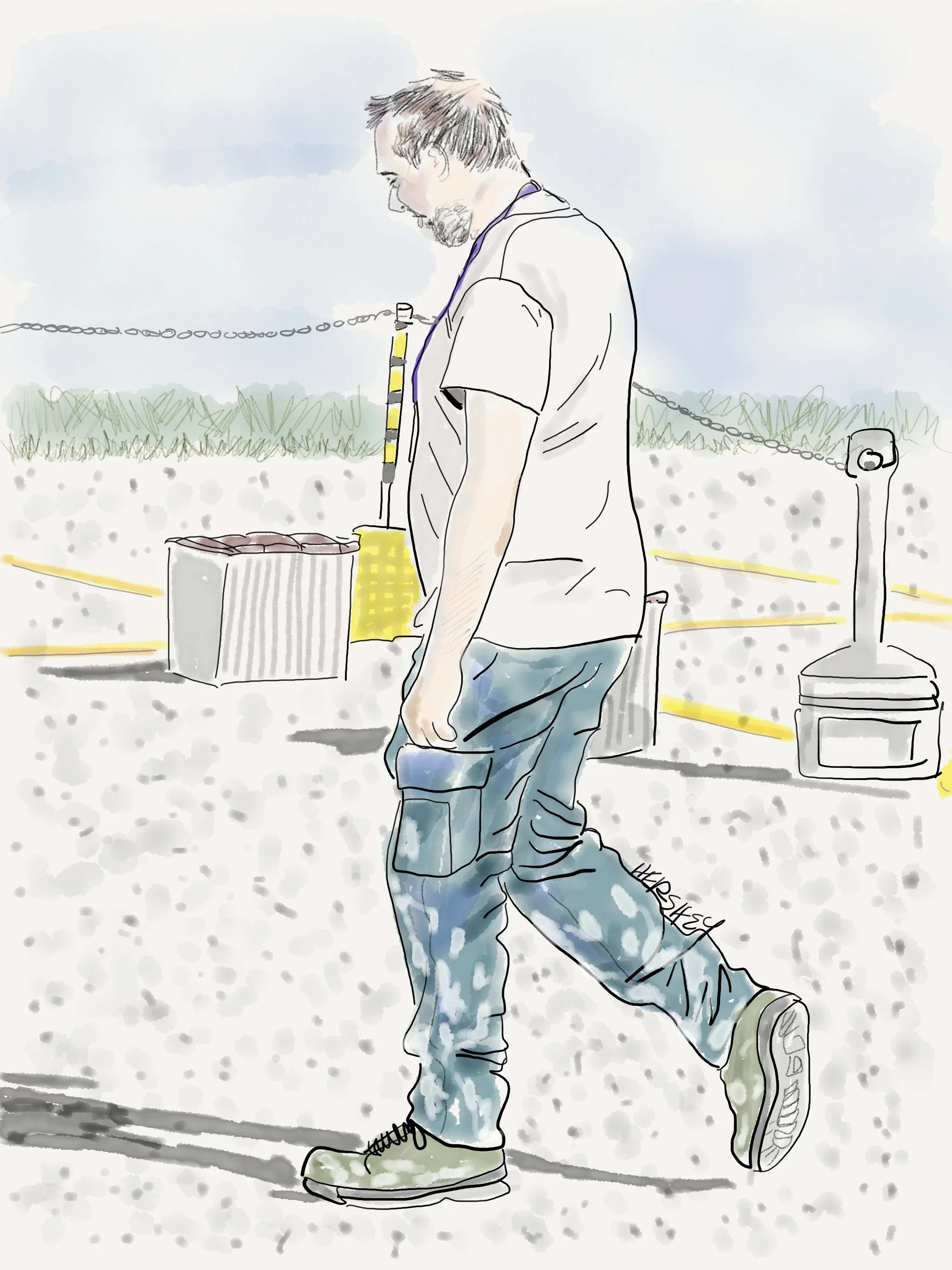
We met Dave in the town of Gaspe at the tip of the Gaspe Peninsula. He was at the end of an overnight shift at LM Wind Power Canada, a leading manufacturer of wind turbine blades in North America. Dave wearily explained that LM has produced over 10,000 blades and currently produces the largest wind turbine blades in the world, measuring 107 meters. These blades are sold in both European and American markets. We asked Dave if we could go inside the factory to see the blades being constructed. “Oh no,” he said, “that’s confidential. I can’t even let my family see inside. Go around the back, and you can see them before they are shipped to Boston for an offshore project.” We were excited by the opportunity and praised Dave for contributing to renewable energy. “Well, that’s all very nice.” he said, “But to me, it’s just a job!” He slowly walked toward his car to go home to sleep. Drawing by Jenny Hershey. Follow her on Instagram @deeofo.
“The world as we have created it is a process of our thinking. It cannot be changed without changing our thinking.”
- Albert Einstein
The Gaspe Peninsula and the North Shore of the Gulf of Saint Lawrence in Quebec have loomed large in our imaginations as a cycling destination for years. Jenny and I found them both accessible and remote, as well as charming and quite stunning. We drove to Quebec from New York City in mid-August, left Jenny’s car at the Quebec City airport, and began biking. North of Maine and New Brunswick, the Gaspe Peninsula and the North Shore of the mighty Saint Lawrence River are favorite destinations for Canadians, especially for residents who live in and around the populated areas of Montreal, Quebec City, New Brunswick, and other parts of the Canadian Maritimes. Gaspe and the northern shore of the Gulf of Saint Lawrence in Quebec feature spectacular landscapes with hundreds of miles of coastland with stunning fishing villages, beautiful bays, fjords, mountains, gushing rivers and streams, waterfalls, lots of camping spots, and modest and charming accommodations. We were not disappointed!
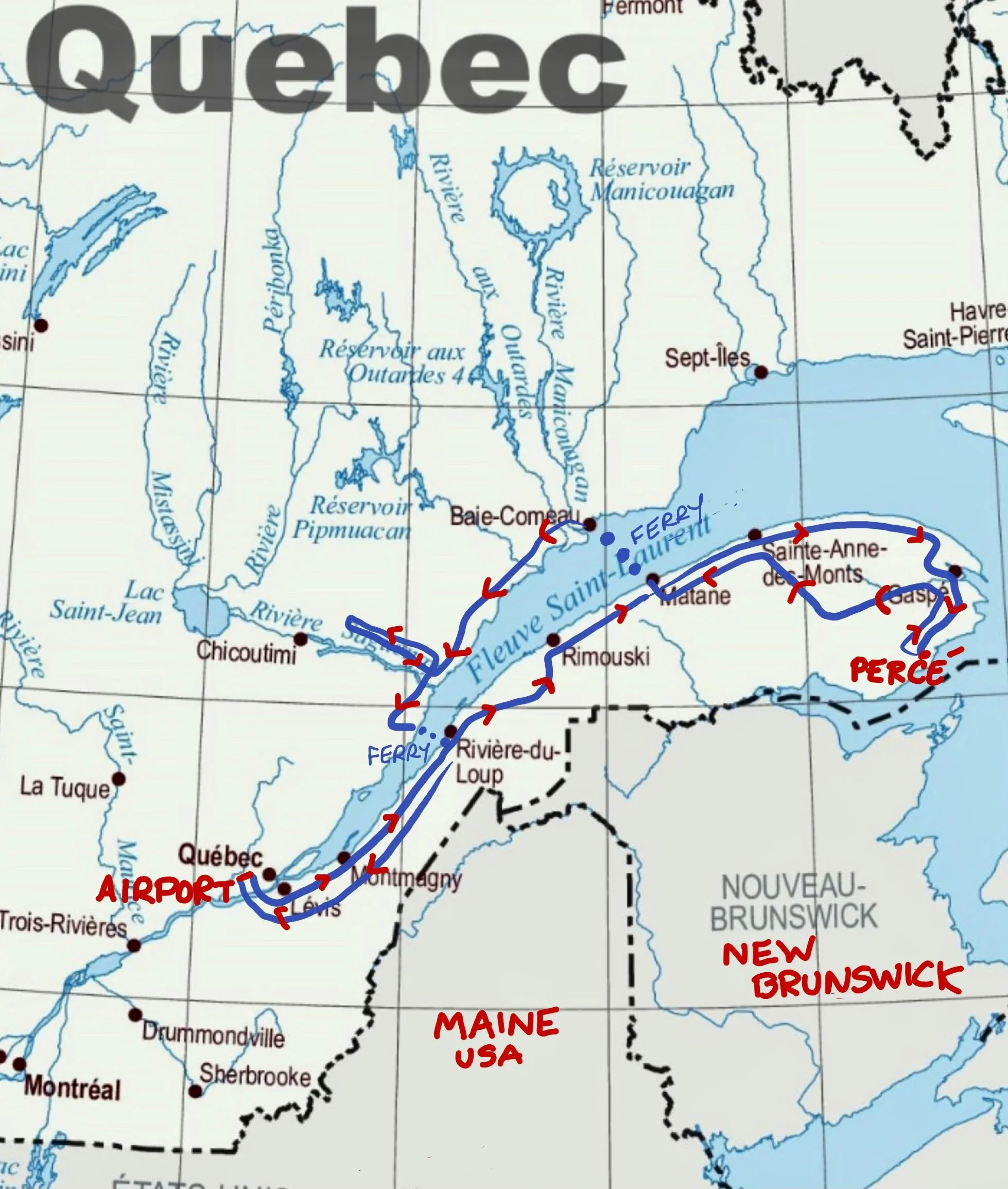
We began at Quebec City, riding our bicycles up the north coastline of the Gaspe Peninsula to the town of Gaspe and down to Perce, then across the interior through Murdochville and back to Matane on the north coast of the peninsula, where we ferried to Baie-Comeau, biked down the North Coast of the Saint Lawrence to Tadoussac and up the mighty Saguenay River with its many fjords to St. Rose du Nord, then back to Tadoussac, across the Saguenay River by ferry to Baie St. Catherine, down to Saint Simone, taking yet another ferry to Rivière du Loup and biking back to Quebec City. We rode about 1,350 miles in total. Map constructed by Jenny Hershey. Follow her on Instagram @deeofo.
The abundance of good weather we encountered on this trip contrasted almost daily with news about challenging weather events plaguing many other communities elsewhere. Because Jenny and I follow climate change impacts on local communities as widely as possible, the contrast between our experience at any given moment and what is happening elsewhere is always on our minds. This has been quite a summer for extreme weather events. It may be that 2023 will be remembered as the year the global climate tipped permanently into a perpetually worsening fever. For the remainder of our lives (we are in our early seventies), Jenny and I can count on experiencing ever-worsening weather. As to those born in the 21st century, climate science modeling indicates that temperatures (and their attendant impacts) may flatten out in forty to fifty years if we can manage to stop emitting greenhouse gases over the next few decades. It’s a profound moment for humanity; whether we get it together in time to save civilization as we know it is the biggest story humanity has ever faced.
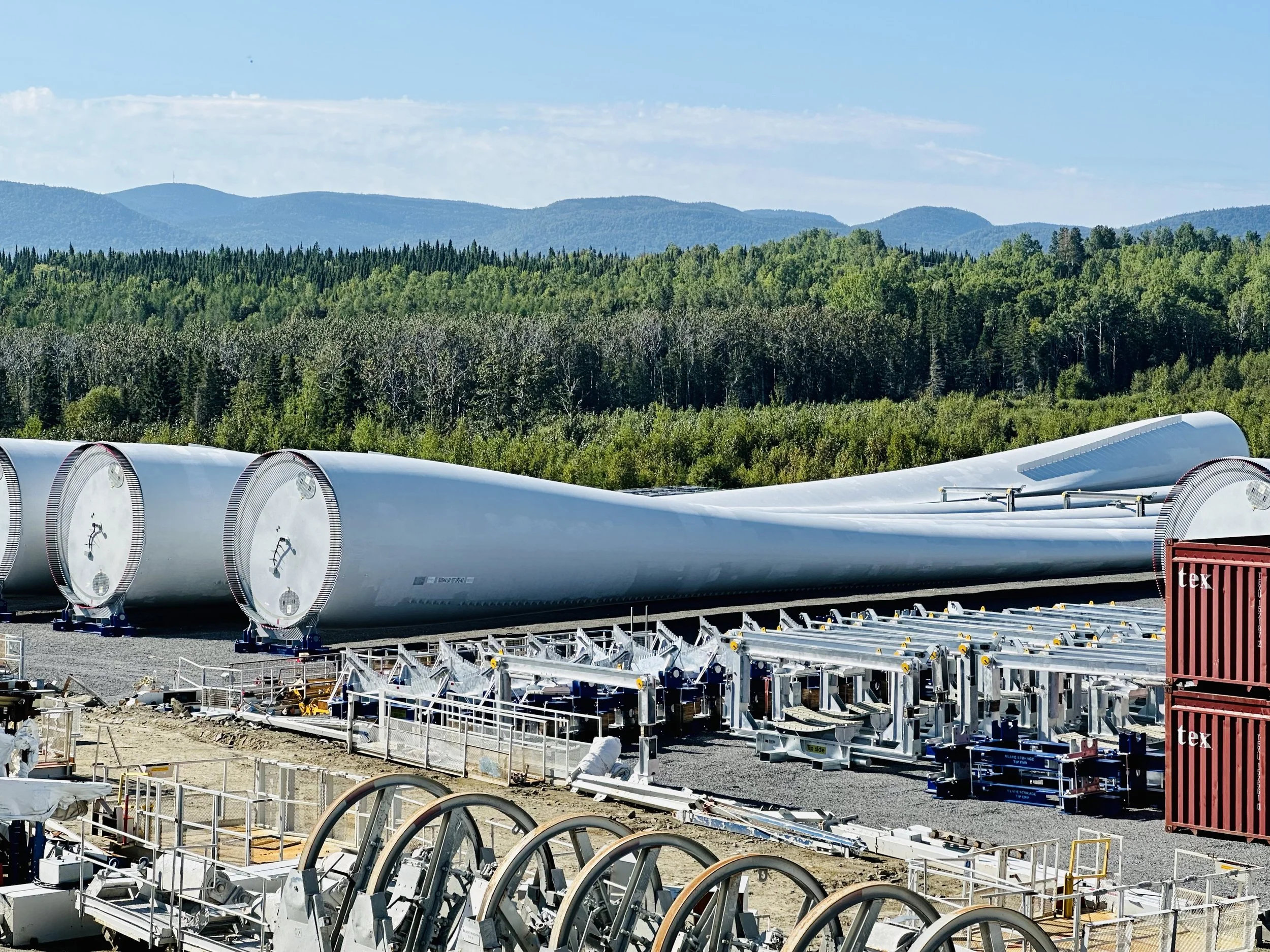
Wind turbine blades destined for a Boston offshore wind project manufactured in Gaspe at LM Wind Power. The facility employs over 500 workers and contributes to the local economy and the green transition. Photo by Michael Chase. Follow him on Instagram @mjohnsonchase.
No matter what happens with greenhouse gas emissions, extreme weather tragedies over the next few decades will undoubtedly exceed anything we have already experienced. Still, giving into despair is pointless and unproductive. While we must be realistic about our situation, there is always hope. Humanity can still create a workable future. We have all the technical solutions we need, and the global collective will to improve our way of life gets stronger daily. At the same time, we must focus ever more intently on removing the corporate-driven, highly politicized conflicts of interest that stand in the way. More on that later in this post…
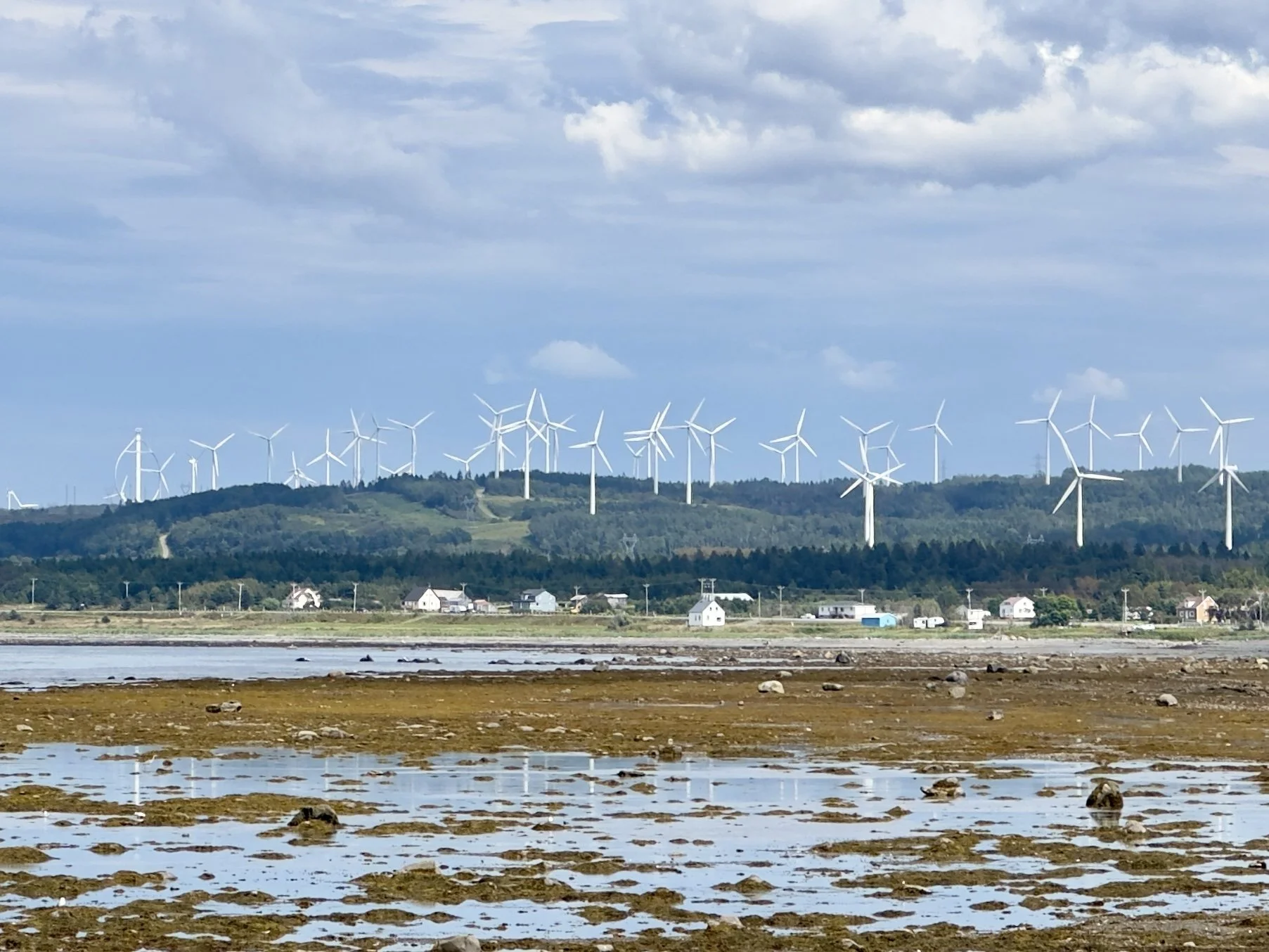
The Gaspé Peninsula is one of the windiest regions in Canada, with an average wind speed of 28 feet per second. The region has been developing its wind energy potential since the 1990s with the support of the provincial and federal governments, local communities, and private companies. The Mesgi’g Ugju’s’n wind farm has 47 wind turbines expected to generate approximately $200 million for three indigenous Mi’gmaq communities over the next 20 years, with a total installed capacity of 150 megawatts (MW). The large multinational renewable energy company Innergex is also active on the peninsula, and the windmills pictured above belong to them. The region has over 800 MW of installed wind capacity, representing about 60% of Quebec's total wind capacity. There are also several research and training centers for wind energy, such as Nergica and the École de Technologie supérieure (ÉTS). This photo was taken near Baie des Capucins, Quebec. Photo by Michael Chase. Follow him on Instagram @mjohnsonchase.
Jenny and I publish these blog posts every few months, and it usually seems helpful to begin with a brief review of our changing climate. As change accelerates, a lot can happen in a few months. Fortunately, the press is getting better about reporting on climate issues, so many people (except, perhaps, for those who only expose themselves to the far-right echo chamber) are already aware of the constant drumbeat of ominous climate news. Consequently, a very brief review of 2023 to date will suffice (for a more thorough accounting go here):
The hottest aggregated land temperatures in recorded history.
The hottest aggregated ocean temperatures and greatest ocean acidification levels in recorded history.
Lahaina, Maui, was reduced to toast. Over 100,000 people in Canada were evacuated because of encroaching wildfires. Major American cities experienced deadly levels of air pollution from Canadian wildfires. Cities in Greece were evacuated because of wildfires and then hammered by historic rain bombs.
A record number of typhoons, cyclones, hurricanes, and tornadoes worldwide.
Atmospheric rivers, rain bombs, historic damage from flooding events. (The floods in Libya leading to bursting dams are the most recent and chilling episode).
Unprecedented and enduring droughts and resulting starvation from crop failures, especially in the Horn of Africa.
Record temperatures and melting of sea ice and glaciers in both polar regions.
A Casandra-like warning from scientists that the Atlantic Current (AMOC) is weakening and may shut down as early as the mid-2030s if emissions aren’t radically reduced soon.
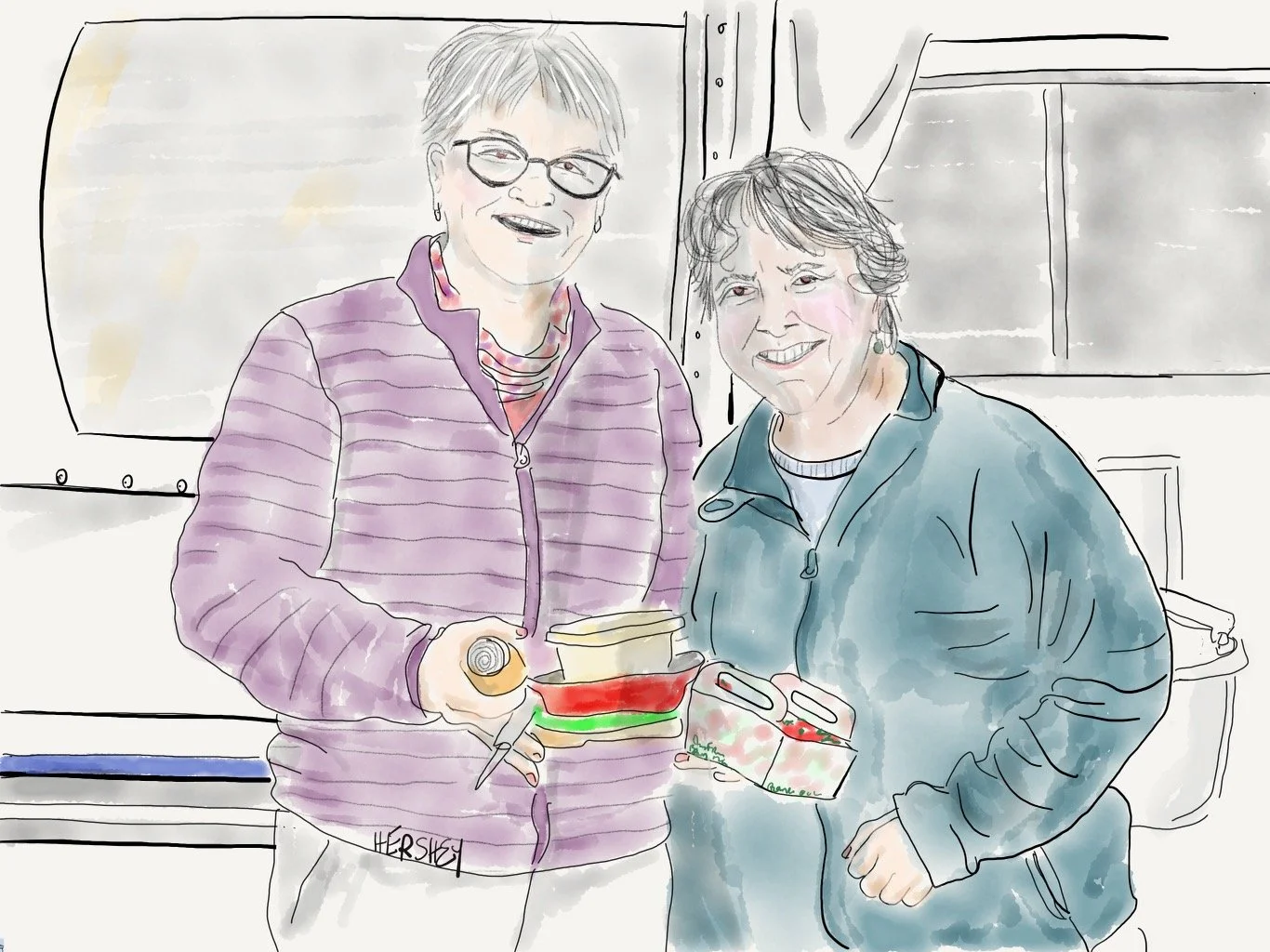
We met Helene and Paule from Sherbrooke, Quebec, at a rest stop near Saint Maxime du-Mont-Louis. They were on their way to a camping trip to Forillon National Park at the tip of the Gaspe Peninsula. Almost by accident, we found ourselves discussing family values, and Helene and Paule shared their story of love and building a family. They met over 30 years ago. Helene is a retired audiologist, and Paule still works as an occupational therapist for ALS patients. They both came out to their friends and family years ago and eventually adopted two children. However, at the time, they were not legally able to adopt together as a same-sex couple, so they each legally adopted one child, although they continued to live as a family of four. Helene explained, “It took a few more years for us to come out to our larger social and professional communities.” However, those communities gradually came to accept them, and they have been well-integrated into the Sherbrooke community for years. Along the way, they’ve seen a lot of progress toward tolerance. However, they are now concerned by the anti-LGBTQ sentiment reappearing in Canadian political and cultural life, much like the United States. Drawing by Jenny Hershey. Follow her on Instagram @deeofo.
Like everywhere else on our beleaguered planet, the impact of climate change is apparent in Quebec on the North Shore and the Gaspe Peninsula. Gaspe was lucky to escape wildfires this year (although the region was surrounded by fires in northern Quebec and Nova Scotia). The most apparent climate-driven issues on Gaspe are coastal erosion, rising sea levels, and extreme weather events, such as unusually intense storms and more significant swings between drought and wet periods. This summer (2023) was much wetter than the norm, with some prolonged periods of extreme heat. That said, a heat wave in Gaspe is when temperatures climb above about 85F (30C), although we talked to a 23-year-old bicycle mechanic in Matane who can remember a few 104F (40C) days in earlier years. So, while residents and tourists experience heat waves, less attention is paid in this region than further south to the dangers of heat fatigue, exhaustion, or heat stroke. Unfortunately, that is unlikely to last.
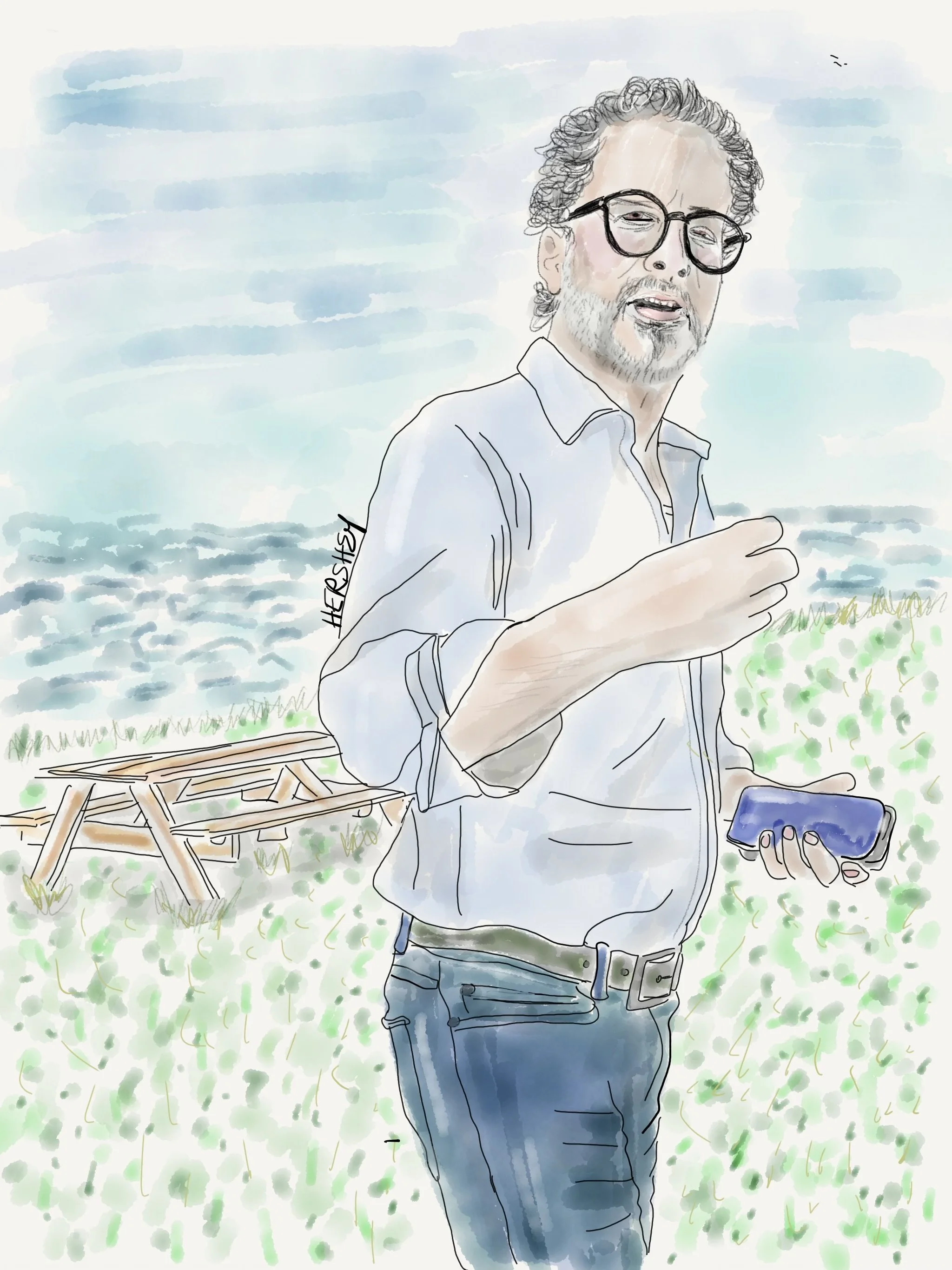
James owns the L’Etoile du Nord Motel on Pointe-a-la Fregate on the Gaspé Bay Peninsula. He purchased his motel/restaurant before the COVID pandemic but decided to run his Montreal-based cybersecurity consulting business remotely once it hit. James runs a tight ship as a motel and restaurant owner while simultaneously running his cybersecurity business. He greets his motel guests for breakfast, engages in warm morning chatter, and then promptly hops on Zoom calls with his cybersecurity staff in Montreal. James shared some of his dreams while showing us around his property. He is very proud of a late 19th-century ice house that he moved inland to protect from storm surges. As we walked on, he gestured to some empty beehives, telling us the bees didn’t make it through last winter and he’ll try again in the spring. Then James showed us a spot where he hopes to build a lighthouse. In a touching moment, he placed his hand over his heart and confessed his greatest joy is having his two young adult sons working with him this summer. Drawing by Jenny Hershey. Follow her on Instagram @deeofo.
Although communities on the peninsula have faced coastal erosion challenges for decades, climate change has accelerated erosion in recent years by increasing the frequency and intensity of storms, reducing the protective sea ice cover, and causing sea level rise. Consequently, an increasing number of homes, businesses, infrastructure, and cultural heritage sites in the Gaspe region are at risk of being damaged or destroyed by the encroaching sea. Although we couldn’t meet them, we read about a couple trying to save their ancestral home from coastal erosion by placing 650 tons of rocks along their property to create a barrier against the waves. However, they acknowledge this is only a temporary solution, and they may eventually be forced to move.
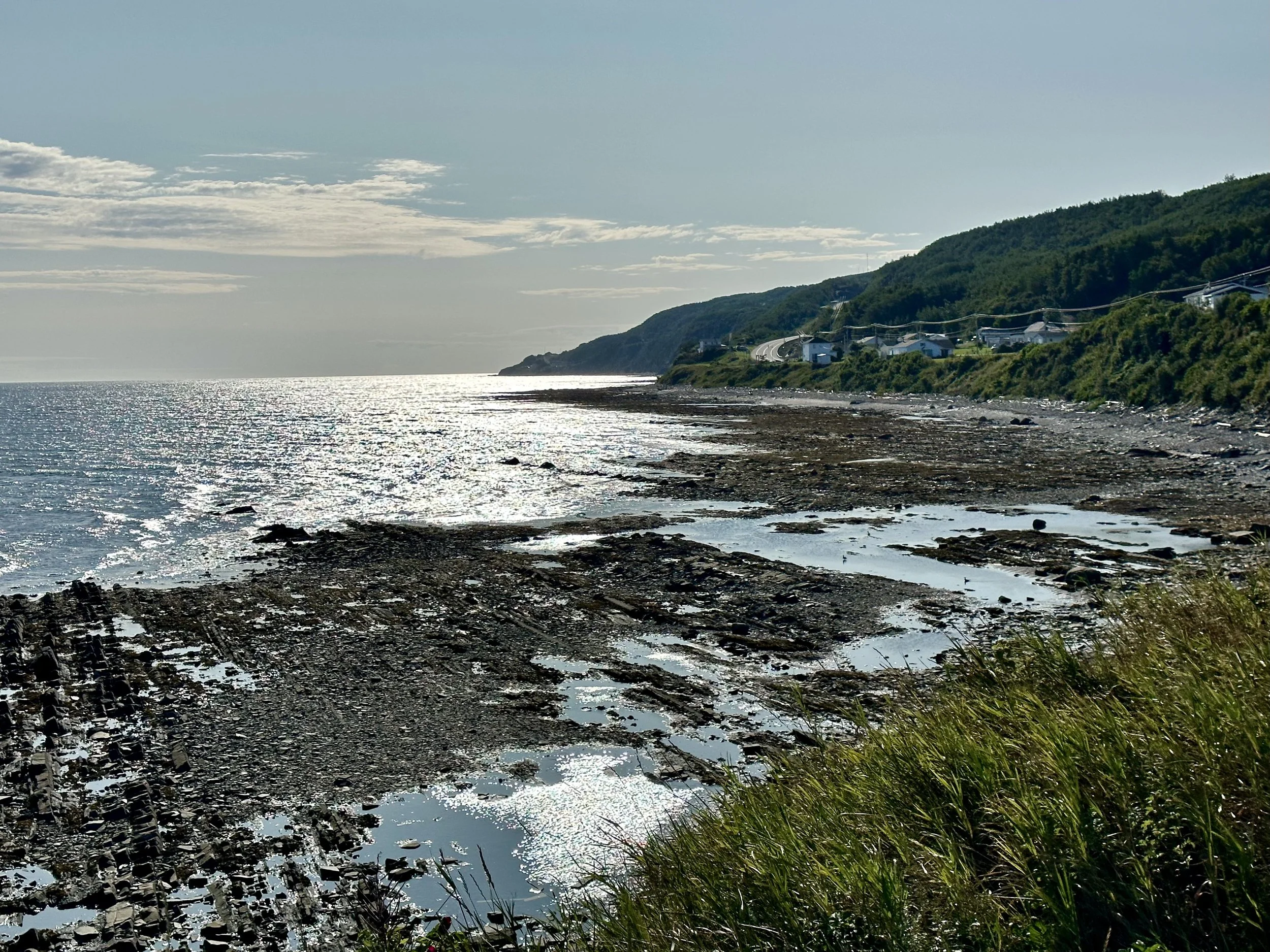
The morning sun reflects off the water on the Gulf of Saint Lawrence at L’Etoile du Nord, the lovely motel we write about above on the Pointe a la Fregate near the northernmost end of the Gaspe Peninsula. Photo by Michael Chase. Follow him on Instagram @mjohnsonchase.
We traveled across the Saint Lawrence Gulf by ferry at Matane to Baie-Comeau. We had been enjoying the coastal charms of Gaspe so much that we weren’t prepared for the ecological and geographic distinctions of the North Shore. The town of Baie-Comeau was an unsightly contrast to the lovely city of Matane. Although there was a minor English fishing village in what was called Comeau Bay since the late 1800s, the town grew rapidly after a paper mill was established in 1936 by Colonel Robert R. McCormick, publisher of the Chicago Tribune. Experiencing remarkable growth, the town of Baie-Comeau was incorporated the following year. The area continued to see economic development when hydroelectric power stations were established on the Manicouagan and Outardes Rivers, as well as an aluminum smelter and grain warehouses. As a result, the area is industrial and rather ugly. We were told, however, that the cycling between Baie-Comeau and Godbout to the northeast was exceptionally scenic. Unfortunately, we didn’t have the time to go there.
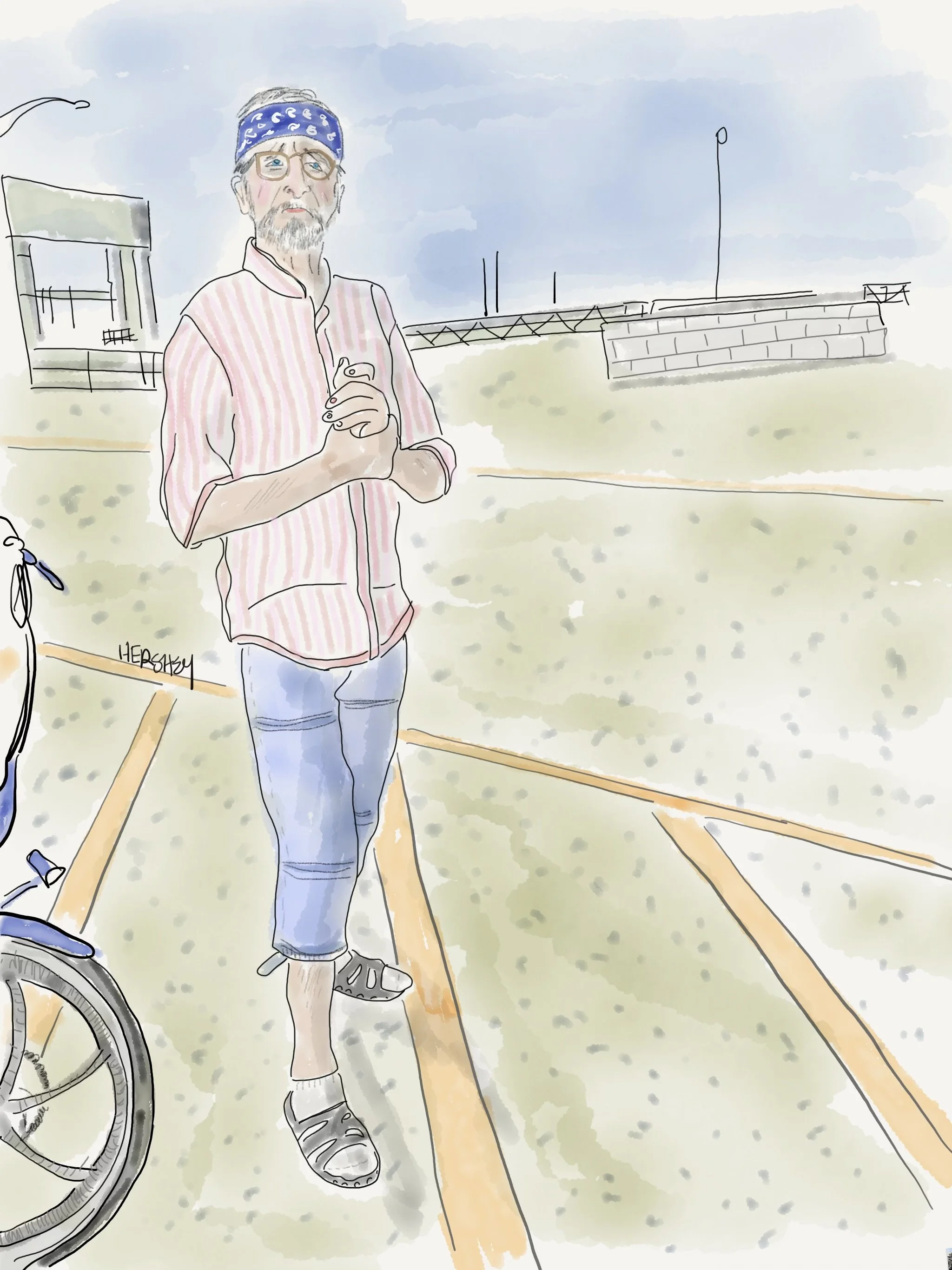
As we queued up for the ferry in Matane, Quebec, to cross the Saint Lawrence on our way to Baie-Comeau, we met a fellow bicyclist named Renaud. We admired his new folding e-bike and swapped biking stories. We learned that Renaud was a proud member of Local 711, the Canadian steelworkers union, and was part of a group of men who were sent to work on the construction of the World Trade Center in 1972, when there was a shortage of steelworkers in the States. He recalled living in Orange, New Jersey, among many cockroaches. He remembers being completely overwhelmed watching the towers come down on television on 9/11. Knowing how the towers were constructed, he was shocked they fell and felt a profound personal loss. But now, in retired life, Renaud enjoys long day trips on his e-bike and leaves the past behind. As we disembarked, we were impressed by Renaud’s agility as he exited, so we asked his age. He replied matter of factly, “I’m eighty-one.” Jenny and I shared a glance. We were both thinking, let’s hope we can do that at his age! Drawing by Jenny Hershey. Follow her work on Instagram @deepfo.
We went south instead. We were puzzled by the devastated terrain as we progressed southwest on Highway 138 toward Tadoussac. The trees are largely Jack Pine mixed with some Red and White pine and a few birches. At least half looked dead, and the undergrowth was thick with lifeless and decaying wood. The ground was exceedingly sandy. Jenny, who is very attuned to bird life, kept commenting on the notable absence of birds, “Nothing to see, nothing to hear!” Although no paved roads led off the highway, occasionally, an unpaved road, sandy and uneven, stretched into the seemingly endless pine forest. Sometimes, we could glimpse logged wood piled behind the trees. And once in a while, the forest would open up into rocky terrain and fiercely rapid streams and rivers. I imagined this landscape continuing for hundreds of miles to the north. But how would I know? All I knew for sure was we were on the southern border of Quebec’s arboreal forest, and it didn’t look healthy.
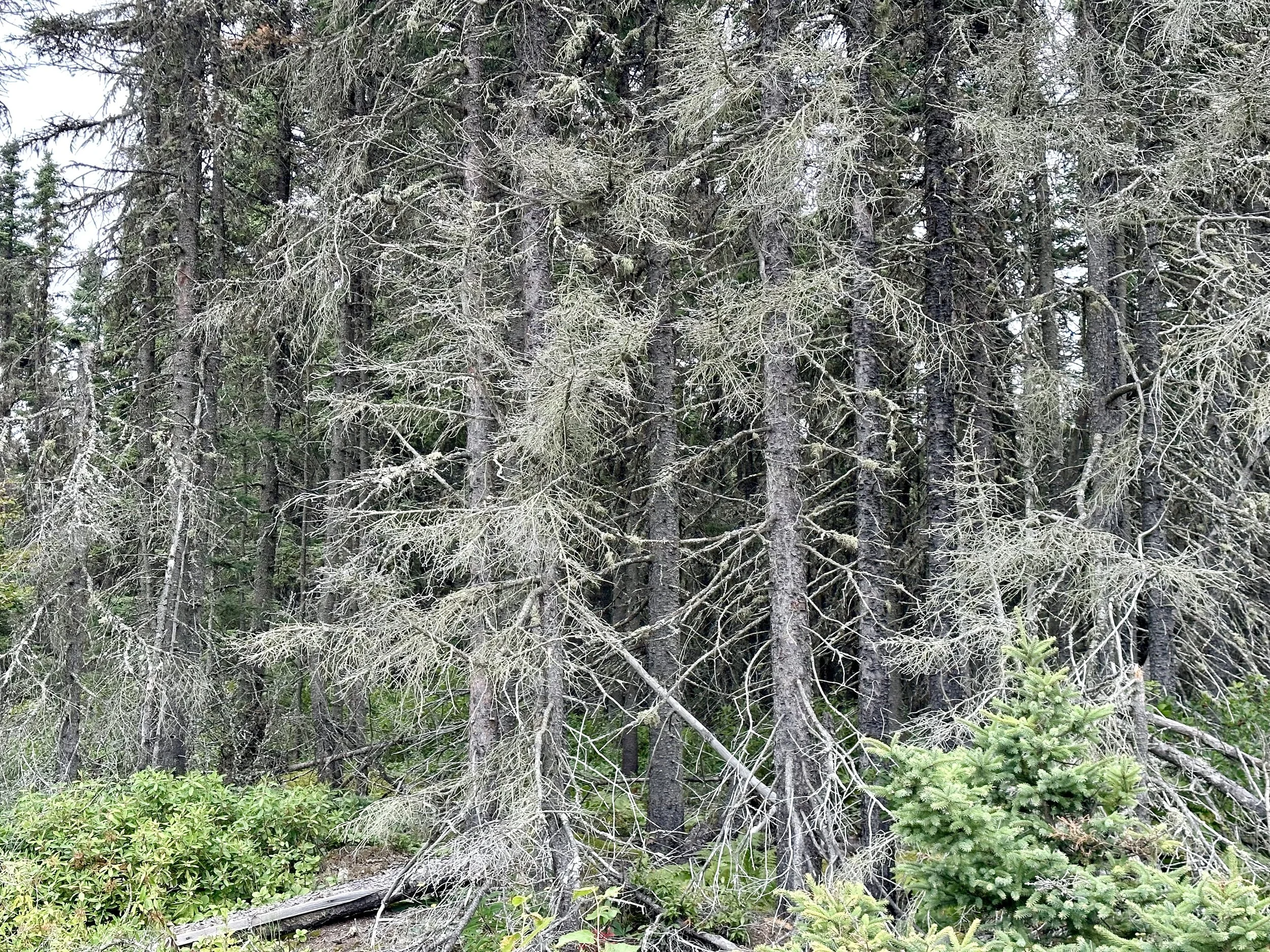
Climate change and natural disturbances are the most likely cause of dead trees in the boreal forest near Baie-Comeau, Quebec. As we know only too well after this summer’s record-breaking wildfires, climate change is causing the boreal forest to experience unprecedented warming and drying, which kills trees, turning them into fuel. In addition, insect outbreaks, such as spruce budworm and bark beetles, damage and weaken trees, making them more susceptible to diseases and decay. Even in the absence of wildfires, these factors can create a feedback loop where more carbon is released from the forest into the atmosphere, contributing to further climate change and forest degradation. Photo by Michael Chase. Follow him on Instagram @mjohnsonchase.
The boreal forest in Canada is now releasing more carbon than it is storing. This is because of the increasing frequency and intensity of wildfires, which are driven by climate change and the dry and decaying conditions we witnessed on Highway 138. Wildfires burn the biomass and dead organic matter, as well as soil pools that store carbon, and release it into the atmosphere as carbon dioxide and other greenhouse gases. A recent OpEd by David Wallace-Wells reveals that “the carbon dioxide released by Canadian wildfires so far is estimated to be nearly 1.5 billion tons — more than twice as much as Canada releases through transportation, electricity generation, heavy industry, construction and agriculture combined. In fact, it is more than the total emissions of more than 100 of the world’s countries - also combined.” But what is most striking about this year’s fires is that despite their scale, they are merely a continuation of a dangerous trend. Since 2001, Canada’s forests have emitted more carbon than they’ve absorbed.
That is the central finding of a distressing analysis published last month by Barry Saxifrage in Canada’s National Observer. Saxifrage suggests the tipping point was passed two decades ago, when the country’s vast boreal forests, long a reliable sink for carbon, became instead a carbon source. In the 2000s, the effect was relatively small. But so far in the 2020s, Canada’s forests have raised the country’s total emissions by 50 percent. As Saxifrage writes: “There is this feel-good myth in Canada that our massive forest is offsetting some of our massive fossil fuel emissions. That might have been true decades ago under our old, stable climate. But we’ve so weakened our forest — through decades of business-as-usual industrial logging and fossil-fuelled climate shifts — that it has switched to hemorrhaging CO₂ instead of absorbing it.”
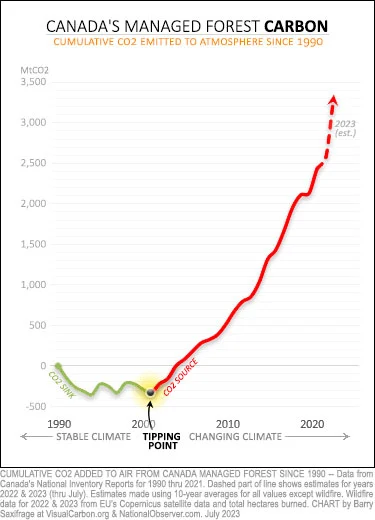
The falling green line on the chart above shows that in the early 1990s, the forest was a valuable carbon sink, helping to slow global warming. Back then, new forest growth absorbed more CO2 from the air than was emitted by logging, wildfire and decay. That all changed after 2001, the tipping point year for Canada's managed forest. As the rising red line on the chart shows, since that year, the forest has emitted more CO2 than it has absorbed. A lot more. Logging, wildfires, insects and the many forms of decay are now turning trees into CO2 faster than the forest can grow back. Chart data provided in Canada's official national greenhouse gas inventory, plus recent wildfire data from the European Union's Earth Observation Program. Report from the National Observer.
As we continued biking southward toward Tadoussac, the health of the forests seemed to improve. We were back in the mountains, and there was less sandy soil and fewer scrubby Jack Pines. The trees were healthier, and the forest was more diverse. There were large deciduous trees mixed among the pines. We were passing through indigenous reservations. Perhaps the reservations managed their forests better? Or maybe the climatic and geographic conditions were more hospitable as we went south?
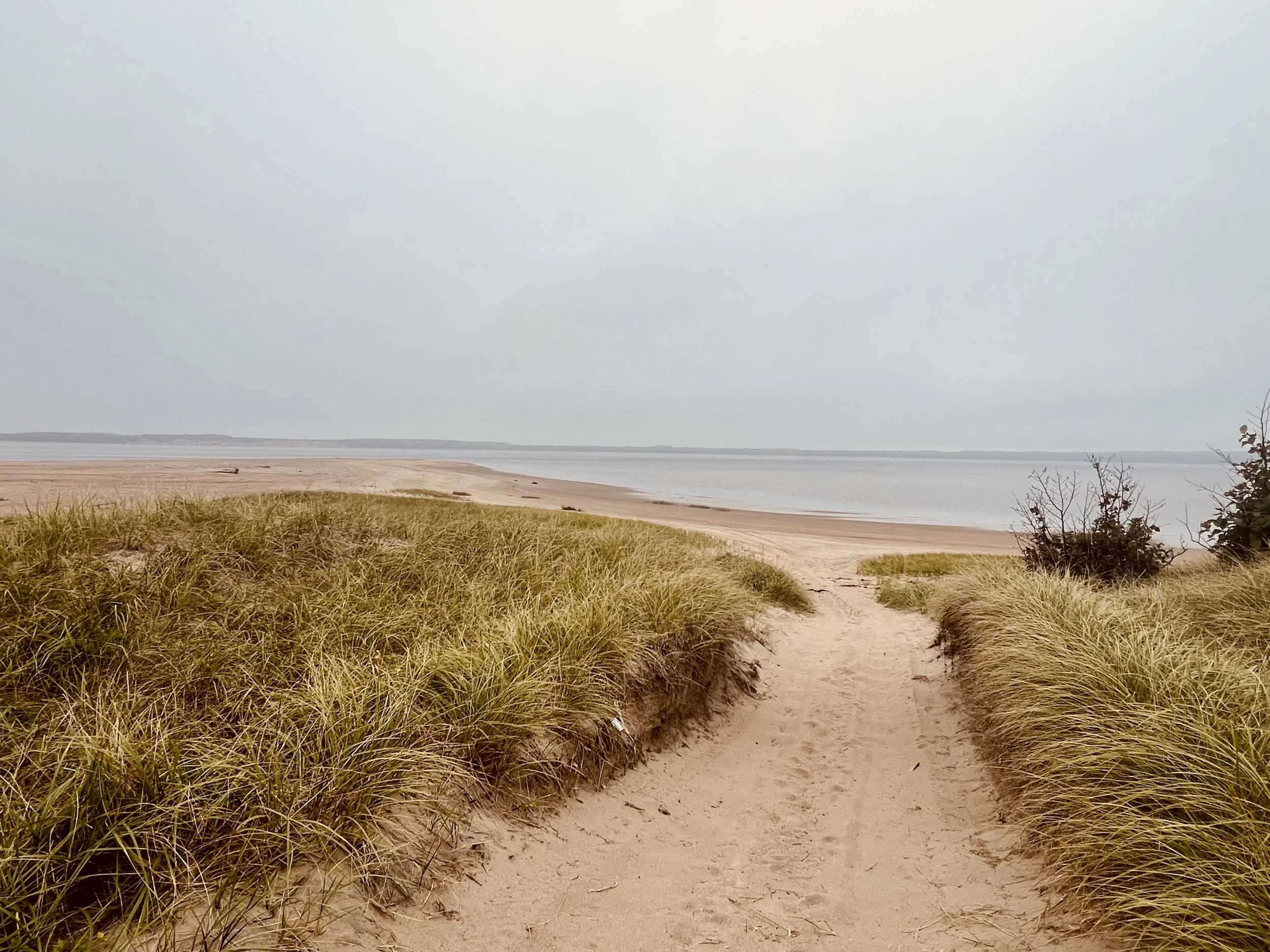
Beach at Pessamit (formerly Betsiamites or Bersimis) is a First Nations reserve and Innu community in the Canadian province of Quebec, located about 50 kilometers southwest of Baie-Comeau along the north shore of the Saint Lawrence River at the mouth of the Betsiamites River. It is across the river directly north of Rimouski, Quebec. It belongs to the Pessamit Innu Band. Photo by Jenny Hershey. Follow her on Instagram @deeofo.
As we approached the town of Tadoussac, we saw that we were also approaching two significant national parks: the Saguenay Fjord National Park and the Saguenay–Saint Lawrence Marine Park. The national park is made up of several hundred miles of forested mountains on both sides of the Saguenay River, and the Marine Park are all the waters that flow from Saguenay to the Saint Lawrence, where the towns of Tadoussac and Baie Saint-Catherine are separated by the Saguenay River and connected by a ferry.
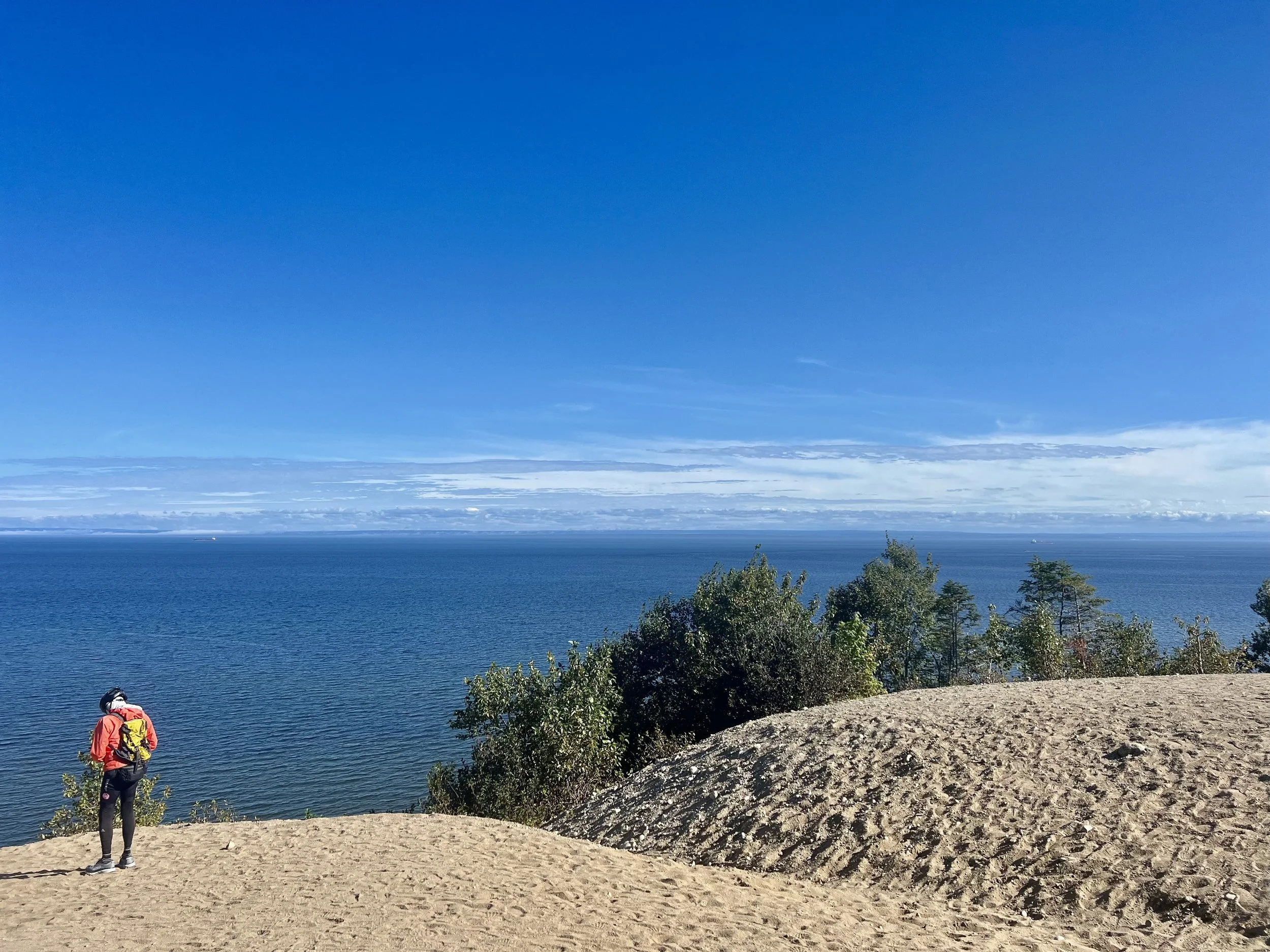
Overlooking the Bay of Saint Lawrence facing toward the Gaspe Peninsula. This view is on dunes just north of Tadoussac, where Jenny and I watched a small school of Fin Whales as they frolicked off the rocky beach. Photo by Jenny Hershey. Follow her on Instagram @deeofo.
Both towns are whale-watching paradises. While the national park is vast and stunning with cliff faces, extraordinary peaks and valleys, beautiful streams, and magnificent fjords, it took us a few days to appreciate the significance of the marine park since it exists on and below the surface of the water. However, the Saguenay-Saint Lawrence Marine Park is one of the most biodiverse marine environments in the world. It is one of the best places in the world for whale watching, as well as seals and sea birds that travel thousands of miles to feed. The park also protects over 2,000 wild species, from microscopic algae to the gigantic blue whale. Above the water, the Fjord National Park is a place of unparalleled scenic beauty.
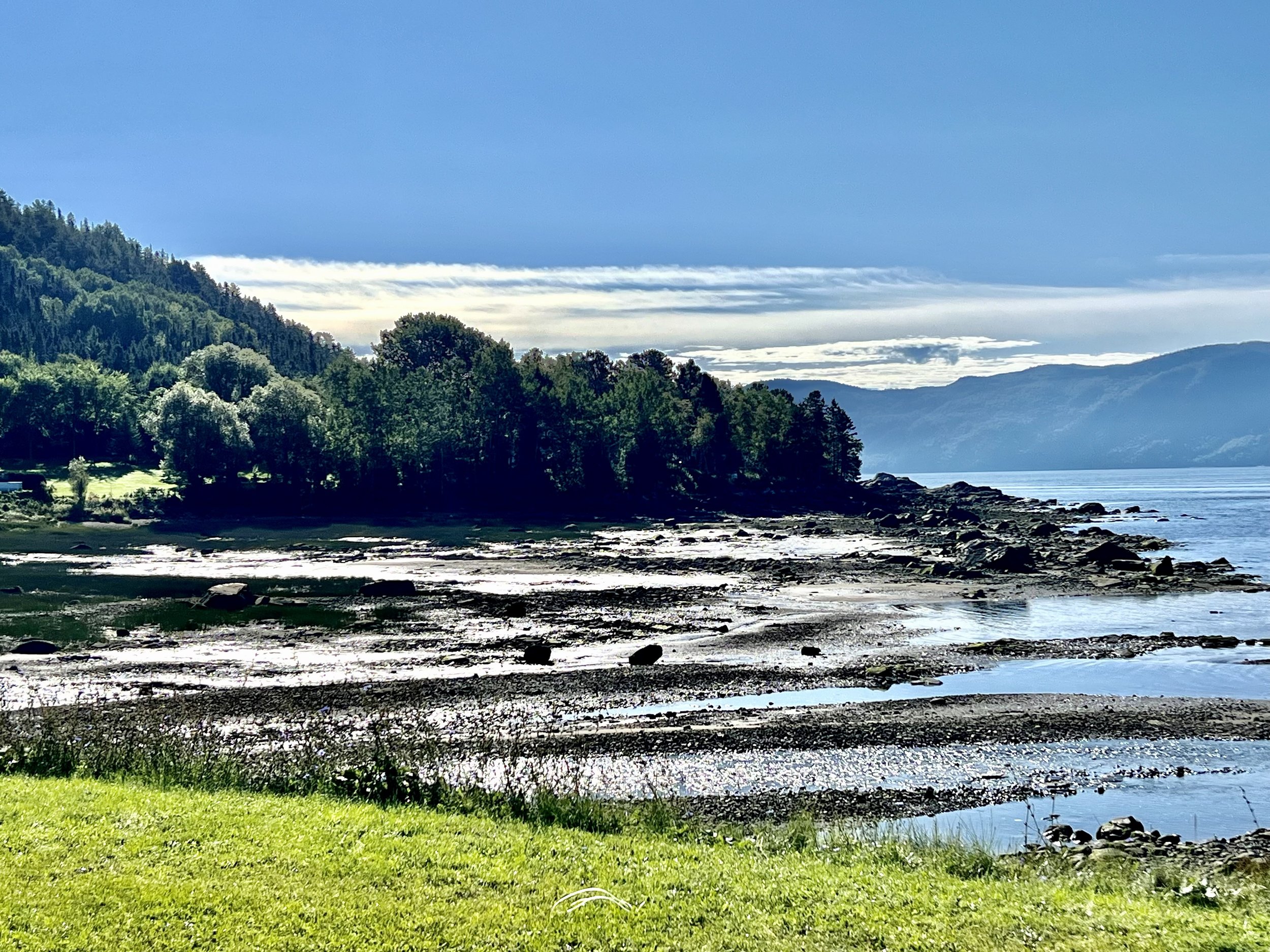
Photo taken about a mile from Saint Rose du Nord at Anse de la Decsente des Femmes, a small fjord on the vast Sagueney-Saint Lawrence Marine Park. Photo by Jenny Hershey. Follow her on Instagram @deeofo.
Some days ago, Jenny and I watched PBS’s Newshour online in a motel in Quebec when we learned that no Republican candidate had raised their hand during the first GOP debate when the candidates were asked who among them thinks climate change is caused by human behavior. We couldn’t watch the debate in Canada, so please forgive us if we are mistaken. If that is true - especially after the torrent of extreme weather events we’ve experienced this year - I’m embarrassed as an American that any person seeking a political office in the US would deny something so well understood by scientists. No other party anywhere in the world rejects the science of climate change as overtly as the GOP. According to a report by the Center for American Progress, 139 members of Congress deny climate science, including 109 representatives and 30 senators.
Canada’s Conservative Party isn’t much better, having recently agreed to remove language from their platform that would have recognized climate change as real. Yet, their party leader, Erin O’Toole, has said he does not want Conservative candidates to be branded as “climate change deniers” in the next election cycle. However, some Canadian conservatives have expressed concerns that such statements will undermine their party’s interests in the oil and gas sector.
Politicians in the States are even friendlier to Big Oil. 85% of political contributions in the States from fossil fuel companies go to Republicans, with the exception of Democrat Joe Manchin, who receives more contributions from the industry than any other Congressional leader in history (he received almost $1M in donations from fossil fuel companies in 2022). That means that contributions to Manchin and Republicans are more than 90% of the total dollars contributed to Congressional Politicians by the fossil fuel industry. And the party is still led by an even more extreme presumptive leader who considers climate change to be a “Chinese hoax.”
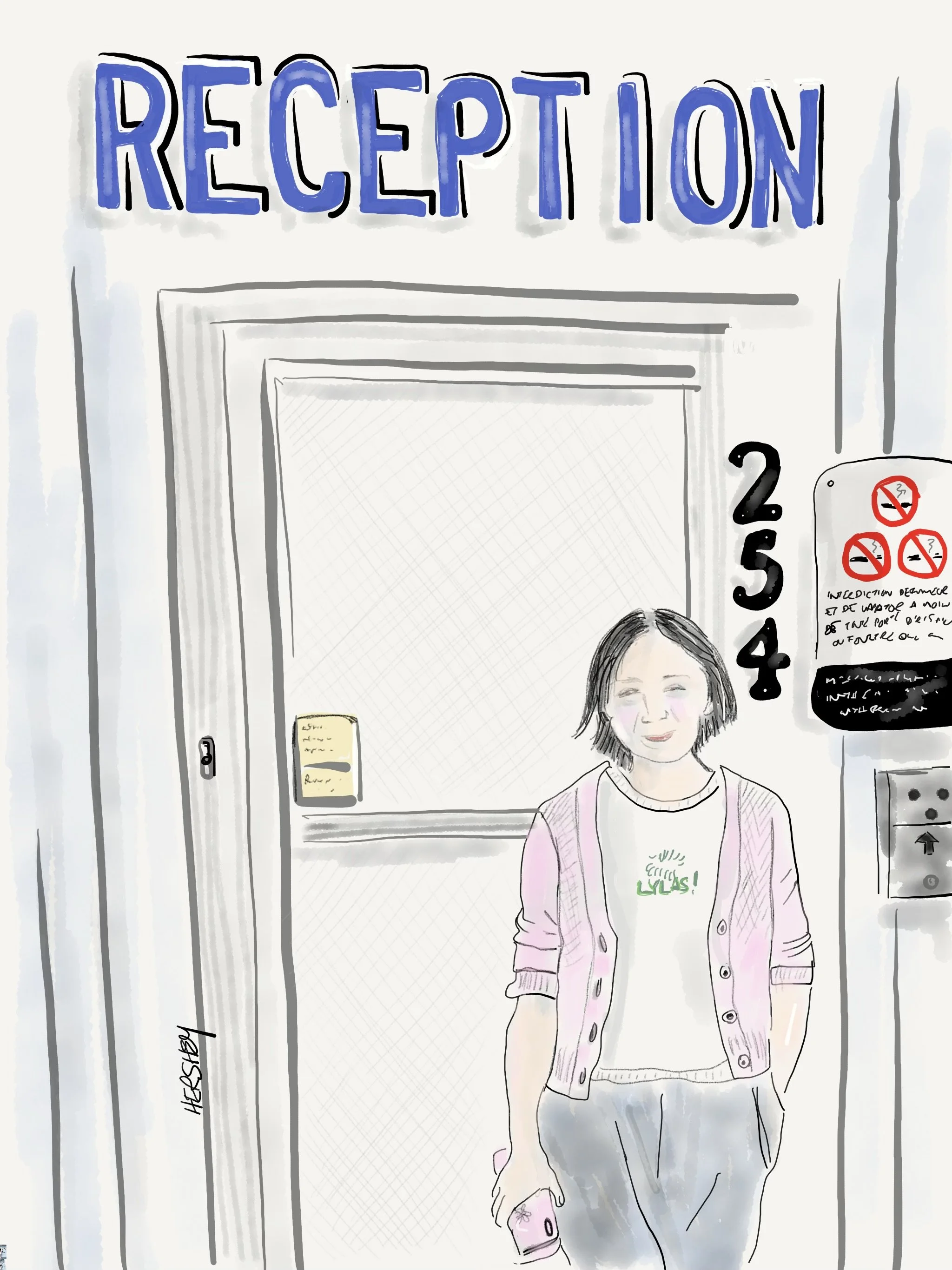
Lily lives between her two motels in Gaspe and Cap-des-Rosiers, Quebec, with her husband, Sparky, and their two young boys, Kevin and Andrew. She and Sparky left their village in China ten years ago after applying to Canadian customs as a skilled worker. Jenny asked her, “What’s your skill?” Lily answered she had been a marketing professor at a college in China. She and Sparky learned French, opened a bodega in Quebec City, and slowly built up their business. One day, a customer came into their store and told them about an opportunity to own a motel in Gaspe at the eastern end of Quebec. Liking what they had heard, they drove hours out to the east end of the Gaspe Peninsula. The rest is history. Lily’s quiet demeanor didn’t fool Jenny. She could see that Lily knew what she was doing. Jenny commended her on being such a good businesswoman. She laughed and said, “Oh no, no, no. I’m a terrible businesswoman.” Drawing by Jenny Hershey. Follow her on Instagram @deeofo.
When you follow the money, there is an indisputable link between climate change denial and contributions to politicians from fossil fuel companies. Climate denial is not about science. It’s about greed. And it has always been about greed. There is now abundant evidence that fossil fuel companies have known for years their product is responsible for climate change. Projections created internally by ExxonMobil starting in the late 1970s on the impact of fossil fuels on climate change were very accurate, even surpassing the predictions of some academic and governmental scientists, according to an analysis published in Science. Despite those forecasts, ExxonMobil continued to sow doubt about the impact of greenhouse gas emissions on climate, successfully waging an obfuscation and disinformation campaign that has slowed down the global effort to decarbonize. ExxonMobil is not alone; these tactics are stubbornly similar for all major multinational fossil fuel companies and have been so for decades. And they are all still at it, although they are now changing their tactics. Major oil and gas companies are learning their lies are not playing well in some court cases and, as a result, are once again willing to admit that fossil fuel emissions cause climate change.
Here’s an example. In September of 2023, ExxonMobil released a cheerful report to their shareholders projecting a vision for how fossil fuels will help to create a more livable and prosperous world for 10 billion people by 2050. The report also tells shareholders that greenhouse gas emissions will drop 25% by 2050 through increases in low-carbon technologies. The report also says, “larger reductions are needed to keep global warming from exceeding 2C, according to the United Nations Intergovernmental Panel on Climate Change (IPCC).” Exxon Mobil makes no pretense in this report that emissions from fossil fuels don’t cause global warming. At the same time, the report completely ignores what climate scientists are telling us about the consequences of surpassing 2C of warming. Although their tactics are changing, the overall objective of fossil fuel companies remains steadfast: selling their product matters more than decarbonizing. In other words, their position directly conflicts with what science tells us we need to do. You can read the report here.
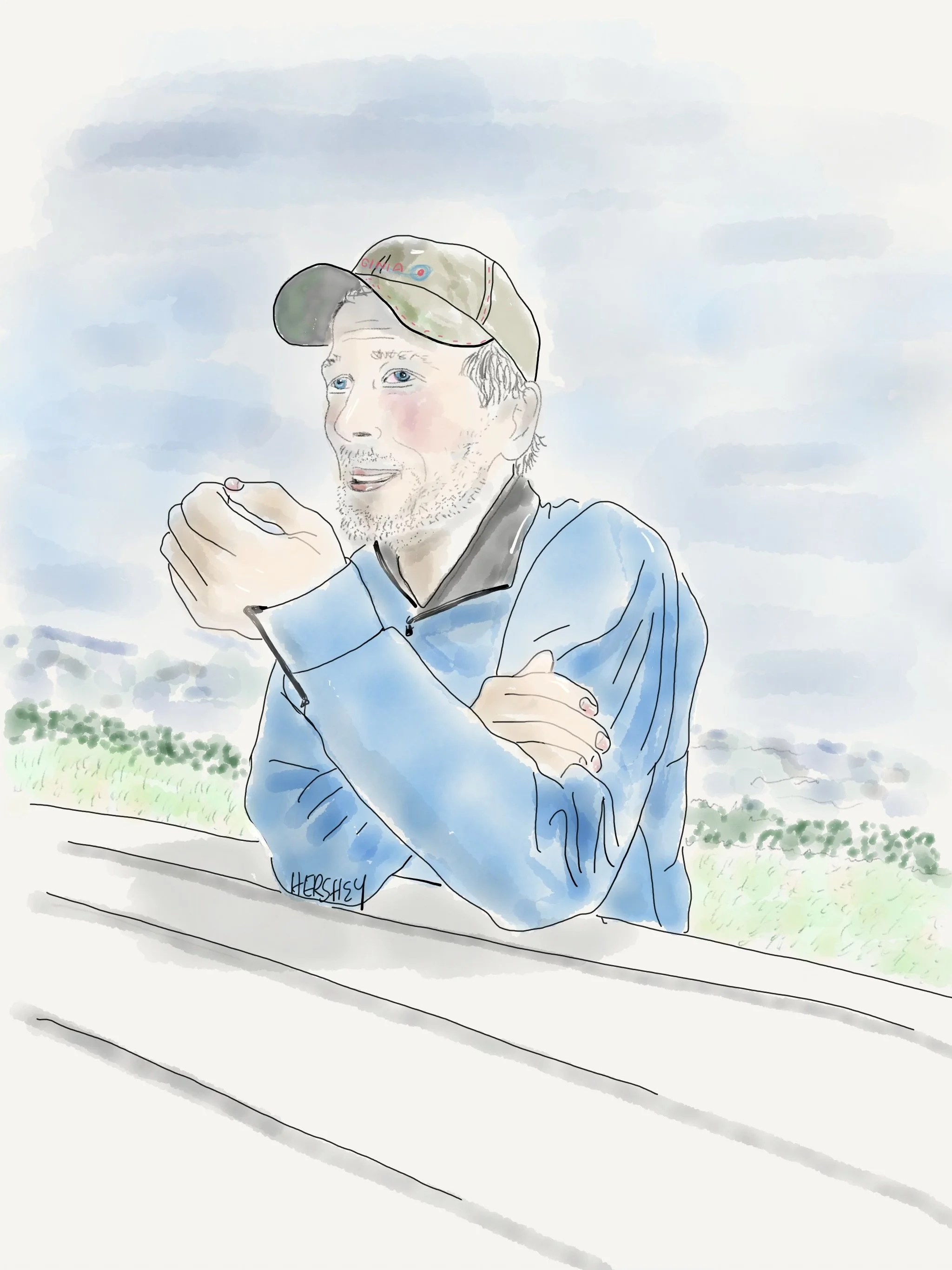
We met Larry at a rest stop in Grande-Valle on our way to the village of Gaspe at the very end of the Gaspe Peninsula. Larry is a strikingly handsome 64-year-old man from Quebec City. He now lives in his van, which he runs on vegetable oil. On the roof was a solar panel. Flashing a charming smile, Larry declined our lunch offer and proudly told us he had caught a striped bass earlier that morning, which he planned on eating momentarily. Although our French is poor and Larry’s English was limited, we talked long enough to realize that Larry is a proponent of the “deep state” resistance common to QAnon followers. We were surprised and almost intrigued by his passion as Larry shared his disbelief in climate change and vaccines, claiming they were creations of a government run by a Cabal pursuing world domination. He claimed there are three kinds of people - globalists (bad guys), technocrats (also bad guys), and nationalists (good guys). He spoke highly of the movie “The Sound Of Freedom” (a true, if not embellished, story about rescuing children from international trafficking that the far right has embraced). Larry explained we must watch it to understand what is really happening. As we were preparing to leave, Jenny asked Larry, “Do you think the earth is flat?” He paused and then answered, “I don’t know.” I am no longer sure what is true and what isn’t.” Drawing by Jenny Hershey. Follow her on Instagram @ deeofo.
I enjoyed meeting Larry. Although I disagreed with almost everything he believed, I liked him for reasons I didn’t entirely understand. And I felt that he liked Jenny and me. In some way that provoked my compassion, I thought he was lost in our dizzyingly complex world. And he said something toward the end of our conversation that persists in my memory: “We need to resist. There are those who want to control us. We can’t let them.” I almost instinctively replied, “Yes, and they are large multinational corporations that control fossil fuels, who buy off the politicians you support, who then tell you ridiculous things you believe that make ordinary people like you and me disagree about who is doing what to whom, even when we both feel we are being done to.”
But I didn’t say that. Yet, at that moment, I felt that QAnon Larry wasn’t my enemy; he was my comrade. His feelings make total sense, even if his facts don’t. He knows something is wrong and can feel it will likely worsen. He is confused and disoriented by how quickly things are changing. Others are telling him the underlying problems, and they seem to know what they are talking about. Some of them are very successful. And their passion and confidence are so attractive. It’s a relief to agree with them. And why not? It’s better than “not knowing.”
Later that evening, I did what many of us do when we want an answer. I searched the internet for something that would help me understand. And I found an article that spoke to the feelings Larry had provoked in me. Suzanne Shelton published an article in 2020 in Greenbiz titled: “If people will believe in QAnon, why won’t they believe in climate change?" Shelton begins by imagining how plausible a QAnon conspiracy pitch might be to a Hollywood Producer: "So, half the politicians in Washington, and many in the entertainment industry, are leading a Satanic cult, kidnapping children and forcing them into a shadowy underworld of sex trafficking. These terrible villains sometimes kill the children to extract their adrenaline to make themselves younger and more powerful. You’re the president of the United States, recruited specifically to run for president so that you can destroy this evil plan. Many people in this terrifying cult will try to stop you — accusing you of courting foreign interference in your election, trying to impeach you, even throwing a pandemic your way. But you will not be stopped!"
I could see Larry’s narrative in the pitch. And, as Suzanne Shelton suggests, I thought maybe - just maybe - Larry would feel just as comfortable over here on our side among those of us who are fighting for a livable planet. Perhaps he’s just been hanging out with the wrong crowd. So what appeals to the feelings of people who believe QAnon conspiracies that climate change activists might be able to appropriate? How might I convert Larry to an evidence-based, scientific understanding of reality that feels emotionally familiar but is actually based on the truth? Shelton suggests three simple ideas that appear to drive conspiracy theorists that might help recruit them to evidence-based conspiracies.
1) Save the children: No matter what one believes politically, we all care about our kids and are wired to look out for them. For QAnon followers, children are threatened by a global cabal of wealthy elites (primarily Jewish, but now a tad more racially diverse) who want to capture them and harvest adrenochrome from their blood (related to adrenaline, adrenochrome is mistakenly thought to enhance longevity). For climate activists, the world’s children are inheriting a climate that will grow so challenging it may tear society apart in the coming decades unless greenhouse gas emissions are reduced very quickly.
2) Evil is real: For QAnon followers, evil is the threat of world domination by influential people who want to subjugate others for their personal gain. The cabal not only wants your children, it wants to dominate you and strip you of your fundamental human freedoms. For climate activists, evil is greed, the ever-present greed of corporations, political leaders, and other powerful people who lie to you about greenhouse gas emissions so they can continue to make money or be supported by the money others make.
3) A clear enemy: For QAnon, it’s the cabal, elites, globalists, socialists, communists, Democrats, and woke people in general. For Climate Activists, it’s fossil fuel companies, corrupt and ignorant politicians, professional climate deniers, and those who otherwise get in the way of the transition to cleaner forms of energy.
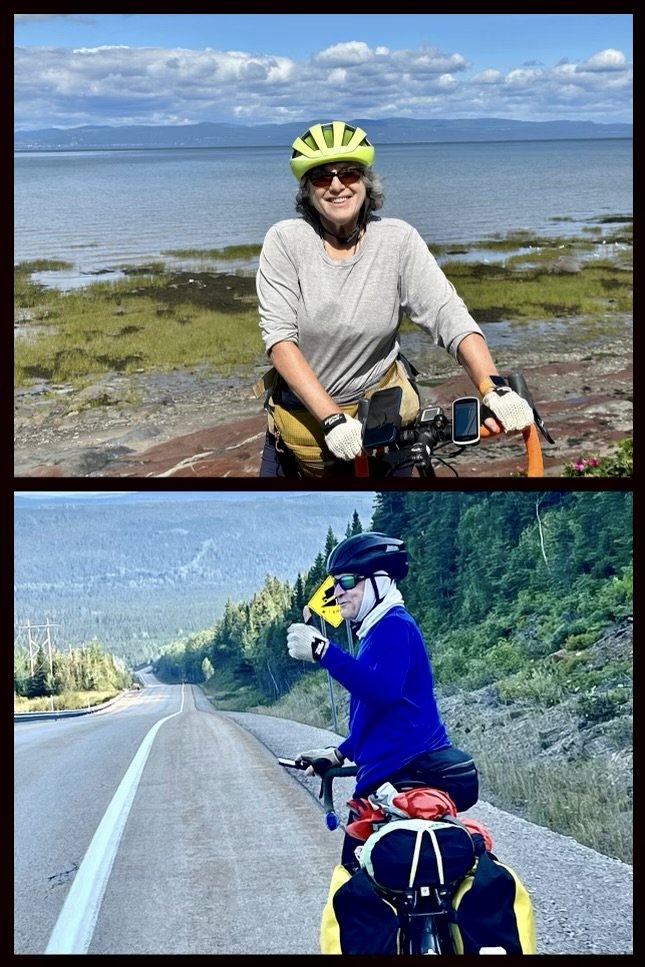
Jenny and Michael on the Gaspe Peninsula. Photos by Michael Chase and Jenny Hershey, respectively. Follow Michael Chase on Instagram @mjohnsonchase and Jenny Hershy on Instagram @deeofo.
The Great Climate Conspiracy
Imagine an alternate reality not too distant from our own, where one conspiracy theory has overtaken all others. It isn't about elections, global elites, or pandemics. Instead, this conspiracy theory revolves around the earth's climate and a cover-up by a powerful cabal of fossil fuel magnates, politicians, and media moguls. For decades, this cabal buried concrete evidence linking greenhouse gas emissions to devastating climatic changes. Documents leaked from prominent oil conglomerates proved that this conspiracy had established the link between fossil fuel consumption and climate degradation as early as three decades earlier. However, instead of acting responsibly, these companies launched massive disinformation campaigns, investing billions of dollars to sow doubt about the science of climate change and keep the global population in the dark. The cabal of fossil fuel executives, media moguls, and corrupt (or just gullible) politicians ensured that environmentally friendly initiatives were undermined at every turn. This vast network of influence allowed the oil and gas industry to suppress vital information and label environmental advocates, sympathetic politicians, and even climate scientists as alarmists, conspirators, communists, or whatever else would discredit them and their efforts.
However, the physical manifestations of climate change eventually became undeniable. Record-breaking heat, hurricanes, typhoons, cyclones, wildfires, droughts, sea level rise, storm surges, melting glaciers, agricultural collapses, climate refugees, the collapse of the insurance industry, a sharp reduction in world GDP, global starvation, and many other forms of suffering began to turn the tide. Unlike the far-right conspiracies of the past three decades in the United States, this theory suddenly gained bipartisan traction. It became a movement. Protests and rallies became daily occurrences in major cities worldwide. The Great Climate Conspiracy overshadowed others because it had the power to unify; it wasn't about left or right but about the survival of the planet and future generations. The demand for a cleaner, sustainable future became the rallying cry against those who had allegedly sought to endanger it for profit. The world finally rolled up its sleeves and got to work building green economies. Eventually, greenhouse gas emissions were controlled and phased out. The planet showed signs it would slowly heal. Interestingly, people were less interested in consumption and more interested in the quality of their lives. They grew happy again.
And they lived happily ever after.
Stay vigilant! Thanks for reading. If you haven’t done so, please subscribe to this blog to follow our next biking trip.
Blog writing by Michael Chase. Drawings by Jenny Hershey. Unless credited or otherwise noted, all material is the copyrighted property of the blog post authors.
Here are a few more photos from our trip:
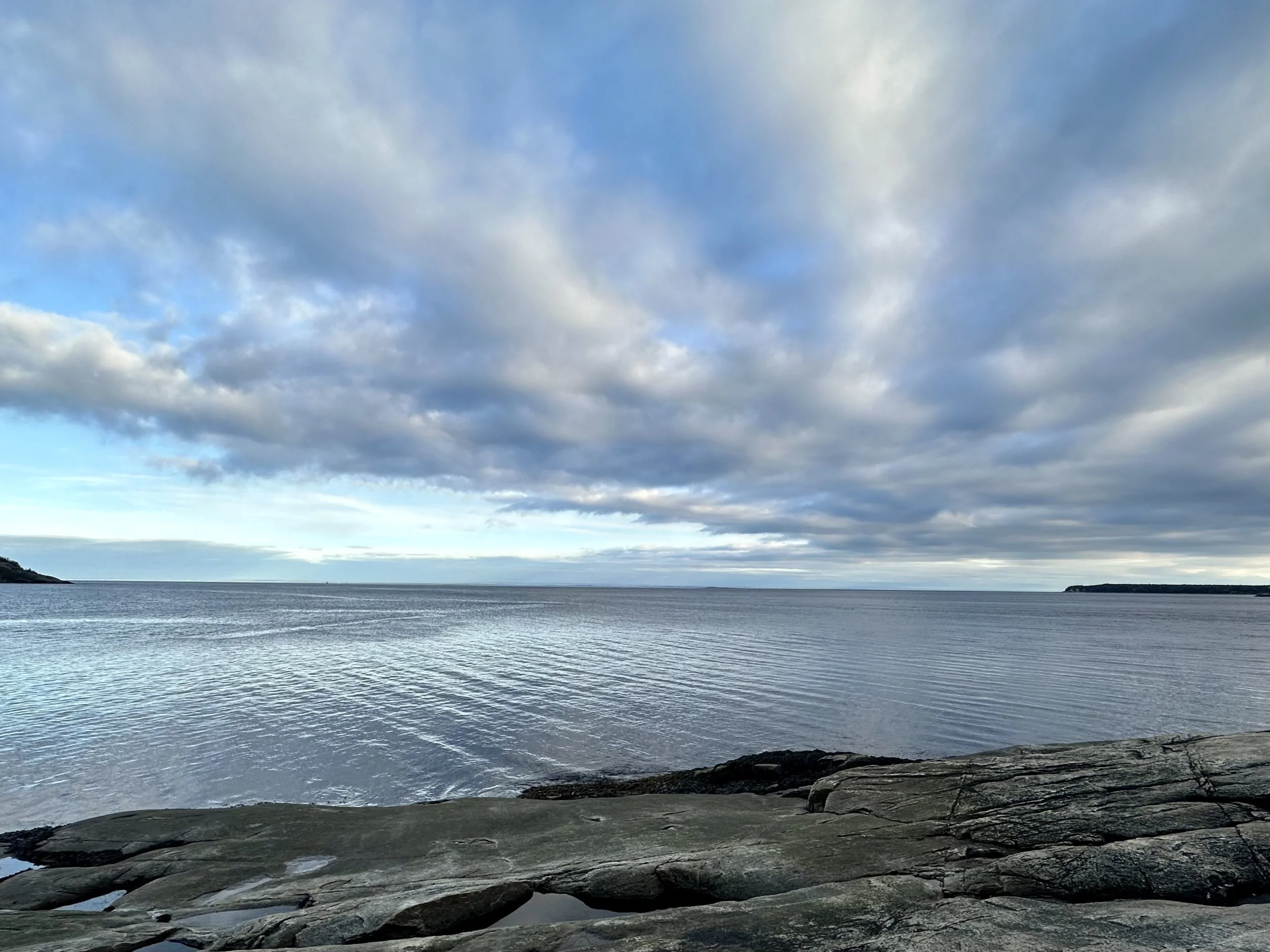
Clouds forming over the Saguenay - Saint Lawrence Marine Park. Photo by Michael Chase. Follow him on Instgram @mjohnsonchase.
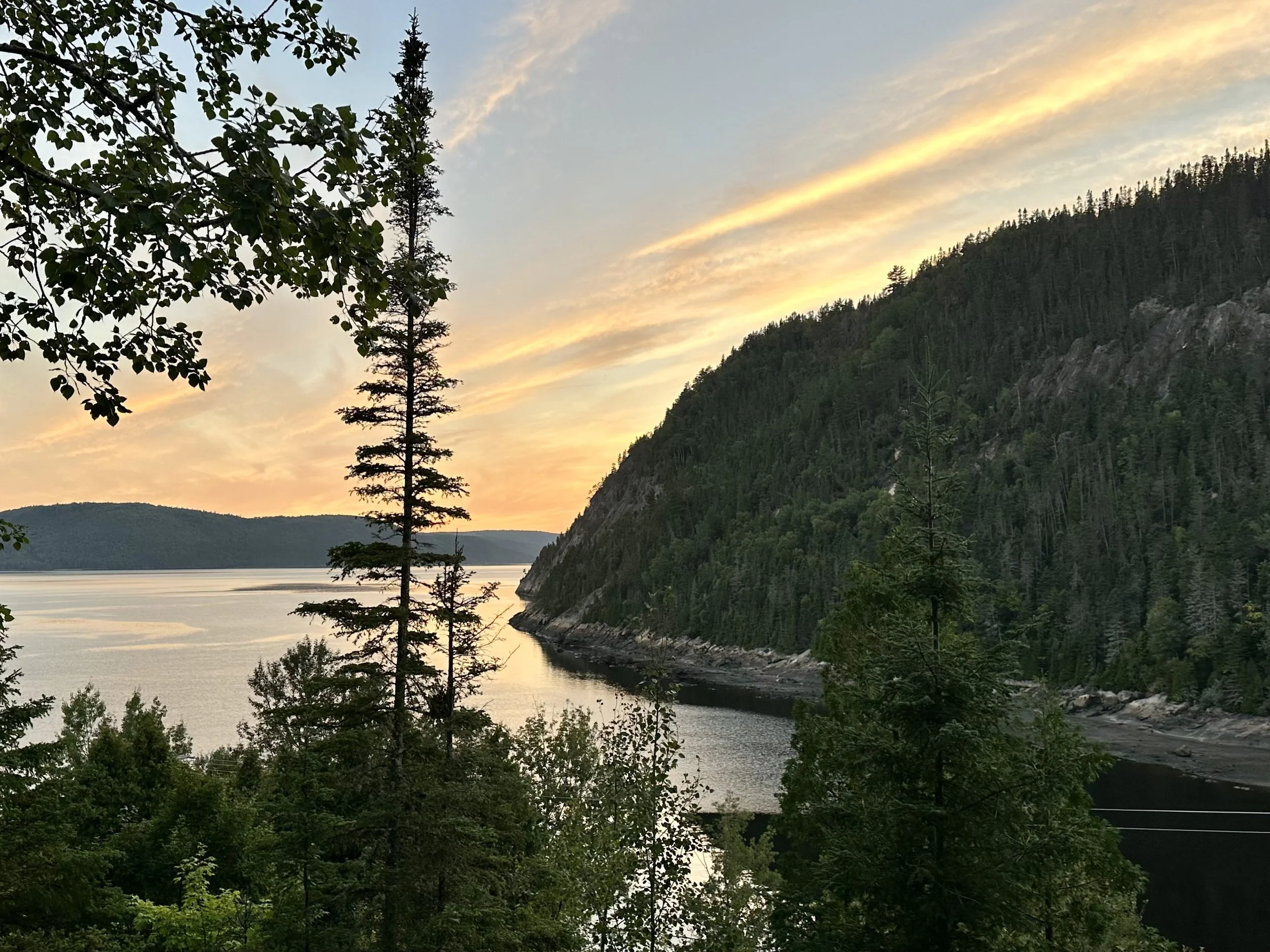
Photo taken from the porch of a yurt we stayed in at Saint Rose du Nord on the Saguenay River. The river below is part of the maritime park, and the hills above are part of the national park. Photo by Michael Chase. Follow him on Instagram @mjonsonchase.
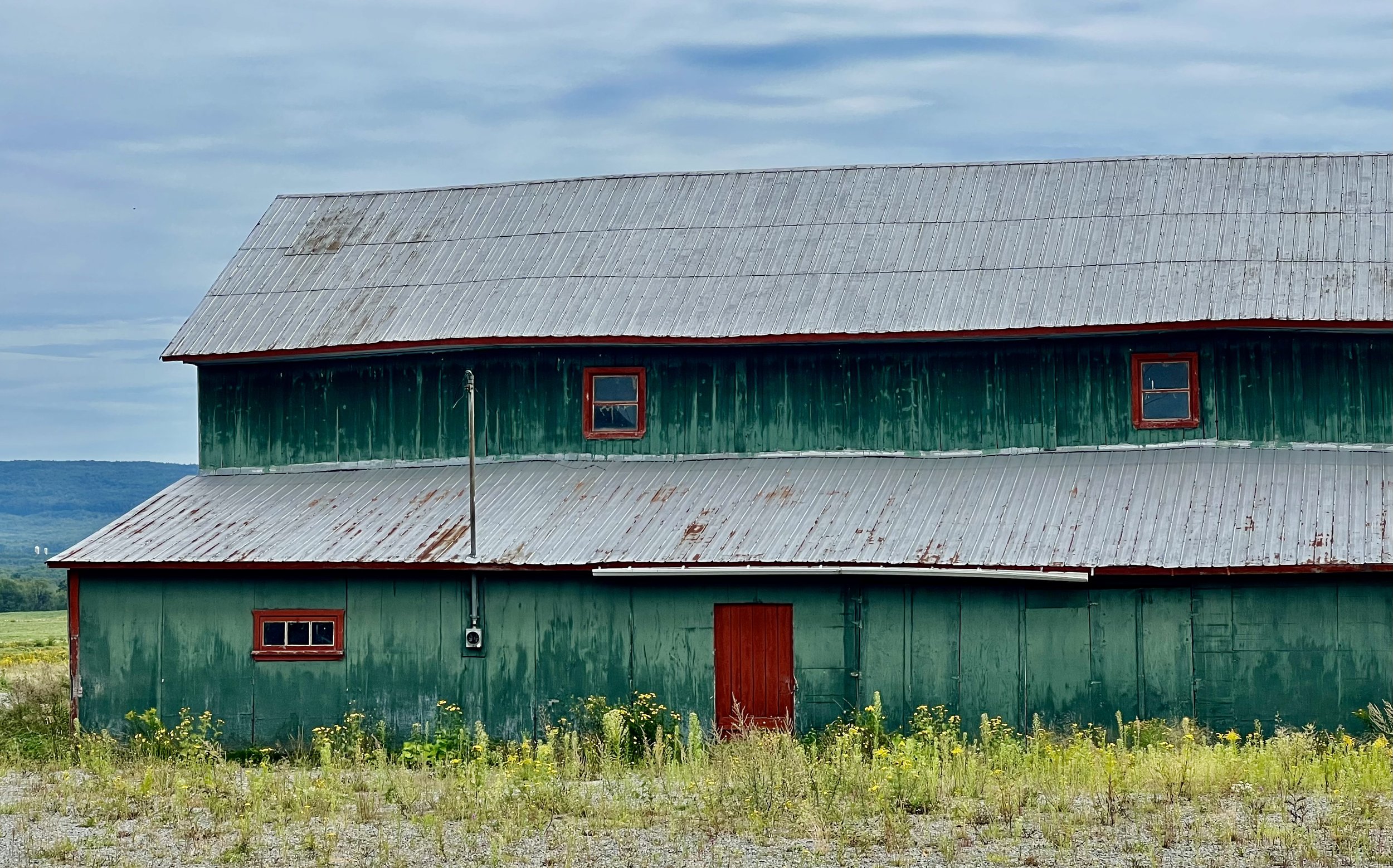
Seen just north of L’Islet, on the Gaspe Peninsula. Photo by Jenny Hershey. Follow her on Instagram @deeofo.
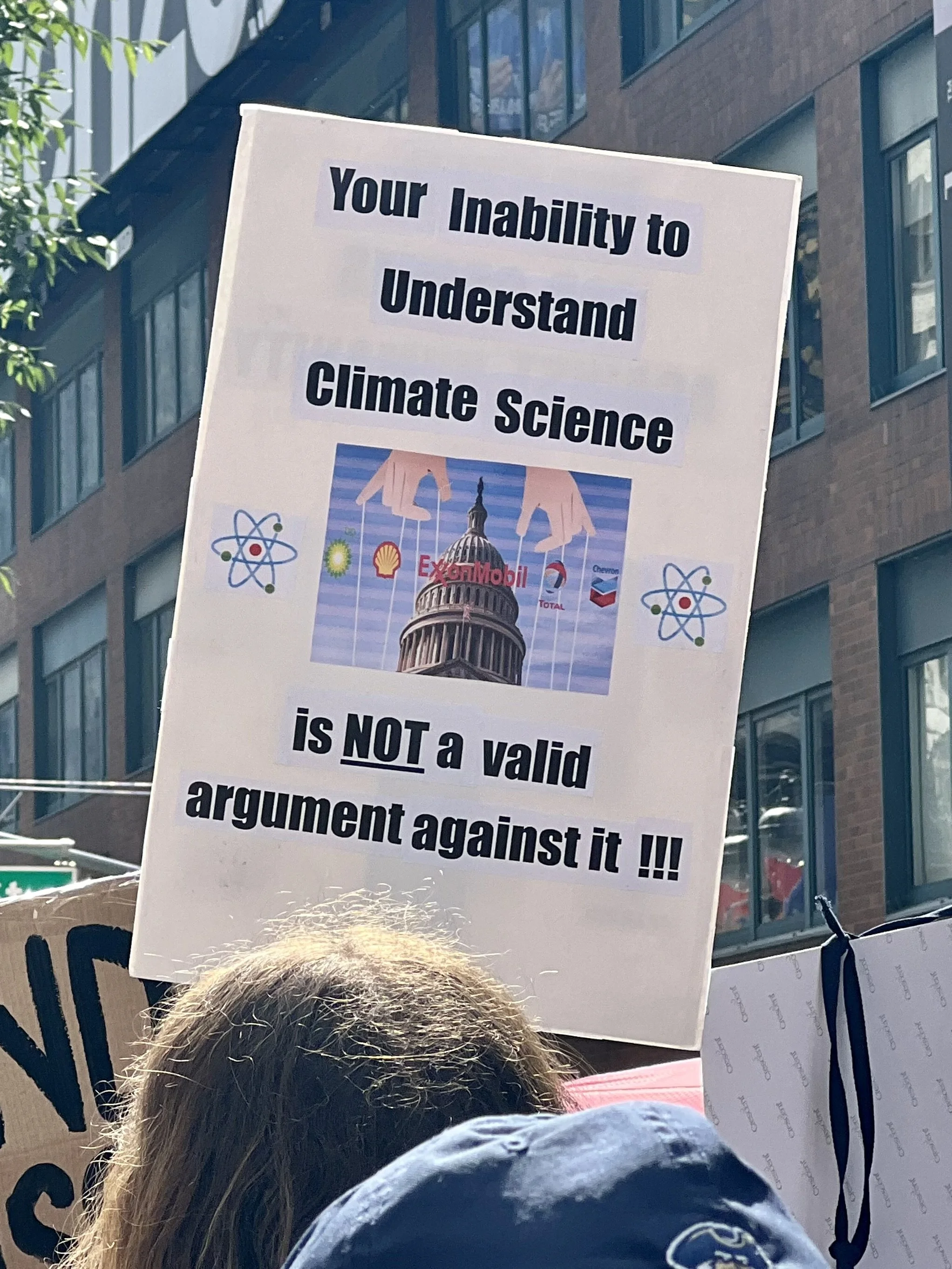
The climate march to the United Nations Plaza in New York City on September 17, 2023. Photo by Jenny Hershey. Follow her on Instagram @deeofo.
Free Markets, Wildfires and Conspiracy Theories; Biking Ontario and Quebec
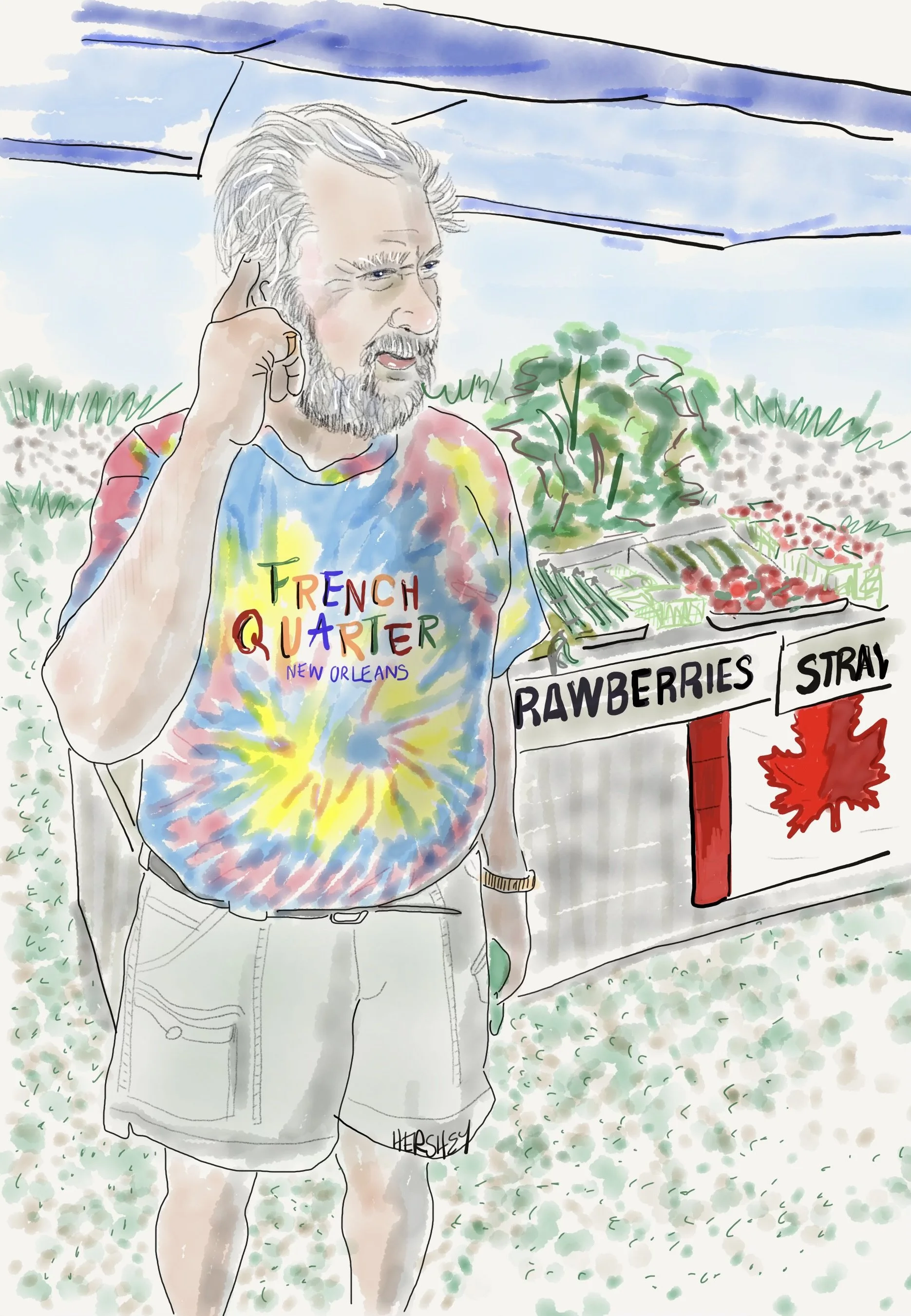
Jenny and I met Dave in Fitzroy Harbor, Ontario. An 80-year-old retired cop from St. Catherine, he was selling organic produce from his garden at a roadside stand. Dave lives alone in a small trailer tending his “Garden of Eden” and described himself as a DP (displaced person). He showed Jenny where a teenager shot off a small chunk of his ear with a buckshot rifle. When we asked him about the wildfires further north, Dave replied without hesitation, “They were set intentionally by the government so they can develop the land up north. It will make them money on property taxes. And it's where they plan on putting all the immigrants.” When we asked him where the immigrants would find jobs if they lived on cleared land up north, he replied, “It’s a socialist country, so they won't work anyway.” He went on, “That's why the government says it's climate change - they blame it on something we can't do anything about, and that's how they get away with it.” Drawing by Jenny Hershey. Follow her work on Instagram @deeofo.
————
Free Markets
“All truth passes through three stages. First, it is ridiculed. Second, it is violently opposed. Third, it is accepted as being self-evident.”
-Arthur Schopenhauer
————
Writing by Michael Chase, Drawings by Jenny Hershey
Jenny and I planned our next cycling tour for late June as we rode the train back to New York City last May from Little Rock, Arkansas (read a post about that trip here). Since neither of us had ever been to Ottawa, and because summer is a great time to cycle in Canada, we decided to ride our bikes northwest around the Adirondacks from Albany into Ontario and Quebec. We had no idea what it would be like, but we guessed it would as interesting as it might be challenging. Of course, we reconsidered when New York City broke air quality records because of wildfires in Ontario and Quebec; but decided to go after learning that poor air quality is as determined by wind currents as it is by proximity to wildfires. Our hunches were accurate, and although we grappled with poor air quality in both Ontario and Quebec, we kept reading it was worse in the States. And, of course, we were aware that many others are also suffering from extreme heat in the American south. It’s been a rough summer all around. Like so many other aspects of climate change, there’s nowhere to hide from increasing weather extremes.
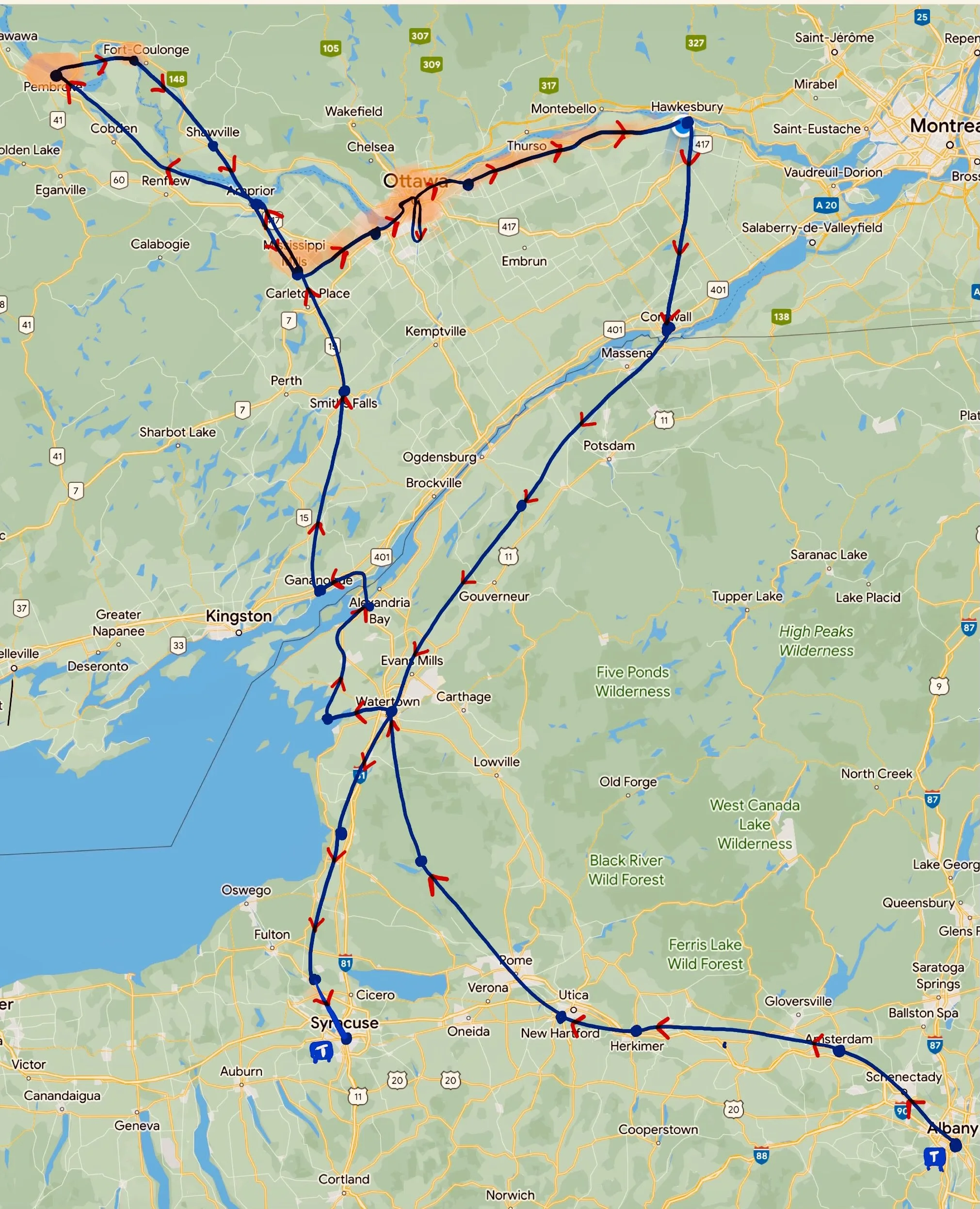
Jenny and I started our trip in Albany after taking Amtrak from NYC. We couldn't ferry into Canada at Cape Vincent because the ferry captain retired during the pandemic, and no one has replaced him. Consequently, we had to ride northeast 30 miles to the Alexandria Bay crossing and walk several miles on a narrow pedestrian walkway on the American side. We then rode illegally across another bridge into Canada from Wellesley Island (no one told us not to at Canadian customs). From there, Jenny and I headed north toward the Ottawa River, hopscotching between Ontario and Quebec. We encountered the worst air quality from the Canadian wildfires in the orange areas. We ended the trip in Syracuse, where we took a train back to NYC. Altogether we biked about 1000 miles. Map drawing by Jenny Hershey. Follow her work on Instagram @deeofo.
Some other things needed to happen before we left. In addition to personal care, home projects, and catching up with friends and family, there was a Citizens Climate Lobby (CCL) conference in early June followed by a day of lobbying Congress in Washington, DC. This was CCL’s first in-person lobbying effort since the pandemic, attended by almost 1000 environmentalists from all over the country. Over 465 visits to both Republican and Democratic members of Congress to lobby for climate policies were made in one well-orchestrated day. I joined small teams of other citizen lobbyists to visit with the staffs of NYC Representatives Nydia Velasquez, Ritchie Torres, Adriano Espaillat and Hakim Jeffries. Although there is predictable resistance to the GOP’s continuing agenda to weaken the National Environmental Policy Act (NEPA) and the GOP’s ongoing support for fossil fuels, CCL lobbyists are now able to argue that market forces overwhelmingly favor clean energy over fossil fuels. The clean energy marketplace has found its groove, and if we trust that open competition in a truly free market will deliver the highest quality products for the lowest possible prices, then clean energy will indeed emerge victorious as long as the playing field is even. Renewables are already cheaper than coal, and will soon be cheaper than natural gas (even without factoring in the social costs of carbon emissions and air pollution). Consequently, Republican insistence that oil and gas deserves greater subsidy support than clean energy (usually in the name of “market based parity”) is a less serious threat to long term decarbonization goals than it has ever been.
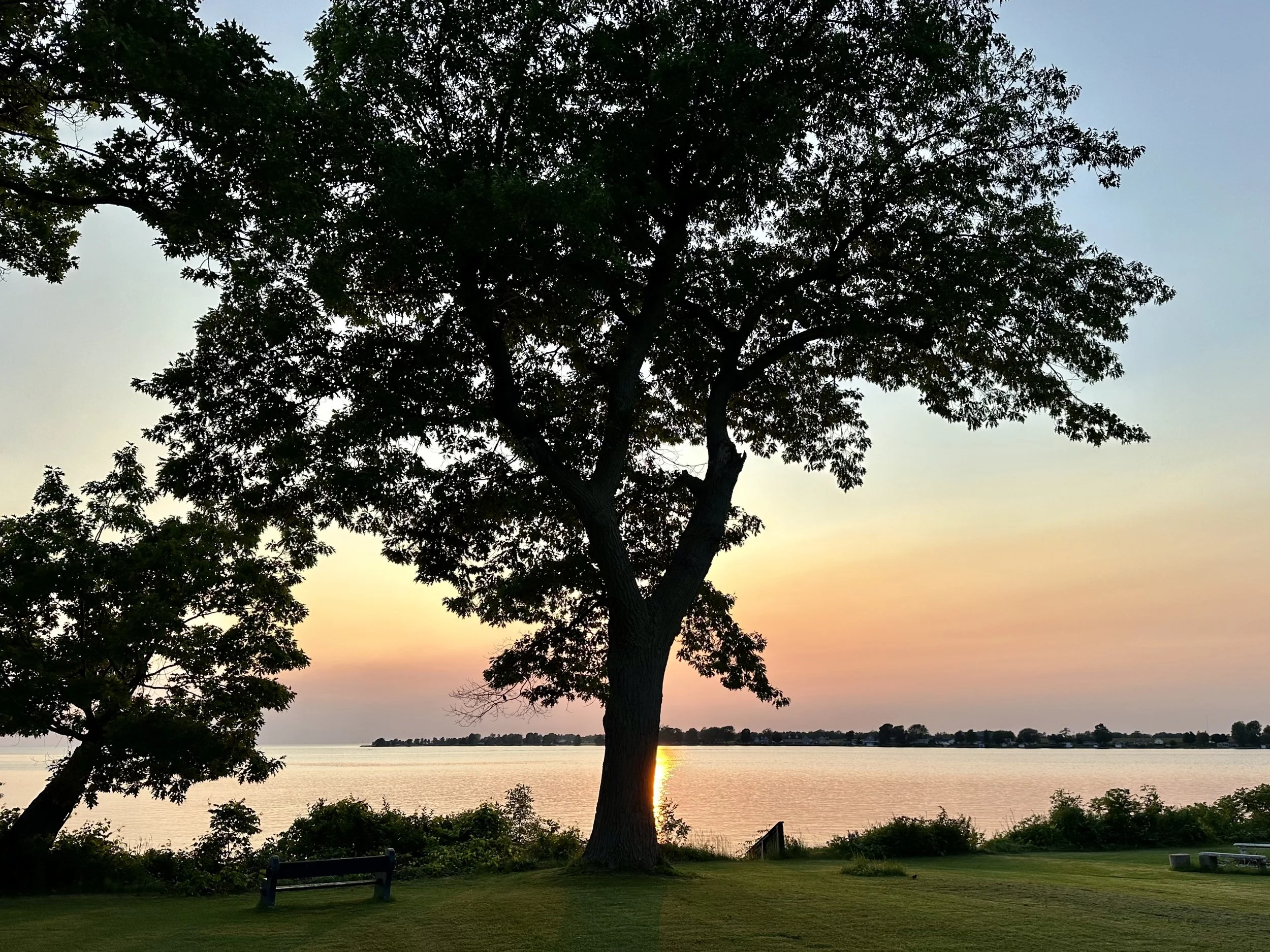
Tree overlooking Lake Ontario. Photo by Michael Chase. Follow him on Instagram @mjohnsonchase.
Consequently, the overriding concern of CCL lobbyists for this year is permitting reform (with a secondary emphasis on CCL’s signature carbon dividend policy with its carbon border adjustments, or CBAM’s). Both issues are heavy lifts in our polarized political atmosphere, although there is a reasonable chance that both parties might come together in the next Congress to pass meaningful legislation. Effective permitting reform will speed up the permitting process for clean energy projects and streamline the buildout of transmission lines. It will also preserve the input of local communities around quality energy projects, provide lasting jobs and ensure the safety and welfare of American citizens. For Republicans, permitting reform will give all energy projects a bump, including carbon capture, utilization and storage (CCUS), hydrogen manufacturing, and even small modular nuclear reactors.
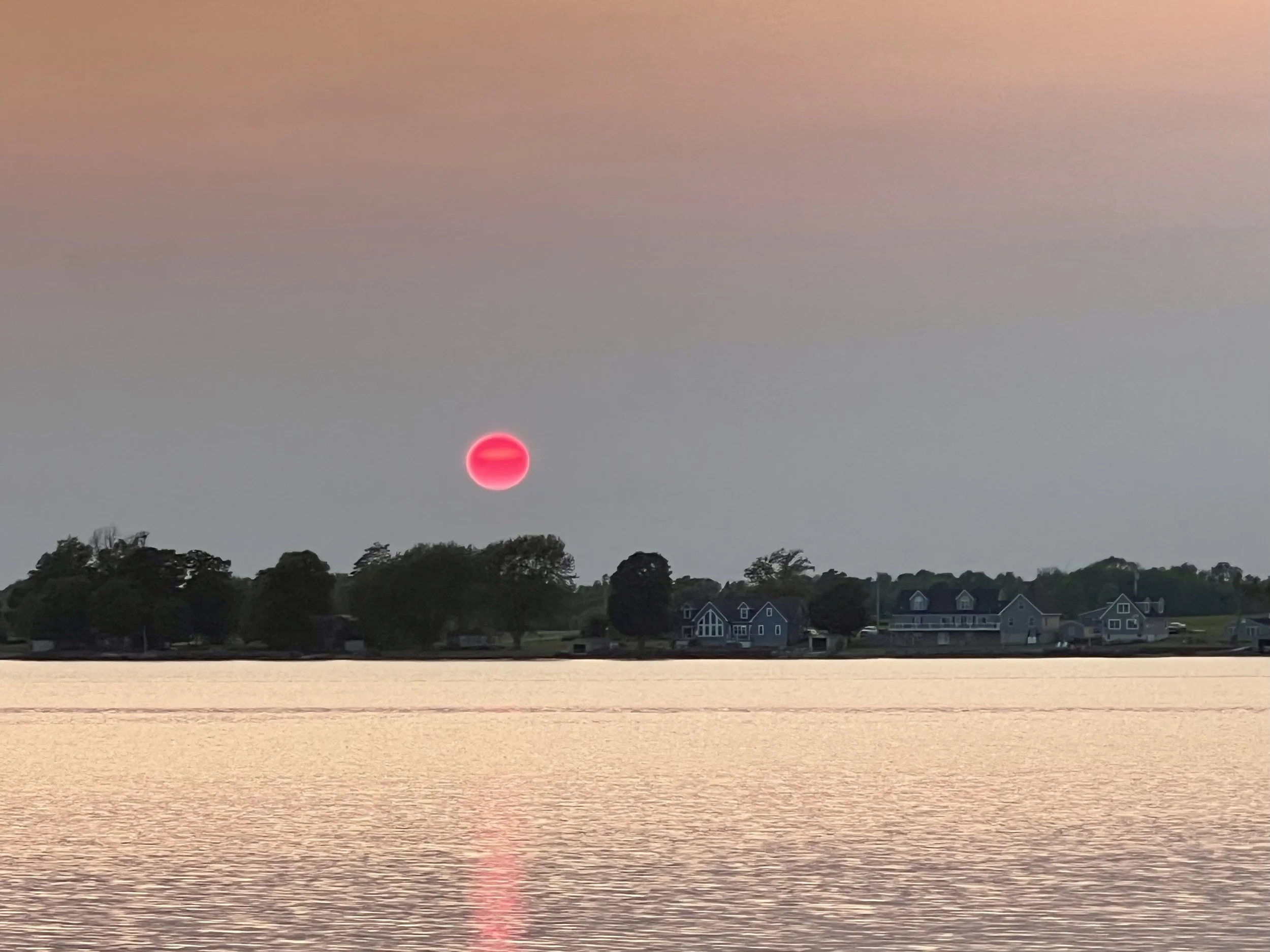
The sun sets over a bay in Lake Ontario in the middle of June south of Cape Vincent, New York, where the headwaters of the St. Lawrence River begin. The sky seemed clear the day we were there, but this picture indicates there might have been some wildfire smoke in the air. Photo by Jenny Hershey. Follow her on Instagram @deeofo.
All combined, electric utility grids in the US currently transmit approximately one Terawatt of electricity every day. Yet, because permitting new projects now takes as long as four years, there is a large backlog of 1.4 Terrawatts of potential energy waiting to be permitted, so we already have the potential capacity to double the amount of electricity available for our rapidly electrifying energy economy over the coming years. And well over 85% of all project applications in the queue are clean energy projects! This means that if ALL the energy projects (meaning fossil fuel and clean energy projects combined) waiting in the queue were green-lighted today, our energy mix will shift so dramatically toward clean energy that we will make significant progress toward decarbonizing our economy.
So, in one sense, there is very little reason anymore to fight over what NOT to build, and environmentalists can relax a bit because the momentum is on our side. What we can’t relax about, however, is advocating for citizen engagement in the permitting reform process. Whether clean or dirty, the siting, scale and development of new energy projects and transmission lines may result in public health and environmental injustices, eminent domain conflicts, and biodiversity losses and degradation. Local communities should be closely involved in reviews, revisions, and approvals wherever necessary. It’s also time for wealthier communities to step away from historic forms of “not in my backyard” (NIMBY-ism) and accept solar farms, windmills, transmission lines (and even CO2 pipelines and underground storage) into their own neighborhoods. In every way - both good and bad - it’s important for the impacts of the next great energy revolution to be shared equally.
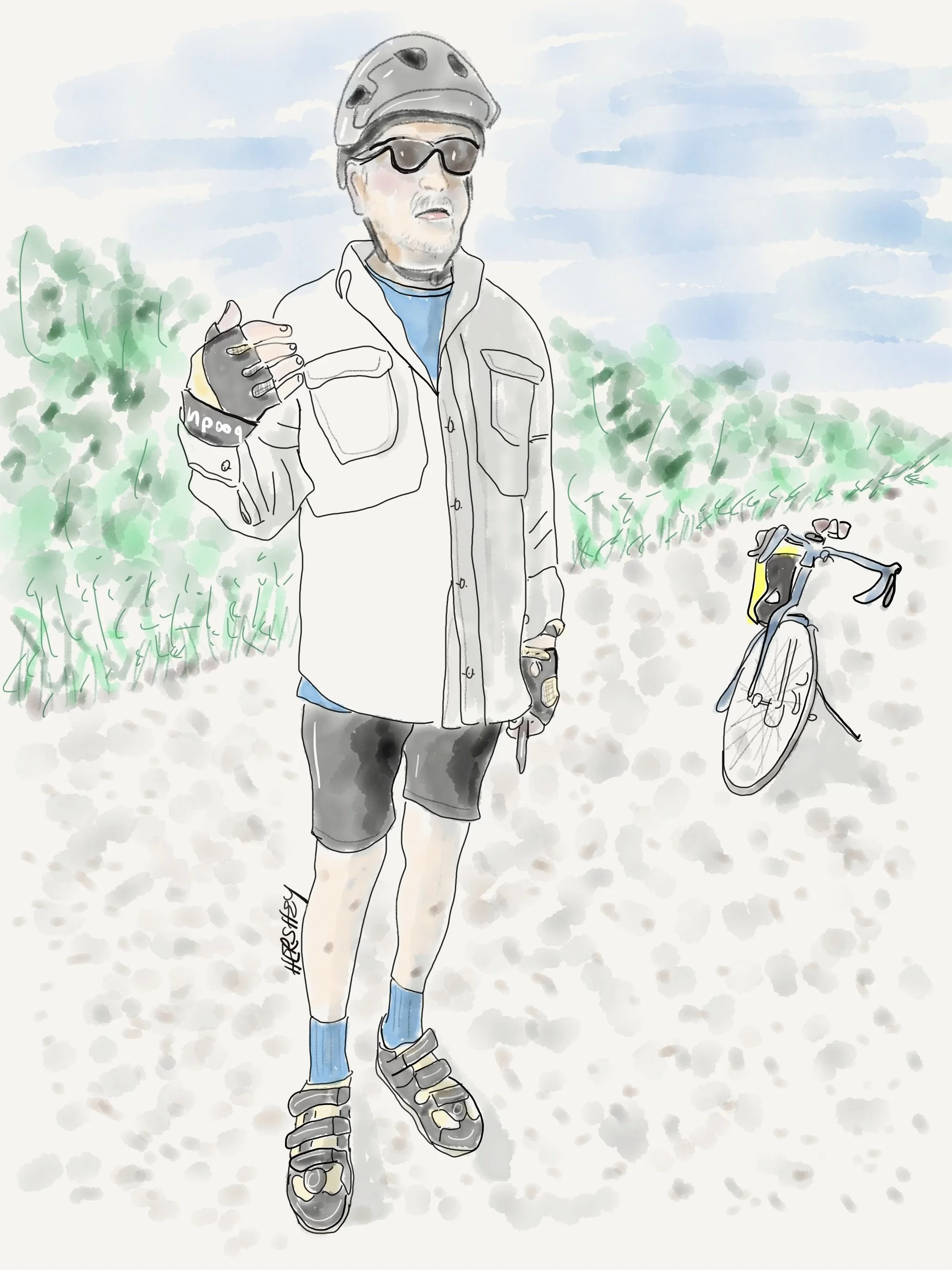
Jeff Mills is a resident of Lanark County in Ontario, Canada. We met him while biking on the Ottawa Valley Recreational Trail (OVRT). A lifelong community developer, Jeff helps to create great biking infrastructure in Lanark and Renfrew Counties. He (and his colleagues) envision a system of rail-trails similar to the Greater Allegheny Passage (GAP Trail) that runs from Pittsburgh, PA to Cumberland, MD. The hope is to create a bicycling destination with global appeal that will help revitalize small communities in northeastern Ontario. Between the OVRT and the Algonquin Trail, they have an excellent start! We were lucky enough to spend a wonderful evening at Jeff’s beautiful home with his lovely wife Gillian and his friends Chandler and Mike. Drawing by Jenny Hershey. Follow her on Instagram @ deepfo.
That isn’t to say that the oil and gas lobby, and the politicians in their pockets, won’t engage in mind-boggling attempts to stop that momentum. Republican politicians in some red states are seeing clean energy handwriting on the wall, and they don’t like it. In fact, the legislatures in both Texas and Florida have recently tried to stop the growth of clean energy projects in their states. Thankfully, because investments in clean energy in both states are so strong (and led by many registered Republicans), the Chambers of Commerce and other business groups, local municipalities, environmentalists, public health advocates and investors have prevailed in their fight against these legislatures to preserve the workings of the free market. It isn’t hard to understand why. According to research by Energy Innovation as reported by David Wallace-Wells in a recent New York Times Op Ed, green energy tax credits in the Inflation Reduction Act are poised to create more than 100,000 jobs in Texas alone by 2030 — which would add more than $15 billion to the state economy over that time. And similar gains are estimated in Florida, where Energy Innovation projects more than 85,000 new jobs and $10 billion in state G.D.P. gains by 2030.
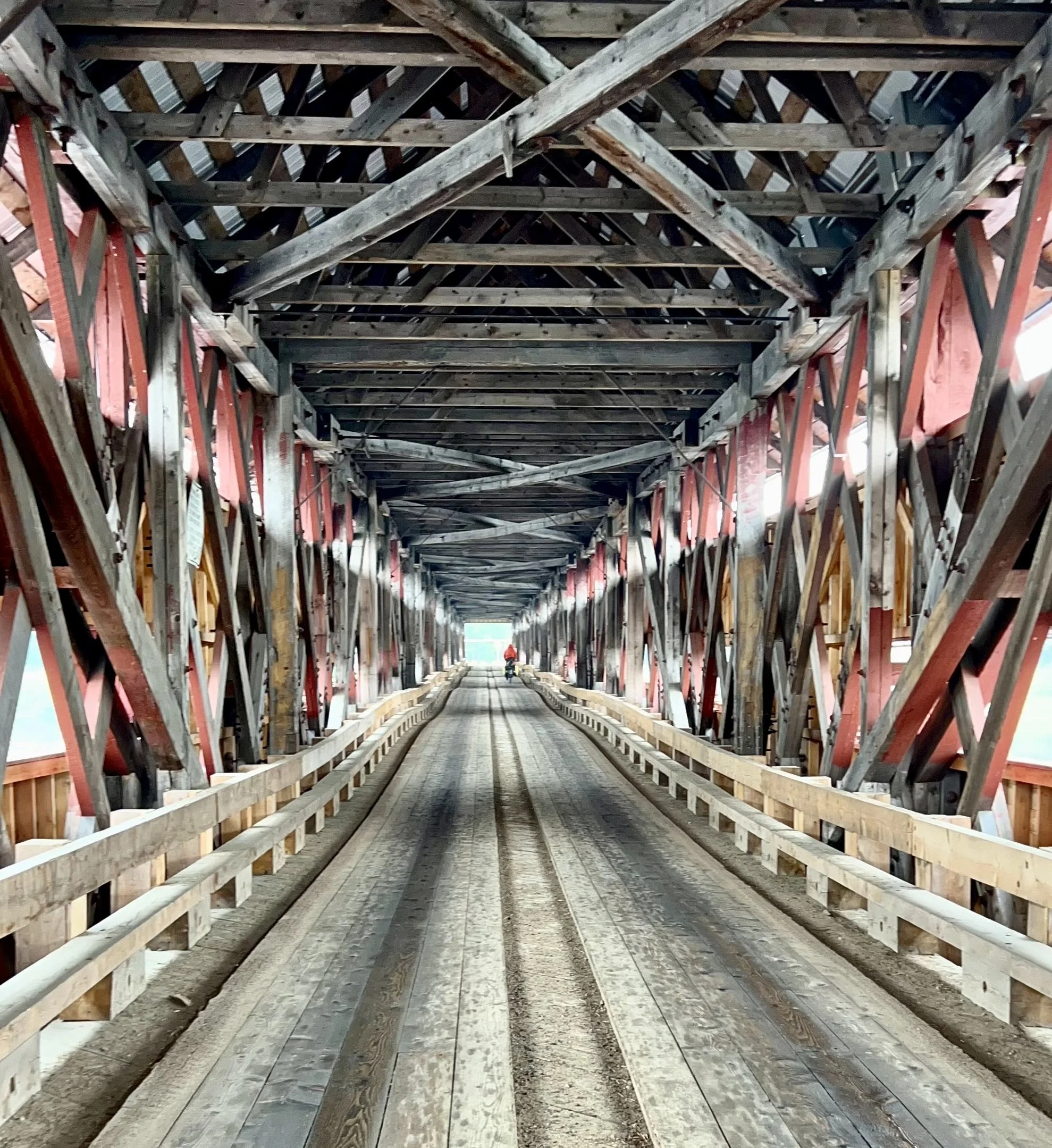
Michael bikes across a covered bridge in Mansfield et Pontefract, Quebec. Photo by Jenny Hershey. Follow her on Instagram @ deeofo.
But it’s not just a couple of red states that are being forced to capitulate to the self-evidence of market forces. Other parts of the world are willing to get serious about the energy transition, as well. China remains focused on cornering the huge new clean energy market, with ever-more massive investments in electric vehicle production, battery technology, wind turbines and solar panels. Europe continues to aggressively wean itself off both oil (through electric vehicle mandates) and Russian gas imports (through energy conservation and the rapid deployment of renewables). Canada established a price on carbon several years ago to incentivize clean energy development. Currently, 90% of the revenue from a federal fuel charge goes directly back to households through the climate action incentive payment (CAIP). This is a tax-free benefit the government pays back to citizens to help offset the cost of carbon pricing. The average household gets back more than they’ve paid into the system. Only higher income households pay more than they get back because they tend to use more fossil fuels.
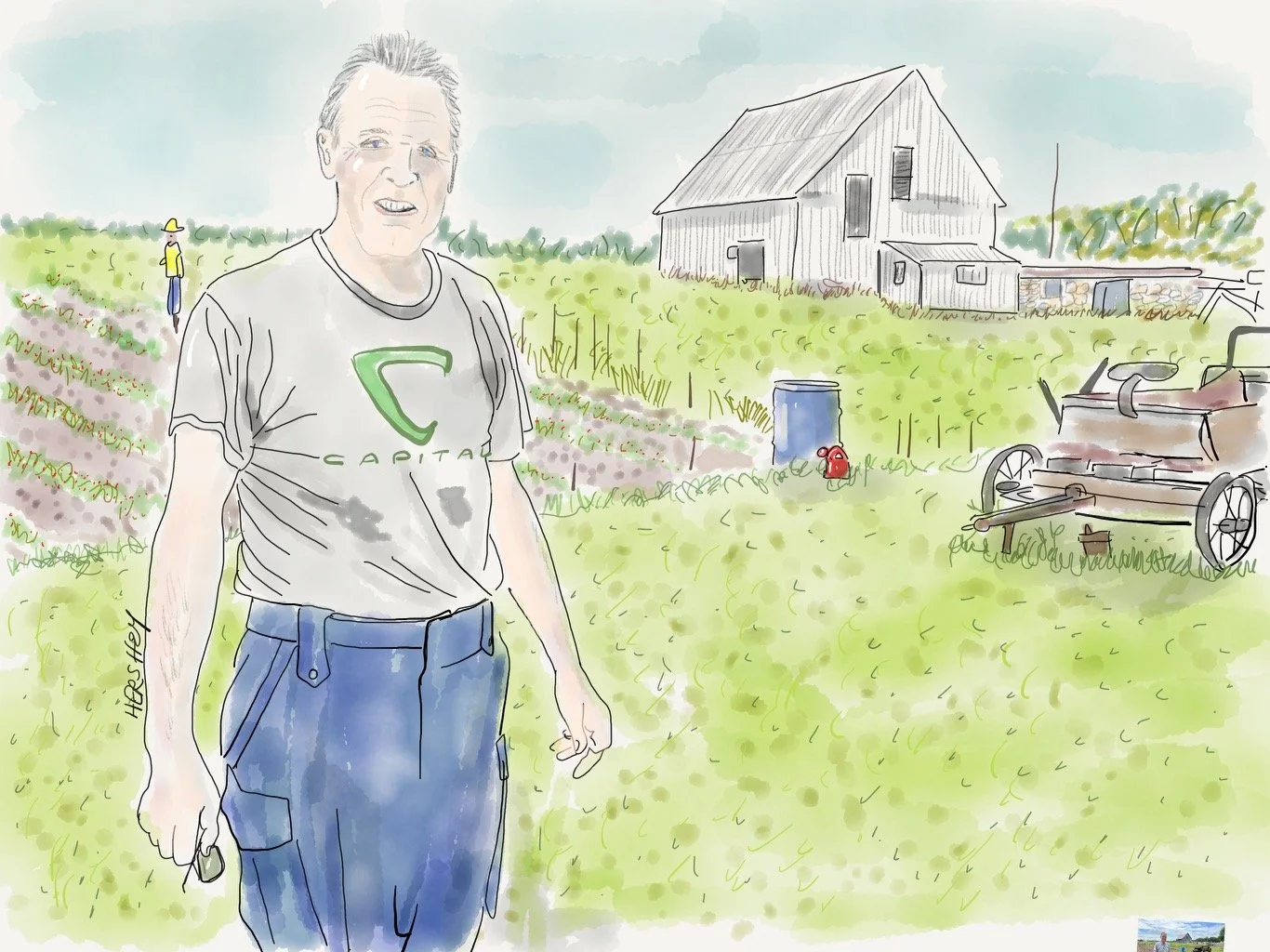
Al is a retired policeman from Ottawa. We met him in Renfrew while he was tending his garden. He was eager to chat and showed us a stone house from 1865 he had purchased from a family that had acquired homesteading land from the Crown seven generations earlier. Al was proud of his antique collection. Eventually we asked about the wildfires. He believes the fires were most likely started by carelessness, and maybe some lightening. He hedged about the climate but eventually agreed with us the climate is changing. A very friendly guy, Al sent us off with a classic milk bottle and a horseshoe for luck (both somewhat challenging to carry on our bikes, but he was insistent). Michael gave the milk bottle away to our host Jeff Mills, and Jenny left the horseshoe at a farm stand with a couple of Mennonite boys, telling them it might bring good luck. Their father quickly corrected Jenny, saying Mennonites don't believe in luck. But the boys kept the horseshoe anyway. Drawing by Jenny Hershey. Follow her on Instagram @deeofo.
So for all the reasons above, Democrats and other environmentalists in the States don’t need to worry as much about opposing fossil fuel projects as they need to be thinking about getting stuff built, not only to address climate but to keep our economy strong. Yet make no mistake; building out clean energy projects in the United Sates and getting that energy to residents and industries won’t be an easy task, even if that energy is already cheaper and cleaner than fossil fuels. Without a serious effort to streamline permitting and double the size of our utility grid over the next decade (while effectively engaging communities in decision making), we may fail to accomplish up to 80% of the decarbonization goals of the Inflation Reduction Act (IRA).
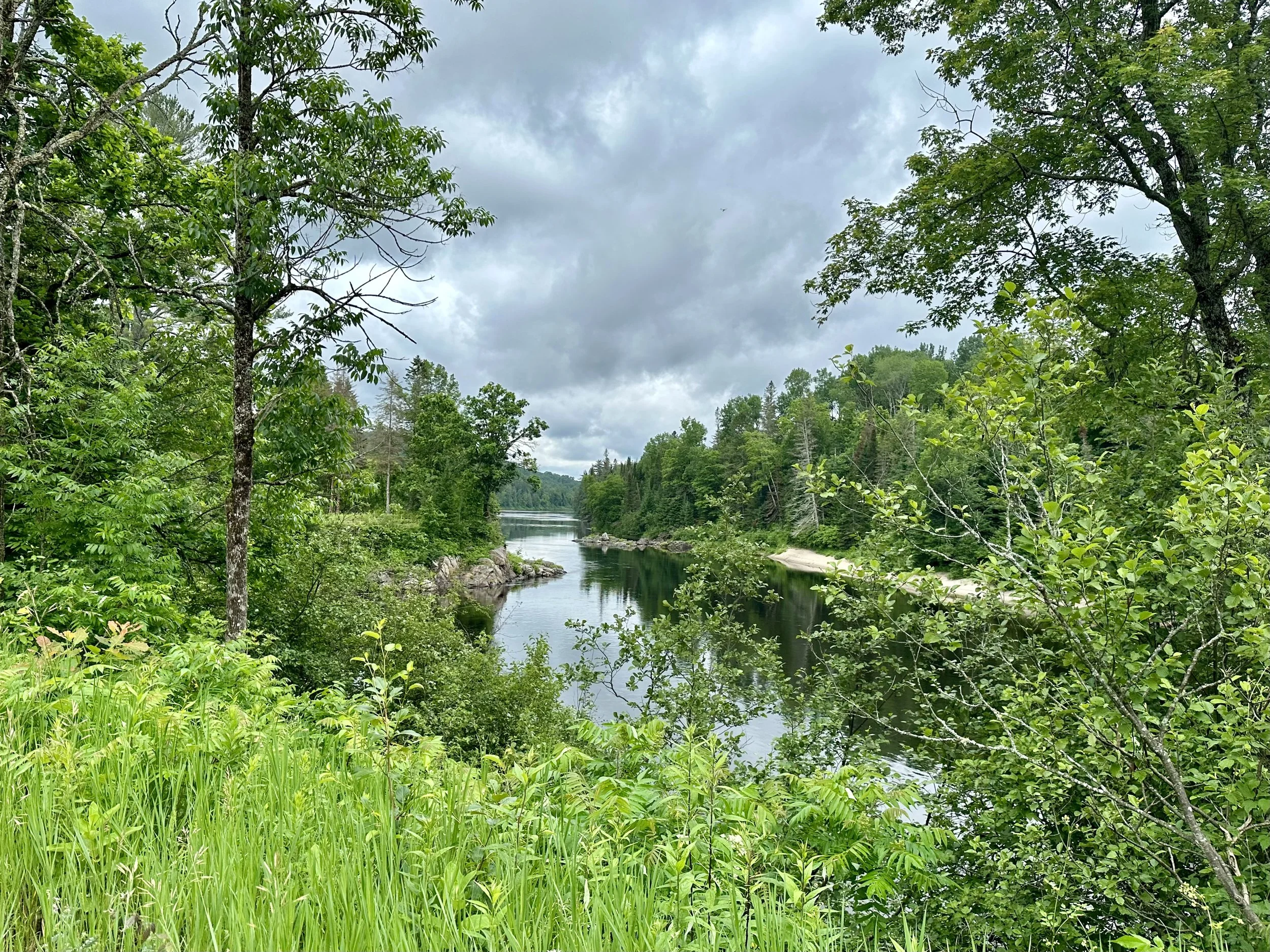
This photo was taken northwest of Fort Coulonge, Quebec, on an unpaved road called the Chemin du Bois Franc. The road extends north for more than a hundred kilometers and is one of many rugged routes into Quebec’s boreal forest. Although we weren't able to ride north on this road for more than about 20 kilometers we felt like we got a small taste of the forest. It was humid, extremely buggy, and although we were told it was unusually dry, we saw water everywhere. Not only is Canada’s boreal forest rich with trees that sequester huge amounts of carbon, it is also home to one of the most significant stores of fresh water on the planet. Photo by Michael Chase. Follow him on Instagram @mjohnsonchase.
————
Wildfires and Conspiracy Theories
“No amount of evidence will ever persuade an idiot.”
-Mark Twain
————
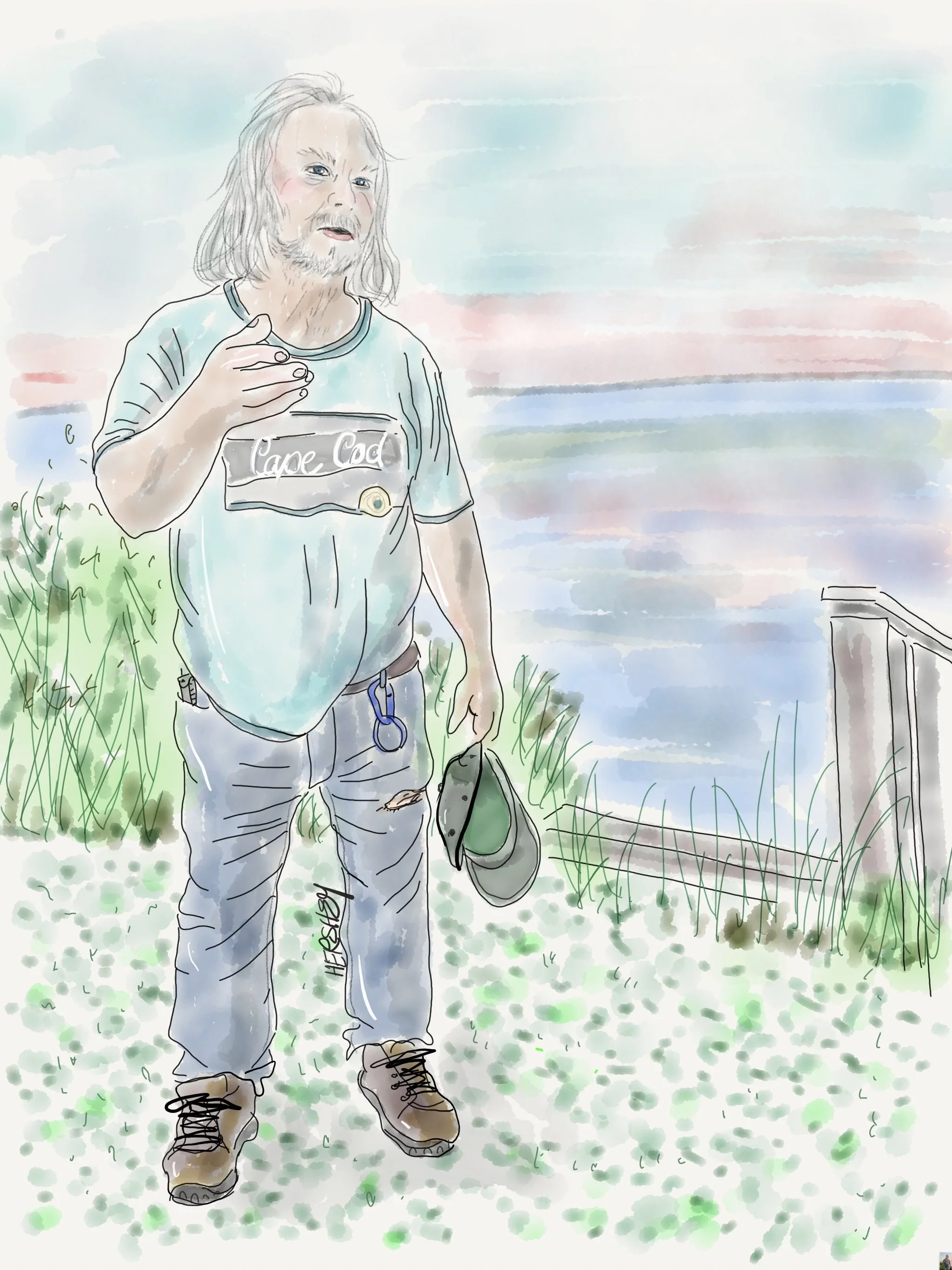
We met “Andy” and his wife “Carol” in Cape Vincent, NY. “Carol” invited us down to the Lake Ontario shoreline to share a sunset made even more intense by wildfire smoke drifting toward us from Quebec. As we talked, “Andy” began to share thoughts about how a group of elites from around the world are plotting to eliminate individual liberties to impose a dictatorial, one-world government. He threw out some names: Klaus Schwab, Rothschild, Mayer, Zuckerberg, Bill Gates…. We were curious and a bit uneasy. So, later in the evening Jenny and I did an internet search. “Andy’s” searches probably go directly to “The Great Reset Conspiracy” attributed to the World Economic Forum (WEF); a conspiracy of world control by a select few through Covid mandates, climate lockdowns, space lasers, and ecoterrorism. “Andy” may assume everyone else will find the same information if they bother to look. But that’s a danger of the internet and misinformation. Search engines learn how to show you results you are most likely to like to maximize your eyeballs on associated advertising. Consequently, whatever information we encounter online, we curate online through our own interests and biases. So, Jenny and I had to do some digging. Apparently “Andy” didn’t notice the Star of David around Jenny’s neck; in any case, she didn’t sleep well that evening. Drawing by Jenny Hershey. Follow her on Instagram @deeofo.
As we are all too aware, Canadian wildfires have been burning for weeks. Research shows that record heat and drought creates earlier starts to every season (with this year breaking all records), resulting in wildfire activity that is longer-lasting and more intense. Caused by a mix of human activity (carelessness and arson), and lightning, it is clear that climate change affects the local conditions and fuel available for these fires to spread, as do the decades of fire suppression techniques that have contributed to unnaturally dense forest environments.
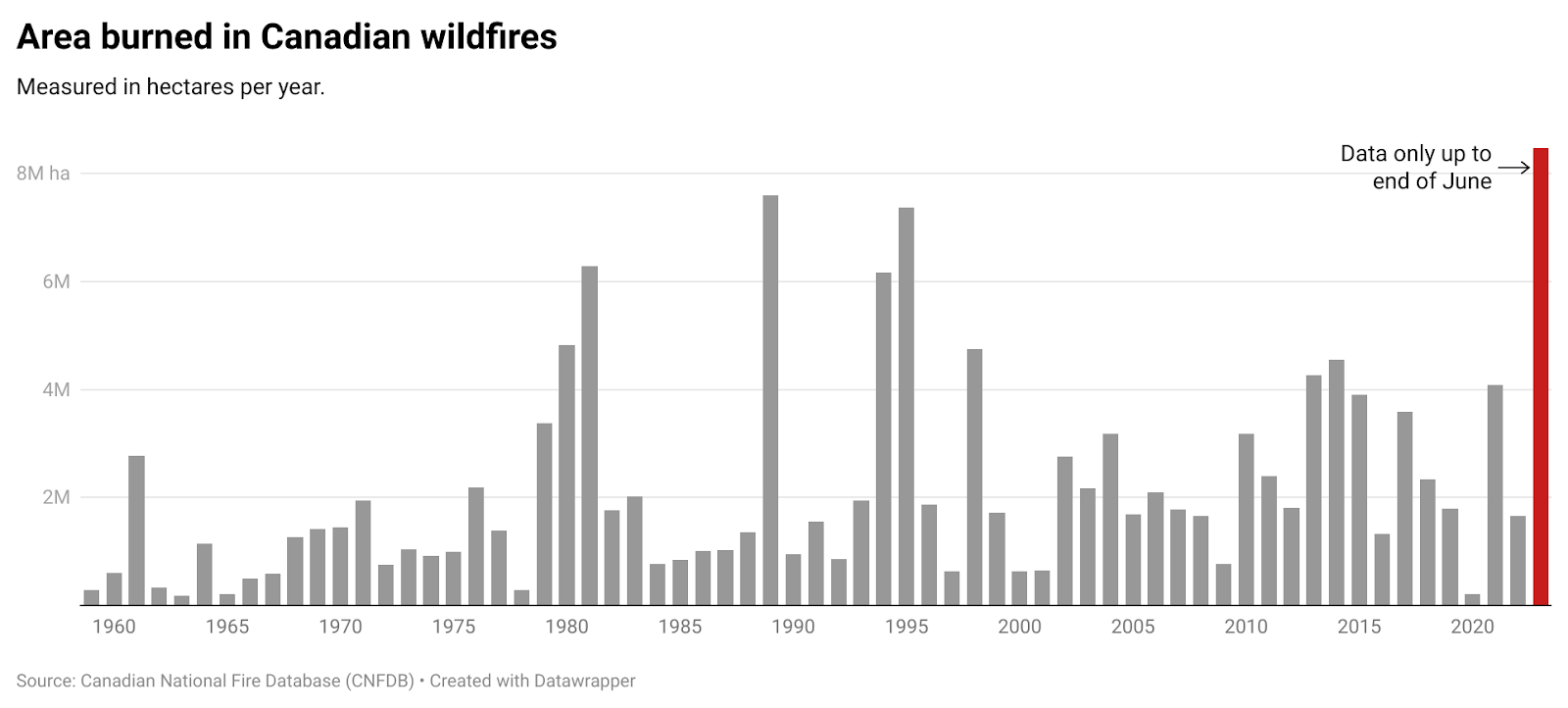
This simple bar graph indicates that by the end of June of this year, a greater percentage of hectares have already burned in Canada than any year since records have been kept. Some news outlets argue that climate change isn't the cause of wildfires because the number of annual fires has been decreasing. However, they all ignore the sheer size and destructive nature of the current fires.
New Yorkers won’t soon forget what the air quality was like on June 7th, 2023. At its peak in the afternoon, the air quality index (AQI) for the city reached 405 out of 500; the highest since records began, according to an analysis of the Environmental Protection Agency (EPA). While we have been biking in Canada over the month of June, over 400 wildfires have continued to drive air quality indexes to record levels in many cities across the eastern seaboard and the midwest. Air quality has been equally poor in Canada. Yesterday (7/2/23), four of the five cities with the worst air quality in the world were in North America. New York City had the second-worst air quality in the world with a recorded air quality index of 162, lagging only behind Jakarta. Toronto and Montreal ranked 3rd and 4th, reporting AQI’s of 155 and 153, respectively. The fifth-ranked city, Washington, D.C., is hundreds of miles away from where Canadian wildfires continue to rage. There, air quality was slightly better than the other three North American cities on the list, with an AQI of 122.
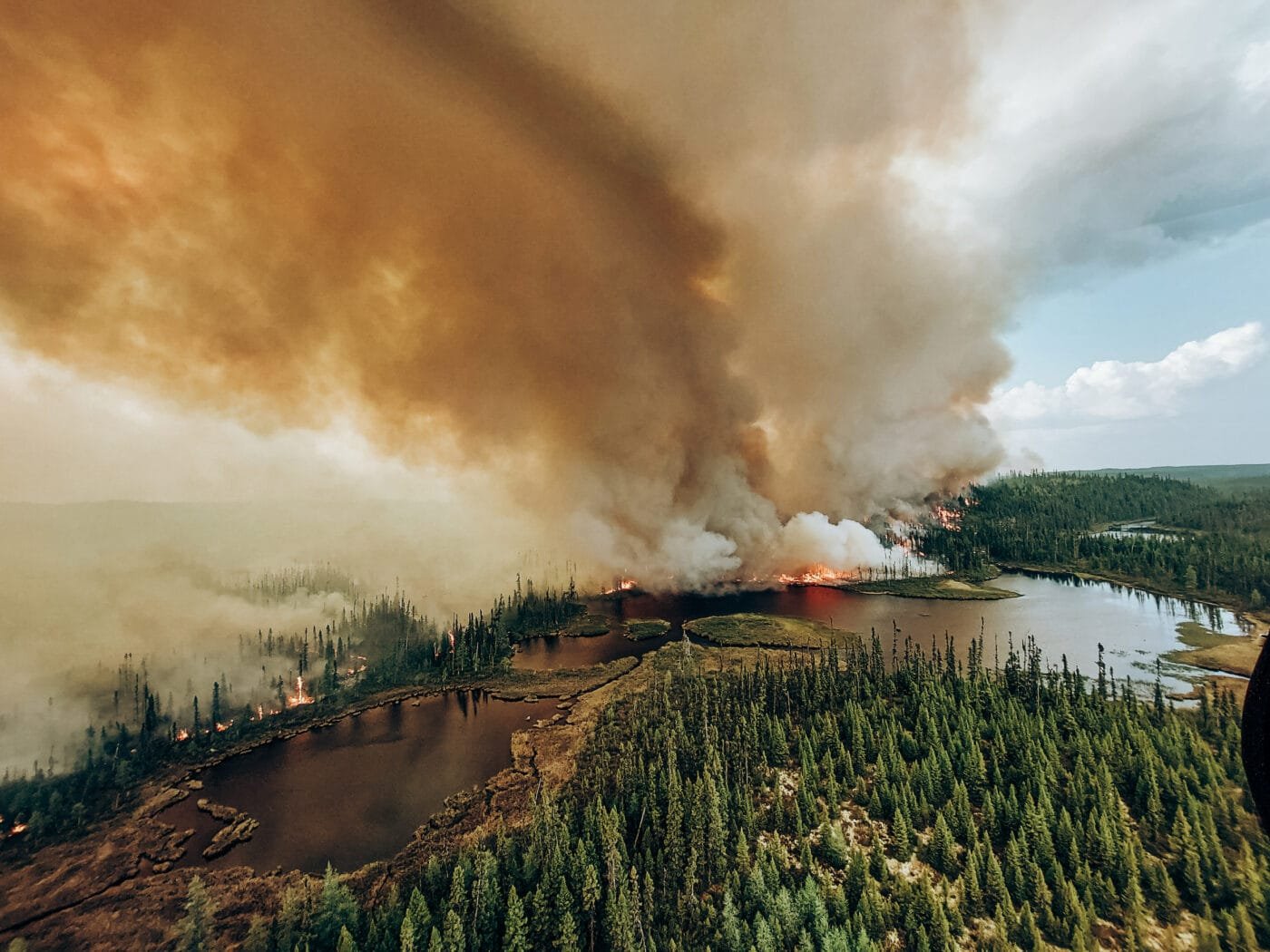
Almost 40 per cent of Canada’s 2023 wildfires have been in Quebec, threatening to evacuate more than 15,000 people. Photo: Société de protection des forêts contre le feu; as seen in The Narwhal.
Ten percent of the world’s forests rise up from Canadian soil, and increasingly those forests look poised to burn as our atmosphere grows warmer. Consider the following passage from a poetic and startling new book by John Vaillant called Fire Weather: “Girdling the Northern Hemisphere in a circumpolar band, the boreal forest is the largest terrestrial ecosystem, comprising almost a third of the planet’s total forest area (more than 6 million square miles—larger than all fifty U.S. states). Fully a third of Canada is covered by boreal forest. Continuing west, over the Rocky Mountains, through British Columbia, the Yukon, Alaska, and across the Bering Strait into Russia (where it is known as the taiga), the boreal forest stretches all the way to Scandinavia and then makes landfall on Iceland before picking up again in Newfoundland and continuing westward to complete the circle. It is a green wreath crowning the globe. This colossal biome stores as much, if not more, carbon than all tropical forests combined and, when it burns, it goes off like a carbon bomb. Under the right conditions, a big boreal fire can come on like the end of the world, roaring and unstoppable. These are fires that can burn thousands of square miles of forest along with everything in it, and still be out of control.”
The scale is hard to get my head around. You may feel the same. And if that wasn't sobering enough, here's another important milestone; fires across Canada this year have ALREADY generated nearly 600 million tons of CO2, which is equivalent to 88% of Canada’s total greenhouse gas emissions from all sources in 2021. More than half of that carbon pollution went up in wildfire smoke in June alone. And the fire season here is only beginning.

Jenny (left) and Chandler Swain. We met Chandler at our dinner with Jeff and Gillian Mills. Chandler is a master potter, artist, environmental activist and communications director for the Climate Network in Lanark County, Ontario. Although Jenny rarely draws herself, she felt a strong bond with Chandler, whose enthusiasm, tenacity and buoyant energy is infectious. Chandler’s passion for environmental work has led her to write about network initiatives for the local online paper, The Humm. Her personal website can be found here. Drawing by Jenny Hershey. Follow her work on Instagram @deeofo.
And the causes of the fires? Well, as we discovered through our conversations with some Canadians (but not all, thankfully), blaming wildfires on the unusually hot and dry conditions resulting from a gradually warming world brought on by 250 years of unrelenting greenhouse gas emissions is, well, a bit too convenient. After all, why buy into dry weather that makes human carelessness or lightning strikes the reason (but not the root cause) when you can believe in something far less complex? Stew Peters, the same man who made a film claiming that Covid-19 is caused by synthetic snake venom, blamed the Canadian wildfires on Directed Energy Weapons on June 5th of this year. Apparently he sent out a TikTok video with visuals that made southeast Quebec appear as though hundreds of locations were catching on fire at the same time. This allowed him to claim that “our governments” are targeting their own forests for nefarious reasons.
I'm not sure if Directed Energy Weapons (DEWs) are related to the infamous Jewish Space Lasers that Congressional Representative Marjorie Taylor Greene previously implicated in a wildfire outbreak, but it's clear her theory is followed. Here it is on Donald Trump’s Truth Social. According to the Congresswoman, forests don’t catch fire simply because they are extraordinarily hot and dry. Representative Greene claimed the blazes had been started by PG&E in conjunction with the Rothschilds, by using a space laser to clear room for a high-speed rail project. Really, one cannot make this stuff up. For those of you who don’t believe me, you can read Greene’s entire post here on Media Matters.
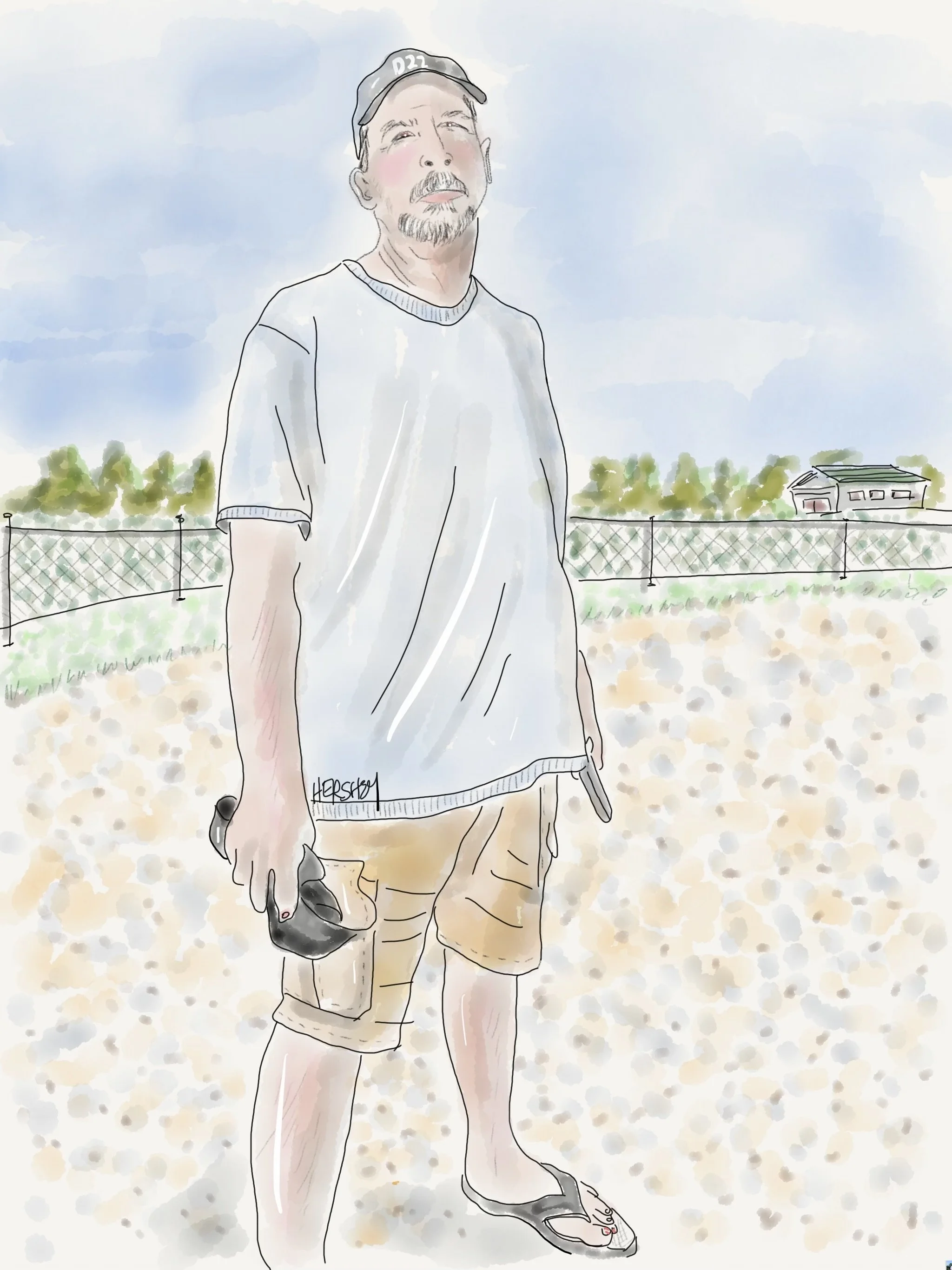
We stayed in Alain and Paola’s small cabin behind their home in Mansfield-et-Pontefract. Alain is a retired postman. He started his route after graduating from high school when he was 16 years old. His dad was a supervisor and he wanted to follow in his father's footsteps. Alain walked 20 Km (12 miles) a day, year round, using ice cleats to navigate cold, icy winters for over 40 years. Each neighborhood he serviced brought new friendships and relationships. Alain said, “I don’t get attached easily, but the old folks - they’d wait all day for me. I was sometimes the only person they talked to. It was hard to walk away.” Alain is very devoted to his wife. He is also a superb Airbnb host with a simple philosophy—deliver hospitality! Drawing by Jenny Hershey. Follow her on Instagram @deeofo.
But not all the theories borrow from Conspiracy mongers who make their homes in the States. Alberta Premier Danielle Smith (who is not friendly toward Canadian climate policies) was asked about the cause of Alberta wildfires in early June by Canadian talk show host Ryan Jespersen, and suggested that the more than 175 fires burning in Alberta at the time were all caused by arson, not climate change. Others in Canada have taken the arson theory a step further, indicating that the arsonists are Trudeau government operatives who are out to increase the federal carbon price.
Our friend Andy from Cape Vincent disturbed us with his reference to a cabal with mostly Jewish names, seemingly unaware that he (and others of his ilk) are dredging up the same anti-Jewish theories that preceded the Nazis and the rise of Hitler. “Anti-Jewish prejudice is very old – it goes back to antiquity – but the 19th century was crucial,” writes Matthias B. Lehmann, Teller Family Chair in Jewish History and professor of history at UCI, in The Baron: Maurice de Hirsch and the Jewish Nineteenth Century. “It was the moment when modern-day antisemitic conspiracy theories first crystallized, and those are still very much being used today.”
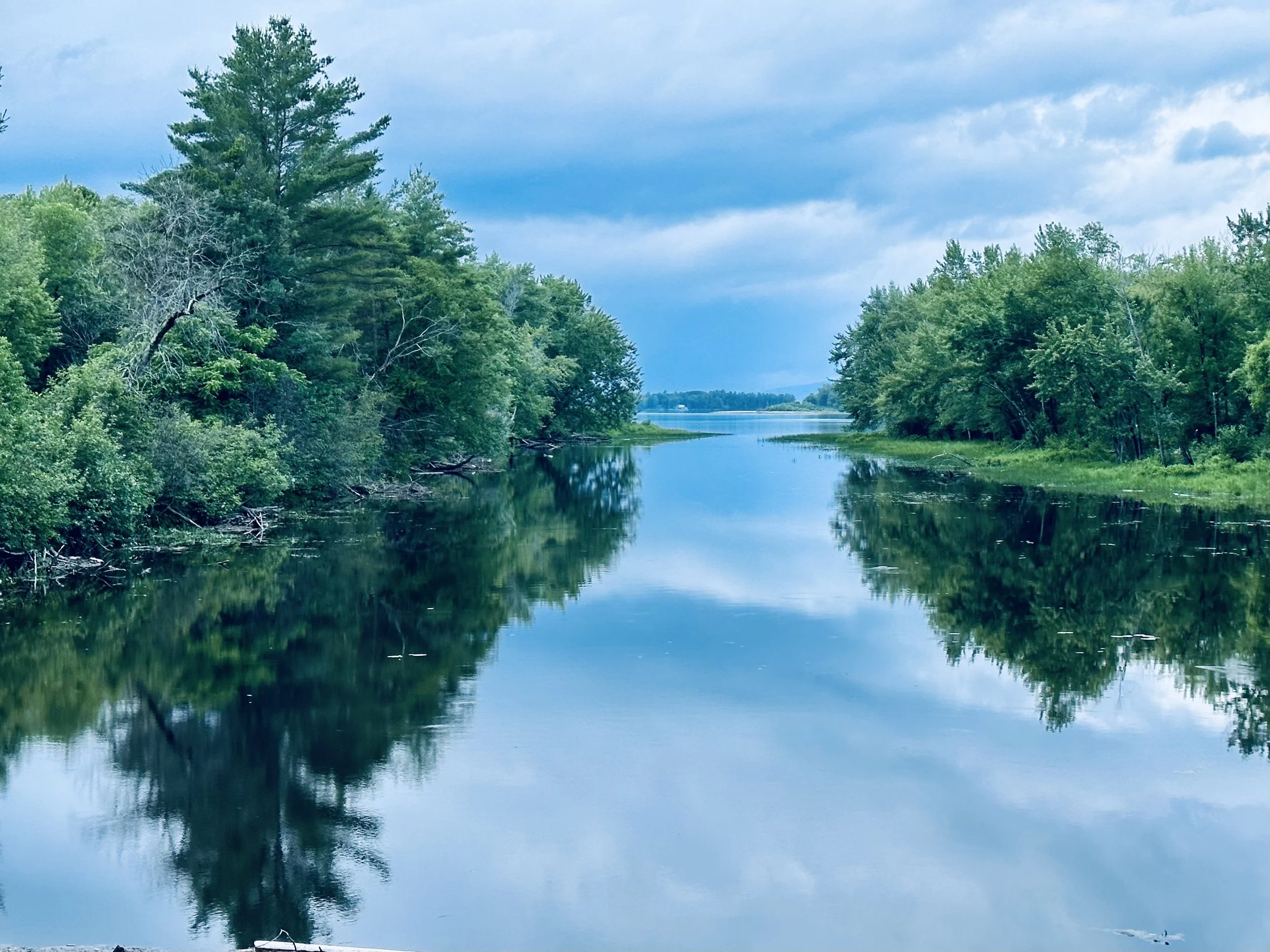
A view of the Coulonge River looking north. We were told that one of the smaller fires in Quebec was about 75 miles north of here. Photo by Michael Chase. Follow him on Instagram @mjohnsonchase.
Sometimes the enemy is the U.S. government and Biden, or the Canadian government or Trudeau. Or it's a cabal of rich people connected to the World Economic Forum wanting to control the world. Or sometimes it’s wealthy people in general, especially if they are Jewish. Or blacks or Hispanics or Muslims. Or they might be communists or socialists. Or Democrats. Or LBGTQ people. Or Public Health officials. Recently it was the queen of England, believed by a number of people to be the head of a brutal global drug cartel. As Anna Merlen writes in her fascinating book, Republic of Lies, conspiracy theories are, in the end, not so much an explanation of events as they are an effort to assign blame. More than questioning an official narrative, they are aimed at identifying the real perpetrators, the true power behind the throne, the hidden hand pulling beneath the surface.
So, it almost seems quaint that a not-insignificant chorus of Canadians blame the current wildfires sweeping across much of the country on climate activists and laser-less government operatives willing to drive into the woods and strike a match. It’s those pesky arsonists, and not natural forces or human carelessness driven by a hotter and drier climate that’s the real culprit for all the choking smoke that has driven children, seniors and others with respiratory issues inside, blocking out the sun and making air nearly impossible to breathe.
Whoever, or whatever it is, it's likely to happen more and more often until well after we decarbonize our atmosphere.
Let's get on with it.
Stay vigilant! Thanks for reading. If you haven’t done so, please subscribe to this blog to follow our next biking trip.
Blog writing by Michael Chase. Drawings by Jenny Hershey. Unless credited or otherwise noted, all material is the copyrighted property of the blog post authors.
Here are a few more photos from the trip:
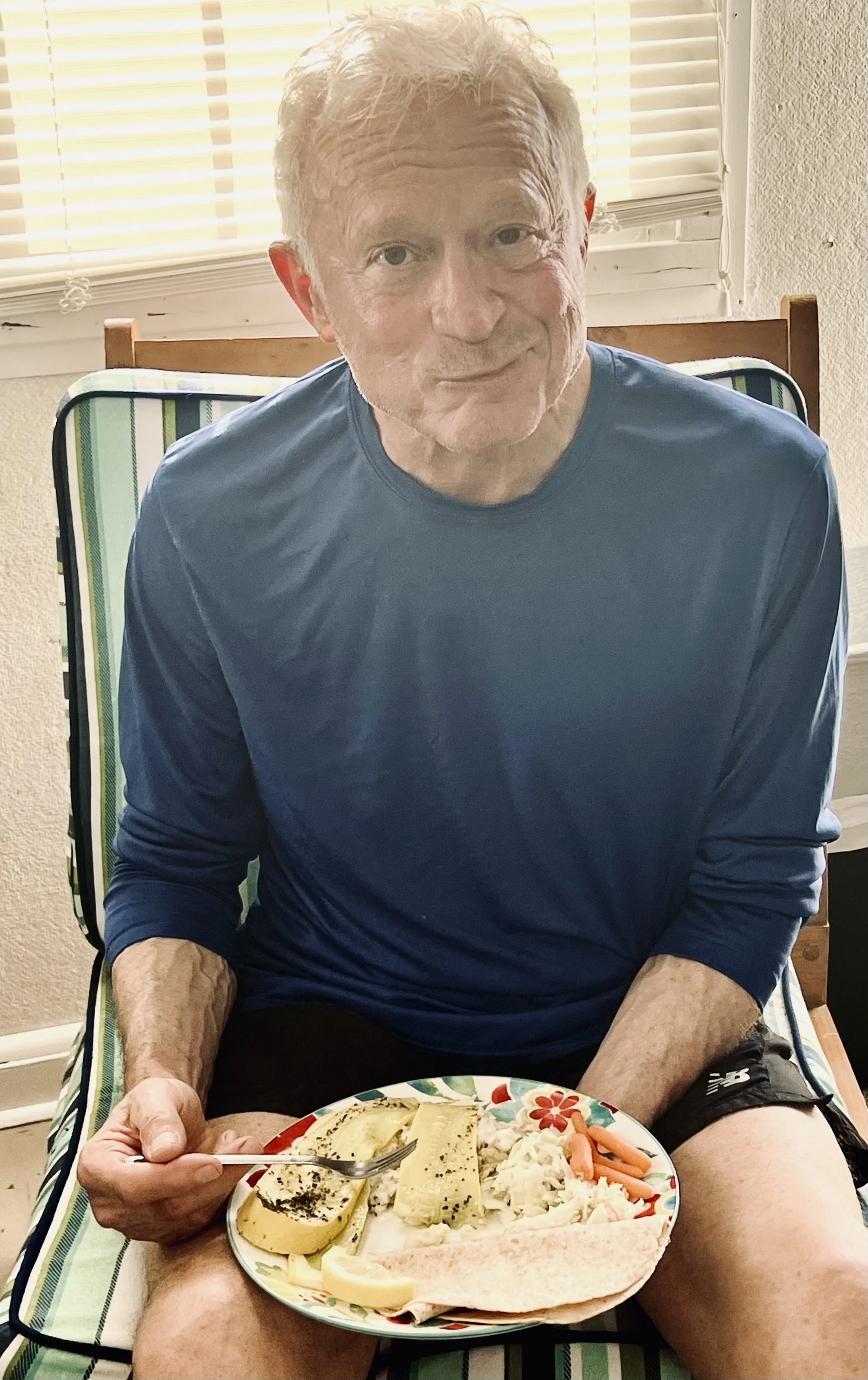
Michael enjoying one of Jenny’s extraordinary meals.Although Michael is a decent cook in his own right, Jenny has become an exceptional cook on the road, and we eat very well using local produce and protein and the microwaves we find in our modest accommodations. Photo by Jenny Hershey. Follow her on Instagram @deeofo.
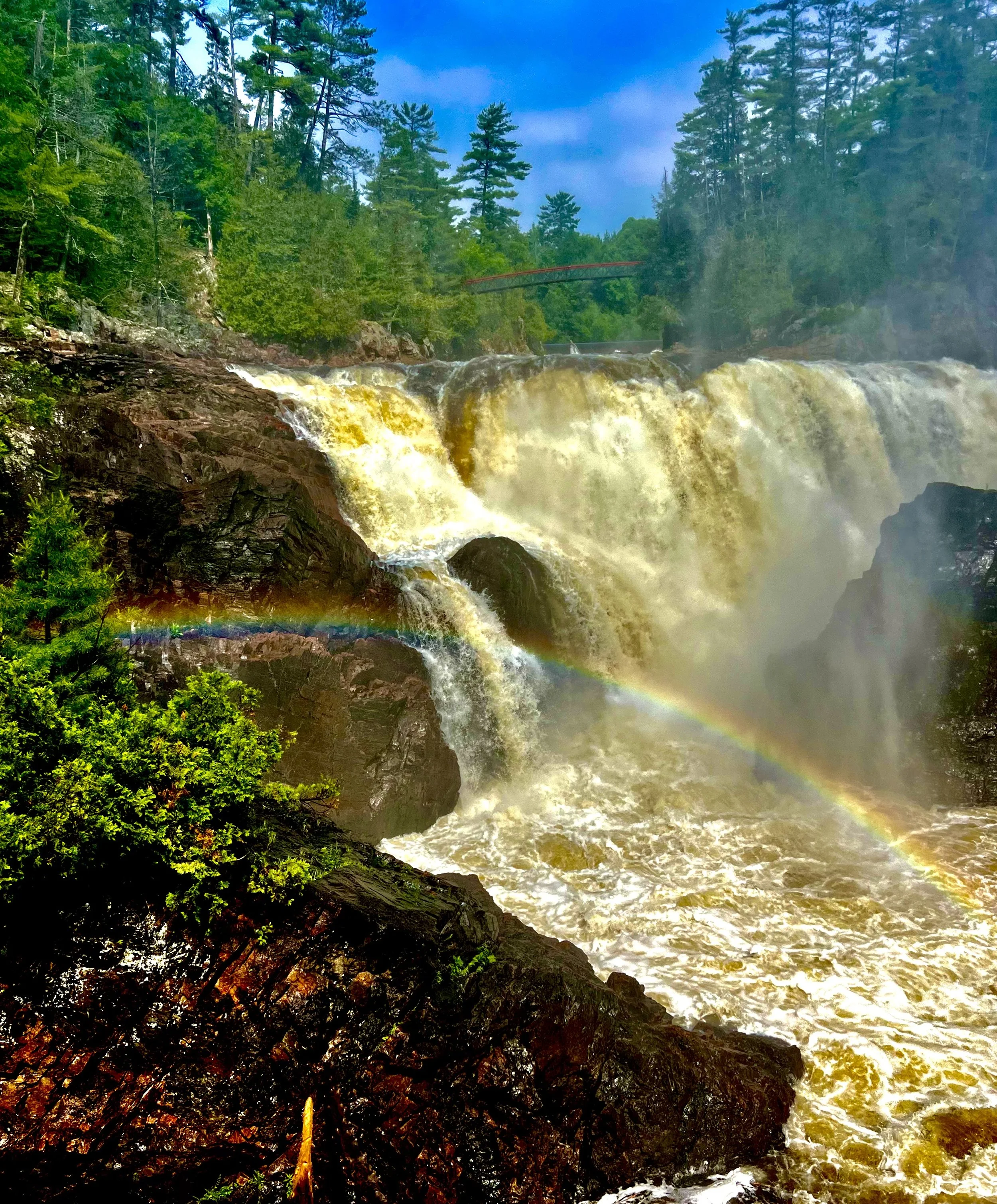
The Chutes de Coulonge on the Coulonge River in Quebec. Photo by Jenny Hershey. Follow her on Instagram @deeofo.
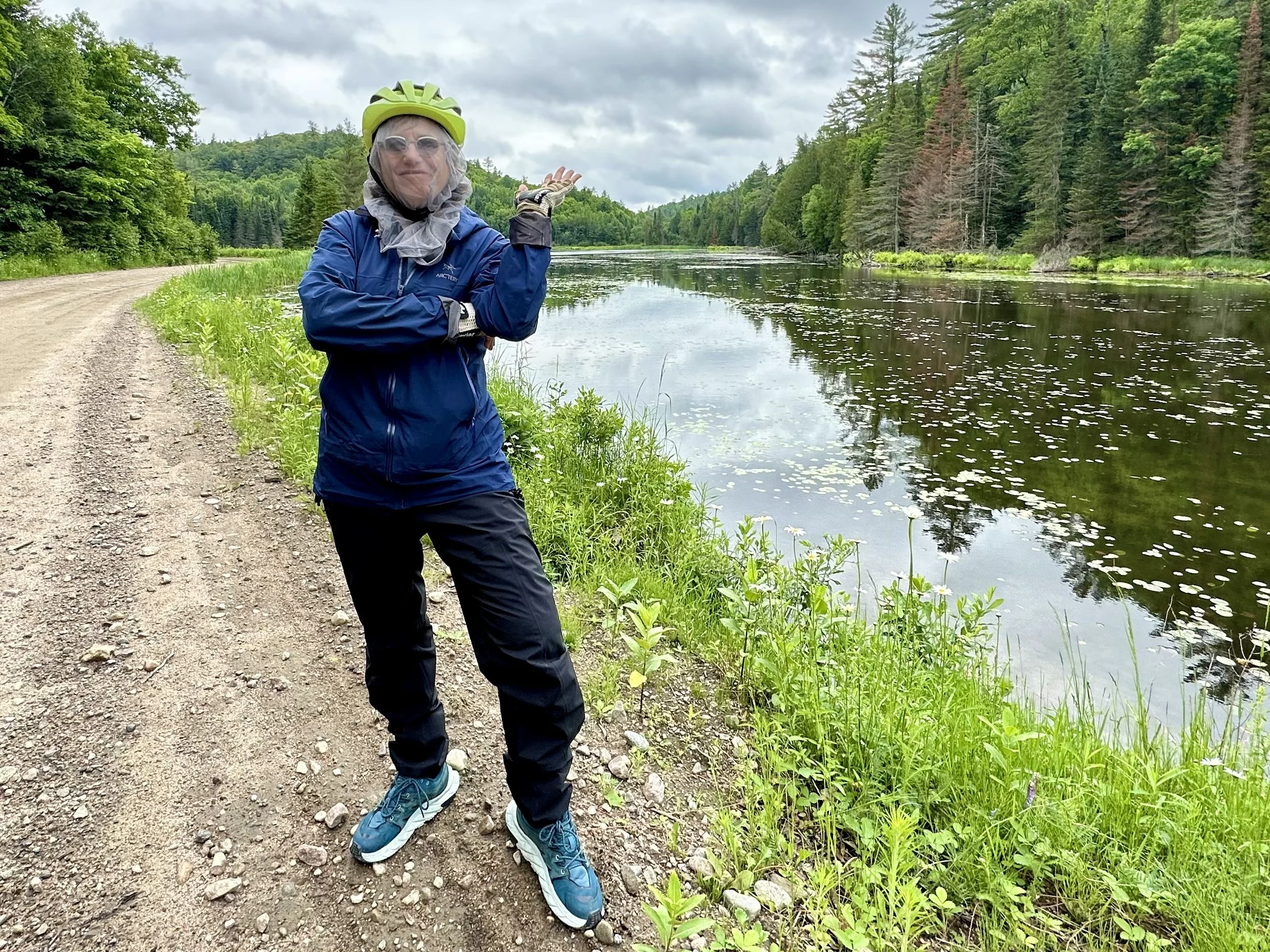
Jenny with a mosquito net over her head goofing around in Quebec. Photo by Michael Chase. Follow him on Instagram @mjohnsonchase.
Water and a Pipeline; Biking Mississippi and Arkansas, Part 2
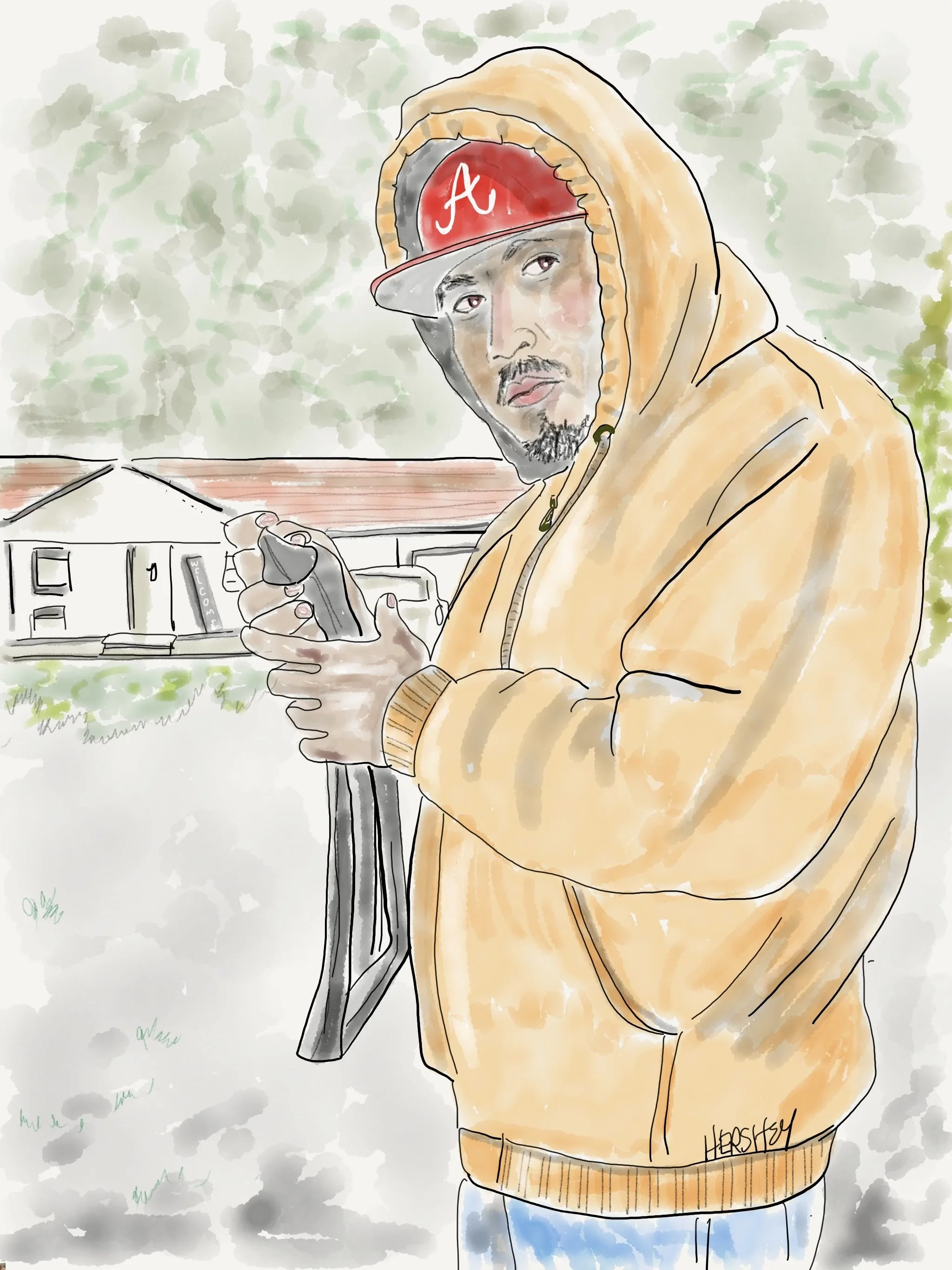
We met Jorge outside Jacksonville, Arkansas, just east of Conway. He graciously allowed us to fix a flat tire in his driveway, the third of seven flats we had on this trip. Jorge immigrated to Arkansas from San Luis Potosí, Mexico, 12 years ago, and enjoys a peaceful life with his wife and 4 kids. He told us he was “muy feliz.” He works a 9-5 job Monday through Friday in home construction, and spends the weekends with his kids doing sports. Jorge was a bicycle mechanic in Mexico and masterfully found the leak in our tube before we were even able to look. We were touched by his kindness.
Drawing by Jenny Hershey. Follow her on Instagram @deeofo.
——————
“Caution is the eldest child of wisdom.”
- Victor Hugo
——————
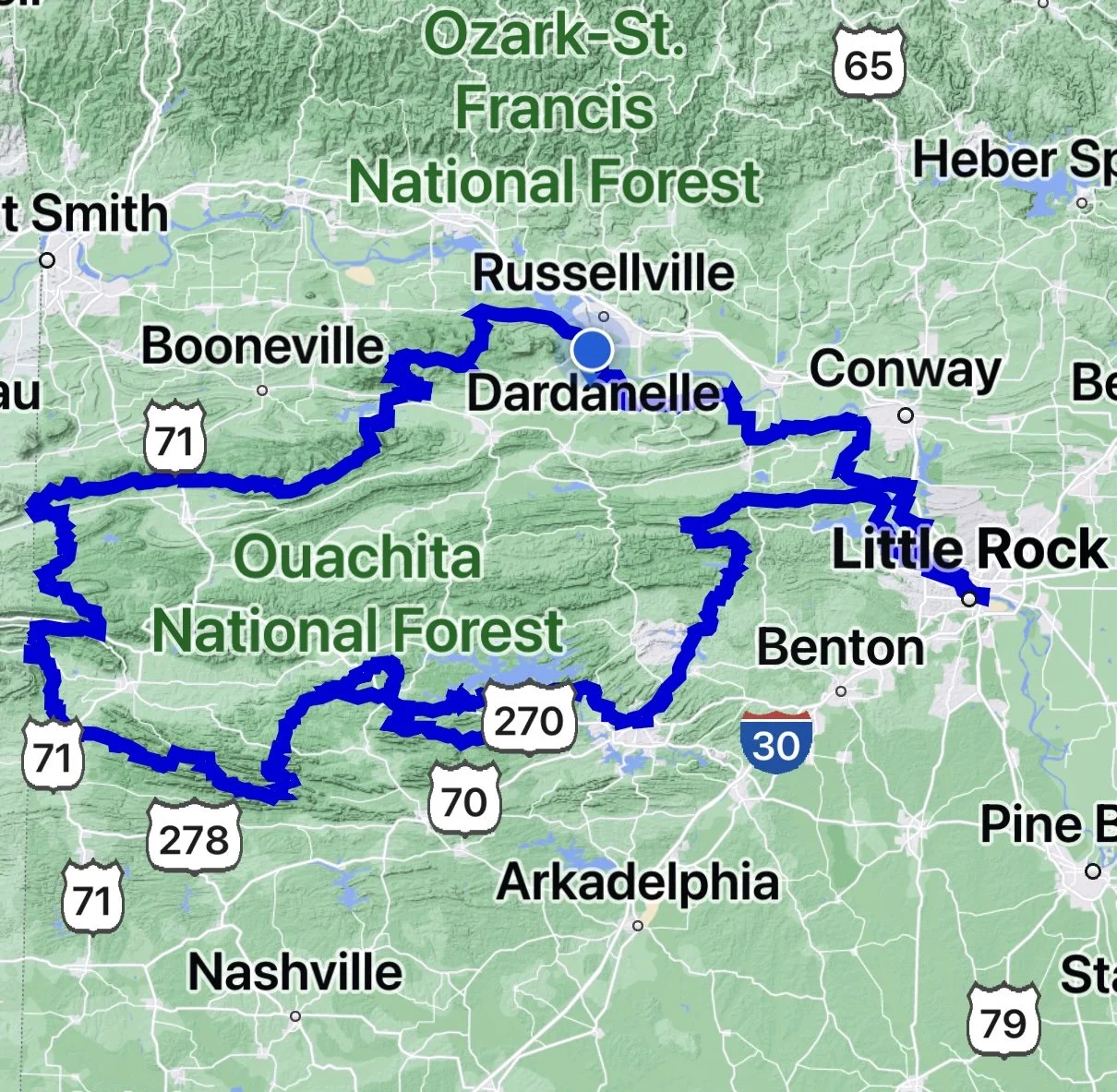
Jenny and I planned our bicycling trip through the Ouachita Mountains in the Ozark High Country, following a route from Conway to Little Rock. From there, we will take an Amtrak train to visit family in Milwaukee and another train back home from Chicago to New York City. We used a map the American Cycling Association provided to guide us on our journey.
Writing by Michael Chase, Drawings by Jenny Hershey
After a very satisfying ride across Alabama and Mississippi and the extraordinary delta country of eastern Mississippi and Arkansas (the subjects of Post 1 in this series), we headed toward the Arkansas River and the Conway/Little Rock region of Arkansas. The Adventure Cycling Association has created an extraordinary tour of the Ozarks out of Little Rock that features northern and southern loops collectively called the Arkansas High Country Route.
Confidant that climate-related stories are now to be found anywhere and everywhere, we already knew about the deadly tornadoes of March 31, 2023, that had moved through a large portion of the south and midwest, including a particularly devastating tornado that hit North Little Rock, only one week after the Amory, Rolling Fork and Silver City tornadoes in Mississippi. Although we didn’t see the neighborhoods in North and West Little Rock devastated (nor the shopping center that took out a Trek Bike Shop, among other businesses), we saw large swaths of park damage on both sides of the Arkansas River. The North Little Rock tornado had winds up to 165 mph and a path length spanning 20-25 miles, which is unusually large. We thought we would likely see more tornado destruction (see Part 1 in this series). However, on our way to Lake Maumelle from Little Rock, we discovered a different water-related climate story that captured our interest.
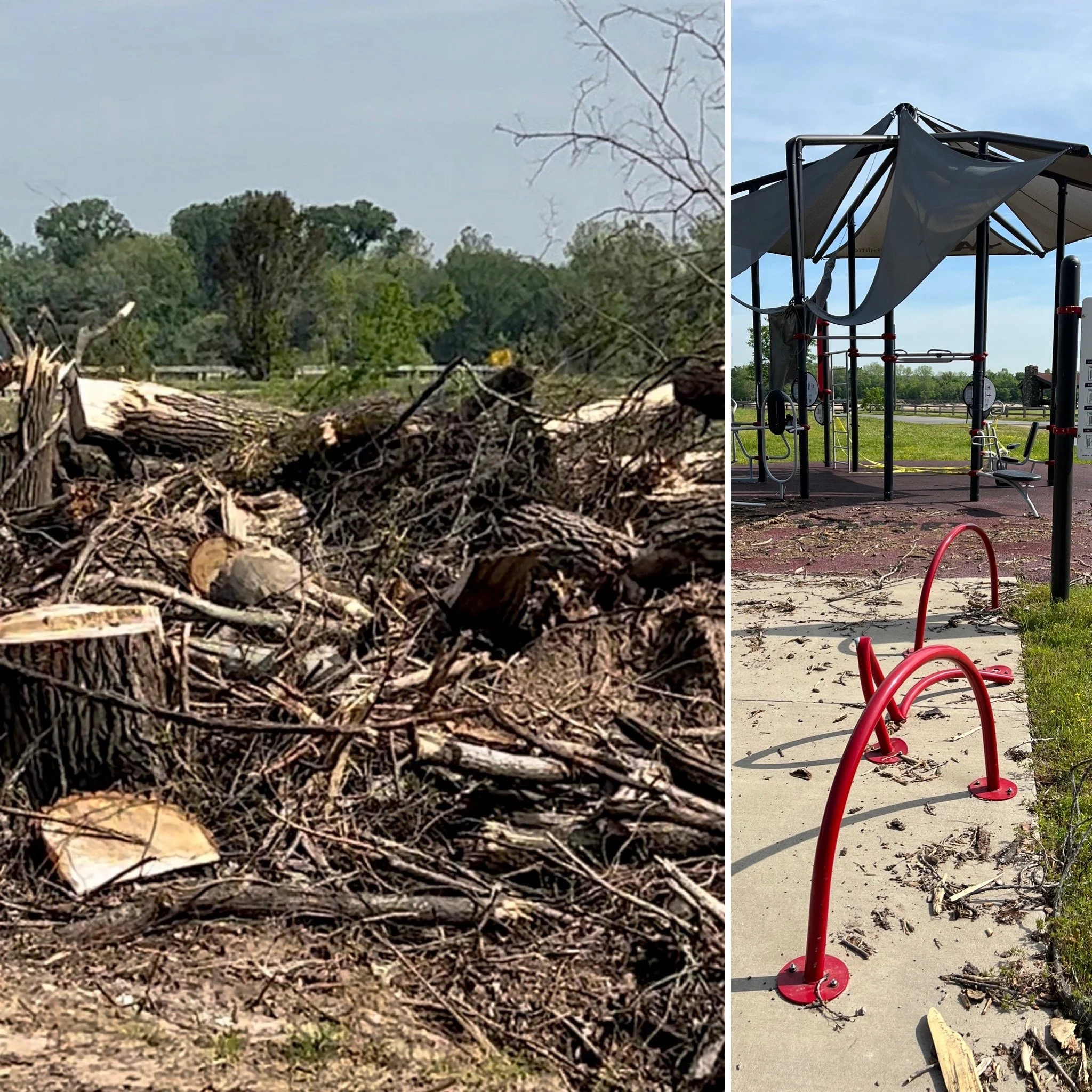
It’s difficult to photograph the impact of a tornado in a natural setting, and we took many pictures we weren’t pleased with. We must have seen several hundred stumps in one area of Rebsamen Park in Little Rock. We captured these shots more than 5 weeks after the tornado hit. Workmen have been working nonstop to get debris cleared, and there are still many places in the park that are this damaged.
—————
Mayflower, Arkansas, is a small suburban development nestled between North Little Rock and Conway. You might remember the Pegasus Pipeline oil spill in 2013. Owned by ExxonMobil, and used to carry Canadian tar sands oil to the Gulf Coast, it ruptured and dumped approximately 10,000 gallons of tar sands oil into the Mayflower Northwoods subdivision.
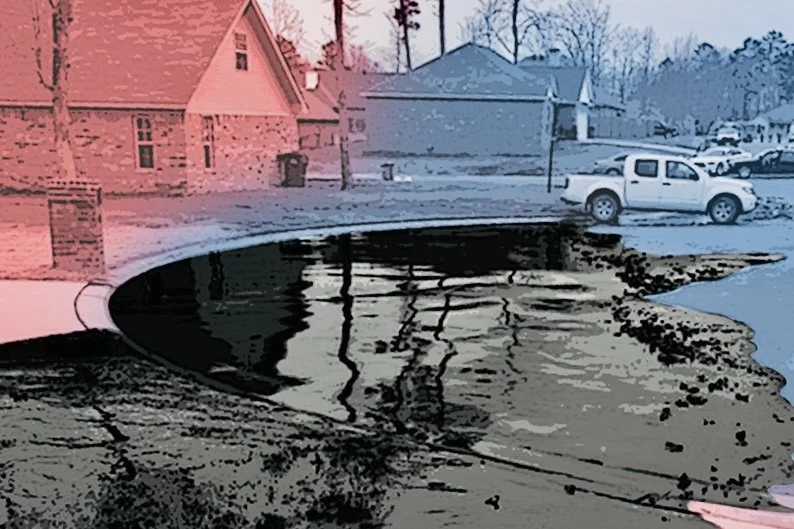
A picture of the spill in 2013, as published in Inside Climate News. Credit:EPA.
Jenny and I were intrigued by this story (and its lack of a resolution, which I will get to later), so we chose to bike to Mayflower, Arkansas, to see the site of the spill for ourselves. Not surprisingly, ten years later there are no telltale signs of the spill short of a pipeline identification pole (see photo below). Yards blackened by oil that we had seen in other pictures are now green with grass and homes evacuated shortly after the spill look intact and peaceful with pickups and SUVs in the driveways. Among the only visible reminders of the leak are a couple of vacant plots on each side of a cul-de-sac at the corner of the neighborhood closest to the pipeline.
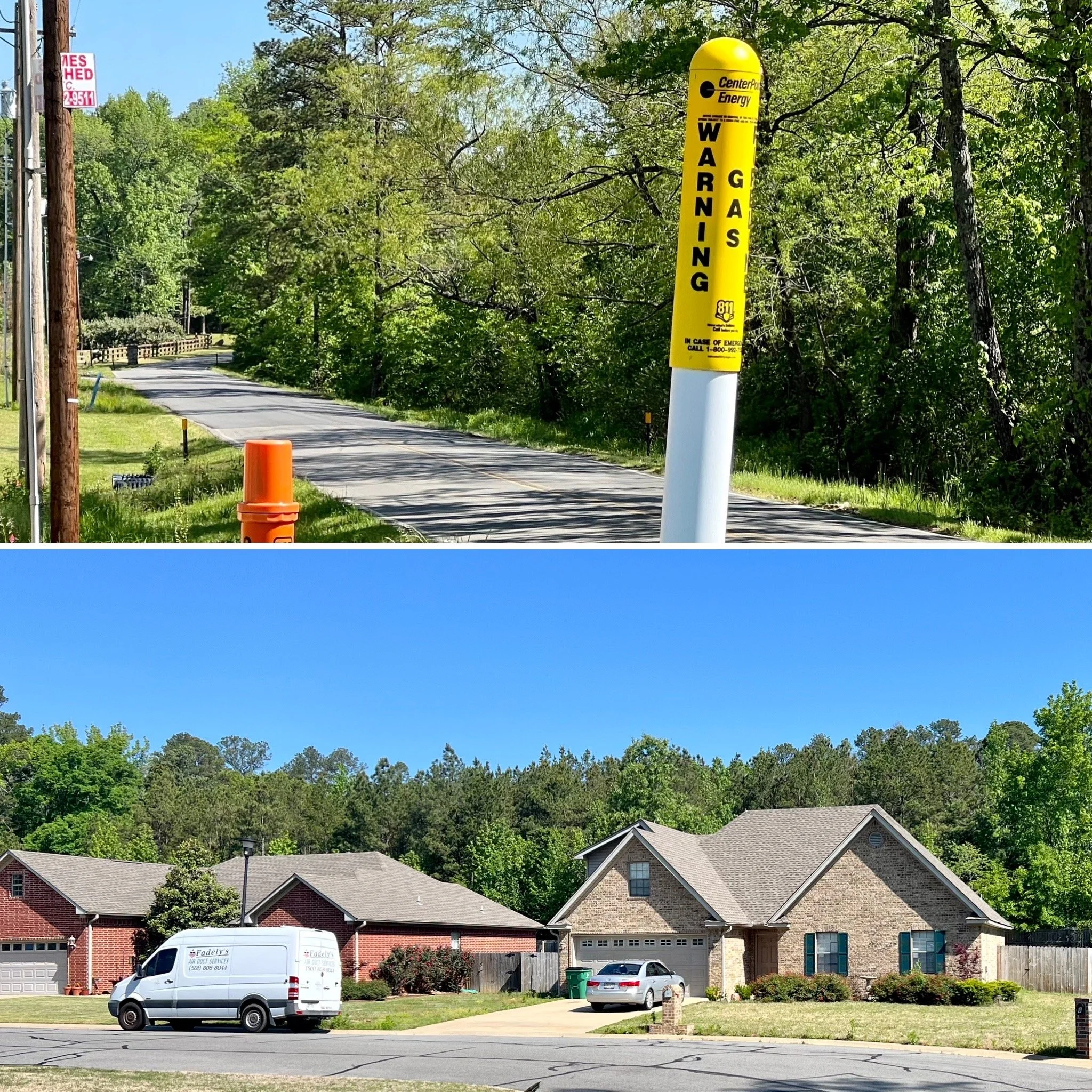
The gas pipeline marker sits next to the main road leading into the Northwoods subdivision of Mayflower, Arkansas. About 100 feet later, a road turns to the right and ends in a cul-de-sac partially visible to the right. These houses are the first things one sees. To our eye, all the houses on this street and many of the houses behind it are new and make up the bulk of the homes that were rebuilt as part of the settlement with ExxonMobil. Despite confidentiality agreements, several plaintiffs said that compensation for medical distress ranged from $2,000 to $15,000, depending on the proximity of the residents to the oil spill.
To avoid confusion, please note the pipeline was renamed the Permian Express Pipeline after ExxonMobil sold it to Energy Transfer Partners, LLC (ETP) in 2018.
Photo by Michael Chase. Follow him on Instagram @mjohnsonchase.
Most of the residents that live in the subdivision now did not live there in 2013. According to an article in the Arkansas Democrat-Gazette, Meggie Hardcastle, who recently moved into a home near the spill site, said most people living on her street were also new to the area. Of the two locals we talked to, one had heard nothing about the possibility of the pipeline starting up again, and the other believed the entire pipeline had been replaced. Sadly, they are both wrong; I explain why later in this story.
Things were very different when the spill occurred. It required an immediate evacuation of 22 homes, killed hundreds of animals, and severely impacted the surrounding wetland habitat near the subdivision. Fortunately, the spill was rapidly contained through the efforts of fast-acting first responders, including firefighters, city employees, county road crews, and local police, who successfully blocked culverts to stop the oil from getting into the water system of nearby Lake Conway (an area enjoyed for its natural beauty and recreational opportunities).
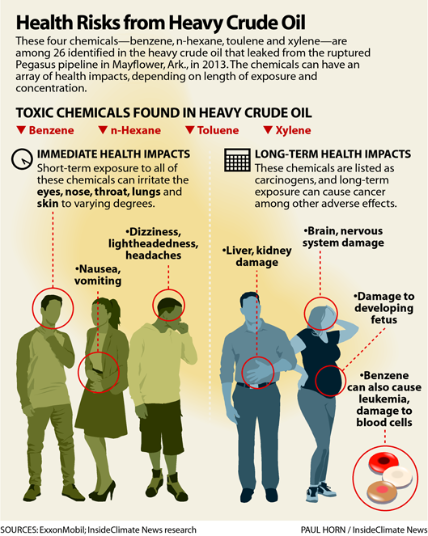
Graphic courtesy of Inside Climate News.
Back in the Northwoods subdivision, a few hundred people were sickened by an odor that was almost thick enough to feel; the spilled oil was bitumen mixed with diluted hydrocarbons. Residents complained about headaches, diarrhea, swollen eyes, dry heaves, and burning lungs. But the full extent of the medical consequences didn’t come to light until 2017 when 708 pages of documents were finally released by the federal pipeline safety regulator known as the Pipeline and Hazardous Materials Safety Administration (PHMSA) after a protracted court battle where PHMSA and ExxonMobil squared off with a nonprofit watchdog group, the Pipeline Safety Trust.
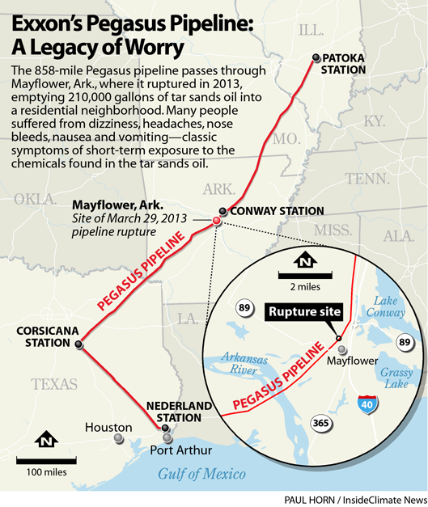
Built in the 1940s, the current condition and usability of what is now called the Permian Basin Pipeline are unknown to the public. Although not in use since 2013, its current owner, Energy Transfer Partners, LLC, has no obligation to reveal any maintenance process or testing results, nor does it have to indicate if and when the pipeline is operational. In the fall of 2021, Energy Transfer Partners, LLC began testing the pipeline again for potential deployment. This map shows more detail about the pipeline’s location. The pipeline traverses 13 miles of the Lake Maumelle shoreline in Arkansas and runs through Lake Hamilton in Hot Springs.
Graphic courtesy of Inside Climate News.
Sealed depositions obtained by the trust detail the true depth of health concerns after the spill. More than two dozen Mayflower residents described serious physical and mental harm suffered due to the oil spill. Residents tossed out furniture and ripped up carpets that had become hopelessly steeped with the stench of oil. They talked about the unexplained death of pets and how they became afraid even to take walks through their neighborhood.
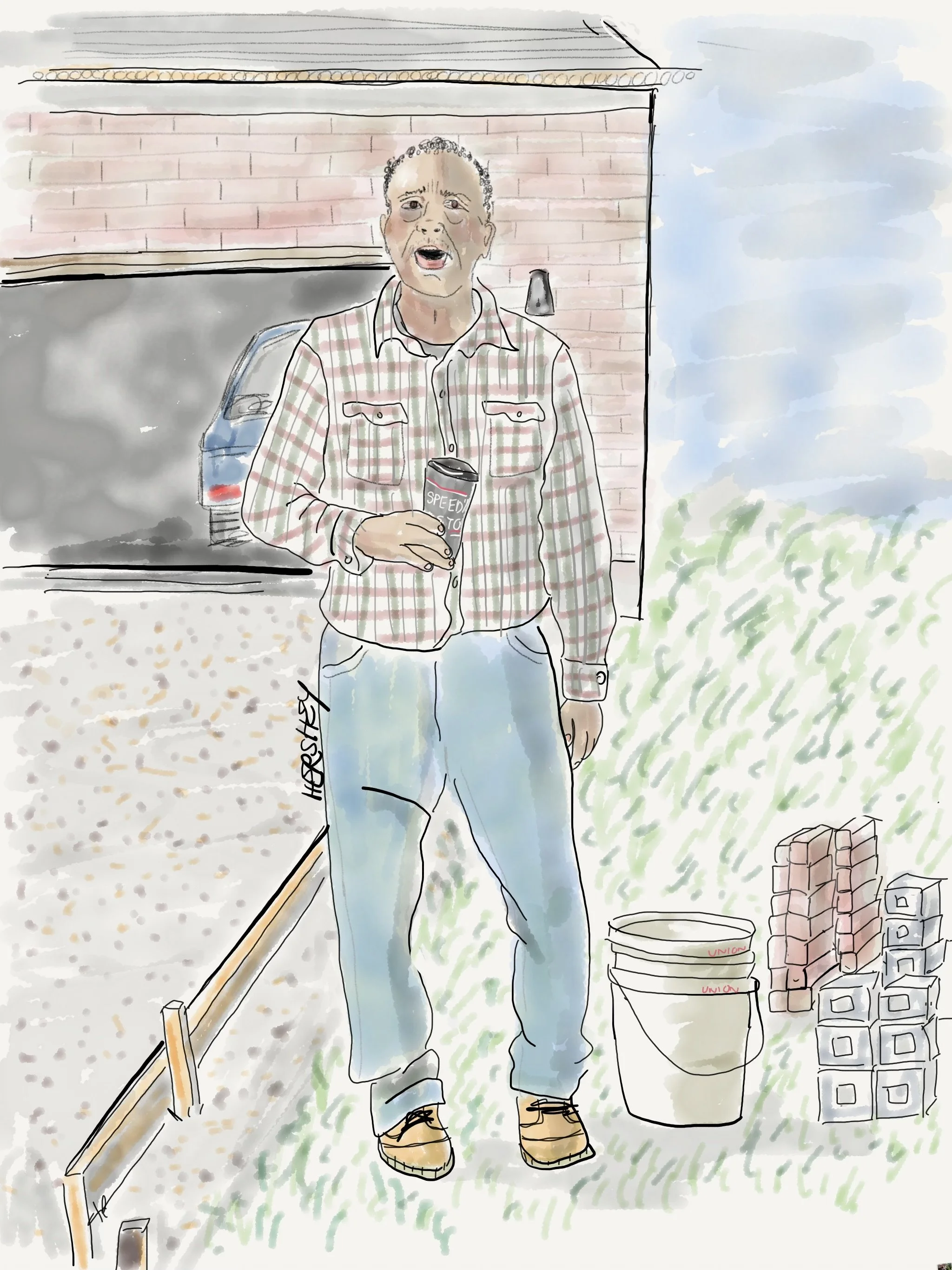
We met Hirty Hopper, a lifelong resident of Mayflower, in the Northwoods subdivision. Hirty is a mason and has been involved in masonry work on many homes following the oil spill. He trusted that the pipeline had been repaired, even telling us the entire pipeline had been rebuilt (it hasn’t). Hirty’s greater concern was seeing the construction completed on a railroad overpass nearby. He explained that the subdivision was only remotely accessible to the nearest hospital. It was located near a railroad track with so few crossings that ambulances couldn’t access the subdivision quickly enough, causing deaths because the wait was so long. “Six people passed,” he told us.
Drawing by Jenny Hershey. Follow her on Instagram @deeofo.
Settlements between homeowners, sickened residents, and ExxonMobil took years. The Arkansas Democrat-Gazette reported that, as part of its effort to address the spill, ExxonMobil ultimately purchased and rebuilt 31 homes in the subdivision and demolished at least three. It took the court system about six years to reach a final accounting. Along the way, PHMSA filed violations against ExxonMobil and attempted to fine them. For years before the Mayflower disaster, ExxonMobil had conducted multiple tests which uncovered more than ten ruptures or leaks along the pipeline. According to PHMSA, ExxonMobil failed to address those concerns, although the reports are still unavailable to the public, and the complaint is shrouded in secrecy. However, a federal appeals court sided with ExxonMobil when the oil giant stated, “There is no proof its actions contributed to the spill.” Then, in a ruling that astonished me when I read about it, the court found that ExxonMobil had followed the law in conducting adequate inspections and analysis in accordance with federal regulations and that“despite adherence to safety regulations and guidelines, oil spills still do occur.”
Think about that. The court essentially ruled that pipelines DO and WILL fail - just like any other form of plumbing. Yet, when they do, operating companies may not be held culpable. If they have followed regulatory laws (often legislated by federal and state governments that are anti-regulatory) and the pipelines fail, operators can walk away scot-free. Unfortunately, when that happens, the public is stuck with a lasting burden of recovery that goes well beyond token gestures of compensation by offending parties.
I wish I could say that such outcomes create greater awareness among the public that weak regulations and self-interested companies are not to be trusted. Companies will do what is right for them, but not necessarily what is right. If the law won’t stop them and they can make money doing it, they will do as much damage as possible until a disaster unfolds. Yet, I am often struck by the passivity of those at risk, like the Northwoods resident who lived through the previous spill and assumes the pipeline will never be used again.
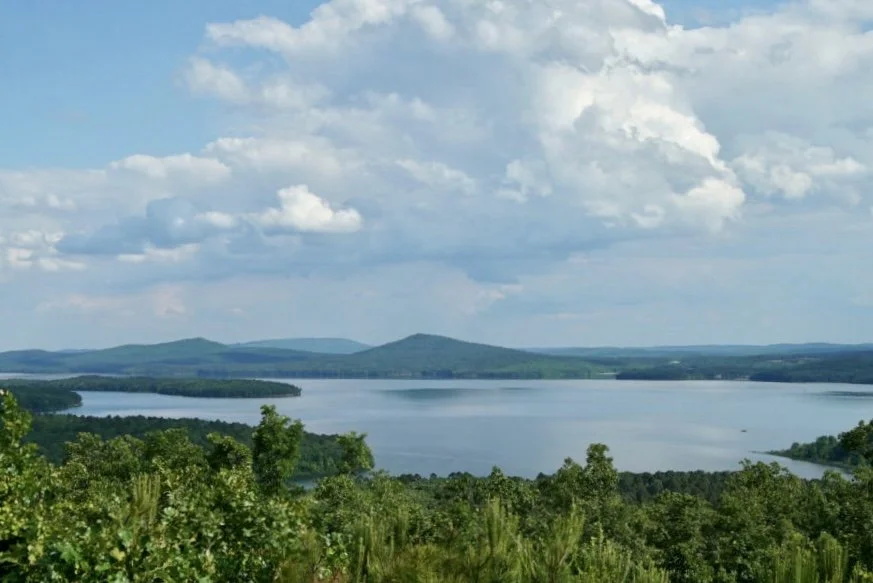
Lake Dardanelle is near the Arkansas River, slightly northwest of Dardanelle, Arkansas. Photo by Jenny Hershey. Follow her on Instagram @ deeofo.
In the fall of 2019, after Energy Transfer Partners (ETP) had purchased the pipeline from ExxonMobil and renamed it the Permian Express Pipeline, they notified Central Arkansas Water that they planned to start testing it again for potential use. Central Arkansas Water is the utility that supplies drinking water to approximately half a million residents in the Little Rock metropolitan region. It draws water from the Lake Maumelle watershed and smaller tributaries fed by the Maumelle River. Built in the late 1940s (well before the Northwoods subdivision existed), ETP’s newly named Permian Express Pipeline also skirts along 13 miles of shoreline of Lake Maumelle. Along this stretch, the pipeline crosses bodies of water, including tributary streams and wetlands at 13 points. In addition, several sections of pipe near the lake are above ground, making them more susceptible to damage.
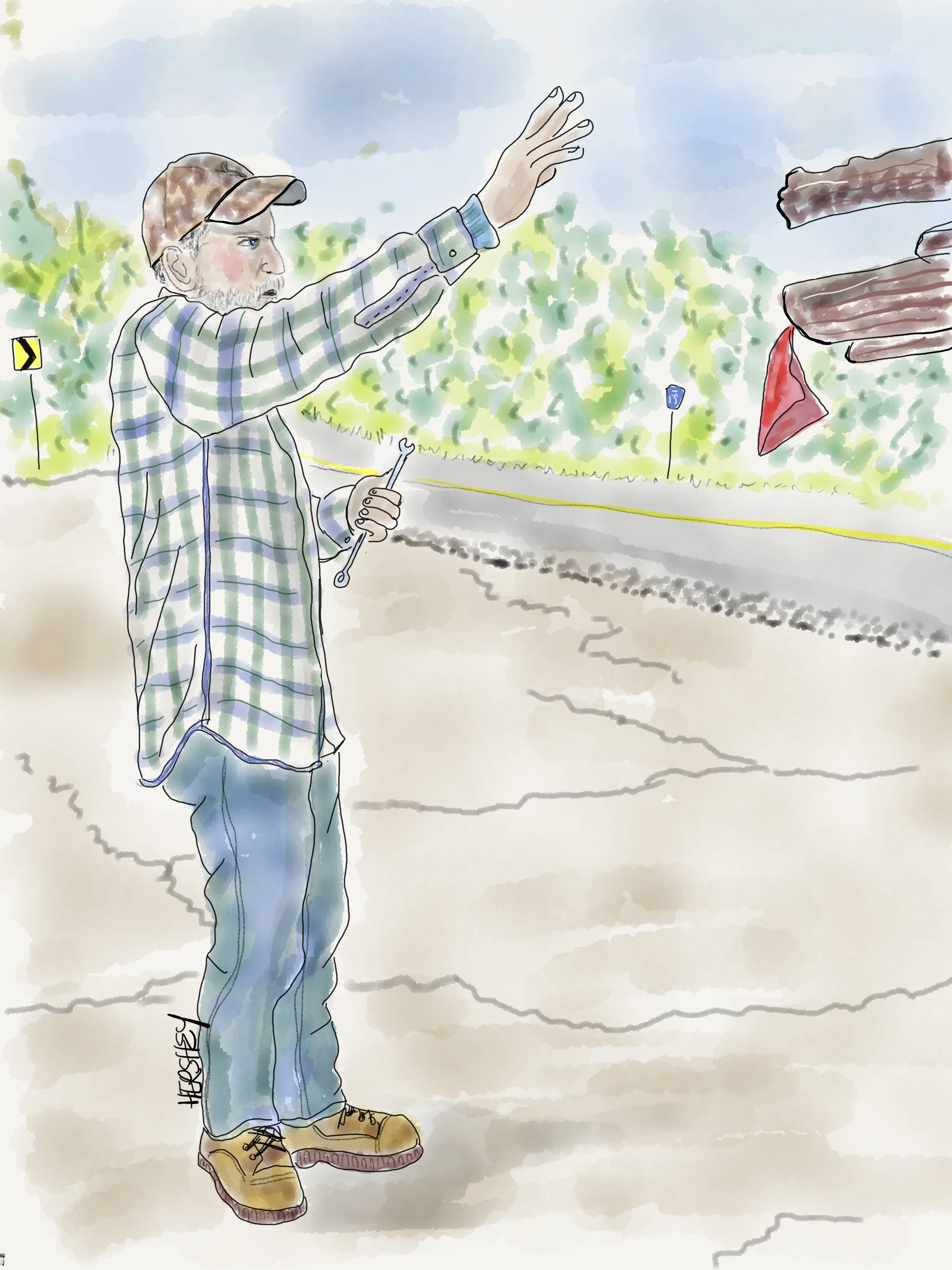
Gary is a 62-year-old log hauler from Clarksville, Arkansas. We met him on Petite Jean Mountain in the Ouachita Mountain west of Little Rock (pronounced like Wichita, except it is Watch-i-ta). Gary was adjusting his brakes under a truck carrying a large load of timber. Gary has been hauling logs for almost 30 years. Still, when Hurricane Harvey hit Houston, he and his wife headed west to help communities by hauling away debris and offering emotional family support. Gary loves to hunt wild turkeys. When we asked Gary about his age, he laughed and told us he was like an overworked mule, “rode hard and put up wet.” He sincerely asked us, “How could we stand living in a city as big as New York?” Jenny launched into her appreciation for the diversity of her neighborhood in New York, and that’s when he told us how much he enjoyed helping diverse folks in Houston after Hurricane Harvey hit. As different as our lives are, we enjoyed learning about our shared values.
Drawing by Jenny Hershey. Find her on Instagram @deeofo.
Surprisingly, ETP is not required by law to disclose whether it conducts tests or if it reopens the pipeline. Notifying the water utility about its intention to conduct tests suggests the company is interested, at least, in the appearance of good public relations. However, it has not been willing to divulge its long-term intentions. The water utility and various community environmental groups have openly worried that the company might consider reopening the pipeline. After all, the stakes are quite high - a pipeline failure within the Lake Maumelle watershed could have catastrophic consequences for the half million people who use the water supply.
In 2020, officials from Central Arkansas Water sent letters to ETP offering to discuss the potential purchase of the section of pipeline that runs through the watershed, but they never heard back.
Stock photo of Lake Maumelle, the reservoir that is the source of drinking water for Little Rock and the water utility Central Arkansas Water. We visited the lake on our last day in Little Rock and tried to find an access point for a photograph but were unsuccessful, so we had to settle for this photo found in Google Images.
The most recent accounting of what might happen with the pipeline is an article in the Arkansas Democrat-Gazette, dated March 27, 2023 (ironically, on the same weekend that media was hyper-focused on the North Little Rock tornado). The Gazette interviewed Raven Lawson, the watershed protection manager at Central Arkansas Water, who said, “The possibility of the pipeline reopening is a top concern.” If oil begins to flow through the pipeline again, Lawson said she believed it would not be a question of "if" but "when" the conduit would rupture again. However, Max Shilstone, director of government affairs for ETP, told Central Arkansas Water in a letter dated May 23, 2022, that his company has "no plans to bring the pipeline back into service at this time." Shilstone said "current market conditions" did not warrant restarting the conduit but noted his company would "continue to maintain the pipeline in a safe, idle condition. Should circumstances involving the pipeline and its future use change, we will communicate with interested parties, of which Central Arkansas Water would be included.”
So, the people who use Central Arkansas Water must wait passively, trusting that ETP will do the right thing. Let’s hope it goes that way. I think it’s unlikely that ETP has plans to run oil through the Permian Express Pipeline. They are more likely to use the pipeline to transport liquified natural gas (LGN) to the Gulf Coast. A methane leak would be less harmful to waterways, making public relations issues more manageable (methane emission disasters are harder to detect and less likely to gain media attention).
However, I think it is even more likely that ETP is quietly testing the pipeline as they bide their time until they can use the pipeline to transport CO2 or hydrogen. Unless the GOP's recent budget ploy successfully results in repealing the recent hike in 45Q tax credits as provided by the Inflation Reduction Act (see our recent blog post for an explanation), the financial rewards for transporting those materials may be quite remunerative. And while that effort might help decarbonization efforts, they are also largely untested and may include unintended consequences. Like you, I would much rather deal with pollution accidents resulting from efforts to decarbonize. But it’s also important that we understand the risk profile for anything we transport, and right now, there is much about carbon and hydrogen transport and storage that is not understood.
But I’m willing to make a solid bet the ETP didn’t purchase the Pegasus Pipeline, so it can lay idle. It’s only a matter of time before it is back in use. And considering that it is over 70 years old and the relaxed regulatory rules under which it is governed, it’s only a matter of time before Little Rock’s drinking water supply is again threatened.
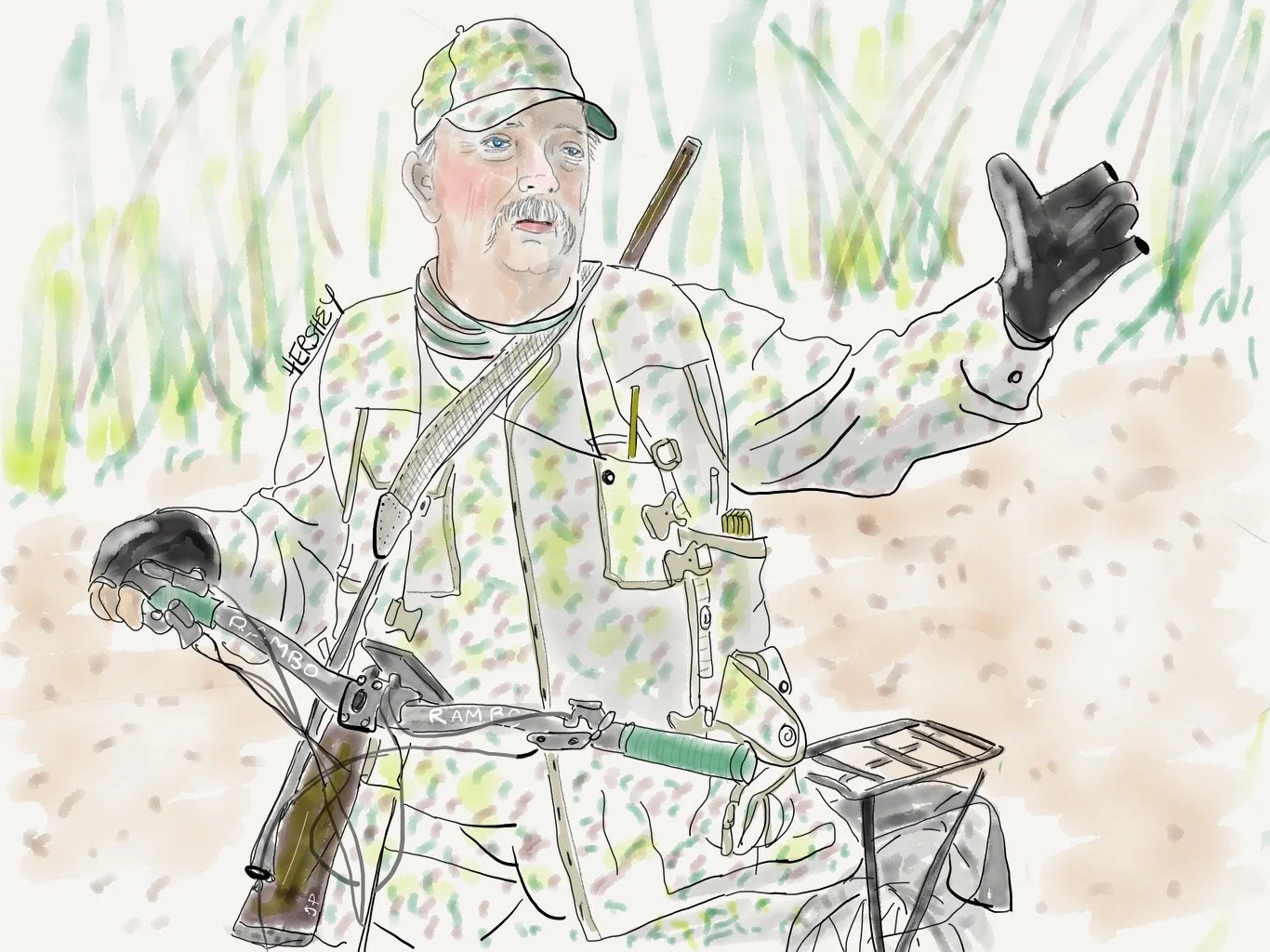
On our way up Magazine Mountain in Arkansas, we met Joey on his souped-up e-bike on a gravel backroad. Joey was born and raised (and still lives) in the Arkansas Valley near Paris, Arkansas. Retired from a job with Bridgestone Tire, Joey enjoys hunting for wild turkeys on his bike. He said that his truck scares the turkeys, and he can sneak up on them on a bike. Turkey season in Arkansas is short; it lasts from April 17th - May 7th. An old back injury haunts Joey, but he pushes through, and at the end of the day, he goes home to a loving wife. Two grown children who don’t live very far away not far away give him much joy. A jovial, soft-spoken man with a gun dressed in camouflage riding an e-bike on a gravel road in the woods; can’t find that in Times Square…
Drawing by Jenny Hershey. Follow her on Instagram @deeofo.
Stay vigilant! Thanks for reading. If you haven’t done so, please subscribe to this blog to follow our next biking trip.
Blog writing by Michael Chase. Drawings by Jenny Hershey. Unless credited or otherwise noted, all material is the copyrighted property of the blog post authors.
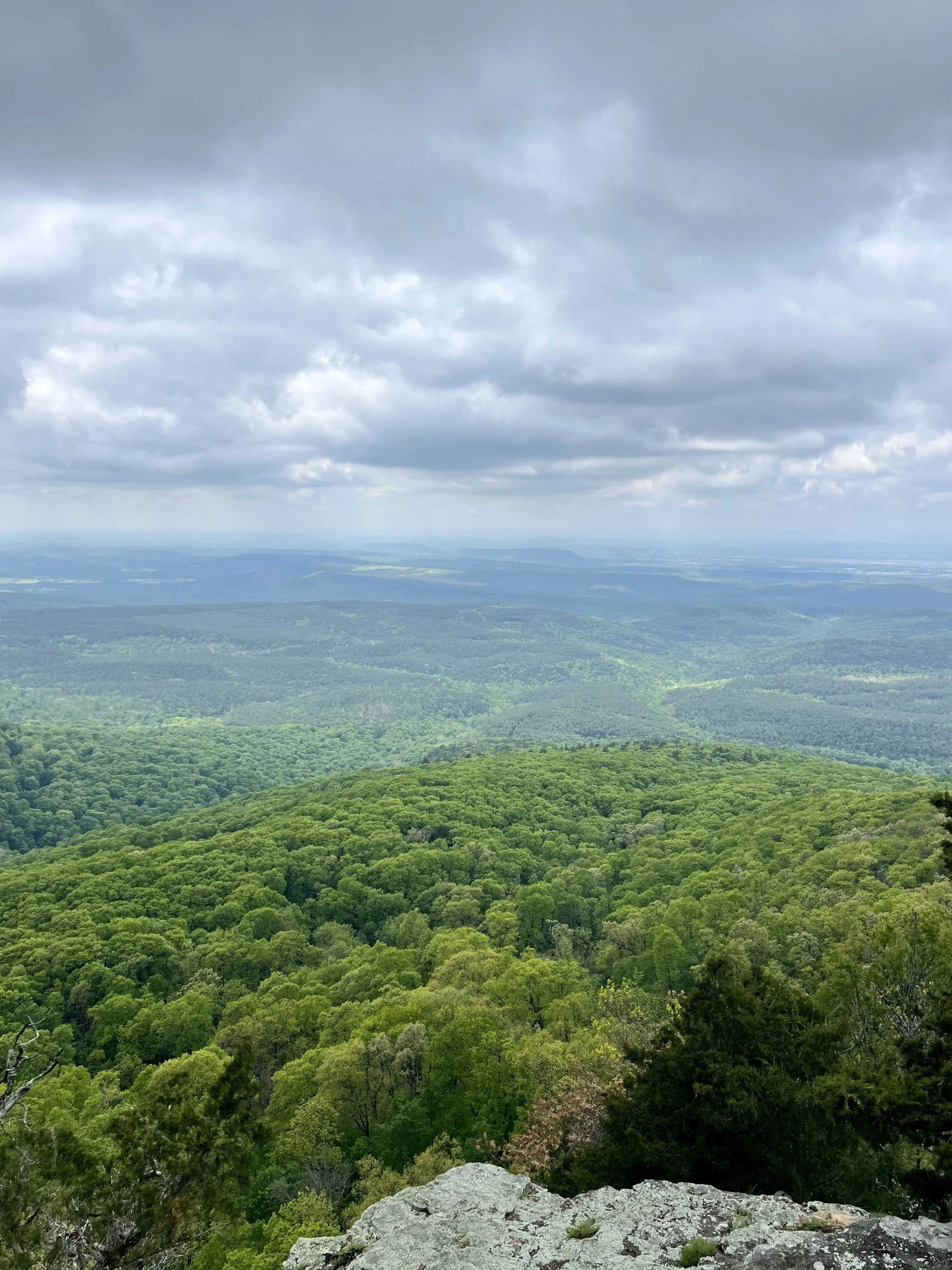
This view looks north from Petite Jean Mountain in the Ouachita Mountains. Although this entire region is loosely referred to as “the Ozarks,” the southern border of the Ozark Plateau technically starts at the Boston Mountains, which are visible in the distance. Jenny and I were charmed by the natural beauty of Arkansas and challenged by its ruggedness. Photo by Michael Chase. Follow him on Instagram @mjohnsonchase.
Water and a Tornado; Biking in Mississippi and Arkansas, Part 1
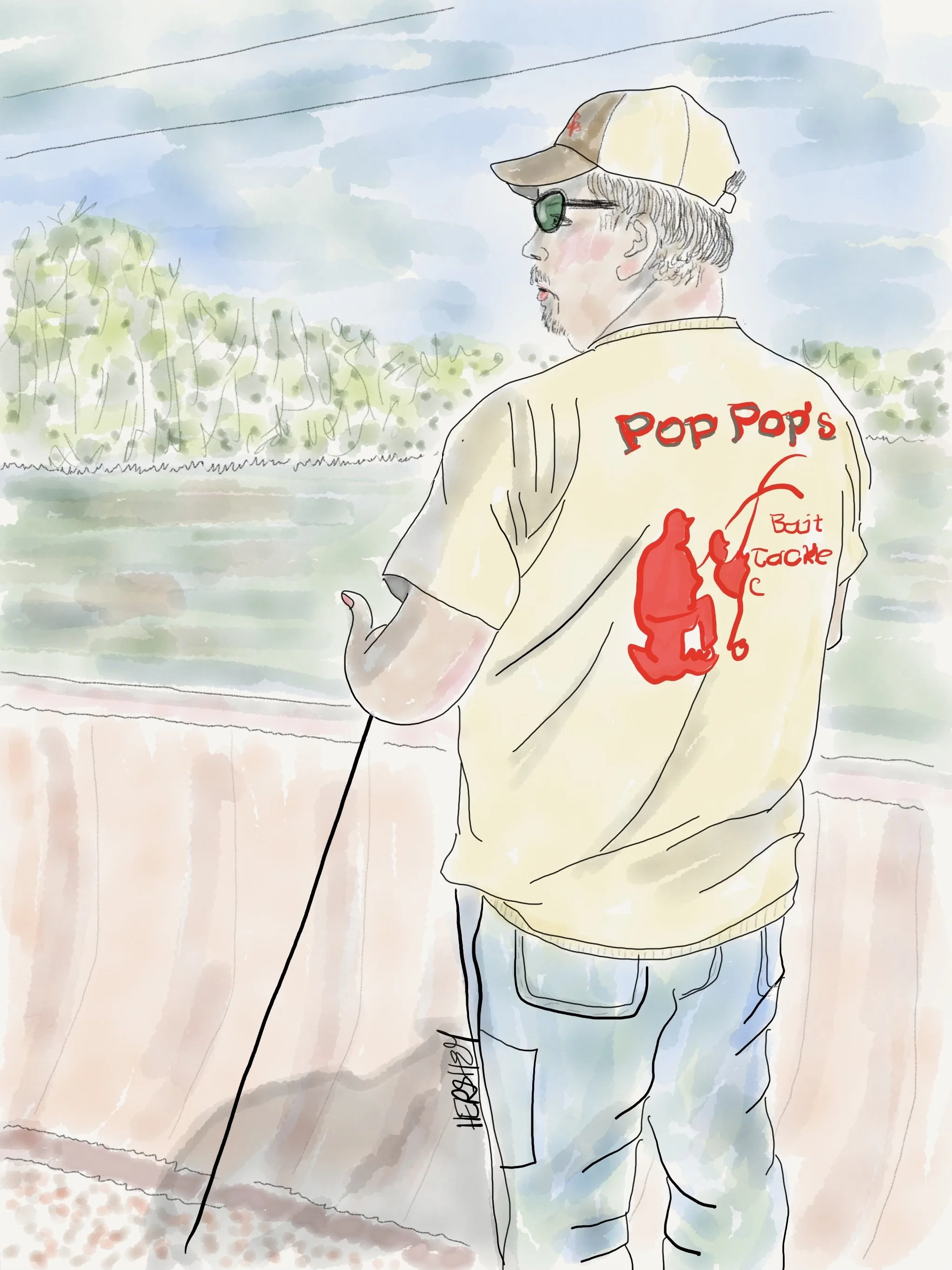
Jenny and I met Brian while he was gazing at the extraordinary amount of surface water flowing through Indian Bay near the White River east of DeWitt, Arkansas, in the Dale Bumpers National Recreation Area. This led to a conversation about how all the surface water we saw was unlikely to replenish groundwater supplies in the Mississippi Delta. Brian was about to say something when a valve spontaneously blew on my front tire, causing it to deflate instantly. Brian owns Pop Pop’s Bait and Tackle in Helena, Arkansas, near the Mississippi River on the Arkansas side of the Mississippi Delta (technically known as the Mississippi Embayment). He was fishing for Skipjack Herring, a great bait for catfish and quite lucrative for his shop. Brian started Pop Pop’s with his father about 12 years ago. He is proud of his daughter who will attend medical school next year. A hard-working man, Brian has lived in Arkansas his entire life.
Drawing by Jenny Hershey. Follow her in Instagram @deeofo.
—————
“Our very survival depends on our ability to stay awake, to adjust to new ideas, to remain vigilant and to face the challenge of change.”
– Martin Luther King
—————
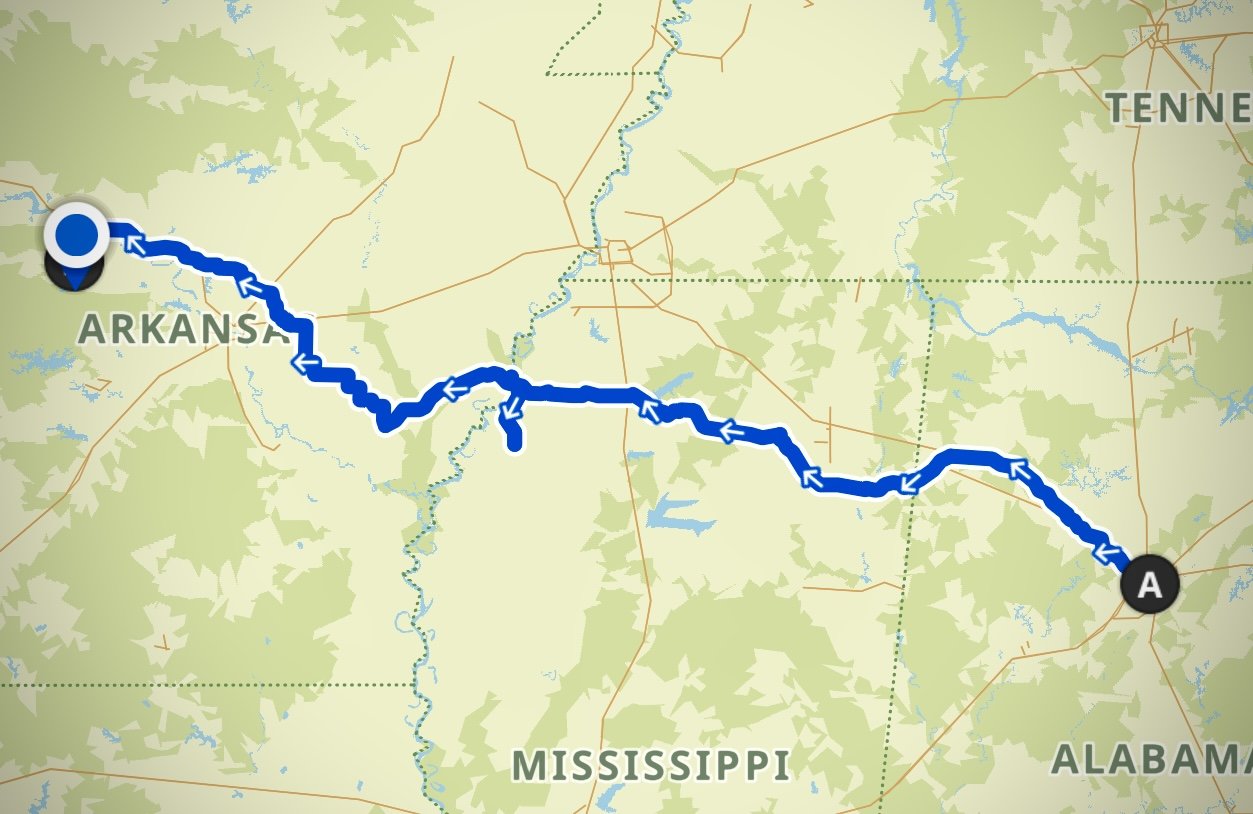
Our approximate route was from Birmingham, Alabama, to Conway, Arkansas. Once we reached Conway, Jenny and I entered the Arkansas Ozarks, which will be covered in Part 2 of this trip series. Image courtesy of Kamoot.
Writing by Michael Johnson Chase, Drawings by Jenny Hershey
For the second time this year, Jenny Hershey and I boarded an Amtrak train in New York City with our bicycles and got out in Birmingham, Alabama. Our ultimate destination was the Arkansas Ozarks this time, so we have been riding westward since we got to Birmingham. Fascinated by water issues and how they intersect with climate change, we were initially disappointed that our route wouldn’t take us through beleaguered Jackson, Mississippi, where water issues have become a water crisis.
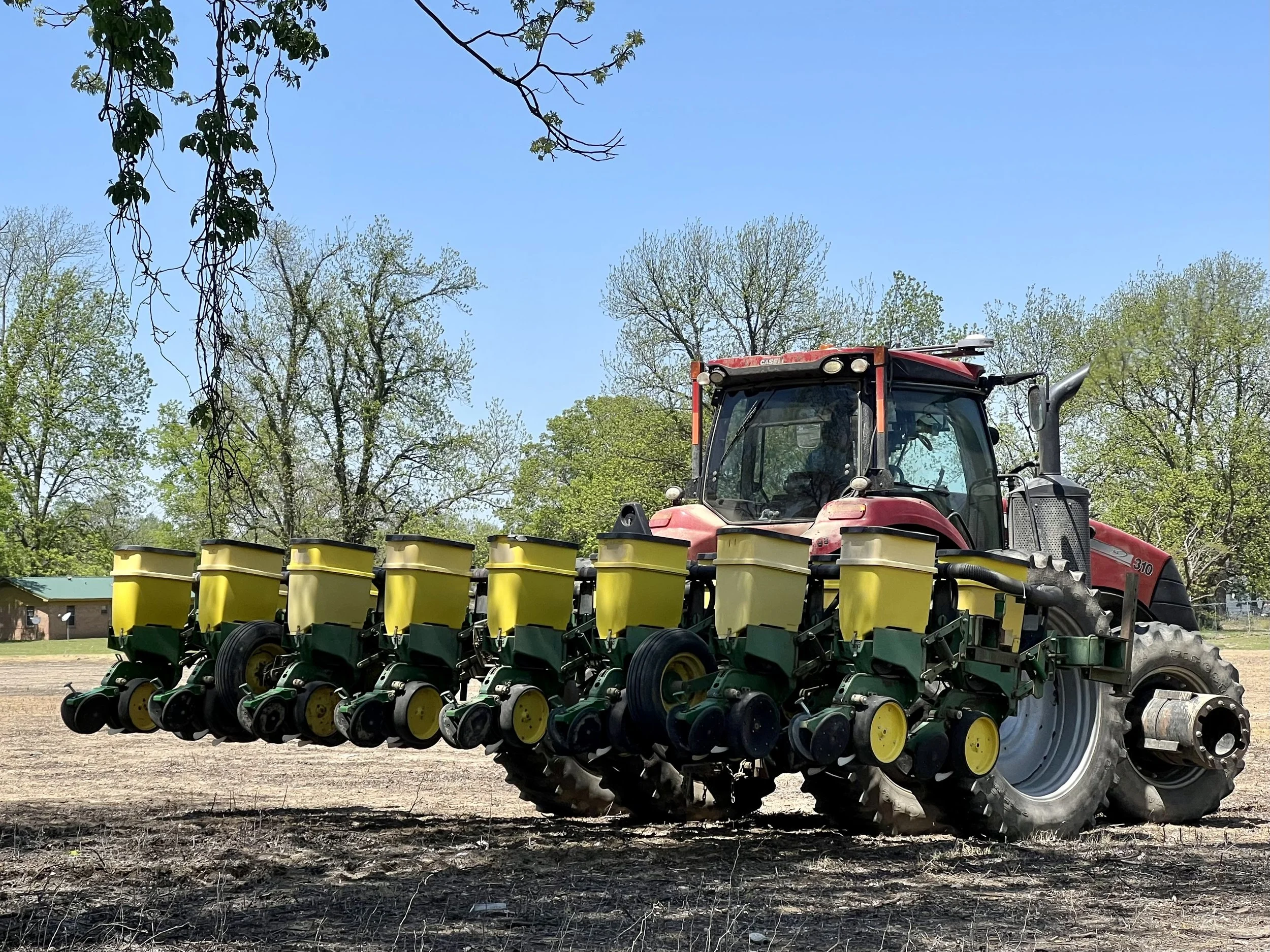
We talked to a farmer near Friar’s Point, Mississippi, in the Mississippi Delta (not to be confused with the Mississippi River Delta, which is the extension of the Mississippi River into the Gulf of Mexico south of New Orleans). The farmer told us that low-till planting methods for water conservation and soil development are becoming increasingly common in this part of the Delta. When we asked about the water levels in the alluvial aquifer, the farmer replied that the aquifer was decreasing over time. Still, he also thought the issues were more critical on the Arkansas side of the Delta because water-intensive rice farming is more common. Photo by Michael Chase. Follow him on Instagram @mjohnsonchase.
We decided that climate issues are ubiquitous enough that we will discover plenty of interesting stories wherever we go. We were right, of course. The prevalence of climate stories is much greater now than even a few short years ago, in 2016, when I started bicycle touring. Extreme weather-related disasters are now straining American communities so intensely that climate stories are everywhere. Climate-related events are occurring at a magnitude greater than the most conservative climate scientists predicted just a few years ago. However, the truly scary thing is that extreme weather-related natural disasters are only going to keep increasing in quantity, duration, and strength.
It’s no accident that City Hall and the Water Department are the most important municipal offices in Brilliant, Alabama. Access to clean and reliable water and safe sanitation are baseline conditions for health, prosperity, and well-being. Of America’s 145,000 municipal water systems, 97% of them are municipalities of 10,000 people or fewer. More than any other factor, climate change reveals and exacerbates racial and societal inequities in disproportionately small and rural communities that struggle for funding and technical services. Photo by Jenny Hershey. Follow her on Instagram @deepfo.
With that as a backdrop, let’s briefly return to the subject of Jackson, Mississippi (even though Jenny and I didn’t go there). The American media has coveted the drinking water crisis in Jackson as a story of poor management and neglect. But it is also a story about the convergence of climate change, aging infrastructure, water contamination, and rising costs. All those factors make providing clean water to every community in America an increasingly daunting problem. Already, more than two million Americans lack access to running water, indoor plumbing, or wastewater services.
While it is true that Jackson’s water system was poorly managed and neglected for decades (partially related to declining property values due to “white flight” into other towns and neighboring suburbs), the water system reached its final tipping point during a flooding crisis in 2022. When double-digit rainfall fell across central Mississippi in the last week of August, the Pearl River flooded and completely overwhelmed Jackson’s long-troubled water system. Destruction from the flood disabled the Curtis Water Treatment Plant for an extended period of time, forcing residents to go without drinking water for weeks. At the same time, there was not even enough water pressure to flush the toilets or shower.
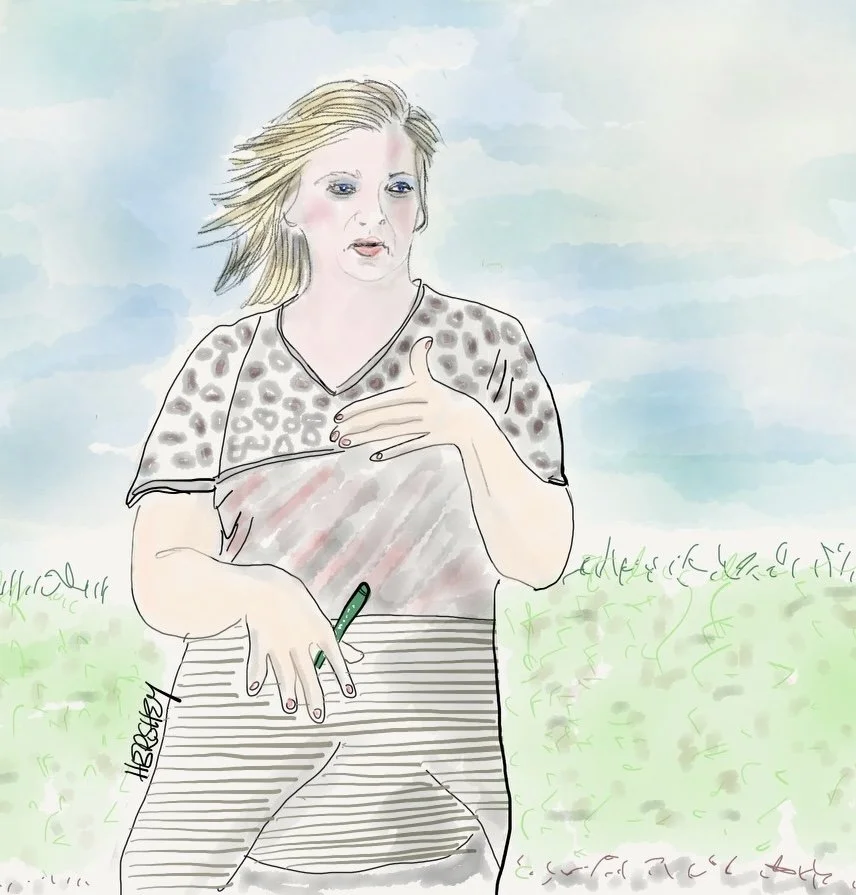
Jessica is the town clerk in Brilliant, Alabama. She came out of her office to welcome us while we took a picture of the City Hall and Water Department sign. After some pleasantries, we asked Jessica about Brilliant’s water supply. She explained the town is building a new water tower supplied from local wells with help of the governor and a state based economic development organization (and most likely block grants from the 2021 Infrastructure Investment and Jobs Act). This new water tower will supply water for nearly 500 residents and 36 businesses. Jessica, a lifelong Alabaman, proudly waved at a passing school bus carrying the local baseball team (including her two teenage sons) to a nearby high school. Her warmth and hospitality were topped off with a pen from the mayor. Brilliant town promotion in Brilliant!
Drawing by Jenny Hershey. Follow her on Instagram @deeofo.
Jackson is a canary in a coal mine. Even currently “adequate” infrastructure will become increasingly compromised as the climate grows hotter, dryer, and wetter. There are an ever-increasing number of hot spots worldwide where climate change is driving cycles of flooding, drought, water stress, interruptions in agriculture and subsequent famine. Perhaps the most dire situation of all is unfolding in the Horn of Africa, where drought is forcing millions of people into what Inside Climate calls a “raging food catastrophe.” And all around the world major rivers are drying up, including the Rhine and the Loire in Europe. Water flow through China’s massive Yangtze River is more than 50% below the average of the last five years, threatening the water supply of 400 million people. Closer to home, the Colorado River, which supplies drinking water for 40 million Americans and irrigates 7 million acres of our farmland, is suffering through the the worst dry spell in 1200 years. Though an unusually wet winter has provided temporary relief it’s nowhere near enough to fill the deficit. At the same time, many of the western states that saw record-breaking amounts of rain and snow over the winter are experiencing rapid spring snowmelt, which is becoming a massive flood threat. In California, thousands of acres are already underwater and that land area is expected to triple by summer.
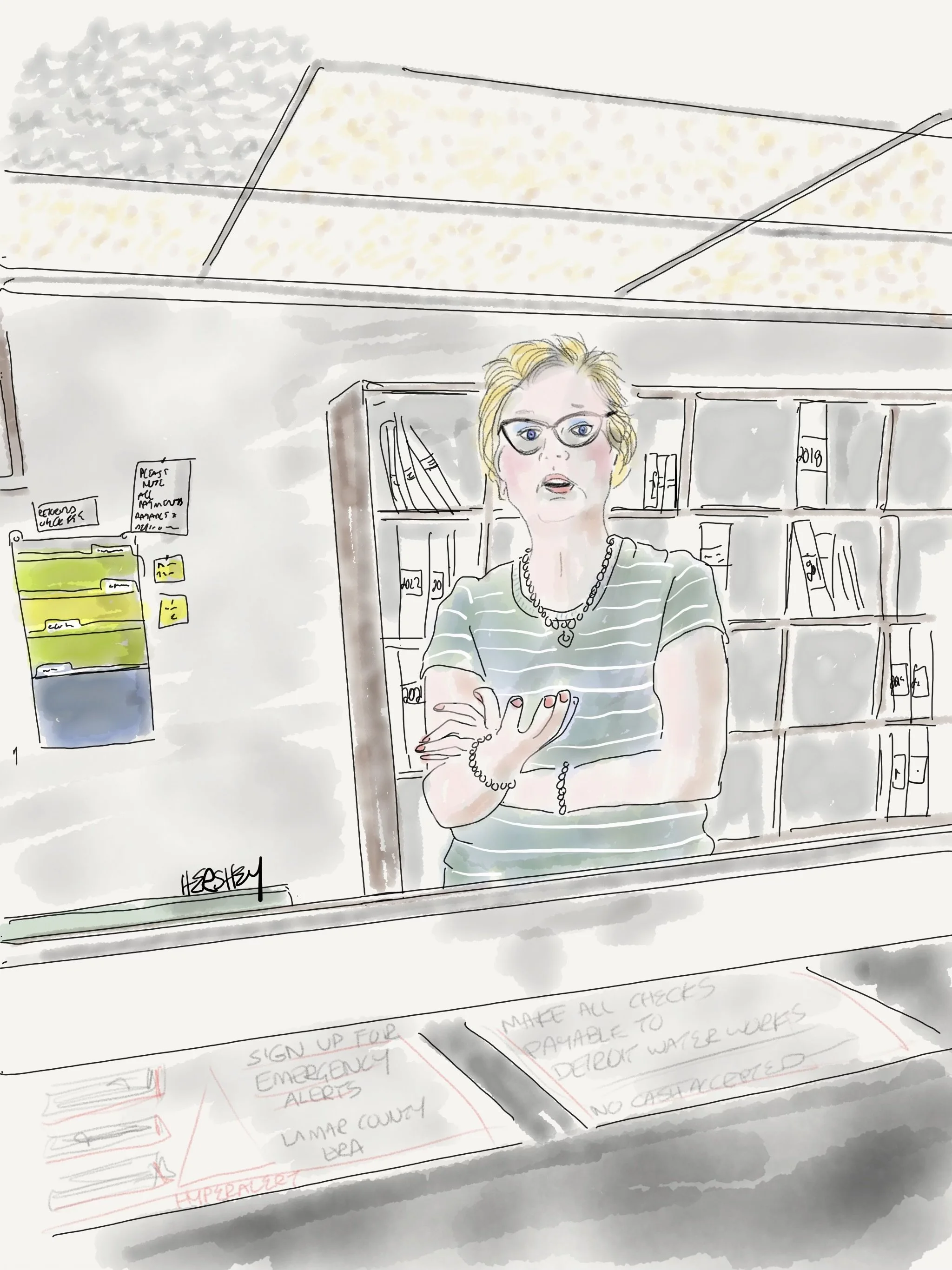
Frankie works part-time at the water department in Detroit, Alabama (population of 150 people). Water comes from a nearby well and costs the residents $20 for 2000 gallons. A replica of a check for $350,000 for water infrastructure improvement from the governor hung on the wall behind her, demonstrating the state’s commitment to helping local communities. Frankie served as county clerk for 30 years in nearby Hodges and was blunt about extreme weather threatening the region. A devout Christian, Frankie belongs to a missionary group that rebuilds churches after floods, windstorms and tornadoes. Many of their projects are for African-American congregations. When we asked her what she thought was driving the increase in tornadoes in her area she replied, “I think it’s the end-times.”
Drawing by Jenny Hershey. Follow her work on Instagram @deeofo.
Our route toward Little Rock from Birmingham took us west through the hill country of Jasper and Hamilton in western Alabama and then through beautiful farm country to Amory, Mississippi. You might have heard of Amory for several reasons. For one, a devastating tornado ripped through the town on March 25, 2023. There was widespread damage, and even Amory’s water treatment plant took a direct hit. Thankfully, Amory got its water running after a boil advisory that lasted only about a day. Even better, no one died in the town (although there were three deaths in Morgan County, where Amory is located).

Brenda, a woman of strong faith, prayed hard in her home as she huddled with her two brothers when a tornado struck her neighborhood in Amory, Mississippi. After the storm passed, she walked outside to find her front porch missing, although her home remained intact. A huge tree was lying on her neighbor’s house. Luckily, her neighbor survived by sheltering in the back of her house. Miraculously, no one in the town was killed, despite the tornado’s widespread devastation. When we came across Brenda, she was relaxing outside in a chair where her porch had been only days before, taking in the sunshine.
Drawing by Jenny Hershey. Follow her on Instagram @deeofo.
Other places were not so lucky. Over a dozen tornadoes tore through Mississippi and Alabama during the same storm, leaving at least 26 dead and a swath of destruction 100 miles wide and devastating the communities of Rolling Fork and Silver City, Mississippi. We considered biking to Rolling Fork just as we had considered stopping in Jackson but decided we didn’t want to be in the way or use resources needed by first responders. From what we understand, homes and businesses have been reduced to rubble. The recent tornadoes stretched from the Louisiana border of Mississippi through Alabama as part of a supercell, or rotating thunderstorm - a rare, extended path for such a storm.
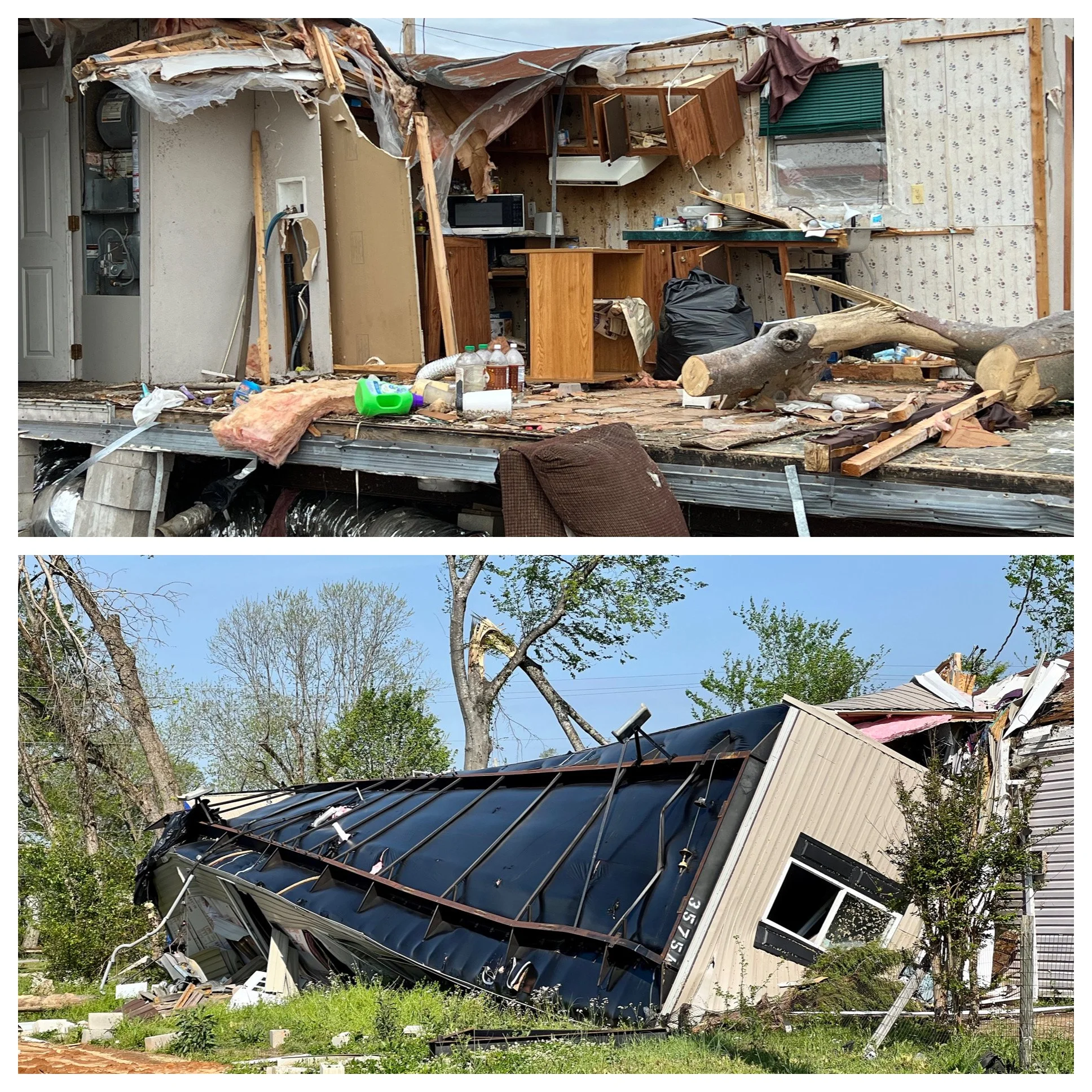
We saw at least 3 trailer homes that had been ripped off their foundations and were upside down, making it clear that a trailer home is not a safe place to be during a tornado. Yet, in low income neighborhoods they are very common. The average cost of a typical single-family home in Mississippi is $144,074. In contrast, the average cost of a single-wide mobile home is $37,100 and double-wide mobile home is $73,600. Top photo by Jenny Hershey @deeofo and bottom photo by Michael Chase @mjohnsonchase.
Climate scientists have not been able to determine if there is a link between climate change and the frequency or strength of tornadoes. The primary tool scientists use to attribute extreme weather events to climate change is intensive computer modeling based on large amounts of aggregated data. This is difficult to achieve with tornadoes because of the localized conditions that determine their formation, combined with their relatively small size over a given region. Yet, scientists affirm that tornadoes are occurring in greater clusters, and the region of the United States in the Great Plains where most tornadoes occur (known as Tornado Alley) appears to be shifting eastwards toward more populated regions in the southeast. Therefore, tornadoes may be in the news more because more people are being impacted.
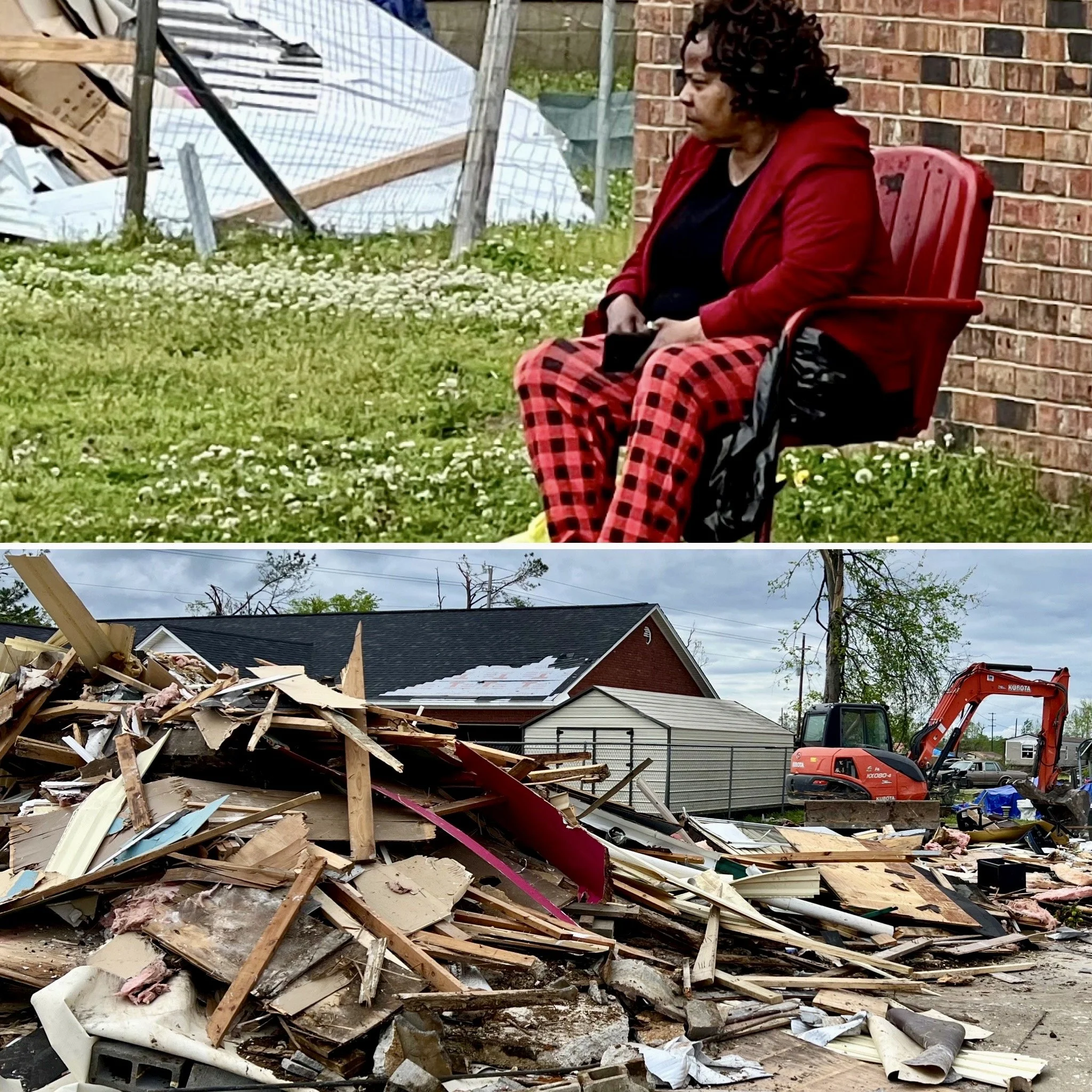
While biking through Amory, we noticed the woman above watching an excavator consolidate the debris below into a pile. When I asked her if she lived in the still-intact house behind her, she shook her head no and pointed to the pile of debris. She clearly didn’t want to talk, so we expressed our condolences and quickly moved on. Photos are by Michael Chase. Follow him on Instagram @mjohnsonchase.
Tornadoes form inside large rotating thunderstorms when the ingredients are just right; a perfect mix of temperature and a specific moisture and wind profile. This suggests that an increase in water vapor and precipitation, indicative of climate change in the southeastern region, may be contributing to the shift eastwards. In any case, when air is unstable, cold air is pushed over warmer humid air, creating an updraft as the warm air rises. When the wind speed or direction changes over a short distance, the air inside the clouds starts to spin. If the air column begins spinning vertically and rotates near the ground, surface friction can accelerate the air even more. All these features must come together to cause a tornado to form. And despite their small size compared to an atmospheric river or a hurricane, they can be quite devastating. I certainly hope Jenny and I are lucky enough to avoid them on our travels, and my heart goes out to anyone forced to live through a direct hit.
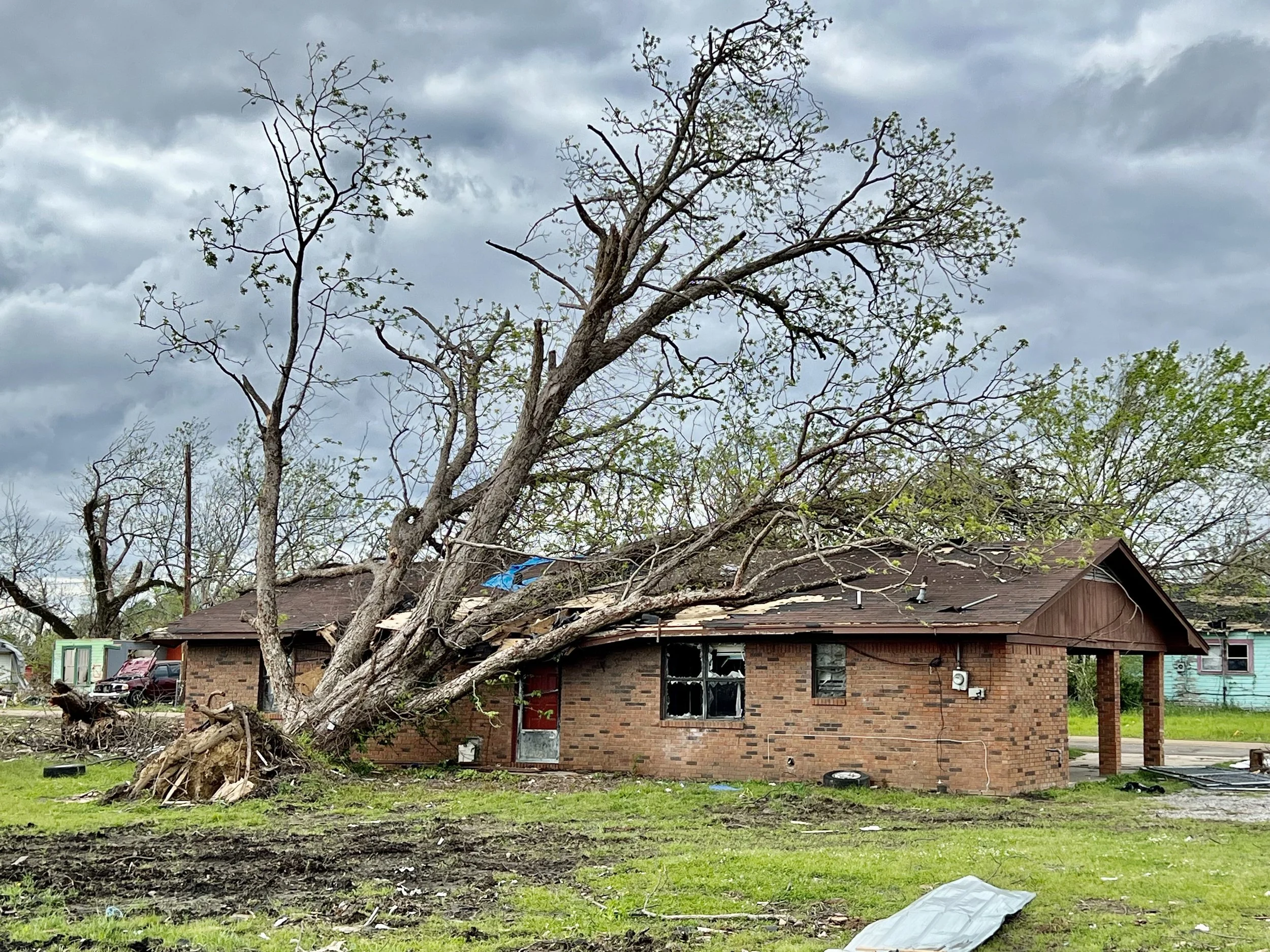
A large tree rests on a home in the northwest section of Amory. Sadly, the tornado’s path tore through the least affluent part of town, underlining the reality that the most vulnerable among us are often the most affected during weather-related disasters. Photo by Jenny Hershey. Follow her on Instagram @deeofo.
In Amory, and especially for Rolling Fork and Silver City, recovery from the tornado damage is uncertain. FEMA is out in force, but the devastation is quite extensive. Here’s how to help those impacted.
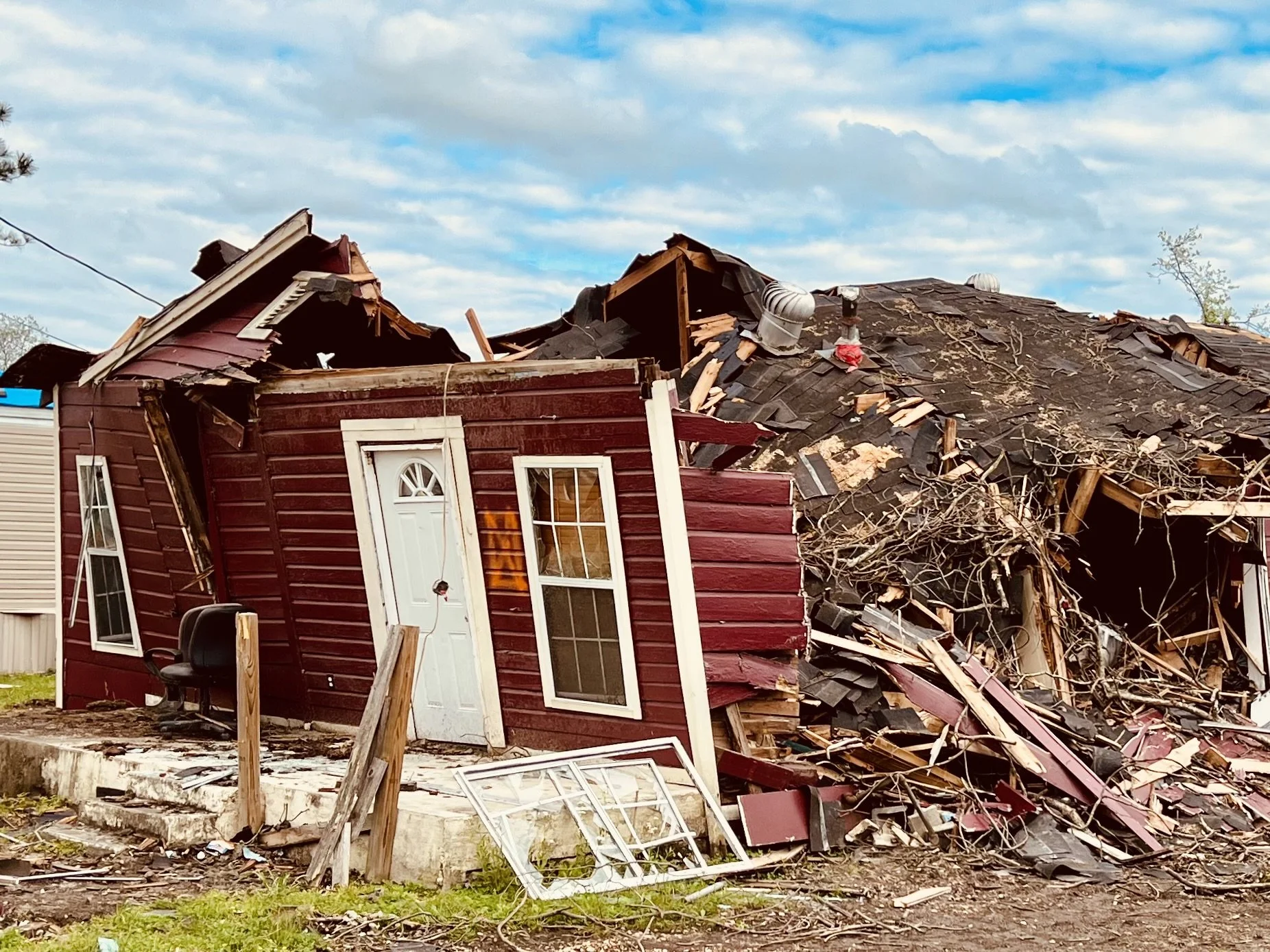
Another photo from Amory, Mississippi. Interestingly, meteorologists measure the strength of a tornado by the destruction it leaves in its wake because it is almost impossible to measure a tornado while it is active. Photo by Michael Chase. Follow him on Instagram @mjohnsonchase.
The second reason you may know about Amory, Mississippi, is more fun. Two residents from Morgan County are competing in the 21st American Idol contest: Colin Stough and Zachariah Smith, both of whom have wowed the judges in their solo auditions. It’s striking that so many fine American gospel, blues and country musicians have come from the rural South. Still, Amory has the distinction of also having the 2015 American Idol winner, Trent Harmon. This is a good news story, and you can check out the contestants at the links above.
Bill’s Hamburgers sits temporarily closed after the Amory tornado, where 2023 American Idol contestant Zachariah Smith flipped over 400 hamburgers every Saturday. Photo by Jenny Hershey. Follow her on Instagram @deeofo.
Stay vigilant! Thanks for reading. Part 2 of this series will come soon. If you haven’t done so, please subscribe to this blog to follow our next biking trip.
Blog writing by Michael Johnson Chase. Drawings by Jenny Hershey. Unless credited or otherwise noted, all material is the copyrighted property of the blog post authors.
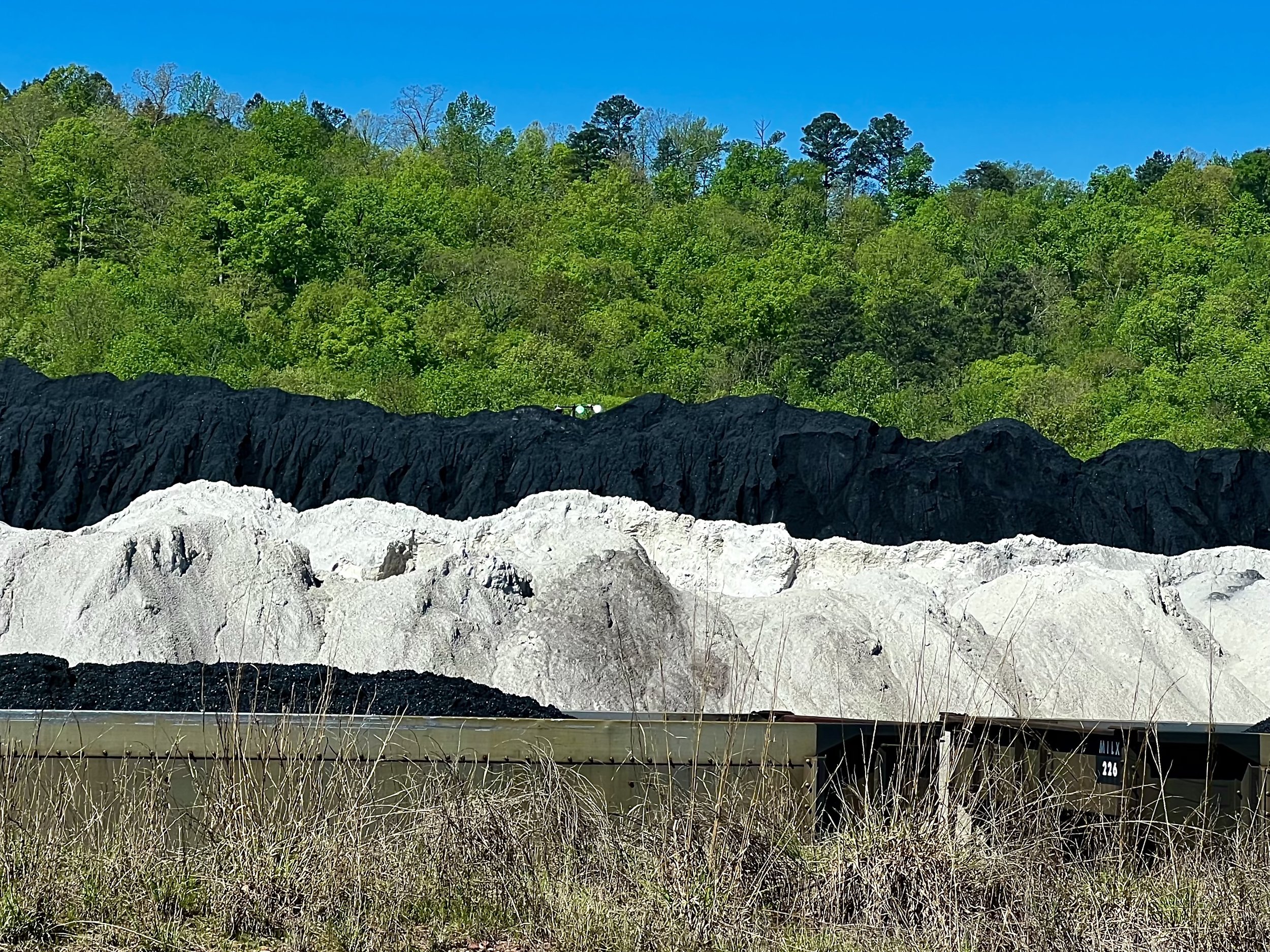
Although coal powers 18% of the electricity in Alabama and only 8% in Mississippi, coal still powers 50% of the electricity in Arkansas. We are a long ways from “electrifying everything,” but the vision and template to get there is a big part of the Inflation Reduction Act. If we care about young people, public health, and economic well-being, we must all work hard to utilize this bill's opportunities. Photo by Michael Chase. Follow him on Instagram @mjohnsonchase.
Money Talks and Goliath Walks; Biking from Birmingham to New Orleans
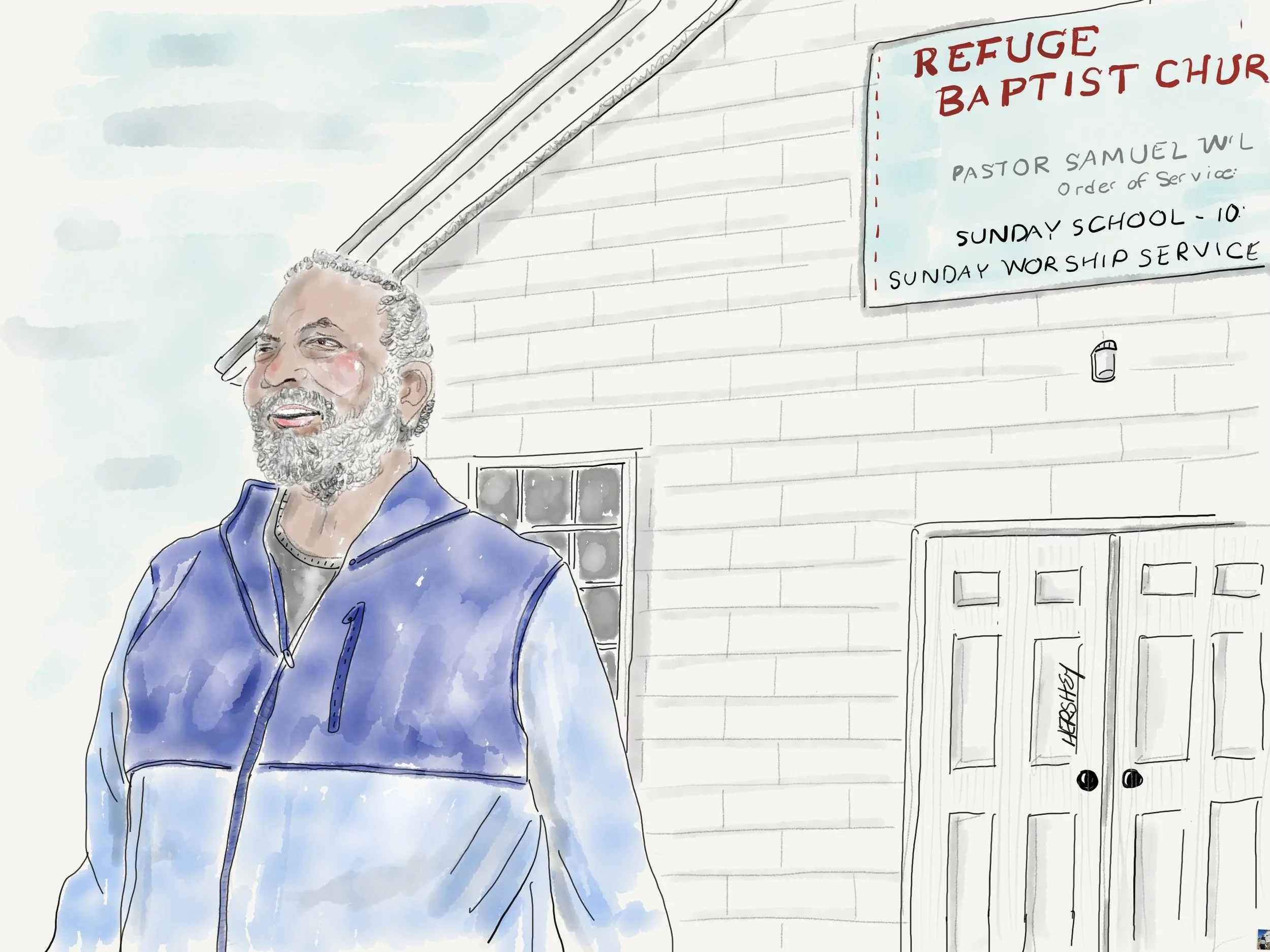
Jenny and I met Pastor Samuel Williams on the outskirts of Tuscaloosa. Although he was fixing a frozen water pipe outside his church (which had prevented him from having services that day), he stopped working and gave us his full attention when we asked about a closed road ahead. A patient and charitable man, the Paster’s dedication to spiritual life was palpable, and he seemed to exude peace and happiness. When he learned we live in New York City, he asked us immediately if we had been affected similarly to Buffalo. We told him thankfully not, although NYC was experiencing its own extreme weather with unusually warm temperatures for January with lots of rain. But we had woken up to 28 degrees Fahrenheit in Tuscaloosa that morning, so it was easy to understand why his pipe had frozen. We all had a good laugh about how unpredictable the weather was growing. As we started to bike away, Jenny reflexively remarked, “Take care, Pastor Samuel.” The Pastor’s response took us by surprise “According to scripture, taking care means a person is experiencing anxiety and needs to give it away to God. So I think you mean take it easy”. So be it, Pastor Samuel. We’re taking it easy… Drawing by Jenny Hershey. Follow her work on Instagram @deeofo.
“We must accept finite disappointment, but never lose infinite hope.”
–Martin Luther King, Jr.
Finally Jenny and I are back on the road, this time in the Deep South. After a hiatus in bike touring to manage some family affairs last summer, we were fortunate enough to take an early autumn bicycling tour through the northeast and a bit of Quebec. I was about to publish a post late in that trip when both Jenny and I contracted Covid. While recovering, my mood grew so dark that I abandoned the post (I have since learned that depression can be a symptom of Covid). I didn’t want to inflict my grim mood on others - and there’s only so much one can say about the growing potential for societal collapse if GHG emissions continue to rise (alas, it looks like we will increase GHG emissions yet again in 2023). It had already been a very rough year for extreme weather events, foreshadowing deeper challenges to come as our climate grows less stable.
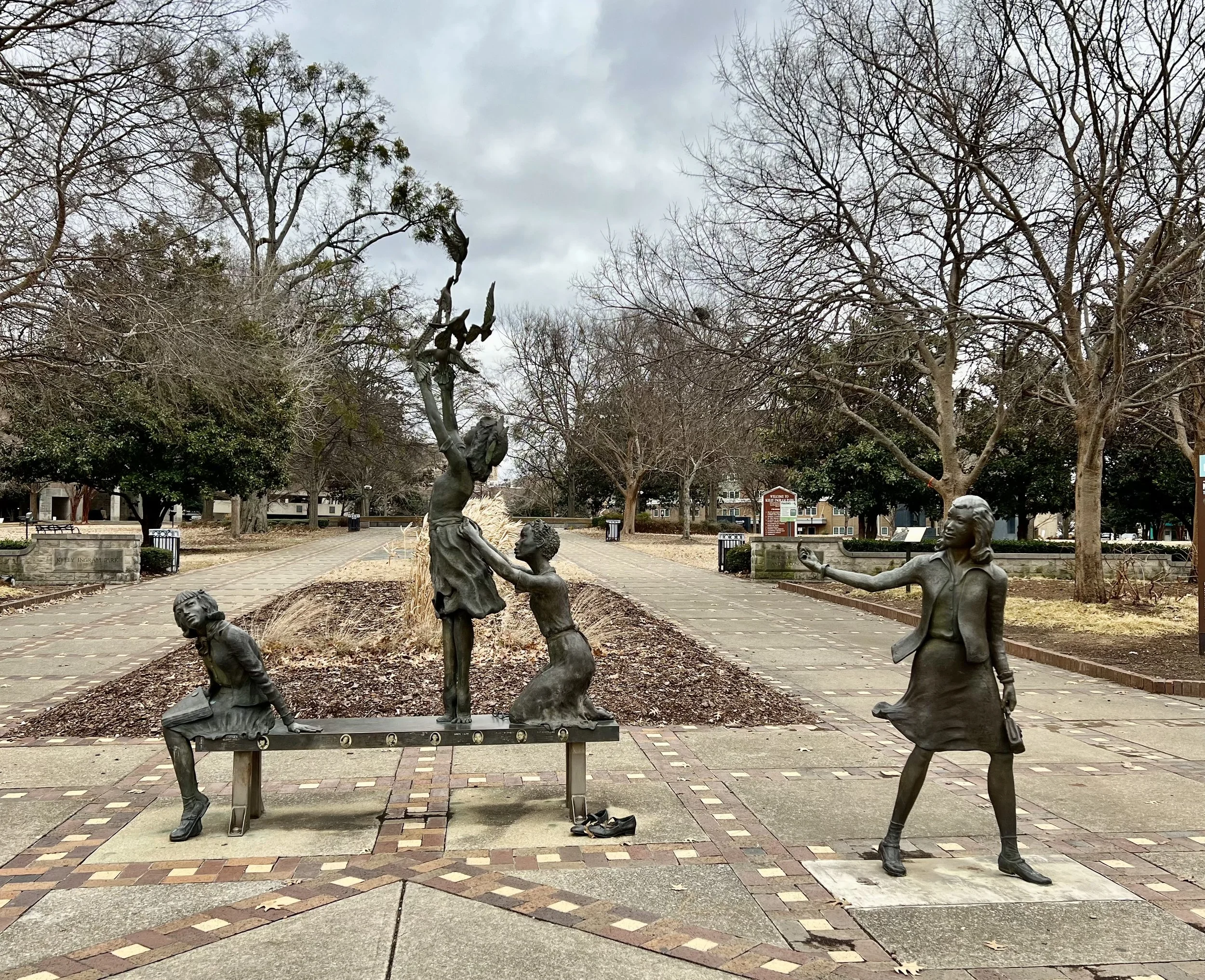
A statue of the girls who perished in the 16th Street Baptist Church bombing in Birmingham, Alabama on Sunday, September 15, 1963. Described by Martin Luther King as "one of the most vicious and tragic crimes ever perpetrated against humanity," the explosion at the church killed four girls and injured between 14 and 22 other people. Photo by Jenny Hershey. Follow her work on Instagram @deeofo.
And as usual, the most vulnerable among us are the impacted the greatest. I was feeling especially bad for people in the global south who have been ravaged by climate related disasters. I was also discouraged by the game of chicken underway by a few members of Congress as meaningful climate legislation was repeatedly on, and then off, the table. Although I knew the world was about to break yet another GHG emissions record for 2022, I didn’t know until late in the summer that Chuck Schumer, Joe Manchin and other Senators were engaging in backroom log rolling toward a revised version of the Build Back Better plan. Had I known, I might not have been so discouraged.
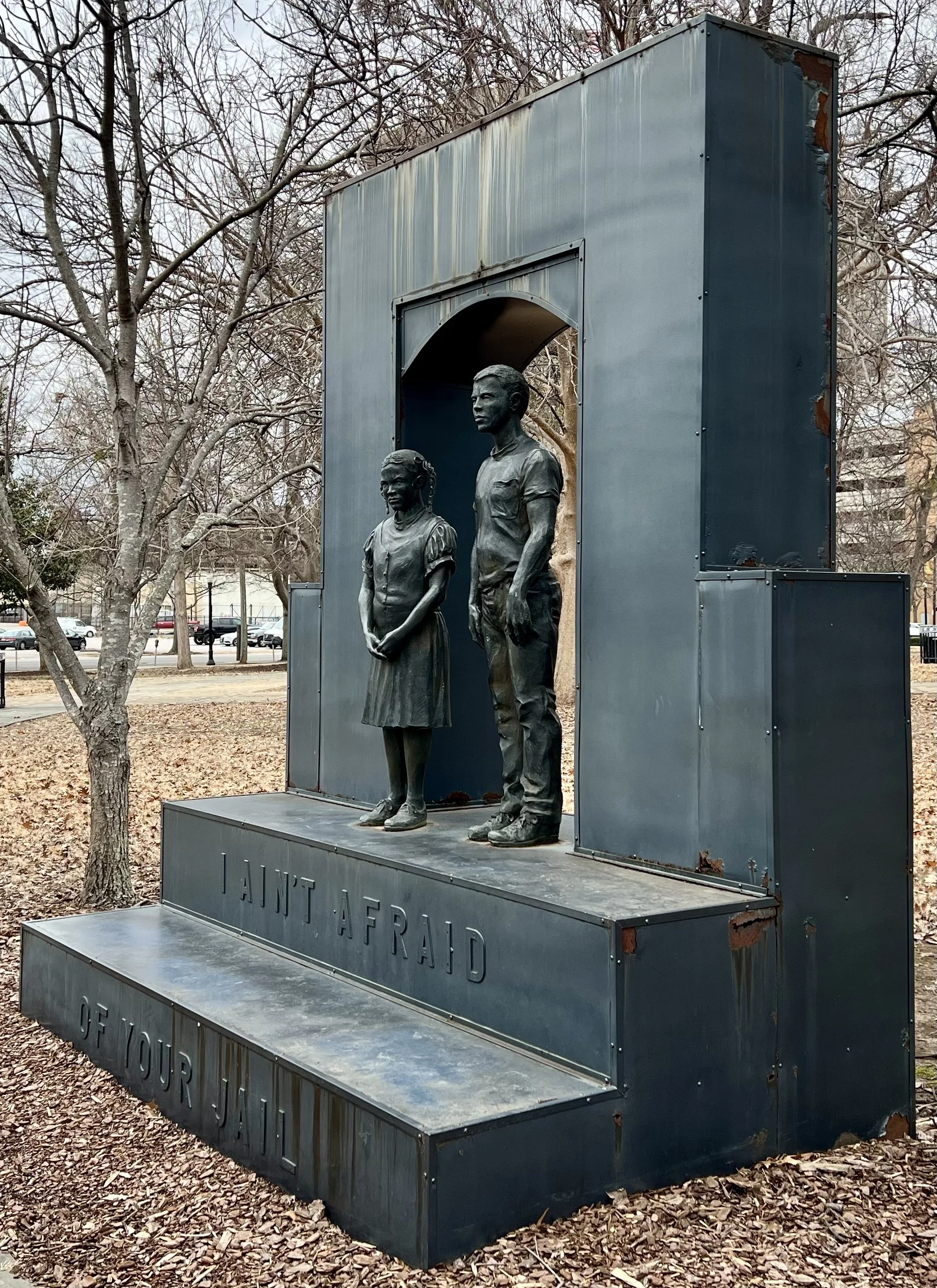
A statue in Kelly Ingram Park in Birmingham commemorating student protests that occurred for weeks after the 16th Street Baptist Church bombing, bearing the inscription “ “I ain’t afraid of your jail.” Photo by Michael Chase. Follow his work on Instagram @mjohnsonchase.
You may have felt similarly. Just to remind us of how extreme weather events are both speeding up and cascading, here is a cursory review of global events from the spring of 2022 through the early winter of 2023:
As a result of persistent droughts, communities across Africa, including Kenya, Nigeria, Ethiopia, and Somalia currently face the worst food crisis seen in 40 years. Earlier in the summer of 2022 more than 2,000 people died in Spain and Portugal during a brutal heatwave, while drought in Somalia displaced more than a million. In the United States, climate-related disasters exceeded $1 billion in damages the first 6 months of the year, including the ongoing drought in the west and southern plains and a tornado outbreak in Alabama, Florida, and Mississippi in March. In late July heavy flooding in eastern Kentucky killed at least 38 people. Also in July, parts of the United Kingdom saw temperatures soar for the first time ever to 104 degrees Fahrenheit, and much of Europe similarly suffered. In Pakistan, one third of the country experienced widespread destruction from three months of heavy rains after a prolonged period of heat in the spring. Flooding killed more than 1,400 people across the country during the summer and damaged or leveled more than a million homes, including many that were swept away by water. In total, over 30 million people have been affected. Additionally, Pakistani farmers lost up to a million head of cattle as well as 90% of the country’s fall harvest. Now starvation looms for millions of people as Pakistan faces a “second wave of death” that is likely to spiral toward implosion without major global assistance. September brought Hurricane Ian to the Caribbean and Florida, upending the lives of thousands, killing 109 people in the US alone, and resulting in a staggering $100 billion in damages. Then, a record-breaking snowstorm and polar vortex slammed much of the midwestern and northeastern US in January and produced a massive snowstorm that killed over 40 people in Buffalo in early 2023. That tragedy was followed by three weeks of extraordinary rain in California as a stubborn weather pattern sent wave after wave of tropically-infused atmospheric rivers, triggering widespread flooding, landslides and power outages across the state. At the same time, the mountains were buried under several feet of snow. 22 people were killed, and damages are still being assessed. Shortly thereafter, there were record breaking rains in New Zealand, freezing cold across the South and a polar vortex in New England. …and it’s only going to grow worse. Buckle your seat belts, folks. That's only the beginning.
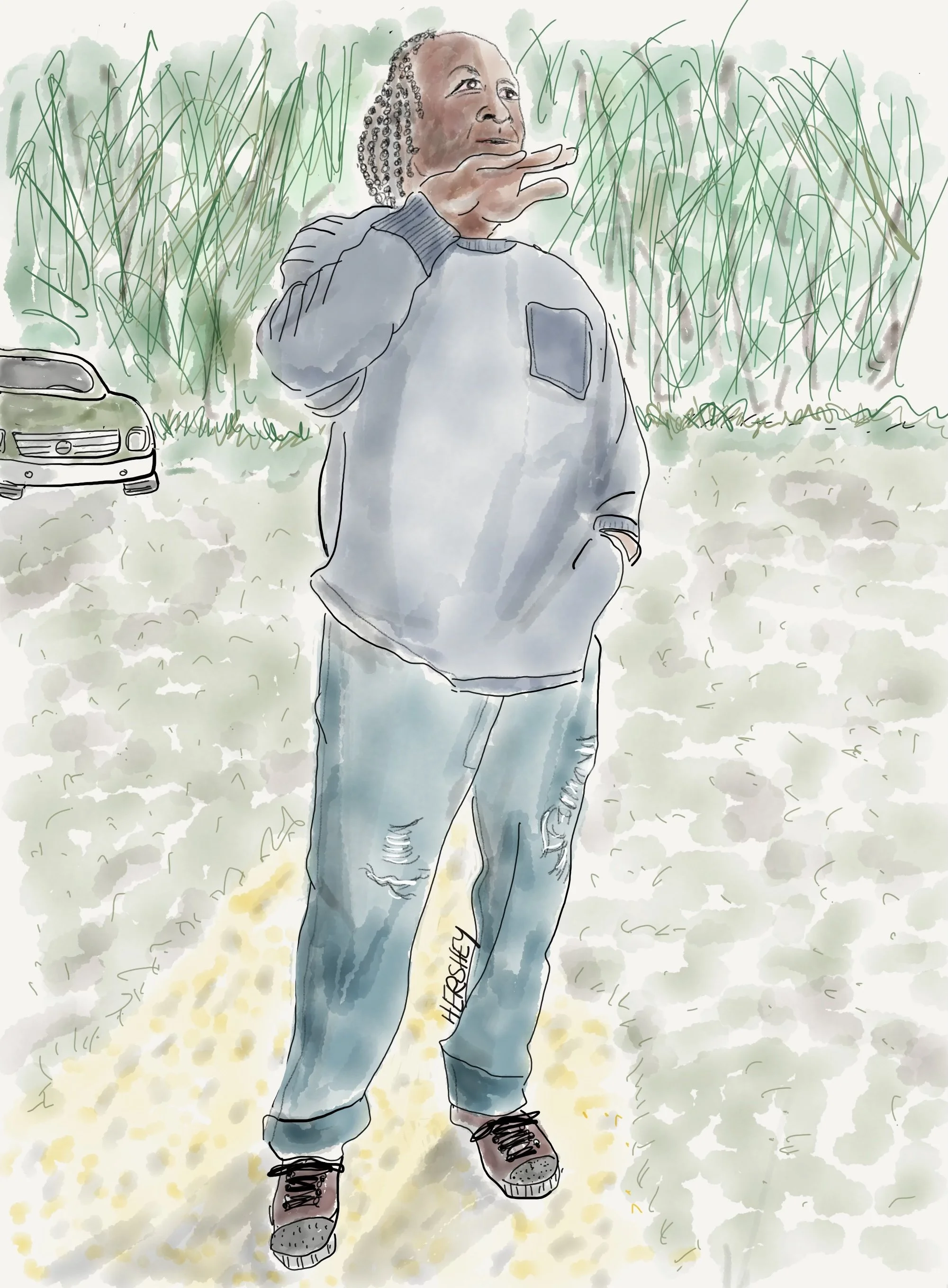
We met Joe deep in the countryside outside of Fosters, Alabama. He was content grazing his six cows on a neighbor’s land across the road. He is hoping for a little growth in his herd when a bull joins his girls next month. He also enjoys a small herd of goats that roam freely on his property just because, “he likes them.” Joe lives a simple life by making and selling his own BBQ sauce. He lives a cherished “second life” after a near-death automobile accident (during the Covid pandemic) that laid him up for over a year. Drawing by Jenny Hershey. Follow her work on Instagram @deeofo.
As I recovered from Covid my depression began to lift, yet I continued to wrestle with my grim perspective of the future. It helped to study two bills passed in the last Congress - the Inflation Reduction Act and the bipartisan Infrastructure Investment and Jobs Act. Almost as an act of will, I have chosen to believe in their potential. While I am certain that significant change is coming straight at us, things can - and may - change as much for the better as they can for the worse. Perhaps society will re-organize in an increasingly aggressive climate in a manner to avoid civilizational collapse, maybe making civilization even more - well, civilized. In any event, I have decided that a curated vision of the worst possible outcome is not good for one’s mental well-being - even if one is proved right. I’d so much rather be proved wrong.
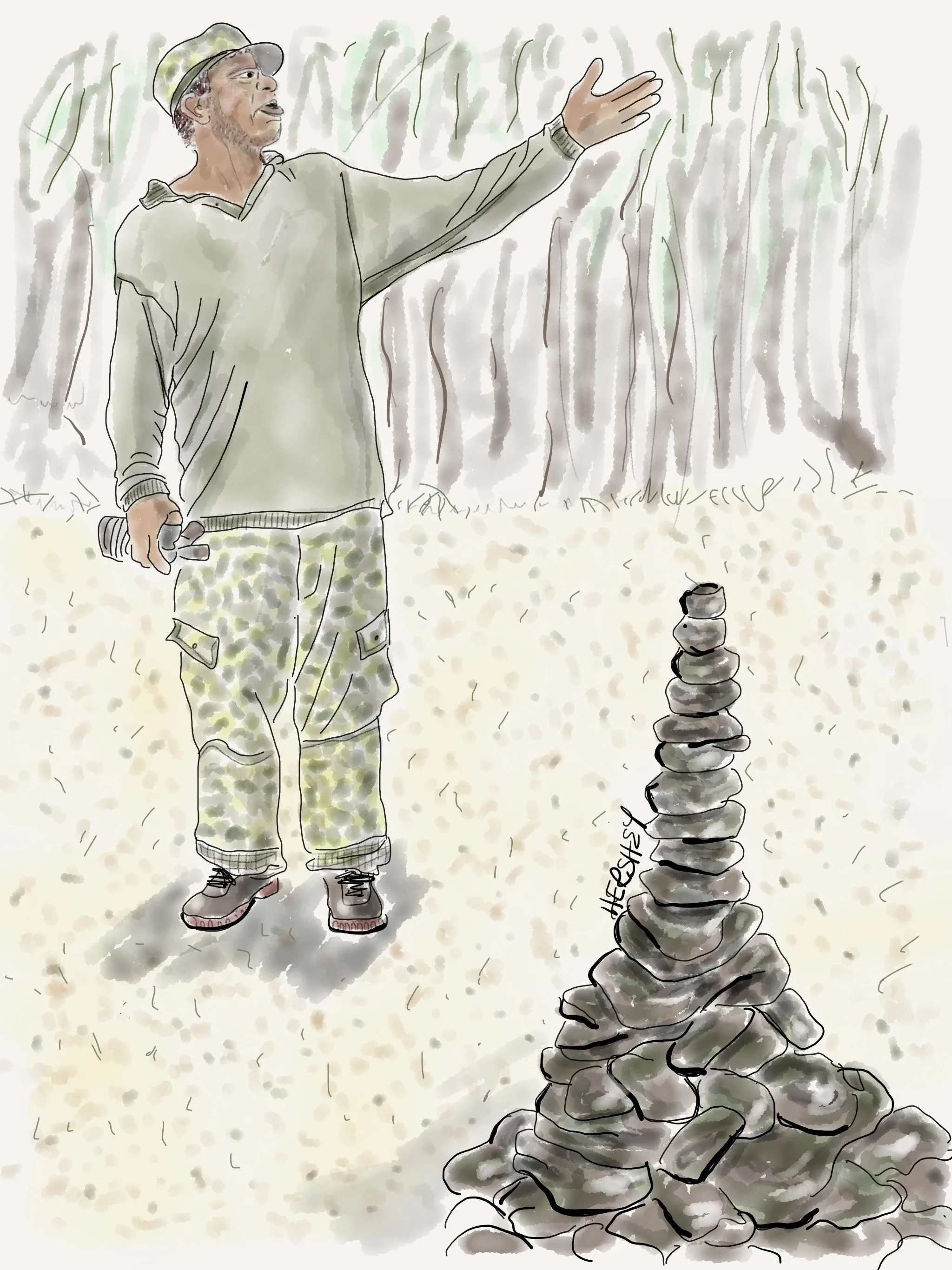
“God spoke to me, and told me to build it”! said Lester. We met him while biking on Route 11 in Jasper County, Mississippi. Busy clearing brush, he stopped to proudly showed us his cairns at the base of his driveway. Lester still cares for his disabled daughter after his wife died from diabetes 15 years ago. His older daughter works in the big city of Hattiesburg, MS. A simple man who has worked hard all his life caring for others, Lester finds solace and support in his local church. He was quite enthusiastic about the important and accomplished people that attended a recent service at his church commemorating Martin Luther King. Drawing by Jenny Hershey. Follow her work on Instagram @deeofo.
Jenny and I believe that tracking the implementation of the Inflation Reduction and the Infrastructure Acts over the coming years will be the focus of future our biking tours as climate investments are scaled up. If all goes well, over the next decade the world will witness widespread growth in renewable energy, grid modernization, electrification of our transportation and building systems (in spite of the ridiculous culture war in the US over stoves), the growth of hydrogen-based fuel for long haul transport and some forms of heating, and - if safety and siting concerns are adequately addressed - deployment of carbon capture, storage and industrial uses for carbon. Below is a graph that shows how both bills will complement each other.
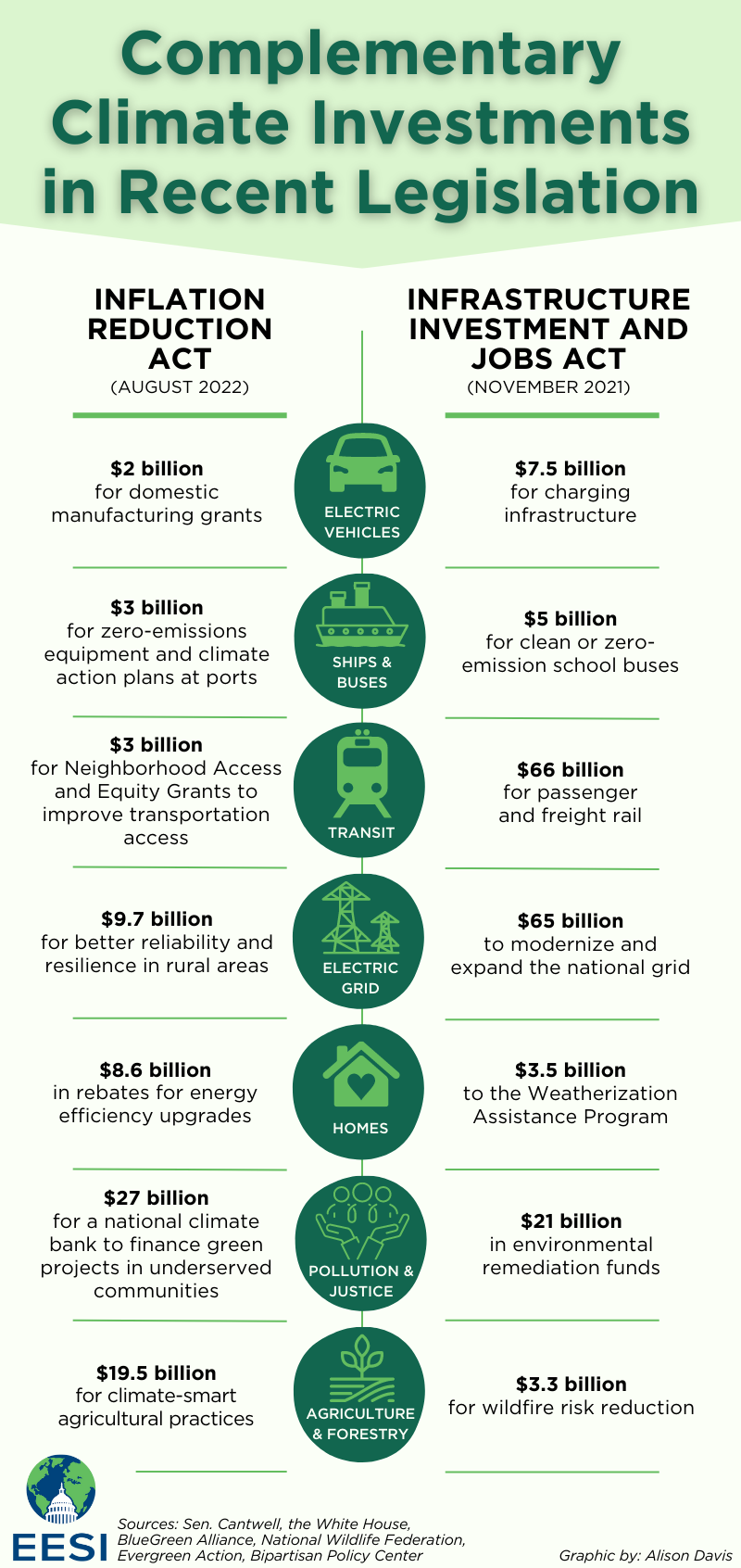
This graph can be sourced here. Along with tax reforms (which are under threat of repeal by the new Congress) and investments in healthcare, the Inflation Reduction Act provides $369 billion to address climate through tax credits for clean energy and electric vehicles, by boosting energy efficiency, establishing a national climate bank, supporting climate-smart agriculture, bolstering production of sustainable aviation fuel, reducing air pollution at ports, and more. The law represents the boldest action Congress has taken on climate yet—if enacted successfully and quickly enough, it will put the United States on a path to reduce greenhouse gas emissions by 40 percent below 2005 levels by 2030, according to several independent analyses. That is, of course, if implementation is both rapid and effective. Additionally, the Infrastructure Investment and Jobs Act provides complementary investments in energy modernization, transportation, workforce development, and building decarbonization.
We are pleased that the bipartisan infrastructure bill provides $66 billion to rebuild our decaying US rail system, because Jenny and I are supporters of combining train travel and bike touring. We started our current trip in the Deep South by taking a train (with our bicycles onboard) from Penn Station, New York, to Birmingham, Alabama - leaving on a rainy and uncharacteristically warm New York City in mid-January, and arriving in an uncharacteristically cold Birmingham the next day. We set out on our bikes for Meridian, MS, intending to catch a train to New Orleans and then another to San Antonio (we had purchased multi-ride ticket passes). But upon our arrival in Meridian we discovered that track work was limiting the number of trips on the Crescent line so there was no train for four more days. We decided to bike to New Orleans instead. We are glad we did. Serendipity has its place, especially when traveling on bicycles.
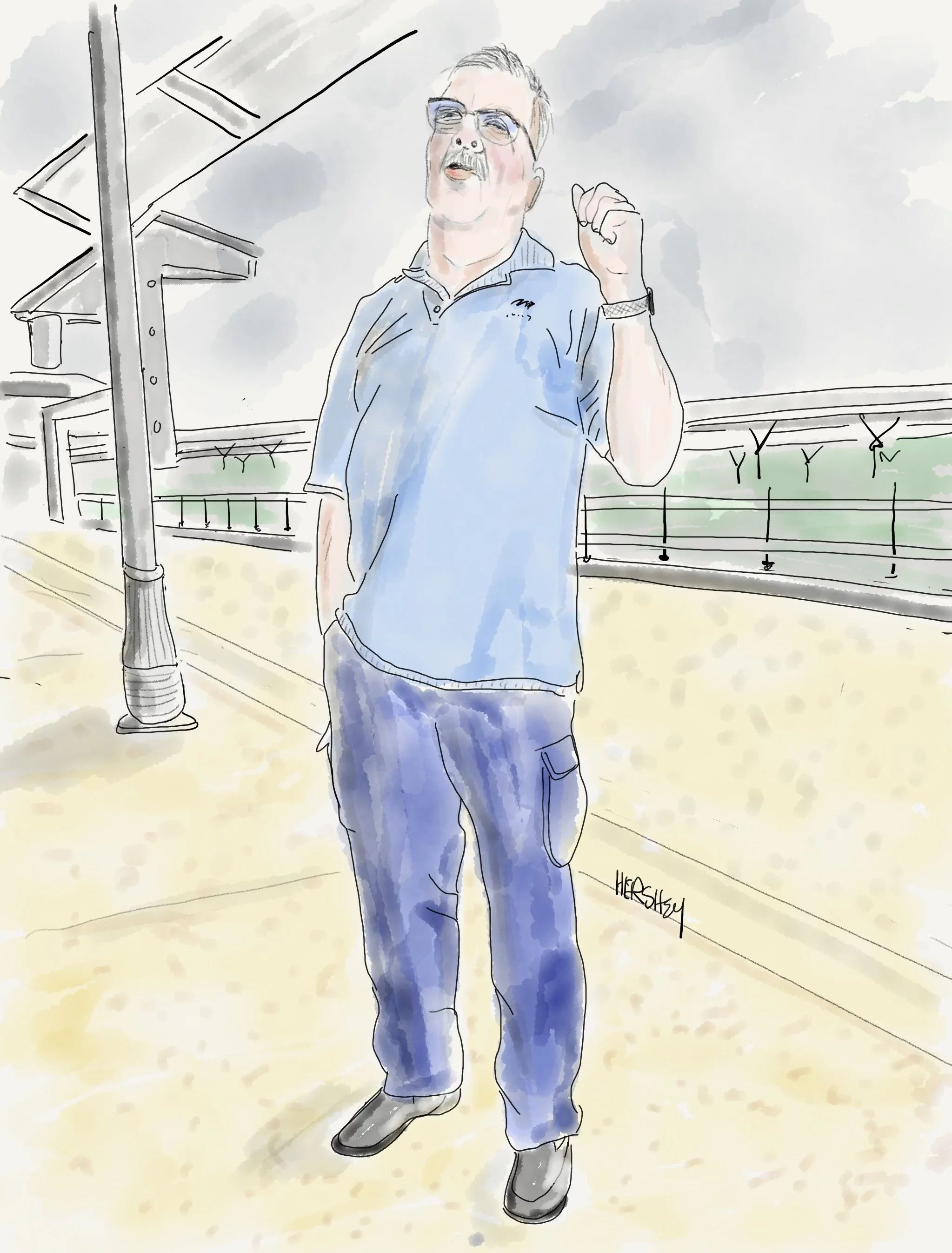
Bunky is the Amtrak Station Manager in Meridian, Mississippi. When we learned our intended train to New Orleans was delayed for four days, he took us out on the station platform and shared quite a bit about the history of Meridian. A proud yet humble man, Bunky also shared his previous life as the Fire Chief of Meridian, and held us rapt as he recounted the time a plane crashed on the interstate that passes through town. But his biggest challenge was getting to New York a week after 9/11 to help restore order and rescue firefighters and civilians at the World Trade Center. That fact alone inspired our trust, so when Bunky encouraged us to go to the Mississippi Arts Museum, we said of course we would. Modern and interactive, the museum is extremely well curated and it inspired us to stay longer in Mississippi, so we decided to forgo our plans to get to Texas, and instead bike to New Orleans through Mississippi. The South had us hooked. Drawing by Jenny Hershey. Follow her work in Instagram @deeofo.
We’ve been on our bikes ever since, with our eyes open for early indications of progress in climate infrastructure development that might link to either legislation. What we found surprised us. I was researching early climate infrastructure projects while spending a rainy day in a motel in Bogalusa, Louisiana, when I encountered an interesting story about Parish Councils near Lake Maurepas to the west of New Orleans.
Lake Maurepas is in the upper left of this satellite image of southeastern Louisiana. Lake Pontchartrain lies to its east, with New Orleans about 25 miles away along Pontchartrain's southern shore. (Satellite image via Wikimedia Commons.)
In October 2021, Louisiana Governor John Bel Edwards announced that Air Products, a multinational chemical company based in Pennsylvania, will invest $4.5 billion to develop a “clean” energy complex in Ascension Parish, Louisiana, by 2026. This project involves the construction of a new plant in the unincorporated community of Burnside (across the Mississippi River from Donaldsonville, a petrochemical capital of Louisiana) to convert natural gas to “blue” hydrogen by capturing the resulting carbon dioxide. The plant will use its own preexisting pipeline infrastructure to ship hydrogen to market, and build a new pipeline through the largely untouched Lake Maurepas marsh to transport the resulting CO2 about 30 miles to injection wellheads for permanent storage under the lake.
In this instance, the CO2 created as a byproduct of cracking methane (which makes up about 70-90% of natural gas) to form hydrogen will be compressed into a denser liquid-like form, and injected into geological formations called saline aquifers (a layer of porous rocks saturated with salty water) 7000 feet under Lake Maurepas. Apparently, saline aquifers are ubiquitous across much of southern and coastal Louisiana, so given the intensity of the petrochemical industry here, it seems likely there will be many more proposals made by fossil fuel companies to store CO2 in the Gulf coastal region.
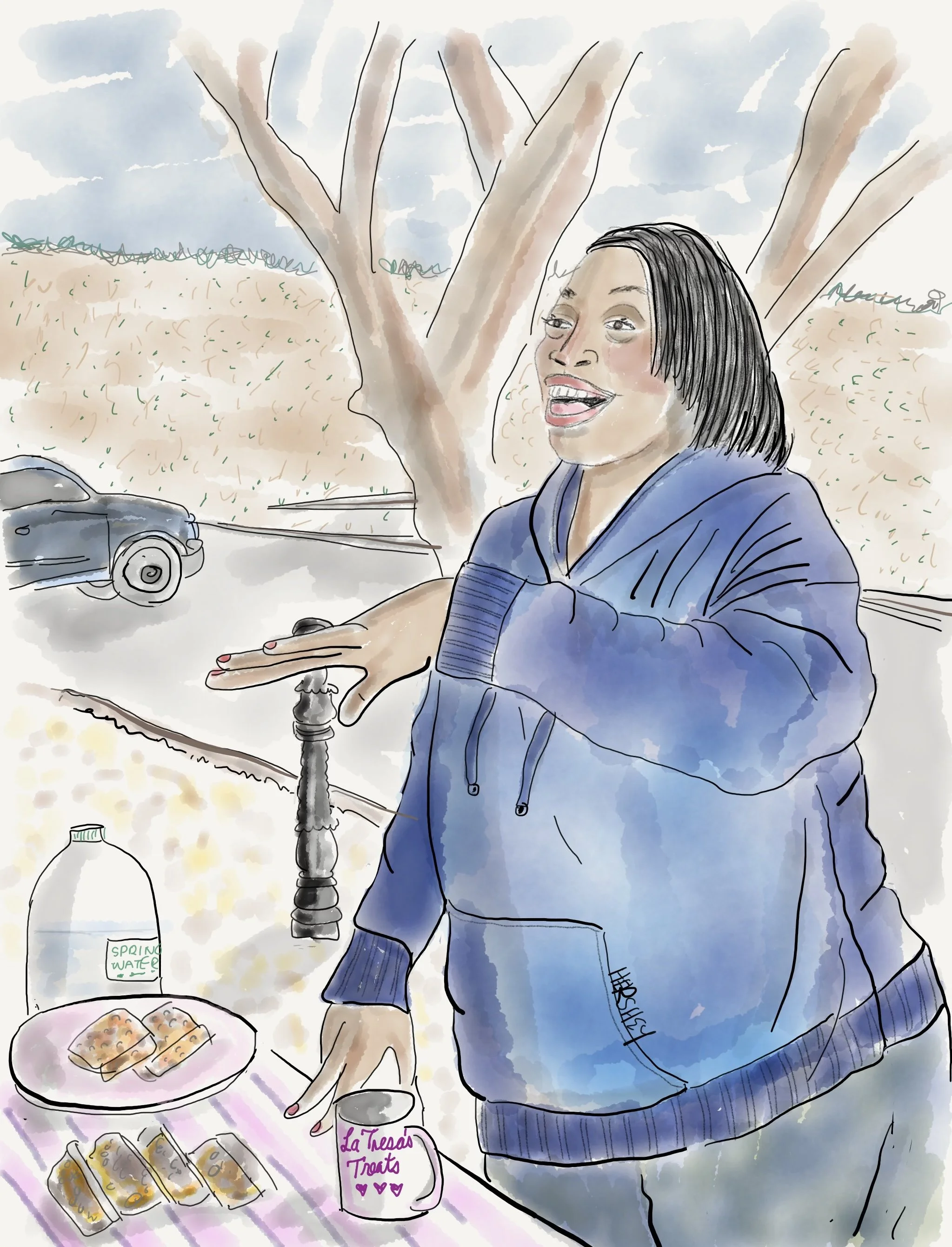
Ms. Rosalyn radiated joy. A talented baker and co-owner of LaTresa’s Treats, she tempted us with her homemade pecan squares at the small weekly farmer’s market on the town square in delightful historic Hattiesburg, Mississippi. “They taste like heaven” she assured us, “if you like pecan pie, you’ll love these squares”… Sampling one that evening for dessert, we discovered Ms. Rosalyn was right. Imagine something that tastes better than a piece of pecan pie! And she’ll ship them! You can order them here. Drawing by Jenny Hershey. Follow her work on Instagram @deeofo.
Interestingly, hydrogen is described by colors as shorthand for how it is created. Although hydrogen is the world’s most plentiful chemical, it doesn't exist on its own in nature; instead it bonds to other chemicals and is most abundant as H2O. It is also present in the atmosphere and in methane. Hence, hydrogen made from burning natural gas is referred to as “blue” when the carbon is captured, “grey” when carbon escapes into the atmosphere, and “green” when it is cracked or separated from water through electrolysis using electricity made from renewable sources. Only green hydrogen can be made without creating CO2.
When blue hydrogen is manufactured and the resulting CO2 emissions are captured and stored underground, the process is often described by the manufacturer as carbon-neutral. And although Air Product’s proposal is touted as such, closer examination suggests otherwise. Some studies suggest that the carbon footprint of blue hydrogen is 20% larger than gas and coal for the energy required to crack the hydrogen. That doesn’t count the CO2 the process creates, which is what Air Products intends to capture and store. Additionally, natural gas production inevitably results in methane emissions from so-called fugitive leaks, which are leaks of methane from the drilling, extraction and transportation process.
Although fossil fuel companies claim they have years of experience storing carbon, they usually fail to mention their experience is with enhanced oil recovery (EOR), which involves injecting carbon dioxide into oil wells to coax out hard-to-get oil. That is not the same thing as permanent CO2 storage, which is a new technology. In fact, it is so new that there are only two long-term carbon storage wells currently in use in the US.
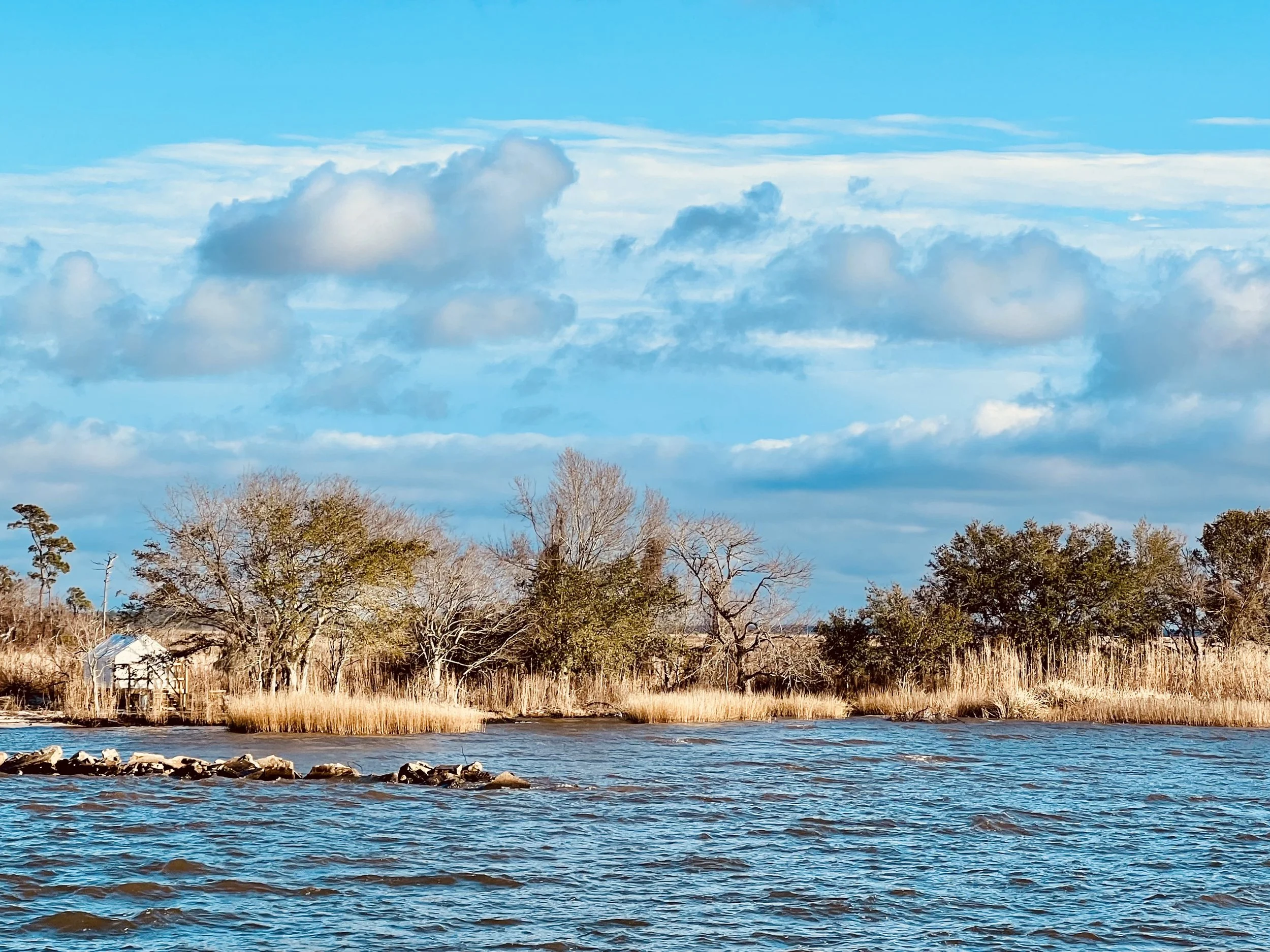
Picture taken at Fontainebleau State Park, Louisiana, on the northern shore of Lake Pontchartrain. Photo by Michael Chase. Follow his work on Instagram @mjohnsonchase.
Some people still might ask, what's the big deal? After all, we currently release about 11 million tons of CO2 into our atmosphere daily. As the longest-lasting GHG in our atmosphere, CO2 is currently at about 450 parts per every million (ppm) molecules of atmospheric gases (and rising) and that concentration doesn't impact human health yet. But to transport and/or store carbon, CO2 must be concentrated into a liquid of vastly higher concentration. Although Air Products claims their process of transfer and storage will be perfectly safe, the technology and infrastructure pose a safety risk to the communities they encounter. The bottom line is that sequestering CO2 at a commercial scale is, as yet, unproven to work in the real world.
It’s also important to be skeptical about the carbon capture rates that companies have promoted. Mark Jacobson, a professor of civil and environmental engineering at Stanford University helped publish a recent study on blue hydrogen. When interviewed by The Lens - an excellent New Orleans local news organization - Jacobson noted that methane leakage is essentially unavoidable in the blue hydrogen process. Assuming a 3.5% methane leakage rate would be conservative for a project like Air Products’. He goes on to say, “The only blue hydrogen facility that produces hydrogen from natural gas at a commercial scale for which there is relevant data is Shell’s Alberta plant, which has demonstrated a mean capture rate of 78%.” A separate analysis conducted by the watchdog group Global Witness says the figure is closer to 48%. Carbon capture prolongs the life span of industrial facilities that contribute significantly to climate change, yet according to Jacobson, carbon capture rates are inadequate, and simply not worth the investment. Yet, the fossil fuel industry is aggressively selling carbon sequestration, utilization and storage (CCUS) to the public as a safe and significant way to achieve full decarbonization by 2050.
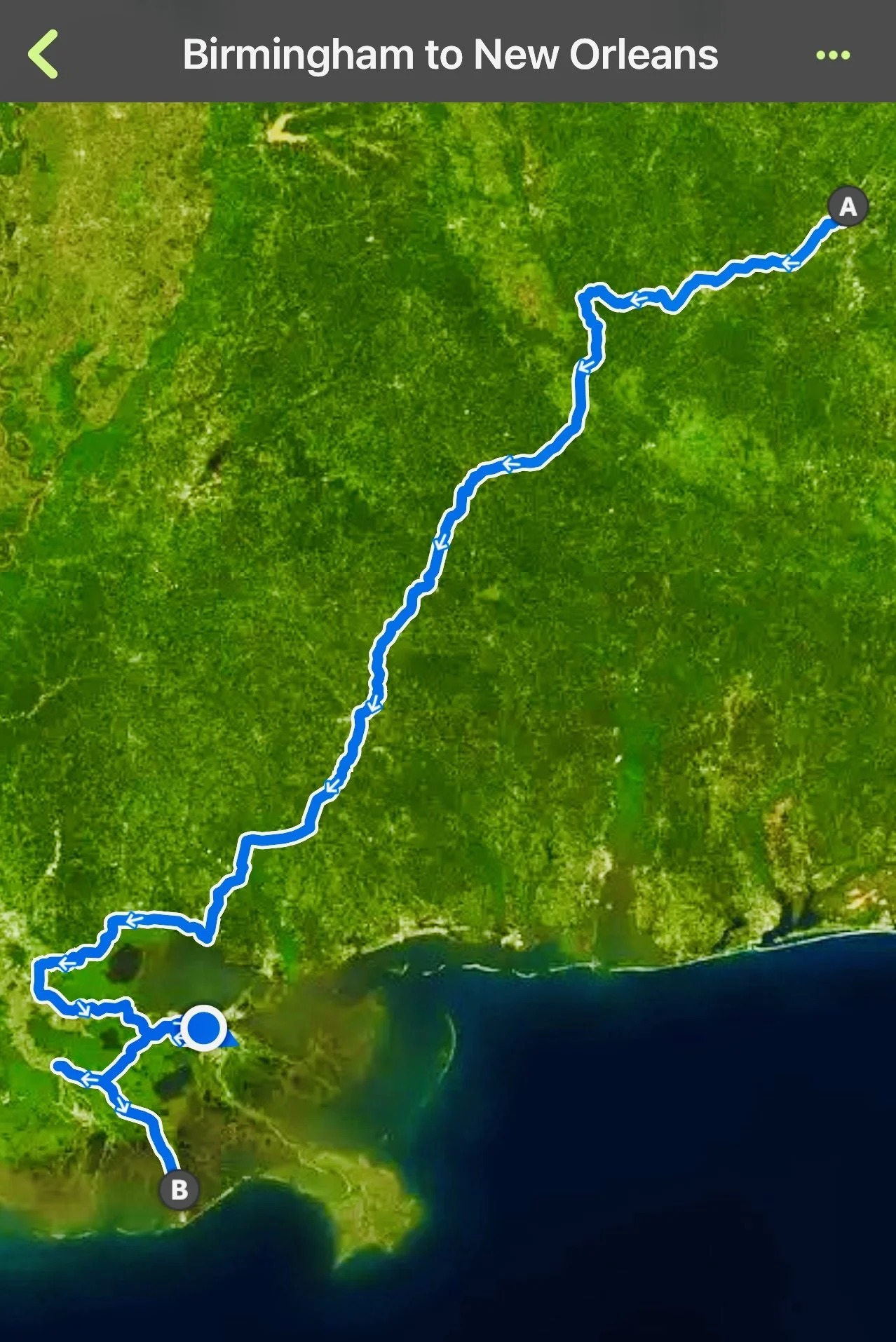
Traveling almost 1000 miles on bicycles, this is the shape of our trip. “A” is Birmingham, where we started, and “B” is Golden Meadow, deep in the coastal marsh of Louisiana below New Orleans, which is as far south as we were able to go because of damage from Hurricane Ida. The blue dot is where we were when we made this map. Map created on Kamoot.
I've been aware for some time that environmental justice groups are very wary of plans by fossil fuel companies to decarbonize their product as a way to keep selling it. There are many significant players in this arena, and many of them are pressuring the EPA to decline permits for a proliferation of CCS applications. One example is from California's Central Valley Air Quality Coalition. Another is in New Orleans, at the Deep South Center for Environmental Justice. The DSCEJ has been pushing local and federal leaders to consider the potential consequences of CCUS on Black communities around the Gulf Coast who have dealt with the consequences of the oil and gas industry’s careless pollution on their health and livelihood for decades. It was their advocacy that prompted The New Orleans City Council to unanimously pass Resolution NO. R-22-219. This resolution urges the prohibition of underground storage of carbon dioxide and facilities for this purpose. Passed in May of 2022, Dr. Beverly Wright, Executive Director of the Deep South Center for Environmental Justice, commented: “I am proud of New Orleans for being a trailblazer in policies that protect local communities from CCS technologies. As I said when Energy Secretary Jennifer Granholm visited recently, supporting CCS will encourage the growth of fossil fuel industries and continue the injustice of putting profits over communities of color. Instead, we need to develop and implement an energy plan for Louisiana that cleans our air and powers our homes and vehicles while prioritizing equitable investments in communities and invests in people to get the necessary training for clean energy jobs of the future. We encourage other local municipalities around the country to follow New Orleans’ lead to prohibit CCS technology”.
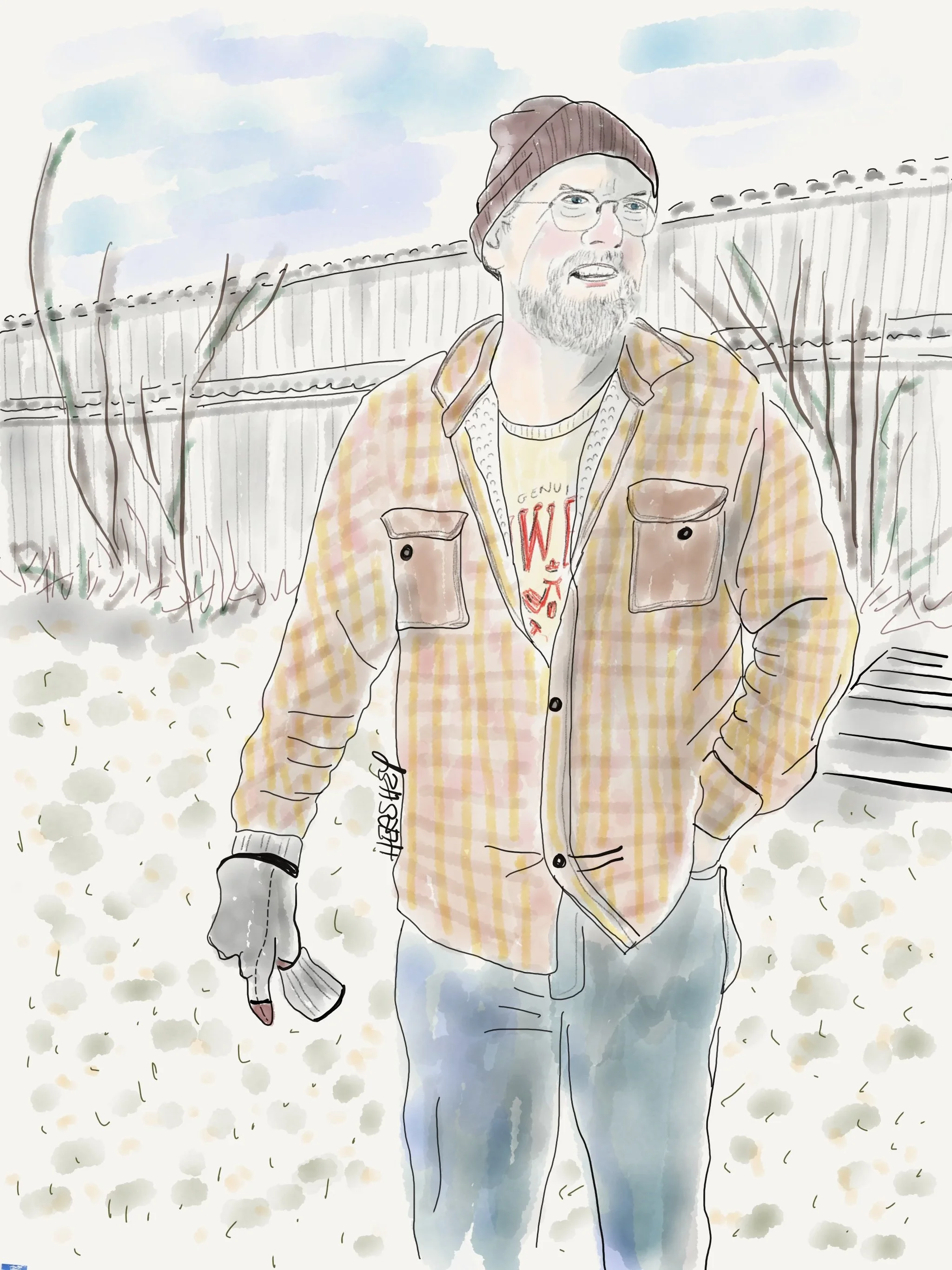
We met Gary, a retired school bus driver, on Head of Island near a canal on the Amite River that flows into Lake Maurepas. Born and raised in the Maurepas swamp area, Gary recounted some vivid tales from his father about encountering strange sinkholes while fishing in the waterways. Now, Gary is concerned about the seismic testing on the lake in preparation for Air Product’s carbon storage project. He is concerned for his 12 grandkids and potential hazards to the water supply and surrounding wildlife. Gary told us a story he heard from a few friends who are tracking the seismic testing contracted by Air Products. When his friends approached a boat in the lake they believed was involved in testing they were greeted by a security guard carrying a rifle who made it clear they should leave. Drawing by Jenny Hershey. Follow her work on Instagram @deeofo.
In October of 2022, the Livingston Parish Council voted unanimously to place a year-long moratorium on the construction of carbon dioxide injection wells below Lake Maurepas. Although Livingston Parish was the only council that passed an attempt at a legal moratorium, their concerns are supported by many locals living in Tangipahoa Parish to the east and Ascension Parish to the southwest.
Interestingly, two of those Parishes would not be considered typical “Environmental Justice” (EJ) communities. They contrast with Donaldsonville, which is 85% people of color (and fits the classic definition of a frontline community) and Burnside, which is about 65% people of color (and the location of Air Products’ blue hydrogen facility). Both of those towns are in Ascension Parish. By contrast Livingston Parish is 95% white, while Tangipahoa Parish is about 65% white. Since neither of those parishes have been frontline communities before, an historical tolerance toward the oil and gas industries might be confusing the issues. As a case in point, I noticed the following comment in The Lens by a Council Member from one of the involved Parishes, “I’m not against the oil and gas industry, and I want to reduce carbon dioxide in the atmosphere as much as anybody else. But this is not correcting the problem. This is creating one more problem.”
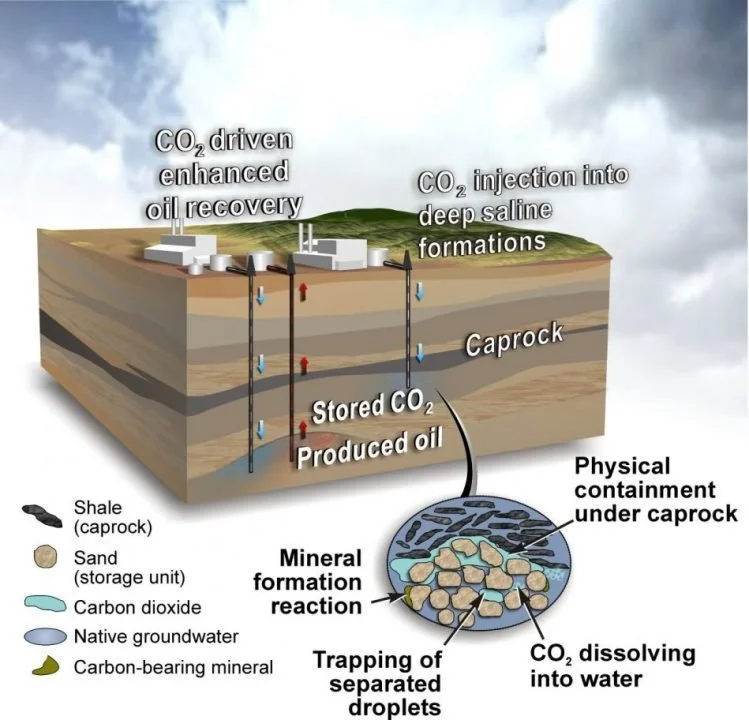
Section 45Q of the Unites States Internal Revenue Code is intended to incentivize deployment of carbon capture, utilization and storage (CCUS). The credit amount also significantly increases for direct air capture (DAC) projects to $180 a ton of CO2 permanently stored and $130 a ton for used CO2. The information above can be referenced here.
I sympathize completely with the Parish residents for their concern about their local environment, and believe all three parishes are being unfairly steamrolled by a large company, and state and federal level politicians. I very much hope the residents will prevail. I also think it's time to end the “not in my backyard mentality” (NIMBYism) that has been an unconscious feature of white middle-class communities for so long. We all need to share the burdens wrought by our way of life, or we need to change our way of life. Fair is fair. In other words, If you don't want something in your backyard, then it’s not ok to put it in someone else’s. And conversely, if you stand by when it happens to your neighbors then don’t be surprised when it happens to you. Instead, focus on stopping the root causes of the problem.
Traveling on a bicycle increases the odds of serendipity. Through a chance encounter in a health food store in Pontchatoula, Louisiana, Jenny and I were able to speak by phone with two members of the Tangipahoa Council, Brigette Hyde and Kim Coates, both of whom represent many local parish constituents who are quite upset by Air Products’ proposal. We learned the permitting process for the carbon storage injection wells - which normally takes years - was pushed through in only four months with no public transparency or local input. Needless to say, locals are fearful about how carbon storage will affect Lake Maurepas’ plethora of wildlife, its recreational boating industry and the health of the local population.
Currently, there is nothing the Parish Councils can do to slow down this project. The lake body itself is owned by the state, which has preemption rights over the Parishes, and a federal judge recently ruled that Livingston Parish cannot enforce its moratorium. Air Products argued it would lose more than $75,000 spent on seismic tests and well preparations to satisfy EPA regulations should the moratorium stay in place because the state permits they’ve been granted will expire. So Air Products, predictably, prevailed in court, also arguing the entire process is perfectly safe and will help them meet federal GHG emissions goals. “We are pleased with the ruling, and we remain committed to continuing to share information with all local parish councils, elected and regulatory officials and local residents about Air Products’ clean energy project and its environmental and economic benefits, and employment opportunities,” said Art George, Air Products’ communications director.
Federal and state officials and industry experts alike have welcomed carbon capture and storage projects as a means to meet net-zero carbon emissions goals. In fact, when Congress passed the Inflation Reduction Act in August, it increased the value of the Q45 carbon capture tax credit to $85 a ton. Because of that adjustment, Air Products stands to receive as much as $425 million in annual tax credits for storing carbon dioxide under Lake Maurepas.
Small wonder they are moving full speed ahead.
Money talks. Goliath walks.
Stay vigilant! Thanks for reading. More to come. If you haven’t done so already, please subscribe to this blog, so you can follow our next biking trip.
All material, unless credited or otherwise noted, are copyrighted property of the blog post authors.
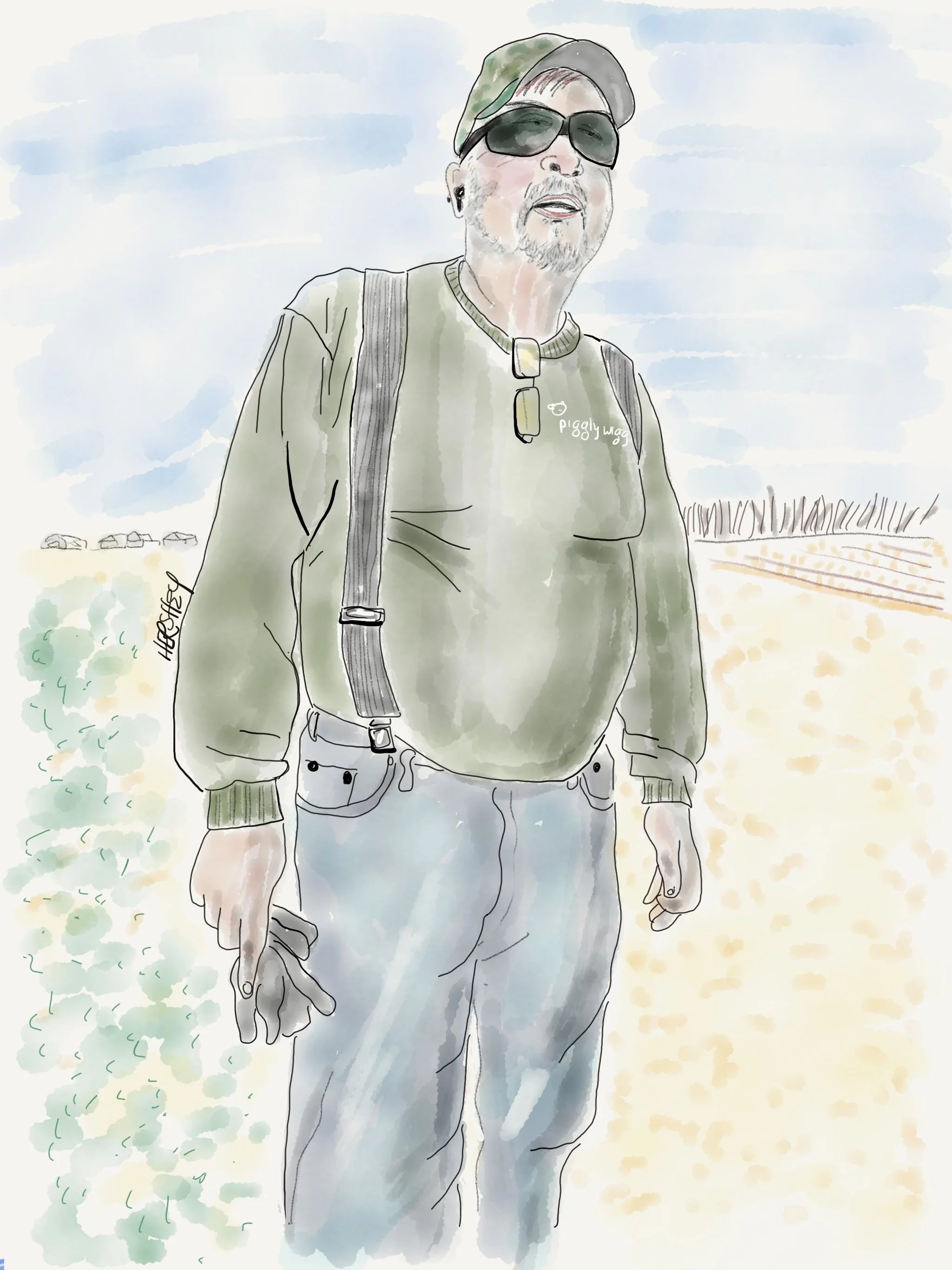
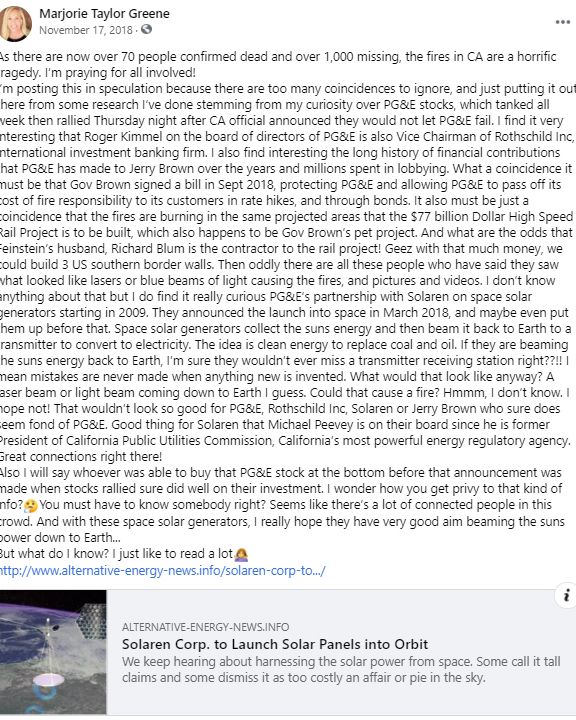
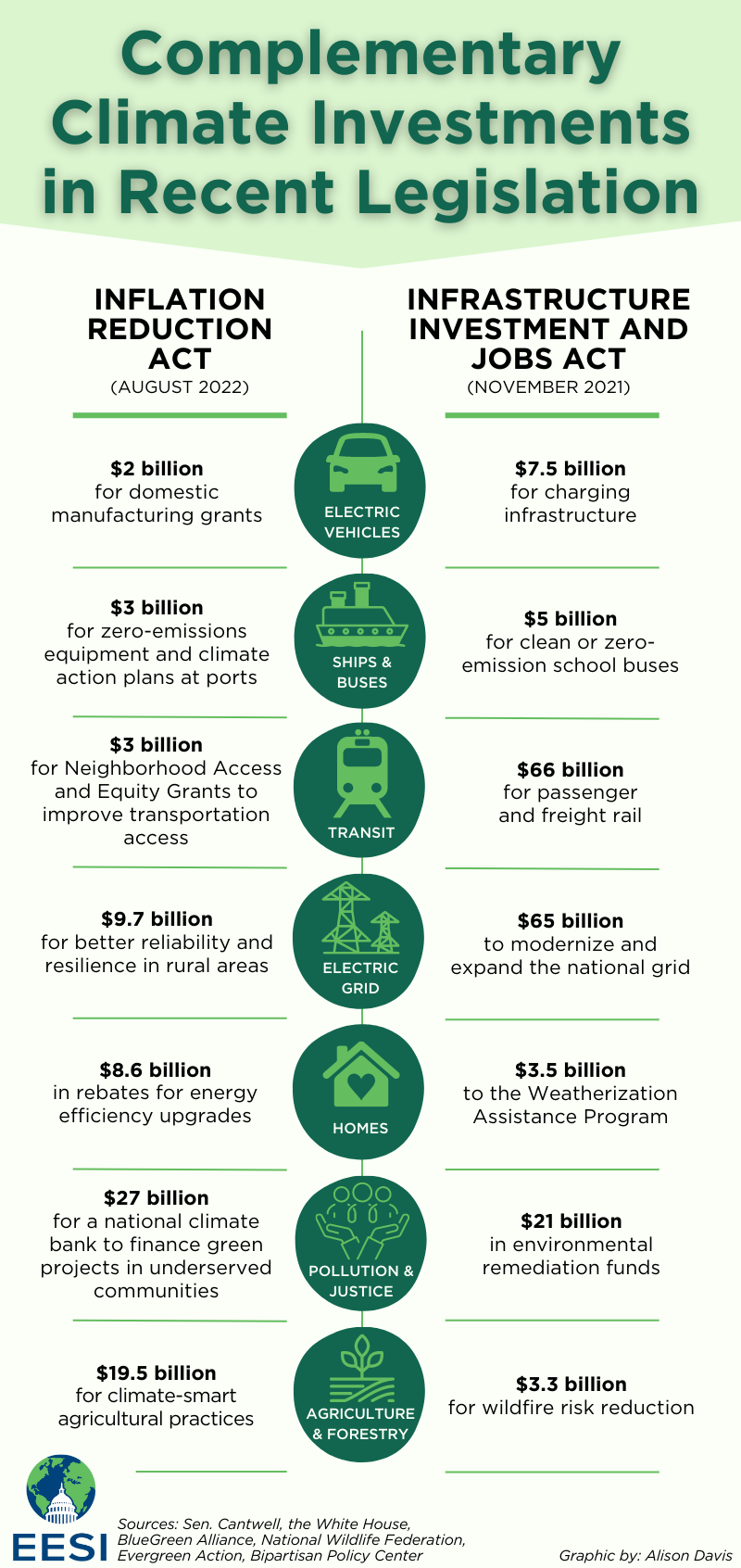
Jenny asked me to post this drawing here as a postscript out of gratitude.
Keith is a retired automation manager from the Union Carbide plant. Route 20 became too treacherous for biking in Vacherie, Louisiana and we were forced to ride on dirt paths through sugar cane fields until we could get no farther. In the distance we saw Keith working on his small John Deere tractor, clearing debris off the road by his house that abuts the sugar cane field. We biked over to told Keith and explained our predicament. He confirmed that there was only one way to the next town, which was down the dangerous Route 20. Thankfully, Keith then offered to use his truck to drive our bikes and gear into Thibodeaux 14 miles down the road. Both he and wife Debbie were very kind and hospitable. Keith dropped us off at a motel we had a reservation for, and they went off to their favorite fish spot for “date night.”
Drawing by Jenny Hershey. Follow her work on Instagram @deeofo.