
The Peril of Inequality: Biking from Birmingham to Jacksonville
Writing by Michael Chase, Drawings by Jenny Hershey
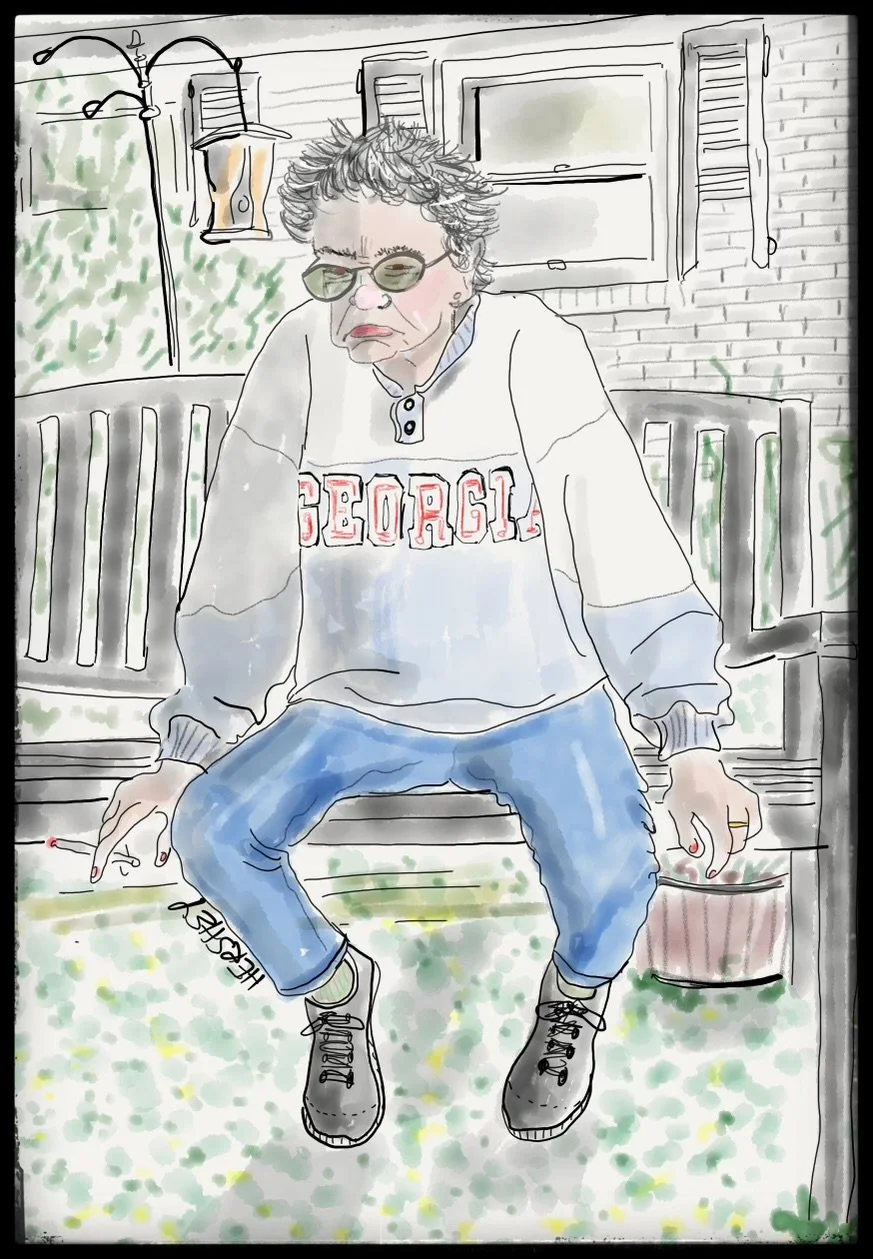
We saw Linda sitting outside her home in Blakely, Georgia, as we rode by. Jenny complimented her beautiful flower garden. Linda replied, “It’s a mess, really. Just can’t seem to do much after my husband died a couple years ago.” Not one to miss out on a conversation, Jenny stopped her bike and asked Linda about her life, learning that, like so many others in the deep South, Linda has lived in Blakely her entire life. She first worked in a sewing factory, adding, “Not many white folk worked there.” Then, a few years later Linda got a job as a peanut inspector at the Blakely Golden Peanut Factory. She loved that job and worked there for over 28 years. Linda told Jenny that she had no problems living in Blakely, and then she cupped her hand over her mouth like she was going to share a secret, and whispered, “Except for some of the black folks on the other side by Washington Street—they drink a lot and shoot guns. They’re in gangs!” “Gangs?” Jenny replied. Linda dropped her hand, and added, “Now don’t get me wrong. My neighbor’s black and I don’t hear a peep out of her. And the preacherman who lives behind me is black, and he’s a decent man.” When Jenny asked Linda if she was going to vote, she perked up, “Yup, I wouldn’t miss it for nothin!” … and said nothing more. Jenny decided not to ask…
“We pretty much own rural and small town America.”
Mitch McConnell
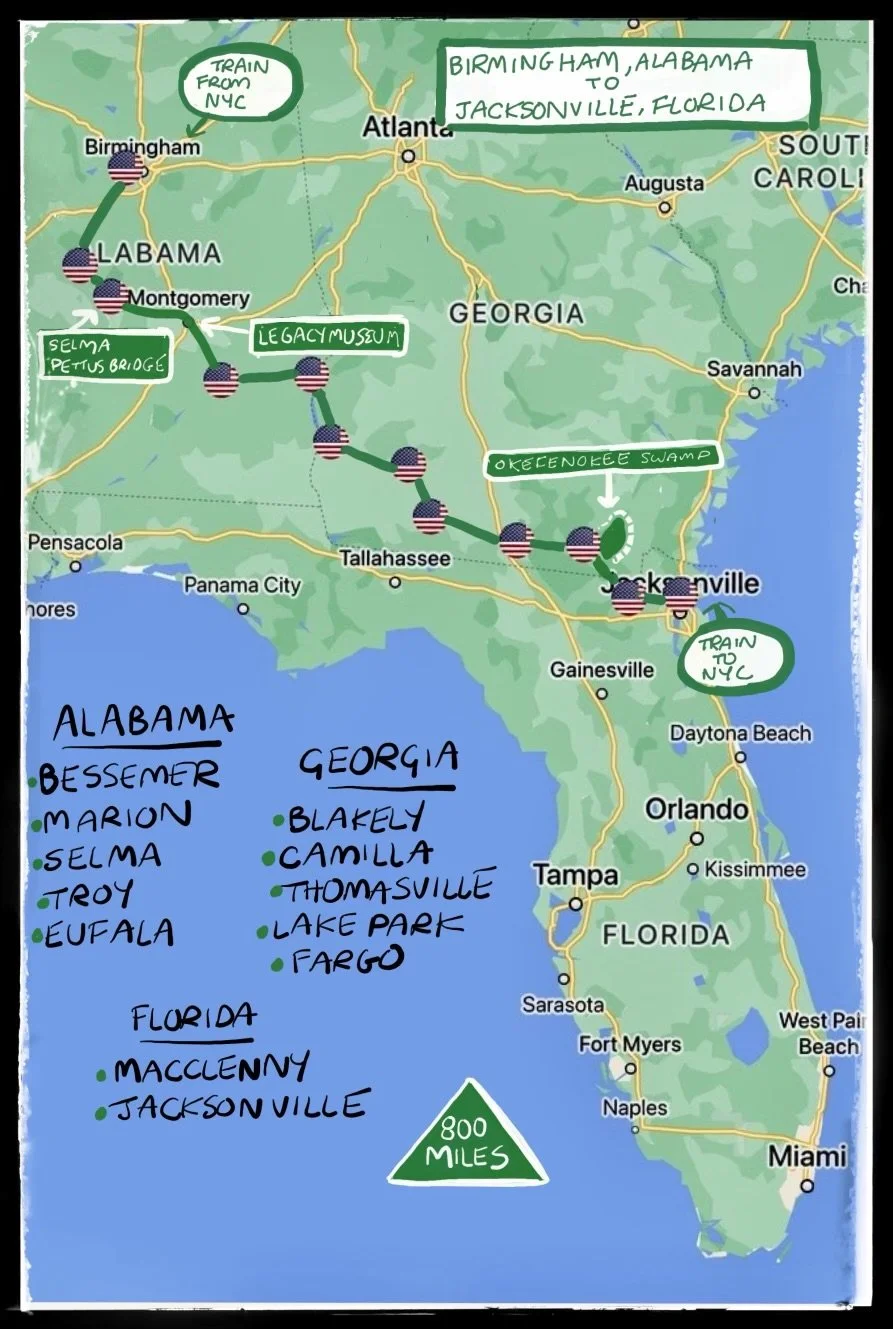
We biked from Birmingham to Jacksonville this trip. Although we enjoyed all of it, the highlights were the Edmund Pettus Bridge in Selma, the Legacy Museum in Montgomery, and the Okefenokee Swamp Park in southeast Georgia.
At a dinner party in New York City the week before we left for this trip, I was asked where we were going. When I replied, “We’re going to ride our bikes from Birmingham to Jacksonville,” the response was immediate. “Oh my God! Well, say hi to that idiotic judge in Alabama who thinks that unfertilized embryos are living humans, and that whiny Senator who tried to backpedal that judge’s crap on television from her fake kitchen.” As much as I sympathized with the content of both comments, the vitriol of the subtext took me aback: it was as if I was really being asked, “Why are you going there, of all places?”
I remember feeling slightly irritated by the insinuation. After all, Jenny and I are both life-long Democrats who grew up in Democratic households. We live in New York, and both had successful careers in the theatre. So it’s a fair guess that Jenny and I don’t choose to bike in the Southeast because we connect to the political culture.
But we do like how easy it is to get to some of the major cities in the South and back home to New York City by train. We are drawn to the warmer weather during the winter months, and the promise of vast stretches of roads unburdened by traffic that allow us to take in landscapes and wildlife as we reflect on the cultural, economic and political tapestries of the people we encounter. The South, in particular, offers up rolling hills, tranquil forests, scenic countryside roads, abundant bird life, and the same tragic and weirdly interesting industrial degradation one can find anywhere in America. For the most part, the inhabitants are folksy and sometimes surprisingly diverse. We also enjoy the affordable motels (especially during the off-seasons) and the overt friendliness, of most, although not all, of the locals we encounter.
Yet, there is something deeper that motivates us to return to the American South over and over again. Jenny and I are both affable and curious, and we are always interested in trying to understand why people see things the way they do. Although Jenny has lived her entire life on the East Coast, I was born in Iowa and raised in Galesburg, Illinois, a mid-sized farming town north of Peoria in the 1960’s. Predictably, Galesburg fit the era: I was a white kid, and we didn’t easily mix with the black kids, although there was a significant black community on the other side of town. Racism was insidious and implicit, and the civil rights victories in the South seemed far away because in Illinois, white folks had deluded themselves into thinking that they weren’t racist. Dislike of migrants, unless they were European born, was the norm. Homophobia was accepted and encouraged, while gayness was viewed as a perverse illness. Transgender? Forget about it; that was too weird for anybody (or so we thought, although in retrospect I’m sure I interacted with quietly suffering, closeted people). Because my Dad was a New England born professor at the local college our family never really fit in, although my Mom softened the suspicion of locals because she was approachable and talkative, even though she came from Denver. And just like now, most of the higher achieving students chose to leave. Although we weren’t particularly stellar students at the time, my two brothers and I took it for granted we would leave Galesburg at the soonest opportunity.
So it's not such a big leap for me to connect to a nostalgic affinity with my childhood years while biking in the rural south. And Jenny, who was raised in New Haven, Connecticut, during the 1960’s and was bused across town as a middle school student during some of the first desegregation experiments, also had a live-in black nanny who was the daughter of sharecroppers from Camden, North Carolina. And now, Jenny often says she feels more at home in communities of people of color in the rural south (small towns in the South tend to be either largely black or largely white) than she does in less diverse white middle-class suburban areas.
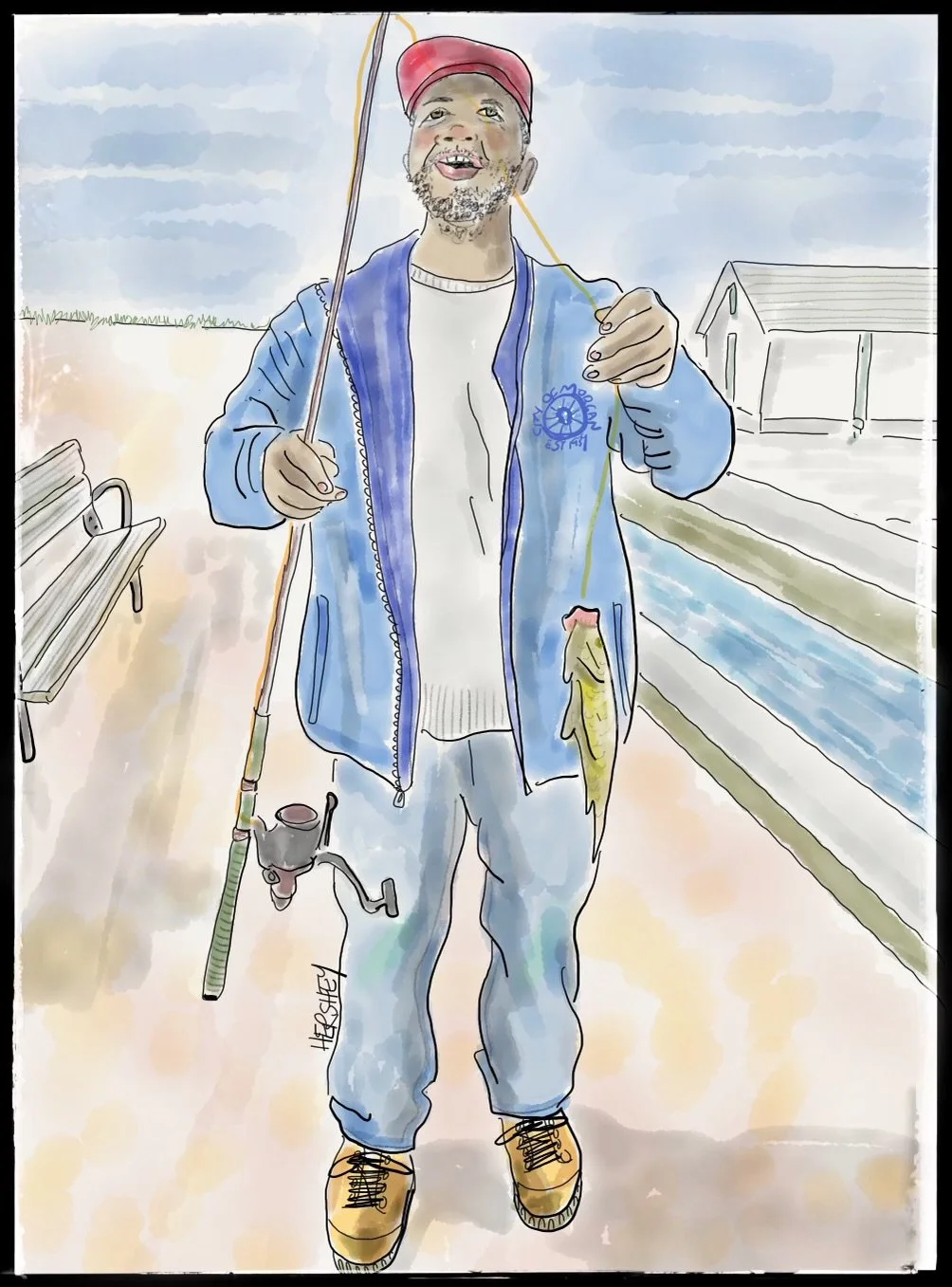
Cory delightedly shows off his catch, a “Sweet Crappie” he caught near Fort Gaines, Georgia. Cory had just moved to this town from nearby Edison. He works hard mowing the fields under a solar panel farm in Bluffton, a new job created by expanding renewable energy installations. Cory’s love of fishing came from his Grannie, but he will share this lucky haul with his Mama for Sunday dinner. Cory lives alone, and he’s glad for the connection. Jenny asked Cory if he planned on voting in the coming election. “Oh no, I don’t believe in that. I’m just gonna pray—and pray hard. God made us all free men. And that’s all I need. Don’t need nothing else.”
The slow, steady decline of so much of the rural south is a decades-old story that, with some exceptions, mirrors what has happened everywhere in rural America. We were a highly agricultural country at the time of our founding; more than 90% of our country lived in rural areas in 1790. The landscape, economy and cultural life were dominated by agriculture, and most Americans were farmers or lived in small towns closely tied to farming communities. By 1920, the number of Americans living on farms had dwindled to under 50%. However, people in small towns, who could no longer find work in agriculture, were still able to secure jobs in rapidly expanding extraction industries - such as mining and logging.
Today, the picture is vastly different. Urbanization has swept across the country, and over 80% of all Americans now reside in urban areas. The steady flow of people from rural areas has created a slow-motion train wreck for rural areas as technological advancements have steadily eroded labor needs in the countryside. In addition, corporate consolidation has shifted ownership of family farms, grocery stores, gas stations, feed lots, and even local medical care from individual owners and families to rapaciously capitalistic corporations located primarily in cities.
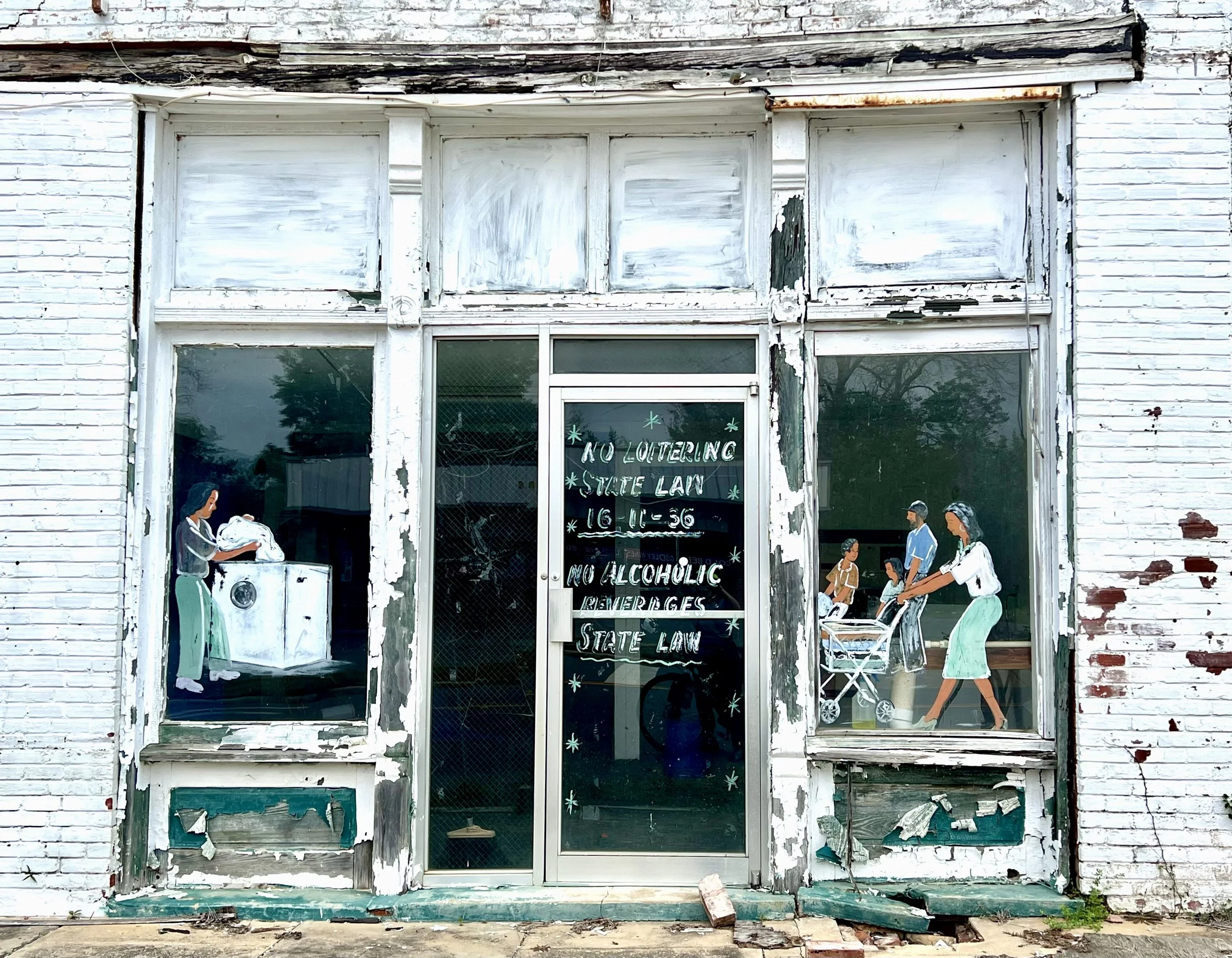
An abandoned laundromat in Damascus, Georgia.
Everywhere in rural America, the story is similar. Small family farms are bought out and vast tracks of land are consolidated into large industrial agricultural corporations. Mom and Pop stores, if they haven’t already closed, are eclipsed by Dollar Generals, Family Dollars and Dollar Trees, although residents in smaller towns now must drive a town or two away to get to the most local Dollar store, depending on marketing realities. And then those stores sometimes close based solely on market calculations; Family Dollar just announced they are closing multiple stores in rural Ohio, putting almost 300 people out of work. Larger towns are lucky to get Walmarts, which offer an abundance of food choices at reasonably low prices, while they virtually guarantee the closure of locally owned grocery stores. As populations dwindle, country doctors shut their doors and seek employment in larger towns with private medical facilities. At the same time, small health clinics get bought out by corporate chains and the median distances rural folks need to travel for health care continues to increase.
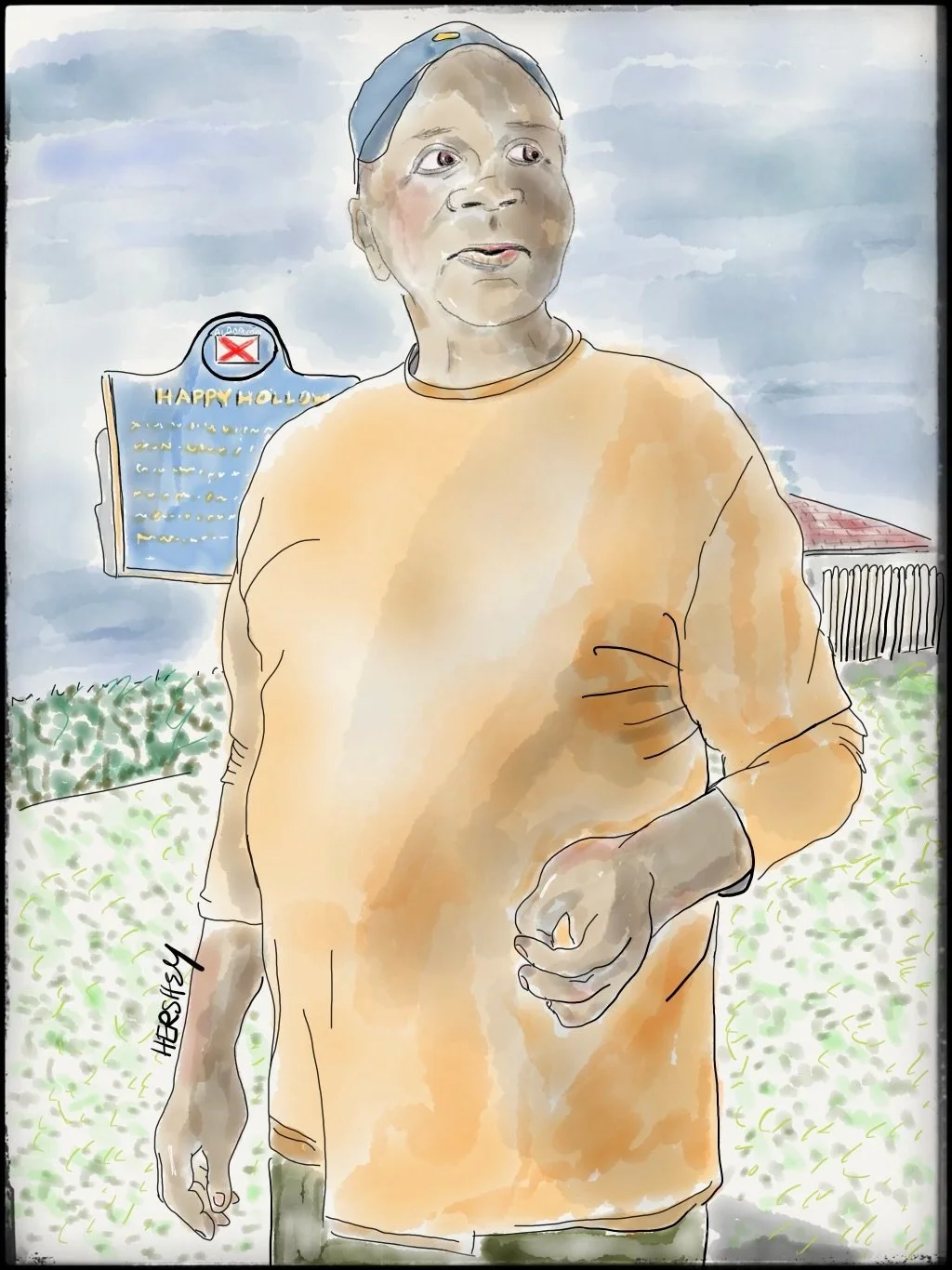
We met a very proud Van Averhart standing next to an historical marker in Happy Hollow, the oldest African-American neighborhood in Prattville, Alabama. When we asked him where he grew up, Van gestured toward a field behind him, “That’s where my family home was. Almost every home here was knocked down. The oldest thing in this here neighborhood now is that pear tree.” Van seemed to know every person who drove by. He said, “I’m an Averhart! It’s a big name in these parts!” Van was the town’s first African American firefighter EMT level 2. He did three tours of duty in a 25-year-long military career. Raised with 4 brothers and 3 sisters, he was taught to have a strong work ethic. Van is a die-hard Democrat and very attentive to politics. Jenny asked, “What do I need to know as a liberal Jew from NYC about the people of Prattville? “We’re friendly, we care, we like diversity”, Van replied. He paused, and then said, “But many black folks in town don’t want conflict with white people so they either don’t vote or they just vote with them.”
As much as politicians in municipal, state, and federal governments have fought these trends over the decades, very little has been accomplished by either party to mitigate technological advances and economic consolidation or to reinvent rural America as prosperous and healthy places to live. Yet, although Republicans haven’t helped rural communities any more effectively than Democrats, the Republican Party remains the preferred party of rural folks by far. The party’s dominance is probably much more grounded in cultural identity regarding beliefs around religion, gun rights, and family structures than in substantial policy disagreements among politicians from either party.
MAGA voters are overwhelmingly white and rural, and it's a fair guess that most don’t care much about policy. Fueling anger against Democrats is easier than discussing real solutions to difficult problems. In pursuit of votes, campaign contributions, media attention, and re-election, these politicians willfully exacerbate rural resentments. However, as you can tell from some of our stories, not everyone takes the bait. Yet, it seems that more often than not, if people aren't prone to MAGA-baiting politicians, and they aren't older black folks who lived through the civil rights era, then they don't connect to voting at all.
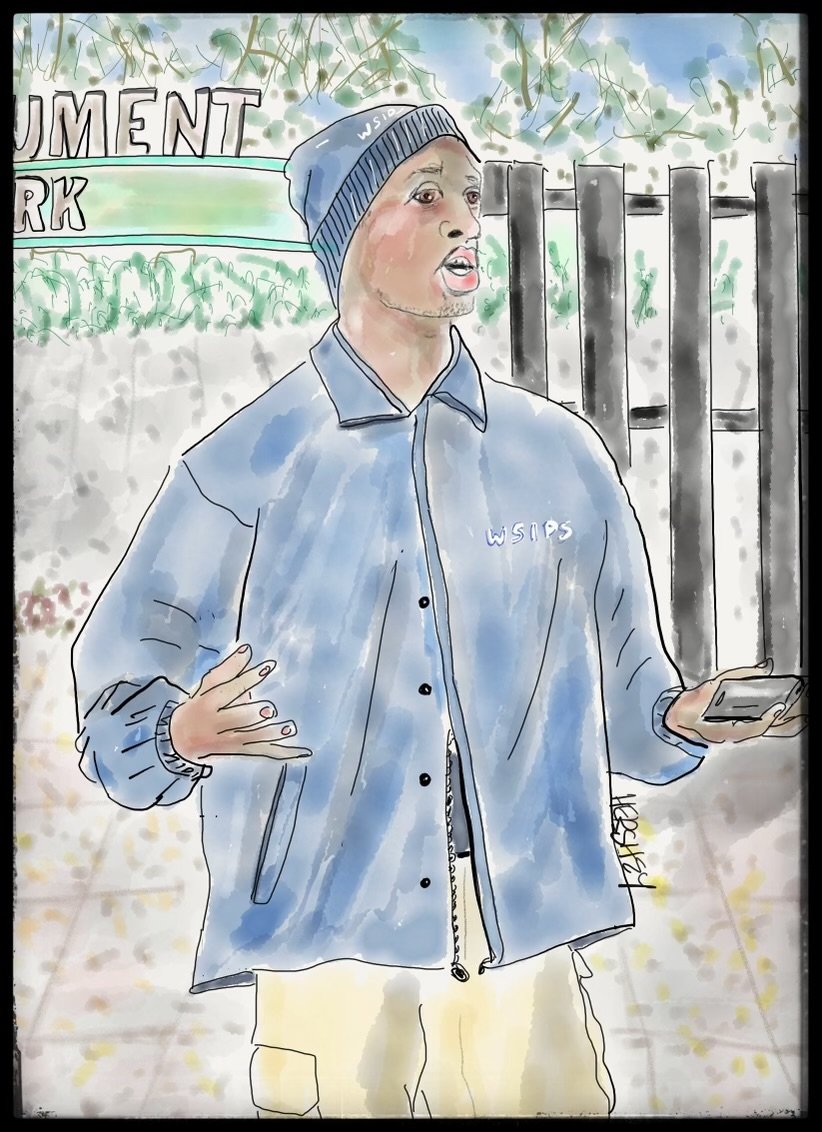
We met Officer Jason B at the Freedom Monument Sculpture Park in Montgomery. Although the park wasn’t going to open for another week, it honors the lives and memories of the 10 million people who were enslaved in America. Jason’s job was to explain to visitors at the front gate that they couldn’t go in. When Jenny asked Jason, “How does it feel to work at such an important park?,” Jason answered, “Oh, I don’t do the whole African-American history thing. I’m just not into it.” Behind Jason, we could see slave quarters that had beds from actual plantations. We could also see many large sculptures by black artists depicting slave life. We were puzzled by Jason’s indifference to his surroundings. When we asked him if he was going to vote, he replied, “Nah, wouldn’t do any good.” I said, “If you don’t vote, then older white people like me will be making decisions for you. You really want that?” To that he raised an eyebrow - food for thought, perhaps. Or maybe he was thinking, that’s how it will always be anyway.
When MAGA inspired manipulative behaviors do work, they exempt politicians from developing and implementing policies that will help rural communities. It’s much easier and far more effective for these politicians to frighten and anger their rural constituents into supporting them, than to earn their votes and trust by improving their everyday lives. But it doesn’t matter. Most of the time, rural communities reflexively support Republican candidates anyway.
After all, if neither party offers up any real solutions, why not vote for the party that most aligns with your values? And if that’s not enough to get you excited, the candidate who sticks it to your enemies - those elites on either coast who look down on you with such contempt… well, that’s worth supporting because it feels so good to get even. This is a form of blood sport for MAGA voters and politicians alike.
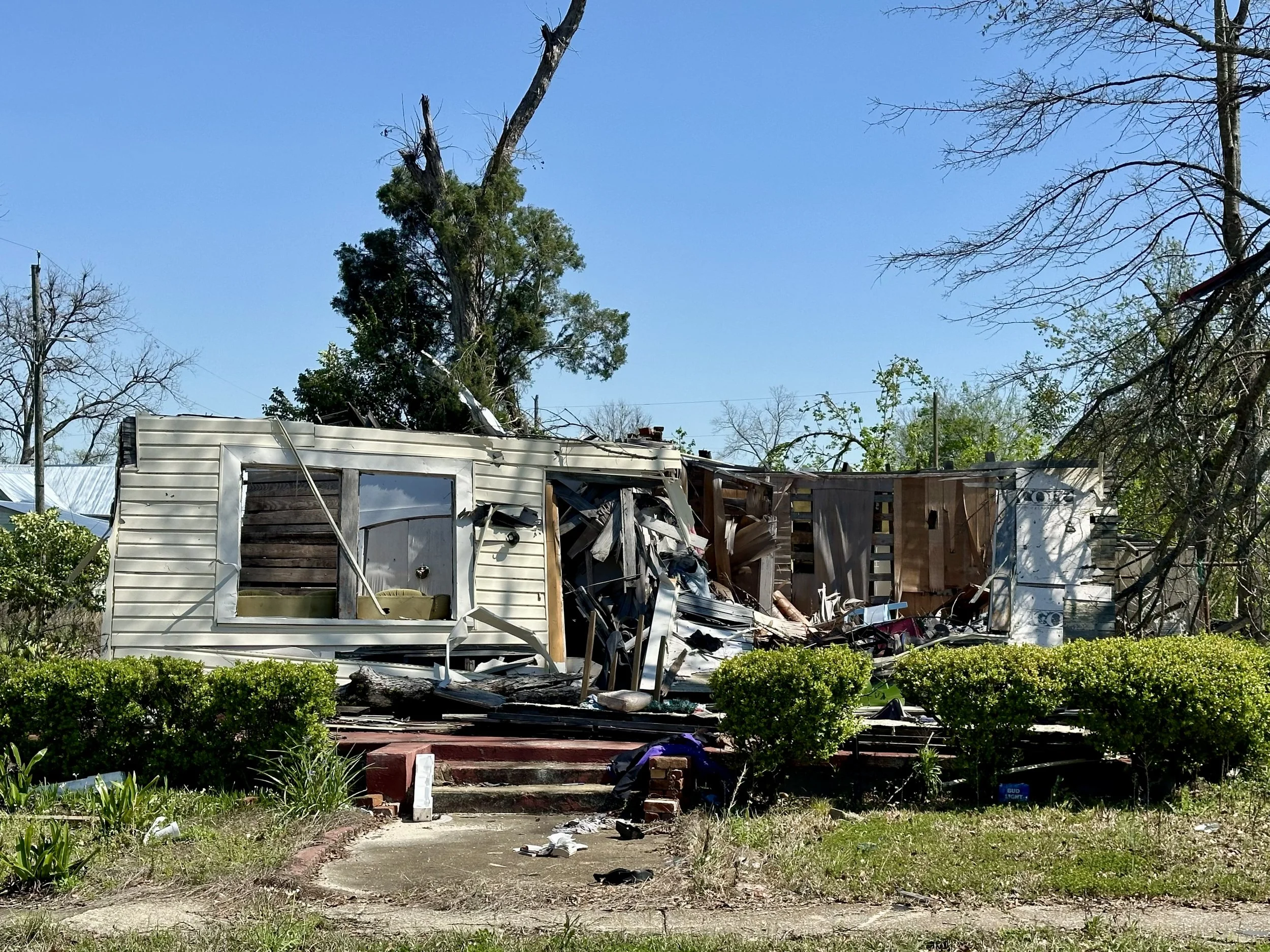
A home demolished by the 2023 tornado in Selma, Alabama, sits empty. We saw many more houses nearby in a similar state of disarray because of the tornado. Home of the famous Selma to Montgomery civil rights marches that began at the historic Edmund Pettus Bridge, Selma remains one of Alabama's poorest cities.
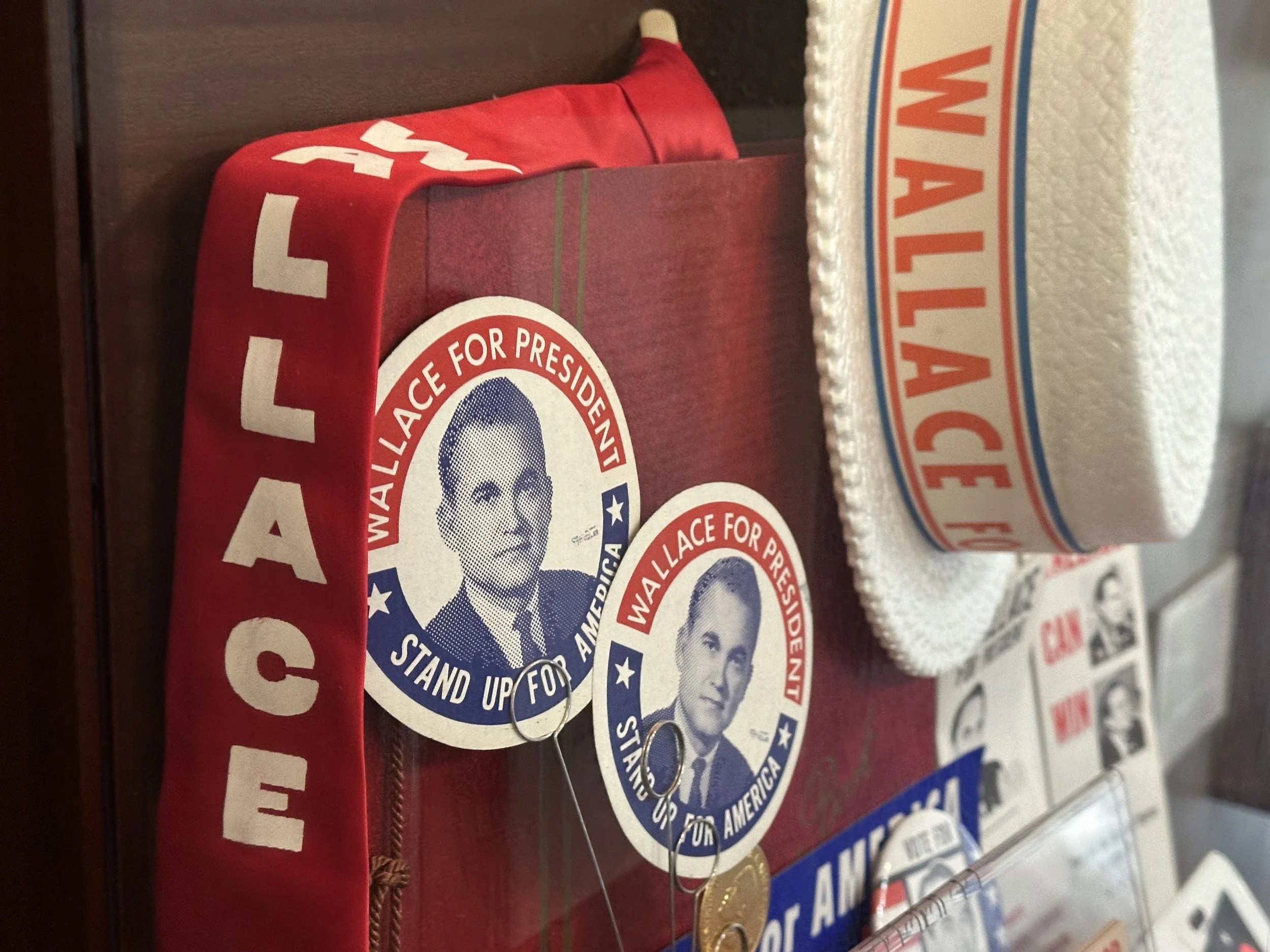
Selma is home to the National Voting Rights Museum. A fascinating museum, I was struck by George Wallace’s Presidential Campaign material, which reminds me of MAGA merchandise.
Many Americans would be surprised to learn what Mitch McConnell or Donald Trump will never tell you: beginning in 2008, the year Obama was elected President, per capita federal income assistance grew larger in rural areas than in cities, suggesting America’s “welfare class” is both whiter and more rural than the GOP wants you to think.
Initially driven by the first stimulus bill in response to the subprime mortgage meltdown, the Federal Government focused on higher poverty rates in rural areas and more extensive infrastructure and services over larger geographic areas. For example, income security programs such as Social Security, Medicare, and other forms of federal income support, including the SNAP program, now comprise a larger share of federal spending in rural areas than they do in suburban or urban areas. In addition, prosperity in cities effectively subsidize rural areas, most notably in states with higher per capita rates of federal taxes.
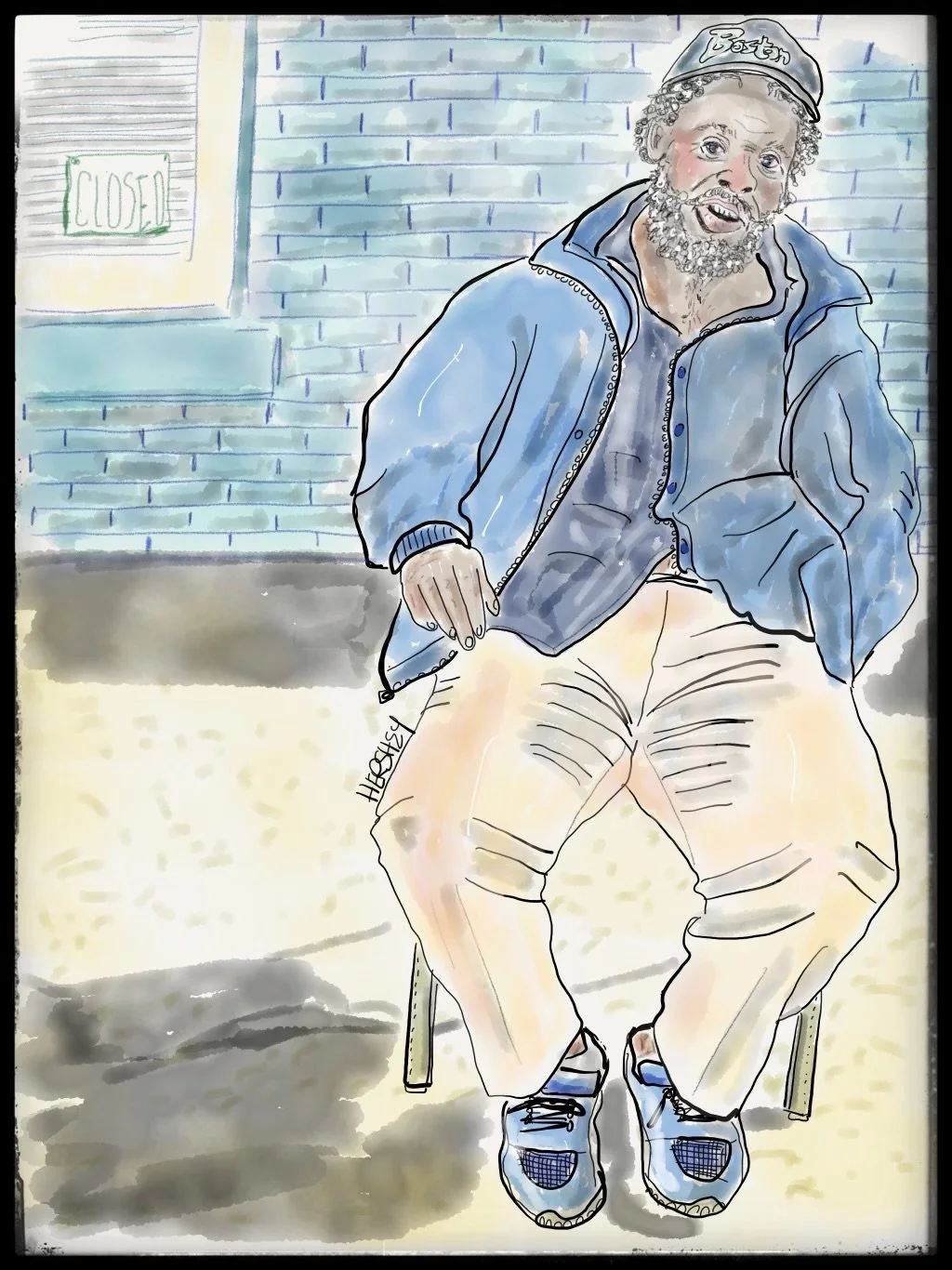
As we headed east toward the Okefenokee Swamp, we biked through Boston, Georgia (pop. 1223). Ron was sitting at an abandoned gas station that had most recently been a shuttered lawn mower service center. We stopped to chat and learned that 74-year-old Ron had spent his life working in cotton and peanut fields nearby as a laborer. He also raised five kids. His youngest boy works in the only food market in Boston, and his oldest is a mortician in the next town over. His daughters moved to bigger cities. Finally retired, Ron spends his day watching whatever passes by. He was so friendly that we felt ok asking him if he watched the news. He said, “I’m a lifelong Democrat, and I watch CNN every day.” A bit surprised, Jenny asked Ron his thoughts about the upcoming election. Ron said, “I don’t understand why folks say such bad stuff about Biden. He old, but lots of people are old. That don’t mean nothin’… give him time. He’s only been at this four years.”
Rural America still contributes significantly in its nostalgic salute to our nation’s political history and its cultural character. Politicians sing the praises of small and rural places, assuring voters that their communities are where the people are good, character is forged, and folks are self-reliant. Many in both parties tend to leave out the part about how they left to achieve their own ambitions. To demonstrate their authenticity, they’ll claim to be small-town folk, no matter where life took them, even putting a little extra drawl in their accents. But Republicans, in particular, know that when they really need the votes, the best way to get them is to amp up the culture war, telling voters that the next election—indeed, the fate of the country—is all about winning the war between unfairly treated, misunderstood, tax-burdened country folk against socialist democrat elitists who live in failing cities, want to take away your guns, and are bankrupting the government. It’s gonna be a bloodbath out there!
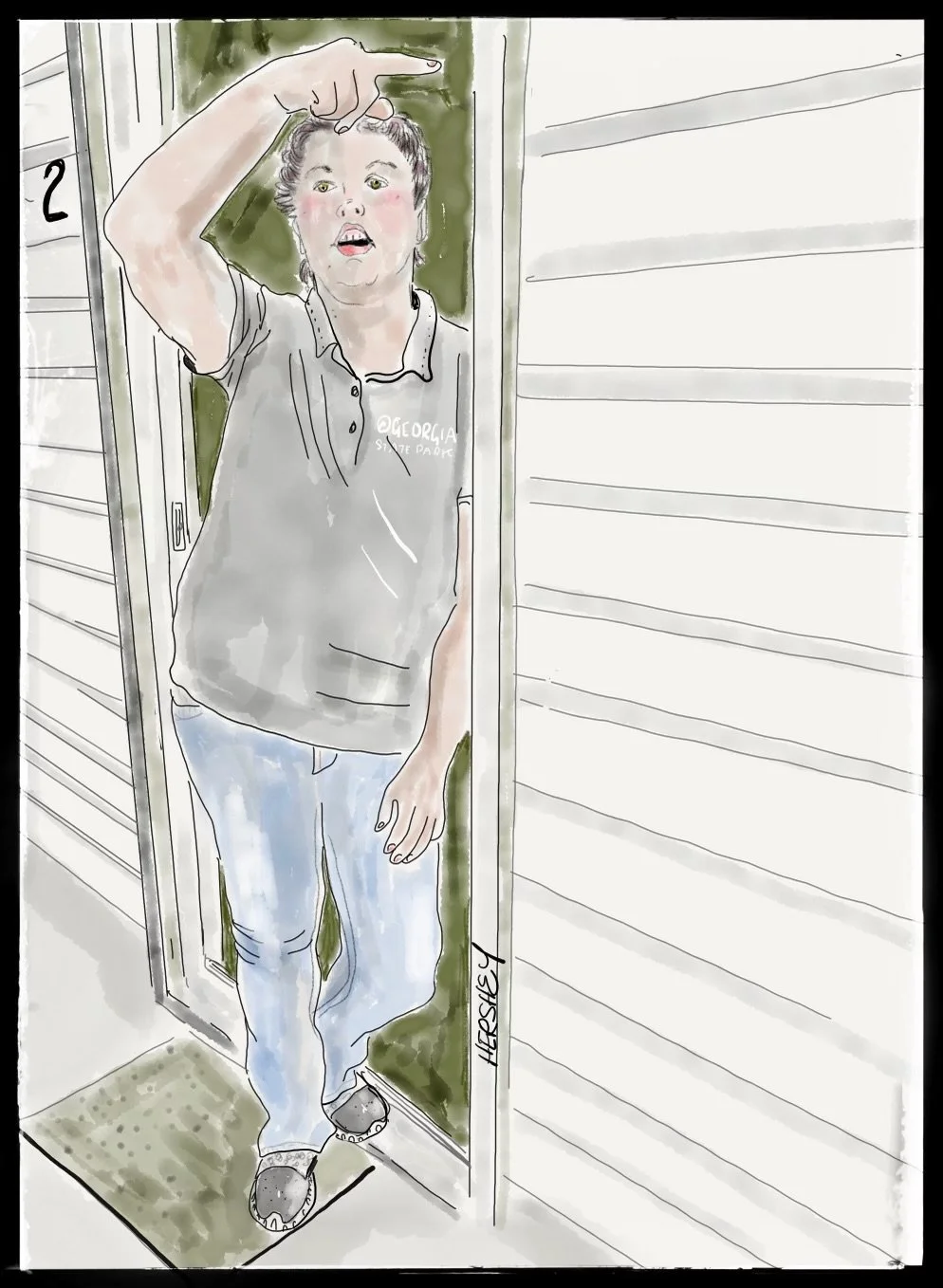
Ruby was born and raised in Fargo, Georgia (pop 250), in a “trailer” park. She pointed, “over there,” where her mother currently lives. She has five jobs cleaning properties on the edge of the Okefenokee National Wildlife Refuge and also cleans the local church. Her mother did the same job, but now her Mom and Ruby’s brothers work for local beekeepers making honey. At 34, Ruby is raising three teenage girls with her husband Jonathan. Jonathan helps with the girls when he isn’t driving a tractor. They met in kindergarten and were crowned “Mr. and Mrs. Fargo” by the local newspaper when they got married. Ruby’s oldest daughter, Ariel, wants to be a vet. Her middle daughter, Skyler, is an A student and works hard at the local diner. Her baby, 14-year-old Carlie, wants to be a country singer. Ruby saved up for a guitar and bought one “on the internet” and Carlie is slowly teaching herself to play. Jenny asked Ruby if she planned on voting in the upcoming election. “That Biden is not gonna have any money left for us. He’s giving too much to people that don’t belong here.” “Oh, you mean immigrants?” Jenny asked. “Yup. And the other guy… I don't know. …I don’t have time to vote. I gotta work”.
Rural politicians have very significant leverage for their arguments because: rural America is privileged with exceptional voting power. Both the Senate and the Electoral College were established during a time when America was predominantly rural. The Senate was designed to represent states equally, with each state, regardless of population, having only two senators. Known as the Great Compromise, this was how our founders tried to balance the interests of smaller states with larger, more populated states, and it was a reasonably equitable solution for most of the 18th and 19th century. But that is no longer the case.
Created as a compromise between electing the President by Congress and by a popular vote, the “Electoral College” gave smaller states more influence in presidential elections than their population would suggest they actually deserve. Every state gets a number of electors equal to its total number of Senators and Representatives, which means all states have a bare minimum of 3 electoral votes, regardless of population. Over time, as the nation has urbanized and population densities have shifted, the relative power of rural areas in both the Senate and the Electoral College has increased because the minimum representation of two Senators and one Representative remains constant.
Rural voting privilege is apparent once one understands how the math works. Consider the following: Wyoming has a population of about 600,000 people, with 2 senators. This means that each senator represents one half of their population, about 300,000 people. California, on the other hand, has a population of about 39 million people, so each California senator represents about 19.5 million people. That means a California voter in the Senate has about .015% of the power of a Wyoming voter when it comes to representative influence in the Senate. Of course, apart from inequalities produced by gerrymandering by either party, the House of Representatives lives up to its nickname the “People’s House,” because it is our one elected body in the federal government that adheres to the “one vote, one person” principle that underpins most all other western democracies.
The math for the electoral college works a little differently: Every state gets an electoral vote for each Representative and each Senator. So, Wyoming, with one Representative, gets 3 electoral votes for its 600,000 people. California has 54 electoral votes with 52 Representatives and 2 senators for its 39 million people. The math works out to a ratio of 200,000 Wyoming voters per electoral vote and 722,000 voters for each California electoral vote, which means that a voter in California has only 27% of the power of a Wyoming voter in the upcoming Presidential election. That math is especially astonishing, given that landowners in the Slave States were able to count their slaves as 3/5 (or 60%) of a person in elections prior to the passage of the 13th Amendment, which was another way that southern rural areas buttressed their electoral power over northern urban Free States.
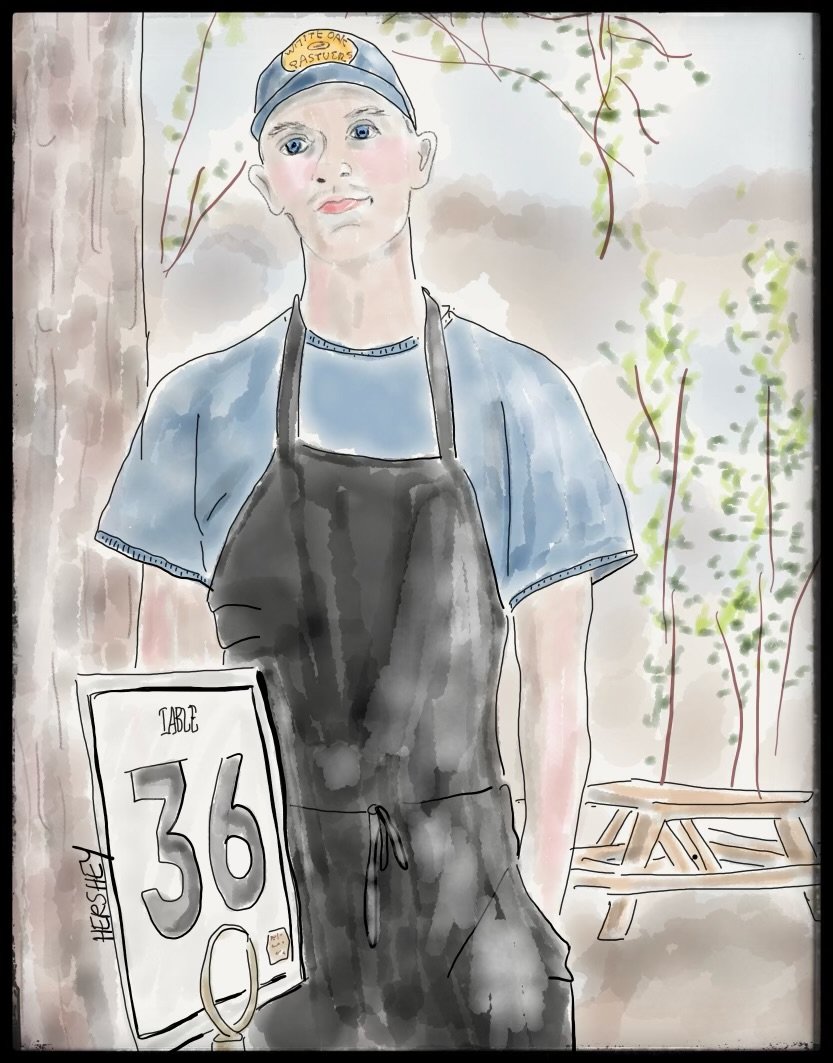
Atticus is a kind, gentle 17-year-old boy who waited on us at the White Oak Pasture Farm in Bluffton, Georgia, a family-run farm focusing on regenerative land management. Atticus (his mother named him after Atticus Finch) is a high school senior. He’s very reticent about leaving home to go to Georgia Southwestern State College in Americus. His brother left for an elite college in New England two years ago, but Atticus has no desire to follow in his footsteps. Atticus timidly confessed, “I don’t wanna grow up.” Jenny asked, “Like Peter Pan?”. He didn’t miss a beat. “Yeh, and pay taxes, have to do grown-up things and all kinds of other stuff,” Atticus muttered. “I don’t wanna leave this town. I’m gonna come back here.” Later, we learned that he had a rough time during the Covid pandemic. Atticus is not into social media, and his life in Bluffton (pop 113) is isolated. He did cultivate a friendship with a kid from Great Britain through a video game. When Jenny asked Atticus if he will vote in November (he turns 18 in May), he said he wasn’t interested. “No? Really? Do you have any curiosity?” Jenny asked. Atticus responded, “Nope. I just don’t care.”
The looming threat of a MAGA-inspired Presidential victory reveals apparent weaknesses in our electoral system. Trump and the Republican Party he now owns (which, as Mitch McConnell indicates, has far more rural supporters than urban) could never become President in a “one person, one vote” democracy. But, given the privileged electoral college status of rural states, America may be entering a period of authoritarian minority rule that may become more extreme. In some ways, the disconnect between the Supreme Court ruling on Dobbs v Jackson and the opinions of the majority of Americans on abortion rights is a “canary in the coal mine” event for how authoritarian rule begins.
A recent poll by the Pew Research Center found that about 62% of U.S. adults believe abortion should be legal in all or most cases, while 36% think it should be illegal in all or most cases. Additionally, the poll indicated that 61% of respondents strongly oppose and 13% somewhat oppose their states prohibiting all abortions with no exceptions. Even more surprising are results of a new Axios-Ipsos poll, which found that 81% of Americans agree that “abortion issues should be managed between a woman and her doctor, not the government.” That number includes 65% of Republicans, as well as 82% of Independents and 97% of Democrats. The idea that abortion should be between a woman and her doctor was the language of the Supreme Court’s 1973 Roe v. Wade decision, overturned in 2022 with the help of the three extremist justices appointed by Trump. These polls suggest that a significant majority of Americans are against a federal abortion ban without exceptions.
The coming Presidential election may be a perfect storm wrought by our dangerously outdated election system. White and rural MAGA voters have an electoral edge, and Trump is their guy. He understands better than any other politician how they’ve been taught to believe they are unfairly treated.
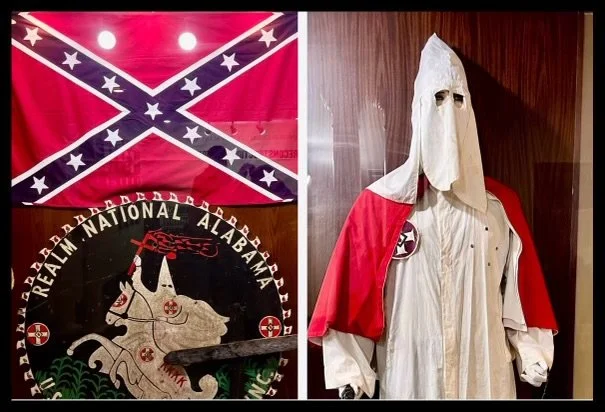
Throughout its history, the Klu Klux Klan (KKK) has been recognized as a symbol of hate, racism, and terrorism. Efforts by law enforcement and civil rights organizations have reduced its power, but the Klan still has active members, and its legacy continues to impact American society. Photos taken at the National Voting Rights Museum in Selma.
Unfortunately, Trump’s incendiary rhetoric against migrants and his political opponents is often quickly retweeted and shared with millions of others, leading Trump’s authoritarian impulses to inspire his followers. Consider the following quote from the book, “White Rural Rage: The Threat to American Democracy” by Tom Schiller and Paul Waldman: “Authoritarian populism is distinct from other variants of populism because it not only focuses on a conflict between “the people” and the elite but also rejects democracy, as democracy might enable those who are not like “us” to win and hold power. Wherever one of these rightist movements emerges, chances are it will have its most fervent support in rural areas. And not just rural areas, but the places that have been left behind by economic transitions.”
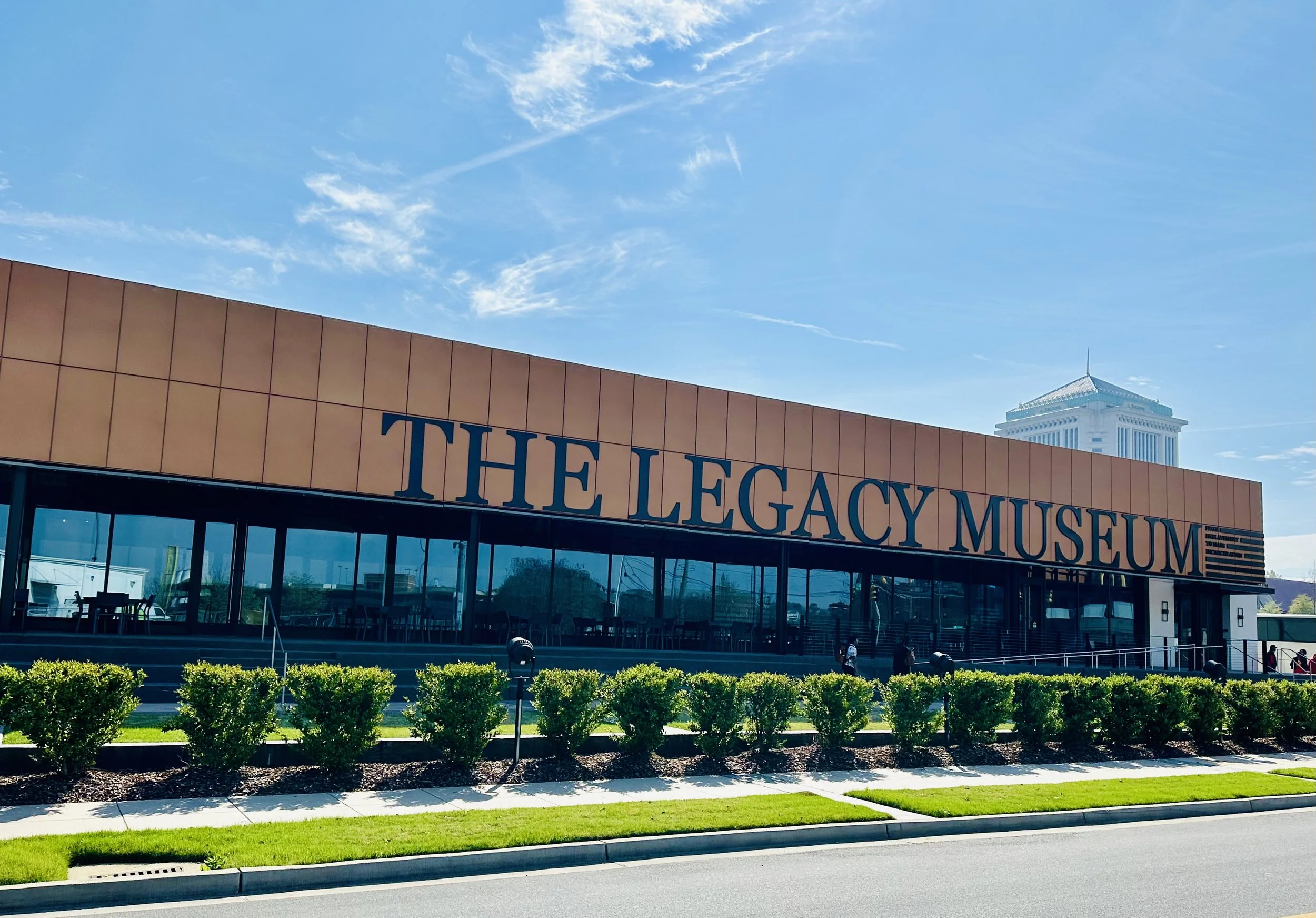
The Legacy Museum from the outside. Deeply affecting, we recommend you plan for an all day visit. The exhibits are detailed and thorough. There is even a new wing devoted to art inspired by the legacy of slavery.
The Legacy Museum in Montgomery, Alabama, is a compelling testament to the history of racial injustice in the United States. Unfortunately for us (but for understandable reasons), photography is not allowed at the museum. Through thought-provoking exhibits and immersive displays, the museum illuminates the painful truths of slavery, lynching, segregation, and mass incarceration of people of color that have shaped our nation's narrative. Not for the faint of heart, visitors are confronted with the harsh realities of America's past and inspired by stories of resilience, courage, and activism.
The Museum was founded by Bryan Stevenson, a public interest lawyer, the bestselling author of “Just Mercy,” and the founder of the Equal Justice Initiative (EJI). The EJI provides legal representation to people who have been wrongly convicted, unfairly sentenced, or abused in state jails and prisons. In 2018, EJI opened both the Legacy Museum and the National Memorial for Peace and Justice in Montgomery.
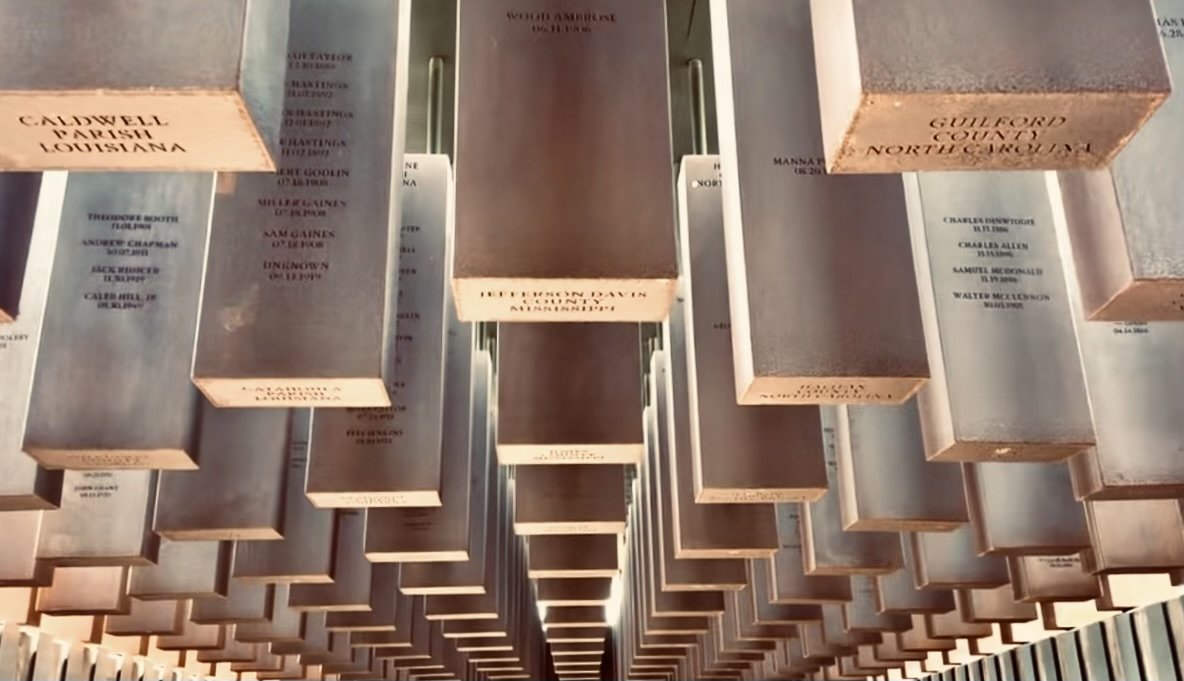
Commemorative hanging tombstones honoring each of the 4,400 known victims of lynchings across the United States at the National Memorial for Peace and Justice. It's impossible to describe how moving and unsettling this memorial is.
Security at the museum rivals what one would find at an airport in a large city. At first, I thought it was overkill, but as my experience in the museum gradually deepened, I began to understand its importance. Racial violence is so deeply embedded in the cultural history of the American South that the museum creators, the Equal Justice Institute, are simply being realistic about protecting the thousands of people who visit every day.
It's impossible not to think about Florida’s recently passed Stop WOKE Act while visiting this museum. Ron DeSantis would not like this place, nor would others who share his views. If you are white, and your identity is tied to your whiteness, you will cringe as you learn how cruel some people who share your racial group have been to others of a different race. And if you are a white child, you may feel personally responsible until a thoughtful adult makes it clear that it was only some members of your racial group who were cruel; others looked the other way, and some were openly and heroically resistant. As a white parent, you will have an opportunity to teach your child about the difference between cruelty, complacency, and the peril of inequality. The information can also be seen in another way. If you see all racial groups as equal members of humanity, you will see the exhibits as examples of how we harm ourselves, and how we can be healed by deepening our understanding of what we are capable of, both the good and the bad.
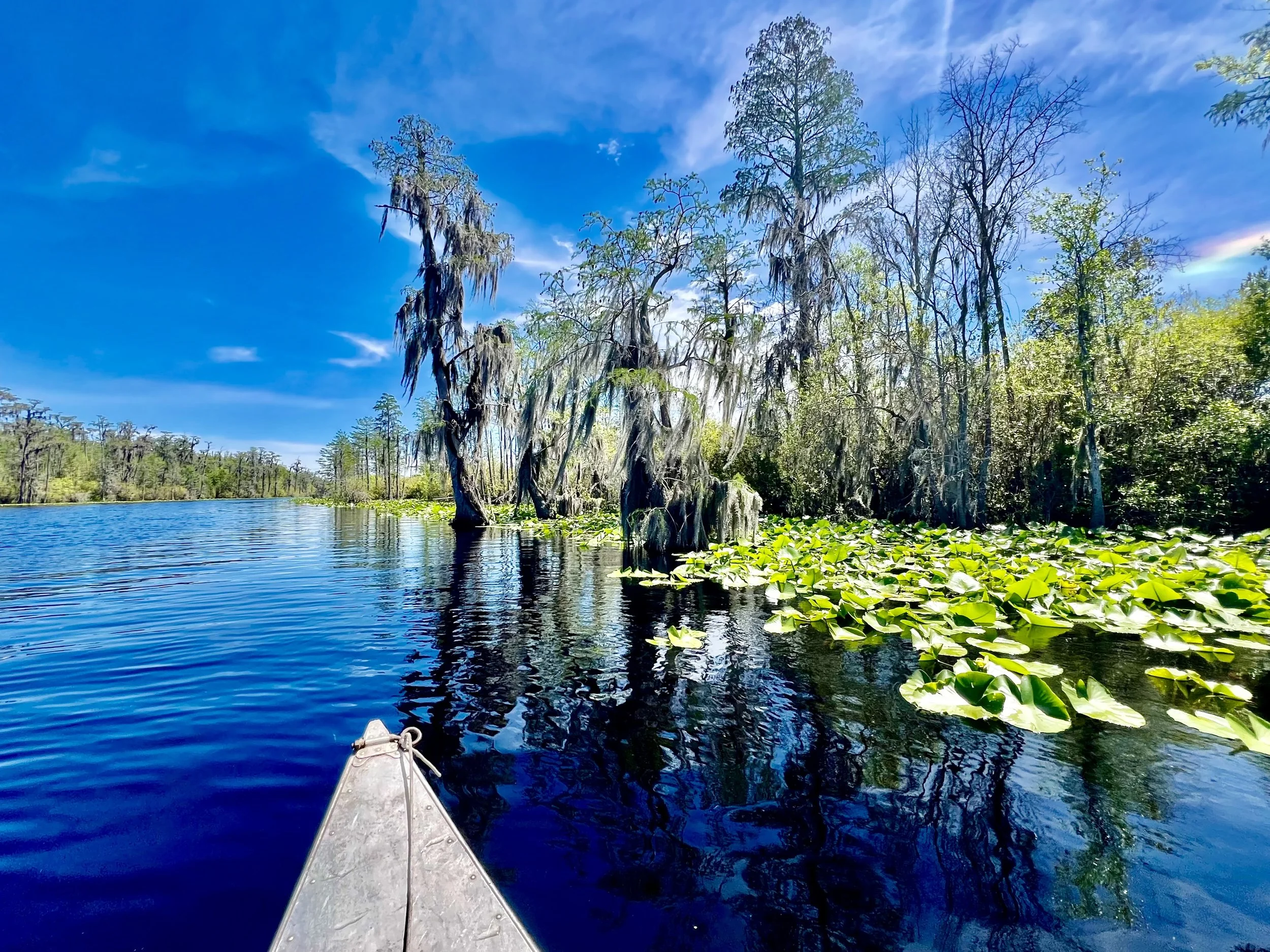
Jenny and I spent a day canoeing inside the Okefenokee National Wildlife Refuge, about 18 miles north of Fargo, Georgia. It was a stunning day, and an opportunity we will never forget.
A Southern Dream
One day not long ago, in a land where the echoes of unity had started to ring clear after a tumultuous struggle for civil rights, a shadow crept silently back into our national politics, feeding on forgotten fears and whispered doubts. It began as a murmur among ambitious and powerful people who realized they could inspire rural white folk to join with them to fight their enemies, then spread that fight to small towns, suburbs and cities. Known as a political movement that promised a return to “simpler times,” its roots were hard to discern at first, but over time it became clear they were laced with the poison of racism and xenophobia. The movement grew, and its tendrils reached straight into the heart of a major political party, gripping it with an iron hold. It spoke in a language of division, painting the world in stark contrasts of “us” and “them,” reigniting flames of intolerance that many believed had been extinguished.
But within this beleaguered party that had once stood strong in the belief that “united we stand, divided we fall,” there were those who remembered the true meaning of their creed. Disaffected and dismayed, they watched as the values they held dear were twisted. At first in secret, and then finally in public, they reached out to the opposition, and to peers who still believed in plurality, diversity, and civil rights. Together, they formed a coalition, a beacon of hope against the encroaching darkness. They worked tirelessly, their efforts a tapestry of countless acts of bravery and kindness. They reminded their fellow citizens of strength found in diversity, of the beauty in every voice being heard. The coalition grew, a testament to the enduring spirit of the people. They marched, they spoke, they voted. And one by one, the walls of fear began to crumble. This major political party, now free from the grip of the divisive movement, was once again able to join hands with the opposition and govern the land fairly and effectively.
The public sphere, once clouded by the specters of racism and xenophobia, was illuminated once more by the light of understanding, acceptance, and compassion for all. The movement that sought to divide was remembered as a cautionary tale, a reminder of the vigilance needed to guard the sacred halls of democracy. And so the land returned to a path of progress, its people united by the shared belief that all voices are equal, and all hearts deserve to be heard. The death of division gave birth to a new era, one where every individual could stand tall, proud of their heritage, and confident in their right to self-determination.
And we all lived happily ever after.
Stay vigilant! Thanks for reading. If you haven’t done so, please subscribe to this blog to follow our next biking trip.
Blog writing by Michael Chase. Drawings by Jenny Hershey. Unless credited or otherwise noted, all material is the copyrighted property of the blog post authors, except for “Southern Dream,” which is a collaboration between Michael and Copilot AI.
Jennifer Hershey’s drawings can be enjoyed on Instagram @deeofo.
Postscript
The night before we left on this trip, Jenny was phoned by a close friend who was a bit intoxicated. He lashed into Jenny for planning yet another trip to the southeast. “How can you go there?” He asked, incredulously. “You know they hate you! You’re Jewish! Why don’t you go somewhere you are wanted?” Jenny was nonplussed. She loves her friend, and she also felt attacked and misunderstood.
The next day Jenny received a text from her friend with a sincere apology, and the following note: “Jennifer, the injustices endured by people of color has been on my mind, in my heart, living inside my body for the better part of a decade now. I think this shift in my consciousness is because my nephew is half African-American. I’ve always had a certain amount of fear and loathing of the south, and I think with good reason. The history bears out that fear. And continues to. It’s like I said – the politicians they promote and try to hoist onto the public, coupled with the bills they try to pass from anti-abortion to gerrymandering - the hits just keep on coming. And just like Netanyahu is trying to sell the idea that 85% of Palestinians support Hamas, I have to wonder what percentage of white southerners in their hearts think of black people as lesser inferior beings? So much of this is just baked into a culture sometimes.”
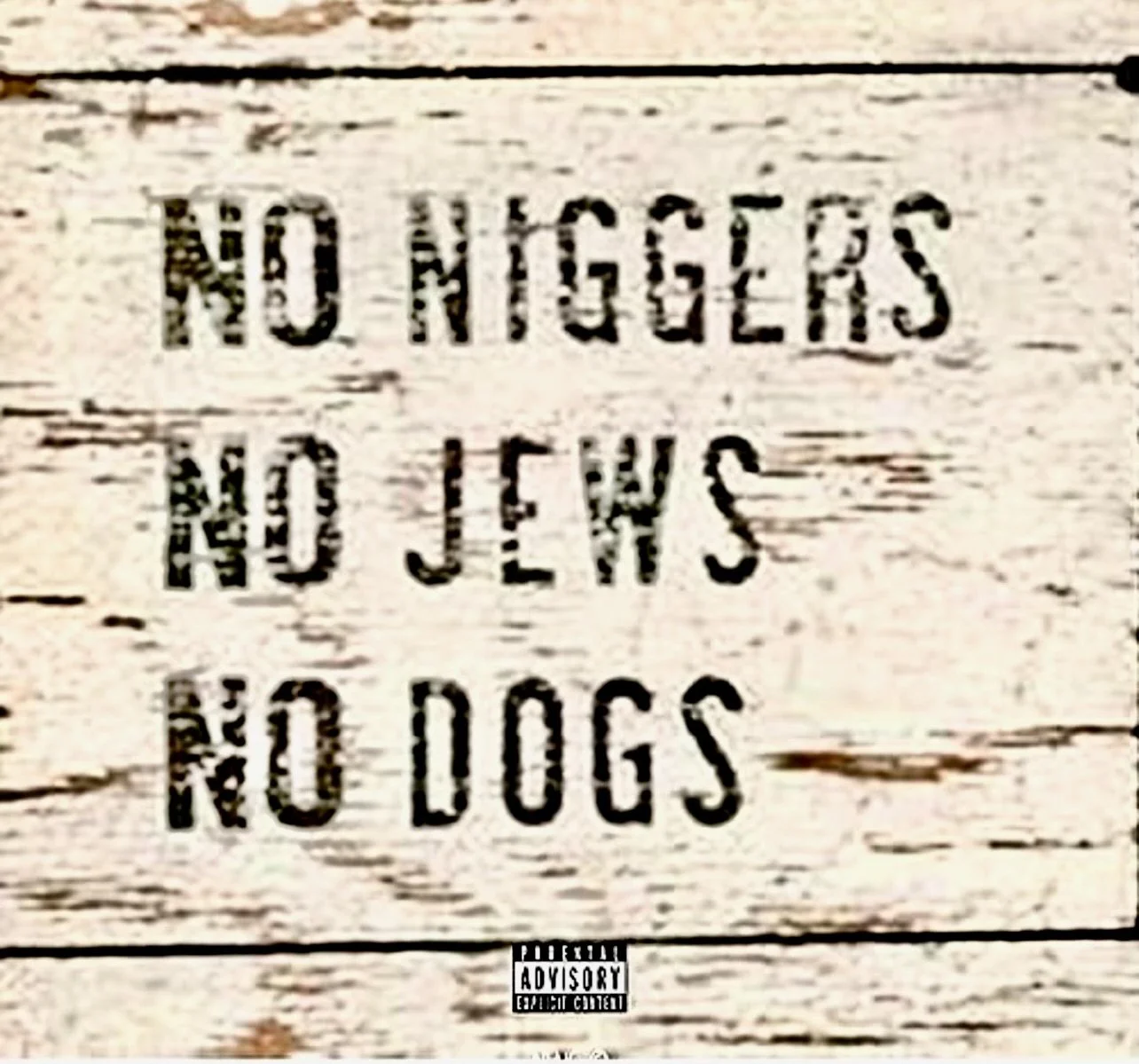
A few days later, we saw the sign above at the Legacy Museum in Montgomery. Because photography is not allowed there, we found the same sign later on Google Images with the parental advisory attached.
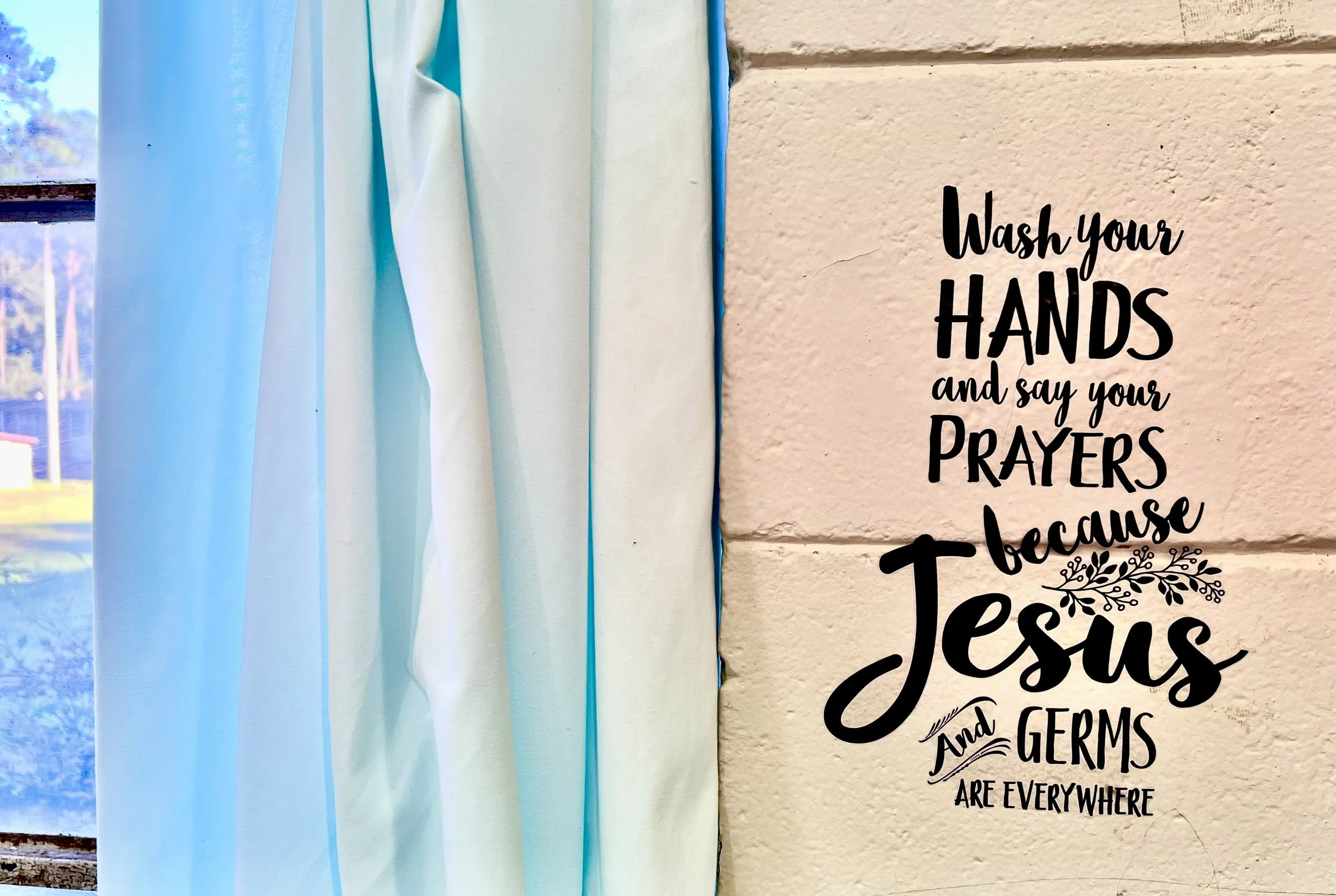
Sign in a restaurant in Fargo, Georgia.
A Journey into Land Use; Biking the Carolinas
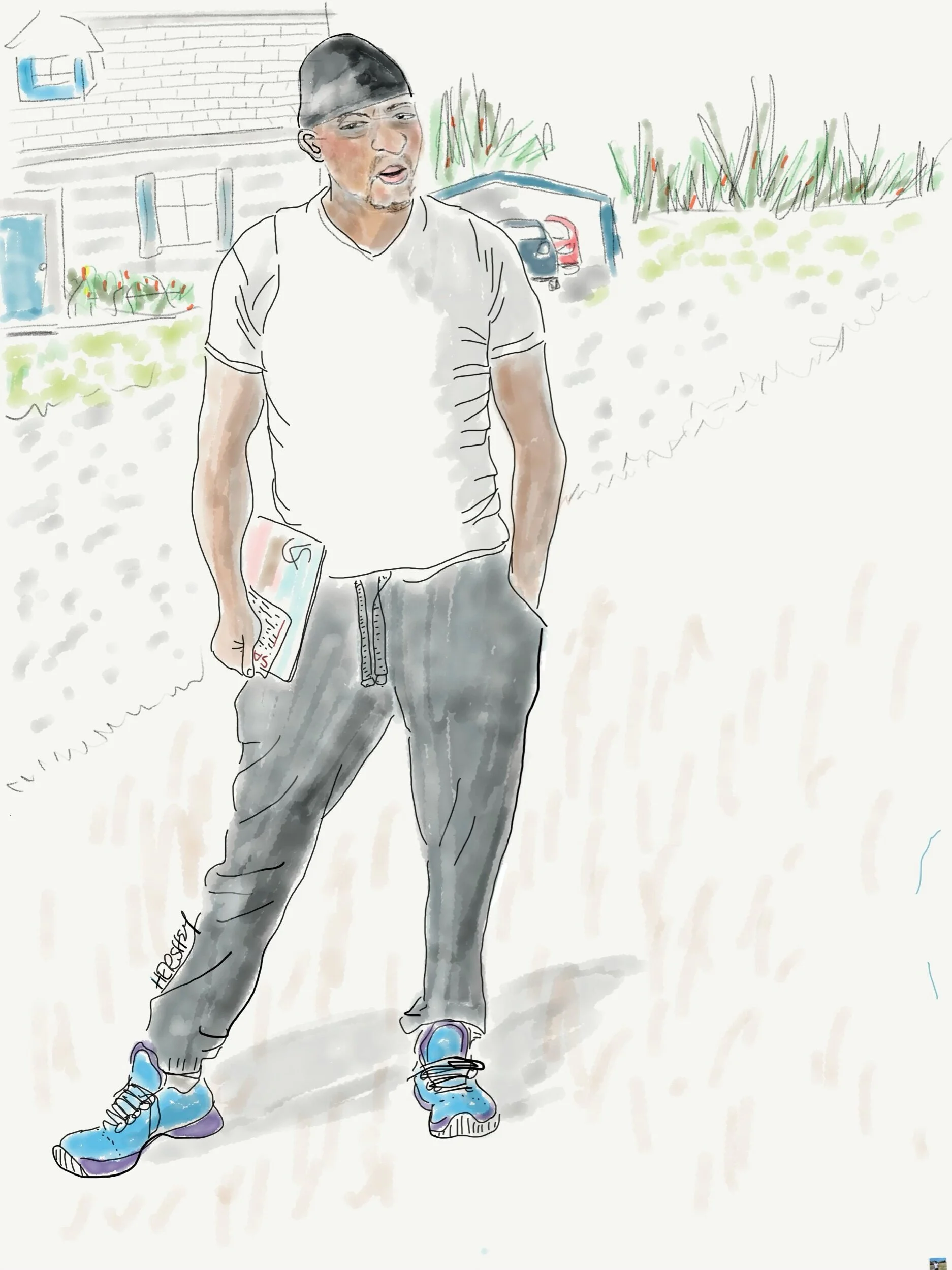
Calvin is from from Bennettsville SC. A forklift operator for Marley Engineered Products, he was given incentives and a bonus to work through the Covid pandemic. He has two kids and somehow managed to never miss a day of work, although his wife was furloughed. We met him on his way to his mailbox. He teasingly joked he was hoping for a stimulus check. …and then he said he’d been watching for it in his checking account…
Drawing by Jennifer Hershey. Follow her work on Instagram at deeofo.
To achieve great things, two things are needed; a plan, and not quite enough time.
Leonard Bernstein
We started our latest cycling trip in Chapel Hill, where Jenny’s son Sam lives with his family. Our plan was simple enough: we would bike to Savannah and back, and then drive back to New York City in time for our second Covid vaccination shot in late March. This was our first tour since the onset of the pandemic without a car, and like many of the “best laid plans of mice and men,” it didn’t go quite as we had expected. Who would have thought that a jumble of discarded wire could work its way into a derailer and rip off a speed sensor? Yet, that’s what happened to Jenny as we turned off a rather bucolic South Carolina road onto the notorious Highway 17. Because of aging infrastructure and an abundance of coastal marshland, this is essentially the only road that connects Savannah and Charleston with the sandhills to the north. To complicate matters, route 17 is recklessly identified as a cycling route on the East Coast Greenway.
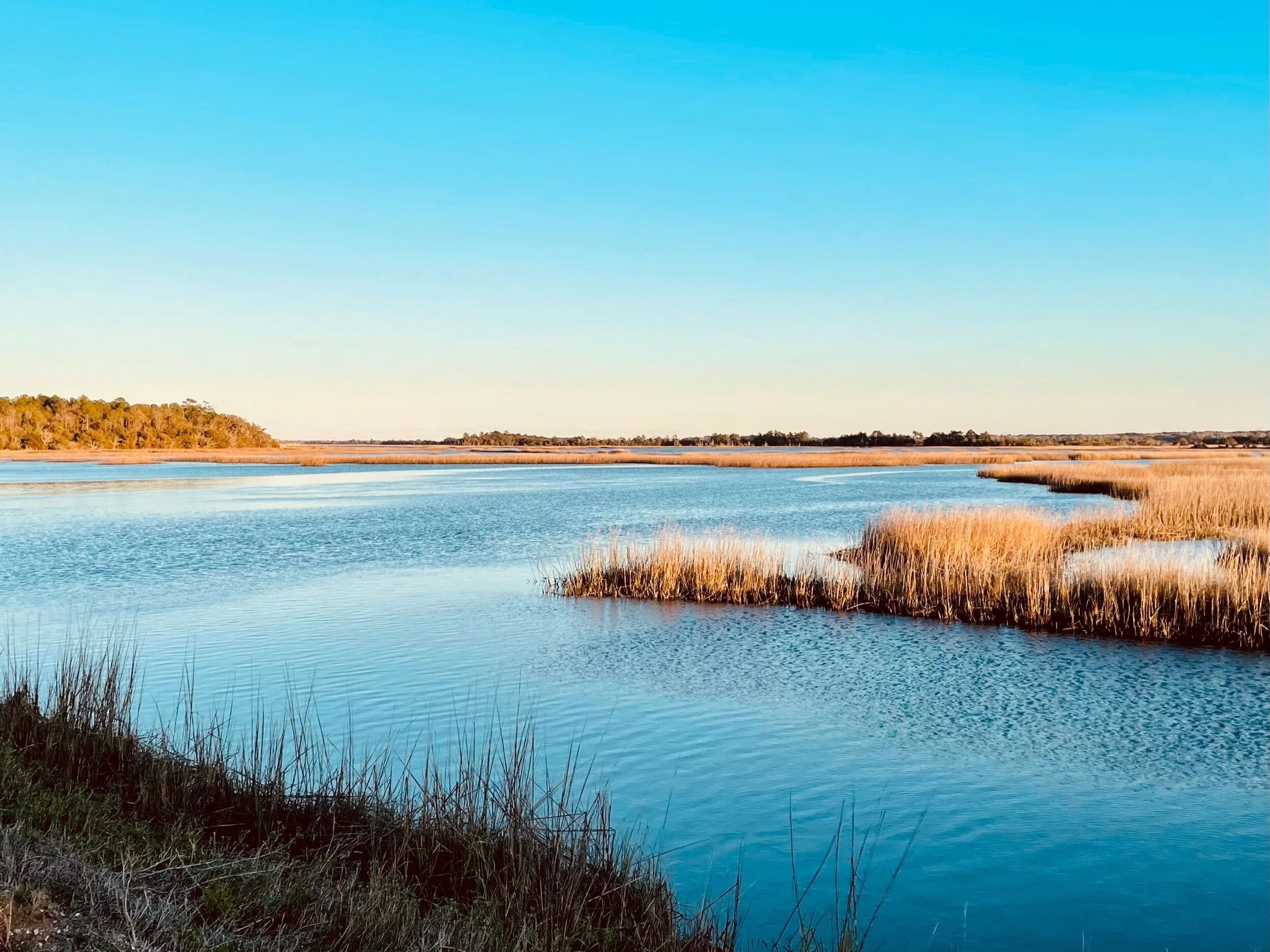
Marshland near Charleston, SC
It is also the most dangerous highway that Jenny and I have ever biked on. Where there is a shoulder (which is rare), this highly trafficked four lane highway offers cyclists lots of fast moving traffic, a customary South Carolina rumble strip, lots of loose gravel and stunningly challenging detritus. We saw the bundle of wire too late to avoid it. I went over it first, and my bike tossed the bundle into the air. Jenny swerved, but alas, it caught her rear wheel on its way down. Her bike seized immediately. Not good, but thankfully she didn’t crash.
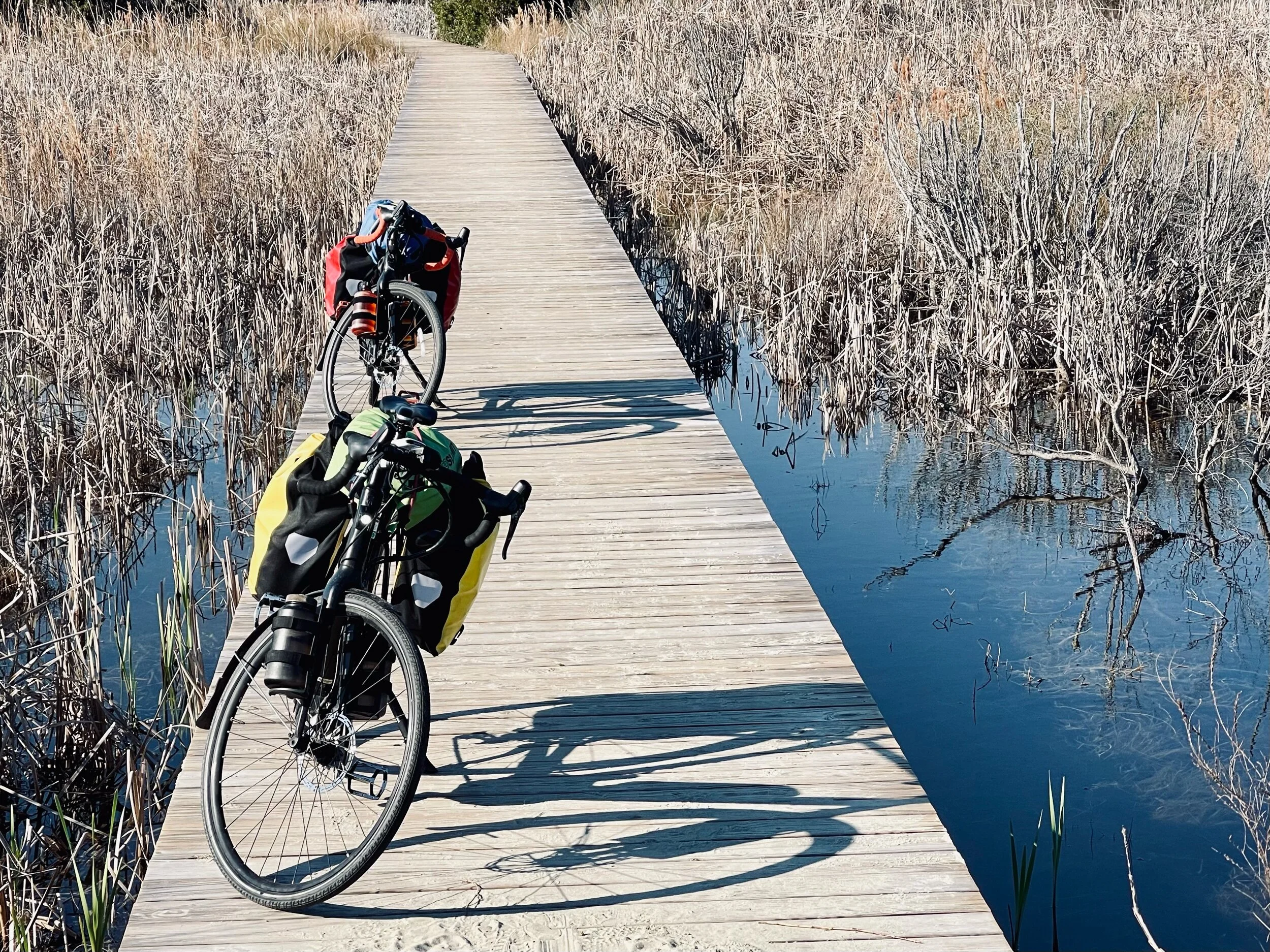
Our “fully loaded” Trek Crossrip e-bikes parked on a boardwalk near the beach on Sullivan Island in Charleston.
We both ride Trek Crossrip pedal assist e-bikes that increase our hourly touring speed by 3-5 miles/hour. This makes riding 70 miles a day on average a bit easier and faster, yet still physically challenging. But these extraordinary machines also have their downsides. After carefully disentangling and cutting out multiple strands of wire wound around the cassette, derailer, rear wheel and frame of Jenny's bike, imagine our disappointment when we discovered the wire had somehow managed to tear off the speed sensor for the small motor in her crankcase. It wasn’t the end of our trip altogether. Although we doubted we’d find a Trek dealer with such a rare part in stock, Jenny was able to nurse her bike along even though the motor would cease to work from time to time when the torque increased. This made for painful uphill cycling. We were about 400 miles from our car. Getting home on the bike would be possible, but it was going to take some fortitude.
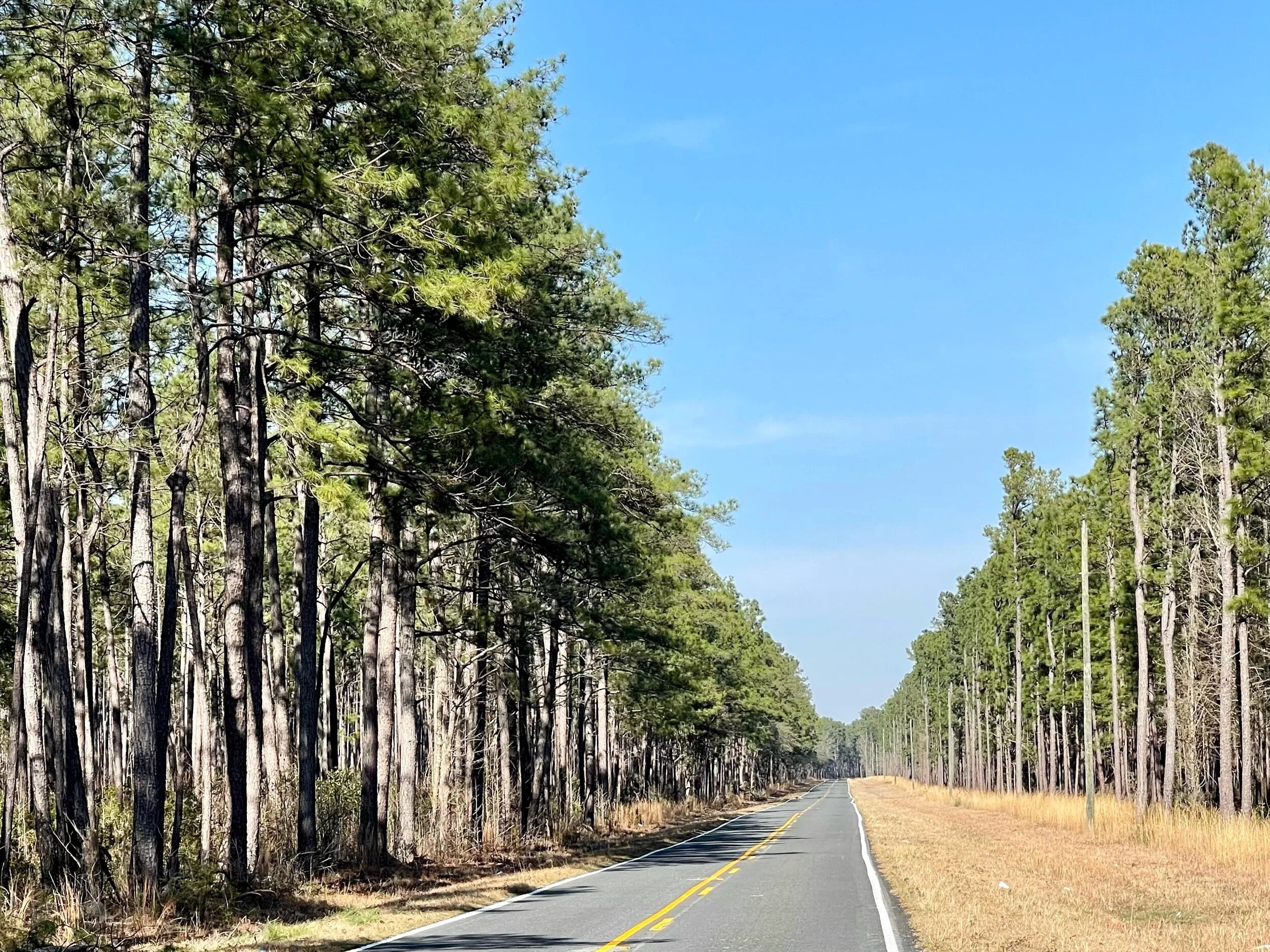
The Francis Marion National Forest on a mellow stretch of road off Route 41 north of Charleston. Formally established in the 1930’s, this forest covers approximately 259,000 acres. In 1989, the forest was nearly destroyed by Hurricane Hugo; only the young growth survived the storm and its aftermath. Today, most trees in the forest do not predate this hurricane.
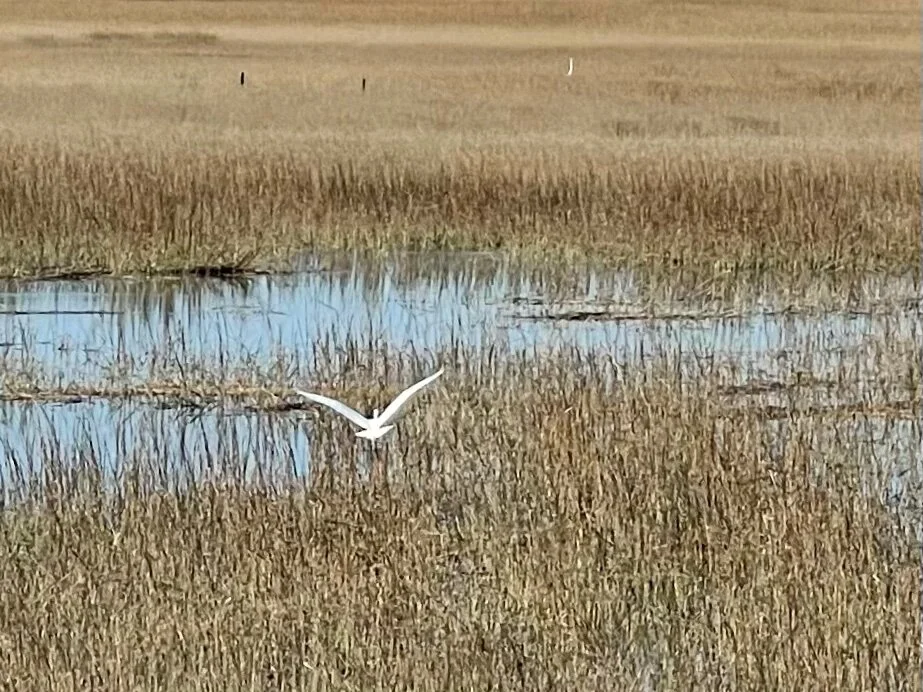
A Great Egret flying over coastal marshland on the Isle of Palm Connector near Mount Pleasant, SC, southwest of the Francis Marion National Forest.
Jenny rose to the occasion, although it took us three days to reroute ourselves through Charleston and Mount Pleasant (where we found a bike shop that, predictably, didn’t have the part we needed). Please be forewarned; if you ever visit Charleston by bike, getting into or out of that extraordinarily charming and historic city is not fun. On the upside, there is talk by state and local officials of making both Savannah and Charleston more accessible to cyclists at some point in the not too distant future through “smart growth” planning.
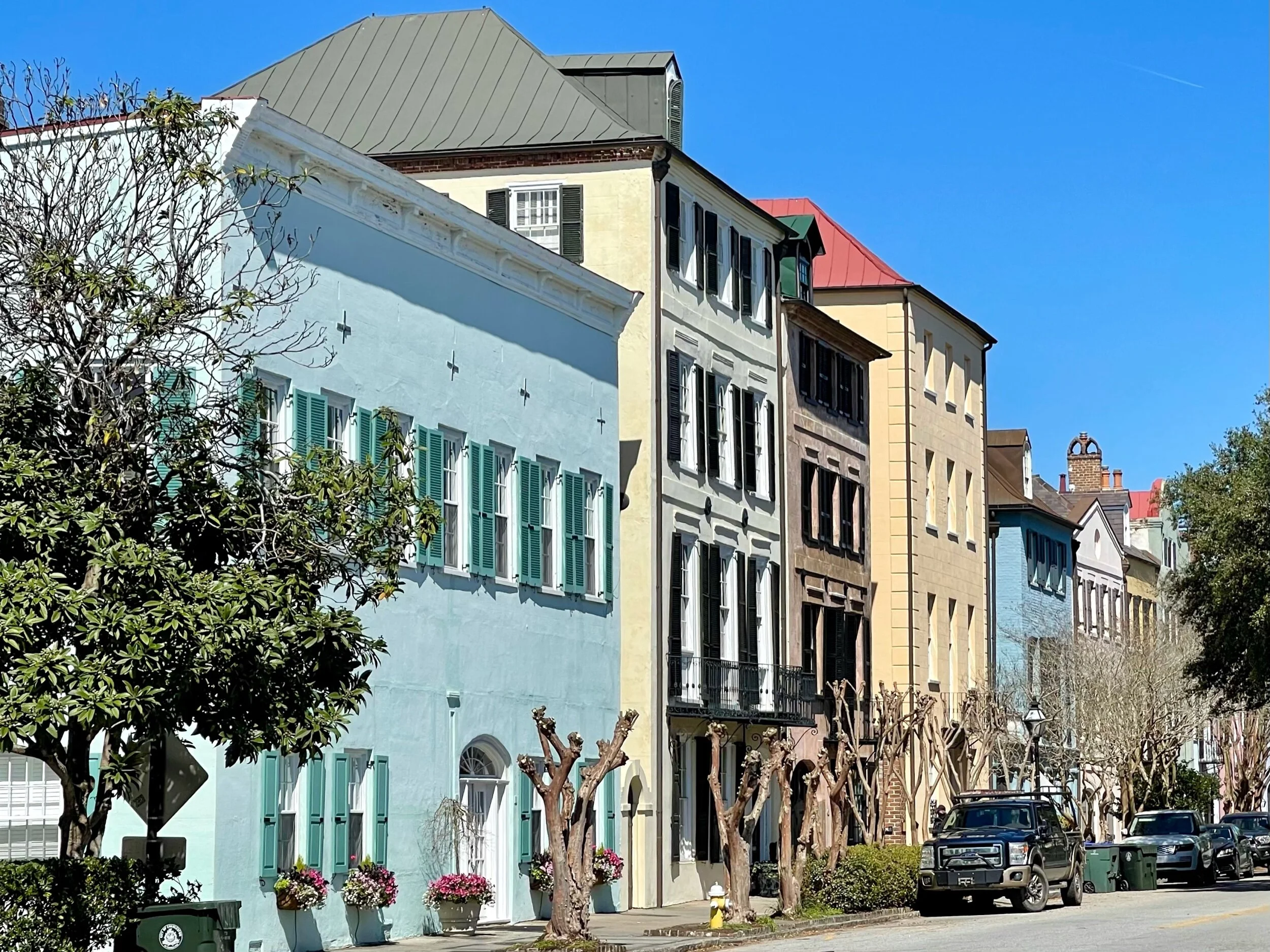
Charleston is a spectacularly attractive town, and it seemed to be gently waking from a Covid induced slumber when we passed through. There were lots of tourists wandering the streets, horse drawn carriages carrying passengers, and numerous guides talking to small groups of masked up people. We ate outside at a well known local fish restaurant, Eli Hyman’s, run by a 4th generation Jewish businessman who told us that just a few blocks away we’d find the oldest continuously used temple in the United States,
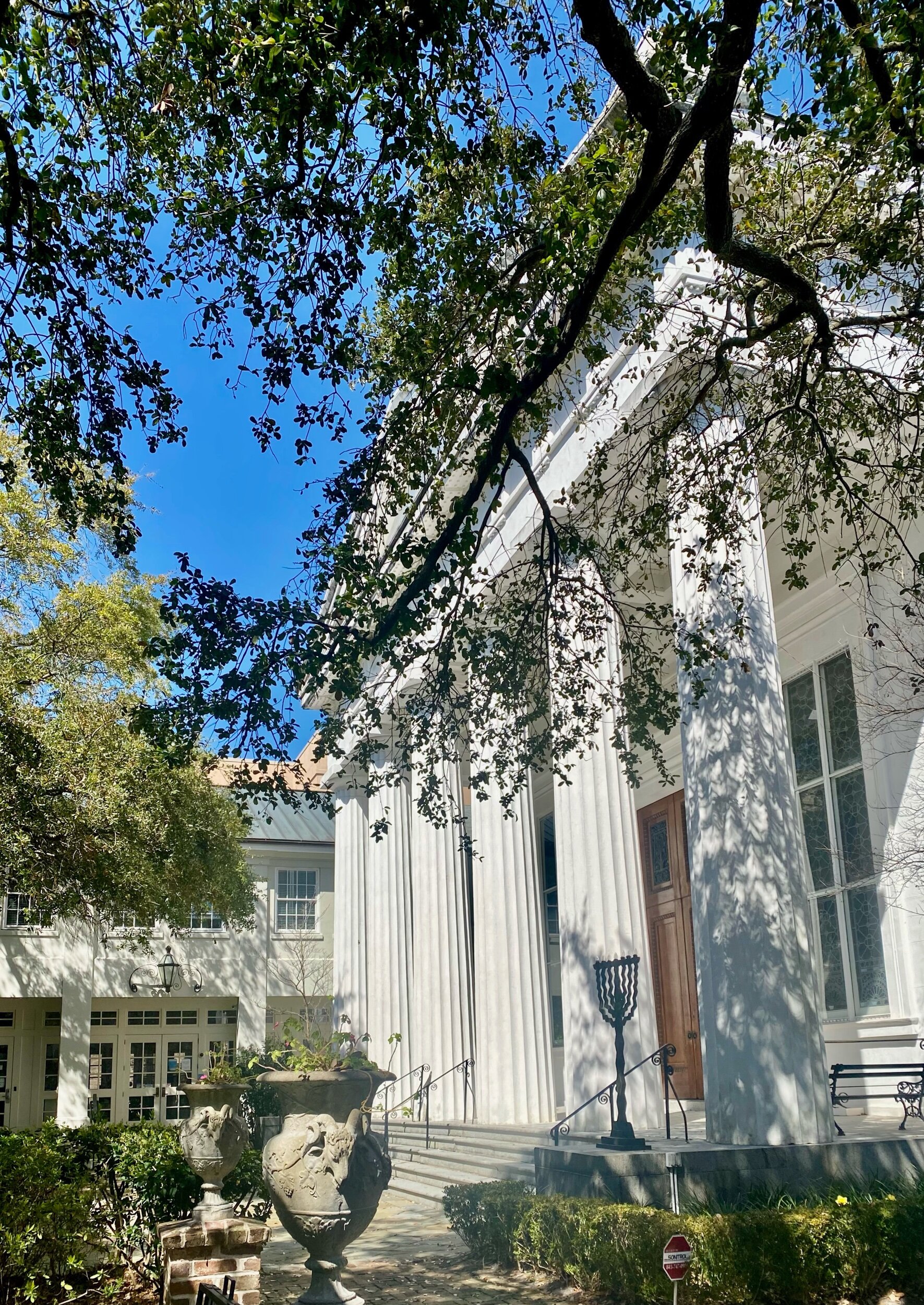
Temple Kahal Kadosh Beth Elohim in Charleston, SC. Founded in 1750, this temple is the cradle of reformed Judaism.
“Dumb growth” planning has irritated me for years. There are many roads in America where poor design fragments communities, destroys land unnecessarily, and makes walking or biking impossible. Humans have walked everywhere for thousands of years, yet in recent decades transportation planners have built many roads that can be navigated only in a functioning motorized vehicle. It's as if planners have acquired dementia about our capacity to ambulate. Where are the sidewalks or shoulders? God forbid that someone’s car should break down, and they would have to walk to the nearest gas station for help. Try ambulating by foot, in a wheelchair, or on a bike to the nearest mall next to a freeway in your community, and you’ll know what I mean. You're likely to be surprised at how terrorizing such a trip can be.
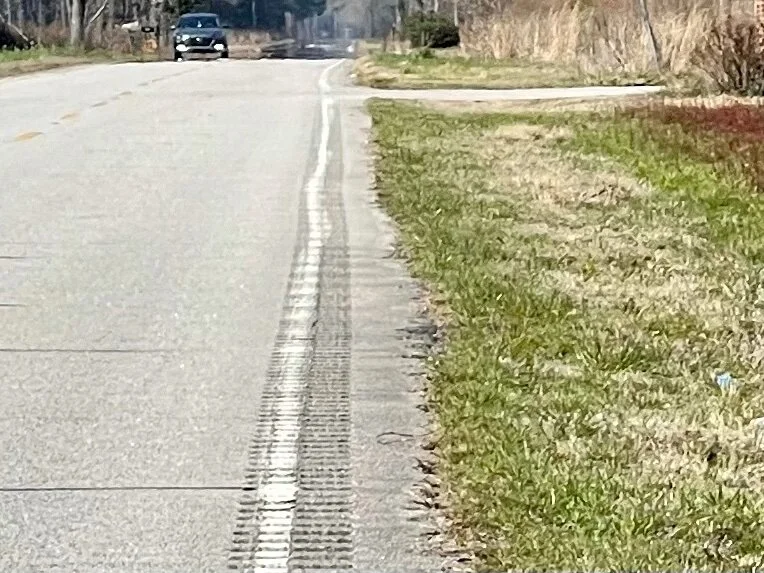
A typical road in South Carolina. While North Carolina has skinny or nonexistent shoulders, South Carolina has a terrible practice of adding rumble strips to their very narrow or nonexistent shoulders (at extra cost to taxpayers)! This might be helpful to the occasional driver, but it also forces cyclists onto very busy roads. I’d wager that for every sleepy or drunk driver whose life is saved, several cyclists are killed. This is so dangerous that the Adventure Cycling Association (ACA) runs an entire advocacy program focused solely on redesigning and/or eradicating rumble strips. You can read about it here.
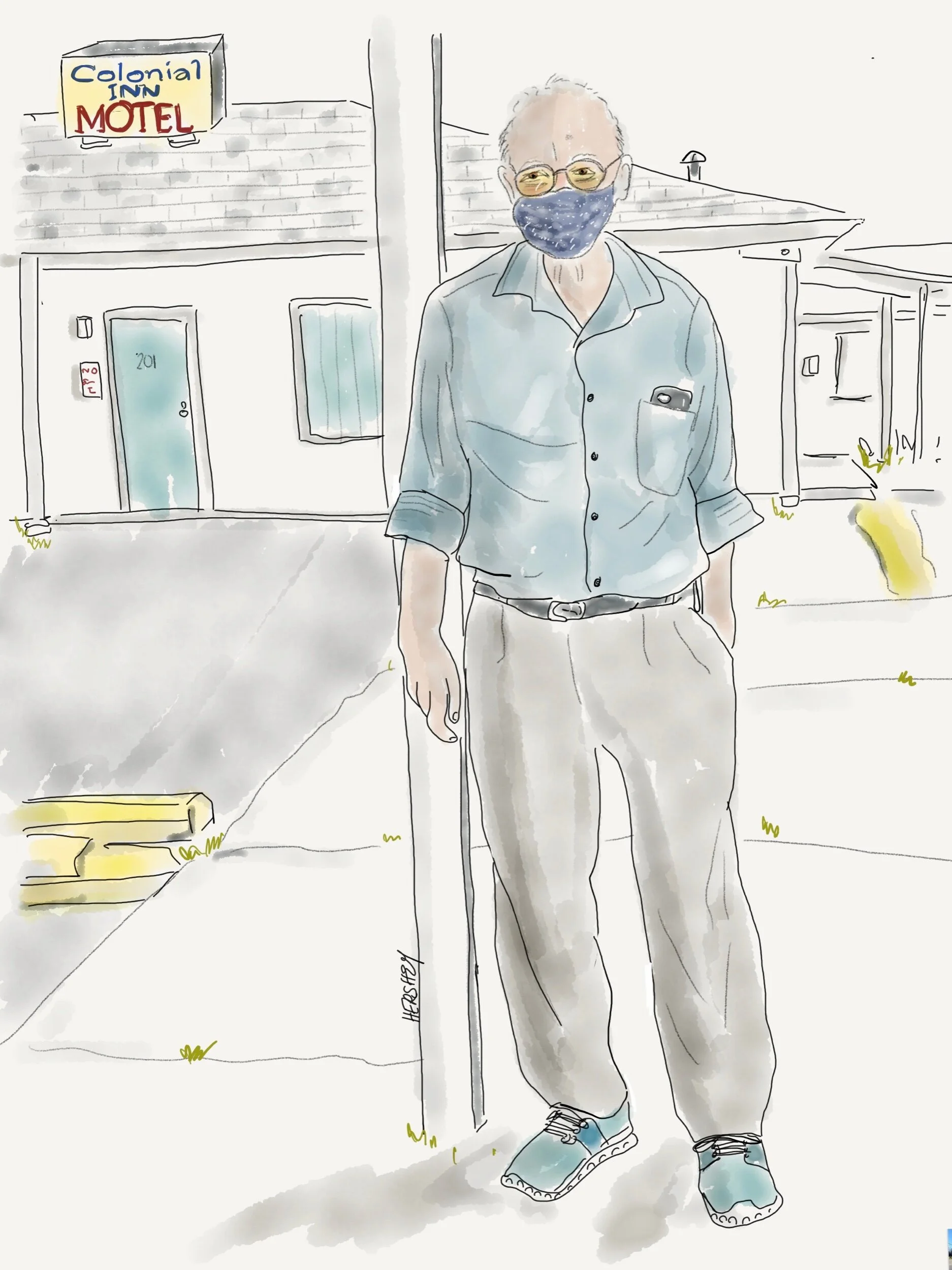
Mr Patel has owned the Colonial Inn in Andrews, SC, since he immigrated from India 41 years ago. He survived Hurricane Hugo in 1989, which devastated his town and blew off his motel sign. Mercifully, his motel was spared but his parking lot was filled with debris, including a few roofs from neighboring homes. Temporary power was restored after 4 days, and the motel prospered as it filled up with utility workers from all over the state. Currently Mr. Patel benefits when the nearby paper mill at Georgetown shuts down annually for maintenance because he houses all the workers.
Drawing by Jennifer Hershey. Follow her work on Instagram at deeofo.
In much of America, where clumps of population are mixed with cropland, pastureland and forests, it can be difficult to grasp the identity of a given “place.” That’s what Jenny and I experienced as we cycled south from Chapel Hill. After we passed a lovely (man made) reservoir on a narrow, shoulder-less, highly trafficked road and some seemingly affluent horse farms, much of the landscape became chaotic - a house here and there, a recently tilled dirt-exposed field, junked cars, abandoned appliances, a decaying shed and house, a few acres of lumpy clear-cut timber with trunks and branches strewn every which-way, a field of sod, a thin stand of trees, a gravel field of unused septic tanks, a half acre of forest, a driveway to nowhere, a parking lot, an abandoned industrial shed, a pile of tires, a Dollar General, enormous stacks of pipelines, a Family Dollar, a quaint house with a yard full of tchotchkes, a few trees, a large field revealing last year’s cotton crop.
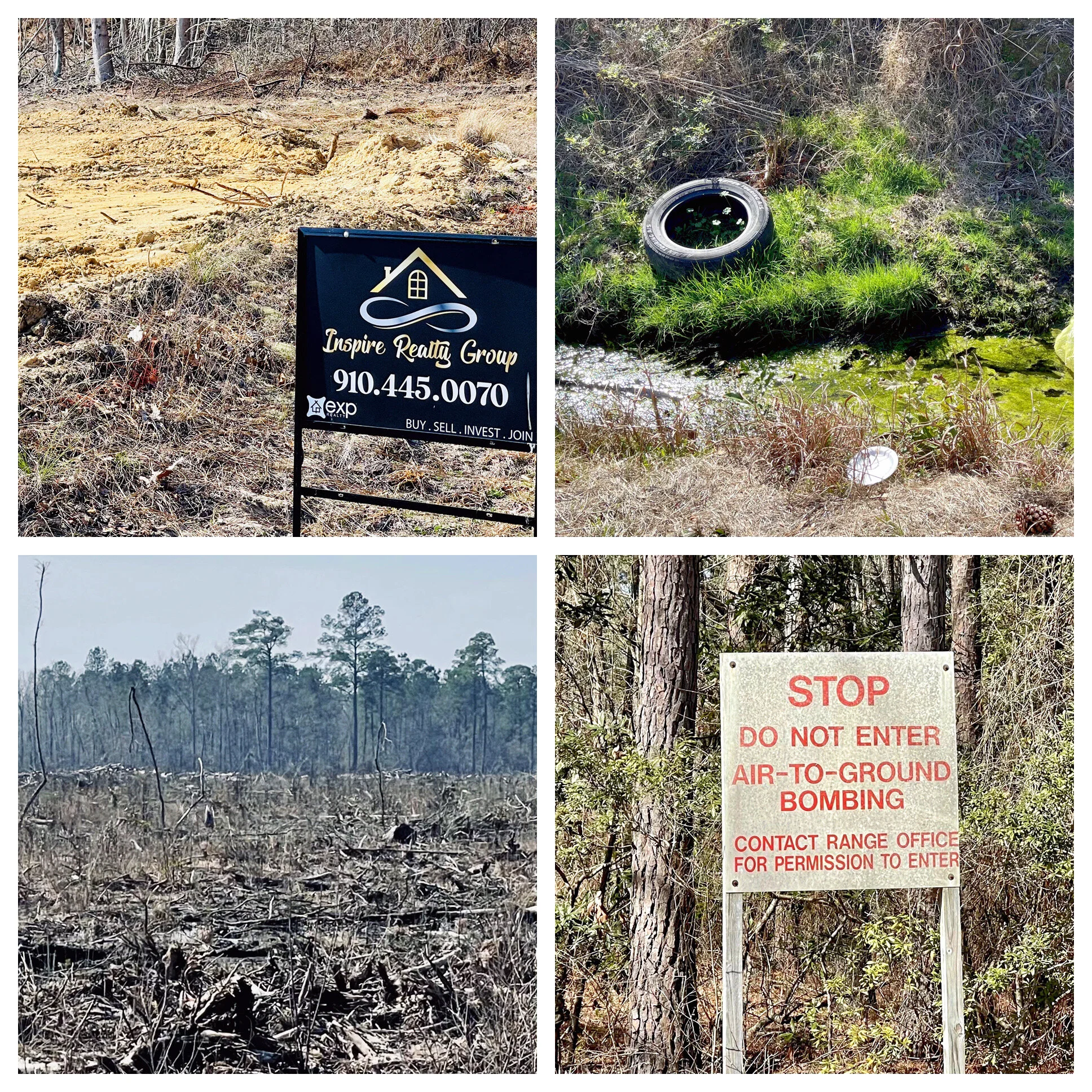
It was dizzying to take it all in, and even harder to know if there was anything at all sustainable about what we were looking at. Most likely not, we thought. And I mused on one of my obsessions - the persistent degradation of our treasured American landscape. It all seemed so ….disorganized. I really couldn’t get my mind around all that I was noticing. It was a crazy landscape, a random piecemeal (de)construction with no regard for itself. It reminded me of a frog in a slowly boiling pot who fails to notice the water is slowly heating up until it’s too late to do anything about it. There was persistent decay all around us, and no one seemed to care. But then, what do I know? As a small-city Midwesterner I can probably identify five to seven agricultural crops, and Jenny as an urbanite, even fewer. I am only now recognizing the difference between timberlands and forest. The sad fact is I know very little about rural landscapes beyond what I have come to appreciate in our magnificent national parks. But protected public land is very different from the vast stores of private land that occupies most of our landscape. And this was private land in a gentle rural landscape that had once been vast forests of Longleaf Pines nestled among swamp, marsh, bayou, streams, rivers and lakes. It is now small patches of forest, timberland, cropland and pasture, random houses and housing tracts, abandoned lots, industrial products, and an abundance of intentional and uninspired human detritus.
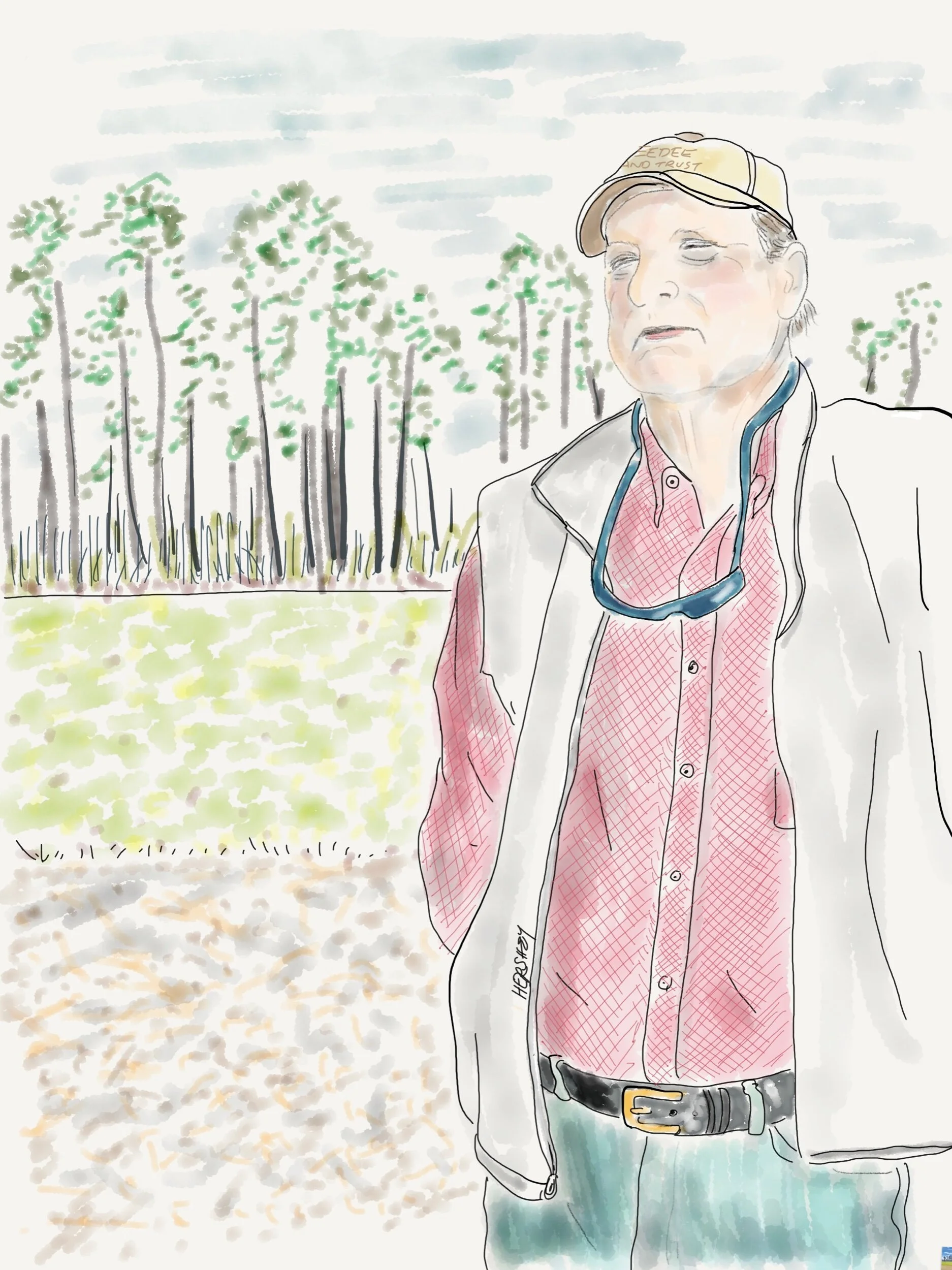
After explaining the value of winter wheat as a harvestable cover crop, the 6th generation farmer Keith Williamson tells us about the Pee Dee Land Trust (PDLT) which has partnered with private landowners throughout the Pee Dee River watershed (second in size on the eastern seaboard to the Delaware River watershed) to permanently protect over 32,000 acres of land. Over 80% of conservation easements held by PDLT are working farms and forests clustered mainly along waterways.
Did you know there are approximately 5 times more farmers over 65 years of age than there are farmers under 35?
Drawing by Jennifer Hershey. Follow her work on Instagram at deeofo.
Talking to Keith made our day. We saw him standing next to his car looking over a field that we had just been wondering about, so we pulled off on the grass (because there was no shoulder on the road) on the opposite side of the road, and yelled in our nasalized New York City and Midwest accents to get his attention. Keith didn’t seem the least bit phased by the bikes, or our car dodging as we crossed the busy road on foot all the while peppering him with questions. He patiently answered us in his gentle South Carolina drawl that we were looking at winter wheat, a cover crop on a field that would be soybeans in a few months. “It’s a complimentary process. The wheat takes up the nitrogen the soy puts down,” he explained. Legumes add nitrous oxide to the soil, which then enters the atmosphere through erosion or when the field is tilled. We learned later that nitrogen is a potent greenhouse gas, so using cover a crop like winter wheat to reduce nitrogen levels has a beneficial impact on climate change, as well as helping soil health. As we talked more, we learned about the Pee Dee Land Trust, which helped Keith and other members of his family to protect 3,000 acres of family land.
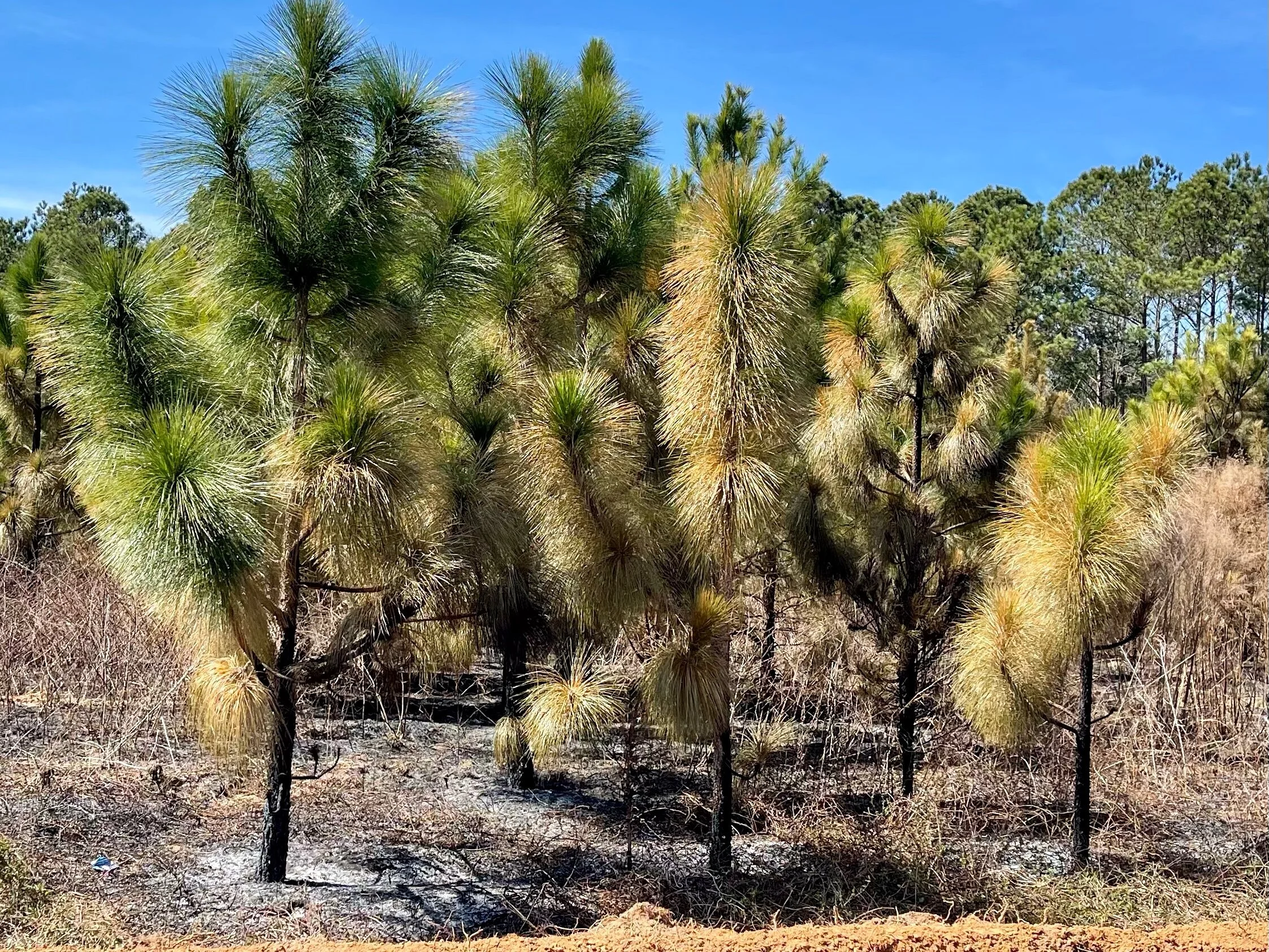
At one time most of the southeast was covered in Longleaf Pine forest. Naturally fire resistant, these superb trees would grow quite tall and create savanna-like conditions underneath, which would be routinely burned off, either by natural causes or intentionally by indigenous people. Now burning is almost always intentional. This relatively young forest was recently burned off.
Land trusts are an important tool for protecting land from development, preserving it for valuable forests, timberland and agricultural uses that encourages smart rural growth, improves water quality and ensures natural carbon storage and sequestration. For example, forests alone in the US store 59 billion metric tons of carbon in trees, roots, soils and forest products, and sequester 14% of the country's CO2 emissions. Agricultural crops are not quite as storage intensive due to their shorter life cycles, but their carbon storage and sequestration properties can be significant.
Land is typically conserved by outright purchase into a trust, or less expensively, by “conservation easement,” a deeded agreement with a Land Trust by the owner to protect a property. Conservation easements are irrevocable and apply to the present and all future owners of the land. As with other real property interests, a conservation easement is recorded in local land records and becomes a part of the chain of title for the property, permanently protecting the land from development.
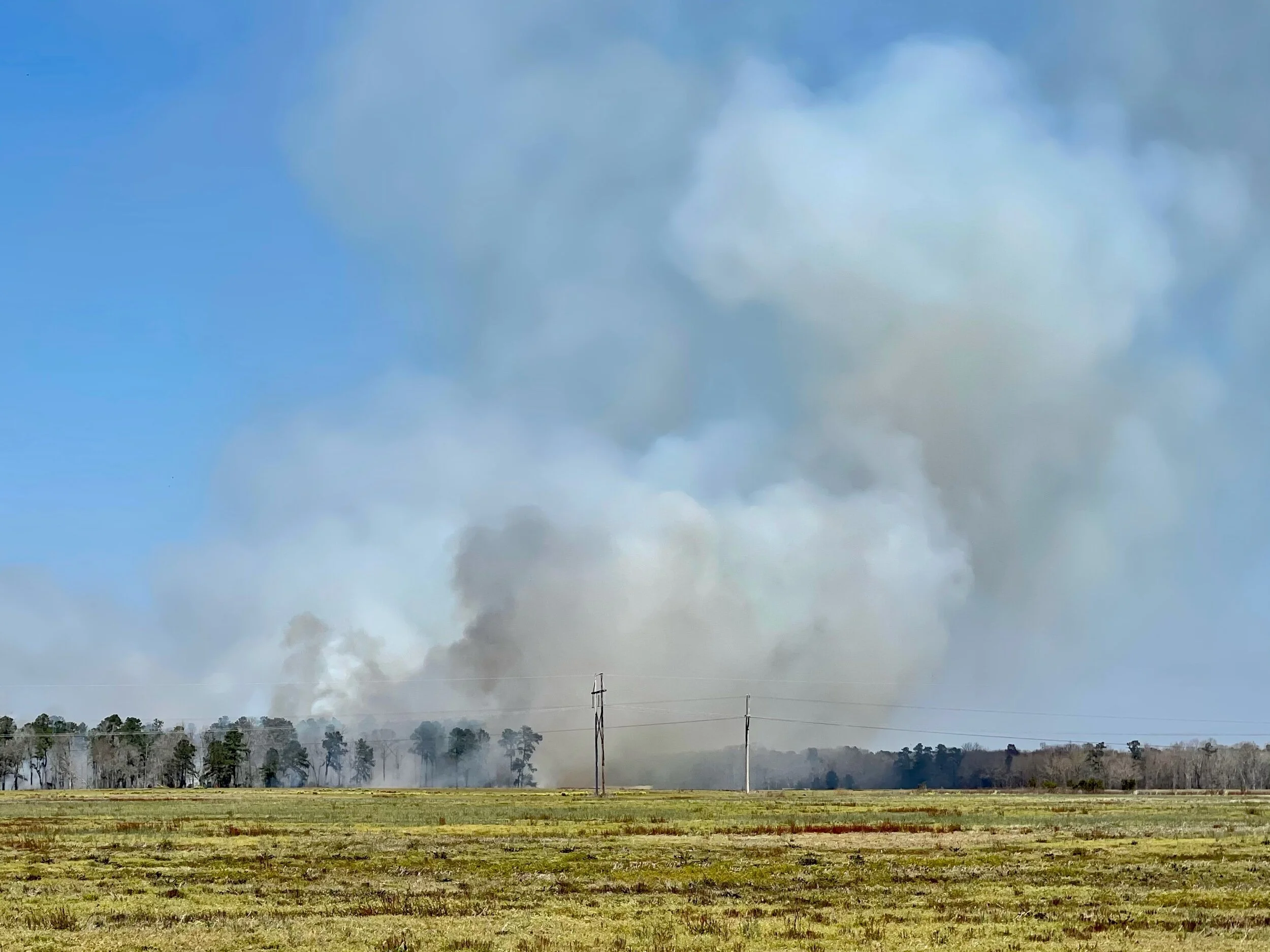
An intentional burn off seen at a distance.
Because approximately 9000 acres a day of farmland and forests in the US are lost to commercial and residential developers, land trust programs provide enormous public benefits. Conservation easements alone already protect an estimated 50 million acres of natural habitat in this country, and each year another 2 million acres are added to that total. Since 1982, the US has lost over 25 million acres of agricultural land to development, while global population and carbon emission levels have almost doubled. I couldn’t find a figure for how much farmland we have left in the US (I’m sure the USDA knows), but I did learn we currently have about 450 million acres of forestland in the US under threat of development, which is about 60% of our remaining forests. According to a study cited by the American Farmland Trust, land that is converted to other uses from its natural habitat (including agricultural land) emits greenhouse gas emissions at rates 50-70 times greater than had it remained undeveloped. Preserving our land is essential if we are going to reach net zero by 2050.
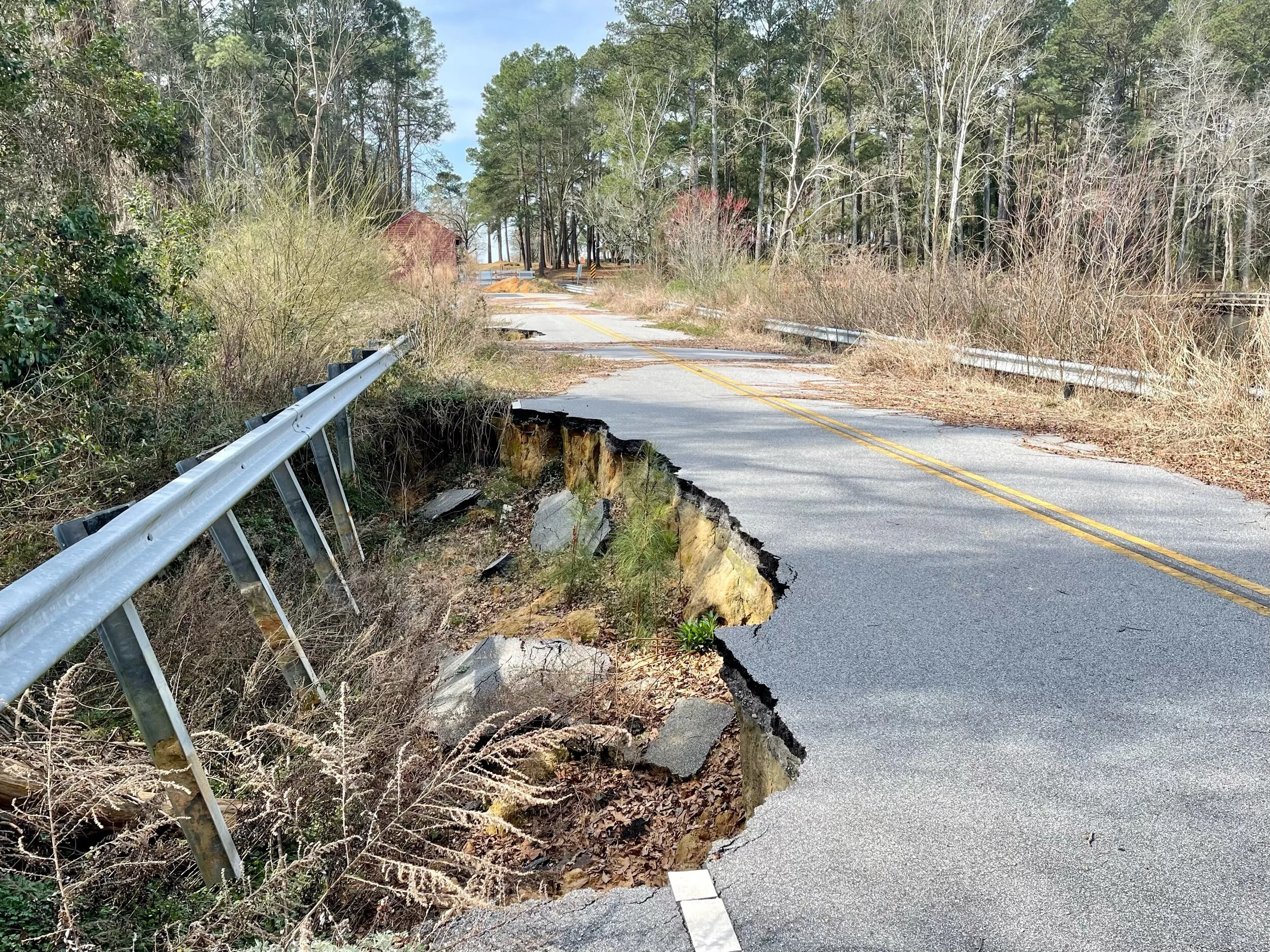
Flood damage on a road near McColl, SC
This protection doesn't come without a price tag, however. Easements are incentivized through tax credits or property tax reductions, so taxpayers effectively pay private citizens not to sell their land to developers at a higher price in order to benefit the greater good. (Frankly, that strikes me as analogous to the failure of capitalism to externalize the social costs of carbon pollution, but that’s a subject for another blog post.)
Yet, the effort is essential. Soil stores two to three times more carbon than the atmosphere and up to four times the amount of carbon stored in the vegetation on land. Since the advent of modern agriculture (till and fertilize; wash, rinse and repeat) soil health has degraded considerably and we have lost much of our topsoil to erosion, including more than half of the organic carbon originally stored in US soils. With nearly 400 million acres of cropland alone, we have an enormous opportunity to use “regenerative” farming methods to rebuild organic carbon in our soil, sequester atmospheric carbon and reduce greenhouse gas emissions. However, soils need healthy plant life on them to be able to accomplish this. How we manage carbon stocks on our land - whether it’s forest, timberland, cropland or pastureland - will have a significant impact on climate change over the coming decades. Climate activists, policy makers, and most importantly farmers, need to understand that how we use our land (and in particular, how we grow our food), are every bit as important to our collective efforts to decarbonize as transforming our energy system.
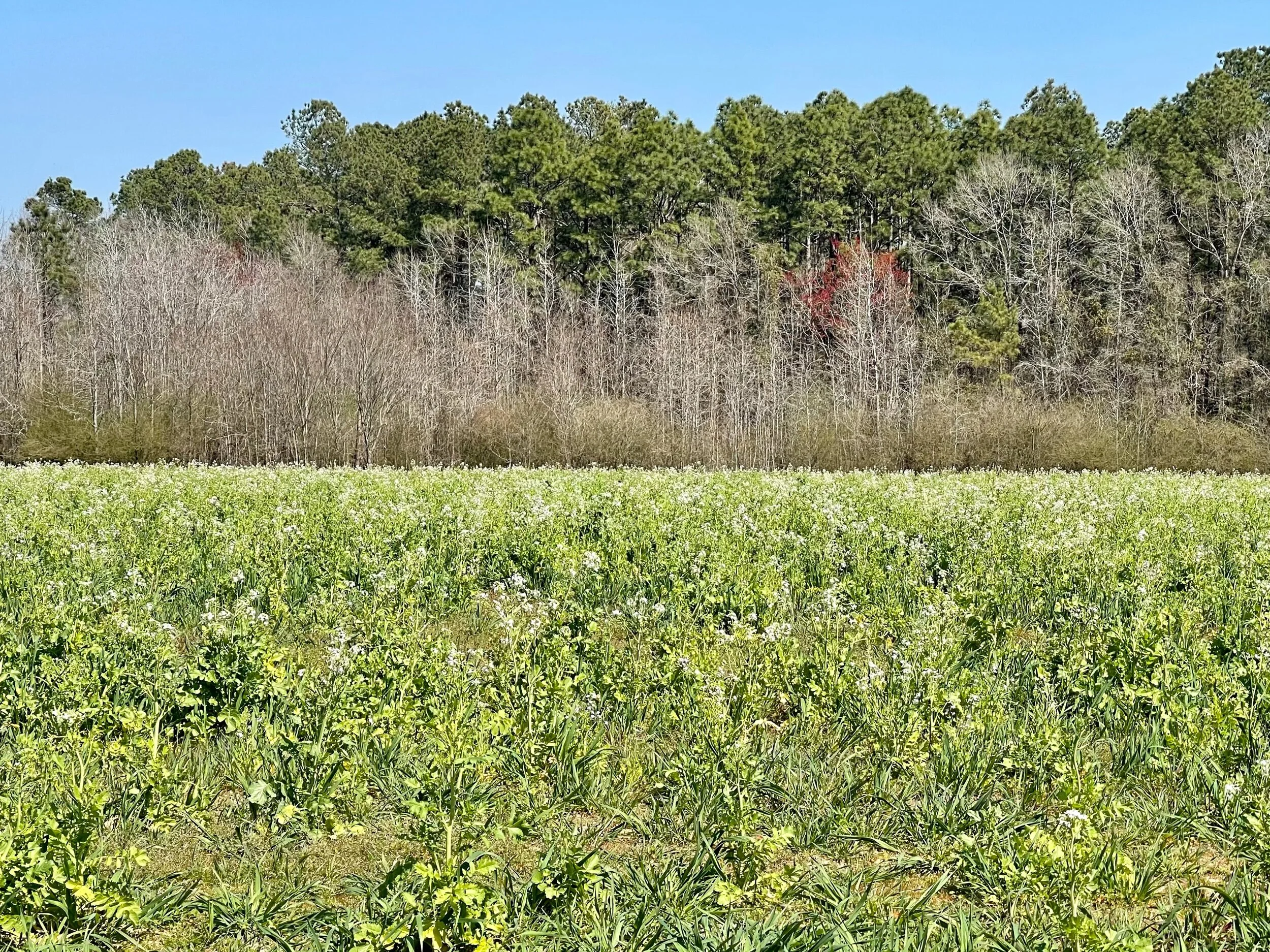
A field of turnip, another popular cover crop in regenerative agriculture.
Rural communities face a host of challenges - including changing demographics, lack of economic growth, community health and preservation, and a strong need for environmental protection. In addition, rural communities need workforce development, access to broadband, and effective transportation in their planning efforts. Smart growth strategies can help communities guide development while protecting working lands and preserving rural character. There are an increasing number of great organizations and online mapping tools for learning more about these topics. I list some of them below, especially those that I used to prepare this blog.
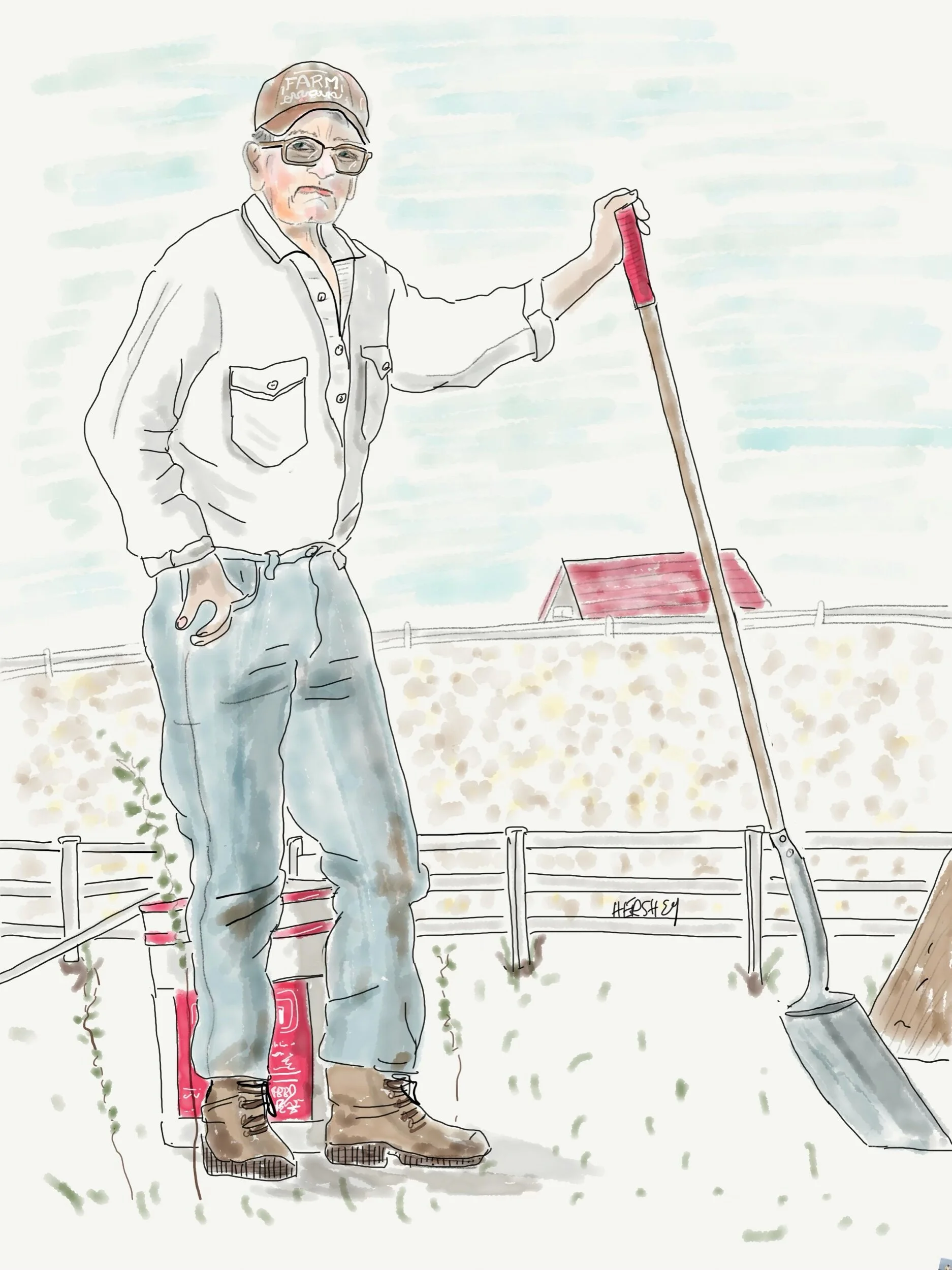
Lucky, a 74 year old ex jockey from Virginia, runs a 16 acre horse boarding farm in North Carolina. He believes everyone can find a job doing something even if they don't like it, and he doesn’t like the Covid stimulus package. He earned his way up “galloping” horses (Secretariat was his most famous) when he was young. He got paid $3.00 a run. He laughed as we biked away, just after we encouraged him to get a Covid vaccine. We gathered he wasn't interested.
Drawing by Jennifer Hershey. Follow her work on Instagram at deeofo.
And finally, the Biden administration’s recently-announced plan to address climate change, which includes provisions to conserve 30 percent of U.S. land and waters by the year 2030, is definitely worth attention.
Stay vigilant! Thanks for reading. More to come. Follow our next biking trip from central Wisconsin into the Dakotas this coming May, 2021.
All photos, unless credited or otherwise noted, are copyrighted property of the blog post author.