
Louisiana/Texas, Post 3
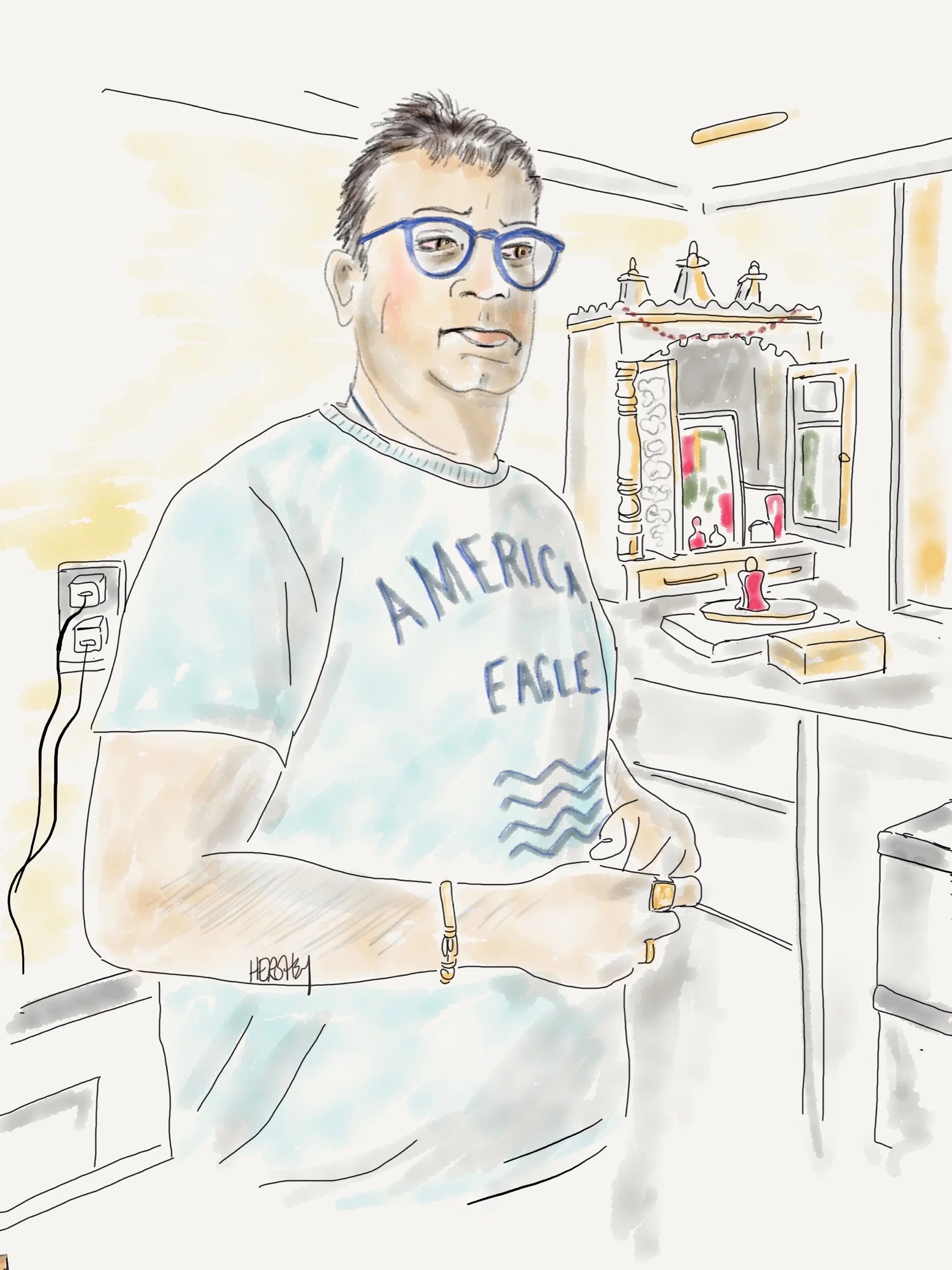
“My wife and I take turns praying at our altar. We are Hindus. But we love this motel. It’s all ours”. This drawing of a proprietor of a mid-century motel in Freeport, Texas was done by Jennifer Hershey. You can follow her work in Instagram at deeofo.
Welcome from Port Aransas, Texas, just slightly southeast of Corpus Christi, Texas.
—————
“It was the best of times, it was the worst of times, it was the age of wisdom, it was the age of foolishness, it was the epoch of belief, it was the epoch of incredulity, it was the season of light, it was the season of darkness, it was the spring of hope, it was the winter of despair.”
-from a A Tale of a Two Cities by Charles Dickens.
Such are the times we live in.
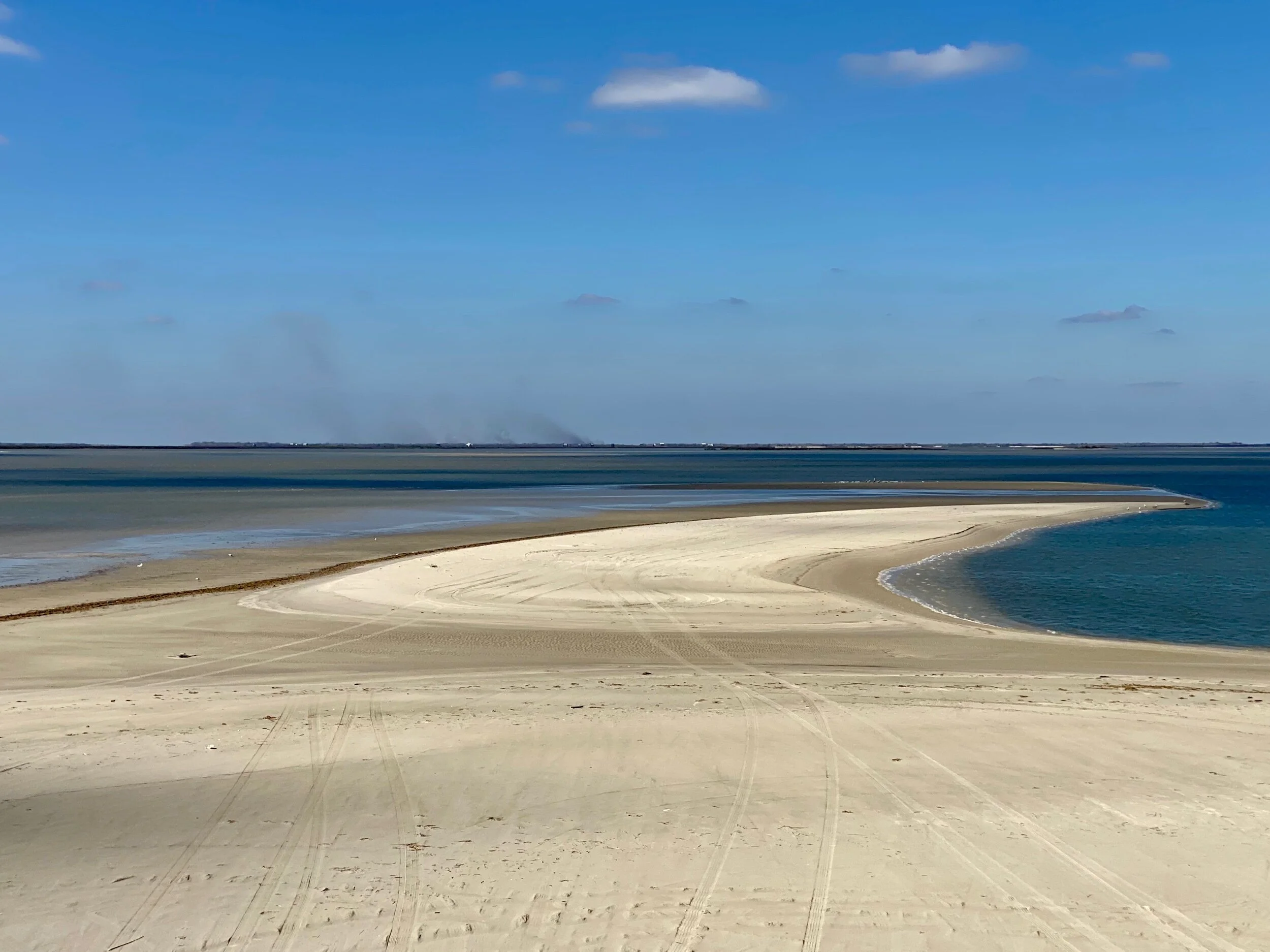
On the way to Freeport, Texas. We learned later the smoke in the background is from a Dow Chemical plant that removes magnesium from sea water.
Our trip continues to be an extraordinary exploration of exquisite natural landscapes, occasional encounters with wildlife (dead and alive), great conversations with diverse and friendly people, navigating delightful and terrifying roads, dealing with sublime and challenging weather, and periodic confrontations with seedy and startlingly ugly industrial landscapes.
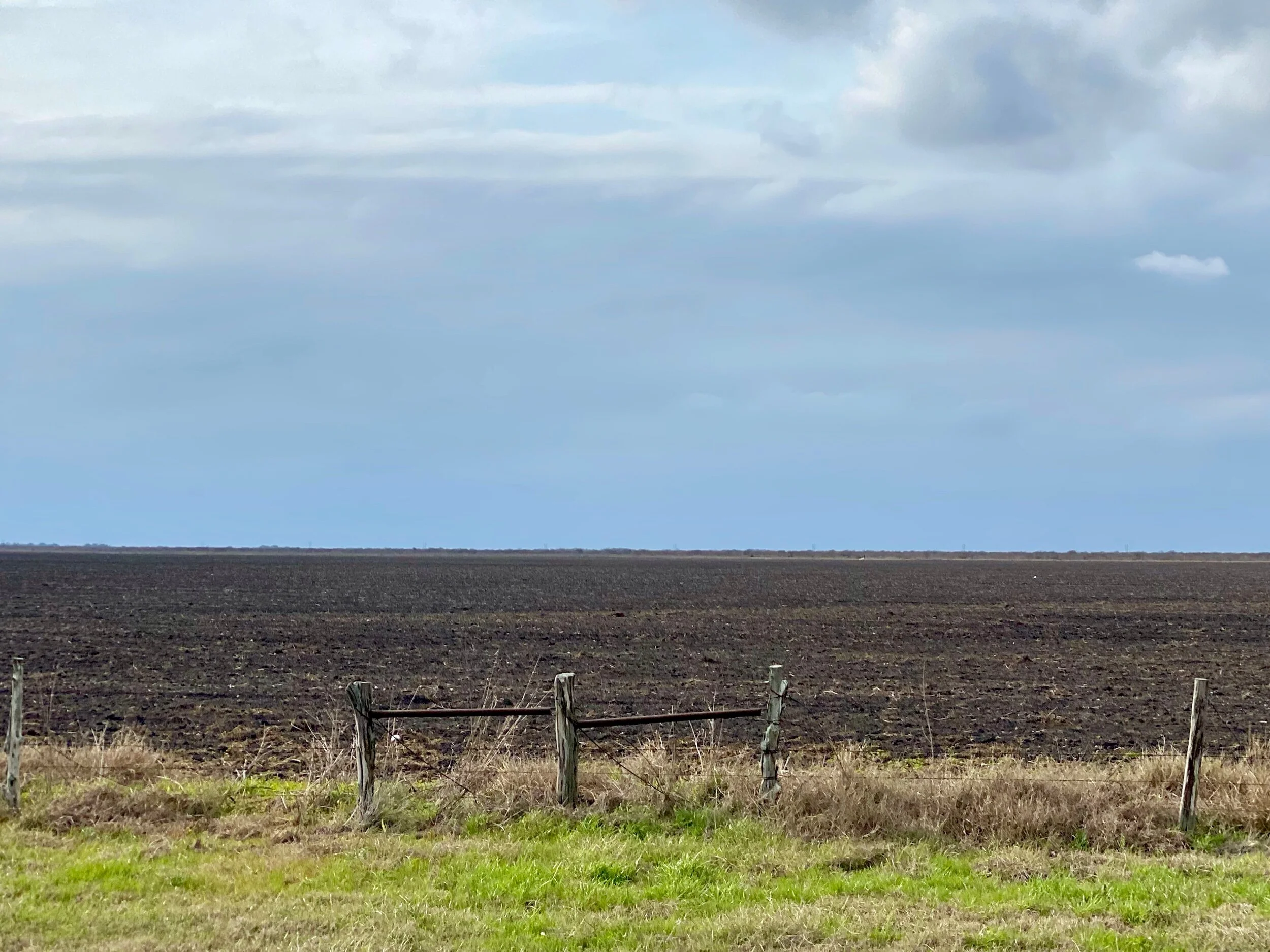
Texas is definitely big sky country, and southeastern Texas is as flat as a pancake on a hot griddle.
Perhaps we can borrow from Dickens, and instead of symbolic cities substitute citadels, or communities of people who live inside of self-imposed walls. Like any citadel that is protected from others, we can only see what’s inside, and have no idea of what’s on the outside.
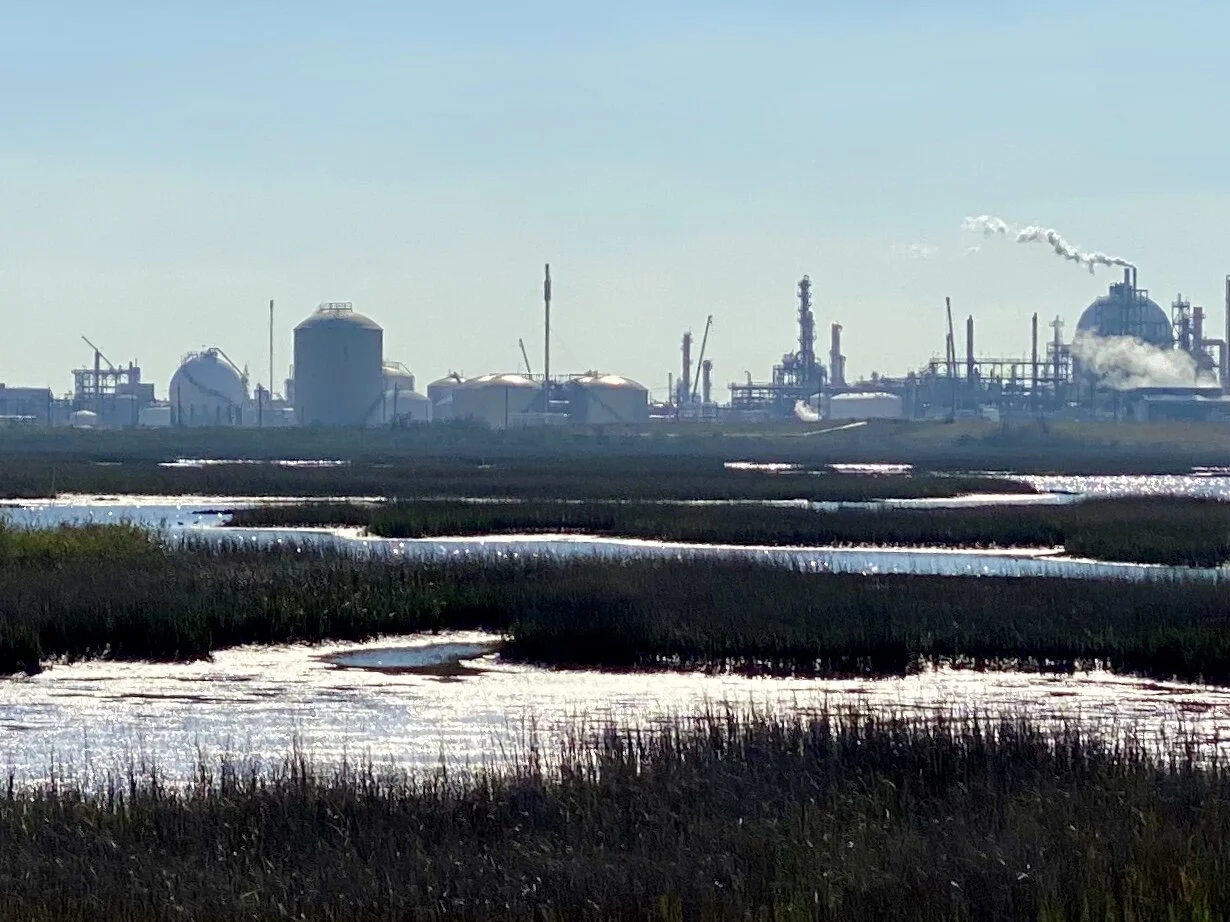
The Dow Chemical Plant near Freeport is situated just above the Intercoastal Waterway on a vast marsh.
In a way, Fox News and CNN are the storytellers for two distinct narratives that reflect two separate citadels: urban and rural America. Our cities are the center of our intellectual, artistic, entertainment and media capitals. Our rural areas - especially evident down here in southeastern Texas - provide access to our natural environments, produce our food (and also increasingly produce electricity through wind-power on the same land), and also extract and move our oil and gas providing our cities with both food and energy. Consequently, they also are the sites for some of our most polluting, dangerous and economically critical industries.
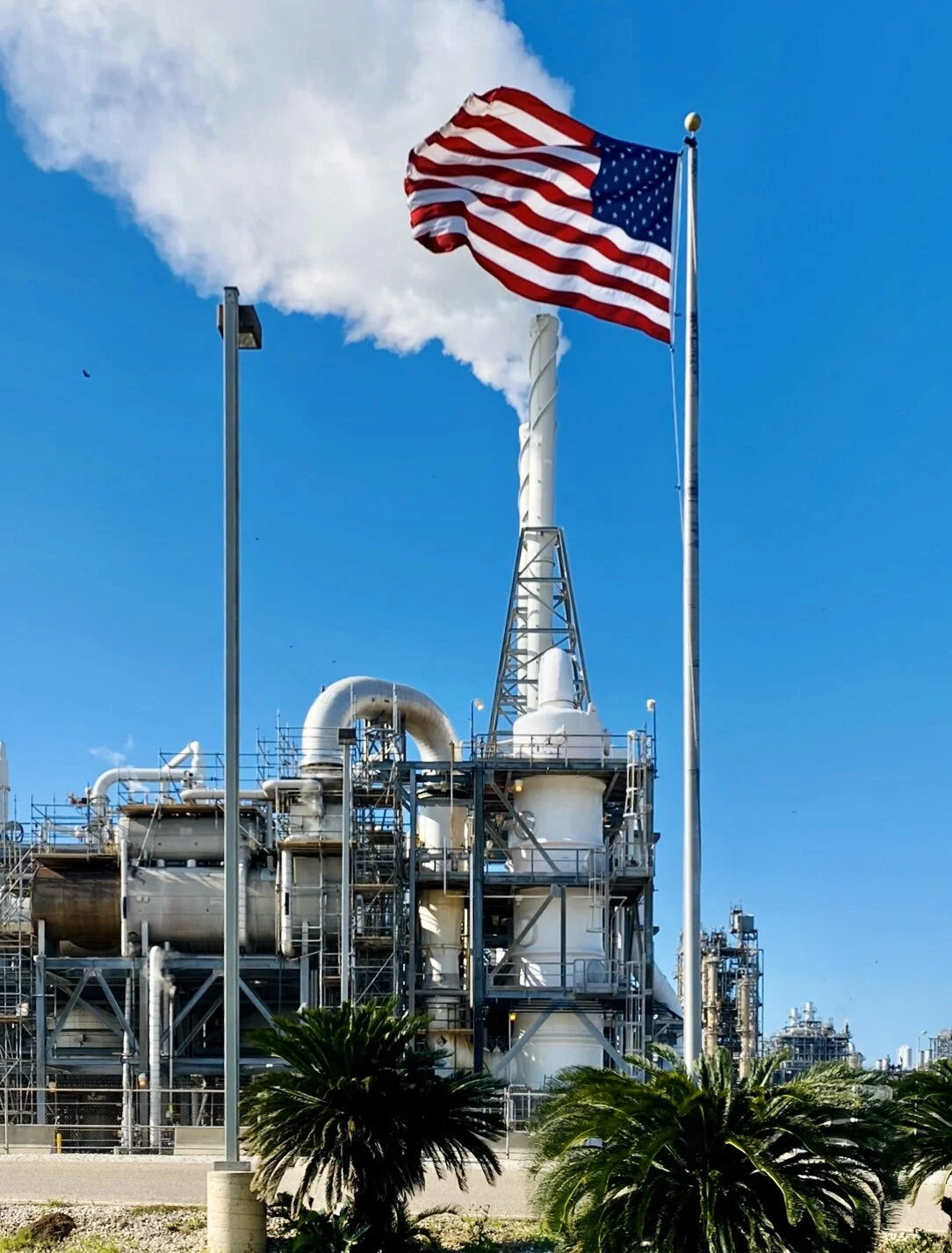
A close up shot of the Dow Chemical plant in Freeport. Locals say this is one of the largest chemical plants in the world.
As I mull over what we are encountering, I find myself thinking the challenges on the Louisiana and Texas coastlines result in a mixed landscape not unlike our home town of New York City. There’s an abundance of both beauty and squalor, and avoiding either one gives visitors an incomplete understanding.
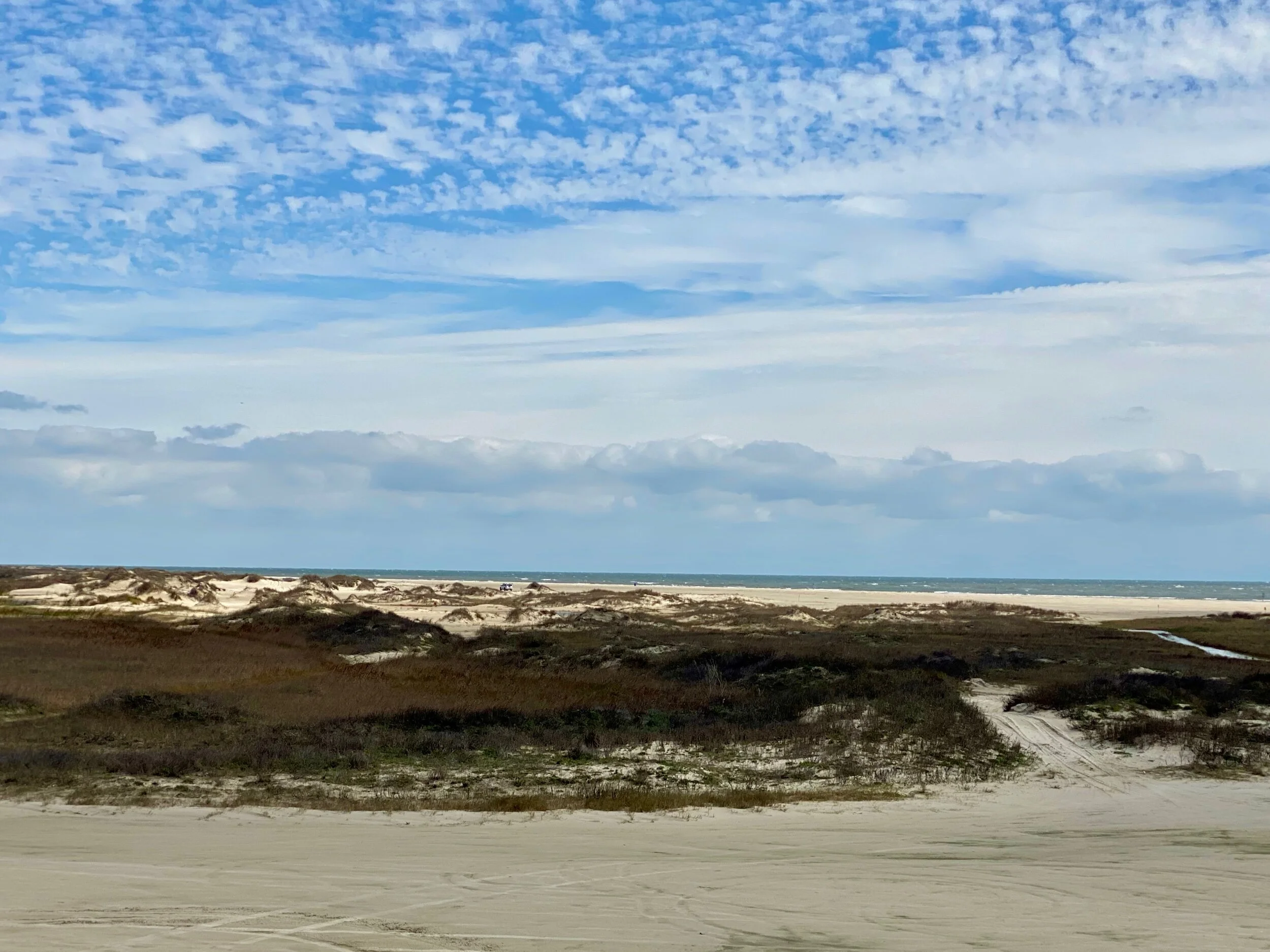
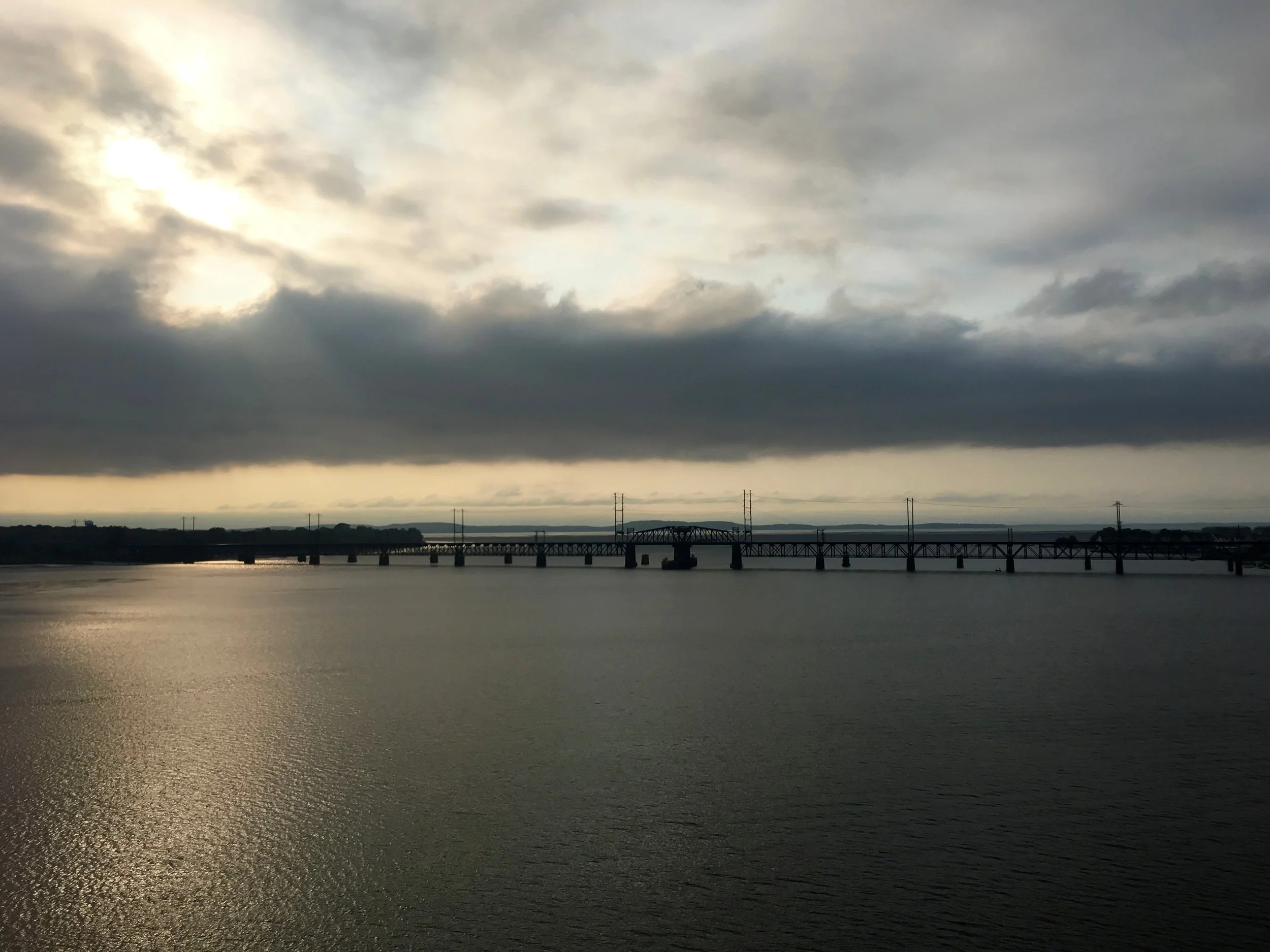
View from the San Luis Pass-Vacek Toll Bridge, which spans San Luis Pass into Brazoria County, Texas.
Clearly, I love the natural beauty of this coastline and its inland marshes, farms, and woodlands. But the story told through the industrialization of the Gulf Coast sticks in my craw. As a northerner, I’m struck by my own complicity in a type of NIMBY (Not in my Backyard) reality. I enjoy living in a city that has (with some exceptions in poorer neighborhoods in the outer boroughs) enjoyed increasingly cleaner air and water over the past several decades through stricter environmental regulations and a shift in focus from industrial production to digital technology.
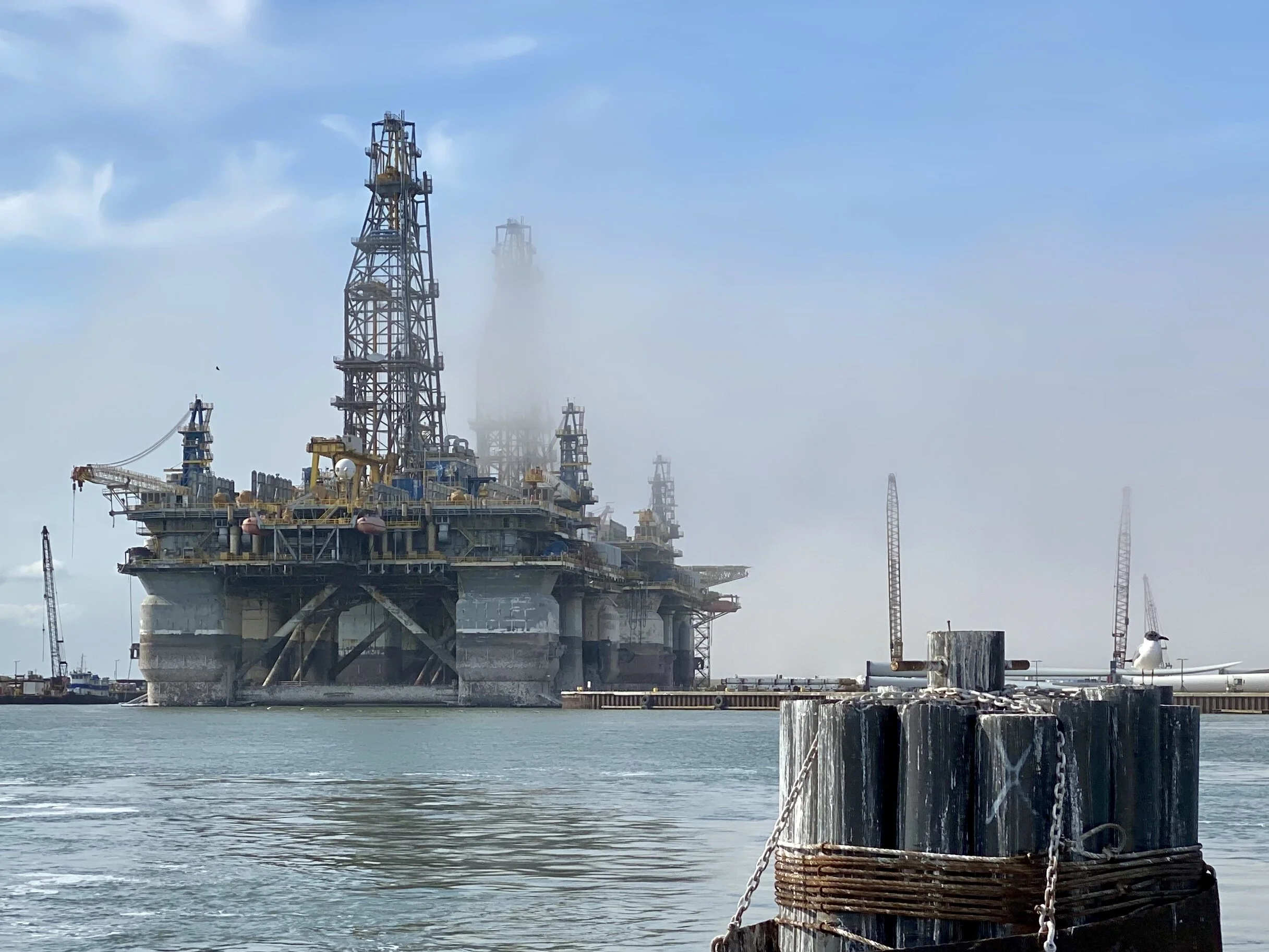
Temporary oil derricks next to the Corpus Christi shipping channel. The local community was told they would be there for six months, but are still there after almost 3 years. And it’s a big bone of contention in this community. Picture taken from the Port Aransas Ferry.
Yet, the nasty stuff used in so many of our industrial processes, plastics and household products has to be made somewhere (at least in our current economy), and some of those places are along the Louisiana and Texas coasts. And like all poor and moderately poor neighborhoods, when jobs are at stake the nature and consequences of those industries matter less than the jobs they bring.
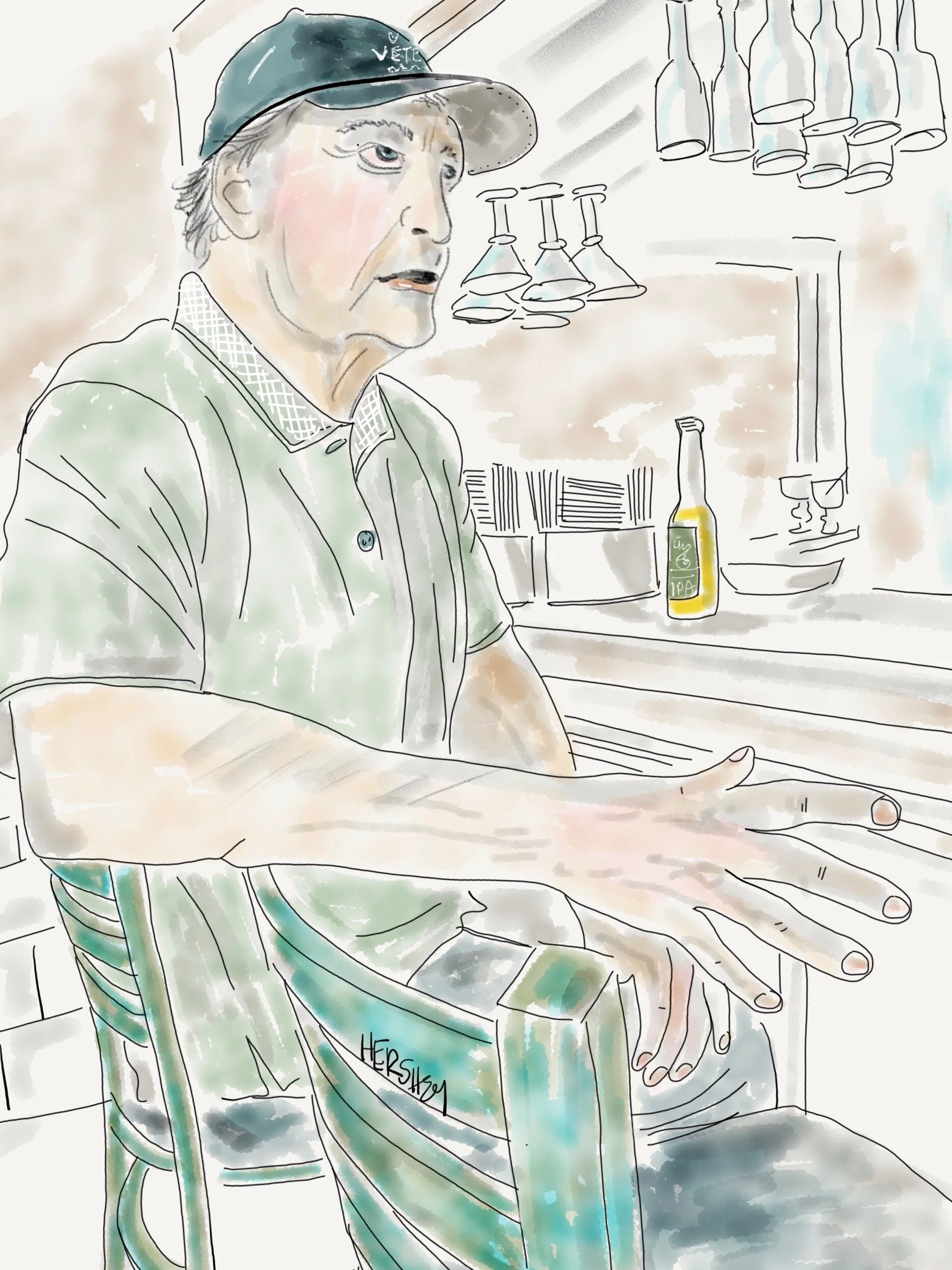
“Well I’ll tell you what—they got the best seafood right on that Seawall”. Drawing by Jennifer Hershey. Follow her on Instagram at deeofo.
Occasionally locals will resist. We met a local at a great Mexican restaurant in Freeport who had worked in most of the nearby plants over his decades long career (he was probably in his 60’s). He did a short stint at the nearby Dow Chemical plant, but didn’t stay long. The plant officials said it was safe, but he told us that it sure didn’t seem safe to him, so he moved on.
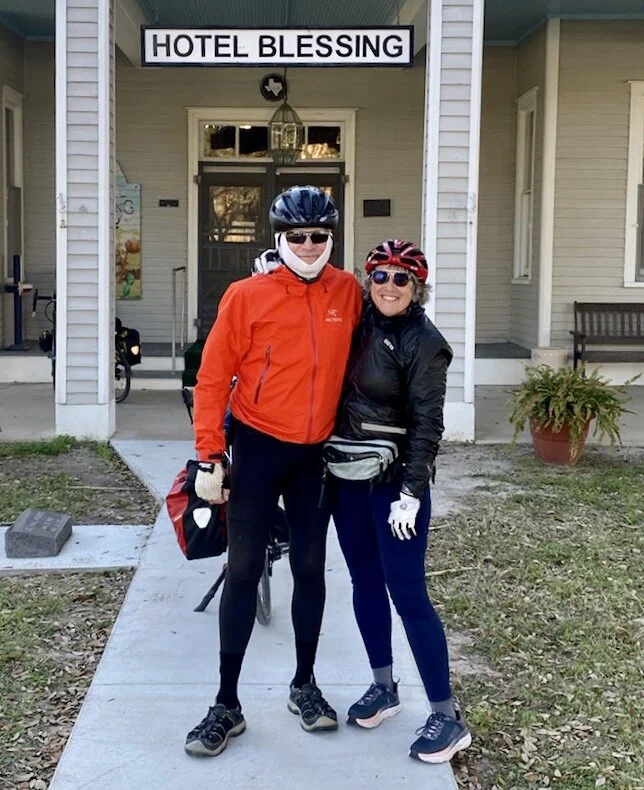
Jenny and I standing in front of the Hotel Blessing.
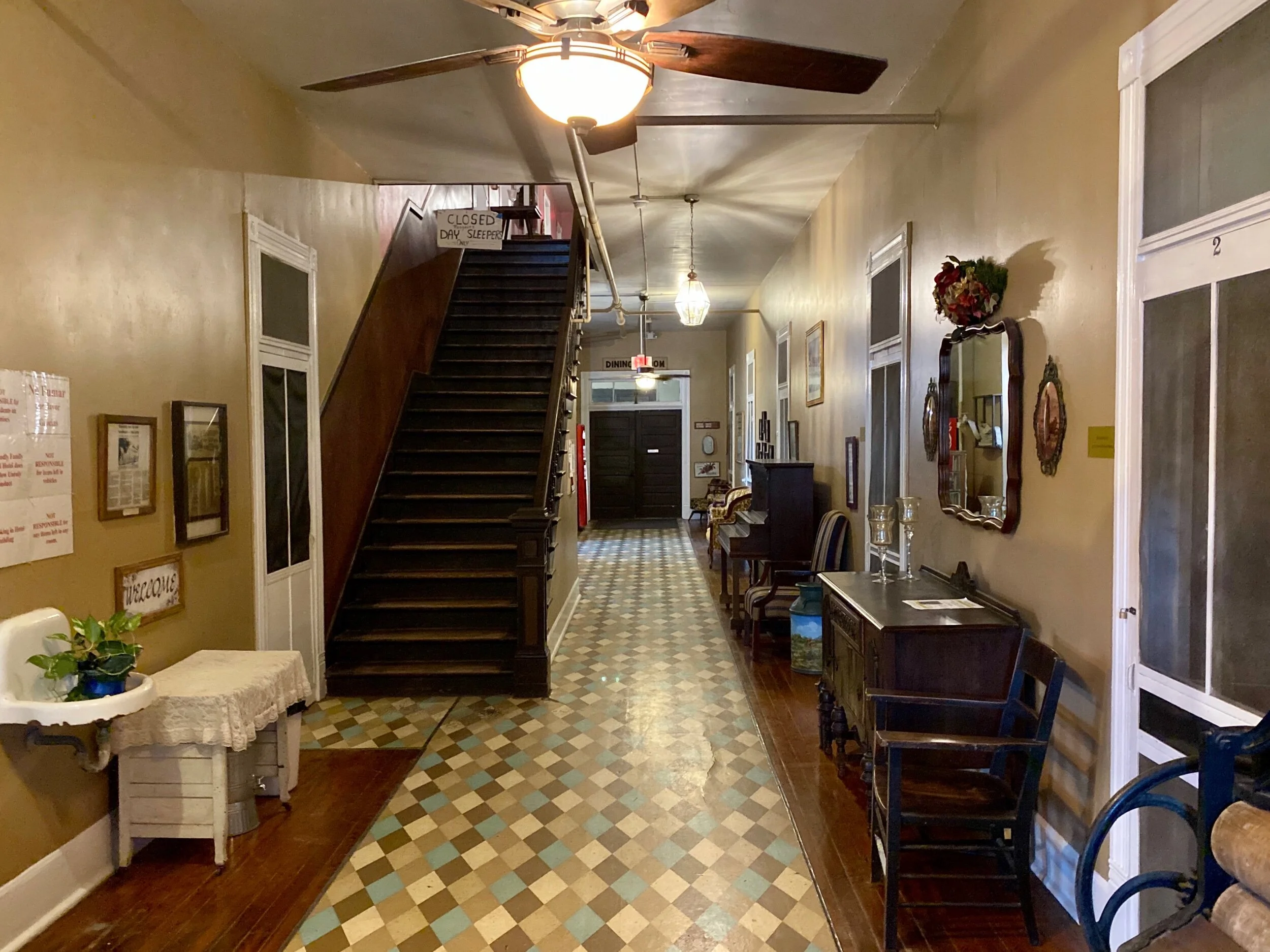
The downstairs interior of the Hotel Blessing in Blessing, Texas, population 861. Blessing was named in the early 1900’s out of the gratitude for local agriculture, railroad and coastal development.
Yet, lots of folks down here are glad for all that Texas has to offer. I’ve heard more than one person boast about being “Texas born and bred”. And even one town has named itself after its good fortune. By sheer coincidence, we found ourselves needing to stop at the one hotel about the right distance between Freeport and the Corpus Christi area (we couldn't stay on the coast because the old coast road was washed out by Hurricane Ike). It’s called Hotel Blessing, named after the town of Blessing.
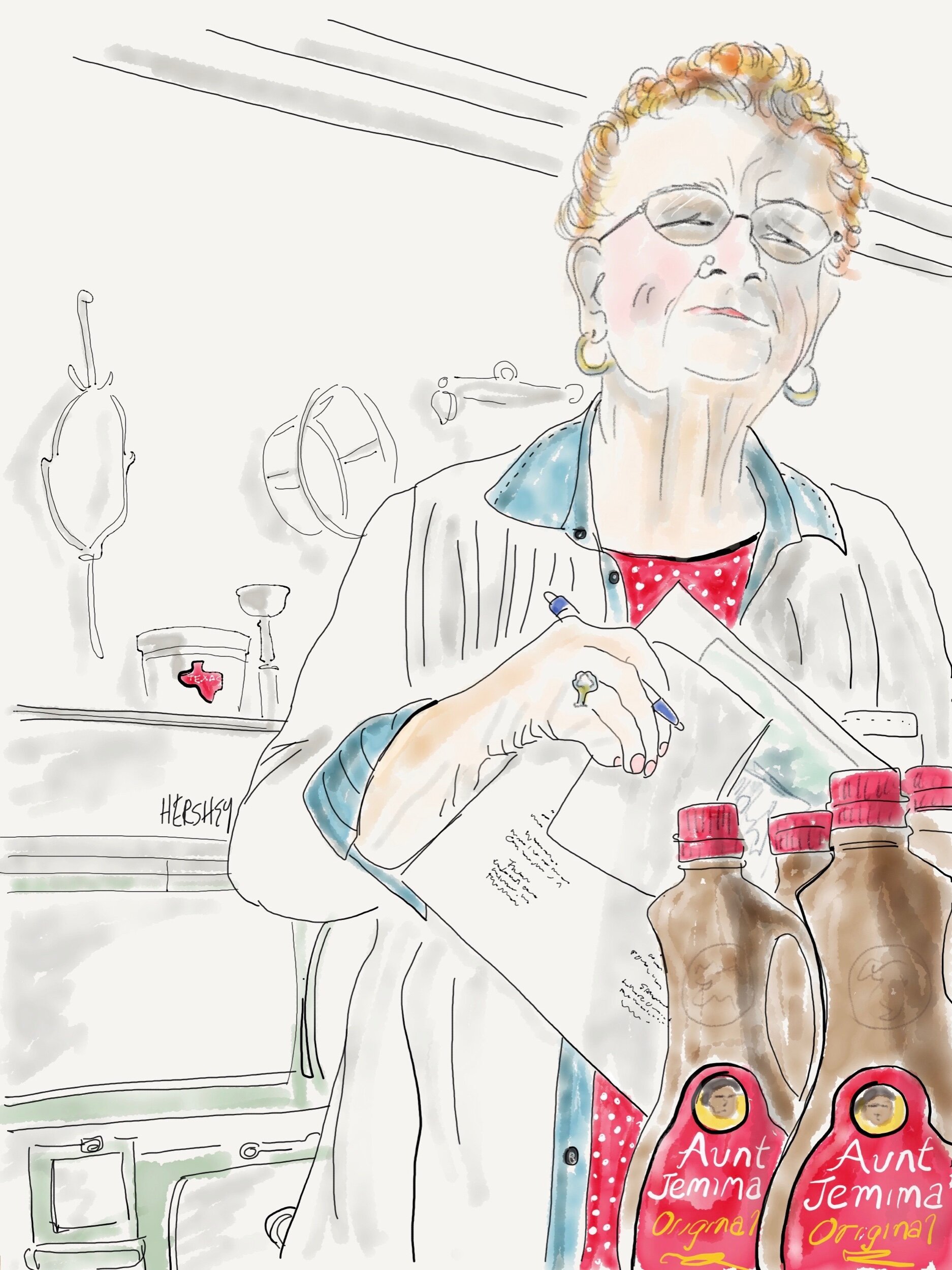
“Oh I’ve been doing this for years. If they keep coming....I’ll be here”. Drawing of Helen Feldhousen by Jennifer Hershey. Follow her on Instagram at deeofo.
We didn’t know what we were in for at the time, but after a restless night at the Hotel (we could hear everything - yep, everything - going on during a busy Valentines Day evening) we went to breakfast at the Hotel Blessing Coffee Shop. We were greeted by the intrepid Helen Feldhousen and a cast of other folks - some of whom who show up in the Texas “Bucket List” broadcast below.
I am thinking quite a bit about the concept of “the tragedy of the commons”. This is a situation where individual users, acting independently according to their own self-interest, behave contrary to the common good of all users by depleting or spoiling the shared resource through their collective action. “Not in my Backyard” (NIMBY) actions are related conceptually. For example, my own life is made better by situating so many large petroleum chemical and oil and gas plants so far away from large cities on either the west or the east coasts. At the same time, the people of southeastern Texas gain through employment opportunities where the only other options would be tourism or agriculture. Yet, their very livelihoods are put at risk by the significant carbon pollution of the industrial activity here, because it contributes to the extreme weather that may ultimately destroy those plants, along with their jobs.
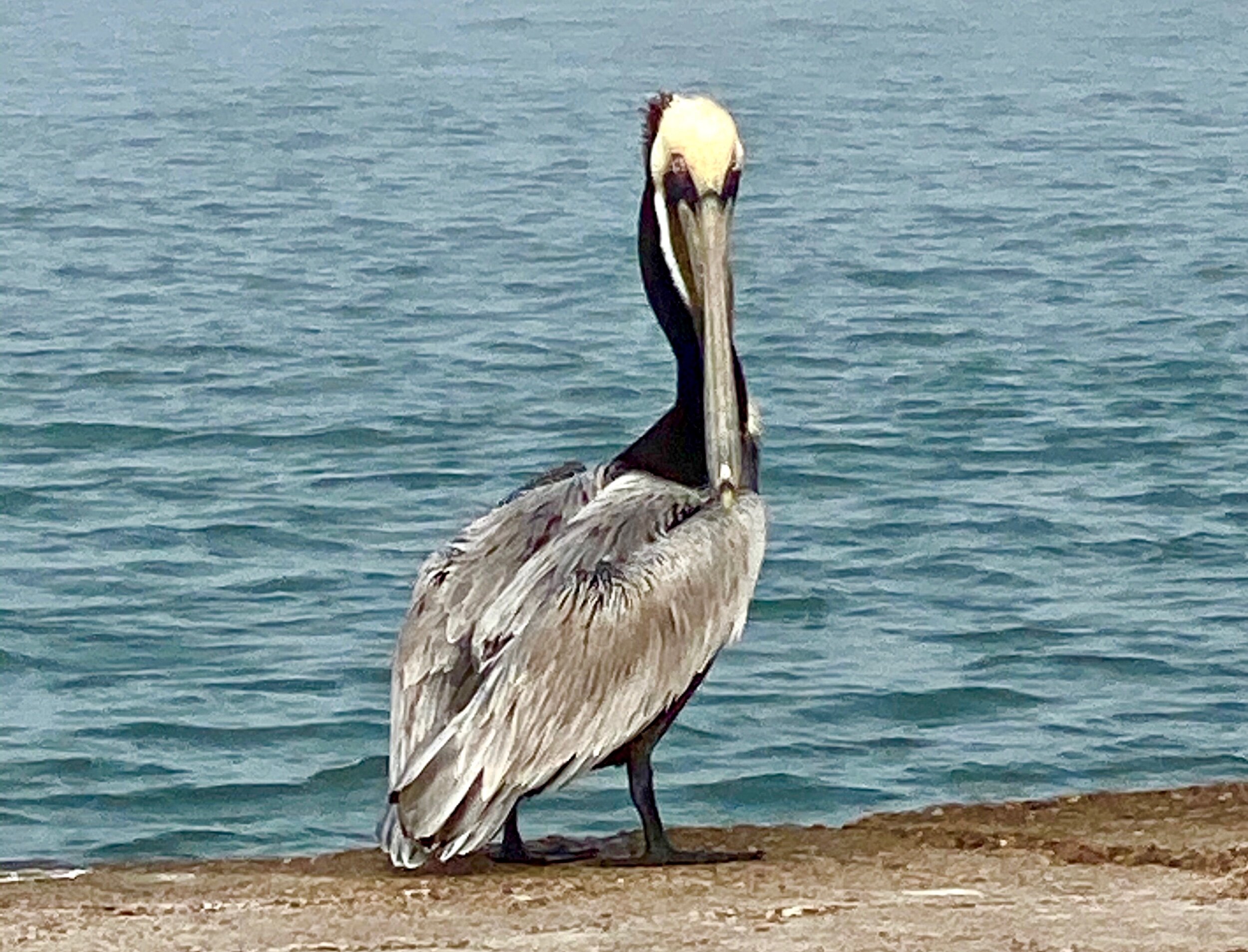
A very mellow Pelican stares us down on the beach at Port Aransas.
Additionally, citizens around the world gain nothing by the carbon these plants and their related industries have added to our atmosphere. It’s worth contemplating that although America contains 5% of the worlds population, we are responsible for 25% of the carbon put into the atmosphere since the dawn of the industrial revolution. And although China is now the world’s greatest carbon polluter, we remain the world’s greatest carbon emitter on a per capita and country basis combined. That fact alone suggests that our way of life is a big part of the tragedy of the commons that climate change is extracting. It's clear that staying with the status quo is the worst thing we can do. It’s time to step up to a different plate.
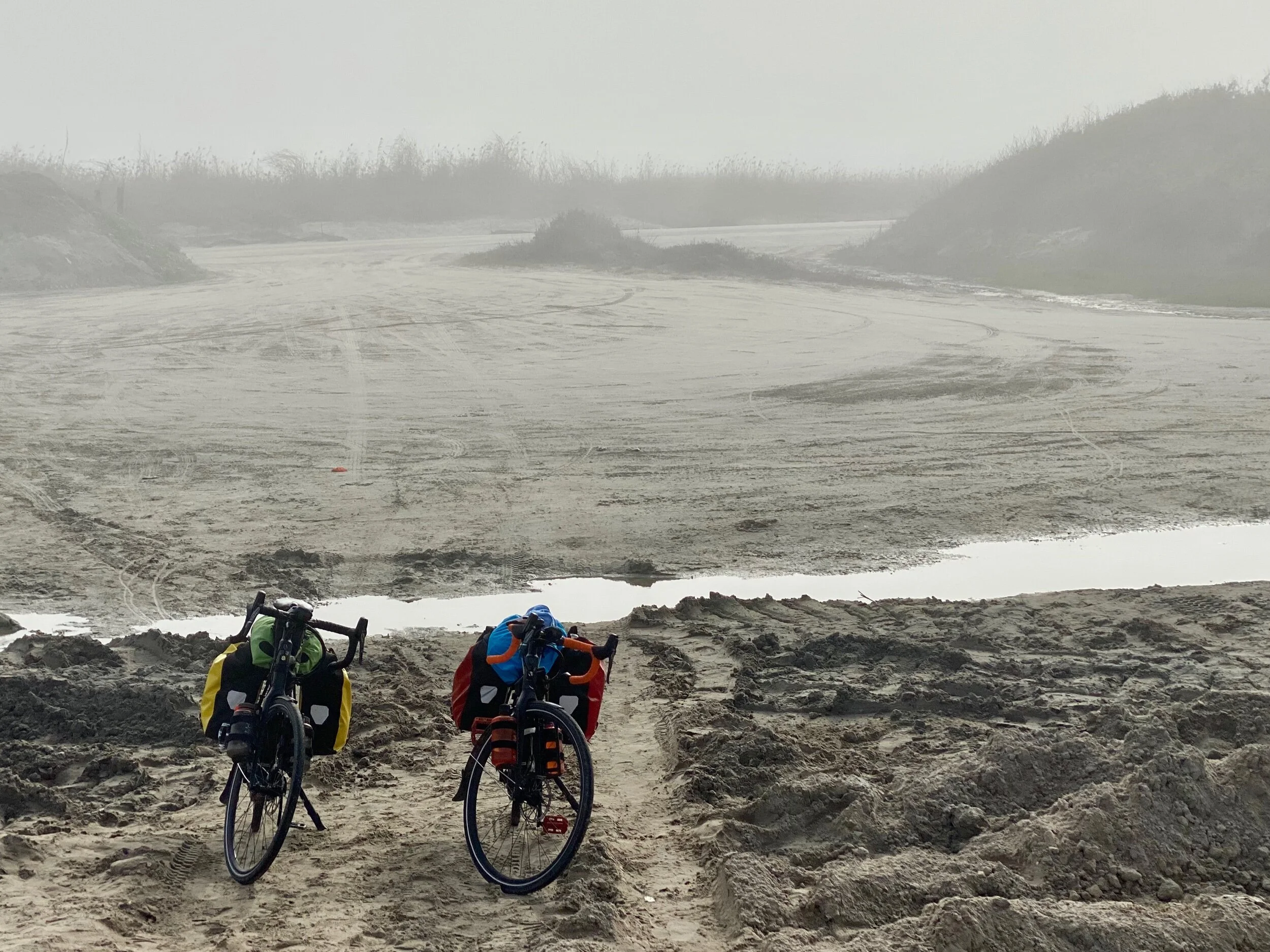
Our bikes in fog at the beach on Port Aransas Beach, Texas.
A few of you told me you missed the links to the Garmin maps showing our journey day by day, so I include links below to our entire trip to date. If you don’t have a Garmin account you will have to create one to see them (it's worth it if you're a biking geek or map lover).
1) New Orleans Road Cycling, 2) New Orleans Road Cycling, 3) Donaldsonville Road Cycling, 4) Morgan City Road Cycling, 5) St Mary Parish Road Cycling, 6) Abbeville Road Cycling, 7) Lake Arthur Road Cycling, 8) Cameron Parish Road Cycling, 9) Port Arthur Road Cycling, 10) Galveston Road Cycling, 11) Freeport Road Cycling, 12) Matagorda County Road Cycling, 13) Refugio Road Cycling, 14) Today we are in Port Aransas, Texas, just slightly southeast of Corpus Christi, Texas.
Thanks for reading! More to come…
All photos, unless credited or otherwise noted, are copyrighted property of the blog post author.
Phoenix to El Paso, ...no, Tucson, Post 3
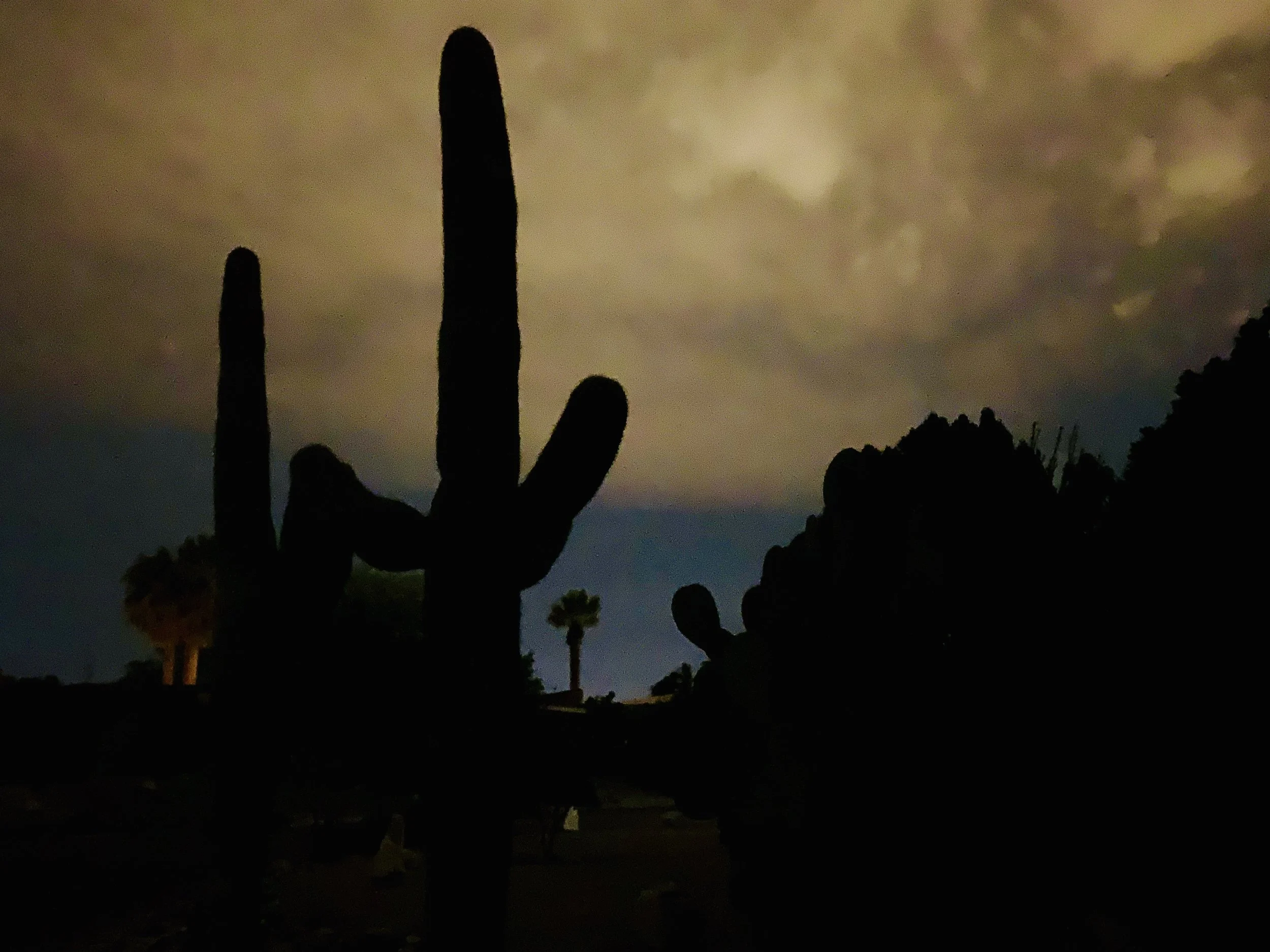
Twilight behind a sugaro cactus in Tucson.
After a one day layover in Portal, AZ, where I hiked near Cave Creek Canyon, I woke to a very cold day. The wind was clocking about 24 miles an hour out of the southeast, so I decided to head northeast to Silver City, NM, thinking that I would then zag southeast the next day to Columbus NM, and then make my way eastward into El Paso.
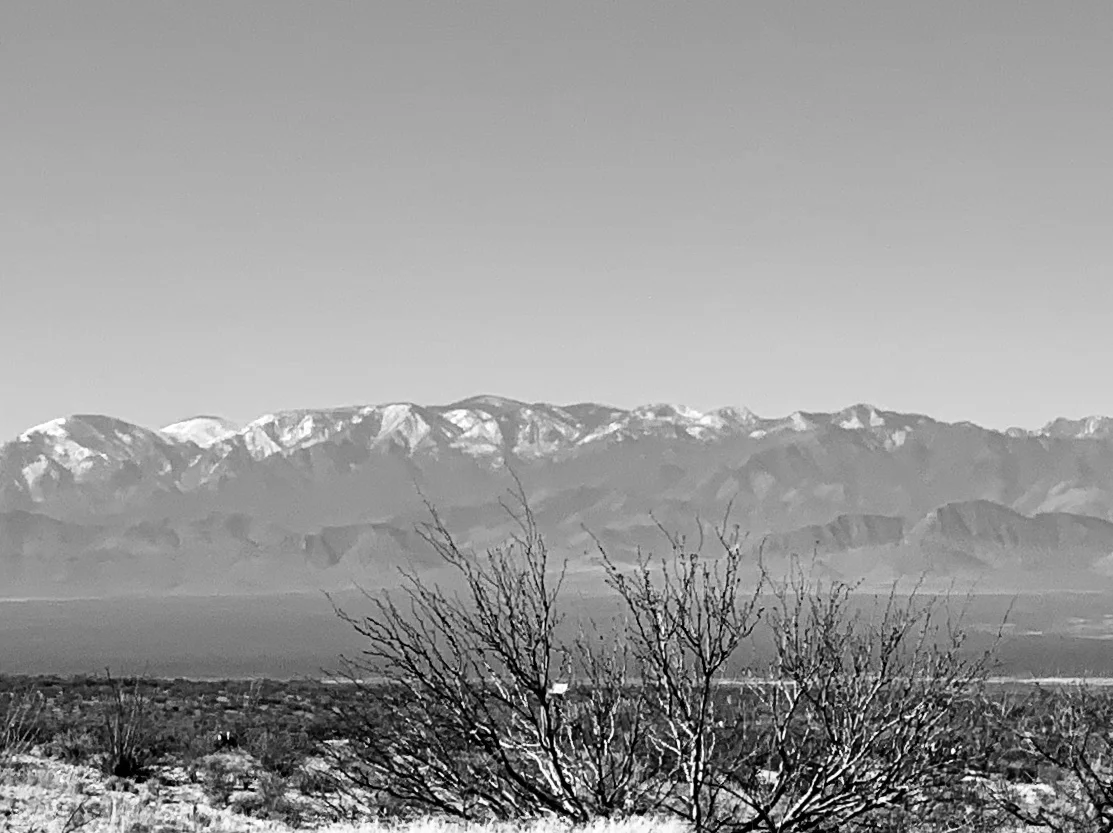
The Chiricahua Mountains on the way to Lordsburg.
Life has a funny way of making us change our plans. The wind shifted to the east. Rain clouds gathered. The temperature dropped. After a very difficult slog of a ride directly into a punishing wind, I arrived in Lordsburg about 45 miles away from Silver City. I wasn't sure what the weather was up to, but I was worried. I found an inexpensive motel and downloaded another wind app for my cell phone, hoping it would give me better capacity to analyze and predict what the next few days were going to be like. I knew there was a raging storm in the Midwest (the Nebraska bomb cyclone) and I assumed its outer edges were the cause of the wind and cold weather coming out of Texas. So I sat in my motel room, finally warm again, thinking about what to do. Near as I could determine the winds were going to remain out of the east/southeast at approximately 15 mph for the next 4-5 days. Additionally, rain and some snow were forecast for the entire region for the next few days. I knew I could make it to El Paso one way or the other as planned, and I also knew the trip was likely to be difficult and miserable.
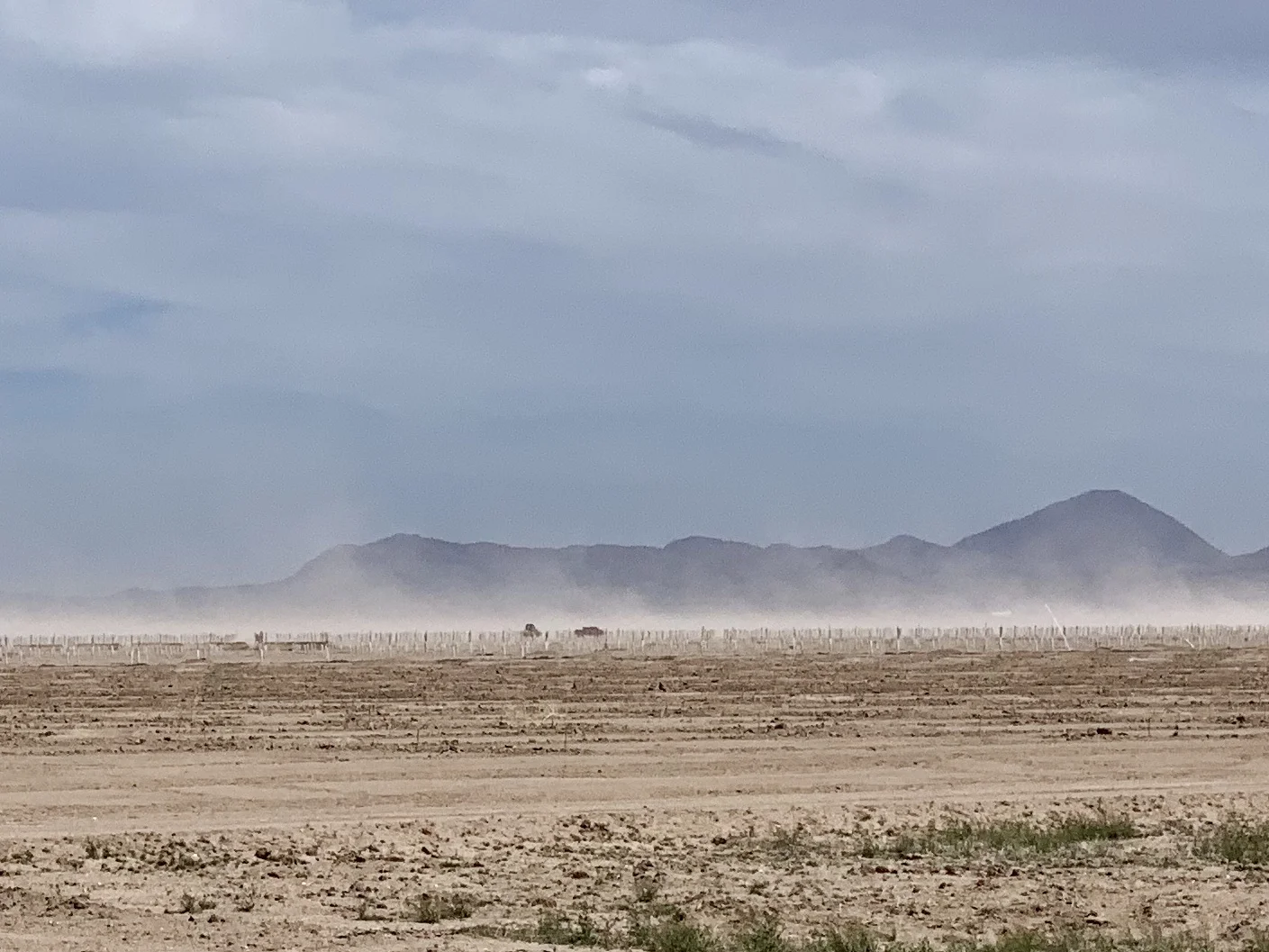
The wind stirs up dust on the way to Lordsburg.
I called my Dad in California, and my Mom in Illinois. I also called my kids. That might seem like a strange comment coming from a grown man in his 60's, But for those of you tracking older parents and grandkids, you'll recognize the behavior. I wanted to be certain my eastward direction under such conditions didn't make it difficult to get to either parent should the need arise. And I wanted to know if changing my itinerary and visiting my kids and grandkids a month or so later than previously planned would be ok.
I was improvising based on weather, just as humans have done for thousands of years. That is, before we insulated ourselves from it through our technology. Yet, our very attempts to tame it have only made it more foreboding. As the recent bomb cyclone in Nebraska - and the even more devastating cyclone in southeastern Africa - remind us, the weather will always humble us. We can't defy physics.
After discussions with various family members, I decided to return to Tucson where the weather was milder, and catch a train up to San Jose to my Dad's place. Right now I'm sitting in a lovely Landmarked train station in Tucson. I travel tonight on the Sunset Limited and will arrive into LA the morning in time to catch the Coast Starlight up to San Jose tomorrow. As usual, I will roll my bike up to the baggage car. For only $20 more a ticket there's no better way to get a bicycle somewhere (other than riding it, of course).
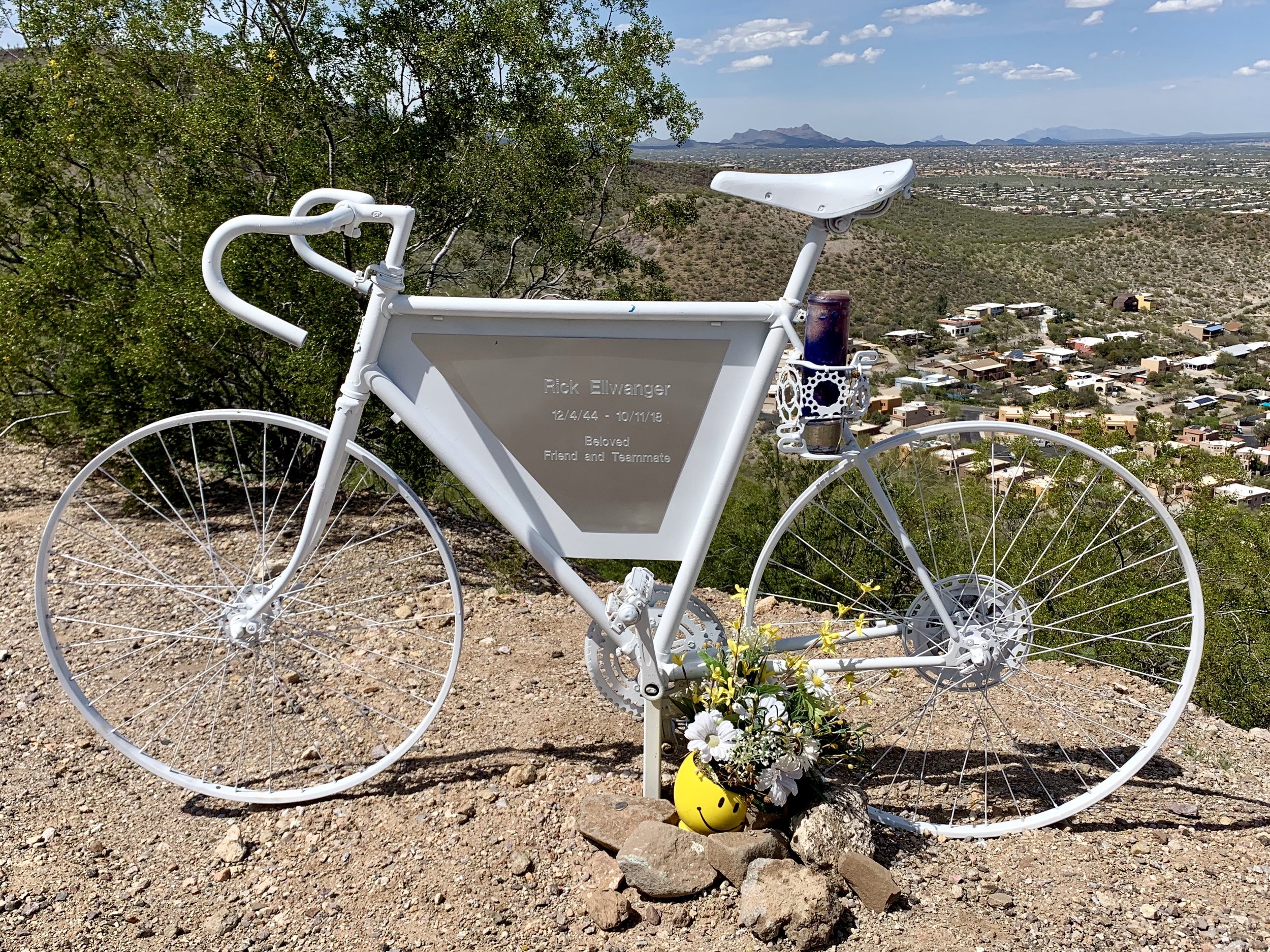
One of my intentions, for now, is to avoid an effigy in my honor. I came across this one on "A" Mountain east of Tucson.
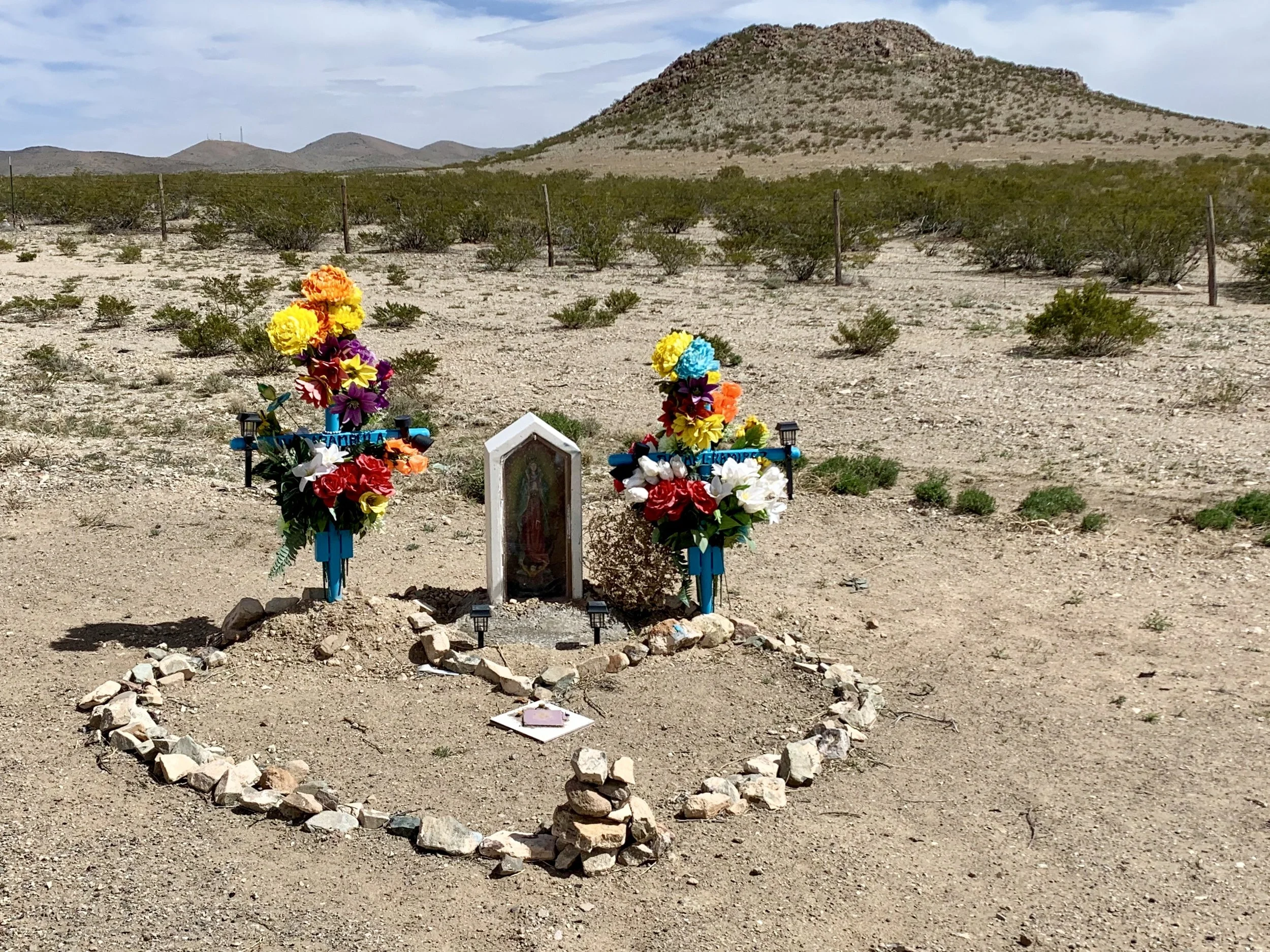
Seen in western NM.
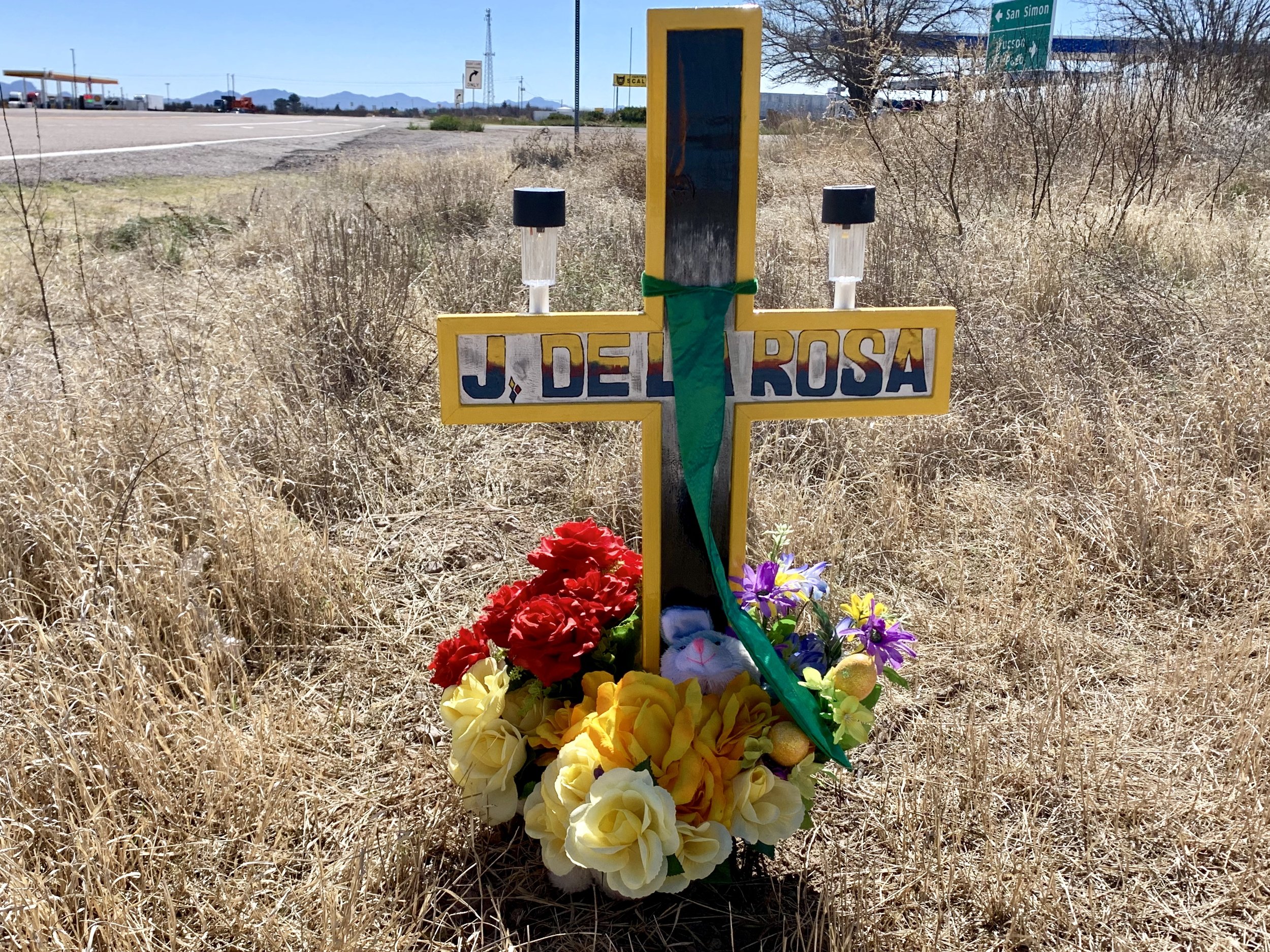
Seen in eastern Arizona.
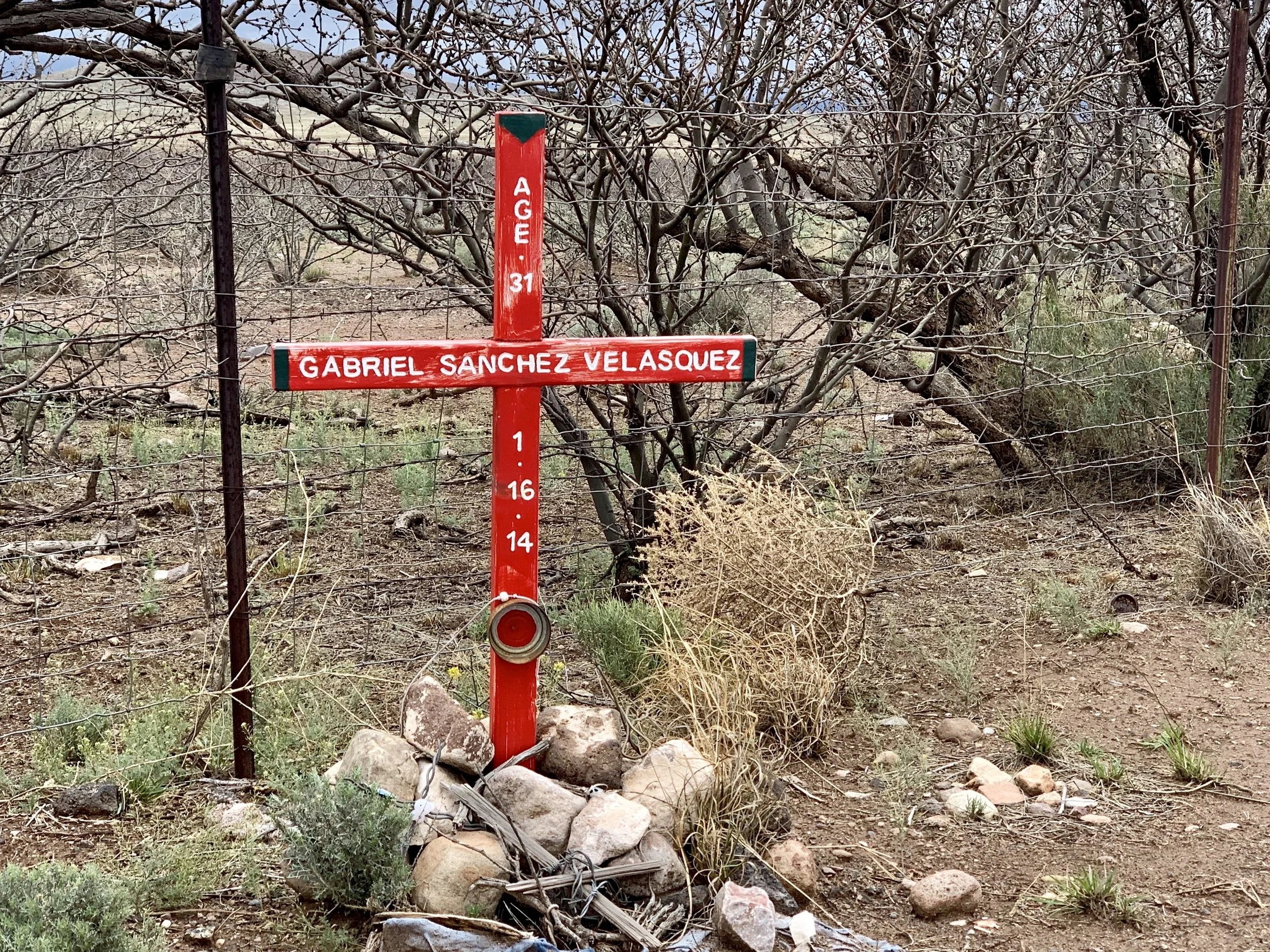
Seen near Douglas, AZ
The new plan made me breathe easier, and sleep a bit more deeply. That said, I'm sorry to have missed exploring route 9 and the towns of Columbus, NM, where Pancho Via "invaded" the US at the battle of Columbus in 1917, and Antelope Wells, NM - which I am told is a hot spot for Border Patrol action. I'll be back.
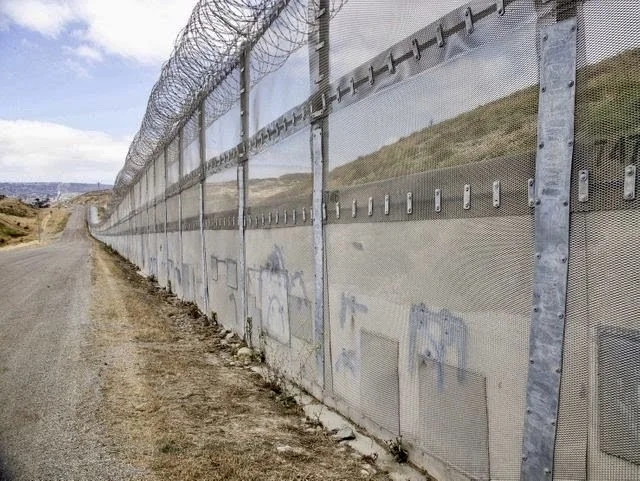
The border near Nogales, AZ. Photo credited to USA Today.
I can't say that I've seen much near the border that suggests we have a crisis of "invasion". Where I've been it seems quiet, "normal" and only subtly militarized. As per the pictures I've already posted, the fences are ugly and the concertina wire is threatening. I've been reading an interesting book titled "Storming the Wall; Climate Change, Migration and Homeland Security" by Todd Martin. If the numbers of illegal immigrants on our southern border are actually increasing (recent reports suggest that is true) they are mostly immigrants from Guatemala, El Salvadore and Honduras. And, according to Todd Martin, these countries are experiencing devastating drought, and are climate refugee "canaries in the mine" for what lies ahead.
Apparently, migrants from these countries turn themselves into Border Patrol at their soonest opportunity with the intention of applying for asylum. Most are farmers who are no longer able to survive on their land. If they flee to nearby cities, they and their families are subject to horrific gang violence. So they come north, hoping they can gain asylum in the United States. If there is a crisis, it's a humanitarian one, and one that a wall might even exacerbate. Here's an article in "Scientific American" that explains the underlying issue more deeply.
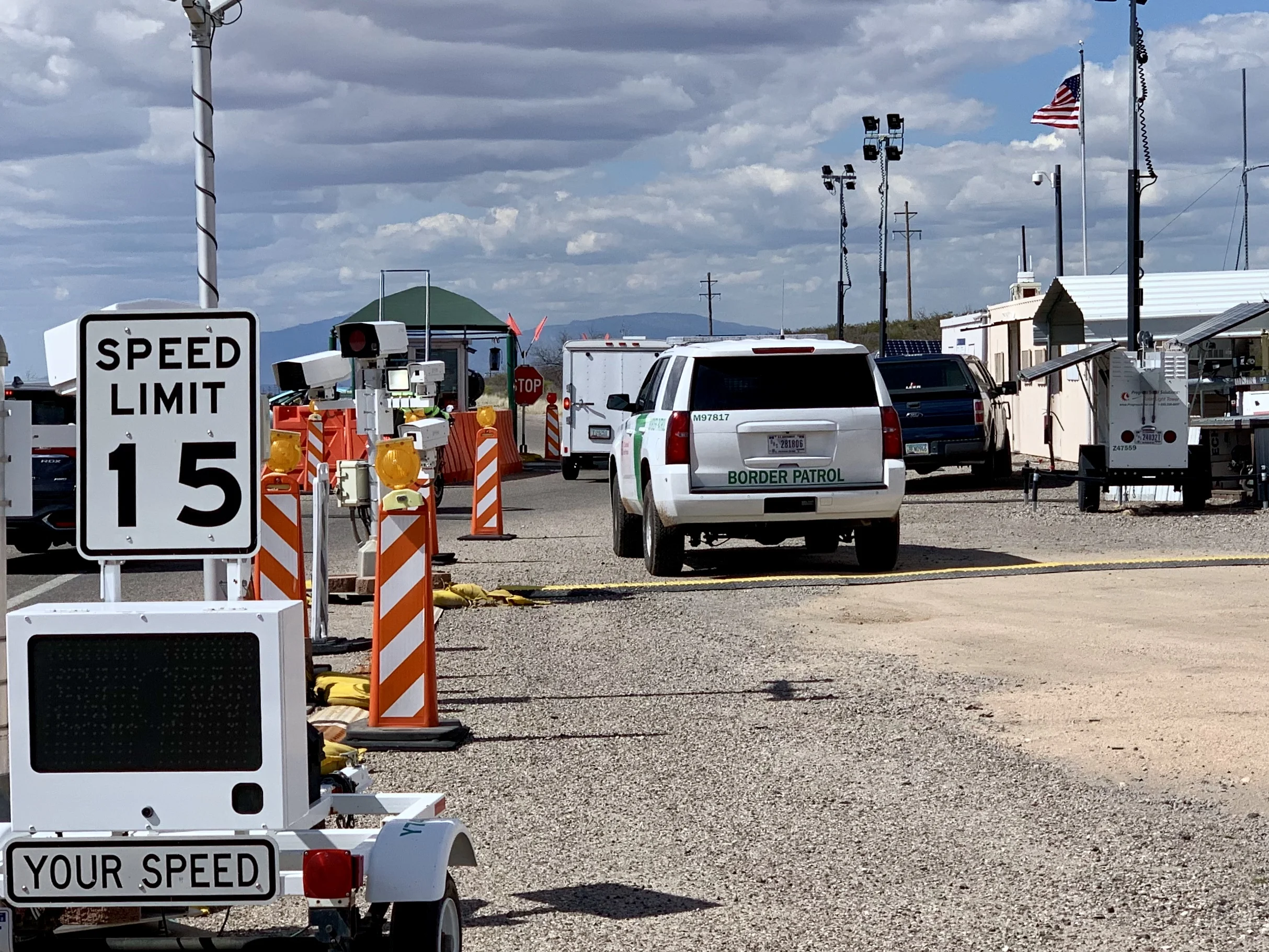
One of hundreds of checkpoints on a north/south road just south of Interstate 10. They are intended to keep migrants from gaining access to our interstate system. I've passed through several. Each time I've asked the agents if it was busy that day, and each time the answer was no.
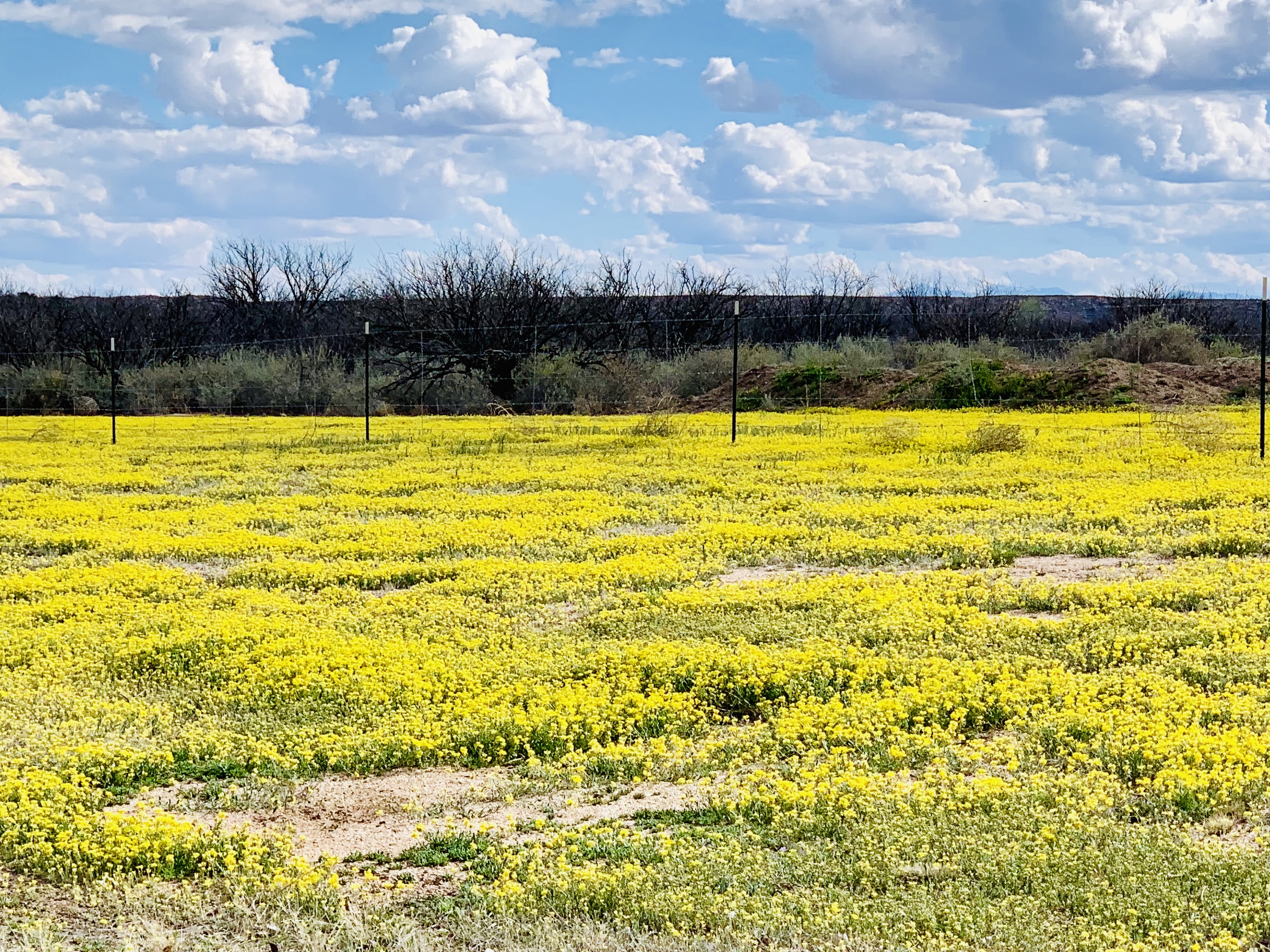
Fields of daisies are common here this time of year.
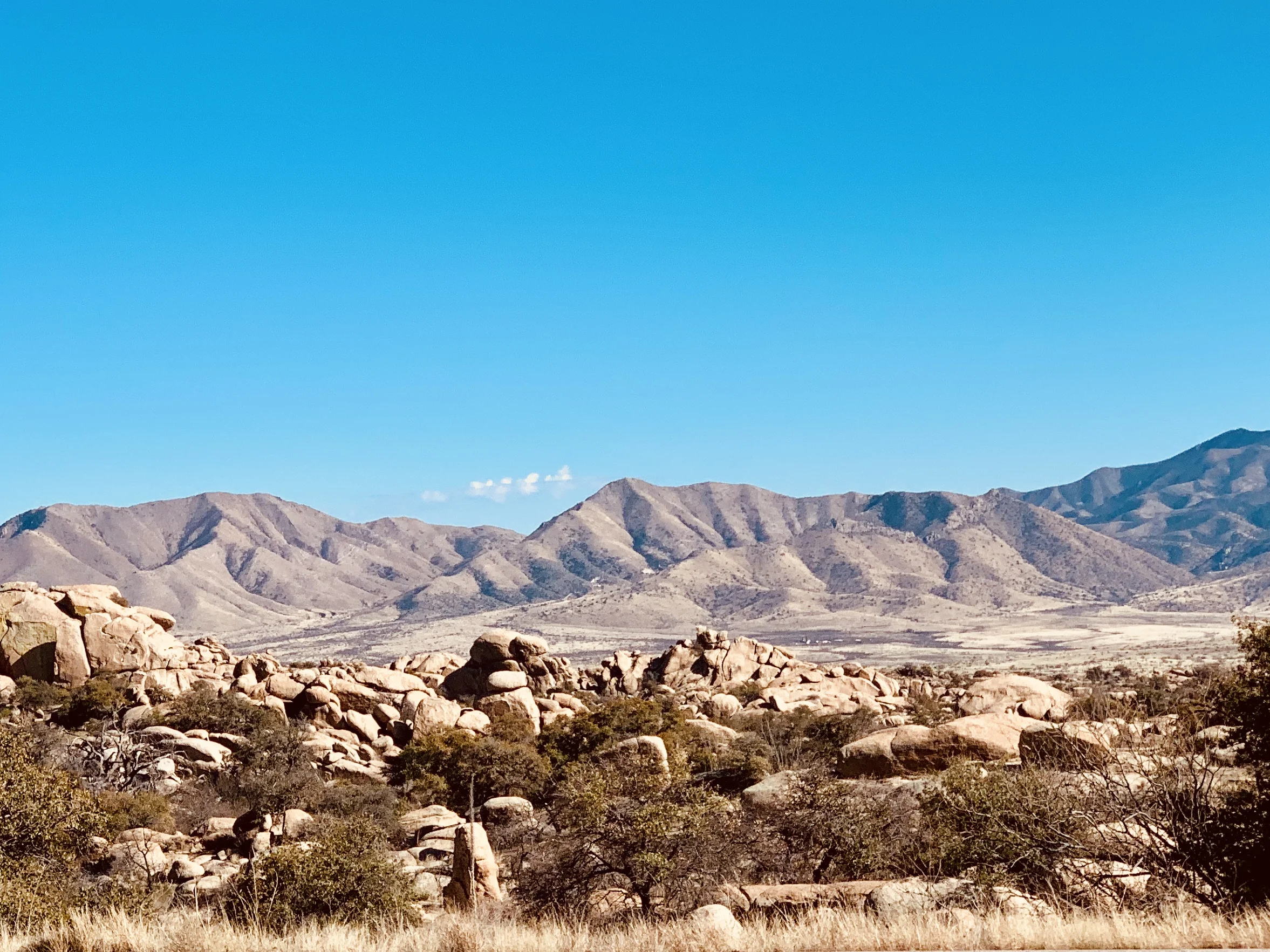
A view to the south about 50 miles east of Tucson.
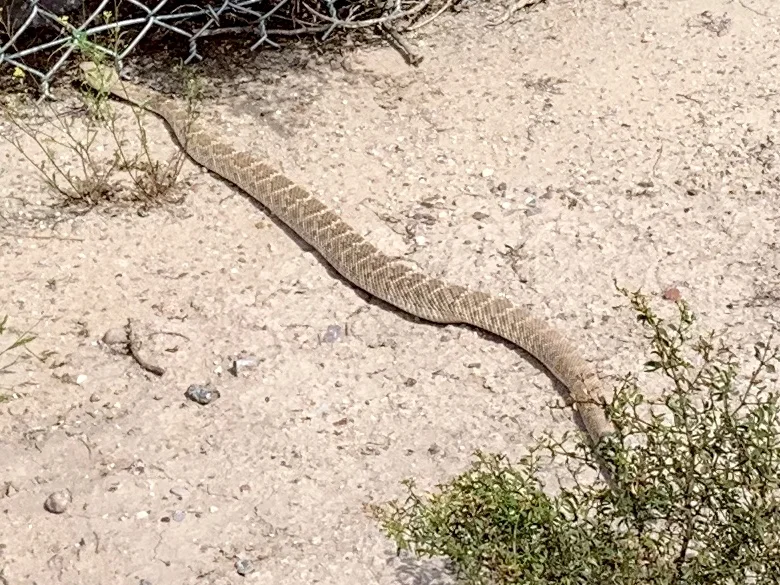
A rattlesnake seen on a bike trail near Tucson. As it gets hotter, they get more active.
Next week I fly back to New York. It will be another month or so before I start my next cycling adventure, so you'll notice a lag in my blog posts. But, as always, there's more to come.
All photos, unless credited or otherwise noted, are copyrighted property of the blog post author.
GRID Tour Finale, NYC to DC
To donate to GRID Alternatives through Climate Ride, please go here.
The GRID Alternatives Trans-American Cycling Tour, 2016, will be closing itself out in a matter of weeks, so the clock is ticking on time left to make a contribution!
I just finished the final 600-mile ride of the tour with a large group of other riders as we rode from NYC to the mall in front of the US Capitol in Washington, DC. Then after visiting the Mid- Atlantic GRID office, I rode back solo back to New York City. My final stats now include being away from home for 125 days, cycling 95 of those days, traveling over 5800 miles and climbing over 223,000 feet. Along the way, I have raised over $5000 for GRID Alternatives and Climate Ride. That may not seem like much money, but many of those contributions are quite small. Along the way, I talked to hundreds of people about climate change and effective strategies for addressing it while building our economy in a sustainable direction. So please don't underestimate how much sweat equity is in those very hard earned dollars!
If you haven’t contributed to this effort yet, I would sincerely appreciate it if you would! No amount is too little! And it's easy - visit my fundraising page where you can make a tax-deductible donation online by using the 'Support Me' link in this email. And if you have already contributed, you have my deep appreciation! If you would like to know more, shoot me back an email or check out the Climate Ride website.
But let me tell you a little more. The final ride - Climate Ride NYC-DC 2016 - was an extraordinary experience! While I knew the vision of GRID Alternatives was close to my heart, I wasn't expecting also to fall in love with the mission and vision of Climate Ride. The Climate Ride people run an intelligent and lean operation, using only six staff to raise almost a $million yearly for climate change efforts. And in the process, they provide life changing experience for their participant riders. Cycling long distance is not easy, yet I met so many other cyclists who - like myself - are worried about how climate change will affect the most vulnerable of us. They were all excited to learn about Climate Ride, GRID Alternatives and the work of others addressing climate change, and how to help low-income homeowners become more energy independent while providing job training for clean energy jobs.
Finally, I was able to visit the Mid-Atlantic GRID Washington, DC regional office, meet with their enthusiastic staff, and do some volunteer outreach before I returned home to NYC - where I will soon make a similar connection at the New York Tri-State GRID Alternatives office in the Bronx. In the meantime, GRID Mid-Atlantic office wrote an article about my visit, which you can read here. Prior GRID newsletter features are listed here and here and a Climate Ride newsletter feature is listed here.
Finally, you can support the Climate Ride “GRID Alternatives Trans-American Cycling Tour”, 2016 by going to my Climate Ride Fundraising Page here:
THANK YOU FOR YOUR HELP!
_________________________________________________________________
The Climate Ride Tour
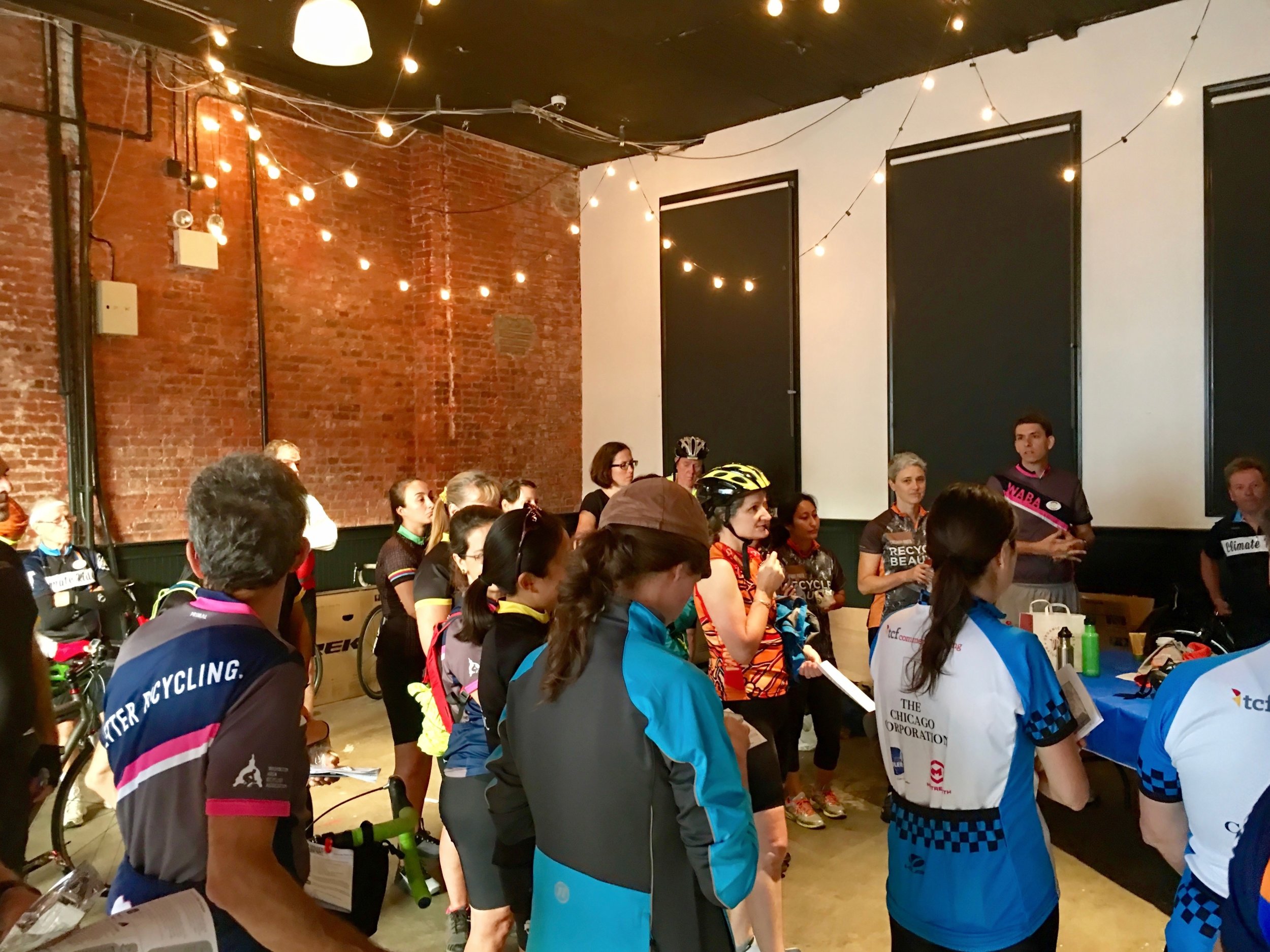
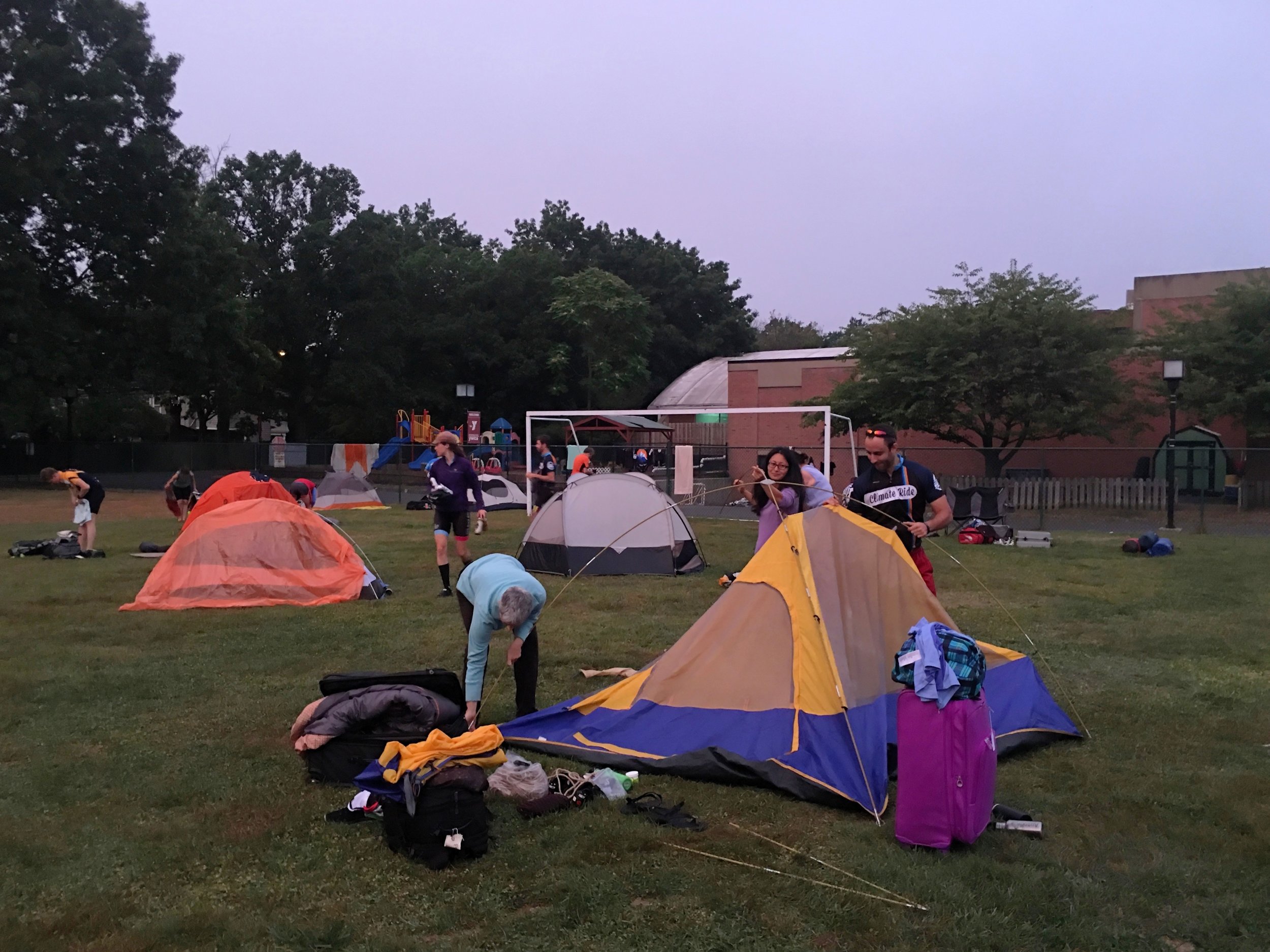
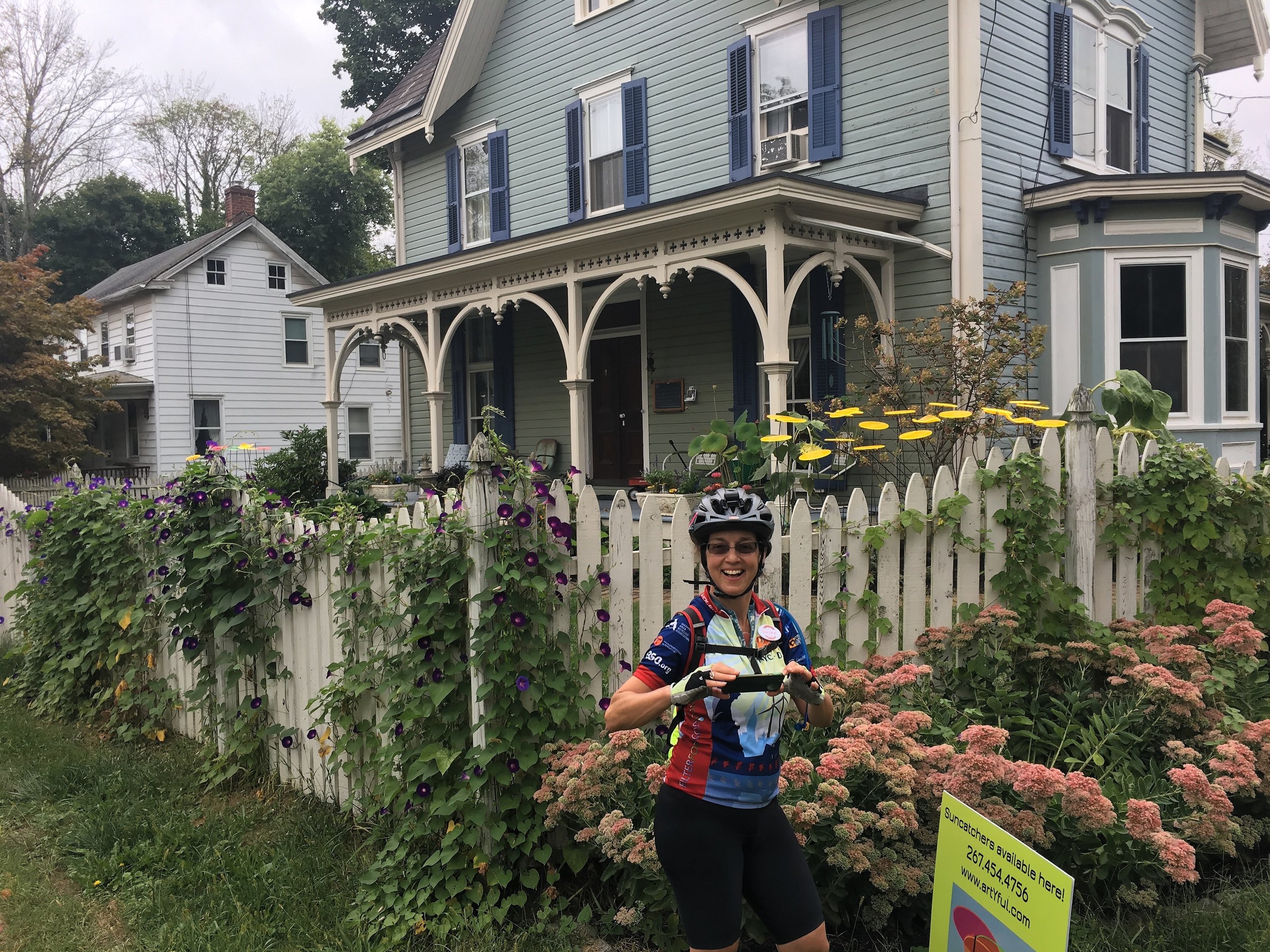
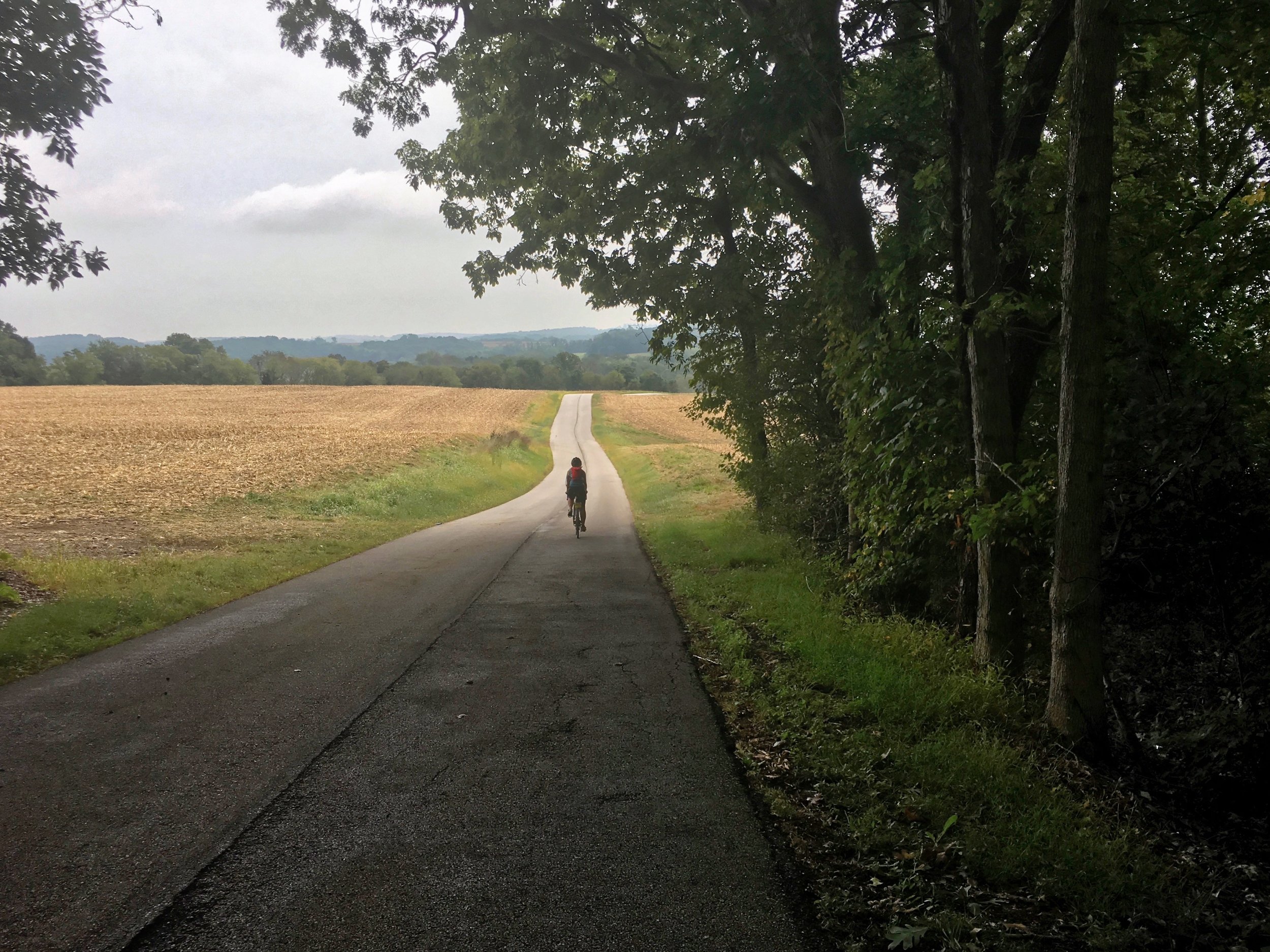
September 17, 2016 - Day 1: Day 1: 45 miles to Princeton, NJ. We rode 1.7 miles in New York City to the scenic and comfortable Highlands ferry where we jetted 45 minutes to Atlantic Highlands, NJ. Then, after lunch, we rode through beautiful back roads farmland of NJ to Princeton where we camped at the YMCA.
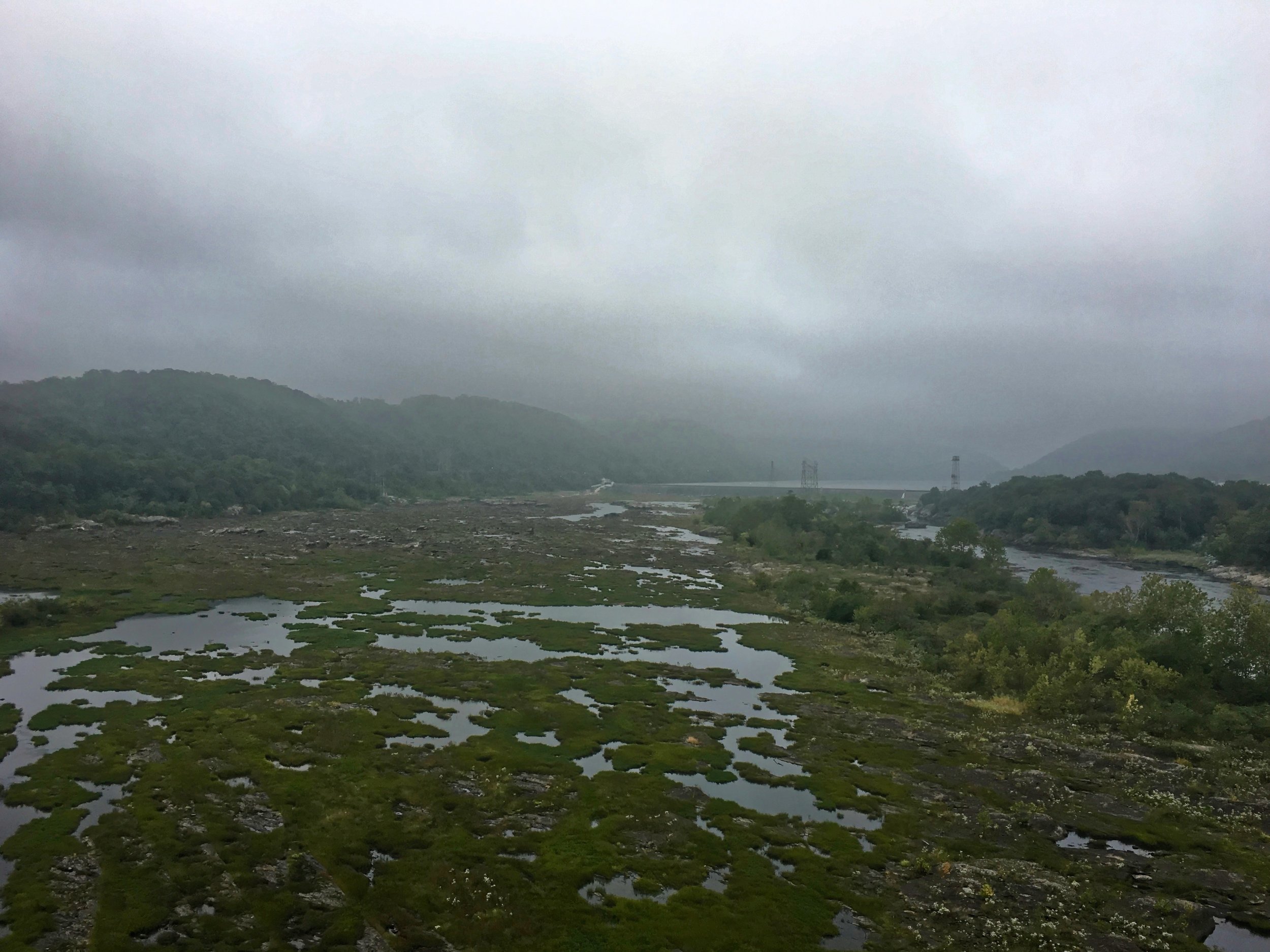
September 18, Day 2: Princeton, NJ to Camp Sakanac, Spring City, PA. Beautiful ride into PA, Washington Crossing at the Delaware River, lunch stop in Doylestown, sensational ice cream rest stop at Merrymead Farm, Iron Hill Brewery in Phoenixville and riding the last 9 miles foggy and dehydrated. Opted to sleep in cabins that night instead of pitch a tent because of rain in the forecast overnight.
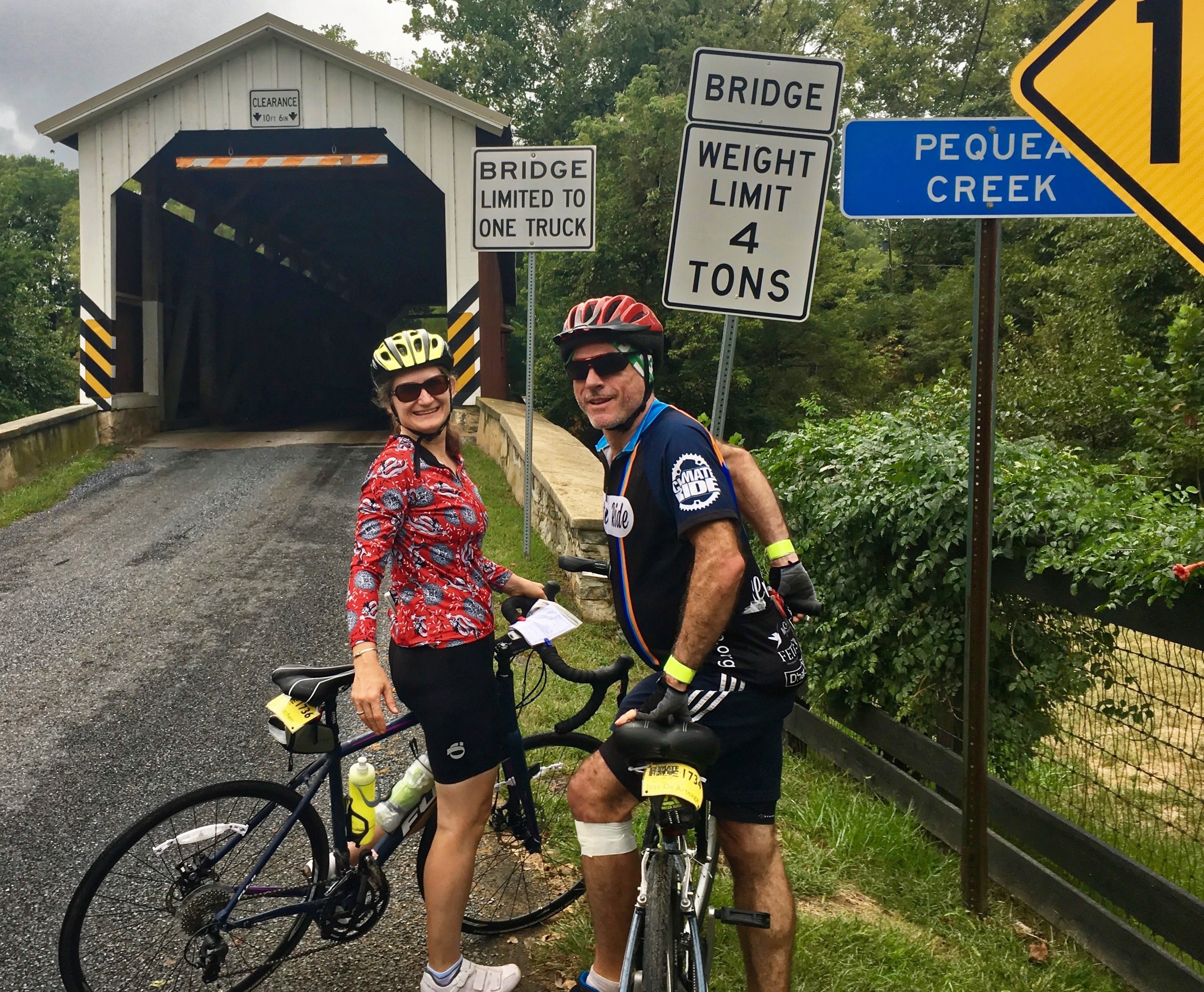
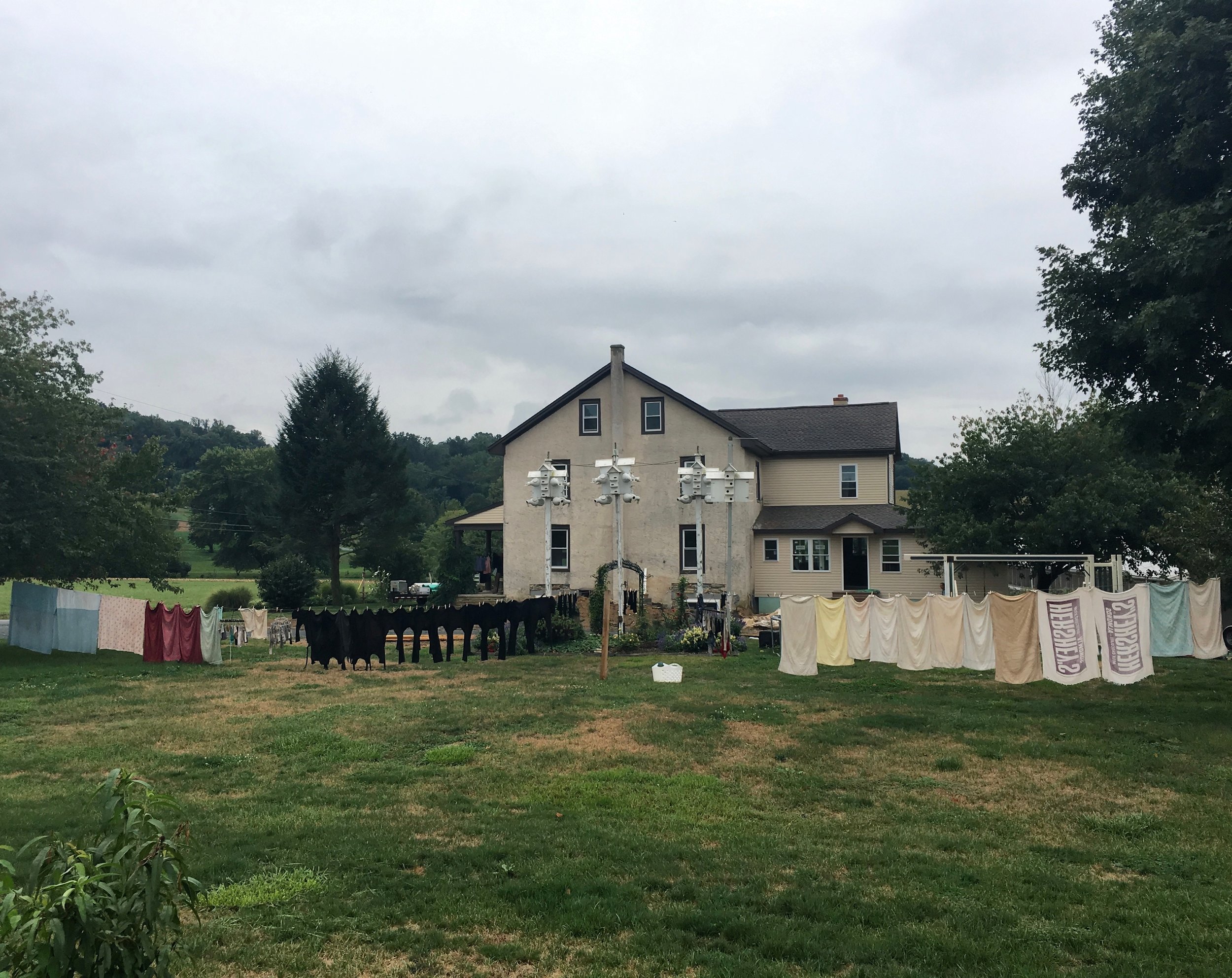
September 19, Day 3: Woke up to pouring rain, thunder, and lightning. After a 2 hour delay, the group gets clearance to start about 10 am. We have some distance to travel and start some serious climbing. Fabulous lunch by Climate Ride staff in New Holland, PA and afternoon riding in beautiful Amish country. There's an afternoon stop in Strasburg and finally arrive at a Mennonite camp called Camp Andrews.
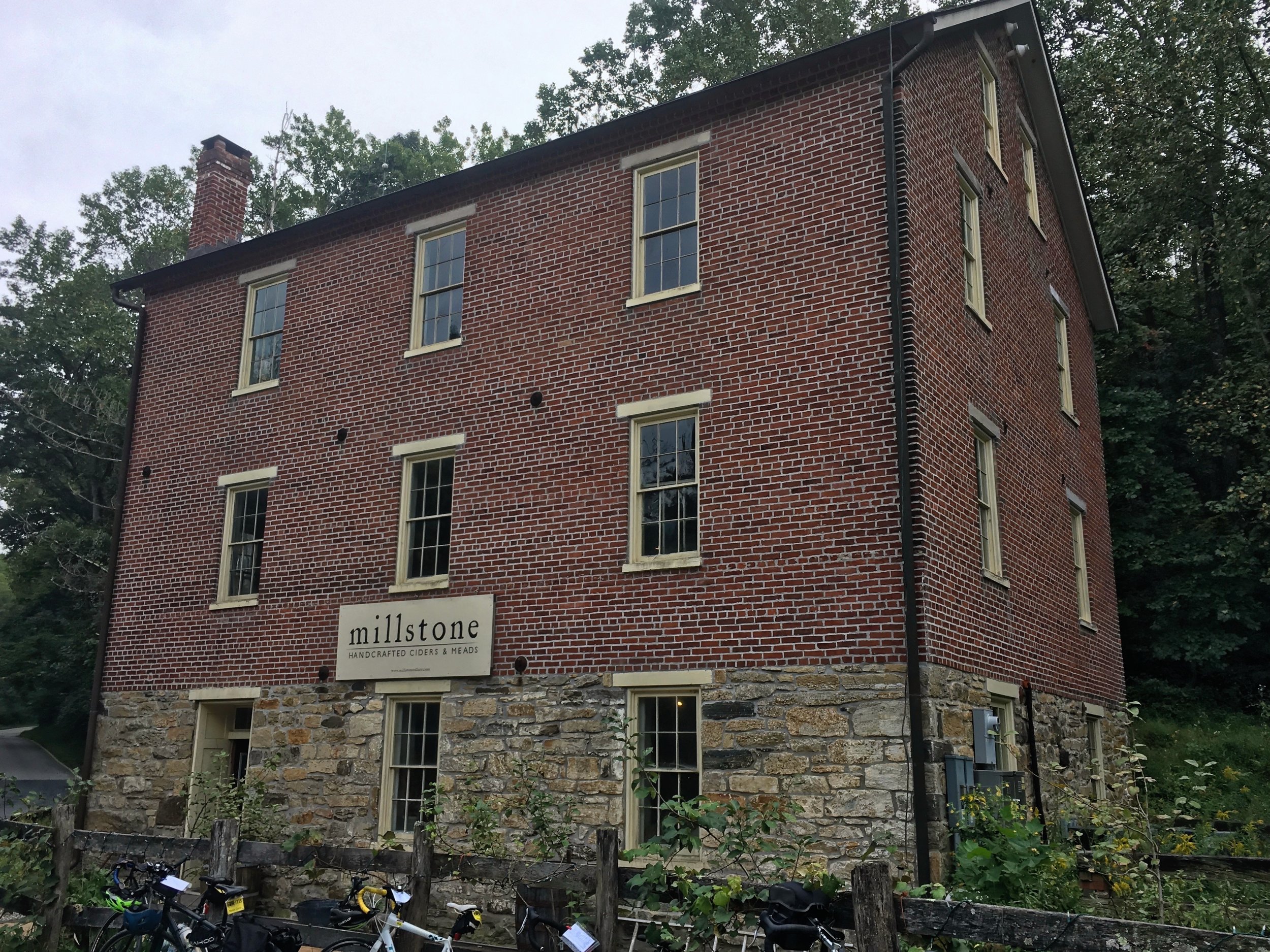
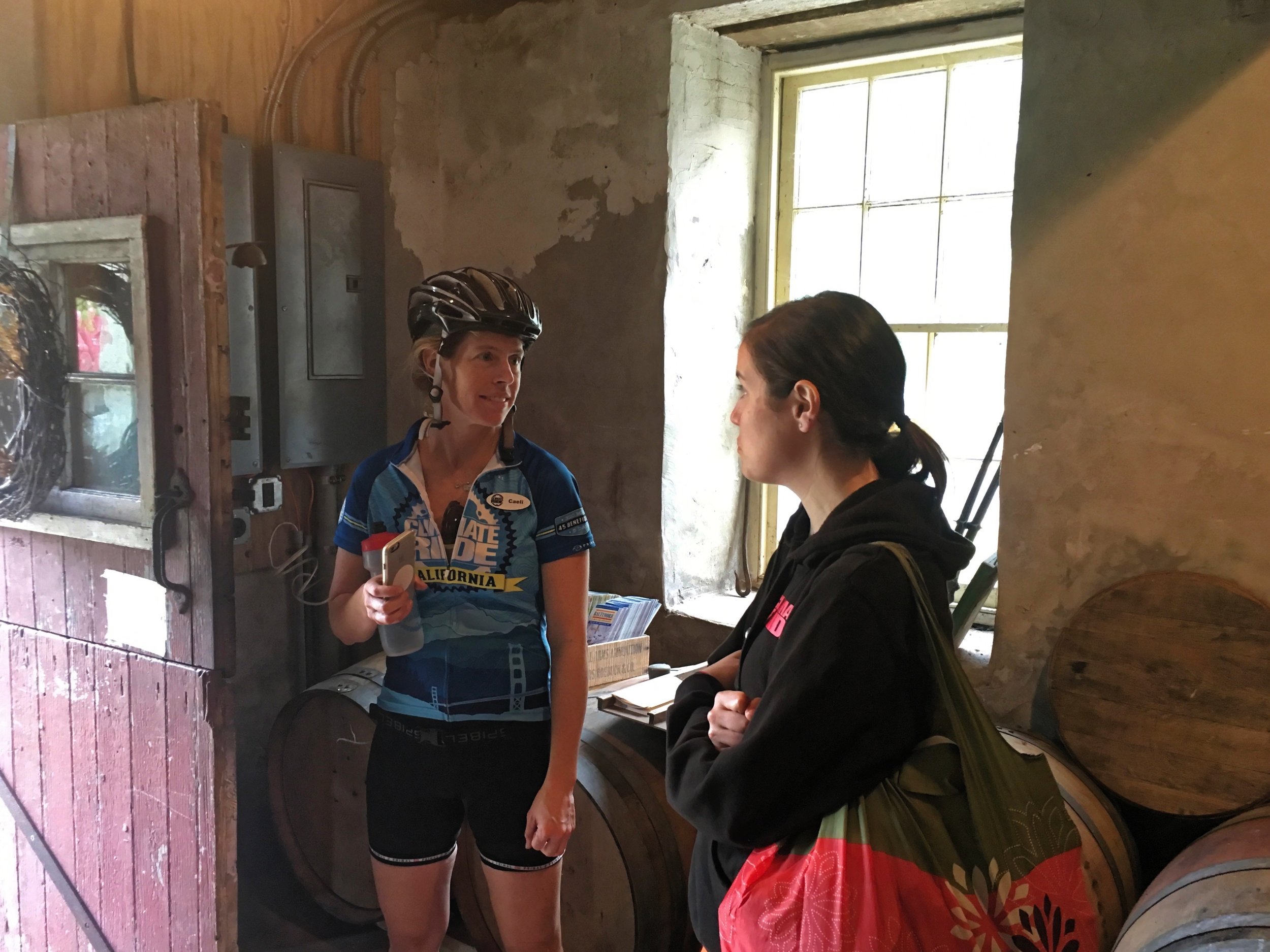
September 20, Day 4: Another day of beautiful riding, and ver, very hilly. Lovely stop at a local Cidery called Millstone. Worth a visit! Free tasting and purchases made by many. Rode into Maryland and our final night was at the extraordinary Pearlstone Retreat Center, featuring organic, farm-sourced food, and very comfortable lodging. We gad a big bonfire to celebrate our last night.
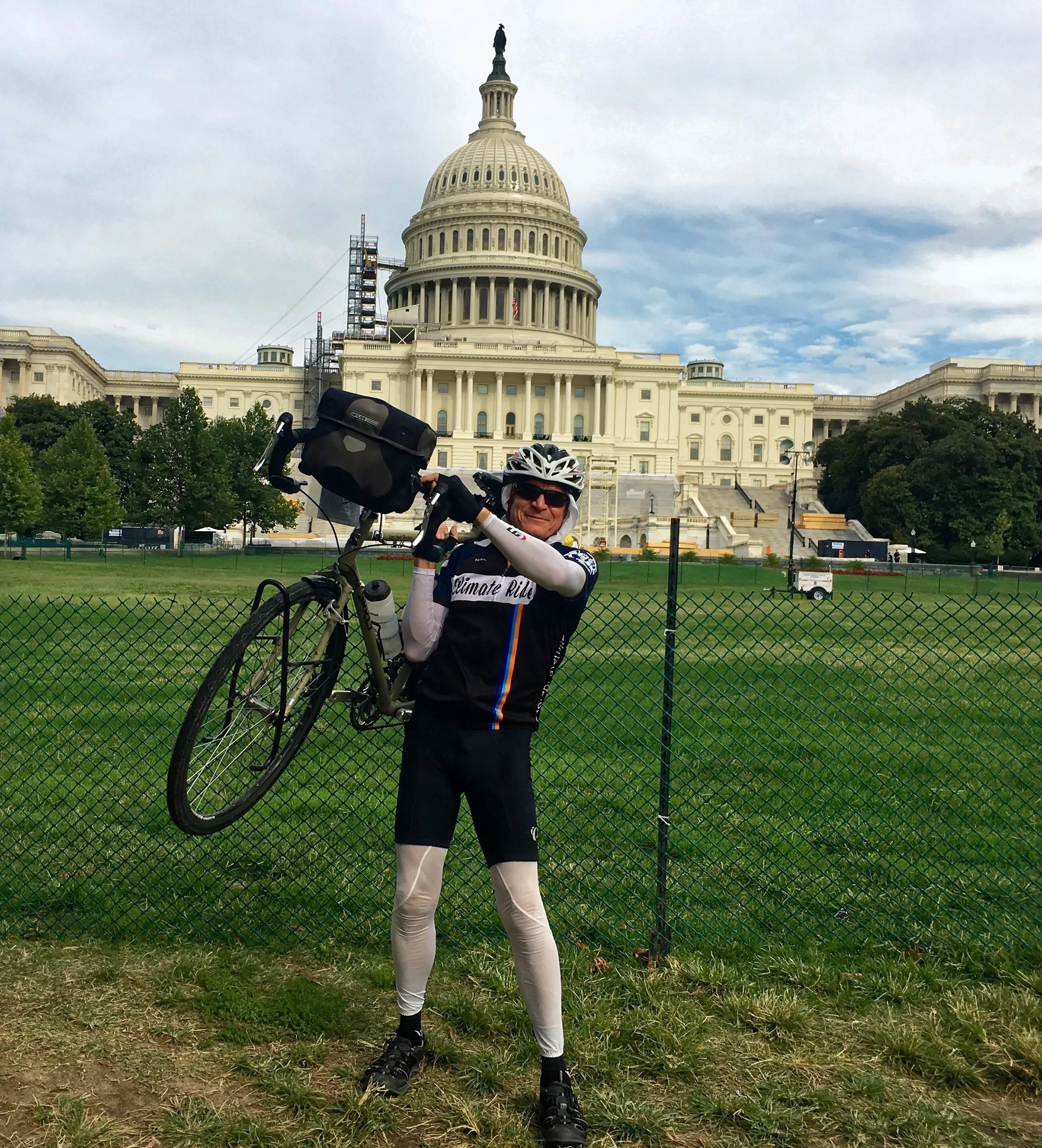
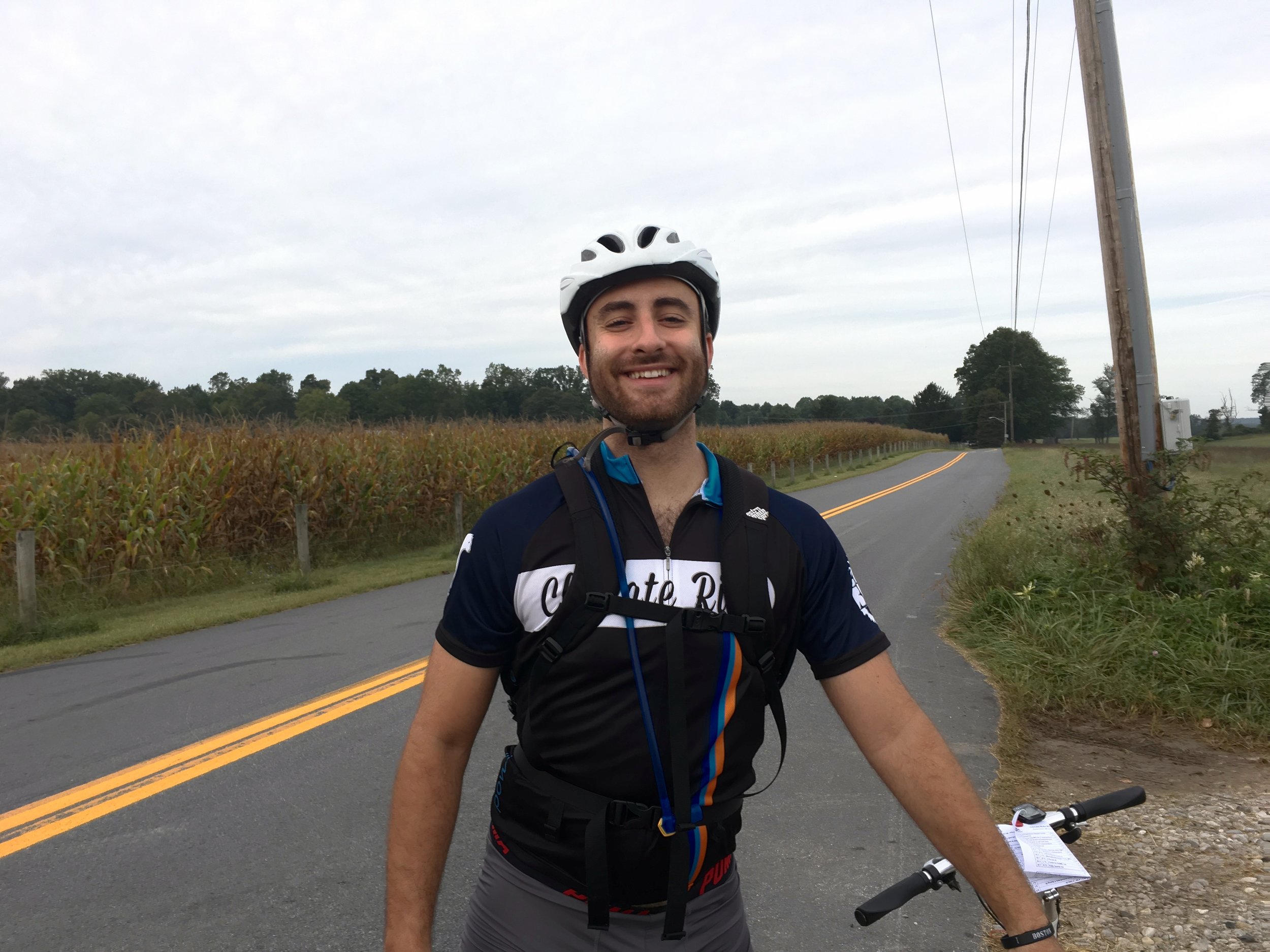
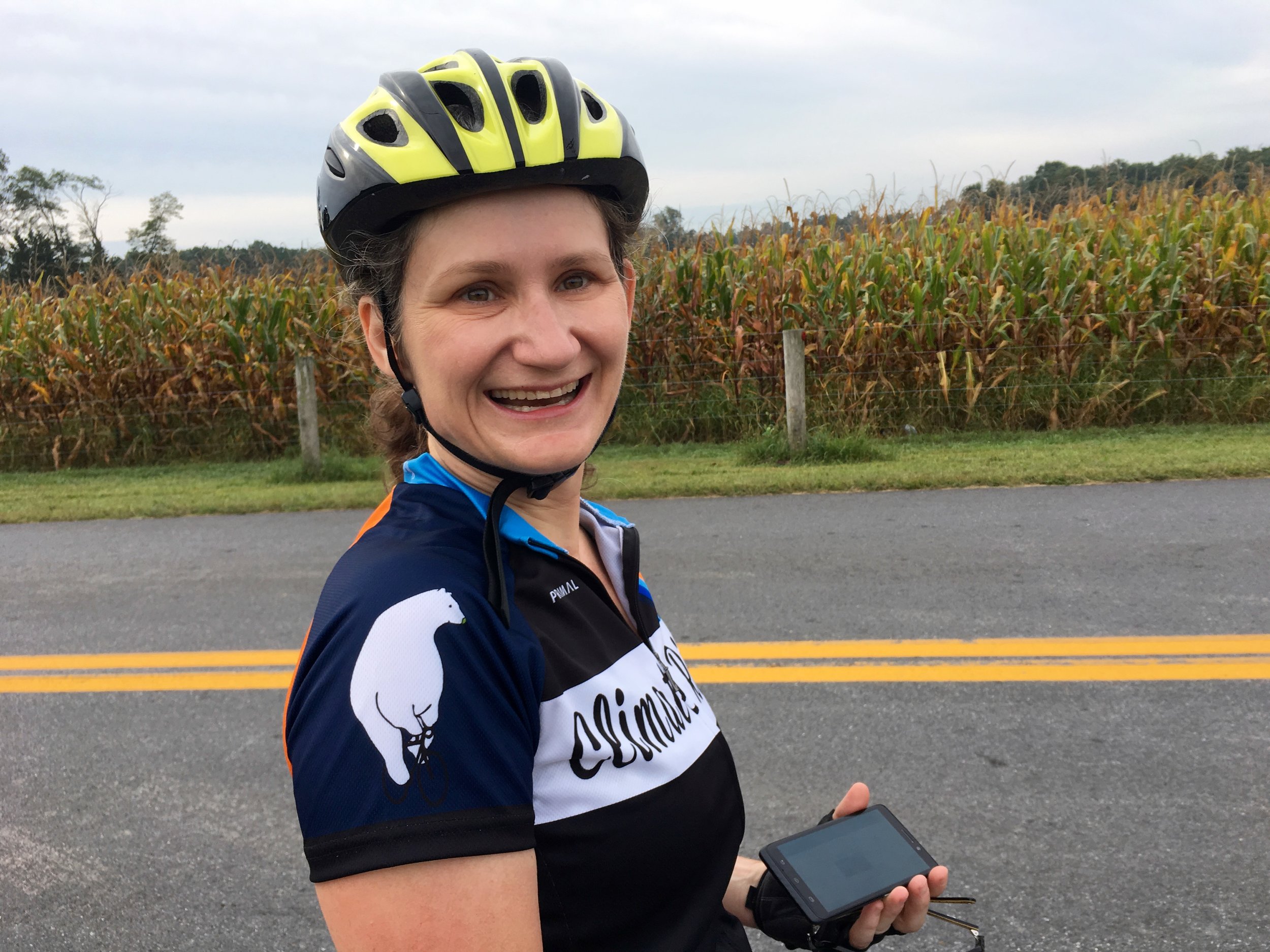
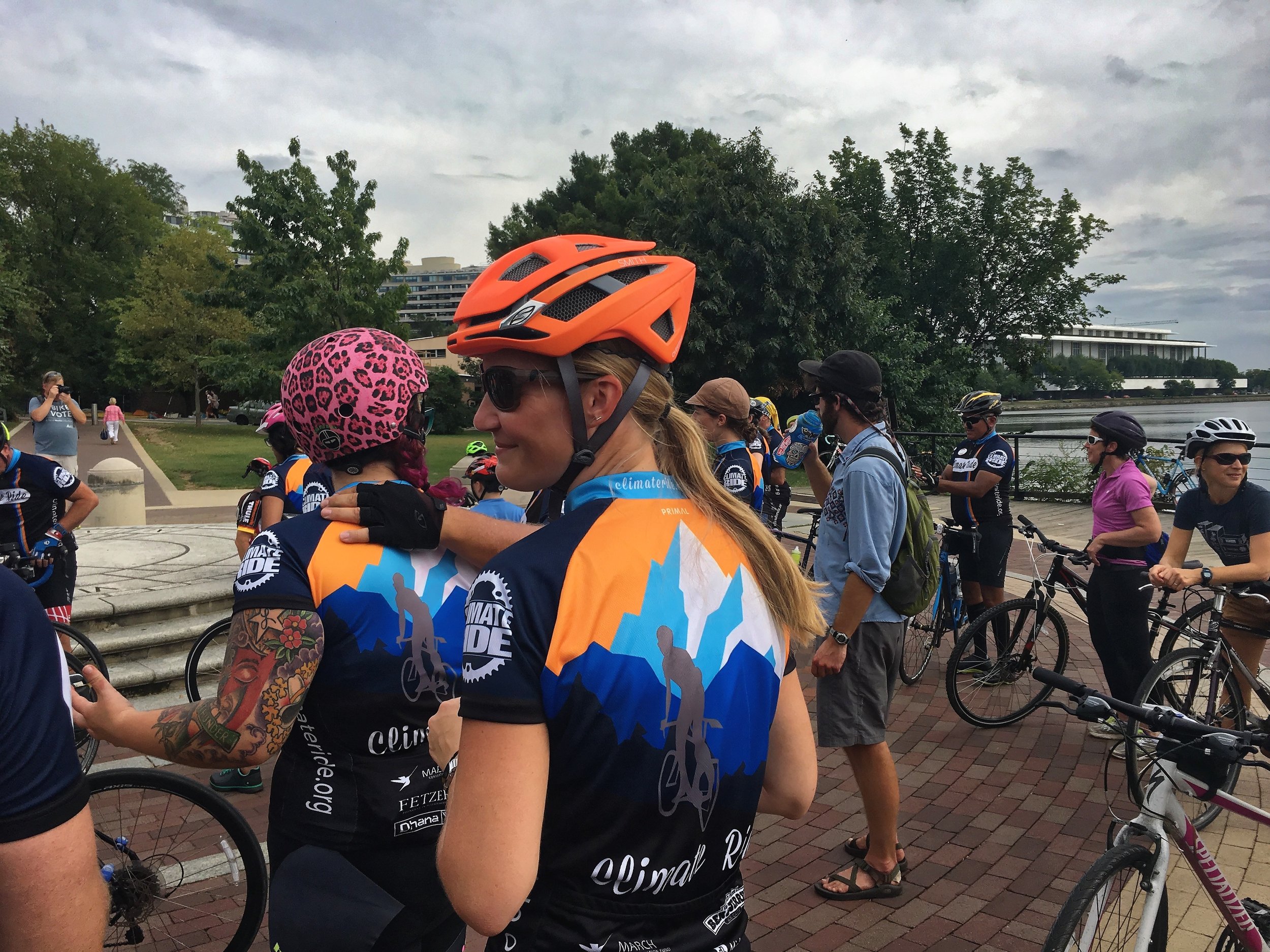
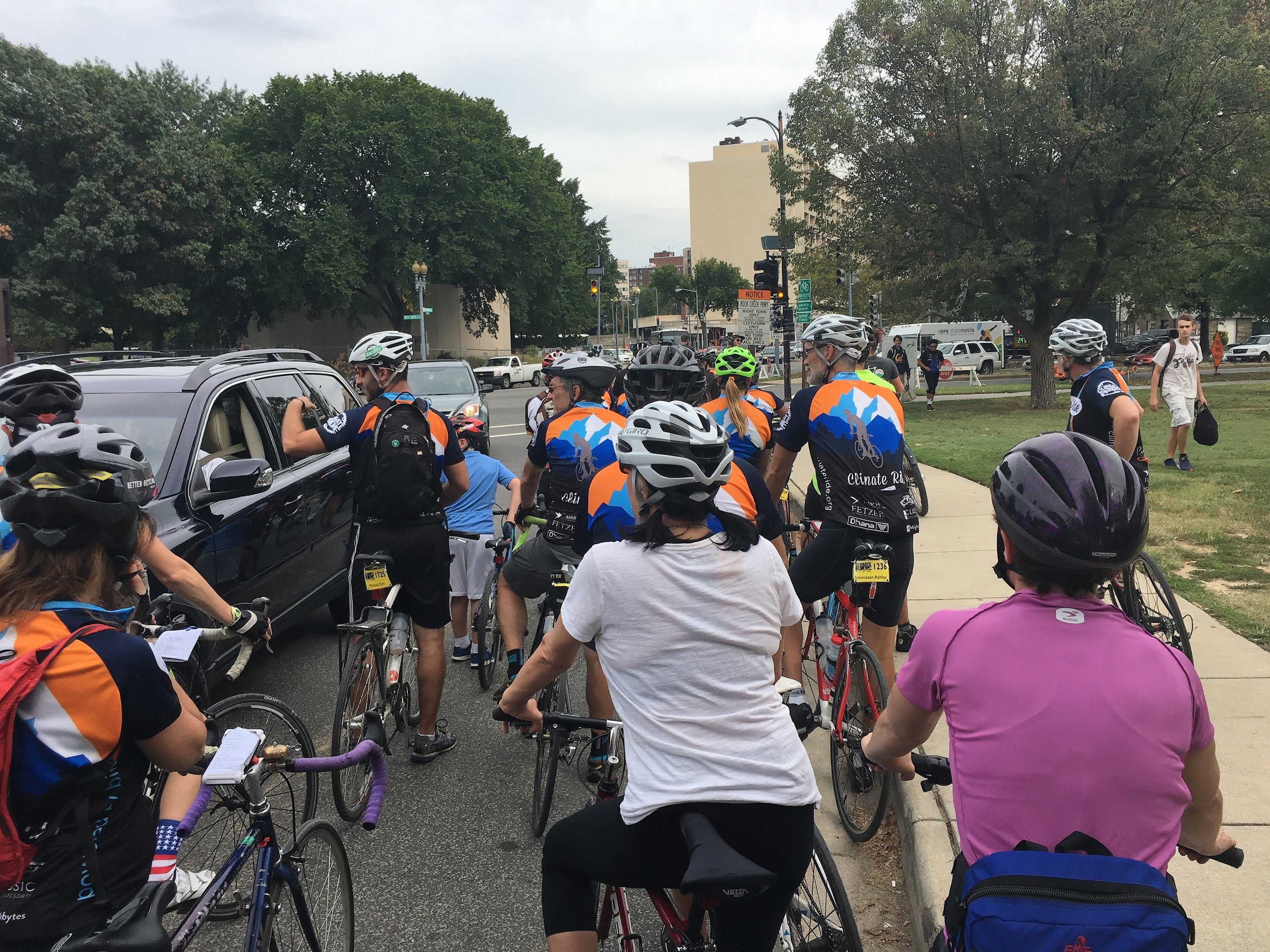
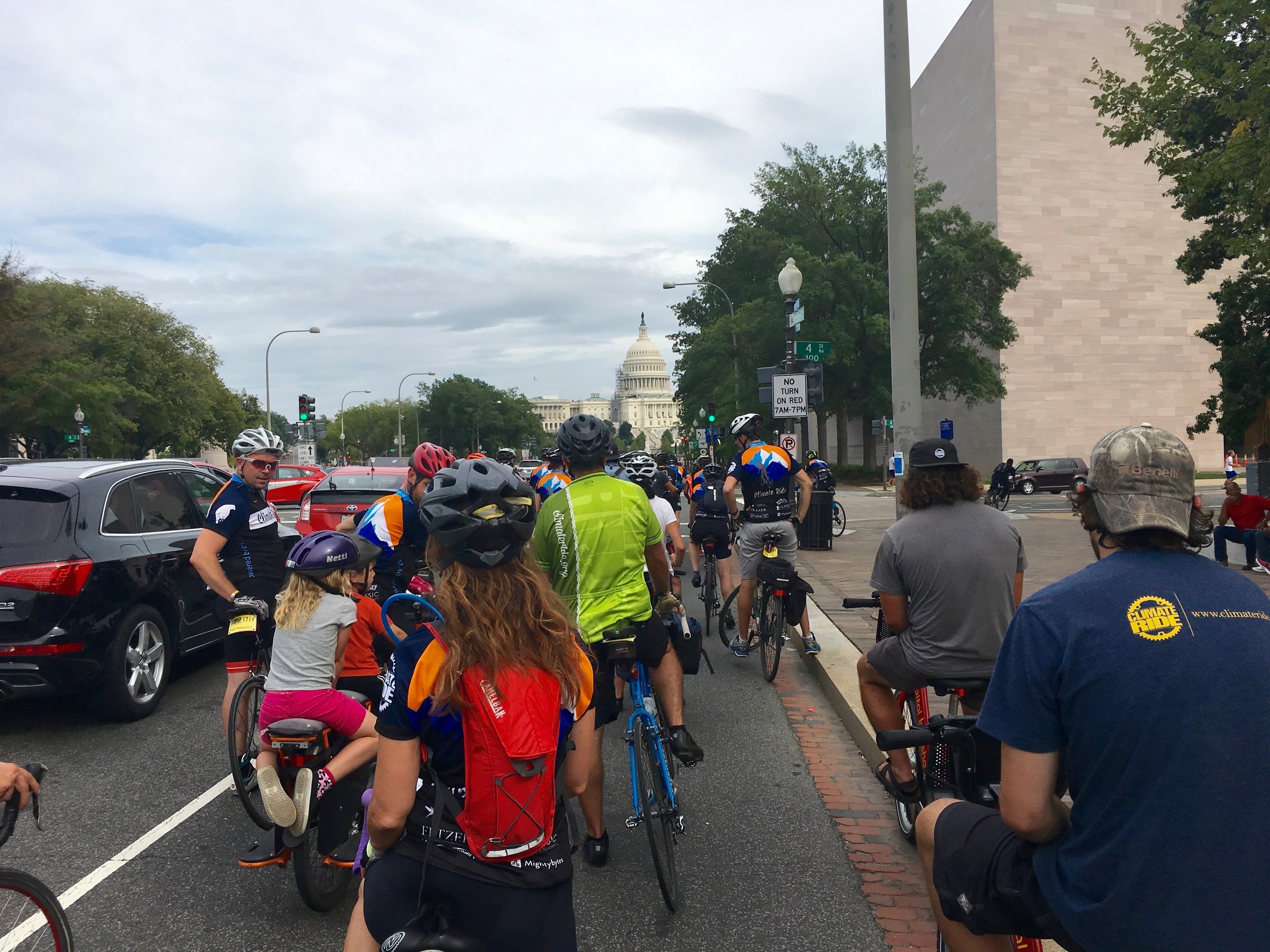
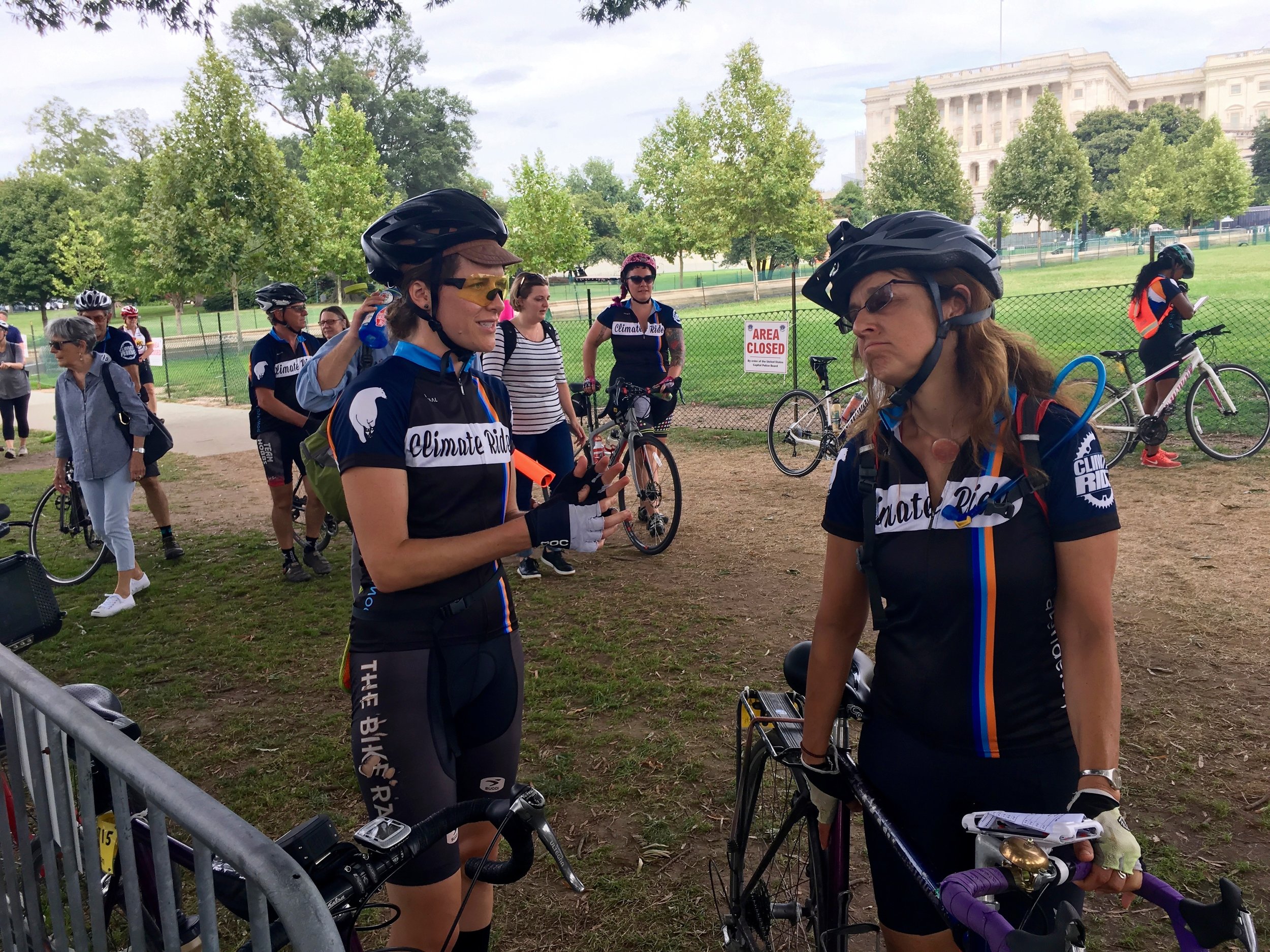
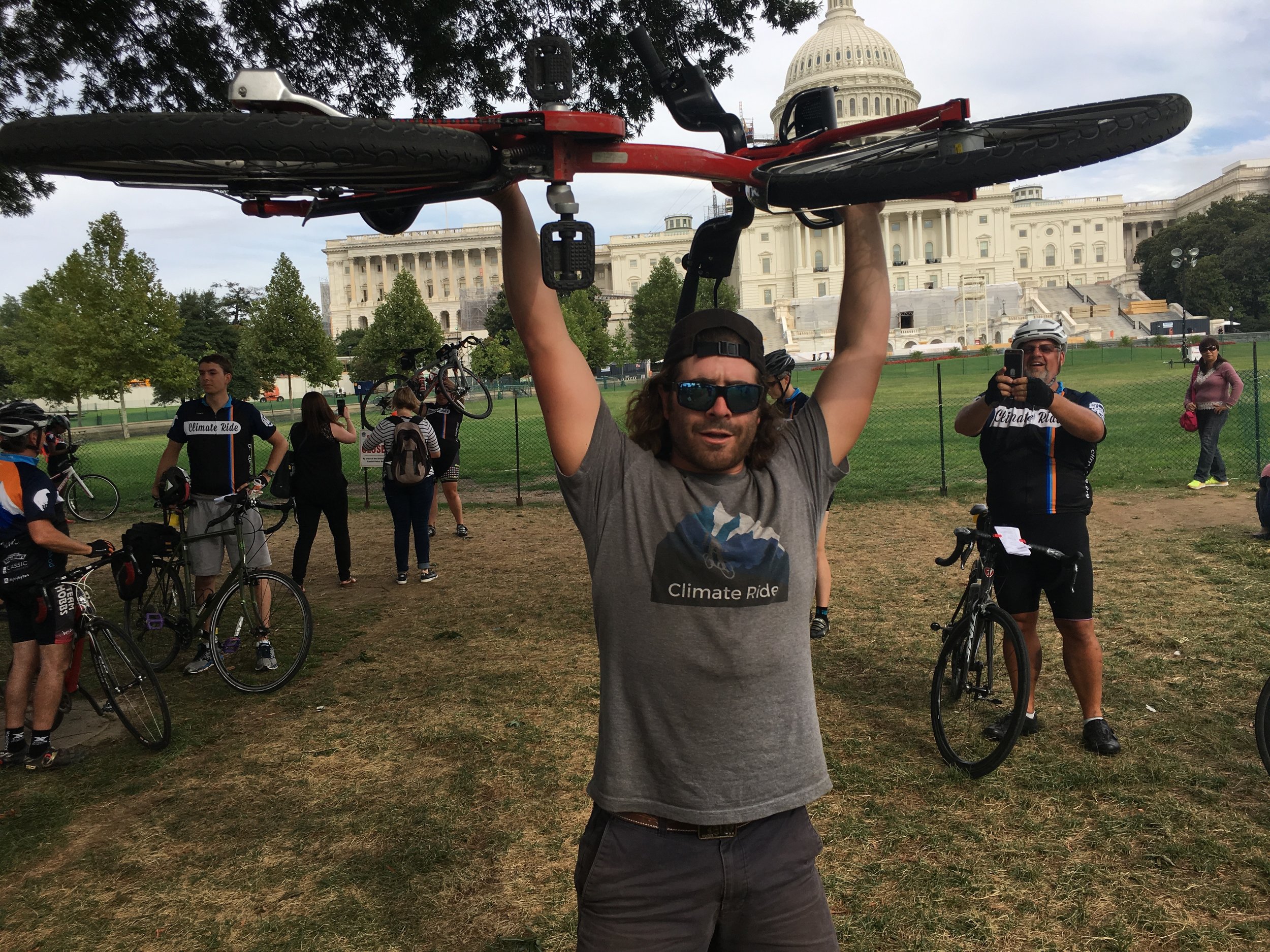
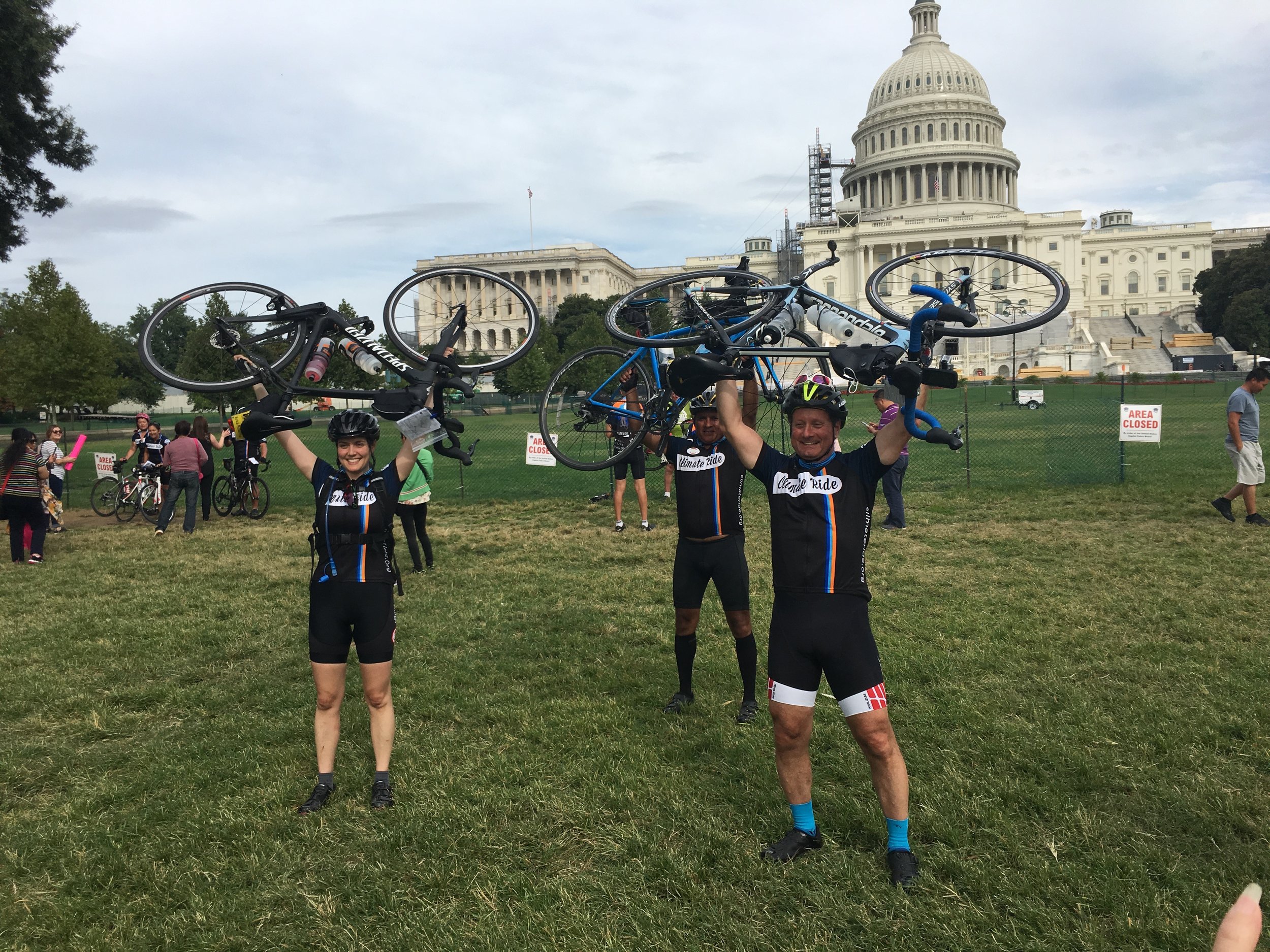
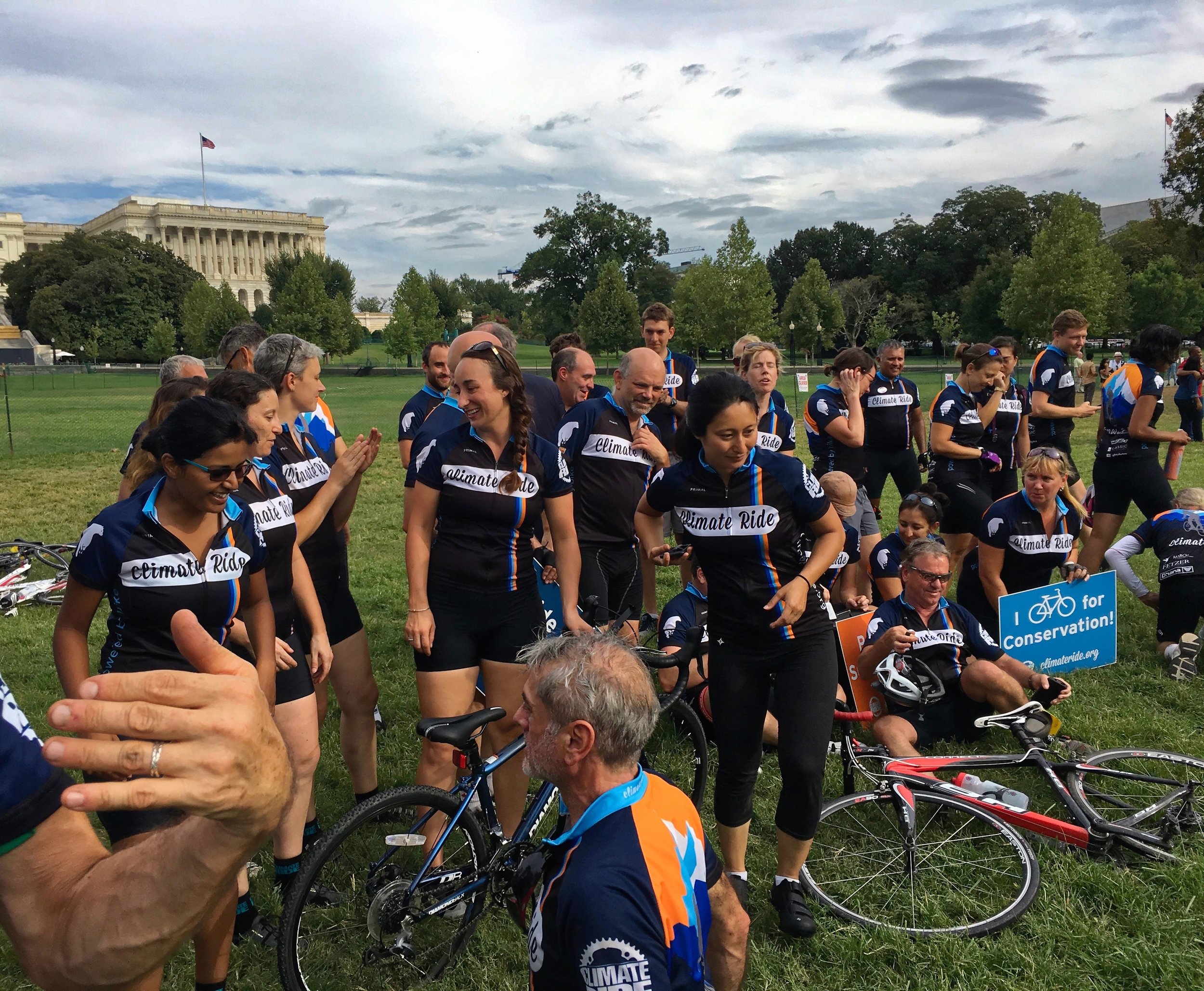
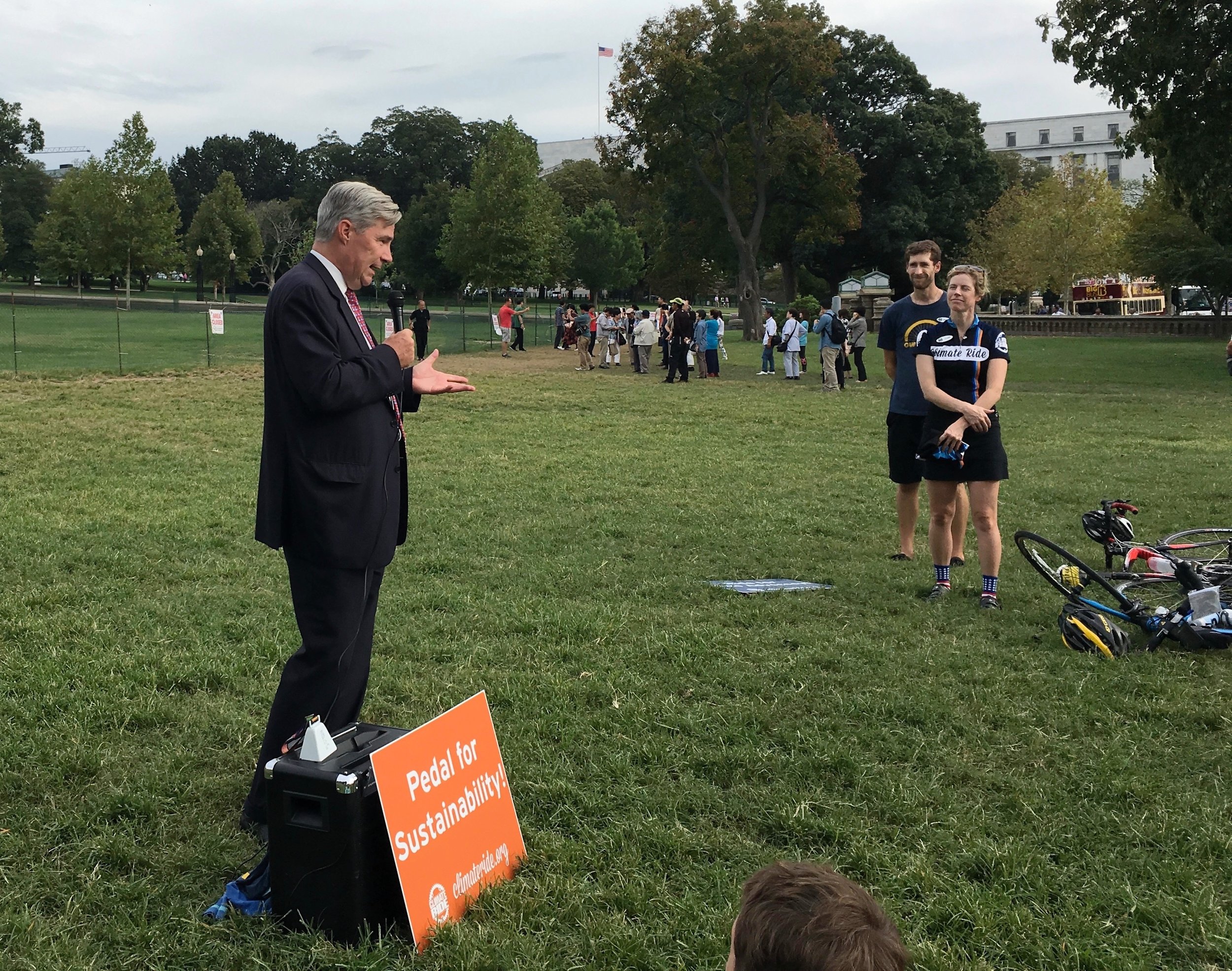
September 21, Final day for the group - 70 miles to the US Capitol in Washington, DC. Wasn't long before we crossed into MD, and the first 50 miles flew by as the group arrived in downtown Silver Spring. Then we rode together to Georgetown waterfront and further consolidated for the last 2 miles down Constitution Ave to the U.S. Capitol. After arriving at the Capital, we were joined by friends, families, and colleagues as we celebrated (see the pictures of so many riders holding their bikes in the air). Then, two Congressmen greeted us - Senator Markey from Massachusetts and Senator Whitehouse from Rhode Island. They both congratulated us for our achievements on the ride and shared their thoughts about climate change and the potential for legislation. I found Senator Whitehouse's comments particularly interesting. He mentioned that a significant number of companies had signed a pledge at COP21 to reduce carbon emissions and address climate change. Because oil and gas have such a strong lobbying presence on the Hill, we can research companies that signed the pledge, and push them to be more active in lobbying Congress (on climate change issues). He went on to say that when the climate change denial shoe finally drops in Congress, it will drop instantly, like a crumbling house of cards. That makes sense to me - once evidence is too overwhelming to ignore, then Congress will rush to say they knew it all along. Watch!
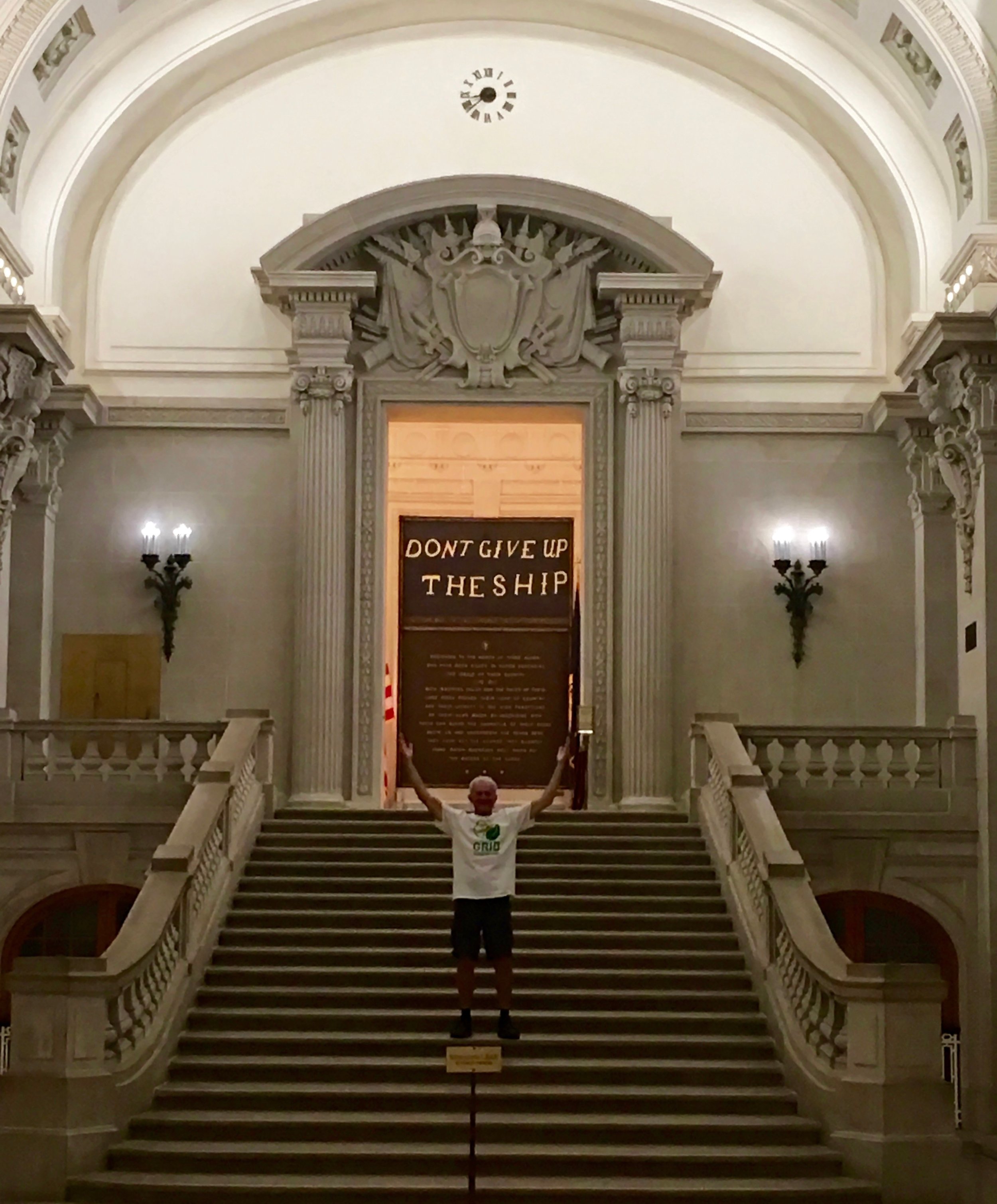
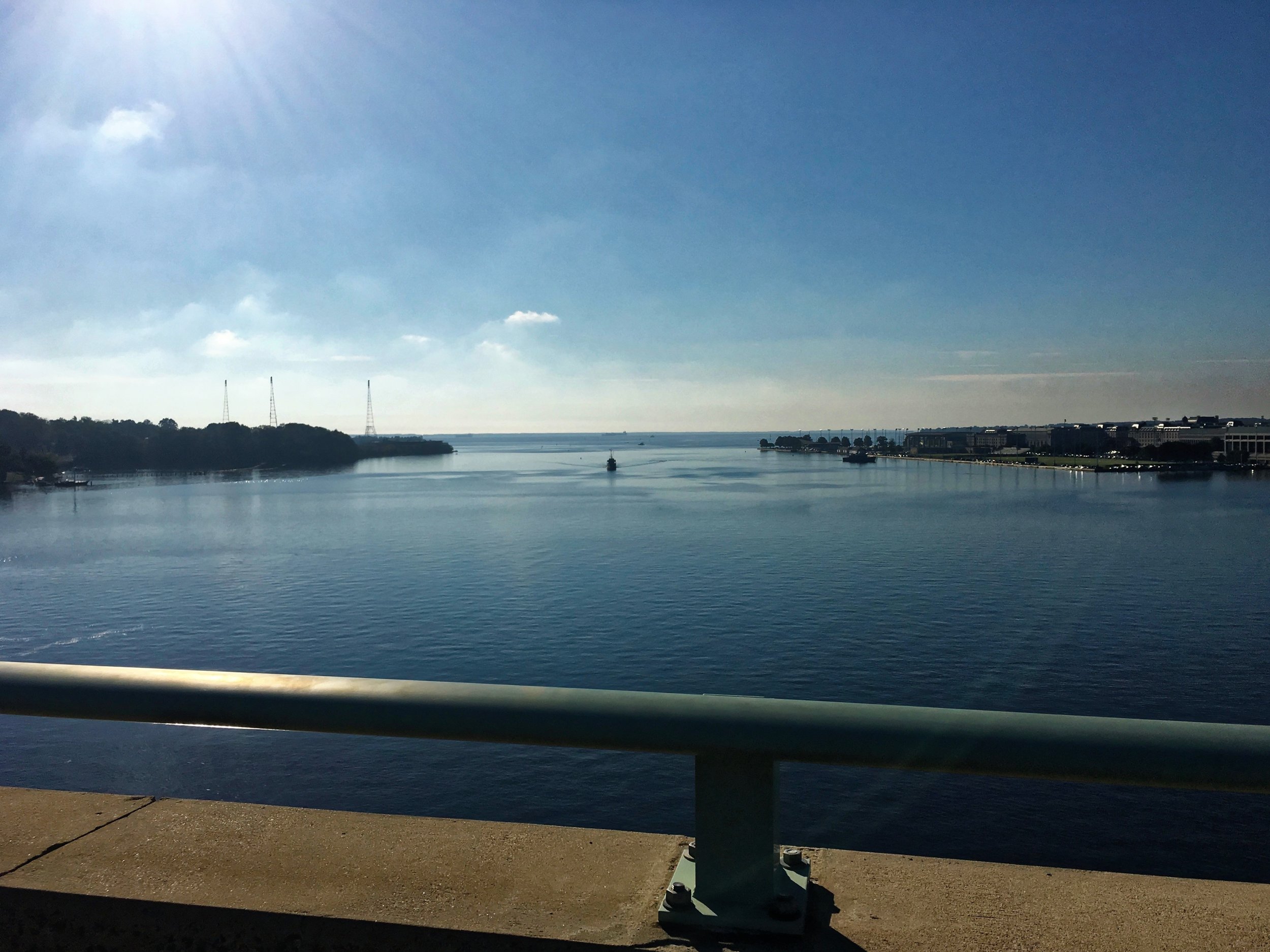
September 22, Day 6: Day 6: Early in the day I biked over to the GRID, Mid-Atlantic office to complete my visit to that office. As I had come to expect, I was warmly welcomed by the GRID staff and had a beautiful day. In the morning I went with a team of 2 other staff and one volunteer into pre-screened DC neighborhoods to do outreach about what GRID can offer qualifying homeowners. After a few hours, we returned to the office, where I was given a chance to talk about my almost 6000 miles long trip and answer questions about what I had learned by visiting so many GRID regional offices. Because I was both physically and emotionally exhausted at that point in the tour, I was quite emotional, a tendency that embarrassed me but seemed to touch my hosts. Then, after a tour of the office, I put my bike in the back of a pickup truck and was driven to Annapolis, where I spent a lovely evening with my host (and GRID staff) Michael Brown and his wife, Carolyn.
September 23, Day 7: I left Annapolis reasonably early in the morning on a beautiful sunny day. It was a long, pleasant ride into Baltimore that alternated between a seriously wonderful greenway and city streets. Southern Baltimore is both run down and geographically beautiful. I followed Waterview Avenue, and area of rundown Parkway into Baltimore's fabulous downtown area - built up in a way that seems quite out of sync with the rest of the city. After passing through little Italy and Patterson Park after Butcher's Hill, I found the Pulaski Highway, which was to be my riding companion for another entire day.
September 24, Day 8: After a sleepless night at a friendly, but divey, motel where I slept in my sleeping bag for fear of bedbugs, I followed the Pulaski Highway until about 2 pm. By that time I had just passed north of Wilmington into the northern suburb of Claymont. I saw a sign for SEPTA, the Philadelphia mass transit system. I decided to investigate, and damned if I couldn't pick up a commuter train into 30th St station in downtown Philadelphia. I went for it. I knew that once I got to the 30th street station, I could get me and my bike to Trenton, where I could hop a train to Penn Station in Manhattan. And that’s what I did. So I arrived back at my apartment in Washington Heights, Manhattan by about 7:30 pm. I now know that I can take trains all the way to Wilmington the next time I want to go south on a bike. I love that! I wish the rest of America had trains that were so bike friendly.
Once I got home, I had one GRID office left to visit - in the Bronx. And so I did. On the 13th and 14th of October, and then again on October 28, I participated in solar installations in Highlands, new Jersey and Kingston, New York, respectively. And once I had completed those installs, the Tour was over! I have one last appeal letter to send out by email, and my almost 6000-mile trip is over!
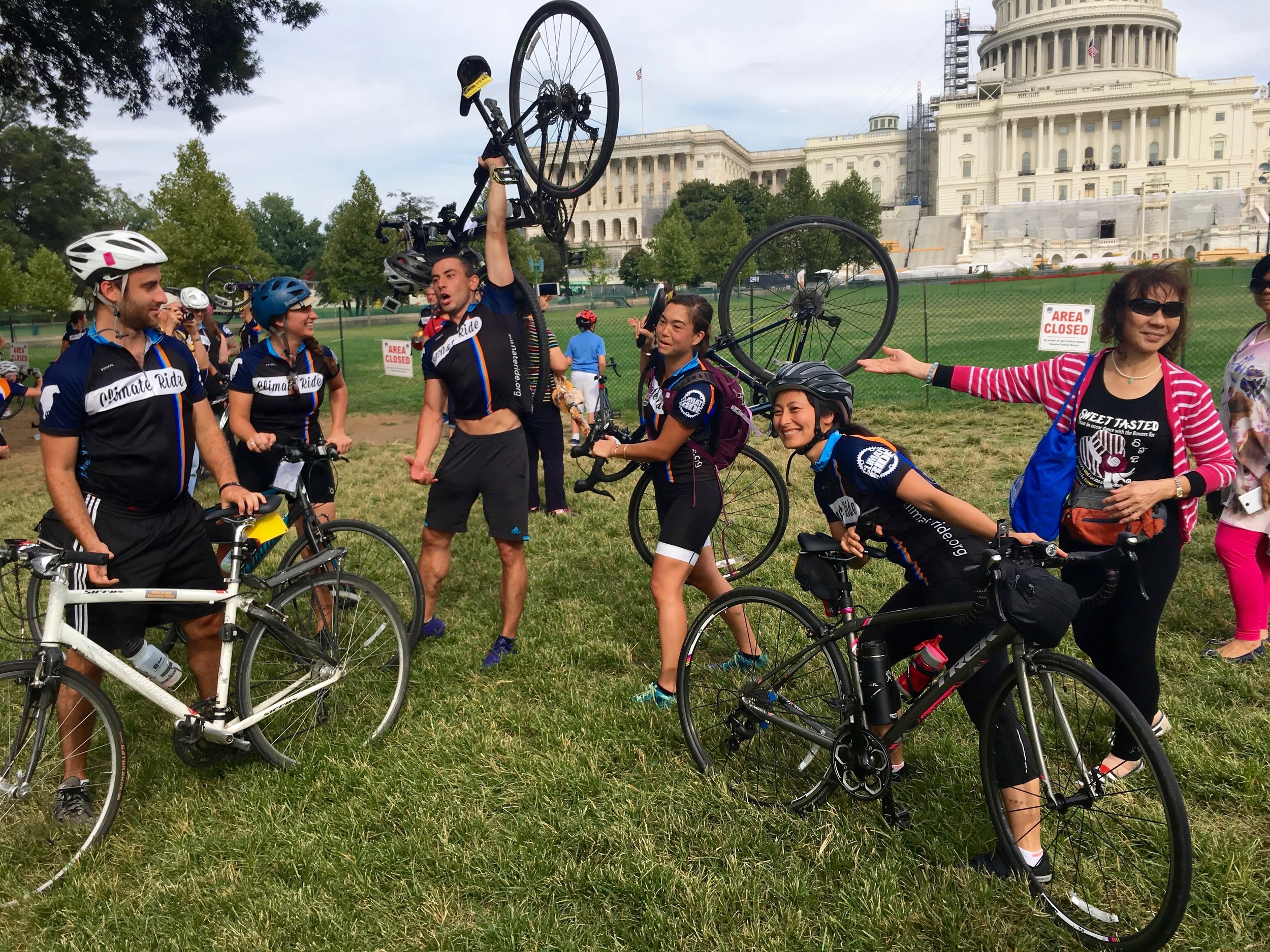
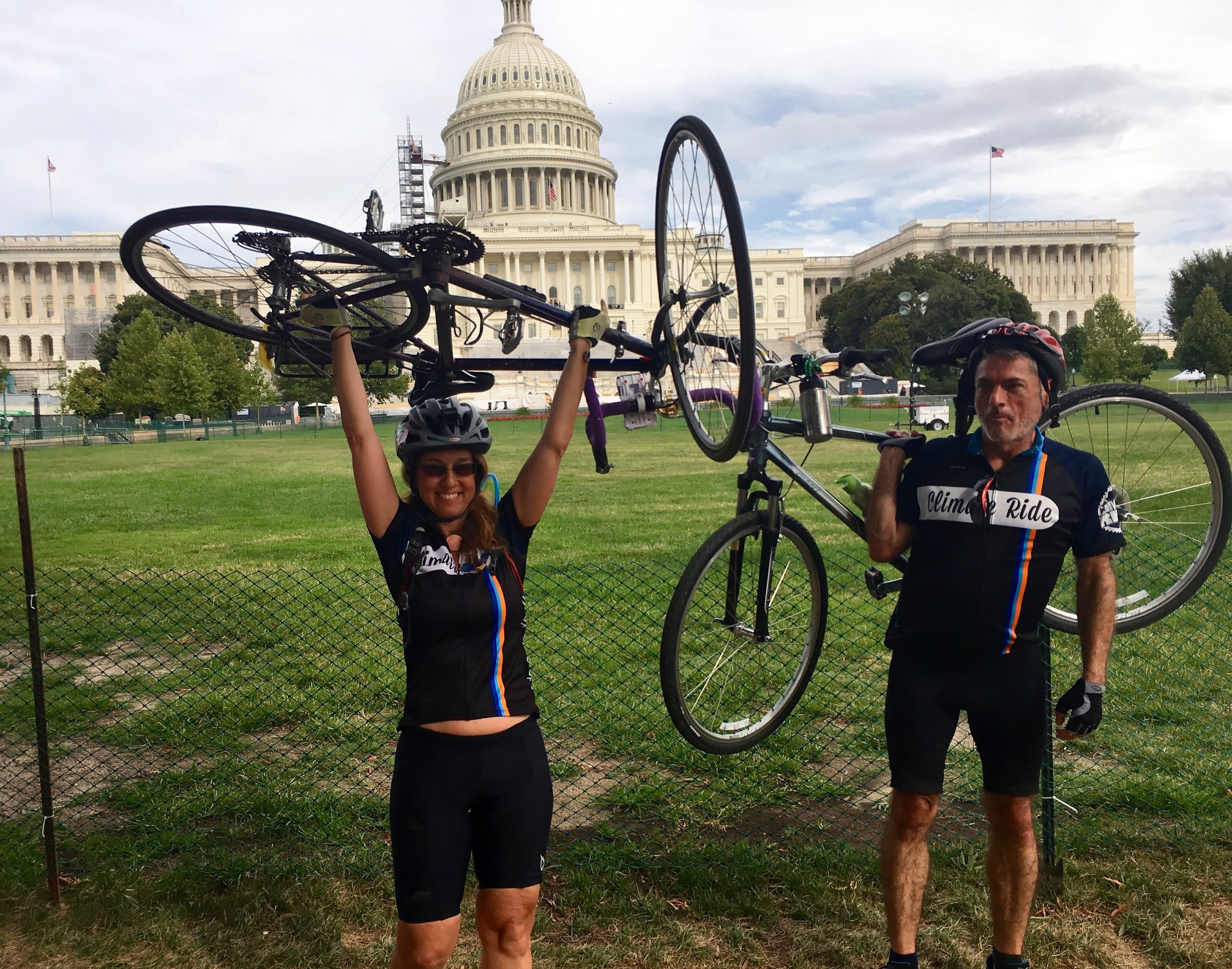
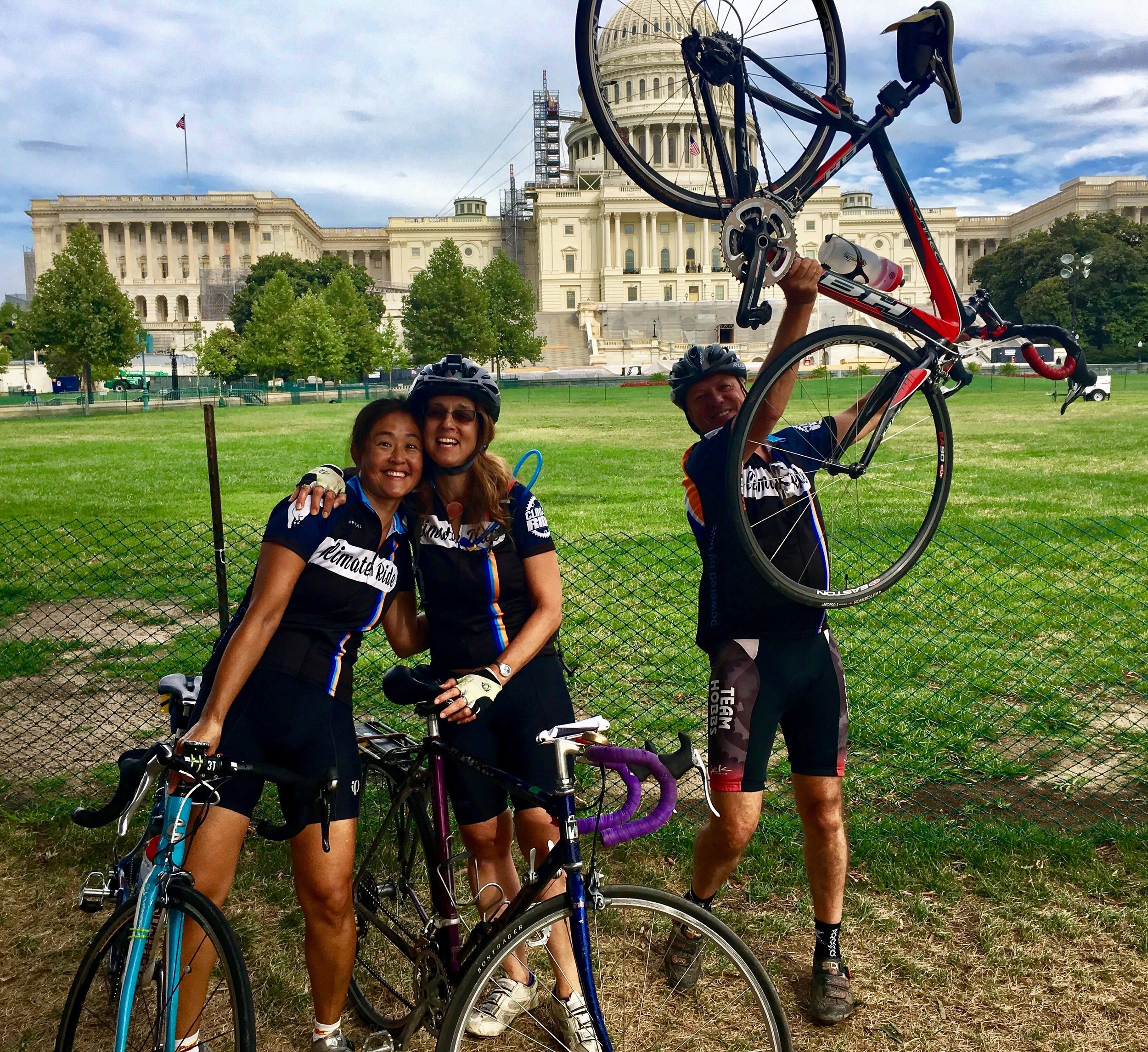
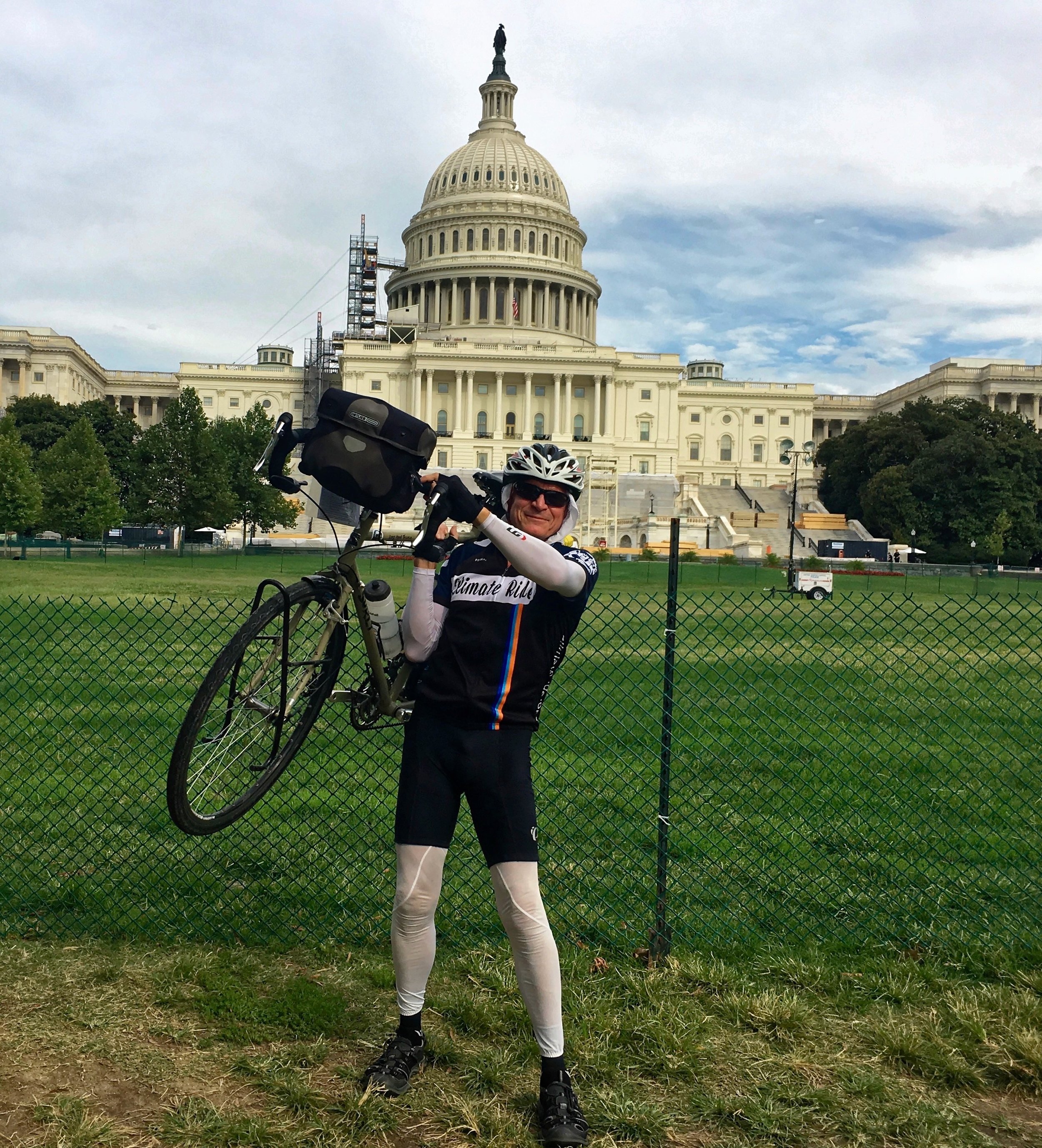
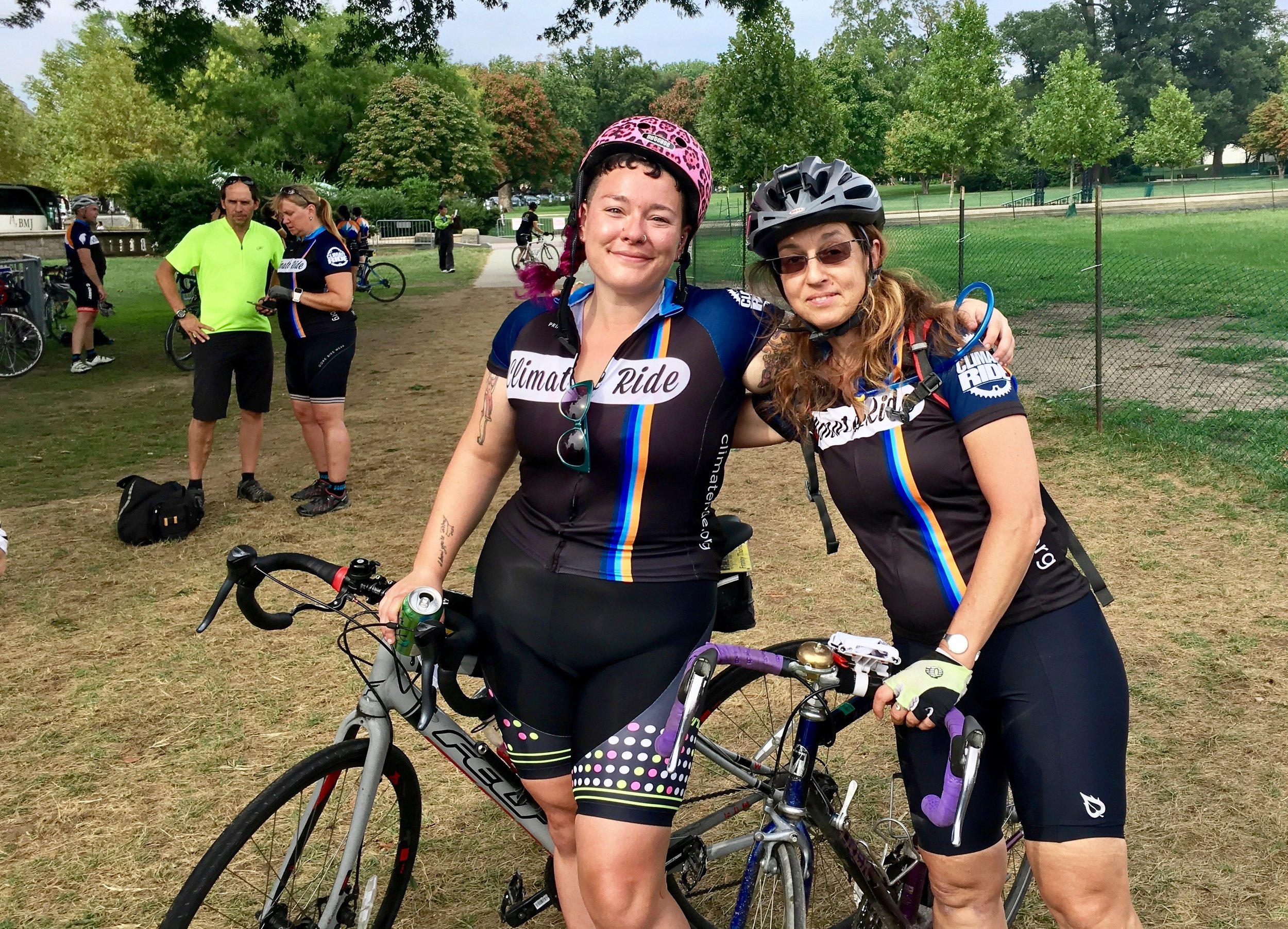
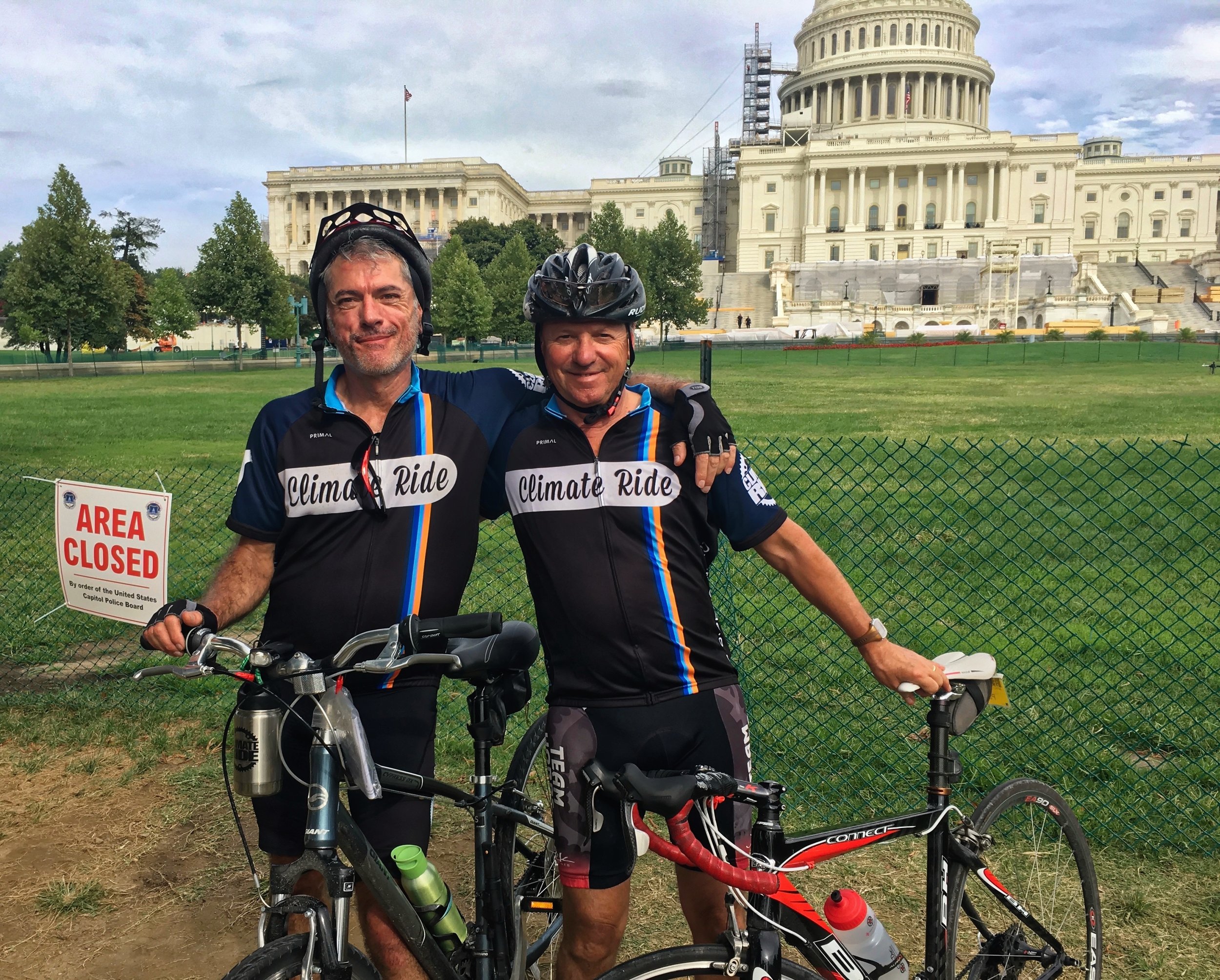
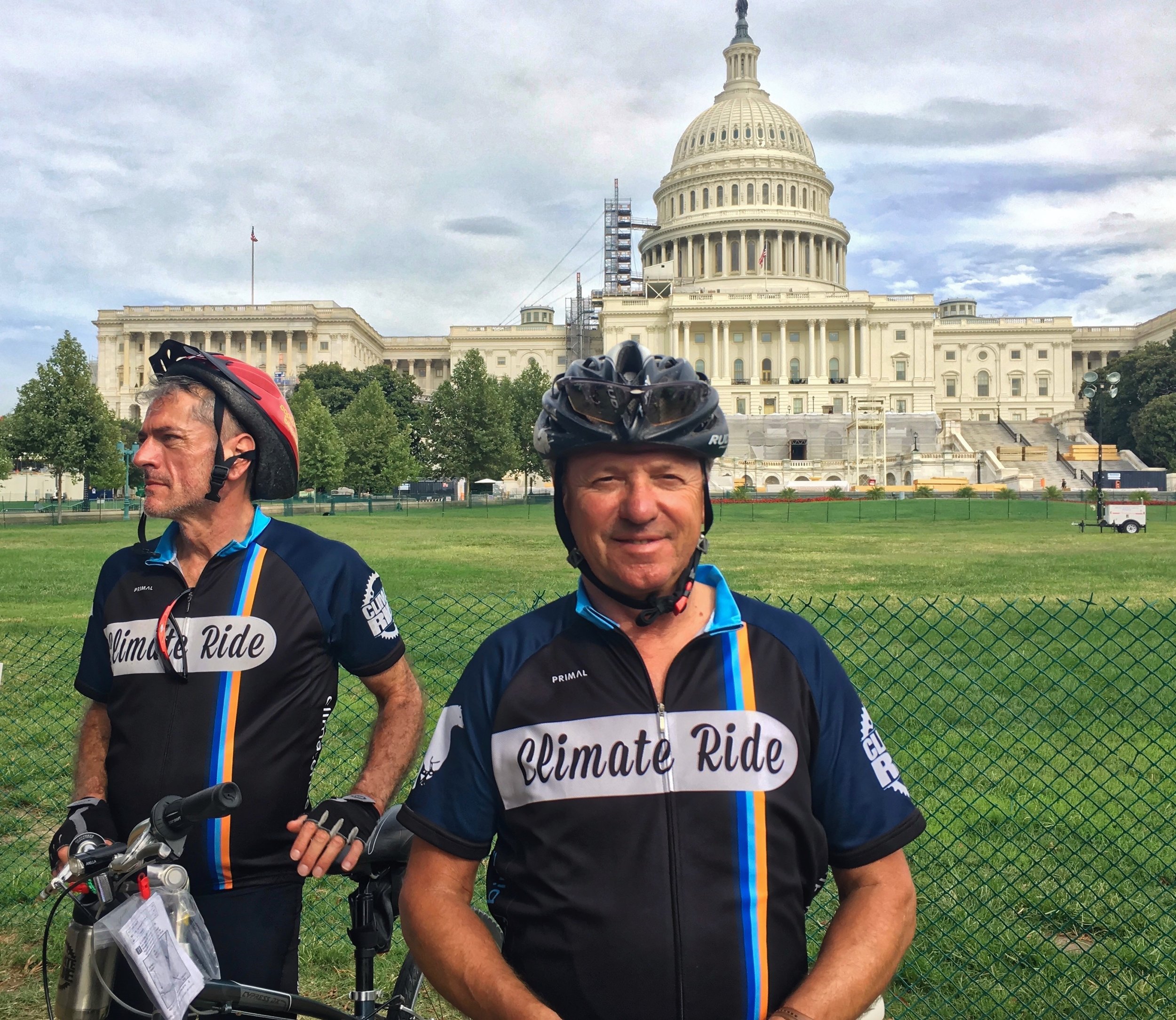
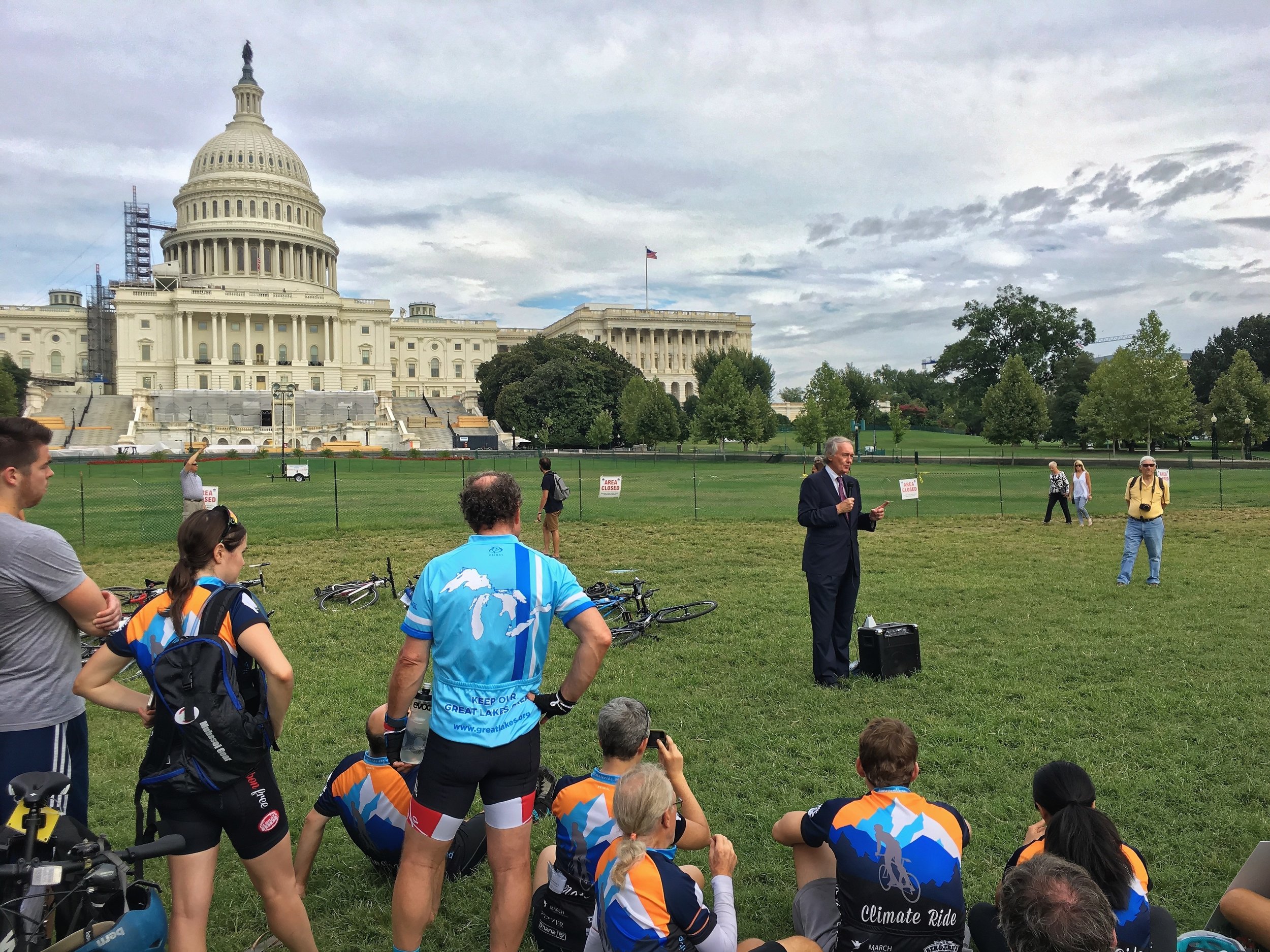
This page is currently under construction.


Forrest Watkins and 360bybike.org
I recently learned about three fascinating bicycle touring websites focused on climate change and/or fundraising for climate change. They are:
Each of these sites are extraordinary by themselves and even more so for the adventures they represent. Recently I have had the good fortune to begin corresponding with Forrest Watkins of 360bybike. In his own words, he is “cycling the world, telling the human story of climate change.” Currently Forrest is in the Philippines, preparing to bike from Central Asia to Europe through the countries lining the historic northern Silk Road.
I have offered to create a post on behalf of 360bybike.com that will help carbonstories.org readers learn more about Forrest Watkins. So, read on and enjoy learning about this ambitious storyteller’s prior travels and his plans for an extraordinary journey to come.
Hello, readers of carbonstories.org. My name is Forrest Watkins, and I’m cycling the world to collect stories of humans and climate change. I’m interested in the impact of climate change on people, and also in the work of those searching for solutions. In the summer and fall of 2015, I biked 4,535 km across southwestern China and Vietnam and collected upwards of ten climate stories that I published at http://www.360bybike.org/
Then, I took two months off to visit home for the first time in a year and a half.
As of February 4, 2016, I’ll be in the Philippines (without Hester, my bike, which is currently resting in central China). While in Manila, I’ll meet with groups of artists and writers focused on social issues. I’ll move on to Eastern Visayas, where I’ll talk to communities of urban poor and groups working to get the word out about climate impacts in the area. Then I’ll head further south and talk to 350.org activists and groups opposing new coal projects.
After the Philippines, I’m going back to the city in China where I taught English for a year and where Hester is waiting. And I’ll strike out west. I’ll be in “mainland” China for about two more weeks before I get into the Central Asian region of the country. Then it’s on to Kazakhstan, Kyrgyzstan, Azerbaijan, Georgia, Armenia and Turkey.
Here’s a map indicating my general route. The red markers are points of interest. At the end of this segment of the tour, I’ll dip into Greece for a moment for visa reasons and then post up in Istanbul for 2-3 weeks to plan for Europe.
Here’s what I need from readers on my blog at 360bybike and/or any other blogs right now:
Please help me fill in that map!
I need places to stay, I need people to talk to, places to visit, and/or any advice or encouragement you can give. If you know of any people or places that have been affected by climate change, any compelling climate or clean energy-related projects, any couches or floors where I could crash, or any places I simply can’t pass by, please contact me at fqwatkins@gmail.com, or use the contact form here. I’ll be inexpressibly grateful for any information you can give–tips for where to go, names of compelling projects, whatever it may be. The route is tentative and deviations of 100 miles or more are just fine.
I look forward to working together more in the future. Please do send me a link if you decide to post this!
Best, Forrest Watkins, 360bybike.com
Sed purus sem, scelerisque ac rhoncus eget, porttitor nec odio. Lorem ipsum dolor sit amet.