Food Systems and Climate Change; Biking Prince Edward Island
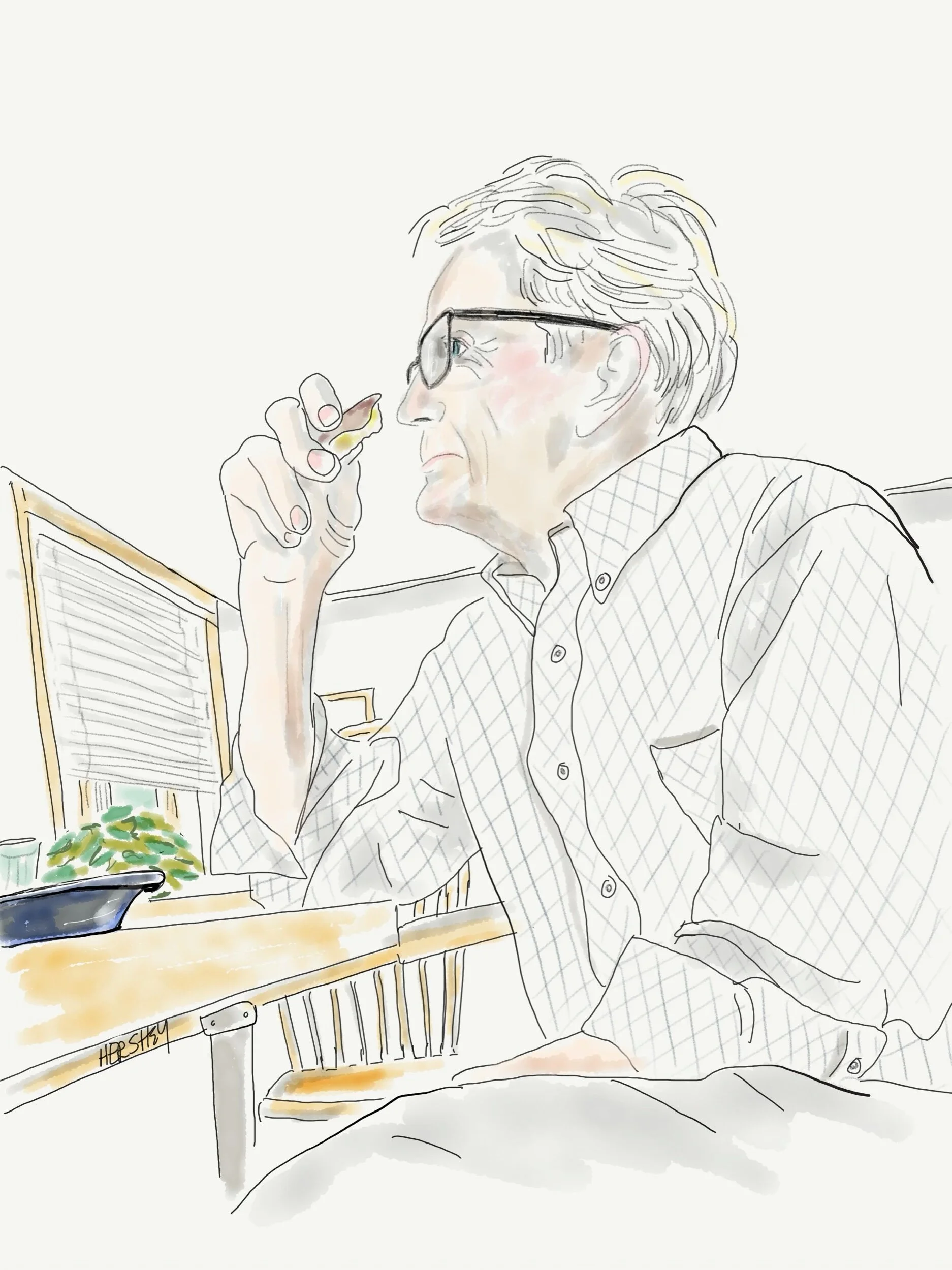
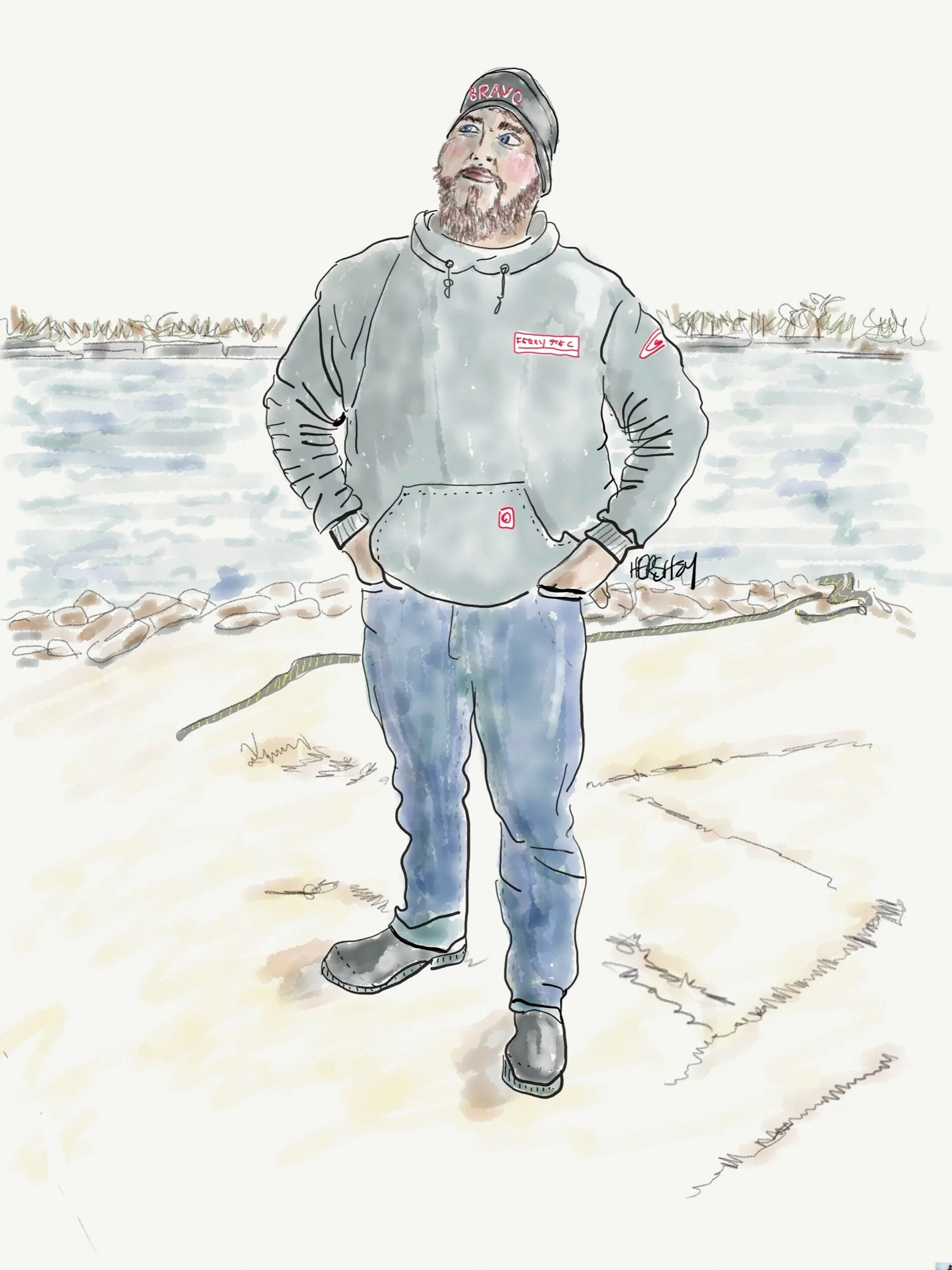
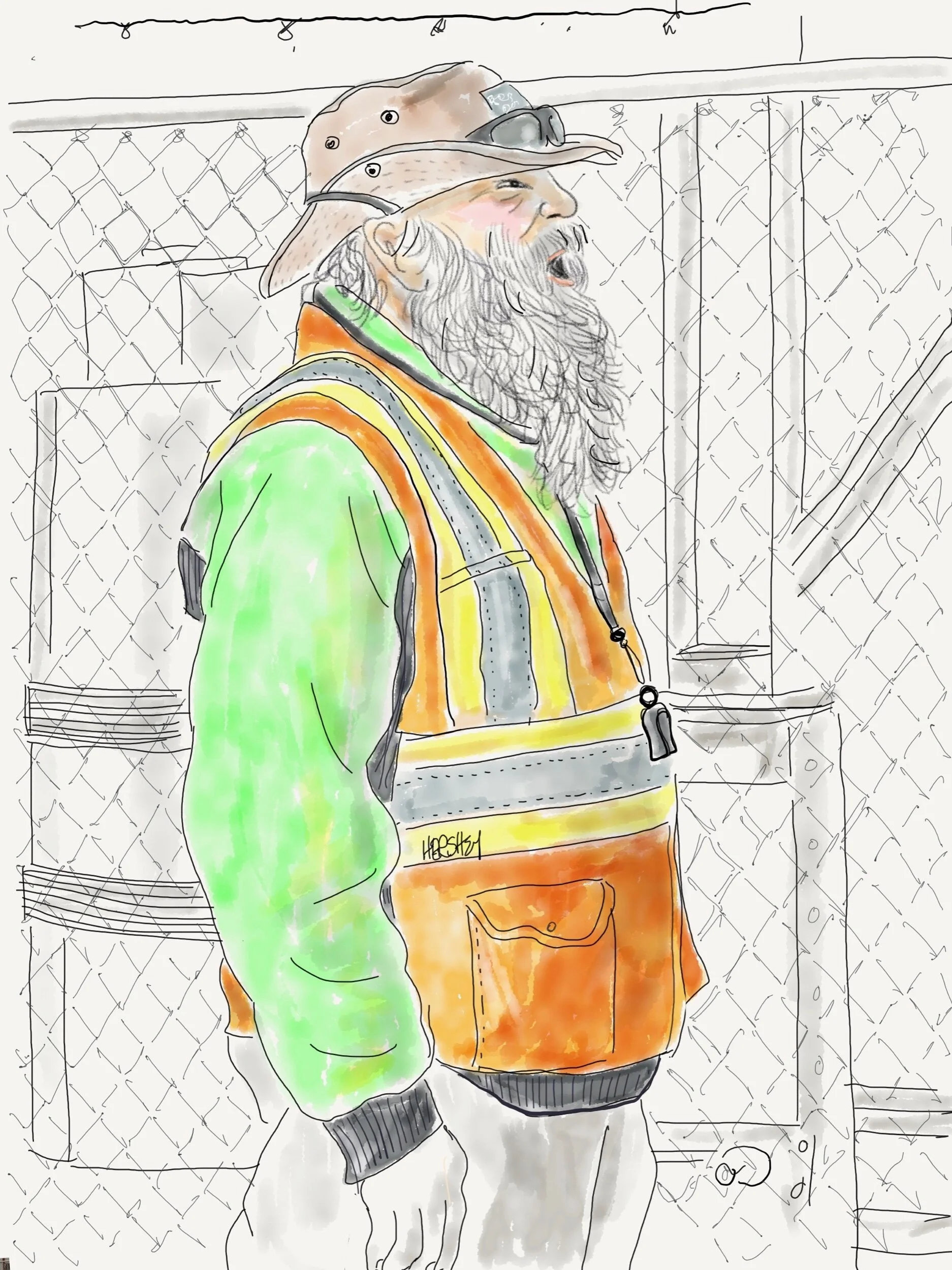
Eliot Coleman, organic farming author and founder of the prolific agroecological Four Season Farm in Harborside, Maine, reflects on one of his favorite books, Soils and Men, a 1938 yearbook published by the USDA. The farm produces year-round vegetable crops, even under harsh winter conditions (using unheated and minimally heated greenhouses and polytunnels). Drawing by Jenny Hershey. Follow her on Instagram @deeofo.
Fire made us human, fossil fuels made us modern, but now we need a new fire that makes us safe, secure, healthy and durable. - Amory Lovins
I don’t see problems, I see solutions. - Eliot Coleman, quoting Amory Lovins
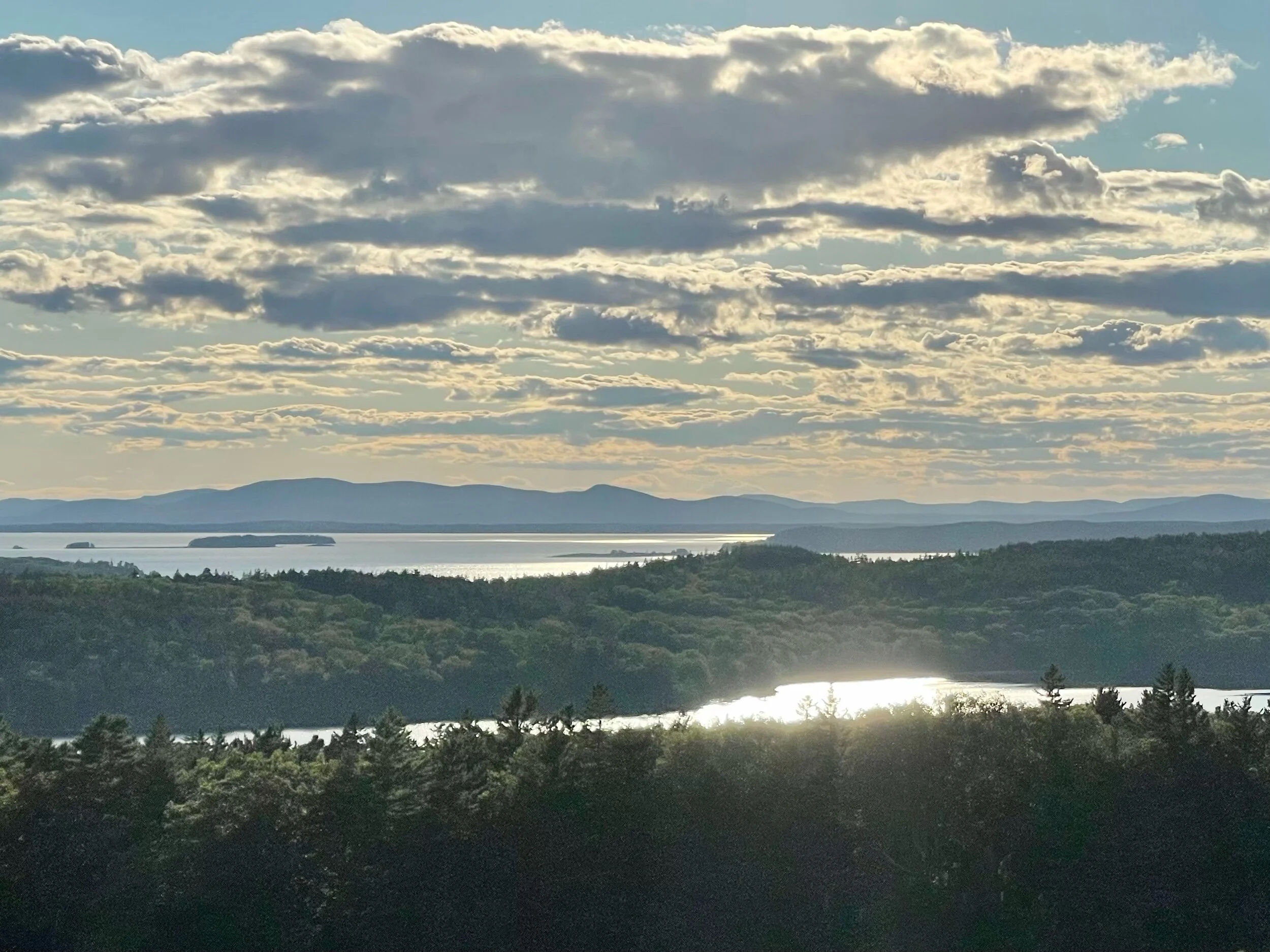
The view just above Deer Isle on Maine’s central coast on the way to Prince Edward Island. Photo by Michael Chase. Follow him on Instagram @mjohnsonchase.
Along the Way
Jenny and I left for our next biking adventure in mid-September. Following our usual custom for our bi-monthly explorations, we intended to drive to our starting place with our bikes in tow. This time our destination was Prince Edward Island (PEI) in Canada. We passed through Maine on the way, and stopped in Deer Isle to stay with friends Jack and Linda Viertel, who - knowing we have written about regenerative agriculture and climate change in previous blog posts - kindly introduced us to their friends Eliot Coleman and Barbara Damrosch.
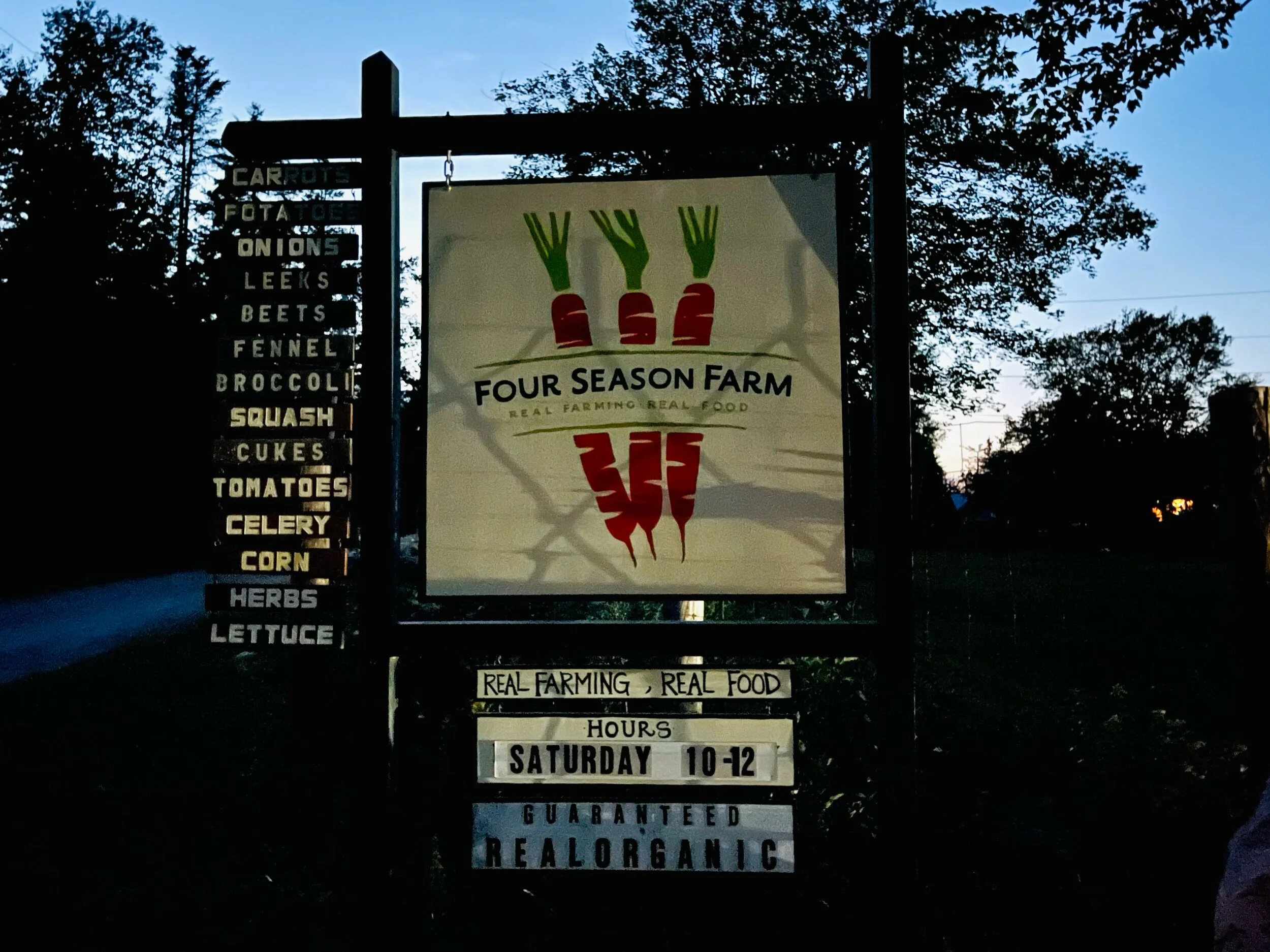
The sun sets behind the sign that identifies the road to Four Season Farm in Harborside, Maine, where Eliot and Barbara live. The farm is currently managed by Eliot’s daughter Clara Coleman. Photo by Michael Chase. Follow him on Instagram @mjohnsonchase.
Neither Jenny nor I fully grasped at the time what an extraordinary opportunity this was; both Eliot and Barbara are seminal authors, educators and very successful organic market gardeners. In addition, Eliot has invented many farm tools that other organic farmers have adopted over the years. Meeting them set the stage for subsequent meetings with organic farmers in PEI, as well as the helpful people we met at the Climate Lab at the University of PEI (more on that later). Everyone we talked to knew of Eliot Coleman’s work; he became a serendipitous calling card for all things organic, simply because we had been lucky enough to meet him along the way.
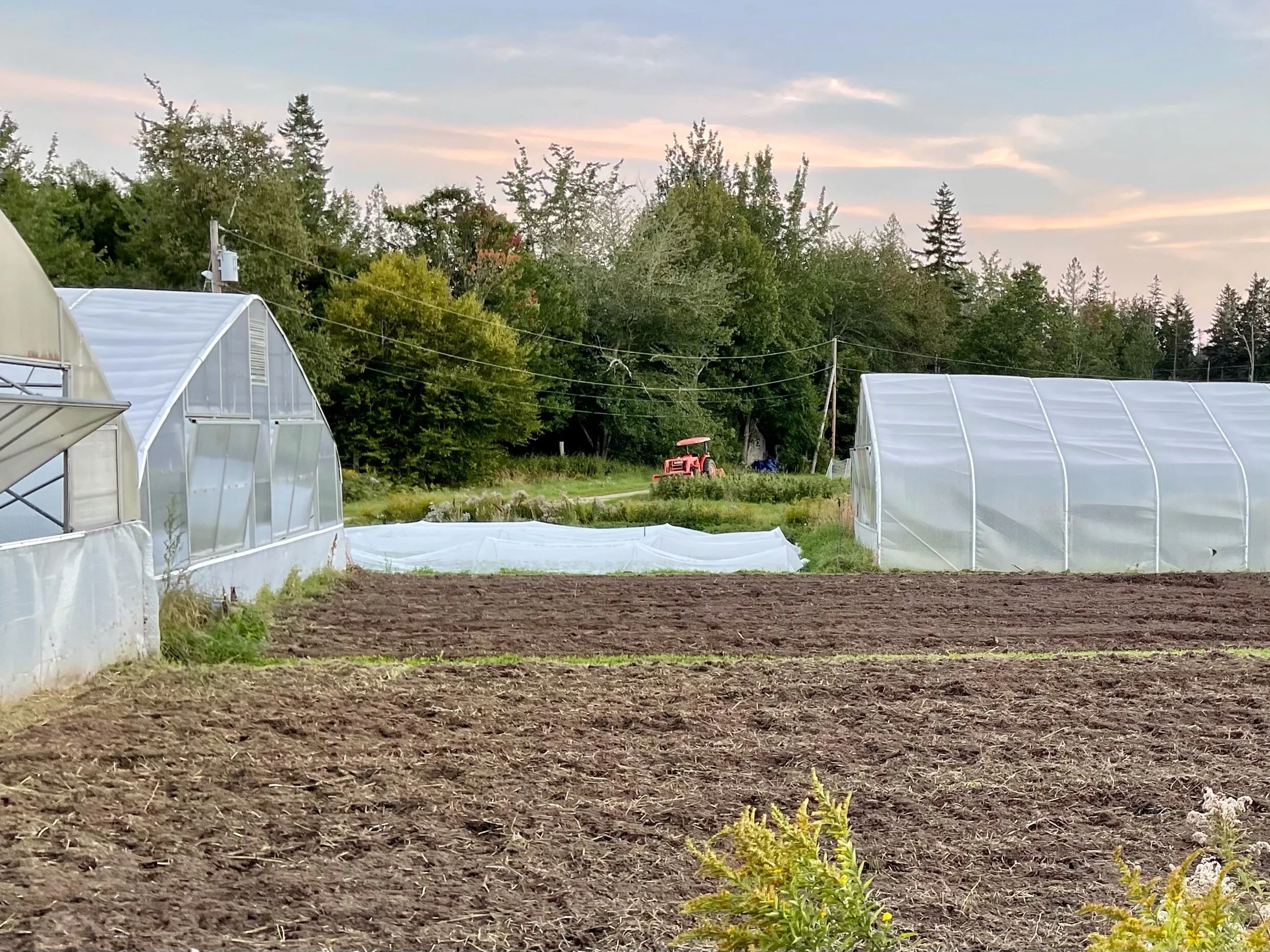
Several fields at Four Season Farm. The field in the foreground had just been tilled with an ample amount of green manure (crop residue from buckwheat plowed into the soil to enrich it) in preparation for a cover crop of winter rye. The field in the background was sown with peas and oats for the summer and will be planted with winter spinach, and the second greenhouse to the left will be moved over the spinach to optimize growing conditions. Photo by Michael Chase. Follow him on Instagram @mjohnsonchase.
As urban devotees of regenerative agriculture, we especially appreciated hearing Eliot’s critical perspective that the current buzz around “regenerative” farming is being be co-opted by large agriculture companies with little genuine interest in solving environmental problems.
Consider the ways agriculture is supported through government subsidies. In the US alone, the meat and dairy industry receives 63% of total agriculture subsidies, compared to fruits and vegetables producers who receive only 0.04% of total subsidies. If you are a meat producer (whether your product is regenerative or not), you will receive subsidies that small-scale organic growers (especially market gardeners) won’t. This suggests at least one of the reasons “regenerative” has rapidly grown in popularity, eclipsing the older “organic” processes revived by farmers like Eliot Coleman. But subsidies are only part of the issue. Corporations notice consumer trends, and the recent popularity of the “farm to table” movement has also driven corporate influence over small-scale organic farms as well.
Consequently, Eliot Coleman is also not a fan of the ways the label “organic” has been diluted. He explains this on the farm website: Four Season Farm in Harborside, Maine has been farmed organically since its inception in 1968. However, we are NOT “USDA Certified Organic.” And for good reason. The USDA refuses to uphold the honest, old-time, carefully stewarded farming practices that organic has always represented. The USDA National Organic Program has been totally corrupted by the money, power, and influence of industrial food corporations. USDA certification is a hollow sham.
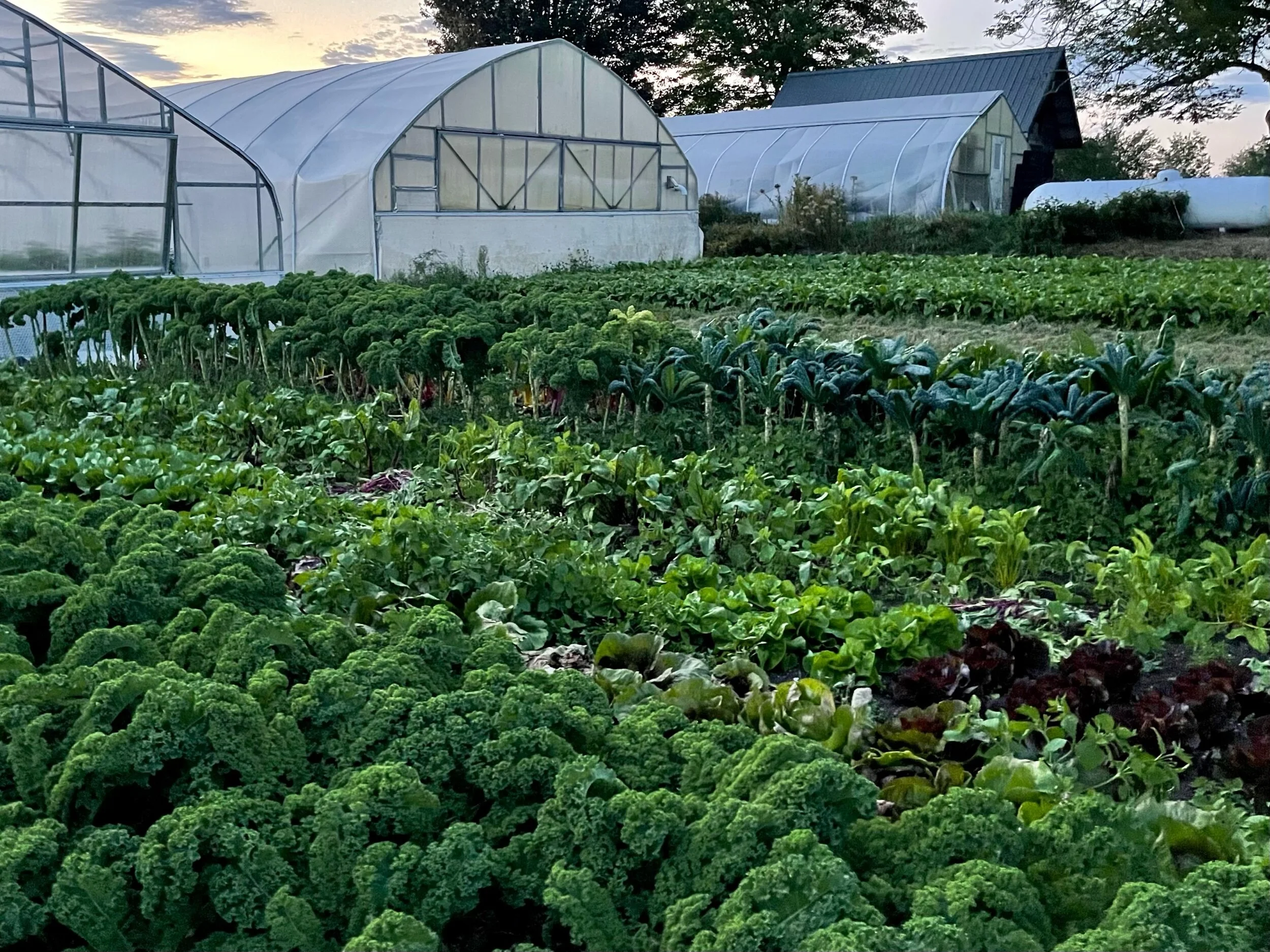
More vegetable fields at Four Season Farm. The greenhouse to the far left is the backside of the same one as in the previous picture, and it will be moved farther to the left to cover winter spinach. The extraordinarily productive field in the foreground is kale, lettuce and chard (photo taken mid-September). Photo by Michael Chase. Follow him on Instagram @mjohnsonchase.
The website goes on to explain what real organic standards should be: First, for uncompromised nutritional value all crops must be grown in a biologically active fertile soil in full contact with the earth and nourished by the natural biological activities of that soil. Research into the marvelously complex soil micro-biome reveals the vital ecological processes that support natural, non-chemical food production. Second, soil fertility should be maintained principally with farm-derived compost and mineral particles from ground rock. Why take the chance of bringing in polluted material from industrial sources when fertility can be created and maintained internally? Third, deep-rooting green manures, cover crops, and grazed pastures must be included within broadly based crop rotations to enhance soil fertility and biological diversity. The greater the variety of plants and animals on the farm, the more stable the system. Fourth, a “plant positive” rather than a “pest negative” philosophy is vital. The focus must be on correcting the cause of pest problems (weak plants) by creating optimum soil conditions to strengthen the plant, rather than merely treating the symptom (pest damage) by trying to kill the pests that are attracted to weak plants. More and more scientific evidence is available everyday on the mechanisms by which a biologically active fertile soil induces resistance to pests and diseases in the crops. Fifth, livestock must be raised outdoors on grass-based pasture systems to the fullest extent possible. Farm animals are an integral factor in the symbiosis of soil fertility on the organic farm.
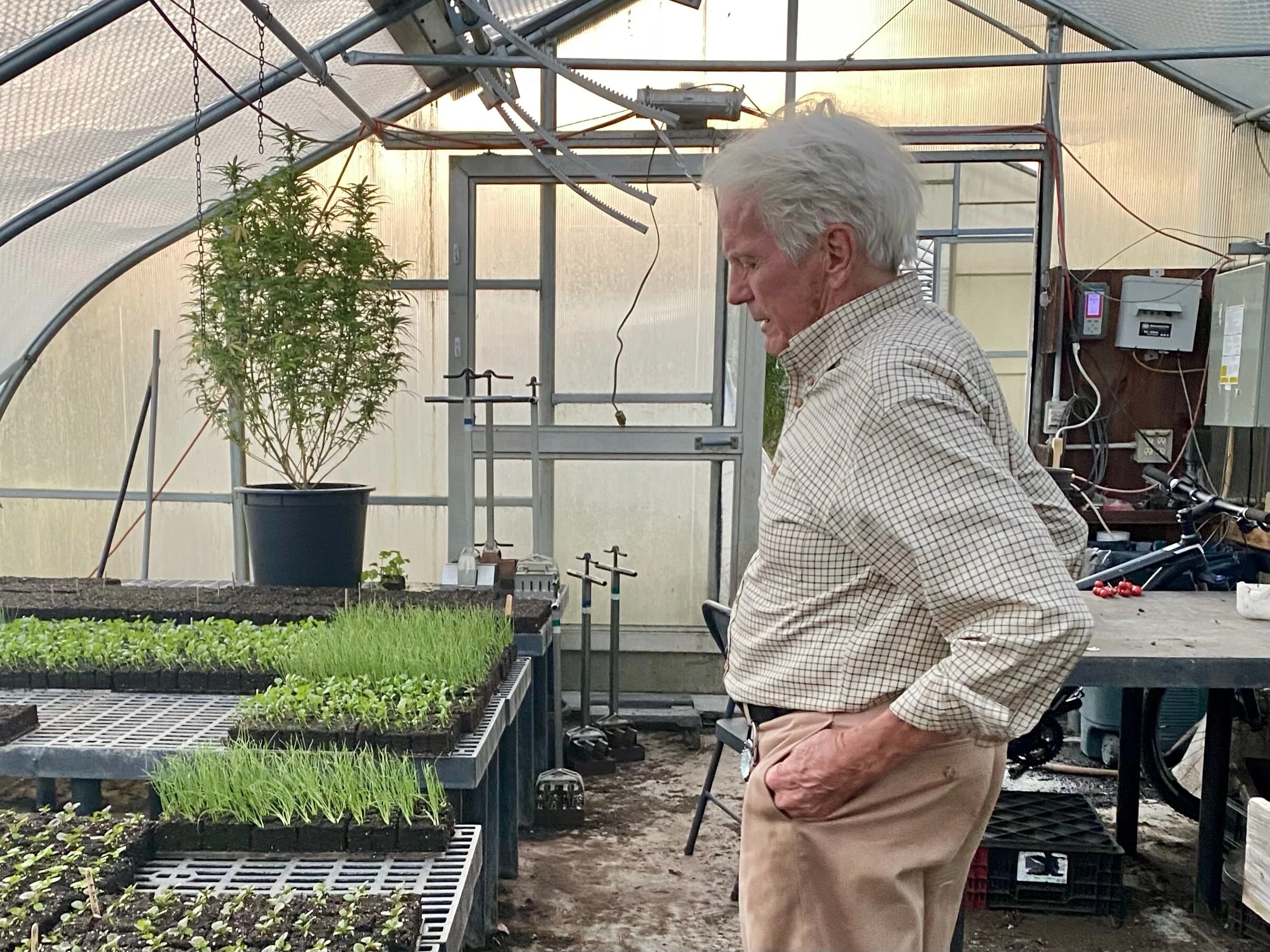
Eliot looks over starts for the winter season in one of his greenhouses. Photo by Jenny Hershey. Follow her on Instagram @deeofo.
Arriving in Canada
In September of 2021, Canada opened their border for recreational travel to Americans who are fully vaccinated for Covid-19 and demonstrate negative results on a Covid PCR test within 72 hours before entering. PEI requires an additional negative result on a second rapid test upon entering the Province. Given these safeguards (combined with the fact that the percentage of fully vaccinated Canadians is significantly higher than Americans), we felt safer biking here than we would have in the U.S. The sadness and irony of that realization wasn’t lost on us; in fact, it probably made us more attentive to the Canadian approaches to the science of both Covid and our rapidly changing climate.
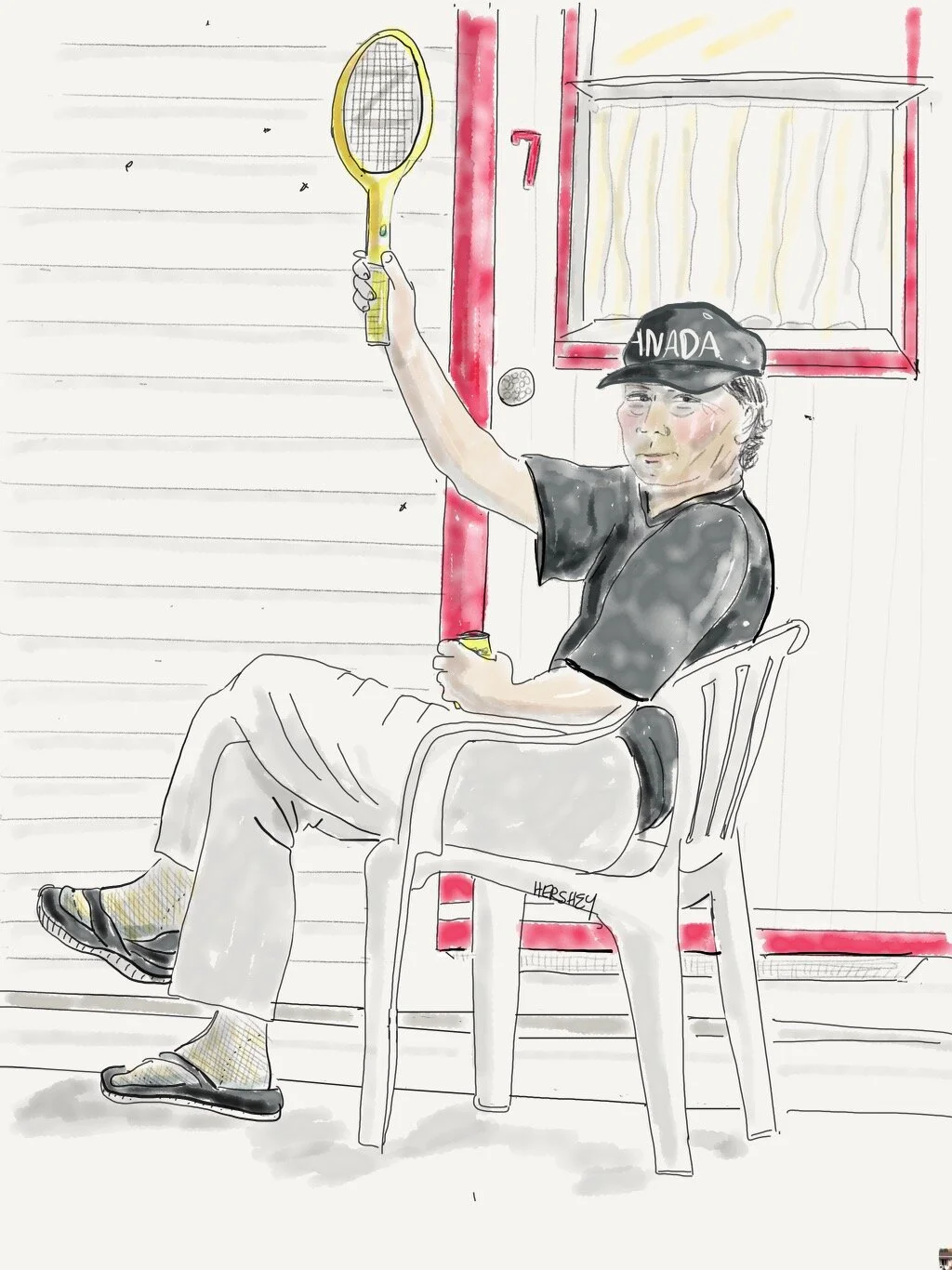
After their kids left the nest, Yeung and his wife left their home in Vancouver and came to PEI, where they bought a mid-century motel in Murray Harbor in the southeast of PEI. Yeung kept us safe from mosquitoes with his racquet zapper. Drawing by Jenny Hershey. Follow her on Instagram @deeofo.
Interestingly, we encountered no political resistance to Covid vaccination efforts or masking mandates in anyone we met. All of the major political parties in Canada (except the ultra-right Peoples Party of Canada at 4% of the electorate), are strongly pro-vaccine and equally attentive to the science of climate change. In fact, because we arrived just before the recall election, we had the refreshing opportunity to watch the major two parties - the Liberals and Conservatives (aka Tories) - attempt to outdo one another on general media about how to address both the pandemic and the climate emergency. We met no one who isn’t concerned about Canada’s rapidly changing climate. Perhaps this is because climate changes are more intensified toward the equator and at both poles, so the further to the north one is located the more obvious the changes are. In any case, the focus on method over content in Canadian politics was a refreshing change from American politics, where our major political parties perceive themselves as inhabiting planets facing distinctly different threats.
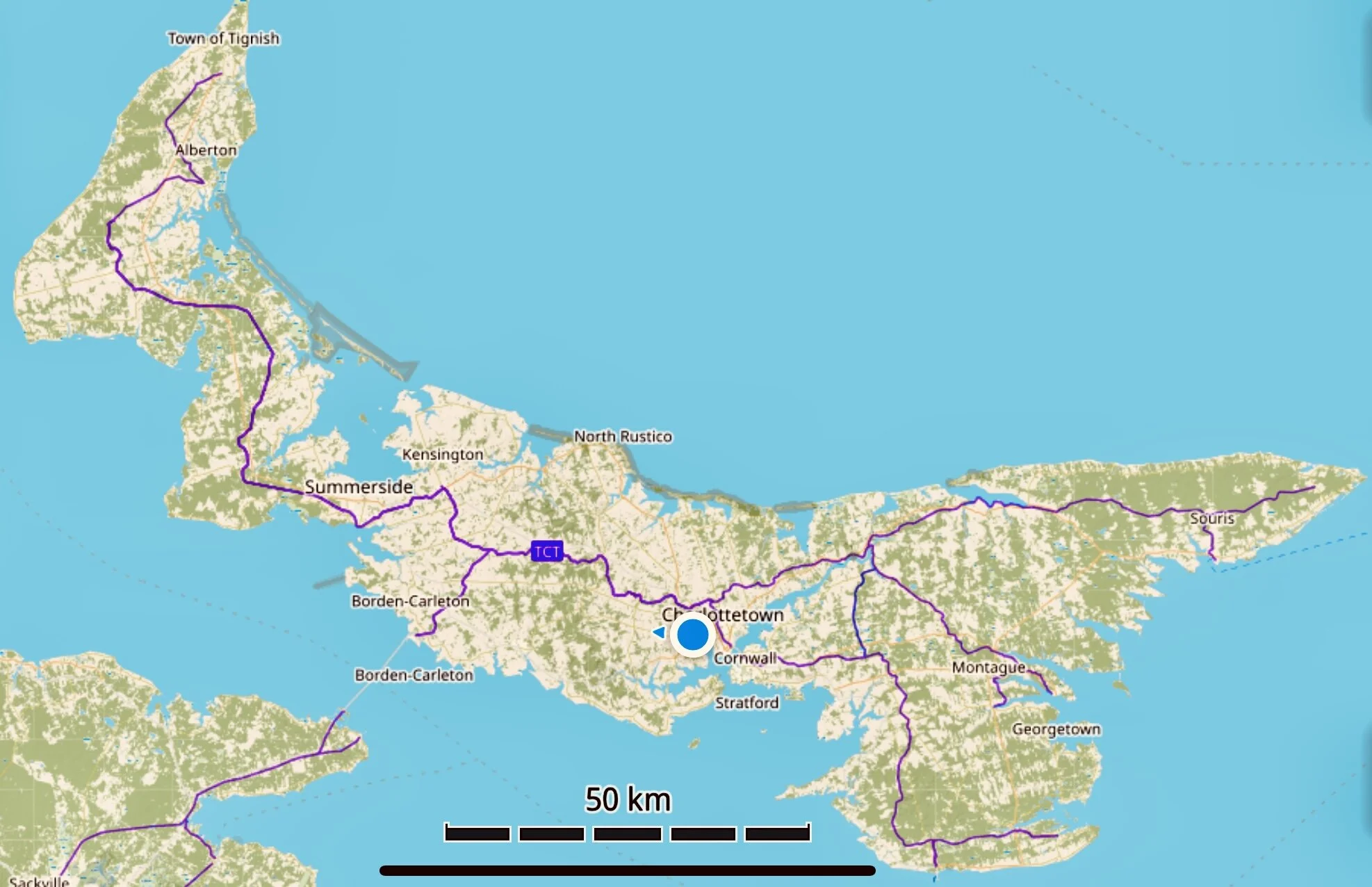
Charlottetown is near the blue dot. This is PEI’s largest city, with a metropolitan population of about 80,000 of the island’s 160,000 people. The purple lines on this map form the spine and the spurs of the Confederation Trail. The points at the ends of the wings are North Point in the northwest and East Point in the east. There are wind farms near both points, the largest in North Point. Currently, renewables supply about 25% of the Province’s power; they will supply 100% by 2040. PEI has no natural gas lines, and most cooking and heating is already electric. Summerside, a town in central PEI of about 15,000, uses wind farms, solar arrays, smart grids, industrial-scale lithium-ion batteries and the highest per capita concentration of electric car chargers in the country, and expects to derive the majority of its electricity from renewable sources by 2022. A fascinating story is how the town is dealing with the problem of intermittency: there are a suite of specialized appliances in homes throughout the city that can store energy as heat rather than electricity. This can be read about in more depth here. Photo from GuruMaps Pro.
We left our car at the parking lot for the Woods Island ferry to Caribou, Nova Scotia, and have spent the last several weeks biking the island. PEI is about 200 miles from end-to-end, and shaped like an angel’s wing veering rightward. What we missed in biking long distances every day, we made up for by enjoying biking the inland spines of the “rail to trail” conversion called “The Confederation Trail,” meandering the many mellow coastal roads that circumnavigate numerous bays, estuaries, peninsulas, isolated and peaceful beaches, and exploring lovely farming towns and charming fishing villages. The trip was idyllic.
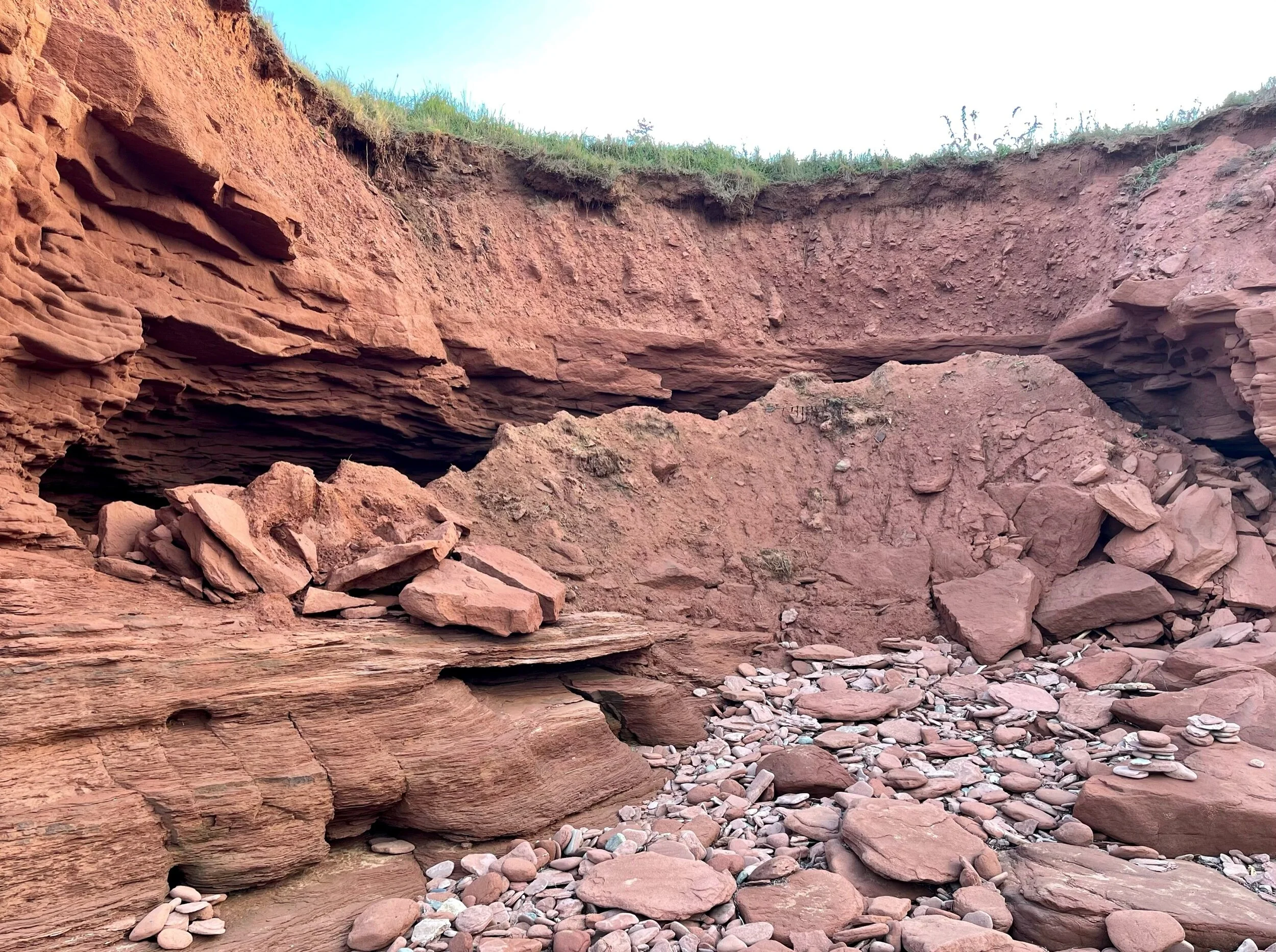
Taken on the north shore of PEI not far from Cabot Provincial Park, this picture demonstrates how erosion works on the shoreline. Waves wear away the sandstone cliffs until they collapse from underneath. Because of sea-level rise and increased storm surges, PEI has been losing an average of about two feet a year of its shoreline. Scientists expect the rate of erosion to worsen in the future. Other impacts of climate change on PEI include steadily rising average temperatures, milder winters with less snow, increasing swings between excessive drought and precipitation events, and greater exposure to extreme weather events such as hurricanes, storm surges and destructive winds. Photo by Michael Chase. Follow him on Instagram @mjohnsonchase.
Cabins are plentiful in PEI. Some are delightfully rustic and placed on windswept cliffs over the Gulf of Saint Lawrence in the north or the Northumberland Straight on the south shore. With only a few exceptions most have kitchens. After discovering that dining out was very expensive compared to cooking our own food, we began to sample the island’s sustainably raised mussels, oysters and lobsters by buying seafood at many of the small shops near the waterfronts. PEI mussels (which sell for CAD 1.50 - 2.00 a pound) are farm-raised on ropes hung in the ocean, which ensures that there is no dredging or disturbance to the ocean floor. Since there is no dredging, delicate life forms are undisturbed.
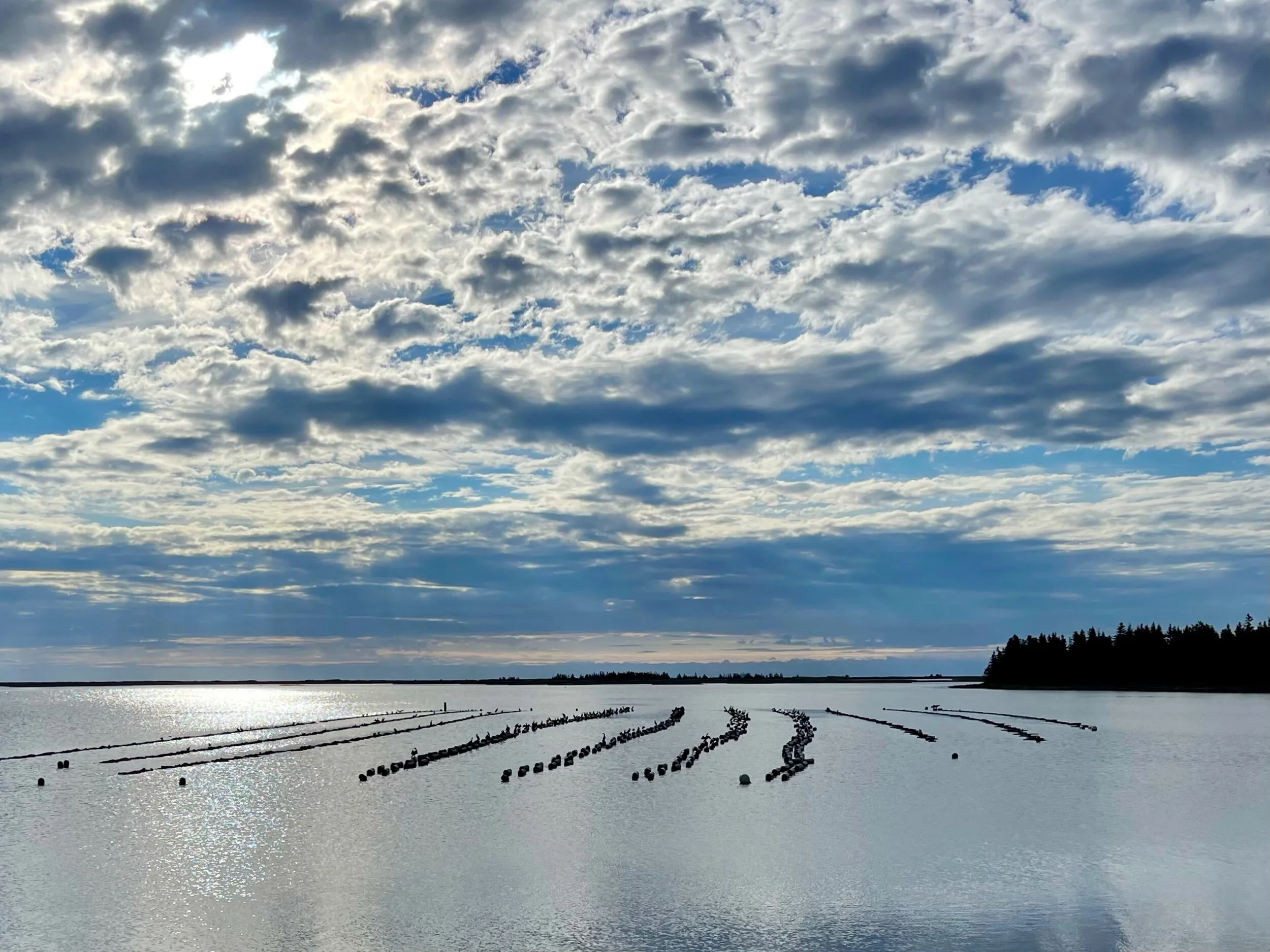
Oyster cages can be seen in the distance at a sustainable oyster farm. Photo by Michael Chase. Follow him on Instagram @mjohsonchase.
Oysters can be raised sustainably as well. The production cycle on a Canadian oyster farm begins with the collection/production of oyster larvae. Some farmers still collect larvae in the wild; however, larvae are increasingly produced in controlled hatchery facilities from spawning adult broodstock. The larvae are kept suspended in tanks by circulating water – and in a few weeks they transform into tiny seed. The seed is essentially a very small version of the adult oyster. Once the seed reaches an appropriate size, it can be transferred to the ocean for final grow-out in cages that are moved every year for 3 to 4 years to stimulate growth and achieve a marketable size.
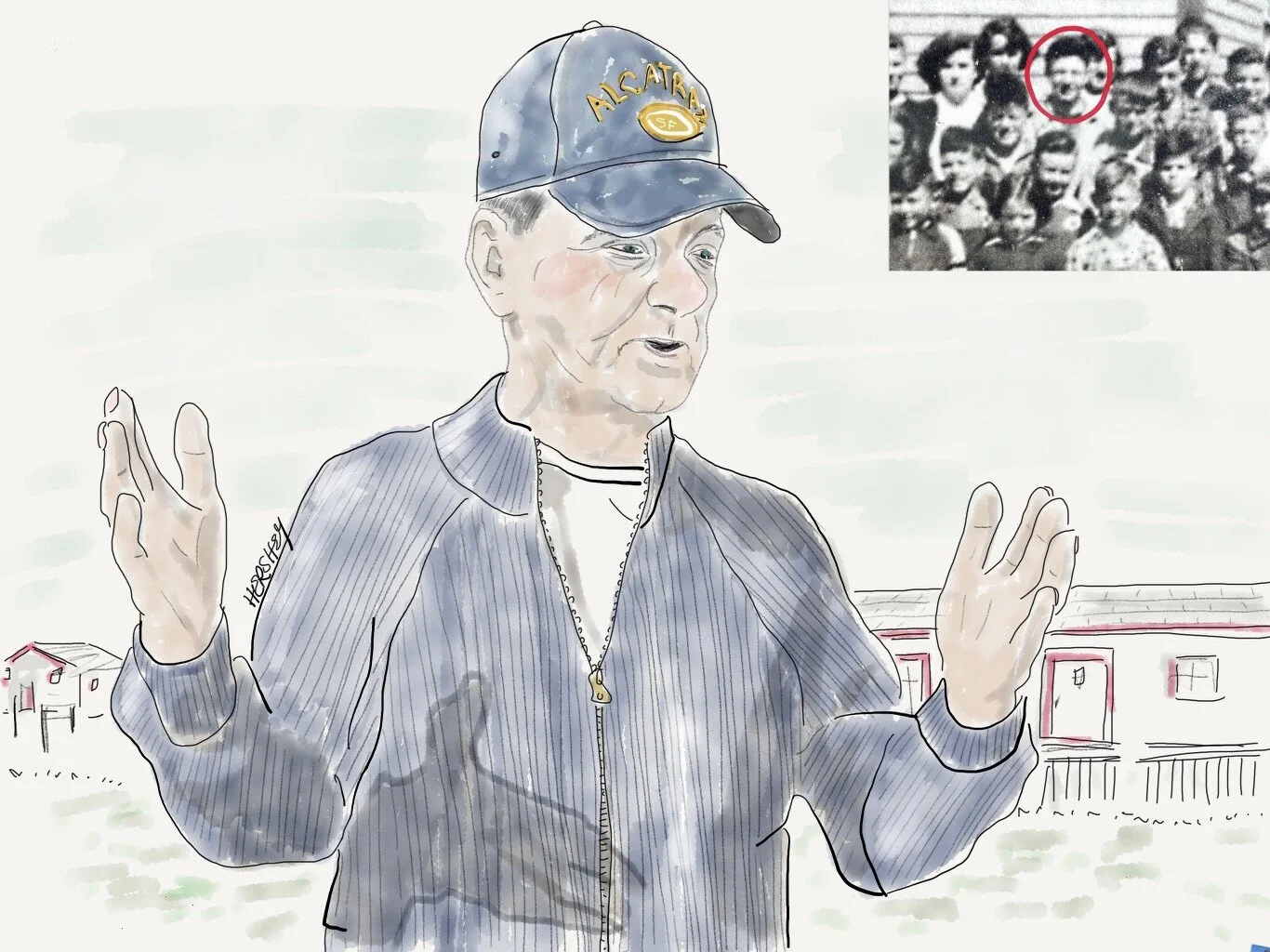
While we were reading an historical placard out loud at the old fishing harbor of Tignish Shore, Hector approached us and pointed himself out in a 1953 schoolhouse photo (upper right). A retired lobsterman, Hector bought his lobster fishing license for CAD 25 cents; now they cost CAD 1.5 million. Hector has survived many storms over the years. Because the beach kept receding, the provincial government moved his boyhood home (where he still lives) from the beach to the inland side of the street. Hector has watched the shoreline at Tignish Shore recede at least two hundred feet during his lifetime. Drawing by Jenny Hershey. Follow her on Instagram @deeofo.
Perhaps most exciting for us as laypeople (beyond eating these exquisite creatures) was recognizing the value of the industry to the local environment. Mussels and oysters raised in estuaries live off plankton and are very productive at filtering water; even nitrogen (a problem in PEI because of extensive commercial potato farming) and pesticides are absorbed and deposited in inert form on the sea bottom through feces by these amazing shellfish.
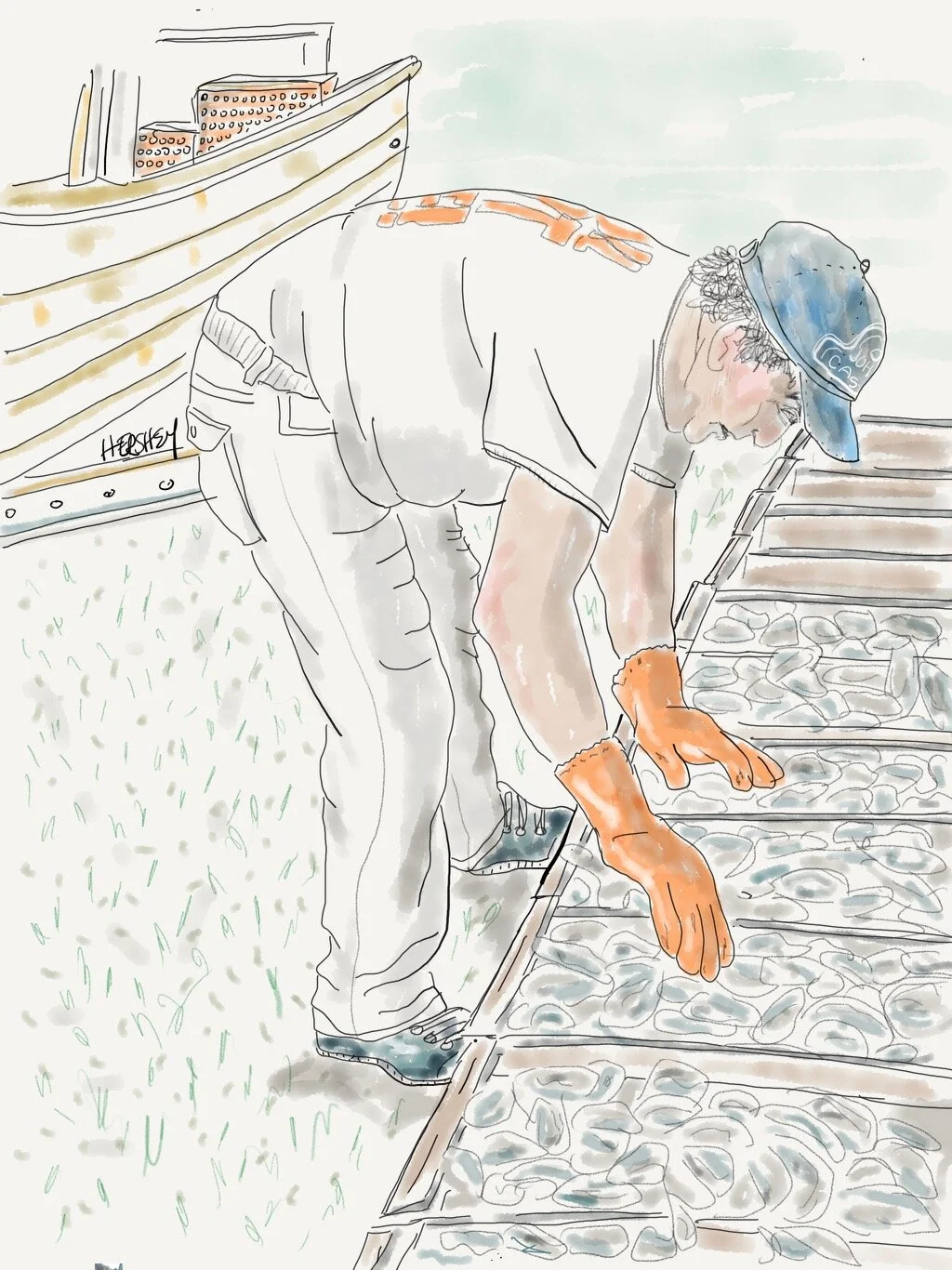
We met Frances, an oyster fisherman, at Yeung’s motel on the first day of the oyster season at Murray Harbour. Fishing the older conventional way by using 12-foot-long tongs (they used to be regulated for 10 feet, but the water is deeper now because of sea level rise), he rakes wild oysters off the sandy bottom in the numerous estuaries around the island. Frances (and his partner Pete) brought back 26 crates of oysters their first day out. They will earn CAD 50 cents per oyster for the bigger ones (which would cost USD 3-4). Both Frances and Pete were pleased with their catch, and they celebrated by gifting us a dozen of their largest oysters and another dozen quahogs. Needless to say, we were delighted! Drawing by Jenny Hershey. Follow her on Instagram @deeofo.
Why Bother?
In August, 2021, the International Panel on Climate Change (IPCC) published the 6th assessment of our changing climate (the first assessment was published in 1990). For the report, hundreds of scientists all over the world assess thousands of scientific papers published annually to provide a comprehensive summary of what is known about climate change, its impacts and future risks, and how efforts at adaptation and mitigation can reduce risks. The assessments represent the best of global general scientific consensus about what is most likely to happen to our climate in the near and reasonably near futures, depending on how many greenhouse gas (GHG) emissions humans continue to release into the atmosphere.
Although climate science has improved greatly over the years, most humans now understand we are placing our children and grandchildren at considerable risk by continuing to emit greenhouse gases into the atmosphere. But the recent IPCC report is sanguine. In general, emissions are not stabilizing, much less decreasing. We aren’t meeting the moment yet, and we are rapidly approaching crisis. We have only a few decades to decarbonize our atmosphere before we hit tipping points that may undermine civilization as we know it.
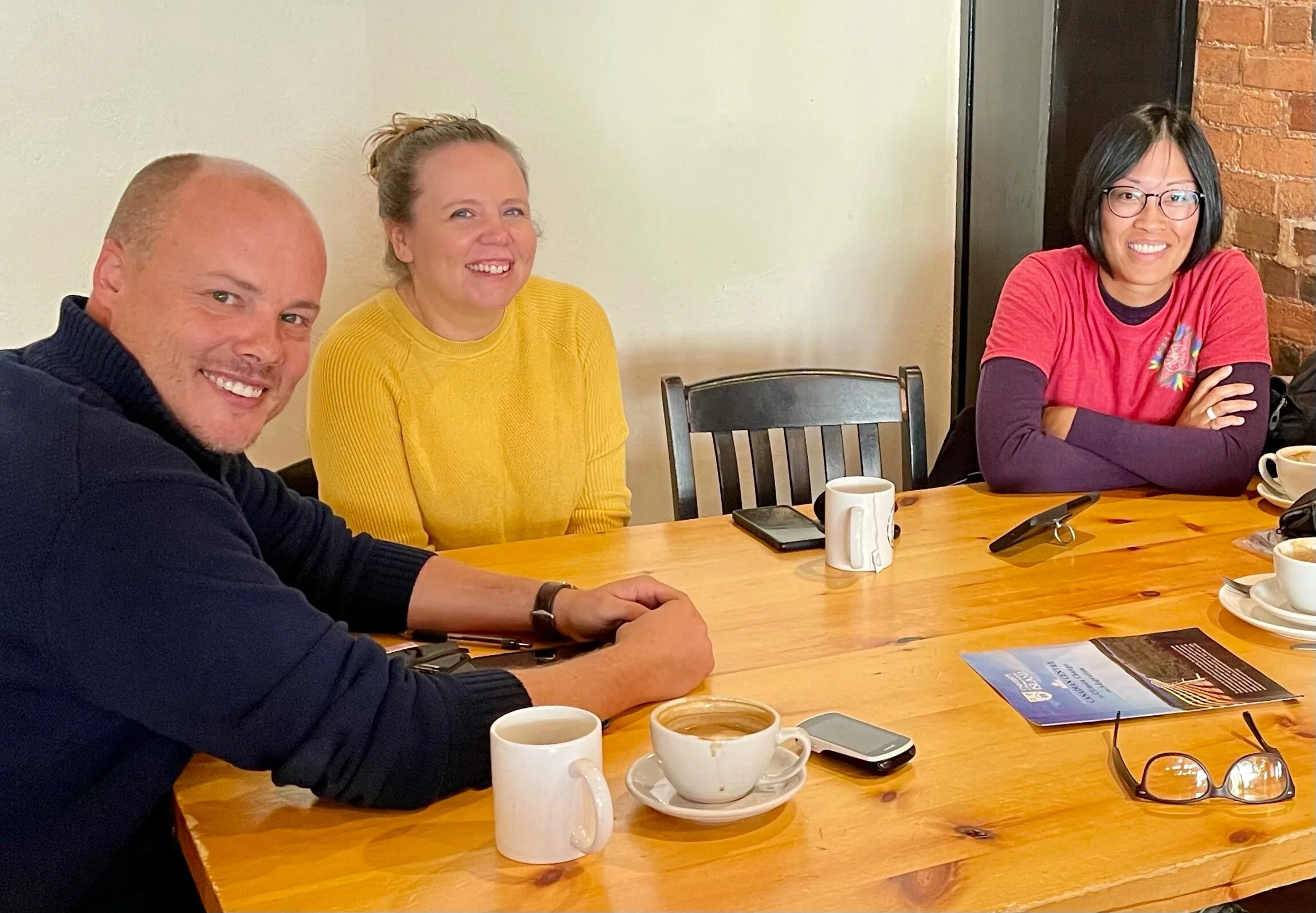
From left to right are Ross Dwyer, Erin Taylor and Stephanie Arnold. All three of them spent several hours chatting with us about PEI’s sustainability plans, particularly in the agricultural sector. PEI appears to be situated well for success, and key players in all industries are feeling pressure and excitement about improving their processes to become more sustainable. Ross Dwyer is the ClimateSense Project Coordinator and Project Manager at the Climate Lab at UPEI. Ross is a passionate representative, and was very welcoming to Jenny and me. Erin Taylor is the Manager of the Climate Change Secretariat at PEI’s Department of Environment. She is an intrepid connector and environmental advocate. Stephanie Arnold is a prolific author and PhD Candidate (UPEI). Her technical specialty is helping potato farmers adapt to societal pressures to become more sustainable and adapt to rapidly changing growing conditions. Read about the Provincial Prince Edward Island Climate Plan here. Photo by Michael Chase. Follow him on Instagram @mjohnsonchase.
Fortunately, many governments are listening to these onerous warnings, the PEI provincial government among them. But our talks with the climate team of university and government officials in PEI weren’t about quantifying GHG emissions, nor was it about making a transition in energy systems. That has to happen, and it’s already underway. But for the people we talked to that’s the easier part of dealing with climate change. Transformation in agriculture, which is the cornerstone of life on this island (and always has been) is the preoccupying problem, because farming here is so integral. And underlying how we live on the land is a more fundamental issue - our most cherished values.

Stephanie Arnold from the UPEI Climate Lab shares her feelings about the unfair blame directed at many well-meaning potato farmers by uninformed environmentalists.
We were lucky enough to hear Stephanie speak publicly (along with Adam MacClean) at a panel event on agriculture and climate change in New Glasgow. When asked what single-most important action she thought could be undertaken to get at the root causes of climate change, Stephanie answered Canadians could review and recommit to the country’s original Treaty Agreements with indigenous nations. Drawing by Jenny Hershey. Follow her on Instagram @deeofo.
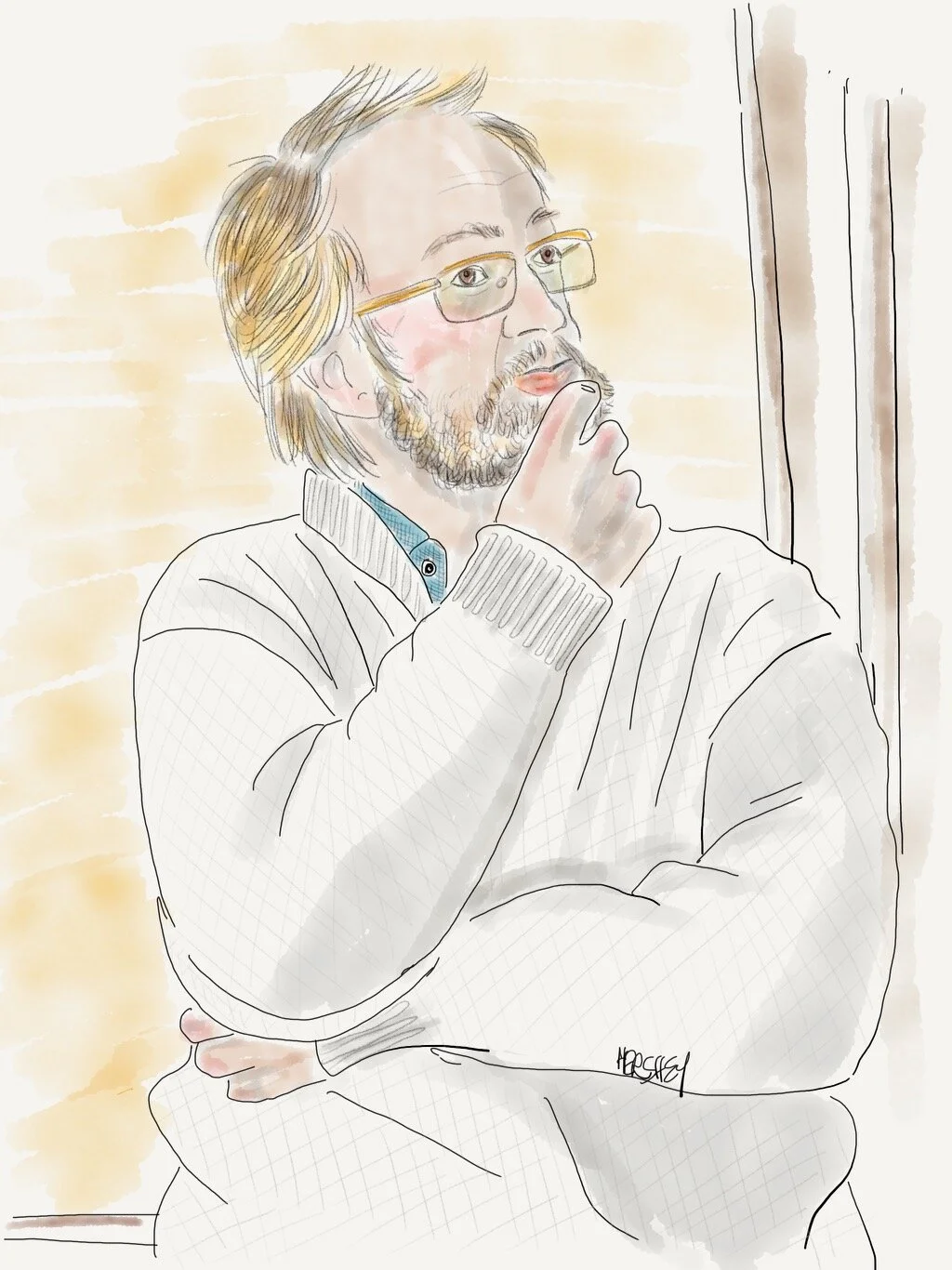
Adam MacLean describes himself as a shepherd-entrepreneur-scientist and very recently, a public servant, working with the PEI Department of Agriculture and Land as their Organic & Perennial Crop Development Officer. He practices regenerative agriculture by managing pastured livestock to produce nutritious meats in a way that respects the animal and heals the land. Together with his flock, in partnership with Island landowners, they are building soil, sequestering carbon and feeding the community. We were lucky enough to hear him speak in New Glasgow, where he agreed passionately with Stephanie Arnold that our biggest challenge is reckoning with our most fundamental values. Drawing by Jenny Hershey. Follow her work on Instagram @deeofo.
Our conversations revealed a collective agreement that climate change is a symptom of a larger problem: societies that value the rights of powerful individuals over those of poorer communities, societies that seek to dominate nature rather than live within natural processes, societies that place individual rights and personal consumption ahead of a collective commons with the capacity to allow all humans to live in natural abundance. Those are societies most responsible for polluting our atmosphere and bringing us to the brink of extinction.
Such talk used to be the province of the crazy and marginalized. But in PEI, such talk seems to be increasingly normal. Views are shifting everywhere, and PEI is small enough that shift is palpable. After all, relationships are the true currency of change, and that currency in a place as small as PEI is alive and well.
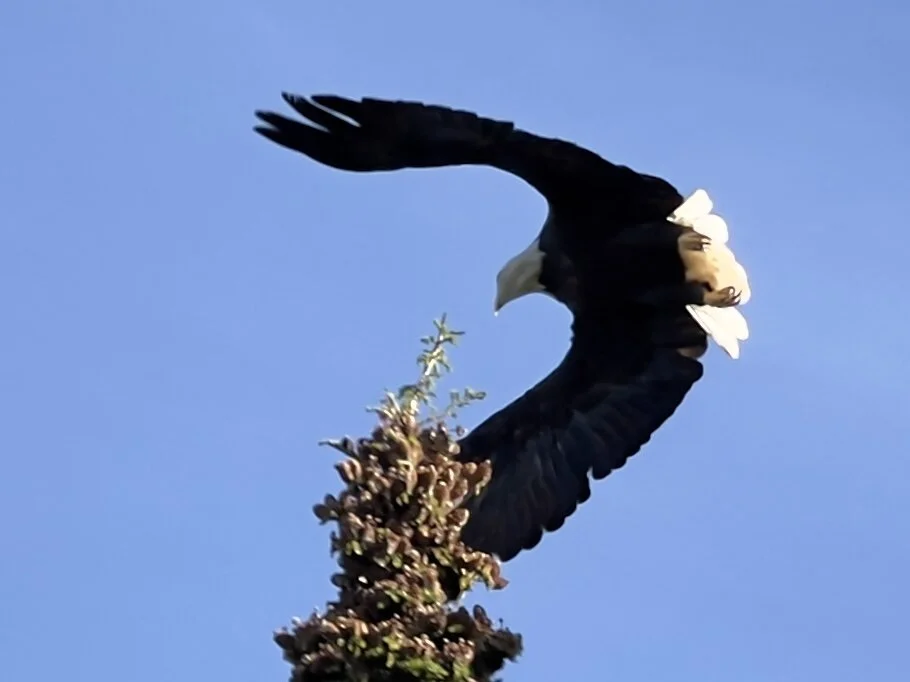
We saw this Bald Eagle (Canadians call them Sea Eagles) lift off a tree near North Point in PEI. For us urbanites, there are few things more exciting. Photo by Michael Chase. Follow him on Instagram @mjohnsonchase.
Organic and Regenerative Farming in PEI
Our first few days on the island revealed little information about farmers, other than the unmissable reality of the large and ubiquitous potato industry and the equally accessible shellfish and lobster industries. Before we learned more about how conventional potatoes were farmed, we were happy to dig up a few potatoes for our dinners as we biked by the corners of commercial fields. That is, until we learned that commercial potatoes growers use a spray that kills the plants from the ground up, leaving the potatoes easier to harvest. Although Roundup (glyphosate) is repeatedly used to kill weeds on the fields earlier in the season, we were never able to determine whether that is the herbicide used to kill the plants at harvest. But even if you never eat another potato from PEI, please understand that glyphosate is still the most-used herbicide in the U.S. Unless you’ve eaten only organic vegetables for years, you’ve been exposed to it in large quantities already. In any case. our past blog posts on regenerative agriculture and our serendipitous meeting with Eliot Coleman focused us to understand more about the agriculture scene in PEI.
We managed to look beyond the potatoes once we got wind of the PEI Certified Organic Producers Co-op (COPC) through an email exchange with my friend Regina Grabrovac of Healthy Acadia in Machias, a Maine-based food systems specialist and organic certification official for the USDA. Once we learned from Regina where and how to look, we began to appreciate how much fresh food was available all over the island.
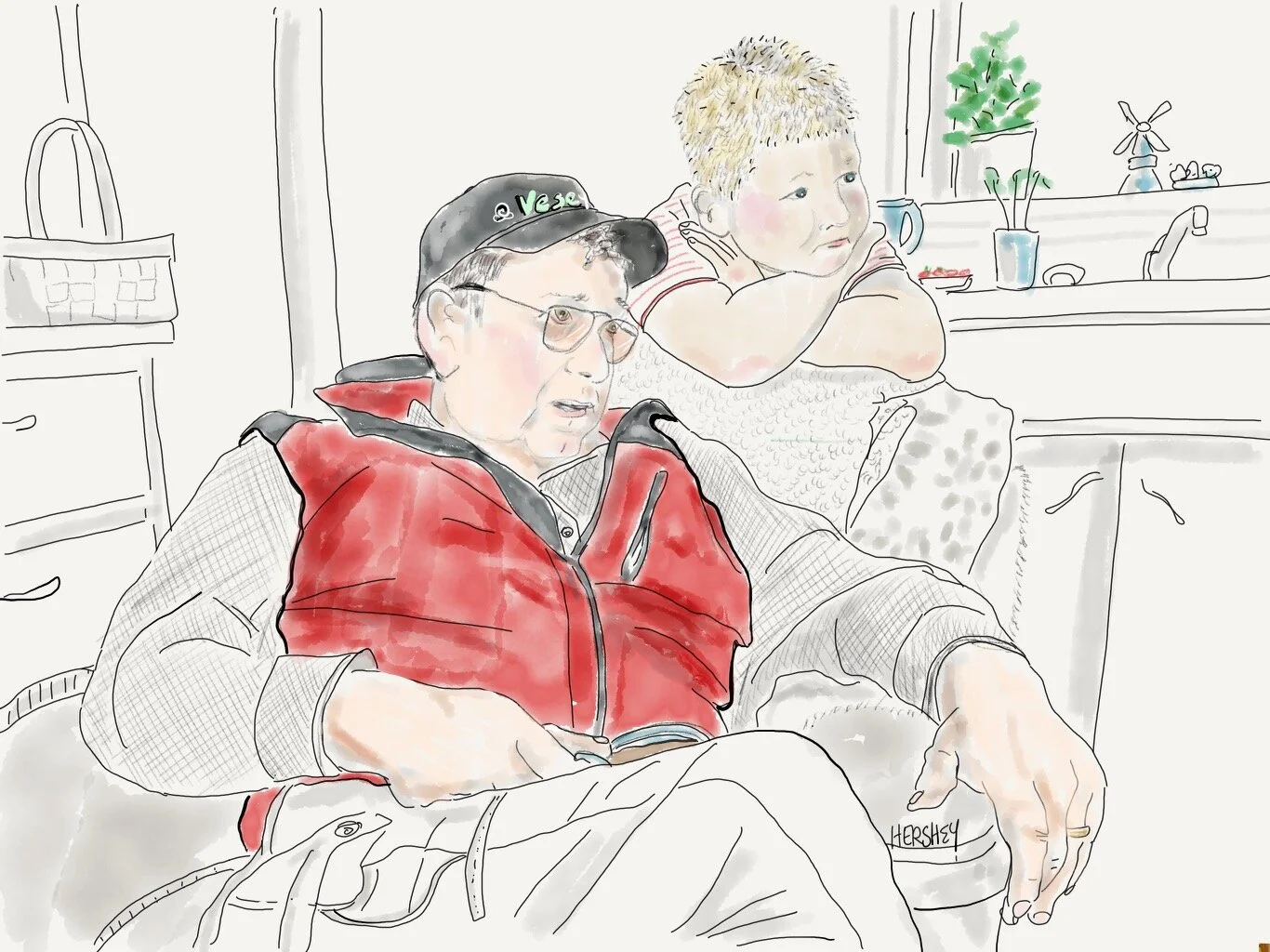
Brian MacKay, an organic farmer at Crystal Green Farms in Bedeque, PEI, raises organic vegetables and livestock, as well as operates a small flour mill where they mill their own grains and prepare baking mixes. Their milled products can also be found on the shelves of many local retailers. Once Brian learned that Jenny was a vegetarian for environmental reasons, he patiently asked us what we thought “Beyond Beef” was made from? Did we think that the peas, corn and soy in the product was grown without fertilizers, herbicides, and pesticides? Did we think it was grown with crops that haven’t been sprayed with glyphosate? Did we think the crops used weren’t genetically modified, tying them in with Monsanto and other seed monopolies? (We checked the Beyond Meat website and supposedly they do not use GMO crops). Even so, might it be that eating beef, pork, chicken, lamb or sheep grazing in a field of perennial grasses creating healthy soil while sequestering carbon, was a better option environmentally? As Brian spoke, his grandson, Xaviar, hung onto every word, as did we. What do you think? Drawing by Jenny Hershey. Follow her on Instagram @deeofo.
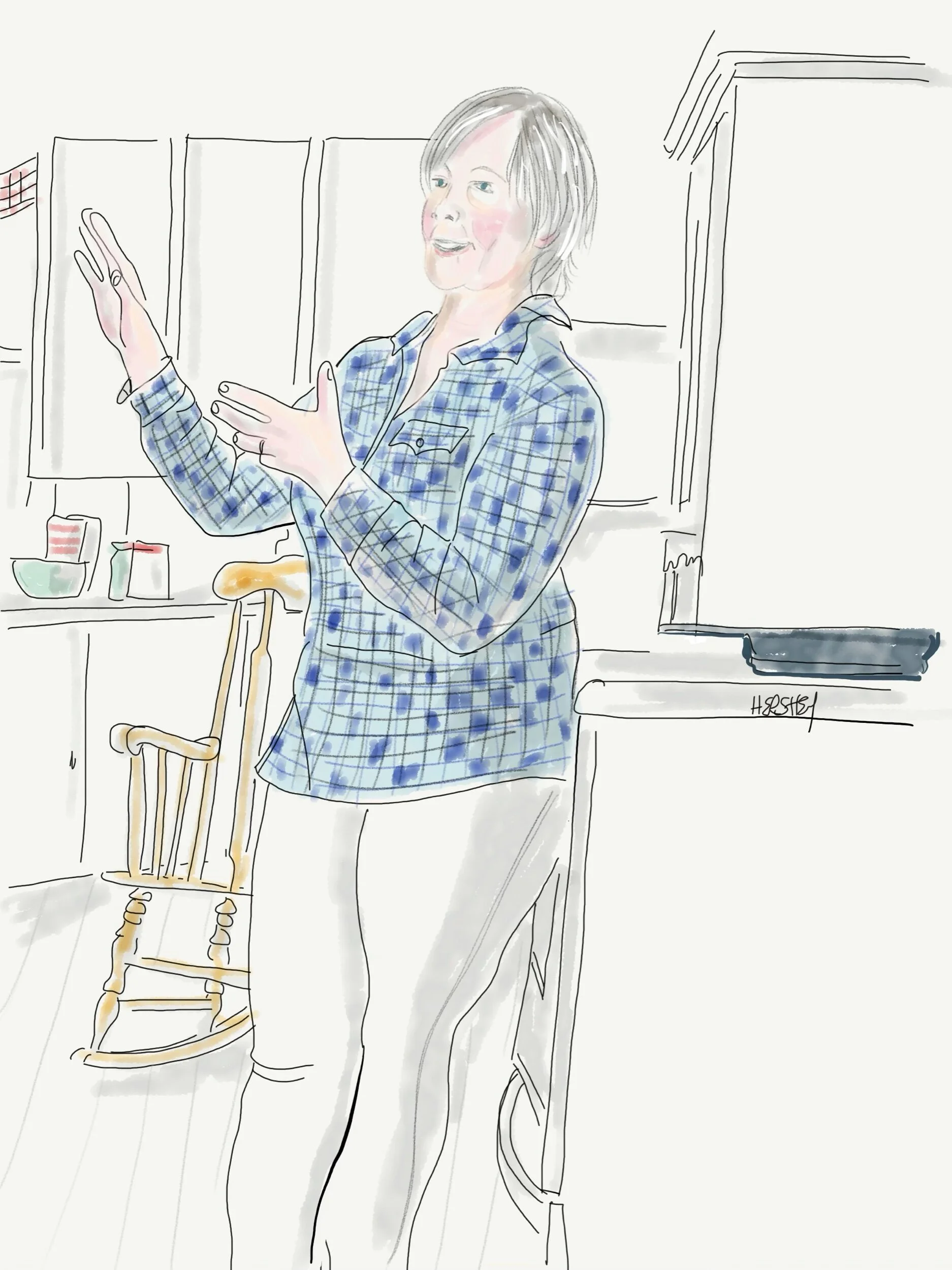
Kathy MacCay from Crystal Green Farms in the 140 year-old farmhouse in which she was raised, and in which she raised her children. She has lived in this house for most of her life. Kathy runs a tight ship working with husband Brian and caring part-time for her 14 grandchildren. Somehow, she also managed to cook us delicious homemade waffles (from a pancake flour mix milled in their barn for market distribution). Drawing by Jenny Hershey. Follow her on Instagram @deeofo.
The COPC is run through volunteers. We assumed the most active farmers in the organization might be among the most dynamic farmers in PEI, so we reached out to their chief officers. COPC President Brian Mackay and his wife Kathy own and operate Crystal Green Farms located in Bedeque, PEI. Vice President Sally Bernard from nearby Freetown, co-manages a local Organic Grainery, and is the primary force behind raising livestock at Barnyard Organics. We weren’t disappointed. As characteristically warm and friendly as other islanders, they both welcomed us to stop by, meet their families, and learn about their operations.
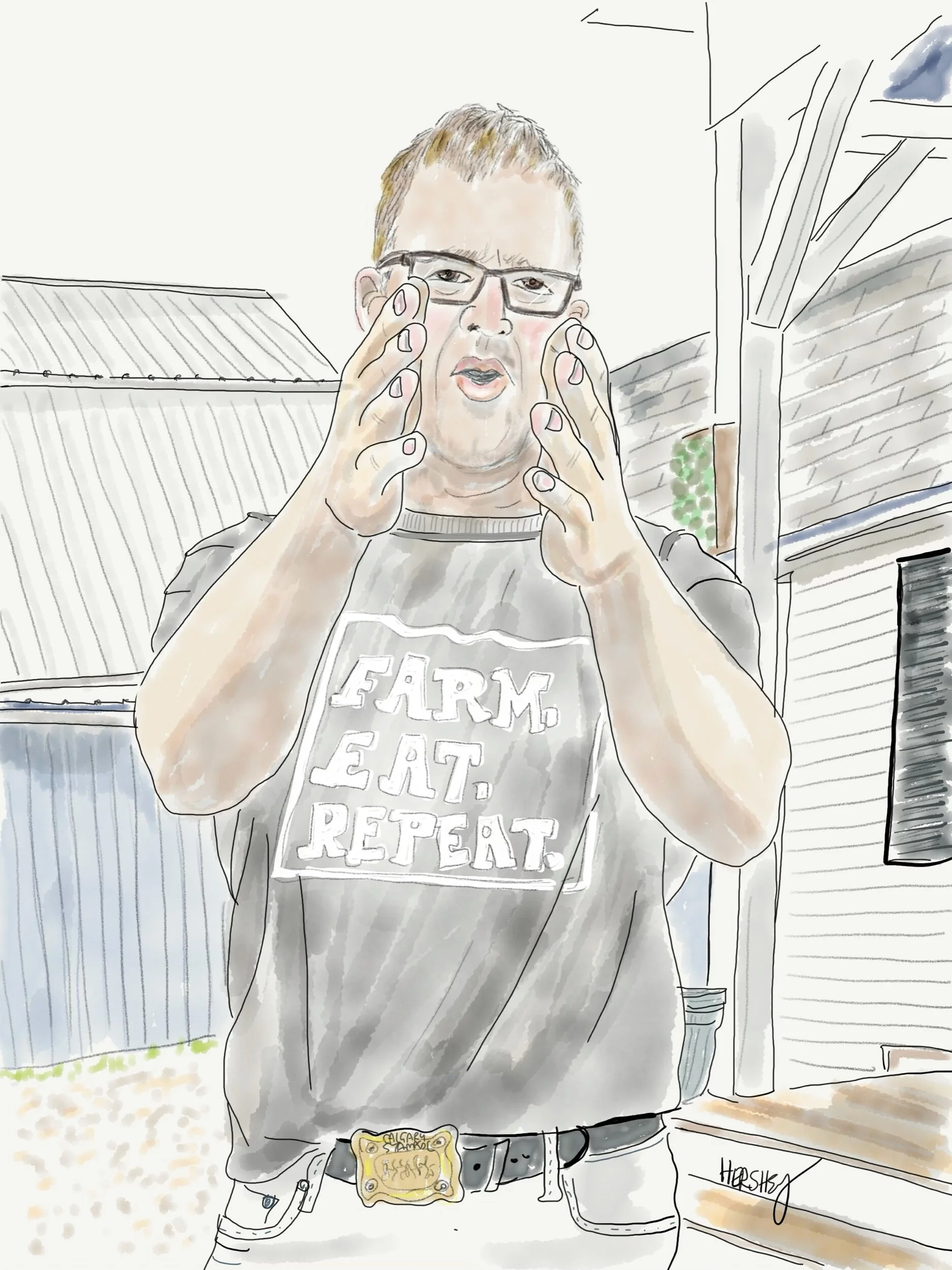
Mark Bernard makes a point about commercial versus organic feedstock. Mark is from Freetown, PEI, and along with his wife Sally converted his traditional family farm in 2002 into a Certified Organic production (primarily as a financial consideration). As their soil management practices improved and they witnessed land and nature respond positively to their organic practices, they started taking organic more seriously. They’ve never looked back. Sally co-manages the expanding Organic Grainery, and together they operate Barnyard Organics. Drawing by Jenny Hershey. Follow her on Instagram @deeofo.
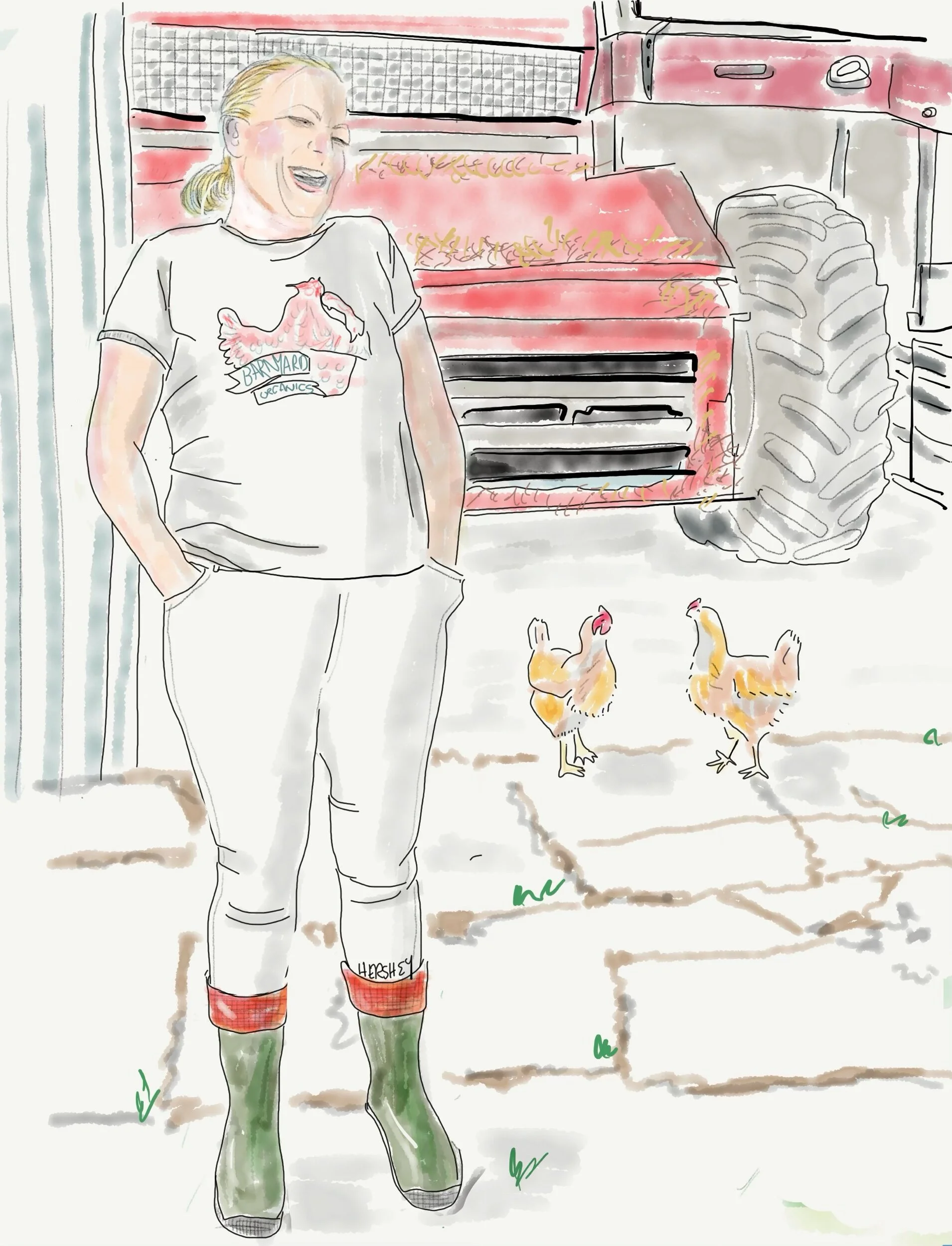
Sally, the youngest of nine from a cattle-ranching family, immediately impressed us with her wit and joy. She met Mark at the Agriculture University in Truro and told us she was immediately smitten. Together they work the land and raise four beautiful children. Sally has a special place in her heart for their three pigs (Dolly, Shania and Reba) and two dairy cows. They no longer raise chickens for market, but they keep quite a few hens for selling pasture raised eggs. Sally dislikes the local Sea Eagles, who will swoop down undetected, lift chickens in their claws and take them away to eat. Drawing by Jenny Hershey. Follow her on Instagram @deeofo.
COPC was established in 2002 and is composed of organic producers and like-minded consumers who wish to see organic agriculture grow within Prince Edward Island. They are a coalition of growers and not a certifying body. Instead, under the Safe Food for Canadians Regulations (SFCR), any food, seed, or animal feed that is labelled organic is regulated by the Canadian Food Inspection Agency (CFIA).
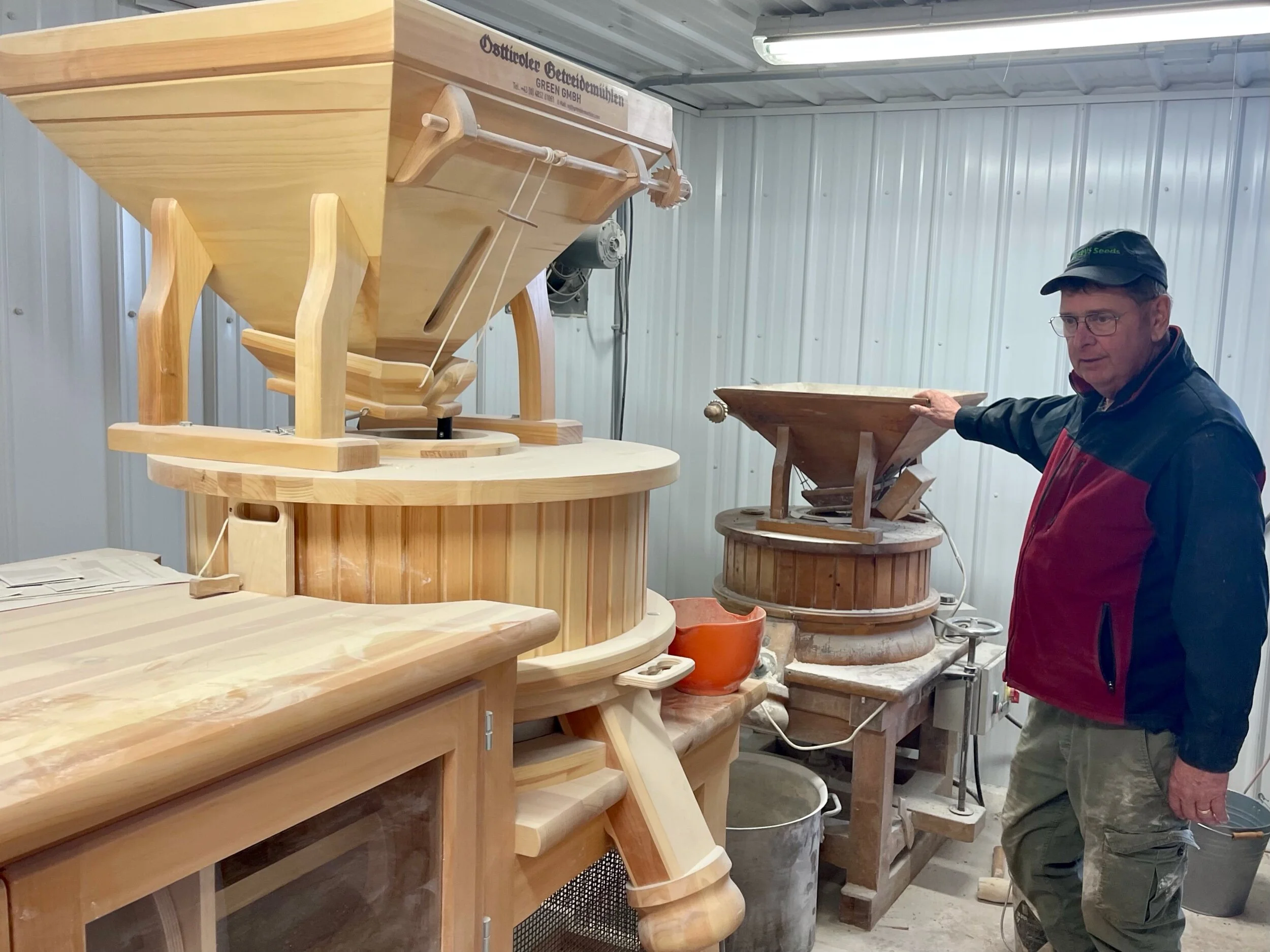
Brian MacCay explains how the multiple grinding and sifting options work on his new flour mill from Austria. Photo by Michael Chase. Follow him on Instagram @mjohnsonchase.
This allows COPC to function as an advocate for organic growers. Their vision entails a vibrant organic industry in PEI, and they are committed to supporting: 1) Quality healthy food for Islanders, 2) A revitalized rural economy and culture, 3) Protecting and enhancing the environment, and 4) A fair income for organic farmers.
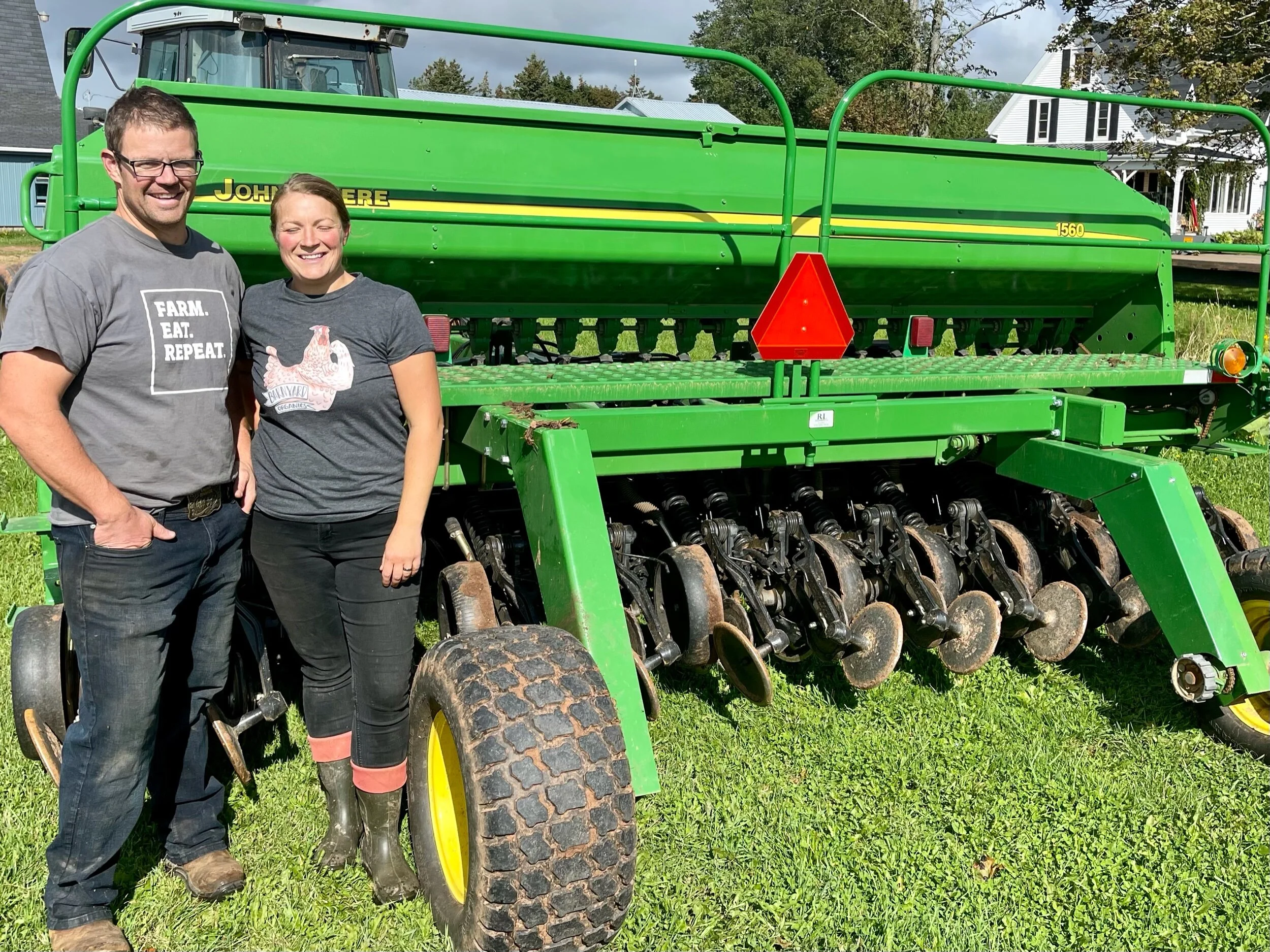
Mark and Sally standing next to their new “no-till” seeder. Photo by Michael Chase. Follow him on Instagram @mjohnsonchase.
This trip has caused us both to think a lot about the foods we eat and their intricate relationship to our changing climate. Clearly, there are wonderful upsides of knowing the farmer who grows your vegetables, grain, meat or fish. When you buy direct from the grower you can ask what he or she did to raise that food. But most of us don’t have that luxury.
However, it’s important we all know that, worldwide, the agriculture sector accounts for 25% of greenhouse gas emissions and as much as 75% of the world’s freshwater use, an issue that has grown more severe in recent decades as more farms have become industrialized to increase productivity. Farmers globally receive roughly $683 billion in government subsidies each year and government aid is expected to more than triple by 2030. Yet roughly 87 percent of these funds currently support industrial farming practices (mainly in the developed world) that harm the environment and human health. They also disproportionately help large corporations at the expense of smaller farmers and make food more expensive for millions of people. These are findings of a new UN report calling for repurposing damaging incentives to achieve more of the 2030 Sustainable Development Goals and realize the UN Decade of Ecosystem Restoration.
The most problematic supports are those tied to the production of specific commodities like corn, soy, or beef, said the study's authors. These funds encourage farmers to grow fewer crops and boost their yield with fertilizers, pesticides and other environmentally harmful technologies. Beyond this approach's environmental impact, the industrial production of a few commodities can make them unnaturally cheap while driving up the price of other, more nutritious foods. For instance, in many developed countries, industrial farms growing major commodity crops such as corn and soy, receive billions to help them stay afloat. Yet, as was stated earlier in this post, smaller-scale, more diverse and sustainable farms - who pollute and use water in significantly smaller quantities - tend to receive minimal or no government support at all.
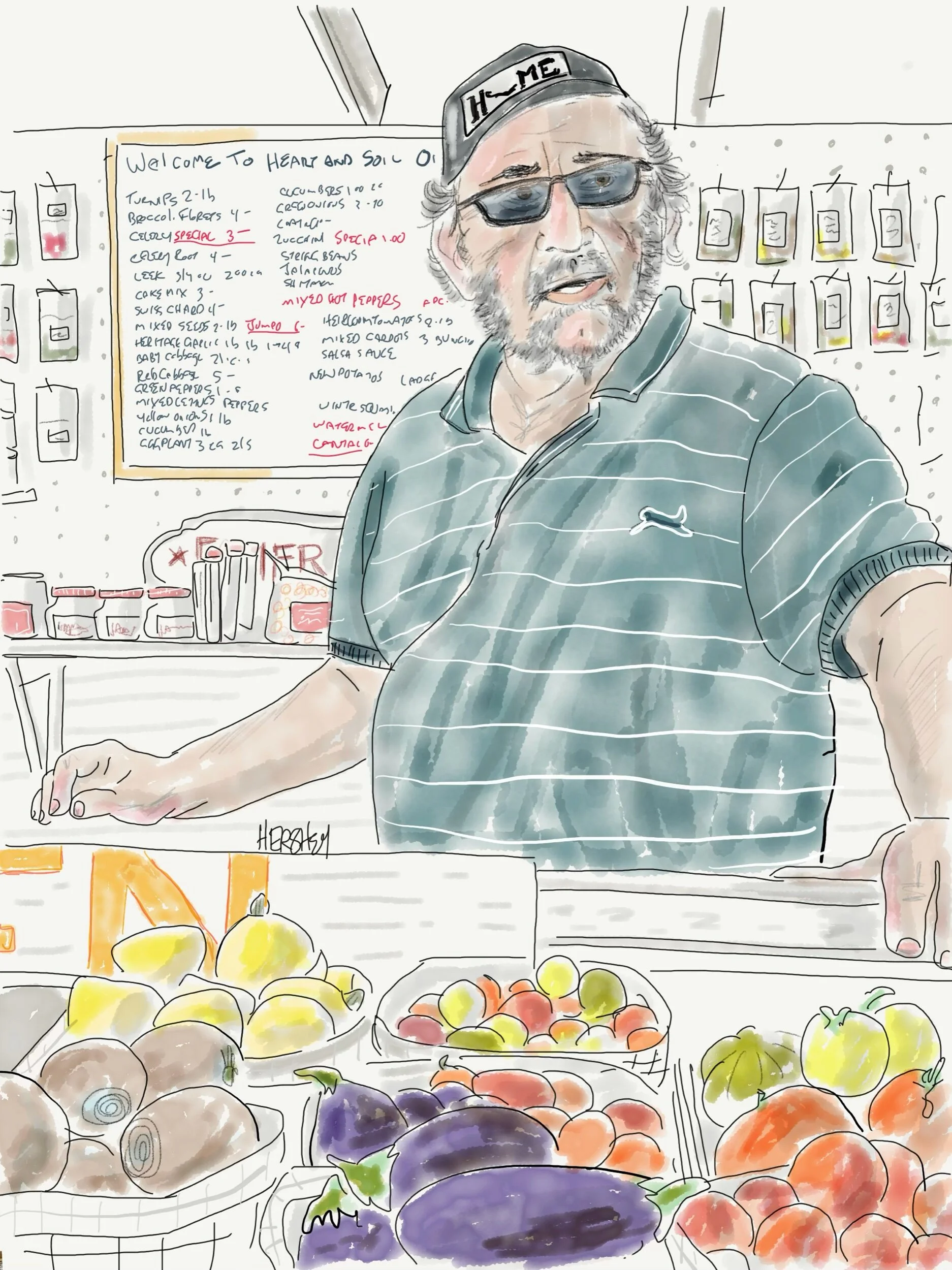
Michael Rossy is a well-known, organic farmer from near Montreal (Runaway Creek Farm in Arundel), who retired as a “hobby” farmer on a lovely farmstead and B&B called Heart and Soul, about 30 kilometers south of North Point in Highway 12. An innovator all his life, Michael currently pushes the envelope by growing and selling - among other unusual things - Asian Pears, Asian Pear Melons and Gojiberries. He enjoys showing locals that anything is possible with great soil, and tender loving care. Drawing by Jenny Hershey. Follow her on Instagram @deeofo.
…If we truly want a sustainable food future, we have to stop looking at food as capital and start looking at long-term land restoration projects, creating healthier soils, and creating more localized growth of food and food sharing that isn't out to make a buck, said Sarah Dunigan, host of the food-focused podcast Anthrodish, as quoted in Canada’s excellent Climate Change newsletter, the National Observer.
In other words, we need to change our values.
Stay vigilant! Thanks for reading. More to come. If you haven’t done so already, please subscribe to this blog, so you can follow our next biking trip later in the fall.
All material, unless credited or otherwise noted, are copyrighted property of the blog post authors.
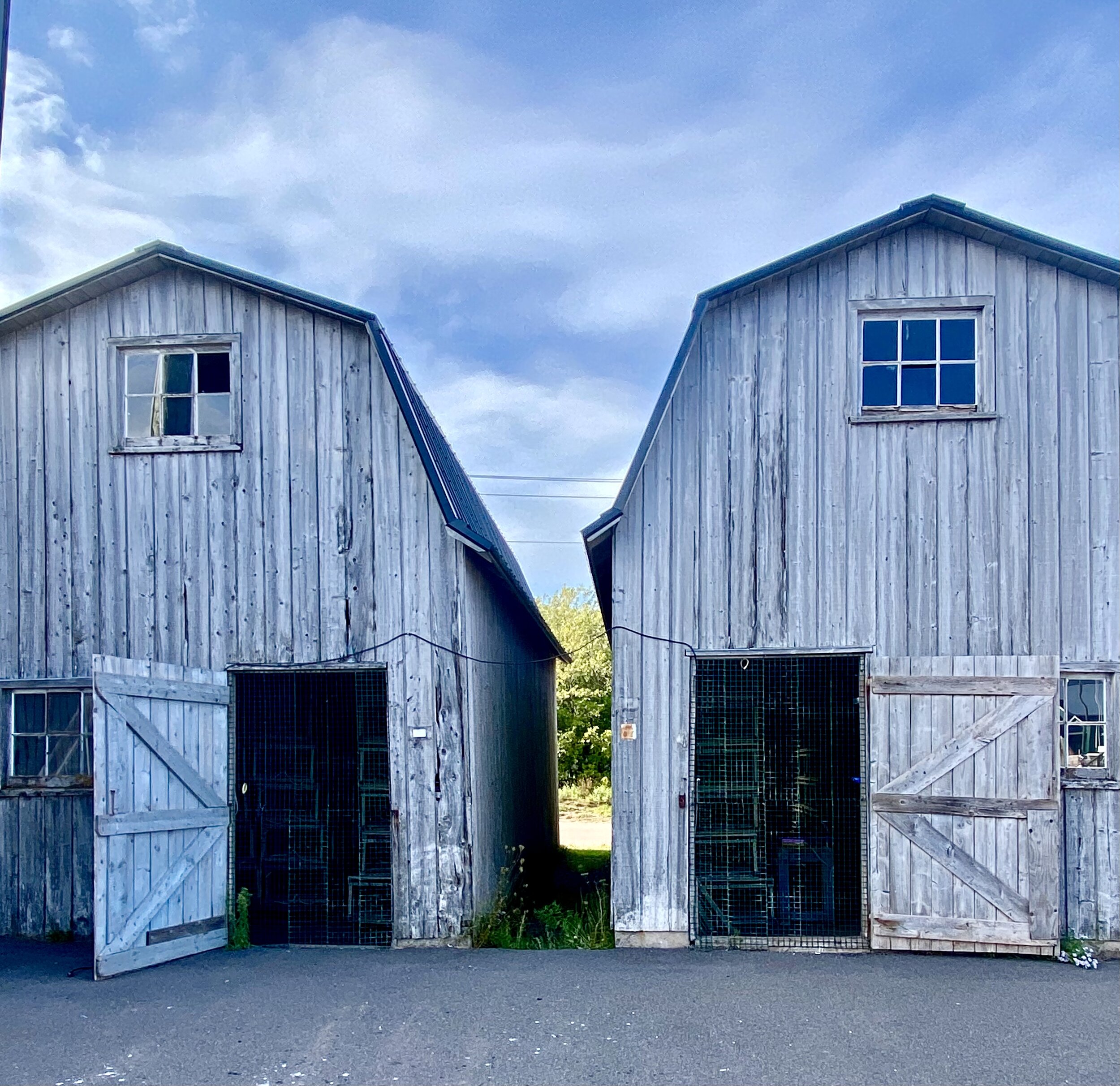
These buildings were on the pier at a small fishing village named Darnley near Rustico. The photo is a favorite of Jenny’s. Photo by Jenny Hershey. Follow her on Instagram @deeofo.
The Renewal Blues; Biking the Mississippi River Trail, Post 2
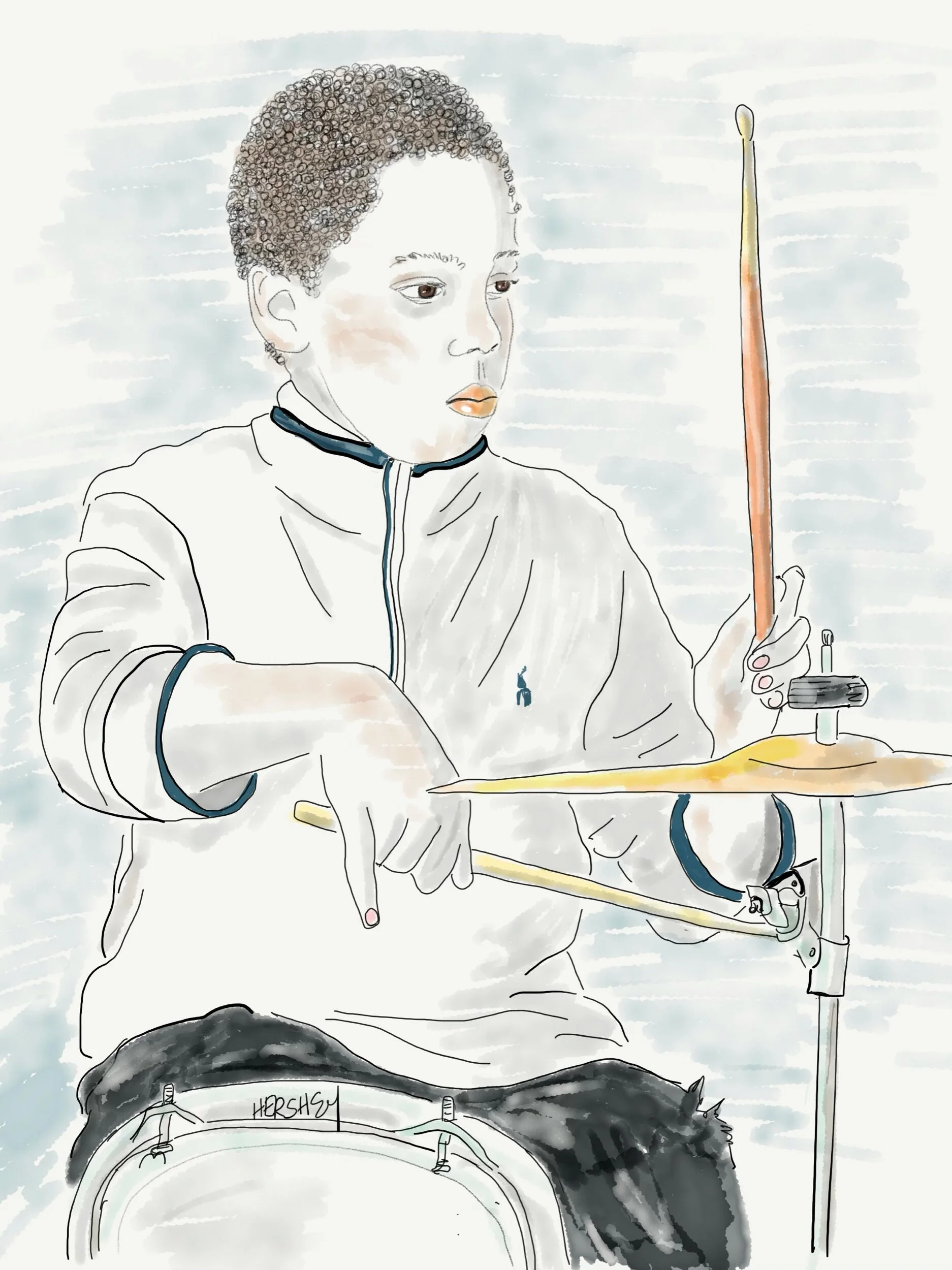
Dwight is 11 years old, and quite a drummer. We met him at the Pleasant Chapel M.B. Church just north of Memphis, TN. He was really proud to be part of the church gospel band.
Drawing by Jennifer Hershey. Follow her work on Instagram at deeofo.
What a great trip we’ve had during this time of change in America! Jenny and I have spent three weeks biking along two routes: the Mississippi River Trail (MRT), a fabulous Open Cycle Map bike trail that runs along or near the Mississippi River from north of Minneapolis to south of New Orleans; and the iconic “Southern Tier” route mapped out by the Adventure Cycling Association (ACA) that runs from San Diego to St Augustine, Florida. We biked along the MRT south from Ste. Genevieve, Missouri through Memphis, Tennessee and south through the Delta country of Arkansas and Mississippi to Vicksburg, then down to Natchez, Mississippi, where we turned east on the ACA’s “Southern Tier” and made our way along the Gulf coast through Mobile, Alabama to Orange Beach, Florida on the panhandle coastline.
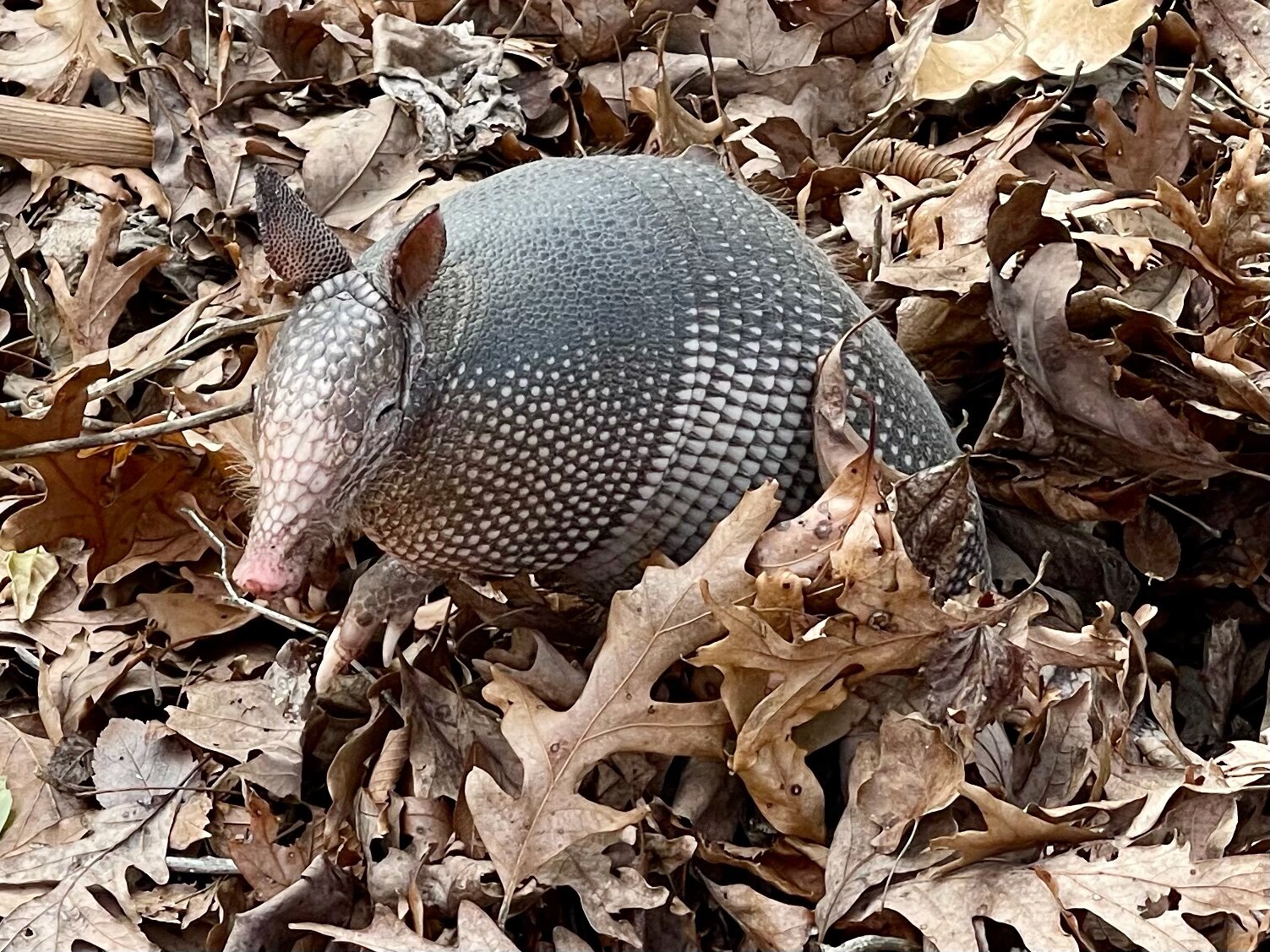
An armadillo seen in the St Francis National Forest near West Helena, AR.
The American South didn’t disappoint us. Although it’s been unusually cold and intermittently rainy in the southeastern United States this winter, we were glad to avoid the harsher weather to the north in our hometown of New York. We biked through areas rich with wildlife, occasionally stopping to admire the countryside or take in the extraordinary cacophony of countless birds and frogs. We also biked through both dull and very interesting human environments in the form of villages and small to medium-sized cities.
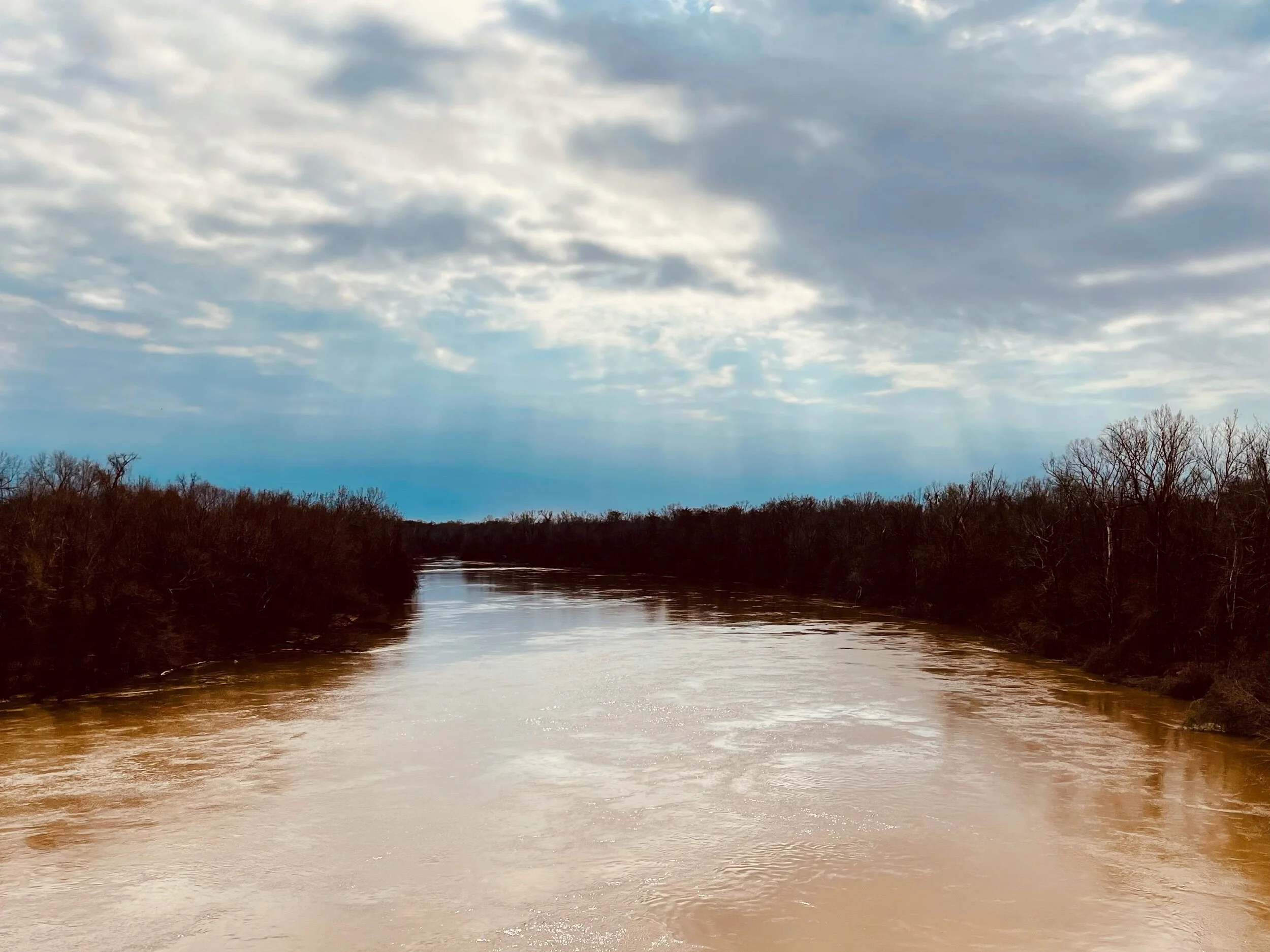
The Pearl River forms the far eastern border of Louisiana and the southwestern border of Mississippi.
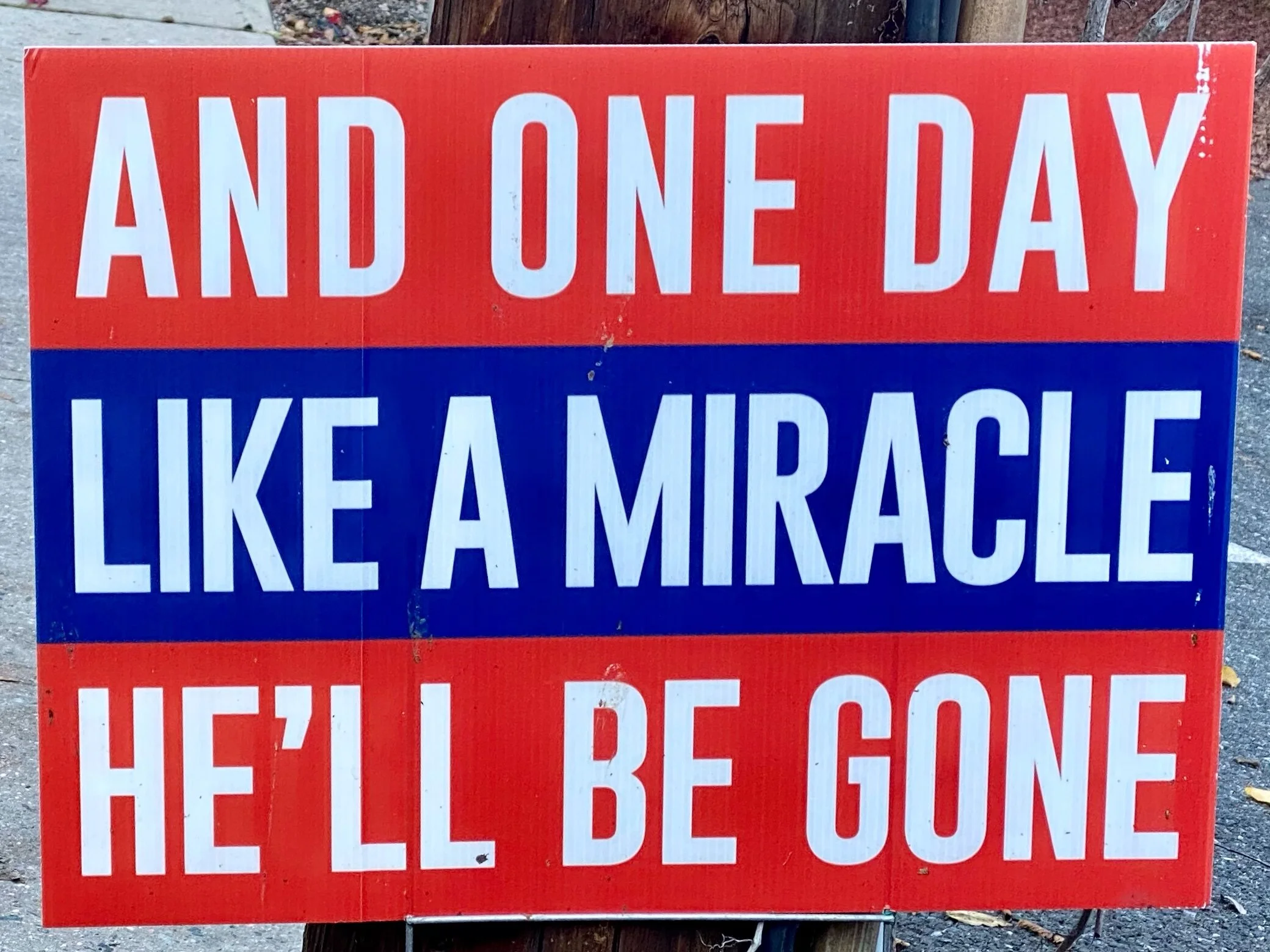
Experiencing the social vibe just after the recent presidential inauguration has been both heartening and sobering. Today, in southern Alabama we passed two abandoned semitrailers with “stop the steal,” “the election was stolen”, and “Trump is our President” graffiti painted across them. They were too far away, and we were moving too quickly to be able to photograph them, yet they definitely echoed the spirit of insurrection at the Capital. We have also seen signs that both puzzled and amused us.
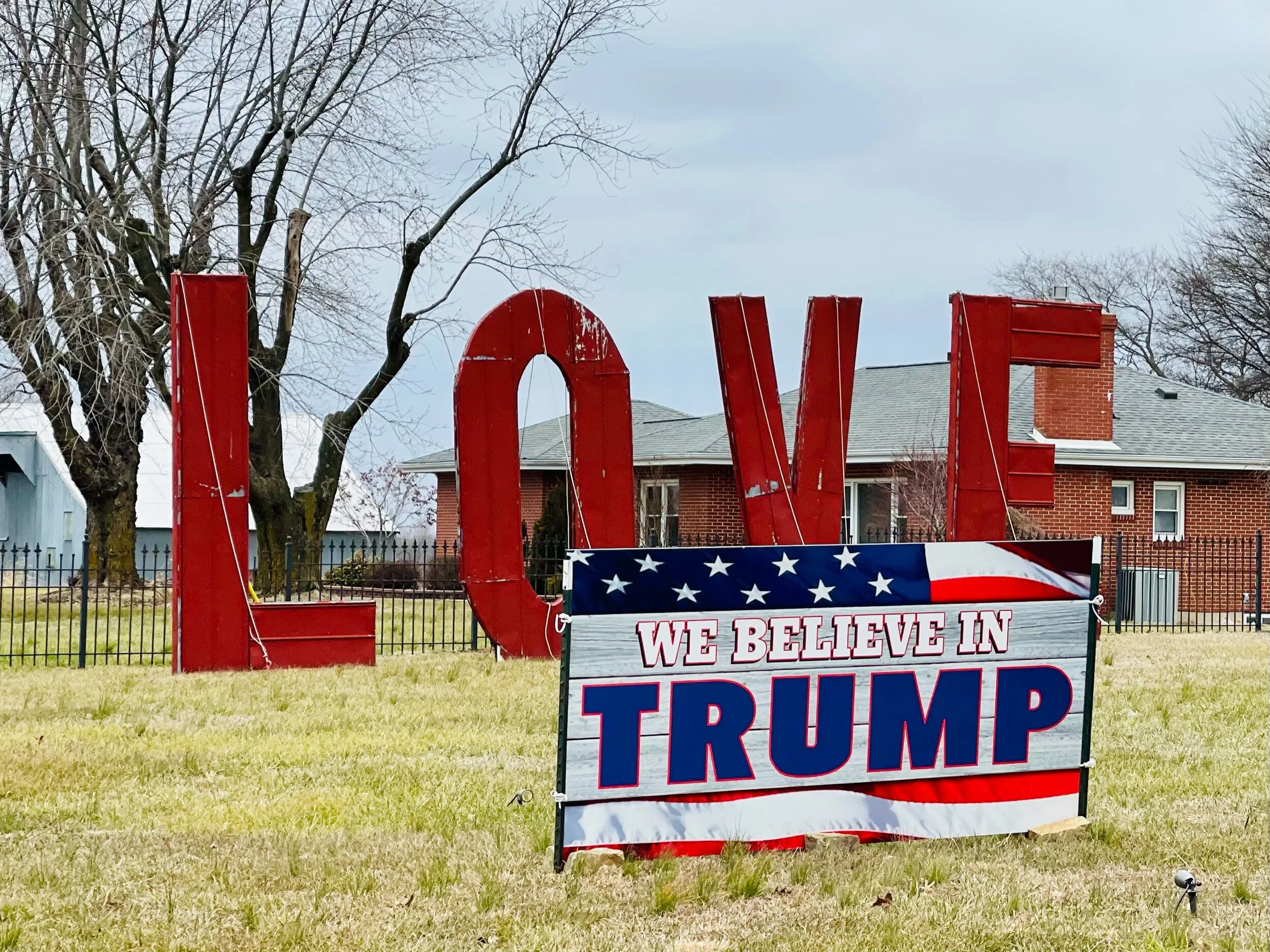
Seen near Perryville, MO.
It’s interesting to speculate how long Trump 2020 signs will remain up. We've seen a few Biden/Harris signs as well, but - in these parts at least - the folks who voted for Biden aren’t as overt about their preference as those who voted for Trump. But whatever their beliefs, I’d wager most Americans are wondering how the coming weeks and months will play out.
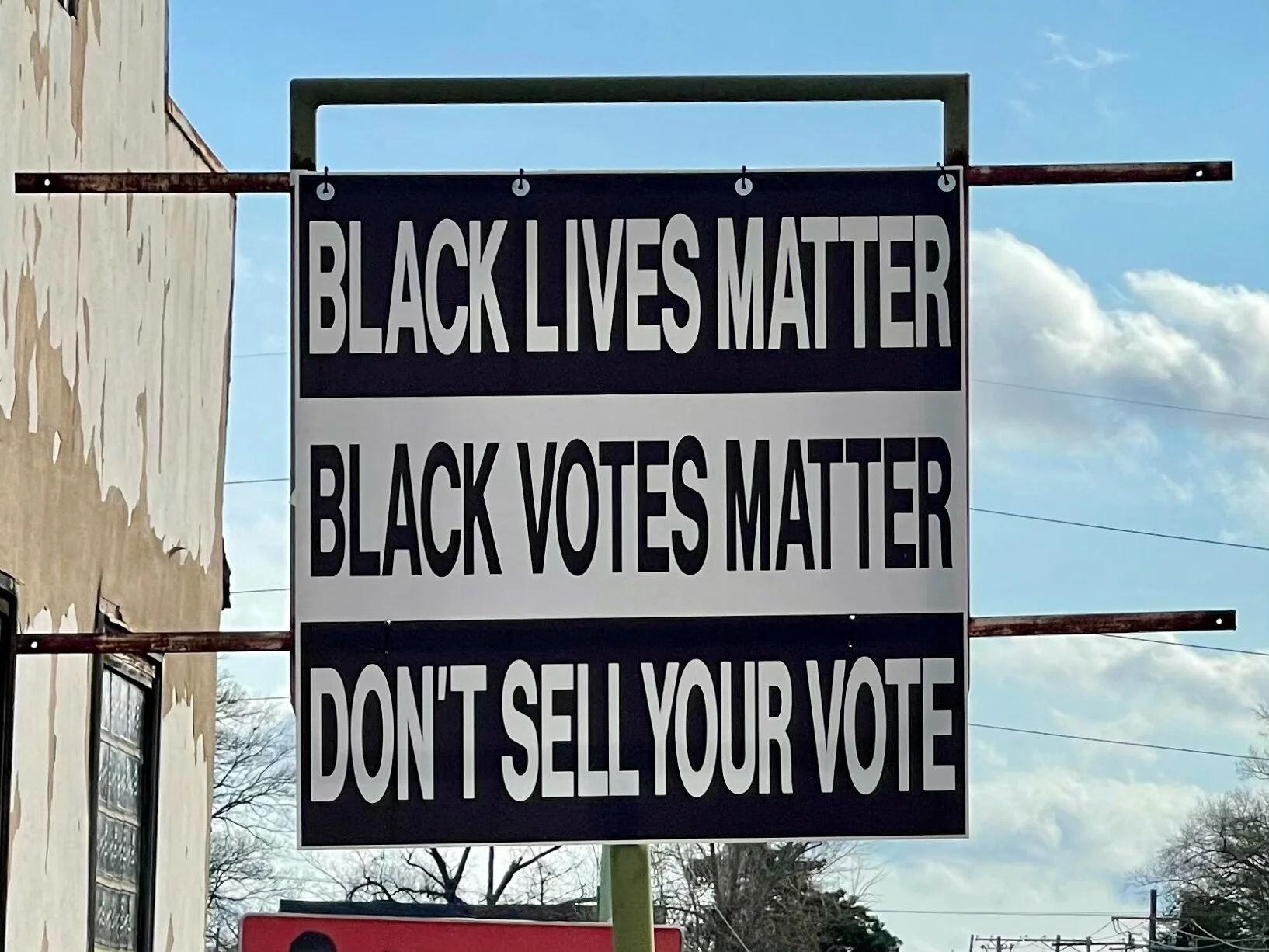
A sign in Natchez, Mississippi. Apparently vote selling has happened there in the past, and the local Democratic Party wanted to make sure that was not a problem in the recent election, as per the following quote from an October, 2020 article in apnews.com by Tim Sullivan: By at least one measure, it’s harder to vote in Mississippi than any other state. And despite Mississippi having the largest percentage of Black people of any state in the nation, a Jim Crow-era election law has ensured that a Black person hasn’t been elected to statewide office in 130 years. After years of being shut out of state races, Democrats hope mobilizing Black voters and recruiting Black candidates can eventually give them a path back to relevance in one of the reddest of red states. But sometimes, it can seem that voting rights in Mississippi are like its small towns and dirt roads, which can appear frozen in the past.
When an African-American from Mississippi is finally elected to Congress (as almost happened last November) it won’t be for the first time. That happened in the late 19th century when Hiram Revel was the first African-American ever elected to the US Senate. You can read about that here.
As much as we enjoyed occasional sunny warmth on the Gulf coastline, we found the Delta country of Arkansas and Mississippi the most interesting part of our trip. We followed the famous Mississippi Blues Trail as we progressed downriver on the MRT in the Delta country, taking in the birthplaces of blues legends such as Conway Twitty, Eddy Taylor, and Ike Turner.
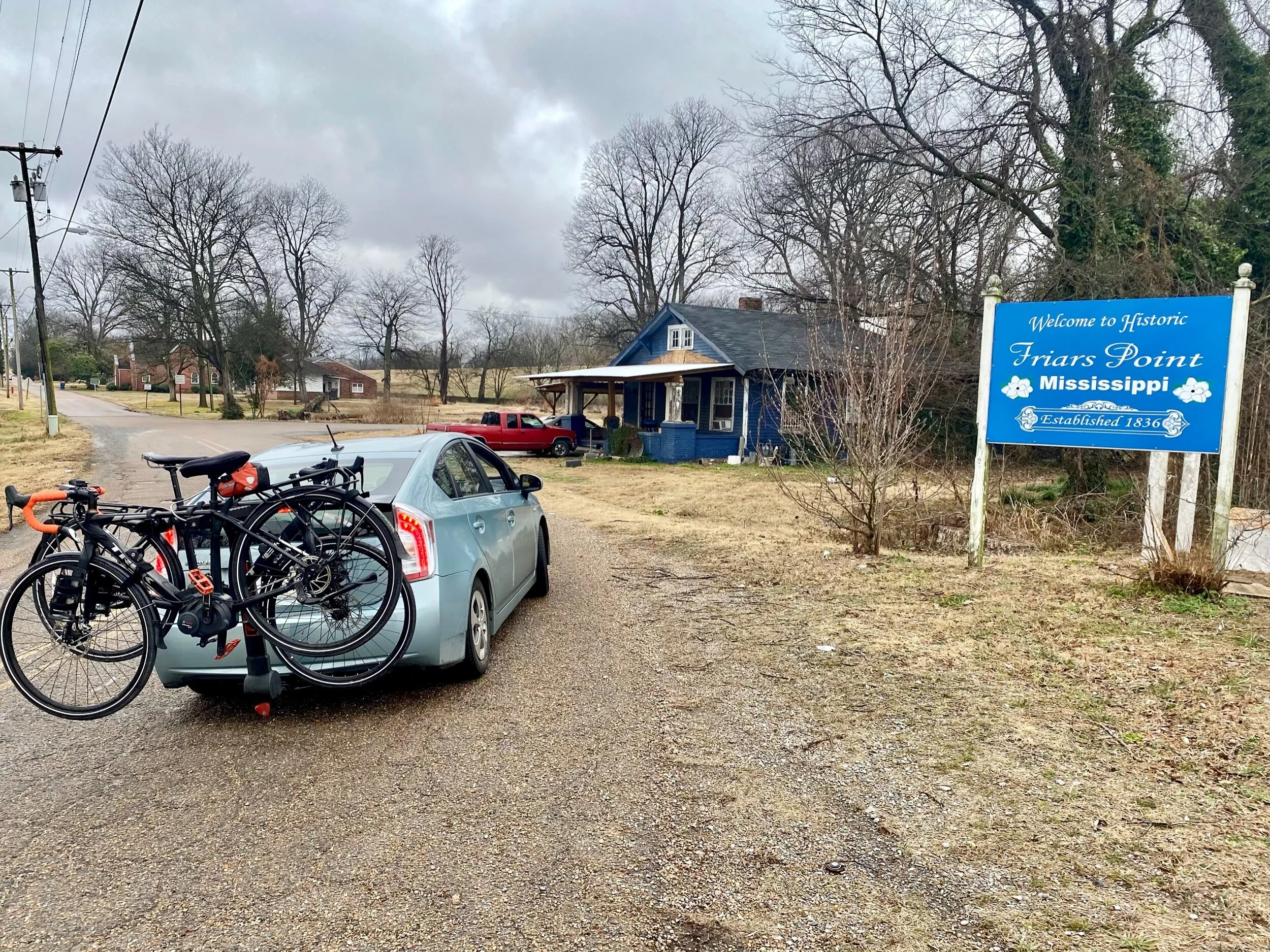
A shot of our rig in Friar’s Point, Mississippi. We haul our food in a car because we chose to minimize our exposure to Covid by not eating in restaurants. Our conversations with locals usually take place outside when we are riding our bikes. We drive an average of 100 miles a day and bike an average of 50. We call this method of travel carbiking. It’s almost as satisfying as touring exclusively on our bikes, although we can’t wait for Covid to be neutralized enough to leave the car behind…
But as rich as the history of the blues and religion is in those parts, I found myself more intrigued about the local economies reflected through their physical environments.
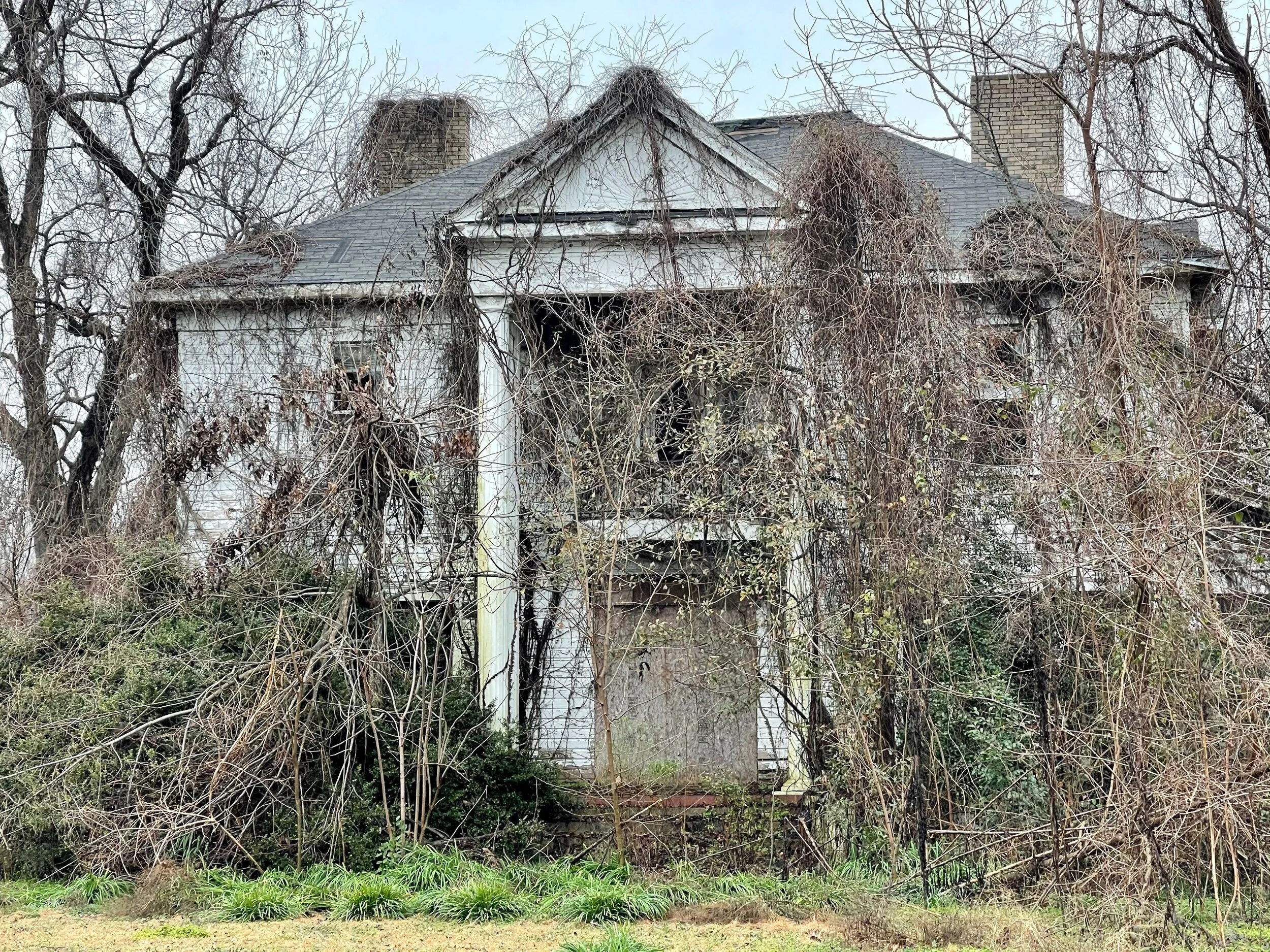
A decaying mansion returns to the earth in Mayersville, Mississippi.
I’m used to seeing one or a few shuttered buildings in most small towns all across the Midwest and West. Since my childhood in the farming town of Galesburg, Illinois, I’ve been witness to the decline of rural America. But what Jenny and I saw in the Mississippi Delta country is on another level altogether. Every town we passed through, from Helena - West Helena, Arkansas to Friars Point, Mississippi to Gunnison to Rosedale to Greenville, Mississippi has a surprising (and distressing) number of abandoned buildings. It looks like 50 to 60% of commercial buildings are shuttered and maybe 20% are in disrepair with broken windows, damaged walls and collapsed ceilings. What is even more startling are the considerable number of boarded up and destroyed residential buildings. In many of these towns there are entire blocks full of abandoned homes. It seems like people have been leaving these towns for years, and no one is claiming their property. Apparently, the cost of demolishing a home or commercial property often isn't worth the land it sits on.
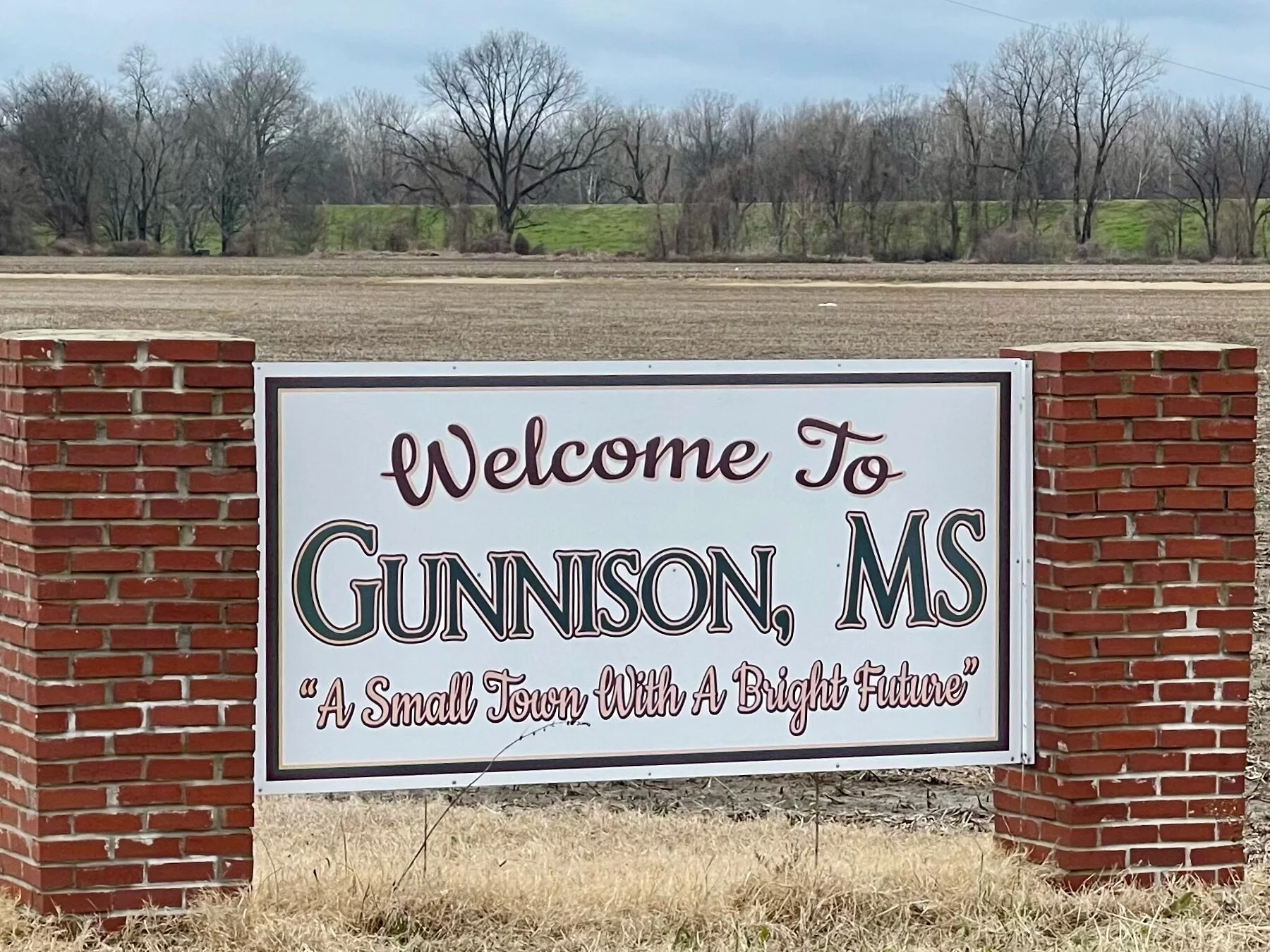
The welcoming sign on the way into Gunnison, Mississippi.
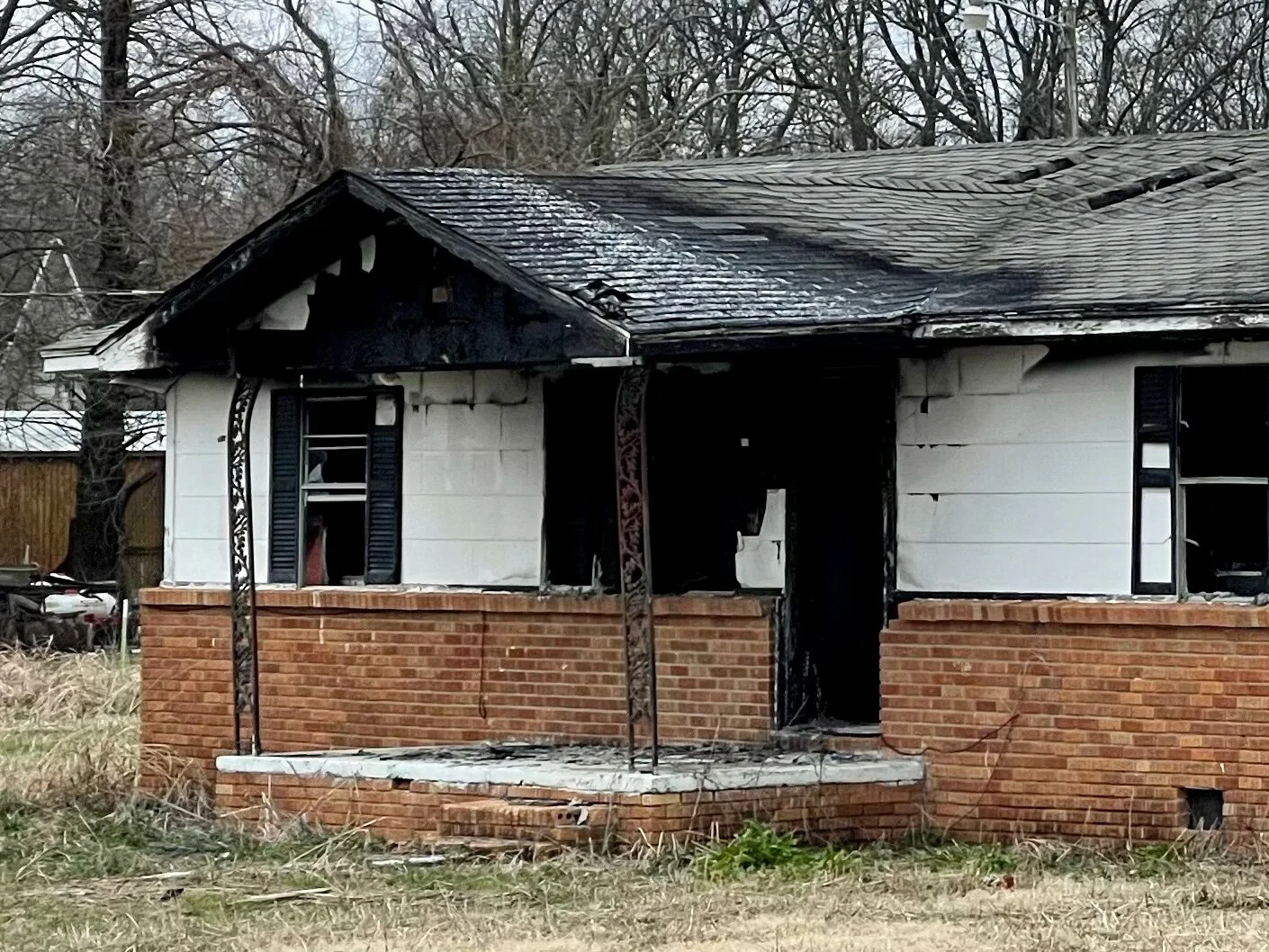
Just past the welcoming sign in Gunnison, Mississippi.
Our first encounter with "lost" cities on this trip was Cairo, Illinois, which has lost about two-thirds of its population since the late 1960's. That trend is playing out all along large sections of the Mississippi River south of Cairo, all the way down to Baton Rouge.
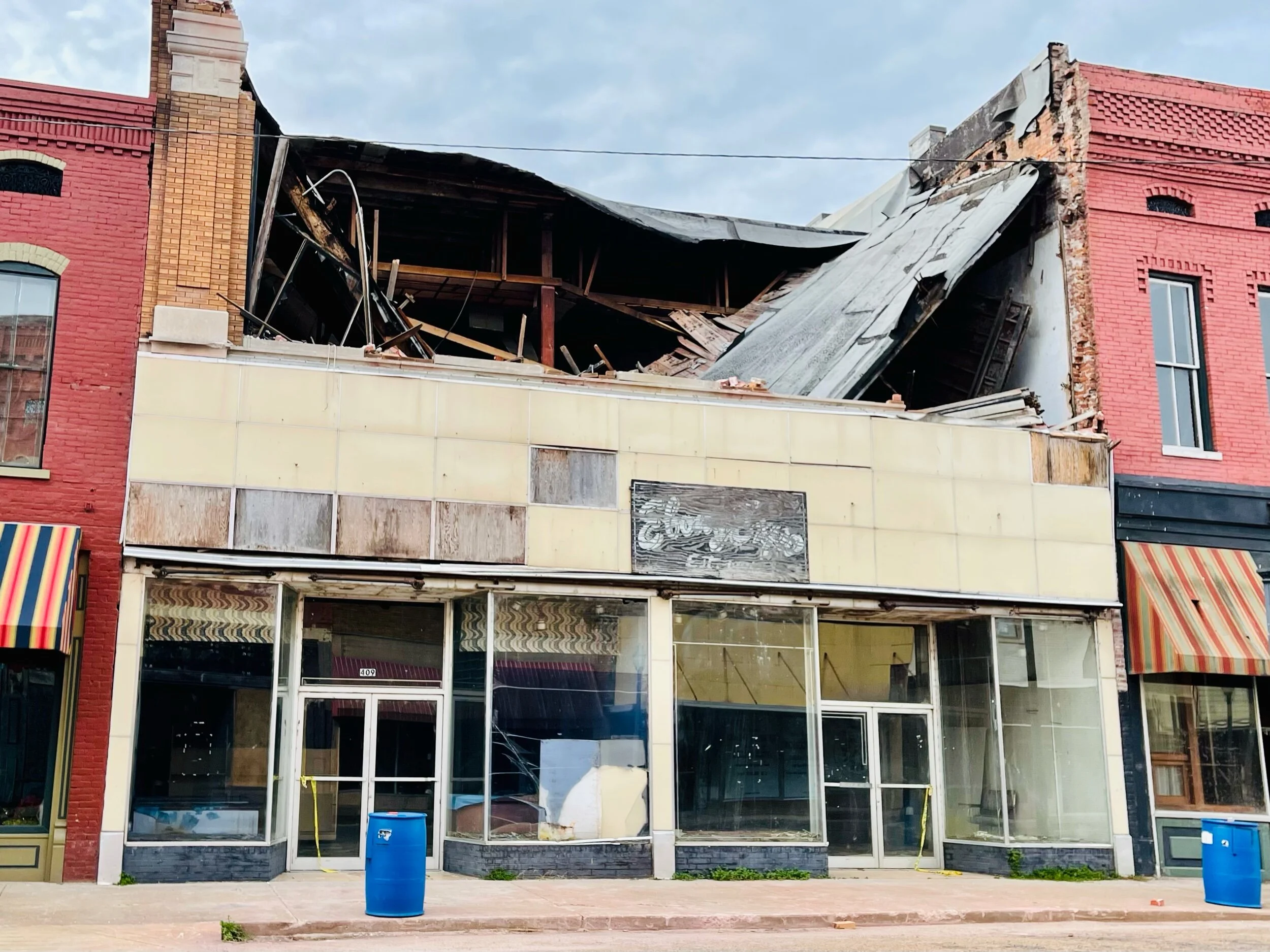
Helena, Arkansas, is home to the longest running daily radio program in the US, King Biscuit Time. This photo was taken on Main Street near the recording studio. Most of the buildings on the four block-long Main Street are shuttered.
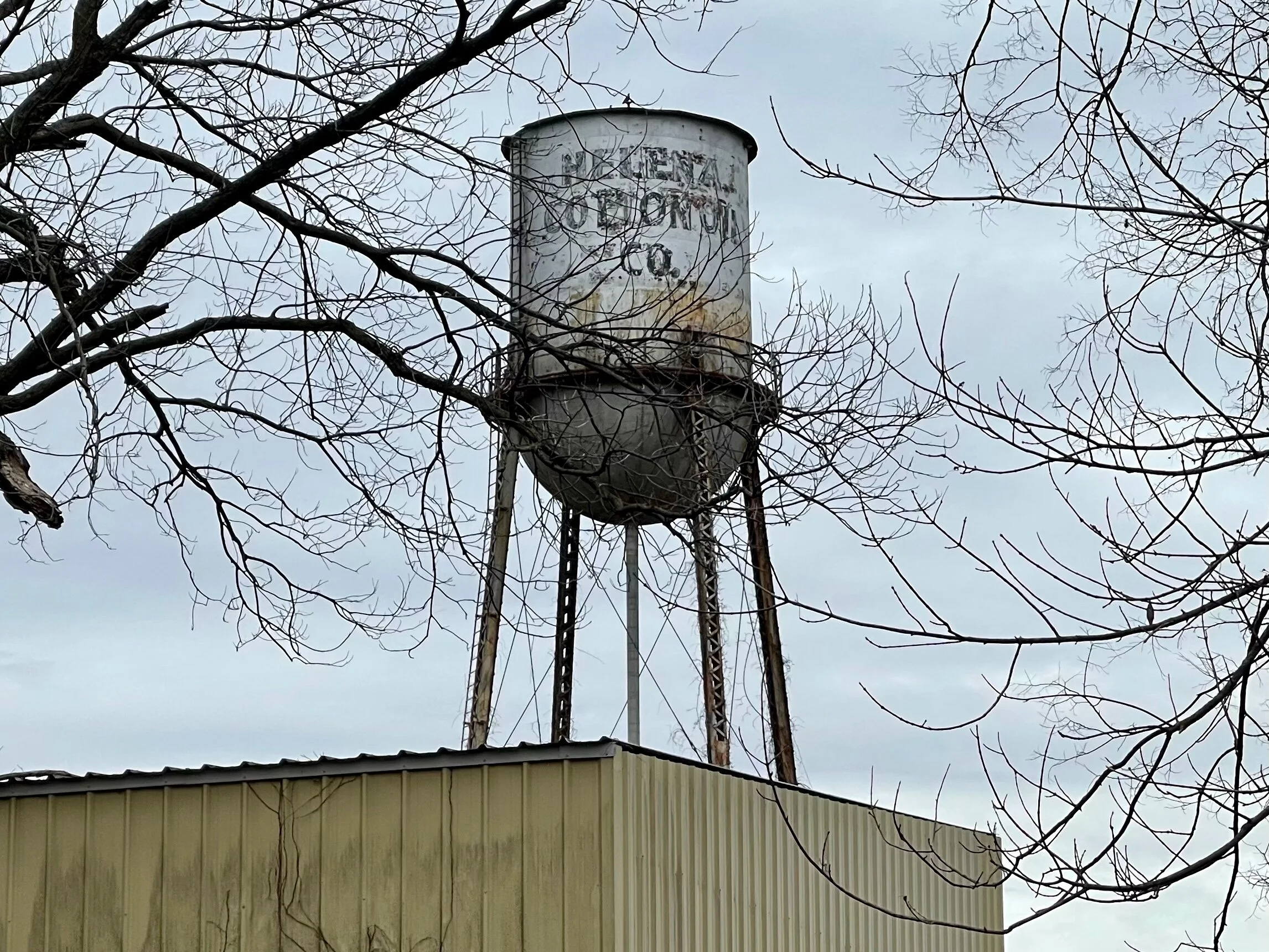
The abandoned Delta Oil Mill outside of Helena, Arkansas. Losing a local industry was particularly harsh for Helena after mechanization beginning in the 1950’s reduced the need for farm workers. The city also lost the Mohawk Rubber Company, a subsidiary of Yokohama Rubber Company, in the 1970s. Unemployment surged shortly after, starting a long economic decline that has lasted for decades.
Much of the Delta country sits on the remarkable Mississippi alluvial plain, which boasts some of best crop land in the country. Alluvial soil has many functions, the greatest of which is serving as the earth’s kidneys. Alluvial soil removes sediments and captures nutrients flowing in adjacent water, so it is very fertile and makes excellent crop land. As a result, the Delta region has been a prime contributor to our country’s agricultural based economy throughout most of the past two centuries.
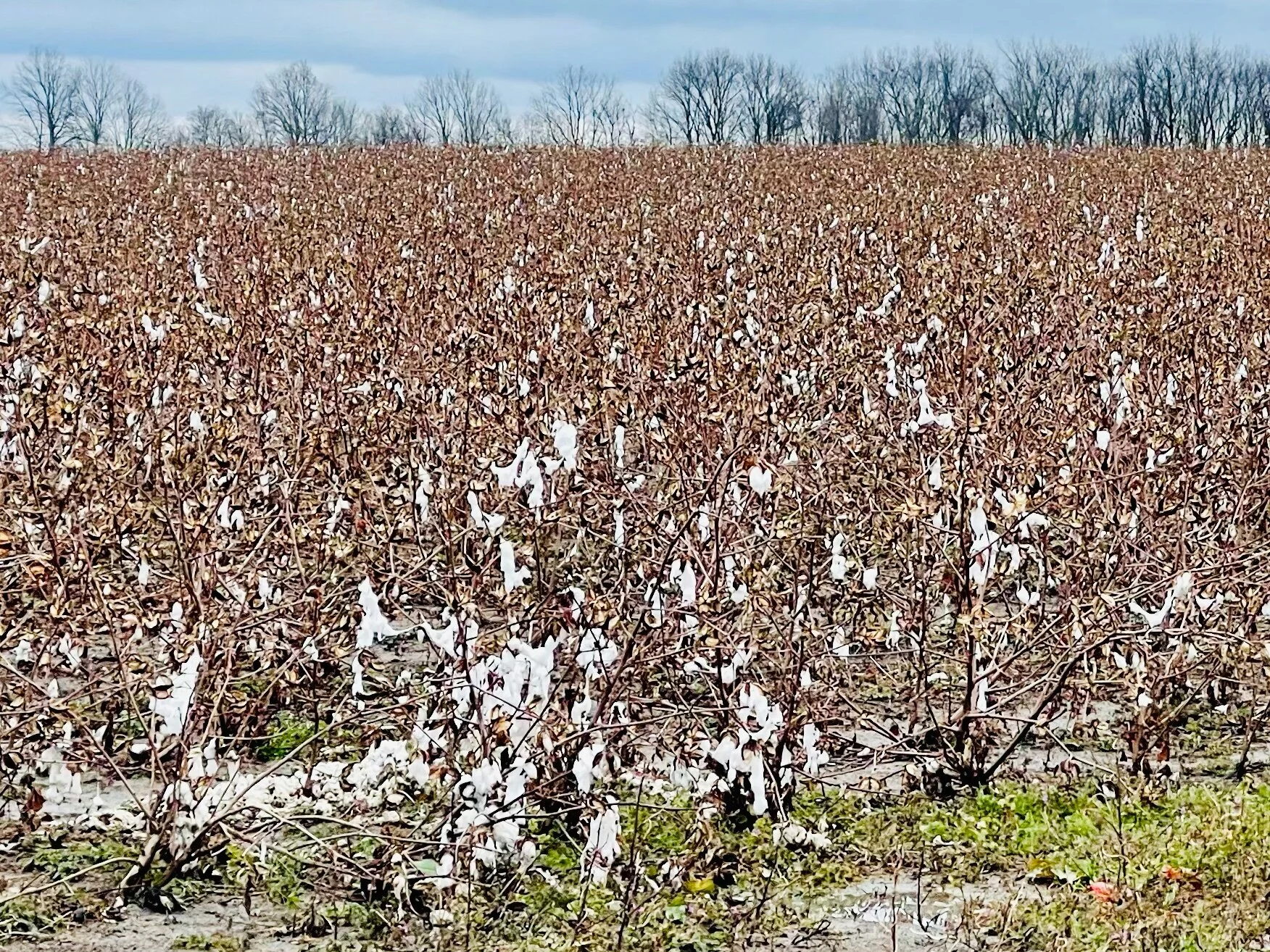
A harvested cotton field near Alligator, Mississippi.
Before the Civil War, farm products comprised up to 82% of all exports, and cotton was especially important on the international market. Agriculture remained the most important activity in the Delta region’s economy for nearly 200 years, and cotton was king. But farming in the Delta was harsh. Between 1910 and 1970, 6.5 million African-Americans went North, leaving the South, the cotton fields, and sharecropping behind. Five million more African-Americans left after 1940, creating the second great migration to the North. By the end of World War II, much of cotton farming had been mechanized, and most of the remaining sharecroppers were forced from the land.
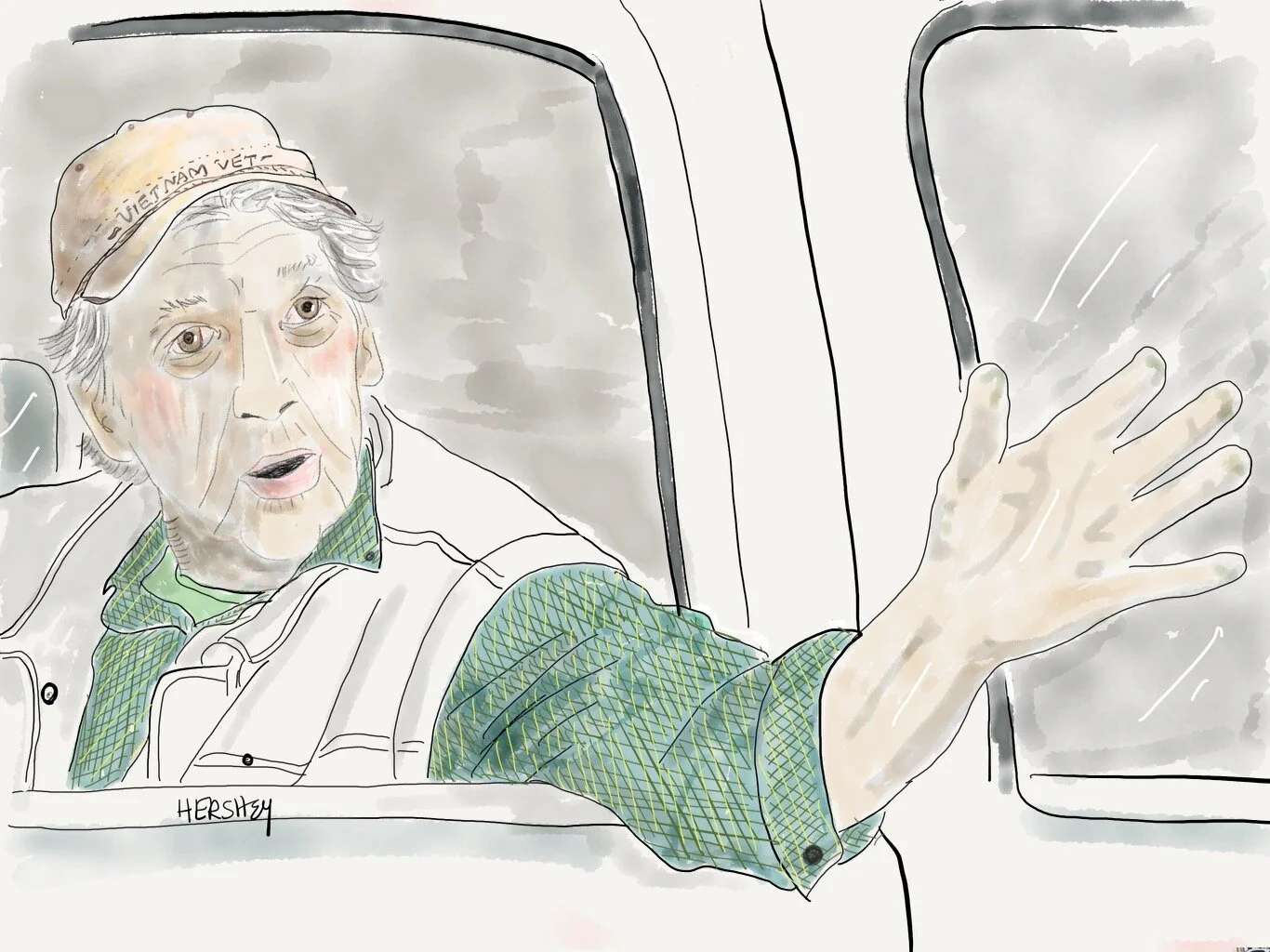
We met Clyde in Mayersville, Mississippi. Although he was on his way to a haircut, he stopped his truck after passing us navigating our bikes down a rugged gravel road, and waited for us to catch up. He told us he was a Vietnam Vet, and when he came home from the war he wanted to be the biggest cotton farmer in the state. He said he now wants to be the smallest. He explained that with the latest machinery two men can farm 2000 acres of cotton, but that level of production is no longer of interest to him. Unfortunately, he was late for his haircut, so we were unable to learn why…..
Clyde lives in Issaquena County. He told us he knew every family there. We checked Wikipedia and sure enough, “As of the 2010 census, the population was 1,406, making it the least populous county in the United States east of the Mississippi River”.
Drawing by Jennifer Hershey. Follow her work on Instagram at deeofo.
I understand how the mechanization of farming would displace thousands of workers. I can also understand how related factories like cottonseed oil mills will close down when agribusiness can cheaply truck goods to larger cities, or even ship raw cotton overseas for cheaper processing. But it’s hard to imagine such distressing trends playing out for over 100 to 150 years. But that’s the reality of the Delta region in Arkansas and Mississippi. Technological unemployment may be thought of more often as an urban problem, but it has been happening in Delta country for decades. And nothing has replaced what has been lost.
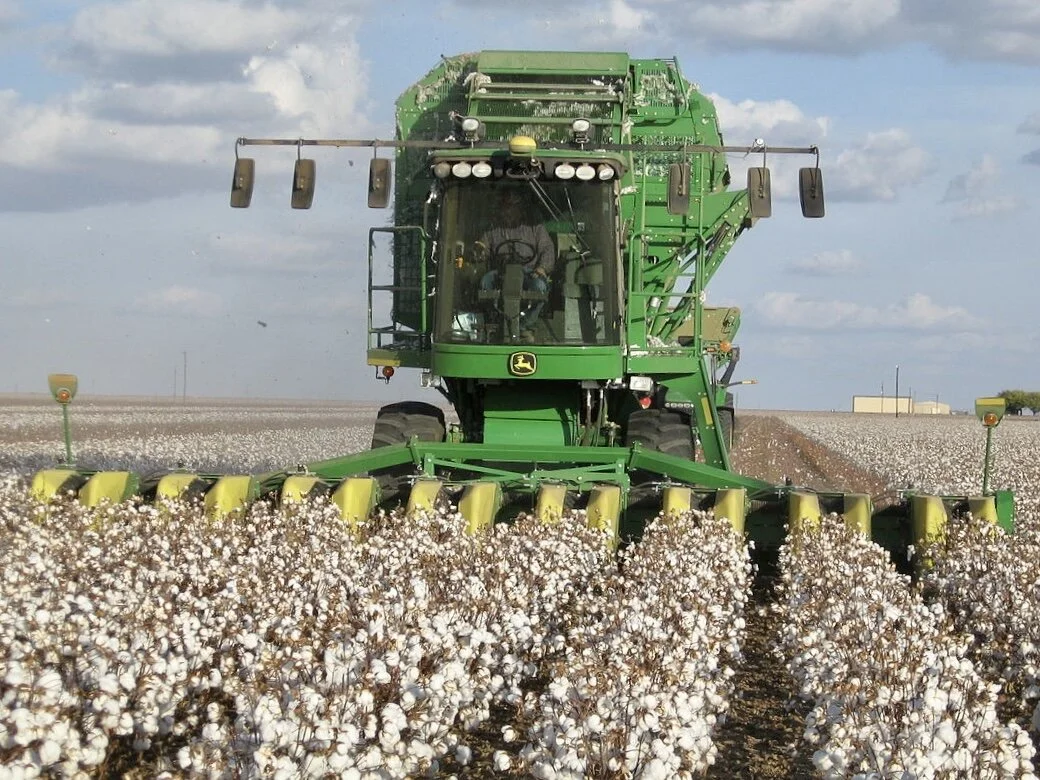
A John Deere cotton harvester. Photo from Wikipedia.
We were deeply impressed by the beauty of the land, the bird life, and most especially the friendliness and soulfulness of the locals we met in the Delta country. We had some really touching conversations with local folks. And our hearts are heavy. What can be done to help people there? Or will most everyone be forced out eventually as homes, commercial buildings and abandoned factories are gradually reclaimed by the earth? Will the Delta become a no-mans land visited by solitary individuals driving massive agricultural planters and harvesters, plus a few intrepid motorists, rugged cyclists or passionate birding enthusiasts? It would be so sad to see the tapestry of such a rich human past die out. Clearly, a major reset is needed, although there are many small attempts at resetting. One example of positive change we came across is the green technical training program in Ocean Springs on the Gulf Coast of Mississippi.
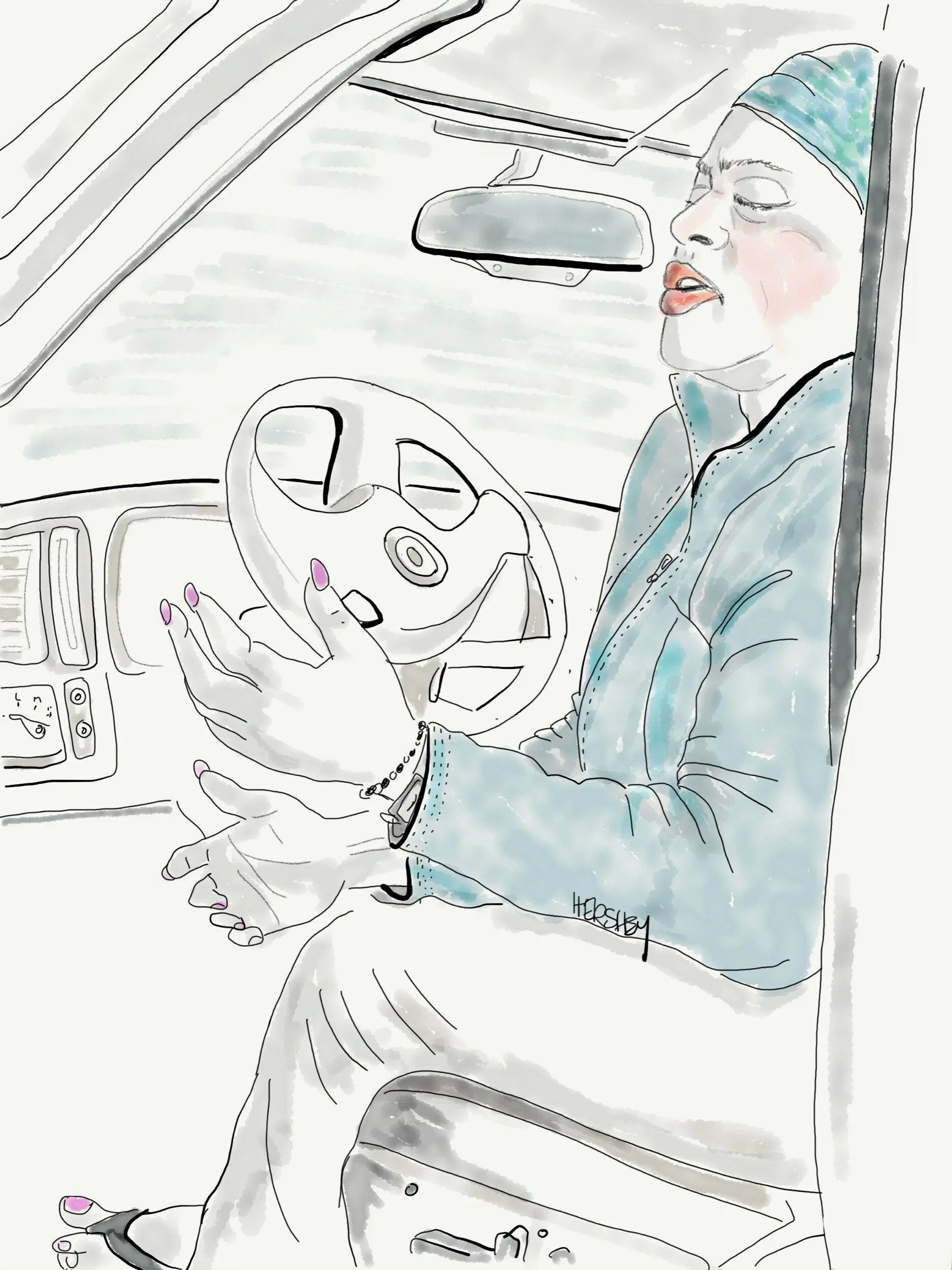
We met this remarkable woman named Tammy in Friars Point in the delta country of northern Mississippi. The park nearby has a walk named after her father, who was a pastor at a local church. Quite a churchgoer herself, Tammy told us she had learned how to “’pay no mind” to the locals who displayed confederate flags. Her church had taught her to forgive others and let them be. She and both her kids had caught Covid, but fortunately for all the cases were mild.
Drawing by Jennifer Hershey. Follow her work on Instagram at deeofo.
This brings me to the end of this blog post, and the beginning of whatever is next for the Mississippi Delta region and beyond. I believe we can already visualize the next great global economic transition and the primary features of its potential success. Three major accomplishments are necessary: 1) our energy system must transform from fossil fuels to renewable form of energy, 2) we must switch from till-based, high-fertilizer, carbon-intensive forms of farming to no-till, low-fertilizer, carbon-mitigating forms of farming that replace dirt-with-soil, and 3) we must set aside one-third of our world’s land and oceans to restore the rapidly vanishing wildlife and biodiversity our species depends on for our own survival.
We are finally making some headway, at least on the national level. President Biden’s first few weeks have bern dynamic and productive. For those who worry about how our rapidly changing climate will continue to wear down our already vulnerable economy, many of his climate-related executive orders are very welcome.
Also, you may have read about the lackluster oil lease sale in the Alaska National Wildlife Refuge (ANWR) in the final days of the Trump administration. Even as the Trump administration failed to acknowledge climate change, many corporations are finally recognizing our changing climate as a true threat. Finally there's a visible mainstream momentum toward a healthier, more reliable renewable energy supply. Jobs may not be that far behind, nor will be agricultural and wildlife restoration. In the meantime, the Mississippi Delta region will continue to languish for its inhabitants while delighting many of its visitors.
Stay vigilant! Thanks for reading. More to come. Follow our next trip this coming March, 2021.
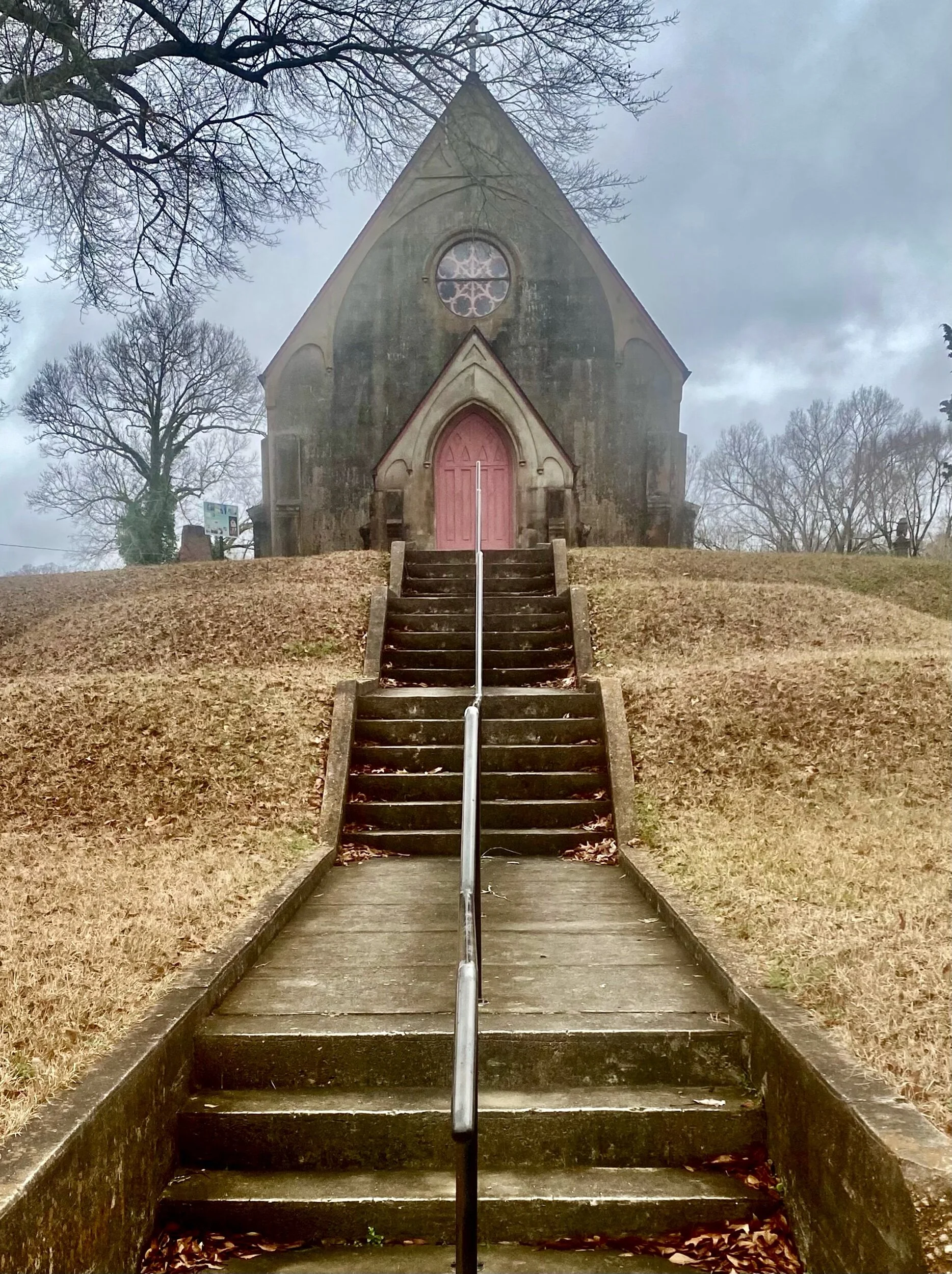
An Episcopal Church in Lorman, Mississippi.
All photos, unless credited or otherwise noted, are copyrighted property of the blog post author.
An Inauguration; Biking the Mississippi River Trail, Post 1

Waiting for something new… For the pandemic to end? …Is the economy to improve? …Social justice at last? ….Climate action that will make a real difference? …An election? …An electoral college certification? …An insurrection? …An inauguration? The dialing down of the great American political feud? ….None of the above. … Instead, two of my grandchildren wait for ice cream.
Drawing by Jennifer Hershey. Follow her work on Instagram at deeofo.
There is no real ending. It’s just the place where you stop the story.
Frank Herbert
Welcome to another inauguration. Americans are deeply divided right now about where we have arrived and where we should go, and I am hopeful that a new beginning is underway. As challenging as 2020 has been, we may have grown stronger as a nation. Some of us were either privileged or lucky enough to survive the past year without loss of life or the destruction of our livelihoods, while others of us have experienced great hardship. And our public health travails are far from over. At the same time, we’ve watched our economy slow down so much that shuttered buildings and “out of business” signs are now as commonplace in cities as they have been for decades in small towns. We don’t know yet if we have a minor problem with domestic terrorism that will fade away, or a full blown crisis that may destabilize our government and communities in frightening ways. In the meantime, the issues of racial justice and a changing climate hover around us like a dense fog.
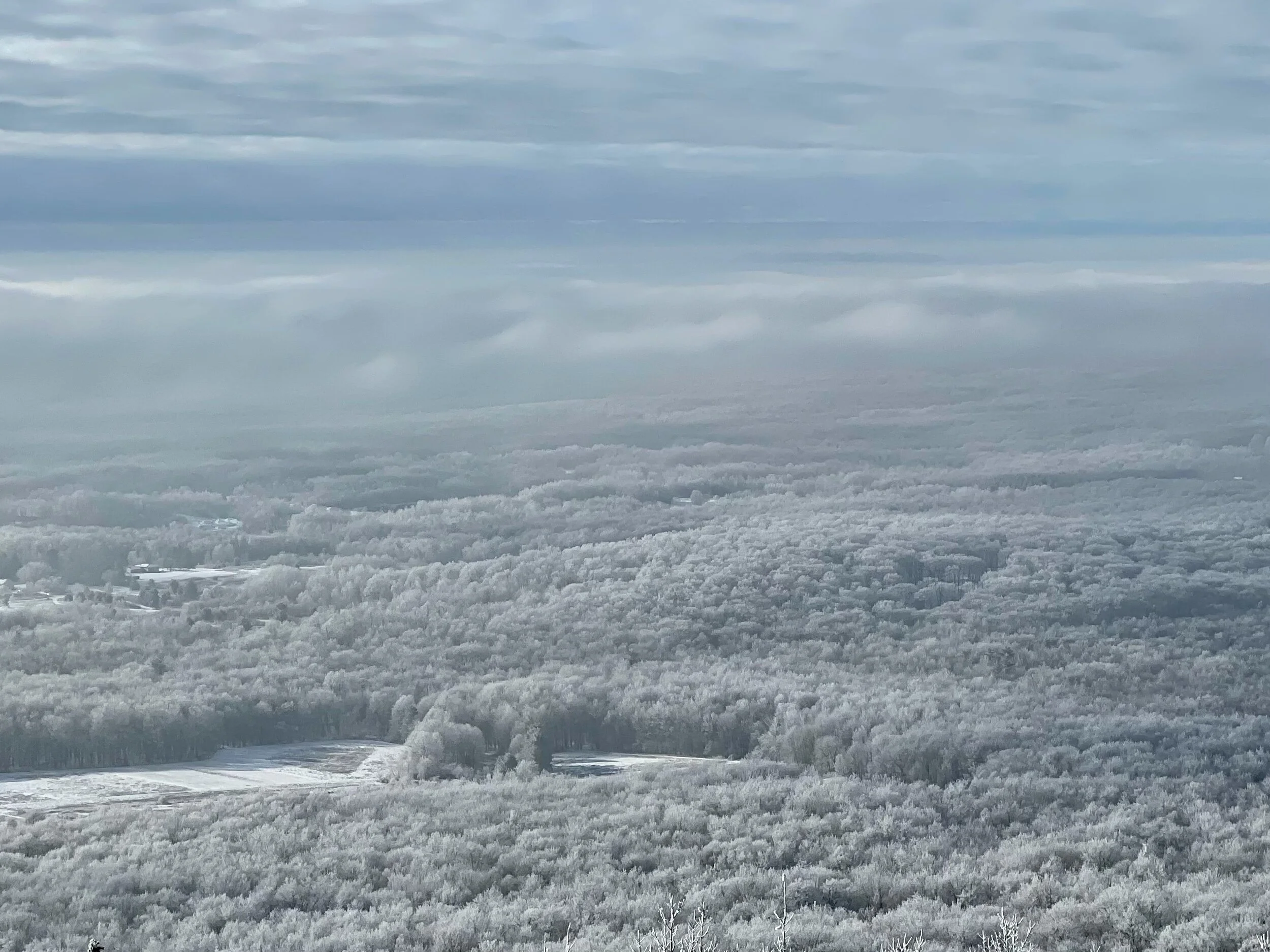
A view from Rib Mountain in Marathon County in central Wisconsin, where Jenny and I made a trip to visit my daughter’s family and my son’s family in Milwaukee before beginning our Mississippi River Trail Trip.
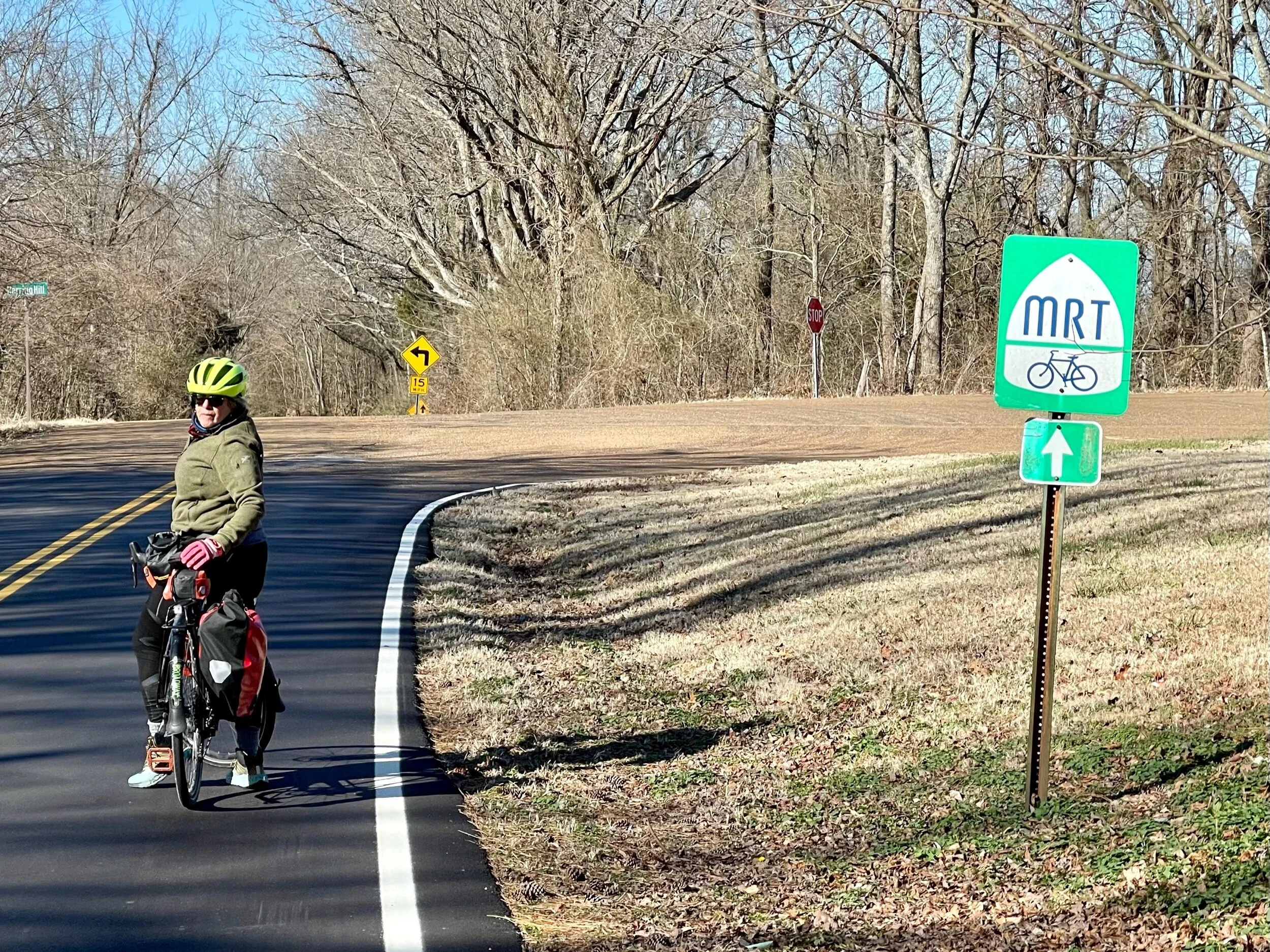
Jenny watches while I take a photo of the Mississippi River Trail (MRT ) sign about 20 miles north of Memphis. The Mississippi River Trail (MRT) extends from Elk River, Minnesota to New Orleans, Louisiana. It is a conglomeration of roads that traverses the Mississippi sometimes on both sides, sometimes only on one. We are very impressed by the beauty and peacefulness of the route, which can be found on opencyclemap.org.
For much of the past year I have been preoccupied by how differently our political parties think about freedom. That said, I don’t know any American who wouldn’t fight for the rights so clearly outlined in the Declaration of Independence: … that all men are created equal, that they are endowed by their Creator with certain unalienable Rights, that among these are Life, Liberty and the pursuit of Happiness.
However, I have heard a lot of disagreement over the concept of liberty (and its synonym freedom). Freedom to a conservative seems to means freedom from government intervention, and the freedom to do as one pleases - even if the long term outcomes are not necessarily helpful to others. (Popular examples used at the RNC are the freedom to drive any car you want, or to eat as much meat as you like). In contrast, freedom to a liberal means the freedom to solve shared problems through collective action (such as using a mask during a respiratory based pandemic to protect the health of others). As long as the rights of individuals are not egregiously abused, liberals expect citizens to be mindful of others as a condition of being part of a community.
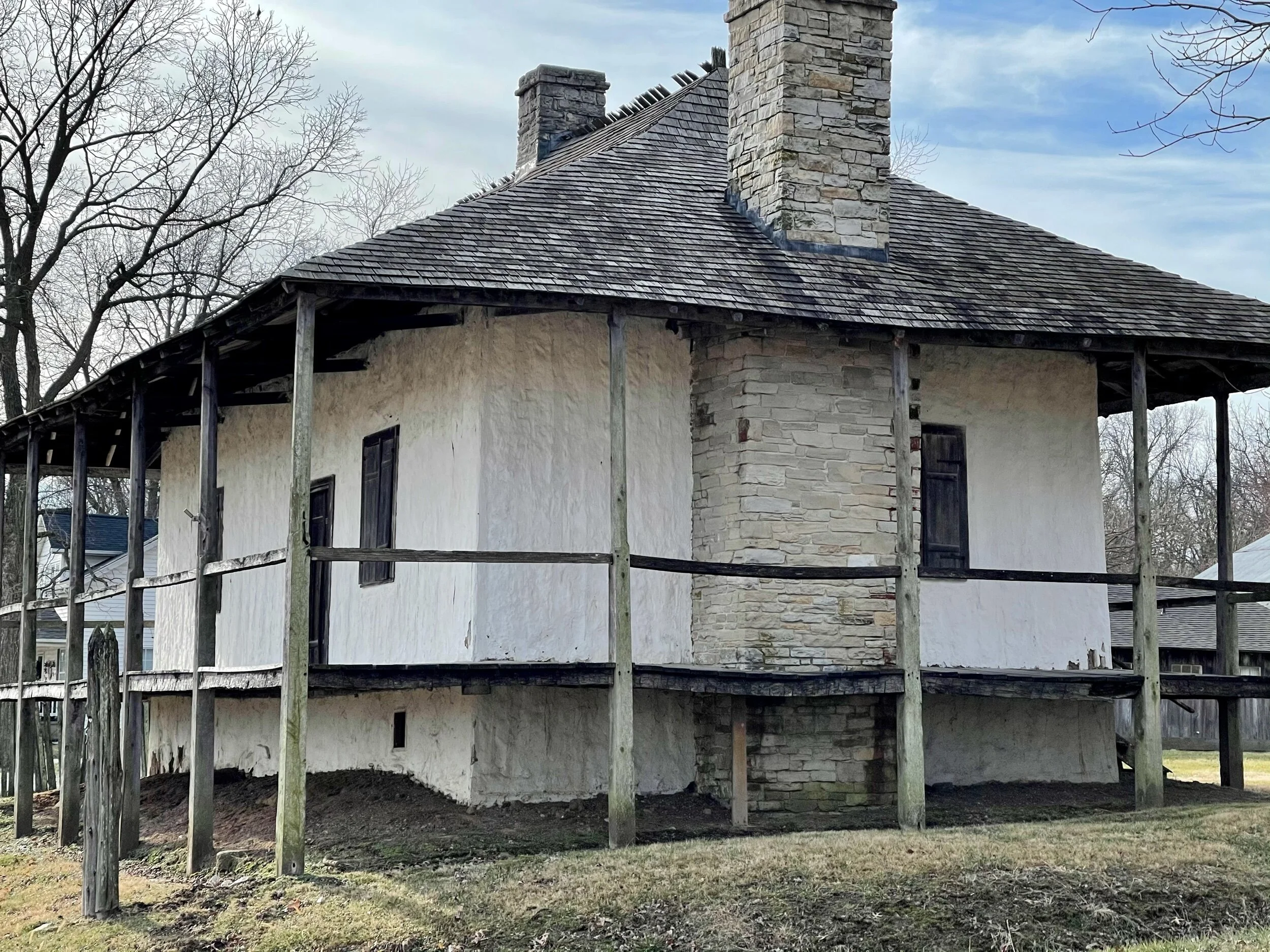
We began this cycling trip just south of St Louis near a small Missouri town called Ste. Genevieve on the Mississippi River. It was settled in the early 1700’ as part of New France. The post-in-ground style was one of the timber construction methods used for French colonial structures. It was called poteaux-en-terre.
There is much more to write about on this topic, and I hope to follow up in future blogs. To my mind, a workable sense of freedom is neither easy to understand or articulate. Struggling to write about it makes me appreciate our nation’s founding fathers and our historical civil rights leaders more than ever. They seemed to understand the potential interplay between individual and group rights so much better than we do at this moment in our nation’s history. Our most pressing problems - addressing the pandemic effectively, creating equal economic opportunity for all, addressing climate change on a much bolder level than individual consumption - will surely test our ideas about individual liberties. For example, the freedom to go maskless when that action threatens the health of others is not different from a society's choice to use forms of energy that adversely impacts the health of others.
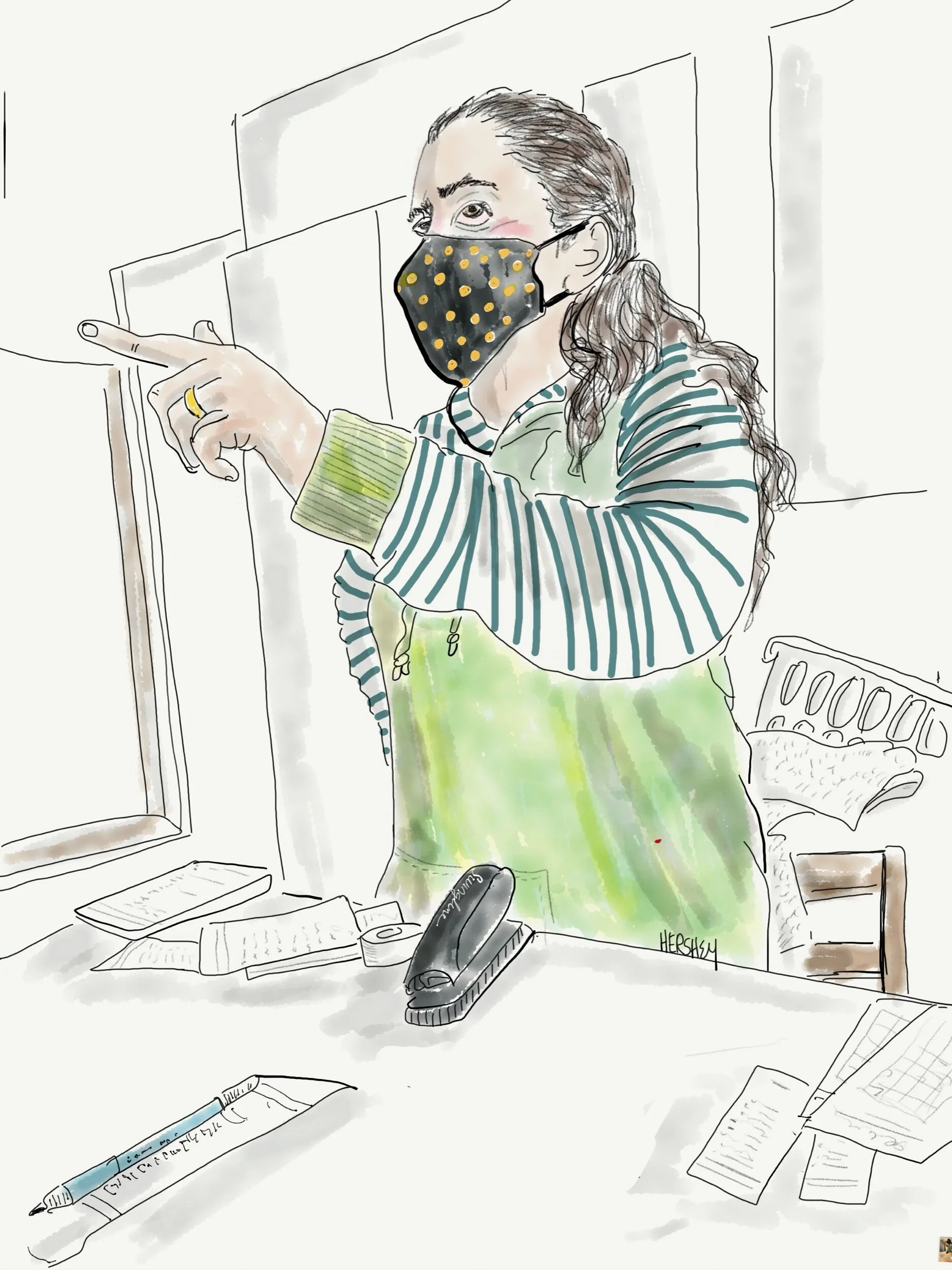
“Lots of people in Missouri believe in freedom so many of them won’t wear masks. I’m mean though. I tell them they can’t stay here unless they wear one.” Dee runs the Triangle Motel in Ste. Genevieve, Missouri. Originally from India, Dee immigrated to the states from Zimbabwe with her parents, who live with her at the motel. She is a mother to several boys, and knows a lot of people in her adopted town. A warm and friendly person, she works hard and tries to never miss a town funeral.
Drawing by Jennifer Hershey. Follow her work on Instagram at deeofo.
In spite of the considerable problems we face on both the national and global levels, I am optimistic about the future. Although I certainly don’t expect the divergent political viewpoints among Americans to go away, adversity can bring people together to solve problems. I think that the sobering events of the past few weeks (an insurrection on our nation's Capital) have shocked us into recognizing our discord has gone too far.
…As will COVID-19 after a robust vaccination program. And hopefully the sharp divisions between so many well-meaning Americans will eventually disappear as well.
Like the presidential transition, this blog post is also a form of commencement. Clearly, its been hard to celebrate the extraordinary experience that biking through America (or anywhere else for that matter) can offer. Most of our biking this past year has been closer to home, or tied to several stressful trips to help out a family member. Although we have learned how to use a car to support our biking habits, it took us more time to figure out how to travel while staying socially isolated than we had anticipated. Consequently, Jenny and I have only recently gone looking - once again - for the story of America. And we are finding it.
“Yeah, some parts of Missouri are east of the Mississippi and some parts of Illinois and Kentucky are west of it. People don’t know how much the river has shifted over the years”. Rex has been working hard for years running ferries on the Mississippi and local canals. We talked to him at a ferry crossing at Ste. Genevieve, Missouri, and expressed our puzzlement at noticing that the original Capital of Illinois, Kakaskia, was on the west side of the Mississippi in land we thought belonged to Missouri.
Drawing by Jennifer Hershey. Follow her work on Instagram at deeofo.
Rural America is just as distressed as it has been for the past two or three decades. If anything, economic conditions seem worse. There are plenty of abandoned buildings in the smaller towns, both commercial and residential, and there doesn’t seem to be a whole lot of activity. We haven’t yet found a motel that was fully booked. We’re cooking our own food in order to isolate ourselves from exposure to Covid, so we have no idea what the local restaurant scenes are like. That said, grocery stores are predictably busy.
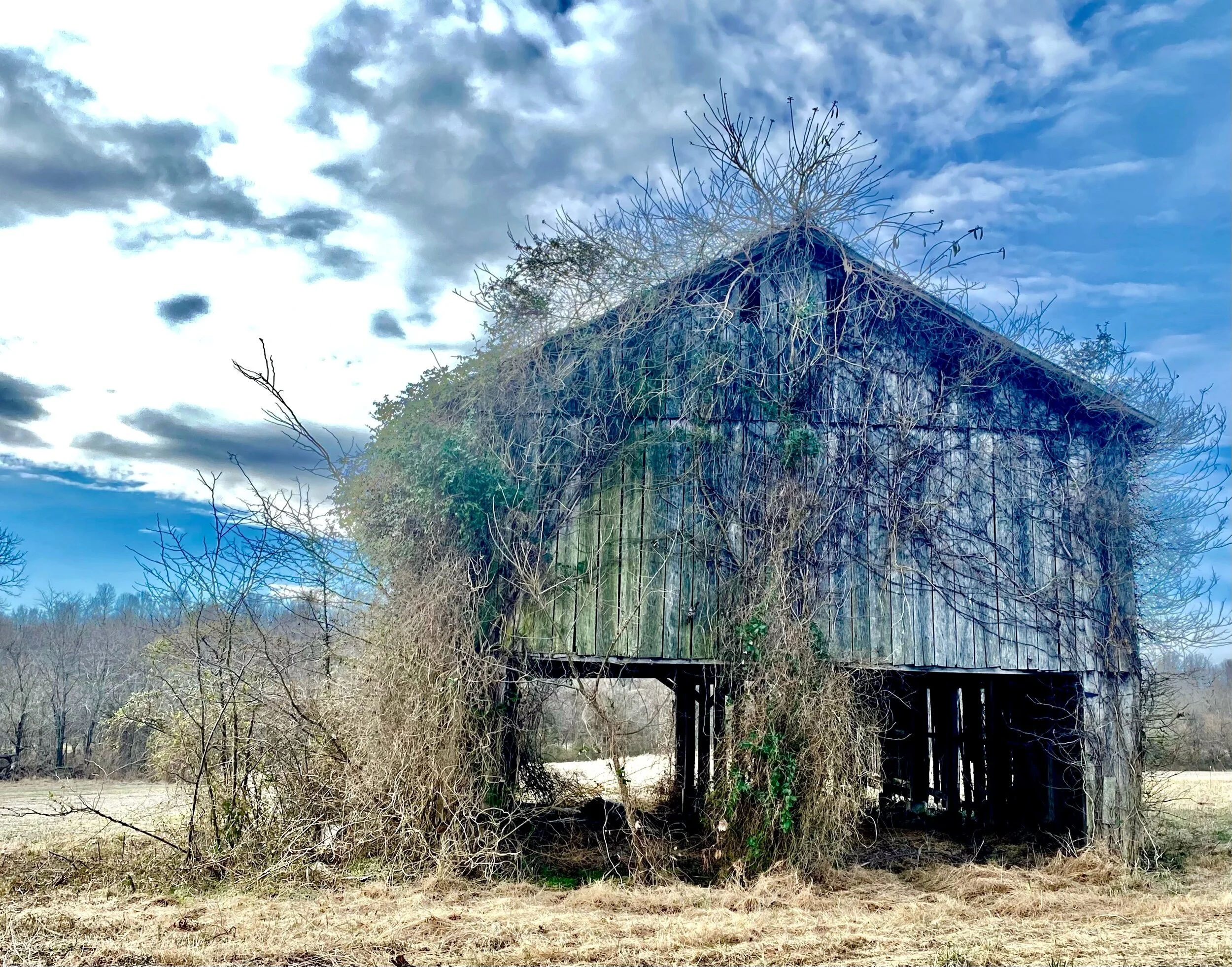
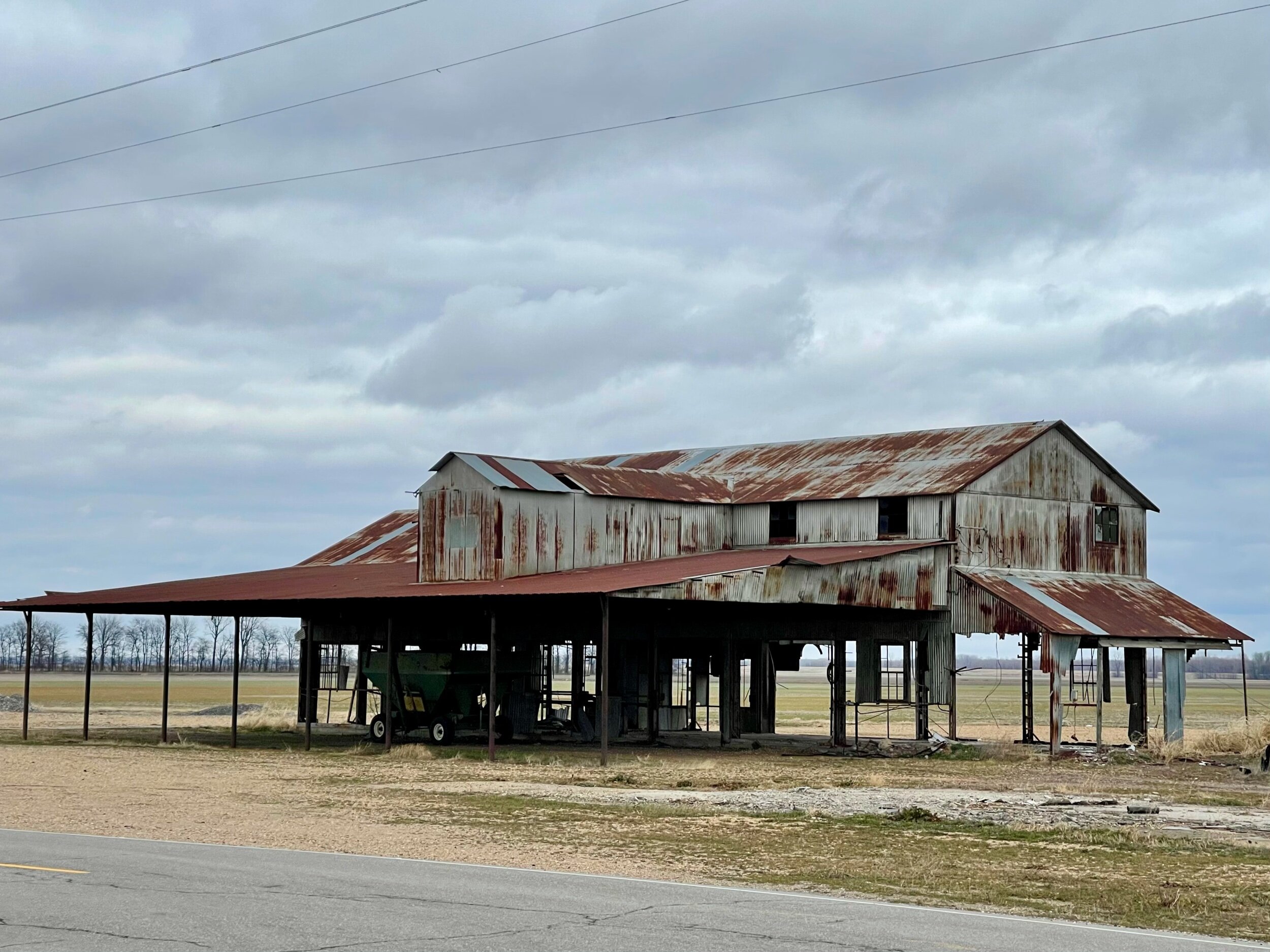
An abandoned barn near Blandville in far western Kentucky,
It seems to us that people who might not have connected a few years ago are now more open to talking. We certainly feel that way. We find ourselves trying to engage in conversations with everyone we meet. Because we are traveling largely in what was Trump Country (Missouri, Kentucky, Tennessee, Arkansas, Mississippi, and Louisiana) we’re slow to reveal how little we trust Trump and believe Biden is a better choice for the nation. However, we are finding that people enjoy talking if we ask questions in an open-ended way.
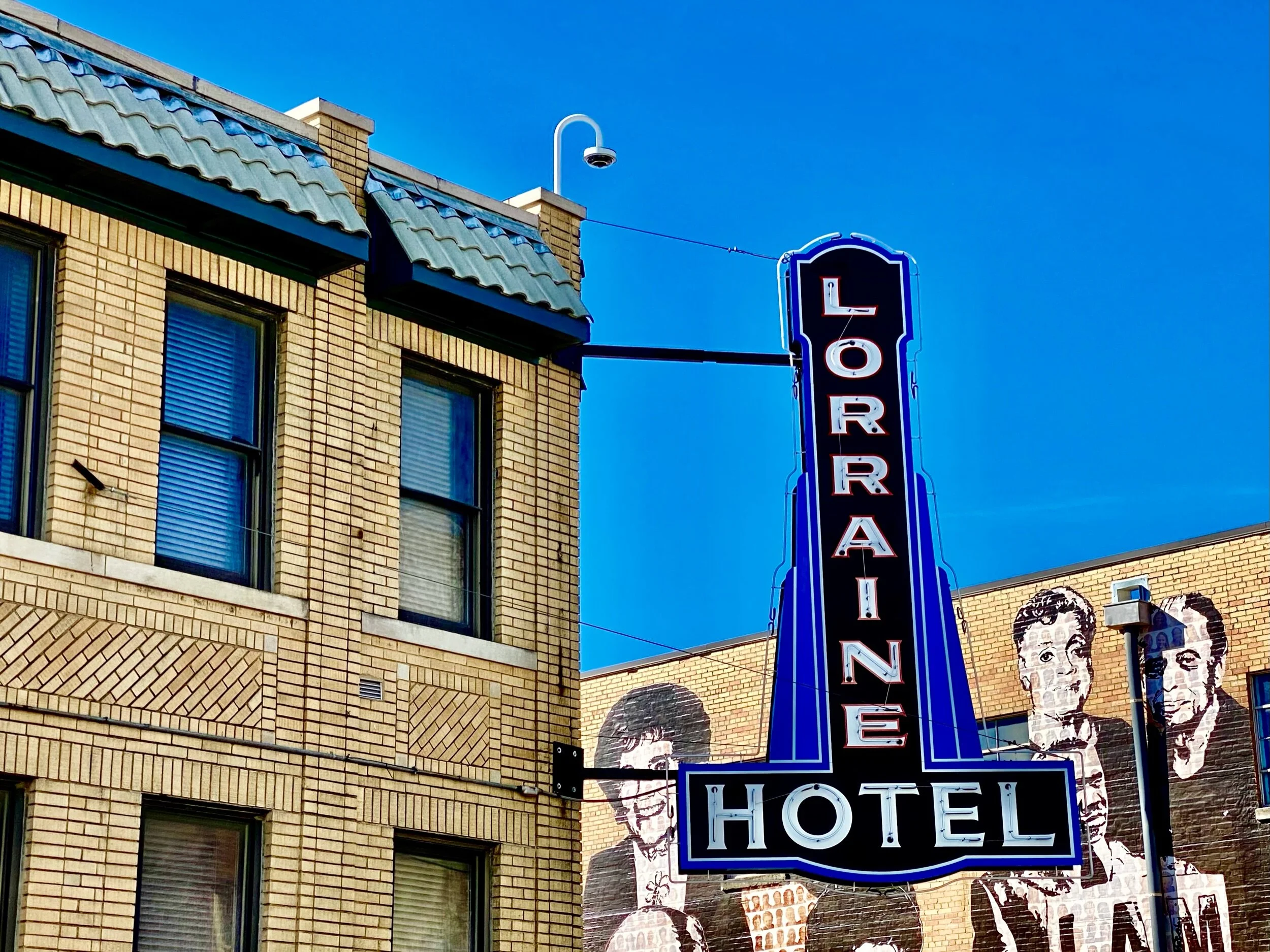
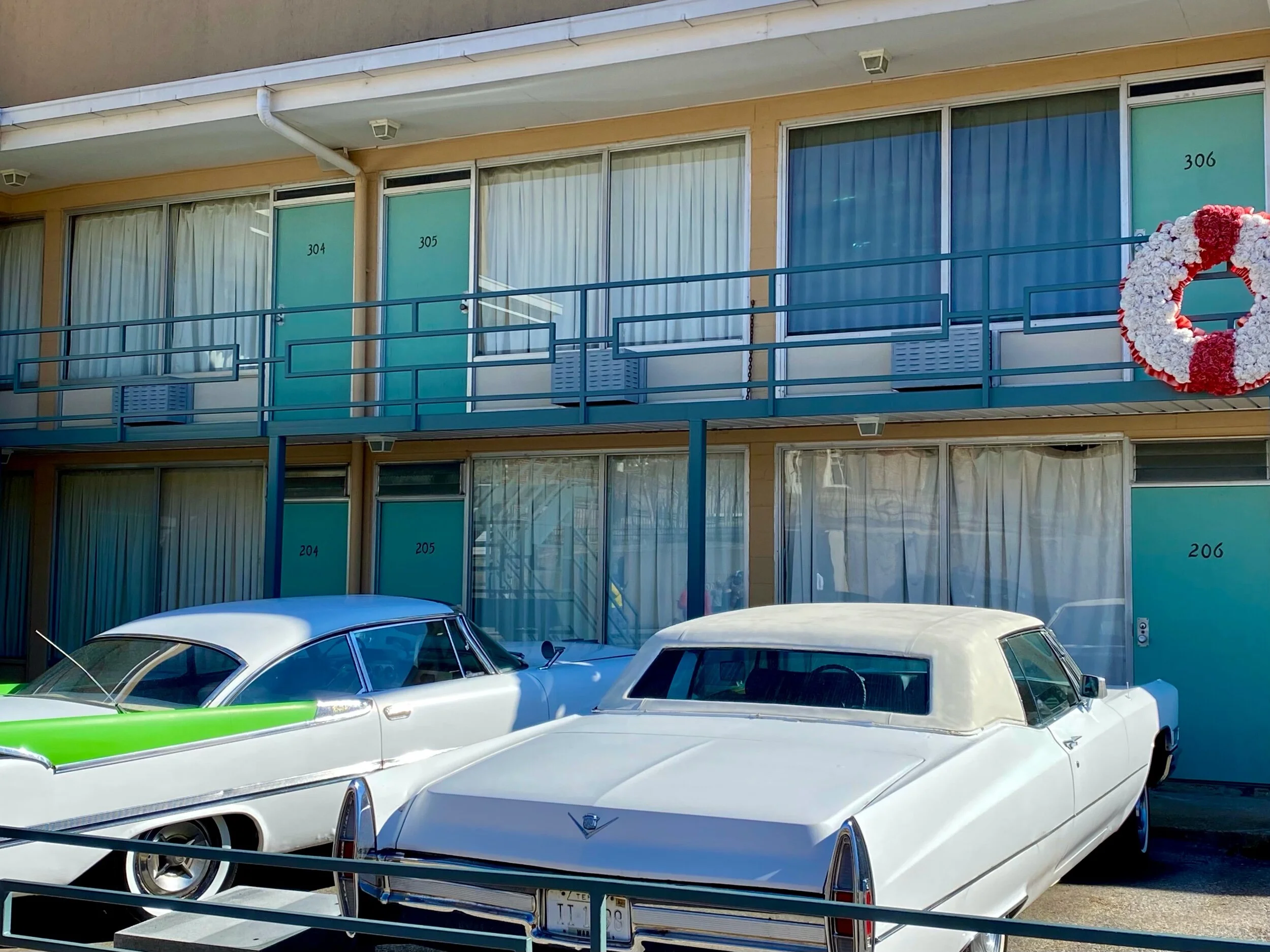
I worked on this post on our National holiday to celebrate Martin Luther King’s birthday. Interestingly, while I was sitting in Jenny's car writing, she was on her bike in Memphis, and through an accident of fate rode past the Lorraine Hotel where King was shot, where she took these pictures. The first shot is the marquee of the hotel, and the second is the balcony of the motel where MLK was shot (now part of the National Civil Rights Museum).
We spoke to an 81-year old farmer today named Don who was delighted to chat with us about growing up in Marianna, Arkansas, and his many years working on a farm nearby the town of Helena-West Helena. He told us nostalgically how the local economy in the delta used to be more dynamic - there was a tire and a clothing factory, and a chemical manufacturing plant as well as lots of family farms. The plants left long ago, and now there are fewer family farms. Don voted for Trump twice, believing Trump would make things better. After he talked awhile, Don paused and reflected, “I feel real bad about how things turned out. I really don’t understand what’s going on anymore.”
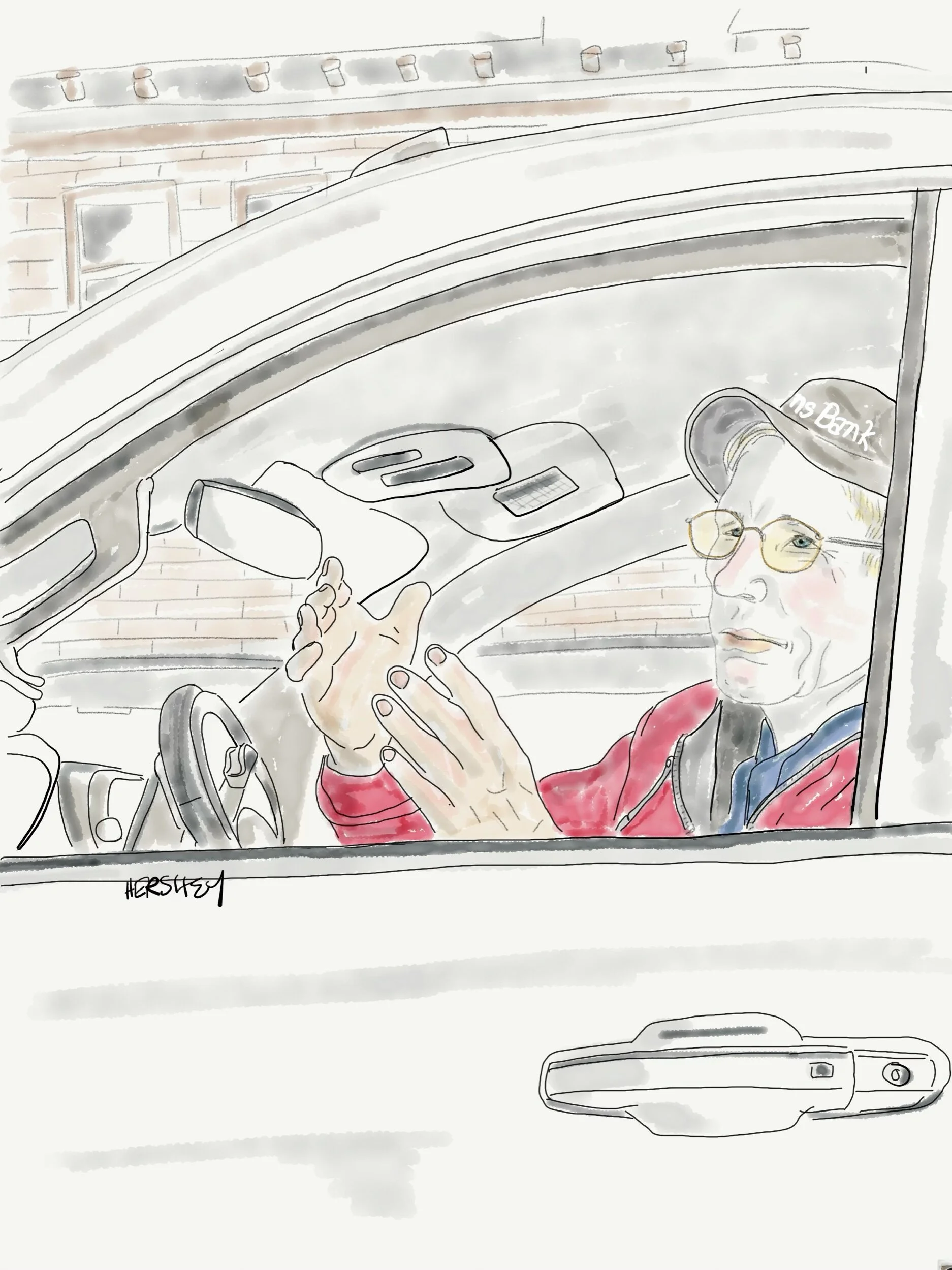
We met Mike Major in Hickman, Kentucky, while we were eating lunch at a gazebo in a local park (which commemorated construction funding from Mitch McConnell). Mike was a farmer his entire life until his recent retirement. He grew up in Hickman and lives nearby on his farm. Mike is tolerant of McConnel’s stand against Trump in the GOP, and seemed as relieved as we are that Biden will soon replace Trump. It wasn’t lost on us that just across the river in Missouri many citizens are rallying behind a very different senator - Josh Hawley. We learned from Mike that Hickman had a bustling downtown when he was growing up, but the town had fallen on hard times through successive floods on the Mississippi. The most recent floods were in 2011 and 2018. In the 2011 flood, the Army Corps of Engineers blew up a dike in Missouri to provide a spillway for floodwater in order to save what is left of Hicksville. But the flood of 2018 was the final nail in the coffin when all but two of the remaining buildings near the river were abandoned. Below is a picture of one of the remaining occupied buildings and another photo of a workshed in a field in Missouri after the 2011 flood.
Drawing by Jennifer Hershey. Follow her work on Instagram at deeofo.
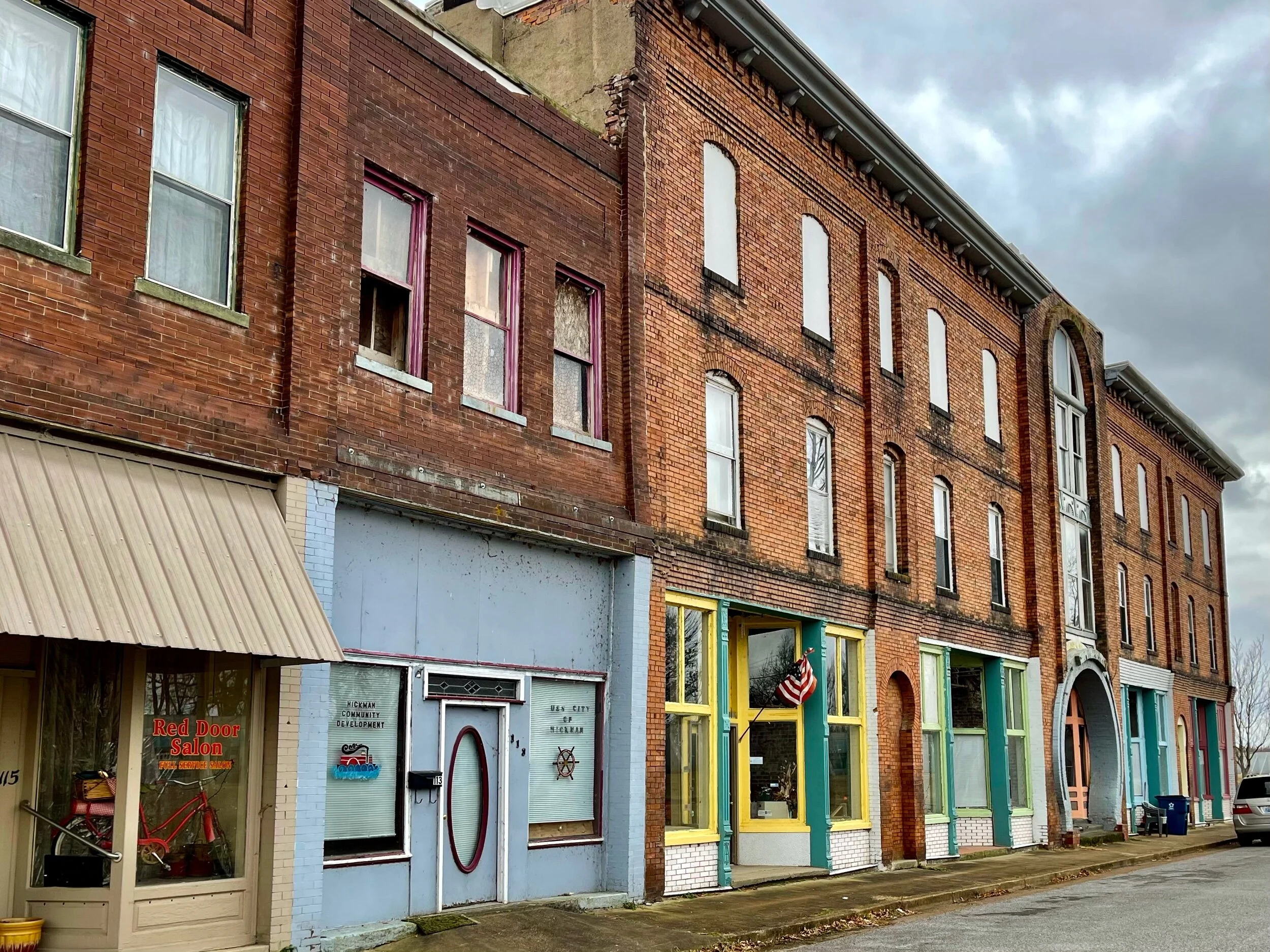
The mostly abandoned downtown in Hickman, Kentucky.
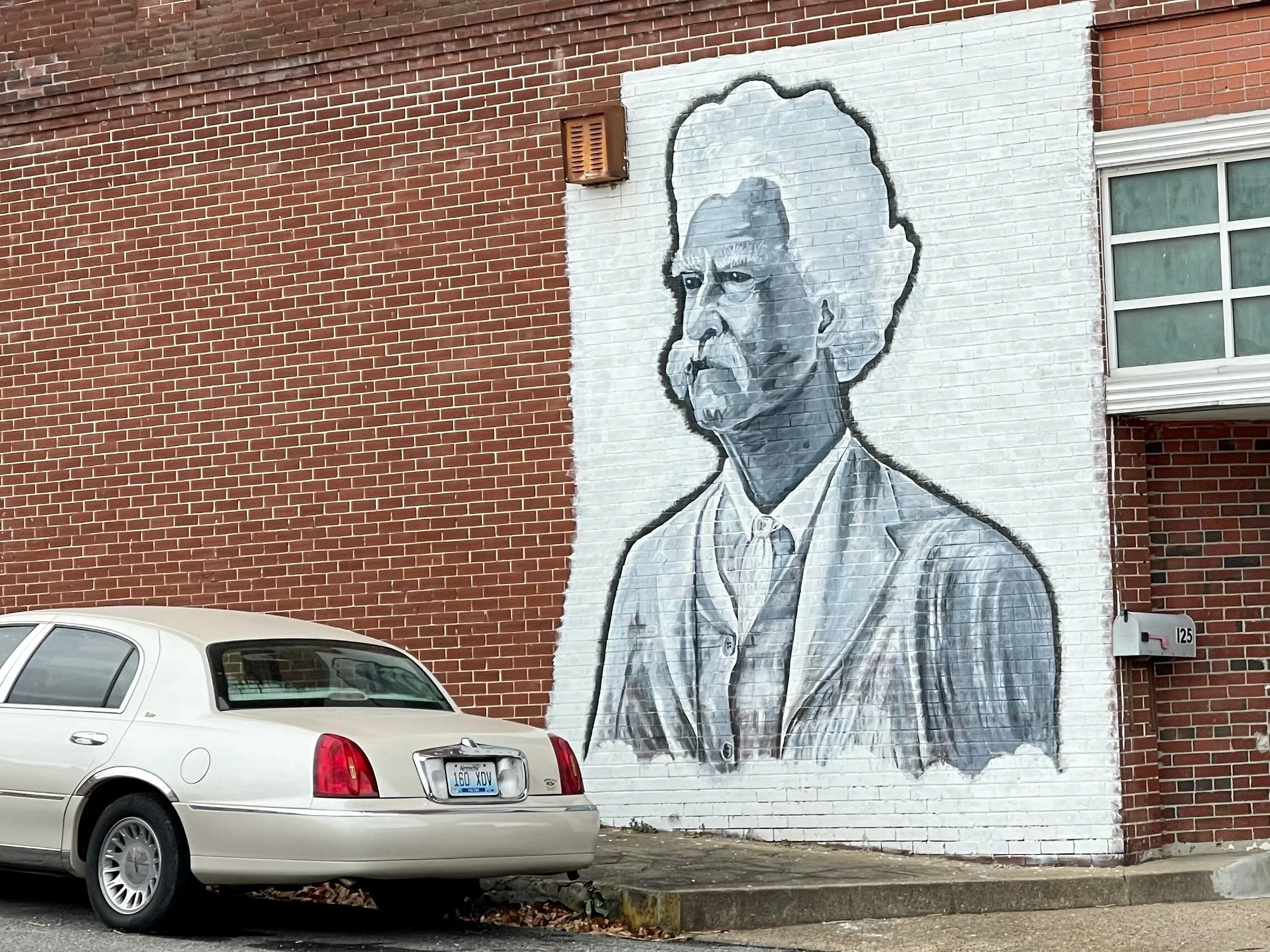
A Mark Twain mural on one of the few occupied buildings in downtown Hickman, Kentucky.
Remains of a building in Missouri on the other side of the river from Hickman after the 2011 spillway flood.
Like everyone else, I look forward to a time when Covid is behind us and we are able once again to congregate, worship, learn, teach, perform, dance, sing, and celebrate together. And it will be even more joyful when our nation becomes recognizable - when Americans appreciate one another because we share a continent and a unique and durable constitution. And hopefully we will enjoy other things many of us used to take for granted - domestic peace, an enthusiasm for innovation and problem solving, a healthy atmosphere and oceans, clean water, economic opportunity for all, and of course - life, liberty and the pursuit of happiness.
I’ve been writing posts on this website for almost five years, and no prior post has been as hard to write as this one. Perhaps it’s covid, perhaps the election, perhaps it’s the sheer overwhelming magnitude of this historical moment. How about you? Do you yearn for reconciliation? Do you want America to get her mojo back? I think the answer is yes. I think we are all aching to connect with each other. I think we want to heal. I think we want to celebrate what unites us. Let's do that. This inauguration is a good place to start.
Stay vigilant! Thanks for reading. More to come.
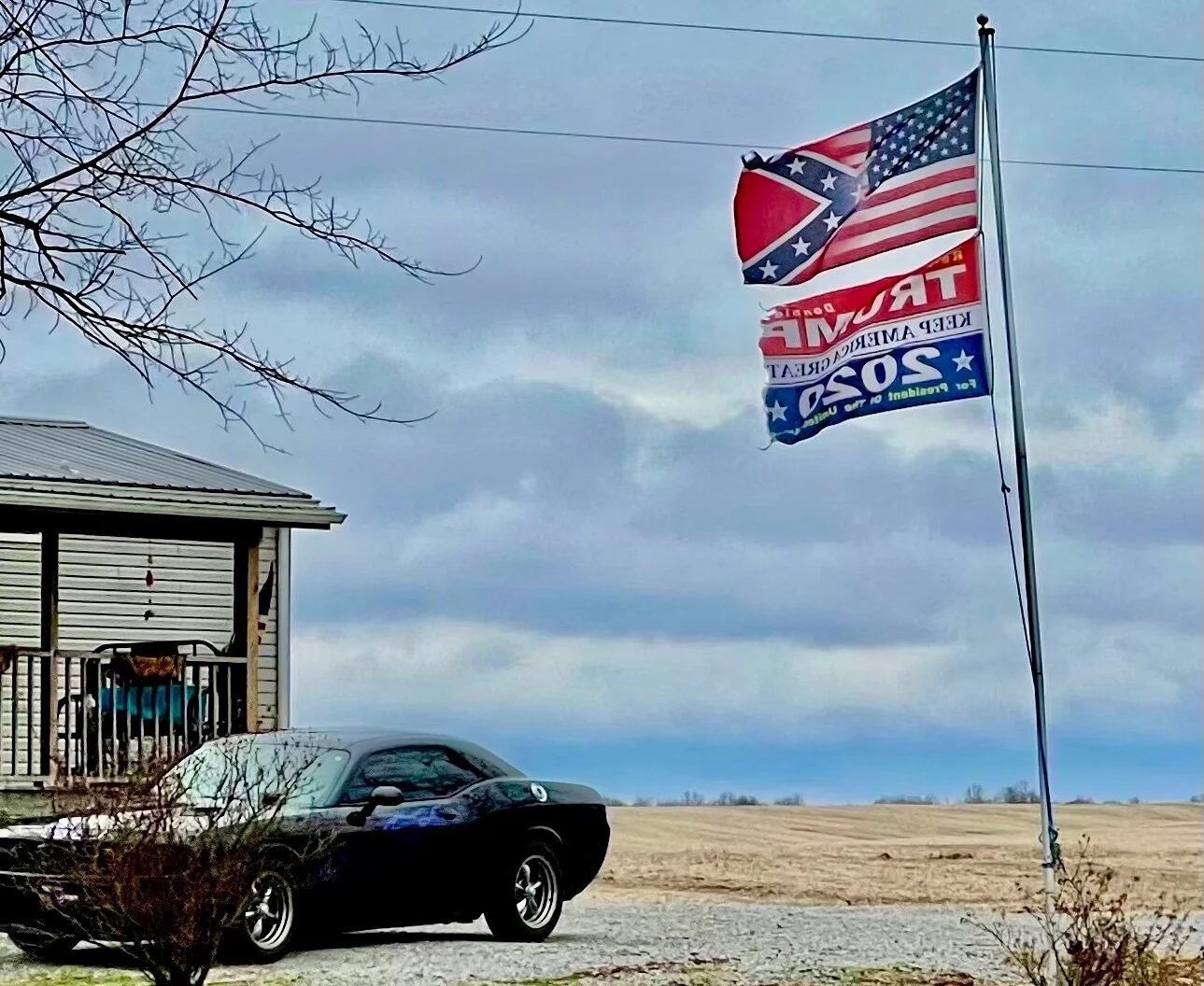
Taken just below Union City, Tennessee. I’ve seen Confederate flags displayed underneath American flags with Trump/Pence signs, but never before an American and Confederate flag blended together.
All photos, unless credited or otherwise noted, are copyrighted property of the blog post author.
Louisiana/Texas, Post 4
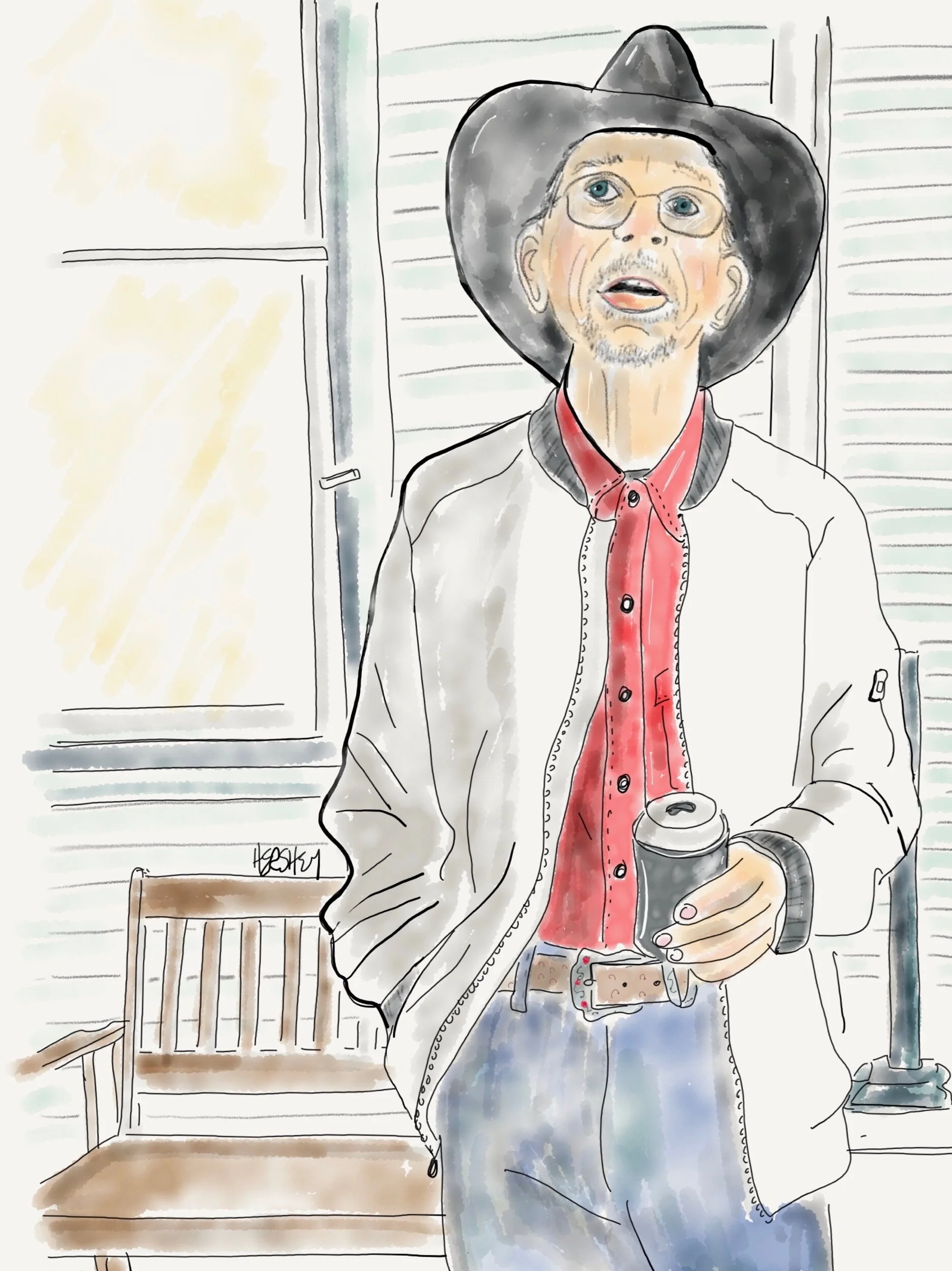
“I work up at United Ag in El Campo. I live at this hotel. Spend Sundays off in Bay City.” Drawing by Jennifer Hershey. Follow her work on Instagram at deeofo.
“Don’t go around saying the world owes you a living. The world owes you nothing. It was here first.” — Mark Twain
Most everywhere we’ve been in Louisiana and Texas, we’ve encountered people who believe deeply in the concept of hard work. I don't know if the importance of work is stronger in the south than elsewhere (it’s hard to imagine a more frenetic work environment than New York City), but its virtue came up repeatedly in our conversations with locals. Often the merits of working seem linked to another highly prized value in these parts - self-reliance - the pathway to the most exalted of American values, our freedom.
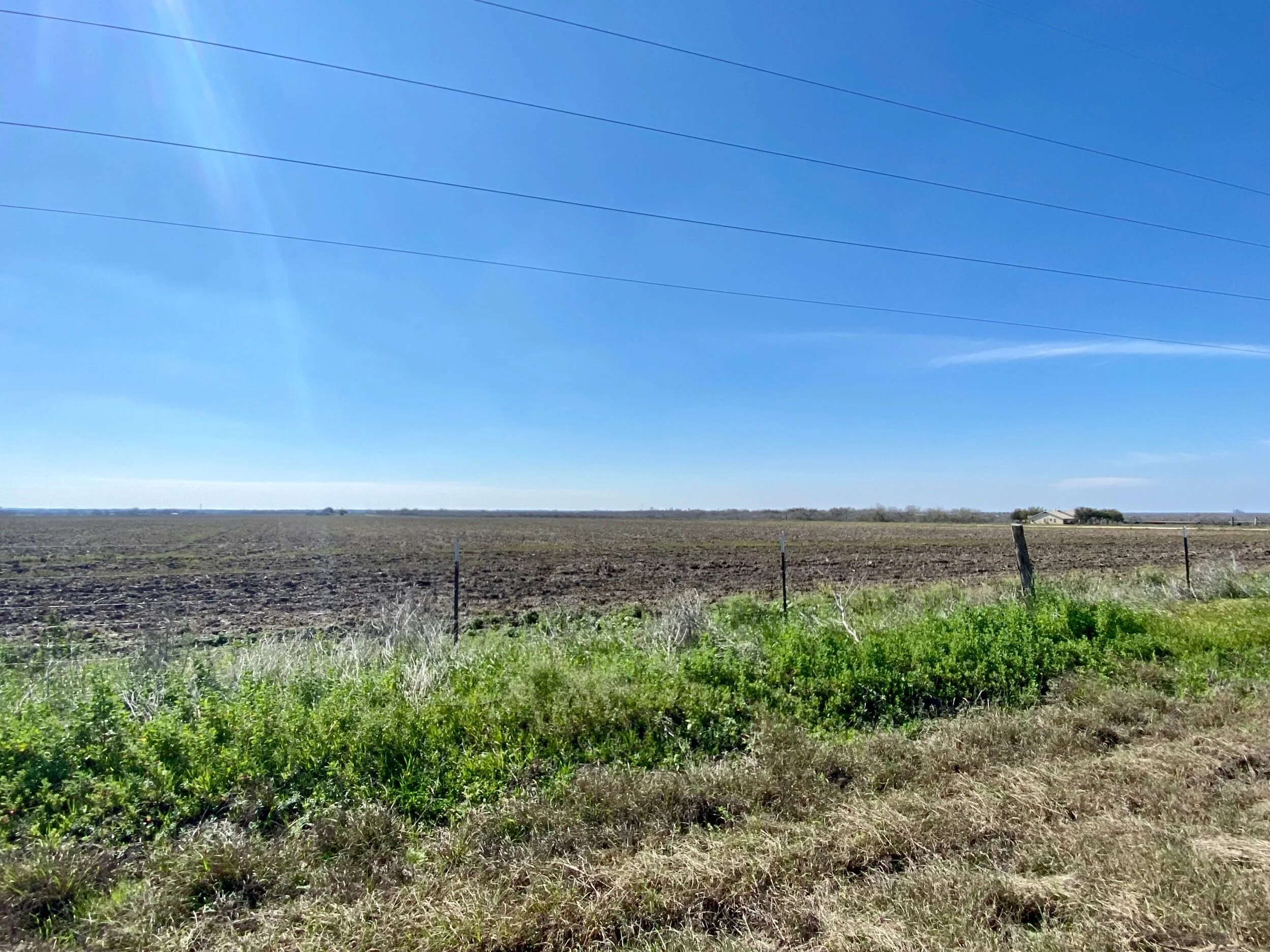
Big sky country in Texas between Corpus Christi and San Antonio.
One of our first conversations with a local in Louisiana centered around the concept of a strong “work ethic.” The man we were speaking to was a small businessman and boss of six employees. His perspective made a lot of sense. What boss wouldn't want productive workers? He went on to explain he wasn’t a fan of freeloaders - people too lazy to work, who wanted a handout from the government. I’m sure he’d fired his share of poor workers, but when it came to individuals wanting handouts, it seemed more like he was talking about an idea of what people are like than a reality. Maybe others know people who don’t seek the meaning that work brings us (even when they are unemployed or underemployed), but I do not. I can’t help but wonder if that experience is a reflection of my own cultural viewpoint, or an indication of a lack of exposure to reality seen through a cultural and political naivety.
One thing is certain to me: it is fundamentally human to seek meaningful activity. We all must live. And even in an age of extraordinary inequalities in wealth and income, the majority of us still must - and want to - work. So while there may be poor workers, are there really folks out there who think they deserve something for nothing?
“We don’t get many bikes down here— just make sure you walk ‘em onto the ferry”! Drawing by Jennifer Hershey. Follow her work on Instagram at deeofo.
Although southwest Louisiana and southeast Texas are equally flat, the land between Corpus Christi and San Antonio seems especially vast. Perhaps it’s the steady 150 mile rise from the coast to San Antonio (which is 650 feet above sea level). Or perhaps it’s the unrelenting expanse of open, uninterrupted fields. Perhaps it’s the long, straight roads. Whatever the reason, it's BIG.
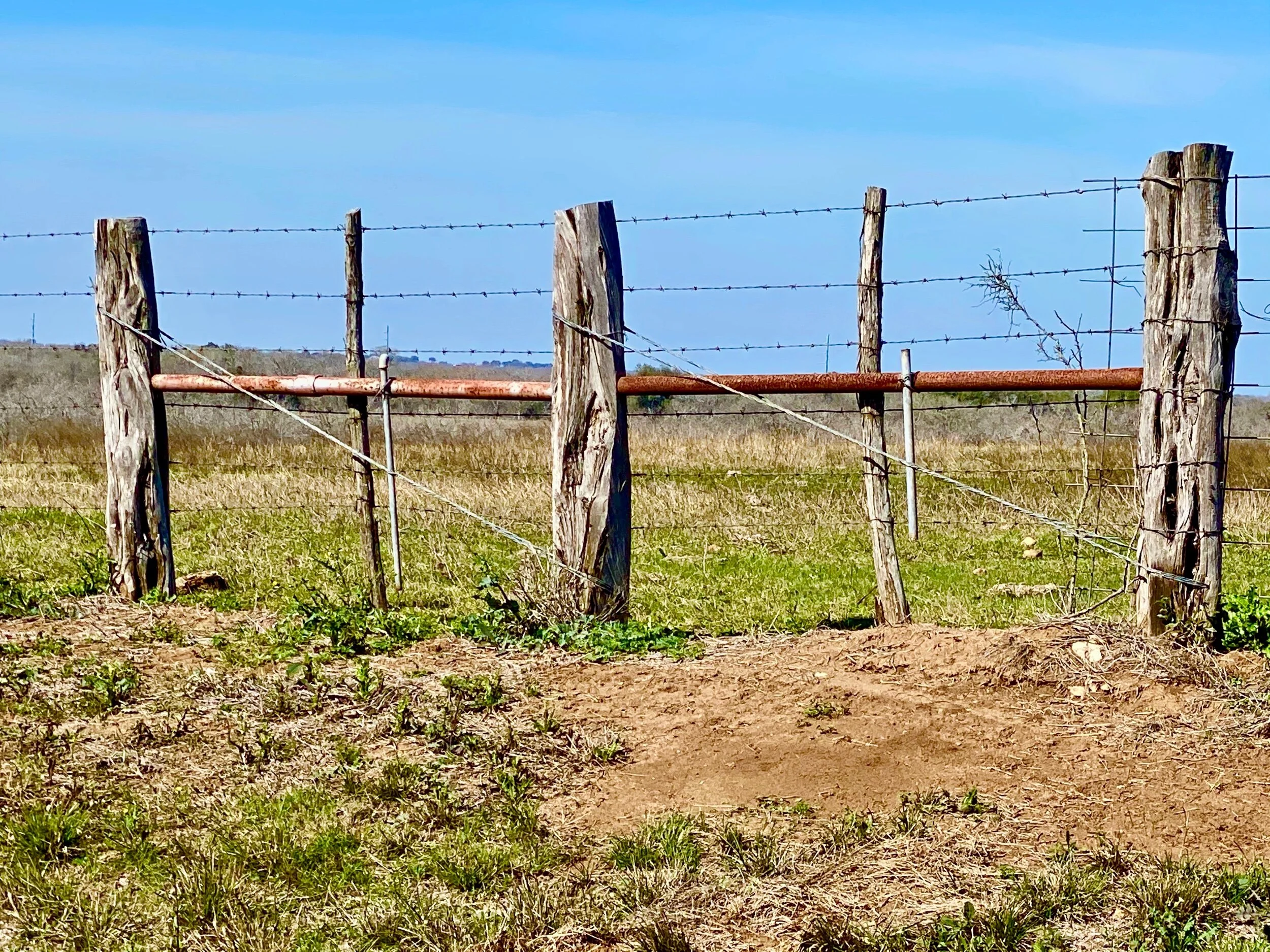
Taken on Texas State Highway 181 between Corpus Christi and San Antonio. Prior to the invention of barbed wire in the 1870’s, fences couldn't reliably contain cattle.
At the same time, both the land and people between Corpus Christi and San Antonio are hardscrabble. Pickups are normal, sedans are unusual. Regular folks are used to fishing and hunting. Although they don’t rely on their catches to stay alive, fish and animal wildlife seem to be part of the rural Texan diet, at least among the people we talked to. And the land is used in every way possible; for agriculture, farming, fishing, hunting, wind power, oil and gas extraction, compression stations, pipelines, home building, junkyards, storage sheds, telephone poles, auto graveyards, human graveyards… The Texas countryside is a hodgepodge of so many competing uses I often found it as overstimulating and confusing as a Wal-Mart Megastore.
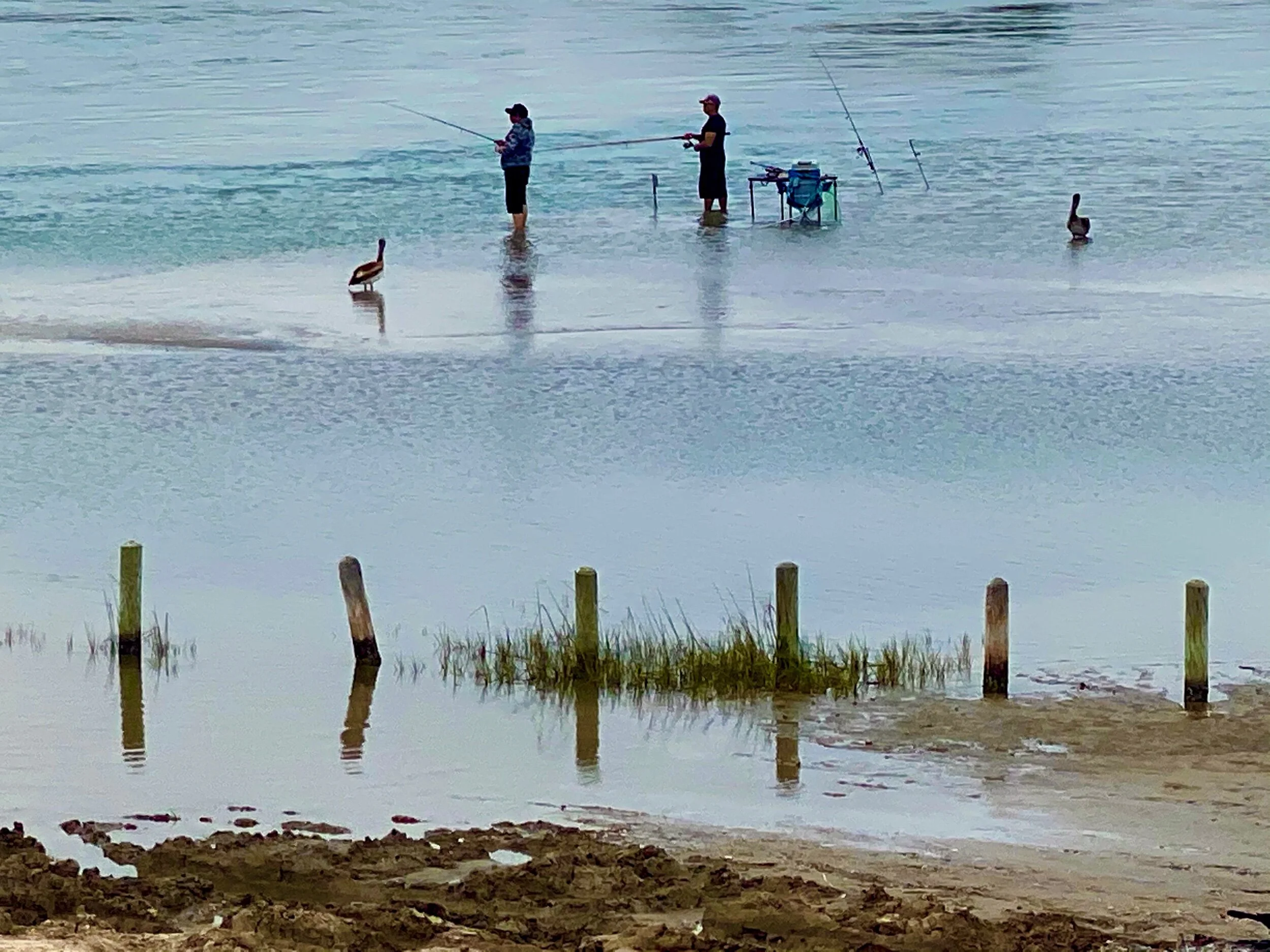
Texans fishing off the causeway between Aransas and Port Aransas, Texas. The birds nearby are Pelicans.
There's also a lot of workers. A surprising number of people work for wind farms and quite a few work in agriculture, but most of the people we met work for oil and gas or petrochemical companies. And there are a lot of companies. Thirty one new petrochemical plants have been approved for construction or reconstruction in hurricane prone areas on, or near, the Louisiana and Texas coasts since 2016. In our last post, we wrote about two large LNG exporting plants under construction in Cameron, Louisiana and nearby Port Arthur, Texas. These are among those 31 new plants.
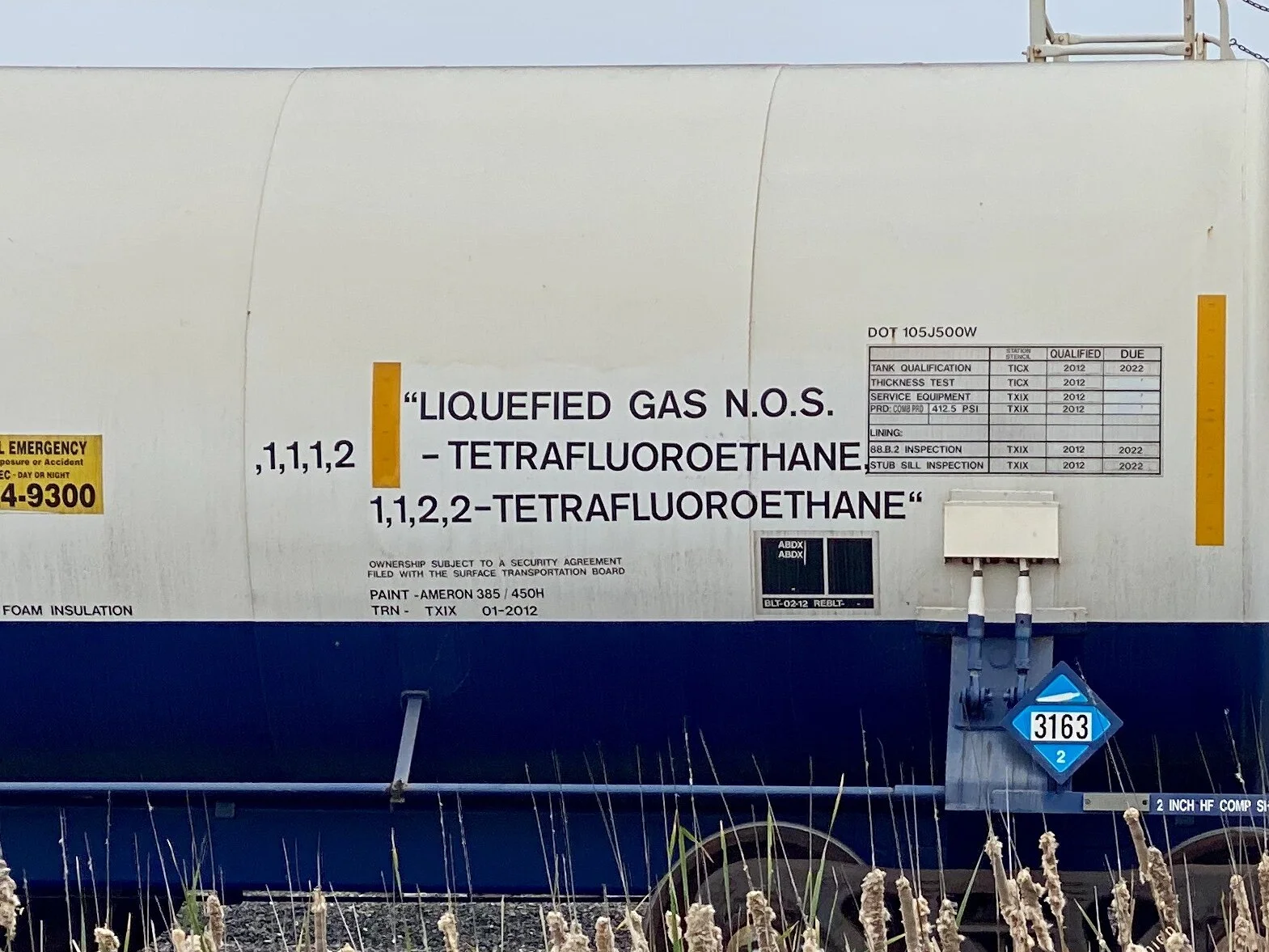
One of hundreds of refrigerant tank cars lined up near the Occidental Petroleum, Chemours, and Nashtec Plants at Gregory and Ingleside, Texas, not far from the Gulf Coast on the way inland to Beeville, Texas.
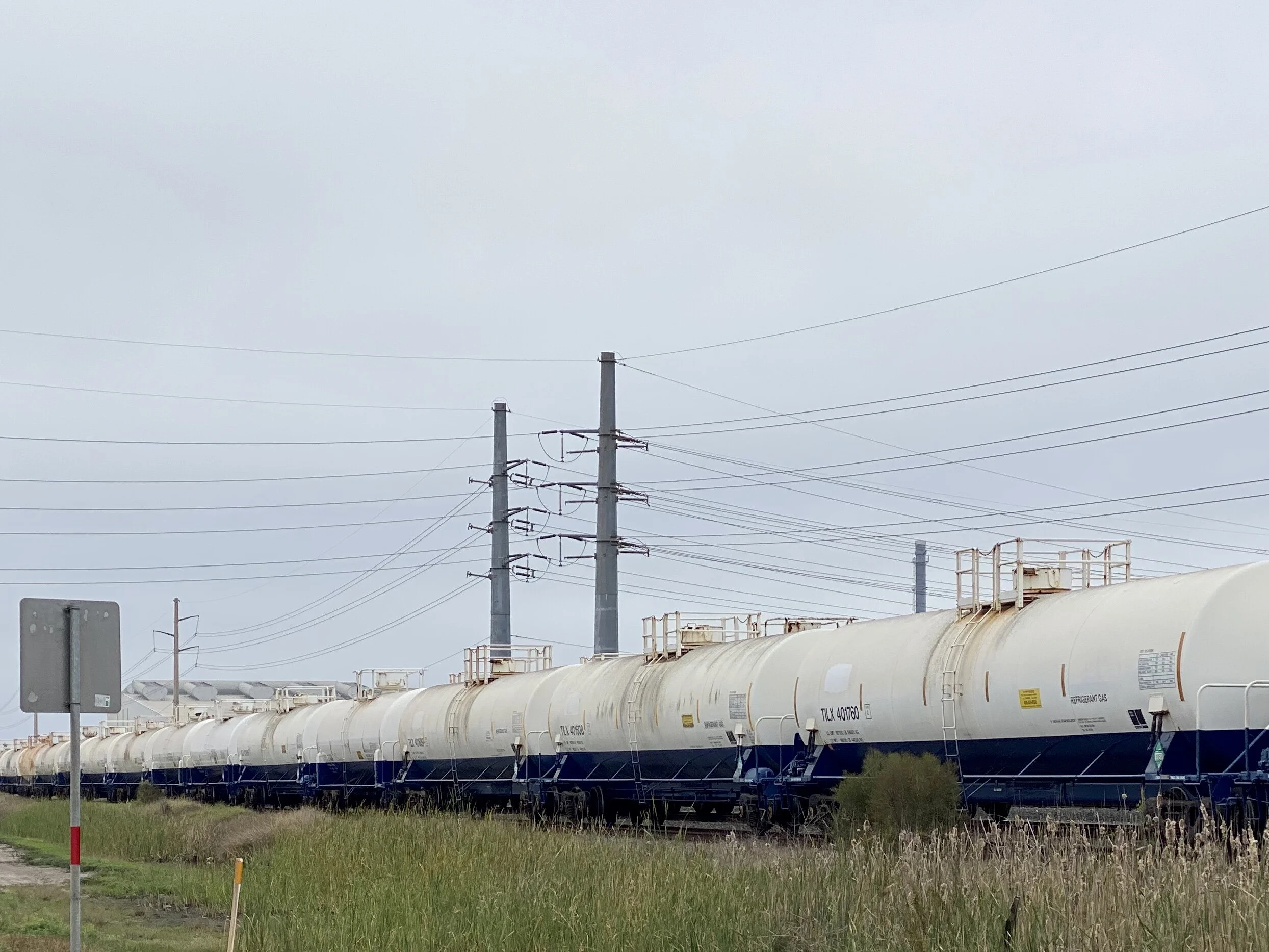
Tetrafluorethane is regarded as a “sustainable” refrigerant because it has lower carbon emissions than previous versions, and a minimal impact on ozone.
As much as we were profoundly charmed and cheered by the warmth of the people we met, the omnipresence of these facilities contributed to our uneasiness. In the face of climate change, does this boom really make sense? There’s something profoundly unsettling about the trend. I’m not so sure the locals feel any different. In Texas, even cognitive dissonance is BIG.
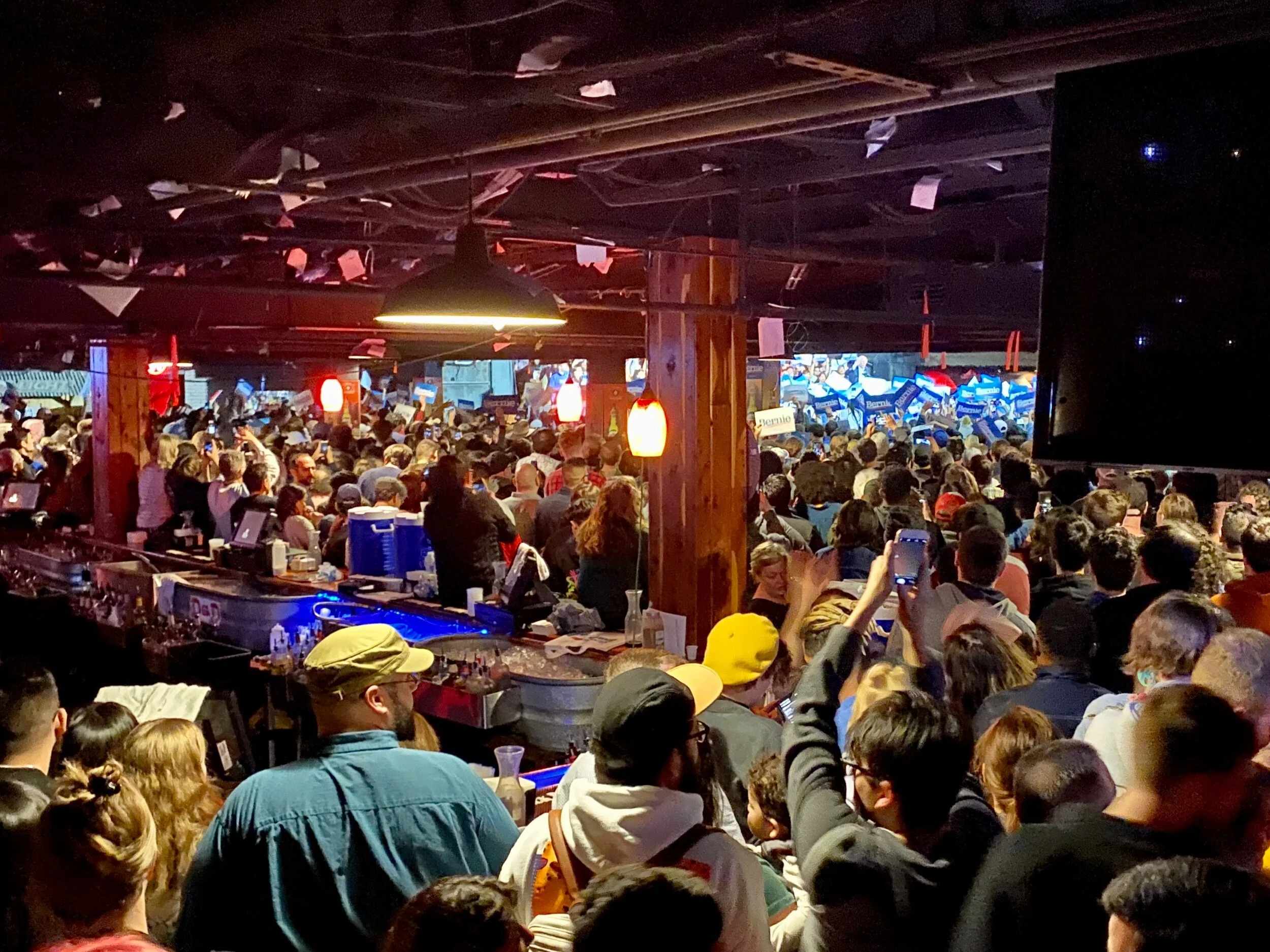
Interestingly, Jenny and I arrived in San Antonio on the night of the Nevada Democratic caucus, and we had the opportunity to drop into the famed Cowboy Dance Hall to catch a raucous, youthful and well-supported Bernie Sanders rally. Just for the record, we both appreciate Bernie’s concerns about climate change, but worry he is over-focused on what we need to achieve and under-focused on how to do it without causing a destructive backlash.
Northerners may not be aware that Texas is the leading U.S. producer of both crude oil and natural gas. In 2017, the state accounted for 37% of the nation's crude oil production and 24% of its marketed natural gas production. NPR.org reports that Texas currently supports a total of 163 natural gas production plants, and Texas has the largest processing capacity in the U.S. In addition, there are 29 petroleum refineries in Texas that process more than 5.7 million barrels of crude oil per day. These plants account for 31% of the nation's refining capacity.
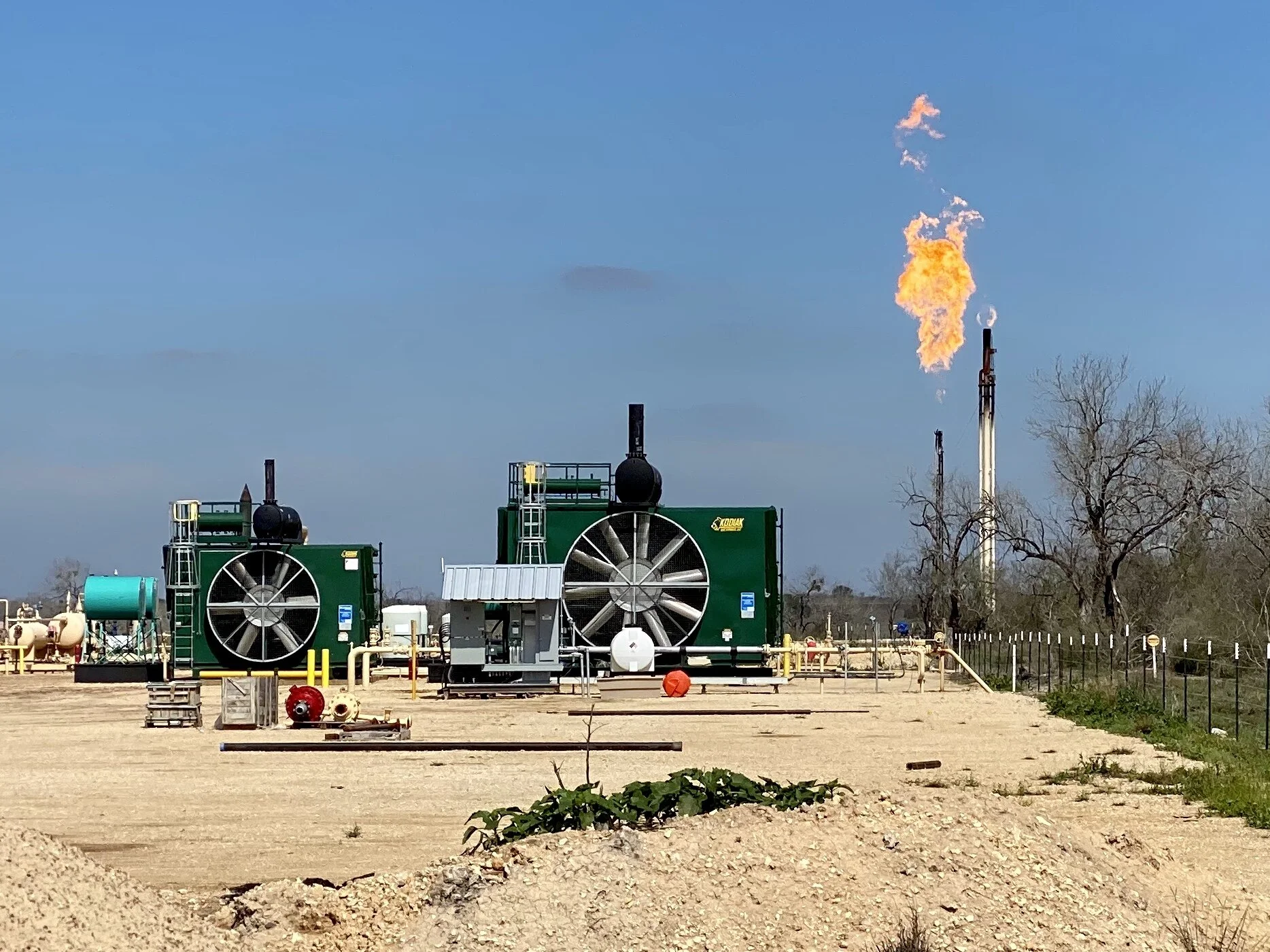
A hydrogen sulfide (H2S) flare near a gas pad. Flaring burns off gas that is deemed uneconomical to collect and sell. It is common to flare natural gas that contains hydrogen sulfide to convert the highly toxic hydrogen sulfide gas into less toxic compounds. Although the practice of flaring is decreasing as pipeline efficacy improves, the following air pollutants may be released from natural gas flares: benzene, formaldehyde, polycyclic aromatic hydrocarbons (PAHs, including naphthalene), acetaldehyde, acrolein, propylene, toluene, xylenes, ethyl benzene and hexane. Taken from this source.
On our next trip to the southwest, we hope to visit the fast growing, second most productive oil field in the world (as of 2018), located in the Permian Basin in western Texas and New Mexico.
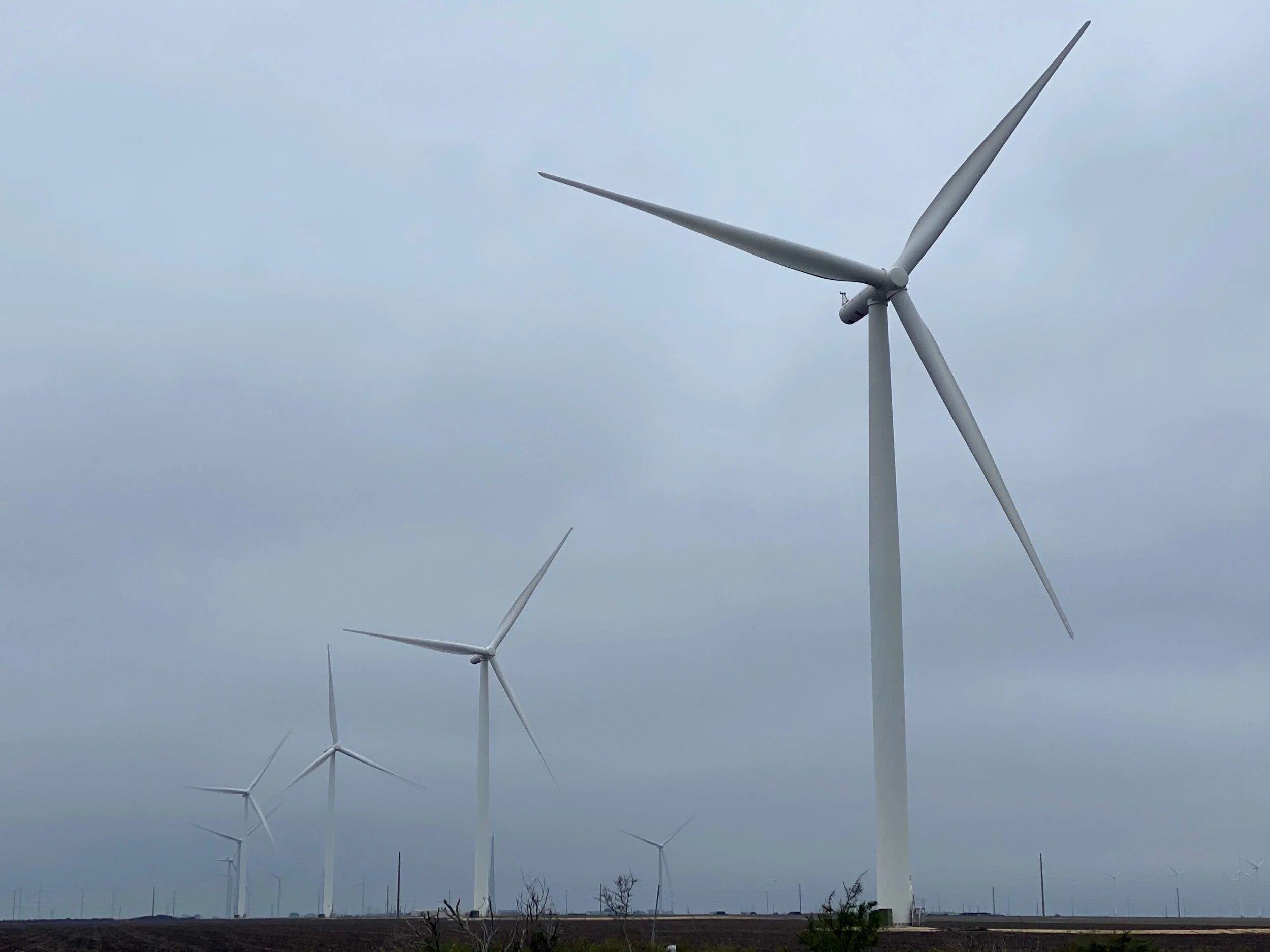
Just above Gregory we encountered a large wind farm on agricultural fields that spanned to the horizon on both sides of the road for almost 8 miles. Later we learned it is run by E.ON Climate and Renewables North America, one of the worlds largest developers, owners, and operators of renewable energy projects. EON owns and operates over 1,900 MW of wind farms in the United States. The wind on these flat plains are intense (we learned that the hard way), and there are quite a few more wind power companies in the area.
Perhaps more surprisingly, Texas leads the nation in wind-powered generation. The state produced one-fourth of all the U.S. wind powered electricity in 2017. Texas wind turbines have produced more electricity than both of the state's nuclear power plants since 2014. And equally interesting, Texas produces more electricity than any other state, generating almost twice as much as Florida, the second-highest electricity-producing state. All combined, Texas is the largest energy-producing state in the country. It’s also the largest energy-consuming state in the nation. In fact, the industrial sector, including its refineries and petrochemical plants, accounts for half of the energy consumed in the state.
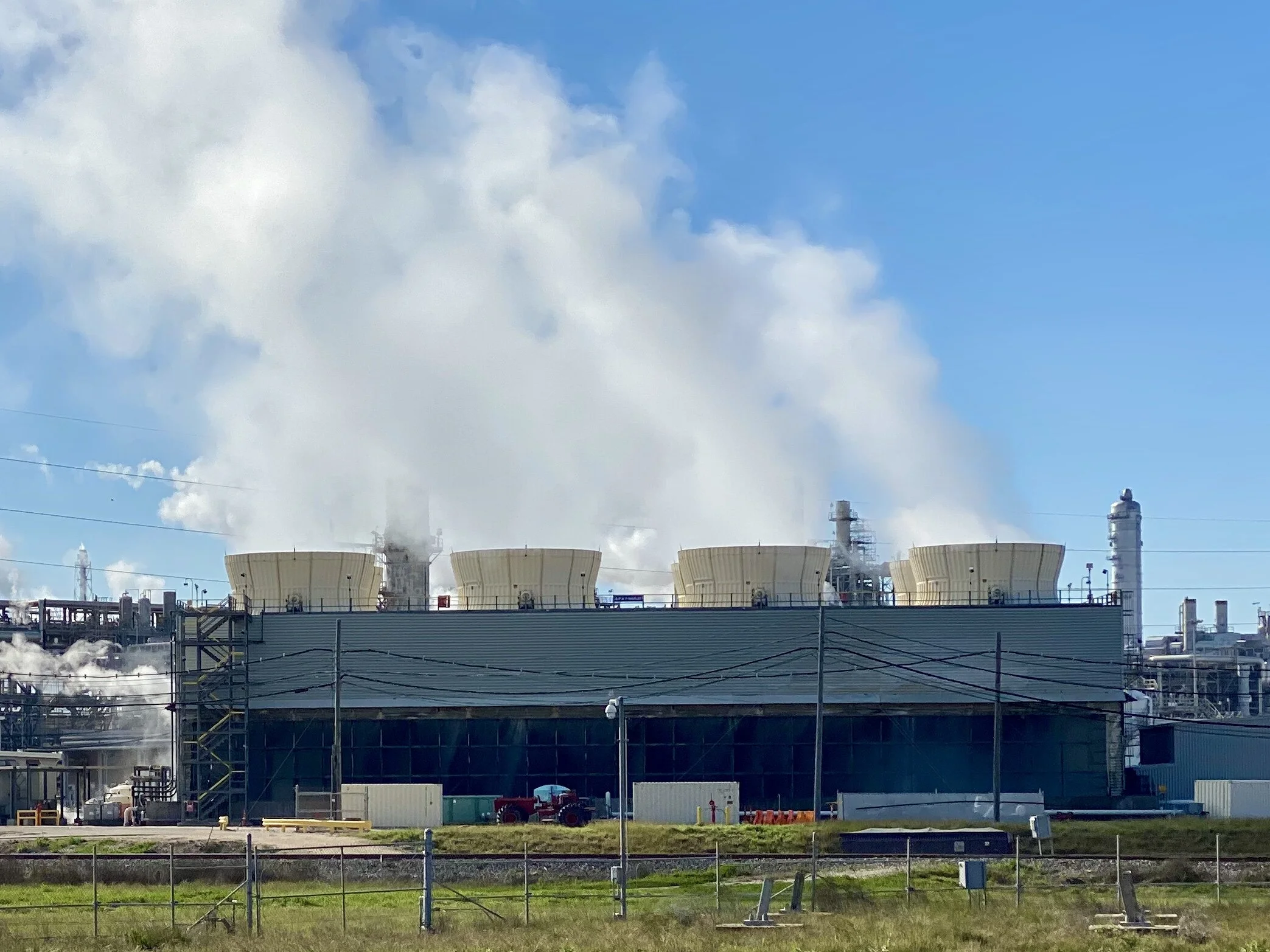
Cooling Towers on the Dow Chemical Plant in Freeport, Texas.
Given our lowbrow method of bicycle travel to offbeat roads and towns, we had lots of opportunities to speak with locals. We didn’t meet one person who spoke of his or her job in disparaging terms. We were often met with gratitude for the opportunities that seemed to be available. Truth is, Texas is humming. The unemployment rate is 3.4%, while the national average is 3.6%. Louisiana’s rate is slightly higher at 4.5%, although it was 6% in November of 2016. By most measures in both states, employment is looking up.
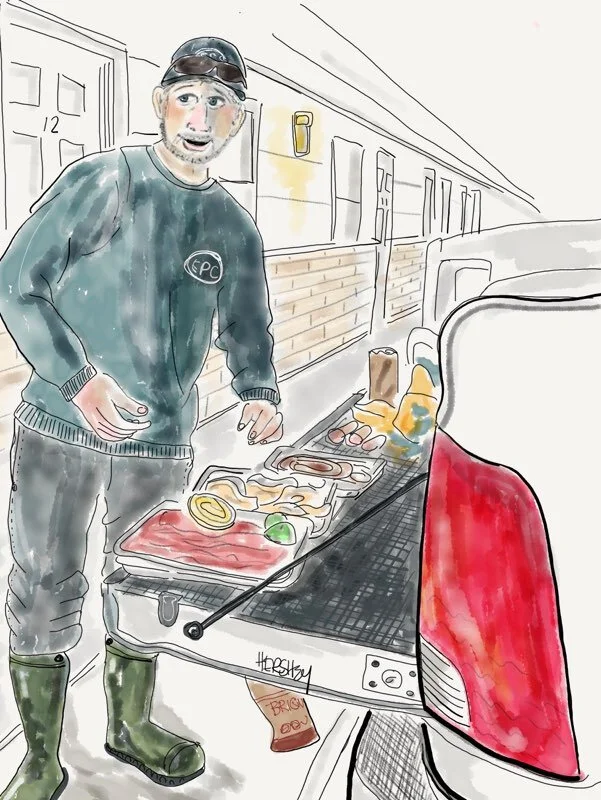
“Me?- I’m Norberto. Me an’ my brothers, Ivan and Freddy cook our meals for the week out here. We take our lunches to the plant.” Drawing by Jennifer Hershey. Follow her work on Instagram at deeofo.
Norberto and his brothers had traveled from their home near Brownsville to work at a plant near Kenedy, Texas. There’s a lot of available jobs there. We counted 9 oil and gas plants in this town of 3500 people.
The evening we hung out with Norberto and his brothers, I fell into a conversation with one of their friends, an oil worker named Jose. An Hispanic transplant from Indiana, Jose was happy to be finding so much work in a part of the country that he preferred. He educated me for awhile about H2S flaring and modern pipeline construction methods, which I appreciated. It was comforting to hear the industry was actually trying to lower methane emissions. After a while, I asked him about his politics. Jose was unabashedly straightforward about supporting Trump because Trump supported his industry. I turned the conversation to climate change. He hesitated a bit as I gently expressed my concern about carbon emissions and what might happen to the world my grandchildren will be inheriting. He didn’t have children, so I kept the conversation a few generations out. I could also tell Jose was aware lots of folks felt like I did, and I could feel him becoming defensive. So I changed tack. I told him I didn’t begrudge anyone working in any industry who was trying to achieve his or her fair share of the American Dream.
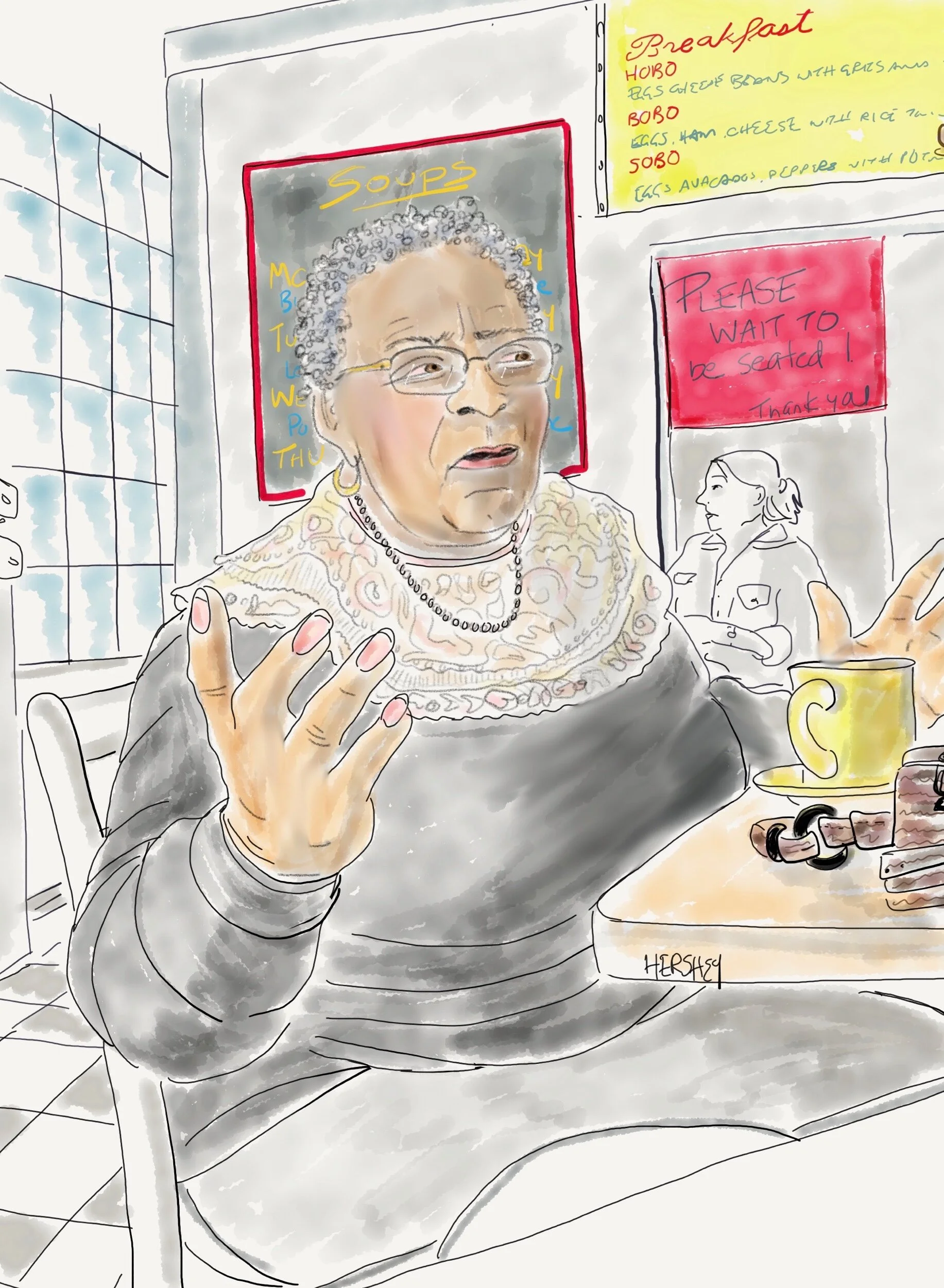
“I used to be an intelligence analyst for the army in Germany. I moved back here to be close to my military family. I pray everywhere and anywhere because God is always where I’m praying”. Drawing by Jennifer Hershey. Follow her on Instagram at deeofo.
I remember how isolated veterans felt when they returned from the Vietnam war many years ago. Coming back to a divided country after having served in an unpopular war was a miserable experience for so many veterans, and their shame and degradation cloyed deeply at those of us who opposed the war. Consequently, it was a relief when Americans did not do the same thing to vets when they returned from the second Gulf War - a war equally as unpopular as Vietnam. It seemed that Americans understood had that our vets were not the perpetrators of an unpopular and ill-advised conflict, but were instead brave men and women who had been asked to do something unpopular and counterproductive by their superior officers. In that case, the right people were held accountable for poor choices.
Just as those of us who are deeply worried about the growing climate emergency are realizing that meaningful change has little relevance to the consumer-based choices of the average middle class, we also need to avoid blaming our brothers and sisters who work at low and mid-level technical jobs in an industry that has brought us so much, but is also causing us great damage.
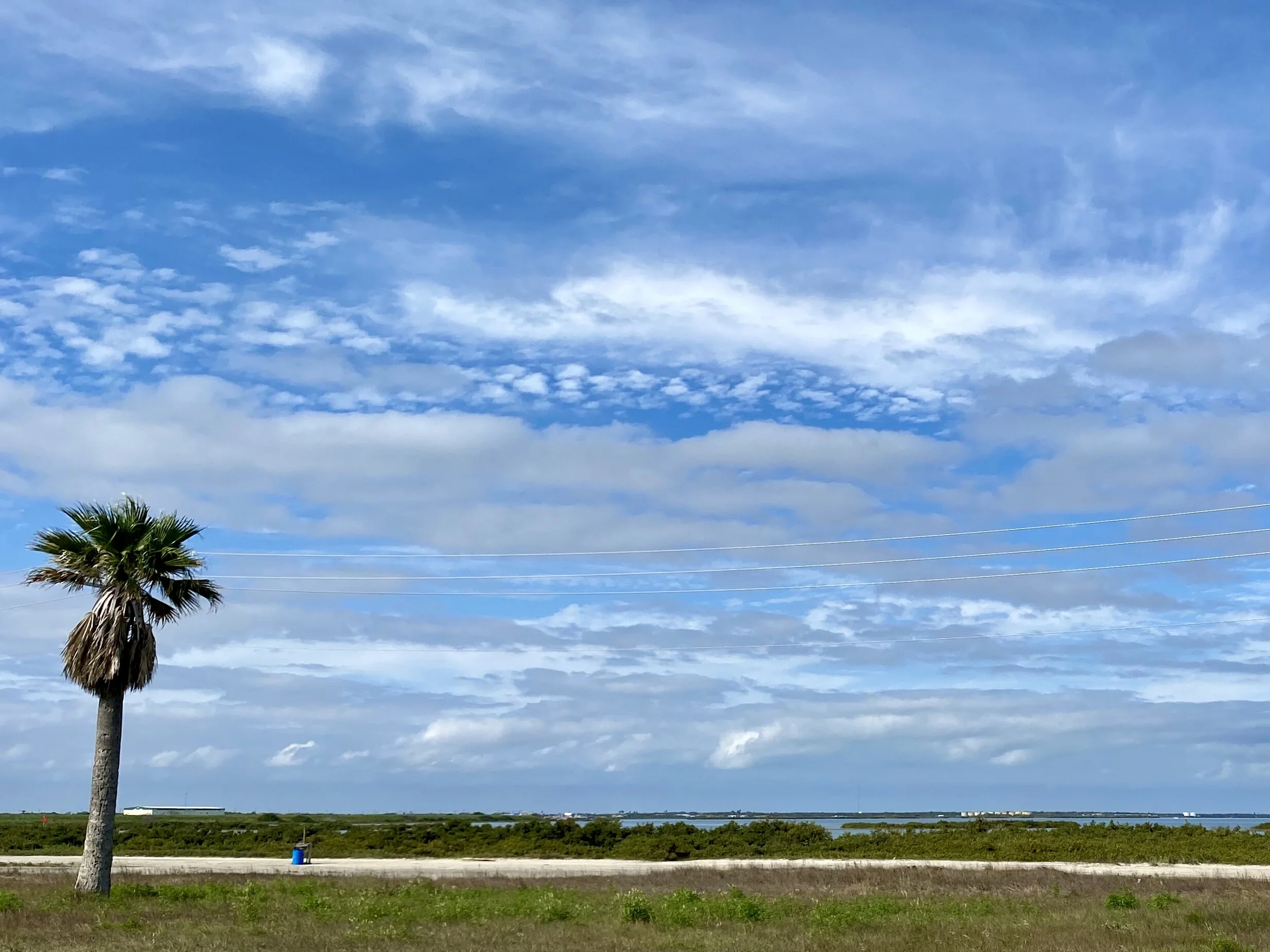
Looking south from the causeway between Aransas and Port Aransas, Texas.
Jobs matter. They are a necessity. At the same time, we need policies that will aggressively curb and eliminate carbon emissions. I've heard conservative Republicans say that it’s not fossil fuels that are the problem, it's emissions. In response, I say …. great! If one really trusts the free market, then put a price on those emissions (and return the proceeds as a dividend to taxpayers to mitigate additional costs), and trust the market to work its magic. And if that intervention doesn’t do the work fast enough (at the rate that science tells us we need) then let’s put our money where our mouth is and trust the market enough to increase the price of carbon until it’s enough. Let’s bring the emissions down! If we can use the market to stimulate innovation that will help us save a lot of our oil and gas jobs, that’s terrific! If not, then let’s accept the truth of our situation and create a different kind of economy.
As one of the people we met kept saying, “I'll tell you what” …Using the ridiculous excuse that the science isn’t settled isn’t acceptable. The science of climate change is as verified and verifiable as the concept of gravity (about 98% of scientists agree both are happening). Climate change isn’t convenient, that’s for sure. But just because we don’t like that it’s happening isn’t a reason for denial. Let’s deal with it.
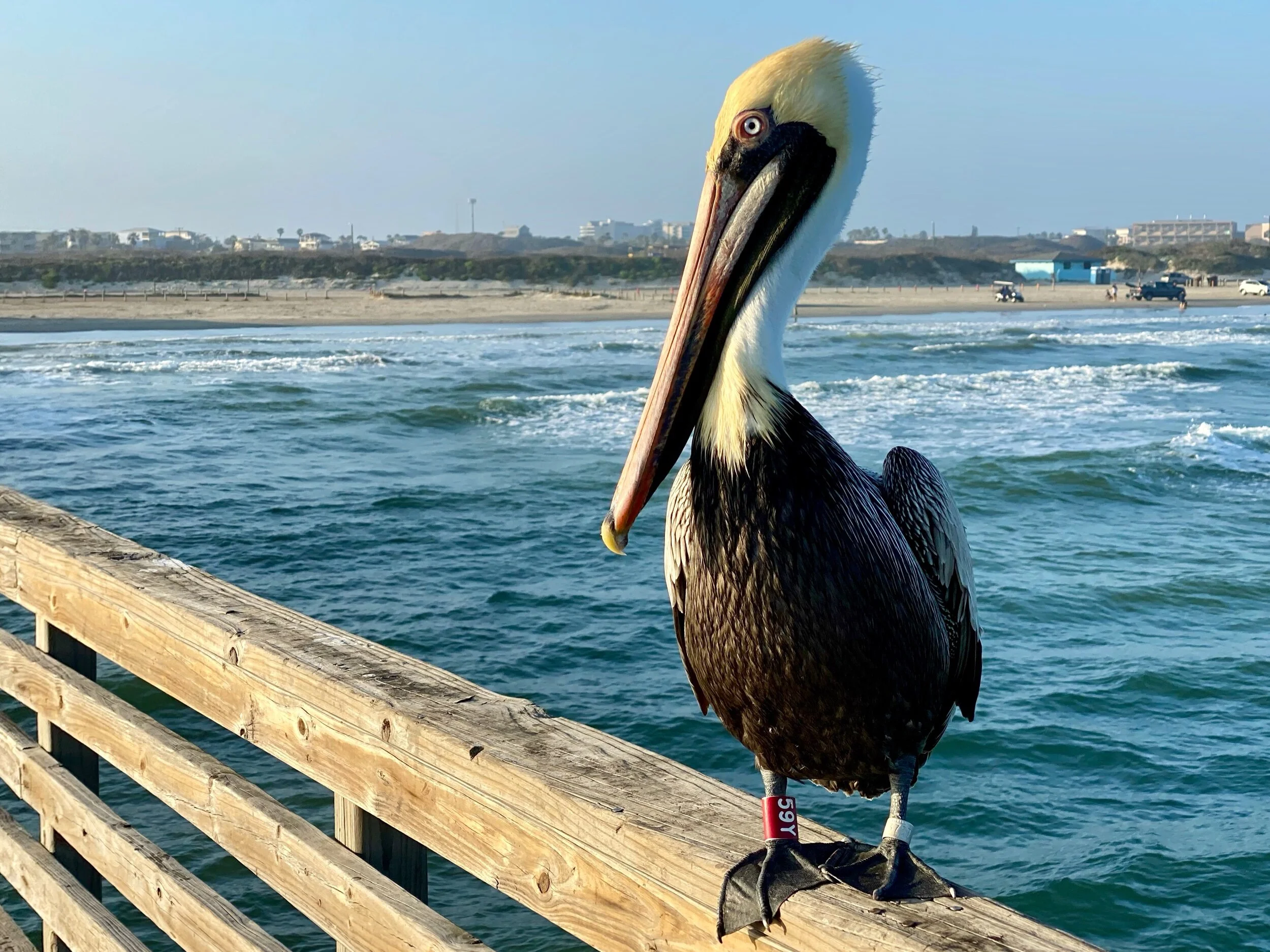
Yet another Pelican poses for us near Corpus Christi.
This blog post concludes our latest trip from New Orleans to San Antonio. I am writing this on an Amtrak train, with our bikes safely stowed in the baggage car. It’s been an extraordinary trip. If you haven’t visited the 4 missions on the San Antonio River, we enthusiastically recommend them, especially Mission San Juan. A few key pictures from there are posted below.
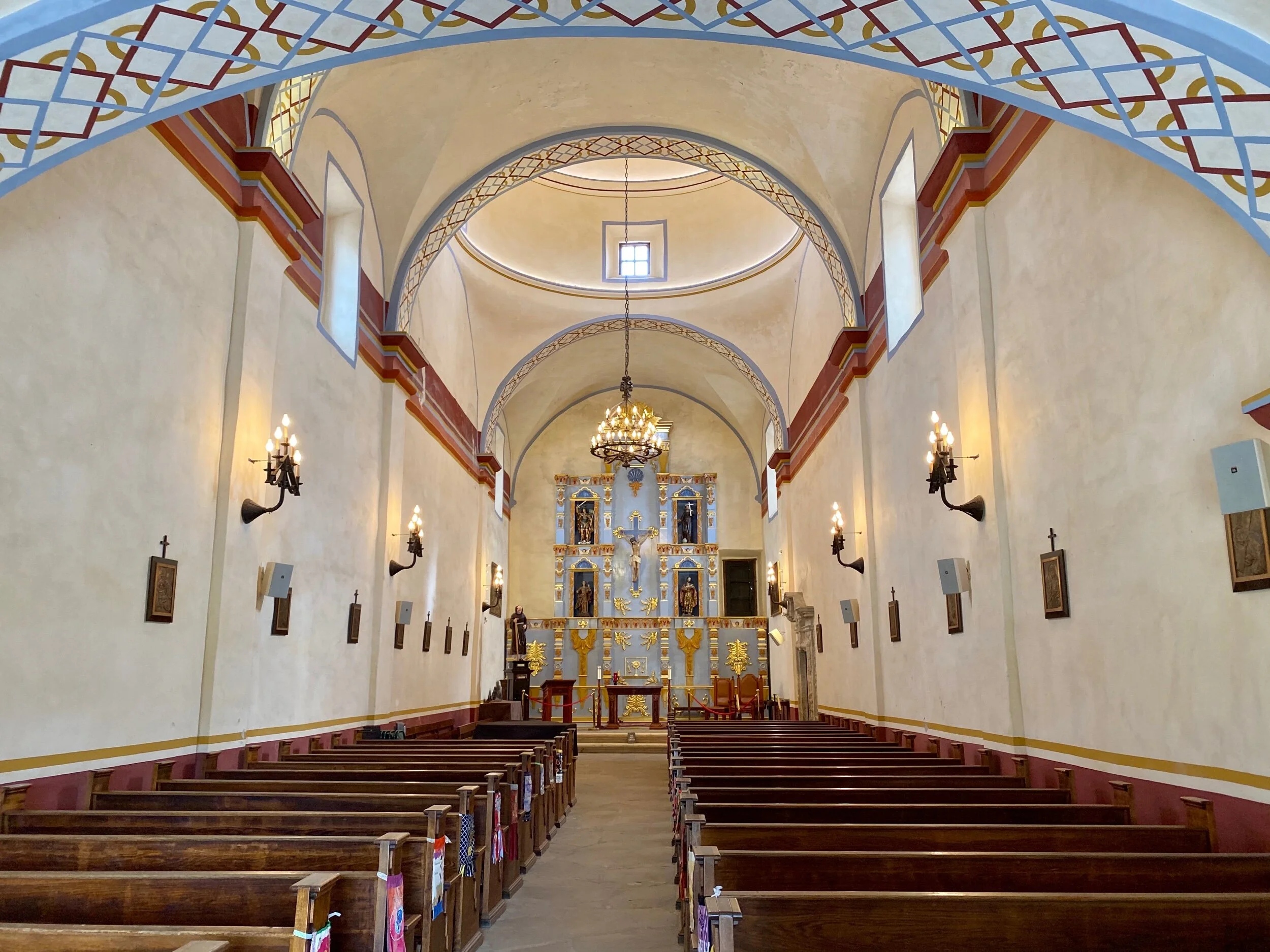
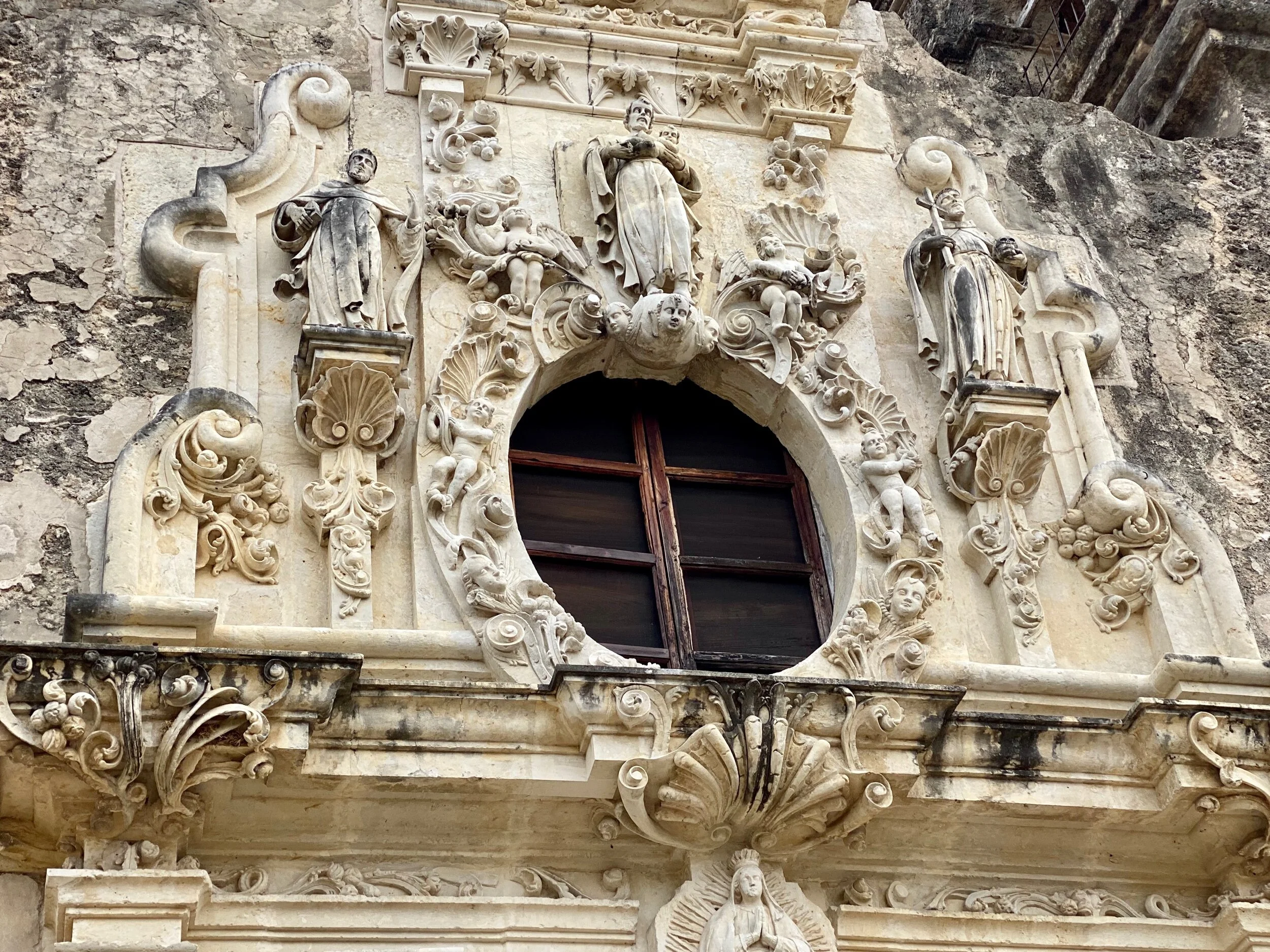
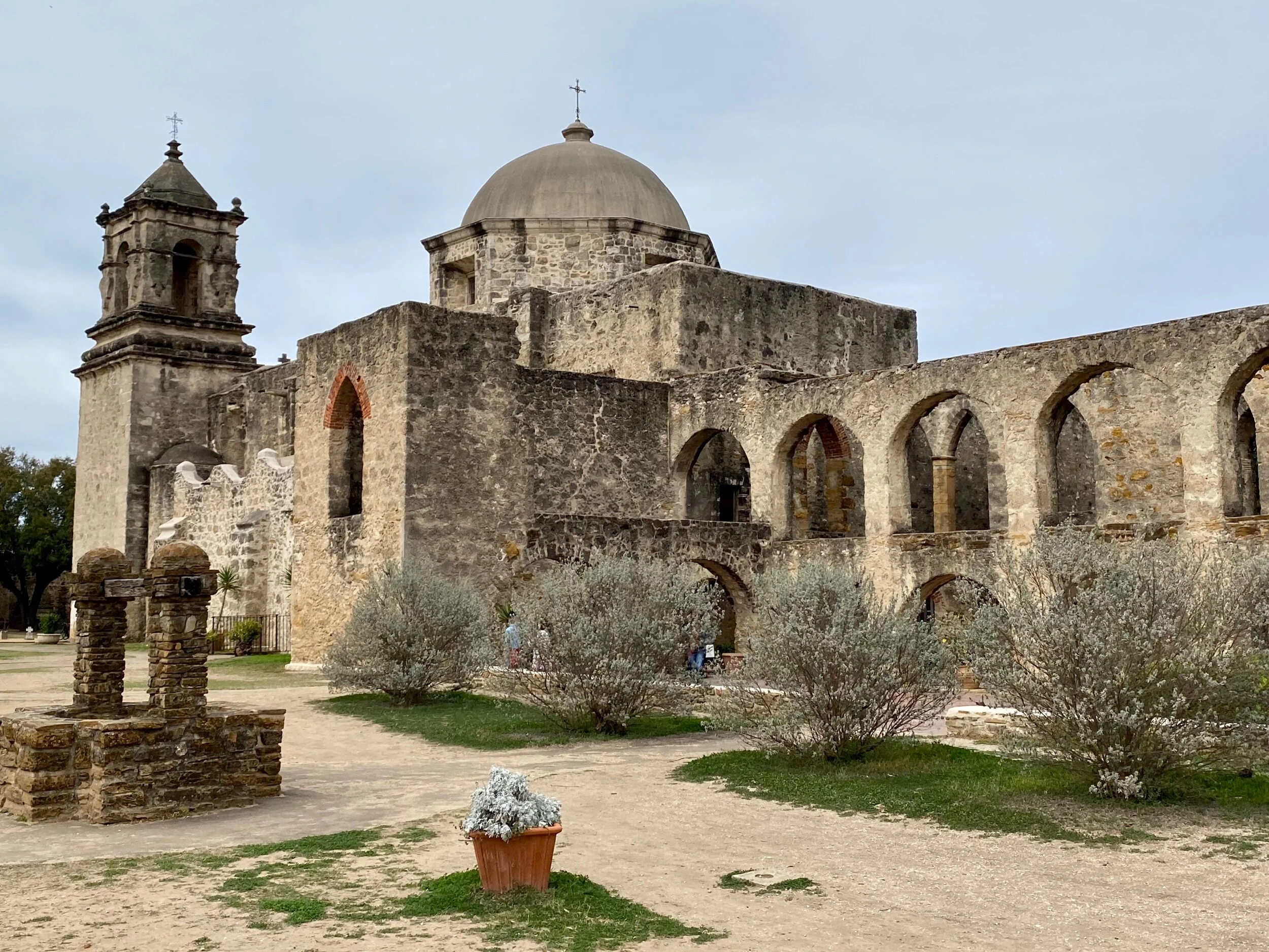
Below are links to this entire trip. If you don’t have a Garmin account you will have to create one to see them (it's worth it if you're a biking geek or map lover).
1) New Orleans Road Cycling, 2) New Orleans Road Cycling, 3) Donaldsonville Road Cycling, 4) Morgan City Road Cycling, 5) St Mary Parish Road Cycling, 6) Abbeville Road Cycling, 7) Lake Arthur Road Cycling, 8) Cameron Parish Road Cycling, 9) Port Arthur Road Cycling, 10) Galveston Road Cycling, 11) Freeport Road Cycling, 12) Matagorda County Road Cycling, 13) Refugio Road Cycling, 14) Port Aransas Road Cycling, 15) Bee County Road Cycling, 16) Kenedy Road Cycling, 17) Floresville Road Cycling, 18) San Antonio Road Cycling, 19) San Antonio Road Cycling, 20) San Antonio Road Cycling.
Thanks for reading! There’s always more to come, but this particular trip is complete.
All photos, unless credited or otherwise noted, are copyrighted property of the blog post author.
Louisiana/Texas, Post 3
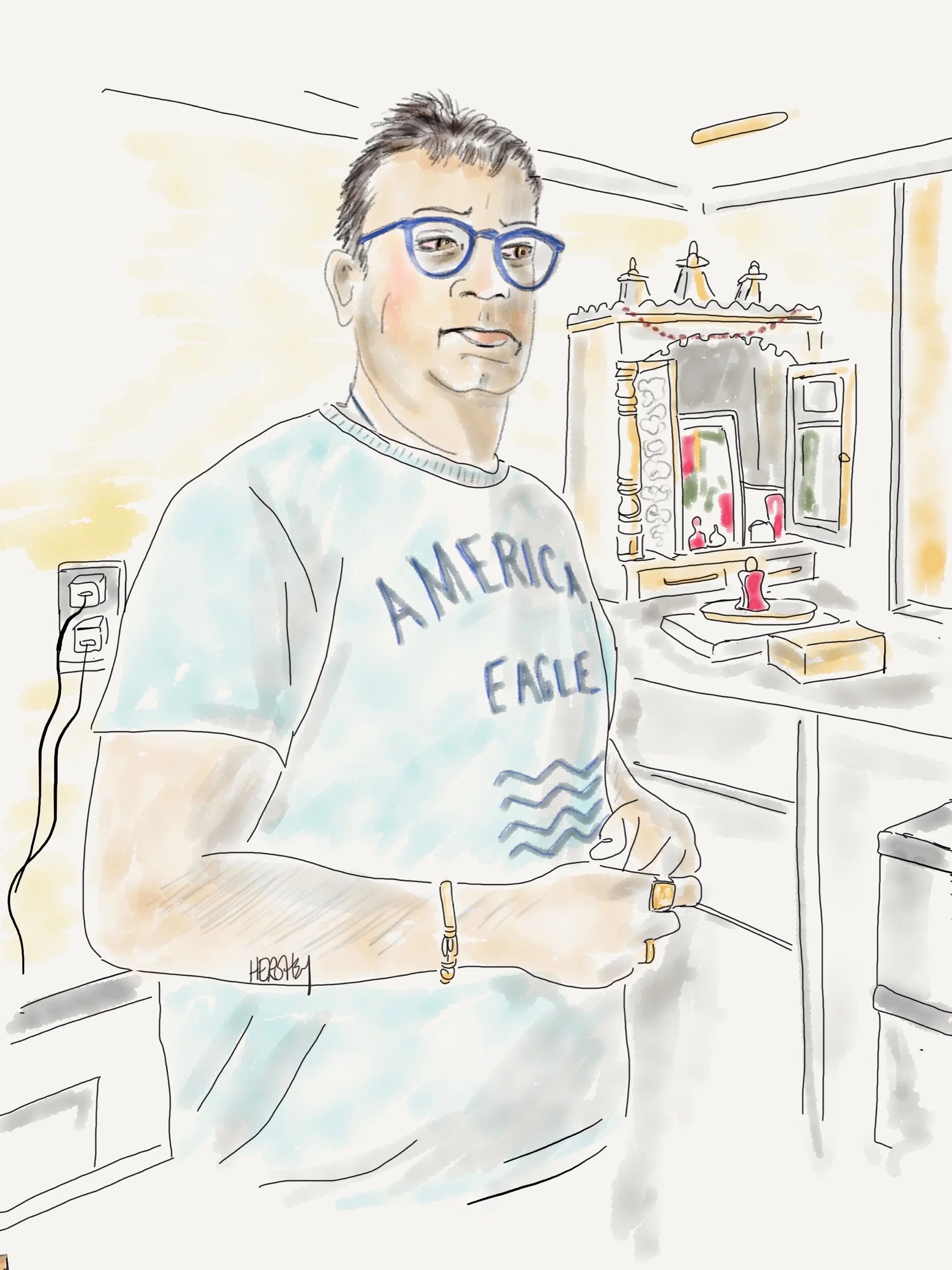
“My wife and I take turns praying at our altar. We are Hindus. But we love this motel. It’s all ours”. This drawing of a proprietor of a mid-century motel in Freeport, Texas was done by Jennifer Hershey. You can follow her work in Instagram at deeofo.
Welcome from Port Aransas, Texas, just slightly southeast of Corpus Christi, Texas.
—————
“It was the best of times, it was the worst of times, it was the age of wisdom, it was the age of foolishness, it was the epoch of belief, it was the epoch of incredulity, it was the season of light, it was the season of darkness, it was the spring of hope, it was the winter of despair.”
-from a A Tale of a Two Cities by Charles Dickens.
Such are the times we live in.
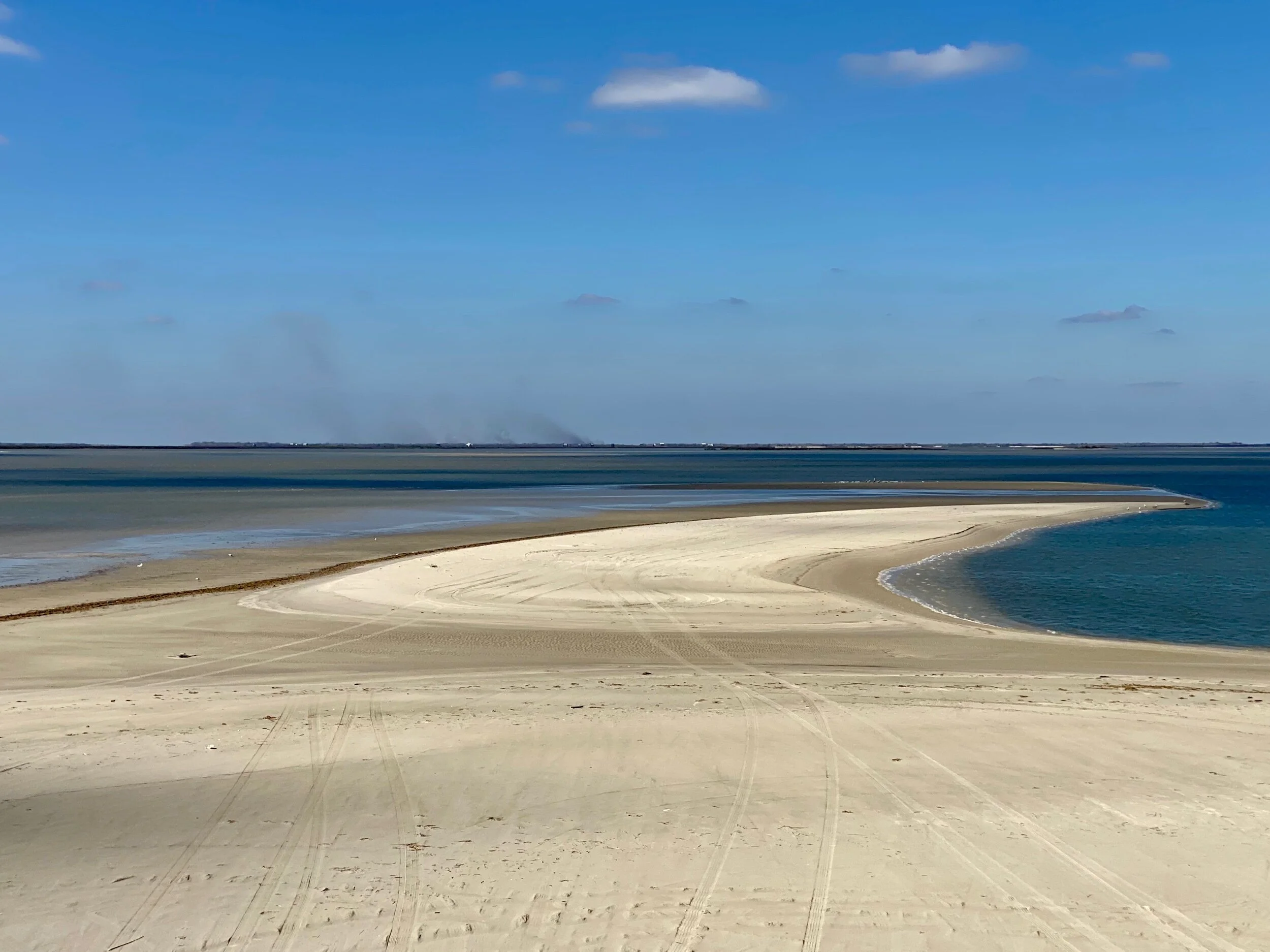
On the way to Freeport, Texas. We learned later the smoke in the background is from a Dow Chemical plant that removes magnesium from sea water.
Our trip continues to be an extraordinary exploration of exquisite natural landscapes, occasional encounters with wildlife (dead and alive), great conversations with diverse and friendly people, navigating delightful and terrifying roads, dealing with sublime and challenging weather, and periodic confrontations with seedy and startlingly ugly industrial landscapes.
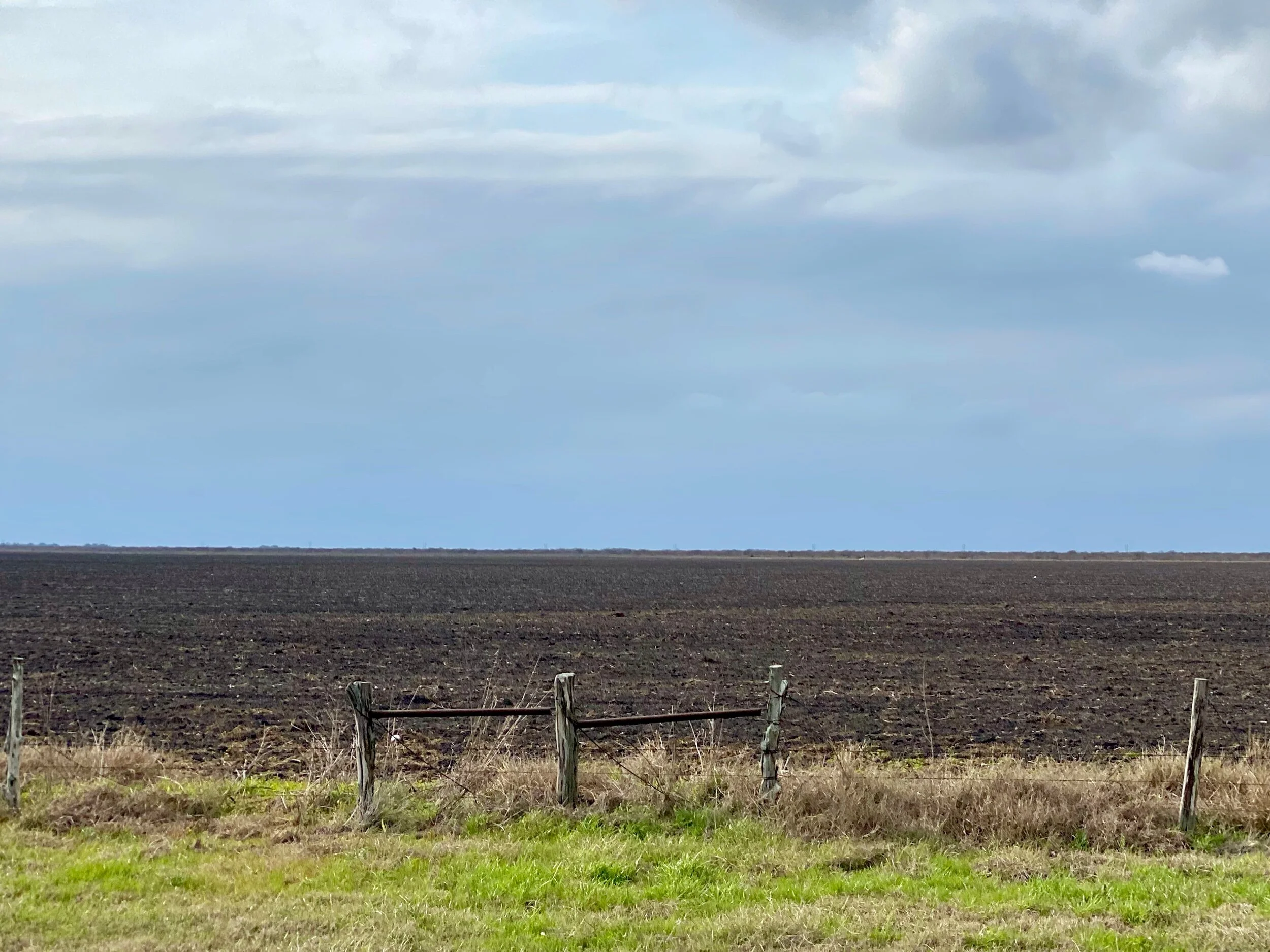
Texas is definitely big sky country, and southeastern Texas is as flat as a pancake on a hot griddle.
Perhaps we can borrow from Dickens, and instead of symbolic cities substitute citadels, or communities of people who live inside of self-imposed walls. Like any citadel that is protected from others, we can only see what’s inside, and have no idea of what’s on the outside.
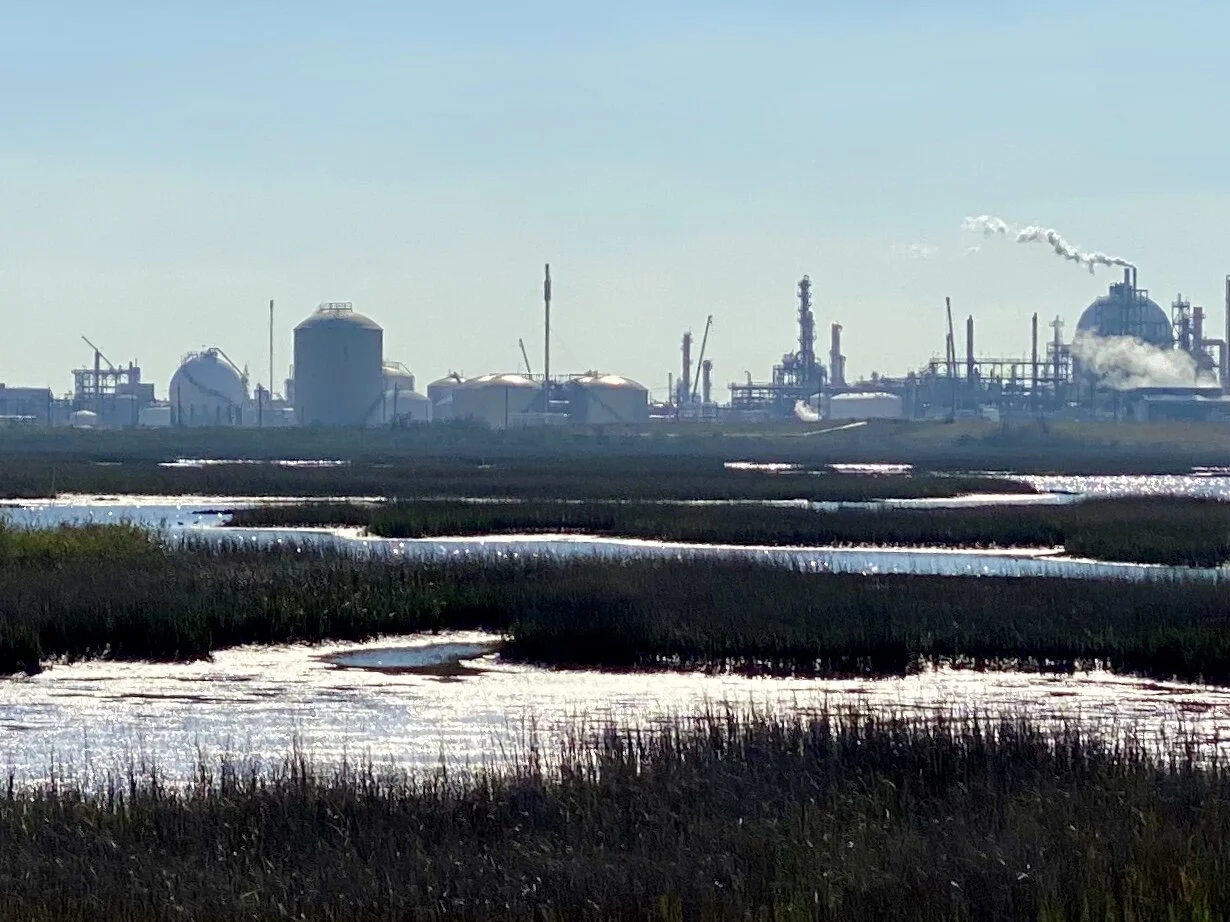
The Dow Chemical Plant near Freeport is situated just above the Intercoastal Waterway on a vast marsh.
In a way, Fox News and CNN are the storytellers for two distinct narratives that reflect two separate citadels: urban and rural America. Our cities are the center of our intellectual, artistic, entertainment and media capitals. Our rural areas - especially evident down here in southeastern Texas - provide access to our natural environments, produce our food (and also increasingly produce electricity through wind-power on the same land), and also extract and move our oil and gas providing our cities with both food and energy. Consequently, they also are the sites for some of our most polluting, dangerous and economically critical industries.
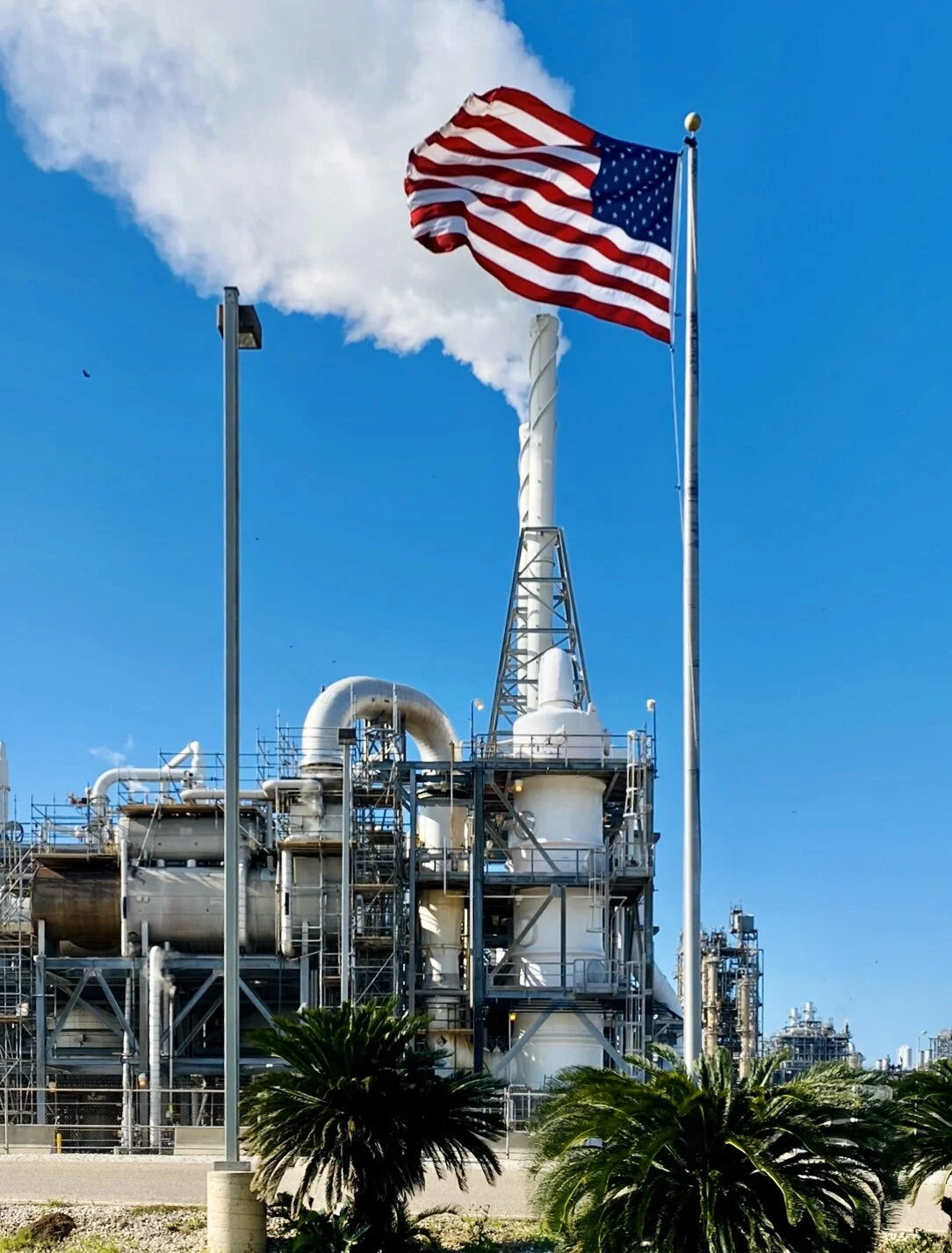
A close up shot of the Dow Chemical plant in Freeport. Locals say this is one of the largest chemical plants in the world.
As I mull over what we are encountering, I find myself thinking the challenges on the Louisiana and Texas coastlines result in a mixed landscape not unlike our home town of New York City. There’s an abundance of both beauty and squalor, and avoiding either one gives visitors an incomplete understanding.
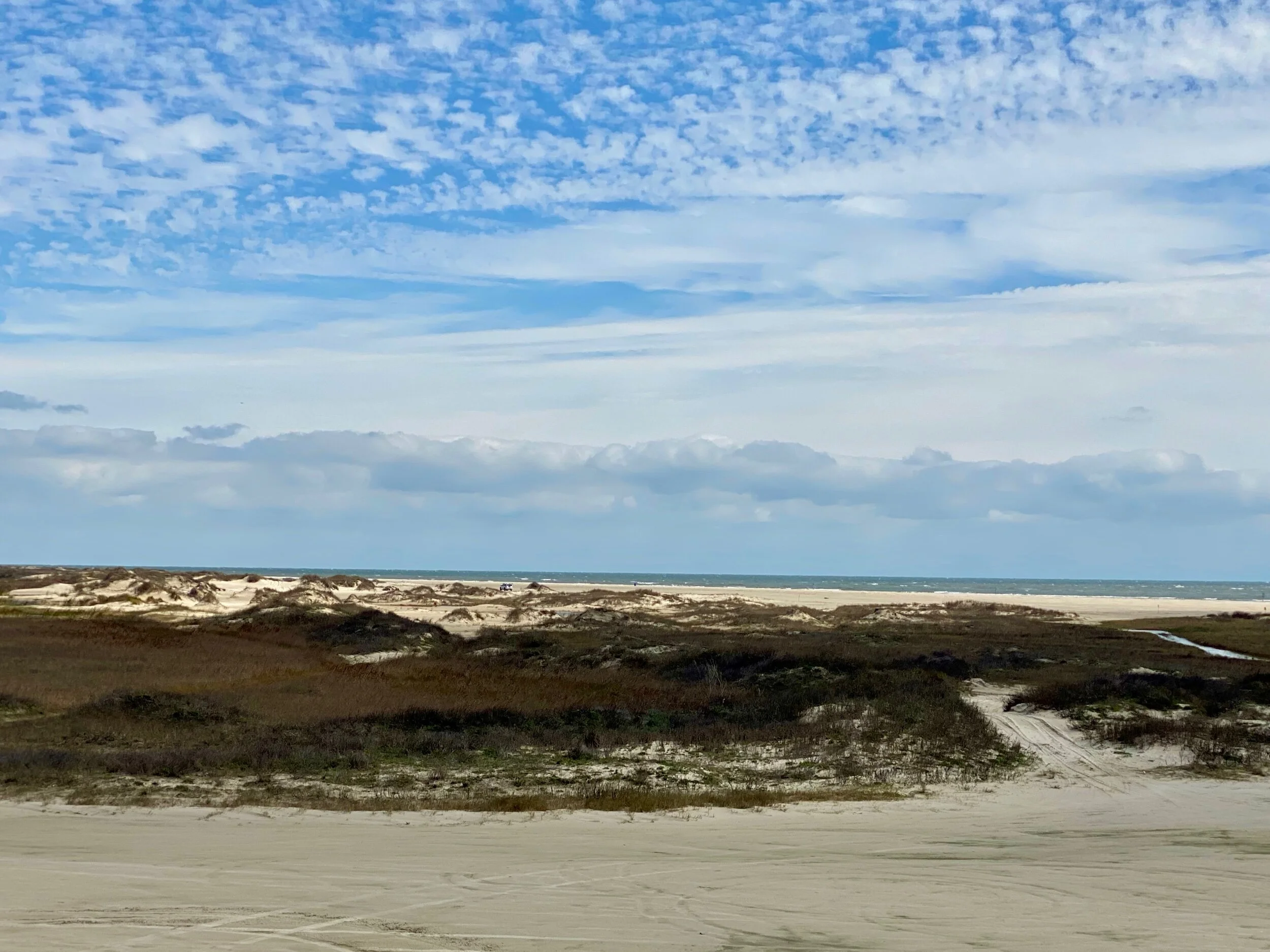
View from the San Luis Pass-Vacek Toll Bridge, which spans San Luis Pass into Brazoria County, Texas.
Clearly, I love the natural beauty of this coastline and its inland marshes, farms, and woodlands. But the story told through the industrialization of the Gulf Coast sticks in my craw. As a northerner, I’m struck by my own complicity in a type of NIMBY (Not in my Backyard) reality. I enjoy living in a city that has (with some exceptions in poorer neighborhoods in the outer boroughs) enjoyed increasingly cleaner air and water over the past several decades through stricter environmental regulations and a shift in focus from industrial production to digital technology.
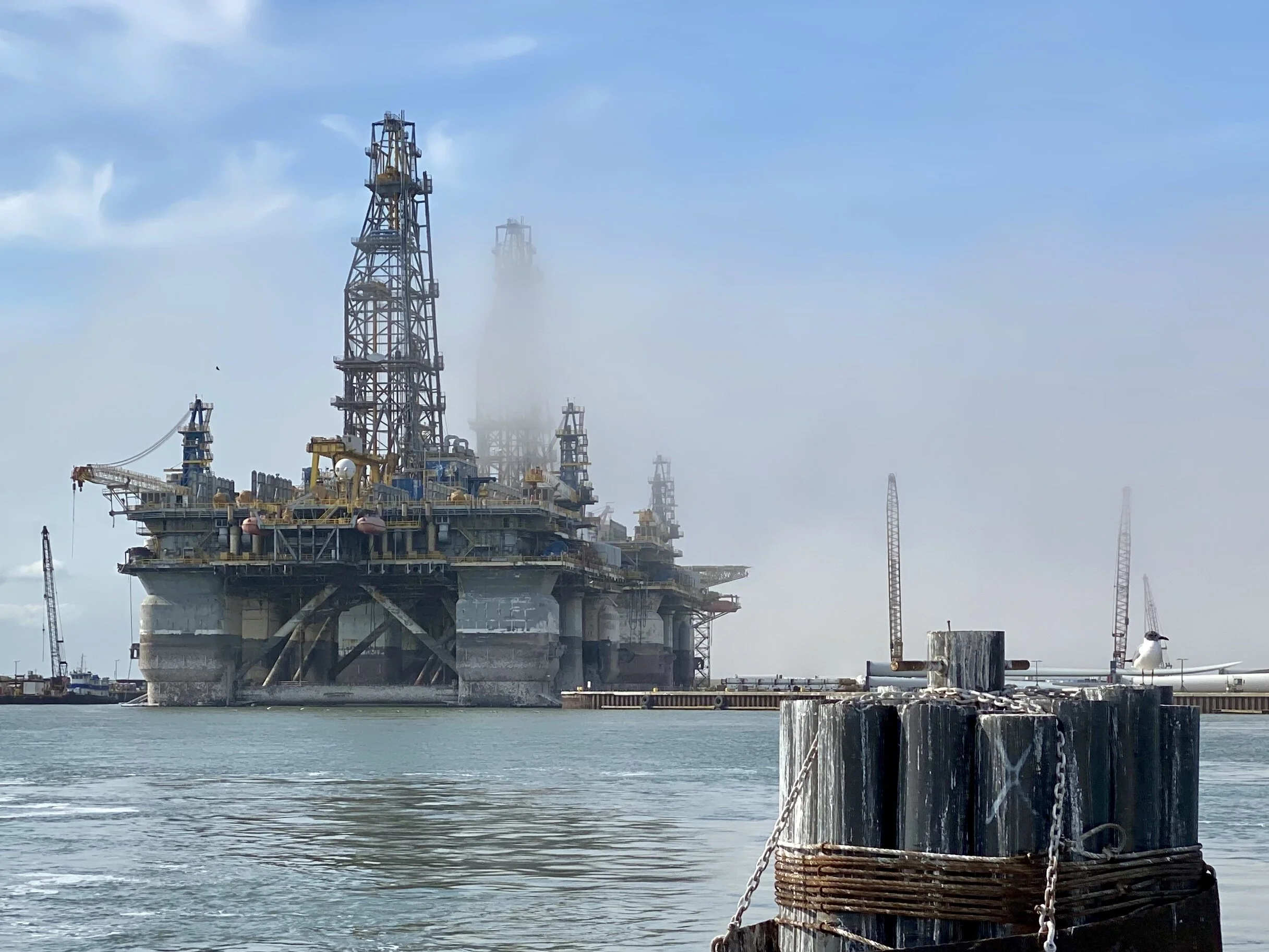
Temporary oil derricks next to the Corpus Christi shipping channel. The local community was told they would be there for six months, but are still there after almost 3 years. And it’s a big bone of contention in this community. Picture taken from the Port Aransas Ferry.
Yet, the nasty stuff used in so many of our industrial processes, plastics and household products has to be made somewhere (at least in our current economy), and some of those places are along the Louisiana and Texas coasts. And like all poor and moderately poor neighborhoods, when jobs are at stake the nature and consequences of those industries matter less than the jobs they bring.
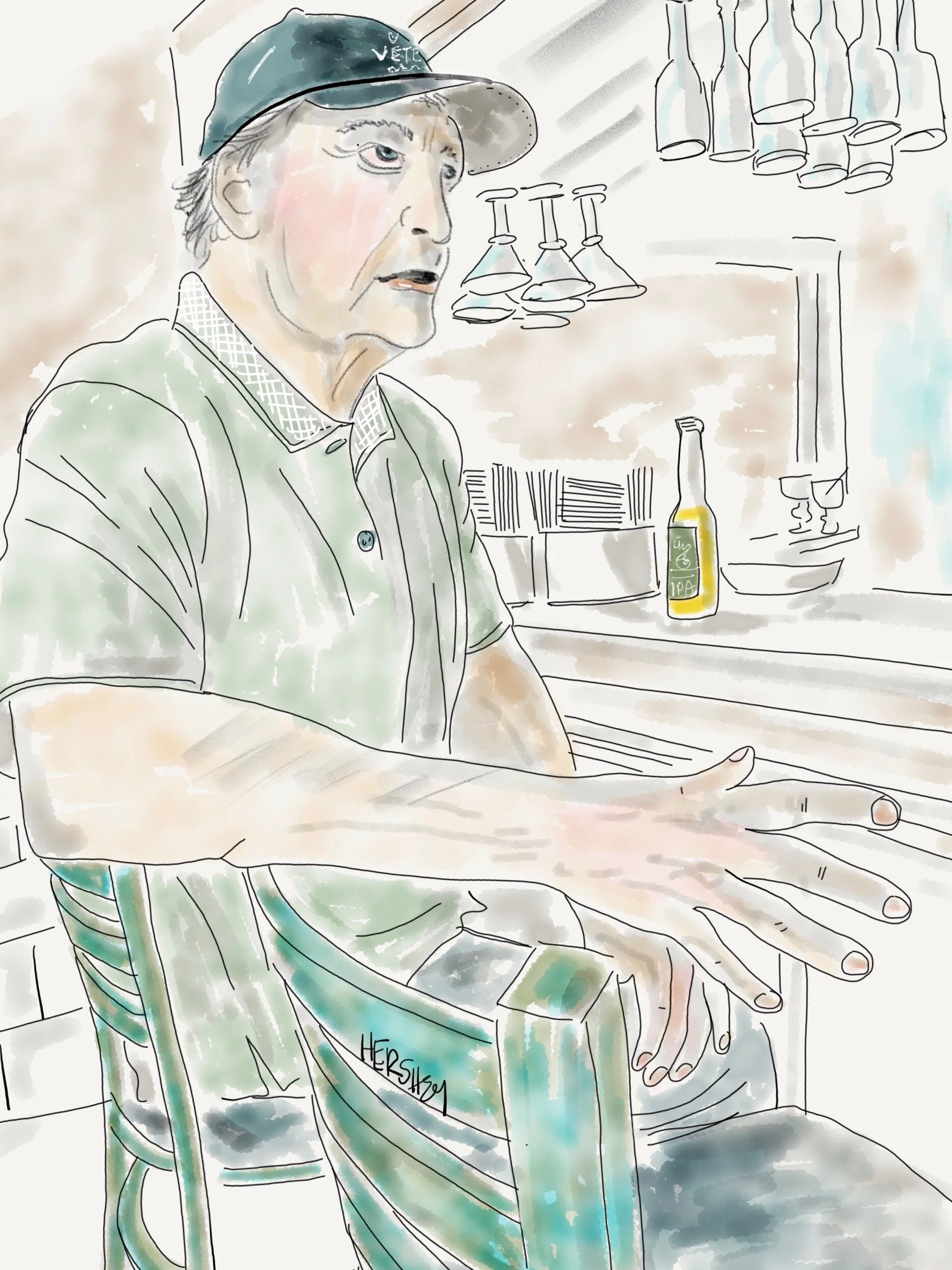
“Well I’ll tell you what—they got the best seafood right on that Seawall”. Drawing by Jennifer Hershey. Follow her on Instagram at deeofo.
Occasionally locals will resist. We met a local at a great Mexican restaurant in Freeport who had worked in most of the nearby plants over his decades long career (he was probably in his 60’s). He did a short stint at the nearby Dow Chemical plant, but didn’t stay long. The plant officials said it was safe, but he told us that it sure didn’t seem safe to him, so he moved on.
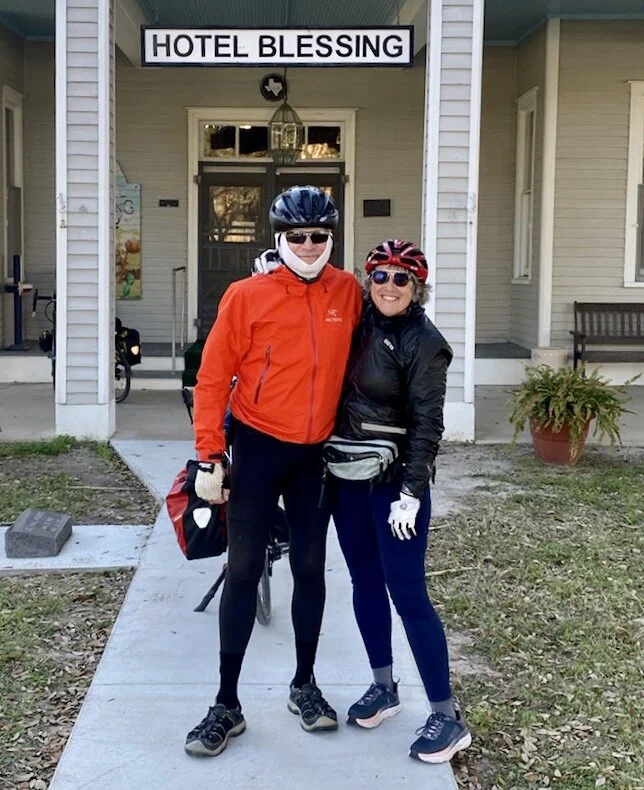
Jenny and I standing in front of the Hotel Blessing.
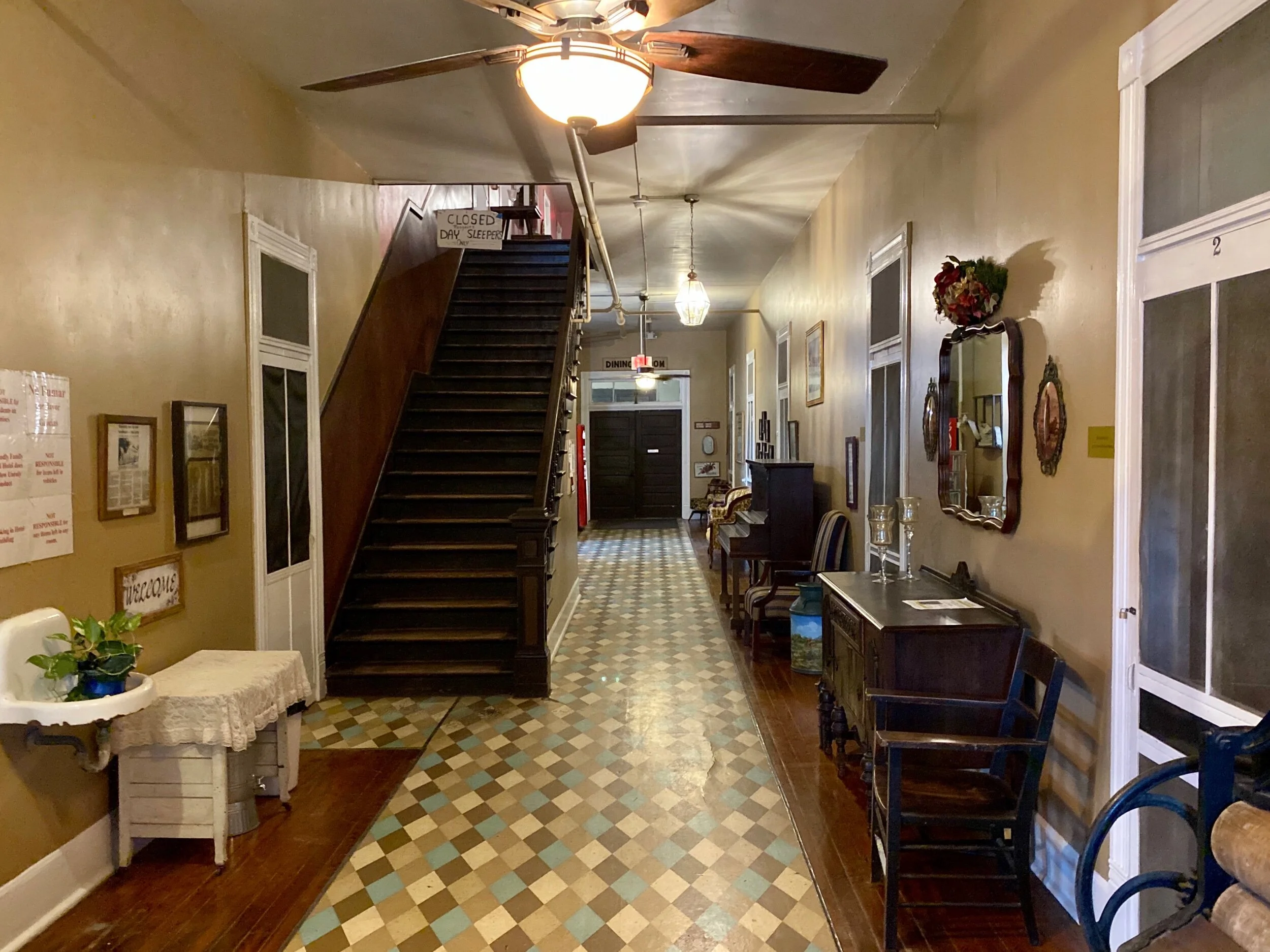
The downstairs interior of the Hotel Blessing in Blessing, Texas, population 861. Blessing was named in the early 1900’s out of the gratitude for local agriculture, railroad and coastal development.
Yet, lots of folks down here are glad for all that Texas has to offer. I’ve heard more than one person boast about being “Texas born and bred”. And even one town has named itself after its good fortune. By sheer coincidence, we found ourselves needing to stop at the one hotel about the right distance between Freeport and the Corpus Christi area (we couldn't stay on the coast because the old coast road was washed out by Hurricane Ike). It’s called Hotel Blessing, named after the town of Blessing.
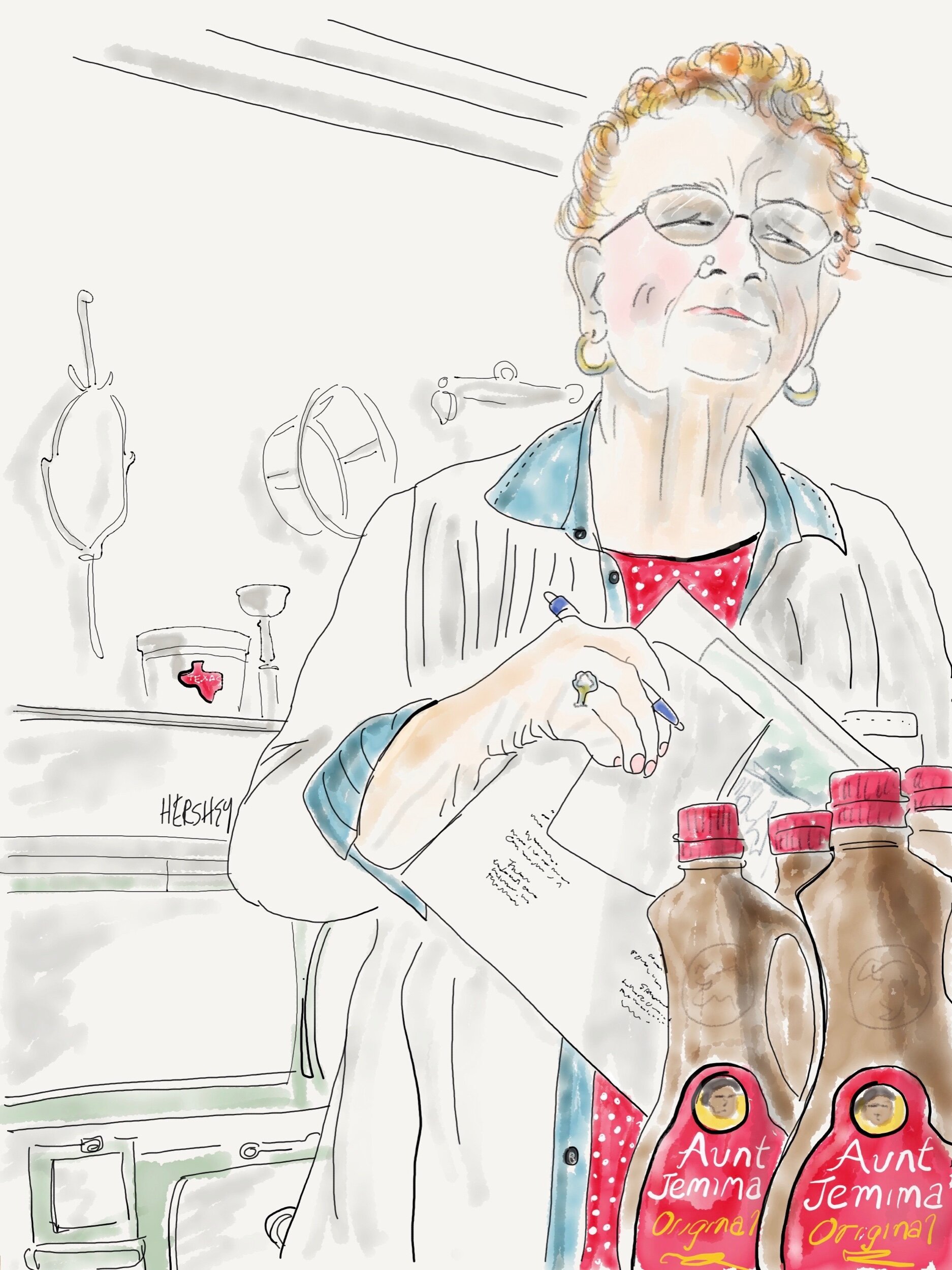
“Oh I’ve been doing this for years. If they keep coming....I’ll be here”. Drawing of Helen Feldhousen by Jennifer Hershey. Follow her on Instagram at deeofo.
We didn’t know what we were in for at the time, but after a restless night at the Hotel (we could hear everything - yep, everything - going on during a busy Valentines Day evening) we went to breakfast at the Hotel Blessing Coffee Shop. We were greeted by the intrepid Helen Feldhousen and a cast of other folks - some of whom who show up in the Texas “Bucket List” broadcast below.
I am thinking quite a bit about the concept of “the tragedy of the commons”. This is a situation where individual users, acting independently according to their own self-interest, behave contrary to the common good of all users by depleting or spoiling the shared resource through their collective action. “Not in my Backyard” (NIMBY) actions are related conceptually. For example, my own life is made better by situating so many large petroleum chemical and oil and gas plants so far away from large cities on either the west or the east coasts. At the same time, the people of southeastern Texas gain through employment opportunities where the only other options would be tourism or agriculture. Yet, their very livelihoods are put at risk by the significant carbon pollution of the industrial activity here, because it contributes to the extreme weather that may ultimately destroy those plants, along with their jobs.
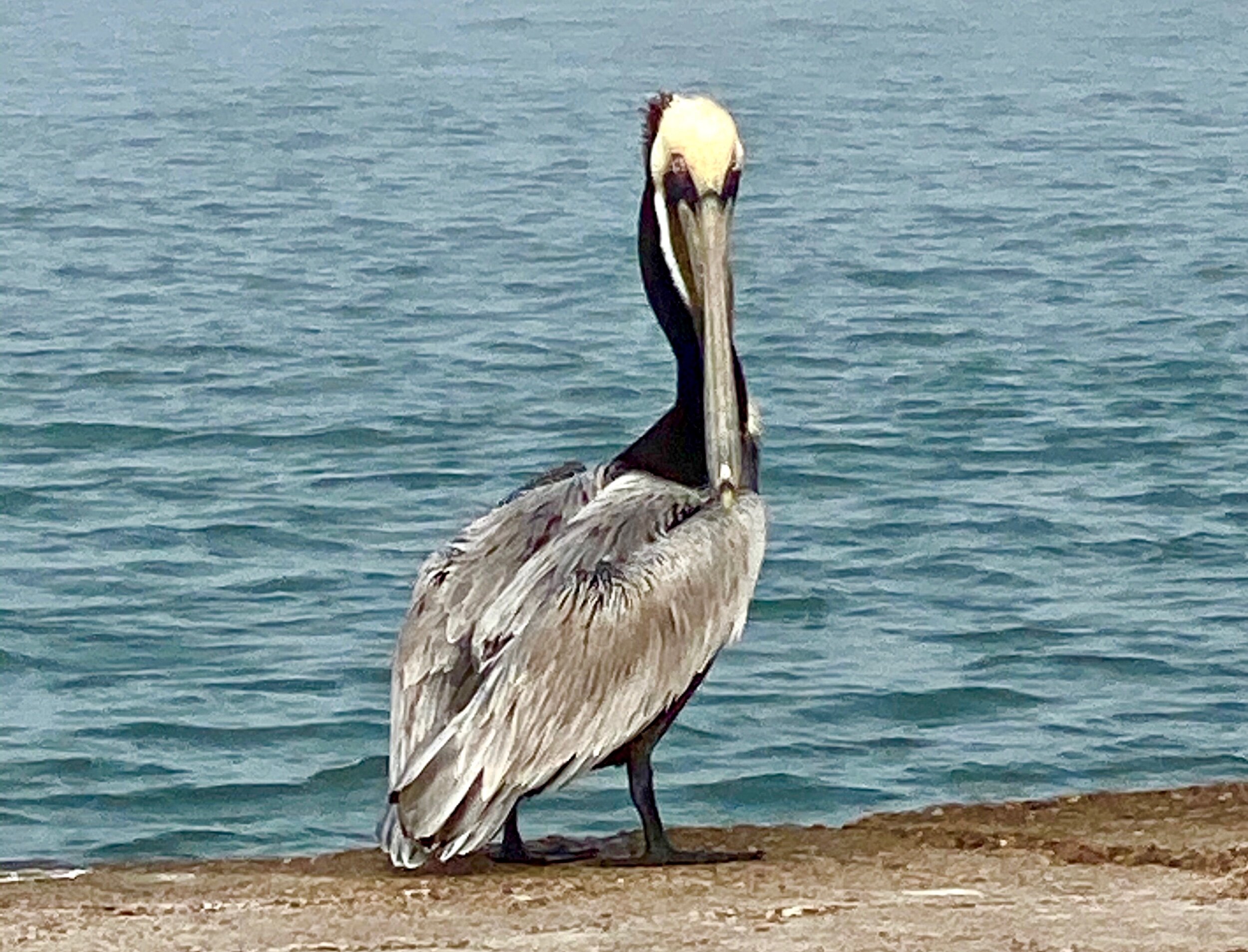
A very mellow Pelican stares us down on the beach at Port Aransas.
Additionally, citizens around the world gain nothing by the carbon these plants and their related industries have added to our atmosphere. It’s worth contemplating that although America contains 5% of the worlds population, we are responsible for 25% of the carbon put into the atmosphere since the dawn of the industrial revolution. And although China is now the world’s greatest carbon polluter, we remain the world’s greatest carbon emitter on a per capita and country basis combined. That fact alone suggests that our way of life is a big part of the tragedy of the commons that climate change is extracting. It's clear that staying with the status quo is the worst thing we can do. It’s time to step up to a different plate.
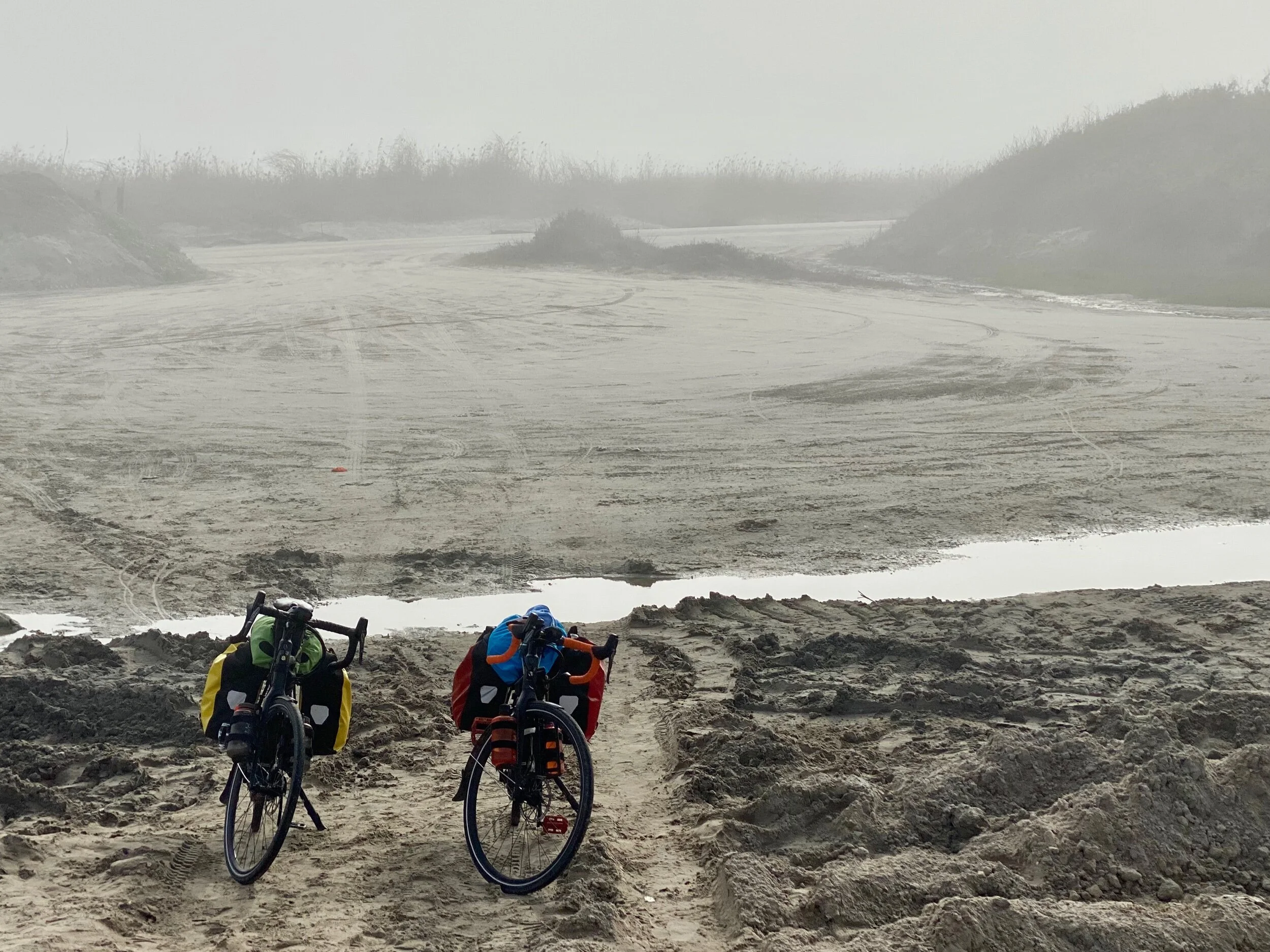
Our bikes in fog at the beach on Port Aransas Beach, Texas.
A few of you told me you missed the links to the Garmin maps showing our journey day by day, so I include links below to our entire trip to date. If you don’t have a Garmin account you will have to create one to see them (it's worth it if you're a biking geek or map lover).
1) New Orleans Road Cycling, 2) New Orleans Road Cycling, 3) Donaldsonville Road Cycling, 4) Morgan City Road Cycling, 5) St Mary Parish Road Cycling, 6) Abbeville Road Cycling, 7) Lake Arthur Road Cycling, 8) Cameron Parish Road Cycling, 9) Port Arthur Road Cycling, 10) Galveston Road Cycling, 11) Freeport Road Cycling, 12) Matagorda County Road Cycling, 13) Refugio Road Cycling, 14) Today we are in Port Aransas, Texas, just slightly southeast of Corpus Christi, Texas.
Thanks for reading! More to come…
All photos, unless credited or otherwise noted, are copyrighted property of the blog post author.
Illinois to New York City, Post 2
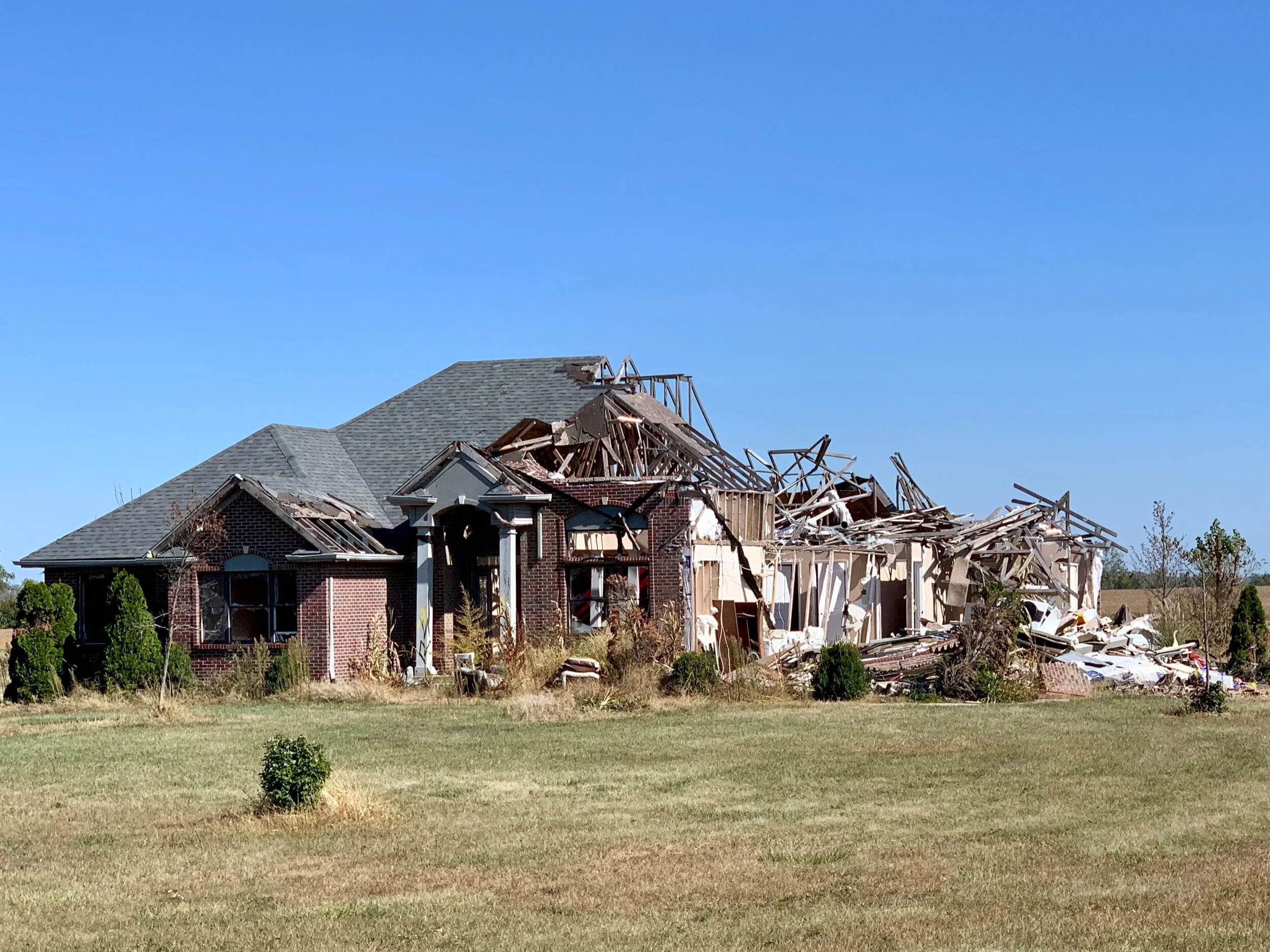
Remains of a home in Brookfield, Ohio, in a populated suburb after a tornado touched down in June of 2019. When we saw it, nearby homes were fine and people were going about their business.
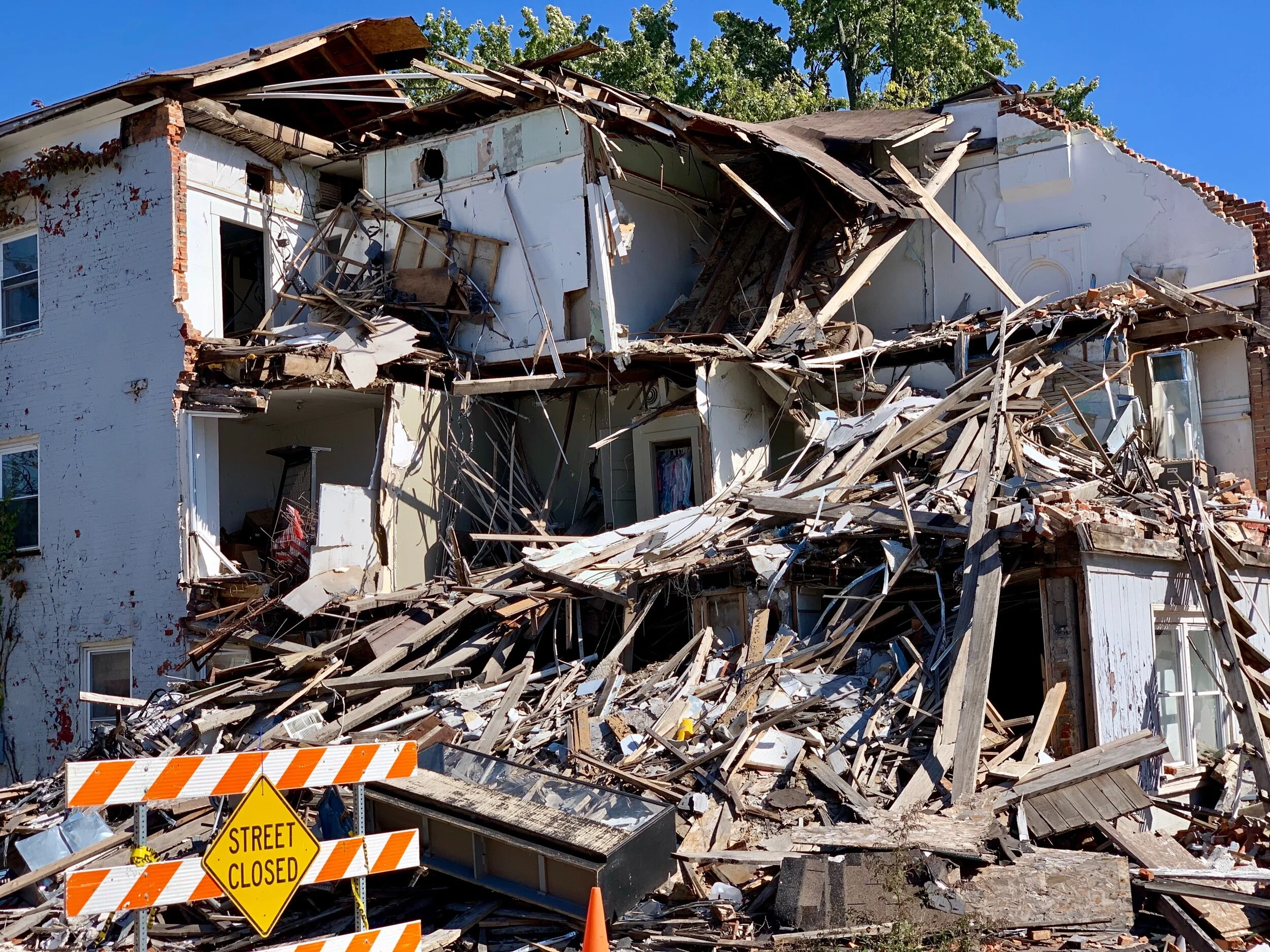
This house is on Main Street in Cambridge City, Indiana. It was intact until July of this year, when it collapsed. A local resident we talked to didn’t know why.
Hello from South Pittsburgh on the historic GAP (Greater Allegheny Passage) Trail. We biked here yesterday from Steubenville, Ohio, an old steel and coal town about 25 miles north of historic Wheeling, West Virginia. The night before we were near Morristown, Ohio, in the rolling western foothills of the Alleghenys.
Both yesterday and today we encountered numerous hills, a few with grades as steep as 15 degrees. But what goes up also comes down, so we enjoyed some great downhill runs. Although it’s grey and rainy today, the past few days have been sunny and warm, and the hill country has been spectacular.
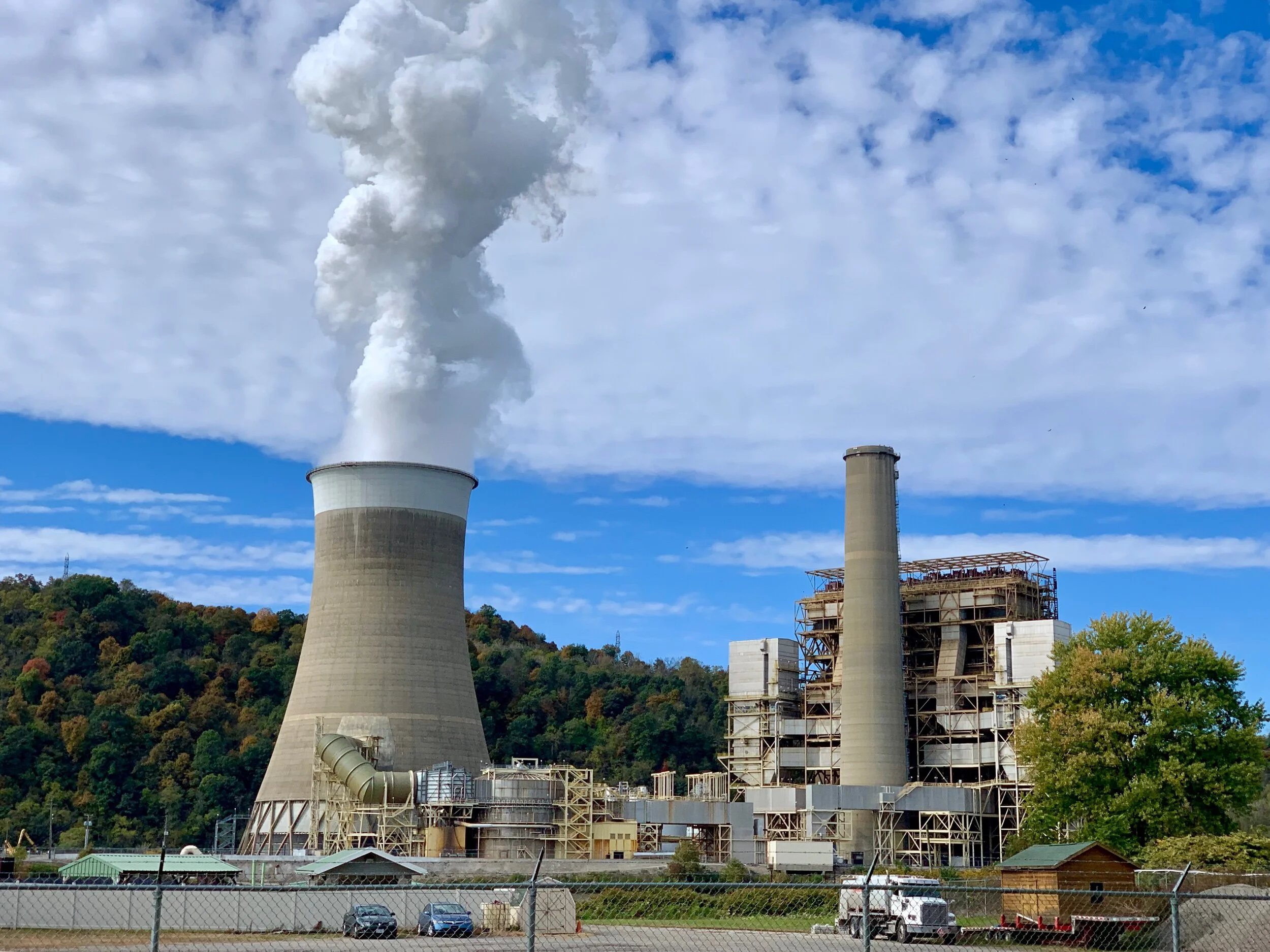
The Cardinal Operating Company, a plant north of Wheeling where coal is made into coke for steel manufacturing. In the 1990’s there were over 100,000 jobs in the steel industry in this valley; now there are about 10,000 jobs.
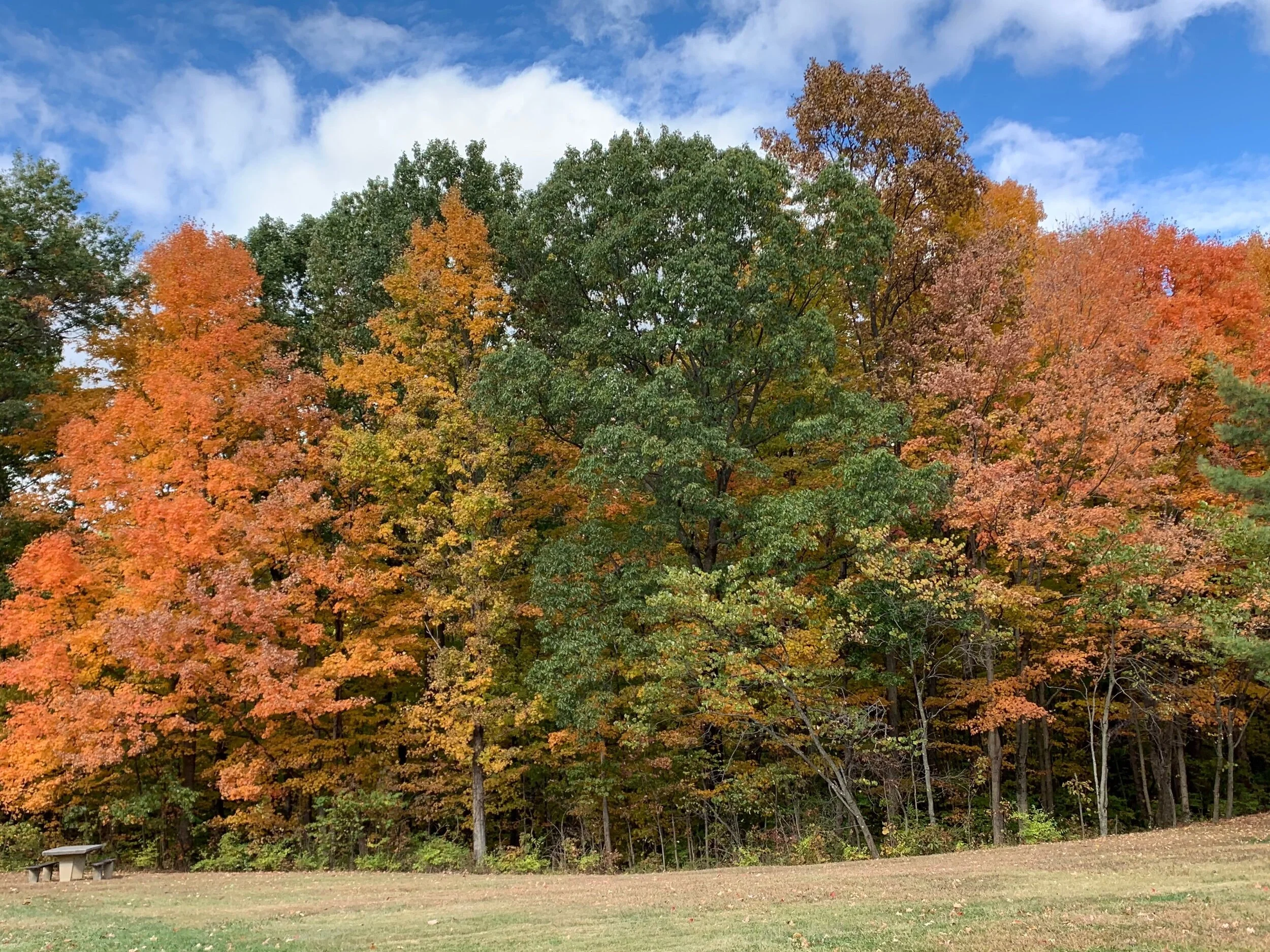
Fall colors on the way.
After some reflection, Jenny and I decided to take the historic GAP bike trail from Pittsburgh, PA to Cumberland, MD, and then a portion of the C&O (Chesapeake and Ohio) Trail before heading up to Lancaster, PA, on our way back to New York City. Today we are resting and waiting out a rainstorm near the western end of the trail. We chose this alternate route instead of the northern ACA Route to NYC because it is less climbing (by about 20,000 cumulative feet)! I’ve done this route before, and remember it very fondly, so I'm looking forward to sharing it with Jenny. We have currently traveled over 800 miles total, and tomorrow we will start the 150 miles that make up the GAP trail.
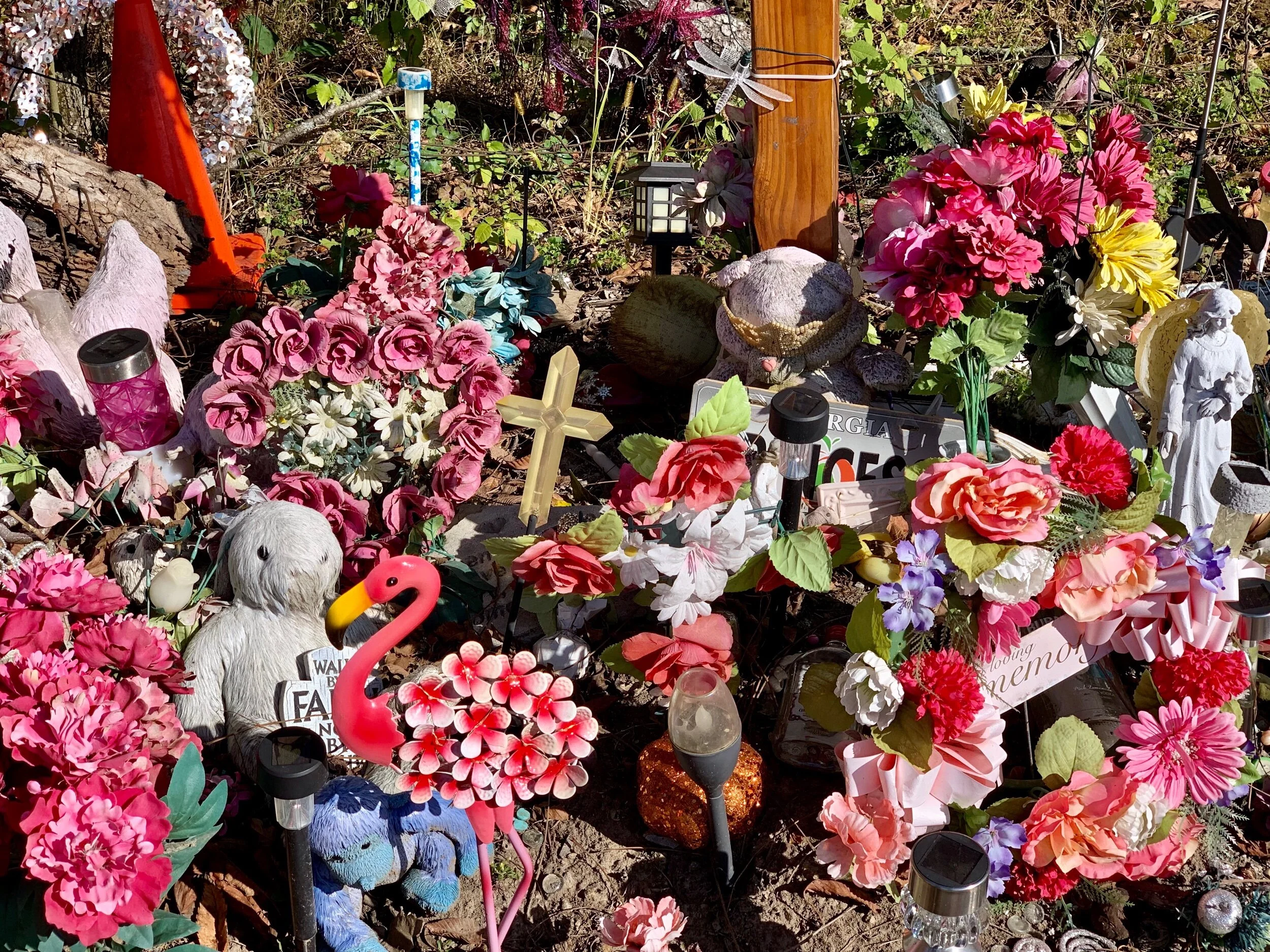
This memorial is for 16-year -old Olivia Starrwallace, who ran off the road and into a tree in eastern Indiana while driving near the National High School (which she attended).
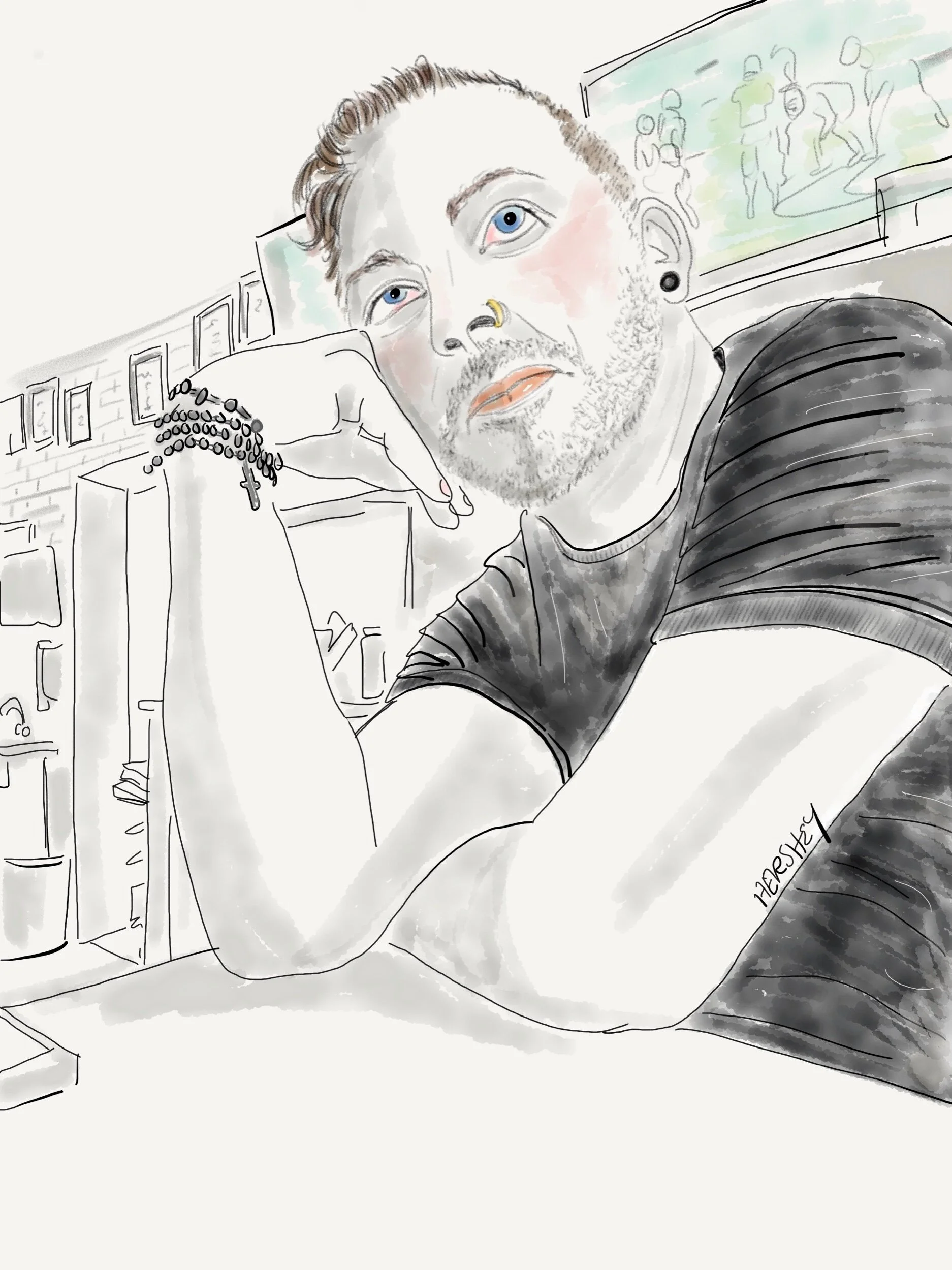
Jenny’s drawing of our bartender Dennis at the Pike 40 Bar and Grill in Morristown , Ohio. You can see more of Jennifer Hershey's work on Instagram at “deeofo”.
While such a distance is not new for me, I must compliment my biking partner Jenny. She’s never biked this far, and she has done so with great joy and resolve. She’s tackled intense hills, aggressive and threatening traffic, poor road surfaces, lousy and non-existent shoulders, cold and rain - all without losing her cool or diminishing her spirit.
A tired cyclist rests after lunch.
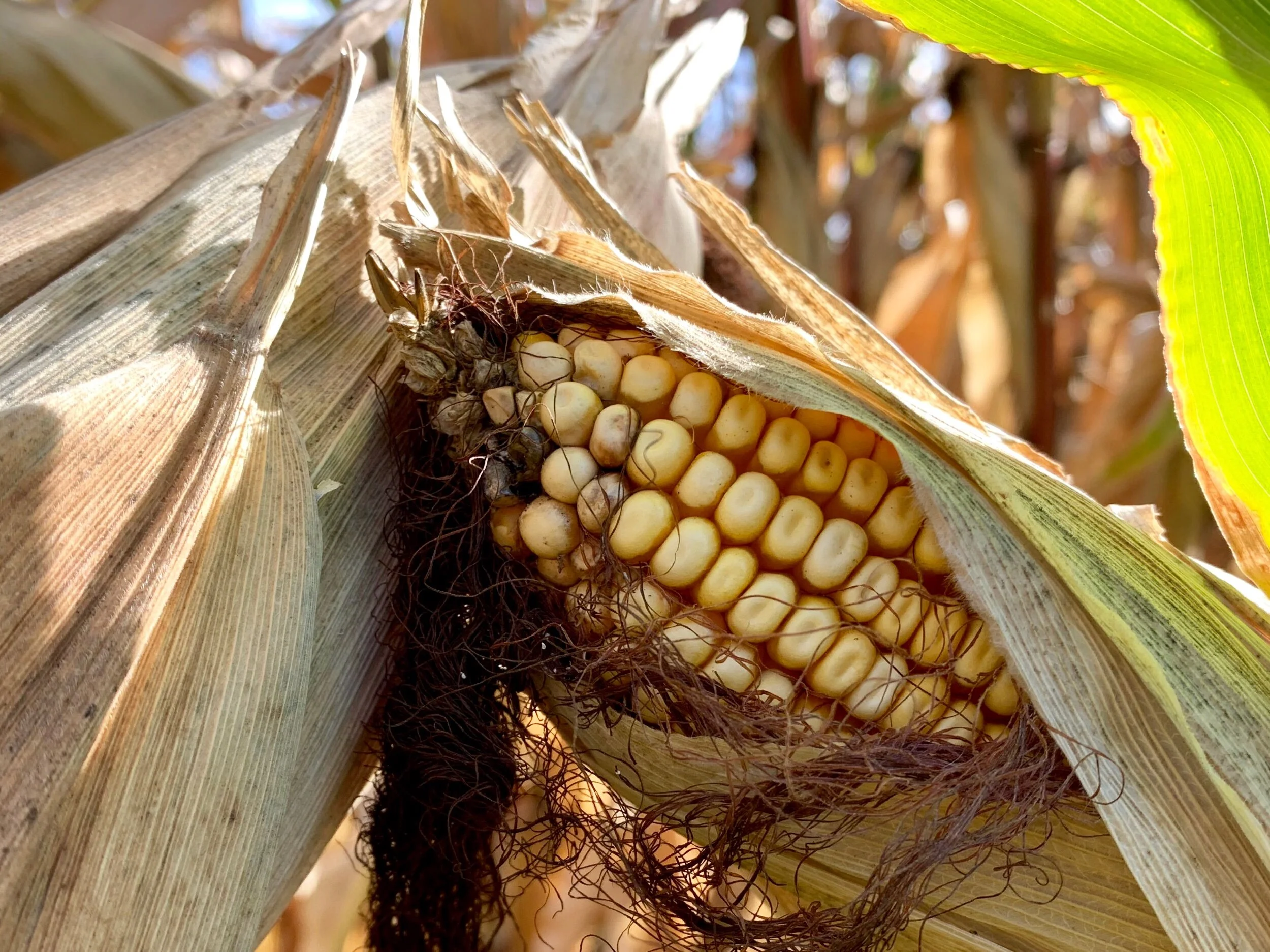
Locals tell us we’re in Trump country, and we’ve definitely seen a few 2020 campaign signs. The TV is on in our motel. It’s hard to imagine the nation isn’t focused entirely on the impeachment investigation and the Turkish invasion of Syria. But frankly, those issues are not the topic of conversation in most of the places we’ve visited. The Americans we are encountering seem more focused on the basic logistics of making their daily lives work.

Earlier today I found myself wondering what the connection to the outside world was like in small midwestern communities during WWII? Was our nation so focused on winning the war and supporting our troops that you could feel history being made even in the smallest of towns? Did the overwhelming majority of citizens feel like their daily actions were contributing to the creation of a better world?
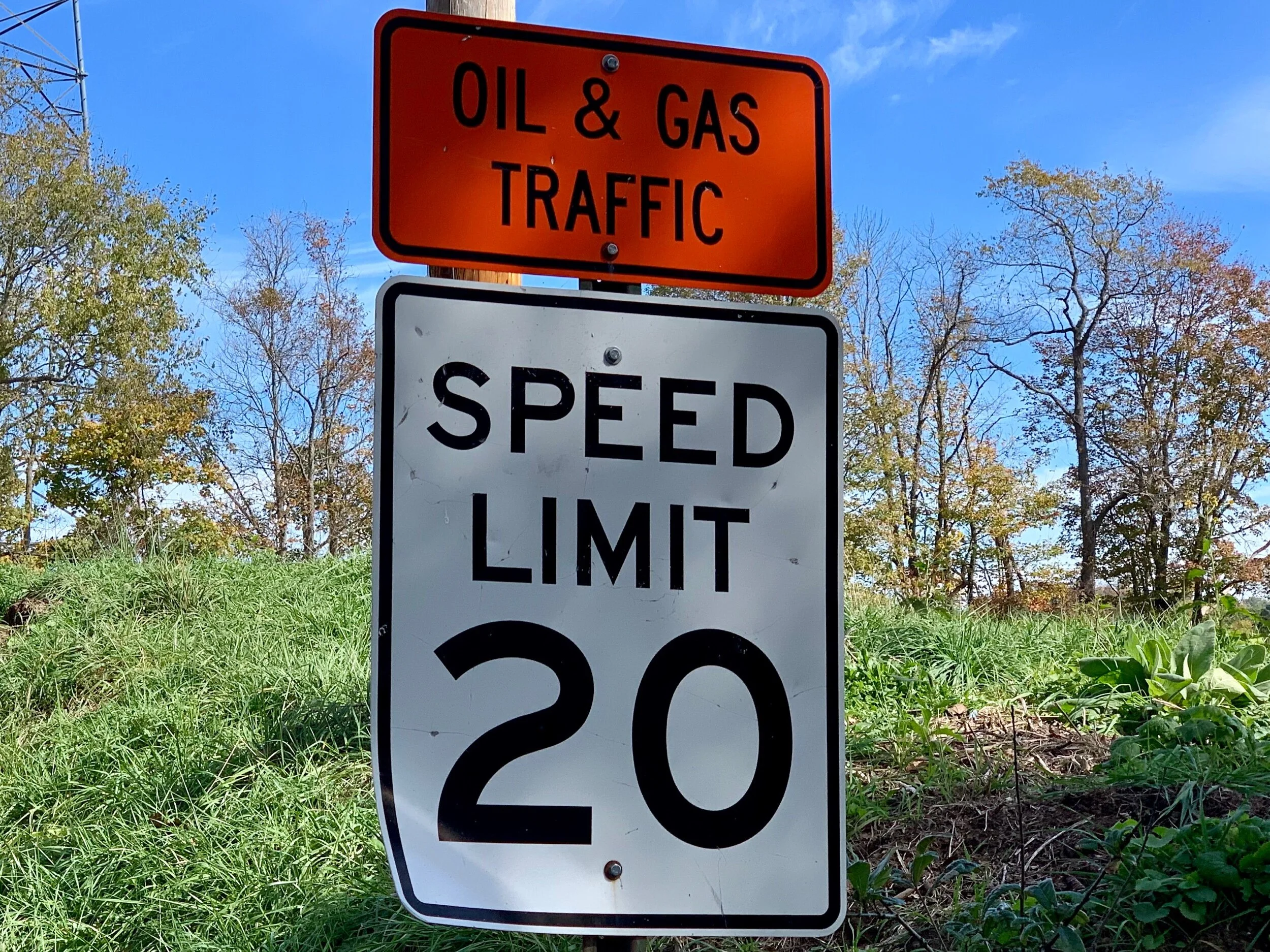
Some new driving jobs have been created in the Ohio River Valley in the last decade as fracking has expanded. That said, isn’t all traffic (except for electric vehicles powered by renewables) essentially “oil and gas traffic”?
Or did life in rural America then seem more like now, when the unrelenting noise of the outside world seems so far away? Perhaps those who had a close relative involved in the war effort felt involved, much like farm families further to the west might feel more concerned about climate change now, after experiencing several very tough years of extreme weather. Yet, I don’t know how to reconcile the sense of urgent hopefulness I felt last month in New York City as I participated in the Youth Climate March, attended numerous panels at the ever busier annual Climate Week, and followed the extraordinary appearances of Greta Thunberg at the United Nations Climate Summit. It all seemed so significant, and a signal of shifting perspectives.
But in the Ohio River Valley, there’s still plenty of pain (and anger) over decades of economic losses. Worrying about climate change almost seems like a luxury… until one thinks soberingly about an even harsher future. So, as always, lets keep our resolve to change our trajectory. The future is waiting to be invented.
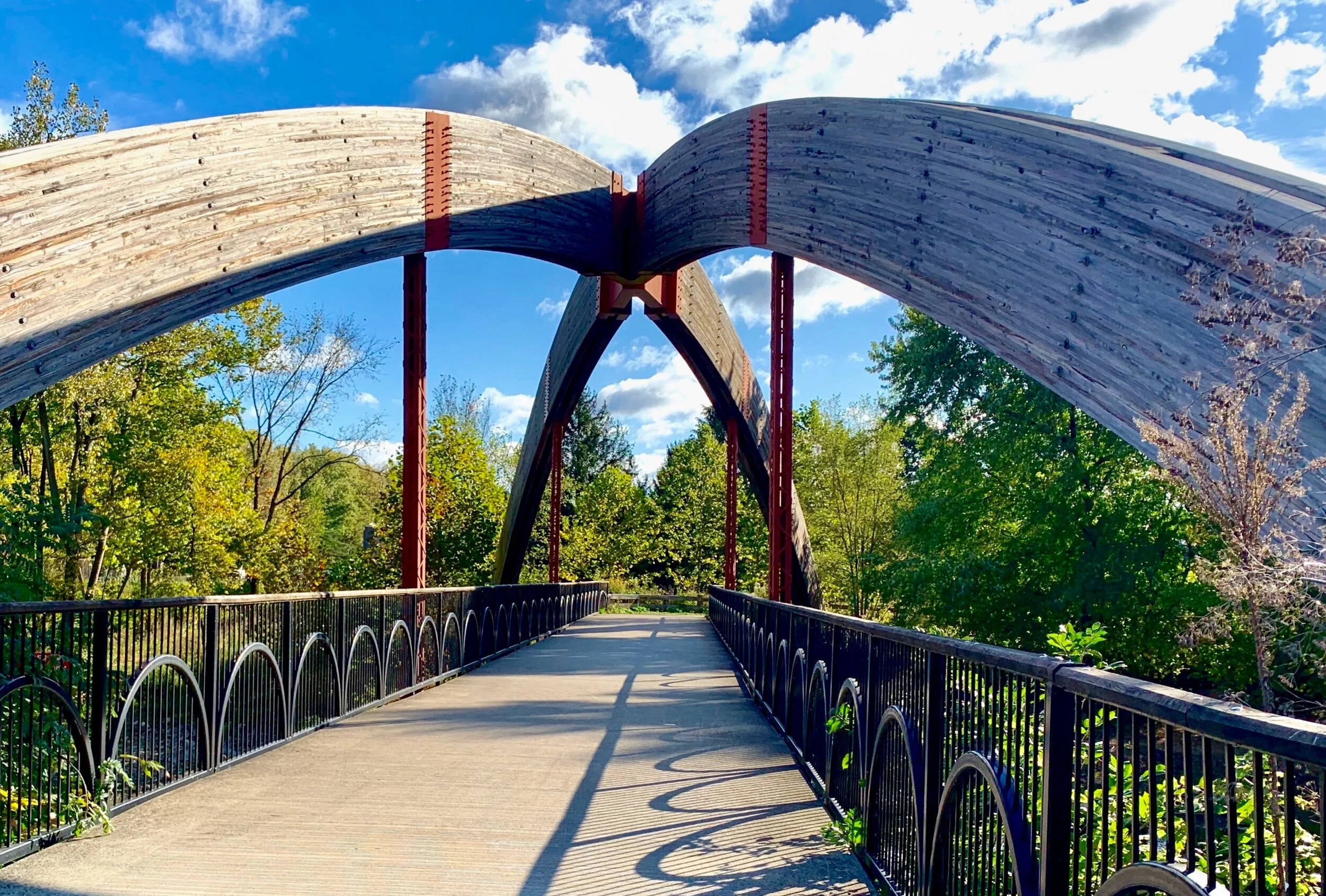
A bridge to another bike path near OSU in Columbus, Ohio.
Speaking of a bright side, we have encountered many long, beautiful and very well maintained cycling trails. About 20 miles west of Dayton, Ohio, we picked up a rural “Rail to Trail” cycling trail, and with a few exceptions of unfinished sections, followed the trail until we left Columbus, about 90 miles later.
The Olentangy River Trail makes its way through much of Columbus, including this lovely park.
This was a remarkable and incredibly pleasant run. We encountered another long section of cycling trail later the same day from Granville past Newark, Ohio, making our total run on trails well over 120 miles. Then, we enjoyed another 20 miles of trail along the scenic Ohio River out of Wheeling, West Virginia, as we headed north to Steubenville, Ohio.
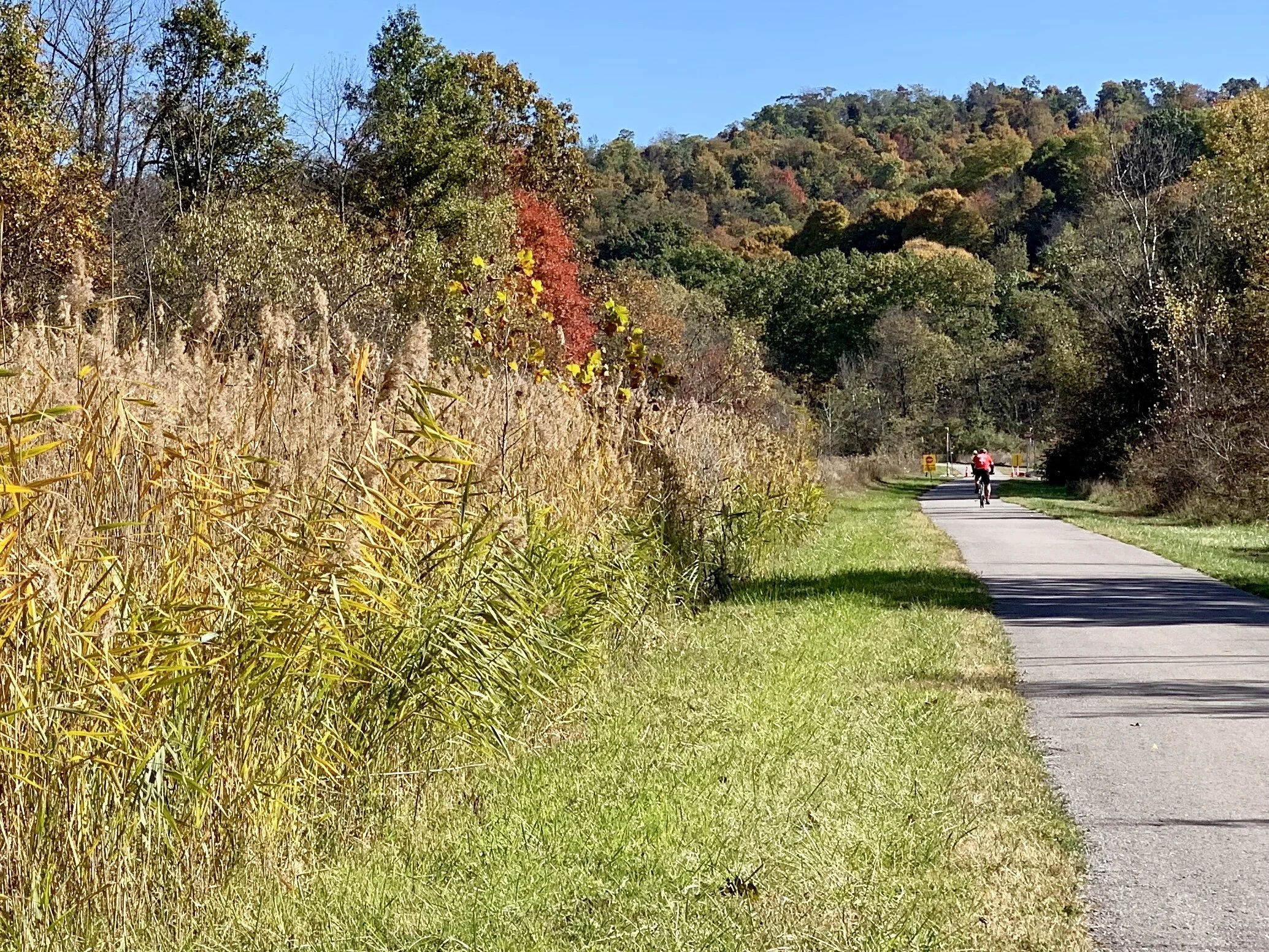
Finally, we rode the Panhandle Trail most of the way into Pittsburgh, capping off a series of great trails through much of central and eastern Ohio.
So we are happy and content, and looking forward to another stretch of dry weather once the current storm passes over. The GAP trail awaits!
Thanks for reading! More to come…
All photos, unless credited or otherwise noted, are copyrighted property of the blog post author.
Illinois to New York City, Post 1
Soybeans wait for harvesting in Greenfield, Indiana.
Back in the Saddle Again
Greetings from my bicycle! My last blog post was in May, and I apologize to readers who may be curious about my disappearance in rough weather somewhere near Westgate, NV, on a cycling trip from Palo Alto to Salt Lake City.
If you’ve been wondering, you might be pleased to know that I did get back home to New York City. In fact, I spent a great summer there. While there, I wrote a blog about how I got home: backtracking to Reno, skipping my plans for Salt Lake, shipping my bike and flying back to New York City. But alas, I got distracted and never posted it. So much for the best laid plans of mice and men (and me).
Even so, I took a few more photographs in Nevada in May that I think are still worth sharing, even if the trip back to New York no longer seems relevant. I include these because I am fascinated by extreme weather events. They are increasingly part of our lives, and I think there is value in bearing witness to what we see around us. You may remember from my last blog that I was fighting my way through a very unusual rain and snow storm in a part of Nevada that is usually hot and dry in May. Along with many other folks I was surprised and challenged by the inclement weather I encountered. Below are a few more shots from that trip that I’m particularly proud of…
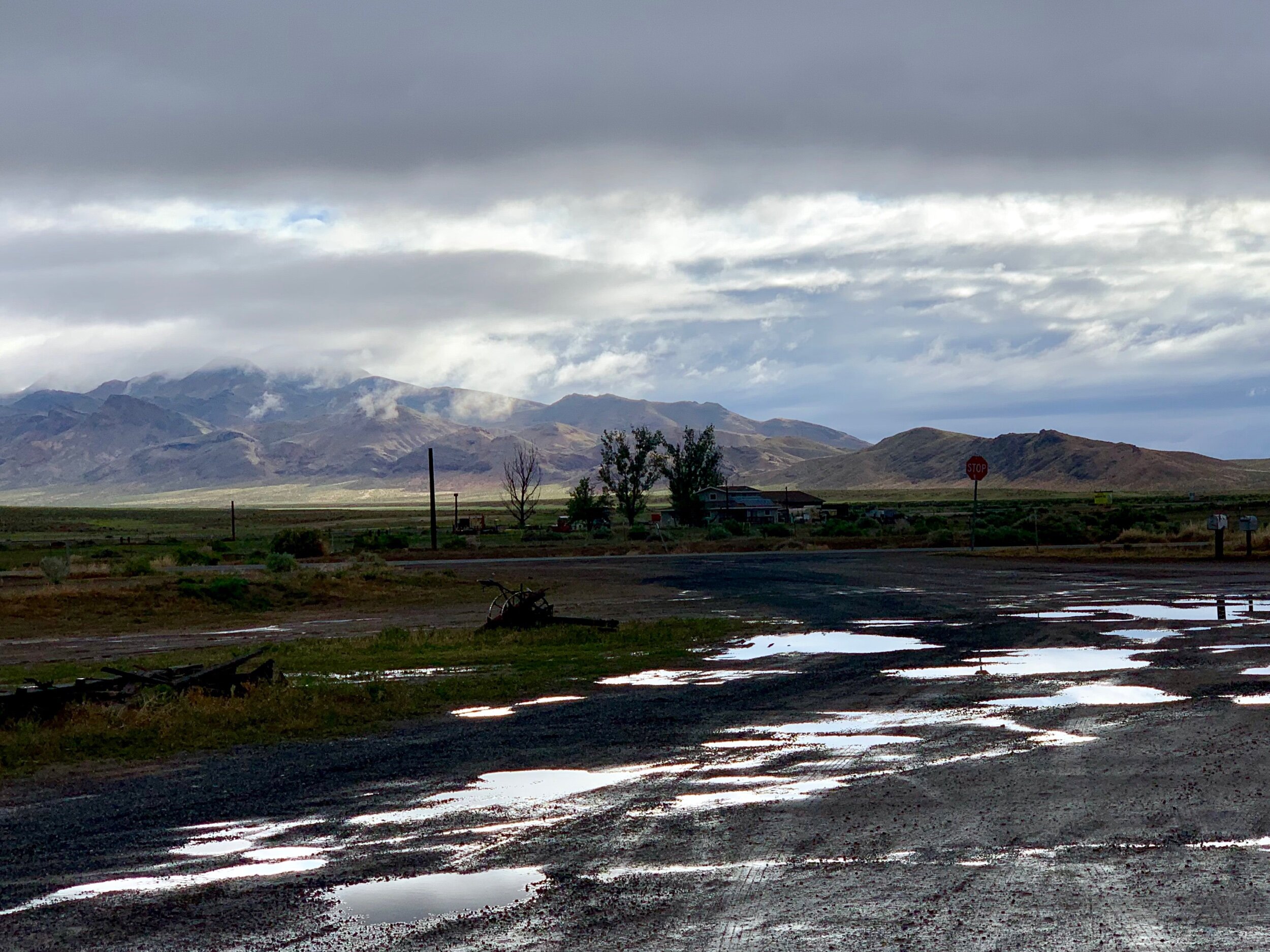
Water in the Westgate Bar parking lot on the day I left in late May, 2019.
Flooded salt flats east of Reno.
Rain clouds above the salt flats.
As the summer progressed, I made plans for future cycling with my friend Jenny Hershey, who had just retired from a 31-year career running building operations for Jujamcyn Theaters on Broadway. A founder of the Broadway Green Alliance, Jenny is both an environmentalist and an avid cyclist. To get our feet wet, we took a car camping/cycling starter trip to New Brunswick, the fabulous Cabot Trail in Cape Breton in Nova Scotia, Prince Edward Island (PEI), and explored traveling together on bikes for multiple days at a time. If you’ve never been there, I strongly recommend cycling in PEI. There are numerous rail to trail conversions that allow cyclists to get everywhere one could want to go. The shoreline is vast and beaches are beautiful. The islanders take great pride in their environment, and they enjoy rich local culture. Prices are reasonable, and the pace of life is remarkably comfortable. At the same time, internet services and other modern amenities are easy to come by. Don’t miss it!
Jenny by the roadside in PEI. She is wearing a mourners ribbon signifying the period of shiva after the death of her mother Merle Weisman.
Michael gesturing toward the Northumberland Straight in Cape Breton.
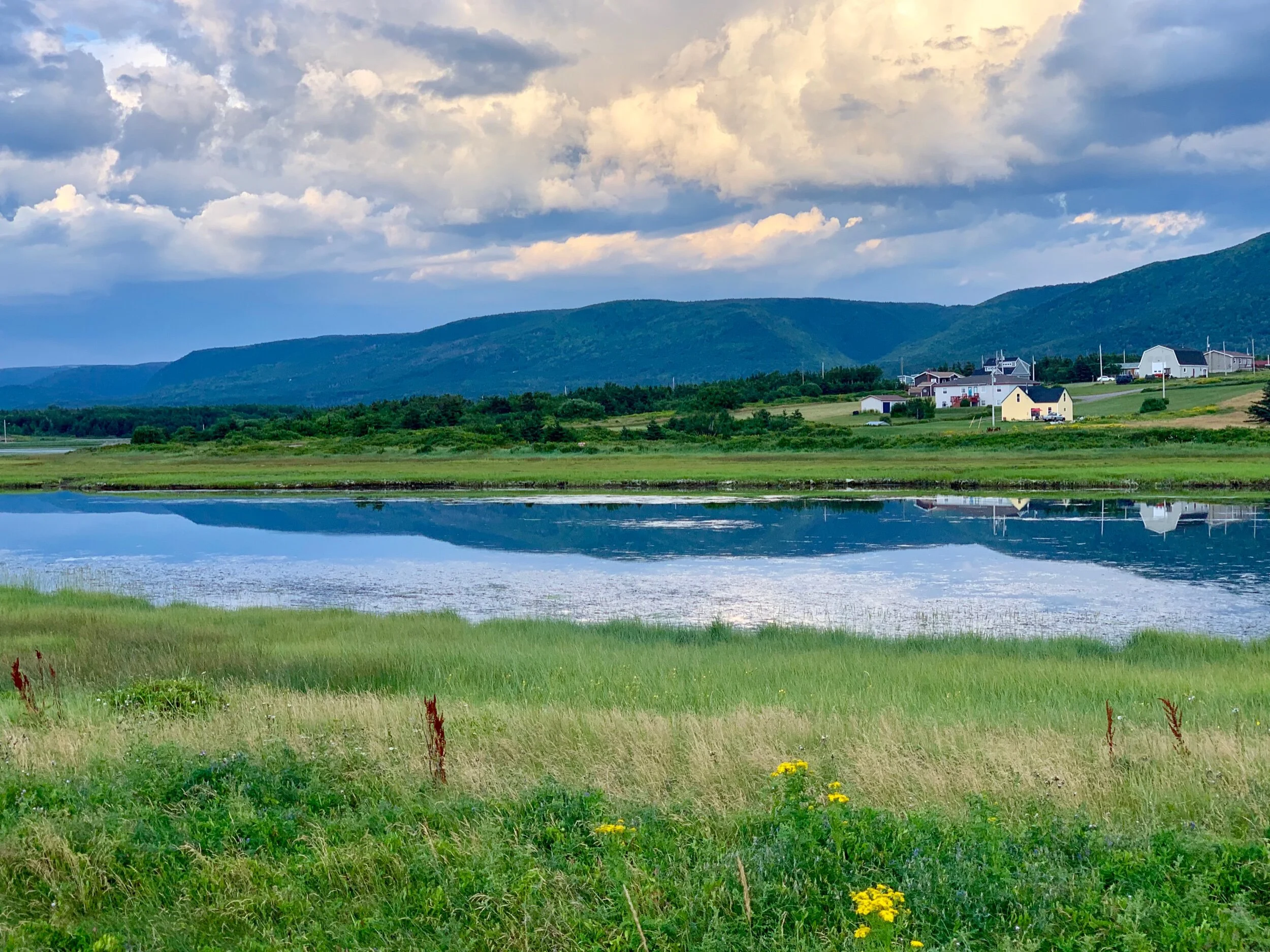
Near our campground in Chetticamp, Nova Scotia.
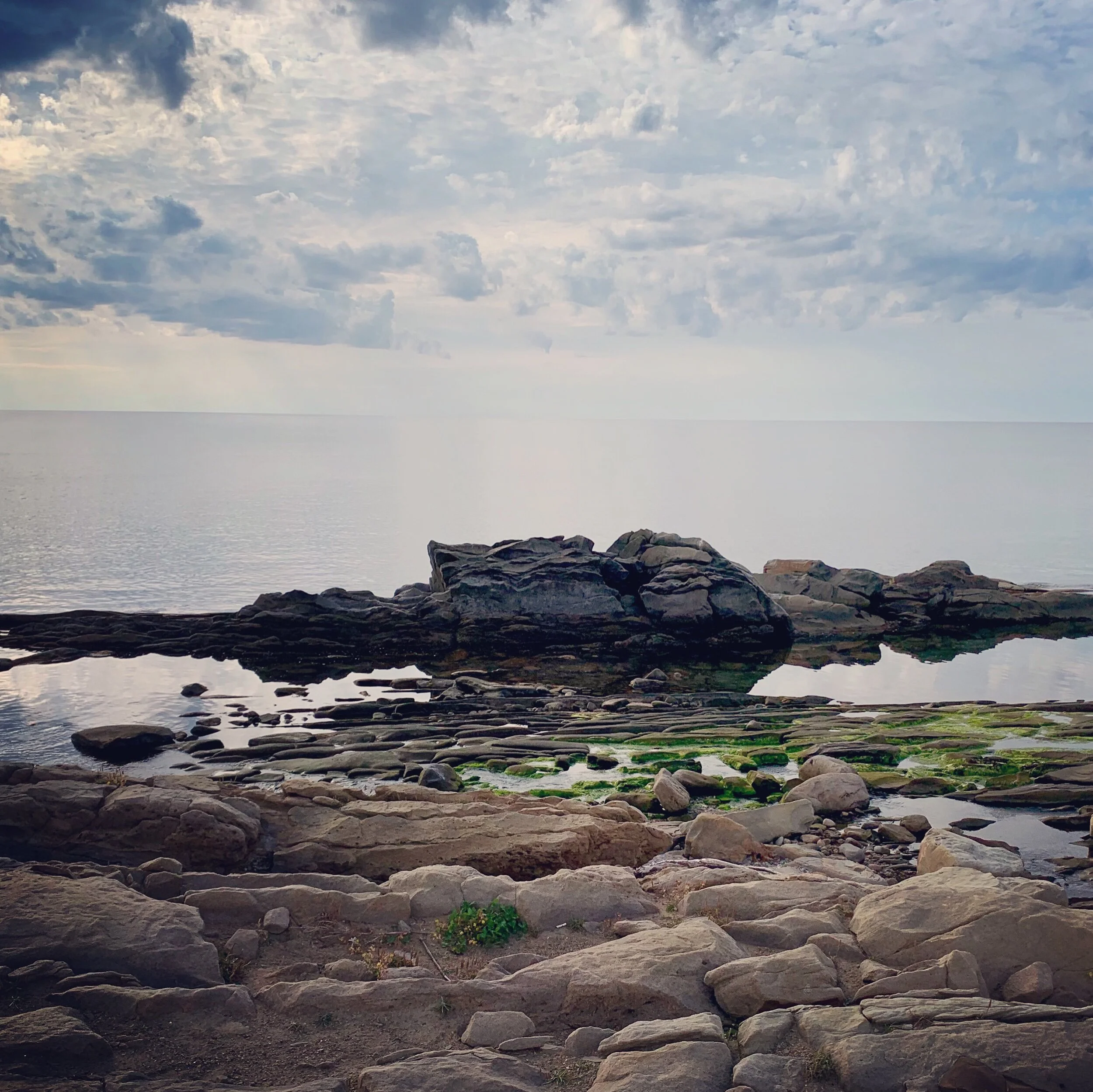
The coast near Chetticamp, Nova Scotia.
Moving On
In addition to being busy, last summer was emotionally eventful. In June and July, as my brothers and I recovered from my Dad’s recent death, we helped our Mom move from an assisted living facility to a nursing home in Galesburg, IL. She didn’t like losing her independence, but is gradually getting used to both the irritation and value of full-time long- term care. Like most older people, my Mom has good days and bad days. A good day occurred recently when Jenny and I arrived via train to meet up with my daughter Saren and her family from Wausau, Wisconsin. My Mom was able to meet her new great grandson Landon.
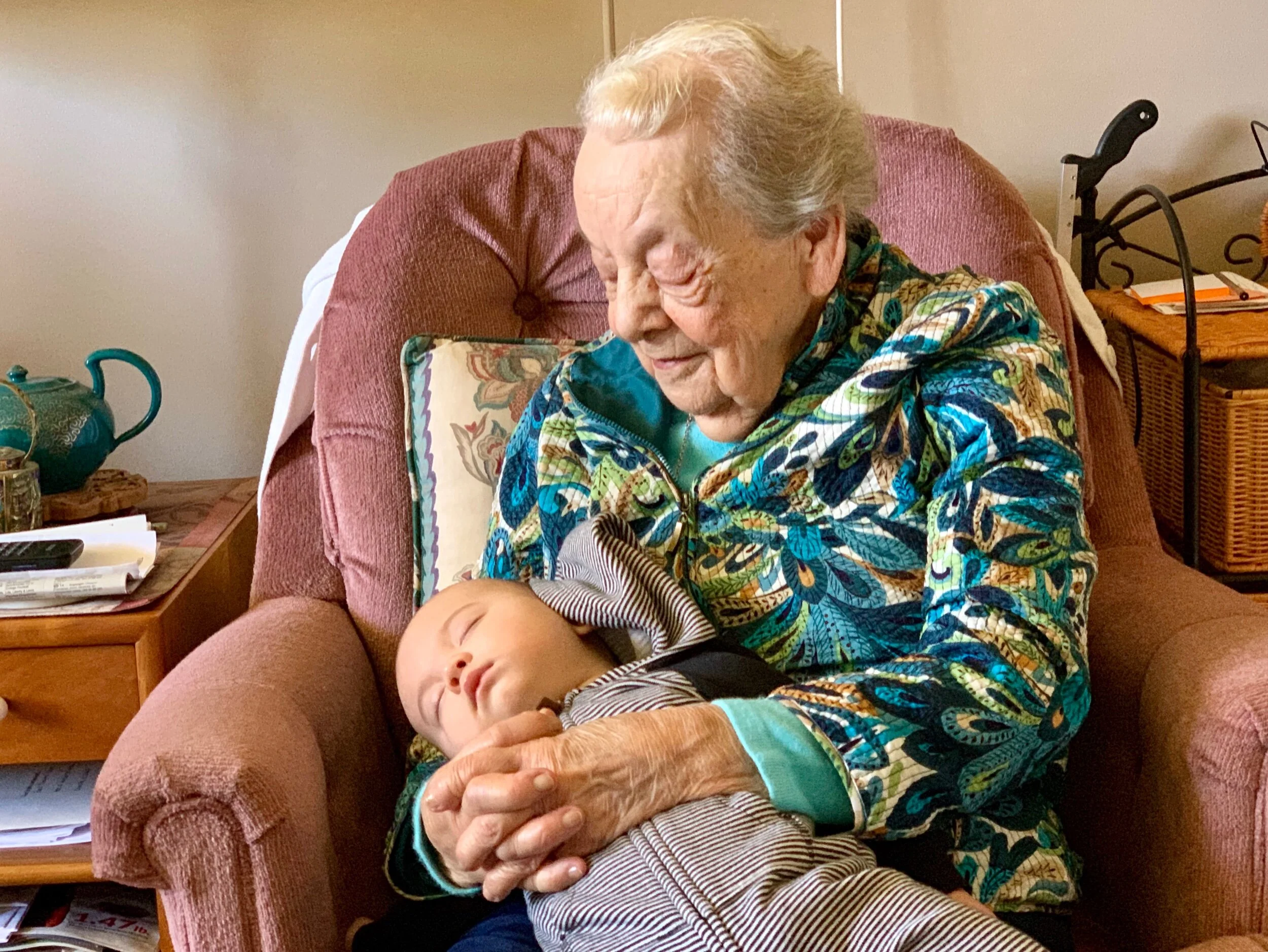
My Mom Sue Chase and her great grandson Landon Spire.
As I joyfully watched my Mom, my daughter and her son, I realized there were four generations of us in the same room sharing our love. And of course, I found myself wondering what life will be like for Landon when he is my Mom’s age (it will be 2106). Will civilization as we presently know it even exist? Will animal species other than humans and their pets and feedstock still exist? Or will our species be gone as well?
There is increasing scientific evidence that we are quickly running out of time, and we must significantly turn the tide on greenhouse gas emissions over the next decade. I am so pleased that all the Democratic candidates for President are acknowledging climate change as an existential threat, and are developing policy proposals for meaningful change. Personally, I cannot think of a more important way to address our climate emergency right now than to back whatever Democratic candidate is nominated, and to work my heart out for his or her election. And if we are lucky enough to have an administration that understands climate science, then we must put our shoulders to the wheel for national policy that supports carbon pricing and returns dividends to citizens to help bear the increased costs of fossil fuels. We will also need policies to help build the next great economic expansion in renewable energy, carbon sequestration through changing agriculture practices, and carbon technologies to include air-based and flu-based greenhouse gas capture and carbon recycling through manufacturing of inert products such as polymers, fuel and even food. These nascent, yet promising technologies are very hopeful. We only need the will to make them happen. For more information check out the Circular Carbon Network.
——————
Today I'm writing from a motel in Richmond, Indiana. Jenny and I began this cycling trip about a week ago from Galesburg, Illinois. As I’m sure you are aware, the fall has been unusually hot in the Midwest and the northeast. That changed suddenly last Friday, just as we left Bloomington, Illinois, for Gibson City (with the help of a local Samaritan who drove us 37 miles in his pickup to avoid rain as the temperature plunged to the high 30’s). The next day was even more inclement. By Saturday evening, after Jenny and I had biked 72 miles to Attica, Indiana, we were very cold, wet, miserable and tired.
But the joy of biking is often in the recovery phase. The last two days have been lovely, and today was exceptional. Our trip has become glorious again. Galesburg is about 400 miles west of us at this point. We’re tired and windblown, and enjoying the pleasant and peaceful endorphin rush that comes after several days of hard cycling. It’s nice to feel used up.
The rainy view outside our motel in Gibson City, IL.
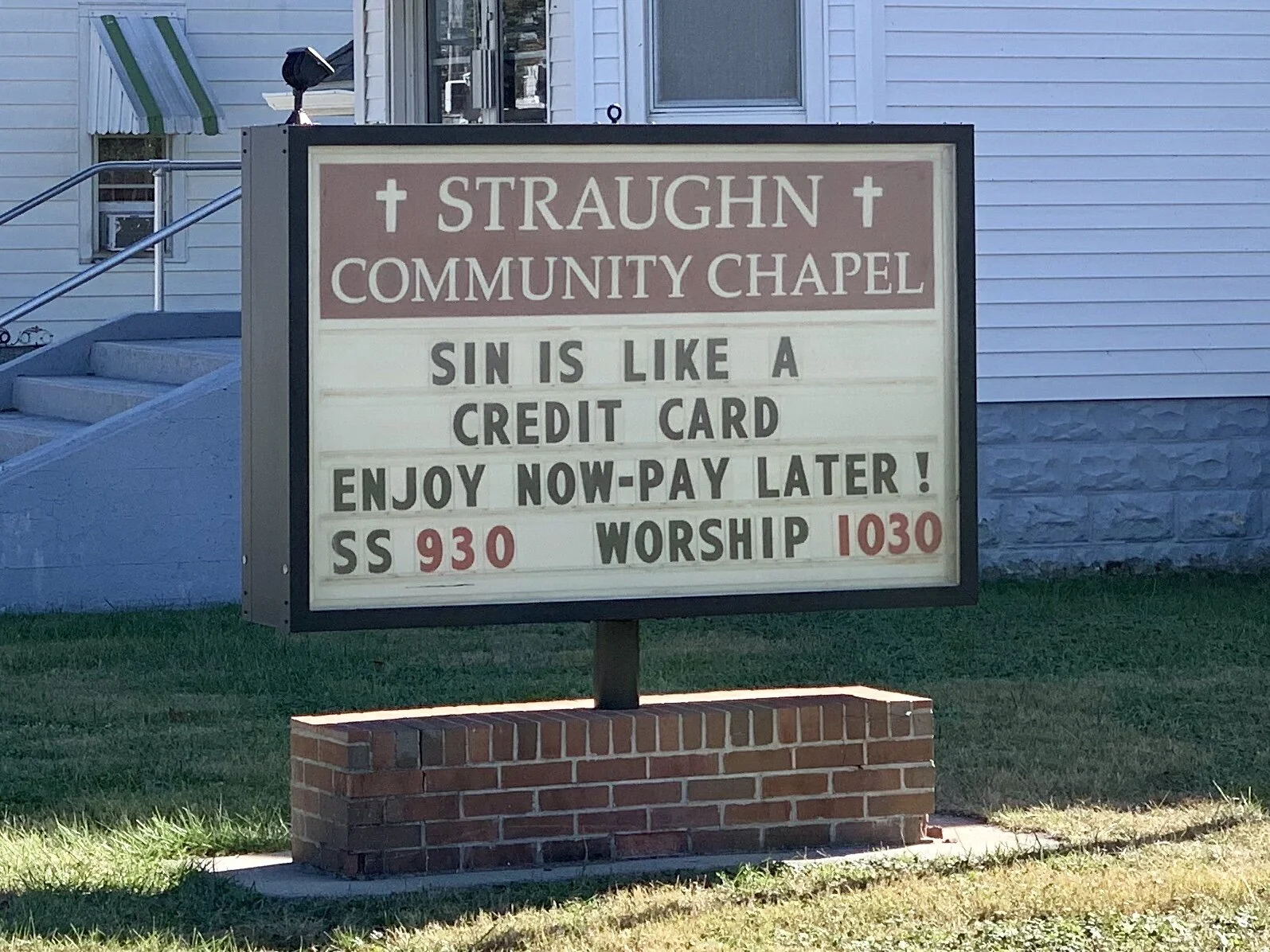
Fossil fuels are like this as well! We enjoy now, our grandchildren pay later….
Thanks for reading! More to come…
All photos, unless credited or otherwise noted, are copyrighted property of the blog post author.
Palo Alto to Tucson, Post 2
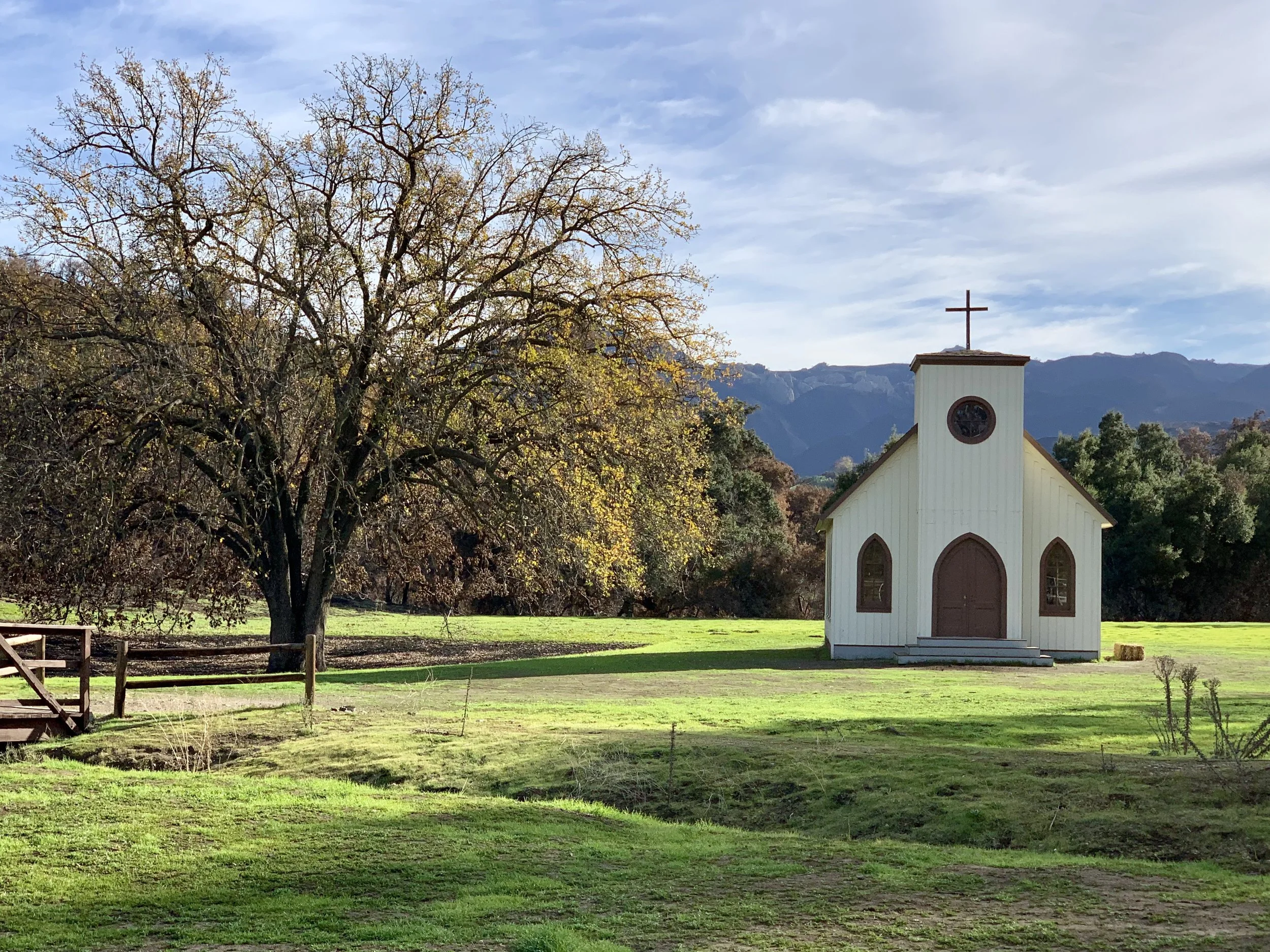
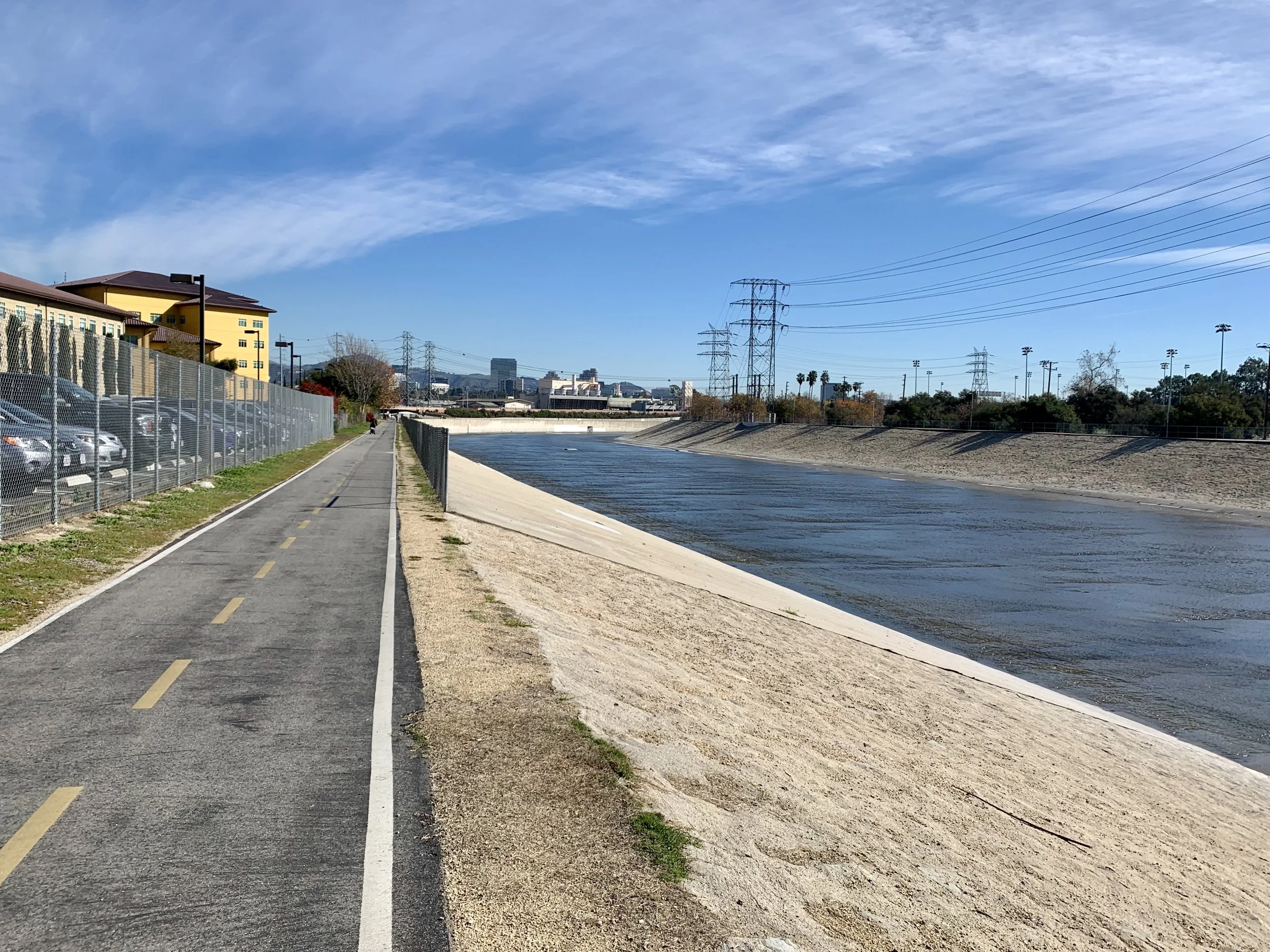
The Los Angeles River Cycleway.
Once I got to Ventura from Santa Barbara, I called my old childhood friend Debra Dralle in Woodland Hills in north LA. I was in luck. I had stayed with Debra on my GRID trip two years back, so she and her husband Richard weren't surprised to see me arrive the next day on a fully loaded bike. Getting to Woodland Hills from Ventura presented a small challenge - such as the Santa Monica Mountains. It was raining, and I was challenged by the climbing, so I didn't notice the clues I was passing through the Woolsey Fire area. Fast moving and capricious, that fire was one of many that has turned life on its head. Much has been written about the intensifying and record breaking fire seasons in the American and Canadians wests. Here's one example. Of course, climate scientists tell us this is only the beginning. Record droughts, warmer temperatures, longer fire seasons, and encroaching development are the new normal, which isn't going to be normal at all. There's no normalizing the future when it comes to climate.
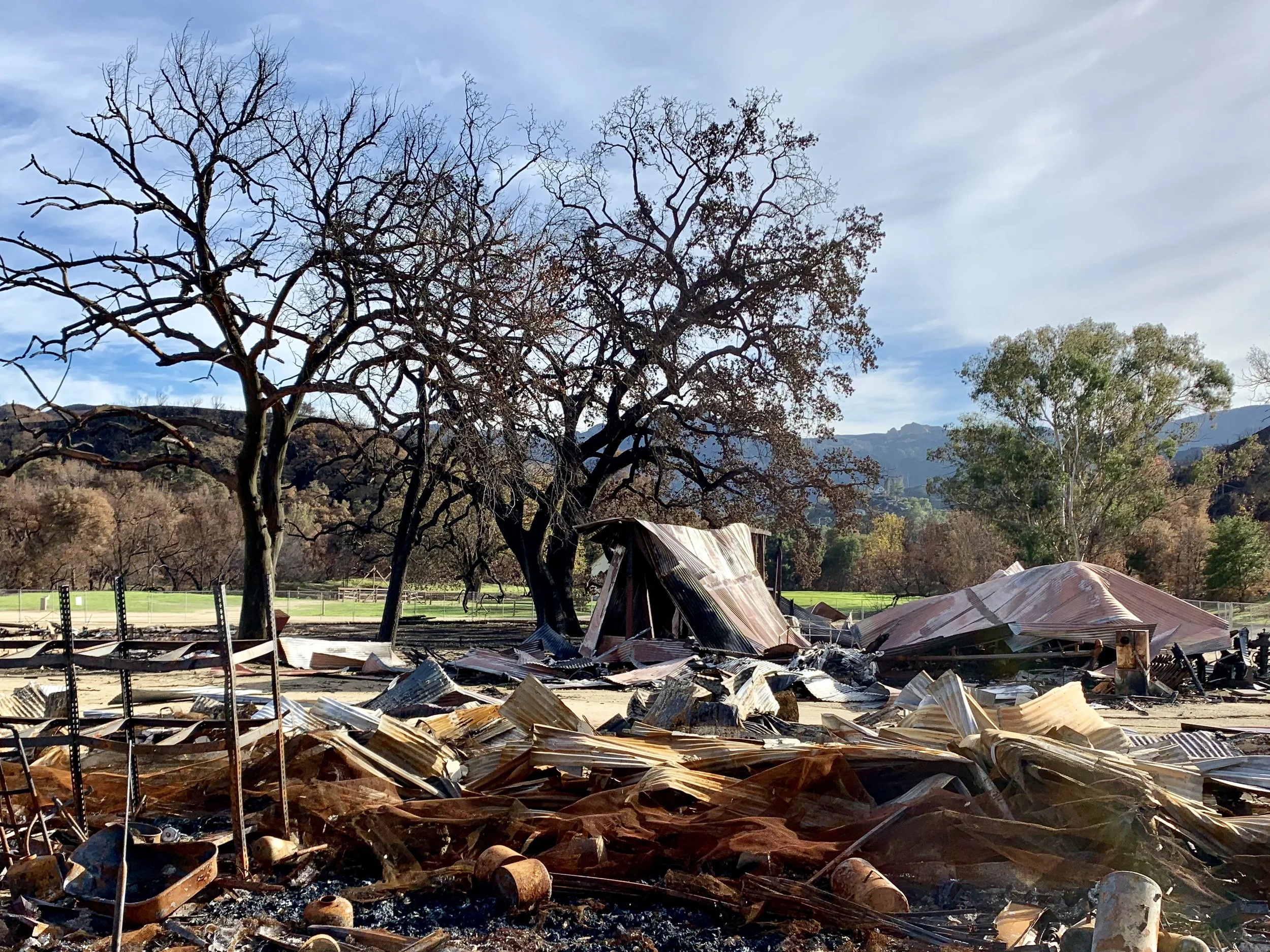
A saloon and hotel?
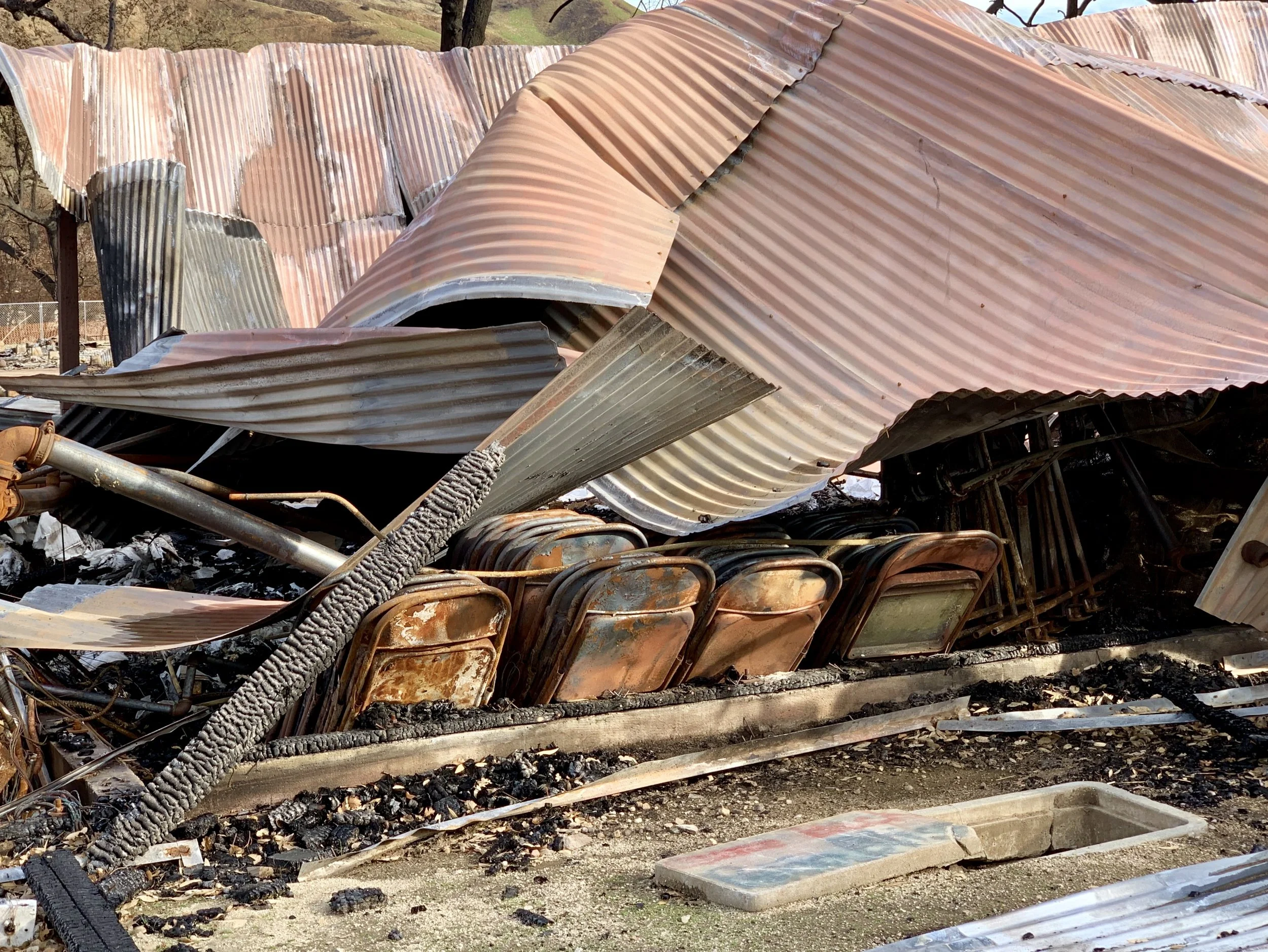
A storage room?
Fortunately, I had a chance to rectify my poor observations the next day when Debra drove me back to the Paramount Ranch, which - sadly - had burned to the ground in November of 2018. As we drove, I asked Debra if she knew of climate deniers living in the area. She said no; in fact, her view is that southern Californians are united around climate change - the fires of the past several years have diminished any doubts.
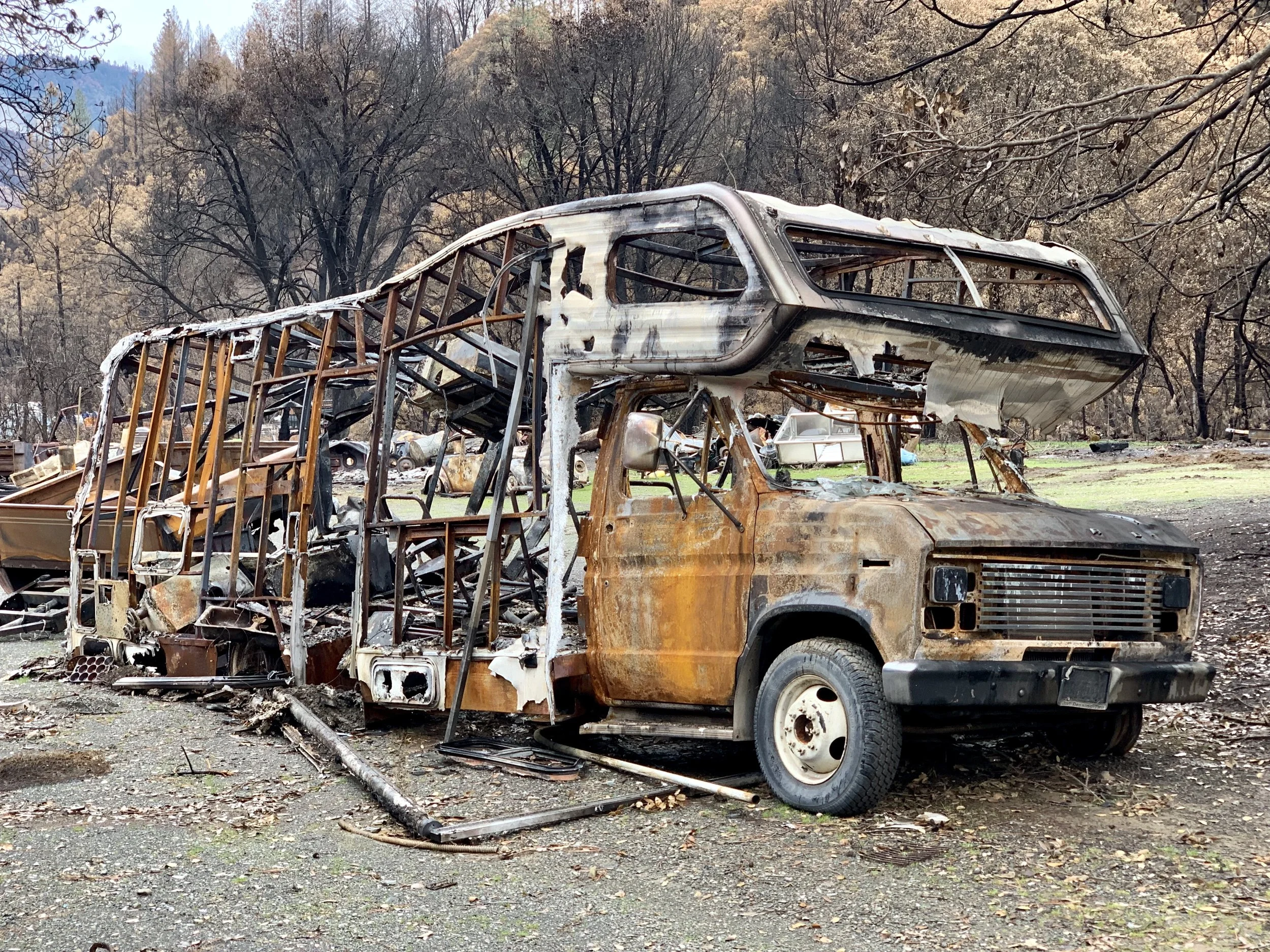
A large burnt out camper van sits by a highway near Delta, Ca. The Woolsey and the Delta fires took place in September and November, 2018, respectively.
Today I read a comment by Tom Di Liberto, a scientist who worked on a well publicized Ocean Warming Report. He was quoted as having said that he thought we wouldn't reduce GHG emissions meaningfully until 2040. His comment made me wonder.
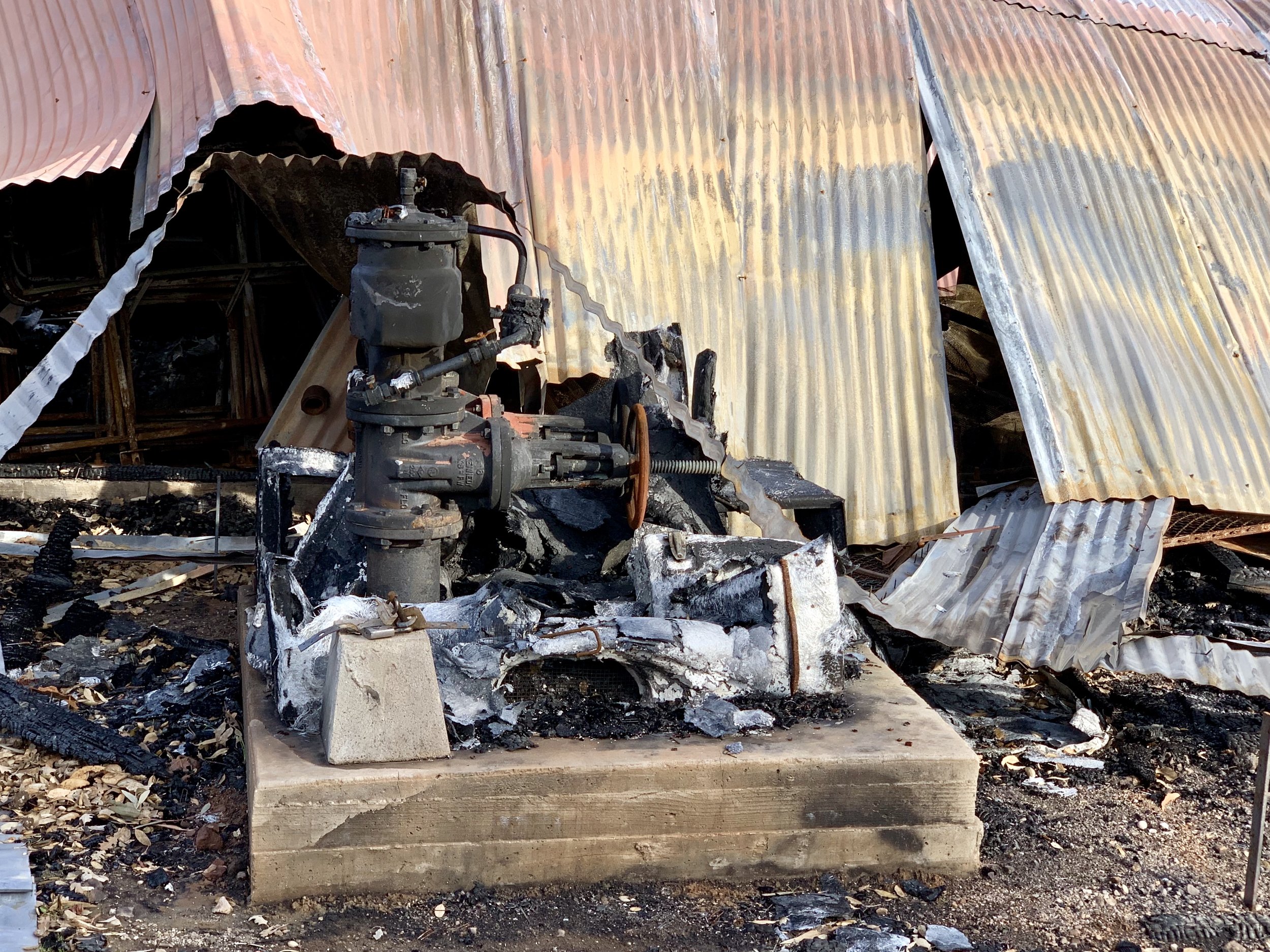
A water pump?
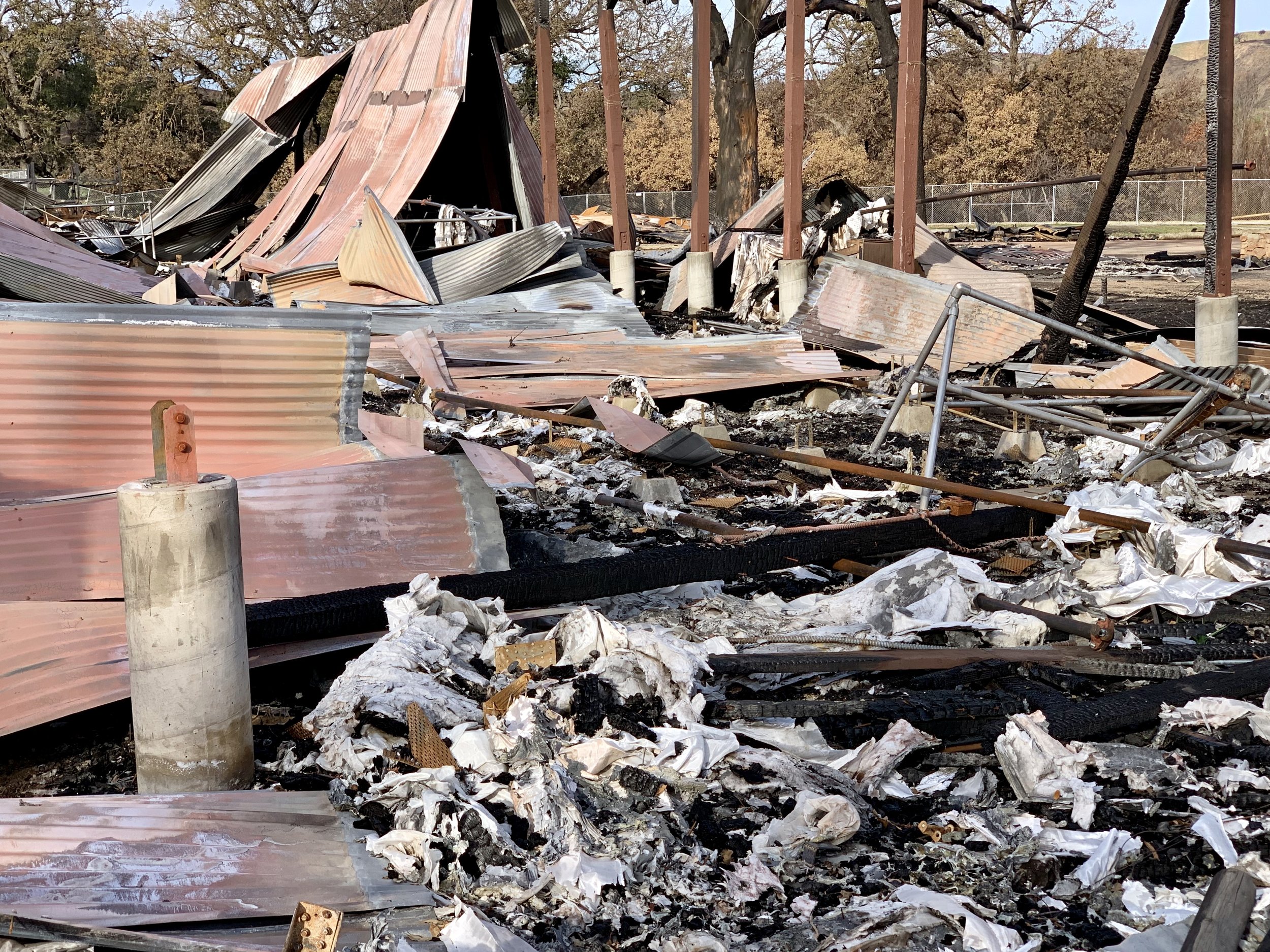
More debris.
There's something beautiful about a fire area in recovery. Only 3 months after the fire, a hillside in the Santa Monica Mountains near Paramount Ranch makes a comeback.
What will our "pain point" be? Because climate change is as real as the sun, the shoe will drop on climate denial at some point, and we will finally unite in our understanding of what we are up against. But how many people will die first, how much degradation will we endure, how crippled will our economy have to become? Hopefully sooner, rather than later, Americans will say, "enough is enough", and put their shoulders to the wheel of change in a serious way, joining the many other countries attempting to transition their own economies. Some days that seems a long way off - especially as I cycle through the desert near the Salton Sea in January. But there's nowhere to hide. Check this out.
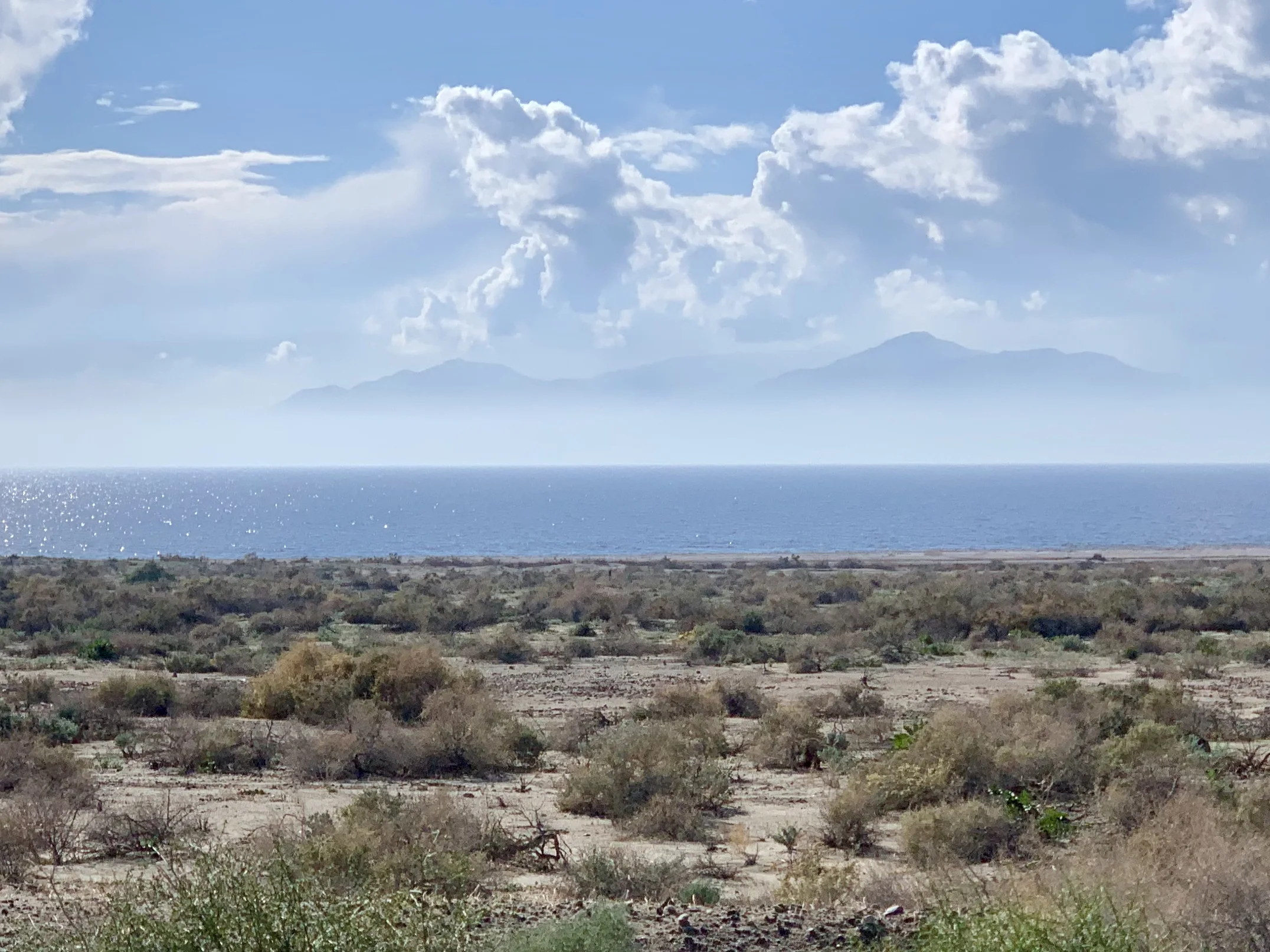
The northern and eastern shore of the Salton Sea is remarkably empty. The first 20 miles of the coast from the north shore are protected by at least three county parks. I was surprised and delighted to see this.
Some days there is progress. I've written in many previous posts about the Citizens Climate Lobby, but I have not yet mentioned that CCL has helped two carbon dividend bills become introduced in Congress. Here is the House Bill, and here is the Senate Bill. Please check them out. If you find these thoughtful bipartisan climate bills hopeful, let your Representative and Senator know you support them. We know that politicians respond to popular will, so we must make it clear to policy makers that we expect them to be effective leaders on climate.
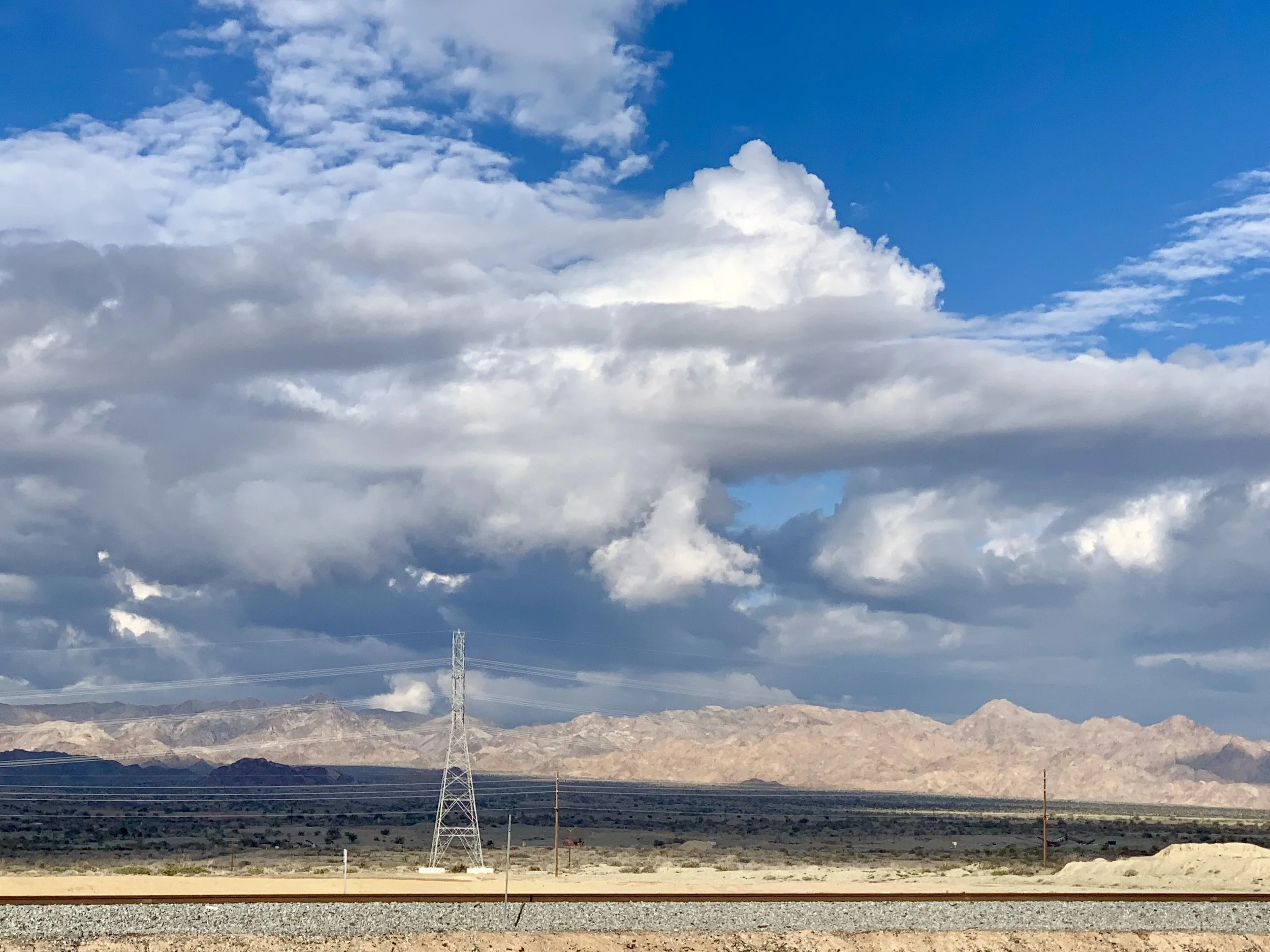
Looking east away from the Salton Sea toward Joshua Tree National Park. Someone told me that Joshua Tree poachers were in the Park because of limited staff during the government shutdown. If that's true, it's heartbreaking.
This is no small task, as we all know. The world's largest economy (ours) is dominated by policies favoring corporate interests and rich corporate-bought climate deniers who are outside mainstream thought, and insulated from extreme climate events. Imagine what this must feel like in smaller countries.
I have some adventurer friends, Ken and Fi Morton, who wrote the following in an email to me:
"Interestingly, we are in Ecuador right now where everyone acknowledges climate change as an obvious event, and not a divisive partisan issue, where private industry and gov't are investing in "clean" infrastructure like solar, and electric/LPG public transport. Also, sadly, is the realization that it, like most developing countries, they are powerless to slow or curb global climate change, as despite all efforts, the world's biggest economies will dictate how climate change plays out... which doesn't give one cause for optimism, currently."
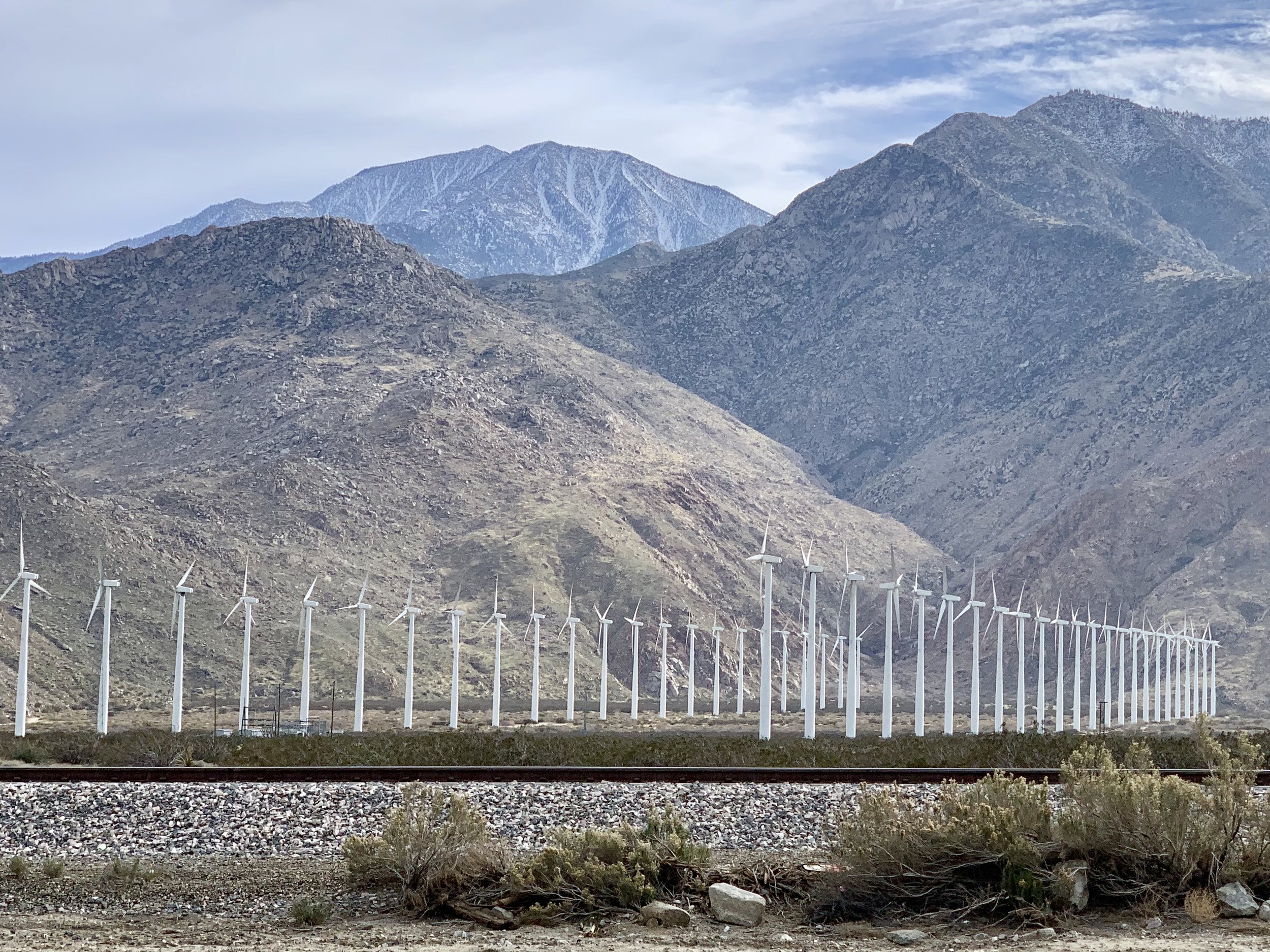
The pass from Banning to Palm Springs is quite windy and there are hundreds of wind turbines along the way. They can be attractive, and far less noisy than traditional oil wells.
There's so much to do. And I think the most important thing of all is not to capitulate to dispair or cynicism, no matter how large the obstacles seem. We've proved the resiliency of our species over and over. Yes, we may be entering the greatest challenge we've ever faced, because none before now has required no less than global economic transformation. Clearly this is no time for "me first, or us first" policies. Let's screw our collective heads back on straight and meet this historical moment with clarity and resolve.
For those of you who like the Garmin maps, here are the past four days of riding:
More to come.
All photos, unless credited or otherwise noted, are copyrighted property of the blog post author.
Palo Alto to Tucson, Post 1
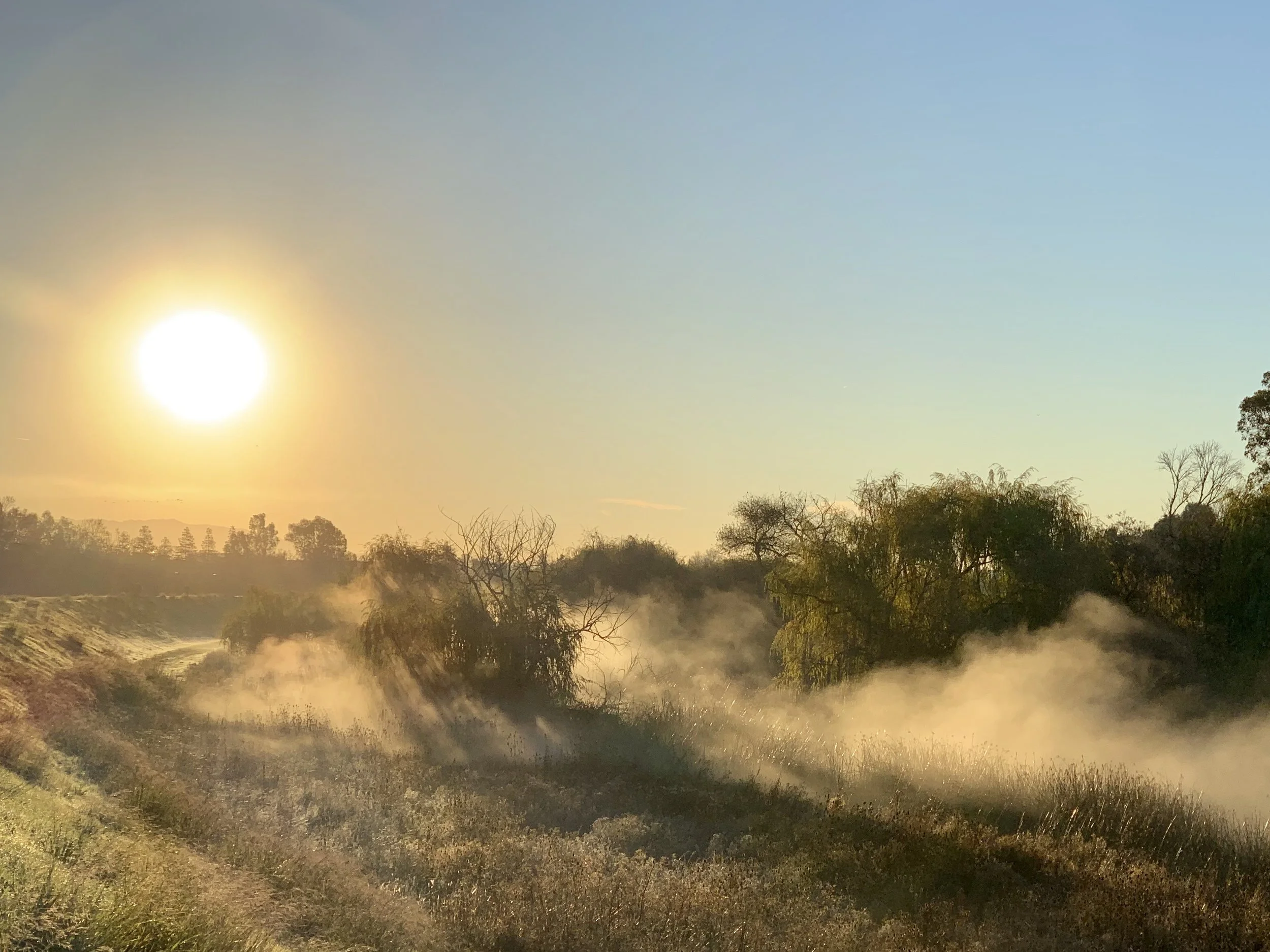
Fog on the Guadalupe River Trail, which extends from San Francisco Bay to downtown San Jose, near the Amtrak Station.
Hi. Greetings from Ventura, CA. I am warm and dry in a Motel 6, after having spent three days cycling here from San Luis Obispo. I got to SLO by train from San Jose, after attending a family celebration in Palo Alto.
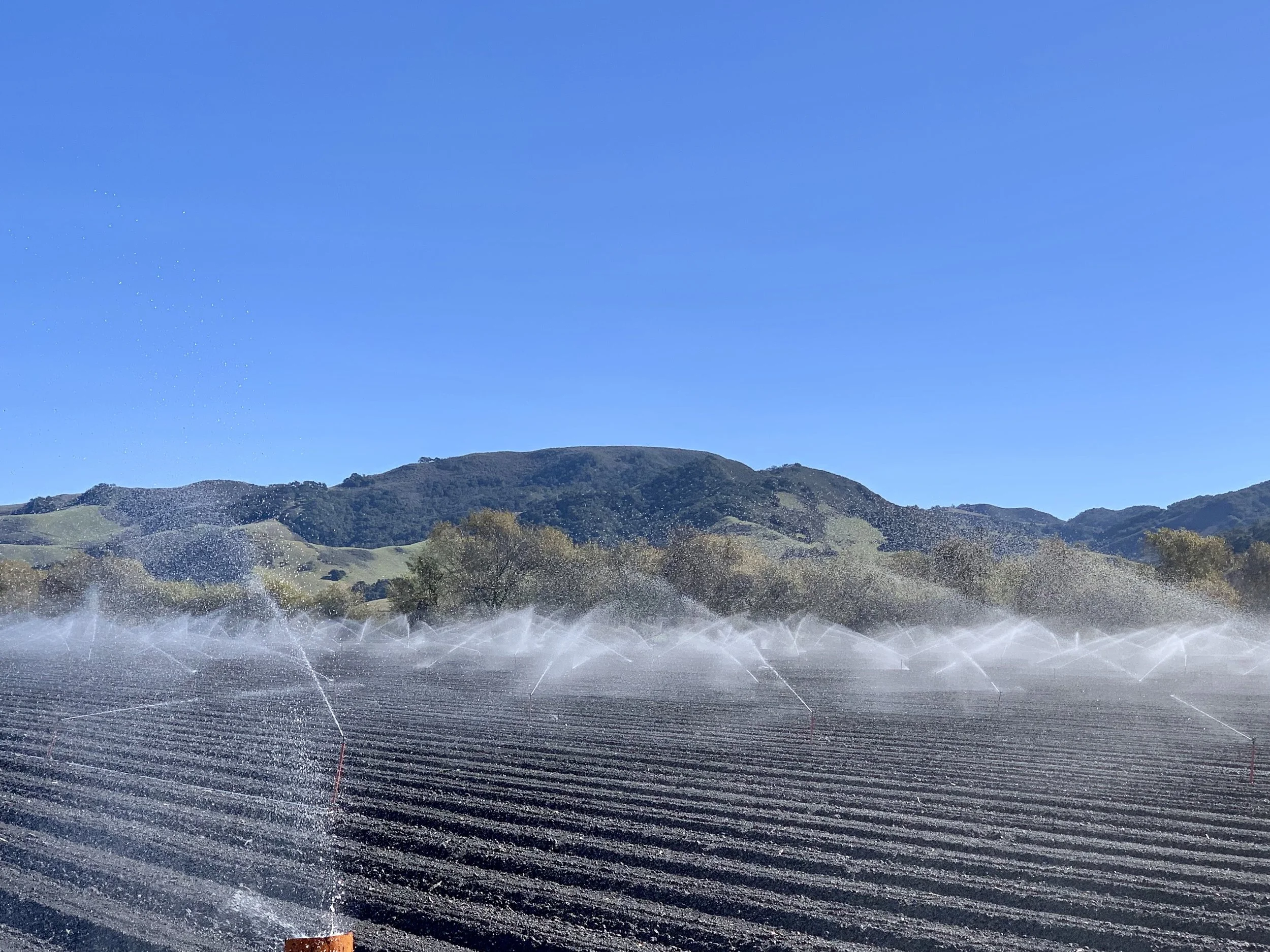
Irrigation on a basil field just north of Lompoc.
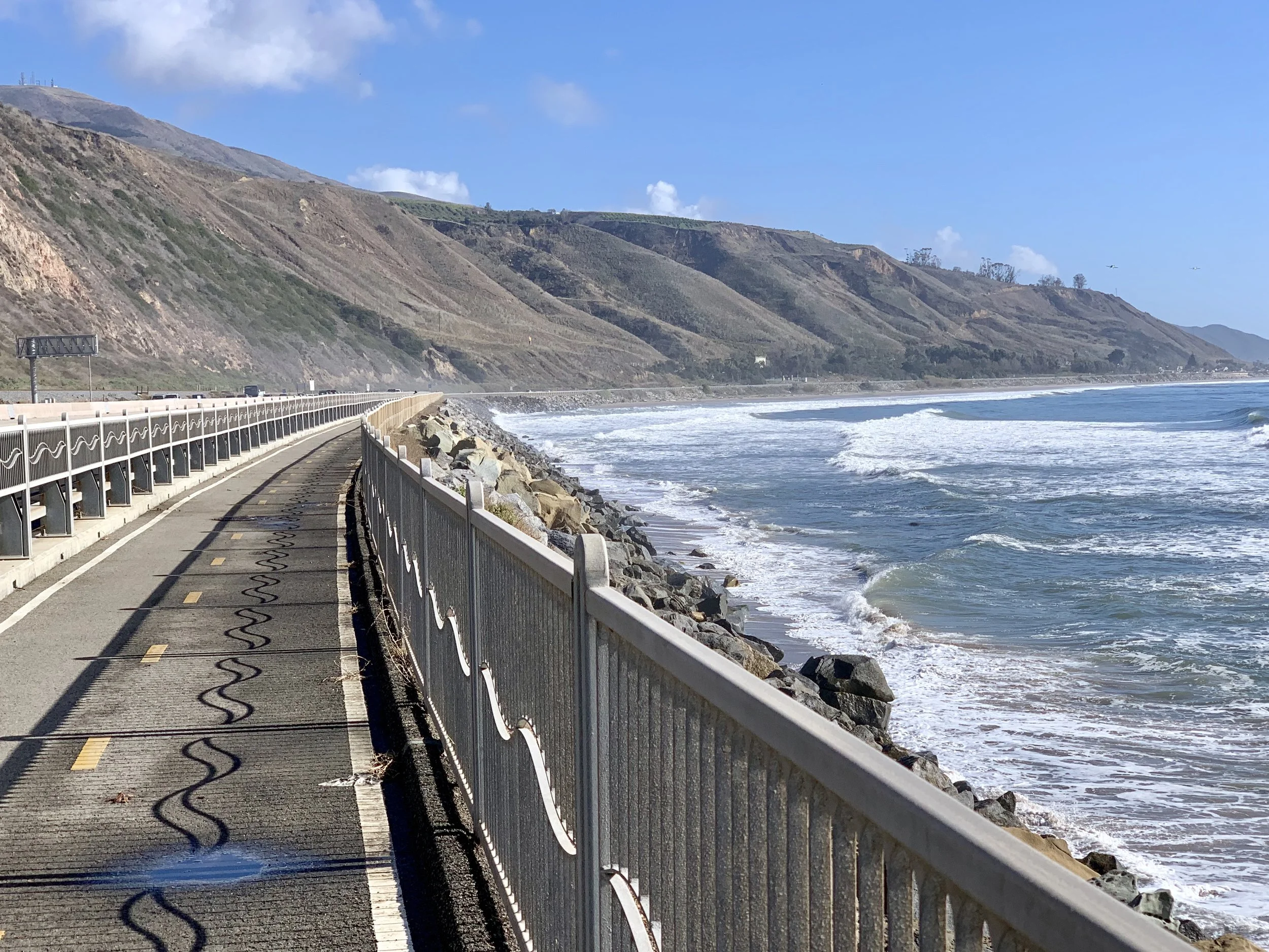
A stretch of cycling path along CA Highway 101.
I am beginning another cycling adventure toward warm and sunny weather, and intend to enjoy the Pacific Coast route as mapped out by the Adventure Cycling Association (ACA) and then the lovely Southern Tier route as far as Tucson (see my archived blog posts on a Southern Tier trip I made a few years back). If time allows, I hope to get as far as Big Bend National Park in Texas, but family matters may intervene. But no matter how far I get, I will be returning to the Pacific Northwest in the spring/summer. This coming summer I am aiming for Alaska.
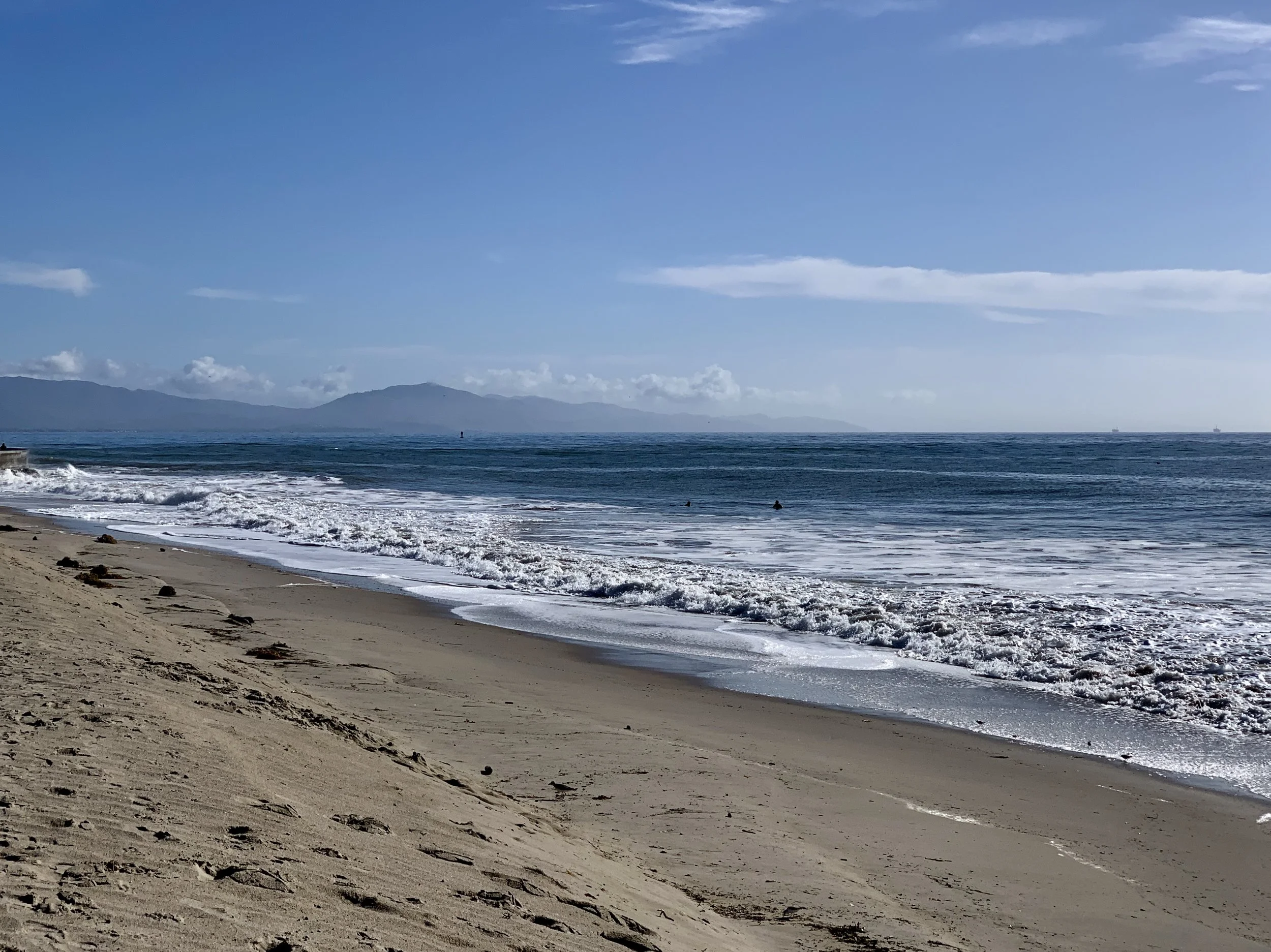
The California coast just south of Santa Barbara.
I enjoy loving connections on both generational sides of my life - my parents are still alive, and I stay close to them (trying to be "a phone call away") and my two grandkids (with a third about to arrive) as I split time between cycling in beautiful (or climate stressed) places - which I adore - and New York - which I also adore. Between those activities and my friends in many places, my parents, my kids and my grandkids, I'm a very lucky man.
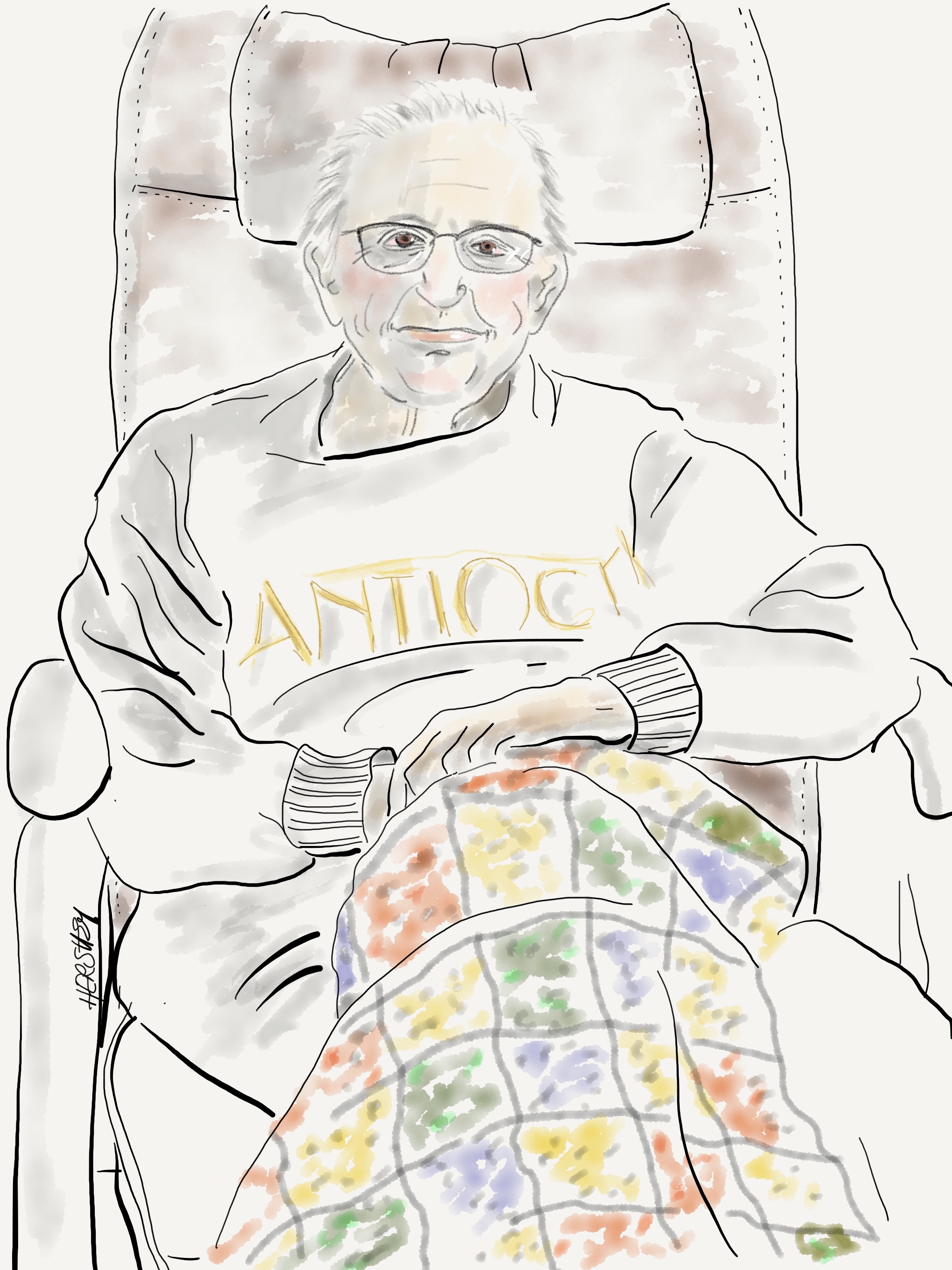
A drawing of my Dad, Kim Chase, by Jennifer Hershey. You can find her work on Instagram under "Deeofo.".
On December 30, 2018, my Dad turned 100. When I asked him how he felt, he said, "the same as yesterday." When a neighbor asked him how he managed to live so long, he replied, "Well, I haven't died yet." At a Christmas dinner a few days before, he told someone else who asked a similar question, "it's an accident."
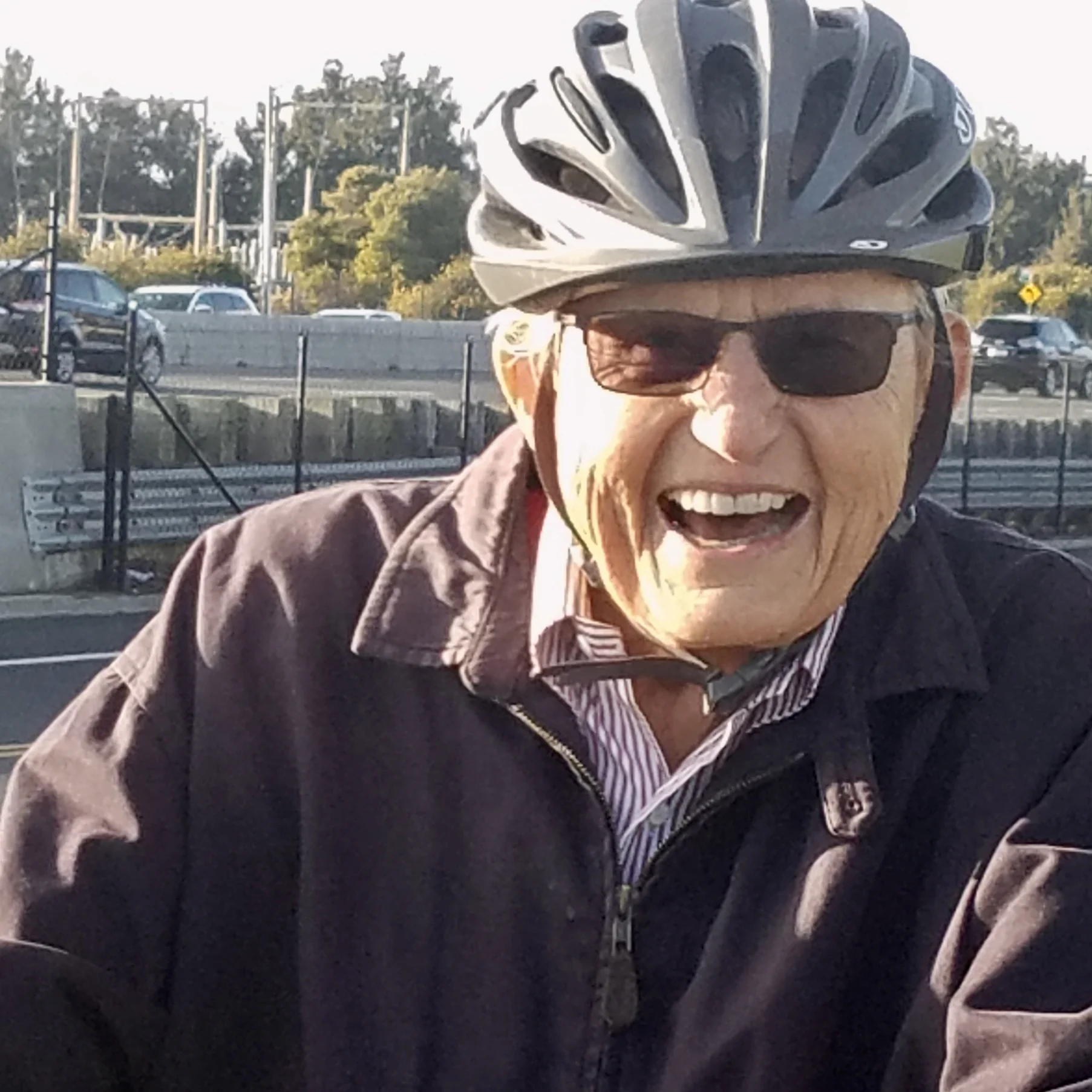
A good moment on the bike on my Dad's 100th birthday.
So much for formulas. That said, my father has been unusually active all his life. He took up backpacking at 60, and didn't stop until he was 87. He owns a three-wheeled bicycle, which he still rides. Last week, I took him over the pedestrian bridge that spans highway 101 to the Bay Lands that border the San Francisco Bay (he needs another person to push his bike up the bridge while he walks up with his cane). It's sensationally beautiful at the Bay; a mixture of grasslands, marshes and tidal mud flats teeming with shorebirds.
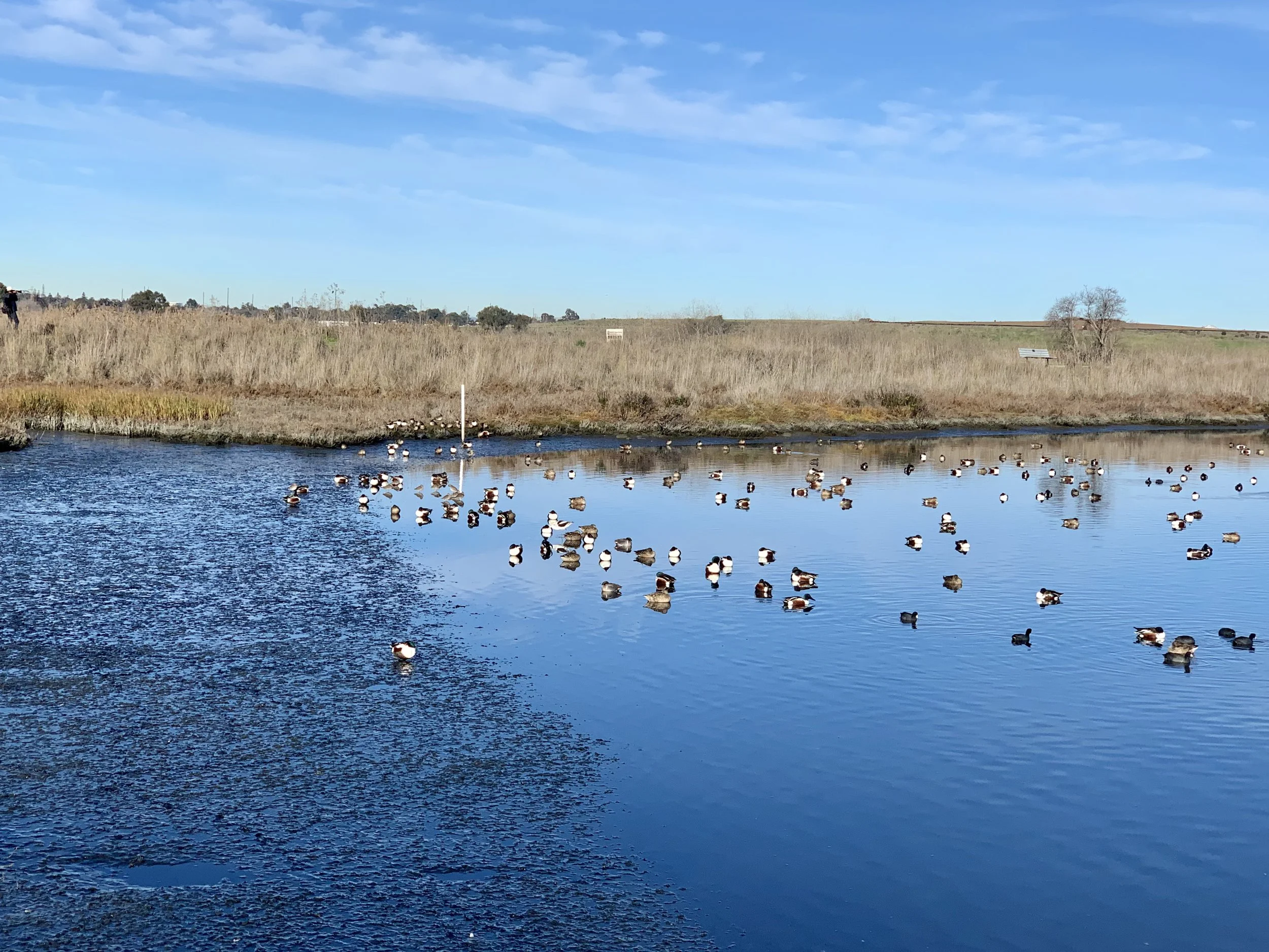
When the tide recedes, the birds dig for food.
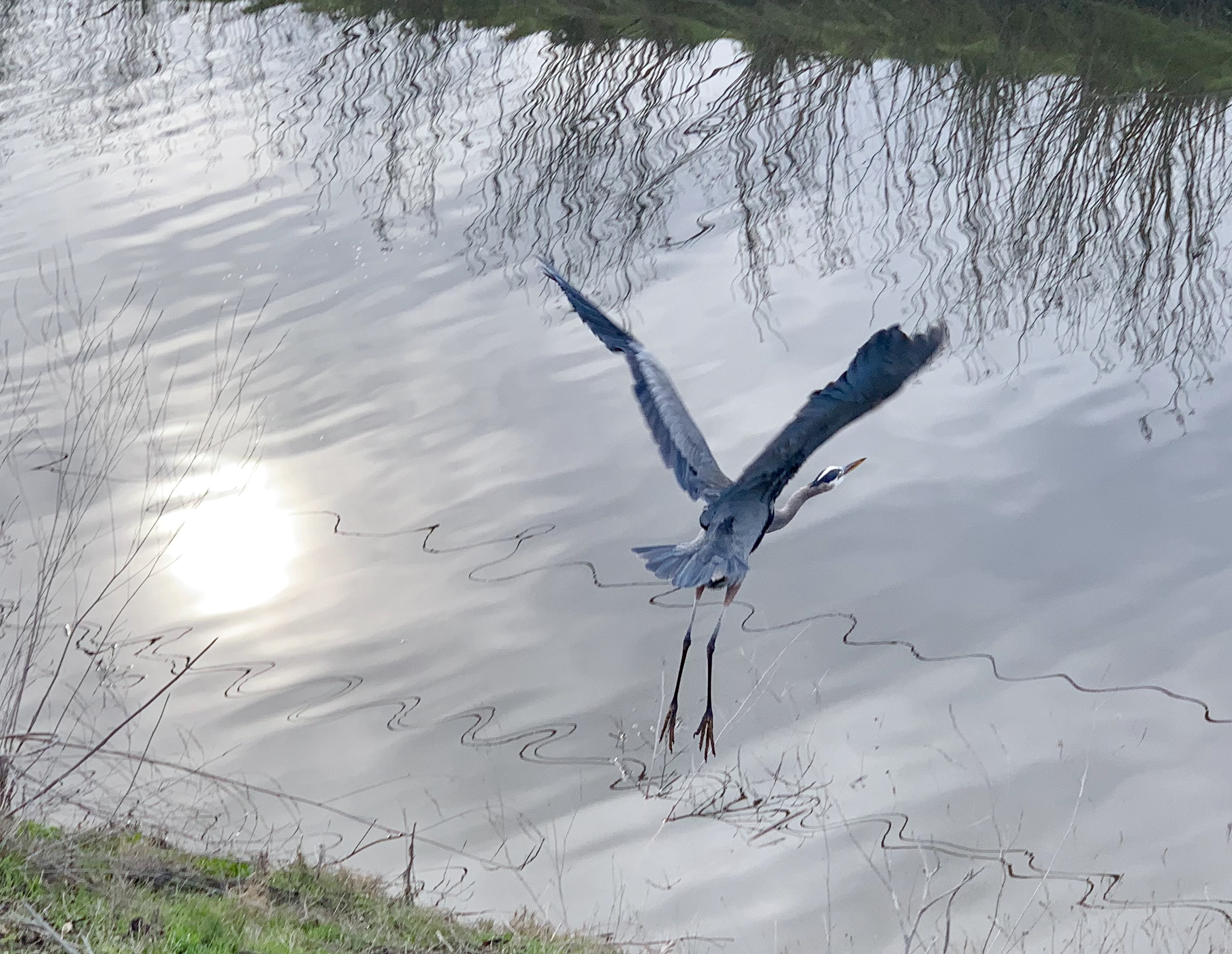
A Great Blue Heron takes flight.
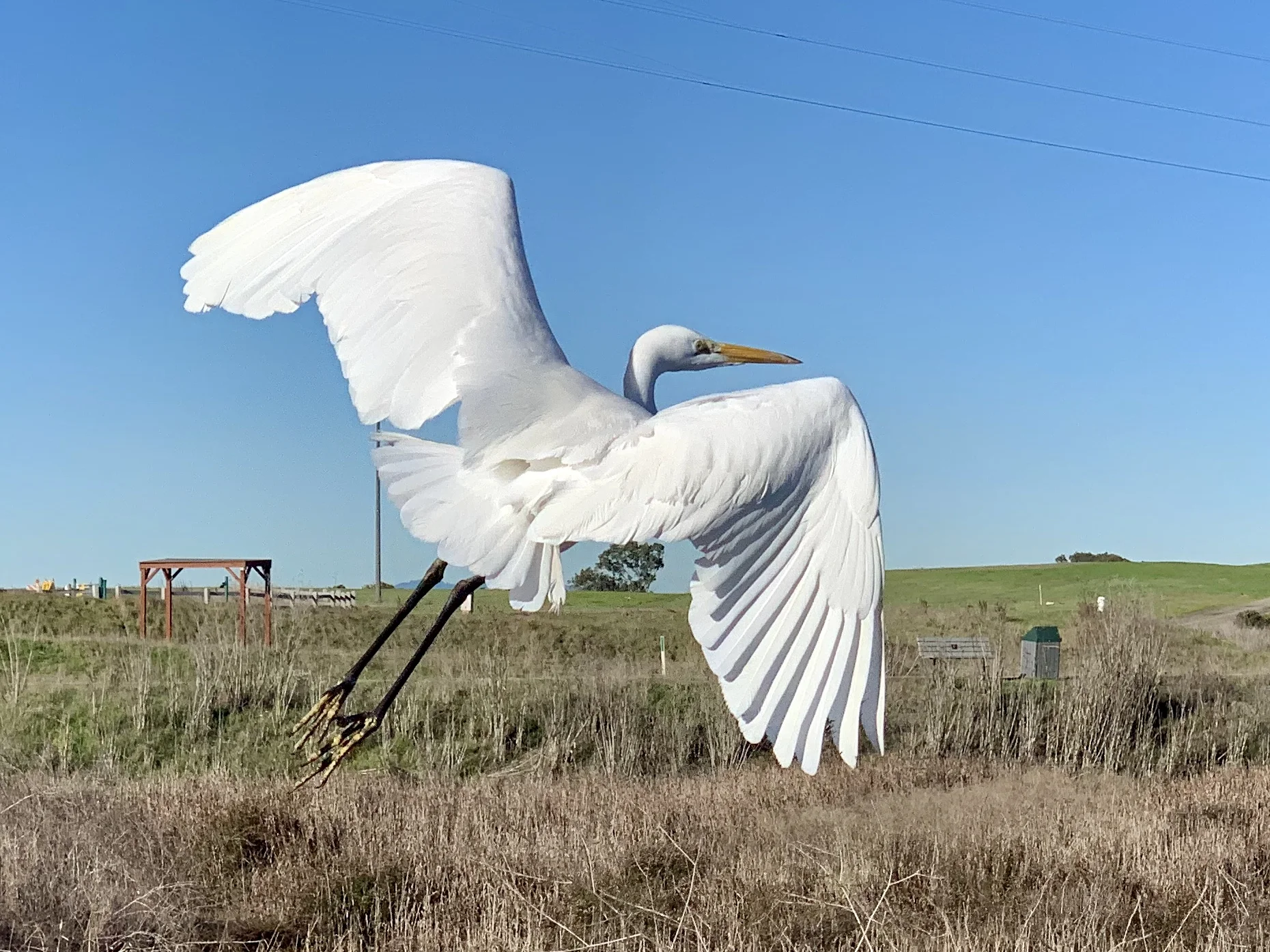
A snowy egret.
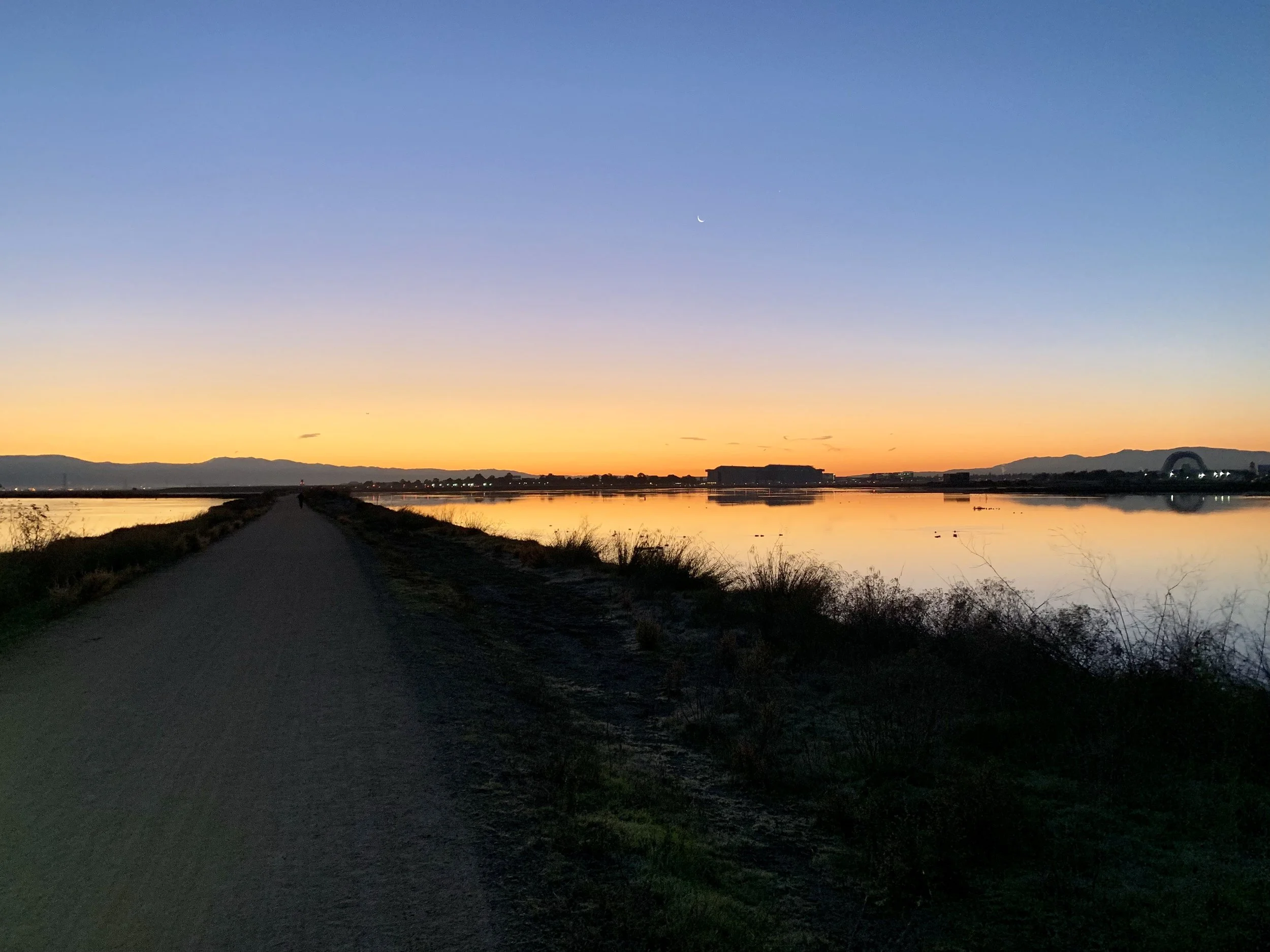
Sunrise on the Bay Area Trail, a bike trail that will eventually follow the perimeter of the entire north and south bays.
Whatever his secret is, my father's longevity has been widely celebrated by friends and family. His life has been a rich one, characterized by adventure, lots of hard work, plenty of love, a healthy dose of common sense and good daily practices. He was born just as the "War to end all Wars" (WWI) started, lived through the Great Depression (the family story is that he had only one pair of shoes and set of clothes all through high school), was a naval officer in the South Pacific during WWII, went to Columbia for a Masters degree on the GI bill after the War, then got his Doctorate, had careers as a professor and college administrator, raised three kids and had three wives. Now, near the end of his life, he is witness to the Trump Presidency (according to him, the mayhem is unparalleled), and even more unsettling, the dawn of the age of climate change.
I don't know how much my Dad thinks about climate change, although he seems to have no problem understanding it. If he was still driving, I'm sure he would own an electric car (he loves Teslas), and would have installed solar panels on his home. But he's a realist (and an existentialist of the Sartre vintage: "Three o'clock is always too late or too early for anything you want to do."), so he's never been particularly optimistic about civilization's prospects.
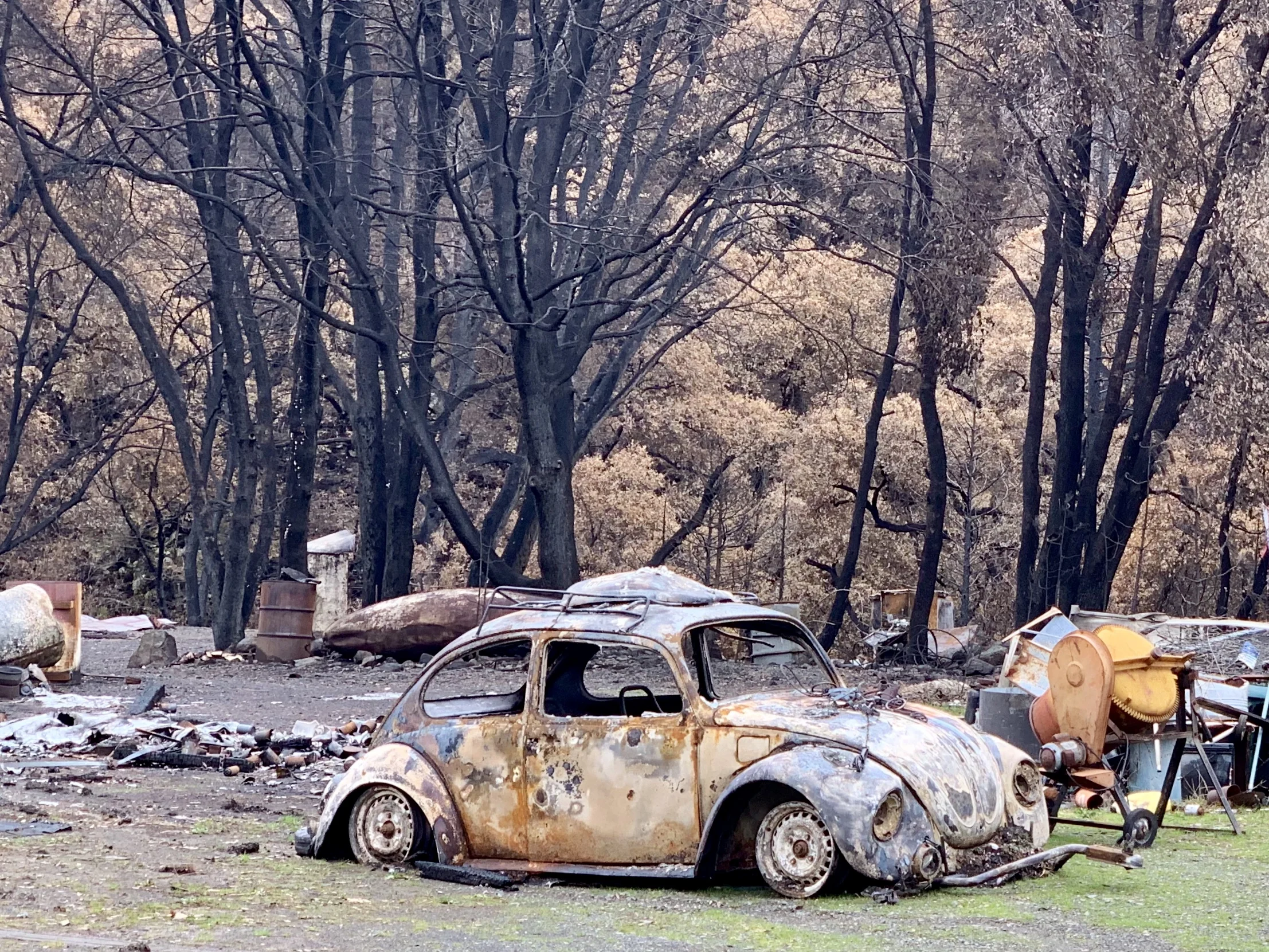
A climate stressed place - I took this shot in last month near Redding, CA. It's from the Delta Fire, which took place several weeks after the CARR Fire was contained. Locals refer to it as "the forgotten fire".
But my Dad is not a gloomy guy. I'm sure he holds out some form of hope for the future, as we all do. Still, every once in a while he jokes that he's lucky he'll check out before the worst is upon us. And he means it.
I think he's right. In some ways, his generation's retirement (with an intact pension, decent healthcare and reasonable wealth) may turn out to have been the pinnacle for the developed world. Subsequent generations may not be able to enjoy the same stability, quality of care and basic prosperity that some in his generation have.
We're likely to face global challenges that are unprecedented. I am reminded of the recent IPCC report on climate, which warns us starkly and unequivocally that the scale of the climate crisis will be beyond anything humans have faced before. Climate Change is unique in that its causes and its impacts are global. Greenhouse gas molecules disperse into the atmosphere, equalizing their distribution everywhere. In one way physics makes climate change extremely democratic, although its impacts are neither geographically nor socially equal. Some geographic areas are more vulnerable than others, such as low lying areas near the sea. And some people are more vulnerable, such as those who live in compromised housing, drought stricken or flood prone areas, or those who depend on livelihoods that cannot tolerate significant climatic shifts, such as fishermen or farmers.
We have to change our way of life. What an extraordinary challenge. Has this ever been done before? Some people bring up the Marshall plan after the Second World War as an example. I find it an apt but incomplete metaphor. In short, over $12B (in 1946 dollars) were put into rebuilding the industrial economies of Western Europe. But the world needs a plan with a global impact. We need a Marshall plan on steroids. Could it be the Paris Accord? Time will tell.
To see my cycling progress over the past days, look here, here, and here.
More to come.
All photos, unless credited or otherwise noted, are copyrighted property of the blog post author.
Electricity and a Wind Farm, PR post Maria, Post 3
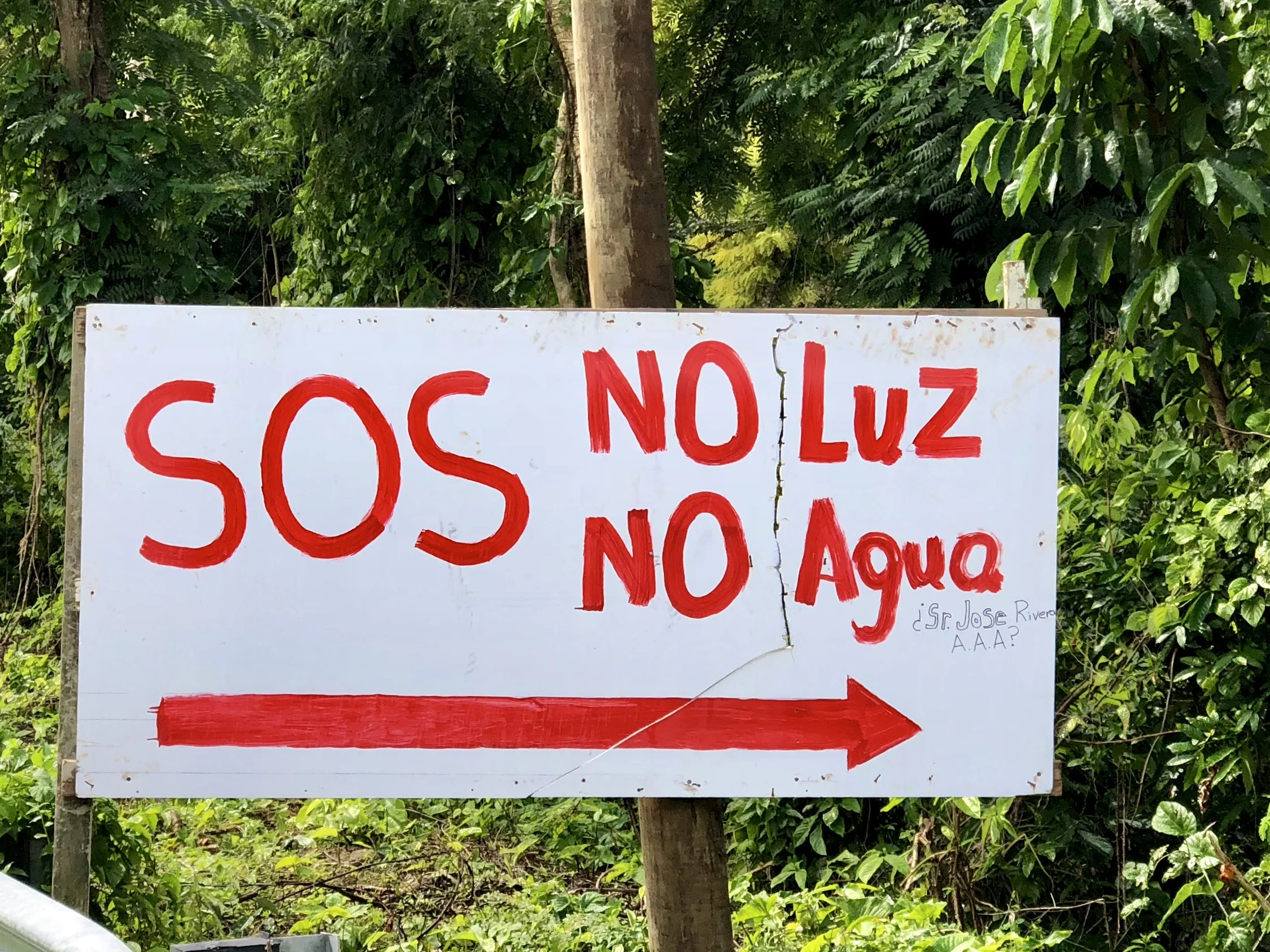
You know how a song can get hopelessly stuck in your head? So can a promise to a stranger. Like a song, when the promise surfaces it has a way of circling back, nagging gently and sometimes causing irritation. Unlike a song, a promise stops nagging if it's kept. So the result of that simple moment when a stranger says, "Promise me you'll go to Utuado", and one answers without thinking, "I will," is that the promise becomes a song one can't get out of one's head. Until one keeps it.
So I had no choice. I had to return to Puerto Rico to go to Utuado.
Not that fulfilling my promise to visit Utuado was my only reason for returning. There are many other good reasons. To flee cold weather in the northeastern US for just a bit longer, to put a little money in the economy as a student at a Spanish language intensive and to explore how communities rebuild after extreme weather disasters are among them. Besides, the island needs people to visit - FEMA, of course - volunteer utility workers - church assistance groups - aid societies - maybe even Tesla to build those microgrids Elon Musk talked about in late September of 2017.
("Did Tesla come? Are they here?" I keep asking, but no one I've asked thinks they did.)
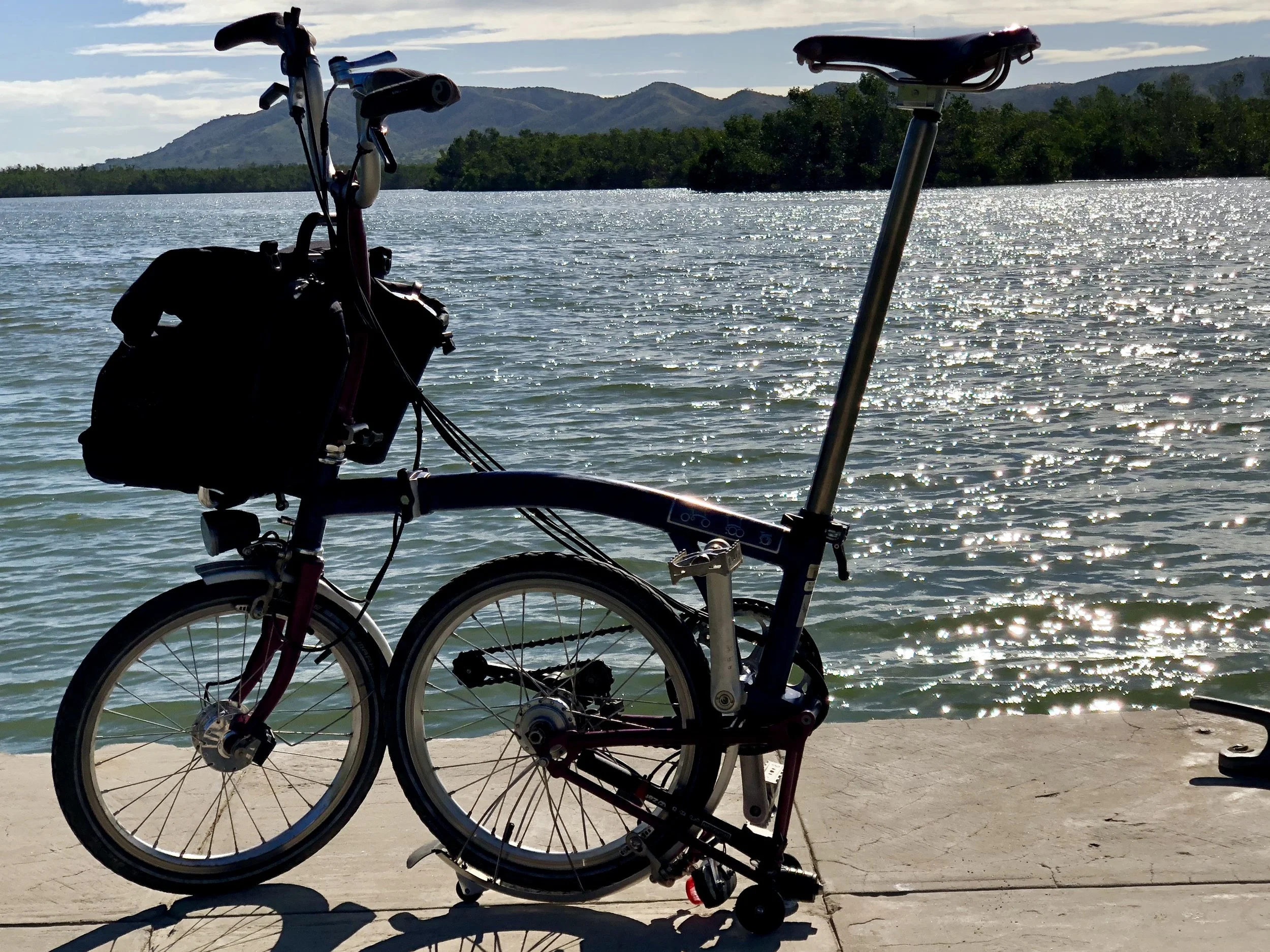
Tourists need to come here as well. Especially now. And, in spite of these blogs (or maybe because of them), I'm essentially a tourist on a bicycle (for the most part). I'm not a big spender, but for what it's worth, I believe my presence has some value.
In the not too distant future, when predictable stages of extreme weather post-disaster recovery are more widely familiar, those stages may look something like the following: 1) relief, joy and gratitude at having survived, 2) mourning who, and what, has been lost, 2) making sure oneself and one's community have what is needed to survive over the coming days and weeks, 3) restoring essential communication infrastructure and cleaning up enough debris so that transit is possible, 4) restoring basic services such as electrity, plumbing and drinking water, 5) returning to the tasks of daily life that help one to normalize - such as going to work, socializing and entertaining, and hopefully - 6) rebuilding in smart ways to meet the next extreme weather event with greater resiliency.
Most of Puerto Rico now seems focused on steps 4 and 5. An islander told me yesterday that he thinks 85% of the island now has power. That might be true on a per capita basis, but I doubt that it's true geographically. The more developed and populated coastal areas have had power for several months, but many of the more remote rural areas are still struggling.
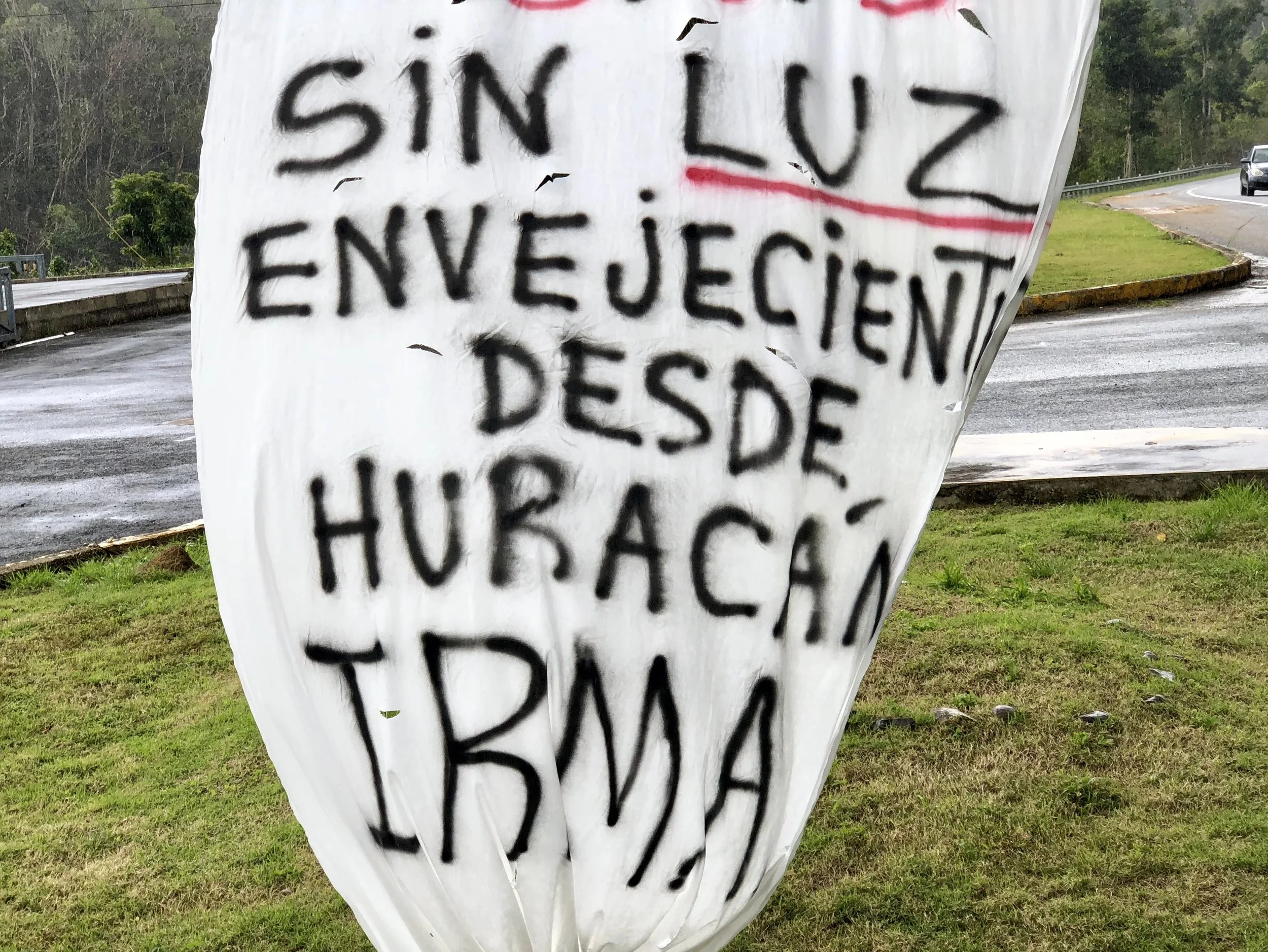
I had the good fortune to share a meal in Quebradillas with Jeff and Virginia Toussaint, owners of The Flowing River Farm near the village of Orocovia, which is located in the center of the Island. Their farm recently joined WWOOF (World Wide Opportunities in Organic Farms, a "worldwide movement linking volunteers with organic farmers and growers to promote cultural and educational experiences based on trust and non-monetary exchange, thereby helping to build a sustainable, global community.") Jeff and Virginia are currently hosting farm worker volunteers even though they have no electricity and are using a large "life-straw" water filtering system to draw water from a local stream. They seemed weary when I talked to them, but perked up as they shared their vision to create a self sustaining, net-zero energy farm that could provide food for their family and the surrounding community. And as we spoke about climate activism, carbon pricing, energy independence, permaculture and our shared antipathy toward car dominant transportation systems (having very poor public transportation and few protected bike lanes, PR is completely car dependent) we re-energized one another to continue fighting for sustainable organic farming, smart infrastructure and clean energy solutions in spite of the obstacles.
There has been a lot in the news about the presence of poor drinking water since the hurricane. But Jeff and Virginia tell me that water hasn't been a consistently potable resource on parts of the island for years, so poor water is not a new phenomenon. On the coasts, it's been relatively easy to purchase bottled water for a few months. But when roads are out, obtaining bottled drinking water is difficult and can be cost prohibitive in poorer, more remote communities, so residents have been forced to drink substandard water or devise filtering systems, such as the Toussaints have.
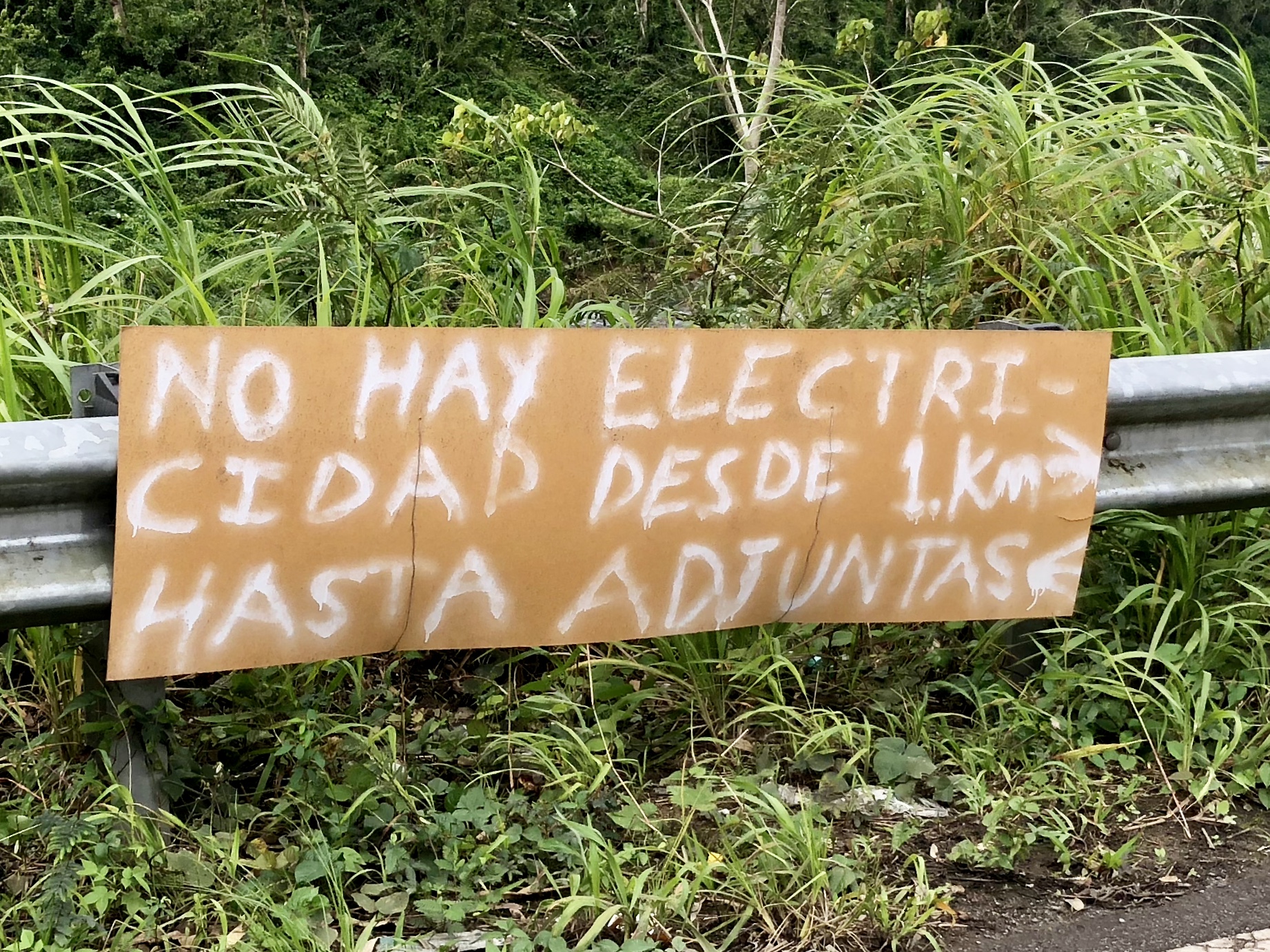
Just past Utuado, a reasonably large and spread out Pueblo south of Arecibo and north of Ponce, there is still no power between Rio Pellejas and Adjuntas in the communities accessible from Highway 123, a distance of about 25 kilometers. This area has received a lot of attention from the press, although that hasn't seemed to help PREPA get electricity beyond Utuado (which has had power since early February). PREPA is the Puerto Rican government run electric company, and you may have read that it will be sold later this year in an effort to privatize and modernize operations. Clearly, PREPA needs to be reimagined, so privatizing it may be helpful. It's essential that PR's electric grid becomes more responsive to the requirements of climate change. This is no mystery to Puerto Ricans. I encountered no resistance anywhere on the island to the notion that climate change will create more frequent and extreme hurricanes, greater ambient temperatures, increased precipitation, and storm surge flooding based on sea level rise. The average Puerto Rican seems to know what's coming.
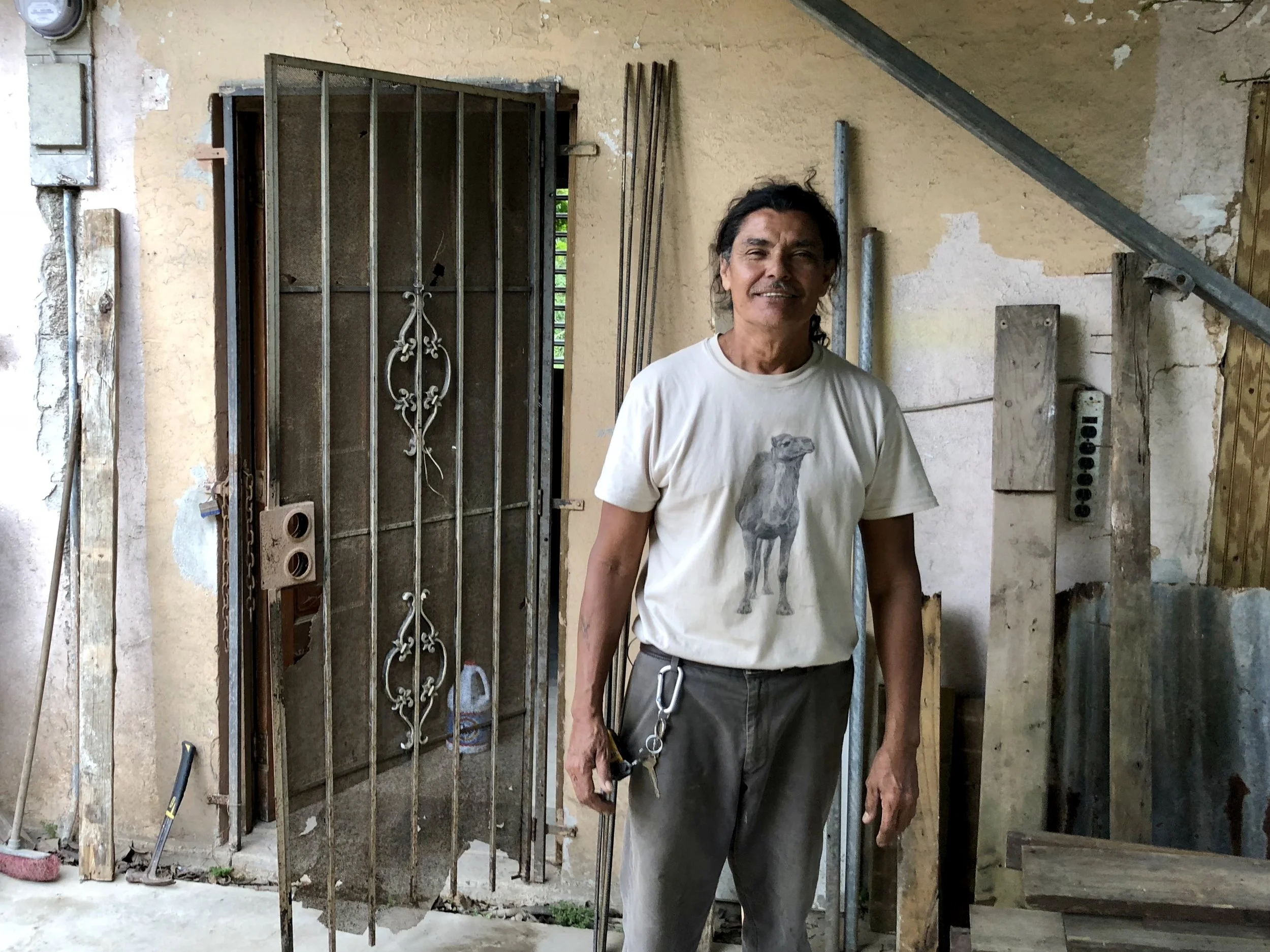
I met Manolito, a Puerto Rican of Taino descent, as I walked through Rio Pellejas to inquire about electricity. There were new electrical cables on poles outside his house, but he and his neighbors were not connected. He didn't know if the cables were live, and he didn't seem too worried about it. His plumbing was fine, and that mattered much more to him. In fact, he mused that after five months, he had become accustomed to life without electricity. He'd be glad when it was back, but he wasn't that bothered by its absence.
From time to time I find myself reflecting on the reality that we humans have lived with electricity for only about a hundred years, and have enjoyed civilization without electricity for almost 10,000 of the 40,000 years our species has been around. Is its absence really such a crisis? Perhaps so when it comes to health care - modern medicine certainly cannot function without it. But in most other ways, I'm not so sure. (I do appreciate the irony of writing that statement while composing a blog on my cell phone.)
In spite of PREPA's overwhelming reconstruction challenge and their bureaucratic inefficiency, they have made some good choices. The government talks about establishing a portfolio standard with a goal of 30% renewables, which seems reasonable in an environment with an unlimited supply of wind and sunshine. Currently 13% of PREPA's full load is delivered through renewable sources. In 2012, PREPA contracted with Pattern Energy (headquartered in San Francisco, the company has 20 industrial sized wind and solar facilities all over the globe that generate more than 4000MW) to construct a wind farm slightly east of Ponce near the pueblo of Santa Isabel on the south coast. With 47 turbines, the Santa Isabel Wind Farm has a full capacity of 101 Megawatts, and is perfectly situation to take advantage of the constant and vigorous trade winds that blow from the east and southeast. Although the wind farm was built in 2012, the greatest capacity that PREPA has ever solicited has been 75MW (about 8% of PREPA's supply), which is what the farm was supplying to PREPA just before Hurricane Maria hit in September of 2017. There is another wind farm on the southeastern coast of PR near Naguabo called Punta Lima that was built and is run by Gestamp Wind, which had 13 turbines and a full capacity of 23MW. Unfortunately this farm was directly in the path of Maria and had to contend with winds that reached up to 200 mph. So, most of the turbines there were seriously destroyed by Maria, and the farm is not at all functional at this time. The Santa Isabel Wind Farm was also damaged, and some turbines are still being repaired. But its construction and fail safe technology allows it to survive 150 mph winds, and the blades can turn 180 degrees so that higher winds will be deflected and less damaging. At Santa Isabel, Maria's winds averaged 135 mph, with a few gusts that matched or exceeded 150 mph. As a result, about half of the turbines are currently online and the farm has a production capacity far greater than PREPA can currently utilize. At this time, PREPA is only taking 5MW. In spite of some ongoing repairs, the Santa Isabel Wind Farm will be able to supply at full capacity as soon as PREPA can absorb it.
I was impressed and delighted to learn that in this context the word "farm" has a double meaning. While fracking pads and oil wells are extraordinarily noisy and restrict terrain because of toxic exposure and protection from machinery, it is possible to grow crops directly underneath a wind turbine. The Santa Isabel Wind Farm is a "farm" in the truest sense of the word. Underneath its 3400+ acres are highly productive tomato fields, mango and papaya orchards, peppers, onions, eggplant, pineapple and approximately twenty other crops. The 800 acres of tomatoes can yield enough harvest in one day to supply the island for a week. The fields are shared with approximately 25 farmers who lease the land from the government at a beneficial rate, and also work closely with PR Farm Credit. In spite of Maria, the farms are fully functional now - which is very good news, considering that In the aftermath of Hurricane Maria, the New York Times reported that 80 percent of the crop value on the island — about $780 million — had been lost to the storm. Puerto Rico imports about 85% of its food, so the quick recovery of enterprises like this help lessen that dependency.
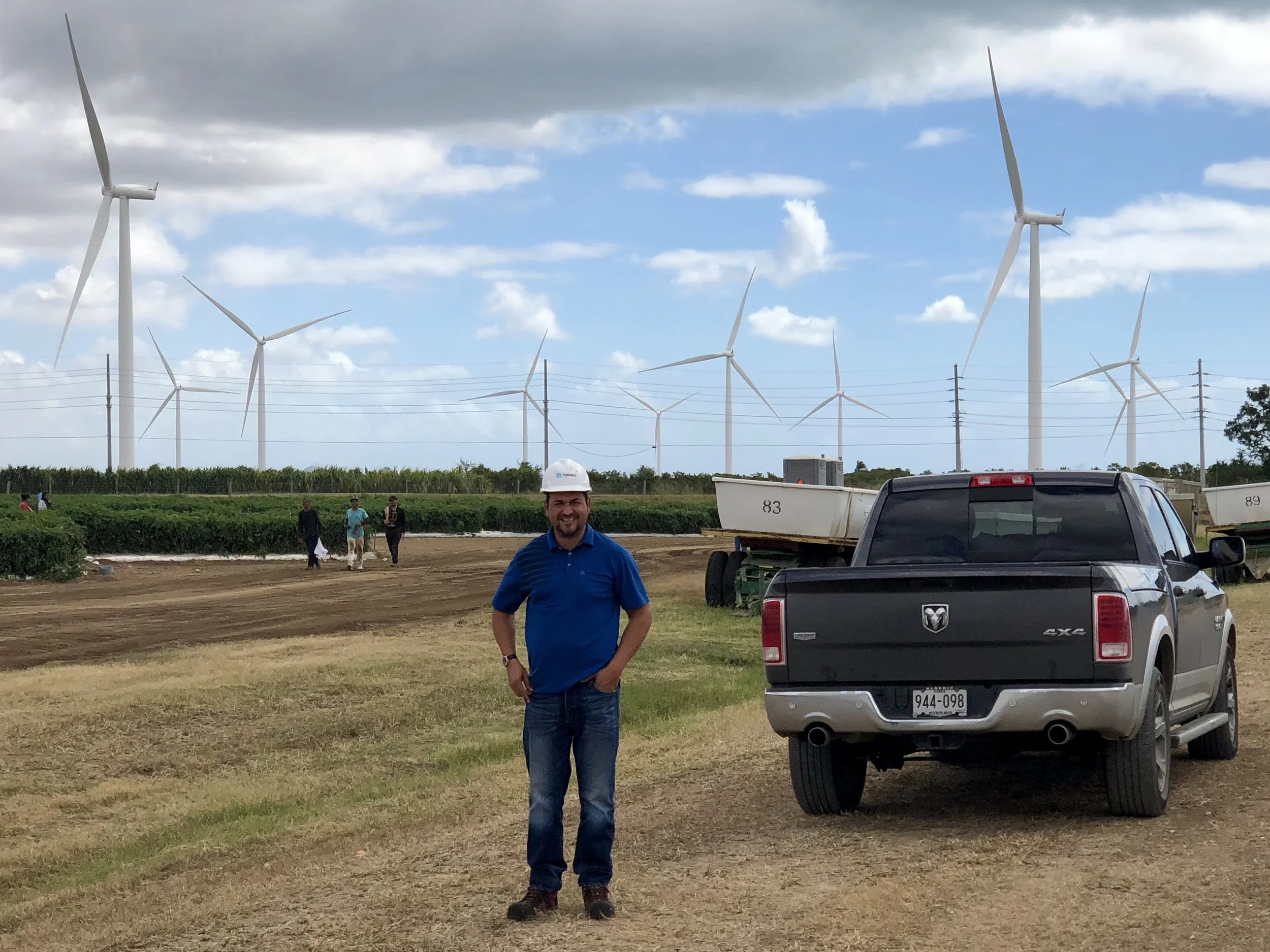
Behind my host Rueben Rivera of Pattern Energy and next to his truck, is a white trailer, which can be joined with other trailers to create a "train" pulled by a large tractor that can bring crops (tomatoes, in this case) to market.
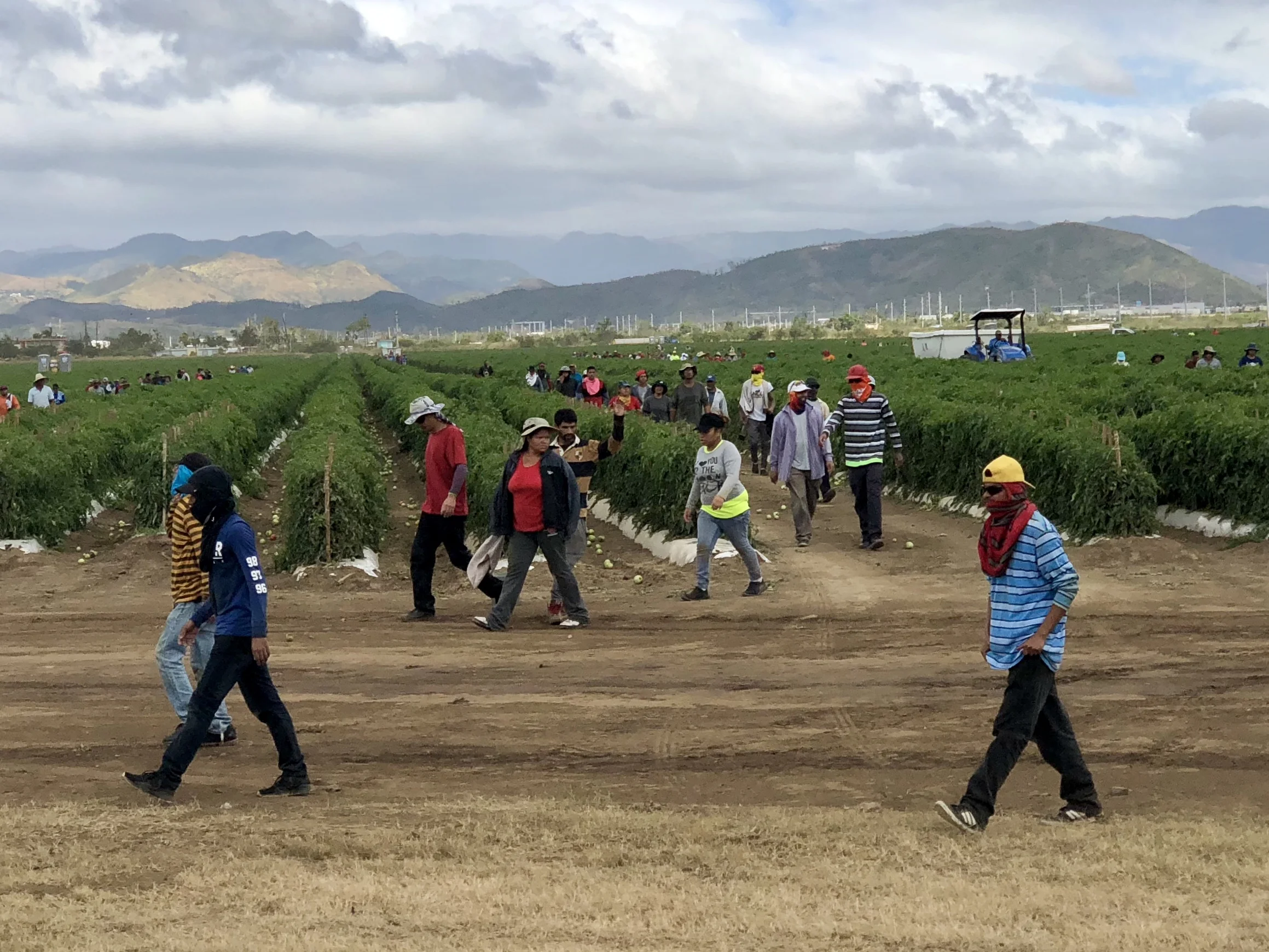
While Rueben and I toured the farm, workers came in from the tomato fields for lunch. The Santa Isabel Wind Farm creates hundreds of sustainable jobs, primarily through agriculture. Interestingly, Ruben Rivera studied agronomy in college, even though he is now an operations manager for the wind farm. It was a pleasure to watch this capable man in an environment that aligns so closely to his values, way of life and skill set.
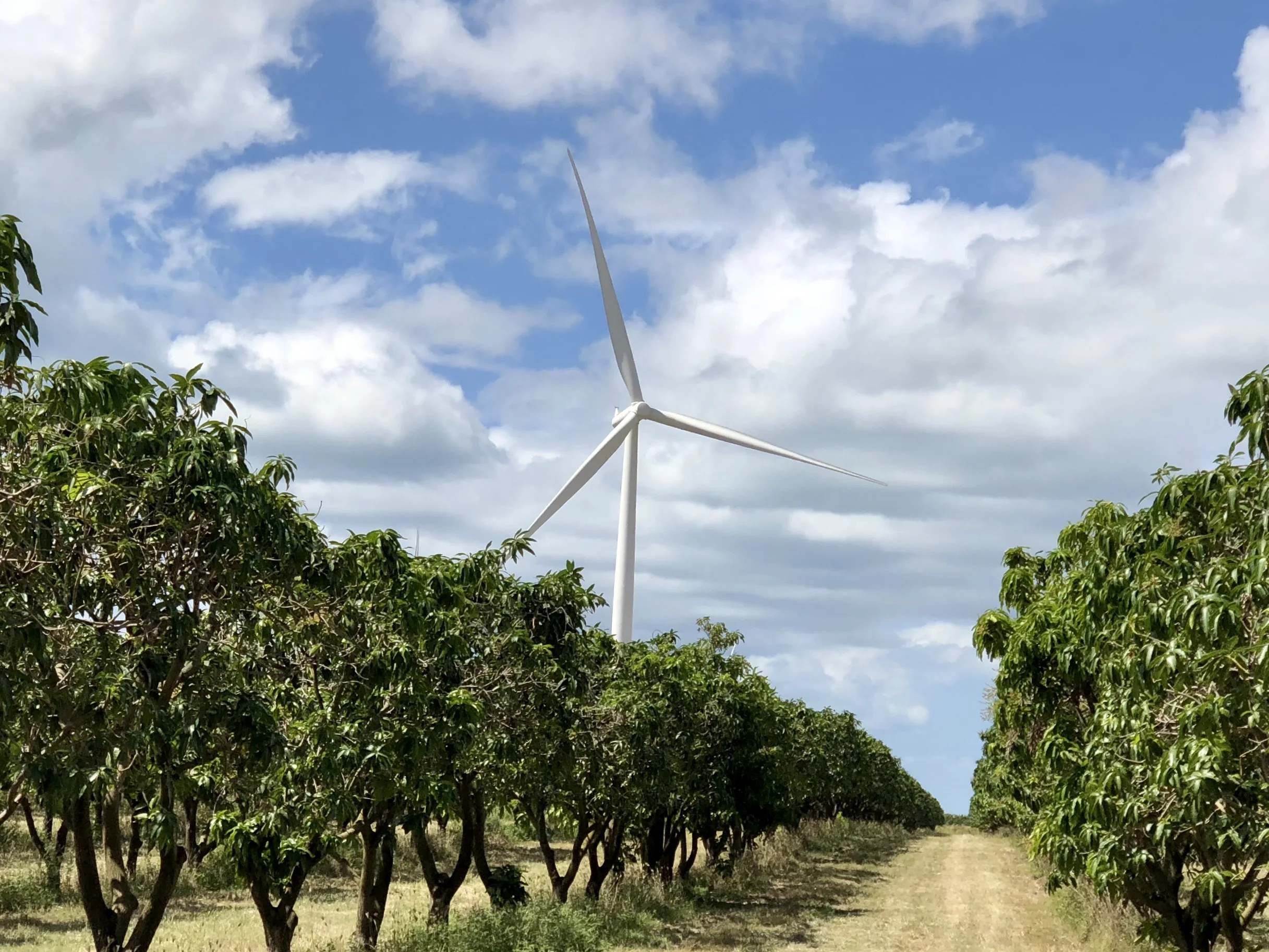
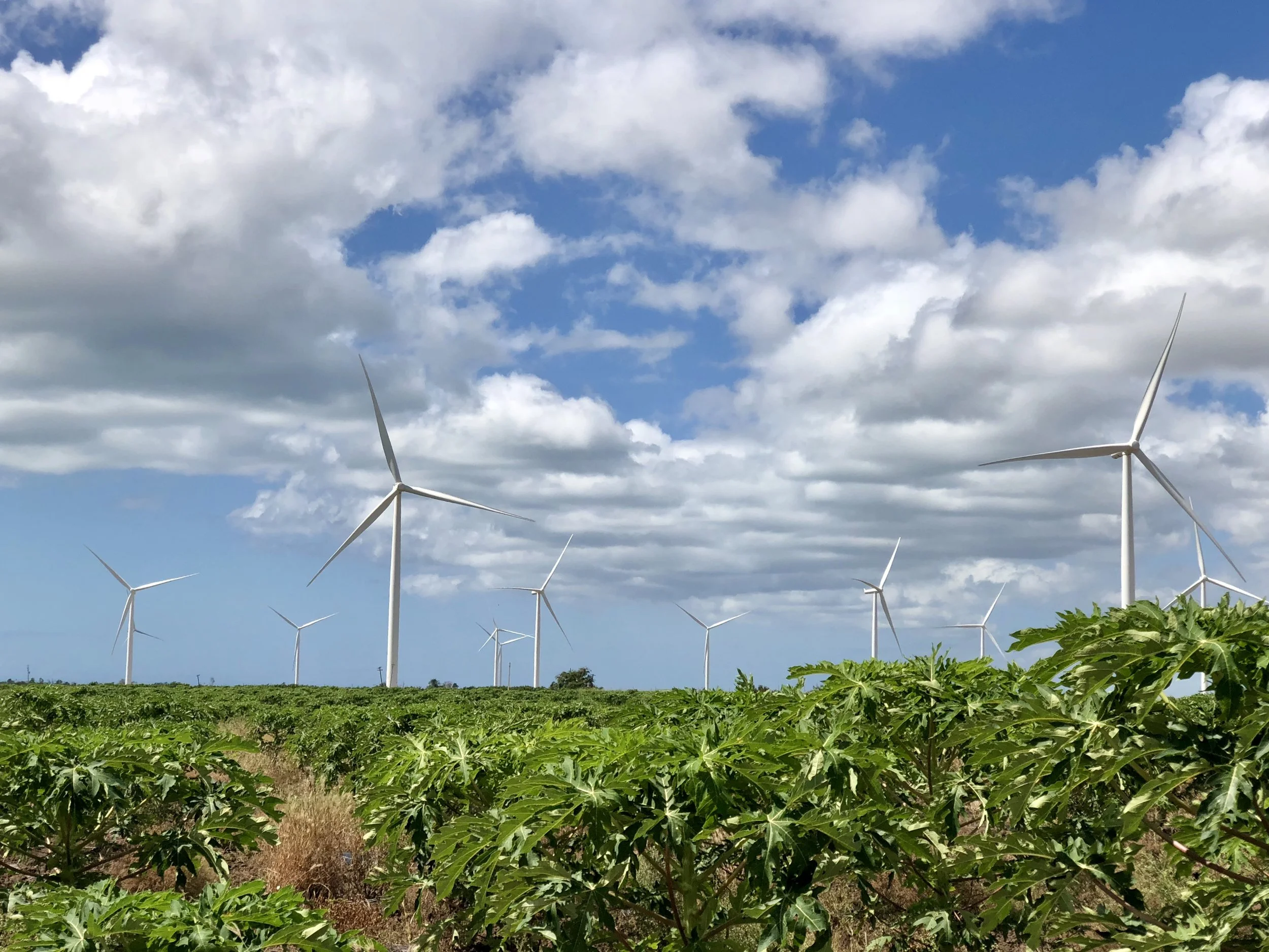
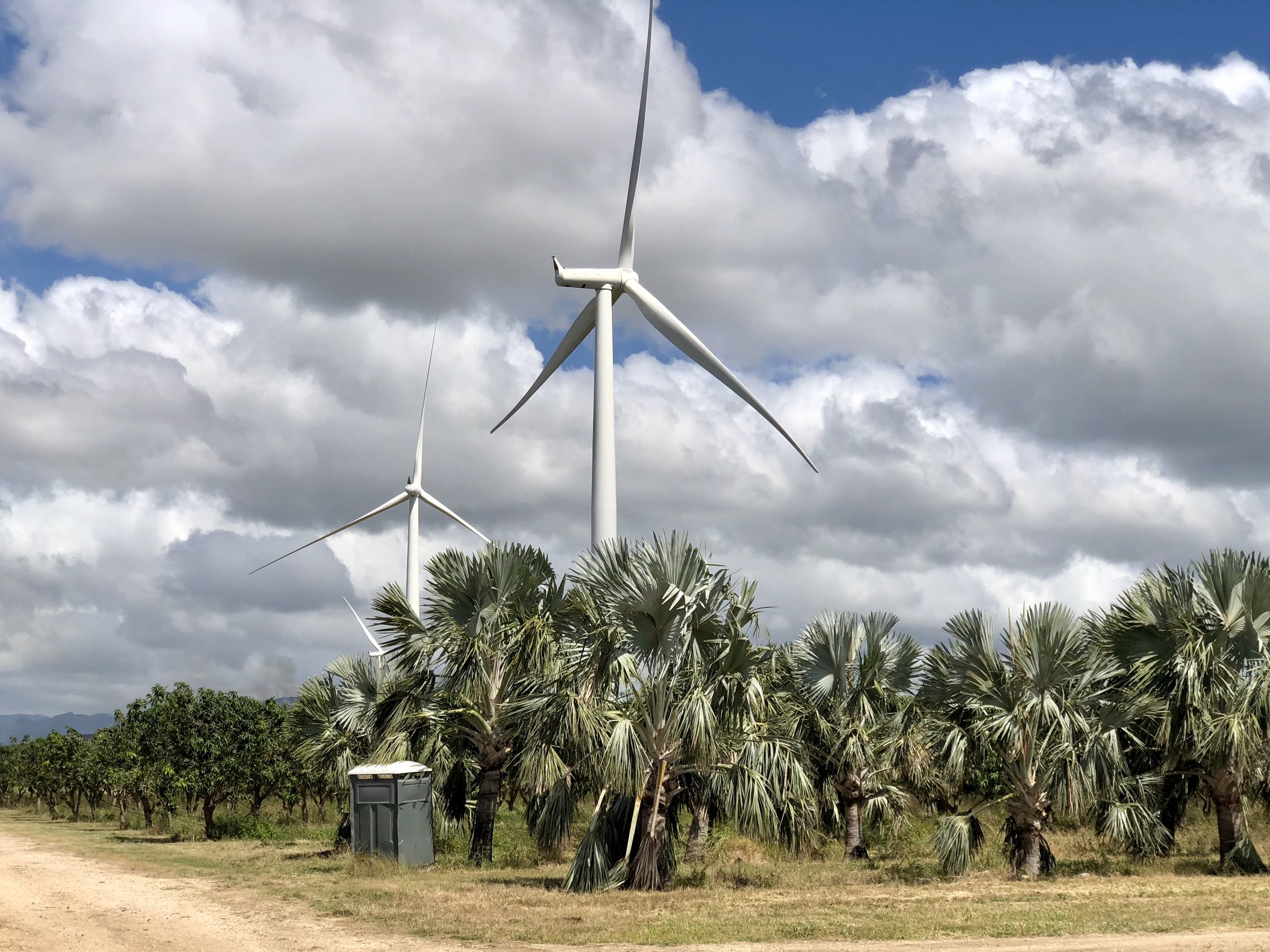
As we drove past the tomato fields we entered mango and papaya orchards. I cannot express how fulfilling it was to see how a clean source of energy could be paired with intensive food production. And, for skeptical readers, I want to make it clear that I took some time to get out of Ruben's truck and intentionally stand near a turbine while I listed to the white noise of the rotating blades. I have also stood near fracking pads, and I can assure you there is no suitable noise comparison. Anyone who complains about the noise of a wind turbine has never listened to an oil well or a fracking pad. Oil wells are irritating. Fracking pads are deafening. Wind turbines are neither.
These were my capable and warm hosts at the Santa Isabel Wind Farm, Carlos Roman and Ruben Rivera, respectively.
All good things must come to an end. These last photos were taken west of Quebradillas on the northwest coast, where in spite of obvious hurricane damage, the beaches are spectacular. I spent my last day biking along one of PR's few designated bike paths. And although I had to contend with a ferocious wind from the east, and dodge sand dunes altered by the hurricane, I was happy to be warm and sunbaked.
I recommend you go, if you can.
Fear and Hope from NYC to San Juan, PR post Maria, Post 1
My folding bike overlooking the Atlantic in old San Juan, Puerto Rico.
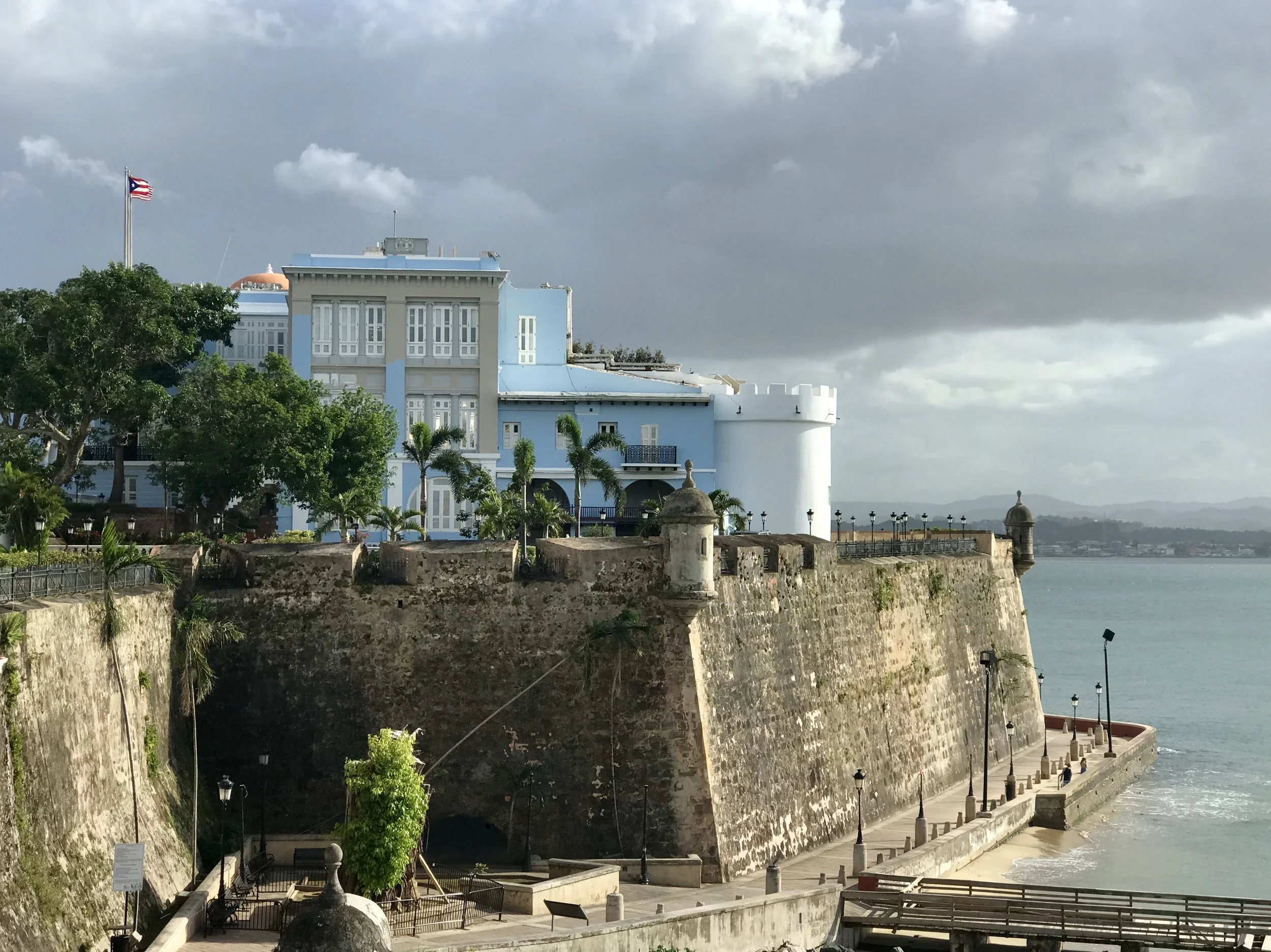
A beautiful day in Old San Juan.
"There is no legitimate debate that climate change is happening. The only debate is around the nuances of the timeframe and how bad it will be." -Margaret Haberman
Last October I attended several provacative panels on climate science at Climate Week, an annual New York City based conference. I was particularly puzzled by one panel organized by the soon-to-be "Museum of Climate Change" entitled "Fear and Hope in the Climate Conversation." Although the speakers were all highly qualified, no one seemed to want to talk about fear, and no one did. This forced the conversation toward hope, taking it in several directions. One direction focused on personal reflections about optimism (which seemed to be based more on the individual character traits of the panelists - they indeed were a personally optomistic group), and on reviews of the most hopeful trends for managing climate change occurring around the world. Had the panel been called "What are We Doing Well?" I might have left more satisfied. Yes, smart and successful people are naturally confident. Yes, hundreds of cities and a number of states have pledged their intention to stick to the basic tenets of the Paris Climate Accords, which includes the goal of limiting global temperature rise to 1.5 degrees centigrade. Yes, global growth in the clean energy sector is increasingly explosive, robust and unstoppable. Yet at the same time, scientists tell us that the Paris accords, plus the current level of growth of clean energy alternatives are not enough. It's a start, but not enough. Greater urgency is paramount. And how will we achieve that? And what should we fear if we don't manage? And what should we fear even if we do?
Coupling hope with the word fear made me expect and desire a deeper conversation. Frankly, I yearn for that time when we become realistic about our situation. Those of us who pay attention to peer reviewed climate science know there are plenty of reasons to be worried. Essentially, our best efforts to address climate change are failing to match the urgency of our situation, and with some notable and inspiring exceptions, most individuals and communities around the globe are woefully unprepared for what is coming. With CO2 levels at the highest levels for the past 800,000 years (humans have been around for fewer than 100,000 of those years), we are are only at the beginning of an acceleration of deadly heat waves, sea level rise, and destructive weather events that will grow increasingly intense and more frequent.
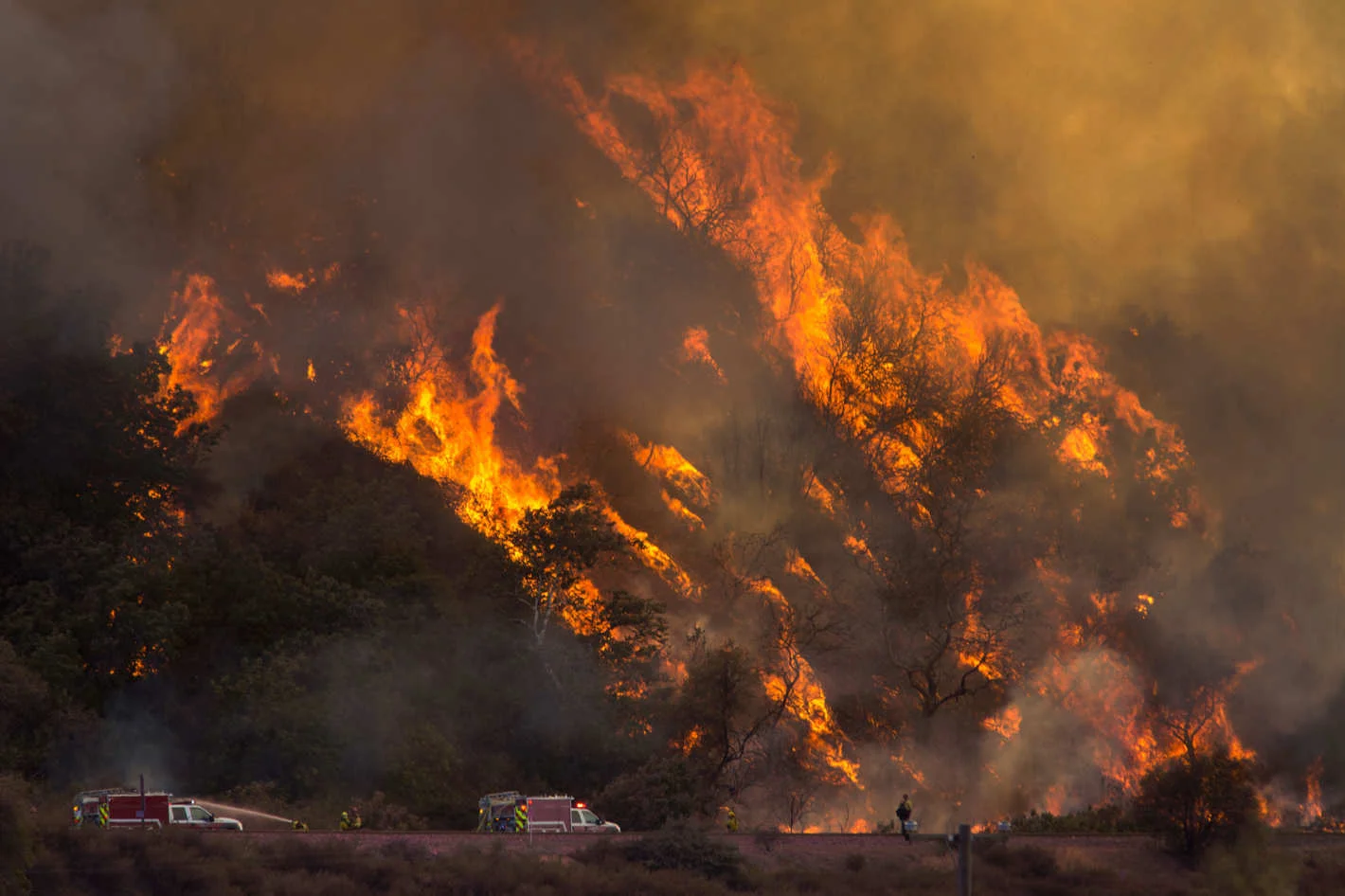
Fires burn in western Oregon in the summer of 2017.
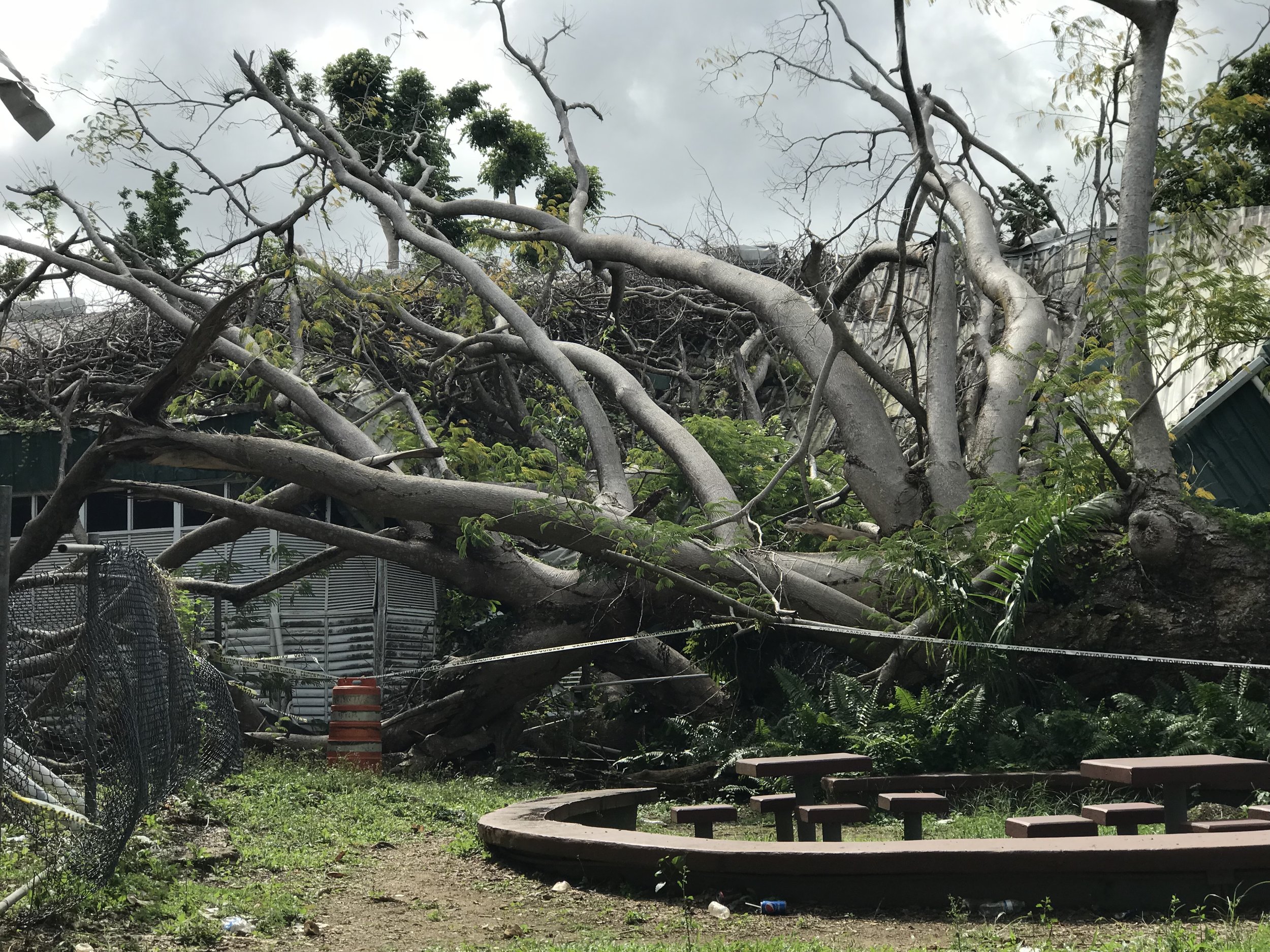
What wind can do.
On July 9th, 2017, New York Magazine published a landmark article by David Wallace-Wells entitled "The Uninhabitable Earth, Famine, Economic Collapse, A Sun That Cooks Us: What Climate Change Could Wreak - Sooner Than You Think." The most-read story in the history of New York Magazine, this article inspired many follow up articles, some by writers who felt that the article's alarmist tone was more harmful than helpful, and in some cases, inaccurate. But then criticisms about the article were literally drowned out by an extraordinary series of extreme weather events. Along came Harvey, Irma, Jose and Maria. And although it took a few months for scientists to be able to describe how climate change is the driver for these events, it is now possible to describe how warm waters in the Atlantic, prevailing trade winds and a wobbly jet stream resulting from a warming atmosphere all contibuted to create a season of "perfect storms" that are rightly viewed as canaries in a coal mine.
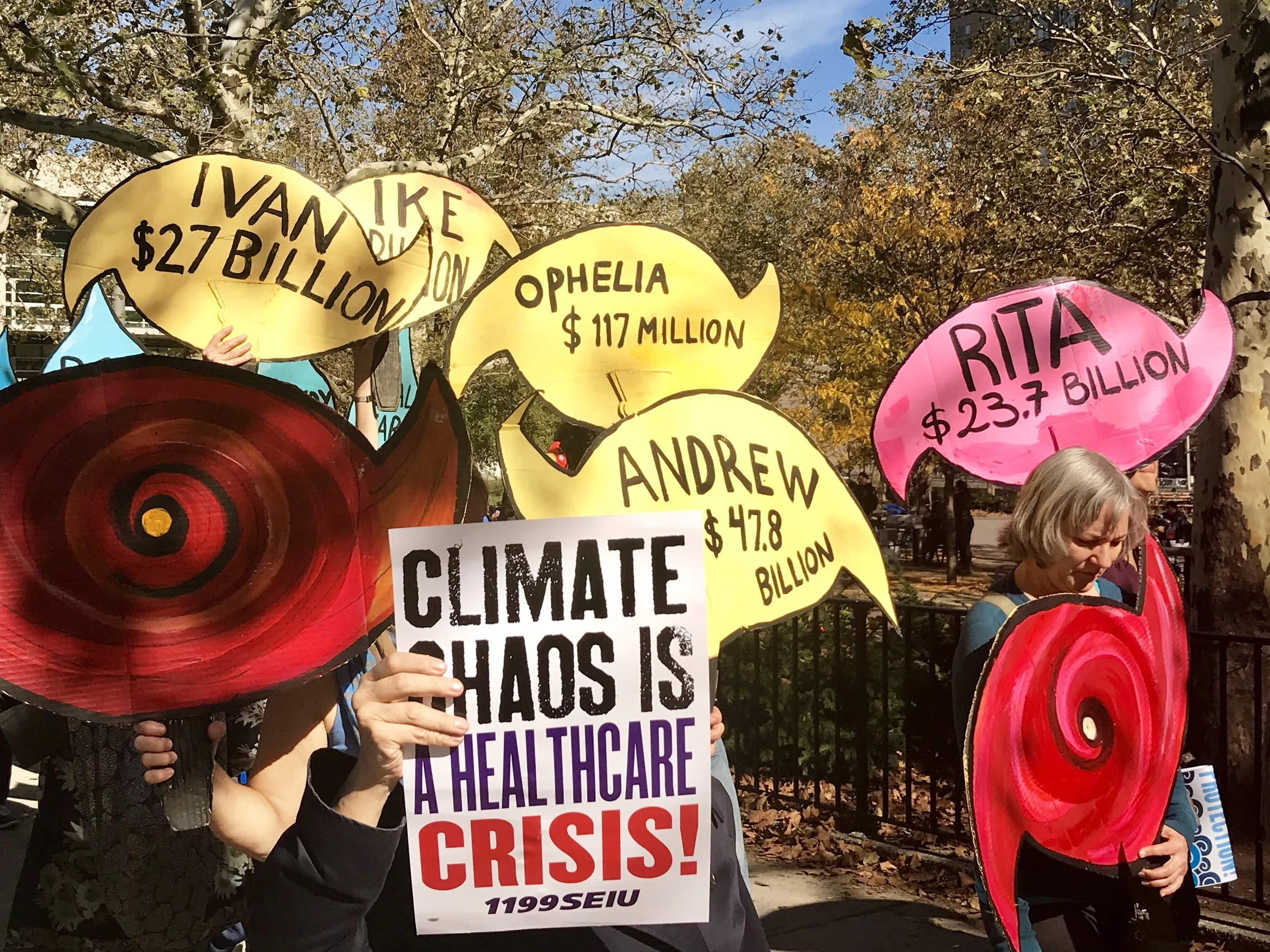
Climate March in New York City on the 5th anniversary of Hurricane Sandy.
Like other Americans who weren't in the path of those storms (as opposed to those who were) I watched the story of the 2017 hurricane season mostly on TV. And although I don't believe our major networks peddle intentional "fake news", I do believe that first hand experience is the greatest way to learn about something. So, in November I decided to travel to Puerto Rico in January to study Spanish at a private school in downtown San Juan called Isla Language. I will be here for two weeks, improving my funky Spanish in the mornings and cycling around San Juan in the afternoons.
I have been here for four days now. San Juan is functional. Water and food are not difficult to obtain, and other than many destroyed street and traffic lights, people are busy in the normal sense of the word. The electric company is ubiquitous. Workers are deployed all over, broken poles are gradually being removed and wires hang everywhere. Ironically, remnants of old wires are as omnipresent as new ones. Clearly, getting wires up is more important to the utilty than cleaning up debris. That said, I imagine that the town will gradually become more organized as time passes. A resident (and fellow language student) pointed out several buildings in distinct disrepair and told me they were that way before the hurricane because of Puerto Rico's debt crises, which makes me often wonder if I am seeing something that fell into disrepair before the Hurricane.
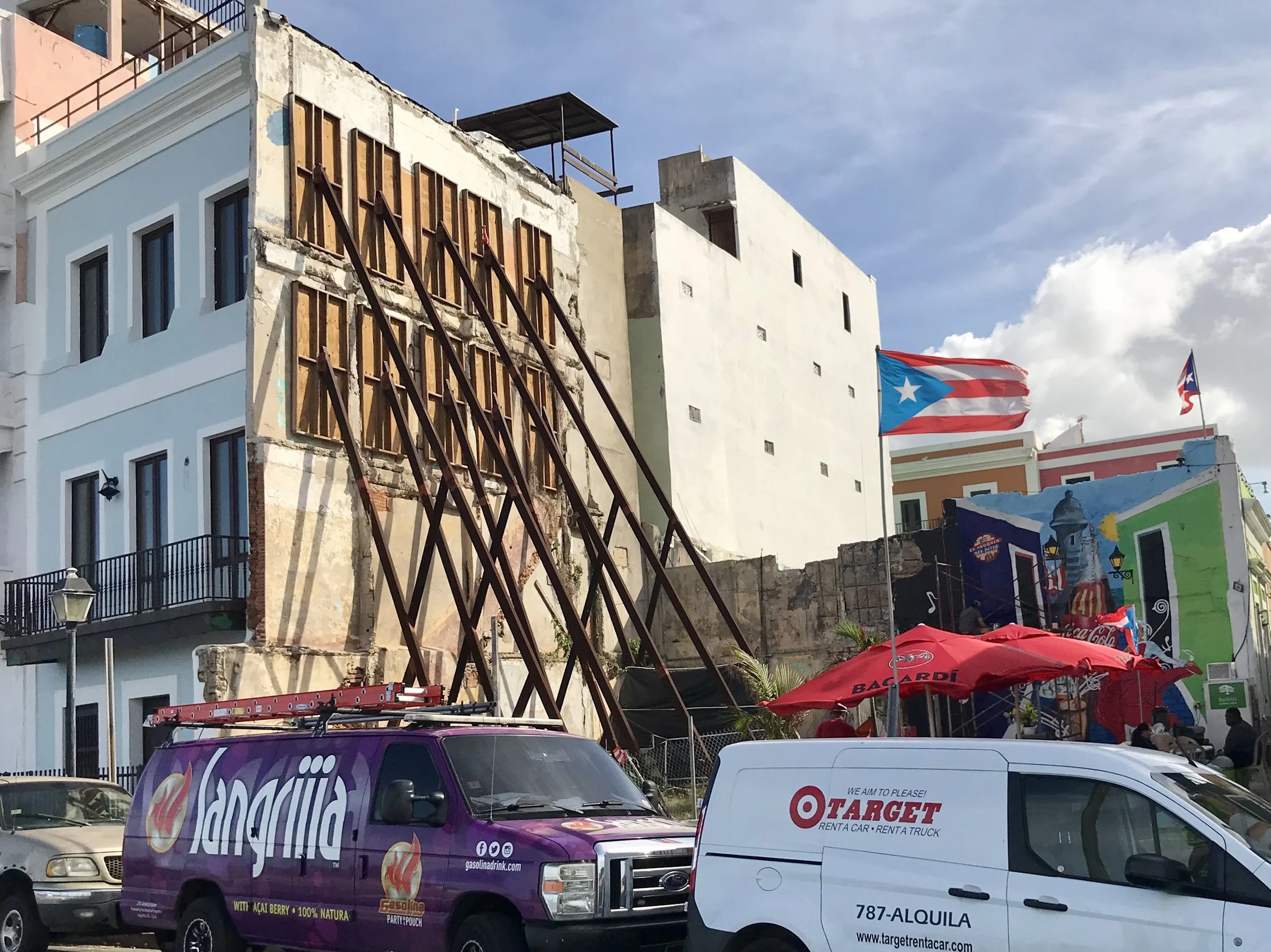
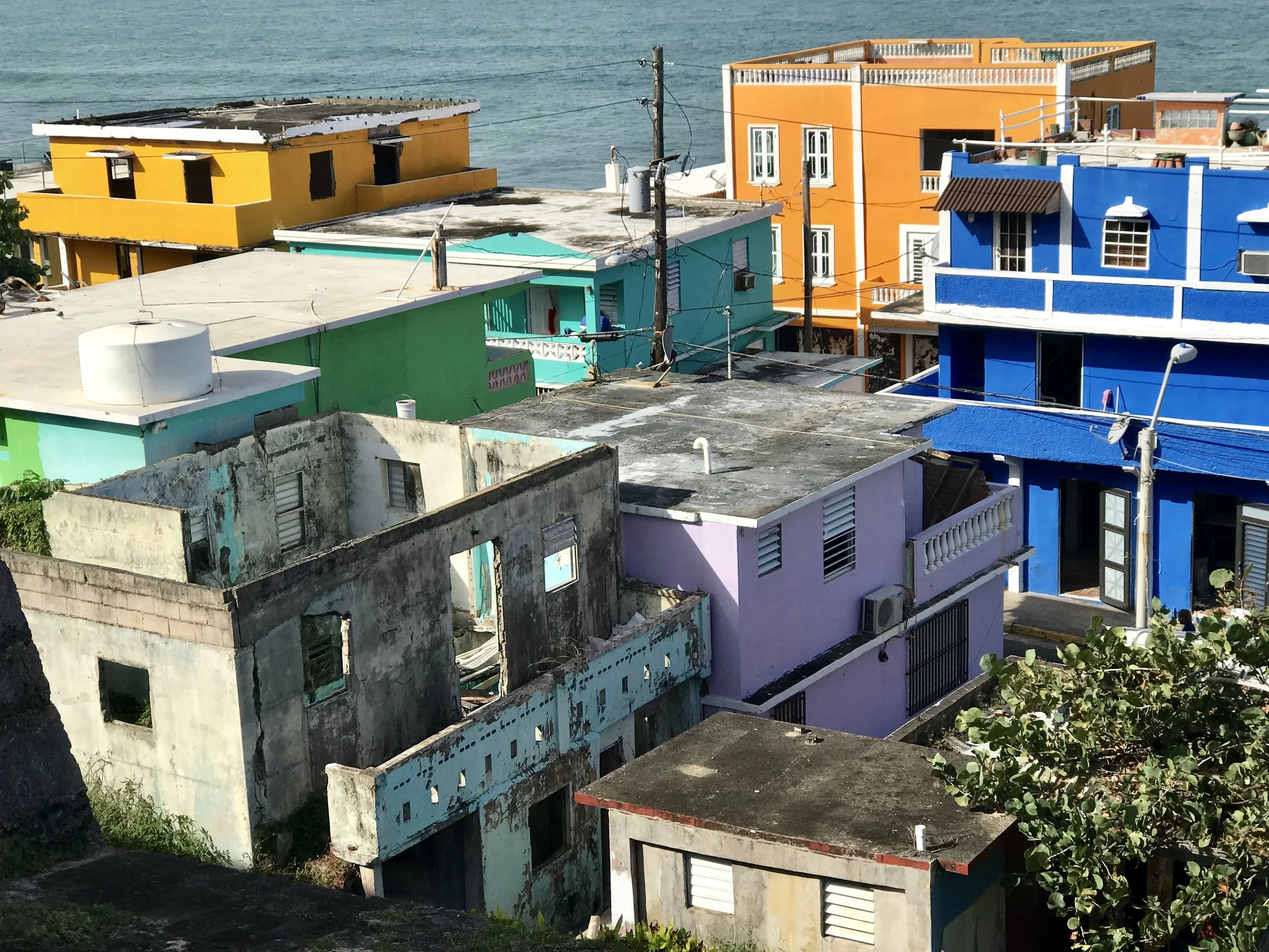
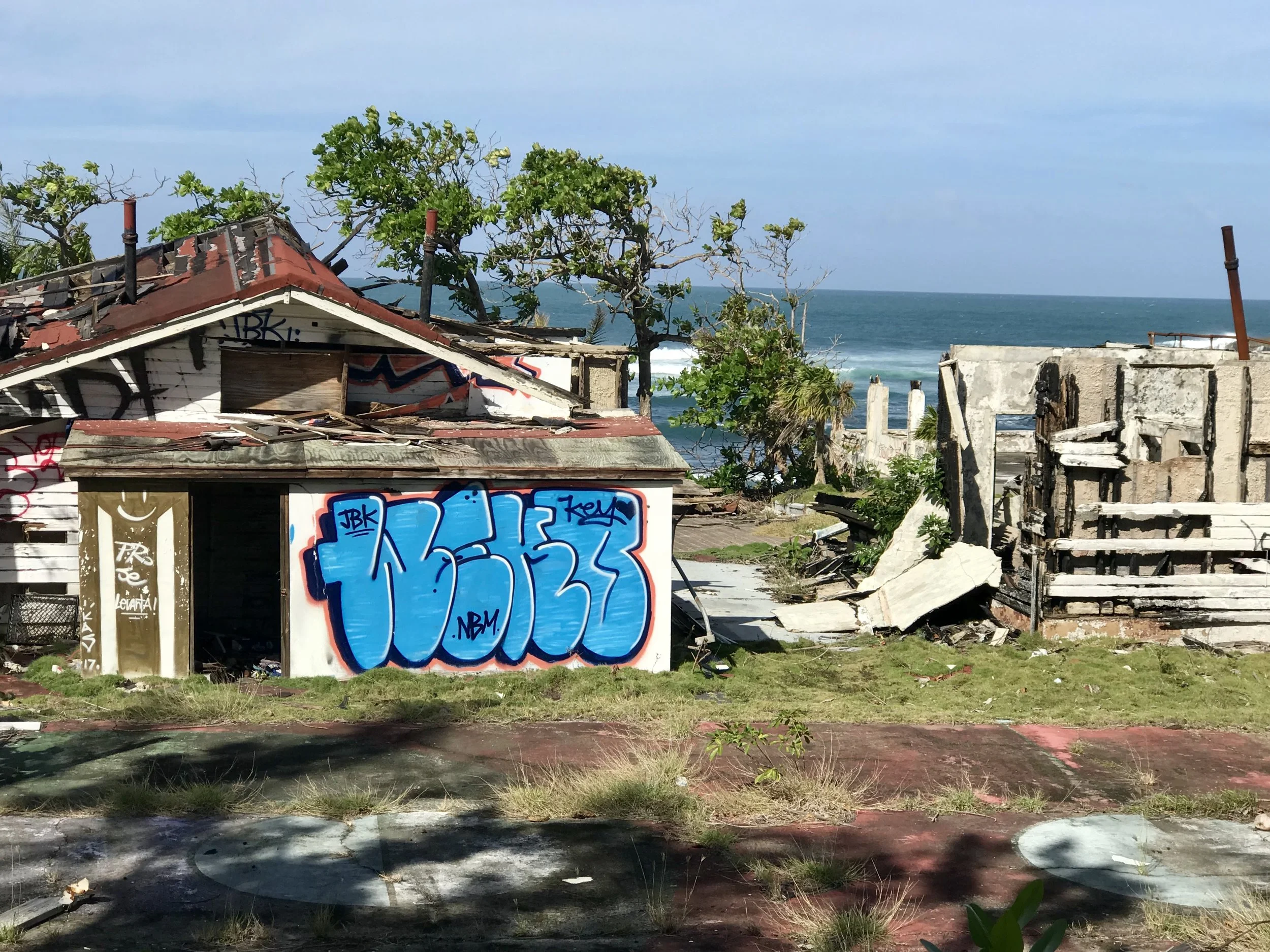
Electric wiring left after a line was repaired.
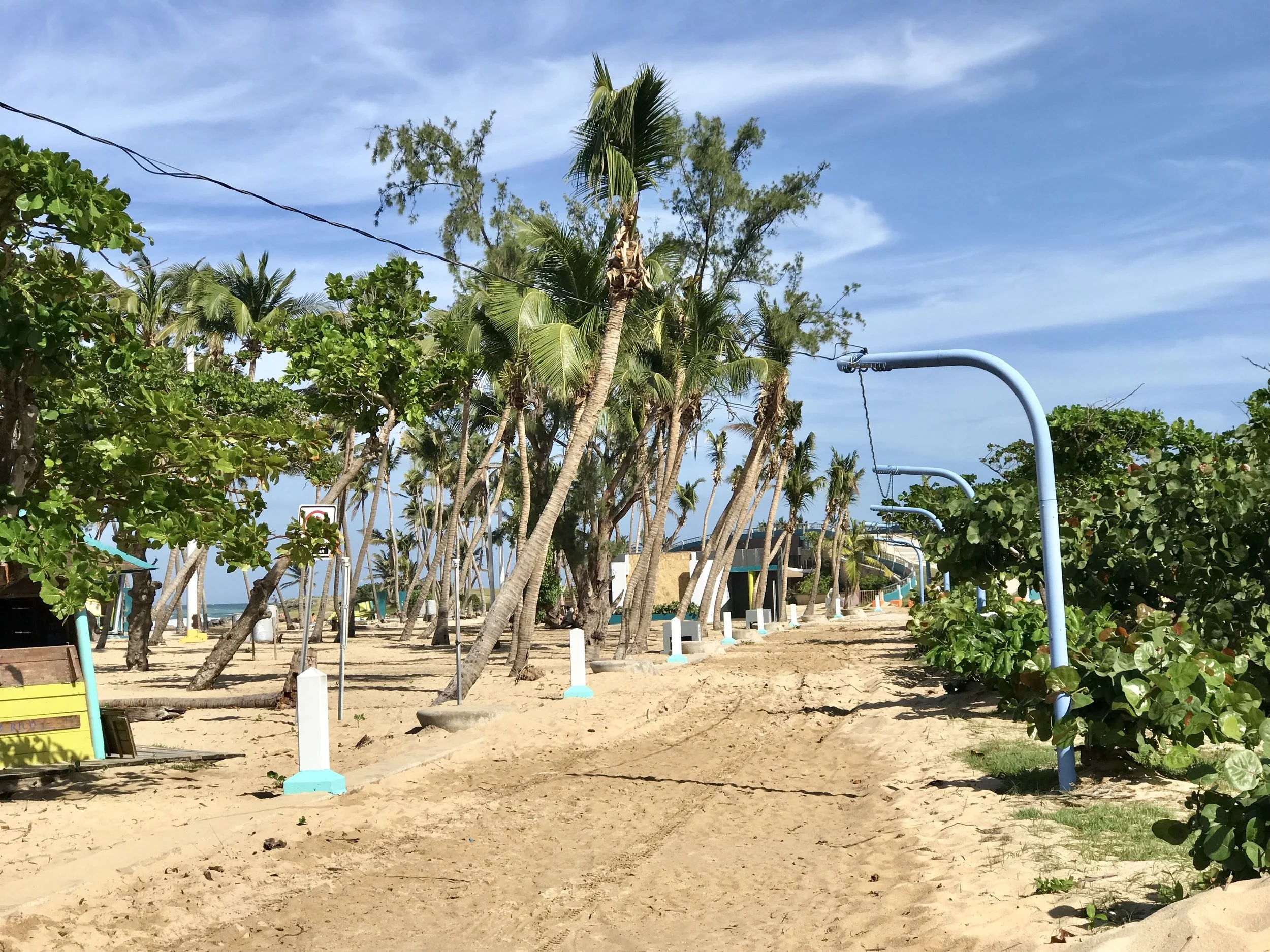
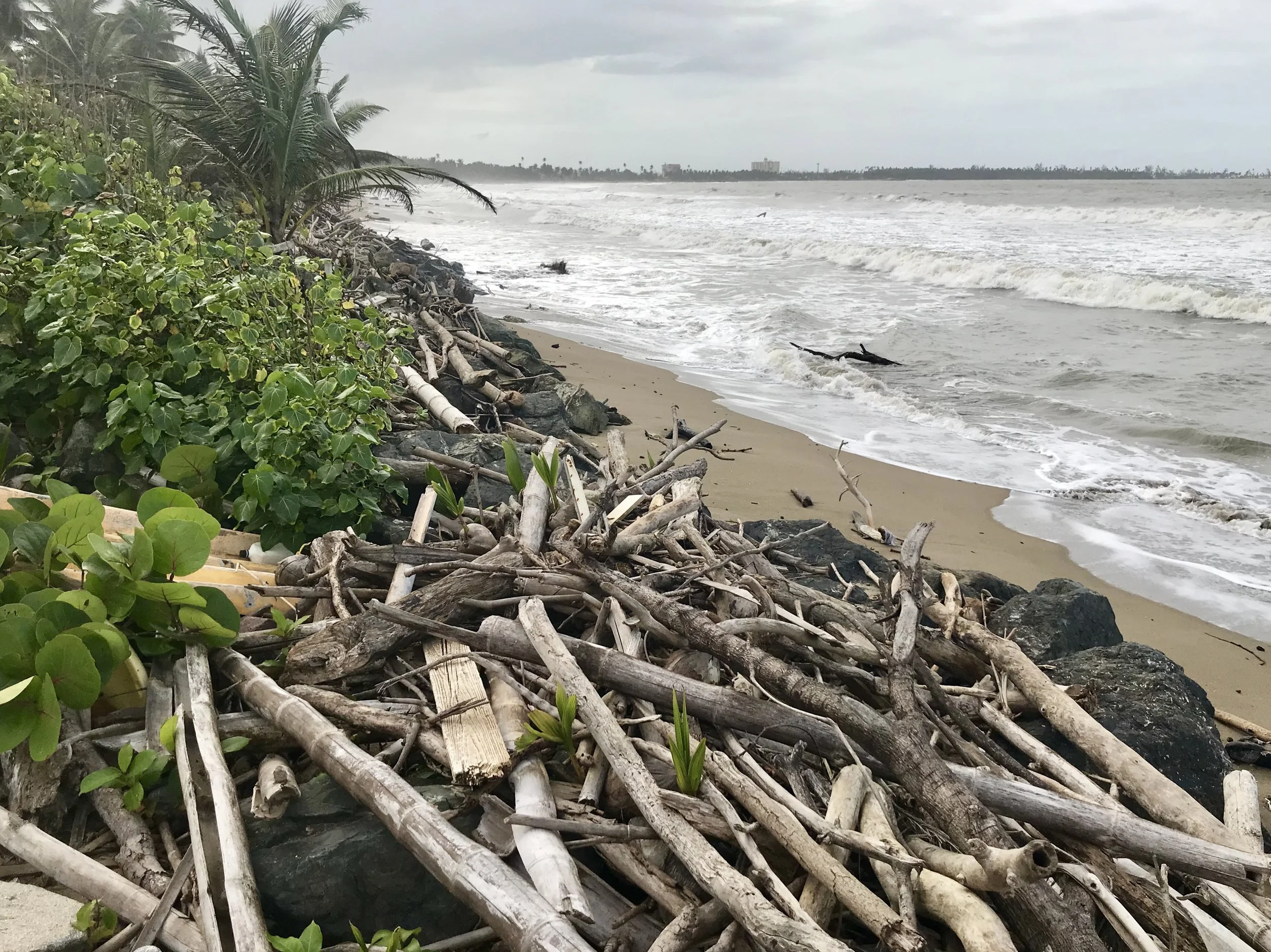
Debris on the beach.
Interestingly, only a few areas have maintained stable housing prices since 2008. The rest have lost value steadily over the past decade as the debt has spiraled. It appears to me that if anyone is looking for real estate in the Caribbean and they aren't worried about climate change impacts, this is a good place to buy. As a New Yorker, I'm very impressed by the prices, the gorgeous beaches (even post Hurricane) and the general joi de vie of the Puerto Rican people. Interestingly, the oldest part of San Juan weathered the Hurricane quite well - apparently the Spanish knew how to build buildings that would last.
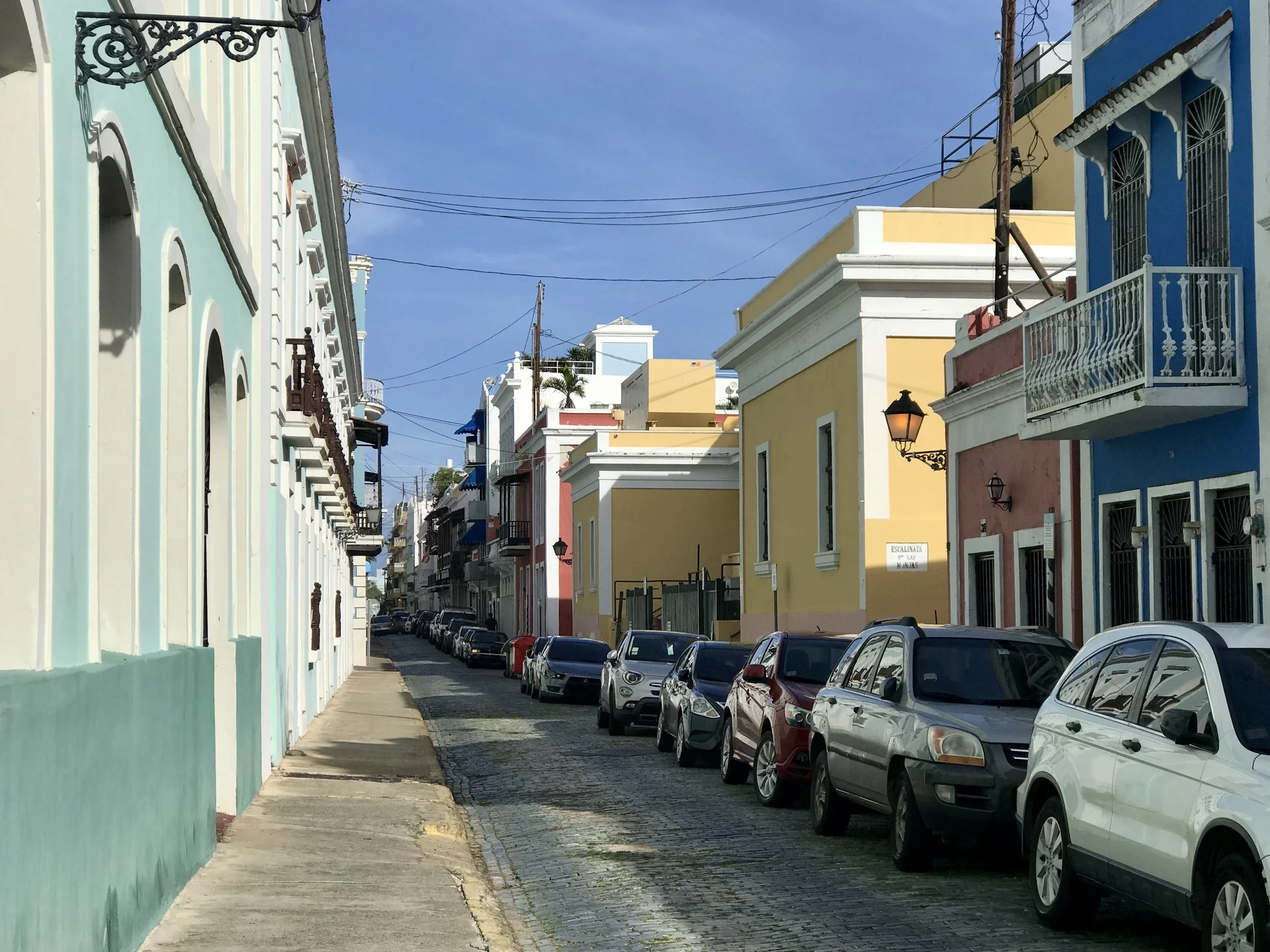
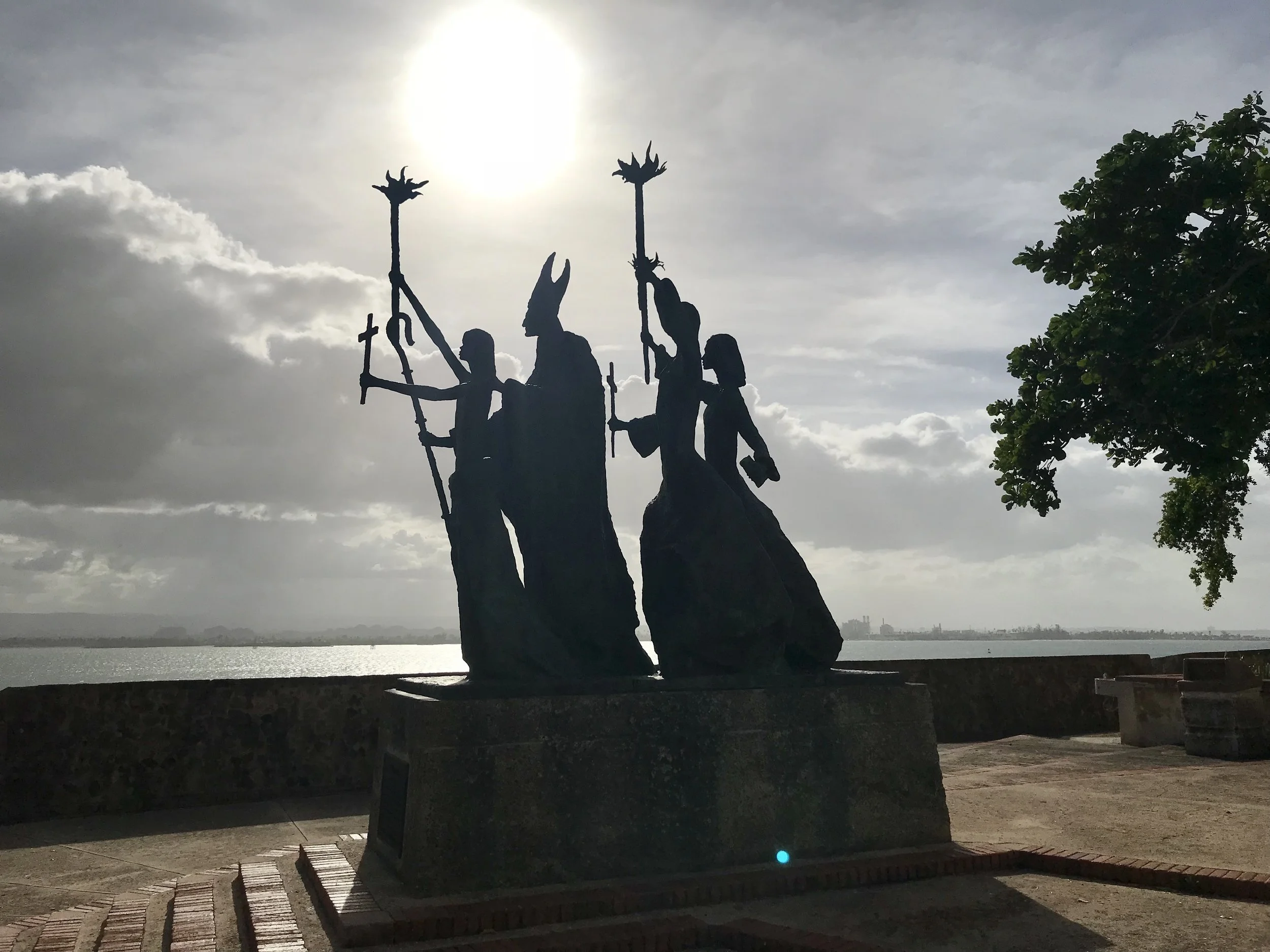
One aspect of hope is our capacity to endure difficulties, regardless of how challenging they become. I can say with great respect that the Puerto Rican people possess this kind of hope. They are a remarkably cheerful and personally resourceful people, in spite of having experienced great hardship. It may be true that more people died in the aftermath of Maria than Katrina (see Hurricane Maria’s Aftermath in Puerto Rico ), but that fact is not evident in bustling San Juan.
"Anybody who works on the climate crisis has to deal with an internal struggle between hope and despair." -Al Gore