
A Province of Foresight: Biking Newfoundland
Writing by Michael Chase, Drawings by Jenny Hershey
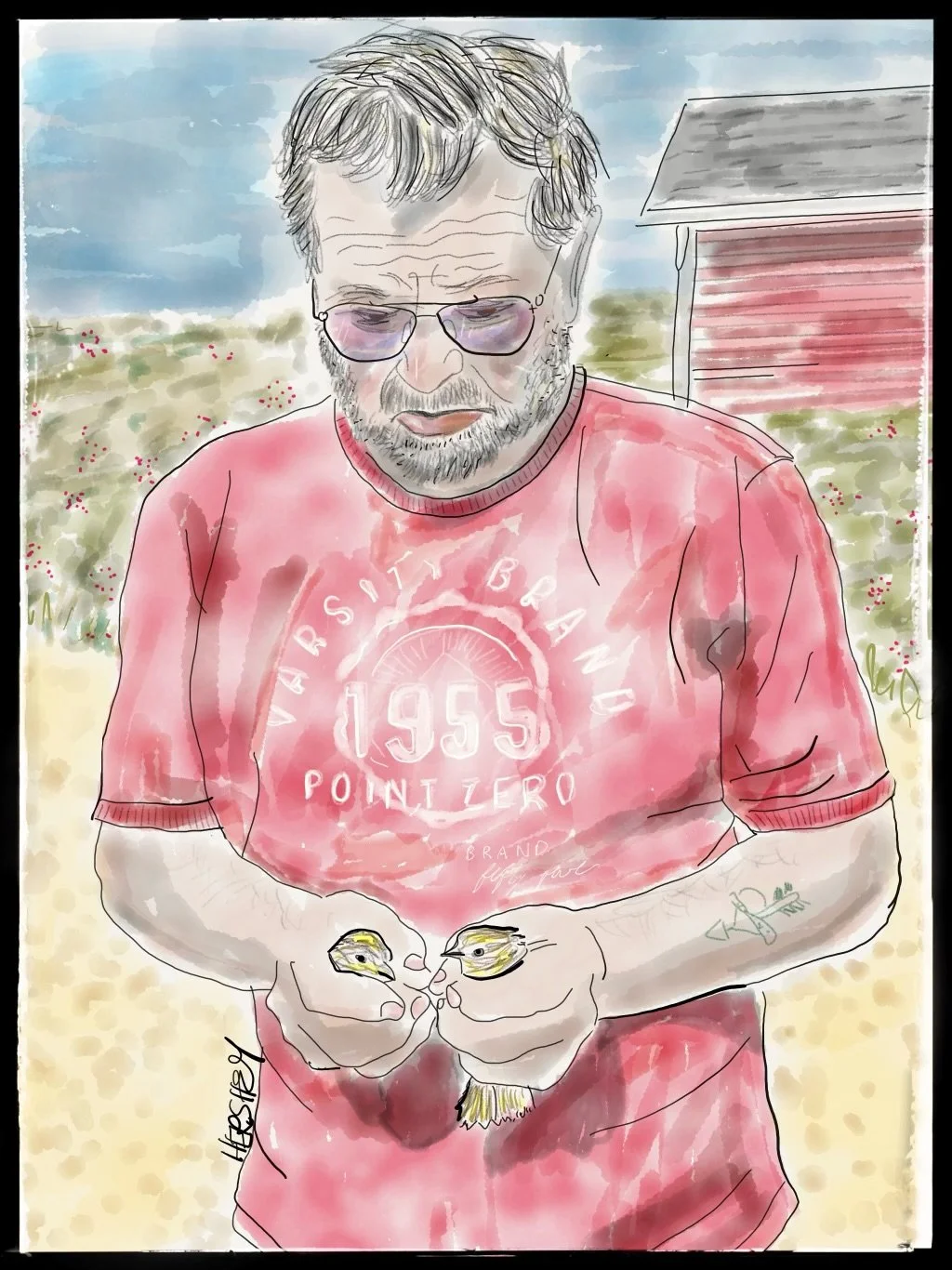
We met Pearce Cull outside the last house in St. Anthony Bight at the tip of Bobby’s Cove. Pearce was busy rescuing two little fire sparrows that had snuck into his shed. A very kind soul, Pearce feeds the sparrows every day. He also mentioned how hard life is for the seagulls nearby. They used to eat scraps from the fisheries but now have to “survive on berries.” Pearce showed us a nearby bluff filled with crackleberries (“don’t eat 'em”) and partridge berries (“pick those when they’re dark purple, then they’re sweet as can be”). Retired, Pearce spends his time drying cod and being an attentive grandfather. He invited us into his house and shared photos of his kids. We noticed a well-crafted blue guitar, but he told us he no longer plays because his hands “don't work so well.” We learned later from another local that Pearce Cull is a well-known traditional Newfoundland musician and songwriter who achieved fame with numerous recordings, including “The Cold Storage,” a song about a cod fishery he wrote and recorded in the 70s. ….You never know who you’re going to meet up here! Drawing by Jenny Hershey. Follow her on Instagram @deeofo.
“History is a relentless master. It has no present, only the past rushing into the future. To try to hold fast is to be swept aside.”
John F. Kennedy
The Trip
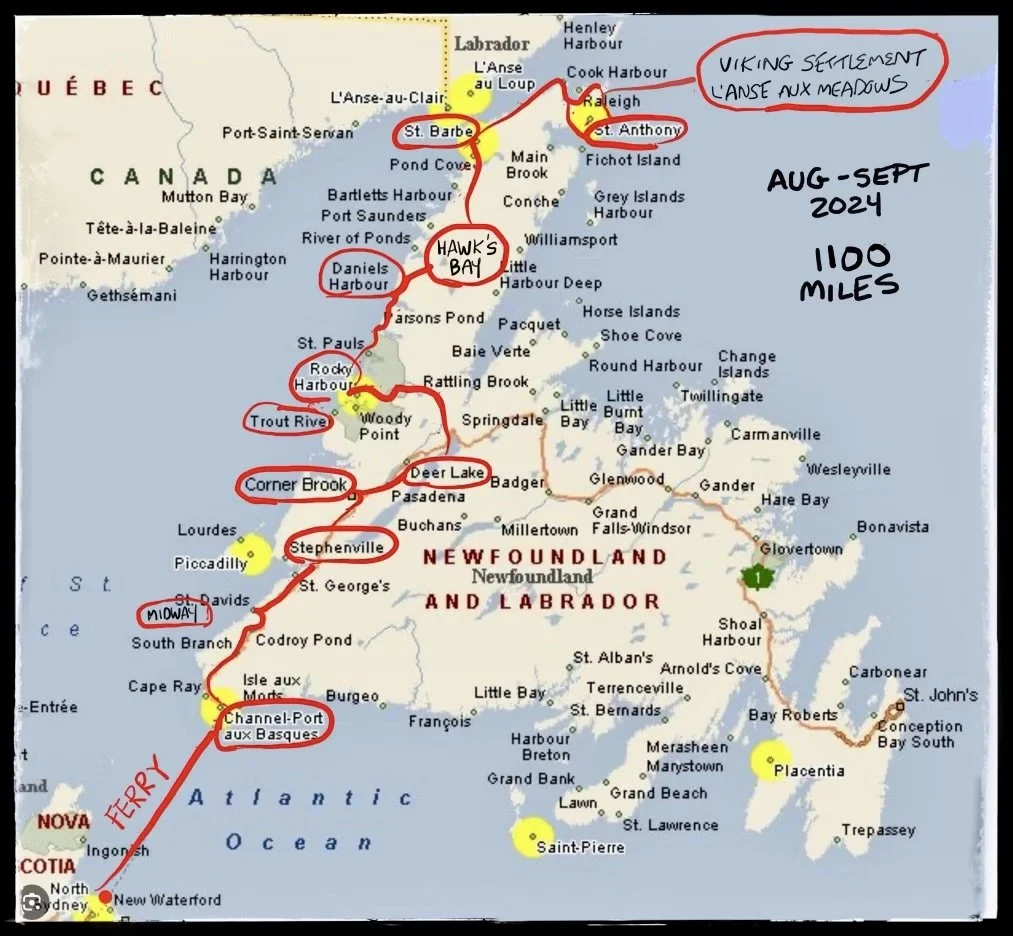
The red line was our route. We left our car in Nova Scotia and biked from Port aux Basques to St. Anthony and L’Anse aux Meadows and back along Newfoundland's western peninsula. With side trips, we cycled about 1100 miles. Next time, we’ll visit St John’s and key places on the eastern shore. And hopefully, someday we will make it to Labrador! We had planned to go this trip, but winds and a lack of time got in our way.
It was probably 50 years ago when I first thought about biking in Newfoundland, and it’s been at least six years since Jenny and I decided to go. In my youth, I imagined circumnavigating the island on a bicycle, not knowing the southern coast is too rugged for a throughroad. That said, it is possible to traverse the whole island on the Trans-Canada Highway between the western and eastern shores (where ferries run between the island and Nova Scotia) by following a single arc that cuts from the southwestern corner of the island to its southeastern shores. However, Jenny and I didn’t take the route from Port aux Basque in the west to Saint John’s in the east (nor did we follow the iconic all-terrain biking “rail trail” that runs roughly along the same route as the Trans-Canada).
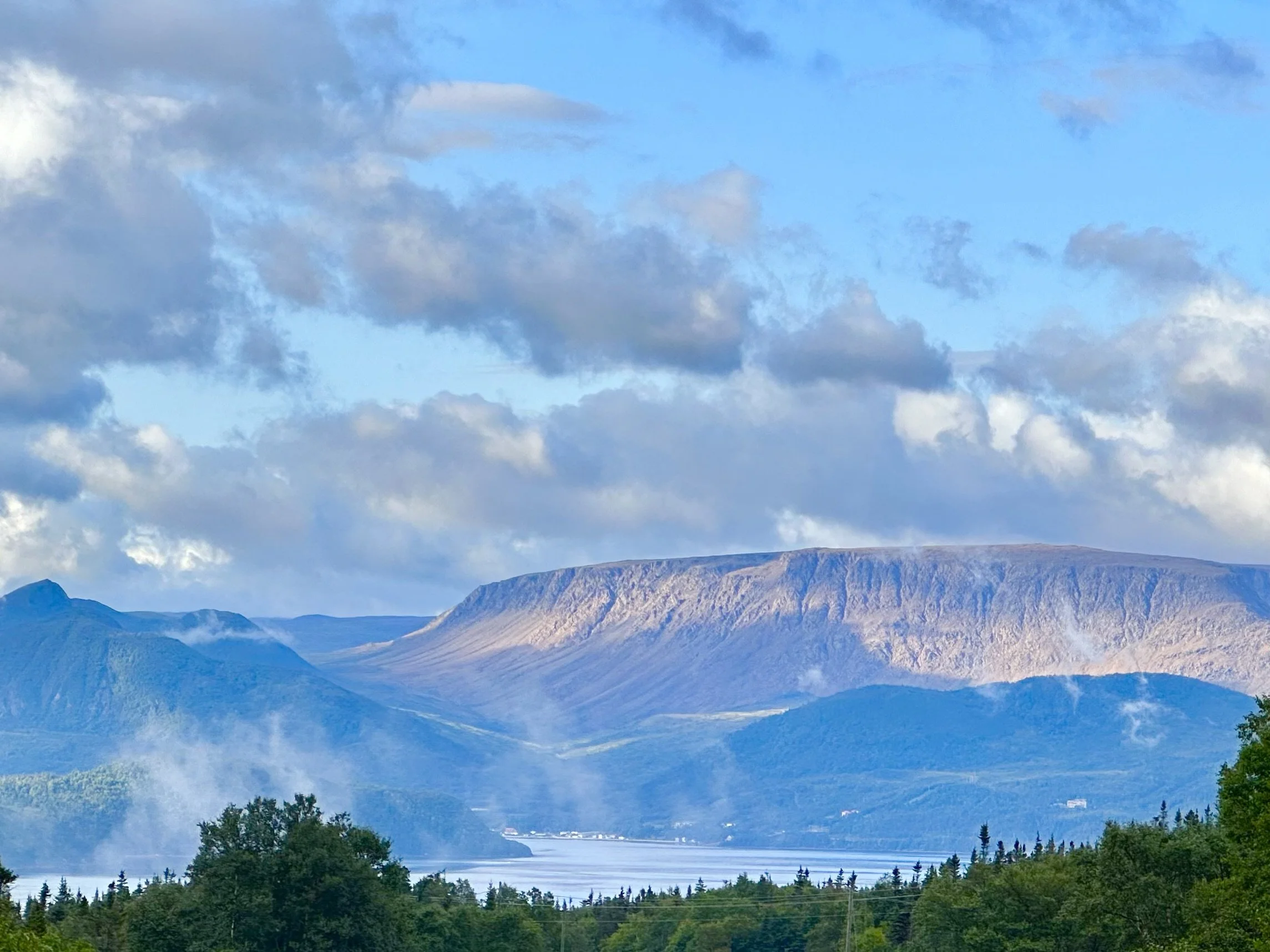
A shot of the Tablelands (the flat peak on the right) and Bonne Bay in Gros Morne Provincial Park. The scenery on the western peninsula of Newfoundland is unparalleled, and the island (together with Labrador) is the least densely populated of all the Canadian provinces, at 1.4 people per square kilometer. It is also home to some of the friendliest and most cheerful people we have ever encountered.
We had heard the west coast was more rugged and mountainous than the many scenic bays and forested peninsulas to the east. But the biggest attraction was the overwhelming beauty of the Gros Morne Provincial Park (and UNESCO World Heritage Site) to our immediate north, which has played a significant role in the understanding of plate tectonic theory, a central feature of modern geology. We were also seduced by the L’Anse aux Meadows Viking settlement (another UNESCO World Heritage Site) at the northern tip of the western peninsula, a short distance from Labrador. Finally, we knew the collapse of the cod fisheries in the 1990s had hit the fishing villages on the Westen Pennisula particularly hard, and we wanted to learn how communities were faring.
So, we left the main highway at Deer Lake and biked up the final stretch of the Appalachian mountains known to Newfoundlanders as the “Long Chain” and then hugged the coast almost to the northern end of the western Peninsula, passing through Gros Morne. A hundred or so miles above the park, the route passes within easy sighting of Labrador, providing access to the only ferry on the island between Newfoundland and its sibling province on Canada’s mainland. We finally turned east and crossed a high, rocky, windswept plateau that meanders to its end at the northeastern tip of the peninsula at L’Anse aux Meadows. If you go directly, the trip up and back is about 1520 kilometers or about 900 miles. It’s more than worth the effort. On bicycles, it’s extraordinary. It was simultaneously the most beautiful and challenging cycling trip Jenny and I have taken.
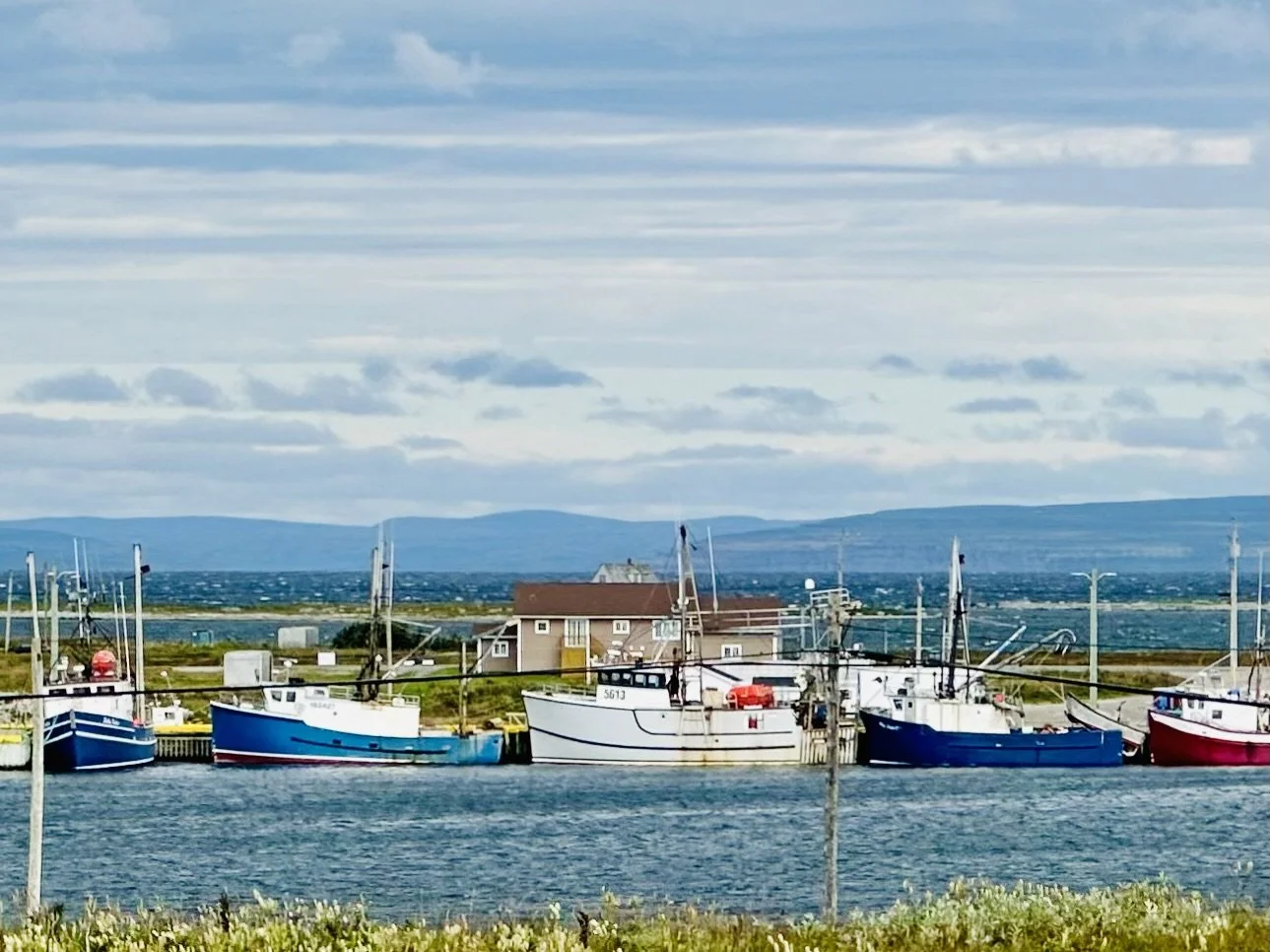
Fishing boats docked in Flowers Cove. Across the Gulf of St Lawrence, in the background, lies Labrador.
As we cycled toward Labrador, we were intrigued to learn that it has shared centuries of intertwined history with Newfoundland. Labrador was settled along its coastline, and navigating the 30 miles across ice or water in the upper Gulf of St Lawrence to get to Newfoundland is far easier than navigating a thousand miles overland through boreal forest to reach lower Canada. The region's earliest known inhabitants were the Innu and Inuit in Labrador and the Beothuk in Newfoundland. These groups had rich cultures and trading histories long before European explorers arrived. The first known European contact came around 1000 AD when the Vikings briefly settled at L'Anse aux Meadows. Through the 16th to 18th centuries, Newfoundland and Labrador were battlegrounds for colonial competition between European powers, notably the English and French. The French occupied Labrador and Newfoundland’s Western Peninsula for a time, and the British occupied eastern Newfoundland, establishing St. John’s as America’s oldest city in 1583.
The 20th century brought significant changes, including Newfoundland and Labrador's brief period as an independent Commonwealth dominion starting in 1907. However, economic difficulties during the Great Depression led to Newfoundland and Labrador joining Canada as its tenth province in 1949. Their shared history has shaped Newfoundland and Labrador's unique cultural and political identity, blending Indigenous heritage with European influences and modern Canadian development.
The Context
If you have read other posts on this blog, you know we look at our cycling trips through the lens of Earth’s rapidly changing climate. Over the past few years, extreme weather events have increased in number, intensity, and duration at a pace that requires us to catch up every time we travel (approximately every other month).
Here’s an example: Global temperatures between June and August this year averaged 1.5 degrees Celsius (2.7 degrees Fahrenheit) above the preindustrial average. The sweltering season reached its apex in late July, breaking a record for the four hottest days ever recorded. Temperatures for this year have far exceeded anything seen in more than 80 years of recordkeeping, making it all but certain that 2024 will be the hottest year known to science.
Although we are in Canada, we begin our climate review in the United States since the US is the most prone to weather-related disasters among the three countries occupying the North American continent. Because of its unique geography and unsurpassed variety of climatic zones that span two oceans, the Gulf of Mexico and the Rocky Mountains, Americans suffer disproportionately from weather extremes compared to their neighbors. By August 2024, the US had already experienced over fifteen separate $billion-plus weather and climate disasters. Total costs for extreme events in the US for 2024 may eventually exceed $50 billion, along with several hundred fatalities (there were 84 known fatalities by the end of May). Some estimates of property damage from Hurricane Beryl’s landfall in Texas have already exceeded $30 billion. And, as I write this, in the first week of September, at least 36 million Americans are enduring record-breaking heatwaves in the Southwest and on the West Coast. In the Los Angeles area, over 110,000 acres of land are currently burning due to the intense heat. The fires have forced tens of thousands of people to evacuate and have destroyed dozens of homes. The situation remains critical, with dry conditions and complex terrain challenging firefighting efforts.
Hopefully, last year’s wildfires were an exception in Canada, when fires released over 647 million tons of carbon into the atmosphere. (That amount is roughly comparable to India's annual CO2 emissions and more than four times larger than Canada's.) While not as brutal, the 2024 season has still been severe, with over 6,500 fires recorded so far across British Columbia, Alberta, and the Northwest Territories. In addition, Eastern Ontario, Northern and Southern Quebec, and Atlantic Canada all experienced intense heatwaves in June, as temperatures hovered significantly above past normals.
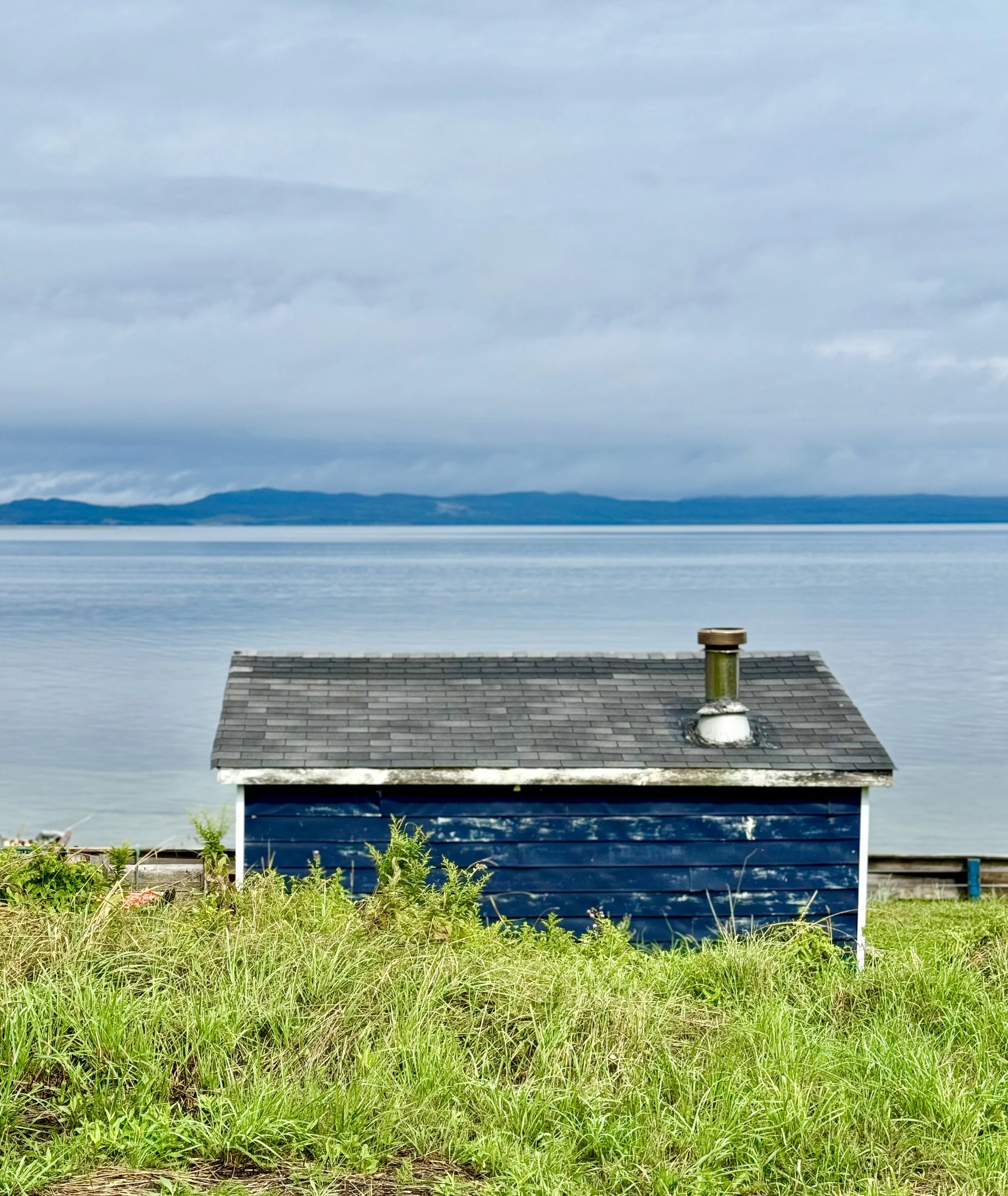
Rain clouds above on our second day out, as we rested near an old fishing shack looking across Sandy Point Bay toward Stephenville.
Our arrival in Newfoundland coincided with the end of a dry spell as we endured four days of heavy rain and wind from Hurricane Ernesto after we disembarked from the ferry. Nevertheless, we could easily see how dry the rivers and grasslands had become. With global ocean temperatures at record highs, the Canadian Hurricane Centre expects a very active hurricane season. We have not forgotten that prediction, and as I write this, we are following Francine's impact on Louisiana and points north.
The rest of the world has experienced its fair share of extreme weather events this year, including severe and enduring heatwaves in India, the Philippines, Thailand, and Bangladesh. In India, temperatures reached up to 46.3°C or 115.34 F, considerably impacting public health and daily life. As if that wasn't bad enough, a combination of global warming and deforestation led to devastating landslides there in July, resulting in the deaths of over 420 people. The state of Rio Grande do Sul in Brazil faced extensive flooding between April and May, with over 100 fatalities and significant damage. At the same time, 7.4 million acres of Brazil’s Amazon burned in the first half of 2024, a 122% increase from the previous year. The United Arab Emirates experienced its heaviest rainfall in 75 years in April, causing widespread flooding and disruptions, leading to over 225 deaths and displacing more than 212,630 people.
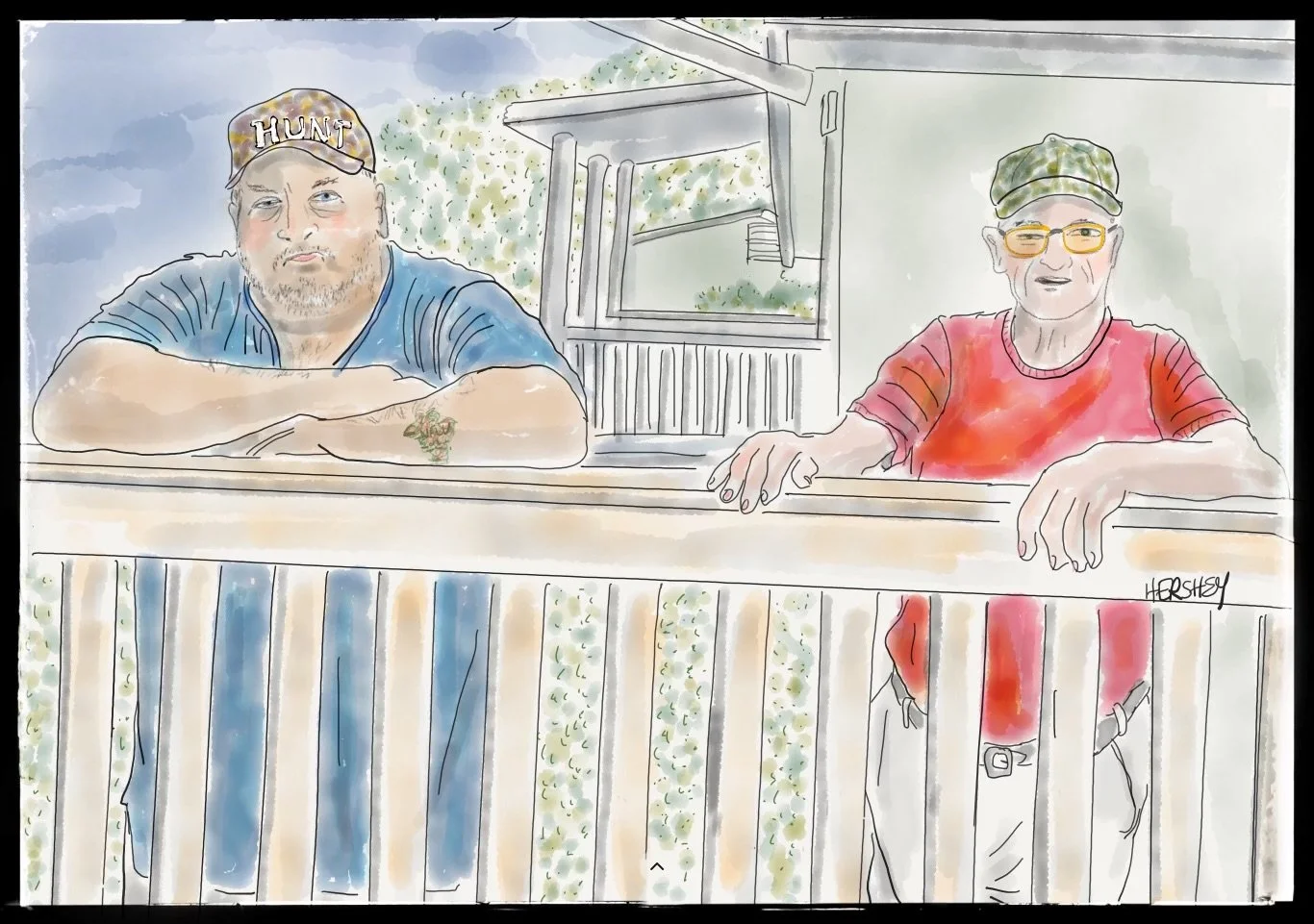
We met Doug and Cyril in the town of St. George. They are best friends and have fishing cabins next to each other, and both work in the limestone mine on the other side of the bay in Stephenville. Doug offered to let us eat lunch on his porch as a respite from Hurricane Ernesto's rain as we all chatted about Newfoundland’s changing weather and politics in the US. Locally born, both men were unequivocal about how the weather has changed since they were kids; there is less and less snow every year, the winters are warmer and shorter, the summers hotter and longer, and there are longer spells of rain and drought than there used to be. Regarding US politics, Doug believed our economy was better under Trump. But Cyril didn’t buy it, and he called Trump a “Hitler.” As opposite as their views were, there was little divisive energy between them. Ironically, Doug is in blue, and Cyril is in red. Drawing by Jenny Hershey. Follow her on Instagram @deeofo.
Newfoundland and Labrador
Like the rest of Canada, 2023 was a challenging year for wildfires in Newfoundland and Labrador. This year has been better, but with temperatures averaging approximately 0.8C (1.44F) above historical norms, fires will intensify as the climate grows warmer. In addition, sea ice will decrease, permafrost will thaw, and wildlife and vegetation will change. Like Doug and Cyril above, every Newfoundlander we met acknowledged how much warmer the weather is from a few decades ago. The warming climate directly affects local communities, most notably in Labrador where cold temperatures are crucial in daily life. Warmer winters are disrupting traditional activities and cultural events, such as snowmobile races and even the Labrador Winter Games.
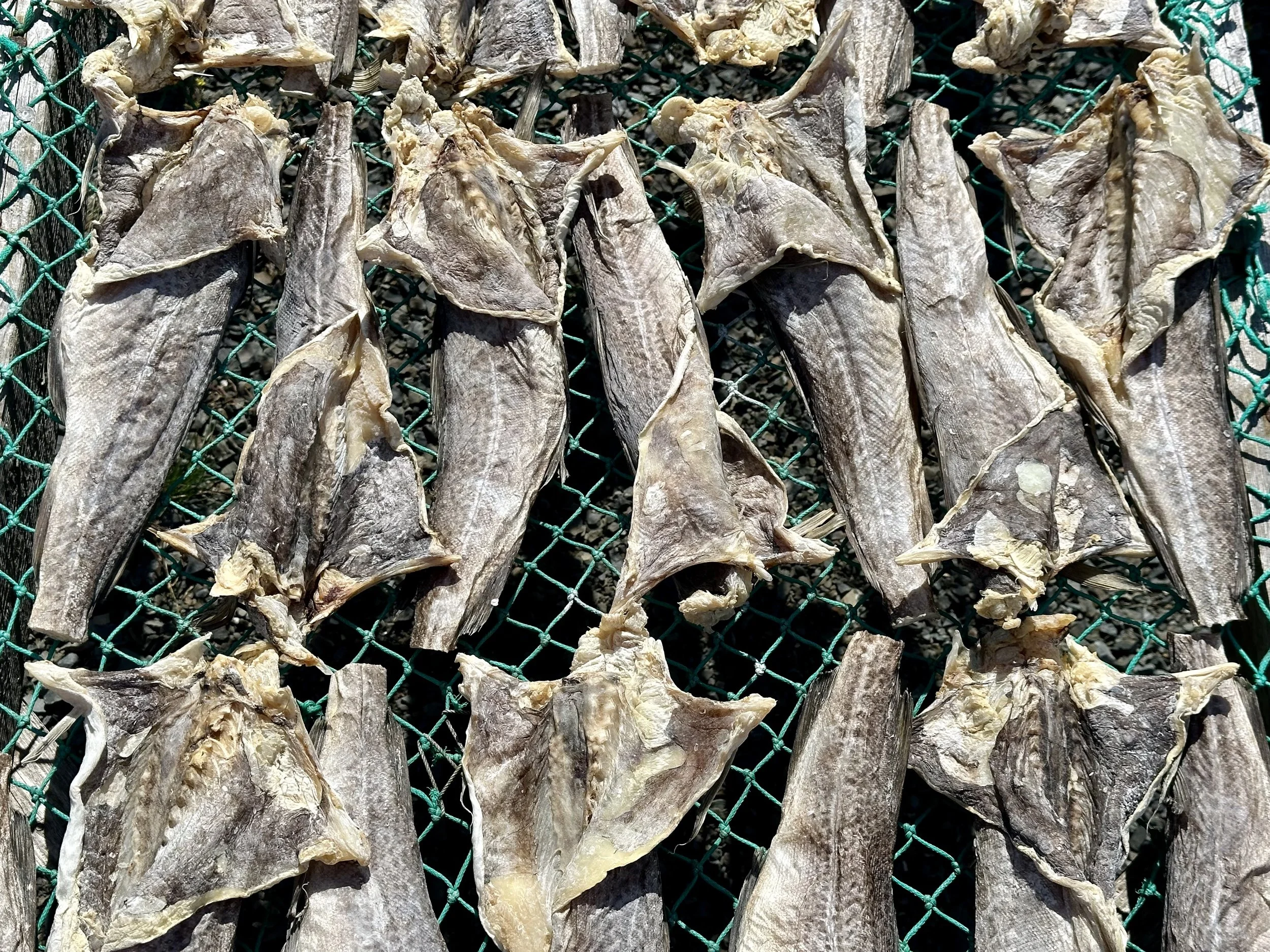
Salted cod drying in the sun at Pearce Cull’s place in St Anthony’s Bight. Pearce kindly explained to us how he cures salt cod the way Newfoundlanders have for centuries.
For most of their history, Newfoundland and Labrador’s economies and cultures have depended heavily on fishing. The province's cold, nutrient-rich waters have supported abundant fish stocks, mainly cod, for centuries. However, overfishing led to the tragic collapse of cod stocks in the 1990s, devastating coastal communities. Although the discovery of offshore oil reserves in the late 1970s helped to diversify the province's economy, the offshore rigs are located off the eastern shore and have not brought employment to the western peninsula. However, iron ore, nickel, gypsum, limestone and rock salt mining have all been significant job providers on the western shore.
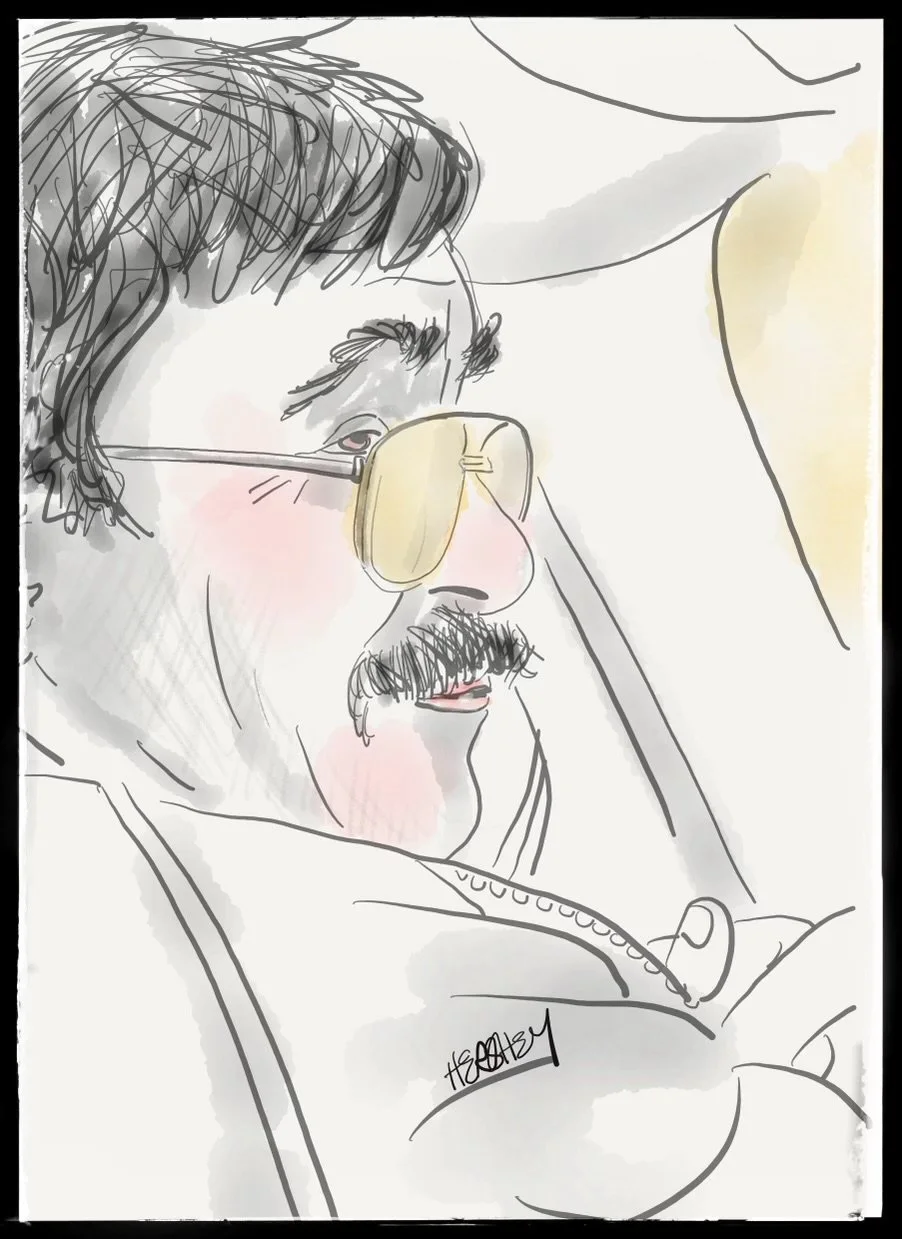
Primus, a retired fisherman, helped Jenny and me escape a challenging situation. We met him in his hometown of Green Island Brook in far northern Newfoundland. Although Jenny and I had cycled across a very windy high plateau as we left St. Anthony to begin our trip back to Port aux Basques, we hit ferocious 30-40 mph winds as we turned down the coast toward Saint Barbe. We couldn't stay upright, even on our fully-loaded pedal-assist e-bikes. We had already drained our batteries of most of their power getting over the plateau, so using enough energy to ride 26 more miles in that wind was not an option. We probably had covered about 4 miles since we had hit the coast when we saw a tiny cluster of houses in a cove ahead. Jenny had made her mind up. We took a turn down Main St and saw a child playing outside in the wind with her dog. She was having fun throwing a frisbee that would travel far in the wind, and her dog was happy to bring it back. We noticed the child’s mother standing in the doorway of a nearby house. Jenny removed her helmet to reveal her gray hair and said,” I hear the people of Newfoundland are good people, and we are in trouble.” In a moment, an older man came to the door and listened patiently to Jenny’s tale. He said, “My brother can help you.” He went back inside, and in a few minutes a man drove up the road in an old pickup truck. With the thickest Newfie accent we had heard yet, Primus and his brother helped us load our bikes and gear into his truck, and he drove us to our motel in Saint Barbe. Although we couldn't understand everything Primus was saying, we learned that shore fishing was no longer possible, and there was little work for most of the permanent residents along this coast. Consequently, the population is aging and schools are closing. It turned out that day's wind was so intense that the only ferry to Labrador had been cancelled. The next day was a bit less windy, and the ferry resumed. And so did we, continuing south for the remainder of our trip with a substantial headwind and periods of rain. But it was manageable, proving the adage that “what doesn't kill you makes you stronger.” Drawing by Jenny Hershey. Follow her on Instagram @deeofo.
Foresight
In recent years, Newfoundland and Labrador have formalized plans to transition to renewable energy exports by using wind power to generate green hydrogen. Given the province's longstanding economic ties to resource extraction and fishing, it seems fitting that the province would leverage its abundant wind and strategic location to become a significant player in the fast-growing global clean energy economy.
In fact, the province is already home to a clean electricity industry, although not without its downsides. Approximately 96% of Newfoundland’s electricity is supplied by hydropower, primarily from Labrador. The largest hydroelectric station was built in the late 1950s at Churchill Falls, about 150 miles east of Labrador City. In 2020, a smaller hydropower station was opened at Muskrat Falls, just east of Goose Bay, Labrador. In the 1960s, a power station was built at Bay d’Espoir in Newfoundland. The two stations in Labrador transmit power to Newfoundland via the Labrador-Island link or LIL.
Although there was limited pushback during construction in the 1950s and 60s when the first hydroelectric plants at Churchill Falls and Bay d’Espoir were constructed, the recent construction of Muskrat Falls in Labrador frustrated many locals across the Province. The project was initially estimated to cost $6 billion but, plagued by management problems, ballooned to over $13 billion, causing electricity rates to increase. In addition, ongoing technical issues have required costly repairs and raised doubts about the project's long-term viability. And although Indigenous groups and environmentalists raised alarms about methylmercury contamination, their concerns were overlooked.
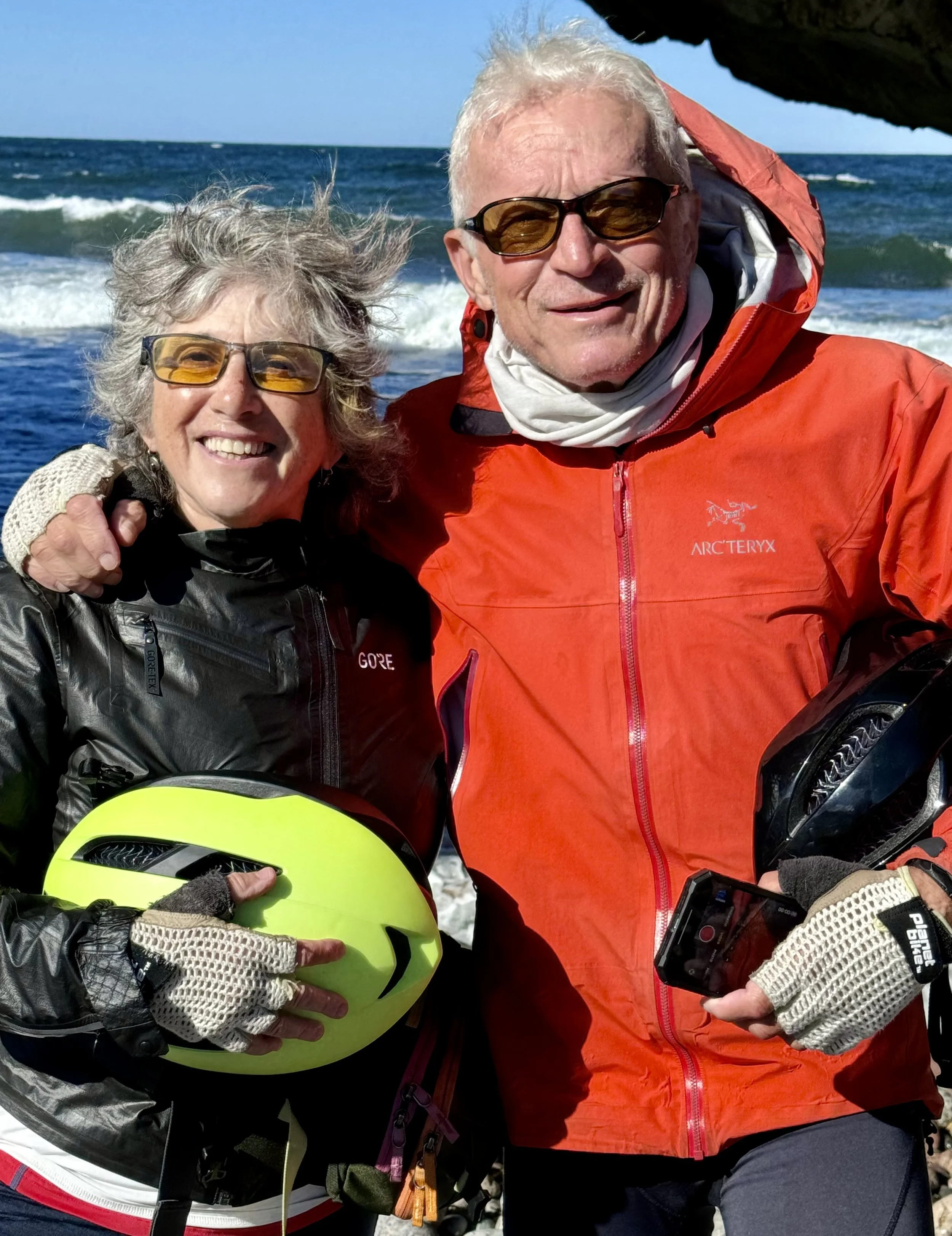
Jenny and Michael relax at Arches Provincial Park on Newfoundland's western shore.
Sadly, it is now understood that the flooding of large areas common to the construction of hydroelectric dams can adversely impact local Indigenous communities by limiting access to traditional hunting grounds. Further, these plants do indeed result in methylmercury contamination, harming regional food harvesting downstream. It is known that indigenous residents who rely on “country” food sources face more methylmercury exposure than other Canadians. Long-term dietary exposure to methylmercury causes neurocognitive delays in children, including long-term brain development issues, attention deficit behavior, and reductions in verbal function and memory. Additionally, methylmercury damages cardiovascular health in adults.
Ironically, none of the Indigenous communities affected by downstream mercury contamination receive electricity from the Muskrat Falls Project or the Churchill Falls Project. All six Indigenous communities on Labrador’s North Coast are exposed to contamination from shore fishing and harvesting where the effluence from the Grand River downstream of Churchill and Muskrat Falls flows into the Gulf of St. Lawrence. Yet, electricity in these communities is supplied by diesel generators.
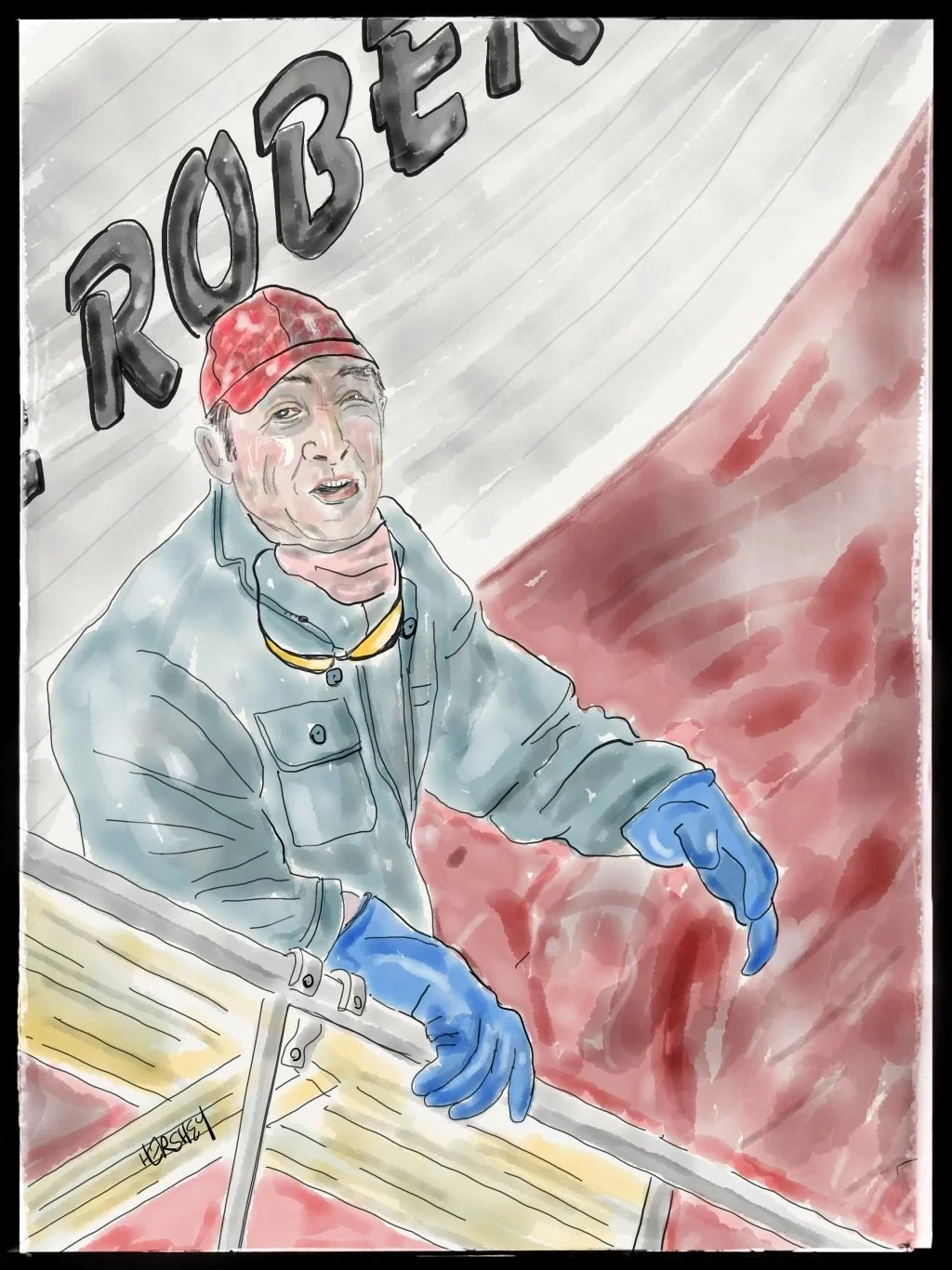
We met Dwayne in Port Saunders as he was hanging off a scaffold and sanding away a crack on the hull of the shrimping boat Cape Robert. In a melodic accent that sounded like a mash-up of Irish hill country and the rocky shores of eastern Canada, Dwayne told us he is crew for a commercial off-shore shrimp fisherman out of nearby Port au Choix. Except for a ten-year stint working on skid-mounted rigs in Alberta's tar sands, Dwayne has fished for shrimp his entire life. He gets 10% of the take for each trip, but part of the deal includes maintaining the ship, so he works for no pay when “she’s” docked. A few times every summer, he and his fellow crew members have to dry-dock the boat, mend all the cracks in the hull, and paint it as quickly as possible to get it back in the water. That’s how the deal works; “It's jus' part o' da arrangement, it is." Dwayne is 62, but he doesn’t see retiring anytime soon. He’s always spends what he earns, so he needs every penny to get from one season to the next. Seemingly unbothered and quite cheerfully, he told us, "I'll work 'til I can't, me friends. Jus' don't 'ave a choice, do I?" Drawing by Jenny Hershey. Follow her on Instagram @deeofo.
Now a public-private corporation under Crown jurisdiction, Newfoundland and Labrador Hydro (NL Hydro) has never needed to generate more clean electricity through wind power. However, they do need to address inequities in their design and siting plans for their hydropower to include and benefit local indigenous communities. The lack of need for wind power may explain why the province placed a moratorium on wind development in 2002 (which was lifted in 2022). Although there is a maritime link from Newfoundland to Nova Scotia, it is already working at capacity. So years ago, when wind developers came knocking, NL Hydro could neither manage nor build the transmission capacity required to handle wind-generated electricity. NL Hydro and government collaborated to create the moratorium on wind development until they had a sound plan for utilization.
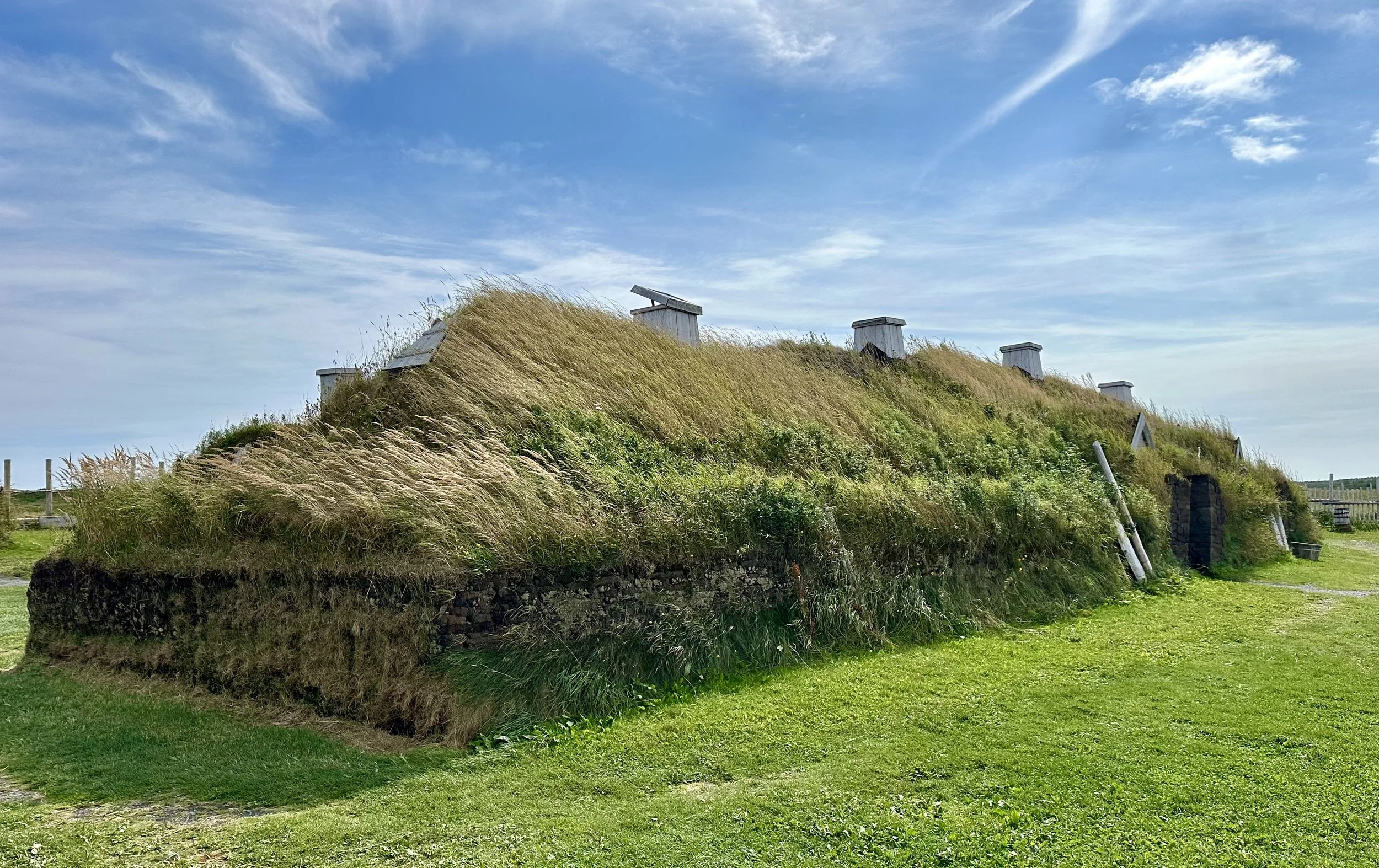
The main sleeping and eating room at L’Anse aux Meadows, a reconstructed Viking settlement dating back to 1000 AD. This extraordinary archeological site (and the only known Viking site in North America) was “discovered” in 1960 by Norwegian explorers and archeologists Helge and Anne Stine Instad. They identified the site (known to locals as the old “Indian” site) as a Norse settlement, which was later confirmed through extensive excavations. Today, L’Anse aux Meadows is a popular tourist destination. We really enjoyed visiting!
And now, because Russia invaded Ukraine, a plan for wind power has finally emerged. Geopolitical trends have driven Europe to avoid buying Russian gas and oil. This has been a boon to America’s shale gas industry, which now exports more natural gas than it uses domestically because Europe no longer wants to do business with Russia. And Germany, in particular, which has long been a leader in clean energy, foresees a massive market for hydrogen as the world moves away from fossil fuels. Germany’s renewable energy sources currently provide 57% of Germany’s electricity. However, electricity can only go so far to address the decarbonization of shipping, aviation, long-haul ground transport, rocket fuel, and the production of basic materials such as cement and steel. Hydrogen can address all those needs. Consequently, Germany seeks to be on the cutting edge of hydrogen development.
With these geopolitics in the background, Canadian Prime Minister Justin Trudeau and German Chancellor Olaf Scholz signed an agreement in August 2022 to develop a transatlantic supply corridor for green hydrogen. The deal, known as the "Canada-Germany Hydrogen Alliance," aims to help Germany reduce its dependency on Russian energy. Since then, a provincial “Request for Projects” (RFP) has resulted in more projects being selected across the island and Labrador. They all aim to use wind power to manufacture green hydrogen through hydrolysis, which can be converted to ammonia and then shipped to European markets, starting with Germany.
But, like the Muskrat Falls Hydroelectric plant construction, this plan has downsides. One of the critical projects in this agreement is the World Energy GH2 initiative, which includes the construction of a large hydrogen manufacturing plant in Stephenville, with 164 wind turbines positioned nearby on the Port au Port Peninsula. Although World Energy GH2 is the first Newfoundland Company to undergo environmental review, it currently must address at least 60 concerns. Other drawbacks include a considerable pushback among the 500+ “old French” residents who live in the Port aux Port peninsula and do not want the rugged character of their beloved peninsula permanently altered. Although almost 45% of the local population is currently on unemployment insurance, and many others are retired, most are skeptical that there will be jobs when the construction phase is complete.
To understand how many jobs are likely once construction is complete, we consulted numerous sources through Microsoft's AI tool Copilot, and we learned that after the construction phase, a 3900 megawatt wind farm (approximately the size of the World Energy GH2 project proposal) and its associated wind to green hydrogen supply chain may create as many as 16,000 permanent jobs. This includes operations and maintenance, manufacturing, supply chain logistics, and green hydrogen/ammonia production jobs.
Nevertheless, Jenny and I heard complaints about the proposal pretty regularly. At the same time, we couldn't help but notice the province's economic challenges. It was disheartening to learn that a significant portion of the population lives in low-income conditions, well below the Canadian national average. The limited job opportunities, particularly in rural areas, seem to exacerbate the financial hardship experienced by many residents, making it difficult for them to make ends meet.
We spoke with a motel owner in Corner Brook who shared a poignant story about his three kids, referring to them as "economic refugees," because they had all “moved away to cities on the mainland” to find work. This story echoed what we were told by many other Newfoundlanders; apart from two individuals we encountered who had one or two kids living in St John's, everyone else we spoke to mentioned that their children had left Newfoundland and Labrador to seek better opportunities elsewhere.
As outsiders, we can't help but worry about the long-term implications of the exodus of young people on the province's future. The loss of skilled, youthful workers can have far-reaching consequences, affecting the demographic composition, local economy, and overall vitality of communities. It became clear to us that efforts to retain young talent and attract newcomers are crucial for the province's long-term sustainability and growth.
So, as much as we understand the pushback by residents who are mistrustful of this idea, yet still deeply love Newfoundland and Labrador for the beauty of the land and the rugged self-reliance of its people, we believe they should rise to the challenge at hand and work together with government and industry to build a brighter future for their province. We sincerely hope to return one day and witness Newfoundland and Labrador thriving with a vibrant economy and opportunities for all its residents, including its younger generations.
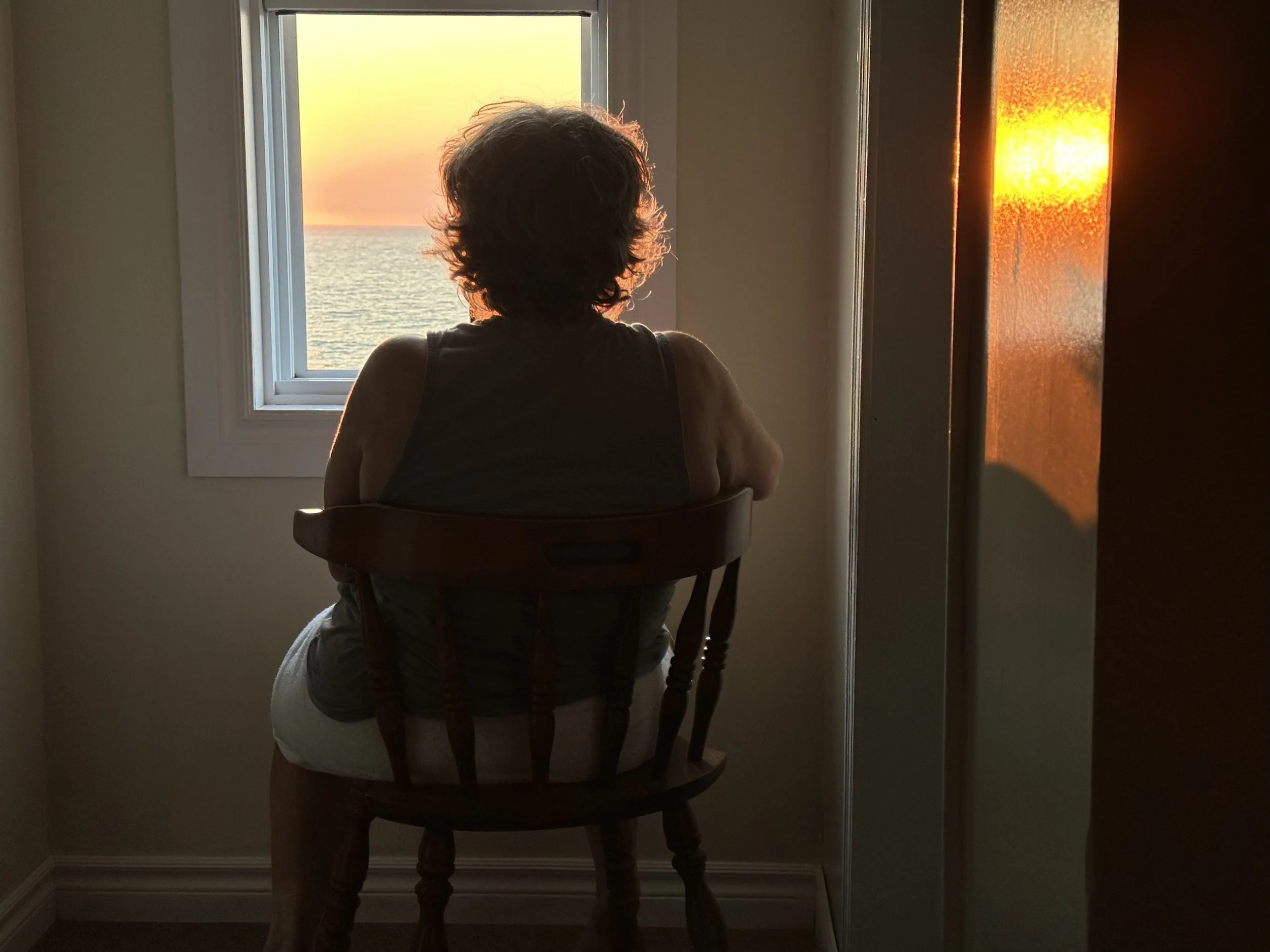
Jenny watches the sunset from a motel window in Daniel’s Harbour.
It would be exciting to watch Newfoundland become a significant player in the global clean energy economy, and it could certainly attract jobs and a renewed vitality to a beautiful place with atrophying industries. While challenges remain, Newfoundland and Labrador’s bold vision for a renewable energy future offers a model for other regions seeking to diversify their economies and combat climate change. Newfoundland and Labrador is truly a province of foresight. Let’s hope they succeed and we can learn from them.
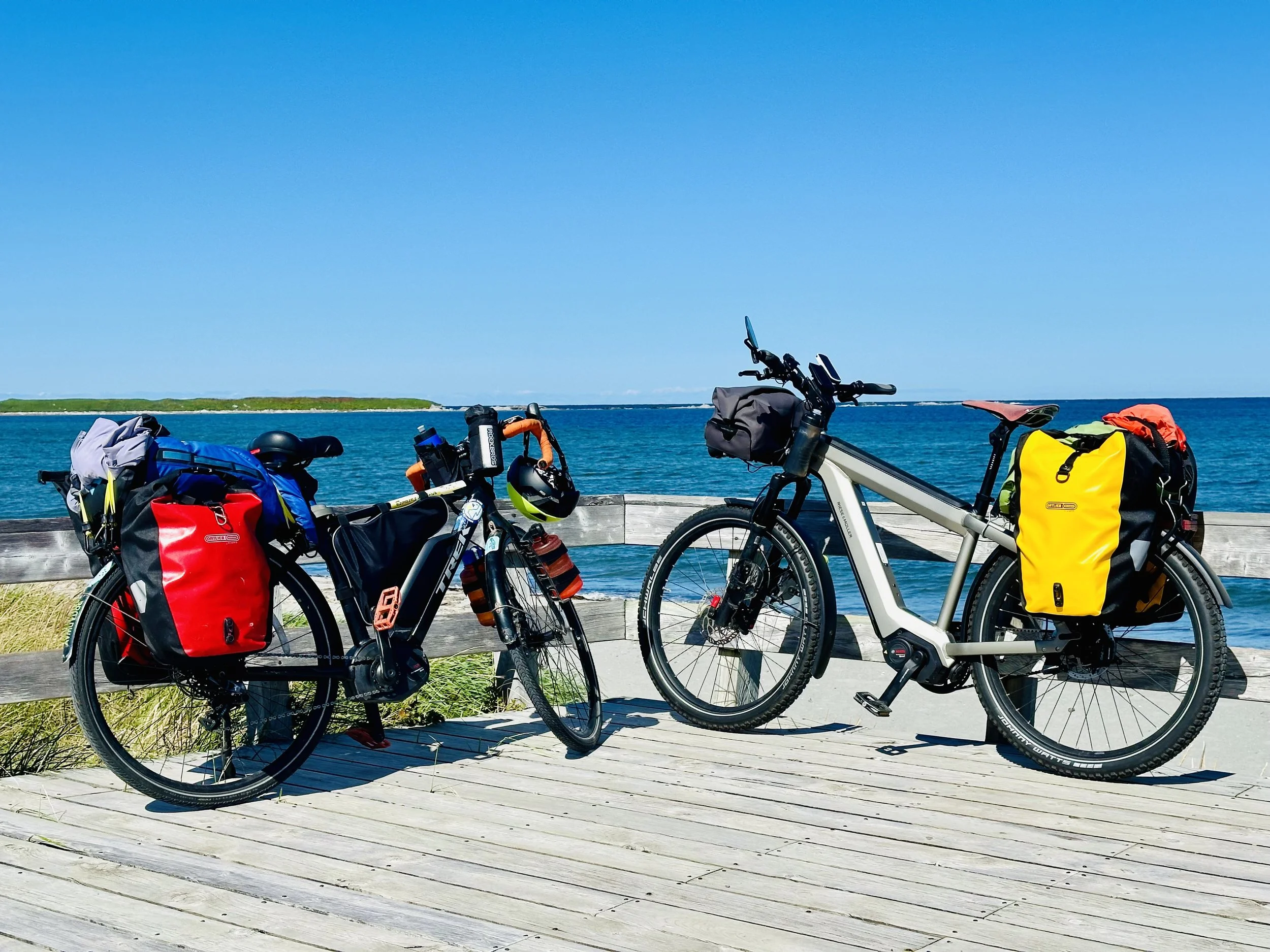
Our bikes on a boardwalk in Gros Morne Park at Shallow Bay near the town of Cow Head.
Consequently, we were pleased to learn that a second wind-to-green hydrogen company in St. John's recently announced a German buyer for its ammonia, a first among the Newfoundland companies competing in this space. A deal with the German energy firm Mabanaft places Pattern Energy ahead of World Energy GH2 in the race for foreign markets. The agreement is currently limited to a letter of intent as Mabanaft does its due diligence and Pattern refines the project's financial model (expected to cost about $1.5 billion). At 300 megawatts of wind power, the Pattern project is the smallest of the proposals in Newfoundland and Labrador. In contrast, the World Energy GH2 project on the Port au Port Peninsula is about 13 times larger. Pattern is also the only company proposing to build its project on private land within the Port of Argentia. While other companies have talked about the potential for ammonia to be turned back into hydrogen and used as the clean fuel of the future, Pattern is content to sell ammonia for the sake of ammonia. Mabanaft views ammonia itself as a transition fuel, not just a carrier of hydrogen.
Epilogue
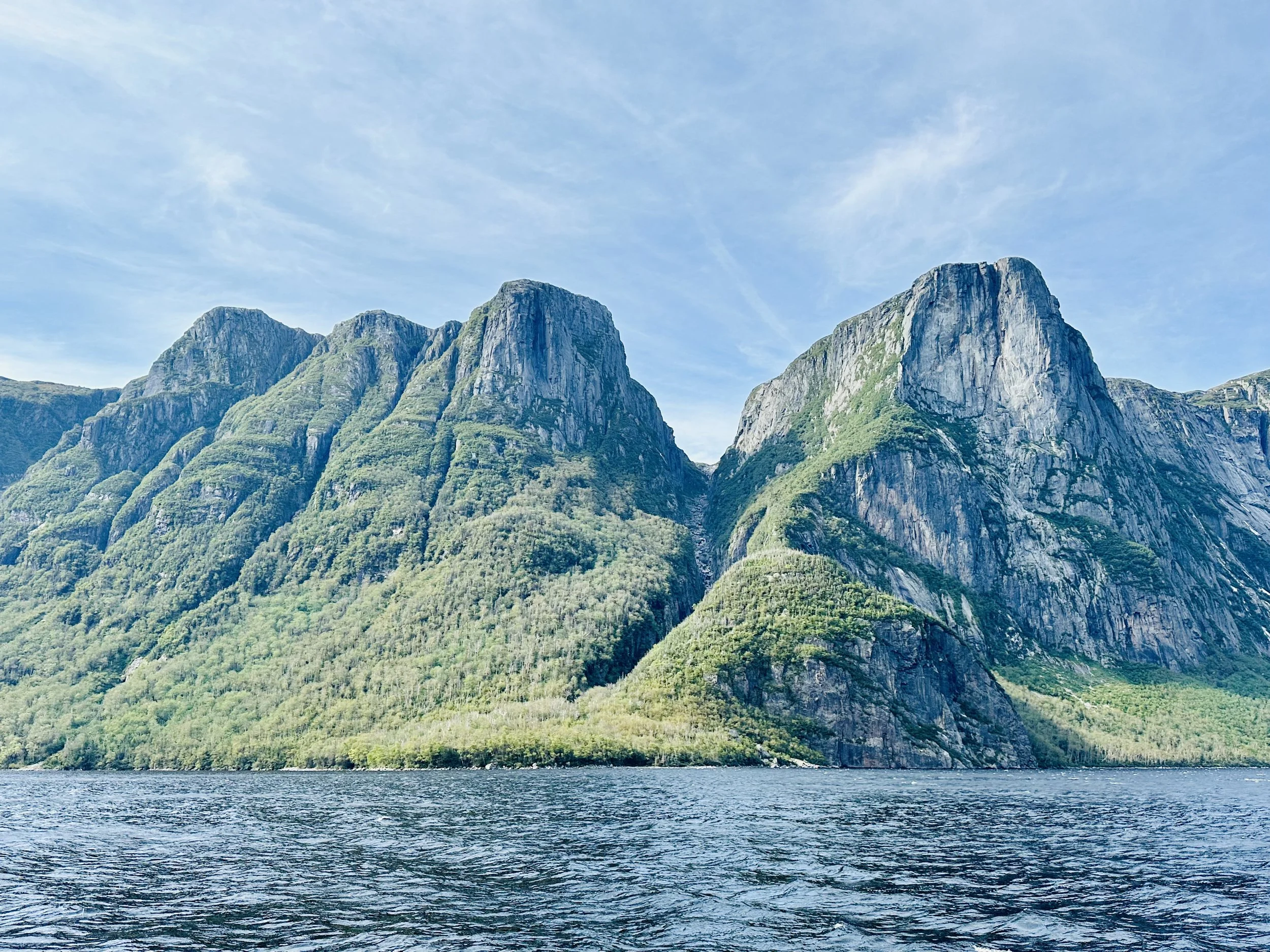
Mountains across Western Brook Park in Gros Morne Provincial Park.
People all over the world are reeling from the mounting costs and suffering wrought by our overheating world. And it’s going to get worse before it gets better. The latest forecast from the World Meteorological Association (WMO) indicates an 80 percent likelihood that the annual average global temperature will temporarily exceed 1.5°C above pre-industrial levels for at least one full year of the next five. These discouraging figures underscore the urgent need for robust, science-based policies among world leaders to address the climate crisis head-on. Yet, in the face of this unfolding catastrophe, many of our current leaders cling to woefully inadequate measures that fail to meet the scale and severity of our challenge. Something can always be done, especially in democracies where one has the right to vote.
Consider the Presidential race in the United States. Democrats passed the most significant climate bill in US history (the Inflation Reduction Act) during the Biden administration, which will continue to have support under Kamala Harris. Yet, Trump says he will repeal it. The Republican party’s denial of science in this day and age is profoundly disturbing. Currently, 97% to 99% of climate scientists agree that climate change is happening and that human activity is the primary cause. In contrast, the U.S. House of Representatives includes 40 times as many climate science deniers as are found among the authors of scientific articles.
It’s not too different in Alberta, Canada, where big oil economic interests and climate science denial also shapes the province’s policy landscape. Many Alberta politicians, most notably Premier Danielle Smith, have vehemently opposed Canadian federal climate policies, criticizing federal clean energy regulations as absurd, illogical, unconstitutional, and unscientific. It's the same everywhere: where big oil money talks, common sense walks...
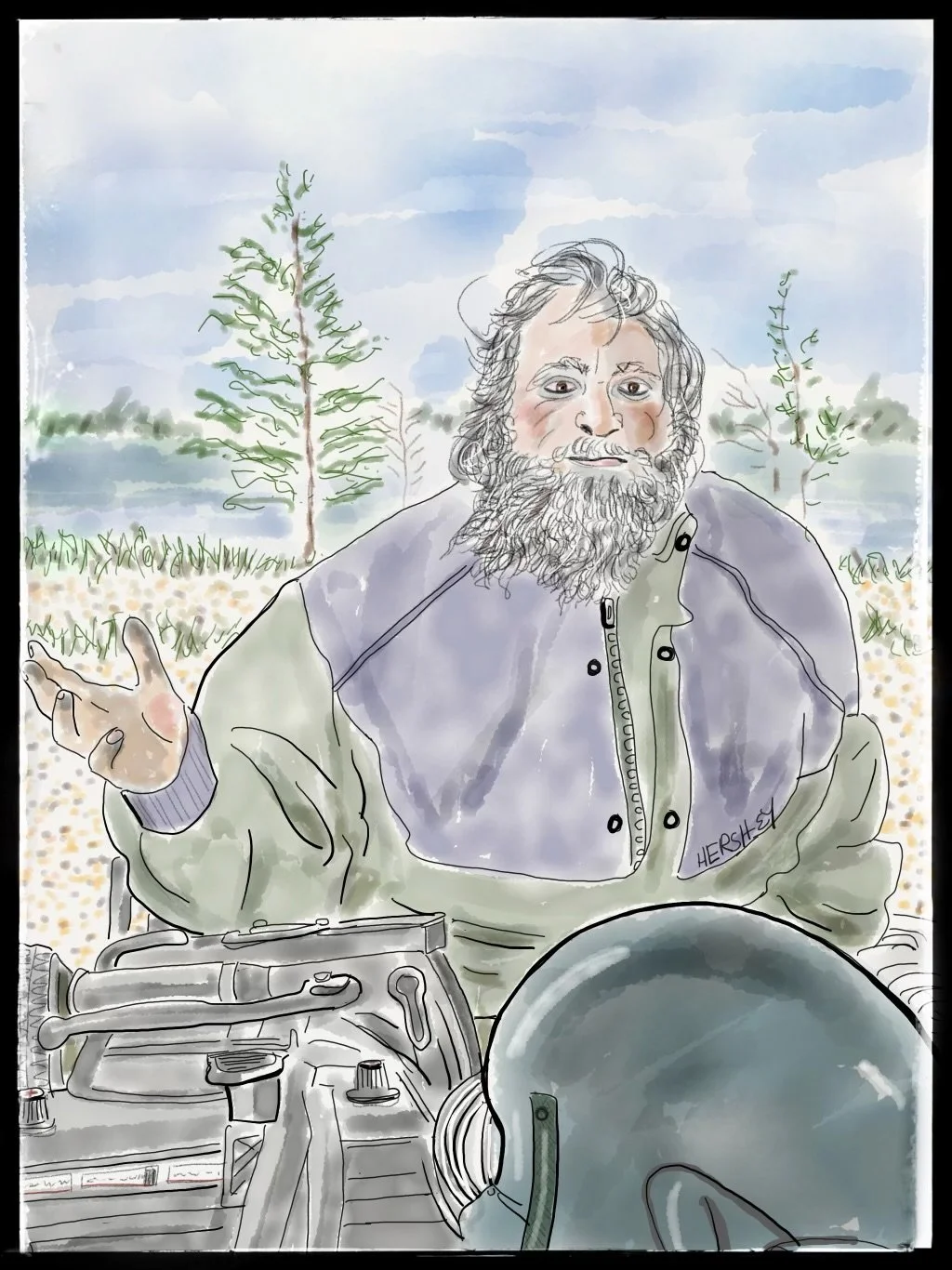
We met Victor in Port Saunders while packing groceries into our bicycle panniers. He pulled up on a weathered ATV, hauling an old wooden trailer full of wood, tools, and gas containers. Very friendly, and with a thick accent of Irish brogue and Canadian twang that we could only half understand, he told us he used to be a fisherman but now he lives on $600 a month he gets from the government. He said it’s not enough to survive and certainly not enough to pay for rent. Victor’s life is hardscrabble, but his one comfort and lifeline is his trusty ATV. He referred to her as “she” and called her his prostitute, “Cause I 'ave ta pay so damn much money ta keep 'er runnin', I do.” Victor then took us by surprise by lecturing us (once he learned we were from the States) about Donald Trump’s ethics. He referred to the Inside Hollywood tapes of Trump talking about what he would do to a woman’s…. well, he wouldn’t even say the word! But then he went on, “‘Ow could a man who was found guilty of sexual assault be elected as President? Dat's absolutely mental, it is!" A man with firm convictions and lots of common sense, we agreed with most everything Victor said (that we could understand). Drawing by Jenny Hershey. Follow her on Instagram @deeofo.
Yet, our politics in the States gets even weirder. Republicans have a massive and well-developed agenda for global warming. As Emily Atkinson writes in Heated on Substack (August 26), it boils down to three words: “Let it rip.” She goes on: “The Republican climate agenda is summarized nicely in Project 2025, the notorious 900-page policy plan developed for Donald Trump by the conservative Heritage Foundation. It proposes gutting the Environmental Protection Agency and its climate regulations, re-opening the Arctic National Wildlife Refuge for drilling, defunding the nationwide transition to renewable energy, and eliminating environmental justice initiatives. In addition, political appointees serving under Trump “will have to eradicate climate change references from absolutely everywhere”—because, as we know, ignoring a problem helps fix it. Overall, Project 2025 is a veritable smorgasbord of “burn it all down,” and it aligns squarely with Trump’s own actions and pledges.”
Ignoring overwhelming scientific evidence and consensus is not just misguided; it's morally bankrupt and irresponsible, particularly in the face of such obvious and indisputable evidence. Ignoring extreme weather events is a flagrant gamble with the lives and livelihoods of millions, the stability of the global economy, and the very habitability of the only planet we call home. As these ever-growing multi-billion dollar disasters make painfully clear, Americans and Canadians can no longer afford to indulge those who put short-term profits and political expediency over the safety and well-being of our communities. The catastrophic losses we're already experiencing are a mere preview of the unimaginable human suffering, ecological devastation, and economic havoc to come if we fail to act with the boldness and urgency demanded by science.
Our path forward could not be more starkly vivid. We can choose to heed these unmistakable warning signs and launch an all-out mobilization to slash emissions, transition to clean energy, and bolster our resilience in the face of unavoidable climate shocks to come. Or we can condemn ourselves and future generations to an ever-escalating onslaught of climate mega-disasters that will make today's $billion+ calamities woefully insignificant by comparison. Let us pray we choose wisely for the sake of ourselves, our children, and generations yet to be born. The hour is late, and time is not on our side.
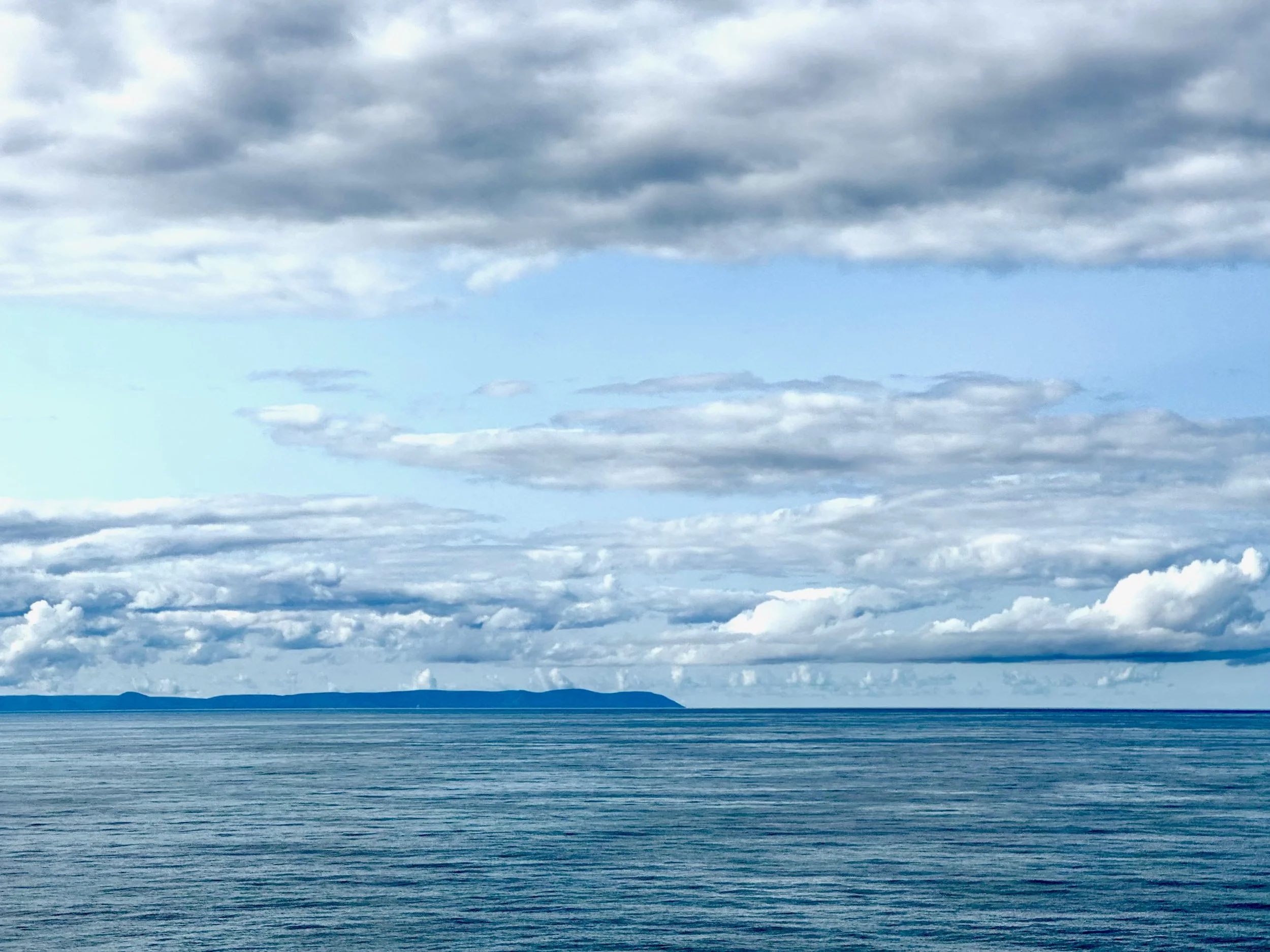
A shot of Cape Breton, Nova Scotia, from the ferry on our return.
Stay vigilant! Thanks for reading. If you haven’t done so, please subscribe to this blog to follow our next biking trip.
Blog writing by Michael Chase. Drawings by Jenny Hershey. Unless otherwise noted, all material is the copyrighted property of the blog post authors, including all photographs and drawings.
Jennifer Hershey’s drawings can be enjoyed on Instagram @deeofo.
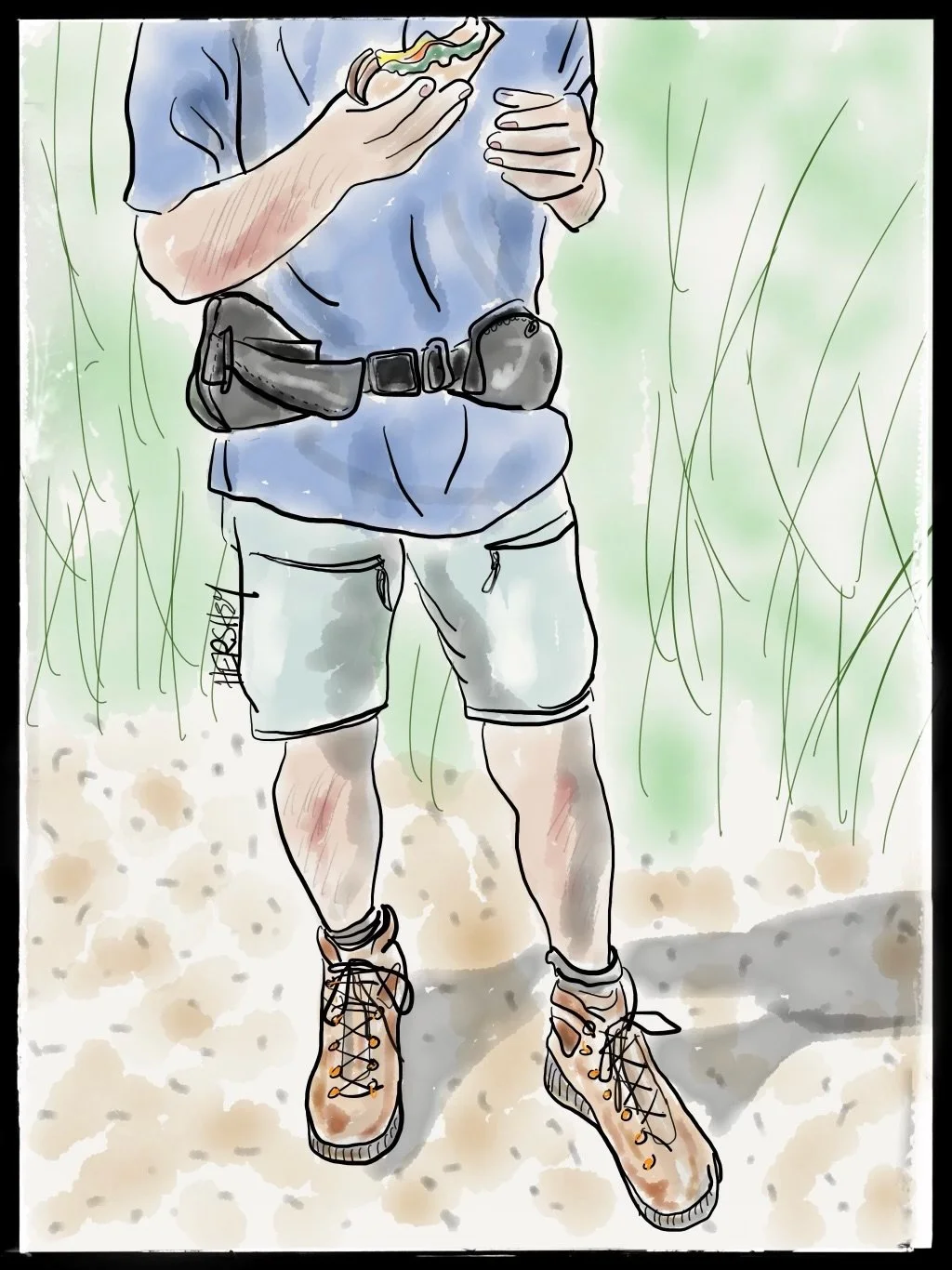
We first met Gary on his 81st day of walking across Canada between Nipigon and Thunder Bay, Ontario, during our May 2024 cycling trip around Lake Superior. At the time, Gary explained he was walking from Vancouver to St John’s, Newfoundland, to raise money for a cause he was passionate about. Jokingly, Jenny said, “Maybe we’ll see you there; we’re going to Newfoundland in September.” On Day 162 of his transcontinental hike, we met him again. We were biking toward Port aux Basque to catch a ferry back to the mainland on Trans-Canada Highway 1, just south of Corner Brook, NL. We had been following Gary on social media, so we thought our paths might cross. We brought him a huge sandwich and fresh fruit, exchanged travel stories, and then went our separate ways. Gary was on his third pair of hiking boots, and Jenny was on her oldest touring bicycle. Drawing by Jenny Hershey. Follow her on Instagram @deeofo.
The Peril of Inequality: Biking from Birmingham to Jacksonville
Writing by Michael Chase, Drawings by Jenny Hershey
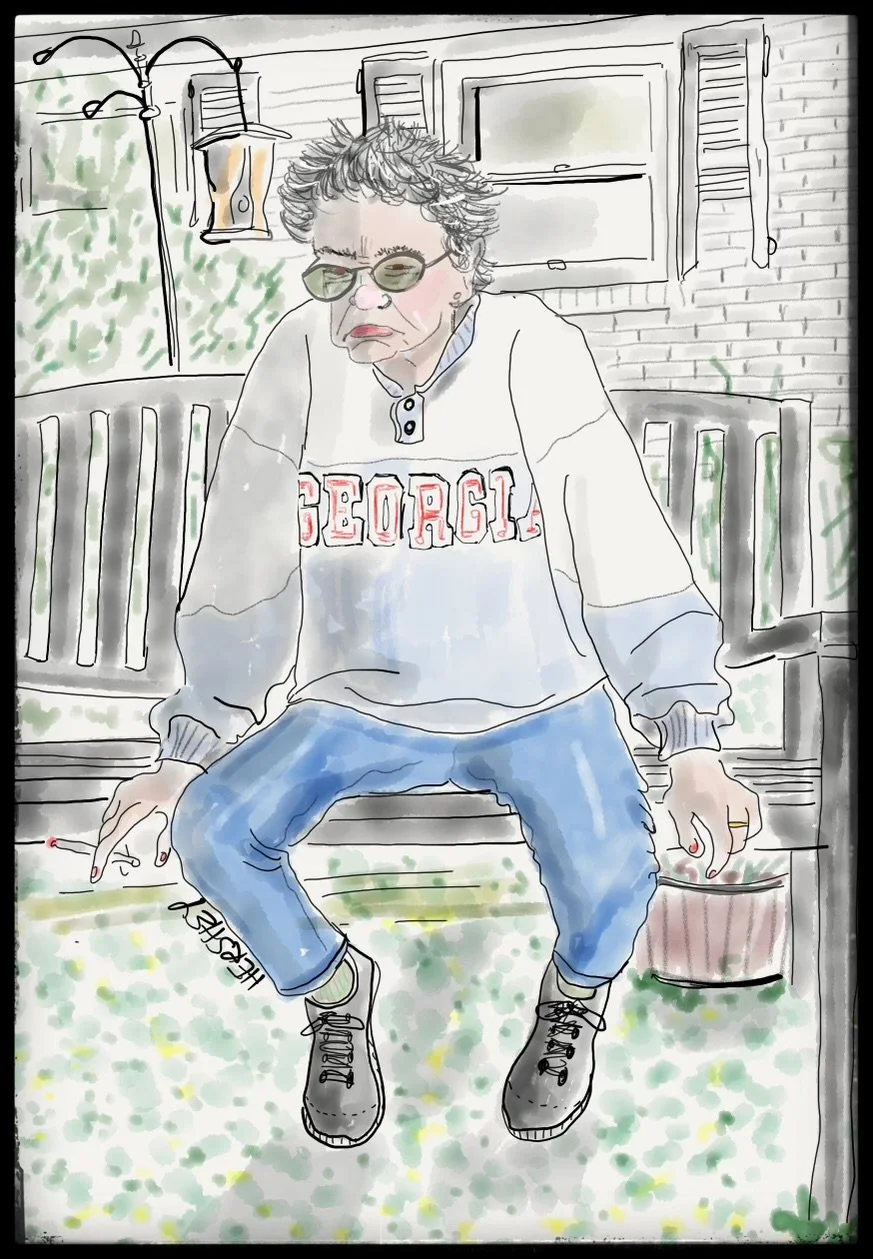
We saw Linda sitting outside her home in Blakely, Georgia, as we rode by. Jenny complimented her beautiful flower garden. Linda replied, “It’s a mess, really. Just can’t seem to do much after my husband died a couple years ago.” Not one to miss out on a conversation, Jenny stopped her bike and asked Linda about her life, learning that, like so many others in the deep South, Linda has lived in Blakely her entire life. She first worked in a sewing factory, adding, “Not many white folk worked there.” Then, a few years later Linda got a job as a peanut inspector at the Blakely Golden Peanut Factory. She loved that job and worked there for over 28 years. Linda told Jenny that she had no problems living in Blakely, and then she cupped her hand over her mouth like she was going to share a secret, and whispered, “Except for some of the black folks on the other side by Washington Street—they drink a lot and shoot guns. They’re in gangs!” “Gangs?” Jenny replied. Linda dropped her hand, and added, “Now don’t get me wrong. My neighbor’s black and I don’t hear a peep out of her. And the preacherman who lives behind me is black, and he’s a decent man.” When Jenny asked Linda if she was going to vote, she perked up, “Yup, I wouldn’t miss it for nothin!” … and said nothing more. Jenny decided not to ask…
“We pretty much own rural and small town America.”
Mitch McConnell
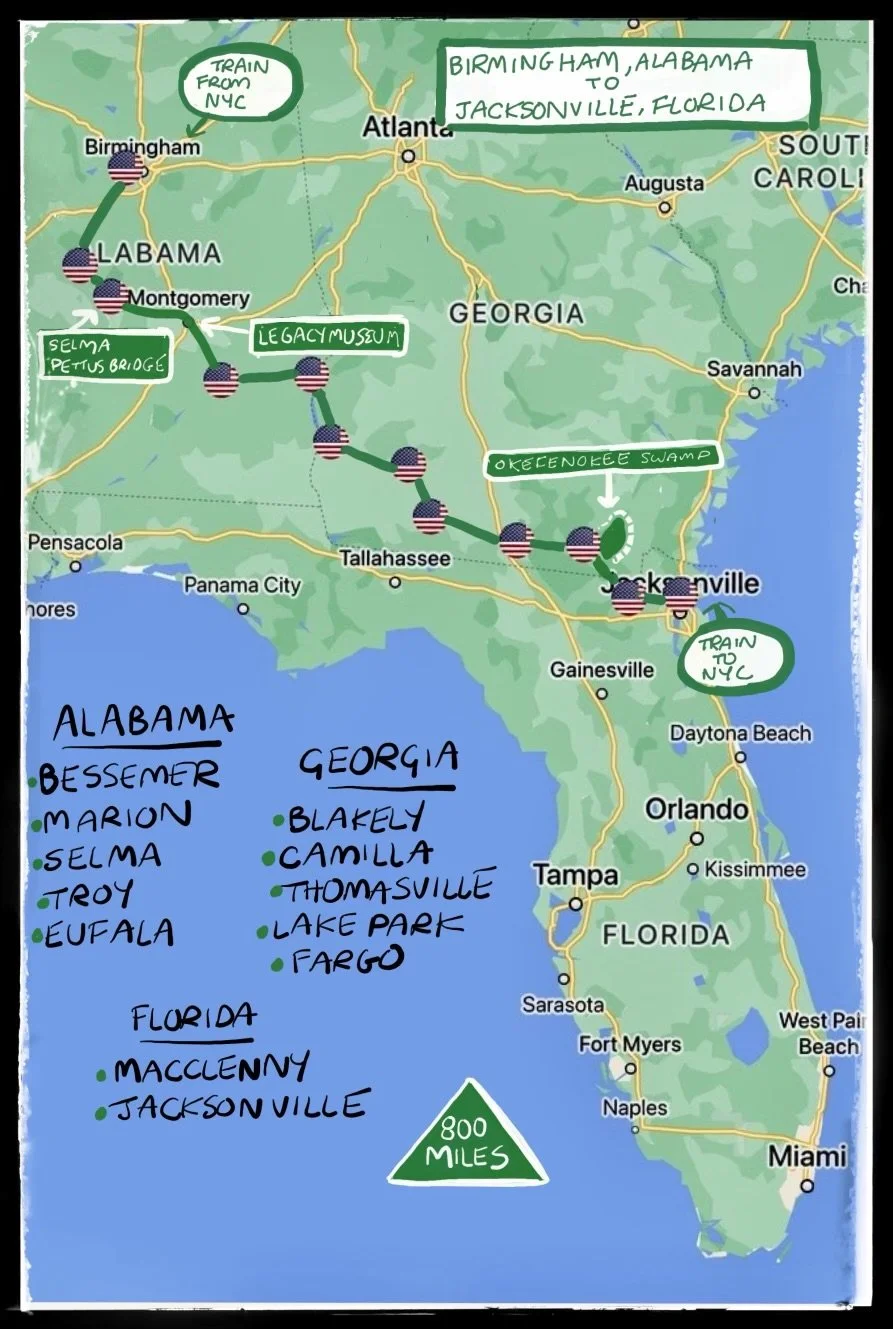
We biked from Birmingham to Jacksonville this trip. Although we enjoyed all of it, the highlights were the Edmund Pettus Bridge in Selma, the Legacy Museum in Montgomery, and the Okefenokee Swamp Park in southeast Georgia.
At a dinner party in New York City the week before we left for this trip, I was asked where we were going. When I replied, “We’re going to ride our bikes from Birmingham to Jacksonville,” the response was immediate. “Oh my God! Well, say hi to that idiotic judge in Alabama who thinks that unfertilized embryos are living humans, and that whiny Senator who tried to backpedal that judge’s crap on television from her fake kitchen.” As much as I sympathized with the content of both comments, the vitriol of the subtext took me aback: it was as if I was really being asked, “Why are you going there, of all places?”
I remember feeling slightly irritated by the insinuation. After all, Jenny and I are both life-long Democrats who grew up in Democratic households. We live in New York, and both had successful careers in the theatre. So it’s a fair guess that Jenny and I don’t choose to bike in the Southeast because we connect to the political culture.
But we do like how easy it is to get to some of the major cities in the South and back home to New York City by train. We are drawn to the warmer weather during the winter months, and the promise of vast stretches of roads unburdened by traffic that allow us to take in landscapes and wildlife as we reflect on the cultural, economic and political tapestries of the people we encounter. The South, in particular, offers up rolling hills, tranquil forests, scenic countryside roads, abundant bird life, and the same tragic and weirdly interesting industrial degradation one can find anywhere in America. For the most part, the inhabitants are folksy and sometimes surprisingly diverse. We also enjoy the affordable motels (especially during the off-seasons) and the overt friendliness, of most, although not all, of the locals we encounter.
Yet, there is something deeper that motivates us to return to the American South over and over again. Jenny and I are both affable and curious, and we are always interested in trying to understand why people see things the way they do. Although Jenny has lived her entire life on the East Coast, I was born in Iowa and raised in Galesburg, Illinois, a mid-sized farming town north of Peoria in the 1960’s. Predictably, Galesburg fit the era: I was a white kid, and we didn’t easily mix with the black kids, although there was a significant black community on the other side of town. Racism was insidious and implicit, and the civil rights victories in the South seemed far away because in Illinois, white folks had deluded themselves into thinking that they weren’t racist. Dislike of migrants, unless they were European born, was the norm. Homophobia was accepted and encouraged, while gayness was viewed as a perverse illness. Transgender? Forget about it; that was too weird for anybody (or so we thought, although in retrospect I’m sure I interacted with quietly suffering, closeted people). Because my Dad was a New England born professor at the local college our family never really fit in, although my Mom softened the suspicion of locals because she was approachable and talkative, even though she came from Denver. And just like now, most of the higher achieving students chose to leave. Although we weren’t particularly stellar students at the time, my two brothers and I took it for granted we would leave Galesburg at the soonest opportunity.
So it's not such a big leap for me to connect to a nostalgic affinity with my childhood years while biking in the rural south. And Jenny, who was raised in New Haven, Connecticut, during the 1960’s and was bused across town as a middle school student during some of the first desegregation experiments, also had a live-in black nanny who was the daughter of sharecroppers from Camden, North Carolina. And now, Jenny often says she feels more at home in communities of people of color in the rural south (small towns in the South tend to be either largely black or largely white) than she does in less diverse white middle-class suburban areas.
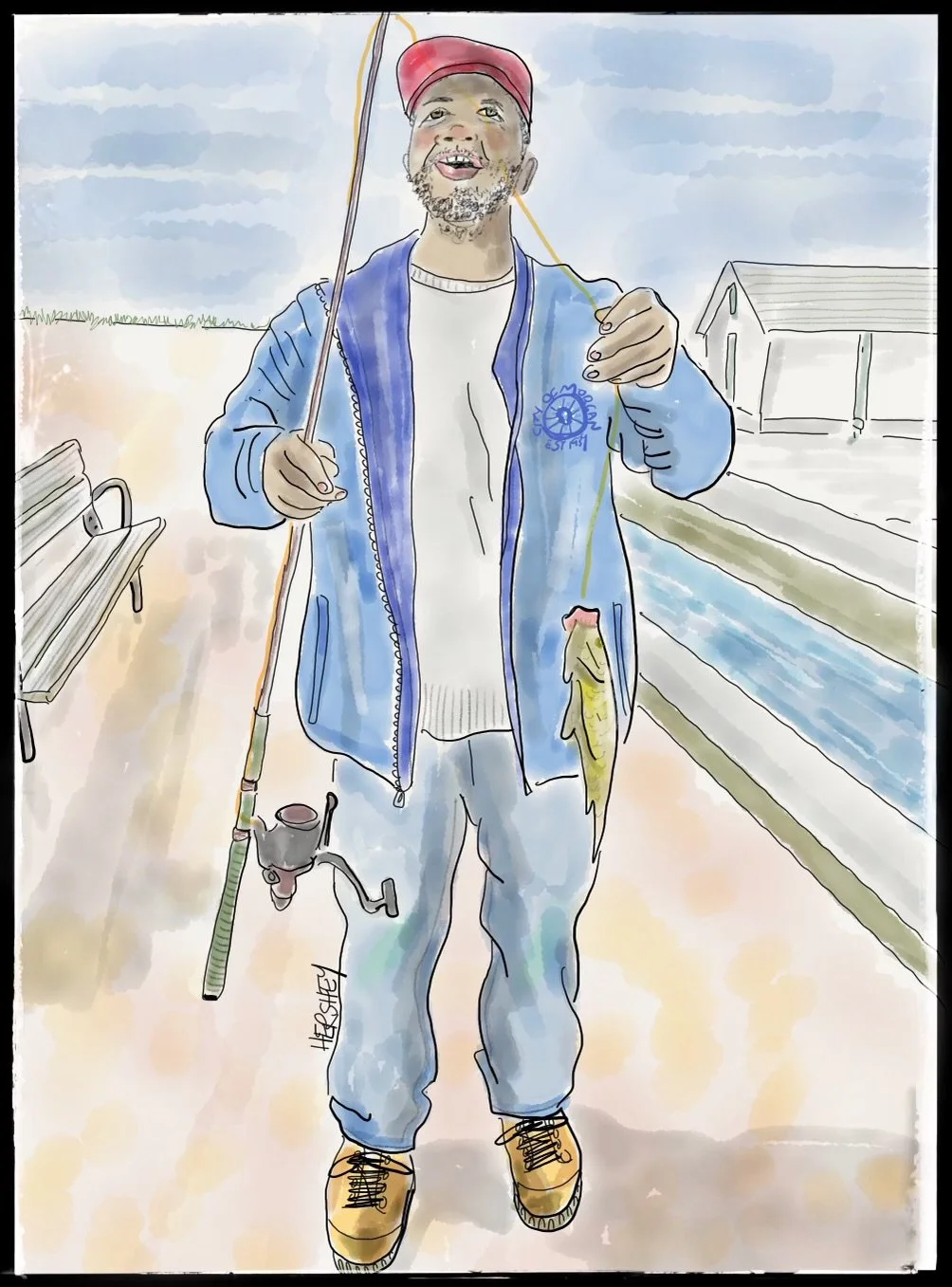
Cory delightedly shows off his catch, a “Sweet Crappie” he caught near Fort Gaines, Georgia. Cory had just moved to this town from nearby Edison. He works hard mowing the fields under a solar panel farm in Bluffton, a new job created by expanding renewable energy installations. Cory’s love of fishing came from his Grannie, but he will share this lucky haul with his Mama for Sunday dinner. Cory lives alone, and he’s glad for the connection. Jenny asked Cory if he planned on voting in the coming election. “Oh no, I don’t believe in that. I’m just gonna pray—and pray hard. God made us all free men. And that’s all I need. Don’t need nothing else.”
The slow, steady decline of so much of the rural south is a decades-old story that, with some exceptions, mirrors what has happened everywhere in rural America. We were a highly agricultural country at the time of our founding; more than 90% of our country lived in rural areas in 1790. The landscape, economy and cultural life were dominated by agriculture, and most Americans were farmers or lived in small towns closely tied to farming communities. By 1920, the number of Americans living on farms had dwindled to under 50%. However, people in small towns, who could no longer find work in agriculture, were still able to secure jobs in rapidly expanding extraction industries - such as mining and logging.
Today, the picture is vastly different. Urbanization has swept across the country, and over 80% of all Americans now reside in urban areas. The steady flow of people from rural areas has created a slow-motion train wreck for rural areas as technological advancements have steadily eroded labor needs in the countryside. In addition, corporate consolidation has shifted ownership of family farms, grocery stores, gas stations, feed lots, and even local medical care from individual owners and families to rapaciously capitalistic corporations located primarily in cities.
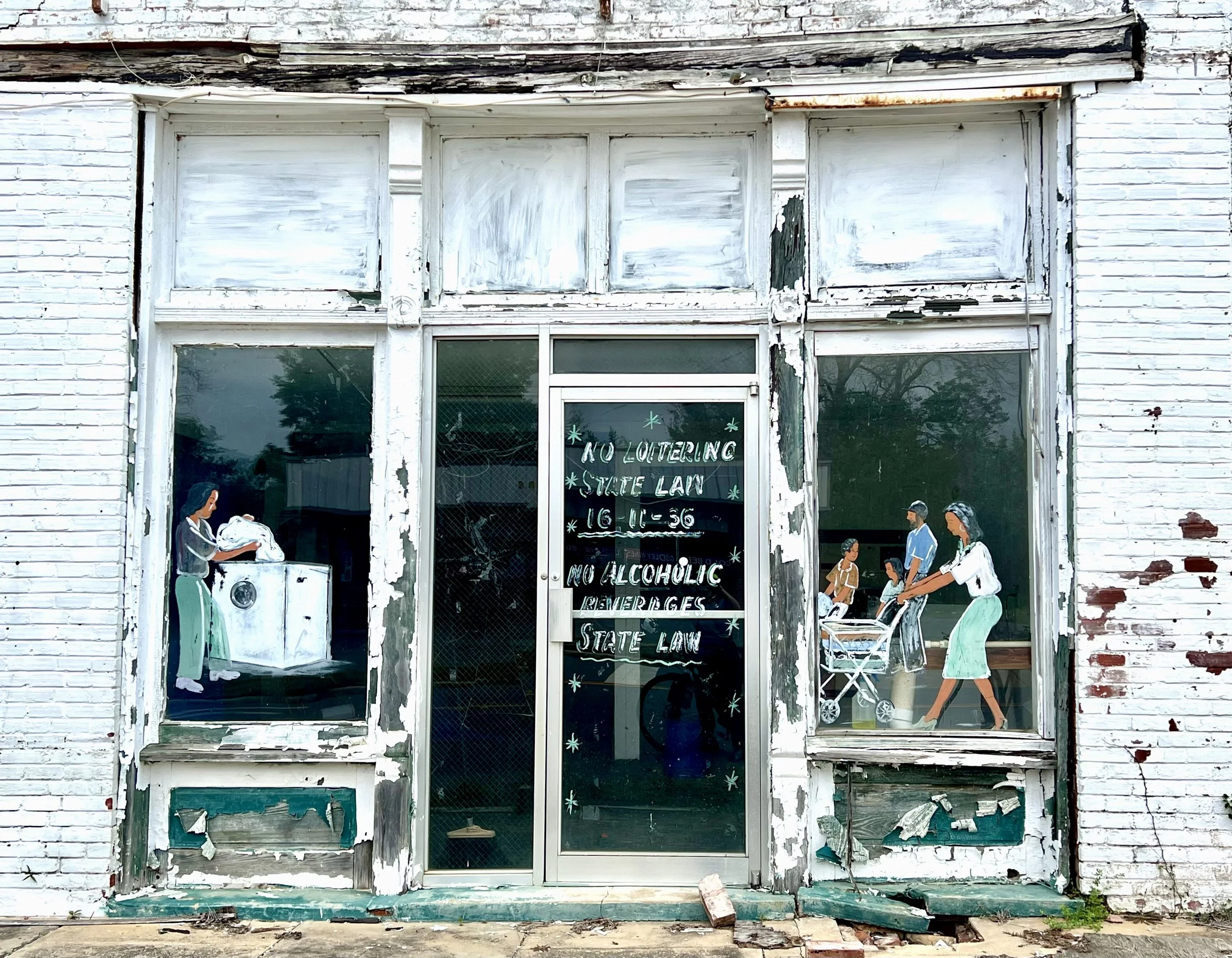
An abandoned laundromat in Damascus, Georgia.
Everywhere in rural America, the story is similar. Small family farms are bought out and vast tracks of land are consolidated into large industrial agricultural corporations. Mom and Pop stores, if they haven’t already closed, are eclipsed by Dollar Generals, Family Dollars and Dollar Trees, although residents in smaller towns now must drive a town or two away to get to the most local Dollar store, depending on marketing realities. And then those stores sometimes close based solely on market calculations; Family Dollar just announced they are closing multiple stores in rural Ohio, putting almost 300 people out of work. Larger towns are lucky to get Walmarts, which offer an abundance of food choices at reasonably low prices, while they virtually guarantee the closure of locally owned grocery stores. As populations dwindle, country doctors shut their doors and seek employment in larger towns with private medical facilities. At the same time, small health clinics get bought out by corporate chains and the median distances rural folks need to travel for health care continues to increase.
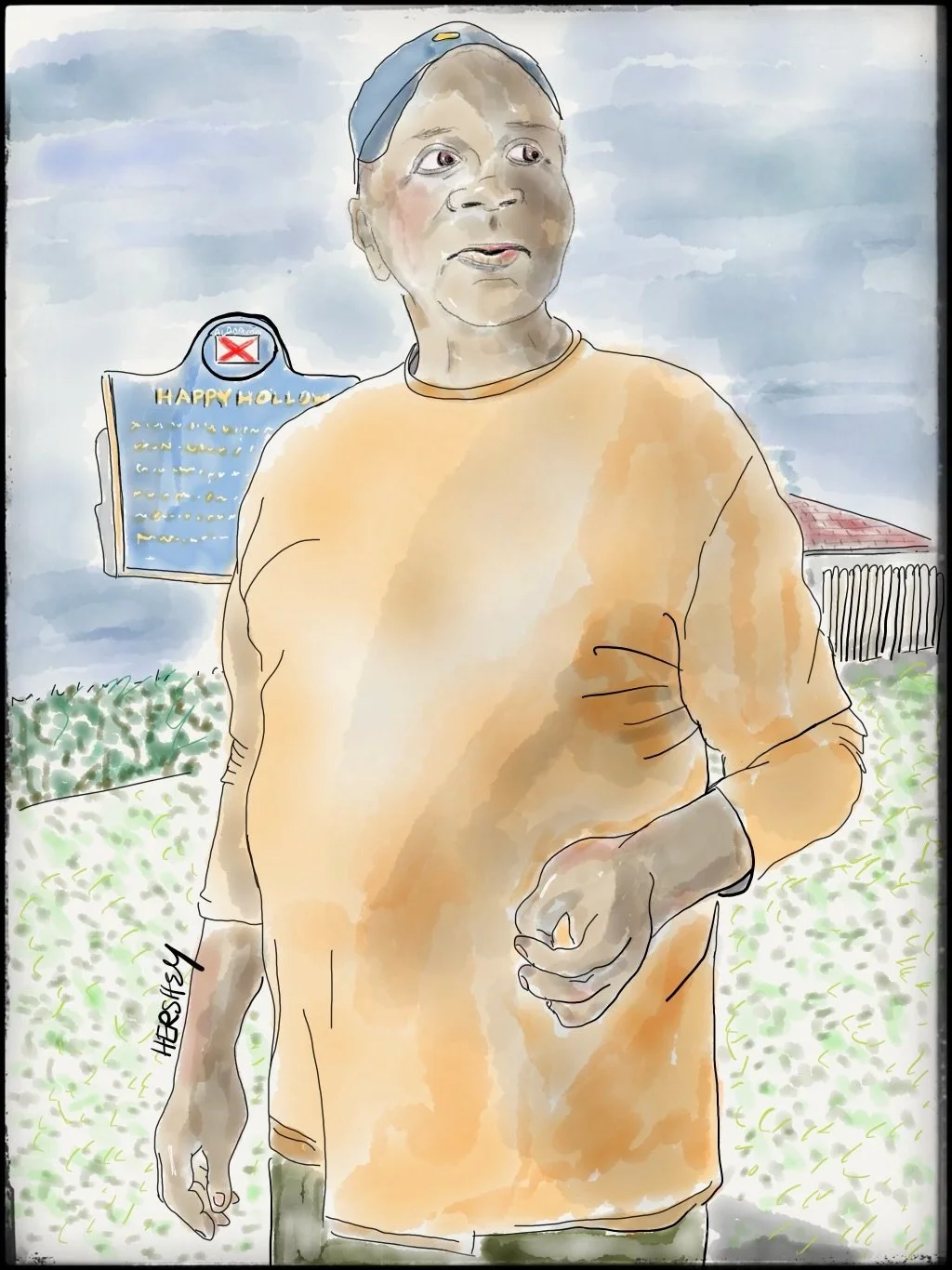
We met a very proud Van Averhart standing next to an historical marker in Happy Hollow, the oldest African-American neighborhood in Prattville, Alabama. When we asked him where he grew up, Van gestured toward a field behind him, “That’s where my family home was. Almost every home here was knocked down. The oldest thing in this here neighborhood now is that pear tree.” Van seemed to know every person who drove by. He said, “I’m an Averhart! It’s a big name in these parts!” Van was the town’s first African American firefighter EMT level 2. He did three tours of duty in a 25-year-long military career. Raised with 4 brothers and 3 sisters, he was taught to have a strong work ethic. Van is a die-hard Democrat and very attentive to politics. Jenny asked, “What do I need to know as a liberal Jew from NYC about the people of Prattville? “We’re friendly, we care, we like diversity”, Van replied. He paused, and then said, “But many black folks in town don’t want conflict with white people so they either don’t vote or they just vote with them.”
As much as politicians in municipal, state, and federal governments have fought these trends over the decades, very little has been accomplished by either party to mitigate technological advances and economic consolidation or to reinvent rural America as prosperous and healthy places to live. Yet, although Republicans haven’t helped rural communities any more effectively than Democrats, the Republican Party remains the preferred party of rural folks by far. The party’s dominance is probably much more grounded in cultural identity regarding beliefs around religion, gun rights, and family structures than in substantial policy disagreements among politicians from either party.
MAGA voters are overwhelmingly white and rural, and it's a fair guess that most don’t care much about policy. Fueling anger against Democrats is easier than discussing real solutions to difficult problems. In pursuit of votes, campaign contributions, media attention, and re-election, these politicians willfully exacerbate rural resentments. However, as you can tell from some of our stories, not everyone takes the bait. Yet, it seems that more often than not, if people aren't prone to MAGA-baiting politicians, and they aren't older black folks who lived through the civil rights era, then they don't connect to voting at all.
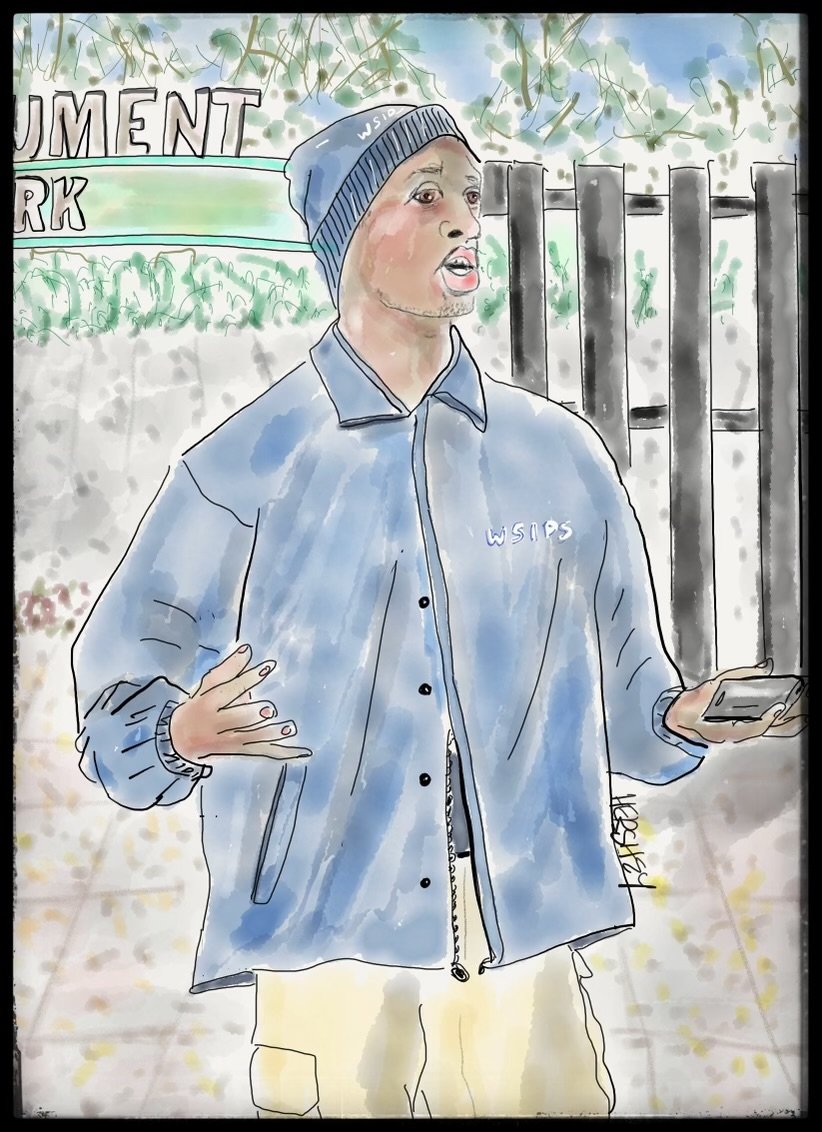
We met Officer Jason B at the Freedom Monument Sculpture Park in Montgomery. Although the park wasn’t going to open for another week, it honors the lives and memories of the 10 million people who were enslaved in America. Jason’s job was to explain to visitors at the front gate that they couldn’t go in. When Jenny asked Jason, “How does it feel to work at such an important park?,” Jason answered, “Oh, I don’t do the whole African-American history thing. I’m just not into it.” Behind Jason, we could see slave quarters that had beds from actual plantations. We could also see many large sculptures by black artists depicting slave life. We were puzzled by Jason’s indifference to his surroundings. When we asked him if he was going to vote, he replied, “Nah, wouldn’t do any good.” I said, “If you don’t vote, then older white people like me will be making decisions for you. You really want that?” To that he raised an eyebrow - food for thought, perhaps. Or maybe he was thinking, that’s how it will always be anyway.
When MAGA inspired manipulative behaviors do work, they exempt politicians from developing and implementing policies that will help rural communities. It’s much easier and far more effective for these politicians to frighten and anger their rural constituents into supporting them, than to earn their votes and trust by improving their everyday lives. But it doesn’t matter. Most of the time, rural communities reflexively support Republican candidates anyway.
After all, if neither party offers up any real solutions, why not vote for the party that most aligns with your values? And if that’s not enough to get you excited, the candidate who sticks it to your enemies - those elites on either coast who look down on you with such contempt… well, that’s worth supporting because it feels so good to get even. This is a form of blood sport for MAGA voters and politicians alike.
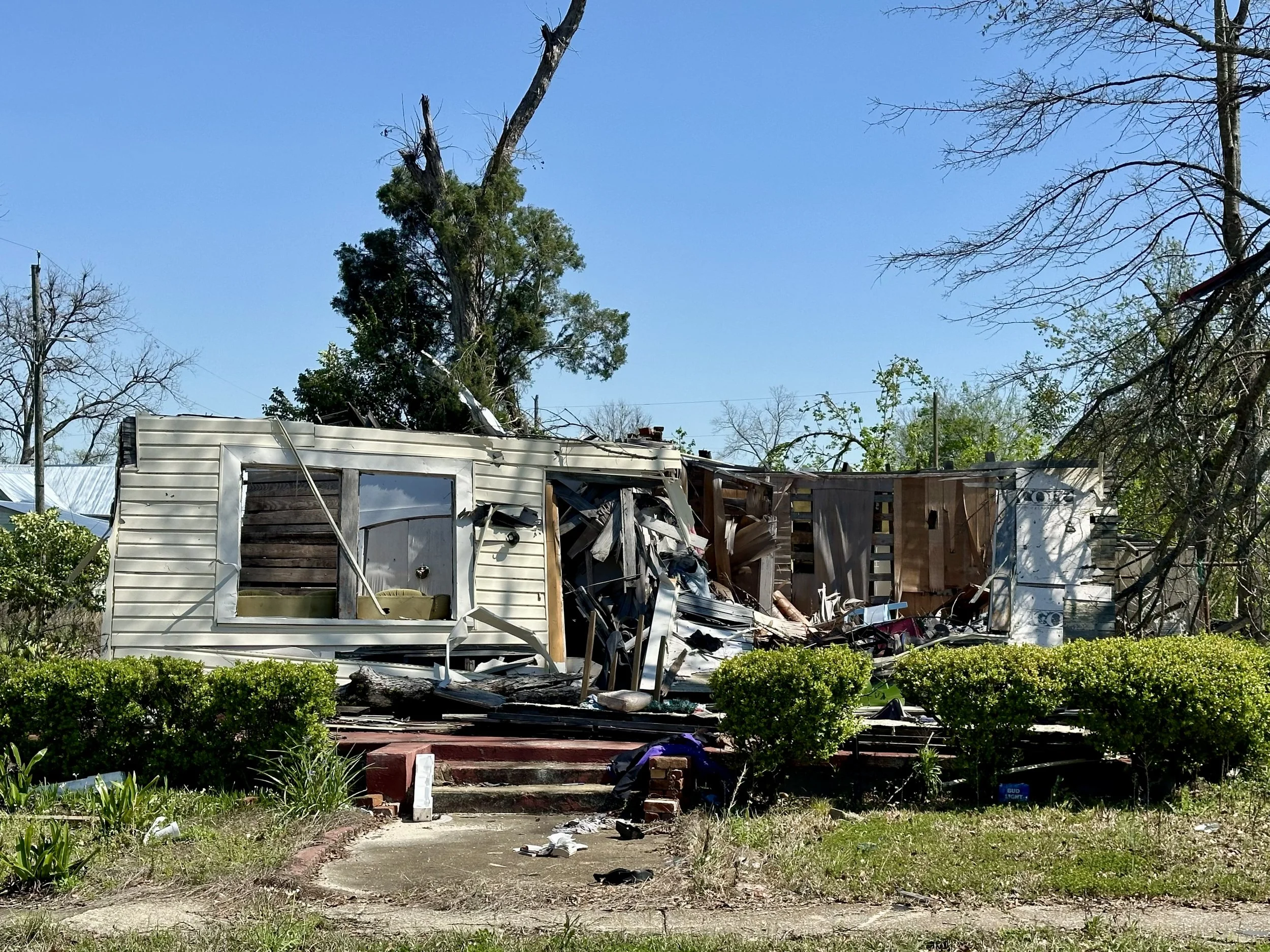
A home demolished by the 2023 tornado in Selma, Alabama, sits empty. We saw many more houses nearby in a similar state of disarray because of the tornado. Home of the famous Selma to Montgomery civil rights marches that began at the historic Edmund Pettus Bridge, Selma remains one of Alabama's poorest cities.
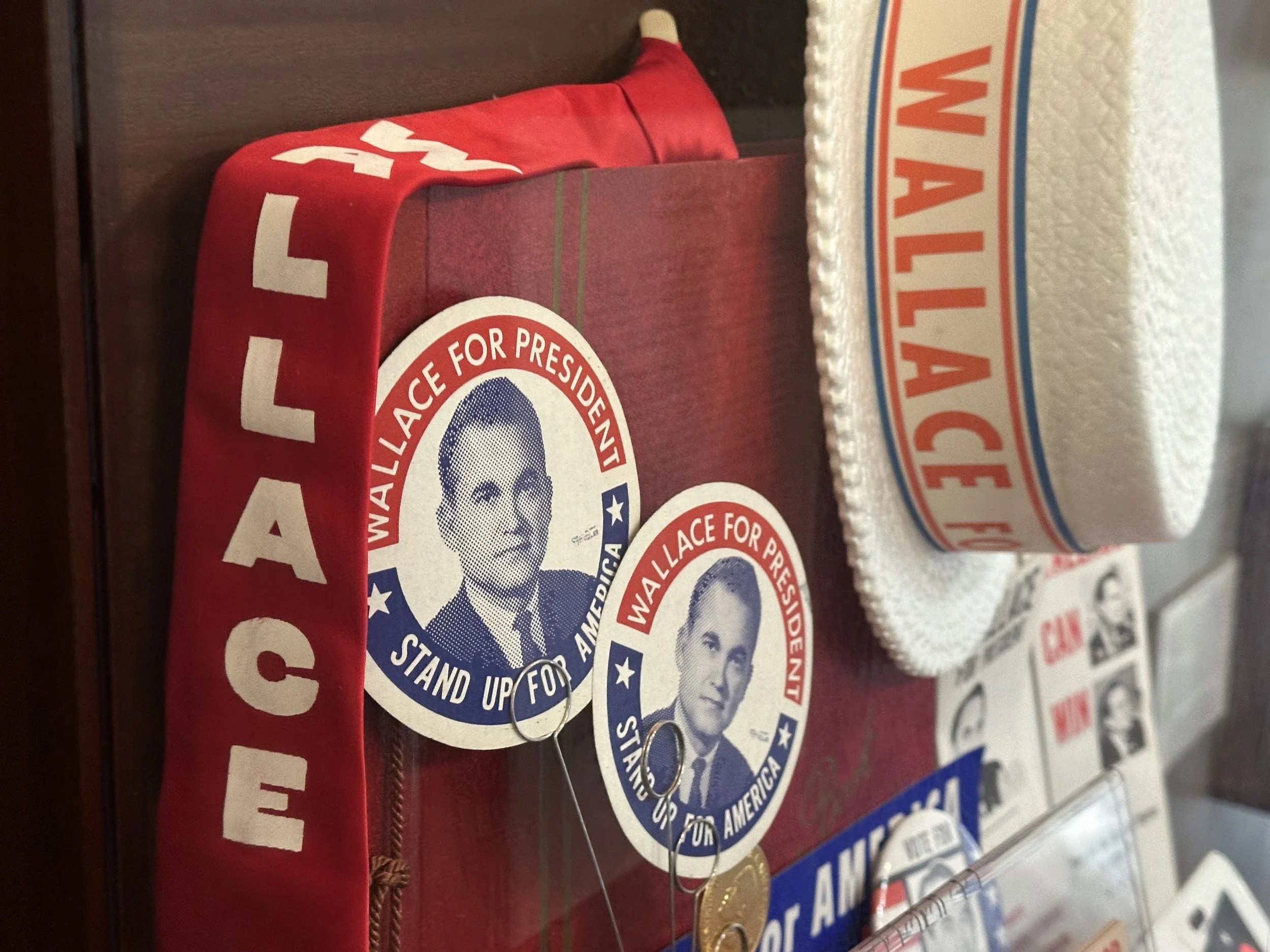
Selma is home to the National Voting Rights Museum. A fascinating museum, I was struck by George Wallace’s Presidential Campaign material, which reminds me of MAGA merchandise.
Many Americans would be surprised to learn what Mitch McConnell or Donald Trump will never tell you: beginning in 2008, the year Obama was elected President, per capita federal income assistance grew larger in rural areas than in cities, suggesting America’s “welfare class” is both whiter and more rural than the GOP wants you to think.
Initially driven by the first stimulus bill in response to the subprime mortgage meltdown, the Federal Government focused on higher poverty rates in rural areas and more extensive infrastructure and services over larger geographic areas. For example, income security programs such as Social Security, Medicare, and other forms of federal income support, including the SNAP program, now comprise a larger share of federal spending in rural areas than they do in suburban or urban areas. In addition, prosperity in cities effectively subsidize rural areas, most notably in states with higher per capita rates of federal taxes.
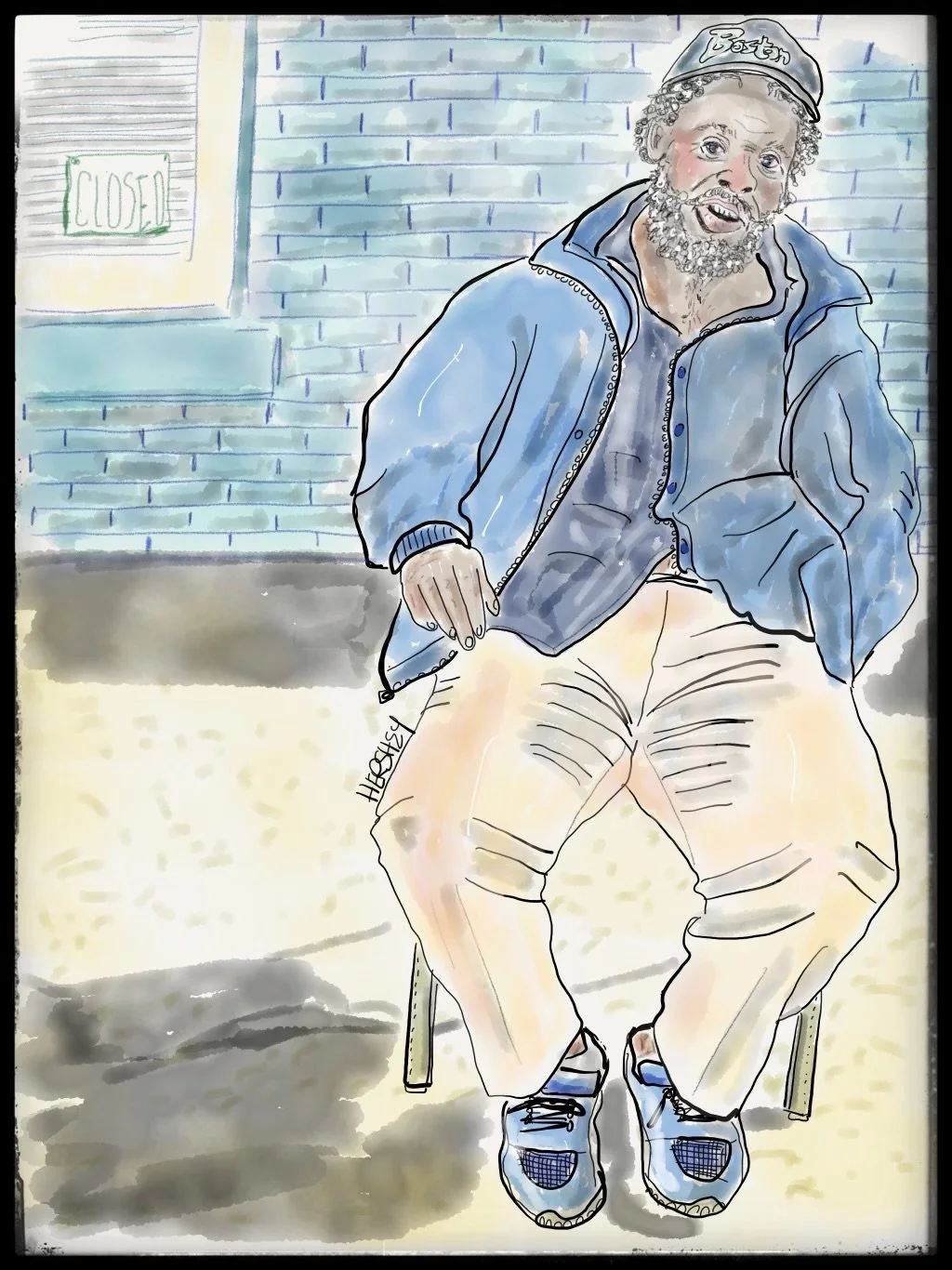
As we headed east toward the Okefenokee Swamp, we biked through Boston, Georgia (pop. 1223). Ron was sitting at an abandoned gas station that had most recently been a shuttered lawn mower service center. We stopped to chat and learned that 74-year-old Ron had spent his life working in cotton and peanut fields nearby as a laborer. He also raised five kids. His youngest boy works in the only food market in Boston, and his oldest is a mortician in the next town over. His daughters moved to bigger cities. Finally retired, Ron spends his day watching whatever passes by. He was so friendly that we felt ok asking him if he watched the news. He said, “I’m a lifelong Democrat, and I watch CNN every day.” A bit surprised, Jenny asked Ron his thoughts about the upcoming election. Ron said, “I don’t understand why folks say such bad stuff about Biden. He old, but lots of people are old. That don’t mean nothin’… give him time. He’s only been at this four years.”
Rural America still contributes significantly in its nostalgic salute to our nation’s political history and its cultural character. Politicians sing the praises of small and rural places, assuring voters that their communities are where the people are good, character is forged, and folks are self-reliant. Many in both parties tend to leave out the part about how they left to achieve their own ambitions. To demonstrate their authenticity, they’ll claim to be small-town folk, no matter where life took them, even putting a little extra drawl in their accents. But Republicans, in particular, know that when they really need the votes, the best way to get them is to amp up the culture war, telling voters that the next election—indeed, the fate of the country—is all about winning the war between unfairly treated, misunderstood, tax-burdened country folk against socialist democrat elitists who live in failing cities, want to take away your guns, and are bankrupting the government. It’s gonna be a bloodbath out there!
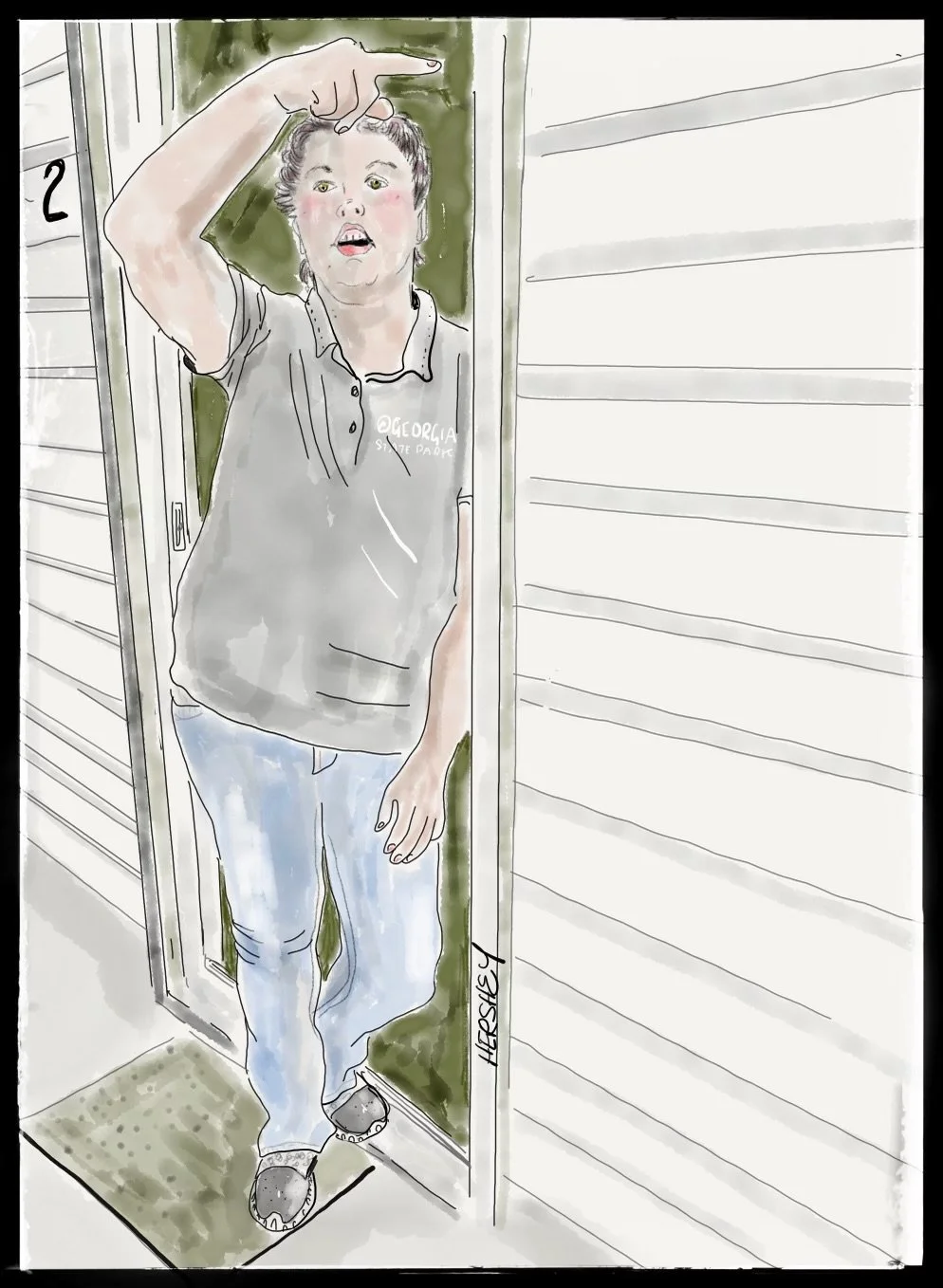
Ruby was born and raised in Fargo, Georgia (pop 250), in a “trailer” park. She pointed, “over there,” where her mother currently lives. She has five jobs cleaning properties on the edge of the Okefenokee National Wildlife Refuge and also cleans the local church. Her mother did the same job, but now her Mom and Ruby’s brothers work for local beekeepers making honey. At 34, Ruby is raising three teenage girls with her husband Jonathan. Jonathan helps with the girls when he isn’t driving a tractor. They met in kindergarten and were crowned “Mr. and Mrs. Fargo” by the local newspaper when they got married. Ruby’s oldest daughter, Ariel, wants to be a vet. Her middle daughter, Skyler, is an A student and works hard at the local diner. Her baby, 14-year-old Carlie, wants to be a country singer. Ruby saved up for a guitar and bought one “on the internet” and Carlie is slowly teaching herself to play. Jenny asked Ruby if she planned on voting in the upcoming election. “That Biden is not gonna have any money left for us. He’s giving too much to people that don’t belong here.” “Oh, you mean immigrants?” Jenny asked. “Yup. And the other guy… I don't know. …I don’t have time to vote. I gotta work”.
Rural politicians have very significant leverage for their arguments because: rural America is privileged with exceptional voting power. Both the Senate and the Electoral College were established during a time when America was predominantly rural. The Senate was designed to represent states equally, with each state, regardless of population, having only two senators. Known as the Great Compromise, this was how our founders tried to balance the interests of smaller states with larger, more populated states, and it was a reasonably equitable solution for most of the 18th and 19th century. But that is no longer the case.
Created as a compromise between electing the President by Congress and by a popular vote, the “Electoral College” gave smaller states more influence in presidential elections than their population would suggest they actually deserve. Every state gets a number of electors equal to its total number of Senators and Representatives, which means all states have a bare minimum of 3 electoral votes, regardless of population. Over time, as the nation has urbanized and population densities have shifted, the relative power of rural areas in both the Senate and the Electoral College has increased because the minimum representation of two Senators and one Representative remains constant.
Rural voting privilege is apparent once one understands how the math works. Consider the following: Wyoming has a population of about 600,000 people, with 2 senators. This means that each senator represents one half of their population, about 300,000 people. California, on the other hand, has a population of about 39 million people, so each California senator represents about 19.5 million people. That means a California voter in the Senate has about .015% of the power of a Wyoming voter when it comes to representative influence in the Senate. Of course, apart from inequalities produced by gerrymandering by either party, the House of Representatives lives up to its nickname the “People’s House,” because it is our one elected body in the federal government that adheres to the “one vote, one person” principle that underpins most all other western democracies.
The math for the electoral college works a little differently: Every state gets an electoral vote for each Representative and each Senator. So, Wyoming, with one Representative, gets 3 electoral votes for its 600,000 people. California has 54 electoral votes with 52 Representatives and 2 senators for its 39 million people. The math works out to a ratio of 200,000 Wyoming voters per electoral vote and 722,000 voters for each California electoral vote, which means that a voter in California has only 27% of the power of a Wyoming voter in the upcoming Presidential election. That math is especially astonishing, given that landowners in the Slave States were able to count their slaves as 3/5 (or 60%) of a person in elections prior to the passage of the 13th Amendment, which was another way that southern rural areas buttressed their electoral power over northern urban Free States.
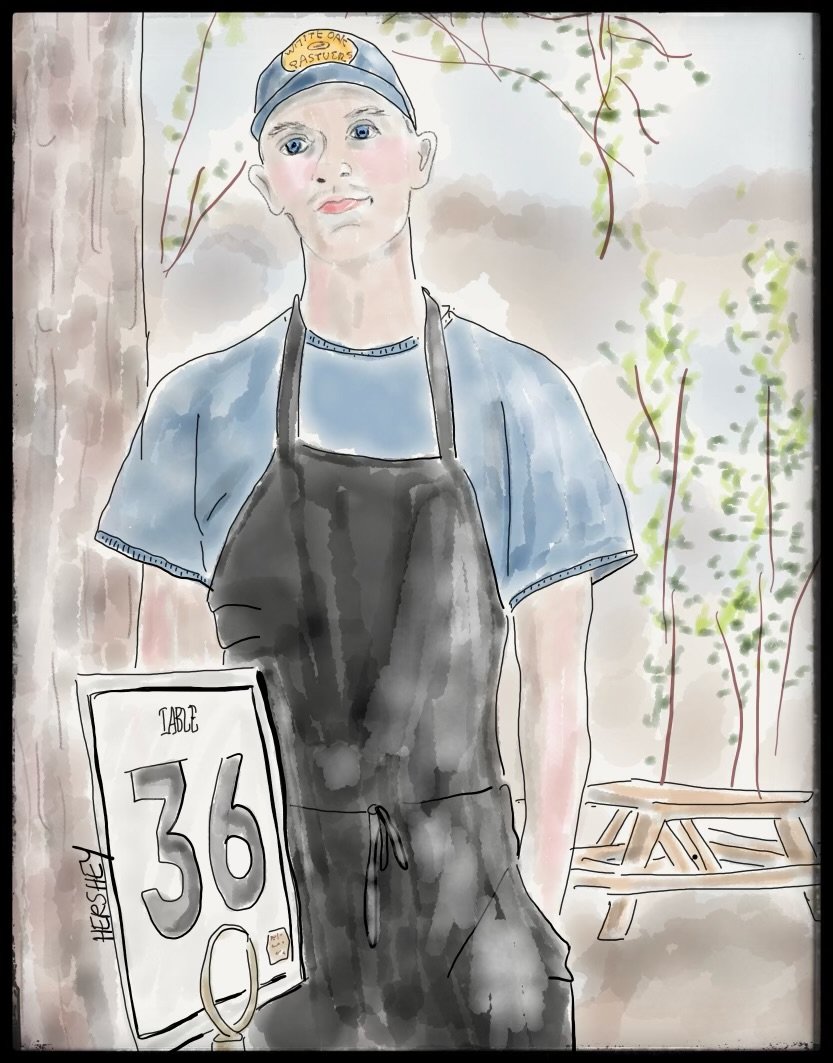
Atticus is a kind, gentle 17-year-old boy who waited on us at the White Oak Pasture Farm in Bluffton, Georgia, a family-run farm focusing on regenerative land management. Atticus (his mother named him after Atticus Finch) is a high school senior. He’s very reticent about leaving home to go to Georgia Southwestern State College in Americus. His brother left for an elite college in New England two years ago, but Atticus has no desire to follow in his footsteps. Atticus timidly confessed, “I don’t wanna grow up.” Jenny asked, “Like Peter Pan?”. He didn’t miss a beat. “Yeh, and pay taxes, have to do grown-up things and all kinds of other stuff,” Atticus muttered. “I don’t wanna leave this town. I’m gonna come back here.” Later, we learned that he had a rough time during the Covid pandemic. Atticus is not into social media, and his life in Bluffton (pop 113) is isolated. He did cultivate a friendship with a kid from Great Britain through a video game. When Jenny asked Atticus if he will vote in November (he turns 18 in May), he said he wasn’t interested. “No? Really? Do you have any curiosity?” Jenny asked. Atticus responded, “Nope. I just don’t care.”
The looming threat of a MAGA-inspired Presidential victory reveals apparent weaknesses in our electoral system. Trump and the Republican Party he now owns (which, as Mitch McConnell indicates, has far more rural supporters than urban) could never become President in a “one person, one vote” democracy. But, given the privileged electoral college status of rural states, America may be entering a period of authoritarian minority rule that may become more extreme. In some ways, the disconnect between the Supreme Court ruling on Dobbs v Jackson and the opinions of the majority of Americans on abortion rights is a “canary in the coal mine” event for how authoritarian rule begins.
A recent poll by the Pew Research Center found that about 62% of U.S. adults believe abortion should be legal in all or most cases, while 36% think it should be illegal in all or most cases. Additionally, the poll indicated that 61% of respondents strongly oppose and 13% somewhat oppose their states prohibiting all abortions with no exceptions. Even more surprising are results of a new Axios-Ipsos poll, which found that 81% of Americans agree that “abortion issues should be managed between a woman and her doctor, not the government.” That number includes 65% of Republicans, as well as 82% of Independents and 97% of Democrats. The idea that abortion should be between a woman and her doctor was the language of the Supreme Court’s 1973 Roe v. Wade decision, overturned in 2022 with the help of the three extremist justices appointed by Trump. These polls suggest that a significant majority of Americans are against a federal abortion ban without exceptions.
The coming Presidential election may be a perfect storm wrought by our dangerously outdated election system. White and rural MAGA voters have an electoral edge, and Trump is their guy. He understands better than any other politician how they’ve been taught to believe they are unfairly treated.
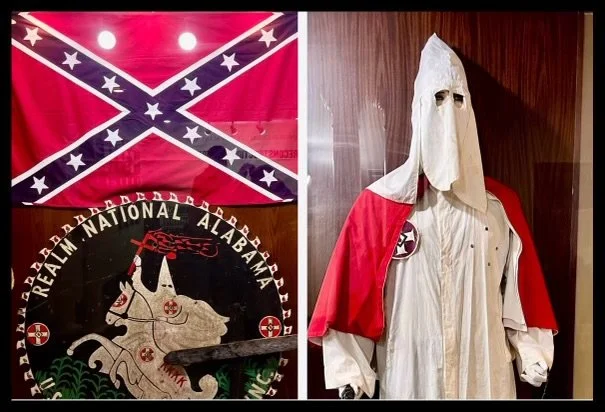
Throughout its history, the Klu Klux Klan (KKK) has been recognized as a symbol of hate, racism, and terrorism. Efforts by law enforcement and civil rights organizations have reduced its power, but the Klan still has active members, and its legacy continues to impact American society. Photos taken at the National Voting Rights Museum in Selma.
Unfortunately, Trump’s incendiary rhetoric against migrants and his political opponents is often quickly retweeted and shared with millions of others, leading Trump’s authoritarian impulses to inspire his followers. Consider the following quote from the book, “White Rural Rage: The Threat to American Democracy” by Tom Schiller and Paul Waldman: “Authoritarian populism is distinct from other variants of populism because it not only focuses on a conflict between “the people” and the elite but also rejects democracy, as democracy might enable those who are not like “us” to win and hold power. Wherever one of these rightist movements emerges, chances are it will have its most fervent support in rural areas. And not just rural areas, but the places that have been left behind by economic transitions.”
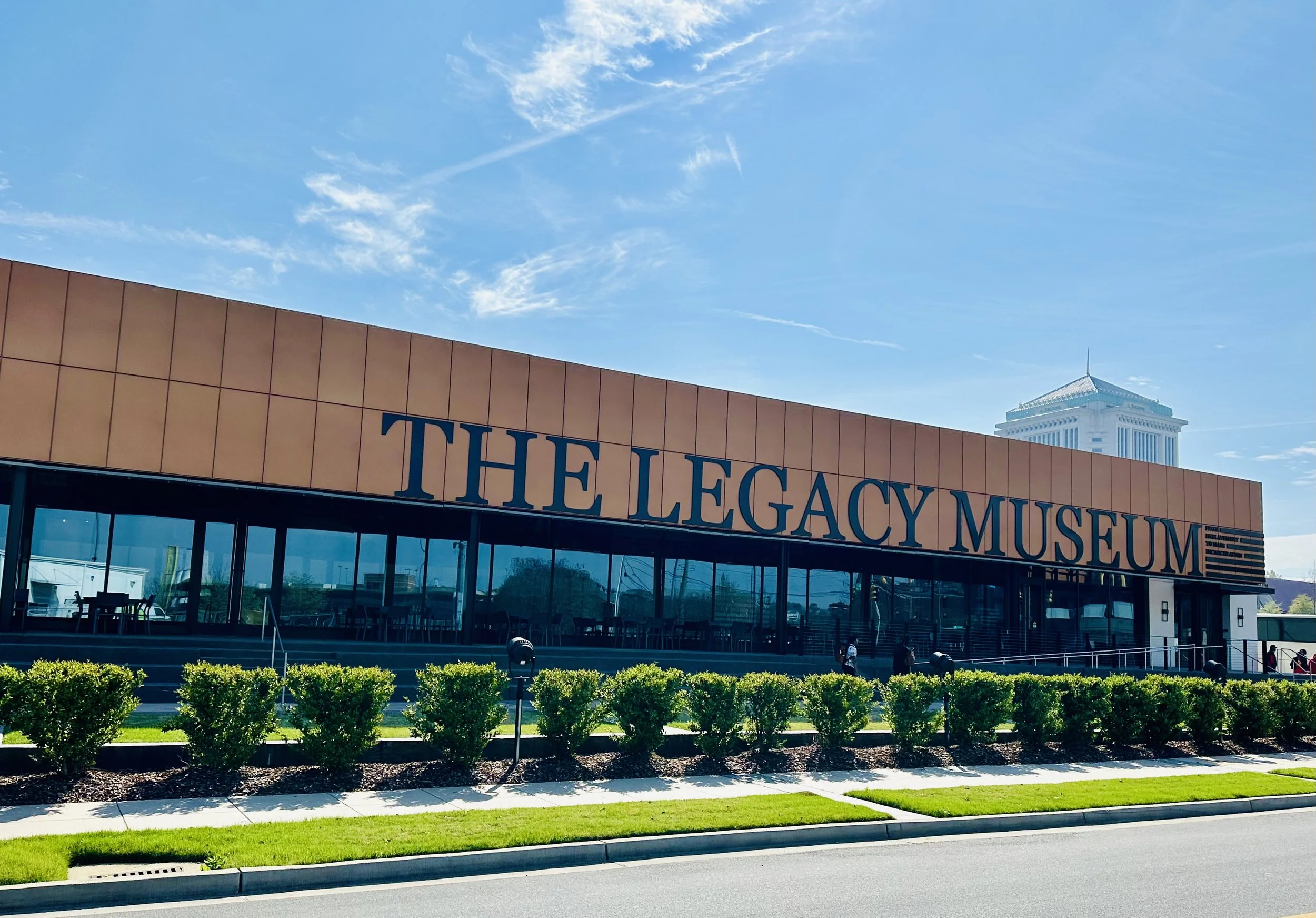
The Legacy Museum from the outside. Deeply affecting, we recommend you plan for an all day visit. The exhibits are detailed and thorough. There is even a new wing devoted to art inspired by the legacy of slavery.
The Legacy Museum in Montgomery, Alabama, is a compelling testament to the history of racial injustice in the United States. Unfortunately for us (but for understandable reasons), photography is not allowed at the museum. Through thought-provoking exhibits and immersive displays, the museum illuminates the painful truths of slavery, lynching, segregation, and mass incarceration of people of color that have shaped our nation's narrative. Not for the faint of heart, visitors are confronted with the harsh realities of America's past and inspired by stories of resilience, courage, and activism.
The Museum was founded by Bryan Stevenson, a public interest lawyer, the bestselling author of “Just Mercy,” and the founder of the Equal Justice Initiative (EJI). The EJI provides legal representation to people who have been wrongly convicted, unfairly sentenced, or abused in state jails and prisons. In 2018, EJI opened both the Legacy Museum and the National Memorial for Peace and Justice in Montgomery.
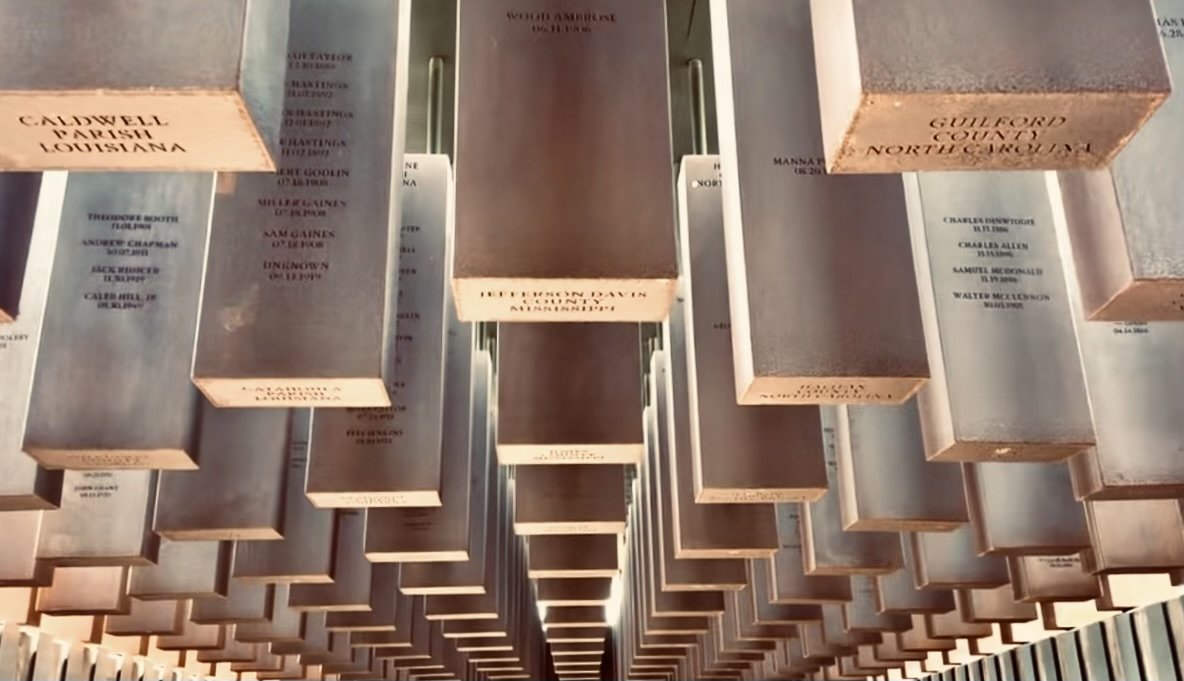
Commemorative hanging tombstones honoring each of the 4,400 known victims of lynchings across the United States at the National Memorial for Peace and Justice. It's impossible to describe how moving and unsettling this memorial is.
Security at the museum rivals what one would find at an airport in a large city. At first, I thought it was overkill, but as my experience in the museum gradually deepened, I began to understand its importance. Racial violence is so deeply embedded in the cultural history of the American South that the museum creators, the Equal Justice Institute, are simply being realistic about protecting the thousands of people who visit every day.
It's impossible not to think about Florida’s recently passed Stop WOKE Act while visiting this museum. Ron DeSantis would not like this place, nor would others who share his views. If you are white, and your identity is tied to your whiteness, you will cringe as you learn how cruel some people who share your racial group have been to others of a different race. And if you are a white child, you may feel personally responsible until a thoughtful adult makes it clear that it was only some members of your racial group who were cruel; others looked the other way, and some were openly and heroically resistant. As a white parent, you will have an opportunity to teach your child about the difference between cruelty, complacency, and the peril of inequality. The information can also be seen in another way. If you see all racial groups as equal members of humanity, you will see the exhibits as examples of how we harm ourselves, and how we can be healed by deepening our understanding of what we are capable of, both the good and the bad.
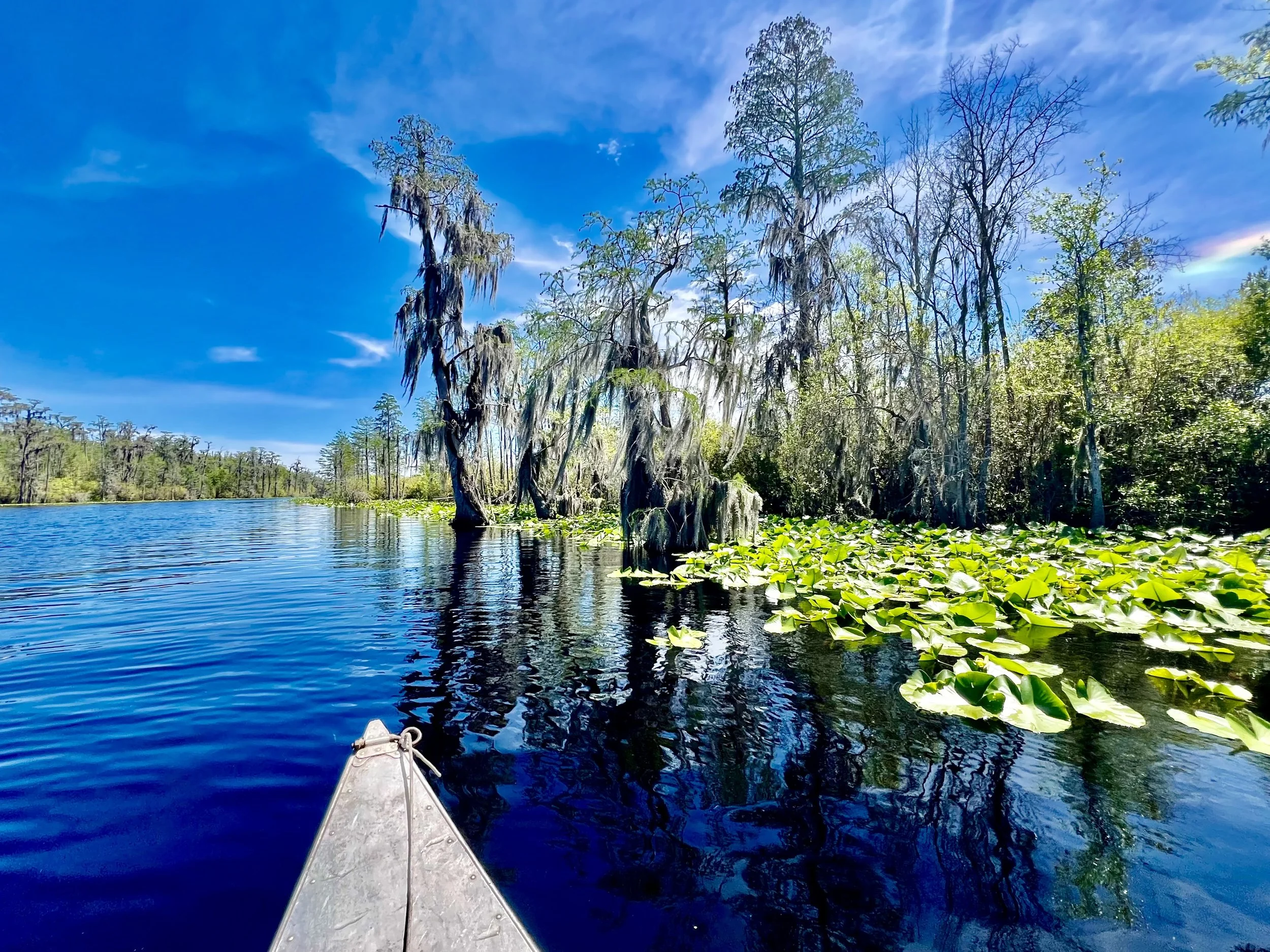
Jenny and I spent a day canoeing inside the Okefenokee National Wildlife Refuge, about 18 miles north of Fargo, Georgia. It was a stunning day, and an opportunity we will never forget.
A Southern Dream
One day not long ago, in a land where the echoes of unity had started to ring clear after a tumultuous struggle for civil rights, a shadow crept silently back into our national politics, feeding on forgotten fears and whispered doubts. It began as a murmur among ambitious and powerful people who realized they could inspire rural white folk to join with them to fight their enemies, then spread that fight to small towns, suburbs and cities. Known as a political movement that promised a return to “simpler times,” its roots were hard to discern at first, but over time it became clear they were laced with the poison of racism and xenophobia. The movement grew, and its tendrils reached straight into the heart of a major political party, gripping it with an iron hold. It spoke in a language of division, painting the world in stark contrasts of “us” and “them,” reigniting flames of intolerance that many believed had been extinguished.
But within this beleaguered party that had once stood strong in the belief that “united we stand, divided we fall,” there were those who remembered the true meaning of their creed. Disaffected and dismayed, they watched as the values they held dear were twisted. At first in secret, and then finally in public, they reached out to the opposition, and to peers who still believed in plurality, diversity, and civil rights. Together, they formed a coalition, a beacon of hope against the encroaching darkness. They worked tirelessly, their efforts a tapestry of countless acts of bravery and kindness. They reminded their fellow citizens of strength found in diversity, of the beauty in every voice being heard. The coalition grew, a testament to the enduring spirit of the people. They marched, they spoke, they voted. And one by one, the walls of fear began to crumble. This major political party, now free from the grip of the divisive movement, was once again able to join hands with the opposition and govern the land fairly and effectively.
The public sphere, once clouded by the specters of racism and xenophobia, was illuminated once more by the light of understanding, acceptance, and compassion for all. The movement that sought to divide was remembered as a cautionary tale, a reminder of the vigilance needed to guard the sacred halls of democracy. And so the land returned to a path of progress, its people united by the shared belief that all voices are equal, and all hearts deserve to be heard. The death of division gave birth to a new era, one where every individual could stand tall, proud of their heritage, and confident in their right to self-determination.
And we all lived happily ever after.
Stay vigilant! Thanks for reading. If you haven’t done so, please subscribe to this blog to follow our next biking trip.
Blog writing by Michael Chase. Drawings by Jenny Hershey. Unless credited or otherwise noted, all material is the copyrighted property of the blog post authors, except for “Southern Dream,” which is a collaboration between Michael and Copilot AI.
Jennifer Hershey’s drawings can be enjoyed on Instagram @deeofo.
Postscript
The night before we left on this trip, Jenny was phoned by a close friend who was a bit intoxicated. He lashed into Jenny for planning yet another trip to the southeast. “How can you go there?” He asked, incredulously. “You know they hate you! You’re Jewish! Why don’t you go somewhere you are wanted?” Jenny was nonplussed. She loves her friend, and she also felt attacked and misunderstood.
The next day Jenny received a text from her friend with a sincere apology, and the following note: “Jennifer, the injustices endured by people of color has been on my mind, in my heart, living inside my body for the better part of a decade now. I think this shift in my consciousness is because my nephew is half African-American. I’ve always had a certain amount of fear and loathing of the south, and I think with good reason. The history bears out that fear. And continues to. It’s like I said – the politicians they promote and try to hoist onto the public, coupled with the bills they try to pass from anti-abortion to gerrymandering - the hits just keep on coming. And just like Netanyahu is trying to sell the idea that 85% of Palestinians support Hamas, I have to wonder what percentage of white southerners in their hearts think of black people as lesser inferior beings? So much of this is just baked into a culture sometimes.”

A few days later, we saw the sign above at the Legacy Museum in Montgomery. Because photography is not allowed there, we found the same sign later on Google Images with the parental advisory attached.
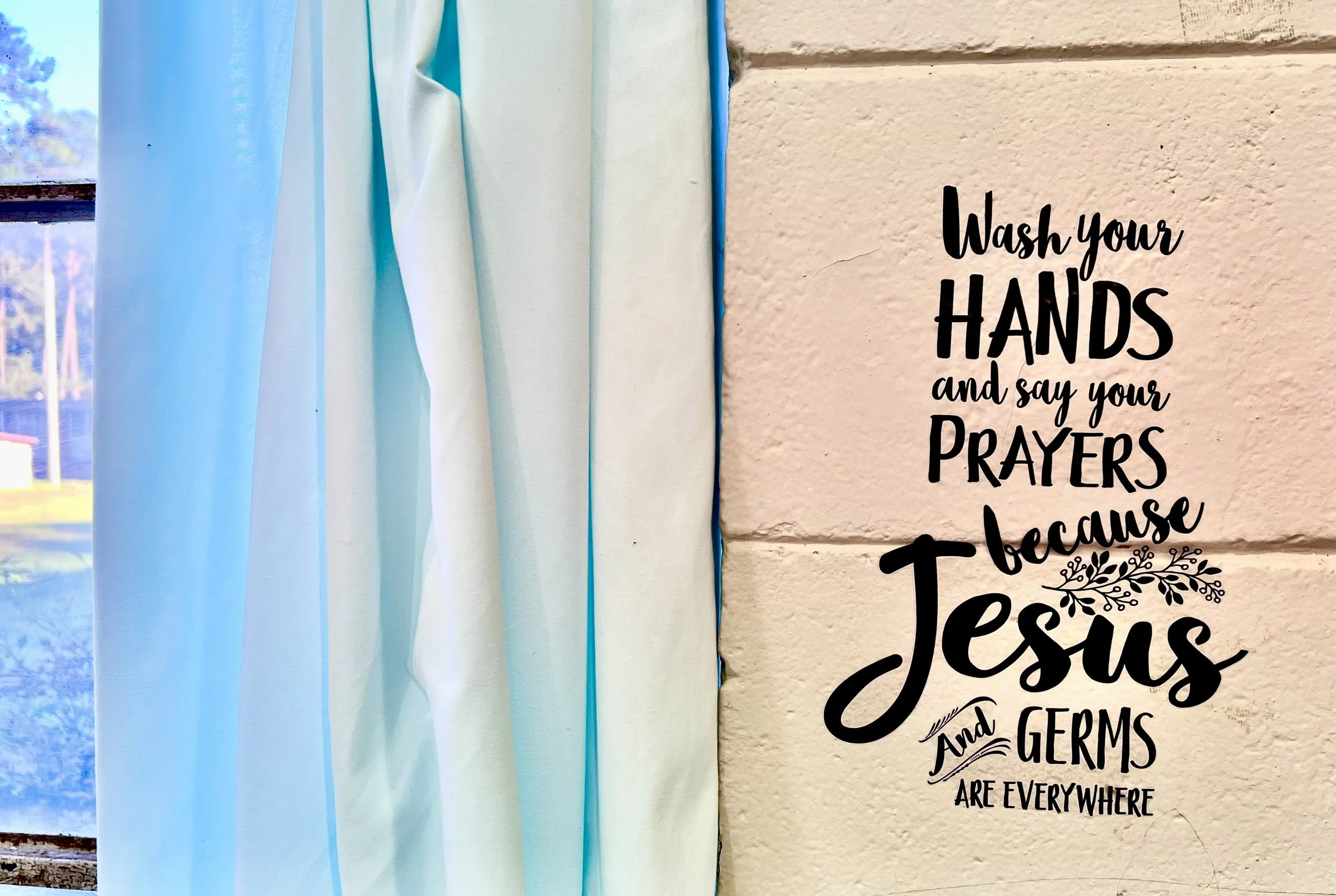
Sign in a restaurant in Fargo, Georgia.
Save the Children; Biking the Saint Lawrence in Quebec
Writing by Michael Chase, Drawings by Jenny Hershey
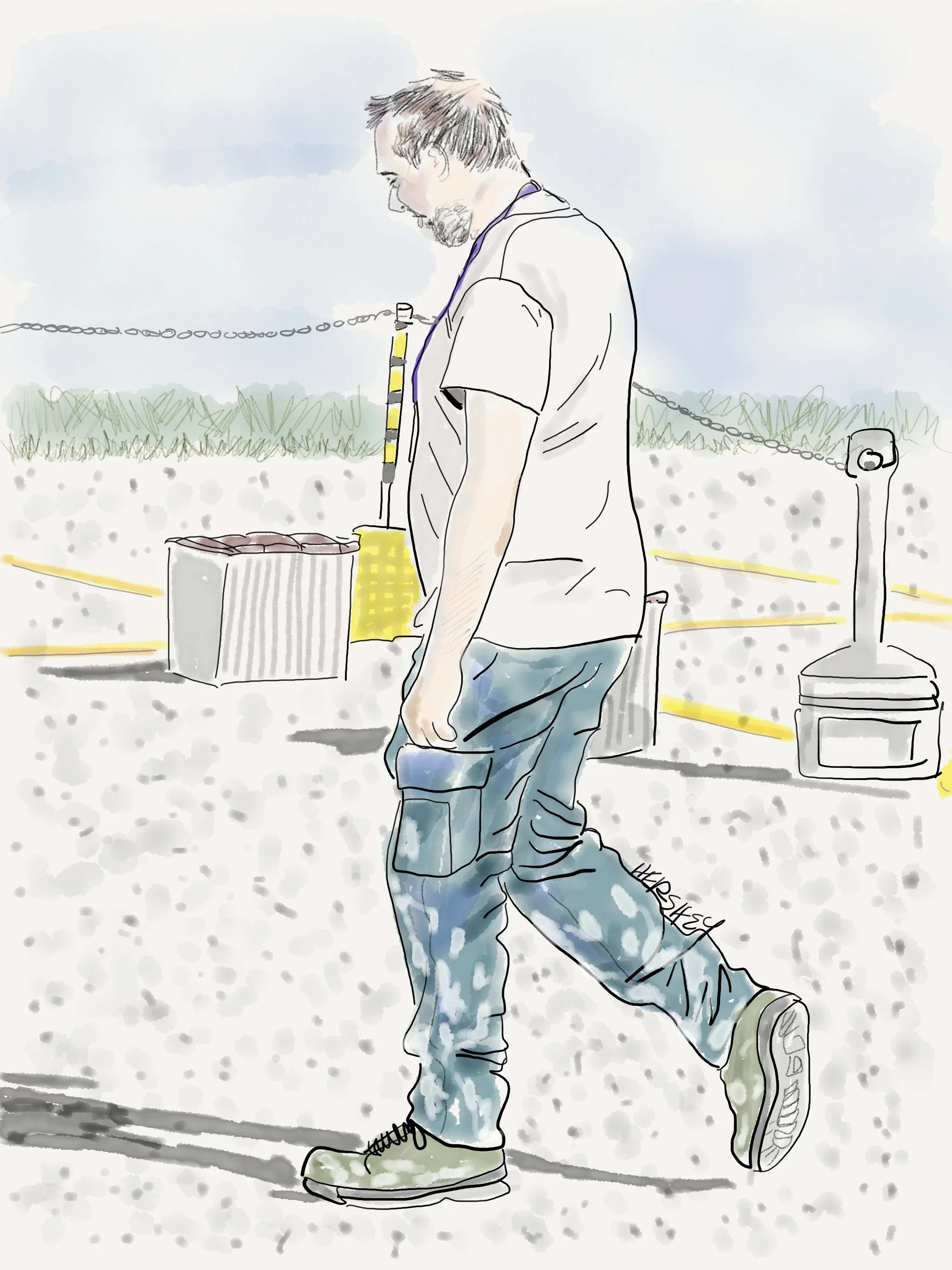
We met Dave in the town of Gaspe at the tip of the Gaspe Peninsula. He was at the end of an overnight shift at LM Wind Power Canada, a leading manufacturer of wind turbine blades in North America. Dave wearily explained that LM has produced over 10,000 blades and currently produces the largest wind turbine blades in the world, measuring 107 meters. These blades are sold in both European and American markets. We asked Dave if we could go inside the factory to see the blades being constructed. “Oh no,” he said, “that’s confidential. I can’t even let my family see inside. Go around the back, and you can see them before they are shipped to Boston for an offshore project.” We were excited by the opportunity and praised Dave for contributing to renewable energy. “Well, that’s all very nice.” he said, “But to me, it’s just a job!” He slowly walked toward his car to go home to sleep. Drawing by Jenny Hershey. Follow her on Instagram @deeofo.
“The world as we have created it is a process of our thinking. It cannot be changed without changing our thinking.”
- Albert Einstein
The Gaspe Peninsula and the North Shore of the Gulf of Saint Lawrence in Quebec have loomed large in our imaginations as a cycling destination for years. Jenny and I found them both accessible and remote, as well as charming and quite stunning. We drove to Quebec from New York City in mid-August, left Jenny’s car at the Quebec City airport, and began biking. North of Maine and New Brunswick, the Gaspe Peninsula and the North Shore of the mighty Saint Lawrence River are favorite destinations for Canadians, especially for residents who live in and around the populated areas of Montreal, Quebec City, New Brunswick, and other parts of the Canadian Maritimes. Gaspe and the northern shore of the Gulf of Saint Lawrence in Quebec feature spectacular landscapes with hundreds of miles of coastland with stunning fishing villages, beautiful bays, fjords, mountains, gushing rivers and streams, waterfalls, lots of camping spots, and modest and charming accommodations. We were not disappointed!
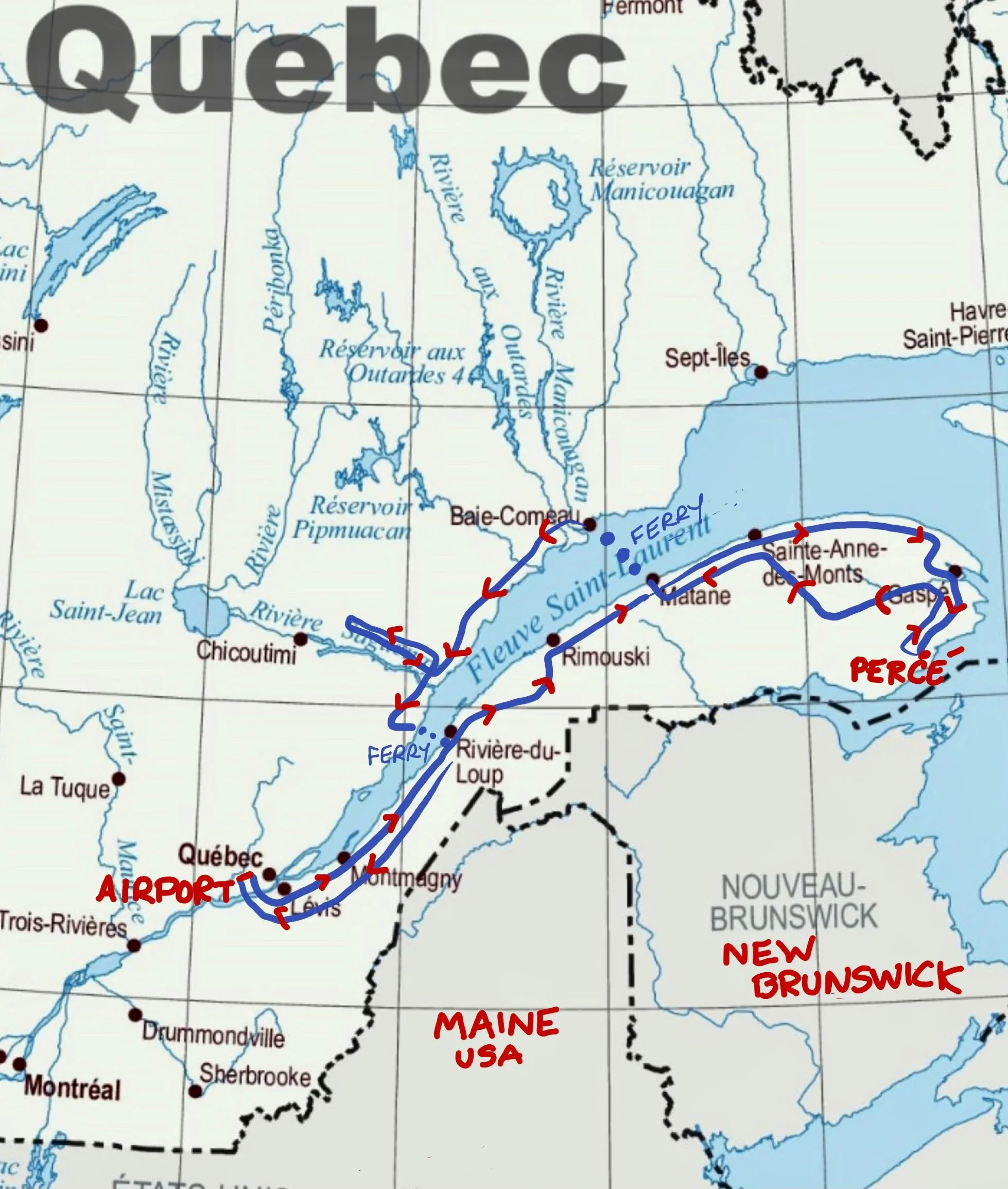
We began at Quebec City, riding our bicycles up the north coastline of the Gaspe Peninsula to the town of Gaspe and down to Perce, then across the interior through Murdochville and back to Matane on the north coast of the peninsula, where we ferried to Baie-Comeau, biked down the North Coast of the Saint Lawrence to Tadoussac and up the mighty Saguenay River with its many fjords to St. Rose du Nord, then back to Tadoussac, across the Saguenay River by ferry to Baie St. Catherine, down to Saint Simone, taking yet another ferry to Rivière du Loup and biking back to Quebec City. We rode about 1,350 miles in total. Map constructed by Jenny Hershey. Follow her on Instagram @deeofo.
The abundance of good weather we encountered on this trip contrasted almost daily with news about challenging weather events plaguing many other communities elsewhere. Because Jenny and I follow climate change impacts on local communities as widely as possible, the contrast between our experience at any given moment and what is happening elsewhere is always on our minds. This has been quite a summer for extreme weather events. It may be that 2023 will be remembered as the year the global climate tipped permanently into a perpetually worsening fever. For the remainder of our lives (we are in our early seventies), Jenny and I can count on experiencing ever-worsening weather. As to those born in the 21st century, climate science modeling indicates that temperatures (and their attendant impacts) may flatten out in forty to fifty years if we can manage to stop emitting greenhouse gases over the next few decades. It’s a profound moment for humanity; whether we get it together in time to save civilization as we know it is the biggest story humanity has ever faced.
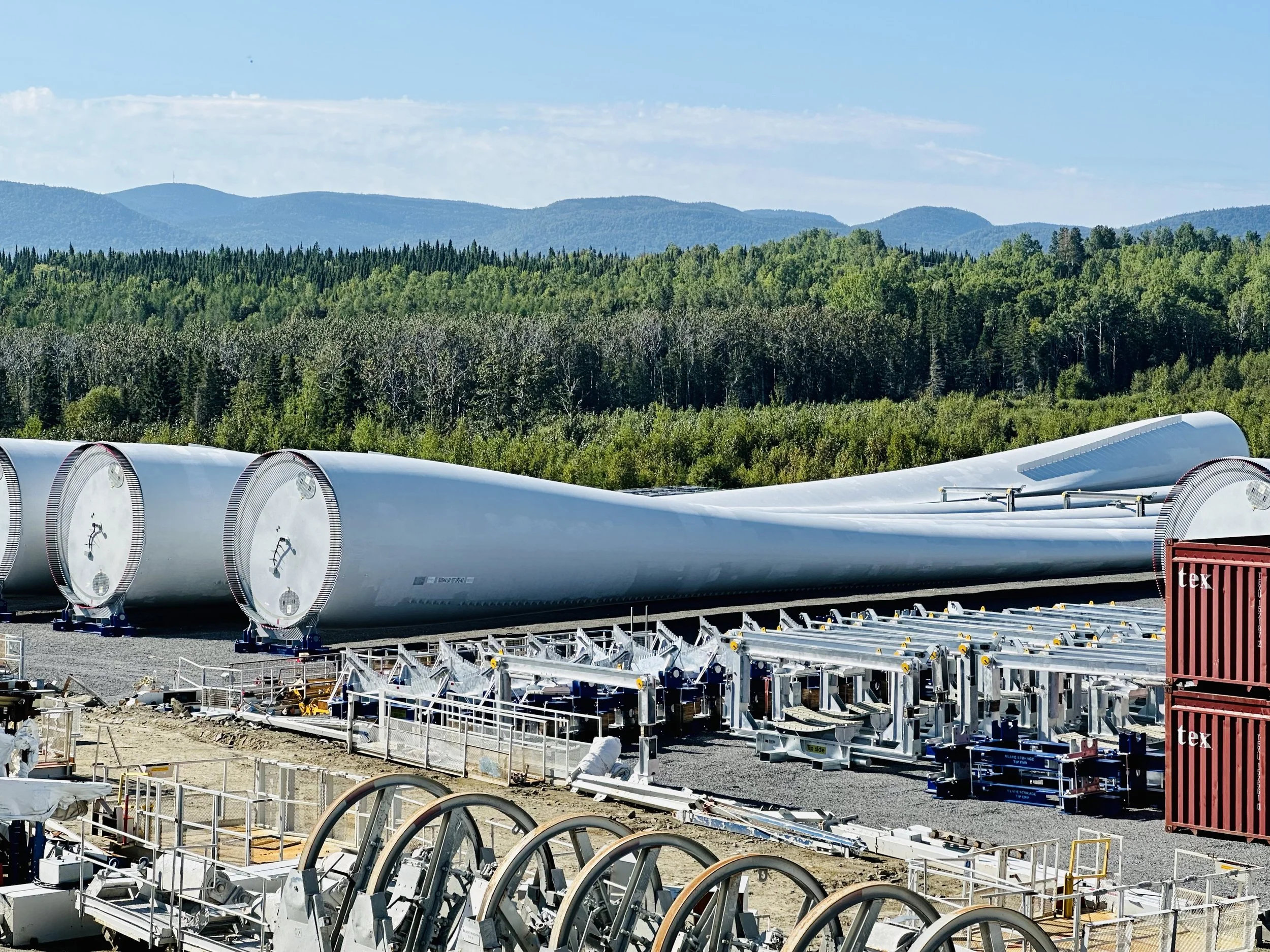
Wind turbine blades destined for a Boston offshore wind project manufactured in Gaspe at LM Wind Power. The facility employs over 500 workers and contributes to the local economy and the green transition. Photo by Michael Chase. Follow him on Instagram @mjohnsonchase.
No matter what happens with greenhouse gas emissions, extreme weather tragedies over the next few decades will undoubtedly exceed anything we have already experienced. Still, giving into despair is pointless and unproductive. While we must be realistic about our situation, there is always hope. Humanity can still create a workable future. We have all the technical solutions we need, and the global collective will to improve our way of life gets stronger daily. At the same time, we must focus ever more intently on removing the corporate-driven, highly politicized conflicts of interest that stand in the way. More on that later in this post…
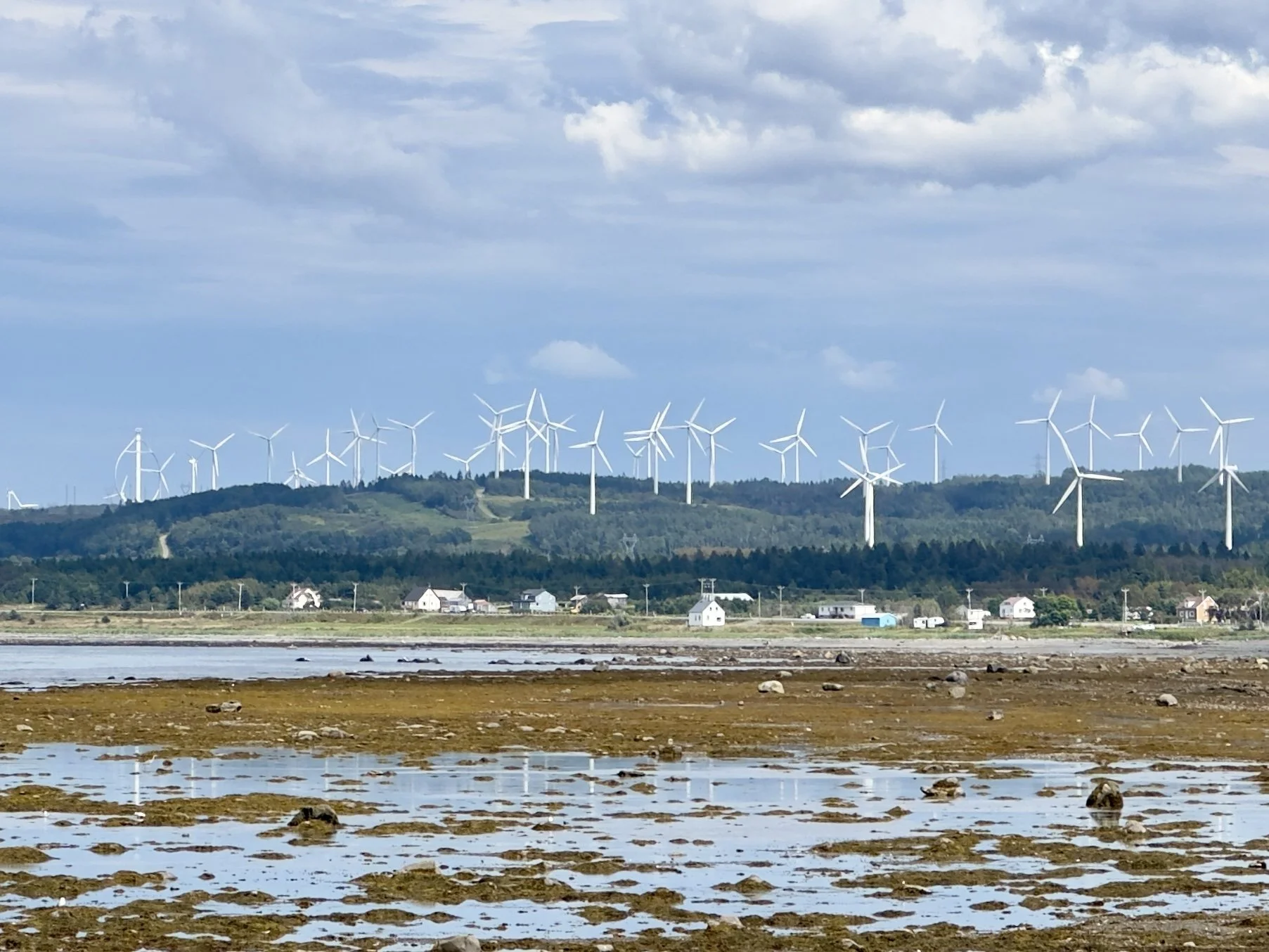
The Gaspé Peninsula is one of the windiest regions in Canada, with an average wind speed of 28 feet per second. The region has been developing its wind energy potential since the 1990s with the support of the provincial and federal governments, local communities, and private companies. The Mesgi’g Ugju’s’n wind farm has 47 wind turbines expected to generate approximately $200 million for three indigenous Mi’gmaq communities over the next 20 years, with a total installed capacity of 150 megawatts (MW). The large multinational renewable energy company Innergex is also active on the peninsula, and the windmills pictured above belong to them. The region has over 800 MW of installed wind capacity, representing about 60% of Quebec's total wind capacity. There are also several research and training centers for wind energy, such as Nergica and the École de Technologie supérieure (ÉTS). This photo was taken near Baie des Capucins, Quebec. Photo by Michael Chase. Follow him on Instagram @mjohnsonchase.
Jenny and I publish these blog posts every few months, and it usually seems helpful to begin with a brief review of our changing climate. As change accelerates, a lot can happen in a few months. Fortunately, the press is getting better about reporting on climate issues, so many people (except, perhaps, for those who only expose themselves to the far-right echo chamber) are already aware of the constant drumbeat of ominous climate news. Consequently, a very brief review of 2023 to date will suffice (for a more thorough accounting go here):
The hottest aggregated land temperatures in recorded history.
The hottest aggregated ocean temperatures and greatest ocean acidification levels in recorded history.
Lahaina, Maui, was reduced to toast. Over 100,000 people in Canada were evacuated because of encroaching wildfires. Major American cities experienced deadly levels of air pollution from Canadian wildfires. Cities in Greece were evacuated because of wildfires and then hammered by historic rain bombs.
A record number of typhoons, cyclones, hurricanes, and tornadoes worldwide.
Atmospheric rivers, rain bombs, historic damage from flooding events. (The floods in Libya leading to bursting dams are the most recent and chilling episode).
Unprecedented and enduring droughts and resulting starvation from crop failures, especially in the Horn of Africa.
Record temperatures and melting of sea ice and glaciers in both polar regions.
A Casandra-like warning from scientists that the Atlantic Current (AMOC) is weakening and may shut down as early as the mid-2030s if emissions aren’t radically reduced soon.
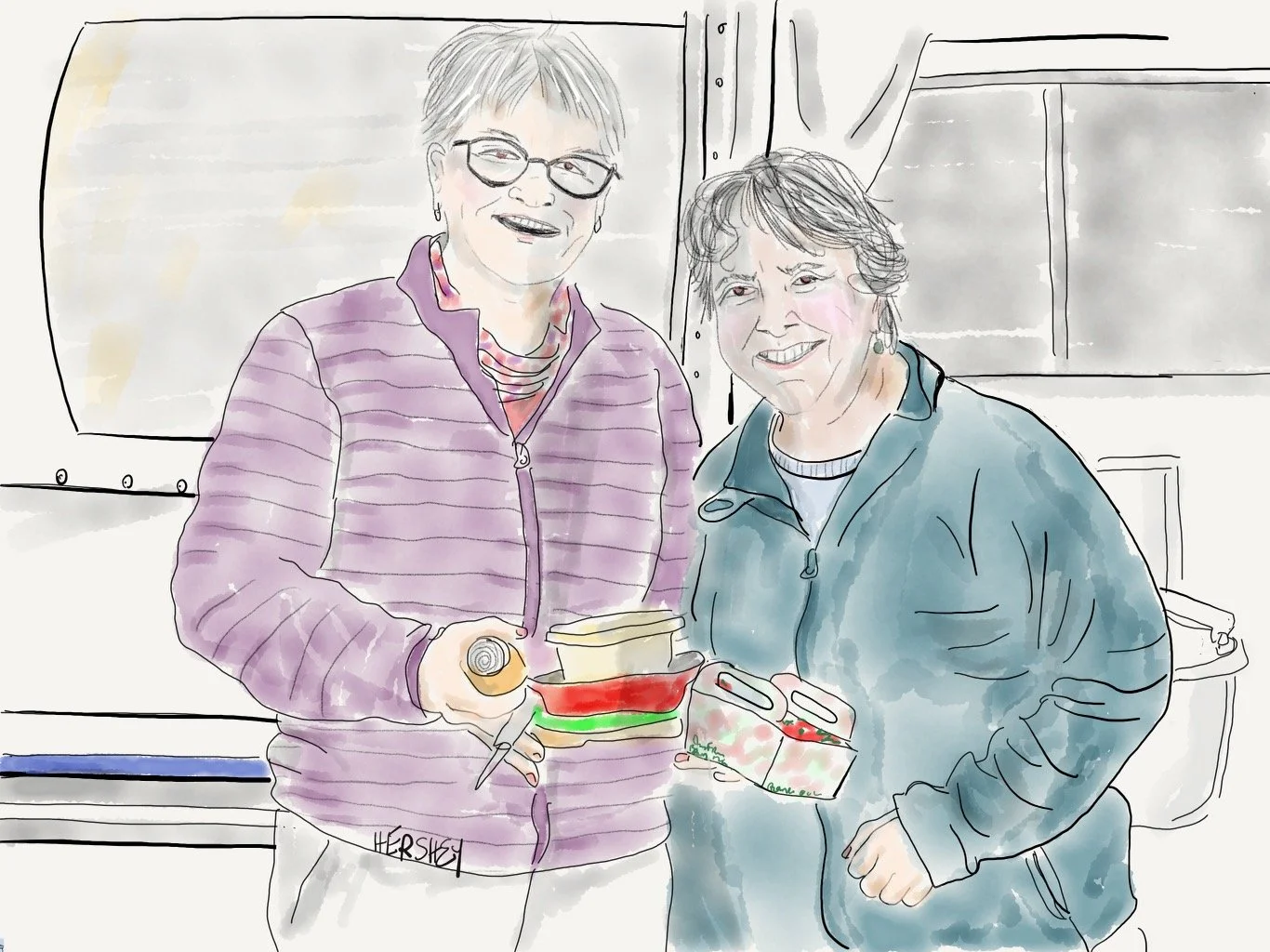
We met Helene and Paule from Sherbrooke, Quebec, at a rest stop near Saint Maxime du-Mont-Louis. They were on their way to a camping trip to Forillon National Park at the tip of the Gaspe Peninsula. Almost by accident, we found ourselves discussing family values, and Helene and Paule shared their story of love and building a family. They met over 30 years ago. Helene is a retired audiologist, and Paule still works as an occupational therapist for ALS patients. They both came out to their friends and family years ago and eventually adopted two children. However, at the time, they were not legally able to adopt together as a same-sex couple, so they each legally adopted one child, although they continued to live as a family of four. Helene explained, “It took a few more years for us to come out to our larger social and professional communities.” However, those communities gradually came to accept them, and they have been well-integrated into the Sherbrooke community for years. Along the way, they’ve seen a lot of progress toward tolerance. However, they are now concerned by the anti-LGBTQ sentiment reappearing in Canadian political and cultural life, much like the United States. Drawing by Jenny Hershey. Follow her on Instagram @deeofo.
Like everywhere else on our beleaguered planet, the impact of climate change is apparent in Quebec on the North Shore and the Gaspe Peninsula. Gaspe was lucky to escape wildfires this year (although the region was surrounded by fires in northern Quebec and Nova Scotia). The most apparent climate-driven issues on Gaspe are coastal erosion, rising sea levels, and extreme weather events, such as unusually intense storms and more significant swings between drought and wet periods. This summer (2023) was much wetter than the norm, with some prolonged periods of extreme heat. That said, a heat wave in Gaspe is when temperatures climb above about 85F (30C), although we talked to a 23-year-old bicycle mechanic in Matane who can remember a few 104F (40C) days in earlier years. So, while residents and tourists experience heat waves, less attention is paid in this region than further south to the dangers of heat fatigue, exhaustion, or heat stroke. Unfortunately, that is unlikely to last.
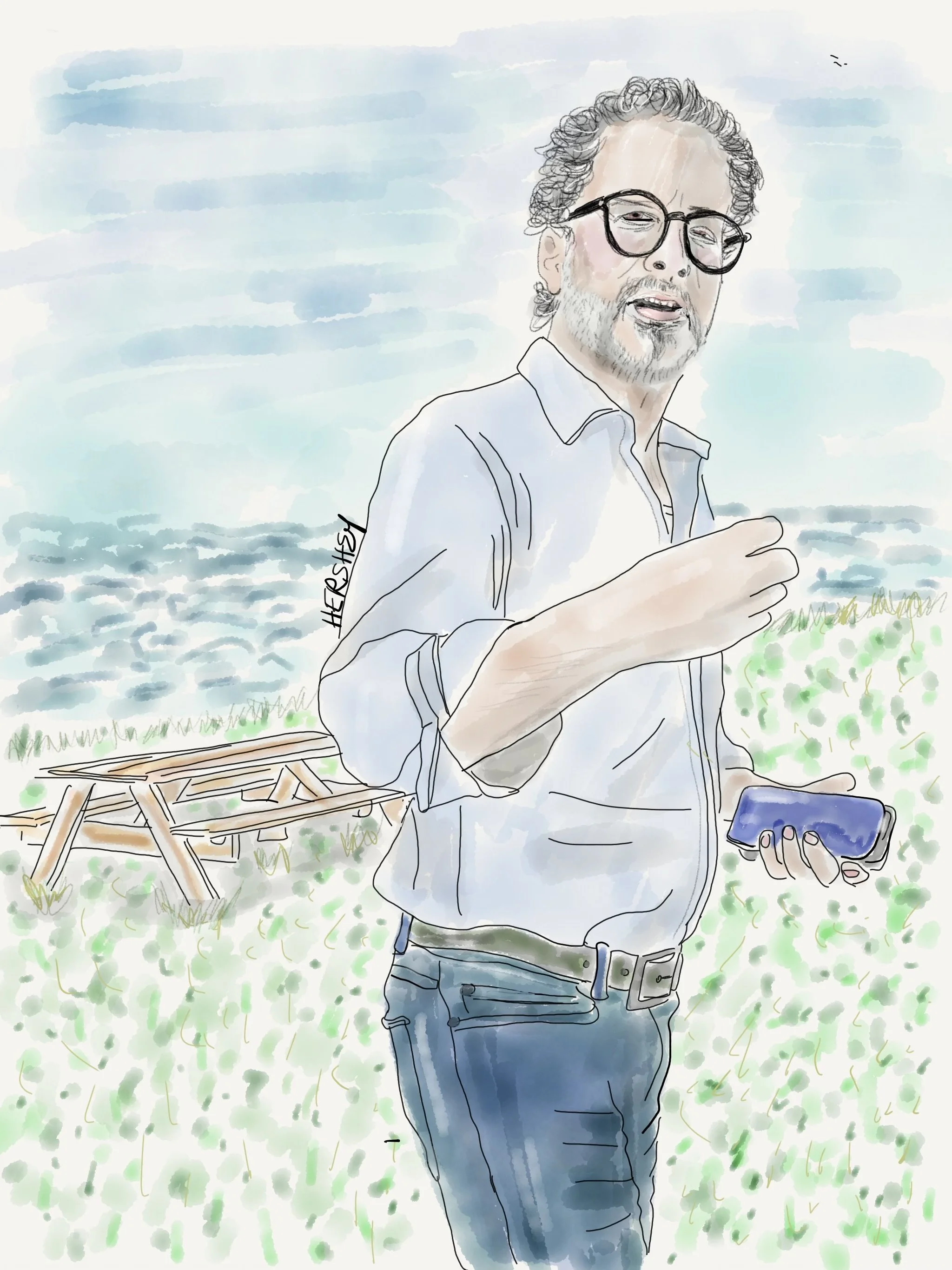
James owns the L’Etoile du Nord Motel on Pointe-a-la Fregate on the Gaspé Bay Peninsula. He purchased his motel/restaurant before the COVID pandemic but decided to run his Montreal-based cybersecurity consulting business remotely once it hit. James runs a tight ship as a motel and restaurant owner while simultaneously running his cybersecurity business. He greets his motel guests for breakfast, engages in warm morning chatter, and then promptly hops on Zoom calls with his cybersecurity staff in Montreal. James shared some of his dreams while showing us around his property. He is very proud of a late 19th-century ice house that he moved inland to protect from storm surges. As we walked on, he gestured to some empty beehives, telling us the bees didn’t make it through last winter and he’ll try again in the spring. Then James showed us a spot where he hopes to build a lighthouse. In a touching moment, he placed his hand over his heart and confessed his greatest joy is having his two young adult sons working with him this summer. Drawing by Jenny Hershey. Follow her on Instagram @deeofo.
Although communities on the peninsula have faced coastal erosion challenges for decades, climate change has accelerated erosion in recent years by increasing the frequency and intensity of storms, reducing the protective sea ice cover, and causing sea level rise. Consequently, an increasing number of homes, businesses, infrastructure, and cultural heritage sites in the Gaspe region are at risk of being damaged or destroyed by the encroaching sea. Although we couldn’t meet them, we read about a couple trying to save their ancestral home from coastal erosion by placing 650 tons of rocks along their property to create a barrier against the waves. However, they acknowledge this is only a temporary solution, and they may eventually be forced to move.
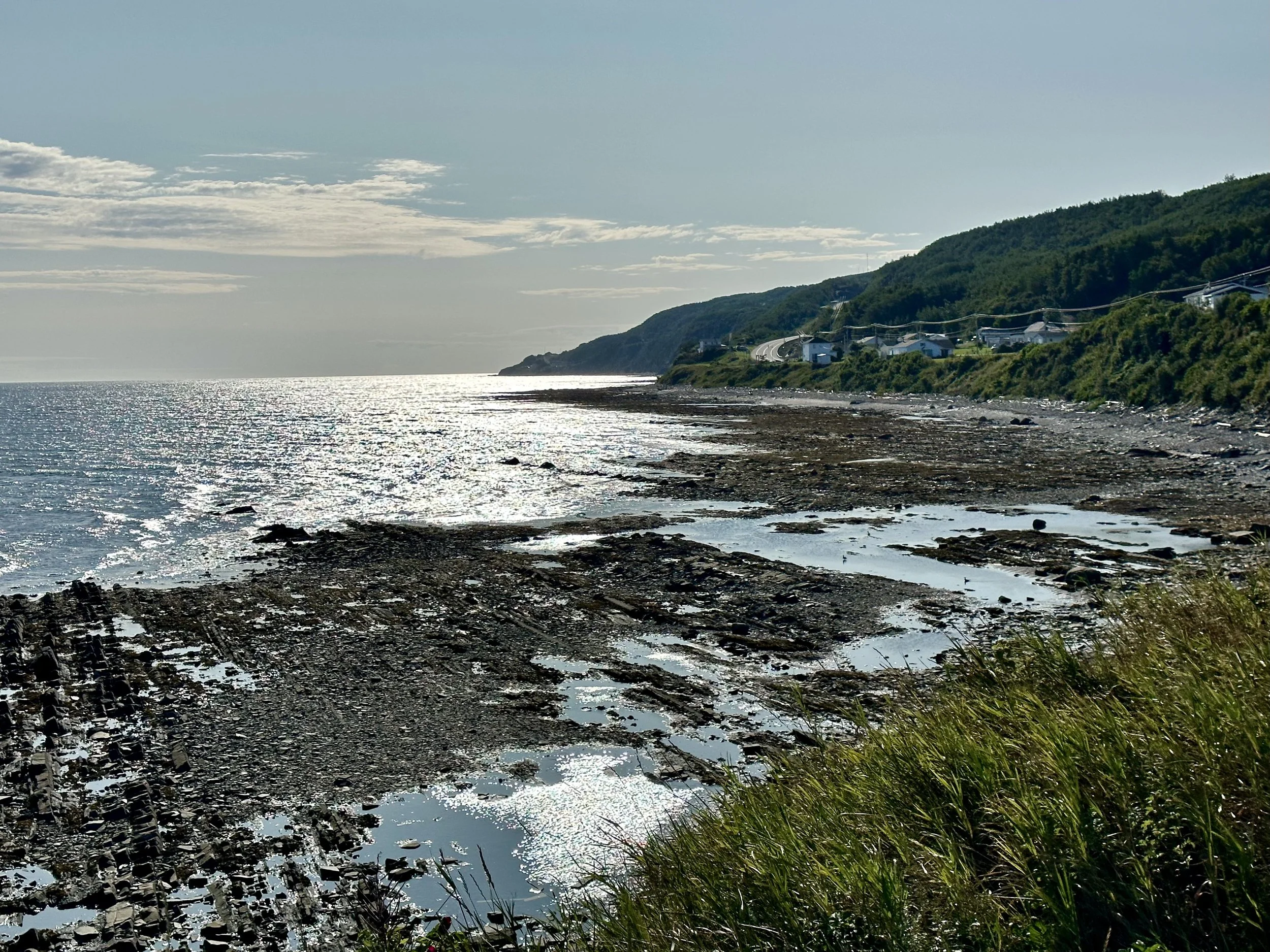
The morning sun reflects off the water on the Gulf of Saint Lawrence at L’Etoile du Nord, the lovely motel we write about above on the Pointe a la Fregate near the northernmost end of the Gaspe Peninsula. Photo by Michael Chase. Follow him on Instagram @mjohnsonchase.
We traveled across the Saint Lawrence Gulf by ferry at Matane to Baie-Comeau. We had been enjoying the coastal charms of Gaspe so much that we weren’t prepared for the ecological and geographic distinctions of the North Shore. The town of Baie-Comeau was an unsightly contrast to the lovely city of Matane. Although there was a minor English fishing village in what was called Comeau Bay since the late 1800s, the town grew rapidly after a paper mill was established in 1936 by Colonel Robert R. McCormick, publisher of the Chicago Tribune. Experiencing remarkable growth, the town of Baie-Comeau was incorporated the following year. The area continued to see economic development when hydroelectric power stations were established on the Manicouagan and Outardes Rivers, as well as an aluminum smelter and grain warehouses. As a result, the area is industrial and rather ugly. We were told, however, that the cycling between Baie-Comeau and Godbout to the northeast was exceptionally scenic. Unfortunately, we didn’t have the time to go there.
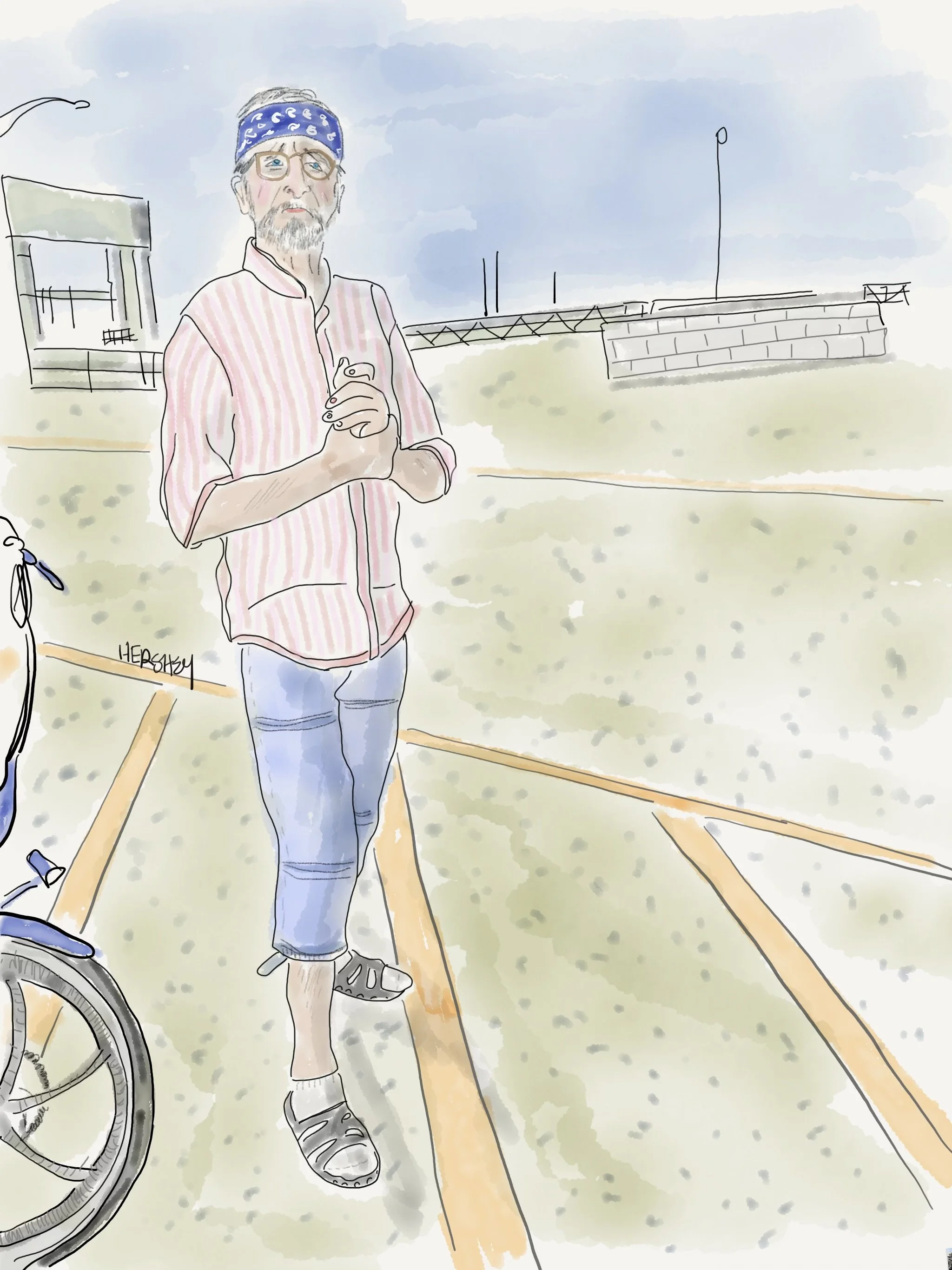
As we queued up for the ferry in Matane, Quebec, to cross the Saint Lawrence on our way to Baie-Comeau, we met a fellow bicyclist named Renaud. We admired his new folding e-bike and swapped biking stories. We learned that Renaud was a proud member of Local 711, the Canadian steelworkers union, and was part of a group of men who were sent to work on the construction of the World Trade Center in 1972, when there was a shortage of steelworkers in the States. He recalled living in Orange, New Jersey, among many cockroaches. He remembers being completely overwhelmed watching the towers come down on television on 9/11. Knowing how the towers were constructed, he was shocked they fell and felt a profound personal loss. But now, in retired life, Renaud enjoys long day trips on his e-bike and leaves the past behind. As we disembarked, we were impressed by Renaud’s agility as he exited, so we asked his age. He replied matter of factly, “I’m eighty-one.” Jenny and I shared a glance. We were both thinking, let’s hope we can do that at his age! Drawing by Jenny Hershey. Follow her work on Instagram @deepfo.
We went south instead. We were puzzled by the devastated terrain as we progressed southwest on Highway 138 toward Tadoussac. The trees are largely Jack Pine mixed with some Red and White pine and a few birches. At least half looked dead, and the undergrowth was thick with lifeless and decaying wood. The ground was exceedingly sandy. Jenny, who is very attuned to bird life, kept commenting on the notable absence of birds, “Nothing to see, nothing to hear!” Although no paved roads led off the highway, occasionally, an unpaved road, sandy and uneven, stretched into the seemingly endless pine forest. Sometimes, we could glimpse logged wood piled behind the trees. And once in a while, the forest would open up into rocky terrain and fiercely rapid streams and rivers. I imagined this landscape continuing for hundreds of miles to the north. But how would I know? All I knew for sure was we were on the southern border of Quebec’s arboreal forest, and it didn’t look healthy.
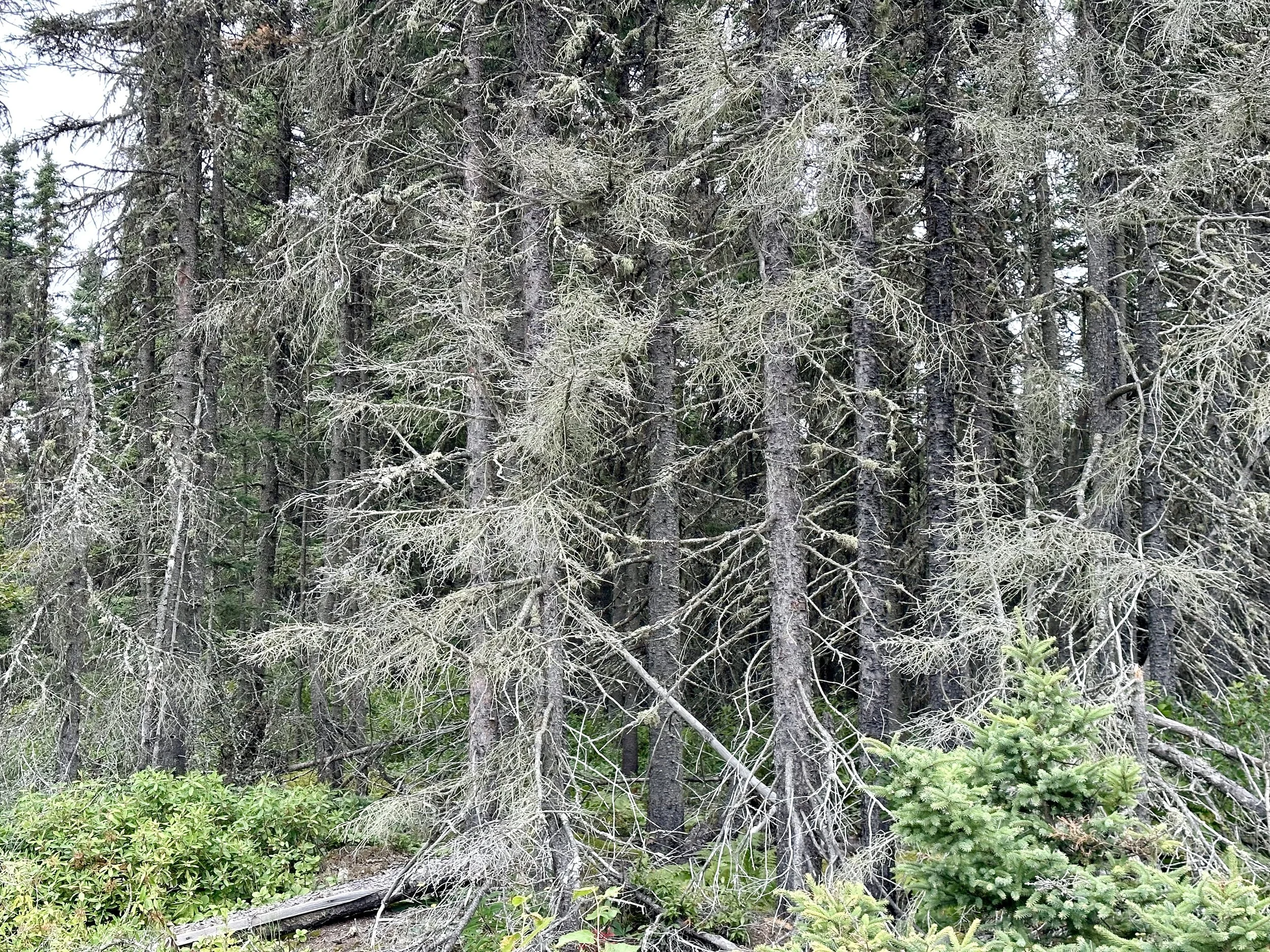
Climate change and natural disturbances are the most likely cause of dead trees in the boreal forest near Baie-Comeau, Quebec. As we know only too well after this summer’s record-breaking wildfires, climate change is causing the boreal forest to experience unprecedented warming and drying, which kills trees, turning them into fuel. In addition, insect outbreaks, such as spruce budworm and bark beetles, damage and weaken trees, making them more susceptible to diseases and decay. Even in the absence of wildfires, these factors can create a feedback loop where more carbon is released from the forest into the atmosphere, contributing to further climate change and forest degradation. Photo by Michael Chase. Follow him on Instagram @mjohnsonchase.
The boreal forest in Canada is now releasing more carbon than it is storing. This is because of the increasing frequency and intensity of wildfires, which are driven by climate change and the dry and decaying conditions we witnessed on Highway 138. Wildfires burn the biomass and dead organic matter, as well as soil pools that store carbon, and release it into the atmosphere as carbon dioxide and other greenhouse gases. A recent OpEd by David Wallace-Wells reveals that “the carbon dioxide released by Canadian wildfires so far is estimated to be nearly 1.5 billion tons — more than twice as much as Canada releases through transportation, electricity generation, heavy industry, construction and agriculture combined. In fact, it is more than the total emissions of more than 100 of the world’s countries - also combined.” But what is most striking about this year’s fires is that despite their scale, they are merely a continuation of a dangerous trend. Since 2001, Canada’s forests have emitted more carbon than they’ve absorbed.
That is the central finding of a distressing analysis published last month by Barry Saxifrage in Canada’s National Observer. Saxifrage suggests the tipping point was passed two decades ago, when the country’s vast boreal forests, long a reliable sink for carbon, became instead a carbon source. In the 2000s, the effect was relatively small. But so far in the 2020s, Canada’s forests have raised the country’s total emissions by 50 percent. As Saxifrage writes: “There is this feel-good myth in Canada that our massive forest is offsetting some of our massive fossil fuel emissions. That might have been true decades ago under our old, stable climate. But we’ve so weakened our forest — through decades of business-as-usual industrial logging and fossil-fuelled climate shifts — that it has switched to hemorrhaging CO₂ instead of absorbing it.”
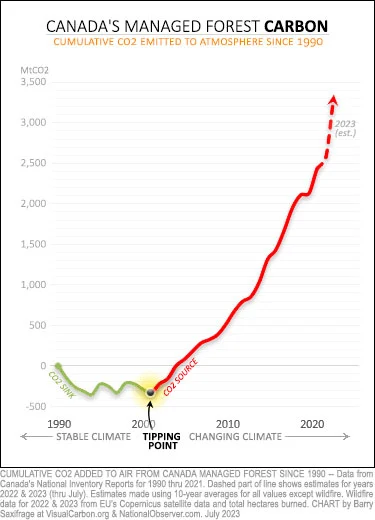
The falling green line on the chart above shows that in the early 1990s, the forest was a valuable carbon sink, helping to slow global warming. Back then, new forest growth absorbed more CO2 from the air than was emitted by logging, wildfire and decay. That all changed after 2001, the tipping point year for Canada's managed forest. As the rising red line on the chart shows, since that year, the forest has emitted more CO2 than it has absorbed. A lot more. Logging, wildfires, insects and the many forms of decay are now turning trees into CO2 faster than the forest can grow back. Chart data provided in Canada's official national greenhouse gas inventory, plus recent wildfire data from the European Union's Earth Observation Program. Report from the National Observer.
As we continued biking southward toward Tadoussac, the health of the forests seemed to improve. We were back in the mountains, and there was less sandy soil and fewer scrubby Jack Pines. The trees were healthier, and the forest was more diverse. There were large deciduous trees mixed among the pines. We were passing through indigenous reservations. Perhaps the reservations managed their forests better? Or maybe the climatic and geographic conditions were more hospitable as we went south?
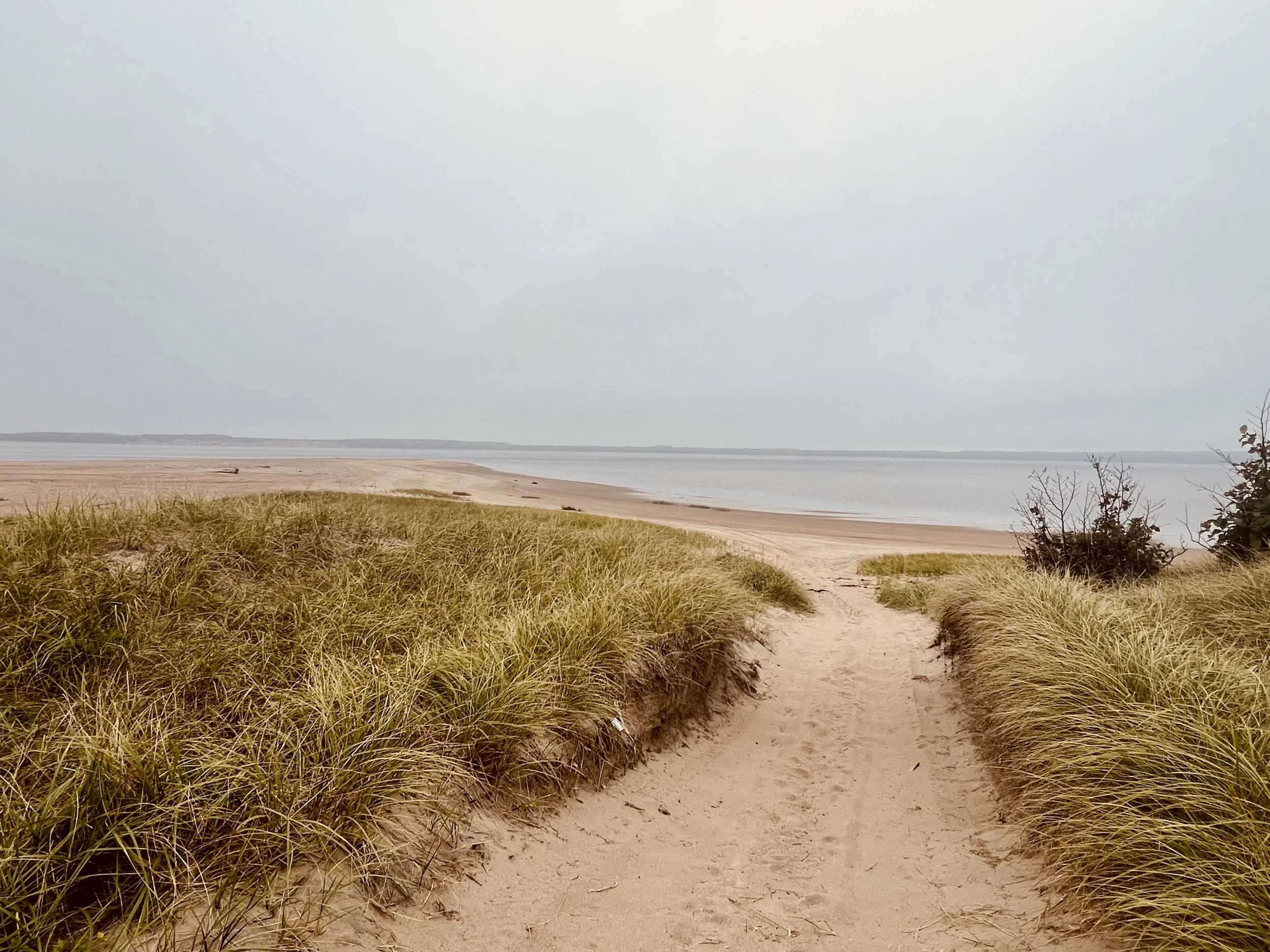
Beach at Pessamit (formerly Betsiamites or Bersimis) is a First Nations reserve and Innu community in the Canadian province of Quebec, located about 50 kilometers southwest of Baie-Comeau along the north shore of the Saint Lawrence River at the mouth of the Betsiamites River. It is across the river directly north of Rimouski, Quebec. It belongs to the Pessamit Innu Band. Photo by Jenny Hershey. Follow her on Instagram @deeofo.
As we approached the town of Tadoussac, we saw that we were also approaching two significant national parks: the Saguenay Fjord National Park and the Saguenay–Saint Lawrence Marine Park. The national park is made up of several hundred miles of forested mountains on both sides of the Saguenay River, and the Marine Park are all the waters that flow from Saguenay to the Saint Lawrence, where the towns of Tadoussac and Baie Saint-Catherine are separated by the Saguenay River and connected by a ferry.
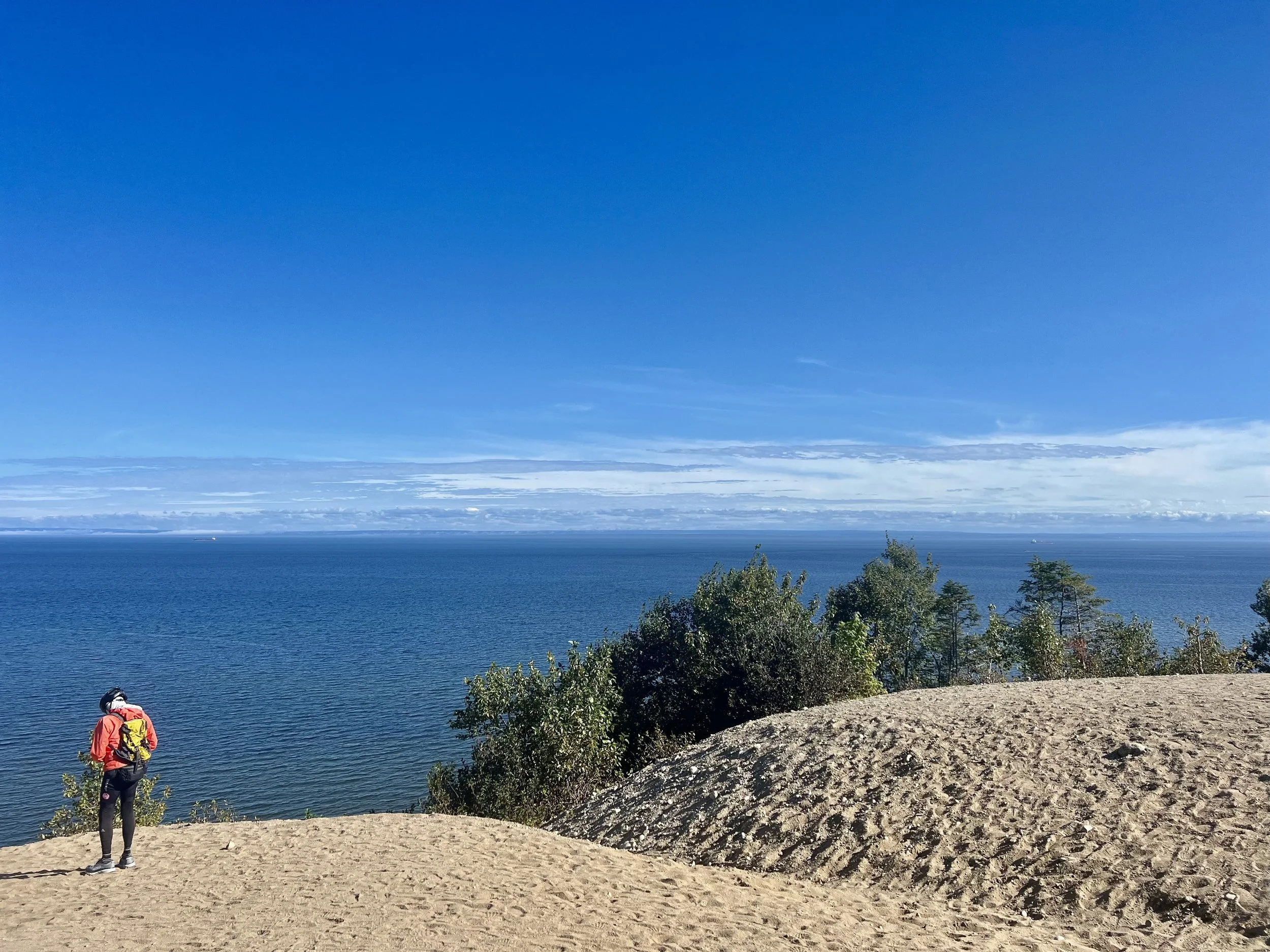
Overlooking the Bay of Saint Lawrence facing toward the Gaspe Peninsula. This view is on dunes just north of Tadoussac, where Jenny and I watched a small school of Fin Whales as they frolicked off the rocky beach. Photo by Jenny Hershey. Follow her on Instagram @deeofo.
Both towns are whale-watching paradises. While the national park is vast and stunning with cliff faces, extraordinary peaks and valleys, beautiful streams, and magnificent fjords, it took us a few days to appreciate the significance of the marine park since it exists on and below the surface of the water. However, the Saguenay-Saint Lawrence Marine Park is one of the most biodiverse marine environments in the world. It is one of the best places in the world for whale watching, as well as seals and sea birds that travel thousands of miles to feed. The park also protects over 2,000 wild species, from microscopic algae to the gigantic blue whale. Above the water, the Fjord National Park is a place of unparalleled scenic beauty.
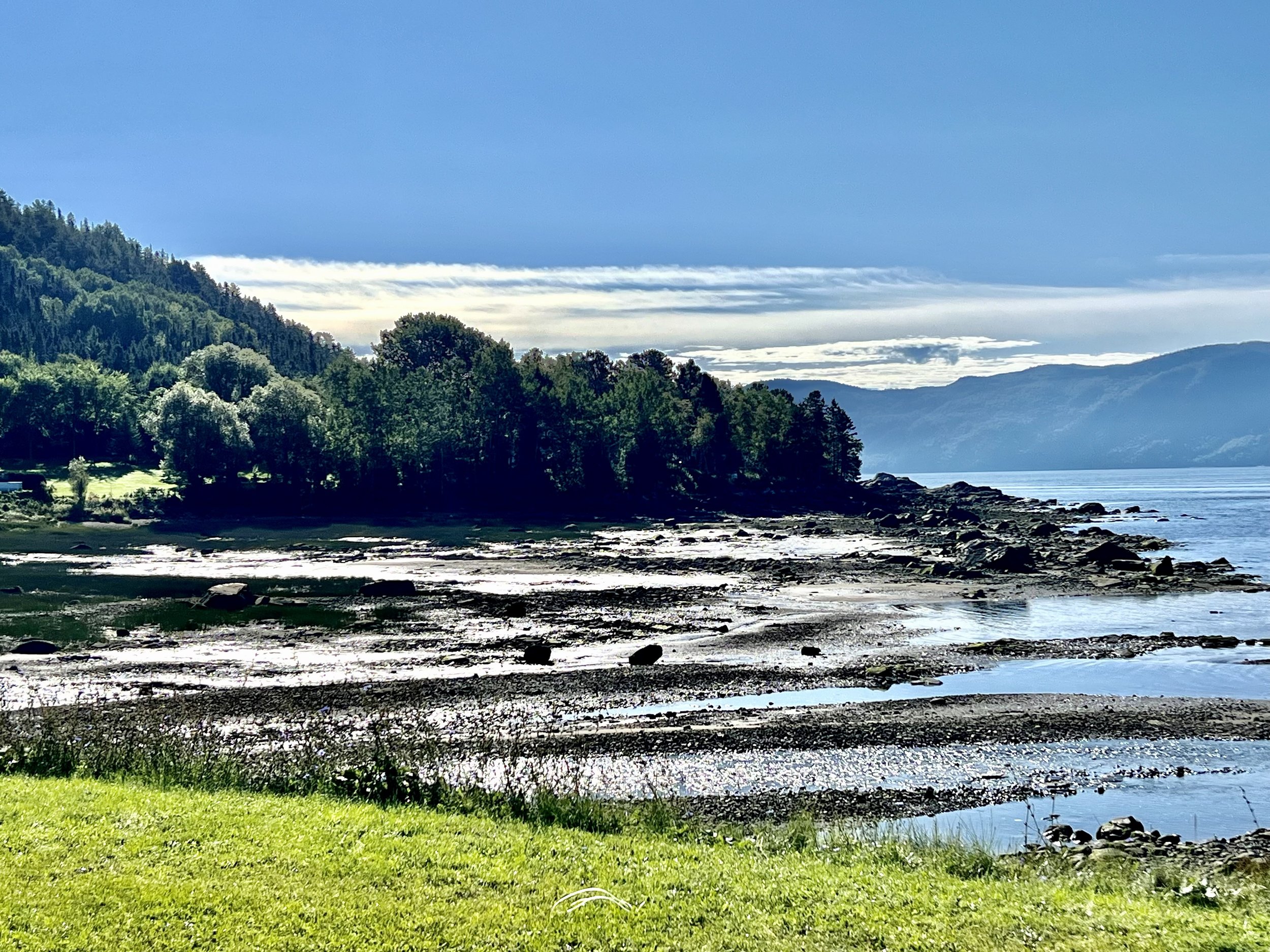
Photo taken about a mile from Saint Rose du Nord at Anse de la Decsente des Femmes, a small fjord on the vast Sagueney-Saint Lawrence Marine Park. Photo by Jenny Hershey. Follow her on Instagram @deeofo.
Some days ago, Jenny and I watched PBS’s Newshour online in a motel in Quebec when we learned that no Republican candidate had raised their hand during the first GOP debate when the candidates were asked who among them thinks climate change is caused by human behavior. We couldn’t watch the debate in Canada, so please forgive us if we are mistaken. If that is true - especially after the torrent of extreme weather events we’ve experienced this year - I’m embarrassed as an American that any person seeking a political office in the US would deny something so well understood by scientists. No other party anywhere in the world rejects the science of climate change as overtly as the GOP. According to a report by the Center for American Progress, 139 members of Congress deny climate science, including 109 representatives and 30 senators.
Canada’s Conservative Party isn’t much better, having recently agreed to remove language from their platform that would have recognized climate change as real. Yet, their party leader, Erin O’Toole, has said he does not want Conservative candidates to be branded as “climate change deniers” in the next election cycle. However, some Canadian conservatives have expressed concerns that such statements will undermine their party’s interests in the oil and gas sector.
Politicians in the States are even friendlier to Big Oil. 85% of political contributions in the States from fossil fuel companies go to Republicans, with the exception of Democrat Joe Manchin, who receives more contributions from the industry than any other Congressional leader in history (he received almost $1M in donations from fossil fuel companies in 2022). That means that contributions to Manchin and Republicans are more than 90% of the total dollars contributed to Congressional Politicians by the fossil fuel industry. And the party is still led by an even more extreme presumptive leader who considers climate change to be a “Chinese hoax.”
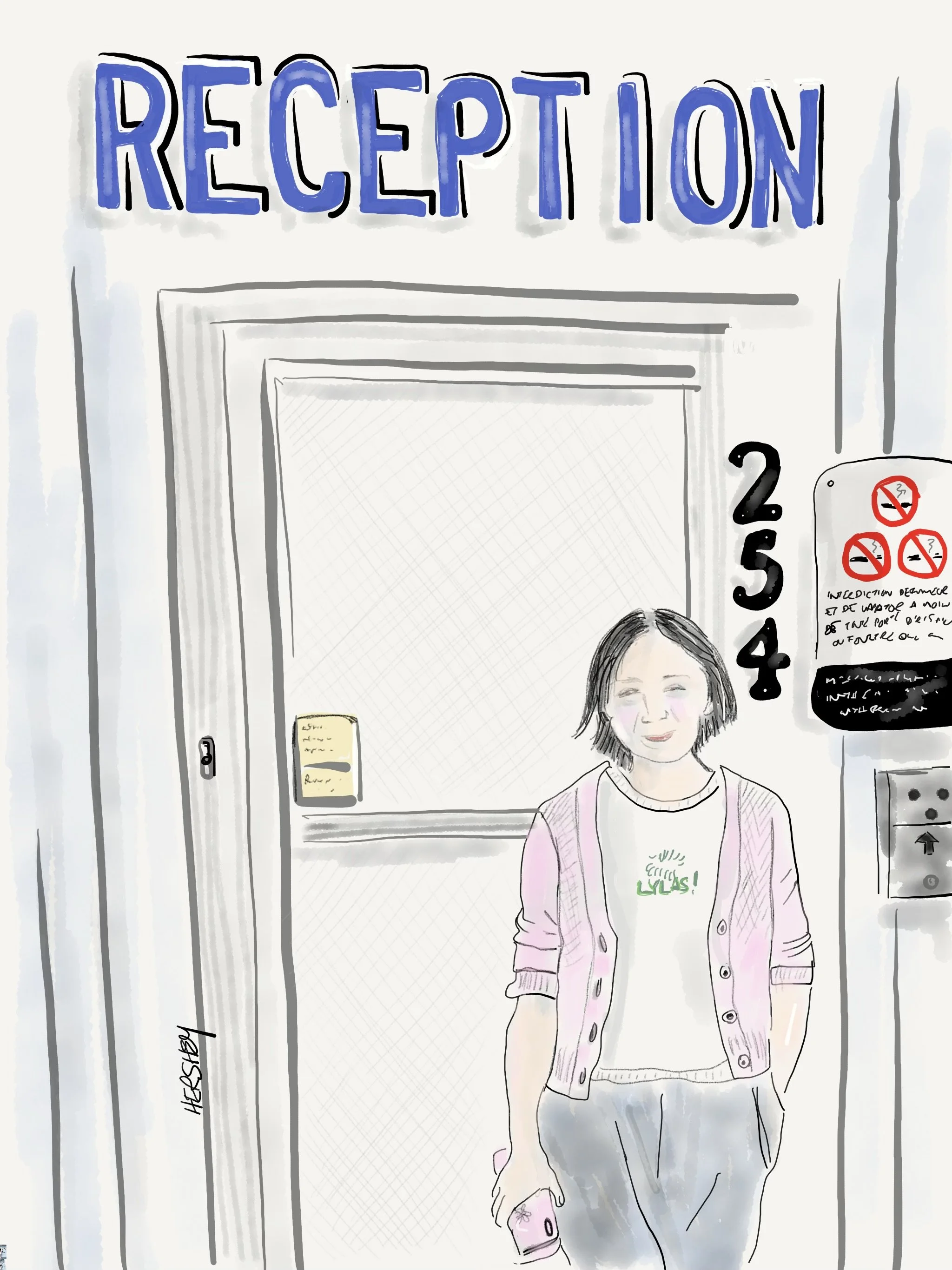
Lily lives between her two motels in Gaspe and Cap-des-Rosiers, Quebec, with her husband, Sparky, and their two young boys, Kevin and Andrew. She and Sparky left their village in China ten years ago after applying to Canadian customs as a skilled worker. Jenny asked her, “What’s your skill?” Lily answered she had been a marketing professor at a college in China. She and Sparky learned French, opened a bodega in Quebec City, and slowly built up their business. One day, a customer came into their store and told them about an opportunity to own a motel in Gaspe at the eastern end of Quebec. Liking what they had heard, they drove hours out to the east end of the Gaspe Peninsula. The rest is history. Lily’s quiet demeanor didn’t fool Jenny. She could see that Lily knew what she was doing. Jenny commended her on being such a good businesswoman. She laughed and said, “Oh no, no, no. I’m a terrible businesswoman.” Drawing by Jenny Hershey. Follow her on Instagram @deeofo.
When you follow the money, there is an indisputable link between climate change denial and contributions to politicians from fossil fuel companies. Climate denial is not about science. It’s about greed. And it has always been about greed. There is now abundant evidence that fossil fuel companies have known for years their product is responsible for climate change. Projections created internally by ExxonMobil starting in the late 1970s on the impact of fossil fuels on climate change were very accurate, even surpassing the predictions of some academic and governmental scientists, according to an analysis published in Science. Despite those forecasts, ExxonMobil continued to sow doubt about the impact of greenhouse gas emissions on climate, successfully waging an obfuscation and disinformation campaign that has slowed down the global effort to decarbonize. ExxonMobil is not alone; these tactics are stubbornly similar for all major multinational fossil fuel companies and have been so for decades. And they are all still at it, although they are now changing their tactics. Major oil and gas companies are learning their lies are not playing well in some court cases and, as a result, are once again willing to admit that fossil fuel emissions cause climate change.
Here’s an example. In September of 2023, ExxonMobil released a cheerful report to their shareholders projecting a vision for how fossil fuels will help to create a more livable and prosperous world for 10 billion people by 2050. The report also tells shareholders that greenhouse gas emissions will drop 25% by 2050 through increases in low-carbon technologies. The report also says, “larger reductions are needed to keep global warming from exceeding 2C, according to the United Nations Intergovernmental Panel on Climate Change (IPCC).” Exxon Mobil makes no pretense in this report that emissions from fossil fuels don’t cause global warming. At the same time, the report completely ignores what climate scientists are telling us about the consequences of surpassing 2C of warming. Although their tactics are changing, the overall objective of fossil fuel companies remains steadfast: selling their product matters more than decarbonizing. In other words, their position directly conflicts with what science tells us we need to do. You can read the report here.
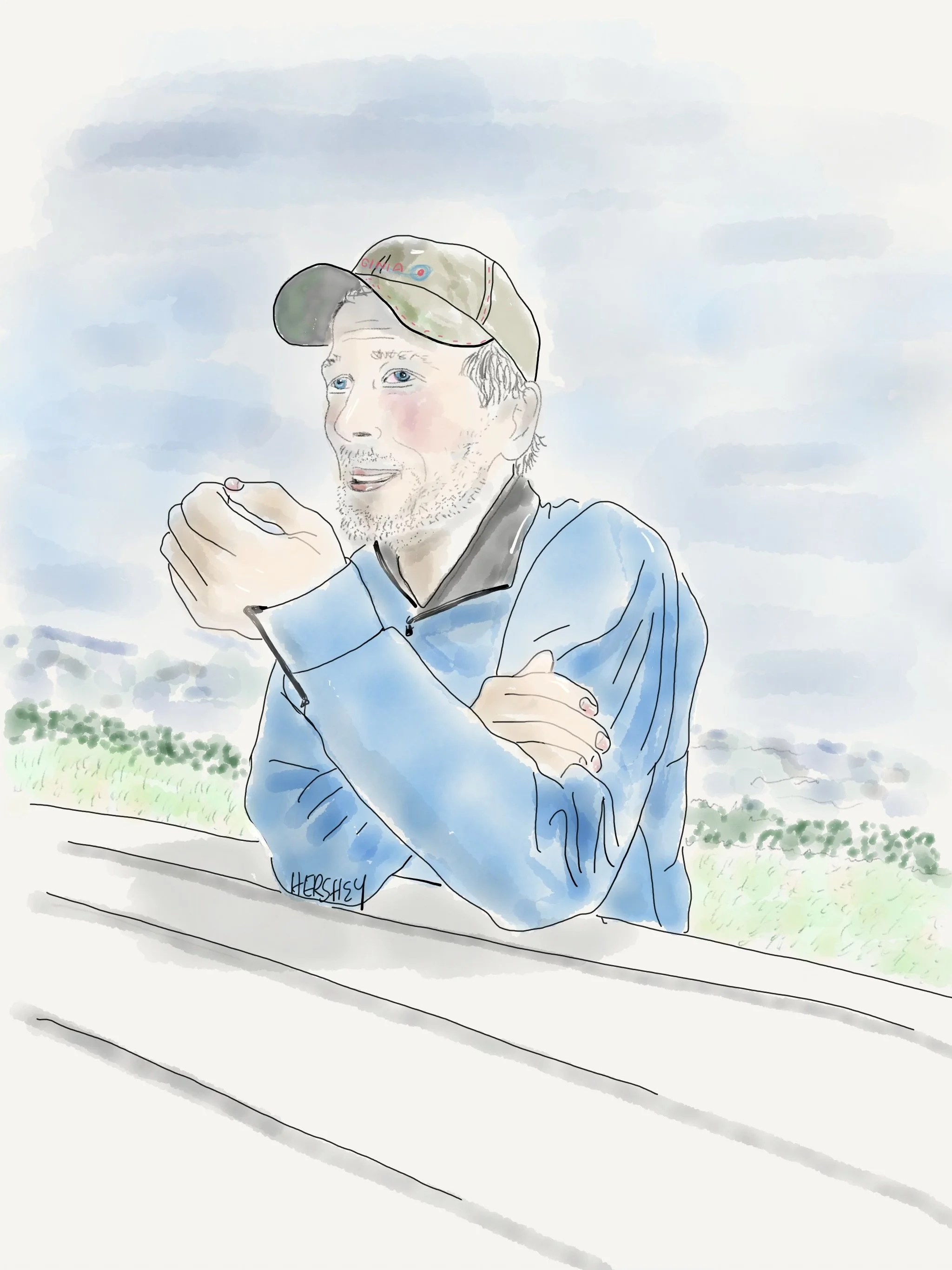
We met Larry at a rest stop in Grande-Valle on our way to the village of Gaspe at the very end of the Gaspe Peninsula. Larry is a strikingly handsome 64-year-old man from Quebec City. He now lives in his van, which he runs on vegetable oil. On the roof was a solar panel. Flashing a charming smile, Larry declined our lunch offer and proudly told us he had caught a striped bass earlier that morning, which he planned on eating momentarily. Although our French is poor and Larry’s English was limited, we talked long enough to realize that Larry is a proponent of the “deep state” resistance common to QAnon followers. We were surprised and almost intrigued by his passion as Larry shared his disbelief in climate change and vaccines, claiming they were creations of a government run by a Cabal pursuing world domination. He claimed there are three kinds of people - globalists (bad guys), technocrats (also bad guys), and nationalists (good guys). He spoke highly of the movie “The Sound Of Freedom” (a true, if not embellished, story about rescuing children from international trafficking that the far right has embraced). Larry explained we must watch it to understand what is really happening. As we were preparing to leave, Jenny asked Larry, “Do you think the earth is flat?” He paused and then answered, “I don’t know.” I am no longer sure what is true and what isn’t.” Drawing by Jenny Hershey. Follow her on Instagram @ deeofo.
I enjoyed meeting Larry. Although I disagreed with almost everything he believed, I liked him for reasons I didn’t entirely understand. And I felt that he liked Jenny and me. In some way that provoked my compassion, I thought he was lost in our dizzyingly complex world. And he said something toward the end of our conversation that persists in my memory: “We need to resist. There are those who want to control us. We can’t let them.” I almost instinctively replied, “Yes, and they are large multinational corporations that control fossil fuels, who buy off the politicians you support, who then tell you ridiculous things you believe that make ordinary people like you and me disagree about who is doing what to whom, even when we both feel we are being done to.”
But I didn’t say that. Yet, at that moment, I felt that QAnon Larry wasn’t my enemy; he was my comrade. His feelings make total sense, even if his facts don’t. He knows something is wrong and can feel it will likely worsen. He is confused and disoriented by how quickly things are changing. Others are telling him the underlying problems, and they seem to know what they are talking about. Some of them are very successful. And their passion and confidence are so attractive. It’s a relief to agree with them. And why not? It’s better than “not knowing.”
Later that evening, I did what many of us do when we want an answer. I searched the internet for something that would help me understand. And I found an article that spoke to the feelings Larry had provoked in me. Suzanne Shelton published an article in 2020 in Greenbiz titled: “If people will believe in QAnon, why won’t they believe in climate change?" Shelton begins by imagining how plausible a QAnon conspiracy pitch might be to a Hollywood Producer: "So, half the politicians in Washington, and many in the entertainment industry, are leading a Satanic cult, kidnapping children and forcing them into a shadowy underworld of sex trafficking. These terrible villains sometimes kill the children to extract their adrenaline to make themselves younger and more powerful. You’re the president of the United States, recruited specifically to run for president so that you can destroy this evil plan. Many people in this terrifying cult will try to stop you — accusing you of courting foreign interference in your election, trying to impeach you, even throwing a pandemic your way. But you will not be stopped!"
I could see Larry’s narrative in the pitch. And, as Suzanne Shelton suggests, I thought maybe - just maybe - Larry would feel just as comfortable over here on our side among those of us who are fighting for a livable planet. Perhaps he’s just been hanging out with the wrong crowd. So what appeals to the feelings of people who believe QAnon conspiracies that climate change activists might be able to appropriate? How might I convert Larry to an evidence-based, scientific understanding of reality that feels emotionally familiar but is actually based on the truth? Shelton suggests three simple ideas that appear to drive conspiracy theorists that might help recruit them to evidence-based conspiracies.
1) Save the children: No matter what one believes politically, we all care about our kids and are wired to look out for them. For QAnon followers, children are threatened by a global cabal of wealthy elites (primarily Jewish, but now a tad more racially diverse) who want to capture them and harvest adrenochrome from their blood (related to adrenaline, adrenochrome is mistakenly thought to enhance longevity). For climate activists, the world’s children are inheriting a climate that will grow so challenging it may tear society apart in the coming decades unless greenhouse gas emissions are reduced very quickly.
2) Evil is real: For QAnon followers, evil is the threat of world domination by influential people who want to subjugate others for their personal gain. The cabal not only wants your children, it wants to dominate you and strip you of your fundamental human freedoms. For climate activists, evil is greed, the ever-present greed of corporations, political leaders, and other powerful people who lie to you about greenhouse gas emissions so they can continue to make money or be supported by the money others make.
3) A clear enemy: For QAnon, it’s the cabal, elites, globalists, socialists, communists, Democrats, and woke people in general. For Climate Activists, it’s fossil fuel companies, corrupt and ignorant politicians, professional climate deniers, and those who otherwise get in the way of the transition to cleaner forms of energy.
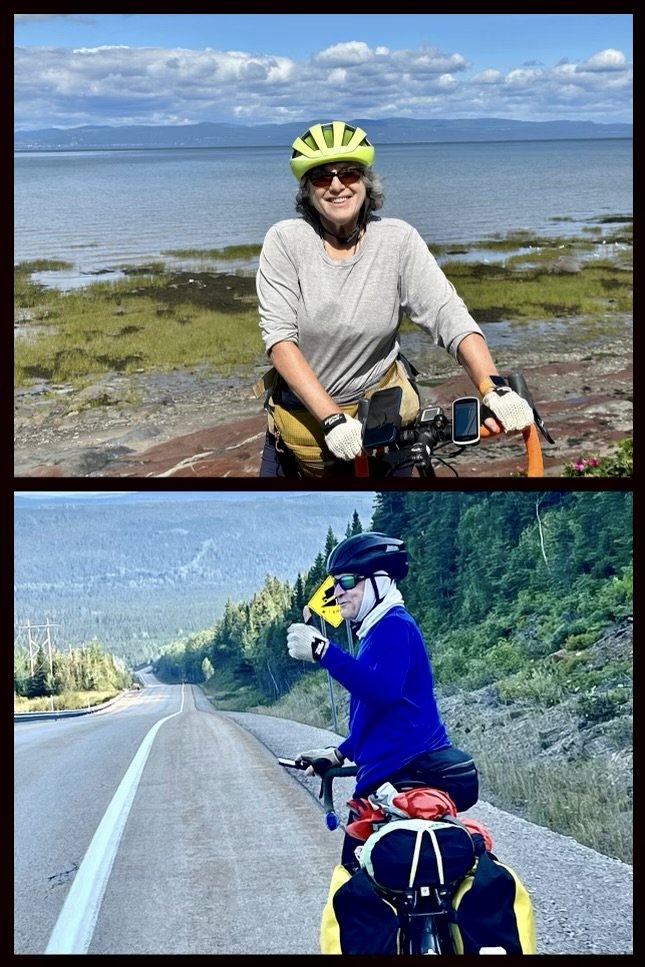
Jenny and Michael on the Gaspe Peninsula. Photos by Michael Chase and Jenny Hershey, respectively. Follow Michael Chase on Instagram @mjohnsonchase and Jenny Hershy on Instagram @deeofo.
The Great Climate Conspiracy
Imagine an alternate reality not too distant from our own, where one conspiracy theory has overtaken all others. It isn't about elections, global elites, or pandemics. Instead, this conspiracy theory revolves around the earth's climate and a cover-up by a powerful cabal of fossil fuel magnates, politicians, and media moguls. For decades, this cabal buried concrete evidence linking greenhouse gas emissions to devastating climatic changes. Documents leaked from prominent oil conglomerates proved that this conspiracy had established the link between fossil fuel consumption and climate degradation as early as three decades earlier. However, instead of acting responsibly, these companies launched massive disinformation campaigns, investing billions of dollars to sow doubt about the science of climate change and keep the global population in the dark. The cabal of fossil fuel executives, media moguls, and corrupt (or just gullible) politicians ensured that environmentally friendly initiatives were undermined at every turn. This vast network of influence allowed the oil and gas industry to suppress vital information and label environmental advocates, sympathetic politicians, and even climate scientists as alarmists, conspirators, communists, or whatever else would discredit them and their efforts.
However, the physical manifestations of climate change eventually became undeniable. Record-breaking heat, hurricanes, typhoons, cyclones, wildfires, droughts, sea level rise, storm surges, melting glaciers, agricultural collapses, climate refugees, the collapse of the insurance industry, a sharp reduction in world GDP, global starvation, and many other forms of suffering began to turn the tide. Unlike the far-right conspiracies of the past three decades in the United States, this theory suddenly gained bipartisan traction. It became a movement. Protests and rallies became daily occurrences in major cities worldwide. The Great Climate Conspiracy overshadowed others because it had the power to unify; it wasn't about left or right but about the survival of the planet and future generations. The demand for a cleaner, sustainable future became the rallying cry against those who had allegedly sought to endanger it for profit. The world finally rolled up its sleeves and got to work building green economies. Eventually, greenhouse gas emissions were controlled and phased out. The planet showed signs it would slowly heal. Interestingly, people were less interested in consumption and more interested in the quality of their lives. They grew happy again.
And they lived happily ever after.
Stay vigilant! Thanks for reading. If you haven’t done so, please subscribe to this blog to follow our next biking trip.
Blog writing by Michael Chase. Drawings by Jenny Hershey. Unless credited or otherwise noted, all material is the copyrighted property of the blog post authors.
Here are a few more photos from our trip:
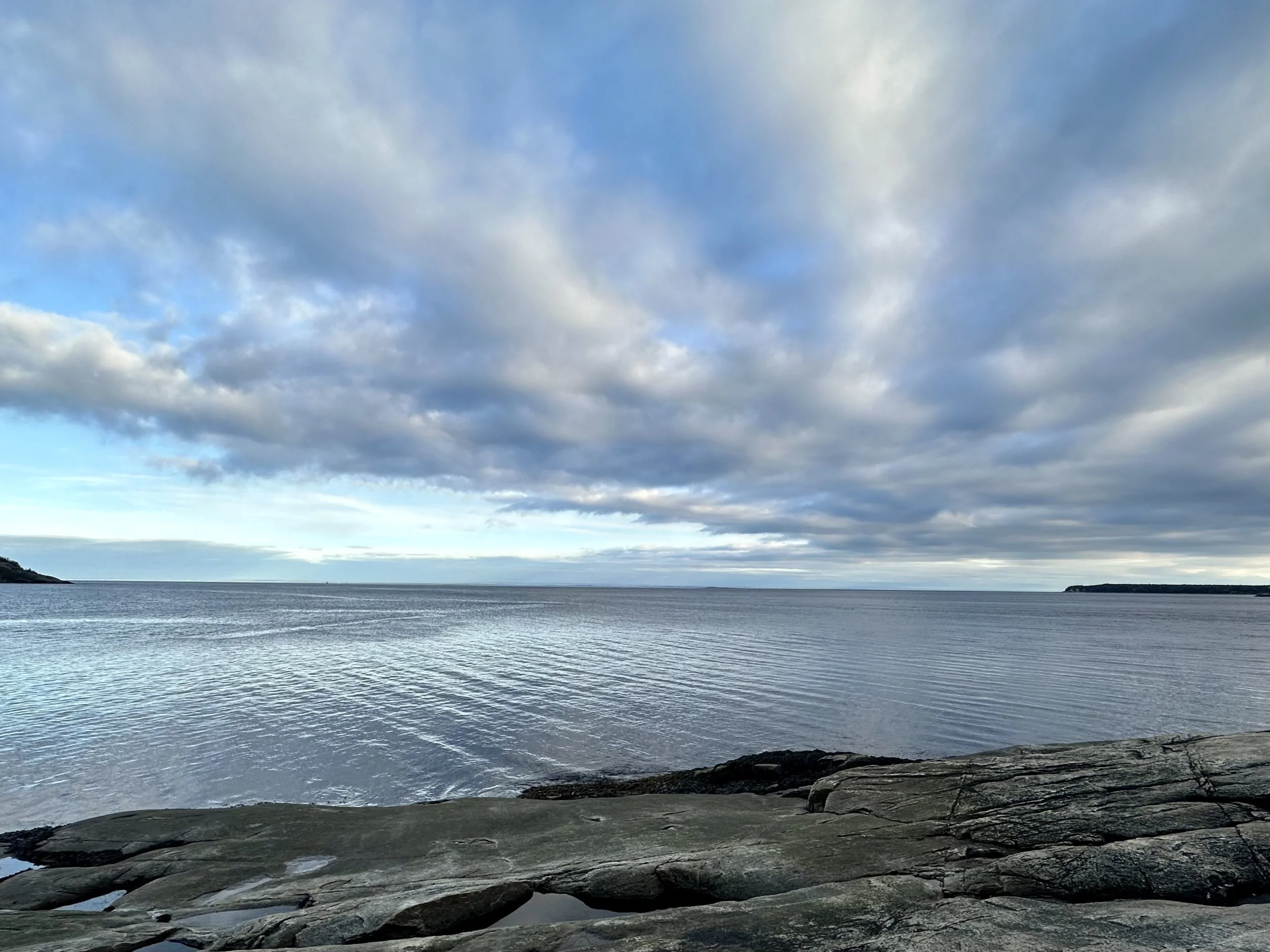
Clouds forming over the Saguenay - Saint Lawrence Marine Park. Photo by Michael Chase. Follow him on Instgram @mjohnsonchase.
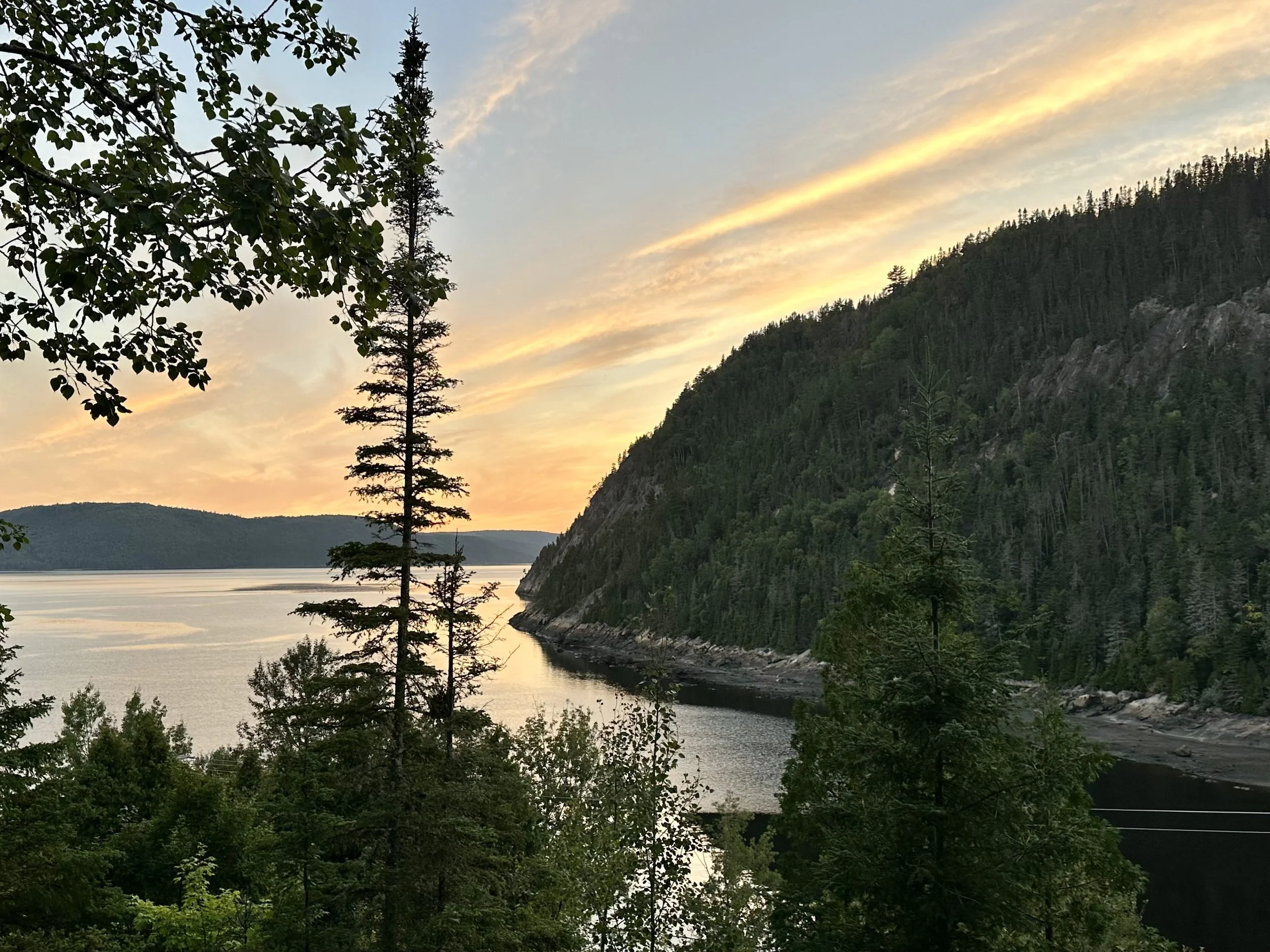
Photo taken from the porch of a yurt we stayed in at Saint Rose du Nord on the Saguenay River. The river below is part of the maritime park, and the hills above are part of the national park. Photo by Michael Chase. Follow him on Instagram @mjonsonchase.
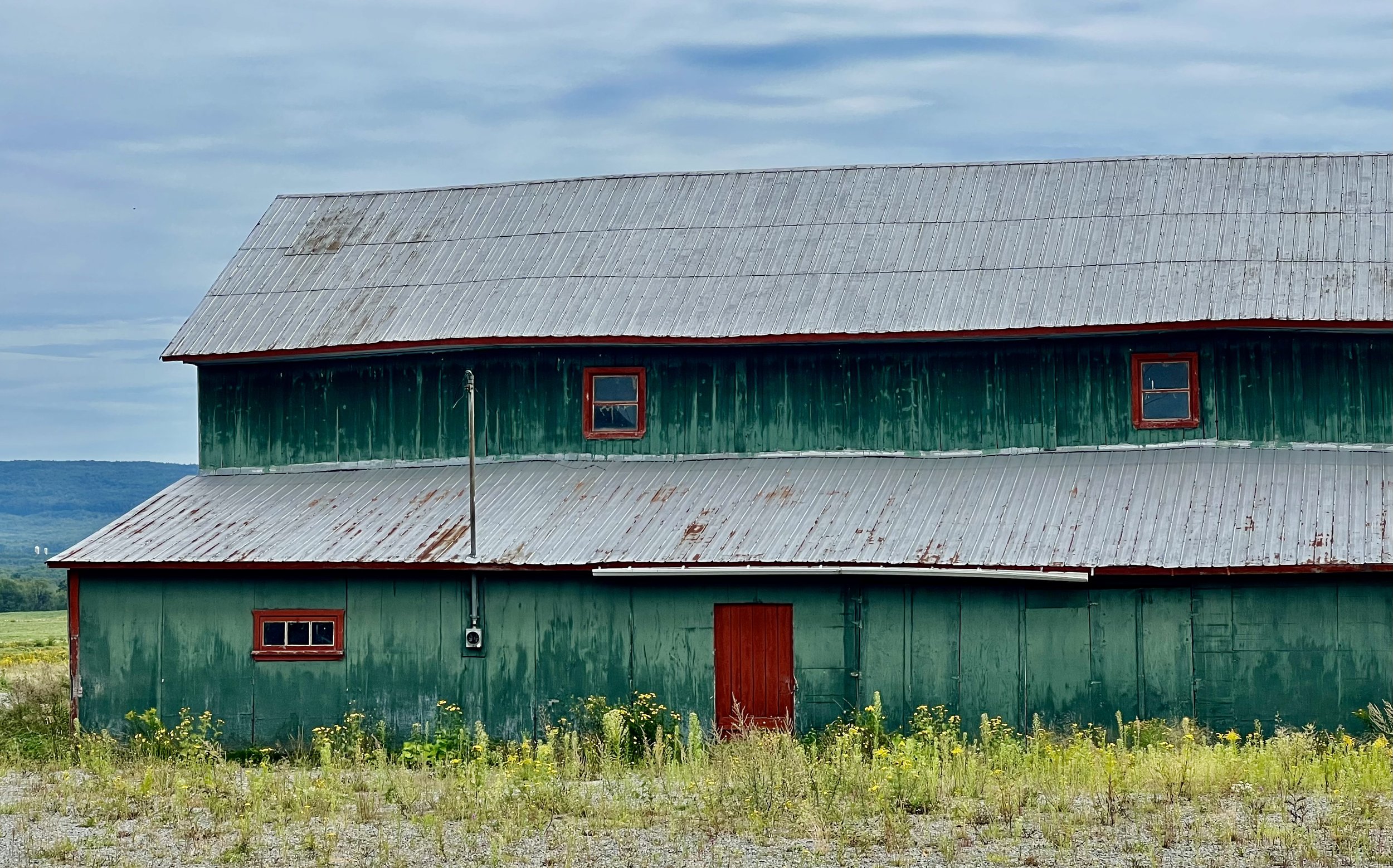
Seen just north of L’Islet, on the Gaspe Peninsula. Photo by Jenny Hershey. Follow her on Instagram @deeofo.
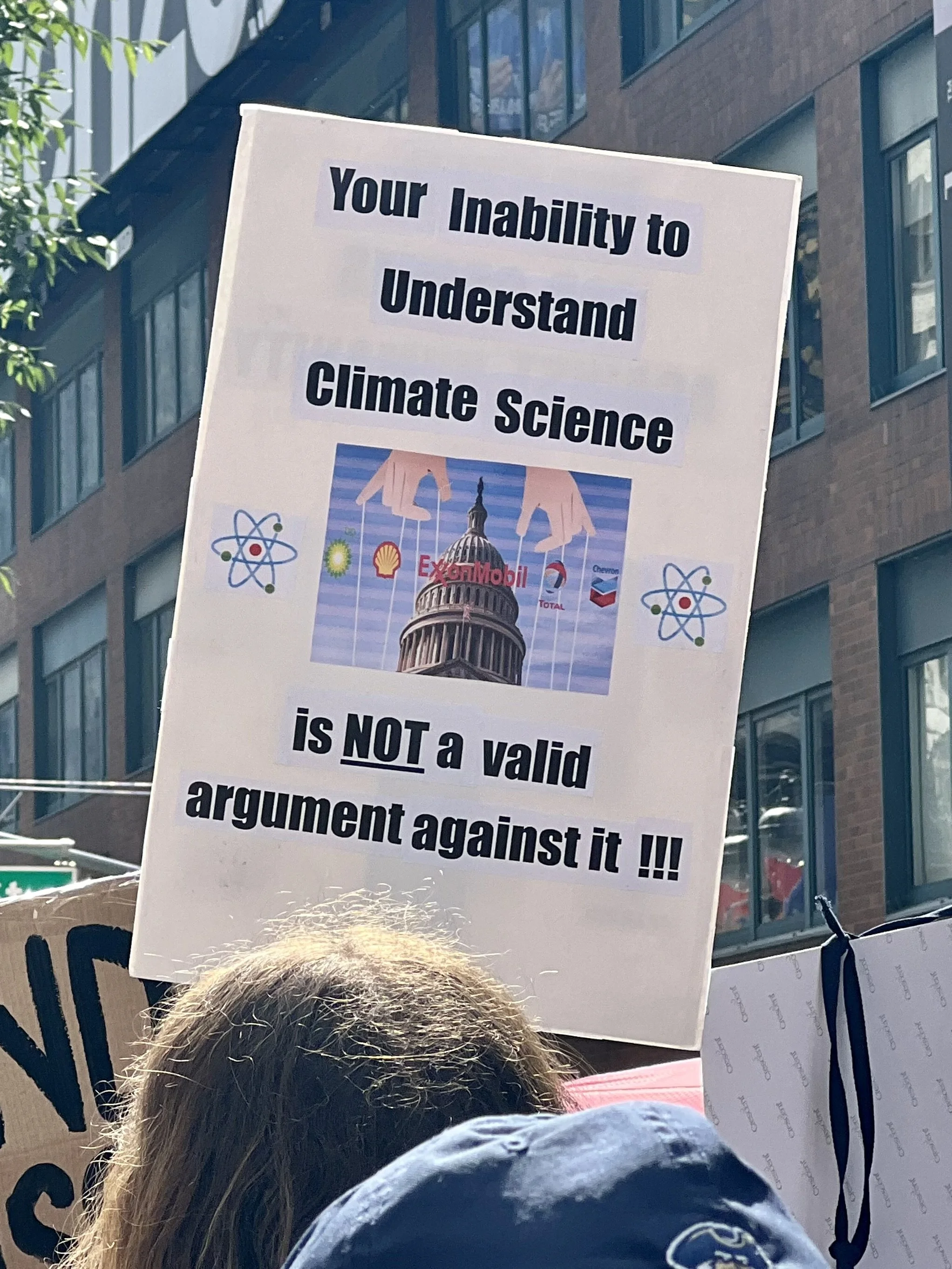
The climate march to the United Nations Plaza in New York City on September 17, 2023. Photo by Jenny Hershey. Follow her on Instagram @deeofo.
Free Markets, Wildfires and Conspiracy Theories; Biking Ontario and Quebec
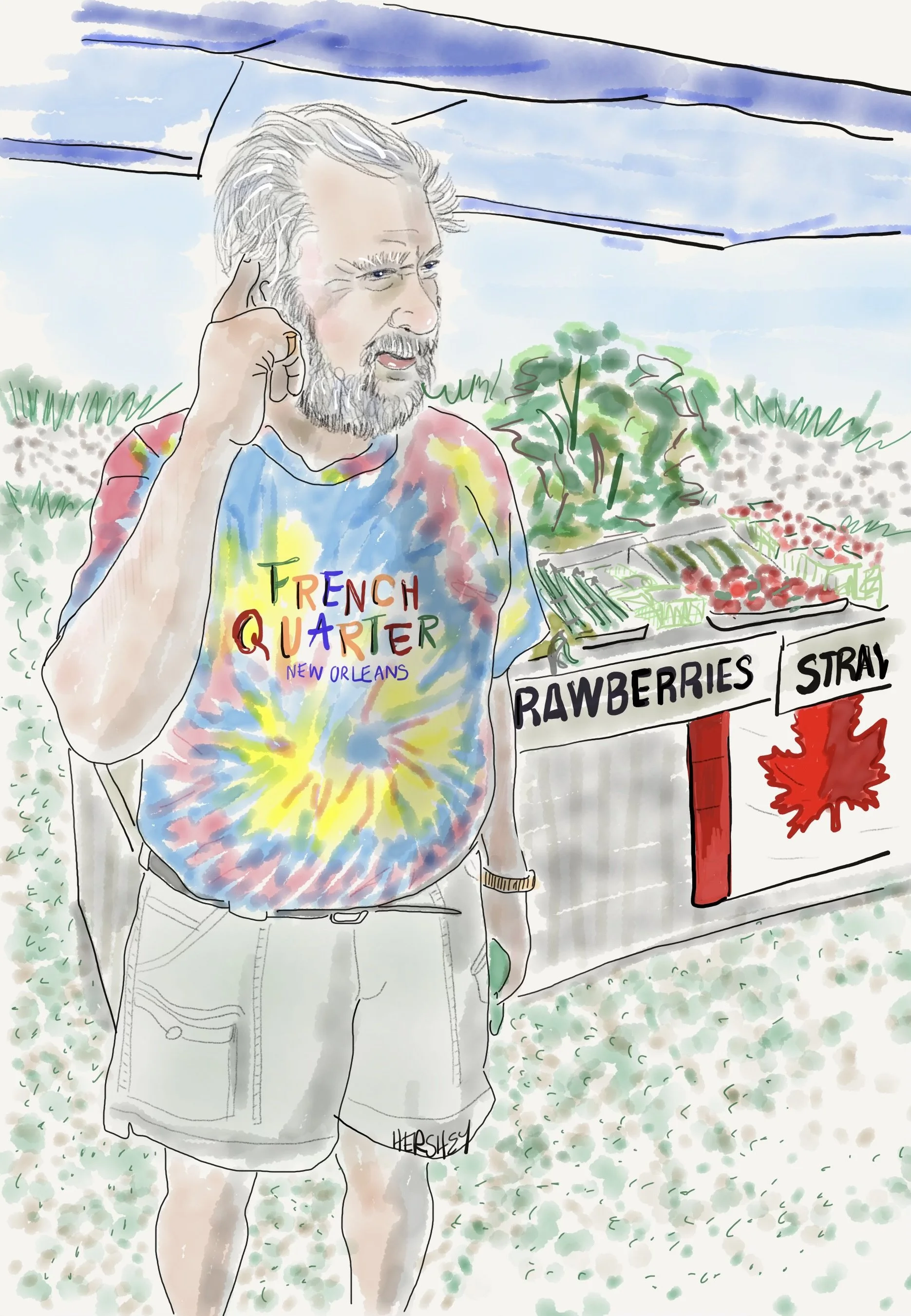
Jenny and I met Dave in Fitzroy Harbor, Ontario. An 80-year-old retired cop from St. Catherine, he was selling organic produce from his garden at a roadside stand. Dave lives alone in a small trailer tending his “Garden of Eden” and described himself as a DP (displaced person). He showed Jenny where a teenager shot off a small chunk of his ear with a buckshot rifle. When we asked him about the wildfires further north, Dave replied without hesitation, “They were set intentionally by the government so they can develop the land up north. It will make them money on property taxes. And it's where they plan on putting all the immigrants.” When we asked him where the immigrants would find jobs if they lived on cleared land up north, he replied, “It’s a socialist country, so they won't work anyway.” He went on, “That's why the government says it's climate change - they blame it on something we can't do anything about, and that's how they get away with it.” Drawing by Jenny Hershey. Follow her work on Instagram @deeofo.
————
Free Markets
“All truth passes through three stages. First, it is ridiculed. Second, it is violently opposed. Third, it is accepted as being self-evident.”
-Arthur Schopenhauer
————
Writing by Michael Chase, Drawings by Jenny Hershey
Jenny and I planned our next cycling tour for late June as we rode the train back to New York City last May from Little Rock, Arkansas (read a post about that trip here). Since neither of us had ever been to Ottawa, and because summer is a great time to cycle in Canada, we decided to ride our bikes northwest around the Adirondacks from Albany into Ontario and Quebec. We had no idea what it would be like, but we guessed it would as interesting as it might be challenging. Of course, we reconsidered when New York City broke air quality records because of wildfires in Ontario and Quebec; but decided to go after learning that poor air quality is as determined by wind currents as it is by proximity to wildfires. Our hunches were accurate, and although we grappled with poor air quality in both Ontario and Quebec, we kept reading it was worse in the States. And, of course, we were aware that many others are also suffering from extreme heat in the American south. It’s been a rough summer all around. Like so many other aspects of climate change, there’s nowhere to hide from increasing weather extremes.
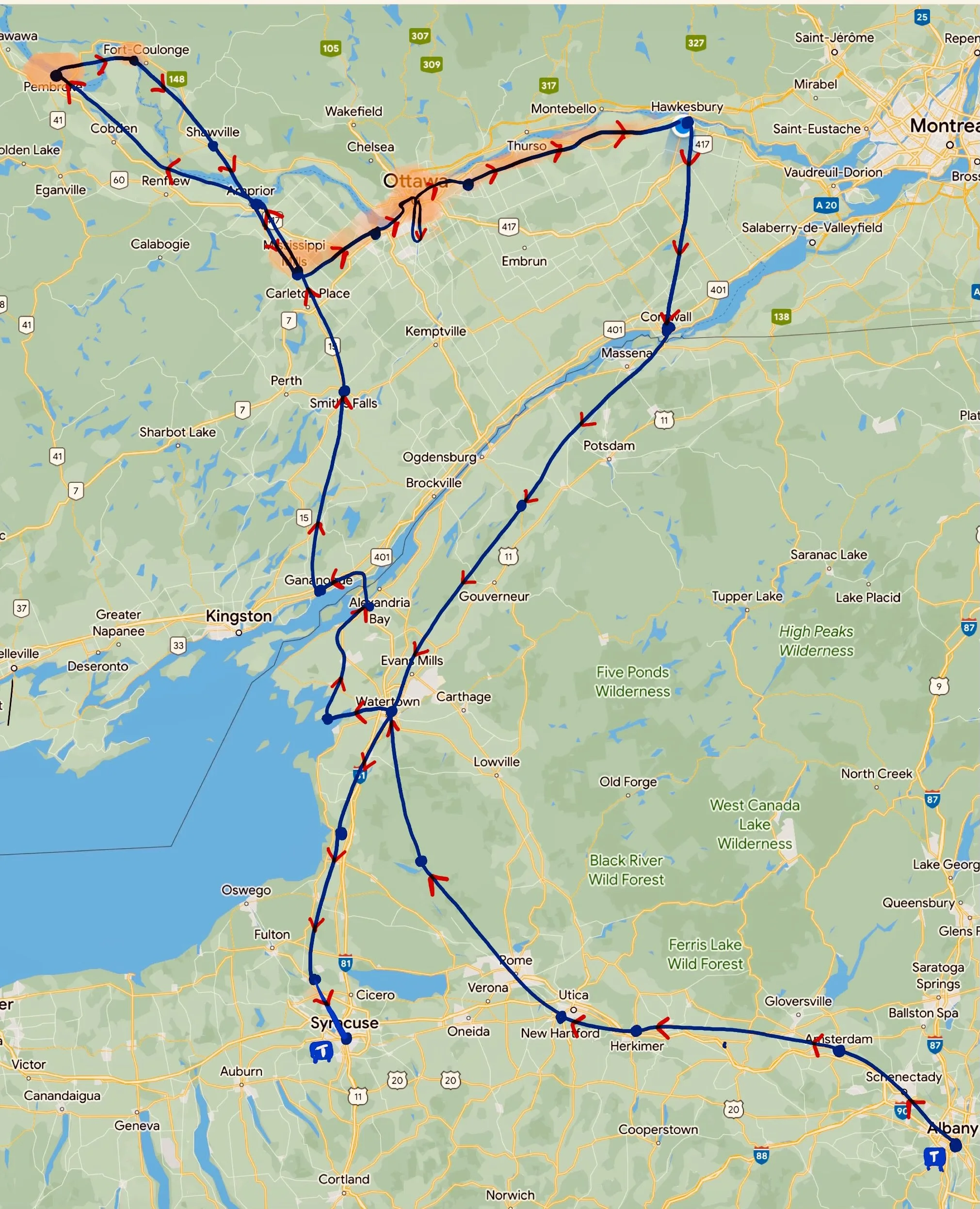
Jenny and I started our trip in Albany after taking Amtrak from NYC. We couldn't ferry into Canada at Cape Vincent because the ferry captain retired during the pandemic, and no one has replaced him. Consequently, we had to ride northeast 30 miles to the Alexandria Bay crossing and walk several miles on a narrow pedestrian walkway on the American side. We then rode illegally across another bridge into Canada from Wellesley Island (no one told us not to at Canadian customs). From there, Jenny and I headed north toward the Ottawa River, hopscotching between Ontario and Quebec. We encountered the worst air quality from the Canadian wildfires in the orange areas. We ended the trip in Syracuse, where we took a train back to NYC. Altogether we biked about 1000 miles. Map drawing by Jenny Hershey. Follow her work on Instagram @deeofo.
Some other things needed to happen before we left. In addition to personal care, home projects, and catching up with friends and family, there was a Citizens Climate Lobby (CCL) conference in early June followed by a day of lobbying Congress in Washington, DC. This was CCL’s first in-person lobbying effort since the pandemic, attended by almost 1000 environmentalists from all over the country. Over 465 visits to both Republican and Democratic members of Congress to lobby for climate policies were made in one well-orchestrated day. I joined small teams of other citizen lobbyists to visit with the staffs of NYC Representatives Nydia Velasquez, Ritchie Torres, Adriano Espaillat and Hakim Jeffries. Although there is predictable resistance to the GOP’s continuing agenda to weaken the National Environmental Policy Act (NEPA) and the GOP’s ongoing support for fossil fuels, CCL lobbyists are now able to argue that market forces overwhelmingly favor clean energy over fossil fuels. The clean energy marketplace has found its groove, and if we trust that open competition in a truly free market will deliver the highest quality products for the lowest possible prices, then clean energy will indeed emerge victorious as long as the playing field is even. Renewables are already cheaper than coal, and will soon be cheaper than natural gas (even without factoring in the social costs of carbon emissions and air pollution). Consequently, Republican insistence that oil and gas deserves greater subsidy support than clean energy (usually in the name of “market based parity”) is a less serious threat to long term decarbonization goals than it has ever been.
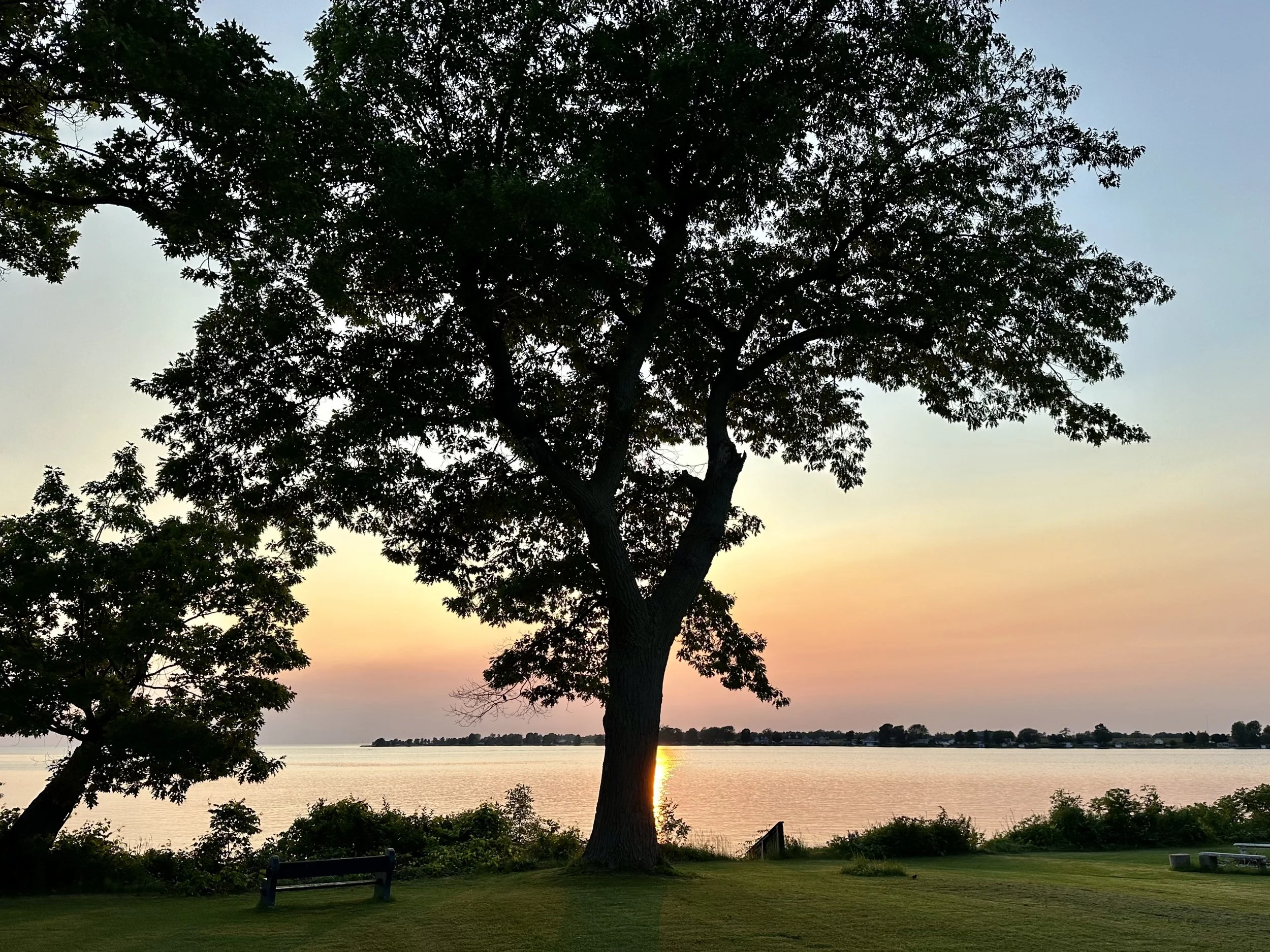
Tree overlooking Lake Ontario. Photo by Michael Chase. Follow him on Instagram @mjohnsonchase.
Consequently, the overriding concern of CCL lobbyists for this year is permitting reform (with a secondary emphasis on CCL’s signature carbon dividend policy with its carbon border adjustments, or CBAM’s). Both issues are heavy lifts in our polarized political atmosphere, although there is a reasonable chance that both parties might come together in the next Congress to pass meaningful legislation. Effective permitting reform will speed up the permitting process for clean energy projects and streamline the buildout of transmission lines. It will also preserve the input of local communities around quality energy projects, provide lasting jobs and ensure the safety and welfare of American citizens. For Republicans, permitting reform will give all energy projects a bump, including carbon capture, utilization and storage (CCUS), hydrogen manufacturing, and even small modular nuclear reactors.
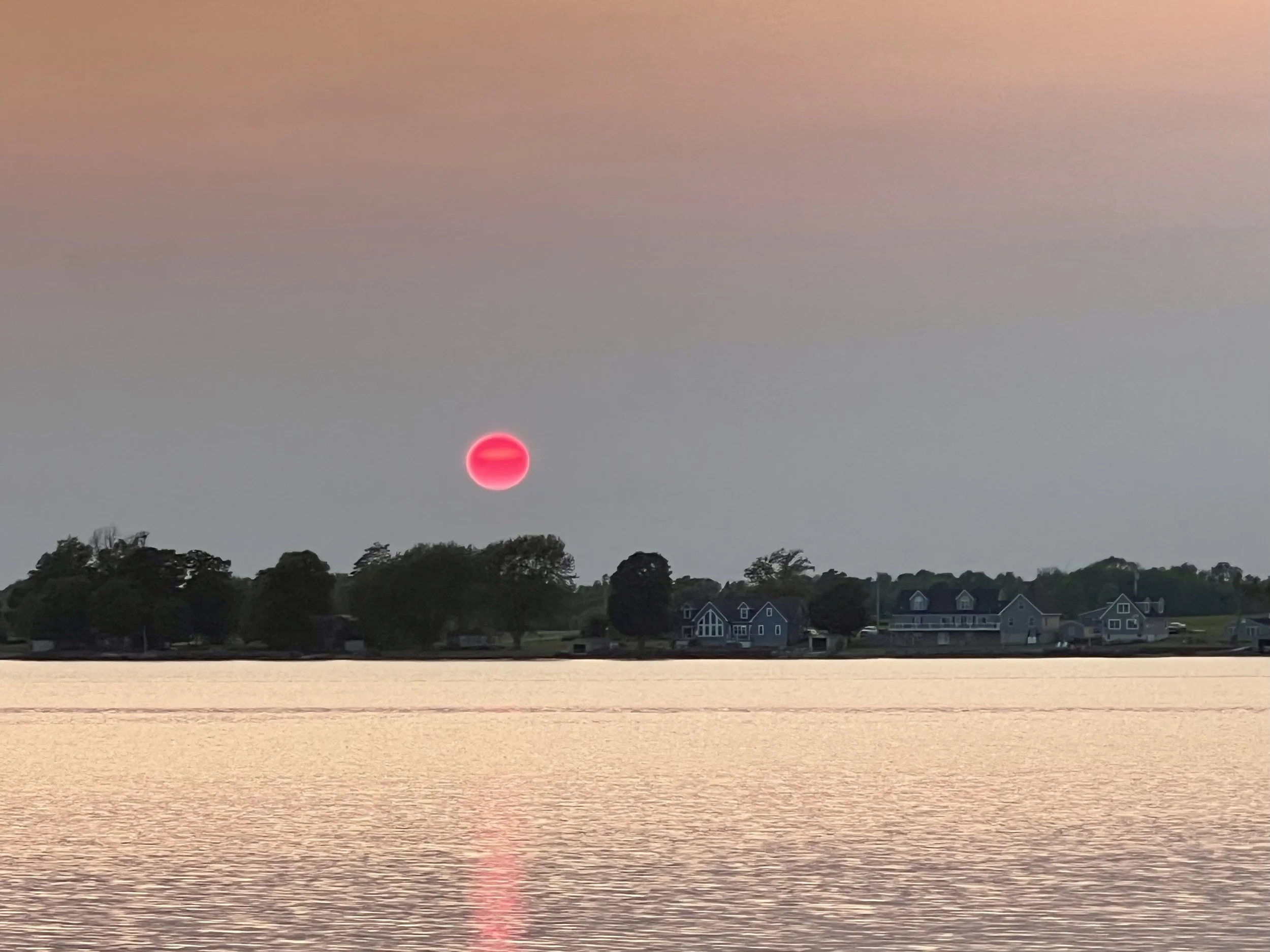
The sun sets over a bay in Lake Ontario in the middle of June south of Cape Vincent, New York, where the headwaters of the St. Lawrence River begin. The sky seemed clear the day we were there, but this picture indicates there might have been some wildfire smoke in the air. Photo by Jenny Hershey. Follow her on Instagram @deeofo.
All combined, electric utility grids in the US currently transmit approximately one Terawatt of electricity every day. Yet, because permitting new projects now takes as long as four years, there is a large backlog of 1.4 Terrawatts of potential energy waiting to be permitted, so we already have the potential capacity to double the amount of electricity available for our rapidly electrifying energy economy over the coming years. And well over 85% of all project applications in the queue are clean energy projects! This means that if ALL the energy projects (meaning fossil fuel and clean energy projects combined) waiting in the queue were green-lighted today, our energy mix will shift so dramatically toward clean energy that we will make significant progress toward decarbonizing our economy.
So, in one sense, there is very little reason anymore to fight over what NOT to build, and environmentalists can relax a bit because the momentum is on our side. What we can’t relax about, however, is advocating for citizen engagement in the permitting reform process. Whether clean or dirty, the siting, scale and development of new energy projects and transmission lines may result in public health and environmental injustices, eminent domain conflicts, and biodiversity losses and degradation. Local communities should be closely involved in reviews, revisions, and approvals wherever necessary. It’s also time for wealthier communities to step away from historic forms of “not in my backyard” (NIMBY-ism) and accept solar farms, windmills, transmission lines (and even CO2 pipelines and underground storage) into their own neighborhoods. In every way - both good and bad - it’s important for the impacts of the next great energy revolution to be shared equally.
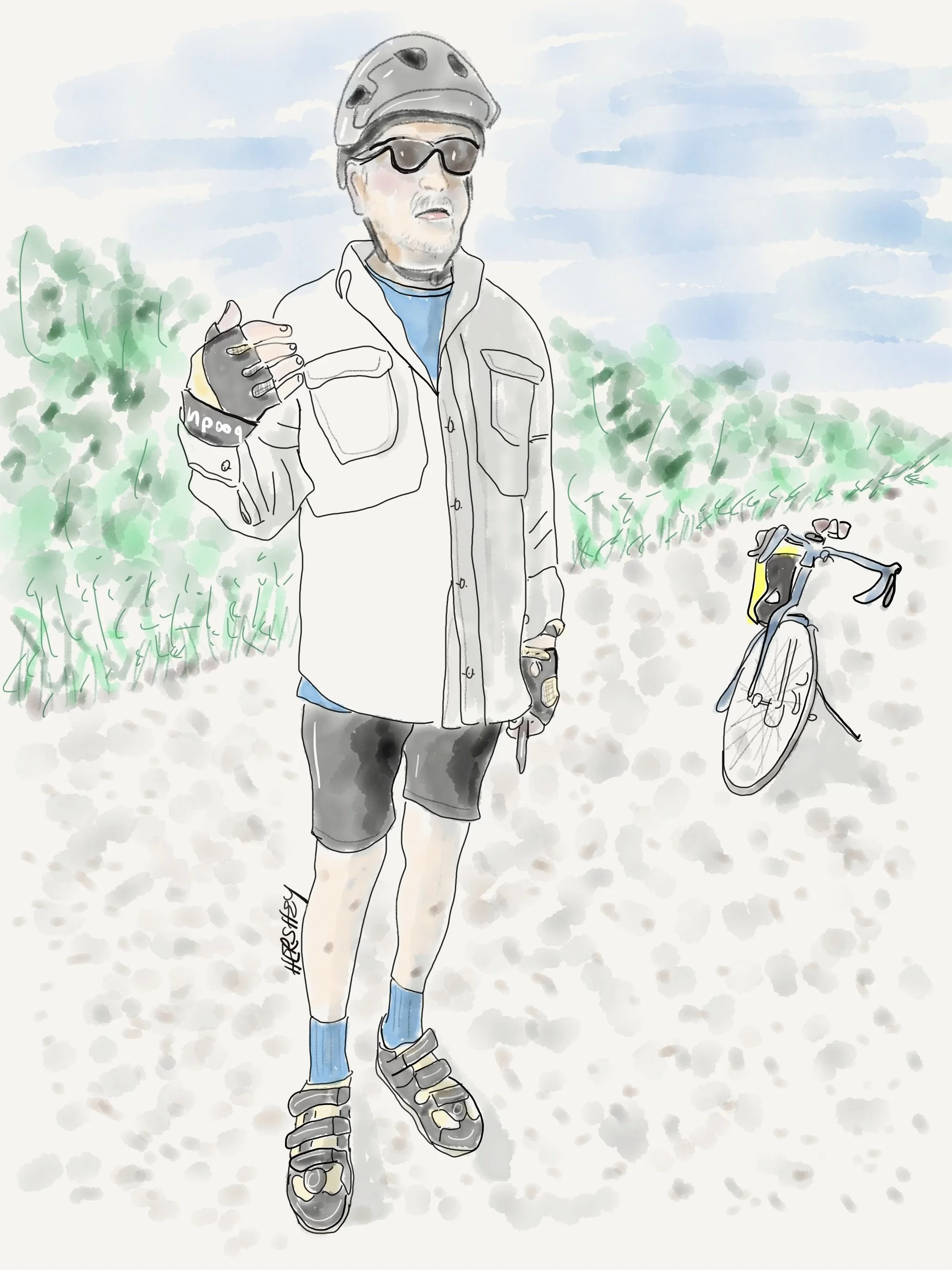
Jeff Mills is a resident of Lanark County in Ontario, Canada. We met him while biking on the Ottawa Valley Recreational Trail (OVRT). A lifelong community developer, Jeff helps to create great biking infrastructure in Lanark and Renfrew Counties. He (and his colleagues) envision a system of rail-trails similar to the Greater Allegheny Passage (GAP Trail) that runs from Pittsburgh, PA to Cumberland, MD. The hope is to create a bicycling destination with global appeal that will help revitalize small communities in northeastern Ontario. Between the OVRT and the Algonquin Trail, they have an excellent start! We were lucky enough to spend a wonderful evening at Jeff’s beautiful home with his lovely wife Gillian and his friends Chandler and Mike. Drawing by Jenny Hershey. Follow her on Instagram @ deepfo.
That isn’t to say that the oil and gas lobby, and the politicians in their pockets, won’t engage in mind-boggling attempts to stop that momentum. Republican politicians in some red states are seeing clean energy handwriting on the wall, and they don’t like it. In fact, the legislatures in both Texas and Florida have recently tried to stop the growth of clean energy projects in their states. Thankfully, because investments in clean energy in both states are so strong (and led by many registered Republicans), the Chambers of Commerce and other business groups, local municipalities, environmentalists, public health advocates and investors have prevailed in their fight against these legislatures to preserve the workings of the free market. It isn’t hard to understand why. According to research by Energy Innovation as reported by David Wallace-Wells in a recent New York Times Op Ed, green energy tax credits in the Inflation Reduction Act are poised to create more than 100,000 jobs in Texas alone by 2030 — which would add more than $15 billion to the state economy over that time. And similar gains are estimated in Florida, where Energy Innovation projects more than 85,000 new jobs and $10 billion in state G.D.P. gains by 2030.
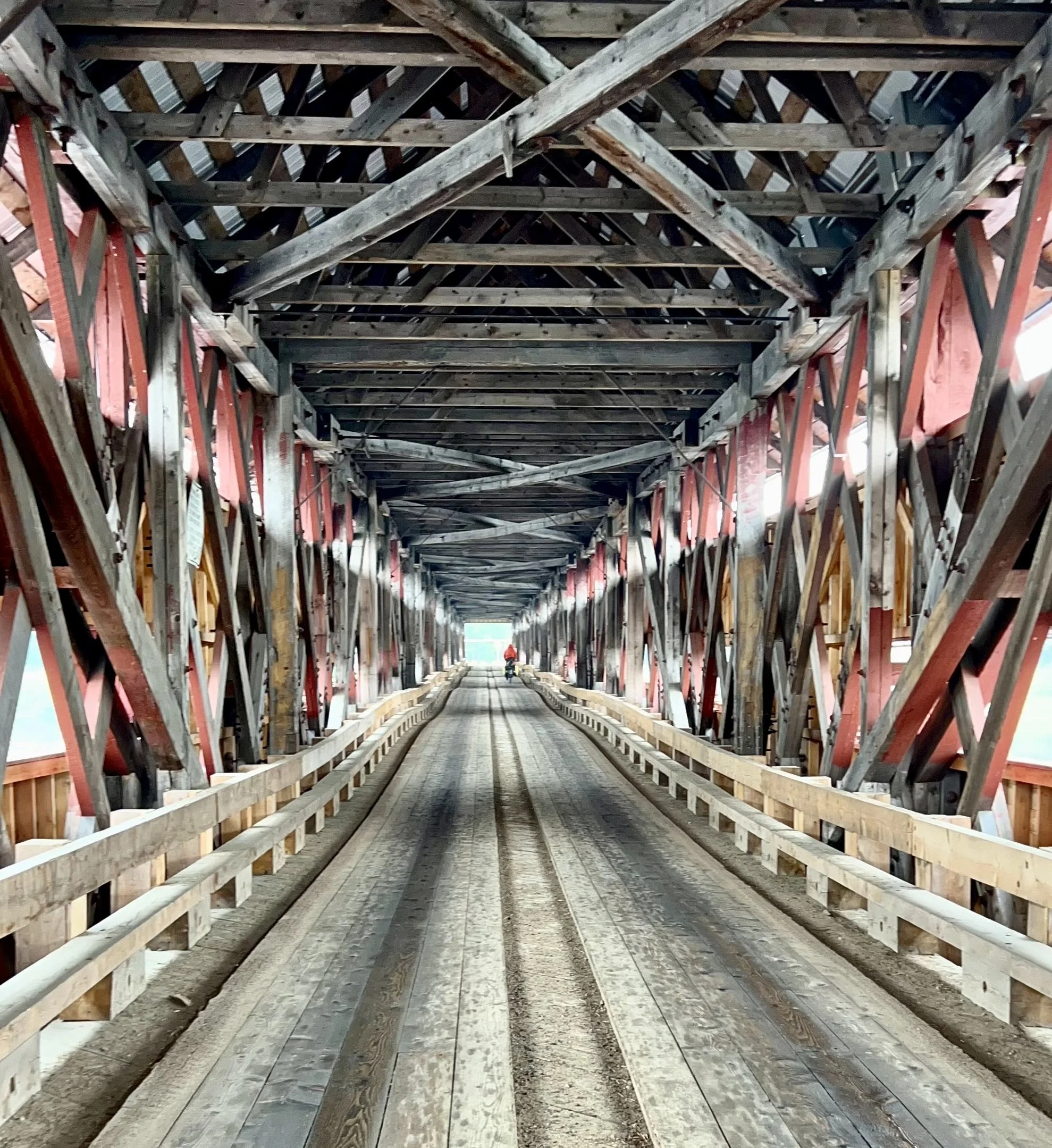
Michael bikes across a covered bridge in Mansfield et Pontefract, Quebec. Photo by Jenny Hershey. Follow her on Instagram @ deeofo.
But it’s not just a couple of red states that are being forced to capitulate to the self-evidence of market forces. Other parts of the world are willing to get serious about the energy transition, as well. China remains focused on cornering the huge new clean energy market, with ever-more massive investments in electric vehicle production, battery technology, wind turbines and solar panels. Europe continues to aggressively wean itself off both oil (through electric vehicle mandates) and Russian gas imports (through energy conservation and the rapid deployment of renewables). Canada established a price on carbon several years ago to incentivize clean energy development. Currently, 90% of the revenue from a federal fuel charge goes directly back to households through the climate action incentive payment (CAIP). This is a tax-free benefit the government pays back to citizens to help offset the cost of carbon pricing. The average household gets back more than they’ve paid into the system. Only higher income households pay more than they get back because they tend to use more fossil fuels.
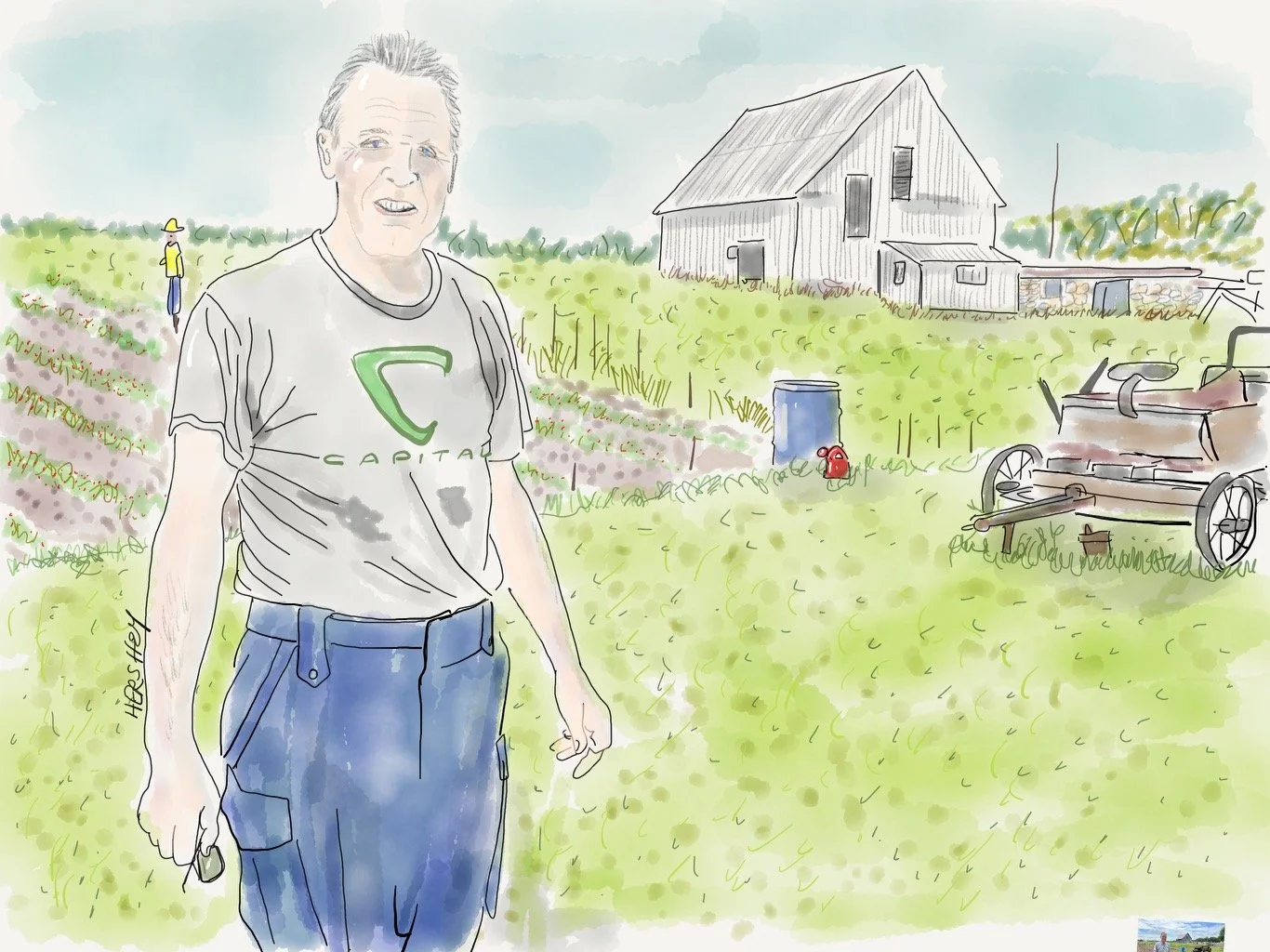
Al is a retired policeman from Ottawa. We met him in Renfrew while he was tending his garden. He was eager to chat and showed us a stone house from 1865 he had purchased from a family that had acquired homesteading land from the Crown seven generations earlier. Al was proud of his antique collection. Eventually we asked about the wildfires. He believes the fires were most likely started by carelessness, and maybe some lightening. He hedged about the climate but eventually agreed with us the climate is changing. A very friendly guy, Al sent us off with a classic milk bottle and a horseshoe for luck (both somewhat challenging to carry on our bikes, but he was insistent). Michael gave the milk bottle away to our host Jeff Mills, and Jenny left the horseshoe at a farm stand with a couple of Mennonite boys, telling them it might bring good luck. Their father quickly corrected Jenny, saying Mennonites don't believe in luck. But the boys kept the horseshoe anyway. Drawing by Jenny Hershey. Follow her on Instagram @deeofo.
So for all the reasons above, Democrats and other environmentalists in the States don’t need to worry as much about opposing fossil fuel projects as they need to be thinking about getting stuff built, not only to address climate but to keep our economy strong. Yet make no mistake; building out clean energy projects in the United Sates and getting that energy to residents and industries won’t be an easy task, even if that energy is already cheaper and cleaner than fossil fuels. Without a serious effort to streamline permitting and double the size of our utility grid over the next decade (while effectively engaging communities in decision making), we may fail to accomplish up to 80% of the decarbonization goals of the Inflation Reduction Act (IRA).
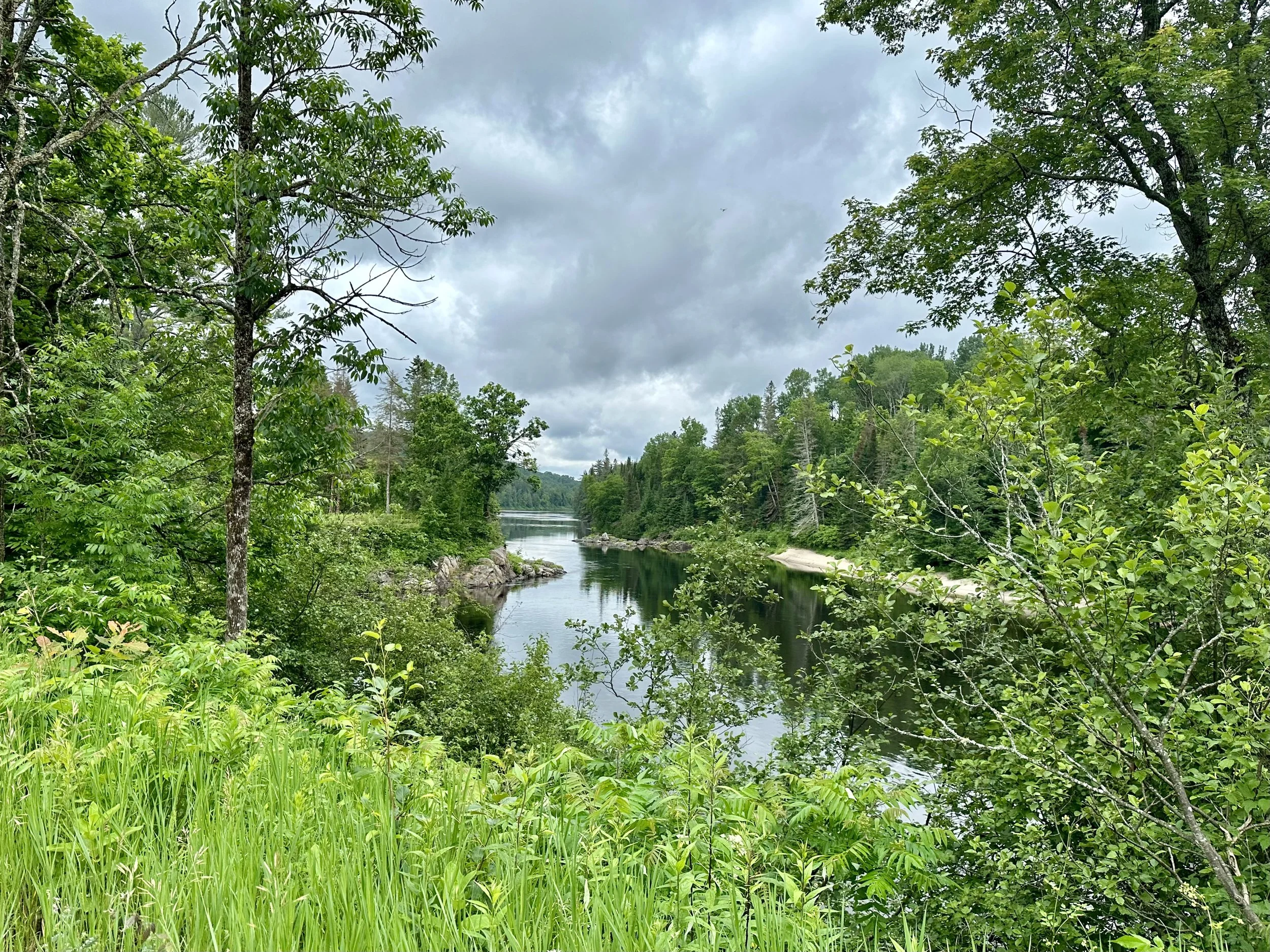
This photo was taken northwest of Fort Coulonge, Quebec, on an unpaved road called the Chemin du Bois Franc. The road extends north for more than a hundred kilometers and is one of many rugged routes into Quebec’s boreal forest. Although we weren't able to ride north on this road for more than about 20 kilometers we felt like we got a small taste of the forest. It was humid, extremely buggy, and although we were told it was unusually dry, we saw water everywhere. Not only is Canada’s boreal forest rich with trees that sequester huge amounts of carbon, it is also home to one of the most significant stores of fresh water on the planet. Photo by Michael Chase. Follow him on Instagram @mjohnsonchase.
————
Wildfires and Conspiracy Theories
“No amount of evidence will ever persuade an idiot.”
-Mark Twain
————
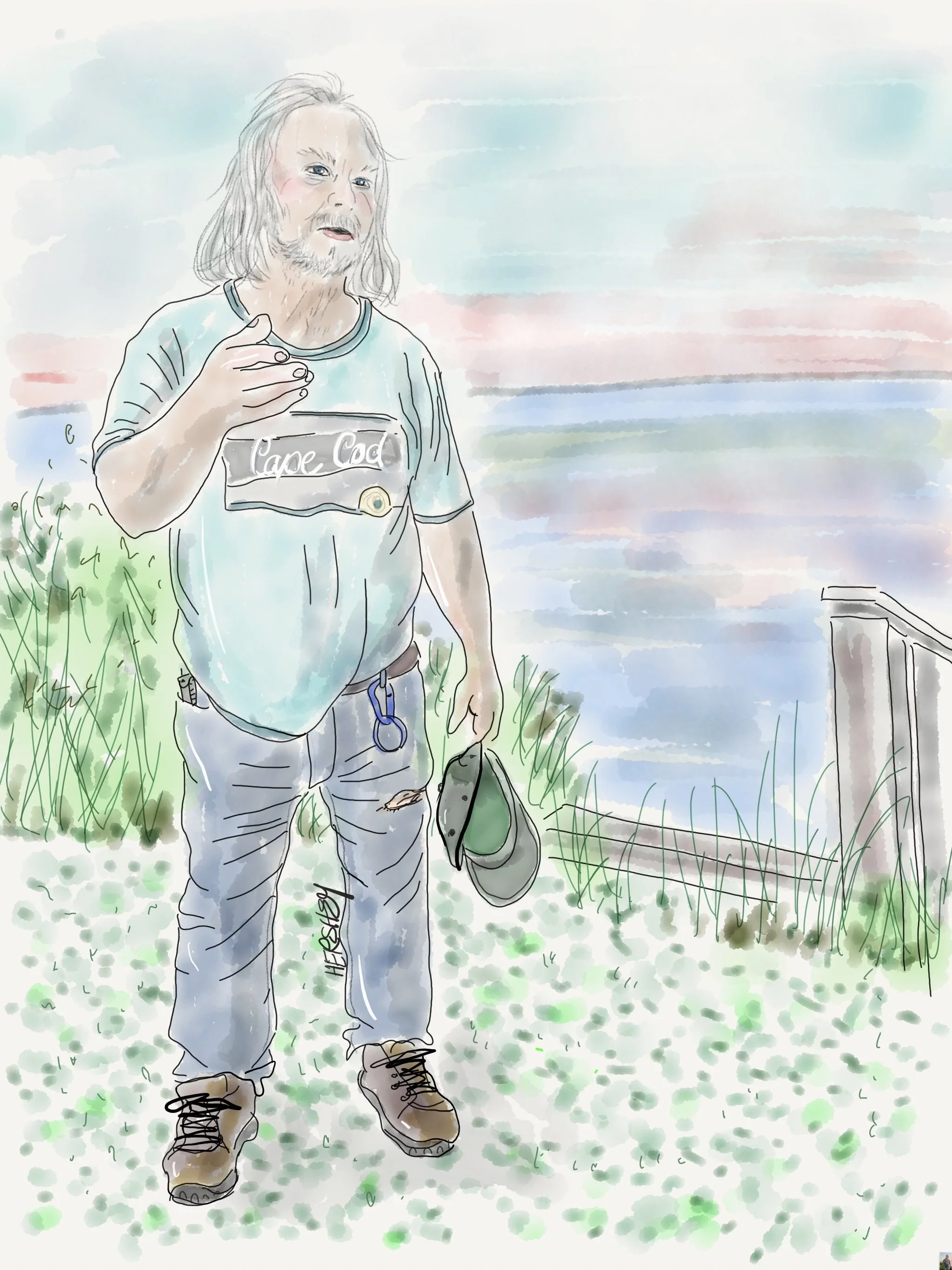
We met “Andy” and his wife “Carol” in Cape Vincent, NY. “Carol” invited us down to the Lake Ontario shoreline to share a sunset made even more intense by wildfire smoke drifting toward us from Quebec. As we talked, “Andy” began to share thoughts about how a group of elites from around the world are plotting to eliminate individual liberties to impose a dictatorial, one-world government. He threw out some names: Klaus Schwab, Rothschild, Mayer, Zuckerberg, Bill Gates…. We were curious and a bit uneasy. So, later in the evening Jenny and I did an internet search. “Andy’s” searches probably go directly to “The Great Reset Conspiracy” attributed to the World Economic Forum (WEF); a conspiracy of world control by a select few through Covid mandates, climate lockdowns, space lasers, and ecoterrorism. “Andy” may assume everyone else will find the same information if they bother to look. But that’s a danger of the internet and misinformation. Search engines learn how to show you results you are most likely to like to maximize your eyeballs on associated advertising. Consequently, whatever information we encounter online, we curate online through our own interests and biases. So, Jenny and I had to do some digging. Apparently “Andy” didn’t notice the Star of David around Jenny’s neck; in any case, she didn’t sleep well that evening. Drawing by Jenny Hershey. Follow her on Instagram @deeofo.
As we are all too aware, Canadian wildfires have been burning for weeks. Research shows that record heat and drought creates earlier starts to every season (with this year breaking all records), resulting in wildfire activity that is longer-lasting and more intense. Caused by a mix of human activity (carelessness and arson), and lightning, it is clear that climate change affects the local conditions and fuel available for these fires to spread, as do the decades of fire suppression techniques that have contributed to unnaturally dense forest environments.
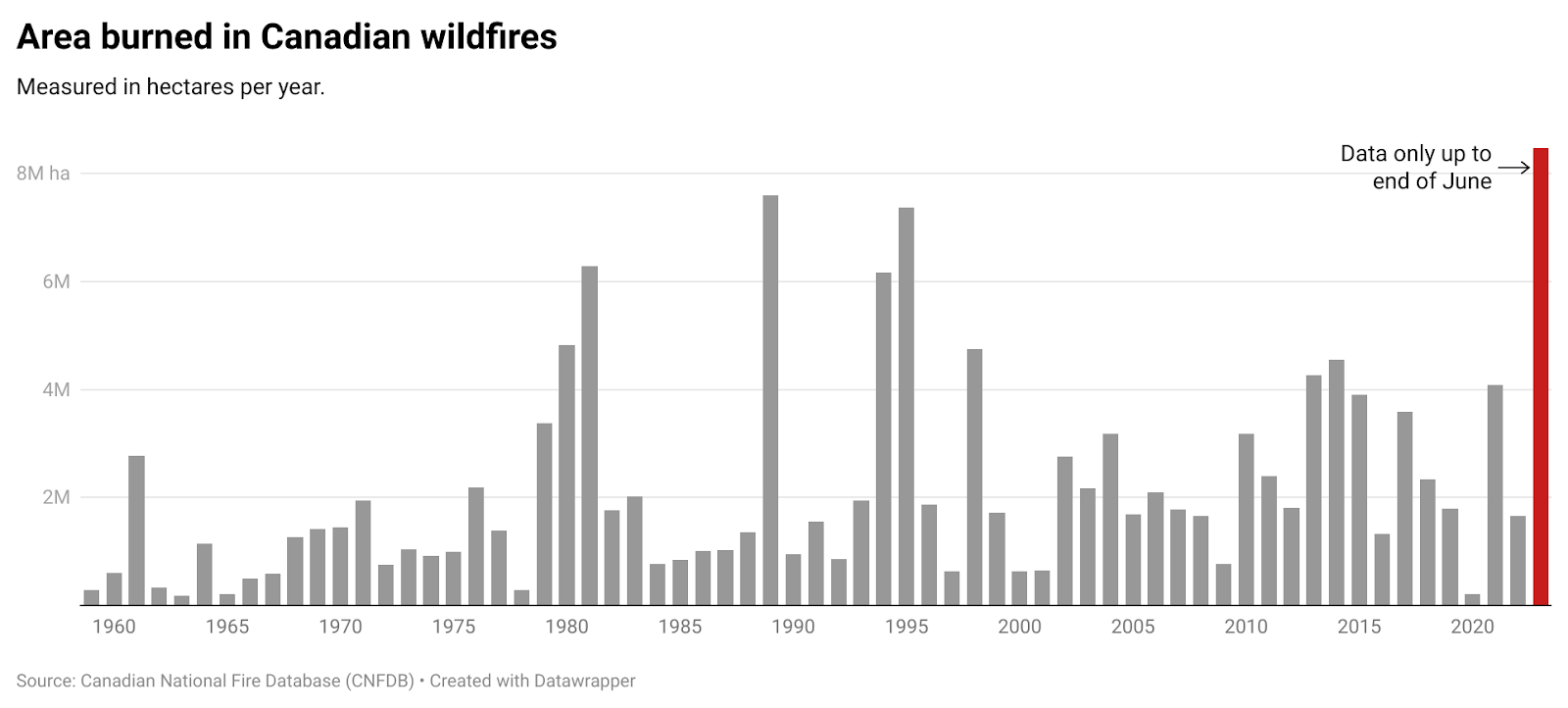
This simple bar graph indicates that by the end of June of this year, a greater percentage of hectares have already burned in Canada than any year since records have been kept. Some news outlets argue that climate change isn't the cause of wildfires because the number of annual fires has been decreasing. However, they all ignore the sheer size and destructive nature of the current fires.
New Yorkers won’t soon forget what the air quality was like on June 7th, 2023. At its peak in the afternoon, the air quality index (AQI) for the city reached 405 out of 500; the highest since records began, according to an analysis of the Environmental Protection Agency (EPA). While we have been biking in Canada over the month of June, over 400 wildfires have continued to drive air quality indexes to record levels in many cities across the eastern seaboard and the midwest. Air quality has been equally poor in Canada. Yesterday (7/2/23), four of the five cities with the worst air quality in the world were in North America. New York City had the second-worst air quality in the world with a recorded air quality index of 162, lagging only behind Jakarta. Toronto and Montreal ranked 3rd and 4th, reporting AQI’s of 155 and 153, respectively. The fifth-ranked city, Washington, D.C., is hundreds of miles away from where Canadian wildfires continue to rage. There, air quality was slightly better than the other three North American cities on the list, with an AQI of 122.
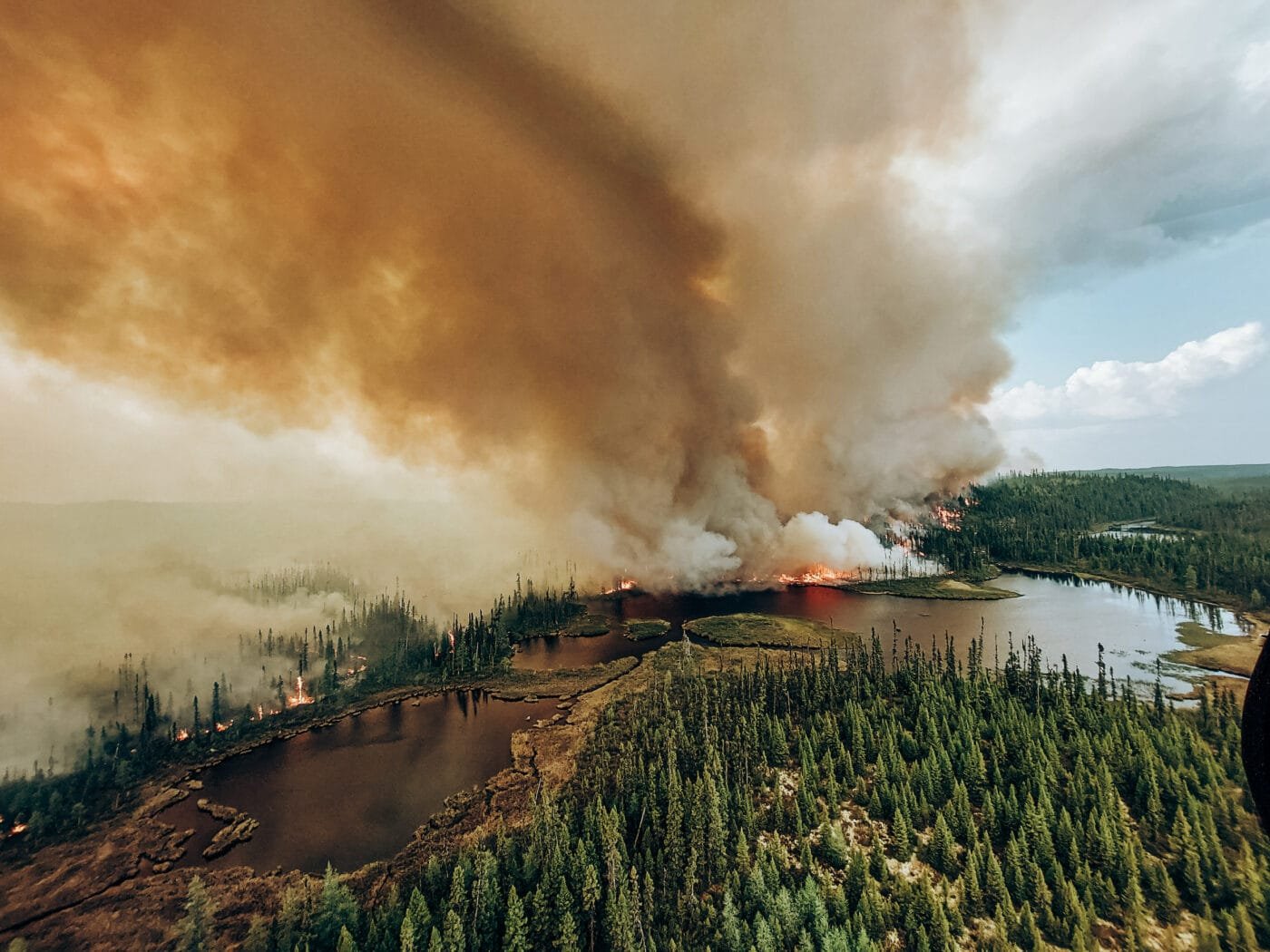
Almost 40 per cent of Canada’s 2023 wildfires have been in Quebec, threatening to evacuate more than 15,000 people. Photo: Société de protection des forêts contre le feu; as seen in The Narwhal.
Ten percent of the world’s forests rise up from Canadian soil, and increasingly those forests look poised to burn as our atmosphere grows warmer. Consider the following passage from a poetic and startling new book by John Vaillant called Fire Weather: “Girdling the Northern Hemisphere in a circumpolar band, the boreal forest is the largest terrestrial ecosystem, comprising almost a third of the planet’s total forest area (more than 6 million square miles—larger than all fifty U.S. states). Fully a third of Canada is covered by boreal forest. Continuing west, over the Rocky Mountains, through British Columbia, the Yukon, Alaska, and across the Bering Strait into Russia (where it is known as the taiga), the boreal forest stretches all the way to Scandinavia and then makes landfall on Iceland before picking up again in Newfoundland and continuing westward to complete the circle. It is a green wreath crowning the globe. This colossal biome stores as much, if not more, carbon than all tropical forests combined and, when it burns, it goes off like a carbon bomb. Under the right conditions, a big boreal fire can come on like the end of the world, roaring and unstoppable. These are fires that can burn thousands of square miles of forest along with everything in it, and still be out of control.”
The scale is hard to get my head around. You may feel the same. And if that wasn't sobering enough, here's another important milestone; fires across Canada this year have ALREADY generated nearly 600 million tons of CO2, which is equivalent to 88% of Canada’s total greenhouse gas emissions from all sources in 2021. More than half of that carbon pollution went up in wildfire smoke in June alone. And the fire season here is only beginning.

Jenny (left) and Chandler Swain. We met Chandler at our dinner with Jeff and Gillian Mills. Chandler is a master potter, artist, environmental activist and communications director for the Climate Network in Lanark County, Ontario. Although Jenny rarely draws herself, she felt a strong bond with Chandler, whose enthusiasm, tenacity and buoyant energy is infectious. Chandler’s passion for environmental work has led her to write about network initiatives for the local online paper, The Humm. Her personal website can be found here. Drawing by Jenny Hershey. Follow her work on Instagram @deeofo.
And the causes of the fires? Well, as we discovered through our conversations with some Canadians (but not all, thankfully), blaming wildfires on the unusually hot and dry conditions resulting from a gradually warming world brought on by 250 years of unrelenting greenhouse gas emissions is, well, a bit too convenient. After all, why buy into dry weather that makes human carelessness or lightning strikes the reason (but not the root cause) when you can believe in something far less complex? Stew Peters, the same man who made a film claiming that Covid-19 is caused by synthetic snake venom, blamed the Canadian wildfires on Directed Energy Weapons on June 5th of this year. Apparently he sent out a TikTok video with visuals that made southeast Quebec appear as though hundreds of locations were catching on fire at the same time. This allowed him to claim that “our governments” are targeting their own forests for nefarious reasons.
I'm not sure if Directed Energy Weapons (DEWs) are related to the infamous Jewish Space Lasers that Congressional Representative Marjorie Taylor Greene previously implicated in a wildfire outbreak, but it's clear her theory is followed. Here it is on Donald Trump’s Truth Social. According to the Congresswoman, forests don’t catch fire simply because they are extraordinarily hot and dry. Representative Greene claimed the blazes had been started by PG&E in conjunction with the Rothschilds, by using a space laser to clear room for a high-speed rail project. Really, one cannot make this stuff up. For those of you who don’t believe me, you can read Greene’s entire post here on Media Matters.
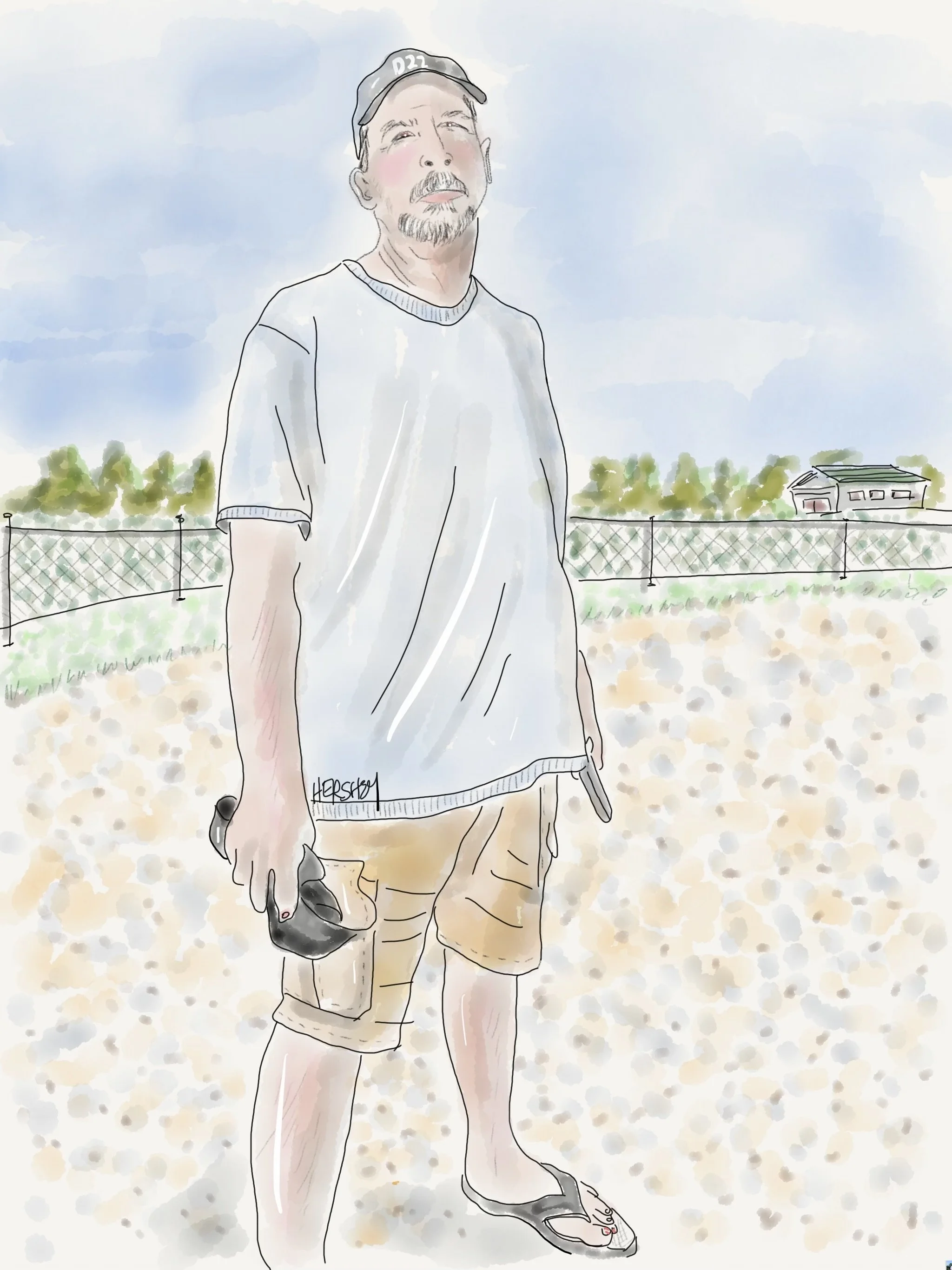
We stayed in Alain and Paola’s small cabin behind their home in Mansfield-et-Pontefract. Alain is a retired postman. He started his route after graduating from high school when he was 16 years old. His dad was a supervisor and he wanted to follow in his father's footsteps. Alain walked 20 Km (12 miles) a day, year round, using ice cleats to navigate cold, icy winters for over 40 years. Each neighborhood he serviced brought new friendships and relationships. Alain said, “I don’t get attached easily, but the old folks - they’d wait all day for me. I was sometimes the only person they talked to. It was hard to walk away.” Alain is very devoted to his wife. He is also a superb Airbnb host with a simple philosophy—deliver hospitality! Drawing by Jenny Hershey. Follow her on Instagram @deeofo.
But not all the theories borrow from Conspiracy mongers who make their homes in the States. Alberta Premier Danielle Smith (who is not friendly toward Canadian climate policies) was asked about the cause of Alberta wildfires in early June by Canadian talk show host Ryan Jespersen, and suggested that the more than 175 fires burning in Alberta at the time were all caused by arson, not climate change. Others in Canada have taken the arson theory a step further, indicating that the arsonists are Trudeau government operatives who are out to increase the federal carbon price.
Our friend Andy from Cape Vincent disturbed us with his reference to a cabal with mostly Jewish names, seemingly unaware that he (and others of his ilk) are dredging up the same anti-Jewish theories that preceded the Nazis and the rise of Hitler. “Anti-Jewish prejudice is very old – it goes back to antiquity – but the 19th century was crucial,” writes Matthias B. Lehmann, Teller Family Chair in Jewish History and professor of history at UCI, in The Baron: Maurice de Hirsch and the Jewish Nineteenth Century. “It was the moment when modern-day antisemitic conspiracy theories first crystallized, and those are still very much being used today.”
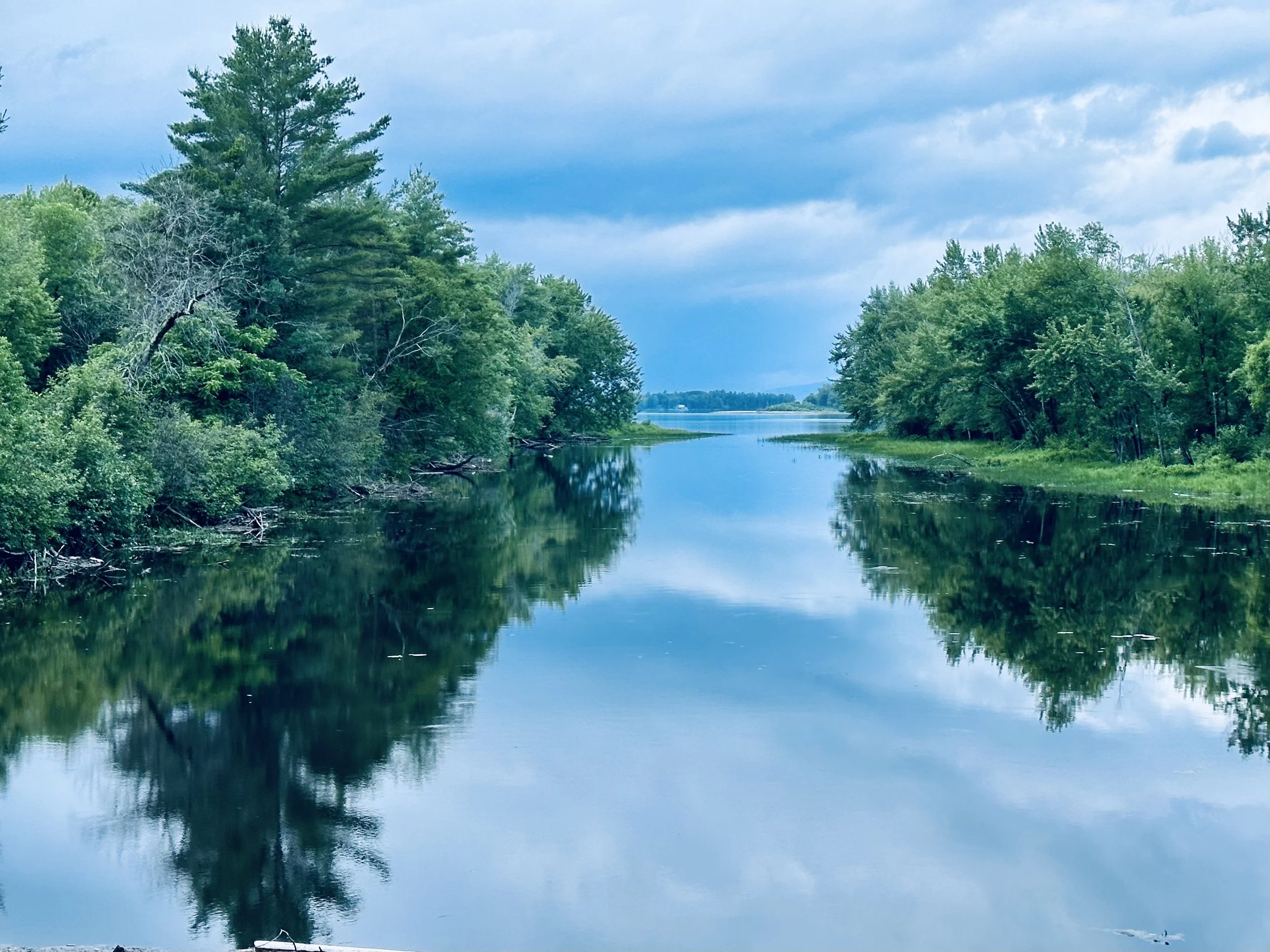
A view of the Coulonge River looking north. We were told that one of the smaller fires in Quebec was about 75 miles north of here. Photo by Michael Chase. Follow him on Instagram @mjohnsonchase.
Sometimes the enemy is the U.S. government and Biden, or the Canadian government or Trudeau. Or it's a cabal of rich people connected to the World Economic Forum wanting to control the world. Or sometimes it’s wealthy people in general, especially if they are Jewish. Or blacks or Hispanics or Muslims. Or they might be communists or socialists. Or Democrats. Or LBGTQ people. Or Public Health officials. Recently it was the queen of England, believed by a number of people to be the head of a brutal global drug cartel. As Anna Merlen writes in her fascinating book, Republic of Lies, conspiracy theories are, in the end, not so much an explanation of events as they are an effort to assign blame. More than questioning an official narrative, they are aimed at identifying the real perpetrators, the true power behind the throne, the hidden hand pulling beneath the surface.
So, it almost seems quaint that a not-insignificant chorus of Canadians blame the current wildfires sweeping across much of the country on climate activists and laser-less government operatives willing to drive into the woods and strike a match. It’s those pesky arsonists, and not natural forces or human carelessness driven by a hotter and drier climate that’s the real culprit for all the choking smoke that has driven children, seniors and others with respiratory issues inside, blocking out the sun and making air nearly impossible to breathe.
Whoever, or whatever it is, it's likely to happen more and more often until well after we decarbonize our atmosphere.
Let's get on with it.
Stay vigilant! Thanks for reading. If you haven’t done so, please subscribe to this blog to follow our next biking trip.
Blog writing by Michael Chase. Drawings by Jenny Hershey. Unless credited or otherwise noted, all material is the copyrighted property of the blog post authors.
Here are a few more photos from the trip:
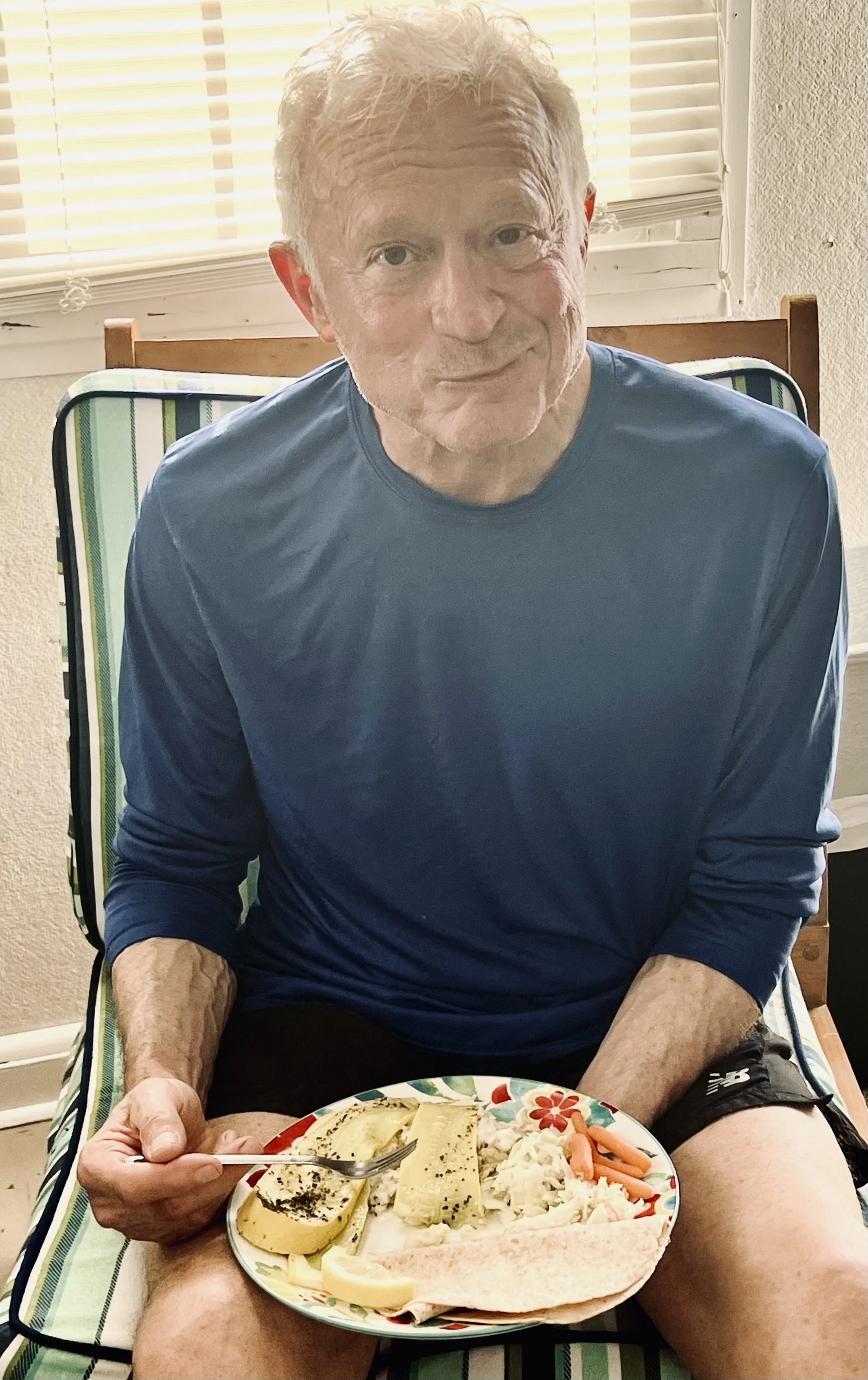
Michael enjoying one of Jenny’s extraordinary meals.Although Michael is a decent cook in his own right, Jenny has become an exceptional cook on the road, and we eat very well using local produce and protein and the microwaves we find in our modest accommodations. Photo by Jenny Hershey. Follow her on Instagram @deeofo.
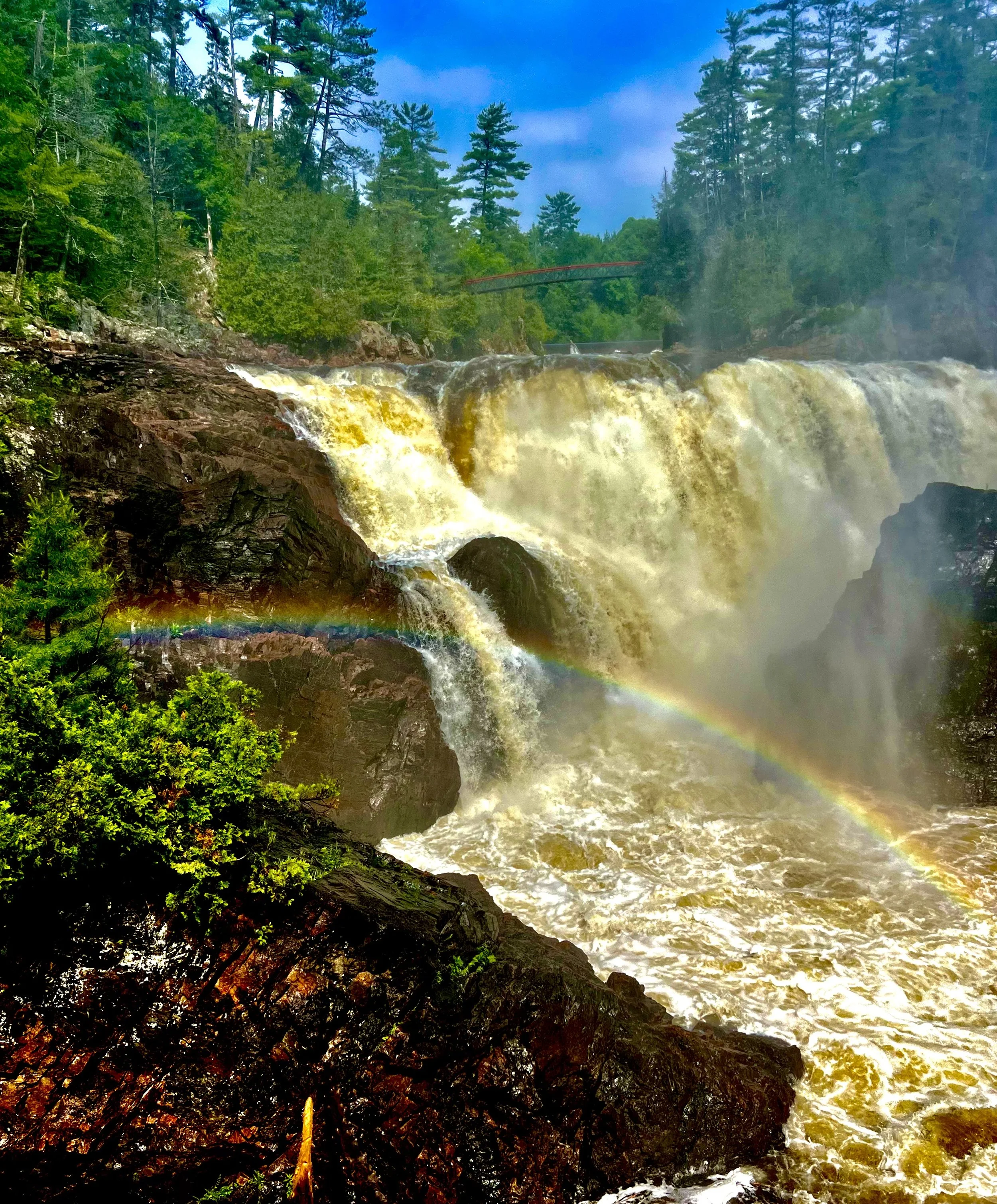
The Chutes de Coulonge on the Coulonge River in Quebec. Photo by Jenny Hershey. Follow her on Instagram @deeofo.
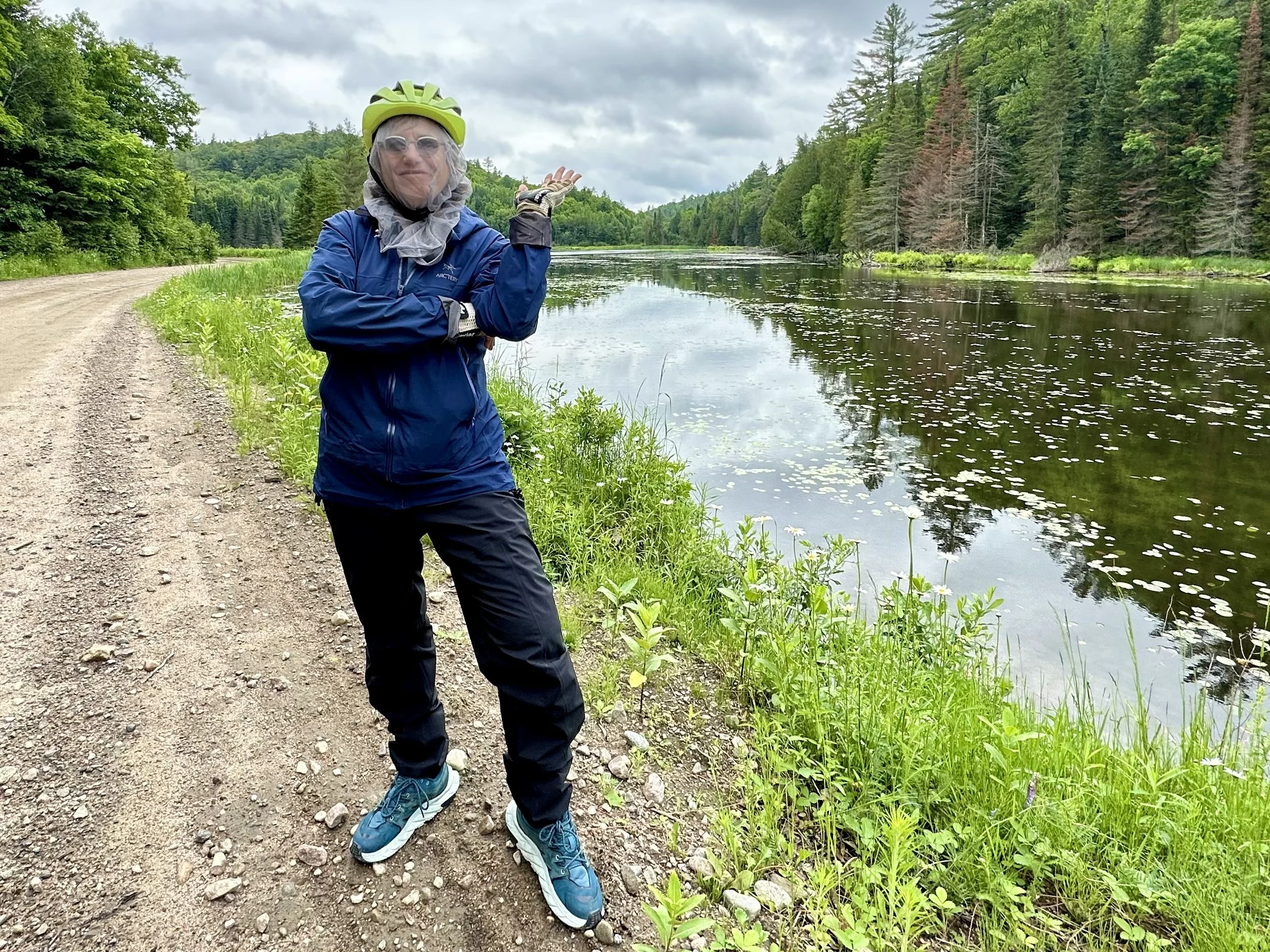
Jenny with a mosquito net over her head goofing around in Quebec. Photo by Michael Chase. Follow him on Instagram @mjohnsonchase.
Food Systems and Climate Change; Biking Prince Edward Island
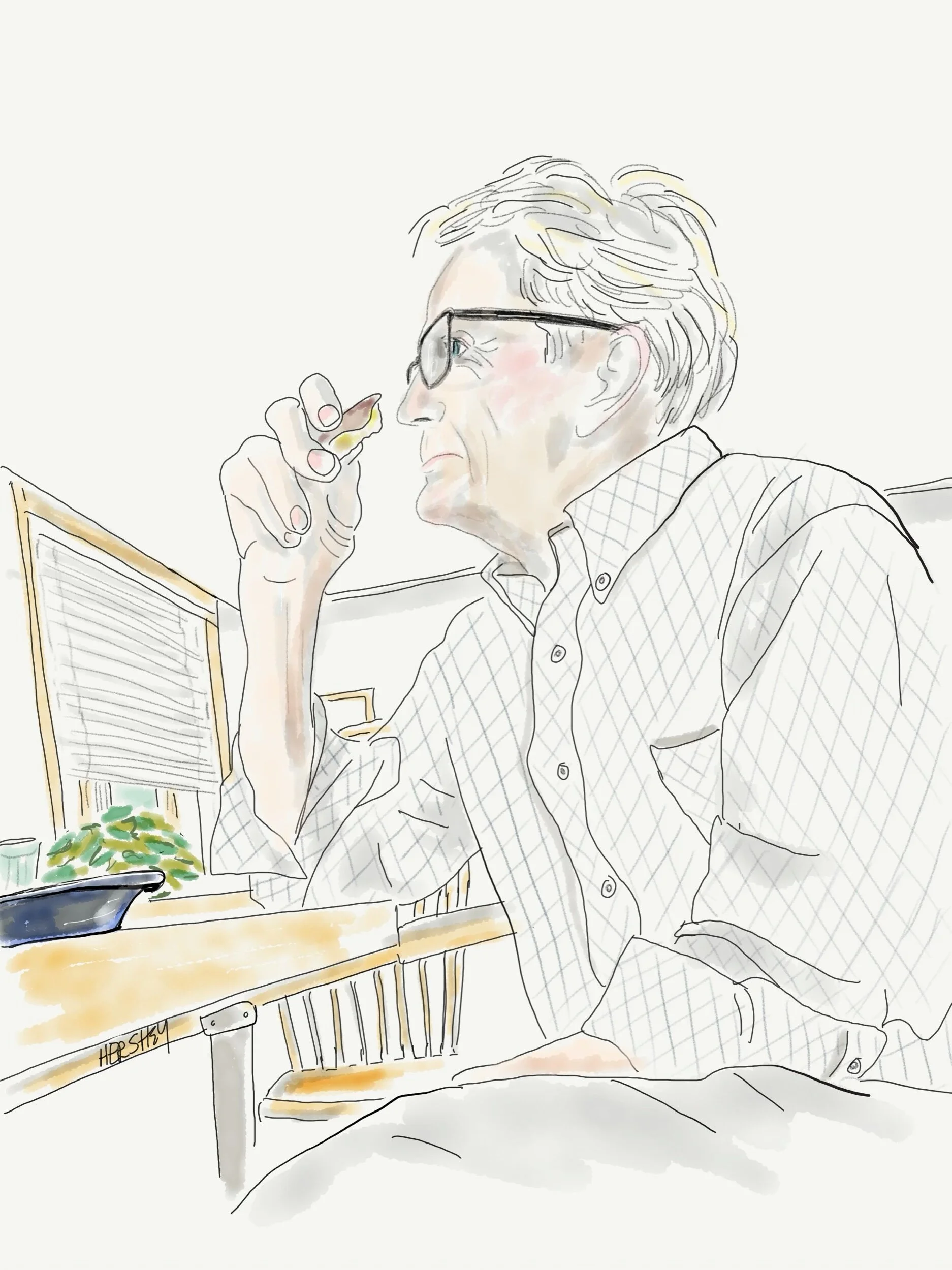
Eliot Coleman, organic farming author and founder of the prolific agroecological Four Season Farm in Harborside, Maine, reflects on one of his favorite books, Soils and Men, a 1938 yearbook published by the USDA. The farm produces year-round vegetable crops, even under harsh winter conditions (using unheated and minimally heated greenhouses and polytunnels). Drawing by Jenny Hershey. Follow her on Instagram @deeofo.
Fire made us human, fossil fuels made us modern, but now we need a new fire that makes us safe, secure, healthy and durable. - Amory Lovins
I don’t see problems, I see solutions. - Eliot Coleman, quoting Amory Lovins
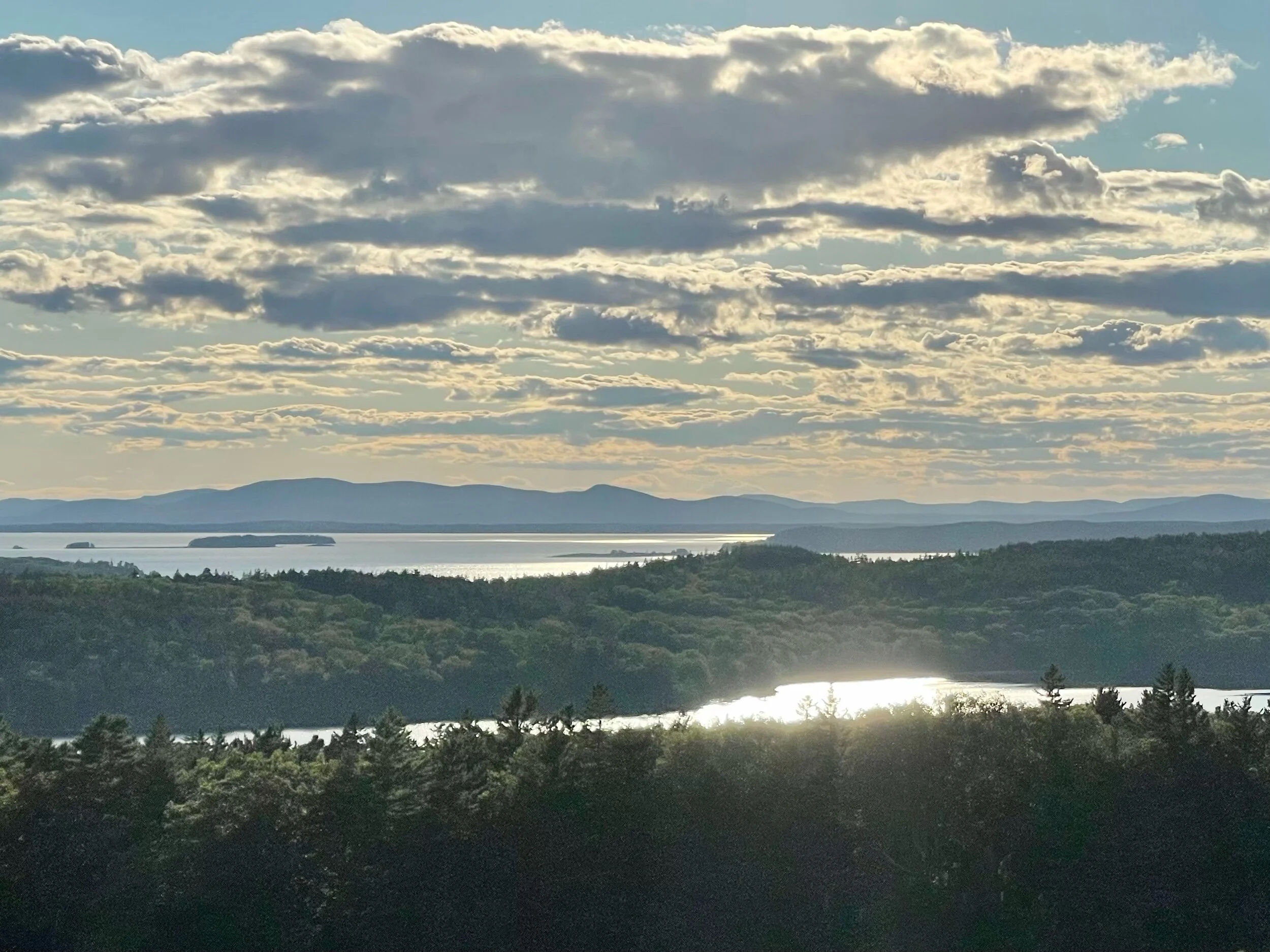
The view just above Deer Isle on Maine’s central coast on the way to Prince Edward Island. Photo by Michael Chase. Follow him on Instagram @mjohnsonchase.
Along the Way
Jenny and I left for our next biking adventure in mid-September. Following our usual custom for our bi-monthly explorations, we intended to drive to our starting place with our bikes in tow. This time our destination was Prince Edward Island (PEI) in Canada. We passed through Maine on the way, and stopped in Deer Isle to stay with friends Jack and Linda Viertel, who - knowing we have written about regenerative agriculture and climate change in previous blog posts - kindly introduced us to their friends Eliot Coleman and Barbara Damrosch.
The sun sets behind the sign that identifies the road to Four Season Farm in Harborside, Maine, where Eliot and Barbara live. The farm is currently managed by Eliot’s daughter Clara Coleman. Photo by Michael Chase. Follow him on Instagram @mjohnsonchase.
Neither Jenny nor I fully grasped at the time what an extraordinary opportunity this was; both Eliot and Barbara are seminal authors, educators and very successful organic market gardeners. In addition, Eliot has invented many farm tools that other organic farmers have adopted over the years. Meeting them set the stage for subsequent meetings with organic farmers in PEI, as well as the helpful people we met at the Climate Lab at the University of PEI (more on that later). Everyone we talked to knew of Eliot Coleman’s work; he became a serendipitous calling card for all things organic, simply because we had been lucky enough to meet him along the way.
Several fields at Four Season Farm. The field in the foreground had just been tilled with an ample amount of green manure (crop residue from buckwheat plowed into the soil to enrich it) in preparation for a cover crop of winter rye. The field in the background was sown with peas and oats for the summer and will be planted with winter spinach, and the second greenhouse to the left will be moved over the spinach to optimize growing conditions. Photo by Michael Chase. Follow him on Instagram @mjohnsonchase.
As urban devotees of regenerative agriculture, we especially appreciated hearing Eliot’s critical perspective that the current buzz around “regenerative” farming is being be co-opted by large agriculture companies with little genuine interest in solving environmental problems.
Consider the ways agriculture is supported through government subsidies. In the US alone, the meat and dairy industry receives 63% of total agriculture subsidies, compared to fruits and vegetables producers who receive only 0.04% of total subsidies. If you are a meat producer (whether your product is regenerative or not), you will receive subsidies that small-scale organic growers (especially market gardeners) won’t. This suggests at least one of the reasons “regenerative” has rapidly grown in popularity, eclipsing the older “organic” processes revived by farmers like Eliot Coleman. But subsidies are only part of the issue. Corporations notice consumer trends, and the recent popularity of the “farm to table” movement has also driven corporate influence over small-scale organic farms as well.
Consequently, Eliot Coleman is also not a fan of the ways the label “organic” has been diluted. He explains this on the farm website: Four Season Farm in Harborside, Maine has been farmed organically since its inception in 1968. However, we are NOT “USDA Certified Organic.” And for good reason. The USDA refuses to uphold the honest, old-time, carefully stewarded farming practices that organic has always represented. The USDA National Organic Program has been totally corrupted by the money, power, and influence of industrial food corporations. USDA certification is a hollow sham.
More vegetable fields at Four Season Farm. The greenhouse to the far left is the backside of the same one as in the previous picture, and it will be moved farther to the left to cover winter spinach. The extraordinarily productive field in the foreground is kale, lettuce and chard (photo taken mid-September). Photo by Michael Chase. Follow him on Instagram @mjohnsonchase.
The website goes on to explain what real organic standards should be: First, for uncompromised nutritional value all crops must be grown in a biologically active fertile soil in full contact with the earth and nourished by the natural biological activities of that soil. Research into the marvelously complex soil micro-biome reveals the vital ecological processes that support natural, non-chemical food production. Second, soil fertility should be maintained principally with farm-derived compost and mineral particles from ground rock. Why take the chance of bringing in polluted material from industrial sources when fertility can be created and maintained internally? Third, deep-rooting green manures, cover crops, and grazed pastures must be included within broadly based crop rotations to enhance soil fertility and biological diversity. The greater the variety of plants and animals on the farm, the more stable the system. Fourth, a “plant positive” rather than a “pest negative” philosophy is vital. The focus must be on correcting the cause of pest problems (weak plants) by creating optimum soil conditions to strengthen the plant, rather than merely treating the symptom (pest damage) by trying to kill the pests that are attracted to weak plants. More and more scientific evidence is available everyday on the mechanisms by which a biologically active fertile soil induces resistance to pests and diseases in the crops. Fifth, livestock must be raised outdoors on grass-based pasture systems to the fullest extent possible. Farm animals are an integral factor in the symbiosis of soil fertility on the organic farm.
Eliot looks over starts for the winter season in one of his greenhouses. Photo by Jenny Hershey. Follow her on Instagram @deeofo.
Arriving in Canada
In September of 2021, Canada opened their border for recreational travel to Americans who are fully vaccinated for Covid-19 and demonstrate negative results on a Covid PCR test within 72 hours before entering. PEI requires an additional negative result on a second rapid test upon entering the Province. Given these safeguards (combined with the fact that the percentage of fully vaccinated Canadians is significantly higher than Americans), we felt safer biking here than we would have in the U.S. The sadness and irony of that realization wasn’t lost on us; in fact, it probably made us more attentive to the Canadian approaches to the science of both Covid and our rapidly changing climate.
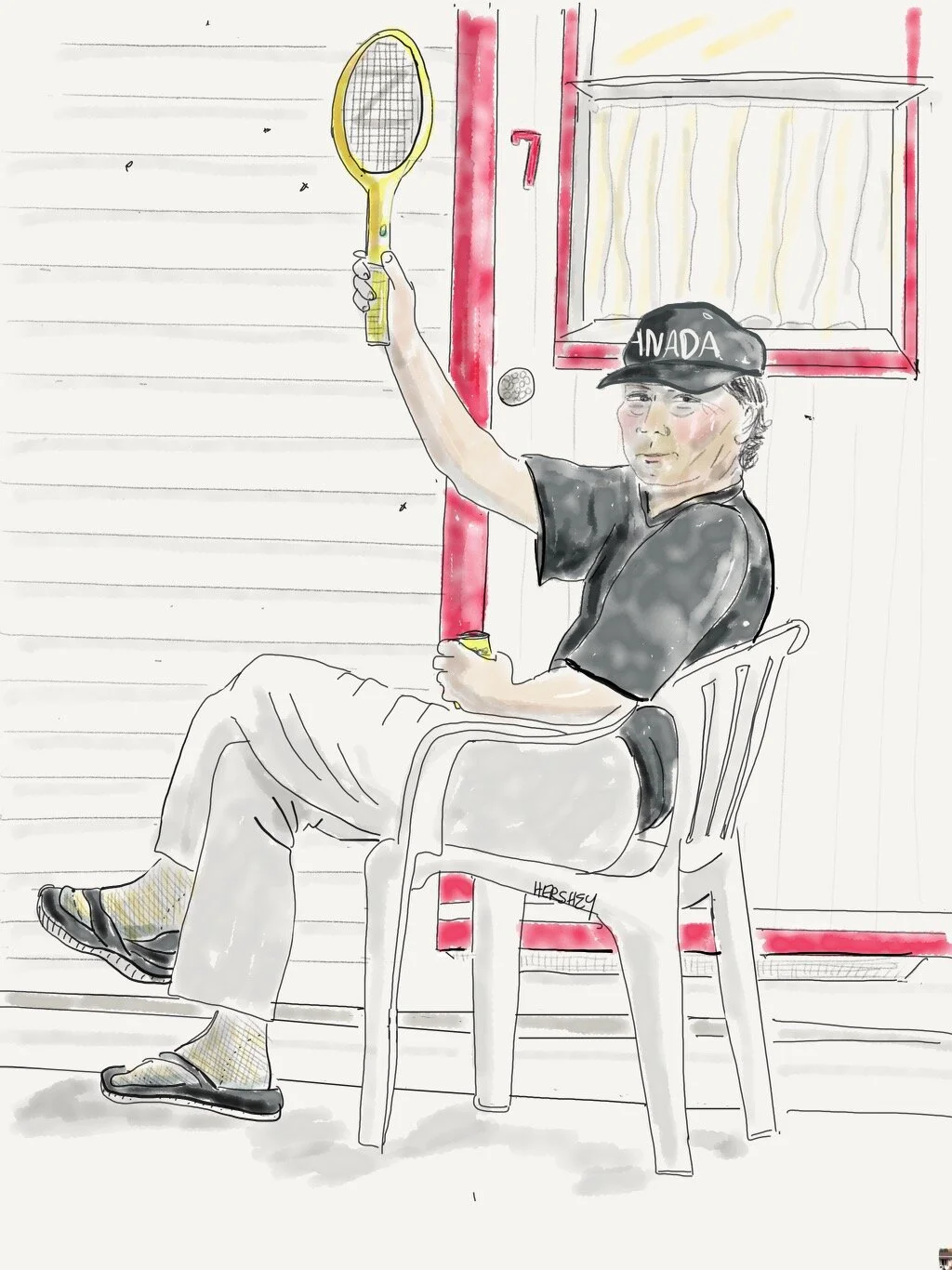
After their kids left the nest, Yeung and his wife left their home in Vancouver and came to PEI, where they bought a mid-century motel in Murray Harbor in the southeast of PEI. Yeung kept us safe from mosquitoes with his racquet zapper. Drawing by Jenny Hershey. Follow her on Instagram @deeofo.
Interestingly, we encountered no political resistance to Covid vaccination efforts or masking mandates in anyone we met. All of the major political parties in Canada (except the ultra-right Peoples Party of Canada at 4% of the electorate), are strongly pro-vaccine and equally attentive to the science of climate change. In fact, because we arrived just before the recall election, we had the refreshing opportunity to watch the major two parties - the Liberals and Conservatives (aka Tories) - attempt to outdo one another on general media about how to address both the pandemic and the climate emergency. We met no one who isn’t concerned about Canada’s rapidly changing climate. Perhaps this is because climate changes are more intensified toward the equator and at both poles, so the further to the north one is located the more obvious the changes are. In any case, the focus on method over content in Canadian politics was a refreshing change from American politics, where our major political parties perceive themselves as inhabiting planets facing distinctly different threats.
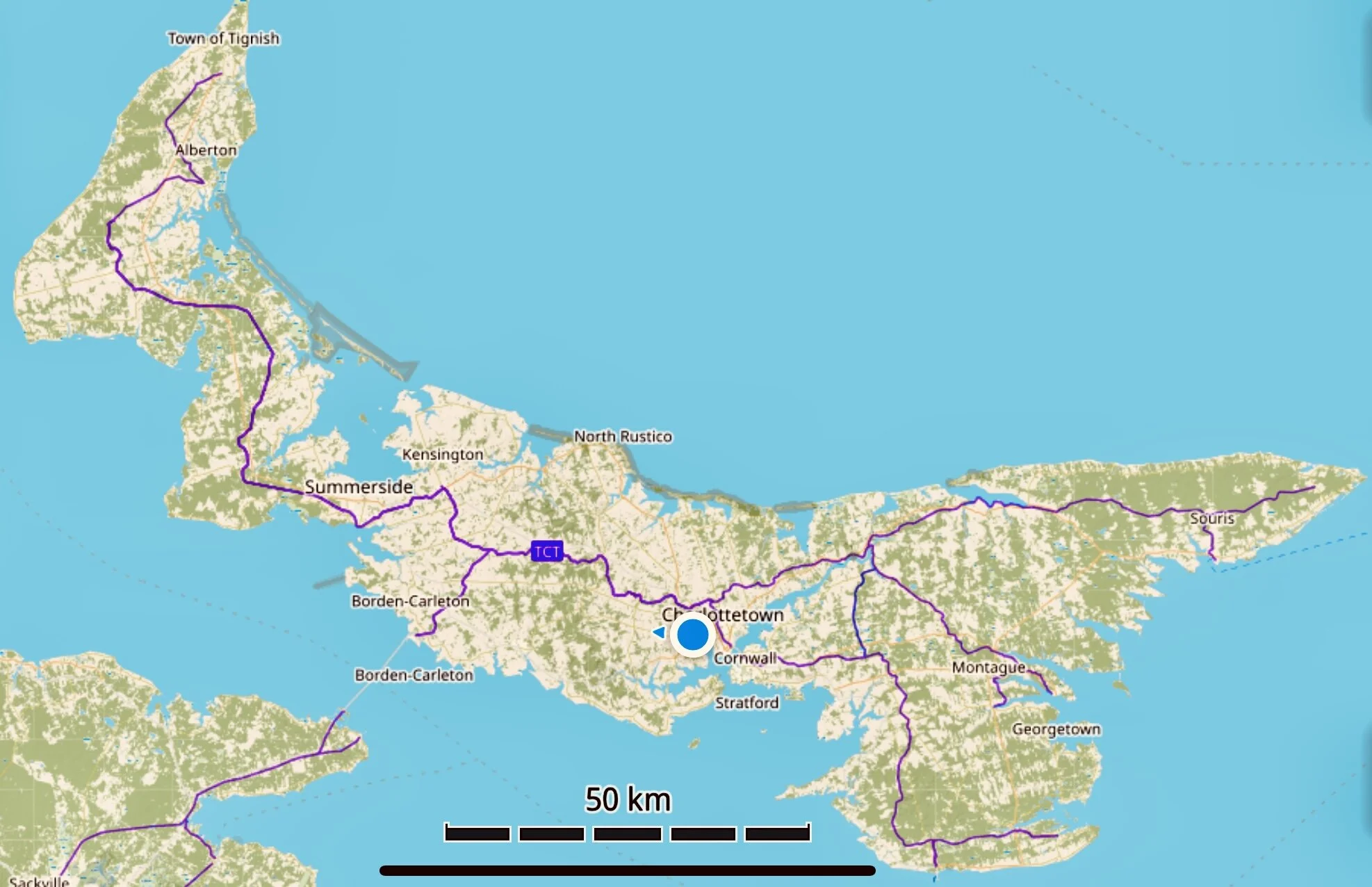
Charlottetown is near the blue dot. This is PEI’s largest city, with a metropolitan population of about 80,000 of the island’s 160,000 people. The purple lines on this map form the spine and the spurs of the Confederation Trail. The points at the ends of the wings are North Point in the northwest and East Point in the east. There are wind farms near both points, the largest in North Point. Currently, renewables supply about 25% of the Province’s power; they will supply 100% by 2040. PEI has no natural gas lines, and most cooking and heating is already electric. Summerside, a town in central PEI of about 15,000, uses wind farms, solar arrays, smart grids, industrial-scale lithium-ion batteries and the highest per capita concentration of electric car chargers in the country, and expects to derive the majority of its electricity from renewable sources by 2022. A fascinating story is how the town is dealing with the problem of intermittency: there are a suite of specialized appliances in homes throughout the city that can store energy as heat rather than electricity. This can be read about in more depth here. Photo from GuruMaps Pro.
We left our car at the parking lot for the Woods Island ferry to Caribou, Nova Scotia, and have spent the last several weeks biking the island. PEI is about 200 miles from end-to-end, and shaped like an angel’s wing veering rightward. What we missed in biking long distances every day, we made up for by enjoying biking the inland spines of the “rail to trail” conversion called “The Confederation Trail,” meandering the many mellow coastal roads that circumnavigate numerous bays, estuaries, peninsulas, isolated and peaceful beaches, and exploring lovely farming towns and charming fishing villages. The trip was idyllic.
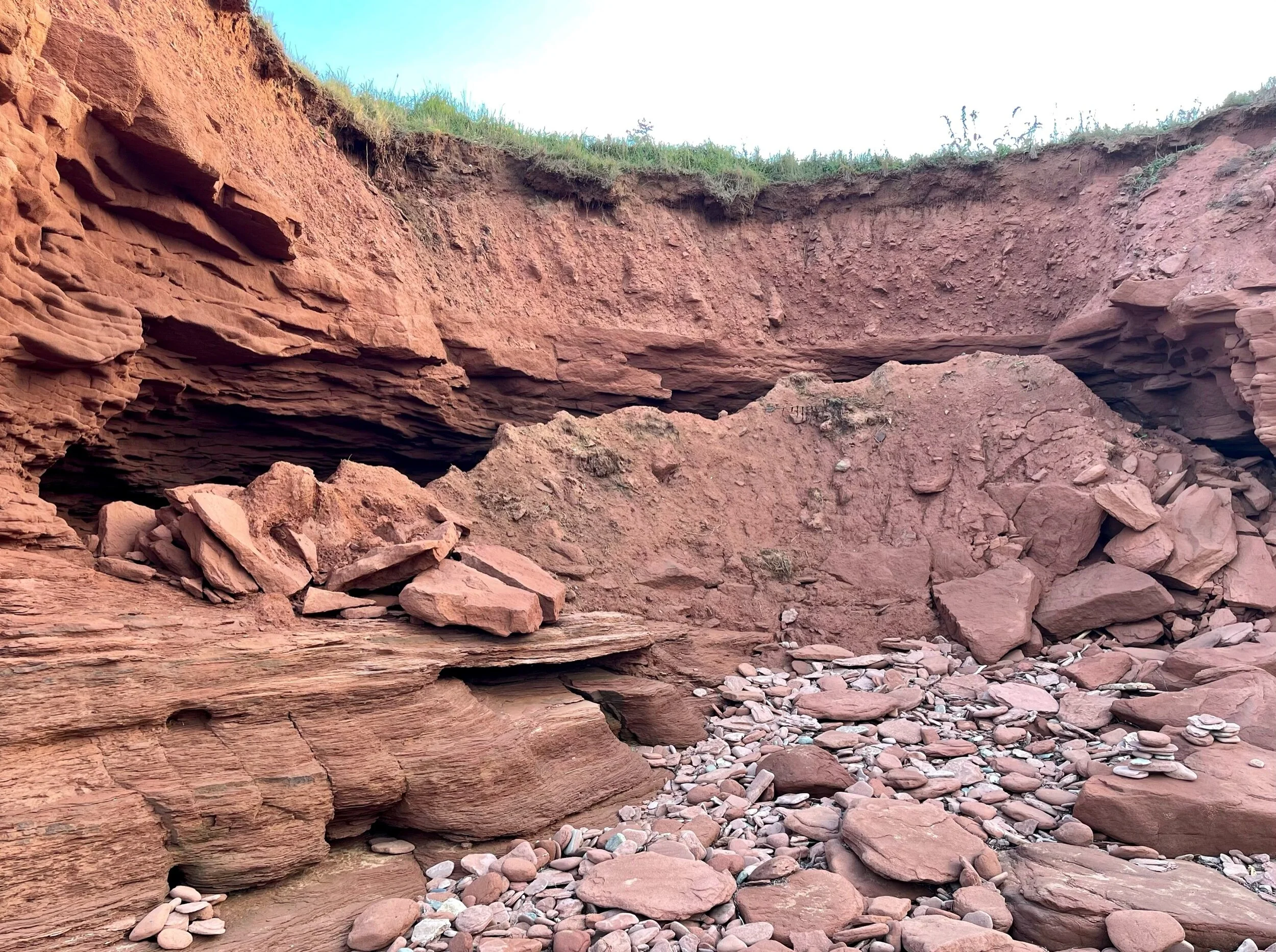
Taken on the north shore of PEI not far from Cabot Provincial Park, this picture demonstrates how erosion works on the shoreline. Waves wear away the sandstone cliffs until they collapse from underneath. Because of sea-level rise and increased storm surges, PEI has been losing an average of about two feet a year of its shoreline. Scientists expect the rate of erosion to worsen in the future. Other impacts of climate change on PEI include steadily rising average temperatures, milder winters with less snow, increasing swings between excessive drought and precipitation events, and greater exposure to extreme weather events such as hurricanes, storm surges and destructive winds. Photo by Michael Chase. Follow him on Instagram @mjohnsonchase.
Cabins are plentiful in PEI. Some are delightfully rustic and placed on windswept cliffs over the Gulf of Saint Lawrence in the north or the Northumberland Straight on the south shore. With only a few exceptions most have kitchens. After discovering that dining out was very expensive compared to cooking our own food, we began to sample the island’s sustainably raised mussels, oysters and lobsters by buying seafood at many of the small shops near the waterfronts. PEI mussels (which sell for CAD 1.50 - 2.00 a pound) are farm-raised on ropes hung in the ocean, which ensures that there is no dredging or disturbance to the ocean floor. Since there is no dredging, delicate life forms are undisturbed.
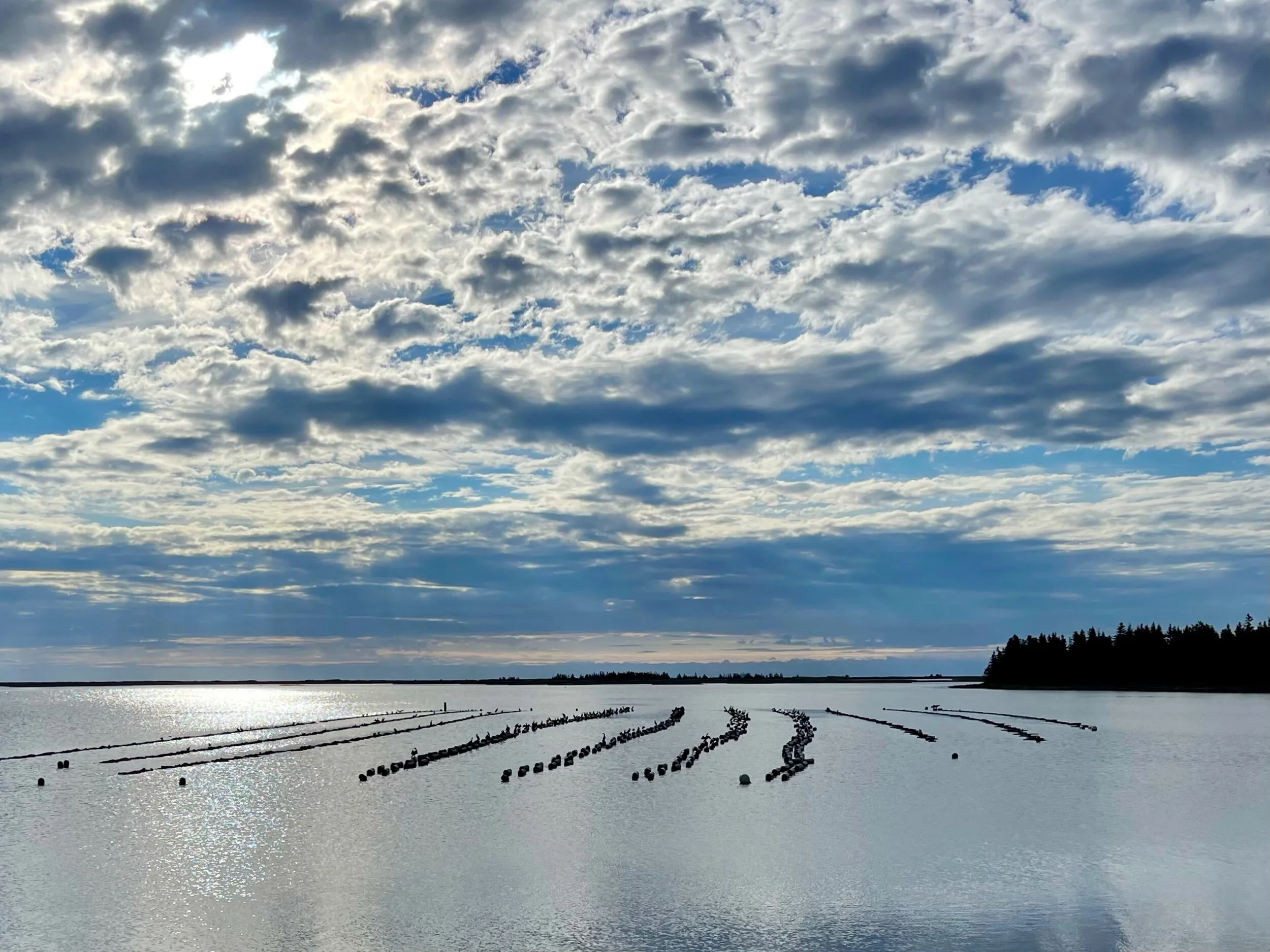
Oyster cages can be seen in the distance at a sustainable oyster farm. Photo by Michael Chase. Follow him on Instagram @mjohsonchase.
Oysters can be raised sustainably as well. The production cycle on a Canadian oyster farm begins with the collection/production of oyster larvae. Some farmers still collect larvae in the wild; however, larvae are increasingly produced in controlled hatchery facilities from spawning adult broodstock. The larvae are kept suspended in tanks by circulating water – and in a few weeks they transform into tiny seed. The seed is essentially a very small version of the adult oyster. Once the seed reaches an appropriate size, it can be transferred to the ocean for final grow-out in cages that are moved every year for 3 to 4 years to stimulate growth and achieve a marketable size.
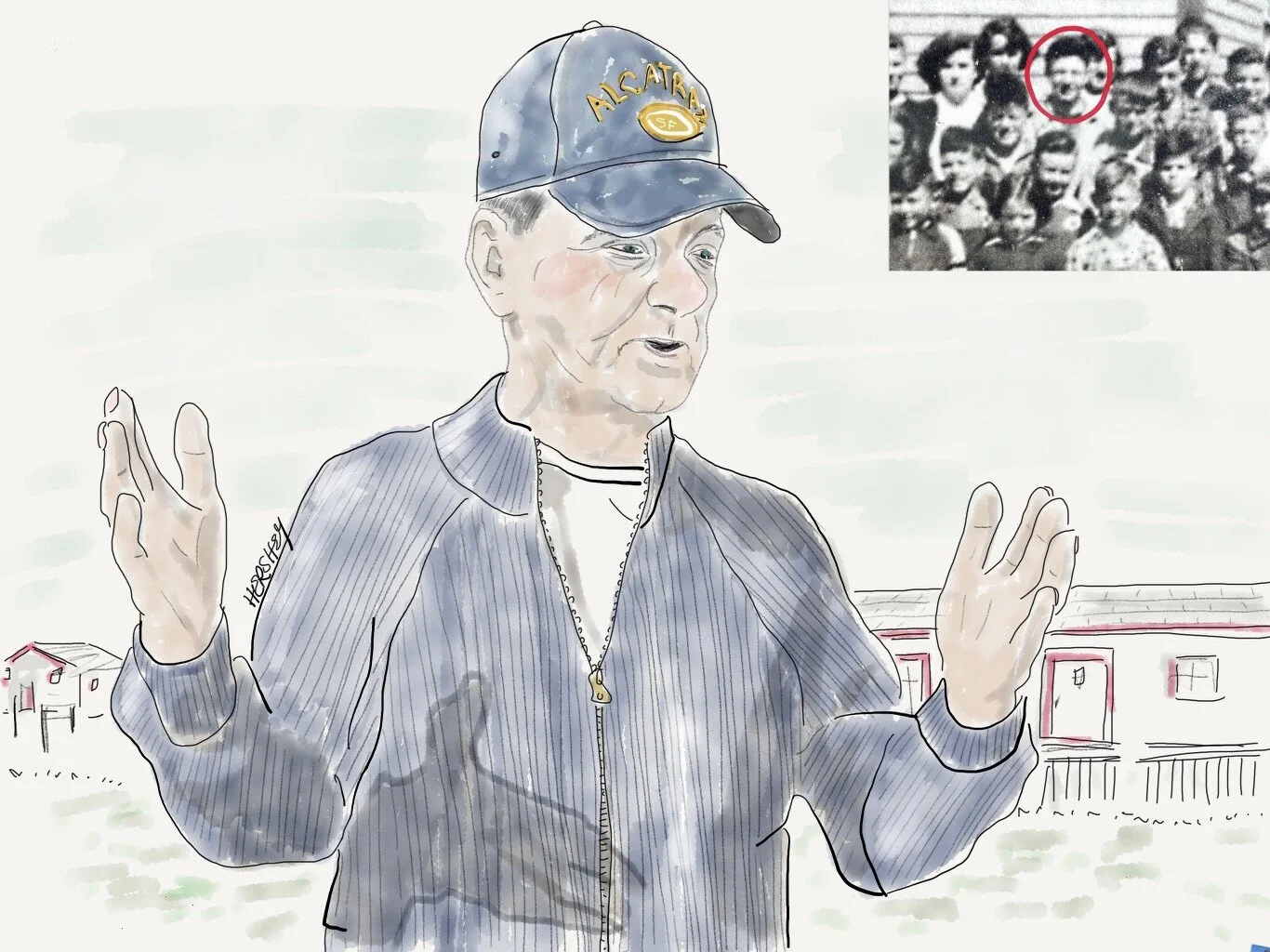
While we were reading an historical placard out loud at the old fishing harbor of Tignish Shore, Hector approached us and pointed himself out in a 1953 schoolhouse photo (upper right). A retired lobsterman, Hector bought his lobster fishing license for CAD 25 cents; now they cost CAD 1.5 million. Hector has survived many storms over the years. Because the beach kept receding, the provincial government moved his boyhood home (where he still lives) from the beach to the inland side of the street. Hector has watched the shoreline at Tignish Shore recede at least two hundred feet during his lifetime. Drawing by Jenny Hershey. Follow her on Instagram @deeofo.
Perhaps most exciting for us as laypeople (beyond eating these exquisite creatures) was recognizing the value of the industry to the local environment. Mussels and oysters raised in estuaries live off plankton and are very productive at filtering water; even nitrogen (a problem in PEI because of extensive commercial potato farming) and pesticides are absorbed and deposited in inert form on the sea bottom through feces by these amazing shellfish.
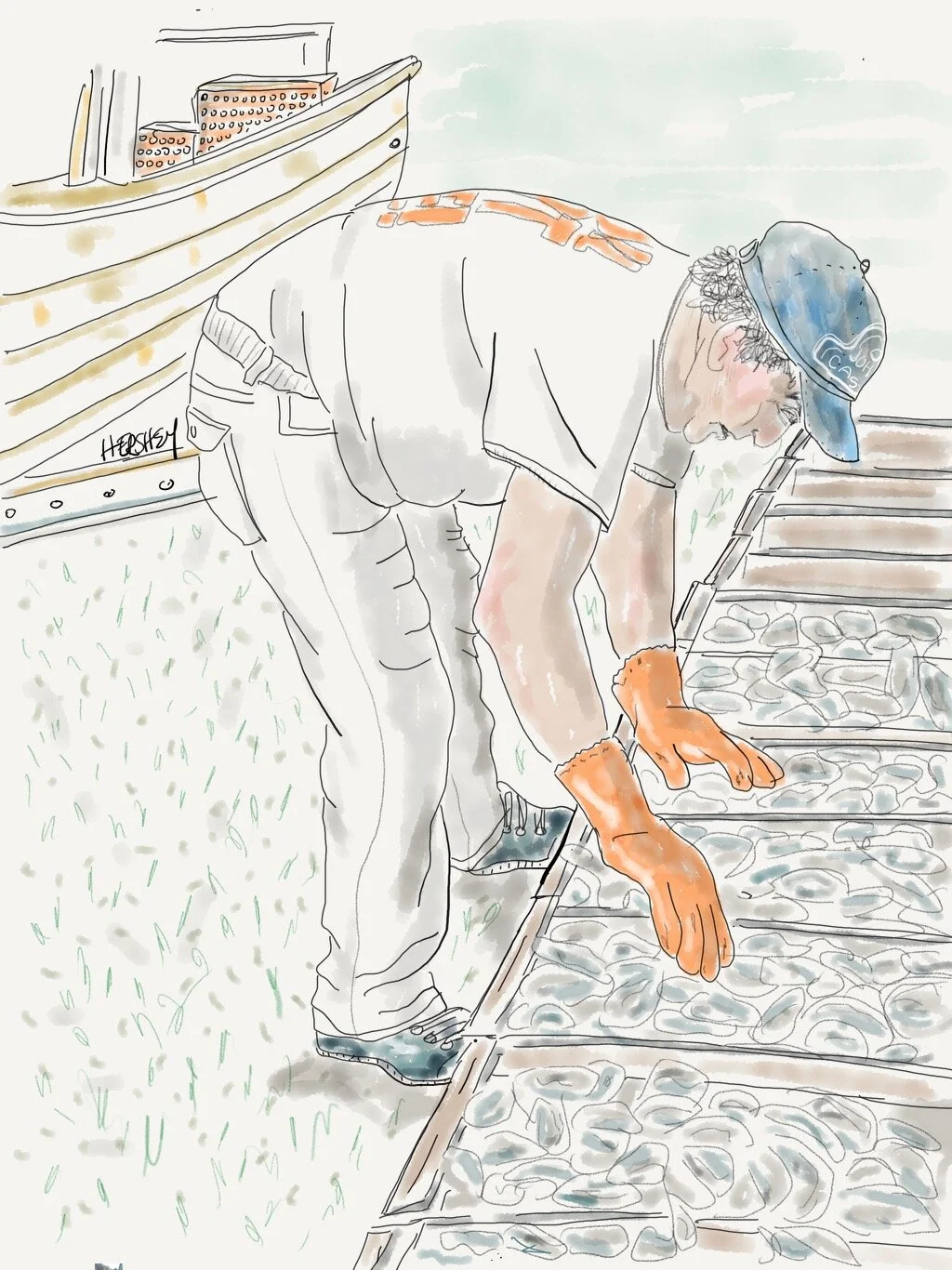
We met Frances, an oyster fisherman, at Yeung’s motel on the first day of the oyster season at Murray Harbour. Fishing the older conventional way by using 12-foot-long tongs (they used to be regulated for 10 feet, but the water is deeper now because of sea level rise), he rakes wild oysters off the sandy bottom in the numerous estuaries around the island. Frances (and his partner Pete) brought back 26 crates of oysters their first day out. They will earn CAD 50 cents per oyster for the bigger ones (which would cost USD 3-4). Both Frances and Pete were pleased with their catch, and they celebrated by gifting us a dozen of their largest oysters and another dozen quahogs. Needless to say, we were delighted! Drawing by Jenny Hershey. Follow her on Instagram @deeofo.
Why Bother?
In August, 2021, the International Panel on Climate Change (IPCC) published the 6th assessment of our changing climate (the first assessment was published in 1990). For the report, hundreds of scientists all over the world assess thousands of scientific papers published annually to provide a comprehensive summary of what is known about climate change, its impacts and future risks, and how efforts at adaptation and mitigation can reduce risks. The assessments represent the best of global general scientific consensus about what is most likely to happen to our climate in the near and reasonably near futures, depending on how many greenhouse gas (GHG) emissions humans continue to release into the atmosphere.
Although climate science has improved greatly over the years, most humans now understand we are placing our children and grandchildren at considerable risk by continuing to emit greenhouse gases into the atmosphere. But the recent IPCC report is sanguine. In general, emissions are not stabilizing, much less decreasing. We aren’t meeting the moment yet, and we are rapidly approaching crisis. We have only a few decades to decarbonize our atmosphere before we hit tipping points that may undermine civilization as we know it.
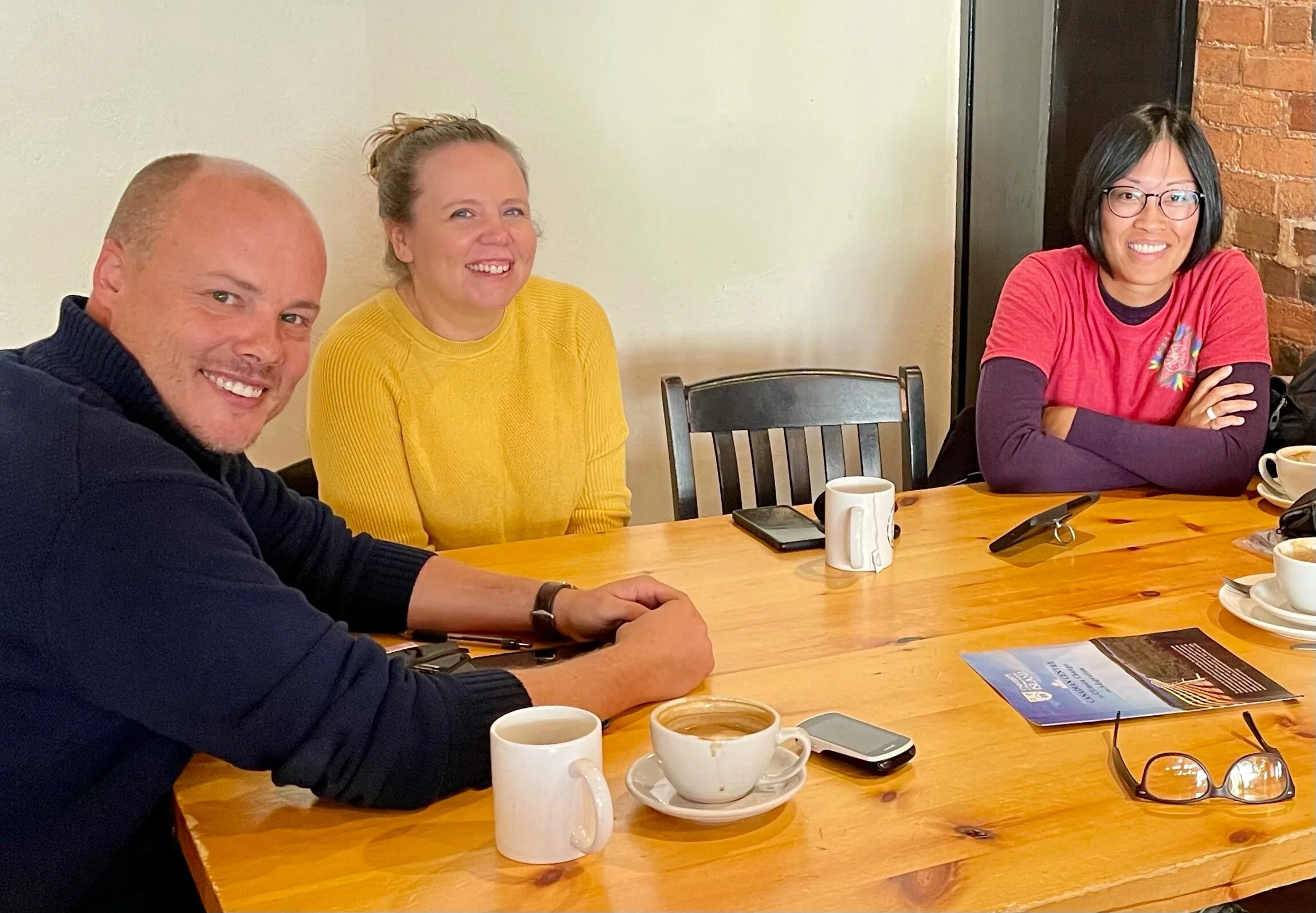
From left to right are Ross Dwyer, Erin Taylor and Stephanie Arnold. All three of them spent several hours chatting with us about PEI’s sustainability plans, particularly in the agricultural sector. PEI appears to be situated well for success, and key players in all industries are feeling pressure and excitement about improving their processes to become more sustainable. Ross Dwyer is the ClimateSense Project Coordinator and Project Manager at the Climate Lab at UPEI. Ross is a passionate representative, and was very welcoming to Jenny and me. Erin Taylor is the Manager of the Climate Change Secretariat at PEI’s Department of Environment. She is an intrepid connector and environmental advocate. Stephanie Arnold is a prolific author and PhD Candidate (UPEI). Her technical specialty is helping potato farmers adapt to societal pressures to become more sustainable and adapt to rapidly changing growing conditions. Read about the Provincial Prince Edward Island Climate Plan here. Photo by Michael Chase. Follow him on Instagram @mjohnsonchase.
Fortunately, many governments are listening to these onerous warnings, the PEI provincial government among them. But our talks with the climate team of university and government officials in PEI weren’t about quantifying GHG emissions, nor was it about making a transition in energy systems. That has to happen, and it’s already underway. But for the people we talked to that’s the easier part of dealing with climate change. Transformation in agriculture, which is the cornerstone of life on this island (and always has been) is the preoccupying problem, because farming here is so integral. And underlying how we live on the land is a more fundamental issue - our most cherished values.

Stephanie Arnold from the UPEI Climate Lab shares her feelings about the unfair blame directed at many well-meaning potato farmers by uninformed environmentalists.
We were lucky enough to hear Stephanie speak publicly (along with Adam MacClean) at a panel event on agriculture and climate change in New Glasgow. When asked what single-most important action she thought could be undertaken to get at the root causes of climate change, Stephanie answered Canadians could review and recommit to the country’s original Treaty Agreements with indigenous nations. Drawing by Jenny Hershey. Follow her on Instagram @deeofo.
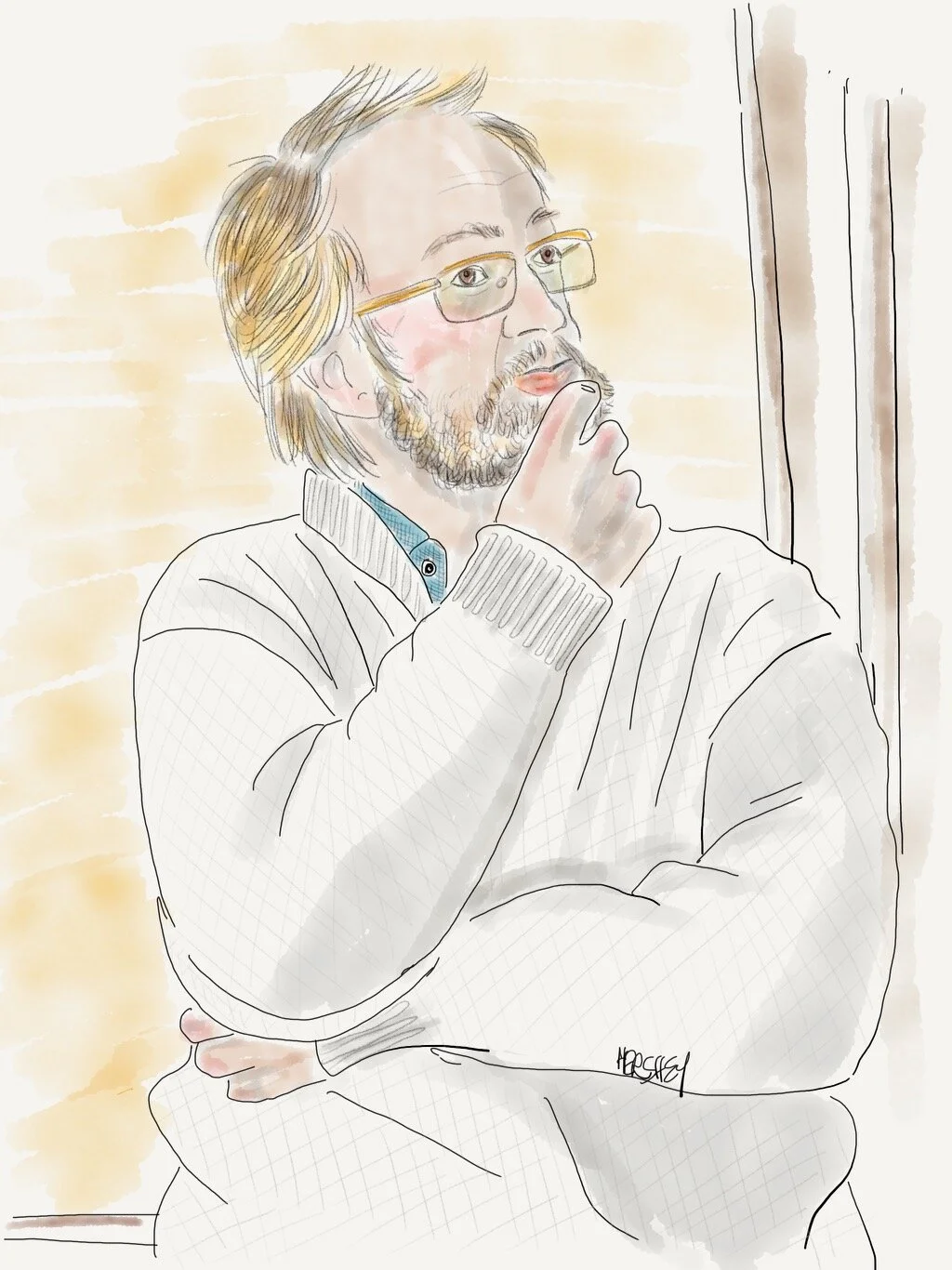
Adam MacLean describes himself as a shepherd-entrepreneur-scientist and very recently, a public servant, working with the PEI Department of Agriculture and Land as their Organic & Perennial Crop Development Officer. He practices regenerative agriculture by managing pastured livestock to produce nutritious meats in a way that respects the animal and heals the land. Together with his flock, in partnership with Island landowners, they are building soil, sequestering carbon and feeding the community. We were lucky enough to hear him speak in New Glasgow, where he agreed passionately with Stephanie Arnold that our biggest challenge is reckoning with our most fundamental values. Drawing by Jenny Hershey. Follow her work on Instagram @deeofo.
Our conversations revealed a collective agreement that climate change is a symptom of a larger problem: societies that value the rights of powerful individuals over those of poorer communities, societies that seek to dominate nature rather than live within natural processes, societies that place individual rights and personal consumption ahead of a collective commons with the capacity to allow all humans to live in natural abundance. Those are societies most responsible for polluting our atmosphere and bringing us to the brink of extinction.
Such talk used to be the province of the crazy and marginalized. But in PEI, such talk seems to be increasingly normal. Views are shifting everywhere, and PEI is small enough that shift is palpable. After all, relationships are the true currency of change, and that currency in a place as small as PEI is alive and well.
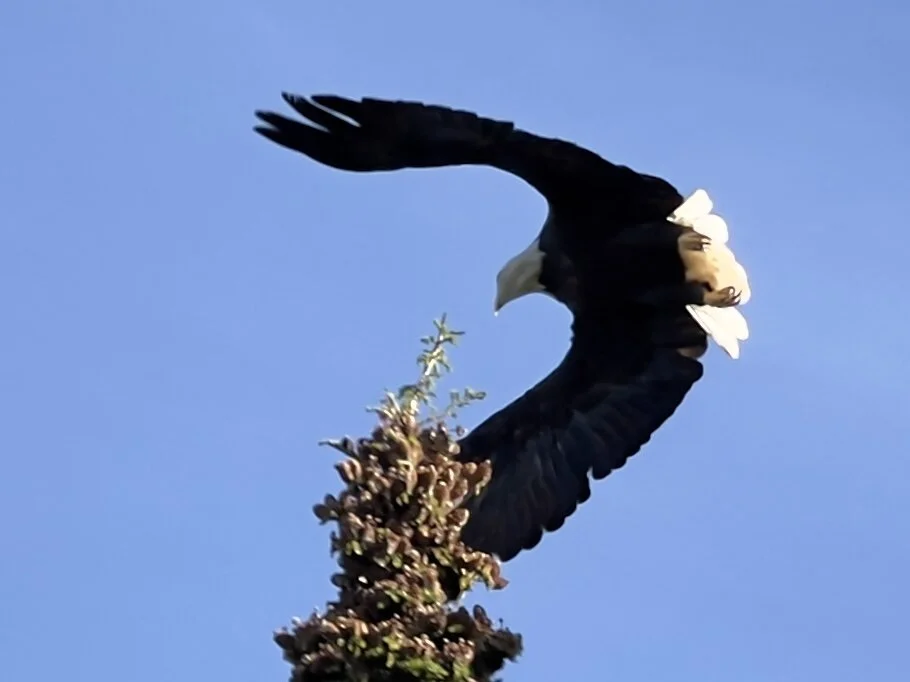
We saw this Bald Eagle (Canadians call them Sea Eagles) lift off a tree near North Point in PEI. For us urbanites, there are few things more exciting. Photo by Michael Chase. Follow him on Instagram @mjohnsonchase.
Organic and Regenerative Farming in PEI
Our first few days on the island revealed little information about farmers, other than the unmissable reality of the large and ubiquitous potato industry and the equally accessible shellfish and lobster industries. Before we learned more about how conventional potatoes were farmed, we were happy to dig up a few potatoes for our dinners as we biked by the corners of commercial fields. That is, until we learned that commercial potatoes growers use a spray that kills the plants from the ground up, leaving the potatoes easier to harvest. Although Roundup (glyphosate) is repeatedly used to kill weeds on the fields earlier in the season, we were never able to determine whether that is the herbicide used to kill the plants at harvest. But even if you never eat another potato from PEI, please understand that glyphosate is still the most-used herbicide in the U.S. Unless you’ve eaten only organic vegetables for years, you’ve been exposed to it in large quantities already. In any case. our past blog posts on regenerative agriculture and our serendipitous meeting with Eliot Coleman focused us to understand more about the agriculture scene in PEI.
We managed to look beyond the potatoes once we got wind of the PEI Certified Organic Producers Co-op (COPC) through an email exchange with my friend Regina Grabrovac of Healthy Acadia in Machias, a Maine-based food systems specialist and organic certification official for the USDA. Once we learned from Regina where and how to look, we began to appreciate how much fresh food was available all over the island.
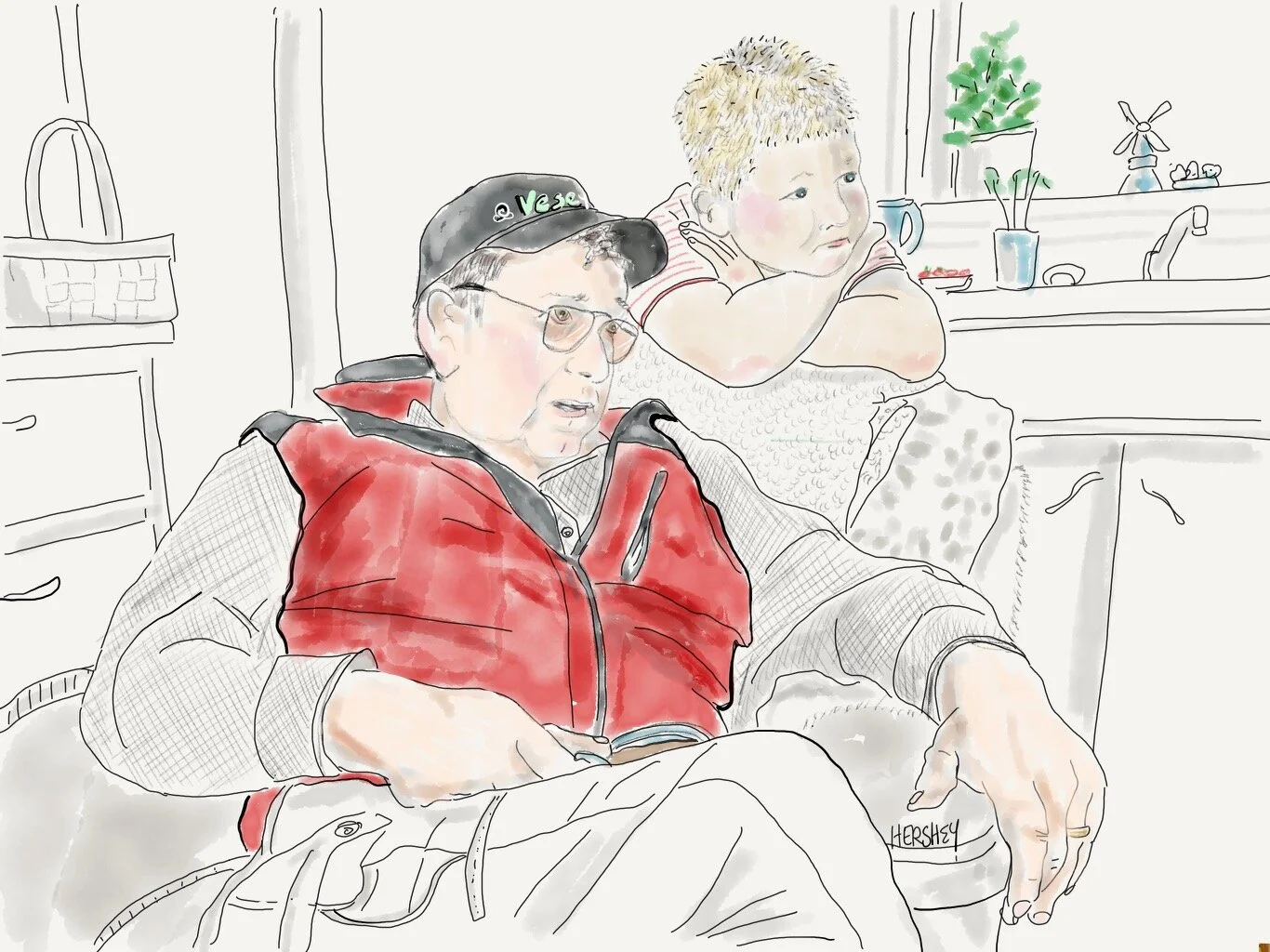
Brian MacKay, an organic farmer at Crystal Green Farms in Bedeque, PEI, raises organic vegetables and livestock, as well as operates a small flour mill where they mill their own grains and prepare baking mixes. Their milled products can also be found on the shelves of many local retailers. Once Brian learned that Jenny was a vegetarian for environmental reasons, he patiently asked us what we thought “Beyond Beef” was made from? Did we think that the peas, corn and soy in the product was grown without fertilizers, herbicides, and pesticides? Did we think it was grown with crops that haven’t been sprayed with glyphosate? Did we think the crops used weren’t genetically modified, tying them in with Monsanto and other seed monopolies? (We checked the Beyond Meat website and supposedly they do not use GMO crops). Even so, might it be that eating beef, pork, chicken, lamb or sheep grazing in a field of perennial grasses creating healthy soil while sequestering carbon, was a better option environmentally? As Brian spoke, his grandson, Xaviar, hung onto every word, as did we. What do you think? Drawing by Jenny Hershey. Follow her on Instagram @deeofo.
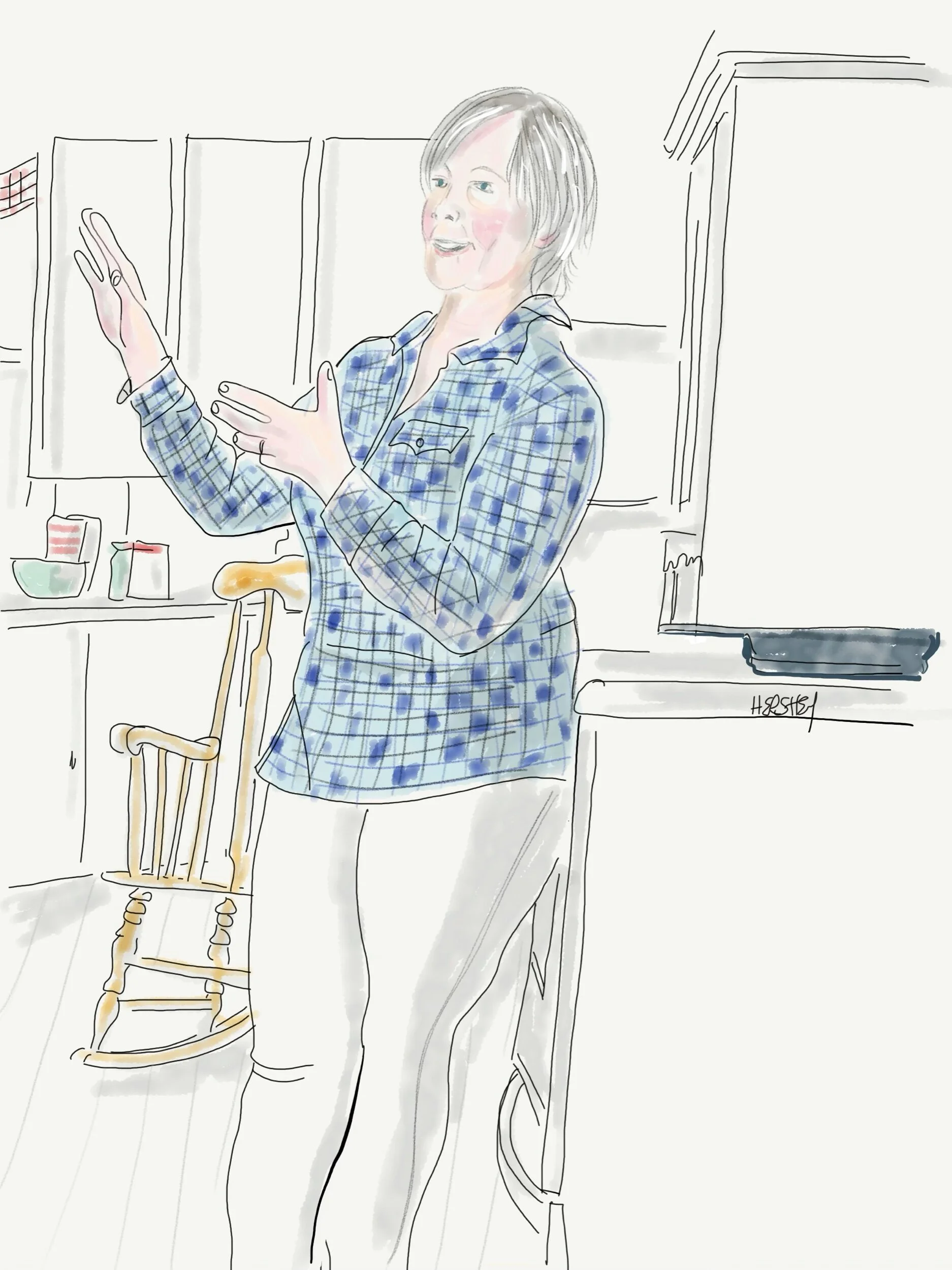
Kathy MacCay from Crystal Green Farms in the 140 year-old farmhouse in which she was raised, and in which she raised her children. She has lived in this house for most of her life. Kathy runs a tight ship working with husband Brian and caring part-time for her 14 grandchildren. Somehow, she also managed to cook us delicious homemade waffles (from a pancake flour mix milled in their barn for market distribution). Drawing by Jenny Hershey. Follow her on Instagram @deeofo.
The COPC is run through volunteers. We assumed the most active farmers in the organization might be among the most dynamic farmers in PEI, so we reached out to their chief officers. COPC President Brian Mackay and his wife Kathy own and operate Crystal Green Farms located in Bedeque, PEI. Vice President Sally Bernard from nearby Freetown, co-manages a local Organic Grainery, and is the primary force behind raising livestock at Barnyard Organics. We weren’t disappointed. As characteristically warm and friendly as other islanders, they both welcomed us to stop by, meet their families, and learn about their operations.
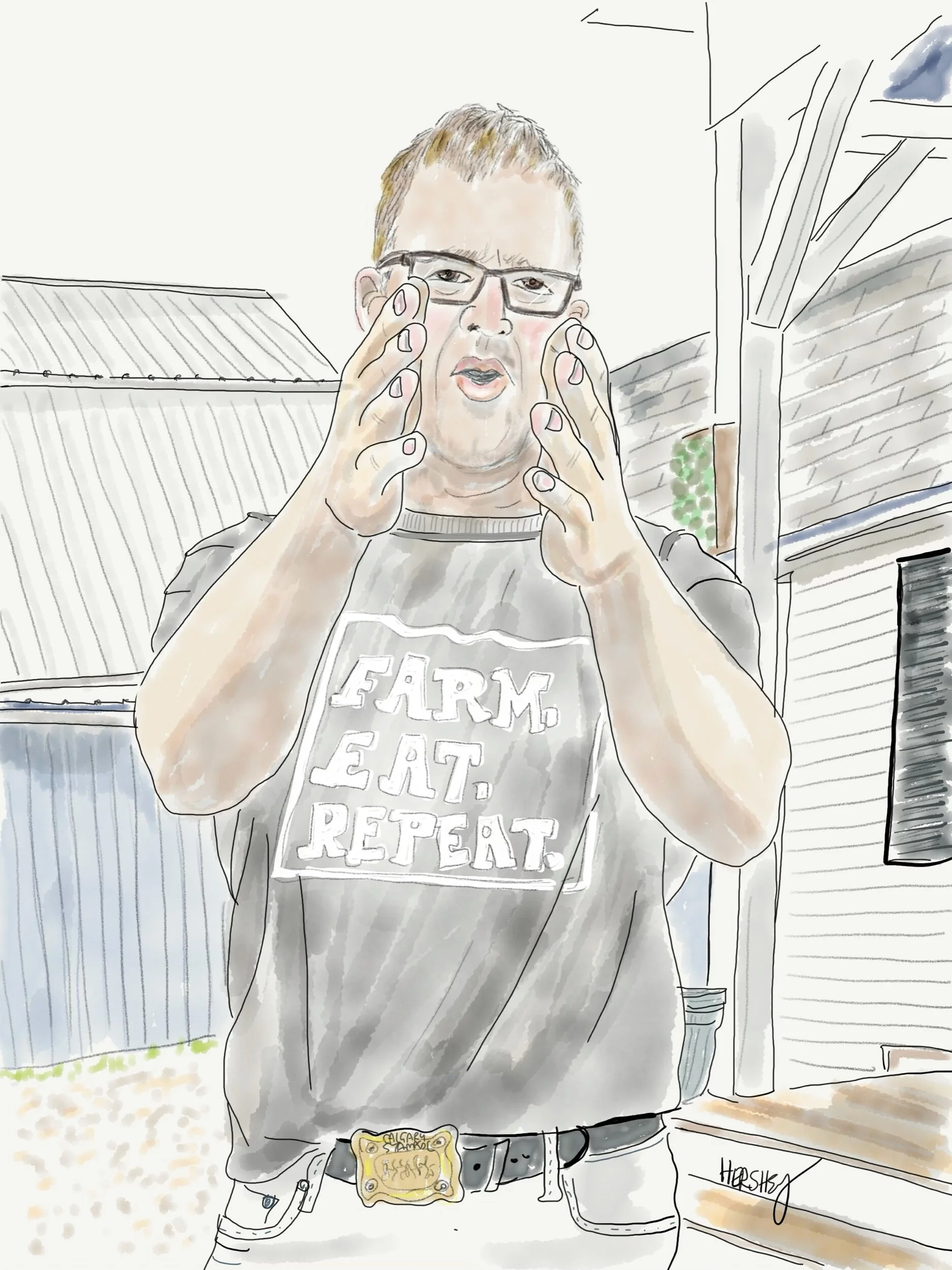
Mark Bernard makes a point about commercial versus organic feedstock. Mark is from Freetown, PEI, and along with his wife Sally converted his traditional family farm in 2002 into a Certified Organic production (primarily as a financial consideration). As their soil management practices improved and they witnessed land and nature respond positively to their organic practices, they started taking organic more seriously. They’ve never looked back. Sally co-manages the expanding Organic Grainery, and together they operate Barnyard Organics. Drawing by Jenny Hershey. Follow her on Instagram @deeofo.
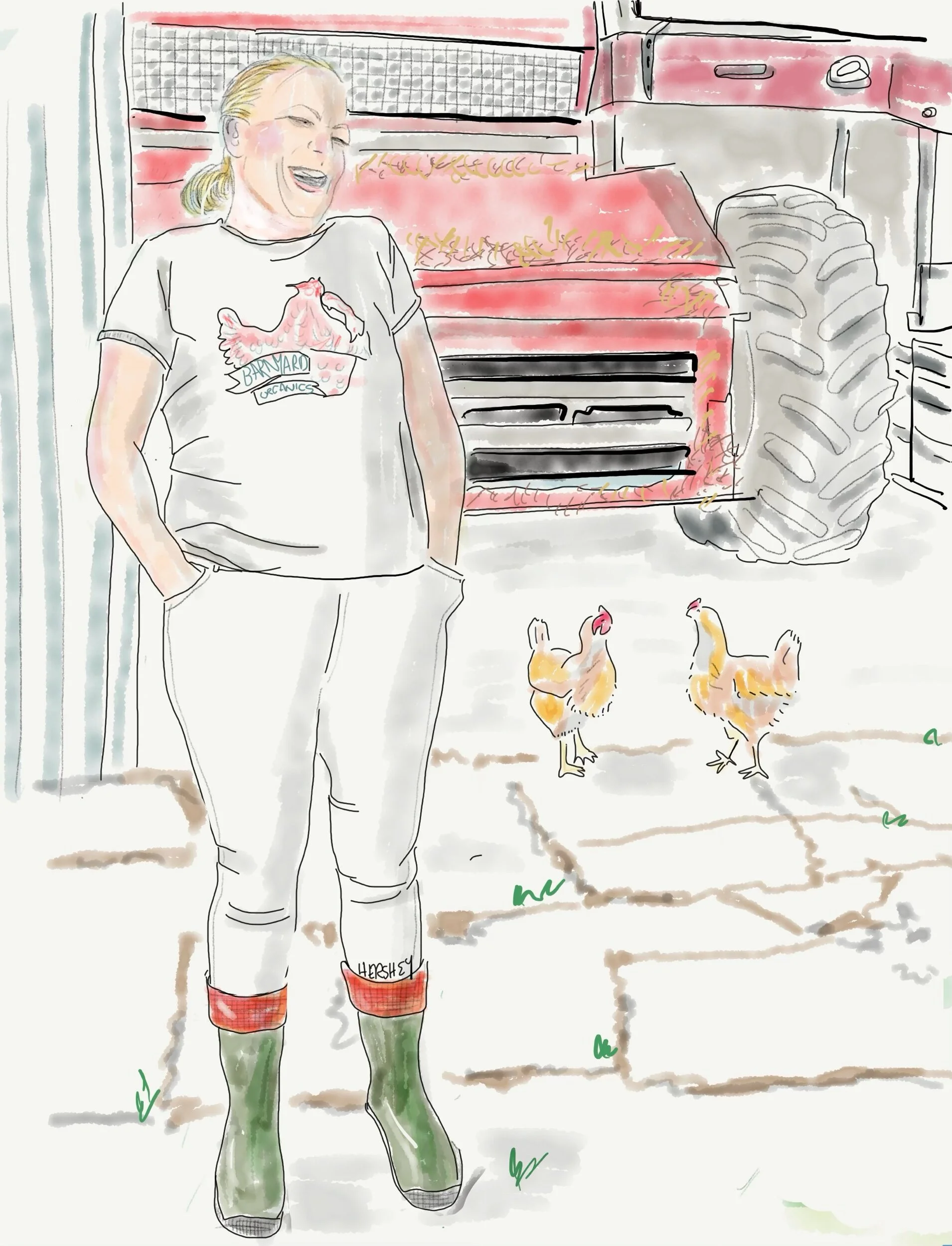
Sally, the youngest of nine from a cattle-ranching family, immediately impressed us with her wit and joy. She met Mark at the Agriculture University in Truro and told us she was immediately smitten. Together they work the land and raise four beautiful children. Sally has a special place in her heart for their three pigs (Dolly, Shania and Reba) and two dairy cows. They no longer raise chickens for market, but they keep quite a few hens for selling pasture raised eggs. Sally dislikes the local Sea Eagles, who will swoop down undetected, lift chickens in their claws and take them away to eat. Drawing by Jenny Hershey. Follow her on Instagram @deeofo.
COPC was established in 2002 and is composed of organic producers and like-minded consumers who wish to see organic agriculture grow within Prince Edward Island. They are a coalition of growers and not a certifying body. Instead, under the Safe Food for Canadians Regulations (SFCR), any food, seed, or animal feed that is labelled organic is regulated by the Canadian Food Inspection Agency (CFIA).
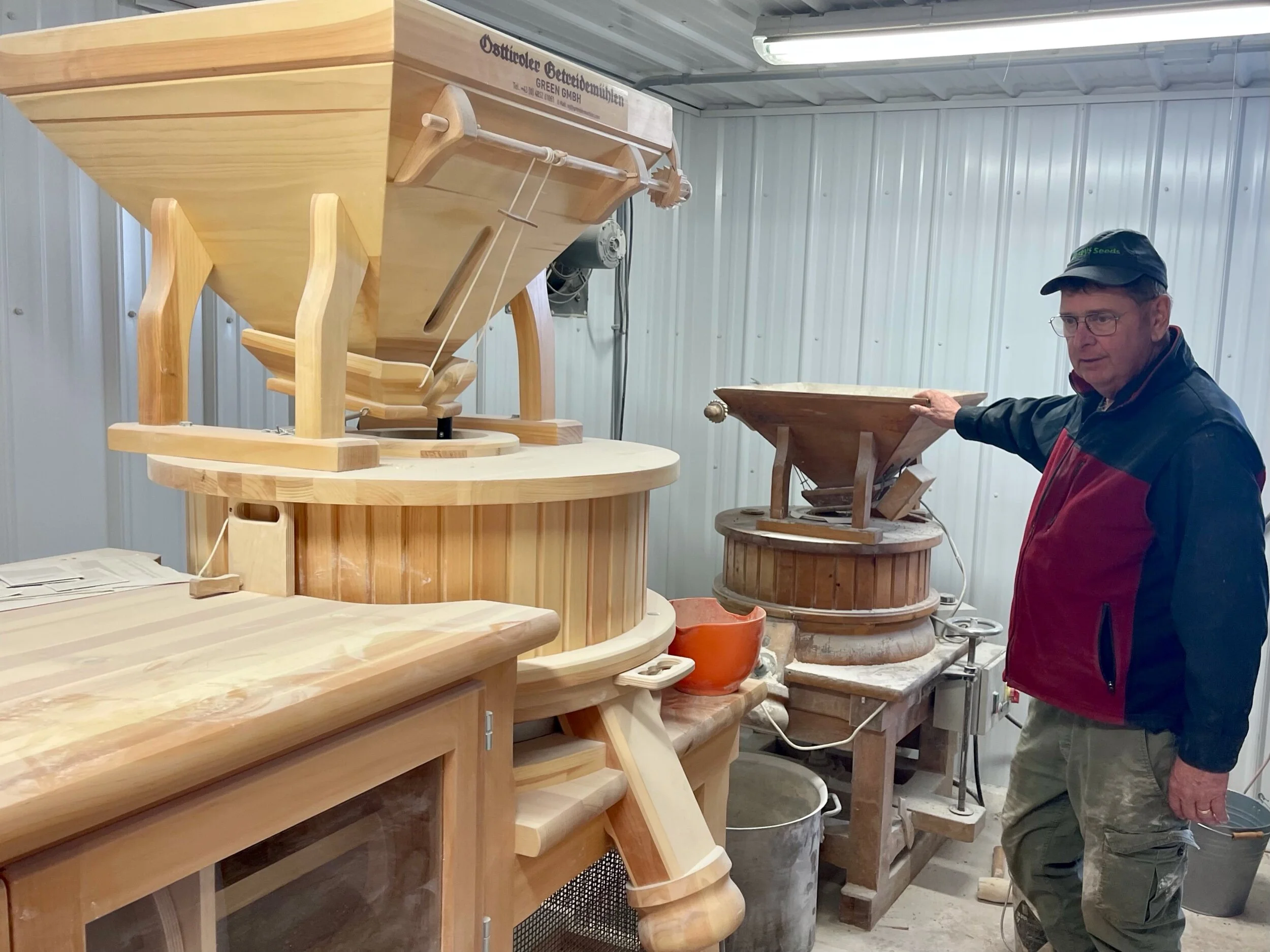
Brian MacCay explains how the multiple grinding and sifting options work on his new flour mill from Austria. Photo by Michael Chase. Follow him on Instagram @mjohnsonchase.
This allows COPC to function as an advocate for organic growers. Their vision entails a vibrant organic industry in PEI, and they are committed to supporting: 1) Quality healthy food for Islanders, 2) A revitalized rural economy and culture, 3) Protecting and enhancing the environment, and 4) A fair income for organic farmers.
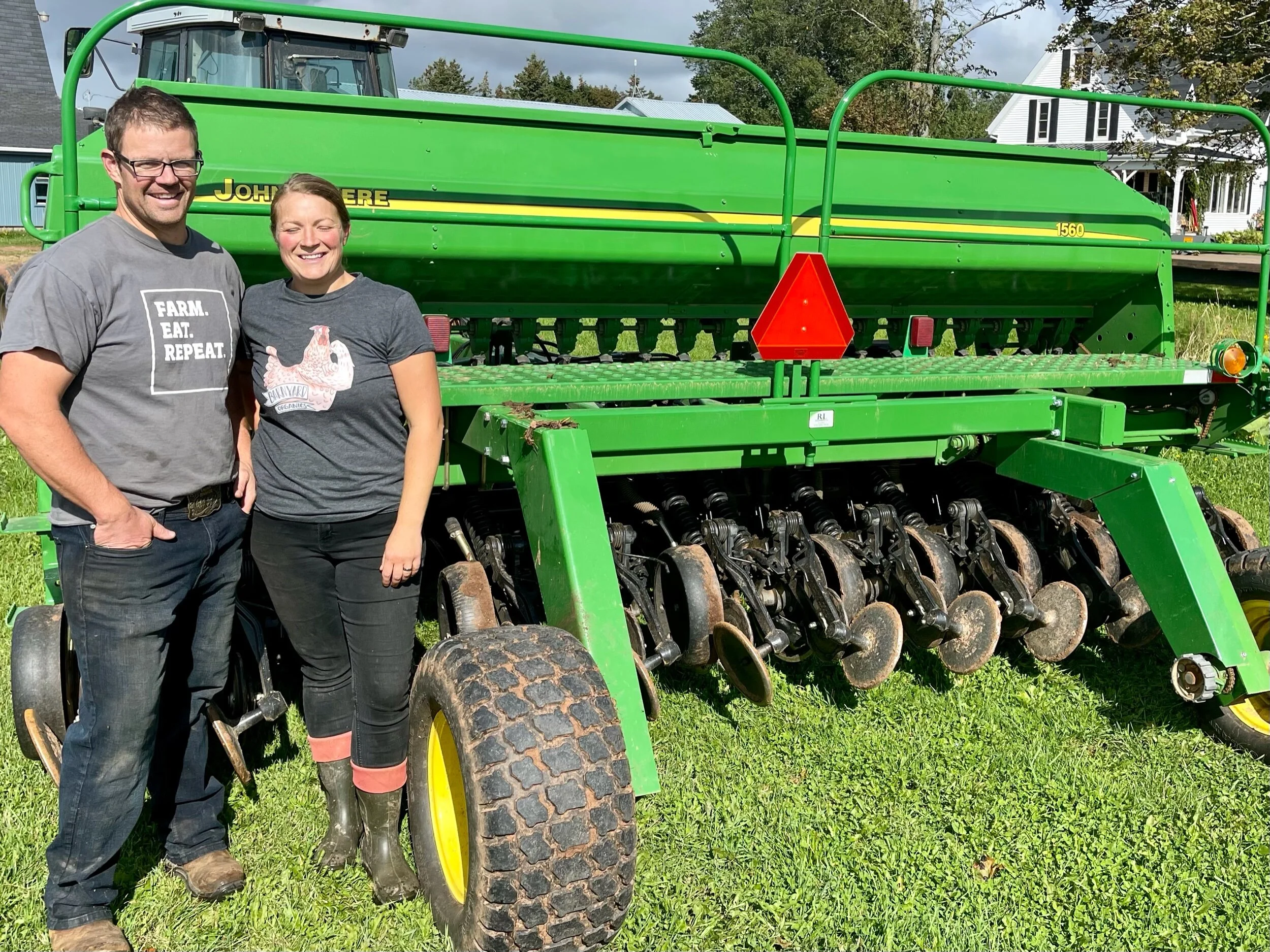
Mark and Sally standing next to their new “no-till” seeder. Photo by Michael Chase. Follow him on Instagram @mjohnsonchase.
This trip has caused us both to think a lot about the foods we eat and their intricate relationship to our changing climate. Clearly, there are wonderful upsides of knowing the farmer who grows your vegetables, grain, meat or fish. When you buy direct from the grower you can ask what he or she did to raise that food. But most of us don’t have that luxury.
However, it’s important we all know that, worldwide, the agriculture sector accounts for 25% of greenhouse gas emissions and as much as 75% of the world’s freshwater use, an issue that has grown more severe in recent decades as more farms have become industrialized to increase productivity. Farmers globally receive roughly $683 billion in government subsidies each year and government aid is expected to more than triple by 2030. Yet roughly 87 percent of these funds currently support industrial farming practices (mainly in the developed world) that harm the environment and human health. They also disproportionately help large corporations at the expense of smaller farmers and make food more expensive for millions of people. These are findings of a new UN report calling for repurposing damaging incentives to achieve more of the 2030 Sustainable Development Goals and realize the UN Decade of Ecosystem Restoration.
The most problematic supports are those tied to the production of specific commodities like corn, soy, or beef, said the study's authors. These funds encourage farmers to grow fewer crops and boost their yield with fertilizers, pesticides and other environmentally harmful technologies. Beyond this approach's environmental impact, the industrial production of a few commodities can make them unnaturally cheap while driving up the price of other, more nutritious foods. For instance, in many developed countries, industrial farms growing major commodity crops such as corn and soy, receive billions to help them stay afloat. Yet, as was stated earlier in this post, smaller-scale, more diverse and sustainable farms - who pollute and use water in significantly smaller quantities - tend to receive minimal or no government support at all.
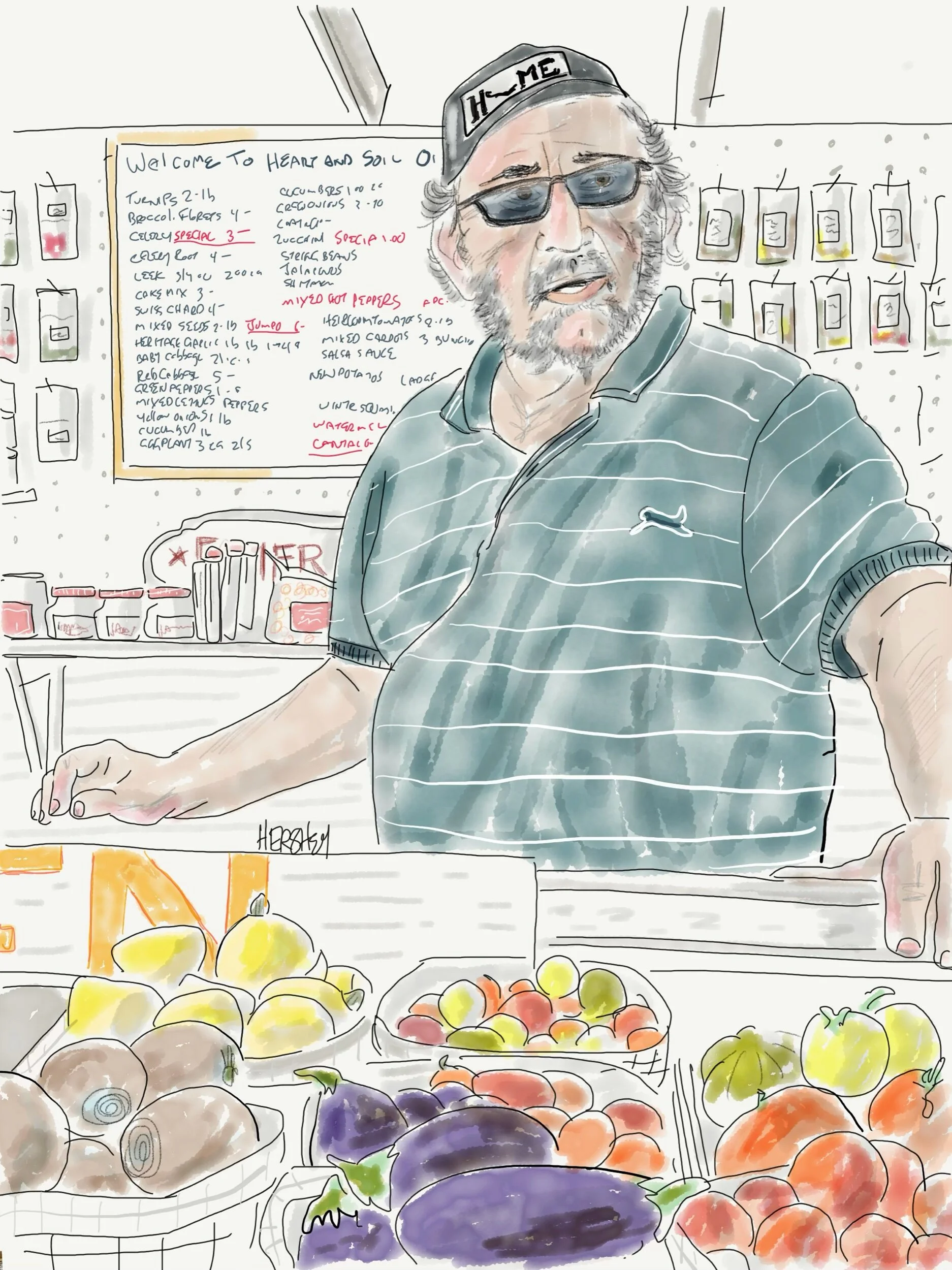
Michael Rossy is a well-known, organic farmer from near Montreal (Runaway Creek Farm in Arundel), who retired as a “hobby” farmer on a lovely farmstead and B&B called Heart and Soul, about 30 kilometers south of North Point in Highway 12. An innovator all his life, Michael currently pushes the envelope by growing and selling - among other unusual things - Asian Pears, Asian Pear Melons and Gojiberries. He enjoys showing locals that anything is possible with great soil, and tender loving care. Drawing by Jenny Hershey. Follow her on Instagram @deeofo.
…If we truly want a sustainable food future, we have to stop looking at food as capital and start looking at long-term land restoration projects, creating healthier soils, and creating more localized growth of food and food sharing that isn't out to make a buck, said Sarah Dunigan, host of the food-focused podcast Anthrodish, as quoted in Canada’s excellent Climate Change newsletter, the National Observer.
In other words, we need to change our values.
Stay vigilant! Thanks for reading. More to come. If you haven’t done so already, please subscribe to this blog, so you can follow our next biking trip later in the fall.
All material, unless credited or otherwise noted, are copyrighted property of the blog post authors.
These buildings were on the pier at a small fishing village named Darnley near Rustico. The photo is a favorite of Jenny’s. Photo by Jenny Hershey. Follow her on Instagram @deeofo.
Louisiana/Texas, Post 4
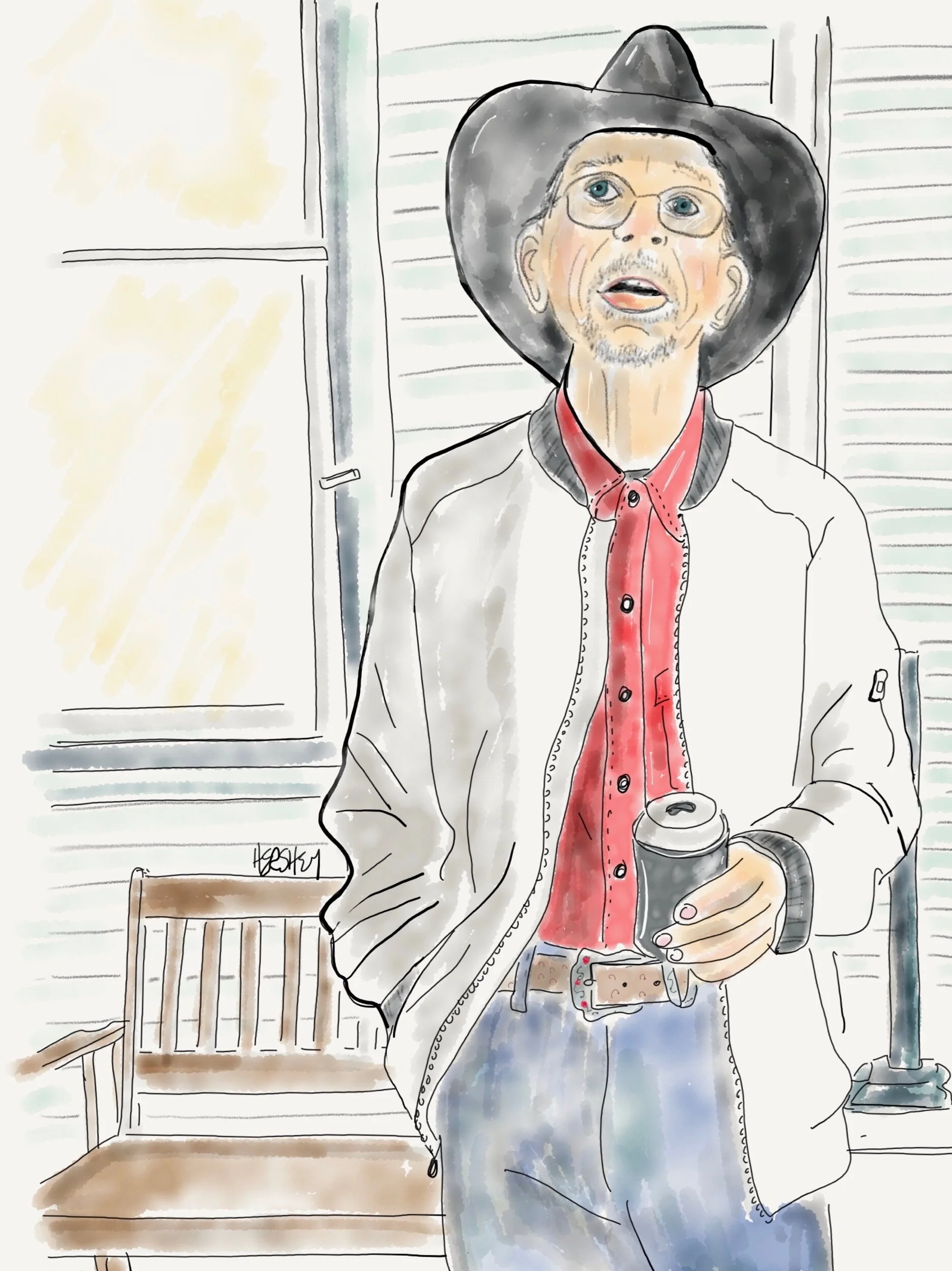
“I work up at United Ag in El Campo. I live at this hotel. Spend Sundays off in Bay City.” Drawing by Jennifer Hershey. Follow her work on Instagram at deeofo.
“Don’t go around saying the world owes you a living. The world owes you nothing. It was here first.” — Mark Twain
Most everywhere we’ve been in Louisiana and Texas, we’ve encountered people who believe deeply in the concept of hard work. I don't know if the importance of work is stronger in the south than elsewhere (it’s hard to imagine a more frenetic work environment than New York City), but its virtue came up repeatedly in our conversations with locals. Often the merits of working seem linked to another highly prized value in these parts - self-reliance - the pathway to the most exalted of American values, our freedom.
Big sky country in Texas between Corpus Christi and San Antonio.
One of our first conversations with a local in Louisiana centered around the concept of a strong “work ethic.” The man we were speaking to was a small businessman and boss of six employees. His perspective made a lot of sense. What boss wouldn't want productive workers? He went on to explain he wasn’t a fan of freeloaders - people too lazy to work, who wanted a handout from the government. I’m sure he’d fired his share of poor workers, but when it came to individuals wanting handouts, it seemed more like he was talking about an idea of what people are like than a reality. Maybe others know people who don’t seek the meaning that work brings us (even when they are unemployed or underemployed), but I do not. I can’t help but wonder if that experience is a reflection of my own cultural viewpoint, or an indication of a lack of exposure to reality seen through a cultural and political naivety.
One thing is certain to me: it is fundamentally human to seek meaningful activity. We all must live. And even in an age of extraordinary inequalities in wealth and income, the majority of us still must - and want to - work. So while there may be poor workers, are there really folks out there who think they deserve something for nothing?
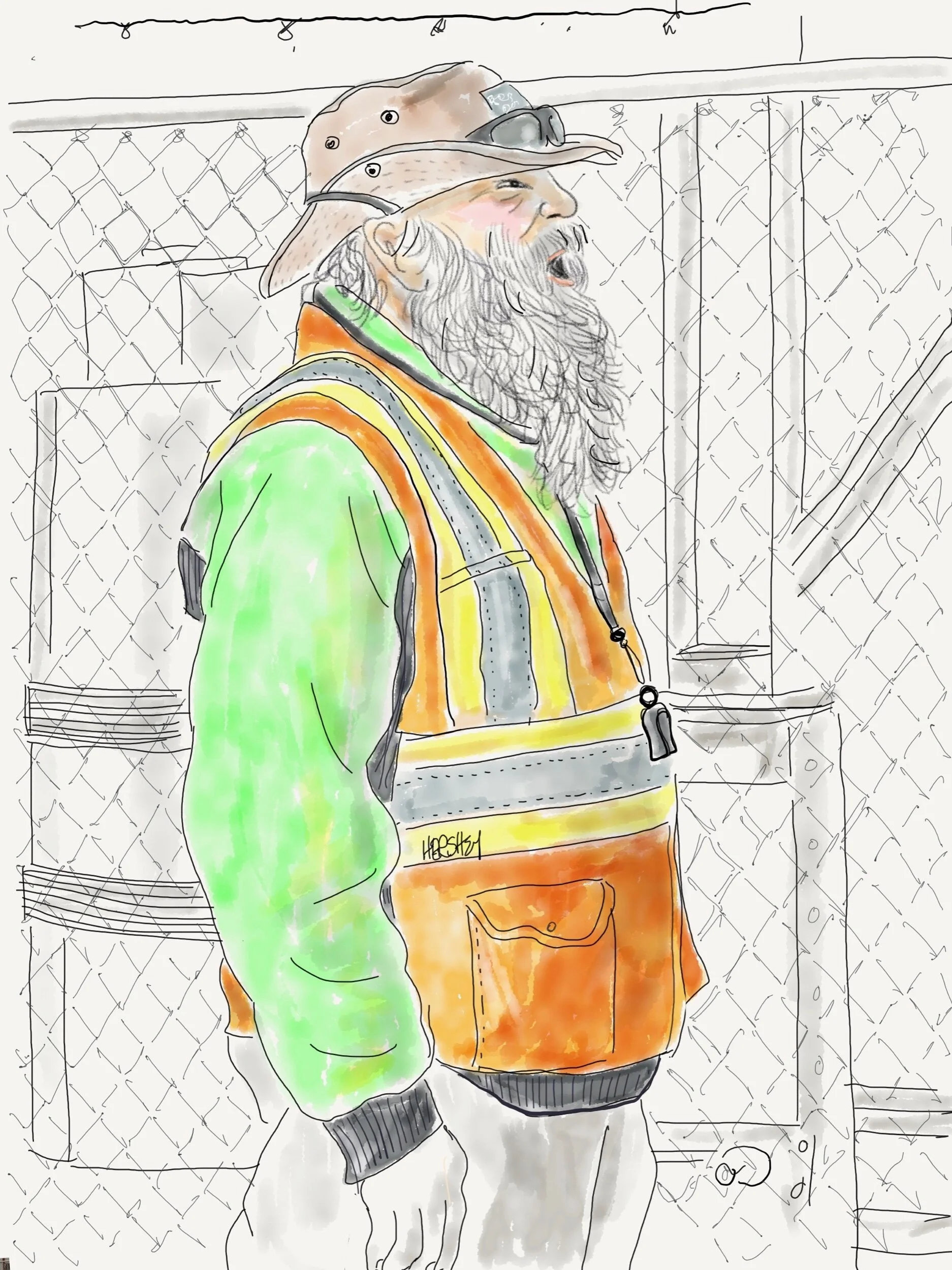
“We don’t get many bikes down here— just make sure you walk ‘em onto the ferry”! Drawing by Jennifer Hershey. Follow her work on Instagram at deeofo.
Although southwest Louisiana and southeast Texas are equally flat, the land between Corpus Christi and San Antonio seems especially vast. Perhaps it’s the steady 150 mile rise from the coast to San Antonio (which is 650 feet above sea level). Or perhaps it’s the unrelenting expanse of open, uninterrupted fields. Perhaps it’s the long, straight roads. Whatever the reason, it's BIG.
Taken on Texas State Highway 181 between Corpus Christi and San Antonio. Prior to the invention of barbed wire in the 1870’s, fences couldn't reliably contain cattle.
At the same time, both the land and people between Corpus Christi and San Antonio are hardscrabble. Pickups are normal, sedans are unusual. Regular folks are used to fishing and hunting. Although they don’t rely on their catches to stay alive, fish and animal wildlife seem to be part of the rural Texan diet, at least among the people we talked to. And the land is used in every way possible; for agriculture, farming, fishing, hunting, wind power, oil and gas extraction, compression stations, pipelines, home building, junkyards, storage sheds, telephone poles, auto graveyards, human graveyards… The Texas countryside is a hodgepodge of so many competing uses I often found it as overstimulating and confusing as a Wal-Mart Megastore.
Texans fishing off the causeway between Aransas and Port Aransas, Texas. The birds nearby are Pelicans.
There's also a lot of workers. A surprising number of people work for wind farms and quite a few work in agriculture, but most of the people we met work for oil and gas or petrochemical companies. And there are a lot of companies. Thirty one new petrochemical plants have been approved for construction or reconstruction in hurricane prone areas on, or near, the Louisiana and Texas coasts since 2016. In our last post, we wrote about two large LNG exporting plants under construction in Cameron, Louisiana and nearby Port Arthur, Texas. These are among those 31 new plants.
One of hundreds of refrigerant tank cars lined up near the Occidental Petroleum, Chemours, and Nashtec Plants at Gregory and Ingleside, Texas, not far from the Gulf Coast on the way inland to Beeville, Texas.
Tetrafluorethane is regarded as a “sustainable” refrigerant because it has lower carbon emissions than previous versions, and a minimal impact on ozone.
As much as we were profoundly charmed and cheered by the warmth of the people we met, the omnipresence of these facilities contributed to our uneasiness. In the face of climate change, does this boom really make sense? There’s something profoundly unsettling about the trend. I’m not so sure the locals feel any different. In Texas, even cognitive dissonance is BIG.
Interestingly, Jenny and I arrived in San Antonio on the night of the Nevada Democratic caucus, and we had the opportunity to drop into the famed Cowboy Dance Hall to catch a raucous, youthful and well-supported Bernie Sanders rally. Just for the record, we both appreciate Bernie’s concerns about climate change, but worry he is over-focused on what we need to achieve and under-focused on how to do it without causing a destructive backlash.
Northerners may not be aware that Texas is the leading U.S. producer of both crude oil and natural gas. In 2017, the state accounted for 37% of the nation's crude oil production and 24% of its marketed natural gas production. NPR.org reports that Texas currently supports a total of 163 natural gas production plants, and Texas has the largest processing capacity in the U.S. In addition, there are 29 petroleum refineries in Texas that process more than 5.7 million barrels of crude oil per day. These plants account for 31% of the nation's refining capacity.
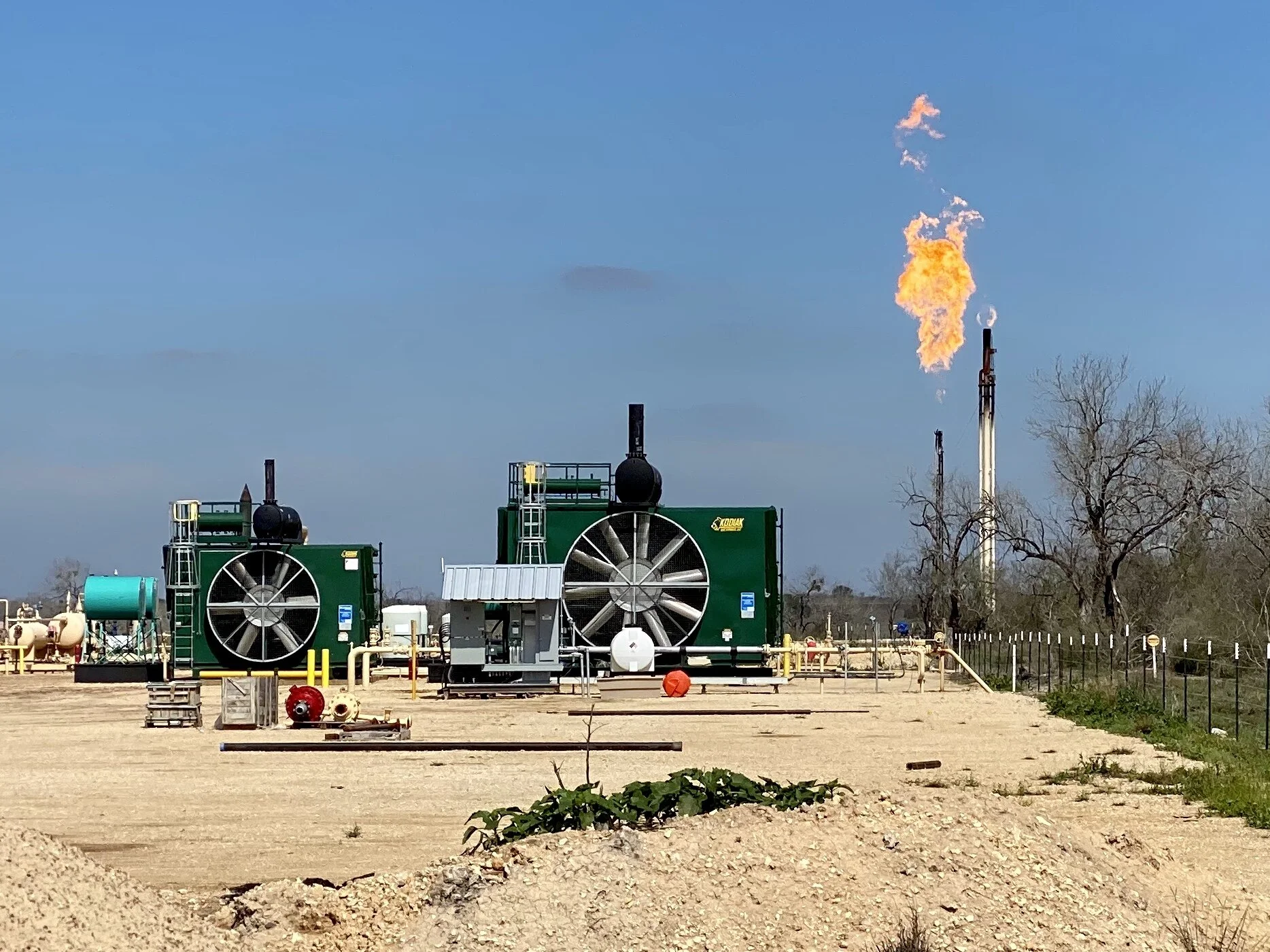
A hydrogen sulfide (H2S) flare near a gas pad. Flaring burns off gas that is deemed uneconomical to collect and sell. It is common to flare natural gas that contains hydrogen sulfide to convert the highly toxic hydrogen sulfide gas into less toxic compounds. Although the practice of flaring is decreasing as pipeline efficacy improves, the following air pollutants may be released from natural gas flares: benzene, formaldehyde, polycyclic aromatic hydrocarbons (PAHs, including naphthalene), acetaldehyde, acrolein, propylene, toluene, xylenes, ethyl benzene and hexane. Taken from this source.
On our next trip to the southwest, we hope to visit the fast growing, second most productive oil field in the world (as of 2018), located in the Permian Basin in western Texas and New Mexico.
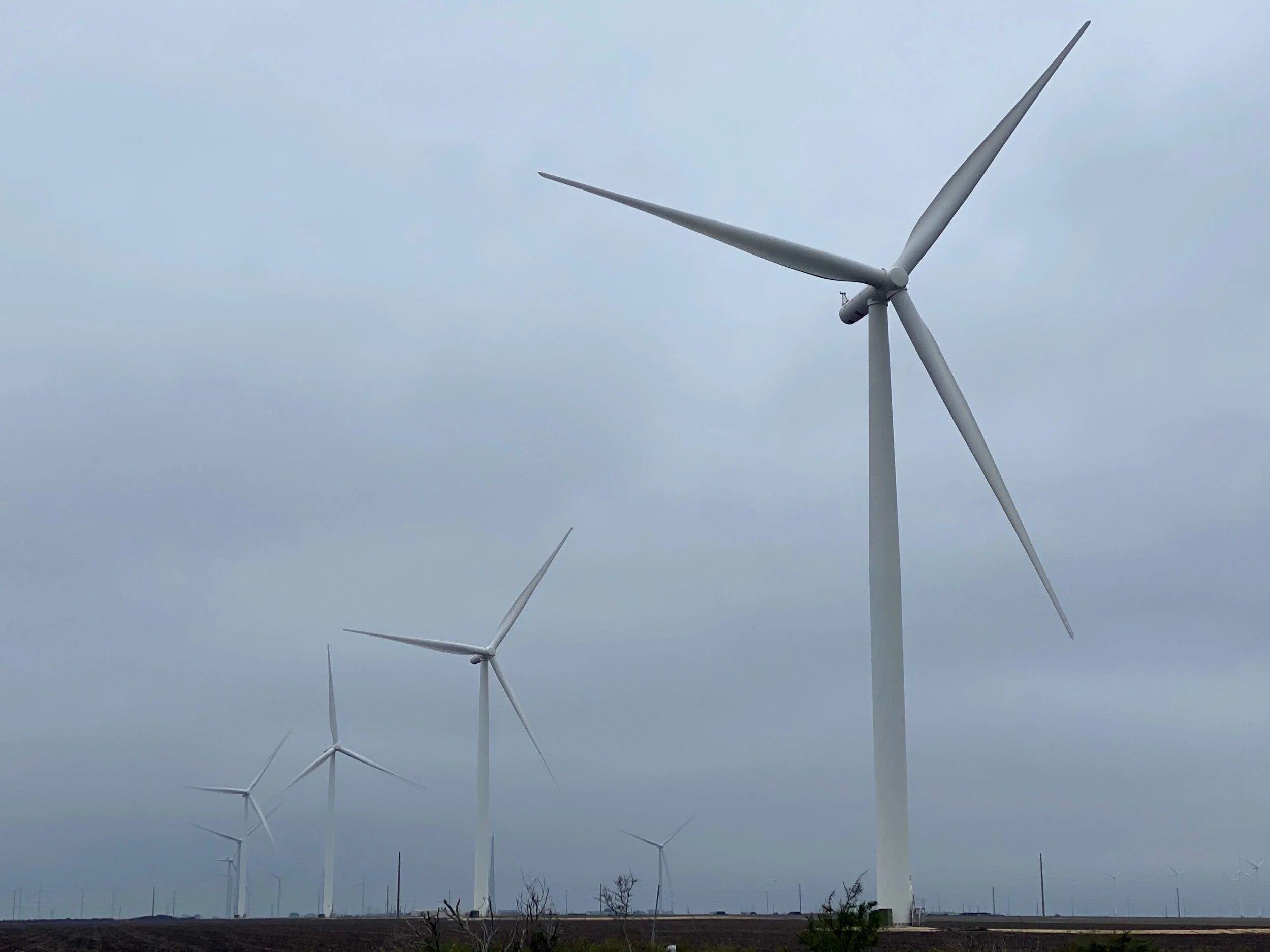
Just above Gregory we encountered a large wind farm on agricultural fields that spanned to the horizon on both sides of the road for almost 8 miles. Later we learned it is run by E.ON Climate and Renewables North America, one of the worlds largest developers, owners, and operators of renewable energy projects. EON owns and operates over 1,900 MW of wind farms in the United States. The wind on these flat plains are intense (we learned that the hard way), and there are quite a few more wind power companies in the area.
Perhaps more surprisingly, Texas leads the nation in wind-powered generation. The state produced one-fourth of all the U.S. wind powered electricity in 2017. Texas wind turbines have produced more electricity than both of the state's nuclear power plants since 2014. And equally interesting, Texas produces more electricity than any other state, generating almost twice as much as Florida, the second-highest electricity-producing state. All combined, Texas is the largest energy-producing state in the country. It’s also the largest energy-consuming state in the nation. In fact, the industrial sector, including its refineries and petrochemical plants, accounts for half of the energy consumed in the state.
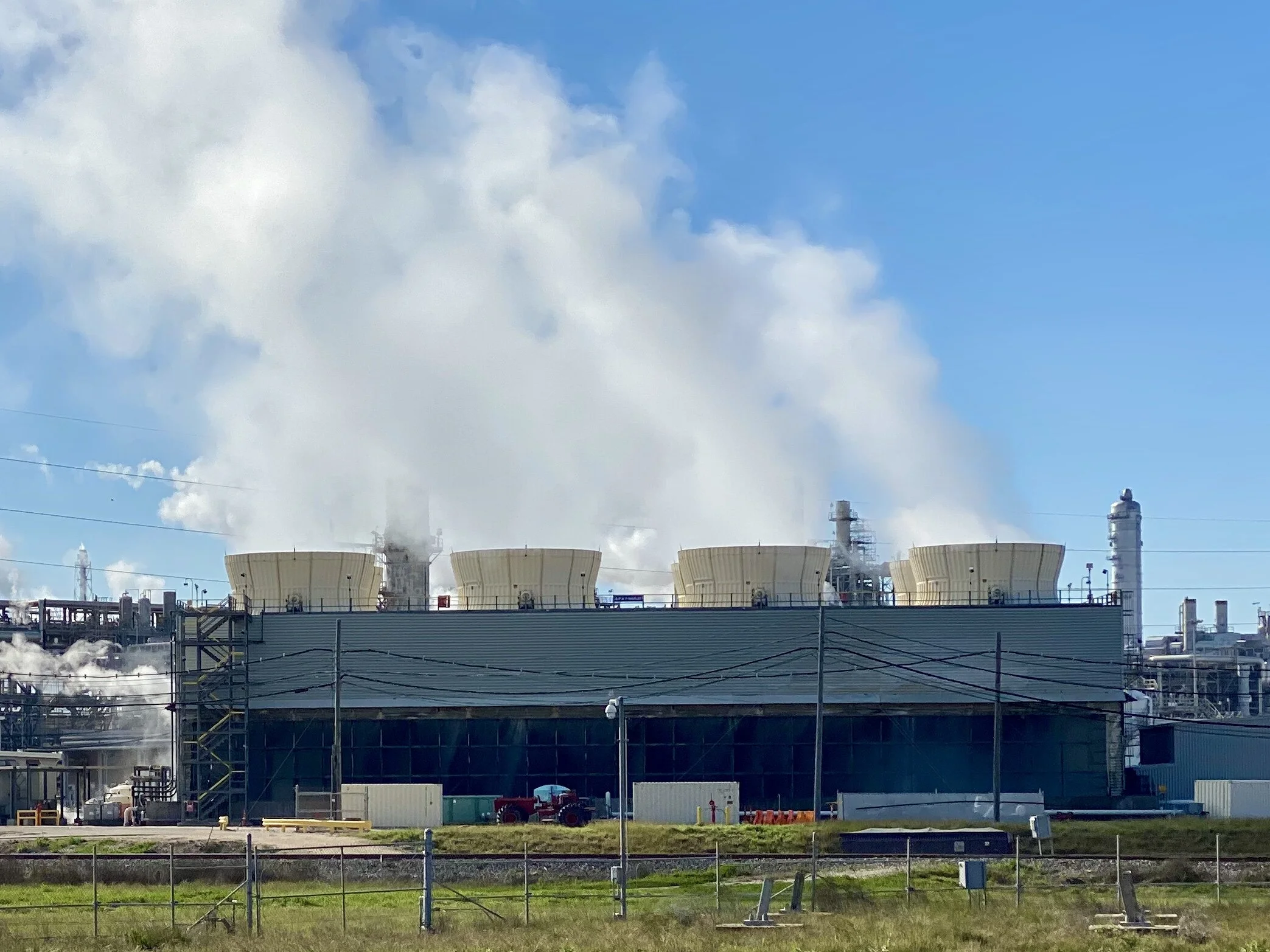
Cooling Towers on the Dow Chemical Plant in Freeport, Texas.
Given our lowbrow method of bicycle travel to offbeat roads and towns, we had lots of opportunities to speak with locals. We didn’t meet one person who spoke of his or her job in disparaging terms. We were often met with gratitude for the opportunities that seemed to be available. Truth is, Texas is humming. The unemployment rate is 3.4%, while the national average is 3.6%. Louisiana’s rate is slightly higher at 4.5%, although it was 6% in November of 2016. By most measures in both states, employment is looking up.
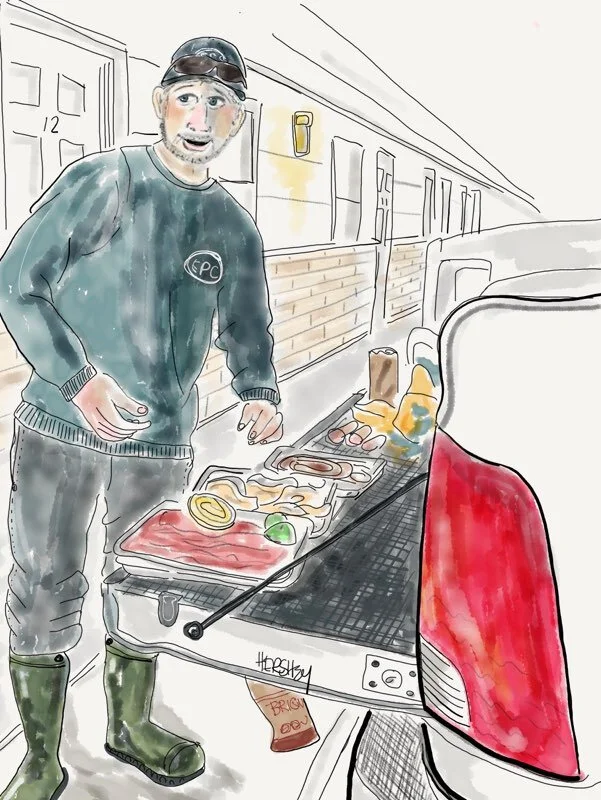
“Me?- I’m Norberto. Me an’ my brothers, Ivan and Freddy cook our meals for the week out here. We take our lunches to the plant.” Drawing by Jennifer Hershey. Follow her work on Instagram at deeofo.
Norberto and his brothers had traveled from their home near Brownsville to work at a plant near Kenedy, Texas. There’s a lot of available jobs there. We counted 9 oil and gas plants in this town of 3500 people.
The evening we hung out with Norberto and his brothers, I fell into a conversation with one of their friends, an oil worker named Jose. An Hispanic transplant from Indiana, Jose was happy to be finding so much work in a part of the country that he preferred. He educated me for awhile about H2S flaring and modern pipeline construction methods, which I appreciated. It was comforting to hear the industry was actually trying to lower methane emissions. After a while, I asked him about his politics. Jose was unabashedly straightforward about supporting Trump because Trump supported his industry. I turned the conversation to climate change. He hesitated a bit as I gently expressed my concern about carbon emissions and what might happen to the world my grandchildren will be inheriting. He didn’t have children, so I kept the conversation a few generations out. I could also tell Jose was aware lots of folks felt like I did, and I could feel him becoming defensive. So I changed tack. I told him I didn’t begrudge anyone working in any industry who was trying to achieve his or her fair share of the American Dream.
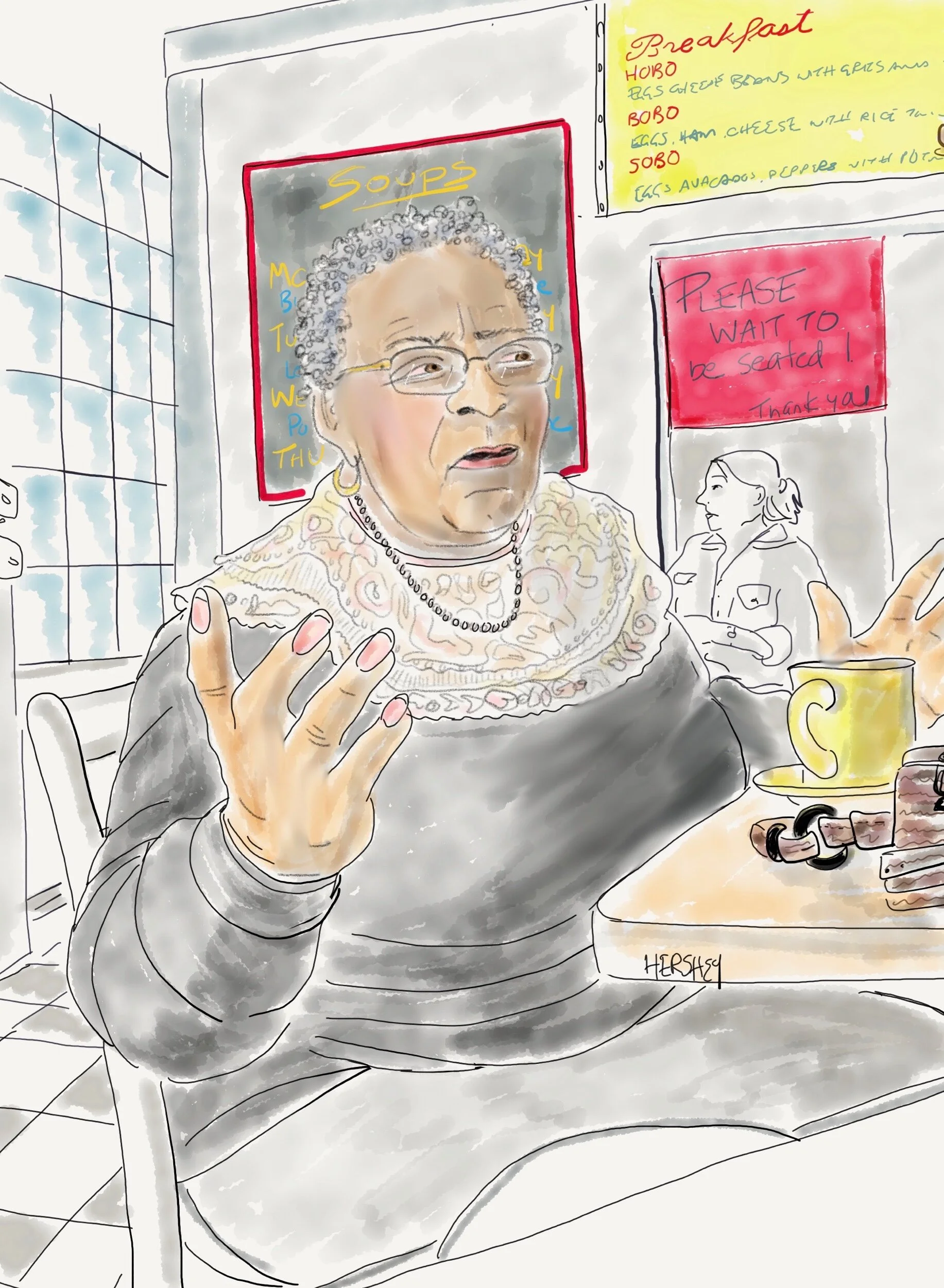
“I used to be an intelligence analyst for the army in Germany. I moved back here to be close to my military family. I pray everywhere and anywhere because God is always where I’m praying”. Drawing by Jennifer Hershey. Follow her on Instagram at deeofo.
I remember how isolated veterans felt when they returned from the Vietnam war many years ago. Coming back to a divided country after having served in an unpopular war was a miserable experience for so many veterans, and their shame and degradation cloyed deeply at those of us who opposed the war. Consequently, it was a relief when Americans did not do the same thing to vets when they returned from the second Gulf War - a war equally as unpopular as Vietnam. It seemed that Americans understood had that our vets were not the perpetrators of an unpopular and ill-advised conflict, but were instead brave men and women who had been asked to do something unpopular and counterproductive by their superior officers. In that case, the right people were held accountable for poor choices.
Just as those of us who are deeply worried about the growing climate emergency are realizing that meaningful change has little relevance to the consumer-based choices of the average middle class, we also need to avoid blaming our brothers and sisters who work at low and mid-level technical jobs in an industry that has brought us so much, but is also causing us great damage.
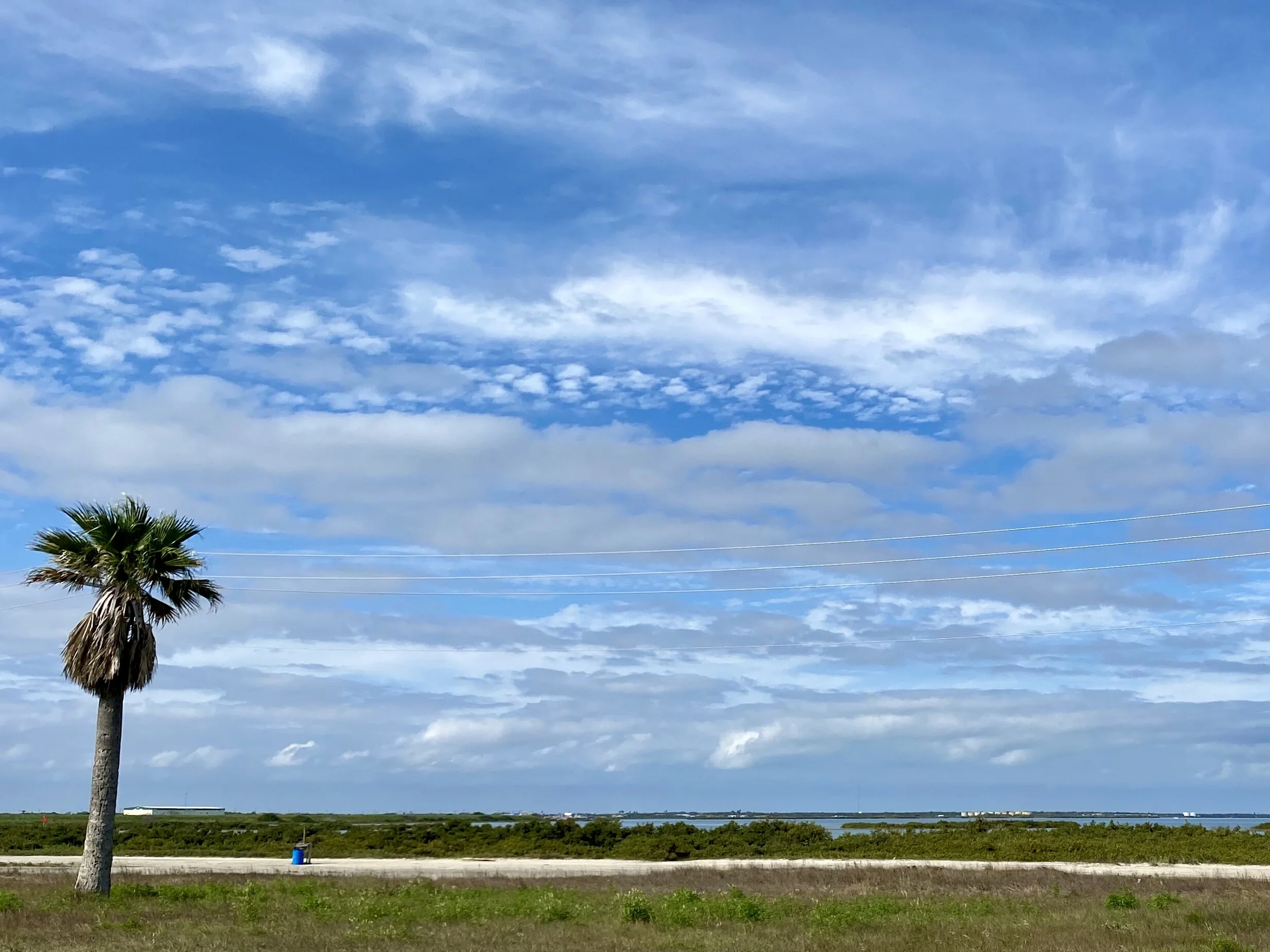
Looking south from the causeway between Aransas and Port Aransas, Texas.
Jobs matter. They are a necessity. At the same time, we need policies that will aggressively curb and eliminate carbon emissions. I've heard conservative Republicans say that it’s not fossil fuels that are the problem, it's emissions. In response, I say …. great! If one really trusts the free market, then put a price on those emissions (and return the proceeds as a dividend to taxpayers to mitigate additional costs), and trust the market to work its magic. And if that intervention doesn’t do the work fast enough (at the rate that science tells us we need) then let’s put our money where our mouth is and trust the market enough to increase the price of carbon until it’s enough. Let’s bring the emissions down! If we can use the market to stimulate innovation that will help us save a lot of our oil and gas jobs, that’s terrific! If not, then let’s accept the truth of our situation and create a different kind of economy.
As one of the people we met kept saying, “I'll tell you what” …Using the ridiculous excuse that the science isn’t settled isn’t acceptable. The science of climate change is as verified and verifiable as the concept of gravity (about 98% of scientists agree both are happening). Climate change isn’t convenient, that’s for sure. But just because we don’t like that it’s happening isn’t a reason for denial. Let’s deal with it.
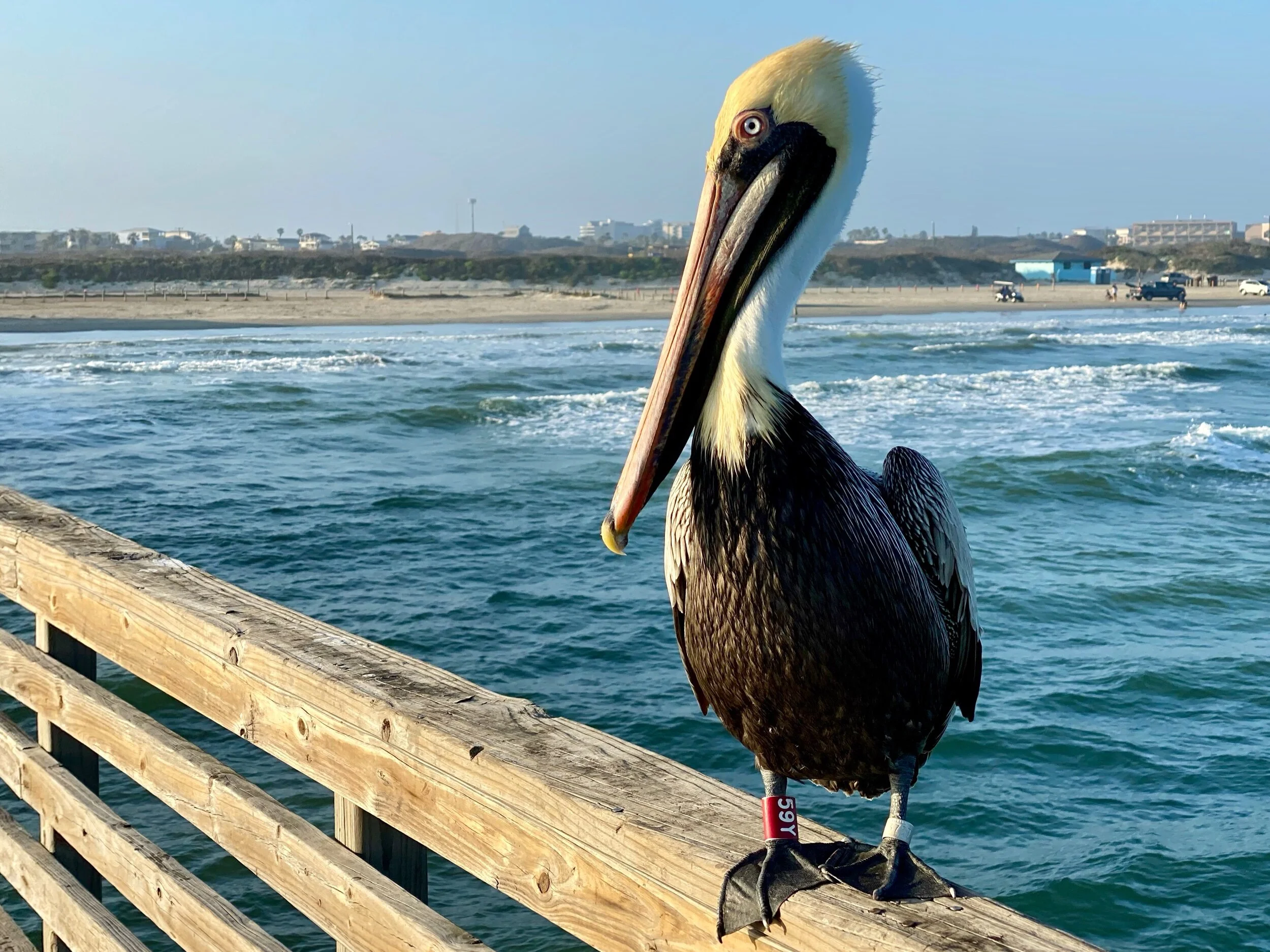
Yet another Pelican poses for us near Corpus Christi.
This blog post concludes our latest trip from New Orleans to San Antonio. I am writing this on an Amtrak train, with our bikes safely stowed in the baggage car. It’s been an extraordinary trip. If you haven’t visited the 4 missions on the San Antonio River, we enthusiastically recommend them, especially Mission San Juan. A few key pictures from there are posted below.


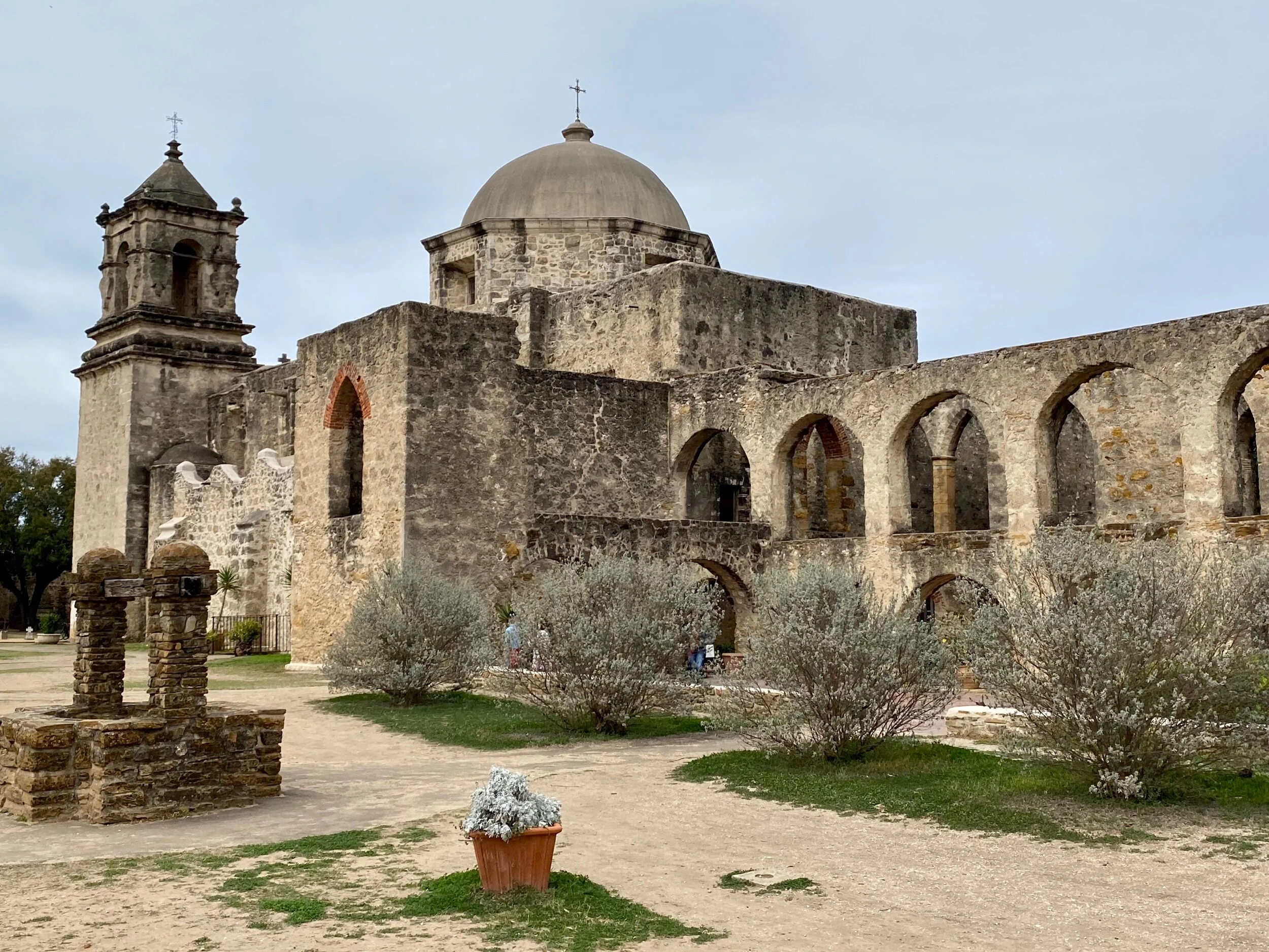
Below are links to this entire trip. If you don’t have a Garmin account you will have to create one to see them (it's worth it if you're a biking geek or map lover).
1) New Orleans Road Cycling, 2) New Orleans Road Cycling, 3) Donaldsonville Road Cycling, 4) Morgan City Road Cycling, 5) St Mary Parish Road Cycling, 6) Abbeville Road Cycling, 7) Lake Arthur Road Cycling, 8) Cameron Parish Road Cycling, 9) Port Arthur Road Cycling, 10) Galveston Road Cycling, 11) Freeport Road Cycling, 12) Matagorda County Road Cycling, 13) Refugio Road Cycling, 14) Port Aransas Road Cycling, 15) Bee County Road Cycling, 16) Kenedy Road Cycling, 17) Floresville Road Cycling, 18) San Antonio Road Cycling, 19) San Antonio Road Cycling, 20) San Antonio Road Cycling.
Thanks for reading! There’s always more to come, but this particular trip is complete.
All photos, unless credited or otherwise noted, are copyrighted property of the blog post author.
Louisiana/Texas, Post 3
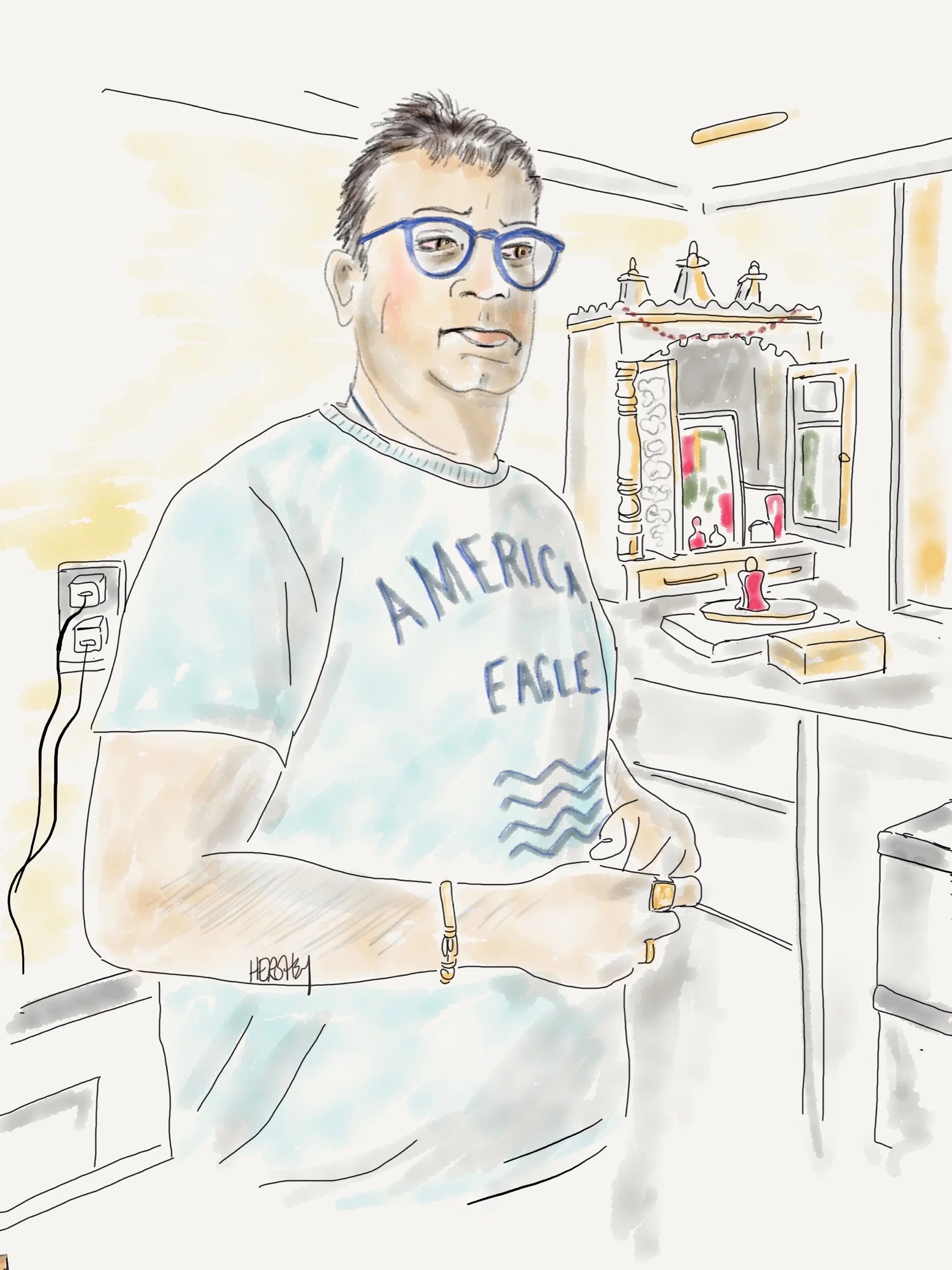
“My wife and I take turns praying at our altar. We are Hindus. But we love this motel. It’s all ours”. This drawing of a proprietor of a mid-century motel in Freeport, Texas was done by Jennifer Hershey. You can follow her work in Instagram at deeofo.
Welcome from Port Aransas, Texas, just slightly southeast of Corpus Christi, Texas.
—————
“It was the best of times, it was the worst of times, it was the age of wisdom, it was the age of foolishness, it was the epoch of belief, it was the epoch of incredulity, it was the season of light, it was the season of darkness, it was the spring of hope, it was the winter of despair.”
-from a A Tale of a Two Cities by Charles Dickens.
Such are the times we live in.
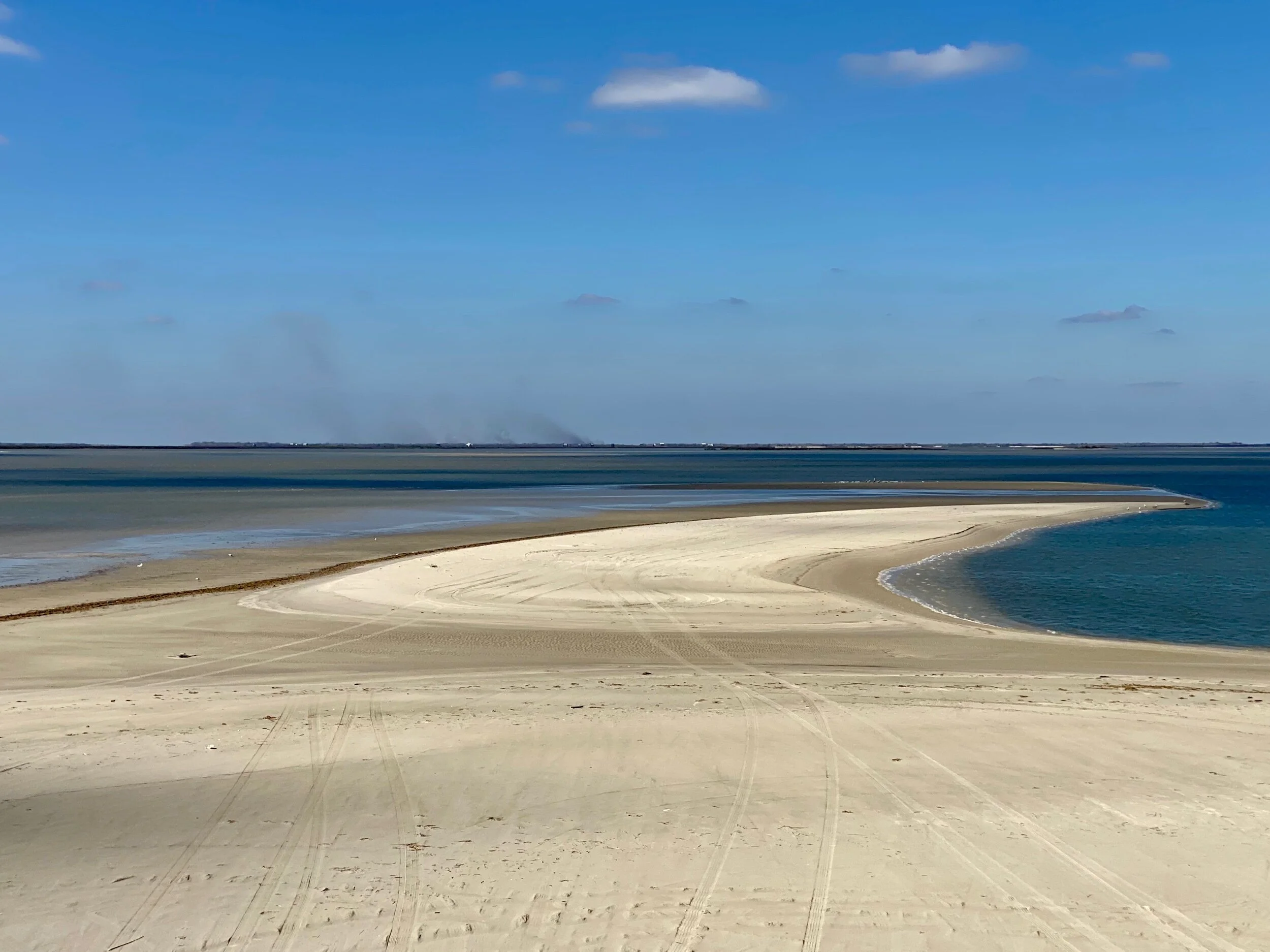
On the way to Freeport, Texas. We learned later the smoke in the background is from a Dow Chemical plant that removes magnesium from sea water.
Our trip continues to be an extraordinary exploration of exquisite natural landscapes, occasional encounters with wildlife (dead and alive), great conversations with diverse and friendly people, navigating delightful and terrifying roads, dealing with sublime and challenging weather, and periodic confrontations with seedy and startlingly ugly industrial landscapes.
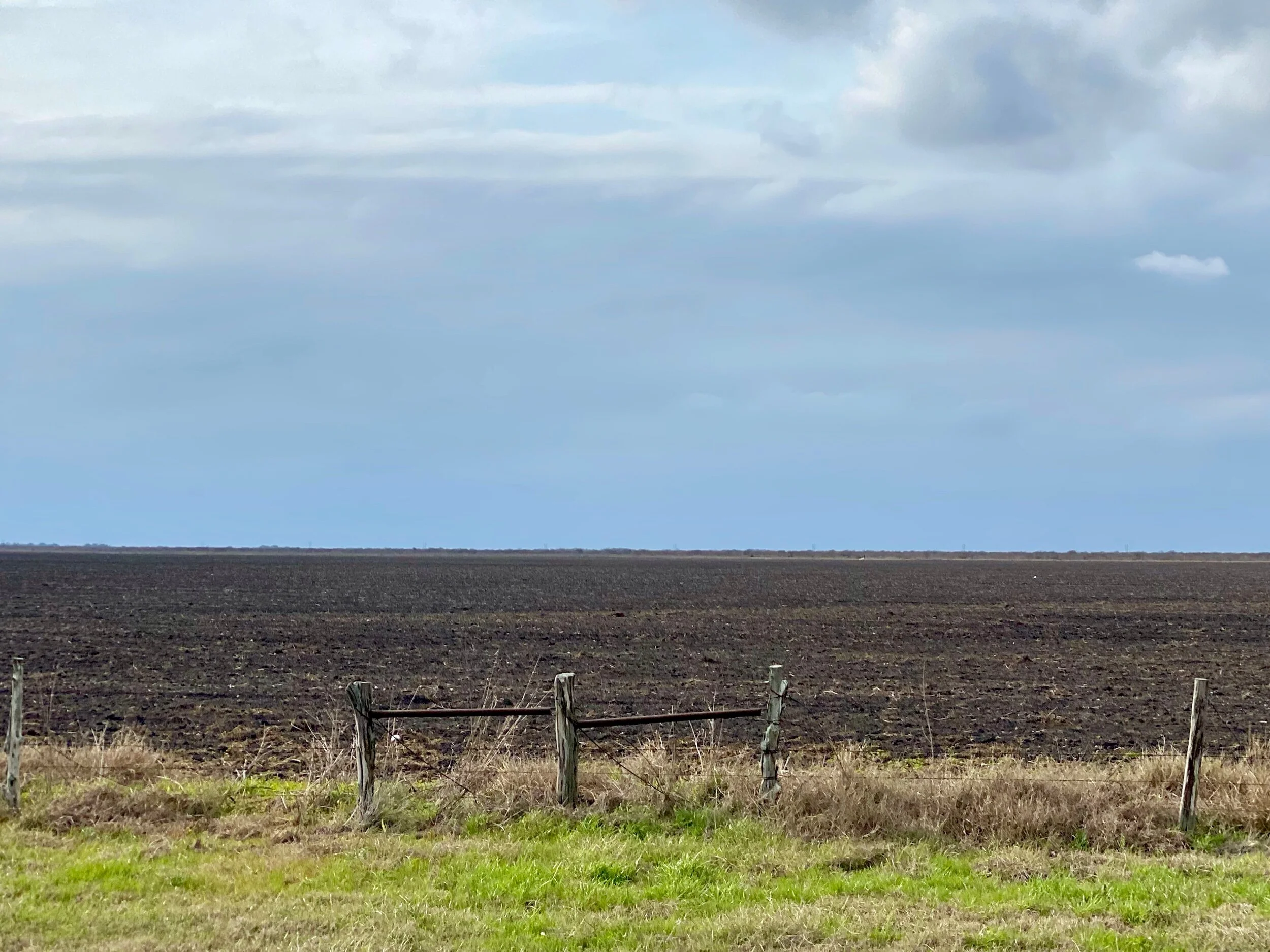
Texas is definitely big sky country, and southeastern Texas is as flat as a pancake on a hot griddle.
Perhaps we can borrow from Dickens, and instead of symbolic cities substitute citadels, or communities of people who live inside of self-imposed walls. Like any citadel that is protected from others, we can only see what’s inside, and have no idea of what’s on the outside.
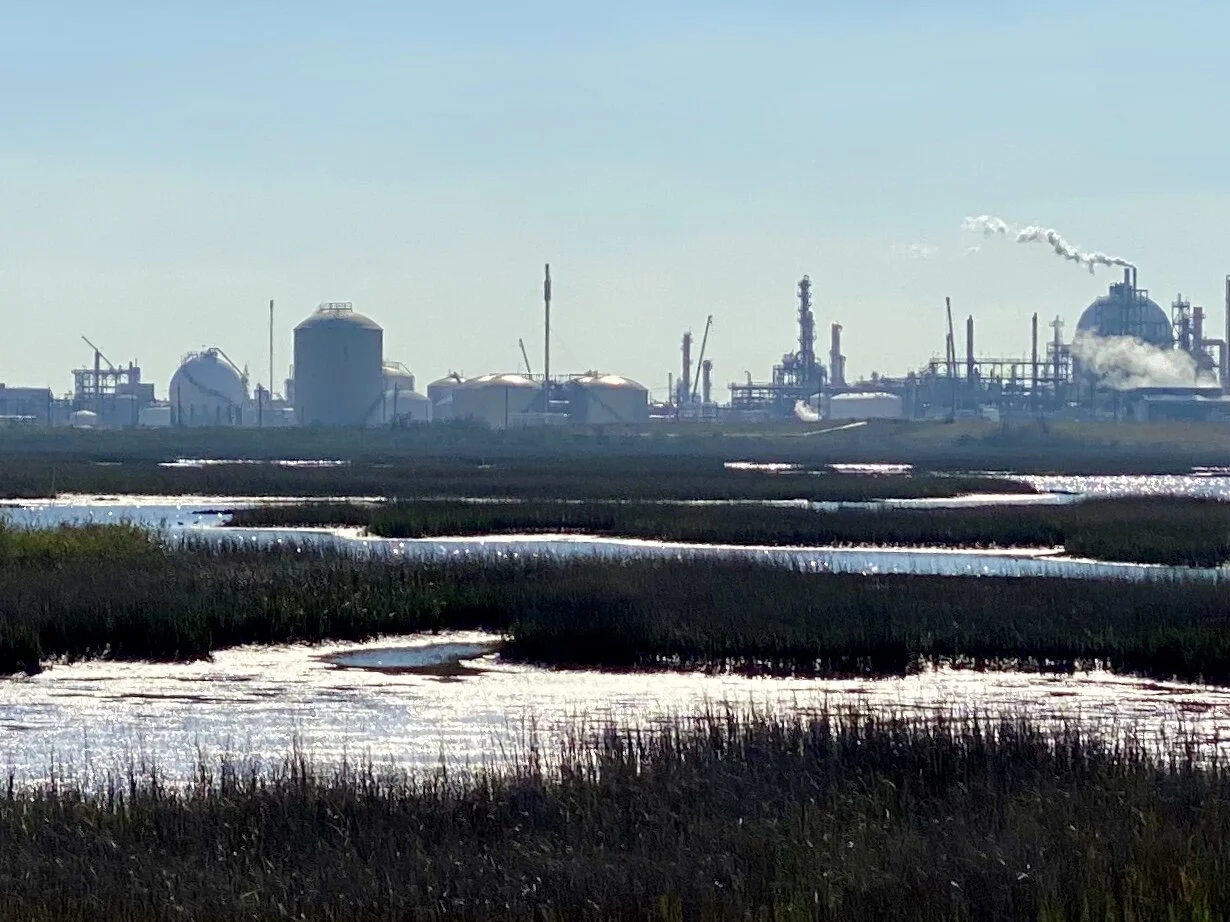
The Dow Chemical Plant near Freeport is situated just above the Intercoastal Waterway on a vast marsh.
In a way, Fox News and CNN are the storytellers for two distinct narratives that reflect two separate citadels: urban and rural America. Our cities are the center of our intellectual, artistic, entertainment and media capitals. Our rural areas - especially evident down here in southeastern Texas - provide access to our natural environments, produce our food (and also increasingly produce electricity through wind-power on the same land), and also extract and move our oil and gas providing our cities with both food and energy. Consequently, they also are the sites for some of our most polluting, dangerous and economically critical industries.
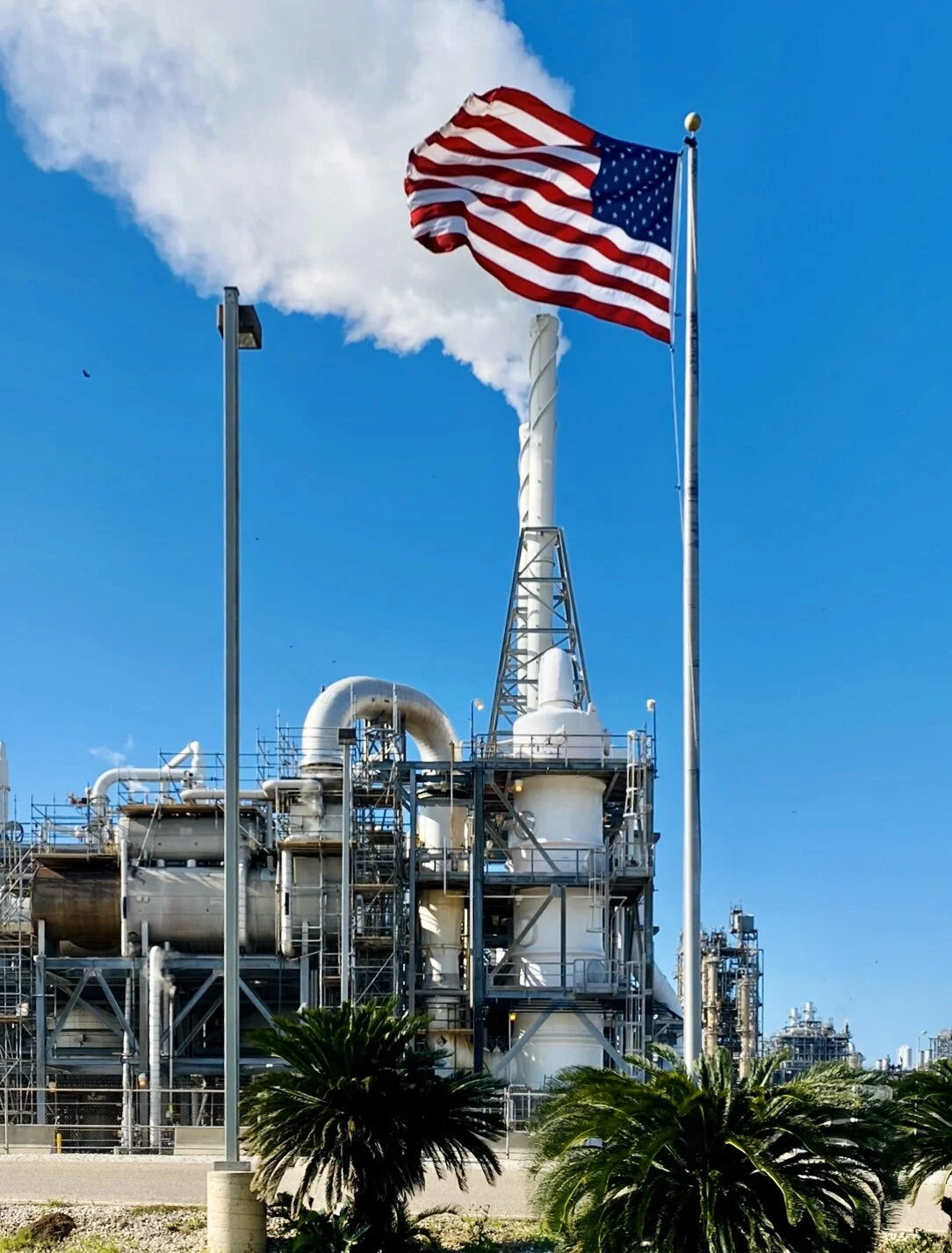
A close up shot of the Dow Chemical plant in Freeport. Locals say this is one of the largest chemical plants in the world.
As I mull over what we are encountering, I find myself thinking the challenges on the Louisiana and Texas coastlines result in a mixed landscape not unlike our home town of New York City. There’s an abundance of both beauty and squalor, and avoiding either one gives visitors an incomplete understanding.
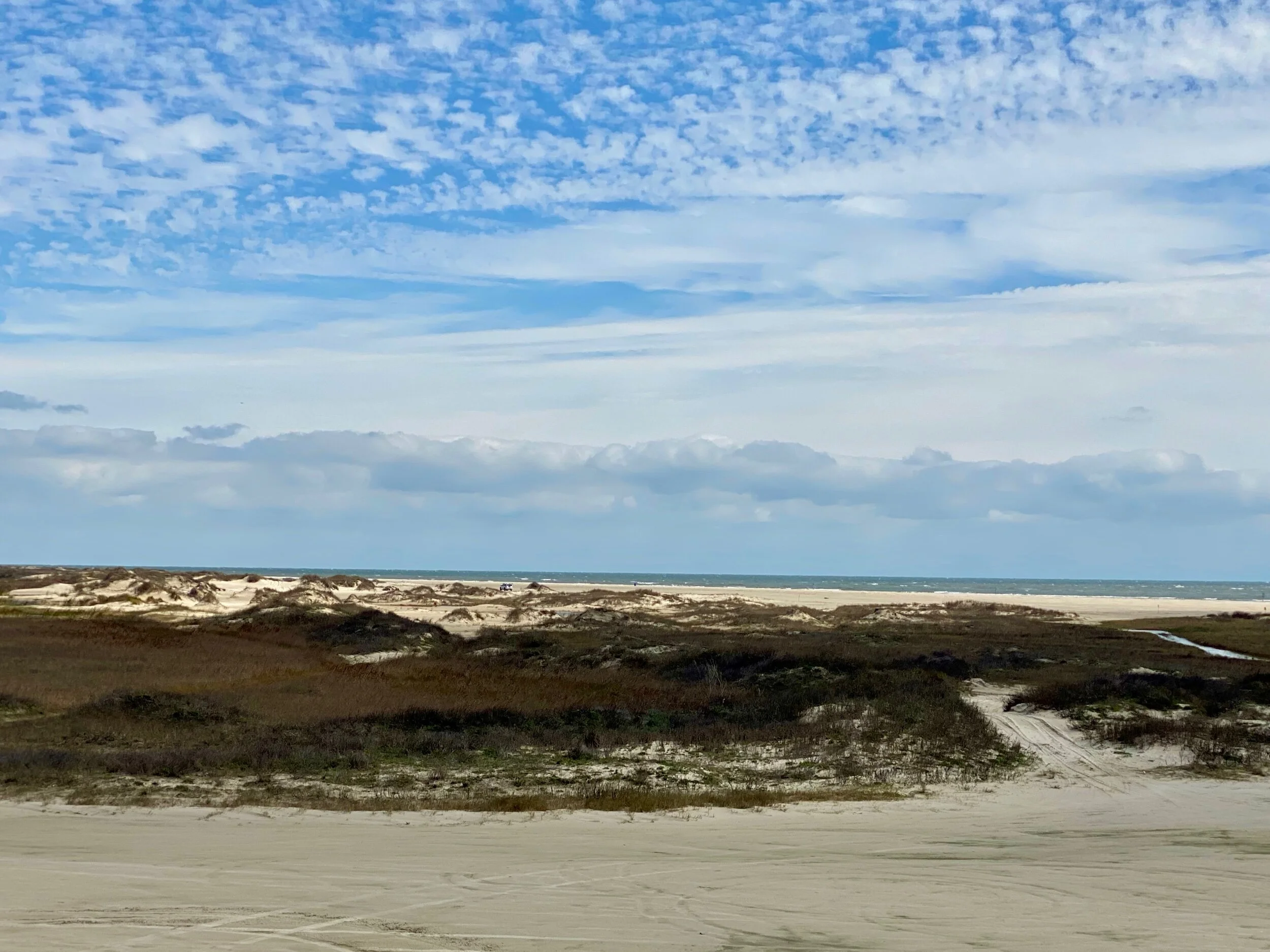
View from the San Luis Pass-Vacek Toll Bridge, which spans San Luis Pass into Brazoria County, Texas.
Clearly, I love the natural beauty of this coastline and its inland marshes, farms, and woodlands. But the story told through the industrialization of the Gulf Coast sticks in my craw. As a northerner, I’m struck by my own complicity in a type of NIMBY (Not in my Backyard) reality. I enjoy living in a city that has (with some exceptions in poorer neighborhoods in the outer boroughs) enjoyed increasingly cleaner air and water over the past several decades through stricter environmental regulations and a shift in focus from industrial production to digital technology.
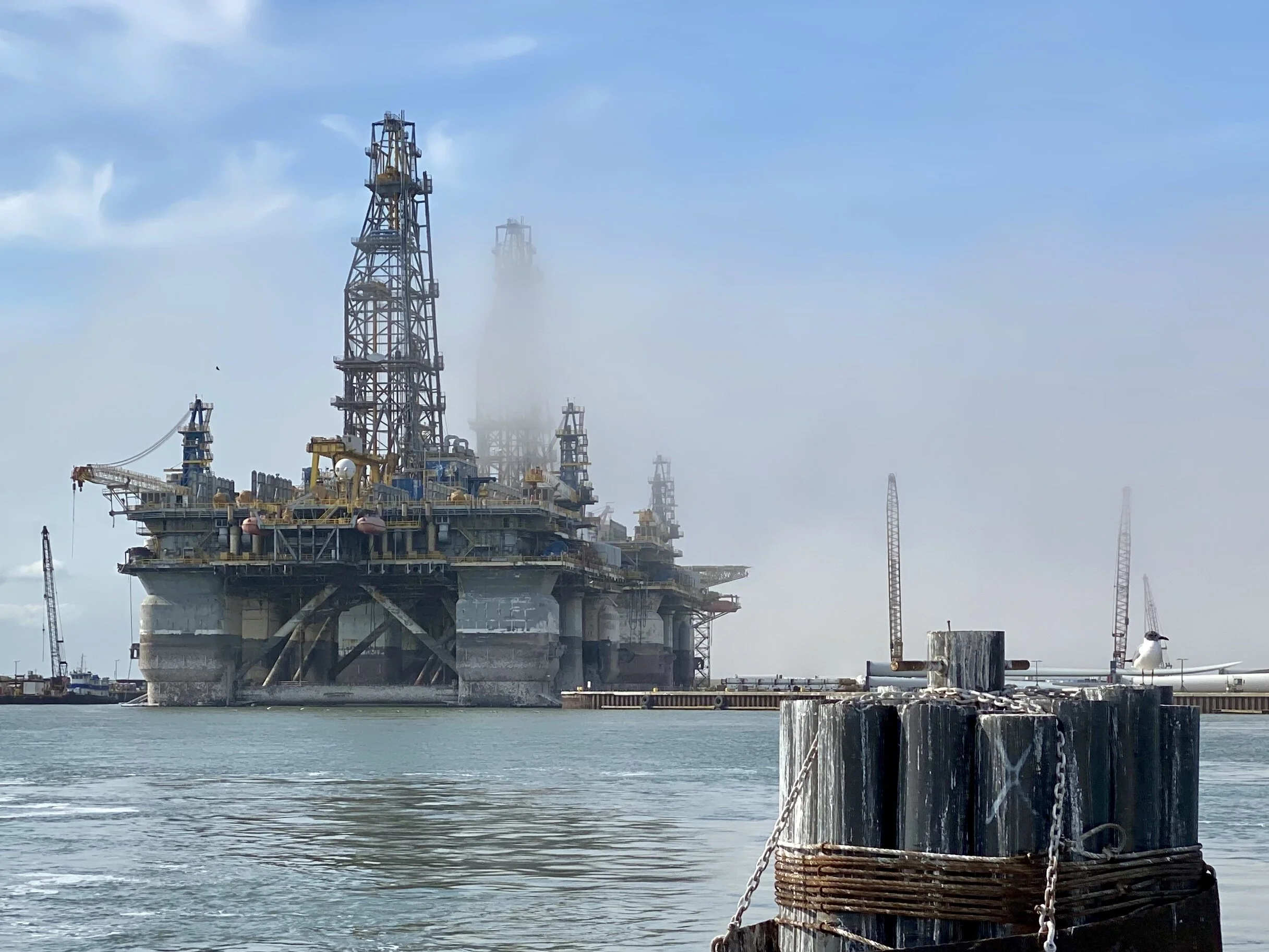
Temporary oil derricks next to the Corpus Christi shipping channel. The local community was told they would be there for six months, but are still there after almost 3 years. And it’s a big bone of contention in this community. Picture taken from the Port Aransas Ferry.
Yet, the nasty stuff used in so many of our industrial processes, plastics and household products has to be made somewhere (at least in our current economy), and some of those places are along the Louisiana and Texas coasts. And like all poor and moderately poor neighborhoods, when jobs are at stake the nature and consequences of those industries matter less than the jobs they bring.
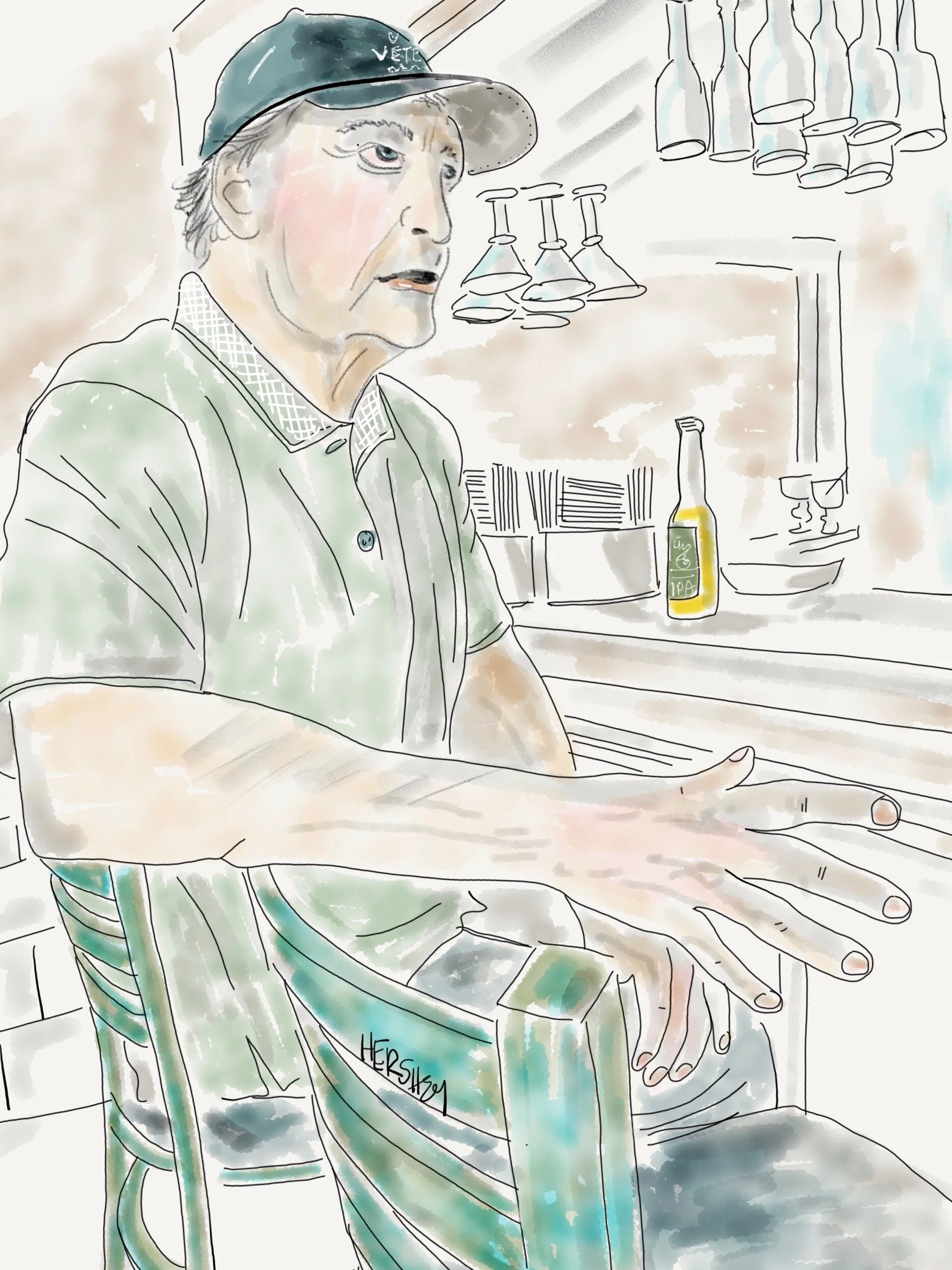
“Well I’ll tell you what—they got the best seafood right on that Seawall”. Drawing by Jennifer Hershey. Follow her on Instagram at deeofo.
Occasionally locals will resist. We met a local at a great Mexican restaurant in Freeport who had worked in most of the nearby plants over his decades long career (he was probably in his 60’s). He did a short stint at the nearby Dow Chemical plant, but didn’t stay long. The plant officials said it was safe, but he told us that it sure didn’t seem safe to him, so he moved on.
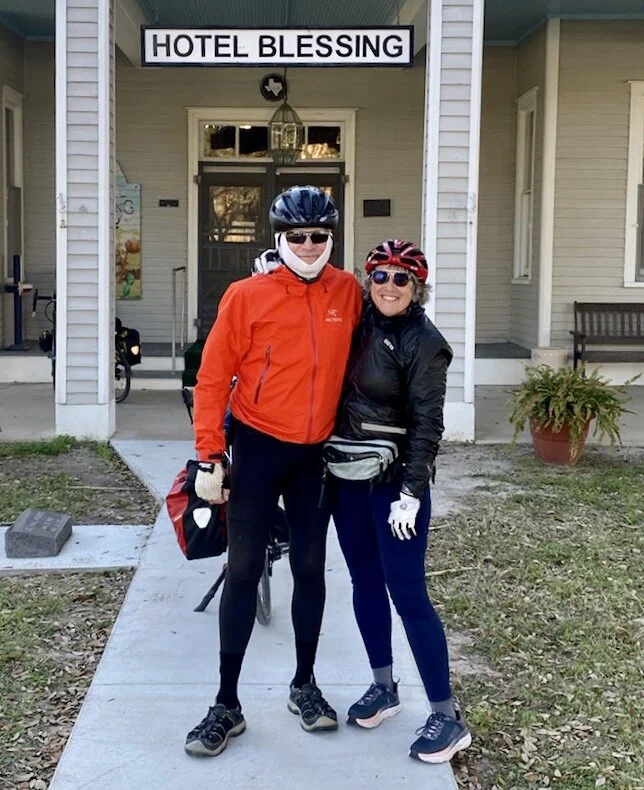
Jenny and I standing in front of the Hotel Blessing.
The downstairs interior of the Hotel Blessing in Blessing, Texas, population 861. Blessing was named in the early 1900’s out of the gratitude for local agriculture, railroad and coastal development.
Yet, lots of folks down here are glad for all that Texas has to offer. I’ve heard more than one person boast about being “Texas born and bred”. And even one town has named itself after its good fortune. By sheer coincidence, we found ourselves needing to stop at the one hotel about the right distance between Freeport and the Corpus Christi area (we couldn't stay on the coast because the old coast road was washed out by Hurricane Ike). It’s called Hotel Blessing, named after the town of Blessing.

“Oh I’ve been doing this for years. If they keep coming....I’ll be here”. Drawing of Helen Feldhousen by Jennifer Hershey. Follow her on Instagram at deeofo.
We didn’t know what we were in for at the time, but after a restless night at the Hotel (we could hear everything - yep, everything - going on during a busy Valentines Day evening) we went to breakfast at the Hotel Blessing Coffee Shop. We were greeted by the intrepid Helen Feldhousen and a cast of other folks - some of whom who show up in the Texas “Bucket List” broadcast below.
I am thinking quite a bit about the concept of “the tragedy of the commons”. This is a situation where individual users, acting independently according to their own self-interest, behave contrary to the common good of all users by depleting or spoiling the shared resource through their collective action. “Not in my Backyard” (NIMBY) actions are related conceptually. For example, my own life is made better by situating so many large petroleum chemical and oil and gas plants so far away from large cities on either the west or the east coasts. At the same time, the people of southeastern Texas gain through employment opportunities where the only other options would be tourism or agriculture. Yet, their very livelihoods are put at risk by the significant carbon pollution of the industrial activity here, because it contributes to the extreme weather that may ultimately destroy those plants, along with their jobs.
A very mellow Pelican stares us down on the beach at Port Aransas.
Additionally, citizens around the world gain nothing by the carbon these plants and their related industries have added to our atmosphere. It’s worth contemplating that although America contains 5% of the worlds population, we are responsible for 25% of the carbon put into the atmosphere since the dawn of the industrial revolution. And although China is now the world’s greatest carbon polluter, we remain the world’s greatest carbon emitter on a per capita and country basis combined. That fact alone suggests that our way of life is a big part of the tragedy of the commons that climate change is extracting. It's clear that staying with the status quo is the worst thing we can do. It’s time to step up to a different plate.
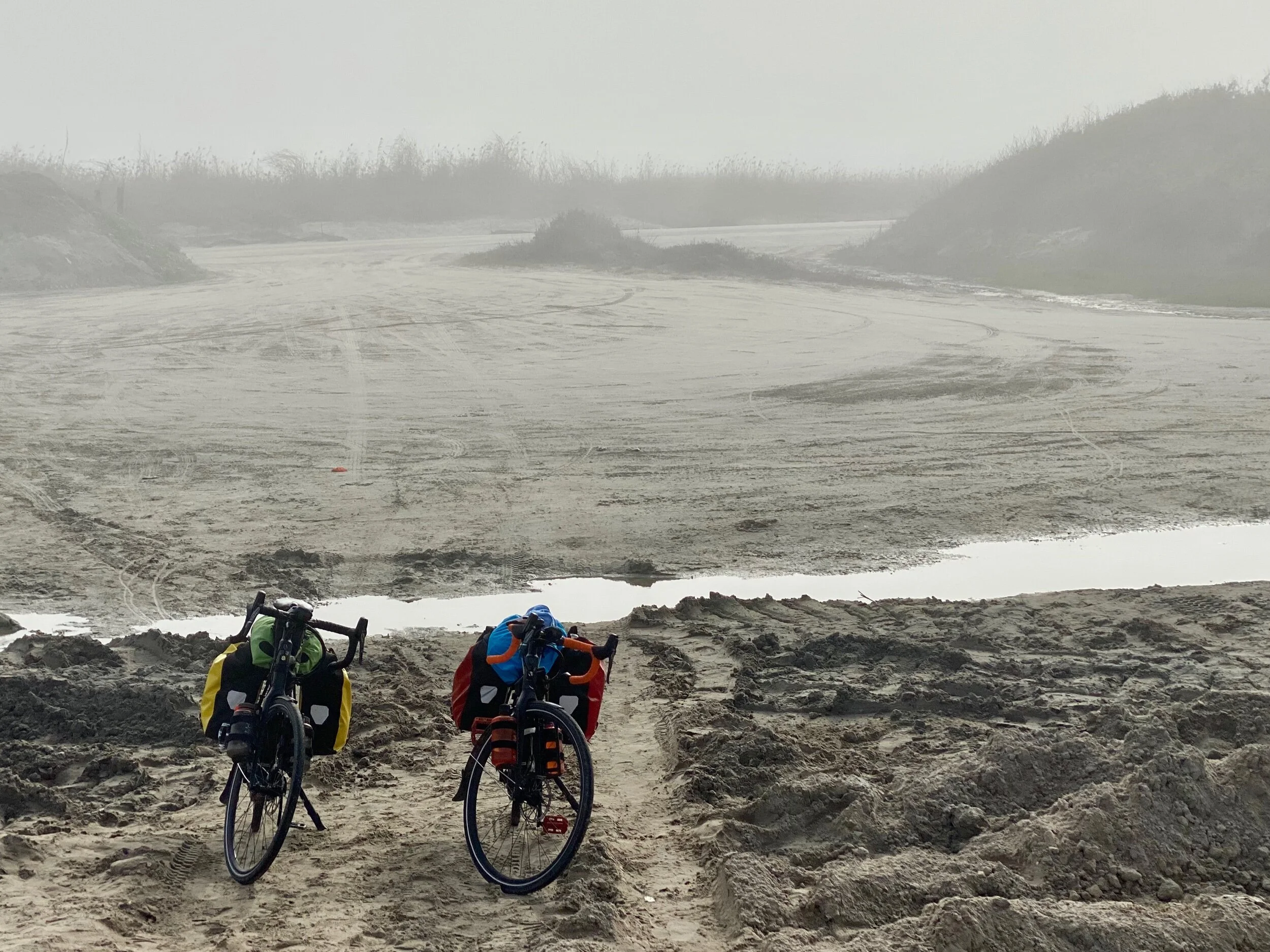
Our bikes in fog at the beach on Port Aransas Beach, Texas.
A few of you told me you missed the links to the Garmin maps showing our journey day by day, so I include links below to our entire trip to date. If you don’t have a Garmin account you will have to create one to see them (it's worth it if you're a biking geek or map lover).
1) New Orleans Road Cycling, 2) New Orleans Road Cycling, 3) Donaldsonville Road Cycling, 4) Morgan City Road Cycling, 5) St Mary Parish Road Cycling, 6) Abbeville Road Cycling, 7) Lake Arthur Road Cycling, 8) Cameron Parish Road Cycling, 9) Port Arthur Road Cycling, 10) Galveston Road Cycling, 11) Freeport Road Cycling, 12) Matagorda County Road Cycling, 13) Refugio Road Cycling, 14) Today we are in Port Aransas, Texas, just slightly southeast of Corpus Christi, Texas.
Thanks for reading! More to come…
All photos, unless credited or otherwise noted, are copyrighted property of the blog post author.
Louisiana/Texas, Post 2
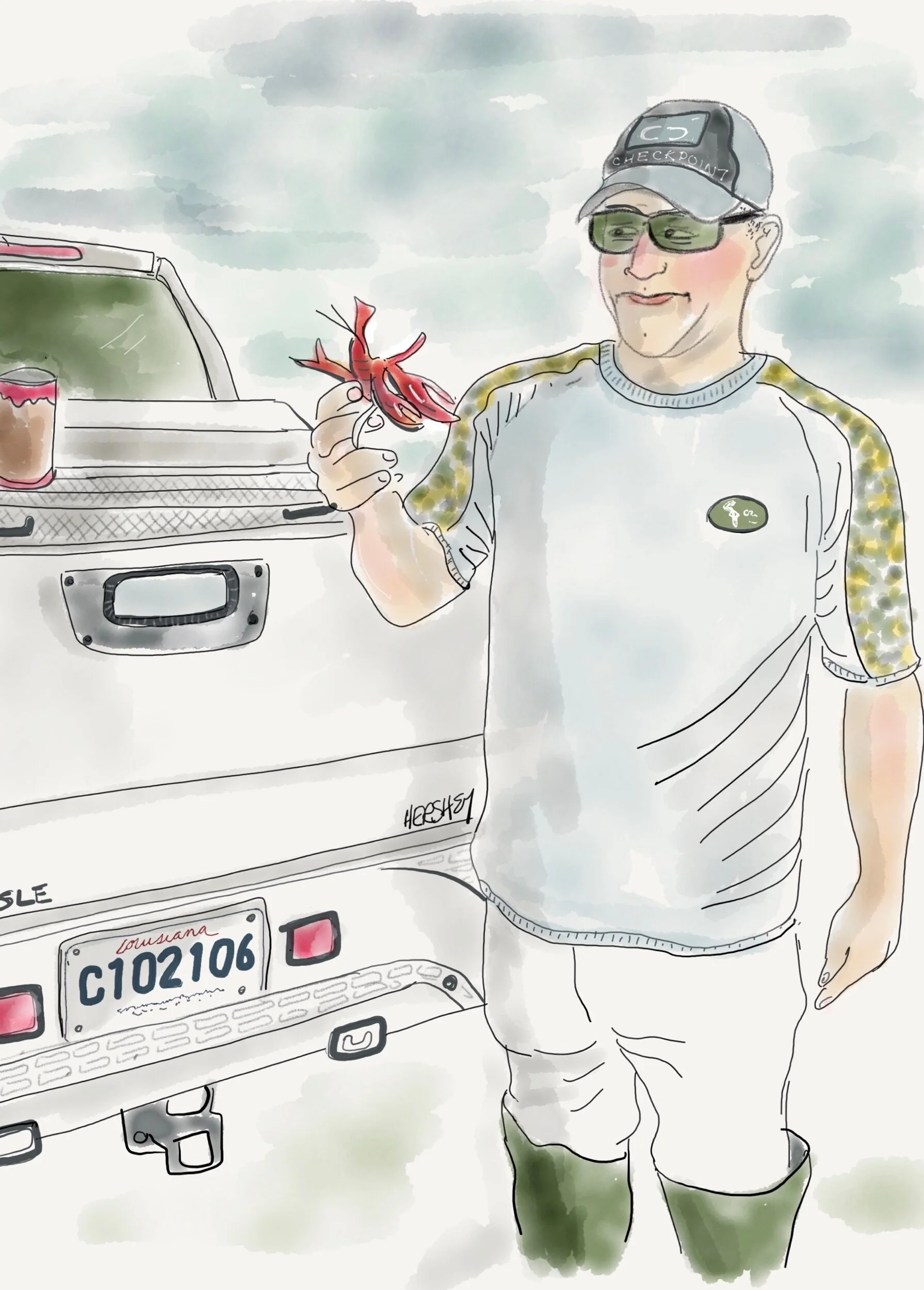
“Yes Ma’am...it’s alive. They be millions of them in pots out there in them rice fields”. Drawing by Jennifer Hershey. Follow her on Instagram at deeofo.
Welcome from Galveston, Texas, where we arrived from Louisiana by way of the coastal towns Cameron, Louisiana, and Port Arthur, Texas. Most of south central and southwestern Louisiana below the I-10 corridor from Houston to New Orleans is less than 20 feet above sea level. On both sides of the Intercoastal Waterway this land of marshy prairies, bayous, forests and intense wetlands supports many wildlife sanctuaries, cattle ranches, sugarcane and rice farms, and crawfish trapping. It was a pleasure to cycle through. People are friendly, and the inland towns are small and attractive.
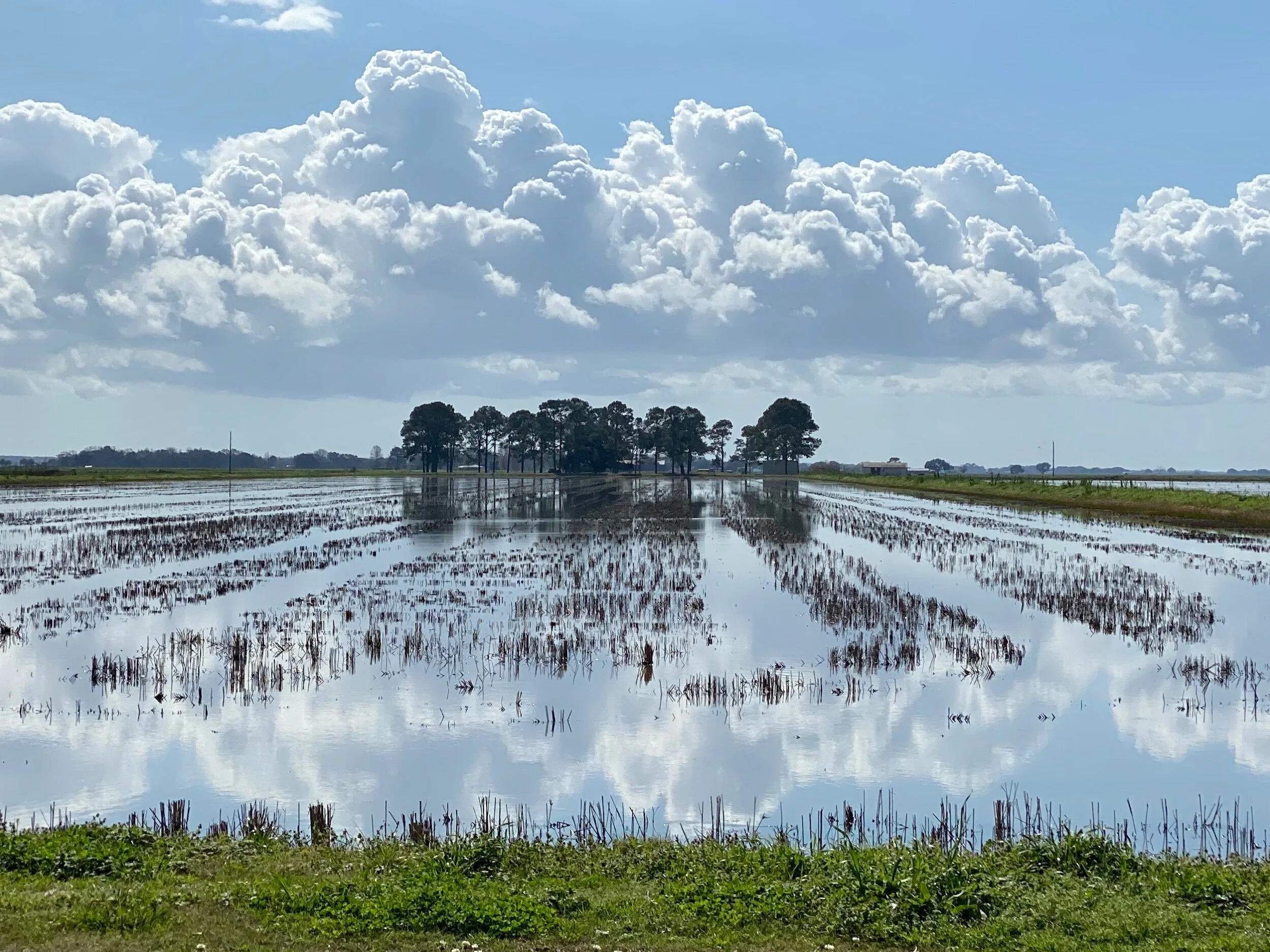
A rice field east of Lake Arthur, LA.
We had an interesting encounter with a very busy and successful woodworker named Mark near New Iberia, Louisiana, who showed us his shop, and introduced us to some of his workers. After we got settled into a motel in nearby Abbeville, he and his wife Dona picked us up and took us out for a sensational seafood dinner. We enjoyed Louisiana hospitality at its best, with good food and plenty of libation and conversation. Although we could sense we weren’t all likely to be on the same page politically (even though we shared a concern for rising sea level and the fate of the lowlands), a strong and jovial spirit of acceptance and friendship remained intact. Interestingly, the next day Mark read my recent blog post, and texted me “Great post. Observe more, judge less. Good way to live. Just remember, sometimes you have to step up to the plate”. Jenny drew his picture, and I thought about what exactly he meant.
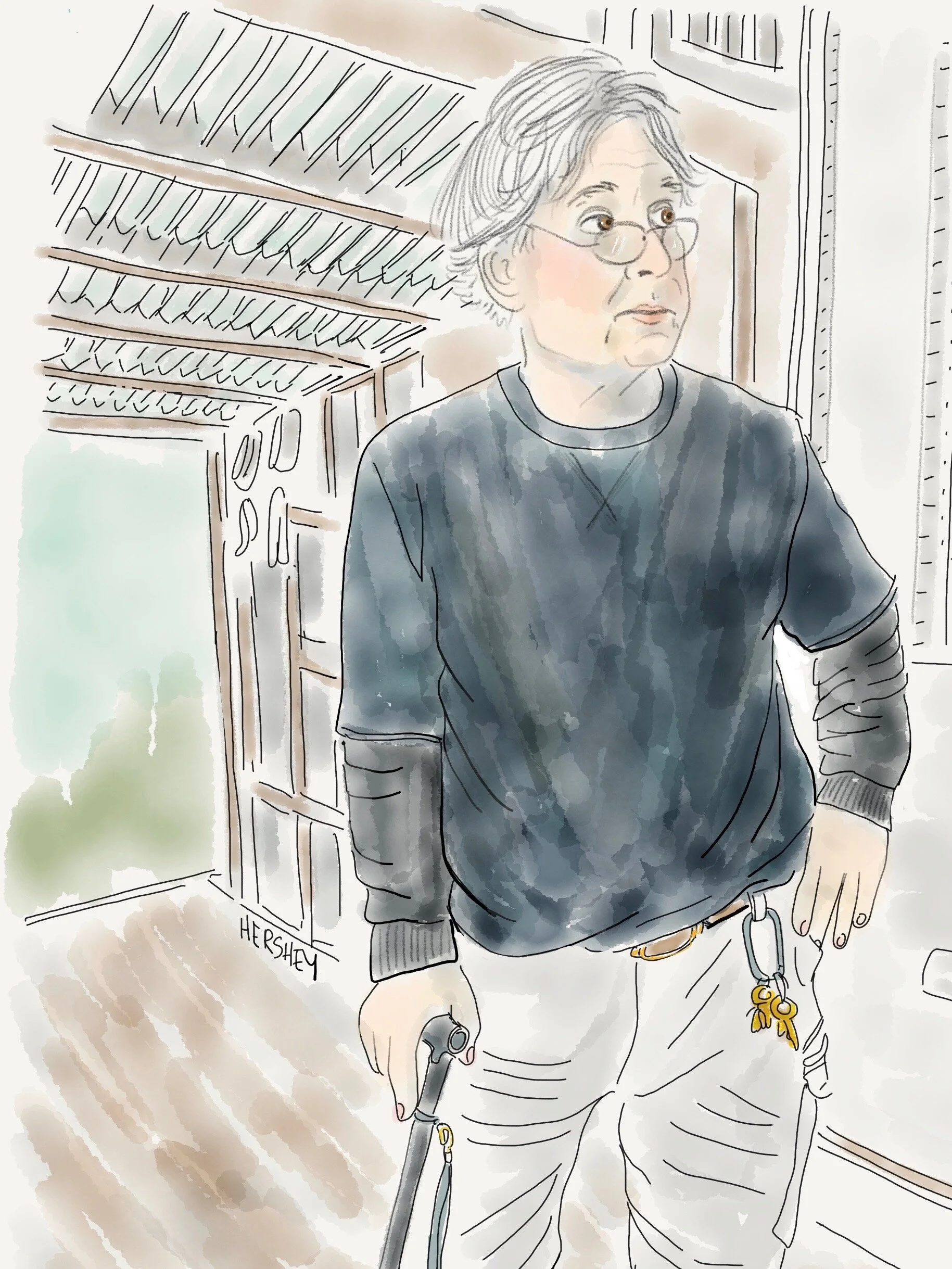
“I got three good sons in laws. I want my family to be healthy. But I worry that the land to the south of here is going to be under water”. Drawing by Jennifer Hershey. Follow her on Instagram at deeofo.
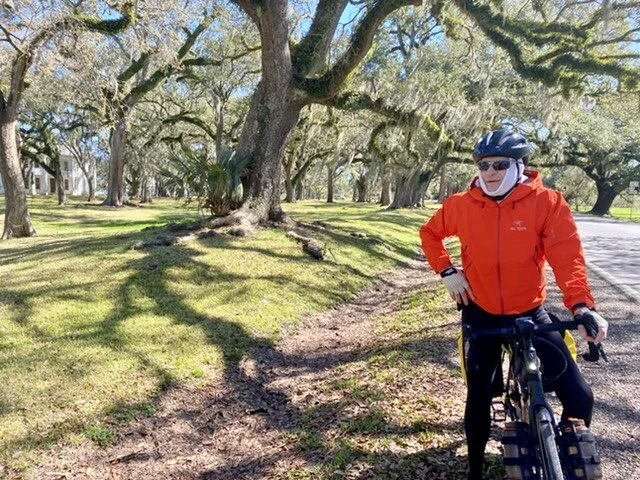
Michael biking through historic Jeanerette, LA.
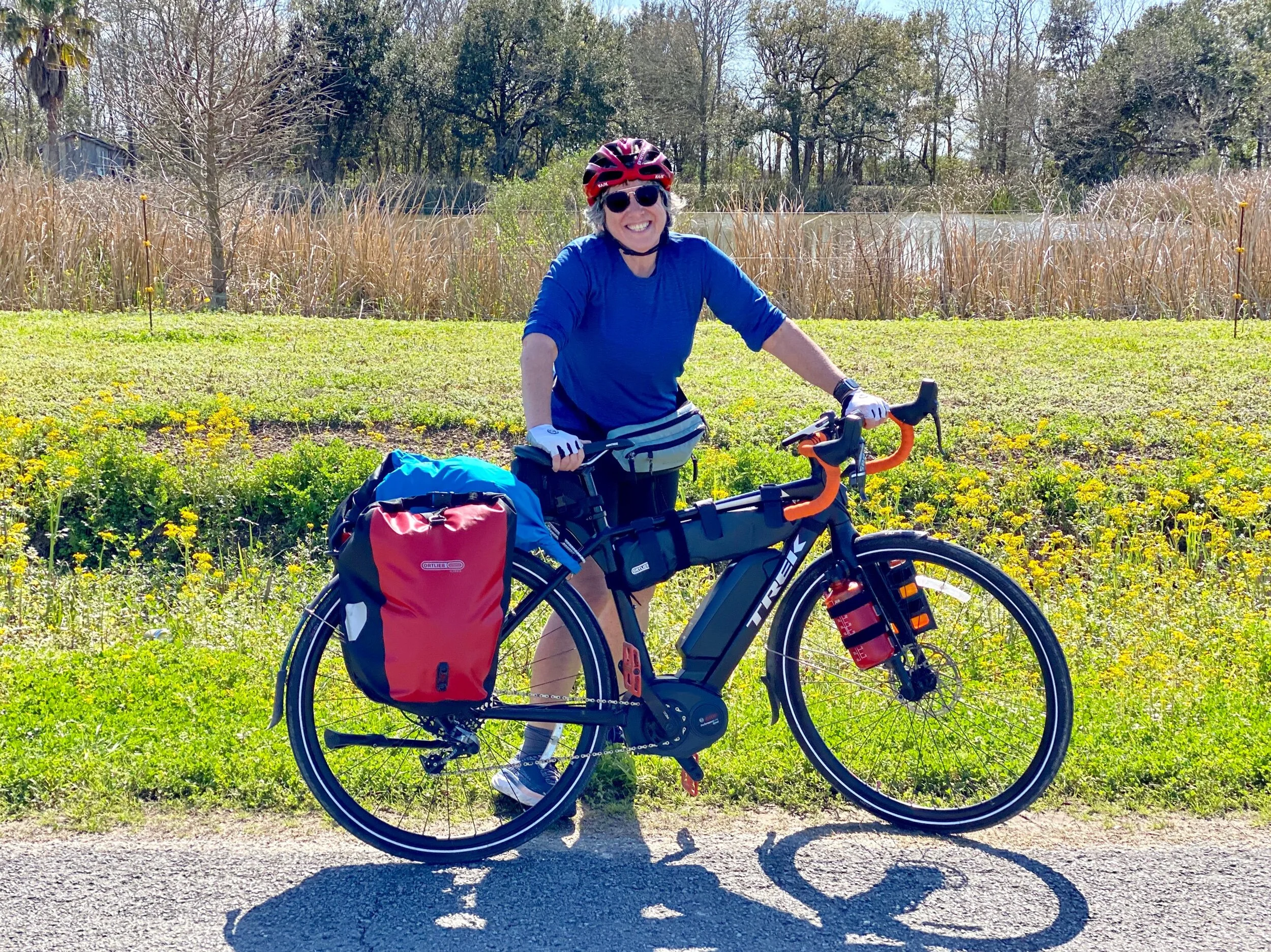
Jenny with her bike on the way to Lake Arthur, LA.
In addition to their beauty and the warmth of their inhabitants, southern Louisiana and Texas can also be disturbing places to bike through. This bucolic landscape is riddled with debris, machinery, abandoned oil wells and new fracked gas compressor stations. It’s crisscrossed by pipelines carrying oil and gas from conventional wells found underneath the marsh, and an abundance of fracked gas piped in from the north. Much of the fracked gas in western Louisiana originates from the nearby 9000 square mile Haynesville Shale, a large shale play in northwestern Louisiana.
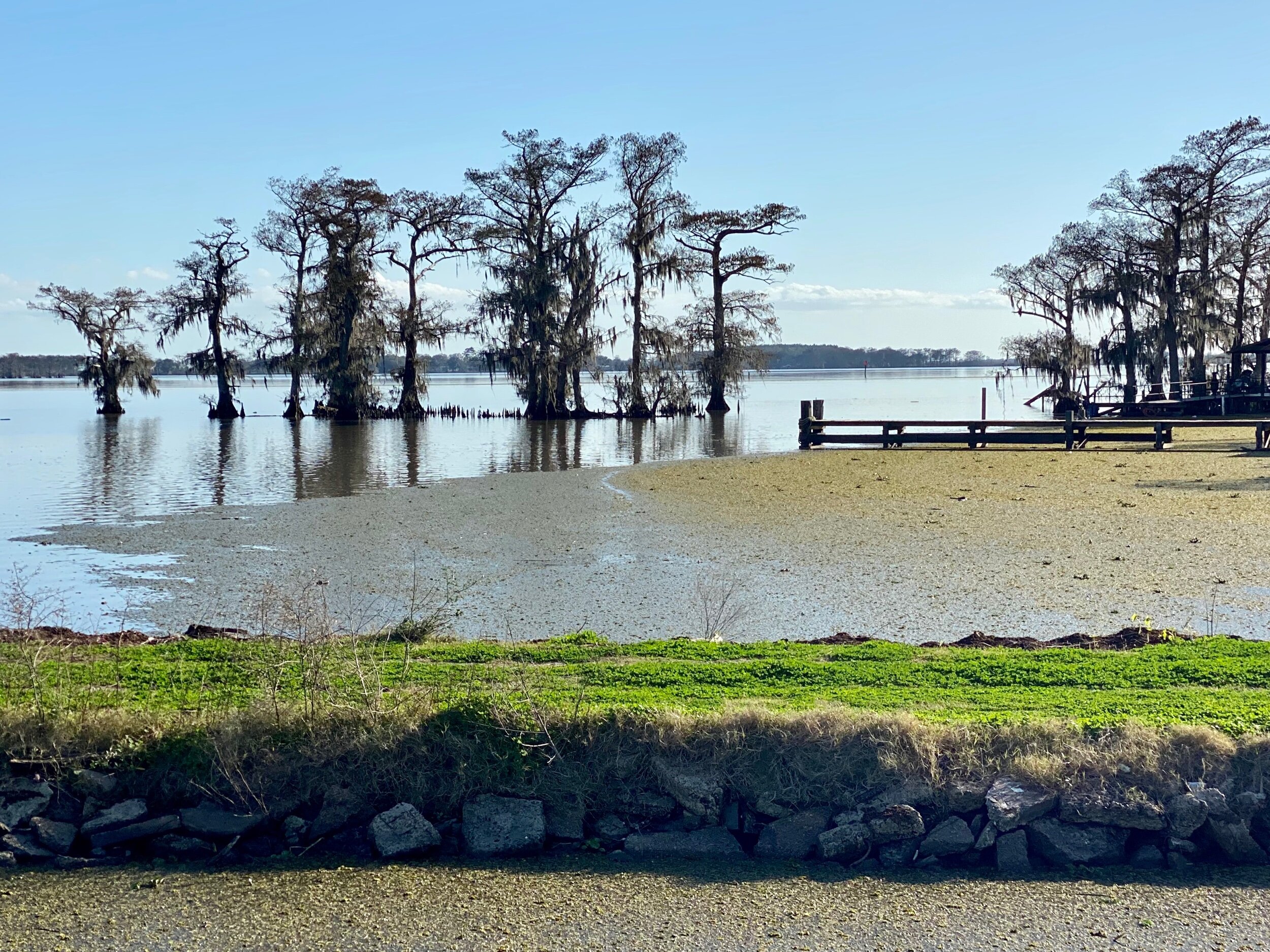
A view of Lake Arthur, LA.
Given the low elevation and the marshy characteristics of the land, it’s obvious that this area is very prone to coastal erosion, storm surges, tidal flooding, and extreme weather events such as hurricanes. A few days earlier, just west of New Orleans, we had contended with tornado warnings, which are quite unusual for the area. Locals agreed, although no one we spoke to suggested a changing climate as a possible cause.
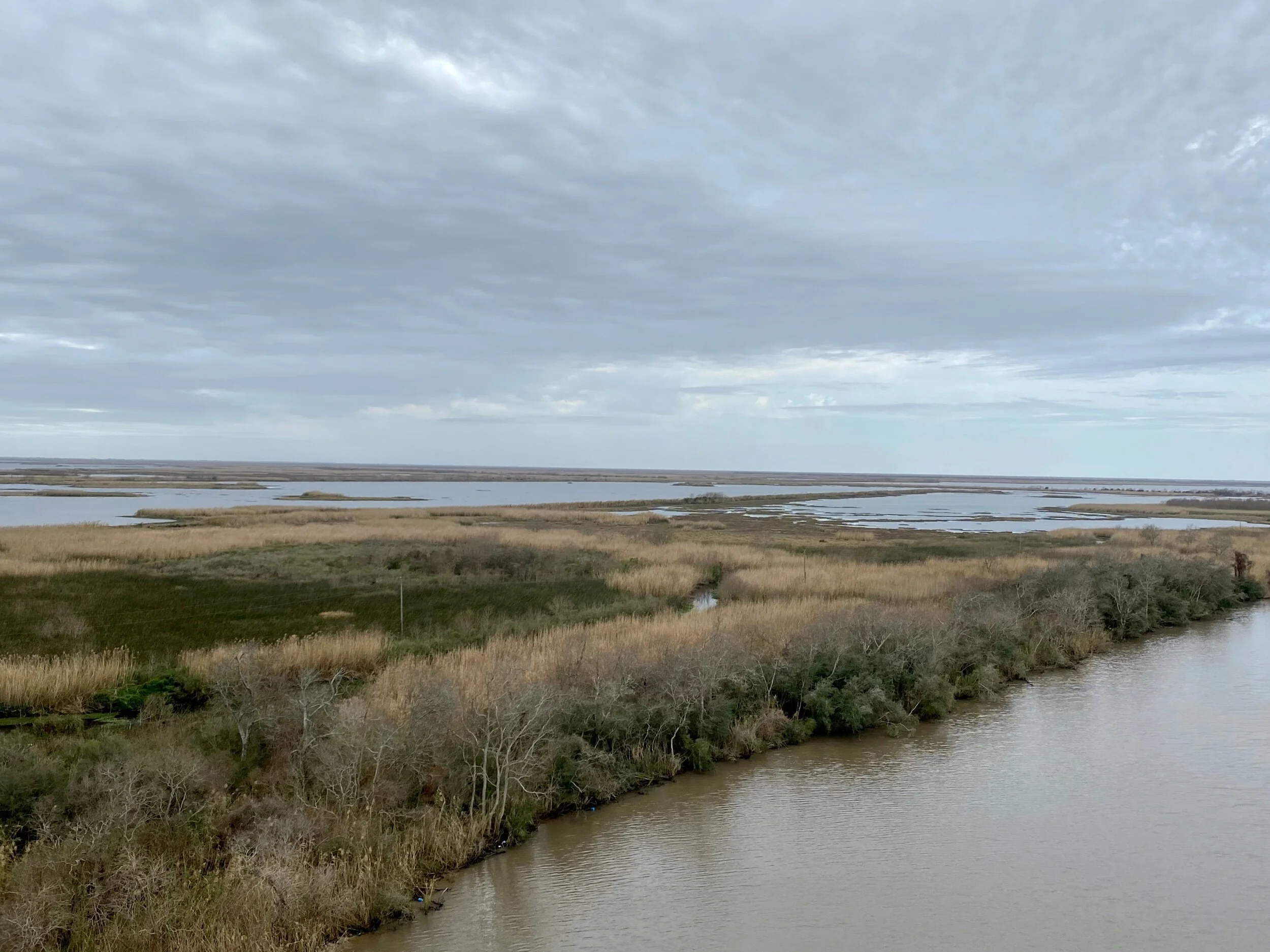
Just south of the Intercoastal Waterway on Highway 24 in southwestern Louisiana. Under these marshes lie a maze of pipelines carrying oil and gas from local deposits and the shale play in northwestern Louisiana.
The sheer vulnerability of the lowland coastal areas of the Gulf Coast seems hauntingly palpable. It’s clear to any thoughtful observer that Louisiana is deeply and complexly affected by our changing climate.
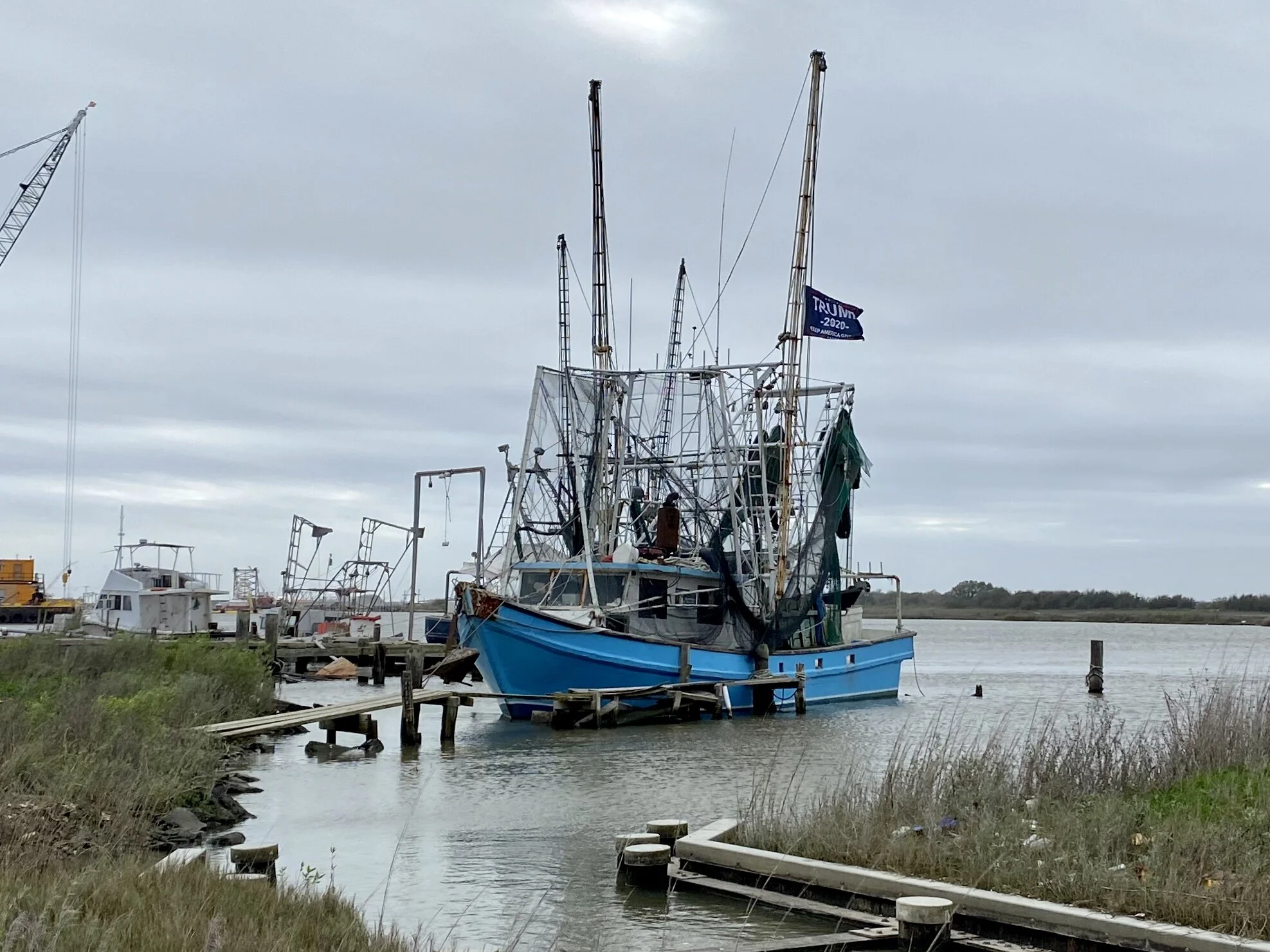
A fishing boat moored near the site of the new LNG global exporting plant at Cameron, LA. The flag on the boat says Trump/Pence 2020 . The entire port area just south of this boat (which used to be public land) is now privately owned by the company building the incoming plant. We weren’t allowed to see it.
The town of Cameron, LA, (once a bustling resort town of 3000 people that was devastated by Category 3 Hurricane Audrey about 60 years ago, and slammed again by Ike in 2008) now only has a few hundred permanent citizens. However, it is now a site for a large liquified natural gas (LNG) global exploring plant that will compete with an equally large LNG global exporting plant under construction in nearby Port Arthur, Texas. This much larger blue collar town lies just across Louisiana's southwestern border, where the Spindletop gusher was struck in 1901, setting off an oil rush that resulted in nearby Houston eclipsing Galveston as the primary port for southeastern Texas.
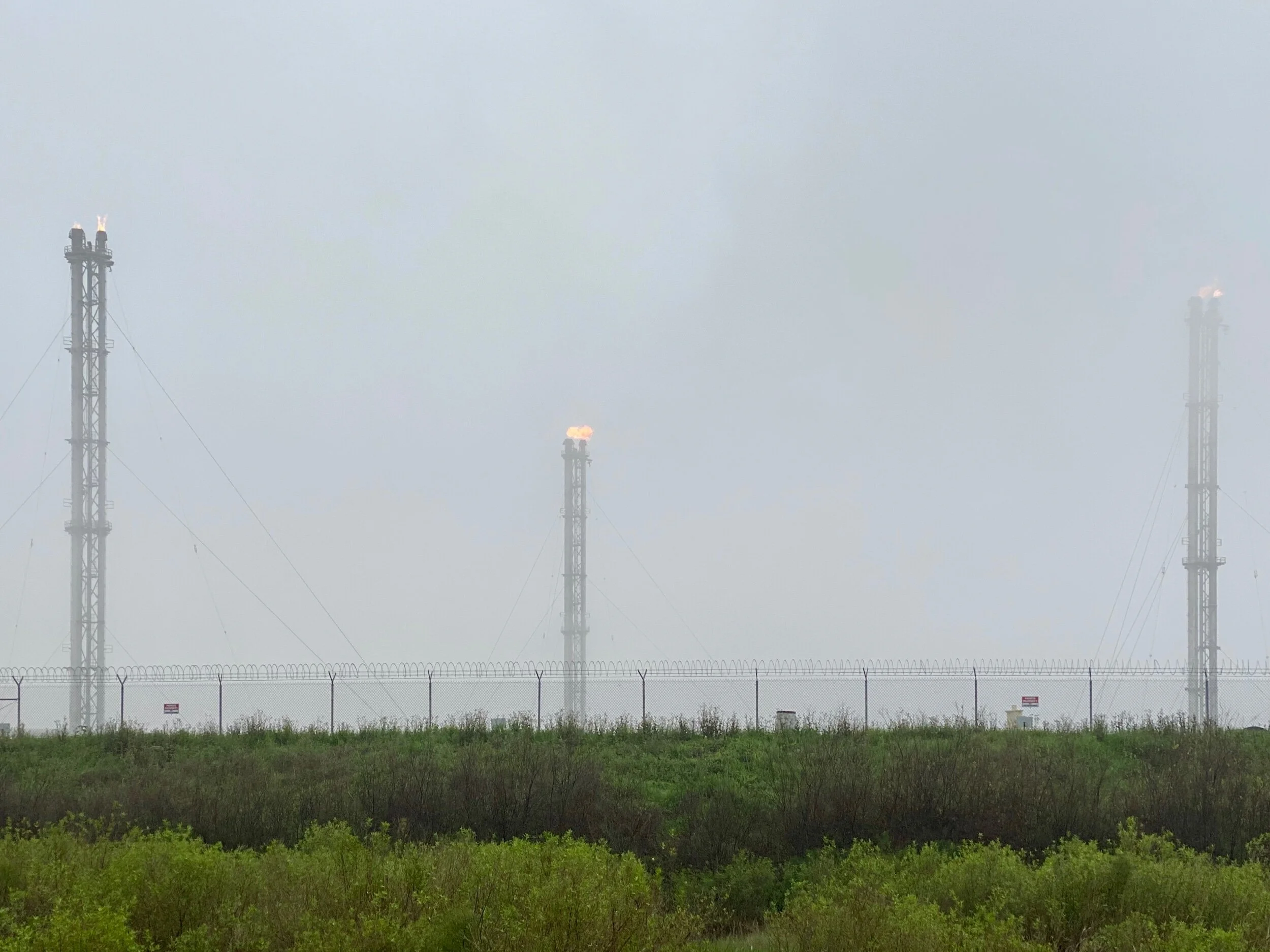
Gas flares in the marsh about a mile from the Liousiana Coast.
Each new plant currently employs about 3000 construction workers. When complete, the Cameron plant will support 160 permanent jobs, and the Port Arthur plant will support about 200 permanent jobs. That is, of course, unless a major hurricane hits this part of the Gulf Coast, in which case operations will either be temporarily or permanently interrupted.
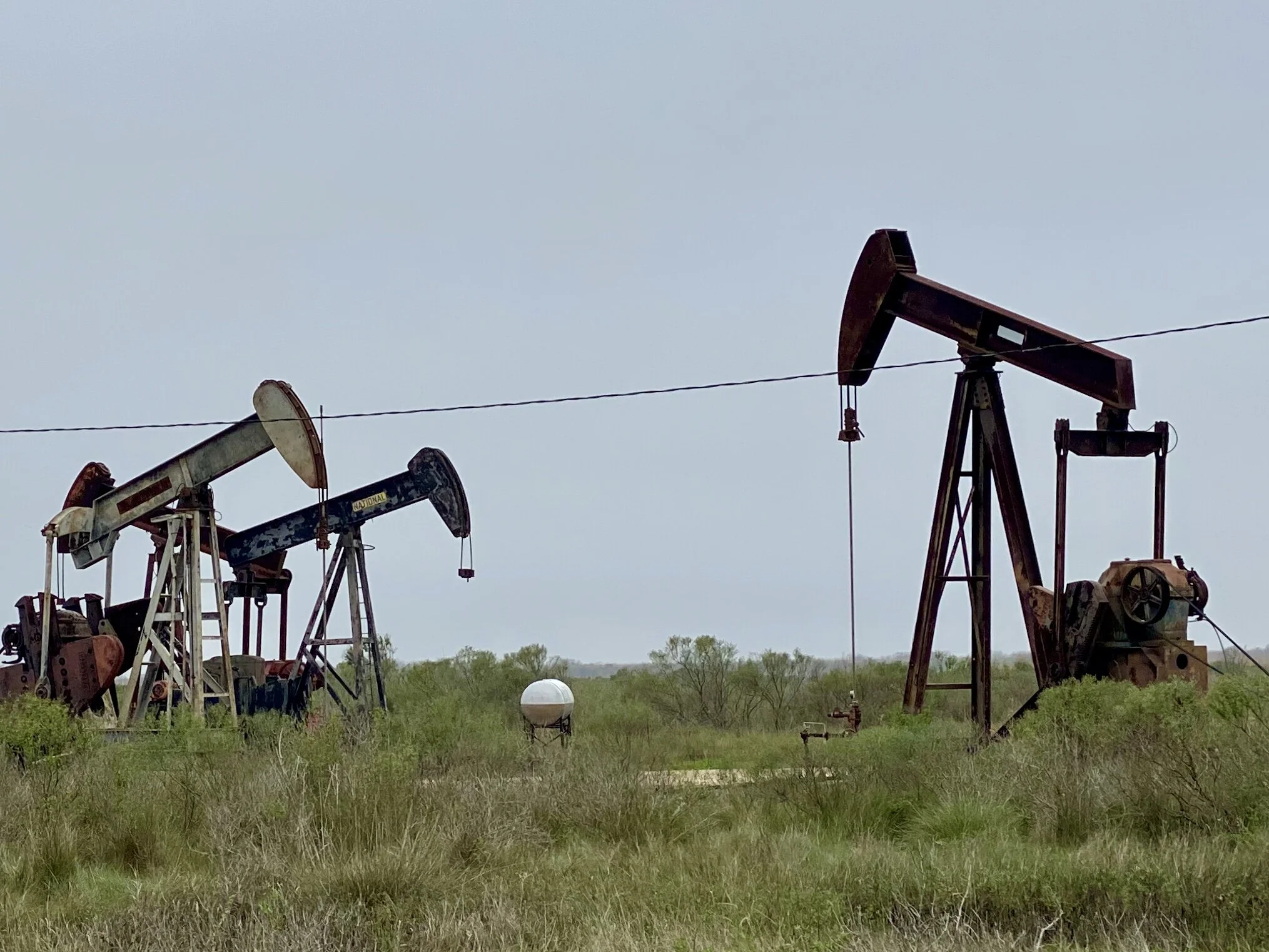
Abandoned oil wells in High Island, Texas, about a half mile from the Gulf Coast.
The reasons for this activity make economic sense in the short term. Cameron has been quite poor since Hurricane Audrey hit, and jobs are scarce. Consequently, the new plant is very popular among locals. Port Arthur is also poor, although it has more economic diversity than Cameron. However, the proximity of its site for a new receiving terminal will have additional benefit to Houston, so it’s popularity is even greater. Interestingly, in Houston, there is tacit, if not public, recognition among local officials that climate change is real. Based on a conversation we had with a local in Port Arthur, it seems there is hope that new sea walls east of Port Arthur across the Sabine River and further west across the Houston ship channel will mitigate storm surge issues for awhile, at least for southeastern Texas. …For how long, we wondered?
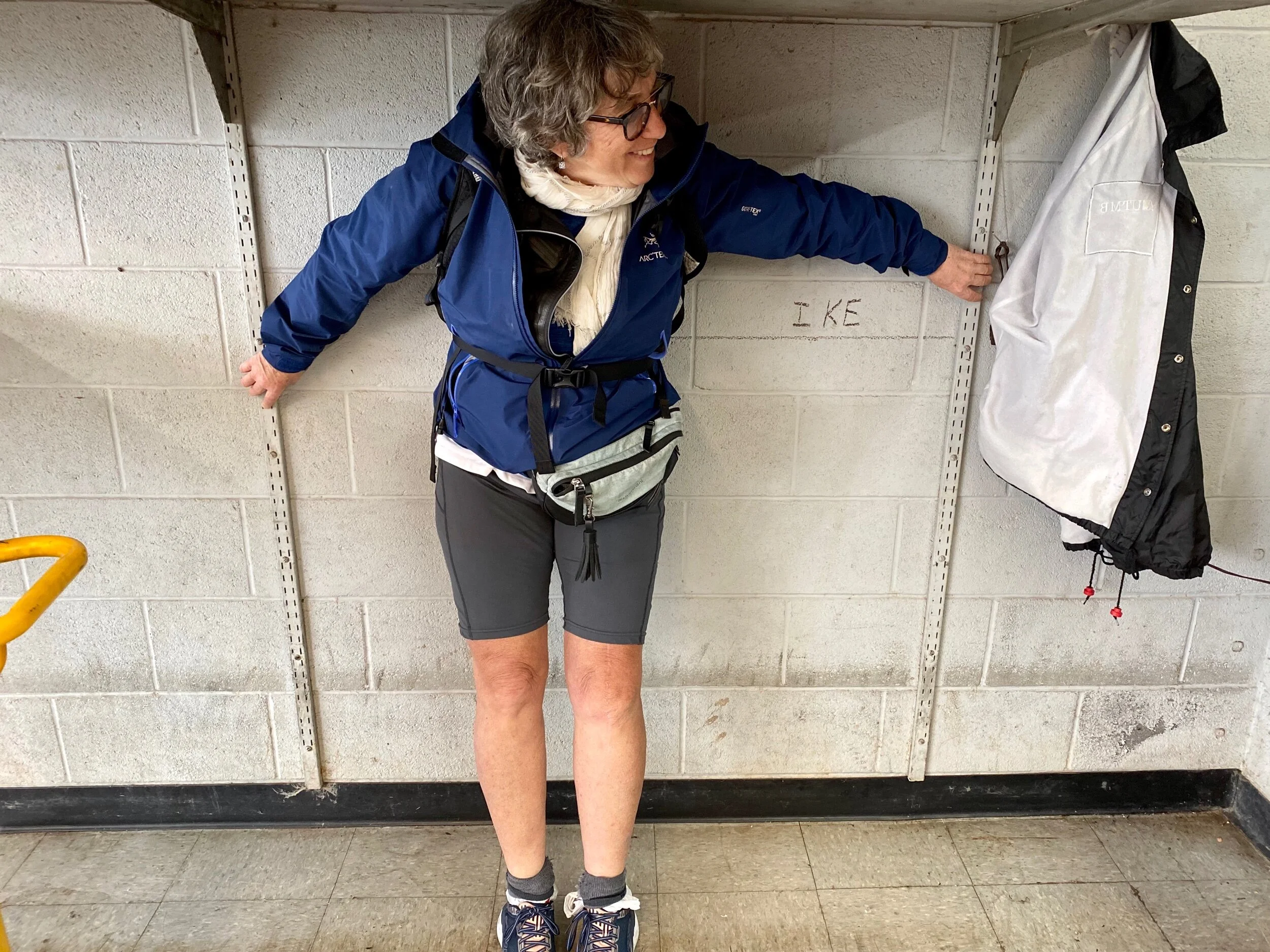
Jenny’s left arm marks the water line for Hurricane Ike in a bicycle shop we went to in Galveston. This 2008 hurricane holds the record for storm surge in Port Arthur, cresting at 22 feet.
So why do so many people in Louisiana and Texas embrace the very industry that may ultimately do them in? Isn't one definition of insanity, “doing the same thing over and over again and expecting different results?”
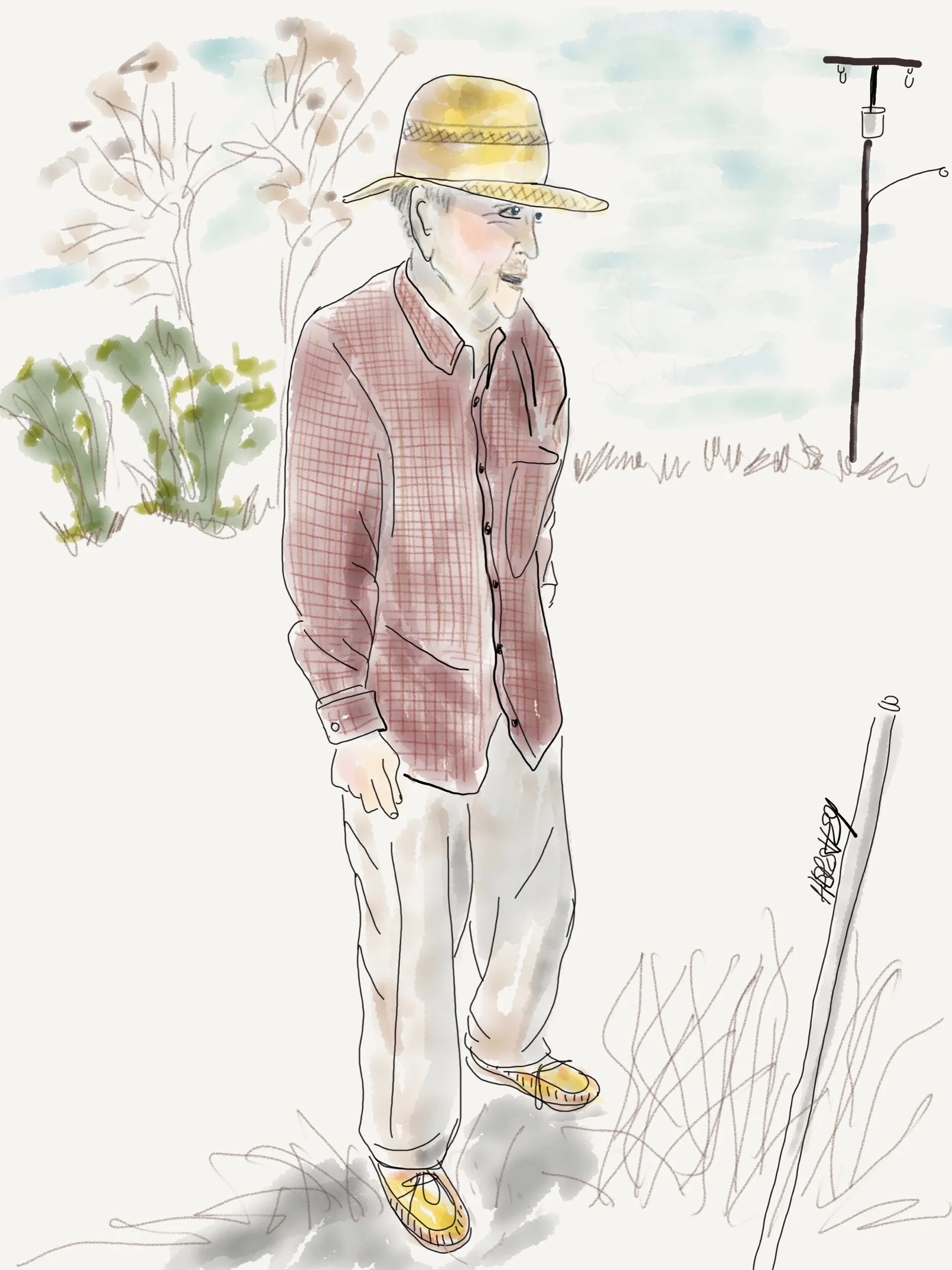
“I moved one time..in 1954...from next door to here.” Drawing by Jennifer Hershey. Follow her on Instagram at deeofo.
Jobs are important, and 460 permanent jobs might have lasting value for your communities. But at what cost? When your home is losing land to coastal erosion at alarming rates, when scientist are warning us that sea level rise is occurring faster than their previous conservative estimates indicated, when extreme weather events such as hurricanes and tornadoes are becoming more frequent with every passing year, when scientists are looking at establishing a Category 6 for hurricanes because they are growing so much more intense, …..when does that community cut its losses, and change its economic base?
Yes, life will be harder in the short term, but potentially much more livable and rewarding in the long term. Maybe that’s a plate that’s worth stepping up to…
For those of you who geek out on map routes, please email me and I will happily include links to the Garmin maps in this blog post. Frankly, I simply don’t know if they are very important to my readers. If I’m wrong, I’d love to know.
Thanks for reading! More to come…
All photos, unless credited or otherwise noted, are copyrighted property of the blog post author.
Louisiana/Texas, Post 1
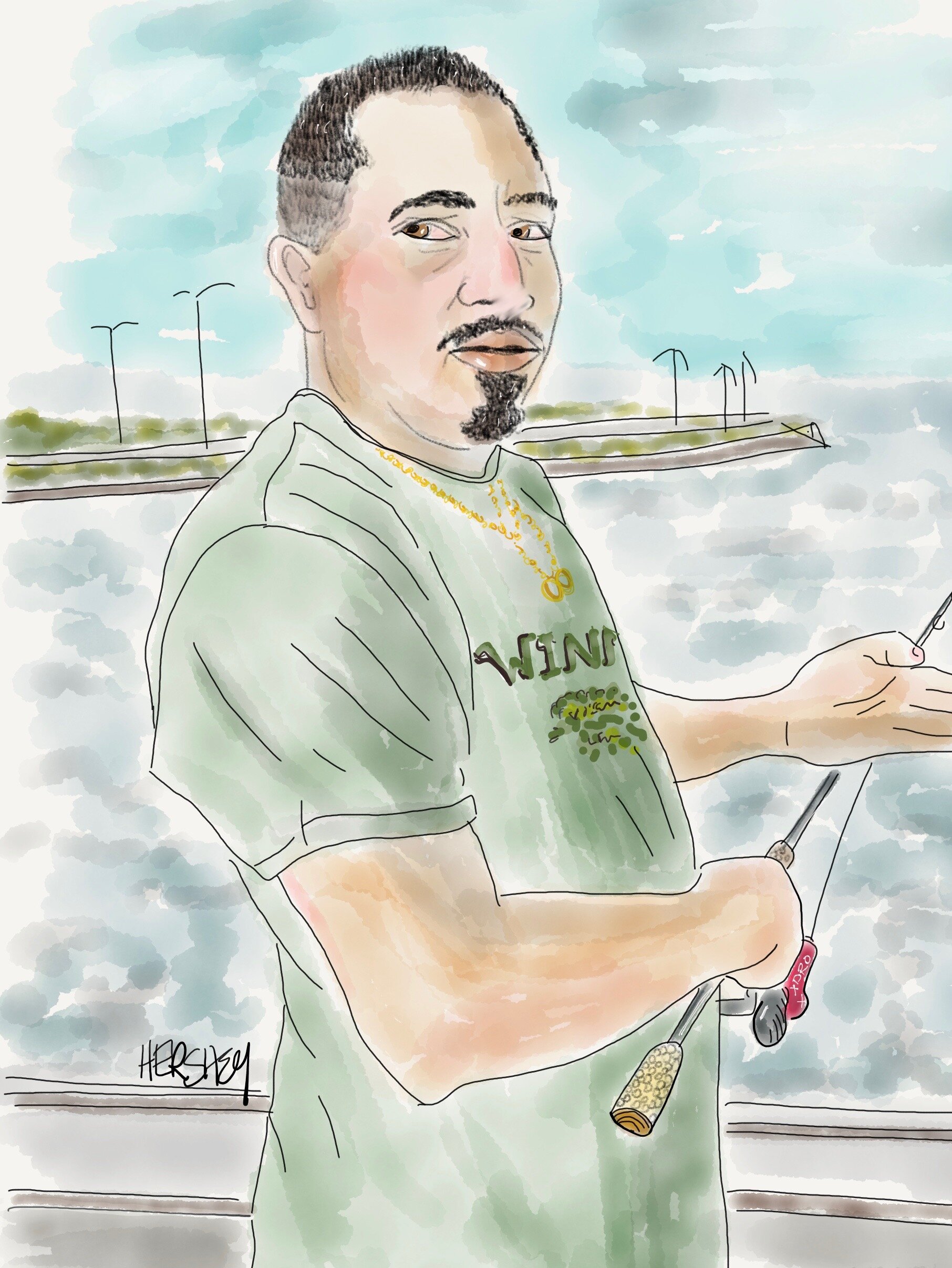
“I come after the grande hurricane...10 yrs ago.....from Guatemala . I fish for mi familia every day from aqui.” Drawing by Jennifer Hershey. Follow her on Instagram at deeofo.
The Amtrak Crescent from New York City to New Orleans is a small and somewhat understaffed train. Given their size and cultural stature, it seems like the Big Apple and the Big Easy deserve something more robust, if not all of America. Train travel is low carbon, pleasant, and offers so many other benefits to our transportation system. Apparently few people train between these cities (at least in the dead space of early February before Mardi Gras), so the train not only was small (9 cars total), it was challenging in its lack of basic amenities. Dining cars have been replaced by a limited option of previously prepared food that wears quite thin after a few meals. Bathrooms are few and poorly cleaned. There was no observation car. Yet - as always - I was appreciative of Amtrak’s efficient and inexpensive roll-on bike service. It is both easy and a joy to use. You roll your bike to a baggage car, remove your gear, and hand over your bike to an attendant. When you arrive at your destination, you do the same thing in reverse. Retrieving your bike takes minutes, and after restoring your gear, off you ride.
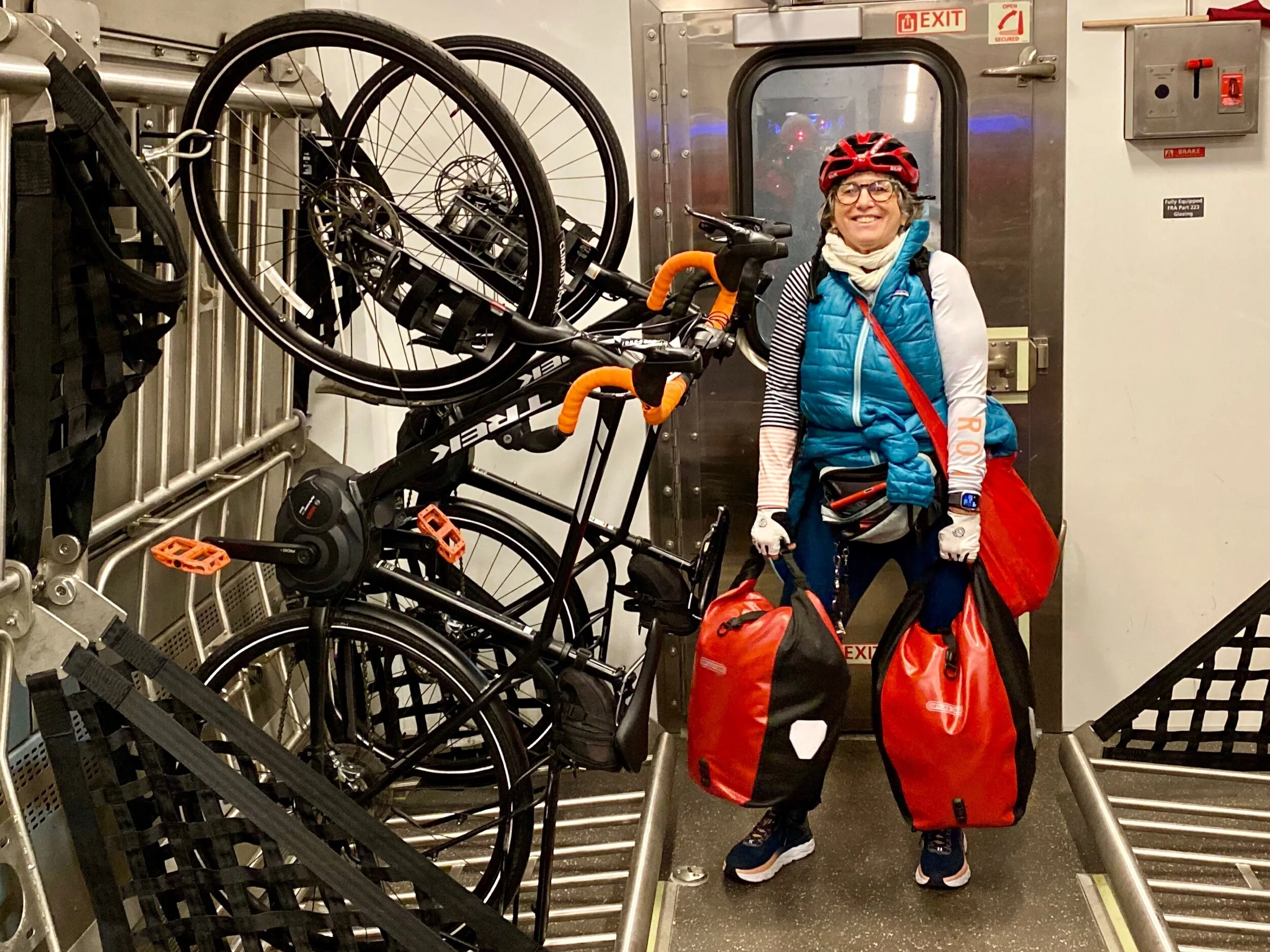
Jenny Hershey with her gear standing beside our bikes as we board in NYC.
I don't always make New Year’s resolutions, but this year I did: “Observe more, judge less”. It was simple once I said it out loud, although I had been struggling to articulate the thought to myself for quite a while. In addition to an unusual bout of self-reflection inspired by the quick and successive deaths of both my parents, I’d been reading the fascinating book “Why We Are Polarized” by Ezra Klein; a look behind the extreme politicized polarization plaguing America.
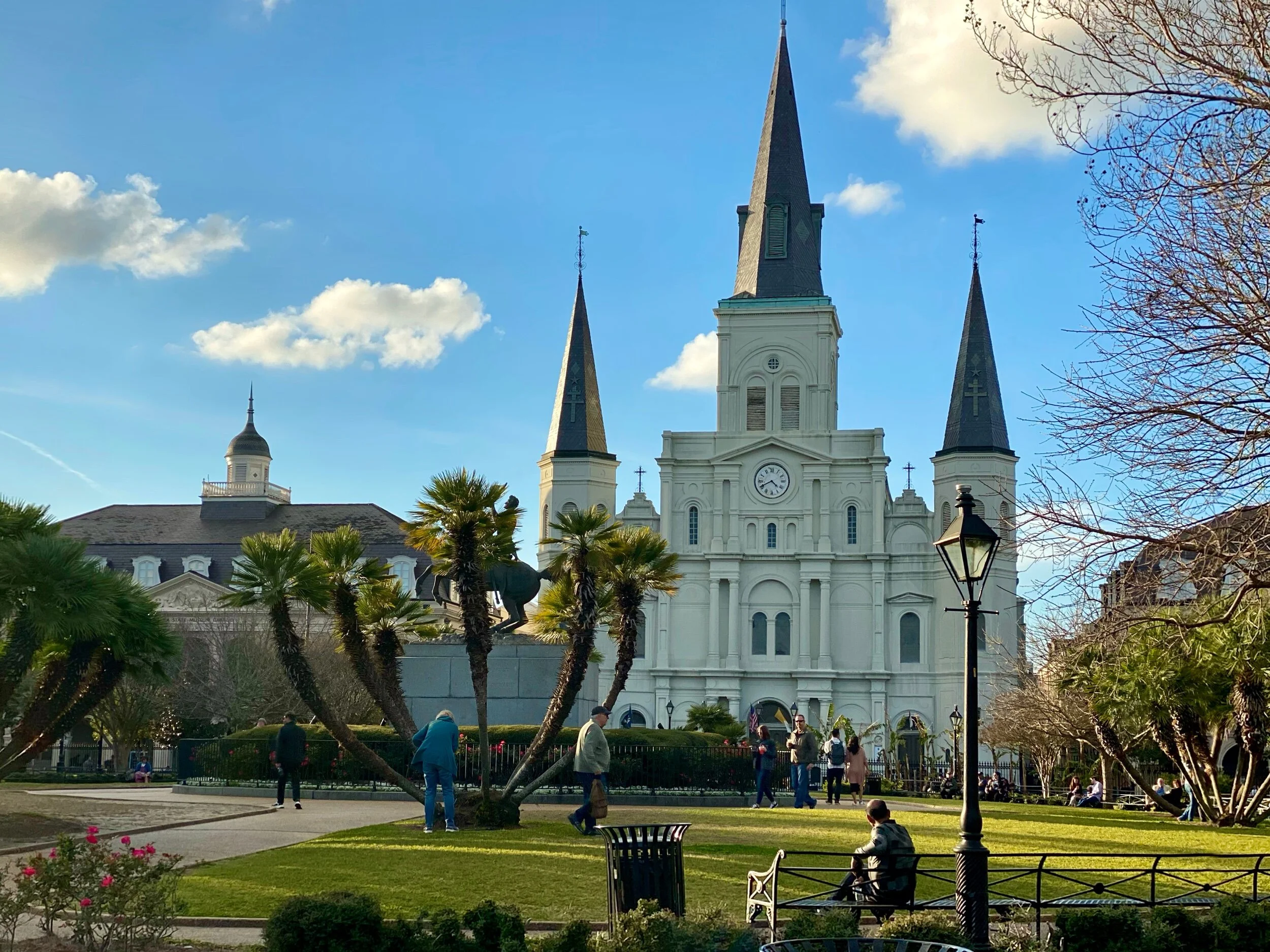
The Cathedral in Jackson Square, New Orleans, LA
I was coming to understand that just as we hide parts of ourselves from those we love, we are hidden from one another in a country we love, partly because we assume others should see the world as we do even if we cannot see the same world they do. I had been unsettled by several attacks on FaceBook about my apparent ignorance of the South based on a few inquisitive posts about life in North Carolina. Out of defensiveness, I found myself questioning how much conservative southerners understand, or care to understand, about my identity as a multicultural urban northern liberal. Conversely, I was forced to admit to myself that I knew, or cared, equally little about the identity of white rural southern conservatives.
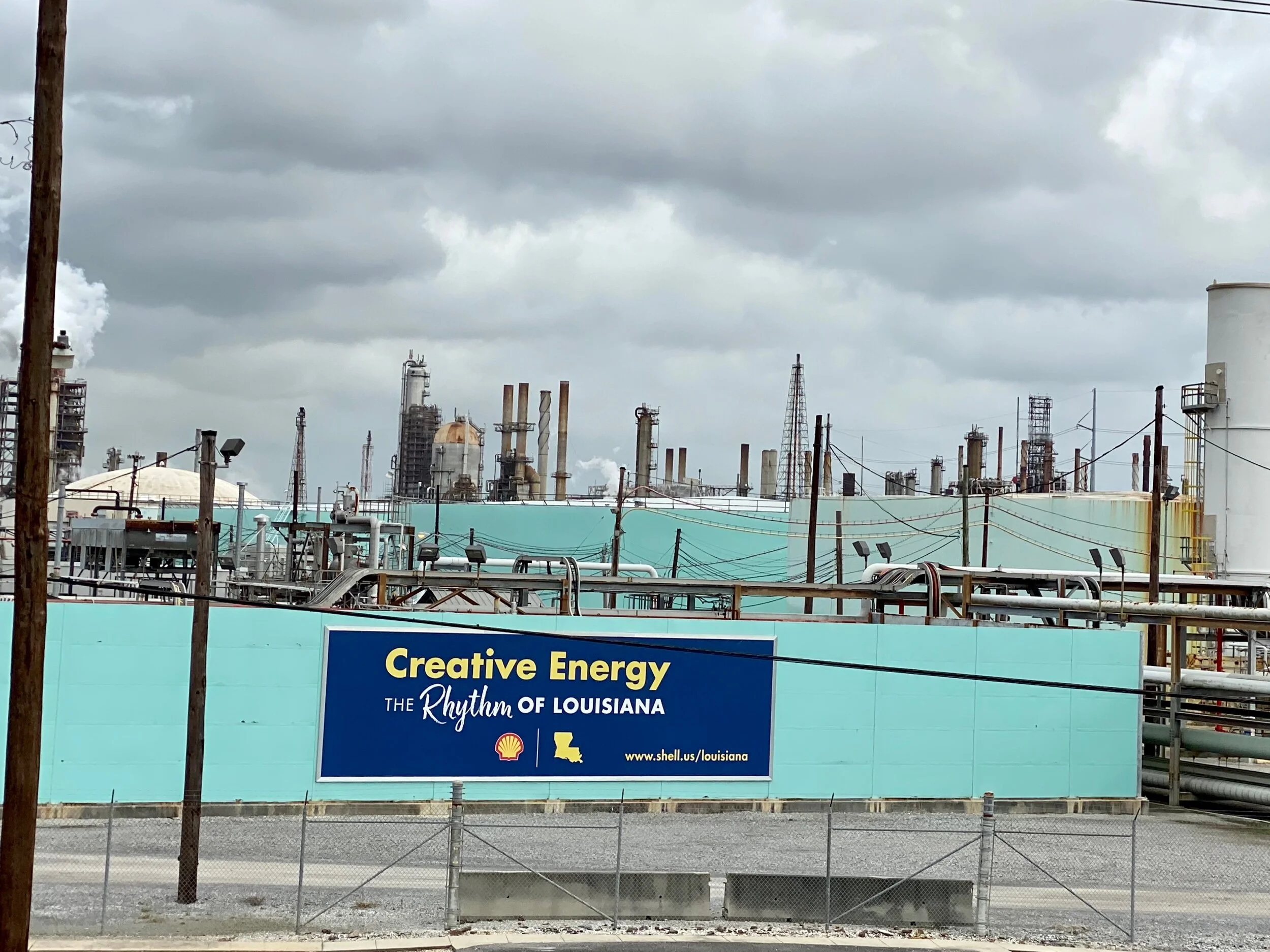
Oil plant just northeast of NOLA on the Mississippi River.
In anticipation of this trip, both my traveling partner Jenny and I felt trepidation about biking in the Deep South. I hoped Klein’s book would help me frame an approach that would go beyond my own self-perceived static and somewhat predictable liberal perspective. It has not disappointed me.
Just east of NOLA off the Mississippi River levee. Quite alive.
A dead fox. Roadkill.
I admit that we partly chose to explore Louisiana and Texas on bikes because it is a warm place to go in early February. In addition, it is accessible by train (we thought other choices would be more carbon intensive, and low carbon travel is part of our objective). But our country's current form of political polarization also begs for greater interaction between our vastly different political cultures. Interestingly, as a northerner, I often feel greater affinity with European countries and cultures than I do with the political and social cultures of the American south. But since the 2016 election, I’ve come to believe that America is in need of a giant reset (or “rebooting”) and that if I - and other people like me (i.e., members of my group) - don’t grapple with our entire American identity, we are very likely to misunderstand how we arrived at, and might get out of, such a highly polarized present moment.
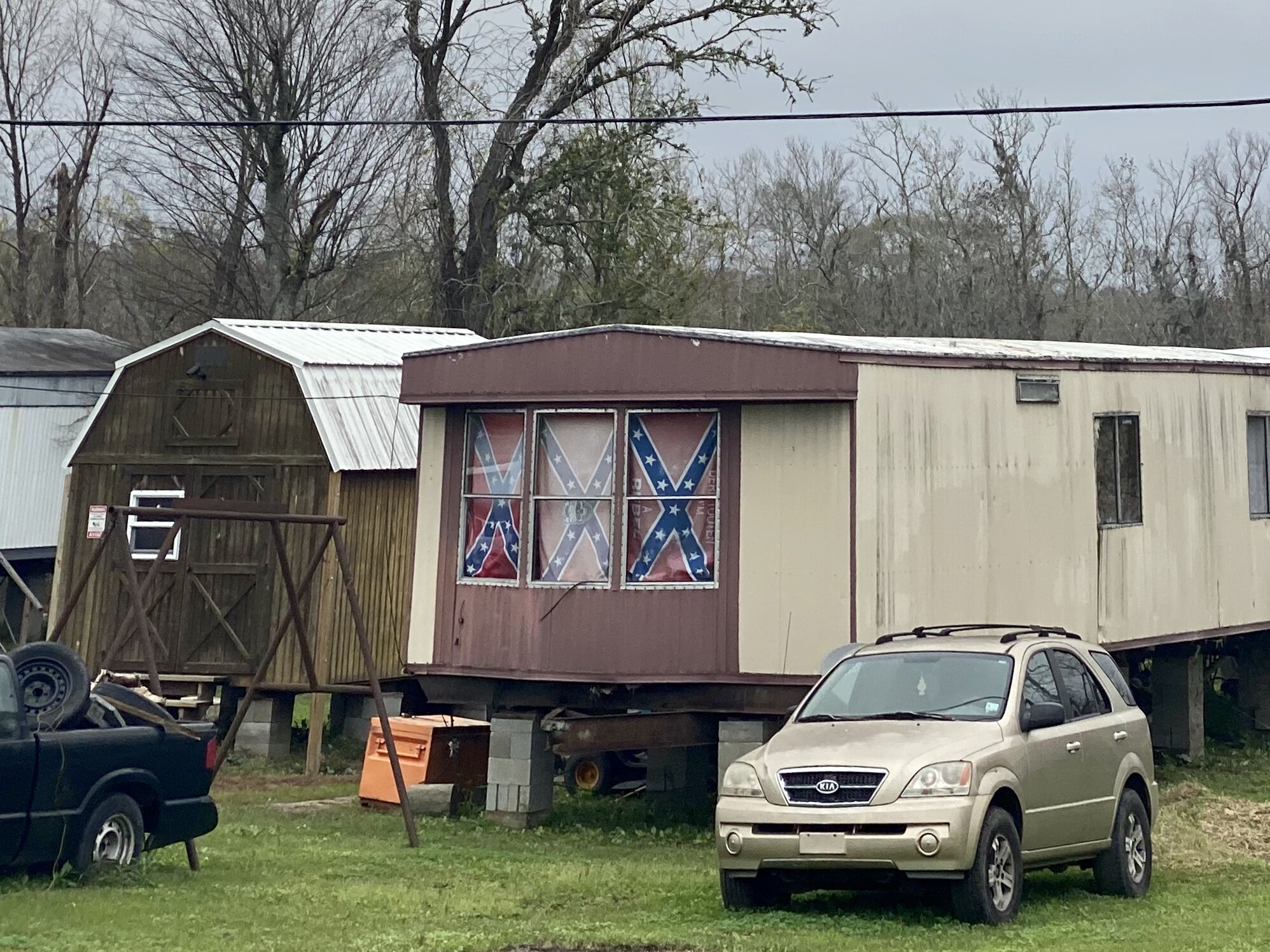
Near Donaldsville, LA.
My interest in climate change is a case in point. There’s so much about our changing climate that seems obvious to me that I simply cannot fathom the abyss in logic or understanding between me and climate deniers. While I’m very confident the science supports me, I’m learning that facts alone don’t change behavior. Even in an area devastated by Hurricane Katrina, and after numerous recent warnings that the sea level is especially troublesome on the Gulf Coast, plenty of locals remain willfully cavalier, if not downright defiant about taking action.
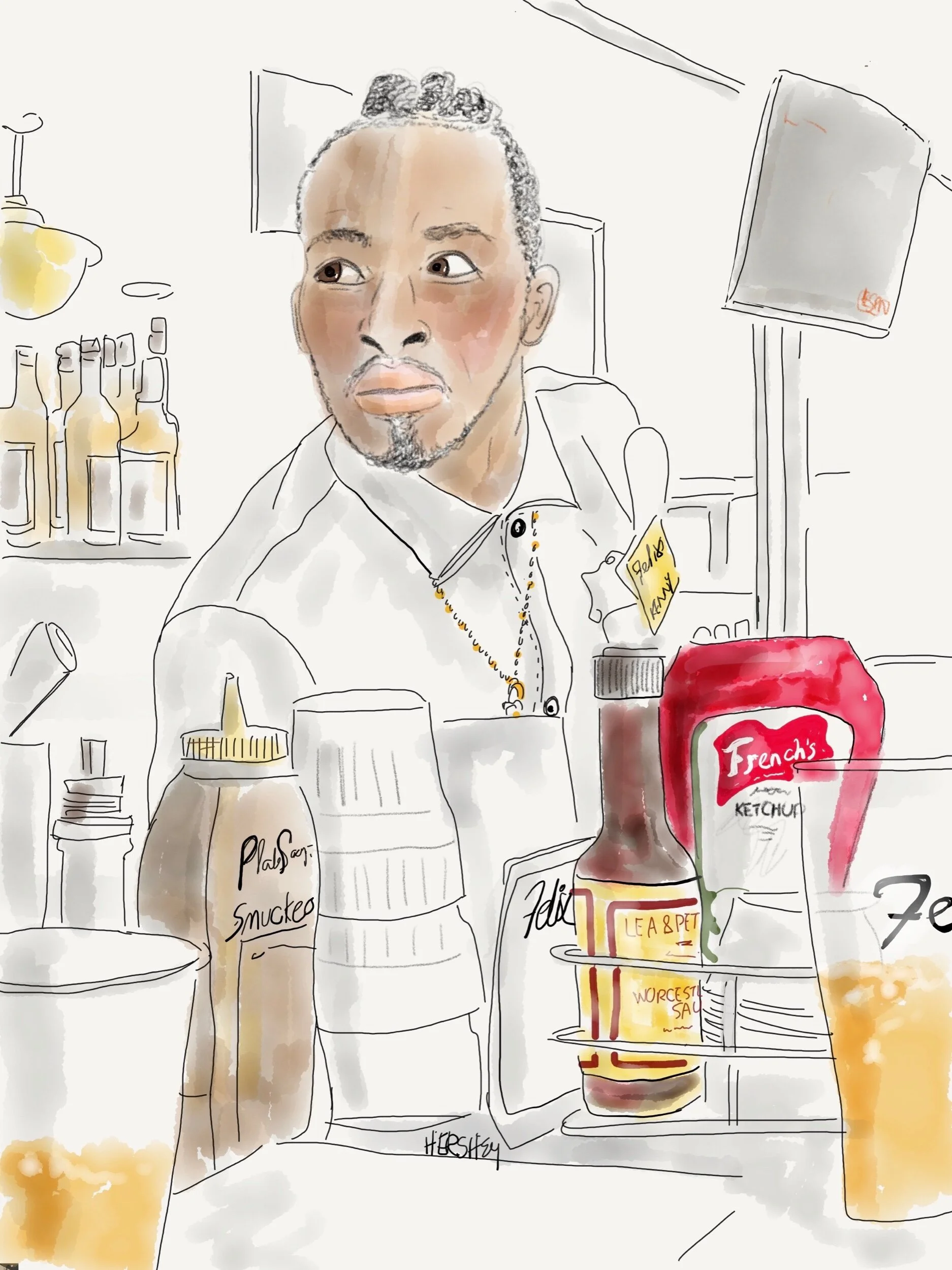
“I was 13....they took us out by boat. I slept on a bridge for a week with my Grandma. “ Drawing by Jennifer Hershey. Follow her on Instagram at deeofo.
Ezra Klein makes the same argument about rationalizing, or recasting, facts within political cultures. Essentially, his fundamental point is that identity is a far more important driver of political viewpoints than is logic or “facts”. In fact, logic may be the least important attribute of political identity - far less important than cultural, familial, socioeconomic and racial identity. I’m reminded of James Carville’s famous quip during the Clinton administration, “it’s the economy, stupid”. Maybe in the age of Trump, “it’s the tribe, stupid”.
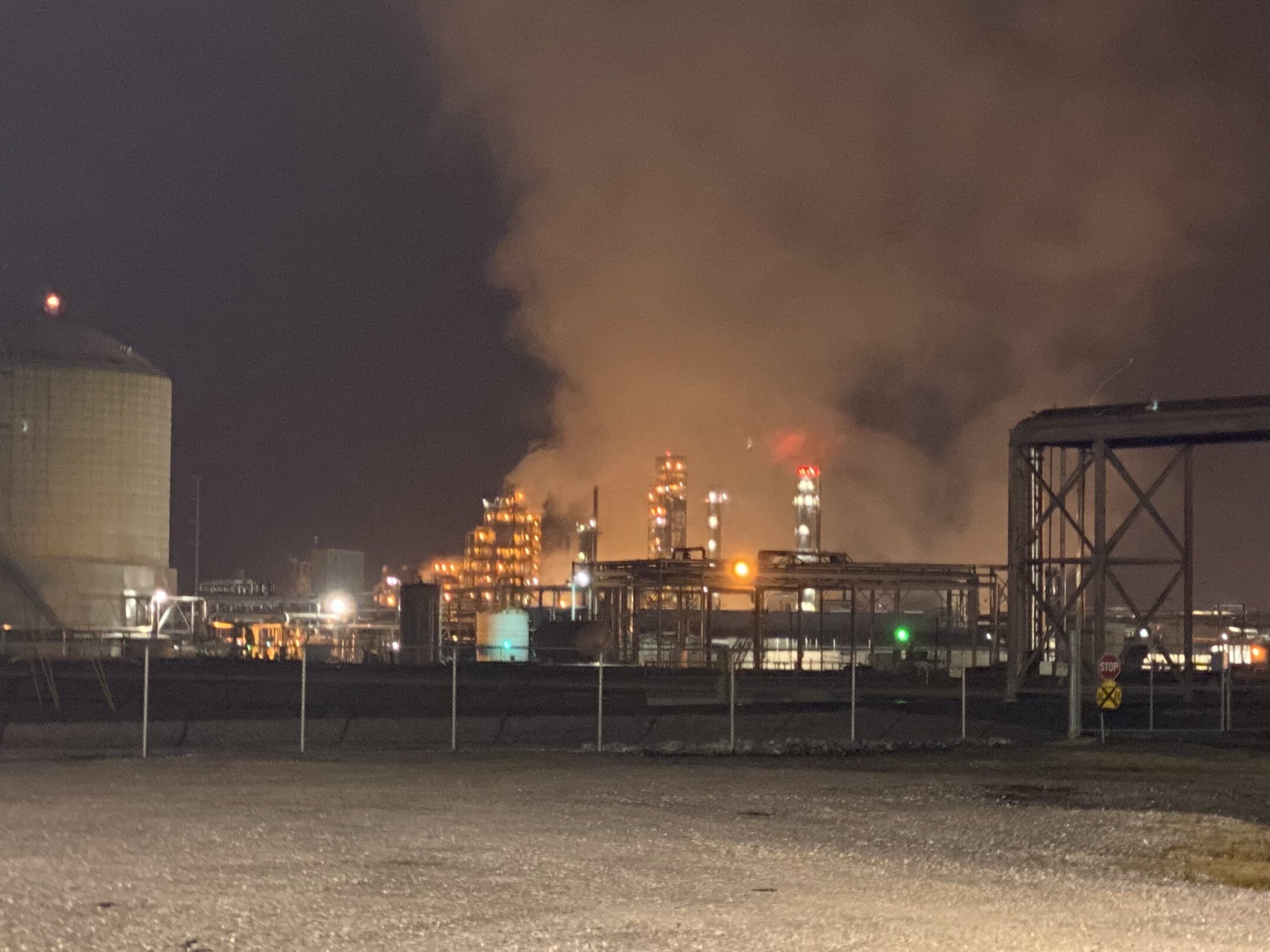
A petrochemical plant just outside the bayou town of Donaldsville, LA.
Stupid, perhaps, but true nonetheless. And so very, very human. So, I’ve decided - and Jenny agrees - that the most useful way to explore Louisiana and Texas right now is to observe more, and judge less. For readers who hope we will brightly burn the climate emergency torch with the message that the apocalypse is well upon us and our southern neighbors need to wake up lest they suffer sooner than their northern neighbors (even though we think that’s true), we may disappoint you. Our agenda right now is simply to understand.
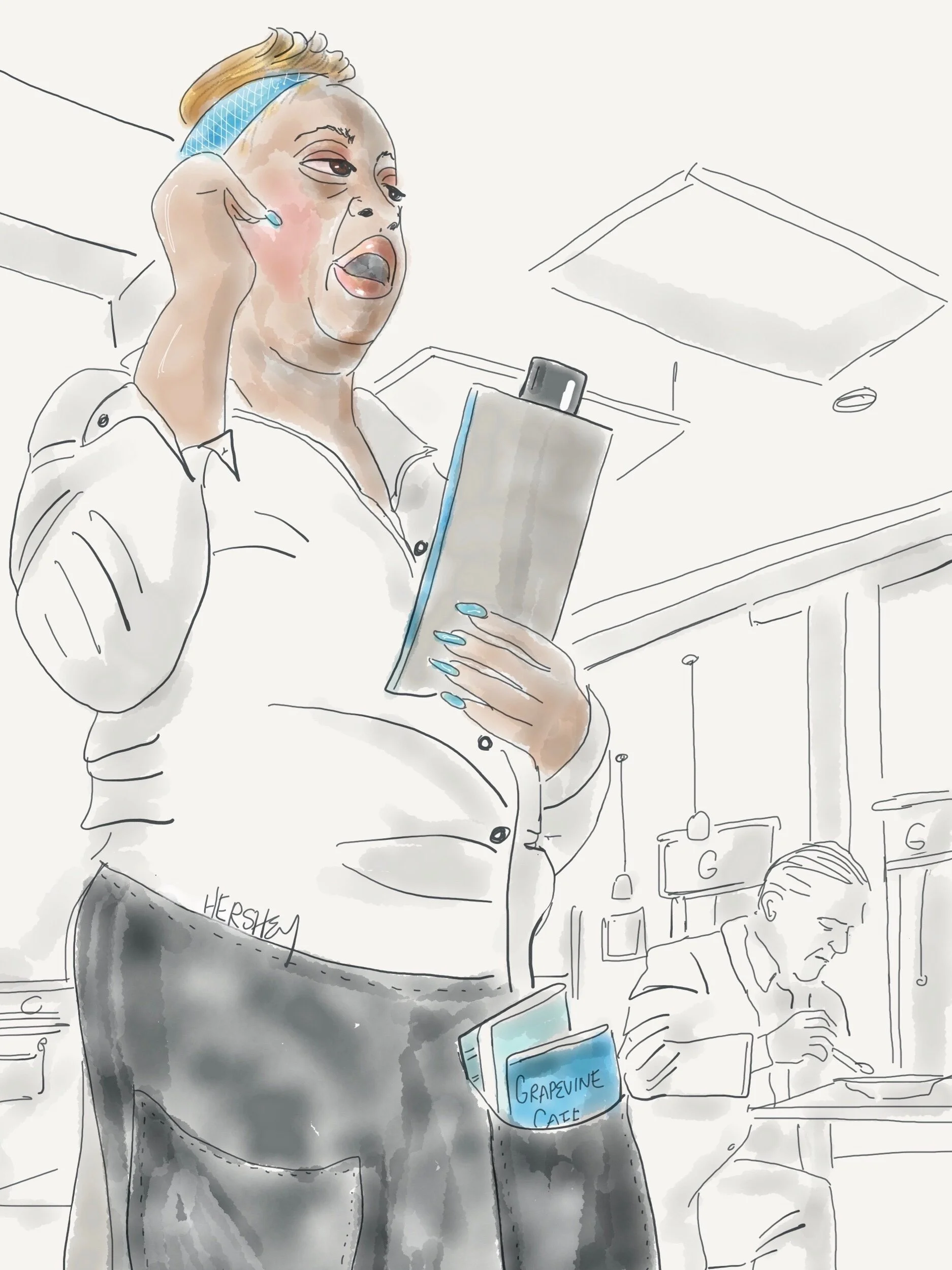
“Yes Ma’am...they got all kinds of plants here. Chemicals and oil and I don’t even know what they got. “ Drawing by Jennifer Hershey. Follow her on Instagram at deeofo.
Maybe a lot of folks just don’t believe that good jobs from a “green economy” will really show up when chemicals and oil companies have been the only big games in town for multiple generations. Or maybe they just don't feel like they can change anything anyway.
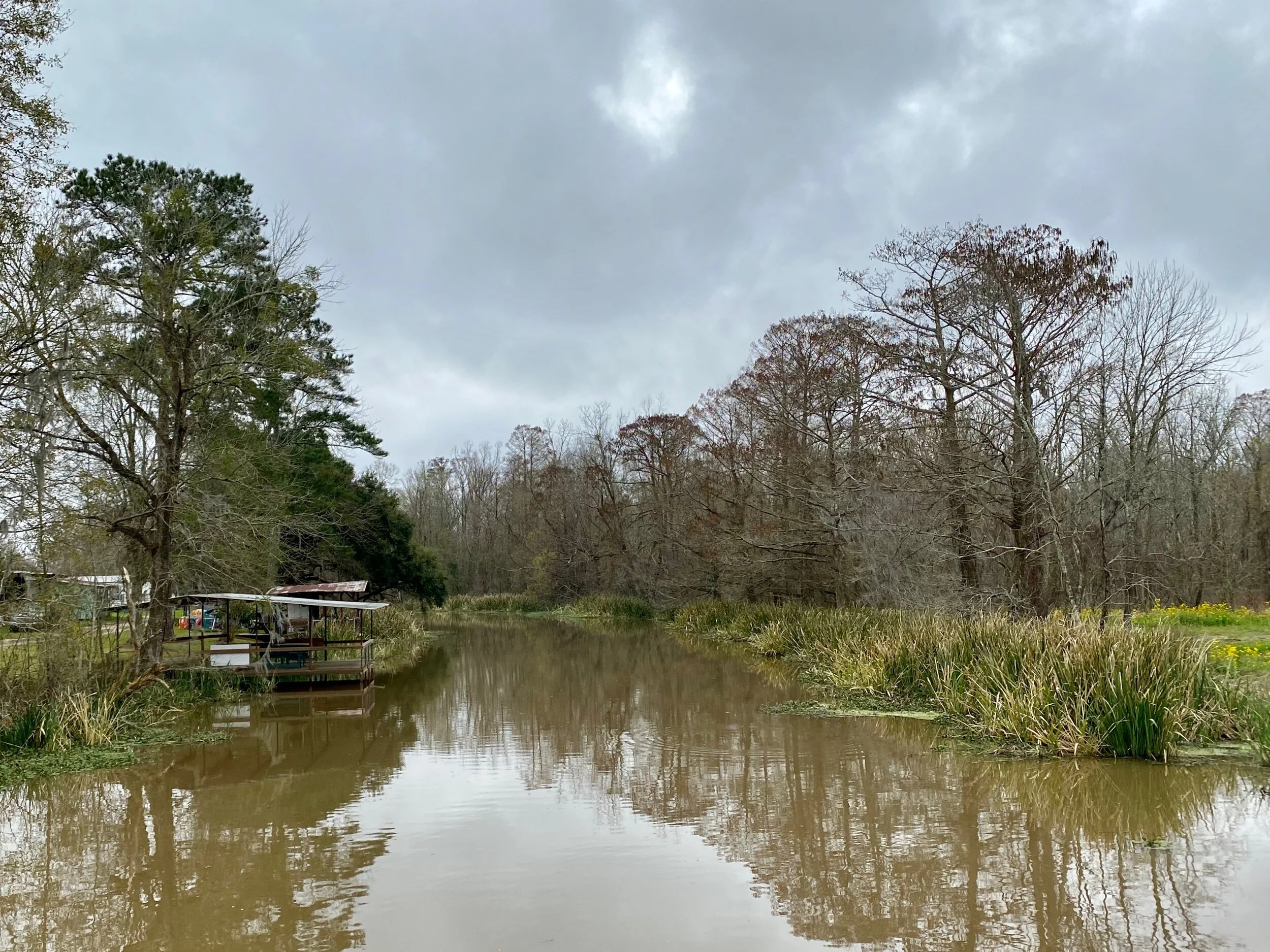
Bayou Country about 150 miles southwest of New Orleans.
We talked to a middle aged black man in White Castle, Louisiana, named Orville outside the local grocery store, who told us he had voted for Obama but didn't vote in 2016, and was probably not going to vote in the next election also, even though he thinks Trump is a crook. When we asked him why, he went silent. So we (thoughtful northerners that we are) explained “logically” why he should - since the federal voting power for a Democrat in Louisiana is arithmetically more powerful, given the Senate and the Electoral College, than a vote by a Democrat in New York. Orville looked dubious and replied, “them politician’s all gonna do what they want to anyway.” Jenny and I exchanged glances. We had failed to convince him. So, as we mounted our bikes and road off, Jenny yelled back at Orville, “If you don’t vote in the next election, I’ll come back here and kick your ass”! Orville laughed. Maybe he’ll remember that part of our conversation more then our logic.
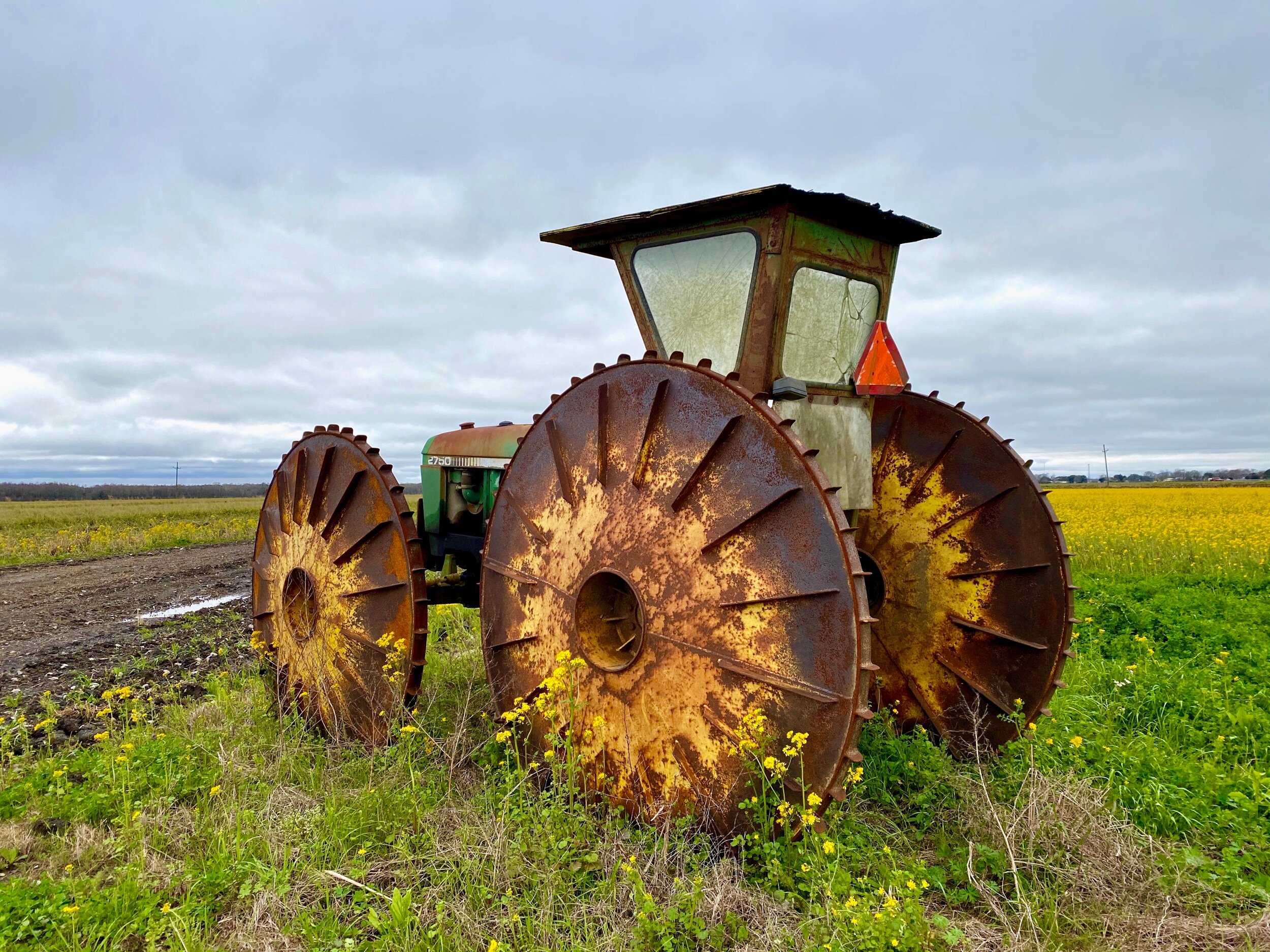
Tractor in a fallow sugar cane field near Baldwin , LA. Photo by Jennifer Hershey.
Maybe Orville is right. Yet, Congressional behavior during the impeachment proceedings teaches us that politicians will do just about anything they think the majority of their constituents want them to (with a few exceptions). And maybe that’s a good thing, especially if we want them to do what’s right. But more agreement on what “right” looks like among us constituents would be very helpful, especially when the prevailing view seems so very wrong. And how will we achieve that? I used to think I knew. Now I no longer do… so for myself, I'm trying out the follow idea: Observe more, judge less. And please know, dear reader, it's myself that I am encouraging.
For those of you who geek out on map routes, here are the last four days of our rides on Garmin: Day One, Day Two, Day Three, Day Four.
Thanks for reading! More to come…
All photos, unless credited or otherwise noted, are copyrighted property of the blog post author.
Illinois to New York City, Post 2
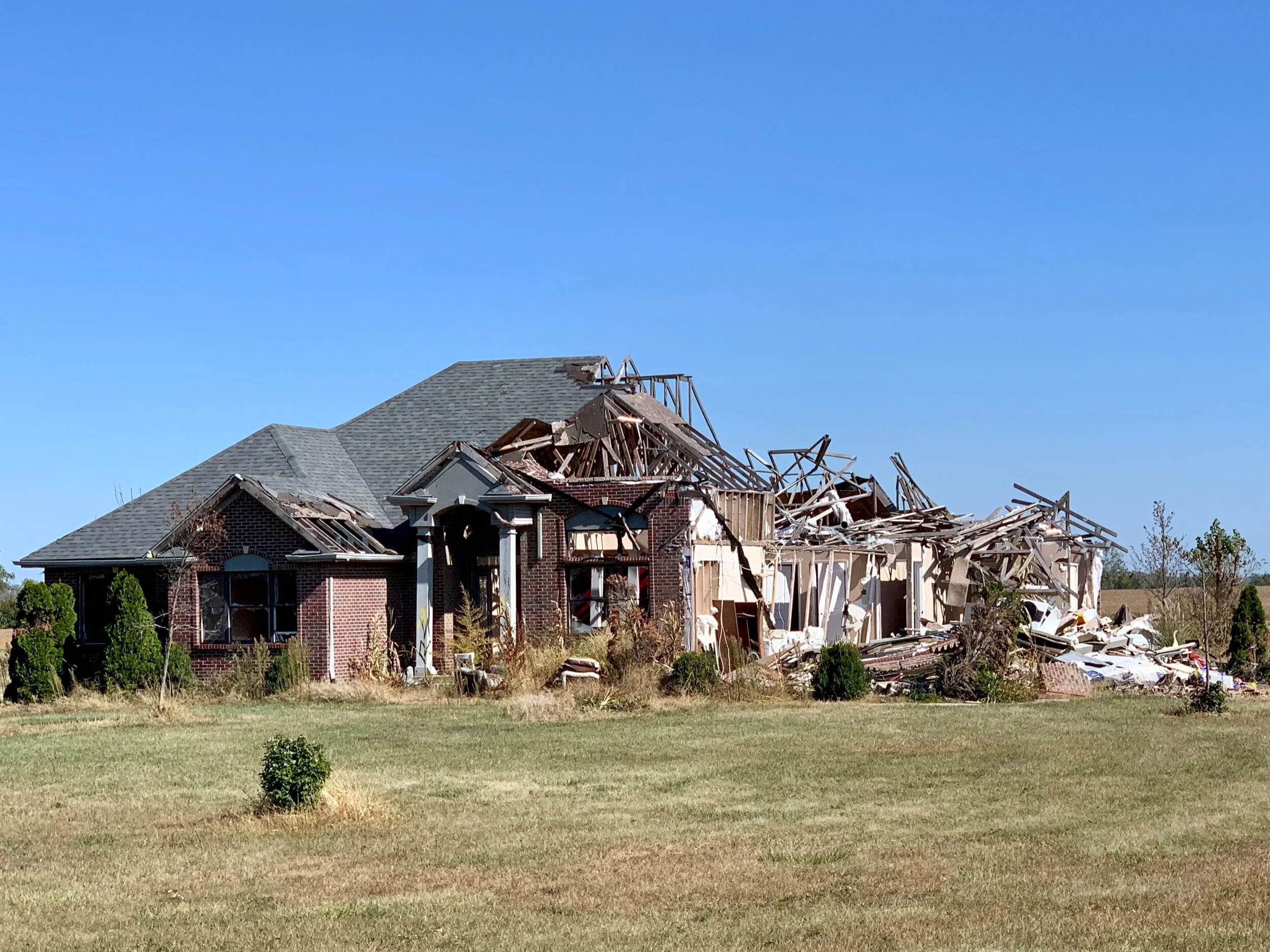
Remains of a home in Brookfield, Ohio, in a populated suburb after a tornado touched down in June of 2019. When we saw it, nearby homes were fine and people were going about their business.
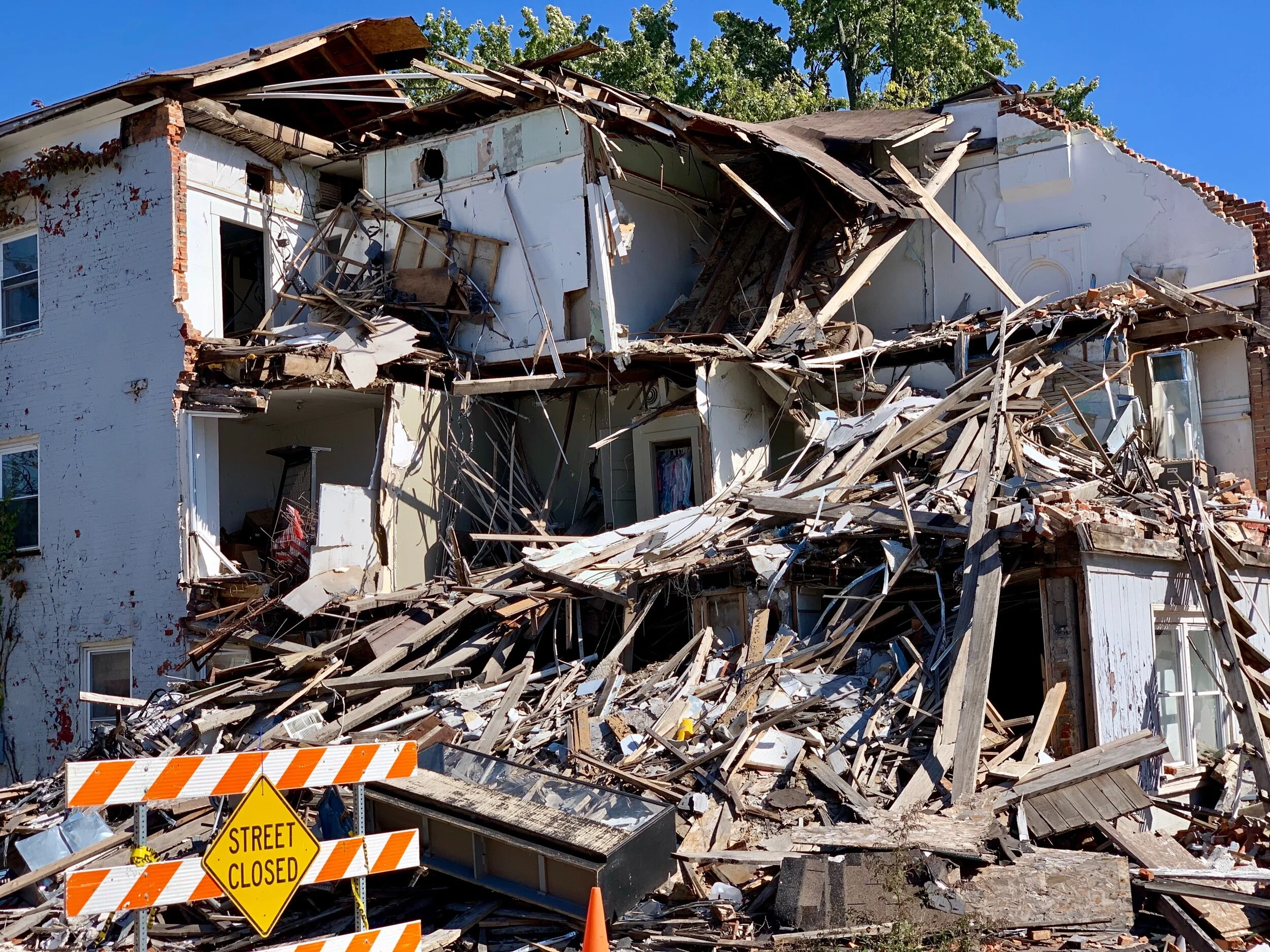
This house is on Main Street in Cambridge City, Indiana. It was intact until July of this year, when it collapsed. A local resident we talked to didn’t know why.
Hello from South Pittsburgh on the historic GAP (Greater Allegheny Passage) Trail. We biked here yesterday from Steubenville, Ohio, an old steel and coal town about 25 miles north of historic Wheeling, West Virginia. The night before we were near Morristown, Ohio, in the rolling western foothills of the Alleghenys.
Both yesterday and today we encountered numerous hills, a few with grades as steep as 15 degrees. But what goes up also comes down, so we enjoyed some great downhill runs. Although it’s grey and rainy today, the past few days have been sunny and warm, and the hill country has been spectacular.
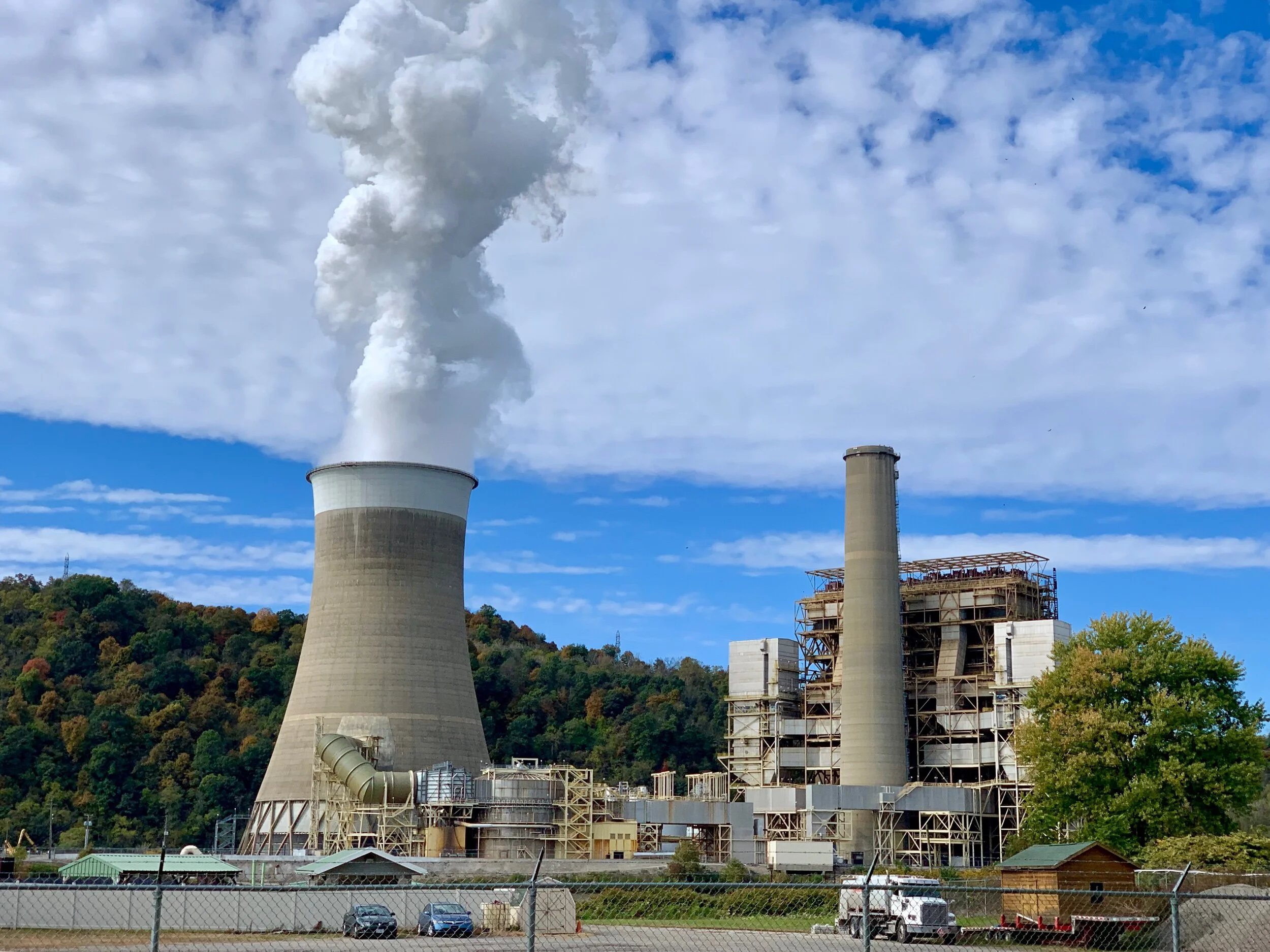
The Cardinal Operating Company, a plant north of Wheeling where coal is made into coke for steel manufacturing. In the 1990’s there were over 100,000 jobs in the steel industry in this valley; now there are about 10,000 jobs.
Fall colors on the way.
After some reflection, Jenny and I decided to take the historic GAP bike trail from Pittsburgh, PA to Cumberland, MD, and then a portion of the C&O (Chesapeake and Ohio) Trail before heading up to Lancaster, PA, on our way back to New York City. Today we are resting and waiting out a rainstorm near the western end of the trail. We chose this alternate route instead of the northern ACA Route to NYC because it is less climbing (by about 20,000 cumulative feet)! I’ve done this route before, and remember it very fondly, so I'm looking forward to sharing it with Jenny. We have currently traveled over 800 miles total, and tomorrow we will start the 150 miles that make up the GAP trail.
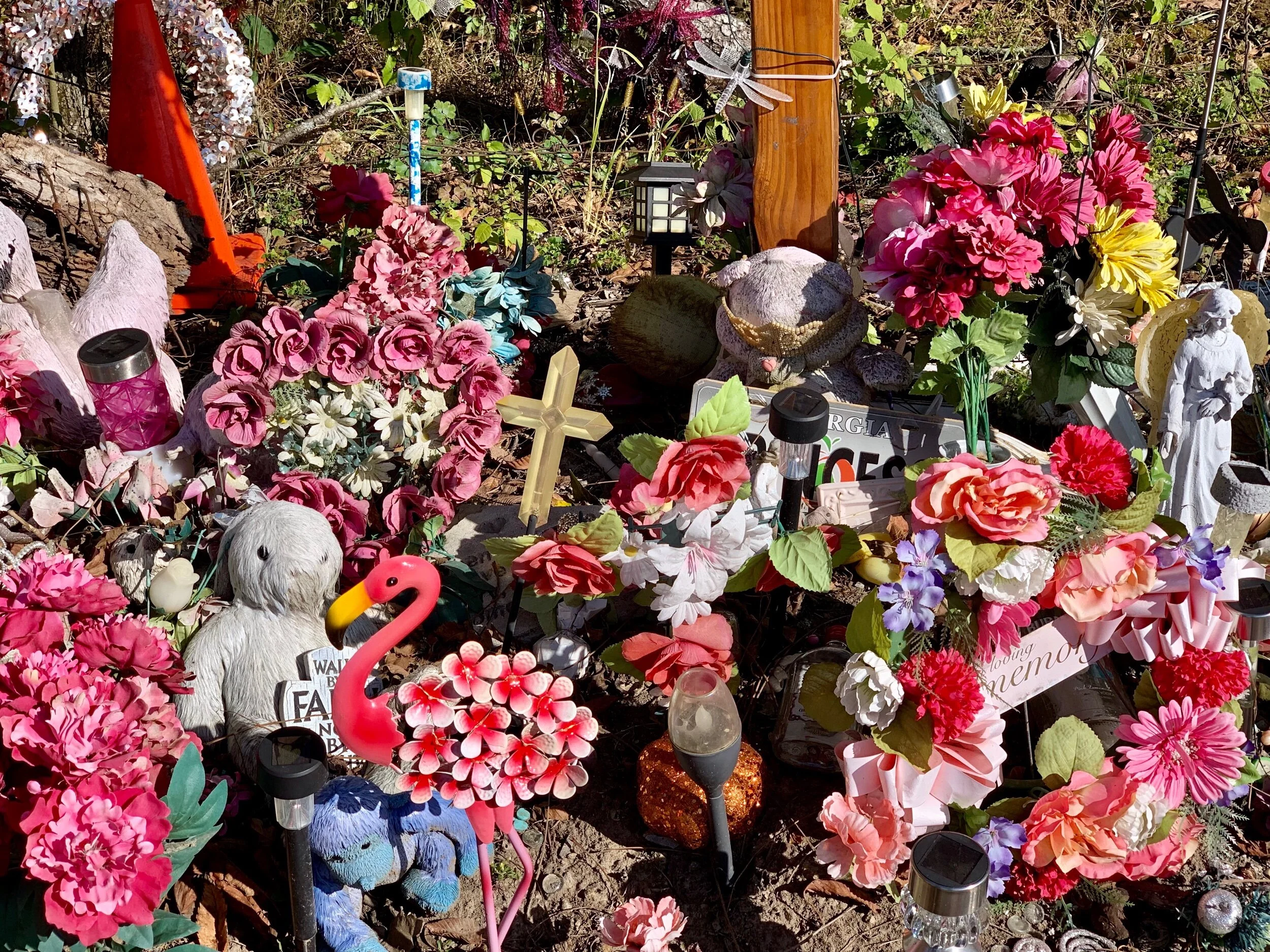
This memorial is for 16-year -old Olivia Starrwallace, who ran off the road and into a tree in eastern Indiana while driving near the National High School (which she attended).
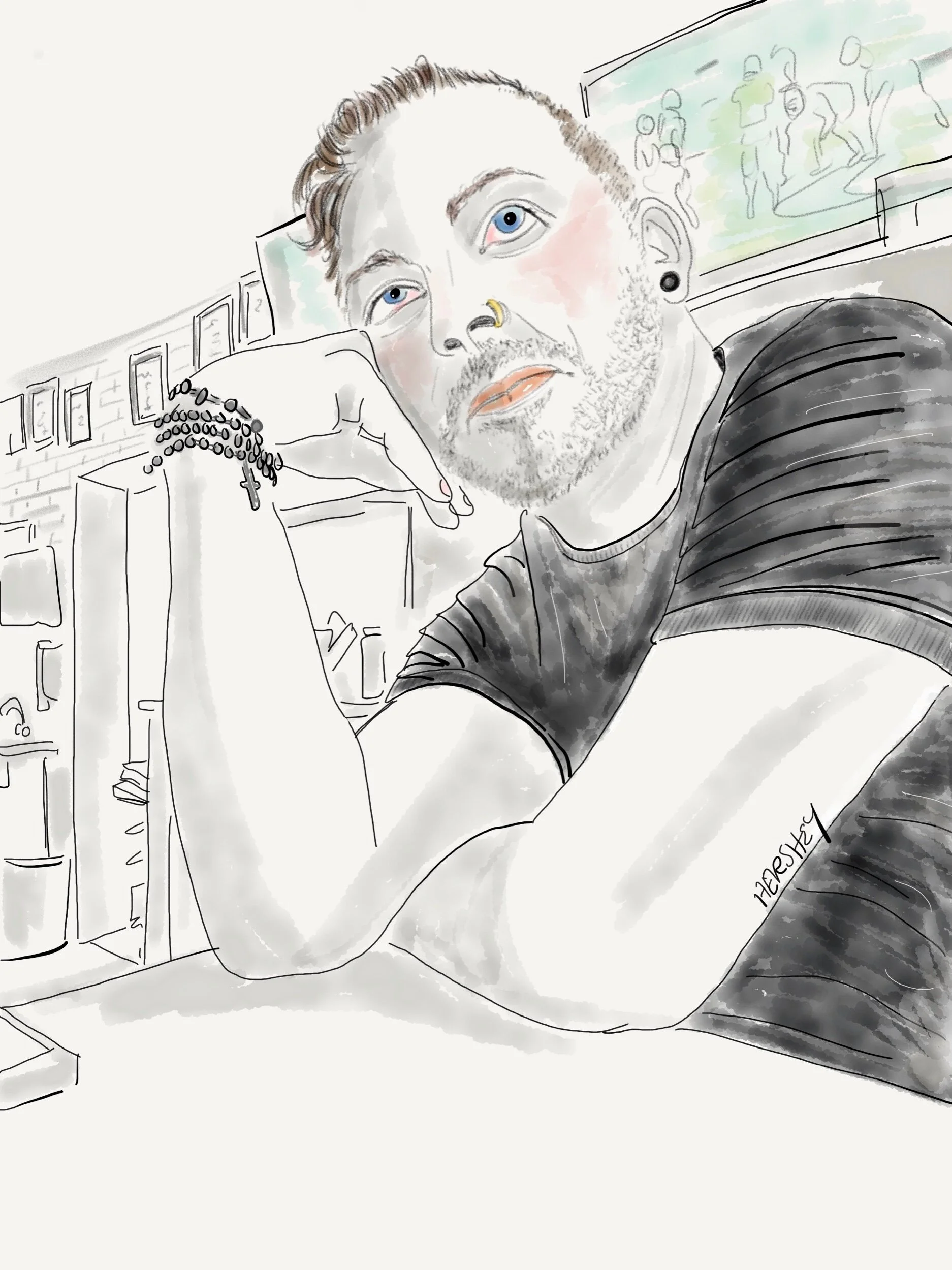
Jenny’s drawing of our bartender Dennis at the Pike 40 Bar and Grill in Morristown , Ohio. You can see more of Jennifer Hershey's work on Instagram at “deeofo”.
While such a distance is not new for me, I must compliment my biking partner Jenny. She’s never biked this far, and she has done so with great joy and resolve. She’s tackled intense hills, aggressive and threatening traffic, poor road surfaces, lousy and non-existent shoulders, cold and rain - all without losing her cool or diminishing her spirit.
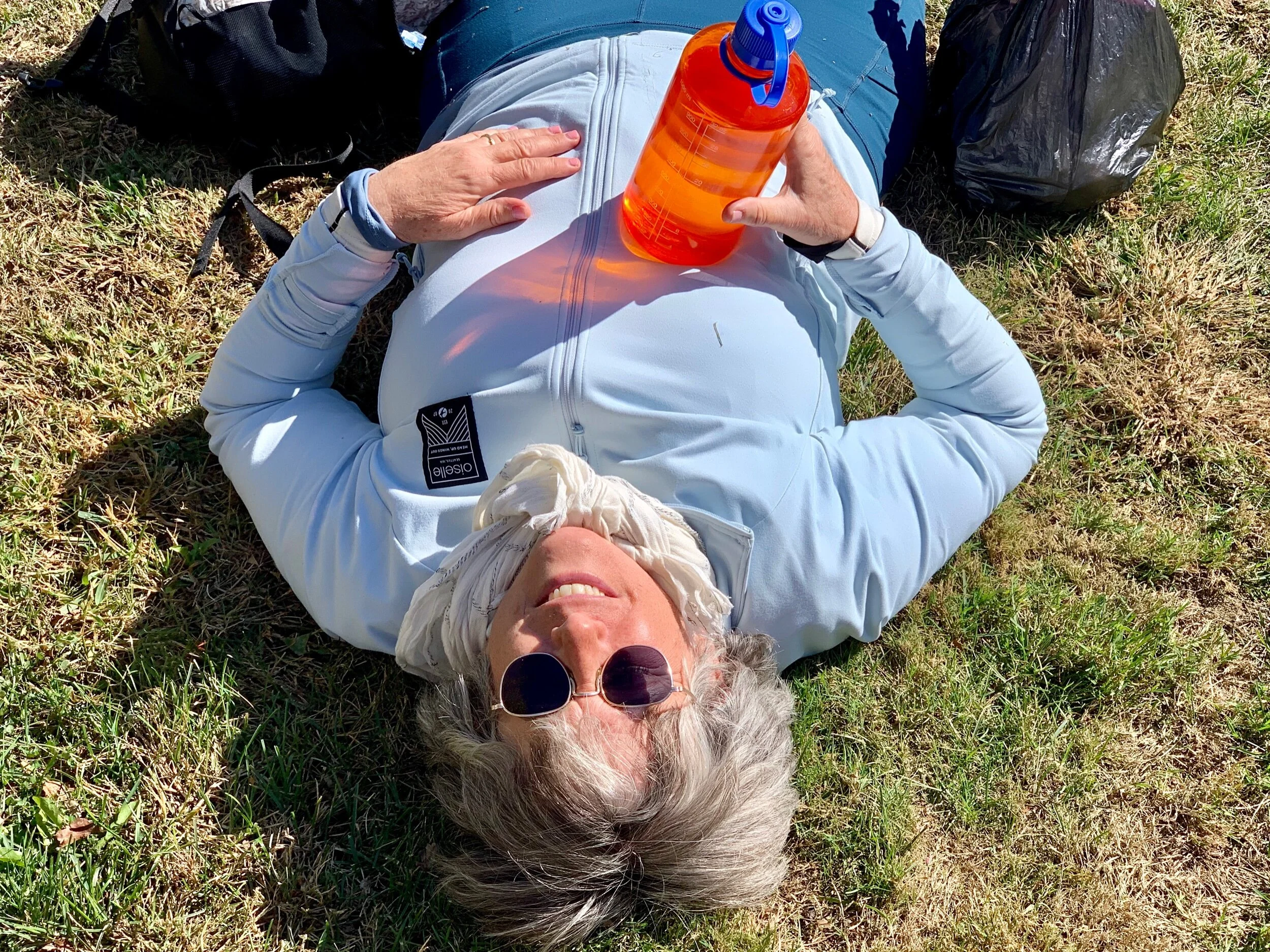
A tired cyclist rests after lunch.
Locals tell us we’re in Trump country, and we’ve definitely seen a few 2020 campaign signs. The TV is on in our motel. It’s hard to imagine the nation isn’t focused entirely on the impeachment investigation and the Turkish invasion of Syria. But frankly, those issues are not the topic of conversation in most of the places we’ve visited. The Americans we are encountering seem more focused on the basic logistics of making their daily lives work.
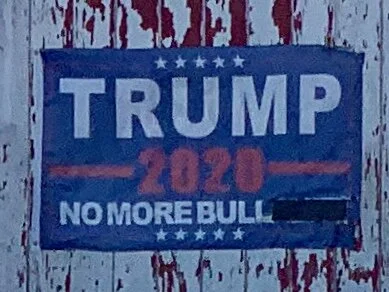
Earlier today I found myself wondering what the connection to the outside world was like in small midwestern communities during WWII? Was our nation so focused on winning the war and supporting our troops that you could feel history being made even in the smallest of towns? Did the overwhelming majority of citizens feel like their daily actions were contributing to the creation of a better world?
Some new driving jobs have been created in the Ohio River Valley in the last decade as fracking has expanded. That said, isn’t all traffic (except for electric vehicles powered by renewables) essentially “oil and gas traffic”?
Or did life in rural America then seem more like now, when the unrelenting noise of the outside world seems so far away? Perhaps those who had a close relative involved in the war effort felt involved, much like farm families further to the west might feel more concerned about climate change now, after experiencing several very tough years of extreme weather. Yet, I don’t know how to reconcile the sense of urgent hopefulness I felt last month in New York City as I participated in the Youth Climate March, attended numerous panels at the ever busier annual Climate Week, and followed the extraordinary appearances of Greta Thunberg at the United Nations Climate Summit. It all seemed so significant, and a signal of shifting perspectives.
But in the Ohio River Valley, there’s still plenty of pain (and anger) over decades of economic losses. Worrying about climate change almost seems like a luxury… until one thinks soberingly about an even harsher future. So, as always, lets keep our resolve to change our trajectory. The future is waiting to be invented.
A bridge to another bike path near OSU in Columbus, Ohio.
Speaking of a bright side, we have encountered many long, beautiful and very well maintained cycling trails. About 20 miles west of Dayton, Ohio, we picked up a rural “Rail to Trail” cycling trail, and with a few exceptions of unfinished sections, followed the trail until we left Columbus, about 90 miles later.
The Olentangy River Trail makes its way through much of Columbus, including this lovely park.
This was a remarkable and incredibly pleasant run. We encountered another long section of cycling trail later the same day from Granville past Newark, Ohio, making our total run on trails well over 120 miles. Then, we enjoyed another 20 miles of trail along the scenic Ohio River out of Wheeling, West Virginia, as we headed north to Steubenville, Ohio.
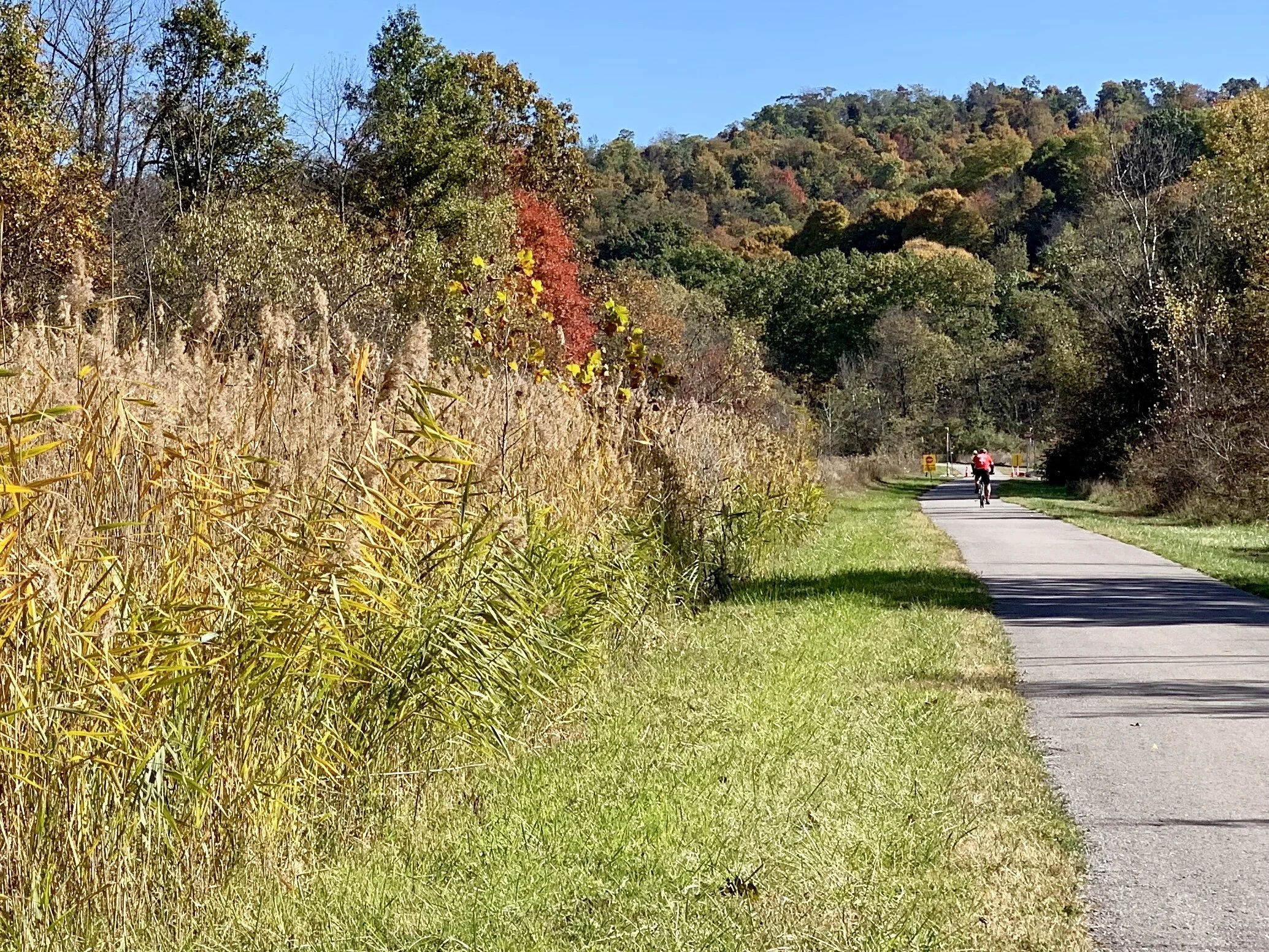
Finally, we rode the Panhandle Trail most of the way into Pittsburgh, capping off a series of great trails through much of central and eastern Ohio.
So we are happy and content, and looking forward to another stretch of dry weather once the current storm passes over. The GAP trail awaits!
Thanks for reading! More to come…
All photos, unless credited or otherwise noted, are copyrighted property of the blog post author.
Illinois to New York City, Post 1
Soybeans wait for harvesting in Greenfield, Indiana.
Back in the Saddle Again
Greetings from my bicycle! My last blog post was in May, and I apologize to readers who may be curious about my disappearance in rough weather somewhere near Westgate, NV, on a cycling trip from Palo Alto to Salt Lake City.
If you’ve been wondering, you might be pleased to know that I did get back home to New York City. In fact, I spent a great summer there. While there, I wrote a blog about how I got home: backtracking to Reno, skipping my plans for Salt Lake, shipping my bike and flying back to New York City. But alas, I got distracted and never posted it. So much for the best laid plans of mice and men (and me).
Even so, I took a few more photographs in Nevada in May that I think are still worth sharing, even if the trip back to New York no longer seems relevant. I include these because I am fascinated by extreme weather events. They are increasingly part of our lives, and I think there is value in bearing witness to what we see around us. You may remember from my last blog that I was fighting my way through a very unusual rain and snow storm in a part of Nevada that is usually hot and dry in May. Along with many other folks I was surprised and challenged by the inclement weather I encountered. Below are a few more shots from that trip that I’m particularly proud of…
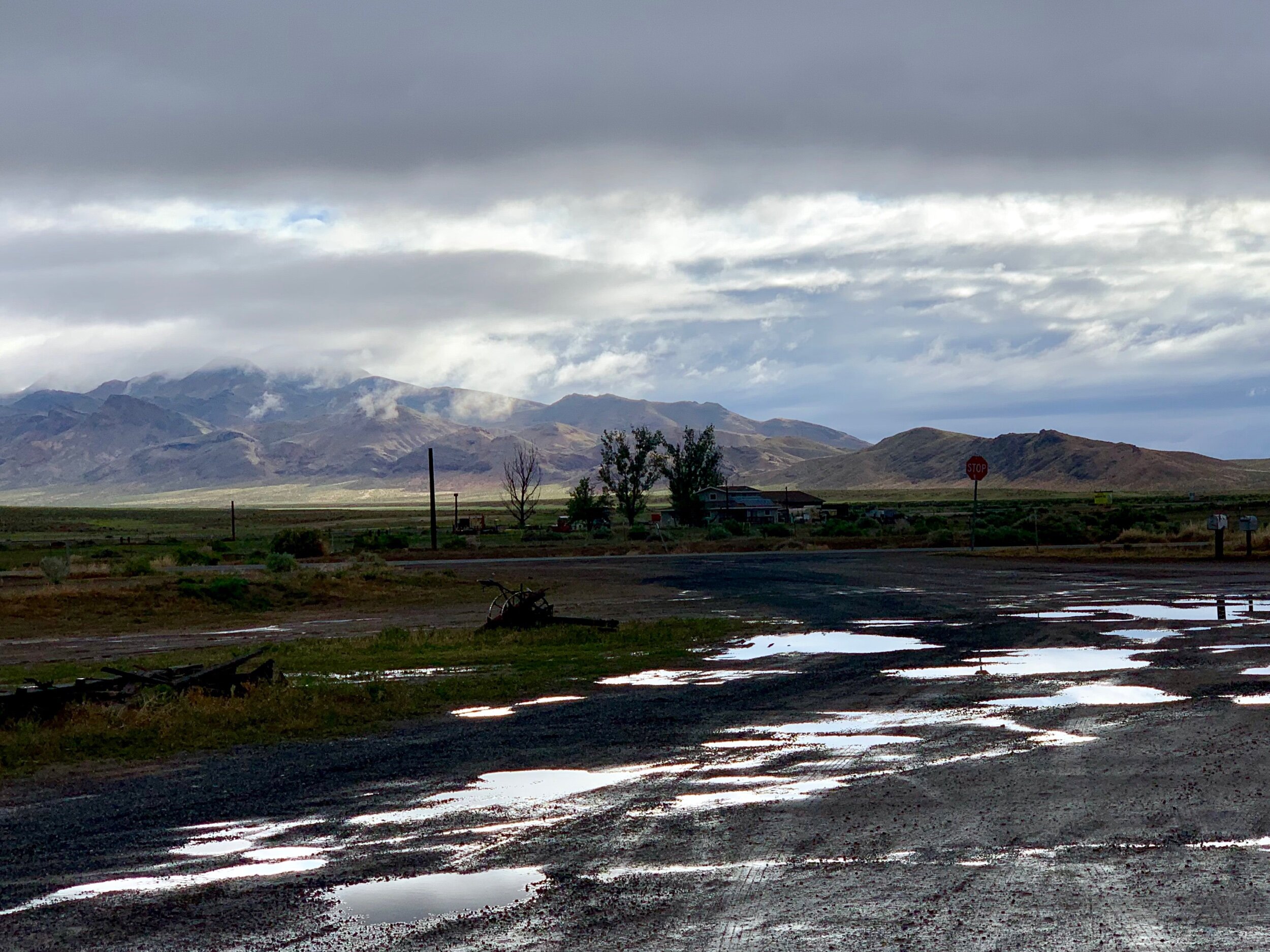
Water in the Westgate Bar parking lot on the day I left in late May, 2019.
Flooded salt flats east of Reno.
Rain clouds above the salt flats.
As the summer progressed, I made plans for future cycling with my friend Jenny Hershey, who had just retired from a 31-year career running building operations for Jujamcyn Theaters on Broadway. A founder of the Broadway Green Alliance, Jenny is both an environmentalist and an avid cyclist. To get our feet wet, we took a car camping/cycling starter trip to New Brunswick, the fabulous Cabot Trail in Cape Breton in Nova Scotia, Prince Edward Island (PEI), and explored traveling together on bikes for multiple days at a time. If you’ve never been there, I strongly recommend cycling in PEI. There are numerous rail to trail conversions that allow cyclists to get everywhere one could want to go. The shoreline is vast and beaches are beautiful. The islanders take great pride in their environment, and they enjoy rich local culture. Prices are reasonable, and the pace of life is remarkably comfortable. At the same time, internet services and other modern amenities are easy to come by. Don’t miss it!
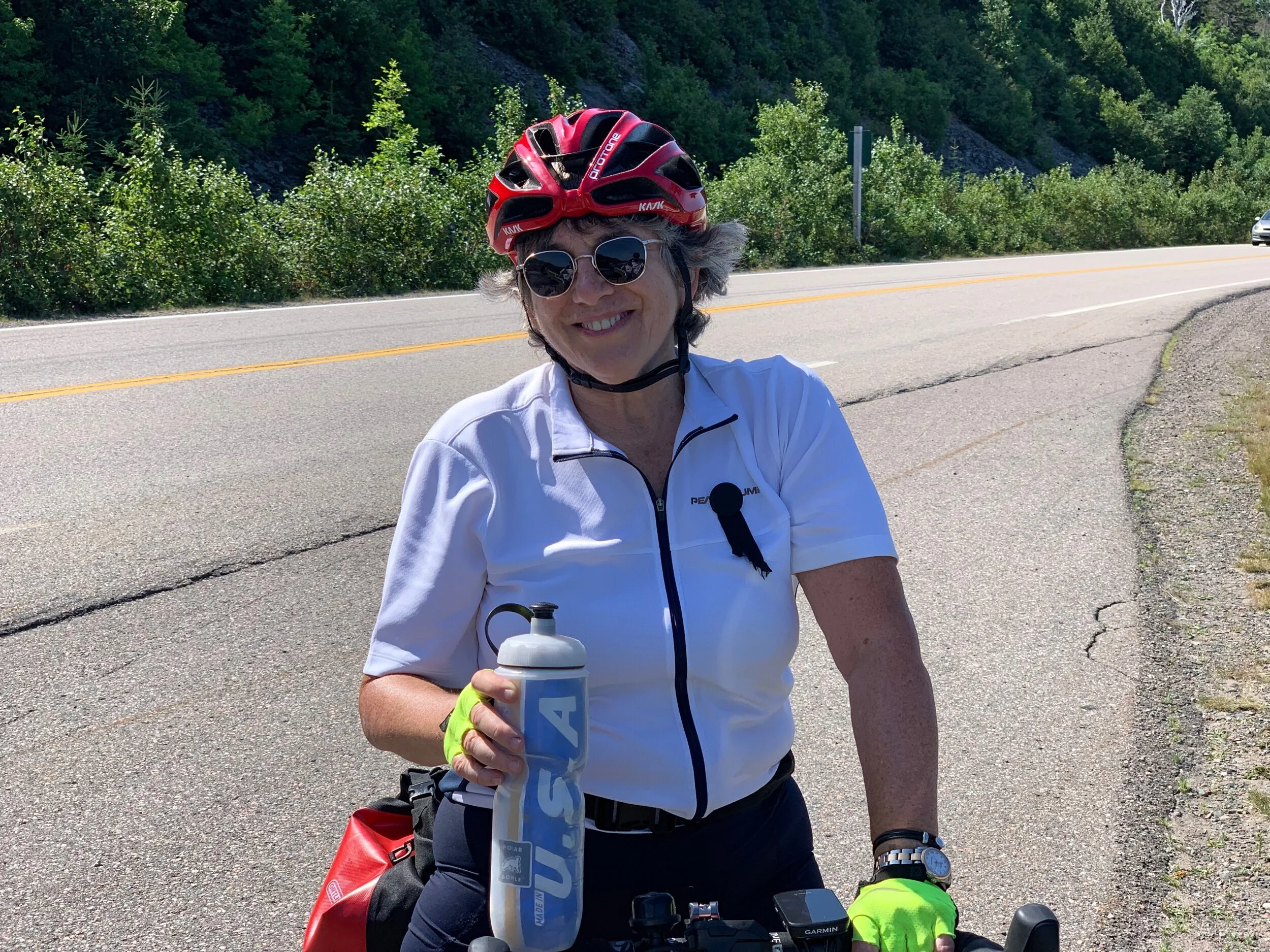
Jenny by the roadside in PEI. She is wearing a mourners ribbon signifying the period of shiva after the death of her mother Merle Weisman.
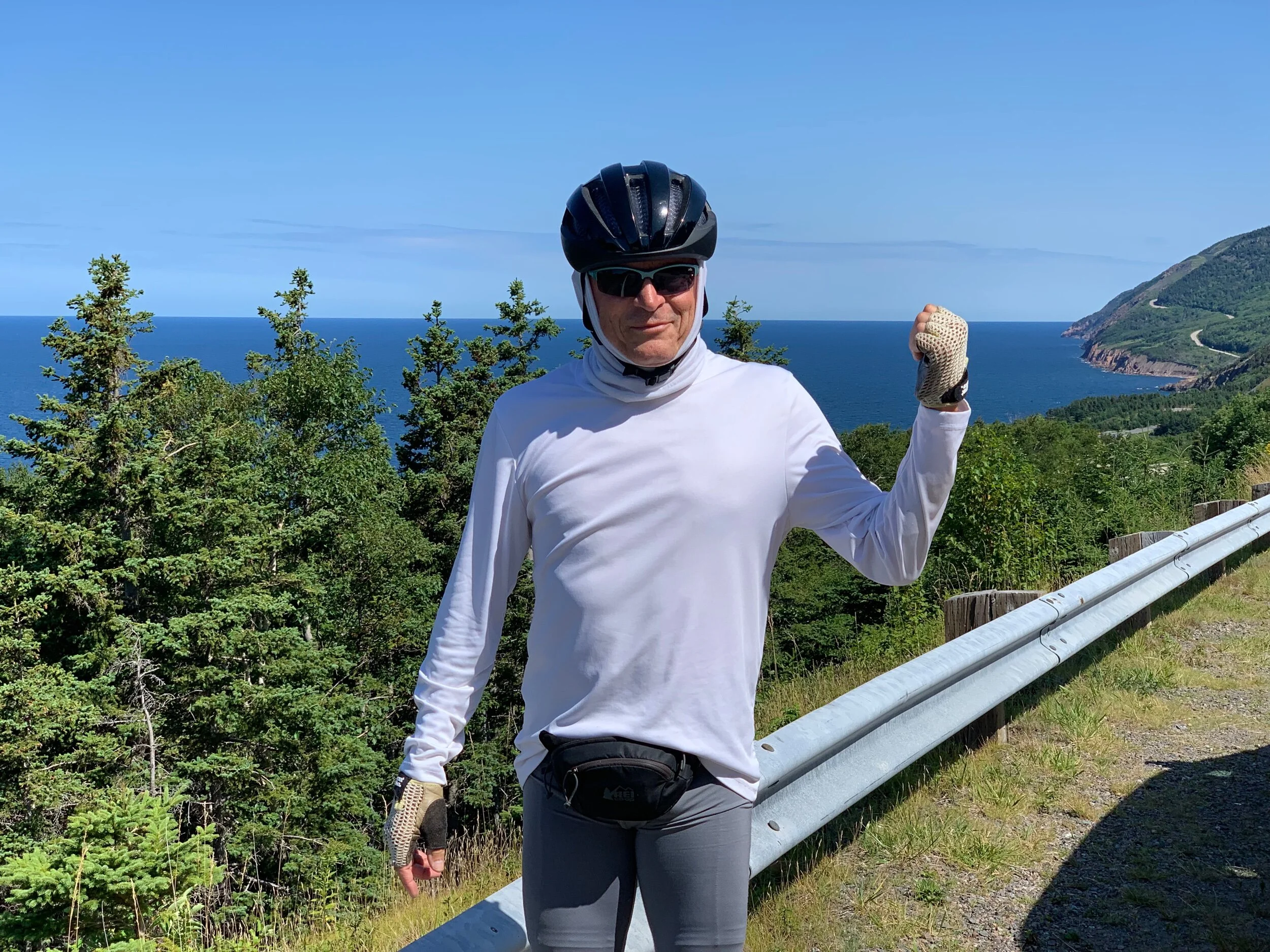
Michael gesturing toward the Northumberland Straight in Cape Breton.
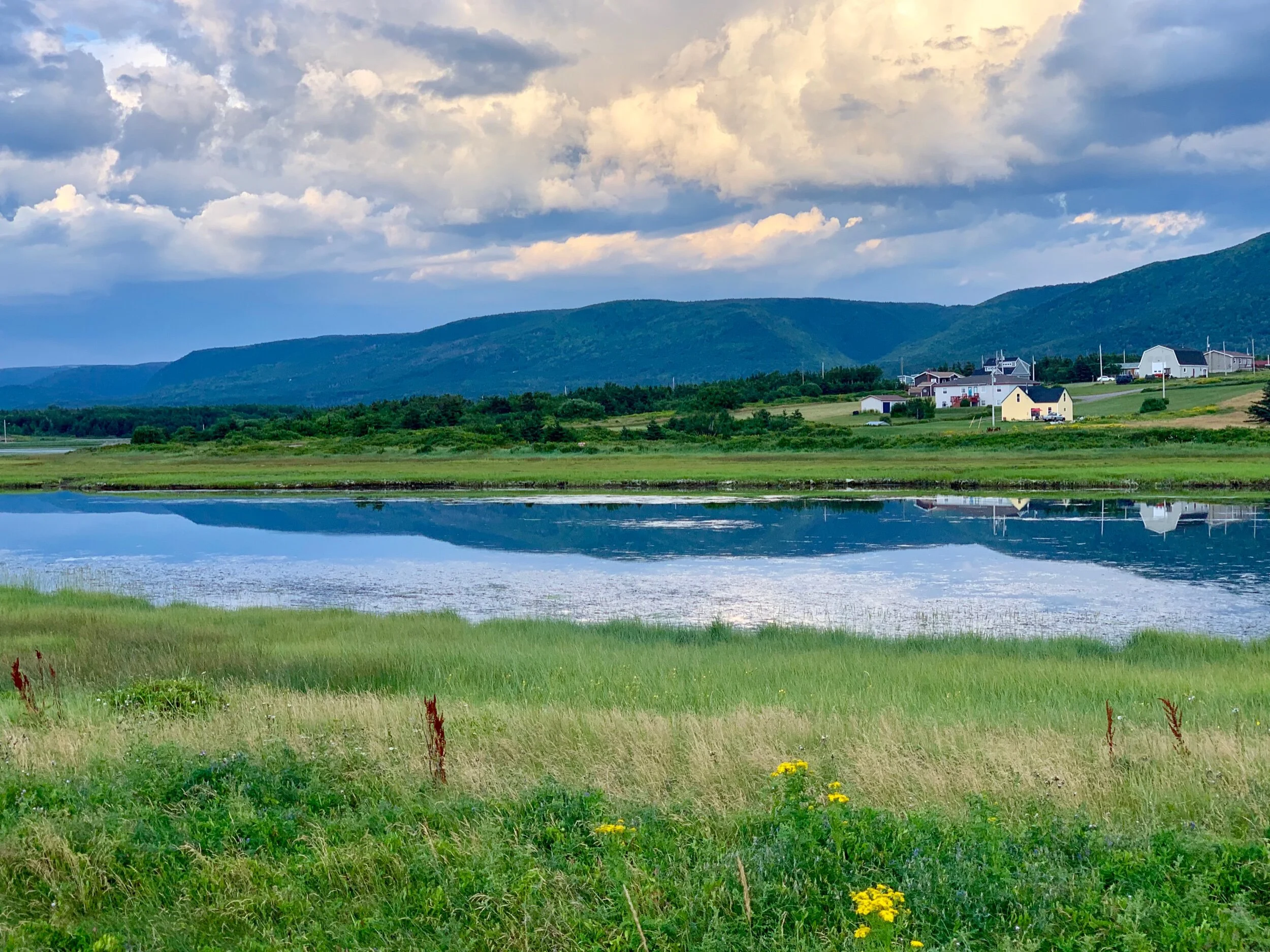
Near our campground in Chetticamp, Nova Scotia.
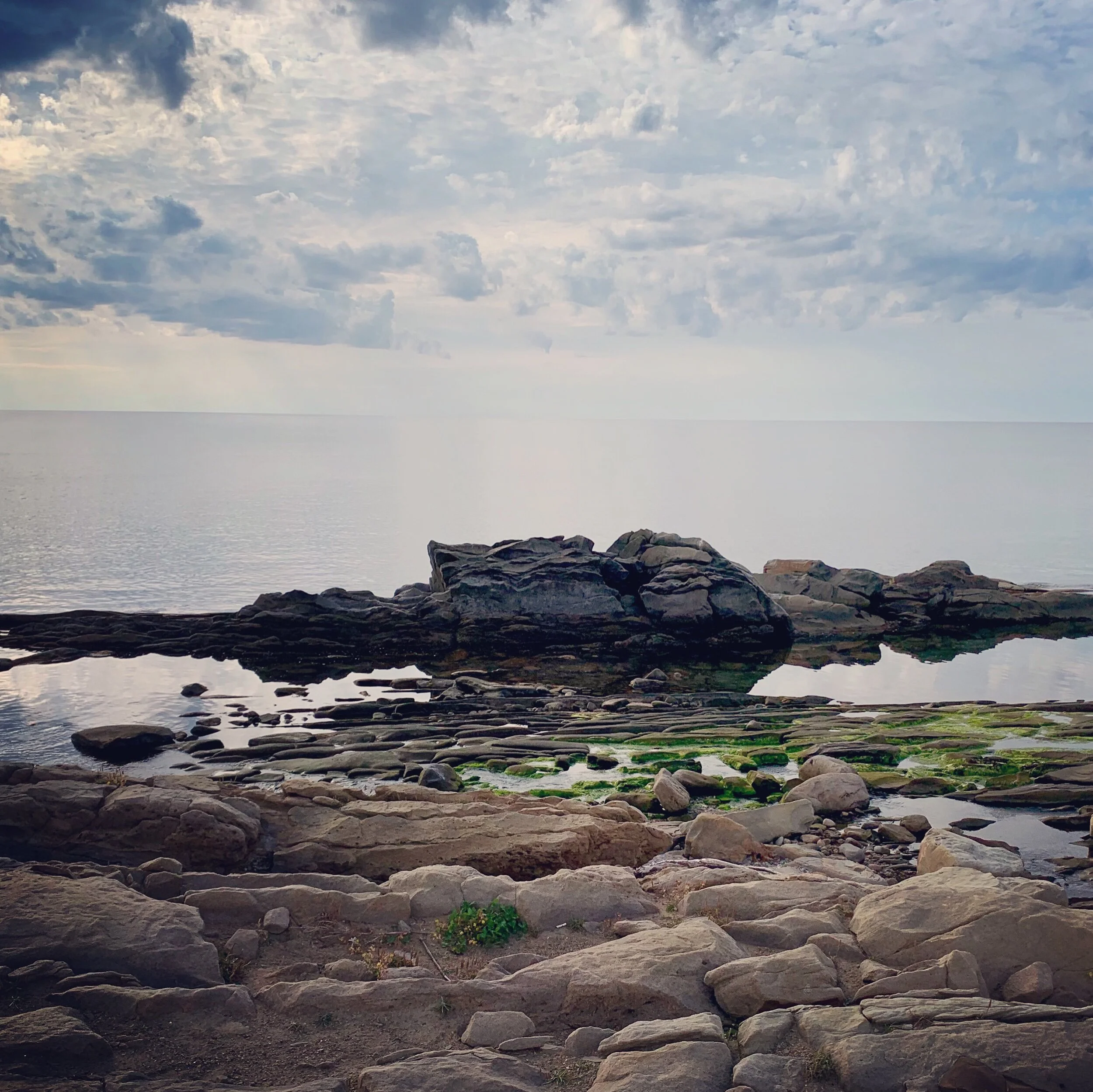
The coast near Chetticamp, Nova Scotia.
Moving On
In addition to being busy, last summer was emotionally eventful. In June and July, as my brothers and I recovered from my Dad’s recent death, we helped our Mom move from an assisted living facility to a nursing home in Galesburg, IL. She didn’t like losing her independence, but is gradually getting used to both the irritation and value of full-time long- term care. Like most older people, my Mom has good days and bad days. A good day occurred recently when Jenny and I arrived via train to meet up with my daughter Saren and her family from Wausau, Wisconsin. My Mom was able to meet her new great grandson Landon.
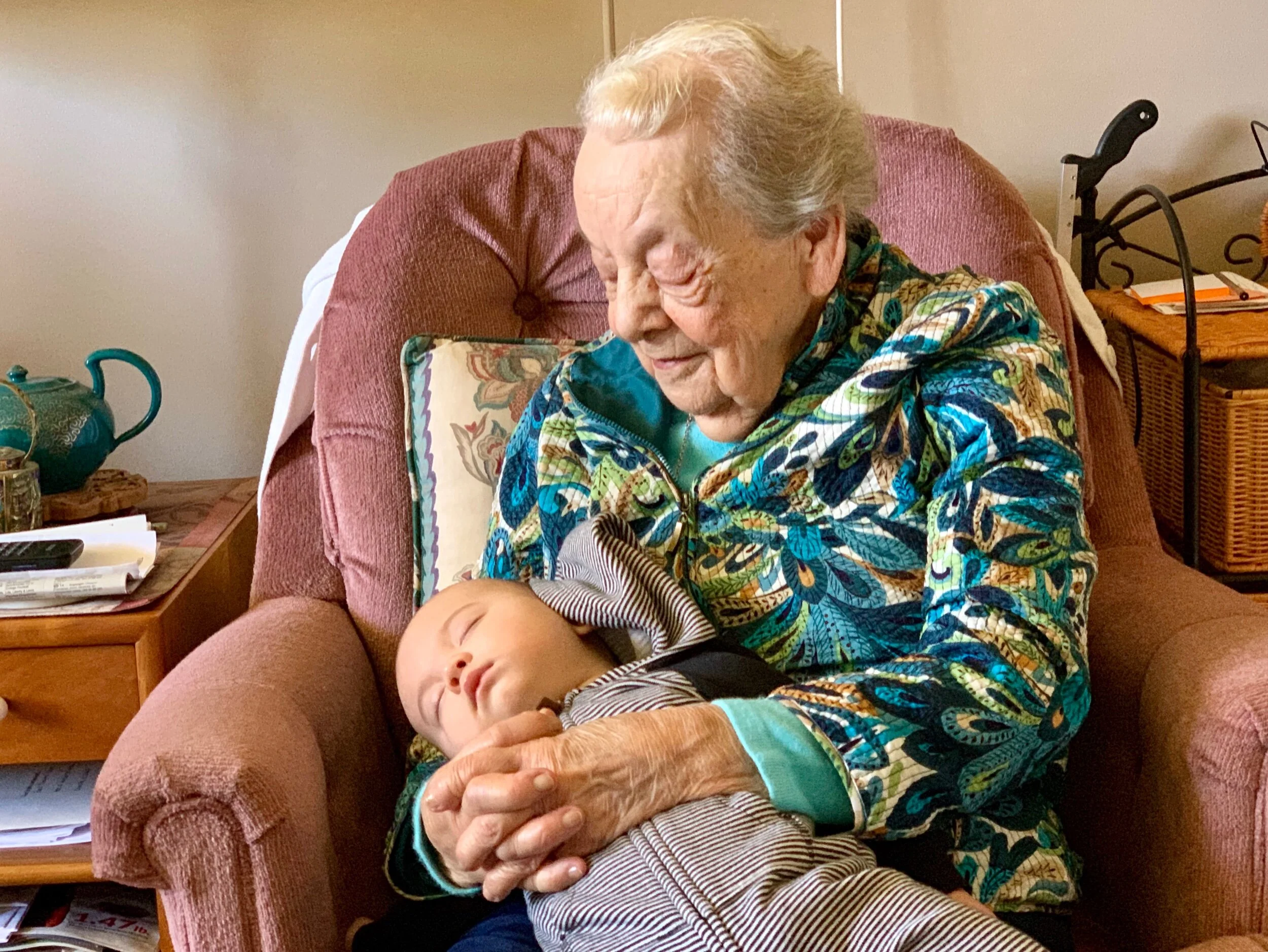
My Mom Sue Chase and her great grandson Landon Spire.
As I joyfully watched my Mom, my daughter and her son, I realized there were four generations of us in the same room sharing our love. And of course, I found myself wondering what life will be like for Landon when he is my Mom’s age (it will be 2106). Will civilization as we presently know it even exist? Will animal species other than humans and their pets and feedstock still exist? Or will our species be gone as well?
There is increasing scientific evidence that we are quickly running out of time, and we must significantly turn the tide on greenhouse gas emissions over the next decade. I am so pleased that all the Democratic candidates for President are acknowledging climate change as an existential threat, and are developing policy proposals for meaningful change. Personally, I cannot think of a more important way to address our climate emergency right now than to back whatever Democratic candidate is nominated, and to work my heart out for his or her election. And if we are lucky enough to have an administration that understands climate science, then we must put our shoulders to the wheel for national policy that supports carbon pricing and returns dividends to citizens to help bear the increased costs of fossil fuels. We will also need policies to help build the next great economic expansion in renewable energy, carbon sequestration through changing agriculture practices, and carbon technologies to include air-based and flu-based greenhouse gas capture and carbon recycling through manufacturing of inert products such as polymers, fuel and even food. These nascent, yet promising technologies are very hopeful. We only need the will to make them happen. For more information check out the Circular Carbon Network.
——————
Today I'm writing from a motel in Richmond, Indiana. Jenny and I began this cycling trip about a week ago from Galesburg, Illinois. As I’m sure you are aware, the fall has been unusually hot in the Midwest and the northeast. That changed suddenly last Friday, just as we left Bloomington, Illinois, for Gibson City (with the help of a local Samaritan who drove us 37 miles in his pickup to avoid rain as the temperature plunged to the high 30’s). The next day was even more inclement. By Saturday evening, after Jenny and I had biked 72 miles to Attica, Indiana, we were very cold, wet, miserable and tired.
But the joy of biking is often in the recovery phase. The last two days have been lovely, and today was exceptional. Our trip has become glorious again. Galesburg is about 400 miles west of us at this point. We’re tired and windblown, and enjoying the pleasant and peaceful endorphin rush that comes after several days of hard cycling. It’s nice to feel used up.
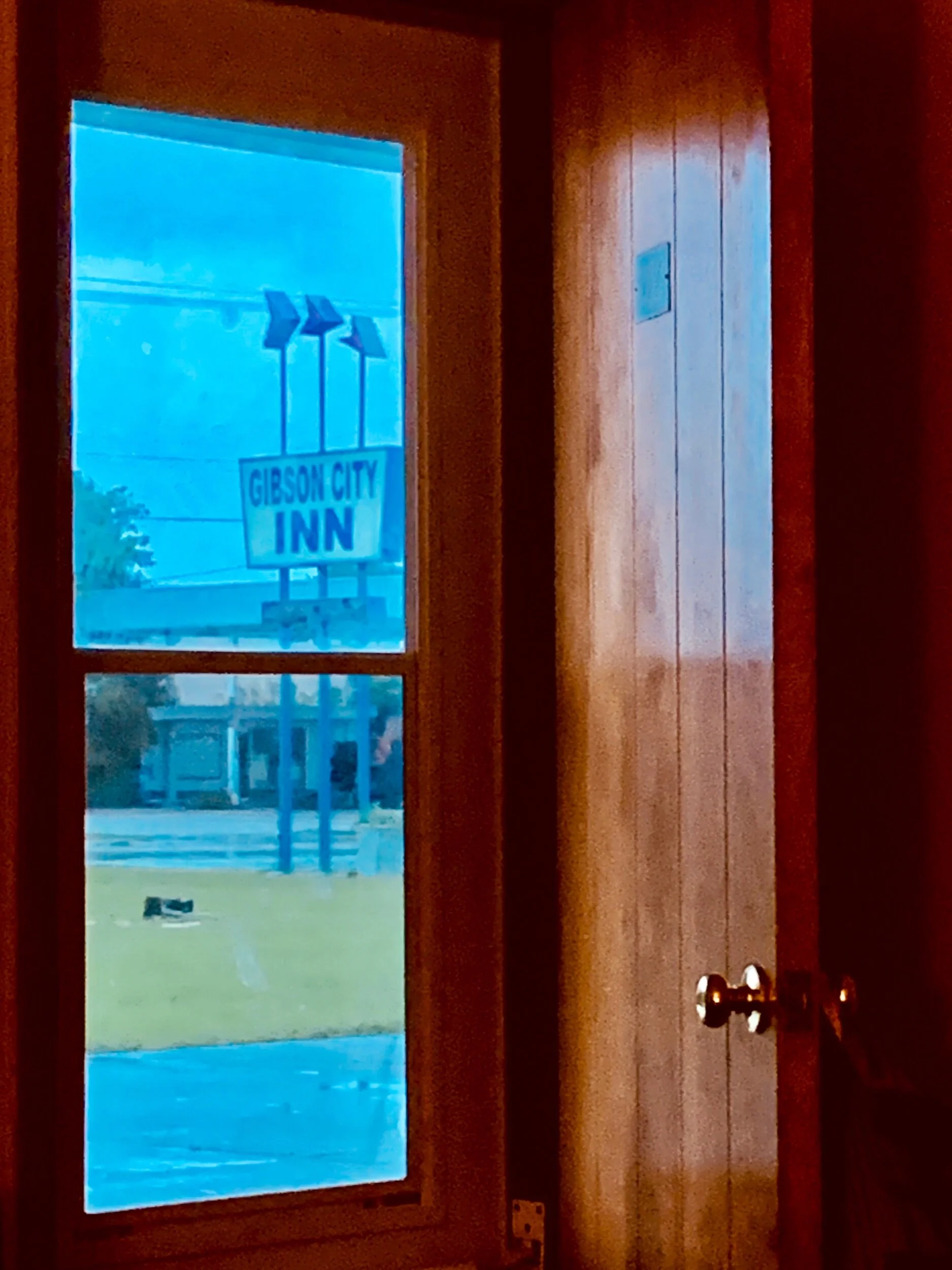
The rainy view outside our motel in Gibson City, IL.
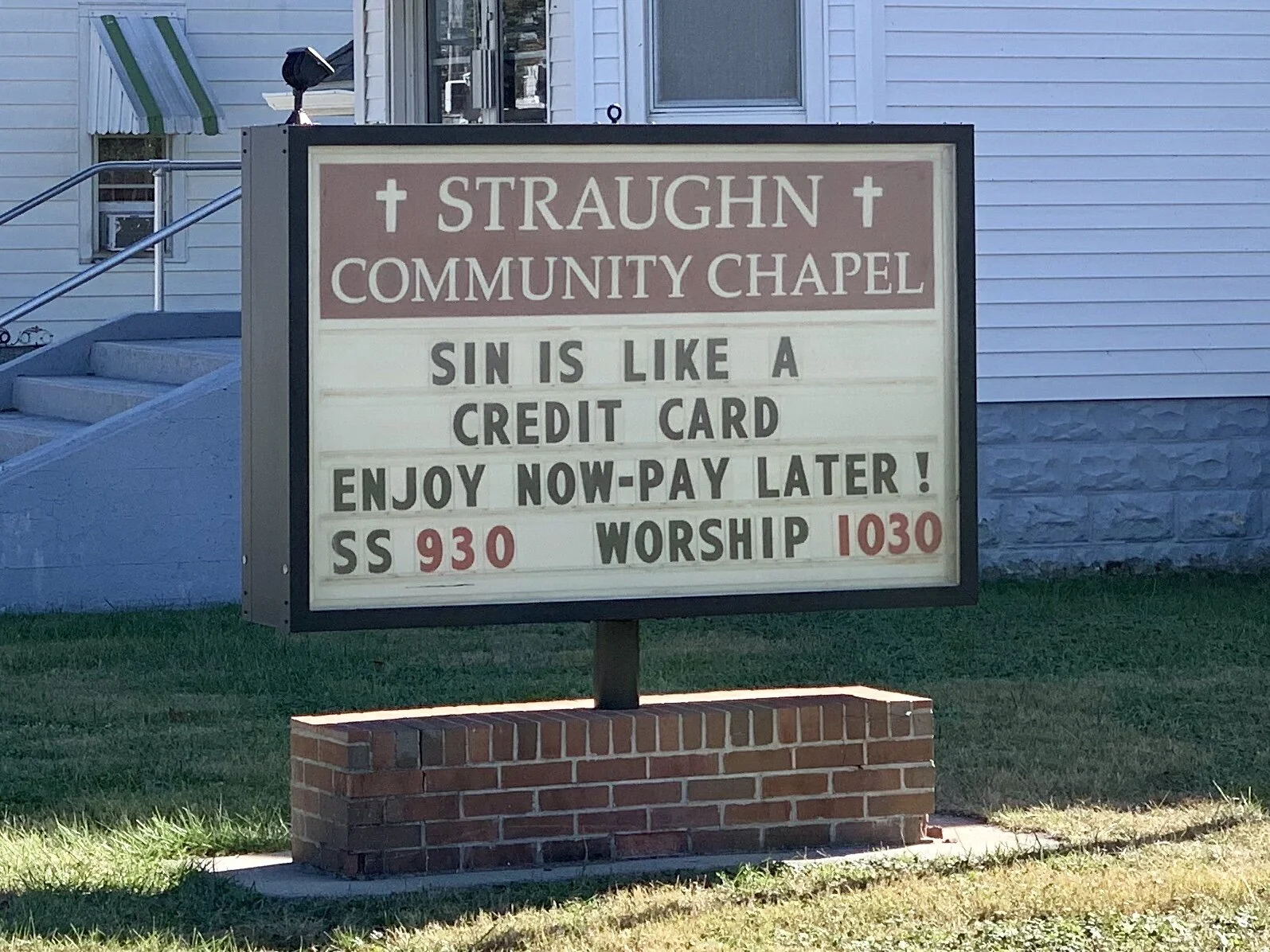
Fossil fuels are like this as well! We enjoy now, our grandchildren pay later….
Thanks for reading! More to come…
All photos, unless credited or otherwise noted, are copyrighted property of the blog post author.
The Highway of Life; A Tribute to Kim Chase
Sand hills east of Fallon, Nevada.
Storm clouds forming to the east of Middlegate, Nevada.
Greetings. I am writing this from Middlegate, Nevada, in a pleasant ramshackle motel that must date back to the 1930's. It doesn't have a name, other than the motel.
This building across the parking lot does have a name - the guest house.
I am traveling by bike from Palo Alto, California to Salt Lake City, Utah, where I will catch a flight back to New York City. Since Carson City, Nevada, I've been on Highway 50; a road once marketed as "The Loneliest Highway in America.." It's part of the "Adventure Cycling Association's "Great Western Trail." It's raining today. A lot. It rained and hailed on Carson Pass. A lot. All along my entire route, locals have been saying it's unusually wet and cold. I wasn't expecting this - I took this route on my GRID Tour in 2016, and enjoyed pleasant and reasonably warm weather the entire time. But with extreme weather on the rise everywhere, cycling is impacted more and more by increasingly greater unpredictability in weather patterns. The same is true for outdoor industries such as farming and construction. Much of our knowledge - which is based in being able to make reasonably accurate predictions - is becoming less useful.
Outside and inside the bar at Middlegate.
Close up of the ceiling in the bar.
I didn't intend to take this trip a few months ago. I had a different plan in mind. But circumstances changed things. On May 4, a few hours after I had arrived for a visit, my Dad passed away. I was fortunate enough to be with him, along with my stepmother Dawn - my Dad's wife of 53 years. Our entire family and so many friends are devastated, of course, but after an amazing life that lasted over 100 years, there is also so much to be grateful for. My Dad lived a long and active life, much of it on his own terms, and he died a reasonably peaceful death with only a few weeks of a troublesome decline. Few are so lucky.
On May 19, many friends and family came together to celebrate my father. My brother Steve did a masterful job as "Master of Ceremonies", and the stories and eulogies for my Dad were very poignant and touching. I think we said goodbye well, in a manner that would have pleased my Dad. The next day a small group of us took a scouting party to a lovely nearby park in the coastal mountains to identify a place where we will disperse his ashes when the time is right.
On the following day I left Palo Alto to cycle to Salt Lake City. I wanted a challenge, and I wanted solitude. I am getting both. At the same time, this route allows me to stay near the California Zephyr train-line so I can easily get to my home town of Galesburg, Illinois, if need be (where my elderly mother lives) with my bike in tow. I guess I'm feeling a bit fragile, and don't want to be very far away if my Mom takes a turn for the worse.
Below is the eulogy I delivered at my Dad's commemoration. Perhaps it will mean something to others who weren't able to attend his memorial.
May 19, 2019, A Tribute to Kim Chase
Love and Loss
My Dad could be quite funny. One day, while I was stressing out about something, he put his hand on my shoulder and looked me straight in the eye. Then he grinned and said, "Stop worrying Michael. You'll get from one end of your life to the other".
Well, I haven't done that yet. But he has. And boy, I miss him.
We all know there's a shadow that comes with loving someone. That shadow is called loss. To love someone deeply means that, sooner or later, you will lose them, and they will lose you. There's no getting out of that experience.
Some of you may not know that Dad's first wife died during the polio epidemic in the early 1950's. It was a staggering loss for him, as it was for me and my brother Chris. It was 1953, and my Dad was just starting his teaching career. There he was, having lost his wife, with two toddlers to care for. But that was only one of many loves and losses. My Dad married again, and had another son, Steve. And then some years later, he married Dawn, bringing her into our lives. Yet, by the time he died at 100 my Dad had lost every other member of his immediate family except those of us in this room, and all of his friends from his own generation. Still, he lived and died surrounded by people who loved him, most notably Dawn, with whom he was able to share 53 wonderful years.
There's no remedy for losing a loved one. It happens to us all. We love, we lose. But still, we can do what Kim Chase did - we can love full out, completely present, gently, quietly, regardless of the cost. We can just keep showing up. My Dad was good at that.
Acceptance and Support
I should know; I tested him quite a bit as a young man. For a time, I was quite angry at him for ways I thought he had let me down. But my Dad would stand his ground, and gave me something to push against. And even though my harsh words and actions would hurt him, he remained steadfast. And I can say that I never, ever doubted his love and commitment to me, even when I was testing it in every possible way I could. No matter what I did or said, he'd come back for more, he'd keep fighting the battle for us to become whole - as father and son, friend and family, mentor and protege. Our relationship in those days was explosive, but I always encountered a man who believed we have it in us to find our own way in life, and we don't need to be coddled or indulged, we just need steady acceptance and support.
Luck and Opportunity
My Dad would often say he was very lucky. Some of you may know he attributed his luck to having been loved so unconditionally as a child by his mother, Elizabeth. She definitely doted on him, and he grew up knowing that - at least in her eyes - he was special.
I don't want to suggest that fortune and misfortune always distribute themselves equally. Clearly they don't. But fortune smiles more often on those who are ready to see and run with the opportunities that life offers up. My Dad's natural optimism and buoyancy allowed him to make the most out of any moment. He had an amazing life force. He lived through the Great Depression, the rise of fascism in Europe, WWII, the Korean and Vietnam wars, peacetime expansion, the civil rights movement, hippies, LSD, Reagan, the Gulf War, 9/11, Osama Bin Laden, our first black President, the age of Trump and the dawning of the age of climate change. He saw it all, with his eyes wide open.
And all the while, he kept learning and adapting. As many of you know, Dad was a backpacker. When he got old enough that he had to pee every few hours, he figured out how to build and use a pee jar in his tent at night. (God forbid he should drink less booze.) When he could no longer hike, he rode a mule. When he could no longer ride a mule he started going to aquatic exercise classes. When he was no longer steady enough with his cane, he got a walker on wheels. When that didn't get him around quickly enough he got a tricycle. He just kept growing. He even learned how to use Facebook, although he complained that he'd be damned if he'd ever do something that used the word "friend" as a verb.
Nothing stopped this guy. I am so proud he was my Dad. Kim Chase was an amazing man who lived an amazing life. I miss him so much, and I am filled to the brim with gratitude for the life he lived.
Lucky him. Lucky me. Lucky us.
Thank you.
And thanks for reading this blog.
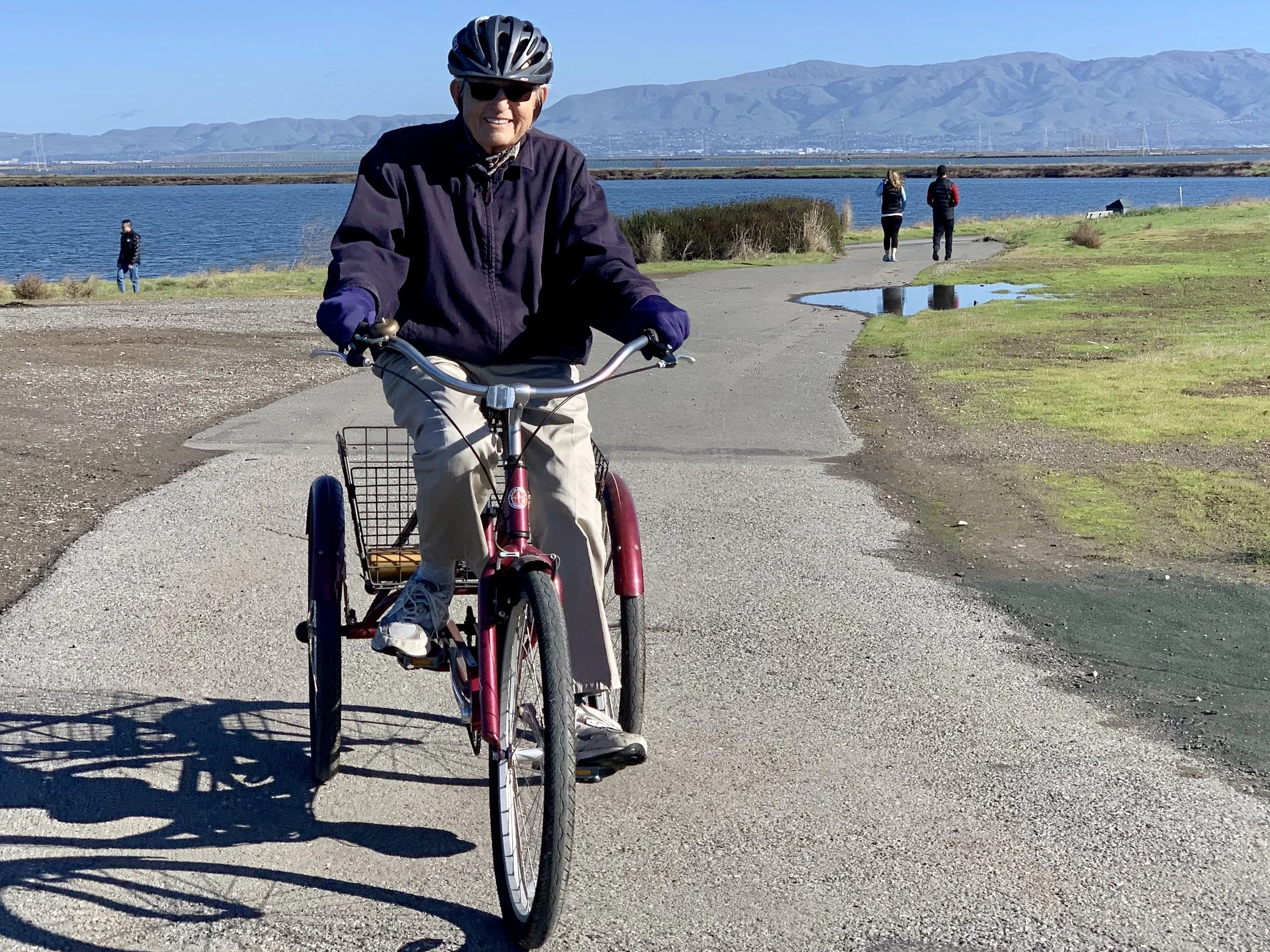
Kim Chase, December, 2018
Kim Chase, December, 2018
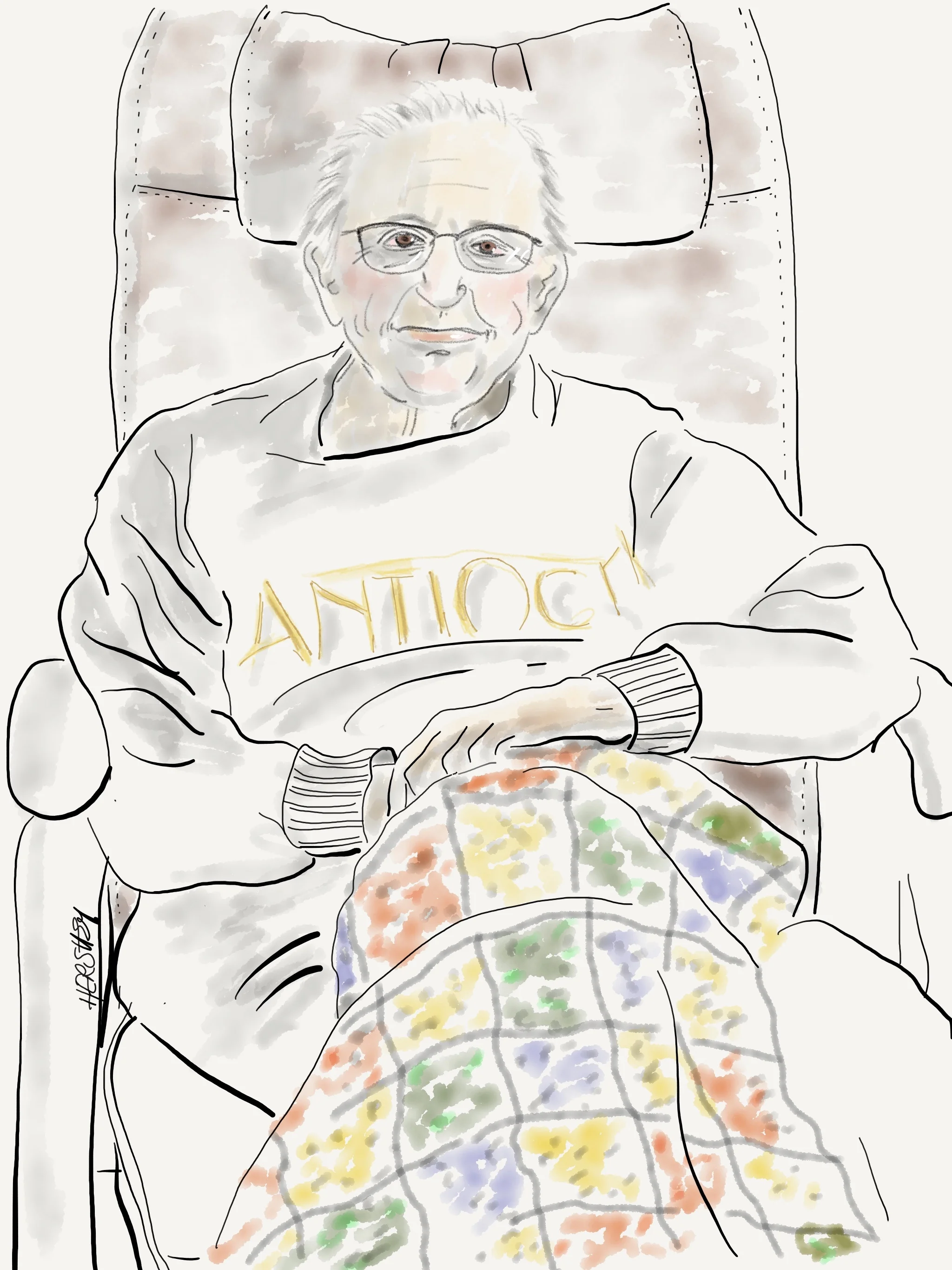
Kim Chase, December, 2018, drawing by Jennifer Hershey
More to come.
All photos, unless credited or otherwise noted, are copyrighted property of the blog post author.