
A Province of Foresight: Biking Newfoundland
Writing by Michael Chase, Drawings by Jenny Hershey
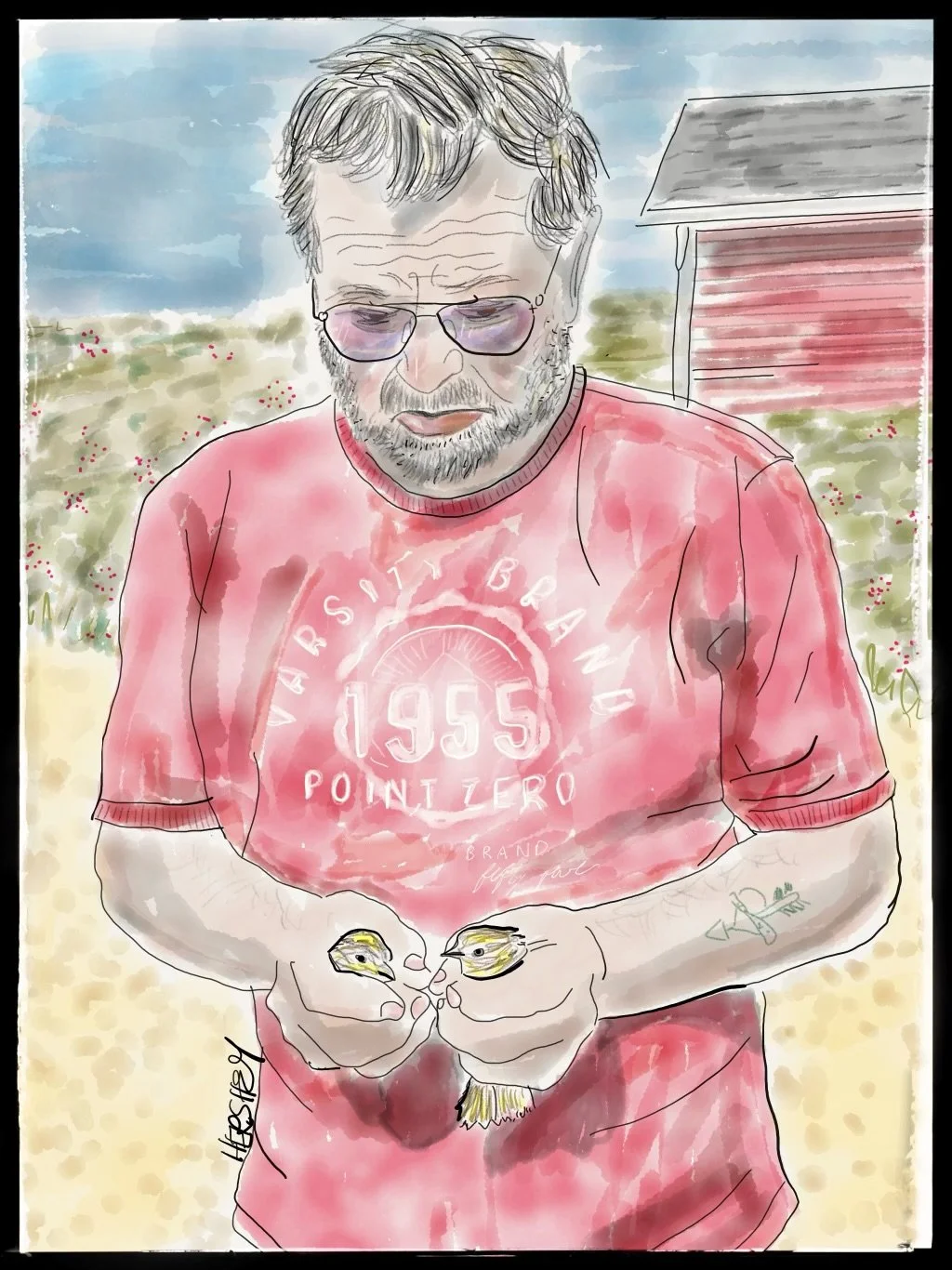
We met Pearce Cull outside the last house in St. Anthony Bight at the tip of Bobby’s Cove. Pearce was busy rescuing two little fire sparrows that had snuck into his shed. A very kind soul, Pearce feeds the sparrows every day. He also mentioned how hard life is for the seagulls nearby. They used to eat scraps from the fisheries but now have to “survive on berries.” Pearce showed us a nearby bluff filled with crackleberries (“don’t eat 'em”) and partridge berries (“pick those when they’re dark purple, then they’re sweet as can be”). Retired, Pearce spends his time drying cod and being an attentive grandfather. He invited us into his house and shared photos of his kids. We noticed a well-crafted blue guitar, but he told us he no longer plays because his hands “don't work so well.” We learned later from another local that Pearce Cull is a well-known traditional Newfoundland musician and songwriter who achieved fame with numerous recordings, including “The Cold Storage,” a song about a cod fishery he wrote and recorded in the 70s. ….You never know who you’re going to meet up here! Drawing by Jenny Hershey. Follow her on Instagram @deeofo.
“History is a relentless master. It has no present, only the past rushing into the future. To try to hold fast is to be swept aside.”
John F. Kennedy
The Trip
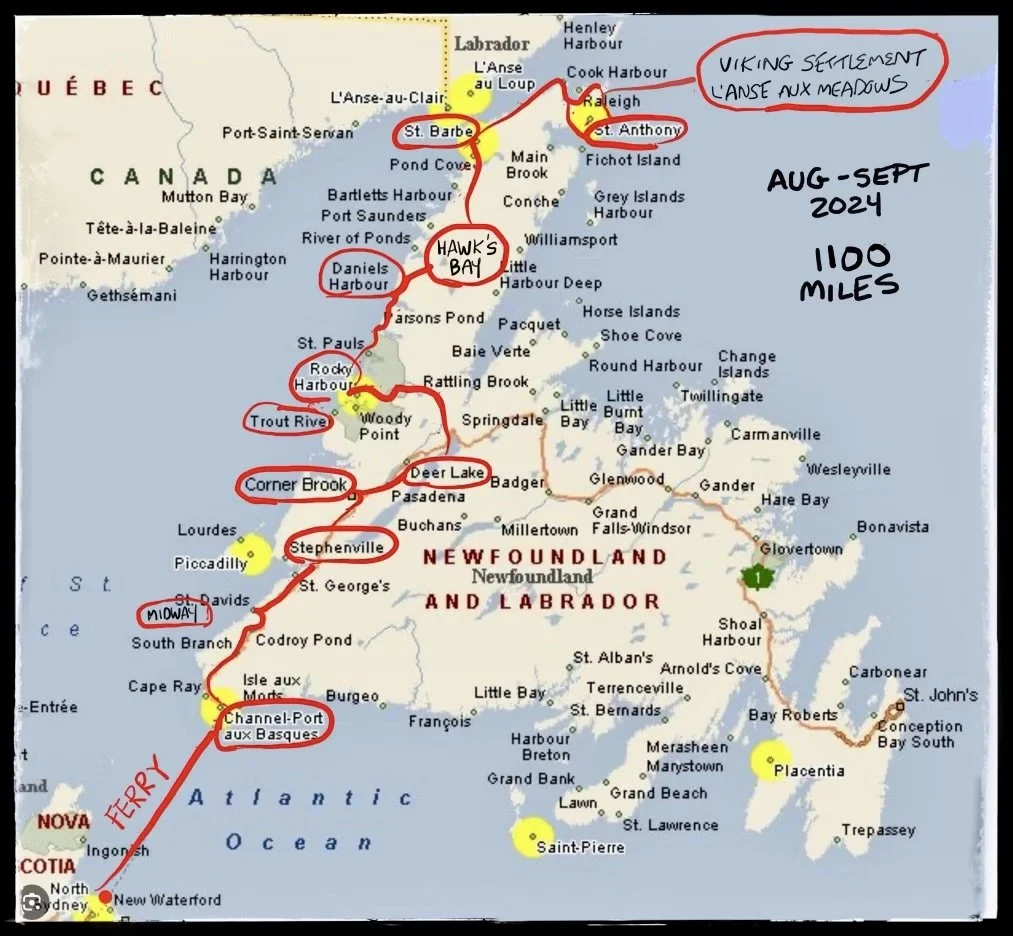
The red line was our route. We left our car in Nova Scotia and biked from Port aux Basques to St. Anthony and L’Anse aux Meadows and back along Newfoundland's western peninsula. With side trips, we cycled about 1100 miles. Next time, we’ll visit St John’s and key places on the eastern shore. And hopefully, someday we will make it to Labrador! We had planned to go this trip, but winds and a lack of time got in our way.
It was probably 50 years ago when I first thought about biking in Newfoundland, and it’s been at least six years since Jenny and I decided to go. In my youth, I imagined circumnavigating the island on a bicycle, not knowing the southern coast is too rugged for a throughroad. That said, it is possible to traverse the whole island on the Trans-Canada Highway between the western and eastern shores (where ferries run between the island and Nova Scotia) by following a single arc that cuts from the southwestern corner of the island to its southeastern shores. However, Jenny and I didn’t take the route from Port aux Basque in the west to Saint John’s in the east (nor did we follow the iconic all-terrain biking “rail trail” that runs roughly along the same route as the Trans-Canada).
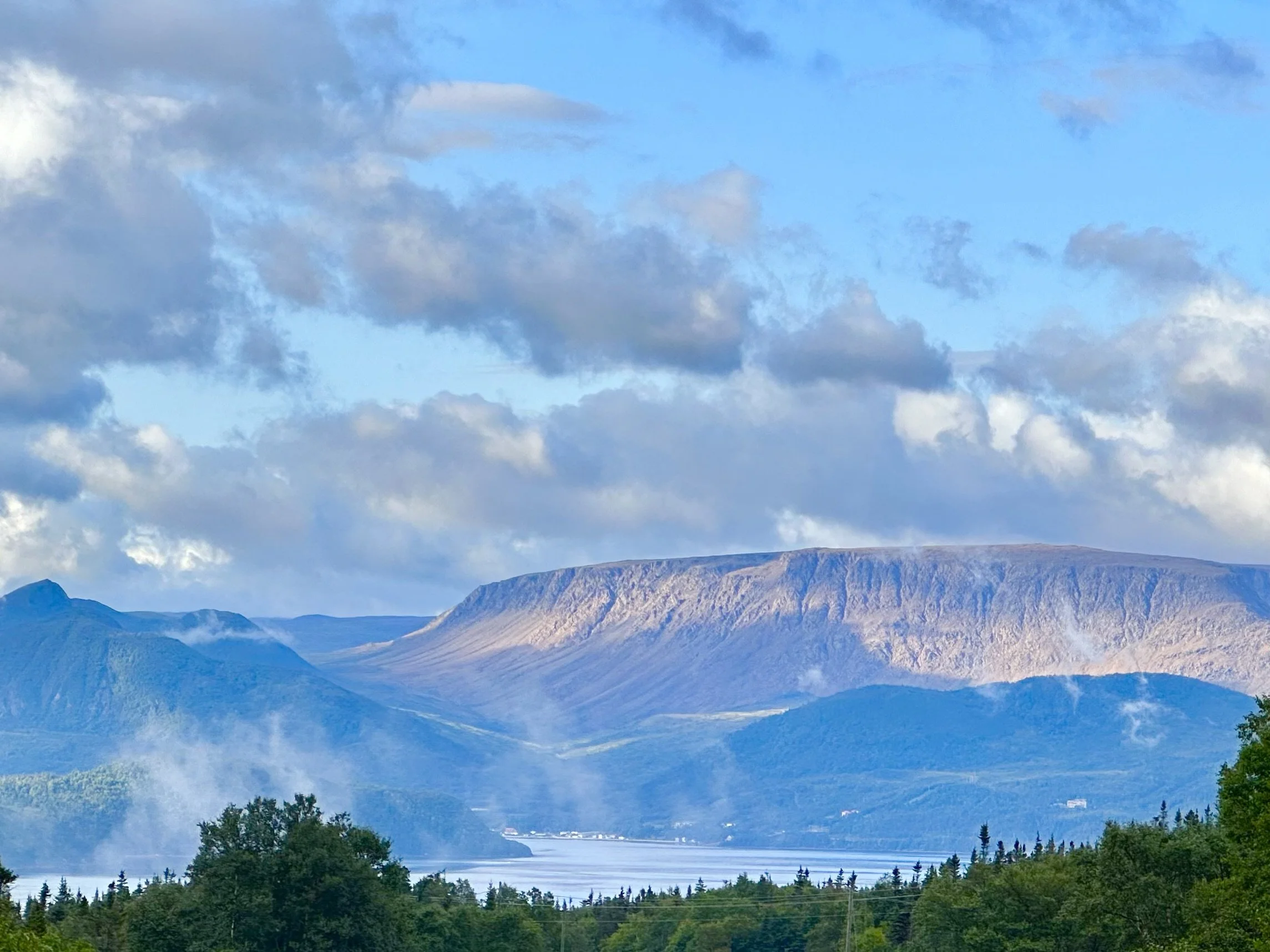
A shot of the Tablelands (the flat peak on the right) and Bonne Bay in Gros Morne Provincial Park. The scenery on the western peninsula of Newfoundland is unparalleled, and the island (together with Labrador) is the least densely populated of all the Canadian provinces, at 1.4 people per square kilometer. It is also home to some of the friendliest and most cheerful people we have ever encountered.
We had heard the west coast was more rugged and mountainous than the many scenic bays and forested peninsulas to the east. But the biggest attraction was the overwhelming beauty of the Gros Morne Provincial Park (and UNESCO World Heritage Site) to our immediate north, which has played a significant role in the understanding of plate tectonic theory, a central feature of modern geology. We were also seduced by the L’Anse aux Meadows Viking settlement (another UNESCO World Heritage Site) at the northern tip of the western peninsula, a short distance from Labrador. Finally, we knew the collapse of the cod fisheries in the 1990s had hit the fishing villages on the Westen Pennisula particularly hard, and we wanted to learn how communities were faring.
So, we left the main highway at Deer Lake and biked up the final stretch of the Appalachian mountains known to Newfoundlanders as the “Long Chain” and then hugged the coast almost to the northern end of the western Peninsula, passing through Gros Morne. A hundred or so miles above the park, the route passes within easy sighting of Labrador, providing access to the only ferry on the island between Newfoundland and its sibling province on Canada’s mainland. We finally turned east and crossed a high, rocky, windswept plateau that meanders to its end at the northeastern tip of the peninsula at L’Anse aux Meadows. If you go directly, the trip up and back is about 1520 kilometers or about 900 miles. It’s more than worth the effort. On bicycles, it’s extraordinary. It was simultaneously the most beautiful and challenging cycling trip Jenny and I have taken.
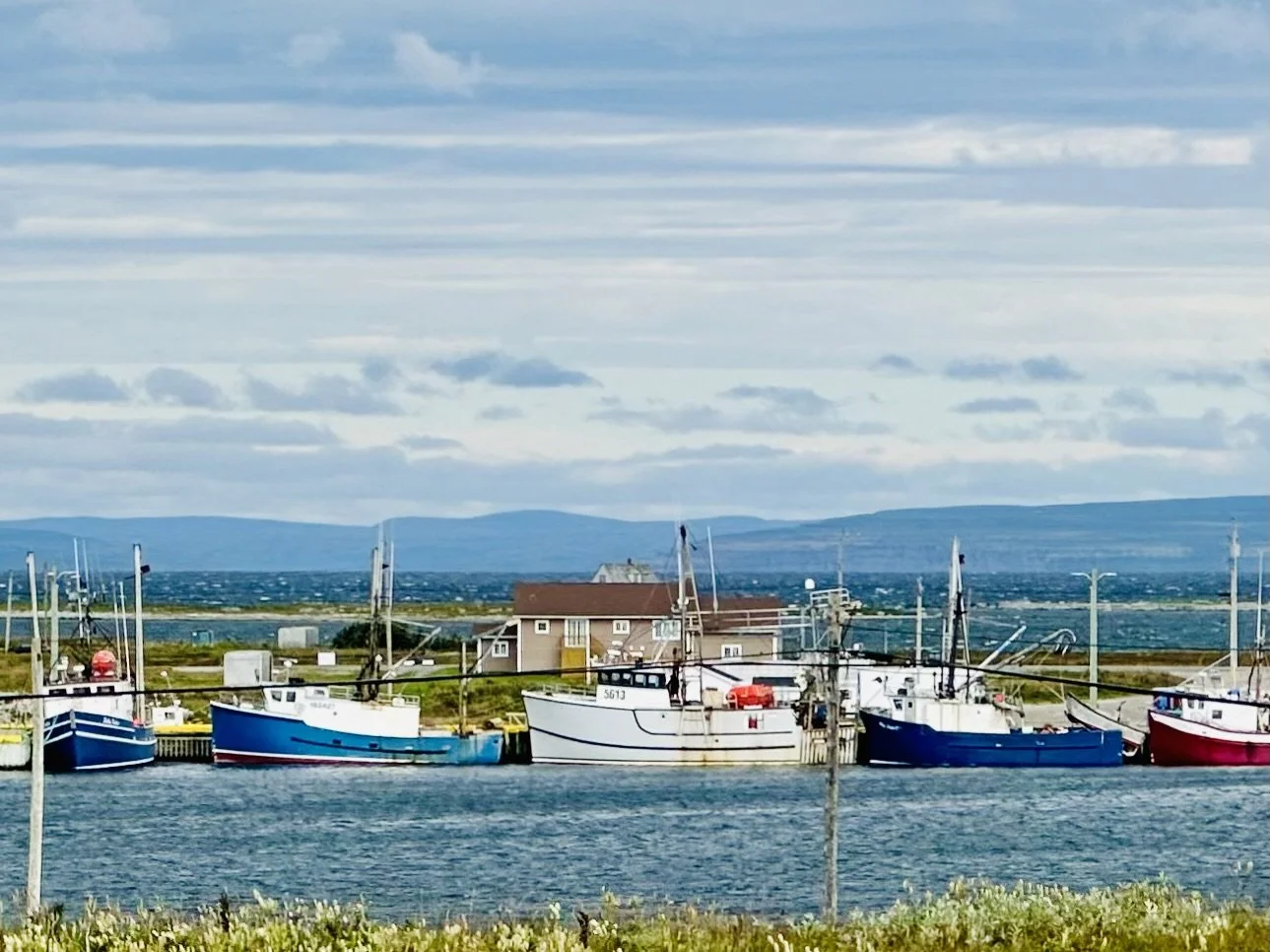
Fishing boats docked in Flowers Cove. Across the Gulf of St Lawrence, in the background, lies Labrador.
As we cycled toward Labrador, we were intrigued to learn that it has shared centuries of intertwined history with Newfoundland. Labrador was settled along its coastline, and navigating the 30 miles across ice or water in the upper Gulf of St Lawrence to get to Newfoundland is far easier than navigating a thousand miles overland through boreal forest to reach lower Canada. The region's earliest known inhabitants were the Innu and Inuit in Labrador and the Beothuk in Newfoundland. These groups had rich cultures and trading histories long before European explorers arrived. The first known European contact came around 1000 AD when the Vikings briefly settled at L'Anse aux Meadows. Through the 16th to 18th centuries, Newfoundland and Labrador were battlegrounds for colonial competition between European powers, notably the English and French. The French occupied Labrador and Newfoundland’s Western Peninsula for a time, and the British occupied eastern Newfoundland, establishing St. John’s as America’s oldest city in 1583.
The 20th century brought significant changes, including Newfoundland and Labrador's brief period as an independent Commonwealth dominion starting in 1907. However, economic difficulties during the Great Depression led to Newfoundland and Labrador joining Canada as its tenth province in 1949. Their shared history has shaped Newfoundland and Labrador's unique cultural and political identity, blending Indigenous heritage with European influences and modern Canadian development.
The Context
If you have read other posts on this blog, you know we look at our cycling trips through the lens of Earth’s rapidly changing climate. Over the past few years, extreme weather events have increased in number, intensity, and duration at a pace that requires us to catch up every time we travel (approximately every other month).
Here’s an example: Global temperatures between June and August this year averaged 1.5 degrees Celsius (2.7 degrees Fahrenheit) above the preindustrial average. The sweltering season reached its apex in late July, breaking a record for the four hottest days ever recorded. Temperatures for this year have far exceeded anything seen in more than 80 years of recordkeeping, making it all but certain that 2024 will be the hottest year known to science.
Although we are in Canada, we begin our climate review in the United States since the US is the most prone to weather-related disasters among the three countries occupying the North American continent. Because of its unique geography and unsurpassed variety of climatic zones that span two oceans, the Gulf of Mexico and the Rocky Mountains, Americans suffer disproportionately from weather extremes compared to their neighbors. By August 2024, the US had already experienced over fifteen separate $billion-plus weather and climate disasters. Total costs for extreme events in the US for 2024 may eventually exceed $50 billion, along with several hundred fatalities (there were 84 known fatalities by the end of May). Some estimates of property damage from Hurricane Beryl’s landfall in Texas have already exceeded $30 billion. And, as I write this, in the first week of September, at least 36 million Americans are enduring record-breaking heatwaves in the Southwest and on the West Coast. In the Los Angeles area, over 110,000 acres of land are currently burning due to the intense heat. The fires have forced tens of thousands of people to evacuate and have destroyed dozens of homes. The situation remains critical, with dry conditions and complex terrain challenging firefighting efforts.
Hopefully, last year’s wildfires were an exception in Canada, when fires released over 647 million tons of carbon into the atmosphere. (That amount is roughly comparable to India's annual CO2 emissions and more than four times larger than Canada's.) While not as brutal, the 2024 season has still been severe, with over 6,500 fires recorded so far across British Columbia, Alberta, and the Northwest Territories. In addition, Eastern Ontario, Northern and Southern Quebec, and Atlantic Canada all experienced intense heatwaves in June, as temperatures hovered significantly above past normals.
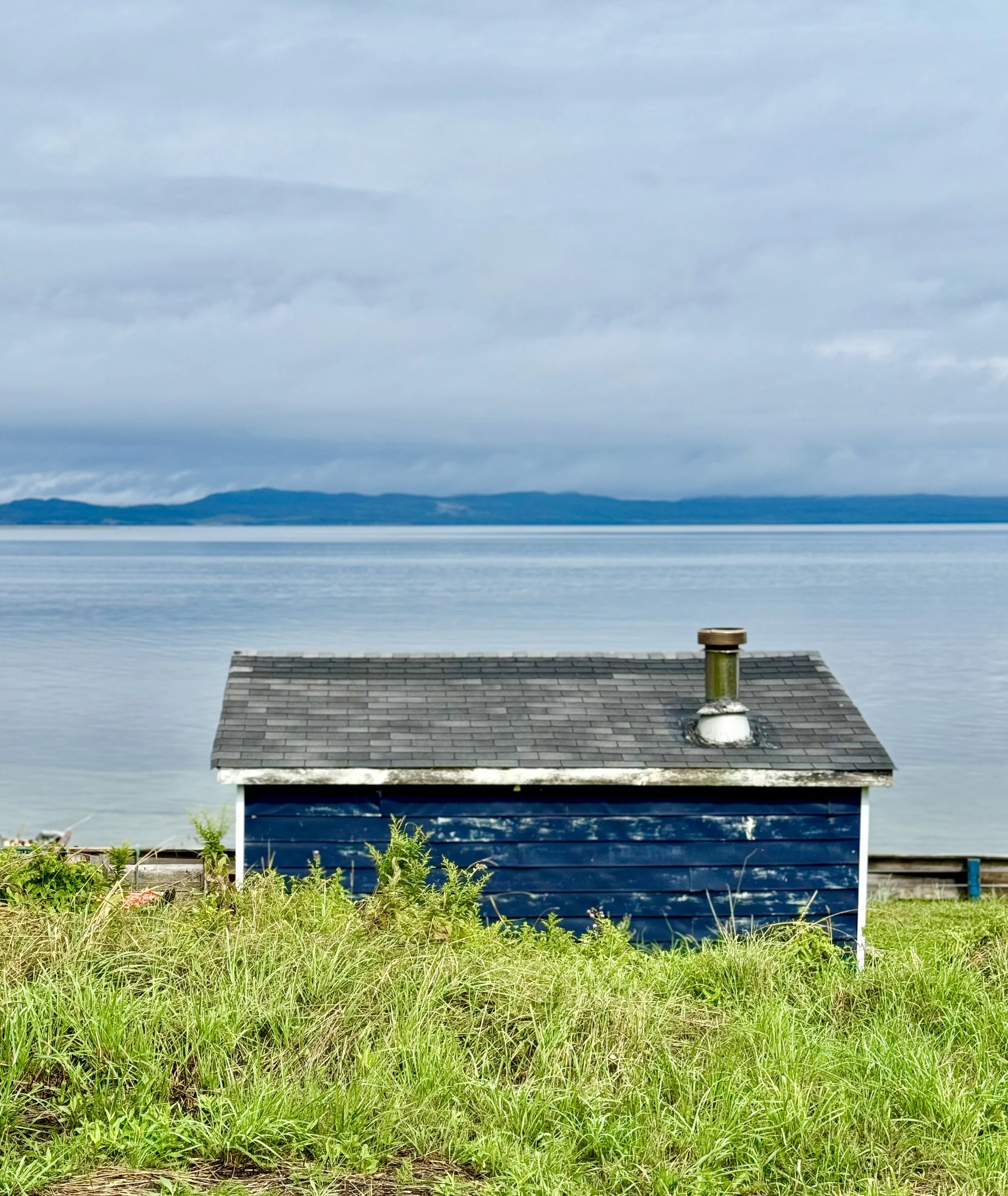
Rain clouds above on our second day out, as we rested near an old fishing shack looking across Sandy Point Bay toward Stephenville.
Our arrival in Newfoundland coincided with the end of a dry spell as we endured four days of heavy rain and wind from Hurricane Ernesto after we disembarked from the ferry. Nevertheless, we could easily see how dry the rivers and grasslands had become. With global ocean temperatures at record highs, the Canadian Hurricane Centre expects a very active hurricane season. We have not forgotten that prediction, and as I write this, we are following Francine's impact on Louisiana and points north.
The rest of the world has experienced its fair share of extreme weather events this year, including severe and enduring heatwaves in India, the Philippines, Thailand, and Bangladesh. In India, temperatures reached up to 46.3°C or 115.34 F, considerably impacting public health and daily life. As if that wasn't bad enough, a combination of global warming and deforestation led to devastating landslides there in July, resulting in the deaths of over 420 people. The state of Rio Grande do Sul in Brazil faced extensive flooding between April and May, with over 100 fatalities and significant damage. At the same time, 7.4 million acres of Brazil’s Amazon burned in the first half of 2024, a 122% increase from the previous year. The United Arab Emirates experienced its heaviest rainfall in 75 years in April, causing widespread flooding and disruptions, leading to over 225 deaths and displacing more than 212,630 people.
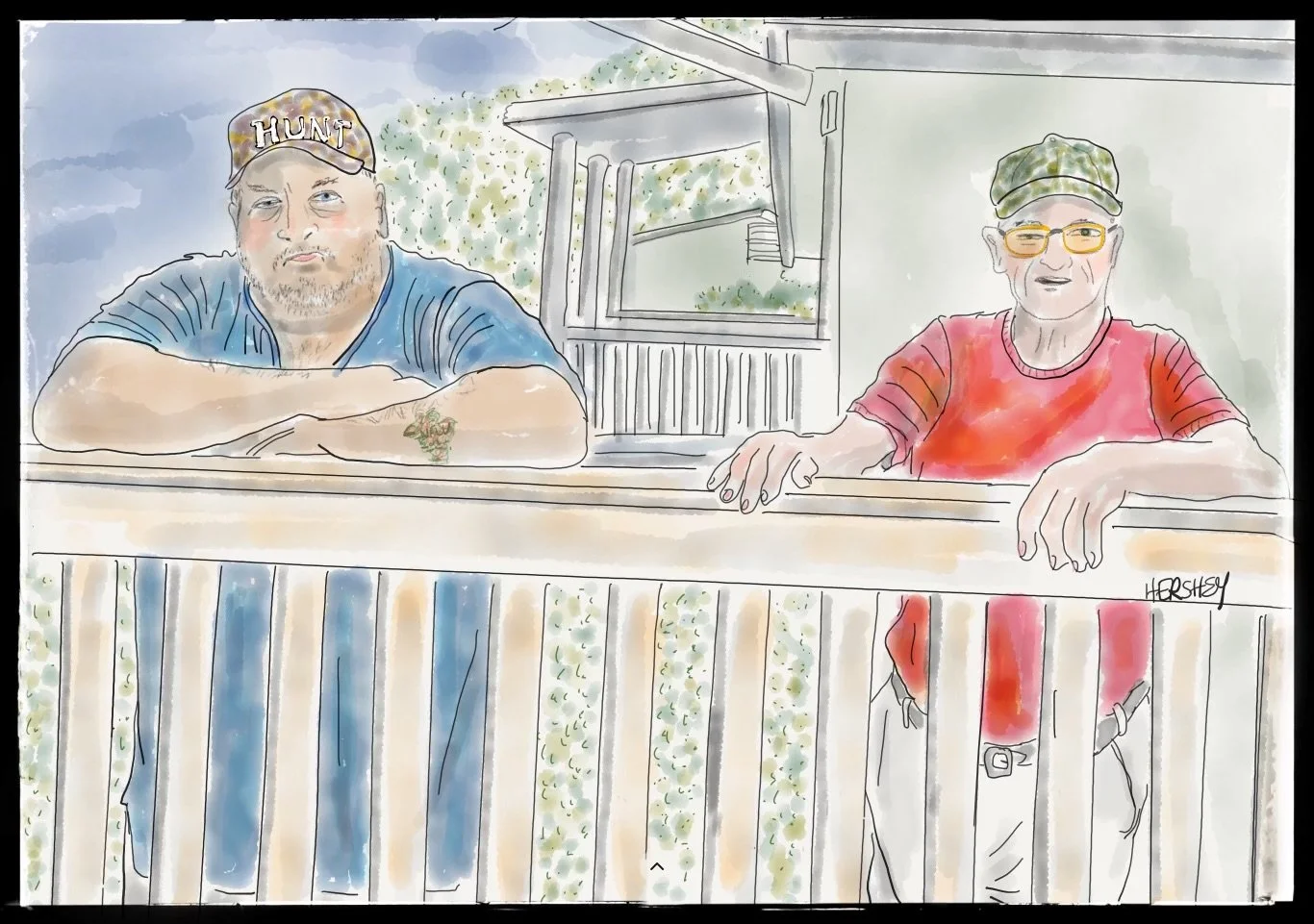
We met Doug and Cyril in the town of St. George. They are best friends and have fishing cabins next to each other, and both work in the limestone mine on the other side of the bay in Stephenville. Doug offered to let us eat lunch on his porch as a respite from Hurricane Ernesto's rain as we all chatted about Newfoundland’s changing weather and politics in the US. Locally born, both men were unequivocal about how the weather has changed since they were kids; there is less and less snow every year, the winters are warmer and shorter, the summers hotter and longer, and there are longer spells of rain and drought than there used to be. Regarding US politics, Doug believed our economy was better under Trump. But Cyril didn’t buy it, and he called Trump a “Hitler.” As opposite as their views were, there was little divisive energy between them. Ironically, Doug is in blue, and Cyril is in red. Drawing by Jenny Hershey. Follow her on Instagram @deeofo.
Newfoundland and Labrador
Like the rest of Canada, 2023 was a challenging year for wildfires in Newfoundland and Labrador. This year has been better, but with temperatures averaging approximately 0.8C (1.44F) above historical norms, fires will intensify as the climate grows warmer. In addition, sea ice will decrease, permafrost will thaw, and wildlife and vegetation will change. Like Doug and Cyril above, every Newfoundlander we met acknowledged how much warmer the weather is from a few decades ago. The warming climate directly affects local communities, most notably in Labrador where cold temperatures are crucial in daily life. Warmer winters are disrupting traditional activities and cultural events, such as snowmobile races and even the Labrador Winter Games.
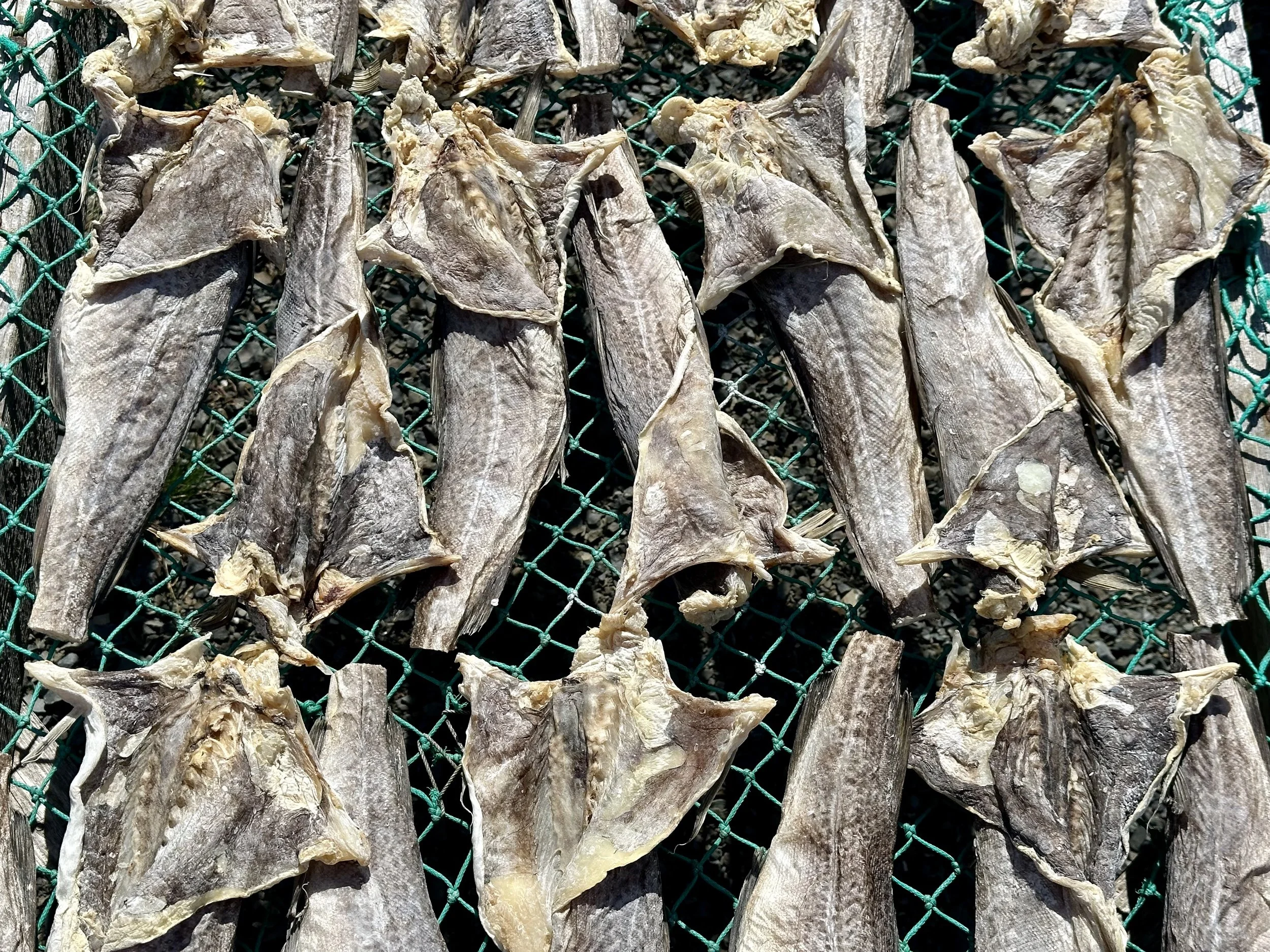
Salted cod drying in the sun at Pearce Cull’s place in St Anthony’s Bight. Pearce kindly explained to us how he cures salt cod the way Newfoundlanders have for centuries.
For most of their history, Newfoundland and Labrador’s economies and cultures have depended heavily on fishing. The province's cold, nutrient-rich waters have supported abundant fish stocks, mainly cod, for centuries. However, overfishing led to the tragic collapse of cod stocks in the 1990s, devastating coastal communities. Although the discovery of offshore oil reserves in the late 1970s helped to diversify the province's economy, the offshore rigs are located off the eastern shore and have not brought employment to the western peninsula. However, iron ore, nickel, gypsum, limestone and rock salt mining have all been significant job providers on the western shore.
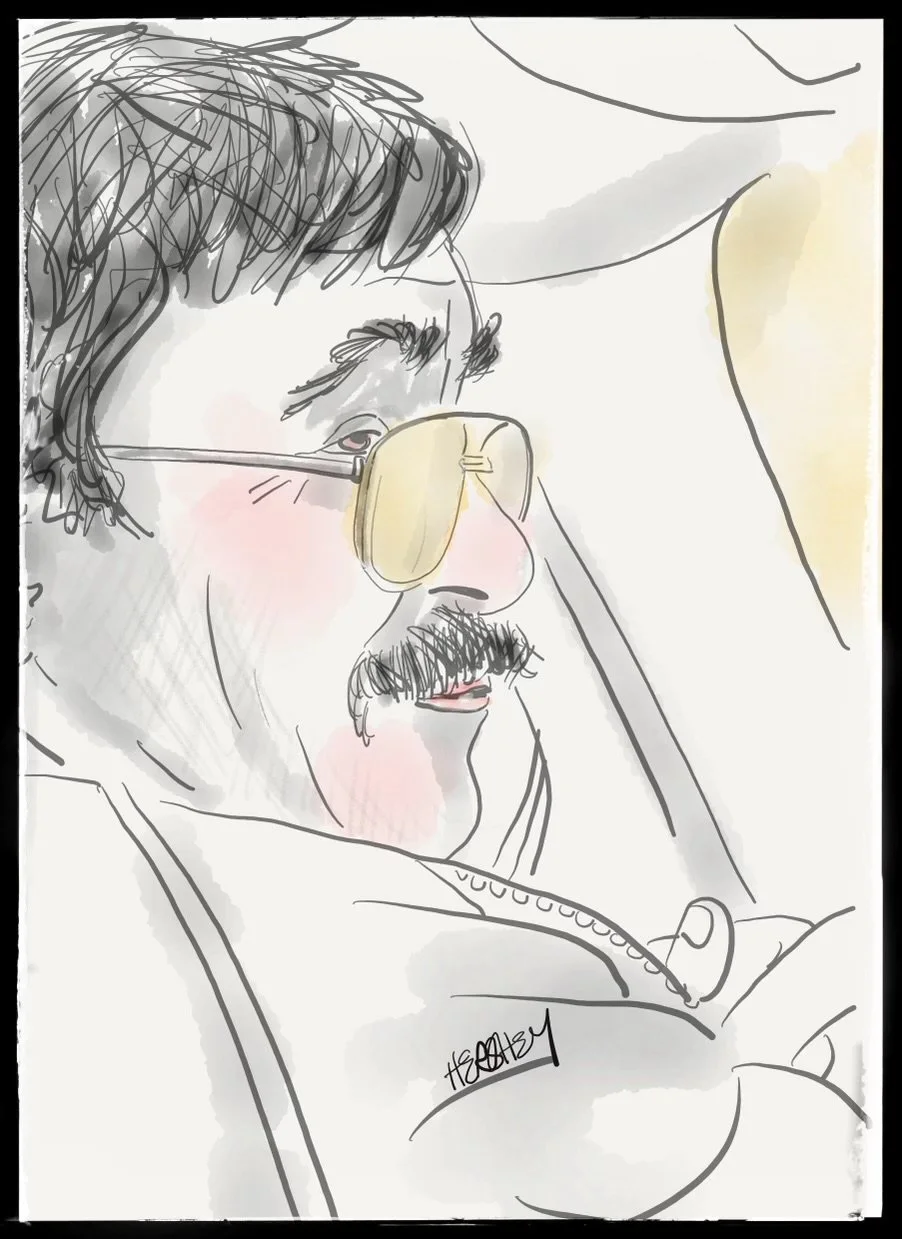
Primus, a retired fisherman, helped Jenny and me escape a challenging situation. We met him in his hometown of Green Island Brook in far northern Newfoundland. Although Jenny and I had cycled across a very windy high plateau as we left St. Anthony to begin our trip back to Port aux Basques, we hit ferocious 30-40 mph winds as we turned down the coast toward Saint Barbe. We couldn't stay upright, even on our fully-loaded pedal-assist e-bikes. We had already drained our batteries of most of their power getting over the plateau, so using enough energy to ride 26 more miles in that wind was not an option. We probably had covered about 4 miles since we had hit the coast when we saw a tiny cluster of houses in a cove ahead. Jenny had made her mind up. We took a turn down Main St and saw a child playing outside in the wind with her dog. She was having fun throwing a frisbee that would travel far in the wind, and her dog was happy to bring it back. We noticed the child’s mother standing in the doorway of a nearby house. Jenny removed her helmet to reveal her gray hair and said,” I hear the people of Newfoundland are good people, and we are in trouble.” In a moment, an older man came to the door and listened patiently to Jenny’s tale. He said, “My brother can help you.” He went back inside, and in a few minutes a man drove up the road in an old pickup truck. With the thickest Newfie accent we had heard yet, Primus and his brother helped us load our bikes and gear into his truck, and he drove us to our motel in Saint Barbe. Although we couldn't understand everything Primus was saying, we learned that shore fishing was no longer possible, and there was little work for most of the permanent residents along this coast. Consequently, the population is aging and schools are closing. It turned out that day's wind was so intense that the only ferry to Labrador had been cancelled. The next day was a bit less windy, and the ferry resumed. And so did we, continuing south for the remainder of our trip with a substantial headwind and periods of rain. But it was manageable, proving the adage that “what doesn't kill you makes you stronger.” Drawing by Jenny Hershey. Follow her on Instagram @deeofo.
Foresight
In recent years, Newfoundland and Labrador have formalized plans to transition to renewable energy exports by using wind power to generate green hydrogen. Given the province's longstanding economic ties to resource extraction and fishing, it seems fitting that the province would leverage its abundant wind and strategic location to become a significant player in the fast-growing global clean energy economy.
In fact, the province is already home to a clean electricity industry, although not without its downsides. Approximately 96% of Newfoundland’s electricity is supplied by hydropower, primarily from Labrador. The largest hydroelectric station was built in the late 1950s at Churchill Falls, about 150 miles east of Labrador City. In 2020, a smaller hydropower station was opened at Muskrat Falls, just east of Goose Bay, Labrador. In the 1960s, a power station was built at Bay d’Espoir in Newfoundland. The two stations in Labrador transmit power to Newfoundland via the Labrador-Island link or LIL.
Although there was limited pushback during construction in the 1950s and 60s when the first hydroelectric plants at Churchill Falls and Bay d’Espoir were constructed, the recent construction of Muskrat Falls in Labrador frustrated many locals across the Province. The project was initially estimated to cost $6 billion but, plagued by management problems, ballooned to over $13 billion, causing electricity rates to increase. In addition, ongoing technical issues have required costly repairs and raised doubts about the project's long-term viability. And although Indigenous groups and environmentalists raised alarms about methylmercury contamination, their concerns were overlooked.
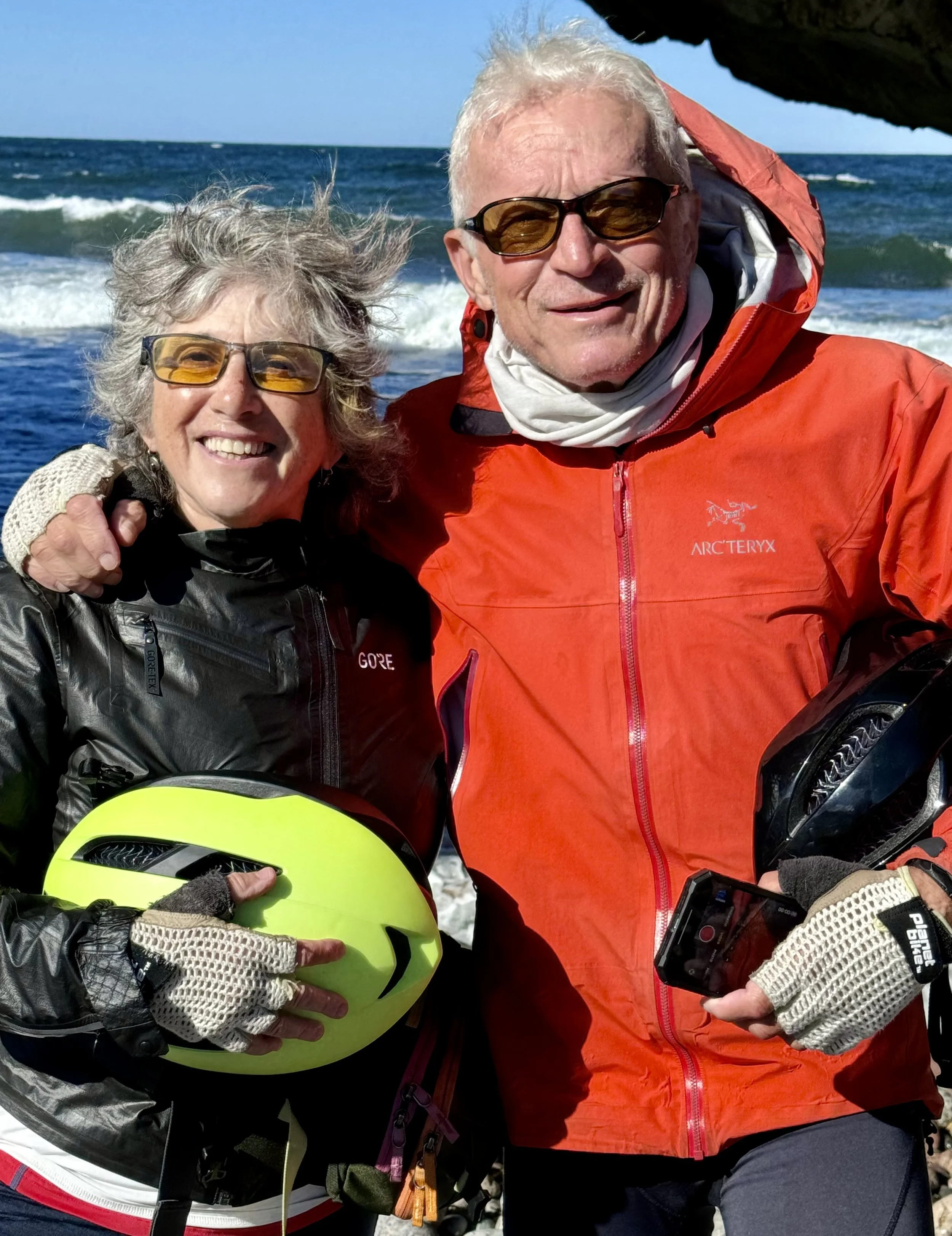
Jenny and Michael relax at Arches Provincial Park on Newfoundland's western shore.
Sadly, it is now understood that the flooding of large areas common to the construction of hydroelectric dams can adversely impact local Indigenous communities by limiting access to traditional hunting grounds. Further, these plants do indeed result in methylmercury contamination, harming regional food harvesting downstream. It is known that indigenous residents who rely on “country” food sources face more methylmercury exposure than other Canadians. Long-term dietary exposure to methylmercury causes neurocognitive delays in children, including long-term brain development issues, attention deficit behavior, and reductions in verbal function and memory. Additionally, methylmercury damages cardiovascular health in adults.
Ironically, none of the Indigenous communities affected by downstream mercury contamination receive electricity from the Muskrat Falls Project or the Churchill Falls Project. All six Indigenous communities on Labrador’s North Coast are exposed to contamination from shore fishing and harvesting where the effluence from the Grand River downstream of Churchill and Muskrat Falls flows into the Gulf of St. Lawrence. Yet, electricity in these communities is supplied by diesel generators.
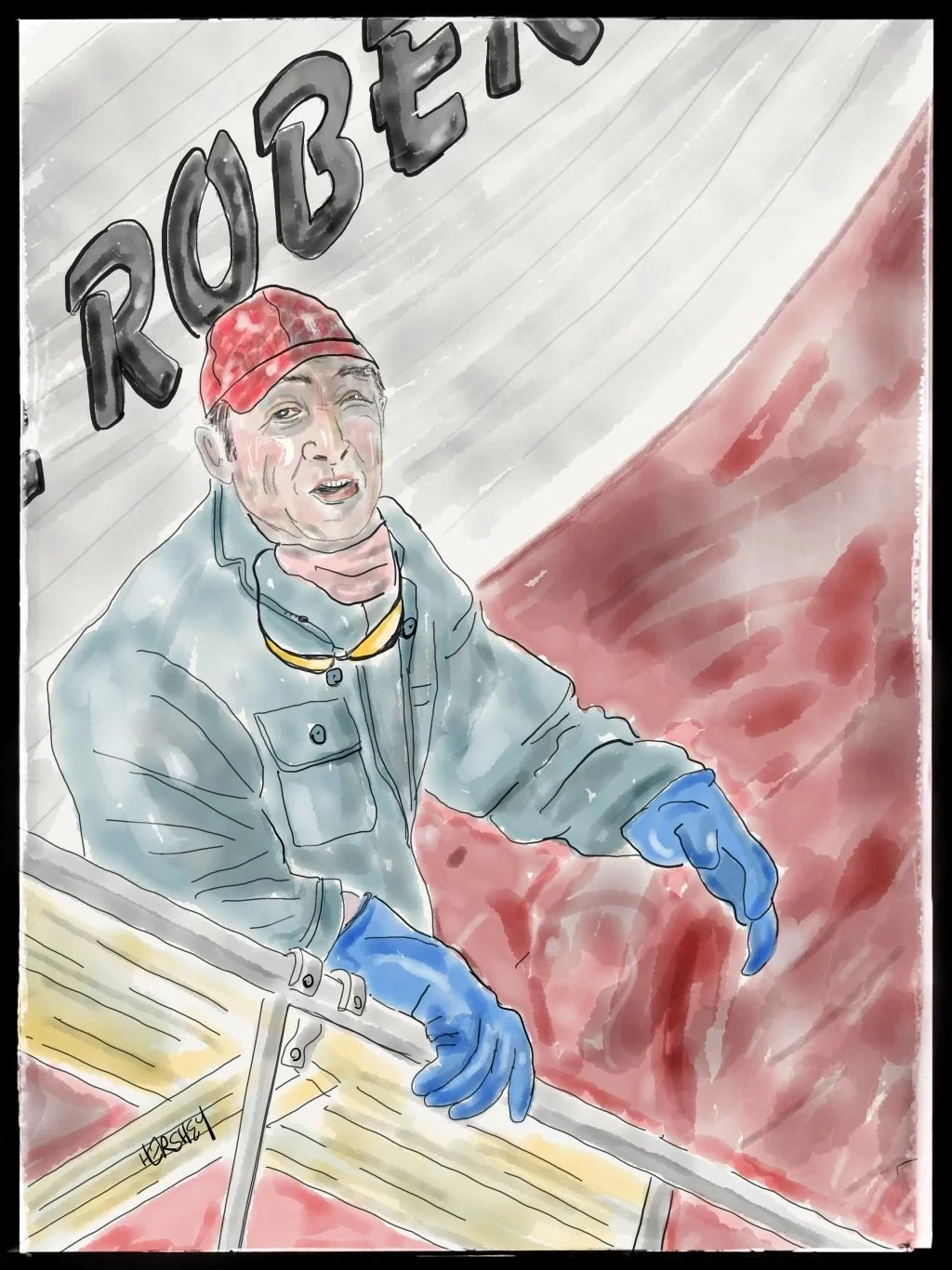
We met Dwayne in Port Saunders as he was hanging off a scaffold and sanding away a crack on the hull of the shrimping boat Cape Robert. In a melodic accent that sounded like a mash-up of Irish hill country and the rocky shores of eastern Canada, Dwayne told us he is crew for a commercial off-shore shrimp fisherman out of nearby Port au Choix. Except for a ten-year stint working on skid-mounted rigs in Alberta's tar sands, Dwayne has fished for shrimp his entire life. He gets 10% of the take for each trip, but part of the deal includes maintaining the ship, so he works for no pay when “she’s” docked. A few times every summer, he and his fellow crew members have to dry-dock the boat, mend all the cracks in the hull, and paint it as quickly as possible to get it back in the water. That’s how the deal works; “It's jus' part o' da arrangement, it is." Dwayne is 62, but he doesn’t see retiring anytime soon. He’s always spends what he earns, so he needs every penny to get from one season to the next. Seemingly unbothered and quite cheerfully, he told us, "I'll work 'til I can't, me friends. Jus' don't 'ave a choice, do I?" Drawing by Jenny Hershey. Follow her on Instagram @deeofo.
Now a public-private corporation under Crown jurisdiction, Newfoundland and Labrador Hydro (NL Hydro) has never needed to generate more clean electricity through wind power. However, they do need to address inequities in their design and siting plans for their hydropower to include and benefit local indigenous communities. The lack of need for wind power may explain why the province placed a moratorium on wind development in 2002 (which was lifted in 2022). Although there is a maritime link from Newfoundland to Nova Scotia, it is already working at capacity. So years ago, when wind developers came knocking, NL Hydro could neither manage nor build the transmission capacity required to handle wind-generated electricity. NL Hydro and government collaborated to create the moratorium on wind development until they had a sound plan for utilization.
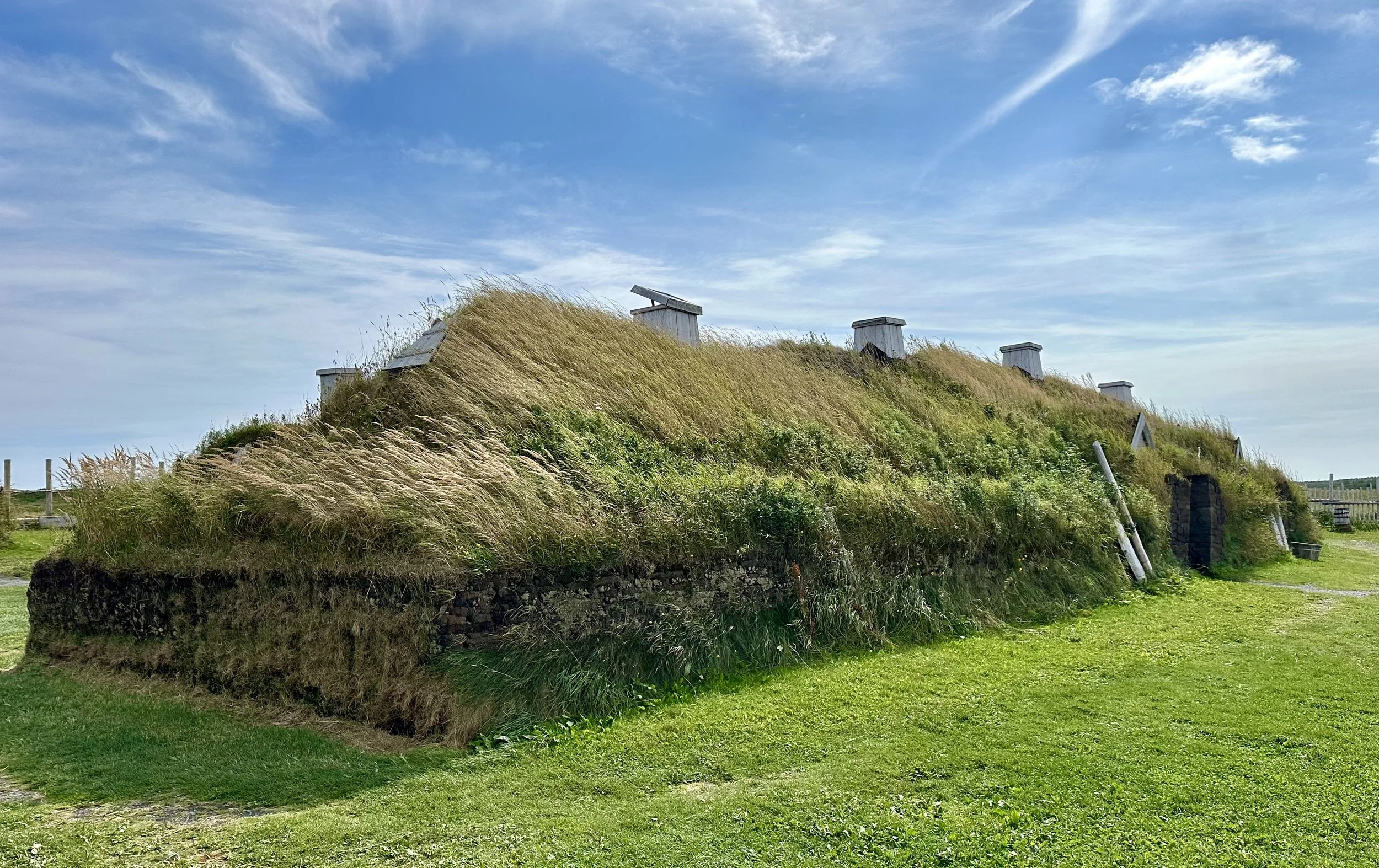
The main sleeping and eating room at L’Anse aux Meadows, a reconstructed Viking settlement dating back to 1000 AD. This extraordinary archeological site (and the only known Viking site in North America) was “discovered” in 1960 by Norwegian explorers and archeologists Helge and Anne Stine Instad. They identified the site (known to locals as the old “Indian” site) as a Norse settlement, which was later confirmed through extensive excavations. Today, L’Anse aux Meadows is a popular tourist destination. We really enjoyed visiting!
And now, because Russia invaded Ukraine, a plan for wind power has finally emerged. Geopolitical trends have driven Europe to avoid buying Russian gas and oil. This has been a boon to America’s shale gas industry, which now exports more natural gas than it uses domestically because Europe no longer wants to do business with Russia. And Germany, in particular, which has long been a leader in clean energy, foresees a massive market for hydrogen as the world moves away from fossil fuels. Germany’s renewable energy sources currently provide 57% of Germany’s electricity. However, electricity can only go so far to address the decarbonization of shipping, aviation, long-haul ground transport, rocket fuel, and the production of basic materials such as cement and steel. Hydrogen can address all those needs. Consequently, Germany seeks to be on the cutting edge of hydrogen development.
With these geopolitics in the background, Canadian Prime Minister Justin Trudeau and German Chancellor Olaf Scholz signed an agreement in August 2022 to develop a transatlantic supply corridor for green hydrogen. The deal, known as the "Canada-Germany Hydrogen Alliance," aims to help Germany reduce its dependency on Russian energy. Since then, a provincial “Request for Projects” (RFP) has resulted in more projects being selected across the island and Labrador. They all aim to use wind power to manufacture green hydrogen through hydrolysis, which can be converted to ammonia and then shipped to European markets, starting with Germany.
But, like the Muskrat Falls Hydroelectric plant construction, this plan has downsides. One of the critical projects in this agreement is the World Energy GH2 initiative, which includes the construction of a large hydrogen manufacturing plant in Stephenville, with 164 wind turbines positioned nearby on the Port au Port Peninsula. Although World Energy GH2 is the first Newfoundland Company to undergo environmental review, it currently must address at least 60 concerns. Other drawbacks include a considerable pushback among the 500+ “old French” residents who live in the Port aux Port peninsula and do not want the rugged character of their beloved peninsula permanently altered. Although almost 45% of the local population is currently on unemployment insurance, and many others are retired, most are skeptical that there will be jobs when the construction phase is complete.
To understand how many jobs are likely once construction is complete, we consulted numerous sources through Microsoft's AI tool Copilot, and we learned that after the construction phase, a 3900 megawatt wind farm (approximately the size of the World Energy GH2 project proposal) and its associated wind to green hydrogen supply chain may create as many as 16,000 permanent jobs. This includes operations and maintenance, manufacturing, supply chain logistics, and green hydrogen/ammonia production jobs.
Nevertheless, Jenny and I heard complaints about the proposal pretty regularly. At the same time, we couldn't help but notice the province's economic challenges. It was disheartening to learn that a significant portion of the population lives in low-income conditions, well below the Canadian national average. The limited job opportunities, particularly in rural areas, seem to exacerbate the financial hardship experienced by many residents, making it difficult for them to make ends meet.
We spoke with a motel owner in Corner Brook who shared a poignant story about his three kids, referring to them as "economic refugees," because they had all “moved away to cities on the mainland” to find work. This story echoed what we were told by many other Newfoundlanders; apart from two individuals we encountered who had one or two kids living in St John's, everyone else we spoke to mentioned that their children had left Newfoundland and Labrador to seek better opportunities elsewhere.
As outsiders, we can't help but worry about the long-term implications of the exodus of young people on the province's future. The loss of skilled, youthful workers can have far-reaching consequences, affecting the demographic composition, local economy, and overall vitality of communities. It became clear to us that efforts to retain young talent and attract newcomers are crucial for the province's long-term sustainability and growth.
So, as much as we understand the pushback by residents who are mistrustful of this idea, yet still deeply love Newfoundland and Labrador for the beauty of the land and the rugged self-reliance of its people, we believe they should rise to the challenge at hand and work together with government and industry to build a brighter future for their province. We sincerely hope to return one day and witness Newfoundland and Labrador thriving with a vibrant economy and opportunities for all its residents, including its younger generations.
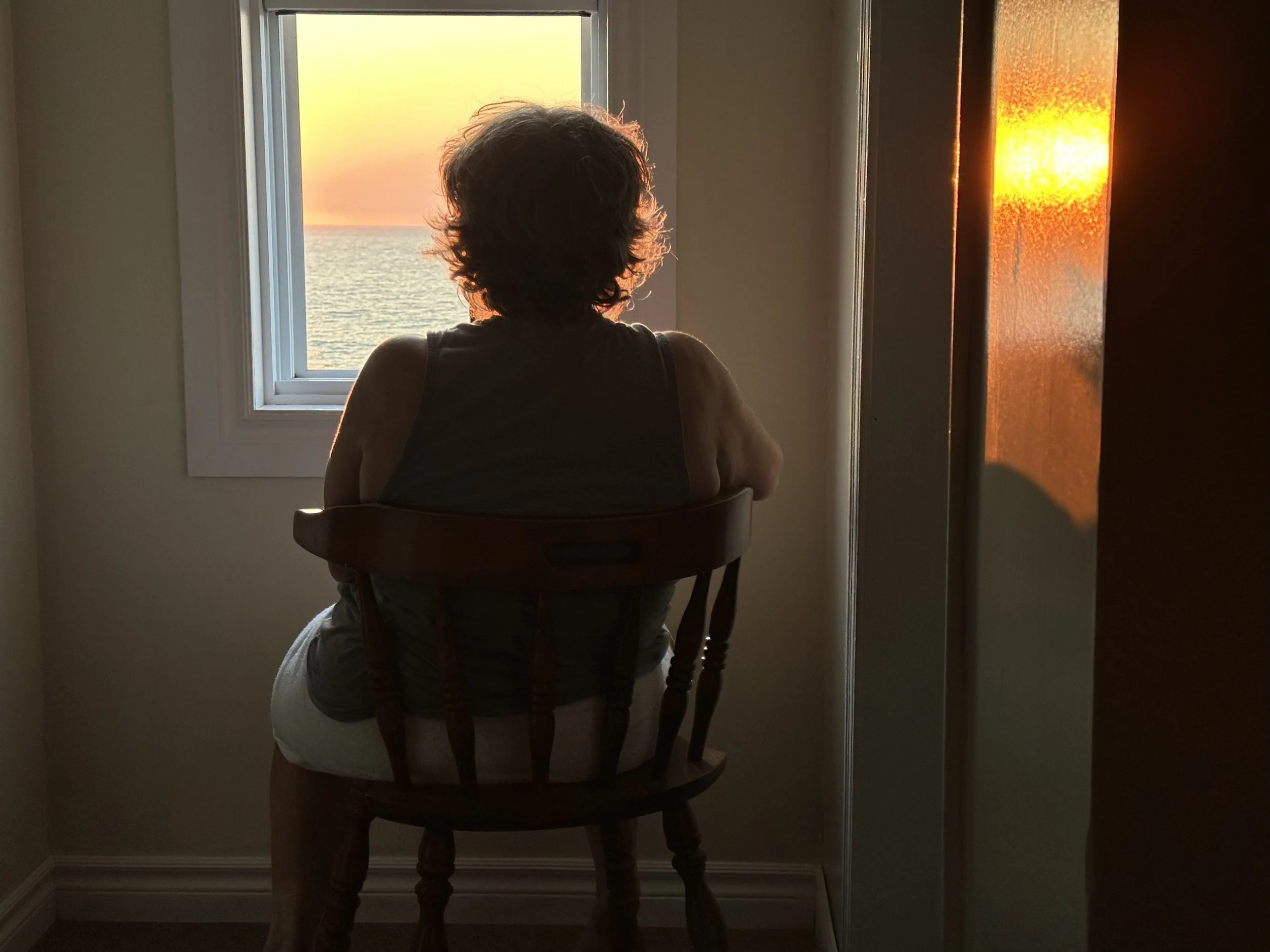
Jenny watches the sunset from a motel window in Daniel’s Harbour.
It would be exciting to watch Newfoundland become a significant player in the global clean energy economy, and it could certainly attract jobs and a renewed vitality to a beautiful place with atrophying industries. While challenges remain, Newfoundland and Labrador’s bold vision for a renewable energy future offers a model for other regions seeking to diversify their economies and combat climate change. Newfoundland and Labrador is truly a province of foresight. Let’s hope they succeed and we can learn from them.
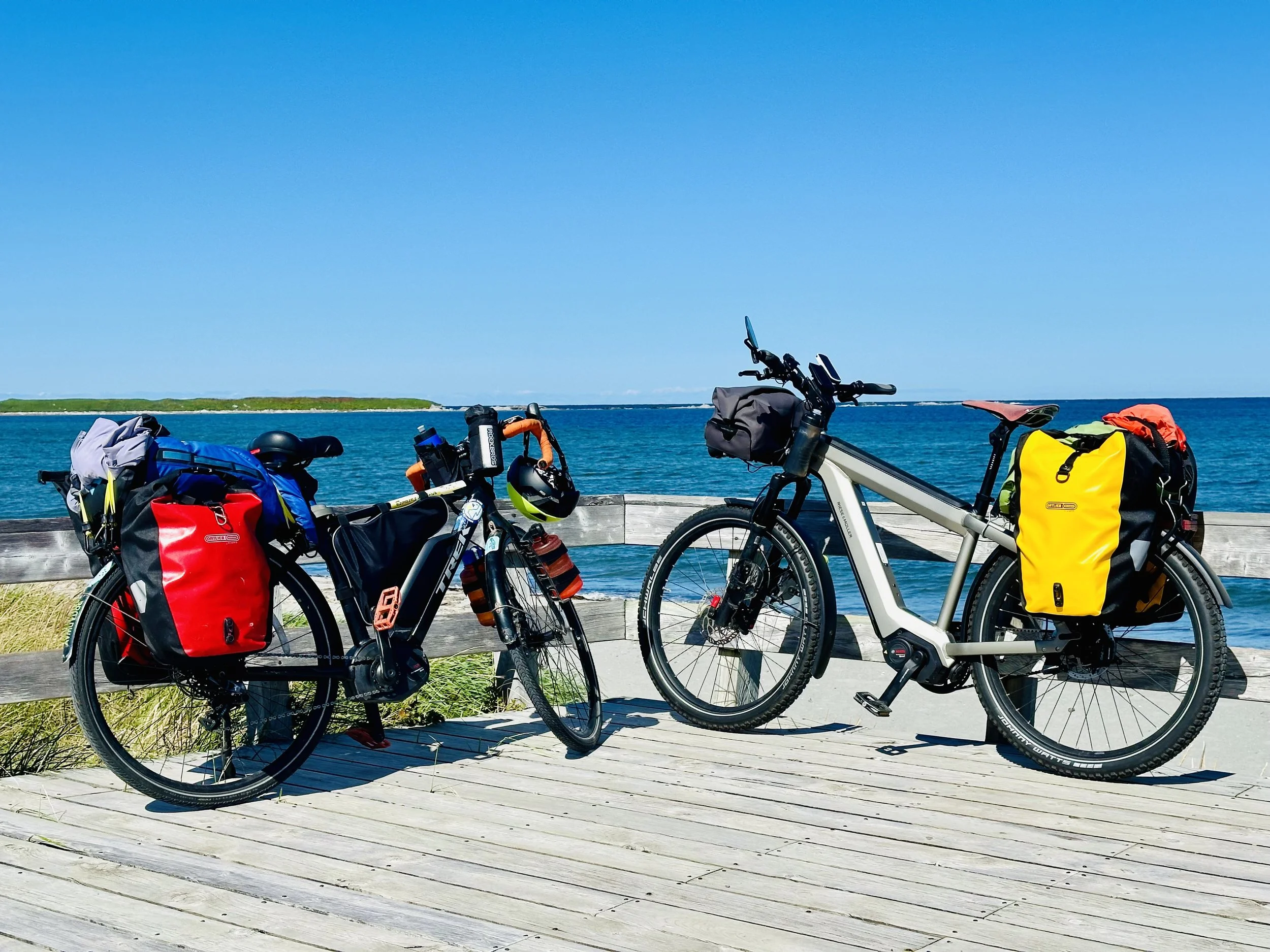
Our bikes on a boardwalk in Gros Morne Park at Shallow Bay near the town of Cow Head.
Consequently, we were pleased to learn that a second wind-to-green hydrogen company in St. John's recently announced a German buyer for its ammonia, a first among the Newfoundland companies competing in this space. A deal with the German energy firm Mabanaft places Pattern Energy ahead of World Energy GH2 in the race for foreign markets. The agreement is currently limited to a letter of intent as Mabanaft does its due diligence and Pattern refines the project's financial model (expected to cost about $1.5 billion). At 300 megawatts of wind power, the Pattern project is the smallest of the proposals in Newfoundland and Labrador. In contrast, the World Energy GH2 project on the Port au Port Peninsula is about 13 times larger. Pattern is also the only company proposing to build its project on private land within the Port of Argentia. While other companies have talked about the potential for ammonia to be turned back into hydrogen and used as the clean fuel of the future, Pattern is content to sell ammonia for the sake of ammonia. Mabanaft views ammonia itself as a transition fuel, not just a carrier of hydrogen.
Epilogue
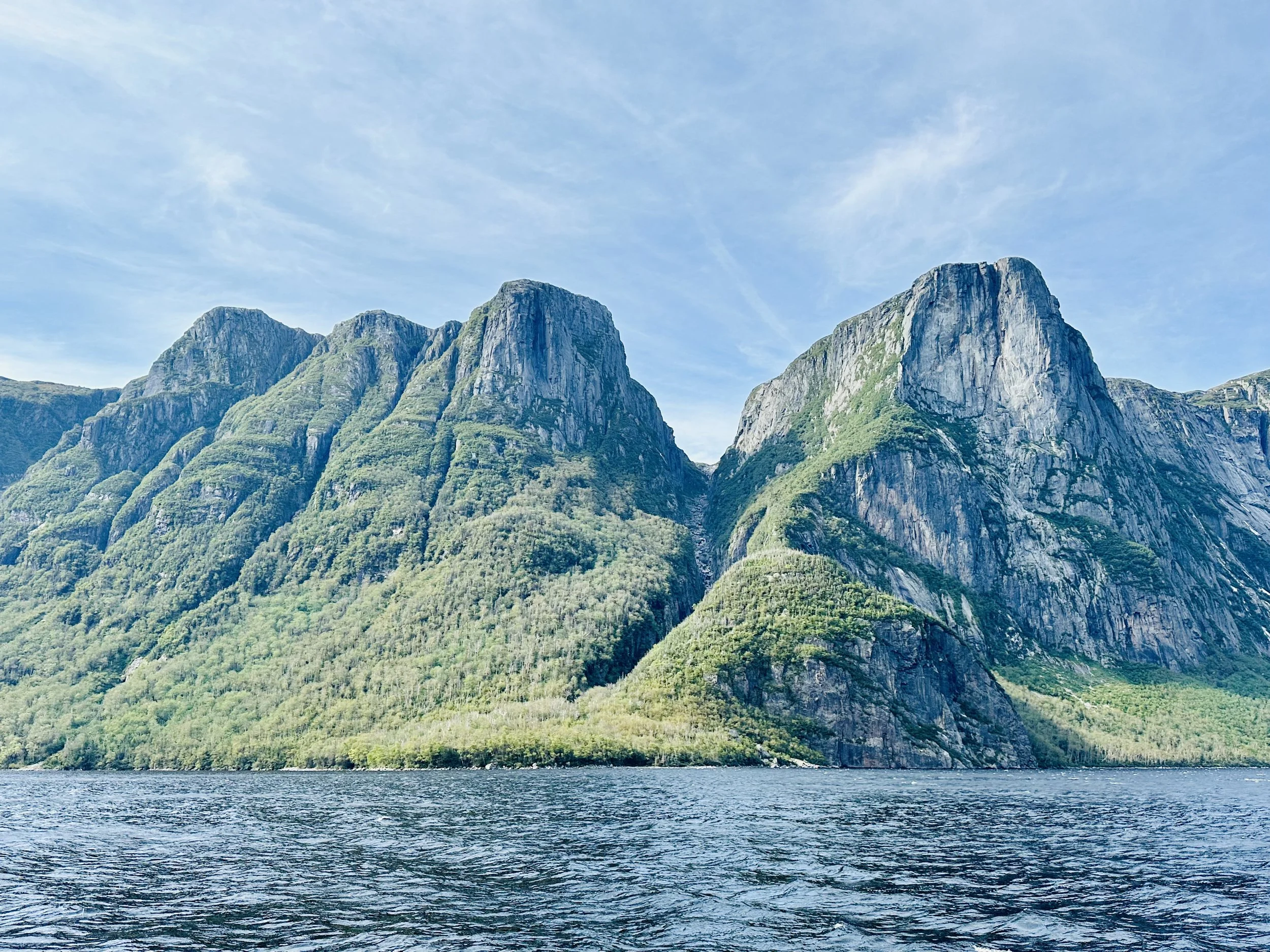
Mountains across Western Brook Park in Gros Morne Provincial Park.
People all over the world are reeling from the mounting costs and suffering wrought by our overheating world. And it’s going to get worse before it gets better. The latest forecast from the World Meteorological Association (WMO) indicates an 80 percent likelihood that the annual average global temperature will temporarily exceed 1.5°C above pre-industrial levels for at least one full year of the next five. These discouraging figures underscore the urgent need for robust, science-based policies among world leaders to address the climate crisis head-on. Yet, in the face of this unfolding catastrophe, many of our current leaders cling to woefully inadequate measures that fail to meet the scale and severity of our challenge. Something can always be done, especially in democracies where one has the right to vote.
Consider the Presidential race in the United States. Democrats passed the most significant climate bill in US history (the Inflation Reduction Act) during the Biden administration, which will continue to have support under Kamala Harris. Yet, Trump says he will repeal it. The Republican party’s denial of science in this day and age is profoundly disturbing. Currently, 97% to 99% of climate scientists agree that climate change is happening and that human activity is the primary cause. In contrast, the U.S. House of Representatives includes 40 times as many climate science deniers as are found among the authors of scientific articles.
It’s not too different in Alberta, Canada, where big oil economic interests and climate science denial also shapes the province’s policy landscape. Many Alberta politicians, most notably Premier Danielle Smith, have vehemently opposed Canadian federal climate policies, criticizing federal clean energy regulations as absurd, illogical, unconstitutional, and unscientific. It's the same everywhere: where big oil money talks, common sense walks...
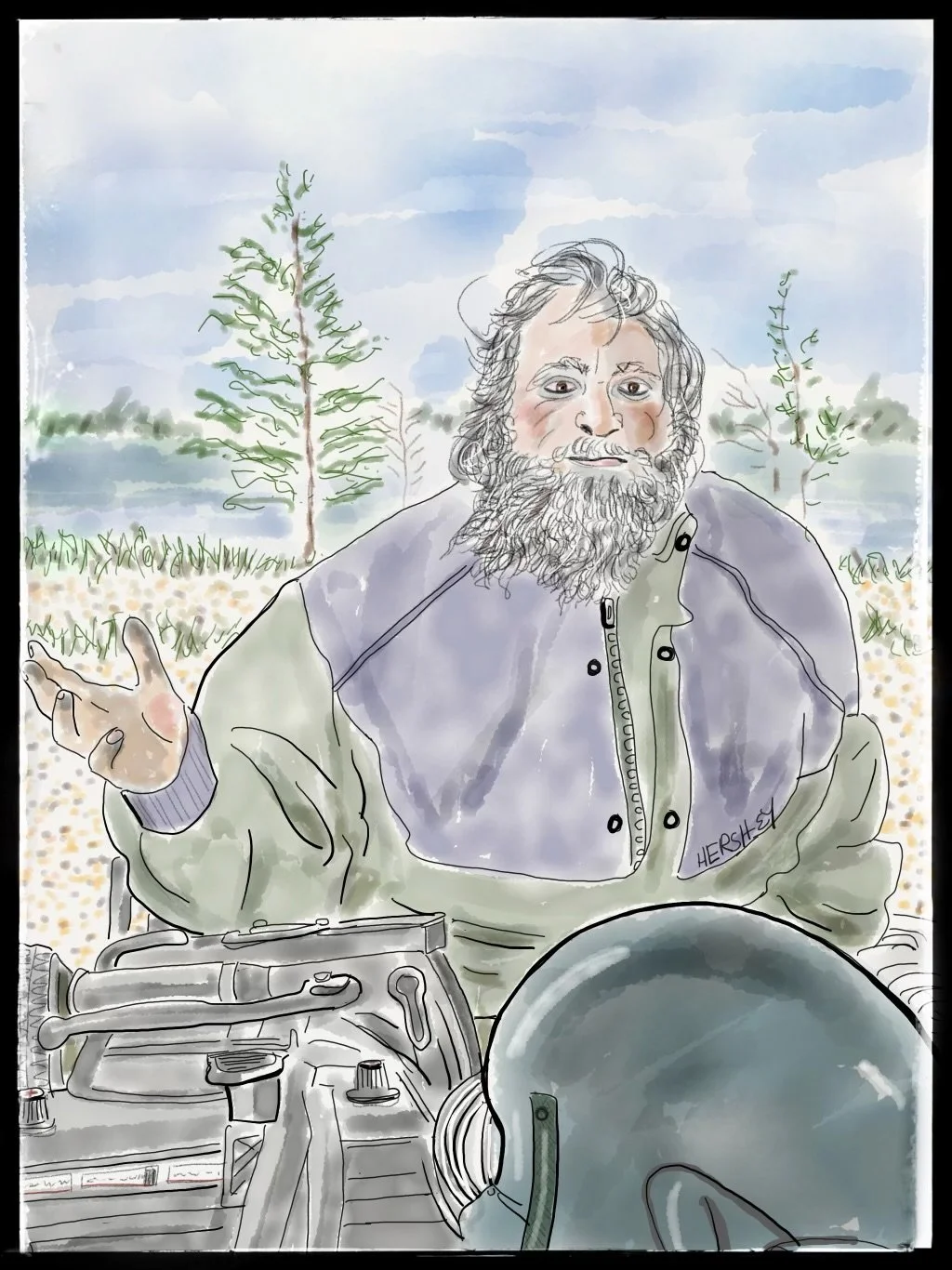
We met Victor in Port Saunders while packing groceries into our bicycle panniers. He pulled up on a weathered ATV, hauling an old wooden trailer full of wood, tools, and gas containers. Very friendly, and with a thick accent of Irish brogue and Canadian twang that we could only half understand, he told us he used to be a fisherman but now he lives on $600 a month he gets from the government. He said it’s not enough to survive and certainly not enough to pay for rent. Victor’s life is hardscrabble, but his one comfort and lifeline is his trusty ATV. He referred to her as “she” and called her his prostitute, “Cause I 'ave ta pay so damn much money ta keep 'er runnin', I do.” Victor then took us by surprise by lecturing us (once he learned we were from the States) about Donald Trump’s ethics. He referred to the Inside Hollywood tapes of Trump talking about what he would do to a woman’s…. well, he wouldn’t even say the word! But then he went on, “‘Ow could a man who was found guilty of sexual assault be elected as President? Dat's absolutely mental, it is!" A man with firm convictions and lots of common sense, we agreed with most everything Victor said (that we could understand). Drawing by Jenny Hershey. Follow her on Instagram @deeofo.
Yet, our politics in the States gets even weirder. Republicans have a massive and well-developed agenda for global warming. As Emily Atkinson writes in Heated on Substack (August 26), it boils down to three words: “Let it rip.” She goes on: “The Republican climate agenda is summarized nicely in Project 2025, the notorious 900-page policy plan developed for Donald Trump by the conservative Heritage Foundation. It proposes gutting the Environmental Protection Agency and its climate regulations, re-opening the Arctic National Wildlife Refuge for drilling, defunding the nationwide transition to renewable energy, and eliminating environmental justice initiatives. In addition, political appointees serving under Trump “will have to eradicate climate change references from absolutely everywhere”—because, as we know, ignoring a problem helps fix it. Overall, Project 2025 is a veritable smorgasbord of “burn it all down,” and it aligns squarely with Trump’s own actions and pledges.”
Ignoring overwhelming scientific evidence and consensus is not just misguided; it's morally bankrupt and irresponsible, particularly in the face of such obvious and indisputable evidence. Ignoring extreme weather events is a flagrant gamble with the lives and livelihoods of millions, the stability of the global economy, and the very habitability of the only planet we call home. As these ever-growing multi-billion dollar disasters make painfully clear, Americans and Canadians can no longer afford to indulge those who put short-term profits and political expediency over the safety and well-being of our communities. The catastrophic losses we're already experiencing are a mere preview of the unimaginable human suffering, ecological devastation, and economic havoc to come if we fail to act with the boldness and urgency demanded by science.
Our path forward could not be more starkly vivid. We can choose to heed these unmistakable warning signs and launch an all-out mobilization to slash emissions, transition to clean energy, and bolster our resilience in the face of unavoidable climate shocks to come. Or we can condemn ourselves and future generations to an ever-escalating onslaught of climate mega-disasters that will make today's $billion+ calamities woefully insignificant by comparison. Let us pray we choose wisely for the sake of ourselves, our children, and generations yet to be born. The hour is late, and time is not on our side.
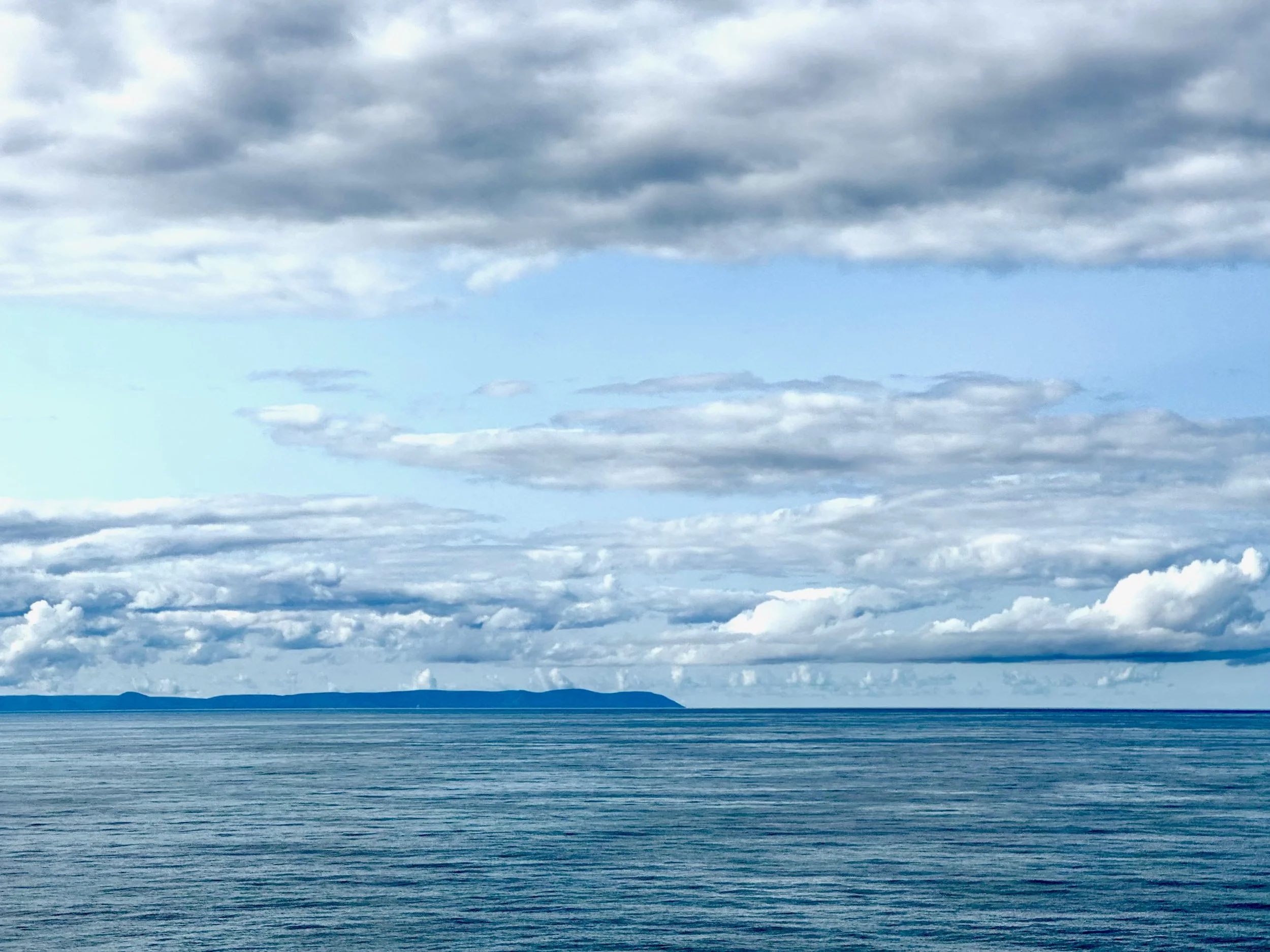
A shot of Cape Breton, Nova Scotia, from the ferry on our return.
Stay vigilant! Thanks for reading. If you haven’t done so, please subscribe to this blog to follow our next biking trip.
Blog writing by Michael Chase. Drawings by Jenny Hershey. Unless otherwise noted, all material is the copyrighted property of the blog post authors, including all photographs and drawings.
Jennifer Hershey’s drawings can be enjoyed on Instagram @deeofo.
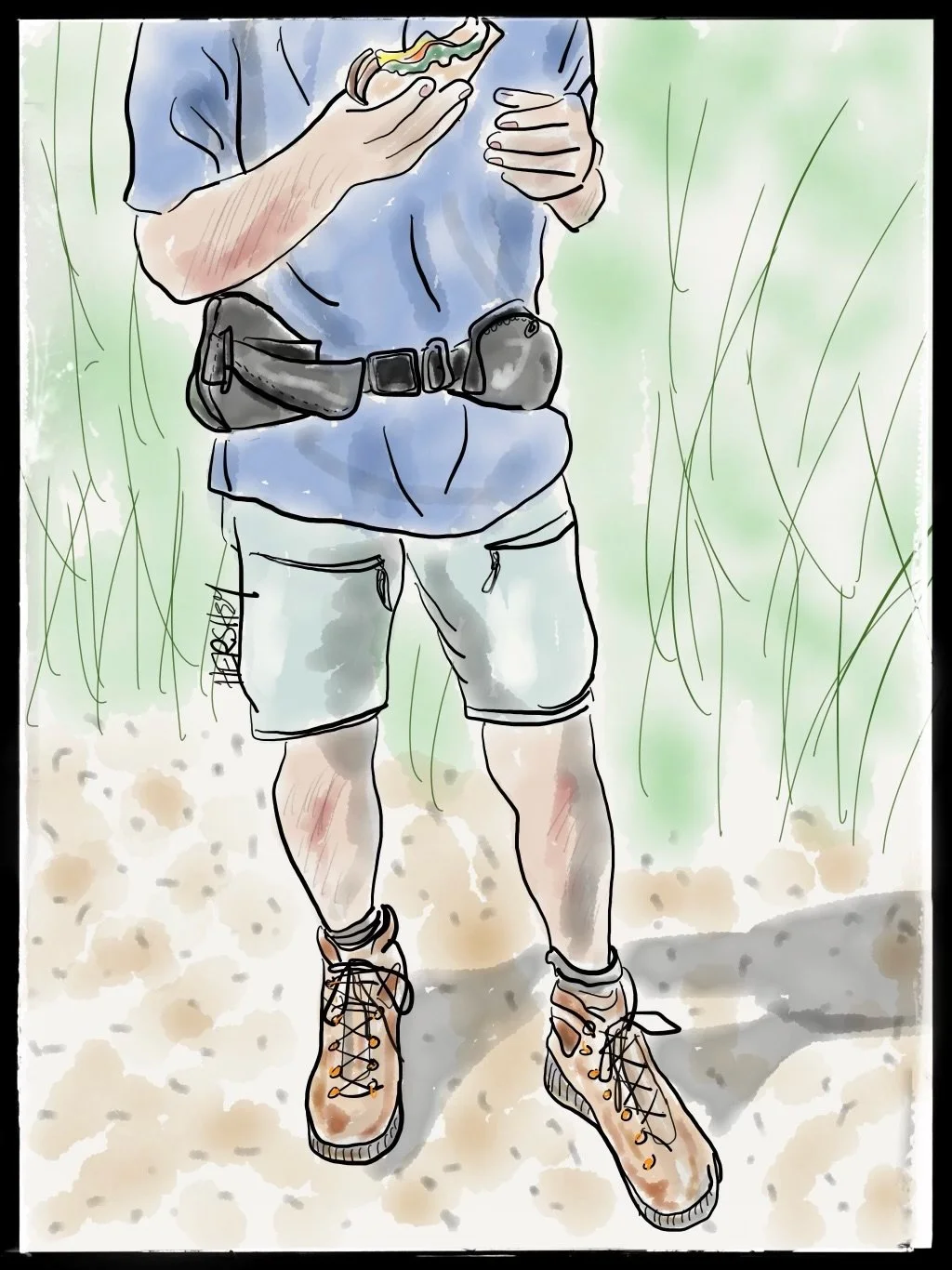
We first met Gary on his 81st day of walking across Canada between Nipigon and Thunder Bay, Ontario, during our May 2024 cycling trip around Lake Superior. At the time, Gary explained he was walking from Vancouver to St John’s, Newfoundland, to raise money for a cause he was passionate about. Jokingly, Jenny said, “Maybe we’ll see you there; we’re going to Newfoundland in September.” On Day 162 of his transcontinental hike, we met him again. We were biking toward Port aux Basque to catch a ferry back to the mainland on Trans-Canada Highway 1, just south of Corner Brook, NL. We had been following Gary on social media, so we thought our paths might cross. We brought him a huge sandwich and fresh fruit, exchanged travel stories, and then went our separate ways. Gary was on his third pair of hiking boots, and Jenny was on her oldest touring bicycle. Drawing by Jenny Hershey. Follow her on Instagram @deeofo.
The Intimacy of Nature: Biking Northern Lake Superior
Writing by Michael Chase, Drawings by Jenny Hershey
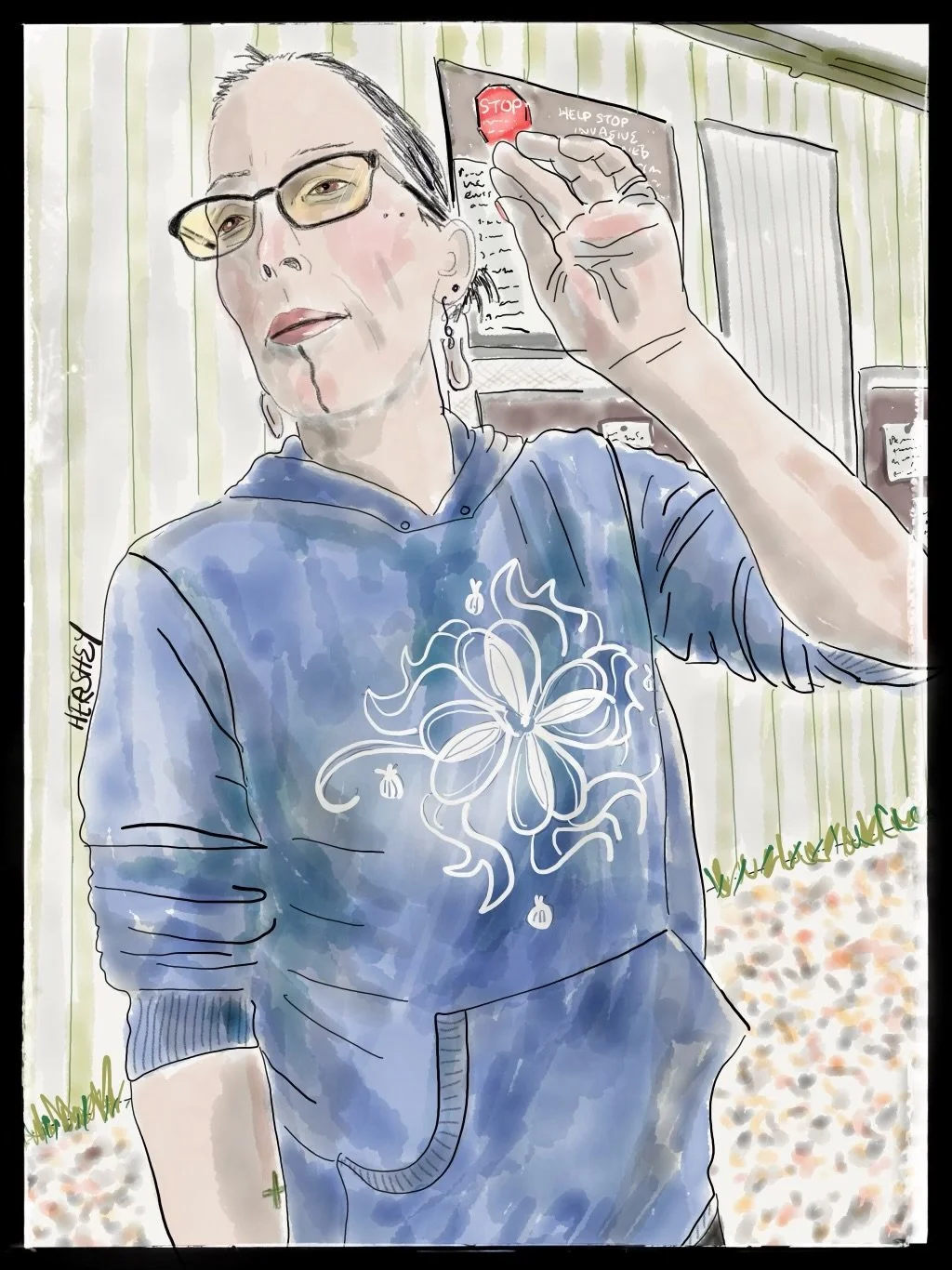
Heather is a member of the great Ojibwe Nation. She lives in Grand Portage, MN, on the Grand Portage Reservation near the US/Canada border of Lake Superior. Heather, whose Ojibwe name is Gizhiiwe, was born and raised in the Gichi-onigamiing Ishkonigam (the Ojibwe name for the reservation lands), and she manages a marina next to a campground. The marina, campground, and a nearby casino are all owned and managed by the Ojibwe Reservation. Heather is raising four daughters, a friend’s son, and a niece. A hardworking woman who has experienced many joys and sorrows, her kids are her biggest joy. Heather still grieves over the loss of her twin boys, who were the unfortunate victims of physical violence by their father toward Heather when she was pregnant. Her personal resilience and support for other women who are victims of abuse helps her to heal.
We asked Heather if she had noticed changes in the weather over the years. She answered, “Not only have winters gotten warmer and warmer, there’s a lot less wildlife than a few decades back when I was a child.” Then her father, sitting nearby, added, “They used to keep to themselves, but now the black bears come out of the forest hungrier than they used to in the Spring to search for food. Now they are more aggressive - they can even open a car door!” Jenny asked Heather what worries her at night, and she said neither of the two old men running for president understood the real issues of native Americans. And she also worries about warmer winters decreasing the moose population and ruining the tribal custom of partridge hunting. Jenny asked Heather about her tattoos. She pointed to her chin, “This means, ‘She speaks Truth’. The two dots on the top of my checks stand for two perspectives …because there is always more than one.”
“As the environment changes, you should expect to change too. It is the job of your brain to model the world as it is. And the world is mutating.“
Clayton Page Aldrin, from “THE WEIGHT OF NATURE; How a Changing Climate Changes our Brains,” published by Penguin Random House, 2024
Some years ago, while transitioning from a theatre professor to a climate activist, I took a hiking vacation (by car) with a companion to the Tombstone Mountains in Canada's Yukon territory east of Alaska. Along the way, we decided to camp north of Whitehorse near some hot springs. We were setting up a tent when I noticed two older men ride up to a nearby campsite on bicycles. Their bikes were heavily loaded with gear, and the men seemed tired but happy. After a few more moments struggling with my tent, I looked back at their site, and to my astonishment, two small tents were up, the bikes were leaning against a tree, and the men were nowhere to be seen. I was puzzled about how they got there and where they were going. The only paved road I knew about in the Yukon out of Whitehorse was a section of the Alaska Highway on the way to Dawson City, which was bikable but ended at Fairbanks. The Dempster Highway was another choice some 50 miles or so to the east of Dawson, a northward-bound mix of pavement and gravel that passes through the Tombstone Mountains as it winds its way up to the edge of the American Continent and ends at the Beaufort Sea, part of the mighty Arctic Ocean.
An hour or so later, I found the men relaxing at a pool fed by natural hot springs that offered a refreshing respite from the chilly air. I started conversing with one of the men, who introduced himself as Don. He looked weather-beaten and sturdy like an old oak tree, maybe in his mid-seventies. I asked him if they had come a long distance. “We’re returning to Juneau, where John and I live, he said, gesturing to his slighter counterpart. “I want to get there in time for July 4th. Gotta party with my family and friends.” “Where are you coming from?” I asked. Don deftly pulled himself out of the pool, dug through a pack nearby, and brought out a map. He pointed. I could see a road in the eastern part of the Yukon that began at Whitehorse. “There,” he said. “We did that loop.” I could see a triangle made of several roads that started at Whitehorse and ended there, but they still had to get back to Juneau, about 250 miles south of Whitehorse. As far as I could figure, they had just biked several hundred miles on unpaved roads, mostly in areas without services, which would total out to a trip of 700 miles or more in very rugged country.
My head was spinning. These old guys did that? (Then I could too!) Don went on, “I’ve lived in Juneau my whole life. Great town, fantastic country right out your door. I used to backpack all over. But now I'm older I don't like to carry a pack anymore. So I let the bike do it. All I gotta do is pedal and not fall over.” As I was thinking that over, Don added, “And it's every bit as intimate an experience with nature as backpacking is. I still have to deal with everything that Mother Nature offers up. I get to experience it all on my bicycle. Only difference is the bike is hauling my stuff.”
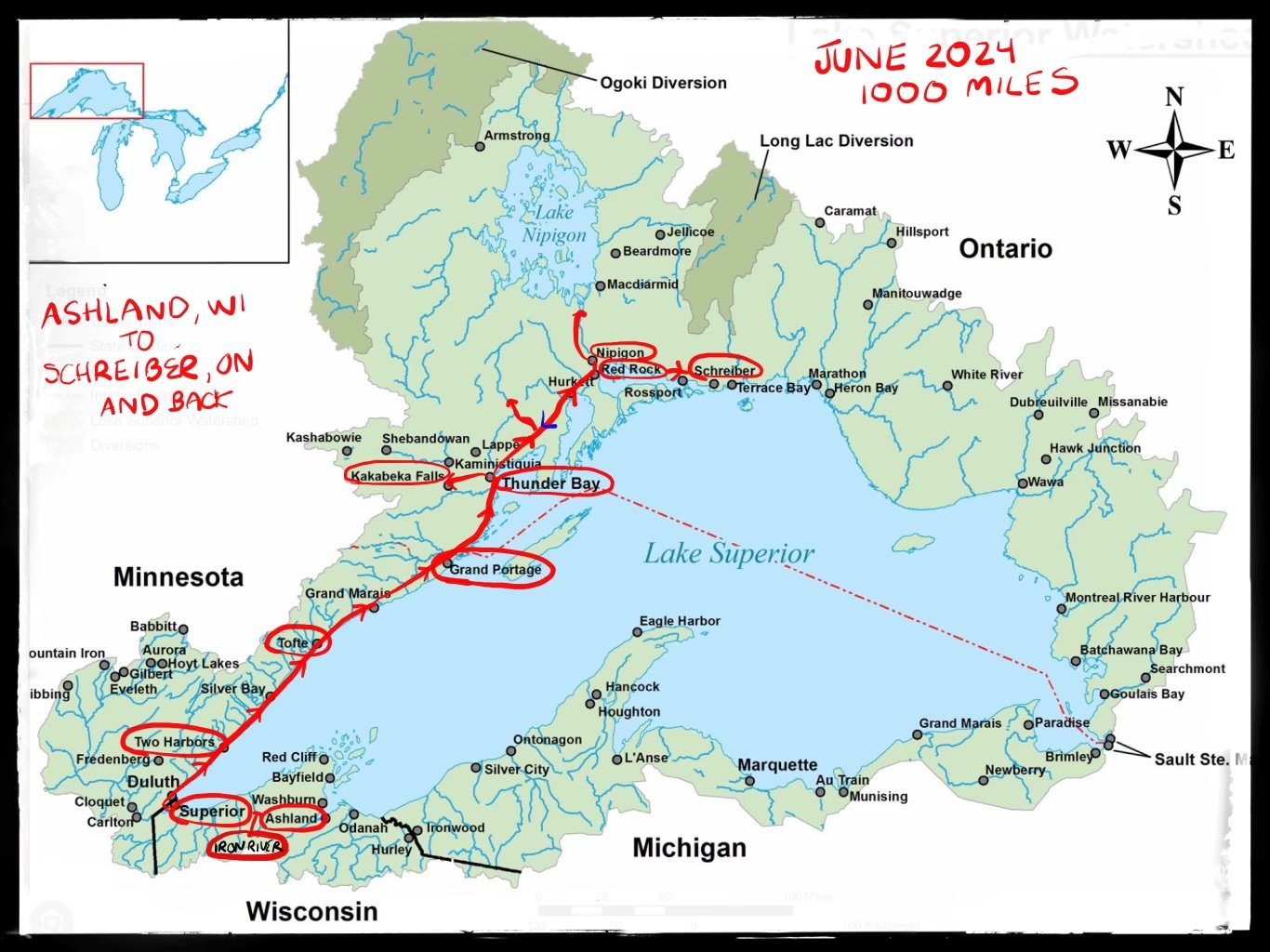
A map of our journey; Jenny and I originally intended to bike around Lake Superior. However, we were forced to stop at Schreiber, Ontario, and head back to Thunder Bay because Jenny had developed a bruised pubic bone from a seat that wasn’t working out (…a common problem for women who bicycle long distance). Jenny needed both rest and to change her saddle, an option about 150 miles to the west or 500 miles to the east. Chalk up our mistake to the unfortunate consequence of traveling on new bicycles we hadn't already subjected to challenging conditions. We write more about the new bikes below.
Intimacy with Nature. What does that feel like?
It can feel like a lot of things: the smell of soil after a hard rain, the shape of a hill you are trying to walk or bike up, the wind as you descend, the scream of a hawk, the song of a warbler, tall grass grazing your legs as you walk to the lakeshore. But even more central to our experience of nature is weather. That is all around us: it's visual, tactile, olfactory, auditory. Its coldness can give you energy and kill you, and its heat can make you tired and kill you. It can be so dry you can't stop craving liquid, your skin dries out and your lips crack and bleed, or so wet you forget to drink and you feel as though insects are crawling around your torso while your skin shrivels like a prune. Or you can feel the sublime relaxation and letting go into perfect conditions, neither too hot nor cold, too humid nor too dry, as light delights your eye and lulls you into momentary contentment.
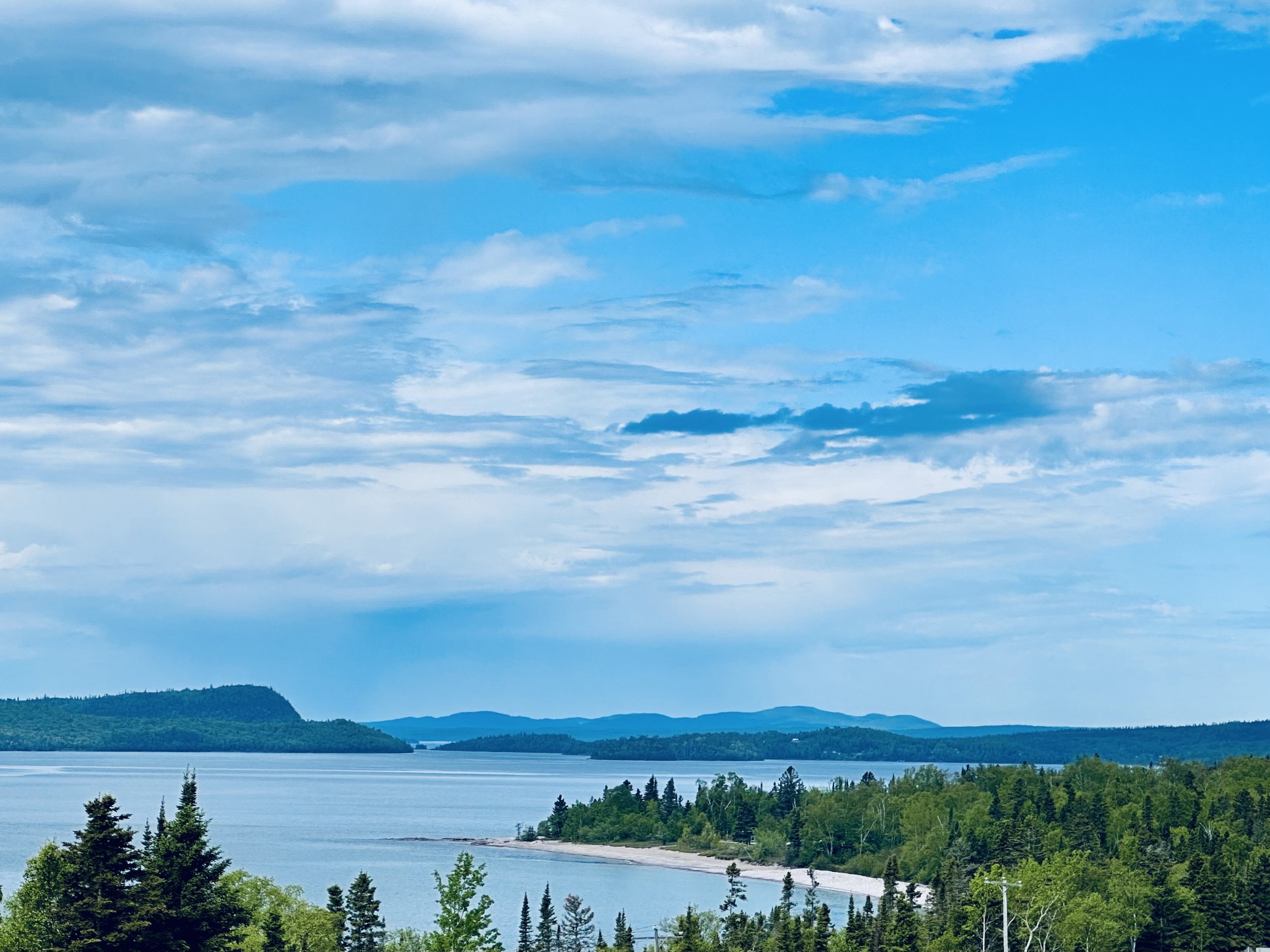
A view of Lake Superior near Rossport, north of Thunder Bay, Ontario.
Friend or foe, weather envelopes us. The experience of it is always intimate, making us feel many things, but above all, bringing us to right here, right now. And all other experiences flow from that. Think of a cherished outdoor memory, perhaps even an indoor one. As you reconstruct the memory, do you remember what the weather was like? Odds are very high that you do, and with considerable clarity. But weather is not climate. Weather just transpires, and it is the panorama behind all our experiences. Some psychologists and neuroscientists think that weather is the “skeleton of memory” because it is so fundamental to human experience.
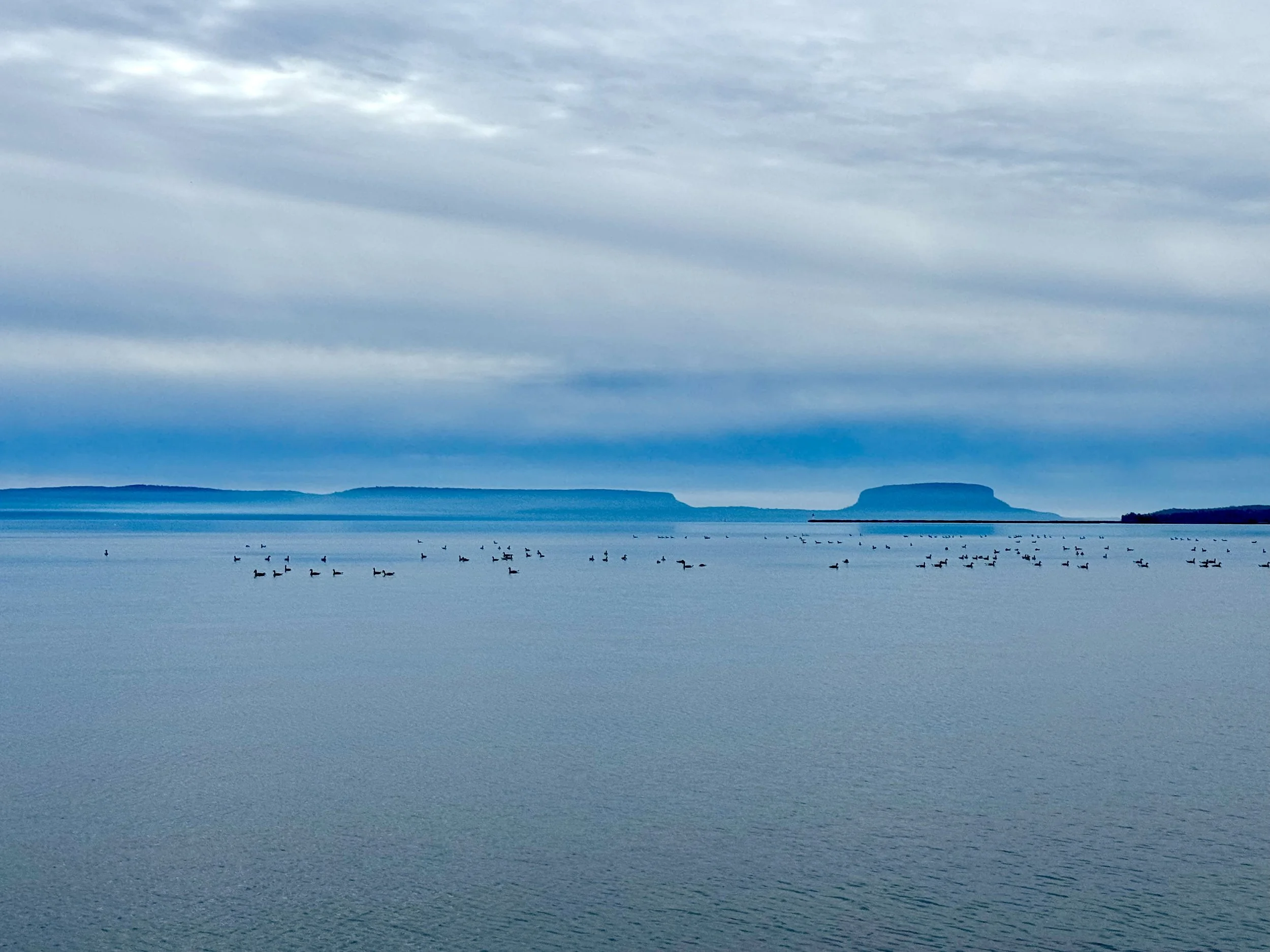
Canada Geese in the distance looking toward Pie Island from Mission Island just off Thunder Bay, Ontario.
Climate, in contrast, is a construct of the human mind. Climate is the measurement - or for most of humankind simply imperical evidence - of weather in a particular place over time. A mental model, climate represents how humans think something works in the real world. So a "dynamic mental model" of the climate involves imagining - or studying - how this complex system works, with many interrelated variables changing over time based on various forces and feedback loops. It's a way of visualizing and making sense of ever-shifting systems that have historically changed at a rate unnoticeable to most humans yet are now speeding up. Fast.
To test this out ask yourself, “How does the climate feel?” And then ask yourself, “How does the weather feel?” The latter question is definitely easier to answer. We feel the weather, we count on the climate. Or at least we used to. Now the climate is changing so fast we are much less able to predict it. And interestingly, losing our capacity to predict means we know less about the future because we can no longer rely on the past to be our guide. In a curious way, this is a kind of forgetting the future, almost as if climate change is giving us reverse amnesia.
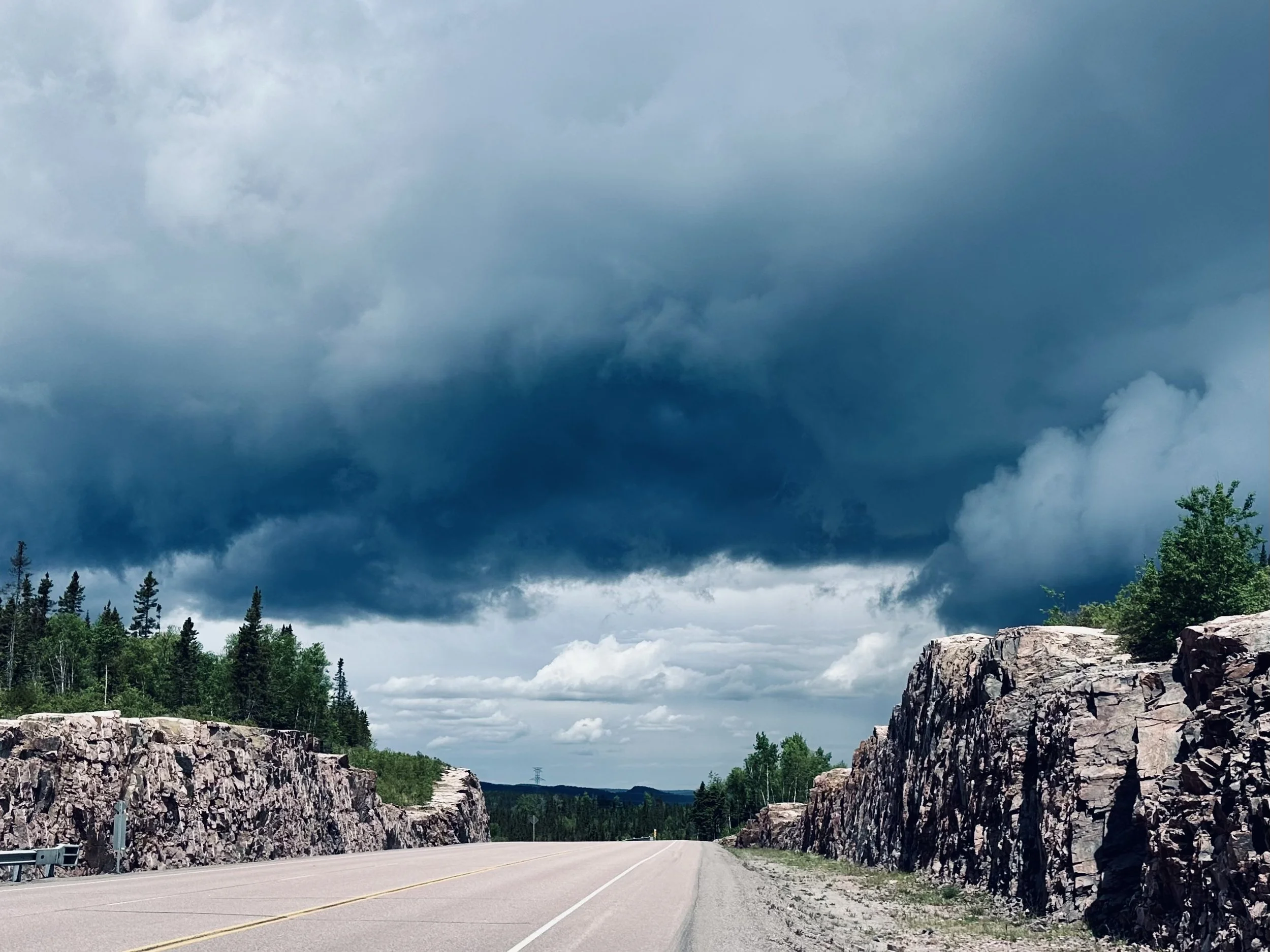
Storm clouds brewing on a summit on the iconic Trans-Canada Highway 17 approaching Schreiber, Ontario.
The Climate is like the stock market; it makes us happiest when it's predictable and very uncomfortable when it isn't. And it's becoming less and less predictable.
Even if you are lucky not to have noticed, hundreds of millions of people (including those who follow climate records) have been subjected to and astonished by a dizzying cascade of record-breaking temperature increases over the past year. Average global temperatures have hit unprecedented highs for the last 12 months, from April 2023 to April 2024. Then, to make it a baker’s dozen, May 2024 just concluded the warmest month in recorded history! And, if you’ve been paying attention, or you live in India (126F), Africa (Sudan, 122F), the Mideast (Kuwait: 128.5F, Iran: 159.3F, Saudi Arabia 111.2F), or North America (Mexico, 125.6F), and the American Southwest (122F), the Midwest (98F) or the Northeast (98F), you have good reason to believe that global temperaturesres for June are likely to eclipse May. Records are being broken not only for how hot it gets but for how long that heat endures. Already this year, India has experienced the country’s most prolonged hot spell on record, spanning 24 days in April and May. And Greece is currently in its third week of deadly heat, less than a year after experiencing a record-breaking 16-day heat wave. It’s not as if climate scientists didn’t see worsening impacts coming, but they are indeed surprised by their ferocity. And now, at 2.34F (1.3C) of total average warming beyond pre-industrial levels, we are being forced to reckon with a planetary climate system that is becoming increasingly turbulent, mercurial and downright dangerous.
Of course, there's only one way out: stop burning fossil fuels. (It's interesting to contemplate the inevitable time when the burning of fossil fuels for our energy needs will be a distant memory. But I'm getting ahead of myself…)
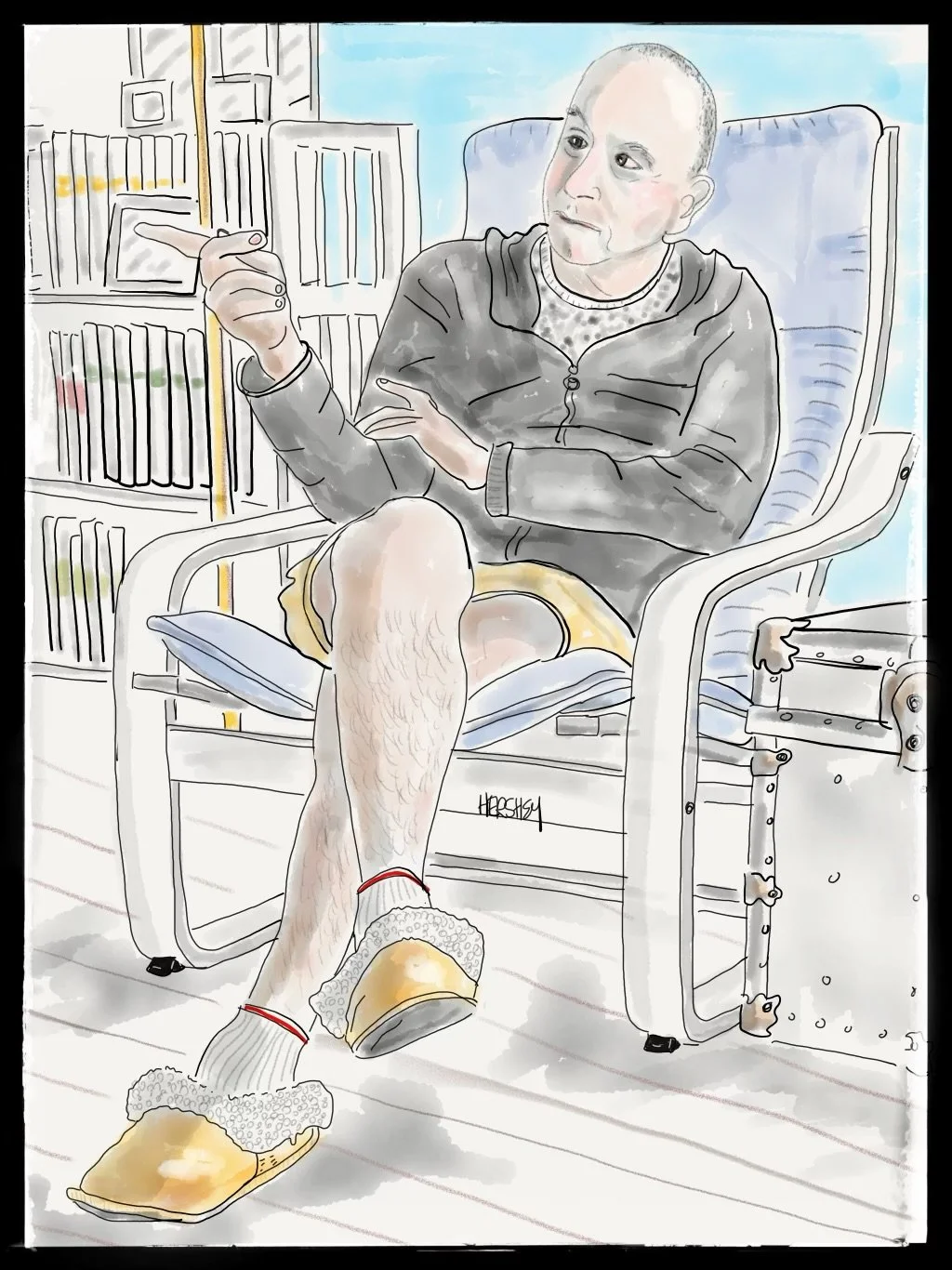
Jenny met Tim in Nipigon Bay, Ontario, as he loaded groceries onto his bicycle outside the only market in town. An avid cyclist and “Warmshowers Host,” Tim mentioned he was hosting a cyclist that evening who was halfway through a biking trip from Vancouver, BC, to St. Johns, Newfoundland (about 5,000 miles). “Maybe we wanted to come by and meet him”? Tim added that he had worked as a forest technician at Ontario’s Ministry of Natural Resources. Jenny eagerly accepted. We enjoyed meeting the cyclist Ben and were very impressed by his gentle determination. Clearly, he was going to make it all the way. And we were fascinated by Tim’s career. Except for a short stint in BC, Tim focused on Ontario forests for his entire career, designating, designing, and approving logging areas and procedures used by private companies to harvest timber. Interestingly, the Crown owns the land in Canada, and private companies lease land for resource extraction. Over the years, Tim has seen the weather change a great deal. Winters are increasingly shorter and dryer, summers are longer and hotter and vacillate between extreme dryness and wetness. Along with every other local we queried about the weather, Tim quickly mentioned that this past winter was the warmest he'd ever experienced. The only precipitation was rain. When the one snowstorm of the winter of 2024 finally came, it was mid-May, and the snow disappeared in a few days. Correspondingly, the ice pack on Lake Superior set a new record as the most diminished in recorded history.
Back to Lake Superior
I once took a road trip with my ex-wife from Denver to Toronto for a professional engagement. We drove the northern route around Lake Superior from Duluth through Thunder Bay, Nipigon, and down through Sault Ste. Marie to Toronto. My memories are very general, mainly limited to lovely or rainy weather and my fascination with the seemingly endless forest of what I thought were scrappy and smallish trees as a result of the harsh Ontario winters. (I have since learned that such characteristics can also come from logging practices, erosion snd slope orientations, and wind.) And strangely absent from my memories are the extraordinary hills on the Ontario side and the magnificent highland views along the north shore of the Trans-Canada Highway from Nipigon to Sault Ste. Marie.
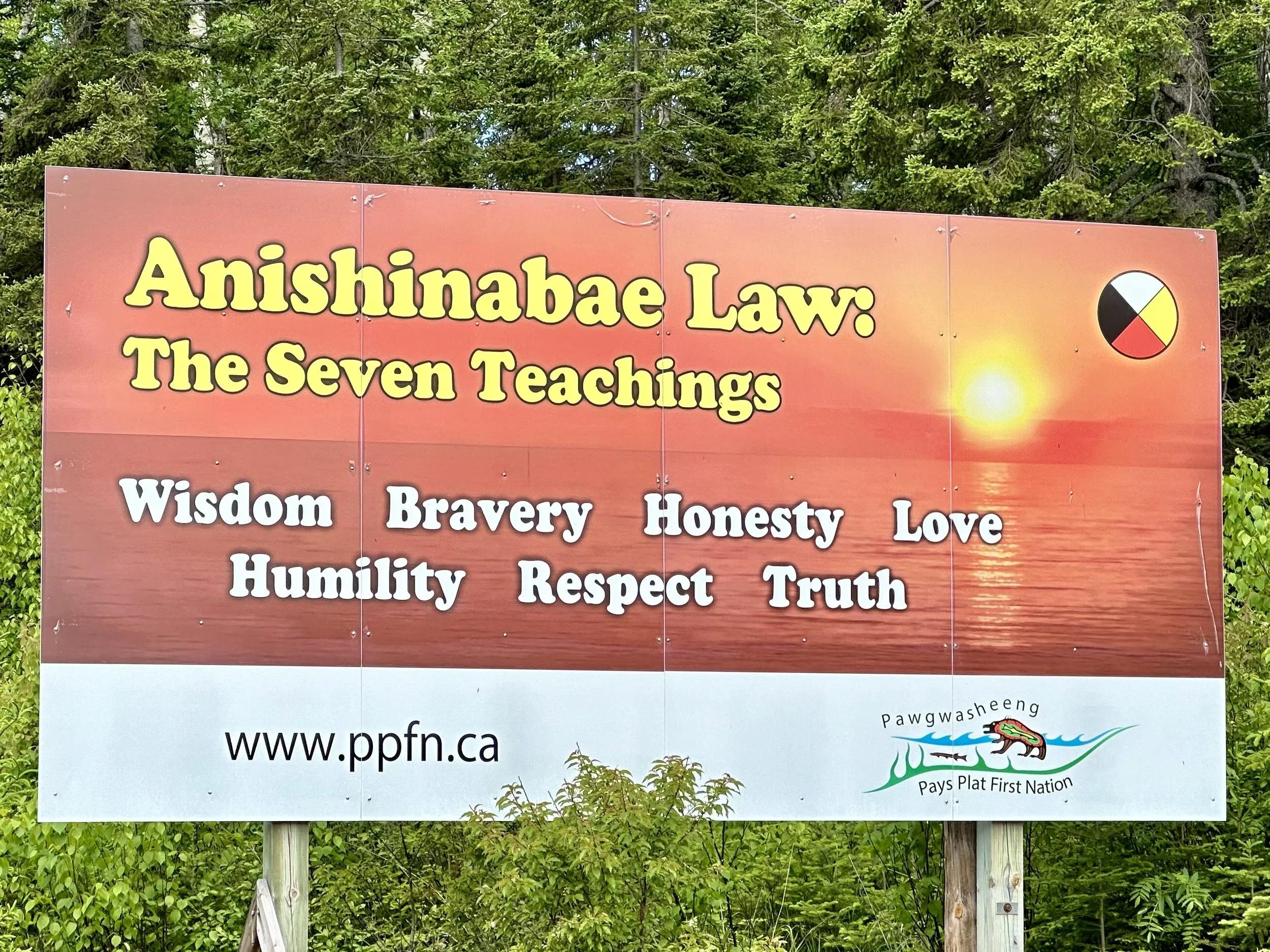
The Pays Plat First Nation, a small First Nation Ojibwe reserve community located in Canada near Rossport, Ontario, erected this sign. Anishinabae is an umbrella term that encompasses several tribes, including the Ojibwe, who have their own distinct identity within a larger group. This is the same clan that lives on the Grand Portage Reservation in Minnesota. Like many Indigenous people in other countries, the national boundaries of Canada and the United States were formed with little regard for their regional homeland.
This biking trip, in contrast, has offered Jenny and me a very intimate experience of this region. Traveling along Lake Superior on a bicycle has deepened our understanding of the landscape and its inhabitants far more deeply than driving through it ever could. After years of long-distance bicycle riding, I've come to believe that our relationship with place becomes less intimate the more hermetically protected we are from the weather. And, as exciting and useful as speeding up can be, traveling faster than human senses can assimilate results in a shallower experience of our environment. In other words, the faster we go, the less we experience. The same might be said for life in general.
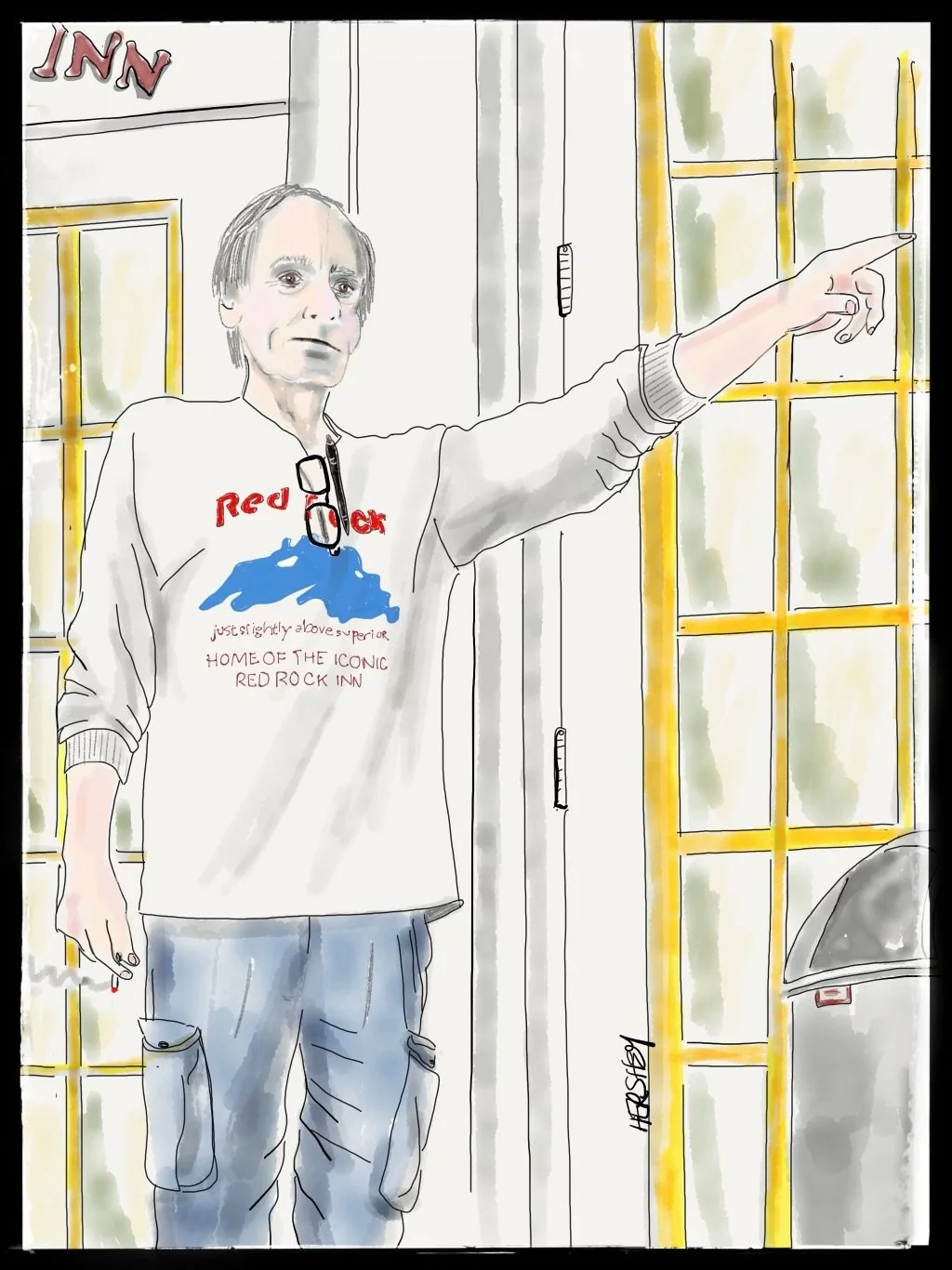
About 60 miles northeast of Thunder Bay, on our way to Schreiber, Ontario, we rode into Red Rock, a lovely small fishing village on Nipigon Bay facing three small islands. Looking for a grocery store and lodging, we found ourselves at the Red Rock Inn, an old hotel built in the 1930s. The proprietor, Don, was raised down the street, and as a child he and his family lived in the Inn for a while. While living there, Don discovered an extensive library of Hardy Boy novels that he read voraciously. Today, on the bedside tables in every room is a Hardy Boys novel and, as Don says, “To be politically correct,” a Nancy Drew novel as well. Don moved away from Red Rock when he went to college and spent the next 40 years in the States, building multiple yacht dealerships on the Gulf Coast, primarily in Florida. Then, about nine years ago, he sold his businesses, moved back home, and took on the challenge of bringing the Red Rock Inn back to life. The place is chock full of memorabilia, antiques, and much artwork (Don’s mother and his second wife were artists, and many of their works are on display). There is also a surprising number of paintings by the Group of Seven, once known as the Algonquin School, a group of Canadian landscape painters from 1920 to 1933 with similar visions. Believing that a distinct Canadian art could be developed through direct contact with nature, the Group of Seven is best known for its paintings inspired by the Canadian landscape. When we asked Don if he had noticed any differences in the weather over the years, he responded, “Of course, winters used to be much more intense and lasted much longer. And there was no snow last winter until one small storm in May! And I could see open water out there.” Don gestured toward Lake Superior, “Our weather is really crazy now.”
The Winters are Warmer
Minnesota is famously known as the land of 10,000 lakes, but it actually has 11,842 lakes that are at least 10 acres or larger. Michigan (which we didn't visit this trip because of our change in plans) is equally known for its abundance of lakes, with approximately 11,000 inland lakes and 3,288 miles of lake shoreline (eclipsed in the US only by Alaska). Ontario, in contrast, contains an even more impressive number of lakes - over 250,000 - that collectively account for about 20% of the world’s freshwater supply. Tragically, every one of these lakes is experiencing shorter winters with accelerating losses of ice cover, a trend that has gained speed over the past few decades. Ice duration on the Great Lakes alone has declined by 31 days on average since weather records began around 1865, while ice cover on Lake Superior has decreased by a factor of six over the past 25 years. More than 15,000 lakes in the Northern Hemisphere that historically have frozen every winter for as long as can be remembered now experience ice-free winters. This trend in ice loss is forecasted to continue, and scientists estimate that the remaining lakes with ice cover will lose an additional 10 to 40 days over the next decade alone, yet another manifestation of our rapidly changing climate.
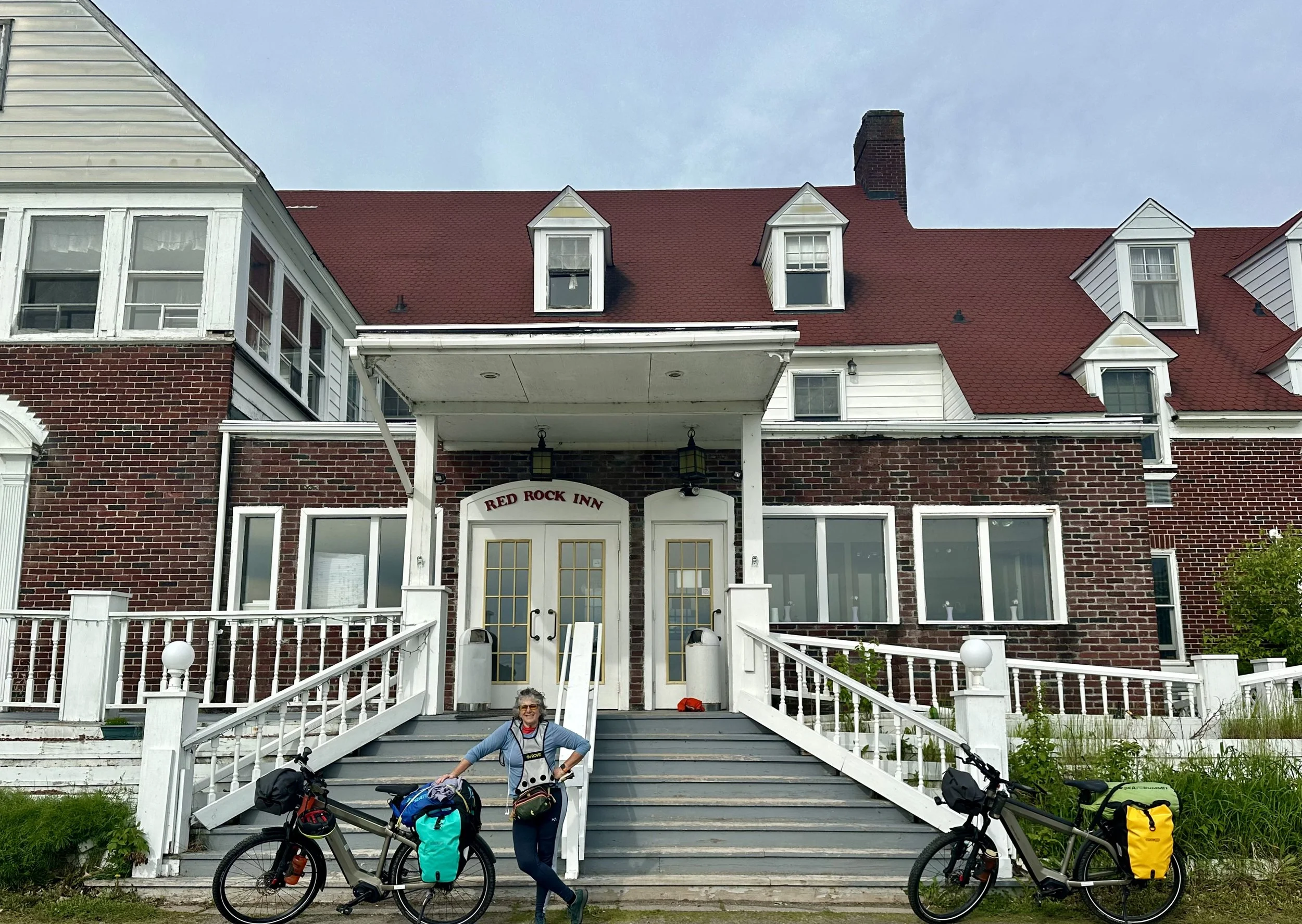
Jenny stands by her bicycle in front of the Red Rock Inn. Somewhat frozen in time, this hotel reminded us of a benign cousin of the Overlook Hotel in “The Shining.”
The Water is Warmer
The loss of ice on the many lakes in the Great Lakes region is far from the only result of global warming. Like our oceans, increasing atmospheric temperatures drive the average temperature of inland lakes upward. Lake Superior is among the world's fastest-warming freshwater bodies. Below are some average yearly temperatures for the lake:
1910, 39F
1950, 41F
1990, 43F
2020, 57F
Note the rate of increase in average water temperature from the 30 years from 1990 to 2020 is significantly steeper than any 40 years prior! Lake Superior has long enjoyed a reputation for its unspoiled water, but that is diminishing as the decades progress. Although algae blooms were non-existent on Lake Superior a century ago, increases in average water temperatures are now creating fertile conditions for their growth. Unlike Lake Erie and Green Bay in Lake Michigan - warmer, shallower, and surrounded by sources of agricultural runoff - Lake Superior has remained cold, deep, and nutrient-poor until recent decades. However, algae blooms have now appeared on the lake in a recreational stretch from Duluth to the Apostle Islands. Because there is neither significant nitrogen pollution from agriculture nor significant urbanization, these blooms are driven by increasingly warmer water temperatures. Among undesirable impacts on recreational activity, such blooms deplete oxygen and create toxins that are harmful to fish, other aquatic life, and humans. They are not a good sign for things to come.
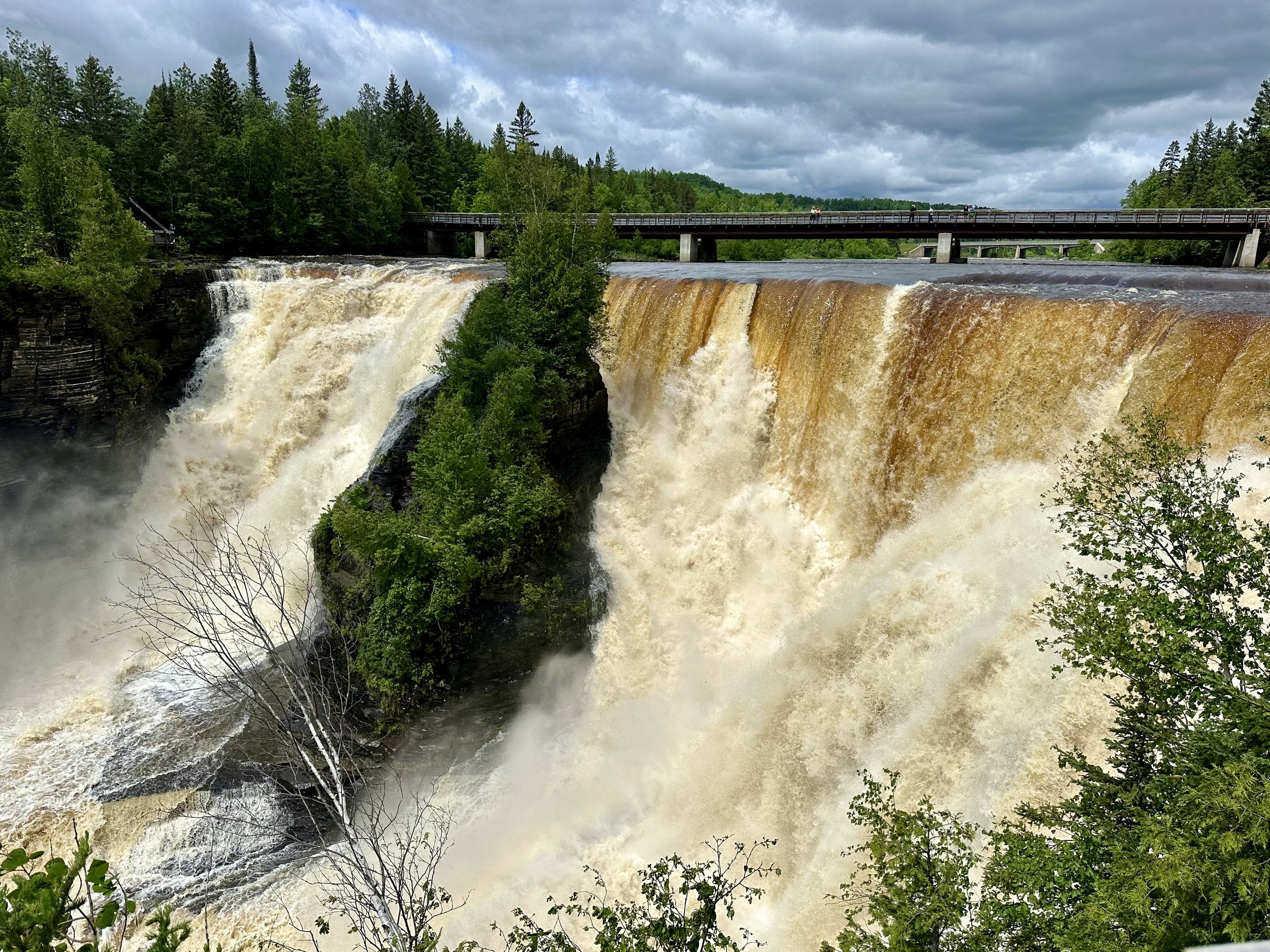
The Kakabeka Falls on the Kaministiquia River, about 20 miles west of Thunder Bay, is the second-highest waterfall in Ontario. With a drop of 150 feet, the falls have carved out a deep gorge over millions of years. The falls are also famous for the Ojibwe legend of Green Mantle, a Chief's daughter who sacrificed herself to save her people. When an Ojibwe chief learned of an impending attack from the Sioux tribe, he asked his daughter, Princess Green Mantle, for help. She went to the Sioux camp, pretending to be lost, and offered to lead them to her father’s camp in exchange for her life. However, instead of leading them to safety, she guided the Sioux warriors over Kakabeka Falls, where they met their demise, as did Green Mantle. Legend has it that the mist of the falls is Green Mantle’s spirit, a testament to her selfless act.
Whether you believe it or not, our atmosphere is warming up, fast.
So what hope is there? Have we passed the point of no return where our climate will spin out of control no matter what we do? Many people think not. If you are hard-headed enough to accept reality (unlike those who buy into fossil fuel propaganda and either deny climate change outright or minimize what science is telling us), you must learn to hold two competing truths in your mind simultaneously. One is that our situation is difficult and we are going to suffer losses and disruptions. The other is that things are changing rapidly for the better and we have significant reason to believe that we can slow down, and ultimately stop, the climate crisis.
Sunny Skies Ahead For Clean Energy?
At the same time climate change is accelerating, so is the global transition to clean energy. A recent report by the International Energy Agency (IEA), a globally focused non-partisan energy security NGO led by 31 countries, indicates that the world’s economies have shifted away capital investments in fossil fuel energy to clean energy sources by a factor of two in about ten years. Investments in fossil fuel projects will soon be in our rearview mirror, and it seems that before long they will be a dust trail.
All signs are that clean energy funding worldwide will go above the $2 trillion mark for the first time before this year ends, an amount greater than the GDP for all but 10 countries. In the US alone, clean energy spending is predicted to increase to $315 billion, compared to $280 billion in 2023. Much of the investment comes from the 2021 bipartisan infrastructure bill and the 2022 Inflation Reduction Act. In spite of right wing media hype, capital investments in clean energy are likely to remain robust in Red States because the geography of these states is more conducive to the production of wind and solar power.
Globally, clean energy costs are plummeting. Renewable energy investments now go more than twice as far in terms of energy output than a decade ago, plus clean energy investment has gotten a boost from the growing number of countries that have adopted emissions reductions goals in recent years. Most investment is currently flowing to solar projects, which are projected to attract more clean energy investment than all other power generation sources combined in 2024, including fossil fuels. The rise of solar power has also sparked significant additional investment in energy storage and grid capacity worldwide. Battery storage alone is expected to exceed $50 billion in investments this year, more than double what was spent in 2022.
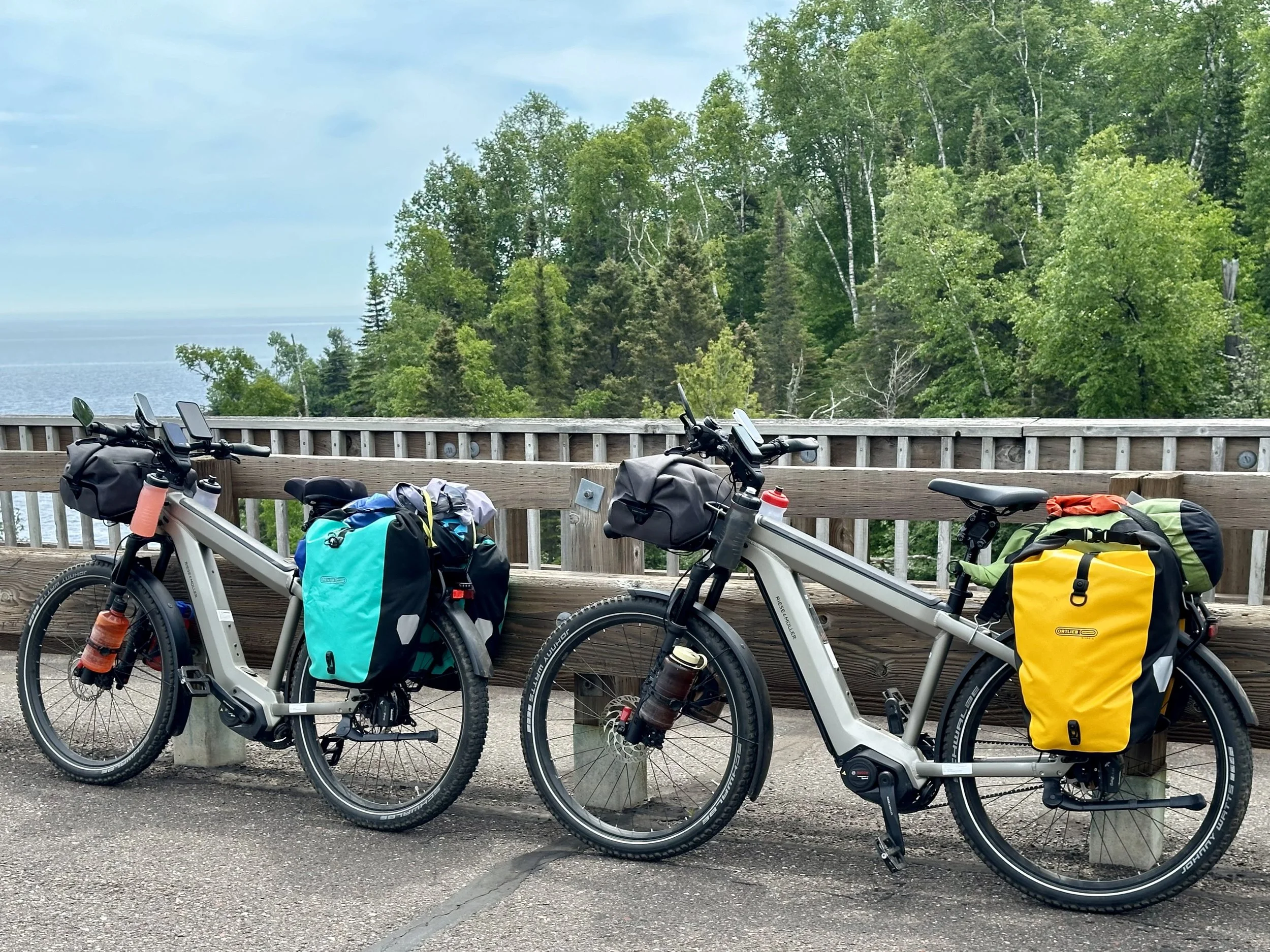
Our new bikes, fully loaded with our gear. We are proud to be pioneering long-distance travel on e-bikes. Since my first two cross-country biking trips were on a traditional road bike, I can speak to the pros and cons of electric pedal-assist bikes. One can get quite a workout (and increase one's range considerably), and one can be pretty lazy for shorter distances. There are e-bikes with throttles that can be ridden without pedaling, but one’s range is limited. Besides, why lose the workout? These bikes were manufactured by the German company Reise and Muller and feature Bosch motors, the major supplier of electric motors to Merdedes Benz. Although somewhat challenging to find in the States, we obtained our Reise and Muller bicycles through a bike store in Brooklyn called Propel Bikes. We like them a lot!
A few afternoon thunderstorms
Yet, there are some storm clouds ahead for global clean energy investment. While the record-high investment is a promising sign for the future of clean energy, spending is not distributed equally. Most of the investment is in China, the United States, and the European Union while developing economies make up only about 15% of this spending. This must shift to successfully transition the world from fossil fuels fast enough to meet global climate goals. Total investment in clean energy not only needs to double by 2030 to meet COP28 goals, it needs to quadruple in developing economies. But overall, the news is good. Capitalism is finally turning away from fossil fuels and toward a more livable future.
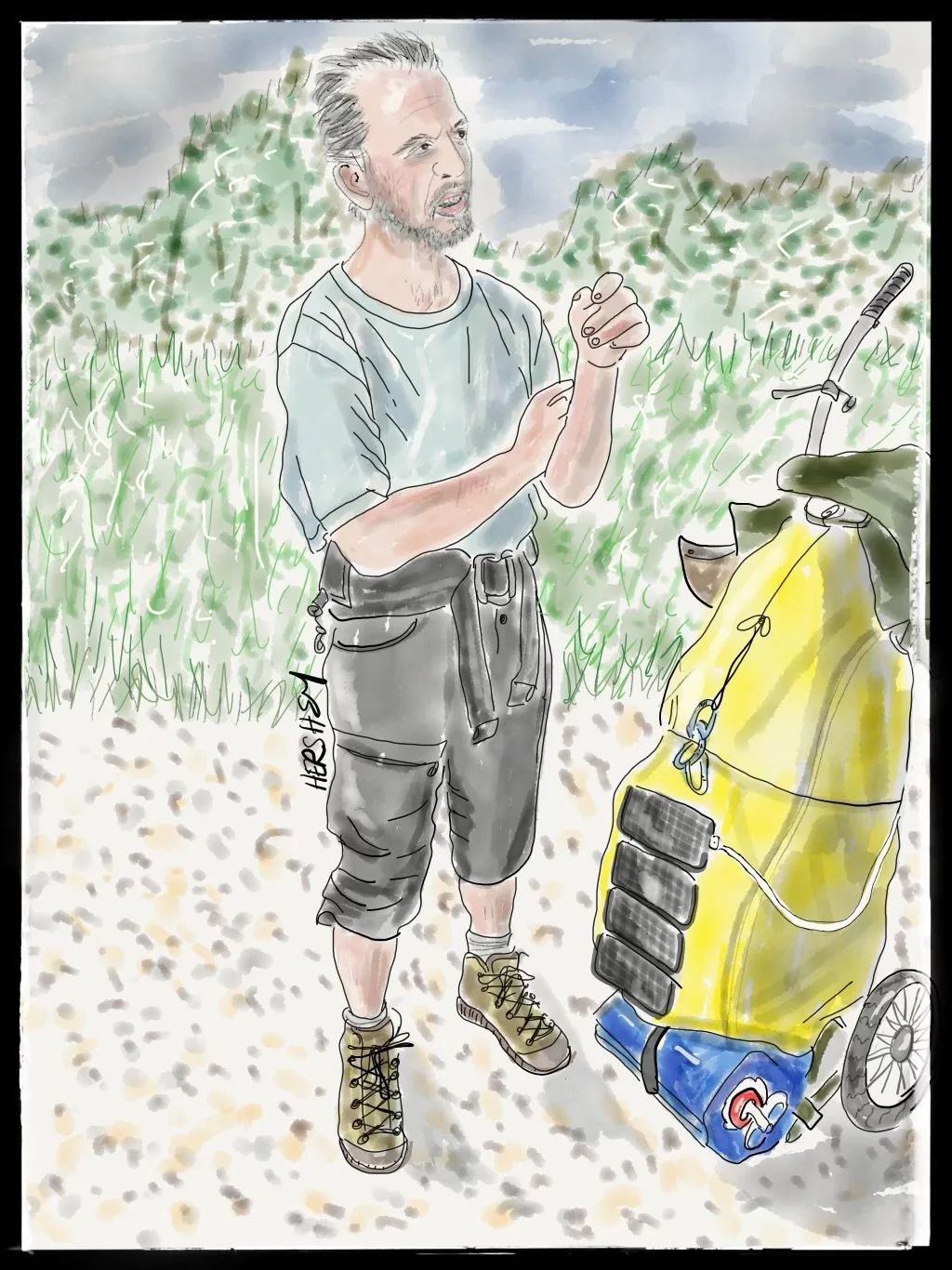
We ran into Gary Grono on highway 17 between Red Rock and Thunder Bay. We were biking south, and he was WALKING north. He was an odd site, walking against the traffic on the Trans-Canada highway (in a new section that is a four-lane freeway), pulling a two-wheeled cart with handles behind him. Gary was in his 81st day of a trek across Canada from Victoria, British Columbia, to St Johns, Newfoundland (almost 5000 miles), and is raising money for the Andean Institute, an organization in Maras, Peru, that “builds community and supports Andean culture”. Gary was affable and talkative, so we shared war stories about our travels. Many of Gary’s stories seemed more intense than ours. Jenny had gotten a tick bite earlier on this trip (not her first time) and took doxycycline immediately as a preventative measure. Gary, on the other hand, told us a harrowing tale about being attacked in the evening as the sun was setting by an army of ticks that got into his tent and infiltrated his clothing and sleeping bag. Several weeks later after discovering a tick that had made himself at home, Gary found an urgent care clinic and started a strong regimen of antibiotics. We were impressed with Gary’s commitment and resilience. He camps most nights, and only occasionally stops at a motel to wash his clothes, shower, and sleep in the comfort of a bed. He loved our bicycles and our rigs, calling them a luxury set up. We were amused; our perspective is that we are spartan in what we carry. We learned that Gary had little power left on his phone because he only uses a solar panel mounted on the back of his hiking trailer. Because it had been overcast and rainy for two days, Jenny offered him the temporary use of a portable battery to give his phone a boost. Gary hopes to meet his wife, Wendy, in Newfoundland in September. We had already been thinking about biking in Newfoundland in September so we hope to meet them both in the future. With Jenny’s help, Gary was finally able to charge his phone enough to communicate with his daughters, who manage his Facebook page. You can find him at @Gary Grono.
Postscript
I have written every post on an iPhone since I began this blog site in 2017 (some 125+ posts ago). On a bicycle, weight and packing volume matter, so I shipped my laptop home early on my first cross-country trip. It’s slow, painstaking work to write on an iPhone, but I’ve grown used to it, and, to my surprise have come to prefer it.
Some months ago, the platform I used to host this blog site (Squarespace) released a new mobile editor. It is much simpler than its older editor; I like it except for one feature - it doesn’t contain the capacity to create links. As you may know, I am not a fan of misinformation. In my last post, I used the regular Squarespace editor through a website as a workaround to create links to my sources. But on this trip, I discovered that capability had also been removed. I’m shocked Squarespace’s programmers would do this; about half the world has computing abilities on a smartphone ONLY. Linking is ubiquitous in email, so why remove it from a blog site? I may be forced to leave Squarespace, but I cannot evaluate that now while biking. I accepted the situation a few weeks ago and decided my writing might improve by embracing this limitation. For some time, I have wanted my non-fiction writing to be less academic and more vivid. I’d be very grateful for any thoughts you, dear reader, might have. Do you miss the links? I’d appreciate hearing your thoughts by email or in the comments section at the end of this post.
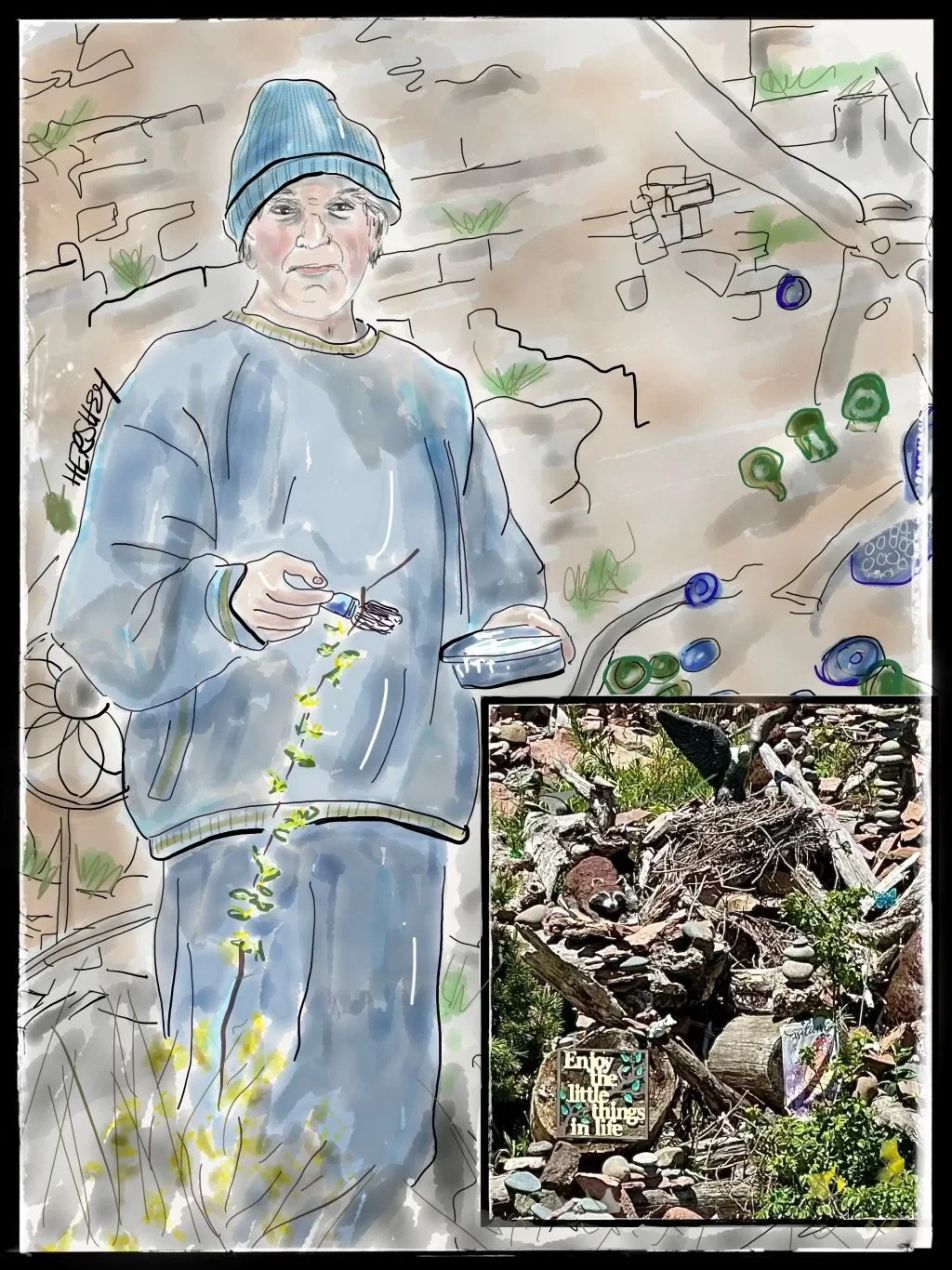
We met Chuck in Covill, about 20 miles northeast of Grand Marais, Minnesota. Like so many others who pass by, we couldn't help but notice the massive driftwood, rock, glass, primitive art, and random sculptures covering more than 200 feet in front of his home on Lake Superior (see inset picture). It’s taken Chuck 14 years to create this extraordinarily witty and ornate tribute to veterans, nature, and the human spirit. We were lucky enough to find Chuck outside, touching up some of his work with paint. Jenny asked Chuck, “Why the military references?” and he answered, “Its out of respect for my daughter and father who both served.” Jenny then asked, “Where does all the driftwood came from?” Chuck explained the lake washes up the driftwood in huge waves during big storms. We later learned that Chuck’s last name is Wiger, and he has been a Minnesota State Senator since 1997 for District 43 in the northeastern Twin Cities metro area. Chuck, a Democrat, has fought long and hard for clean energy, equal access to education for all and safer work conditions for healthcare workers. We were deeply touched by learning about the many sides of this kind, highly creative and compassionate man
Stay vigilant! Thanks for reading. If you haven’t done so, please subscribe to this blog to follow our next biking trip.
Blog writing by Michael Chase. Drawings by Jenny Hershey. Unless otherwise noted, all material is the copyrighted property of the blog post authors.
Jennifer Hershey’s drawings can be enjoyed on Instagram @deeofo.
Deep Adaptation; Biking from Los Angeles to Tucson
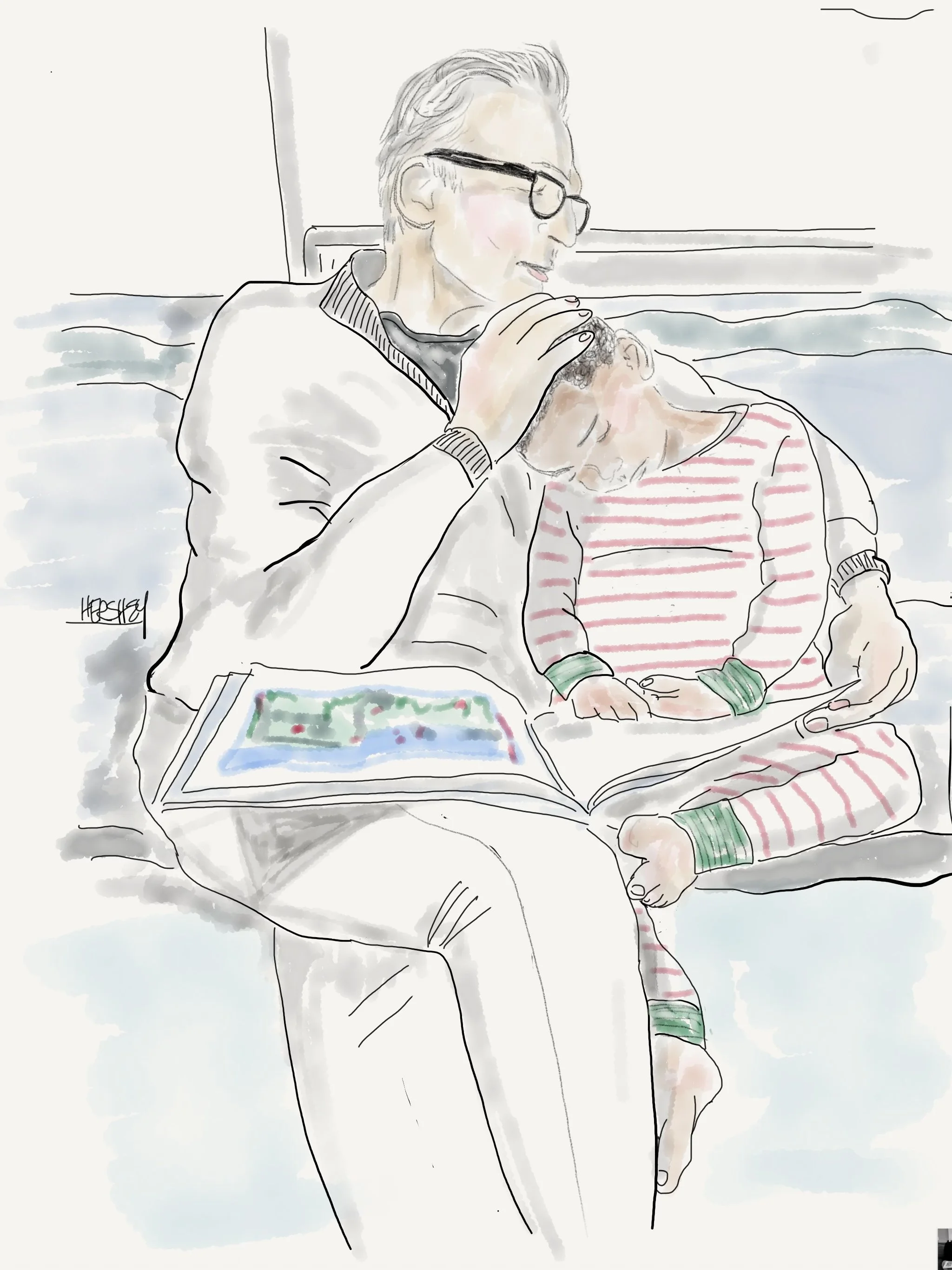
Reading to my grandson Emery as he nods off. Like most grandparents, I wonder what the world will be like when my grandkids are older. It will be 2089 when Emery is the age I am now. The world seems so precarious now; what will it be like then? Will life be better or worse? Will we even be here? Drawing by Jenny Hershey. Follow her on Instagram @deeofo.
Any way you slice it, keeping warming below 2°C requires an immediate, massive, and global mitigation effort. With each passing day, it’s less likely that we’ll succeed. Indeed, over 90% of Earth scientists believe we’ll surpass this threshold.
Here’s an idea that’s simple and beautiful but goes against both the myths of the mainstream culture and our deepest mental habits. It’s this: don’t be afraid, and spread love every chance you get.
Peter Kalmus, climate scientist at NASA, from his book Being the Change
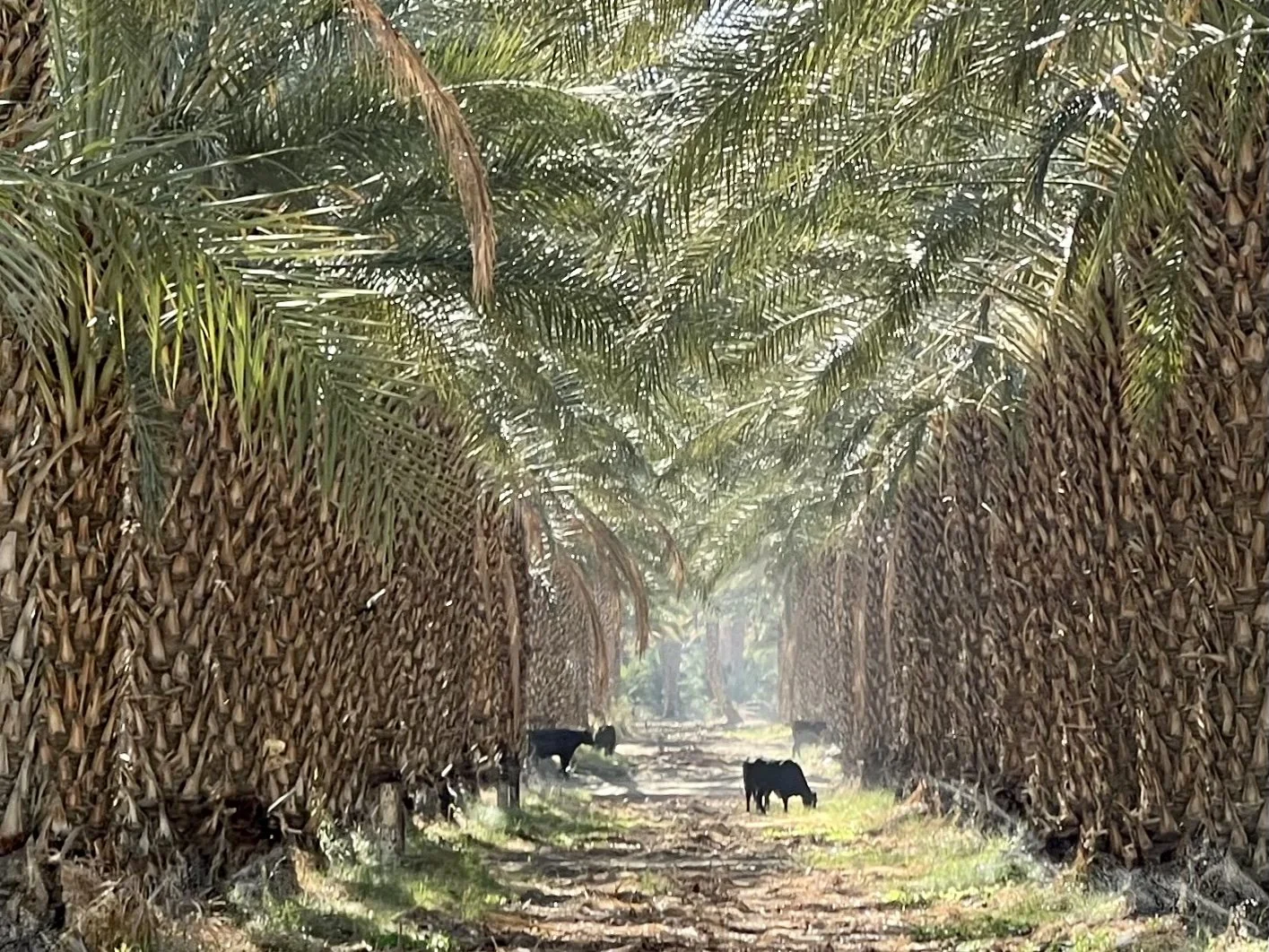
Cows wander through a date tree orchard in the Imperial Valley near Brawley, California. Photo by Michael Chase. Follow him on Instagram @mjohnsonchase.
When I set out on my first solo-biking adventure in 2015, I had no idea I would remain enthusiastically committed to long distance biking seven years later. Nor did I imagine I would have the good fortune to share many trips with an enthusiastic and equally curious biking partner who is also an excellent illustrator. Jenny and I both hope our occasional blog posts enrich your life (as they do ours) in some small way. Traveling at the speed of a bicycle is great exercise, and it’s an in-your-face way to experience how a place actually feels. It also provides a very intimate experience of the natural world, which is especially important in an age where most of us (at least in the Global North) are mostly protected - even isolated - from our rapidly changing climate and increasingly degrading environment.
After trips to Wisconsin to see my kids and grandkids over the Christmas holidays, we drove Jenny’s car to El Paso (stopping for a few days to bike in Big Bend National Park), and then took Amtrak to Los Angeles with our bikes to visit my brothers Chris and Steve for a few days. Our plan was to ride our bikes from Anaheim back to El Paso. We only made it to Tucson.
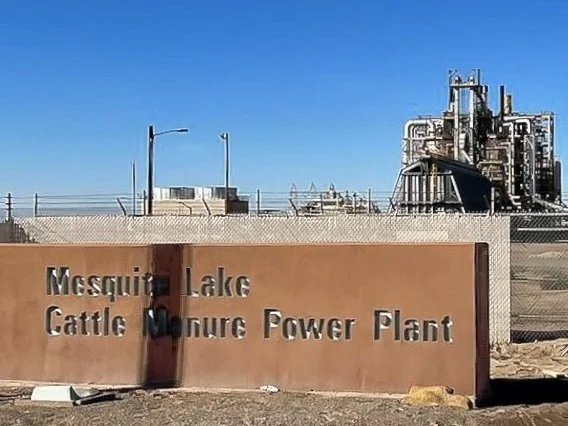
We rode by a Cattle Manure Power Plant south of Brawley in California’s famed Imperial Valley. The plant is now abandoned, after opening twice over the last 30 years to great fanfare under two different private companies - one of whom claimed they would help local cattle ranchers dispose of manure by turning it into electricity under a contract with Southern Californian Edison, and another who was going to also process King Grass for the biofuel market. Unfortunately, the first project was plagued by a massive rainstorm that made manure retrieval and processing impossible, and the second was closed after an earthquake in 2010 damaged the processing plant. Photo by Michael Chase. Follow him on Instagram @mjohnsonchase.
After some very long rides (over 85 miles), mixed with several brutal days riding into intense and unremitting easterly winds while climbing several thousands of feet in elevation, Jenny and I decided that it would be best for us to rest up in Tucson, and then take the train back to El Paso from Tucson for a more leisurely return to our car, where we would car/bike our way back home to New York City (I had been hoping to ride Highway 9 along the New Mexico border through historic Columbus, NM into El Paso, but that will wait for another trip).

Lizzie is a takeout restaurant hostess in Canyon City, California, with a complex story about the many people for whom she is responsible. She patiently listened to Jenny express frustration over the lack of regard drivers demonstrated toward us on Gilman Springs Road on the way to the Palm Springs desert. We were unavoidably placed in a very dangerous situation (having been directed there by a bicycle mapping program I don’t think we’ll continue to use). We found ourselves several miles up a canyon when the shoulder disappeared on a narrow two-lane road, with high winds and cars passing feet away at 75 miles an hour showing no intention or interest in our situation or safety. We were forced to walk our bikes over a rumble strip trying to avoid traffic on our left and thorny bushes on the right. Nobody stopped or slowed down. The indifference of drivers to our situation was stupefying. After listening to Jenny’s story, Lizzie said “That’s so sad. What’s going on in people’s heads? We’ve lost our humanity with traffic. It’s as if it’s no longer human beings driving those cars”. Then, she offered to bag up extra chips and guacamole (which turned out to be excellent) for our ride into Palm Springs the next day. Drawing by Jenny Hershey. Follow her on Instagram @deeofo.
Deciding to change our plans wasn’t easy. Jenny and I have different strengths and limitations. We both felt challenged and each reacted differently. But like all collective human endeavors, we had to accept our limits as we confronted our own personal challenges and devise a bail-out strategy that worked for both of us. In the meantime, we rode through many diverse industrial and agricultural environments and basked in 650 miles of extraordinary natural landscapes during our ride from Anaheim to Tucson.
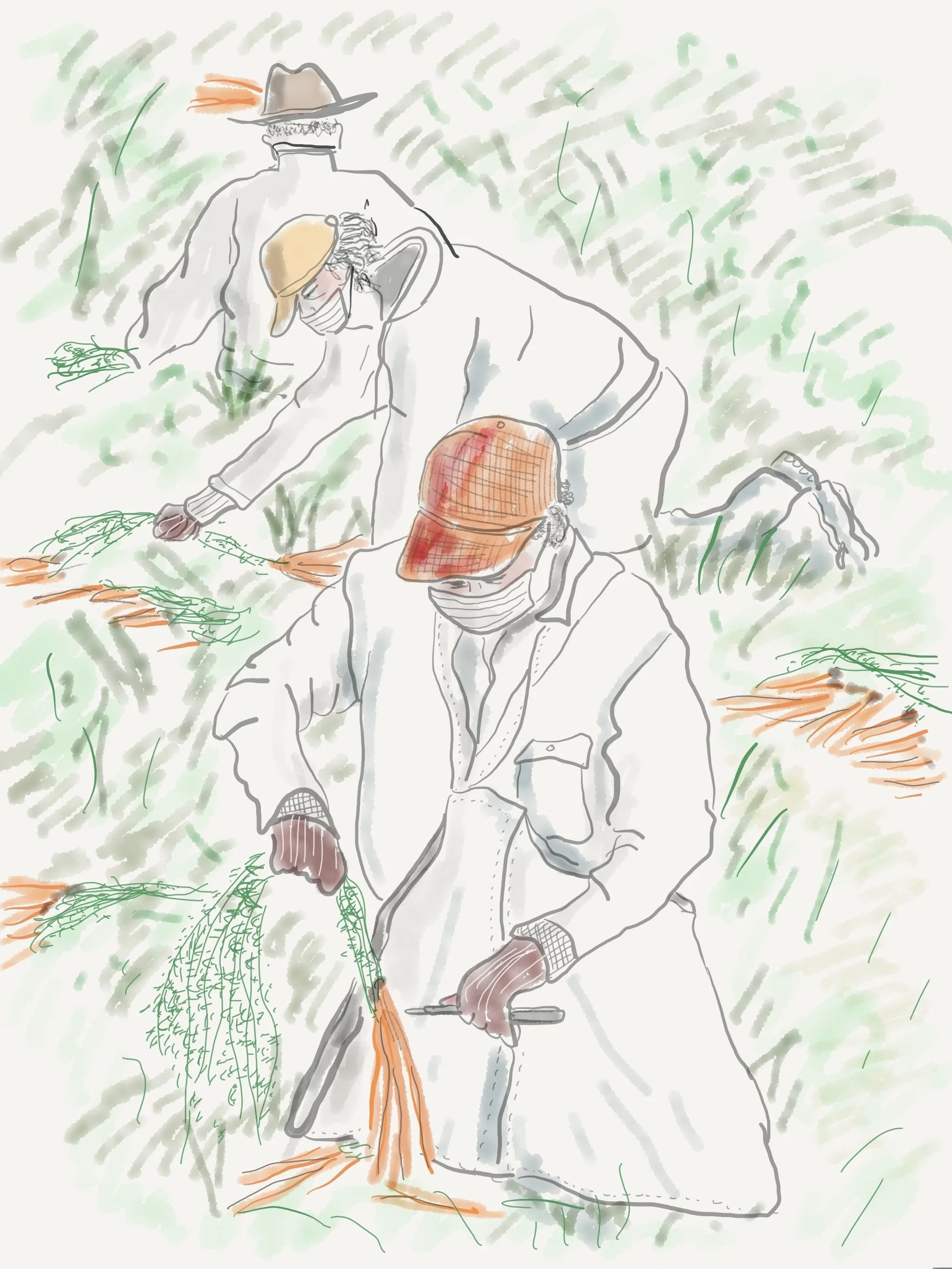
“!Hay zanahorias. Muchas zanahorias!” Workers near the road express their pleasure over the harvest to Jenny. Drawing by Jenny Hershey. Follow her on Instagram @deeofo.
It’s easy to love the sheer rawness and massive scale of the American southwest, especially as seen from a bike. Where there is water for irrigation (delivered through a system of canals from the Colorado and Gila Rivers) green fields of lettuces, cabbages, broccoli, sugar beets, carrots, alfalfa, wheat, king grass and countless other plants stretch into the horizon on endlessly flat terrain. In every direction lie mountains - craggy and massive, brown, apricot, and hazelnut in full sunlight, gray, impersonal and barren under cloudy skies. Where there is no water, barrel-cactus covered flatlands fall into the horizon, ubiquitous washes create carved out ridge-lines that delight the eye and ominously warn of floods to come, and Joshua trees and Saguaro cacti stand like regal gifts from Diego Rivera. The sun can be unrelenting (thank God it is January), and the wind can be deafening. The rare absence of wind results in a silence more peaceful than a Buddhist retreat. These physical polarities get under one’s skin like dirt under one’s fingernails. And it’s impossible to get enough of the warm afternoons, especially when the sun slants lower in the sky and casts a golden glow on all it shines upon, even trash.
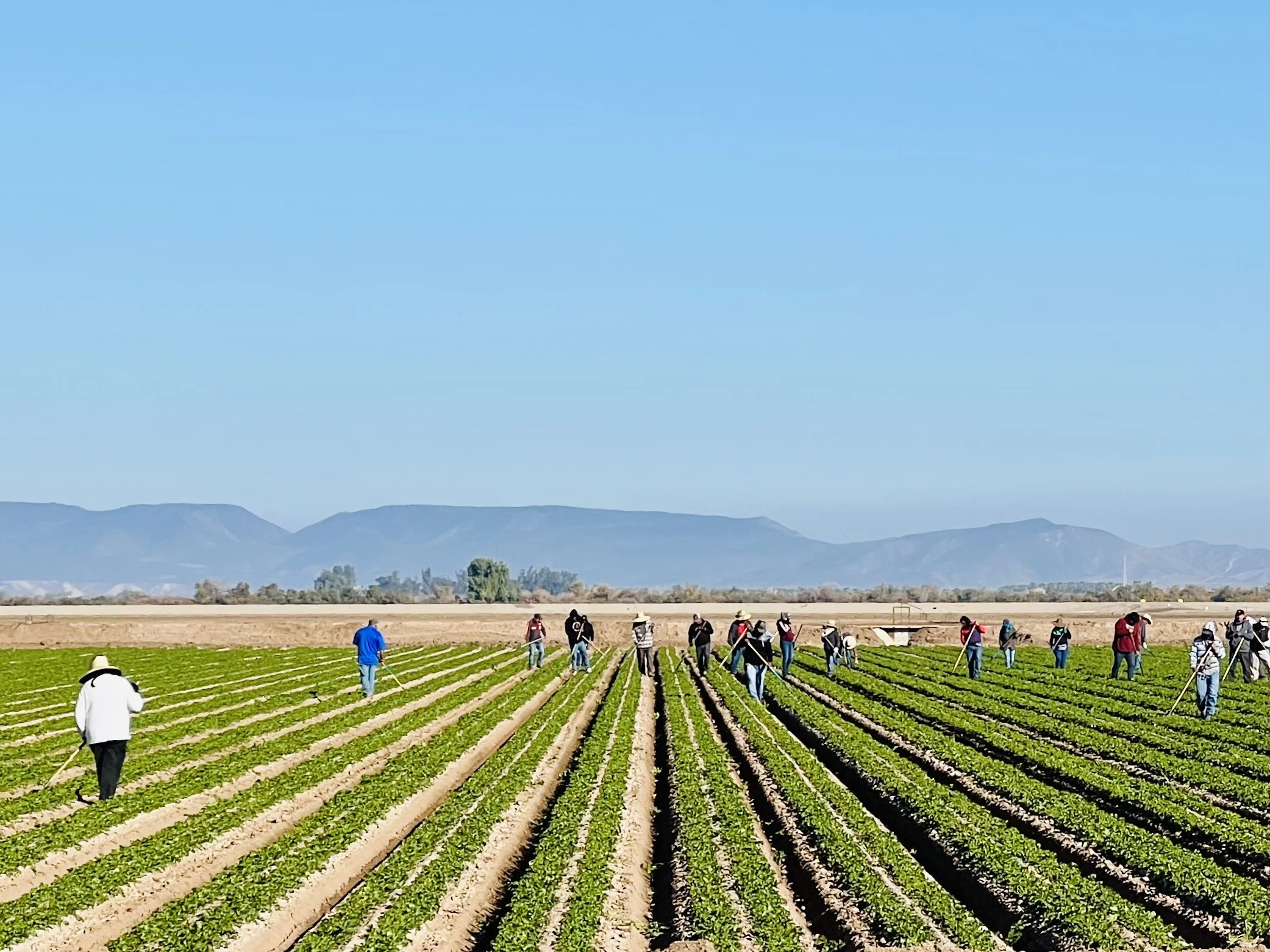
Field workers in the Imperial Valley. Photo by Michael Chase. Follow him on Instagram @mjohnsonchase.
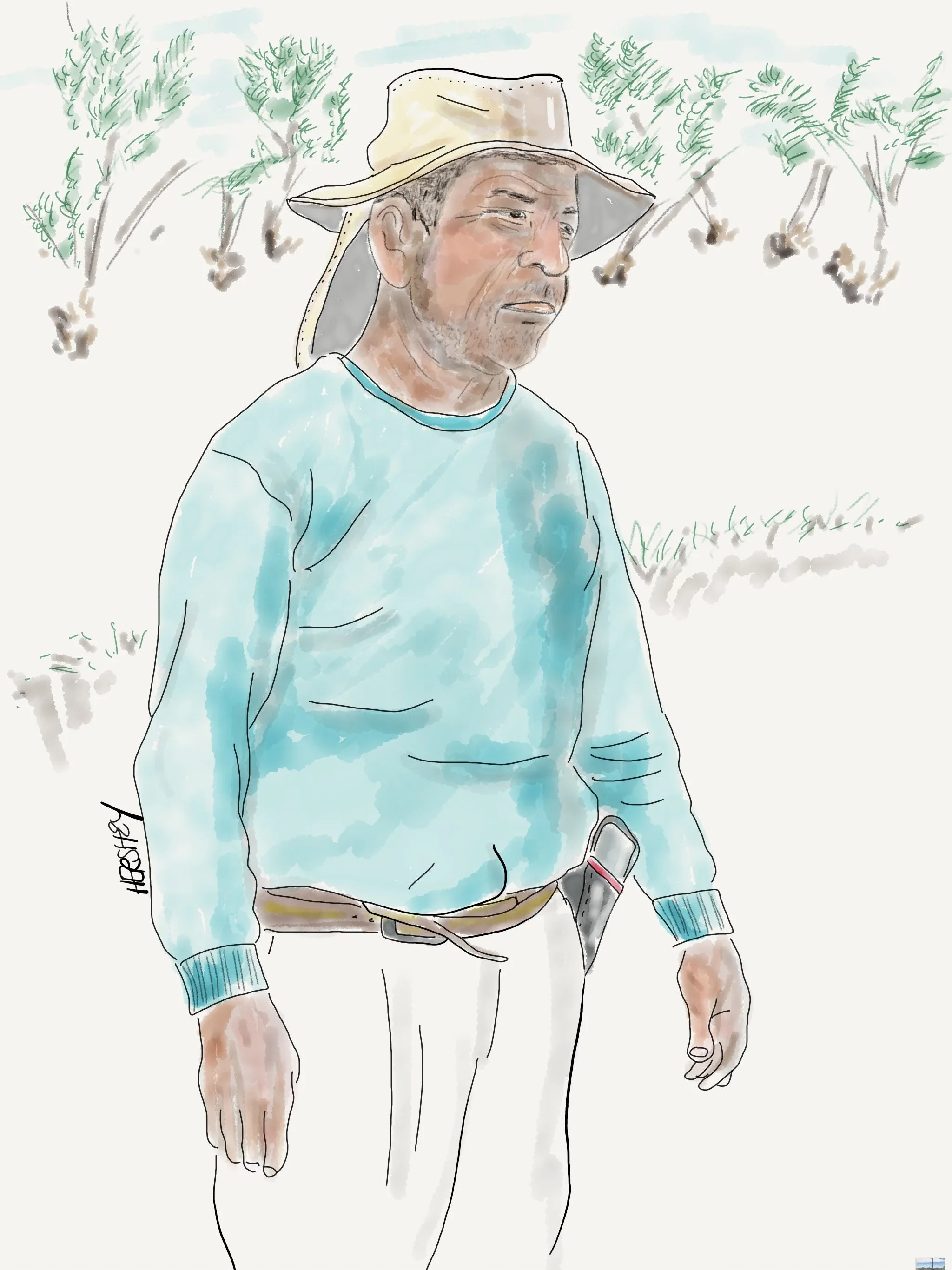
Manuel, a hard working date farmer from Calexico, CA, tends to a date palm orchard about 20 miles from his home. After telling us what the trees behind him were, he explained to us that dates are harvested once a year in August. Manuel also does agricultural work in the adjoining border town of Mexicali, Mexico, and has traveled back and forth between California and Mexico for years. He worries about the heat and extended drought in his region, and how it will impact crops in both countries. Drawing by Jenny Hershey. Follow her work on Instagram @deeofo.
During the recent months American environmentalists have been hyper-focused on the passage of the climate provisions in the “Build Back Better” act. Hoping to finally address climate change at a policy level that approaches the scale scientists tell us is required, climate activists were seriously disappointed by recent setbacks to the bill’s passage. Other occurrences haven’t added comfort: in mid-January the news broke that the hottest eight years ever recorded have occurred in the last eight years, and US emissions jumped in 2021 over 2020 levels, making our national goal of a 50% reduction in 2005 CO2 levels by 2030 further out of reach. Yet, these troublesome headlines are only part of discouraging news. Bloomberg just published an article about the potential of Kuwait becoming too hot for people or wildlife in a few decades, and NPR just published an article and video about how a climate change-induced drought in Kenya and nearby Uganda is parching landscapes, killing livestock and creating a humanitarian crisis. And only a few days ago, Weekend Edition published a story and video footage about a crippling drought now underway in Iraq. It’s sad to say there is little that is surprising in such reports, and it is easy to cite so much other alarming news (such as unprecedented high temperatures and decline of sea ice in the Arctic, and the rapid melting of the Thwaite Glacier in Antartica).
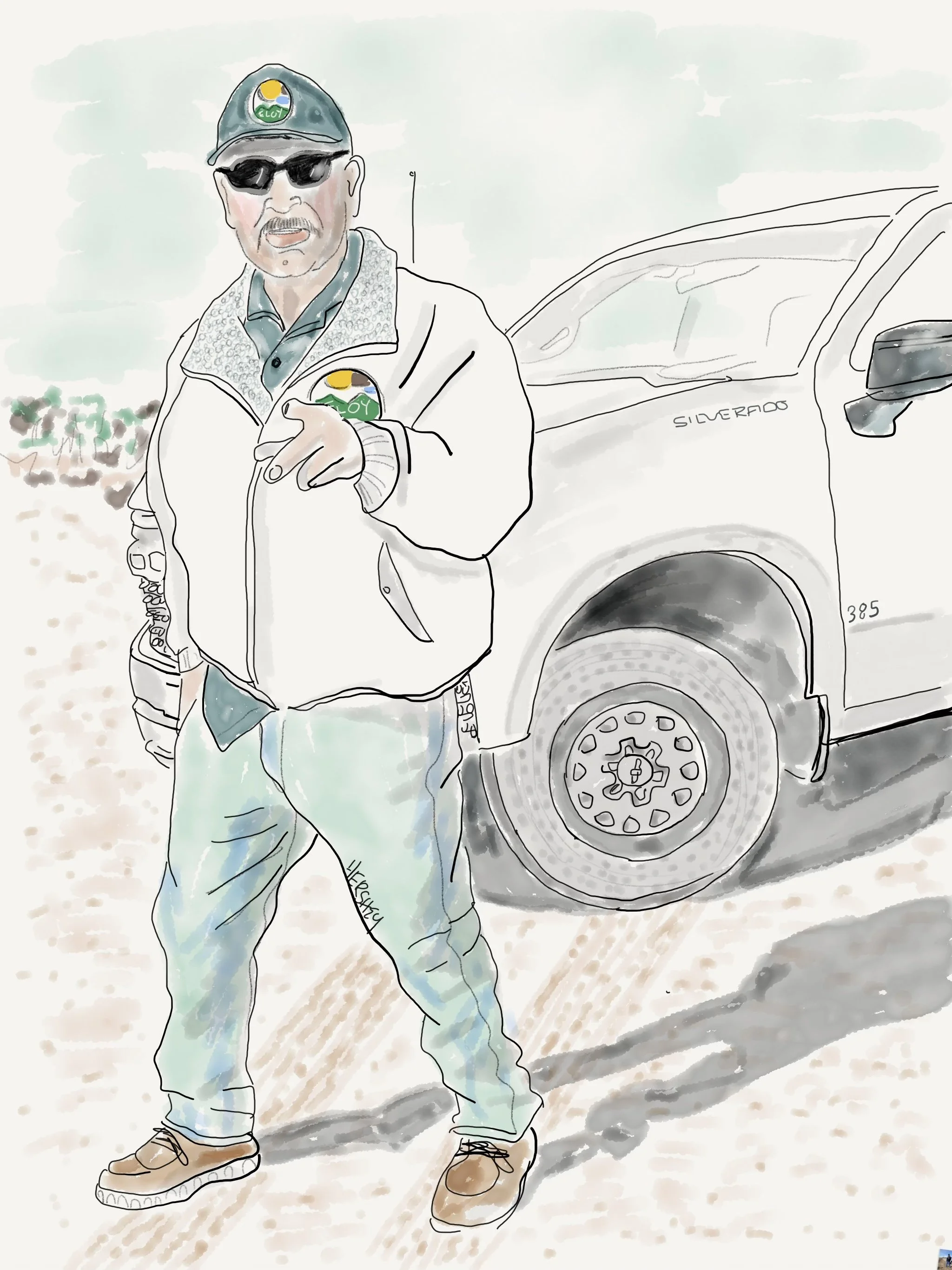
We met David on a dirt road near Eloy, Arizona. A road safety and maintenance manager for 35 years, David helped us avoid some dangerous paved roads without shoulders by directing us down some safer dirt roads. He pointed to one area and said teasingly, “Oh don’t go down there—the locals will shoot at you just to mess with you.” He suggested a course for us that he would confidently cycle with his wife. We deeply appreciated his kindness as we made our way to safer terrain.
It isn’t my intention to be depressing, but rather to lay a foundation for what I’ve been thinking about on this trip. Now that meaningful action on climate change appears stalled once again in America, it might be time to think more deeply about the potential consequences of climate chaos. In January of 2020, I wrote the following in a blog post titled Getting Real About Global CO2 Emissions: ….current science tells us that global carbon emissions MUST be cut in half over the next ten years for us to maintain a climate anywhere close to what we humans have enjoyed in our comparatively short time on earth. In that post I worked through the most recent science on the carbon budget climate scientists tell us we shouldn’t exceed to stay below a 2°C rise in global temperatures. However, global emissions have not decreased in the past two years; instead they have increased, making what we have to achieve in the coming years even more challenging. This has happened even though we achieved a slight aggregate reduction of GHG emissions in the US (a 10% drop in 2020 versus a 6% rise in 2021), and the successful enactment of a few nationally determined contributions (NDC’s), as outlined in the Paris Accords, most particularly by the European Union.
Current CO2 levels today are at the historically high figure of 417 ppm, which is 50% higher than at the beginning of the industrial revolution. In other words, in spite of lots of incredible efforts by millions of activists and sustainability professionals, hundreds of corporations, countless NGO’s and other agencies, and many national governments and world government organizations, we aren’t yet moving the needle downward on GHG emissions. Not yet, anyway.
Hope is an extraordinary thing, and there are new reasons to be hopeful every day (such as the recent creation of the Clean Energy Corp by the US Department of Energy). Still, I often hear others say that while they aren’t optimistic we will deal with climate change successfully, they are hopeful regardless. I feel the same way, and savor living each day with the future in mind far more than I despair over what we may have already wrought.
Yet, a persistent thought nags at me from the back of my mind, a thought that until now, I have only expressed to my closest friends. What happens if we fail? What happens if the world doesn’t get it together to stop our use of fossil fuels soon enough to avert catastrophe? What happens if we unwittingly set in motion one or a few climate tipping points (if we haven’t done so already), and climate chaos arrives suddenly and violently? What might that look like, and when might that happen? How will civilization respond? Will it be game over? Or might we rebuild something of value out of the rubble of a wounded, mangled or even collapsed civilization?
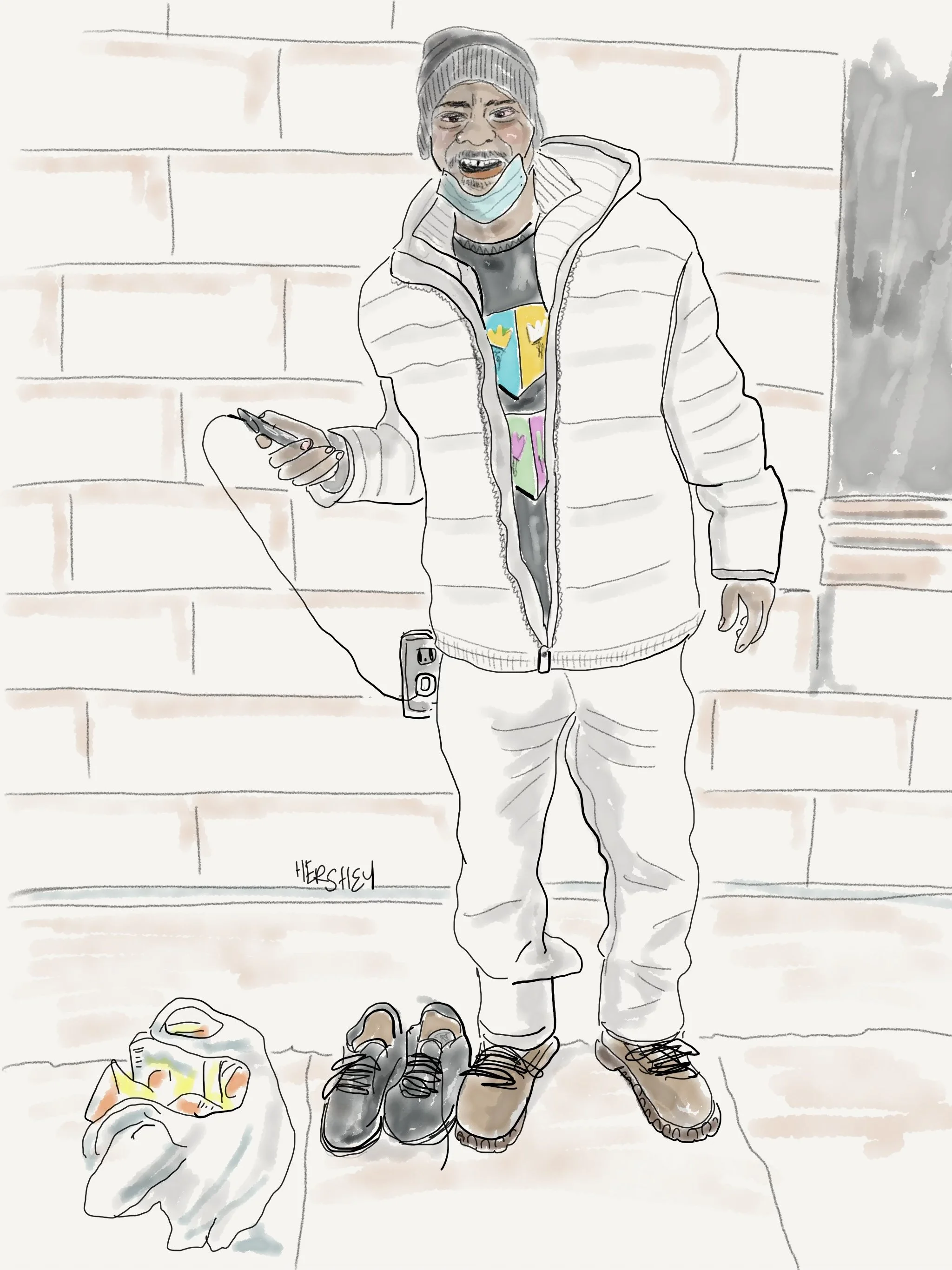
Jenny met Derek in Tucson outside a Walmart store. Recently released from prison, he is currently homeless. Jenny needed someone to watch her bike while she shopped for dinner, and he needed someone to keep an eye on his cellphone as it charged while he shopped. They negotiated an exchange: Jenny watched Derek’s phone while he shopped and Derek watched Jenny’s bike while she did. This unlikely exchange resulted in a long conversation with common ground on many subjects. As Jenny began to leave, she told Derek he was a good man, and to stay strong no matter what others said about him. He had served 2.5 years in jail for possessing narcotics. He believes he has paid his dues, and he dreams of moving home to Atlanta to be close to his daughter and opening up a car detailing shop. Drawing by Jenny Hershey. Follow her on Instagram @deepfo.
I’m not alone in wondering about such outcomes. I suspect many readers of this blog have had similar fleeting thoughts. As it happens, there is a growing body of literature and activist thinking by writers (especially scholars) who are wondering (out-loud) if civilization will indeed collapse as climate change gets worse. The most well-known version of this literature is based on a paper published in 2018, and a subsequent book published in 2021 called Deep Adaptation: Navigating the Realities of Climate Chaos, edited by Jem Bendell and Rupert Read.
Some of the leading scholars of this approach are already convinced civilizational collapse is inevitable, and believe climate chaos will arrive in the next few decades. Others aren’t as certain the collapse of civilization is imminent, but strongly believe we should consider it a potential outcome for which we should make preparations. These perspectives are not intended to be nihilistic, and no scholar is suggesting we should refrain from doing all we can as quickly as we can to mitigate climate change. But Deep Adaptation does argue for a deeper accounting of adaptive processes. It is simultaneously a concept, agenda, and an international social movement. It assumes that extreme weather events and other related climate stressors will increasingly disrupt power, food, water, shelter, and social and governmental systems. The word deep in this context indicates that strong measures are required to adapt to an unraveling of western industrial lifestyles. That agenda includes values of nonviolence, compassion, curiosity, and respect, and a framework for constructive action. This agenda was recently featured in an article in Inside Climate News.
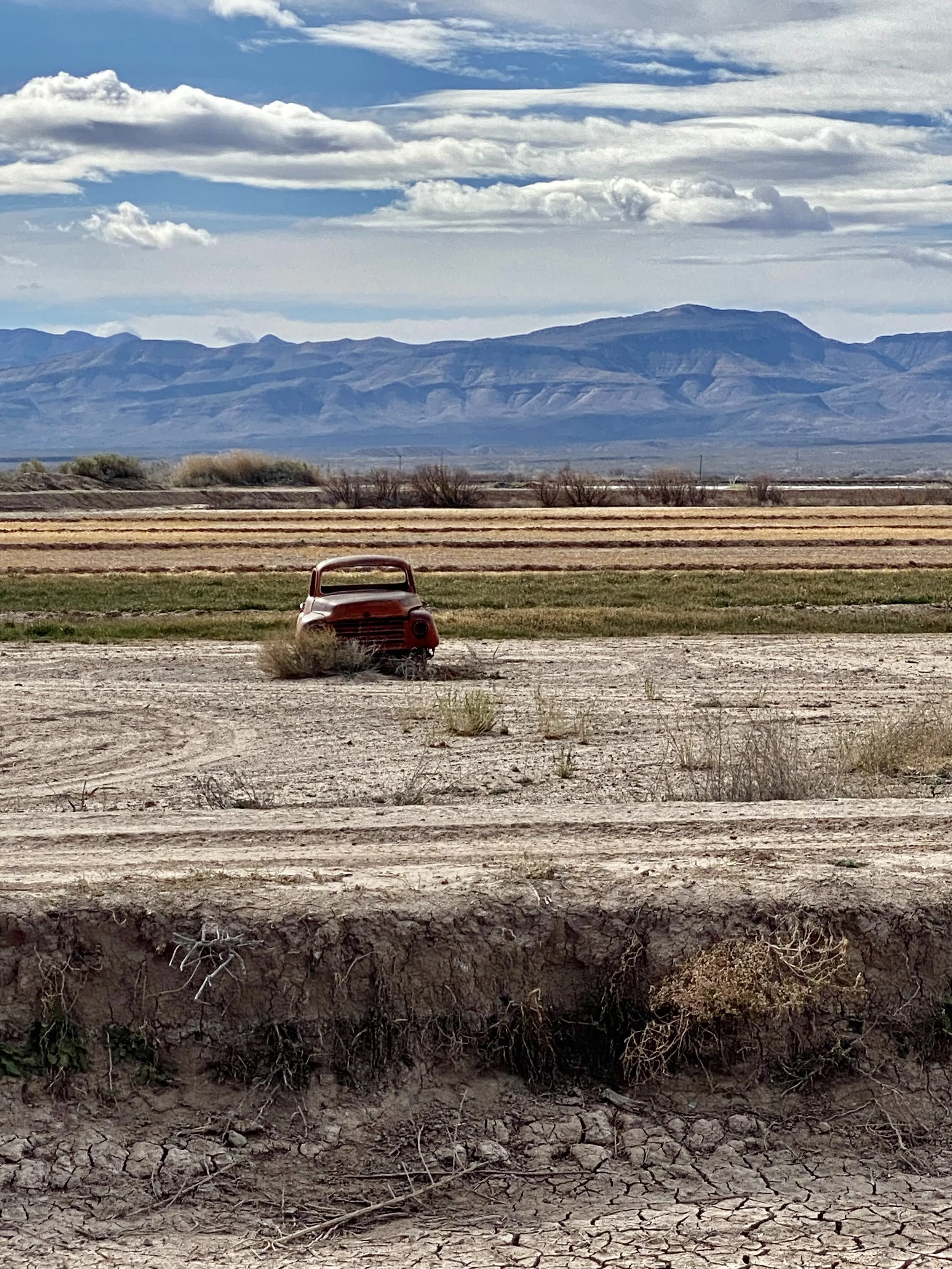
Seen near Fort Hancock, Texas. Photo by Jenny Hershey. Follow her on Instagram @deeofo.
The term deep adaptation follows a logical naming sequence. A few decades ago, activists and scientists talked about mitigating the negative impacts of GHG in our atmosphere by finding alternatives to carbon-based fuels and increasing ways to draw down carbon through natural processes and technological fixes. However, over the years the realization that we also need to adapt to irretrievable changes already baked into our atmosphere and oceans are driving public conversation about changing where to locate human communities (and where not to), and how to prepare communities for more extreme weather. As a result, scientists and activists began to speak about helping communities to develop greater resilience as an attribute of adaptation. Now we have a term that describes the kind of adaptation we will need if climate chaos causes civilizations to collapse. Deep adaptation can be thought of as a re-adaptation of the structures of societies to create new ways for humans to survive and prosper.
There’s a related scientific field called collapsology that studies how civilizations have collapsed in the past, and how environmental overshoot might cause them to collapse in the future. Collapse in this context doesn’t necessarily mean that societal disruption will be sudden and complete, but does imply a form of breakdown in systems that is comprehensive and cannot be reversed. Deep Adaptation describes personal and collective responses to the anticipation or experience of societal collapse. And, as already stated, it suggests that by getting out in front of the possibility, we may have time to create new structures and/or institutions that will allow human life to flourish.
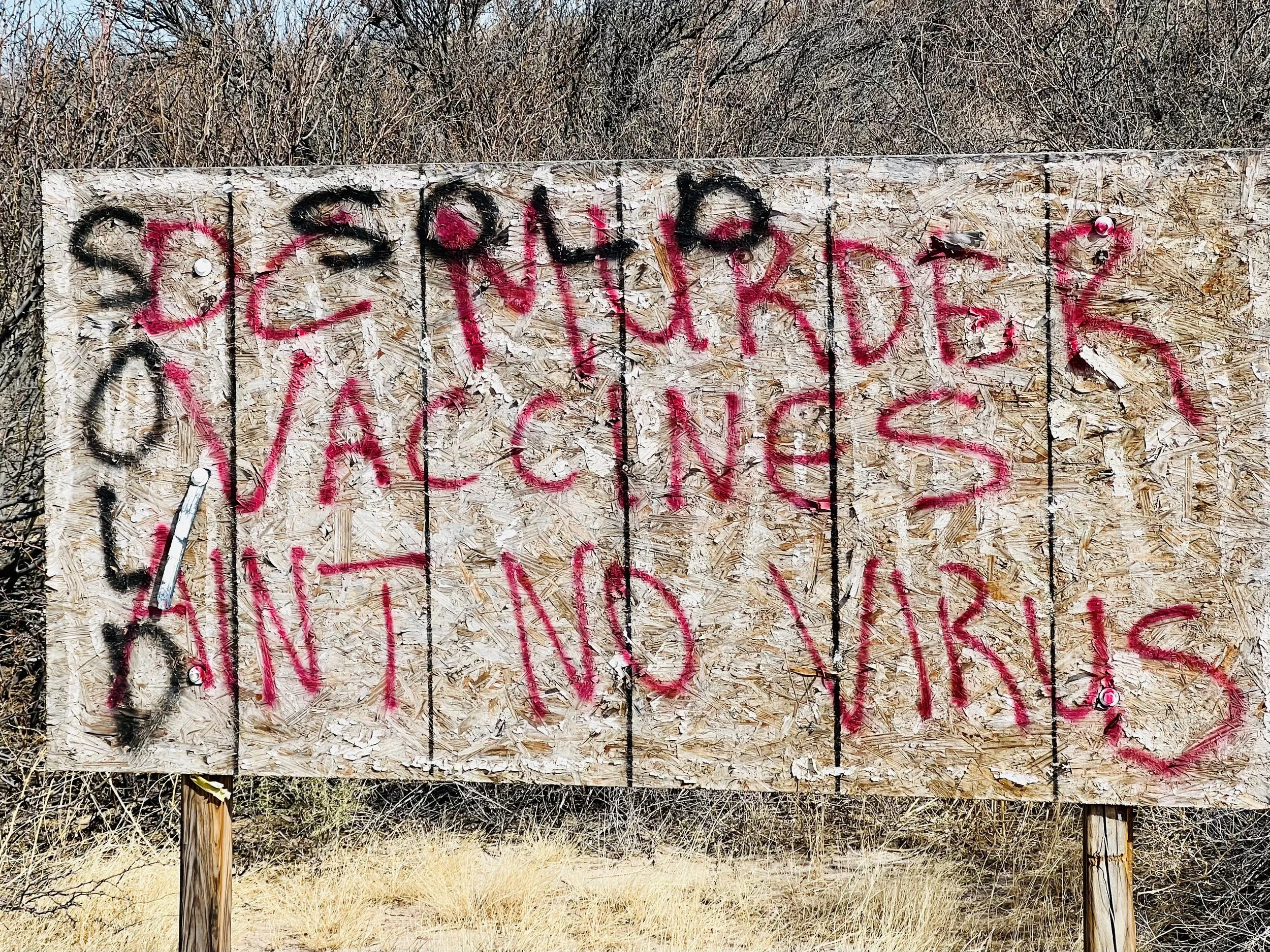
Seen on Texas State Highway 20, east of El Paso. Photo by Michael Chase. Following him on Instagram @mjohnsonchase.
Thus far, deep adaptation has been met with a great deal of resistance, and with only a few exceptions, it hasn’t caught the attention of media. After all, it is unthinkable. Anticipating societal collapse - whether from a range of environmental, economic, political or technological factors - has been attacked as pessimism, alarmism, doomism, fatalism or defeatism. Yet, proponents consider it would be defeatist to not even begin exploring what we can do to help in the face of massive societal disruption, and that any call for public engagement with the unthinkable is especially germane in this moment of a global pandemic. Not very long ago, it was unthinkable that a virus would shut down nations. It may have been this obvious global lack of preparation and resilience in the face of the COVID pandemic that inspired more than five hundred international scholars to sign and publicize a Scholar’s Warning Letter in March of 2021. The letter publicly addresses the equally unthinkable topics of societal disruption and potential collapse.
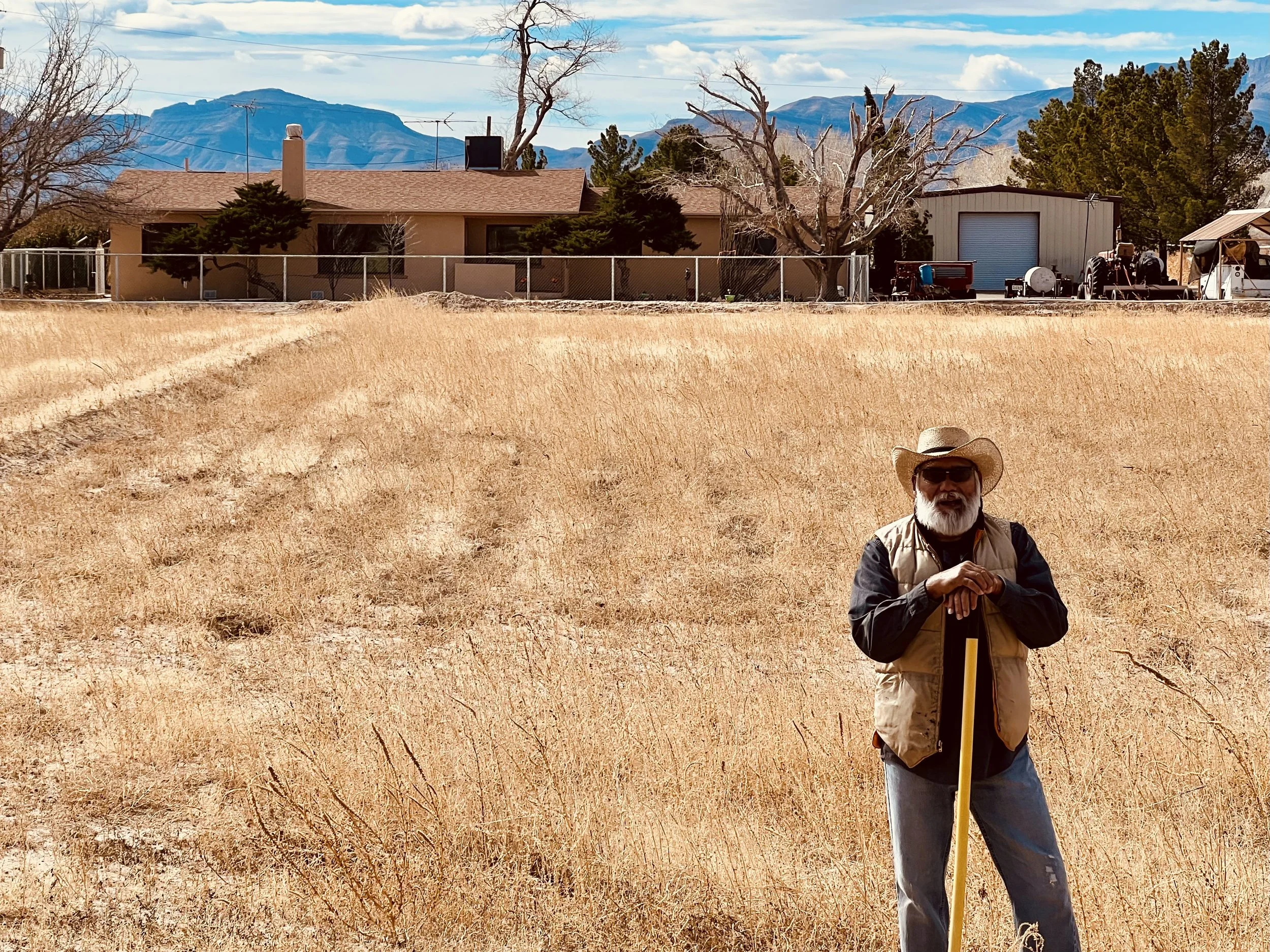
We met Raul east of El Paso as we were heading home. He was tending the field in front of his ranch, preparing to turn the hay under as green manure. He joked he was doing it for the exercise, since he had no access to water for planting anyway. Turns out much of the Rio Grande valley is in the 7th year of a drought; this one being the most serious one Raul has seen in the 50 years he’s lived in this valley. If farmers don’t have wells (the use of which, ironically lowers the water table), they have to rely on a water allotment from the local canal system. The canals are fed by Rio Grande river water, whose headwaters are the Weminuche Wilderness in southwestern Colorado, some 575 miles away. The wilderness is three quarters the size of Rhode Island, and has fed the Rio Grande for centuries. Now, between the competing problems of a reduced snowpack in the Rocky Mountains of Colorado, and increased use of water upstream as New Mexico also grapples with drought, Raul’s usual allotment of 3 acre feet has been reduced to a few inches. Since Raul doesn’t have a well, he basically can’t grow anything now. He even said it would be risky to grow a vegetable garden because, “you never know if you’ll have the water”. Raul also told us that it used to be a lot colder, with some snow on the ground and more wind than now. We were enjoying the weather, but it was a placid day with full sunshine and about 65 degrees Fahrenheit. I asked Raul if he thought rain would come. He replied, “I hope so”. And I replied, “ I read a lot of climate science, and I think that although you might get occasional relief, what you’re going through now is likely to be the trend for a long time”. And I added, “I hope I’m wrong”. Raul gestured with open palms as if to say, what will come, will come. The Rio Grande is about a mile behind Raul’s ranch and the mountains in the distance are the Chihuahua Mountains of Mexico. Raul used to visit Mexico a lot but now the area behind his ranch is controlled by the cartel, so it’s no longer fun to go there. Photo by Michael Chase. Follow his work on Instagram @mjohnsonchase.
It can take a while for new perspectives to establish themselves in academic communities, much less among citizens and policymakers. Think about how long it has taken to get consensus on even the most conservative scientific warnings about climate change. It was well over 30 years ago that Congress held its first hearing on the subject of a warming climate, long before we had a vocabulary for what is now everyday news: extreme weather, droughts, floods, sea level rise, ocean acidification, rapid biodiversity loss, crop loss and famine, human migration and resource wars over water and arable land.
Similar to many of the citizens, politicians, and media outlets represented in the movie Don’t Look Up, some of of us don’t want to face information that challenges our closely held assumptions of security. However, some people will find dignity no matter what is coming. The final scene in the movie is a window into that possibility. A small group of people (who fought hard to avoid what they are about to experience) share a simple and final meal accepting their fate and fortifying themselves through prayer and conversation over their good fortune to know and love one another. In that moment, as in all moments: acceptance and love, recognition and kindness, staring into the abyss and knowing humanity means something, even though like all things, it was just another blink of life in the everlasting expansion and contraction of universal consciousness.
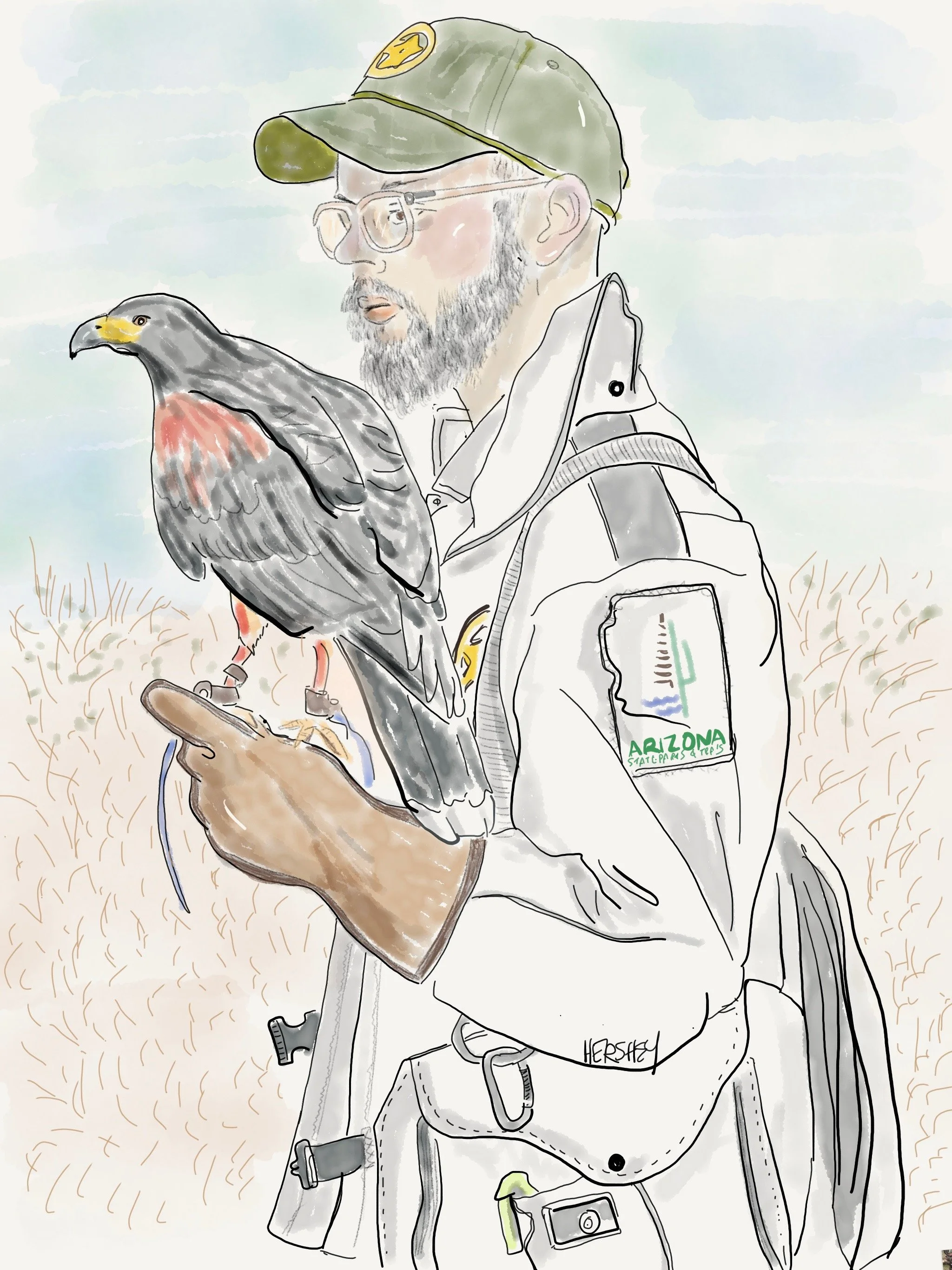
We met Erik at Catalina State Park just outside of Tucson. A park ranger, he is also a licensed falconer, and was leading a seminar with Virgil, a Harris Hawk. Erik became falconer to Virgil a couple of years ago and is devoted to him. Yet, Erik seemed quite realistic about the limitations of the relationship. When Jenny asked him if he loved the bird, he blushed and said, “Well, it’s not reciprocal because Virgil has no emotion”. Jenny's (sotto voce) response to me was, “Call me crazy, but that bird is attached to Erik. You can see it in his eyes”. In any case, we were enchanted by the extraordinary relationship between this man and a hawk, and found it a great inspiration for how different species can harmonize in such a profound way. Perhaps on the other side of “Deep Adaptation,” we can cultivate more sacred and symbiotic relationships with other species on this fragile world. Drawing by Jenny Hershey. Follow her on Instagram @deeofo.
Jenny’s sister, Terry Hershey, sent the following poem to start the new year in 2022. We both believe it says much about what the world needs right now.
Kindness
Before you know what kindness really is
you must lose things,
feel the future dissolve in a moment
like salt in a weakened broth.
What you held in your hand,
what you counted and carefully saved,
all this must go so you know
how desolate the landscape can be
between the regions of kindness.
How you ride and ride
thinking the bus will never stop,
the passengers eating maize and chicken
will stare out the window forever.
Before you learn the tender gravity of kindness
you must travel where the Indian in a white poncho
lies dead by the side of the road.
You must see how this could be you,
how he too was someone
who journeyed through the night with plans
and the simple breath that kept him alive.
Before you know kindness as the deepest thing inside,
you must know sorrow as the other deepest thing.
You must wake up with sorrow.
You must speak to it till your voice
catches the thread of all sorrows
and you see the size of the cloth.
Then it is only kindness that makes sense anymore,
only kindness that ties your shoes
and sends you out into the day to gaze at bread,
only kindness that raises its head
from the crowd of the world to say
It is I you have been looking for,
and then goes with you everywhere
like a shadow or a friend.
Naomi Shihab Nye, from Words Under the Words: Selected Poems
Stay vigilant! Thanks for reading. More to come. If you haven’t done so already, please subscribe to this blog, so you can follow our next biking trip later in the spring of 2022.
All material, unless credited or otherwise noted, are copyrighted property of the blog post authors.
Food Systems and Climate Change; Biking Prince Edward Island
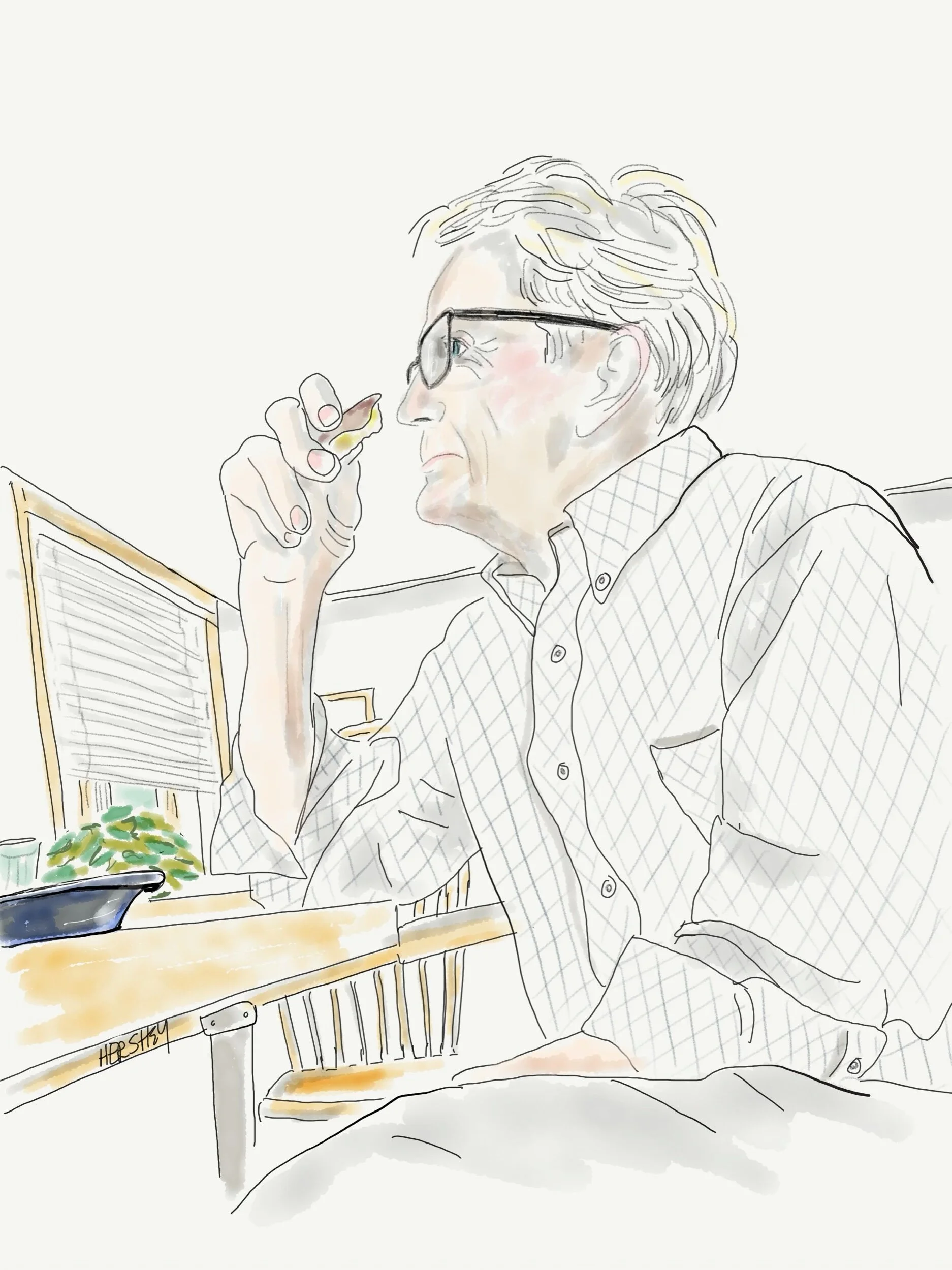
Eliot Coleman, organic farming author and founder of the prolific agroecological Four Season Farm in Harborside, Maine, reflects on one of his favorite books, Soils and Men, a 1938 yearbook published by the USDA. The farm produces year-round vegetable crops, even under harsh winter conditions (using unheated and minimally heated greenhouses and polytunnels). Drawing by Jenny Hershey. Follow her on Instagram @deeofo.
Fire made us human, fossil fuels made us modern, but now we need a new fire that makes us safe, secure, healthy and durable. - Amory Lovins
I don’t see problems, I see solutions. - Eliot Coleman, quoting Amory Lovins
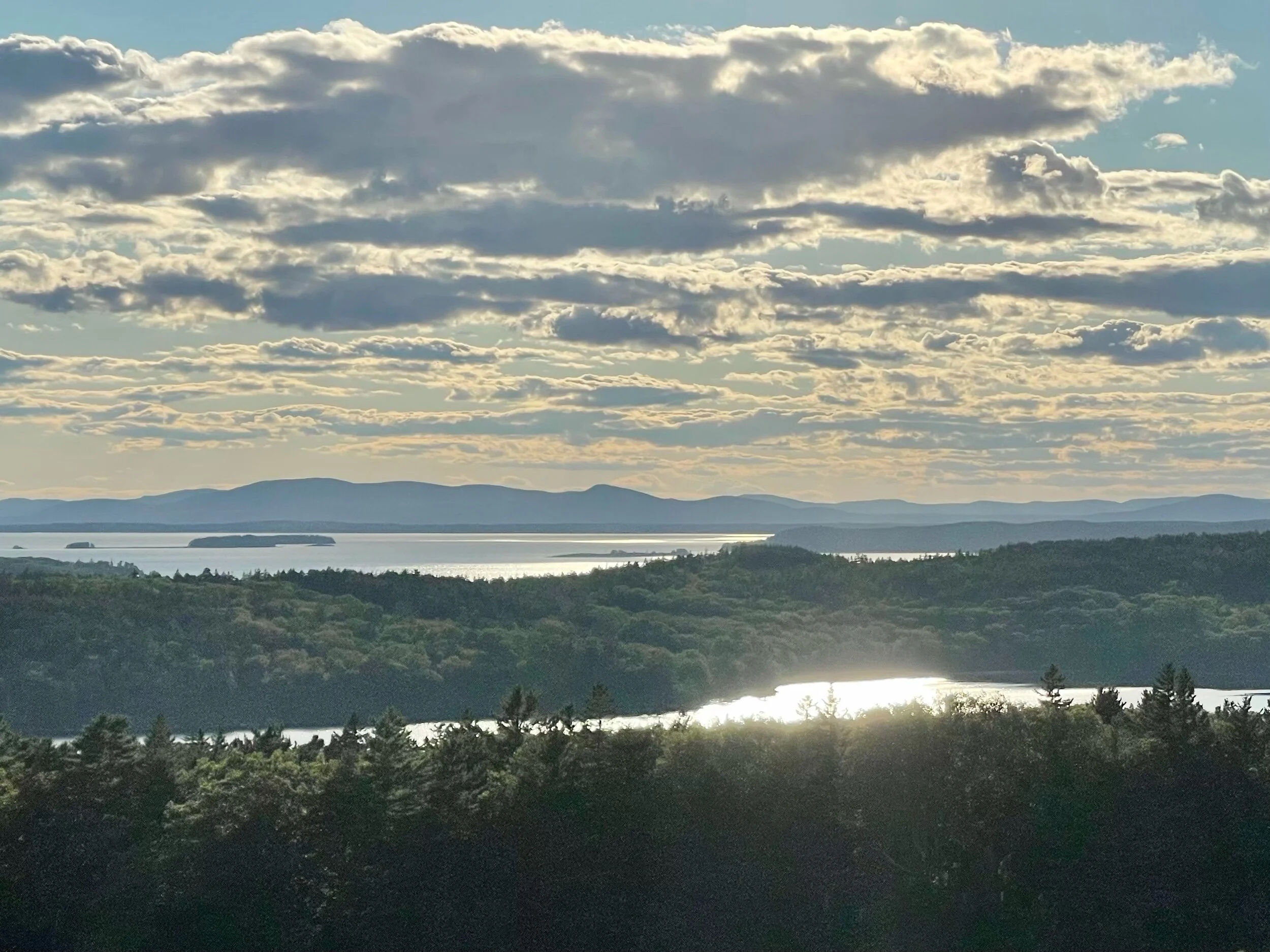
The view just above Deer Isle on Maine’s central coast on the way to Prince Edward Island. Photo by Michael Chase. Follow him on Instagram @mjohnsonchase.
Along the Way
Jenny and I left for our next biking adventure in mid-September. Following our usual custom for our bi-monthly explorations, we intended to drive to our starting place with our bikes in tow. This time our destination was Prince Edward Island (PEI) in Canada. We passed through Maine on the way, and stopped in Deer Isle to stay with friends Jack and Linda Viertel, who - knowing we have written about regenerative agriculture and climate change in previous blog posts - kindly introduced us to their friends Eliot Coleman and Barbara Damrosch.
The sun sets behind the sign that identifies the road to Four Season Farm in Harborside, Maine, where Eliot and Barbara live. The farm is currently managed by Eliot’s daughter Clara Coleman. Photo by Michael Chase. Follow him on Instagram @mjohnsonchase.
Neither Jenny nor I fully grasped at the time what an extraordinary opportunity this was; both Eliot and Barbara are seminal authors, educators and very successful organic market gardeners. In addition, Eliot has invented many farm tools that other organic farmers have adopted over the years. Meeting them set the stage for subsequent meetings with organic farmers in PEI, as well as the helpful people we met at the Climate Lab at the University of PEI (more on that later). Everyone we talked to knew of Eliot Coleman’s work; he became a serendipitous calling card for all things organic, simply because we had been lucky enough to meet him along the way.
Several fields at Four Season Farm. The field in the foreground had just been tilled with an ample amount of green manure (crop residue from buckwheat plowed into the soil to enrich it) in preparation for a cover crop of winter rye. The field in the background was sown with peas and oats for the summer and will be planted with winter spinach, and the second greenhouse to the left will be moved over the spinach to optimize growing conditions. Photo by Michael Chase. Follow him on Instagram @mjohnsonchase.
As urban devotees of regenerative agriculture, we especially appreciated hearing Eliot’s critical perspective that the current buzz around “regenerative” farming is being be co-opted by large agriculture companies with little genuine interest in solving environmental problems.
Consider the ways agriculture is supported through government subsidies. In the US alone, the meat and dairy industry receives 63% of total agriculture subsidies, compared to fruits and vegetables producers who receive only 0.04% of total subsidies. If you are a meat producer (whether your product is regenerative or not), you will receive subsidies that small-scale organic growers (especially market gardeners) won’t. This suggests at least one of the reasons “regenerative” has rapidly grown in popularity, eclipsing the older “organic” processes revived by farmers like Eliot Coleman. But subsidies are only part of the issue. Corporations notice consumer trends, and the recent popularity of the “farm to table” movement has also driven corporate influence over small-scale organic farms as well.
Consequently, Eliot Coleman is also not a fan of the ways the label “organic” has been diluted. He explains this on the farm website: Four Season Farm in Harborside, Maine has been farmed organically since its inception in 1968. However, we are NOT “USDA Certified Organic.” And for good reason. The USDA refuses to uphold the honest, old-time, carefully stewarded farming practices that organic has always represented. The USDA National Organic Program has been totally corrupted by the money, power, and influence of industrial food corporations. USDA certification is a hollow sham.
More vegetable fields at Four Season Farm. The greenhouse to the far left is the backside of the same one as in the previous picture, and it will be moved farther to the left to cover winter spinach. The extraordinarily productive field in the foreground is kale, lettuce and chard (photo taken mid-September). Photo by Michael Chase. Follow him on Instagram @mjohnsonchase.
The website goes on to explain what real organic standards should be: First, for uncompromised nutritional value all crops must be grown in a biologically active fertile soil in full contact with the earth and nourished by the natural biological activities of that soil. Research into the marvelously complex soil micro-biome reveals the vital ecological processes that support natural, non-chemical food production. Second, soil fertility should be maintained principally with farm-derived compost and mineral particles from ground rock. Why take the chance of bringing in polluted material from industrial sources when fertility can be created and maintained internally? Third, deep-rooting green manures, cover crops, and grazed pastures must be included within broadly based crop rotations to enhance soil fertility and biological diversity. The greater the variety of plants and animals on the farm, the more stable the system. Fourth, a “plant positive” rather than a “pest negative” philosophy is vital. The focus must be on correcting the cause of pest problems (weak plants) by creating optimum soil conditions to strengthen the plant, rather than merely treating the symptom (pest damage) by trying to kill the pests that are attracted to weak plants. More and more scientific evidence is available everyday on the mechanisms by which a biologically active fertile soil induces resistance to pests and diseases in the crops. Fifth, livestock must be raised outdoors on grass-based pasture systems to the fullest extent possible. Farm animals are an integral factor in the symbiosis of soil fertility on the organic farm.
Eliot looks over starts for the winter season in one of his greenhouses. Photo by Jenny Hershey. Follow her on Instagram @deeofo.
Arriving in Canada
In September of 2021, Canada opened their border for recreational travel to Americans who are fully vaccinated for Covid-19 and demonstrate negative results on a Covid PCR test within 72 hours before entering. PEI requires an additional negative result on a second rapid test upon entering the Province. Given these safeguards (combined with the fact that the percentage of fully vaccinated Canadians is significantly higher than Americans), we felt safer biking here than we would have in the U.S. The sadness and irony of that realization wasn’t lost on us; in fact, it probably made us more attentive to the Canadian approaches to the science of both Covid and our rapidly changing climate.
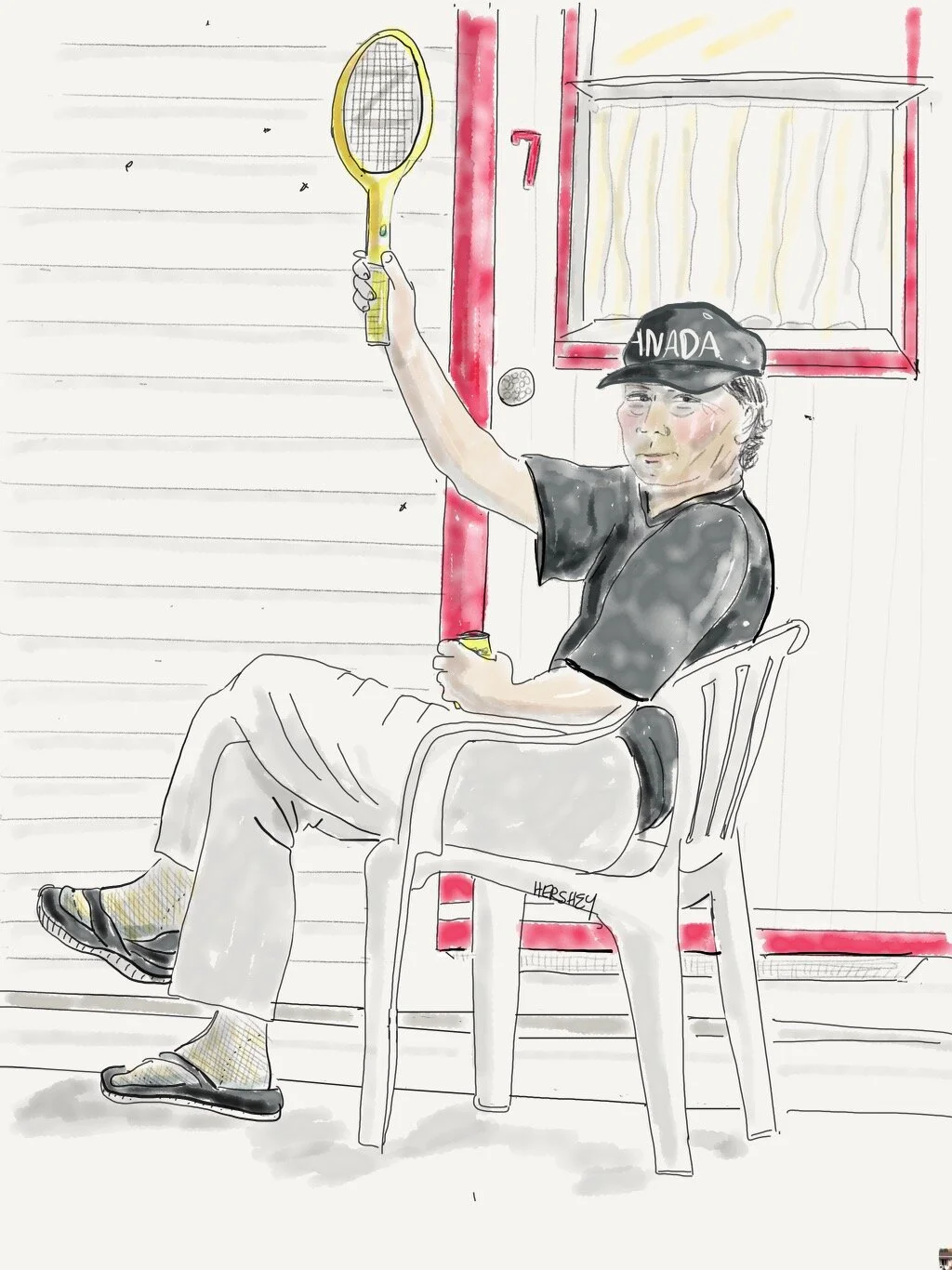
After their kids left the nest, Yeung and his wife left their home in Vancouver and came to PEI, where they bought a mid-century motel in Murray Harbor in the southeast of PEI. Yeung kept us safe from mosquitoes with his racquet zapper. Drawing by Jenny Hershey. Follow her on Instagram @deeofo.
Interestingly, we encountered no political resistance to Covid vaccination efforts or masking mandates in anyone we met. All of the major political parties in Canada (except the ultra-right Peoples Party of Canada at 4% of the electorate), are strongly pro-vaccine and equally attentive to the science of climate change. In fact, because we arrived just before the recall election, we had the refreshing opportunity to watch the major two parties - the Liberals and Conservatives (aka Tories) - attempt to outdo one another on general media about how to address both the pandemic and the climate emergency. We met no one who isn’t concerned about Canada’s rapidly changing climate. Perhaps this is because climate changes are more intensified toward the equator and at both poles, so the further to the north one is located the more obvious the changes are. In any case, the focus on method over content in Canadian politics was a refreshing change from American politics, where our major political parties perceive themselves as inhabiting planets facing distinctly different threats.
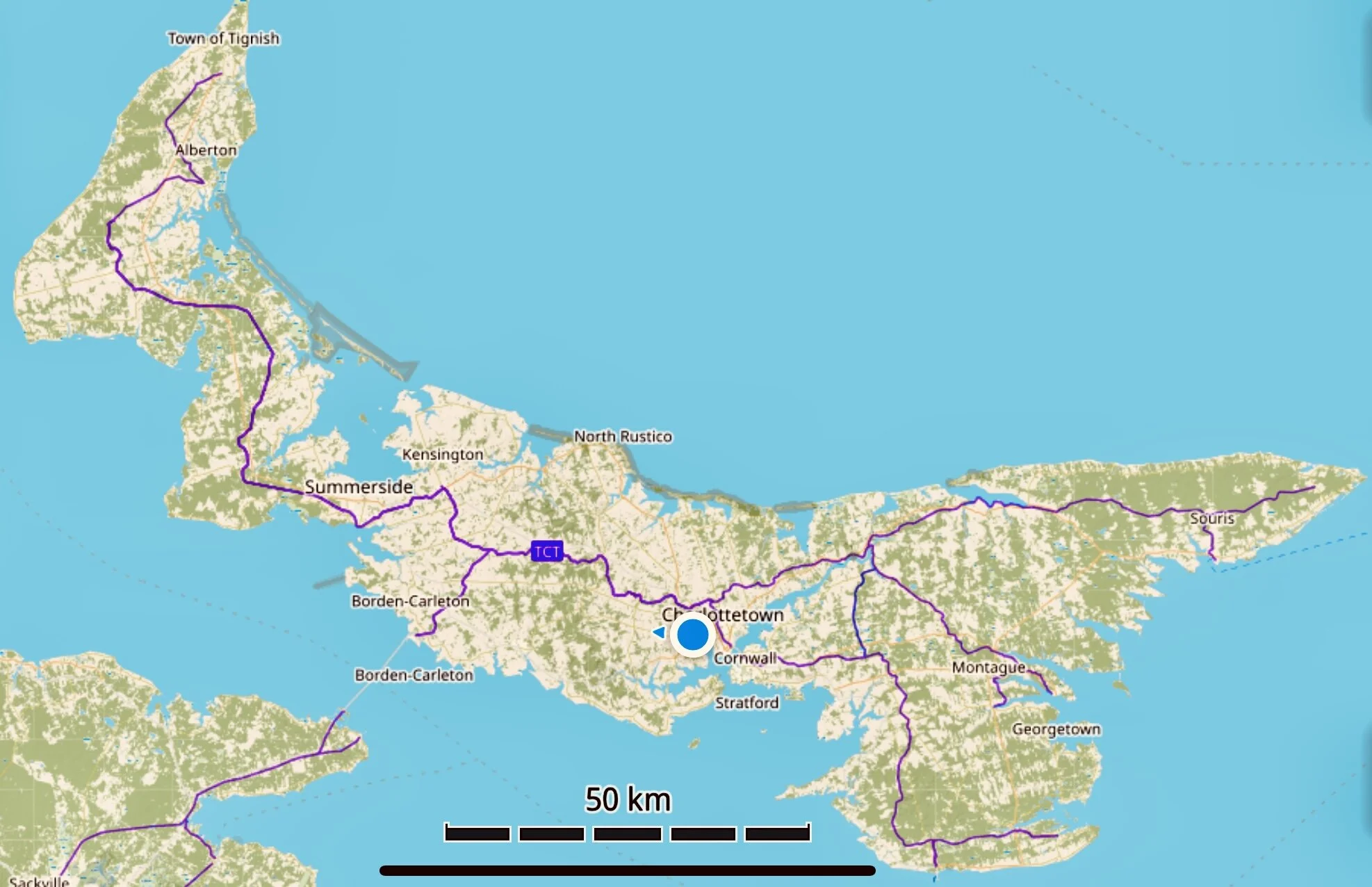
Charlottetown is near the blue dot. This is PEI’s largest city, with a metropolitan population of about 80,000 of the island’s 160,000 people. The purple lines on this map form the spine and the spurs of the Confederation Trail. The points at the ends of the wings are North Point in the northwest and East Point in the east. There are wind farms near both points, the largest in North Point. Currently, renewables supply about 25% of the Province’s power; they will supply 100% by 2040. PEI has no natural gas lines, and most cooking and heating is already electric. Summerside, a town in central PEI of about 15,000, uses wind farms, solar arrays, smart grids, industrial-scale lithium-ion batteries and the highest per capita concentration of electric car chargers in the country, and expects to derive the majority of its electricity from renewable sources by 2022. A fascinating story is how the town is dealing with the problem of intermittency: there are a suite of specialized appliances in homes throughout the city that can store energy as heat rather than electricity. This can be read about in more depth here. Photo from GuruMaps Pro.
We left our car at the parking lot for the Woods Island ferry to Caribou, Nova Scotia, and have spent the last several weeks biking the island. PEI is about 200 miles from end-to-end, and shaped like an angel’s wing veering rightward. What we missed in biking long distances every day, we made up for by enjoying biking the inland spines of the “rail to trail” conversion called “The Confederation Trail,” meandering the many mellow coastal roads that circumnavigate numerous bays, estuaries, peninsulas, isolated and peaceful beaches, and exploring lovely farming towns and charming fishing villages. The trip was idyllic.
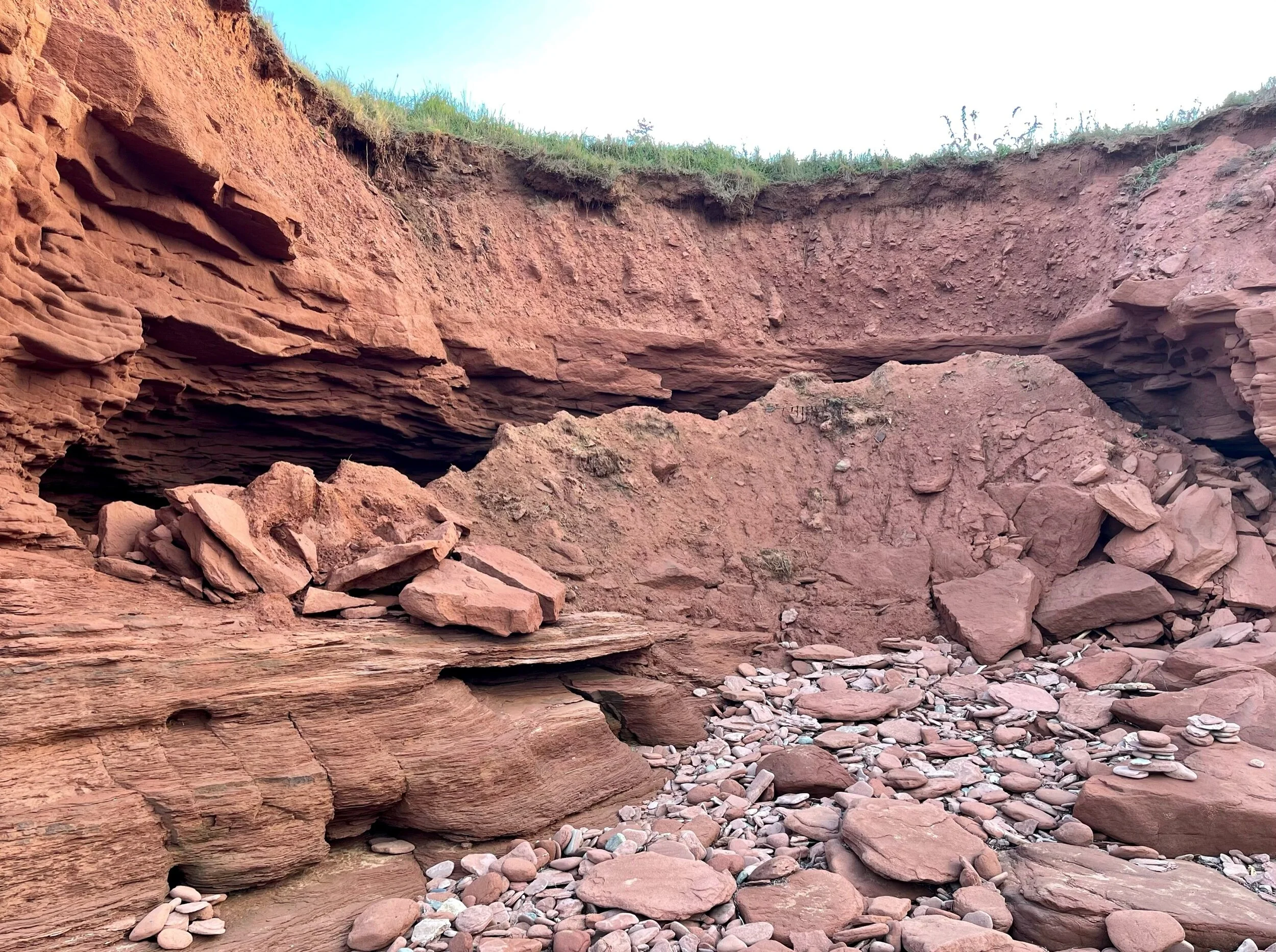
Taken on the north shore of PEI not far from Cabot Provincial Park, this picture demonstrates how erosion works on the shoreline. Waves wear away the sandstone cliffs until they collapse from underneath. Because of sea-level rise and increased storm surges, PEI has been losing an average of about two feet a year of its shoreline. Scientists expect the rate of erosion to worsen in the future. Other impacts of climate change on PEI include steadily rising average temperatures, milder winters with less snow, increasing swings between excessive drought and precipitation events, and greater exposure to extreme weather events such as hurricanes, storm surges and destructive winds. Photo by Michael Chase. Follow him on Instagram @mjohnsonchase.
Cabins are plentiful in PEI. Some are delightfully rustic and placed on windswept cliffs over the Gulf of Saint Lawrence in the north or the Northumberland Straight on the south shore. With only a few exceptions most have kitchens. After discovering that dining out was very expensive compared to cooking our own food, we began to sample the island’s sustainably raised mussels, oysters and lobsters by buying seafood at many of the small shops near the waterfronts. PEI mussels (which sell for CAD 1.50 - 2.00 a pound) are farm-raised on ropes hung in the ocean, which ensures that there is no dredging or disturbance to the ocean floor. Since there is no dredging, delicate life forms are undisturbed.
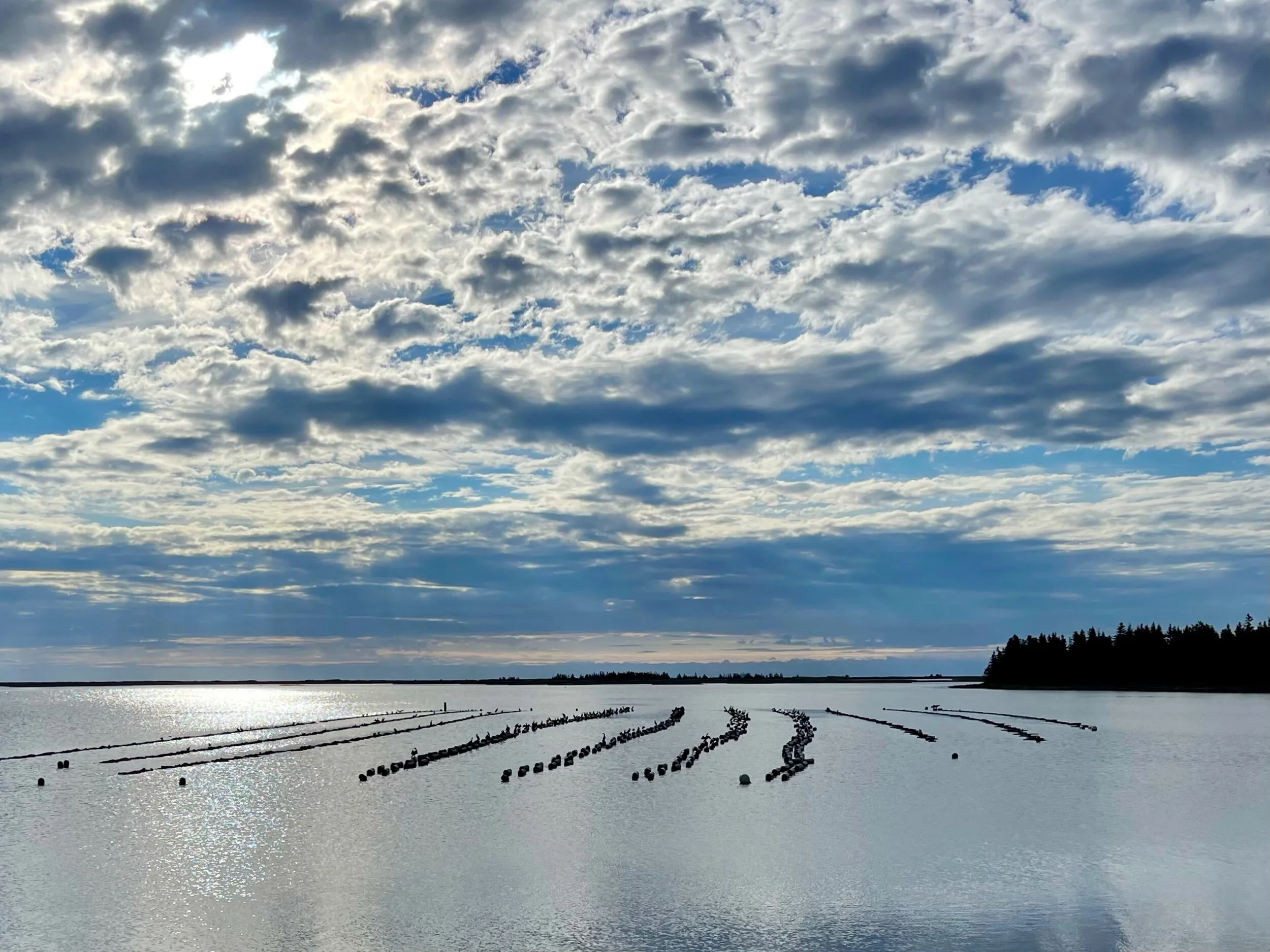
Oyster cages can be seen in the distance at a sustainable oyster farm. Photo by Michael Chase. Follow him on Instagram @mjohsonchase.
Oysters can be raised sustainably as well. The production cycle on a Canadian oyster farm begins with the collection/production of oyster larvae. Some farmers still collect larvae in the wild; however, larvae are increasingly produced in controlled hatchery facilities from spawning adult broodstock. The larvae are kept suspended in tanks by circulating water – and in a few weeks they transform into tiny seed. The seed is essentially a very small version of the adult oyster. Once the seed reaches an appropriate size, it can be transferred to the ocean for final grow-out in cages that are moved every year for 3 to 4 years to stimulate growth and achieve a marketable size.
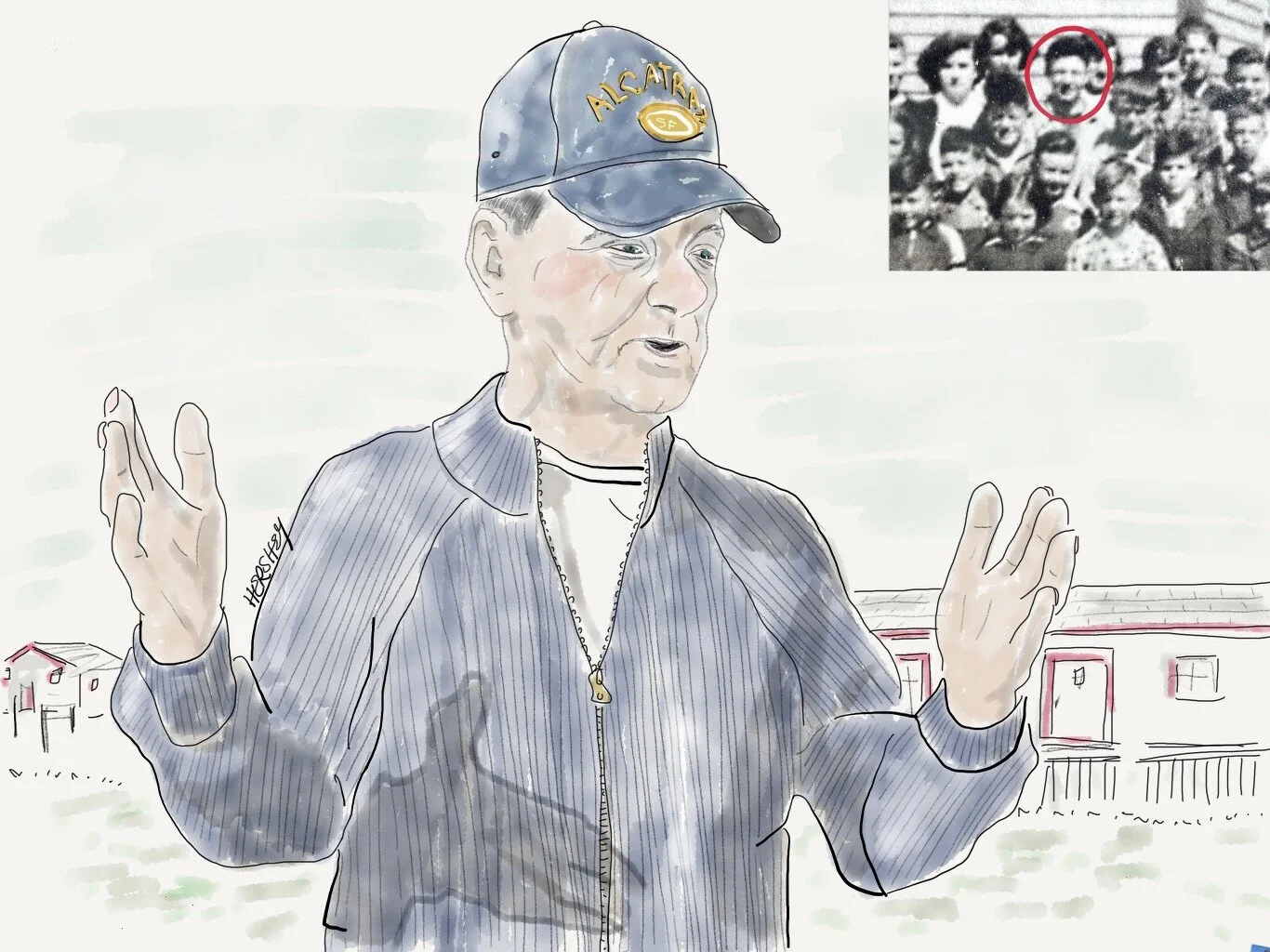
While we were reading an historical placard out loud at the old fishing harbor of Tignish Shore, Hector approached us and pointed himself out in a 1953 schoolhouse photo (upper right). A retired lobsterman, Hector bought his lobster fishing license for CAD 25 cents; now they cost CAD 1.5 million. Hector has survived many storms over the years. Because the beach kept receding, the provincial government moved his boyhood home (where he still lives) from the beach to the inland side of the street. Hector has watched the shoreline at Tignish Shore recede at least two hundred feet during his lifetime. Drawing by Jenny Hershey. Follow her on Instagram @deeofo.
Perhaps most exciting for us as laypeople (beyond eating these exquisite creatures) was recognizing the value of the industry to the local environment. Mussels and oysters raised in estuaries live off plankton and are very productive at filtering water; even nitrogen (a problem in PEI because of extensive commercial potato farming) and pesticides are absorbed and deposited in inert form on the sea bottom through feces by these amazing shellfish.
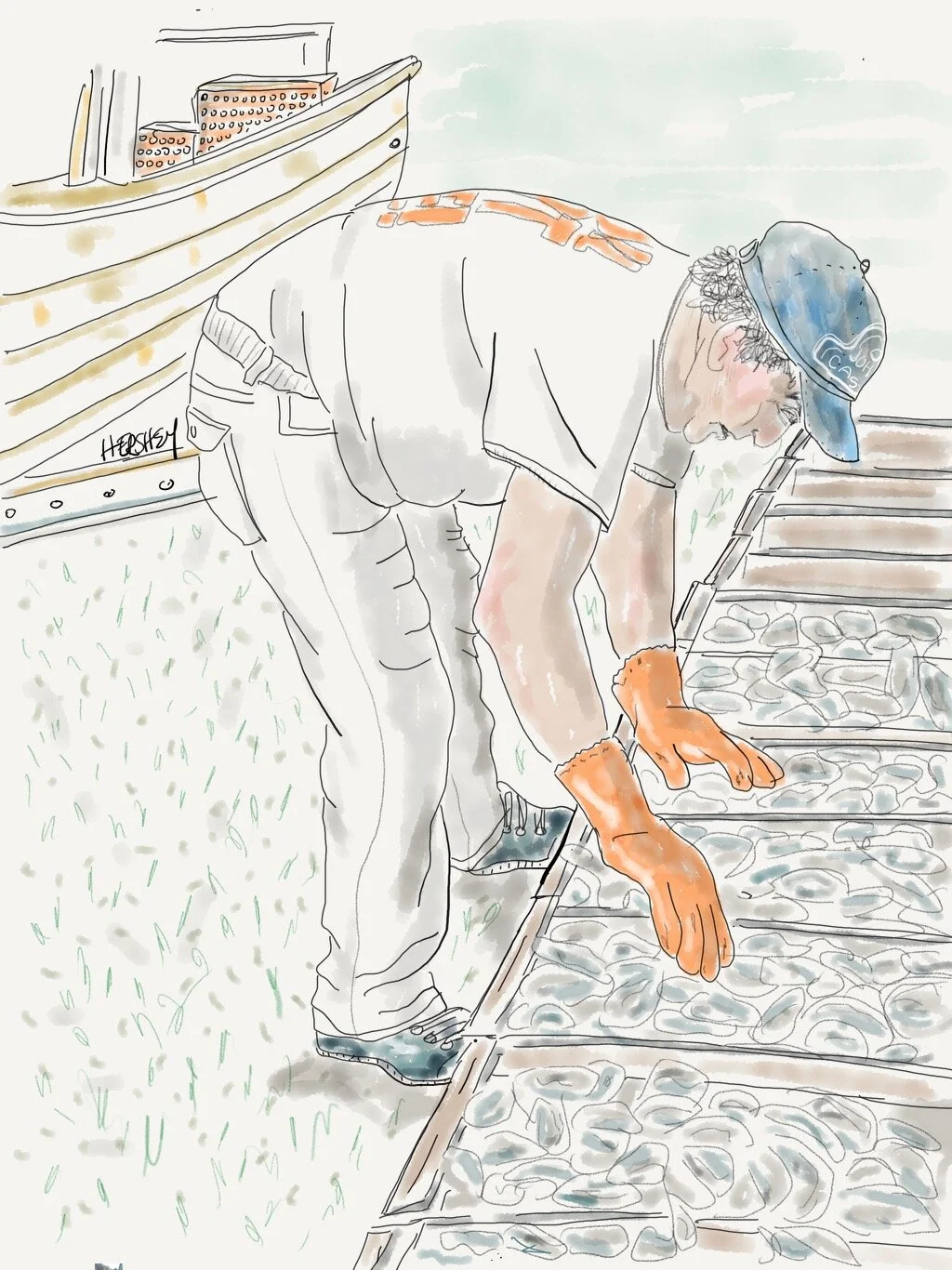
We met Frances, an oyster fisherman, at Yeung’s motel on the first day of the oyster season at Murray Harbour. Fishing the older conventional way by using 12-foot-long tongs (they used to be regulated for 10 feet, but the water is deeper now because of sea level rise), he rakes wild oysters off the sandy bottom in the numerous estuaries around the island. Frances (and his partner Pete) brought back 26 crates of oysters their first day out. They will earn CAD 50 cents per oyster for the bigger ones (which would cost USD 3-4). Both Frances and Pete were pleased with their catch, and they celebrated by gifting us a dozen of their largest oysters and another dozen quahogs. Needless to say, we were delighted! Drawing by Jenny Hershey. Follow her on Instagram @deeofo.
Why Bother?
In August, 2021, the International Panel on Climate Change (IPCC) published the 6th assessment of our changing climate (the first assessment was published in 1990). For the report, hundreds of scientists all over the world assess thousands of scientific papers published annually to provide a comprehensive summary of what is known about climate change, its impacts and future risks, and how efforts at adaptation and mitigation can reduce risks. The assessments represent the best of global general scientific consensus about what is most likely to happen to our climate in the near and reasonably near futures, depending on how many greenhouse gas (GHG) emissions humans continue to release into the atmosphere.
Although climate science has improved greatly over the years, most humans now understand we are placing our children and grandchildren at considerable risk by continuing to emit greenhouse gases into the atmosphere. But the recent IPCC report is sanguine. In general, emissions are not stabilizing, much less decreasing. We aren’t meeting the moment yet, and we are rapidly approaching crisis. We have only a few decades to decarbonize our atmosphere before we hit tipping points that may undermine civilization as we know it.
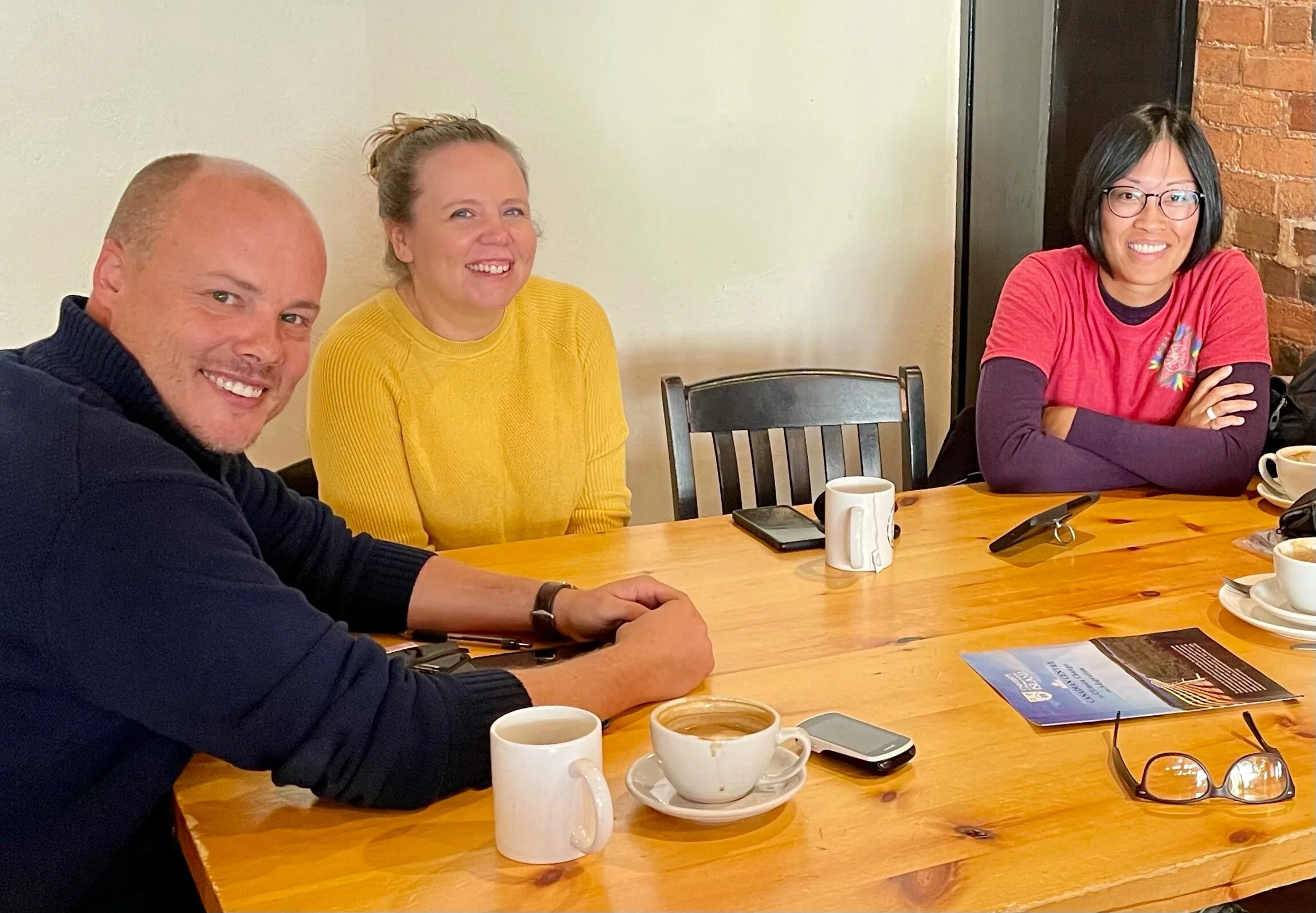
From left to right are Ross Dwyer, Erin Taylor and Stephanie Arnold. All three of them spent several hours chatting with us about PEI’s sustainability plans, particularly in the agricultural sector. PEI appears to be situated well for success, and key players in all industries are feeling pressure and excitement about improving their processes to become more sustainable. Ross Dwyer is the ClimateSense Project Coordinator and Project Manager at the Climate Lab at UPEI. Ross is a passionate representative, and was very welcoming to Jenny and me. Erin Taylor is the Manager of the Climate Change Secretariat at PEI’s Department of Environment. She is an intrepid connector and environmental advocate. Stephanie Arnold is a prolific author and PhD Candidate (UPEI). Her technical specialty is helping potato farmers adapt to societal pressures to become more sustainable and adapt to rapidly changing growing conditions. Read about the Provincial Prince Edward Island Climate Plan here. Photo by Michael Chase. Follow him on Instagram @mjohnsonchase.
Fortunately, many governments are listening to these onerous warnings, the PEI provincial government among them. But our talks with the climate team of university and government officials in PEI weren’t about quantifying GHG emissions, nor was it about making a transition in energy systems. That has to happen, and it’s already underway. But for the people we talked to that’s the easier part of dealing with climate change. Transformation in agriculture, which is the cornerstone of life on this island (and always has been) is the preoccupying problem, because farming here is so integral. And underlying how we live on the land is a more fundamental issue - our most cherished values.

Stephanie Arnold from the UPEI Climate Lab shares her feelings about the unfair blame directed at many well-meaning potato farmers by uninformed environmentalists.
We were lucky enough to hear Stephanie speak publicly (along with Adam MacClean) at a panel event on agriculture and climate change in New Glasgow. When asked what single-most important action she thought could be undertaken to get at the root causes of climate change, Stephanie answered Canadians could review and recommit to the country’s original Treaty Agreements with indigenous nations. Drawing by Jenny Hershey. Follow her on Instagram @deeofo.
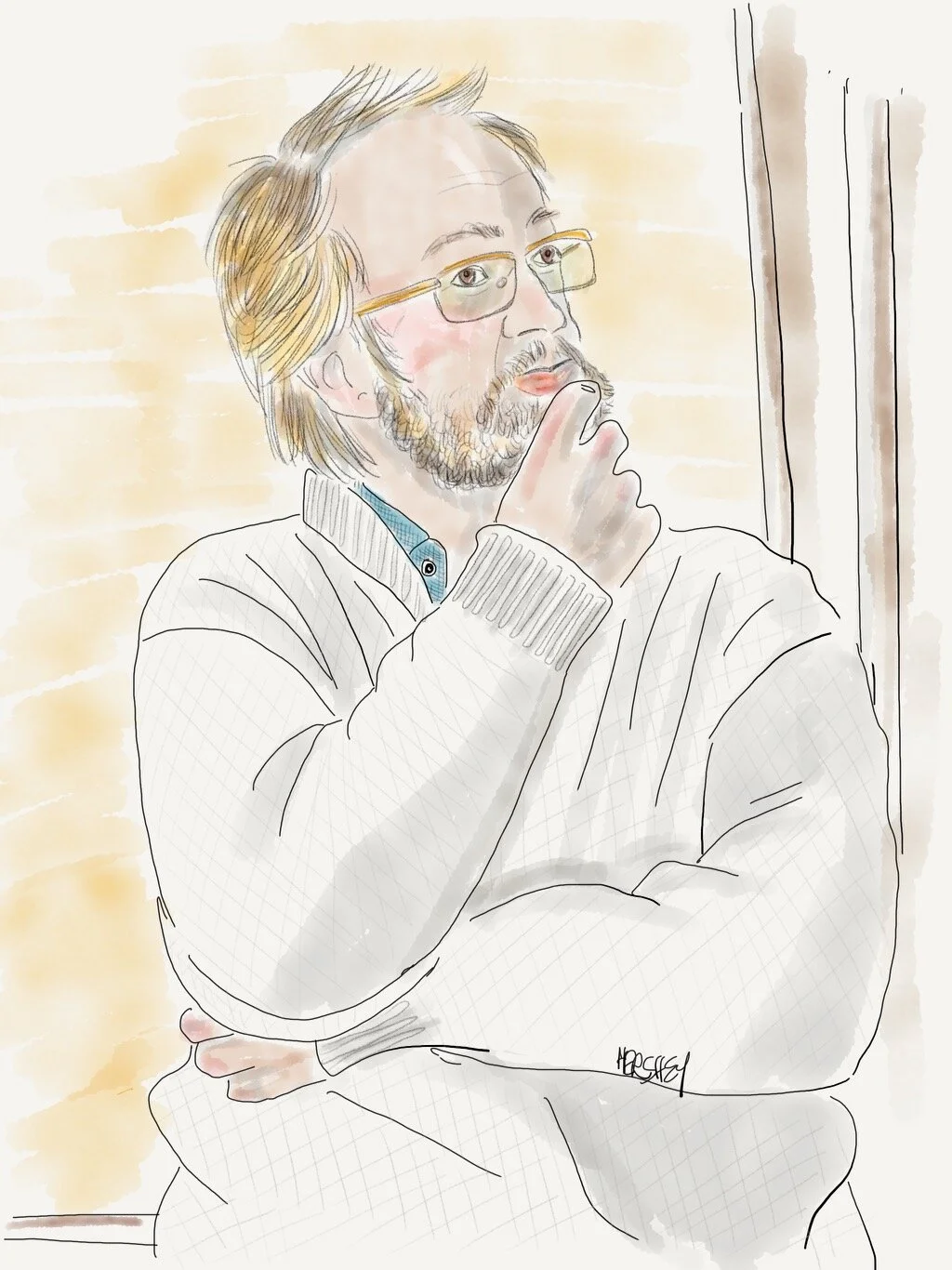
Adam MacLean describes himself as a shepherd-entrepreneur-scientist and very recently, a public servant, working with the PEI Department of Agriculture and Land as their Organic & Perennial Crop Development Officer. He practices regenerative agriculture by managing pastured livestock to produce nutritious meats in a way that respects the animal and heals the land. Together with his flock, in partnership with Island landowners, they are building soil, sequestering carbon and feeding the community. We were lucky enough to hear him speak in New Glasgow, where he agreed passionately with Stephanie Arnold that our biggest challenge is reckoning with our most fundamental values. Drawing by Jenny Hershey. Follow her work on Instagram @deeofo.
Our conversations revealed a collective agreement that climate change is a symptom of a larger problem: societies that value the rights of powerful individuals over those of poorer communities, societies that seek to dominate nature rather than live within natural processes, societies that place individual rights and personal consumption ahead of a collective commons with the capacity to allow all humans to live in natural abundance. Those are societies most responsible for polluting our atmosphere and bringing us to the brink of extinction.
Such talk used to be the province of the crazy and marginalized. But in PEI, such talk seems to be increasingly normal. Views are shifting everywhere, and PEI is small enough that shift is palpable. After all, relationships are the true currency of change, and that currency in a place as small as PEI is alive and well.
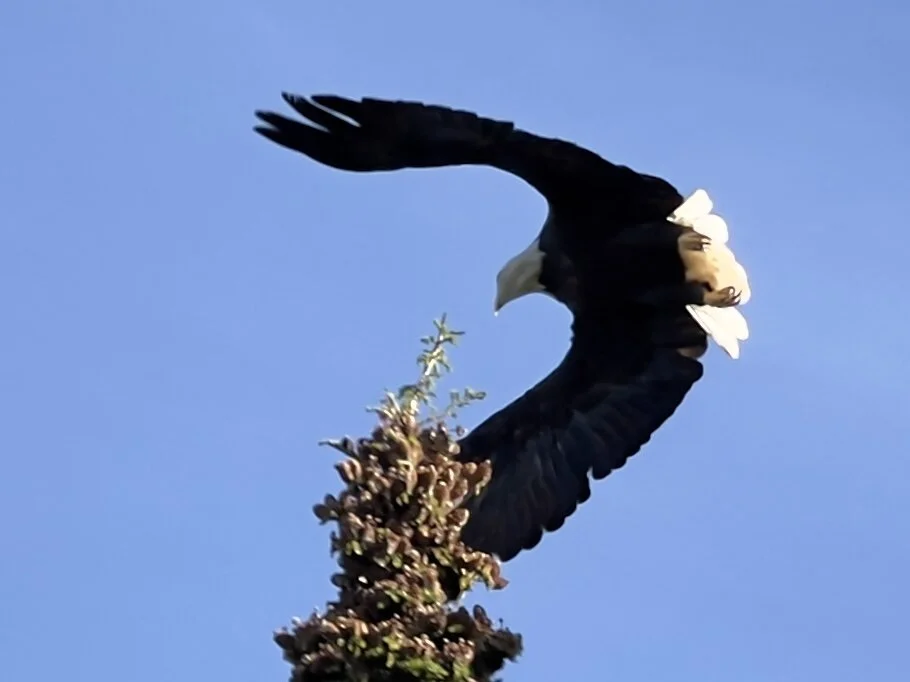
We saw this Bald Eagle (Canadians call them Sea Eagles) lift off a tree near North Point in PEI. For us urbanites, there are few things more exciting. Photo by Michael Chase. Follow him on Instagram @mjohnsonchase.
Organic and Regenerative Farming in PEI
Our first few days on the island revealed little information about farmers, other than the unmissable reality of the large and ubiquitous potato industry and the equally accessible shellfish and lobster industries. Before we learned more about how conventional potatoes were farmed, we were happy to dig up a few potatoes for our dinners as we biked by the corners of commercial fields. That is, until we learned that commercial potatoes growers use a spray that kills the plants from the ground up, leaving the potatoes easier to harvest. Although Roundup (glyphosate) is repeatedly used to kill weeds on the fields earlier in the season, we were never able to determine whether that is the herbicide used to kill the plants at harvest. But even if you never eat another potato from PEI, please understand that glyphosate is still the most-used herbicide in the U.S. Unless you’ve eaten only organic vegetables for years, you’ve been exposed to it in large quantities already. In any case. our past blog posts on regenerative agriculture and our serendipitous meeting with Eliot Coleman focused us to understand more about the agriculture scene in PEI.
We managed to look beyond the potatoes once we got wind of the PEI Certified Organic Producers Co-op (COPC) through an email exchange with my friend Regina Grabrovac of Healthy Acadia in Machias, a Maine-based food systems specialist and organic certification official for the USDA. Once we learned from Regina where and how to look, we began to appreciate how much fresh food was available all over the island.
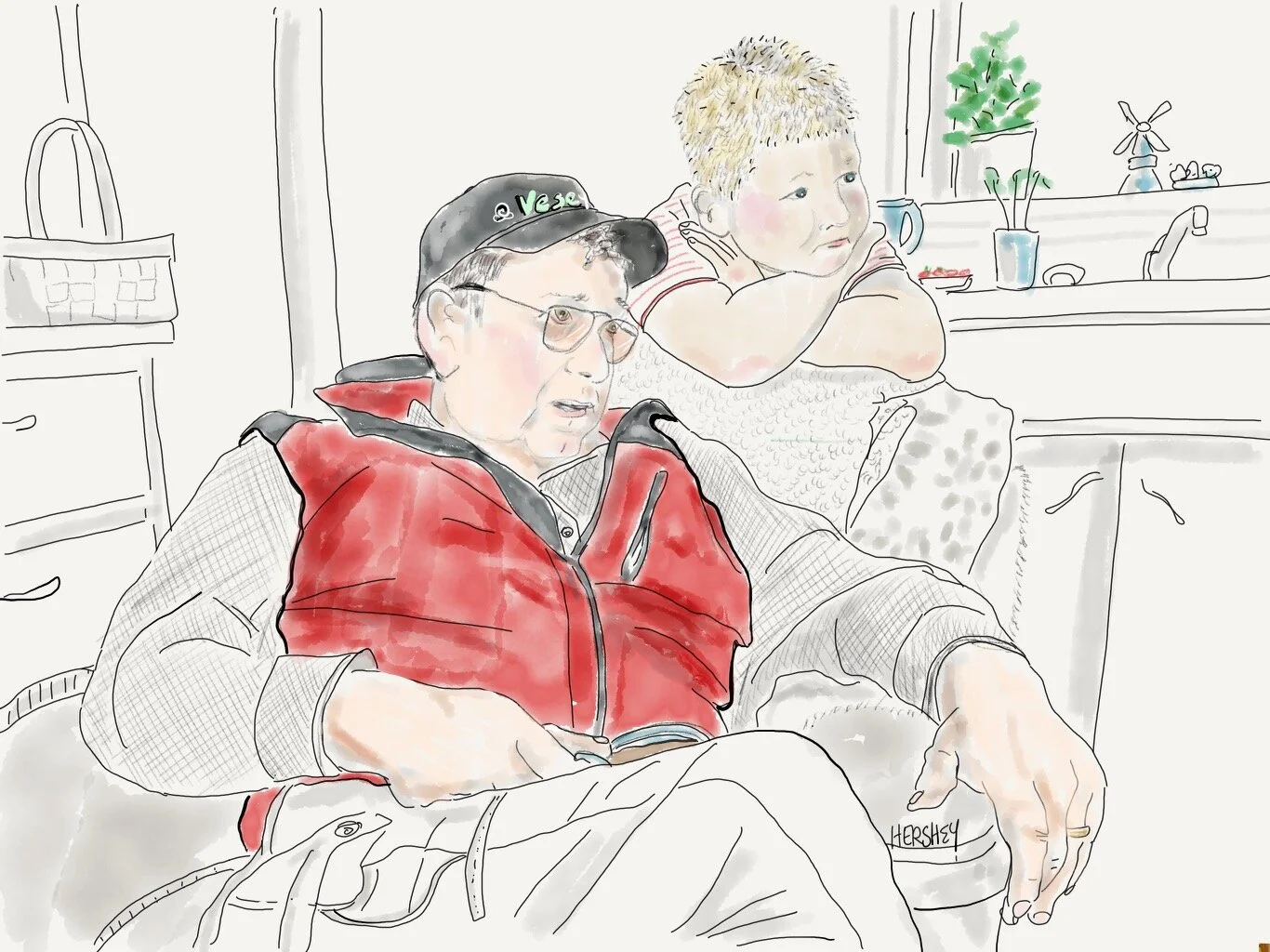
Brian MacKay, an organic farmer at Crystal Green Farms in Bedeque, PEI, raises organic vegetables and livestock, as well as operates a small flour mill where they mill their own grains and prepare baking mixes. Their milled products can also be found on the shelves of many local retailers. Once Brian learned that Jenny was a vegetarian for environmental reasons, he patiently asked us what we thought “Beyond Beef” was made from? Did we think that the peas, corn and soy in the product was grown without fertilizers, herbicides, and pesticides? Did we think it was grown with crops that haven’t been sprayed with glyphosate? Did we think the crops used weren’t genetically modified, tying them in with Monsanto and other seed monopolies? (We checked the Beyond Meat website and supposedly they do not use GMO crops). Even so, might it be that eating beef, pork, chicken, lamb or sheep grazing in a field of perennial grasses creating healthy soil while sequestering carbon, was a better option environmentally? As Brian spoke, his grandson, Xaviar, hung onto every word, as did we. What do you think? Drawing by Jenny Hershey. Follow her on Instagram @deeofo.
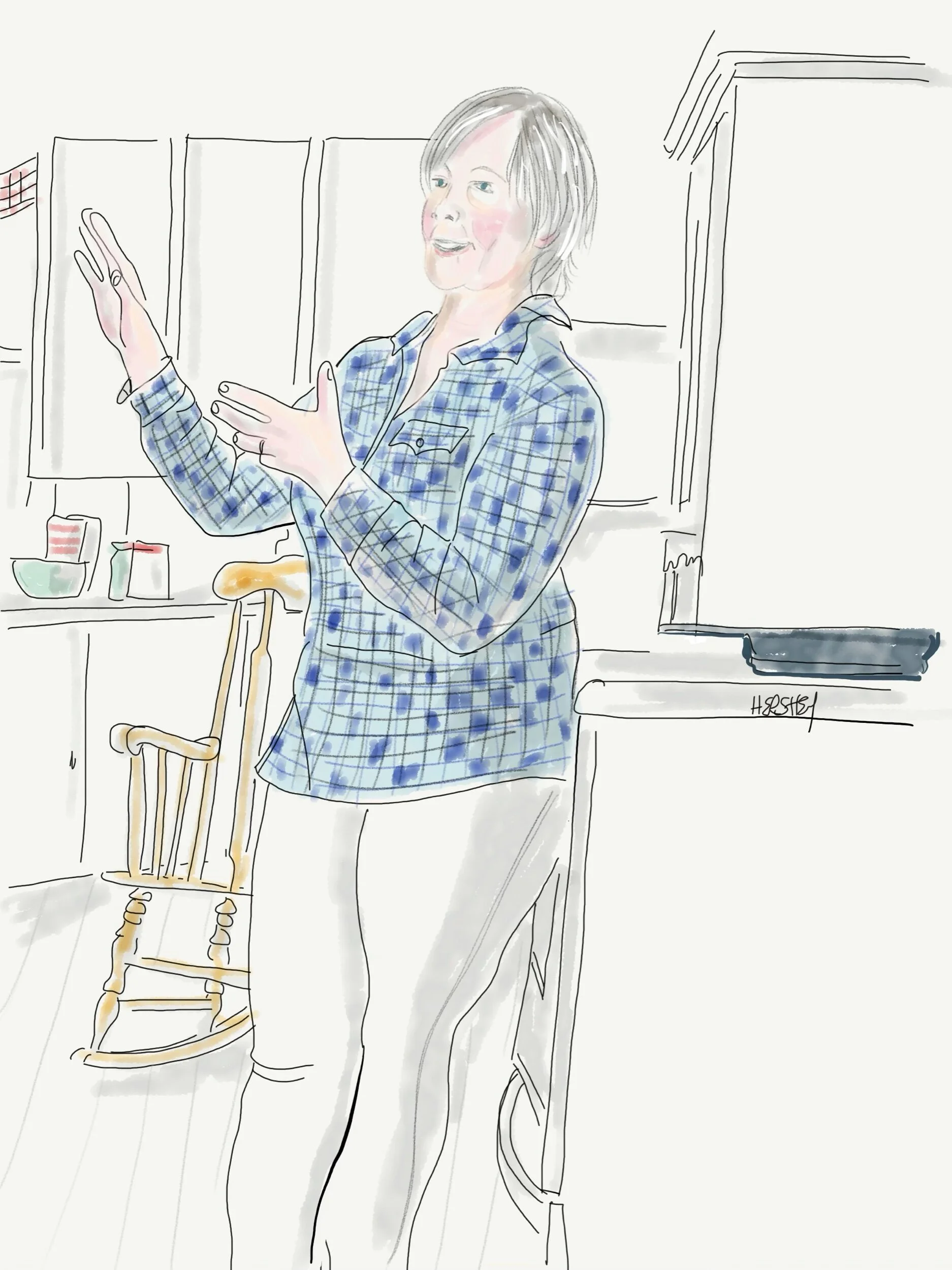
Kathy MacCay from Crystal Green Farms in the 140 year-old farmhouse in which she was raised, and in which she raised her children. She has lived in this house for most of her life. Kathy runs a tight ship working with husband Brian and caring part-time for her 14 grandchildren. Somehow, she also managed to cook us delicious homemade waffles (from a pancake flour mix milled in their barn for market distribution). Drawing by Jenny Hershey. Follow her on Instagram @deeofo.
The COPC is run through volunteers. We assumed the most active farmers in the organization might be among the most dynamic farmers in PEI, so we reached out to their chief officers. COPC President Brian Mackay and his wife Kathy own and operate Crystal Green Farms located in Bedeque, PEI. Vice President Sally Bernard from nearby Freetown, co-manages a local Organic Grainery, and is the primary force behind raising livestock at Barnyard Organics. We weren’t disappointed. As characteristically warm and friendly as other islanders, they both welcomed us to stop by, meet their families, and learn about their operations.
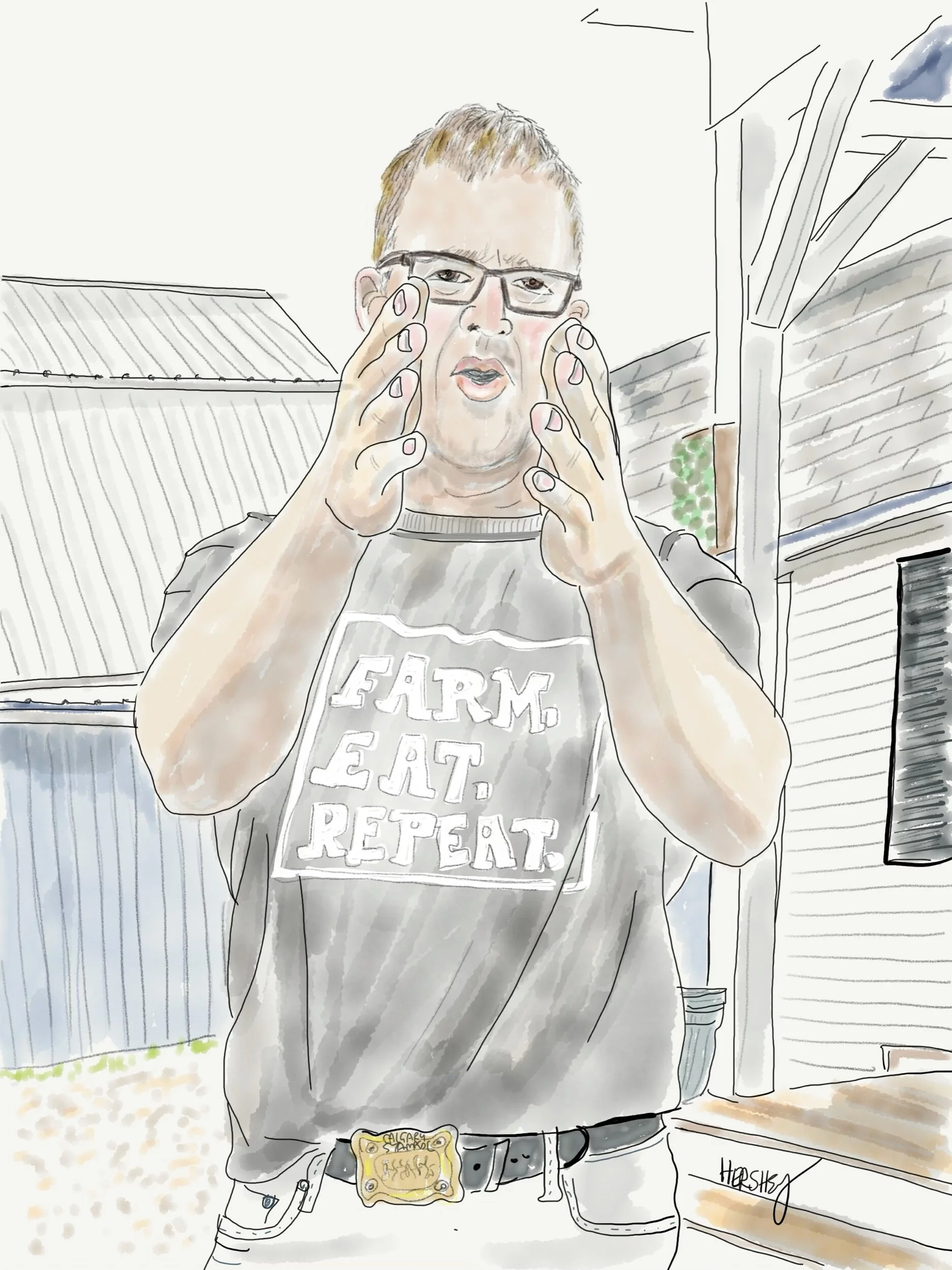
Mark Bernard makes a point about commercial versus organic feedstock. Mark is from Freetown, PEI, and along with his wife Sally converted his traditional family farm in 2002 into a Certified Organic production (primarily as a financial consideration). As their soil management practices improved and they witnessed land and nature respond positively to their organic practices, they started taking organic more seriously. They’ve never looked back. Sally co-manages the expanding Organic Grainery, and together they operate Barnyard Organics. Drawing by Jenny Hershey. Follow her on Instagram @deeofo.
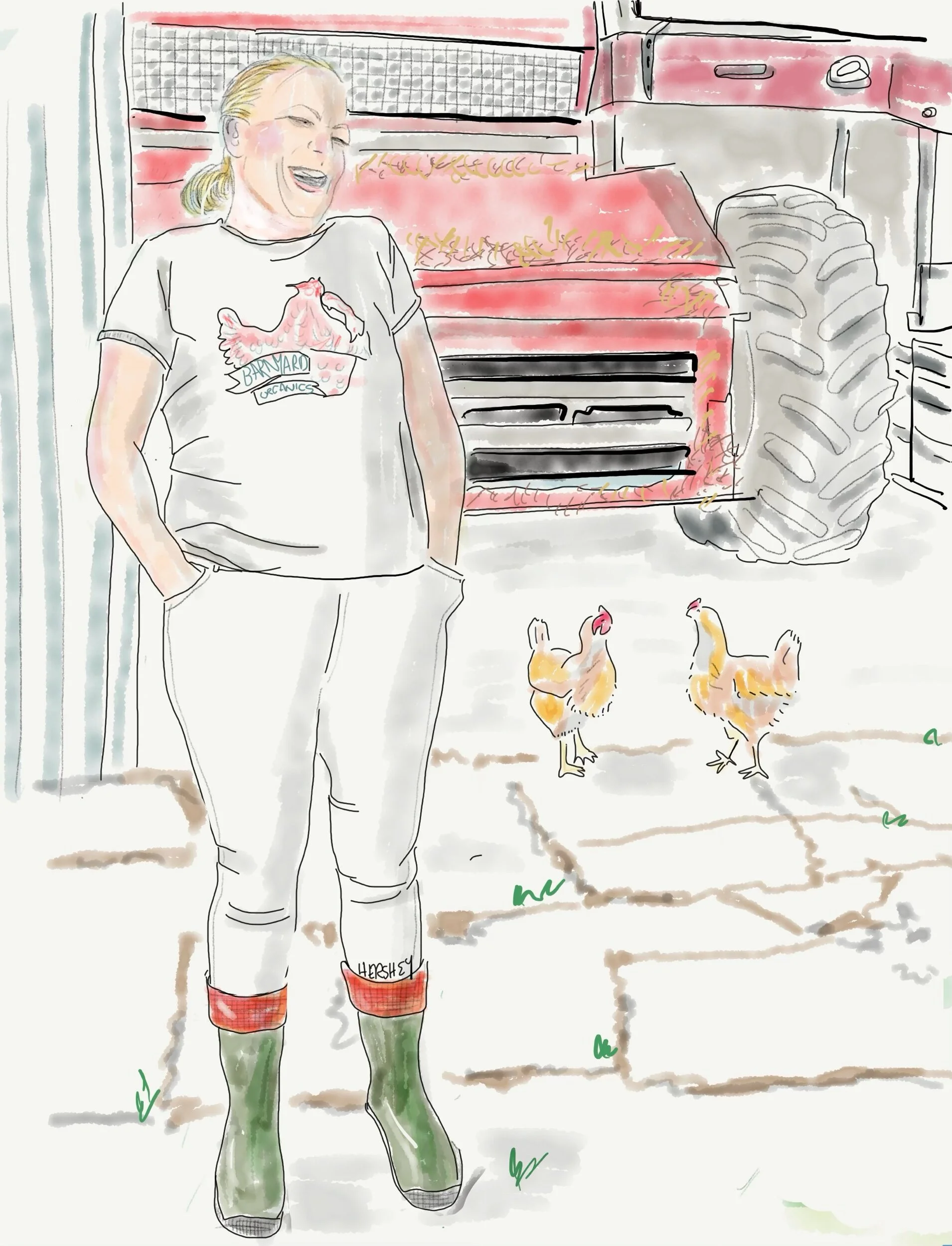
Sally, the youngest of nine from a cattle-ranching family, immediately impressed us with her wit and joy. She met Mark at the Agriculture University in Truro and told us she was immediately smitten. Together they work the land and raise four beautiful children. Sally has a special place in her heart for their three pigs (Dolly, Shania and Reba) and two dairy cows. They no longer raise chickens for market, but they keep quite a few hens for selling pasture raised eggs. Sally dislikes the local Sea Eagles, who will swoop down undetected, lift chickens in their claws and take them away to eat. Drawing by Jenny Hershey. Follow her on Instagram @deeofo.
COPC was established in 2002 and is composed of organic producers and like-minded consumers who wish to see organic agriculture grow within Prince Edward Island. They are a coalition of growers and not a certifying body. Instead, under the Safe Food for Canadians Regulations (SFCR), any food, seed, or animal feed that is labelled organic is regulated by the Canadian Food Inspection Agency (CFIA).
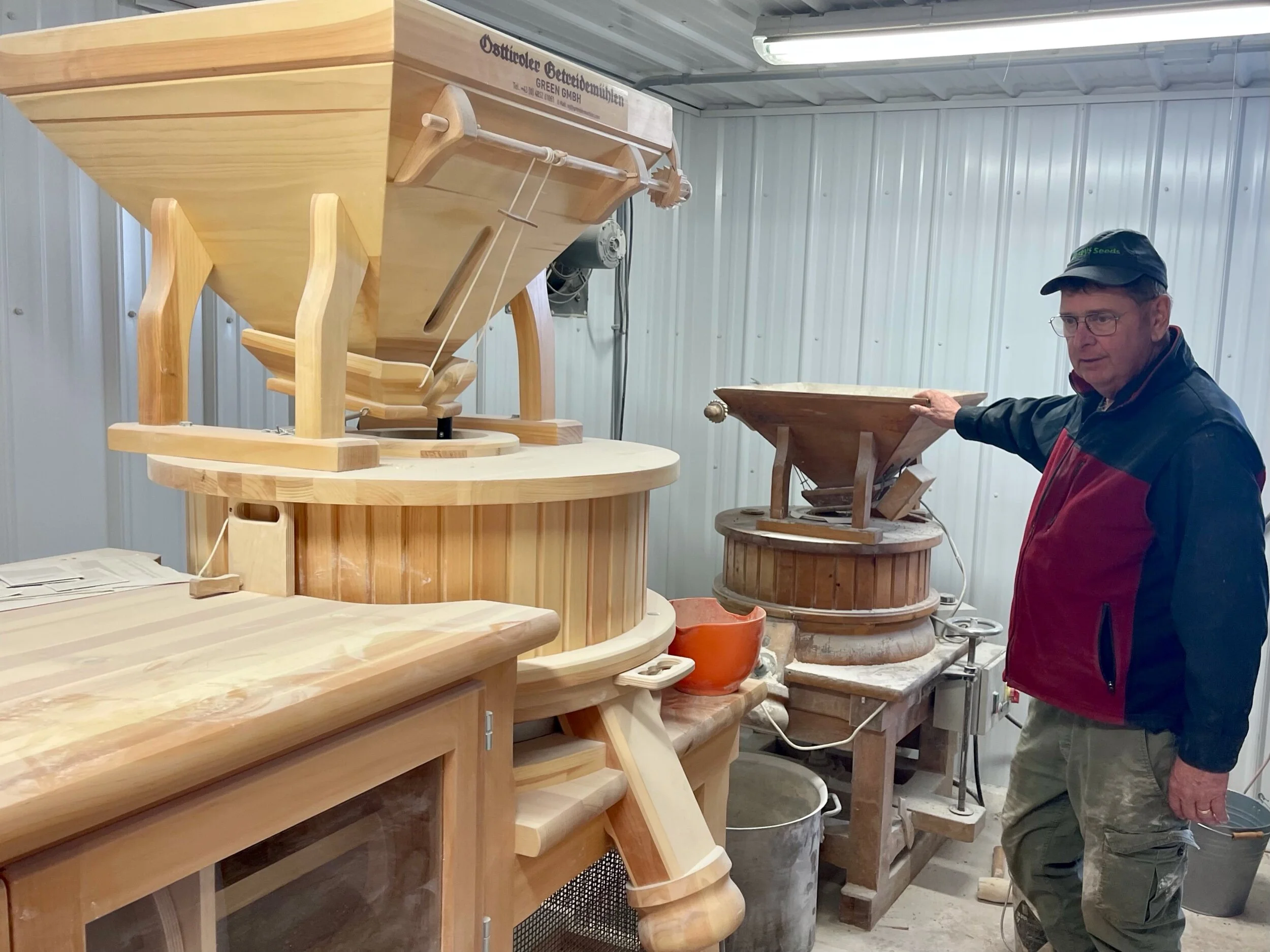
Brian MacCay explains how the multiple grinding and sifting options work on his new flour mill from Austria. Photo by Michael Chase. Follow him on Instagram @mjohnsonchase.
This allows COPC to function as an advocate for organic growers. Their vision entails a vibrant organic industry in PEI, and they are committed to supporting: 1) Quality healthy food for Islanders, 2) A revitalized rural economy and culture, 3) Protecting and enhancing the environment, and 4) A fair income for organic farmers.
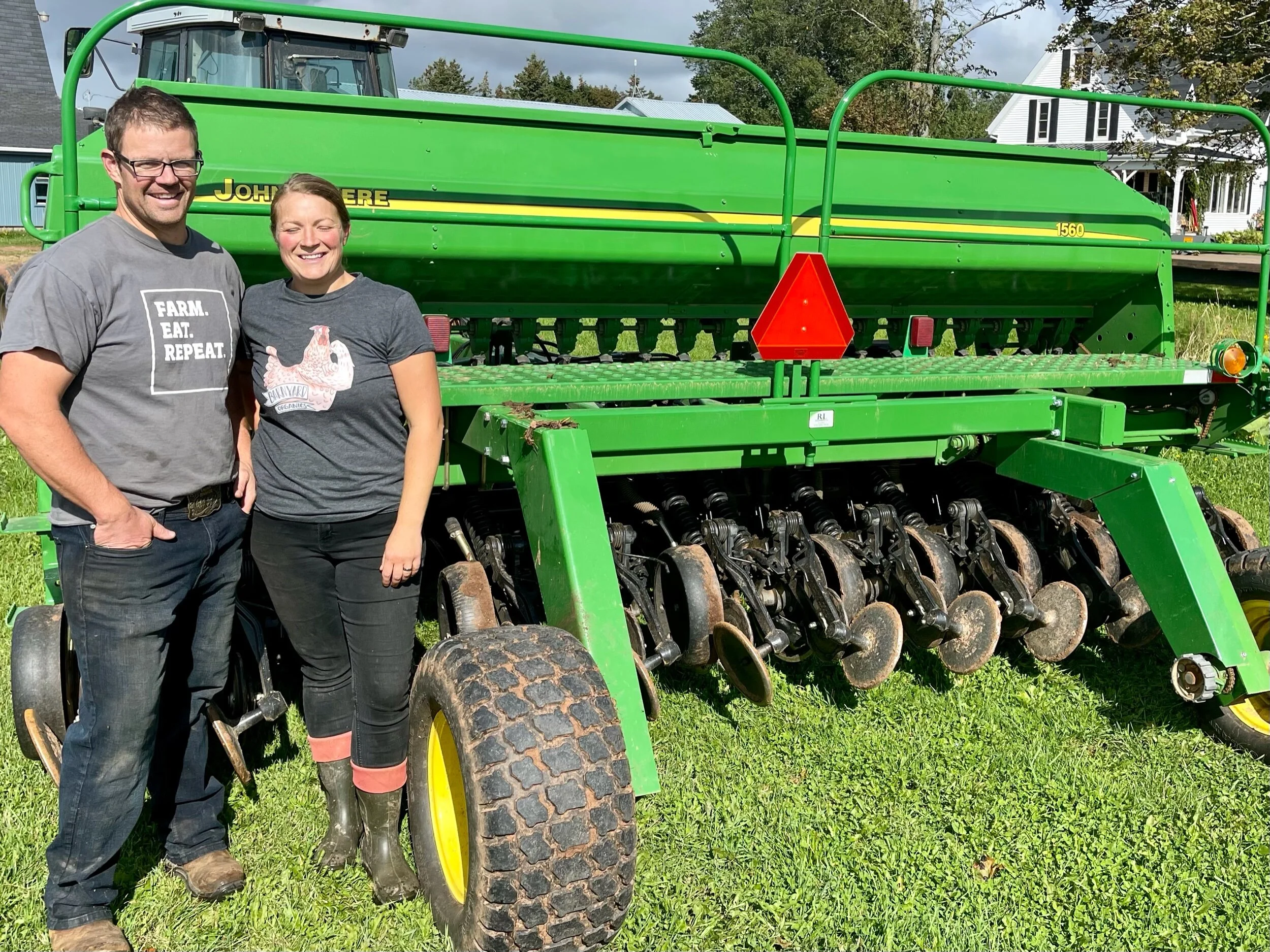
Mark and Sally standing next to their new “no-till” seeder. Photo by Michael Chase. Follow him on Instagram @mjohnsonchase.
This trip has caused us both to think a lot about the foods we eat and their intricate relationship to our changing climate. Clearly, there are wonderful upsides of knowing the farmer who grows your vegetables, grain, meat or fish. When you buy direct from the grower you can ask what he or she did to raise that food. But most of us don’t have that luxury.
However, it’s important we all know that, worldwide, the agriculture sector accounts for 25% of greenhouse gas emissions and as much as 75% of the world’s freshwater use, an issue that has grown more severe in recent decades as more farms have become industrialized to increase productivity. Farmers globally receive roughly $683 billion in government subsidies each year and government aid is expected to more than triple by 2030. Yet roughly 87 percent of these funds currently support industrial farming practices (mainly in the developed world) that harm the environment and human health. They also disproportionately help large corporations at the expense of smaller farmers and make food more expensive for millions of people. These are findings of a new UN report calling for repurposing damaging incentives to achieve more of the 2030 Sustainable Development Goals and realize the UN Decade of Ecosystem Restoration.
The most problematic supports are those tied to the production of specific commodities like corn, soy, or beef, said the study's authors. These funds encourage farmers to grow fewer crops and boost their yield with fertilizers, pesticides and other environmentally harmful technologies. Beyond this approach's environmental impact, the industrial production of a few commodities can make them unnaturally cheap while driving up the price of other, more nutritious foods. For instance, in many developed countries, industrial farms growing major commodity crops such as corn and soy, receive billions to help them stay afloat. Yet, as was stated earlier in this post, smaller-scale, more diverse and sustainable farms - who pollute and use water in significantly smaller quantities - tend to receive minimal or no government support at all.
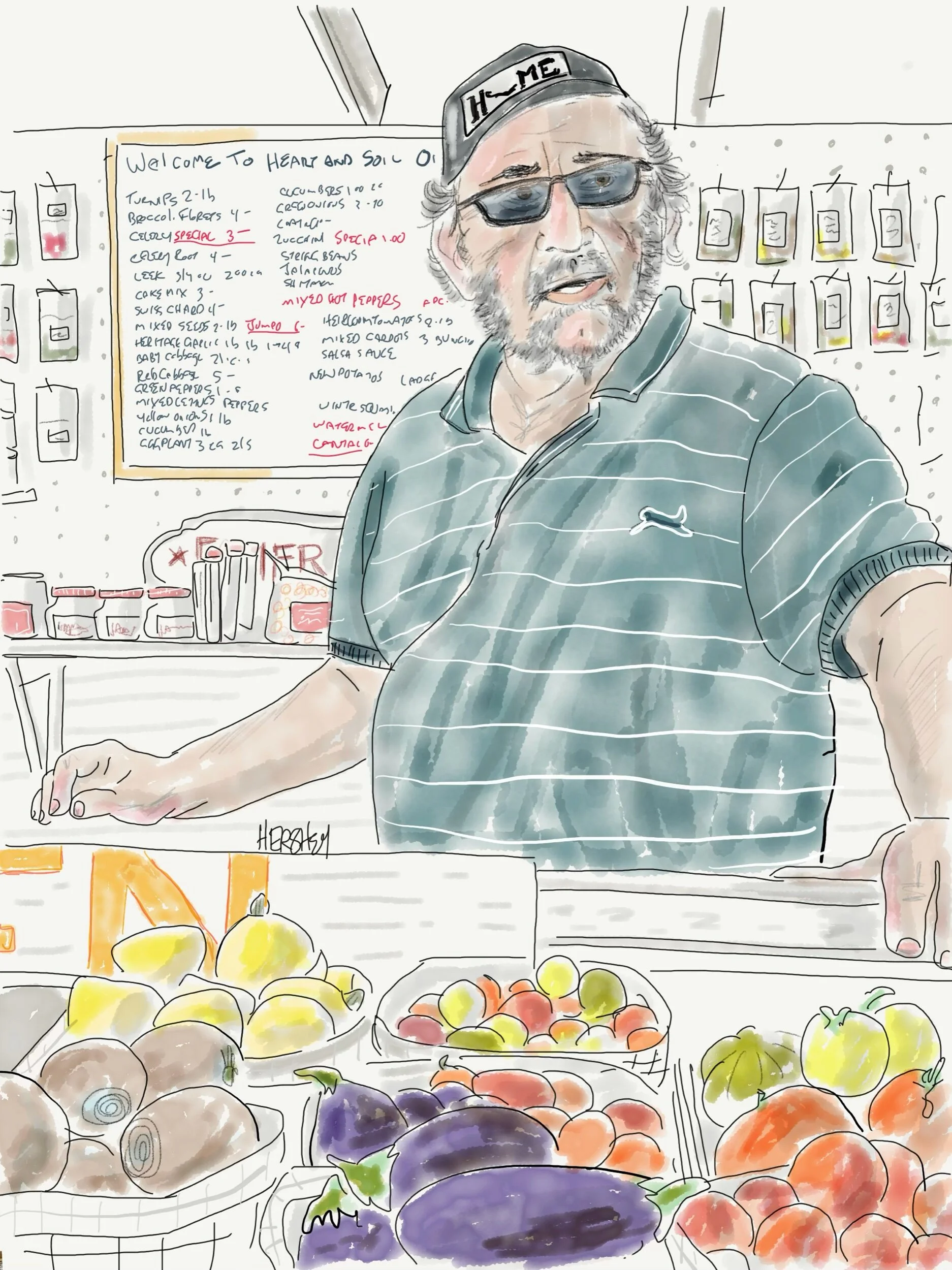
Michael Rossy is a well-known, organic farmer from near Montreal (Runaway Creek Farm in Arundel), who retired as a “hobby” farmer on a lovely farmstead and B&B called Heart and Soul, about 30 kilometers south of North Point in Highway 12. An innovator all his life, Michael currently pushes the envelope by growing and selling - among other unusual things - Asian Pears, Asian Pear Melons and Gojiberries. He enjoys showing locals that anything is possible with great soil, and tender loving care. Drawing by Jenny Hershey. Follow her on Instagram @deeofo.
…If we truly want a sustainable food future, we have to stop looking at food as capital and start looking at long-term land restoration projects, creating healthier soils, and creating more localized growth of food and food sharing that isn't out to make a buck, said Sarah Dunigan, host of the food-focused podcast Anthrodish, as quoted in Canada’s excellent Climate Change newsletter, the National Observer.
In other words, we need to change our values.
Stay vigilant! Thanks for reading. More to come. If you haven’t done so already, please subscribe to this blog, so you can follow our next biking trip later in the fall.
All material, unless credited or otherwise noted, are copyrighted property of the blog post authors.
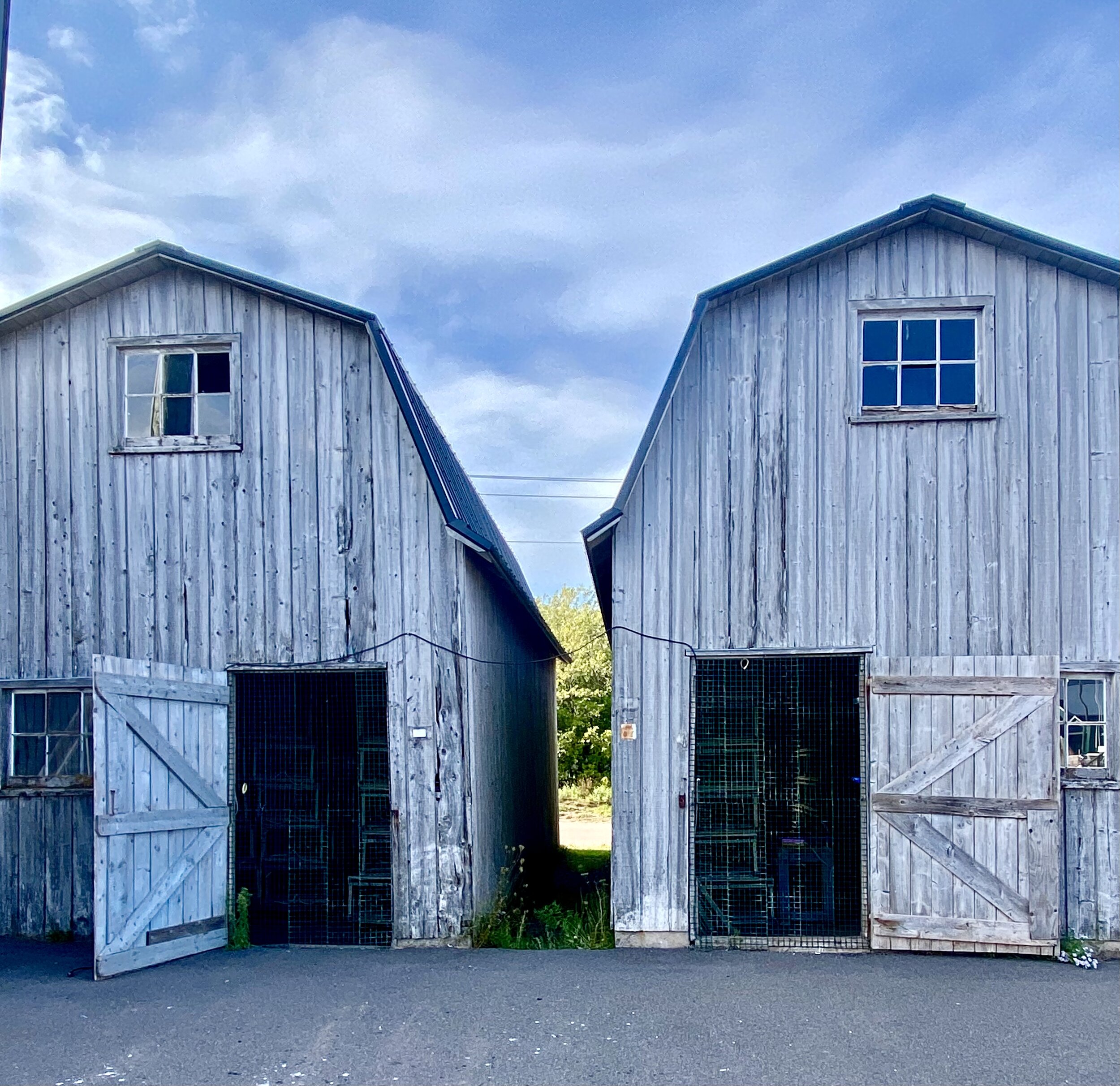
These buildings were on the pier at a small fishing village named Darnley near Rustico. The photo is a favorite of Jenny’s. Photo by Jenny Hershey. Follow her on Instagram @deeofo.
An Inauguration; Biking the Mississippi River Trail, Post 1

Waiting for something new… For the pandemic to end? …Is the economy to improve? …Social justice at last? ….Climate action that will make a real difference? …An election? …An electoral college certification? …An insurrection? …An inauguration? The dialing down of the great American political feud? ….None of the above. … Instead, two of my grandchildren wait for ice cream.
Drawing by Jennifer Hershey. Follow her work on Instagram at deeofo.
There is no real ending. It’s just the place where you stop the story.
Frank Herbert
Welcome to another inauguration. Americans are deeply divided right now about where we have arrived and where we should go, and I am hopeful that a new beginning is underway. As challenging as 2020 has been, we may have grown stronger as a nation. Some of us were either privileged or lucky enough to survive the past year without loss of life or the destruction of our livelihoods, while others of us have experienced great hardship. And our public health travails are far from over. At the same time, we’ve watched our economy slow down so much that shuttered buildings and “out of business” signs are now as commonplace in cities as they have been for decades in small towns. We don’t know yet if we have a minor problem with domestic terrorism that will fade away, or a full blown crisis that may destabilize our government and communities in frightening ways. In the meantime, the issues of racial justice and a changing climate hover around us like a dense fog.
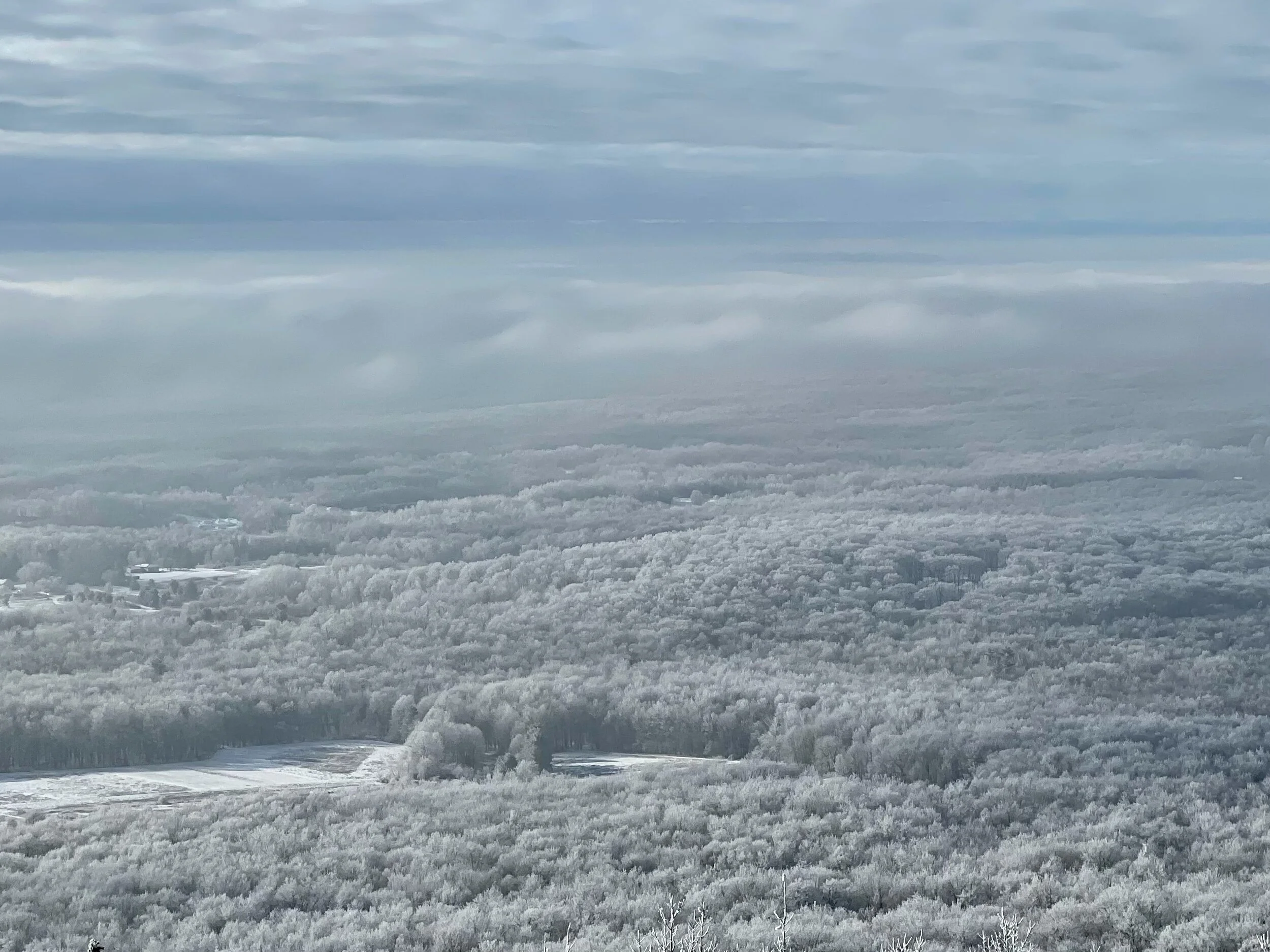
A view from Rib Mountain in Marathon County in central Wisconsin, where Jenny and I made a trip to visit my daughter’s family and my son’s family in Milwaukee before beginning our Mississippi River Trail Trip.
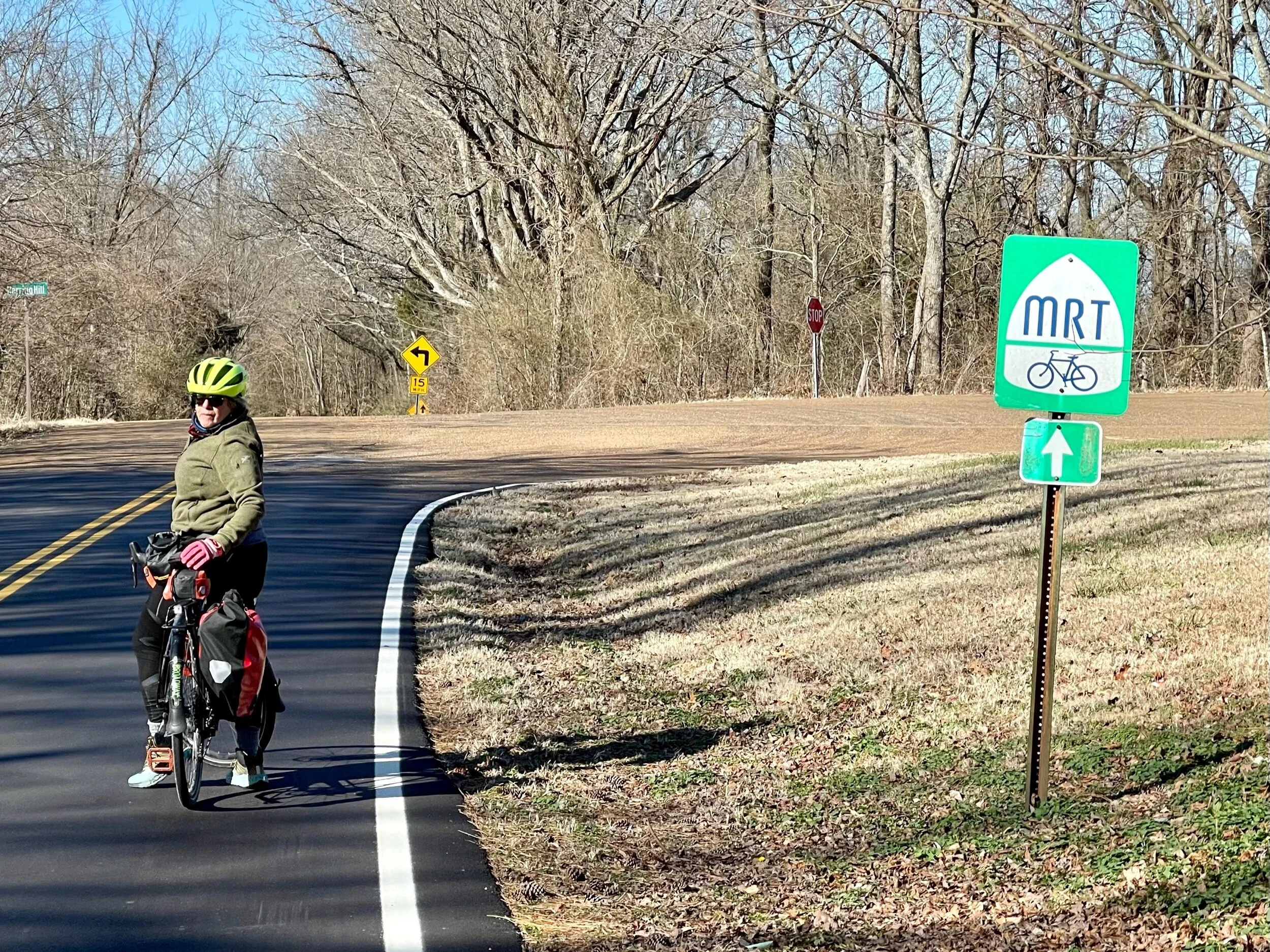
Jenny watches while I take a photo of the Mississippi River Trail (MRT ) sign about 20 miles north of Memphis. The Mississippi River Trail (MRT) extends from Elk River, Minnesota to New Orleans, Louisiana. It is a conglomeration of roads that traverses the Mississippi sometimes on both sides, sometimes only on one. We are very impressed by the beauty and peacefulness of the route, which can be found on opencyclemap.org.
For much of the past year I have been preoccupied by how differently our political parties think about freedom. That said, I don’t know any American who wouldn’t fight for the rights so clearly outlined in the Declaration of Independence: … that all men are created equal, that they are endowed by their Creator with certain unalienable Rights, that among these are Life, Liberty and the pursuit of Happiness.
However, I have heard a lot of disagreement over the concept of liberty (and its synonym freedom). Freedom to a conservative seems to means freedom from government intervention, and the freedom to do as one pleases - even if the long term outcomes are not necessarily helpful to others. (Popular examples used at the RNC are the freedom to drive any car you want, or to eat as much meat as you like). In contrast, freedom to a liberal means the freedom to solve shared problems through collective action (such as using a mask during a respiratory based pandemic to protect the health of others). As long as the rights of individuals are not egregiously abused, liberals expect citizens to be mindful of others as a condition of being part of a community.
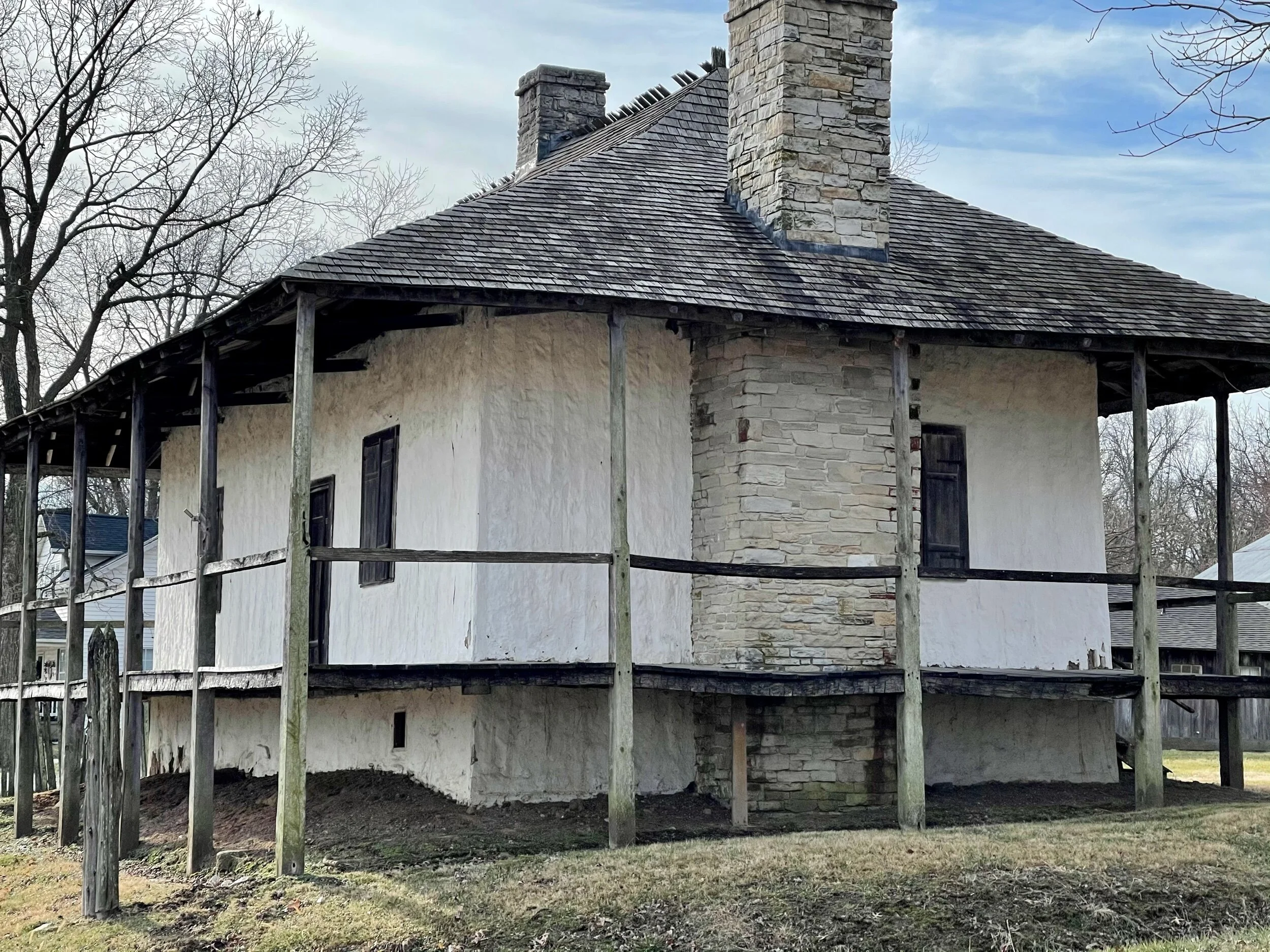
We began this cycling trip just south of St Louis near a small Missouri town called Ste. Genevieve on the Mississippi River. It was settled in the early 1700’ as part of New France. The post-in-ground style was one of the timber construction methods used for French colonial structures. It was called poteaux-en-terre.
There is much more to write about on this topic, and I hope to follow up in future blogs. To my mind, a workable sense of freedom is neither easy to understand or articulate. Struggling to write about it makes me appreciate our nation’s founding fathers and our historical civil rights leaders more than ever. They seemed to understand the potential interplay between individual and group rights so much better than we do at this moment in our nation’s history. Our most pressing problems - addressing the pandemic effectively, creating equal economic opportunity for all, addressing climate change on a much bolder level than individual consumption - will surely test our ideas about individual liberties. For example, the freedom to go maskless when that action threatens the health of others is not different from a society's choice to use forms of energy that adversely impacts the health of others.
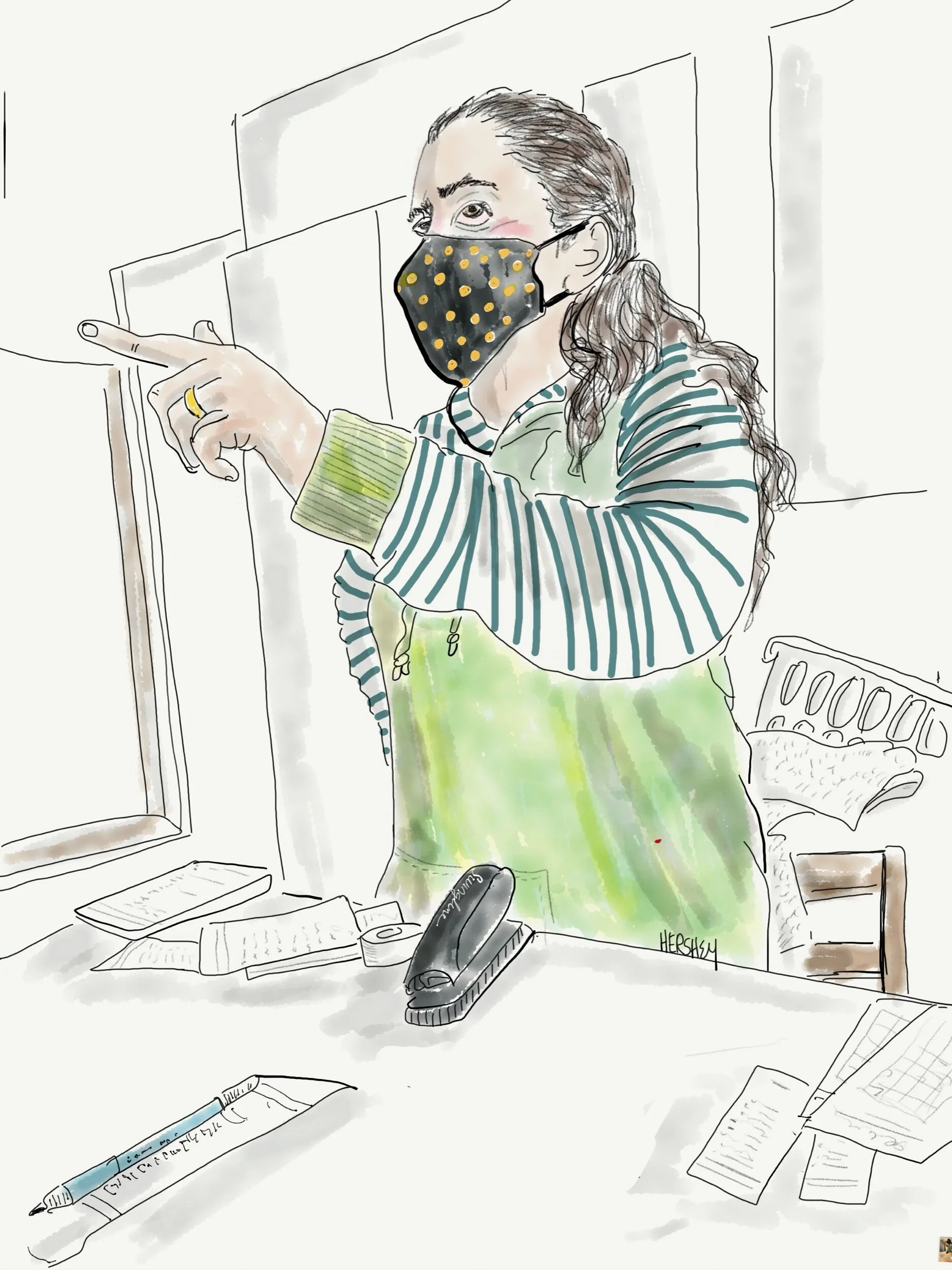
“Lots of people in Missouri believe in freedom so many of them won’t wear masks. I’m mean though. I tell them they can’t stay here unless they wear one.” Dee runs the Triangle Motel in Ste. Genevieve, Missouri. Originally from India, Dee immigrated to the states from Zimbabwe with her parents, who live with her at the motel. She is a mother to several boys, and knows a lot of people in her adopted town. A warm and friendly person, she works hard and tries to never miss a town funeral.
Drawing by Jennifer Hershey. Follow her work on Instagram at deeofo.
In spite of the considerable problems we face on both the national and global levels, I am optimistic about the future. Although I certainly don’t expect the divergent political viewpoints among Americans to go away, adversity can bring people together to solve problems. I think that the sobering events of the past few weeks (an insurrection on our nation's Capital) have shocked us into recognizing our discord has gone too far.
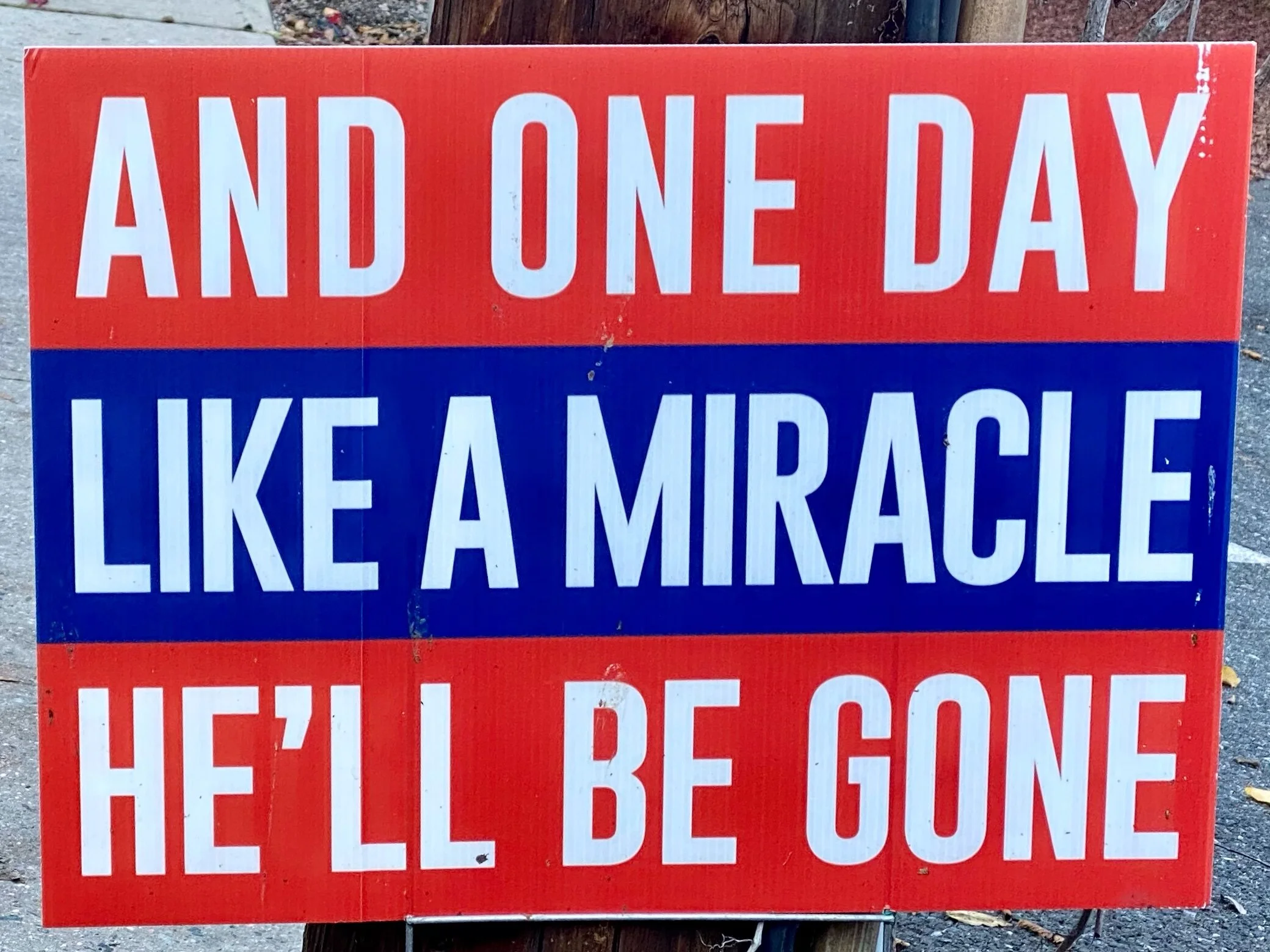
…As will COVID-19 after a robust vaccination program. And hopefully the sharp divisions between so many well-meaning Americans will eventually disappear as well.
Like the presidential transition, this blog post is also a form of commencement. Clearly, its been hard to celebrate the extraordinary experience that biking through America (or anywhere else for that matter) can offer. Most of our biking this past year has been closer to home, or tied to several stressful trips to help out a family member. Although we have learned how to use a car to support our biking habits, it took us more time to figure out how to travel while staying socially isolated than we had anticipated. Consequently, Jenny and I have only recently gone looking - once again - for the story of America. And we are finding it.
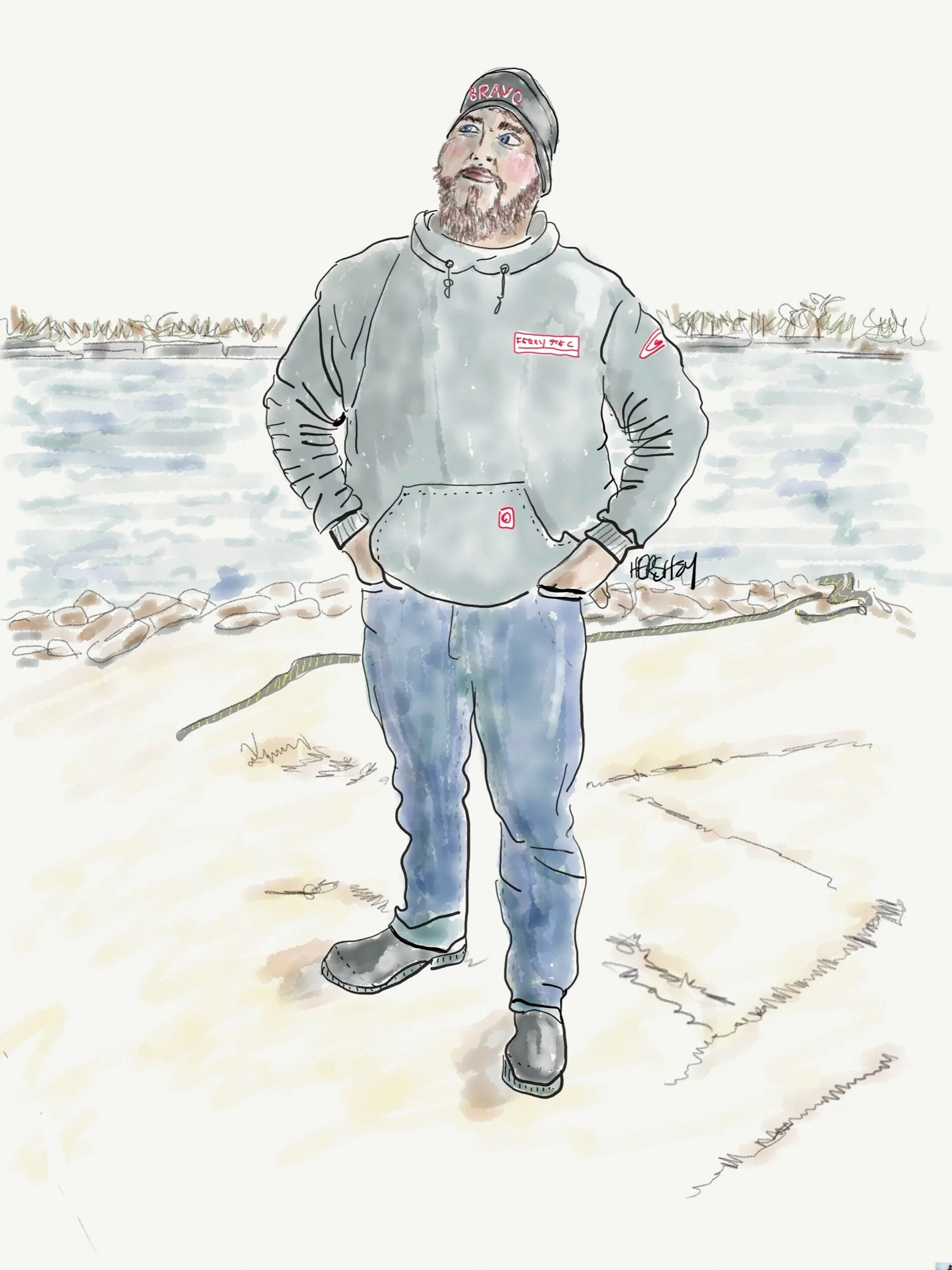
“Yeah, some parts of Missouri are east of the Mississippi and some parts of Illinois and Kentucky are west of it. People don’t know how much the river has shifted over the years”. Rex has been working hard for years running ferries on the Mississippi and local canals. We talked to him at a ferry crossing at Ste. Genevieve, Missouri, and expressed our puzzlement at noticing that the original Capital of Illinois, Kakaskia, was on the west side of the Mississippi in land we thought belonged to Missouri.
Drawing by Jennifer Hershey. Follow her work on Instagram at deeofo.
Rural America is just as distressed as it has been for the past two or three decades. If anything, economic conditions seem worse. There are plenty of abandoned buildings in the smaller towns, both commercial and residential, and there doesn’t seem to be a whole lot of activity. We haven’t yet found a motel that was fully booked. We’re cooking our own food in order to isolate ourselves from exposure to Covid, so we have no idea what the local restaurant scenes are like. That said, grocery stores are predictably busy.
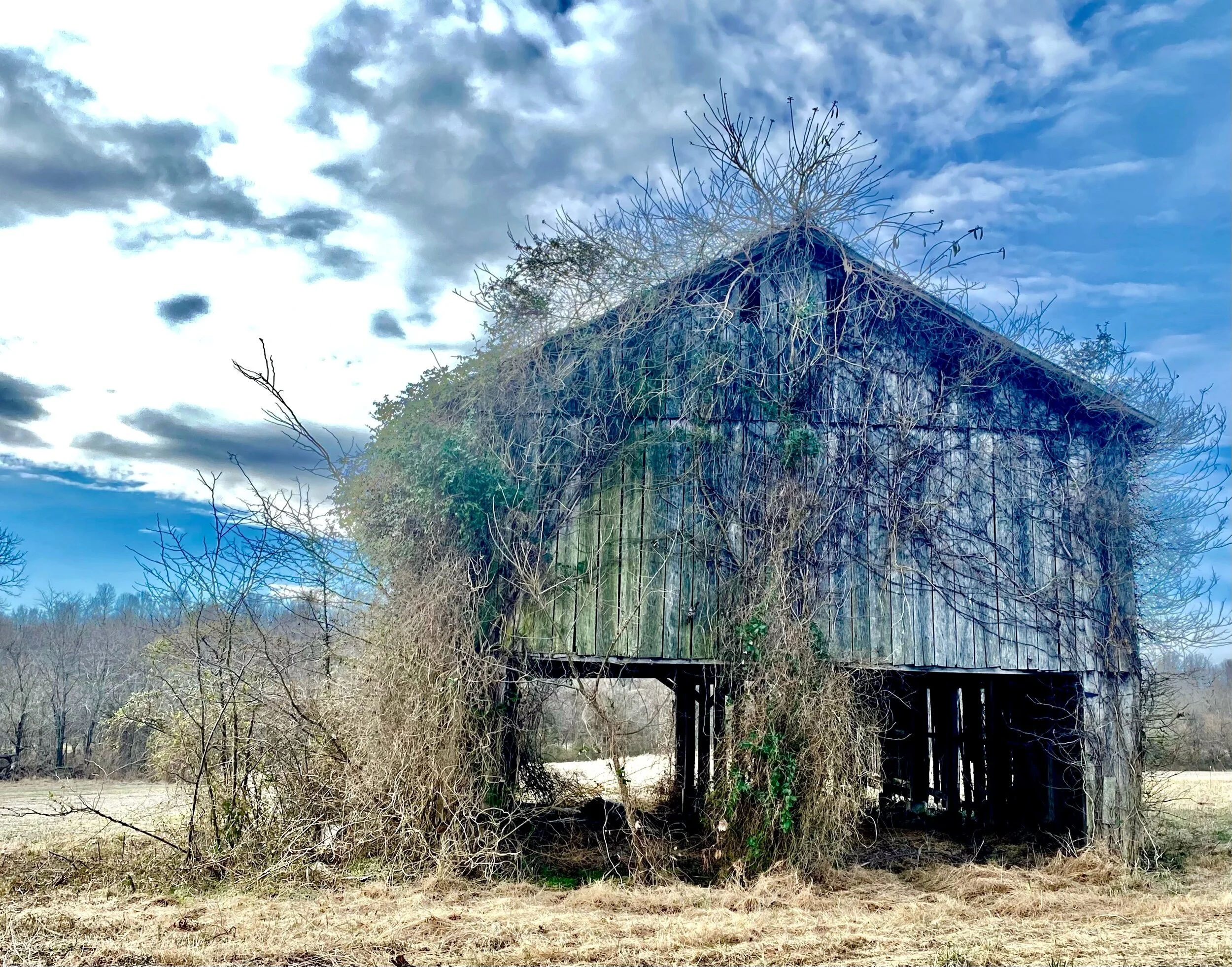
An abandoned barn near Blandville in far western Kentucky,
It seems to us that people who might not have connected a few years ago are now more open to talking. We certainly feel that way. We find ourselves trying to engage in conversations with everyone we meet. Because we are traveling largely in what was Trump Country (Missouri, Kentucky, Tennessee, Arkansas, Mississippi, and Louisiana) we’re slow to reveal how little we trust Trump and believe Biden is a better choice for the nation. However, we are finding that people enjoy talking if we ask questions in an open-ended way.
I worked on this post on our National holiday to celebrate Martin Luther King’s birthday. Interestingly, while I was sitting in Jenny's car writing, she was on her bike in Memphis, and through an accident of fate rode past the Lorraine Hotel where King was shot, where she took these pictures. The first shot is the marquee of the hotel, and the second is the balcony of the motel where MLK was shot (now part of the National Civil Rights Museum).
We spoke to an 81-year old farmer today named Don who was delighted to chat with us about growing up in Marianna, Arkansas, and his many years working on a farm nearby the town of Helena-West Helena. He told us nostalgically how the local economy in the delta used to be more dynamic - there was a tire and a clothing factory, and a chemical manufacturing plant as well as lots of family farms. The plants left long ago, and now there are fewer family farms. Don voted for Trump twice, believing Trump would make things better. After he talked awhile, Don paused and reflected, “I feel real bad about how things turned out. I really don’t understand what’s going on anymore.”
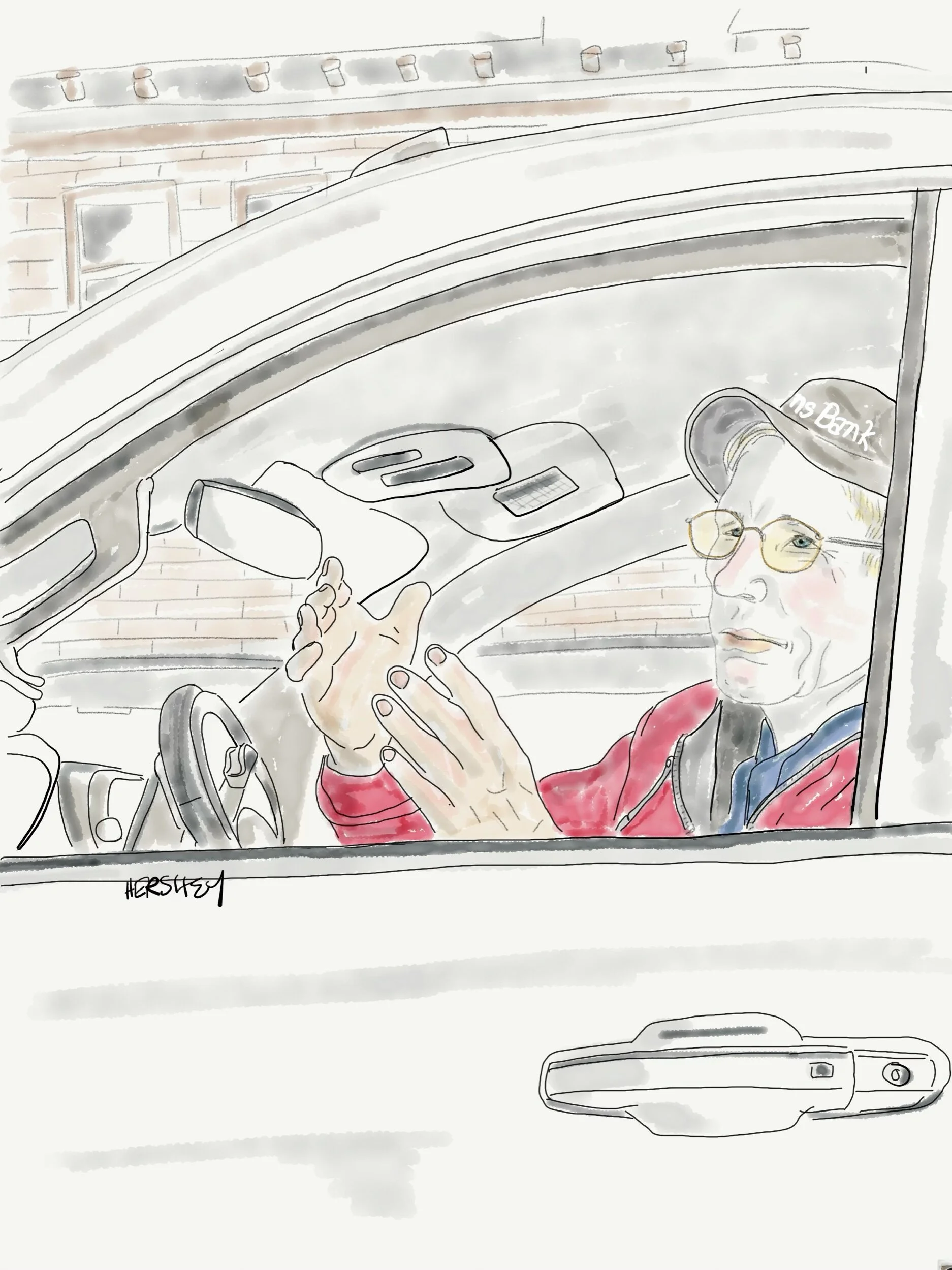
We met Mike Major in Hickman, Kentucky, while we were eating lunch at a gazebo in a local park (which commemorated construction funding from Mitch McConnell). Mike was a farmer his entire life until his recent retirement. He grew up in Hickman and lives nearby on his farm. Mike is tolerant of McConnel’s stand against Trump in the GOP, and seemed as relieved as we are that Biden will soon replace Trump. It wasn’t lost on us that just across the river in Missouri many citizens are rallying behind a very different senator - Josh Hawley. We learned from Mike that Hickman had a bustling downtown when he was growing up, but the town had fallen on hard times through successive floods on the Mississippi. The most recent floods were in 2011 and 2018. In the 2011 flood, the Army Corps of Engineers blew up a dike in Missouri to provide a spillway for floodwater in order to save what is left of Hicksville. But the flood of 2018 was the final nail in the coffin when all but two of the remaining buildings near the river were abandoned. Below is a picture of one of the remaining occupied buildings and another photo of a workshed in a field in Missouri after the 2011 flood.
Drawing by Jennifer Hershey. Follow her work on Instagram at deeofo.
The mostly abandoned downtown in Hickman, Kentucky.
A Mark Twain mural on one of the few occupied buildings in downtown Hickman, Kentucky.
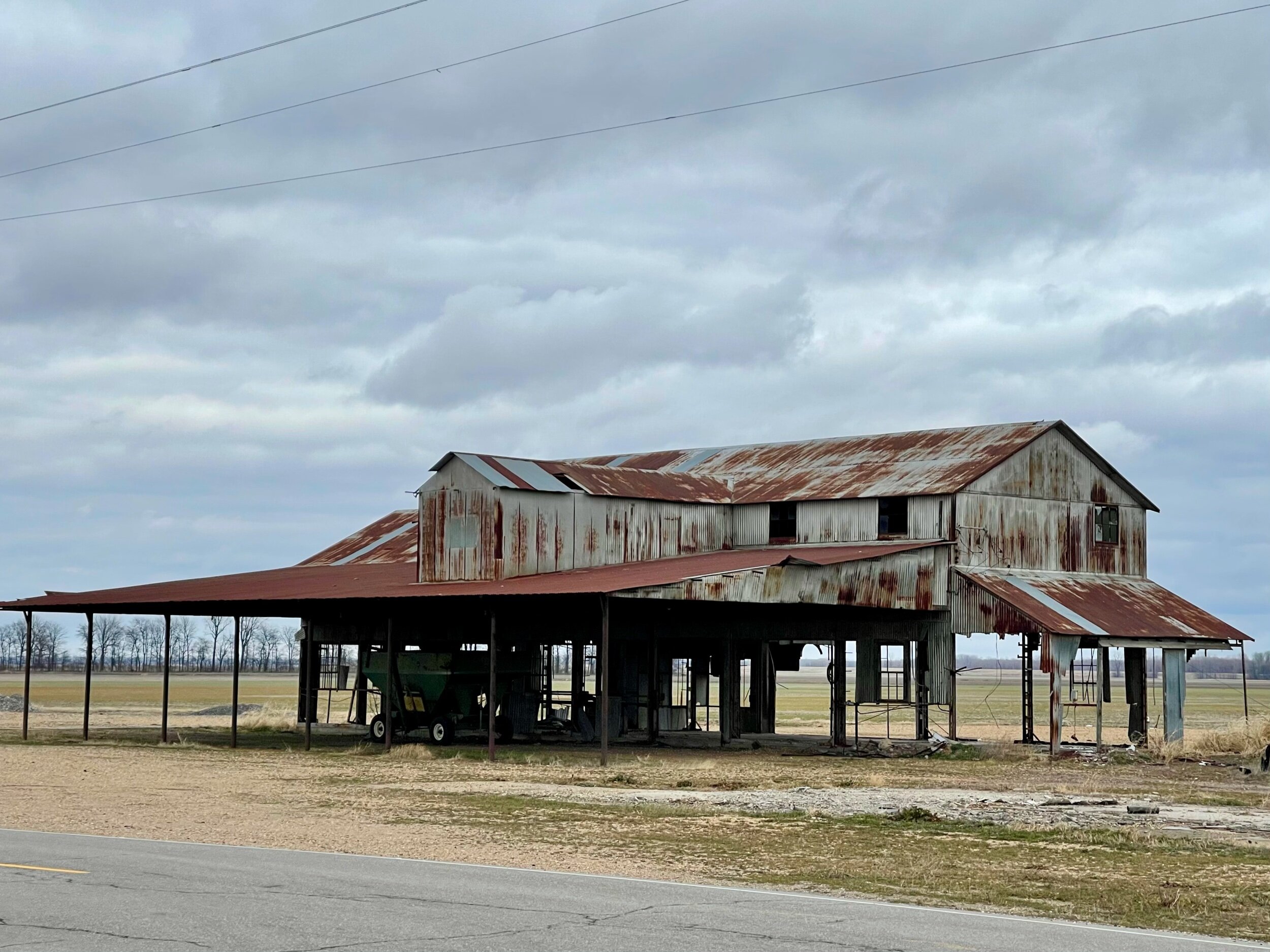
Remains of a building in Missouri on the other side of the river from Hickman after the 2011 spillway flood.
Like everyone else, I look forward to a time when Covid is behind us and we are able once again to congregate, worship, learn, teach, perform, dance, sing, and celebrate together. And it will be even more joyful when our nation becomes recognizable - when Americans appreciate one another because we share a continent and a unique and durable constitution. And hopefully we will enjoy other things many of us used to take for granted - domestic peace, an enthusiasm for innovation and problem solving, a healthy atmosphere and oceans, clean water, economic opportunity for all, and of course - life, liberty and the pursuit of happiness.
I’ve been writing posts on this website for almost five years, and no prior post has been as hard to write as this one. Perhaps it’s covid, perhaps the election, perhaps it’s the sheer overwhelming magnitude of this historical moment. How about you? Do you yearn for reconciliation? Do you want America to get her mojo back? I think the answer is yes. I think we are all aching to connect with each other. I think we want to heal. I think we want to celebrate what unites us. Let's do that. This inauguration is a good place to start.
Stay vigilant! Thanks for reading. More to come.
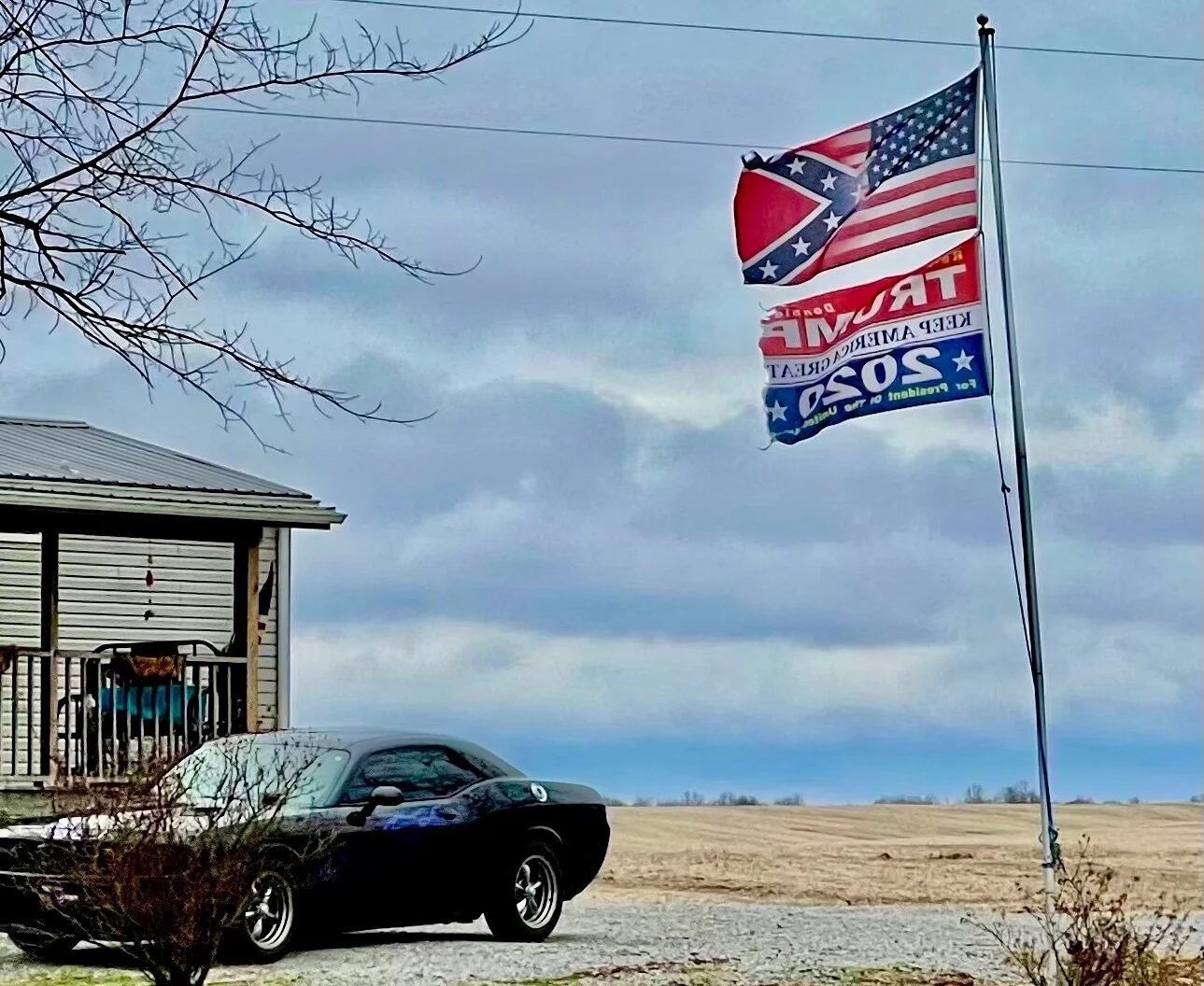
Taken just below Union City, Tennessee. I’ve seen Confederate flags displayed underneath American flags with Trump/Pence signs, but never before an American and Confederate flag blended together.
All photos, unless credited or otherwise noted, are copyrighted property of the blog post author.
Louisiana/Texas, Post 3
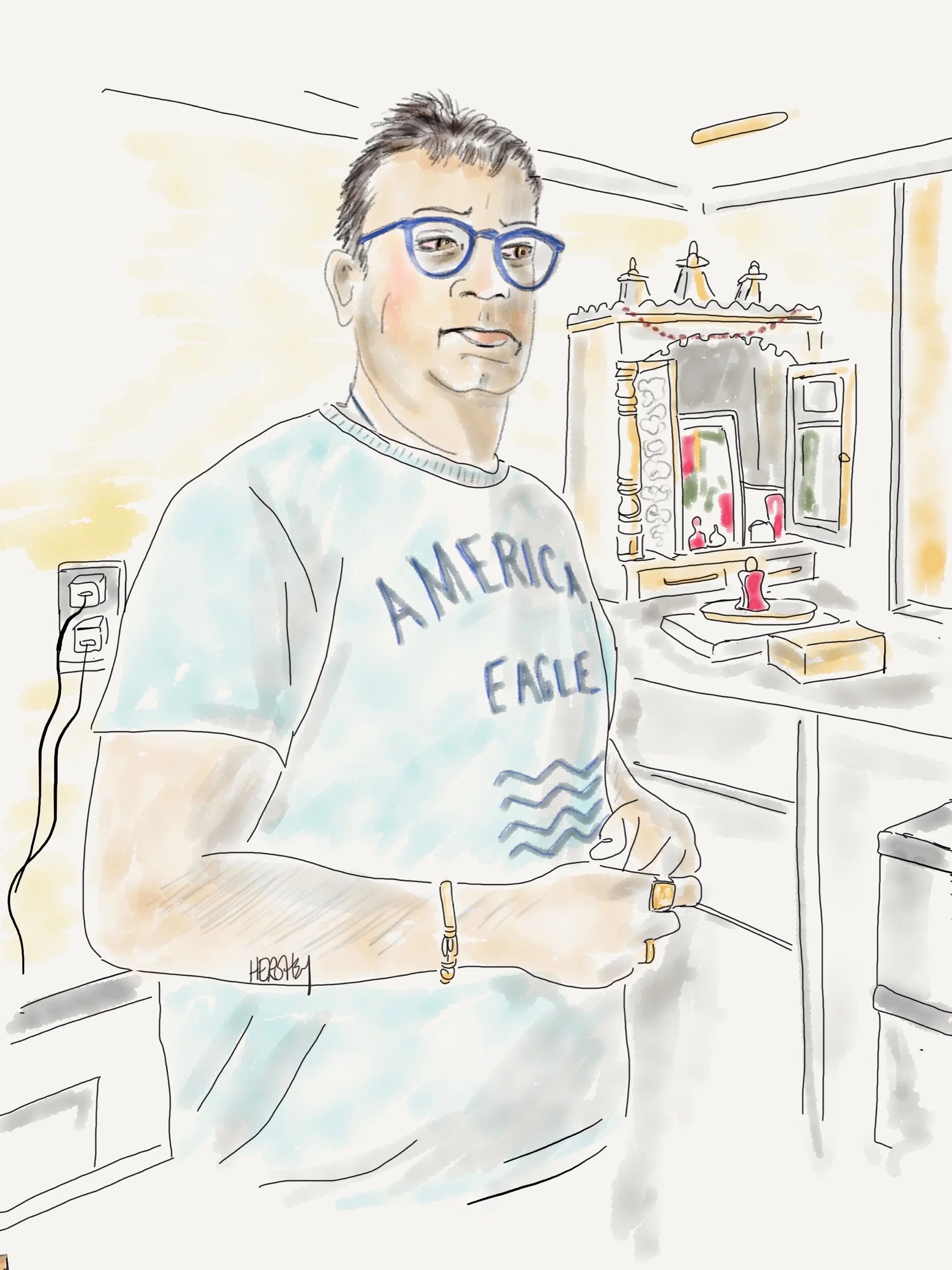
“My wife and I take turns praying at our altar. We are Hindus. But we love this motel. It’s all ours”. This drawing of a proprietor of a mid-century motel in Freeport, Texas was done by Jennifer Hershey. You can follow her work in Instagram at deeofo.
Welcome from Port Aransas, Texas, just slightly southeast of Corpus Christi, Texas.
—————
“It was the best of times, it was the worst of times, it was the age of wisdom, it was the age of foolishness, it was the epoch of belief, it was the epoch of incredulity, it was the season of light, it was the season of darkness, it was the spring of hope, it was the winter of despair.”
-from a A Tale of a Two Cities by Charles Dickens.
Such are the times we live in.
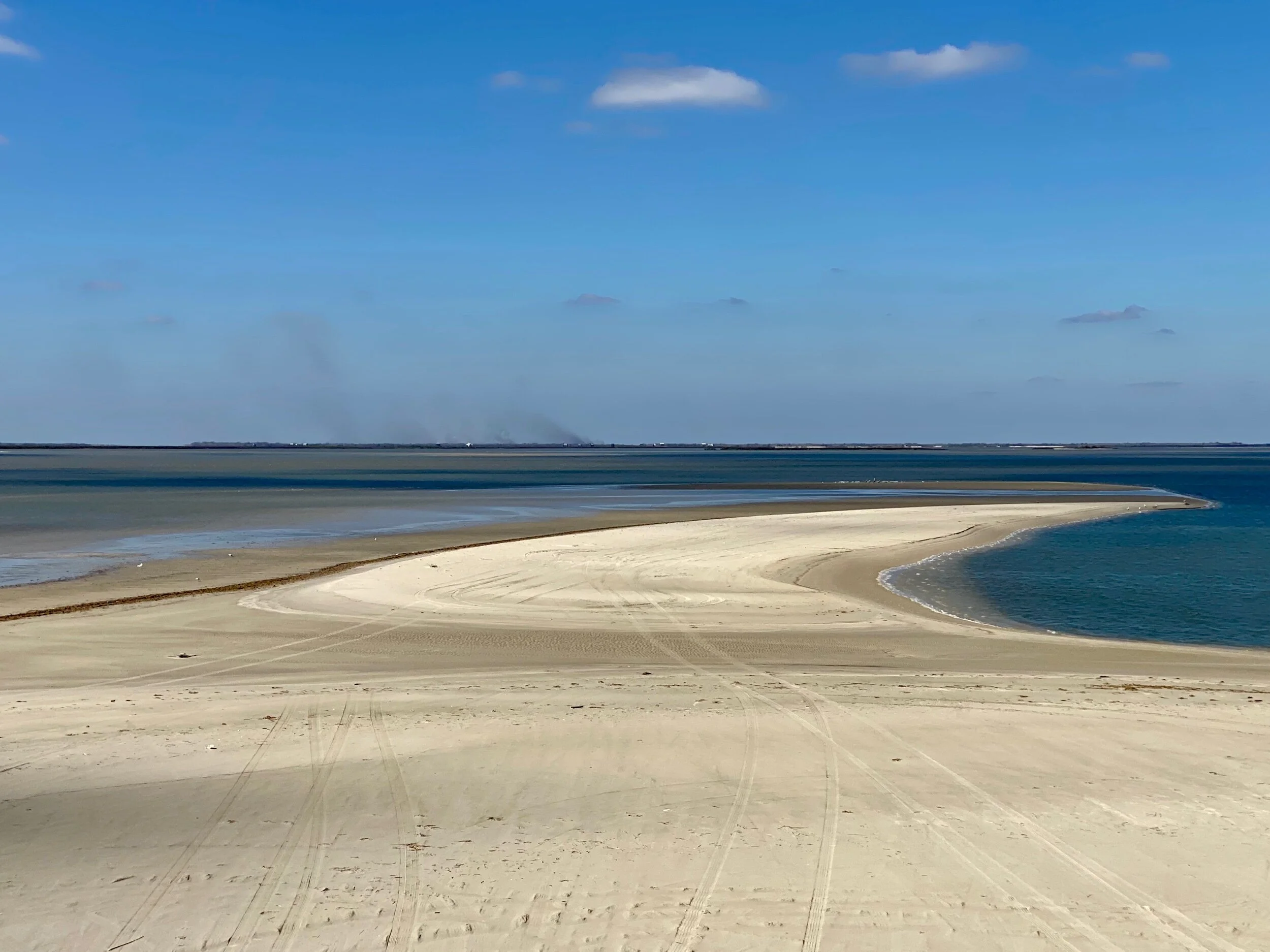
On the way to Freeport, Texas. We learned later the smoke in the background is from a Dow Chemical plant that removes magnesium from sea water.
Our trip continues to be an extraordinary exploration of exquisite natural landscapes, occasional encounters with wildlife (dead and alive), great conversations with diverse and friendly people, navigating delightful and terrifying roads, dealing with sublime and challenging weather, and periodic confrontations with seedy and startlingly ugly industrial landscapes.
Texas is definitely big sky country, and southeastern Texas is as flat as a pancake on a hot griddle.
Perhaps we can borrow from Dickens, and instead of symbolic cities substitute citadels, or communities of people who live inside of self-imposed walls. Like any citadel that is protected from others, we can only see what’s inside, and have no idea of what’s on the outside.
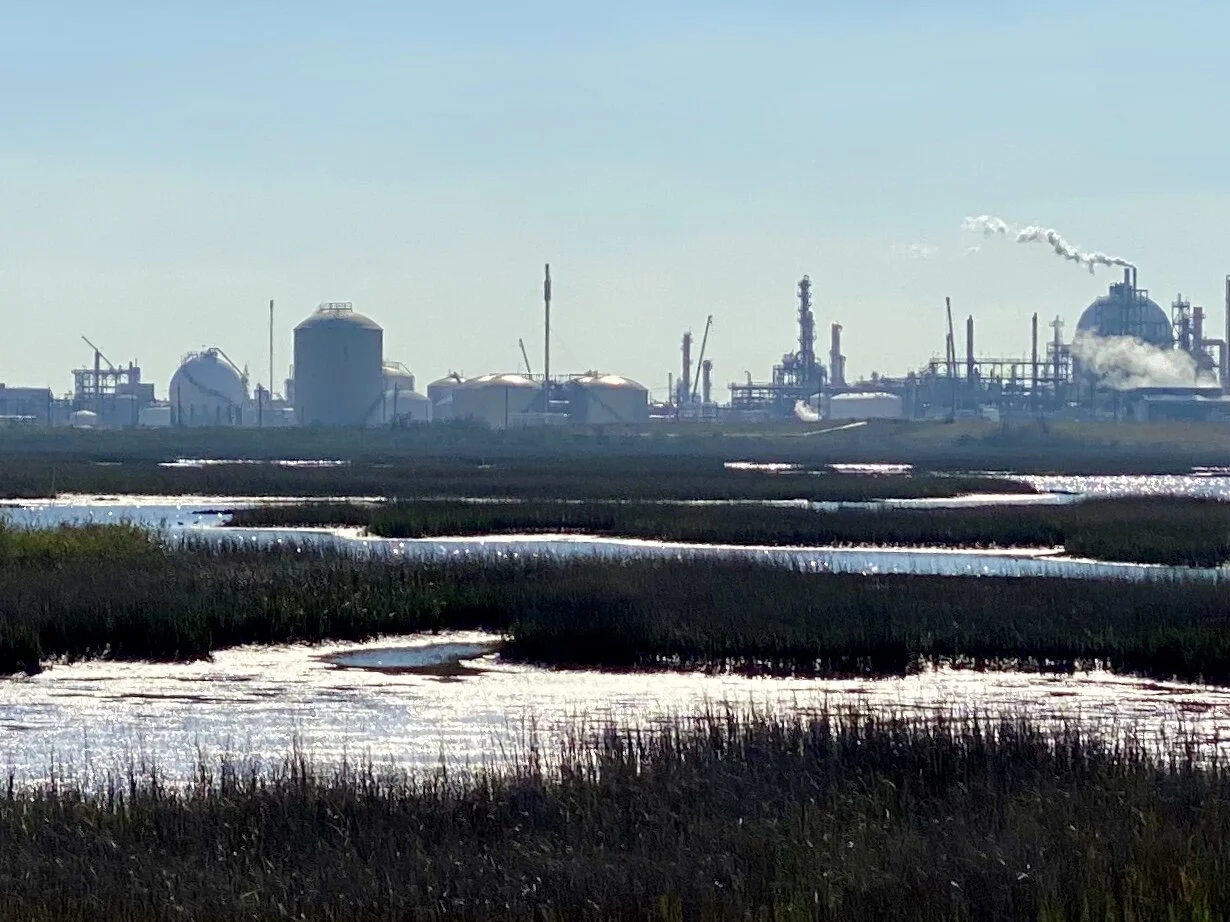
The Dow Chemical Plant near Freeport is situated just above the Intercoastal Waterway on a vast marsh.
In a way, Fox News and CNN are the storytellers for two distinct narratives that reflect two separate citadels: urban and rural America. Our cities are the center of our intellectual, artistic, entertainment and media capitals. Our rural areas - especially evident down here in southeastern Texas - provide access to our natural environments, produce our food (and also increasingly produce electricity through wind-power on the same land), and also extract and move our oil and gas providing our cities with both food and energy. Consequently, they also are the sites for some of our most polluting, dangerous and economically critical industries.
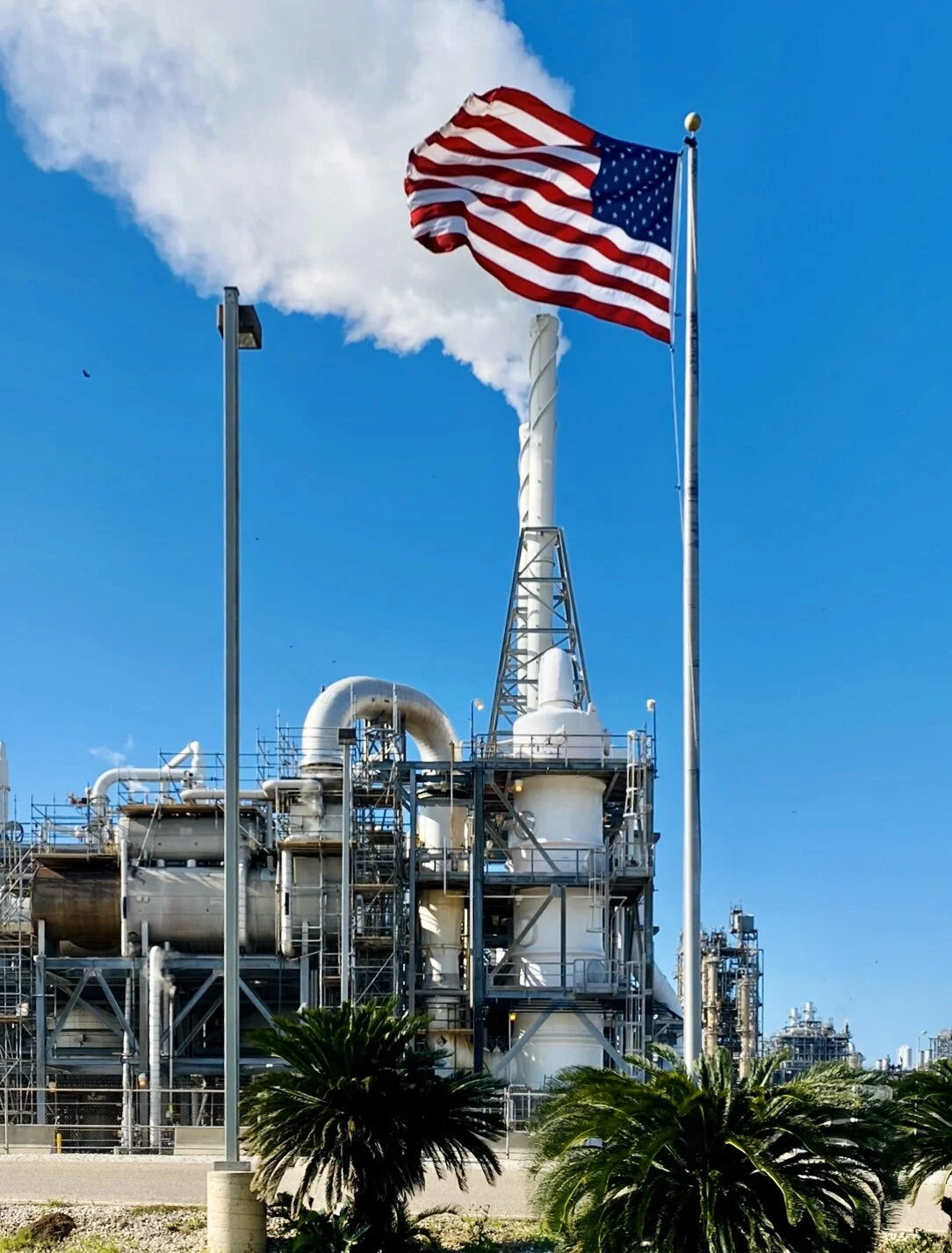
A close up shot of the Dow Chemical plant in Freeport. Locals say this is one of the largest chemical plants in the world.
As I mull over what we are encountering, I find myself thinking the challenges on the Louisiana and Texas coastlines result in a mixed landscape not unlike our home town of New York City. There’s an abundance of both beauty and squalor, and avoiding either one gives visitors an incomplete understanding.
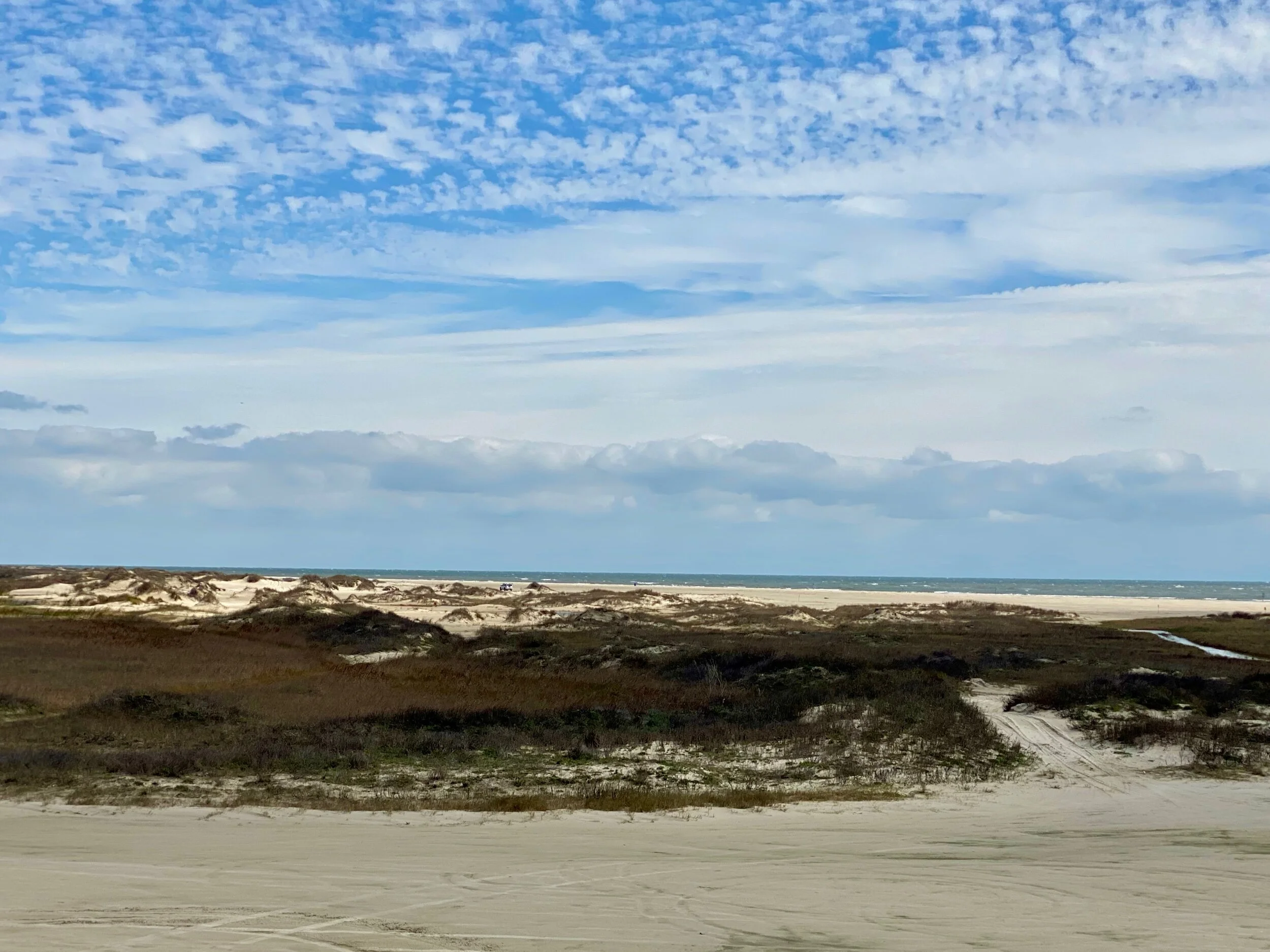
View from the San Luis Pass-Vacek Toll Bridge, which spans San Luis Pass into Brazoria County, Texas.
Clearly, I love the natural beauty of this coastline and its inland marshes, farms, and woodlands. But the story told through the industrialization of the Gulf Coast sticks in my craw. As a northerner, I’m struck by my own complicity in a type of NIMBY (Not in my Backyard) reality. I enjoy living in a city that has (with some exceptions in poorer neighborhoods in the outer boroughs) enjoyed increasingly cleaner air and water over the past several decades through stricter environmental regulations and a shift in focus from industrial production to digital technology.
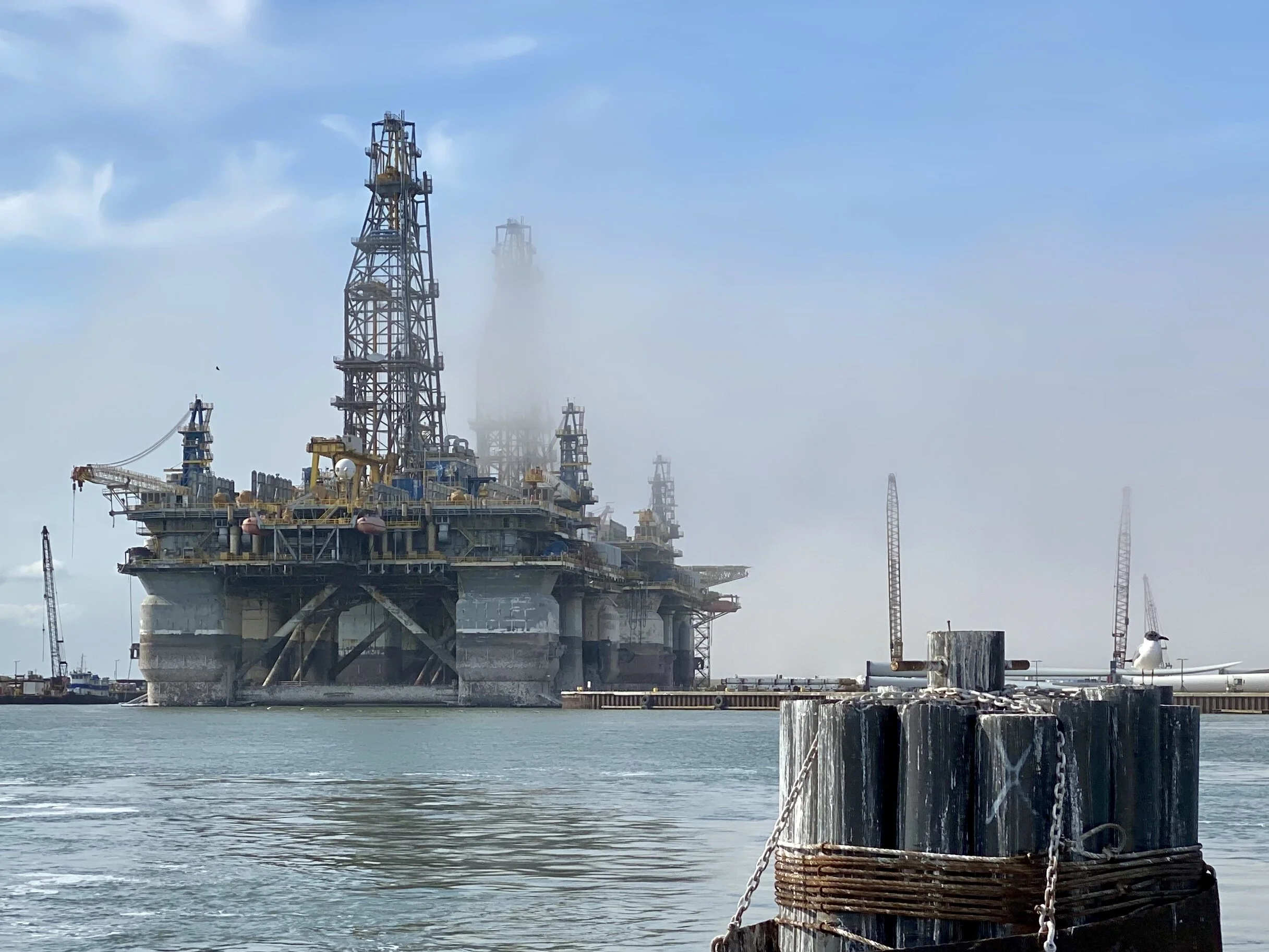
Temporary oil derricks next to the Corpus Christi shipping channel. The local community was told they would be there for six months, but are still there after almost 3 years. And it’s a big bone of contention in this community. Picture taken from the Port Aransas Ferry.
Yet, the nasty stuff used in so many of our industrial processes, plastics and household products has to be made somewhere (at least in our current economy), and some of those places are along the Louisiana and Texas coasts. And like all poor and moderately poor neighborhoods, when jobs are at stake the nature and consequences of those industries matter less than the jobs they bring.
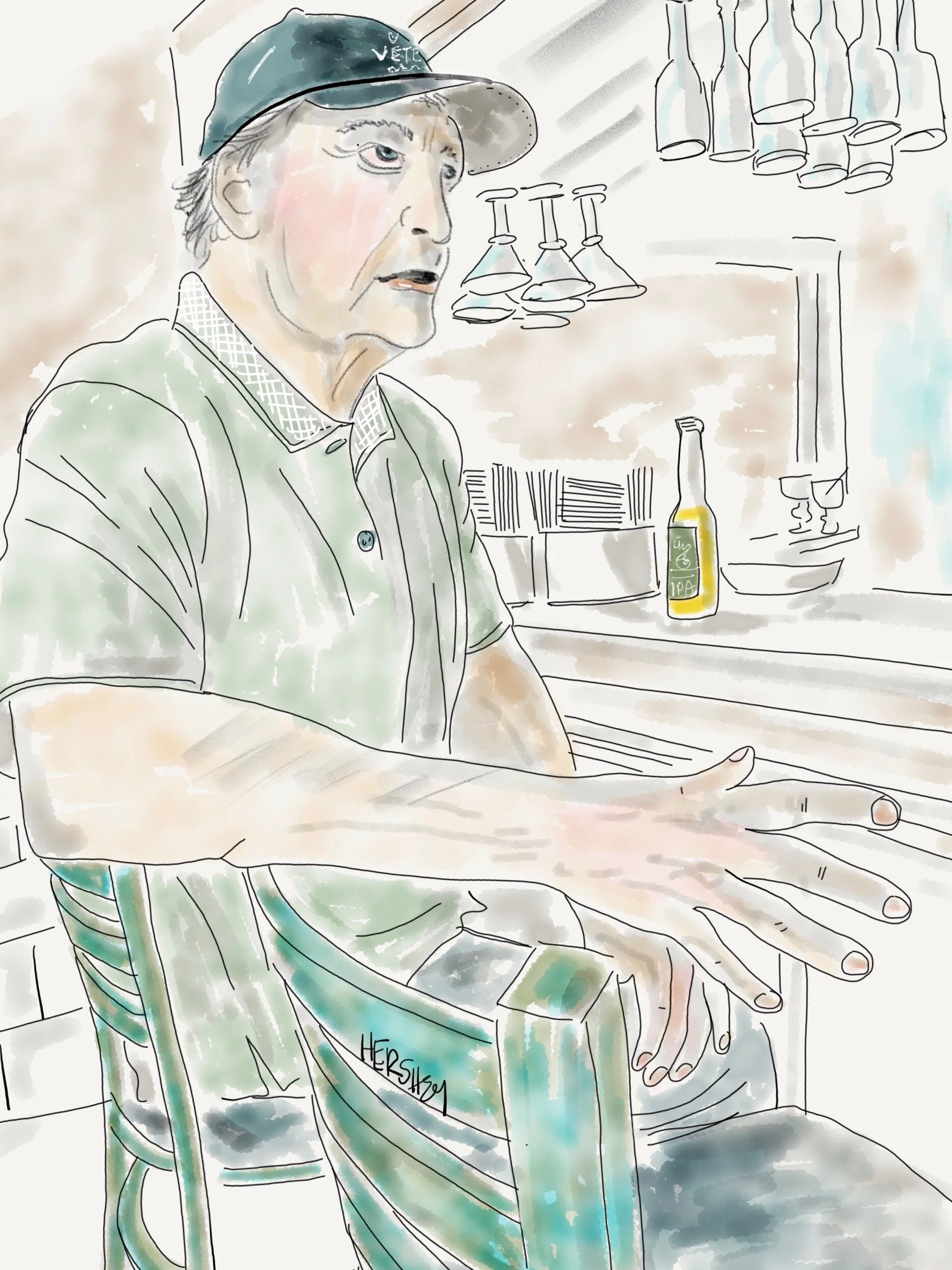
“Well I’ll tell you what—they got the best seafood right on that Seawall”. Drawing by Jennifer Hershey. Follow her on Instagram at deeofo.
Occasionally locals will resist. We met a local at a great Mexican restaurant in Freeport who had worked in most of the nearby plants over his decades long career (he was probably in his 60’s). He did a short stint at the nearby Dow Chemical plant, but didn’t stay long. The plant officials said it was safe, but he told us that it sure didn’t seem safe to him, so he moved on.
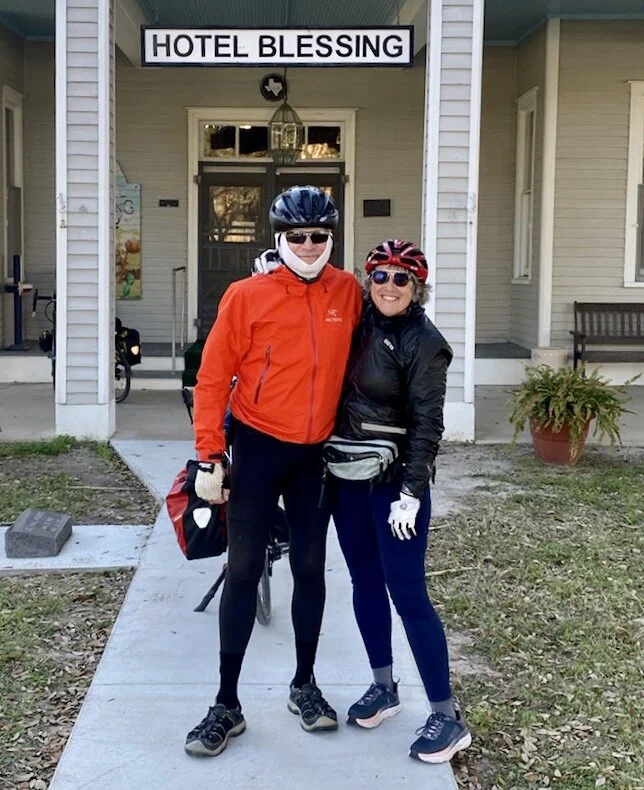
Jenny and I standing in front of the Hotel Blessing.
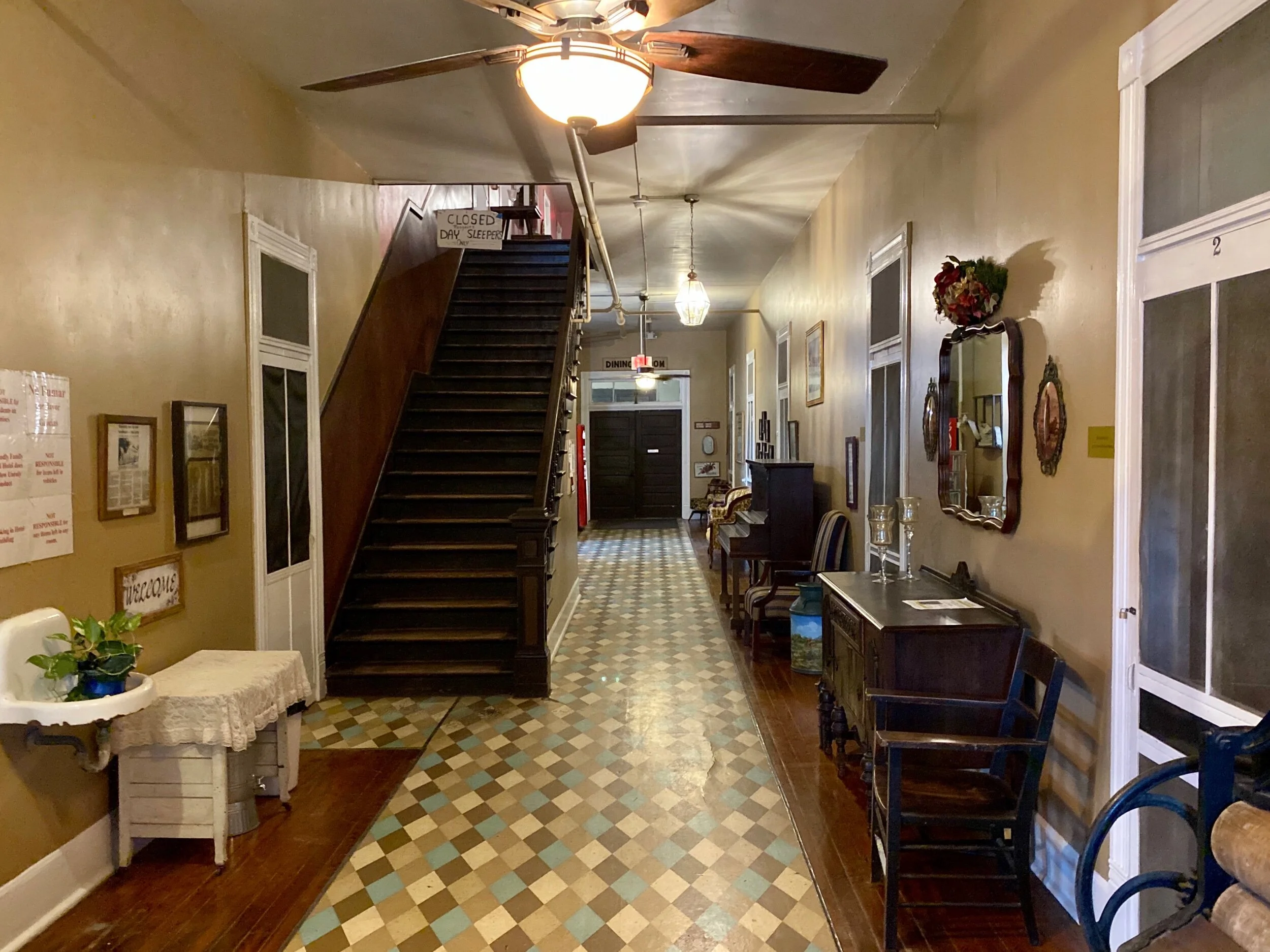
The downstairs interior of the Hotel Blessing in Blessing, Texas, population 861. Blessing was named in the early 1900’s out of the gratitude for local agriculture, railroad and coastal development.
Yet, lots of folks down here are glad for all that Texas has to offer. I’ve heard more than one person boast about being “Texas born and bred”. And even one town has named itself after its good fortune. By sheer coincidence, we found ourselves needing to stop at the one hotel about the right distance between Freeport and the Corpus Christi area (we couldn't stay on the coast because the old coast road was washed out by Hurricane Ike). It’s called Hotel Blessing, named after the town of Blessing.

“Oh I’ve been doing this for years. If they keep coming....I’ll be here”. Drawing of Helen Feldhousen by Jennifer Hershey. Follow her on Instagram at deeofo.
We didn’t know what we were in for at the time, but after a restless night at the Hotel (we could hear everything - yep, everything - going on during a busy Valentines Day evening) we went to breakfast at the Hotel Blessing Coffee Shop. We were greeted by the intrepid Helen Feldhousen and a cast of other folks - some of whom who show up in the Texas “Bucket List” broadcast below.
I am thinking quite a bit about the concept of “the tragedy of the commons”. This is a situation where individual users, acting independently according to their own self-interest, behave contrary to the common good of all users by depleting or spoiling the shared resource through their collective action. “Not in my Backyard” (NIMBY) actions are related conceptually. For example, my own life is made better by situating so many large petroleum chemical and oil and gas plants so far away from large cities on either the west or the east coasts. At the same time, the people of southeastern Texas gain through employment opportunities where the only other options would be tourism or agriculture. Yet, their very livelihoods are put at risk by the significant carbon pollution of the industrial activity here, because it contributes to the extreme weather that may ultimately destroy those plants, along with their jobs.
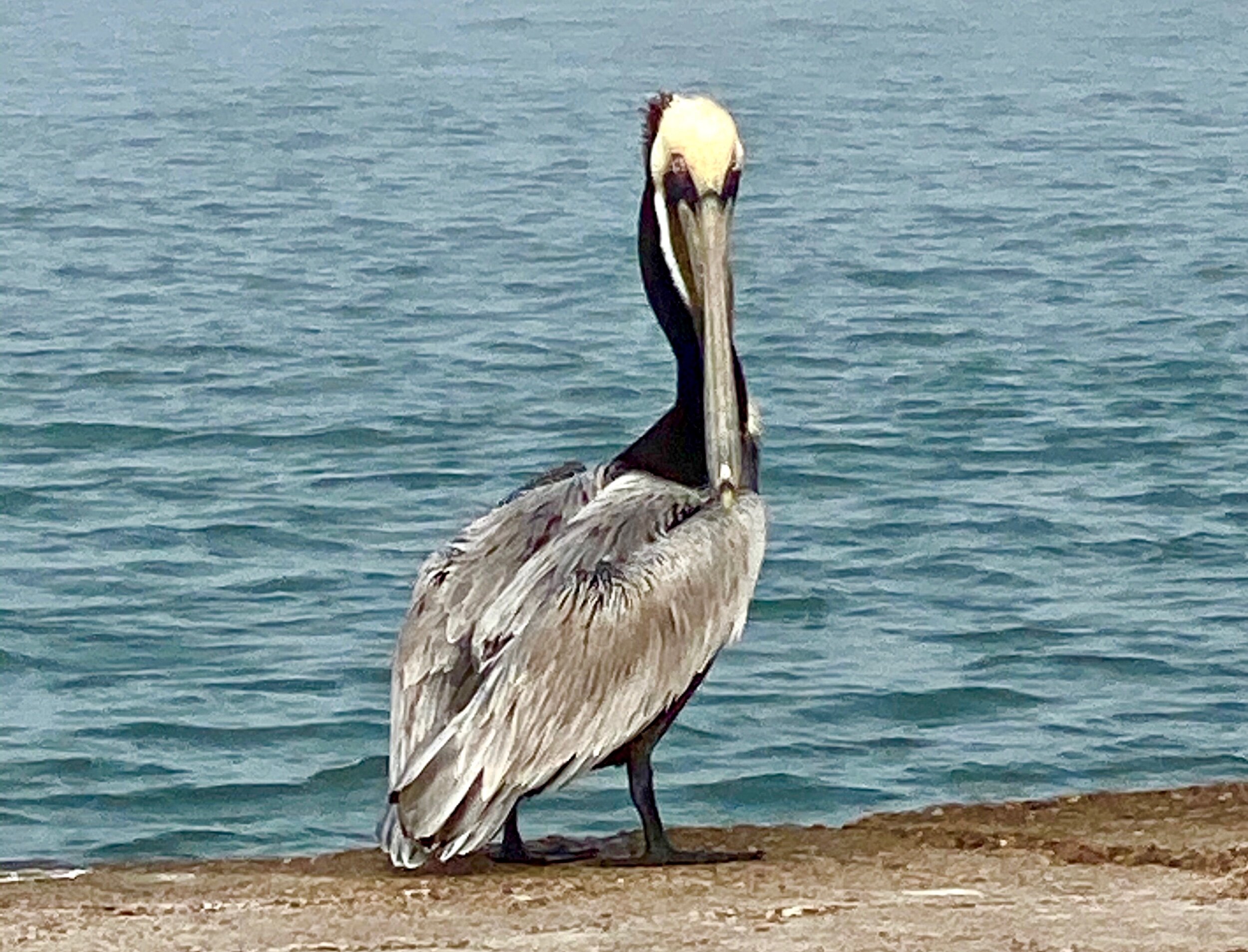
A very mellow Pelican stares us down on the beach at Port Aransas.
Additionally, citizens around the world gain nothing by the carbon these plants and their related industries have added to our atmosphere. It’s worth contemplating that although America contains 5% of the worlds population, we are responsible for 25% of the carbon put into the atmosphere since the dawn of the industrial revolution. And although China is now the world’s greatest carbon polluter, we remain the world’s greatest carbon emitter on a per capita and country basis combined. That fact alone suggests that our way of life is a big part of the tragedy of the commons that climate change is extracting. It's clear that staying with the status quo is the worst thing we can do. It’s time to step up to a different plate.
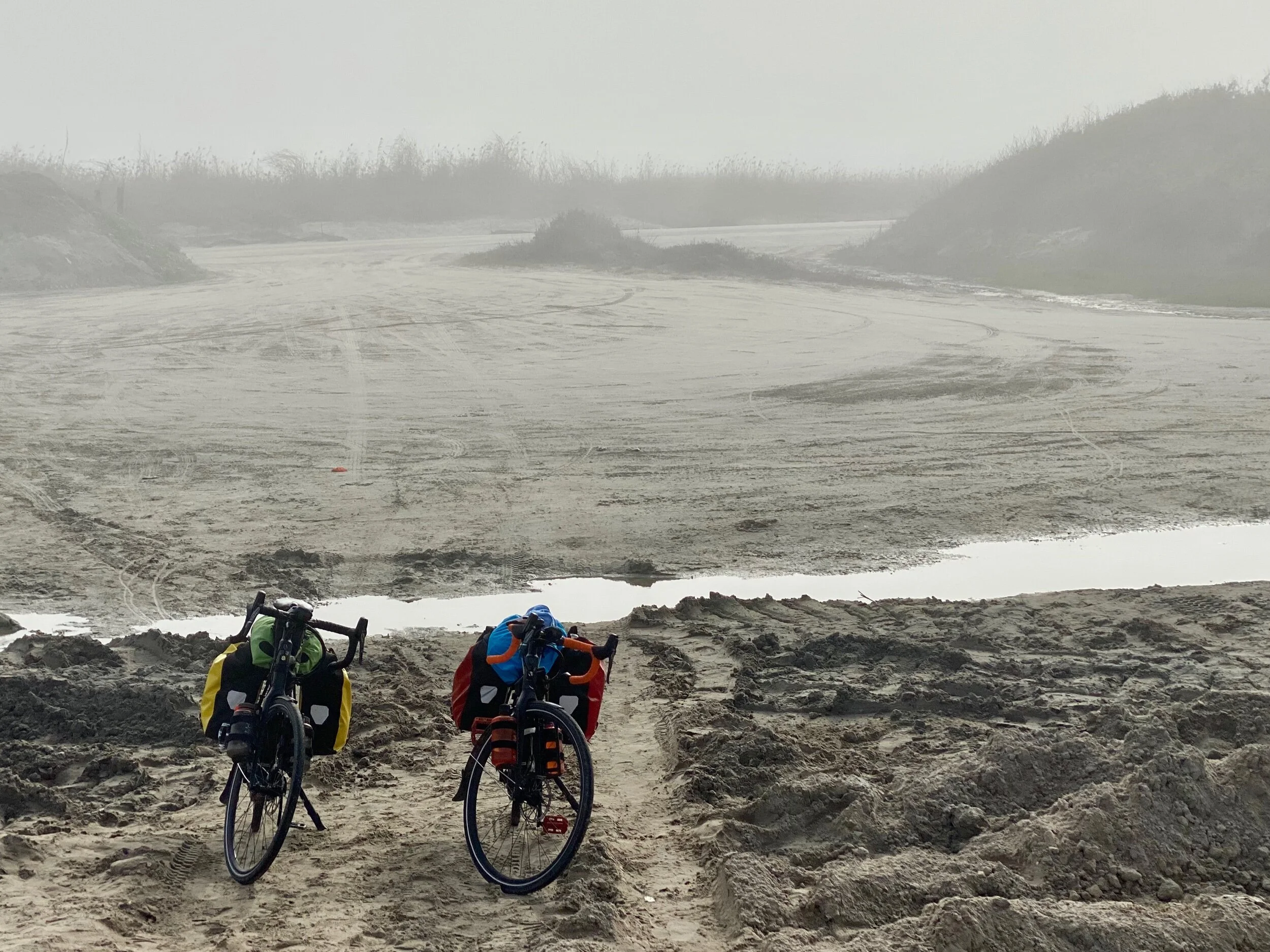
Our bikes in fog at the beach on Port Aransas Beach, Texas.
A few of you told me you missed the links to the Garmin maps showing our journey day by day, so I include links below to our entire trip to date. If you don’t have a Garmin account you will have to create one to see them (it's worth it if you're a biking geek or map lover).
1) New Orleans Road Cycling, 2) New Orleans Road Cycling, 3) Donaldsonville Road Cycling, 4) Morgan City Road Cycling, 5) St Mary Parish Road Cycling, 6) Abbeville Road Cycling, 7) Lake Arthur Road Cycling, 8) Cameron Parish Road Cycling, 9) Port Arthur Road Cycling, 10) Galveston Road Cycling, 11) Freeport Road Cycling, 12) Matagorda County Road Cycling, 13) Refugio Road Cycling, 14) Today we are in Port Aransas, Texas, just slightly southeast of Corpus Christi, Texas.
Thanks for reading! More to come…
All photos, unless credited or otherwise noted, are copyrighted property of the blog post author.
Louisiana/Texas, Post 2
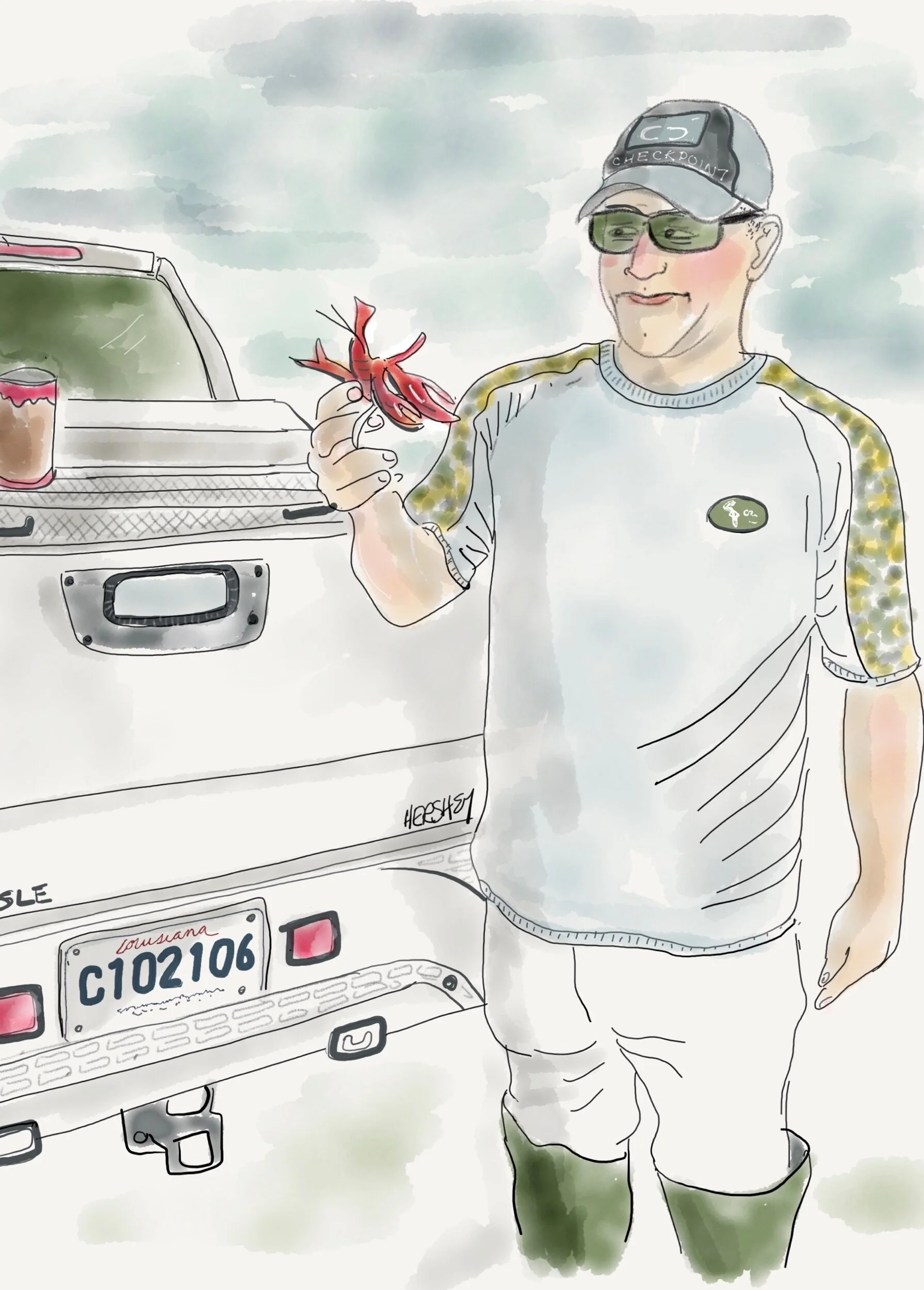
“Yes Ma’am...it’s alive. They be millions of them in pots out there in them rice fields”. Drawing by Jennifer Hershey. Follow her on Instagram at deeofo.
Welcome from Galveston, Texas, where we arrived from Louisiana by way of the coastal towns Cameron, Louisiana, and Port Arthur, Texas. Most of south central and southwestern Louisiana below the I-10 corridor from Houston to New Orleans is less than 20 feet above sea level. On both sides of the Intercoastal Waterway this land of marshy prairies, bayous, forests and intense wetlands supports many wildlife sanctuaries, cattle ranches, sugarcane and rice farms, and crawfish trapping. It was a pleasure to cycle through. People are friendly, and the inland towns are small and attractive.
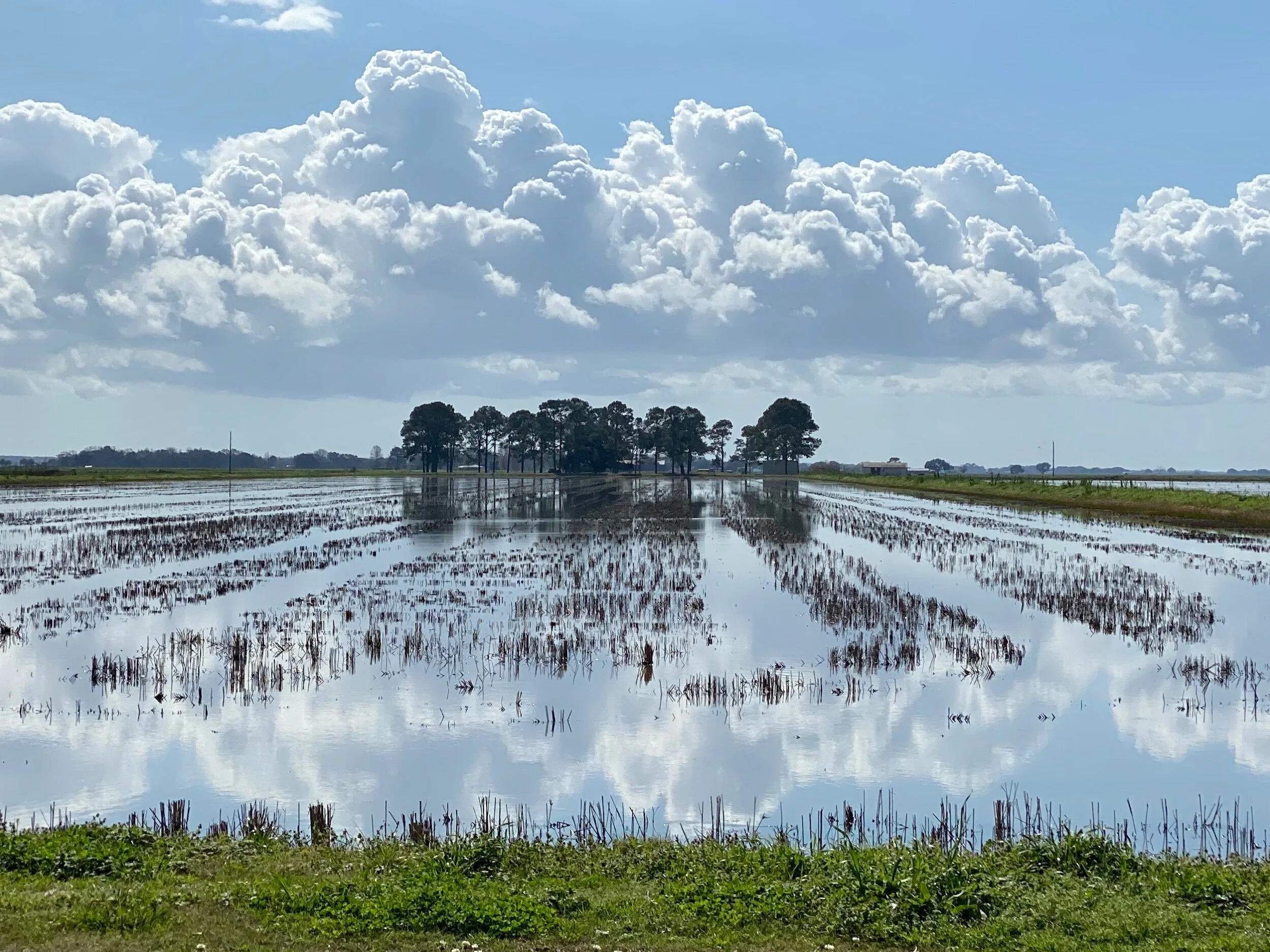
A rice field east of Lake Arthur, LA.
We had an interesting encounter with a very busy and successful woodworker named Mark near New Iberia, Louisiana, who showed us his shop, and introduced us to some of his workers. After we got settled into a motel in nearby Abbeville, he and his wife Dona picked us up and took us out for a sensational seafood dinner. We enjoyed Louisiana hospitality at its best, with good food and plenty of libation and conversation. Although we could sense we weren’t all likely to be on the same page politically (even though we shared a concern for rising sea level and the fate of the lowlands), a strong and jovial spirit of acceptance and friendship remained intact. Interestingly, the next day Mark read my recent blog post, and texted me “Great post. Observe more, judge less. Good way to live. Just remember, sometimes you have to step up to the plate”. Jenny drew his picture, and I thought about what exactly he meant.
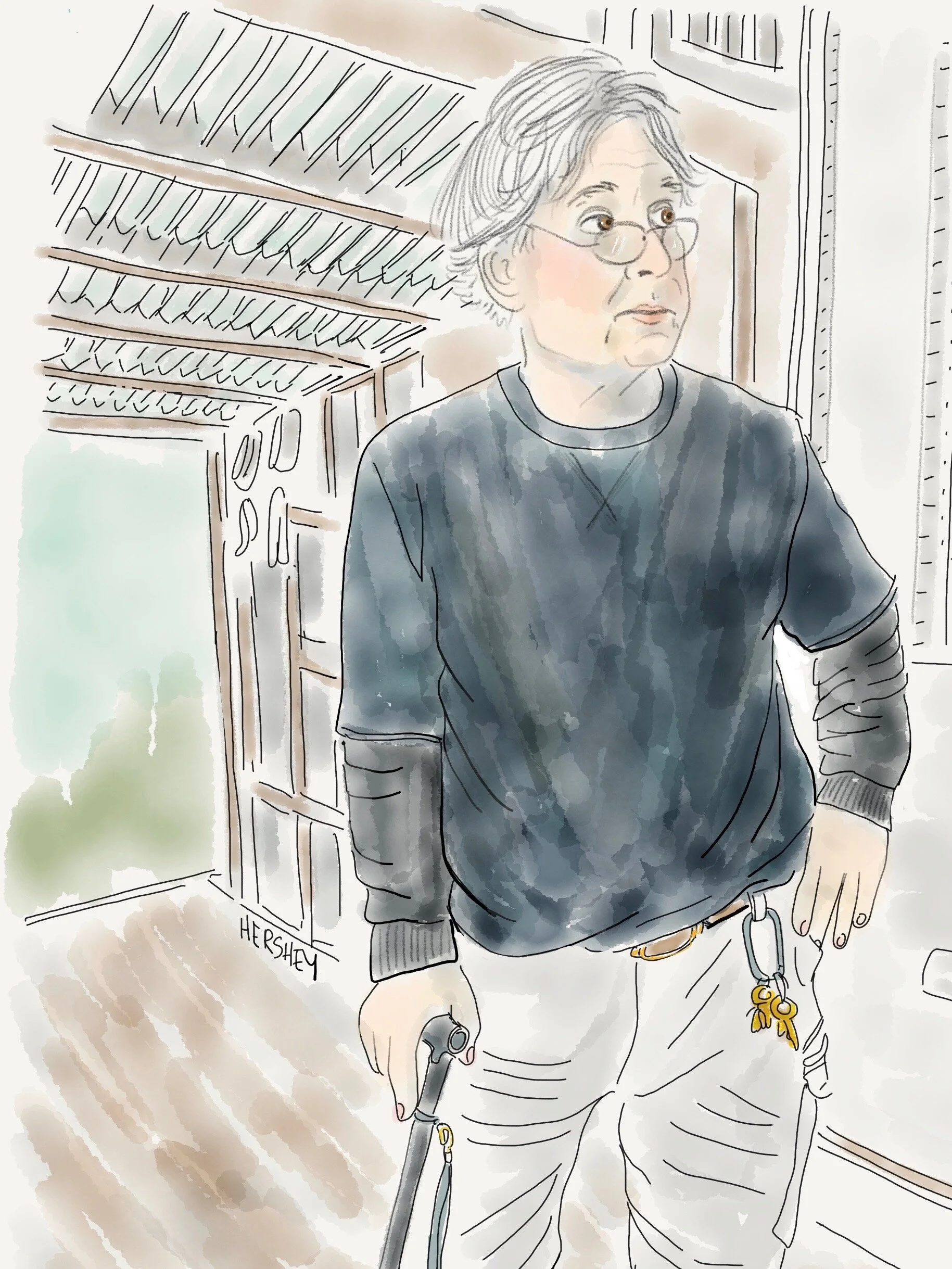
“I got three good sons in laws. I want my family to be healthy. But I worry that the land to the south of here is going to be under water”. Drawing by Jennifer Hershey. Follow her on Instagram at deeofo.
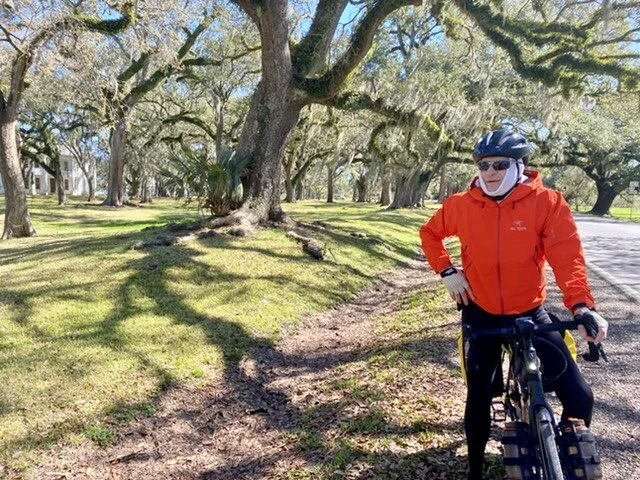
Michael biking through historic Jeanerette, LA.
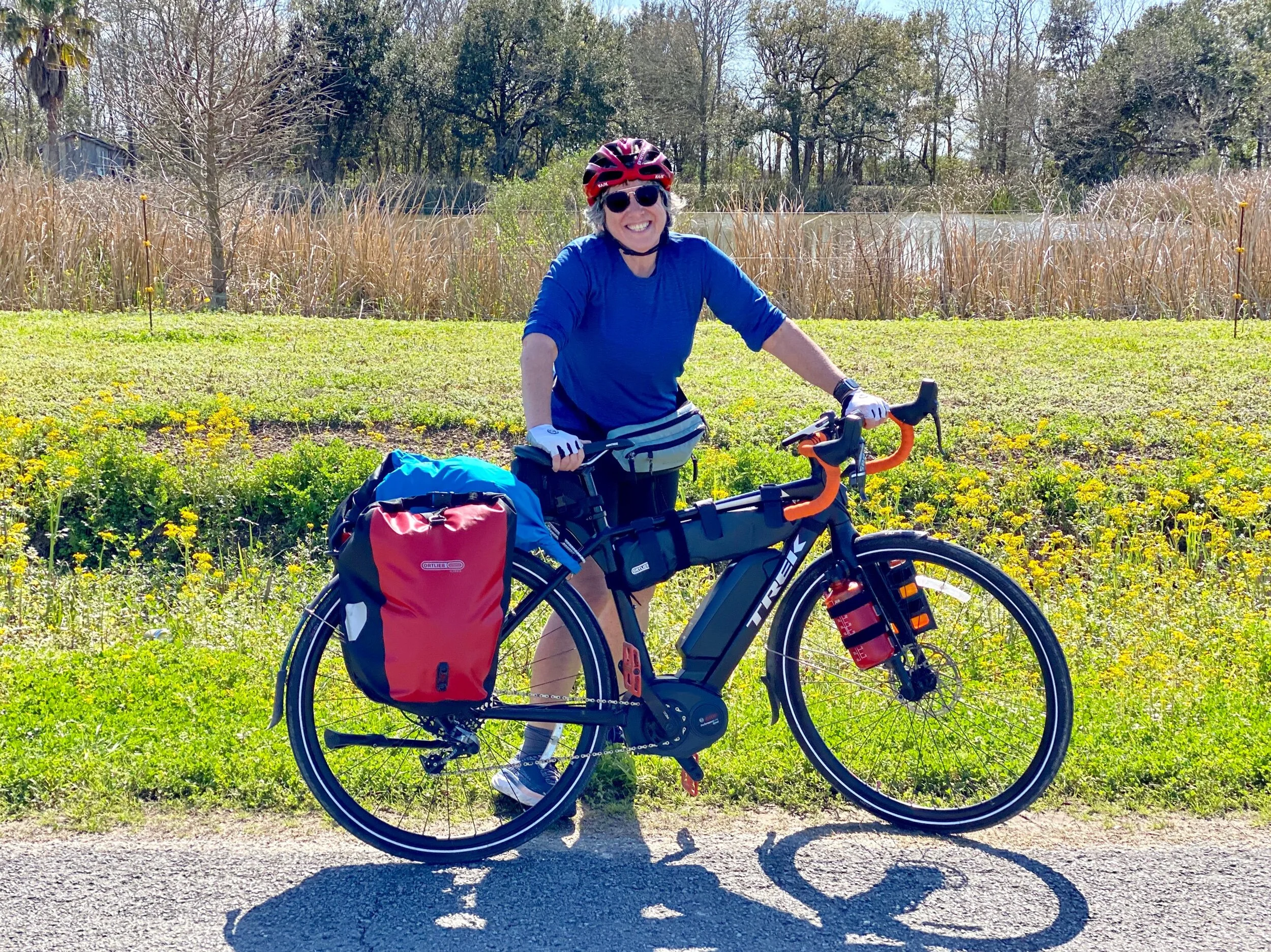
Jenny with her bike on the way to Lake Arthur, LA.
In addition to their beauty and the warmth of their inhabitants, southern Louisiana and Texas can also be disturbing places to bike through. This bucolic landscape is riddled with debris, machinery, abandoned oil wells and new fracked gas compressor stations. It’s crisscrossed by pipelines carrying oil and gas from conventional wells found underneath the marsh, and an abundance of fracked gas piped in from the north. Much of the fracked gas in western Louisiana originates from the nearby 9000 square mile Haynesville Shale, a large shale play in northwestern Louisiana.
A view of Lake Arthur, LA.
Given the low elevation and the marshy characteristics of the land, it’s obvious that this area is very prone to coastal erosion, storm surges, tidal flooding, and extreme weather events such as hurricanes. A few days earlier, just west of New Orleans, we had contended with tornado warnings, which are quite unusual for the area. Locals agreed, although no one we spoke to suggested a changing climate as a possible cause.
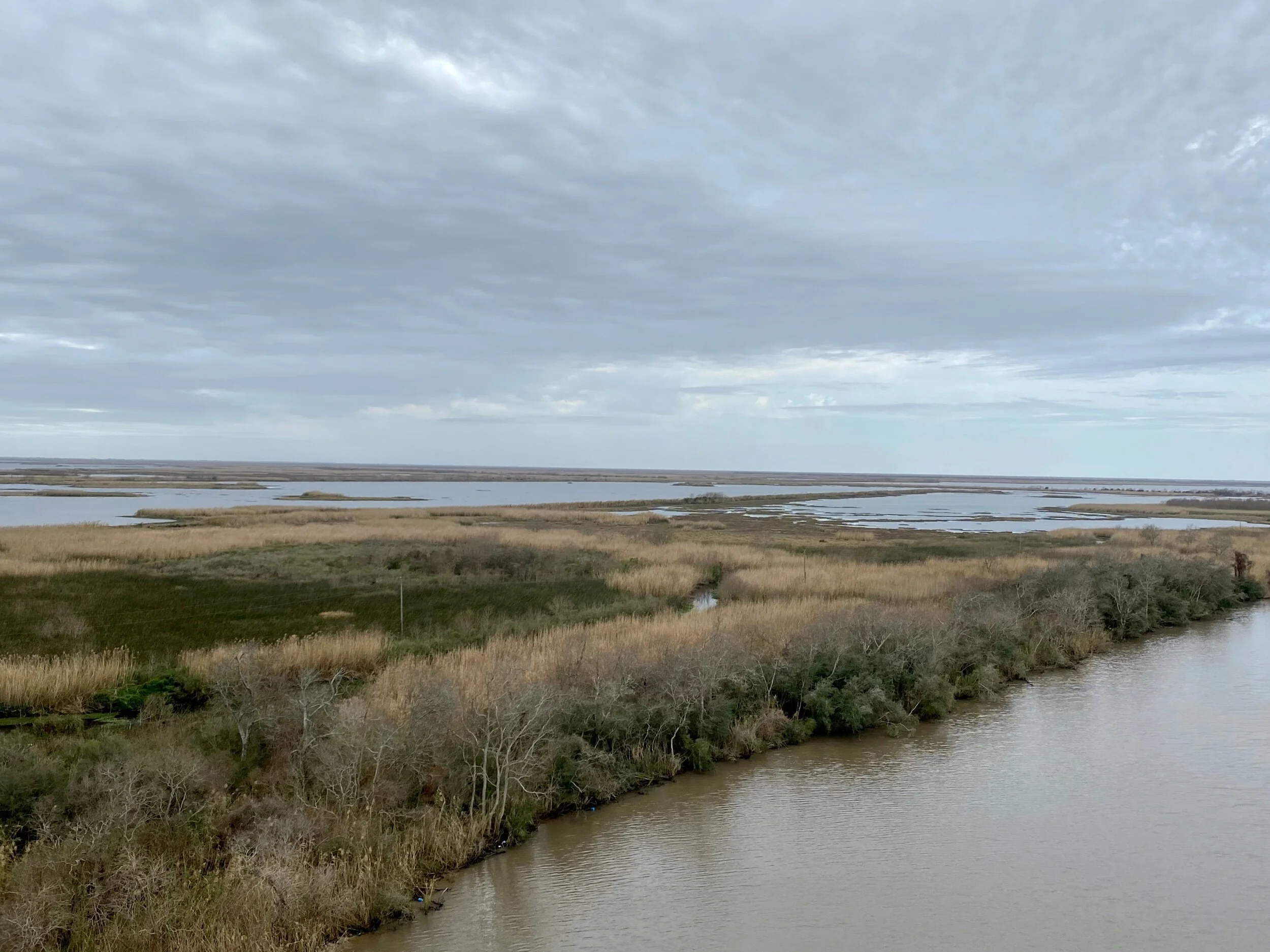
Just south of the Intercoastal Waterway on Highway 24 in southwestern Louisiana. Under these marshes lie a maze of pipelines carrying oil and gas from local deposits and the shale play in northwestern Louisiana.
The sheer vulnerability of the lowland coastal areas of the Gulf Coast seems hauntingly palpable. It’s clear to any thoughtful observer that Louisiana is deeply and complexly affected by our changing climate.
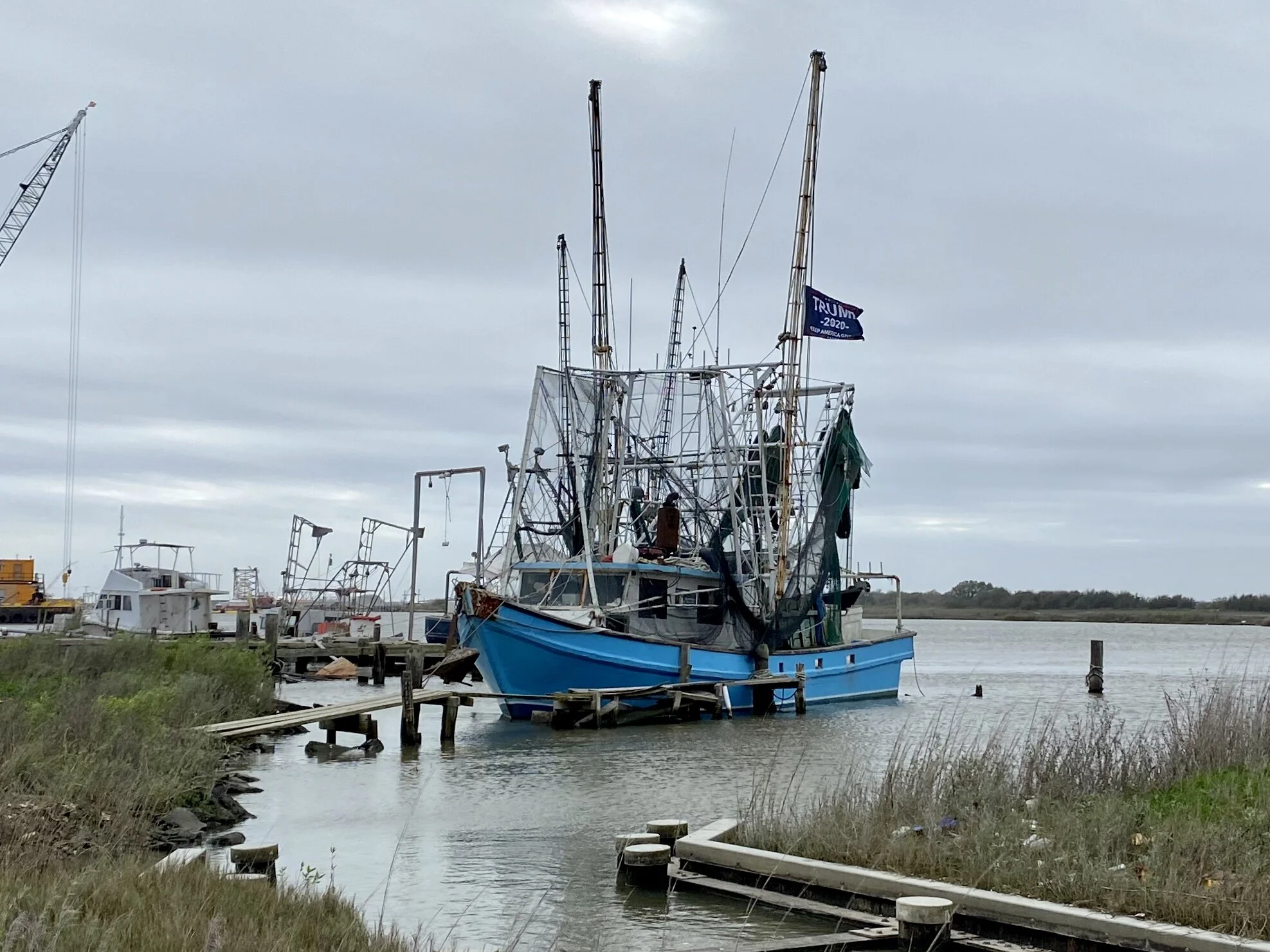
A fishing boat moored near the site of the new LNG global exporting plant at Cameron, LA. The flag on the boat says Trump/Pence 2020 . The entire port area just south of this boat (which used to be public land) is now privately owned by the company building the incoming plant. We weren’t allowed to see it.
The town of Cameron, LA, (once a bustling resort town of 3000 people that was devastated by Category 3 Hurricane Audrey about 60 years ago, and slammed again by Ike in 2008) now only has a few hundred permanent citizens. However, it is now a site for a large liquified natural gas (LNG) global exploring plant that will compete with an equally large LNG global exporting plant under construction in nearby Port Arthur, Texas. This much larger blue collar town lies just across Louisiana's southwestern border, where the Spindletop gusher was struck in 1901, setting off an oil rush that resulted in nearby Houston eclipsing Galveston as the primary port for southeastern Texas.
Gas flares in the marsh about a mile from the Liousiana Coast.
Each new plant currently employs about 3000 construction workers. When complete, the Cameron plant will support 160 permanent jobs, and the Port Arthur plant will support about 200 permanent jobs. That is, of course, unless a major hurricane hits this part of the Gulf Coast, in which case operations will either be temporarily or permanently interrupted.
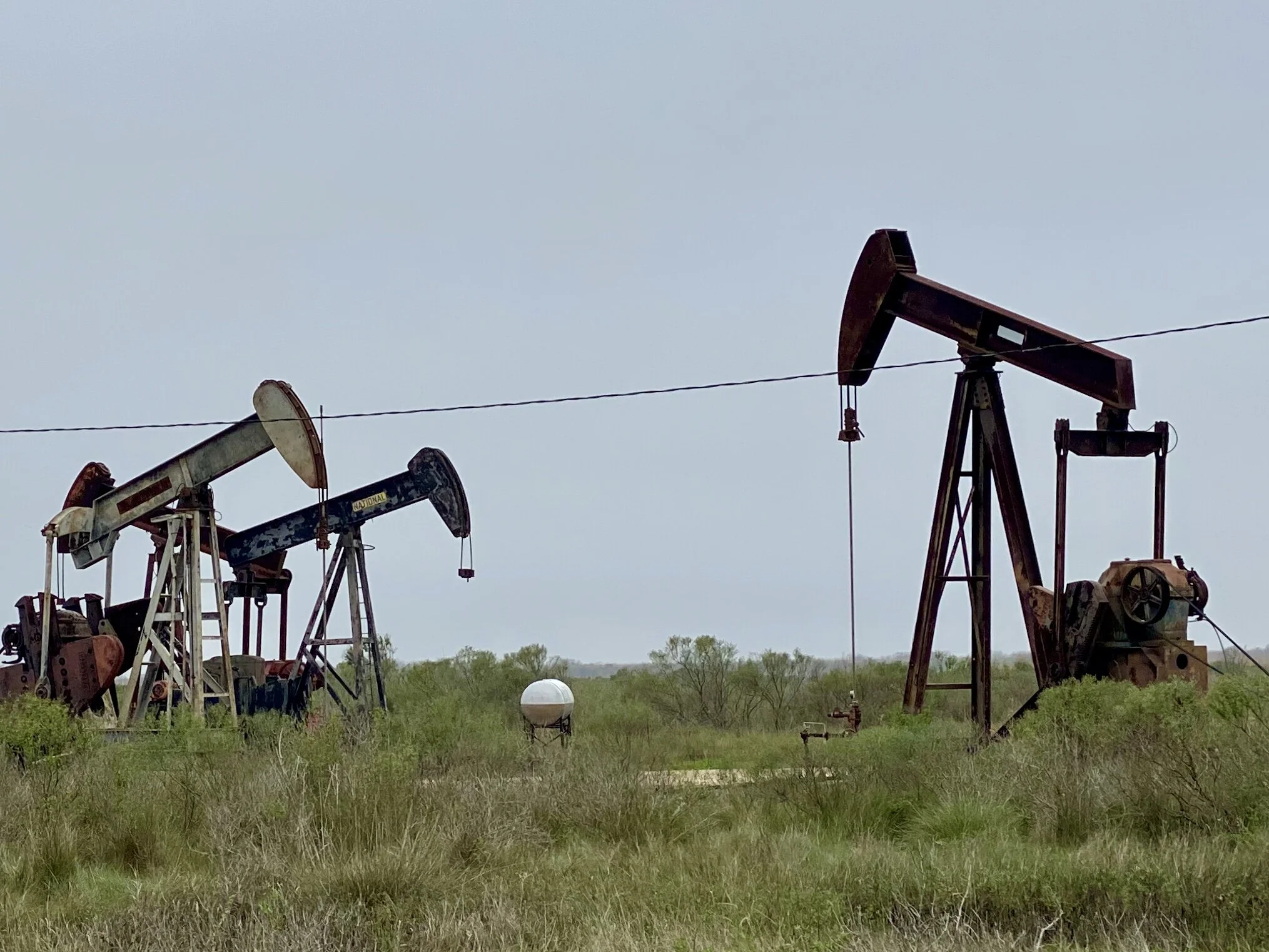
Abandoned oil wells in High Island, Texas, about a half mile from the Gulf Coast.
The reasons for this activity make economic sense in the short term. Cameron has been quite poor since Hurricane Audrey hit, and jobs are scarce. Consequently, the new plant is very popular among locals. Port Arthur is also poor, although it has more economic diversity than Cameron. However, the proximity of its site for a new receiving terminal will have additional benefit to Houston, so it’s popularity is even greater. Interestingly, in Houston, there is tacit, if not public, recognition among local officials that climate change is real. Based on a conversation we had with a local in Port Arthur, it seems there is hope that new sea walls east of Port Arthur across the Sabine River and further west across the Houston ship channel will mitigate storm surge issues for awhile, at least for southeastern Texas. …For how long, we wondered?
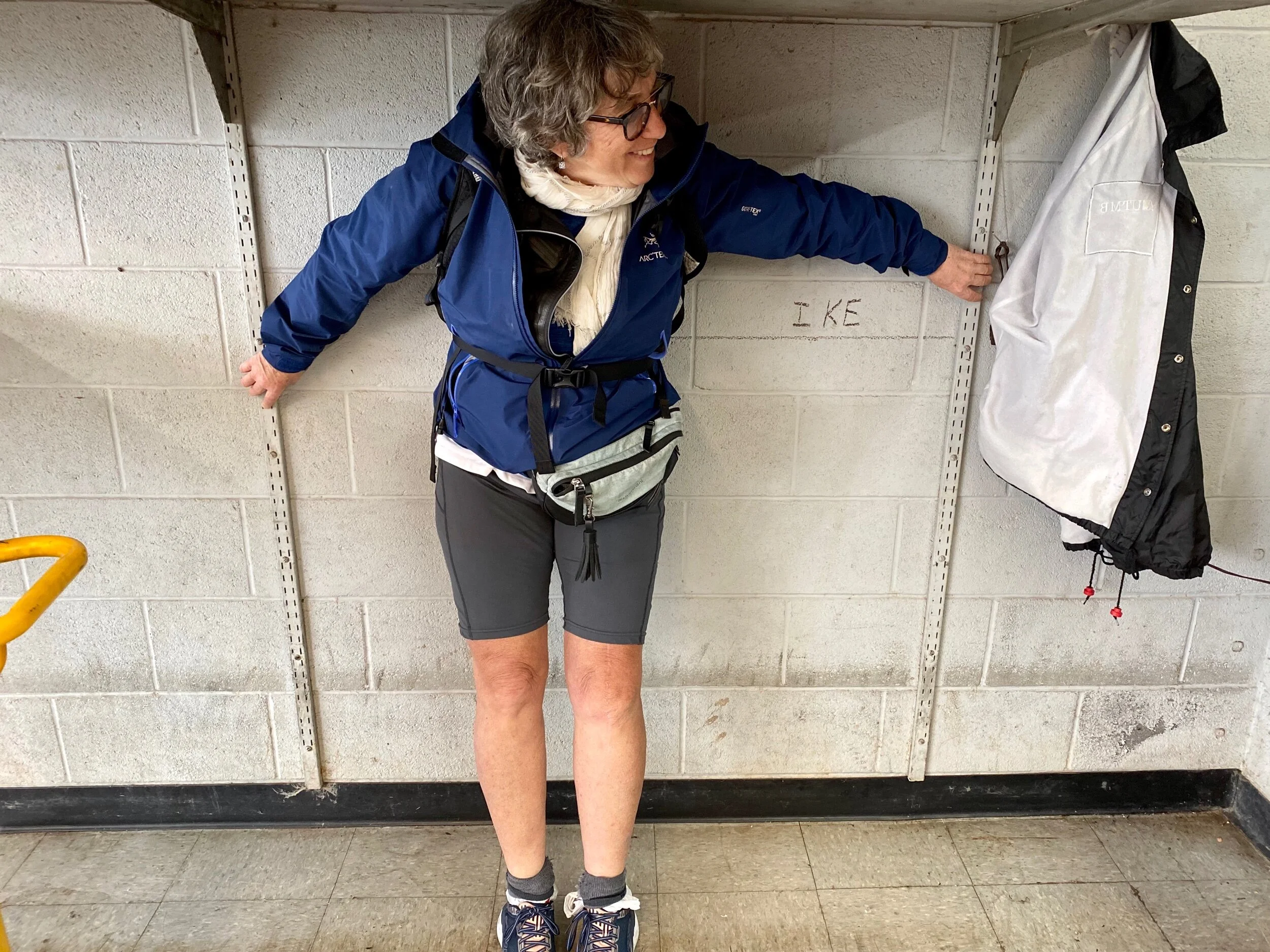
Jenny’s left arm marks the water line for Hurricane Ike in a bicycle shop we went to in Galveston. This 2008 hurricane holds the record for storm surge in Port Arthur, cresting at 22 feet.
So why do so many people in Louisiana and Texas embrace the very industry that may ultimately do them in? Isn't one definition of insanity, “doing the same thing over and over again and expecting different results?”
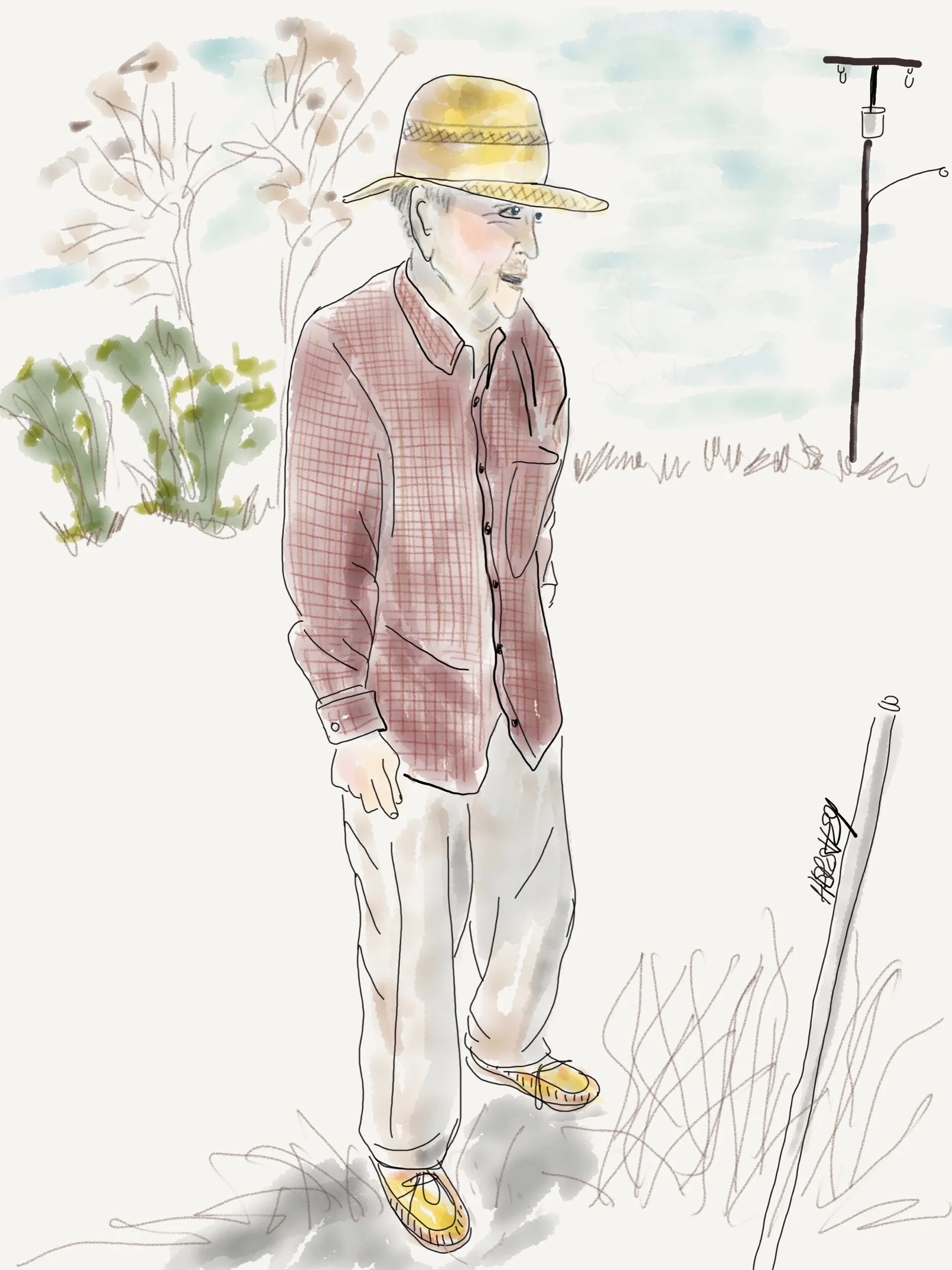
“I moved one time..in 1954...from next door to here.” Drawing by Jennifer Hershey. Follow her on Instagram at deeofo.
Jobs are important, and 460 permanent jobs might have lasting value for your communities. But at what cost? When your home is losing land to coastal erosion at alarming rates, when scientist are warning us that sea level rise is occurring faster than their previous conservative estimates indicated, when extreme weather events such as hurricanes and tornadoes are becoming more frequent with every passing year, when scientists are looking at establishing a Category 6 for hurricanes because they are growing so much more intense, …..when does that community cut its losses, and change its economic base?
Yes, life will be harder in the short term, but potentially much more livable and rewarding in the long term. Maybe that’s a plate that’s worth stepping up to…
For those of you who geek out on map routes, please email me and I will happily include links to the Garmin maps in this blog post. Frankly, I simply don’t know if they are very important to my readers. If I’m wrong, I’d love to know.
Thanks for reading! More to come…
All photos, unless credited or otherwise noted, are copyrighted property of the blog post author.
Louisiana/Texas, Post 1
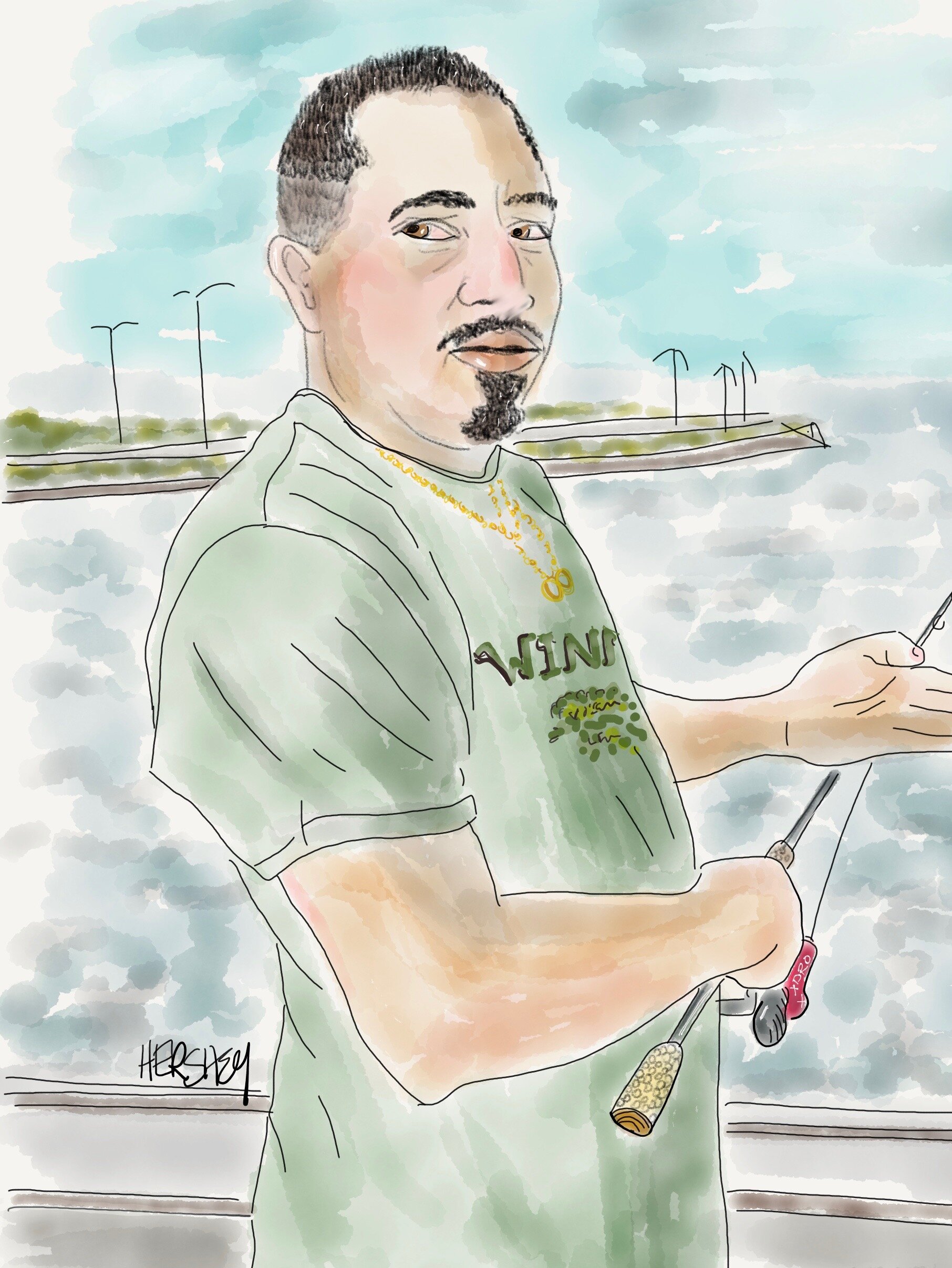
“I come after the grande hurricane...10 yrs ago.....from Guatemala . I fish for mi familia every day from aqui.” Drawing by Jennifer Hershey. Follow her on Instagram at deeofo.
The Amtrak Crescent from New York City to New Orleans is a small and somewhat understaffed train. Given their size and cultural stature, it seems like the Big Apple and the Big Easy deserve something more robust, if not all of America. Train travel is low carbon, pleasant, and offers so many other benefits to our transportation system. Apparently few people train between these cities (at least in the dead space of early February before Mardi Gras), so the train not only was small (9 cars total), it was challenging in its lack of basic amenities. Dining cars have been replaced by a limited option of previously prepared food that wears quite thin after a few meals. Bathrooms are few and poorly cleaned. There was no observation car. Yet - as always - I was appreciative of Amtrak’s efficient and inexpensive roll-on bike service. It is both easy and a joy to use. You roll your bike to a baggage car, remove your gear, and hand over your bike to an attendant. When you arrive at your destination, you do the same thing in reverse. Retrieving your bike takes minutes, and after restoring your gear, off you ride.
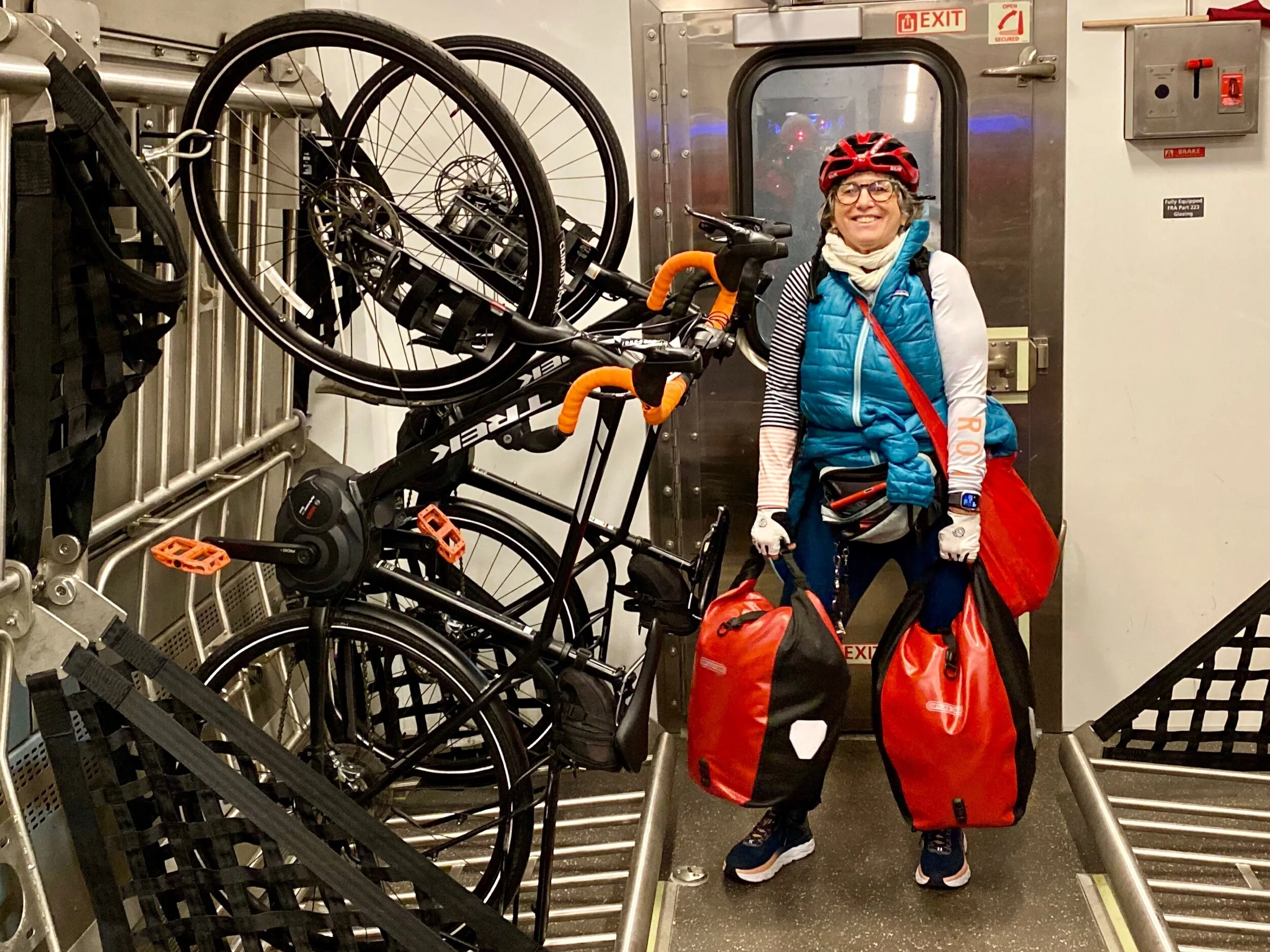
Jenny Hershey with her gear standing beside our bikes as we board in NYC.
I don't always make New Year’s resolutions, but this year I did: “Observe more, judge less”. It was simple once I said it out loud, although I had been struggling to articulate the thought to myself for quite a while. In addition to an unusual bout of self-reflection inspired by the quick and successive deaths of both my parents, I’d been reading the fascinating book “Why We Are Polarized” by Ezra Klein; a look behind the extreme politicized polarization plaguing America.
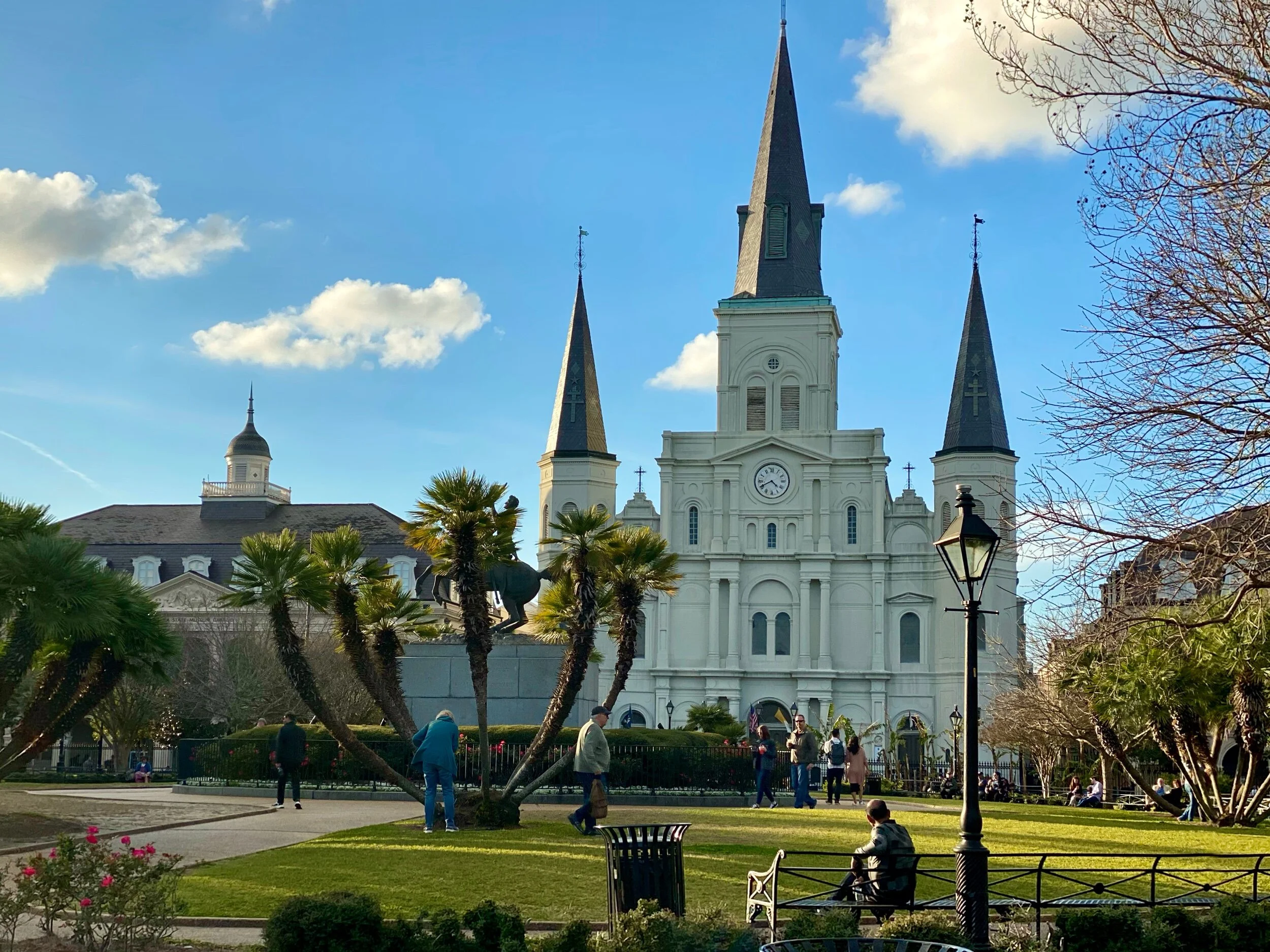
The Cathedral in Jackson Square, New Orleans, LA
I was coming to understand that just as we hide parts of ourselves from those we love, we are hidden from one another in a country we love, partly because we assume others should see the world as we do even if we cannot see the same world they do. I had been unsettled by several attacks on FaceBook about my apparent ignorance of the South based on a few inquisitive posts about life in North Carolina. Out of defensiveness, I found myself questioning how much conservative southerners understand, or care to understand, about my identity as a multicultural urban northern liberal. Conversely, I was forced to admit to myself that I knew, or cared, equally little about the identity of white rural southern conservatives.
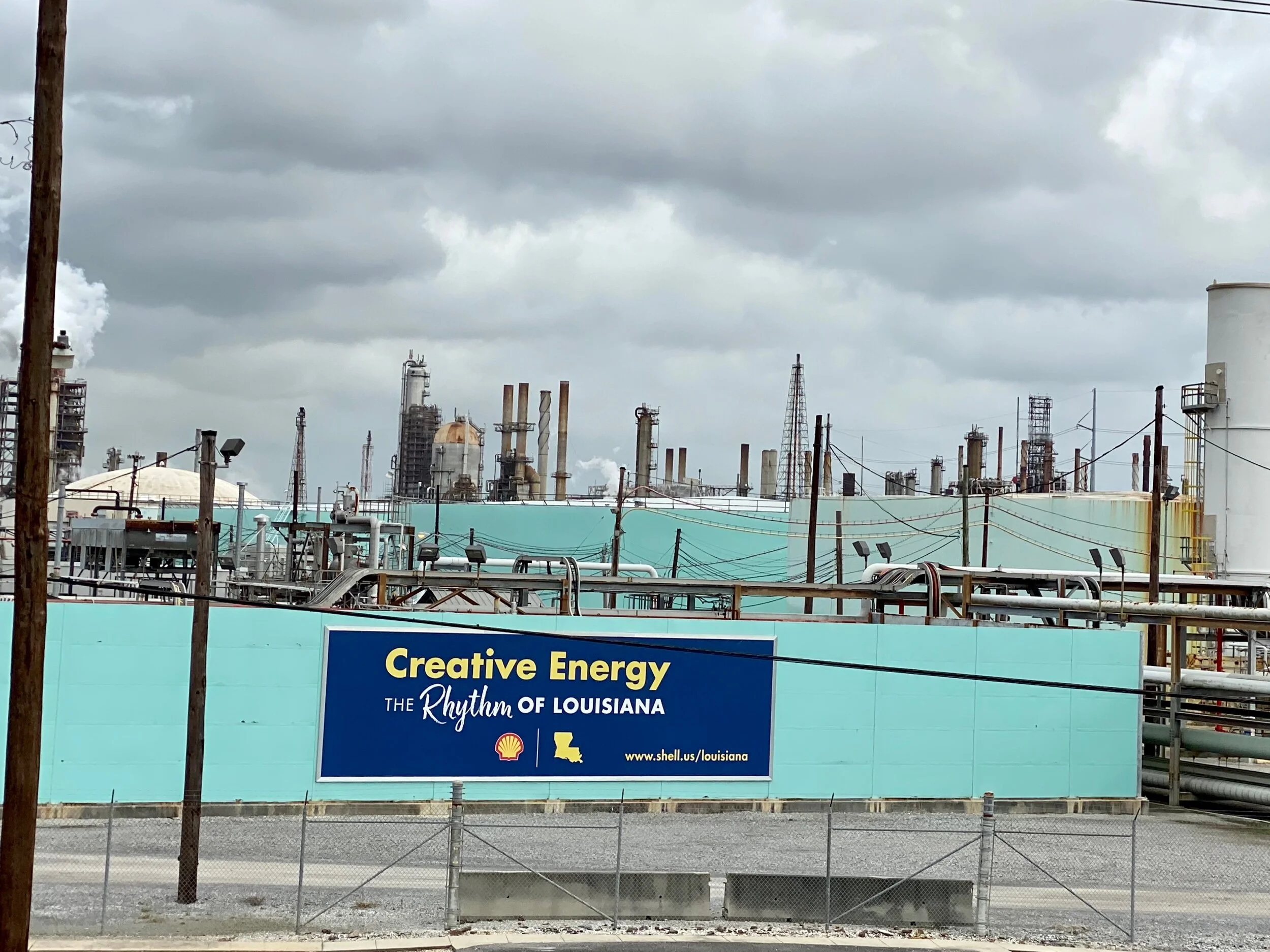
Oil plant just northeast of NOLA on the Mississippi River.
In anticipation of this trip, both my traveling partner Jenny and I felt trepidation about biking in the Deep South. I hoped Klein’s book would help me frame an approach that would go beyond my own self-perceived static and somewhat predictable liberal perspective. It has not disappointed me.
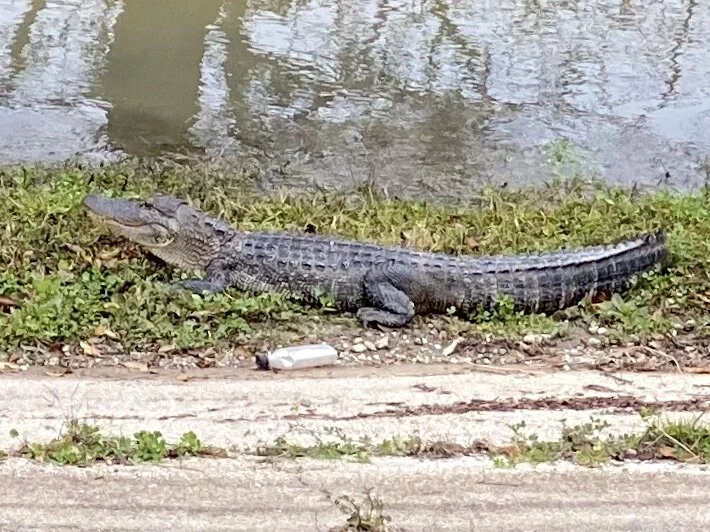
Just east of NOLA off the Mississippi River levee. Quite alive.
A dead fox. Roadkill.
I admit that we partly chose to explore Louisiana and Texas on bikes because it is a warm place to go in early February. In addition, it is accessible by train (we thought other choices would be more carbon intensive, and low carbon travel is part of our objective). But our country's current form of political polarization also begs for greater interaction between our vastly different political cultures. Interestingly, as a northerner, I often feel greater affinity with European countries and cultures than I do with the political and social cultures of the American south. But since the 2016 election, I’ve come to believe that America is in need of a giant reset (or “rebooting”) and that if I - and other people like me (i.e., members of my group) - don’t grapple with our entire American identity, we are very likely to misunderstand how we arrived at, and might get out of, such a highly polarized present moment.
Near Donaldsville, LA.
My interest in climate change is a case in point. There’s so much about our changing climate that seems obvious to me that I simply cannot fathom the abyss in logic or understanding between me and climate deniers. While I’m very confident the science supports me, I’m learning that facts alone don’t change behavior. Even in an area devastated by Hurricane Katrina, and after numerous recent warnings that the sea level is especially troublesome on the Gulf Coast, plenty of locals remain willfully cavalier, if not downright defiant about taking action.
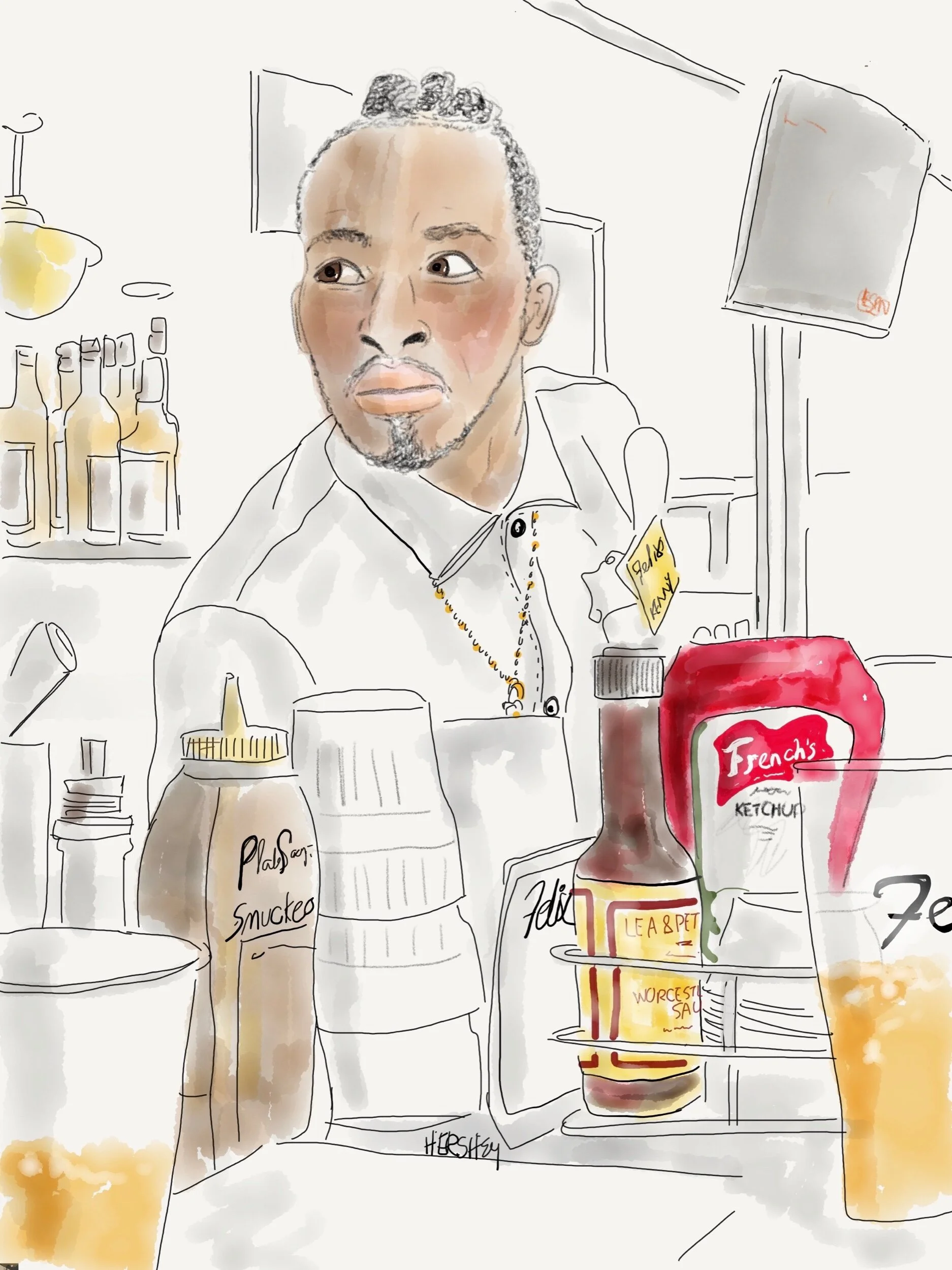
“I was 13....they took us out by boat. I slept on a bridge for a week with my Grandma. “ Drawing by Jennifer Hershey. Follow her on Instagram at deeofo.
Ezra Klein makes the same argument about rationalizing, or recasting, facts within political cultures. Essentially, his fundamental point is that identity is a far more important driver of political viewpoints than is logic or “facts”. In fact, logic may be the least important attribute of political identity - far less important than cultural, familial, socioeconomic and racial identity. I’m reminded of James Carville’s famous quip during the Clinton administration, “it’s the economy, stupid”. Maybe in the age of Trump, “it’s the tribe, stupid”.
A petrochemical plant just outside the bayou town of Donaldsville, LA.
Stupid, perhaps, but true nonetheless. And so very, very human. So, I’ve decided - and Jenny agrees - that the most useful way to explore Louisiana and Texas right now is to observe more, and judge less. For readers who hope we will brightly burn the climate emergency torch with the message that the apocalypse is well upon us and our southern neighbors need to wake up lest they suffer sooner than their northern neighbors (even though we think that’s true), we may disappoint you. Our agenda right now is simply to understand.
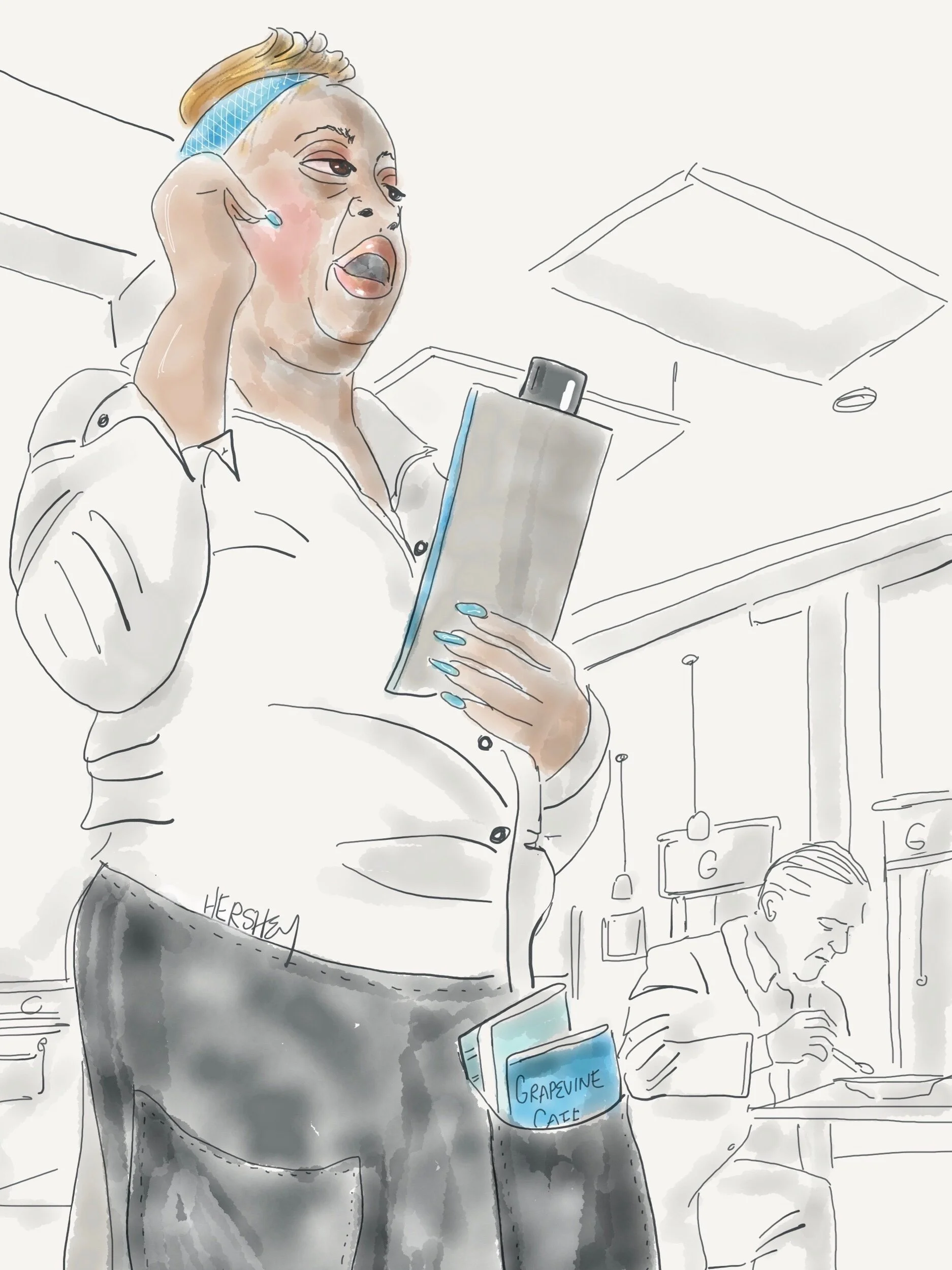
“Yes Ma’am...they got all kinds of plants here. Chemicals and oil and I don’t even know what they got. “ Drawing by Jennifer Hershey. Follow her on Instagram at deeofo.
Maybe a lot of folks just don’t believe that good jobs from a “green economy” will really show up when chemicals and oil companies have been the only big games in town for multiple generations. Or maybe they just don't feel like they can change anything anyway.
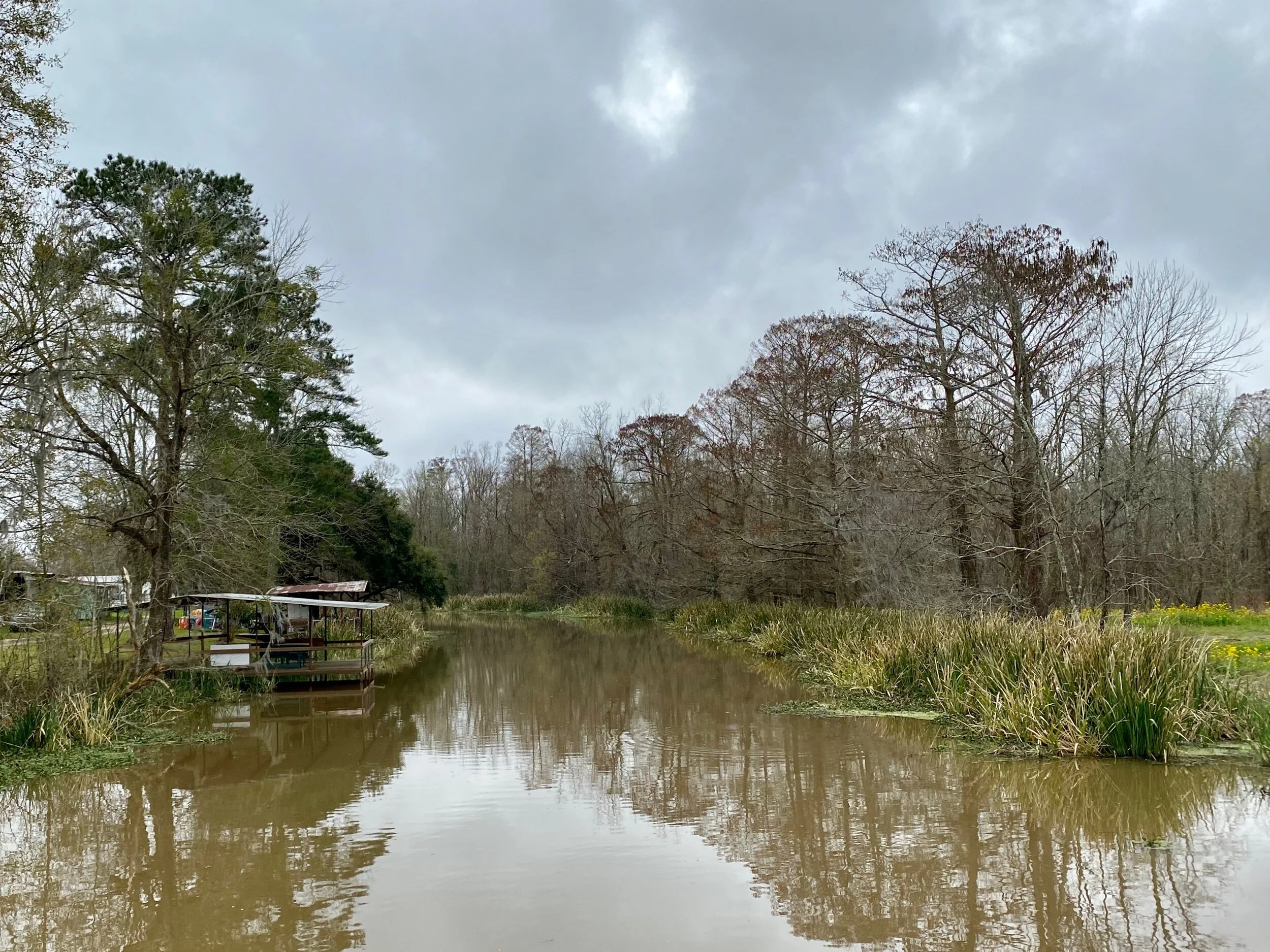
Bayou Country about 150 miles southwest of New Orleans.
We talked to a middle aged black man in White Castle, Louisiana, named Orville outside the local grocery store, who told us he had voted for Obama but didn't vote in 2016, and was probably not going to vote in the next election also, even though he thinks Trump is a crook. When we asked him why, he went silent. So we (thoughtful northerners that we are) explained “logically” why he should - since the federal voting power for a Democrat in Louisiana is arithmetically more powerful, given the Senate and the Electoral College, than a vote by a Democrat in New York. Orville looked dubious and replied, “them politician’s all gonna do what they want to anyway.” Jenny and I exchanged glances. We had failed to convince him. So, as we mounted our bikes and road off, Jenny yelled back at Orville, “If you don’t vote in the next election, I’ll come back here and kick your ass”! Orville laughed. Maybe he’ll remember that part of our conversation more then our logic.
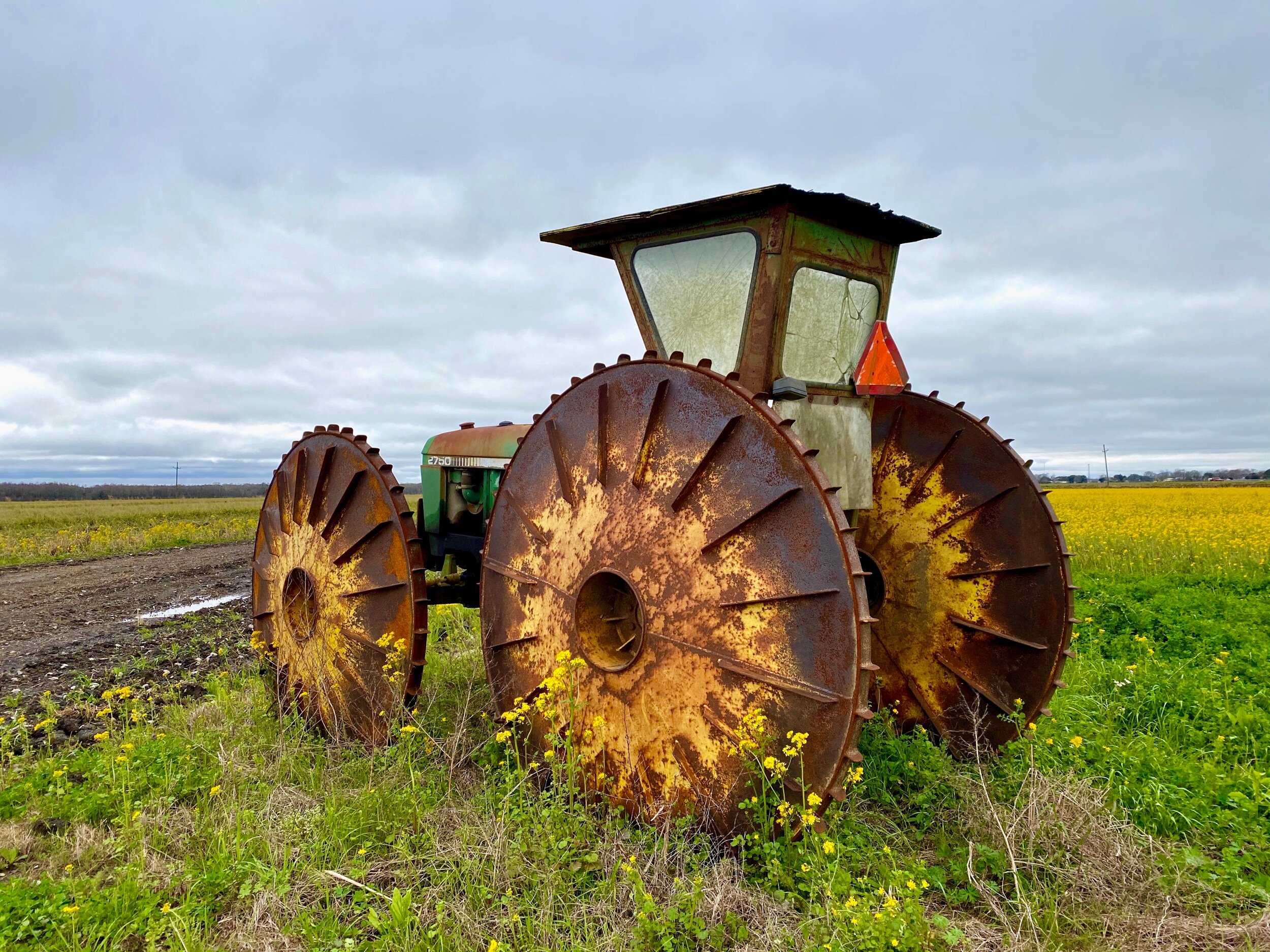
Tractor in a fallow sugar cane field near Baldwin , LA. Photo by Jennifer Hershey.
Maybe Orville is right. Yet, Congressional behavior during the impeachment proceedings teaches us that politicians will do just about anything they think the majority of their constituents want them to (with a few exceptions). And maybe that’s a good thing, especially if we want them to do what’s right. But more agreement on what “right” looks like among us constituents would be very helpful, especially when the prevailing view seems so very wrong. And how will we achieve that? I used to think I knew. Now I no longer do… so for myself, I'm trying out the follow idea: Observe more, judge less. And please know, dear reader, it's myself that I am encouraging.
For those of you who geek out on map routes, here are the last four days of our rides on Garmin: Day One, Day Two, Day Three, Day Four.
Thanks for reading! More to come…
All photos, unless credited or otherwise noted, are copyrighted property of the blog post author.
Phoenix to El Paso, ...no, Tucson, Post 3
Twilight behind a sugaro cactus in Tucson.
After a one day layover in Portal, AZ, where I hiked near Cave Creek Canyon, I woke to a very cold day. The wind was clocking about 24 miles an hour out of the southeast, so I decided to head northeast to Silver City, NM, thinking that I would then zag southeast the next day to Columbus NM, and then make my way eastward into El Paso.
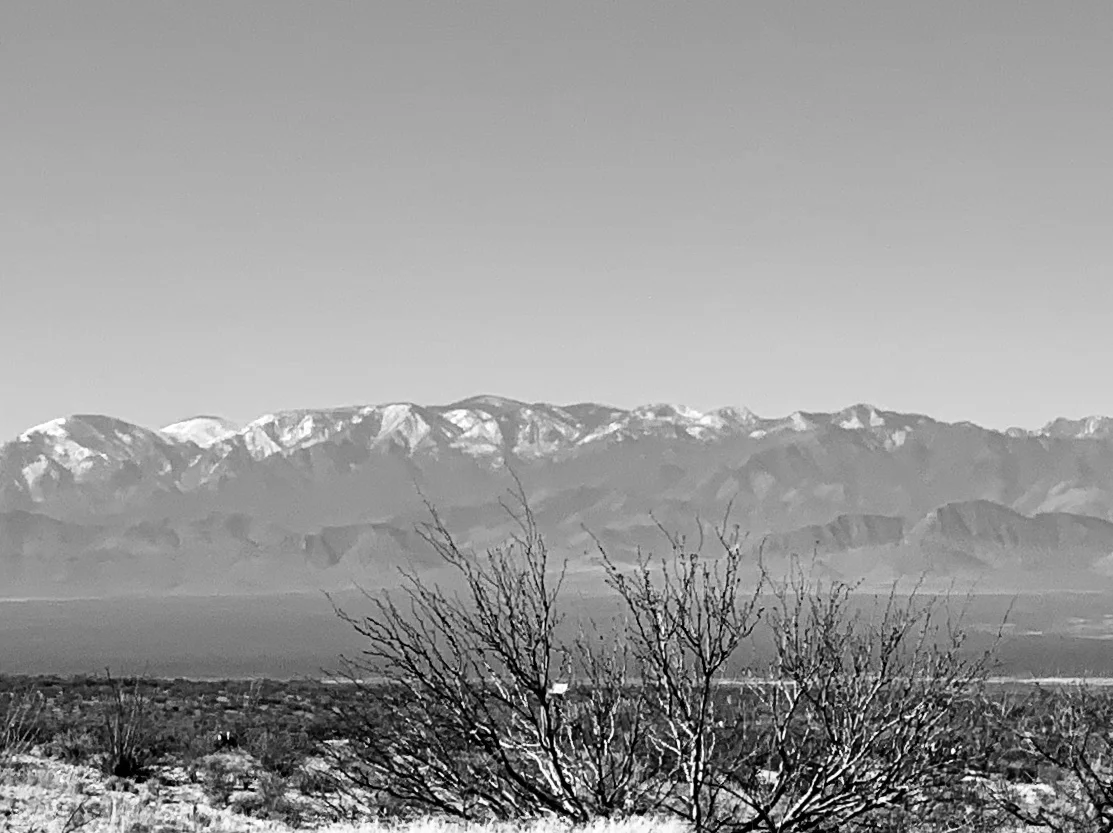
The Chiricahua Mountains on the way to Lordsburg.
Life has a funny way of making us change our plans. The wind shifted to the east. Rain clouds gathered. The temperature dropped. After a very difficult slog of a ride directly into a punishing wind, I arrived in Lordsburg about 45 miles away from Silver City. I wasn't sure what the weather was up to, but I was worried. I found an inexpensive motel and downloaded another wind app for my cell phone, hoping it would give me better capacity to analyze and predict what the next few days were going to be like. I knew there was a raging storm in the Midwest (the Nebraska bomb cyclone) and I assumed its outer edges were the cause of the wind and cold weather coming out of Texas. So I sat in my motel room, finally warm again, thinking about what to do. Near as I could determine the winds were going to remain out of the east/southeast at approximately 15 mph for the next 4-5 days. Additionally, rain and some snow were forecast for the entire region for the next few days. I knew I could make it to El Paso one way or the other as planned, and I also knew the trip was likely to be difficult and miserable.
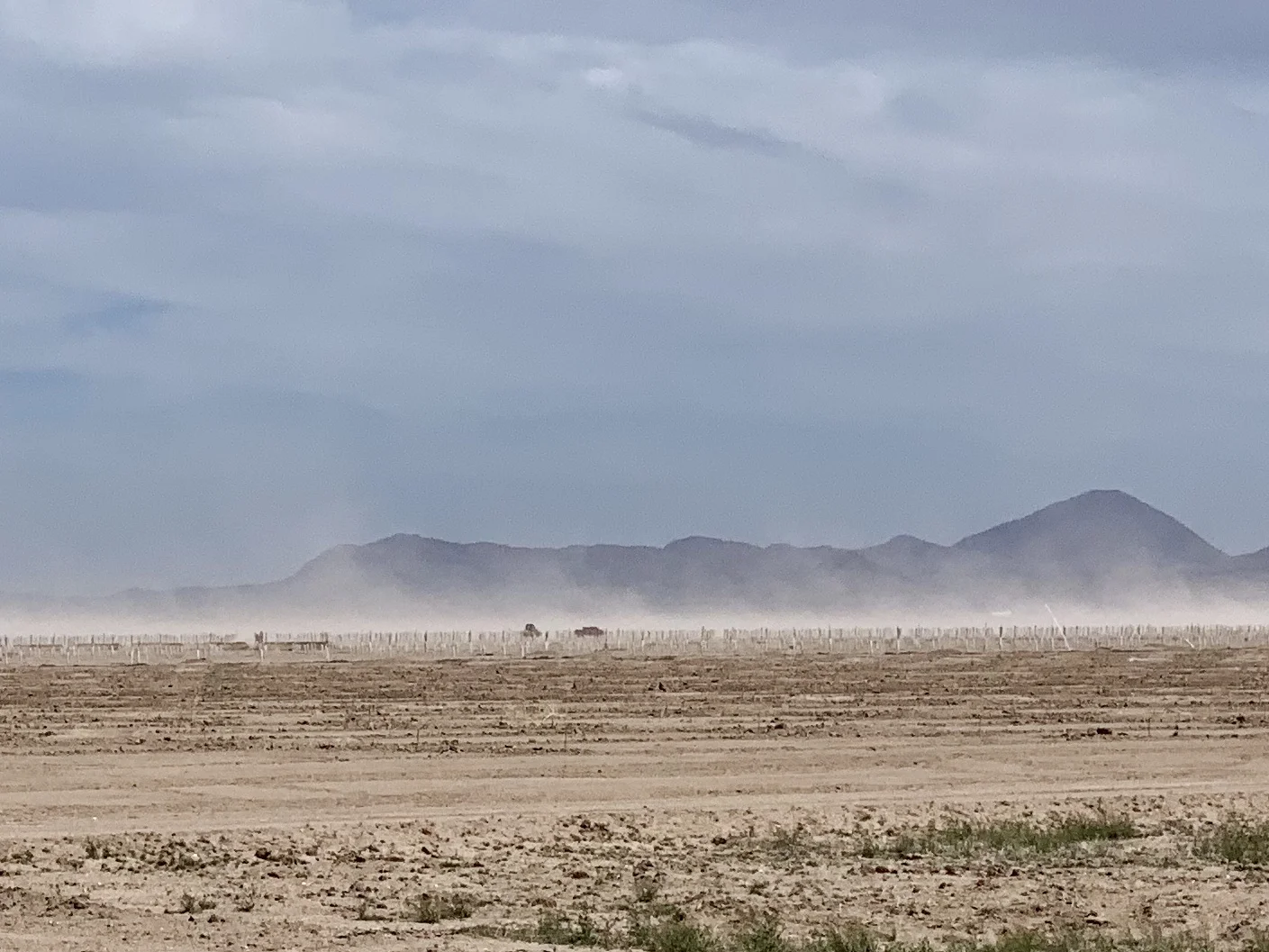
The wind stirs up dust on the way to Lordsburg.
I called my Dad in California, and my Mom in Illinois. I also called my kids. That might seem like a strange comment coming from a grown man in his 60's, But for those of you tracking older parents and grandkids, you'll recognize the behavior. I wanted to be certain my eastward direction under such conditions didn't make it difficult to get to either parent should the need arise. And I wanted to know if changing my itinerary and visiting my kids and grandkids a month or so later than previously planned would be ok.
I was improvising based on weather, just as humans have done for thousands of years. That is, before we insulated ourselves from it through our technology. Yet, our very attempts to tame it have only made it more foreboding. As the recent bomb cyclone in Nebraska - and the even more devastating cyclone in southeastern Africa - remind us, the weather will always humble us. We can't defy physics.
After discussions with various family members, I decided to return to Tucson where the weather was milder, and catch a train up to San Jose to my Dad's place. Right now I'm sitting in a lovely Landmarked train station in Tucson. I travel tonight on the Sunset Limited and will arrive into LA the morning in time to catch the Coast Starlight up to San Jose tomorrow. As usual, I will roll my bike up to the baggage car. For only $20 more a ticket there's no better way to get a bicycle somewhere (other than riding it, of course).
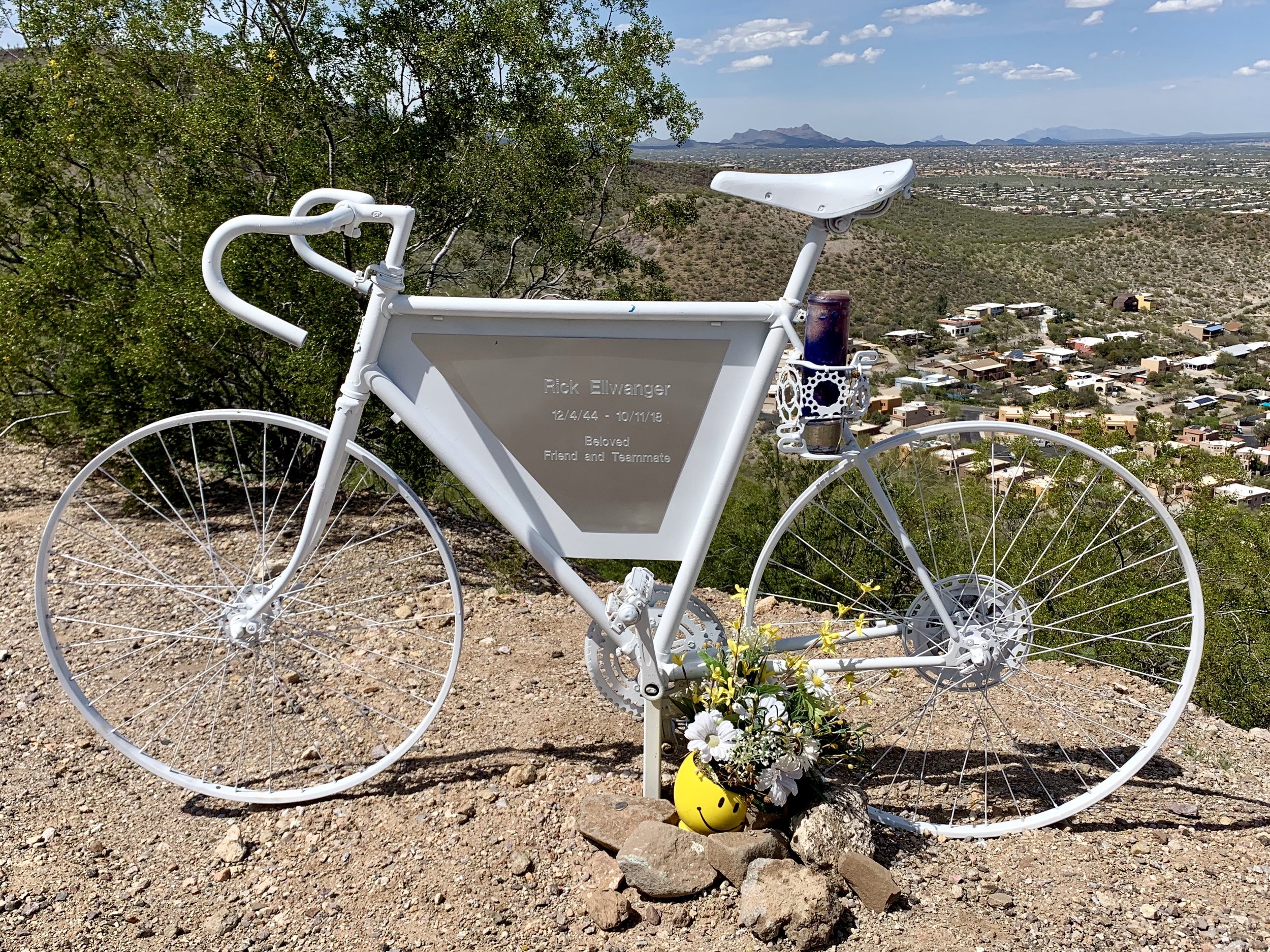
One of my intentions, for now, is to avoid an effigy in my honor. I came across this one on "A" Mountain east of Tucson.
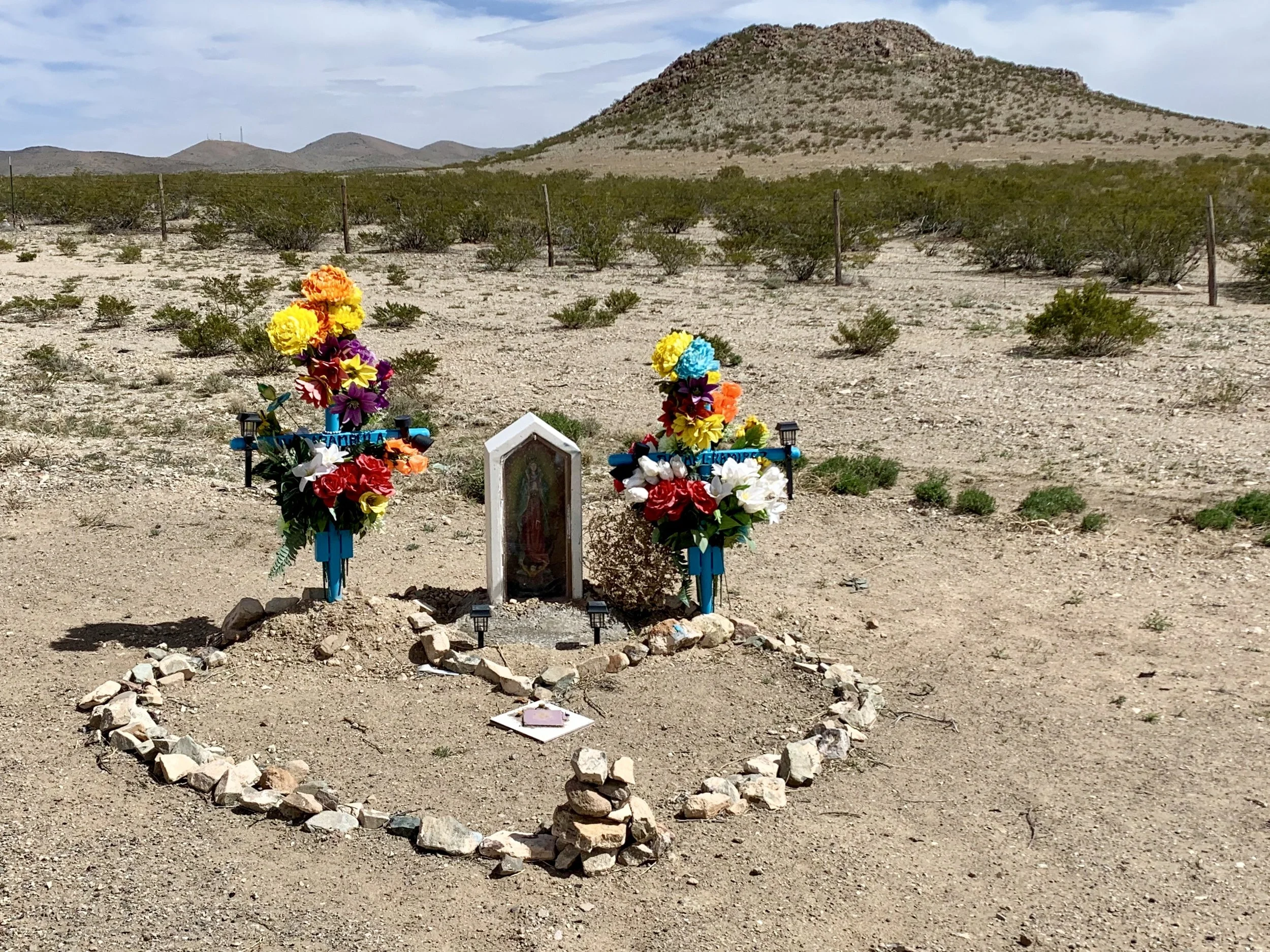
Seen in western NM.
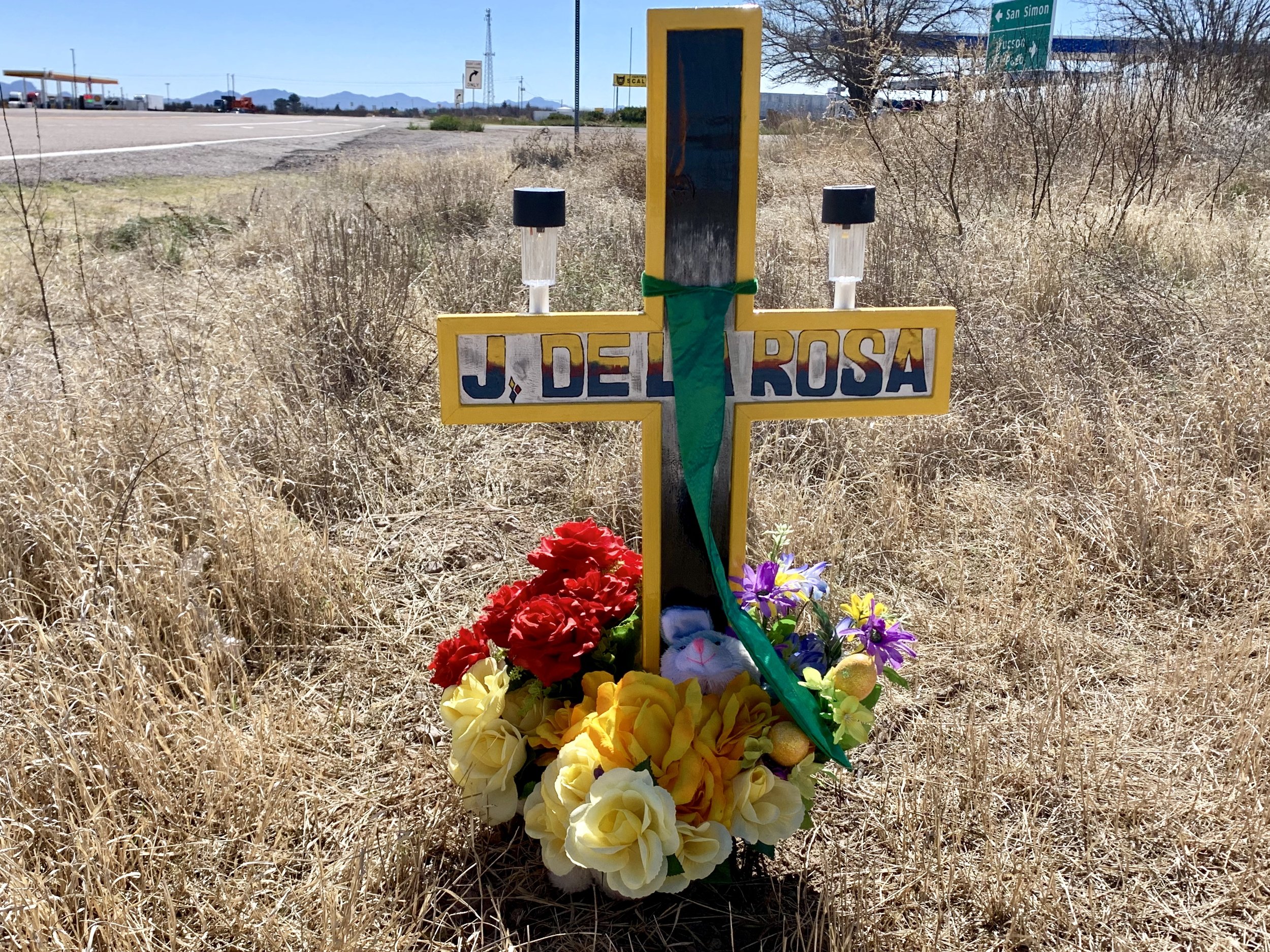
Seen in eastern Arizona.
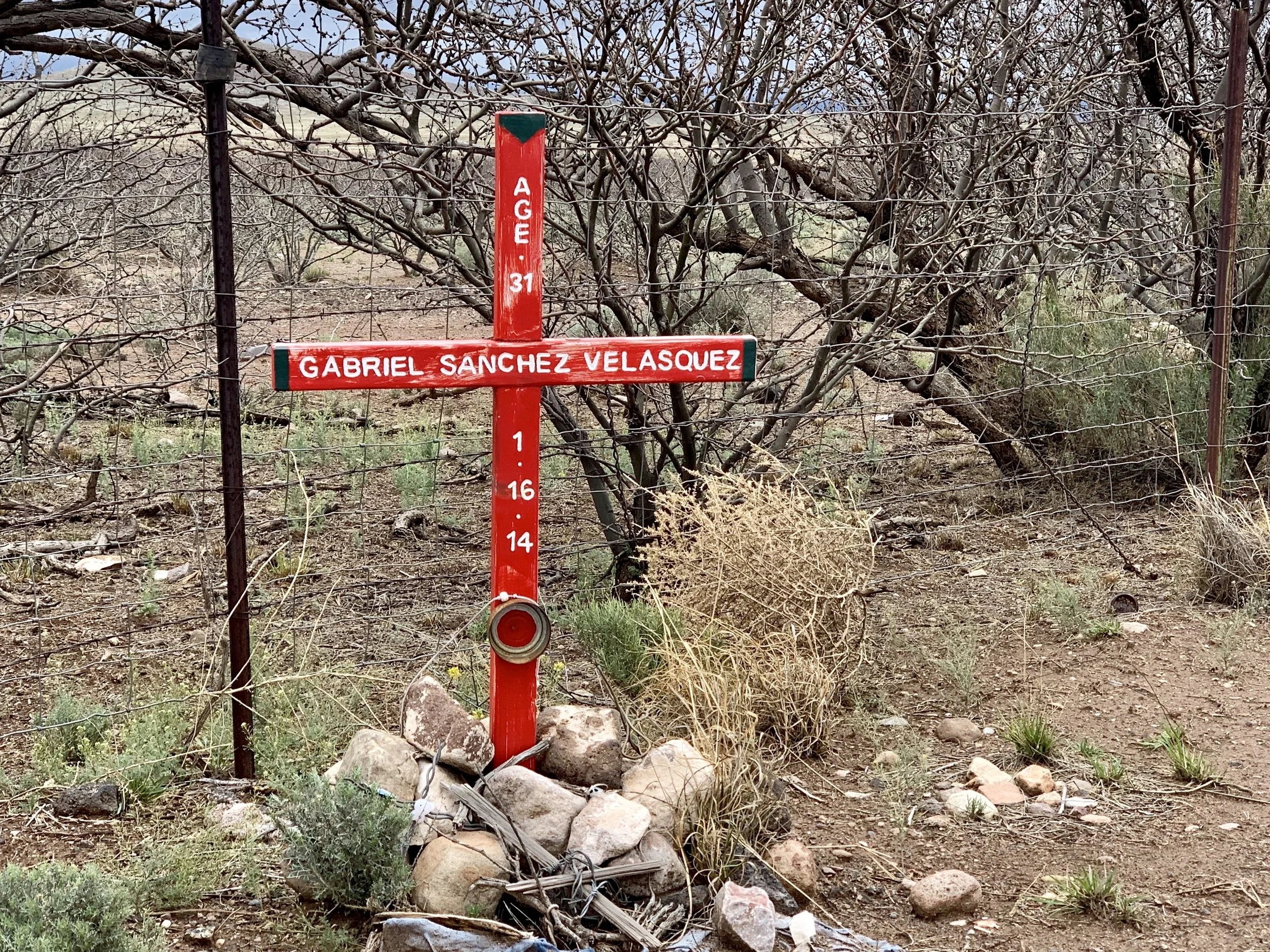
Seen near Douglas, AZ
The new plan made me breathe easier, and sleep a bit more deeply. That said, I'm sorry to have missed exploring route 9 and the towns of Columbus, NM, where Pancho Via "invaded" the US at the battle of Columbus in 1917, and Antelope Wells, NM - which I am told is a hot spot for Border Patrol action. I'll be back.
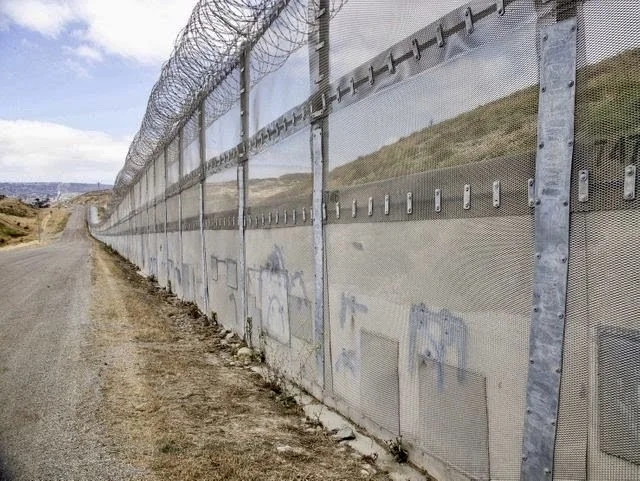
The border near Nogales, AZ. Photo credited to USA Today.
I can't say that I've seen much near the border that suggests we have a crisis of "invasion". Where I've been it seems quiet, "normal" and only subtly militarized. As per the pictures I've already posted, the fences are ugly and the concertina wire is threatening. I've been reading an interesting book titled "Storming the Wall; Climate Change, Migration and Homeland Security" by Todd Martin. If the numbers of illegal immigrants on our southern border are actually increasing (recent reports suggest that is true) they are mostly immigrants from Guatemala, El Salvadore and Honduras. And, according to Todd Martin, these countries are experiencing devastating drought, and are climate refugee "canaries in the mine" for what lies ahead.
Apparently, migrants from these countries turn themselves into Border Patrol at their soonest opportunity with the intention of applying for asylum. Most are farmers who are no longer able to survive on their land. If they flee to nearby cities, they and their families are subject to horrific gang violence. So they come north, hoping they can gain asylum in the United States. If there is a crisis, it's a humanitarian one, and one that a wall might even exacerbate. Here's an article in "Scientific American" that explains the underlying issue more deeply.
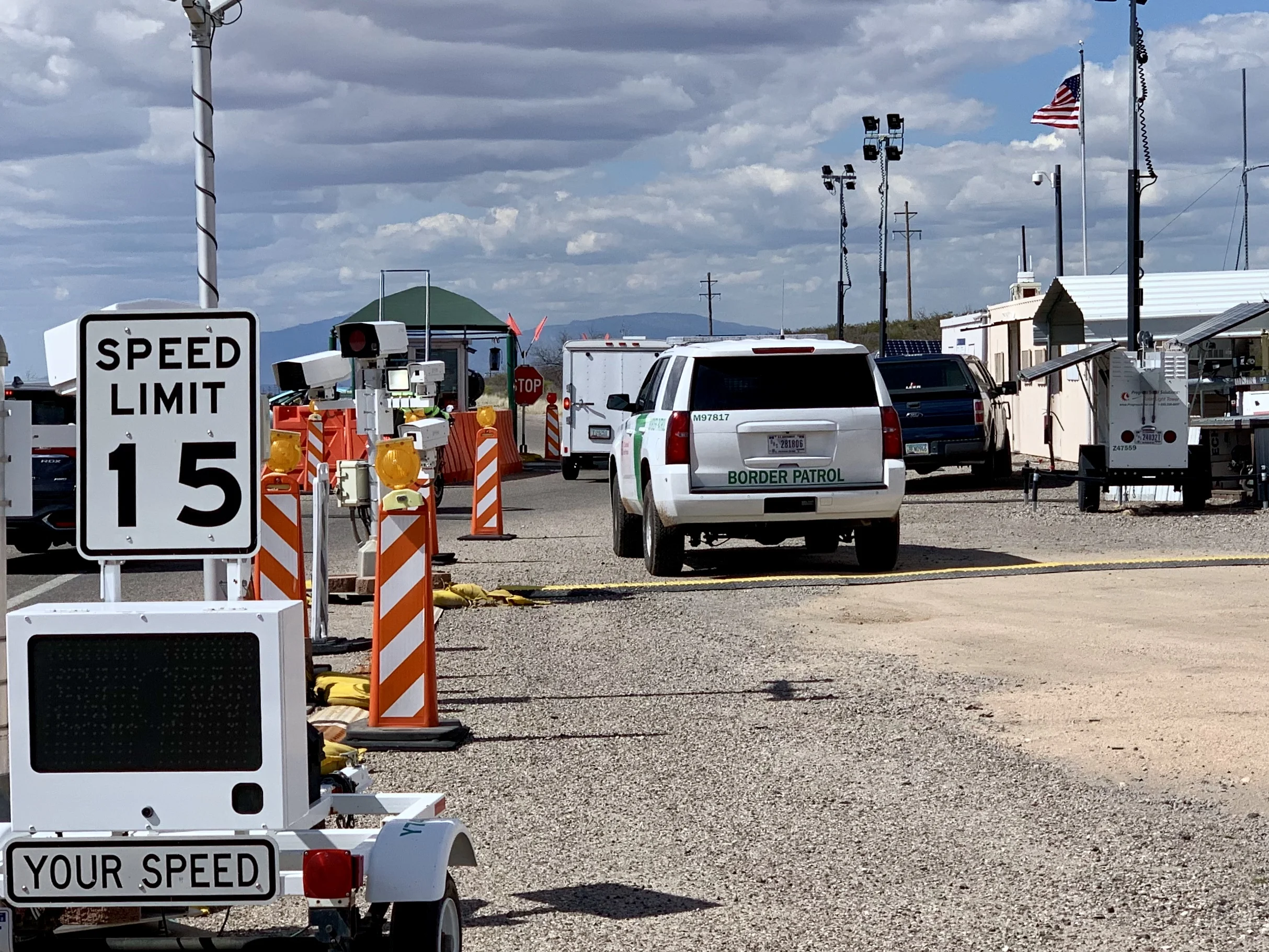
One of hundreds of checkpoints on a north/south road just south of Interstate 10. They are intended to keep migrants from gaining access to our interstate system. I've passed through several. Each time I've asked the agents if it was busy that day, and each time the answer was no.
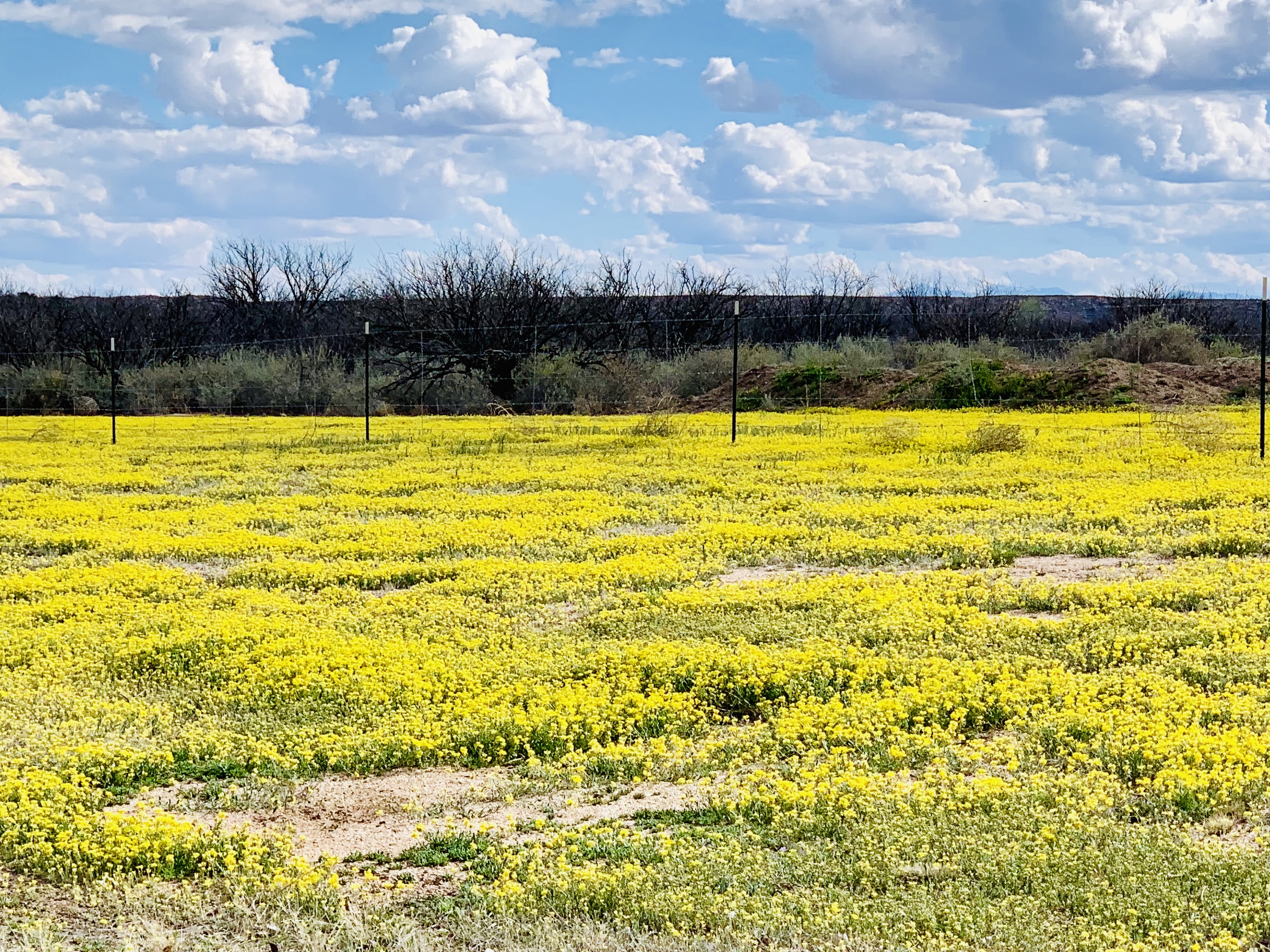
Fields of daisies are common here this time of year.
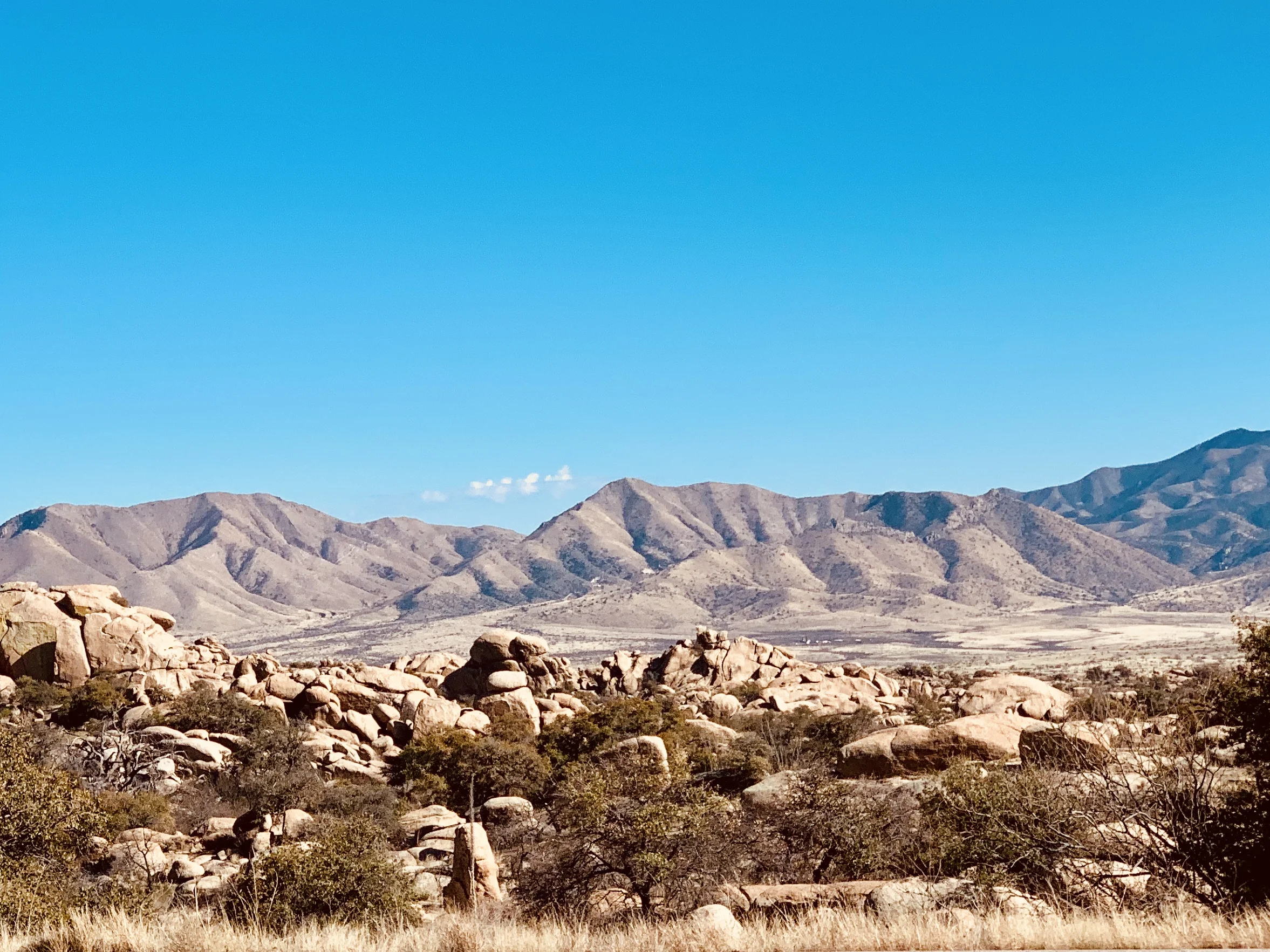
A view to the south about 50 miles east of Tucson.
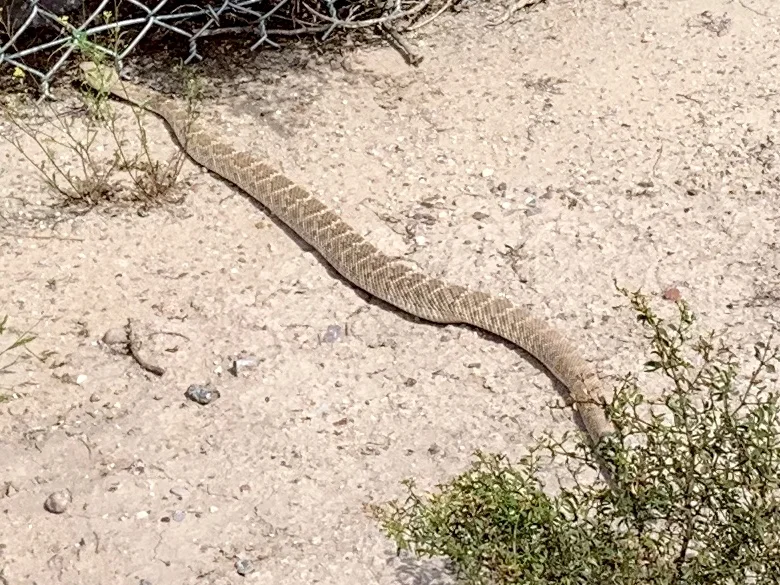
A rattlesnake seen on a bike trail near Tucson. As it gets hotter, they get more active.
Next week I fly back to New York. It will be another month or so before I start my next cycling adventure, so you'll notice a lag in my blog posts. But, as always, there's more to come.
All photos, unless credited or otherwise noted, are copyrighted property of the blog post author.
Electricity and a Wind Farm, PR post Maria, Post 3
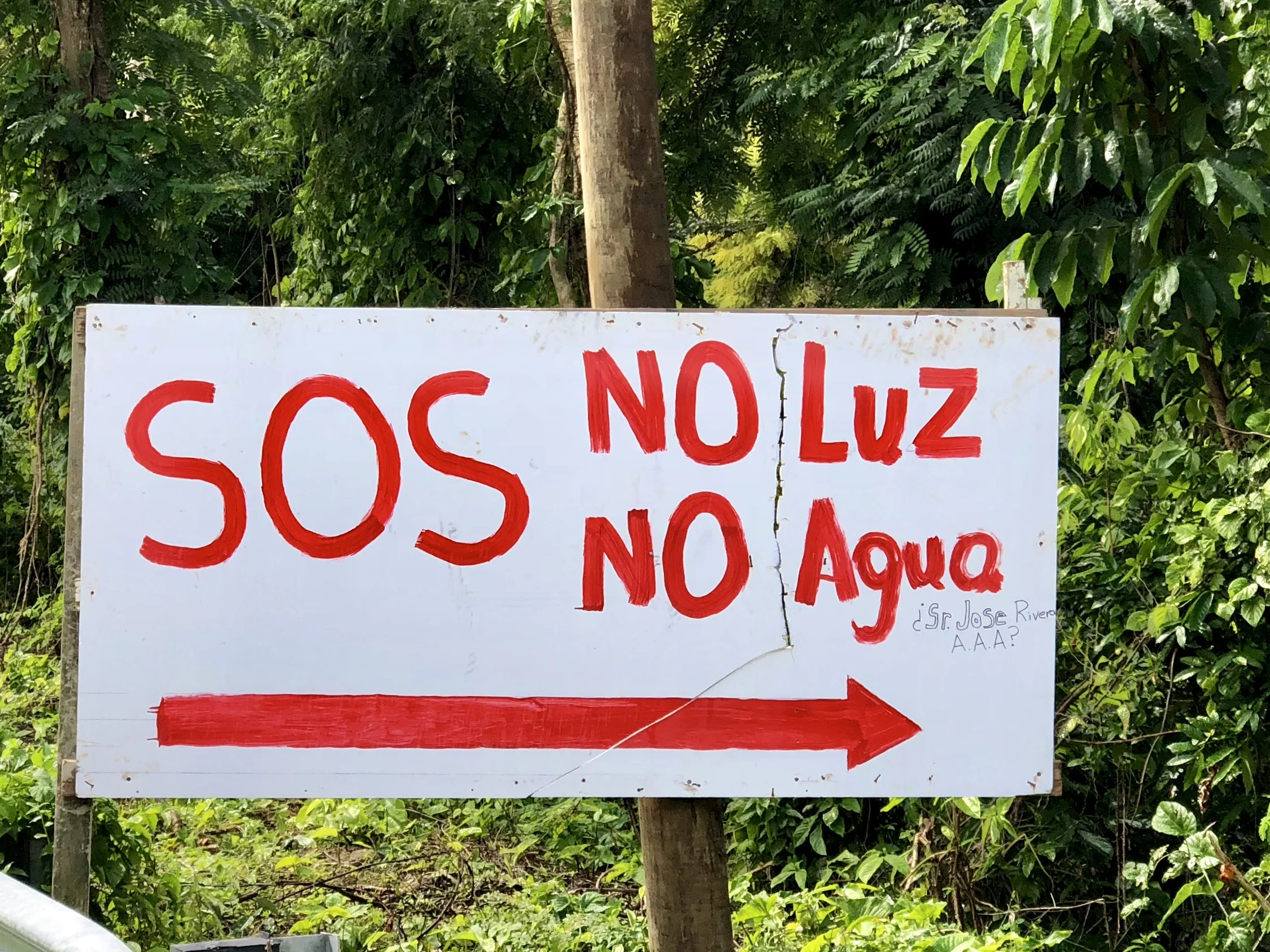
You know how a song can get hopelessly stuck in your head? So can a promise to a stranger. Like a song, when the promise surfaces it has a way of circling back, nagging gently and sometimes causing irritation. Unlike a song, a promise stops nagging if it's kept. So the result of that simple moment when a stranger says, "Promise me you'll go to Utuado", and one answers without thinking, "I will," is that the promise becomes a song one can't get out of one's head. Until one keeps it.
So I had no choice. I had to return to Puerto Rico to go to Utuado.
Not that fulfilling my promise to visit Utuado was my only reason for returning. There are many other good reasons. To flee cold weather in the northeastern US for just a bit longer, to put a little money in the economy as a student at a Spanish language intensive and to explore how communities rebuild after extreme weather disasters are among them. Besides, the island needs people to visit - FEMA, of course - volunteer utility workers - church assistance groups - aid societies - maybe even Tesla to build those microgrids Elon Musk talked about in late September of 2017.
("Did Tesla come? Are they here?" I keep asking, but no one I've asked thinks they did.)
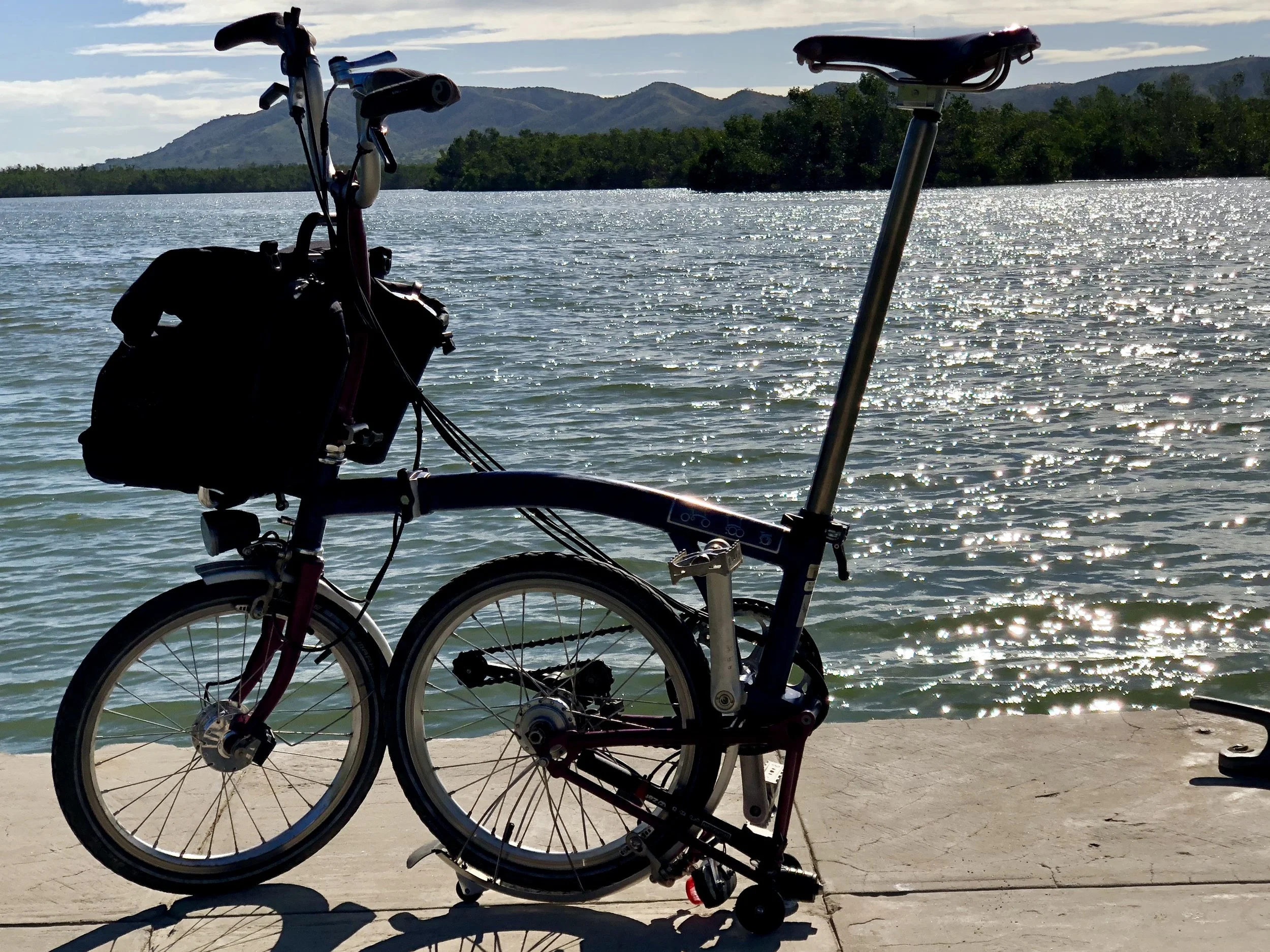
Tourists need to come here as well. Especially now. And, in spite of these blogs (or maybe because of them), I'm essentially a tourist on a bicycle (for the most part). I'm not a big spender, but for what it's worth, I believe my presence has some value.
In the not too distant future, when predictable stages of extreme weather post-disaster recovery are more widely familiar, those stages may look something like the following: 1) relief, joy and gratitude at having survived, 2) mourning who, and what, has been lost, 2) making sure oneself and one's community have what is needed to survive over the coming days and weeks, 3) restoring essential communication infrastructure and cleaning up enough debris so that transit is possible, 4) restoring basic services such as electrity, plumbing and drinking water, 5) returning to the tasks of daily life that help one to normalize - such as going to work, socializing and entertaining, and hopefully - 6) rebuilding in smart ways to meet the next extreme weather event with greater resiliency.
Most of Puerto Rico now seems focused on steps 4 and 5. An islander told me yesterday that he thinks 85% of the island now has power. That might be true on a per capita basis, but I doubt that it's true geographically. The more developed and populated coastal areas have had power for several months, but many of the more remote rural areas are still struggling.
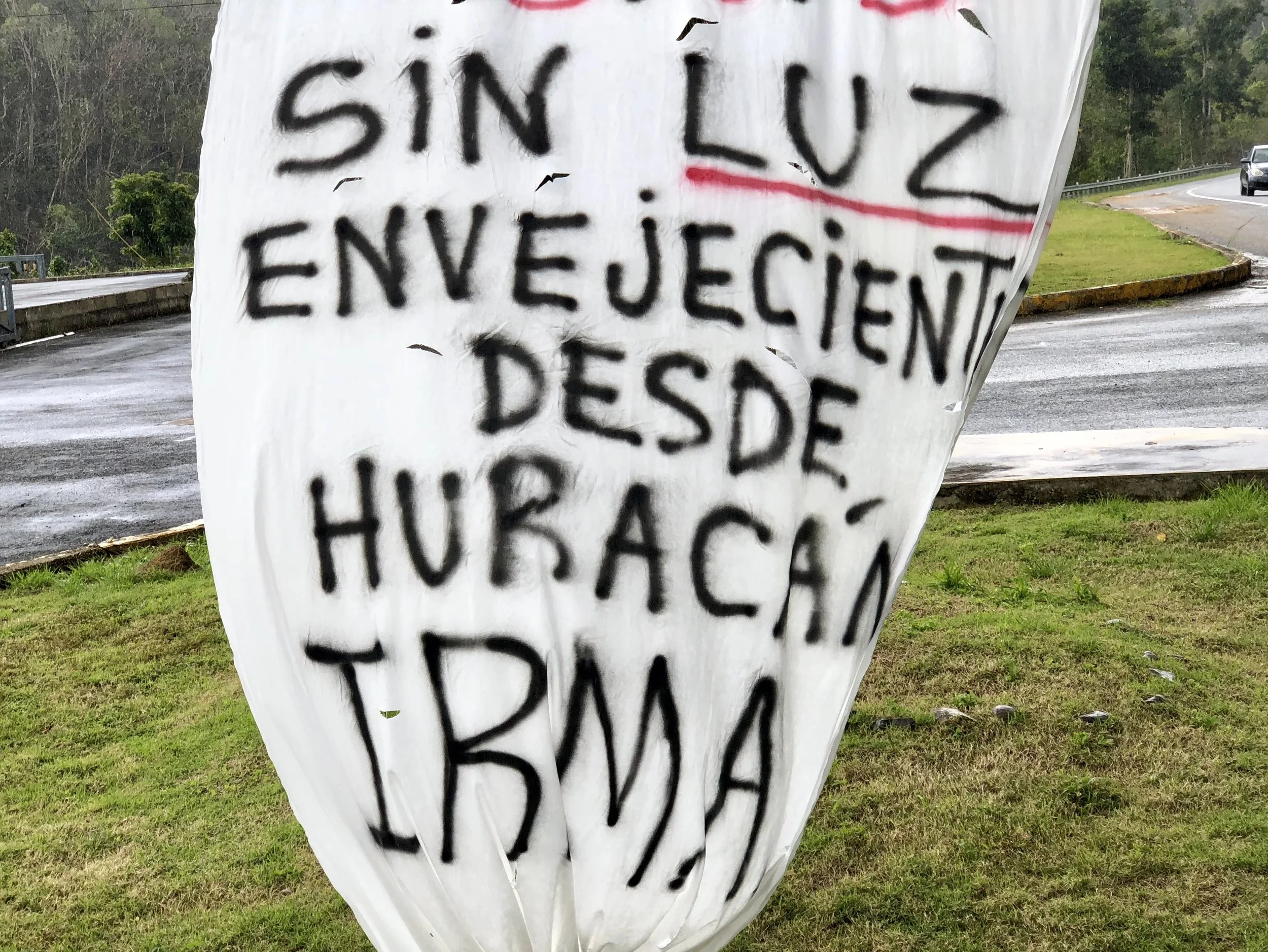
I had the good fortune to share a meal in Quebradillas with Jeff and Virginia Toussaint, owners of The Flowing River Farm near the village of Orocovia, which is located in the center of the Island. Their farm recently joined WWOOF (World Wide Opportunities in Organic Farms, a "worldwide movement linking volunteers with organic farmers and growers to promote cultural and educational experiences based on trust and non-monetary exchange, thereby helping to build a sustainable, global community.") Jeff and Virginia are currently hosting farm worker volunteers even though they have no electricity and are using a large "life-straw" water filtering system to draw water from a local stream. They seemed weary when I talked to them, but perked up as they shared their vision to create a self sustaining, net-zero energy farm that could provide food for their family and the surrounding community. And as we spoke about climate activism, carbon pricing, energy independence, permaculture and our shared antipathy toward car dominant transportation systems (having very poor public transportation and few protected bike lanes, PR is completely car dependent) we re-energized one another to continue fighting for sustainable organic farming, smart infrastructure and clean energy solutions in spite of the obstacles.
There has been a lot in the news about the presence of poor drinking water since the hurricane. But Jeff and Virginia tell me that water hasn't been a consistently potable resource on parts of the island for years, so poor water is not a new phenomenon. On the coasts, it's been relatively easy to purchase bottled water for a few months. But when roads are out, obtaining bottled drinking water is difficult and can be cost prohibitive in poorer, more remote communities, so residents have been forced to drink substandard water or devise filtering systems, such as the Toussaints have.
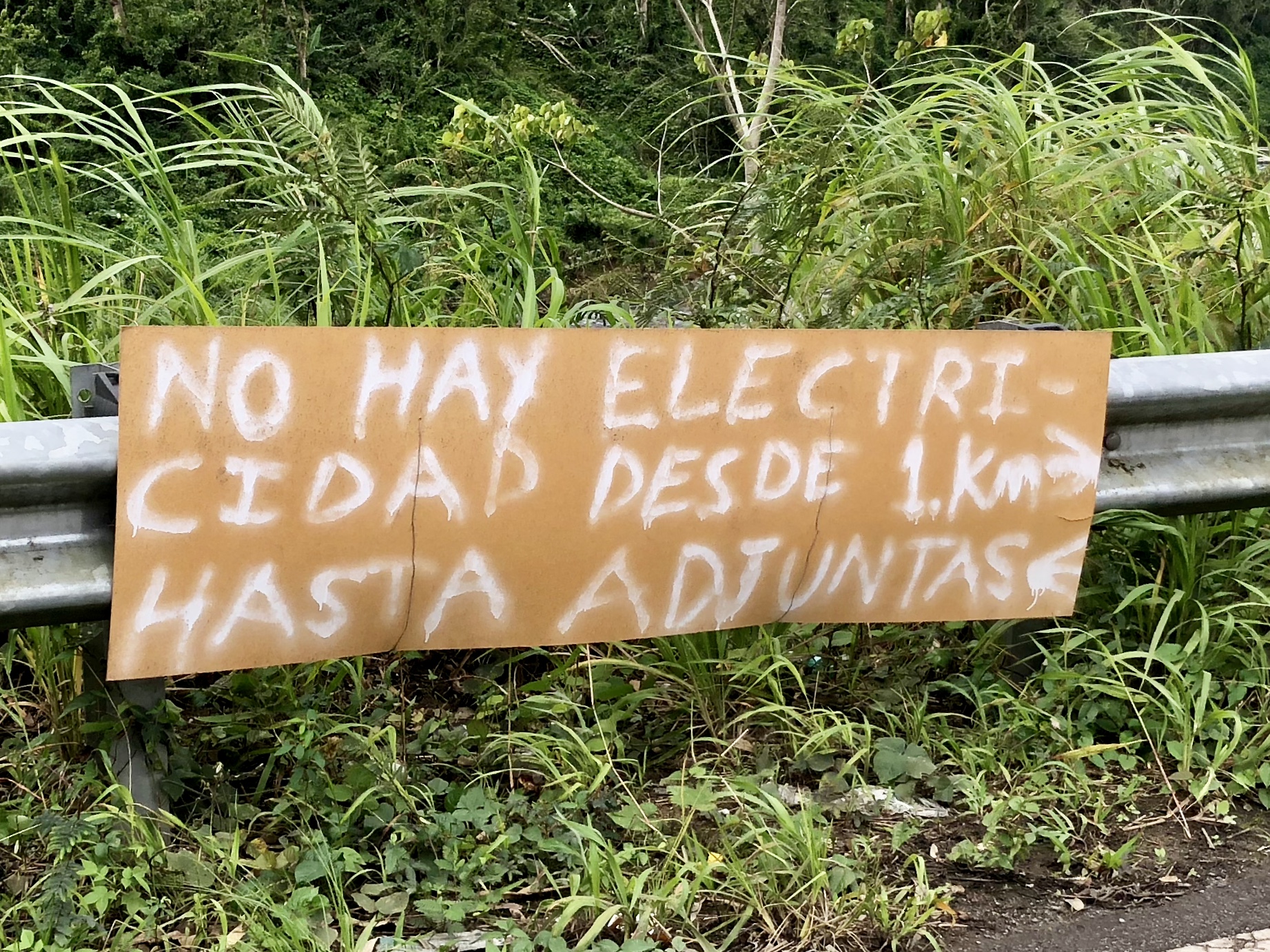
Just past Utuado, a reasonably large and spread out Pueblo south of Arecibo and north of Ponce, there is still no power between Rio Pellejas and Adjuntas in the communities accessible from Highway 123, a distance of about 25 kilometers. This area has received a lot of attention from the press, although that hasn't seemed to help PREPA get electricity beyond Utuado (which has had power since early February). PREPA is the Puerto Rican government run electric company, and you may have read that it will be sold later this year in an effort to privatize and modernize operations. Clearly, PREPA needs to be reimagined, so privatizing it may be helpful. It's essential that PR's electric grid becomes more responsive to the requirements of climate change. This is no mystery to Puerto Ricans. I encountered no resistance anywhere on the island to the notion that climate change will create more frequent and extreme hurricanes, greater ambient temperatures, increased precipitation, and storm surge flooding based on sea level rise. The average Puerto Rican seems to know what's coming.
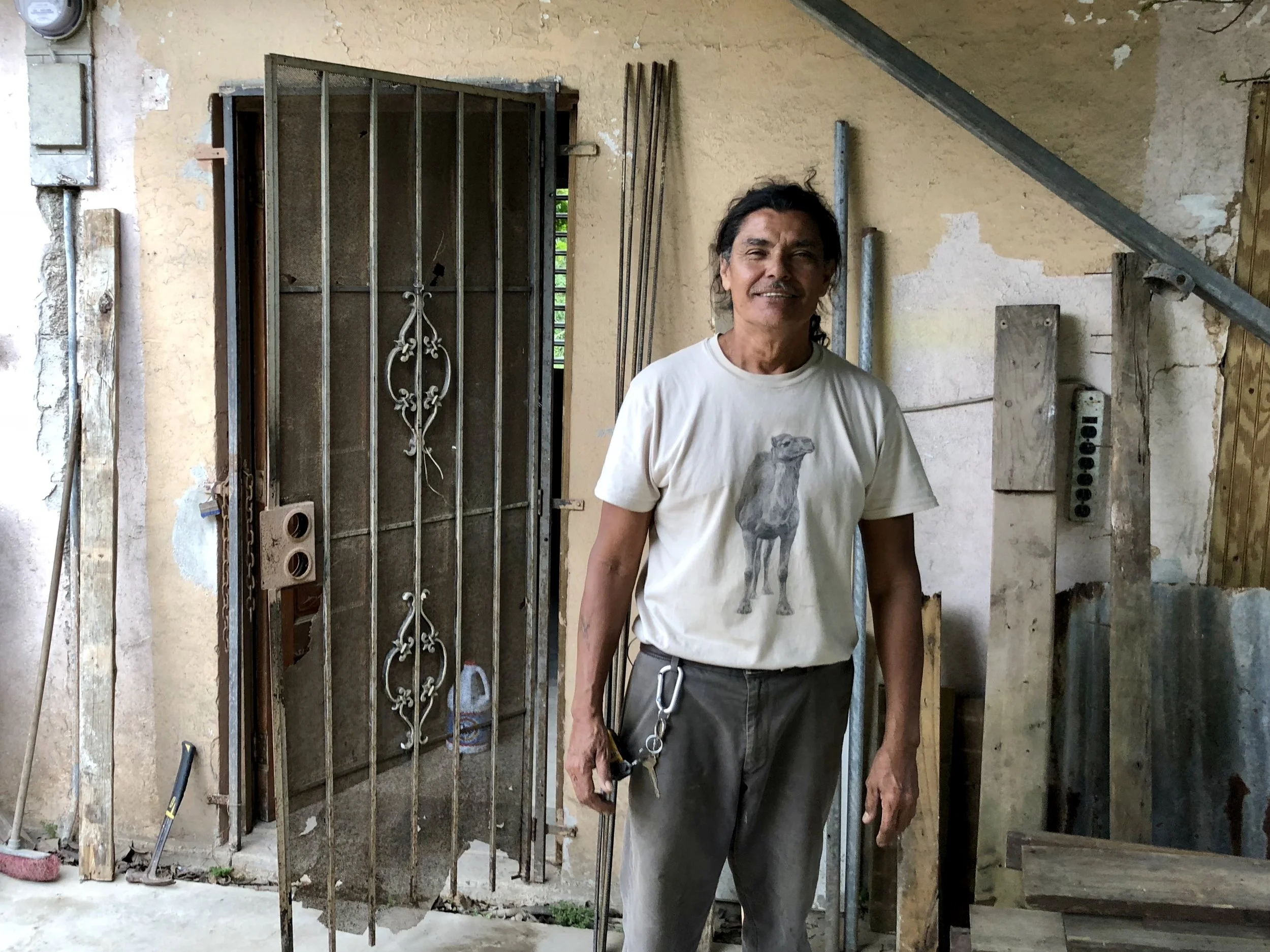
I met Manolito, a Puerto Rican of Taino descent, as I walked through Rio Pellejas to inquire about electricity. There were new electrical cables on poles outside his house, but he and his neighbors were not connected. He didn't know if the cables were live, and he didn't seem too worried about it. His plumbing was fine, and that mattered much more to him. In fact, he mused that after five months, he had become accustomed to life without electricity. He'd be glad when it was back, but he wasn't that bothered by its absence.
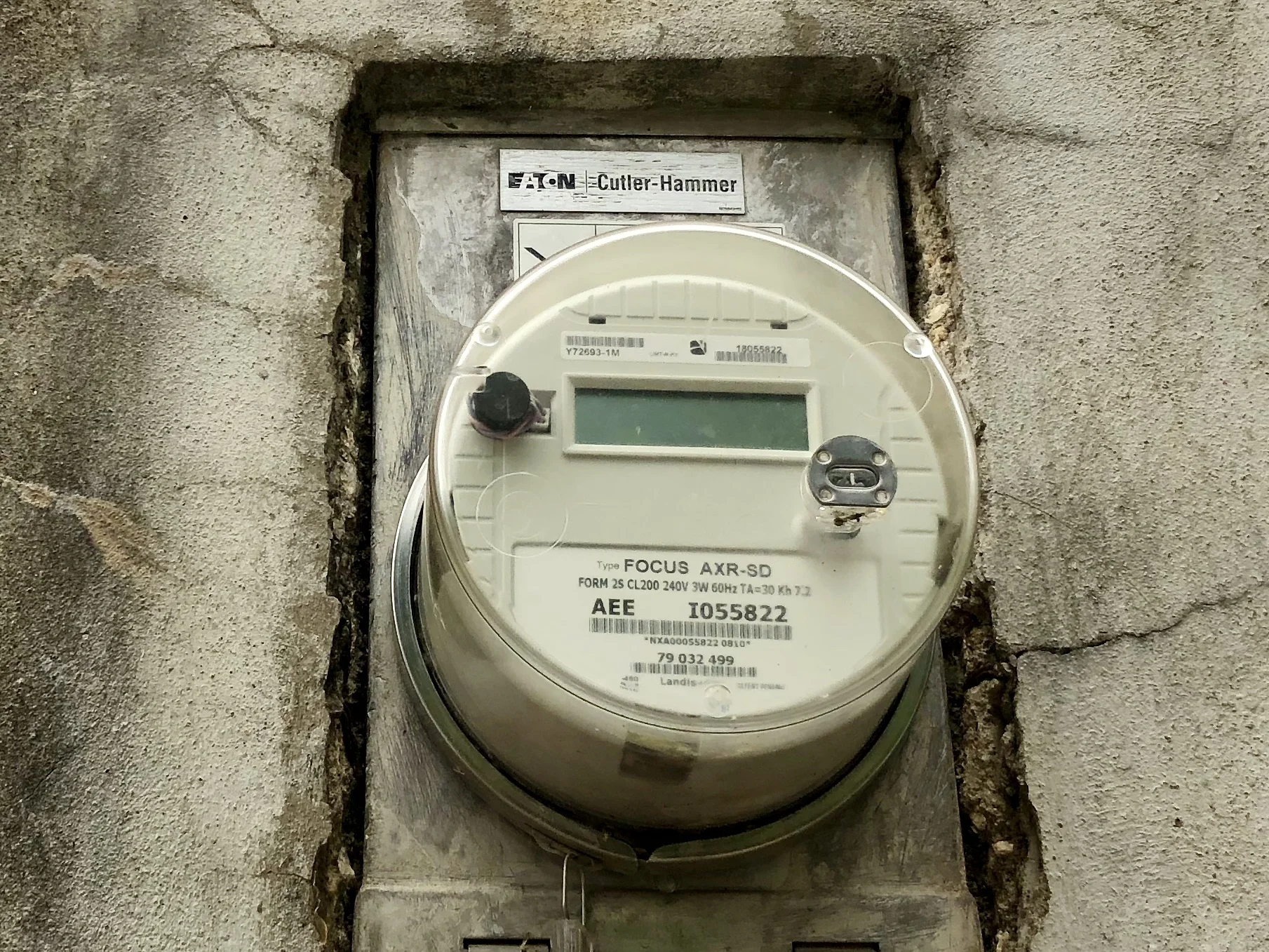
From time to time I find myself reflecting on the reality that we humans have lived with electricity for only about a hundred years, and have enjoyed civilization without electricity for almost 10,000 of the 40,000 years our species has been around. Is its absence really such a crisis? Perhaps so when it comes to health care - modern medicine certainly cannot function without it. But in most other ways, I'm not so sure. (I do appreciate the irony of writing that statement while composing a blog on my cell phone.)
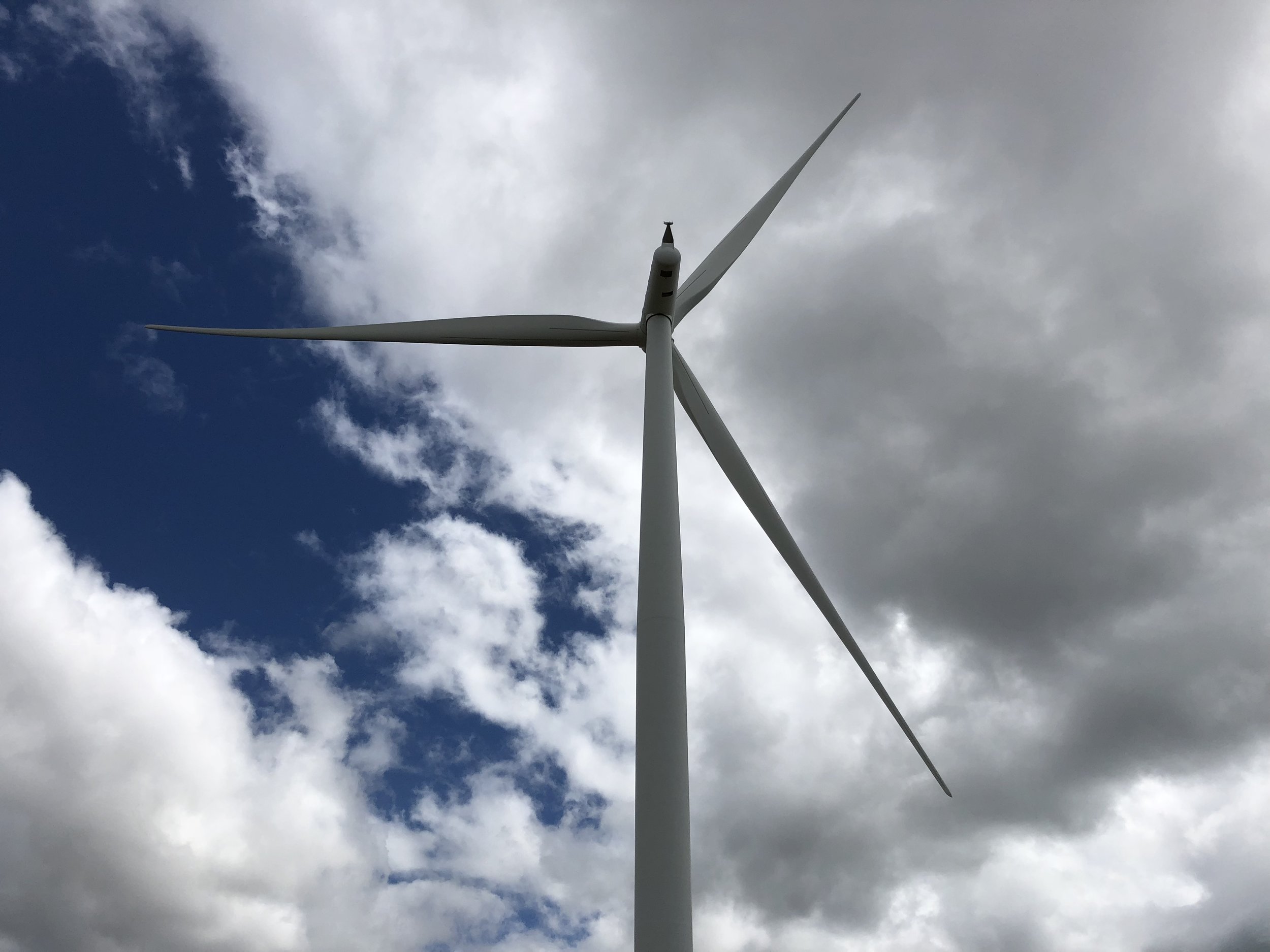
In spite of PREPA's overwhelming reconstruction challenge and their bureaucratic inefficiency, they have made some good choices. The government talks about establishing a portfolio standard with a goal of 30% renewables, which seems reasonable in an environment with an unlimited supply of wind and sunshine. Currently 13% of PREPA's full load is delivered through renewable sources. In 2012, PREPA contracted with Pattern Energy (headquartered in San Francisco, the company has 20 industrial sized wind and solar facilities all over the globe that generate more than 4000MW) to construct a wind farm slightly east of Ponce near the pueblo of Santa Isabel on the south coast. With 47 turbines, the Santa Isabel Wind Farm has a full capacity of 101 Megawatts, and is perfectly situation to take advantage of the constant and vigorous trade winds that blow from the east and southeast. Although the wind farm was built in 2012, the greatest capacity that PREPA has ever solicited has been 75MW (about 8% of PREPA's supply), which is what the farm was supplying to PREPA just before Hurricane Maria hit in September of 2017. There is another wind farm on the southeastern coast of PR near Naguabo called Punta Lima that was built and is run by Gestamp Wind, which had 13 turbines and a full capacity of 23MW. Unfortunately this farm was directly in the path of Maria and had to contend with winds that reached up to 200 mph. So, most of the turbines there were seriously destroyed by Maria, and the farm is not at all functional at this time. The Santa Isabel Wind Farm was also damaged, and some turbines are still being repaired. But its construction and fail safe technology allows it to survive 150 mph winds, and the blades can turn 180 degrees so that higher winds will be deflected and less damaging. At Santa Isabel, Maria's winds averaged 135 mph, with a few gusts that matched or exceeded 150 mph. As a result, about half of the turbines are currently online and the farm has a production capacity far greater than PREPA can currently utilize. At this time, PREPA is only taking 5MW. In spite of some ongoing repairs, the Santa Isabel Wind Farm will be able to supply at full capacity as soon as PREPA can absorb it.
I was impressed and delighted to learn that in this context the word "farm" has a double meaning. While fracking pads and oil wells are extraordinarily noisy and restrict terrain because of toxic exposure and protection from machinery, it is possible to grow crops directly underneath a wind turbine. The Santa Isabel Wind Farm is a "farm" in the truest sense of the word. Underneath its 3400+ acres are highly productive tomato fields, mango and papaya orchards, peppers, onions, eggplant, pineapple and approximately twenty other crops. The 800 acres of tomatoes can yield enough harvest in one day to supply the island for a week. The fields are shared with approximately 25 farmers who lease the land from the government at a beneficial rate, and also work closely with PR Farm Credit. In spite of Maria, the farms are fully functional now - which is very good news, considering that In the aftermath of Hurricane Maria, the New York Times reported that 80 percent of the crop value on the island — about $780 million — had been lost to the storm. Puerto Rico imports about 85% of its food, so the quick recovery of enterprises like this help lessen that dependency.
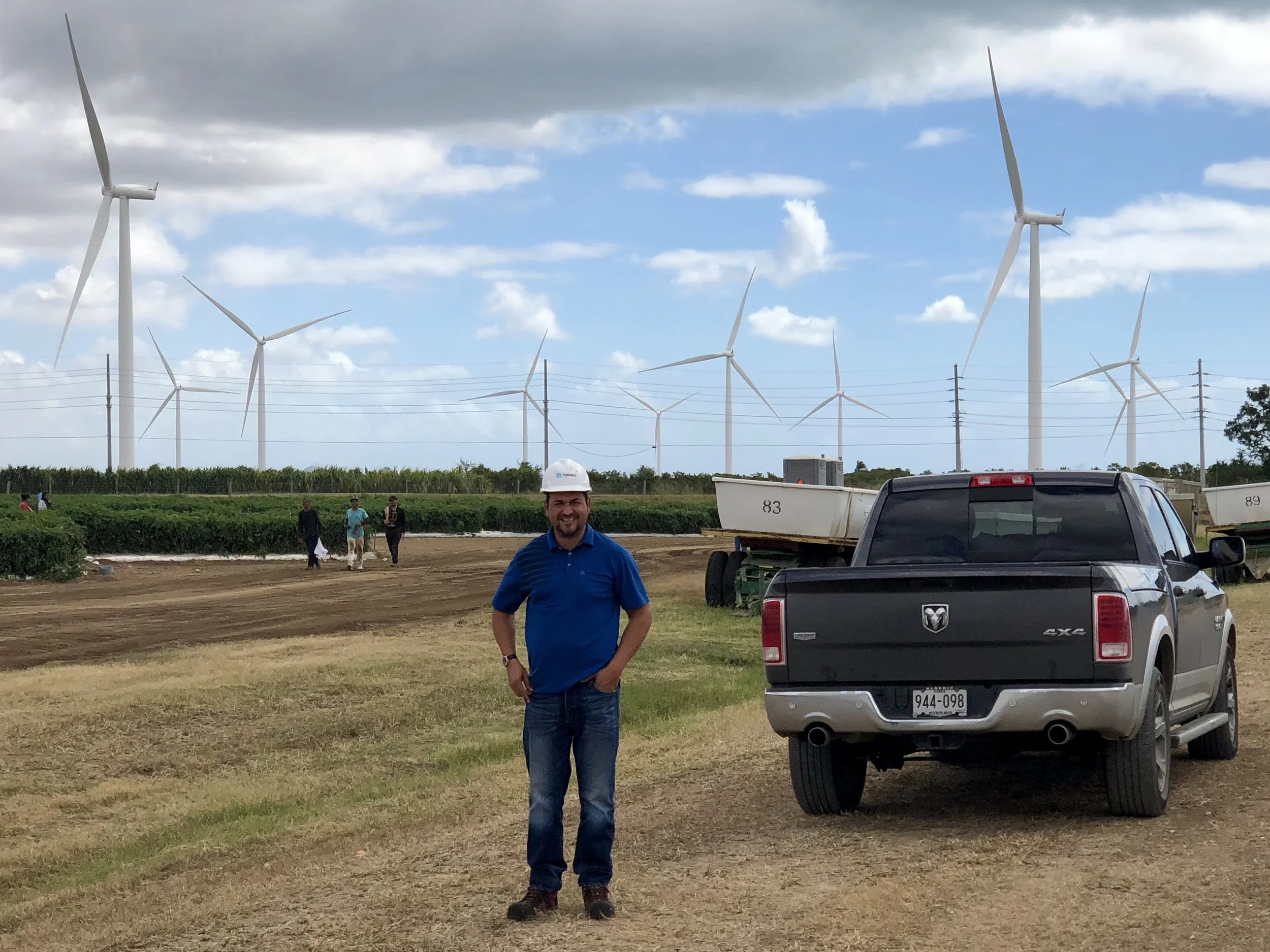
Behind my host Rueben Rivera of Pattern Energy and next to his truck, is a white trailer, which can be joined with other trailers to create a "train" pulled by a large tractor that can bring crops (tomatoes, in this case) to market.
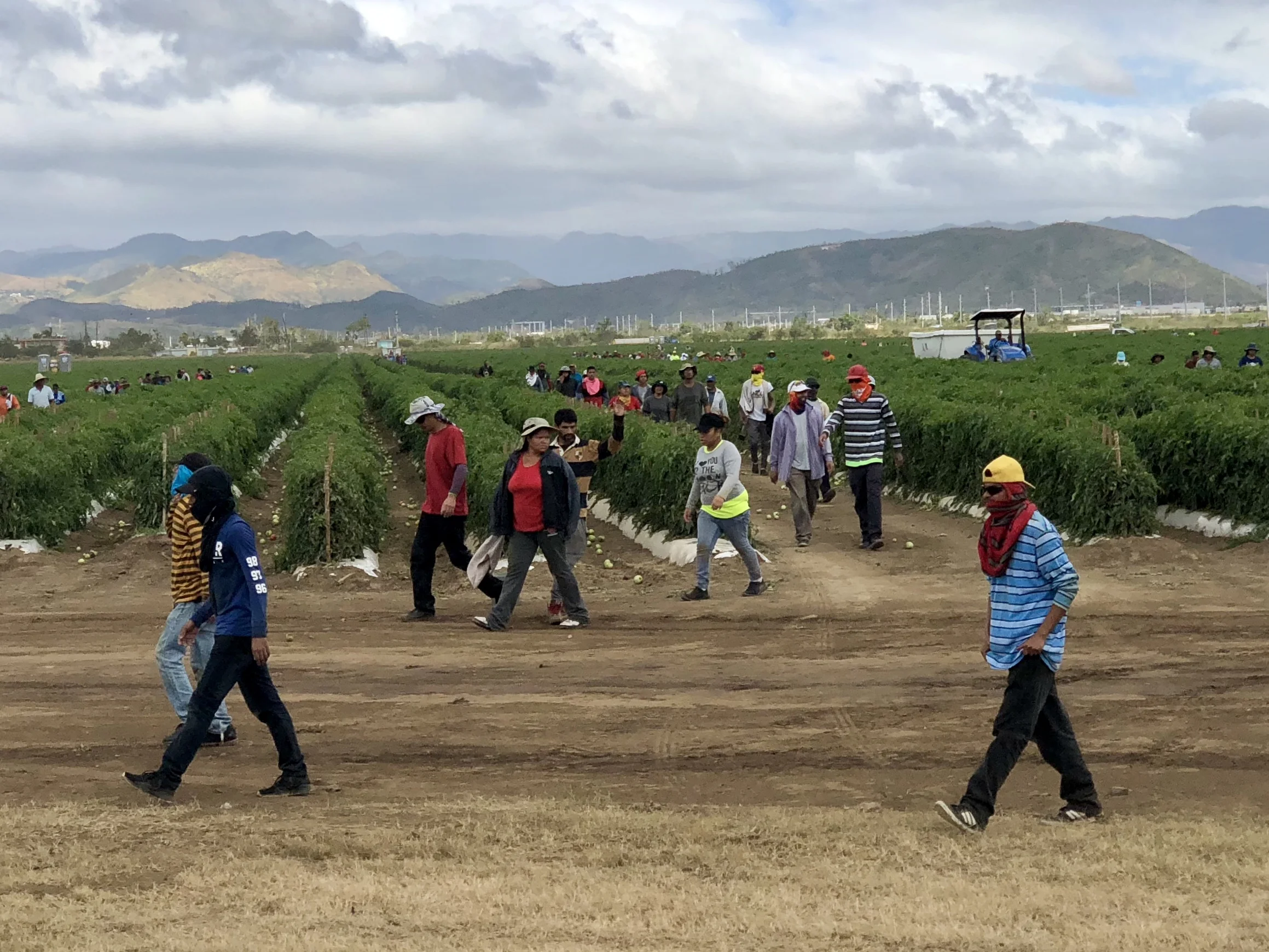
While Rueben and I toured the farm, workers came in from the tomato fields for lunch. The Santa Isabel Wind Farm creates hundreds of sustainable jobs, primarily through agriculture. Interestingly, Ruben Rivera studied agronomy in college, even though he is now an operations manager for the wind farm. It was a pleasure to watch this capable man in an environment that aligns so closely to his values, way of life and skill set.
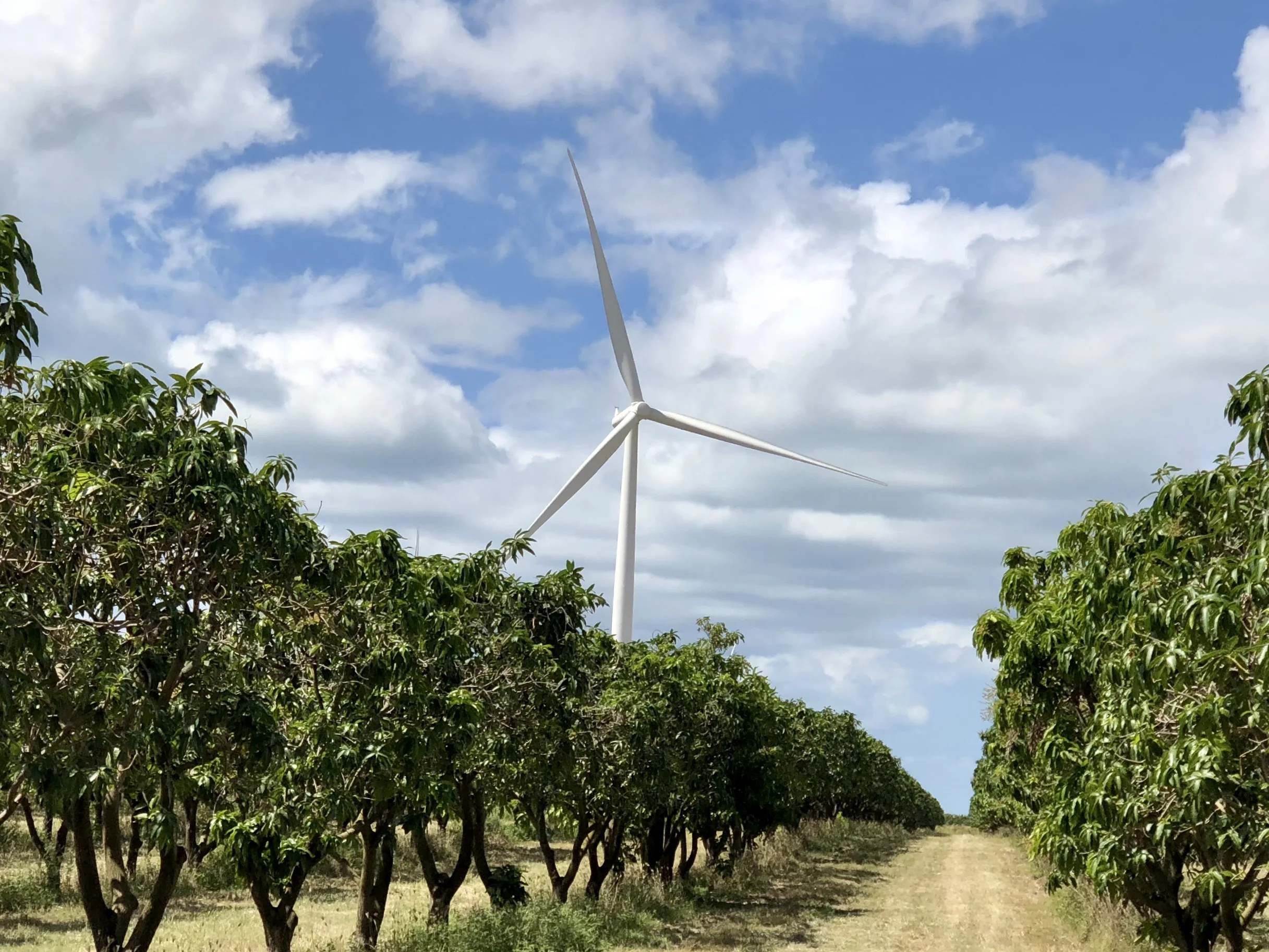
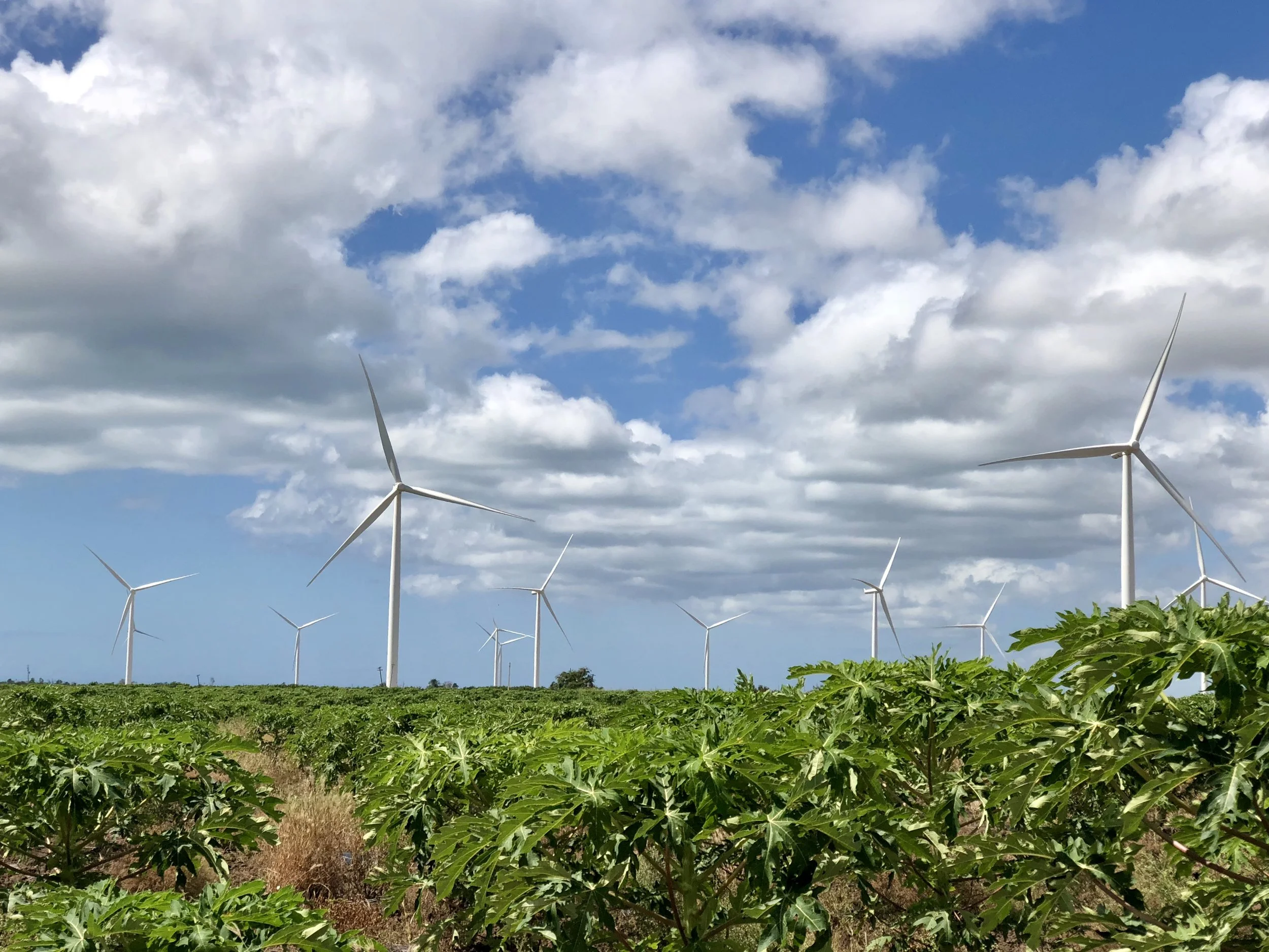
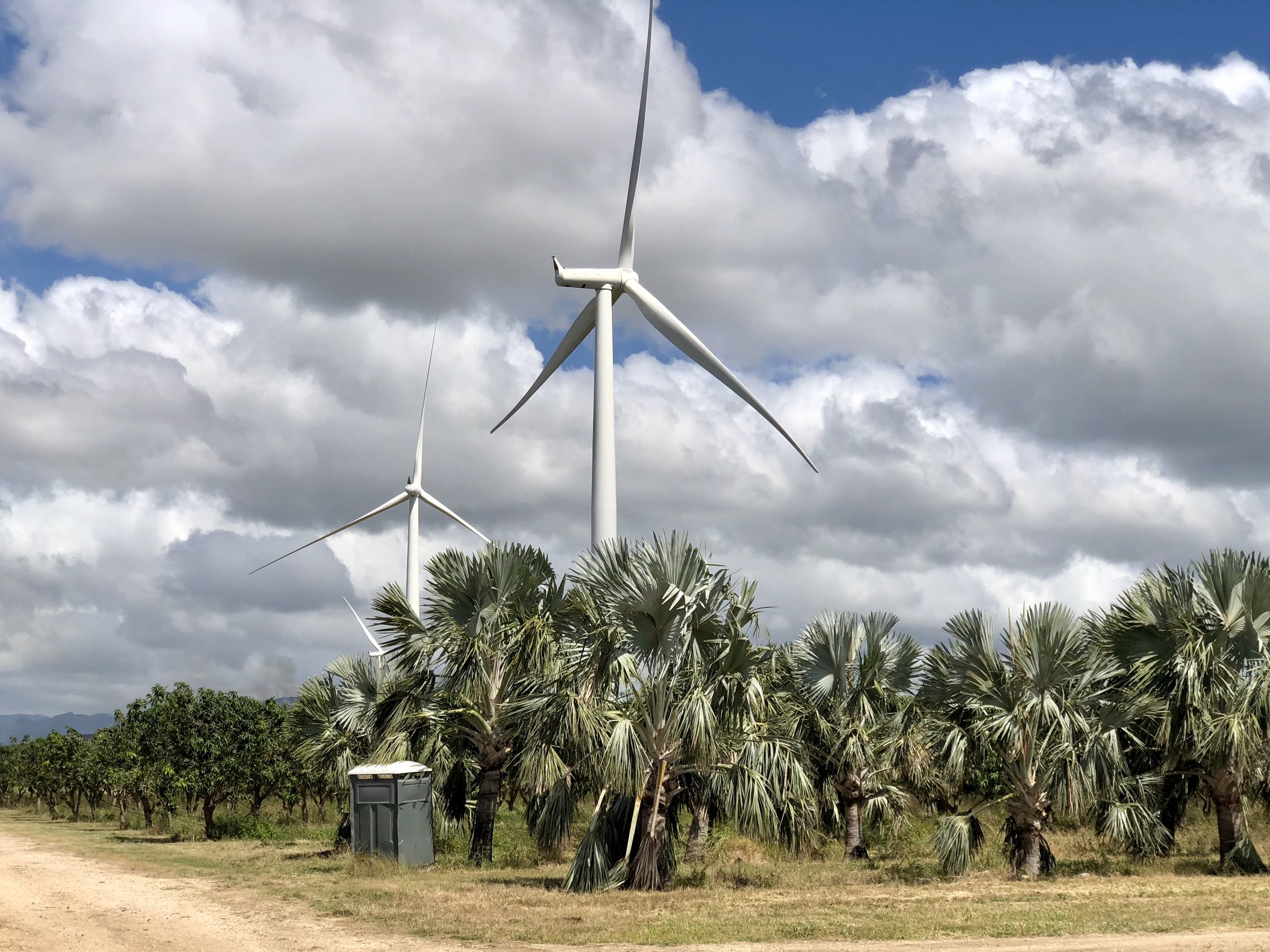
As we drove past the tomato fields we entered mango and papaya orchards. I cannot express how fulfilling it was to see how a clean source of energy could be paired with intensive food production. And, for skeptical readers, I want to make it clear that I took some time to get out of Ruben's truck and intentionally stand near a turbine while I listed to the white noise of the rotating blades. I have also stood near fracking pads, and I can assure you there is no suitable noise comparison. Anyone who complains about the noise of a wind turbine has never listened to an oil well or a fracking pad. Oil wells are irritating. Fracking pads are deafening. Wind turbines are neither.
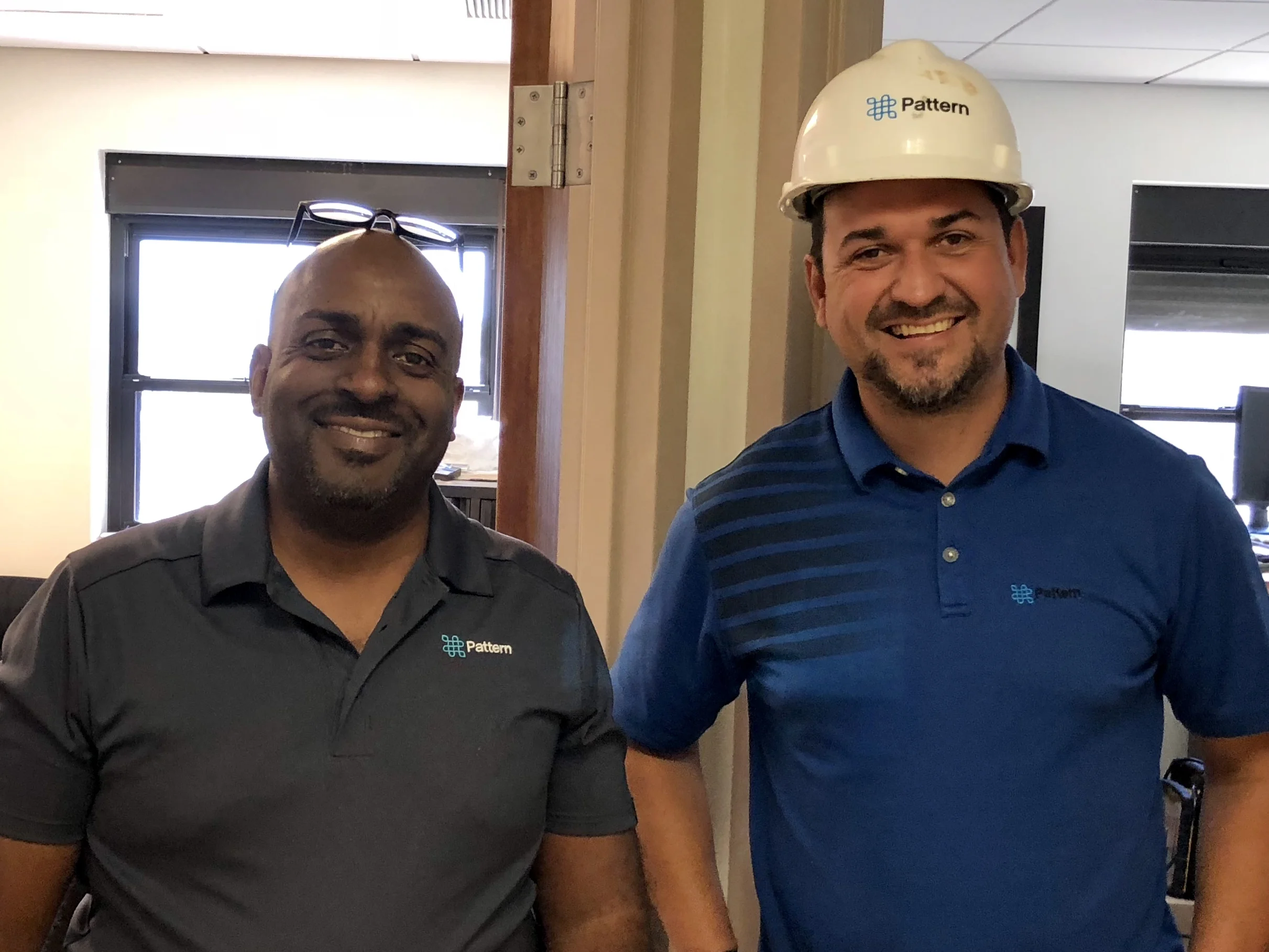
These were my capable and warm hosts at the Santa Isabel Wind Farm, Carlos Roman and Ruben Rivera, respectively.
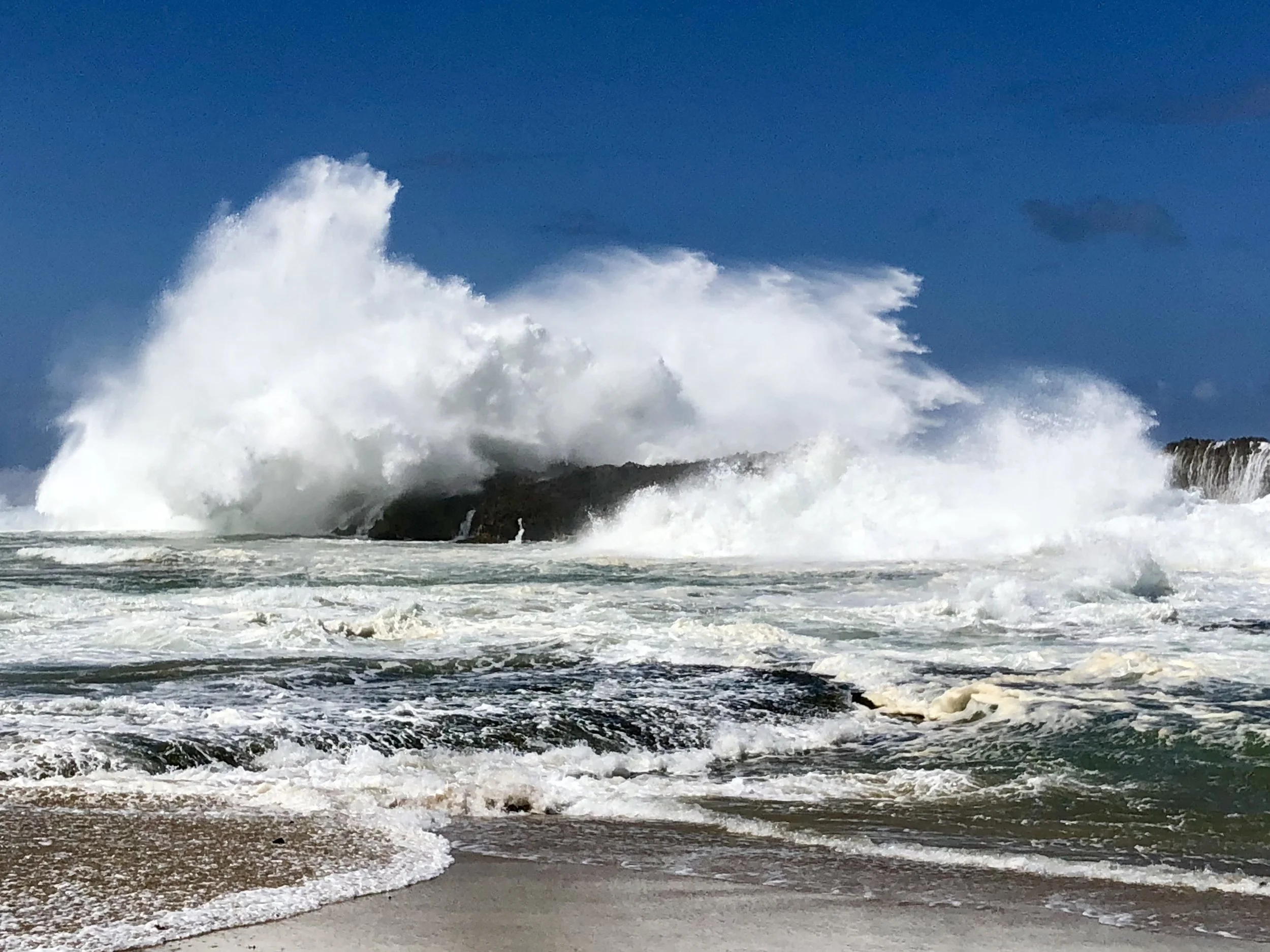
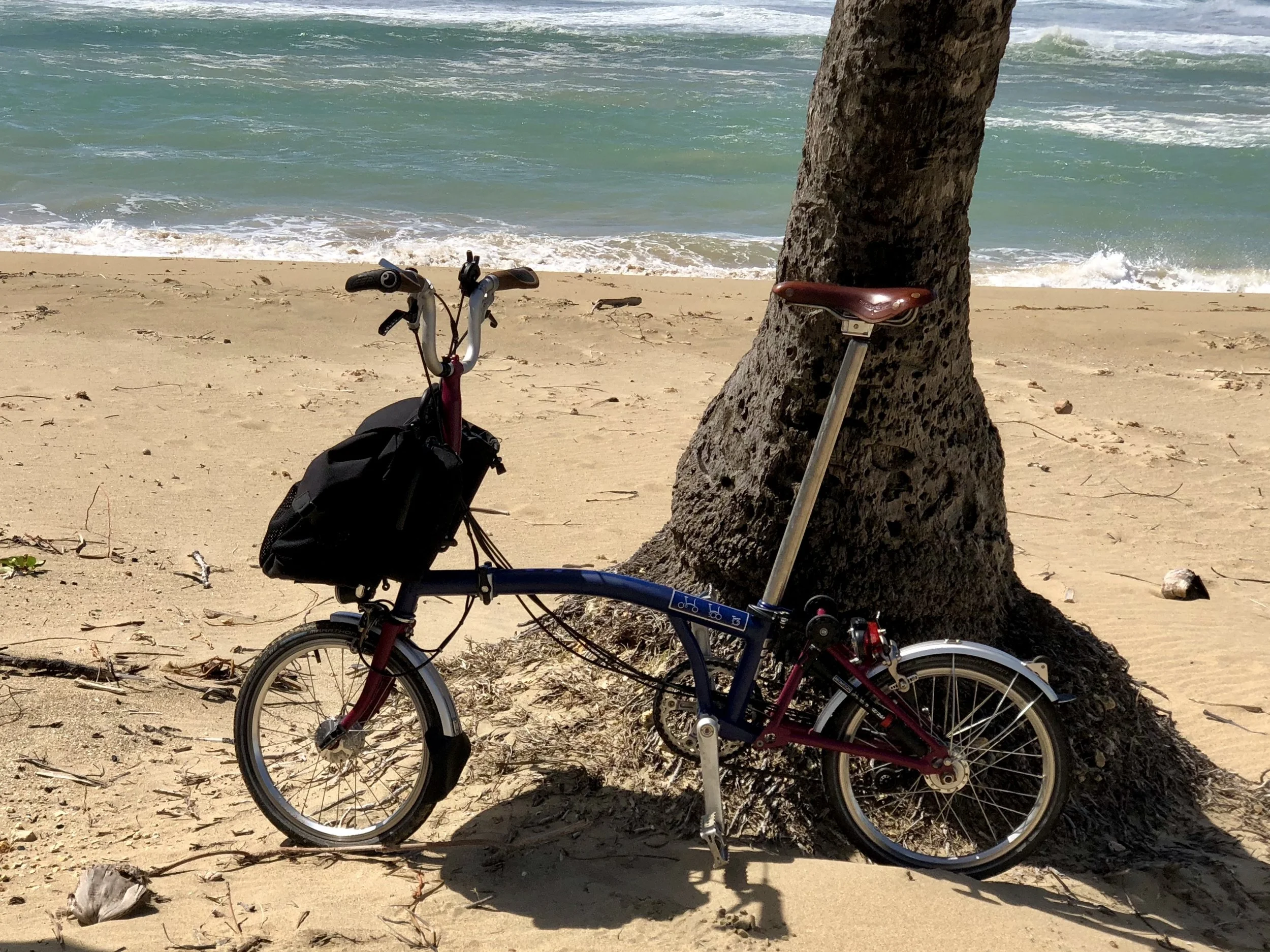
All good things must come to an end. These last photos were taken west of Quebradillas on the northwest coast, where in spite of obvious hurricane damage, the beaches are spectacular. I spent my last day biking along one of PR's few designated bike paths. And although I had to contend with a ferocious wind from the east, and dodge sand dunes altered by the hurricane, I was happy to be warm and sunbaked.
I recommend you go, if you can.
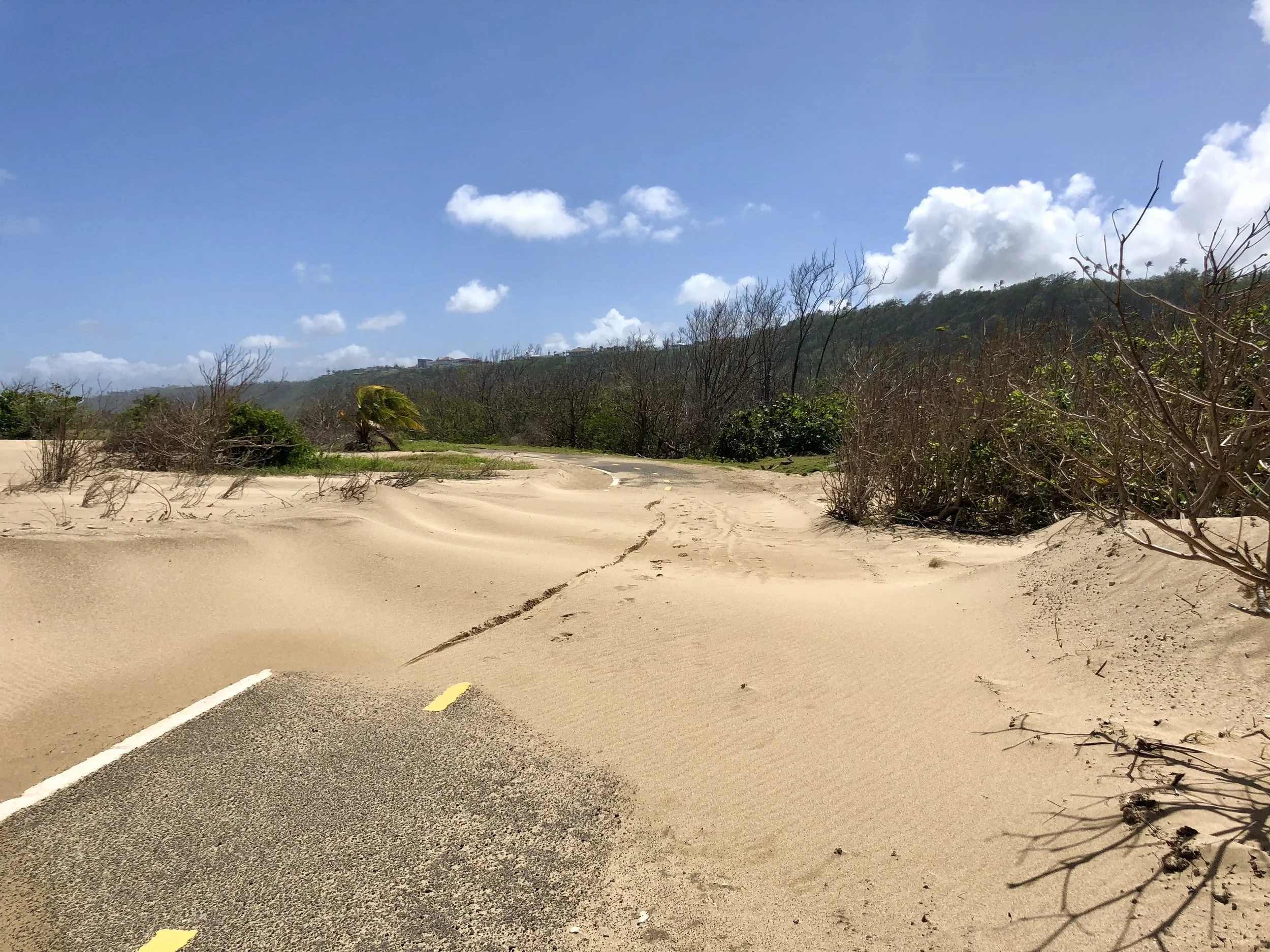
A State of Indifference - Sea Level Rise and Florida
I toured in Florida in March, 2016, starting in Jacksonville, and cycled south past St. Augustine. I then went west to Ocala, down to Naples on Florida's west coast, and finally through the Everglades. Finally, I headed east to Miami and north on Florida's southeastern coast. I covered about 700 miles, and witnessed firsthand an astonishing amount of infrastructure, including commercial and residential buildings that are certain to be in trouble in the years to come as the oceans rise.
The news cycle was pretty bad. Just before I left New York City in late February for a cycling tour in Florida, a story broke in the New York Times about an online report on sea level rise published by the Proceedings of the National Academy of Sciences. Essentially, this report offers new evidence that oceans are now rising at a faster rate than they have for the past 28 centuries. This article appeared about the time that a bipartisan coalition of 15 South Florida Mayors asked to have a special meeting with then GOP presidential primary candidates Jeb Bush and Marco Rubio to discuss the impact of increasing levels of sea level rise. It seems that mayors of coastal communities in Florida are growing concerned about this issue, even if Florida Governor Rick Scott prohibits his administrative staff from using the words “climate change” in any official state documents (I am not making that up)!
Clearly, something fascinating and dare I say it - dysfunctional- is playing out in Florida’s Republican Party. Florida state policies toward renewables tell part of the story: The Solar energy Industries Association (SEIA) reports that “the sunshine state” of Florida ranks third in the nation for rooftop solar potential, but all the way down at 14th for cumulative solar capacity installed. Florida’s solar policies lag behind many other states in the nation: it has no renewable portfolio standard and does not allow power purchase agreements, two policies that have driven investments in solar in other states.
One of many countless neighborhood canals on the west coast of Florida.
In late March, the news cycle went from bad to worse for Floridians. The respected journal Nature published a study with evidence that the melting of the West Antarctic ice sheet was happening faster than scientists previously thought, and unless there is a drastic reduction on carbon emissions very soon, it is likely the sheet may deteriorate by 2100, adding additional sea level to current predictions. With ice melting in other regions, too, the total rise of the sea could reach five or six feet by 2100, the researchers found. That is roughly twice the increase reported as a plausible worst-case scenario by a United Nations panel just three years ago, and so high it would likely provoke a profound crisis within the lifetimes of children being born today. If one does the math, that much sea level rise will put almost all of Florida south of Lake Okeechobee under water. In maybe 80-90 years.
Fort Myers, I don't know if the tide was in or out.
I kept thinking about the inevitability of rising water in the latter part of February and early part of March, 2016 as I cycled 700 miles from Jacksonville, Florida to Palm Beach on the East Coast. I relaxed some as I headed west to Ocala in the center of North Florida (much of the forest is several hundred feet above sea level). But as I continued west to the Chassahowitzka National Wildlife Refuge on the Gulf Coast of Florida and south on the West Coast through Tampa/St. Petersburg, Fort Myers and onto Naples, the sea - and a subtle anxiety - became my sidekick again. When I headed across the “Old Alligator Highway” (State Highway 41) through the Everglades into Miami – Dade County, I felt that anxiety a lot. But then, the traffic was merciless and on a bike, traffic can color one’s reflections. Finally, I went north through the western edge of Hialeah to Fort Lauderdale (a land of endless shopping malls), over to Boca Raton, and up the coast to West Palm Beach (a land of beaches, mainly hidden by ubiquitous and palatial mansions next to the water).
A bit of beach left to sell on the East Coast. A rare find!
It was my intention to talk with locals about what they thought along the route, and I did so whenever I could. However, the answers to my questions were so similar I was left with one persistently nagging impression. Few people in Florida, if any, seem to be paying attention. To be sure, developers are not. Someone even said to me that as long as the developers can pay off their loans in 15 years, why should they care? Sea level rise will be someone else’s problem.
In fairness, though, I think some individuals who live in areas recently affected by King Tides (Miami Beach and Fort Lauderdale are great examples) are already concerned about “sunny day” flooding. And clearly, 15 South Florida Mayors are concerned. It's reasonable to assume their city planners are as well. But the average citizen? I think most Florida citizens take great pleasure in enjoying the sunshine, the beach and the wonderful winter temperatures. And few deny climate change outright, but clearly are focused on “living in the moment” in spite of the sword of Damocles hanging over them. One colorful character who claimed to have been the head of the “Airboat Captain's Association” back in the day, definitely thinks it's getting hotter every year in the Everglades. Others agreed.
I wasn't able to get to the parts of Orlando or Tampa/St. Petersburg with emerging tech cultures so I didn't talk to millennials. Most of the people I saw, and met, were older. And more than one retiree told me they wouldn't be around long enough to affected by sea level rise anyway, so what the hell. The bottom line? As beautiful as parts as the state are, as incredible as the winter sunshine and light can be, and as much as I enjoyed the people I met - and took great pleasure in the company of my cousins who live there - it is not a place where I would want to put down stakes. At least without a really good raft.
An extraordinary sky at a campground in the Everglades.


Sed purus sem, scelerisque ac rhoncus eget, porttitor nec odio. Lorem ipsum dolor sit amet.